EP2053843A2 - Kamera und Bildaufzeichnungsprogrammprodukt - Google Patents
Kamera und Bildaufzeichnungsprogrammprodukt Download PDFInfo
- Publication number
- EP2053843A2 EP2053843A2 EP08167568A EP08167568A EP2053843A2 EP 2053843 A2 EP2053843 A2 EP 2053843A2 EP 08167568 A EP08167568 A EP 08167568A EP 08167568 A EP08167568 A EP 08167568A EP 2053843 A2 EP2053843 A2 EP 2053843A2
- Authority
- EP
- European Patent Office
- Prior art keywords
- image
- image data
- shot
- user
- eyes
- Prior art date
- Legal status (The legal status is an assumption and is not a legal conclusion. Google has not performed a legal analysis and makes no representation as to the accuracy of the status listed.)
- Granted
Links
Images

Classifications
-
- H—ELECTRICITY
- H04—ELECTRIC COMMUNICATION TECHNIQUE
- H04N—PICTORIAL COMMUNICATION, e.g. TELEVISION
- H04N1/00—Scanning, transmission or reproduction of documents or the like, e.g. facsimile transmission; Details thereof
- H04N1/21—Intermediate information storage
- H04N1/2104—Intermediate information storage for one or a few pictures
- H04N1/2112—Intermediate information storage for one or a few pictures using still video cameras
-
- G—PHYSICS
- G06—COMPUTING OR CALCULATING; COUNTING
- G06V—IMAGE OR VIDEO RECOGNITION OR UNDERSTANDING
- G06V40/00—Recognition of biometric, human-related or animal-related patterns in image or video data
- G06V40/10—Human or animal bodies, e.g. vehicle occupants or pedestrians; Body parts, e.g. hands
- G06V40/18—Eye characteristics, e.g. of the iris
- G06V40/19—Sensors therefor
-
- H—ELECTRICITY
- H04—ELECTRIC COMMUNICATION TECHNIQUE
- H04N—PICTORIAL COMMUNICATION, e.g. TELEVISION
- H04N23/00—Cameras or camera modules comprising electronic image sensors; Control thereof
- H04N23/60—Control of cameras or camera modules
- H04N23/61—Control of cameras or camera modules based on recognised objects
- H04N23/611—Control of cameras or camera modules based on recognised objects where the recognised objects include parts of the human body
-
- H—ELECTRICITY
- H04—ELECTRIC COMMUNICATION TECHNIQUE
- H04N—PICTORIAL COMMUNICATION, e.g. TELEVISION
- H04N2101/00—Still video cameras
Definitions
- the present invention relates to a camera and an image recording program product.
- Japanese Laid-Open Patent Application No. 2005-39365 discloses a camera which performs continuous shooting a predetermined number of times, selects an image in which there are a smallest number of subjects whose eyes are closed from the acquired images and records the selected image when a mode for detecting closed eyes is set and if a release-on is sensed.
- the conventional digital camera has a problem in that even when a specified person whose picture a user wants to take is shot with his or her eyes closed to acquire an image, that image will be undesirably selected and recorded.
- a camera comprises: an image-capturing means that captures images of a photographic subject by image sensors and creates image data of a plurality of shot images based on an instruction for continuous shooting by a user; an identification means that performs, each time when image data of one shot image from among the plurality of shot images is created, a state judgment whether or not eyes of a person included in the photographic subject appearing in the one shot image are open and identifies image data of the one shot image as identified image data when a result of the state judgment is YES; and a recording means that records the identified image data in a nonvolatile storage medium.
- the identification means identifies the identified image data, the continuous shooting is subsequently stopped.
- the camera further comprises a designation means that designates, before an instruction for the continuous shooting, at least one of the persons as a designated person based on an instruction by the user.
- the identification means performs the state judgment whether or not eyes of the designated person are open.
- the camera further comprises a display means that displays on a screen thereof a captured image captured by the image sensor.
- the designated person is determined by designation by the user of at least one of the persons who appear in the captured image.
- the identification means recognizes an area in which a face of the person or the designated person appears by face recognition processing in the one shot image and performs the state judgment whether or not eyes of the person are open in the area.
- the camera further comprises an evaluation image creation means that creates image data for evaluation having a size smaller than that of an image data of the one shot image based on the image data of the one shot image.
- the identification means identifies the identified image data using the image data for evaluation.
- the recording means records an image file based on the identified image data in the nonvolatile storage medium when the identification means identifies the identified image during the continuous shooting whereas the recording means records in the nonvolatile storage medium an image file corresponding to at least one of the plurality of shot images recorded in a volatile buffer memory for which the result of the state judgment is NO when the identified image data is not identified by the identification means during the continuous shooting.
- the camera further comprises a deletionmeans that deletes an image file having a low priority from the buffer memory when the number of image files recorded in the buffer memory exceeds a predetermined number.
- a computer-readable computer programproduct contains an image recording program.
- the image recording program comprises: an image-capturing instruction to capture images of a photographic subject to create image data of a plurality of shot images based on an instruction for continuous shooting by a user; an identification instruction to perform a state judgment whether or not, each time when image data of one shot image among the plurality of shot images is created, eyes of a person included in the photographic subject appearing in the one shot image are open, and identifies the image data of the one shot image as identified image data when a result of the state judgment is YES; and a recording instruction to record the identified image data in a nonvolatile storage medium.
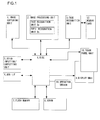
- FIG. 1 is a block diagram presenting a configuration of a camera according to an embodiment of the present invention.
- a camera 100 includes an image-capturing unit 1, an image processing unit 2, a recording unit 3, RISC (Reduced Instruction Set Computer) 4, a voice inputting/outputting unit 5, a USB I/F 6, a flush memory 7, an SDRAM 8, a display unit 9, a touch panel unit 10, and an operation switch 11.
- RISC Reduced Instruction Set Computer
- the RISC 4 controls each unit of the camera 100.
- the image-capturing unit 1 includes an imaging optical system constituted by a plurality of lenses and image sensors, such as, for example, CCDs or CMOS's.
- the image-capturing unit 1 performs A/D conversion of an image signal obtained by capturing by the image sensor a subject image input through the imaging optical system to form image data and outputs the obtained image data to the RISC 4.
- the RISC 4 records the image data input from the image-capturing unit 1 in the SDRAM 8 as a buffer memory detailed hereinbelow.
- the image processing unit 2 performs various types of image processing on the image data recorded in the SDRAM 8. For example, it performs gradation correction processing and color conversion processing on the image data and then creates an image file of a predetermined image format, for example, of a JPEG format based on the processed data. The created image file is output to the recording unit 3 via the RISC 4.
- the image processing unit 2 includes a face recognition unit 2a and a pupil recognition unit 2b. The processing by the face recognition unit 2a and the pupil recognition unit 2b will be detailed later.
- the recording unit 3 is a memory card slot that allows a nonvolatile external recording medium, for example, a memory card 12 to be removably loaded therein.
- the recording unit 3 records the image file created by the image processing unit 2 under a control by the RISC 4.
- the voice inputting/outputting unit 5 is constituted by a microphone for inputting voices and a speaker that outputs voices.
- the voice inputting/outputting unit 5 can take up external voices through the microphone and output operation sounds or warning sounds of the camera 100 through the speaker.
- the USB I/F 6 is an interface for connecting the camera 100 to an external device through a USB cable. For example, by connecting the camera 100 to a PC (personal computer) through the USB I/F 6, the image file recorded in the memory card 12 can be fetched.
- PC personal computer
- the flush memory 7 is a nonvolatile memory, in which data of a program to be executed by the RISC 4 and various parameters to be read in when the program is executed, and so on are recorded.
- the SDRAM 8 is a volatile memory, which is used as a working memory for expanding the program or as a buffer memory for temporarily recording the data when the CPU executes the program.
- the display unit 9 is a liquid crystal monitor mounted in a digital camera 200.
- Various types of information for example, images recorded in the memory card 12 and setting menu for setting the camera 100 are displayed on the display unit 9.
- the RISC 4 controls the image-capturing unit 1 to output images based on image data acquired by the image-capturing unit 1 in time-series as frames to the display unit 9.
- This causes the display unit 9 to display the frames output in time-series as time-series imagery in which each frame is displayed in series at a predetermined time interval.
- the time-series imagery is called a "view through lens" inmonitor. That is, the display unit 9 displays a view through lens.
- the display unit 9 has mounted thereon a touch panel unit 10.
- the user can operate the camera 100 by touching a screen of the touch panel unit 10 with a finger of the user or with a stylus.
- the display unit 9 displays a menu screen, the user can select an item by touching the item he or she wants to select in the displayed menu on the screen.
- the operation switch 11 includes various inputting members to be operated by the user, for example, a power source button, a release button, a zoom button, a 4-way direction keypad button, an OK button, a cancel button, a menu display button, a replay button, a deletion button and the like.
- the camera 100 has a mode for detecting closed eyes (hereafter, "closed-eyes-detection mode") as an operation mode of the 100.
- the RISC 4 controls the image-capturing unit 1 to continuously capture a plurality of images and identifies an image in which a person designated by the user is shot with his or her eyes open from among the plurality of images when the operation mode of the camera 100 is set to the closed-eyes-detection mode by the menu operation by the user.
- the RISC 4 controls the recording unit 3 so as to record the image file of the identified image to the memory card 12.
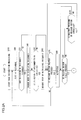
- FIGS. 2A and 2B each are a flowchart illustrating the processing to be executed by the camera 100 according to an embodiment of the present invention.
- the processing shown in FIGS. 2A and 2B is executed by a program that is started up when the operation mode of the camera 100 is set to the closed-eyes-detectionmodebytheuser.
- the program is recorded in the flush memory 7.
- it is assumed that a view through lens is displayed on the display unit 9 at the time when the processing shown in FIGS. 2A and 2B is started.
- the face recognition unit 2a executes face recognition processing on image data of each of frames that constitute the view through lens to detect a face of a person who appears in the view through lens.
- the size of image data of the view through lens depends on the size of the screen of the display unit 9.
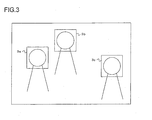
- the face recognition unit 2a displays the face of the person detected in the view through lens with a rectangle surrounding the face on the view through lens. For example, when three persons appear in the view through lens as shown in FIG. 3 , rectangles 3a, 3b, and 3c with which the face recognition unit 2a has surround the faces of persons, respectively, are displayed on the view through lens. Since the face recognition processing is known in the art, detailed description thereof is omitted herein.
- a step S30 the RISC 4 judges whether or not at least one of the rectangles 3a, 3b, and 3c that are displayed on the view through lens is selected by the user. That is, the user can designate the rectangle that surrounds the face of a person whose eyes the user desires to be open upon shooting. For example, the user touches on the screen the rectangle that surrounds the face of the person whose eyes the user desires to be open upon shooting to designate the rectangle. If the result of the judgment in the step S30 is NO, the process is advanced to a step S50 while if the result of the judgment in the step S30 is YES, the process is advanced to a step S40.
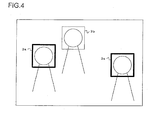
- the RISC 4 identifies the rectangle touched by the user based on the output form the touch panel unit 10 and changes a mode of displaying the identified rectangle. For example, the RISC 4 sets the color of display for a nonselected rectangle to green in advance and when the rectangle in green is selected by the user by touching it on the screen, the RISC 4 changes the color of display for the selected rectangle to red. Alternatively, the RISC 4 may change the mode of displaying the touched display by blinking it or by increasing a line thickness of the contour of the selected rectangle than that of the contour of the nonselected rectangle.
- FIG. 4 illustrates the example in which the selection of the rectangles 3a and 3c by the user changes the contours of the rectangles 3a and 3c into bold lines.
- the RISC 4 judges whether or not the selection of the rectangle or rectangles has been cancelled by the user. The user can cancel the selection of the rectangle or rectangles by touching again the rectangle or rectangles that have been once selected. If the result of the judgment in the step S50 is NO, the process is advanced to a step S70 to be detailed later while if the result of the judgment in the step S50 is YES, the process is advanced to a step S60.
- the RISC 4 identifies the rectangle that has been touched again by the user based on the output from the touch panel unit 10 and returns the color of display or the mode of displaying the rectangle that has been touched again to the color of display or the mode of displaying the nonselected display.
- the RISC 4 judges whether or not a release button included in the operation switch 11 has been halfway pressed by the user. If the result of the judgment in the step S70 is NO, the process is returned to the step S20. If the result of the judgment in the step S70 is YES, the process is advanced to a step S80. In the step S80, the RISC 4 controls the image-capturing unit 1 to execute an autofocusing processing to the face of the person surrounded by the rectangle that has been selected by the user on the view through lens to bring into focus the face of the person surrounded by the rectangle.
- a step S90 the RISC 4 judges whether or not the full pressing of the release button by the user has been cancelled. If the result of the judgment in the step S90 is NO, the process is advanced to a step S100 and the RISC 4 judges whether or not the halfway press of the release button by the user has been cancelled. If the result of the judgment in the step S100 is NO, the process is returned to the step S90. If the result of the judgment in the step S100 is YES, the process is returned to the step S70. If the result of the judgment in the step S90 is YES, the process is advanced to a step S110.
- the RISC 4 judges whether or not the full press of the release button by the user has been cancelled. If the result of the judgment in the step S110 is NO, the process is advanced to a step S200. In the step S200, the RISC 4 controls the image-capturing unit 1 and the image processing unit 2 to execute shooting processing to acquire a main image data file. The RISC 4 records the acquired main image data file in the SDRAM 8.
- the RISC 4 controls the image processing unit 2 to create an image data file for evaluation that has a smaller image size than that of the main image data file based on the main image data file recorded in the SDRAM 8.
- the image size of the image data file for evaluation depends, for example, on the size of the screen of the display unit 9.
- the RISC 4 records the image data file for evaluation in the SDRAM 8.
- the face recognition unit 2a executes face recognition processing on the image data file for evaluation recorded in the SDRAM 8 as a target to recognize the faces of the persons who appear in the image of the image data file for evaluation.
- the pupil recognition 2b executes pupil recognitionprocessing on the area surrounded by the rectangle selected by the user in the step S30, which is the area containing the faces of persons, out of the faces of the persons recognized in the step S220 as targets. Since the pupil recognitionprocessing is a conventional technology, detailed description thereof is omitted herein.
- the pupil recognition unit 2b detects the pupils of persons from an area that contains the faces of the persons by black-and-white pattern recognition, for eample.
- pupils are detected from the area that contains a face of a person, it is judged that the eyes of the person are open. On the other hand, if no pupils have been detected in the area, it is judged that the eyes of the person are closed, for example, due to blinking.
- a step S240 the RISC 4 judges whether or not both the eyes of each of all the persons that appear within the rectangles selected by the user are open based on the pupil recognition processing by the pupil recognition unit 2b. If the result of the judgment in the step S240 is YES, the process is advanced to a step S250, in which the RISC 4 controls the image processing unit 2 to create an image file (of a JPEG format) based on the main image data file recorded in the SDRAM 8. The RISC 4 controls the recording unit 3 to record the created image file in the memory card 12.
- a step S260 the RISC 4 controls the display unit 9 to output the image data of the image data file for evaluation corresponding to the main image data file on which the image file recorded in the memory card 12 is based and to display an image. Then, the RISC 4 ends the process.
- step S270 the RISC 4 sets, if there is at least one person whose eyes are closed among the persons appearing within the rectangles selected by the user, an indicator flag for indicating that there is a person whose eyes are closed (hereafter, "closed-eyes indicator flag") is set to the main image data file that is recorded in the SDRAM 8 in correspondence to the image data for evaluation.
- a step S280 the RISC 4 judges whether or not the number of main data files which are recorded in the SDRAM 8 and to which the closed-eyes indicator flag is set is greater than a predetermined number.
- the predetermined number is set in advance based on an available memory of the SDRAM 8. If the result of the judgment in the step S280 is NO, the process is returned to the step S110. If the result of the judgment in the step S280 is YES, the process is advanced to a step S290.
- the RISC 4 deletes a main image data file to which priority is set lowest among those main image data files recorded in the SDRAM 8 and to which the closed-eyes indicator flag is set in order to increase the available memory of the SDRAM 8. Then, the RISC 4 returns the process to the step S110. For example, when the pupil recognition processing is executed by the pupil recognition unit 2b on faces of a plurality of persons surrounded by a plurality of rectangles selected by the user in the step S30, the RISK 4 assigns a lower priority to a main image data file corresponding to the image data file for evaluation shot when the eyes of more persons are closed, thereby deleting the main image data file. Alternatively, the RISK 4 deletes a main image data having an oldest shooting time by assigning a lowest priority to the main image data.
- the process is returned to the step S110.
- the continuous shooting is executed until there is obtained an image shot when both the eyes of each of all the persons are open before the user cancels the full press of the release button and a judgment is repeatedly made as to whether or not both of the eyes of each of all the persons are open for each of the images. Unless the user cancels the shooting, an image shot when both the eyes of each of all the persons designated by the user are open can be acquired without fail.
- step S110 If the result of the judgment in the step S110 is YES, the process is advanced to a step S120. As mentioned above, if it were judged that both the eyes of each of all the persons whose faces are surrounded by the rectangles selected by the user in the step S240 are open, the process should have been ended after the steps S250 and S260. However, the fact that the full pressing of the release button has been cancelled without end of the process means that there could be acquired no image shot when both the eyes of each of all the persons whose faces are surrounded by the rectangles selected by the user are open in the step S240.
- the RISC 4 outputs to the user a warning to notice that there could be obtained no image shot when both the eyes of each of all the persons whose faces are surrounded by the rectangles selected by the user are open.
- the RISC 4 controls the display unit 9 to display thereon a warning message or to let out a warning voice from a speaker contained in the voice inputting/outputting unit 5.
- the RISC 4 selects one of the image data files for evaluation recorded in the SDRAM 8 as mentioned above and outputs the image data thereof to the display unit 9 to display the image.
- the user can select an image file of an image which the user desires to record and causes the recording unit 3 to record the image file in the memory card 12 when the image which the user desires to record is included in images shot when the eyes of any of the persons are closed.
- the user when the user wants to select the image data file for evaluation corresponding to the image displayed on the display unit 9 in the step S130 as an objective to be recorded in the memory card 12, the user can instruct to select the image data file for evaluation as the objective to be recorded by pressing an OK button included in the operation switch 11.
- the user can switch the image data files for evaluation corresponding to the images displayed on the display unit 9 from one to another by operating a 4-way directional keypad button included in the operation switch 11.
- no image data file for evaluation which the user wants to record in the memory card 12 is recorded in the SDRAM 8, the user can cancel recording of the image data file for evaluation in the memory card 12 by pressing a cancel button included in the operation switch 11.
- a step S140 the RISC 4 judges whether or not the OK button has been pressed by the user. If the result of the judgment in the step S140 is YES, the process is advanced to a step S150. In the step S150, the RISC 4 identifies a main data file that corresponds to the image data file for evaluation selected in the step S130 and then advances the process to the step S250 as mentioned above. If the result of the judgment in the step S140 is NO, the process is advanced to a step S160.
- the RISC 4 judges whether or not the cancel button has been pressed by the user. If the result of the judgment in the step S160 is YES, the process is advanced to a step S170. In the step S170, the RISC 4 ends the output of the image data of the image data file for evaluation to the display unit 9 and ends the process. If the result of the judgment in the step S160 is NO, the process is advanced to a step S180.
- the RISC 4 judges whether or not there has been an instruction to switch the image data file for evaluation corresponding to the image displayed on the display unit 9 by operation of the 4-way directional keypad button by the user. If the result of the judgment in the step S180 is NO, the process is returned to the step S140. If the result of the judgment in the step S180 is YES, the process is advanced to a step S190. In the step S190, the RISC 4 switches the image data file for evaluation corresponding to the image to be displayed on the display unit 9 to another image data file for evaluation recorded in the SDRAM 8.
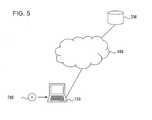
- An image recording program product according to which the CPU of a PC 150 executes the processing as shown in FIGS. 2A and 2B is supplied as a storage medium 200 (for example, CD-ROM) or data signals transmittedvia a communication network 400 (for example, the Internet) as shown in FIG. 5 .
- the PC 150 is supplied with a program for recording images through a CD-ROM 200.
- the program for recording images may be supplied in the following mode of supply.
- the PC 150 has a capability of being connected with the communication network 400.
- a server 300 is a computer that supplied the program for recording images.
- the server 300 stores the program for recording images in a storage medium such as a hard disk.
- the server 300 embodies the program for recording images that have been read out from the hard disk on a carrier wave as data signals to transmit the program to the PC 150 through the communication network 400.
- the program for recording images is supplied in various forms of computer program products including supplying as the storage medium 200 and data signals via the communication network 400.
Landscapes
- Engineering & Computer Science (AREA)
- Multimedia (AREA)
- Signal Processing (AREA)
- Health & Medical Sciences (AREA)
- General Health & Medical Sciences (AREA)
- Ophthalmology & Optometry (AREA)
- Human Computer Interaction (AREA)
- Physics & Mathematics (AREA)
- General Physics & Mathematics (AREA)
- Theoretical Computer Science (AREA)
- Studio Devices (AREA)
- Television Signal Processing For Recording (AREA)
- Image Processing (AREA)
- Image Analysis (AREA)
Applications Claiming Priority (1)
| Application Number | Priority Date | Filing Date | Title |
|---|---|---|---|
| JP2007277699A JP5169139B2 (ja) | 2007-10-25 | 2007-10-25 | カメラ、および画像記録プログラム |
Publications (3)
| Publication Number | Publication Date |
|---|---|
| EP2053843A2 true EP2053843A2 (de) | 2009-04-29 |
| EP2053843A3 EP2053843A3 (de) | 2011-11-23 |
| EP2053843B1 EP2053843B1 (de) | 2013-10-23 |
Family
ID=40325765
Family Applications (1)
| Application Number | Title | Priority Date | Filing Date |
|---|---|---|---|
| EP08167568.8A Not-in-force EP2053843B1 (de) | 2007-10-25 | 2008-10-24 | Kamera und Bildaufzeichnungsprogrammprodukt |
Country Status (4)
| Country | Link |
|---|---|
| US (1) | US8532345B2 (de) |
| EP (1) | EP2053843B1 (de) |
| JP (1) | JP5169139B2 (de) |
| CN (1) | CN101420527B (de) |
Cited By (1)
| Publication number | Priority date | Publication date | Assignee | Title |
|---|---|---|---|---|
| EP2237551A1 (de) * | 2009-03-31 | 2010-10-06 | Casio Computer Co., Ltd. | Bildauswahlvorrichtung und Bildauswahlverfahren |
Families Citing this family (13)
| Publication number | Priority date | Publication date | Assignee | Title |
|---|---|---|---|---|
| JP4924727B2 (ja) * | 2010-02-16 | 2012-04-25 | カシオ計算機株式会社 | 画像処理装置及び画像処理プログラム |
| JP5418327B2 (ja) * | 2010-03-16 | 2014-02-19 | 株式会社リコー | ビデオ会議装置 |
| JP2012109686A (ja) * | 2010-11-15 | 2012-06-07 | Olympus Imaging Corp | 撮像装置及び撮像方法 |
| US9888171B2 (en) | 2012-02-13 | 2018-02-06 | Htc Corporation | Mobile camera device capable of improving facial patterns of a captured image |
| WO2015074261A1 (zh) * | 2013-11-22 | 2015-05-28 | 华为终端有限公司 | 一种保存拍摄图像的方法以及电子设备 |
| CN105072327B (zh) * | 2015-07-15 | 2018-05-25 | 广东欧珀移动通信有限公司 | 一种防闭眼的人像拍摄处理的方法和装置 |
| CN105827969A (zh) * | 2016-03-29 | 2016-08-03 | 乐视控股(北京)有限公司 | 一种智能拍照的方法、装置及移动设备 |
| JP2017208750A (ja) * | 2016-05-20 | 2017-11-24 | ローム株式会社 | 映像監視装置、映像表示システム、及び車両 |
| CN106250426A (zh) * | 2016-07-25 | 2016-12-21 | 深圳天珑无线科技有限公司 | 一种照片处理方法和终端 |
| CN106570110B (zh) * | 2016-10-25 | 2020-09-08 | 北京小米移动软件有限公司 | 图像去重方法及装置 |
| CN108093170B (zh) * | 2017-11-30 | 2021-03-16 | Oppo广东移动通信有限公司 | 用户拍照方法、装置及设备 |
| WO2023175848A1 (ja) * | 2022-03-17 | 2023-09-21 | 日本電気株式会社 | 表示支援装置、表示支援方法、および記録媒体 |
| CN120111354A (zh) * | 2023-11-30 | 2025-06-06 | 荣耀终端股份有限公司 | 一种拍照方法、设备及存储介质 |
Citations (2)
| Publication number | Priority date | Publication date | Assignee | Title |
|---|---|---|---|---|
| JP2005039365A (ja) | 2003-07-16 | 2005-02-10 | Fuji Photo Film Co Ltd | ディジタル・カメラおよびその制御方法 |
| JP2007277699A (ja) | 2006-03-14 | 2007-10-25 | Jfe Steel Kk | 鋼板およびその製造方法 |
Family Cites Families (26)
| Publication number | Priority date | Publication date | Assignee | Title |
|---|---|---|---|---|
| US6181805B1 (en) * | 1993-08-11 | 2001-01-30 | Nippon Telegraph & Telephone Corporation | Object image detecting method and system |
| US5646388A (en) * | 1994-09-30 | 1997-07-08 | Lau Technologies | Systems and methods for recording data |
| US6850631B1 (en) * | 1998-02-20 | 2005-02-01 | Oki Electric Industry Co., Ltd. | Photographing device, iris input device and iris image input method |
| JP3271750B2 (ja) * | 1998-03-05 | 2002-04-08 | 沖電気工業株式会社 | アイリス識別コード抽出方法及び装置、アイリス認識方法及び装置、データ暗号化装置 |
| JP2001067459A (ja) * | 1999-08-26 | 2001-03-16 | Toshiba Corp | 顔画像処理方法および顔画像処理装置 |
| EP1376216B1 (de) | 1999-09-14 | 2010-11-17 | Kabushiki Kaisha Toshiba | Vorrichtung und Verfahren zur Gesichtsphotographie |
| JP2001148800A (ja) | 1999-11-18 | 2001-05-29 | Fuji Photo Film Co Ltd | デジタルカメラおよび画像処理方法 |
| JP2001331799A (ja) * | 2000-03-16 | 2001-11-30 | Toshiba Corp | 画像処理装置および画像処理方法 |
| DE60119418T2 (de) * | 2000-03-22 | 2007-05-24 | Kabushiki Kaisha Toshiba, Kawasaki | Gesichtsbildaufnehmendes Erkennungsgerät und Passüberprüfungsgerät |
| JP4265076B2 (ja) * | 2000-03-31 | 2009-05-20 | 沖電気工業株式会社 | 多画角カメラ、及び自動撮影装置 |
| WO2002102072A1 (en) * | 2001-06-06 | 2002-12-19 | Nikon Corporation | Electronic imaging apparatus and electronic imaging system |
| KR100854890B1 (ko) * | 2001-12-28 | 2008-08-28 | 엘지전자 주식회사 | 홍채 인식 시스템의 다중 조명을 이용한 홍채 등록 및인식방법 |
| JP4082203B2 (ja) | 2002-12-13 | 2008-04-30 | 日産自動車株式会社 | 開閉眼判定装置 |
| JP2004320286A (ja) | 2003-04-15 | 2004-11-11 | Nikon Gijutsu Kobo:Kk | デジタルカメラ |
| US7792335B2 (en) | 2006-02-24 | 2010-09-07 | Fotonation Vision Limited | Method and apparatus for selective disqualification of digital images |
| JP2005045600A (ja) * | 2003-07-23 | 2005-02-17 | Casio Comput Co Ltd | 画像撮影装置およびプログラム |
| ES2292924T3 (es) * | 2003-12-01 | 2008-03-16 | Sony Ericsson Mobile Communications Ab | Camara para registrar una secuencia de imagenes. |
| JP4350616B2 (ja) * | 2004-08-24 | 2009-10-21 | キヤノン株式会社 | 撮像装置及びその制御方法 |
| JP2006115406A (ja) * | 2004-10-18 | 2006-04-27 | Omron Corp | 撮像装置 |
| JP4471373B2 (ja) * | 2004-12-27 | 2010-06-02 | キヤノン株式会社 | 撮像装置及びその制御方法 |
| CN100358340C (zh) * | 2005-01-05 | 2007-12-26 | 张健 | 可选择最佳拍照时机的数码相机 |
| JP2006254229A (ja) * | 2005-03-11 | 2006-09-21 | Fuji Photo Film Co Ltd | 撮像装置、撮像方法及び撮像プログラム |
| JP4457980B2 (ja) * | 2005-06-21 | 2010-04-28 | ソニー株式会社 | 撮像装置、この装置の処理方法およびその方法をコンピュータに実行させるプログラム |
| JP4592099B2 (ja) * | 2005-09-29 | 2010-12-01 | キヤノン株式会社 | 画像表示装置及び画像表示方法 |
| JP4197019B2 (ja) * | 2006-08-02 | 2008-12-17 | ソニー株式会社 | 撮像装置および表情評価装置 |
| CN1946140A (zh) * | 2006-11-10 | 2007-04-11 | 北京中星微电子有限公司 | 数字图像处理方法和拍照装置 |
-
2007
- 2007-10-25 JP JP2007277699A patent/JP5169139B2/ja active Active
-
2008
- 2008-10-23 US US12/289,246 patent/US8532345B2/en active Active
- 2008-10-24 EP EP08167568.8A patent/EP2053843B1/de not_active Not-in-force
- 2008-10-27 CN CN200810169103.5A patent/CN101420527B/zh not_active Expired - Fee Related
Patent Citations (2)
| Publication number | Priority date | Publication date | Assignee | Title |
|---|---|---|---|---|
| JP2005039365A (ja) | 2003-07-16 | 2005-02-10 | Fuji Photo Film Co Ltd | ディジタル・カメラおよびその制御方法 |
| JP2007277699A (ja) | 2006-03-14 | 2007-10-25 | Jfe Steel Kk | 鋼板およびその製造方法 |
Cited By (2)
| Publication number | Priority date | Publication date | Assignee | Title |
|---|---|---|---|---|
| EP2237551A1 (de) * | 2009-03-31 | 2010-10-06 | Casio Computer Co., Ltd. | Bildauswahlvorrichtung und Bildauswahlverfahren |
| US8416312B2 (en) | 2009-03-31 | 2013-04-09 | Casio Computer Co., Ltd. | Image selection device and method for selecting image |
Also Published As
| Publication number | Publication date |
|---|---|
| CN101420527A (zh) | 2009-04-29 |
| EP2053843B1 (de) | 2013-10-23 |
| JP2009105816A (ja) | 2009-05-14 |
| EP2053843A3 (de) | 2011-11-23 |
| US8532345B2 (en) | 2013-09-10 |
| US20090110243A1 (en) | 2009-04-30 |
| CN101420527B (zh) | 2014-06-11 |
| JP5169139B2 (ja) | 2013-03-27 |
Similar Documents
| Publication | Publication Date | Title |
|---|---|---|
| EP2053843B1 (de) | Kamera und Bildaufzeichnungsprogrammprodukt | |
| CN100546344C (zh) | 数字相机、图像回放装置、面部图像显示装置及其控制方法 | |
| JP5273998B2 (ja) | 撮像装置、その制御方法及びプログラム | |
| KR101425929B1 (ko) | 디스플레이 기능을 갖춘 휴대 기기 | |
| JP4717539B2 (ja) | 撮像装置及び撮像方法 | |
| JP4626425B2 (ja) | 撮像装置、撮像方法及び撮像プログラム | |
| JP4154400B2 (ja) | 撮像装置及びその制御方法及びプログラム | |
| CN101753822A (zh) | 摄像装置和摄像装置中的图像处理方法 | |
| CN102209196B (zh) | 图像处理装置及图像评价方法 | |
| JP5361547B2 (ja) | 撮像装置及び撮影方法、プログラム | |
| JP2005323015A (ja) | デジタルカメラ | |
| US8866934B2 (en) | Image pickup apparatus capable of deleting video effect superimposed on moving image, method of controlling the apparatus, and moving image-recording apparatus, as well as storage medium | |
| JP2011186547A (ja) | 表示制御装置、およびその制御方法、プログラム、記憶媒体 | |
| JP4632417B2 (ja) | 撮像装置、及びその制御方法 | |
| US20030063208A1 (en) | Image pick-up apparatus | |
| JP2005323014A (ja) | デジタルカメラ | |
| JP2007110262A (ja) | 画像鑑賞用ソフトウェア及び画像蓄積装置 | |
| JP2007049631A (ja) | 撮像装置 | |
| JP2010239532A (ja) | 撮像装置及び撮影方法 | |
| KR101477535B1 (ko) | 이미지 검색 방법 및 장치, 이를 이용한 디지털 촬영 장치 | |
| JP2011109551A (ja) | 撮像装置 | |
| JP2014212404A (ja) | 撮像装置及びその制御方法、プログラム、並びに記憶媒体 | |
| JP2010039795A (ja) | 認識用データ生成装置及び電子カメラ、認識用データ生成プログラム、並びに認識用データ生成方法 | |
| WO2009157314A1 (ja) | 撮像装置 | |
| JP5145974B2 (ja) | カメラ、および画像表示装置 |
Legal Events
| Date | Code | Title | Description |
|---|---|---|---|
| PUAI | Public reference made under article 153(3) epc to a published international application that has entered the european phase |
Free format text: ORIGINAL CODE: 0009012 |
|
| AK | Designated contracting states |
Kind code of ref document: A2 Designated state(s): AT BE BG CH CY CZ DE DK EE ES FI FR GB GR HR HU IE IS IT LI LT LU LV MC MT NL NO PL PT RO SE SI SK TR |
|
| AX | Request for extension of the european patent |
Extension state: AL BA MK RS |
|
| RAP1 | Party data changed (applicant data changed or rights of an application transferred) |
Owner name: NIKON CORPORATION |
|
| PUAL | Search report despatched |
Free format text: ORIGINAL CODE: 0009013 |
|
| AK | Designated contracting states |
Kind code of ref document: A3 Designated state(s): AT BE BG CH CY CZ DE DK EE ES FI FR GB GR HR HU IE IS IT LI LT LU LV MC MT NL NO PL PT RO SE SI SK TR |
|
| AX | Request for extension of the european patent |
Extension state: AL BA MK RS |
|
| RIC1 | Information provided on ipc code assigned before grant |
Ipc: H04N 5/232 20060101AFI20111019BHEP |
|
| 17P | Request for examination filed |
Effective date: 20120523 |
|
| 17Q | First examination report despatched |
Effective date: 20120703 |
|
| AKX | Designation fees paid |
Designated state(s): AT BE BG CH CY CZ DE DK EE ES FI FR GB GR HR HU IE IS IT LI LT LU LV MC MT NL NO PL PT RO SE SI SK TR |
|
| GRAP | Despatch of communication of intention to grant a patent |
Free format text: ORIGINAL CODE: EPIDOSNIGR1 |
|
| INTG | Intention to grant announced |
Effective date: 20130502 |
|
| GRAS | Grant fee paid |
Free format text: ORIGINAL CODE: EPIDOSNIGR3 |
|
| GRAA | (expected) grant |
Free format text: ORIGINAL CODE: 0009210 |
|
| AK | Designated contracting states |
Kind code of ref document: B1 Designated state(s): AT BE BG CH CY CZ DE DK EE ES FI FR GB GR HR HU IE IS IT LI LT LU LV MC MT NL NO PL PT RO SE SI SK TR |
|
| REG | Reference to a national code |
Ref country code: GB Ref legal event code: FG4D |
|
| REG | Reference to a national code |
Ref country code: CH Ref legal event code: EP |
|
| REG | Reference to a national code |
Ref country code: AT Ref legal event code: REF Ref document number: 638114 Country of ref document: AT Kind code of ref document: T Effective date: 20131115 |
|
| REG | Reference to a national code |
Ref country code: IE Ref legal event code: FG4D |
|
| REG | Reference to a national code |
Ref country code: DE Ref legal event code: R096 Ref document number: 602008028257 Country of ref document: DE Effective date: 20131219 |
|
| REG | Reference to a national code |
Ref country code: NL Ref legal event code: VDEP Effective date: 20131023 |
|
| REG | Reference to a national code |
Ref country code: AT Ref legal event code: MK05 Ref document number: 638114 Country of ref document: AT Kind code of ref document: T Effective date: 20131023 |
|
| REG | Reference to a national code |
Ref country code: LT Ref legal event code: MG4D |
|
| PG25 | Lapsed in a contracting state [announced via postgrant information from national office to epo] |
Ref country code: FI Free format text: LAPSE BECAUSE OF FAILURE TO SUBMIT A TRANSLATION OF THE DESCRIPTION OR TO PAY THE FEE WITHIN THE PRESCRIBED TIME-LIMIT Effective date: 20131023 Ref country code: LT Free format text: LAPSE BECAUSE OF FAILURE TO SUBMIT A TRANSLATION OF THE DESCRIPTION OR TO PAY THE FEE WITHIN THE PRESCRIBED TIME-LIMIT Effective date: 20131023 Ref country code: HR Free format text: LAPSE BECAUSE OF FAILURE TO SUBMIT A TRANSLATION OF THE DESCRIPTION OR TO PAY THE FEE WITHIN THE PRESCRIBED TIME-LIMIT Effective date: 20131023 Ref country code: NO Free format text: LAPSE BECAUSE OF FAILURE TO SUBMIT A TRANSLATION OF THE DESCRIPTION OR TO PAY THE FEE WITHIN THE PRESCRIBED TIME-LIMIT Effective date: 20140123 Ref country code: NL Free format text: LAPSE BECAUSE OF FAILURE TO SUBMIT A TRANSLATION OF THE DESCRIPTION OR TO PAY THE FEE WITHIN THE PRESCRIBED TIME-LIMIT Effective date: 20131023 Ref country code: SE Free format text: LAPSE BECAUSE OF FAILURE TO SUBMIT A TRANSLATION OF THE DESCRIPTION OR TO PAY THE FEE WITHIN THE PRESCRIBED TIME-LIMIT Effective date: 20131023 Ref country code: IS Free format text: LAPSE BECAUSE OF FAILURE TO SUBMIT A TRANSLATION OF THE DESCRIPTION OR TO PAY THE FEE WITHIN THE PRESCRIBED TIME-LIMIT Effective date: 20140223 Ref country code: BE Free format text: LAPSE BECAUSE OF FAILURE TO SUBMIT A TRANSLATION OF THE DESCRIPTION OR TO PAY THE FEE WITHIN THE PRESCRIBED TIME-LIMIT Effective date: 20131023 |
|
| PG25 | Lapsed in a contracting state [announced via postgrant information from national office to epo] |
Ref country code: LV Free format text: LAPSE BECAUSE OF FAILURE TO SUBMIT A TRANSLATION OF THE DESCRIPTION OR TO PAY THE FEE WITHIN THE PRESCRIBED TIME-LIMIT Effective date: 20131023 Ref country code: ES Free format text: LAPSE BECAUSE OF FAILURE TO SUBMIT A TRANSLATION OF THE DESCRIPTION OR TO PAY THE FEE WITHIN THE PRESCRIBED TIME-LIMIT Effective date: 20131023 Ref country code: CY Free format text: LAPSE BECAUSE OF FAILURE TO SUBMIT A TRANSLATION OF THE DESCRIPTION OR TO PAY THE FEE WITHIN THE PRESCRIBED TIME-LIMIT Effective date: 20131023 Ref country code: AT Free format text: LAPSE BECAUSE OF FAILURE TO SUBMIT A TRANSLATION OF THE DESCRIPTION OR TO PAY THE FEE WITHIN THE PRESCRIBED TIME-LIMIT Effective date: 20131023 |
|
| REG | Reference to a national code |
Ref country code: CH Ref legal event code: PL |
|
| PG25 | Lapsed in a contracting state [announced via postgrant information from national office to epo] |
Ref country code: PT Free format text: LAPSE BECAUSE OF FAILURE TO SUBMIT A TRANSLATION OF THE DESCRIPTION OR TO PAY THE FEE WITHIN THE PRESCRIBED TIME-LIMIT Effective date: 20140224 |
|
| REG | Reference to a national code |
Ref country code: DE Ref legal event code: R097 Ref document number: 602008028257 Country of ref document: DE |
|
| REG | Reference to a national code |
Ref country code: IE Ref legal event code: MM4A |
|
| PG25 | Lapsed in a contracting state [announced via postgrant information from national office to epo] |
Ref country code: MC Free format text: LAPSE BECAUSE OF FAILURE TO SUBMIT A TRANSLATION OF THE DESCRIPTION OR TO PAY THE FEE WITHIN THE PRESCRIBED TIME-LIMIT Effective date: 20131023 Ref country code: EE Free format text: LAPSE BECAUSE OF FAILURE TO SUBMIT A TRANSLATION OF THE DESCRIPTION OR TO PAY THE FEE WITHIN THE PRESCRIBED TIME-LIMIT Effective date: 20131023 Ref country code: CH Free format text: LAPSE BECAUSE OF NON-PAYMENT OF DUE FEES Effective date: 20131031 Ref country code: LI Free format text: LAPSE BECAUSE OF NON-PAYMENT OF DUE FEES Effective date: 20131031 |
|
| PG25 | Lapsed in a contracting state [announced via postgrant information from national office to epo] |
Ref country code: IT Free format text: LAPSE BECAUSE OF FAILURE TO SUBMIT A TRANSLATION OF THE DESCRIPTION OR TO PAY THE FEE WITHIN THE PRESCRIBED TIME-LIMIT Effective date: 20131023 Ref country code: PL Free format text: LAPSE BECAUSE OF FAILURE TO SUBMIT A TRANSLATION OF THE DESCRIPTION OR TO PAY THE FEE WITHIN THE PRESCRIBED TIME-LIMIT Effective date: 20131023 Ref country code: RO Free format text: LAPSE BECAUSE OF FAILURE TO SUBMIT A TRANSLATION OF THE DESCRIPTION OR TO PAY THE FEE WITHIN THE PRESCRIBED TIME-LIMIT Effective date: 20131023 Ref country code: CZ Free format text: LAPSE BECAUSE OF FAILURE TO SUBMIT A TRANSLATION OF THE DESCRIPTION OR TO PAY THE FEE WITHIN THE PRESCRIBED TIME-LIMIT Effective date: 20131023 Ref country code: SK Free format text: LAPSE BECAUSE OF FAILURE TO SUBMIT A TRANSLATION OF THE DESCRIPTION OR TO PAY THE FEE WITHIN THE PRESCRIBED TIME-LIMIT Effective date: 20131023 |
|
| PLBE | No opposition filed within time limit |
Free format text: ORIGINAL CODE: 0009261 |
|
| STAA | Information on the status of an ep patent application or granted ep patent |
Free format text: STATUS: NO OPPOSITION FILED WITHIN TIME LIMIT |
|
| PG25 | Lapsed in a contracting state [announced via postgrant information from national office to epo] |
Ref country code: DK Free format text: LAPSE BECAUSE OF FAILURE TO SUBMIT A TRANSLATION OF THE DESCRIPTION OR TO PAY THE FEE WITHIN THE PRESCRIBED TIME-LIMIT Effective date: 20131023 |
|
| 26N | No opposition filed |
Effective date: 20140724 |
|
| PG25 | Lapsed in a contracting state [announced via postgrant information from national office to epo] |
Ref country code: IE Free format text: LAPSE BECAUSE OF NON-PAYMENT OF DUE FEES Effective date: 20131024 |
|
| REG | Reference to a national code |
Ref country code: DE Ref legal event code: R097 Ref document number: 602008028257 Country of ref document: DE Effective date: 20140724 |
|
| PGFP | Annual fee paid to national office [announced via postgrant information from national office to epo] |
Ref country code: FR Payment date: 20141008 Year of fee payment: 7 Ref country code: DE Payment date: 20141023 Year of fee payment: 7 Ref country code: GB Payment date: 20141022 Year of fee payment: 7 |
|
| PG25 | Lapsed in a contracting state [announced via postgrant information from national office to epo] |
Ref country code: SI Free format text: LAPSE BECAUSE OF FAILURE TO SUBMIT A TRANSLATION OF THE DESCRIPTION OR TO PAY THE FEE WITHIN THE PRESCRIBED TIME-LIMIT Effective date: 20131023 |
|
| PG25 | Lapsed in a contracting state [announced via postgrant information from national office to epo] |
Ref country code: TR Free format text: LAPSE BECAUSE OF FAILURE TO SUBMIT A TRANSLATION OF THE DESCRIPTION OR TO PAY THE FEE WITHIN THE PRESCRIBED TIME-LIMIT Effective date: 20131023 |
|
| PG25 | Lapsed in a contracting state [announced via postgrant information from national office to epo] |
Ref country code: BG Free format text: LAPSE BECAUSE OF FAILURE TO SUBMIT A TRANSLATION OF THE DESCRIPTION OR TO PAY THE FEE WITHIN THE PRESCRIBED TIME-LIMIT Effective date: 20131023 Ref country code: LU Free format text: LAPSE BECAUSE OF NON-PAYMENT OF DUE FEES Effective date: 20131024 Ref country code: HU Free format text: LAPSE BECAUSE OF FAILURE TO SUBMIT A TRANSLATION OF THE DESCRIPTION OR TO PAY THE FEE WITHIN THE PRESCRIBED TIME-LIMIT; INVALID AB INITIO Effective date: 20081024 |
|
| PG25 | Lapsed in a contracting state [announced via postgrant information from national office to epo] |
Ref country code: GR Free format text: LAPSE BECAUSE OF NON-PAYMENT OF DUE FEES Effective date: 20131023 Ref country code: MT Free format text: LAPSE BECAUSE OF FAILURE TO SUBMIT A TRANSLATION OF THE DESCRIPTION OR TO PAY THE FEE WITHIN THE PRESCRIBED TIME-LIMIT Effective date: 20131023 |
|
| REG | Reference to a national code |
Ref country code: DE Ref legal event code: R119 Ref document number: 602008028257 Country of ref document: DE |
|
| GBPC | Gb: european patent ceased through non-payment of renewal fee |
Effective date: 20151024 |
|
| PG25 | Lapsed in a contracting state [announced via postgrant information from national office to epo] |
Ref country code: GR Free format text: LAPSE BECAUSE OF FAILURE TO SUBMIT A TRANSLATION OF THE DESCRIPTION OR TO PAY THE FEE WITHIN THE PRESCRIBED TIME-LIMIT Effective date: 20140124 |
|
| PG25 | Lapsed in a contracting state [announced via postgrant information from national office to epo] |
Ref country code: DE Free format text: LAPSE BECAUSE OF NON-PAYMENT OF DUE FEES Effective date: 20160503 Ref country code: GB Free format text: LAPSE BECAUSE OF NON-PAYMENT OF DUE FEES Effective date: 20151024 |
|
| REG | Reference to a national code |
Ref country code: FR Ref legal event code: ST Effective date: 20160630 |
|
| PG25 | Lapsed in a contracting state [announced via postgrant information from national office to epo] |
Ref country code: FR Free format text: LAPSE BECAUSE OF NON-PAYMENT OF DUE FEES Effective date: 20151102 |