EP2053684A2 - Brennstoffzellensystem und Verfahren zum Berechnen des Brennstoffstands - Google Patents
Brennstoffzellensystem und Verfahren zum Berechnen des Brennstoffstands Download PDFInfo
- Publication number
- EP2053684A2 EP2053684A2 EP20080253350 EP08253350A EP2053684A2 EP 2053684 A2 EP2053684 A2 EP 2053684A2 EP 20080253350 EP20080253350 EP 20080253350 EP 08253350 A EP08253350 A EP 08253350A EP 2053684 A2 EP2053684 A2 EP 2053684A2
- Authority
- EP
- European Patent Office
- Prior art keywords
- fuel
- fuel cell
- cell system
- cartridge
- computing unit
- Prior art date
- Legal status (The legal status is an assumption and is not a legal conclusion. Google has not performed a legal analysis and makes no representation as to the accuracy of the status listed.)
- Granted
Links
Images



Classifications
-
- G—PHYSICS
- G01—MEASURING; TESTING
- G01F—MEASURING VOLUME, VOLUME FLOW, MASS FLOW OR LIQUID LEVEL; METERING BY VOLUME
- G01F23/00—Indicating or measuring liquid level or level of fluent solid material, e.g. indicating in terms of volume or indicating by means of an alarm
- G01F23/02—Indicating or measuring liquid level or level of fluent solid material, e.g. indicating in terms of volume or indicating by means of an alarm by gauge glasses or other apparatus involving a window or transparent tube for directly observing the level to be measured or the level of a liquid column in free communication with the main body of the liquid
-
- H—ELECTRICITY
- H01—ELECTRIC ELEMENTS
- H01M—PROCESSES OR MEANS, e.g. BATTERIES, FOR THE DIRECT CONVERSION OF CHEMICAL ENERGY INTO ELECTRICAL ENERGY
- H01M8/00—Fuel cells; Manufacture thereof
- H01M8/04—Auxiliary arrangements, e.g. for control of pressure or for circulation of fluids
-
- H—ELECTRICITY
- H01—ELECTRIC ELEMENTS
- H01M—PROCESSES OR MEANS, e.g. BATTERIES, FOR THE DIRECT CONVERSION OF CHEMICAL ENERGY INTO ELECTRICAL ENERGY
- H01M8/00—Fuel cells; Manufacture thereof
- H01M8/04—Auxiliary arrangements, e.g. for control of pressure or for circulation of fluids
- H01M8/04082—Arrangements for control of reactant parameters, e.g. pressure or concentration
- H01M8/04186—Arrangements for control of reactant parameters, e.g. pressure or concentration of liquid-charged or electrolyte-charged reactants
-
- H—ELECTRICITY
- H01—ELECTRIC ELEMENTS
- H01M—PROCESSES OR MEANS, e.g. BATTERIES, FOR THE DIRECT CONVERSION OF CHEMICAL ENERGY INTO ELECTRICAL ENERGY
- H01M8/00—Fuel cells; Manufacture thereof
- H01M8/04—Auxiliary arrangements, e.g. for control of pressure or for circulation of fluids
- H01M8/04082—Arrangements for control of reactant parameters, e.g. pressure or concentration
- H01M8/04201—Reactant storage and supply, e.g. means for feeding, pipes
- H01M8/04208—Cartridges, cryogenic media or cryogenic reservoirs
-
- H—ELECTRICITY
- H01—ELECTRIC ELEMENTS
- H01M—PROCESSES OR MEANS, e.g. BATTERIES, FOR THE DIRECT CONVERSION OF CHEMICAL ENERGY INTO ELECTRICAL ENERGY
- H01M8/00—Fuel cells; Manufacture thereof
- H01M8/04—Auxiliary arrangements, e.g. for control of pressure or for circulation of fluids
- H01M8/04298—Processes for controlling fuel cells or fuel cell systems
- H01M8/04313—Processes for controlling fuel cells or fuel cell systems characterised by the detection or assessment of variables; characterised by the detection or assessment of failure or abnormal function
- H01M8/0438—Pressure; Ambient pressure; Flow
- H01M8/04388—Pressure; Ambient pressure; Flow of anode reactants at the inlet or inside the fuel cell
-
- H—ELECTRICITY
- H01—ELECTRIC ELEMENTS
- H01M—PROCESSES OR MEANS, e.g. BATTERIES, FOR THE DIRECT CONVERSION OF CHEMICAL ENERGY INTO ELECTRICAL ENERGY
- H01M8/00—Fuel cells; Manufacture thereof
- H01M8/04—Auxiliary arrangements, e.g. for control of pressure or for circulation of fluids
- H01M8/04298—Processes for controlling fuel cells or fuel cell systems
- H01M8/04694—Processes for controlling fuel cells or fuel cell systems characterised by variables to be controlled
- H01M8/04955—Shut-off or shut-down of fuel cells
-
- H—ELECTRICITY
- H01—ELECTRIC ELEMENTS
- H01M—PROCESSES OR MEANS, e.g. BATTERIES, FOR THE DIRECT CONVERSION OF CHEMICAL ENERGY INTO ELECTRICAL ENERGY
- H01M8/00—Fuel cells; Manufacture thereof
- H01M8/10—Fuel cells with solid electrolytes
- H01M8/1009—Fuel cells with solid electrolytes with one of the reactants being liquid, solid or liquid-charged
- H01M8/1011—Direct alcohol fuel cells [DAFC], e.g. direct methanol fuel cells [DMFC]
-
- Y—GENERAL TAGGING OF NEW TECHNOLOGICAL DEVELOPMENTS; GENERAL TAGGING OF CROSS-SECTIONAL TECHNOLOGIES SPANNING OVER SEVERAL SECTIONS OF THE IPC; TECHNICAL SUBJECTS COVERED BY FORMER USPC CROSS-REFERENCE ART COLLECTIONS [XRACs] AND DIGESTS
- Y02—TECHNOLOGIES OR APPLICATIONS FOR MITIGATION OR ADAPTATION AGAINST CLIMATE CHANGE
- Y02E—REDUCTION OF GREENHOUSE GAS [GHG] EMISSIONS, RELATED TO ENERGY GENERATION, TRANSMISSION OR DISTRIBUTION
- Y02E60/00—Enabling technologies; Technologies with a potential or indirect contribution to GHG emissions mitigation
- Y02E60/30—Hydrogen technology
- Y02E60/50—Fuel cells
-
- Y—GENERAL TAGGING OF NEW TECHNOLOGICAL DEVELOPMENTS; GENERAL TAGGING OF CROSS-SECTIONAL TECHNOLOGIES SPANNING OVER SEVERAL SECTIONS OF THE IPC; TECHNICAL SUBJECTS COVERED BY FORMER USPC CROSS-REFERENCE ART COLLECTIONS [XRACs] AND DIGESTS
- Y02—TECHNOLOGIES OR APPLICATIONS FOR MITIGATION OR ADAPTATION AGAINST CLIMATE CHANGE
- Y02P—CLIMATE CHANGE MITIGATION TECHNOLOGIES IN THE PRODUCTION OR PROCESSING OF GOODS
- Y02P70/00—Climate change mitigation technologies in the production process for final industrial or consumer products
- Y02P70/50—Manufacturing or production processes characterised by the final manufactured product
Definitions
- the present embodiments relate to a fuel cell system for refilling fuel through a cartridge exchange, and in particular to a fuel cell system having a cartridge stored with liquid fuel and a method of computing the fuel level remaining in the cartridge.
- a fuel cell is a power generation system for directly converting chemical energy into electric energy by means of an electrochemical reaction of hydrogen and oxygen.
- hydrogen pure hydrogen may be directly supplied to the fuel cell, or hydrogen obtained by reforming materials such as methanol, ethanol, natural gas, etc., may be supplied thereto.
- oxygen pure oxygen may be directly supplied to the fuel cell system, or oxygen contained in general air using an air pump may be supplied thereto.
- the fuel cell may be sorted into a polymer electrolyte membrane fuel cell and a direct methanol fuel cell operating at temperature of 100°C or less, a phosphoric acid fuel cell operating at about 150 to 200 °C, a molten carbonate fuel cell operating at a temperature of 600 to 700°C, and a solid oxide fuel cell operating at a temperature of 1000°C or more.
- These respective fuel cells are basically the same in view of a principle of generating electricity, but use different sorts of fuels, catalysts, electrolytes, etc.
- the direct methanol fuel cell directly uses fuel that is a mixture of high concentration methanol of liquid phase and water instead of using hydrogen as fuel.
- the direct methanol fuel cell is lower in output density than a fuel cell using hydrogen as direct fuel.
- the direct methanol fuel cell has advantages in that it has a high energy density per volume of methanol used as fuel, easily stores the fuel, and is adapted to a situation that the fuel cell is required to operate at a low output and for a long time.
- the direct methanol fuel cell can be more compactly constituted because an additional device, such as a reformer for reforming fuel to generate hydrogen, etc., is not needed.
- the direct methanol fuel cell includes a membrane electrode assembly (MEA) including a polymer electrolyte membrane, and an anode electrode and a cathode electrode contacted to both sides of the polymer electrolyte membrane.
- MEA membrane electrode assembly
- the polymer electrode membrane fluoro polymer is used.
- the methanol is excessively rapidly permeated into the fluoro polymer membrane, a crossover phenomenon transmitting non-reactive methanol to the polymer electrolyte membrane occurs when the direct methanol fuel cell uses high concentration methanol as fuel. Accordingly, in order to lower the concentration of methanol, the mixing fuel mixing methanol with water must be supplied to the fuel cell system.
- the present embodiments solve the above problems and provides additional advantages as well. It is an object of the present embodiments to provide a fuel cell system capable of sensing the fuel exhaustion in a cartridge beforehand with a low cost.
- a fuel cell system of the present embodiments includes: a fuel cartridge for storing fuel; a fuel cell stack for generating power by means of the electrochemical reaction of fuel and oxygen; a fuel pump for sucking fuel stored in the fuel cartridge; a pressure sensor positioned in a fuel channel between a coupling unit of the fuel cartridge and the fuel pump; and a fuel level computing unit for computing a time point when the fuel exhaustion in the fuel cartridge is near.
- a method of computing a fuel level performed in a fuel cell system of the present embodiments includes: monitoring pressure in a fuel channel prior to a fuel pump; and if a difference in the pressure exceeds a first predetermined reference value during predetermined time, computing that the fuel exhaustion is near.
- a fuel cell as set out in Claim 1.
- Preferred features of this aspect are set out in Claims 2-11.
- a method of computing a fuel level performed in a fuel cell system as set out in Claim 12.
- Preferred features of this aspect are set out in Claims 13-15.
- a fuel cell first and comprising: a fuel cartridge storing fuel; a fuel stack configured to generate power by means of the electrochemical reaction of fuel and oxygen; a fuel pump configured to suck fuel stored in the fuel cartridge; a pressure sensor positioned in a fuel channel between a coupling unit of the fuel cartridge and the fuel pump; and a fuel level computing unit configured to compute a time point when the fuel exhaustion in the fuel cartridge is near.
- FIG. 1 is a schematic view showing a fuel cell system according to one embodiment
- FIG. 2 is a graph showing a pressure change in a fuel channel prior to a fuel pump when using a pouch type cartridge
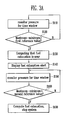
- FIG. 3A is a flow chart showing one embodiment of a method of computing a fuel level performed in the fuel level computing unit of FIG. 1 ;
- FIG. 3B is a flow chart showing another embodiment of a method of computing a fuel level performed in the fuel level computing unit of FIG. 1 .
- the fuel cell stack used in the description of the present embodiments includes a stack comprising stacked type unit cells, a stack comprising flat type unit cells, and a unit stack including single unit cells.
- the present embodiments are described based on the direct methanol fuel cell including a mixing tank for recycling non-reactive fuel.
- the idea of the present embodiments can be applied to any of fuel cell systems using liquid fuel (for example, ethanol, acetic acid, hydrogen containing alloy solution, etc). This also belongs to the scope of the present embodiments.
- first element when a first element is described as being coupled to a second element, the first element may be not only directly coupled to the second element but may also be indirectly coupled to the second element via a third element. Further, elements that are not essential to the complete understanding of the present are omitted for clarity. Also, like reference numerals refer to like elements throughout.
- FIG. 1 shows a basic structure of a DMFC fuel cell system which is a cartridge exchange mode according to the present embodiments.
- FIG. 1 shows a fuel cell system including a mixing tank 120 for diluting fuel in a fuel cartridge 180 by mixing it with cathode by-products of a fuel cell stack 130.
- a mixing tank 120 for diluting fuel in a fuel cartridge 180 by mixing it with cathode by-products of a fuel cell stack 130.
- the idea of the present embodiments can be applied to a fuel cell system without a mixing tank.
- the mixing tank 120 receives effluents of the fuel cell stack 130 from one pipe, but actually receives both cathode effluents and anode effluents of a MEA including the fuel cell stack 130.
- a condenser for condensing a gas component of the effluents of the fuel cell stack 130 into a liquid component can be provided in the pipe of the mixing tank 120 and the fuel cell stack 130.
- High concentration methanol is stored in the fuel cartridge 180 serving as the fuel tank. If the fuel cartridge 180 and the fuel cell system 100 are combined, the fuel cell system 100 can receive the fuel from the fuel outlet of the fuel cartridge 180 by using a fuel pump 118.
- the fuel cartridge 180 includes a pouch 186 storing the liquid fuel, and the liquid fuel stored in the pouch 186 is moved to the fuel pump 118 of the combined fuel cell system 100 via an exhaust pipe 184.
- the pouch 186 can be implemented by a plastic material such as PVC, etc., and has the property that when it is crushed and its volume is reduced, this occurs without a change in its surface area when the fuel stored therein is consumed.
- the mixing tank 120 mixes the high concentration fuel received from the fuel cartridge 180 with the cathode products of the fuel cell stack 130 to produce a methanol aqueous solution with proper concentration and to supply it to the anode of the fuel cell stack 130.
- the power converter 160 converts voltage/current of power generated by the electrochemical reaction in the fuel cell stack to be compliant with usage and transfers it to an external load and supplies some power as a driving power for components in the fuel cell, in particular a driving controller 150 and/or a fuel level computing unit 142.
- the fuel pump 118 performs a pumping according to an instruction of the driving controller 150. Accordingly, force intending to maintain the internal volume of the pouch 186 is applied by the self-elasticity of the pouch 186 and the fuel channel 114 of the fuel cell system 100 is applied with some negative pressure by means of this force.
- a pressure sensor 116 senses a fuel pressure in the fuel channel 114.
- FIG. 2 is a graph showing a change in a sensing value detected in a pressure sensor when the fuel cartridge comprising the pouch of PVC material is applied to the fuel cell system according to the present embodiments.
- the fuel level computing unit 142 monitors the sensing value of the pressure sensor 116 to recognize a point where the pressure rapidly drops 5 minutes before the fuel exhaustion. Thereafter, the fuel level computing unit judges the time point as a time point where the fuel exhaustion is near. By the fuel estimation being “near” it is meant that the level of fuel has gone below a threshold level. In other words, the fuel level computing unit 142 computes that fuel exhaustion is likely to occur within a certain time period (approximately five minutes in this embodiment) based upon a drop in pressure exceeding a threshold as measured by the pressure sensor 116. This pressure drop is indicative of the fuel in the fuel cell dropping below the threshold.
- the fuel level computing unit 142 judges as a point where the fuel exhaustion is near, it can inform a user of the fuel exhaustion using, for example, sound, voice or light such as an LED, etc., and/or perform the driving stop of the fuel cell system.
- the fuel cell system of FIG. 1 includes a display device 149 such as an LED, etc.
- the fuel pump 118 first stops and other components stop when the power generation capacity of the fuel cell stack 130 is dropped due to the stop of the supply of fuel.
- the fuel pump 118 may use a linear motor type pump, however, in some embodiments a compact system uses a diaphragm pump with a pumping pressure in a pulse form, etc.
- a diaphragm pump when there is sufficient fuel in the fuel cell system, the pumping pressure according to the pumping of the diaphragm pump with respect to the pumping signal in the pulse form has no great effect on the sensing value of the pressure sensor.
- the method of computing fuel residuals performed in the fuel level computing unit includes (a) monitoring pressure in the fuel channel prior to the fuel pump (S110); and (b) if the difference in pressure for a predetermined time window exceeds a predetermined reference value (S120), judging that the fuel is almost exhausted (S130). When it is judged that the fuel is almost exhausted, the method further includes displaying an alert message (S140).
- the starting point and the ending point are varied with the passage of time when monitoring the pressure, and since the interval therebetween requires the pressure sensing values in a constant time interval (referred to as a time window), the pressure sensing values are stored in a predetermined time window during which a boundary moves with the passage of time by using a circulation buffer.
- the fuel level computing unit periodically obtains the pressure sensing values.
- the recent pressure sensing values are overwritten on a position where the pressure sensing values at the first time point are stored. With this, the sensing values obtained at the time point corresponding to the time window with a constant size at any time are stored.
- step (b) searches the maximum value and the minimum value of the pressure sensing values stored in the circulation buffer are searched to judge the difference therebetween as the difference in pressure.
- step (c) a user can be informed that the fuel cartridge can be soon exhausted by using a display means such as an LED or an LCD or an acoustic means such as a speaker installed in the fuel cell system.
- a display means such as an LED or an LCD or an acoustic means such as a speaker installed in the fuel cell system.
- the pressure sensing value when observing a waveform of a pressure measuring value during the fuel exhaustion and a waveform of a pressure measuring value when the fuel is almost exhausted, the pressure sensing value is rapidly reduced by a first predetermined gap at any time point (5 minutes age in the graph) during the fuel exhaustion and when the fuel is almost exhausted, the waveform in the pressure sensing value greatly fluctuates so that the difference between the maximum value and the minimum value is much greater than the first gap.
- the method of computing the time point where the fuel is almost exhausted in order to make two-step measures such as the alert and the system stop corresponding to the fuel exhaustion there are a first method judging that the fuel is almost exhausted when the difference between the maximum value and the minimum value of the pressure sensing value in the time window is larger than a second predetermined reference value that is larger than the first gap, a second method judging that the fuel is almost exhausted when the predetermined time (5 minutes in the graph) is elapsed from a time point where the fuel exhaustion is near as judged in the step (b), and a third method judging that the fuel is almost exhausted from a generation frequency of a ripple in the waveform of the monitored pressure sensing value.
- the implementation of the third method is considerably complicated.
- the method of computing a fuel level in the present embodiment may further include: (d) if it is judged that the fuel exhaustion is near in the step (b), continuously monitoring (S150) the pressure in the fuel channel prior to the fuel pump along with the performance of the step (c); (e) stopping (S190) the fuel cell system by judging the fuel exhaustion when the difference in pressure exceeds the second predetermined reference value (S160) for a predetermined time.
- steps (d) and (e) are omitted, and the steps (d) and (e) can be replaced by step (f) of counting (S170) the passage of time from a time point where the fuel exhaustion judged in the step (b) is near; and (g) if the counted value exceeds the predetermined reference time (S180), stopping (S195) the fuel cell system by judging as the fuel exhaustion.
- the driving of the fuel cell system stops in the steps (e) and (g). At this time, it is exemplary to first stop the fuel pump rather than abruptly and simultaneously stop the entire fuel cell system in order to prevent the injection of air to the fuel cell stack and then to stop other components if the fuel filled in the fuel cell stack is exhausted so that the output voltage is lowered and the present embodiments are not limited hereto.
- the fuel exhaustion in the cartridge can be sensed at a low cost so that the damage of MEA in the fuel cell can be prevented and the inconvenience or the unexpected damage to a user's data can be prevented.
Landscapes
- Life Sciences & Earth Sciences (AREA)
- Engineering & Computer Science (AREA)
- Manufacturing & Machinery (AREA)
- Sustainable Development (AREA)
- Sustainable Energy (AREA)
- Chemical & Material Sciences (AREA)
- Chemical Kinetics & Catalysis (AREA)
- Electrochemistry (AREA)
- General Chemical & Material Sciences (AREA)
- Physics & Mathematics (AREA)
- Fluid Mechanics (AREA)
- General Physics & Mathematics (AREA)
- Fuel Cell (AREA)
Applications Claiming Priority (1)
| Application Number | Priority Date | Filing Date | Title |
|---|---|---|---|
| KR1020070106768A KR100986870B1 (ko) | 2007-10-23 | 2007-10-23 | 연료전지 시스템 및 그 연료량 판단 방법 |
Publications (3)
| Publication Number | Publication Date |
|---|---|
| EP2053684A2 true EP2053684A2 (de) | 2009-04-29 |
| EP2053684A3 EP2053684A3 (de) | 2009-08-12 |
| EP2053684B1 EP2053684B1 (de) | 2015-12-09 |
Family
ID=40380072
Family Applications (1)
| Application Number | Title | Priority Date | Filing Date |
|---|---|---|---|
| EP08253350.6A Not-in-force EP2053684B1 (de) | 2007-10-23 | 2008-10-16 | Brennstoffzellensystem und Verfahren zum Berechnen des Brennstofffüllstands |
Country Status (5)
| Country | Link |
|---|---|
| US (1) | US7838162B2 (de) |
| EP (1) | EP2053684B1 (de) |
| JP (1) | JP4987690B2 (de) |
| KR (1) | KR100986870B1 (de) |
| CN (1) | CN101420039B (de) |
Families Citing this family (4)
| Publication number | Priority date | Publication date | Assignee | Title |
|---|---|---|---|---|
| US9027483B2 (en) * | 2012-04-11 | 2015-05-12 | Electro-Motive Diesel, Inc. | Flow battery power converter |
| KR102559199B1 (ko) * | 2015-11-02 | 2023-07-25 | 삼성전자주식회사 | 배터리 관리 방법 및 배터리 관리 장치 |
| JP7434051B2 (ja) * | 2020-05-13 | 2024-02-20 | 株式会社クボタ | 作業機 |
| WO2021132513A1 (ja) | 2019-12-25 | 2021-07-01 | 株式会社クボタ | 作業機 |
Family Cites Families (21)
| Publication number | Priority date | Publication date | Assignee | Title |
|---|---|---|---|---|
| US19135A (en) * | 1858-01-19 | Improvement in sewing-machines | ||
| US204803A (en) * | 1878-06-11 | Improvement in stencils | ||
| US118468A (en) * | 1871-08-29 | Improvement in elevators | ||
| JP4202100B2 (ja) | 2002-11-29 | 2008-12-24 | 本田技研工業株式会社 | 燃料電池システムの機能維持方法 |
| JP3742385B2 (ja) | 2002-12-26 | 2006-02-01 | 株式会社東芝 | 直接型メタノール燃料電池システム、携帯用電子機器及び直接型メタノール燃料電池システムの液体燃料残存量の検出方法 |
| US20040173615A1 (en) | 2003-03-07 | 2004-09-09 | Goodman John B. | Fuel storage container for a fuel cell |
| JP2004288575A (ja) | 2003-03-25 | 2004-10-14 | Mitsubishi Electric Corp | 携帯機器用燃料電池電源システムとその駆動方法 |
| US7788048B2 (en) | 2003-04-24 | 2010-08-31 | Hewlett-Packard Development Company, L.P. | Apparatus and method for integrating a fuel supply and a fuel level sensing pressure sensor |
| TWI258885B (en) * | 2003-09-25 | 2006-07-21 | Casio Computer Co Ltd | Electricity generating, fuel package and fuel residue measuring device |
| US7655331B2 (en) * | 2003-12-01 | 2010-02-02 | Societe Bic | Fuel cell supply including information storage device and control system |
| US7642742B2 (en) | 2003-12-01 | 2010-01-05 | Societe Bic | Fuel cell system with fuel supply monitoring system and method of use |
| JP2005302471A (ja) | 2004-04-09 | 2005-10-27 | Matsushita Electric Ind Co Ltd | 燃料電池用燃料残量計、燃料電池システム、及び電子機器 |
| WO2006010012A2 (en) | 2004-07-08 | 2006-01-26 | Direct Methanol Fuel Cell Corporation | Fuel cell cartridge and fuel delivery system |
| WO2006017375A2 (en) | 2004-08-06 | 2006-02-16 | Ultracell Corporation | Method and system for controlling fluid delivery in a fuel cell |
| JP4803987B2 (ja) | 2004-09-28 | 2011-10-26 | キヤノン株式会社 | 残量出力機能付き燃料電池、燃料電池の残量出力方法及び燃料電池の残量検出機能を備えた電子機器 |
| JP2006252954A (ja) * | 2005-03-10 | 2006-09-21 | Fujitsu Ltd | 燃料電池装置、その制御方法及び電子機器 |
| JP2006278270A (ja) | 2005-03-30 | 2006-10-12 | Kyocera Corp | 燃料供給用カートリッジ及び燃料電池式携帯機器用置き台 |
| KR100670489B1 (ko) * | 2005-09-27 | 2007-01-16 | 삼성에스디아이 주식회사 | 연료전지 시스템 |
| DE102006016453A1 (de) * | 2006-04-07 | 2007-10-11 | Bayerische Motoren Werke Ag | Kraftfahrzeug mit einem elektrischen Bordnetz mit Akkumulator und Brennstoffzelle |
| JP4998695B2 (ja) * | 2006-12-01 | 2012-08-15 | トヨタ自動車株式会社 | 燃料電池システム |
| JP2009093798A (ja) * | 2007-10-03 | 2009-04-30 | Mitsubishi Pencil Co Ltd | 燃料貯蔵容器の残量検知方法 |
-
2007
- 2007-10-23 KR KR1020070106768A patent/KR100986870B1/ko not_active Expired - Fee Related
- 2007-12-27 JP JP2007337943A patent/JP4987690B2/ja not_active Expired - Fee Related
-
2008
- 2008-06-16 US US12/214,351 patent/US7838162B2/en not_active Expired - Fee Related
- 2008-10-14 CN CN2008101702379A patent/CN101420039B/zh not_active Expired - Fee Related
- 2008-10-16 EP EP08253350.6A patent/EP2053684B1/de not_active Not-in-force
Non-Patent Citations (1)
| Title |
|---|
| None |
Also Published As
| Publication number | Publication date |
|---|---|
| KR100986870B1 (ko) | 2010-10-08 |
| EP2053684A3 (de) | 2009-08-12 |
| KR20090041186A (ko) | 2009-04-28 |
| CN101420039B (zh) | 2012-05-23 |
| JP2009105023A (ja) | 2009-05-14 |
| JP4987690B2 (ja) | 2012-07-25 |
| US20090104492A1 (en) | 2009-04-23 |
| US7838162B2 (en) | 2010-11-23 |
| EP2053684B1 (de) | 2015-12-09 |
| CN101420039A (zh) | 2009-04-29 |
Similar Documents
| Publication | Publication Date | Title |
|---|---|---|
| CN102918694B (zh) | 燃料电池系统及其控制方法 | |
| EP2385572A1 (de) | Brennstoffzellensystem und elektronische vorrichtung | |
| JP4697380B2 (ja) | 燃料電池装置及び燃料電池の燃料供給方法 | |
| EP2053684B1 (de) | Brennstoffzellensystem und Verfahren zum Berechnen des Brennstofffüllstands | |
| JPWO2012026052A1 (ja) | 燃料電池の劣化判定方法 | |
| EP1798796B1 (de) | Ansteuerverfahren für brennstoffzellen-stromerzeugungsgeräte und brennstoffzellen-stromerzeugungsgeräte | |
| US20110159385A1 (en) | Hydrogen generator and fuel cell system including the same | |
| US20070212580A1 (en) | Hybrid power supply device | |
| US8088521B2 (en) | Fuel cell system for computing fuel level | |
| CN1848497A (zh) | 用于关停燃料电池的方法及使用该方法的燃料电池系统 | |
| US7816057B2 (en) | Fuel supply method for direct methanol fuel cell | |
| JP4843898B2 (ja) | 燃料電池装置及びその制御方法 | |
| EP1977471B1 (de) | Brennstoffzellensystem und steuerverfahren dafür | |
| JP2008066299A (ja) | 起動補助装置と方法を具備した燃料電池システム | |
| KR100872427B1 (ko) | 연료전지의 연료통 교체시기 알림장치 및 그 알림방법 | |
| JP2008078068A (ja) | 燃料電池システム、電子機器及び画像形成装置 | |
| JP2008159363A (ja) | 携帯型燃料電池及び該携帯型燃料電池の制御方法 | |
| US20090104477A1 (en) | Fuel cell and information device | |
| KR20040003350A (ko) | 연료전지의 연료통 교체시기 알림장치 | |
| Lian et al. | A simplified fuel sensor-less control algorithm for direct methanol fuel cells | |
| JP2013200990A (ja) | 燃料電池装置 | |
| JP2009099464A (ja) | チューブ型燃料電池 | |
| KR20080044426A (ko) | 연료펌프 오동작 감지방법 및 이를 채용한 연료전지 시스템 |
Legal Events
| Date | Code | Title | Description |
|---|---|---|---|
| PUAI | Public reference made under article 153(3) epc to a published international application that has entered the european phase |
Free format text: ORIGINAL CODE: 0009012 |
|
| 17P | Request for examination filed |
Effective date: 20081022 |
|
| AK | Designated contracting states |
Kind code of ref document: A2 Designated state(s): AT BE BG CH CY CZ DE DK EE ES FI FR GB GR HR HU IE IS IT LI LT LU LV MC MT NL NO PL PT RO SE SI SK TR |
|
| AX | Request for extension of the european patent |
Extension state: AL BA MK RS |
|
| PUAL | Search report despatched |
Free format text: ORIGINAL CODE: 0009013 |
|
| AK | Designated contracting states |
Kind code of ref document: A3 Designated state(s): AT BE BG CH CY CZ DE DK EE ES FI FR GB GR HR HU IE IS IT LI LT LU LV MC MT NL NO PL PT RO SE SI SK TR |
|
| AX | Request for extension of the european patent |
Extension state: AL BA MK RS |
|
| AKX | Designation fees paid |
Designated state(s): DE FR GB |
|
| 17Q | First examination report despatched |
Effective date: 20130517 |
|
| REG | Reference to a national code |
Ref country code: DE Ref legal event code: R079 Ref document number: 602008041516 Country of ref document: DE Free format text: PREVIOUS MAIN CLASS: H01M0008040000 Ipc: G01F0023020000 |
|
| RIC1 | Information provided on ipc code assigned before grant |
Ipc: H01M 8/04 20060101ALI20150423BHEP Ipc: G01F 23/02 20060101AFI20150423BHEP Ipc: H01M 8/10 20060101ALI20150423BHEP |
|
| GRAP | Despatch of communication of intention to grant a patent |
Free format text: ORIGINAL CODE: EPIDOSNIGR1 |
|
| INTG | Intention to grant announced |
Effective date: 20150616 |
|
| GRAS | Grant fee paid |
Free format text: ORIGINAL CODE: EPIDOSNIGR3 |
|
| GRAA | (expected) grant |
Free format text: ORIGINAL CODE: 0009210 |
|
| AK | Designated contracting states |
Kind code of ref document: B1 Designated state(s): DE FR GB |
|
| REG | Reference to a national code |
Ref country code: GB Ref legal event code: FG4D |
|
| REG | Reference to a national code |
Ref country code: DE Ref legal event code: R096 Ref document number: 602008041516 Country of ref document: DE |
|
| REG | Reference to a national code |
Ref country code: DE Ref legal event code: R097 Ref document number: 602008041516 Country of ref document: DE |
|
| PLBE | No opposition filed within time limit |
Free format text: ORIGINAL CODE: 0009261 |
|
| STAA | Information on the status of an ep patent application or granted ep patent |
Free format text: STATUS: NO OPPOSITION FILED WITHIN TIME LIMIT |
|
| 26N | No opposition filed |
Effective date: 20160912 |
|
| REG | Reference to a national code |
Ref country code: DE Ref legal event code: R119 Ref document number: 602008041516 Country of ref document: DE |
|
| GBPC | Gb: european patent ceased through non-payment of renewal fee |
Effective date: 20161016 |
|
| REG | Reference to a national code |
Ref country code: FR Ref legal event code: ST Effective date: 20170630 |
|
| PG25 | Lapsed in a contracting state [announced via postgrant information from national office to epo] |
Ref country code: GB Free format text: LAPSE BECAUSE OF NON-PAYMENT OF DUE FEES Effective date: 20161016 Ref country code: DE Free format text: LAPSE BECAUSE OF NON-PAYMENT OF DUE FEES Effective date: 20170503 Ref country code: FR Free format text: LAPSE BECAUSE OF NON-PAYMENT OF DUE FEES Effective date: 20161102 |