EP2017352B1 - Elektrochemischer Sensor mit kovalent gebundenem Enzym - Google Patents
Elektrochemischer Sensor mit kovalent gebundenem Enzym Download PDFInfo
- Publication number
- EP2017352B1 EP2017352B1 EP08012856.4A EP08012856A EP2017352B1 EP 2017352 B1 EP2017352 B1 EP 2017352B1 EP 08012856 A EP08012856 A EP 08012856A EP 2017352 B1 EP2017352 B1 EP 2017352B1
- Authority
- EP
- European Patent Office
- Prior art keywords
- enzyme
- electrochemical sensor
- electrode
- electrocatalyst
- sensor according
- Prior art date
- Legal status (The legal status is an assumption and is not a legal conclusion. Google has not performed a legal analysis and makes no representation as to the accuracy of the status listed.)
- Not-in-force
Links
Images
Classifications
-
- C—CHEMISTRY; METALLURGY
- C12—BIOCHEMISTRY; BEER; SPIRITS; WINE; VINEGAR; MICROBIOLOGY; ENZYMOLOGY; MUTATION OR GENETIC ENGINEERING
- C12Q—MEASURING OR TESTING PROCESSES INVOLVING ENZYMES, NUCLEIC ACIDS OR MICROORGANISMS; COMPOSITIONS OR TEST PAPERS THEREFOR; PROCESSES OF PREPARING SUCH COMPOSITIONS; CONDITION-RESPONSIVE CONTROL IN MICROBIOLOGICAL OR ENZYMOLOGICAL PROCESSES
- C12Q1/00—Measuring or testing processes involving enzymes, nucleic acids or microorganisms; Compositions therefor; Processes of preparing such compositions
- C12Q1/001—Enzyme electrodes
-
- G—PHYSICS
- G01—MEASURING; TESTING
- G01N—INVESTIGATING OR ANALYSING MATERIALS BY DETERMINING THEIR CHEMICAL OR PHYSICAL PROPERTIES
- G01N27/00—Investigating or analysing materials by the use of electric, electrochemical, or magnetic means
- G01N27/26—Investigating or analysing materials by the use of electric, electrochemical, or magnetic means by investigating electrochemical variables; by using electrolysis or electrophoresis
- G01N27/28—Electrolytic cell components
- G01N27/30—Electrodes, e.g. test electrodes; Half-cells
- G01N27/327—Biochemical electrodes, e.g. electrical or mechanical details for in vitro measurements
- G01N27/3271—Amperometric enzyme electrodes for analytes in body fluids, e.g. glucose in blood
- G01N27/3272—Test elements therefor, i.e. disposable laminated substrates with electrodes, reagent and channels
Definitions
- the present application relates to an electrochemical sensor, a method for its production and a method for determining an analyte in a fluid medium using the electrochemical sensor.
- Measuring systems for biochemical analysis are important components of clinically relevant analysis methods.
- the focus is on the measurement of analytes, which are determined directly or indirectly by means of enzymes.
- biosensors ie measurement systems equipped with biological components, which permit continuous or discontinuous repeated measurement of the analyte and can be used both ex vivo and in vivo .
- ex vivo biosensors are used in flow cells, while in vivo biosensors are preferably implanted in subcutaneous adipose tissue.
- transcutaneous implants which are introduced only for a short time in the tissue and are in direct contact with an on-skin measuring device, and full implants, which are used together with a measuring device operatively in the tissue.
- Suitable redox mediators are both naturally occurring and synthetic redox couples.
- synthetic redox mediators such as those of Feldman et al. [Diabetes Technology & Therapeutics 5 (2003), 769-779 ] are described, but not very suitable. This is due to the fact that a synthetic redox mediator can theoretically always cause an immune response of the body when the biosensor is introduced into the body. At least, however, the toxicity of these substances must be taken into account and, if necessary, checked, since redox mediators must in principle be able to diffuse freely through the electrode structure, with the result that they can also emerge from the electrode or transgress into the surrounding organism. In the case of ex vivo applications , this point is irrelevant as long as it is ensured that there is no potential return of the analyte to enter the body.
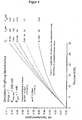
- FIG. 1 shows the kinetics of the enzymatic oxidation of glucose to glucono- ⁇ -lactone by means of glucose oxidase at different oxygen concentrations.
- the amount of analyte converted by the enzyme at a given oxygen concentration generally decreases as the concentration of glucose increases, which means that the curve does not exist in the physiologically relevant range despite the high binding constant of glucose oxidase for glucose (about 250 mM) -linear area lies.
- FIG. 1 shows that at higher concentrations of the analyte an approximately linear curve is obtained only at an oxygen concentration of about 1 mM.
- the in vivo concentration of dissolved oxygen in aqueous systems, and particularly in the subcutaneous adipose tissue interstitial fluid is significantly lower.
- water has an oxygen concentration of 0.21 mM at 37 ° C.
- the oxygen concentration to be expected for subcutaneous adipose tissue is only 0.1 mM or even lower, with the curves in each case being curved at physiological glucose concentrations. This deviation from the linear course leads to an undesired transient functional characteristic of in vivo biosensors.
- the linearity of the function curve can in principle be determined by using working electrodes with a cover membrane improve, which inhibits the diffusion of the analyte more than the diffusion of the co-substrate.
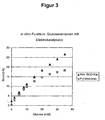
- FIG. 3 shows, inter alia, the function curve an enzymatic biosensor with a cover membrane made of polyurethane, which promotes a diffusion of oxygen more strongly than that of glucose (measurements marked as squares). This shows that the measurement signal of the sensor can be kept approximately linear by using a suitable cover membrane up to a glucose concentration of about 10 mM. At higher concentrations, the curve is increasingly curved.
- cover membranes in electrochemical sensors is also associated with certain problems.
- electrochemical sensors which serve to determine different analytes, typically also need to contain different cover membranes to provide differential diffusion of substrate and co-substrate.
- cover membranes typically also need to contain different cover membranes to provide differential diffusion of substrate and co-substrate.
- a high biocompatibility of the cover membranes must be ensured for in vivo applications, which entails considerable technical requirements and ultimately leads to increased production costs.
- some electrochemical biosensors additionally use an electrocatalyst, which is the transfer of electrons from the redox mediator to the conductive components of the working electrode favored.
- An example of such an electrocatalyst is cobalt phthalocyanine, which catalyzes the oxidation of hydrogen peroxide to oxygen [ Crouch et al., Biosensors and Bioelectronics 21 (2005), 712-718 ].
- the cobalt (II) cation of the cobalt phthalocyanine complex is first reduced from hydrogen peroxide to cobalt (I), before it is returned to the original bivalent state with the release of an electron at the anode.
- Electrocatalyst is manganese dioxide in the form of manganese dioxide [ Cui et al., Nanomedicine: Nanotechnology, Biology and Medicine 1 (2005), 130-135 ; Luo et al., Biosensors and Bioelectronics 19 (2004), 1295-1300 ].
- the mechanism of the catalytic oxidation of hydrogen peroxide on manganese dioxide is not understood in detail, the potential of a working electrode with manganese dioxide as an electrocatalyst is lowered by several 100 mV compared to a working electrode without manganese dioxide. As a result, the influence of interfering substances such as ascorbate or urea on the measurement signal is significantly reduced.
- electrocatalysts Another reason for the use of electrocatalysts is the damage of enzymes by excess hydrogen peroxide. If this substance is not decomposed sufficiently fast at the working electrode, denaturation of the enzyme may occur. To address this problem, it has been proposed in the literature to synthesize enzymes having resistance to hydrogen peroxide, for example by mutation [ US 2004/0137547 A1 ]. However, it is difficult to make such changes to an enzyme without negatively affecting other properties of the enzyme, such as its enzymatic specificity. Therefore, the use of electrocatalysts in reactions in which hydrogen peroxide is generated appears clearly superior to the above process, since electrocatalysts significantly increase the efficiency of the oxidation of hydrogen peroxide and thus prevent excesses of peroxide in or around the electrode matrix.
- the biosensors In the design of electrochemical biosensors various factors have to be considered. Thus, the biosensors must have a sufficient amount of enzyme in the working electrode to prevent enzyme limitation of the measurement [ Abel et al., Journal of Molecular Catalysis B: Enzymatic 7 (1999), 93-100 ]. Furthermore, the enzyme molecules should be localized throughout the measurement period of the biosensor in the structure of the working electrode, ie there should be no detachment and displacement of the enzyme in areas of the electrode, which are reached by the measuring medium Doretti et al., Biosensors and Bioelectronics 11 (1996), 363-373 ]. Finally, the enzyme in the working electrode of the biosensor should also be stable.
- US5,368,707 discloses biosensors comprising adsorptively bound enzyme working electrodes useful for determining micromolar levels of lead ions in liquids.
- the surface of the working electrode made of a conductive material is coated with colloidal gold, to the particles of which the corresponding enzyme, which in turn can be covalently bound to a redox mediator, is adsorbed.
- JP 10-68651 describes sensors for detecting analytes, such as glucose, which comprise electrodes with covalently bound enzyme.
- analytes such as glucose
- the surface of the electrode coated with SnO 2 as a conductive material is activated with a strong acid, functionalized with a coupling reagent and finally brought into contact with the enzyme.
- EP 0 247 850 A1 discloses biosensors for amperometric detection of an analyte. These sensors contain immobilized enzyme electrodes immobilized or adsorbed on the surface of an electrically conductive support, the support consisting of or containing a platinum-plated porous layer of resin-bonded carbon or graphite grains. For this purpose, be first Provided electrodes of platinized graphite and a polymeric binder, and then brought into contact with the enzyme. The immobilization of the enzyme takes place either by adsorption to the electrode surface or by coupling to the polymeric binder using suitable reagents.
- Amperometric biosensors with electrodes comprising an enzyme immobilized or adsorbed on or in an electrically conductive, porous electrode material are also known in US Pat EP 0 603 154 A2 described.
- a catalyst or oxide of a transition metal of the fourth period, such as manganese dioxide, with graphite and a non-conductive polymeric binder is made into a paste, wherein the obtained after drying the paste porous electrode material in a second step with the Enzyme is brought into contact.
- Immobilization of the enzyme on or in the porous electrode material can take place by crosslinking by means of glutaraldehyde.
- US2005 / 189240 describes an electrochemical sensor for determining the hydrogen peroxide concentration of a solution comprising a mixed valence metal oxide M x O y .
- EP 0 247 850 A1 and EP 0 603 154 A2 described electrochemical biosensors is that the immobilization of the enzyme takes place only on the prefabricated without enzyme electrode. This involves the problem that the coupling of the enzyme to the electrode components can not be controlled.
- glutaraldehyde is used as a crosslinking reagent, the enzyme not only uncontrollably binds to any reactive constituents of the electrode material, but also crosslinks with one another.
- this procedure causes a contamination of the electrode with the reagents used, so the electrode must be thoroughly cleaned again, especially before use in an in vivo biosensor, which increases the production cost and thus the cost.
- US4,938,860 discloses a suitable for electrochemical sensors An electrode comprising a platinum coated film-formed anode and an enzyme layer bonded to the anode.
- the binding of the Enymtik to the platinized anode is preferably carried out using an aminosilane and a suitable crosslinking agent, such as glutaric dialdehyde.
- a disadvantage of in US4,938,860 the described electrode is that due to the formation of the anode as a film provided only a small surface area for the enzymatic reaction of the analyte and platinum is used as a catalyst, a relatively expensive material.
- an electrochemical biosensor for determining an analyte in a fluid medium comprising at least one working electrode and at least one reference electrode, wherein at least the working electrode comprises particles of an electrocatalyst in an electrode matrix, wherein an enzyme suitable for the determination of the analyte is covalently attached to the Particle of the electrocatalyst is bound and has no covalent bonds to the remaining Bedand turnover the electrode matrix, and wherein the electrocatalyst MnO 2 .
- the metal oxide MnO 2 As the electrocatalyst which is present in the electrode matrix of at least the working electrode, the metal oxide MnO 2 is used .
- the metal oxide MnO 2 has the ability to catalyze the reaction of a redox mediator used for the determination of the analyte.
- the electrocatalyst is provided according to the invention in particulate form, wherein the particle size can be varied according to the respective requirements.
- 90% of the electrocatalyst particles usually have a diameter of 0.1 .mu.m to 20 .mu.m, wherein a diameter of 0.5 .mu.m to 5 .mu.m has been found to be preferred.
- the particle size of the electrocatalyst should always be smaller than the layer thickness of the working electrode, which is in the range of 1 .mu.m to 50 .mu.m, preferably in the range of 5 .mu.m to 20 .mu.m.
- the controllability of the effective surface area of the electrocatalyst by means of the particle size is of crucial importance in particular for its functionalization with enzyme.
- a higher effective surface area of the electrocatalyst can also increase its enzyme loading and thus achieve higher enzyme activity, expressed in units per milligram electrocatalyst, which is generally determined by the amount of electrocatalyst in the working electrode and its porosity and area.
- unit represents that amount of enzyme which is required to react under standard conditions 1 ⁇ mol substrate per minute.
- the enzyme-coated electrocatalyst particles used for the purposes of the present invention usually have an enzyme activity of about 0.01 U / mg to about 10 U / mg, wherein an enzyme activity of about 0.1 U / mg to about 10 U / mg has proven to be particularly advantageous.
- the electrochemical sensor according to the invention is a selective covalent binding of the enzyme to the particles of the electrocatalyst, wherein the enzyme has no covalent bonds to the other constituents of the electrode matrix.
- the covalent binding of the enzyme to the electrocatalyst has the advantage that the diffusion distance of the redox mediator is kept small to catalytically active sites of the electrode, whereby a high efficiency of the working electrode and thus a high signal efficiency of the electrochemical sensor is achieved.
- the redox mediator is also bound to it by adsorption, whereby, for example, in the case of the oxygen / hydrogen peroxide system, a locally high oxygen activity arises in the region of the surface of the electrocatalyst which drops towards the surrounding measuring medium.
- Covalent attachment of the enzyme to the electrocatalyst causes high localized activity of the regenerated redox mediator on the enzyme, which is reflected in higher linearity and stability of the generated measurement signal with respect to the concentration of analyte, for example FIG. 3 results (measurements marked as triangles).
- a temporary reduction in the concentration of the redox mediator in the environment eg. B. by a deterioration in blood flow of the tissue, not to a transient change of the measurement signal.
- the covalent coupling of the enzyme to the electrocatalyst ensures the constancy of the function, since a detachment of enzyme molecules under typical measuring conditions (physiological electrolyte concentration, physiological pH, body temperature) can be excluded.
- the electrochemical sensor according to the invention remains operable over a long period of time and operates virtually free from drift.
- the electrocatalyst particles have a functionalized surface, and in particular a surface functionalized with amino groups or / and carboxyl groups, to which the enzyme is bound.
- the functionalization of the surface can be carried out, for example, by coating the electrocatalyst particles with a suitable reagent, wherein functional groups are formed on the surface of the electrocatalyst particles, via which a covalent bond of the enzyme to the electrocatalyst particles can take place.
- Coating reagents which are used in the context of the present invention are substances which on the one hand covalent bond with the electrocatalyst, z. B. with hydroxy groups of the electrocatalyst, and on the other hand contain at least one functional group which serves for covalent bonding of the enzyme.
- the coating reagents are at least bifunctional, i. H. comprise at least two functional groups.
- the functional groups of the coating reagent for covalent bonding to the electrocatalyst and for covalent binding to the enzyme may be the same or different, but are preferably different.
- Preferred coating reagents are silanes which carry at least one suitable functional group via which the enzyme is covalently bonded to the coating reagent.
- the surface of the electrocatalyst particles is functionalized with an aminosilane which binds to the surface of the electrocatalyst particles to form silicon-oxygen bonds and simultaneously provides free amino groups for covalent attachment of the enzyme to the electrocatalyst particles.
- Suitable aminosilanes include, for example, 3-aminopropyltrimethoxysilane and 3-aminopropyltriethoxysilane, with 3-aminopropyltriethoxysilane being particularly preferred.
- the surface of the electrocatalyst particles may be functionalized with a carboxysilane which bonds to the surface of the electrocatalyst particles to form silicon-oxygen bonds and, optionally after hydrolysis, provides free carboxyl groups for covalent attachment of the enzyme to the electrocatalyst particles.
- a particularly suitable silane is hereby 3- (triethoxysilyl) -propylbernsteinklaanhydrid has been found that (Fa. Wacker) is commercially available as a 20 Geniosil ® GF.
- the enzyme can be covalently bonded to the functionalized surface of the electrocatalyst particles directly or via crosslinking reagents. In a preferred embodiment, the enzyme is bound directly to the functionalized surface of the electrocatalyst particles.
- the coupling of the enzyme to the functionalized surface of the electrocatalyst particles can be carried out in any manner and comprise a prior activation of functional groups on the functionalized surface of the electrocatalyst particles or / and of the enzyme. Activation of functional groups can be effected, for example, by reacting the functionalized electrocatalyst or / and the enzyme with a suitable activating reagent.
- Preferred activating reagents include carbodiimides such as dicyclohexylcarbodiimide (DCC), diisopropylcarbodiimide or 1-ethyl-3- (3-dimethylaminopropyl) carbodiimide (EDC), as well as combinations of carbodiimides and succinimides.
- An activating reagent particularly suitable for the purposes of the present invention comprises a combination of 1-ethyl-3- (3-dimethylaminopropyl) carbodiimide (EDC) and N-hydroxysuccinimide.
- the enzyme is linked to the functionalized surface of the electrocatalyst particles via a crosslinking reagent, wherein the crosslinking reagent has reactive groups that are covalently associated both with the functional groups on the functionalized surface of the electrocatalyst particles as well as react with the functional groups of the enzyme. Particular preference is given to reactive groups which allow crosslinking between the enzyme and the functional groups on the surface of the electrocatalyst particles.
- Suitable crosslinking reagents are any reagents which can fulfill the function described above, such as, for example, polyfunctional aldehydes, in particular dialdehydes, such as glutaric dialdehyde, benzoquinones, cyanogen bromide, hydrazines, succinimides, 2,4,6-trichloro-1,3,5-triazine, or combinations thereof.
- the crosslinking reagent used is a succinimide, more preferably a disuccinimide, and most preferably disuccinimidyl suberate (DSS).
- the electrode matrix of the working electrode may be prepared by mixing the covalently enzyme-coated electrocatalyst particles with other components of the electrode matrix, e.g. A conductive electrode material, and then drying the resulting mixture, wherein the electrode matrix usually contains the electrocatalyst in an amount of about 1% to about 50% by weight, preferably in an amount of about 5% to about 20% Wt.%, Contains.
- the electrode matrix is formed porous.
- the porosity of the electrode matrix can be controlled, inter alia, via the particle size of the electrocatalyst and other components, wherein a high porosity is associated with a larger effective surface of the electrode and thus a larger contact area to the measuring medium.
- the conductive electrode material which can be provided for the production of the electrode matrix for example in the form of a paste, preferably comprises conductive solid particles such as graphite and / or fullerenes in combination with a non-conductive binder, in particular a non-conductive polymeric binder, such as a perfluorinated polymer like Nafion.
- the enzyme immobilized on the electrocatalyst particles is preferably an oxidase, and in particular alcohol oxidase (1.1.3.13), aryl alcohol oxidase (EC 1.1.3.7), catechol oxidase (EC 1.1.3.14), cholesterol oxidase (EC 1.1.3.6 ), Choline oxidase (1.1.3.17), galactose oxidase (EC 1.1.3.9), glucose oxidase (EC 1.1.3.4), glycerol-3-phosphate oxidase (EC 1.1.3.21) hexose oxidase (EC 1.1 .3.5), malate oxidase (EC 1.1.3.3), pyranose oxidase (EC 1.1.3.10), pyridoxine 4-oxidase (EC 1.1.3.12) or thiamine oxidase (EC 1.1.3.23).
- the enzyme is glucose oxidase.
- the reference electrode of the electrochemical sensor according to the invention serves to adjust the polarization potential of the working electrode and may be made of any material which is suitable for the purposes of the present invention.
- a silver / silver chloride electrode is used as the reference electrode.
- the electrochemical sensor of the present invention may comprise at least one counterelectrode, which is preferably designed as a noble metal electrode, and in particular as a gold electrode.
- a counterelectrode designed as a noble metal electrode is coated with a suitable conductive material, such as a paste with conductive solid particles, in particular carbon paste.
- the electrochemical sensor preferably contains two sections.
- the first section which can be brought into contact with the fluid medium containing the analyte, comprises the electrodes, ie working electrode, reference electrode and optionally counterelectrode.
- This section is preferably provided with a biocompatible coating.
- the biocompatible coating allows the analyte to penetrate into the electrode matrix, but is intended to prevent leakage of electrode components into the surrounding medium.
- a biocompatible coating is not absolutely necessary for many applications.
- biocompatible coating does not have an enzyme-blocking effect. Rather, in this context, a biocompatible coating can be selected, which provides optimal interaction with the surrounding tissue and / or blood or serum.
- biocompatible coatings can be done in different ways.
- a preferred method is to use prefabricated membranes which are applied to the electrochemical sensor.
- a fixation of the membrane on the sensor can in this case be carried out by means of any techniques, with bonding or laser welding being considered preferred.
- Prefabricated dialysis membranes have proved to be advantageous in this context, with dialysis membranes of polyethersulfone, as used, for example, in US Pat EP 1 710 011 A1 disclosed and are commercially available under the trade name Ultrason ® 6020 (BASF Fa.), are especially suitable.
- the biocompatible coating in situ by applying a solution of a suitable polymer to the electrochemical sensor and then drying it.
- the application of the polymer to the biosensor is preferably carried out by spraying, dip coating or dispersing a dilute solution of the polymer, but is not limited to these methods.
- the solvent used is preferably an organic solvent, in particular an organic solvent having a boiling point of ⁇ 100 ° C., for example ethanol, which contains an amount of from about 0.1% by weight to about 30% by weight, preferably an amount of about 0.5% by weight. % to about 15% by weight of polymer.
- polymers which are suitable for such purposes polymers which have a zwitterionic structure and represent a mimicry of cell surfaces, such as 2-methacryloyloxyethyl-phosphorylcholine-co-n-butyl methacrylate (MPC-co-BMA), in particular.
- the biocompatible coatings obtained usually have a thickness of about 1 .mu.m to about 100 .mu.m, preferably from about 3 .mu.m to about 25 .mu.m.
- the second section of the electrochemical sensor lies in a region which is inaccessible to the fluid measuring medium and preferably comprises a measured value acquisition unit.
- the second section further comprises a voltage source, such as a battery or an accumulator, and an element which is selected from a wireless data transmission unit and a display for displaying the measured value.
- the second section may include an interface for a separate from the electrochemical sensor Meßwerter terminatesaku.
- the electrochemical sensor according to the invention is designed for multiple measurement, d. H.
- the sensor allows a repeated measurement of the analyte to be determined. This is particularly desirable in applications in which a steady, d. H. continuous or discontinuous control of the presence and / or amount of an analyte over an extended period of time, e.g. B. 1 day or longer, in particular 1 week or longer, to be made, such as in dialysis patients.
- the invention accordingly provides that the electrochemical sensor is designed as a flow cell, through which a fluid containing the analyte is passed.
- the electrochemical sensor according to the invention may also be designed as a fully or partially implantable device which can be implanted, for example, in fatty tissue or in blood vessels.
- the electrochemical sensor according to the invention can be used for determination an analyte in a fluid medium which may be from any source.
- the electrochemical sensor is for determining an analyte in a body fluid, including, but not limited to, whole blood, plasma, serum, lymph, bile, cerebrospinal fluid, extracellular tissue fluid, urine, and glandular secretions such as saliva or sweat, with whole blood , Plasma, serum and extracellular tissue fluid are considered to be particularly preferred.
- the amount of sample required to carry out the analysis is usually from about 0.01 ⁇ l to about 100 ⁇ l, preferably from about 0.1 ⁇ l to about 2 ⁇ l.
- the analyte to be quantitatively and / or quantitatively may be any biological or chemical substance which can be detected by means of a redox reaction.
- the analyte is selected from the group consisting of malic acid, alcohol, ammonium, ascorbic acid, cholesterol, cysteine, glucose, glutathione, glycerol, urea, 3-hydroxybutyrate, lactic acid, 5'-nucleotidase, peptides, pyruvate, salicylate and triglycerides.
- the analyte to be determined by means of the electrochemical sensor according to the invention is glucose.
- particles of an electrocatalyst are preferably first reacted with a coating reagent, whereby the electrocatalyst particles are functionalized on their surface.
- a coating reagent for the purpose of producing the electrochemical sensors according to the invention, particles of an electrocatalyst, which is as defined above, are preferably first reacted with a coating reagent, whereby the electrocatalyst particles are functionalized on their surface.
- a crosslinking reagent and an enzyme covalently enzyme-coated electrocatalyst particles are obtained, which can be processed into an electrode matrix by mixing with further components as defined above.
- the production method according to the invention proves to be particularly advantageous, since the preparation of the enzyme-coated electrocatalyst can be carried out separately from the preparation of the electrode. Furthermore, with the covalently enzyme-coated electrocatalyst a defined starting material for the preparation of the electrode paste is available, which can be cleaned before introduction into the electrode paste, so that a subsequent cleaning of the finished electrode is eliminated.
- the inventive electrochemical sensor be configured in any manner that allows contact between the electrochemical sensor and the fluid medium.
- the sensor can be designed as a flow cell through which the fluid medium containing the analyte flows.
- the sensor can also be designed as a diffusion sensor, wherein the contact between sensor and medium takes place by diffusion.
- a measurable signal is generated by the sensor.
- this signal is an electrical signal, such as electrical current, voltage, resistance, etc., which is evaluated or read using suitable means.
- the electrochemical sensor is an amperometric sensor.
- Example 2 Coupling of glucose oxidase to carboxy-functionalized manganese dioxide
- Example 4 Coupling of glucose oxidase to amino-functionalized manganese dioxide using glutaric dialdehyde as crosslinking reagent
- Example 3 The dried solid from Example 3 was washed once with 32 ml of 50 mM potassium phosphate buffer pH 7.4 and then taken up in 16 ml of 50 mM potassium phosphate buffer pH 7.4. To this suspension were added While stirring, 16 ml of a 10% glutaraldehyde solution (Sigma) were added. After 1.5 h at 25 ° C, the reaction was stopped. The settled solid was washed 3 times with in each case 32 ml of 50 mM potassium phosphate buffer pH 7.4, suspended in 16 ml of the same buffer with stirring and with 16 ml of a solution of 0.5 mg / ml glucose oxidase (Roche) in 50 mM potassium phosphate buffer pH 7.4 offset.
- a 10% glutaraldehyde solution Sigma
- Example 5 Coupling of glucose oxidase to amino-functionalized manganese dioxide using disuccinimidyl suberate as crosslinking reagent
- a working electrode without covering membrane was produced in the first step.
- glucose oxidase functionalized manganese dioxide mixed according to Example 5 with carbon polymer paste PE 401 (Acheson) and Diethylenglykolmonobutylether, the mixture obtained by dispensing technique applied to the gold surface of a sensor strip made of polyester, and dried at 25 ° C in a vacuum.
- the working electrode thus obtained was combined with a silver / silver chloride electrode as a reference electrode and a gold electrode as a counter electrode. The tracks were isolated.
- the electrochemical sensor obtained in Example 6 was immersed in a glucose solution in a flow-through chamber and measured for 7 days, whereby the concentration of the glucose solution was continuously varied between 0 and 26 mM.
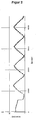
- the Figures 2 and 3 show the results of this measurement.
Landscapes
- Chemical & Material Sciences (AREA)
- Life Sciences & Earth Sciences (AREA)
- Health & Medical Sciences (AREA)
- Organic Chemistry (AREA)
- Wood Science & Technology (AREA)
- Proteomics, Peptides & Aminoacids (AREA)
- Zoology (AREA)
- Engineering & Computer Science (AREA)
- Immunology (AREA)
- Biochemistry (AREA)
- General Health & Medical Sciences (AREA)
- Molecular Biology (AREA)
- Physics & Mathematics (AREA)
- Biophysics (AREA)
- Analytical Chemistry (AREA)
- General Engineering & Computer Science (AREA)
- Bioinformatics & Cheminformatics (AREA)
- Biotechnology (AREA)
- Microbiology (AREA)
- Genetics & Genomics (AREA)
- Hematology (AREA)
- Chemical Kinetics & Catalysis (AREA)
- Electrochemistry (AREA)
- General Physics & Mathematics (AREA)
- Pathology (AREA)
- Measuring Or Testing Involving Enzymes Or Micro-Organisms (AREA)
- Apparatus Associated With Microorganisms And Enzymes (AREA)
Description
- Die vorliegende Anmeldung betrifft einen elektrochemischen Sensor, ein Verfahren zu dessen Herstellung sowie ein Verfahren zur Bestimmung eines Analyten in einem fluiden Medium unter Verwendung des elektrochemischen Sensors.
- Messsysteme zur biochemischen Analytik stellen wichtige Bestandteile klinisch relevanter Analyseverfahren dar. Hierbei steht die Messung von Analyten im Vordergrund, welche mit Hilfe von Enzymen direkt oder indirekt bestimmt werden. Als zur Messung von Analyten besonders geeignet haben sich Biosensoren, d. h. mit biologischen Komponenten ausgestattete Messsysteme, erwiesen, welche kontinuierlich oder diskontinuierlich eine wiederholte Messung des Analyten gestatten und sowohl ex vivo als auch in vivo angewendet werden können. Typischerweise werden ex vivo-Biosensoren in Durchflusszellen eingesetzt, während in vivo-Biosensoren vorzugsweise in subkutanes Fettgewebe implantiert werden. Hierbei unterscheidet man transkutane Implantate, welche lediglich für kurze Zeit in das Gewebe eingebracht werden und in direktem Kontakt mit einer auf der Haut befindlichen Messeinrichtung stehen, und Vollimplantate, welche zusammen mit einer Messeinrichtung operativ in das Gewebe eingesetzt werden.
- Elektrochemische Biosensoren gestatten die Messung eines Analyten mittels zweier oder mehrerer Elektroden, wobei mindestens eine der Elektroden die Arbeitselektrode darstellt, an welcher der zu bestimmende Analyt umgesetzt wird. Elektrochemische Biosensoren, welche ein Enzym als biologische Komponente umfassen, enthalten das Enzym in oder auf der Arbeitselektrode, wobei z. B. der Analyt dem Enzym als Substrat dienen und von diesem physikochemisch verändert (z. B. oxidiert) werden kann. Ein Redoxmediator überträgt die bei der Umsetzung des Analyten freigesetzten Elektronen auf die leitfähigen Bestandteile der Arbeitselektrode, wobei das durch den Elektronenfluss erzeugte elektrische Messsignal mit der Konzentration des gemessenen Analyten korreliert.
- Als Redoxmediatoren kommen sowohl natürlich vorkommende als auch synthetische Redoxpaare in Betracht. Für in vivo-Anwendungen sind synthetische Redoxmediatoren, wie sie beispielsweise von Feldman et al. [Diabetes Technology & Therapeutics 5 (2003), 769-779] beschrieben werden, allerdings wenig geeignet. Dies liegt darin begründet, dass ein synthetischer Redoxmediator theoretisch stets eine Immunantwort des Körpers bei Einbringung des Biosensors in den Körper hervorrufen kann. Zumindest jedoch muss die Toxizität dieser Substanzen beachtet und gegebenenfalls überprüft werden, da Redoxmediatoren prinzipiell frei durch die Elektrodenstruktur diffundieren können müssen, womit sie auch aus der Elektrode austreten bzw. in den sie umgebenden Organismus übertreten können. Bei ex vivo-Anwendungen ist dieser Punkt nicht relevant, sofern sichergestellt ist, dass es nicht über einen potentiellen Rückfluss des Analyten zum Eintritt in den Körper kommt.
- Folglich eignen sich für in vivo-Anwendungen insbesondere elektrochemische Sensoren, welche sich natürlich vorkommender Redoxmediatoren bedienen. Das Redoxpaar Sauerstoff/Wasserstoffperoxid erweist sich in diesem Zusammenhang als besonders vorteilhaft, da bereits der Initialteil (Sauerstoff) stets vorhanden ist. Das im Rahmen der enzymatischen Umsetzung eines Analyten mittels einer Oxidase in Gegenwart von Sauerstoff erzeugte Wasserstoffperoxid wird an der Arbeitselektrode des elektrochemischen Biosensors reoxidiert, wobei durch Abgabe von Elektronen ein elektrisches Signal erzeugt und der Redoxmediator in seine oxidierte Form zurückversetzt wird. Die Kinetik dieser enzymatischen Reaktion folgt einem sogenannten Ping-Pong-Mechanismus [Leskovac et al., The International Journal of Biochemistry and Cell Biology 37 (2005), 731-750].
- Ein nicht unerhebliches Problem bei der Messung von Analyten mit Hilfe von Enzymen, welche Sauerstoff als Co-Substrat benötigen, ist allerdings, dass es in Geweben zu temporären Verringerungen der Sauerstoffkonzentration gegenüber der Ausgangslage kommen kann, wodurch die Funktion herkömmlicher in vivo-Biosensoren beeinflusst werden kann.
Figur 1 zeigt die Kinetik der enzymatischen Oxidation von Glucose zu Glucono-δ-lacton mittels Glucose-Oxidase bei verschiedenen Sauerstoffkonzentrationen. Wie der Grafik zu entnehmen ist, verringert sich mit steigender Glucosekonzentration allgemein die vom Enzym bei einer vorgegebenen Sauerstoffkonzentration umgesetzte Menge an Analyt, womit die Kurve im physiologisch relevanten Bereich trotz der hohen Bindungskonstante von Glucose-Oxidase für Glucose (ca. 250 mM) im nicht-linearen Bereich liegt. - Ferner zeigt
Figur 1 , dass bei höheren Konzentrationen des Analyten erst bei einer Sauerstoffkonzentration von etwa 1 mM eine annähernd lineare Kurve erhalten wird. Die in vivo-Konzentration an gelöstem Sauerstoff in wässrigen Systemen und insbesondere in der interstitiellen Flüssigkeit des subkutanen Fettgewebes liegt indessen deutlich niedriger. Während Wasser bei 37°C etwa eine Sauerstoffkonzentration von 0.21 mM aufweist, liegt die für subkutanes Fettgewebe zu erwartende Sauerstoffkonzentration bei lediglich 0.1 mM oder gar niedriger, womit die Kurven bei physiologischen Glucosekonzentrationen jeweils gekrümmt sind. Diese Abweichung vom linearen Verlauf führt bei in vivo-Biosensoren zu einer unerwünschten transienten Funktionscharakteristik. - In einer Vielzahl enzymatischer Biosensoren, welche Sauerstoff als Co-Substrat benötigen, stellt somit die begrenzte Verfügbarkeit von Sauerstoff im Gewebe den limitierenden Faktor für die Linearität der Funktionskurve des elektrochemischen Sensors dar. Die Linearität der Funktionskurve lässt sich prinzipiell durch Verwendung von Arbeitselektroden mit einer Deckmembran verbessern, welche die Diffusion des Analyten stärker hemmt als die Diffusion des Co-Substrats.
Figur 3 zeigt u.a. die Funktionskurve eines enzymatischen Biosensors mit einer aus Polyurethan bestehenden Deckmembran, welche eine Diffusion von Sauerstoff stärker begünstigt als jene von Glucose (als Quadrate gekennzeichnete Messwerte). Hierbei zeigt sich, dass das Messsignal des Sensors durch Verwendung einer geeigneten Deckmembran bis zu einer Glucosekonzentration von etwa 10 mM annähernd linear gehalten werden kann. Bei höheren Konzentrationen ist die Kurve in zunehmendem Maße gekrümmt. - Allerdings ist auch der Einsatz von Deckmembranen in elektrochemischen Sensoren mit gewissen Problemen verbunden. So müssen elektrochemische Sensoren, welche der Bestimmung verschiedener Analyten dienen, in der Regel auch verschiedene Deckmembranen enthalten, um eine unterschiedliche Diffusion von Substrat und Co-Substrat bereitzustellen. Gleichzeitig muss bei in vivo-Anwendungen eine hohe Biokompatibilität der Deckmembranen gewährleistet sein, was erhebliche technische Anforderungen mit sich bringt und letztlich zu erhöhten Produktionskosten führt.
- Um die Polarisationsspannung der Arbeitselektrode eines elektrochemischen Biosensors gegenüber einer Referenzelektrode zu senken und damit den Einfluss von interferierenden Substanzen auf das Messsignal der Arbeitselektrode zu senken, bedienen sich einige elektrochemische Biosensoren zusätzlich eines Elektrokatalysators, welcher die Übertragung von Elektronen vom Redoxmediator auf die leitfähigen Bestandteile der Arbeitselektrode begünstigt. Ein Beispiel für einen solchen Elektrokatalysator ist Cobalt-Phthalocyanin, welches die Oxidation von Wasserstoffperoxid zu Sauerstoff katalysiert [Crouch et al., Biosensors and Bioelectronics 21 (2005), 712-718]. Hierbei wird das Cobalt (II)-Kation des Cobalt-Phthalocyanin-Komplexes zunächst von Wasserstoffperoxid zu Cobalt (I) reduziert, bevor dieses unter Abgabe eines Elektrons an der Anode in den urprünglichen zweiwertigen Zustand zurückversetzt wird.
- Ein weiteres aus der Literatur bekanntes Beispiel für einen Elektrokatalysator ist Mangandioxid in Form von Braunstein [Cui et al., Nanomedicine: Nanotechnology, Biology and Medicine 1 (2005), 130-135; Luo et al., Biosensors and Bioelectronics 19 (2004), 1295-1300]. Obgleich der Mechanismus der katalytischen Oxidation von Wasserstoffperoxid an Braunstein nicht im Detail verstanden wird, wird das Potential einer Arbeitselektrode mit Braunstein als Elektrokatalysator gegenüber einer Arbeitselektrode ohne Braunstein um mehrere 100 mV erniedrigt. Infolgedessen reduziert sich der Einfluss von interferierenden Substanzen, wie beispielsweise Ascorbat oder Harnstoff, auf das Messsignal erheblich.
- Ein weiterer Grund für die Verwendung von Elektrokatalysatoren liegt in der Schädigung von Enzymen durch überschüssiges Wasserstoffperoxid. Wird diese Substanz nicht ausreichend schnell an der Arbeitselektrode zersetzt, kann es zu einer Denaturierung des Enzyms kommen. Um diesem Problem zu begegnen, wurde in der Literatur vorgeschlagen, Enzyme mit einer Resistenz gegenüber Wasserstoffperoxid, beispielsweise durch Mutation, zu synthetisieren [
U.S. 2004/0137547 A1 ]. Allerdings bereitet es erhebliche Schwierigkeiten, derartige Veränderungen an einem Enzym vorzunehmen, ohne dabei andere Eigenschaften des Enzyms negativ zu beeinflussen, wie beispielsweise dessen enzymatische Spezifität. Daher erscheint der Einsatz von Elektrokatalysatoren im Rahmen von Umsetzungen, bei welchen Wasserstoffperoxid erzeugt wird, obigem Verfahren deutlich überlegen, da Elektrokatalysatoren die Effizienz der Oxidation von Wasserstoffperoxid erheblich steigern und auf diese Weise Überschüsse von Peroxid in der Elektrodenmatrix oder in deren Umgebung verhindern. - Ein zusätzliches Problem, welches mit der Bildung von Wasserstoffperoxid im Rahmen der enzymatischen Bestimmung eines Analyten verbunden ist, ist jenes, dass Wasserstoffperoxid als Inhibitor des Analyten oder des Co-Substrats Sauerstoff fungieren kann. Diese kompetitive Hemmung zeigt eine Abhängigkeit von der Konzentration des Wasserstoffperoxids und führt zu einer Einschränkung des Umsatzes an Analyt. Die Verwendung eines Elektrokatalysators, welcher die Reoxidation von Wasserstoffperoxid zu Sauerstoff fördert, wirkt sich folglich auch in Bezug auf den Umsatz des Analyten positiv aus.
- Im Rahmen der Konzipierung elektrochemischer Biosensoren sind verschiedene Faktoren zu berücksichtigen. So müssen die Biosensoren eine ausreichende Menge an Enzym in der Arbeitselektrode aufweisen, um eine Enzymlimitierung der Messung zu verhindern [Abel et al., Journal of Molecular Catalysis B: Enzymatic 7 (1999), 93-100]. Ferner sollten die Enzymmoleküle über die komplette Messdauer des Biosensors in der Struktur der Arbeitselektrode lokalisiert sein, d. h. es sollte nicht zu Ablösungen und Verlagerungen des Enzyms in Bereichen der Elektrode kommen, die vom Messmedium erreicht werden [Doretti et al., Biosensors and Bioelectronics 11 (1996), 363-373]. Schließlich sollte das Enzym in der Arbeitselektrode des Biosensors auch stabil sein. Faktoren, welche die thermische Deaktivierung von Enzymen in elektrochemischen Biosensoren bewirken, sind, gemeinsam mit Methoden zur Stabilisierung, vielfach untersucht worden [Sarath Babu et al., Biosensors and Bioelectronics 19 (2004), 1337-1341]. Der Enzymabbau nach Herstellung eines Biosensors führt schlussendlich zu einer eingeschränkten Lagerfähigkeit des Sensors.
- Um obigen Faktoren Rechnung zu tragen, wurde eine Stabilisierung des Enzyms durch Immobilisierung in der Elektrodenmatrix der Arbeitselektrode angestrebt, was zu einer intensiven Suche nach geeigneten Immobilisierungsverfahren für Enzyme in elektrochemischen Biosensoren geführt hat. In der Praxis kommen sowohl eine adsorptive als auch eine chemische Immobilisierung zur Anwendung. Die adsorptive Immobilisierung ist jedoch in verschiedener Hinsicht nachteilig. Zum einen erfordert sie eine Abdeckung der Arbeitselektrode mittels einer für das Enzym undurchlässigen Membran, was den Aufwand bei der Herstellung des Biosensors erhöht und vielfältige Anforderungen an die Membran stellt. Andererseits kann die vorstehend genannte Verlagerung von Enzymmolekülen innerhalb der Elektrode bei adsorptiver Immobilisierung nicht unterbunden werden, was zu einer Veränderung der Sensorfunktion führt.
-
U.S.5,368,707 offenbart Biosensoren, welche Arbeitselektroden mit adsorptiv gebundenem Enzym umfassen und zur Bestimmung mikromolarer Mengen an Bleiionen in Flüssigkeiten geeignet sind. Zur Herstellung der Biosensoren wird die aus einem leitfähigen Material bestehende Oberfläche der Arbeitselektrode mit kolloidalem Gold beschichtet, an dessen Partikel das entsprechende Enzym, welches seinerseits kovalent an einen Redoxmediator gebunden sein kann, adsorbiert ist. - Ein weiterer, insbesondere für in vivo-Anwendungen nicht zu unterschätzender Nachteil von Elektroden, welche eine Deckmembran zur Unterstützung der adsorptiven Immobilisierung von Enzymen vorsehen, besteht in der erforderlichen nicht-invasiven Prüfung der Integrität der Deckmembran. Da selbst kleinste Fehlstellen in der Membran genügen, um ein Ausbluten des Enzyms aus der Elektrode in die Umgebung zu bewirken, ist insbesondere bei in vivo-Biosensoren ein enormer Prüfaufwand erforderlich. In Anbetracht der Nachteile einer adsorptiven Immobilisierung besteht somit ein konkretes Bedürfnis, Enzyme in elektrochemischen Biosensoren über kovalente Bindungen an oder in der Elektrodenmatrix zu fixieren.
-
JP 10-68651 -
EP 0 247 850 A1 offenbart Biosensoren zur amperometrischen Detektion eines Analyten. Diese Sensoren enthalten Elektroden mit immobilisierten Enzymen, welche an der Oberfläche eines elektrisch leitenden Trägers immobilisiert oder adsorbiert sind, wobei der Träger aus einer platinierten porösen Schicht aus harzgebundenen Kohlenstoff- oder Graphitkörnern besteht oder eine solche Schicht enthält. Zu diesem Zweck werden zunächst Elektroden aus platiniertem Graphit und einem polymeren Bindemittel bereitgestellt, und diese anschließend mit dem Enzym in Kontakt gebracht. Die Immobilisierung des Enzyms erfolgt hierbei entweder durch Adsorption an die Elektrodenoberfläche oder durch Kopplung an das polymere Bindemittel unter Verwendung geeigneter Reagenzien. - Amperometrische Biosensoren mit Elektroden, umfassend ein auf bzw. in einem elektrisch leitenden, porösen Elektrodenmaterial immobiliertes oder adsorbiertes Enzym, sind auch in
EP 0 603 154 A2 beschrieben. Zur Herstellung der Enzymelektroden wird ein als Katalysator fungierendes Oxid oder Oxidhydrat eines Übergangsmetalls der vierten Periode, wie beispielsweise Mangandioxid, mit Graphit und einem nicht leitenden polymeren Bindemittel zu einer Paste verarbeitet, wobei das nach Trocknen der Paste erhaltene poröse Elektrodenmaterial in einem zweiten Schritt mit dem Enzym in Kontakt gebracht wird. Eine Immobilisierung des Enzyms auf bzw. in dem porösen Elektrodenmaterial kann durch Vernetzung mittels Glutardialdehyd erfolgen. -
US2005/189240 beschreibt einen elektrochemischen Sensor zur Bestimmung der Wasserstoffperoxid-Konzentration einer Lösung, welcher ein als Katalysator dienendes Metalloxid MxOy mit gemischter Valenz umfasst. - Ein wesentlicher Nachteil der in
JP 10-68651 EP 0 247 850 A1 undEP 0 603 154 A2 beschriebenen elektrochemischen Biosensoren besteht darin, dass die Immobilisierung des Enzyms erst an der ohne Enzym vorgefertigten Elektrode erfolgt. Dies bringt das Problem mit sich, dass die Ankopplung des Enzyms an die Elektrodenbestandteile nicht kontrolliert werden kann. So bindet das Enzym bei Verwendung von Glutardialdehyd als Vernetzungsreagenz nicht nur unkontrolliert an beliebige reaktive Bestandteile des Elektrodenmaterials, sondern vernetzt auch untereinander. Darüber hinaus verursacht diese Vorgehensweise eine Kontamination der Elektrode mit den eingesetzten Reagenzien, womit die Elektrode insbesondere vor Verwendung in einem in vivo-Biosensor nochmals gründlich gereinigt werden muss, was den Produktionsaufwand und somit die Kosten erhöht. -
U.S.4,938,860 offenbart eine für elektrochemische Sensoren geeignete Elektrode, umfassend eine mit Platin beschichtete, als Film ausgebildete Anode und eine Enzymschicht, welche an die Anode gebunden ist. Die Bindung der Enymschicht an die platinierte Anode erfolgt bevorzugt unter Verwendung eines Aminosilans und eines geeigneten Vernetzungsmittels, wie beispielsweise Glutardialdehyd. Ein Nachteil der inU.S.4,938,860 beschriebenen Elektrode besteht jedoch darin, dass aufgrund der Ausbildung der Anode als Film lediglich eine geringe Oberfläche für die enzymatische Umsetzung des Analyten bereitgestellt und mit Platin als Katalysator ein vergleichsweise teures Material verwendet wird. - Die der Erfindung zugrunde liegende Aufgabe bestand deshalb darin, einen enzymatischen elektrochemischen Sensor zur Bestimmung eines Analyten bereitzustellen, bei welchem die Nachteile des Standes der Technik zumindest teilweise beseitigt sind. Insbesondere sollte der Sensor eine gezielte und dauerhafte Immobilisierung des Enzyms gewährleisten, eine hohe Effizienz besitzen und damit eine hohe Signalausbeute erreichen. Weiterhin sollte der Sensor einfach und kostengünstig hergestellt werden können.
- Diese Aufgabe wurde erfindungsgemäß gelöst mittels eines elektrochemischen Biosensors zur Bestimmung eines Analyten in einem fluiden Medium, umfassend mindestens eine Arbeitselektrode und mindestens eine Referenzelektrode, wobei mindestens die Arbeitselektrode Partikel eines Elektrokatalysators in einer Elektrodenmatrix umfasst, wobei ein zur Bestimmung des Analyten geeignetes Enzym kovalent an die Partikel des Elektrokatalysators gebunden ist und keine kovalenten Bindungen zu den übrigen Betandteilen der Elektrodenmatrix aufweist, und wobei der Elektrokatalysator MnO2 ist.
- Als Elektrokatalysator, welcher in der Elektrodenmatrix zumindest der Arbeitselektrode vorhanden ist, dient das Metalloxid MnO2. Das Metalloxid MnO2 besitzt die Fähigkeit, die Umsetzung eines für die Bestimmung des Analyten verwendeten Redoxmediators zu katalysieren.
- Der Elektrokatalysator wird erfindungsgemäß in partikulärer Form bereitgestellt, wobei die Partikelgröße entsprechend den jeweiligen Anforderungen variiert werden kann. Im Rahmen der vorliegenden Erfindung weisen 90% der Elektrokatalysatorpartikel üblicherweise einen Durchmesser von 0.1 µm bis 20 µm auf, wobei sich ein Durchmesser von 0.5 µm bis 5 µm als bevorzugt erwiesen hat. In jedem Fall sollte die Partikelgröße des Elektrokatalysators stets kleiner sein als die Schichtdicke der Arbeitselektrode, welche im Bereich von 1 µm bis 50 µm, bevorzugt im Bereich von 5 µm bis 20 µm, liegt.
- Die Steuerbarkeit der effektiven Oberfläche des Elektrokatalysators mittels der Partikelgröße ist insbesondere für dessen Funktionalisierung mit Enzym von entscheidender Bedeutung. So kann durch eine höhere effektive Oberfläche des Elektrokatalysators auch dessen Beladung mit Enzym erhöht und damit eine höhere Enzymaktivität, angegeben in Units pro Milligramm Elektrokatalysator, erzielt werden, welche im Allgemeinen durch die Menge an Elektrokatalysator in der Arbeitselektrode sowie deren Porosität und Fläche bestimmt wird. Der Begriff "Unit", wie er im Rahmen der vorliegenden Anmeldung verwendet wird, stellt dabei jene Menge an Enzym dar, welche erforderlich ist, um unter Standardbedingungen 1 µmol Substrat pro Minute umzusetzen. Die zum Zwecke der vorliegenden Erfindung verwendeten enzymbeschichteten Elektrokatalysatorpartikel weisen üblicherweise eine Enzymaktivität von etwa 0.01 U/mg bis etwa 10 U/mg auf, wobei sich eine Enzymaktivität von etwa 0.1 U/mg bis etwa 10 U/mg als besonders vorteilhaft erwiesen hat.
- Beim erfindungsgemäßen elektrochemischen Sensor liegt eine selektive kovalente Bindung des Enzyms an die Partikel des Elektrokatalysators vor, wobei das Enzym keine kovalenten Bindungen zu den übrigen Bestandteilen der Elektrodenmatrix aufweist. Die kovalente Bindung des Enzyms an den Elektrokatalysator besitzt den Vorteil, dass die Diffusionsstrecke des Redoxmediators zu katalytisch aktiven Stellen der Elektrode klein gehalten wird, womit eine hohe Effizienz der Arbeitselektrode und damit eine hohe Signalausbeute des elektrochemischen Sensors erreicht wird.
- Weiterhin wird der Redoxmediator nach Regeneration durch den Elektrokatalysator auch adsorptiv an diesen gebunden, wodurch beispielsweise im Falle des Sauerstoff/Wasserstoffperoxid-Systems eine lokal hohe Sauerstoffaktivität im Bereich der Oberfläche des Elektrokatalysators entsteht, die zum umgebenden Messmedium hin abfällt. Die kovalente Bindung des Enzyms an den Elektrokatalysator bewirkt andererseits eine hohe lokale Aktivität des regenerierten Redoxmediators am Enzym, was sich in einer höheren Linearität und Stabilität des erzeugten Messsignals in Bezug auf die Konzentration an Analyt widerspiegelt, wie beispielsweise aus
Figur 3 hervorgeht (als Dreiecke gekennzeichnete Messwerte). In diesem Fall führt auch eine vorübergehende Absenkung der Konzentration des Redoxmediators in der Umgebung, z. B. durch eine verschlechterte Durchblutung des Gewebes, nicht zu einer transienten Veränderung des Messsignals. - Schließlich wird durch die kovalente Kopplung des Enzyms an den Elektrokatalysator die Konstanz der Funktion gewährleistet, da eine Ablösung von Enzymmolekülen bei den typischen Messbedingungen (physiologische Elektrolytkonzentration, physiologischer pH, Körpertemperatur) ausgeschlossen werden kann. Somit bleibt der erfindungsgemäße elektrochemische Sensor über einen langen Zeitraum betriebsfähig und operiert praktisch frei von Drift.
- Um eine kovalente Bindung des Enzyms an die Partikel des Elektrokatalysators zu bewirken, sieht die vorliegende Erfindung in einer bevorzugten Ausführungsform vor, dass die Elektrokatalysatorpartikel eine funktionalisierte Oberfläche, und insbesondere eine mit Aminogruppen oder/und Carboxylgruppen funktionalisierte Oberfläche, aufweisen, an die das Enzym gebunden ist. Die Funktionalisierung der Oberfläche kann beispielsweise durch Beschichtung der Elektrokatalysatorpartikel mit einem geeigneten Reagenz erfolgen, wobei auf der Oberfläche der Elektrokatalysatorpartikel funktionelle Gruppen ausgebildet werden, über welche eine kovalente Bindung des Enzyms an die Elektrokatalysatorpartikel erfolgen kann.
- Beschichtungsreagenzien, welche im Rahmen der vorliegenden Erfindung Anwendung finden, sind Substanzen, die einerseits eine kovalente Bindung mit dem Elektrokatalysator, z. B. mit Hydroxygruppen des Elektrokatalysators, eingehen und andererseits mindestens eine funktionelle Gruppe enthalten, die zur kovalenten Bindung des Enzyms dient. Dies bedeutet, dass die Beschichtungsreagenzien mindestens bifunktionell sind, d. h. mindestens zwei funktionelle Gruppen umfassen. Die zur kovalenten Bindung an den Elektrokatalysator und die zur kovalenten Bindung an das Enzym dienenden funktionellen Gruppen des Beschichtungsreagenzes können gleich oder verschieden sein, sind jedoch bevorzugt verschieden. Bevorzugte Beschichtungsreagenzien sind Silane, welche mindestens eine geeignete funktionelle Gruppe tragen, über die das Enzym kovalent an das Beschichtungsreagenz gebunden wird.
- Stärker bevorzugt ist die Oberfläche der Elektrokatalysatorpartikel mit einem Aminosilan funktionalisiert, welches unter Ausbildung von Silizium-Sauerstoff-Bindungen an die Oberfläche der Elektrokatalysatorpartikel bindet und gleichzeitig freie Aminogruppen für eine kovalente Bindung des Enzyms an die Elektrokatalysatorpartikel bereitstellt. Geeignete Aminosilane umfassen beispielsweise 3-Aminopropyltrimethoxysilan und 3-Aminopropyltriethoxysilan, wobei 3-Aminopropyltriethoxysilan besonders bevorzugt ist.
- Alternativ kann die Oberfläche der Elektrokatalysatorpartikel mit einem Carboxysilan funktionalisiert sein, welches unter Ausbildung von Silizium-Sauerstoff-Bindungen an die Oberfläche der Elektrokatalysatorpartikel bindet und, gegebenenfalls nach Hydrolyse, freie Carboxylgruppen für eine kovalente Bindung des Enzyms an die Elektrokatalysatorpartikel bereitstellt. Als besonders geeignetes Silan hat sich hierbei 3-(Triethoxysilyl)-propylbernsteinsäureanhydrid erwiesen, welches als Geniosil® GF 20 (Fa. Wacker) im Handel erhältlich ist.
- Das Enzym kann direkt oder über Vernetzungsreagenzien kovalent an die funktionalisierte Oberfläche der Elektrokatalysatorpartikel gebunden sein. In einer bevorzugten Ausführungsform ist das Enzym direkt an die funktionalisierte Oberfläche der Elektrokatalysatorpartikel gebunden. Die Kopplung des Enzyms an die funktionalisierte Oberfläche der Elektrokatalysatorpartikel kann in beliebiger Weise erfolgen und eine vorherige Aktivierung funktioneller Gruppen auf der funktionalisierten Oberfläche der Elektrokatalysatorpartikel oder/und des Enzyms umfassen. Eine Aktivierung funktioneller Gruppen kann beispielsweise durch Umsetzung des funktionalisierten Elektrokatalysators oder/und des Enzyms mit einem geeigneten Aktivierungsreagenz bewirkt werden. Bevorzugte Aktivierungsreagenzien umfassen Carbodiimide, wie beispielsweise Dicyclohexylcarbodiimid (DCC), Diisopropylcarbodiimid oder 1-Ethyl-3-(3-dimethylaminopropyl)carbodiimid (EDC), sowie Kombinationen von Carbodiimiden und Succinimiden. Ein für die Zwecke der vorliegenden Erfindung besonders geeignetes Aktivierungsreagenz umfasst eine Kombination von 1-Ethyl-3-(3-dimethylaminopropyl)carbodiimid (EDC) und N-Hydroxysuccinimid.
- In einer anderen bevorzugten Ausführungsform ist das Enzym über ein Vernetzungsreagenz an die funktionalisierte Oberfläche der Elektrokatalysatorpartikel gebunden, wobei das Vernetzungsreagenz reaktive Gruppen aufweist, die kovalent sowohl mit den funktionellen Gruppen auf der funktionalisierten Oberfläche der Elektrokatalysatorpartikel als auch mit den funktionellen Gruppen des Enzyms reagieren können. Besonders bevorzugt sind reaktive Gruppen vorhanden, die eine Vernetzung zwischen dem Enzym und den funktionellen Gruppen auf der Oberfläche der Elektrokatalysatorpartikel ermöglichen. Als Vernetzungsreagenzien kommen beliebige Reagenzien in Frage, welche die vorstehend beschriebene Funktion erfüllen können, wie beispielsweise polyfunktionelle Aldehyde, insbesondere Dialdehyde wie Glutardialdehyd, Benzochinone, Bromcyan, Hydrazine, Succinimide, 2,4,6-Trichlor-1,3,5-triazin, oder Kombinationen hiervon. Bevorzugt wird als Vernetzungsreagenz ein Succinimid, stärker bevorzugt ein Disuccinimid, und am stärksten bevorzugt Disuccinimidylsuberat (DSS) eingesetzt.
- Die Elektrodenmatrix der Arbeitselektrode kann durch Vermischen der kovalent mit Enzym beschichteten Elektrokatalysatorpartikel mit weiteren Komponenten der Elektrodenmatrix, z. B. einem leitfähigen Elektrodenmaterial, und anschließendes Trocknen des erhaltenen Gemisches erzeugt werden, wobei die Elektrodenmatrix den Elektrokatalysator üblicherweise in einer Menge von etwa 1 Gew.% bis etwa 50 Gew.%, bevorzugt in einer Menge von etwa 5 Gew.% bis etwa 20 Gew. %, enthält.
- In einer weiteren bevorzugten Ausführungsform ist die Elektrodenmatrix porös ausgebildet. Die Porösität der Elektrodenmatrix kann u. a. über die Partikelgröße des Elektrokatalysators und anderer Komponenten gesteuert werden, wobei eine hohe Porösität mit einer größeren effektiven Oberfläche der Elektrode und damit einer größeren Kontaktfläche zum Messmedium verbunden ist. Das leitfähige Elektrodenmaterial, welches zur Herstellung der Elektrodenmatrix beispielsweise in Form einer Paste bereitgestellt werden kann, umfasst vorzugsweise leitfähige Feststoffpartikel wie Graphit oder/und Fullerene in Kombination mit einem nicht-leitenden Bindemittel, insbesondere einem nicht-leitenden polymeren Bindemittel, wie beispielsweise einem perfluorierten Polymer wie Nafion.
- Das auf den Elektrokatalysatorpartikeln immobilierte Enzym ist vorzugsweise eine Oxidase, und insbesondere Alkohol-Oxidase (1.1.3.13), Arylalkohol-Oxidase (EC 1.1.3.7), Catechol-Oxidase (EC 1.1.3.14), Cholesterol-Oxidase (EC 1.1.3.6), Cholin-Oxidase (1.1.3.17), Galactose-Oxidase (EC 1.1.3.9), Glucose-Oxidase (EC 1.1.3.4), Glycerin-3-phosphat-Oxidase (EC 1.1.3.21) Hexose-Oxidase (EC 1.1.3.5), Malat-Oxidase (EC 1.1.3.3), Pyranose-Oxidase (EC 1.1.3.10), Pyridoxin-4-Oxidase (EC 1.1.3.12) oder Thiamin-Oxidase (EC 1.1.3.23). Besonders bevorzugt handelt es sich bei dem Enzym um Glucose-Oxidase.
- Die Referenzelektrode des erfindungsgemäßen elektrochemischen Sensors dient zur Einstellung des Polarisationspotentials der Arbeitselektrode und kann aus einem beliebigen Material bestehen, welches für die Zwecke der vorliegenden Erfindung geeignet ist. Bevorzugt wird als Referenzelektrode eine Silber/Silberchlorid-Elektrode eingesetzt.
- Ferner kann der elektrochemische Sensor der vorliegenden Erfindung neben der mindestens einen Arbeitselektrode und der mindestens einen Referenzelektrode mindestens eine Gegenelektrode umfassen, welche bevorzugt als Edelmetallelektrode, und insbesondere als Goldelektrode, ausgebildet ist. Vorzugsweise ist eine als Edelmetallelektrode ausgebildete Gegenelektrode mit einem geeigneten leitfähigen Material, wie beispielsweise einer Paste mit leitfähigen Feststoffpartikeln, insbesondere Carbonpaste, beschichtet.
- Erfindungsgemäß enthält der elektrochemische Sensor bevorzugt zwei Abschnitte. Der erste Abschnitt, welcher mit dem den Analyten enthaltenden fluiden Medium in Kontakt gebracht werden kann, umfasst die Elektroden, d. h. Arbeitselektrode, Referenzelektrode und gegebenenfalls Gegenelektrode. Dieser Abschnitt ist vorzugsweise mit einem biokompatiblen Überzug versehen. Der biokompatible Überzug erlaubt das Eindringen des Analyten in die Elektrodenmatrix, soll jedoch den Austritt von Elektrodenkomponenten in das umgebende Medium verhindern. In Anbetracht dessen, dass durch kovalente Bindung des Enzyms an den Elektrokatalysator keine Ausblutung des Enzyms aus der Arbeitselektrode bzw. dem elektrochemischen Sensor erfolgt, ist ein biokompatibler Überzug für viele Anwendungen nicht unbedingt erforderlich. So ist ein Einsatz des erfindungsgemäßen elektrochemischen Sensors insbesondere in in vivo-Biosensoren auch möglich, wenn der biokompatible Überzug nicht enzymsperrend wirkt. Vielmehr kann in diesem Zusammenhang ein biokompatibler Überzug gewählt werden, welcher eine optimale Interaktion mit dem umgebenden Gewebe oder/und Blut bzw. Serum bietet.
- Die Erzeugung biokompatibler Überzüge kann auf unterschiedliche Weise erfolgen. Ein bevorzugtes Verfahren besteht in der Verwendung vorgefertigter Membranen, welche auf den elektrochemischen Sensor aufgebracht werden. Eine Fixierung der Membran auf dem Sensor kann hierbei mittels beliebiger Techniken erfolgen, wobei Verklebung oder Laserverschweißung als bevorzugt anzusehen sind. Als vorteilhaft haben sich in diesem Zusammenhang vorgefertigte Dialysemembranen erwiesen, wobei Dialysemembranen aus Polyethersulfon, wie sie beispielsweise in
EP 1 710 011 A1 offenbart und unter der Handelsbezeichnung Ultrason® 6020 (Fa. BASF) kommerziell erhältlich sind, besonders geeignet sind. - Alternativ besteht die Möglichkeit, den biokompatiblen Überzug in situ zu erzeugen, indem eine Lösung eines geeigneten Polymers auf den elektrochemischen Sensor aufgebracht und anschließend getrocknet wird. Das Aufbringen des Polymers auf den Biosensor erfolgt bevorzugt durch Aufsprühen, Tauchcoaten oder Dispergieren einer verdünnten Lösung des Polymers, ist jedoch nicht auf diese Verfahren beschränkt. Als Lösungsmittel wird bevorzugt ein organisches Lösungsmittel, insbesondere ein organisches Lösungsmittel mit einem Siedepunkt von ≤ 100°C wie beispielsweise Ethanol, eingesetzt, welches eine Menge von etwa 0.1 Gew.% bis etwa 30 Gew.%, bevorzugt eine Menge von etwa 0.5 Gew.% bis etwa 15 Gew.%, an Polymer enthält. Polymere, welche für derartige Zwecke in Frage kommen, umfassen insbesondere Polymere, welche eine zwitterionische Struktur aufweisen und eine Mimikry von Zelloberflächen darstellen, wie beispielsweise 2-Methacryloyloxyethyl-Phosphorylcholin-co-n-Butylmethacrylat (MPC-co-BMA). Die erhaltenen biokompatiblen Überzüge weisen üblicherweise eine Dicke von etwa 1 µm bis etwa 100 µm, bevorzugt von etwa 3 µm bis etwa 25 µm, auf.
- Der zweite Abschnitt des elektrochemischen Sensors liegt in einem für das fluide Messmedium unzugänglichen Bereich und umfasst bevorzugt eine Messwerterfassungseinheit. In einer weiteren bevorzugten Ausführungsform umfasst der zweite Abschnitt weiterhin eine Spannungsquelle, wie beispielsweise eine Batterie oder einen Akkumulator, und ein Element, welches aus einer drahtlosen Datenübertragungseinheit und einem Display zur Messwertanzeige ausgewählt ist. Alternativ kann der zweite Abschnitt eine Schnittstelle für eine von dem elektrochemischen Sensor separate Messwerterfassungseinheit umfassen.
- Bevorzugt ist der erfindungsgemäße elektrochemische Sensor zur Mehrfachmessung ausgebildet, d. h. der Sensor ermöglicht eine wiederholte Messung des zu bestimmenden Analyten. Dies ist insbesondere in Anwendungen erwünscht, in welche eine stetige, d. h. kontinuierliche oder diskontinuierliche Kontrolle des Vorhandenseins oder/und der Menge eines Analyten über einen längeren Zeitraum von z. B. 1 Tag oder länger, insbesondere 1 Woche oder länger, vorgenommen werden soll, wie beispielsweise bei Dialysepatienten. In einer bevorzugten Ausführungsform sieht die Erfindung demnach vor, dass der elektrochemische Sensor als Durchflusszelle ausgebildet ist, durch die ein den Analyten enthaltendes Fluid hindurchgeleitet wird. Alternativ kann der erfindungsgemäße elektrochemische Sensor allerdings auch als voll- oder teilimplantierbare Vorrichtung ausgebildet sein, welche beispielsweise in Fettgewebe oder in Blutgefäße implantiert werden kann.
- Der erfindungsgemäße elektrochemische Sensor kann zur Bestimmung eines Analyten in einem fluiden Medium, welches aus einer beliebigen Quelle stammen kann, eingesetzt werden. In einer bevorzugten Ausführungsform dient der elektrochemische Sensor zur Bestimmung eines Analyten in einem Körperfluid, umfassend, jedoch nicht beschränkt auf, Vollblut, Plasma, Serum, Lymphflüssigkeit, Gallenflüssigkeit, Cerebrospinalflüssigkeit, extrazelluläre Gewebeflüssigkeit, Harn, sowie Drüsensekrete wie beispielsweise Speichel oder Schweiß, wobei Vollblut, Plasma, Serum und extrazelluläre Gewebeflüssigkeit als besonders bevorzugt anzusehen sind. Die zur Durchführung der Analyse benötigte Probenmenge beträgt üblicherweise von etwa 0.01 µl bis etwa 100 µl, bevorzugt von etwa 0.1 µl bis etwa 2 µl.
- Der qualtitativ oder/und quantitativ zu bestimmende Analyt kann eine beliebige biologische oder chemische Substanz sein, welche mittels einer Redoxreaktion nachgewiesen werden kann. Vorzugsweise wird der Analyt aus der Gruppe bestehend aus Äpfelsäure, Alkohol, Ammonium, Ascorbinsäure, Cholesterin, Cystein, Glucose, Glutathion, Glycerin, Harnstoff, 3-Hydroxybutyrat, Milchsäure, 5'-Nukleotidase, Peptiden, Pyruvat, Salicylat und Triglyceriden ausgewählt. In einer besonders bevorzugten Ausführungsform handelt es sich bei dem mittels des erfindungsgemäßen elektrochemischen Sensors zu bestimmenden Analyten um Glucose.
- In einem weiteren Aspekt betrifft die vorliegende Erfindung ein Verfahren zur Herstellung eines erfindungsgemäßen elektrochemischen Sensors, umfassend die Schritte:
- (a) Bereitstellen von Elektrokatalysatorpartikeln,
- (b) Beschichten der Elektrokatalysatorpartikel mit einem Enzym, wobei das Enzym kovalent an die Elektrokatalysatorpartikel gebunden wird,
- (c) Vermischen der in Schritt (b) erhaltenen, kovalent mit Enzym beschichteten Elektrokatalysatorpartikel mit einem leitfähigen Elektrodenmaterial und gegebenenfalls weiteren Substanzen,
- (d) Verarbeiten des in Schritt (c) erhaltenen Gemisches zu einer Elektrode, und
- (e) Kombinieren der in Schritt (d) erhaltenen Elektrode mit mindestens einer weiteren Elektrode.
- Zum Zwecke der Herstellung der erfindungsgemäßen elektrochemischen Sensoren werden Partikel eines Elektrokatalysators, welcher wie vorstehend definiert ist, vorzugsweise zunächst mit einem Beschichtungsreagenz umgesetzt, wodurch die Elektrokatalysatorpartikel an ihrer Oberfläche funktionalisiert werden. Durch aufeinanderfolgende Umsetzung der funktionalisierten Elektrokatalysatorpartikel mit einem Vernetzungsreagenz und einem Enzym werden kovalent mit Enzym beschichtete Elektrokatalysatorpartikel erhalten, welche durch Vermischen mit weiteren Komponenten wie vorstehend definiert zu einer Elektrodenmatrix verarbeitet werden können.
- Tatsächlich erweist sich das erfindungsgemäße Herstellungsverfahren als besonders vorteilhaft, da die Herstellung des mit Enzym beschichteten Elektrokatalysators getrennt von der Herstellung der Elektrode vorgenommen werden kann. Ferner steht mit dem kovalent mit Enzym beschichteten Elektrokatalysator ein definiertes Ausgangsmaterial für das Ansetzen der Elektrodenpaste zur Verfügung steht, welches vor Einbringung in die Elektrodenpaste gereinigt werden kann, so dass eine nachträgliche Reinigung der fertigen Elektrode entfällt.
- In noch einem weiteren Aspekt betrifft die vorliegende Erfindung ein In-vitro-Verfahren zur Bestimmung eines Analyten in einem fluiden Medium, umfassend die Schritte:
- (a) Inkontaktbringen des fluiden Mediums mit einem erfindungsgemäßen elektrochemischen Sensor, und
- (b) Bestimmen des Vorhandenseins oder/und der Menge des Analyten in dem fluiden Medium durch Messung eines von dem elektrochemischen Sensor erzeugten Signals.
- Zur Bestimmung des Analyten kann der erfindungsgemäße elektrochemische Sensor in einer beliebigen Art und Weise ausgestaltet sein, welche einen Kontakt zwischen dem elektrochemischen Sensor und dem fluiden Medium ermöglicht. So kann der Sensor beispielsweise als Durchflusszelle ausgebildet sein, durch welche das den Analyten enthaltende fluide Medium hindurchströmt. Andererseits kann der Sensor auch als Diffusionssensor ausgebildet sein, wobei der Kontakt zwischen Sensor und Medium durch Diffusion erfolgt.
- Abhängig vom Vorhandensein oder/und der Menge des Analyten wird vom Sensor ein messbares Signal erzeugt. Bevorzugt handelt es sich bei diesem Signal um ein elektrisches Signal, wie beispielsweise elektrischen Strom, Spannung, Widerstand, etc., welches unter Verwendung geeigneter Mittel ausgewertet bzw. ausgelesen wird. Vorzugsweise ist der elektrochemische Sensor ein amperometrischer Sensor.
- Die Erfindung soll durch die nachfolgenden Figuren und Beispiele näher erläutert werden.
-
-
Figur 1 zeigt den Umsatz an Glucose aufgetragen gegen die Glucosekonzentration [mM] bei Verwendung von Glucose-Oxidase als Enzym und Sauerstoff/Wasserstoffperoxid als Redoxmediator in Abhängigkeit von der Sauerstoffkonzentration. Km app und Vmax app stellen die nach einer Michaelis-Menten-Kinetik berechneten Enzymkinetikkonstanten für Glucose dar. -
Figur 2 zeigt das Messsignal [nA] eines elektrochemischen Sensors gemäß vorliegender Erfindung aufgetragen gegen die Zeit [sec] im Rahmen einer 7-tägigen Messung der Glucosekonzentration einer Messlösung, in welcher die Glucosekonzentration periodisch zwischen 0 und 26 mM variiert wurde. Als Arbeitselektrode wurde eine Elektrode ohne Deckmembran verwendet, welche Glucose-Oxidase beschichteten Braunstein als Elektrokatalysator enthielt und gemäß Beispiel 6 der vorliegenden Anmeldung hergestellt wurde. -
Figur 3 zeigt das Messsignal [nA] zweier elektrochemischer Sensoren mit immobilisiertem Enzym aufgetragen gegen die Glucosekonzentration einer Messlösung [mM]. Die als Dreiecke gekennzeichneten Messwerte zeigen die Funktionskurve eines elektrochemischen Sensors gemäß vorliegender Erfindung, in welchem Glucose-Oxidase kovalent an den Elektrokatalysator der Arbeitselektrode gebunden und keine Deckmembran verwendet wurde. Die als Quadrate gekennzeichneten Messwerte bilden die Funktionskurve eines Sensors identischer Dimension, in welchem das Enzym mittels einer aus Polyurethan bestehenden Deckmembran in der Arbeitselektrode immobilisiert und nicht über eine kovalente Bindung an den Elektrokatalysator gebunden wurde. - Zur Darstellung von carboxyfunktionalisiertem Braunstein wurden 1.6 g Braunstein (Fa. Technipur) in 256 ml Toluol suspendiert, wurde die resultierende Suspension mit 84 g Geniosil® GF 20 (Fa. Wacker) versetzt, und wurde das Reaktionsgemisch unter Stickstoffatmosphäre für 24 h bei 50°C und 520 U/min gerührt. Nach Abkühlen und Absitzen des Braunsteins wurde das Toluol abdekantiert und der Rückstand zweimal mit je 250 ml Toluol sowie anschließend einmal mit 250 ml Aceton gewaschen. Der auf diese Weise erhaltene funktionalisierte Braunstein wurde mit 250 ml Wasser versetzt und 24 h bei Raumtemperatur gerührt. Anschließend wurde das Wasser abzentrifugiert und der Rückstand unter Vakuum bei 50°C über CaCl2 getrocknet, wobei ca. 1.5 mg an carboxyfunktionalisiertem Braunstein erhalten wurden.
- 100 mg des getrockneten, carboxyfunktionalisierten Braunsteins aus Beispiel 1 wurden mit 500 mg 1-Ethyl-3-(3-dimethylaminopropyl)carbodiimid (EDC), 400 mg N-Hydroxysuccinimid und 70 mg Glucose-Oxidase versetzt und in wässriger Lösung für 24 h bei Raumtemperatur gerührt. Nach Absitzen des Feststoffs wurde der Überstand entfernt und der Feststoff viermal mit Kaliumphosphatpuffer pH 7.4 gewaschen. Nach Trocknen des erhaltenen Feststoffes an Luft wurden ca. 85 mg an enzymbeschichtetem Elektrokatalysator erhalten, welcher eine Enzymaktivität von 0.06 U/mg aufwies.
- Zu einer gut gerührten, auf 60°C temperierten Suspension von 200 mg Braunstein (Fa. Technipur) in 32 ml Toluol wurden 8 ml 3-Aminopropyltriethyoxysilan (Fa. Sigma) gegeben und weitere 16 h bei 60°C gerührt. Nach Absetzen des Feststoffes wurde der klare Überstand abdekantiert und der Feststoff 3 mal mit je 32 ml Toluol gewaschen. Der verbliebene Feststoff wurde an Luft getrocknet, wobei ca. 182 mg an aminofunktionalisiertem Braunstein erhalten wurden.
- Der getrocknete Feststoff aus Beispiel 3 wurde einmal mit 32 ml 50 mM Kaliumphosphatpuffer pH 7.4 gewaschen und anschließend in 16 ml 50 mM Kaliumphosphatpuffer pH 7.4 aufgenommen. Zu dieser Suspension wurden unter Rühren 16 ml einer 10%igen Glutardialdehyd-Lösung (Fa. Sigma) gegeben. Nach 1.5 h bei 25°C wurde die Reaktion abgebrochen. Der abgesetzte Feststoff wurde 3 mal mit jeweils 32 ml 50 mM Kaliumphosphatpuffer pH 7.4 gewaschen, in 16 ml des gleichen Puffers unter Rühren suspendiert und mit 16 ml einer Lösung von 0.5 mg/ml Glucose-Oxidase (Fa. Roche) in 50 mM Kaliumphosphatpuffer pH 7.4 versetzt. Diese Gemisch wurde 3 h bei 25°C gerührt. Nach Absitzen des Feststoffs wurde dieser 4 mal mit jeweils 16 ml 50 mM Kaliumphosphatpuffer pH 7.4 gewaschen. Nach Lyophilisation wurden ca. 200 mg an enzymbeschichtetem Elektrokatalysator erhalten, welcher eine Enzymaktivität von 0.12 U/mg aufwies.
- 20 mg des getrockneten, aminofunktionalisierten Braunsteins aus Beispiel 3 wurden mit 0.02 mg Disuccinimidylsuberat in 20 µl Dioxan sowie 0.008 mg Glucose-Oxidase in 2 ml 0.1 M Kaliumphosphatpuffer pH 8.5 versetzt und für 4 h bei Raumtemperatur gerührt. Nach Abzentrifugieren des Feststoffs wurde dieser 2 mal mit jeweils 5 ml 0.1 M Kaliumphosphatpuffer pH 8.5 gewaschen und anschließend in 5 ml 0.1 M Kaliumphosphatpuffer pH 8.5 aufgenommen. Nach Lyophilisation wurden ca. 18.8 mg an enzymbeschichtetem Elektrokatalysator erhalten, welcher eine Enzymaktivität von 0.1 U/mg aufwies.
- Zur Herstellung eines elektrochemischen Sensors mit drei Elektroden (Arbeitselektrode, Referenzelektrode und Gegenelektrode), welcher eine Bestimmung von Glucose in Blut oder subkutanem Fettgewebe gestattet, wurde im erstem Schritt eine Arbeitselektrode ohne Deckmembran hergestellt. Hierzu wurde mit Glucose-Oxidase funktionalisierter Braunstein gemäß Beispiel 5 mit Carbon-Polymerpaste PE 401 (Fa. Acheson) und Diethylenglykolmonobutylether vermischt, das erhaltene Gemisch mittels Dispensiertechnik auf die Goldfläche eines Sensorstreifens aus Polyester aufgebracht, und bei 25°C im Vakuum getrocknet. Die auf diese Weise erhaltene Arbeitselektrode wurde mit einer Silber/Silberchlorid-Elektrode als Referenzelektrode sowie einer Goldelektrode als Gegenelektrode kombiniert. Die Leiterbahnen waren isoliert.
- Der gemäß Beispiel 6 erhaltene elektrochemische Sensor wurde in eine sich in einer Durchflusskammer befindliche Glucoselösung eingetaucht und über 7 Tage vermessen, wobei die Konzentration der Glucoselösung kontinuierlich zwischen 0 und 26 mM variiert wurde. Die
Figuren 2 und3 zeigen die Ergebnisse dieser Messung.
Claims (15)
- Elektrochemischer Sensor zur Bestimmung eines Analyten in einem fluiden Medium umfassend mindestens eine Arbeitselektrode und mindestens eine Referenzelektrode, wobei mindestens die Arbeitselektrode Partikel eines Elektrokatalysators in einer Elektrodenmatrix umfasst,
dadurch gekennzeichnet,
dass ein zur Bestimmung des Analyten geeignetes Enzym selektiv kovalent an die Partikel des Elektrokatalysators gebunden ist und keine kovalenten Bindungen zu den übrigen Bestandteilen der Elektrodenmatrix aufweist und dass der Elektrokatalysator MnO2 ist. - Elektrochemischer Sensor nach Anspruch 1,
dadurch gekennzeichnet,
dass 90% der Elektrokatalysatorpartikel einen Durchmesser von 0.1 µm bis 20 µm, insbesondere von 0.5 µm bis 5 µm, aufweisen. - Elektrochemischer Sensor nach Anspruch 1 oder 2, dadurch gekennzeichnet,
dass das an die Elektrokatalysatorpartikel gebundene Enzym eine Enzymaktivität von 0.01 U/mg bis 10 U/mg, insbesondere von 0.1 U/mg bis 10 U/mg, aufweist. - Elektrochemischer Sensor nach einem der Ansprüche 1 bis 3,
dadurch gekennzeichnet,
dass die Elektrokatalysatorpartikel eine funktionalisierte Oberfläche aufweisen, an die das Enzym gebunden ist. - Elektrochemischer Sensor nach Anspruch 4,
dadurch gekennzeichnet,
dass das Enzym direkt an die funktionalisierte Oberfläche der Elektrokatalysatorpartikel gebunden ist. - Elektrochemischer Sensor nach einem der Ansprüche 1 bis 5,
dadurch gekennzeichnet,
dass die Elektrodenmatrix porös ausgebildet ist. - Elektrochemischer Sensor nach einem der Ansprüche 1-6,
dadurch gekennzeichnet,
dass die Elektrodenmatrix ferner ein leitfähiges Elektrodenmaterial umfasst. - Elektrochemischer Sensor nach einem der Ansprüche 1 bis 7,
dadurch gekennzeichnet,
dass er mindestens zwei Abschnitte enthält, wobei der erste Abschnitt die Elektroden umfasst, mit einem biokompatiblen Überzug versehen ist und mit dem den Analyten enthaltenden fluiden Medium in Kontakt gebracht werden kann, und wobei der zweite Abschnitt in einem für das fluide Medium unzugänglichen Bereich liegt. - Elektrochemischer Sensor nach Anspruch 8,
dadurch gekennzeichnet,
dass der biokompatible Überzug durch Aufbringen einer vorgefertigten Membran auf den Sensor oder durch Aufbringen einer Lösung eines Polymers auf den Sensor und anschließendes Trocknen ausgebildet ist. - Elektrochemischer Sensor nach Anspruch 8 oder 9,
dadurch gekennzeichnet,
dass der biokompatible Überzug eine Dicke von 1 µm bis 100 µm, bevorzugt von 3 µm bis 25 µm, aufweist. - Elektrochemischer Sensor nach Anspruch 8,
dadurch gekennzeichnet,
dass der zweite Abschnitt eine Messwerterfassungseinheit oder eine Schnittstelle für eine von dem elektrochemischen Sensor separate Messwerterfassungseinheit umfasst. - Elektrochemischer Sensor nach einem der Ansprüche 1 bis 11,
dadurch gekennzeichnet,
dass er als voll- oder teilimplantierbare Vorrichtung oder als Durchflusszelle ausgebildet ist. - Verfahren zur Herstellung eines elektrochemischen Sensors nach einem der Ansprüche 1 bis 12, umfassend die Schritte:Bereitstellen von Elektrokatalysatorpartikeln,Beschichten der Elektrokatalysatorpartikel mit einem Enzym, wobei das Enzym kovalent an die Elektrokatalysatorpartikel gebunden wird,Vermischen der in Schritt (b) erhaltenen, kovalent mit Enzym beschichteten Elektrokatalysatorpartikel mit einem leitfähigen Elektrodenmaterial und gegebenenfalls weiteren Substanzen,Verarbeiten des in Schritt (c) erhaltenen Gemisches zu einer Elektrode, undKombinieren der in Schritt (d) erhaltenen Elektrode mit mindestens einer weiteren Elektrode.
- Verfahren nach Anspruch 13,
dadurch gekennzeichnet,
dass in Schritt (b) die Elektrokatalysatorpartikel zunächst mit einem Beschichtungsreagenz, anschließend mit einem Vernetzungsreagenz, und schließlich mit dem Enzym umgesetzt werden. - In-vitro-Verfahren zur Bestimmung eines Analyten in einem fluiden Medium, umfassend die Schritte:(a) Inkontaktbringen des fluiden Mediums mit einem elektrochemischen Sensor nach einem der Ansprüche 1 bis 12, und(b) Bestimmen des Vorhandenseins oder/und der Menge des Analyten in dem fluiden Medium durch Messung eines von dem elektrochemischen Sensor erzeugten Signals.
Priority Applications (2)
| Application Number | Priority Date | Filing Date | Title |
|---|---|---|---|
| PL08012856T PL2017352T3 (pl) | 2007-07-19 | 2008-07-16 | Sensor elektrochemiczny z kowalencyjnie związanym enzymem |
| EP08012856.4A EP2017352B1 (de) | 2007-07-19 | 2008-07-16 | Elektrochemischer Sensor mit kovalent gebundenem Enzym |
Applications Claiming Priority (2)
| Application Number | Priority Date | Filing Date | Title |
|---|---|---|---|
| EP07014218A EP2017350A1 (de) | 2007-07-19 | 2007-07-19 | Elektrochemischer Sensor mit kovalent gebundenem Enzym |
| EP08012856.4A EP2017352B1 (de) | 2007-07-19 | 2008-07-16 | Elektrochemischer Sensor mit kovalent gebundenem Enzym |
Publications (2)
| Publication Number | Publication Date |
|---|---|
| EP2017352A1 EP2017352A1 (de) | 2009-01-21 |
| EP2017352B1 true EP2017352B1 (de) | 2014-08-20 |
Family
ID=38616351
Family Applications (2)
| Application Number | Title | Priority Date | Filing Date |
|---|---|---|---|
| EP07014218A Ceased EP2017350A1 (de) | 2007-07-19 | 2007-07-19 | Elektrochemischer Sensor mit kovalent gebundenem Enzym |
| EP08012856.4A Not-in-force EP2017352B1 (de) | 2007-07-19 | 2008-07-16 | Elektrochemischer Sensor mit kovalent gebundenem Enzym |
Family Applications Before (1)
| Application Number | Title | Priority Date | Filing Date |
|---|---|---|---|
| EP07014218A Ceased EP2017350A1 (de) | 2007-07-19 | 2007-07-19 | Elektrochemischer Sensor mit kovalent gebundenem Enzym |
Country Status (7)
| Country | Link |
|---|---|
| US (1) | US8871068B2 (de) |
| EP (2) | EP2017350A1 (de) |
| JP (1) | JP2009031283A (de) |
| CN (1) | CN101393159B (de) |
| CA (1) | CA2637997A1 (de) |
| DK (1) | DK2017352T3 (de) |
| PL (1) | PL2017352T3 (de) |
Families Citing this family (18)
| Publication number | Priority date | Publication date | Assignee | Title |
|---|---|---|---|---|
| US8972196B2 (en) * | 2007-02-06 | 2015-03-03 | Medtronic Minimed, Inc. | Algorithms for calibrating an analyte sensor |
| PL2387714T3 (pl) * | 2009-01-23 | 2018-08-31 | Polymer Technology Systems, Inc. | Diagnostyczny wielowarstwowy pasek testowy fazy suchej ze zintegrowanymi bioczujnikami |
| ES2390404T3 (es) | 2009-05-15 | 2012-11-12 | F.Hoffmann-La Roche Ag | Estabilización de enzima en sensores electroquímicos |
| CN101738425B (zh) * | 2010-01-06 | 2013-03-13 | 天津科技大学 | 用于抗生素和心脏病标记物快速检测的适配子生物传感器的制作方法 |
| WO2014002998A1 (ja) * | 2012-06-25 | 2014-01-03 | 合同会社バイオエンジニアリング研究所 | 酵素電極 |
| US9535027B2 (en) * | 2012-07-25 | 2017-01-03 | Abbott Diabetes Care Inc. | Analyte sensors and methods of using same |
| EP2774538B1 (de) * | 2013-03-06 | 2022-05-25 | Roche Diabetes Care GmbH | Verfahren zum Nachweis eines Analyten unter Verwendung eines Sensors mit Mn2O3-Katalysator |
| CN103263273A (zh) * | 2013-06-07 | 2013-08-28 | 苏州蔻美新材料有限公司 | 一种具有生物相容性的酶电极的制备工艺 |
| CN103285874B (zh) * | 2013-06-13 | 2015-03-25 | 江苏中核华纬工程设计研究有限公司 | 一种具有过氧化物酶性质的无机纳米复合催化剂及其催化分解tmb的应用 |
| CN104055526A (zh) * | 2013-12-05 | 2014-09-24 | 庞德兴 | 一种无源微创皮下生化参数检测芯片 |
| EP3552005A4 (de) * | 2016-12-09 | 2020-08-12 | Northeastern University | Auf langlebigem enzym basierender biosensor und verfahren zur tröpfchenabscheidungsimmobilisierung |
| ES2969074T3 (es) * | 2017-02-17 | 2024-05-16 | Hoffmann La Roche | Electrodo de monitorización continua de analito con enzima reticulada |
| DK3589746T3 (da) | 2017-03-03 | 2021-07-26 | Siemens Healthcare Diagnostics Inc | Biosensorer der indeholder nanokugler og fremgangsmåde til fremstilling og anvendelse deraf |
| CN110621999B (zh) | 2017-05-04 | 2021-11-09 | 美国西门子医学诊断股份有限公司 | 由具有降低的溶解度的酶制成的生物传感器及其制造和使用方法 |
| EP3777683A1 (de) * | 2018-03-30 | 2021-02-17 | PHC Holdings Corporation | Sensor mit phenazinderivat oder hochmolekulares redoxpolymer mit einem phenazinderivat |
| CN110170321B (zh) * | 2019-06-06 | 2022-04-05 | 上海纳米技术及应用国家工程研究中心有限公司 | 一种调节二氧化锰纳米酶催化活性的方法 |
| CN111443121A (zh) * | 2020-04-16 | 2020-07-24 | 安徽师范大学 | 一种电化学生物传感器电极的制备方法 |
| ES2915406B2 (es) * | 2020-12-21 | 2024-03-14 | Bioquochem S L | Metodo para medir una concentracion de un compuesto de analisis o una actividad enzimatica en una muestra compleja mediante la cuantificacion de peroxido de hidrogeno de forma selectiva |
Citations (2)
| Publication number | Priority date | Publication date | Assignee | Title |
|---|---|---|---|---|
| EP0352925A2 (de) * | 1988-07-28 | 1990-01-31 | Cambridge Life Sciences Plc | Enzymelektroden und ihre Herstellung |
| EP0603154A2 (de) * | 1992-12-15 | 1994-06-22 | AVL Medical Instruments AG | Amperometrische Enzymelektrode |
Family Cites Families (24)
| Publication number | Priority date | Publication date | Assignee | Title |
|---|---|---|---|---|
| JPS584982B2 (ja) * | 1978-10-31 | 1983-01-28 | 松下電器産業株式会社 | 酵素電極 |
| US4229536A (en) * | 1978-12-28 | 1980-10-21 | Uop Inc. | Process for preparing immobilized enzymes |
| US4938860A (en) | 1985-06-28 | 1990-07-03 | Miles Inc. | Electrode for electrochemical sensors |
| GB8612861D0 (en) | 1986-05-27 | 1986-07-02 | Cambridge Life Sciences | Immobilised enzyme biosensors |
| US5431160A (en) * | 1989-07-19 | 1995-07-11 | University Of New Mexico | Miniature implantable refillable glucose sensor and material therefor |
| US5593852A (en) * | 1993-12-02 | 1997-01-14 | Heller; Adam | Subcutaneous glucose electrode |
| JP3118015B2 (ja) * | 1991-05-17 | 2000-12-18 | アークレイ株式会社 | バイオセンサーおよびそれを用いた分離定量方法 |
| US5217594A (en) * | 1992-01-15 | 1993-06-08 | Enzyme Technology Research Group, Inc. | Convenient determination of trace lead in whole blood and other fluids |
| US6261440B1 (en) * | 1995-12-18 | 2001-07-17 | Abbott Laboratories | Interference free biosensor |
| JPH1068651A (ja) | 1996-08-26 | 1998-03-10 | Aisin Seiki Co Ltd | フロート式液面計 |
| US5998183A (en) * | 1997-07-07 | 1999-12-07 | Le Fevre; Gerard N. | Enzyme immobilization on a siliceous support with a polyaldehyde cross-linking agent |
| GB9717906D0 (en) * | 1997-08-23 | 1997-10-29 | Univ Manchester | Sensor Devices And Analytical Methods |
| US6175752B1 (en) * | 1998-04-30 | 2001-01-16 | Therasense, Inc. | Analyte monitoring device and methods of use |
| US6405066B1 (en) * | 2000-03-17 | 2002-06-11 | The Regents Of The University Of California | Implantable analyte sensor |
| TWI259849B (en) * | 2001-06-11 | 2006-08-11 | Sumitomo Electric Industries | Porous metal, metallic composite using it and method for manufacturing the same |
| US20040137547A1 (en) | 2001-12-28 | 2004-07-15 | Medtronic Minimed, Inc. | Method for formulating a glucose oxidase enzyme with a desired property or properties and a glucose oxidase enzyme with the desired property |
| WO2004011672A1 (en) * | 2002-07-26 | 2004-02-05 | Ntera Limited | Porous nanostructured film sensor |
| CN1540332A (zh) * | 2003-04-22 | 2004-10-27 | 英科新创(厦门)科技有限公司 | 金属分散碳氧化酶传感器 |
| ES2341963T3 (es) * | 2003-09-30 | 2010-06-30 | F. Hoffmann-La Roche Ag | Detector con biocompatibilidad mejorada. |
| TWI245894B (en) * | 2004-02-26 | 2005-12-21 | Univ Tamkang | Method and chemical sensor for determining concentrations of hydrogen peroxide and its precursor in a solution |
| CN100339703C (zh) * | 2004-07-09 | 2007-09-26 | 广州科仁生物工程有限公司 | 用于检测黄曲霉毒素及杂色曲霉素的生物传感器电极及其制备方法 |
| CN1648649A (zh) * | 2005-01-31 | 2005-08-03 | 浙江大学 | 一种定向碳纳米管修饰的全血葡萄糖生物传感器 |
| EP1710011A1 (de) | 2005-04-07 | 2006-10-11 | Gambro Lundia AB | Filtrationsmembrane |
| CN100359324C (zh) * | 2005-12-19 | 2008-01-02 | 北京化工大学 | 含剥层二氧化锰的生物传感器酶功能敏感膜及其制备方法 |
-
2007
- 2007-07-19 EP EP07014218A patent/EP2017350A1/de not_active Ceased
-
2008
- 2008-07-16 DK DK08012856.4T patent/DK2017352T3/en active
- 2008-07-16 PL PL08012856T patent/PL2017352T3/pl unknown
- 2008-07-16 EP EP08012856.4A patent/EP2017352B1/de not_active Not-in-force
- 2008-07-17 CA CA002637997A patent/CA2637997A1/en not_active Abandoned
- 2008-07-18 US US12/175,578 patent/US8871068B2/en not_active Expired - Fee Related
- 2008-07-18 CN CN2008102154314A patent/CN101393159B/zh not_active Expired - Fee Related
- 2008-07-18 JP JP2008187682A patent/JP2009031283A/ja active Pending
Patent Citations (2)
| Publication number | Priority date | Publication date | Assignee | Title |
|---|---|---|---|---|
| EP0352925A2 (de) * | 1988-07-28 | 1990-01-31 | Cambridge Life Sciences Plc | Enzymelektroden und ihre Herstellung |
| EP0603154A2 (de) * | 1992-12-15 | 1994-06-22 | AVL Medical Instruments AG | Amperometrische Enzymelektrode |
Non-Patent Citations (2)
| Title |
|---|
| JOSEPH WANG ET AL: "Screen-printed amperometric biosensors for glucose and alcohols based on ruthenium-dispersed carbon inks", ANAL. CHIM. ACTA, vol. 300, 20 January 1995 (1995-01-20), pages 111 - 116, XP055096135 * |
| SHUKLA A K ET AL: "An XPS study on binary and ternary alloys of transition metals with platinized carbon and its bearing upon oxygen electroreduction in direct methanol fuel cells", JOURNAL OF ELECTROANALYTICAL CHEMISTRY AND INTERFACIAL ELECTRO CHEMISTRY, ELSEVIER, AMSTERDAM, NL, vol. 504, no. 1, 1 January 2001 (2001-01-01), pages 111 - 119, XP002326973, ISSN: 0022-0728, DOI: 10.1016/S0022-0728(01)00421-1 * |
Also Published As
| Publication number | Publication date |
|---|---|
| PL2017352T3 (pl) | 2015-02-27 |
| US8871068B2 (en) | 2014-10-28 |
| EP2017352A1 (de) | 2009-01-21 |
| US20090071846A1 (en) | 2009-03-19 |
| EP2017350A1 (de) | 2009-01-21 |
| HK1130898A1 (en) | 2010-01-08 |
| JP2009031283A (ja) | 2009-02-12 |
| CN101393159A (zh) | 2009-03-25 |
| CN101393159B (zh) | 2013-05-29 |
| CA2637997A1 (en) | 2009-01-19 |
| DK2017352T3 (en) | 2014-12-01 |
Similar Documents
| Publication | Publication Date | Title |
|---|---|---|
| EP2017350A1 (de) | Elektrochemischer Sensor mit kovalent gebundenem Enzym | |
| US11078513B2 (en) | Enzyme stabilization in electrochemical sensors | |
| DE68911299T2 (de) | Enzymelektrode und verfahren zur herstellung. | |
| DE69621814T2 (de) | Sojabohnen peroxidase elektrochemischer sensor | |
| DE69735127T2 (de) | Enzymsensor | |
| Yang et al. | Development of needle-type glucose sensor with high selectivity | |
| Dhawan et al. | Recent developments in urea biosensors | |
| Salimi et al. | Direct electrochemistry and electrocatalytic activity of catalase immobilized onto electrodeposited nano-scale islands of nickel oxide | |
| DE68920223T2 (de) | Enzymelektroden und ihre Herstellung. | |
| Yang et al. | Amperometric glucose biosensor based on a surface treated nanoporous ZrO2/Chitosan composite film as immobilization matrix | |
| DE3785485T2 (de) | Elektroden mit immobilisierten Enzymen. | |
| DE69427911T2 (de) | Stabilisator für diagnostische reagentien | |
| EP0707064B1 (de) | Verfahren zur Immobilisierung biologischer Komponenten in einer Polymermatrix sowie Biosensoren unter Verwendung derartiger Immobilisate | |
| Ikariyama et al. | Electrochemical fabrication of amperometric microenzyme sensor | |
| Devi et al. | A method for determination of xanthine in meat by amperometric biosensor based on silver nanoparticles/cysteine modified Au electrode | |
| Zhang et al. | Amperometric glucose biosensor based on direct assembly of Prussian blue film with ionic liquid-chitosan matrix assisted enzyme immobilization | |
| EP0470290A1 (de) | Elektrochemisch-enzymatischer Sensor | |
| Güler et al. | Fabrication of glucose bioelectrochemical sensor based on Au@ Pd core-shell supported by carboxylated graphene oxide | |
| DE3882078T2 (de) | Amperometrische Methode zur Titration von NADH (1,4-Dihydronicotinamid-adenine-dinucleotide) in Lösung. | |
| Sanz et al. | Disposable superoxide dismutase biosensors based on gold covered polycaprolactone fibers for the detection of superoxide in cell culture media | |
| DE69331150T2 (de) | Peroxydase/goldkolloid/oxidase-biosensoren zur mediatorlosen glukosebestimmung | |
| Atta et al. | Nanobiosensor for health care | |
| Zahir et al. | Fabrication of directly polymerized 4-vinylpyridine onto a pencil 2B graphite paste electrode for glucose monitoring | |
| Dalkıran et al. | Electrochemical xanthine biosensor based on zinc oxide nanoparticles‒multiwalled carbon nanotubes‒1, 4-benzoquinone composite | |
| RU2846807C1 (ru) | Амперометрический биосенсор на основе ферментов оксидаз и наночастиц берлинской лазури для определения глюкозы или лактата в биологических жидкостях и способ его изготовления |
Legal Events
| Date | Code | Title | Description |
|---|---|---|---|
| PUAI | Public reference made under article 153(3) epc to a published international application that has entered the european phase |
Free format text: ORIGINAL CODE: 0009012 |
|
| AK | Designated contracting states |
Kind code of ref document: A1 Designated state(s): AT BE BG CH CY CZ DE DK EE ES FI FR GB GR HR HU IE IS IT LI LT LU LV MC MT NL NO PL PT RO SE SI SK TR |
|
| AX | Request for extension of the european patent |
Extension state: AL BA MK RS |
|
| 17P | Request for examination filed |
Effective date: 20090113 |
|
| AKX | Designation fees paid |
Designated state(s): AT BE BG CH CY CZ DE DK EE ES FI FR GB GR HR HU IE IS IT LI LT LU LV MC MT NL NO PL PT RO SE SI SK TR |
|
| 17Q | First examination report despatched |
Effective date: 20091007 |
|
| GRAP | Despatch of communication of intention to grant a patent |
Free format text: ORIGINAL CODE: EPIDOSNIGR1 |
|
| INTG | Intention to grant announced |
Effective date: 20140213 |
|
| GRAS | Grant fee paid |
Free format text: ORIGINAL CODE: EPIDOSNIGR3 |
|
| GRAA | (expected) grant |
Free format text: ORIGINAL CODE: 0009210 |
|
| AK | Designated contracting states |
Kind code of ref document: B1 Designated state(s): AT BE BG CH CY CZ DE DK EE ES FI FR GB GR HR HU IE IS IT LI LT LU LV MC MT NL NO PL PT RO SE SI SK TR |
|
| REG | Reference to a national code |
Ref country code: GB Ref legal event code: FG4D Free format text: NOT ENGLISH |
|
| REG | Reference to a national code |
Ref country code: CH Ref legal event code: EP |
|
| REG | Reference to a national code |
Ref country code: AT Ref legal event code: REF Ref document number: 683522 Country of ref document: AT Kind code of ref document: T Effective date: 20140915 |
|
| REG | Reference to a national code |
Ref country code: IE Ref legal event code: FG4D Free format text: LANGUAGE OF EP DOCUMENT: GERMAN |
|
| REG | Reference to a national code |
Ref country code: DE Ref legal event code: R096 Ref document number: 502008012121 Country of ref document: DE Effective date: 20141002 |
|
| REG | Reference to a national code |
Ref country code: SE Ref legal event code: TRGR |
|
| REG | Reference to a national code |
Ref country code: DK Ref legal event code: T3 Effective date: 20141124 |
|
| REG | Reference to a national code |
Ref country code: NL Ref legal event code: T3 |
|
| REG | Reference to a national code |
Ref country code: NO Ref legal event code: T2 Effective date: 20140820 |
|
| REG | Reference to a national code |
Ref country code: LT Ref legal event code: MG4D |
|
| PG25 | Lapsed in a contracting state [announced via postgrant information from national office to epo] |
Ref country code: ES Free format text: LAPSE BECAUSE OF FAILURE TO SUBMIT A TRANSLATION OF THE DESCRIPTION OR TO PAY THE FEE WITHIN THE PRESCRIBED TIME-LIMIT Effective date: 20140820 Ref country code: BG Free format text: LAPSE BECAUSE OF FAILURE TO SUBMIT A TRANSLATION OF THE DESCRIPTION OR TO PAY THE FEE WITHIN THE PRESCRIBED TIME-LIMIT Effective date: 20141120 Ref country code: FI Free format text: LAPSE BECAUSE OF FAILURE TO SUBMIT A TRANSLATION OF THE DESCRIPTION OR TO PAY THE FEE WITHIN THE PRESCRIBED TIME-LIMIT Effective date: 20140820 Ref country code: PT Free format text: LAPSE BECAUSE OF FAILURE TO SUBMIT A TRANSLATION OF THE DESCRIPTION OR TO PAY THE FEE WITHIN THE PRESCRIBED TIME-LIMIT Effective date: 20141222 Ref country code: LT Free format text: LAPSE BECAUSE OF FAILURE TO SUBMIT A TRANSLATION OF THE DESCRIPTION OR TO PAY THE FEE WITHIN THE PRESCRIBED TIME-LIMIT Effective date: 20140820 Ref country code: GR Free format text: LAPSE BECAUSE OF FAILURE TO SUBMIT A TRANSLATION OF THE DESCRIPTION OR TO PAY THE FEE WITHIN THE PRESCRIBED TIME-LIMIT Effective date: 20141121 |
|
| PG25 | Lapsed in a contracting state [announced via postgrant information from national office to epo] |
Ref country code: IS Free format text: LAPSE BECAUSE OF FAILURE TO SUBMIT A TRANSLATION OF THE DESCRIPTION OR TO PAY THE FEE WITHIN THE PRESCRIBED TIME-LIMIT Effective date: 20141220 Ref country code: HR Free format text: LAPSE BECAUSE OF FAILURE TO SUBMIT A TRANSLATION OF THE DESCRIPTION OR TO PAY THE FEE WITHIN THE PRESCRIBED TIME-LIMIT Effective date: 20140820 Ref country code: LV Free format text: LAPSE BECAUSE OF FAILURE TO SUBMIT A TRANSLATION OF THE DESCRIPTION OR TO PAY THE FEE WITHIN THE PRESCRIBED TIME-LIMIT Effective date: 20140820 |
|
| REG | Reference to a national code |
Ref country code: PL Ref legal event code: T3 |
|
| PG25 | Lapsed in a contracting state [announced via postgrant information from national office to epo] |
Ref country code: SK Free format text: LAPSE BECAUSE OF FAILURE TO SUBMIT A TRANSLATION OF THE DESCRIPTION OR TO PAY THE FEE WITHIN THE PRESCRIBED TIME-LIMIT Effective date: 20140820 Ref country code: RO Free format text: LAPSE BECAUSE OF FAILURE TO SUBMIT A TRANSLATION OF THE DESCRIPTION OR TO PAY THE FEE WITHIN THE PRESCRIBED TIME-LIMIT Effective date: 20140820 Ref country code: EE Free format text: LAPSE BECAUSE OF FAILURE TO SUBMIT A TRANSLATION OF THE DESCRIPTION OR TO PAY THE FEE WITHIN THE PRESCRIBED TIME-LIMIT Effective date: 20140820 |
|
| REG | Reference to a national code |
Ref country code: DE Ref legal event code: R097 Ref document number: 502008012121 Country of ref document: DE |
|
| PLBE | No opposition filed within time limit |
Free format text: ORIGINAL CODE: 0009261 |
|
| STAA | Information on the status of an ep patent application or granted ep patent |
Free format text: STATUS: NO OPPOSITION FILED WITHIN TIME LIMIT |
|
| 26N | No opposition filed |
Effective date: 20150521 |
|
| PG25 | Lapsed in a contracting state [announced via postgrant information from national office to epo] |
Ref country code: SI Free format text: LAPSE BECAUSE OF FAILURE TO SUBMIT A TRANSLATION OF THE DESCRIPTION OR TO PAY THE FEE WITHIN THE PRESCRIBED TIME-LIMIT Effective date: 20140820 |
|
| PG25 | Lapsed in a contracting state [announced via postgrant information from national office to epo] |
Ref country code: MC Free format text: LAPSE BECAUSE OF FAILURE TO SUBMIT A TRANSLATION OF THE DESCRIPTION OR TO PAY THE FEE WITHIN THE PRESCRIBED TIME-LIMIT Effective date: 20140820 |
|
| PG25 | Lapsed in a contracting state [announced via postgrant information from national office to epo] |
Ref country code: LU Free format text: LAPSE BECAUSE OF FAILURE TO SUBMIT A TRANSLATION OF THE DESCRIPTION OR TO PAY THE FEE WITHIN THE PRESCRIBED TIME-LIMIT Effective date: 20150716 |
|
| REG | Reference to a national code |
Ref country code: DE Ref legal event code: R081 Ref document number: 502008012121 Country of ref document: DE Owner name: ROCHE DIABETES CARE GMBH, DE Free format text: FORMER OWNER: ROCHE DIAGNOSTICS GMBH, 68305 MANNHEIM, DE |
|
| REG | Reference to a national code |
Ref country code: IE Ref legal event code: MM4A |
|
| REG | Reference to a national code |
Ref country code: FR Ref legal event code: PLFP Year of fee payment: 9 |
|
| PG25 | Lapsed in a contracting state [announced via postgrant information from national office to epo] |
Ref country code: IE Free format text: LAPSE BECAUSE OF NON-PAYMENT OF DUE FEES Effective date: 20150716 |
|
| REG | Reference to a national code |
Ref country code: AT Ref legal event code: MM01 Ref document number: 683522 Country of ref document: AT Kind code of ref document: T Effective date: 20150716 |
|
| PG25 | Lapsed in a contracting state [announced via postgrant information from national office to epo] |
Ref country code: AT Free format text: LAPSE BECAUSE OF NON-PAYMENT OF DUE FEES Effective date: 20150716 |
|
| PG25 | Lapsed in a contracting state [announced via postgrant information from national office to epo] |
Ref country code: MT Free format text: LAPSE BECAUSE OF FAILURE TO SUBMIT A TRANSLATION OF THE DESCRIPTION OR TO PAY THE FEE WITHIN THE PRESCRIBED TIME-LIMIT Effective date: 20140820 |
|
| PG25 | Lapsed in a contracting state [announced via postgrant information from national office to epo] |
Ref country code: HU Free format text: LAPSE BECAUSE OF FAILURE TO SUBMIT A TRANSLATION OF THE DESCRIPTION OR TO PAY THE FEE WITHIN THE PRESCRIBED TIME-LIMIT; INVALID AB INITIO Effective date: 20080716 |
|
| REG | Reference to a national code |
Ref country code: FR Ref legal event code: PLFP Year of fee payment: 10 |
|
| PG25 | Lapsed in a contracting state [announced via postgrant information from national office to epo] |
Ref country code: CY Free format text: LAPSE BECAUSE OF FAILURE TO SUBMIT A TRANSLATION OF THE DESCRIPTION OR TO PAY THE FEE WITHIN THE PRESCRIBED TIME-LIMIT Effective date: 20140820 |
|
| PG25 | Lapsed in a contracting state [announced via postgrant information from national office to epo] |
Ref country code: BE Free format text: LAPSE BECAUSE OF NON-PAYMENT OF DUE FEES Effective date: 20150731 |
|
| PG25 | Lapsed in a contracting state [announced via postgrant information from national office to epo] |
Ref country code: TR Free format text: LAPSE BECAUSE OF FAILURE TO SUBMIT A TRANSLATION OF THE DESCRIPTION OR TO PAY THE FEE WITHIN THE PRESCRIBED TIME-LIMIT Effective date: 20140820 |
|
| REG | Reference to a national code |
Ref country code: FR Ref legal event code: PLFP Year of fee payment: 11 |
|
| PGFP | Annual fee paid to national office [announced via postgrant information from national office to epo] |
Ref country code: NO Payment date: 20180625 Year of fee payment: 11 Ref country code: CZ Payment date: 20180627 Year of fee payment: 11 Ref country code: NL Payment date: 20180627 Year of fee payment: 11 |
|
| PGFP | Annual fee paid to national office [announced via postgrant information from national office to epo] |
Ref country code: FR Payment date: 20180620 Year of fee payment: 11 Ref country code: PL Payment date: 20180619 Year of fee payment: 11 |
|
| PGFP | Annual fee paid to national office [announced via postgrant information from national office to epo] |
Ref country code: DE Payment date: 20180618 Year of fee payment: 11 Ref country code: IT Payment date: 20180711 Year of fee payment: 11 Ref country code: GB Payment date: 20180625 Year of fee payment: 11 |
|
| PGFP | Annual fee paid to national office [announced via postgrant information from national office to epo] |
Ref country code: SE Payment date: 20180710 Year of fee payment: 11 Ref country code: DK Payment date: 20180626 Year of fee payment: 11 Ref country code: CH Payment date: 20180725 Year of fee payment: 11 |
|
| REG | Reference to a national code |
Ref country code: DE Ref legal event code: R119 Ref document number: 502008012121 Country of ref document: DE |
|
| REG | Reference to a national code |
Ref country code: NO Ref legal event code: MMEP Ref country code: DK Ref legal event code: EBP Effective date: 20190731 |
|
| REG | Reference to a national code |
Ref country code: CH Ref legal event code: PL |
|
| REG | Reference to a national code |
Ref country code: SE Ref legal event code: EUG |
|
| GBPC | Gb: european patent ceased through non-payment of renewal fee |
Effective date: 20190716 |
|
| PG25 | Lapsed in a contracting state [announced via postgrant information from national office to epo] |
Ref country code: NO Free format text: LAPSE BECAUSE OF NON-PAYMENT OF DUE FEES Effective date: 20190731 Ref country code: SE Free format text: LAPSE BECAUSE OF NON-PAYMENT OF DUE FEES Effective date: 20190717 Ref country code: GB Free format text: LAPSE BECAUSE OF NON-PAYMENT OF DUE FEES Effective date: 20190716 Ref country code: NL Free format text: LAPSE BECAUSE OF NON-PAYMENT OF DUE FEES Effective date: 20190801 Ref country code: DE Free format text: LAPSE BECAUSE OF NON-PAYMENT OF DUE FEES Effective date: 20200201 |
|
| REG | Reference to a national code |
Ref country code: NL Ref legal event code: MM Effective date: 20190801 |
|
| PG25 | Lapsed in a contracting state [announced via postgrant information from national office to epo] |
Ref country code: CH Free format text: LAPSE BECAUSE OF NON-PAYMENT OF DUE FEES Effective date: 20190731 Ref country code: LI Free format text: LAPSE BECAUSE OF NON-PAYMENT OF DUE FEES Effective date: 20190731 Ref country code: CZ Free format text: LAPSE BECAUSE OF NON-PAYMENT OF DUE FEES Effective date: 20190716 |
|
| PG25 | Lapsed in a contracting state [announced via postgrant information from national office to epo] |
Ref country code: FR Free format text: LAPSE BECAUSE OF NON-PAYMENT OF DUE FEES Effective date: 20190731 |
|
| PG25 | Lapsed in a contracting state [announced via postgrant information from national office to epo] |
Ref country code: DK Free format text: LAPSE BECAUSE OF NON-PAYMENT OF DUE FEES Effective date: 20190731 |
|
| PG25 | Lapsed in a contracting state [announced via postgrant information from national office to epo] |
Ref country code: IT Free format text: LAPSE BECAUSE OF NON-PAYMENT OF DUE FEES Effective date: 20190716 |
|
| PG25 | Lapsed in a contracting state [announced via postgrant information from national office to epo] |
Ref country code: PL Free format text: LAPSE BECAUSE OF NON-PAYMENT OF DUE FEES Effective date: 20190716 |