EP1995466B1 - Schaufel für laufrad für zentrifugalgebläse, drehkörper zum abstützen von schaufeln, laufrad für zentrifugalgebläse und verfahren zur herstellung eines laufrads für ein zentrifugalgebläse - Google Patents
Schaufel für laufrad für zentrifugalgebläse, drehkörper zum abstützen von schaufeln, laufrad für zentrifugalgebläse und verfahren zur herstellung eines laufrads für ein zentrifugalgebläse Download PDFInfo
- Publication number
- EP1995466B1 EP1995466B1 EP07737810.7A EP07737810A EP1995466B1 EP 1995466 B1 EP1995466 B1 EP 1995466B1 EP 07737810 A EP07737810 A EP 07737810A EP 1995466 B1 EP1995466 B1 EP 1995466B1
- Authority
- EP
- European Patent Office
- Prior art keywords
- blade
- weld
- rotator
- blades
- impeller
- Prior art date
- Legal status (The legal status is an assumption and is not a legal conclusion. Google has not performed a legal analysis and makes no representation as to the accuracy of the status listed.)
- Not-in-force
Links
Images








Classifications
-
- B—PERFORMING OPERATIONS; TRANSPORTING
- B21—MECHANICAL METAL-WORKING WITHOUT ESSENTIALLY REMOVING MATERIAL; PUNCHING METAL
- B21K—MAKING FORGED OR PRESSED METAL PRODUCTS, e.g. HORSE-SHOES, RIVETS, BOLTS OR WHEELS
- B21K3/00—Making engine or like machine parts not covered by sub-groups of B21K1/00; Making propellers or the like
- B21K3/04—Making engine or like machine parts not covered by sub-groups of B21K1/00; Making propellers or the like blades, e.g. for turbines; Upsetting of blade roots
-
- F—MECHANICAL ENGINEERING; LIGHTING; HEATING; WEAPONS; BLASTING
- F04—POSITIVE - DISPLACEMENT MACHINES FOR LIQUIDS; PUMPS FOR LIQUIDS OR ELASTIC FLUIDS
- F04D—NON-POSITIVE-DISPLACEMENT PUMPS
- F04D29/00—Details, component parts, or accessories
- F04D29/02—Selection of particular materials
- F04D29/023—Selection of particular materials especially adapted for elastic fluid pumps
-
- F—MECHANICAL ENGINEERING; LIGHTING; HEATING; WEAPONS; BLASTING
- F04—POSITIVE - DISPLACEMENT MACHINES FOR LIQUIDS; PUMPS FOR LIQUIDS OR ELASTIC FLUIDS
- F04D—NON-POSITIVE-DISPLACEMENT PUMPS
- F04D29/00—Details, component parts, or accessories
- F04D29/26—Rotors specially for elastic fluids
- F04D29/28—Rotors specially for elastic fluids for centrifugal or helico-centrifugal pumps for radial-flow or helico-centrifugal pumps
- F04D29/281—Rotors specially for elastic fluids for centrifugal or helico-centrifugal pumps for radial-flow or helico-centrifugal pumps for fans or blowers
-
- F—MECHANICAL ENGINEERING; LIGHTING; HEATING; WEAPONS; BLASTING
- F04—POSITIVE - DISPLACEMENT MACHINES FOR LIQUIDS; PUMPS FOR LIQUIDS OR ELASTIC FLUIDS
- F04D—NON-POSITIVE-DISPLACEMENT PUMPS
- F04D29/00—Details, component parts, or accessories
- F04D29/26—Rotors specially for elastic fluids
- F04D29/28—Rotors specially for elastic fluids for centrifugal or helico-centrifugal pumps for radial-flow or helico-centrifugal pumps
- F04D29/30—Vanes
-
- F—MECHANICAL ENGINEERING; LIGHTING; HEATING; WEAPONS; BLASTING
- F04—POSITIVE - DISPLACEMENT MACHINES FOR LIQUIDS; PUMPS FOR LIQUIDS OR ELASTIC FLUIDS
- F04D—NON-POSITIVE-DISPLACEMENT PUMPS
- F04D29/00—Details, component parts, or accessories
- F04D29/60—Mounting; Assembling; Disassembling
- F04D29/62—Mounting; Assembling; Disassembling of radial or helico-centrifugal pumps
- F04D29/624—Mounting; Assembling; Disassembling of radial or helico-centrifugal pumps especially adapted for elastic fluid pumps
- F04D29/626—Mounting or removal of fans
-
- B—PERFORMING OPERATIONS; TRANSPORTING
- B29—WORKING OF PLASTICS; WORKING OF SUBSTANCES IN A PLASTIC STATE IN GENERAL
- B29C—SHAPING OR JOINING OF PLASTICS; SHAPING OF MATERIAL IN A PLASTIC STATE, NOT OTHERWISE PROVIDED FOR; AFTER-TREATMENT OF THE SHAPED PRODUCTS, e.g. REPAIRING
- B29C65/00—Joining or sealing of preformed parts, e.g. welding of plastics materials; Apparatus therefor
- B29C65/02—Joining or sealing of preformed parts, e.g. welding of plastics materials; Apparatus therefor by heating, with or without pressure
- B29C65/14—Joining or sealing of preformed parts, e.g. welding of plastics materials; Apparatus therefor by heating, with or without pressure using wave energy, i.e. electromagnetic radiation, or particle radiation
- B29C65/16—Laser beams
- B29C65/1629—Laser beams characterised by the way of heating the interface
- B29C65/1635—Laser beams characterised by the way of heating the interface at least passing through one of the parts to be joined, i.e. laser transmission welding
-
- B—PERFORMING OPERATIONS; TRANSPORTING
- B29—WORKING OF PLASTICS; WORKING OF SUBSTANCES IN A PLASTIC STATE IN GENERAL
- B29C—SHAPING OR JOINING OF PLASTICS; SHAPING OF MATERIAL IN A PLASTIC STATE, NOT OTHERWISE PROVIDED FOR; AFTER-TREATMENT OF THE SHAPED PRODUCTS, e.g. REPAIRING
- B29C66/00—General aspects of processes or apparatus for joining preformed parts
- B29C66/01—General aspects dealing with the joint area or with the area to be joined
- B29C66/05—Particular design of joint configurations
- B29C66/10—Particular design of joint configurations particular design of the joint cross-sections
- B29C66/12—Joint cross-sections combining only two joint-segments; Tongue and groove joints; Tenon and mortise joints; Stepped joint cross-sections
- B29C66/124—Tongue and groove joints
-
- B—PERFORMING OPERATIONS; TRANSPORTING
- B29—WORKING OF PLASTICS; WORKING OF SUBSTANCES IN A PLASTIC STATE IN GENERAL
- B29C—SHAPING OR JOINING OF PLASTICS; SHAPING OF MATERIAL IN A PLASTIC STATE, NOT OTHERWISE PROVIDED FOR; AFTER-TREATMENT OF THE SHAPED PRODUCTS, e.g. REPAIRING
- B29C66/00—General aspects of processes or apparatus for joining preformed parts
- B29C66/01—General aspects dealing with the joint area or with the area to be joined
- B29C66/05—Particular design of joint configurations
- B29C66/10—Particular design of joint configurations particular design of the joint cross-sections
- B29C66/12—Joint cross-sections combining only two joint-segments; Tongue and groove joints; Tenon and mortise joints; Stepped joint cross-sections
- B29C66/124—Tongue and groove joints
- B29C66/1246—Tongue and groove joints characterised by the female part, i.e. the part comprising the groove
- B29C66/12469—Tongue and groove joints characterised by the female part, i.e. the part comprising the groove being asymmetric
-
- B—PERFORMING OPERATIONS; TRANSPORTING
- B29—WORKING OF PLASTICS; WORKING OF SUBSTANCES IN A PLASTIC STATE IN GENERAL
- B29C—SHAPING OR JOINING OF PLASTICS; SHAPING OF MATERIAL IN A PLASTIC STATE, NOT OTHERWISE PROVIDED FOR; AFTER-TREATMENT OF THE SHAPED PRODUCTS, e.g. REPAIRING
- B29C66/00—General aspects of processes or apparatus for joining preformed parts
- B29C66/50—General aspects of joining tubular articles; General aspects of joining long products, i.e. bars or profiled elements; General aspects of joining single elements to tubular articles, hollow articles or bars; General aspects of joining several hollow-preforms to form hollow or tubular articles
- B29C66/51—Joining tubular articles, profiled elements or bars; Joining single elements to tubular articles, hollow articles or bars; Joining several hollow-preforms to form hollow or tubular articles
- B29C66/53—Joining single elements to tubular articles, hollow articles or bars
- B29C66/534—Joining single elements to open ends of tubular or hollow articles or to the ends of bars
- B29C66/5344—Joining single elements to open ends of tubular or hollow articles or to the ends of bars said single elements being substantially annular, i.e. of finite length, e.g. joining flanges to tube ends
-
- B—PERFORMING OPERATIONS; TRANSPORTING
- B29—WORKING OF PLASTICS; WORKING OF SUBSTANCES IN A PLASTIC STATE IN GENERAL
- B29C—SHAPING OR JOINING OF PLASTICS; SHAPING OF MATERIAL IN A PLASTIC STATE, NOT OTHERWISE PROVIDED FOR; AFTER-TREATMENT OF THE SHAPED PRODUCTS, e.g. REPAIRING
- B29C66/00—General aspects of processes or apparatus for joining preformed parts
- B29C66/50—General aspects of joining tubular articles; General aspects of joining long products, i.e. bars or profiled elements; General aspects of joining single elements to tubular articles, hollow articles or bars; General aspects of joining several hollow-preforms to form hollow or tubular articles
- B29C66/51—Joining tubular articles, profiled elements or bars; Joining single elements to tubular articles, hollow articles or bars; Joining several hollow-preforms to form hollow or tubular articles
- B29C66/53—Joining single elements to tubular articles, hollow articles or bars
- B29C66/534—Joining single elements to open ends of tubular or hollow articles or to the ends of bars
- B29C66/5346—Joining single elements to open ends of tubular or hollow articles or to the ends of bars said single elements being substantially flat
-
- B—PERFORMING OPERATIONS; TRANSPORTING
- B29—WORKING OF PLASTICS; WORKING OF SUBSTANCES IN A PLASTIC STATE IN GENERAL
- B29C—SHAPING OR JOINING OF PLASTICS; SHAPING OF MATERIAL IN A PLASTIC STATE, NOT OTHERWISE PROVIDED FOR; AFTER-TREATMENT OF THE SHAPED PRODUCTS, e.g. REPAIRING
- B29C66/00—General aspects of processes or apparatus for joining preformed parts
- B29C66/50—General aspects of joining tubular articles; General aspects of joining long products, i.e. bars or profiled elements; General aspects of joining single elements to tubular articles, hollow articles or bars; General aspects of joining several hollow-preforms to form hollow or tubular articles
- B29C66/51—Joining tubular articles, profiled elements or bars; Joining single elements to tubular articles, hollow articles or bars; Joining several hollow-preforms to form hollow or tubular articles
- B29C66/54—Joining several hollow-preforms, e.g. half-shells, to form hollow articles, e.g. for making balls, containers; Joining several hollow-preforms, e.g. half-cylinders, to form tubular articles
- B29C66/543—Joining several hollow-preforms, e.g. half-shells, to form hollow articles, e.g. for making balls, containers; Joining several hollow-preforms, e.g. half-cylinders, to form tubular articles joining more than two hollow-preforms to form said hollow articles
-
- B—PERFORMING OPERATIONS; TRANSPORTING
- B29—WORKING OF PLASTICS; WORKING OF SUBSTANCES IN A PLASTIC STATE IN GENERAL
- B29L—INDEXING SCHEME ASSOCIATED WITH SUBCLASS B29C, RELATING TO PARTICULAR ARTICLES
- B29L2031/00—Other particular articles
- B29L2031/08—Blades for rotors, stators, fans, turbines or the like, e.g. screw propellers
-
- F—MECHANICAL ENGINEERING; LIGHTING; HEATING; WEAPONS; BLASTING
- F05—INDEXING SCHEMES RELATING TO ENGINES OR PUMPS IN VARIOUS SUBCLASSES OF CLASSES F01-F04
- F05D—INDEXING SCHEME FOR ASPECTS RELATING TO NON-POSITIVE-DISPLACEMENT MACHINES OR ENGINES, GAS-TURBINES OR JET-PROPULSION PLANTS
- F05D2230/00—Manufacture
- F05D2230/20—Manufacture essentially without removing material
- F05D2230/23—Manufacture essentially without removing material by permanently joining parts together
- F05D2230/232—Manufacture essentially without removing material by permanently joining parts together by welding
-
- F—MECHANICAL ENGINEERING; LIGHTING; HEATING; WEAPONS; BLASTING
- F05—INDEXING SCHEMES RELATING TO ENGINES OR PUMPS IN VARIOUS SUBCLASSES OF CLASSES F01-F04
- F05D—INDEXING SCHEME FOR ASPECTS RELATING TO NON-POSITIVE-DISPLACEMENT MACHINES OR ENGINES, GAS-TURBINES OR JET-PROPULSION PLANTS
- F05D2300/00—Materials; Properties thereof
- F05D2300/40—Organic materials
- F05D2300/44—Resins
-
- Y—GENERAL TAGGING OF NEW TECHNOLOGICAL DEVELOPMENTS; GENERAL TAGGING OF CROSS-SECTIONAL TECHNOLOGIES SPANNING OVER SEVERAL SECTIONS OF THE IPC; TECHNICAL SUBJECTS COVERED BY FORMER USPC CROSS-REFERENCE ART COLLECTIONS [XRACs] AND DIGESTS
- Y10—TECHNICAL SUBJECTS COVERED BY FORMER USPC
- Y10T—TECHNICAL SUBJECTS COVERED BY FORMER US CLASSIFICATION
- Y10T29/00—Metal working
- Y10T29/49—Method of mechanical manufacture
- Y10T29/49316—Impeller making
- Y10T29/4932—Turbomachine making
- Y10T29/49321—Assembling individual fluid flow interacting members, e.g., blades, vanes, buckets, on rotary support member
-
- Y—GENERAL TAGGING OF NEW TECHNOLOGICAL DEVELOPMENTS; GENERAL TAGGING OF CROSS-SECTIONAL TECHNOLOGIES SPANNING OVER SEVERAL SECTIONS OF THE IPC; TECHNICAL SUBJECTS COVERED BY FORMER USPC CROSS-REFERENCE ART COLLECTIONS [XRACs] AND DIGESTS
- Y10—TECHNICAL SUBJECTS COVERED BY FORMER USPC
- Y10T—TECHNICAL SUBJECTS COVERED BY FORMER US CLASSIFICATION
- Y10T29/00—Metal working
- Y10T29/49—Method of mechanical manufacture
- Y10T29/49316—Impeller making
- Y10T29/49327—Axial blower or fan
-
- Y—GENERAL TAGGING OF NEW TECHNOLOGICAL DEVELOPMENTS; GENERAL TAGGING OF CROSS-SECTIONAL TECHNOLOGIES SPANNING OVER SEVERAL SECTIONS OF THE IPC; TECHNICAL SUBJECTS COVERED BY FORMER USPC CROSS-REFERENCE ART COLLECTIONS [XRACs] AND DIGESTS
- Y10—TECHNICAL SUBJECTS COVERED BY FORMER USPC
- Y10T—TECHNICAL SUBJECTS COVERED BY FORMER US CLASSIFICATION
- Y10T29/00—Metal working
- Y10T29/49—Method of mechanical manufacture
- Y10T29/49316—Impeller making
- Y10T29/49329—Centrifugal blower or fan
-
- Y—GENERAL TAGGING OF NEW TECHNOLOGICAL DEVELOPMENTS; GENERAL TAGGING OF CROSS-SECTIONAL TECHNOLOGIES SPANNING OVER SEVERAL SECTIONS OF THE IPC; TECHNICAL SUBJECTS COVERED BY FORMER USPC CROSS-REFERENCE ART COLLECTIONS [XRACs] AND DIGESTS
- Y10—TECHNICAL SUBJECTS COVERED BY FORMER USPC
- Y10T—TECHNICAL SUBJECTS COVERED BY FORMER US CLASSIFICATION
- Y10T29/00—Metal working
- Y10T29/49—Method of mechanical manufacture
- Y10T29/49316—Impeller making
- Y10T29/49336—Blade making
Definitions
- the present invention relates to an impeller blade for a centrifugal blower, a blade-supporting rotator, an impeller for a centrifugal blower, and a method for manufacturing an impeller for a centrifugal blower.
- the present invention particularly relates to an impeller blade for a centrifugal blower, a blade-supporting rotator, an impeller for a centrifugal blower, and a method for manufacturing an impeller for a centrifugal blower wherein the centrifugal blower is configured by fixing resinous blades having hollow spaces formed in interiors thereof to a resinous blade-supporting rotator by laser welding.
- An impeller for this type of centrifugal blower comprises a resinous end plate rotated around a rotational axis by a motor or another such drive mechanism, a plurality of resinous blades having hollow spaces formed in interiors thereof, and a resinous end ring disposed so as to sandwich the blades between the axial direction of the ring and the axial direction of the end plate, as shown in Patent Document 1.
- the hollow spaces in the blades are formed by attaching two plate-shaped members together, and the blades are fixed to the end plate or the end ring by laser welding.
- a load is imposed to press the end plate and the blades each other in the axial direction, or a load is imposed to press the end ring and the blades each other in the axial direction in order to achieve satisfactory adherence between the weld surfaces of the blades and the weld surface of the end plate, or between the weld surfaces of the blades and the weld surface of the end ring.
- An object of the present invention is to ensure that adherence is satisfactory between the weld surfaces of blades and the weld surface of a blade-supporting rotator, and that welding strength is achieved in a stable manner, in an impeller for a centrifugal blower configured by using laser welding to fix resinous blades having hollow spaces formed in interiors thereof to a resinous blade-supporting rotator.
- the impeller blade for a centrifugal blower is an impeller blade for a centrifugal blower in which a plurality of blades are arranged annularly around a rotational axis of a resinous blade-supporting rotator which rotates around the axis, the blades being fixed by laser welding to rotator weld surfaces formed on one side surface in the axial direction of the blade-supporting rotator; wherein the impeller blade is a resinous hollow blade having blade weld part welded to the rotator weld surface at one end, a hollow space being formed in the blade interior; and a blade weld surface inclined with respect to the rotator weld surface is formed in the blade weld part in a state in which the blade weld part is disposed to face the rotator weld surface in the axial direction.
- the pressure load applied between the blade and the blade-supporting rotator can be reduced in comparison with cases in which an attempt is made to firmly adhere the entire un-inclined blade weld surface to the entire rotator weld surface of the blade-supporting rotator. There is thereby less danger that the gap will increase between the blade weld surface of the blade and the rotator weld surface of the blade-supporting rotator. It is also possible to achieve satisfactory adherence between the blade weld surface of the blade and the rotator weld surface of the blade-supporting rotator, and the welding strength can be achieved in a stable manner.
- the impeller blade for a centrifugal blower according to a second aspect is the impeller blade for a centrifugal blower according to the first aspect, wherein the blade weld surface is configured to be inclined at an angle of 0.5 degrees to 2.5 degrees with respect to the rotator weld surface.
- angles of inclination of the blade weld surface with respect to the rotator weld surface is 2.5 degrees or less, it is possible to reduce the gap that may form between the blade weld surface of the blade and the rotator weld surface of the blade-supporting rotator without the orientation of the blade being greatly changed by the angles of inclination, and the operation for firmly adhering the weld surface together can be achieved.
- the impeller blade for a centrifugal blower according to a third aspect is the impeller blade for a centrifugal blower according to the first or second aspect, wherein the blade weld surface is inclined so as to be closer to the rotator weld surface as the blade weld surface is oriented in a direction substantially opposite a direction in which an axially central portion of the blade protrudes orthogonally in the axial direction by bending the blade during application of an axially compressing load.
- the blade weld surface is inclined so as to be closer to the rotator weld surface as the blade weld surface is oriented in the direction substantially opposite the direction in which the axially central portion of the blade protrudes orthogonally in the axial direction by bending the blade. Therefore, it is possible to maintain a state in which the gap is small between the rotator weld surface of the blade-supporting rotator, and the portion in the blade weld surface of the blade on the side substantially opposite to the side in which the axially central portion of the blade protrudes orthogonally in the axial direction. It is also possible to achieve satisfactory adherence between the blade weld surface of the blade and the rotator weld surface of the blade-supporting rotator, and the welding strength can be achieved in a stable manner.
- the impeller blade for a centrifugal blower according to a fourth aspect is the impeller blade for a centrifugal blower according to any of the first through third aspects, wherein the impeller blade includes a first blade surface part, and a second blade surface part attached to the first blade surface part to form the hollow space with the first blade surface part.
- the blade weld part is formed so as to extend from the blade-supporting rotator side end of the first blade surface part toward the second blade surface part.
- the blade weld surface is configured to be inclined so as to be closer to the rotator weld surface as the blade weld surface is oriented toward the second blade surface part.
- the impeller blade for a centrifugal blower is configured by attaching the second blade surface part to the first blade surface part, wherein the blade weld part is formed so as to extend from the blade-supporting rotator side end of the first blade surface part toward the second blade surface part. Therefore, when the pressure load is applied in the axial direction between the blade-supporting rotator and the blade as the blade is fixed by laser welding to the blade-supporting rotator, the portion of the blade weld part near the second blade surface part, which is less rigid than the portion near the first blade surface part, is inclined in the axial direction away from the rotator weld surface, and the gap between the blade weld surface and the rotator weld surface tends to increase.
- the impeller blade for a centrifugal blower according to a fifth aspect is the impeller blade for a centrifugal blower according to any of the first through fourth aspects, wherein a groove or slit is formed in the blade weld part.
- the groove or slit is formed in the blade weld part, whereby each of the portions of the blade weld part partitioned by the groove or slit is able to move as separate portions in the axial direction, with the groove or slit acting as a boundary. Therefore, it is possible to reduce the danger that there will still be portions in which it is impossible to reduce the gap between the blade weld surface of the blade and the rotator weld surface of the blade-supporting rotator. It is also possible to achieve satisfactory adherence between the blade weld surface of the blade and the rotator weld surface of the blade-supporting rotator, and the welding strength can be achieved in a stable manner.
- the groove or slit is formed in the blade weld part, whereby the each portion of the blade weld part partitioned by the groove or slit is able to function as separate blade weld part, with the groove or slit acting as a boundary.
- the impeller blade for a centrifugal blower according to a sixth aspect is the impeller blade for a centrifugal blower according to any of the first through fourth aspects, wherein blade flat surface, which is parallel to a rotator weld surface and which is disposed at positions axially farther away from the rotator weld surface than the portion of the blade weld surface in proximity to the rotator weld surface, is formed in the blade weld part in addition to the blade weld surface so as to be adjacent to the blade weld surface in a state in which the blade weld part is disposed to face the rotator weld surface in the axial direction, and a groove or slit is formed so as to correspond to a boundary between the blade weld surface and the blade flat surface.
- the blade flat surface which is parallel to a rotator weld surface and which is disposed at position axially farther away from the rotator weld surface than the portion of the blade weld surfaces in proximity to the rotator weld surface, is formed in the blade weld part in addition to the blade weld surfaces so as to be adjacent to the blade weld surface in a state in which the blade weld part is disposed to face the rotator weld surface in the axial direction, and the groove or slit is formed so as to correspond to the boundary between the blade weld surface and the blade flat surface, whereby the portion corresponding to the blade weld surface of the blade weld part partitioned by the groove or slit and the portion corresponding to the blade flat surfaces is able to move as separate portion in the axial direction, with the groove or slit acting as a boundary.
- the pressure load When the pressure load is applied between the blade-supporting rotator and the blade, the pressure load can be reliably concentrated in the portion of the blade weld surface closer to the rotator weld surface than the blade flat surface, because only the portion of the blade weld part corresponding to the blade weld surface is moved axially by the pressure load, and the portion corresponding to the blade flat surface does not move readily in the axial direction. Therefore, when the blade is fixed by laser welding to the blade-supporting rotator, the pressure load applied between the blade-supporting rotator and the blade can be further reduced.
- the impeller for a centrifugal blower according to a seventh aspect comprises a blade-supporting rotator and a plurality of the impeller blades for a centrifugal blower according to any of the first through sixth aspects.
- the blade-supporting rotator is a resinous member that rotates around a rotational axis, and the blade-supporting rotator includes rotator weld parts having a rotator weld surface formed on one side surface in the axial direction.
- the impeller blades are disposed annularly around the axis of the blade-supporting rotator, and the impeller blades are fixed by laser welding to the rotator weld surfaces.
- the impeller for a centrifugal blower is manufactured by using laser welding to fix the blades to the blade-supporting rotator in a state in which the load is applied so as to press the blade-supporting rotator and the blades each other in the axial direction, the blades having blade weld surfaces inclined with respect to the rotator weld surfaces in a state in which the blade weld parts are disposed to face the rotator weld surfaces in the axial direction.
- the blades are therefore fixed to the blade-supporting rotator with high welding strength.
- the blade-supporting rotator of an impeller for a centrifugal blower is blade-supporting rotator of an impeller for a centrifugal blower in which a plurality of resinous blades are disposed on one axial side, the blades being disposed annularly around a rotational axis and having hollow spaces in the blade interiors, and blade weld surfaces formed at one ends of the blades are fixed by laser welding to the blade-supporting rotator; wherein the blade-supporting rotator is a member which have rotator weld parts welded to the blade weld surfaces in the sides near the blades in the axial direction, and which rotate around a rotational axis; and rotator weld surfaces inclined with respect to the blade weld surfaces are formed in the rotator weld parts in a state in which the rotator weld parts are disposed to face the blade weld surfaces in the axial direction.
- the pressure load applied between the blade-supporting rotator and the blades can be reduced in comparison with cases in which an attempt is made to firmly adhere the entire un-inclined rotator weld surfaces to the entire blade weld surfaces of the blades. There is thereby less danger that the gaps will increase between the blade weld surfaces of the blades and the rotator weld surfaces of the blade-supporting rotator. It is also possible to achieve satisfactory adherence between the blade weld surfaces of the blades and the rotator weld surfaces of the blade-supporting rotator, and the welding strength can be achieved in a stable manner.
- the blade-supporting rotator of an impeller for a centrifugal blower according to a ninth aspect is the blade-supporting rotator of an impeller for a centrifugal blower according to the eighth aspect, wherein the rotator weld surfaces are configured to be inclined at an angle of 0.5 degrees to 2.5 degrees with respect to the blade weld surfaces.
- angles of inclination of the rotator weld surfaces with respect to the blade weld surfaces are 2.5 degrees or less, it is possible to reduce the gaps that may form between the blade weld surfaces of the blades and the rotator weld surfaces of the blade-supporting rotator without the orientations of the blades being greatly changed by the angles of inclination, and the operation for firmly adhering the weld surfaces together can be achieved.
- the blade-supporting rotators of an impeller for a centrifugal blower according to a tenth aspect is the blade-supporting rotator of an impeller for a centrifugal blower according to the eighth or ninth aspect, wherein the rotator weld surfaces are configured to be inclined so as to be closer to the blade weld surfaces as the rotator weld surfaces are oriented in a direction substantially opposite a direction in which axially central portions of the blades protrude orthogonally in the axial direction by bending the blades during application of an axially compressing load.
- the portions of the blade weld parts on the side substantially opposite the side in which the axially central portions of the blades protrude orthogonally in the axial direction are thereby inclined in a direction aparting from the axial direction with respect to the rotator weld surfaces, and the gaps between the blade weld surfaces and the rotator weld surfaces tend to increase.
- the rotator weld surfaces are inclined so as to be closer to the blade weld surfaces as the rotator weld surfaces are oriented in a direction substantially opposite a direction in which the axially central portions of the blades protrude orthogonally in the axial direction by bending the blades.
- the impeller for a centrifugal blower comprises a plurality of impeller blades, and blade-supporting rotator according to any of the eighth through tenth aspects.
- the blades are resinous hollow having hollow spaces in interiors thereof, a plurality of blades being disposed annularly around a rotational axis; and the blades have blade weld parts having blade weld surfaces formed at one ends.
- the blade-supporting rotator is disposed on the blade weld part sides of the blades, and the blade weld surfaces are fixed to the rotators by laser welding.
- the impeller for a centrifugal blower is manufactured by using laser welding to fix the blades to the blade-supporting rotator in a state in which the load is applied so as to press the blade-supporting rotator and the blades each other in the axial direction, the blade-supporting rotator having rotator weld surfaces inclined with respect to the blade weld surfaces in a state in which the rotator weld parts are disposed to face the blade weld surfaces in the axial direction.
- the blades are therefore fixed to the blade-supporting rotator with high welding strength.
- the impeller for a centrifugal blower according to a twelfth aspect is the impeller for a centrifugal blower according to the eleventh aspect, wherein the blades include first blade surface parts, and second blade surface parts attached to the first blade surface parts to form the hollow spaces with the first blade surface parts.
- the blade weld parts are formed so as to extend from the blade-supporting rotator side ends of the first blade surface parts toward the second blade surface parts.
- the rotator weld surfaces are inclined so as to be closer to the blade weld surfaces as the rotator weld surfaces are oriented toward the second blade surface parts.
- the blades are configured by attaching the second blade surface parts to the first blade surface parts, wherein the blade weld parts are formed so as to extend from the blade-supporting rotator side ends of the first blade surface parts toward the second blade surface parts. Therefore, when the pressure load is applied in the axial direction between the blade-supporting rotator and the blades as the blades are fixed by laser welding to the blade-supporting rotator, the portions of the blade weld parts near the second blade surface parts, which are less rigid than the portions near the first blade surface parts, are inclined in the axial direction away from the rotator weld surfaces, and the gaps between the blade weld surfaces and the rotator weld surfaces tend to increase.
- the impeller for a centrifugal blower according to a thirteenth aspect is the impeller for a centrifugal blower according to the eleventh or twelfth aspect, wherein a groove or slit is formed in each of the blade weld parts.
- the groove or slit is formed in each of the blade weld parts, whereby each of the portions of the blade weld parts partitioned by the groove or slit is able to move as separate portions in the axial direction, with the groove or slit acting as a boundary. Therefore, it is possible to reduce the danger that there will still be portions in which it is impossible to reduce the gaps between the blade weld surfaces of the blades and the rotator weld surfaces of the blade-supporting rotator. It is also possible to achieve satisfactory adherence between the blade weld surfaces of the blades and the rotator weld surfaces of the blade-supporting rotator, and the welding strength can be achieved in a stable manner.
- the groove or slit is formed in each of the blade weld parts, whereby each of the portions of the blade weld parts partitioned by the groove or slit is able to function as separate blade weld parts, with the groove or slit acting as a boundary.
- the method for manufacturing an impeller for a centrifugal blower is a method for manufacturing an impeller for a centrifugal blower comprising resinous blade-supporting rotators which rotate around a rotational axis, and a plurality of resinous blades disposed annularly around the axis, the blades having hollow spaces formed in the blade interiors; wherein the blade-supporting rotators have rotator weld parts on the surface of one axial side, rotator weld surfaces being formed on the rotator weld parts; the blades have blade weld parts on which are formed blade weld surfaces inclined with respect to the rotator weld surfaces in a state in which the ends of the blades near the blade-supporting rotators are disposed opposite, relative to the axial direction, the rotator weld surfaces; and the blade weld parts are disposed opposite, relative to the axial direction, the rotator weld surfaces, and the blades are fixed to the rotator we
- the blades on which are formed blade weld surfaces inclined with respect to the rotator weld surfaces in a state in which the blade weld parts are disposed to face the rotator weld surfaces in the axial direction, are fixed by laser welding to the blade-supporting rotators in a state in which a load is applied so as to press the blade-supporting rotators and the blades each other in the axial direction. Therefore, it is possible to obtain an impeller for a centrifugal blower in which the blades are fixed to the blade-supporting rotators with high welding strength.
- FIG. 1 shows an external perspective view of an air conditioning apparatus 1 comprising a centrifugal blower that uses a blade, a blade-supporting rotator, and an impeller for a centrifugal blower according to one embodiment of the present invention (the ceiling is omitted).
- the air conditioning apparatus 1 is a ceiling-embedded air conditioning apparatus, and comprises a casing 2 for accommodating various structural devices in its interior, and a face panel 3 disposed on the underside of the casing 2.
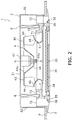
- the casing 2 of the air conditioning apparatus 1 is disposed by being inserted into an opening formed in a ceiling U of an air-conditioned room, as shown in FIG. 2 (a schematic cross-sectional side view of the air conditioning apparatus 1).
- the face panel 3 is disposed so as to fit into the opening in the ceiling U.
- the casing 2 is shaped as a box in which the bottom surface of the substantially octagonal in the plan view is open, the long sides and short sides thereof being formed alternately.
- the casing has a substantially octagonal top plate 21 in which long sides and short sides are formed alternately, and side plates 22 extending downward from the peripheral edges of the top plate 21.
- the face panel 3 is a substantially square plate-shaped member in a plan view, and has an intake port 31 in the substantial center for drawing in air in the air-conditioned room, and a plurality (four in the present embodiment) of discharge ports 32 formed so as to correspond to the four sides for blowing air out of the casing into the air-conditioned room.
- the sides of the face panel 3 are disposed so as to correspond to the long sides of the top plate 21 of the casing 2.
- the intake port 31 is a substantially square-shaped opening in the present embodiment.
- the four discharge ports 32 are substantially rectangular openings extending in an elongated manner along the respective sides of the face panel 3.
- the intake port 31 is provided with an intake grill 33, and a filter 34 for removing dust in the air drawn in through the intake port 31.
- the discharge ports 32 are each provided with horizontal flaps 35 capable of swinging around a longitudinal axis, making it possible to change the direction of the flow of air blown out through the discharge ports 32 into the air-conditioned room.
- a blower 4 for drawing air in the air-conditioned room into the casing 2 through the intake port 31 of the face panel 3 and blowing the air peripherally outward
- a heat exchanger 6 disposed so as to enclose the external periphery of the blower 4.
- the blower 4 is a turbofan as one example of a centrifugal blower, and the blower 4 has a fan motor 41 provided in the center of the top plate 21 of the casing 2, and an impeller 42 (an impeller for a centrifugal blower) linked to and rotatably driven by a shaft 41a (rotating shaft) of the fan motor 41.
- the detailed structure of the impeller 42 is described hereinafter.
- the heat exchanger 6 is a cross-fin tube type heat exchange panel that is bent and formed so as to enclose the external periphery of the blower 4, and is connected via a refrigerant pipe to an outdoor unit (not shown) installed outside of the room or another such location.
- the heat exchanger 6 is designed to be capable of functioning as an evaporator during the cooling operation and as a condenser during the heating operation.
- the heat exchanger 6 is thereby capable of performing heat exchange with the air drawn into the casing 2 through the intake port 31 by the blower 4, of cooling the air during the cooling operation, and of heating the air during the heating operation.
- a drain pan 7 Disposed beneath the heat exchanger 6 is a drain pan 7 for receiving drain water produced by the moisture in the air condensing in the heat exchanger 6.
- the drain pan 7 is installed at the bottom of the casing 2.
- the drain pan 7 has an intake hole 71 formed so as to communicate with the intake port 31 of the face panel 3, discharge holes 72 formed so as to correspond with the discharge ports 32 of the face panel 3, and a drain water receiving groove 73 formed beneath the heat exchanger 6 for receiving drain water.
- a bell mouth 5 Disposed in the intake hole 71 of the drain pan 7 is a bell mouth 5 for guiding air taken in through the intake port 31 to the impeller 42 of the blower 4.
- an air flow channel is formed in the air conditioning apparatus 1, starting from the intake port 31 of the face panel 3, running through the filter 34, the bell mouth 5, the drain pan 7, the blower 4, and the heat exchanger 6, and ending at the four discharge ports 32. Air in the air-conditioned room is drawn in and made to exchange heat in the heat exchanger 6, and the air can then be blown out into the air-conditioned room.
- FIG. 3 is an external perspective view of the impeller 42.
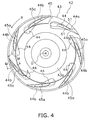
- FIG. 4 is a view as indicated by the arrow A in FIG. 3 (excluding part of an end ring 45).
- the impeller 42 primarily has a discoid end plate 43 as a blade-supporting rotator linked to the shaft 41a of the fan motor 41, a plurality (seven in the present embodiment) of blades 44 centered around the shaft 41a and arranged annularly on the side of the end plate 43 opposite the fan motor 41, and an annular end ring 45 as a blade-supporting rotator disposed so as to sandwich the blades 44 with the end plate 43 in the axial direction.
- the center axis line of the shaft 41 a i.e., the rotational axis line of the impeller 42
- R the rotational direction of the impeller 42
- the end plate 43 is a substantially discoid resinous member formed so that a substantially conical convex part 43a in the center protrudes toward the intake port 31.
- the end ring 45 is an annular bell-shaped resinous member in which areas farther away from the external periphery and closer to the opening in the central part protrude closer toward the intake port 31.
- FIG. 5 is a schematic side view of the blade 44.
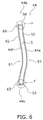
- FIG. 6 is a cross-sectional view along the line B-B in FIG. 5 .
- FIG. 7 is a cross-sectional view along the line C-C in FIG 5 .
- FIG. 8 is a view as indicated by the arrow D in FIG. 5 .
- FIG. 9 is a view as indicated by the arrow E in FIG. 5 .
- FIG. 10 is an enlarged view of the area F in FIG. 6 .
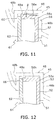
- FIG. 11 is a cross-sectional view along the line G-G in FIG. 5 .
- FIG. 12 is an enlarged view of the area H in FIG. 6 .
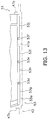
- FIG. 13 is a view as indicated by the arrow J in FIG. 8 (showing only the vicinity of the end of a blade body 51 on the side near the end plate 43).
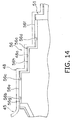
- FIG. 14 is a view as indicated by the arrow K in FIG. 9 (showing only the vicinity of the end of the blade body 51 on the side near the end ring 45).
- the blades 44 are resinous members molded separately from the end plate 43 and the end ring 45. One end of each of the blades 44 is fixed to the end plate 43, and the other end is fixed to the end ring 45.
- each of the blades 44 has a wing shape inclined farther backward at the end part 44a near the end plate 43 than at the end part 44b near the end ring 45.
- Each of the blades 44 is also formed so that these end parts 44a, 44b intersect each other in a plan view of the impeller 42.
- each of the blades 44 has a shape that extends axially while twisting between the end plate 43 and the end ring 45.
- Each of the blades 44 also has a shape in which, in a plan view of the impeller 42, the axially center portion of the blade 44 protrudes farther radially outward than both the end part 44a near the end plate 43 and the end part 44b near the end ring 45, and the blade 44 has a rounded wing shape when viewed along the chord of the wing.
- the reason for shaping the blades 44 to twist in the axial direction and for giving the blades a complex rounded shape is to improve the blowing performance and noise quality of the blower 4.
- front edge corner parts 44c protruding in a staircase pattern (two steps in the present embodiment) toward the inner periphery of the impeller 42.
- the front edge corner parts 44c have the function of preventing air flow from separating from the negative-pressure surfaces 44f of the blades 44 when the air flow is drawn into the impeller 42 through the intake port 31 and the bell mouth 5 is blown out toward the outward periphery by the blades 44, thus contributing to reducing the noise of the blower 4.
- negative-pressure surfaces 44f refers to the surfaces of the blades 44 that face the inner periphery of the impeller 42, and the surfaces on the opposite sides of the negative-pressure surfaces 44f, i.e., the surfaces of the blades 44 facing the outer periphery of the impeller 42, are referred to as positive-pressure surfaces 44e.
- a plurality of wave-shaped rear edge projections 44d is formed in the ends of the blades 44 on the sides opposite the R direction (these ends are hereinafter referred to as rear edges), the projections facing toward the external periphery of the impeller 42.
- a plurality of rear edge projections 44d have the function of reducing the pressure differences in the boundaries between the positive-pressure surfaces 44e and negative-pressure surfaces 44f in the rear edges of the blades 44 when air flow drawn into the impeller 42 through the intake port 31 and bell mouth 5 is blown out toward the outward periphery by the blades 44, thus contributing to reducing the noise of the blower 4.
- the shapes and numbers of the front edge corner parts 44c and the rear edge projections 44d are not limited to the shapes and numbers in the present embodiment. In cases in which the desired noise quality can be achieved without providing front edge corner parts 44c or rear edge projections 44d such as those described above, the front edges and rear edges of the blades 44 do not need to be provided with the front edge corner parts 44c or rear edge projections 44d.
- the blades 44 are hollow blades, each included the blade body 51 (first blade surface part) fixed to the end plate 43 and the end ring 45, and a blade cover 61 (second blade surface part) forming a hollow space S with the blade body 51, the blade cover being mounted by fitting into the blade body 51.
- each of the blade bodies 51 is primarily plate-shaped member constituting the positive-pressure surface 44e and part of the negative-pressure surface 44f (specifically, the rear edge of the negative-pressure surface 44f) of the blade 44.
- each of the blade covers 61 is primarily plate-shaped member constituting part of the negative-pressure surface 44f (specifically, the portion of the negative-pressure surface 44f excluding the rear edge).
- Each of the blade bodies 51 is configured from a positive-pressure surface part 52 constituting the positive-pressure surface 44e of the blade 44, a first blade weld part 53 as a rotator weld part formed on the side of the positive-pressure surface part 52 near the end plate 43, a rear edge-side edge part 54 formed on the rear edge side of the positive-pressure surface part 52, a front edge-side edge part 55 formed on the front edge side of the positive-pressure surface part 52, and a second blade weld part 56 as a rotator weld part formed on the side of the positive-pressure surface part 52 near the end ring 45.
- Each of the positive-pressure surface parts 52 has in the substantial center thereof a plurality (three in the present embodiment) of annular projections 52a protruding toward the blade cover 61.
- Each of the first blade weld parts 53 is a portion welded to the end plate 43 by laser welding, the first blade weld part having primarily a first blade-welding body 53a extending from the end of the positive-pressure surface part 52 near the end plate toward the blade cover 61, and an engaging hole 53b, a positioning hole 53c, and first grooves 53d, 53e, 53f formed in the first blade-welding body 53a.
- the engaging hole 53b is a long hole disposed along the negative-pressure surface 44f in the substantial center of the direction (specifically, the chord direction) running from the front edge to the rear edge (or from the rear edge to the front edge) of the first blade-welding body 53a.
- the positioning hole 53c is a circular hole disposed toward the front edge of the engaging hole 53b.
- the first grooves 53d, 53e, 53f are long, thin grooves formed so as to extend from the end of the positive-pressure surface part 52 near the end plate 43 toward the blade cover 61, and a plurality of these grooves (three in the present embodiment, in the order of the first groove 53d, the first groove 53e, and the first groove 53f progressing from the front edge toward the rear edge) is disposed at intervals in a chordal direction.
- the first grooves 53d, 53e, 53f are disposed at substantially equal intervals from the front edge toward the rear edge in the present embodiment.
- the first blade weld part 53 has a shape partitioned by these first grooves 53d, 53e, 53f into a plurality (four in the present embodiment) of portions aligned in the chordal direction.
- the first grooves 53d, 53e, 53f are formed on the surface of the first blade-welding body 53a near the end plate 43.
- First blade weld surfaces 53g, 53h, 53i, 53j as rotator weld surfaces are formed on the first blade weld part 53 on the surface near the end plate 43.
- the first blade weld surfaces 53g, 53h, 53i, 53j correspond to the plurality (four in the present embodiment) of portions of the first blade weld part 53 partitioned by the first grooves 53d, 53e, 53f.
- the first blade weld surface 53g is the surface of the front edge portion of the first groove 53d on the side near the end plate 43
- the first blade weld surface 53h is the surface of the portion between the first groove 53d and the first groove 53e in the chordal direction on the side near the end plate 43
- the first blade weld surface 53i is the surface of the portion between the first groove 53e and the first groove 53f in the chordal direction on the side near the end plate 43
- the first blade weld surface 53j is the surface of the rear edge portion of the first groove 53f on the side near the end plate 43.
- the first blade weld surfaces 53g, 53h, 53i, 53j are inclined with respect to a plane orthogonal to the rotational axis line O-O of the impeller 42, in a state in which the first blade weld part 53 is disposed to face a plate weld surface 47a (described later) of the end plate 43 (only the first blade weld surface 53i is shown in FIG 10 ) in the axial direction.
- each of the first blade weld surfaces 53g, 53h, 53i, 53j is inclined so that areas of this surface farther away from the end of the positive-pressure surface part 52 toward the end plate 43 and closer to a plate-side edge part 63 (described later) protrudes closer to the end plate 43 in the axial direction.
- the angle of inclination ⁇ of the first blade weld surfaces 53g, 53h, 53i, 53j with respect to a plane orthogonal to the rotational axis line O-O of the impeller 42 is from 0.5 degrees to 2.5 degrees, in a state in which the first blade weld part 53 is disposed to face the plate weld surface 47a (described later) of the end plate 43 in the axial direction.
- the rear edge-side edge part 54 constitutes the rear edge part of the positive-pressure surface 44e and the rear edge part of the negative-pressure surface 44f of each of the blades 44, and has the plurality of rear edge projections 44d described above, and a rear edge-side contact part 54a formed in the front edges of the rear edge projections 44d and pressed against a rear edge-side edge part 64 (described later) of the blade cover 61.
- the front edge-side edge part 55 constitutes the portion of the front edge corner parts 44c near the positive-pressure surface part 52, and has a first front edge-side contact part 55a formed in the rear edges of the front edge corner parts 44c and pressed against a front edge-side edge part 65 (described later) of the blade cover 61.
- Each of the second blade weld parts 56 is a portion welded to the end ring 45 by laser welding, and primarily has a second blade weld body 56a extending from the end of the positive-pressure surface part 52 near the end ring 45 toward the blade cover 61, and second grooves 56b, 56c, 56d.
- the second blade weld body 56a is directed from the front edge toward the rear edge of each of the blades 44, and is shaped so as to form an end face in which the distance from the end face near the end plate 43 decreases in a staircase pattern (three steps in the present embodiment).
- the second grooves 56b, 56c, 56d are long, thin grooves formed so as to extend from the end of the positive-pressure surface part 52 near the end ring 45 toward the blade cover 61, and a plurality of these grooves (three in the present embodiment, in the order of the second groove 56b, the second groove 56c, and the second groove 56d from the front edge toward the rear edge) is disposed at intervals in the chordal direction.
- the second grooves 56b, 56c are disposed in the foremost portion of the second blade weld body 56a, and the second groove 56d is disposed in the rearmost portion of the second blade weld body 56a.
- the second blade weld part 56 has a shape partitioned by these second grooves 56b, 56c, 56d into a plurality (four in the present embodiment) of portions aligned in the chordal direction.
- the second grooves 56b, 56c, 56d are formed on the surface of the second blade weld body 56a near the end ring 45.
- Second blade weld surfaces 56e, 56f and second blade flat surfaces 56g, 56h are formed in the surface of the second blade weld part 56 near the end ring 45.
- the second blade weld surfaces 56e, 56f correspond to the plurality (four in the present embodiment) of portions of the second blade weld part 56 partitioned by the second grooves 56b, 56c, 56d.
- the second blade weld surface 56e is the surface near the end ring 45 between the second groove 56b and the second groove 56c in the chordal direction
- the second blade weld surface 56f is the surface of the rear edge-side portion of the second groove 56d near the end ring 45.
- the second blade flat surface 56g is the surface of the front edge-side portion of the second groove 56b near the end ring 45
- the second blade flat surface 56h is the surface near the end ring 45 of the portion between the second groove 56c and the second groove 56d in the chordal direction.
- the second blade weld surfaces 56e, 56f are inclined with respect to a plane orthogonal to the rotational axis line O-O of the impeller 42, in a state in which the second blade weld part 56 is disposed to face a ring weld surface 48a (described later) of the end ring 45 (only the second blade weld surface 56e is shown in FIG. 11 ) in the axial direction.
- the second blade weld surfaces 56e, 56f are inclined so as to protrude to the side of the end ring 45 in the axial direction as the second blade weld surfaces are oriented to a ring-side edge part 66 (described later) from the end of the positive-pressure surface part 52 near the end ring 45.
- the angle of inclination ⁇ of the second blade weld surfaces 56e, 56f with respect to a plane orthogonal to the rotational axis line O-O of the impeller 42 is from 0.5 degrees to 2.5 degrees, in a state in which the second blade weld part 56 is disposed to face the ring weld surface 48a (described later) of the end ring 45 in the axial direction.
- the second blade flat surfaces 56g, 56h are parallel to a plane orthogonal to the rotational axis line O-O of the impeller 42, in a state in which the second blade weld part 56 is disposed to face the ring weld surface 48a (described later) of the end ring 45 (only the second blade flat surface 56h is shown in FIG. 12 ) in the axial direction. Unlike the second blade weld surfaces 56e, 56f, the second blade flat surfaces 56g, 56h do not have portions that protrude in the axial direction toward the end ring 45.
- Each of the blade covers 61 includes a negative-pressure surface part 62 constituting part of the negative-pressure surface 44f of the blade 44 (in the present embodiment, the portion of the negative-pressure surface 44f excluding the rear edge part), a plate-side edge part 63 formed on the side of the negative-pressure surface part 62 near the end plate 43, a rear edge-side edge part 64 formed on the rear edge side of the negative-pressure surface part 62, a front edge-side edge part 65 formed on the front edge side of the negative-pressure surface part 62, and a ring-side edge part 66 formed on the side of the negative-pressure surface part 62 near the end ring 45.
- Each of the negative-pressure surface parts 62 has, at a position corresponding to the annular projections 52a formed in the positive-pressure surface part 52 of the blade body 51, a plurality (three in the present embodiment) of fitting projections 62a which protrude toward the blade body 51.
- These fitting projections 62a fit with each of the central concave parts of the corresponding annular projections 52a, and are inserted either until the surface of the negative-pressure surface part 62 near the blade body 51 comes into contact with the ends of the annular projections 52a near the blade cover 61, or until the surface of the positive-pressure surface part 52 near the blade cover 61 comes into contact with the ends of the fitting projections 62a near the blade body 51.
- the plate-side edge part 63 has a shape that follows the end face of the first blade-welding body 53a and is in contact with the end face of the first blade-welding body 53a near the end ring 45.
- An engaging pawl 63a that extends from the side near the end ring 45 toward the end plate 43 is formed in the end of the plate-side edge part 63 near the end plate 43, and this pawl is designed to be inserted into the engaging hole 53b.
- the engaging pawl 63a is formed so that when the pawl is inserted into the engaging hole 53b, the pawl does not protrude from the end face of the first blade-welding body 53a near the end plate 43 (specifically, the first blade weld surfaces 53h, 53i) in the axial direction toward the end plate 43, including cases in which a pressure load is applied to the blade 44 during the laser welding steps described hereinafter.
- the end part 44a fixed to the end plate 43 is configured by the first blade weld part 53 of the blade body 51 and the plate-side edge part 63 of the blade cover 61.
- the rear edge-side edge part 64 has a shape that follows along the rear edge-side edge part 54 and is in contact with the end face of the rear edge-side contact part 54a near the blade cover 61.
- the front edge-side edge part 65 constitutes the portion of the front edge corner parts 44c near the negative-pressure surface part 62 and is in contact with the end face of the first front edge-side contact part 55a on the side near the blade cover 61.
- the ring-side edge part 66 has a shape that follows along the stepped end face of the second blade weld body 56a and is in contact with the end face of the second blade weld body 56a on the side near the blade cover 61.
- the end face of the ring-side edge part 66 near the end ring 45 is formed so as not to protrude from the end face of the second blade weld body 56a near the end ring 45 in the axial direction toward the end ring 45, including cases in which a pressure load is applied to the blade 44 during the laser welding steps described hereinafter.
- the end part 44b fixed to the end ring 45 is configured by the second blade weld part 56 of the blade body 51 and the ring-side edge part 66 of the blade cover 61.
- the blade 44 is assembled by inserting the engaging pawl 63a of the blade cover 61 into the engaging hole 53b of the blade body 51, and then fitting the fitting projections 62a of the blade cover 61 into the central concave parts of the annular projections 52a of the blade body 51.
- a hollow space S is thereby formed between the blade body 51 and the blade cover 61. Since the blade body 51 and the blade cover 61 are molded separately, there are few restrictions on the draft direction of the mold used during molding, and the space S can be easily increased even in cases of a rounded, complex wing shape which twists axially, as is the case in the present embodiment. This facilitates making the blade 44 hollow and makes it possible to reduce the weight of the impeller 42.
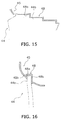
- FIG. 15 is a cross-sectional view along the line L-L in FIG. 4 (showing only the vicinity of the end ring 45).
- FIG. 16 is a cross-sectional view along the line M-M in FIG. 4 (showing only the vicinity of the end ring 45).
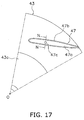
- FIG. 17 is a partial plan view of the end plate 43.
- FIG. 18 is a cross-sectional view along the line N-N in FIG. 17 .
- the end ring 45 When the blades 44 are fixed to the end ring 45, a plurality of blades 44 must be disposed at specific fixed positions.
- ring weld parts 48 as rotator weld parts that can be fitted with the end parts 44b of the blades 44 on the sides near the end ring 45 (specifically, the second blade weld parts 56 of the blade bodies 51 and the ring-side edge parts 66 of the blade covers 61), making it possible to position the blades 44.
- each ring weld part 48 Formed in each ring weld part 48 are a ring weld surface 48a (rotating body weld surface) that is disposed to face the stepped end faces of the end parts 44b formed on the surfaces near the end plate 43 in the axial direction, and a blade fitting part 48b extending from the peripheral edge of the ring weld surface 48a along the end parts 44b in the axial direction toward the end plate 43.
- the ring weld surfaces 48a are parallel to a plane orthogonal to the rotational axis line O-O of the impeller 42, in a state in which the second blade weld parts 56 are disposed to face the ring weld surfaces 48a of the end ring 45 in the axial direction.
- the second blade weld surfaces 56e, 56f are inclined with respect to a plane orthogonal to the rotational axis line O-O of the impeller 42, whereby gaps are formed in the axial direction with the ring weld surfaces 48a, excluding the portions of the second blade weld surfaces 56e, 56f of the blades 44 in proximity to the ring weld surfaces 48a. Gaps are also formed in the axial direction between the second blade flat surfaces 56g, 56h and the ring weld surfaces 48a.
- the end parts 44b of the blades 44 are fitted with the ring weld parts 48 (specifically, with the blade fitting parts 48b), whereby the end parts 44b (specifically, the second blade weld parts 56 of the blade bodies 51) are disposed to face the ring weld surfaces 48a in the axial direction, and the second blade weld parts 56 are then laser welded to the ring weld surfaces 48a, whereby the blades 44 are fixed to the end ring 45.
- the material constituting the end ring 45 is preferably more optically transmissive than the material constituting the blade bodies 51.
- the end ring 45 can be white or milky white in color
- the blade bodies 51 can be black in color.
- the end plate 43 When the blades 44 are fixed to the end plate 43, a plurality of blades 44 must be disposed at specific fixing positions similar to cases in which the blades 44 are fixed to the end ring 45.
- plate weld parts 47 As rotator weld parts that can be fitted with the end parts 44a on the sides of the blades 44 near the end plate 43 (specifically, with the first blade weld parts 53 of the blade bodies 51 and the plate-side edge parts 63 of the blade covers 61), making it possible to position the blades 44.
- plate weld surfaces 47a (rotator weld surfaces) disposed to face the end faces of the end parts 44a formed on the surfaces near the end ring 45 in the axial direction
- blade fitting parts 47b extending from the peripheral edges of the plate weld surfaces 47a along the end parts 44a in the axial direction toward the end ring 45
- positioning projections 47c that can be inserted into the positioning holes 53c formed in the end parts 44a (specifically, the first blade-welding bodies 53a).
- the plate weld surfaces 47a are parallel to a plane orthogonal to the rotational axis line O-O of the impeller 42, in a state in which the first blade weld parts 53 are disposed to face the plate weld surfaces 47a of the end plate 43 in the axial direction.
- the first blade weld surfaces 53g, 53h, 53i, 53j are inclined with respect to a plane orthogonal to the rotational axis line O-O of the impeller 42, whereby gaps are formed in the axial direction with the plate weld surfaces 47a, excluding the portions of the first blade weld surfaces 53g, 53h, 53i, 53j of the blades 44 in proximity to the plate weld surfaces 47a.
- the end parts 44a of the blades 44 are fitted with the plate weld parts 47 (specifically, with the blade fitting parts 47b), whereby the end parts 44a (specifically, the first blade weld parts 53 of the blade bodies 51) are disposed to face the plate weld surfaces 47a in the axial direction, and the first blade weld parts 53 are then laser welded to the plate weld surfaces 47a, whereby the blades 44 are fixed to the end plate 43.
- the material constituting the end plate 43 is preferably more optically transmissive than the material constituting the blade bodies 51.
- the end plate 43 can be white or milky white in color
- the blade bodies 51 can be black in color.
- FIG. 19 includes drawings showing the steps of fixing a blade 44 to the end plate 43 and the end ring 45 by laser welding, wherein (a) shows the state in which the blade 44 is disposed at a specific position between the end ring 45 and the end plate 43 in the axial direction, (b) shows the state in which a load is applied to the end ring 45 and the end plate 43, and (c) shows the state in which the blade 44 is laser welded to the end ring 45 and the end plate 43.
- FIG. 19 includes drawings showing the steps of fixing a blade 44 to the end plate 43 and the end ring 45 by laser welding, wherein (a) shows the state in which the blade 44 is disposed at a specific position between the end ring 45 and the end plate 43 in the axial direction, (b) shows the state in which a load is applied to the end ring 45 and the end plate 43, and (c) shows the state in which the blade 44 is laser welded to the end ring 45 and the end plate 43.
- FIG. 20 shows the state in which a first blade weld part 53 moves in the axial direction when a pressure load is applied to the end plate 43 in a case in which the gap between a part of first blade weld surface 53h and the plate weld surface 47a is larger than the gaps between the other first blade weld surfaces 53g, 53i, 53j and the plate weld surface 47a; wherein (a) shows the state in which the blade 44 is disposed at a specific position in the end plate 43, and (b) shows the state in which a load is applied to the end plate 43.
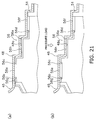
- FIG. 21 shows the state in which a second blade weld part 56 moves in the axial direction when a pressure load is applied to the end ring 45, wherein (a) shows the state in which a blade 44 is disposed at a specific position in the end ring 45, and (b) shows the state in which the load is applied to the end ring 45.
- the blade bodies 51, the blade covers 61, the end plate 43, and the end ring 45 are molded from a resin and prepared for use.
- the blade covers 61 are attached by being fitted into the blade bodies 51 to assemble the blades 44. Specifically, the engaging pawls 63a of the blade covers 61 are inserted into the engaging holes 53b, and the fitting projections 62a of the blade covers 61 are then fitted into the annular projections 52a of the blade bodies 51 to assemble the blades 44.
- the end parts 44b of the blades 44 near the end ring 45 are fitted with the ring weld parts 48 of the end ring 45, and the end parts 44a of the blades 44 are fitted with the plate weld parts 47 of the end plate 43, whereby a plurality of blades 44 are disposed at specific positions between the end ring 45 and the end plate 43 in the axial direction.
- a pressure load is applied to the end plate 43 and the end ring 45, so as to cause the blades 44 to be compressed in the axial direction by the end plate 43 and the end ring 45.
- the pressure load concentrates in the portions of the first blade weld surfaces 53g, 53h, 53i, 53j near the blade covers 61, whereby the first blade weld surfaces 53g, 53h, 53i, 53j are pressed in the axial direction toward the end ring 45 by the plate weld surfaces 47a, and substantially the entire first blade weld surfaces 53g, 53h, 53i, 53j are firmly adhered along the plate weld surfaces 47a accordingly (see FIG.
- the first grooves 53d, 53e, 53f are formed and the first blade weld surface 53h is not pressed in the axial direction toward the end ring 45, the first grooves 53d, 53e formed in the first blade weld surface 53h in the chordal direction deform in accordance with the distance by which the first blade weld surfaces 53g, 53i move in the axial direction.
- the first blade weld surface 53h comes into contact with the plate weld surface 47a, and substantially the entire first blade weld surfaces 53g, 53h, 53i, 53j are firmly adhered to the plate weld surface 47a.
- substantially the entire first blade weld surfaces 53g, 53h, 53i, 53j are firmly adhered to the plate weld surface 47a by the first grooves 53d, 53e, 53f even in cases in which unevenness are formed in the first blade weld surfaces 53g, 53h, 53i, 53j or the plate weld surface 47a, and there is less chance that there will be portions where the gaps between the weld surfaces cannot be reduced.
- the second blade flat surfaces 56g, 56h which are parallel to the ring weld surface 48a, are disposed at positions axially farther away from the ring weld surface 48a than the portions of the second blade weld surfaces 56e, 56f in proximity to the ring weld surface 48a.
- Laser light is also irradiated at the second blade weld parts 56 (more specifically, at the two locations of the second blade weld surfaces 56e, 56f) from the surface of the end ring 45 on the opposite side of the blades in the axial direction, and the blades 44 are fixed to the ring weld surfaces 48a by welding.
- the desired welding strength can be achieved in a stable manner because the adherence between the first blade weld surfaces 53g, 53h, 53i, 53j and the plate weld surfaces 47a are satisfactory, and the adherence between the second blade weld surfaces 56e, 56f and the ring weld surfaces 48a are satisfactory.
- the blades 44 constituting the blower 4 of the present embodiment are resinous hollow blades having hollow spaces formed in interiors thereof, and the first blade weld surfaces 53g, 53h, 53i, 53j inclined (angle of inclination ⁇ , see FIG. 10 ) with respect to the plate weld surfaces 47a are formed in the first blade weld parts 53 in a state in which the first blade weld parts 53 are disposed to face the plate weld surfaces 47a as rotator weld surfaces (see FIG 19(a) ) in the axial direction.
- the adherence between the first blade weld surfaces 53g, 53h, 53i, 53j and the plate weld surfaces 47a is satisfactory, and the blades 44 can therefore be fixed to the end plate 43 with high welding strength.
- the portions in proximity to the ring weld surfaces 48a formed by the inclining of the second blade weld surfaces 56e, 56f are firmly pressed into the ring weld surfaces 48a in a state in which the second blade weld parts 56 are disposed to face the ring weld surfaces 48a in the axial direction.
- the adherence between the second blade weld surfaces 56e, 56f and the ring weld surfaces 48a is satisfactory, and the blades 44 can therefore be fixed to the end ring 45 with high welding
- the pressure load can be concentrated in the portions in proximity to the plate weld surfaces 47a formed by the inclining of the first blade weld surfaces 53g, 53h, 53i, 53j (the portions near the blade covers 61 in this case), or in the portions in proximity to the ring weld surfaces 48a formed by the inclining of the second blade weld surfaces 56e, 56f (the portions near the blade covers 61 in this case). Therefore, the pressure load applied between the blades 44 and the end plate 43 or end ring 45 can be reduced in comparison with cases in which an attempt is made to firmly adhere the entire un-inclined blade weld surfaces to the entire plate weld surfaces of the end plate.
- the impeller 42 of the present embodiment is manufactured by forming the first blade weld surfaces 53g, 53h, 53i, 53j inclined with respect to the plate weld surfaces 47a in a state in which the first blade weld parts 53 are disposed to face the plate weld surfaces 47a of the end plate 43 in the axial direction, and also in a state in which the second blade weld parts 56 are disposed to face the ring weld surfaces 48a of the end ring 45 in the axial direction; and by fixing the blades 44, on which are formed the second blade weld surfaces 56e, 56f inclined with respect to the ring weld surfaces 48a, by laser welding to the end plate 43 and the end ring 45, in a state in which the load is applied so as to press the end plate 43 and the blades 44 each other in the axial direction, and also in a state in which the load is applied so as to press the end ring 45 and the blades 44 each other in the axial direction.
- the blades are therefore fixed to the blade-supporting rotator with high welding strength. Therefore, when the blades 44 are fixed by laser welding to the end plate 43 or the end ring 45, the pressure load applied between the blades 44 and the end plate 43 or end ring 45 in the axial direction can be reduced, the length of the laser welded portions can be reduced, the blades 44 can be given a complex rounded shape in order to improve blowing performance and noise quality, the blades 44 can be thinned in order to reduce the weight of the impeller 42, and, as a result, costs can be reduced.
- the angle of inclination ⁇ of the first blade weld surfaces 53g, 53h, 53i, 53j with respect to the plate weld surfaces 47a is 0.5 degrees or more
- the angle of inclination ⁇ of the second blade weld surfaces 56e, 56f with respect to the ring weld surfaces 48a is 0.5 degrees or greater
- the gaps that may form between the first blade weld surfaces of the blades and the plate weld surfaces of the end plate can be reduced by applying the pressure load between the end plate 43 and the blades 44 in the axial direction or between the end ring 45 and the blades 44 in the axial direction, and the operation for firmly adherence the weld surfaces together can be reliably achieved.
- the angle of inclination ⁇ of the first blade weld surfaces 53g, 53h, 53i, 53j with respect to the plate weld surfaces 47a is 2.5 degrees or less
- the angle of inclination ⁇ of the second blade weld surfaces 56e, 56f with respect to the ring weld surfaces 48a is 2.5 degrees or less
- the blades 44 constituting the blower 4 of the present embodiment it is possible to achieve an operation for reducing the gaps that may form in the axial direction between the first blade weld surfaces 53g, 53h, 53i, 53j of the blades 44 and the plate weld surfaces 47a of the end plate 43 or between the second blade weld surfaces 56e, 56f and the ring weld surfaces 48a of the end ring 45 in a reliable manner and without the orientation of the blades 44 being greatly changed by the angles of inclination.
- the blades 44 constituting the blower 4 of the present embodiment, when the pressure load is applied in the axial direction between the blades 44 and the end plate 43 or the end ring 45 as the blades 44 are fixed by laser welding to the end plate 43 or end ring 45, there are sometimes cases in which the axially compressing load is applied to the blades 44, the blades 44 bend, and the axially central portions of the blades 44 protrude orthogonally to the axial direction (to the right of the paper surface in FIG. 19 ), in cases in which, e.g., the blades 44 are given a complex rounded shape (see FIGS. 4 and 19 ).
- the portions of the first blade weld parts 53 or the second blade weld parts 56 on the side substantially opposite the side in which the axially central portions of the blades 44 protrude orthogonally to the axial direction are thereby inclined in a direction aparting from the axial direction with respect to the plate weld surfaces 47a or the ring weld surfaces 48a, and the gaps between the first blade weld surfaces 53g, 53h, 53i, 53j and the plate weld surfaces 47a or between the second blade weld surfaces 56e, 56f and the ring weld surfaces 48a tend to increase.
- the first blade weld surfaces 53g, 53h, 53i, 53j or the second blade weld surfaces 56e, 56f are inclined so as to be closer to the plate weld surfaces 47a or the ring weld surfaces 48a as the blade weld surfaces are oriented in a direction (to the left of the paper surface in FIG. 19 ) substantially opposite a direction (to the right of the paper surface in FIG. 19 ) in which the axially central portions of the blades 44 are protruded orthogonally to the axial direction by the bending of the blades 44.
- the blades 44 constituting the blower 4 of the present embodiment are configured by attaching the blade covers 61 to the blade bodies 51, wherein the first blade weld parts 53 are formed so as to extend from the ends of the blade bodies 51 near the end plate 43 toward the blade covers 61, and the second blade weld parts 56 are formed so as to extend from the ends of the blade bodies 51 near the end ring 45 toward the blade covers 61.
- the portions of the first blade weld parts 53 near the blade covers 61 which are less rigid than the portions near the blade bodies 51, are inclined in the axial direction away from the plate weld surfaces 47a, and the gaps between the first blade weld surfaces 53g, 53h, 53i, 53j and the plate weld surfaces 47a tend to increase.
- the aforementioned portions of the first blade weld parts are also inclined in the axial direction away from the ring weld surfaces 48a, and the gaps between the second blade weld surfaces 56e, 56f and the ring weld surfaces 48a tend to increase.
- first blade weld surfaces 53g, 53h, 53i, 53j are inclined so as to be closer to the plate weld surfaces 47a as the first blade weld surfaces are oriented toward the blade covers 61, it is possible to maintain a state in which the gaps are small between the portions of the first blade weld surfaces 53g, 53h, 53i, 53j of the blades 44 near the blade covers 61 and the plate weld surfaces 47a of the end plate 43. It is also possible to achieve satisfactory adherence between the first blade weld surfaces 53g, 53h, 53i, 53j of the blades 44 and the plate weld surfaces 47a of the end plate 43, and the desired welding strength can be achieved in a stable manner.
- first grooves 53d, 53e, 53f are formed in the first blade weld parts 53
- second grooves 56b, 56c, 56d are formed in the second blade weld parts 56, whereby the parts of the first blade weld parts 53 and the parts of the second blade weld parts 56 partitioned by these grooves are able to move as separate portions in the axial direction, with the grooves acting as boundaries (see FIGS. 20 and 21 ).
- first grooves 53d, 53e, 53f are formed in the first blade weld parts 53
- second grooves 56b, 56c, 56d are formed in the second blade weld parts 56, whereby the parts of the first blade weld parts 53 and the parts of the second blade weld parts 56 partitioned by these grooves are able to move as separate portions in the axial direction, with the grooves acting as boundaries (see FIGS. 20 and 21 ).
- second blade flat surfaces 56g, 56h which are parallel to the ring weld surfaces 48a and which are disposed at positions axially farther away from the ring weld surfaces 48a than the portions of the second blade weld surfaces 56e, 56f in proximity to the ring weld surfaces 48a (the portions near the blade covers 61 in this case), are formed in the second blade weld parts 56 so as to be adjacent to the second blade weld surfaces 56e, 56f in a state in which the second blade weld parts 56 are disposed to face the ring weld surfaces 48a in the axial direction, and the second grooves 56b, 56c, 56d are formed so as to correspond to the boundaries between the second blade weld surfaces 56e, 56f and the second blade flat surfaces 56g, 56h, whereby the portions corresponding to the second blade weld surfaces 56e, 56f of the second blade weld parts 56 partitioned by the second grooves 56b, 56c, 56
- the pressure load can be reliably concentrated in the portions of the second blade weld surfaces 56e, 56f closer to the ring weld surfaces 48a than the second blade flat surfaces 56g, 56h, because only the portions of the second blade weld parts 56 corresponding to the second blade weld surfaces 56e, 56f are moved axially by the pressure load, and the portions corresponding to the second blade flat surfaces 56g, 56h do not move readily in the axial direction. Therefore, when the blades 44 are fixed by laser welding to the end ring 45, the pressure load applied between the end ring 45 and the blades 44 can be further reduced.
- first grooves 53d, 53e, 53f are formed in the first blade weld parts 53
- second grooves 56b, 56c, 56d are formed in the second blade weld parts 56 in order to allow the first blade weld parts 53 and the second blade weld parts 56 to move axially as described above
- first slits 153d, 153e, 153f may be formed in the first blade weld parts 53
- second slits 156b, 156c, 156d may be formed in the second blade weld parts 56, as shown in FIGS. 22 and 23 . It is possible to allow the first blade weld parts 53 and the second blade weld parts 56 to move axially as described above in this case as well.
- the first blade weld surfaces 53g, 53h, 53i, 53j of the first blade weld parts 53 are inclined with respect to the plate weld surfaces 47a
- the second blade weld surfaces 56e, 56f of the second blade weld parts 56 are inclined with respect to the ring weld surfaces 48a (see FIGS. 10 through 12 ).
- FIG. 24 is a view showing a modification in which a plate weld surface 147a of an end plate 43 is inclined with respect to first blade weld surfaces 53g, 53h, 53i, 53j of a first blade weld part 53.
- This case presents a state in which the first blade weld part 53 is disposed to face the plate weld surface 147a in the axial direction, wherein the first blade weld surfaces 53g, 53h, 53i, 53j of the first blade weld part 53 are made to be parallel to a plane orthogonal to the rotational axis line O-O of the impeller 42, and the plate weld surface 147a is inclined so as to be closer to the first blade weld surfaces 53g, 53h, 53i, 53j as the plate weld surface is oriented toward the blade cover 61.
- first blade weld surfaces 53g, 53h, 53i, 53j in proximity to the plate weld surface 147a are firmly pressed into the plate weld surface 147a.
- satisfactory adherence can be achieved between the first blade weld surfaces 53g, 53h, 53i, 53j and the plate weld surface 147a, and the blade 44 can therefore be fixed to the end plate 43 with high welding strength.
- the angle range in the embodiment described above can be applied for this angle of inclination ⁇ as well.
- forming first grooves 53d, 53e, 53f see FIG.
- first slits 153d, 153e, 153f in the first blade weld part 53 makes it possible to achieve the same effects as in the embodiment described above in which the first grooves or first slits are formed.
- FIGS. 25 and 26 are drawings showing a modification in which a ring weld surface 48a of an end ring 45 is inclined with respect to second blade weld surfaces 56e, 56f of a second blade weld part 56.
- This case presents a state in which the second blade weld part 56 is disposed to face the ring weld surface in the axial direction, wherein the second blade weld surfaces 56e, 56f and second blade flat surfaces 56g, 56h of the second blade weld part 56 are made to be parallel to a plane orthogonal to the rotational axis line O-O of the impeller 42, and ring weld surfaces 148b, 148d are inclined so as to be closer to the second blade weld surfaces 56e, 56f as the ring weld surfaces approach the blade cover 61.
- the ring weld surfaces 148b, 148d are disposed at positions that are opposite the second blade weld surfaces 56e, 56f in the axial direction, and ring flat surfaces 148a, 148c are formed in the other portions, i.e., at positions that are opposite the second blade flat surfaces 56g, 56h (see FIG. 26 ).
- the portions of the second blade weld surfaces 56e, 56f in proximity to the ring weld surfaces 148b, 148d are firmly pressed into the ring weld surfaces 148b, 148d.
- an impeller for a centrifugal blower configured by using laser welding to fix resinous blades having hollow spaces formed in interiors thereof to a resinous blade-supporting rotator
- using the present invention makes it possible to achieve satisfactory adherence between the weld surface of the blade and the weld surface of the blade-supporting rotator, and the welding strength can be achieved in a stable manner,.
Landscapes
- Engineering & Computer Science (AREA)
- Mechanical Engineering (AREA)
- General Engineering & Computer Science (AREA)
- Structures Of Non-Positive Displacement Pumps (AREA)
Claims (15)
- Laufradschaufel (44) für ein Zentrifugalgebläse in dem mehrere Schaufeln ringförmig um eine Drehachse eines Harz-Schaufel-Halte-Rotators angeordnet sind, wobei die Schaufeln durch Laserschweißen an Rotator-Schweißflächen befestigt sind, die an einer Seitenfläche in der axialen Richtung des Schaufel-Halte-Rotators ausgebildet sind, wobeidie Laufradschaufel eine Harz-Hohlschaufel ist, die einen Schaufelschweißteil (53, 56) an einem Ende an die Rotator-Schweißfläche geschweißt und einen Hohlraum ausgebildet in dem Schaufelinneren aufweist; unddadurch gekennzeichnet ist, dasseine bezüglich der Rotatorschweißfläche geneigte Schaufelschweißfläche (53g, 53h, 53i, 53j, 56e, 56f) in dem Schaufelschweißteil in einem Zustand ausgebildet ist, in dem der Schaufelschweißteil angeordnet ist, um der Rotatorschweißfläche in der axialen Richtung zugewandt zu sein.
- Laufradschaufel (44) für ein Zentrifugalgebläse wie in Anspruch 1, wobeidie Schaufelschweißfläche (53g, 53h, 53i, 53j, 56e, 56f) ausgestaltet ist, um unter einem Winkel von 0,5 Grad bis 2,5 Grad bezüglich der Rotatorschweißfläche geneigt zu sein.
- Laufradschaufel (44) für ein Zentrifugalgebläse wie in Anspruch 1 oder 2, wobeidie Schaufelschweißfläche (53g, 53h, 53i, 53j, 56e, 56f) derart geneigt ist, dass sie näher zu der Rotatorschweißfläche liegt, wenn die Schaufelschweißfläche in eine Richtung orientiert ist, die im Wesentlichen entgegengesetzt einer Richtung ist, in welcher ein axialer Mittelabschnitt der Schaufel in der axialen Richtung durch Biegen der Schaufel während des Aufbringens einer axialen Drucklast orthogonal vorsteht.
- Laufradschaufel (44) für ein Zentrifugalgebläse wie in einem der Ansprüche 1 bis 3, wobeidie Laufradschaufel einen ersten Schaufelflächenteil (51) und einen zweiten Schaufelflächenteil (61) angebracht an dem ersten Schaufelflächenteil zum Ausbilden des Hohlraums mit dem ersten Schaufelflächenteil aufweist;der Schaufelschweißteil (53, 56) derart ausgebildet ist, dass er sich von dem Seitenende des Schaufel-Halte-Rotators des ersten Schaufelflächenteils zu dem zweiten Schaufelflächenteil hin erstreckt; unddie Schaufelschweißfläche (53g, 53h, 53i, 53j, 56e, 56f) so ausgestaltet ist, um derart geneigt zu sein, dass sie näher an der Rotatorschweißfläche liegt, wenn die Schaufelschweißfläche zu dem zweiten Schaufelflächenteil hin orientiert ist.
- Laufradschaufel (44) für ein Zentrifugalgebläse wie in einem der Ansprüche 1 bis 4, wobeieine Nut (53d, 53e, 53f, 56b, 56c, 56d) oder ein Schlitz (153d, 153e, 153f, 156b, 156c, 156d) in dem Schaufelschweißteil (53, 56) ausgebildet ist.
- Laufradschaufel (44) für ein Zentrifugalgebläse wie in einem der Ansprüche 1 bis 4, wobeieine Schaufelflachfläche (56g, 56h), die ausgestaltet ist, um parallel zu der Rotatorschweißfläche zu sein und an einer Position axial weiter entfernt von der Rotatorschweißfläche als der Abschnitt der Schaufelschweißfläche (56e, 56f) in der Nähe der Rotatorschweißfläche zu sein, in dem Schaufelschweißteil (56) zusätzlich zu der Schaufelschweißfläche derart ausgebildet ist, dass sie an die Schaufelschweißfläche in einem Zustand angrenzt, in dem der Schaufelschweißteil angeordnet ist, um der Rotatorschweißfläche in einer axialen Richtung zugewandt zu sein und eine Nut (56b, 56c, 56d) oder ein Schlitz (156b, 156c, 156d) derart ausgebildet ist, um zu einer Grenze zwischen der Schaufelschweißfläche und der Schaufelflachfläche zu korrespondieren.
- Laufrad (42) für ein Zentrifugalgebläse, mit:einem Schaufel-Halte-Rotator (43, 45), der ein Harzelement ist, das sich um eine Drehachse dreht und Rotatorschweißteile (47, 48) aufweist, die eine Rotatorschweißfläche (47a, 48a) ausgebildet an einer Seitenfläche in der axialen Richtung aufweisen; undmehreren Laufradschaufeln (44) für ein Zentrifugalgebläse wie in einem der Ansprüche 1 bis 6, die ausgestaltet sind, um ringförmig um die Achse des Schaufel-Halte-Rotators angeordnet zu sein und ausgestaltet sind, um durch Laserschweißen an den Rotatorschweißflächen befestigt zu werden.
- Schaufel-Halte-Rotator (43, 45) eines Laufrades für ein Zentrifugalgebläse in dem mehrere Harz-Schaufeln an einer axialen Seite angeordnet sind, die Schaufeln ringförmig um eine Drehachse angeordnet sind und Hohlräume in den Schaufelinneren aufweisen und Schaufelschweißflächen, an einen Enden der Schaufeln durch Laserschweißen an dem Schaufel-Halte-Rotator befestigt sind; wobeider Schaufel-Halte-Rotator ein Element ist, das Rotatorschweißteile (47, 48) aufweist, die an die Schaufelschweißflächen an der Schaufelseitenfläche in der axialen Richtung geschweißt sind und ausgestaltet sind, um um eine Drehachse zu drehen; undRotatorschweißflächen (147a, 148b, 148d), die bezüglich der Schaufelschweißflächen geneigt sind, an den Rotatorschweißteilen in einem Zustand ausgebildet sind, in dem die Rotatorschweißteile angeordnet sind, um den Schaufelschweißflächen in der axialen Richtung zugewandt zu sein.
- Schaufel-Halte-Rotator (43, 45) eines Laufrades für ein Zentrifugalgebläse wie in Anspruch 8, wobeidie Rotatorschweißflächen (147a, 148b, 148d) ausgestaltet sind, um unter einem Winkel von 0,5 Grad bis 2,5 Grad bezüglich der Schaufelschweißflächen geneigt zu sein.
- Schaufel-Halte-Rotator (43, 45) eines Laufrades für ein Zentrifugalgebläse wie in Anspruch 8 oder 9, wobeidie Rotatorschweißflächen (147a, 148b, 148d) ausgestaltet sind, um derart geneigt zu sein, dass sie näher an den Schaufelschweißflächen liegen, wenn die Rotatorschweißflächen in eine Richtung orientiert sind, die im Wesentlichen entgegengesetzt einer Richtung ist in welcher axiale Mittelabschnitte der Schaufeln in der axialen Richtung durch Biegen der Schaufeln während Aufbringens einer axialen Drucklast orthogonal vorstehen.
- Laufrad (42) für ein Zentrifugalgebläse, mit:mehreren Harz-Laufradschaufeln (44), die Hohlschaufeln sind, die ringförmig um eine Drehachse angeordnet sind und Hohlräume in den Schaufelinneren aufweisen und welche Schaufelschweißteile (53, 56) aufweisen, die Schaufelschweißflächen (53g, 53h, 53i, 53j, 56e, 56f) ausgebildet an einen Enden aufweisen, undeinem Schaufel-Halte-Rotator (43, 45) eines Laufrades eines Zentrifugalgebläses wie in einem der Ansprüche 8 bis 10, wobei der Rotator an den Schaufelschweißteilseiten der Schaufeln angeordnet ist und die Schaufelschweißflächen durch Laserschweißen an dem Rotator befestigt sind.
- Laufrad (42) für ein Zentrifugalgebläse wie in Anspruch 11, wobeidie Schaufeln (44) erste Schaufelflächenteile (51) und zweite Schaufelflächenteile (61) angebracht an den ersten Schaufelflächenteilen, um die Hohlräume mit den ersten Schaufelflächenteilen auszubilden, aufweisen;die Schaufelschweißteile (53, 56) derart ausgebildet sind, dass sie sich von den Seitenenden des Schaufel-Halte-Rotators der ersten Schaufelflächenteile zu den zweiten Schaufelflächenteilen hin erstrecken; unddie Rotatorschweißflächen (147a, 148b, 148d) derart geneigt sind, dass sie näher zu den Schaufelschweißflächen (53g, 53h, 53i, 53j, 56e, 56f) liegen, wenn die Rotatorschweißflächen zu den zweiten Schaufelflächenteilen hin orientiert sind.
- Laufrad für ein Zentrifugalgebläse wie in Anspruch 11 oder 12, wobeieine Nut (53d, 53e, 53f, 56b, 56c, 56d) oder ein Schlitz (153d, 153e, 153f, 156b, 156c, 156d) in jedem der Schaufelschweißteile (53, 56) ausgebildet ist.
- Laufrad (42) für ein Zentrifugalgebläse wie in Anspruch 11 oder 12, wobeieine Rotatorflachfläche (148a, 148b) in jedem der Rotatorschweißteile (48) zusätzlich zu der Rotatorschweißfläche (148b, 148d) derart ausgebildet ist, dass sie an die Rotatorschweißfläche in einem Zustand angrenzt, in dem die Rotatorschweißteile angeordnet sind, um den Schaufelschweißflächen (56e, 56f) in der axialen Richtung zugewandt zu sein, die Rotatorflachflächen parallel zu den Schaufelschweißflächen sind und an Positionen axial weiter entfernt von den Schaufelschweißflächen als die Abschnitte der Rotatorschweißflächen in der Nähe der Schaufelschweißflächen angeordnet sind; undeine Nut (56d, 56c, 56d) oder ein Schlitz (156b, 156c, 156d) in jeder der Schaufelschweißteile derart ausgebildet ist, um zu einer Grenze zwischen den Rotatorschweißflächen und den Rotatorflachflächen zu korrespondieren.
- Verfahren zum Herstellen eines Laufrades für ein Zentrifugalgebläse mit einem Harz-Schaufel-Halte-Rotator, der sich um eine Drehachse dreht und mehreren Harz-Schaufeln, die ringförmig um die Achse angeordnet sind und Hohlräume in den Schaufelinneren ausgebildet aufweisen; wobeider Schaufel-Halte-Rotator (43, 45) Rotatorschweißteile (47, 48) einschließlich Rotatorschweißflächen (47a, 48a, 147a, 148b, 148d) ausgebildet an einer Seitenfläche in der axialen Richtung aufweist;die Schaufeln (44) Schaufelschweißteile (53, 56) aufweisen, an denen Schaufelschweißflächen (53g, 53h, 53i, 53j, 56e, 56f) ausgebildet sind, die bezüglich der Rotatorschweißflächen in einem Zustand geneigt sind, in dem die Seitenenden des Schaufel-Halte-Rotators angeordnet sind, um den Rotatorschweißflächen in der axialen Richtung zugewandt zu sein; unddie Schaufelschweißteile angeordnet sind, um den Rotatorschweißflächen in der axialen Richtung zugewandt zu sein und die Schaufeln an den Rotatorschweißflächen durch Laserschweißen befestigt werden.
Applications Claiming Priority (2)
| Application Number | Priority Date | Filing Date | Title |
|---|---|---|---|
| JP2006062095A JP3953085B1 (ja) | 2006-03-08 | 2006-03-08 | 遠心送風機用羽根車のブレード、ブレード支持回転体、遠心送風機用羽根車、及び遠心送風機用羽根車の製造方法 |
| PCT/JP2007/054235 WO2007102476A1 (ja) | 2006-03-08 | 2007-03-06 | 遠心送風機用羽根車のブレード、ブレード支持回転体、遠心送風機用羽根車、及び遠心送風機用羽根車の製造方法 |
Publications (3)
| Publication Number | Publication Date |
|---|---|
| EP1995466A1 EP1995466A1 (de) | 2008-11-26 |
| EP1995466A4 EP1995466A4 (de) | 2015-03-11 |
| EP1995466B1 true EP1995466B1 (de) | 2016-05-11 |
Family
ID=38456413
Family Applications (1)
| Application Number | Title | Priority Date | Filing Date |
|---|---|---|---|
| EP07737810.7A Not-in-force EP1995466B1 (de) | 2006-03-08 | 2007-03-06 | Schaufel für laufrad für zentrifugalgebläse, drehkörper zum abstützen von schaufeln, laufrad für zentrifugalgebläse und verfahren zur herstellung eines laufrads für ein zentrifugalgebläse |
Country Status (5)
| Country | Link |
|---|---|
| US (2) | US20090047133A1 (de) |
| EP (1) | EP1995466B1 (de) |
| JP (1) | JP3953085B1 (de) |
| CN (1) | CN101395382B (de) |
| WO (1) | WO2007102476A1 (de) |
Cited By (1)
| Publication number | Priority date | Publication date | Assignee | Title |
|---|---|---|---|---|
| US11566634B2 (en) | 2018-10-31 | 2023-01-31 | Carrier Corporation | Arrangement of centrifugal impeller of a fan for reducing noise |
Families Citing this family (26)
| Publication number | Priority date | Publication date | Assignee | Title |
|---|---|---|---|---|
| WO2009139422A1 (ja) * | 2008-05-14 | 2009-11-19 | ダイキン工業株式会社 | 遠心送風機 |
| IT1397327B1 (it) * | 2009-12-11 | 2013-01-10 | Nuovo Pignone Spa | Metodi e sistemi per saldatura a raggio di giranti. |
| JP5287772B2 (ja) * | 2010-03-16 | 2013-09-11 | 株式会社デンソー | 遠心式多翼ファン |
| US8556584B2 (en) * | 2011-02-03 | 2013-10-15 | General Electric Company | Rotating component of a turbine engine |
| JP6078945B2 (ja) * | 2011-11-04 | 2017-02-15 | ダイキン工業株式会社 | 遠心送風機 |
| JP5988776B2 (ja) * | 2012-08-29 | 2016-09-07 | 三菱電機株式会社 | 遠心送風機及びこの遠心送風機を備えた空気調和機 |
| JP6161940B2 (ja) * | 2013-04-12 | 2017-07-12 | 日清紡メカトロニクス株式会社 | ターボファン及びターボファンの製造方法 |
| KR20140125522A (ko) * | 2013-04-19 | 2014-10-29 | 엘지전자 주식회사 | 터보팬 |
| JP6341637B2 (ja) * | 2013-06-14 | 2018-06-13 | 三菱電機株式会社 | 遠心送風機の製造方法 |
| US9651057B2 (en) | 2013-12-19 | 2017-05-16 | Regal Beloit America, Inc. | Blower assembly including a noise attenuating impeller and method for assembling the same |
| CN104948498A (zh) * | 2014-03-27 | 2015-09-30 | 美的集团武汉制冷设备有限公司 | 离心风轮及其制作方法 |
| JP2016084743A (ja) * | 2014-10-24 | 2016-05-19 | 日清紡メカトロニクス株式会社 | ターボファン及びターボファンの製造方法 |
| CN107076164B (zh) * | 2014-10-30 | 2019-05-28 | 三菱电机株式会社 | 涡轮风扇和空气调节装置用室内机 |
| JP6561485B2 (ja) * | 2015-02-13 | 2019-08-21 | スズキ株式会社 | 内燃機関の冷却ファン構造 |
| WO2016170577A1 (ja) * | 2015-04-20 | 2016-10-27 | 三菱電機株式会社 | ターボファンおよび空気調和装置 |
| PL415045A1 (pl) | 2015-12-03 | 2017-06-05 | General Electric Company | Tarcze turbiny i sposoby ich wytwarzania |
| EP3399195B1 (de) * | 2015-12-28 | 2020-02-19 | Daikin Industries, Ltd. | Verfahren zur herstellung eines zentrifugalgebläses und vorrichtung dafür |
| JP6282720B2 (ja) * | 2016-12-27 | 2018-02-21 | ミネベアミツミ株式会社 | 遠心式ファン |
| CN107127960B (zh) * | 2017-05-09 | 2023-07-07 | 四川朗迪塑胶电器有限公司 | 一种多工位风扇扇叶整形装置 |
| JP6884204B2 (ja) * | 2017-06-02 | 2021-06-09 | 三菱電機株式会社 | 遠心送風機、空気調和機、及び遠心送風機の製造方法 |
| CN108131324A (zh) * | 2018-01-15 | 2018-06-08 | 汕头大学 | 一种高效低噪音小型多翼离心排气扇及叶轮 |
| KR102069575B1 (ko) | 2018-02-08 | 2020-01-23 | 엘지전자 주식회사 | 임펠러의 제조 방법 |
| JP6673385B2 (ja) * | 2018-02-22 | 2020-03-25 | ダイキン工業株式会社 | ターボファン、及び空気調和機の室内機 |
| KR102822545B1 (ko) * | 2020-03-12 | 2025-06-19 | 엘지전자 주식회사 | 임펠러 |
| EP4166791B1 (de) * | 2021-10-15 | 2025-10-01 | Nicotra Gebhardt GmbH | Radiallaufrad |
| DE112022006431T5 (de) | 2022-01-17 | 2024-12-19 | Mitsubishi Electric Corporation | Impeller, Radialgebläse und Innenraumeinheit |
Family Cites Families (17)
| Publication number | Priority date | Publication date | Assignee | Title |
|---|---|---|---|---|
| US2916199A (en) * | 1958-04-07 | 1959-12-08 | Westinghouse Electric Corp | Centrifugal fan wheels |
| US3144204A (en) * | 1962-08-24 | 1964-08-11 | Acme Engineering And Mfg Corp | Centrifugal blower wheel |
| US3536416A (en) * | 1968-05-14 | 1970-10-27 | Dov Z Glucksman | Squirrel-cage rotor for fluid moving devices |
| US3694881A (en) * | 1970-06-10 | 1972-10-03 | Dov Z Glucksman | Method for manufacturing squirrel-cage rotors for fluid moving devices |
| JPS5045445A (de) * | 1973-08-29 | 1975-04-23 | ||
| US3856434A (en) * | 1973-10-18 | 1974-12-24 | Westinghouse Electric Corp | Centrifugal fan wheel |
| US4874293A (en) * | 1988-11-08 | 1989-10-17 | Gutzwiller H Leslie | Modified centrifugal airfoil fan wheel |
| FR2700130B1 (fr) * | 1993-01-06 | 1995-02-03 | Snecma | Procédé de fabrication d'un rotor monobloc à aubes creuses et rotor monobloc à aubes creuses. |
| US6712593B2 (en) * | 2000-11-02 | 2004-03-30 | Kioritz Corporation | Combination of split bodies for use in assembling blower fan by hollow article molding process |
| SE519781C2 (sv) * | 2001-08-29 | 2003-04-08 | Volvo Aero Corp | Förfarande för framställning av en stator-eller rotorkomponent |
| FR2846898B1 (fr) * | 2002-11-07 | 2005-07-15 | Snecma Moteurs | Procede de soudage laser en une passe d'un assemblage en t de pieces metalliques |
| US7122761B2 (en) * | 2002-11-12 | 2006-10-17 | Siemens Power Generation, Inc. | Friction processing weld preparation |
| JP4432474B2 (ja) * | 2003-11-27 | 2010-03-17 | ダイキン工業株式会社 | 遠心送風機の羽根車及びそれを備えた遠心送風機 |
| US7370787B2 (en) * | 2003-12-15 | 2008-05-13 | Pratt & Whitney Canada Corp. | Compressor rotor and method for making |
| US7476080B2 (en) * | 2004-07-26 | 2009-01-13 | Yutaka Giken Co., Ltd. | Impeller for fluid transmitting device and method of manufacturing the same |
| CN101395376B (zh) * | 2006-03-03 | 2011-04-06 | 大金工业株式会社 | 压缩机及其制造方法 |
| JP5061836B2 (ja) * | 2007-10-10 | 2012-10-31 | 株式会社日立プラントテクノロジー | 羽根車の溶接方法及び羽根車 |
-
2006
- 2006-03-08 JP JP2006062095A patent/JP3953085B1/ja not_active Expired - Fee Related
-
2007
- 2007-03-06 CN CN2007800080678A patent/CN101395382B/zh not_active Expired - Fee Related
- 2007-03-06 WO PCT/JP2007/054235 patent/WO2007102476A1/ja not_active Ceased
- 2007-03-06 US US12/281,591 patent/US20090047133A1/en not_active Abandoned
- 2007-03-06 EP EP07737810.7A patent/EP1995466B1/de not_active Not-in-force
-
2013
- 2013-06-14 US US13/918,442 patent/US8732948B2/en not_active Expired - Fee Related
Cited By (1)
| Publication number | Priority date | Publication date | Assignee | Title |
|---|---|---|---|---|
| US11566634B2 (en) | 2018-10-31 | 2023-01-31 | Carrier Corporation | Arrangement of centrifugal impeller of a fan for reducing noise |
Also Published As
| Publication number | Publication date |
|---|---|
| US20090047133A1 (en) | 2009-02-19 |
| US8732948B2 (en) | 2014-05-27 |
| EP1995466A1 (de) | 2008-11-26 |
| CN101395382A (zh) | 2009-03-25 |
| JP2007239567A (ja) | 2007-09-20 |
| CN101395382B (zh) | 2011-09-14 |
| JP3953085B1 (ja) | 2007-08-01 |
| WO2007102476A1 (ja) | 2007-09-13 |
| EP1995466A4 (de) | 2015-03-11 |
| US20130276303A1 (en) | 2013-10-24 |
Similar Documents
| Publication | Publication Date | Title |
|---|---|---|
| EP1995466A1 (de) | Schaufel für laufrad für zentrifugalgebläse, drehkörper zum abstützen von schaufeln, laufrad für zentrifugalgebläse und verfahren zur herstellung eines laufrads für ein zentrifugalgebläse | |
| JP4432474B2 (ja) | 遠心送風機の羽根車及びそれを備えた遠心送風機 | |
| EP3348841B1 (de) | Spiralförmige ventilatoranordnungsstruktur und bodenstehende klimaanlage | |
| EP3348840A1 (de) | Spiralförmige ventilatoranordnungsstruktur und bodenstehende klimaanlage | |
| JP3861008B2 (ja) | ターボファン及びそれを備えた空気調和装置 | |
| EP2848817B1 (de) | Zentrifugalgebläse und Klimaanlage | |
| WO2014034359A1 (ja) | 遠心送風機及びこの遠心送風機を備えた空気調和機 | |
| US20080134713A1 (en) | Turbo fan and air conditioner having the same | |
| KR20200040569A (ko) | 소음 및 진동 저감용 송풍팬 및 이러한 송풍팬을 구비하는 공기조화기 | |
| JP6673385B2 (ja) | ターボファン、及び空気調和機の室内機 | |
| JP2009250112A (ja) | 遠心送風機の羽根車 | |
| KR101622400B1 (ko) | 공기조화기의 실외기 | |
| JP3876797B2 (ja) | 遠心式送風機 | |
| JPWO2019021391A1 (ja) | 空気調和機 | |
| WO2008053784A1 (en) | Outdoor unit for air conditioner | |
| CN103717904A (zh) | 贯流式风扇 | |
| WO2025001776A1 (zh) | 暖通设备室外机及暖通设备 | |
| JP2017089607A (ja) | クロスフローファンとクロスフローファンの羽根の製造方法 |
Legal Events
| Date | Code | Title | Description |
|---|---|---|---|
| PUAI | Public reference made under article 153(3) epc to a published international application that has entered the european phase |
Free format text: ORIGINAL CODE: 0009012 |
|
| 17P | Request for examination filed |
Effective date: 20080925 |
|
| AK | Designated contracting states |
Kind code of ref document: A1 Designated state(s): AT BE BG CH CY CZ DE DK EE ES FI FR GB GR HU IE IS IT LI LT LU LV MC MT NL PL PT RO SE SI SK TR |
|
| DAX | Request for extension of the european patent (deleted) | ||
| A4 | Supplementary search report drawn up and despatched |
Effective date: 20150210 |
|
| RIC1 | Information provided on ipc code assigned before grant |
Ipc: F04D 29/30 20060101AFI20150204BHEP Ipc: B29L 31/08 20060101ALI20150204BHEP Ipc: B29C 65/16 20060101ALI20150204BHEP Ipc: F04D 29/28 20060101ALI20150204BHEP Ipc: B21K 3/04 20060101ALI20150204BHEP Ipc: B29C 65/00 20060101ALI20150204BHEP Ipc: F04D 29/02 20060101ALI20150204BHEP Ipc: F04D 29/62 20060101ALI20150204BHEP |
|
| GRAP | Despatch of communication of intention to grant a patent |
Free format text: ORIGINAL CODE: EPIDOSNIGR1 |
|
| RIC1 | Information provided on ipc code assigned before grant |
Ipc: B29L 31/08 20060101ALI20151116BHEP Ipc: F04D 29/62 20060101ALI20151116BHEP Ipc: F04D 29/28 20060101ALI20151116BHEP Ipc: F04D 29/02 20060101ALI20151116BHEP Ipc: F04D 29/30 20060101AFI20151116BHEP Ipc: B21K 3/04 20060101ALI20151116BHEP Ipc: B29C 65/00 20060101ALI20151116BHEP Ipc: B29C 65/16 20060101ALI20151116BHEP |
|
| INTG | Intention to grant announced |
Effective date: 20151216 |
|
| GRAS | Grant fee paid |
Free format text: ORIGINAL CODE: EPIDOSNIGR3 |
|
| GRAA | (expected) grant |
Free format text: ORIGINAL CODE: 0009210 |
|
| AK | Designated contracting states |
Kind code of ref document: B1 Designated state(s): AT BE BG CH CY CZ DE DK EE ES FI FR GB GR HU IE IS IT LI LT LU LV MC MT NL PL PT RO SE SI SK TR |
|
| REG | Reference to a national code |
Ref country code: GB Ref legal event code: FG4D |
|
| REG | Reference to a national code |
Ref country code: CH Ref legal event code: EP |
|
| REG | Reference to a national code |
Ref country code: AT Ref legal event code: REF Ref document number: 798896 Country of ref document: AT Kind code of ref document: T Effective date: 20160515 |
|
| REG | Reference to a national code |
Ref country code: IE Ref legal event code: FG4D |
|
| REG | Reference to a national code |
Ref country code: DE Ref legal event code: R096 Ref document number: 602007046260 Country of ref document: DE |
|
| REG | Reference to a national code |
Ref country code: LT Ref legal event code: MG4D |
|
| REG | Reference to a national code |
Ref country code: NL Ref legal event code: MP Effective date: 20160511 |
|
| PG25 | Lapsed in a contracting state [announced via postgrant information from national office to epo] |
Ref country code: NL Free format text: LAPSE BECAUSE OF FAILURE TO SUBMIT A TRANSLATION OF THE DESCRIPTION OR TO PAY THE FEE WITHIN THE PRESCRIBED TIME-LIMIT Effective date: 20160511 Ref country code: FI Free format text: LAPSE BECAUSE OF FAILURE TO SUBMIT A TRANSLATION OF THE DESCRIPTION OR TO PAY THE FEE WITHIN THE PRESCRIBED TIME-LIMIT Effective date: 20160511 Ref country code: LT Free format text: LAPSE BECAUSE OF FAILURE TO SUBMIT A TRANSLATION OF THE DESCRIPTION OR TO PAY THE FEE WITHIN THE PRESCRIBED TIME-LIMIT Effective date: 20160511 |
|
| REG | Reference to a national code |
Ref country code: AT Ref legal event code: MK05 Ref document number: 798896 Country of ref document: AT Kind code of ref document: T Effective date: 20160511 |
|
| PG25 | Lapsed in a contracting state [announced via postgrant information from national office to epo] |
Ref country code: SE Free format text: LAPSE BECAUSE OF FAILURE TO SUBMIT A TRANSLATION OF THE DESCRIPTION OR TO PAY THE FEE WITHIN THE PRESCRIBED TIME-LIMIT Effective date: 20160511 Ref country code: ES Free format text: LAPSE BECAUSE OF FAILURE TO SUBMIT A TRANSLATION OF THE DESCRIPTION OR TO PAY THE FEE WITHIN THE PRESCRIBED TIME-LIMIT Effective date: 20160511 Ref country code: LV Free format text: LAPSE BECAUSE OF FAILURE TO SUBMIT A TRANSLATION OF THE DESCRIPTION OR TO PAY THE FEE WITHIN THE PRESCRIBED TIME-LIMIT Effective date: 20160511 Ref country code: GR Free format text: LAPSE BECAUSE OF FAILURE TO SUBMIT A TRANSLATION OF THE DESCRIPTION OR TO PAY THE FEE WITHIN THE PRESCRIBED TIME-LIMIT Effective date: 20160812 Ref country code: PT Free format text: LAPSE BECAUSE OF FAILURE TO SUBMIT A TRANSLATION OF THE DESCRIPTION OR TO PAY THE FEE WITHIN THE PRESCRIBED TIME-LIMIT Effective date: 20160912 |
|
| PG25 | Lapsed in a contracting state [announced via postgrant information from national office to epo] |
Ref country code: IT Free format text: LAPSE BECAUSE OF FAILURE TO SUBMIT A TRANSLATION OF THE DESCRIPTION OR TO PAY THE FEE WITHIN THE PRESCRIBED TIME-LIMIT Effective date: 20160511 |
|
| PG25 | Lapsed in a contracting state [announced via postgrant information from national office to epo] |
Ref country code: EE Free format text: LAPSE BECAUSE OF FAILURE TO SUBMIT A TRANSLATION OF THE DESCRIPTION OR TO PAY THE FEE WITHIN THE PRESCRIBED TIME-LIMIT Effective date: 20160511 Ref country code: RO Free format text: LAPSE BECAUSE OF FAILURE TO SUBMIT A TRANSLATION OF THE DESCRIPTION OR TO PAY THE FEE WITHIN THE PRESCRIBED TIME-LIMIT Effective date: 20160511 Ref country code: CZ Free format text: LAPSE BECAUSE OF FAILURE TO SUBMIT A TRANSLATION OF THE DESCRIPTION OR TO PAY THE FEE WITHIN THE PRESCRIBED TIME-LIMIT Effective date: 20160511 Ref country code: DK Free format text: LAPSE BECAUSE OF FAILURE TO SUBMIT A TRANSLATION OF THE DESCRIPTION OR TO PAY THE FEE WITHIN THE PRESCRIBED TIME-LIMIT Effective date: 20160511 Ref country code: SK Free format text: LAPSE BECAUSE OF FAILURE TO SUBMIT A TRANSLATION OF THE DESCRIPTION OR TO PAY THE FEE WITHIN THE PRESCRIBED TIME-LIMIT Effective date: 20160511 |
|
| REG | Reference to a national code |
Ref country code: DE Ref legal event code: R097 Ref document number: 602007046260 Country of ref document: DE |
|
| PG25 | Lapsed in a contracting state [announced via postgrant information from national office to epo] |
Ref country code: BE Free format text: LAPSE BECAUSE OF FAILURE TO SUBMIT A TRANSLATION OF THE DESCRIPTION OR TO PAY THE FEE WITHIN THE PRESCRIBED TIME-LIMIT Effective date: 20160511 Ref country code: AT Free format text: LAPSE BECAUSE OF FAILURE TO SUBMIT A TRANSLATION OF THE DESCRIPTION OR TO PAY THE FEE WITHIN THE PRESCRIBED TIME-LIMIT Effective date: 20160511 Ref country code: PL Free format text: LAPSE BECAUSE OF FAILURE TO SUBMIT A TRANSLATION OF THE DESCRIPTION OR TO PAY THE FEE WITHIN THE PRESCRIBED TIME-LIMIT Effective date: 20160511 |
|
| REG | Reference to a national code |
Ref country code: FR Ref legal event code: PLFP Year of fee payment: 11 |
|
| PLBE | No opposition filed within time limit |
Free format text: ORIGINAL CODE: 0009261 |
|
| STAA | Information on the status of an ep patent application or granted ep patent |
Free format text: STATUS: NO OPPOSITION FILED WITHIN TIME LIMIT |
|
| 26N | No opposition filed |
Effective date: 20170214 |
|
| PG25 | Lapsed in a contracting state [announced via postgrant information from national office to epo] |
Ref country code: SI Free format text: LAPSE BECAUSE OF FAILURE TO SUBMIT A TRANSLATION OF THE DESCRIPTION OR TO PAY THE FEE WITHIN THE PRESCRIBED TIME-LIMIT Effective date: 20160511 |
|
| REG | Reference to a national code |
Ref country code: CH Ref legal event code: PL |
|
| PG25 | Lapsed in a contracting state [announced via postgrant information from national office to epo] |
Ref country code: MC Free format text: LAPSE BECAUSE OF FAILURE TO SUBMIT A TRANSLATION OF THE DESCRIPTION OR TO PAY THE FEE WITHIN THE PRESCRIBED TIME-LIMIT Effective date: 20160511 |
|
| REG | Reference to a national code |
Ref country code: IE Ref legal event code: MM4A |
|
| PG25 | Lapsed in a contracting state [announced via postgrant information from national office to epo] |
Ref country code: LU Free format text: LAPSE BECAUSE OF NON-PAYMENT OF DUE FEES Effective date: 20170306 |
|
| REG | Reference to a national code |
Ref country code: FR Ref legal event code: PLFP Year of fee payment: 12 |
|
| PG25 | Lapsed in a contracting state [announced via postgrant information from national office to epo] |
Ref country code: CH Free format text: LAPSE BECAUSE OF NON-PAYMENT OF DUE FEES Effective date: 20170331 Ref country code: LI Free format text: LAPSE BECAUSE OF NON-PAYMENT OF DUE FEES Effective date: 20170331 Ref country code: IE Free format text: LAPSE BECAUSE OF NON-PAYMENT OF DUE FEES Effective date: 20170306 |
|
| PG25 | Lapsed in a contracting state [announced via postgrant information from national office to epo] |
Ref country code: MT Free format text: LAPSE BECAUSE OF NON-PAYMENT OF DUE FEES Effective date: 20170306 |
|
| PG25 | Lapsed in a contracting state [announced via postgrant information from national office to epo] |
Ref country code: HU Free format text: LAPSE BECAUSE OF FAILURE TO SUBMIT A TRANSLATION OF THE DESCRIPTION OR TO PAY THE FEE WITHIN THE PRESCRIBED TIME-LIMIT; INVALID AB INITIO Effective date: 20070306 |
|
| PG25 | Lapsed in a contracting state [announced via postgrant information from national office to epo] |
Ref country code: BG Free format text: LAPSE BECAUSE OF FAILURE TO SUBMIT A TRANSLATION OF THE DESCRIPTION OR TO PAY THE FEE WITHIN THE PRESCRIBED TIME-LIMIT Effective date: 20160511 |
|
| PG25 | Lapsed in a contracting state [announced via postgrant information from national office to epo] |
Ref country code: CY Free format text: LAPSE BECAUSE OF NON-PAYMENT OF DUE FEES Effective date: 20160511 |
|
| PG25 | Lapsed in a contracting state [announced via postgrant information from national office to epo] |
Ref country code: TR Free format text: LAPSE BECAUSE OF FAILURE TO SUBMIT A TRANSLATION OF THE DESCRIPTION OR TO PAY THE FEE WITHIN THE PRESCRIBED TIME-LIMIT Effective date: 20160511 |
|
| PG25 | Lapsed in a contracting state [announced via postgrant information from national office to epo] |
Ref country code: IS Free format text: LAPSE BECAUSE OF FAILURE TO SUBMIT A TRANSLATION OF THE DESCRIPTION OR TO PAY THE FEE WITHIN THE PRESCRIBED TIME-LIMIT Effective date: 20160911 |
|
| PGFP | Annual fee paid to national office [announced via postgrant information from national office to epo] |
Ref country code: FR Payment date: 20210210 Year of fee payment: 15 |
|
| PGFP | Annual fee paid to national office [announced via postgrant information from national office to epo] |
Ref country code: DE Payment date: 20210224 Year of fee payment: 15 Ref country code: GB Payment date: 20210225 Year of fee payment: 15 |
|
| REG | Reference to a national code |
Ref country code: DE Ref legal event code: R119 Ref document number: 602007046260 Country of ref document: DE |
|
| GBPC | Gb: european patent ceased through non-payment of renewal fee |
Effective date: 20220306 |
|
| PG25 | Lapsed in a contracting state [announced via postgrant information from national office to epo] |
Ref country code: GB Free format text: LAPSE BECAUSE OF NON-PAYMENT OF DUE FEES Effective date: 20220306 Ref country code: FR Free format text: LAPSE BECAUSE OF NON-PAYMENT OF DUE FEES Effective date: 20220331 Ref country code: DE Free format text: LAPSE BECAUSE OF NON-PAYMENT OF DUE FEES Effective date: 20221001 |