EP1970445A1 - Verfahren zur nukleinsäurereplikation und neue künstliche basenpaare - Google Patents
Verfahren zur nukleinsäurereplikation und neue künstliche basenpaare Download PDFInfo
- Publication number
- EP1970445A1 EP1970445A1 EP06834239A EP06834239A EP1970445A1 EP 1970445 A1 EP1970445 A1 EP 1970445A1 EP 06834239 A EP06834239 A EP 06834239A EP 06834239 A EP06834239 A EP 06834239A EP 1970445 A1 EP1970445 A1 EP 1970445A1
- Authority
- EP
- European Patent Office
- Prior art keywords
- group
- substituted
- unsubstituted
- base
- compound
- Prior art date
- Legal status (The legal status is an assumption and is not a legal conclusion. Google has not performed a legal analysis and makes no representation as to the accuracy of the status listed.)
- Granted
Links
- 0 C*1C(*)=CC(*2CC2)=C1 Chemical compound C*1C(*)=CC(*2CC2)=C1 0.000 description 4
Images























Classifications
-
- C—CHEMISTRY; METALLURGY
- C12—BIOCHEMISTRY; BEER; SPIRITS; WINE; VINEGAR; MICROBIOLOGY; ENZYMOLOGY; MUTATION OR GENETIC ENGINEERING
- C12P—FERMENTATION OR ENZYME-USING PROCESSES TO SYNTHESISE A DESIRED CHEMICAL COMPOUND OR COMPOSITION OR TO SEPARATE OPTICAL ISOMERS FROM A RACEMIC MIXTURE
- C12P19/00—Preparation of compounds containing saccharide radicals
- C12P19/26—Preparation of nitrogen-containing carbohydrates
- C12P19/28—N-glycosides
- C12P19/30—Nucleotides
- C12P19/34—Polynucleotides, e.g. nucleic acids, oligoribonucleotides
-
- C—CHEMISTRY; METALLURGY
- C12—BIOCHEMISTRY; BEER; SPIRITS; WINE; VINEGAR; MICROBIOLOGY; ENZYMOLOGY; MUTATION OR GENETIC ENGINEERING
- C12N—MICROORGANISMS OR ENZYMES; COMPOSITIONS THEREOF; PROPAGATING, PRESERVING, OR MAINTAINING MICROORGANISMS; MUTATION OR GENETIC ENGINEERING; CULTURE MEDIA
- C12N15/00—Mutation or genetic engineering; DNA or RNA concerning genetic engineering, vectors, e.g. plasmids, or their isolation, preparation or purification; Use of hosts therefor
- C12N15/09—Recombinant DNA-technology
-
- C—CHEMISTRY; METALLURGY
- C07—ORGANIC CHEMISTRY
- C07H—SUGARS; DERIVATIVES THEREOF; NUCLEOSIDES; NUCLEOTIDES; NUCLEIC ACIDS
- C07H19/00—Compounds containing a hetero ring sharing one ring hetero atom with a saccharide radical; Nucleosides; Mononucleotides; Anhydro-derivatives thereof
- C07H19/02—Compounds containing a hetero ring sharing one ring hetero atom with a saccharide radical; Nucleosides; Mononucleotides; Anhydro-derivatives thereof sharing nitrogen
- C07H19/04—Heterocyclic radicals containing only nitrogen atoms as ring hetero atom
-
- C—CHEMISTRY; METALLURGY
- C07—ORGANIC CHEMISTRY
- C07H—SUGARS; DERIVATIVES THEREOF; NUCLEOSIDES; NUCLEOTIDES; NUCLEIC ACIDS
- C07H19/00—Compounds containing a hetero ring sharing one ring hetero atom with a saccharide radical; Nucleosides; Mononucleotides; Anhydro-derivatives thereof
- C07H19/02—Compounds containing a hetero ring sharing one ring hetero atom with a saccharide radical; Nucleosides; Mononucleotides; Anhydro-derivatives thereof sharing nitrogen
- C07H19/04—Heterocyclic radicals containing only nitrogen atoms as ring hetero atom
- C07H19/044—Pyrrole radicals
-
- C—CHEMISTRY; METALLURGY
- C07—ORGANIC CHEMISTRY
- C07H—SUGARS; DERIVATIVES THEREOF; NUCLEOSIDES; NUCLEOTIDES; NUCLEIC ACIDS
- C07H21/00—Compounds containing two or more mononucleotide units having separate phosphate or polyphosphate groups linked by saccharide radicals of nucleoside groups, e.g. nucleic acids
-
- C—CHEMISTRY; METALLURGY
- C07—ORGANIC CHEMISTRY
- C07H—SUGARS; DERIVATIVES THEREOF; NUCLEOSIDES; NUCLEOTIDES; NUCLEIC ACIDS
- C07H21/00—Compounds containing two or more mononucleotide units having separate phosphate or polyphosphate groups linked by saccharide radicals of nucleoside groups, e.g. nucleic acids
- C07H21/02—Compounds containing two or more mononucleotide units having separate phosphate or polyphosphate groups linked by saccharide radicals of nucleoside groups, e.g. nucleic acids with ribosyl as saccharide radical
-
- C—CHEMISTRY; METALLURGY
- C07—ORGANIC CHEMISTRY
- C07H—SUGARS; DERIVATIVES THEREOF; NUCLEOSIDES; NUCLEOTIDES; NUCLEIC ACIDS
- C07H21/00—Compounds containing two or more mononucleotide units having separate phosphate or polyphosphate groups linked by saccharide radicals of nucleoside groups, e.g. nucleic acids
- C07H21/04—Compounds containing two or more mononucleotide units having separate phosphate or polyphosphate groups linked by saccharide radicals of nucleoside groups, e.g. nucleic acids with deoxyribosyl as saccharide radical
-
- C—CHEMISTRY; METALLURGY
- C12—BIOCHEMISTRY; BEER; SPIRITS; WINE; VINEGAR; MICROBIOLOGY; ENZYMOLOGY; MUTATION OR GENETIC ENGINEERING
- C12Q—MEASURING OR TESTING PROCESSES INVOLVING ENZYMES, NUCLEIC ACIDS OR MICROORGANISMS; COMPOSITIONS OR TEST PAPERS THEREFOR; PROCESSES OF PREPARING SUCH COMPOSITIONS; CONDITION-RESPONSIVE CONTROL IN MICROBIOLOGICAL OR ENZYMOLOGICAL PROCESSES
- C12Q1/00—Measuring or testing processes involving enzymes, nucleic acids or microorganisms; Compositions therefor; Processes of preparing such compositions
- C12Q1/68—Measuring or testing processes involving enzymes, nucleic acids or microorganisms; Compositions therefor; Processes of preparing such compositions involving nucleic acids
- C12Q1/6844—Nucleic acid amplification reactions
Definitions
- the present invention relates to a method for nucleic acid replication and novel artificial base pairs.
- Nucleic acids are amplified and act as catalysts and ligands through self-complementarity of A-T(U) and G-C base pairs.
- natural nucleic acids are composed of nucleotides consisting of only 4 different bases. This number limit restricts the functions of DNA and RNA molecules.
- Unnatural base pair systems provide a resolution to this problem because they increase the types of nucleic acid bases to allow expansion of genetic information (Non-patent Documents 1-5).
- Unnatural base pairs are required to have highly specific complementarity which allows site-specific incorporation of special nucleotide analogs into DNA and RNA through polymerase-catalyzed reactions. If this requirement is achieved, current genetic engineering technology, which is limited by the number of naturally-occurring bases, can be replaced with a novel technology using unnatural base pair systems.
- Non-patent Documents 6-7 The first attempt to create unnatural base pairs was made by Benner et al (Non-patent Documents 6-7). They developed some unnatural base pairs, including isoguanine-isocytosine (isoG-isoC) and xanthosine-diaminopyrimidine, based on different hydrogen bonding patterns than those of natural base pairs. Recently, these unnatural base pairs have been applied to PCR amplification (Non-patent Documents 8-9) and sequence analysis (Non-patent Document 10) of DNA fragments containing these base pairs. However, the fidelity is relatively not high and/or complicated procedures are required. In addition to these problems, 2-aminopyrimidine analogs such as isoC and diaminopyrimidine are not recognized as substrates by T7 RNA polymerase. Thus, these base pairs are of limited use.
- Non-patent Documents 11-12 Kool et al. synthesized hydrophobic bases having shapes similar to those of natural bases, but lacking the ability to form a hydrogen bond during base pairing. These hydrophobic bases were selectively recognized by DNA polymerases, suggesting that geometric shape complementarity between paring bases is more important during replication, rather than hydrogen bonding interaction. Recently, a series of hydrophobic base pairs have been developed by Romesberg et al. and introduced into DNA in a complementary manner by the action of the Klenow fragment of E. coli -derived DNA polymerase I (Non-patent Documents 13-15). However, these hydrophobic bases did not conform to shape complementarity during replication, and non-specific incorporation occurred between hydrophobic bases (Non-patent Document 14). Moreover, there is no report of these base pairs functioning during transcription.
- the present invention aims to provide the following embodiments 1-27.
- Embodiment 1 A method for replicating a nucleic acid, wherein a deoxyribonucleoside 5'-triphosphate, in which the hydroxyl group of phosphoric acid at the ⁇ -position is substituted with a group selected from the group consisting of an amino group, a methylamino group, a dimethylamino group, a mercapto group and a fluoro group, is used as a substrate during replication reaction (preferably in combination with usual substrates).
- Embodiment 2 The method according to embodiment 1, wherein the substituent is an amino group.
- Embodiment 3 The method according to embodiment 1 or 2, wherein a DNA polymerase having exonuclease activity is used during the replication reaction.
- Embodiment 4 The method according to any one of embodiments 1 to 3, wherein the polymerase having exonuclease activity is selected from the group consisting of Klenow fragment, T4 DNA polymerase and thermophilic DNA polymerase (e.g., Thermococcus litoralis -derived Vent DNA polymerase), each having 3' ⁇ 5' exonuclease activity.
- the polymerase having exonuclease activity is selected from the group consisting of Klenow fragment, T4 DNA polymerase and thermophilic DNA polymerase (e.g., Thermococcus litoralis -derived Vent DNA polymerase), each having 3' ⁇ 5' exonuclease activity.
- Embodiment 5 The method according to any one of embodiments 1 to 4, wherein the deoxyribonucleoside 5'-triphosphate used as a substrate has an unnatural base.
- Embodiment 6 The method according to any one of embodiments 1 to 4, wherein the deoxyribonucleoside 5'-triphosphate used as a substrate has a natural base.
- Embodiment 7 The method according to any one of embodiments 1 to 5, wherein the deoxyribonucleoside 5'-triphosphate used as a substrate has a base represented by the following formula 1:
- R 1 is hydrogen or an amino group
- R 2 is a substituted or unsubstituted 2-thienyl group, a substituted or unsubstituted 2-thiazolyl group, or a substituted or unsubstituted 1H-2-imidazolyl group, and A is N or CH].
- Embodiment 8 The method according to any one of embodiments 1 to 5, wherein the deoxyribonucleoside 5'-triphosphate used as a substrate has a base represented by the following formula 2:
- R 3 is a group selected from hydrogen, an iodo group, a substituted or unsubstituted C 1 -C 3 alkyl group, a substituted or unsubstituted C 2 -C 3 alkenyl group, or a substituted or unsubstituted C 2 -C 3 alkynyl group, and R 4 is a formyl group or a nitro group].
- Embodiment 9 A deoxyribonucleoside 5'-triphosphate, in which the hydroxyl group of phosphoric acid at the ⁇ -position is substituted with a group selected from the group consisting of an amino group, a methylamino group, a dimethylamino group, a mercapto group and a fluoro group.
- Embodiment 10 A deoxyribonucleoside 5'-triphosphate having an unnatural base, in which the hydroxyl group of phosphoric acid at the ⁇ -position is substituted with a group selected from the group consisting of an amino group, a methylamino group, a dimethylamino group, a mercapto group and a fluoro group.
- Embodiment 11 A deoxyribonucleoside 5'-triphosphate having a natural base, in which the hydroxyl group of phosphoric acid at the ⁇ -position is substituted with a group selected from the group consisting of an amino group, a methylamino group, a dimethylamino group, a mercapto group and a fluoro group.
- Embodiment 12 The use of a deoxyribonucleoside 5'-triphosphate as a substrate in the method for replicating a nucleic acid according to any one of embodiments 1 to 8, in which the hydroxyl group of phosphoric acid at the ⁇ -position is substituted with a group selected from the group consisting of an amino group, a methylamino group, a dimethylamino group, a mercapto group and a fluoro group.
- Embodiment 13 A nucleic acid, in which a nucleotide having a base represented by the following formula 1:
- R 1 is hydrogen or an amino group
- R 2 is a substituted or unsubstituted 2-thienyl group, a substituted or unsubstituted 2-thiazolyl group, or a substituted or unsubstituted 1H-2-imidazolyl group, and A is N or CH
- A is N or CH
- R 3 is a group selected from hydrogen, an iodo group, a substituted or unsubstituted C 1 -C 3 alkyl group, a substituted or unsubstituted C 2 -C 3 alkenyl group, or a substituted or unsubstituted C 2 -C 3 alkynyl group, and R 4 is a formyl group or a nitro group].
- Embodiment 14 The nucleic acid according to embodiment 13, wherein the base of formula 1 is selected from the group consisting of:
- Embodiment 15 The nucleic acid according to embodiment 13, wherein the base of formula 2 is selected from the group consisting of:
- Embodiment 16 The nucleic acid according to any one of embodiments 13 to 15, which forms a base pair(s) in the step of transcription, reverse transcription, replication or translation.
- Embodiment 17 A method for preparing a nucleic acid containing a nucleotide having a base represented by the following formula 1:
- R 1 is hydrogen or an amino group
- R 2 is a substituted or unsubstituted 2-thienyl group, a substituted or unsubstituted 2-thiazolyl group, or a substituted or unsubstituted 1H-2-imidazolyl group, and A is N or CH
- the method comprises effecting transcription, reverse transcription or replication by using, as a template, a nucleic acid containing a nucleotide having a base represented by the following formula 2:
- R 3 is a group selected from hydrogen, an iodo group, a substituted or unsubstituted C 1 -C 3 alkyl group, a substituted or unsubstituted C 2 -C 3 alkenyl group, or a substituted or unsubstituted C 2 -C 3 alkynyl group, and R 4 is a formyl group or a nitro group]
- R 4 is a formyl group or a nitro group
- Embodiment 18 A method for preparing a nucleic acid containing a nucleotide having a base represented by the following formula 2;
- R 3 is a group selected from hydrogen, an iodo group, a substituted or unsubstituted C 1 -C 3 alkyl group, a substituted or unsubstituted C 2 -C 3 alkenyl group, or a substituted or unsubstituted C 2 -C 3 alkynyl group, and R 4 is a formyl group or a nitro group
- the method comprises effecting transcription, reverse transcription or replication by using, as a template, a nucleic acid containing a nucleotide having a base represented by the following formula 1:
- R 1 is hydrogen or an amino group
- R 2 is a substituted or unsubstituted 2-thienyl group, a substituted or unsubstituted 2-thiazolyl group, or a substituted or unsubstituted 1H-2-imidazolyl group, and A is N or CH
- A is N or CH
- Embodiment 19 A nucleic acid containing a nucleotide having a base of formula 1 and/or formula 2, which is prepared by the method according to embodiment 17 or 18.
- Embodiment 20 The nucleic acid according to embodiment 19, which is tRNA, mRNA, antisense DNA or RNA, a ribozyme, an aptamer or siRNA.
- Embodiment 21 A ribonucleoside 5'-triphosphate having a base represented by the following formula 1:
- R 1 is hydrogen or an amino group
- R 2 is a substituted or unsubstituted 2-thienyl group, a substituted or unsubstituted 2-thiazolyl group, or a substituted or unsubstituted 1H-2-imidazolyl group, and A is N or CH].
- Embodiment 22 A ribonucleoside 5'-triphosphate having a base represented by the following formula 2:
- R 3 is a group selected from hydrogen, an iodo group, a substituted or unsubstituted C 1 -C 3 alkyl group, a substituted or unsubstituted C 2 -C 3 alkenyl group, or a substituted or unsubstituted C 2 -C 3 alkynyl group, and R 4 is a formyl group or a nitro group].
- Embodiment 23 A 5'-O-(4,4'-dimethoxytrityl)-3'-O-(2-cyanoethyl N,N-diisopropylphosphoroamidite) deoxyribonucleoside having a base represented by the following formula 3:
- R 5 is hydrogen or a substituted amino group
- R 6 is a substituted or unsubstituted 2-thienyl group, a substituted or unsubstituted 2-thiazolyl group, or a substituted or unsubstituted 1H-2-imidazolyl group, and A is N or CH].
- Embodiment 24 A 5'-O-(4,4'-dimethoxytrityl)-3'-O-(2-cyanoethyl N,N-diisopropylphosphoroamidite) deoxyribonucleoside having a base represented by the following formula 4:
- R 7 is a group selected from hydrogen, an iodo group, a substituted or unsubstituted C 1 -C 3 alkyl group, a substituted or unsubstituted C 2 -C 3 alkenyl group, or a substituted or unsubstituted C 2 -C 3 alkynyl group
- R 8 is a formyl group or a nitro group, excluding the case where R 7 is hydrogen or a 1-propynyl group and R 8 is a formyl group.
- Embodiment 25 A nucleic acid containing a nucleotide having a base represented by formula 2, which is prepared by the method according to embodiment 18, wherein the substituent R 3 in formula 2 is a C 1 -C 3 alkyl group, a C 2 -C 3 alkenyl group or a C 2 -C 3 alkynyl group, each being substituted with biotin or a fluorescent molecule.
- Embodiment 26 The ribonucleoside 5'-triphosphate according to embodiment 22, wherein R 3 is a C 1 -C 3 alkyl group, a C 2 -C 3 alkenyl group or a C 2 -C 3 alkynyl group, each being substituted with biotin or a fluorescent molecule.
- Embodiment 27 The 5'-O-(4,4'-dimethoxytrityl)-3'-O-(2-cyanoethyl N,N-diisopropylphosphoroamidite) deoxyribonucleoside according to embodiment 24, wherein R 7 is a C 1 -C 3 alkyl group, a C 2 -C 3 alkenyl group or a C 2 -C 3 alkynyl group, each being substituted with biotin or a fluorescent molecule.
- Non-patent Documents 17 and 33 2-amino-6-(2-thienyl)purin-9-yl (s)
- Non-patent Document 26 2-formyl-1H-pyrrol-1-yl (Pa)
- the inventors have further prepared a 7-(2-thienyl)-3H-imidazo[4,5-b]pyridin-3-yl group (Ds) from s through CH substitution for one of the two N atoms in the 6-membered ring of the purine ring and replacement of the amino group at the 2-position with hydrogen, i.e., through deaza modification and deamination, and have studied the fidelity of artificial base pairing between Ds and Pa.
- Ds 7-(2-thienyl)-3H-imidazo[4,5-b]pyridin-3-yl group
- the inventors of the present invention have used usual 5'-triphosphate substrates in combination with modified 5'-triphosphate substrates, i.e., 5'- ⁇ -amidotriphosphates ( Figure 1b ), and have further used DNA polymerases having 3' ⁇ 5' exonuclease activity to thereby achieve high selectivity which allows PCR amplification of DNA fragments containing a Ds-Pa base pair. Moreover, these unnatural bases have been introduced into RNA in a complementary manner during normal transcription with T7 RNA polymerase.
- Non-patent Documents 12 and 22 hydrophobic bases whose shape differs from that of natural bases are used with the aim of improving the selectivity of base pairing
- Non-patent Documents 23-25 proton acceptor groups required for interaction with polymerases
- Non-patent Documents 14 and 29 Hydrophobic base pairs have a fatal problem in that non-cognate base paring efficiently occurs between hydrophobic bases, whose are not complementary in shape (e.g., Ds-Ds pairing) (Non-patent Documents 14 and 29).
- Ds-Ds pairing a non-cognate base paring efficiently occurs between hydrophobic bases, whose are not complementary in shape
- Non-patent Documents 14 and 29 To test the selectivity of Ds-Pa base pairing during replication, the inventors of the present invention have studied the base pairing capacity between substrate and template in a single nucleotide insertion experiment using the Klenow fragment lacking exonuclease activity (KF exo - ) ( Figure 2a ) (Non-patent Documents 30-32).
- the substrates (dDsTP and dPaTP) and template DNA containing Ds or Pa used in the experiment were chemically synthesized (Examples I and II).
- Assays were carried out at 37°C for 1 to 35 minutes using 5 ⁇ M template-primer duplex, 5-50 nM enzyme and 0.3-1500 ⁇ M nucleoside 5'-triphosphate in a solution (10 ⁇ l) containing 50 mM Tris-HCl (pH 7.5), 10 mM MgCl 2 , 1 mM DTT and 0.05 mg/ml bovine serum albumin. Each parameter was averaged from 3 to 8 data sets.
- Minimal inserted products ( ⁇ 2%) were detected after incubation for 20 minutes with 1500 ⁇ M nucleoside 5'-triphosphate and 50 nM enzyme.
- Ds dCTP 410 (190) 0.34 (0.05) 8.3 x 10 2 7 Ds dTTP 220 (20) 0.41 (0.17) 1.9 x 10 3 8 Ds dDsTP 8.0 (3.9) 1.6 (0.1) 2.0 x 10 5 9 Ds dDsTP N 79 (13) 0.78 (0.12) 9.9 x 10 3 10 A dPaTP 330 (160) 17 (7) 5.2 x 10 4 11 G dPaTP 140 (20) 0.061 (0.006) 4.4 x 10 2 12 C dPaTP n.d. n.d.
- Assays were carried out at 37°C for 1 to 35 minutes using 5 ⁇ M template-primer duplex, 5-50 nM enzyme and 0.3-1500 ⁇ M nucleoside 5'-triphosphate in a solution (10 ⁇ l) containing 50 mM Tris-HCl (pH 7.5), 10 mM MgCl 2 , 1 mM DTT and 0.05 mg/ml bovine serum albumin. Each parameter was averaged from 3 to 8 data sets.
- Minimal inserted products ( ⁇ 2%) were detected after incubation for 20 minutes with 1500 ⁇ M nucleoside 5'-triphosphate and 50 nM enzyme.
- V max /K M 2.0 ⁇ 10 5
- dDsTP N modified 5'-triphosphate, i.e., 5'- ⁇ -amidotriphosphate of Ds ( Figure 1b ; denoted as dDsTP N ) as a substrate.
- the inventors of the present invention have achieved the highly complementary selectivity of unnatural base pairing during replication by using usual 5'-triphosphates, dPaTP, dGTP, dCTP and dTTP in combination with 5'- ⁇ -amidotriphosphates dDsTP N and dATP N ( Figure 2c ).
- primer extension after Pa incorporation opposite template Ds proceeded without being inhibited ( Figure 2d , Lanes 5 and 6).
- primer extension after dDsTP N incorporation opposite template Pa or after dATP N incorporation opposite template T also proceeded efficiently ( Figure 2e , Lanes 2 and 14).
- dATP N was misincorporated opposite template Pa
- the subsequent extension reaction showed significantly reduced efficiency as compared to the extension reaction after misincorporation of dATP opposite template Pa ( Figure 2e , Lanes 4 and 5).
- the inventors of the present invention have used a DNA polymerase having 3' ⁇ 5' exonuclease activity in this system.
- KF exo+ significantly reduced the efficiency of primer extension after formation of undesired A-Pa and Ds-T base pairs, whereby primer extension paused around the unnatural base position ( Figure 2d , Lane 1 and Figure 2e , Lanes 9, 10, 17 and 18).
- the inventors of the present invention have preferably used a DNA polymerase having 3' ⁇ 5' exonuclease activity in combination with usual 5'-triphosphate substrates and modified 5'-triphosphate substrates to create a specific unnatural base pair system which functions together with A-T and G-C base pairs during replication.
- Unnatural base pairing is formed by specific shape complementarity between bases, and hence lacks hydrogen bonding interaction between bases.
- this unnatural base pairing shows particularly high selectivity when combining usual 5'-triphosphates and modified 5'-triphosphates (i.e., 5'- ⁇ -amidotriphosphates) for use as substrates of a DNA polymerase having 3' ⁇ 5' exonuclease activity (3' ⁇ 5' exonuclease-proficient DNA polymerase) which allows PCR amplification, preferably on a practical level and with high fidelity.
- DNA fragments containing unnatural bases can be confirmed for their sequences by dideoxynucleotide chain termination sequencing supplemented with substrates of the unnatural bases.
- the complementarity of unnatural base pairs can mediate incorporation of these bases into RNA during normal T7 transcription.
- the present invention provides a novel nucleic acid amplification system using any one of or a combination of 1) to 3) shown below:
- a deoxyribonucleoside 5'-triphosphate in which the hydroxyl group of phosphoric acid at the ⁇ -position is substituted with a group selected from the group consisting of an amino group, a methylamino group, a dimethylamino group, a mercapto group and a fluoro group, is used as a substrate during replication reaction;
- the present invention provides a novel method for nucleic acid replication.
- the method of the present invention is characterized in that a deoxyribonucleoside 5'-triphosphate, in which the hydroxyl group of phosphoric acid at the ⁇ -position is substituted with a group selected from the group consisting of an amino group, a methylamino group, a dimethylamino group, a mercapto group and a fluoro group, is used as a substrate during replication reaction.
- the above substituent is preferably an amino group.
- hydroxyl group of phosphoric acid at the ⁇ -position of deoxyribonucleoside 5'-triphosphates can be modified in any known manner.
- Example I-3-(15) and (16) described herein later disclose synthesis examples from corresponding nucleosides where the substituent is an amino group.
- Non-patent Document 47 also discloses synthesis procedures for ⁇ -amidated nucleotides.
- such modified triphosphates can also be synthesized in a manner known to those skilled in the art.
- Replication reaction is not limited in any way except for using the above substrates, and can be effected in a known manner. Without being limited thereto, for example, it is preferable to use a DNA polymerase having exonuclease activity for the purpose of avoiding undesired non-specific base pairing during replication reaction.
- the polymerase having exonuclease activity is selected from the group consisting of the Klenow fragment, T4 DNA polymerases and thermophilic DNA polymerase (e.g., Thermococcus litoralis- derived Vent DNA polymerase), each having 3' ⁇ 5' exonuclease activity.
- a deoxyribonucleoside 5'-triphosphate having an unnatural base may be used as a substrate.
- studies have been conducted to develop base pairs having hydrogen modes different from those of natural base pairs and capable of eliminating base pairing with natural bases by steric hindrance; and hence some artificial base pairs have been reported.
- Combinations known as artificial base pairs include those based on hydrogen bonding between bases, and those based on the hydrophobicity of bases.
- the present invention has achieved increased selectivity and efficiency during transcription, replication and/or translation reaction by modifying the hydroxyl group of phosphoric acid at the ⁇ -position.
- the present invention encompasses the use of deoxyribonucleotides having any known unnatural bases shown below:
- Non-patent Document 33 2-amino-6-dimethylaminopurine (x) and 2-amino-6-thienylpurine (s)
- Patent Document 1 Non-patent Document 17
- Patent Document 3 Non-patent Document 18
- the inventors of the present invention have further invented a novel artificial base pair, and filed a patent application on August 4, 2005 (Japanese Patent Application No. 2005-226492 ).
- the above application relates to an artificial base pair between pyrrole-2-carbaldehyde (Pa) and a 2-amino-6-(2-thienyl)-9H-purin-9-yl group (s).
- Pa pyrrole-2-carbaldehyde
- s 2-amino-6-(2-thienyl)-9H-purin-9-yl group
- the above base pair shows excellent selectivity, particularly during transcription reaction where Pa is used as a template and s is used as a substrate.
- the inventors of the present invention provides a further novel artificial base pair in the present invention.
- This novel artificial base pair may also be used effectively during replication reaction in the present invention.
- the deoxyribonucleoside 5'-triphosphate used as a substrate has a base represented by the following formula 1:
- R 1 is hydrogen or an amino group
- R 2 is a substituted or unsubstituted 2-thienyl group, a substituted or unsubstituted 2-thiazolyl group, or a substituted or unsubstituted 1H-2-imidazolyl group, and A is N or CH].
- the deoxyribonucleoside 5'-triphosphate used as a substrate has a base represented by the following formula 2:
- R 3 is a group selected from hydrogen, an iodo group, a substituted or unsubstituted C 1 -C 3 alkyl group, a substituted or unsubstituted C 2 -C 3 alkenyl group, or a substituted or unsubstituted C 2 -C 3 alkynyl group, and R 4 is a formyl group or a nitro group].
- Bases of formulae 1 and 2 each show excellent selectivity and efficiency during replication reaction, regardless of which of them is used as a substrate or template. Moreover, these bases also show excellent selectivity and efficiency during transcription reaction.
- the deoxyribonucleoside 5'-triphosphate used as a substrate may have a natural base.
- natural bases including adenine (A), guanine (G), cytosine (C) and thymine (T).
- deoxyribonucleoside 5'-triphosphates whose hydroxyl group of phosphoric acid at the ⁇ -position is substituted may also be used effectively as substrates during replication reaction of nucleic acids, as in the case of unnatural bases.
- Deoxyribonucleoside 5'-triphosphates The present invention also provides a deoxyribonucleoside 5'-triphosphate, in which the hydroxyl group of phosphoric acid at the ⁇ -position is substituted with a group selected from the group consisting of an amino group, a methylamino group, a dimethylamino group, a mercapto group and a fluoro group.
- the deoxyribonucleoside 5'-triphosphate of the present invention may have either an unnatural base or a natural base.
- the terms "unnatural base” and “natural base” are as defined above in the method for nucleic acid replication.
- the deoxyribonucleoside 5'-triphosphate of the present invention can be used as a substrate in the above method of the present invention for nucleic acid replication.
- Nucleic acids of the present invention based on artificial base pairing
- the inventors of the present invention have studied base pairs constructed by combining several unnatural base pairs which had been developed on their own.
- the inventors have found that a combination between 2-amino-6-(2-thienyl)purin-9-yl (s) (Non-patent Document 17 and 33) and 2-formyl-1H-pyrrol-1-yl (Pa) (Non-patent Document 26) is highly selective and efficient during transcription (Patent Document 4: not yet published).
- the inventors have further prepared a 7-(2-thienyl)-3H-imidazo[4,5-b]pyridin-3-yl group (Ds) from s through CH substitution for one of the two N atoms in the 6-membered ring of the purine ring and replacement of the amino group at the 2-position with hydrogen, i.e., through deaza modification and deamination, and have studied the fidelity of artificial base pairing between Ds and Pa.
- Ds 7-(2-thienyl)-3H-imidazo[4,5-b]pyridin-3-yl group
- the present invention provides a nucleic acid, in which a nucleotide having a base represented by the following formula 1:
- R 1 is hydrogen or an amino group
- R 2 is a substituted or unsubstituted 2-thienyl group, a substituted or unsubstituted 2-thiazolyl group, or a substituted or unsubstituted 1H-2-imidazolyl group, and A is N or CH
- A is N or CH
- R 3 is a group selected from hydrogen, an iodo group, a substituted or unsubstituted C 1 -C 3 alkyl group, a substituted or unsubstituted C 2 -C 3 alkenyl group, or a substituted or unsubstituted C 2 -C 3 alkynyl group, and R 4 is a formyl group or a nitro group].
- nucleoside is intended to mean a glycoside compound formed through glycosidic linking between a nucleic acid base and a reducing group of a sugar.
- nucleic acid base is intended to encompass adenine, guanine, cytosine, thymine, uracil, and also derivatives thereof.
- the type of “derivative” is not limited in any way. Specific examples include bases represented by the above formulae 1 and 2.
- nucleotide refers to a compound in which the sugar moiety of the above nucleoside forms an ester with phosphoric acid, more preferably a mono-, di- or tri-phosphate ester.
- the sugar moiety of such a nucleoside or nucleotide may be ribofuranosyl, 2'-deoxyribofuranosyl, or 2'-substituted ribofuranosyl having a substituent (e.g., halogen) at the 2'-position.
- a substituent e.g., halogen
- the hydroxyl group of phosphoric acid at the ⁇ -position is desirably substituted with a group selected from the group consisting of an amino group, a methylamino group, a dimethylamino group, a mercapto group and a fluoro group.
- the sugar and phosphoric acid moieties may be in the same form as found in known nucleosides, nucleotides, or derivatives thereof.
- a ribonucleotide whose sugar moiety is ribofuranosyl can be used as a component of RNA, while a deoxyribonucleotide whose sugar moiety is deoxyribofuranosyl can be used as a component of DNA.
- the thienyl, thiazolyl or imidazolyl group listed as R 2 may be unsubstituted or may be substituted at the 4- and/or 5-position(s) with one or more groups independently selected from the group consisting of a methyl group, an amino group, a nitro group and a hydroxy group.
- A may either be N or CH.
- such a base is expressed as, e.g., “Ds”, “Dv” or “Dm.”
- a base is expressed as, e.g., "DDs”, “DDv” or “DDm.”
- Ds analog as used herein includes “DDs.”
- DDs and Ds analog may also be collectively referred to as “Da,” depending on the context.
- the base of formula 1 is preferably selected from the group consisting of:
- A1 and A4 are members of Ds, while A7 and A10 are members of DDs.
- A2 and A5 are members of Dv, while A8 and All are members of DDv.
- A3 and A6 are members of "Dm,” while A9 and A12 are members of "DDm.”
- A1 a 7-(2-thienyl)-3H-imidazo[4,5-b]pyridin-3-yl group (Ds)
- A2) a 7-(2-thiazolyl)-3H-imidazo[4,5-b]pyridin-3-yl group (Dv)
- A4) a 5-amino-7-(2-thienyl)-3H-imidazo[4,5-b]pyridin-3-yl group (Ds), or
- Dv a 5-amino-7-(2-thlazolyl)-3H-imidazo[4,5-b]pyridin-3-yl group (Dv).
- Most preferred is a 7-(2-thienyl)-3H-imidazo[4,5-b]pyridin-3-yl group (Ds) (Compound 10 or 14 in Example I).
- Example I-3 described later discloses procedures for synthesis of nucleoside 5'-triphosphates or 5'- ⁇ -amidotriphosphates of a 7-(2-thienyl)-3H-imidazo[4,5-b]pyridin-3-yl group (Ds) (Compound 10 or 14 in Example I) from 2-amino-3-nitro-4-chloropyridine (Compound 1 in Example I) (Non-patent Document 41), by way of example.
- Example II-1 discloses procedures for synthesis of nucleoside 5'-triphosphates of 7-(2-thiazolyl)-3H-imidazo[4,5]pyridine (Compound 4 in Example II) (Dv).
- Example II-3 discloses procedures for synthesis of nucleoside 5'-triphosphates of 4-(2-thienyl)-1H-pyrrolo[2,3-b]pyridine (DDs) and 4-(2-thiazolyl)-1H-pyrrolo[2,3-b]pyridine (DDv).
- Nucleosides, nucleotides or 5'- ⁇ -amidotriphosphates having other bases of formula 1 in the present invention may also be synthesized in the same manner as actually disclosed herein and/or in a manner known to those skilled in the art.
- R 3 is a group selected from hydrogen, iodo group, a substituted or unsubstituted C 1 -C 3 alkyl group, a substituted or unsubstituted C 2 -C 3 alkenyl group, or a substituted or unsubstituted C 2 -C 3 alkynyl group.
- Such an alkyl, alkenyl or alkynyl group may further be substituted with one or more groups independently selected from the group consisting of a lower alkyl group, a halogen group, a hydroxyl group, an amino group, an alkylamino group and an aromatic heterocyclic ring.
- such an alkyl, alkenyl or alkynyl group may further be substituted with biotin or a fluorescent molecule.
- Biotin is also called Coenzyme R and is a member of vitamins B. Biotin is known to specifically bind to and form a complex with avidin (a glycoprotein contained in albumen). Thus, a nucleoside and others having biotin as a substituent will specifically bind to avidin protein. This means that a nucleic acid containing a biotin-labeled nucleoside and others can be attached to and hence immobilized and separated on avidin-bound carriers. If nucleic acids (e.g., aptamers) binding to specific molecules are immobilized, such immobilized nucleic acids can be used for detection and isolation of specific substances or used as diagnostic reagents, by way of example.
- biotin may be attached via an amino group, either directly or through a linker.
- any known molecule may be used and is preferably selected from the group consisting of 5-carboxyfluorescein (5-FAM), 6-carboxyfluorescein (6-FAM), 5-carboxytetramethylrhodamine (5-TAMRA), 6-carboxytetramethylrhodamine (6-TAMRA), 5-dimethylaminonaphthalene-1-sulfonic acid (DANSYL), 5-carboxy-2',4,4',5',7,7'-hexachlorofluorescein (5-HEX), 6-carboxy-2',4,4',5',7,7'-hexachlorofluorescein (6-HEX), 5-carboxy-2',4,7,7'-tetrachlorofluorescein (5-TET), 6-carboxy-2',4,7,7'-tetrachlorofluorescein (6-TET), 5-carboxy-X-rhodamine (5-ROX), 6-carbox
- FAM has an absorption peak wavelength of 493 nm and a fluorescence peak wavelength of 522 nm.
- TAMRA has an absorption peak wavelength of 553 nm and a fluorescence peak wavelength of 578 nm.
- DANSYL has an absorption peak wavelength of 335 nm and a fluorescence peak wavelength of 518 nm.
- HEX has an absorption peak wavelength of 535 nm and a fluorescence peak wavelength of 556 nm.
- TET has an absorption peak wavelength of 521 nm and a fluorescence peak wavelength of 536 nm.
- 5-ROX has an absorption peak wavelength of 567 nm and a fluorescence peak wavelength of 591 nm.
- 6-ROX has an absorption peak wavelength of 570 nm and a fluorescence peak wavelength of 590 nm.
- a nucleoside or nucleotide having a base of formula 2 in which R 3 is substituted with a fluorescent molecule allows nucleic acid detection in a manner dependent on the type of fluorescent molecule.
- a nucleic acid containing a nucleotide having a base of formula 2 in which the alkyl, alkenyl or alkynyl group listed as R 3 is substituted with a fluorescent molecule can be used as a labeled nucleic acid probe to detect substances interacting with the nucleic acid.
- these individual fluorescent molecules have fluorescent colors different from each other, they can also be used in multiple staining.
- the fluorescent molecule may be attached via an amino group, either directly or through a linker.
- linker is not limited in any way and may be determined as appropriate by those skilled in the art. Without being limited thereto, the linker is preferably selected from the group consisting of chemical formulae I and II shown below:
- n is selected from integers of 1 to 5]
- m and 1 are each independently selected from integers of 1 to 5].
- R 4 is a formyl group or a nitro group.
- Pa formyl group
- Pa analog a nitro group
- Pn a nitro group
- the base of formula 2 is preferably selected from the group consisting of:
- B1 to B6 are members of “Pa” or “Pa derivative.”
- B7 to B12 are members of "Pn” or “Pn derivative.”
- B1) a 2-formyl-1H-pyrrol-1-yl group (Pa) (Compound 19 in Example I) or B4) a 2-formyl-4-(1-propyn-1-yl)-1H-pyrrol-1-yl group (Compound 20 in Example I).
- a nucleoside or nucleotide having a base of formula 2 in the present invention may be synthesized in a known manner.
- starting materials e.g., pyrrole-2-carbaldehyde
- Aldrich [1003-29-8] or Merck [807574] can be purchased from, for example, Aldrich [1003-29-8] or Merck [807574].
- Pa derivatives may be synthesized by being derived from Pa, in principle. For example, a derivative having propyne introduced at the 4-position of Pa can be found in Bioorg. Med. Chem. Lett., 13, p. 4515-4518 (2003 ) (Non-patent Document 28).
- Example I-3-(12) described later 1-( ⁇ -D-ribofuranosyl)pyrrole-2-carbaldehyde (Compound 17) was synthesized from pyrrole-2-carbaldehyde.
- Example I-3-(13) 4-propynyl-1-( ⁇ -D-ribofuranosyl)pyrrole-2-carbaldehyde (Compound 18) was synthesized from 4-propynyl-2-pyrrolecarbaldehyde (Compound 16) (Non-patent Document 40).
- their nucleoside 5'-triphosphates and 5'- ⁇ -amidotriphosphates were synthesized (Compounds 19 and 20).
- the present invention provides a nucleic acid in which a nucleotide having a base of formula 1 forms a base pair with a nucleotide having a base of formula 2.
- nucleic acid is intended to mean a molecule of a nucleic acid strand in which more than one nucleotide is linked in the direction of 5' ⁇ 3'.
- the nucleic acid of the present invention encompasses single-stranded or double-stranded RNA or DNA.
- the double-stranded nucleic acid may be DNA/DNA, RNA/RNA, or DNA/RNA.
- DNA also includes cDNA obtained by reverse transcription using RNA as a template. Alternatively, the nucleic acid may form a triplex, a quadruplex, etc.
- Embodiments of newly developed artificial base pairs include a base pair between a nucleotide having a base of formula 1 and a nucleotide having a base of formula 2.
- Such a nucleotide having a base of formula 1 and such a nucleotide having a base of formula 2 each function as a substrate and as a template with high efficiency and/or high selectivity in the mechanisms of both replication and transcription.
- a nucleotide having a base of formula 1 and a nucleotide having a base of formula 2 are present in two separate nucleic acid strands and can form a duplex through base pairing.
- these nucleotides may be present in the same single-stranded nucleic acid. In this case, such a single strand may form a loop structure through base pairing.
- such a nucleotide having a base of formula 1 or 2 can be incorporated into nucleic acids such as DNA or RNA through replication, transcription or reverse transcription reaction.
- nucleic acids such as DNA or RNA
- such a nucleotide may be incorporated into DNA or RNA through chemical synthesis, as in the case of nucleosides or nucleotides having natural bases.
- replication, transcription and reverse transcription reactions may be accomplished according to known techniques. Without being limited thereto, for example, it is possible to use T7 RNA polymerase (Takara or other suppliers) for transcription, Klenow fragment (KF) for replication, and AMV Reverse Transcriptase ML (AMV-RT, Life Science) for reverse transcription.
- T7 RNA polymerase Takara or other suppliers
- Klenow fragment Klenow fragment
- AMV Reverse Transcriptase ML AMV-RT, Life Science
- the nucleic acid of the present invention forms a base pair(s) in the step of replication, transcription or reverse transcription of the nucleic acid.
- a nucleotide having a base of formula 1 may be a part of DNA, while a nucleotide having a base of formula 2 may be a part of RNA, or alternatively, vice versa.
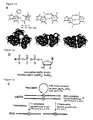
- the unnatural base pair system of the present invention is summarized in Figure 1c .
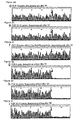
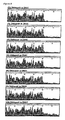
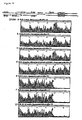
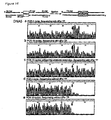
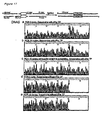
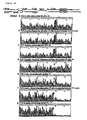
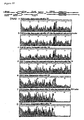
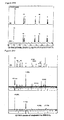
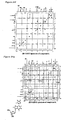
- Effects provided by the system of the present invention during replication are shown in, for example, Figures 2b to 2e , Figures 3b to 3i , and Figures 8 to 20 .
- Effects provided by the system of the present invention during transcription are shown in, for example, Figures 4c to 4e and Figures 5a to 5c .
- the present invention also provides a method for preparing a nucleic acid containing a nucleotide having a base represented by the following formula 1:
- R 1 is hydrogen or an amino group
- R 2 is a substituted or unsubstituted 2-thienyl group, a substituted or unsubstituted 2-thiazolyl group, or a substituted or unsubstituted 1H-2-imidazolyl group, and A is N or CH
- the method comprises effecting transcription, reverse transcription or replication by using, as a template, a nucleic acid containing a nucleotide having a base represented by the following formula 2:
- R 3 is a group selected from hydrogen, an iodo group, a substituted or unsubstituted C 1 -C 3 alkyl group, a substituted or unsubstituted C 2 -C 3 alkenyl group, or a substituted or unsubstituted C 2 -C 3 alkynyl group, and R 4 is a formyl group or a nitro group]
- R 4 is a formyl group or a nitro group
- the present invention also provides a method for preparing a nucleic acid containing a nucleotide having a base represented by the following formula 2:
- R 3 is a group selected from hydrogen, an iodo group, a substituted or unsubstituted C 1 -C 3 alkyl group, a substituted or unsubstituted C 2 -C 3 alkenyl group, or a substituted or unsubstituted C 2 -C 3 alkynyl group, and R 4 is a formyl group or a nitro group
- the method comprises effecting transcription, reverse transcription or replication by using, as a template, a nucleic acid containing a nucleotide having a base represented by the following formula 1:
- R 1 is hydrogen or an amino group
- R 2 is a substituted or unsubstituted 2-thienyl group, a substituted or unsubstituted 2-thiazolyl group, or a substituted or unsubstituted 1H-2-imidazolyl group, and A is N or CH
- A is N or CH
- nucleotide having a base of formula 1 and the nucleotide having a base of formula 2 are as defined herein above in the section "Nucleic acids of the present invention based on artificial base pairing.”
- the present invention further aims to provide such a nucleic acid containing a nucleotide having a base of formula 1 and/or 2, which is prepared by the above method of the present invention.
- the nucleic acid incorporating the nucleotide(s) of the present invention may be used as tRNA, mRNA, antisense DNA or RNA, a ribozyme or an aptamer.
- antisense DNA or RNA refers to DNA or RNA capable of inhibiting the expression of a specific gene. It was named to mean that such DNA or RNA is complementary to the full-length or partial sequence of a target gene sequence (sense strand). Antisense DNA or RNA may be used as a tool for artificial regulation of gene expression.
- ribozyme is a generic name for catalysts composed of RNA.
- aptamer refers to an in vitro-selected nucleic acid having the ability to bind to a specific molecule such as a protein.
- the nucleic acid (DNA or RNA) e.g., mRNA, synthetic RNA
- incorporating the nucleotide(s) of the present invention may also encode all or part of a protein or peptide.
- the nucleic acid of the present invention may be used, e.g., as a gene fragment or a probe.
- the present invention also encompasses the following embodiments: partial or complete replacement of native genes by the nucleic acids of the present invention; addition of one or more nucleotides of the present invention to native genes; or combinations thereof.
- RNA interference is a phenomenon in which double-stranded RNA (dsRNA) induces mRNA degradation in a sequence-specific manner and hence inhibits gene expression.
- dsRNA double-stranded RNA
- siRNA short interfering RNA
- siRNA siRNA-protein complex
- RNA interference is shown to be a phenomenon conserved among a wide range of organism species including mammals (e.g., human, mouse), nematodes, plants, drosophila and fungi.
- the nucleic acids of the present invention incorporating nucleotides having unnatural bases can be used as siRNA in RNA interference or as a part of mRNA to be degraded.
- Ribonucleoside 5'-triphosphates The present invention further provides a ribonucleoside 5'-triphosphate having a base represented by the following formula 1:
- R 1 is hydrogen or an amino group
- R 2 is a substituted or unsubstituted 2-thienyl group, a substituted or unsubstituted 2-thiazolyl group, or a substituted or unsubstituted 1H-2-imidazolyl group, and A is N or CH].
- the present invention furthermore provides a ribonucleoside 5'-triphosphate having a base represented by the following formula 2:
- R 3 is a group selected from hydrogen, an iodo group, a substituted or unsubstituted C 1 -C 3 alkyl group, a substituted or unsubstituted C 2 -C 3 alkenyl group, or a substituted or unsubstituted C 2 -C 3 alkynyl group, and R 4 is a formyl group or a nitro group].
- the present invention provides a 5'-O-(4,4'-dimethoxytrityl)-3'-o-(2-cyanoethyl N,N-diisopropylphosphoroamidite) deoxyribonucleoside having a base represented by the following formula 3:
- R 5 is hydrogen or a substituted amino group
- R 6 is a substituted or unsubstituted 2-thienyl group, a substituted or unsubstituted 2-thiazolyl group, or a substituted or unsubstituted 1H-2-imidazolyl group, and A is N or CH].
- the substituted amino group listed as R 5 includes an amino group substituted with a methyl group, an isobutyryl group, a benzoyl group or the like.
- R 6 is the same as R 2 in formula 1.
- the present invention provides a 5'-O-(4,4'-dimethoxytrityl)-3'-o-(2-cyanoethyl N,N-diisopropylphosphoroamidite) deoxyribonucleoside having a base represented by the following formula 4:
- R 7 is a group selected from hydrogen, an iodo group, a substituted or unsubstituted C 1 -C 3 alkyl group, a substituted or unsubstituted C 2 -C 3 alkenyl group, or a substituted or unsubstituted C 2 -C 3 alkynyl group
- R 8 is a formyl group or a nitro group, excluding the case where R 7 is hydrogen or a 1-propynyl group and R 8 is a formyl group.
- R 7 is the same as R 3 in formula 2.
- R 8 is the same as R 4 in formula 2.
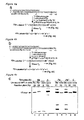
- Figures 1a to 1c show an unnatural base pair system which allows specific replication and transcription.
- Figure 1a shows an unnatural Ds-Pa base pair, along with natural base pairs.
- Figure 3c shows the results of sequencing with dPa'TP obtained before PCR (0 cycle).
- the base at position 40 is a base corresponding to a site complementary to Ds in the template, and Pa' is incorporated at this site during sequencing reaction.
- peaks of A, G, C and T all disappear only at this site.
- High-resolution mass spectra (HRMS) and electrospray ionization mass spectra (ESI-MS) were recorded on a JEOL HX-110 or JM700 mass spectrometer and a Waters micro mass ZMD4000 equipped with a Waters 2690 LC system, respectively. Fluorescence measurement was accomplished by using a FP-6500 spectral fluorometer (JASCO).
- Non-patent Document 39 Pyrrole-2-carbaldehyde
- 4-propynylpyrrole-2-carbaldehyde (Non-patent Document 40) were synthesized as described in these prior documents.
- a deoxyribonucleoside of 7-(2-thienyl)-3H-imidazo[4,5-b]pyridine (shown as Compound 6) was obtained as a single product from Compound 4 in a yield of 61% by reaction of 1-chloro-2-deoxy-3,5-di-O-toluoyl-a-D-erythro-pentofuranose (Non-patent Document 42) with a sodium salt of Compound 4, followed by deprotection of the toluoyl groups from Compound 5 with methanolic ammonium.
- a ribonucleoside of 7-(2-thienyl)-3H-imidazo[4,5-b]pyridine (shown as Compound 11) was synthesized by reaction between tetra-O-acetyl- ⁇ -D-ribofuranose and 4 at 200°C with a catalytic amount of chloroacetic acid.
- Compound 11 was obtained in a yield of 29% after deprotection with ammonia-saturated methanol and purification by RP-HPLC.
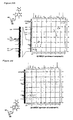
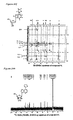
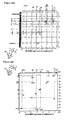
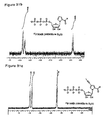
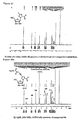
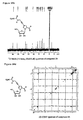
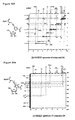
- the inventors of the present invention confirmed that the thienyl moiety of Compounds 6 and 11 was attached at the 7-position of the imidazo[4,5-b]pyridine ring, as is seen from their 2D NOESY and 2D HMBC spectra.
- the anomeric configurations of Compounds 6 and 11 were confirmed to be ⁇ by their 2D NOESY and 1D NOE spectra.
- the main results of the 1D NOE experiment are that H1' proton irradiation causes enhancements of 2% and 3% in the H4' signal and enhancements of 8% and 9% in the H2 signal in Compounds 6 and 11, respectively.
- H2 proton irradiation caused enhancements of 9% and 10% in the H1' signal and an enhancement of 3% to 5% in the H2' and H3' signals.
- the anomeric configurations of Compounds 6 and 11 were determined to be ⁇ .
- Ribonucleosides of Compounds 15 and 16 were synthesized by reaction of 2,3,5-tri-O-benzyl-D-ribofuranosyl chloride (Non-patent Document 44) with a sodium salt of Compound 15 or 16, followed by BBr 3 treatment to deprotect the benzyl groups, thereby obtaining ribonucleosides shown as Compounds 17 (yield 15%) and 18 (yield 7%) in 2 steps.
- Nucleoside 5'-triphosphates were synthesized as disclosed in prior art documents (Non-patent Documents 43 and 45). Synthesis of 5'- ⁇ -amidotriphosphates was accomplished in a standard manner (Non-patent Document 43) with modifications. Protected nucleosides shown as Compounds 9 and 21 were phosphitylated with 2-chloro-4H-1,3,2-benzodioxaphosphorin-4-one. The protected nucleoside phosphite derivatives were converted into P 2 ,P 3 -dioxo-P 1 -5'-nucleosidylcyclotriphosphites by treatment with pyrophosphate. After treatment with iodine/water, the resulting 5'-trimetaphosphates were treated with concentrated aqueous ammonia to give nucleoside 5'- ⁇ -amidotriphosphates.
- 5'-triphosphate of deoxyadenosine was also formed, and the 5'- ⁇ -amidotriphosphate and 5'-triphosphate were in the ratio of 4.8:1, as calculated from their fraction absorbance.
- Compound 22 was eluted relatively faster than deoxyadenosine 5'-phosphate (dATP) and separated by DEAE column purification.
- the 5'- ⁇ -amidotriphosphate was confirmed for its molecular weight by ESI-MS spectrometry. The difference between Compound 22 and dATP was 1 m/z.
- nucleoside 5'- ⁇ -amidotriphosphates were obtained as triethylammonium salts and confirmed for their structure by NMR spectroscopy ( 1 H and 31 P NMR).
- ⁇ -Phosphate signals from deoxyadenosine 5'- ⁇ -amidotriphosphate and Compound 6 were shifted to lower magnetic field (-0.50 and -0.52 p.p.m), as compared to those of 5'-phosphates of Compounds 6, 11, 17 and 18. This phenomenon was also observed in guanosine 5'- ⁇ -amidotriphosphate.
- nucleoside 5'-triphosphates of 7-(2-thienyl)-3H-imidazo[4,5-b]pyridine A protected nucleoside (0.1 mmol, Compound 9 or 13) was azeotroped with pyridine to dryness. The residue was dissolved in a mixed solvent of pyridine (100 ⁇ l) and dioxane (300 ⁇ l). To this, a 1 M dioxane solution of 2-chloro-4H-1,3,2-benzodioxaphosphorin-4-one (110 ⁇ l, 0.11 mmol) was added.
- the solvent was distilled off under reduced pressure, and the product was purified by DEAE Sephadex (A-25) column chromatography (eluted with a linear gradient of 50 mM to 1 M TEAB) and then purified on a C18-HPLC column (eluted with a linear gradient of 0% to 30% CH 3 CN in 100 mM triethylammonium acetate) to give the desired nucleoside 5'-triphosphate.
- Electrospray ionization mass spectroscopy C 15 H 18 N 3 O 12 P 3 S; calcd, 555.97 (M-H)-; found, 555.69 (M-H)-.
- Electrospray ionization mass spectroscopy C 15 H 18 N 3 O 13 P 3 S; calcd, 571.97 (M-H)-; found, 571.74 (M-H)-.
- Non-patent Documents 43, 47 and 48 Synthesis of nucleoside 5'- ⁇ -amidotriphosphate of adenine or 7-(2-thienyl)-imidazo[4,5-b]pyridine (Non-patent Documents 43, 47 and 48) A protected nucleoside (0.1 mmol, Compound 21 (Non-patent Document 46) or Compound 9) was azeotroped with pyridine to dryness. The residue was dissolved in a mixture of pyridine (100 ⁇ l) and dioxane (300 ⁇ l). To this, a 1 M dioxane solution of 2-chloro-4H-1,3,2-benzodioxaphosphorin-4-one (110 ⁇ l, 0.11 mmol) was added.
- the product was purified by DEAE Sephadex (A-25) column chromatography (eluted with a linear gradient of 50 mM to 1 M TEAB) and then purified on a C18-HPLC column (eluted with a linear gradient of 0% to 30% CH 3 CN in 100 mM triethylammonium acetate) to give the desired nucleoside 5'- ⁇ -amidotriphosphate.
- Electrospray ionization mass spectroscopy C 10 H 17 N 6 O 11 P 3 ; calcd, 489.01 (M-H)-; found, 488.98 (M-H)-.
- Electrospray ionization mass spectroscopy C 15 H 19 N 4 O 11 P 3 S; calcd, 554.99 (M-H)-; found, 555.01 (M-H)-.
- the resulting crude product was purified by DEAE Sephadex (A-25) column chromatography (1.5 cm ⁇ 30 cm, eluted with a linear gradient of 50 mM to 1 M TEAB) and then purified on a C18-HPLC column (Synchropak RPP, Eichrom Technologies, eluted with a gradient of 0% to 30% CH 3 CN in 100 mM triethylammonium acetate).
- Electrospray ionization mass spectroscopy C 10 H 16 NO 14 P 3 ; calcd, 465.97 (M-H)-; found, 465.85 (M-H)-.
- Electrospray ionization mass spectroscopy C 9 H 11 O 5 N 2 ; calcd, 227.07 (M-H) - ; found, 227.03 (M-H) - , C 9 H 13 O 5 N 2 ; calcd, 229.08 (M+H) + ; found, 229.06 (M+H) + .
- Compound 5 (580 mg) was treated with ammonia-saturated methanol (50 ml) to deprotect the toluoyl groups at room temperature for 12 hours, and purified on a silica gel column, followed by final HPLC purification to give Compound 7 (304 mg, 91%).
- Non-patent Documents 30-32 A primer (20-mer) labeled with 6-carboxylfluorescein at the 5'-end was annealed with template DNA (35-mer) by heating at 95°C and slow cooling to 4°C in 100 mM Tris-HCl (pH 7.5) buffer containing 20 mM MgCl 2 , 2 mM DTT and 0.1 mg/ml bovine serum albumin.
- the primer-template duplex solution (3.0 ⁇ M, 5 ⁇ l) was mixed with 2 ⁇ l enzyme solution of the Klenow fragment lacking exonuclease activity (KF exo - , Amersham USB). After the mixture was incubated for 2 minutes, each dNTP solution (3 ⁇ l) was added to this solution to start the reaction at 37°C. The amount of the enzyme used (5-50 nM), the reaction time (1-35 minutes) and the gradient concentration of each dNTP (0.3-1500 ⁇ M) were adjusted to ensure conditions giving 25% or less products. The reaction was stopped with 10 ⁇ l stop solution (95% formamide and 20 mM EDTA), and the mixture was immediately heated at 75°C for 3 minutes.
- v 0 The relative velocity was calculated by dividing the extent of reaction by the reaction time, and then normalized to the enzyme concentration (20 nM) for the various enzyme concentrations used.
- Kinetic parameters K M and V max ) were obtained from Hanes-Woolf plots of [dNTP]/v 0 against [dNTP]. Each parameter was averaged from 3 to 8 data sets.
- Primer extension reaction using KF A 5'- 32 P-labeled primer (23-mer) and template DNA (35-mer) were annealed into duplex form in 20 mM Tris-HCl (pH 7.5) buffer containing 14 mM MgCl 2 and 0.2 mM DTT.
- the duplex solution 400 nM, 5 ⁇ l was mixed with each 5 x dNTP solution (2 ⁇ l) on ice, followed by addition of 3 ⁇ l enzyme solution containing KF exo - (1 unit) or KF exo + (1 unit) (TAKARA) to start the reaction.
- DNA sequencing Dideoxy-cycle sequencing (20 ⁇ l) was performed on a PTC-100 Program Thermal Controller (MJ Research) with 8 ⁇ l Ready Reaction Mix (BlgDyal.1, Applied Biosystems) containing 0.3 pmol template and 4 pmol primer 1 or 2 in the presence or absence of 1 nmol dPa'TP. After 25 cycles of PCR (96°C for 10 seconds, 50°C for 5 seconds, and 60°C for 4 minutes), the remaining dye terminators were removed from the reaction solution using a Centri-Sep TM spin column (Applied Biosystems), and this solution was then dried at 55°C under reduced pressure.
- the PCR cycle was set as follow: 94°C for 0.5 minutes, 45°C for 0.5 minutes, and 65°C for 4 minutes.
- PCR In control PCR, 0.2 mM each natural dNTP and 0.01 units/ ⁇ l Vent DNA polymerase were used, and the step of extension reaction was performed at 72°C for 1 minute.
- the PCR products were stained with ethidium bromide on a 4% agarose gel, and the stained bands were quantified for their intensity with a Molecular Imager FX Pro system and Quantity One software (Bio-Rad).
- the PCR products had been purified by gel electrophoresis (7% polyacrylamide-7 M urea gel) or filtration (Microcon YM-30 and Micropure-EZ).
- T7 transcription Transcription (20 ⁇ l) was accomplished in 40 mM Tris-HCl buffer (pH 8.0) containing 24 mM MgCl 2 , 2 mM spermidine, 5 mM DTT, 0.01% Triton X-100, 1-3 mM each natural NTP, 0-3 mM Pa'TP, 0-3 mM DsTP, 10 mM GMP, 2 ⁇ M template DNA (for 17-mer transcript synthesis) or 0.5 ⁇ M template DNA (for tRNA transcript synthesis), and 2.5 units/ ⁇ l T7 RNA polymerase (TAKARA).
- Tris-HCl buffer pH 8.0
- the transcription was performed in the presence of 2 ⁇ Ci [ ⁇ - 32 P]GTP (PerkinElmer, in place of GMP) for 17-mer transcript synthesis or [ ⁇ - 32 P]GTP (Amersham) for tRNA transcript synthesis. After incubation at 37°C for 3 hours (17-mer synthesis) or 6 hours (tRNA synthesis), a urea-containing dye solution was added to stop the reaction. This solution was heated at 75°C for 3 minutes and then electrophoresed on a 15% or 20% (17-mer) or 10% (tRNA) polyacrylamide-7 M urea gel. The products were analyzed with a bio-imaging analyzer.
- transcripts were internally labeled with 2 ⁇ Ci [ ⁇ - 32 P]UTP or [ ⁇ - 32 P]ATP (Amersham). After the transcription, the products were digested with 0.75 units of RNase T 2 at 37°C for 2 hours in 10 ⁇ l of 15 mM sodium acetate buffer (pH 4.5). For 17-mer analysis, 0.05 A 260 units of E . coll tRNA (Sigma) was added to the digestion reaction solution. The digestion products were analyzed by 2D-TLC (HPTLC plate, 100 x 100 mm, Merck).
- the developing solvents used for the first and second dimensions were isobutyric acid-ammonia-water (66:1:33 v/v/v) and isopropyl alcohol-HCl-water (70:15:15 v/v/v or 75:15:10 v/v/v for Pa' transcripts), respectively. Spots of the labeled nucleotides on the TLC plate were analyzed with a bio-imaging analyzer.
- the PCR cycle was set as follows: 94°C for 0.5 minutes, 45°C for 0.5 minutes, and 65°C for 4 minutes.
- the PCR products had been purified by gel electrophoresis (7% polyacrylamide-7 M urea gel) or filtration (Microcon YM-30 and Micropure-EZ).
- the sequences were determined using an ABI377 DNA sequencer equipped with a 6% polyacrylamide-6 M urea gel.
- the positions of unnatural bases in DNA fragments can be confirmed by comparing both peak patterns obtained from sequencing with and without dPa'TP.
- Non-patent Document 33 Sequencing of DNA fragments containing Ds The position of Ds-Pa base pairing in DNA fragments was confirmed by dideoxynucleotide chain termination sequencing (Non-patent Document 33) supplemented with a nucleoside triphosphate derivative of Pa' (dPa'TP) (Non-patent Document 34) (Pa' is 4-propynylpyrrole-2-carbaldehyde which is a modified form of Pa).
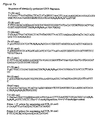
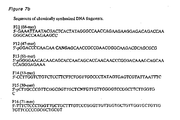
- double-stranded DNA fragments containing a Ds-Pa base pair were prepared by primer extension or ligation of chemically synthesized DNA fragments ( Figure 6 ).
- PCR amplification of DNA fragments containing Ds-Pa base pair PCR amplification of DNA1 to DNA14 containing a Ds-Pa base pair ( Figure 6 ) (150-mer or 174-mer, 2.3 nM) was performed using thermophilic DNA polymerase having 3' ⁇ 5' exonuclease activity (0.04 units/ ⁇ l, VENT DNA polymerase, New England BioLabs) and a substrate mixture containing dDsTP N , dPaTP, dATP N , dGTP, dCTP and dTTP (0.3 mM each).
- the PCR cycle was set as follows: 94°C for 30 seconds, 45°C for 30 seconds, and 65°C for 4 minutes.
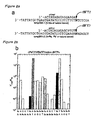
- the inventors of the present invention first tested DNA1 for its amplification selectivity and efficiency ( Figure 3a ). After 10 cycles of PCR ( Figure 3b ), the products were analyzed by sequencing with or without dPa'TP ( Figures 3d and 3h ). Further, additional 10 cycles of PCR (10+10 cycles in total) were performed on a part of the 10 cycle PCR product ( Figures 3e and 3i ). In sequencing with dPa'TP, the PCR products after 10 cycles and 10+10 cycles resulted in peak patterns similar to those of the original DNA1. In sequencing without dPa'TP ( Figures 3g-3i ), the read-through peaks following the unnatural base position in DNA1 were slightly increased with an increase in the number of PCR cycles.
- the height of read-through peaks can be used to determine the rate of PCR-induced mutation from the Ds-Pa base pair to a natural base pair.
- the mutation rate was determined from the height of read-through peaks in the PCR products ( Figures 3g-3i ), in comparison with the height of read-through peaks obtained by sequencing without dPa'TP for control DNA fragments containing 1-10% A-T base pair instead of Ds-Pa ( Figure 8 ).
- the mutation rate of the Ds-Pa base pair in DNA1 after 10 cycles and 10+10 cycles was ⁇ 1% and 3-4%, respectively. By using this procedure, it was also indicated that the use of ⁇ -amidotriphosphate of A increased the selectivity of Ds-Pa base pairing during PCR.
- the amplification efficiency of DNA1 was evaluated from band intensity after dye staining of the PCR products on a gel or autoradiography of the products obtained with each labeled primer.
- the more accurate efficiency was obtained by autoradiography of PCR products with a 5'- or 3'- 32 P-labeled primer ( Figure 10 ).
- N f the final copy number of a product
- No the initial copy number
- n the number of PCR cycles
- the efficiency (Y) of PCR with 1 to 10 cycles was 0.38 for extension from the 5'-primer and 0.29 for extension from the 3'-primer
- the Y value in PCR amplification of DNAcont1 under usual conditions was 0.43 and 0.35, respectively.
- the efficiency per cycle of PCR in the unnatural base pair system is 76-88% of that in the conventional natural base pair systems.
- the fidelity of the Ds-Pa base pair in DNA1 during PCR is calculated to be 99.8% or more.
- this fidelity was found to depend on the purity of the chemically synthesized original DNA fragments, rather than the selectivity of Ds-Pa base pairing during PCR amplification ( Figure 11 ).
- the selectivity of the unnatural base pair system appears to be considerably higher than 99.8%.
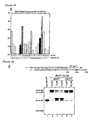
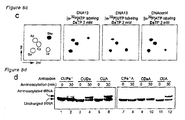
- T7 transcription mediated by Ds-Pa base pairing Ds-Pa and Ds-Pa' base pairings complementarily mediated site-specific incorporation of DsTP, PaTP and Pa'TP into RNA by T7 RNA polymerase. Transcription was studied with template DNA (35-mer) containing Ds, Pa or Pa' ( Figures 4a and 4b ). After 3 hour transcription with ribonucleoside triphosphates of the unnatural bases, the 32 P-labeled transcripts were analyzed on a gel ( Figure 4c ).
- the full-length transcripts (17-mer) containing Pa, Pa' and Ds had yields ranging from 28% to 91% ( Figure 4c , Lanes 1, 2, 5 and 7), relative to transcripts consisting only of natural bases obtained with template DNA composed of natural bases ( Figure 4c , Lane 9).
- Figure 4c Lanes 1, 2, 5 and 7
- Figure 4c Lane 9
- the yields of transcripts obtained without adding substrates of the unnatural bases were significantly reduced ( Figure 4c , Lanes 3, 6 and 8).
- Np Pap, Pa'p or Dsp c: The values were determined by using the following equation.
- the inventors of the present invention prepared tRNA molecules (85-mer) containing unnatural anticodons CUPa', CPa'A, CUDs and CDsA through T7 transcription.
- the sequence of E. coli suppressor tRNA Tyr was used.
- the transcription efficiency of PaTP or Pa'TP into 17-mer transcripts was relatively low, but transcription of Pa'-containing longer tRNAs (85-mer) showed high efficiency; the 85-mers had yields ranging from 88% to 93%, relative to tRNA transcripts having a CUA anticodon ( Figure 5a ).
- the transcripts were internally labeled with [ ⁇ - 32 P]ATP or [ ⁇ - 32 P]UTP. Since the unnatural nucleotides are each located at the 5'-side of A, 3'-monophosphate of each unnatural nucleotide is labeled only with [ ⁇ - 32 P]ATP.
- tRNAs having CPa'A and CDsA anticodons were not aminoacylated, indicating that they avoided recognition by E. coli -derived aminoacyl tRNA synthetase ( Figure 5d , Lanes 7-10).
- tRNAs having CUPa' and CUDs anticodons were aminoacylated ( Figure 5d , Lanes 1-4).
- the selectivity of aminoacylation of tRNAs having these unnatural anticodons is in good agreement with the selectivity of recognition between E. coli tRNA Tyr and tyrosyl tRNA synthetase (Non-patent Documents 36 and 37).
- Biotinylated PaTP i.e., 1-( ⁇ -D-ribofuranosyl)-4-[(3-biotinamido-1-propynyl)]pyrrole-2-carbaldehyde 5'-triphosphate; Compound 28, Bio-PaTP was synthesized according to the scheme shown in Figure 36 .
- the mixture was stirred at room temperature for 10 minutes, followed by addition of a 1% iodine solution in pyridine/water (98/2, v/v) (2.0 ml). After 15 minutes, a 5% aqueous solution of NaHSO 3 (150 ⁇ l) was added. The volatile components were removed by evaporation, and water (5.0 ml) was then added to the residue. The mixture was stirred at room temperature for 30 minutes and then treated with concentrated ammonia (20 ml) at room temperature for 12 hours.
- the product was purified by DEAE Sephadex (A-25) column chromatography (eluted with a linear gradient of 50 mM to 1 M TEAB) and then by C18-HPLC (eluted with a gradient of 0% to 30% CH 3 CN in 100 mM triethylammonium acetate) to give Nucleoside 5'-triphosphate 28 in a yield of 14% from Compound 26.
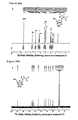
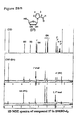
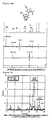
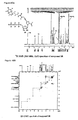
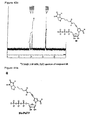
- the structure of Compound 28 was confirmed by 1 H NMR ( Figures 43a and 43b ), 31 P NMR ( Figure 43c ) and mass spectrometry ( Figure 42 ).
- Proton signals from the biotin moiety in Compound 28 were identical with those of biotinylated yTP previously synthesized, and the 31 P NMR spectrum in D 2 O showed typical phosphorus signals corresponding to nucleotide 5'-triphosphate.
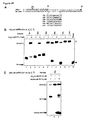
- RNA (152-mer) Transcription (20 ⁇ l) was performed for 6 hours at 37°C using 3 ⁇ Ci [ ⁇ - 32 P]GTP, 2 mM each natural NTP, 0-4 mM Bio-PaTP (biotinylated Pa substrate: chemically synthesized as shown in Example IV), and 30 nM template (DNA6 and DNAcont2 (see Figure 6 ), obtained by both ligation and PCR amplification).
- the biotinylated RNA transcripts were detected by gel shift assay using streptavidin.
- a mixture (10 ⁇ l) of 2 pmol 32 P-labeled transcript and 100 pmol streptavidin (Promega) was incubated at 20°C for 1 hour in 10 mM Tris-HCl buffer (pH 7.6) containing 50 mM NaCl and 10 mM EDTA.
- the biotinylated RNA-streptavidin complexes were analyzed by electrophoresis on a 7% polyacrylamide-7 M urea gel.
- each RNA (152-mer) was labeled with [ ⁇ - 32 P]ATP (Perkin Elmer) after 5'-dephosphorylation with calf intestinal alkaline phosphatase (Takara).
- the labeled RNA was partially digested with RNase T1 at 55°C for 12 minutes in 13.3 mM sodium citrate buffer (pH 5.0) containing 4.7 M urea, 0.7 mM EDTA and 0.17 mg/ml E. coli tRNA, or with alkali at 90°C for 15 minutes in 32 mM sodium carbonate buffer (pH 9.1) containing 0.6 mM EDTA.
- RNA solution 9 ⁇ l was mixed with 11 ⁇ l of 20 mM Tris-HCl buffer (pH 7.6) containing 150 mM NaCl, and the mixture (10 ⁇ l) was then incubated with streptavidin magnetic beads (0.4 mg) (New England BioLabs) for 5 minutes at room temperature to capture the biotinylated RNA. An aliquot (5 ⁇ l) of the supernatant was analyzed together with other digested samples on a 10% polyacrylamide-7 M urea gel.
- Biotin-linked Pa was introduced into RNA through T7 transcription mediated by Ds-Pa base pairing when using a template obtained by either ligation or PCR amplification.
- DNA6 and DNAcont2 templates were used to perform T7 transcription in the presence of natural substrate NTPs (2 mM) and Bio-PaTP (2 or 4 mM).
- the transcription efficiency through Ds-Pa base pairing was 47% to 85% ( Figure 44c , Lanes 2, 6 and 10), relative to the case of using DNAcont2, a DNA fragment containing natural bases alone ( Figure 44c , Lanes 3, 7 and 11).
- Bio-Pa Biotinylated transcripts were analyzed for their sequences. If Bio-Pa is precisely introduced into the transcripts opposite Ds in the template, the transcripts will be biotinylated at position 59.
- the 5'-terminally 32 P-labeled transcripts were partially digested with alkali or RNase T1, and the resulting products were analyzed by electrophoresis.
- sequence ladders of the transcripts containing Bio-Pa bands corresponding to fragments larger than 59-mer were shifted ( Figure 44e , Lanes 2 and 8).
- RNA molecules without loss of RNA activity.
- a series of functional 4-modified Pa bases e.g., fluorophore-linked Pa
- RNA can also be incorporated into RNA.
- Example VI Synthesis of 4-position modified nucleoside derivatives of 2-nitropyrrole 4-Position modified nucleoside derivatives of 2-nitropyrrole were synthesized according to the scheme shown in Figure 45 .
- Tri-n-butylamine (100 ⁇ l) and bis(tributylammonium) pyrophosphate (300 ⁇ l, 0.5 M in DMF) were added to the reaction mixture, followed by stirring for 10 minutes.
- I 2 /pyridine 2.0 ml, 1% iodo in pyridine/H 2 O, 98/2, v/v
- 5% NaHSO 3 150 ⁇ l
- H 2 O 5.0 ml
- 28% aqueous ammonia (20 ml) was added and stirred at room temperature for 2 hours.
- the reaction mixture was concentrated, lyophilized and then purified on DEAE Sephadex A-25 (with a linear gradient of 50 mM to 1.0 mM TEAB) to give Compound 9.
- Electrospray ionization mass spectroscopy C 12 H 17 O 14 N 2 P 3 ; calcd, 504.98 (M-H) - ; found, 505.95 (M-H) - .
- NH 2 -hx-dPnTP, ROX-hx-dPnTP and FAM-hx-dPnTP were synthesized as dPnTP derivatives according to the synthesis scheme shown in Figure 46 .
- These derivatives can be introduced into DNA, for example, through replication (PCR or primer extension).
- the derivative having an amino group can be used for DNA modification after incorporation, while the other derivatives having fluorescent groups can each be adapted for fluorescent labeling of DNA, FRET, etc.
- reaction mixture was concentrated under reduced pressure, and the resulting crude product was purified by silica gel column chromatography (5-10% CH 3 OH in CH 2 Cl 2 ) and C18-HPLC (39-41% CH 3 CN in H 2 O, 15 minutes) to give the desired product as an amorphous substance (408 mg, yield 83%).
- the reaction mixture was diluted with ethyl acetate, and the organic layer was washed with saturated aqueous sodium bicarbonate and saturated aqueous sodium chloride, dried over magnesium sulfate, and then evaporated to remove the solvent.
- the resulting crude product was dissolved in anhydrous dichloromethane (68 mL). To this solution, dichloroacetic acid (680 ⁇ L) was added while stirring at 0°C and further stirred for 15 minutes. The reaction mixture was added to saturated aqueous sodium bicarbonate, and the aqueous layer was extracted with dichloromethane. The combined organic layers were dried over magnesium sulfate and then evaporated to remove the solvent.
- the resulting oil was purified by silica gel column chromatography (2% CH 3 OH in CH 2 Cl 2 ) to give the desired product as an amorphous substance (328 mg, 77%, yield for 2 steps).
- anhydrous pyridine (100 ⁇ L) and anhydrous dioxane (300 ⁇ L) were added for dissolution purposes, followed by addition of a 1 M dioxane solution of 2-chloro-4H-1,2,3-dioxaphosphorin-4-one (110 ⁇ L, 110 ⁇ mol).
- tri-n-butylamine (100 ⁇ L) and a 0.5 M DMF solution of bis(tri-n-butylammonium) pyrophosphate (300 ⁇ L) were added and stirred for 10 minutes.
- a 1% iodine/water/pyridine solution (2 mL) was added and stirred at room temperature for 15 minutes.
- NH 2 -hx-dPnTP (6 ⁇ mol) was dissolved in 0.1 M aqueous sodium bicarbonate (pH 8.5, 0.72 mL), followed by addition of a solution of 5-carboxyfluorescein N-hydroxysuccinimidyl ester (FAM-SE) (3.7 mg, 7.8 ⁇ mol) in DMF (500 ⁇ L). The mixture was reacted at room temperature for 8 hours with occasional shaking under light-shielding conditions. To this mixture, concentrated aqueous ammonia (0.5 mL) was added and reacted for 5 minutes with occasional shaking.
- FAM-SE 5-carboxyfluorescein N-hydroxysuccinimidyl ester
- This mixture was lyophilized and then purified by DEAE Sephadex A-25 column chromatography (1.5 x 30 cm, linear concentration gradient; 50 mM to 1 M TEAB solution) and C18-HPLC (concentration gradient; 0%-50% acetonitrile in 0.1 M triethylammonium acetate buffer, pH 7.0) to give the desired product.
- NH 2 -hx-dPnTP (6 ⁇ mol) was dissolved in 0.1 M aqueous sodium bicarbonate (pH 8.5, 0.85 mL), followed by addition of a solution of 5-carboxy-X-rhodamine N-hydroxysuccinimidyl ester (ROX-SE) (5 mg, 7.92 ⁇ mol) in DMF (1 mL). This mixture was reacted at room temperature for 18 hours with occasional shaking under light-shielding conditions. To this mixture, concentrated aqueous ammonia (0.5 mL) was added and reacted for 5 minutes with occasional shaking.
- ROX-SE 5-carboxy-X-rhodamine N-hydroxysuccinimidyl ester
- This mixture was lyophilized and then purified by DEAE Sephadex A-25 column chromatography (1.5 x 30 cm, linear concentration gradient; 50 mM to 1 M TEAB solution) and C18-HPLC (concentration gradient; 12.5%-50% acetonitrile in 0.1 M triethylammonium acetate buffer, pH 7.0) to give the desired product.
- NH 2 -hx-PaTP, FAM-hx-PaTP and TAMRA-hx-PaTP were synthesized as rPaTP derivatives according to the synthesis scheme shown in Figure 47 .
- These derivatives can be introduced into RNA, for example, through transcription.
- the derivative having an amino group can be used for RNA modification after incorporation, while the other derivatives having fluorescent groups can each be adapted for fluorescent labeling of RNA, FRET, etc.
- reaction mixture was concentrated under reduced pressure, and the resulting crude product was purified by silica gel column chromatography (10% CH 3 OH in CH 2 Cl 2 ) and C18-HPLC (22-24% CH 3 CN in H 2 O, 15 minutes) to give the desired product as an amorphous substance (126 mg, yield 51%).
- the reaction mixture was diluted with ethyl acetate, and the organic layer was washed with saturated aqueous sodium bicarbonate and saturated aqueous sodium chloride, dried over magnesium sulfate, and then evaporated to remove the solvent.
- the resulting crude product was dissolved in anhydrous dichloromethane (19 mL). To this solution, dichloroacetic acid (280 ⁇ L) was added while stirring at 0°C and further stirred for 15 minutes. The reaction mixture was added to saturated aqueous sodium bicarbonate, and the aqueous layer was extracted with dichloromethane. The combined organic layers were dried over magnesium sulfate and then evaporated to remove the solvent.
- the resulting oil was purified by silica gel column chromatography (1-2.5% CH 3 OH in CH 2 Cl 2 ) to give the desired product as an amorphous substance (90 mg, 63%, yield for 2 steps).
- anhydrous pyridine (100 ⁇ L) and anhydrous dioxane(300 ⁇ L) were added for dissolution purposes, followed by addition of a 1 M dioxane solution of 2-chloro-4H-1,2,3-dioxaphosphorin-4-one (110 ⁇ L, 110 ⁇ mol).
- tri-n-butylamine (100 ⁇ L) and a 0.5 M DMF solution of bis(tri-n-butylammonium) pyrophosphate (300 ⁇ L) were added and stirred for 10 minutes.
- a 1% iodine/water/pyridine solution (2 mL) was added and stirred at room temperature for 15 minutes.
- This mixture was lyophilized and then purified by DEAE Sephadex A-25 column chromatography (1.5 x 30 cm, linear concentration gradient; 50 mM to 1 M TEAB solution) and C18-HPLC (concentration gradient; 0%-50% acetonitrile in 0.1 M triethylammonium acetate buffer, pH 7.0) to give the desired product.
- NH 2 -hx-PaTP synthesized above was dissolved in 0.1 M aqueous sodium bicarbonate (pH 8.5, 2.5 mL), followed by addition of a solution of 5-carboxytetramethylrhodamine N-hydroxysuccinimidyl ester (TAMRA-SE) (10 mg, 19 ⁇ mol) in DMF (1 mL). This mixture was reacted at room temperature for 9 hours with occasional shaking under light-shielding conditions. To this mixture, concentrated aqueous ammonia (1 mL) was added and reacted for 8 hours with occasional shaking.
- TAMRA-SE 5-carboxytetramethylrhodamine N-hydroxysuccinimidyl ester
- This mixture was lyophilized and then purified by DEAE Sephadex A-25 column chromatography (1.5 x 30 cm, linear concentration gradient: 50 mM to 1 M TEAB solution) and C18-HPLC (concentration gradient; 12.5%-50% acetonitrile in 0.1 M triethylammonium acetate buffer, pH 7.0) to give the desired product.
- substrates of Pn having an amino group or a fluorescent dye (FAM) attached through a linker (NH 2 -hx-dPnTP and FAM-hx-dPnTP, prepared in Example VII) were used to study the incorporation of these substrates into DNA through replication.
- FAM fluorescent dye
- the solution was heated at 75°C for 3 minutes, and the reaction products were then analyzed by electrophoresis on a 10% polyacrylamide-7 M urea gel. Bands of the reaction products were detected with a fluorescence image analyzer (Molecular Imager, Bio-Rad, FAM detection mode).
- Example X Incorporation of fluorescent dye-linked substrate Pa into RNA (17-mer) through transcription using T7 RNA polymerase
- substrates of Pa having a fluorescent dye (FAM or TAMRA) attached through a linker FAM-hx-PaTP and TAMRA-hx-PaTP, prepared in Example VIII were used to study the incorporation of these substrates into RNA through transcription.
- Transcription reaction was performed using 2 ⁇ Ci [ ⁇ - 32 P]GTP, 1 mM NTPs, 1 mM FAM- or TAMRA-hx-PaTP, 2 ⁇ M template DNA, and 50 units of T7 RNA polymerase (Takara) in 40 mM Tris-HCl buffer (pH 8.0), 24 mM MgCl 2 , 2 mM spermidine, 5 mM DTT, 0.01% Triton X-100. After reaction at 37°C for 3 hours, 10 M urea (20 ⁇ L) was added to this solution to stop the reaction. The solution was heated at 75°C for 3 minutes, and the transcripts were then analyzed by electrophoresis on a 20% polyacrylamide-7 M urea gel.
- the inventors of the present invention have developed an unnatural base pair system ensuring highly practical selectivity during replication and transcription, which enables the creation of new biotechnologies with expanded genetic alphabet.
- Hydrophobic Ds-Pa base pairing allows PCR amplification of DNA fragments containing the same.
- Ds-Pa base pairing also allows site-specific incorporation of Ds and Pa into RNA through normal T7 transcription.
- this system provides a novel technique for creation of new functional artificial DNAs and RNAs.
- modified substrates and hydrophobic base pairs are scientifically important in further elucidation of mechanisms for replication and transcription.
- the inventors of the present invention have achieved high selectivity of unnatural base pairing by combination of 5'- ⁇ -amidotriphosphates with usual 5'-triphosphates.
- 5'- ⁇ -Amidotriphosphates are useful as DNA polymerase substrates for recognizing proper complementarity between pairing bases.
- 5'- ⁇ -P-aminonaphthalene-5-sulfonate triphosphate which is another member of 5'- ⁇ -modified triphosphates, has been reported to improve the fidelity of reverse transcription (Non-patent Document 38).
- the Ds-Pa base pair provides the first case where hydrophobic base pairs are functional during transcription. This suggests that shape complementarity between pairing bases is also important in hydrophobic base pairing during transcription, as already shown for replication.
- the Ds-Pa base pair system is very useful for the purpose of creating novel functional RNA molecules. Since 4-propynylpyrrole-2-carbaldehyde (Pa') is also introduced in a site-specific manner into RNA opposite Ds in the template, a series of 4-position modified Pa base derivatives can also be introduced into RNA. In this case, template DNA can be amplified by PCR of a DNA fragment containing a Ds-Pa base pair. Thus, the Ds-Pa base pair system provides a powerful tool for creating nucleic acids having functional artificial components at desired sites.
- Pa' 4-propynylpyrrole-2-carbaldehyde
Landscapes
- Chemical & Material Sciences (AREA)
- Life Sciences & Earth Sciences (AREA)
- Organic Chemistry (AREA)
- Health & Medical Sciences (AREA)
- Molecular Biology (AREA)
- Engineering & Computer Science (AREA)
- Biochemistry (AREA)
- Genetics & Genomics (AREA)
- Biotechnology (AREA)
- General Health & Medical Sciences (AREA)
- Wood Science & Technology (AREA)
- Zoology (AREA)
- General Engineering & Computer Science (AREA)
- Bioinformatics & Cheminformatics (AREA)
- Microbiology (AREA)
- Proteomics, Peptides & Aminoacids (AREA)
- Chemical Kinetics & Catalysis (AREA)
- Physics & Mathematics (AREA)
- Biophysics (AREA)
- Analytical Chemistry (AREA)
- General Chemical & Material Sciences (AREA)
- Biomedical Technology (AREA)
- Immunology (AREA)
- Plant Pathology (AREA)
- Saccharide Compounds (AREA)
- Measuring Or Testing Involving Enzymes Or Micro-Organisms (AREA)
- Preparation Of Compounds By Using Micro-Organisms (AREA)
- Pharmaceuticals Containing Other Organic And Inorganic Compounds (AREA)
Applications Claiming Priority (3)
| Application Number | Priority Date | Filing Date | Title |
|---|---|---|---|
| JP2005356883 | 2005-12-09 | ||
| JP2006189806 | 2006-07-10 | ||
| PCT/JP2006/324484 WO2007066737A1 (ja) | 2005-12-09 | 2006-12-07 | 核酸の複製の方法及び新規人工塩基対 |
Publications (3)
| Publication Number | Publication Date |
|---|---|
| EP1970445A1 true EP1970445A1 (de) | 2008-09-17 |
| EP1970445A4 EP1970445A4 (de) | 2009-07-29 |
| EP1970445B1 EP1970445B1 (de) | 2012-09-26 |
Family
ID=38122882
Family Applications (1)
| Application Number | Title | Priority Date | Filing Date |
|---|---|---|---|
| EP06834239A Active EP1970445B1 (de) | 2005-12-09 | 2006-12-07 | Verfahren zur nukleinsäurereplikation und neue künstliche basenpaare |
Country Status (8)
| Country | Link |
|---|---|
| US (1) | US8030478B2 (de) |
| EP (1) | EP1970445B1 (de) |
| JP (1) | JP5146957B2 (de) |
| KR (1) | KR101404374B1 (de) |
| CN (1) | CN101365791B (de) |
| AU (1) | AU2006323745B2 (de) |
| CA (1) | CA2642657A1 (de) |
| WO (1) | WO2007066737A1 (de) |
Cited By (6)
| Publication number | Priority date | Publication date | Assignee | Title |
|---|---|---|---|---|
| EP1921141A4 (de) * | 2005-08-04 | 2009-05-06 | Riken | Neues künstliches basenpaar und verwendung davon |
| EP2275538A4 (de) * | 2008-03-31 | 2012-08-15 | Riken | Neue dna mit fähigkeit zur amplifikation durch pcr mit hoher selektivität und hoher effizienz |
| EP2487181A4 (de) * | 2009-10-06 | 2013-08-28 | Riken | Künstliches basispaar zur formung spezifischer basispaare |
| EP2781599A4 (de) * | 2011-11-18 | 2015-06-17 | Riken | Nukleinsäurefragment zur bindung an ein zielprotein |
| WO2019180112A1 (en) * | 2018-03-21 | 2019-09-26 | F. Hoffmann-La Roche Ag | Modified nucleoside phosphates with high thermal stability |
| EP4265726A4 (de) * | 2020-12-18 | 2024-12-11 | TAGCyx Biotechnologies Inc. | Desoxyribonukleosid oder desoxyribonukleotid mit neuartiger künstlicher basis zur verwendung für das screening auf ein dna-aptamer sowie nukleinsäure damit |
Families Citing this family (23)
| Publication number | Priority date | Publication date | Assignee | Title |
|---|---|---|---|---|
| JP5679147B2 (ja) * | 2008-02-07 | 2015-03-04 | 独立行政法人理化学研究所 | 非天然塩基を含む改変tRNA及びその用途 |
| DK3041854T3 (da) | 2013-08-08 | 2020-03-02 | Scripps Research Inst | En fremgangsmåde til stedspecifik enzymatisk mærkning af nukleinsyrer in vitro gennem inkorporering af unaturlige nukleotider |
| HUE056155T2 (hu) | 2014-04-09 | 2022-01-28 | Scripps Research Inst | Nem-természetes vagy módosított nukleozid-trifoszfátok sejtekbe importálása nukleinsav-trifoszfát transzporterekkel |
| WO2017073536A1 (ja) * | 2015-10-30 | 2017-05-04 | タグシクス・バイオ株式会社 | vWFに結合するDNAアプタマー |
| WO2017106767A1 (en) | 2015-12-18 | 2017-06-22 | The Scripps Research Institute | Production of unnatural nucleotides using a crispr/cas9 system |
| US11266673B2 (en) * | 2016-05-23 | 2022-03-08 | The Trustees Of Columbia University In The City Of New York | Nucleotide derivatives and methods of use thereof |
| EP4163293A1 (de) | 2016-06-24 | 2023-04-12 | The Scripps Research Institute | Neuartiger nukleosid-triphosphat-transporter und verwendungen davon |
| CA3069321A1 (en) | 2017-07-11 | 2019-01-17 | The Scripps Research Institute | Incorporation of unnatural nucleotides and methods thereof |
| US12497642B2 (en) | 2017-07-11 | 2025-12-16 | The Scripps Research Institute | Incorporation of unnatural nucleotides and methods of use in vivo thereof |
| KR20250145137A (ko) | 2017-08-03 | 2025-10-13 | 신톡스, 인크. | 자가면역 질환의 치료를 위한 사이토카인 접합체 |
| CN112105627B (zh) | 2017-12-29 | 2024-07-02 | 斯克利普斯研究所 | 非天然碱基对组合物及使用方法 |
| EP4516358A3 (de) | 2018-02-26 | 2025-04-23 | Synthorx, Inc. | Il-15-konjugate und verwendungen davon |
| MX2021005293A (es) | 2018-11-08 | 2021-06-23 | Synthorx Inc | Conjugados de interleuquina 10 y usos de los mismos. |
| EP3918091A4 (de) * | 2019-01-31 | 2022-10-19 | Agency for Science, Technology and Research | Verfahren zur sequenzierung von nukleinsäuren mit unnatürlichen basenpaaren |
| SG11202107354WA (en) | 2019-02-06 | 2021-08-30 | Synthorx Inc | Il-2 conjugates and methods of use thereof |
| TWI874408B (zh) | 2019-06-14 | 2025-03-01 | 美商史基普研究協會 | 於半合成生物體中複製、轉錄及轉譯之試劑及方法 |
| BR112022003046A8 (pt) | 2019-08-23 | 2024-02-06 | Synthorx Inc | Conjugado de il-15, seu método de preparo e seus usos, bem como composição farmacêutica e método in vitro de expansão de uma ou mais das populações de células t |
| US12234271B2 (en) | 2019-09-10 | 2025-02-25 | Synthorx, Inc. | Il-2 conjugates and methods of use to treat autoimmune diseases |
| CN111214484B (zh) * | 2020-01-21 | 2021-04-06 | 北京工商大学 | 一种共轭聚合物和聚集诱导发光小分子共掺的纳米粒子及其制备方法和应用 |
| KR20220125170A (ko) | 2021-03-04 | 2022-09-14 | 전북대학교산학협력단 | 인공 염기 화합물, 이를 포함하는 핵산 및 이의 용도, 및 핵산 제조 방법 |
| JP7772362B2 (ja) * | 2021-12-21 | 2025-11-18 | シンクレスト株式会社 | 人工核酸モノマーの製造方法 |
| AU2023387127A1 (en) * | 2022-11-25 | 2025-06-19 | Xenolis Pte. Ltd. | Nucleic acid aptamer |
| JPWO2024195849A1 (de) | 2023-03-23 | 2024-09-26 |
Family Cites Families (5)
| Publication number | Priority date | Publication date | Assignee | Title |
|---|---|---|---|---|
| WO2000047599A1 (en) * | 1999-02-12 | 2000-08-17 | Sankyo Company, Limited | Novel nucleosides and oligonucleotide analogues |
| WO2001005801A1 (en) | 1999-07-15 | 2001-01-25 | Japan Science And Technology Corporation | Novel nucleic acid base pair |
| US7745417B2 (en) | 2002-07-17 | 2010-06-29 | Riken | Nucleosides or nucleotides having novel unnatural bases and use thereof |
| WO2005026187A1 (ja) | 2003-09-10 | 2005-03-24 | Riken | 非天然型塩基を有するヌクレオシド又はヌクレオチド及びその利用 |
| JP5649018B2 (ja) | 2005-08-04 | 2015-01-07 | タグシクス・バイオ株式会社 | 新規人工塩基対及びその利用 |
-
2006
- 2006-12-07 WO PCT/JP2006/324484 patent/WO2007066737A1/ja not_active Ceased
- 2006-12-07 EP EP06834239A patent/EP1970445B1/de active Active
- 2006-12-07 US US12/096,517 patent/US8030478B2/en active Active
- 2006-12-07 AU AU2006323745A patent/AU2006323745B2/en not_active Ceased
- 2006-12-07 KR KR1020087016493A patent/KR101404374B1/ko not_active Expired - Fee Related
- 2006-12-07 CN CN2006800525963A patent/CN101365791B/zh not_active Expired - Fee Related
- 2006-12-07 JP JP2007549184A patent/JP5146957B2/ja active Active
- 2006-12-07 CA CA002642657A patent/CA2642657A1/en not_active Abandoned
Non-Patent Citations (2)
| Title |
|---|
| HIRAO I.: "unnatural base pair systems for DNA/RNA-base biotechnology" CURR. OPINION IN CHEMICAL BIOLOGY, vol. 10, 10 October 2006 (2006-10-10), pages 622-627, XP002532215 * |
| See also references of WO2007066737A1 * |
Cited By (13)
| Publication number | Priority date | Publication date | Assignee | Title |
|---|---|---|---|---|
| EP1921141A4 (de) * | 2005-08-04 | 2009-05-06 | Riken | Neues künstliches basenpaar und verwendung davon |
| US8212014B2 (en) | 2005-08-04 | 2012-07-03 | Riken | Artificial base pairs and uses thereof |
| EP2275538A4 (de) * | 2008-03-31 | 2012-08-15 | Riken | Neue dna mit fähigkeit zur amplifikation durch pcr mit hoher selektivität und hoher effizienz |
| US8426569B2 (en) | 2008-03-31 | 2013-04-23 | Riken | DNA capable of being amplified by PCR with high selectivity and high efficiency |
| EP2487181A4 (de) * | 2009-10-06 | 2013-08-28 | Riken | Künstliches basispaar zur formung spezifischer basispaare |
| US8895712B2 (en) | 2009-10-06 | 2014-11-25 | Riken | Artificial base pair capable of forming specific base pair |
| EP2781599A4 (de) * | 2011-11-18 | 2015-06-17 | Riken | Nukleinsäurefragment zur bindung an ein zielprotein |
| US9540650B2 (en) | 2011-11-18 | 2017-01-10 | Tagcyx Biotechnologies | Nucleic acid fragment binding to target protein |
| AU2012337806B2 (en) * | 2011-11-18 | 2018-01-04 | Tagcyx Biotechnologies | Nucleic acid fragment binding to target protein |
| US9873879B2 (en) | 2011-11-18 | 2018-01-23 | Tagcyx Biotechnologies | Nucleic acid fragment binding to target protein |
| WO2019180112A1 (en) * | 2018-03-21 | 2019-09-26 | F. Hoffmann-La Roche Ag | Modified nucleoside phosphates with high thermal stability |
| US20230220464A1 (en) * | 2018-03-21 | 2023-07-13 | Roche Molecular Systems, Inc. | Modified nucleoside phosphates with high thermal stability |
| EP4265726A4 (de) * | 2020-12-18 | 2024-12-11 | TAGCyx Biotechnologies Inc. | Desoxyribonukleosid oder desoxyribonukleotid mit neuartiger künstlicher basis zur verwendung für das screening auf ein dna-aptamer sowie nukleinsäure damit |
Also Published As
| Publication number | Publication date |
|---|---|
| EP1970445B1 (de) | 2012-09-26 |
| JP5146957B2 (ja) | 2013-02-20 |
| EP1970445A4 (de) | 2009-07-29 |
| CA2642657A1 (en) | 2007-06-14 |
| US8030478B2 (en) | 2011-10-04 |
| AU2006323745B2 (en) | 2012-11-22 |
| AU2006323745A1 (en) | 2007-06-14 |
| US20100036111A1 (en) | 2010-02-11 |
| WO2007066737A1 (ja) | 2007-06-14 |
| HK1121491A1 (en) | 2009-04-24 |
| KR101404374B1 (ko) | 2014-06-09 |
| CN101365791B (zh) | 2012-07-25 |
| KR20080093986A (ko) | 2008-10-22 |
| JPWO2007066737A1 (ja) | 2009-05-21 |
| CN101365791A (zh) | 2009-02-11 |
Similar Documents
| Publication | Publication Date | Title |
|---|---|---|
| EP1970445B1 (de) | Verfahren zur nukleinsäurereplikation und neue künstliche basenpaare | |
| EP2275538B1 (de) | Neue dna mit fähigkeit zur amplifikation durch pcr mit hoher selektivität und hoher effizienz | |
| EP2118308B1 (de) | Ligation-amplifikation | |
| EP1921141B1 (de) | Neues künstliches basenpaar und verwendung davon | |
| EP0628051B1 (de) | Verwendungen von fluoreszierenden n-nukleosiden und dessen analogen | |
| EP4079745A1 (de) | Verfahren zur ortsspezifischen enzymatischen in-vitro-markierung von nukleinsäuren durch zugabe von unnatürlichen nukleotiden | |
| CN101384729A (zh) | 固相测序 | |
| US20110087015A1 (en) | Nucleoside and nucleotide having an unnatural base and use thereof | |
| Mitsui et al. | An efficient unnatural base pair for a base-pair-expanded transcription system | |
| US7745417B2 (en) | Nucleosides or nucleotides having novel unnatural bases and use thereof | |
| EP1816130A1 (de) | Neues nukleosid- oder nukleotidderivat und verwendung davon | |
| US8053212B1 (en) | Non-standard nucleoside analogs with reduced epimerization | |
| Marx et al. | Probing DNA polymerase function with synthetic nucleotides | |
| HK1121491B (en) | Method for nucleic acid replication and novel artificial base pairs | |
| US7563887B1 (en) | Universal nucleobase analogs | |
| RU2411948C1 (ru) | Средство для ингибирования фермента поли(адф-рибозо)полимеразы-1 человека | |
| HK40082715A (en) | A method for the site-specific enzymatic labelling of nucleic acids in vitro by incorporation of unnatural nucleotides | |
| HK1156067B (en) | Novel dna capable of being amplified by pcr with high selectivity and high efficiency | |
| JP2012110332A (ja) | 新規人工塩基対及びその利用 |
Legal Events
| Date | Code | Title | Description |
|---|---|---|---|
| PUAI | Public reference made under article 153(3) epc to a published international application that has entered the european phase |
Free format text: ORIGINAL CODE: 0009012 |
|
| 17P | Request for examination filed |
Effective date: 20080708 |
|
| AK | Designated contracting states |
Kind code of ref document: A1 Designated state(s): AT BE BG CH CY CZ DE DK EE ES FI FR GB GR HU IE IS IT LI LT LU LV MC NL PL PT RO SE SI SK TR |
|
| REG | Reference to a national code |
Ref country code: HK Ref legal event code: DE Ref document number: 1121491 Country of ref document: HK |
|
| A4 | Supplementary search report drawn up and despatched |
Effective date: 20090629 |
|
| RIC1 | Information provided on ipc code assigned before grant |
Ipc: C07H 21/00 20060101AFI20090618BHEP Ipc: C12Q 1/68 20060101ALI20090618BHEP |
|
| 17Q | First examination report despatched |
Effective date: 20091002 |
|
| GRAP | Despatch of communication of intention to grant a patent |
Free format text: ORIGINAL CODE: EPIDOSNIGR1 |
|
| DAX | Request for extension of the european patent (deleted) | ||
| GRAS | Grant fee paid |
Free format text: ORIGINAL CODE: EPIDOSNIGR3 |
|
| GRAA | (expected) grant |
Free format text: ORIGINAL CODE: 0009210 |
|
| AK | Designated contracting states |
Kind code of ref document: B1 Designated state(s): AT BE BG CH CY CZ DE DK EE ES FI FR GB GR HU IE IS IT LI LT LU LV MC NL PL PT RO SE SI SK TR |
|
| REG | Reference to a national code |
Ref country code: GB Ref legal event code: FG4D |
|
| REG | Reference to a national code |
Ref country code: CH Ref legal event code: EP |
|
| REG | Reference to a national code |
Ref country code: AT Ref legal event code: REF Ref document number: 577005 Country of ref document: AT Kind code of ref document: T Effective date: 20121015 |
|
| REG | Reference to a national code |
Ref country code: IE Ref legal event code: FG4D |
|
| REG | Reference to a national code |
Ref country code: DE Ref legal event code: R096 Ref document number: 602006032193 Country of ref document: DE Effective date: 20121122 |
|
| PG25 | Lapsed in a contracting state [announced via postgrant information from national office to epo] |
Ref country code: FI Free format text: LAPSE BECAUSE OF FAILURE TO SUBMIT A TRANSLATION OF THE DESCRIPTION OR TO PAY THE FEE WITHIN THE PRESCRIBED TIME-LIMIT Effective date: 20120926 Ref country code: LT Free format text: LAPSE BECAUSE OF FAILURE TO SUBMIT A TRANSLATION OF THE DESCRIPTION OR TO PAY THE FEE WITHIN THE PRESCRIBED TIME-LIMIT Effective date: 20120926 |
|
| REG | Reference to a national code |
Ref country code: AT Ref legal event code: MK05 Ref document number: 577005 Country of ref document: AT Kind code of ref document: T Effective date: 20120926 |
|
| REG | Reference to a national code |
Ref country code: LT Ref legal event code: MG4D Effective date: 20120926 |
|
| REG | Reference to a national code |
Ref country code: NL Ref legal event code: VDEP Effective date: 20120926 |
|
| PG25 | Lapsed in a contracting state [announced via postgrant information from national office to epo] |
Ref country code: GR Free format text: LAPSE BECAUSE OF FAILURE TO SUBMIT A TRANSLATION OF THE DESCRIPTION OR TO PAY THE FEE WITHIN THE PRESCRIBED TIME-LIMIT Effective date: 20121227 Ref country code: LV Free format text: LAPSE BECAUSE OF FAILURE TO SUBMIT A TRANSLATION OF THE DESCRIPTION OR TO PAY THE FEE WITHIN THE PRESCRIBED TIME-LIMIT Effective date: 20120926 Ref country code: SI Free format text: LAPSE BECAUSE OF FAILURE TO SUBMIT A TRANSLATION OF THE DESCRIPTION OR TO PAY THE FEE WITHIN THE PRESCRIBED TIME-LIMIT Effective date: 20120926 Ref country code: SE Free format text: LAPSE BECAUSE OF FAILURE TO SUBMIT A TRANSLATION OF THE DESCRIPTION OR TO PAY THE FEE WITHIN THE PRESCRIBED TIME-LIMIT Effective date: 20120926 |
|
| PG25 | Lapsed in a contracting state [announced via postgrant information from national office to epo] |
Ref country code: EE Free format text: LAPSE BECAUSE OF FAILURE TO SUBMIT A TRANSLATION OF THE DESCRIPTION OR TO PAY THE FEE WITHIN THE PRESCRIBED TIME-LIMIT Effective date: 20120926 Ref country code: RO Free format text: LAPSE BECAUSE OF FAILURE TO SUBMIT A TRANSLATION OF THE DESCRIPTION OR TO PAY THE FEE WITHIN THE PRESCRIBED TIME-LIMIT Effective date: 20120926 Ref country code: ES Free format text: LAPSE BECAUSE OF FAILURE TO SUBMIT A TRANSLATION OF THE DESCRIPTION OR TO PAY THE FEE WITHIN THE PRESCRIBED TIME-LIMIT Effective date: 20130106 Ref country code: CZ Free format text: LAPSE BECAUSE OF FAILURE TO SUBMIT A TRANSLATION OF THE DESCRIPTION OR TO PAY THE FEE WITHIN THE PRESCRIBED TIME-LIMIT Effective date: 20120926 Ref country code: BE Free format text: LAPSE BECAUSE OF FAILURE TO SUBMIT A TRANSLATION OF THE DESCRIPTION OR TO PAY THE FEE WITHIN THE PRESCRIBED TIME-LIMIT Effective date: 20120926 Ref country code: NL Free format text: LAPSE BECAUSE OF FAILURE TO SUBMIT A TRANSLATION OF THE DESCRIPTION OR TO PAY THE FEE WITHIN THE PRESCRIBED TIME-LIMIT Effective date: 20120926 Ref country code: IS Free format text: LAPSE BECAUSE OF FAILURE TO SUBMIT A TRANSLATION OF THE DESCRIPTION OR TO PAY THE FEE WITHIN THE PRESCRIBED TIME-LIMIT Effective date: 20130126 |
|
| REG | Reference to a national code |
Ref country code: HK Ref legal event code: GR Ref document number: 1121491 Country of ref document: HK |
|
| PG25 | Lapsed in a contracting state [announced via postgrant information from national office to epo] |
Ref country code: CY Free format text: LAPSE BECAUSE OF FAILURE TO SUBMIT A TRANSLATION OF THE DESCRIPTION OR TO PAY THE FEE WITHIN THE PRESCRIBED TIME-LIMIT Effective date: 20120926 Ref country code: SK Free format text: LAPSE BECAUSE OF FAILURE TO SUBMIT A TRANSLATION OF THE DESCRIPTION OR TO PAY THE FEE WITHIN THE PRESCRIBED TIME-LIMIT Effective date: 20120926 Ref country code: PT Free format text: LAPSE BECAUSE OF FAILURE TO SUBMIT A TRANSLATION OF THE DESCRIPTION OR TO PAY THE FEE WITHIN THE PRESCRIBED TIME-LIMIT Effective date: 20130128 Ref country code: PL Free format text: LAPSE BECAUSE OF FAILURE TO SUBMIT A TRANSLATION OF THE DESCRIPTION OR TO PAY THE FEE WITHIN THE PRESCRIBED TIME-LIMIT Effective date: 20120926 |
|
| PG25 | Lapsed in a contracting state [announced via postgrant information from national office to epo] |
Ref country code: AT Free format text: LAPSE BECAUSE OF FAILURE TO SUBMIT A TRANSLATION OF THE DESCRIPTION OR TO PAY THE FEE WITHIN THE PRESCRIBED TIME-LIMIT Effective date: 20120926 |
|
| PG25 | Lapsed in a contracting state [announced via postgrant information from national office to epo] |
Ref country code: MC Free format text: LAPSE BECAUSE OF NON-PAYMENT OF DUE FEES Effective date: 20121231 Ref country code: BG Free format text: LAPSE BECAUSE OF FAILURE TO SUBMIT A TRANSLATION OF THE DESCRIPTION OR TO PAY THE FEE WITHIN THE PRESCRIBED TIME-LIMIT Effective date: 20121226 Ref country code: DK Free format text: LAPSE BECAUSE OF FAILURE TO SUBMIT A TRANSLATION OF THE DESCRIPTION OR TO PAY THE FEE WITHIN THE PRESCRIBED TIME-LIMIT Effective date: 20120926 |
|
| REG | Reference to a national code |
Ref country code: CH Ref legal event code: PL |
|
| PLBE | No opposition filed within time limit |
Free format text: ORIGINAL CODE: 0009261 |
|
| STAA | Information on the status of an ep patent application or granted ep patent |
Free format text: STATUS: NO OPPOSITION FILED WITHIN TIME LIMIT |
|
| PG25 | Lapsed in a contracting state [announced via postgrant information from national office to epo] |
Ref country code: IT Free format text: LAPSE BECAUSE OF FAILURE TO SUBMIT A TRANSLATION OF THE DESCRIPTION OR TO PAY THE FEE WITHIN THE PRESCRIBED TIME-LIMIT Effective date: 20120926 |
|
| 26N | No opposition filed |
Effective date: 20130627 |
|
| REG | Reference to a national code |
Ref country code: IE Ref legal event code: MM4A |
|
| REG | Reference to a national code |
Ref country code: DE Ref legal event code: R097 Ref document number: 602006032193 Country of ref document: DE Effective date: 20130627 |
|
| PG25 | Lapsed in a contracting state [announced via postgrant information from national office to epo] |
Ref country code: IE Free format text: LAPSE BECAUSE OF NON-PAYMENT OF DUE FEES Effective date: 20121207 Ref country code: LI Free format text: LAPSE BECAUSE OF NON-PAYMENT OF DUE FEES Effective date: 20121231 Ref country code: CH Free format text: LAPSE BECAUSE OF NON-PAYMENT OF DUE FEES Effective date: 20121231 |
|
| PG25 | Lapsed in a contracting state [announced via postgrant information from national office to epo] |
Ref country code: TR Free format text: LAPSE BECAUSE OF FAILURE TO SUBMIT A TRANSLATION OF THE DESCRIPTION OR TO PAY THE FEE WITHIN THE PRESCRIBED TIME-LIMIT Effective date: 20120926 |
|
| PG25 | Lapsed in a contracting state [announced via postgrant information from national office to epo] |
Ref country code: LU Free format text: LAPSE BECAUSE OF NON-PAYMENT OF DUE FEES Effective date: 20121207 |
|
| PG25 | Lapsed in a contracting state [announced via postgrant information from national office to epo] |
Ref country code: HU Free format text: LAPSE BECAUSE OF FAILURE TO SUBMIT A TRANSLATION OF THE DESCRIPTION OR TO PAY THE FEE WITHIN THE PRESCRIBED TIME-LIMIT Effective date: 20061207 |
|
| REG | Reference to a national code |
Ref country code: FR Ref legal event code: PLFP Year of fee payment: 10 |
|
| REG | Reference to a national code |
Ref country code: DE Ref legal event code: R082 Ref document number: 602006032193 Country of ref document: DE Representative=s name: DENNEMEYER & ASSOCIATES S.A., LU Ref country code: DE Ref legal event code: R081 Ref document number: 602006032193 Country of ref document: DE Owner name: TAGCYX BIOTECHNOLOGIES, YOKOHAMA-SHI, JP Free format text: FORMER OWNER: RIKEN, WAKO-SHI, SAITAMA, JP Ref country code: DE Ref legal event code: R081 Ref document number: 602006032193 Country of ref document: DE Owner name: TAGCYX BIOTECHNOLOGIES, JP Free format text: FORMER OWNER: RIKEN, WAKO-SHI, SAITAMA, JP |
|
| REG | Reference to a national code |
Ref country code: GB Ref legal event code: 732E Free format text: REGISTERED BETWEEN 20160512 AND 20160518 |
|
| REG | Reference to a national code |
Ref country code: FR Ref legal event code: TP Owner name: TAGCYX BIOTECHNOLOGIES, JP Effective date: 20160531 |
|
| REG | Reference to a national code |
Ref country code: FR Ref legal event code: PLFP Year of fee payment: 11 |
|
| REG | Reference to a national code |
Ref country code: FR Ref legal event code: PLFP Year of fee payment: 12 |
|
| REG | Reference to a national code |
Ref country code: DE Ref legal event code: R082 Ref document number: 602006032193 Country of ref document: DE Representative=s name: DENNEMEYER & ASSOCIATES S.A., LU Ref country code: DE Ref legal event code: R081 Ref document number: 602006032193 Country of ref document: DE Owner name: TAGCYX BIOTECHNOLOGIES, JP Free format text: FORMER OWNER: TAGCYX BIOTECHNOLOGIES, YOKOHAMA-SHI, KANAGAWA, JP |
|
| REG | Reference to a national code |
Ref country code: FR Ref legal event code: CA Effective date: 20180907 |
|
| REG | Reference to a national code |
Ref country code: DE Ref legal event code: R082 Ref document number: 602006032193 Country of ref document: DE Representative=s name: DENNEMEYER & ASSOCIATES RECHTSANWALTSGESELLSCH, DE |
|
| PGFP | Annual fee paid to national office [announced via postgrant information from national office to epo] |
Ref country code: DE Payment date: 20251211 Year of fee payment: 20 |
|
| PGFP | Annual fee paid to national office [announced via postgrant information from national office to epo] |
Ref country code: GB Payment date: 20251219 Year of fee payment: 20 |
|
| PGFP | Annual fee paid to national office [announced via postgrant information from national office to epo] |
Ref country code: FR Payment date: 20251222 Year of fee payment: 20 |