EP1958646A1 - Dual carrier immunogenic construct - Google Patents
Dual carrier immunogenic construct Download PDFInfo
- Publication number
- EP1958646A1 EP1958646A1 EP08103172A EP08103172A EP1958646A1 EP 1958646 A1 EP1958646 A1 EP 1958646A1 EP 08103172 A EP08103172 A EP 08103172A EP 08103172 A EP08103172 A EP 08103172A EP 1958646 A1 EP1958646 A1 EP 1958646A1
- Authority
- EP
- European Patent Office
- Prior art keywords
- carrier
- primary
- composition
- dextran
- construct
- Prior art date
- Legal status (The legal status is an assumption and is not a legal conclusion. Google has not performed a legal analysis and makes no representation as to the accuracy of the status listed.)
- Ceased
Links
Images







Classifications
-
- A—HUMAN NECESSITIES
- A61—MEDICAL OR VETERINARY SCIENCE; HYGIENE
- A61K—PREPARATIONS FOR MEDICAL, DENTAL OR TOILETRY PURPOSES
- A61K39/00—Medicinal preparations containing antigens or antibodies
-
- A—HUMAN NECESSITIES
- A61—MEDICAL OR VETERINARY SCIENCE; HYGIENE
- A61K—PREPARATIONS FOR MEDICAL, DENTAL OR TOILETRY PURPOSES
- A61K39/00—Medicinal preparations containing antigens or antibodies
- A61K39/385—Haptens or antigens, bound to carriers
-
- A—HUMAN NECESSITIES
- A61—MEDICAL OR VETERINARY SCIENCE; HYGIENE
- A61K—PREPARATIONS FOR MEDICAL, DENTAL OR TOILETRY PURPOSES
- A61K39/00—Medicinal preparations containing antigens or antibodies
- A61K39/12—Viral antigens
-
- A—HUMAN NECESSITIES
- A61—MEDICAL OR VETERINARY SCIENCE; HYGIENE
- A61K—PREPARATIONS FOR MEDICAL, DENTAL OR TOILETRY PURPOSES
- A61K47/00—Medicinal preparations characterised by the non-active ingredients used, e.g. carriers or inert additives; Targeting or modifying agents chemically bound to the active ingredient
- A61K47/50—Medicinal preparations characterised by the non-active ingredients used, e.g. carriers or inert additives; Targeting or modifying agents chemically bound to the active ingredient the non-active ingredient being chemically bound to the active ingredient, e.g. polymer-drug conjugates
- A61K47/51—Medicinal preparations characterised by the non-active ingredients used, e.g. carriers or inert additives; Targeting or modifying agents chemically bound to the active ingredient the non-active ingredient being chemically bound to the active ingredient, e.g. polymer-drug conjugates the non-active ingredient being a modifying agent
- A61K47/56—Medicinal preparations characterised by the non-active ingredients used, e.g. carriers or inert additives; Targeting or modifying agents chemically bound to the active ingredient the non-active ingredient being chemically bound to the active ingredient, e.g. polymer-drug conjugates the non-active ingredient being a modifying agent the modifying agent being an organic macromolecular compound, e.g. an oligomeric, polymeric or dendrimeric molecule
- A61K47/61—Medicinal preparations characterised by the non-active ingredients used, e.g. carriers or inert additives; Targeting or modifying agents chemically bound to the active ingredient the non-active ingredient being chemically bound to the active ingredient, e.g. polymer-drug conjugates the non-active ingredient being a modifying agent the modifying agent being an organic macromolecular compound, e.g. an oligomeric, polymeric or dendrimeric molecule the organic macromolecular compound being a polysaccharide or a derivative thereof
-
- A—HUMAN NECESSITIES
- A61—MEDICAL OR VETERINARY SCIENCE; HYGIENE
- A61K—PREPARATIONS FOR MEDICAL, DENTAL OR TOILETRY PURPOSES
- A61K47/00—Medicinal preparations characterised by the non-active ingredients used, e.g. carriers or inert additives; Targeting or modifying agents chemically bound to the active ingredient
- A61K47/50—Medicinal preparations characterised by the non-active ingredients used, e.g. carriers or inert additives; Targeting or modifying agents chemically bound to the active ingredient the non-active ingredient being chemically bound to the active ingredient, e.g. polymer-drug conjugates
- A61K47/51—Medicinal preparations characterised by the non-active ingredients used, e.g. carriers or inert additives; Targeting or modifying agents chemically bound to the active ingredient the non-active ingredient being chemically bound to the active ingredient, e.g. polymer-drug conjugates the non-active ingredient being a modifying agent
- A61K47/62—Medicinal preparations characterised by the non-active ingredients used, e.g. carriers or inert additives; Targeting or modifying agents chemically bound to the active ingredient the non-active ingredient being chemically bound to the active ingredient, e.g. polymer-drug conjugates the non-active ingredient being a modifying agent the modifying agent being a protein, peptide or polyamino acid
- A61K47/64—Drug-peptide, drug-protein or drug-polyamino acid conjugates, i.e. the modifying agent being a peptide, protein or polyamino acid which is covalently bonded or complexed to a therapeutically active agent
- A61K47/6415—Toxins or lectins, e.g. clostridial toxins or Pseudomonas exotoxins
-
- A—HUMAN NECESSITIES
- A61—MEDICAL OR VETERINARY SCIENCE; HYGIENE
- A61K—PREPARATIONS FOR MEDICAL, DENTAL OR TOILETRY PURPOSES
- A61K47/00—Medicinal preparations characterised by the non-active ingredients used, e.g. carriers or inert additives; Targeting or modifying agents chemically bound to the active ingredient
- A61K47/50—Medicinal preparations characterised by the non-active ingredients used, e.g. carriers or inert additives; Targeting or modifying agents chemically bound to the active ingredient the non-active ingredient being chemically bound to the active ingredient, e.g. polymer-drug conjugates
- A61K47/51—Medicinal preparations characterised by the non-active ingredients used, e.g. carriers or inert additives; Targeting or modifying agents chemically bound to the active ingredient the non-active ingredient being chemically bound to the active ingredient, e.g. polymer-drug conjugates the non-active ingredient being a modifying agent
- A61K47/62—Medicinal preparations characterised by the non-active ingredients used, e.g. carriers or inert additives; Targeting or modifying agents chemically bound to the active ingredient the non-active ingredient being chemically bound to the active ingredient, e.g. polymer-drug conjugates the non-active ingredient being a modifying agent the modifying agent being a protein, peptide or polyamino acid
- A61K47/64—Drug-peptide, drug-protein or drug-polyamino acid conjugates, i.e. the modifying agent being a peptide, protein or polyamino acid which is covalently bonded or complexed to a therapeutically active agent
- A61K47/646—Drug-peptide, drug-protein or drug-polyamino acid conjugates, i.e. the modifying agent being a peptide, protein or polyamino acid which is covalently bonded or complexed to a therapeutically active agent the entire peptide or protein drug conjugate elicits an immune response, e.g. conjugate vaccines
-
- A—HUMAN NECESSITIES
- A61—MEDICAL OR VETERINARY SCIENCE; HYGIENE
- A61P—SPECIFIC THERAPEUTIC ACTIVITY OF CHEMICAL COMPOUNDS OR MEDICINAL PREPARATIONS
- A61P37/00—Drugs for immunological or allergic disorders
- A61P37/02—Immunomodulators
- A61P37/04—Immunostimulants
-
- A—HUMAN NECESSITIES
- A61—MEDICAL OR VETERINARY SCIENCE; HYGIENE
- A61K—PREPARATIONS FOR MEDICAL, DENTAL OR TOILETRY PURPOSES
- A61K39/00—Medicinal preparations containing antigens or antibodies
- A61K2039/60—Medicinal preparations containing antigens or antibodies characteristics by the carrier linked to the antigen
- A61K2039/6031—Proteins
- A61K2039/6037—Bacterial toxins, e.g. diphteria toxoid [DT], tetanus toxoid [TT]
-
- A—HUMAN NECESSITIES
- A61—MEDICAL OR VETERINARY SCIENCE; HYGIENE
- A61K—PREPARATIONS FOR MEDICAL, DENTAL OR TOILETRY PURPOSES
- A61K39/00—Medicinal preparations containing antigens or antibodies
- A61K2039/60—Medicinal preparations containing antigens or antibodies characteristics by the carrier linked to the antigen
- A61K2039/6031—Proteins
- A61K2039/6068—Other bacterial proteins, e.g. OMP
-
- A—HUMAN NECESSITIES
- A61—MEDICAL OR VETERINARY SCIENCE; HYGIENE
- A61K—PREPARATIONS FOR MEDICAL, DENTAL OR TOILETRY PURPOSES
- A61K39/00—Medicinal preparations containing antigens or antibodies
- A61K2039/60—Medicinal preparations containing antigens or antibodies characteristics by the carrier linked to the antigen
- A61K2039/6087—Polysaccharides; Lipopolysaccharides [LPS]
-
- Y—GENERAL TAGGING OF NEW TECHNOLOGICAL DEVELOPMENTS; GENERAL TAGGING OF CROSS-SECTIONAL TECHNOLOGIES SPANNING OVER SEVERAL SECTIONS OF THE IPC; TECHNICAL SUBJECTS COVERED BY FORMER USPC CROSS-REFERENCE ART COLLECTIONS [XRACs] AND DIGESTS
- Y02—TECHNOLOGIES OR APPLICATIONS FOR MITIGATION OR ADAPTATION AGAINST CLIMATE CHANGE
- Y02A—TECHNOLOGIES FOR ADAPTATION TO CLIMATE CHANGE
- Y02A50/00—TECHNOLOGIES FOR ADAPTATION TO CLIMATE CHANGE in human health protection, e.g. against extreme weather
- Y02A50/30—Against vector-borne diseases, e.g. mosquito-borne, fly-borne, tick-borne or waterborne diseases whose impact is exacerbated by climate change
-
- Y—GENERAL TAGGING OF NEW TECHNOLOGICAL DEVELOPMENTS; GENERAL TAGGING OF CROSS-SECTIONAL TECHNOLOGIES SPANNING OVER SEVERAL SECTIONS OF THE IPC; TECHNICAL SUBJECTS COVERED BY FORMER USPC CROSS-REFERENCE ART COLLECTIONS [XRACs] AND DIGESTS
- Y10—TECHNICAL SUBJECTS COVERED BY FORMER USPC
- Y10S—TECHNICAL SUBJECTS COVERED BY FORMER USPC CROSS-REFERENCE ART COLLECTIONS [XRACs] AND DIGESTS
- Y10S530/00—Chemistry: natural resins or derivatives; peptides or proteins; lignins or reaction products thereof
- Y10S530/806—Antigenic peptides or proteins
Definitions
- This invention relates to a dual carrier immunogenic construct that enhances the effectiveness of active immunization for animals and humans and for development of antibodies to be used for passive immunoprophylaxis or therapy and as scientific or diagnostic reagents.
- the vaccine preparation must be immunogenic, that is, it must be able to induce an immune response.
- Certain agents such as tetanus toxoid are innately immunogenic, and may be administered in vaccines without modification.
- Other important agents are not immunogenic, however, and must be converted into immunogenic molecules before they can induce an immune response.
- the immune response is a complex series of reactions that can generally be described as follows:
- T-dependent antigens Most antigens only elicit antibodies with assistance from the T cells and, hence, are known as T-dependent (TD). These antigens, such as proteins, can be processed by antigen presenting cells and thus activate T cells in the process described above. Examples of such T-dependent antigens are tetanus and diphtheria toxoids.
- T-independent antigens include H. influenzae type b polyribosyl-ribitol-phosphate and pneumococcal capsular polysaccharides.
- T-dependent antigens vary from T-independent antigens in a number of ways. Most notably, the antigens vary in their need for an adjuvant, a compound that will nonspecifically enhance the immune response. The vast majority of soluble T-dependent antigens elicit only low level antibody responses unless they are administered with an adjuvant. It is for this reason that the standard DPT vaccine (diptheria, pertussis, tetanus) is administered with the adjuvant alum. Insolubilization of TD antigens into an aggregated form can also enhance their immunogenicity, even in the absence of adjuvants. ( Golub ES and WO Weigle, J. Immunol. 102:389, 1969 ) In contrast, T-independent antigens can stimulate antibody responses when administered in the absence of an adjuvant, but the response is generally of lower magnitude and shorter duration.
- DPT vaccine diptheria, pertussis, tetanus
- T-dependent vs. T-independent antigens provide both distinct advantages and disadvantages in their use as effective vaccines.
- T-dependent antigens can stimulate primary and secondary responses which are long-lived in both adult and in neonatal immune systems, but must frequently be administered with adjuvants.
- vaccines have been prepared using only an antigen, such as diphtheria or tetanus toxoid, but such vaccines may require the use of adjuvants, such as alum for stimulating optimal responses.
- adjuvants such as alum for stimulating optimal responses.
- Adjuvants are often associated with toxicity and have been shown to nonspecifically stimulate the immune system, thus inducing antibodies of specificities that may be undesirable.
- T-dependent antigens Another disadvantage associated with T-dependent antigens is that very small proteins, such as peptides, are rarely immunogenic, even when administered with adjuvants. This is especially unfortunate because many synthetic peptides are available today that have been carefully synthesized to represent the primary antigenic determinants of various pathogens, and would otherwise make very specific and highly effective vaccines.
- T-independent antigens such as polysaccharides
- T-independent antigens are able to stimulate immune responses in the absence of adjuvants.
- T-independent antigens cannot stimulate high level or prolonged antibody responses.
- An even greater disadvantage is their inability to stimulate an immature or B cell defective immune system ( Mond J.J., Immunological Reviews 64:99, 1982 ) ( Mosier DE, et al., J. Immunol. 119:1874, 1977 ).
- the immune response to both T-independent and T-dependent antigens is not satisfactory for many applications.
- T-independent antigens it is critical to provide protective immunity against such antigens to children, especially against polysaccharides such as H. influenzae and S . pneuoniae .
- T-dependent antigens it is critical to develop vaccines based on synthetic peptides that represent the primary antigenic determinants of various pathogens.
- T-independent antigens One approach to enhance the immune response to T-independent antigens involves conjugating polysaccharides such H. influenzae PRP ( Cruse J.M., Lewis R.E. Jr. ed., Conjugate vaccines in Contributions to Microbiology and Immunology, vol. 10, 1989 ) or oligosaccharide antigens ( Anderson PW, et al., J. Immunol. 142:2464, 1989 ) to a single T-dependent antigen such as tetanus or diphtheria toxoid. Recruitment of T cell help in this way has been shown to provide enhanced immunity to many infants that have been immunized.
- polysaccharides such as H. influenzae PRP ( Cruse J.M., Lewis R.E. Jr. ed., Conjugate vaccines in Contributions to Microbiology and Immunology, vol. 10, 1989 ) or oligosaccharide antigens ( Anderson PW, et al., J.
- T-dependent antigens are often incorporated into adjuvants or other delivery systems. Such an approach, however, may be toxic or may induce non-specific enhancement of the antibody response ( Dancey GF, et al., J. Immunol. 122:638, 1979 ).
- these approaches with both T-dependent and T-independent antigens incorporate only a single T-dependent carrier to potentiate the immune response. Such approaches do not maximize recruitment of T-cell help. Moreover, these methods are extraordinarily limited and confined by the inability to administer multiple antigens on one carrier, and thus require numerous injections.
- TNP Trinitrophenyl
- Ficoll ® an inert synthetic non-ionized high molecular weight polymer of molecular weight 400K.
- TNP Trinitrophenyl
- Ficoll ® an inert synthetic non-ionized high molecular weight polymer
- TNP was conjugated onto insoluble particles and found to be an effective in vitro immunogen for neonatal mice and immune defective mice, but only at very high density of hapten per bead ( Mond JJ, et al., J. Immunol. 123:239, 1979 ).
- Dintzis et al. demonstrated that the ratio of hapten to carrier, as well as the molecular mass of the carrier, strongly influences immunogenicity of a T independent conjugate and the antibody responses it stimulates ( Dintzis RZ, et al., J. Immunol. 143:1239, 1989 ).
- anti-Ig anti-immunoglobulin antibody conjugated to a dextran (a glucose polymer) of high molecular weight (2x10 6 daltons) to form an "anti-Ig Dex" conjugate.
- dextran a glucose polymer
- 2x10 6 daltons high molecular weight
- the present invention overcomes the problems and disadvantages of the prior constructs by providing a dual carrier immunogenic construct that improves immunogenicity.
- the dual carrier immunogenic construct comprises at least one primary carrier that is a large molecular weight molecule conjugated to at least one secondary carrier that is a T-dependent antigen.
- a primary carrier enables presentation of multiple copies of the secondary carrier at a relatively high antigenic density to both T and B cells.
- a large backbone matrix acts as an efficient carrier for many and different secondary carriers so that a single construct could contain multiple antigenic specificities.
- the primary carrier is a large molecular weight T-independent antigen that can itself directly and potently activate B cells and that can serve as a large but relatively nondegradable backbone to carry many secondary carriers.
- the secondary carrier is a T-dependent antigen.
- T-dependent antigen the secondary carrier activates and recruits T cells to augment antibody production to itself as well as to other determinants which may be conjugated to itself or to the primary carrier. Multiple copies of secondary carriers may be conjugated to the primary carrier to significantly enhance T-cell activation and thereby augment antibody production against the secondary carrier.
- the present invention also includes at least one moiety, such as a hapten and antigen, conjugated to a primary carrier and/or a secondary carrier. Conjugation permits the moiety to benefit from the T-cell help generated by the secondary carrier.
- a moiety such as a hapten and antigen
- the dual carrier immunogenic construct of the invention also permits the conversion of non-immunogenic or poorly immunogenic molecules into strongly immunogenic molecules by conjugating the molecules onto the dual carrier construct.
- a dual carrier immunogenic construct is prepared from non-toxic components.
- such dual carrier immunogenic construct may reduce alterations of the antigenic sites, since protein conjugation to the primary carrier, such as dextran, involves minimal alteration to the carrier.
- the dual carrier immunogenic construct of the invention can be applied to therapy, prophylaxis, diagnosis, and research.
- the invention comprises a dual carrier immunogenic construct made up of at least one primary carrier that is a large molecular weight molecule of greater than 70 KD molecular weight conjugated to at least one secondary carrier that is a T-dependent antigen.
- the immunogenicity of the construct is greater than at least one carrier alone.
- the primary carrier is a T-independent antigen and the secondary carrier is a protein.
- at least one moiety is conjugated to at least one carrier of the construct. The immunogenicity of the conjugated moiety is greater than the unconjugated moieties.
- Another aspect of the invention relates to a vaccine comprising at least one of the dual carrier immunogenic constructs and a pharmaceutically acceptable carrier.
- a still further aspect of the invention relates to a method of treating a patient by administering an immunostimulatory amount of the vaccine.
- the dual carrier immunogenic construct is administered with an adjuvant familiar to those in the art, such as aluminum salts which have been approved for human use.
- Another aspect of the invention relates to a method of preparing antibodies by immunizing a host with the vaccine so that antibodies directed against immunogens are produced and then isolating the antibodies or B cells that can be used to produce monoclonal antibodies.
- the invention relates to an immunotherapeutic composition comprising such antibodies.
- the invention relates to a method of treating patients by administering a therapeutically effective amount of the immunotherapeutic composition.
- the invention relates to a diagnostic or research reagent comprising such antibodies.
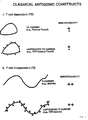
- the invention relates to an immunogenic construct made up of at least two carriers, at least one primary carrier that is a large molecular weight molecule of greater than 70 kDa molecular weight and a secondary carrier that is a T-dependent antigen conjugated thereto as represented in Figure 2 .
- a carrier is any substance to which other substances may be attached so that the immunogenicity of the attached substances is enhanced.
- the immunogenicity of the construct is greater than the immunogenicity of at least one carrier alone.
- Methods of measuring immunogenicity are well known to those in the art and primarily include measurement of serum antibody including measurement of amount, avidity, and isotype distribution at various times after injection of the construct. Greater immunogenicity may be reflected by a higher titer and/or persistence of antibody response. Immunogenicity may also be measured by the ability to induce protection to challenge with noxious substances or organisms. Immunogenicity may also be measured by the ability to immunize neonatal and/or immune defective mice. Immunogenicity may be measured in the patient population to be treated or in a population that mimics the immune response of the patient population.
- the dual carrier construct is an extremely potent activator of T cell help via mechanisms such as enhanced antigen presentation by B cells, macrophages or other antigen presenting cells.
- Such a construct will elicit very rapid and long lived antibody formation in adults, children, and those with immature or immunodeficient immune systems.
- the construct of the invention is preferably water soluble or may be maintained in aqueous media.
- the solubility may derive from the use of solubilizing reagents during the synthesis of the construct.
- the construct of the invention may be maintained in aqueous media by the use of solubilizing reagents.
- the process of synthesizing the construct of the invention allows one to advantageously control the physical and chemical properties of the final product.
- the properties that may be controlled include modifying the charge on primary and secondary carriers (an advantage in light of evidence that cationized proteins may be more immunogenic), varying the size of the construct by varying the size of the primary carriers, selecting the degree of crosslinking of the construct (to obtain variations of size and half-life in the circulation), selecting the number of copies of secondary carriers conjugated to primary carriers, and targeting to selected cell populations (such as to macrophages to enhance antigen presentation).
- immunomodulators and/or cell targeting moieties include, for example, (1) detoxified lipopolysaccharides or derivatives, (2) muramyl dipeptides, (3) carbohydrates, lipids, and peptides that may interact with cell surface determinants to target the construct to immunologically relevant cells, (4) interieukins, and (5) antibodies that may interact with cell surface components.
- the construct of the invention is made up of at least one primary carrier that provides a large backbone matrix to which one or more copies of secondary carrier may be conjugated.
- one or more primary or secondary carriers may be further conjugated to moieties.
- Methods of conjugation are well known to those of ordinary skill in the art, and include the heteroligation techniques of Brunswick M., et al., J. Immunol. 140:3364 (1988 ) and Mongini P.K., et al., J. Immunol. 148:3892 (1992 ), both specifically incorporated herein by reference. See also Wong, S.S.
- the elements of a preferred protocol are (1) derivatization of the secondary carrier (such as a toxin protein) with thiol, (2) derivatization of the primary carrier polymer with thiol reactive reagents; e.g., maleimide, iodoacetate, (3) formation of a thio-ether linkage and (4) separation of conjugate from unconjugated polymer and protein.
- the secondary carrier such as a toxin protein
- Derivatization of the protein and carbohydrate is normally followed by a column desalting step and concentration.
- An alternative, which has been successfully used, is to perform all the steps, or preferable steps 1-3, with an ultrafiltration device (e.g., Amicon pressure filtration) using suitable molecular weight cut off filters. This minimizes handling and transfers.
- an ultrafiltration device e.g., Amicon pressure filtration
- this chemistry allows relatively facile control of the degree of interchain crosslinking, degree of polymerization and aggregration to result in a rapid method achieving high yield and minimal modification of key epitopes.
- a primary carrier within the invention may also include functional groups or, alternatively, may be chemically manipulated to bear functional groups. As is done with dextran and PRP, the presence of functional groups may facilitate covalent conjugation of a primary carrier to one or more secondary carriers.
- Such functional groups include, but are not limited to, amino groups, carboxyl groups, aldehydes, hydrazides, epoxides, and thiols.
- each primary carrier provides an ideal matrix for many different secondary carriers so that one vaccine could contain multiple antigenic specificities.
- the primary,carrier stimulates antibody production by presenting numerous copies of secondary carriers at a relatively high antigenic density to both B and T cells. It may also provide other advantages including targeting of the construct to macrophages or other cell types to enable enhanced antigen processing.
- the molecular weight of at least one primary carrier ranges from greater than 70,000 to 2,000,000 kDa and above. As set forth in Figure 12 , a more preferred molecular weight is 400,000 kDa and above, and an even more preferred molecular weight is 2,000,000 kDa.
- the conjugation of the primary carrier to at least one secondary carrier may result in crosslinking of the primary carrier. Such crosslinking may permit the use of lower molecular weight carriers (such as 70,000 kDa) so long as the final construct is of a higher molecular weight. Based on the teachings contained herein together with the ordinary skill in the art, the skilled artisan will know how to select the optimum molecular weight for the particular construct desired.
- At least one primary carrier is a T-independent antigen, thereby combining the advantages of T-independent and T-dependent antigens.
- the invention may be practiced, however, with a primary carrier that is not immunogenic by itself.
- a primary carrier may be naturally occurring, a semisynthetic or a totally synthetic large molecular weight molecule.
- at least one primary carrier is a polymer selected from the group consisting of dextran, carboxymethyl cellulose, agarose, ficoll, polyacrylamide, naturally occuring polysaccharides, and combinations thereof.
- the primary carrier is a dextran.
- dextran refers to a polysaccharide composed of a single sugar and may be obtained from any number of sources, including Pharmacia.
- Ficoll an example of a semi-synthetic polymer, is an inert synthetic non-ionized high molecular weight polymer. Synthetic polymers include polyacrylamide (a water-soluble high molecular weight polymer of acrylic resin), poly (lactide-co-glycolide), polyvinyl alcohol, partially hydrolyzed polyvinyl acetate, and polyvinylpyrrolidine.
- the primary carrier is a microbial polysaccharide.
- the microbial polysaccharides are derived from pathogenic microorganisms.
- the primary carrier is selected from the group consisting of Pneumococcal capsular polysaccharides (including type III), Group B Streptococcus serotypes, Pseudomonas aeruginosa mucoexopolysaccharides, P. aeruginosa capsular polysaccharides (including strain fisher type 1), Haemophilus influenzae polysaccharide (including PRP), and combinations thereof.
- the primary carrier is haemophilus influenzae polysaccharide (PRP).
- the secondary carrier of this construct also provides specific advantages for eliciting good antibody responses.
- the secondary carrier can activate and recruit T cells and thereby augment T cell dependent antibody production.
- the secondary carrier need not, however, be strongly immunogenic by itself, although strongly immunogenic carriers are within the scope of this invention. Coupling of multiple copies of the secondary carrier to the primary carrier significantly augments antibody production against the secondary carrier even in the absence of adjuvants.
- the secondary carrier is a protein, a peptide, a T cell adjuvant or any other compound capable of activating and recruiting T cell help.
- the secondary carrier may be selected from a group consisting of but not limited to viral, bacterial, parasitic, animal and fungal constituents.
- the secondary carrier is a protein such as albumin (such as bovine serum albumin), tetanus toxoid, diphtheria toxoid, pertussis toxoid or bacterial outer membrane protein, all of which may be obtained from biochemical or pharmaceutical supply companies or prepared by standard methodology ( Cruse, J.M. and Lewis, R.E., Jr. (eds.) Conjugate Vaccines in Contributions to Microbiology and Immunology vol. 10 (1989 )), specifically incorporated herein by reference).
- Other components that could function as secondary carriers would be known to those of ordinary skill in the art of immunology.
- the secondary carriers of the invention are capable of being conjugated to at least one primary carrier.
- the secondary carriers may either contain functional groups that can react with the primary carriers or the secondary carriers may be chemically manipulated to be capable of reacting with the primary carriers discussed above.
- the secondary carriers of the invention are preferably water soluble, whether conjugated or unconjugated or whether coupled to the immunogens discussed below.
- moieties may be further conjugated to one or more of the primary and/or secondary carriers, as represented in Figure 2 .
- Such conjugation promotes enhanced antibody responses to the moiety.
- Techniques to conjugate such moieties to the primary and/or secondary carriers are well known to those skilled in the art, and include, in part, coupling through available functional groups (such as amino, carboxyl, thio and aldehyde groups). See S.S. Wong, Chemistry of Protein Conjugate and Crosslinking CRC Press (1991 ), and Brenkeley et al., Brief Survey of Methods for Preparing Protein Conjugates With Dyes, Haptens and Cross-Linking Agents, Bioconjugate Chemistry 3 #1 (Jan. 1992 ), specifically incorporated herein by reference.
- the haptens of the invention may first be conjugated to the secondary carrier (which may be the T-dependent component) and then coupled to the primary carrier (which may be the T-independent component) which are thereafter coupled.
- the secondary carrier may be first conjugated to the primary carrier and then haptens conjugated to this construct. This second method may aid in minimizing the modification of certain haptens such as peptide haptens containing amino groups.
- moiety is any substance that is able to stimulate the immune system either by itself or once coupled.
- Moieties include haptens, antigens, or combinations thereof.
- Haptens refer to small molecules, such as chemicals, dust, and allergens, that by themselves are not able to elicit an antibody response, but can once coupled to a carrier.
- An antigen is any molecule that, under the right circumstances, can induce the formation of antibodies.
- haptens and antigens may derive from but are not limited to bacteria, rickettsiae, fungi, viruses, parasites, drugs, or chemicals. They may include, for example, small molecules such as peptides, saccharides, oligosaccharides (for example the polyribosyl-ribitol-phosphate of H. influenzae), toxins, endotoxin, etc.
- the invention relates to vaccines that are made up of the dual carrier immunogenic construct together with a pharmaceutically acceptable carrier.
- Such vaccines will contain an effective therapeutic amount of the dual carrier immunogenic construct together with a suitable amount of carrier so as to provide the form for proper administration to the patient.
- Pharmaceutically acceptable carriers can be sterile liquids, such as water and oils, including those of petroleum, animal, vegetable or synthetic origin, such as peanut oil, soybean oil, mineral oil, sesame oil and the like. Water is a preferred carrier when the pharmaceutical composition is administered intravenously. Saline solutions and aqueous dextrose and glycerol solutions can also be employed as liquid carriers, particularly for injectable solutions. Suitable pharmaceutical carriers are described in Martin, E.W., Remington's Pharmaceutical Sciences, specifically incorporated herein by reference.
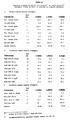
- the vaccines that may be constructed from the dual carrier immunogenic construct of the invention may include, but are not limited to, the vaccines set forth in Chart 1.
- the invention also relates to the treatment of a patient by administration of an immunostimulatory amount of the vaccine.
- Patient refers to any subject for whom the treatment may be beneficial and includes mammals, especially humans, horses, cows, dogs, and cats as well as other animals, such as chickens.
- An immunostimulatory amount refers to that amount of vaccine that is able to stimulate the immune response of the patient for the prevention, amelioration, or treatment of diseases.
- the vaccine of the invention may be administered by any route, but is preferably administered by intravenous, intramuscular, and subcutaneous injections.
- the invention also relates to a method of preparing an immunotherapeutic agent against infections caused by bacteria, viruses, parasites, fungi, or chemicals by immunizing a host with the vaccine described above so that the donor produces antibodies directed against the vaccine.
- Antibodies would be isolated or B cells may be obtained to later fuse with myeloma cells to make monoclonal antibodies.
- the method of making monoclonal antibodies is well known in the art, Kohler and Milstein Nature 256:495 (1975 ), specifically incorporated herein by reference, and needs no further description here.
- immunotherapeutic agent refers to a composition of antibodies that are directed against specific immunogens for use in passive treatment of patients.
- a plasma donor is any subject that is injected with a vaccine for the production of antibodies against the immunogens contained in the vaccine.
- the invention also relates to a method of treating a patient by the administration of a protective amount of the immunotherapeutic agent.
- a protective amount of the immunotherapeutic agent is passive in that it does not call on the patient to produce antibodies against an immunogen, but rather uses antibodies produced by the plasma donor against the immunogen.
- the amount of therapeutic antibodies is protective if it presents a sufficient number of antibodies that can prevent, ameliorate, or treat the disease caused by the immunogen. Such an amount may be determined by those of ordinary skill in the art and varies based on the characteristics of the patient and the disease profile.
- the invention also relates to a method of producing a diagnostic and/or research reagent to detect agents that are characteristic of diseases caused by, for example, bacteria, viruses, fungi, parasites or chemicals by immunizing a host with a vaccine described above so that the host produces antibodies (or B cells) against the agents.
- the antibodies and/or B cells may be isolated as described above.
- diagnostic reagent refers to a composition of antibodies (polyclonal or monoclonal) that may be used to detect agents that are characteristic of diseases.
- research reagent refers to a composition of antibodies (polyclonal or monoclonal) that may be used in the laboratory.
- HMWP high molecular weight polymer
- a secondary protein carrier could include a wide variety of proteins such as BSA or toxins/toxoids such as cholera, tetanus or diphtheria.
- the molecular weight of the Dex primary carrier can vary, but must be > 70 kDa and is a most effective carrier molecule at about 400 and 2000 kDa) in size ( Figure 12 ). However, the optimal size for the HMWP may vary depending on the specific primary carrier utilized.
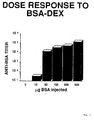
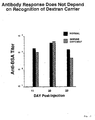
- the Dex HMWP is a polysaccharide and immune defective mice do not mount antibody responses to it. However, both normal and immune defective mice produce equally good antibody responses to BSA coupled to Dex ( Fig. 10 ). This demonstrates that Dex as a primary carrier may simply provide a matrix to present antigen(s) to cells in a multivalent array and itself need not be immunogenic. These studies also show that a variety of proteins could be used as secondary carriers and that the secondary carrier could serve both as a vaccine antigen and a carrier for non-immunogenic antigens.
- TNP-BSA secondary carrier BSA
- TNP-BSA HMWP primary carrier
- Dex HMWP primary carrier
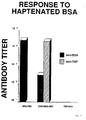
- Conjugation of TNP to the secondary carrier BSA alone did not enhance the antibody response to TNP.
- coupling the secondary carrier/TNP complex to the primary carrier to provide [(TNP-BSA)-Dex] enhanced the immunogenicity of TNP.
- BSA the secondary carrier
- BSA was immunogenic when coupled with Dex alone or with Dex and TNP. Therefore using the dual carrier vaccine construct, a HMWP can carry the secondary carrier and other antigens may be coupled to the secondary carrier.
- Antibodies will be elicited to the secondary carrier as well as the antigen conjugated to it and non-immunogenic haptenic molecules will be rendered immunogenic. This could be particularly important if the secondary carrier is an antigen to which antibody would provide protective immunity, such as tetanus or diphtheria toxoid.
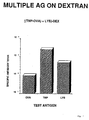
- This vaccine construct also allows multiple unrelated antigens to be conjugated to the primary carrier ( Figure 7 ). TNP was coupled to OVA (the secondary carrier) and then conjugated to Dex (the primary carrier). LYS was also independently conjugated directly to Dex. Antibodies were elicited to each of the antigens.
- the HMWP backbone of this vaccine construct is suitable for producing multivalent vaccines with an array of secondary carrier proteins and or many different antigens coupled to the secondary carrier. (multicarrier/ multiantigen vaccine)
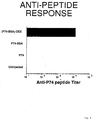
- the dual carrier vaccine construct was shown to be effective with a variety of antigens. This data is supported and extended using a parasitic (malarial) derived peptide antigen (p74).
- the dual carrier vaccine construct was shown to be significantly better than peptide antigen alone or peptide conjugated to the secondary carrier BSA ( Figure 6 ).
- a good antibody response was elicited to this small antigen only after the P74-BSA conjugate was coupled to the HMWP primary carrier (Dex).
- the HMWP carrier simply provides a matrix to present antigens to cells and need not be immunogenic ( Fig. 10 ).
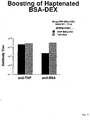
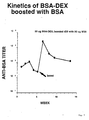
- a good booster response is important. After a primary immunization with the dual carrier vaccine, a booster antibody response can be elicited even with the unconjugated secondary carrier ( Figure 8 ). Furthermore, when a haptenated carrier was employed a booster response was observed to both the TNP and to the BSA secondary carrier. Further analysis shows that the primary and secondary antibody response to the BSA secondary carrier is long lived ( Figure 9 ).
- the BSA-Dex conjugate was analyzed to evaluate the effect of host immune status and route of immunization on antibody response.
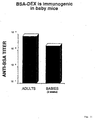
- Both immunologically mature adult and immunologically immature baby mice were effectively immunized with the primary and secondary carrier complex demonstrating that the dual carrier vaccine will elicit an antibody response even in babies and young infants with immature immunity ( Figure 11 ).
- the antibody response to BSA (the secondary carrier) is similar in both the adult and baby mice.
- IV, IM, and SC routes all elicited a good antibody response to BSA ( Figure 13 ).
- the route of administration of vaccine is not limited therefore to any single type of inoculation and it is not limited by the age or immunologic status of the vaccine recipient.
- the size of the HMWP is critical to provide an effective vaccine construct. For example for the HMWP Dex the size must be >70,000D, preferably >400,000D ( Fig. 12 ).
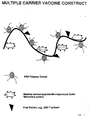
- a multiple carrier vaccine is illustrated in Fig. 14 .
- Three secondary carriers are employed in this system, two of which are further conjugated to another moiety.
- H. influenzae PRP is coupled to a tetanus toxoid secondary carrier
- a malarial derived peptide is coupled to a meningococcal outer membrane protein
- a viral protein (such as RSV-F protein) is left unconjugated.
- One or more of each of the secondary carriers is then conjugated to the high molecular weight polymer backbone.
- a vaccine can be designed to bear multiple specificities under any of the following four approaches:
- TNP-BSA no adjuvant
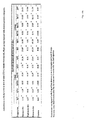
- TNP-BSA dextran anti-TNP titers A. Magnitude response - + + + + B. Persistence response - + + + + C. Ability to boost for secondary response - + + + + D. Ability to immunize neonate - + + + + E. Ability to immunize B cell defective mice - + + + + F. Antibody activity - + + + + G. Ability to immunize subcutaneously - + + + + +
- DT diptheria toxoid
- PT pertussis toxoid
- TT tetanus toxoid
- mice Female outbred mice (CD-1), 4 weeks old, were purchased from Charles River, Wilmington, MA.
- Hyperimmunized anti-TT mouse serum was received from Dr. S.C. Szu, Laboratory of Developmental and Molecular Immunity, NIH, Bethesda.
- Purified mouse IgG1, IgG2a, IgG2b, IgG3 and IgM as well as alkaline phosphatase conjugates of goat anti-mouse IgG, IgGl, IgG2a, IgG2b, IgG3, IgM were from Fisher Biotechnology, Springfield, NJ.
- Purified mouse IgG, purified goat anti-mouse IgG (Fab specific), bovine serum albumin (BSA), avidin from egg white, Brij-35 and phosphatase substrate were from Sigma Chemical Co., St. Louis, MO.
- TT tetanus toxoid
- PT pertussis toxoid
- DT diptheria toxoid
- Anti-dextran reference mouse serum was prepared by injecting mice with dextran-pertussis toxoid (PT) conjugate (prepared as described below) twice at an interval of 31 days and bleeding mice 2 weeks after the second injection. The sera of various mice were pooled in equal volumes. Similarly, anti-DT reference mouse serum and anti-PT reference mouse serum were prepared by injecting.mice with aluminum phosphate adsorbed (adsorption process described below) DT or PT.
- PT dextran-pertussis toxoid
- MPHBL prepared the secondary carrier proteins, DT, PT, and TT, by the following purification and detoxification techniques:
- Tetanus toxoid was prepared by first purifying tetanus toxin by ammonium sulphate fractionation and gel filtration through Sephadex G-50 and DEAE column chromatography. Purified tetanus toxin was then detoxified with formalin. Diptheria toxoid was prepared by first detoxifying diphtheria toxin with formalin and then purifying DT by ammonium sulphate fractionation and DEAE column chromatography. Pertussis toxoid was prepared by purifying pertussis toxin by affinity chromatography and then detoxifying pertussis toxin with tetra nitro methane.
- diptheria toxoid was concentrated to 10 mg/ml, and tetanus toxoid to 4.7 mg/ml, and the pertussis is toxoid to 2.8 mg/ml.
- HEPES buffer concentrate (0.75 M HEPES, 10 mM EDTA, pH 7.5) was added to each toxoid solution and a 12-14 molar ratio of SATA (Calbiochem) slowly added from a 25 mM or 0.1 M stock in dimethyl formamide (DMF).
- SATA Calbiochem
- DMF dimethyl formamide
- the primary carrier was prepared as described above in Methods .
- high molecular weight amino ethyl carbamyl dextran (c.a. 2 million daltons), lightly radiolabeled with tritium, was iodoacetylated with SIAP and exchanged into acetate buffer (10 mM sodium acetate, 2 mM EDTA, 0.1 M NaCl, 0.02% sodium azide) and concentrated.
- the conjugates were prepared using a variation of heteroligation chemistry referred to above (Brunswick et al., Mongini et al.) In brief, the acetyl-thiolated toxoid was added to a gently vortexed solution of the iodoacetylated dextran. The pH was raised and the thiol deprotected by the addition of approximately 1/9 volume of concentrated HEPES buffer containing 0.5 M hydroxylamine. The solution contained approximately equal amounts of toxoid and dextran on a weight basis. The final toxoid concentrations were 5 mg/ml (DT), 1.1 mg/ml (PT) and 5.9 mg/ml (TT).
- the conjugates were treated for 1 hr with 0.2 mM mercaptoethanol followed by 10 mM iodoacetamide for 10 min.
- the conjugates were then fractionated by gel filtration on either a S300SF or a S400SF 1 x 58 cm column (Pharmacia), equilibrated with PBS.
- the void volume peak containing the conjugate was then pooled and sterile filtered using a Millex HV (0.45 ⁇ m) filter (Millipore).
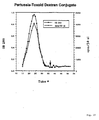
- pertussis responded particularly well to the conjugation protocol. As set forth in Fig. 15 , a high percentage of pertussis toxoid converted to high molecular weight conjugate with dextran. It is estimated that a maxiumum of 15 amino groups, and probably many fewer, were modified on the toxoid.
- Protein concentrations on each of the three conjugates were determined by OD 280 and confirmed by the micro BCA assay (Pierce) using the purified toxoids obtained from MPHBL as standards. Dextran concentrations were determined from the specific activity of the tritiated AECM dextran. These results are set forth below: Protein (mg/ml) Protein/dex (Molar) Protein/dex (w/w) 1. Dtxd-dex 0.34 12 0.6 2. Ptxd-dex 0.73 14 0.7 3. Ttxd-dex 0.43 22 1.1 The weight/weight ratio of protein to dextran indicates that the conjugation methods successfully coupled the toxoids to the dextran. These results were confirmed by analysis on Ouchterlony plates.
- samples of each conjugate were adsorbed onto the adjuvant aluminum phosphate.
- Each sample was adsorbed onto 4 mg/ml of freshly prepared aluminum phosphate gel (pH 6.0) made by precipitation of aluminum chloride and trisodium phosphate. Thimerosal was added at a final concentration of 0.01% (w/v). The preparations were shaken overnight at room temperature.
- the anti-dextran reference mouse serum was standardized for respective antigen specific IgG, IgM and IgG isotypes.
- the hyperimmunized anti-tetanus toxoid reference mouse serum, anti-diphtheria toxoid reference mouse serum and anti-pertussis toxoid reference mouse serum were standardized for respective antigen specific IgG by the method set forth in W.D. Bollinger and J.W. Boslego, A general approach to standardization of the solid-phase immunoassay for quantitation of class-specific antibodies, J. Immunol. Methods 1981, 46, 129-140 with modification.
- ELISA was performed on high binding easy wash microtiter plates (Corning Glass Works, Corning, NY) coated with 100 ⁇ l of particular antigen, here TT, PT or DT, diluted to 5 ⁇ g/ml in phosphate buffered saline (PBS), pH 7.2 at RT for overnight. The plates were washed between all steps with PBS containing 0.05% between 20. Serial two-fold dilutions of reference serum and test sera in PBS containing 0.1% Brij 35 and 0.5% BSA (PBB) were done in plates. The plates were held at room temperature for 2 hours and washed.
- PBS phosphate buffered saline
- the alkaline phosphatase labelled goat anti-mouse IgG, IgGl, IgG2a, IgG2b, IgG3 or IgM diluted in PBS were added to respective plates. The plates were again held at room temperature for 2 hours and washed. Finally 100 ⁇ l phosphatase substrate diluted to 1 mg/ml in 1 M diethanolamine-0.5 mM magnesium chloride buffer, pH 9.8, was added to each well. The plates were read at 405 nm wavelength on an ELISA reader (Titertek Multiskan Plus, Flow Laboratories). Antigen specific antibodies ( ⁇ g/ml) were extrapolated from the standard curve using Rodbard's transformation.
- anti-dextran ELISA For anti-dextran ELISA, initially plates were coated with avidin overnight and then 1 ⁇ g/ml solution of biotinylated dextran in PBS was added at room temperature for 1 hour. This ELISA gave very similar results of anti-dextran IgG for 30 serum pools to that when plates were coated with dextran directly. Therefore, most experiments were carried out by coating the plates with dextran directly.
- this experiment focused on young mice that, as set forth in the Introduction and Figure 11 , do not respond well to unconjugated dextran and other T-independent antigens. As those in the art know, young children under two years of age also do not respond well to type 2 T-independent antigens. These results, therefore, are more directly applicable to young children.
- mice elicited antibodies by two weeks and persisted at high levels for at least 8 weeks.
- the main isotypes elicited were IgGl, IgG3, and IgGM.
- mice injected with PT-dex elicited low levels of IgG2a and IgG2b.
- Fig. 16 also demonstrates that the mice that received aluminum phosphate absorbed conjugates exhibited higher levels of IgG and IgM antibodies than those that received the fluid preparations.
- mice that received the conjugates exhibited antibodies to the protein component by at least two weeks and persistence of those antibodies for at least eight weeks.
- absorbtion to aluminum phosphate enhanced the immune response.
- FIGs. 16 and 17 demonstrate the dual and reciprocal immune enhancement achieved with the conjugates of the invention.
- the neutralizing activity of the tetanus toxoid was evaluated as set forth in Fig. 18 .
- a blood level of 0.01 anti-toxin units (Au) or greater is considered to provide protection against tetanus toxin.
- the conjugate elicited protective levels of antibody against tetanus toxin within four weeks for the fluid and two weeks for the conjugate absorbed on the aluminum phosphate adjuvant at doses of 0.1 and 1.0 ⁇ g.
- Fig. 19(a) constant amounts of dextran to varying amounts of protein were injected into the mice. This chart also demonstrates that each conjugate elicited an immune response against the secondary carrier (the toxoid).
- Fig. 19(b) shows that unconjugated dextran alone elicits very low levels of IgG3 and IgM after two doses as compared to the anti-dextran antibody levels elicited by various conjugates. As observed in the first experiment, dextran-PT conjugate induced relatively greater levels of IgG2a and IgG2b than other conjugates.
- parts (a) and (b) of Fig. 19 demonstrate the dual and reciprocal immune enhancement achieved with the conjugates of the invention, i.e., conjugation of the secondary carrier provided enhanced response to the primary carrier and vice-versa.
- the following illustrates the synthesis of the dual carrier immunogenic construct with diptheria, pertussis, tetanus toxoid, which are clinically relevant protein secondary carriers, conjugated to the high molecular weight primary carrier haemophilus influenzae type b carbohydrate (polyribosyl riboitol phosphate "PRP"), which is also of clinical relevance.
- PRP polyribosyl riboitol phosphate
- Toxoids were concentrated using a Centricon 30. Diptheria toxoid (DT) was concentrated to 5.25 mg/ml, pertussis toxoid (PT) to 2.6 mg/ml and tetanus toxoid (TT) to 3.2 mg/ml. A 1/9 volume of a concentrated HEPES buffer added. SPDP (available from Sigma or Calbiochem) was added to a gently vortexed solution of DT at a molar excess of 16:1, and to TT at a molar excess of 20:1. For PT, the reagent SATA at an 11:1 ratio (from a stock in DMF) was added to a gently vortexed solution.
- SPDP available from Sigma or Calbiochem
- SATA SATA
- SPDP SATA-S-pyridyl group
- SATA may be the reagent of choice when the carbohydrate is iodoacetylated, since the thiol deprotecting reagent, hydroxylamine, is compatible.
- SPDP may be preferred when the carbohydrate is derivatized with maleimide and the deprotecting reagent must be removed prior to conjugation.
- the PRP-AH was further derivatized according to the following method. Higher concentrations of crosslinking reagent and/or longer incubation times were used to compensate for the reduced reactivity of the hydrazide group compared with that of the amino moiety of AECM-dextran.
- the PRP-AH was made thiol reactive by maleylation with the reagent GMBS (Calbiochem) instead of by iodoacetylation (with SIAP) because the maleimide concentration can easily be determined from its absorbance at 304 nm (extinction coefficient - 620 M -1 ( Kitagawa, T., et al. J. Biochem. 94:1160 (1983 )). Additionally, the maleimide group is (1) more reactive than the iodoacetyl group, permitting shorter reaction times and (2) hydrolyzes and so does not necessarily need to be quenched with mercaptoethanol, an advantage for thiol sensitive proteins.
- maleimide group is its relative bulk, which could introduce additional epitopes, and that hydrolysis reduces the number of active groups, which could decrease the extent of cross-linking.
- particular reagents and conditions were selected to improve stability (e.g. , an alkyl maleimide, high reagent concentration and short reaction time and pH 5 desalting step).
- Conjugates with PRP-AH have also been prepared using the iodoacetylating reagent, SIAP, as was used with the dextran conjugates.
- maleimide-PRP is as follows. 40 ⁇ l of the maleimide reagent GMBS (0.1 M in DMF) (CalBiochem) was added to a vortexed solution of 2 mg PRP-AH in 157 ⁇ l of HEPES buffer (final concentration: 75 mM HEPES, 1 mM EDTA, 0.02% azide, pH 7.5). After 2 h at room temperature, the solution was desalted on a P6DG column (BioRad) equilibrated with acetate buffer (10 mM sodium acetate, 0.1 M NaCl, 2 mM EDTA, 0.02% sodium azide) and the void volume concentrated to 0.47 ml with a Centricon 30 (Amicon).
- acetate buffer (10 mM sodium acetate, 0.1 M NaCl, 2 mM EDTA, 0.02% sodium azide
- the maleimide concentration was estimated to be 225 ⁇ M.
- derivatization was judged to be essentially complete.
- the derivatized PRP was desalted with a column equilibrated with HEPES buffer at pH 7.5 instead of acetate.
- Thiolated DT and TT were added to stirred solutions of deoxygenated PRP-maleimide under a nitrogen atmosphere and the pH raised by the addition of 1/9 volume of concentrated HEPES buffer and left to stir overnight at room temperature.
- Thiolated PT was added to a vortexed solution of PRP-maleimide and left overnight at 4°C. After the overnight reaction, solutions were made 0.2 mM mercaptoethanol for one hour (to ensure complete removal of unhydrolyzed maleimide) followed by 10 min in 10 mM iodoacetamide (to consume all free thiols). Solutions were fractionated by gel filtration on a S300SF or a S400SF column to remove unconjugated PRP and toxoid. The high molecular weight conjugate was concentrated with a Centricon 30 and sterile filtered.
- diphtheria toxoid very successfully converted to a high molecular weight conjugate with PRP. It is estimated that less than seven amino groups were modified on the toxoid.
Landscapes
- Health & Medical Sciences (AREA)
- Life Sciences & Earth Sciences (AREA)
- Engineering & Computer Science (AREA)
- Bioinformatics & Cheminformatics (AREA)
- Public Health (AREA)
- Veterinary Medicine (AREA)
- Chemical & Material Sciences (AREA)
- Medicinal Chemistry (AREA)
- Pharmacology & Pharmacy (AREA)
- Animal Behavior & Ethology (AREA)
- General Health & Medical Sciences (AREA)
- Epidemiology (AREA)
- Immunology (AREA)
- Proteomics, Peptides & Aminoacids (AREA)
- Molecular Biology (AREA)
- Microbiology (AREA)
- Mycology (AREA)
- Virology (AREA)
- Toxicology (AREA)
- Chemical Kinetics & Catalysis (AREA)
- General Chemical & Material Sciences (AREA)
- Nuclear Medicine, Radiotherapy & Molecular Imaging (AREA)
- Organic Chemistry (AREA)
- Medicines Containing Antibodies Or Antigens For Use As Internal Diagnostic Agents (AREA)
- Peptides Or Proteins (AREA)
- Medicinal Preparation (AREA)
Applications Claiming Priority (3)
| Application Number | Priority Date | Filing Date | Title |
|---|---|---|---|
| US83406792A | 1992-02-11 | 1992-02-11 | |
| EP93906033A EP0625910B1 (en) | 1992-02-11 | 1993-02-10 | Dual carrier immunogenic construct |
| EP98122950A EP0911036A3 (en) | 1992-02-11 | 1993-02-10 | Dual carrier immunogenic construct |
Related Parent Applications (1)
| Application Number | Title | Priority Date | Filing Date |
|---|---|---|---|
| EP98122950A Division EP0911036A3 (en) | 1992-02-11 | 1993-02-10 | Dual carrier immunogenic construct |
Publications (1)
| Publication Number | Publication Date |
|---|---|
| EP1958646A1 true EP1958646A1 (en) | 2008-08-20 |
Family
ID=25266015
Family Applications (3)
| Application Number | Title | Priority Date | Filing Date |
|---|---|---|---|
| EP08103172A Ceased EP1958646A1 (en) | 1992-02-11 | 1993-02-10 | Dual carrier immunogenic construct |
| EP93906033A Expired - Lifetime EP0625910B1 (en) | 1992-02-11 | 1993-02-10 | Dual carrier immunogenic construct |
| EP98122950A Ceased EP0911036A3 (en) | 1992-02-11 | 1993-02-10 | Dual carrier immunogenic construct |
Family Applications After (2)
| Application Number | Title | Priority Date | Filing Date |
|---|---|---|---|
| EP93906033A Expired - Lifetime EP0625910B1 (en) | 1992-02-11 | 1993-02-10 | Dual carrier immunogenic construct |
| EP98122950A Ceased EP0911036A3 (en) | 1992-02-11 | 1993-02-10 | Dual carrier immunogenic construct |
Country Status (13)
| Country | Link |
|---|---|
| US (2) | US5585100A (enExample) |
| EP (3) | EP1958646A1 (enExample) |
| JP (1) | JP3917172B2 (enExample) |
| KR (1) | KR950700081A (enExample) |
| AT (1) | ATE245446T1 (enExample) |
| AU (1) | AU685047B2 (enExample) |
| CA (1) | CA2129899C (enExample) |
| DE (1) | DE69333107T2 (enExample) |
| ES (1) | ES2204900T3 (enExample) |
| IL (1) | IL104696A (enExample) |
| NZ (1) | NZ249704A (enExample) |
| WO (1) | WO1993015760A1 (enExample) |
| ZA (1) | ZA93945B (enExample) |
Families Citing this family (164)
| Publication number | Priority date | Publication date | Assignee | Title |
|---|---|---|---|---|
| US5849301A (en) * | 1993-09-22 | 1998-12-15 | Henry M. Jackson Foundation For The Advancement Of Military Medicine | Producing immunogenic constructs using soluable carbohydrates activated via organic cyanylating reagents |
| CA2171942C (en) * | 1993-09-22 | 2010-12-14 | Andrew Lees | Method of activating soluble carbohydrate using novel cyanylating reagents for the production of immunogenic constructs |
| US5874085A (en) * | 1993-11-10 | 1999-02-23 | Henry M. Jackson Foundation For The Advancement Of Military Medicine | Vaccine for enhanced production of IgA antibodies |
| EP0760681B1 (en) * | 1994-05-31 | 1999-09-01 | Allergan, Inc | Modification of clostridial toxins for use as transport proteins |
| GB9410871D0 (en) | 1994-05-31 | 1994-07-20 | Imperial College | Modification of tetanus toxin for use as a transport protein |
| KR100417183B1 (ko) * | 1995-03-22 | 2004-05-31 | 헨리 엠. 잭슨 파운데이션 포 더 어드벤스먼트 오브 밀리터리 메디신 | 유기시아닐화제로활성화된가용성탄수화물을이용한면역원성구조체제조 |
| WO1996029094A1 (en) * | 1995-03-22 | 1996-09-26 | Andrew Lees | Producing immunogenic constructs using soluble carbohydrates activated via organic cyanylating reagents |
| CA2196281A1 (en) * | 1995-06-06 | 1996-12-12 | James J. Mond | Dual carrier immunogenic construct |
| BRPI9609414B8 (pt) | 1995-06-23 | 2021-05-25 | Smithkline Beecham Biologicals S A | combinação de vacina e kit para produzir a mesma. |
| US6106828A (en) * | 1996-02-15 | 2000-08-22 | Novo Nordisk A/S | Conjugation of polypeptides |
| US6309646B1 (en) | 1996-05-09 | 2001-10-30 | The Henry M. Jackson Foundation For The Advancement Of Military Medicine | Protein-polysaccharide conjugate vaccines and other immunological reagents prepared using homobifunctional and heterobifunctional vinylsulfones, and processes for preparing the conjugates |
| US6248334B1 (en) * | 1997-01-08 | 2001-06-19 | Henry M. Jackson Foundation For The Advancement Of Military Medicine | Process for preparing conjugate vaccines including free protein and the conjugate vaccines, immunogens, and immunogenic reagents produced by this process |
| US6299881B1 (en) * | 1997-03-24 | 2001-10-09 | Henry M. Jackson Foundation For The Advancement Of Military Medicine | Uronium salts for activating hydroxyls, carboxyls, and polysaccharides, and conjugate vaccines, immunogens, and other useful immunological reagents produced using uronium salts |
| US6743427B1 (en) | 1997-12-02 | 2004-06-01 | Neuralab Limited | Prevention and treatment of amyloidogenic disease |
| US6710226B1 (en) | 1997-12-02 | 2004-03-23 | Neuralab Limited | Transgenic mouse assay to determine the effect of Aβ antibodies and Aβ Fragments on alzheimer's disease characteristics |
| US7588766B1 (en) | 2000-05-26 | 2009-09-15 | Elan Pharma International Limited | Treatment of amyloidogenic disease |
| US7964192B1 (en) | 1997-12-02 | 2011-06-21 | Janssen Alzheimer Immunotherapy | Prevention and treatment of amyloidgenic disease |
| US6750324B1 (en) | 1997-12-02 | 2004-06-15 | Neuralab Limited | Humanized and chimeric N-terminal amyloid beta-antibodies |
| US6913745B1 (en) | 1997-12-02 | 2005-07-05 | Neuralab Limited | Passive immunization of Alzheimer's disease |
| US7179892B2 (en) | 2000-12-06 | 2007-02-20 | Neuralab Limited | Humanized antibodies that recognize beta amyloid peptide |
| US6923964B1 (en) | 1997-12-02 | 2005-08-02 | Neuralab Limited | Active immunization of AScr for prion disorders |
| US7790856B2 (en) | 1998-04-07 | 2010-09-07 | Janssen Alzheimer Immunotherapy | Humanized antibodies that recognize beta amyloid peptide |
| US6787523B1 (en) | 1997-12-02 | 2004-09-07 | Neuralab Limited | Prevention and treatment of amyloidogenic disease |
| US20080050367A1 (en) | 1998-04-07 | 2008-02-28 | Guriq Basi | Humanized antibodies that recognize beta amyloid peptide |
| US6761888B1 (en) | 2000-05-26 | 2004-07-13 | Neuralab Limited | Passive immunization treatment of Alzheimer's disease |
| TWI239847B (en) | 1997-12-02 | 2005-09-21 | Elan Pharm Inc | N-terminal fragment of Abeta peptide and an adjuvant for preventing and treating amyloidogenic disease |
| US7018637B2 (en) * | 1998-02-23 | 2006-03-28 | Aventis Pasteur, Inc | Multi-oligosaccharide glycoconjugate bacterial meningitis vaccines |
| US20050059802A1 (en) * | 1998-04-07 | 2005-03-17 | Neuralab Ltd | Prevention and treatment of amyloidogenic disease |
| ATE364395T1 (de) | 1998-04-10 | 2007-07-15 | Andrew Lees | Konjugat-impfstoffe zur vorbeugung der zahnkaries |
| US20030147882A1 (en) | 1998-05-21 | 2003-08-07 | Alan Solomon | Methods for amyloid removal using anti-amyloid antibodies |
| JP5138844B2 (ja) | 1998-06-12 | 2013-02-06 | ザ・ヘンリー・エム・ジャクソン・ファンデイション・フォー・ジ・アドヴァンスメント・オヴ・ミリタリー・メディシン、インコーポレイテッド | 抗原およびEBVGp350/220の受容体の同時刺激によるB細胞活性化および免疫グロブリン分泌の増強 |
| US6858211B1 (en) | 1998-07-20 | 2005-02-22 | The United States Of America As Represented By The Department Of Health And Human Services | Vaccines against Escherichia coli O157 infection |
| CA2714833A1 (en) * | 1998-07-20 | 2000-02-03 | Edward Konadu (Deceased) | Vaccines against escherichia coli o157 infection |
| US6585973B1 (en) | 1998-10-29 | 2003-07-01 | Henry M. Jackson Foundation For The Advancement Of Military Medicine | Method for preparing solid phase conjugated vaccine |
| US6787637B1 (en) | 1999-05-28 | 2004-09-07 | Neuralab Limited | N-Terminal amyloid-β antibodies |
| UA81216C2 (en) | 1999-06-01 | 2007-12-25 | Prevention and treatment of amyloid disease | |
| WO2000076538A1 (en) | 1999-06-10 | 2000-12-21 | Michigan State University | Feline calicivirus isolated from cat urine and vaccines thereof |
| US7419668B1 (en) | 1999-09-02 | 2008-09-02 | Board Of Trustees Of Michigan State University | Vaccine to control equine protozoal myeloencephalitis in horses |
| EP1207889A4 (en) | 1999-09-02 | 2004-05-19 | Univ Michigan State | VACCINE FOR TREATING HORSE PROTOZOENMYENZEPHALITIS IN HORSES |
| MXPA02007796A (es) | 2000-02-21 | 2003-12-08 | Pharmexa As | Metodo novedoso para la disminucion de cuerpos amiloides. |
| US7700751B2 (en) | 2000-12-06 | 2010-04-20 | Janssen Alzheimer Immunotherapy | Humanized antibodies that recognize β-amyloid peptide |
| PE20020574A1 (es) | 2000-12-06 | 2002-07-02 | Wyeth Corp | Anticuerpos humanizados que reconocen el peptido amiloideo beta |
| US7097837B2 (en) | 2001-02-19 | 2006-08-29 | Pharmexa A/S | Synthetic vaccine agents |
| NZ527720A (en) * | 2001-02-19 | 2005-03-24 | Pharmexa As | Synthetic vaccine agents |
| US20030138434A1 (en) * | 2001-08-13 | 2003-07-24 | Campbell Robert L. | Agents for enhancing the immune response |
| MY144532A (en) | 2001-08-20 | 2011-09-30 | Lundbeck & Co As H | Novel method for down-regulation of amyloid |
| MY139983A (en) | 2002-03-12 | 2009-11-30 | Janssen Alzheimer Immunotherap | Humanized antibodies that recognize beta amyloid peptide |
| NZ537181A (en) | 2002-08-02 | 2007-01-26 | Glaxosmithkline Biolog S | Vaccine composition comprising transferrin binding protein and Hsf from gram negative bacteria |
| PT2395073T (pt) | 2002-11-01 | 2017-11-24 | Glaxosmithkline Biologicals Sa | Processo de secagem |
| PL378571A1 (pl) * | 2003-02-01 | 2006-05-02 | Neuralab Limited | Czynna immunizacja dla wytworzenia przeciwciał przeciw rozpuszczalnemu A-ß |
| TWI374893B (en) | 2003-05-30 | 2012-10-21 | Janssen Alzheimer Immunotherap | Humanized antibodies that recognize beta amyloid peptide |
| GB0313916D0 (en) | 2003-06-16 | 2003-07-23 | Glaxosmithkline Biolog Sa | Vaccine composition |
| US8574596B2 (en) | 2003-10-02 | 2013-11-05 | Glaxosmithkline Biologicals, S.A. | Pertussis antigens and use thereof in vaccination |
| DK2336147T3 (da) | 2003-12-17 | 2014-06-10 | Wyeth Llc | Beta-immunogen-peptid-bærerkonjugater og fremgangsmåder til fremstilling deraf |
| US20070134762A1 (en) * | 2003-12-17 | 2007-06-14 | Arumugham Rasappa G | Immunogenic peptide carrier conjugates and methods of producing same |
| JP2007519746A (ja) * | 2004-01-29 | 2007-07-19 | バイオシネクサス インコーポレーティッド | ワクチン調製におけるアミノ−オキシ官能基の使用 |
| ES2434732T3 (es) | 2004-12-15 | 2013-12-17 | Janssen Alzheimer Immunotherapy | Anticuerpos para beta-amiloide humanizados para su uso en mejorar la cognición |
| TW200636066A (en) | 2004-12-15 | 2006-10-16 | Elan Pharm Inc | Humanized antibodies that recognize beta amyloid peptide |
| GB0505518D0 (en) * | 2005-03-17 | 2005-04-27 | Chiron Srl | Combination vaccines with whole cell pertussis antigen |
| GB0505996D0 (en) | 2005-03-23 | 2005-04-27 | Glaxosmithkline Biolog Sa | Fermentation process |
| BRPI0612654B8 (pt) | 2005-06-27 | 2021-05-25 | Glaxosmithkline Biologicals Sa | método para conjugar um sacarídeo a uma proteína, e, conjugado sacarídeo-proteína |
| CN101563096A (zh) * | 2005-07-28 | 2009-10-21 | 辉瑞产品公司 | 疫苗施用方法、新猫杯状病毒、及抗猫细小病毒和猫疱疹病毒的动物免疫方法 |
| JO2813B1 (en) | 2005-12-22 | 2014-09-15 | جلاكسو سميث كلاين بايولوجيكالز اس.ايه | A vaccine with multiple pneumococcal saccharides |
| GB0607088D0 (en) | 2006-04-07 | 2006-05-17 | Glaxosmithkline Biolog Sa | Vaccine |
| EP1982176A1 (en) * | 2006-01-30 | 2008-10-22 | Dako Denmark A/S | High-speed quantification of antigen specific t-cells in whole blood by flow cytometry |
| US8784810B2 (en) | 2006-04-18 | 2014-07-22 | Janssen Alzheimer Immunotherapy | Treatment of amyloidogenic diseases |
| GB0700136D0 (en) | 2007-01-04 | 2007-02-14 | Glaxosmithkline Biolog Sa | Process for manufacturing vaccines |
| EP2361930A3 (en) * | 2007-03-26 | 2011-10-26 | Dako Denmark A/S | Multimers of MHC-peptide complexes and uses thereof in Borrelia infectious diseases |
| US8003097B2 (en) | 2007-04-18 | 2011-08-23 | Janssen Alzheimer Immunotherapy | Treatment of cerebral amyloid angiopathy |
| PT2167121E (pt) | 2007-06-26 | 2015-12-02 | Glaxosmithkline Biolog Sa | Vacina compreendendo conjugados de polissacáridos capsulares de streptococcus pneumoniae |
| EP3023436A1 (en) * | 2007-07-03 | 2016-05-25 | Dako Denmark A/S | Improved methods for generation, labeling and use of mhc multimers |
| DK2182983T3 (da) | 2007-07-27 | 2014-07-14 | Janssen Alzheimer Immunotherap | Behandling af amyloidogene sygdomme med humaniserede anti-abeta antistoffer |
| EP2197908A2 (en) | 2007-09-27 | 2010-06-23 | Dako Denmark A/S | Mhc multimers in tuberculosis diagnostics, vaccine and therapeutics |
| JO3076B1 (ar) | 2007-10-17 | 2017-03-15 | Janssen Alzheimer Immunotherap | نظم العلاج المناعي المعتمد على حالة apoe |
| US10968269B1 (en) | 2008-02-28 | 2021-04-06 | Agilent Technologies, Inc. | MHC multimers in borrelia diagnostics and disease |
| WO2010009735A2 (en) | 2008-07-23 | 2010-01-28 | Dako Denmark A/S | Combinatorial analysis and repair |
| GB0817244D0 (en) * | 2008-09-20 | 2008-10-29 | Univ Cardiff | Use of a protein kinase inhibitor to detect immune cells, such as T cells |
| WO2010037402A1 (en) | 2008-10-02 | 2010-04-08 | Dako Denmark A/S | Molecular vaccines for infectious disease |
| US11992518B2 (en) | 2008-10-02 | 2024-05-28 | Agilent Technologies, Inc. | Molecular vaccines for infectious disease |
| US9067981B1 (en) | 2008-10-30 | 2015-06-30 | Janssen Sciences Ireland Uc | Hybrid amyloid-beta antibodies |
| WO2010141312A2 (en) | 2009-06-01 | 2010-12-09 | Wake Forest University Health Sciences | Flagellin fusion proteins and conjugates comprising pneumococcus antigens and methods of using the same |
| WO2011017101A2 (en) | 2009-07-27 | 2011-02-10 | Fina Biosolutions, Llc | Method for producing protein-carbohydrate vaccines reduced in free carbohydrate |
| WO2011036560A2 (en) | 2009-09-23 | 2011-03-31 | Novartis Ag | Glycoconjugate compositions and methods for treatment of hiv |
| GB0917647D0 (en) | 2009-10-08 | 2009-11-25 | Glaxosmithkline Biolog Sa | Expression system |
| KR101635795B1 (ko) | 2009-12-17 | 2016-07-04 | 피나 바이오솔루션스, 엘엘씨 | 다당류/단백질 접합체 백신의 제조에 있어서 시안화제인 1-시아노벤조트리아졸 (1-cbt)을 통한 다당류의 활성화 |
| GB201003922D0 (en) | 2010-03-09 | 2010-04-21 | Glaxosmithkline Biolog Sa | Conjugation process |
| GB201003924D0 (en) | 2010-03-09 | 2010-04-21 | Glaxosmithkline Biolog Sa | Immunogenic composition |
| BR112012022669A2 (pt) | 2010-03-10 | 2017-02-14 | Glaxosmithkline Biologicals Sa | composição imunogênica, método de tratamento ou prevenção de infecção ou doença, uso de um antígeno, kit, métodos para a fabricação de uma composição imunogênica e para melhorar uma vacina. |
| US8383783B2 (en) | 2010-04-23 | 2013-02-26 | Serum Institute Of India, Ltd. | Simple method for simultaneous removal of multiple impurities from culture supernatants to ultralow levels |
| GB201015132D0 (en) | 2010-09-10 | 2010-10-27 | Univ Bristol | Vaccine composition |
| KR20140027211A (ko) * | 2011-04-04 | 2014-03-06 | 유니버시티 오브 아이오와 리써치 파운데이션 | 백신 면역원성의 개선 방법 |
| GB201106225D0 (en) | 2011-04-13 | 2011-05-25 | Glaxosmithkline Biolog Sa | Fermentation process |
| SA115360586B1 (ar) | 2012-03-09 | 2017-04-12 | فايزر انك | تركيبات لعلاج الالتهاب السحائي البكتيري وطرق لتحضيرها |
| CA2896157A1 (en) | 2012-12-27 | 2014-07-03 | Glycovaxyn Ag | Methods and compositions relating to crm197 |
| CN105492021B (zh) | 2013-09-08 | 2018-12-04 | 辉瑞公司 | 脑膜炎奈瑟氏球菌组合物及其方法 |
| WO2015095868A1 (en) | 2013-12-20 | 2015-06-25 | Wake Forest University Health Sciences | Methods and compositions for increasing protective antibody levels induced by pneumococcal polysaccharide vaccines |
| US11160855B2 (en) | 2014-01-21 | 2021-11-02 | Pfizer Inc. | Immunogenic compositions comprising conjugated capsular saccharide antigens and uses thereof |
| CA3206112A1 (en) | 2014-01-21 | 2015-07-30 | Pfizer Inc. | Immunogenic compositions comprising conjugated capsular saccharide antigens and uses thereof |
| IL246738B2 (en) | 2014-01-21 | 2024-08-01 | Pfizer | Streptococcus pneumoniae capsular polysaccharides and conjugates thereof |
| US9107906B1 (en) | 2014-10-28 | 2015-08-18 | Adma Biologics, Inc. | Compositions and methods for the treatment of immunodeficiency |
| HUE062499T2 (hu) | 2015-01-15 | 2023-11-28 | Pfizer | Pneumococcus-vakcinákban történõ alkalmazásra szolgáló immunogén készítmények |
| MY182282A (en) | 2015-05-04 | 2021-01-18 | Pfizer | Group b streptococcus polysaccharide-protein conjugates, methods for producing conjugates, immunogenic compositions comprising conjugates, and uses thereof |
| HRP20210373T1 (hr) | 2015-06-23 | 2021-04-30 | Biological E Limited | Multivalentno pneumokokno konjugirano cjepivo |
| TWI684461B (zh) | 2015-07-21 | 2020-02-11 | 美商輝瑞股份有限公司 | 包含經共軛之莢膜糖抗原的致免疫性組成物、包含該致免疫性組成物之套組及彼等之用途 |
| GB201518684D0 (en) | 2015-10-21 | 2015-12-02 | Glaxosmithkline Biolog Sa | Vaccine |
| US10786561B2 (en) | 2015-11-20 | 2020-09-29 | Pfizer Inc. | Immunogenic compositions for use in pneumococcal vaccines |
| GB201610599D0 (en) | 2016-06-17 | 2016-08-03 | Glaxosmithkline Biologicals Sa | Immunogenic Composition |
| EP3269385A1 (en) | 2016-07-12 | 2018-01-17 | Max-Planck-Gesellschaft zur Förderung der Wissenschaften e.V. | Pneumococcal polysaccharide-protein conjugate composition |
| EP3474890B1 (en) | 2016-06-22 | 2026-05-06 | Max-Planck-Gesellschaft zur Förderung der Wissenschaften e.V. | Pneumococcal polysaccharide-protein conjugate composition |
| MY199342A (en) | 2016-08-05 | 2023-10-24 | Sanofi Pasteur Inc | Multivalent pneumococcal polysaccharide-protein conjugate composition |
| MX2019001342A (es) | 2016-08-05 | 2019-07-04 | Sanofi Pasteur Inc | Composicion de conjugado de proteina-polisacarido de neumococo multivalente. |
| WO2018064444A1 (en) | 2016-09-30 | 2018-04-05 | Biological E Limited | Multivalent pneumococcal vaccine compositions comprising polysaccharide-protein conjugates |
| US11027005B2 (en) | 2016-10-20 | 2021-06-08 | Km Biologics Co., Ltd. | Method for producing Hib conjugate vaccine using PRP with lowered molecular weight |
| US10751402B2 (en) | 2016-11-09 | 2020-08-25 | Pfizer Inc. | Immunogenic compositions and uses thereof |
| PL3570879T3 (pl) | 2017-01-20 | 2022-06-20 | Pfizer Inc. | Kompozycje immunogenne do zastosowania w szczepionkach przeciw pneumokokom |
| ES3048958T3 (en) | 2017-01-31 | 2025-12-12 | Merck Sharp & Dohme Llc | Methods for production of capsular polysaccharide protein conjugates from streptococcus pneumoniae serotype 19f |
| US10183070B2 (en) | 2017-01-31 | 2019-01-22 | Pfizer Inc. | Neisseria meningitidis compositions and methods thereof |
| ES3055681T3 (en) | 2017-02-24 | 2026-02-13 | Merck Sharp & Dohme Llc | Pneumococcal conjugate vaccine formulations |
| US10259865B2 (en) | 2017-03-15 | 2019-04-16 | Adma Biologics, Inc. | Anti-pneumococcal hyperimmune globulin for the treatment and prevention of pneumococcal infection |
| GB201711635D0 (en) | 2017-07-19 | 2017-08-30 | Glaxosmithkline Biologicals Sa | Immunogenic composition |
| PL3678654T3 (pl) | 2017-09-07 | 2024-12-16 | Merck Sharp & Dohme Llc | Polisacharydy pneumokokowe i ich zastosowanie w immunogennych koniugatach polisacharyd-białko nośnikowe |
| PE20201338A1 (es) | 2017-12-06 | 2020-11-25 | Merck Sharp & Dohme | Composiciones que comprenden conjugados de polisacarido de streptococcus pneumoniae con proteina y metodos de uso de estos |
| GB201721576D0 (en) | 2017-12-21 | 2018-02-07 | Glaxosmithkline Biologicals Sa | Hla antigens and glycoconjugates thereof |
| GB201721582D0 (en) | 2017-12-21 | 2018-02-07 | Glaxosmithkline Biologicals Sa | S aureus antigens and immunogenic compositions |
| KR102812816B1 (ko) | 2018-02-05 | 2025-05-27 | 사노피 파스퇴르 인코포레이티드 | 다가 폐렴구균성 다당류-단백질 접합체 조성물 |
| MY205174A (en) | 2018-02-05 | 2024-10-04 | Sanofi Pasteur Inc | Multivalent pneumococcal polysaccharide-protein conjugate composition |
| CN112673054A (zh) | 2018-07-19 | 2021-04-16 | 葛兰素史密丝克莱恩生物有限公司 | 用于制备干燥多糖的方法 |
| US12048739B2 (en) | 2018-09-23 | 2024-07-30 | Biological E Limited | Purified capsular polysaccharides of Streptococcus pneumoniae |
| US20220143166A1 (en) | 2018-10-12 | 2022-05-12 | Biological E Limited | Multivalent pneumococcal polysaccharide-protein conjugate vaccine |
| JP7551618B2 (ja) | 2018-12-12 | 2024-09-17 | グラクソスミスクライン バイオロジカルズ ソシエテ アノニム | O-結合型グリコシル化のための修飾キャリアタンパク質 |
| US20220016229A1 (en) | 2018-12-12 | 2022-01-20 | Pfizer Inc. | Immunogenic Multiple Hetero-Antigen Polysaccharide-Protein Conjugates and uses thereof |
| EP3898666A2 (en) | 2018-12-17 | 2021-10-27 | Immudex ApS | Panel comprising borrelia mhc multimers |
| TWI788610B (zh) | 2018-12-19 | 2023-01-01 | 美商默沙東有限責任公司 | 包含肺炎鏈球菌多醣-蛋白質結合物之組合物及其使用方法 |
| CA3129425A1 (en) | 2019-02-11 | 2020-08-20 | Pfizer Inc. | Neisseria meningitidis compositions and methods thereof |
| JP7239509B6 (ja) | 2019-02-22 | 2023-03-28 | ファイザー・インク | 細菌多糖類を精製するための方法 |
| CA3136278A1 (en) | 2019-04-10 | 2020-10-15 | Pfizer Inc. | Immunogenic compositions comprising conjugated capsular saccharide antigens, kits comprising the same and uses thereof |
| EP3757217A1 (en) | 2019-06-27 | 2020-12-30 | GlaxoSmithKline Biologicals S.A. | Methods for protein purification |
| CN114728050A (zh) | 2019-07-31 | 2022-07-08 | 圣诺菲·帕斯图尔公司 | 多价肺炎球菌多糖-蛋白质缀合物组合物及其使用方法 |
| EP3777884A1 (en) | 2019-08-15 | 2021-02-17 | GlaxoSmithKline Biologicals S.A. | Immunogenic composition |
| US12383611B2 (en) | 2019-09-27 | 2025-08-12 | Pfizer Inc. | Neisseria meningitidis compositions and methods thereof |
| EP4107192A1 (en) | 2020-02-21 | 2022-12-28 | Pfizer Inc. | Purification of saccharides |
| EP3900739A1 (en) | 2020-04-21 | 2021-10-27 | Max-Planck-Gesellschaft zur Förderung der Wissenschaften e.V. | Synthetic streptococcus pneumoniae saccharide conjugates to conserved membrane protein |
| EP3919076A1 (en) | 2020-06-02 | 2021-12-08 | Max-Planck-Gesellschaft zur Förderung der Wissenschaften e.V. | Synthetic oligosaccharide vaccines against streptococcus pneumoniae with microparticle adjuvant formulations |
| CA3185429A1 (en) | 2020-06-12 | 2021-12-16 | Glaxosmithkline Biologicals Sa | Bacterial immunization using nanoparticle vaccine |
| EP4171625A2 (en) | 2020-06-25 | 2023-05-03 | GlaxoSmithKline Biologicals SA | Klebsiella pneumoniae o-antigen vaccine |
| US20230321212A1 (en) | 2020-08-26 | 2023-10-12 | Pfizer Inc. | Group b streptococcus polysaccharide-protein conjugates, methods for producing conjugates, immunogenic compositions comprising conjugates, and uses thereof |
| TW202227128A (zh) | 2020-09-17 | 2022-07-16 | 美商詹森藥物公司 | 多價疫苗組成物及其用途 |
| EP4232593A1 (en) | 2020-10-22 | 2023-08-30 | Pfizer Inc. | Methods for purifying bacterial polysaccharides |
| WO2022097010A1 (en) | 2020-11-04 | 2022-05-12 | Pfizer Inc. | Immunogenic compositions for use in pneumococcal vaccines |
| WO2023111826A1 (en) | 2021-12-14 | 2023-06-22 | Glaxosmithkline Biologicals Sa | Bacterial immunization using qbeta hairpin nanoparticle constructs |
| EP4452308A1 (en) | 2021-12-22 | 2024-10-30 | GlaxoSmithKline Biologicals S.A. | Vaccine |
| CN120265317A (zh) | 2022-11-22 | 2025-07-04 | 辉瑞公司 | 包含经缀合的荚膜糖抗原的免疫原性组合物及其用途 |
| IL321069A (en) | 2022-12-01 | 2025-07-01 | Pfizer | Pneumococcal conjugate vaccine preparations |
| GB202302579D0 (en) | 2023-02-23 | 2023-04-12 | Glaxosmithkline Biologicals Sa | Immunogenic composition |
| JP2026515371A (ja) | 2023-03-30 | 2026-05-18 | ファイザー・インク | コンジュゲート化莢膜糖抗原を含む免疫原性組成物およびその使用 |
| EP4694921A1 (en) | 2023-04-14 | 2026-02-18 | Pfizer Inc. | Immunogenic compositions comprising conjugated capsular saccharide antigens and uses thereof |
| EP4701656A1 (en) | 2023-04-24 | 2026-03-04 | Pfizer Inc. | Immunogenic compositions comprising conjugated capsular saccharide antigens and uses thereof |
| KR20260015203A (ko) | 2023-05-19 | 2026-02-02 | 글락소스미스클라인 바이오로지칼즈 에스.에이. | 호흡기 세포융합 바이러스 및 스트렙토코쿠스 뉴모니아에 감염에 대한 면역 반응을 유발하는 방법 |
| KR20260051063A (ko) | 2023-08-09 | 2026-04-15 | 글락소스미스클라인 바이오로지칼즈 에스.에이. | 변형된 단백질 |
| WO2025032534A2 (en) | 2023-08-09 | 2025-02-13 | Glaxosmithkline Biologicals Sa | Modified proteins |
| TW202527906A (zh) | 2023-09-14 | 2025-07-16 | 美商輝瑞股份有限公司 | 包含經結合之肺炎鏈球菌莢膜醣抗原之佐劑化致免疫性組成物及其用途 |
| CN122742891A (zh) | 2024-02-16 | 2026-09-11 | 葛兰素史克生物有限公司 | 修饰的蛋白和方法 |
| WO2025186705A2 (en) | 2024-03-06 | 2025-09-12 | Pfizer Inc. | Immunogenic compositions comprising conjugated capsular saccharide antigens and uses thereof |
| WO2026038177A1 (en) | 2024-08-16 | 2026-02-19 | Pfizer Inc. | Immunogenic compositions and uses thereof |
Citations (4)
| Publication number | Priority date | Publication date | Assignee | Title |
|---|---|---|---|---|
| EP0098581A2 (en) * | 1982-07-06 | 1984-01-18 | Connaught Laboratories Incorporated | Haemophilus influenzae B polysaccharide exotoxoid conjugate vaccine |
| EP0208375A2 (en) * | 1985-07-05 | 1987-01-14 | SCLAVO S.p.A. | Glycoproteinic conjugates having trivalent immunogenic activity |
| US4761283A (en) * | 1983-07-05 | 1988-08-02 | The University Of Rochester | Immunogenic conjugates |
| WO1988008429A1 (en) * | 1987-04-24 | 1988-11-03 | Biogen N.V. | Immunotherapeutic methods and compositions |
Family Cites Families (21)
| Publication number | Priority date | Publication date | Assignee | Title |
|---|---|---|---|---|
| US4169137A (en) * | 1974-12-20 | 1979-09-25 | Block Engineering, Inc. | Antigen detecting reagents |
| US4415552A (en) * | 1979-02-06 | 1983-11-15 | The Governors Of The University Of Alberta | Composition for establishing immunological tolerance |
| US4356170A (en) * | 1981-05-27 | 1982-10-26 | Canadian Patents & Development Ltd. | Immunogenic polysaccharide-protein conjugates |
| DE3224788A1 (de) * | 1981-07-17 | 1983-02-03 | South African Inventions Development Corp., Scientia, Pretoria,Transvaal | Traegergebundenes immunogenes material |
| US4434150A (en) * | 1981-10-19 | 1984-02-28 | Ortho Diagnostic Systems, Inc. | Immunological reagents employing polymeric backbone possessing reactive functional groups |
| US4619828A (en) * | 1982-07-06 | 1986-10-28 | Connaught Laboratories, Inc. | Polysaccharide exotoxoid conjugate vaccines |
| US4644059A (en) * | 1982-07-06 | 1987-02-17 | Connaught Laboratories, Inc. | Haemophilus influenzae B polysaccharide-diptheria toxoid conjugate vaccine |
| US5126131A (en) * | 1983-01-24 | 1992-06-30 | The Johns Hopkins University | Therapeutic suppression of specific immune responses by administration of antigen-competitive conjugates. |
| US5370871A (en) * | 1983-01-24 | 1994-12-06 | The Johns Hopkins University | Therapeutic suppression of specific immune responses by administration of oligomeric forms of antigen of controlled chemistry |
| US4769237A (en) * | 1983-03-25 | 1988-09-06 | Bittle James L | Synthetic picornavirus antigen |
| US4748111A (en) * | 1984-03-12 | 1988-05-31 | Molecular Diagnostics, Inc. | Nucleic acid-protein conjugate used in immunoassay |
| US4666884A (en) * | 1984-04-10 | 1987-05-19 | New England Deaconess Hospital | Method of inhibiting binding of von Willebrand factor to human platelets and inducing interaction of platelets with vessel walls |
| US4863729A (en) * | 1984-06-20 | 1989-09-05 | Linus Pauling Institute Of Science And Medicine | Method for preparing a macromolecular monoclonal antibody composition |
| NZ214503A (en) * | 1984-12-20 | 1990-02-26 | Merck & Co Inc | Covalently-modified neutral bacterial polysaccharides, stable covalent conjugates of such polysaccharides and immunogenic proteins, and methods of preparing such polysaccharides and conjugates |
| US4824775A (en) * | 1985-01-03 | 1989-04-25 | Molecular Diagnostics, Inc. | Cells labeled with multiple Fluorophores bound to a nucleic acid carrier |
| US4713240A (en) * | 1985-04-04 | 1987-12-15 | Research Corporation | Vaccines based on insoluble supports |
| CA1239346A (en) * | 1985-06-04 | 1988-07-19 | National Institute Of Immunology | Birth control vaccine |
| GB8727489D0 (en) * | 1987-11-24 | 1987-12-23 | Connaught Lab | Detoxification of pertussis toxin |
| WO1990011778A1 (en) * | 1989-04-12 | 1990-10-18 | The Rockefeller University | Dendritic polymer of multiple antigen peptide system useful as anti-malarial vaccine |
| US5153312A (en) * | 1990-09-28 | 1992-10-06 | American Cyanamid Company | Oligosaccharide conjugate vaccines |
| JPH06503833A (ja) * | 1990-12-17 | 1994-04-28 | ザ ジョンズ ホプキンス ユニバーシティ | 制御された化学のオリゴマー形態の抗原での免疫応答抑制 |
-
1993
- 1993-02-10 EP EP08103172A patent/EP1958646A1/en not_active Ceased
- 1993-02-10 EP EP93906033A patent/EP0625910B1/en not_active Expired - Lifetime
- 1993-02-10 AU AU37220/93A patent/AU685047B2/en not_active Expired
- 1993-02-10 NZ NZ249704A patent/NZ249704A/en not_active IP Right Cessation
- 1993-02-10 CA CA2129899A patent/CA2129899C/en not_active Expired - Lifetime
- 1993-02-10 EP EP98122950A patent/EP0911036A3/en not_active Ceased
- 1993-02-10 KR KR1019940702762A patent/KR950700081A/ko not_active Ceased
- 1993-02-10 AT AT93906033T patent/ATE245446T1/de not_active IP Right Cessation
- 1993-02-10 JP JP51434393A patent/JP3917172B2/ja not_active Expired - Lifetime
- 1993-02-10 WO PCT/US1993/001424 patent/WO1993015760A1/en not_active Ceased
- 1993-02-10 ES ES93906033T patent/ES2204900T3/es not_active Expired - Lifetime
- 1993-02-10 DE DE69333107T patent/DE69333107T2/de not_active Expired - Lifetime
- 1993-02-11 ZA ZA93945A patent/ZA93945B/xx unknown
- 1993-02-11 IL IL104696A patent/IL104696A/en not_active IP Right Cessation
-
1995
- 1995-03-13 US US08/402,565 patent/US5585100A/en not_active Expired - Lifetime
- 1995-06-06 US US08/468,359 patent/US5955079A/en not_active Expired - Lifetime
Patent Citations (4)
| Publication number | Priority date | Publication date | Assignee | Title |
|---|---|---|---|---|
| EP0098581A2 (en) * | 1982-07-06 | 1984-01-18 | Connaught Laboratories Incorporated | Haemophilus influenzae B polysaccharide exotoxoid conjugate vaccine |
| US4761283A (en) * | 1983-07-05 | 1988-08-02 | The University Of Rochester | Immunogenic conjugates |
| EP0208375A2 (en) * | 1985-07-05 | 1987-01-14 | SCLAVO S.p.A. | Glycoproteinic conjugates having trivalent immunogenic activity |
| WO1988008429A1 (en) * | 1987-04-24 | 1988-11-03 | Biogen N.V. | Immunotherapeutic methods and compositions |
Non-Patent Citations (24)
| Title |
|---|
| "Contributions to Microbiology and Immunology", vol. 10, 1989, article "Conjugate ' vaccines" |
| "Contributions to Microbiology and Immunology", vol. 10, 1989, article "Conjugate vaccines" |
| "Current Protocols in Immunology", vol. I, 1991, J. WILEY & SONS |
| "Microbiology and Immunology", vol. 10, 1989, article "Conjugate vaccines in Contributions" |
| AHMAD A; MOND JJ, J. IMMUNOL., vol. 136, 1986, pages 1223 |
| ANDERSON PW ET AL., J. IMMUNOL., vol. 142, 1989, pages 2464 |
| BRUNSWICK M ET AL., J. IMMUNOL., vol. 140, 1988, pages 3364 |
| BRUNSWICK M. ET AL., J. IMMUNOL., vol. 140, 1988, pages 3364 |
| CHU C ET AL: "FURTHER STUDIES ON THE IMMUNOGENICITY OF HAEMOPHILUS INFLUENZAE TYPE B AND PNEUMOCOCCAL TYPE 6A POLYSACCHARIDE-PROTEIN CONJUGATES", INFECTION AND IMMUNITY,US,AMERICAN SOCIETY FOR MICROBIOLOGY. WASHINGTON, vol. 40, no. 1, 1 April 1983 (1983-04-01), pages 245 - 256, XP002056604, ISSN: 0019-9567 * |
| DANCEY GF ET AL., J. IMMUNOL., vol. 122, 1979, pages 638 |
| DINTZIS RZ ET AL., J. IMMUNOL., vol. 143, 1989, pages 1239 |
| DUBOIS, H. ET AL., ANAL. CHEM, vol. 28, 1956, pages 350 |
| GOLUB ES; WO WEIGLE, J. IMMUNOL., vol. 102, 1969, pages 389 |
| KITAGAWA, T. ET AL., J. BIOCHEM., vol. 94, 1983, pages 1160 |
| LEPOW M L ET AL: "SAFETY AND IMMUNOGENICITY OF HAEMOPHILUS INFLUENZAE TYPE B-POLYSACCHARIDE DIPHTHERIA TOXOID CONJUGATE VACCINE IN INFANTS 9 TO 15 MONTHS OF AGE", JOURNAL OF PEDIATRICS,US,MOSBY-YEAR BOOK, ST. LOUIS, MO, vol. 106, no. 2, 1 February 1985 (1985-02-01), pages 185 - 189, XP000674382, ISSN: 0022-3476 * |
| MOND J.J., IMMUNOLOGICAL REVIEWS, vol. 64, 1982, pages 99 |
| MOND JJ ET AL., J. IMMUNOL., vol. 123, 1979, pages 239 |
| MONGINI P.K. ET AL., J. IMMUNOL., vol. 148, 1992, pages 3892 |
| MOSIER DE ET AL., J. EXP. MED., vol. 139, 1974, pages 1354 |
| MOSIER DE ET AL., J. IMMUNOL., vol. 119, 1977, pages 1874 |
| SCHNEERSON R ET AL: "PREPARATION, CHARACTERIZATION, AND IMMUNOGENICITY OF HAEMOPHILUS INFLUENZAE TYPE B POLYSACCHARIDE-PROTEIN CONJUGATES", THE JOURNAL OF EXPERIMENTAL MEDICINE, ROCKEFELLER UNIVERSITY PRESS, US, vol. 152, no. 2, 1 August 1980 (1980-08-01), pages 361 - 376, XP000674381, ISSN: 0022-1007, DOI: 10.1084/JEM.152.2.361 * |
| W.D. BOLLINGER; J.W. BOSLEGO: "A general approach to standardization of the solid-phase immunoassay for quantitation of class-specific antibodies", J. IMMUNOL. METHODS, vol. 46, 1981, pages 129 - 140 |
| WONG K H ET AL: "STANDARDIZATION AND CONTROL OF MENINGOCOCCAL VACCINES GROUP A AND GROUP C POLY SACCHARIDES", JOURNAL OF BIOLOGICAL STANDARDIZATION, ACADEMIC PRESS, LONDON, GB, vol. 5, no. 3, 1 January 1977 (1977-01-01), pages 197 - 215, XP009153307, ISSN: 0092-1157 * |
| WONG, S.S.: "Chemistry of Protein Conjugates and Crosslinking", 1991, CRC PRESS |
Also Published As
| Publication number | Publication date |
|---|---|
| EP0625910A1 (en) | 1994-11-30 |
| ES2204900T3 (es) | 2004-05-01 |
| DE69333107D1 (de) | 2003-08-28 |
| EP0625910A4 (en) | 1996-03-06 |
| ATE245446T1 (de) | 2003-08-15 |
| NZ249704A (en) | 1996-11-26 |
| JPH07506811A (ja) | 1995-07-27 |
| EP0625910B1 (en) | 2003-07-23 |
| CA2129899C (en) | 2011-01-04 |
| AU685047B2 (en) | 1998-01-15 |
| ZA93945B (en) | 1994-10-31 |
| KR950700081A (ko) | 1995-01-16 |
| US5585100A (en) | 1996-12-17 |
| IL104696A0 (en) | 1993-06-10 |
| JP3917172B2 (ja) | 2007-05-23 |
| IL104696A (en) | 1999-01-26 |
| US5955079A (en) | 1999-09-21 |
| WO1993015760A1 (en) | 1993-08-19 |
| EP0911036A3 (en) | 2001-05-09 |
| CA2129899A1 (en) | 1993-08-12 |
| AU3722093A (en) | 1993-09-03 |
| DE69333107T2 (de) | 2004-01-29 |
| EP0911036A2 (en) | 1999-04-28 |
Similar Documents
| Publication | Publication Date | Title |
|---|---|---|
| EP0625910B1 (en) | Dual carrier immunogenic construct | |
| AU678613B2 (en) | Method of activating soluble carbohydrate using novel cyanylating reagents for the production of immunogenic constructs | |
| CA2215933C (en) | Producing immunogenic constructs using soluble carbohydrates activated via organic cyanylating reagents | |
| US6087328A (en) | Coupling of unmodified proteins to haloacyl or dihaloacyl derivatized polysaccharides for the preparation of protein-polysaccharide vaccines | |
| US5849301A (en) | Producing immunogenic constructs using soluable carbohydrates activated via organic cyanylating reagents | |
| AU763691B2 (en) | Method for preparing solid phase conjugate vaccines | |
| Peeters et al. | Preparation of polysaccharide-conjugate vaccines | |
| Peeters et al. | Polysaccharicb-conjugate vaccines | |
| EP0776216A1 (en) | Dual carrier immunogenic construct | |
| CN113663066B (zh) | 一种肌醇阿拉伯甘露寡糖缀合物及在抗结核疫苗中的应用 | |
| NZ335984A (en) | Producing immunogenic constructs using soluble carbohydrates activated via organic cyanylating reagents |
Legal Events
| Date | Code | Title | Description |
|---|---|---|---|
| PUAI | Public reference made under article 153(3) epc to a published international application that has entered the european phase |
Free format text: ORIGINAL CODE: 0009012 |
|
| AC | Divisional application: reference to earlier application |
Ref document number: 0625910 Country of ref document: EP Kind code of ref document: P Ref document number: 0911036 Country of ref document: EP Kind code of ref document: P |
|
| AK | Designated contracting states |
Kind code of ref document: A1 Designated state(s): AT BE CH DE DK ES FR GB GR IE IT LI LU MC NL PT SE |
|
| RIN1 | Information on inventor provided before grant (corrected) |
Inventor name: MOND, JAMES J. Inventor name: LEES, ANDREW |
|
| 17P | Request for examination filed |
Effective date: 20090219 |
|
| 17Q | First examination report despatched |
Effective date: 20090319 |
|
| AKX | Designation fees paid |
Designated state(s): AT BE CH DE DK ES FR GB GR IE IT LI LU MC NL PT SE |
|
| RAP1 | Party data changed (applicant data changed or rights of an application transferred) |
Owner name: HENRY M. JACKSON FOUNDATION FOR THE ADVANCEMENT OF |
|
| STAA | Information on the status of an ep patent application or granted ep patent |
Free format text: STATUS: THE APPLICATION HAS BEEN REFUSED |
|
| 18R | Application refused |
Effective date: 20130414 |