EP1725591B1 - Verfahren zur herstellung von cycloolefinpolymeren mit hoher schüttdichte und danach hergestelltes cycloolefinpolymer - Google Patents
Verfahren zur herstellung von cycloolefinpolymeren mit hoher schüttdichte und danach hergestelltes cycloolefinpolymer Download PDFInfo
- Publication number
- EP1725591B1 EP1725591B1 EP04808574A EP04808574A EP1725591B1 EP 1725591 B1 EP1725591 B1 EP 1725591B1 EP 04808574 A EP04808574 A EP 04808574A EP 04808574 A EP04808574 A EP 04808574A EP 1725591 B1 EP1725591 B1 EP 1725591B1
- Authority
- EP
- European Patent Office
- Prior art keywords
- cyclic olefin
- olefin polymer
- polymer
- preparing
- solution
- Prior art date
- Legal status (The legal status is an assumption and is not a legal conclusion. Google has not performed a legal analysis and makes no representation as to the accuracy of the status listed.)
- Expired - Lifetime
Links
- 229920000089 Cyclic olefin copolymer Polymers 0.000 title claims abstract description 64
- 238000000034 method Methods 0.000 title claims abstract description 35
- 239000002904 solvent Substances 0.000 claims abstract description 51
- 239000000178 monomer Substances 0.000 claims abstract description 31
- -1 cyclic olefin Chemical class 0.000 claims abstract description 12
- 238000001035 drying Methods 0.000 claims abstract description 10
- 238000001914 filtration Methods 0.000 claims abstract description 9
- JRZJOMJEPLMPRA-UHFFFAOYSA-N olefin Natural products CCCCCCCC=C JRZJOMJEPLMPRA-UHFFFAOYSA-N 0.000 claims abstract description 9
- VGGSQFUCUMXWEO-UHFFFAOYSA-N Ethene Chemical compound C=C VGGSQFUCUMXWEO-UHFFFAOYSA-N 0.000 claims abstract description 6
- 239000005977 Ethylene Substances 0.000 claims abstract description 6
- 230000000379 polymerizing effect Effects 0.000 claims abstract description 3
- 229920000642 polymer Polymers 0.000 claims description 125
- 229920001577 copolymer Polymers 0.000 claims description 22
- 229930195733 hydrocarbon Natural products 0.000 claims description 16
- 239000004215 Carbon black (E152) Substances 0.000 claims description 15
- 239000000126 substance Substances 0.000 claims description 8
- 125000000217 alkyl group Chemical group 0.000 claims description 6
- 239000000203 mixture Substances 0.000 claims description 5
- JFNLZVQOOSMTJK-KNVOCYPGSA-N norbornene Chemical compound C1[C@@H]2CC[C@H]1C=C2 JFNLZVQOOSMTJK-KNVOCYPGSA-N 0.000 claims description 5
- 125000006736 (C6-C20) aryl group Chemical group 0.000 claims description 4
- 125000003358 C2-C20 alkenyl group Chemical group 0.000 claims description 4
- 125000003710 aryl alkyl group Chemical group 0.000 claims description 4
- 125000004122 cyclic group Chemical group 0.000 claims description 4
- 125000000524 functional group Chemical group 0.000 claims description 4
- 229910052739 hydrogen Inorganic materials 0.000 claims description 4
- 239000001257 hydrogen Substances 0.000 claims description 4
- UFHFLCQGNIYNRP-UHFFFAOYSA-N Hydrogen Chemical compound [H][H] UFHFLCQGNIYNRP-UHFFFAOYSA-N 0.000 claims description 2
- 150000001335 aliphatic alkanes Chemical class 0.000 claims description 2
- 125000001118 alkylidene group Chemical group 0.000 claims description 2
- 229910052736 halogen Inorganic materials 0.000 claims description 2
- 150000002367 halogens Chemical class 0.000 claims description 2
- 229920001519 homopolymer Polymers 0.000 claims description 2
- 150000002431 hydrogen Chemical group 0.000 claims description 2
- XSXHWVKGUXMUQE-UHFFFAOYSA-N osmium dioxide Inorganic materials O=[Os]=O XSXHWVKGUXMUQE-UHFFFAOYSA-N 0.000 claims description 2
- 229920006395 saturated elastomer Polymers 0.000 claims description 2
- 125000000391 vinyl group Chemical group [H]C([*])=C([H])[H] 0.000 claims description 2
- 229920002554 vinyl polymer Polymers 0.000 claims description 2
- RTZKZFJDLAIYFH-UHFFFAOYSA-N ether Substances CCOCC RTZKZFJDLAIYFH-UHFFFAOYSA-N 0.000 claims 1
- 238000001556 precipitation Methods 0.000 abstract description 6
- CSCPPACGZOOCGX-UHFFFAOYSA-N Acetone Chemical compound CC(C)=O CSCPPACGZOOCGX-UHFFFAOYSA-N 0.000 description 50
- YXFVVABEGXRONW-UHFFFAOYSA-N Toluene Chemical compound CC1=CC=CC=C1 YXFVVABEGXRONW-UHFFFAOYSA-N 0.000 description 48
- KDLHZDBZIXYQEI-UHFFFAOYSA-N Palladium Chemical compound [Pd] KDLHZDBZIXYQEI-UHFFFAOYSA-N 0.000 description 28
- 238000003756 stirring Methods 0.000 description 25
- YSWATWCBYRBYBO-UHFFFAOYSA-N 5-butylbicyclo[2.2.1]hept-2-ene Chemical compound C1C2C(CCCC)CC1C=C2 YSWATWCBYRBYBO-UHFFFAOYSA-N 0.000 description 23
- LFQSCWFLJHTTHZ-UHFFFAOYSA-N Ethanol Chemical compound CCO LFQSCWFLJHTTHZ-UHFFFAOYSA-N 0.000 description 18
- 239000002245 particle Substances 0.000 description 17
- 230000000052 comparative effect Effects 0.000 description 14
- 229910052763 palladium Inorganic materials 0.000 description 14
- 239000002002 slurry Substances 0.000 description 14
- RMAZRAQKPTXZNL-UHFFFAOYSA-N methyl bicyclo[2.2.1]hept-2-ene-5-carboxylate Chemical compound C1C2C(C(=O)OC)CC1C=C2 RMAZRAQKPTXZNL-UHFFFAOYSA-N 0.000 description 12
- IJGRMHOSHXDMSA-UHFFFAOYSA-N Atomic nitrogen Chemical compound N#N IJGRMHOSHXDMSA-UHFFFAOYSA-N 0.000 description 10
- RFIHUFUZAHTZOQ-UHFFFAOYSA-N butyl bicyclo[2.2.1]hept-2-ene-5-carboxylate Chemical compound C1C2C(C(=O)OCCCC)CC1C=C2 RFIHUFUZAHTZOQ-UHFFFAOYSA-N 0.000 description 10
- 239000003054 catalyst Substances 0.000 description 9
- 238000002360 preparation method Methods 0.000 description 9
- 238000006243 chemical reaction Methods 0.000 description 8
- 239000002244 precipitate Substances 0.000 description 8
- 239000000463 material Substances 0.000 description 6
- 229910052751 metal Inorganic materials 0.000 description 6
- 239000002184 metal Substances 0.000 description 6
- 238000006116 polymerization reaction Methods 0.000 description 6
- LWNGJAHMBMVCJR-UHFFFAOYSA-N (2,3,4,5,6-pentafluorophenoxy)boronic acid Chemical compound OB(O)OC1=C(F)C(F)=C(F)C(F)=C1F LWNGJAHMBMVCJR-UHFFFAOYSA-N 0.000 description 5
- 125000004772 dichloromethyl group Chemical group [H]C(Cl)(Cl)* 0.000 description 5
- 125000000118 dimethyl group Chemical group [H]C([H])([H])* 0.000 description 5
- 229910052757 nitrogen Inorganic materials 0.000 description 5
- LXNAVEXFUKBNMK-UHFFFAOYSA-N palladium(II) acetate Substances [Pd].CC(O)=O.CC(O)=O LXNAVEXFUKBNMK-UHFFFAOYSA-N 0.000 description 5
- YJVFFLUZDVXJQI-UHFFFAOYSA-L palladium(ii) acetate Chemical compound [Pd+2].CC([O-])=O.CC([O-])=O YJVFFLUZDVXJQI-UHFFFAOYSA-L 0.000 description 5
- 238000001878 scanning electron micrograph Methods 0.000 description 5
- WLPUWLXVBWGYMZ-UHFFFAOYSA-N tricyclohexylphosphine Chemical compound C1CCCCC1P(C1CCCCC1)C1CCCCC1 WLPUWLXVBWGYMZ-UHFFFAOYSA-N 0.000 description 5
- 238000007796 conventional method Methods 0.000 description 4
- 230000001788 irregular Effects 0.000 description 4
- 238000002156 mixing Methods 0.000 description 4
- 230000001376 precipitating effect Effects 0.000 description 4
- XLYOFNOQVPJJNP-UHFFFAOYSA-N water Substances O XLYOFNOQVPJJNP-UHFFFAOYSA-N 0.000 description 4
- UHOVQNZJYSORNB-UHFFFAOYSA-N Benzene Chemical compound C1=CC=CC=C1 UHOVQNZJYSORNB-UHFFFAOYSA-N 0.000 description 3
- KFZMGEQAYNKOFK-UHFFFAOYSA-N Isopropanol Chemical compound CC(C)O KFZMGEQAYNKOFK-UHFFFAOYSA-N 0.000 description 3
- OKKJLVBELUTLKV-UHFFFAOYSA-N Methanol Chemical compound OC OKKJLVBELUTLKV-UHFFFAOYSA-N 0.000 description 3
- CTQNGGLPUBDAKN-UHFFFAOYSA-N O-Xylene Chemical compound CC1=CC=CC=C1C CTQNGGLPUBDAKN-UHFFFAOYSA-N 0.000 description 3
- 150000001925 cycloalkenes Chemical class 0.000 description 3
- 150000002576 ketones Chemical class 0.000 description 3
- VLKZOEOYAKHREP-UHFFFAOYSA-N n-Hexane Chemical compound CCCCCC VLKZOEOYAKHREP-UHFFFAOYSA-N 0.000 description 3
- 238000007152 ring opening metathesis polymerisation reaction Methods 0.000 description 3
- 239000012798 spherical particle Substances 0.000 description 3
- IVSZLXZYQVIEFR-UHFFFAOYSA-N 1,3-Dimethylbenzene Natural products CC1=CC=CC(C)=C1 IVSZLXZYQVIEFR-UHFFFAOYSA-N 0.000 description 2
- YNQLUTRBYVCPMQ-UHFFFAOYSA-N Ethylbenzene Chemical compound CCC1=CC=CC=C1 YNQLUTRBYVCPMQ-UHFFFAOYSA-N 0.000 description 2
- URLKBWYHVLBVBO-UHFFFAOYSA-N Para-Xylene Chemical group CC1=CC=C(C)C=C1 URLKBWYHVLBVBO-UHFFFAOYSA-N 0.000 description 2
- MVPPADPHJFYWMZ-UHFFFAOYSA-N chlorobenzene Chemical compound ClC1=CC=CC=C1 MVPPADPHJFYWMZ-UHFFFAOYSA-N 0.000 description 2
- 150000001875 compounds Chemical class 0.000 description 2
- 230000009477 glass transition Effects 0.000 description 2
- 150000002430 hydrocarbons Chemical class 0.000 description 2
- 230000003287 optical effect Effects 0.000 description 2
- 238000004806 packaging method and process Methods 0.000 description 2
- 239000013308 plastic optical fiber Substances 0.000 description 2
- BDERNNFJNOPAEC-UHFFFAOYSA-N propan-1-ol Chemical compound CCCO BDERNNFJNOPAEC-UHFFFAOYSA-N 0.000 description 2
- 238000005406 washing Methods 0.000 description 2
- XDTMQSROBMDMFD-UHFFFAOYSA-N Cyclohexane Chemical compound C1CCCCC1 XDTMQSROBMDMFD-UHFFFAOYSA-N 0.000 description 1
- 229910052581 Si3N4 Inorganic materials 0.000 description 1
- VYPSYNLAJGMNEJ-UHFFFAOYSA-N Silicium dioxide Chemical compound O=[Si]=O VYPSYNLAJGMNEJ-UHFFFAOYSA-N 0.000 description 1
- 238000012644 addition polymerization Methods 0.000 description 1
- 229920006125 amorphous polymer Polymers 0.000 description 1
- 150000001491 aromatic compounds Chemical class 0.000 description 1
- 125000003118 aryl group Chemical group 0.000 description 1
- 239000003990 capacitor Substances 0.000 description 1
- 125000004432 carbon atom Chemical group C* 0.000 description 1
- 238000010538 cationic polymerization reaction Methods 0.000 description 1
- 238000013329 compounding Methods 0.000 description 1
- 229920005565 cyclic polymer Polymers 0.000 description 1
- 230000003247 decreasing effect Effects 0.000 description 1
- 230000001419 dependent effect Effects 0.000 description 1
- 238000005516 engineering process Methods 0.000 description 1
- 150000002148 esters Chemical class 0.000 description 1
- 239000010419 fine particle Substances 0.000 description 1
- 238000005984 hydrogenation reaction Methods 0.000 description 1
- 229910010272 inorganic material Inorganic materials 0.000 description 1
- 239000011147 inorganic material Substances 0.000 description 1
- 239000003446 ligand Substances 0.000 description 1
- 239000007788 liquid Substances 0.000 description 1
- 239000007791 liquid phase Substances 0.000 description 1
- 238000004519 manufacturing process Methods 0.000 description 1
- 239000003863 metallic catalyst Substances 0.000 description 1
- 238000012986 modification Methods 0.000 description 1
- 230000004048 modification Effects 0.000 description 1
- 238000000465 moulding Methods 0.000 description 1
- 230000000704 physical effect Effects 0.000 description 1
- 229920000098 polyolefin Polymers 0.000 description 1
- 239000000047 product Substances 0.000 description 1
- 229920005604 random copolymer Polymers 0.000 description 1
- 239000004065 semiconductor Substances 0.000 description 1
- HQVNEWCFYHHQES-UHFFFAOYSA-N silicon nitride Chemical compound N12[Si]34N5[Si]62N3[Si]51N64 HQVNEWCFYHHQES-UHFFFAOYSA-N 0.000 description 1
- 229910052814 silicon oxide Inorganic materials 0.000 description 1
- 238000006467 substitution reaction Methods 0.000 description 1
- 229910052723 transition metal Inorganic materials 0.000 description 1
- 150000003624 transition metals Chemical class 0.000 description 1
- 239000008096 xylene Substances 0.000 description 1
Images
Classifications
-
- C—CHEMISTRY; METALLURGY
- C08—ORGANIC MACROMOLECULAR COMPOUNDS; THEIR PREPARATION OR CHEMICAL WORKING-UP; COMPOSITIONS BASED THEREON
- C08F—MACROMOLECULAR COMPOUNDS OBTAINED BY REACTIONS ONLY INVOLVING CARBON-TO-CARBON UNSATURATED BONDS
- C08F232/00—Copolymers of cyclic compounds containing no unsaturated aliphatic radicals in a side chain, and having one or more carbon-to-carbon double bonds in a carbocyclic ring system
- C08F232/08—Copolymers of cyclic compounds containing no unsaturated aliphatic radicals in a side chain, and having one or more carbon-to-carbon double bonds in a carbocyclic ring system having condensed rings
-
- B—PERFORMING OPERATIONS; TRANSPORTING
- B43—WRITING OR DRAWING IMPLEMENTS; BUREAU ACCESSORIES
- B43K—IMPLEMENTS FOR WRITING OR DRAWING
- B43K27/00—Multiple-point writing implements, e.g. multicolour; Combinations of writing implements
- B43K27/08—Combinations of pens
-
- B—PERFORMING OPERATIONS; TRANSPORTING
- B43—WRITING OR DRAWING IMPLEMENTS; BUREAU ACCESSORIES
- B43K—IMPLEMENTS FOR WRITING OR DRAWING
- B43K23/00—Holders or connectors for writing implements; Means for protecting the writing-points
- B43K23/08—Protecting means, e.g. caps
- B43K23/12—Protecting means, e.g. caps for pens
-
- B—PERFORMING OPERATIONS; TRANSPORTING
- B43—WRITING OR DRAWING IMPLEMENTS; BUREAU ACCESSORIES
- B43K—IMPLEMENTS FOR WRITING OR DRAWING
- B43K8/00—Pens with writing-points other than nibs or balls
- B43K8/02—Pens with writing-points other than nibs or balls with writing-points comprising fibres, felt, or similar porous or capillary material
- B43K8/022—Pens with writing-points other than nibs or balls with writing-points comprising fibres, felt, or similar porous or capillary material with writing-points comprising fibres
-
- B—PERFORMING OPERATIONS; TRANSPORTING
- B43—WRITING OR DRAWING IMPLEMENTS; BUREAU ACCESSORIES
- B43K—IMPLEMENTS FOR WRITING OR DRAWING
- B43K8/00—Pens with writing-points other than nibs or balls
- B43K8/14—Pens with writing-points other than nibs or balls with coreless tubular writing-points
- B43K8/146—Ink cartridges, ink reservoirs
Definitions
- the present invention relates to a method for preparing a cyclic olefin polymer and a cyclic olefin polymer prepared thereby, more particularly to a method for preparing a cyclic olefin polymer having a high bulk density and a cyclic olefin polymer prepared thereby.
- inorganic materials such as silicon oxide or silicon nitride have been used in the field of information technology and electronics industry. As the need for compact and highly efficient devices increases, new materials having superior functionality are required.
- polymers having a low dielectric constant and a low hygroscopy, superior metal adhesivity, rigidity, thermal stability and transparency, and a high glass transition temperature (Tg > 250 °C) are drawing attention.
- Such polymers may be used for insulating films of semiconductors or TFT-LCDs, protection films for polarizing panels, multichip modules, integrated circuits (IC), printed circuit board, molding compounds for electronics devices, optical materials for flat panel displays, etc.
- the cyclic olefin polymer which is polymerized from a cyclic monomer such as norbornene, has better transparency, heat resistance and chemical resistance than the conventional olefinic polymers and very low birefringence and hygroscopy.
- it can be used for optical materials for CDs, DVDs and POF (plastic optical fiber), films for capacitors, low-dielectric IT materials, medicinal materials such as low hygroscopic syringes, blister packaging, etc.
- U.S. Patent No. 4,400,501 discloses a process of mixing a polymer solution and a non-solvent using a high shear stirrer to precipitate the polymer and filtering and drying the precipitated polymer.
- the polymer obtained by this process has irregular fluffy, fibery particles, whose bulk density being as low as 0.06-0.08 g/mL.
- a large amount of non-solvent should be used to discharge the slurry from the precipitation tank and transfer and wash it and drying is also inefficient because of low bulk density. So the productivity is very low.
- U.S. Patent No. 6,455,650 discloses a process of pouring a polymer solution into a non-solvent to precipitate the polymer and filtering and drying it.
- the polymer obtained by this process has irregular fluffy, fibery particles, whose bulk density is very low. Because the polymer solution has a small concentration, a large amount of solvent has to be used.
- U.S. Patent No. 4,414,386 discloses a process of mixing a non-solvent containing an alcohol and water with a polymer solution to precipitate the polymer.
- the polymer obtained by this process has somewhat long particles and the bulk density is increased to 0.16 g/mL. However, it is difficult to separate the water from the alcohol and the bulk density needs to be further improved.
- JP 62215611 A concerns the production of cyclic olefinic random copolymer.
- the copolymer is prepared in a liquid phase of a hydrocarbon medium to form a solution.
- a ketone or an alcohol is brought into contact with a solution, the copolymer is precipitated, separated and brought into contact with a ketone.
- the non-solvent is rapidly introduced into the polymer solution in large quantities. The bulk density of the resulted polymer is not disclosed.
- EP 0 610 813 A1 relates to a method of purifying a reaction solution comprising a cyclo olefin copolymer by adding a liquid of a ketone, alcohol or ester, thereby precipitating that the cyclo olefin copolymer, and filtering, washing and drying the cyclo olefin copolymer.
- the polymer solution is rapidly introduced into the same quantity of the non-solvent acetone in example 1. The bulk density of the resulted polymer is not disclosed.
- a cyclic olefin polymer having a high bulk density can be precipitated by slowly adding a non-solvent drop wise to a polymer solution, rather than mixing a polymer solution with a non-solvent or pouring a polymer solution to a non-solvent as in the conventional methods.
- the cyclic olefin polymer may have a high bulk density and be prepared by precipitating the cyclic polymer from a cyclic olefin polymer solution.
- the present invention provides a method for preparing a cyclic olefin polymer as claim 1 of 11.01.2008 comprising the steps of:
- the present invention also provides a cyclic olefin polymer having a bulk density of 0.1-0.6 g/mL.
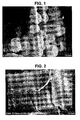
- FIG. 1 is a scanning electron micrograph (SEM) of the spherical cyclic olefin polymer prepared in Example 1.
- FIG. 2 is a scanning electron micrograph of the amorphous polymer prepared in Comparative Example 1.
- a cyclic olefin polymer refers to a polymer prepared from polymerization of cyclic olefin monomers or a cyclic olefin monomer and ethylene.
- the cyclic olefin polymer may be a polymer selected from the group consisting of a homopolymer prepared from norbornene based monomers, which are represented by Chemical Formula 1 below; a copolymer of different monomers, which are represented by Chemical Formula 1; and a copolymer prepared from a norbornene based monomer represented by Chemical Formula 1 and ethylene: where m is an integer of 0 to 4; each of R 1 , R 2 , R 3 and R 4 is selected from the group consisting of a C 1 -C 20 linear or branched alkyl, a C 2 -C 20 alkenyl or vinyl; a C 5 -C 12 cycloalkyl substituted by a C 1 -C 20 hydrocarbon or unsubstituted; a C 6 -C 20 aryl substituted by a C 1 -C 20 hydrocarbon or unsubstituted; a C 7 -C 15 aralkyl substituted by a C 1
- n is an integer of 0 to 10 and each of R 5 , R 6 and R 7 is selected from the group consisting of a hydrogen; a C 1 -C 20 linear or branched alkyl; a C 2 -C 20 alkenyl; a C 5 -C 12 cycloalkyl substituted by a C 1 -C 20 hydrocarbon or unsubstituted; a C 6 -C 20 aryl substituted by a C 1 -C 20 hydrocarbon or unsubstituted; a C 7 -C 15 aralkyl substituted by a C 1 -C 20 hydrocarbon or unsubstituted; and a C 3 -C 20 alkynyl.
- R 1 , R 2 , R 3 and R 4 are hydrogen, a halogen or a polar functional group
- R 1 and R 2 or R 3 and R 4 may be connected to form a C 1 -C 10 alkylidene group and R 1 or R 2 may be connected with R 3 or R 4 to form a C 4 -C 12 saturated or unsaturated cyclic group or a C 6 -C 17 aromatic cyclic compound.
- the method for preparing a cyclic olefin polymer by precipitating the polymer from a polymer solution according to the present invention may be identical with the conventional method, however, it may differ by using a non-solvent added to the polymer solution drop wise to precipitate the polymer slowly. Therefore, the present invention is not affected by the number of carbon atoms of the hydrocarbons of R 1 , R 2 , R 3 or R 4 or by the kind of aryl groups, as in the conventional method.
- a monomer in which at least one of R 1 , R 2 , R 3 and R 4 is selected from the group consisting of a C 1 -C 20 linear or branched alkyl; and a C 5 -C 12 cycloalkyl substituted by a C 1 -C 20 hydrocarbon or unsubstituted is present at a concentration of at least 5 mol%.
- a cyclic olefin polymer solution is prepared from a cyclic olefin monomer according to the conventional preparation method known in the related art. Then, the polymer is separated from the polymer solution by precipitation or other methods.
- polymerization is performed by dissolving monomers in a solvent, adding a catalyst and adjusting the temperature.
- polymerization methods There are a variety of polymerization methods depending on the kind of the solvent or the catalyst and the temperature.
- ROMP ring opening metathesis polymerization
- addition polymerization cationic polymerization
- HROMP ring opening metathesis polymerization followed by hydrogenation
- the present invention is not limited to these examples and any polymerization methods known in the related art may be applied.
- a transition metal catalyst such as a metallocene compound or a Ni- or Pd-compound may be used. These catalysts offer different polymerization characteristics and polymer structure depending on core metal, ligand and change in catalyst composition.
- a cyclic olefin polymer solution prepared in this manner may have any concentration as long as the polymer can be dissolved. But, a concentration of at least 5 wt% is preferable, considering the economic aspect. If the concentration is 80 wt% or above, the polymer may not be dissolved. Thus, it is recommended that the cyclic olefin polymer solution has a concentration of in a range from about 5 wt% to 80 wt%. In some embodiments, it may be preferable for the cyclic olefin polymer solution to have a concentration of olefin polymer in a range from 10 wt% to 60 wt%.
- the solvent used in preparation of the polymer solution may be selected from the group consisting of an aromatic compound including toluene, mixed xylene, o -, m - or p -xylene, ethylbenzene, chlorobenzene and benzene and a mixture thereof.
- the present invention is characterized in that a non-solvent is slowly added to the cyclic olefin polymer solution drop wise in order to separate the polymer from the polymer solution.
- the non-solvent refers to a material having a low solubility for the cyclic olefin polymer and being miscible with the solvent of the polymer solution.
- FIG. 1 is a scanning electron microscope of the spherical polymer particles prepared according to the present invention.
- the polymer prepared according to the present invention has a large bulk density and is spherical, the polymer slurry containing it can be transferred even with a small amount of a solvent or a non-solvent.
- a solvent or a non-solvent When using a conventional method at least 10 equivalents of a non-solvent have to be used when washing the polymer, however, when using the method described herein two to three equivalents are sufficient.
- the present invention is advantageous in drying the solvent and reducing packaging volume of the prepared polymer.
- the polymer prepared by the present invention is advantageous for mixing and compounding.
- the rate of adding a solvent to the cyclic olefin polymer solution is not important, the rate of adding a non-solvent to the diluted polymer is important. If the non-solvent is added too quickly to the diluted polymer solution, fibery, rather than spherical, particles tend to be formed. Even if spherical particles are formed, they tend to be so minute that they do not settle down in the solution, which makes filtering difficult.
- An adequate addition rate of the non-solvent is dependent upon the size of the reaction bath, addition method, amount of the total polymer solution, etc. For example, if the reaction bath is large, it is recommended to lower the addition rate because it takes time for the non-solvent to be dispersed in the polymer solution.
- the addition amount of the non-solvent used is in a range from 1 to 30 equivalents of the solvent in the polymer solution.
- the amount of non-solvent added may be in a range from about 2 to 20 equivalents of the solvent in the polymer solution to minimize loss of the product.
- the non-solvent may be selected from the group including, but not limited to acetone; an alcohol such as methanol, ethanol, propyl alcohol, isopropyl alcohol, etc.; an alkane such as hexane, cyclohexane, etc.; a mixture thereof; and its mixture with water.
- the temperature should not be too high or too low. If the temperature is too low, the polymer becomes less soluble and therefore more solvent has to be used. If the temperature is too high, a high-pressure precipitation bath has to be used because the solvent may boil.
- addition temperature of the non-solvent is preferably in a range from -30 °C to 150 °C, more preferably -5 °C to 110 °C.
- the precipitated cyclic olefin polymer may be easily separated by filtering, drying, etc.
- the filtering or drying condition is not particularly limited. It may be performed by the methods well known in the related art.
- the resultant cyclic olefin polymer has a spherical shape and a bulk density of at least 0.1 g/mL, preferably in a range from 0.2 to 0.5 g/mL.
- the obtained polymer contains less metal catalyst than when a polymer solution is added to a non-solvent drop wise or when a non-solvent is mixed with a polymer solution. It is because there is sufficient time for the metal catalyst to be released from the precipitate, as the precipitation takes place slowly.
- FIG. 1 is a scanning electron micrograph (5,000 X) of the polymer obtained in Example 1.
- the polymer slurry was filtered, washed with acetone and dried under reduced pressure at 80 °C to obtain 16.2 g of a white polymer (79.8 wt% of total added monomers).
- the dried polymer had a spherical shape, a bulk density of 0.25 g/mL and an average particle size of 2-4 ⁇ m.
- the palladium content was 20 ppm.
- the polymer slurry was filtered, washed with acetone and dried under reduced pressure at 80 °C to obtain 16.6 g of a white polymer (81.3 wt% of total added monomers).
- the dried polymer had a spherical shape, a bulk density of 0.34 g/mL and an average particle size of 10-20 ⁇ m.
- the palladium content was 24 ppm.
- FIG. 2 is a scanning electron micrograph (1,500 X) of the polymer prepared in Comparative Example 1.
- Comparative Example 1 The same process of Comparative Example 1 was applied, except for using acetone as non-solvent instead of ethanol, to obtain 16.2 g of a white 5-butylnorbornene/5-norbornene-2-carboxylic acid butyl ester copolymer (79.3 wt% of total added monomers).
- the obtained polymer had an irregular fluffy, fibery shape and a bulk density of 0.09 g/mL.
- the palladium content was 45 ppm.
- the polymer slurry washed with acetone and dried under reduced pressure at 80 °C to obtain 16.3 g of a white polymer (79.8 wt% of total added monomers).
- the dried polymer had a spherical shape and a bulk density of 0.17 g/mL. There were some fibery particles among spherical particles.
- the palladium content was 35 ppm.
- Reaction was performed for 18 hours while stirring to obtain a tricopolymer solution comprising 30 mol% of 5-butylnorbornene, 20 mol% of 5-norbornene-2-carboxylic acid butyl ester and 50 mol% of 5-norbornene-2-carboxylic acid methyl ester monomers. 287 g of toluene was added to dilute the solution. The copolymer had a molecular weight (M w ) of 175,000. The proportion of M w /M n was 2.13.
- 6,000 g of ethanol was added to a reactor at room temperature.
- 237 g of the tricopolymer solution prepared in Preparing Example 2 was added to a reactor.
- 247 g of the tricopolymer solution prepared in Preparing Example 2 was added to the reactor drop wise, while stirring the reactor at 250 rpm. Long fluffy polymer particles precipitated.
- the polymer slurry was filtered, washed with ethanol and dried under reduced pressure at 80 °C to obtain 38 g of a white polymer.
- the dried polymer had a spherical shape and a bulk density of 0.08.
- the palladium content was 50 ppm.
- Reaction was performed for 18 hours while stirring to obtain a tricopolymer solution comprising 30 mol% of 5-butylnorbornene, 20 mol% of 5-norbornene-2-carboxylic acid butyl ester and 50 mol% of 5-norbornene-2-carboxylic acid methyl ester monomers. 43.9 kg of toluene was added to dilute the solution.
- the polymer slurry was filtered, washed with acetone and dried under reduced pressure at 80 °C to obtain 23 kg of a white polymer.
- the dried polymer had a spherical shape, a bulk density of 0.42 g/mL and an average particle size in a range from 0.5-0.8 ⁇ m.
- the palladium content was 25 ppm.
- the copolymer had a molecular weight (M w ) of 147,000. The proportion of M w /M n was 2.19.
- Reaction was performed for 18 hours while stirring to obtain a tricopolymer solution comprising 30 mol% of 5-butylnorbornene, 20 mol% of 5-norbornene-2-carboxylic acid butyl ester and 50 mol% of 5-norbornene-2-carboxylic acid methyl ester monomers. 287 g of toluene was added to dilute the solution.
- the polymer slurry was filtered, washed with acetone and dried under reduced pressure at 80 °C.
- the dried polymer had a spherical shape and a bulk density of 0.39 g/mL.
- the palladium content was 25 ppm.
- the copolymer had a molecular weight (M w ) of 179,000. The proportion of M w /M n was 2.30.
- the polymer slurry was filtered, washed with acetone and dried under reduced pressure at 60 °C.
- the dried polymer had a spherical shape and a bulk density of 0.38 g/mL.
- the palladium content was 20 ppm.
- the copolymer had a molecular weight (M w ) of 230,000. The proportion of M w /M n was 2.50.
- the present invention provides a spherical cyclic olefin polymer having a high bulk density by adding a non-solvent to a cyclic olefin polymer solution drop wise, so that precipitation of the cyclic olefin polymer takes place slowly.
Landscapes
- Chemical & Material Sciences (AREA)
- Health & Medical Sciences (AREA)
- Chemical Kinetics & Catalysis (AREA)
- Medicinal Chemistry (AREA)
- Polymers & Plastics (AREA)
- Organic Chemistry (AREA)
- Addition Polymer Or Copolymer, Post-Treatments, Or Chemical Modifications (AREA)
- Polyoxymethylene Polymers And Polymers With Carbon-To-Carbon Bonds (AREA)
Claims (8)
- Verfahren zur Herstellung eines Zykloolefinpolymeren der Schüttdichte 0,1 - 0,6 g/mL umfassend die folgenden Schritte:a) Polymerisierung von zyklischen Olefinmonomeren oder von einem zyklischen Olefinmonomer mit Ethylen zur Herstellung einer Zykloolefinpolymerlösung;b) Tropfenweise Zugabe eines Nicht-Lösungsmittels zu der Zykloolefinpolymerlösung zur Ausfällung eines Zykloolefinpolymers bei einer Zugaberate von 2000 kg/hr oder weniger pro Gesamtmenge der Polymerlösung (kg); undc) Filtrieren und Trocknen des ausgefällten Zykloolefinpolymers.
- Verfahren zur Herstellung eines Zykloolefinpolymers nach Anspruch 1, wobei das Zykloolefinpolymer ausgewählt ist aus der Gruppe aus einem Homopolymer, das aus Monomeren auf Grundlage von Norbornen, welche durch die chemische Formel 1 unten wiedergegeben werden, hergestellt wurde; einem Copolymer aus verschiedenen Monomeren, die durch die chemische Formel 1 wiedergegeben werden; und einem Copolymer, das aus einem Monomer auf Basis von Norbornen, das durch die chemische Formel 1 wiedergegeben wird, und Ethylen hergestellt ist:

m eine ganze Zahl von 0 bis 4 ist;
R1, R2, R3 und R4 jeweils aus einem C1-C20 linearen oder verzweigten Alkyl, einem C2-C20 Alkenyl oder Vinyl; einem C5-C12 Zykloalkyl, das unsubstituiert oder von einem C1-C20 Kohlenwasserstoff substituiert ist; einem C6-C20 Aryl, das unsubstituiert oder von einem C1-C20 Kohlenwasserstoff substituiert ist; einem C7-C15 Aralkyl, das unsubstituiert oder von einem C1-C20 Kohlenwasserstoff substituiert ist, einem C3-C20 Alkinyl; und/oder einer polaren funktionellen Gruppe ausgewählt aus -(CH2)nC(O)OR5, -(CH2)nOC(O)R5, - CH2)nOC(O)OR5, -(CH2)nC(O)R5, -(CH2)nOR5, -(CH2O)n-OR5, -(CH2)nC(O)-O-C(O)R5, - (CH2)nC(O)NH2, -(CH2)nC(O)NHR5, -(CH2)nC(O)NR5R6, -(CH2)nNH2, -(CH2)nNHR5, - (CH2)nNR5R6, -(CH2)nOC(O)NH2, -(CH2)nOC(O)NHR5, -(CH2)nOC(O)NR5R6, -(CH2)nC(O)Cl, - (CH2)nSR5, -(CH2)nSSR5, -(CH2)nSO2R5, -(CH2)nSO2R5, -(CH2)nOSO2R5, -(CH2)nSO3R5, - (CH2)nOSO3R5, -(CH2)nBR5R6, -(CH2)nB(OR5)(OR6), -(CH2)nB(R5)(OR6), -(CH2)nN=C=S, - (CH2)nNCO, -(CH2)nN(R5)C(=O)R6, -(CH2)nN(R5)C(=O)(OR6), -(CH2)nCN, -(CH2)nNO2,
und (CH2)nP(=O)(R5)(OR6) ausgewählt ist, wobei n eine ganze Zahl von 0 bis 10 und R5, R6 und R7 jeweils aus der folgenden Gruppe: Wasserstoff, einem C1-C20 linearen oder verzweigten Alkyl, einem C2-C20 Alkenyl, einem C5-C12 Zykloalkyl, das unsubstituiert ist oder mit einem C1-C20 Kohlenwasserstoff substituiert ist, einem C6-C20 Aryl, das unsubstituiert ist oder von einem C1-C20 Kohlenwasserstoff substituiert ist, ein C7-C15 Aralkyl, das unsubstituiert ist oder von einem C1-C20 Kohlenwasserstoff substituiert ist, und einem C3-C20 Alkenyl ausgewählt ist; und
sofern R1, R2, R3 und R4 nicht Wasserstoff, Halogen oder eine polare funktionelle Gruppe sind, R1 und R2 oder R3 und R4 zur Bildung einer C1-C10-Alkylidengruppe verbunden sein können und R1 oder R2 mit R3 oder R4 zur Bildung einer gesättigten oder ungesättigten C4-C12-zyklischen Gruppe oder einer aromatischen C6-C17-zyklischen Gruppe verbunden sein kann. - Verfahren zur Herstellung eines Zykloolefinpolymers nach Anspruch 2, wobei das Zykloolefinpolymer wenigstens 5 mol-% des Monomeren enthält, bei dem wenigstens ein R1, R2, R3 und R4 in der chemischen Formel 1 ein lineares oder verzweigtes C1-C20 Alkyl oder ein unsubstituiertes oder mit einem C1-C20 Kohlenwasserstoff substituiertes C5-C12 Zykloalkyl ist.
- Verfahren zur Herstellung eines Zykloolefinpolymers nach Anspruch 1, wobei die Zykloolefinpolymerlösung 5-80 Gew.-% eines Polymeren enthält.
- Verfahren zur Herstellung eines Zykloolefinpolymers nach Anspruch 1, wobei die Menge der Zugabe des Nichtlösungsmittels im Bereich von 1 bis 30 Äquivalenten des Lösungsmittels der Polymerlösung beträgt.
- Verfahren zur Herstellung eines Zykloolefinpolymers nach Anspruch 1, wobei das Nichtlösungsmittel aus der Gruppe aus einem Alkan, einer Etherverbindung und Gemischen hiervon ausgewählt ist.
- Verfahren zur Herstellung eines Zykloolefinpolymers nach Anspruch 1, wobei der Schritt b) bei einer Temperatur im Bereich von -30°C bis 150°C ausgeführt wird.
- Zykloolefinpolymer mit einer Schüttdichte von 0,1 bis 0,6 g/mL, hergestellt nach einem Verfahren gemäß den Ansprüchen 1 bis 4, 6 und 7.
Applications Claiming Priority (2)
| Application Number | Priority Date | Filing Date | Title |
|---|---|---|---|
| KR1020040005716A KR100590474B1 (ko) | 2004-01-29 | 2004-01-29 | 벌크 밀도가 높은 고리형 올레핀 고분자의 제조 방법 및이에 의하여 제조된 고리형 올레핀 고분자 |
| PCT/KR2004/003445 WO2005073261A1 (en) | 2004-01-29 | 2004-12-24 | Method for preparing cyclic olefin polymer having high bulk density and cyclic olefin polymer prepared thereby |
Publications (2)
| Publication Number | Publication Date |
|---|---|
| EP1725591A1 EP1725591A1 (de) | 2006-11-29 |
| EP1725591B1 true EP1725591B1 (de) | 2008-12-17 |
Family
ID=36383820
Family Applications (1)
| Application Number | Title | Priority Date | Filing Date |
|---|---|---|---|
| EP04808574A Expired - Lifetime EP1725591B1 (de) | 2004-01-29 | 2004-12-24 | Verfahren zur herstellung von cycloolefinpolymeren mit hoher schüttdichte und danach hergestelltes cycloolefinpolymer |
Country Status (9)
| Country | Link |
|---|---|
| US (1) | US7202312B2 (de) |
| EP (1) | EP1725591B1 (de) |
| JP (1) | JP4459908B2 (de) |
| KR (1) | KR100590474B1 (de) |
| CN (1) | CN1307216C (de) |
| AT (1) | ATE417870T1 (de) |
| DE (1) | DE602004018545D1 (de) |
| TW (1) | TWI304072B (de) |
| WO (1) | WO2005073261A1 (de) |
Families Citing this family (7)
| Publication number | Priority date | Publication date | Assignee | Title |
|---|---|---|---|---|
| KR100837870B1 (ko) * | 2005-11-30 | 2008-06-13 | 주식회사 엘지화학 | 벌크 밀도가 높은 고리형 올레핀 고분자의 제조방법 및이에 의하여 제조된 고리형 올레핀 고분자 |
| KR20080051399A (ko) * | 2006-12-05 | 2008-06-11 | 주식회사 엘지화학 | 중합체 회수 장치 및 중합체 회수 방법 |
| CN103140508A (zh) * | 2010-09-30 | 2013-06-05 | 陶氏环球技术有限责任公司 | 从溴化反应溶液回收溴化苯乙烯-丁二烯共聚物的方法 |
| US9598570B2 (en) | 2014-12-08 | 2017-03-21 | Lg Chem, Ltd. | Composition for optical film and optical film prepared by using the same |
| KR101761393B1 (ko) * | 2014-12-08 | 2017-07-25 | 주식회사 엘지화학 | 광학 필름용 조성물 및 이로 제조되는 광학 필름 |
| MX2019012272A (es) | 2017-04-12 | 2020-07-28 | Urigen Pharmaceuticals Inc | Artículo de fabricación que comprende anestésico local, regulador de ph y glicosaminoglicano en jeringa con estabilidad mejorada. |
| CN118791670A (zh) * | 2024-07-05 | 2024-10-18 | 浙江大学 | 一种环烯烃共聚物脱溶方法 |
Family Cites Families (8)
| Publication number | Priority date | Publication date | Assignee | Title |
|---|---|---|---|---|
| US4414386A (en) | 1982-05-10 | 1983-11-08 | The B. F. Goodrich Company | Precipitation of polycycloolefins having high bulk density |
| US4400501A (en) | 1982-05-10 | 1983-08-23 | The B. F. Goodrich Company | Anhydrous precipitation of polycycloolefins |
| JPH0655773B2 (ja) * | 1986-03-17 | 1994-07-27 | 三井石油化学工業株式会社 | 環状オレフイン系ランダム共重合体の製法 |
| DE4304311C2 (de) * | 1993-02-12 | 1998-08-06 | Hoechst Ag | Cycloolefin-Copolymere für Extrusions- und Spritzgußartikel und Verfahren zur Herstellung eines Cycloolefin-Copolymers |
| US6232417B1 (en) * | 1996-03-07 | 2001-05-15 | The B. F. Goodrich Company | Photoresist compositions comprising polycyclic polymers with acid labile pendant groups |
| DE19654076A1 (de) * | 1996-12-23 | 1998-06-25 | Bayer Ag | Transparente Werkstoffe aus hydrierten Produkten von ringgeöffneten Metathesepolymeren mit polaren Substituenten |
| JPH11158225A (ja) * | 1997-11-26 | 1999-06-15 | Mitsubishi Chemical Corp | 環状オレフィン系重合体の精製方法 |
| EP1034196B1 (de) | 1998-10-05 | 2005-01-12 | Promerus LLC | Katalysator und verfahren zur polymerisation von cycloolefinen |
-
2004
- 2004-01-29 KR KR1020040005716A patent/KR100590474B1/ko not_active Expired - Lifetime
- 2004-12-24 CN CNB2004800014507A patent/CN1307216C/zh not_active Expired - Lifetime
- 2004-12-24 EP EP04808574A patent/EP1725591B1/de not_active Expired - Lifetime
- 2004-12-24 AT AT04808574T patent/ATE417870T1/de not_active IP Right Cessation
- 2004-12-24 WO PCT/KR2004/003445 patent/WO2005073261A1/en not_active Ceased
- 2004-12-24 JP JP2005518780A patent/JP4459908B2/ja not_active Expired - Fee Related
- 2004-12-24 DE DE602004018545T patent/DE602004018545D1/de not_active Expired - Lifetime
- 2004-12-31 TW TW093141922A patent/TWI304072B/zh not_active IP Right Cessation
-
2005
- 2005-01-27 US US11/050,833 patent/US7202312B2/en not_active Expired - Lifetime
Also Published As
| Publication number | Publication date |
|---|---|
| KR100590474B1 (ko) | 2006-06-19 |
| CN1307216C (zh) | 2007-03-28 |
| WO2005073261A1 (en) | 2005-08-11 |
| TWI304072B (en) | 2008-12-11 |
| EP1725591A1 (de) | 2006-11-29 |
| DE602004018545D1 (de) | 2009-01-29 |
| JP4459908B2 (ja) | 2010-04-28 |
| TW200530288A (en) | 2005-09-16 |
| US20050171258A1 (en) | 2005-08-04 |
| ATE417870T1 (de) | 2009-01-15 |
| CN1705686A (zh) | 2005-12-07 |
| KR20050078321A (ko) | 2005-08-05 |
| JP2006514156A (ja) | 2006-04-27 |
| US7202312B2 (en) | 2007-04-10 |
Similar Documents
| Publication | Publication Date | Title |
|---|---|---|
| JP4242833B2 (ja) | エステル基又はアセチル基を含むノルボルネン系付加重合体の製造方法 | |
| JPH04202404A (ja) | 開環重合体水素化物の製造方法 | |
| KR101157275B1 (ko) | 환상 올레핀계 부가 중합체의 제조 방법 | |
| JP2010059428A (ja) | 極性官能基を含む環状オレフィン重合体の重合方法および環状オレフィン重合体を用いる電子装置 | |
| EP2484443B1 (de) | Geträgerter hybrid-metallocen-katalysator mit drei verbindungen sowie herstellungsverfahren dafür | |
| JP2003534415A (ja) | プロピレンポリマーとその製造法 | |
| CN101547940B (zh) | 通过沉淀聚合制备聚合物的方法 | |
| US7202312B2 (en) | Method for preparing cyclic olefin polymer having high bulk density and cyclic olefin polymer prepared thereby | |
| JP4844705B2 (ja) | 環状オレフィン付加(共)重合体およびその製造方法 | |
| KR100742070B1 (ko) | 환상 올레핀계 부가 중합체의 제조 방법 | |
| JPH02227424A (ja) | 透明性重合体の製造方法 | |
| KR100837869B1 (ko) | 벌크 밀도가 높은 고리형 올레핀 고분자의 제조방법 및이에 의하여 제조된 고리형 올레핀 고분자 | |
| CN101613437A (zh) | 带极性基团的环烯烃共聚物及其制备方法 | |
| KR100477943B1 (ko) | 극성 작용기를 포함하는 고리형 올레핀 중합 방법 | |
| KR100837870B1 (ko) | 벌크 밀도가 높은 고리형 올레핀 고분자의 제조방법 및이에 의하여 제조된 고리형 올레핀 고분자 | |
| KR20080026944A (ko) | 극성 작용기를 갖는 고리형 올레핀계 고분자의 제조방법 및이에 의하여 제조된 고리형 올레핀계 고분자 | |
| JPH0625213B2 (ja) | 水添ジシクロペンタジエン−エチレン共重合体の製造方法 | |
| JP2000038414A (ja) | 水添α−オレフィン−ジシクロペンタジエン系共重合体からなる成形材料 | |
| KR101094135B1 (ko) | 개환중합된 테트라시클로도데센 유도체의 수소화 방법 | |
| KR20080044412A (ko) | 벌크 밀도가 높은 고리형 올레핀계 고분자의 제조방법 및이에 의하여 제조된 고리형 올레핀계 고분자 | |
| KR20250127896A (ko) | 환형올레핀계 단량체의 개환 복분해 중합용 촉매 조성물 및 이를 이용한 환형올레핀계 중합체의 제조방법 | |
| JPH04132731A (ja) | メタセシス開環重合体の製造方法 | |
| JPH03172312A (ja) | 環状オレフィン系ランダム共重合体の製造方法 |
Legal Events
| Date | Code | Title | Description |
|---|---|---|---|
| PUAI | Public reference made under article 153(3) epc to a published international application that has entered the european phase |
Free format text: ORIGINAL CODE: 0009012 |
|
| 17P | Request for examination filed |
Effective date: 20050506 |
|
| AK | Designated contracting states |
Kind code of ref document: A1 Designated state(s): AT BE BG CH CY CZ DE DK EE ES FI FR GB GR HU IE IS IT LI LT LU MC NL PL PT RO SE SI SK TR |
|
| 17Q | First examination report despatched |
Effective date: 20070330 |
|
| DAX | Request for extension of the european patent (deleted) | ||
| GRAP | Despatch of communication of intention to grant a patent |
Free format text: ORIGINAL CODE: EPIDOSNIGR1 |
|
| GRAS | Grant fee paid |
Free format text: ORIGINAL CODE: EPIDOSNIGR3 |
|
| GRAA | (expected) grant |
Free format text: ORIGINAL CODE: 0009210 |
|
| AK | Designated contracting states |
Kind code of ref document: B1 Designated state(s): AT BE BG CH CY CZ DE DK EE ES FI FR GB GR HU IE IS IT LI LT LU MC NL PL PT RO SE SI SK TR |
|
| REG | Reference to a national code |
Ref country code: GB Ref legal event code: FG4D |
|
| REG | Reference to a national code |
Ref country code: CH Ref legal event code: EP |
|
| REG | Reference to a national code |
Ref country code: IE Ref legal event code: FG4D |
|
| REF | Corresponds to: |
Ref document number: 602004018545 Country of ref document: DE Date of ref document: 20090129 Kind code of ref document: P |
|
| PG25 | Lapsed in a contracting state [announced via postgrant information from national office to epo] |
Ref country code: LT Free format text: LAPSE BECAUSE OF FAILURE TO SUBMIT A TRANSLATION OF THE DESCRIPTION OR TO PAY THE FEE WITHIN THE PRESCRIBED TIME-LIMIT Effective date: 20081217 |
|
| PG25 | Lapsed in a contracting state [announced via postgrant information from national office to epo] |
Ref country code: FI Free format text: LAPSE BECAUSE OF FAILURE TO SUBMIT A TRANSLATION OF THE DESCRIPTION OR TO PAY THE FEE WITHIN THE PRESCRIBED TIME-LIMIT Effective date: 20081217 Ref country code: SI Free format text: LAPSE BECAUSE OF FAILURE TO SUBMIT A TRANSLATION OF THE DESCRIPTION OR TO PAY THE FEE WITHIN THE PRESCRIBED TIME-LIMIT Effective date: 20081217 Ref country code: PL Free format text: LAPSE BECAUSE OF FAILURE TO SUBMIT A TRANSLATION OF THE DESCRIPTION OR TO PAY THE FEE WITHIN THE PRESCRIBED TIME-LIMIT Effective date: 20081217 Ref country code: NL Free format text: LAPSE BECAUSE OF FAILURE TO SUBMIT A TRANSLATION OF THE DESCRIPTION OR TO PAY THE FEE WITHIN THE PRESCRIBED TIME-LIMIT Effective date: 20081217 |
|
| NLV1 | Nl: lapsed or annulled due to failure to fulfill the requirements of art. 29p and 29m of the patents act | ||
| PG25 | Lapsed in a contracting state [announced via postgrant information from national office to epo] |
Ref country code: MC Free format text: LAPSE BECAUSE OF NON-PAYMENT OF DUE FEES Effective date: 20081231 Ref country code: RO Free format text: LAPSE BECAUSE OF FAILURE TO SUBMIT A TRANSLATION OF THE DESCRIPTION OR TO PAY THE FEE WITHIN THE PRESCRIBED TIME-LIMIT Effective date: 20081217 Ref country code: BE Free format text: LAPSE BECAUSE OF FAILURE TO SUBMIT A TRANSLATION OF THE DESCRIPTION OR TO PAY THE FEE WITHIN THE PRESCRIBED TIME-LIMIT Effective date: 20081217 Ref country code: ES Free format text: LAPSE BECAUSE OF FAILURE TO SUBMIT A TRANSLATION OF THE DESCRIPTION OR TO PAY THE FEE WITHIN THE PRESCRIBED TIME-LIMIT Effective date: 20090328 Ref country code: BG Free format text: LAPSE BECAUSE OF FAILURE TO SUBMIT A TRANSLATION OF THE DESCRIPTION OR TO PAY THE FEE WITHIN THE PRESCRIBED TIME-LIMIT Effective date: 20090317 Ref country code: EE Free format text: LAPSE BECAUSE OF FAILURE TO SUBMIT A TRANSLATION OF THE DESCRIPTION OR TO PAY THE FEE WITHIN THE PRESCRIBED TIME-LIMIT Effective date: 20081217 |
|
| REG | Reference to a national code |
Ref country code: CH Ref legal event code: PL |
|
| PG25 | Lapsed in a contracting state [announced via postgrant information from national office to epo] |
Ref country code: CZ Free format text: LAPSE BECAUSE OF FAILURE TO SUBMIT A TRANSLATION OF THE DESCRIPTION OR TO PAY THE FEE WITHIN THE PRESCRIBED TIME-LIMIT Effective date: 20081217 Ref country code: IS Free format text: LAPSE BECAUSE OF FAILURE TO SUBMIT A TRANSLATION OF THE DESCRIPTION OR TO PAY THE FEE WITHIN THE PRESCRIBED TIME-LIMIT Effective date: 20090417 Ref country code: SE Free format text: LAPSE BECAUSE OF FAILURE TO SUBMIT A TRANSLATION OF THE DESCRIPTION OR TO PAY THE FEE WITHIN THE PRESCRIBED TIME-LIMIT Effective date: 20090317 Ref country code: AT Free format text: LAPSE BECAUSE OF FAILURE TO SUBMIT A TRANSLATION OF THE DESCRIPTION OR TO PAY THE FEE WITHIN THE PRESCRIBED TIME-LIMIT Effective date: 20081217 Ref country code: PT Free format text: LAPSE BECAUSE OF FAILURE TO SUBMIT A TRANSLATION OF THE DESCRIPTION OR TO PAY THE FEE WITHIN THE PRESCRIBED TIME-LIMIT Effective date: 20090518 |
|
| REG | Reference to a national code |
Ref country code: IE Ref legal event code: MM4A |
|
| PG25 | Lapsed in a contracting state [announced via postgrant information from national office to epo] |
Ref country code: SK Free format text: LAPSE BECAUSE OF FAILURE TO SUBMIT A TRANSLATION OF THE DESCRIPTION OR TO PAY THE FEE WITHIN THE PRESCRIBED TIME-LIMIT Effective date: 20081217 |
|
| PLBE | No opposition filed within time limit |
Free format text: ORIGINAL CODE: 0009261 |
|
| STAA | Information on the status of an ep patent application or granted ep patent |
Free format text: STATUS: NO OPPOSITION FILED WITHIN TIME LIMIT |
|
| PG25 | Lapsed in a contracting state [announced via postgrant information from national office to epo] |
Ref country code: CH Free format text: LAPSE BECAUSE OF NON-PAYMENT OF DUE FEES Effective date: 20081231 Ref country code: DK Free format text: LAPSE BECAUSE OF FAILURE TO SUBMIT A TRANSLATION OF THE DESCRIPTION OR TO PAY THE FEE WITHIN THE PRESCRIBED TIME-LIMIT Effective date: 20081217 Ref country code: IE Free format text: LAPSE BECAUSE OF NON-PAYMENT OF DUE FEES Effective date: 20081224 Ref country code: LI Free format text: LAPSE BECAUSE OF NON-PAYMENT OF DUE FEES Effective date: 20081231 |
|
| 26N | No opposition filed |
Effective date: 20090918 |
|
| GBPC | Gb: european patent ceased through non-payment of renewal fee |
Effective date: 20090317 |
|
| PG25 | Lapsed in a contracting state [announced via postgrant information from national office to epo] |
Ref country code: FR Free format text: LAPSE BECAUSE OF NON-PAYMENT OF DUE FEES Effective date: 20090217 Ref country code: GB Free format text: LAPSE BECAUSE OF NON-PAYMENT OF DUE FEES Effective date: 20090317 |
|
| PG25 | Lapsed in a contracting state [announced via postgrant information from national office to epo] |
Ref country code: LU Free format text: LAPSE BECAUSE OF NON-PAYMENT OF DUE FEES Effective date: 20081224 Ref country code: HU Free format text: LAPSE BECAUSE OF FAILURE TO SUBMIT A TRANSLATION OF THE DESCRIPTION OR TO PAY THE FEE WITHIN THE PRESCRIBED TIME-LIMIT Effective date: 20090618 Ref country code: CY Free format text: LAPSE BECAUSE OF FAILURE TO SUBMIT A TRANSLATION OF THE DESCRIPTION OR TO PAY THE FEE WITHIN THE PRESCRIBED TIME-LIMIT Effective date: 20081217 |
|
| PG25 | Lapsed in a contracting state [announced via postgrant information from national office to epo] |
Ref country code: TR Free format text: LAPSE BECAUSE OF FAILURE TO SUBMIT A TRANSLATION OF THE DESCRIPTION OR TO PAY THE FEE WITHIN THE PRESCRIBED TIME-LIMIT Effective date: 20081217 |
|
| PG25 | Lapsed in a contracting state [announced via postgrant information from national office to epo] |
Ref country code: GR Free format text: LAPSE BECAUSE OF FAILURE TO SUBMIT A TRANSLATION OF THE DESCRIPTION OR TO PAY THE FEE WITHIN THE PRESCRIBED TIME-LIMIT Effective date: 20090318 |
|
| REG | Reference to a national code |
Ref country code: FR Ref legal event code: ST Effective date: 20111202 |
|
| PG25 | Lapsed in a contracting state [announced via postgrant information from national office to epo] |
Ref country code: IT Free format text: LAPSE BECAUSE OF FAILURE TO SUBMIT A TRANSLATION OF THE DESCRIPTION OR TO PAY THE FEE WITHIN THE PRESCRIBED TIME-LIMIT Effective date: 20081217 |
|
| PGFP | Annual fee paid to national office [announced via postgrant information from national office to epo] |
Ref country code: DE Payment date: 20231120 Year of fee payment: 20 |
|
| REG | Reference to a national code |
Ref country code: DE Ref legal event code: R071 Ref document number: 602004018545 Country of ref document: DE |