EP1702631A2 - Polyolefin-Nähfäden mit verbesserter Haltbarkeit - Google Patents
Polyolefin-Nähfäden mit verbesserter Haltbarkeit Download PDFInfo
- Publication number
- EP1702631A2 EP1702631A2 EP06005364A EP06005364A EP1702631A2 EP 1702631 A2 EP1702631 A2 EP 1702631A2 EP 06005364 A EP06005364 A EP 06005364A EP 06005364 A EP06005364 A EP 06005364A EP 1702631 A2 EP1702631 A2 EP 1702631A2
- Authority
- EP
- European Patent Office
- Prior art keywords
- suture
- polyolefin
- thiodipropionate
- sutures
- weight
- Prior art date
- Legal status (The legal status is an assumption and is not a legal conclusion. Google has not performed a legal analysis and makes no representation as to the accuracy of the status listed.)
- Granted
Links
Images


Classifications
-
- A—HUMAN NECESSITIES
- A61—MEDICAL OR VETERINARY SCIENCE; HYGIENE
- A61L—METHODS OR APPARATUS FOR STERILISING MATERIALS OR OBJECTS IN GENERAL; DISINFECTION, STERILISATION OR DEODORISATION OF AIR; CHEMICAL ASPECTS OF BANDAGES, DRESSINGS, ABSORBENT PADS OR SURGICAL ARTICLES; MATERIALS FOR BANDAGES, DRESSINGS, ABSORBENT PADS OR SURGICAL ARTICLES
- A61L17/00—Materials for surgical sutures or for ligaturing blood vessels ; Materials for prostheses or catheters
- A61L17/04—Non-resorbable materials
Definitions
- the present disclosure relates to surgical sutures, and particularly to a polyolefin suture having improved durability and fray resisting characteristics.
- Polyolefin sutures are known in the art. Such sutures are non-absorbable and generally include polypropylene or polymeric combinations of ethylene and propylene.
- the polymeric components of the polyolefin sutures are generally melt spun to produce filaments for use in fabricating the surgical suture strands.
- Polypropylene sutures can be advantageously produced as monofilament sutures.
- Polypropylene monofilament sutures are known to exhibit a limited amount of fraying as the suture passes over itself, e.g., when tying knots. Polypropylene sutures have thus become the preferred suture for cardiovascular and vascular surgery.
- compositions containing a polyolefin and a fray reducing amount of a thiodipropionate of the formula R-OOCCH 2 CH 2 SCH 2 CH 2 COO-R, where R is a C 13 or greater alkyl group.
- the compositions optionally include a fatty acid diester, a synthetic wax and a dye.
- Methods for producing sutures from such compositions include the steps of extruding a composition containing a polyolefin thiodipropionate and, optionally, a fatty acid diester, a synthetic wax and a dye.
- Sutures in accordance with the present disclosure include a polyolefin in combination with a fray reducing amount of a thiodipropionate.
- the sutures of the present disclosure may also contain a fray reducing amount of a fatty acid diester, a synthetic wax, or both.
- any suitable polyolefin known in the art may be used in producing a suture in accordance with their disclosure.
- Polyolefins which may be utilized include, for example, polyethylene, polypropylene and copolymers of polyethylene and polypropylene. Blends of polyolefins, (e.g. blends of polyethylene and polypropylene) may also be used.
- polypropylene which can be isotactic polypropylene or a mixture of isotactic and syndiotactic or atactic polypropylene, is used to form the suture. Crystalline polypropylenes of from about 150,000 to about 500,000 average molecular weight (Mw) can be especially useful.
- Suitable isotactic polypropylene resins include those possessing a weight average molecular weight (Mw) of from about 200,000 to about 350,000, a number average molecular weight (Mn) of from about 50,000 to about 180,000, and a calculated dispersity (Mw/Mn) of from about 2.0 to about 4.0.
- the isotactic polypropylene resins can advantageously possess a melt flow index in g/10 min of from about 2 to about 6 and typically from about 3.5 to about 4.5. Isotactic polypropylene resins are readily available from numerous commercial sources.
- Thiodipropionates suitable for use herein include a propanoic ester backbone, in which the functional side chains are extended with aliphatic groups in place of a hydrogen atom.
- the general molecular structure of particularly useful thiodipropionates is shown below: R-OOCCH 2 CH 2 SCH 2 CH 2 COO-R where R is a C 13 or greater alkyl group.
- the thiodipropionate used to form the polyolefin suture as described herein is a thiodipropionate such as 3,3'-thiobis-,dioctadecyl ester propanoic acid, also known as distearylthiodipropionate (DSTDP), or 3,3'-thiobis-,ditridecyl ester propanoic acid, also known as ditridecylthiodipropionate (DTTDP), and combinations thereof.
- DSTDP distearylthiodipropionate
- DTTDP ditridecylthiodipropionate
- 3,3'-thiobis-, didodecyl ester propanoic acid also known as dilaurylthiodipropionate (DLTDP)
- DLTDP dilaurylthiodipropionate
- the thiodipropionate used to form the polyolefin suture can be a distearylthiodipropionate such as CARSTAB® DSTDP or MORSTILLE® DSTDP, both sold by Struktol (Stow, Ohio).
- thiodipropionates such as DSTDP have been previously used with polyolefins as antioxidants
- the thiodipropionates are utilized to enhance the fray resisting characteristics of sutures.
- the thiodipropionates when mixed with a polyolefin at appropriate concentrations, undergo exudation, i.e., they bloom to the outer surfaces of the polyolefin suture. Once exuded to the outer surfaces of the suture, the thiodipropionates can act as a lubricant and significantly improve the fray resisting characteristics of the polyolefin suture during the suturing process.
- the thiodipropionate can be present in the suture in amounts ranging from about 0.01 % to about 1.5% by weight of the suture, typically from about 0.1 % to about 1.0% by weight of the suture. In particularly useful embodiments, the thiodipropionate can represent from about 0.2% to about 0.6% by weight of the suture.
- a fray reducing amount of a fatty acid diester may be added to the suture of the present disclosure.
- Any fatty acid diester known to one skilled in the art can be used in forming the suture described in the present disclosure.
- Suitable fatty acids include C 10 - C 26 fatty acids such as stearic, lauric, palmitic, myristic, arachidic, behenic, and similar acids.
- the fatty acid diester is a diester of a polyalkylene glycol.
- Suitable polyalkylene glycols include C 2 - C 6 alklyene glycols, such as polyethylene glycol and polypropylene glycol.
- the fatty acid diester can be a fatty acid diester of polyethylene glycol such as, for example, polyethylene glycol distearate (PEG distearate).
- PEG distearate polyethylene glycol distearate
- a suitable PEG distearate for use in the method described herein has a melting point of from about 35° C. to about 37° C., an acid value of about 5.0, an iodine value of about 0.41, and a saponification value of about 117.0.
- Suitable PEG distearates are readily available from numerous commercial sources.
- the fatty acid diester can be present in the suture in amounts ranging from about 0.01% to about 5.0% by weight of the suture. In some embodiments, the fatty acid diester can represent from about 0.1 % to about 2.0% by weight of the suture. In particularly useful embodiments, the fatty acid diester can represent from about 0.2% to about 1.5% by weight of the suture.
- Sutures produced in accordance with the present disclosure may also have a synthetic wax included therein.
- Suitable synthetic waxes for use in the present disclosure include polyethylene wax, ethylene copolymer wax, and halogenated hydrocarbon waxes.
- the synthetic wax can be a polyethylene wax, such as a low molecular weight polyethylene wax.
- polyethylene wax refers to both ethylene homopolymers and copolymers of ethylene with ⁇ -olefins having a chain length of C 3 -C 18 , each having a melt viscosity measured at 140° C. of from about 5 to about 20000 mPa ⁇ sec.
- the polyethylene wax is a low molecular weight polyethylene wax having a weight average molecular weight in the range of from about 500 to about 4000 Daltons, typically from about 1000 to about 3000 Daltons, more typically about 1500 to about 2500 Daltons.
- the polyethylene wax can also be a low density polyethylene, a linear low density polyethylene, a nonlinear low density polyethylene, or a high density polyethylene.
- LDPE low density polyethylene, usually branched, having a density from about 0.91 to about 0.94 g/cc
- HDPE high density polyethylene having a density above about 0.95 g/cc
- LLDPE linear low density polyethylene having a density of about 0.91 to about 0.95 g/cc. Suitable polyethylene waxes are readily available from numerous commercial sources.
- the synthetic wax such as a polyethylene wax
- the synthetic wax can be present in the suture in amounts ranging from about 0.01% to about 2.0% by weight of the suture.
- the synthetic wax can represent from about 0.1 % to about 1.5% by weight of the suture.
- the synthetic wax can represent from about 0.2% to about 1.0% by weight of the suture.
- a synergistic effect may be observed in sutures containing a fray reducing amount of both a thiodipropionate and a fatty acid diester.
- Such sutures may be found to possess significantly improved fray resisting characteristics compared to either additive alone.
- the addition of a synthetic wax such as a polyethylene wax may further reduce the fray resistance characteristics of the resulting suture.
- pigment in the composition of the present disclosure, thereby providing color to the sutures of the present disclosure.
- the term “pigment” herein is used interchangeably with the term “dye” and refers to such compounds or particles that absorb visible and/or infrared light. Suitable pigments for dyeing polypropylene filaments are known to those skilled in the art. Such pigments include, but are not limited to, carbon black, bone black, copper phthalocyanine dyes, D&C Green No. 6, and D&C Violet No. 2 as described in the handbook of U.S. Colorants for Food, Drugs and Cosmetics by Daniel M. Marrion (1979 ).
- detectable moieties include, but are not limited to, fluorescers, bioluminescent and chemiluminescent molecules, and the like.
- sutures in accordance with the present disclosure may be dyed by adding up to about 0.1 % to about 1.0 % (by weight of the final suture composition) dye, typically about 0.2 % to about 0.6 % dye to the resin composition prior to extrusion to form a suture.
- a copper phthalocyanine dye such as beta phthalocyaninato (2-) copper dye may be used.
- Such dyes are readily available from numerous commercial sources and, in some embodiments, may be obtained in a form which includes polyolefins such as polyethylene.
- Sutures of the present disclosure may be produced by melt extrusion or "spinning" of the polyolefin combined with the fray reducing amount of the thiodipropionate, optionally in combination with the fray reducing amount of the fatty acid diester, synthetic wax, and/or dye.
- An exemplary process for manufacturing a suture is described in U.S. Patent Application Pub. No. 2002/0177876 , the contents of which are incorporated by reference herein.
- the first step in producing sutures of the present disclosure can be performed by directly adding the thiodipropionate to the polyolefin, either prior to or during melting.
- the thiodipropionate may be combined with the polyolefin by dry blending.
- the resulting blend will possess thiodipropionate in an amount as noted above, i.e., an amount ranging from about 0.01% to about 1.5% by total weight of the composition, typically from about 0.1 % to about 1.0% by total weight of the composition, more typically from about 0.2% to about 0.6% by total weight of the composition.
- a composition to be extruded may be prepared by first pre-blending a first portion of polyolefin and thiodipropionate to make what is commonly referred to as a "master batch", which is then combined with a second portion of polyolefin to produce a batch having the desired weight percentages of polyolefin and thiodipropionate.
- the amount of thiodipropionate added to the master batch of preblended polypropylene (in pellet or other suitable form) is often referred to as the "letdown” or “letdown ratio".
- the ratio of additional polyolefin to the preblended masterbatch can be adjusted to produce a second batch, and thus a product, having any target percentage of thiodipropionate.
- mixing a small quantity of pre-blended polyolefin/thiodipropionate with standard polyolefin pellets may result in better dispersion of the thiodipropionate in the second batch, which may then be heated to form the subsequent polymer melt.
- the preblended polyolefin can be produced at one facility or operation and formed into a master batch of pellets which can then be stored and/or transferred to the suture fabrication operation.
- the polyolefin used to make the pre-blended batch of polyolefin /thiodipropionate can have the same characteristics (e.g., molecular weight, melt flow index, etc.) as the standard polyolefin with which the pre-blended batch is combined to form the second batch, which is then heated to form a polymer melt.
- a masterbatch can be prepared and then can be "let down" to obtain the desired amount of thiodipropionate in the resulting suture. For example, if the desired thiodipropionate level in the final suture fiber is 1.0% by weight based on the weight of the polyolefin, a 20% masterbatch, for example, can be let down.
- the let down ratio would be 5:1, which can also be referred to as a 5% let down.
- the let down can range from about 5% to about 100%.
- the first step of the method can be similarly performed by adding both a fray reducing amount of a thiodipropionate and a fray reducing amount of a fatty acid diester to the polyolefin, either prior to or during melting.
- the amount of thiodipropionate will be present in the resulting composition in the amount as noted above, i.e., it can thus range from about 0.01 % to about 1.5% by weight of the total composition, typically from about 0.1 % to about 1.0% by weight of the total composition, more typically from about 0.2% to about 0.6% by weight of the total composition.
- the amount of fatty acid diester will also range in the amount noted above, i.e., from about 0.01% to about 5.0% by weight of the total composition, typically from about 0.1 % to about 2.0% by weight of the total composition, more typically from about 0.2% to about 1.5% by weight of the total composition.
- Dyes or pigments may be added as described above to any of the resin compositions described herein to enhance visualization of the resulting suture in the surgical field.
- the first step of the method can be similarly performed by adding a fray reducing amount of a thiodipropionate, a fray reducing amount of a fatty acid diester, a synthetic wax, and optionally a dye to the polyolefin, either prior to or during melting.
- a mixture of polyolefin, thiodipropionate, fatty acid diester, synthetic wax, and dye may be prepared by making a master batch of preblended polyolefin containing a first portion of polyolefin, a thiodipropionate, a fatty acid diester, a synthetic wax, and optionally a dye.
- the master batch may then be mixed with a second portion of standard polyolefin pellets to provide a second batch which may then be utilized to form a suture having the overall desired level of thiodipropionate, fatty acid diester, synthetic wax, and dye, in amounts noted above.
- the ratio of standard polyolefin to the preblended polyolefin can be adjusted to produce a product having any target percentage composition of thiodipropionate, fatty acid diester, synthetic wax and/or dye.
- Mixing a small quantity of pre-blended polyolefin with standard polyolefin pellets may achieve better dispersion of the thiodipropionate, fatty acid diester, synthetic wax and/or dye in the subsequent polymer melt than direct addition of thiodipropionate, fatty acid diester, synthetic wax and/or dye to the polyolefin.
- the next step in producing sutures in accordance with the present disclosure involves heating the polyolefin in combination with the thiodipropionate, optionally in combination with the fatty acid diester, polyethylene wax, and/or dye, to form a polymer melt.
- This melt is then extruded and cooled to form a filament which can then be sent to further processing such as stretching.
- the melt contains substantially no water or organic solvents, and no substances which would be incompatible with body tissue.
- additives may be included in the suture material.
- Suitable additives include antioxidants, such as hindered phenols; or vitamin E; antistatic agents; antacids such as metal soaps, including calcium stearate; and additional thioesters, such as DLTDP.
- sutures of the present disclosure can be monofilament sutures. In other embodiments, sutures of the present disclosure can be multifilament sutures. When more than one filament is used to form a suture, the filaments may be braided, twisted, entangled, intertwined or arranged in some other multifilament configuration. Particularly useful braid structures for sutures are the braid structures described in U.S. Pat. Nos. 5,019,093 and 5,059,213 , the disclosures of which are incorporated herein by reference.
- Sutures as described herein can be used to secure tissue in a desired position.
- a combined needle/suture 100 may be produced wherein the suture 101 may be attached to the surgical needle 102 by methods well known in the art.
- Wounds may be sutured by approximating tissue and passing the needled suture through tissue to create wound closure. The needle is then typically removed from the suture and the suture tied.
- Sample monofilament sutures size 5/0, were prepared in accordance with the general procedures described above.
- the polymer melt was prepared by combining polypropylene with a polyethylene wax, polyethylene glycol distearate, a dye, and distearylthiodipropionate.
- the polypropylene possessed certain additives: 0.2% of a mixture of a hindered phenol antioxidant, calcium stearate, and an antistatic agent (Chemstat 273E), and 0.4% DLTDP. Details of the amounts of the above components in the various samples are set forth in Table 1 below.
- sutures were sterilized prior to testing for fray resistance by exposure to EtO, at a temperature of 113° C., for 4 hours.
- FIG. 1 illustrates the suture tester, utilized for measuring and evaluating fray resistance properties of the suture.
- a suture was cut to an appropriate length.
- a first end of the suture 102 is mounted to the suture gripper 100 of the suture tester 50.
- the suture 52 is then placed around the first pulley 58 and brought up vertically, making about an 80 degree wrap around the pulley.
- the suture 52 is guided over the third pulley 62, making about a 300 degree wrap around the pulley.
- the suture 52 is then guided to the second pulley 60 and then brought over horizontally, making about an 80 degree wrap around the second pulley.
- the suture 52 is guided over the fourth pulley 64 and brought down vertically, making about a 270 degree wrap around the fourth pulley.
- a tensioning element 66 is hung at the second end of the suture 104 using an adequate loop portion made thereof, to provide an adequate tension to the suture 52 for the test.
- the third pulley 62 is rotated to create the desired number of suture wraps and the pulley 62 is then locked into place.
- the tensioning element was a fifty (50) gram weight for conventional size 5/0 sutures.
- Example 3 Sutures were prepared as in Example 3 above, with the difference being that in this Example the concentration of CARSTAB® DSTDP was held constant (0.6%) while the concentration of PEG distearate varied (0% and 0.75%). Fray testing was performed after sterilization as in Example 3, with the results set forth in Figure 3. As can be seen in Figure 3, an increase in CtB was found with increasing PEG distearate at a constant concentration of 0.6% CARSTAB® DSTDP (300 to 630 CtB).
- the addition of thiodipropionate enhanced the fray resistance of polyolefin sutures, with a thiodipropionate-polyolefin suture being more than three times more resistant to fraying than a polyolefin suture (300 CtB vs. 85 CtB)(See Figure 3).
- the addition of a fatty acid diester further enhanced fray resistance, with a thiodipropionate/fatty acid diester/polyolefin suture being more than two times more resistant to fraying than a thiodipropionate/polyolefin suture (630 CtB vs. 300 CtB) and more than seven times resistant to fraying than a polyolefin suture (630 CtB vs. 85 CtB).
- the sutures of the present disclosure were found to have enhanced pigment dispersion on visual examination.
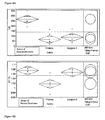
- the fray resistance, cycles to break (CtB), and the tensile strength of the 5/0 sutures prepared in accordance with one embodiment of the present disclosure are graphically presented in Figures 4A and 4B. Differences in tensile strength and CtB were found when comparing the sutures of the present disclosure with the SURGIPRO II and PROLENE controls.
- the sutures of the present disclosure showed enhanced CtB compared with the SURGIPRO II and PROLENE sutures, without any sacrifice of their already superior tensile strength.
Landscapes
- Health & Medical Sciences (AREA)
- Chemical & Material Sciences (AREA)
- Engineering & Computer Science (AREA)
- Materials Engineering (AREA)
- Surgery (AREA)
- Vascular Medicine (AREA)
- Epidemiology (AREA)
- Life Sciences & Earth Sciences (AREA)
- Animal Behavior & Ethology (AREA)
- General Health & Medical Sciences (AREA)
- Public Health (AREA)
- Veterinary Medicine (AREA)
- Materials For Medical Uses (AREA)
Applications Claiming Priority (1)
| Application Number | Priority Date | Filing Date | Title |
|---|---|---|---|
| US11/081,390 US20060212072A1 (en) | 2005-03-16 | 2005-03-16 | Polyolefin sutures having enhanced durability |
Publications (3)
| Publication Number | Publication Date |
|---|---|
| EP1702631A2 true EP1702631A2 (de) | 2006-09-20 |
| EP1702631A3 EP1702631A3 (de) | 2007-09-26 |
| EP1702631B1 EP1702631B1 (de) | 2010-07-14 |
Family
ID=36636304
Family Applications (1)
| Application Number | Title | Priority Date | Filing Date |
|---|---|---|---|
| EP06005364A Expired - Lifetime EP1702631B1 (de) | 2005-03-16 | 2006-03-16 | Polyolefin-Nähfäden mit verbesserter Haltbarkeit |
Country Status (7)
| Country | Link |
|---|---|
| US (1) | US20060212072A1 (de) |
| EP (1) | EP1702631B1 (de) |
| JP (1) | JP2006255409A (de) |
| AU (1) | AU2006200754B2 (de) |
| CA (1) | CA2539519A1 (de) |
| DE (1) | DE602006015382D1 (de) |
| ES (1) | ES2346897T3 (de) |
Families Citing this family (4)
| Publication number | Priority date | Publication date | Assignee | Title |
|---|---|---|---|---|
| US20090234377A1 (en) * | 2008-03-14 | 2009-09-17 | Radi Medical Systems Ab | Medical closure device |
| US9622779B2 (en) | 2011-10-27 | 2017-04-18 | DePuy Synthes Products, Inc. | Method and devices for a sub-splenius / supra-levator scapulae surgical access technique |
| KR102600453B1 (ko) | 2016-02-19 | 2023-11-10 | 삼성전자주식회사 | 옵티칼 렌즈 어셈블리 및 이를 포함한 전자 장치 |
| JP7585615B2 (ja) * | 2019-03-25 | 2024-11-19 | 東ソー株式会社 | 樹脂組成物および蓋材用フィルム |
Family Cites Families (28)
| Publication number | Priority date | Publication date | Assignee | Title |
|---|---|---|---|---|
| US3496128A (en) * | 1959-02-05 | 1970-02-17 | Avisun Corp | Stabilization of polypropylene |
| US3537967A (en) * | 1966-07-29 | 1970-11-03 | Dart Ind Inc | Radiation sterilized,thiodipropionic acid ester stabilized,propylene polymers |
| US3622530A (en) * | 1967-03-07 | 1971-11-23 | Montedison Spa | Textile fibers, films, shaped articles and the like particularly stable to heat, light and ageing |
| US3630205A (en) * | 1969-07-31 | 1971-12-28 | Ethicon Inc | Polypropylene monofilament sutures |
| US4184987A (en) * | 1974-01-09 | 1980-01-22 | Standard Oil Company (Indiana) | Stabilizing additives for polyolefins |
| US4620542A (en) * | 1982-10-04 | 1986-11-04 | Ethicon, Inc. | Ethylene-propylene copolymer sutures |
| US4520822A (en) * | 1982-10-04 | 1985-06-04 | Ethicon, Inc. | Ethylene-propylene copolymer sutures |
| US4820755A (en) * | 1987-08-18 | 1989-04-11 | American Cyanamid Company | Radiation sterilizable composition and articles made therefrom |
| US5019093A (en) * | 1989-04-28 | 1991-05-28 | United States Surgical Corporation | Braided suture |
| US4892784A (en) * | 1988-07-27 | 1990-01-09 | Kimberly-Clark Corporation | Surface treatment for inhibiting thermal oxidation of polypropylene fabrics |
| DE4002626A1 (de) * | 1990-01-30 | 1991-08-01 | Inst Textil & Faserforschung | Verfahren zum behandeln eines chirurgischen naehfadens und chirurgischer naehfaden |
| US5059213A (en) * | 1990-03-26 | 1991-10-22 | United States Surgical Corporation | Spiroid braided suture |
| JP2877897B2 (ja) * | 1990-06-15 | 1999-04-05 | 株式会社トクヤマ | ポリオレフィン繊維 |
| US5217485A (en) * | 1991-07-12 | 1993-06-08 | United States Surgical Corporation | Polypropylene monofilament suture and process for its manufacture |
| US5391182A (en) * | 1993-08-03 | 1995-02-21 | Origin Medsystems, Inc. | Apparatus and method for closing puncture wounds |
| JP3193548B2 (ja) * | 1993-12-08 | 2001-07-30 | 株式会社トクヤマ | ポリプロピレン繊維 |
| JP3397209B2 (ja) * | 1995-08-29 | 2003-04-14 | エクソンモービル・ケミカル・パテンツ・インク | 耐輻射線性ポリプロピレン及びその有用な製品 |
| JPH09103477A (ja) * | 1995-10-12 | 1997-04-22 | Unitika Ltd | 縫合糸 |
| US5969026A (en) * | 1997-06-26 | 1999-10-19 | Techmer Pm | Wettable polymer fibers |
| US6494898B1 (en) * | 1998-02-25 | 2002-12-17 | United States Surgical Corporation | Absorbable copolymers and surgical articles fabricated therefrom |
| US6203564B1 (en) * | 1998-02-26 | 2001-03-20 | United States Surgical | Braided polyester suture and implantable medical device |
| US7347850B2 (en) * | 1998-08-14 | 2008-03-25 | Incept Llc | Adhesion barriers applicable by minimally invasive surgery and methods of use thereof |
| US6077468A (en) * | 1999-01-11 | 2000-06-20 | 3M Innovative Properties Company | Process of drawing fibers |
| US6300419B1 (en) * | 1999-12-08 | 2001-10-09 | The Dow Chemical Company | Propylene polymer composition |
| JP2004502051A (ja) * | 2000-06-29 | 2004-01-22 | ジョンソン・アンド・ジョンソン・コンシューマー・カンパニーズ・インコーポレイテッド | 支持体へのパウダーの静電浸透 |
| US8207070B2 (en) * | 2000-11-22 | 2012-06-26 | Techmer Pm, Llc | Wettable polyolefin fibers and fabrics |
| EP1372746A2 (de) * | 2001-03-26 | 2004-01-02 | Tyco Healthcare Group Lp | Polyolefin-nahtmaterial mit verbesserten verarbeitungseigenschaften |
| CN1918226B (zh) * | 2004-02-12 | 2011-04-06 | 埃克森美孚化学专利公司 | 增塑聚烯烃组合物 |
-
2005
- 2005-03-16 US US11/081,390 patent/US20060212072A1/en not_active Abandoned
-
2006
- 2006-02-23 AU AU2006200754A patent/AU2006200754B2/en not_active Ceased
- 2006-03-01 JP JP2006055601A patent/JP2006255409A/ja active Pending
- 2006-03-14 CA CA002539519A patent/CA2539519A1/en not_active Abandoned
- 2006-03-16 EP EP06005364A patent/EP1702631B1/de not_active Expired - Lifetime
- 2006-03-16 DE DE602006015382T patent/DE602006015382D1/de not_active Expired - Lifetime
- 2006-03-16 ES ES06005364T patent/ES2346897T3/es not_active Expired - Lifetime
Also Published As
| Publication number | Publication date |
|---|---|
| DE602006015382D1 (de) | 2010-08-26 |
| JP2006255409A (ja) | 2006-09-28 |
| AU2006200754B2 (en) | 2011-07-14 |
| US20060212072A1 (en) | 2006-09-21 |
| CA2539519A1 (en) | 2006-09-16 |
| EP1702631B1 (de) | 2010-07-14 |
| EP1702631A3 (de) | 2007-09-26 |
| AU2006200754A1 (en) | 2006-10-05 |
| ES2346897T3 (es) | 2010-10-21 |
Similar Documents
| Publication | Publication Date | Title |
|---|---|---|
| AU2002247401B2 (en) | Polyolefin sutures having improved processing and handling characteristics | |
| JP5582404B2 (ja) | 着色縫合糸 | |
| CA2988667C (en) | Colored suture construction | |
| DE602004004729T2 (de) | Hochfeste Naht mit absorbierbarem Kern | |
| US4246904A (en) | Surgical suture derived from segmented polyether-ester block copolymers | |
| AU2002247401A1 (en) | Polyolefin sutures having improved processing and handling characteristics | |
| DE3512689A1 (de) | Chirurgisches filament | |
| EP0835895B1 (de) | Chirugisches Nahtmaterial aus Triblockterpolymer, seine Verwendung in der Chirurgie und Verfahren zur Herstellung | |
| EP0170966A1 (de) | Trockenbeschichtung von chirurgischen Fäden | |
| EP1581121B1 (de) | Ölbeschichtetes nahtmaterial | |
| CA1098668A (en) | Isotactic polypropylene surgical sutures | |
| DE69732470T2 (de) | Abbaubares Monofilament und Verfahren zu seiner Herstellung | |
| US5284489A (en) | Filament fabricated from a blend of ionomer resin and nonionic thermoplastic resin | |
| EP1702631B1 (de) | Polyolefin-Nähfäden mit verbesserter Haltbarkeit | |
| JP2009500091A (ja) | Uhmwpeフィラメントベースの外科的修復製品 | |
| DE2741765C2 (de) | ||
| DE2949181A1 (de) | Elastomeres chirurgisches nahtmaterial | |
| DE60319038T2 (de) | Verfahren zur Herstellung von Nahtmaterial mit verbesserter Knotenfestigkeit | |
| EP0287899A2 (de) | Chirurgische Erzeugnisse |
Legal Events
| Date | Code | Title | Description |
|---|---|---|---|
| PUAI | Public reference made under article 153(3) epc to a published international application that has entered the european phase |
Free format text: ORIGINAL CODE: 0009012 |
|
| AK | Designated contracting states |
Kind code of ref document: A2 Designated state(s): AT BE BG CH CY CZ DE DK EE ES FI FR GB GR HU IE IS IT LI LT LU LV MC NL PL PT RO SE SI SK TR |
|
| AX | Request for extension of the european patent |
Extension state: AL BA HR MK YU |
|
| PUAL | Search report despatched |
Free format text: ORIGINAL CODE: 0009013 |
|
| AK | Designated contracting states |
Kind code of ref document: A3 Designated state(s): AT BE BG CH CY CZ DE DK EE ES FI FR GB GR HU IE IS IT LI LT LU LV MC NL PL PT RO SE SI SK TR |
|
| AX | Request for extension of the european patent |
Extension state: AL BA HR MK YU |
|
| 17P | Request for examination filed |
Effective date: 20080117 |
|
| 17Q | First examination report despatched |
Effective date: 20080325 |
|
| AKX | Designation fees paid |
Designated state(s): DE ES FR GB IE IT |
|
| GRAP | Despatch of communication of intention to grant a patent |
Free format text: ORIGINAL CODE: EPIDOSNIGR1 |
|
| GRAS | Grant fee paid |
Free format text: ORIGINAL CODE: EPIDOSNIGR3 |
|
| GRAA | (expected) grant |
Free format text: ORIGINAL CODE: 0009210 |
|
| AK | Designated contracting states |
Kind code of ref document: B1 Designated state(s): DE ES FR GB IE IT |
|
| REG | Reference to a national code |
Ref country code: GB Ref legal event code: FG4D |
|
| REG | Reference to a national code |
Ref country code: IE Ref legal event code: FG4D |
|
| REF | Corresponds to: |
Ref document number: 602006015382 Country of ref document: DE Date of ref document: 20100826 Kind code of ref document: P |
|
| REG | Reference to a national code |
Ref country code: ES Ref legal event code: FG2A Ref document number: 2346897 Country of ref document: ES Kind code of ref document: T3 |
|
| PLBE | No opposition filed within time limit |
Free format text: ORIGINAL CODE: 0009261 |
|
| STAA | Information on the status of an ep patent application or granted ep patent |
Free format text: STATUS: NO OPPOSITION FILED WITHIN TIME LIMIT |
|
| 26N | No opposition filed |
Effective date: 20110415 |
|
| REG | Reference to a national code |
Ref country code: DE Ref legal event code: R097 Ref document number: 602006015382 Country of ref document: DE Effective date: 20110415 |
|
| PGFP | Annual fee paid to national office [announced via postgrant information from national office to epo] |
Ref country code: IT Payment date: 20120323 Year of fee payment: 7 |
|
| PGFP | Annual fee paid to national office [announced via postgrant information from national office to epo] |
Ref country code: ES Payment date: 20130326 Year of fee payment: 8 |
|
| PG25 | Lapsed in a contracting state [announced via postgrant information from national office to epo] |
Ref country code: IT Free format text: LAPSE BECAUSE OF NON-PAYMENT OF DUE FEES Effective date: 20140316 |
|
| REG | Reference to a national code |
Ref country code: ES Ref legal event code: FD2A Effective date: 20150728 |
|
| PG25 | Lapsed in a contracting state [announced via postgrant information from national office to epo] |
Ref country code: ES Free format text: LAPSE BECAUSE OF NON-PAYMENT OF DUE FEES Effective date: 20140317 |
|
| REG | Reference to a national code |
Ref country code: FR Ref legal event code: PLFP Year of fee payment: 11 |
|
| PGFP | Annual fee paid to national office [announced via postgrant information from national office to epo] |
Ref country code: IE Payment date: 20160222 Year of fee payment: 11 |
|
| PGFP | Annual fee paid to national office [announced via postgrant information from national office to epo] |
Ref country code: GB Payment date: 20160223 Year of fee payment: 11 |
|
| REG | Reference to a national code |
Ref country code: FR Ref legal event code: PLFP Year of fee payment: 12 |
|
| GBPC | Gb: european patent ceased through non-payment of renewal fee |
Effective date: 20170316 |
|
| REG | Reference to a national code |
Ref country code: IE Ref legal event code: MM4A |
|
| REG | Reference to a national code |
Ref country code: FR Ref legal event code: PLFP Year of fee payment: 13 |
|
| PG25 | Lapsed in a contracting state [announced via postgrant information from national office to epo] |
Ref country code: GB Free format text: LAPSE BECAUSE OF NON-PAYMENT OF DUE FEES Effective date: 20170316 Ref country code: IE Free format text: LAPSE BECAUSE OF NON-PAYMENT OF DUE FEES Effective date: 20170316 |
|
| PGFP | Annual fee paid to national office [announced via postgrant information from national office to epo] |
Ref country code: DE Payment date: 20200218 Year of fee payment: 15 |
|
| PGFP | Annual fee paid to national office [announced via postgrant information from national office to epo] |
Ref country code: FR Payment date: 20200220 Year of fee payment: 15 |
|
| REG | Reference to a national code |
Ref country code: DE Ref legal event code: R119 Ref document number: 602006015382 Country of ref document: DE |
|
| PG25 | Lapsed in a contracting state [announced via postgrant information from national office to epo] |
Ref country code: FR Free format text: LAPSE BECAUSE OF NON-PAYMENT OF DUE FEES Effective date: 20210331 Ref country code: DE Free format text: LAPSE BECAUSE OF NON-PAYMENT OF DUE FEES Effective date: 20211001 |