US5284489A - Filament fabricated from a blend of ionomer resin and nonionic thermoplastic resin - Google Patents
Filament fabricated from a blend of ionomer resin and nonionic thermoplastic resin Download PDFInfo
- Publication number
- US5284489A US5284489A US07/932,377 US93237792A US5284489A US 5284489 A US5284489 A US 5284489A US 93237792 A US93237792 A US 93237792A US 5284489 A US5284489 A US 5284489A
- Authority
- US
- United States
- Prior art keywords
- suture
- resin
- blend
- ionomer resin
- thermoplastic resin
- Prior art date
- Legal status (The legal status is an assumption and is not a legal conclusion. Google has not performed a legal analysis and makes no representation as to the accuracy of the status listed.)
- Expired - Lifetime
Links
- 229920005989 resin Polymers 0.000 title claims abstract description 76
- 239000011347 resin Substances 0.000 title claims abstract description 76
- 229920000554 ionomer Polymers 0.000 title claims abstract description 52
- 239000000203 mixture Substances 0.000 title claims abstract description 52
- 229920005992 thermoplastic resin Polymers 0.000 title claims abstract description 32
- -1 polypropylene Polymers 0.000 claims abstract description 36
- 239000004743 Polypropylene Substances 0.000 claims abstract description 28
- 229920001155 polypropylene Polymers 0.000 claims abstract description 28
- 229920000098 polyolefin Polymers 0.000 claims abstract description 10
- 229920001577 copolymer Polymers 0.000 claims description 33
- VGGSQFUCUMXWEO-UHFFFAOYSA-N Ethene Chemical compound C=C VGGSQFUCUMXWEO-UHFFFAOYSA-N 0.000 claims description 20
- 239000005977 Ethylene Substances 0.000 claims description 20
- 238000000034 method Methods 0.000 claims description 20
- 239000000126 substance Substances 0.000 claims description 12
- 238000000137 annealing Methods 0.000 claims description 11
- 230000000975 bioactive effect Effects 0.000 claims description 8
- 239000004711 α-olefin Substances 0.000 claims description 8
- 150000001735 carboxylic acids Chemical class 0.000 claims description 6
- 239000000155 melt Substances 0.000 claims description 6
- CERQOIWHTDAKMF-UHFFFAOYSA-N Methacrylic acid Chemical compound CC(=C)C(O)=O CERQOIWHTDAKMF-UHFFFAOYSA-N 0.000 claims description 5
- 238000010276 construction Methods 0.000 claims description 5
- 238000011084 recovery Methods 0.000 claims description 5
- 206010019909 Hernia Diseases 0.000 claims description 4
- 238000001816 cooling Methods 0.000 claims description 4
- OFHCOWSQAMBJIW-AVJTYSNKSA-N alfacalcidol Chemical compound C1(/[C@@H]2CC[C@@H]([C@]2(CCC1)C)[C@H](C)CCCC(C)C)=C\C=C1\C[C@@H](O)C[C@H](O)C1=C OFHCOWSQAMBJIW-AVJTYSNKSA-N 0.000 claims 2
- 150000001244 carboxylic acid anhydrides Chemical class 0.000 claims 2
- 125000005395 methacrylic acid group Chemical group 0.000 claims 1
- 229920005648 ethylene methacrylic acid copolymer Polymers 0.000 abstract 1
- 238000010438 heat treatment Methods 0.000 description 11
- 238000001125 extrusion Methods 0.000 description 5
- 239000004744 fabric Substances 0.000 description 5
- 238000004519 manufacturing process Methods 0.000 description 5
- 230000000704 physical effect Effects 0.000 description 5
- 229920000642 polymer Polymers 0.000 description 5
- 238000010791 quenching Methods 0.000 description 5
- 229920002126 Acrylic acid copolymer Polymers 0.000 description 4
- VZCYOOQTPOCHFL-OWOJBTEDSA-N Fumaric acid Chemical compound OC(=O)\C=C\C(O)=O VZCYOOQTPOCHFL-OWOJBTEDSA-N 0.000 description 4
- 239000004698 Polyethylene Substances 0.000 description 4
- 229920001400 block copolymer Polymers 0.000 description 4
- 229920003145 methacrylic acid copolymer Polymers 0.000 description 4
- 229920000728 polyester Polymers 0.000 description 4
- 229920000573 polyethylene Polymers 0.000 description 4
- 238000012360 testing method Methods 0.000 description 4
- VZCYOOQTPOCHFL-UHFFFAOYSA-N trans-butenedioic acid Natural products OC(=O)C=CC(O)=O VZCYOOQTPOCHFL-UHFFFAOYSA-N 0.000 description 4
- XLYOFNOQVPJJNP-UHFFFAOYSA-N water Substances O XLYOFNOQVPJJNP-UHFFFAOYSA-N 0.000 description 4
- 229920003182 Surlyn® Polymers 0.000 description 3
- 239000005035 Surlyn® Substances 0.000 description 3
- 239000003139 biocide Substances 0.000 description 3
- 125000002843 carboxylic acid group Chemical group 0.000 description 3
- 230000000052 comparative effect Effects 0.000 description 3
- QHZOMAXECYYXGP-UHFFFAOYSA-N ethene;prop-2-enoic acid Chemical compound C=C.OC(=O)C=C QHZOMAXECYYXGP-UHFFFAOYSA-N 0.000 description 3
- 239000004615 ingredient Substances 0.000 description 3
- 239000000463 material Substances 0.000 description 3
- 229910021645 metal ion Inorganic materials 0.000 description 3
- PNJWIWWMYCMZRO-UHFFFAOYSA-N pent‐4‐en‐2‐one Natural products CC(=O)CC=C PNJWIWWMYCMZRO-UHFFFAOYSA-N 0.000 description 3
- VXNZUUAINFGPBY-UHFFFAOYSA-N 1-Butene Chemical compound CCC=C VXNZUUAINFGPBY-UHFFFAOYSA-N 0.000 description 2
- SMZOUWXMTYCWNB-UHFFFAOYSA-N 2-(2-methoxy-5-methylphenyl)ethanamine Chemical compound COC1=CC=C(C)C=C1CCN SMZOUWXMTYCWNB-UHFFFAOYSA-N 0.000 description 2
- OEPOKWHJYJXUGD-UHFFFAOYSA-N 2-(3-phenylmethoxyphenyl)-1,3-thiazole-4-carbaldehyde Chemical compound O=CC1=CSC(C=2C=C(OCC=3C=CC=CC=3)C=CC=2)=N1 OEPOKWHJYJXUGD-UHFFFAOYSA-N 0.000 description 2
- NIXOWILDQLNWCW-UHFFFAOYSA-N 2-Propenoic acid Natural products OC(=O)C=C NIXOWILDQLNWCW-UHFFFAOYSA-N 0.000 description 2
- KAKZBPTYRLMSJV-UHFFFAOYSA-N Butadiene Chemical compound C=CC=C KAKZBPTYRLMSJV-UHFFFAOYSA-N 0.000 description 2
- 239000004716 Ethylene/acrylic acid copolymer Substances 0.000 description 2
- BAPJBEWLBFYGME-UHFFFAOYSA-N Methyl acrylate Chemical compound COC(=O)C=C BAPJBEWLBFYGME-UHFFFAOYSA-N 0.000 description 2
- 239000004952 Polyamide Substances 0.000 description 2
- 229920002614 Polyether block amide Polymers 0.000 description 2
- OFOBLEOULBTSOW-UHFFFAOYSA-N Propanedioic acid Natural products OC(=O)CC(O)=O OFOBLEOULBTSOW-UHFFFAOYSA-N 0.000 description 2
- 239000002253 acid Substances 0.000 description 2
- 150000008064 anhydrides Chemical class 0.000 description 2
- 125000002091 cationic group Chemical group 0.000 description 2
- 150000001768 cations Chemical class 0.000 description 2
- 239000003795 chemical substances by application Substances 0.000 description 2
- 238000004132 cross linking Methods 0.000 description 2
- NNBZCPXTIHJBJL-UHFFFAOYSA-N decalin Chemical compound C1CCCC2CCCCC21 NNBZCPXTIHJBJL-UHFFFAOYSA-N 0.000 description 2
- 230000000694 effects Effects 0.000 description 2
- 229920006242 ethylene acrylic acid copolymer Polymers 0.000 description 2
- 239000000835 fiber Substances 0.000 description 2
- 239000001530 fumaric acid Substances 0.000 description 2
- 239000011976 maleic acid Substances 0.000 description 2
- 229910052751 metal Inorganic materials 0.000 description 2
- 239000002184 metal Substances 0.000 description 2
- 150000002739 metals Chemical class 0.000 description 2
- LVHBHZANLOWSRM-UHFFFAOYSA-N methylenebutanedioic acid Natural products OC(=O)CC(=C)C(O)=O LVHBHZANLOWSRM-UHFFFAOYSA-N 0.000 description 2
- 230000004048 modification Effects 0.000 description 2
- 238000012986 modification Methods 0.000 description 2
- 230000003472 neutralizing effect Effects 0.000 description 2
- 229920001279 poly(ester amides) Polymers 0.000 description 2
- 229920002647 polyamide Polymers 0.000 description 2
- 229920001083 polybutene Polymers 0.000 description 2
- 229920002635 polyurethane Polymers 0.000 description 2
- 239000004814 polyurethane Substances 0.000 description 2
- QQONPFPTGQHPMA-UHFFFAOYSA-N propylene Natural products CC=C QQONPFPTGQHPMA-UHFFFAOYSA-N 0.000 description 2
- 125000004805 propylene group Chemical group [H]C([H])([H])C([H])([*:1])C([H])([H])[*:2] 0.000 description 2
- 238000009987 spinning Methods 0.000 description 2
- 229920001169 thermoplastic Polymers 0.000 description 2
- 239000011800 void material Substances 0.000 description 2
- 238000002166 wet spinning Methods 0.000 description 2
- DHKHKXVYLBGOIT-UHFFFAOYSA-N 1,1-Diethoxyethane Chemical compound CCOC(C)OCC DHKHKXVYLBGOIT-UHFFFAOYSA-N 0.000 description 1
- LIKMAJRDDDTEIG-UHFFFAOYSA-N 1-hexene Chemical compound CCCCC=C LIKMAJRDDDTEIG-UHFFFAOYSA-N 0.000 description 1
- JAHNSTQSQJOJLO-UHFFFAOYSA-N 2-(3-fluorophenyl)-1h-imidazole Chemical compound FC1=CC=CC(C=2NC=CN=2)=C1 JAHNSTQSQJOJLO-UHFFFAOYSA-N 0.000 description 1
- WROUWQQRXUBECT-UHFFFAOYSA-N 2-ethylacrylic acid Chemical compound CCC(=C)C(O)=O WROUWQQRXUBECT-UHFFFAOYSA-N 0.000 description 1
- YHQXBTXEYZIYOV-UHFFFAOYSA-N 3-methylbut-1-ene Chemical compound CC(C)C=C YHQXBTXEYZIYOV-UHFFFAOYSA-N 0.000 description 1
- 229920000178 Acrylic resin Polymers 0.000 description 1
- 239000004925 Acrylic resin Substances 0.000 description 1
- NLXLAEXVIDQMFP-UHFFFAOYSA-N Ammonium chloride Substances [NH4+].[Cl-] NLXLAEXVIDQMFP-UHFFFAOYSA-N 0.000 description 1
- OYPRJOBELJOOCE-UHFFFAOYSA-N Calcium Chemical compound [Ca] OYPRJOBELJOOCE-UHFFFAOYSA-N 0.000 description 1
- LZZYPRNAOMGNLH-UHFFFAOYSA-M Cetrimonium bromide Chemical compound [Br-].CCCCCCCCCCCCCCCC[N+](C)(C)C LZZYPRNAOMGNLH-UHFFFAOYSA-M 0.000 description 1
- 229920001634 Copolyester Polymers 0.000 description 1
- 241000557626 Corvus corax Species 0.000 description 1
- JIGUQPWFLRLWPJ-UHFFFAOYSA-N Ethyl acrylate Chemical compound CCOC(=O)C=C JIGUQPWFLRLWPJ-UHFFFAOYSA-N 0.000 description 1
- DGAQECJNVWCQMB-PUAWFVPOSA-M Ilexoside XXIX Chemical compound C[C@@H]1CC[C@@]2(CC[C@@]3(C(=CC[C@H]4[C@]3(CC[C@@H]5[C@@]4(CC[C@@H](C5(C)C)OS(=O)(=O)[O-])C)C)[C@@H]2[C@]1(C)O)C)C(=O)O[C@H]6[C@@H]([C@H]([C@@H]([C@H](O6)CO)O)O)O.[Na+] DGAQECJNVWCQMB-PUAWFVPOSA-M 0.000 description 1
- WHXSMMKQMYFTQS-UHFFFAOYSA-N Lithium Chemical compound [Li] WHXSMMKQMYFTQS-UHFFFAOYSA-N 0.000 description 1
- FYYHWMGAXLPEAU-UHFFFAOYSA-N Magnesium Chemical compound [Mg] FYYHWMGAXLPEAU-UHFFFAOYSA-N 0.000 description 1
- VVQNEPGJFQJSBK-UHFFFAOYSA-N Methyl methacrylate Chemical compound COC(=O)C(C)=C VVQNEPGJFQJSBK-UHFFFAOYSA-N 0.000 description 1
- 239000004697 Polyetherimide Substances 0.000 description 1
- 239000004642 Polyimide Substances 0.000 description 1
- 239000004793 Polystyrene Substances 0.000 description 1
- ZLMJMSJWJFRBEC-UHFFFAOYSA-N Potassium Chemical compound [K] ZLMJMSJWJFRBEC-UHFFFAOYSA-N 0.000 description 1
- 229920002334 Spandex Polymers 0.000 description 1
- PPBRXRYQALVLMV-UHFFFAOYSA-N Styrene Natural products C=CC1=CC=CC=C1 PPBRXRYQALVLMV-UHFFFAOYSA-N 0.000 description 1
- 239000004433 Thermoplastic polyurethane Substances 0.000 description 1
- XTXRWKRVRITETP-UHFFFAOYSA-N Vinyl acetate Chemical compound CC(=O)OC=C XTXRWKRVRITETP-UHFFFAOYSA-N 0.000 description 1
- BZHJMEDXRYGGRV-UHFFFAOYSA-N Vinyl chloride Chemical compound ClC=C BZHJMEDXRYGGRV-UHFFFAOYSA-N 0.000 description 1
- HCHKCACWOHOZIP-UHFFFAOYSA-N Zinc Chemical compound [Zn] HCHKCACWOHOZIP-UHFFFAOYSA-N 0.000 description 1
- 239000011354 acetal resin Substances 0.000 description 1
- 229910052783 alkali metal Inorganic materials 0.000 description 1
- 150000001340 alkali metals Chemical class 0.000 description 1
- 229910052784 alkaline earth metal Inorganic materials 0.000 description 1
- 150000001342 alkaline earth metals Chemical class 0.000 description 1
- 150000001336 alkenes Chemical class 0.000 description 1
- 125000005211 alkyl trimethyl ammonium group Chemical group 0.000 description 1
- 150000001408 amides Chemical class 0.000 description 1
- 235000019270 ammonium chloride Nutrition 0.000 description 1
- 239000003242 anti bacterial agent Substances 0.000 description 1
- 229940088710 antibiotic agent Drugs 0.000 description 1
- 229940127090 anticoagulant agent Drugs 0.000 description 1
- 239000003146 anticoagulant agent Substances 0.000 description 1
- 239000003963 antioxidant agent Substances 0.000 description 1
- WGQKYBSKWIADBV-UHFFFAOYSA-N benzylamine Chemical class NCC1=CC=CC=C1 WGQKYBSKWIADBV-UHFFFAOYSA-N 0.000 description 1
- 239000011575 calcium Substances 0.000 description 1
- 229910052791 calcium Inorganic materials 0.000 description 1
- 125000004432 carbon atom Chemical group C* 0.000 description 1
- 229910002091 carbon monoxide Inorganic materials 0.000 description 1
- 150000001732 carboxylic acid derivatives Chemical class 0.000 description 1
- 229920002678 cellulose Polymers 0.000 description 1
- 238000006243 chemical reaction Methods 0.000 description 1
- UUAGAQFQZIEFAH-UHFFFAOYSA-N chlorotrifluoroethylene Chemical group FC(F)=C(F)Cl UUAGAQFQZIEFAH-UHFFFAOYSA-N 0.000 description 1
- 239000003086 colorant Substances 0.000 description 1
- 150000001875 compounds Chemical class 0.000 description 1
- 238000005520 cutting process Methods 0.000 description 1
- 238000000578 dry spinning Methods 0.000 description 1
- 210000005069 ears Anatomy 0.000 description 1
- 229920001971 elastomer Polymers 0.000 description 1
- 239000000806 elastomer Substances 0.000 description 1
- HQQADJVZYDDRJT-UHFFFAOYSA-N ethene;prop-1-ene Chemical group C=C.CC=C HQQADJVZYDDRJT-UHFFFAOYSA-N 0.000 description 1
- 239000000945 filler Substances 0.000 description 1
- XUCNUKMRBVNAPB-UHFFFAOYSA-N fluoroethene Chemical compound FC=C XUCNUKMRBVNAPB-UHFFFAOYSA-N 0.000 description 1
- 239000003102 growth factor Substances 0.000 description 1
- 230000026030 halogenation Effects 0.000 description 1
- 238000005658 halogenation reaction Methods 0.000 description 1
- 229920001519 homopolymer Polymers 0.000 description 1
- 230000010354 integration Effects 0.000 description 1
- 150000002500 ions Chemical class 0.000 description 1
- 229920000092 linear low density polyethylene Polymers 0.000 description 1
- 239000004707 linear low-density polyethylene Substances 0.000 description 1
- 229910052744 lithium Inorganic materials 0.000 description 1
- 230000007774 longterm Effects 0.000 description 1
- 239000011777 magnesium Substances 0.000 description 1
- 229910052749 magnesium Inorganic materials 0.000 description 1
- VZCYOOQTPOCHFL-UPHRSURJSA-N maleic acid Chemical compound OC(=O)\C=C/C(O)=O VZCYOOQTPOCHFL-UPHRSURJSA-N 0.000 description 1
- FPYJFEHAWHCUMM-UHFFFAOYSA-N maleic anhydride Chemical compound O=C1OC(=O)C=C1 FPYJFEHAWHCUMM-UHFFFAOYSA-N 0.000 description 1
- 238000005259 measurement Methods 0.000 description 1
- 238000002074 melt spinning Methods 0.000 description 1
- 150000002736 metal compounds Chemical class 0.000 description 1
- NKHAVTQWNUWKEO-IHWYPQMZSA-N methyl hydrogen fumarate Chemical compound COC(=O)\C=C/C(O)=O NKHAVTQWNUWKEO-IHWYPQMZSA-N 0.000 description 1
- 239000000178 monomer Substances 0.000 description 1
- JRZJOMJEPLMPRA-UHFFFAOYSA-N olefin Natural products CCCCCCCC=C JRZJOMJEPLMPRA-UHFFFAOYSA-N 0.000 description 1
- 239000008188 pellet Substances 0.000 description 1
- YWAKXRMUMFPDSH-UHFFFAOYSA-N pentene Chemical compound CCCC=C YWAKXRMUMFPDSH-UHFFFAOYSA-N 0.000 description 1
- 230000000737 periodic effect Effects 0.000 description 1
- ABLZXFCXXLZCGV-UHFFFAOYSA-N phosphonic acid group Chemical group P(O)(O)=O ABLZXFCXXLZCGV-UHFFFAOYSA-N 0.000 description 1
- 239000004014 plasticizer Substances 0.000 description 1
- 229920002492 poly(sulfone) Polymers 0.000 description 1
- 229920002239 polyacrylonitrile Polymers 0.000 description 1
- 229920002857 polybutadiene Polymers 0.000 description 1
- 229920001748 polybutylene Polymers 0.000 description 1
- 229920000515 polycarbonate Polymers 0.000 description 1
- 239000004417 polycarbonate Substances 0.000 description 1
- 229920006149 polyester-amide block copolymer Polymers 0.000 description 1
- 229920001601 polyetherimide Polymers 0.000 description 1
- 229920001721 polyimide Polymers 0.000 description 1
- 229920001195 polyisoprene Polymers 0.000 description 1
- 229920002959 polymer blend Polymers 0.000 description 1
- 238000006116 polymerization reaction Methods 0.000 description 1
- 229920000306 polymethylpentene Polymers 0.000 description 1
- 229920006324 polyoxymethylene Polymers 0.000 description 1
- 229920002223 polystyrene Polymers 0.000 description 1
- 229920001290 polyvinyl ester Polymers 0.000 description 1
- 229920001289 polyvinyl ether Polymers 0.000 description 1
- 229920002620 polyvinyl fluoride Polymers 0.000 description 1
- 229920001291 polyvinyl halide Polymers 0.000 description 1
- 229920006214 polyvinylidene halide Polymers 0.000 description 1
- 229910052700 potassium Inorganic materials 0.000 description 1
- 239000011591 potassium Substances 0.000 description 1
- 239000000843 powder Substances 0.000 description 1
- 238000012545 processing Methods 0.000 description 1
- 230000001105 regulatory effect Effects 0.000 description 1
- 230000002040 relaxant effect Effects 0.000 description 1
- 150000003839 salts Chemical group 0.000 description 1
- 239000011734 sodium Substances 0.000 description 1
- 229910052708 sodium Inorganic materials 0.000 description 1
- 239000004759 spandex Substances 0.000 description 1
- 239000003381 stabilizer Substances 0.000 description 1
- 125000000542 sulfonic acid group Chemical group 0.000 description 1
- 238000001356 surgical procedure Methods 0.000 description 1
- 229920002994 synthetic fiber Polymers 0.000 description 1
- 239000012209 synthetic fiber Substances 0.000 description 1
- 238000010998 test method Methods 0.000 description 1
- 229920006345 thermoplastic polyamide Polymers 0.000 description 1
- 229920002803 thermoplastic polyurethane Polymers 0.000 description 1
- 239000004416 thermosoftening plastic Substances 0.000 description 1
- PXXNTAGJWPJAGM-UHFFFAOYSA-N vertaline Natural products C1C2C=3C=C(OC)C(OC)=CC=3OC(C=C3)=CC=C3CCC(=O)OC1CC1N2CCCC1 PXXNTAGJWPJAGM-UHFFFAOYSA-N 0.000 description 1
- 239000002759 woven fabric Substances 0.000 description 1
- 239000011701 zinc Substances 0.000 description 1
- 229910052725 zinc Inorganic materials 0.000 description 1
Images


Classifications
-
- D—TEXTILES; PAPER
- D01—NATURAL OR MAN-MADE THREADS OR FIBRES; SPINNING
- D01F—CHEMICAL FEATURES IN THE MANUFACTURE OF ARTIFICIAL FILAMENTS, THREADS, FIBRES, BRISTLES OR RIBBONS; APPARATUS SPECIALLY ADAPTED FOR THE MANUFACTURE OF CARBON FILAMENTS
- D01F6/00—Monocomponent artificial filaments or the like of synthetic polymers; Manufacture thereof
- D01F6/44—Monocomponent artificial filaments or the like of synthetic polymers; Manufacture thereof from mixtures of polymers obtained by reactions only involving carbon-to-carbon unsaturated bonds as major constituent with other polymers or low-molecular-weight compounds
- D01F6/46—Monocomponent artificial filaments or the like of synthetic polymers; Manufacture thereof from mixtures of polymers obtained by reactions only involving carbon-to-carbon unsaturated bonds as major constituent with other polymers or low-molecular-weight compounds of polyolefins
-
- A—HUMAN NECESSITIES
- A61—MEDICAL OR VETERINARY SCIENCE; HYGIENE
- A61L—METHODS OR APPARATUS FOR STERILISING MATERIALS OR OBJECTS IN GENERAL; DISINFECTION, STERILISATION OR DEODORISATION OF AIR; CHEMICAL ASPECTS OF BANDAGES, DRESSINGS, ABSORBENT PADS OR SURGICAL ARTICLES; MATERIALS FOR BANDAGES, DRESSINGS, ABSORBENT PADS OR SURGICAL ARTICLES
- A61L17/00—Materials for surgical sutures or for ligaturing blood vessels ; Materials for prostheses or catheters
- A61L17/04—Non-resorbable materials
-
- A—HUMAN NECESSITIES
- A61—MEDICAL OR VETERINARY SCIENCE; HYGIENE
- A61L—METHODS OR APPARATUS FOR STERILISING MATERIALS OR OBJECTS IN GENERAL; DISINFECTION, STERILISATION OR DEODORISATION OF AIR; CHEMICAL ASPECTS OF BANDAGES, DRESSINGS, ABSORBENT PADS OR SURGICAL ARTICLES; MATERIALS FOR BANDAGES, DRESSINGS, ABSORBENT PADS OR SURGICAL ARTICLES
- A61L31/00—Materials for other surgical articles, e.g. stents, stent-grafts, shunts, surgical drapes, guide wires, materials for adhesion prevention, occluding devices, surgical gloves, tissue fixation devices
- A61L31/04—Macromolecular materials
- A61L31/041—Mixtures of macromolecular compounds
Definitions
- This invention relates to a filament fabricated from a blend of ionomer resin and nonionic thermoplastic resin and to a melt extrusion (spinning) process for fabricating the filament.
- the filament is useful as a suture and as a surgical mesh.
- Nonabsorbable sutures manufactured from various nonionic thermoplastic resins such as polyolefins, polyesters, polyamides, poly(esteramides), copolyether amides, polyether-polyester block copolymers, polyurethane block copolymers, and the like, are known.
- nonionic thermoplastic resins such as polyolefins, polyesters, polyamides, poly(esteramides), copolyether amides, polyether-polyester block copolymers, polyurethane block copolymers, and the like.
- U.S. Pat. Nos. 3,630,205 and 4,911,165 sutures obtained by the melt extrusion of isotactic polypropylene
- U.S. Pat. Nos. 4,520,822 and 4,620,542 sutures made from ethylene-propylene copolymers
- Knitted and woven fabrics constructed from a variety of synthetic fibers and the use of the fabrics in surgical repair are known from, among others, U.S. Pat. Nos. 3,054,406; 3,124,136; 4,193,137; 4,347,847; 4,452,245; 4,520,821; 4,633,873; 4,652,264; 4,655,221; 4,838,884; and 5,002,551; EPA 334,046; and Wantz, "Atlas of Hernia Surgery", Raven Press, 1991.
- Ionomer resins are known, inter alia, from U.S. Pat. Nos. 3,264,272, 3,322,734 and 3,404,134.
- Blends of ionomer resins and elastomers such as ethylene/propylene copolymer, butadiene/styrene copolymer, etc., are known from U.S. Pat. No. 3,454,676.
- Fibers manufactured from ionomer resins employing a wet or dry spinning process are known from U.S. Pat. Nos. 4,172,820, 4,226,751, 4,259,284 and 4,343,859. The fibers have use in clothing, carpeting and similar applications.
- a filament is provided which is fabricated from a blend of ionomer resin and nonionic thermoplastic resin.
- the filament is advantageously fabricated by a process which includes the steps of melt extruding a blend comprising ionomer resin and nonionic thermoplastic resin to provide a filament, cooling the filament, stretching the cooled filament and annealing the stretched filament.
- the filament of this invention with or without further processing can be used as a suture which exhibits several improved properties compared to those of a known suture of equivalent construction fabricated entirely from nonionic thermoplastic resin.
- the suture herein possesses far fewer voids, if any, than the known suture, a property which results in fewer breaks.
- the suture of this invention exhibits reduced strain energy compared with that of a suture made entirely of nonionic thermoplastic polymer, strain energy being defined as the integration of the measured stress-strain curve for a monofilament measured in kilograms-mm and is equivalent to the work expended in elongating the monofilament by a specified percentage of its original length.
- strain energy of a monofilament suture is related to the amount of effort required to straighten the suture upon removal of the suture from its package such that the lower the strain energy the lesser the effort required to straighten the suture prior to use.
- suture herein lies in the ability of the ionomer resin component to bond with bioactive substances such as cationic biocidal agents thus providing an effective and convenient device for the long term release of such substances at or near the wound site.
- the filament of this invention can also be formed into yarn, fabrics, etc., for a variety of uses including medical/surgical applications, clothing, carpeting, etc.
- a surgical mesh fabricated from a yarn made with the filament of this invention can be used as a prosthesis in hernia repair.
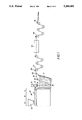
- FIG. 1 is a schematic representation of apparatus which is suitable for carrying out the extruding and stretching steps of a preferred melt extrusion process for obtaining the filament of this invention
- FIG. 2 is a photomicrograph of a linear section of suture fabricated entirely from isotactic polypropylene with arrows pointing to a void;
- FIG. 3 is a photomicrograph of a cross section of suture fabricated entirely from isotactic polypropylene showing the geometry of the void;
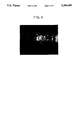
- FIG. 4 is a photomicrograph of an essentially void-free suture fabricated from a blend of ionomer resin and isotactic polypropylene in accordance with this invention.
- FIG. 5 illustrates a combined suture-needle device made with the suture of this invention.
- the ionomer resins which are utilized in the polymer blends from which the filament of this invention is made are ionically crosslinked thermoplastic resins generally prepared by neutralizing a copolymer containing pendent acid groups, e.g., carboxylic acid groups, sulfonic acid groups and/or phosphonic acid groups, with an ionizable metal compound, e.g., a compound of the monovalent, divalent and/or trivalent metals of Groups I, II, IV-A and VIIIB of the Periodic Table of Elements. See, "Encyclopedia of Polymer Science and Engineering", 2nd Edition, Vol. 8, pp. 393-423 (John Wiley & Sons, 1987), the contents of which are incorporated by reference herein.
- the ionomer resin, the nonionic thermoplastic resin and any other components of the resin blend must, of course, be biologically acceptable.
- a preferred group of ionomer resins is derived from a copolymer of at least one alpha-olefin and at least one ethylenically unsaturated carboxylic acid and/or anhydride.
- Suitable alpha-olefins include ethylene, propylene, butene-1, pentene-1, hexene-1, heptene-1, 3-methylbutene, and the like.
- Suitable carboxylic acids and anhydrides include acrylic acid, methacrylic acid, ethacrylic acid, maleic acid, fumaric acid, maleic anhydride, and the like.
- the foregoing copolymer advantageously contains from about 0.2 to about 20 mole percent, and preferably from about 0.5 to about 10 mole percent, carboxylic acid groups.
- copolymers include ethylene/acrylic acid copolymers, ethylene/methacrylic acid copolymers, ethylene/itaconic acid copolymers, ethylene/methyl hydrogen maleate copolymers, ethylene/maleic acid copolymers, ethylene/acrylic acid/methyl methacrylate copolymers, ethylene/methacrylic acid/ethylacrylate copolymers, ethylene/itaconic acid/methyl methacrylate copolymers, ethylene/methyl hydrogen maleate/ethyl acrylate copolymers, ethylene/methacrylic acid/vinyl acetate copolymers, ethylene/acrylic acid copolymers, ethylene/acrylic acid/vinyl alcohol copolymers, ethylene/acrylic acid/carbon monoxide copolymers, ethylene/propy
- copolymers may also, after polymerization but prior to ionic crosslinking, be further modified by various reactions to result in polymer modifications which do not interfere with their subsequent ionic crosslinking.
- Halogenation of an olefin acid copolymer is an example of such polymer modification.
- the preferred ionomer resins are obtained by reacting the foregoing copolymers with a sufficient amount of metal ions as to neutralize at least about 5 percent by weight, and preferably from about 20 to about 100 percent by weight, of the carboxylic acid groups present.
- Suitable monovalent metal ions include Na + , K + , Li + , C + , Rb + , Hg + and Cu + .
- Suitable divalent ions include Be +2 , Mg +2 , Ca +2 , Sr +2 , Ba +2 , Cu +2 , Cd +2 , Hg +2 , Sn +2 , Pb +2 , Fe +2 , Co +2 , Ni +2 , and Zn +2 .
- Suitable trivalent metal ions include A +3 , Sc +3 , Fe +3 and Y +3 .
- the preferred metals suitable for neutralizing the copolymers used herein are the alkali metals, particularly cations such as sodium, lithium and potassium, and alkaline earth metals, in particular, cations such as calcium, magnesium and zinc.
- Ionomer resins of the preferred type are disclosed, inter alia, in U.S. Pat. Nos. 3,264,272, 3,322,734 and 3,404,134, the contents of which are incorporated by reference herein.
- Ionomer resins derived from ethylene/methacrylic acid copolymers, e.g., DuPont's Surlyn® resins are particularly preferred.
- Surlyn® resins 8020 and 8920 provide especially good results, particularly when combined with a crystalline polypropylene as the nonionic thermoplastic resin component of the blend.
- the nonionic thermoplastic resin component of the blend from which the suture of this invention is formed can be selected from amongst any of a large variety of such resins and can be, for example, a polyolefin, polyvinyl ether, poly(phenylene ether), acetal resin, thermoplastic polyester, polycarbonate, cellulose ester, thermoplastic polyamide, polyetheramide, polyesteramide, thermoplastic polyurethane, polyvinylhalide, polyvinylidene halide, halogenated polyolefin, acrylic resin, polystyrene, polyacrylonitrile, polyvinylester, polyimide, polyetherimide, polysulfone, etc.
- the polyolefins are preferred, in particular, the homopolymers and copolymers of alpha-olefins of from 2 to 6 carbon atoms, e.g., polyethylenes, polymethylbutenes, polymethylpentenes, polypropylenes, polybutenes, polybutadienes, polyisoprenes, chlorinated polyethylenes, copolymers of ethylene and propylene, copolymers of ethylene and/or propylene containing relatively small amounts, e.g., up to about 10 mole percent, of other copolymerized monomers such as vinyl acetate, acrylic acid, methyl acrylate, ethyl acrylate, methyl methacrylate, etc, e.g., blends of two or more different polyethylenes, polypropylenes, etc., polyethylene-polypropylene blends, polyethylene-polybutene blends, etc.
- alpha-olefins of from 2 to 6 carbon atoms
- crystalline polypropylenes of from about 150,000 to about 500,000 average molecular weight (Mw) are especially preferred.
- isotactic polypropylene resins possessing a weight average molecular weight (Mw) of from about 200,000 to about 350,000, a number average molecular weight (Mn) of from about 50,000 to about 180,000 and a calculated dispersity (Mw/Mn) of from about 2.0 to about 4.0.
- the isotactic polypropylene resins will advantageously possess a melt flow index in g/10 min of from about 2 to about 6 and preferably from about 3.5 to about 4.5.
- Isotactic polypropylene resins which can be used herein with generally good results include Resin F040A Blue of Aristech Chemical Corporation (Pittsburgh, Pa.) and Profax 6523 of Himont Incorporated (Wilmington, Del.). These resins possess the following characteristics
- the individual components of the blend herein can be melt-mixed or solution-blended.
- the blend must be compatible, i.e., it must be homogeneous or heterogeneous on a microscopic scale and must not exhibit any obvious inhomogeneity on a macroscopic scale.
- a blend that is heterogeneous on a macroscopic scale can be rendered compatible by addition thereto of a compatibilizing agent as is well known in the art.
- a compatibilizing agent as is well known in the art.
- compatibilizing agents reference may be made to such sources as the "Encyclopedia of Polymer Science and Engineering", Mark et al., eds, Vol. 3, pp. 771-774 (John Wiley & Sons, Inc. 1985), the contents of which are incorporated by reference herein.
- the filament of the present invention is fabricated from a blend of ionomer resin and nonionic thermoplastic resin containing from about 1 to about 99 parts by weight of ionomer resin, preferably from about 2 to about 50 parts by weight of ionomer resin, and most preferably from about 5 to about 20 parts by weight of ionomer resin, the balance of the resin content of the blend being made up of the nonionic thermoplastic resin.
- the blend can contain varying amounts of one or more optional ingredients incorporated into the ionomer resin and/or nonionic thermoplastic resin components prior to their being blended or into the blend.
- optional ingredients include biologically acceptable plasticizers, antioxidants, stabilizers, fillers, colorants, bioactive substances such as biocidal agents, antibiotics, growth factors, anti-clotting agents, etc., and the like, in the usual amounts.
- a particularly advantageous group of optional ingredients where the resin blend is to be formed into a suture or surgical mesh are those bioactive substances that are capable of being ionically bonded to one or both resin components of the blend, e.g., as disclosed in U.S. Pat. No. 5,006,267, the contents of which are incorporated by reference herein.
- Bioactive substances having this capability include cationic biocidal agents such as cetyl trimethyl ammonium bromide, alkyltrimethyl ammonium chloride, monoalkyldimethyl benzyl ammonium salts, heteroaromatic ammonium salts, bio-quaternary salts, and the like.
- the filament of this invention can be made by wet or melt spinning, methods.
- a preferred procedure involves melt extruding the blend of ionomer resin and nonionic thermoplastic resin to provide a monofilament, cooling the monofilament, stretching the cooled monofilament to effect orientation of the resin molecules and annealing (relaxing) the oriented monofilament.
- FIG. 1 schematically illustrates the extrusion and stretching operations of the resin blend filament manufacturing operation herein which is particularly well suited for the fabrication of a suture.
- Extruder unit 10 is of a known or conventional type and is equipped with controls for regulating the temperature of barrel 11 in various zones thereof, e.g., progressively higher temperatures in three consecutive zones A, B and C along the length of the barrel.
- Pellets or powder of a biologically acceptable and compatible ionomer resin-nonionic resin blend e.g., the ionomer resin-isotactic polypropylene blend of either of Examples 1 and 2, infra, are introduced to the extruder through drier-hopper 12.
- Motor driven metering pump 13 delivers extruded resin at a constant rate to spin pack 14 and thereafter through spinneret 15 possessing one or more Orifices of desired diameter to provide a molten filament 16 which then enters quench bath 17, e.g., containing water, where the filament solidifies.
- the distance filament 16 travels after emerging from spinneret 15 to the point where it enters quench bath 17, i.e., the air gap can vary and can advantageously be from about 0.5 to about 100 cm and preferably from about 1 to about 20 cm.
- a chimney (not shown), or shield, can be provided to isolate monofilament 16 from contact by air currents which might otherwise affect the cooling of the monofilament in some unpredictable manner.
- barrel zone A of the extruder can be maintained at a temperature of from about 180° to 230° C., zone B at from about 200° to 230° C. and zone C at from about 210 to about 230° C.
- Additional temperature parameters include: metering pump block 13 at from about 205° to about 230° C., spin pack 14 at from about 205° to about 230° C., spinneret 15 at from about 190° to about 230° C. and quench bath 17 at from about 30° to about 80° C.
- monofilament 16 is passed by driven roller 18 over idler rollers 19 and 20 and thereafter is wrapped around a first godet 21 provided with nip roll 22 to prevent slippage which might otherwise result from the subsequent stretching operation.
- Monofilament 16 passing from godet 21 is stretched in order to effect its orientation and thereby increase its tensile strength.
- heating unit 23 can be an oven chamber or a hot water trough, by means of second godet 24 which rotates at a higher speed than first godet 21 thereby stretching the monofilament from three to eight times its original length.
- heating unit 23 is an oven chamber
- its temperature is advantageously maintained at from about 60° to about 180° C. and preferably from about 80° to about 120° C.
- heating unit 23 be a hot water trough or bath which is maintained at a temperature of from about 60° to about 98° C. and preferably from about 80° to about 98° C.
- a second heating unit e.g., maintained at a temperature of from about 60° to about 130° C. and preferably from about 80° to about 110° C., by means of a hot air oven to heat-treat the monofilament prior to the annealing operation.
- This second heat treatment results in on-line relaxation, or shrinkage, of the monofilament, e.g., for a recovery of from about 80 to about 97 percent, and preferably from about 90 to about 95 percent, of the stretched length of the monofilament.
- the third godet is driven at a speed which is somewhat less than that of the second godet.
- annealing is accompanied by shrinkage of the suture, e.g., for a recovery of from about 80 to about 97 percent, and preferably from about 85 to about 95 percent, and preferably from about 90 to about 95 percent, of its stretched length.
- the desired length of suture can be wound around a creel and the creel placed in a heating cabinet maintained at the desired temperature, e.g., 100° C. to 150° C., as described in U.S. Pat. No. 3,630,205.
- the suture will have undergone shrinkage, e.g., to about 85% of the stretched length for sutures of sizes 2 to 3/0, to about 90% of the stretched length for sutures of sizes 4/0 and 5/0 and essentially no shrinkage in the case of sutures of sizes 6/0 to 8/0.
- shrinkage e.g., to about 85% of the stretched length for sutures of sizes 2 to 3/0, to about 90% of the stretched length for sutures of sizes 4/0 and 5/0 and essentially no shrinkage in the case of sutures of sizes 6/0 to 8/0.
- the creel can be rotated within the heating cabinet in order to insure uniform heating of the monofilament or the cabinet can be of the circulating hot air type in which case uniform heating of the monofilament will be achieved without the need to rotate the creel.
- the creel with its annealed suture is removed from the heating cabinet and when returned to room temperature, the suture is removed from the creel, conveniently by cutting the wound monofilament at opposite ends of the creel.
- the annealed sutures optionally attached to surgical needles, are then ready to be packaged and sterilized.
- the monofilament can be used as a suture or it can be used in the construction of a multifilament suture.
- Multifilament sutures of the present invention may be made by methods well known in the art. Braid constructions such as those disclosed in U.S. Pat. Nos. 5,059,213, 50019,093 and 4,959,069 are suitable for the multifilament sutures of the present invention.
- the suture can be coated or filled with substances which improve its functional characteristics, e.g., its lubricity, its knot tie down properties, etc.
- the suture can be coated with one or more substances which enhance its usefulness as a wound closure device, e.g., with any of the bioactive substances previously mentioned.
- FIG. 5 illustrates a combined suture-surgical needle device 100 in which monofilament suture 101 is attached to surgical needle 102.
- Suturing with combined suture-surgical device 100 is accomplished in accordance with accepted surgical practice, i.e., with repeated passes of needle 102 through approximated tissue at the wound site to ligate the wound followed by tying a knot in the suture and removing the needle.
- Table I sets forth typical conditions for the extruding, stretching and annealing operations used in manufacturing the suture of this invention.
- the individual resins employed were Surlyn® 8020 ionomer resin and Aristech F040A isotactic polypropylene.
Landscapes
- Health & Medical Sciences (AREA)
- General Health & Medical Sciences (AREA)
- Animal Behavior & Ethology (AREA)
- Engineering & Computer Science (AREA)
- Veterinary Medicine (AREA)
- Public Health (AREA)
- Chemical & Material Sciences (AREA)
- Surgery (AREA)
- Life Sciences & Earth Sciences (AREA)
- Epidemiology (AREA)
- Vascular Medicine (AREA)
- General Chemical & Material Sciences (AREA)
- Materials Engineering (AREA)
- Chemical Kinetics & Catalysis (AREA)
- Textile Engineering (AREA)
- Heart & Thoracic Surgery (AREA)
- Materials For Medical Uses (AREA)
Abstract
A filament is fabricated from a biologically acceptable blend of an ionomer resin such as an ionically crosslinked ethylene-methacrylic acid copolymer and a nonionic thermoplastic resin, e.g., a polyolefin such as an isotactic polypropylene.
Description
This invention relates to a filament fabricated from a blend of ionomer resin and nonionic thermoplastic resin and to a melt extrusion (spinning) process for fabricating the filament. Among other applications, the filament is useful as a suture and as a surgical mesh.
Nonabsorbable sutures manufactured from various nonionic thermoplastic resins such as polyolefins, polyesters, polyamides, poly(esteramides), copolyether amides, polyether-polyester block copolymers, polyurethane block copolymers, and the like, are known. For further details regarding such sutures, reference may be made to U.S. Pat. Nos. 3,630,205 and 4,911,165 (sutures obtained by the melt extrusion of isotactic polypropylene), U.S. Pat. Nos. 4,520,822 and 4,620,542 (sutures made from ethylene-propylene copolymers), U.S. Pat. No. 4,557,264 (sutures made from blends of polypropylene and linear low density polyethylene), U.S. Pat. No. 4,621,638 (sutures made from polymers capable of forming hard elastic filaments under high stress spinning conditions, e.g., from polyolefins such as isotactic polybutylene, isotactic polypropylene, polyethylene and mixtures of isotactic and non-isotactic polyolefins), U.S. Pat. Nos. 3,297,033, 3,636,945 and 3,839,297 (absorbable sutures fabricated from glycolide-lactide copolyesters), U.S. Pat. No. 4,224,946 (sutures made from polyether-polyester block copolymers), U.S. Pat. No. 2,226,529 (sutures made from polyamides), U.S. Pat. No. 4,343,931 (sutures made from poly(esteramides)), U.S. Pat. No. 4,578,451 (sutures made from polyetheramides) and U.S. Pat. No. 3,454,011 (sutures made from Spandex polyurethane block copolymers).
Knitted and woven fabrics constructed from a variety of synthetic fibers and the use of the fabrics in surgical repair are known from, among others, U.S. Pat. Nos. 3,054,406; 3,124,136; 4,193,137; 4,347,847; 4,452,245; 4,520,821; 4,633,873; 4,652,264; 4,655,221; 4,838,884; and 5,002,551; EPA 334,046; and Wantz, "Atlas of Hernia Surgery", Raven Press, 1991.
Ionomer resins are known, inter alia, from U.S. Pat. Nos. 3,264,272, 3,322,734 and 3,404,134.
Blends of ionomer resins and elastomers such as ethylene/propylene copolymer, butadiene/styrene copolymer, etc., are known from U.S. Pat. No. 3,454,676.
Fibers manufactured from ionomer resins employing a wet or dry spinning process are known from U.S. Pat. Nos. 4,172,820, 4,226,751, 4,259,284 and 4,343,859. The fibers have use in clothing, carpeting and similar applications.
In accordance with the present invention a filament is provided which is fabricated from a blend of ionomer resin and nonionic thermoplastic resin.
The filament is advantageously fabricated by a process which includes the steps of melt extruding a blend comprising ionomer resin and nonionic thermoplastic resin to provide a filament, cooling the filament, stretching the cooled filament and annealing the stretched filament.
The filament of this invention with or without further processing can be used as a suture which exhibits several improved properties compared to those of a known suture of equivalent construction fabricated entirely from nonionic thermoplastic resin. Thus, the suture herein possesses far fewer voids, if any, than the known suture, a property which results in fewer breaks.
In addition, the suture of this invention exhibits reduced strain energy compared with that of a suture made entirely of nonionic thermoplastic polymer, strain energy being defined as the integration of the measured stress-strain curve for a monofilament measured in kilograms-mm and is equivalent to the work expended in elongating the monofilament by a specified percentage of its original length. The strain energy of a monofilament suture is related to the amount of effort required to straighten the suture upon removal of the suture from its package such that the lower the strain energy the lesser the effort required to straighten the suture prior to use.
Yet another advantage of the suture herein lies in the ability of the ionomer resin component to bond with bioactive substances such as cationic biocidal agents thus providing an effective and convenient device for the long term release of such substances at or near the wound site.
The filament of this invention can also be formed into yarn, fabrics, etc., for a variety of uses including medical/surgical applications, clothing, carpeting, etc. Thus, a surgical mesh fabricated from a yarn made with the filament of this invention can be used as a prosthesis in hernia repair.
FIG. 1 is a schematic representation of apparatus which is suitable for carrying out the extruding and stretching steps of a preferred melt extrusion process for obtaining the filament of this invention;
FIG. 2 is a photomicrograph of a linear section of suture fabricated entirely from isotactic polypropylene with arrows pointing to a void;
FIG. 3 is a photomicrograph of a cross section of suture fabricated entirely from isotactic polypropylene showing the geometry of the void;
FIG. 4 is a photomicrograph of an essentially void-free suture fabricated from a blend of ionomer resin and isotactic polypropylene in accordance with this invention; and,
FIG. 5 illustrates a combined suture-needle device made with the suture of this invention.
The ionomer resins which are utilized in the polymer blends from which the filament of this invention is made are ionically crosslinked thermoplastic resins generally prepared by neutralizing a copolymer containing pendent acid groups, e.g., carboxylic acid groups, sulfonic acid groups and/or phosphonic acid groups, with an ionizable metal compound, e.g., a compound of the monovalent, divalent and/or trivalent metals of Groups I, II, IV-A and VIIIB of the Periodic Table of Elements. See, "Encyclopedia of Polymer Science and Engineering", 2nd Edition, Vol. 8, pp. 393-423 (John Wiley & Sons, 1987), the contents of which are incorporated by reference herein. When the filament is intended for medical use, e.g., as a suture or surgical mesh, the ionomer resin, the nonionic thermoplastic resin and any other components of the resin blend must, of course, be biologically acceptable.
A preferred group of ionomer resins is derived from a copolymer of at least one alpha-olefin and at least one ethylenically unsaturated carboxylic acid and/or anhydride. Suitable alpha-olefins include ethylene, propylene, butene-1, pentene-1, hexene-1, heptene-1, 3-methylbutene, and the like. Suitable carboxylic acids and anhydrides include acrylic acid, methacrylic acid, ethacrylic acid, maleic acid, fumaric acid, maleic anhydride, and the like. The foregoing copolymer advantageously contains from about 0.2 to about 20 mole percent, and preferably from about 0.5 to about 10 mole percent, carboxylic acid groups. Particular examples of such copolymers include ethylene/acrylic acid copolymers, ethylene/methacrylic acid copolymers, ethylene/itaconic acid copolymers, ethylene/methyl hydrogen maleate copolymers, ethylene/maleic acid copolymers, ethylene/acrylic acid/methyl methacrylate copolymers, ethylene/methacrylic acid/ethylacrylate copolymers, ethylene/itaconic acid/methyl methacrylate copolymers, ethylene/methyl hydrogen maleate/ethyl acrylate copolymers, ethylene/methacrylic acid/vinyl acetate copolymers, ethylene/acrylic acid copolymers, ethylene/acrylic acid/vinyl alcohol copolymers, ethylene/acrylic acid/carbon monoxide copolymers, ethylene/propylene/acrylic acid copolymers, ethylene/methacrylic acid/acrylonitrile copolymers, ethylene/fumaric acid/vinyl methyl ether copolymers, ethylene/vinyl chloride/acrylic acid copolymers, ethylene/vinylidene chloride/acrylic acid copolymers, ethylene/vinylidene chloride/acrylic acid copolymers, ethylene/vinyl fluoride/methacrylic acid copolymers, and ethylene/chlorotrifluoroethylene/methacrylic acid copolymers. The copolymers may also, after polymerization but prior to ionic crosslinking, be further modified by various reactions to result in polymer modifications which do not interfere with their subsequent ionic crosslinking. Halogenation of an olefin acid copolymer is an example of such polymer modification.
The preferred ionomer resins are obtained by reacting the foregoing copolymers with a sufficient amount of metal ions as to neutralize at least about 5 percent by weight, and preferably from about 20 to about 100 percent by weight, of the carboxylic acid groups present. Suitable monovalent metal ions include Na+, K+, Li+, C+, Rb+, Hg+ and Cu+. Suitable divalent ions include Be+2, Mg+2, Ca+2, Sr+2, Ba+2, Cu+2, Cd+2, Hg+2, Sn+2, Pb+2, Fe+2, Co+2, Ni+2, and Zn+2. Suitable trivalent metal ions include A+3, Sc+3, Fe+3 and Y+3. The preferred metals suitable for neutralizing the copolymers used herein are the alkali metals, particularly cations such as sodium, lithium and potassium, and alkaline earth metals, in particular, cations such as calcium, magnesium and zinc.
Ionomer resins of the preferred type are disclosed, inter alia, in U.S. Pat. Nos. 3,264,272, 3,322,734 and 3,404,134, the contents of which are incorporated by reference herein. Ionomer resins derived from ethylene/methacrylic acid copolymers, e.g., DuPont's Surlyn® resins, are particularly preferred. Surlyn® resins 8020 and 8920 provide especially good results, particularly when combined with a crystalline polypropylene as the nonionic thermoplastic resin component of the blend.
It is, of course, within the scope of the present invention to utilize two or more ionomer resins in the blends from which the suture herein is obtained.
The nonionic thermoplastic resin component of the blend from which the suture of this invention is formed can be selected from amongst any of a large variety of such resins and can be, for example, a polyolefin, polyvinyl ether, poly(phenylene ether), acetal resin, thermoplastic polyester, polycarbonate, cellulose ester, thermoplastic polyamide, polyetheramide, polyesteramide, thermoplastic polyurethane, polyvinylhalide, polyvinylidene halide, halogenated polyolefin, acrylic resin, polystyrene, polyacrylonitrile, polyvinylester, polyimide, polyetherimide, polysulfone, etc. Of the foregoing resins, the polyolefins are preferred, in particular, the homopolymers and copolymers of alpha-olefins of from 2 to 6 carbon atoms, e.g., polyethylenes, polymethylbutenes, polymethylpentenes, polypropylenes, polybutenes, polybutadienes, polyisoprenes, chlorinated polyethylenes, copolymers of ethylene and propylene, copolymers of ethylene and/or propylene containing relatively small amounts, e.g., up to about 10 mole percent, of other copolymerized monomers such as vinyl acetate, acrylic acid, methyl acrylate, ethyl acrylate, methyl methacrylate, etc, e.g., blends of two or more different polyethylenes, polypropylenes, etc., polyethylene-polypropylene blends, polyethylene-polybutene blends, etc.
Of the foregoing preferred polyolefins, crystalline polypropylenes of from about 150,000 to about 500,000 average molecular weight (Mw) are especially preferred. Highly preferred are the isotactic polypropylene resins possessing a weight average molecular weight (Mw) of from about 200,000 to about 350,000, a number average molecular weight (Mn) of from about 50,000 to about 180,000 and a calculated dispersity (Mw/Mn) of from about 2.0 to about 4.0. The isotactic polypropylene resins will advantageously possess a melt flow index in g/10 min of from about 2 to about 6 and preferably from about 3.5 to about 4.5. Isotactic polypropylene resins which can be used herein with generally good results include Resin F040A Blue of Aristech Chemical Corporation (Pittsburgh, Pa.) and Profax 6523 of Himont Incorporated (Wilmington, Del.). These resins possess the following characteristics
______________________________________
                  Aristech
                          Profax
                  F040A   6523
______________________________________
Weight Average Molecular Weight
                    283,000.sup.1
                              305,000.sup.2
Number Average Molecular Weight
                     61,000.sup.1
                               80,000.sup.2
Melt Flow Index, g/10 min
                      4.5     3-5
Isotactic Index     96        94 or above
______________________________________
 .sup.1 Measured upon the dyed resin, as reported by the supplier.
 .sup.2 In decalin, as reported in the literature.
The individual components of the blend herein can be melt-mixed or solution-blended. The blend must be compatible, i.e., it must be homogeneous or heterogeneous on a microscopic scale and must not exhibit any obvious inhomogeneity on a macroscopic scale. A blend that is heterogeneous on a macroscopic scale can be rendered compatible by addition thereto of a compatibilizing agent as is well known in the art. For details concerning compatibilizing agents, reference may be made to such sources as the "Encyclopedia of Polymer Science and Engineering", Mark et al., eds, Vol. 3, pp. 771-774 (John Wiley & Sons, Inc. 1985), the contents of which are incorporated by reference herein.
The filament of the present invention is fabricated from a blend of ionomer resin and nonionic thermoplastic resin containing from about 1 to about 99 parts by weight of ionomer resin, preferably from about 2 to about 50 parts by weight of ionomer resin, and most preferably from about 5 to about 20 parts by weight of ionomer resin, the balance of the resin content of the blend being made up of the nonionic thermoplastic resin.
The blend can contain varying amounts of one or more optional ingredients incorporated into the ionomer resin and/or nonionic thermoplastic resin components prior to their being blended or into the blend. Such optional ingredients include biologically acceptable plasticizers, antioxidants, stabilizers, fillers, colorants, bioactive substances such as biocidal agents, antibiotics, growth factors, anti-clotting agents, etc., and the like, in the usual amounts.
A particularly advantageous group of optional ingredients where the resin blend is to be formed into a suture or surgical mesh are those bioactive substances that are capable of being ionically bonded to one or both resin components of the blend, e.g., as disclosed in U.S. Pat. No. 5,006,267, the contents of which are incorporated by reference herein. Bioactive substances having this capability include cationic biocidal agents such as cetyl trimethyl ammonium bromide, alkyltrimethyl ammonium chloride, monoalkyldimethyl benzyl ammonium salts, heteroaromatic ammonium salts, bio-quaternary salts, and the like.
The filament of this invention can be made by wet or melt spinning, methods. A preferred procedure involves melt extruding the blend of ionomer resin and nonionic thermoplastic resin to provide a monofilament, cooling the monofilament, stretching the cooled monofilament to effect orientation of the resin molecules and annealing (relaxing) the oriented monofilament.
In general, the conditions of the individual steps of extruding, stretching and annealing can be substantially the same as those disclosed in U.S. Pat. No. 3,630,205, the contents of which are incorporated by reference herein. Similarly, the process can employ much the same type apparatus as that described in U.S. Pat. No. 3,630,205.
FIG. 1 schematically illustrates the extrusion and stretching operations of the resin blend filament manufacturing operation herein which is particularly well suited for the fabrication of a suture. Extruder unit 10 is of a known or conventional type and is equipped with controls for regulating the temperature of barrel 11 in various zones thereof, e.g., progressively higher temperatures in three consecutive zones A, B and C along the length of the barrel. Pellets or powder of a biologically acceptable and compatible ionomer resin-nonionic resin blend, e.g., the ionomer resin-isotactic polypropylene blend of either of Examples 1 and 2, infra, are introduced to the extruder through drier-hopper 12. Motor driven metering pump 13 delivers extruded resin at a constant rate to spin pack 14 and thereafter through spinneret 15 possessing one or more Orifices of desired diameter to provide a molten filament 16 which then enters quench bath 17, e.g., containing water, where the filament solidifies. The distance filament 16 travels after emerging from spinneret 15 to the point where it enters quench bath 17, i.e., the air gap, can vary and can advantageously be from about 0.5 to about 100 cm and preferably from about 1 to about 20 cm. If desired, a chimney (not shown), or shield, can be provided to isolate monofilament 16 from contact by air currents which might otherwise affect the cooling of the monofilament in some unpredictable manner. In general, barrel zone A of the extruder can be maintained at a temperature of from about 180° to 230° C., zone B at from about 200° to 230° C. and zone C at from about 210 to about 230° C. Additional temperature parameters include: metering pump block 13 at from about 205° to about 230° C., spin pack 14 at from about 205° to about 230° C., spinneret 15 at from about 190° to about 230° C. and quench bath 17 at from about 30° to about 80° C.
Entering quench bath 17, monofilament 16 is passed by driven roller 18 over idler rollers 19 and 20 and thereafter is wrapped around a first godet 21 provided with nip roll 22 to prevent slippage which might otherwise result from the subsequent stretching operation. Monofilament 16 passing from godet 21 is stretched in order to effect its orientation and thereby increase its tensile strength. Thus, in one type of stretching operation, generally suitable for smaller sutures, e.g., sizes 4/0 to 8/0, monofilament 16 is drawn through heating unit 23, which can be an oven chamber or a hot water trough, by means of second godet 24 which rotates at a higher speed than first godet 21 thereby stretching the monofilament from three to eight times its original length. Where heating unit 23 is an oven chamber, its temperature is advantageously maintained at from about 60° to about 180° C. and preferably from about 80° to about 120° C. In the case of larger sutures, e.g., sizes 2 to 3/0, it is preferred that heating unit 23 be a hot water trough or bath which is maintained at a temperature of from about 60° to about 98° C. and preferably from about 80° to about 98° C.
For smaller suture sizes, e.g., sizes 6/0 to 8/0, it is preferred to pass the monofilament through a second heating unit, e.g., maintained at a temperature of from about 60° to about 130° C. and preferably from about 80° to about 110° C., by means of a hot air oven to heat-treat the monofilament prior to the annealing operation. This second heat treatment results in on-line relaxation, or shrinkage, of the monofilament, e.g., for a recovery of from about 80 to about 97 percent, and preferably from about 90 to about 95 percent, of the stretched length of the monofilament. In order to accommodate this on-line shrinkage in the monofilament, the third godet is driven at a speed which is somewhat less than that of the second godet.
In the larger suture sizes, e.g., sizes 5/0 and larger, annealing is accompanied by shrinkage of the suture, e.g., for a recovery of from about 80 to about 97 percent, and preferably from about 85 to about 95 percent, and preferably from about 90 to about 95 percent, of its stretched length.
In carrying out the annealing operation, the desired length of suture can be wound around a creel and the creel placed in a heating cabinet maintained at the desired temperature, e.g., 100° C. to 150° C., as described in U.S. Pat. No. 3,630,205. After a suitable period of residency in the heating cabinet, e.g., about 15 minutes or so, the suture will have undergone shrinkage, e.g., to about 85% of the stretched length for sutures of sizes 2 to 3/0, to about 90% of the stretched length for sutures of sizes 4/0 and 5/0 and essentially no shrinkage in the case of sutures of sizes 6/0 to 8/0. As shown in U.S. Pat. No. 3,630,206, the creel can be rotated within the heating cabinet in order to insure uniform heating of the monofilament or the cabinet can be of the circulating hot air type in which case uniform heating of the monofilament will be achieved without the need to rotate the creel. Thereafter, the creel with its annealed suture is removed from the heating cabinet and when returned to room temperature, the suture is removed from the creel, conveniently by cutting the wound monofilament at opposite ends of the creel. The annealed sutures, optionally attached to surgical needles, are then ready to be packaged and sterilized.
The monofilament, provided it is of suitable diameter, can be used as a suture or it can be used in the construction of a multifilament suture. Multifilament sutures of the present invention may be made by methods well known in the art. Braid constructions such as those disclosed in U.S. Pat. Nos. 5,059,213, 50019,093 and 4,959,069 are suitable for the multifilament sutures of the present invention. The suture can be coated or filled with substances which improve its functional characteristics, e.g., its lubricity, its knot tie down properties, etc. Similarly, the suture can be coated with one or more substances which enhance its usefulness as a wound closure device, e.g., with any of the bioactive substances previously mentioned. FIG. 5 illustrates a combined suture-surgical needle device 100 in which monofilament suture 101 is attached to surgical needle 102. Suturing with combined suture-surgical device 100 is accomplished in accordance with accepted surgical practice, i.e., with repeated passes of needle 102 through approximated tissue at the wound site to ligate the wound followed by tying a knot in the suture and removing the needle.
The following examples are illustrative of the filament of this invention intended for use as a suture and a preferred process for its manufacture.
Table I below sets forth typical conditions for the extruding, stretching and annealing operations used in manufacturing the suture of this invention. The individual resins employed were Surlyn® 8020 ionomer resin and Aristech F040A isotactic polypropylene.
              TABLE I
______________________________________
MONOFILAMENT SUTURE
MANUFACTURING CONDITIONS
                 Compara-
Example          tive      1        2
______________________________________
Suture Size      3/0       3/0      3/0
Ionomer Resin/Polypropylene
                 0/100     5/95     10/90
Blend (Weight percent)
______________________________________
Composition
Process Conditions
                 Extrusion Operation
______________________________________
extruder screw, rpm
                 15.9      15.4     14.5
metering pump rpm
                 7.35      15.2     15.2
barrel temp., °C., zone A
                 200       190      210
barrel temp., °C., zone B
                 210       210      210
barrel temp., °C., zone C
                 210       215      220
clamp temp., °C.
                 205       210      220
pump temp., °C.
                 205       210      215
block temp., °C.
                 205       210      215
spinneret, °C.
                 205       195      215
barrel pressure, psi
                 2300      2600     2085
metering pump pressure, psi
                 1900      2400     1796
spinneret pressure, psi
                 1250      1860     1886
metering pump size, cc/rev.
                 1.17      0.584    0.584
diameter of orifices, mm
                 0.75      0.75     0.75
quench bath temp., °C.
                 65        25       34
______________________________________
                 Stretching (Orientation)
Process Conditions
                 Operation
______________________________________
draw bath temp., °C.
                 86        --       --
oven temp., °C.
                  --       90       90
first godet speed, mpm
                 7.3       7.3      7.4
second godet speed, mpm
                 48.7      48.3     48.6
raw ratio        6.7       6.6      6.6
______________________________________
                 Annealing (Relaxation)
Process Conditions
                 Operation
______________________________________
oven temp., °C.
                 150       130      130
time, min        10        15       15
shrinkage as % recovery
                 90        85       85
of stretched length
______________________________________
The physical properties of the sutures and the procedures employed for their measurement are set forth in Table II as follows:
              TABLE II
______________________________________
PROCEDURES FOR MEASURING PHYSICAL
PROPERTIES OF MONOFILAMENT SUTURES
Physical Property
              Test Procedure
______________________________________
knot-pull, strength,
              U.S.P. XXI, tensile strength,
kg            sutures (881)
straight-pull ASTM D-2256, Instron Corporation
strength, kg
elongation %  ASTM D-2256
tensile strength, kg/mm.sup.2
              ASTM D-2256, Instron Corporation
              Series IX Automated Materials
              Testing System 1.03A
0-5% and 0-10% strain
              ASTM D-2256, Instron Corporation
energies, kg-mm
              Series IX Automated Materials
              Testing System 1.03A
knot security A 2 cm loop is tied with a
              surgeon's square knot (1 = 1 = 1 = 1)
              securing the throws at 20% of the
              USP XXII knot strength for
              nonabsorbable sutures (n = 10 loops
              per group). The loop is placed
              next to a cloth-wrapped mandrel
              rotating at .5 rpm. The fixtures
              are secured to allow contact of the
              cloth material against the fourth
              throw or, top throw, of each knot.
              The cloth wrapping is moistened
              with 37° C. water prior to the test
              and is periodically remoistened
              during the test. Each pass of the
              cloth across the knot (for a total
              of 100 passes), the knot is inspected
              for top throw security. For a knot to
              be considered secure, the 3 mm ears
              must not come undone and there must
              be no relaxation of the knot or loss
              of the fourth throw.
______________________________________
Table III below sets forth the physical properties of the foregoing sutures.
              TABLE III
______________________________________
                 Comparative Exam-   Exam-
Physical Property
                 Example     ple 1   ple 2
______________________________________
diameter (mm)    0.238       0.245   0.245
knot-pull strength (kg)
                 1.43        1.55    1.55
straight-pull strength (kg)
                 1.76        1.64    1.58
strain energy 0-5% (kg-mm)
                 1.10        0.79    0.72
strain energy 0-10% (kg-mm)
                 4.48        4.15    4.02
elongation (%)   40.2        39.5    38.1
tensile strength (kg/mm.sup.2)
                 39.6        34.8    33.5
knot security*   0/10        0/10    0/10
______________________________________
 *Number of knot failures out of 10 samples tested to 100 cycles.
As these data show, the 0-5% and 0-10% strain energies for the sutures of this invention (Examples 1 and 2) were significantly less than those of the suture fabricated entirely from the polypropylene resin (Comparative Example). Furthermore, examination of the three sutures revealed that while there were a significant number of voids in the suture of the comparative example (FIGS. 2 and 3) voids were substantially absent from the sutures of this invention (FIG. 4).
Claims (33)
1. A medical device comprising a filament fabricated from a biologically acceptable resin blend comprising ionomer resin and nonionic thermoplastic resin.
2. The device of claim 1 wherein the blend contains from about 1 to about 95 parts by weight of ionomer resin based on the total weight of the blend.
3. The device of claim 1 wherein the blend contains from about 2 to about 50 parts by weight of ionomer resin based on the total weight of the blend.
4. The device of claim 1 wherein the blend contains from about 5 to about 20 parts by weight of ionomer resin based on the total weight of the blend.
5. The device of claim 1 wherein the ionomer resin is based on a copolymer of at least one alpha olefin and a member selected from the group consisting of ethylenically unsaturated carboxylic acids and carboxylic acid anhydrides.
6. The device of claim 1 wherein the ionomer resin is based on a copolymer of ethylene and methacrylic acid.
7. The device of claim 1 wherein the nonionic thermoplastic resin is a polyolefin.
8. The device of claim 1 wherein the nonionic thermoplastic resin is a crystalline polypropylene.
9. The device of claim 1 wherein the nonionic thermoplastic resin is an isotactic polypropylene having a melt flow index, in g/10 min, of from about 2 to about 6.
10. The device of claim 1 wherein the blend contains from about 1 to about 40 parts by weight of ionomer resin, the ionomer resin is based on a copolymer of an alpha olefin and an ethylenically unsaturated carboxylic acid and the nonionic thermoplastic resin is an isotactic polypropylene.
11. A suture fabricated from a biologically acceptable resin blend comprising ionomer resin and nonionic thermoplastic resin.
12. The suture of claim 11 which is of monofilament construction.
13. The suture of claim 11 which is of multifilament construction.
14. The suture of claim 11 wherein the blend contains from about 1 to about 99 parts by weight of ionomer resin based on the total weight of the blend.
15. The suture of claim 11 wherein the blend contains from about 2 to about 50 parts by weight of ionomer resin based on the total weight of the blend.
16. The suture of claim 11 wherein the blend contains from about 5 to about 20 parts by weight of ionomer resin based on the total weight of the blend.
17. The suture of claim 11 wherein the ionomer resin is based on a copolymer of at least one alpha olefin at a member selected from the group consisting of ethylenically unsaturated carboxylic acids and carboxylic acid anhydrides.
18. The suture of claim 11 wherein the ionomer resin is based on a copolymer of ethylene and methacrylic
19. The suture of claim 11 wherein the nonionic thermoplastic resin is a polyolefin.
20. The suture of claim 11 wherein the nonionic thermoplastic resin is a crystalline polypropylene.
21. The suture of claim 11 wherein the nonionic thermoplastic resin is an isotactic polypropylene having a melt flow index, in g/10 min, of from about 2 to about 6.
22. The suture of claim 11 wherein the nonionic thermoplastic resin is an isotactic polypropylene having a melt flow index, in g/10 min, of from about 2.5 to about 4.5.
23. The suture of claim 11 wherein the nonionic thermoplastic resin is an isotactic polypropylene possessing a weight average molecular weight of from about 200,000 to about 350,000 and a number average molecular weight of from about 50,000 to about 180,000.
24. The suture of claim 11 wherein the blend contains from about 1 to about 40 parts by weight of ionomer resin, the ionomer resin is based on a copolymer of an alpha olefin and an ethylenically unsaturated carboxylic acid and the nonionic thermoplastic resin is an isotactic polypropylene.
25. The suture of claim 11 containing at least one bioactive substance ionically bonded to the ionomer resin.
26. A surgical mesh fabricated from a biologically acceptable resin blend comprising ionomer resin and nonionic thermoplastic resin.
27. A suture fabricated from a filament obtained by the process comprising melt extruding a biologically acceptable and compatible resin blend comprising ionomer resin and nonionic thermoplastic resin to provide a monofilament, cooling the monofiliment, stretching the cooled monofilament and annealing the stretched monofilament.
28. A suture fabricated from a filament obtained by the process of claim 27 wherein extruding is carried out at from about 180° to about 250° C., stretching is carried out from about 60 to about 180° C. at a stretch ratio of from about 3 to about 8 and annealing is carried out at from about 60 to about 160° C. with recovery to within about 80 to about 97 percent.
29. A suture fabricated from a filament obtained by the process of claim 27 wherein the blend contains from about 1 to about 40 parts by weight of ionomer resin, the ionomer resin is based on copolymer of an alpha olefin and an ethylenically unsaturated carboxylic acid and the nonionic thermoplastic resin is an isotactic polypropylene, extruding is carried out at from about 190 to about 230° C., stretching is carried out from about 80 to about 120° C. at a stretch ratio of from about 5 to about 7 and annealing is carried out at from about 100 to about 150° C. with recovery to within about 85 to about 95 percent.
30. The suture of claim 27 containing at least one bioactive substance ionically bonded to the ionomer resin.
31. A process of closing a wound comprising:
providing a suture fabricated from a biologically acceptable resin blend comprising ionomer resin an nonionic thermoplastic resin; and
suturing said wound closed with said suture.
32. A process as in claim 31 wherein the suture contains at least one bioactive substance ionically bonded to the ionomer resin.
33. A process of hernia repair comprising:
providing a surgical mesh fabricated from a biologically acceptable resin blend comprising ionomer resin and nonionic thermoplastic resin; and
employing said mesh in repairing a hernia.
Priority Applications (3)
| Application Number | Priority Date | Filing Date | Title |
|---|---|---|---|
| US07/932,377 US5284489A (en) | 1992-08-19 | 1992-08-19 | Filament fabricated from a blend of ionomer resin and nonionic thermoplastic resin |
| EP93113222A EP0588088A1 (en) | 1992-08-19 | 1993-08-18 | Filament fabricated from a blend of ionomer resin and nonionic thermoplastic resin and melt extrusion process for fabricating the filament |
| CA002104347A CA2104347A1 (en) | 1992-08-19 | 1993-08-18 | Filament fabricated from a blend of ionomer resin and nonionic thermoplastic resin and melt extrusion process for fabricating the filament |
Applications Claiming Priority (1)
| Application Number | Priority Date | Filing Date | Title |
|---|---|---|---|
| US07/932,377 US5284489A (en) | 1992-08-19 | 1992-08-19 | Filament fabricated from a blend of ionomer resin and nonionic thermoplastic resin |
Publications (1)
| Publication Number | Publication Date |
|---|---|
| US5284489A true US5284489A (en) | 1994-02-08 |
Family
ID=25462225
Family Applications (1)
| Application Number | Title | Priority Date | Filing Date |
|---|---|---|---|
| US07/932,377 Expired - Lifetime US5284489A (en) | 1992-08-19 | 1992-08-19 | Filament fabricated from a blend of ionomer resin and nonionic thermoplastic resin |
Country Status (3)
| Country | Link |
|---|---|
| US (1) | US5284489A (en) |
| EP (1) | EP0588088A1 (en) |
| CA (1) | CA2104347A1 (en) |
Cited By (16)
| Publication number | Priority date | Publication date | Assignee | Title |
|---|---|---|---|---|
| US5738923A (en) * | 1995-05-16 | 1998-04-14 | Minnesota Mining And Manufacturing Company | Medical tubing and assemblies |
| US6146355A (en) * | 1996-12-30 | 2000-11-14 | Myelotec, Inc. | Steerable catheter |
| US6162852A (en) * | 1996-12-13 | 2000-12-19 | Isolyser Company, Inc. | Degradable polymers |
| US6213974B1 (en) | 1996-12-30 | 2001-04-10 | Visionary Biomedical, Inc. | Steerable catheter having segmented tip and one-piece inlet housing, and method of fabricating same |
| US20040102581A1 (en) * | 2002-11-27 | 2004-05-27 | Dang Vu A. | Compatibilizing agent for engineering thermoplastic/polyolefin blend |
| US20050020172A1 (en) * | 2003-07-24 | 2005-01-27 | Vishal Bansal | Multiple component spunbond web |
| US20050025966A1 (en) * | 2003-06-30 | 2005-02-03 | Vedula Ravi R. | Melt spun elastic tape and process |
| US20050118239A1 (en) * | 2003-08-18 | 2005-06-02 | Subramaniam Sabesan | Process for making antimicrobial articles by reacting chitosan with amino-reactive polymer surfaces |
| US20050125036A1 (en) * | 2003-08-14 | 2005-06-09 | Mark Roby | Heterogeneous yarns for surgical articles |
| US20060118121A1 (en) * | 2003-04-29 | 2006-06-08 | Martens Paul W | Medical device with antimicrobial layer |
| US20060178484A1 (en) * | 2003-03-04 | 2006-08-10 | Basell Poliolefine Italia S.P.A. | Polyolefin grafted poly(vinyl alcohol) and process fro producing same |
| US20070141245A1 (en) * | 2005-12-20 | 2007-06-21 | Steve Tsai | System and method for coating filaments |
| US20090050055A1 (en) * | 2007-08-23 | 2009-02-26 | Tyco Healthcare Group Lp | Swirl Coating Applicator |
| US20100016890A1 (en) * | 2008-07-17 | 2010-01-21 | Steve Tsai | Spool Dip And Overcoat Process For Medical Devices |
| US20100016891A1 (en) * | 2003-08-14 | 2010-01-21 | Kennedy John J | Heterogeneous yarns for surgical articles |
| US20110083443A1 (en) * | 2008-03-12 | 2011-04-14 | Tobias Jockenhoevel | Storage of electrical energy with thermal storage and return through a thermodynamic cycle |
Families Citing this family (1)
| Publication number | Priority date | Publication date | Assignee | Title |
|---|---|---|---|---|
| US6560878B2 (en) * | 2000-04-12 | 2003-05-13 | Shakespeare Company, Llc | Multi-component, extruded vegetation cutting line |
Citations (34)
| Publication number | Priority date | Publication date | Assignee | Title |
|---|---|---|---|---|
| US2226529A (en) * | 1937-11-10 | 1940-12-31 | Du Pont | Synthetic filament |
| US3054406A (en) * | 1958-10-17 | 1962-09-18 | Phillips Petroleum Co | Surgical mesh |
| US3124136A (en) * | 1964-03-10 | Method of repairing body tissue | ||
| US3264272A (en) * | 1961-08-31 | 1966-08-02 | Du Pont | Ionic hydrocarbon polymers |
| US3322734A (en) * | 1965-05-19 | 1967-05-30 | Du Pont | Ionically linked copolymers |
| US3454011A (en) * | 1966-12-28 | 1969-07-08 | Marvin Wagner | Sutures and prosthetic patches |
| US3454676A (en) * | 1966-02-01 | 1969-07-08 | Du Pont | Blends of ionomer resins and elastomers |
| US3630205A (en) * | 1969-07-31 | 1971-12-28 | Ethicon Inc | Polypropylene monofilament sutures |
| US4172820A (en) * | 1977-11-29 | 1979-10-30 | Exxon Research & Engineering Co. | Fibers of ionic thermoplastic polymers |
| US4193137A (en) * | 1977-05-06 | 1980-03-18 | Meadox Medicals, Inc. | Warp-knitted double-velour prosthesis |
| US4224946A (en) * | 1978-08-14 | 1980-09-30 | American Cyanamid Company | Surgical sutures derived from segmented polyether-ester block copolymers |
| US4226751A (en) * | 1977-11-29 | 1980-10-07 | Exxon Research & Engineering Co. | Fibers of ionic thermoplastic polymers |
| US4259284A (en) * | 1977-11-29 | 1981-03-31 | Exxon Research & Engineering Co. | Process for spinning fibers of ionic thermoplastic polymers |
| US4279344A (en) * | 1979-12-26 | 1981-07-21 | Reynolds Metals Company | Heat-sealable and peelable laminated packaging construction |
| US4343859A (en) * | 1977-11-29 | 1982-08-10 | Exxon Research & Engineering Co. | Fibers of ionic polymers |
| US4343931A (en) * | 1979-12-17 | 1982-08-10 | Minnesota Mining And Manufacturing Company | Synthetic absorbable surgical devices of poly(esteramides) |
| US4347847A (en) * | 1980-06-06 | 1982-09-07 | Usher Francis C | Method of hernia repair |
| US4452245A (en) * | 1980-06-06 | 1984-06-05 | Usher Francis C | Surgical mesh and method |
| US4520822A (en) * | 1982-10-04 | 1985-06-04 | Ethicon, Inc. | Ethylene-propylene copolymer sutures |
| US4520821A (en) * | 1982-04-30 | 1985-06-04 | The Regents Of The University Of California | Growing of long-term biological tissue correction structures in vivo |
| US4557264A (en) * | 1984-04-09 | 1985-12-10 | Ethicon Inc. | Surgical filament from polypropylene blended with polyethylene |
| US4578451A (en) * | 1983-07-15 | 1986-03-25 | Ethicon, Inc. | Surgical filaments from block copolyetheramides |
| US4612337A (en) * | 1985-05-30 | 1986-09-16 | The Trustees Of Columbia University In The City Of New York | Method for preparing infection-resistant materials |
| US4620542A (en) * | 1982-10-04 | 1986-11-04 | Ethicon, Inc. | Ethylene-propylene copolymer sutures |
| US4621638A (en) * | 1984-07-30 | 1986-11-11 | Pfizer Hospital Products Group, Inc. | Hard elastic sutures |
| US4633873A (en) * | 1984-04-26 | 1987-01-06 | American Cyanamid Company | Surgical repair mesh |
| US4652264A (en) * | 1985-04-25 | 1987-03-24 | American Cyanamid Company | Prosthetic tubular article |
| US4655221A (en) * | 1985-05-06 | 1987-04-07 | American Cyanamid Company | Method of using a surgical repair mesh |
| US4690981A (en) * | 1983-03-21 | 1987-09-01 | E. I. Du Pont De Nemours And Company | Ionomers having improved low temperature properties |
| EP0334046A2 (en) * | 1988-03-24 | 1989-09-27 | American Cyanamid Company | Surgical composite structure having absorbable and nonabsorbable components |
| US4911165A (en) * | 1983-01-12 | 1990-03-27 | Ethicon, Inc. | Pliabilized polypropylene surgical filaments |
| US4968752A (en) * | 1989-01-31 | 1990-11-06 | Du Pont-Mitsui Polychemicals Co., Ltd. | Ionomer composition |
| US5002551A (en) * | 1985-08-22 | 1991-03-26 | Johnson & Johnson Medical, Inc. | Method and material for prevention of surgical adhesions |
| US5200468A (en) * | 1990-10-23 | 1993-04-06 | Hoechst Celanese Corp. | Blends of nylon M5T and an ionomer |
Family Cites Families (3)
| Publication number | Priority date | Publication date | Assignee | Title |
|---|---|---|---|---|
| JPS5415692B2 (en) * | 1971-11-04 | 1979-06-16 | ||
| US3987797A (en) * | 1974-02-25 | 1976-10-26 | Ethicon, Inc. | Antimicrobial sutures |
| US5006267A (en) * | 1989-11-08 | 1991-04-09 | The Dow Chemical Company | Biocidal fluid filters |
-
1992
- 1992-08-19 US US07/932,377 patent/US5284489A/en not_active Expired - Lifetime
-
1993
- 1993-08-18 CA CA002104347A patent/CA2104347A1/en not_active Abandoned
- 1993-08-18 EP EP93113222A patent/EP0588088A1/en not_active Withdrawn
Patent Citations (36)
| Publication number | Priority date | Publication date | Assignee | Title |
|---|---|---|---|---|
| US3124136A (en) * | 1964-03-10 | Method of repairing body tissue | ||
| US2226529A (en) * | 1937-11-10 | 1940-12-31 | Du Pont | Synthetic filament |
| US3054406A (en) * | 1958-10-17 | 1962-09-18 | Phillips Petroleum Co | Surgical mesh |
| US3264272A (en) * | 1961-08-31 | 1966-08-02 | Du Pont | Ionic hydrocarbon polymers |
| US3404134A (en) * | 1961-08-31 | 1968-10-01 | Du Pont | Process of crosslinking polymers |
| US3322734A (en) * | 1965-05-19 | 1967-05-30 | Du Pont | Ionically linked copolymers |
| US3454676A (en) * | 1966-02-01 | 1969-07-08 | Du Pont | Blends of ionomer resins and elastomers |
| US3454011A (en) * | 1966-12-28 | 1969-07-08 | Marvin Wagner | Sutures and prosthetic patches |
| US3630205A (en) * | 1969-07-31 | 1971-12-28 | Ethicon Inc | Polypropylene monofilament sutures |
| US4193137A (en) * | 1977-05-06 | 1980-03-18 | Meadox Medicals, Inc. | Warp-knitted double-velour prosthesis |
| US4172820A (en) * | 1977-11-29 | 1979-10-30 | Exxon Research & Engineering Co. | Fibers of ionic thermoplastic polymers |
| US4226751A (en) * | 1977-11-29 | 1980-10-07 | Exxon Research & Engineering Co. | Fibers of ionic thermoplastic polymers |
| US4259284A (en) * | 1977-11-29 | 1981-03-31 | Exxon Research & Engineering Co. | Process for spinning fibers of ionic thermoplastic polymers |
| US4343859A (en) * | 1977-11-29 | 1982-08-10 | Exxon Research & Engineering Co. | Fibers of ionic polymers |
| US4224946A (en) * | 1978-08-14 | 1980-09-30 | American Cyanamid Company | Surgical sutures derived from segmented polyether-ester block copolymers |
| US4343931A (en) * | 1979-12-17 | 1982-08-10 | Minnesota Mining And Manufacturing Company | Synthetic absorbable surgical devices of poly(esteramides) |
| US4279344A (en) * | 1979-12-26 | 1981-07-21 | Reynolds Metals Company | Heat-sealable and peelable laminated packaging construction |
| US4452245A (en) * | 1980-06-06 | 1984-06-05 | Usher Francis C | Surgical mesh and method |
| US4347847A (en) * | 1980-06-06 | 1982-09-07 | Usher Francis C | Method of hernia repair |
| US4520821A (en) * | 1982-04-30 | 1985-06-04 | The Regents Of The University Of California | Growing of long-term biological tissue correction structures in vivo |
| US4520822A (en) * | 1982-10-04 | 1985-06-04 | Ethicon, Inc. | Ethylene-propylene copolymer sutures |
| US4620542A (en) * | 1982-10-04 | 1986-11-04 | Ethicon, Inc. | Ethylene-propylene copolymer sutures |
| US4911165A (en) * | 1983-01-12 | 1990-03-27 | Ethicon, Inc. | Pliabilized polypropylene surgical filaments |
| US4690981A (en) * | 1983-03-21 | 1987-09-01 | E. I. Du Pont De Nemours And Company | Ionomers having improved low temperature properties |
| US4578451A (en) * | 1983-07-15 | 1986-03-25 | Ethicon, Inc. | Surgical filaments from block copolyetheramides |
| US4557264A (en) * | 1984-04-09 | 1985-12-10 | Ethicon Inc. | Surgical filament from polypropylene blended with polyethylene |
| US4633873A (en) * | 1984-04-26 | 1987-01-06 | American Cyanamid Company | Surgical repair mesh |
| US4838884A (en) * | 1984-04-26 | 1989-06-13 | American Cyanamid Company | Method of using a surgical repair mesh |
| US4621638A (en) * | 1984-07-30 | 1986-11-11 | Pfizer Hospital Products Group, Inc. | Hard elastic sutures |
| US4652264A (en) * | 1985-04-25 | 1987-03-24 | American Cyanamid Company | Prosthetic tubular article |
| US4655221A (en) * | 1985-05-06 | 1987-04-07 | American Cyanamid Company | Method of using a surgical repair mesh |
| US4612337A (en) * | 1985-05-30 | 1986-09-16 | The Trustees Of Columbia University In The City Of New York | Method for preparing infection-resistant materials |
| US5002551A (en) * | 1985-08-22 | 1991-03-26 | Johnson & Johnson Medical, Inc. | Method and material for prevention of surgical adhesions |
| EP0334046A2 (en) * | 1988-03-24 | 1989-09-27 | American Cyanamid Company | Surgical composite structure having absorbable and nonabsorbable components |
| US4968752A (en) * | 1989-01-31 | 1990-11-06 | Du Pont-Mitsui Polychemicals Co., Ltd. | Ionomer composition |
| US5200468A (en) * | 1990-10-23 | 1993-04-06 | Hoechst Celanese Corp. | Blends of nylon M5T and an ionomer |
Cited By (27)
| Publication number | Priority date | Publication date | Assignee | Title |
|---|---|---|---|---|
| US5738923A (en) * | 1995-05-16 | 1998-04-14 | Minnesota Mining And Manufacturing Company | Medical tubing and assemblies |
| US6162852A (en) * | 1996-12-13 | 2000-12-19 | Isolyser Company, Inc. | Degradable polymers |
| US6146355A (en) * | 1996-12-30 | 2000-11-14 | Myelotec, Inc. | Steerable catheter |
| US6213974B1 (en) | 1996-12-30 | 2001-04-10 | Visionary Biomedical, Inc. | Steerable catheter having segmented tip and one-piece inlet housing, and method of fabricating same |
| US20040102581A1 (en) * | 2002-11-27 | 2004-05-27 | Dang Vu A. | Compatibilizing agent for engineering thermoplastic/polyolefin blend |
| US6887940B2 (en) | 2002-11-27 | 2005-05-03 | Basell Poliolefine Italia S.P.A. | Compatibilizing agent for engineering thermoplastic/polyolefin blend |
| US20060178484A1 (en) * | 2003-03-04 | 2006-08-10 | Basell Poliolefine Italia S.P.A. | Polyolefin grafted poly(vinyl alcohol) and process fro producing same |
| US20060118121A1 (en) * | 2003-04-29 | 2006-06-08 | Martens Paul W | Medical device with antimicrobial layer |
| US20110067703A1 (en) * | 2003-04-29 | 2011-03-24 | Mallinckrodt Inc. | Medical device with antimicrobial layer |
| US20060118122A1 (en) * | 2003-04-29 | 2006-06-08 | Martens Paul W | Medical device with antimicrobial layer |
| US20050025966A1 (en) * | 2003-06-30 | 2005-02-03 | Vedula Ravi R. | Melt spun elastic tape and process |
| US7799255B2 (en) * | 2003-06-30 | 2010-09-21 | Lubrizol Advanced Materials, Inc. | Melt spun elastic tape and process |
| US20080193733A1 (en) * | 2003-06-30 | 2008-08-14 | Lubrizol Advanced Materials, Inc. | Melt Spun Elastic Tape And Process |
| US7763351B2 (en) | 2003-06-30 | 2010-07-27 | Lubrizol Advanced Materials, Inc. | Melt spun elastic tape and process |
| US7008888B2 (en) * | 2003-07-24 | 2006-03-07 | E. I. Du Pont De Nemours And Company | Multiple component spunbond web |
| US20060093818A1 (en) * | 2003-07-24 | 2006-05-04 | Vishal Bansal | Multiple component spunbond web |
| US7238634B2 (en) * | 2003-07-24 | 2007-07-03 | E. I. Du Pont De Nemours And Company | Multiple component spunbond web |
| US20050020172A1 (en) * | 2003-07-24 | 2005-01-27 | Vishal Bansal | Multiple component spunbond web |
| US20050125036A1 (en) * | 2003-08-14 | 2005-06-09 | Mark Roby | Heterogeneous yarns for surgical articles |
| US20100016891A1 (en) * | 2003-08-14 | 2010-01-21 | Kennedy John J | Heterogeneous yarns for surgical articles |
| US20050118239A1 (en) * | 2003-08-18 | 2005-06-02 | Subramaniam Sabesan | Process for making antimicrobial articles by reacting chitosan with amino-reactive polymer surfaces |
| US8043632B2 (en) * | 2003-08-18 | 2011-10-25 | E. I. Du Pont De Nemours And Company | Process for making antimicrobial articles by reacting chitosan with amino-reactive polymer surfaces |
| US20070141245A1 (en) * | 2005-12-20 | 2007-06-21 | Steve Tsai | System and method for coating filaments |
| US20090050055A1 (en) * | 2007-08-23 | 2009-02-26 | Tyco Healthcare Group Lp | Swirl Coating Applicator |
| US20110083443A1 (en) * | 2008-03-12 | 2011-04-14 | Tobias Jockenhoevel | Storage of electrical energy with thermal storage and return through a thermodynamic cycle |
| US8938966B2 (en) | 2008-03-12 | 2015-01-27 | Siemens Aktiengesellschaft | Storage of electrical energy with thermal storage and return through a thermodynamic cycle |
| US20100016890A1 (en) * | 2008-07-17 | 2010-01-21 | Steve Tsai | Spool Dip And Overcoat Process For Medical Devices |
Also Published As
| Publication number | Publication date |
|---|---|
| EP0588088A1 (en) | 1994-03-23 |
| CA2104347A1 (en) | 1994-02-20 |
Similar Documents
| Publication | Publication Date | Title |
|---|---|---|
| EP0588088A1 (en) | Filament fabricated from a blend of ionomer resin and nonionic thermoplastic resin and melt extrusion process for fabricating the filament | |
| AU2002247401B2 (en) | Polyolefin sutures having improved processing and handling characteristics | |
| US5217485A (en) | Polypropylene monofilament suture and process for its manufacture | |
| US3422181A (en) | Method for heat setting of stretch oriented polyglycolic acid filament | |
| AU2002247401A1 (en) | Polyolefin sutures having improved processing and handling characteristics | |
| US5480411A (en) | Method of suturing using a polyetherimide ester suture | |
| US3359983A (en) | Synthetic surgical sutures | |
| AU2004235662B2 (en) | High strength suture with absorbable core | |
| US6063105A (en) | Medical devices fabricated from elastomeric alpha-olefins | |
| US4470941A (en) | Preparation of composite surgical sutures | |
| US4621638A (en) | Hard elastic sutures | |
| JP3904615B2 (en) | Multicomponent fibers and non-woven structures of multicomponent fibers | |
| EP1543848A1 (en) | High strength suture with absorbable core and suture anchor combination | |
| WO2000008999A2 (en) | Braided suture | |
| EP0182784A1 (en) | Composite surgical sutures | |
| CA1098668A (en) | Isotactic polypropylene surgical sutures | |
| US5269807A (en) | Suture fabricated from syndiotactic polypropylene | |
| JP3740521B2 (en) | Triblock terpolymers, their use in surgical suture materials and their preparation | |
| JPS60256459A (en) | Surgical filament | |
| US6005019A (en) | Plasticizers for fibers used to form surgical devices | |
| US5585056A (en) | Plasticizers for fibers used to form surgical devices | |
| PL145916B1 (en) | Method of obtaining surgical suture material | |
| US5549907A (en) | Ionomeric suture and its method of manufacture | |
| US5587122A (en) | In-line annealing of sutures | |
| JPH0841726A (en) | Method for producing polyamide sewing thread |
Legal Events
| Date | Code | Title | Description |
|---|---|---|---|
| AS | Assignment |
Owner name: UNITED STATES SURGICAL CORPORATION, CONNECTICUT Free format text: ASSIGNMENT OF ASSIGNORS INTEREST;ASSIGNORS:LIU, CHENG-KUNG;BREWER, JOHN C.;REEL/FRAME:006829/0400 Effective date: 19920818 |
|
| STCF | Information on status: patent grant |
Free format text: PATENTED CASE |
|
| FEPP | Fee payment procedure |
Free format text: PAYOR NUMBER ASSIGNED (ORIGINAL EVENT CODE: ASPN); ENTITY STATUS OF PATENT OWNER: LARGE ENTITY |
|
| FPAY | Fee payment |
Year of fee payment: 4 |
|
| FPAY | Fee payment |
Year of fee payment: 8 |
|
| FPAY | Fee payment |
Year of fee payment: 12 |