EP1676936B1 - Improved dielectric coating for surfaces exposed to high temperature water - Google Patents
Improved dielectric coating for surfaces exposed to high temperature water Download PDFInfo
- Publication number
- EP1676936B1 EP1676936B1 EP05257954A EP05257954A EP1676936B1 EP 1676936 B1 EP1676936 B1 EP 1676936B1 EP 05257954 A EP05257954 A EP 05257954A EP 05257954 A EP05257954 A EP 05257954A EP 1676936 B1 EP1676936 B1 EP 1676936B1
- Authority
- EP
- European Patent Office
- Prior art keywords
- dielectric layer
- base
- deposition
- layer
- forming
- Prior art date
- Legal status (The legal status is an assumption and is not a legal conclusion. Google has not performed a legal analysis and makes no representation as to the accuracy of the status listed.)
- Expired - Lifetime
Links
Images
Classifications
-
- C—CHEMISTRY; METALLURGY
- C23—COATING METALLIC MATERIAL; COATING MATERIAL WITH METALLIC MATERIAL; CHEMICAL SURFACE TREATMENT; DIFFUSION TREATMENT OF METALLIC MATERIAL; COATING BY VACUUM EVAPORATION, BY SPUTTERING, BY ION IMPLANTATION OR BY CHEMICAL VAPOUR DEPOSITION, IN GENERAL; INHIBITING CORROSION OF METALLIC MATERIAL OR INCRUSTATION IN GENERAL
- C23C—COATING METALLIC MATERIAL; COATING MATERIAL WITH METALLIC MATERIAL; SURFACE TREATMENT OF METALLIC MATERIAL BY DIFFUSION INTO THE SURFACE, BY CHEMICAL CONVERSION OR SUBSTITUTION; COATING BY VACUUM EVAPORATION, BY SPUTTERING, BY ION IMPLANTATION OR BY CHEMICAL VAPOUR DEPOSITION, IN GENERAL
- C23C28/00—Coating for obtaining at least two superposed coatings either by methods not provided for in a single one of groups C23C2/00 - C23C26/00 or by combinations of methods provided for in subclasses C23C and C25C or C25D
- C23C28/04—Coating for obtaining at least two superposed coatings either by methods not provided for in a single one of groups C23C2/00 - C23C26/00 or by combinations of methods provided for in subclasses C23C and C25C or C25D only coatings of inorganic non-metallic material
- C23C28/044—Coating for obtaining at least two superposed coatings either by methods not provided for in a single one of groups C23C2/00 - C23C26/00 or by combinations of methods provided for in subclasses C23C and C25C or C25D only coatings of inorganic non-metallic material coatings specially adapted for cutting tools or wear applications
-
- C—CHEMISTRY; METALLURGY
- C23—COATING METALLIC MATERIAL; COATING MATERIAL WITH METALLIC MATERIAL; CHEMICAL SURFACE TREATMENT; DIFFUSION TREATMENT OF METALLIC MATERIAL; COATING BY VACUUM EVAPORATION, BY SPUTTERING, BY ION IMPLANTATION OR BY CHEMICAL VAPOUR DEPOSITION, IN GENERAL; INHIBITING CORROSION OF METALLIC MATERIAL OR INCRUSTATION IN GENERAL
- C23C—COATING METALLIC MATERIAL; COATING MATERIAL WITH METALLIC MATERIAL; SURFACE TREATMENT OF METALLIC MATERIAL BY DIFFUSION INTO THE SURFACE, BY CHEMICAL CONVERSION OR SUBSTITUTION; COATING BY VACUUM EVAPORATION, BY SPUTTERING, BY ION IMPLANTATION OR BY CHEMICAL VAPOUR DEPOSITION, IN GENERAL
- C23C16/00—Chemical coating by decomposition of gaseous compounds, without leaving reaction products of surface material in the coating, i.e. chemical vapour deposition [CVD] processes
- C23C16/02—Pretreatment of the material to be coated
- C23C16/0272—Deposition of sub-layers, e.g. to promote the adhesion of the main coating
-
- C—CHEMISTRY; METALLURGY
- C23—COATING METALLIC MATERIAL; COATING MATERIAL WITH METALLIC MATERIAL; CHEMICAL SURFACE TREATMENT; DIFFUSION TREATMENT OF METALLIC MATERIAL; COATING BY VACUUM EVAPORATION, BY SPUTTERING, BY ION IMPLANTATION OR BY CHEMICAL VAPOUR DEPOSITION, IN GENERAL; INHIBITING CORROSION OF METALLIC MATERIAL OR INCRUSTATION IN GENERAL
- C23C—COATING METALLIC MATERIAL; COATING MATERIAL WITH METALLIC MATERIAL; SURFACE TREATMENT OF METALLIC MATERIAL BY DIFFUSION INTO THE SURFACE, BY CHEMICAL CONVERSION OR SUBSTITUTION; COATING BY VACUUM EVAPORATION, BY SPUTTERING, BY ION IMPLANTATION OR BY CHEMICAL VAPOUR DEPOSITION, IN GENERAL
- C23C16/00—Chemical coating by decomposition of gaseous compounds, without leaving reaction products of surface material in the coating, i.e. chemical vapour deposition [CVD] processes
- C23C16/22—Chemical coating by decomposition of gaseous compounds, without leaving reaction products of surface material in the coating, i.e. chemical vapour deposition [CVD] processes characterised by the deposition of inorganic material, other than metallic material
- C23C16/30—Deposition of compounds, mixtures or solid solutions, e.g. borides, carbides, nitrides
- C23C16/40—Oxides
- C23C16/405—Oxides of refractory metals or yttrium
-
- C—CHEMISTRY; METALLURGY
- C23—COATING METALLIC MATERIAL; COATING MATERIAL WITH METALLIC MATERIAL; CHEMICAL SURFACE TREATMENT; DIFFUSION TREATMENT OF METALLIC MATERIAL; COATING BY VACUUM EVAPORATION, BY SPUTTERING, BY ION IMPLANTATION OR BY CHEMICAL VAPOUR DEPOSITION, IN GENERAL; INHIBITING CORROSION OF METALLIC MATERIAL OR INCRUSTATION IN GENERAL
- C23C—COATING METALLIC MATERIAL; COATING MATERIAL WITH METALLIC MATERIAL; SURFACE TREATMENT OF METALLIC MATERIAL BY DIFFUSION INTO THE SURFACE, BY CHEMICAL CONVERSION OR SUBSTITUTION; COATING BY VACUUM EVAPORATION, BY SPUTTERING, BY ION IMPLANTATION OR BY CHEMICAL VAPOUR DEPOSITION, IN GENERAL
- C23C28/00—Coating for obtaining at least two superposed coatings either by methods not provided for in a single one of groups C23C2/00 - C23C26/00 or by combinations of methods provided for in subclasses C23C and C25C or C25D
- C23C28/04—Coating for obtaining at least two superposed coatings either by methods not provided for in a single one of groups C23C2/00 - C23C26/00 or by combinations of methods provided for in subclasses C23C and C25C or C25D only coatings of inorganic non-metallic material
- C23C28/042—Coating for obtaining at least two superposed coatings either by methods not provided for in a single one of groups C23C2/00 - C23C26/00 or by combinations of methods provided for in subclasses C23C and C25C or C25D only coatings of inorganic non-metallic material including a refractory ceramic layer, e.g. refractory metal oxides, ZrO2, rare earth oxides
-
- C—CHEMISTRY; METALLURGY
- C23—COATING METALLIC MATERIAL; COATING MATERIAL WITH METALLIC MATERIAL; CHEMICAL SURFACE TREATMENT; DIFFUSION TREATMENT OF METALLIC MATERIAL; COATING BY VACUUM EVAPORATION, BY SPUTTERING, BY ION IMPLANTATION OR BY CHEMICAL VAPOUR DEPOSITION, IN GENERAL; INHIBITING CORROSION OF METALLIC MATERIAL OR INCRUSTATION IN GENERAL
- C23C—COATING METALLIC MATERIAL; COATING MATERIAL WITH METALLIC MATERIAL; SURFACE TREATMENT OF METALLIC MATERIAL BY DIFFUSION INTO THE SURFACE, BY CHEMICAL CONVERSION OR SUBSTITUTION; COATING BY VACUUM EVAPORATION, BY SPUTTERING, BY ION IMPLANTATION OR BY CHEMICAL VAPOUR DEPOSITION, IN GENERAL
- C23C30/00—Coating with metallic material characterised only by the composition of the metallic material, i.e. not characterised by the coating process
-
- G—PHYSICS
- G21—NUCLEAR PHYSICS; NUCLEAR ENGINEERING
- G21C—NUCLEAR REACTORS
- G21C15/00—Cooling arrangements within the pressure vessel containing the core; Selection of specific coolants
- G21C15/28—Selection of specific coolants ; Additions to the reactor coolants, e.g. against moderator corrosion
-
- G—PHYSICS
- G21—NUCLEAR PHYSICS; NUCLEAR ENGINEERING
- G21C—NUCLEAR REACTORS
- G21C19/00—Arrangements for treating, for handling, or for facilitating the handling of, fuel or other materials which are used within the reactor, e.g. within its pressure vessel
- G21C19/28—Arrangements for introducing fluent material into the reactor core; Arrangements for removing fluent material from the reactor core
- G21C19/30—Arrangements for introducing fluent material into the reactor core; Arrangements for removing fluent material from the reactor core with continuous purification of circulating fluent material, e.g. by extraction of fission products deterioration or corrosion products, impurities, e.g. by cold traps
-
- Y—GENERAL TAGGING OF NEW TECHNOLOGICAL DEVELOPMENTS; GENERAL TAGGING OF CROSS-SECTIONAL TECHNOLOGIES SPANNING OVER SEVERAL SECTIONS OF THE IPC; TECHNICAL SUBJECTS COVERED BY FORMER USPC CROSS-REFERENCE ART COLLECTIONS [XRACs] AND DIGESTS
- Y02—TECHNOLOGIES OR APPLICATIONS FOR MITIGATION OR ADAPTATION AGAINST CLIMATE CHANGE
- Y02E—REDUCTION OF GREENHOUSE GAS [GHG] EMISSIONS, RELATED TO ENERGY GENERATION, TRANSMISSION OR DISTRIBUTION
- Y02E30/00—Energy generation of nuclear origin
- Y02E30/30—Nuclear fission reactors
Definitions
- the present invention relates to apparatus and methods for eliminating or substantially inhibiting electrostatic deposition of charged particles from the coolant onto the surface of an inlet-mixer of a jet pump forming part of a water recirculation system in a boiling water nuclear reactor, and for inhibiting stress corrosion cracking of the metallic parts.
- This invention particularly relates to an insulating barrier coating that eliminates or substantially inhibits the interaction between the conductive metal housing of the inlet-mixer of the jet pump assembly and the ionic particles in the fluid.
- Jet pumps are located in the annular space for recirculating coolant through the reactor.
- the recirculation system circulates the cooling medium around the nuclear reactor core. Jet pumps, which contain no moving parts, provide an internal circulation path for the core coolant flow.
- a substantial number of jet pumps for example, on the order of sixteen to twenty-four, are installed in this annular space.
- Each jet pump assembly consists of a riser assembly, a riser brace, two inlet-mixer assemblies, and two diffuser assemblies.
- the inlet-mixer includes a nozzle and a suction inlet.
- the nozzle may have one orifice or five orifices, depending on the jet pump design.
- the top of the inlet-mixer is mechanically clamped to the top of the riser transition piece, while the exit end of the inlet-mixer fits into a slip joint with the top of the diffuser.
- the inlet-mixer is a removable component.
- a recirculation pump external to the reactor vessel, pulls suction from the downward flow of coolant in the annular space.
- the coolant is pumped to a higher pressure, and is distributed through a manifold to the jet pumps, where the coolant flows in an upward direction through the risers.
- the coolant splits in the transition piece and changes direction. It is then accelerated in a downward direction through the nozzles and into a mixer section of the jet pump.
- the nozzles cause a high velocity coolant flow that is approximately one third of the core flow and discharges into the inlet-mixers.
- Momentum causes surrounding water in the downcomer region of the annulus to also enter the mixer section where it mixes with the outflow from the nozzles for flow through the mixer section and diffuser. This combined flow discharges into the lower core plenum.
- the coolant then flows upward between the control rod drive guide tubes and is distributed for flow along individual fuel rods inside the fuel channels.
- EP-A-1 211 695 discloses a jet pump for a nuclear reactor in which, to minimize or eliminate electrostatic deposition of charged particulates carried by the coolant on interior wall surface of the inlet-mixer of the jet pump, and also to inhibit stress corrosion cracking, the interior wall surfaces of the nozzles and mixing section are coated with a ceramic oxide such as SiO 2 and Ta 2 O 5 to thicknesses of about 0.5-1.5 microns.
- the present invention provides a method for forming a multi-layer dielectric coating for reducing or eliminating deposition of charged particulates on the wetted surfaces of the flow passages of a jet pump in a boiling water reactor.
- a coating is provided on the inlet-mixer surfaces.
- the coating inhibits or reduces the formation of a particulate layer on the coated surfaces.
- the insulative coating tends to reduce the susceptibility of the coated inlet-mixer surfaces to stress corrosion cracking by lowering the electrochemical corrosion potential (ECP).
- the interior surfaces of the inlet-mixers are provided with a coating which reduces or eliminates the build-up of charged particles on those surfaces.
- the interior surfaces of each inlet-mixer are coated with a dielectric material that will tend to insulate the surfaces of these parts electrically from the fluid flow.
- This insulating layer will tend to suppress the development of an electrostatic potential typically resulting from triboelectrostatic charge induced on the conductive inner surfaces of the inlet-mixer. By suppressing the development of an electrostatic potential, the insulating layer will suppress the potential for interaction between the surface and charged particles suspended in the water.
- the coating tends to suppress or eliminate electrochemical interaction between the conductive housing surfaces and the ionic particles in the coolant. Because the charged particles are not attracted to the dielectric-coated surface to the degree that they are attracted to an uncoated conductive surface, the potential crud-forming or contaminating particles tend to pass through the inlet-mixer without being deposited on the interior surfaces of the inlet-mixer.
- the dielectric coating therefore, reduces or eliminates the need for costly cleaning and maintenance of the jet pump and maintains the flow path clear of these potential contaminants.
- the dielectric coating electrochemically isolates the conductive surfaces from the reactor water and tends to retard diffusion of oxygen from the reactor water to the metal surfaces. These effects tend to reduce susceptibility to stress corrosion cracking of the metallic parts.
- the main purpose of this disclosure is to increase the performance and lifetime of the dielectric coating applied to components used in light water reactors such as Boiling Water Reactors (BWR), Pressurized Water Reactors (PWR), CANDU reactors, etc., such as jet pump nozzles/inlet mixers to reduce the oxide fouling on high flow surfaces.
- BWR Boiling Water Reactors
- PWR Pressurized Water Reactors
- CANDU reactors etc.
- jet pump nozzles/inlet mixers to reduce the oxide fouling on high flow surfaces.
- This novel treatment will allow for a more electrically resistant coat in addition to a more adherent coat.
- a Ta 2 O 5 coating provides an excellent adherence to various substrates.
- the TiO 2 layer will have a greater adherence to the Ta 2 O 5 layer compared to its adherence to the base material of interest
- erosion corrosion refers to corrosion of a metal that is caused or accelerated by the relative motion of the environment and the metal surface and is typically characterized by surface features with a directional pattern which are a direct result of the flowing media. Other factors such as turbulence, cavitation, impingement or galvanic effects can add to the severity of the corrosion.
- Other potential applications are impellers, flow elements, valves, other applications which are exposed to high flow water and are susceptible to fouling from the charged ions in the fluid.
- the coating is an insulating metal oxide coating, e.g ., a coating formed of TiO 2 or Ta 2 O 5.
- the coating is applied by placing the part, such as a nozzle assembly, in a heated vacuum reactor vessel. Once the desired reaction conditions have been achieved, one or more suitable chemical precursors, e.g. , Ti(OC 2 H 5 ) 4 or Ta(OC 2 H 5 ) 5 , are introduced into the system. These precursor compounds thermally decompose on the surface of the part being processed, producing the dielectric coating and releasing several byproduct gases. The product is then cooled and ready for installation in the nuclear reactor.
- suitable chemical precursors e.g. , Ti(OC 2 H 5 ) 4 or Ta(OC 2 H 5 ) 5
- a method for reducing deposition of charged particulates on a conductive surface defining a wetted portion of a coolant flow passage in a nuclear reactor comprising the steps of preparing the conductive surface and forming a base dielectric layer by exposing the conductive surface to a first organometallic precursor compound under conditions sufficient to decompose the precursor compound and form a substantially continuous base dielectric layer on the conductive surface.
- the method further comprises forming an outer dielectric layer by exposing the conductive surface to a second organometallic precursor compound different from said first organometallic precursor compound under conditions sufficient to decompose the precursor compound and form a substantially continuous outer dielectric layer on the base dielectric layer, said outer dielectric layer being different from said base dielectric layer.
- the step of forming a base dielectric layer comprises maintaining the conductive surface at a first deposition temperature of between about 400° C. and about 500° C. and a first deposition pressure of no more than about 2.67 Pa (20 mTorr).
- the step of forming the outer dielectric layer comprises maintaining the base dielectric layer at a second deposition temperature of between about 400° C. and about 500° C.
- the base dielectric layer consists essentially of Ta2O5, and has a base layer thickness of between about 0.1 and about 2 ⁇ m.
- the outer dielectric layer consists essentially of TiO2, and has an outer layer thickness of between about 0.5 ⁇ m and about 3 ⁇ m.
- an inlet mixer of a jet pump for apparatus defining a coolant flow passage in a nuclear reactor comprising a base material, the base material being electrically conductive and having a surface configured to define a portion of a coolant flow passage, and a base dielectric layer formed on the surface, the base dielectric layer being substantially continuous.
- the apparatus further comprises an outer dielectric layer formed on the base dielectric layer, the outer dielectric layer being different from the base dielectric layer; and being substantially continuous, wherein the outer dielectric layer defines a wetted surface in the coolant flow passage.
- the base dielectric layer consists essentially of Ta 2 O 5 and has a base layer thickness of between about 0.1 and about 2 ⁇ m.
- the outer dielectric layer consists essentially of TiO 2 , and has an outer layer thickness of between about 0.5 ⁇ m and about 3 ⁇ m.
- a multi-layer dielectric coating is provided to reduce or eliminate deposition of charged particulates on the wetted surfaces of the flow passages of a jet pump in a boiling water reactor.
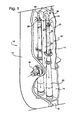
- a conventional reactor will include a reactor pressure vessel 10 that includes a reactor pressure vessel wall 12 and an inner core shroud 14 defining a generally annular space 16 therebetween that contains coolant.
- a plurality of jet pumps one being generally designated 18, are disposed at circumferential spaced positions surrounding the pressure vessel in the annular space 16 defined between the pressure vessel wall 12 and the core shroud 14.
- Each jet pump 18 typically comprises an inlet riser 20, a transition piece 28 adjacent the upper end of the inlet riser 20, a pair of elbows 22, inlet-mixers 23, each including nozzles 24 and mixing sections 25, and diffusers 26.
- Hold down assemblies adjacent the top of the jet pump 18, together with a number of braces and restraining assemblies maintain each jet pump 18 in a substantially fixed position in the annular space 16 between the core shroud 14 and pressure vessel wall 12.
- a thermal sleeve 32 penetrates the pressure vessel wall 12 and is welded at its juncture with an inlet elbow with the opposite end of the inlet elbow being secured to the lower end of the inlet riser 20.
- coolant enters the thermal sleeve 32 and flows through the elbow, upwardly in the inlet riser 20, through the inlet elbows 22 through nozzles 24 for flow in a downward direction through the mixing sections 25, the diffusers 26 and into a plenum 40 for upward flow through the reactor core.
- the jet pump nozzles 24 will induce a suction flow of coolant from the annular space 16 into the mixing section 25 which mixes with the coolant flow through the jet pump nozzles 23.
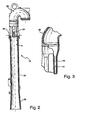
- FIG. 2 Illustrated more particularly to FIG. 2 is a portion of a jet pump 18 having an inlet elbow 22 adjacent five nozzles 24.
- the nozzles 24 are supported above the mixing sections 25 and, in combination with the mixing sections define a generally annular suction flow passage 29 between the nozzles 24 and an inlet to the mixing section 25.
- the mixing section 25 is typically a generally cylindrical pipe which terminates at its lower end in an inlet to the diffuser 26. Consequently, the flow of coolant through the nozzles 24 induces a suction flow of coolant through the annular spacer 16 for flow into the mixing section 25.
- These combined nozzle and suction flows pass through the mixing section 25 and diffuser 26 and into plenum 40.
- FIG. 3 Illustrated in FIG. 3 are two of the nozzles 24. It will be appreciated that the interior passages through nozzles 24 are generally conical or frusto-conical in shape with the diameter decreasing along the path of the fluid flow, thereby increasing the flow velocity into mixing section 25. The increased velocity induces additional fluid to flow into the sleeve through the annular opening 29 between the nozzles 23 and the mixer sleeve inlet as indicated by the arrows in FIG. 2 .
- the inlet-mixer is provided with a coating that inhibits or eliminates "crud” build-up.
- the inlet-mixer 23 is placed in a chemical vapor deposition ("CVD") reactor.
- the reactor is a heated vacuum vessel that is sufficiently large to house the part being coated.
- the vessel is then evacuated and the pressure is dropped to approximately 2670 Pa (20 mTorr).
- Heat is applied to raise the temperature of the vessel and the part being coated to a reaction temperature sufficient to decompose an organometallic source gas, typically within a range of about 400°-500° C. and preferably about 450° C.
- chemical precursors such as one or more organometallic precursor or source gases are injected into the reactor chamber.
- the precursor gas(es) impinge on the surface of the heated inlet-mixer part and thermally decompose to form a metal oxide insulator coating corresponding to the metallic portion of the source gas(es) and byproduct gases.
- source gases such as Ti(OC 2 H 5 ) 4 and Ta(OC 2 H 5 ) 5 are useful for forming the corresponding oxides TiO 2 and Ta 2 O 5 .
- this method may be used to deposit layers including such metallic oxides as TiO 2 , Ta 2 O 5 , SiO 2 , Al 2 O 3 , ZrO 2 , Nb 2 O 5 , SrBi 2 , Ta 2 O 3 , Y 2 O 3 , HfO 2 , BaO, SrO, SrTiO 3 , PbTiO 3 , and PbZrO 3 , and byproduct gases that are evacuated from the reactor vessel.
- the deposition process is maintained for a period sufficient to achieve a base metal oxide coating of the desired thickness, typically between about 0.1 and 2 ⁇ m, after which the gas flow of the first precursor gas(es) is terminated.
- the reactor vessel may then be purged with an inert gas or gases to remove the initial precursor gas(es) while generally maintaining the reactor pressure and temperature.
- an inert gas or gases to remove the initial precursor gas(es) while generally maintaining the reactor pressure and temperature.
- a different organometallic precursor or source gas or mixture of such gases is introduced into the reactor chamber.
- the precursor gas(es) impinge on the surface of the first metal oxide insulator layer formed on the heated inlet-mixer part and thermally decompose to form a second metal oxide insulator coating corresponding to the metallic portion of the source gas(es) and byproduct gases.
- heating is terminated and the reactor vessel and the coated part are cooled. Once the temperature is sufficiently low, the vacuum is released and the reactor chamber opened to allow removal of the coated jet pump part removed.
- the coating is indicated 31 in FIGS. 2 and 3 along the interior wall surfaces of the inlet-mixer 23.
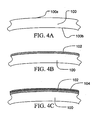
- the multi-layer coating process for the high flow surfaces of the jet pump provides for the application of an initial or base dielectric coating of relatively smaller thickness (e.g., about 0.1 to about 0.5 ⁇ m) which exhibits improved adherence to the base material and provides a clean surface for the application of the second or outer dielectric coating.
- the second or outer dielectric coating may then be selected to provide sufficient adherence to the initial or base dielectric coating while providing improved resistance to the anticipated operating environment.
- a part 100 fabricated from a conductive material and having a wetted surface is initially coated with a base dielectric layer 102, after which a second and different dielectric layer 104 is applied to the base dielectric layer.
- Suggested initial coating materials include the oxide material tantala (Ta 2 O 5 ) with the outer coat being titania (TiO 2 ).
- TiO 2 titania
- a wide range of metal oxide dielectrics may be used to form the base and outer coatings, including, for example, zirconia, silica, alumina, or other metal oxide that exhibits sufficient resistance to anticipated operating environment.
- the CVD process as described above, or another gas phase deposition process such as Atomic Layer Deposition (ALD) are generally suitable for forming a conformal surface coating on a complex three-dimensional surface.
- PVD physical vapor deposition
- PEPVD plasma enhanced physical vapor deposition
- RF radio frequency
- EAS electric arc spraying
- PAS plasma spray coating processes
- APS atmospheric pressure
- VPS vacuum
- LPPS low pressure inert gas
- HVOF high velocity oxy-fuel
- the initial dielectric coating such as Ta 2 O 5
- the outer coating such as TiO 2
- This same dual-coat approach may be applied to replacement components such as core spray piping to improve resistance to stress corrosion cracking.
- Other parts that could benefit from a dielectric coating include impellers, flow elements, valves, other application which are exposed to high flow water and susceptible to fouling from the charged ions in the fluid.
- Ta 2 O 5 will be suitable for forming an initial coating that will provide both sufficient electrical resistance and sufficient adhesion on a range of base metals, such as stainless steel, used in fabricating the parts. It is also anticipated that TiO 2 will be suitable for forming an outer layer on a Ta 2 O 5 base coating that will exhibit both sufficient adherence to the underlying Ta 2 O 5 layer while improving the corrosion resistance in a BWR environment over that exhibited by Ta 2 O 5 . It is anticipated that the multi-layer Ta 2 O 5 /TiO 2 dielectric coating will outperform a single dielectric coat of Ta 2 O 5 or TiO 2 having the same thickness in BWR applications, including jet pump surfaces.
- the coating process as described above may incorporate additional steps such as a cleaning or etching step to prepare the surface of the part being coated to receive the base dielectric coating and improve the adhesion of the base layer.
- additional steps such as a cleaning or etching step to prepare the surface of the part being coated to receive the base dielectric coating and improve the adhesion of the base layer.
- additional surface treatments such as nitridation or other surface modification processes may be utilized to increase the resistance of the outer layer to the anticipated operating environment for the coated part.
Landscapes
- Chemical & Material Sciences (AREA)
- Engineering & Computer Science (AREA)
- Organic Chemistry (AREA)
- Chemical Kinetics & Catalysis (AREA)
- Materials Engineering (AREA)
- Mechanical Engineering (AREA)
- Metallurgy (AREA)
- Physics & Mathematics (AREA)
- Inorganic Chemistry (AREA)
- General Engineering & Computer Science (AREA)
- Plasma & Fusion (AREA)
- High Energy & Nuclear Physics (AREA)
- General Chemical & Material Sciences (AREA)
- Ceramic Engineering (AREA)
- Physical Or Chemical Processes And Apparatus (AREA)
- Chemical Vapour Deposition (AREA)
- Other Surface Treatments For Metallic Materials (AREA)
- Laminated Bodies (AREA)
Applications Claiming Priority (1)
| Application Number | Priority Date | Filing Date | Title |
|---|---|---|---|
| US11/024,952 US8023609B2 (en) | 2004-12-30 | 2004-12-30 | Dielectric coating for surfaces exposed to high temperature water |
Publications (3)
| Publication Number | Publication Date |
|---|---|
| EP1676936A2 EP1676936A2 (en) | 2006-07-05 |
| EP1676936A3 EP1676936A3 (en) | 2007-04-04 |
| EP1676936B1 true EP1676936B1 (en) | 2010-04-07 |
Family
ID=36084383
Family Applications (1)
| Application Number | Title | Priority Date | Filing Date |
|---|---|---|---|
| EP05257954A Expired - Lifetime EP1676936B1 (en) | 2004-12-30 | 2005-12-22 | Improved dielectric coating for surfaces exposed to high temperature water |
Country Status (7)
| Country | Link |
|---|---|
| US (2) | US8023609B2 (enExample) |
| EP (1) | EP1676936B1 (enExample) |
| JP (1) | JP4943701B2 (enExample) |
| DE (1) | DE602005020411D1 (enExample) |
| ES (1) | ES2341783T3 (enExample) |
| MX (1) | MXPA05013942A (enExample) |
| TW (1) | TWI372398B (enExample) |
Families Citing this family (12)
| Publication number | Priority date | Publication date | Assignee | Title |
|---|---|---|---|---|
| US20090046825A1 (en) * | 2007-08-16 | 2009-02-19 | Ge-Hitachi Nuclear Energy Americas Llc | Protective coating applied to metallic reactor components to reduce corrosion products into the nuclear reactor environment |
| US20110122986A1 (en) * | 2007-08-23 | 2011-05-26 | Kabushiki Kaisha Toshiba | Method of inhibiting adhesion of radioactive substance and apparatus inhibited from suffering adhesion thereof |
| US8349408B2 (en) * | 2008-09-03 | 2013-01-08 | Ge-Hitachi Nuclear Energy Americas, Llc | Method of protecting reactor components from fouling |
| JP5513864B2 (ja) * | 2008-12-12 | 2014-06-04 | 株式会社東芝 | 原子炉炉内構造物およびその製造方法 |
| JP5361500B2 (ja) * | 2009-04-03 | 2013-12-04 | 株式会社東芝 | ジェットポンプおよびその振動抑制方法 |
| KR101163999B1 (ko) | 2010-02-19 | 2012-07-18 | 한국원자력연구원 | 물과 접촉하는 표면 중 손상부의 수중 보수방법 및 이에 사용되는 수중 보수장치 |
| JP4810617B1 (ja) * | 2010-07-27 | 2011-11-09 | 株式会社東芝 | プラントの腐食抑制方法及びプラント |
| WO2013191743A1 (en) * | 2012-02-17 | 2013-12-27 | The Massachusetts Institute Of Technology | Surface modification of cladding material |
| DE102012220559A1 (de) * | 2012-11-12 | 2014-05-15 | Siemens Aktiengesellschaft | Kühlung für elektrische Generatoren |
| US10847273B2 (en) | 2014-01-17 | 2020-11-24 | Ge-Hitachi Nuclear Energy Americas Llc | Steam separator and nuclear boiling water reactor including the same |
| US10777328B2 (en) | 2015-05-04 | 2020-09-15 | Cerium Laboratories, Llc | Enhanced surface treatments |
| CN112562944A (zh) * | 2020-12-11 | 2021-03-26 | 国网黑龙江省电力有限公司电力科学研究院 | 一种适用于强风沙区域金具表面涂层的选涂方法 |
Family Cites Families (20)
| Publication number | Priority date | Publication date | Assignee | Title |
|---|---|---|---|---|
| CA1064626A (en) * | 1977-06-09 | 1979-10-16 | Majesty (Her) In Right Of Canada As Represented By Atomic Energy Of Cana Da Limited | Deposit suppression in the core of water-cooled nuclear reactors |
| US4297150A (en) * | 1979-07-07 | 1981-10-27 | The British Petroleum Company Limited | Protective metal oxide films on metal or alloy substrate surfaces susceptible to coking, corrosion or catalytic activity |
| CA1232827A (en) * | 1984-04-20 | 1988-02-16 | Yasumasa Furutani | Inhibition of deposition of radioactive substances on nuclear power plant components |
| JPS63274751A (ja) * | 1987-05-01 | 1988-11-11 | Toyota Motor Corp | セラミック溶射部材 |
| EP0409693B1 (fr) * | 1989-07-21 | 1993-09-22 | Framatome | Procédé de réalisation d'une couche d'isolation en oxyde de chrome entre les pastilles et la gaine d'un élément combustible nucléaire et élément combustible comportant une telle couche d'isolation |
| US5147597A (en) * | 1991-04-09 | 1992-09-15 | Electric Power Research Institute | Prestabilized chromium protective film to reduce radiation buildup |
| US5510173A (en) * | 1993-08-20 | 1996-04-23 | Southwall Technologies Inc. | Multiple layer thin films with improved corrosion resistance |
| JPH07228963A (ja) * | 1994-02-17 | 1995-08-29 | Nuclear Fuel Ind Ltd | 原子燃料用折出硬化型ニッケル基合金材 |
| US5444747A (en) | 1994-05-09 | 1995-08-22 | General Electric Company | Jet pump electro-nozzle |
| JP3605969B2 (ja) * | 1996-10-31 | 2004-12-22 | 石川島播磨重工業株式会社 | 防食用チタン酸化膜の作製方法および防食用チタン酸化膜 |
| US6214473B1 (en) * | 1998-05-13 | 2001-04-10 | Andrew Tye Hunt | Corrosion-resistant multilayer coatings |
| US6254341B1 (en) * | 1998-11-13 | 2001-07-03 | General Electric Company | Engine having resistance to particle deposits |
| JP4043647B2 (ja) | 1999-06-23 | 2008-02-06 | 株式会社東芝 | 原子炉構造材及び原子炉構造材の腐食低減方法 |
| JP4627830B2 (ja) * | 1999-12-20 | 2011-02-09 | 株式会社フルヤ金属 | 超臨界水酸化分解処理装置の反応容器及び反応容器の製造方法 |
| JP4334106B2 (ja) * | 2000-03-31 | 2009-09-30 | 株式会社東芝 | 原子炉構造材料の光触媒付着方法 |
| US6633623B2 (en) * | 2000-11-29 | 2003-10-14 | General Electric Company | Apparatus and methods for protecting a jet pump nozzle assembly and inlet-mixer |
| US6630202B1 (en) * | 2002-09-30 | 2003-10-07 | General Electric Company | CVD treatment of hard friction coated steam line plug grips |
| JP4430372B2 (ja) * | 2003-04-15 | 2010-03-10 | 株式会社神戸製鋼所 | 耐食性に優れた金属構造体、前記金属構造体を製造するための材料および前記金属構造体の製法 |
| US7001672B2 (en) * | 2003-12-03 | 2006-02-21 | Medicine Lodge, Inc. | Laser based metal deposition of implant structures |
| US7666522B2 (en) * | 2003-12-03 | 2010-02-23 | IMDS, Inc. | Laser based metal deposition (LBMD) of implant structures |
-
2004
- 2004-12-30 US US11/024,952 patent/US8023609B2/en not_active Expired - Fee Related
-
2005
- 2005-12-19 MX MXPA05013942A patent/MXPA05013942A/es active IP Right Grant
- 2005-12-21 TW TW094145566A patent/TWI372398B/zh not_active IP Right Cessation
- 2005-12-22 ES ES05257954T patent/ES2341783T3/es not_active Expired - Lifetime
- 2005-12-22 EP EP05257954A patent/EP1676936B1/en not_active Expired - Lifetime
- 2005-12-22 DE DE602005020411T patent/DE602005020411D1/de not_active Expired - Lifetime
- 2005-12-26 JP JP2005371381A patent/JP4943701B2/ja not_active Expired - Lifetime
-
2011
- 2011-09-16 US US13/234,578 patent/US8675806B2/en not_active Expired - Fee Related
Also Published As
| Publication number | Publication date |
|---|---|
| US8023609B2 (en) | 2011-09-20 |
| US8675806B2 (en) | 2014-03-18 |
| DE602005020411D1 (de) | 2010-05-20 |
| JP4943701B2 (ja) | 2012-05-30 |
| US20140029712A1 (en) | 2014-01-30 |
| ES2341783T3 (es) | 2010-06-28 |
| EP1676936A3 (en) | 2007-04-04 |
| US20050265512A1 (en) | 2005-12-01 |
| TWI372398B (en) | 2012-09-11 |
| JP2006194873A (ja) | 2006-07-27 |
| TW200634849A (en) | 2006-10-01 |
| EP1676936A2 (en) | 2006-07-05 |
| MXPA05013942A (es) | 2006-07-10 |
Similar Documents
| Publication | Publication Date | Title |
|---|---|---|
| US8675806B2 (en) | Dielectric coating for surfaces exposed to high temperature water | |
| EP1211695B1 (en) | Apparatus and methods for protecting a jet pump nozzle assembly and inlet-mixer | |
| US8349408B2 (en) | Method of protecting reactor components from fouling | |
| US5942334A (en) | Multilayer thermal barrier coating | |
| JP4331479B2 (ja) | 半導体処理装置における高靭性ジルコニアセラミック構成要素とコーティングおよびその製造方法 | |
| KR100934048B1 (ko) | 가스 토출 부재 및 플라즈마 처리 장치 | |
| US7648782B2 (en) | Ceramic coating member for semiconductor processing apparatus | |
| JP2008150702A (ja) | 基体表面における温度勾配を防止する方法およびタービンエンジン部品 | |
| EP1739685A1 (en) | Method for mitigating oxide fouling on structural components in light water reactors | |
| JP2006194873A5 (enExample) | ||
| US9850581B2 (en) | Reactor internal structure and method of manufacturing the same | |
| US20120315496A1 (en) | Method of forming an oxide coating that reduces accumulation of radioactive species on a metallic surface | |
| KR20060031136A (ko) | 진공 플라즈마 챔버용 열용사 코팅막 및 그 제조방법 | |
| CN118186361A (zh) | 形成耐腐蚀涂层的方法、堵塞棒、及半导体零部件 | |
| EP3685100B1 (en) | Burner with a slurry coating with high resistance to metal dusting | |
| KR20260074342A (ko) | 첨단 이중 층 니켈 함유 코팅들을 갖는 반도체 챔버 컴포넌트들 | |
| KR20260035205A (ko) | 레이저 글레이징된 금속 옥사이드 중간 층을 갖는 반도체 공정 챔버 구성요소 | |
| JP2023075617A (ja) | コーティング被覆部材及びコーティング方法 | |
| KR20060089362A (ko) | 에어로졸 증착방법을 이용한 수처리용 필터 제조 방법과,그를 통해 얻어진 수처리용 필터 | |
| JP2018017664A (ja) | 原子炉圧力容器、原子炉および原子炉圧力容器の製造方法 |
Legal Events
| Date | Code | Title | Description |
|---|---|---|---|
| PUAI | Public reference made under article 153(3) epc to a published international application that has entered the european phase |
Free format text: ORIGINAL CODE: 0009012 |
|
| AK | Designated contracting states |
Kind code of ref document: A2 Designated state(s): AT BE BG CH CY CZ DE DK EE ES FI FR GB GR HU IE IS IT LI LT LU LV MC NL PL PT RO SE SI SK TR |
|
| AX | Request for extension of the european patent |
Extension state: AL BA HR MK YU |
|
| PUAL | Search report despatched |
Free format text: ORIGINAL CODE: 0009013 |
|
| AK | Designated contracting states |
Kind code of ref document: A3 Designated state(s): AT BE BG CH CY CZ DE DK EE ES FI FR GB GR HU IE IS IT LI LT LU LV MC NL PL PT RO SE SI SK TR |
|
| AX | Request for extension of the european patent |
Extension state: AL BA HR MK YU |
|
| 17P | Request for examination filed |
Effective date: 20071004 |
|
| AKX | Designation fees paid |
Designated state(s): CH DE ES FI LI SE |
|
| 17Q | First examination report despatched |
Effective date: 20080103 |
|
| GRAP | Despatch of communication of intention to grant a patent |
Free format text: ORIGINAL CODE: EPIDOSNIGR1 |
|
| GRAS | Grant fee paid |
Free format text: ORIGINAL CODE: EPIDOSNIGR3 |
|
| GRAA | (expected) grant |
Free format text: ORIGINAL CODE: 0009210 |
|
| AK | Designated contracting states |
Kind code of ref document: B1 Designated state(s): CH DE ES FI LI SE |
|
| REG | Reference to a national code |
Ref country code: CH Ref legal event code: EP Ref country code: CH Ref legal event code: NV Representative=s name: SERVOPATENT GMBH |
|
| REF | Corresponds to: |
Ref document number: 602005020411 Country of ref document: DE Date of ref document: 20100520 Kind code of ref document: P |
|
| REG | Reference to a national code |
Ref country code: ES Ref legal event code: FG2A Ref document number: 2341783 Country of ref document: ES Kind code of ref document: T3 |
|
| REG | Reference to a national code |
Ref country code: SE Ref legal event code: TRGR |
|
| PLBE | No opposition filed within time limit |
Free format text: ORIGINAL CODE: 0009261 |
|
| STAA | Information on the status of an ep patent application or granted ep patent |
Free format text: STATUS: NO OPPOSITION FILED WITHIN TIME LIMIT |
|
| 26N | No opposition filed |
Effective date: 20110110 |
|
| REG | Reference to a national code |
Ref country code: CH Ref legal event code: PCAR Free format text: NEW ADDRESS: WANNERSTRASSE 9/1, 8045 ZUERICH (CH) |
|
| PGFP | Annual fee paid to national office [announced via postgrant information from national office to epo] |
Ref country code: SE Payment date: 20201124 Year of fee payment: 16 Ref country code: FI Payment date: 20201123 Year of fee payment: 16 Ref country code: DE Payment date: 20201119 Year of fee payment: 16 |
|
| REG | Reference to a national code |
Ref country code: DE Ref legal event code: R119 Ref document number: 602005020411 Country of ref document: DE |
|
| REG | Reference to a national code |
Ref country code: FI Ref legal event code: MAE |
|
| REG | Reference to a national code |
Ref country code: SE Ref legal event code: EUG |
|
| PG25 | Lapsed in a contracting state [announced via postgrant information from national office to epo] |
Ref country code: FI Free format text: LAPSE BECAUSE OF NON-PAYMENT OF DUE FEES Effective date: 20211222 |
|
| PG25 | Lapsed in a contracting state [announced via postgrant information from national office to epo] |
Ref country code: SE Free format text: LAPSE BECAUSE OF NON-PAYMENT OF DUE FEES Effective date: 20211223 Ref country code: DE Free format text: LAPSE BECAUSE OF NON-PAYMENT OF DUE FEES Effective date: 20220701 |
|
| REG | Reference to a national code |
Ref country code: ES Ref legal event code: PC2A Owner name: GE HITACHI NUCLEAR ENERGY AMERICAS LLC Effective date: 20240709 |
|
| PGFP | Annual fee paid to national office [announced via postgrant information from national office to epo] |
Ref country code: ES Payment date: 20250102 Year of fee payment: 20 |
|
| PGFP | Annual fee paid to national office [announced via postgrant information from national office to epo] |
Ref country code: CH Payment date: 20250101 Year of fee payment: 20 |
|
| REG | Reference to a national code |
Ref country code: CH Ref legal event code: H14 Free format text: ST27 STATUS EVENT CODE: U-0-0-H10-H14 (AS PROVIDED BY THE NATIONAL OFFICE) Effective date: 20251222 |
|
| REG | Reference to a national code |
Ref country code: ES Ref legal event code: FD2A Effective date: 20260102 |
|
| PG25 | Lapsed in a contracting state [announced via postgrant information from national office to epo] |
Ref country code: ES Free format text: LAPSE BECAUSE OF EXPIRATION OF PROTECTION Effective date: 20251223 |