EP1657504B1 - Dispositif et méthode de détection d'état anormal d'un appareil multiple de climatisation - Google Patents
Dispositif et méthode de détection d'état anormal d'un appareil multiple de climatisation Download PDFInfo
- Publication number
- EP1657504B1 EP1657504B1 EP05012267A EP05012267A EP1657504B1 EP 1657504 B1 EP1657504 B1 EP 1657504B1 EP 05012267 A EP05012267 A EP 05012267A EP 05012267 A EP05012267 A EP 05012267A EP 1657504 B1 EP1657504 B1 EP 1657504B1
- Authority
- EP
- European Patent Office
- Prior art keywords
- average
- temperature
- zone
- air conditioner
- indoor
- Prior art date
- Legal status (The legal status is an assumption and is not a legal conclusion. Google has not performed a legal analysis and makes no representation as to the accuracy of the status listed.)
- Ceased
Links
- 230000002159 abnormal effect Effects 0.000 title claims description 43
- 238000000034 method Methods 0.000 title claims description 28
- 238000001816 cooling Methods 0.000 claims description 32
- 238000010438 heat treatment Methods 0.000 claims description 25
- 239000007788 liquid Substances 0.000 claims description 9
- 239000003507 refrigerant Substances 0.000 description 11
- 238000010586 diagram Methods 0.000 description 9
- 238000010276 construction Methods 0.000 description 5
- 229920006395 saturated elastomer Polymers 0.000 description 4
- 238000004891 communication Methods 0.000 description 2
- 238000009434 installation Methods 0.000 description 2
- 238000000926 separation method Methods 0.000 description 2
- 230000001143 conditioned effect Effects 0.000 description 1
- 230000000593 degrading effect Effects 0.000 description 1
- 238000007599 discharging Methods 0.000 description 1
- 238000002474 experimental method Methods 0.000 description 1
- 230000010354 integration Effects 0.000 description 1
- 238000010295 mobile communication Methods 0.000 description 1
Images

Classifications
-
- F—MECHANICAL ENGINEERING; LIGHTING; HEATING; WEAPONS; BLASTING
- F24—HEATING; RANGES; VENTILATING
- F24F—AIR-CONDITIONING; AIR-HUMIDIFICATION; VENTILATION; USE OF AIR CURRENTS FOR SCREENING
- F24F11/00—Control or safety arrangements
- F24F11/30—Control or safety arrangements for purposes related to the operation of the system, e.g. for safety or monitoring
-
- F—MECHANICAL ENGINEERING; LIGHTING; HEATING; WEAPONS; BLASTING
- F24—HEATING; RANGES; VENTILATING
- F24F—AIR-CONDITIONING; AIR-HUMIDIFICATION; VENTILATION; USE OF AIR CURRENTS FOR SCREENING
- F24F11/00—Control or safety arrangements
- F24F11/50—Control or safety arrangements characterised by user interfaces or communication
- F24F11/52—Indication arrangements, e.g. displays
-
- F—MECHANICAL ENGINEERING; LIGHTING; HEATING; WEAPONS; BLASTING
- F24—HEATING; RANGES; VENTILATING
- F24F—AIR-CONDITIONING; AIR-HUMIDIFICATION; VENTILATION; USE OF AIR CURRENTS FOR SCREENING
- F24F11/00—Control or safety arrangements
- F24F11/62—Control or safety arrangements characterised by the type of control or by internal processing, e.g. using fuzzy logic, adaptive control or estimation of values
-
- F—MECHANICAL ENGINEERING; LIGHTING; HEATING; WEAPONS; BLASTING
- F25—REFRIGERATION OR COOLING; COMBINED HEATING AND REFRIGERATION SYSTEMS; HEAT PUMP SYSTEMS; MANUFACTURE OR STORAGE OF ICE; LIQUEFACTION SOLIDIFICATION OF GASES
- F25B—REFRIGERATION MACHINES, PLANTS OR SYSTEMS; COMBINED HEATING AND REFRIGERATION SYSTEMS; HEAT PUMP SYSTEMS
- F25B49/00—Arrangement or mounting of control or safety devices
- F25B49/005—Arrangement or mounting of control or safety devices of safety devices
-
- G—PHYSICS
- G05—CONTROLLING; REGULATING
- G05D—SYSTEMS FOR CONTROLLING OR REGULATING NON-ELECTRIC VARIABLES
- G05D23/00—Control of temperature
- G05D23/01—Control of temperature without auxiliary power
- G05D23/02—Control of temperature without auxiliary power with sensing element expanding and contracting in response to changes of temperature
-
- F—MECHANICAL ENGINEERING; LIGHTING; HEATING; WEAPONS; BLASTING
- F24—HEATING; RANGES; VENTILATING
- F24F—AIR-CONDITIONING; AIR-HUMIDIFICATION; VENTILATION; USE OF AIR CURRENTS FOR SCREENING
- F24F11/00—Control or safety arrangements
- F24F11/30—Control or safety arrangements for purposes related to the operation of the system, e.g. for safety or monitoring
- F24F11/32—Responding to malfunctions or emergencies
-
- F—MECHANICAL ENGINEERING; LIGHTING; HEATING; WEAPONS; BLASTING
- F24—HEATING; RANGES; VENTILATING
- F24F—AIR-CONDITIONING; AIR-HUMIDIFICATION; VENTILATION; USE OF AIR CURRENTS FOR SCREENING
- F24F11/00—Control or safety arrangements
- F24F11/62—Control or safety arrangements characterised by the type of control or by internal processing, e.g. using fuzzy logic, adaptive control or estimation of values
- F24F11/63—Electronic processing
- F24F11/65—Electronic processing for selecting an operating mode
-
- F—MECHANICAL ENGINEERING; LIGHTING; HEATING; WEAPONS; BLASTING
- F24—HEATING; RANGES; VENTILATING
- F24F—AIR-CONDITIONING; AIR-HUMIDIFICATION; VENTILATION; USE OF AIR CURRENTS FOR SCREENING
- F24F2110/00—Control inputs relating to air properties
- F24F2110/10—Temperature
-
- F—MECHANICAL ENGINEERING; LIGHTING; HEATING; WEAPONS; BLASTING
- F24—HEATING; RANGES; VENTILATING
- F24F—AIR-CONDITIONING; AIR-HUMIDIFICATION; VENTILATION; USE OF AIR CURRENTS FOR SCREENING
- F24F2110/00—Control inputs relating to air properties
- F24F2110/10—Temperature
- F24F2110/12—Temperature of the outside air
-
- F—MECHANICAL ENGINEERING; LIGHTING; HEATING; WEAPONS; BLASTING
- F25—REFRIGERATION OR COOLING; COMBINED HEATING AND REFRIGERATION SYSTEMS; HEAT PUMP SYSTEMS; MANUFACTURE OR STORAGE OF ICE; LIQUEFACTION SOLIDIFICATION OF GASES
- F25B—REFRIGERATION MACHINES, PLANTS OR SYSTEMS; COMBINED HEATING AND REFRIGERATION SYSTEMS; HEAT PUMP SYSTEMS
- F25B13/00—Compression machines, plants or systems, with reversible cycle
-
- F—MECHANICAL ENGINEERING; LIGHTING; HEATING; WEAPONS; BLASTING
- F25—REFRIGERATION OR COOLING; COMBINED HEATING AND REFRIGERATION SYSTEMS; HEAT PUMP SYSTEMS; MANUFACTURE OR STORAGE OF ICE; LIQUEFACTION SOLIDIFICATION OF GASES
- F25B—REFRIGERATION MACHINES, PLANTS OR SYSTEMS; COMBINED HEATING AND REFRIGERATION SYSTEMS; HEAT PUMP SYSTEMS
- F25B2313/00—Compression machines, plants or systems with reversible cycle not otherwise provided for
- F25B2313/023—Compression machines, plants or systems with reversible cycle not otherwise provided for using multiple indoor units
-
- F—MECHANICAL ENGINEERING; LIGHTING; HEATING; WEAPONS; BLASTING
- F25—REFRIGERATION OR COOLING; COMBINED HEATING AND REFRIGERATION SYSTEMS; HEAT PUMP SYSTEMS; MANUFACTURE OR STORAGE OF ICE; LIQUEFACTION SOLIDIFICATION OF GASES
- F25B—REFRIGERATION MACHINES, PLANTS OR SYSTEMS; COMBINED HEATING AND REFRIGERATION SYSTEMS; HEAT PUMP SYSTEMS
- F25B2313/00—Compression machines, plants or systems with reversible cycle not otherwise provided for
- F25B2313/023—Compression machines, plants or systems with reversible cycle not otherwise provided for using multiple indoor units
- F25B2313/0233—Compression machines, plants or systems with reversible cycle not otherwise provided for using multiple indoor units in parallel arrangements
- F25B2313/02331—Compression machines, plants or systems with reversible cycle not otherwise provided for using multiple indoor units in parallel arrangements during cooling
-
- F—MECHANICAL ENGINEERING; LIGHTING; HEATING; WEAPONS; BLASTING
- F25—REFRIGERATION OR COOLING; COMBINED HEATING AND REFRIGERATION SYSTEMS; HEAT PUMP SYSTEMS; MANUFACTURE OR STORAGE OF ICE; LIQUEFACTION SOLIDIFICATION OF GASES
- F25B—REFRIGERATION MACHINES, PLANTS OR SYSTEMS; COMBINED HEATING AND REFRIGERATION SYSTEMS; HEAT PUMP SYSTEMS
- F25B2313/00—Compression machines, plants or systems with reversible cycle not otherwise provided for
- F25B2313/023—Compression machines, plants or systems with reversible cycle not otherwise provided for using multiple indoor units
- F25B2313/0233—Compression machines, plants or systems with reversible cycle not otherwise provided for using multiple indoor units in parallel arrangements
- F25B2313/02334—Compression machines, plants or systems with reversible cycle not otherwise provided for using multiple indoor units in parallel arrangements during heating
-
- F—MECHANICAL ENGINEERING; LIGHTING; HEATING; WEAPONS; BLASTING
- F25—REFRIGERATION OR COOLING; COMBINED HEATING AND REFRIGERATION SYSTEMS; HEAT PUMP SYSTEMS; MANUFACTURE OR STORAGE OF ICE; LIQUEFACTION SOLIDIFICATION OF GASES
- F25B—REFRIGERATION MACHINES, PLANTS OR SYSTEMS; COMBINED HEATING AND REFRIGERATION SYSTEMS; HEAT PUMP SYSTEMS
- F25B2313/00—Compression machines, plants or systems with reversible cycle not otherwise provided for
- F25B2313/025—Compression machines, plants or systems with reversible cycle not otherwise provided for using multiple outdoor units
-
- F—MECHANICAL ENGINEERING; LIGHTING; HEATING; WEAPONS; BLASTING
- F25—REFRIGERATION OR COOLING; COMBINED HEATING AND REFRIGERATION SYSTEMS; HEAT PUMP SYSTEMS; MANUFACTURE OR STORAGE OF ICE; LIQUEFACTION SOLIDIFICATION OF GASES
- F25B—REFRIGERATION MACHINES, PLANTS OR SYSTEMS; COMBINED HEATING AND REFRIGERATION SYSTEMS; HEAT PUMP SYSTEMS
- F25B2313/00—Compression machines, plants or systems with reversible cycle not otherwise provided for
- F25B2313/025—Compression machines, plants or systems with reversible cycle not otherwise provided for using multiple outdoor units
- F25B2313/0253—Compression machines, plants or systems with reversible cycle not otherwise provided for using multiple outdoor units in parallel arrangements
-
- F—MECHANICAL ENGINEERING; LIGHTING; HEATING; WEAPONS; BLASTING
- F25—REFRIGERATION OR COOLING; COMBINED HEATING AND REFRIGERATION SYSTEMS; HEAT PUMP SYSTEMS; MANUFACTURE OR STORAGE OF ICE; LIQUEFACTION SOLIDIFICATION OF GASES
- F25B—REFRIGERATION MACHINES, PLANTS OR SYSTEMS; COMBINED HEATING AND REFRIGERATION SYSTEMS; HEAT PUMP SYSTEMS
- F25B2500/00—Problems to be solved
- F25B2500/19—Calculation of parameters
-
- F—MECHANICAL ENGINEERING; LIGHTING; HEATING; WEAPONS; BLASTING
- F25—REFRIGERATION OR COOLING; COMBINED HEATING AND REFRIGERATION SYSTEMS; HEAT PUMP SYSTEMS; MANUFACTURE OR STORAGE OF ICE; LIQUEFACTION SOLIDIFICATION OF GASES
- F25B—REFRIGERATION MACHINES, PLANTS OR SYSTEMS; COMBINED HEATING AND REFRIGERATION SYSTEMS; HEAT PUMP SYSTEMS
- F25B2700/00—Sensing or detecting of parameters; Sensors therefor
- F25B2700/21—Temperatures
- F25B2700/2104—Temperatures of an indoor room or compartment
-
- F—MECHANICAL ENGINEERING; LIGHTING; HEATING; WEAPONS; BLASTING
- F25—REFRIGERATION OR COOLING; COMBINED HEATING AND REFRIGERATION SYSTEMS; HEAT PUMP SYSTEMS; MANUFACTURE OR STORAGE OF ICE; LIQUEFACTION SOLIDIFICATION OF GASES
- F25B—REFRIGERATION MACHINES, PLANTS OR SYSTEMS; COMBINED HEATING AND REFRIGERATION SYSTEMS; HEAT PUMP SYSTEMS
- F25B2700/00—Sensing or detecting of parameters; Sensors therefor
- F25B2700/21—Temperatures
- F25B2700/2106—Temperatures of fresh outdoor air
Definitions
- the present invention relates to a multi-type air conditioner, and more particularly, to an abnormal state detecting apparatus of a multi-type air conditioner and a method thereof.
- EP1209427 discloses an abnormal state detecting apparatus of an air conditioner comprising a plurality of sensors that monitor among others the ambient temperature and conditioned space temperature.
- a micro controller is provided with the sensed parameters and a diagnostic program can be performed.
- an air conditioner is an apparatus for controlling the temperature, humidity, the air current, and a clean degree of indoor air for a comfortable indoor atmosphere.
- the air conditioner is largely divided into an integration type air conditioner that an indoor unit and an outdoor unit are mounted in a single case and a separation type air conditioner that a compressor and a condenser are constructed as an outdoor unit and an evaporator is constructed as an indoor unit.
- the separation type air conditioner comprises a cooling/heating air conditioner for selectively performing a cooling operation and a heating operation of the air conditioner by switching a flow path of a refrigerant by a flow path switching valve.
- the multi-type air conditioner having a plurality of indoor units for performing a cooling operation or a heating operation according to each space is being increasingly used.
- the multi-type air conditioner is provided with a plurality of outdoor units respectively having a plurality of compressors in parallel so as to correspond to a driving load of indoor units.
- FIG. 1 is a view showing a construction of outdoor units of a multi-type air conditioner in accordance with the conventional art.
- the conventional multi-type air conditioner is provided with a plurality of outdoor units (11a ⁇ 11n), and a plurality of indoor units (not shown).
- the plural outdoor units respectively comprises a pair of first and second compressors 13a and 13b for compressing a refrigerant, a four-way valve 21 for switching a flow path of the refrigerant, an outdoor heat exchanger 25 for exchanging heat of the refrigerant, and an accumulator 27 for providing a refrigerant of a gaseous state to the first compressor 13a and the second compressor 13b.
- the first compressor 13a and the second compressor 13b are respectively provided with a discharge pipe 15 for discharging a refrigerant at an upper region thereof, and is provided with a suction pipe 17 of which one side is connected to an accumulator 27 in order to suck a refrigerant at a lower region thereof.
- An oil balancing pipe 19 for uniformly supplying oil to the first compressor 13a and the second compressor 13b is connected between the first compressor 13a and the second compressor 13b.
- the first compressor 13a and the second compressor 13b are provided with an oil separator 31 for separating oil from a refrigerant and a check valve 33 at each discharge side thereof, respectively.
- the oil separator 31 is provided with an oil recollecting path 35 for recollecting separated oil to each suction side of the first compressor 13a and the second compressor 13b.
- a four-way valve 21 for switching a flow path of a refrigerant is provided at a lower side of the check valve 33.
- the outdoor heat exchanger 25 is connected to a first port of the four-way valve 21, and the accumulator 27 is connected to a second port of the four-way valve 21.
- one end of a connection pipe 41 connected to the indoor unit is connected to a third port of the four-way valve 21.
- a receiver 37 is provided at one side of the outdoor heat exchanger 25 along a flow direction of a refrigerant.
- Service valves 43a and 43b are respectively provided at each one side of the receiver 37 and the connection pipe 41.
- Each one side of the service valves 43a and 43b is connected to a main refrigerant pipe 45 for connecting the outdoor units 11a ⁇ 11n one another.
- the conventional multi-type air conditioner is provided with a plurality of indoor units (first to N th indoor unit) and a plurality of outdoor units (first to M th outdoor unit) connected to one another.
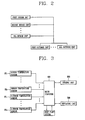
- FIG. 2 is a schematic diagram showing a state that plural outdoor units (first to M th outdoor unit) are connected to plural indoor units (first to N th indoor unit).
- the plural outdoor units are connected to the plural indoor units by a communication wire, and one of the plural outdoor units is operated by a central controller.
- the outdoor unit operated by the central controller controls other outdoor units and the plural indoor units (first to N th indoor unit) for a cooling operation or a heating operation.
- a user drives the indoor units by using a remote controller, the central controller, etc. of the multi-type air conditioner thusly to check whether a cooling operation of a heating operation of the air conditioner is well performed, thereby checking an abnormal state of the multi-type air conditioner.
- an installation inferiority such as an inferior pipe connection, a mis-connection of a communication wire, etc. or a mechanical damage may be generated.
- an abnormal state such as an inferior installation or a mechanical damage of the air conditioner is not precisely checked due to a complicated structure of the air conditioner, thereby degrading a function of the air conditioner or causing a mechanical damage of the air conditioner.
- an object of the present invention is to provide an abnormal state detecting apparatus of a multi-type air conditioner capable of detecting an abnormal state of the multi-type air conditioner by operating the air conditioner in different test operation modes according to indoor and outdoor temperatures and then by comparing characteristic data showing an operation state of the air conditioner being operated with a preset reference data at the time of a test operation, and a method thereof.
- an abnormal state detecting apparatus of a multi-type air conditioner comprising: a plurality of indoor temperature sensors RT1 ⁇ RTn for detecting indoor temperatures of indoor zones where a plurality of indoor units are positioned; a plurality of outdoor temperature sensors 0T1 ⁇ 0Tn for detecting outdoor temperatures of outdoor zones where a plurality of outdoor units are positioned; and a micro computer for judging an abnormal state of the multi-type air conditioner by selecting a corresponding test operation mode among a plurality of test operation modes preset according to an average indoor temperature of the detected plural indoor temperatures and an average outdoor temperature of the detected plural outdoor temperatures, by test-operating the multi-type air conditioner according to the selected test operation mode, then by collecting data showing an operation state of the test-operated air conditioner, and then by comparing the collected data with a preset reference data.
- a method for detecting an abnormal state of a multi-type air conditioner comprising: a user's selecting a test operation, and then detecting plural indoor temperatures of indoor zones where a plurality of indoor units are installed and plural outdoor temperatures of outdoor zones where a plurality of outdoor units are installed; selecting a corresponding test operation mode among a plurality of test operation modes preset according to an average indoor temperature of the detected plural indoor temperatures and an average outdoor temperature of the detected plural outdoor temperatures; test-operating the multi-type air conditioner according to the selected test operation mode, and collecting data showing an operation state of the test-operated air conditioner; and comparing the collected data with a preset reference data, and judging an abnormal state of the air conditioner based on the comparison result.
- an abnormal state detecting apparatus of a multi-type air conditioner capable of detecting an abnormal state of the multi-type air conditioner by operating the air conditioner in different test operation modes according to indoor and outdoor temperatures and then by comparing characteristic data showing an operation state of the air conditioner being operated with a preset reference data at the time of a test operation, and a method thereof.
- FIG. 3 is a block diagram showing a construction of an abnormal state detecting apparatus of a multi-type air conditioner according to the present invention.
- the abnormal state detecting apparatus of a multi-type air conditioner comprises: a plurality of indoor temperature sensors RT1 ⁇ RTn for detecting indoor temperatures of indoor zones where a plurality of indoor units are positioned; a plurality of outdoor temperature sensors 0T1 ⁇ 0Tn for detecting outdoor temperatures of outdoor zones where a plurality of outdoor units are positioned; and a micro computer 100 for judging an abnormal state of the multi-type air conditioner by selecting a corresponding test operation mode among a plurality of test operation modes preset according to an average indoor temperature of the detected plural indoor temperatures and an average outdoor temperature of the detected plural outdoor temperatures, by test-operating the multi-type air conditioner according to the selected test operation mode, then by collecting data showing an operation state of the test-operated air conditioner, and then by comparing the collected data with a preset reference data.
- the multi-type air conditioner according to the present invention further comprises a storing unit 200 for storing ideal data that indicates a normal operation state of the air conditioner as a reference data, and for storing information of first to sixth zones divided according to the average indoor temperature and the average outdoor temperature and having different test operation modes. Also, the multi-type air conditioner according to the present invention further comprises a displaying unit 300 for displaying an abnormal state of the air conditioner judged by the micro computer 100.
- the multi-type air conditioner can be realized as several systems.
- the multi-type air conditioner according to the present invention is realized as a heat pump system (HPS).
- HPS heat pump system
- the multi-type air conditioner realized as a heat pump system will be explained.
- data for showing an operation state of the air conditioner includes characteristic values of the heat pump system operated in a cooling mode or a heating mode, that is, a value of a high pressure (P H ), a value of a low pressure (P L ), a value of a compressor discharge temperature, a value of a liquid pipe temperature, a value of a degree of sub-cooling, a value of a degree of superheat, etc.
- P H a high pressure
- P L a low pressure
- a compressor discharge temperature a value of a liquid pipe temperature
- a value of a degree of sub-cooling a value of a degree of superheat
- the value of a low pressure (P L ) denotes a value of a pressure between the four-way valve 21 and the accumulator 27.
- the value of a compressor discharge temperature is a value of a temperature between the first and second compressors 13a and 13b and the oil separator 31.
- the value of a compressor discharge temperature is measured only for compressors being operated, and the value of a liquid pipe temperature denotes a value of a temperature between the service valve 43a and the outdoor heat exchanger 25.
- the value of a degree of sub-cooling denotes a difference between the liquid pipe temperature and a saturated temperature corresponding to the value of a high pressure P H on a pressure-enthalpy diagram.
- the value of degree of superheat denotes a difference between a saturated temperature corresponding to the value of a low pressure P L and a suction temperature of the compressor on a pressure-enthalpy diagram.
- the suction temperature of the compressor is measured at an inlet of the first compressor 13a, an inlet of the second compressor 13b, or an inlet of the accumulator 27.
- the micro computer 100 stops the multi-type air conditioner when it is judged that the air conditioner is in an abnormal state. On the contrary, when it is judged that the air conditioner is in a normal state, the micro computer 100 stops the test operation of the air conditioner after collecting oil inside the air conditioner.
- the test operation mode has 6 modes corresponding to first to sixth zones stored in the storing unit 200.
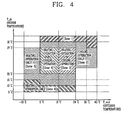
- FIG. 4 is a graph showing 6 zones divided according to indoor temperatures and outdoor temperatures in FIG. 3 .
- the first zone is composed of a zone that an average indoor temperature is 32° or more than and an average outdoor temperature is in a range of 0°C ⁇ 43°C, and a zone that the average indoor temperature is in a range of 27°C ⁇ 32°C and the average outdoor temperature is in a range of 35°C ⁇ 43°C.
- the second zone is composed of a zone that the average indoor temperature is in a range of 20°C ⁇ 27°C and the average outdoor temperature is in a range of 24°C ⁇ 43°C, and a zone that the average indoor temperature is in a range of 27°C ⁇ 32°C and the average outdoor temperature is in a range of 24°C ⁇ 35°C.
- the third zone is composed of a zone that the average indoor temperature is in a range of 20°C ⁇ 27°C and the average outdoor temperature is in a range of 12°C ⁇ 24°C.
- the fourth zone is composed of a zone that the average indoor temperature is in a range of 20°C ⁇ 27°C and the average outdoor temperature is in a range of 0°C ⁇ 12°C.
- the fifth zone is composed of a zone that the average indoor temperature is in a range of 15°C ⁇ 27°C and the average outdoor temperature is in a range of -10°C ⁇ 0°C, and a zone that the average indoor temperature is in a range of 10°C ⁇ 20°C and the average outdoor temperature is in a range of 0°C ⁇ 20°C.
- the sixth zone is composed of a zone that the average indoor temperature is in a range of 5°C ⁇ 15°C and the average outdoor temperature is in a range of -10°C ⁇ 0°C, and a zone that the average indoor temperature is in a range of 5°C ⁇ 10°C and the average outdoor temperature is in a range of 0°C ⁇ 24°C.
- the micro computer drives the multi-type air conditioner according to an average indoor temperature of indoor temperatures detected from the plural indoor temperature sensors and an average outdoor temperature of outdoor temperatures detected from the plural outdoor temperature sensors.
- the average indoor temperature is a weighted average indoor temperature
- the average outdoor temperature is an arithmetic average outdoor temperature.
- the multi-type air conditioner is operated in a cooling mode for a preset time thereby to lower the average indoor temperature as much as a certain temperature. Then, it is judged whether the average outdoor temperature and the lowered average indoor temperature correspond to the second zone. If the average outdoor temperature and the lowered average indoor temperature correspond to the second zone, the air conditioner is test-operated in a test operation mode corresponding to the second zone. However, if the average outdoor temperature and the lowered average indoor temperature do not correspond to the second zone, the test-operation of the air conditioner is stopped and the stopped state of the air conditioner is displayed.
- a test-operation mode of the multi-type air conditioner when the average indoor temperature and the average outdoor temperature correspond to the second zone, only half of the plural indoor units are operated in a cooling mode for a certain time and the rest half of the plural indoor units are not operated.
- the indoor units may be operated for a certain number of times with alternation.
- all the plural indoor units are operated in a cooling mode for a certain time. It is also possible to operate some indoor units (for example, 50%) for a certain time before operating all the plural indoor units.
- all the plural indoor units are operated in a heating mode for a certain time. It is also possible to operate some indoor units (for example, 50%) for a certain time before operating all the plural indoor units.
- a test-operation mode of the multi-type air conditioner when the average indoor temperature and the average outdoor temperature correspond to the fifth zone, only half of the plural indoor units are operated in a heating mode for a certain time and the rest of the plural indoor units are not operated.
- the indoor units may be operated for a certain number of times with alternation.
- the multi-type air conditioner is operated in a heating mode for a preset time thereby to increase the average indoor temperature as much as a certain temperature. Then, it is judged whether the average outdoor temperature and the increased average indoor temperature correspond to the fifth zone. If the average outdoor temperature and the increased average indoor temperature correspond to the fifth zone, the air conditioner is test-operated in a test operation mode corresponding to the fifth zone. However, if the average outdoor temperature and the increased average indoor temperature do not correspond to the fifth zone, the test-operation of the air conditioner is stopped and the stopped state of the air conditioner is displayed.
- the micro computer 100 compares data for indicating an operation state of the multi-type air conditioner test-operated in different test operation modes with a preset reference data, and judges whether the air conditioner is in an abnormal state on the basis of the comparison result.
- the micro computer judges as that the multi-type air conditioner is in an abnormal state.
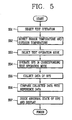
- FIG. 5 is a flowchart showing a method for detecting an abnormal state of the multi-type air conditioner according to the present invention.
- the method for detecting an abnormal state of a multi-type air conditioner comprises a user's selecting a test operation (S1) and then detecting plural indoor temperatures of indoor zones where a plurality of indoor units are installed and plural outdoor temperatures of outdoor zones where a plurality of outdoor units are installed (S2), selecting a corresponding test operation mode among a plurality of test operation modes preset according to an average indoor temperature of the detected plural indoor temperatures and an average outdoor temperature of the detected plural outdoor temperatures (S3), test-operating the multi-type air conditioner according to the selected test operation mode (S4) and collecting data showing an operation state of the test-operated air conditioner (S5), and comparing the collected data with a preset reference data (S6) and judging an abnormal state of the air conditioner based on the comparison result (S7).
- S1 select a test operation
- S2 selecting a corresponding test operation mode among a plurality of test operation modes preset according to an average indoor temperature of the detected plural indoor temperatures and an average outdoor temperature of the detected plural outdoor temperatures
- S4 test-opera
- the method for detecting an abnormal state of a multi-type air conditioner further comprises previously storing ideal data that indicates a normal operation state of the air conditioner as a reference data, and previously storing information of first to sixth zones divided according to the average indoor temperature and the average outdoor temperature and having different test operation modes. Also, the method for detecting an abnormal state of a multi-type air conditioner further comprises displaying an abnormal state of the air conditioner judged by the micro computer 100.
- the multi-type air conditioner can be realized as several systems.
- the multi-type air conditioner according to the present invention is realized as a heat pump system (HPS).
- HPS heat pump system
- the multi-type air conditioner realized as a heat pump system will be explained.
- data for showing an operation state of the air conditioner includes characteristic values of the heat pump system operated in a cooling mode or a heating mode, that is, a value of a high pressure (P H ), a value of a low pressure (P L ), a value of a compressor discharge temperature, a value of a liquid pipe temperature, a value of a degree of sub-cooling, a value of a degree of superheat, etc.
- P H a high pressure
- P L a low pressure
- a compressor discharge temperature a value of a liquid pipe temperature
- a value of a degree of sub-cooling a value of a degree of superheat
- the value of a low pressure (P L ) denotes a value of a pressure between the four-way valve 21 and the accumulator 27.
- the value of a compressor discharge temperature is a value of a temperature between the first and second compressors 13a and 13b and the oil separator 31.
- the value of a compressor discharge temperature is measured only for compressors being operated, and the value of a liquid pipe temperature denotes a value of a temperature between the service valve 43a and the outdoor heat exchanger 25.
- the value of a degree of sub-cooling denotes a difference between the liquid pipe temperature and a saturated temperature corresponding to the value of a high pressure P H on a pressure-enthalpy diagram.
- the value of degree of superheat denotes a difference between a saturated temperature corresponding to the value of a low pressure P L and a suction temperature of the compressor on a pressure-enthalpy diagram.
- the suction temperature of the compressor is measured at an inlet of the first compressor 13a, an inlet of the second compressor 13b, or an inlet of the accumulator 27.
- Ideal data at the time of operating the heat pump system is detected by an experiment or by a theory, and the detected ideal data is preset as a reference data.
- the plural indoor temperature sensors (RT1 ⁇ RTn) detect indoor temperatures of the indoor zones where the plural indoor units are installed and the plural outdoor temperature sensors (0T1 ⁇ 0Tn) detect outdoor temperatures of the outdoor zones where the plural outdoor units are installed (S2).
- the user's test operation selection is performed through a key inputting unit of a controller of the outdoor unit or through an external person computer (PC), or through a mobile communication terminal.
- the micro computer 100 calculates a weighted average indoor temperature of the detected indoor temperatures and an arithmetic average outdoor temperature of the detected outdoor temperatures, and selects a test operation mode of the multi-type air conditioner according to the calculated average indoor temperature and the average outdoor temperature with reference to FIG. 4 (S3).
- the test operation mode is divided into 6 modes according to that the average indoor temperature and the average outdoor temperature belong to which zone among the first to sixth zones of FIG. 4 .
- the micro computer 100 operates the multi-type air conditioner in the selected test operation mode (S4). That is, when the average indoor temperature and the average outdoor temperature correspond to the first zone, the multi-type air conditioner is operated in a cooling mode for a preset time thereby to lower the average indoor temperature as much as a certain temperature. Then, it is judged whether the average outdoor temperature and the lowered average indoor temperature correspond to the second zone. If the average outdoor temperature and the lowered average indoor temperature correspond to the second zone, the air conditioner is test-operated in a test operation mode corresponding to the second zone. However, if the average outdoor temperature and the lowered average indoor temperature do not correspond to the second zone, the test-operation of the air conditioner is stopped and the stopped state of the air conditioner is displayed.
- S4 selected test operation mode
- a test-operation mode of the multi-type air conditioner when the average indoor temperature and the average outdoor temperature correspond to the second zone, only half of the plural indoor units are operated in a cooling mode for a certain time and the rest half of the plural indoor units are not operated.
- a step for operating the indoor units for a certain number of times with alternation is further comprised.
- all the plural indoor units are operated in a cooling mode for a certain time. It is also possible to operate some indoor units (for example, 50%) for a certain time before operating all the plural indoor units.
- all the plural indoor units are operated in a heating mode for a certain time. It is also possible to operate some indoor units (for example, 50%) for a certain time before operating all the plural indoor units.
- a test-operation mode of the multi-type air conditioner when the average indoor temperature and the average outdoor temperature correspond to the fifth zone, only half of the plural indoor units are operated in a heating mode for a certain time and the rest of the plural indoor units are not operated.
- a step for operating the indoor units for a certain number of times with alternation is further comprised.
- the multi-type air conditioner is operated in a heating mode for a preset time thereby to increase the average indoor temperature as much as a certain temperature. Then, it is judged whether the average outdoor temperature and the increased average indoor temperature correspond to the fifth zone. If the average outdoor temperature and the increased average indoor temperature correspond to the fifth zone, the air conditioner is test-operated in a test operation mode corresponding to the fifth zone. However, if the average outdoor temperature and the increased average indoor temperature do not correspond to the fifth zone, the test-operation of the air conditioner is stopped and the stopped state of the air conditioner is displayed.
- the micro computer 100 collects data showing an operation state of the multi-type air conditioner operated in the selected test operation mode (S5), and compares the collected data with a preset reference data (S6), thereby judging an abnormal state of the air conditioner based on the comparison result. Then, the micro computer 100 displays the abnormal state of the multi-type air conditioner (S7).
- the micro computer 100 stops the multi-type air conditioner when it is judged that the air conditioner is in an abnormal state. On the contrary, when it is judged that the air conditioner is in a normal state, the micro computer 100 stops the test operation of the air conditioner after collecting oil inside the air conditioner.
- data for showing an operation state of the air conditioner includes characteristic values of the heat pump system operated in a cooling mode or a heating mode, that is, a value of a high pressure (P H ), a value of a low pressure (P L ), a value of a compressor discharge temperature, a value of a liquid pipe temperature, a value of a degree of sub-cooling, a value of a degree of superheat, etc.
- the micro computer 100 compares the data for showing an operation state of the multi-type air conditioner test-operated by the several test-operation modes with a preset reference data, and judges an abnormal state of the multi-type air conditioner on the basis of the comparison result.
- the micro computer judges as that the multi-type air conditioner is in an abnormal state.
- the multi-type air conditioner is operated in different test modes according to the indoor temperatures and the outdoor temperatures, and the data for showing an operation state of the multi-type air conditioner is compared with the preset reference data, thereby judging an abnormal state of the multi-type air conditioner.
Landscapes
- Engineering & Computer Science (AREA)
- General Engineering & Computer Science (AREA)
- Mechanical Engineering (AREA)
- Chemical & Material Sciences (AREA)
- Combustion & Propulsion (AREA)
- Physics & Mathematics (AREA)
- Human Computer Interaction (AREA)
- Thermal Sciences (AREA)
- Fuzzy Systems (AREA)
- Mathematical Physics (AREA)
- Signal Processing (AREA)
- General Physics & Mathematics (AREA)
- Automation & Control Theory (AREA)
- Air Conditioning Control Device (AREA)
Claims (27)
- Dispositif de détection d'état anormal d'un climatiseur multitype comprenant :une pluralité de capteurs de température intérieure pour détecter les températures intérieures de zones intérieures où sont placées une pluralité d'unités d'intérieur ;une pluralité de capteurs de température extérieure pour détecter les températures extérieures de zones extérieures où sont placées une pluralité d'unités d'extérieur ; etun micro-ordinateur pour déterminer un état anormal du climatiseur multitype en sélectionnant un mode de fonctionnement d'essai parmi une pluralité de modes de fonctionnement d'essai préréglés en fonction d'une température intérieure moyenne des différentes températures intérieures détectées et d'une température extérieure moyenne des différentes températures extérieures détectées, en faisant fonctionner en essai le climatiseur multitype selon le mode de fonctionnement d'essai sélectionné, puis en recueillant des données montrant un état de fonctionnement du climatiseur fonctionnant en essai, et enfin en comparant les données collectées avec des données de référence préétablies.
- Dispositif selon la revendication 1, dans lequel la température intérieure moyenne est une température intérieure moyenne pondérée des différentes températures intérieures détectées, et la température extérieure moyenne est une température extérieure moyenne arithmétique des différentes températures extérieures détectées.
- Dispositif selon la revendication 1, dans lequel les données sont des valeurs caractéristiques du climatiseur multitype fonctionnant dans un mode refroidissement ou dans un mode chauffage, à savoir une valeur de haute pression, une valeur de basse pression, une valeur de température de refoulement de compresseur, une valeur de température de tuyau de liquide, une valeur d'un degré de sous-refroidissement et une valeur d'un degré de surchauffe.
- Dispositif selon la revendication 1, dans lequel le micro-ordinateur arrête le climatiseur multitype quand il est déterminé que le climatiseur est dans un état anormal, et quand il est déterminé que le climatiseur est dans un état normal, le micro-ordinateur arrête le fonctionnement d'essai du climatiseur après une collecte d'huile à l'intérieur du climatiseur.
- Dispositif selon la revendication 1, comprenant en outre une unité d'affichage pour afficher un état anormal du climatiseur multitype.
- Dispositif selon la revendication 1, comprenant en outre une unité de stockage pour stocker au préalable des données idéales qui indiquent un état de fonctionnement normal du climatiseur en tant que données de référence, et pour stocker au préalable des informations d'une première à une sixième zone divisées selon la température intérieure moyenne et selon la température extérieure moyenne et ayant différents modes de fonctionnement d'essai.
- Dispositif selon la revendication 6, dans lequel la première zone comprend une zone dans laquelle la température intérieure moyenne est supérieure ou égale à 32° et la température extérieure moyenne est comprise dans l'intervalle de 0 °C à 43 °C, et une zone dans laquelle la température intérieure moyenne est comprise dans l'intervalle de 27 °C à 32 °C et la température extérieure moyenne est comprise dans un intervalle de 35 °C à 43 °C,
la deuxième zone comprend une zone dans laquelle la température intérieure moyenne est comprise dans l'intervalle de 20 °C à 27 °C et la température extérieure moyenne est comprise dans l'intervalle de 27 °C à 43 °C, et une zone dans laquelle la température intérieure moyenne est comprise dans l'intervalle de 27 °C à 32 °C et la température extérieure moyenne est comprise dans l'intervalle de 24 °C à 35 °C,
la troisième zone comprend une zone dans laquelle la température intérieure moyenne est comprise dans l'intervalle de 20 °C à 27 °C et la température extérieure moyenne est comprise dans l'intervalle de 12 °C à 24 °C,
la quatrième zone comprend une zone dans laquelle la température intérieure moyenne est comprise dans l'intervalle de 20 °C à 27 °C et la température extérieure moyenne est comprise dans l'intervalle de 0 °C à 12 °C,
la cinquième zone comprend une zone dans laquelle la température intérieure moyenne est comprise dans l'intervalle de 15 °C à 27 °C et la température extérieure moyenne est comprise dans l'intervalle de -10 °C à 0 °C, et une zone dans laquelle la température intérieure moyenne est comprise dans l'intervalle de 10 °C à 20 °C et la température extérieure moyenne est comprise dans l'intervalle de 0 °C à 20 °C, et
la sixième zone comprend une zone dans laquelle la température intérieure moyenne est comprise dans l'intervalle de 5 °C à 15 °C et la température extérieure moyenne est comprise dans l'intervalle de -10 °C à 0 °C, et une zone dans laquelle la température intérieure moyenne est comprise dans l'intervalle de 5 °C à 10 °C et la température extérieure moyenne est comprise dans l'intervalle de 0 °C à 24 °C. - Dispositif selon la revendication 6, dans lequel la température intérieure moyenne et la température extérieure moyenne correspondent à la première zone, le micro-ordinateur fait fonctionner le climatiseur multitype dans un mode refroidissement pendant une durée prédéterminée afin d'abaisser la température intérieure moyenne jusqu'à une certaine température, puis il détermine si la température extérieure moyenne et la température intérieure moyenne abaissée correspondent à la deuxième zone, si la température extérieure moyenne et la température intérieure moyenne abaissée correspondent à la deuxième zone, il fait fonctionner en essai le climatiseur multitype dans un mode de fonctionnement d'essai correspondant à la deuxième zone, et si la température extérieure moyenne et la température intérieure moyenne abaissée ne correspondent pas à la deuxième zone, il arrête le fonctionnement en essai du climatiseur et affiche l'état arrêté du climatiseur ;
quand la température intérieure moyenne et la température extérieure moyenne correspondent à la deuxième zone, le micro-ordinateur ne fait fonctionner que la moitié des unités d'intérieur dans un mode refroidissement pendant un certain temps et ne fait pas fonctionner l'autre moitié des unités d'intérieur ;
quand la température intérieure moyenne et la température extérieure moyenne correspondent à la troisième zone, le micro-ordinateur fait fonctionner toutes les unités d'intérieur dans un mode refroidissement pendant un certain temps ;
quand la température intérieure moyenne et la température extérieure moyenne correspondent à la quatrième zone, le micro-ordinateur fait fonctionner toutes les unités d'intérieur dans un mode chauffage pendant un certain temps ;
quand la température intérieure moyenne et la température extérieure moyenne correspondent à la cinquième zone, le micro-ordinateur ne fait fonctionner que la moitié des unités d'intérieur dans un mode chauffage pendant un certain temps et ne fait pas fonctionner le reste des unités d'intérieur ; et
quand la température intérieure moyenne et la température extérieure moyenne correspondent à la sixième zone, le micro-ordinateur fait fonctionner le climatiseur multitype dans un mode chauffage pendant une durée prédéterminée afin d'augmenter la température intérieure moyenne jusqu'à une certaine température, puis il détermine si la température extérieure moyenne et la température intérieure moyenne augmentée correspondent à la cinquième zone, si la température extérieure moyenne et la température intérieure moyenne augmentée correspondent à la cinquième zone, il fait fonctionner en essai le climatiseur multitype dans un mode de fonctionnement d'essai correspondant à la cinquième zone, et si la température extérieure moyenne et la température intérieure moyenne augmentée ne correspondent pas à la cinquième zone, il arrête le fonctionnement en essai du climatiseur multitype et affiche l'état arrêté du climatiseur. - Dispositif selon la revendication 8, dans lequel, quand la température intérieure moyenne et la température extérieure moyenne correspondent à la deuxième zone ou à la cinquième zone, le micro-ordinateur ne fait fonctionner que la moitié des unités d'intérieur dans un mode refroidissement ou dans un mode chauffage pendant un certain temps et ne fait pas fonctionner le reste des unités d'intérieur avec alternance un certain nombre de fois.
- Dispositif selon la revendication 8, comprenant en outre, quand la température intérieure moyenne et la température extérieure moyenne correspondent à la troisième zone ou à la quatrième zone, le fait que le micro-ordinateur fait fonctionner une partie des unités d'intérieur avant de faire fonctionner toutes les unités d'intérieur dans un mode refroidissement ou dans un mode chauffage pendant un certain temps.
- Procédé de détection d'un état anormal d'un climatiseur multitype comprenant :la sélection par un utilisateur d'un fonctionnement d'essai, puis la détection de plusieurs températures intérieures de zones intérieures dans lesquelles une pluralité d'unités d'intérieur sont installées et de plusieurs températures extérieures de zones extérieures dans lesquelles une pluralité d'unités d'extérieur sont installées ;la sélection d'un mode de fonctionnement d'essai correspondant parmi une pluralité de modes de fonctionnement d'essai préréglés en fonction d'une température intérieure moyenne des différentes températures intérieures détectées et d'une température extérieure moyenne des différentes températures extérieures détectées ;le fonctionnement en essai du climatiseur multitype selon le mode de fonctionnement d'essai sélectionné, puis la collecte des données montrant un état de fonctionnement du climatiseur fonctionnant en essai ; etla comparaison des données collectées avec des données de référence préétablies et la détermination d'un état anormal du climatiseur basée sur le résultat de la comparaison.
- Procédé selon la revendication 11, dans lequel la température intérieure moyenne est une température intérieure moyenne pondérée des différentes températures intérieures détectées, et la température extérieure moyenne est une température extérieure moyenne arithmétique des différentes températures extérieures détectées.
- Procédé selon la revendication 11, dans lequel les données sont des valeurs caractéristiques du climatiseur multitype fonctionnant dans un mode refroidissement ou dans un mode chauffage, à savoir une valeur de haute pression, une valeur de basse pression, une valeur de température de refoulement de compresseur, une valeur de température de tuyau de liquide, une valeur d'un degré de sous-refroidissement et une valeur d'un degré de surchauffe.
- Procédé selon la revendication 11, dans lequel les modes de fonctionnement d'essai sont déterminés en fonction des zones auxquelles appartiennent la température intérieure moyenne et la température extérieure moyenne parmi les six zones.
- Procédé selon la revendication 14, dans lequel la première zone comprend une zone dans laquelle la température intérieure moyenne est supérieure ou égale à 32° et la température extérieure moyenne est comprise dans l'intervalle de 0 °C à 43 °C, et une zone dans laquelle la température intérieure moyenne est comprise dans l'intervalle de 27 °C à 32 °C et la température extérieure moyenne est comprise dans un intervalle de 35 °C à 43 °C,
la deuxième zone comprend une zone dans laquelle la température intérieure moyenne est comprise dans l'intervalle de 20 °C à 27 °C et la température extérieure moyenne est comprise dans l'intervalle de 27 °C à 43 °C, et une zone dans laquelle la température intérieure moyenne est comprise dans l'intervalle de 27 °C à 32 °C et la température extérieure moyenne est comprise dans l'intervalle de 24 °C à 35 °C,
la troisième zone comprend une zone dans laquelle la température intérieure moyenne est comprise dans l'intervalle de 20 °C à 27 °C et la température extérieure moyenne est comprise dans l'intervalle de 12 °C à 24 °C,
la quatrième zone comprend une zone dans laquelle la température intérieure moyenne est comprise dans l'intervalle de 20 °C à 27 °C et la température extérieure moyenne est comprise dans l'intervalle de 0 °C à 12 °C,
la cinquième zone comprend une zone dans laquelle la température intérieure moyenne est comprise dans l'intervalle de 15 °C à 27 °C et la température extérieure moyenne est comprise dans l'intervalle de -10 °C à 0 °C, et une zone dans laquelle la température intérieure moyenne est comprise dans l'intervalle de 10 °C à 20 °C et la température extérieure moyenne est comprise dans l'intervalle de 0 °C à 20 °C, et
la sixième zone comprend une zone dans laquelle la température intérieure moyenne est comprise dans l'intervalle de 5 °C à 15 °C et la température extérieure moyenne est comprise dans l'intervalle de -10 °C à 0 °C, et une zone dans laquelle la température intérieure moyenne est comprise dans l'intervalle de 5 °C à 10 °C et la température extérieure moyenne est comprise dans l'intervalle de 0 °C à 24 °C. - Procédé selon la revendication 14, dans lequel la température intérieure moyenne et la température extérieure moyenne correspondent à la première zone, le climatiseur multitype est mis en marche dans un mode refroidissement pendant une durée prédéterminée afin d'abaisser la température intérieure moyenne jusqu'à une certaine température, puis il est déterminé si la température extérieure moyenne et la température intérieure moyenne abaissée correspondent à la deuxième zone, si la température extérieure moyenne et la température intérieure moyenne abaissée correspondent à la deuxième zone, on fait fonctionner en essai le climatiseur multitype dans un mode de fonctionnement d'essai correspondant à la deuxième zone, et si la température extérieure moyenne et la température intérieure moyenne abaissée ne correspondent pas à la deuxième zone, le fonctionnement en essai du climatiseur est arrêté et l'état arrêté du climatiseur est affiché.
- Procédé selon la revendication 14, dans lequel, quand la température intérieure moyenne et la température extérieure moyenne correspondent à la deuxième zone, on ne fait fonctionner que la moitié des unités d'intérieur dans un mode refroidissement pendant un certain temps et l'on ne fait pas fonctionner l'autre moitié des unités d'intérieur pendant ce même temps.
- Procédé selon la revendication 17, comprenant en outre le fait d'exécuter chaque opération alternativement un certain nombre de fois.
- Procédé selon la revendication 14, dans lequel, quand la température intérieure moyenne et la température extérieure moyenne correspondent à la troisième zone, on fait fonctionner toutes les unités d'intérieur dans un mode refroidissement pendant un certain temps.
- Procédé selon la revendication 19, comprenant en outre le fait de faire fonctionner une partie des unités d'intérieur avant de faire fonctionner toutes les unités d'intérieur dans un mode refroidissement pendant un certain temps.
- Procédé selon la revendication 14, dans lequel, quand la température intérieure moyenne et la température extérieure moyenne correspondent à la quatrième zone, on fait fonctionner toutes les unités d'intérieur dans un mode chauffage pendant un certain temps.
- Procédé selon la revendication 21, comprenant en outre le fait de faire fonctionner une partie des unités d'intérieur avant de faire fonctionner toutes les unités d'intérieur dans un mode chauffage pendant un certain temps.
- Procédé selon la revendication 14, dans lequel, quand la température intérieure moyenne et la température extérieure moyenne correspondent à la cinquième zone, on ne fait fonctionner que la moitié des unités d'intérieur dans un mode chauffage pendant un certain temps et l'on ne fait pas fonctionner le reste des unités d'intérieur pendant ce même temps.
- Procédé selon la revendication 23, comprenant en outre le fait d'exécuter chaque opération alternativement un certain nombre de fois.
- Procédé selon la revendication 14, dans lequel, quand la température intérieure moyenne et la température extérieure moyenne correspondent à la sixième zone, le climatiseur multitype est mis en marche dans un mode chauffage pendant une durée prédéterminée afin d'augmenter la température intérieure moyenne jusqu'à une certaine température, puis il est déterminé si la température extérieure moyenne et la température intérieure moyenne augmentée correspondent à la cinquième zone, si la température extérieure moyenne et la température intérieure moyenne augmentée correspondent à la cinquième zone, on fait fonctionner en essai le climatiseur multitype dans un mode de fonctionnement d'essai correspondant à la cinquième zone, et si la température extérieure moyenne et la température intérieure moyenne augmentée ne correspondent pas à la cinquième zone, le fonctionnement en essai du climatiseur est arrêté et l'état arrêté du climatiseur est affiché.
- Procédé selon la revendication 11, comprenant en outre le fait d'arrêter le climatiseur multitype quand il est déterminé que le climatiseur est dans un état anormal, et d'arrêter le fonctionnement d'essai du climatiseur après une collecte d'huile à l'intérieur du climatiseur quand il est déterminé que le climatiseur est dans un état normal.
- Procédé selon la revendication 11, comprenant en outre le fait de stocker au préalable des données idéales qui indiquent un état de fonctionnement normal du climatiseur en tant que données de référence, et de stocker au préalable des informations d'une première à une sixième zone divisées selon la température intérieure moyenne et selon la température extérieure moyenne et ayant différents modes de fonctionnement d'essai.
Applications Claiming Priority (1)
| Application Number | Priority Date | Filing Date | Title |
|---|---|---|---|
| KR1020040085920A KR100664056B1 (ko) | 2004-10-26 | 2004-10-26 | 멀티형 공기조화기의 고장유무 판별장치 및 방법 |
Publications (3)
| Publication Number | Publication Date |
|---|---|
| EP1657504A1 EP1657504A1 (fr) | 2006-05-17 |
| EP1657504B1 true EP1657504B1 (fr) | 2011-01-26 |
| EP1657504B8 EP1657504B8 (fr) | 2011-05-25 |
Family
ID=35669854
Family Applications (1)
| Application Number | Title | Priority Date | Filing Date |
|---|---|---|---|
| EP05012267A Ceased EP1657504B8 (fr) | 2004-10-26 | 2005-06-07 | Dispositif et méthode de détection d'état anormal d'un appareil multiple de climatisation |
Country Status (5)
| Country | Link |
|---|---|
| US (1) | US7621138B2 (fr) |
| EP (1) | EP1657504B8 (fr) |
| KR (1) | KR100664056B1 (fr) |
| CN (1) | CN100575908C (fr) |
| DE (1) | DE602005026089D1 (fr) |
Cited By (1)
| Publication number | Priority date | Publication date | Assignee | Title |
|---|---|---|---|---|
| EP3598013B1 (fr) * | 2017-09-18 | 2022-10-19 | GD Midea Heating & Ventilating Equipment Co., Ltd. | Procédé de commande de climatiseur multi-bloc, système de climatisation multi-bloc et support d'informations lisible par ordinateur |
Families Citing this family (45)
| Publication number | Priority date | Publication date | Assignee | Title |
|---|---|---|---|---|
| KR101054979B1 (ko) * | 2004-10-30 | 2011-08-05 | 엘지전자 주식회사 | 이동통신단말기를 이용한 공기조화기의 제어시스템 및 방법 |
| KR100749175B1 (ko) * | 2006-05-24 | 2007-08-14 | 한국에너지기술연구원 | 공조 시스템에서의 분류형 규칙기반 방식의 단일부위 고장검출 및 진단 방법과 이를 이용한 장치 |
| JP4567637B2 (ja) * | 2006-07-10 | 2010-10-20 | ダイキン工業株式会社 | 空調制御装置 |
| KR20090000248A (ko) * | 2007-02-07 | 2009-01-07 | 엘지전자 주식회사 | 에어컨의 통합관리 표시 장치 및 방법 |
| KR20080074378A (ko) * | 2007-02-08 | 2008-08-13 | 엘지전자 주식회사 | 멀티에어컨의 온도제한 방법 |
| US8209989B2 (en) * | 2007-03-30 | 2012-07-03 | Intel Corporation | Microarchitecture control for thermoelectric cooling |
| KR101270621B1 (ko) * | 2007-12-21 | 2013-06-03 | 엘지전자 주식회사 | 공기조화 시스템 |
| CN101788395B (zh) * | 2010-01-22 | 2011-10-26 | 西南交通大学 | 地源热泵中央空调系统房间过热故障诊断检测方法及设备 |
| CN102692328B (zh) * | 2011-03-24 | 2014-08-27 | 珠海格力电器股份有限公司 | 多联机空调检测系统及方法 |
| KR101712213B1 (ko) * | 2011-04-22 | 2017-03-03 | 엘지전자 주식회사 | 멀티형 공기조화기 및 그의 제어방법 |
| US20120279241A1 (en) * | 2011-05-05 | 2012-11-08 | Ruiz Randy T | Heat pump control |
| KR101970522B1 (ko) * | 2012-01-19 | 2019-04-19 | 삼성전자주식회사 | 공기조화기 및 그 기동제어방법 |
| JP5858824B2 (ja) * | 2012-03-01 | 2016-02-10 | 三菱電機株式会社 | マルチ形空気調和機 |
| CN103292415B (zh) * | 2012-03-01 | 2016-01-20 | 珠海格力电器股份有限公司 | 温度检测方法和装置以及空调器的控制方法和系统 |
| US10077928B2 (en) * | 2012-06-21 | 2018-09-18 | Mitsubishi Electric Corporation | Air-conditioning system and control method for air-conditioning system |
| US20140163744A1 (en) * | 2012-12-07 | 2014-06-12 | Liebert Corporation | Fault detection in a cooling system with a plurality of identical cooling circuits |
| CN104515691A (zh) * | 2013-09-29 | 2015-04-15 | 天津台信检测技术有限公司 | 一种汽车空调故障检测装置及检测方法 |
| US9823003B2 (en) * | 2014-01-30 | 2017-11-21 | Mitsubishi Electric Corporation | Air-conditioning apparatus and air-conditioning system determining valve setting error |
| EP2933442B1 (fr) * | 2014-04-16 | 2016-11-02 | Orcan Energy AG | Dispositif et procédé de reconnaissance de fuites dans des cycles fermés |
| US10047965B2 (en) | 2014-06-02 | 2018-08-14 | Lennox Industries Inc. | System for managing lubricant levels in tandem compressor assemblies of an HVAC system |
| CN104166066B (zh) * | 2014-06-30 | 2017-09-22 | 珠海格力电器股份有限公司 | 一种空调感温包接错检测方法、装置和空调 |
| JP2016084969A (ja) * | 2014-10-24 | 2016-05-19 | 三菱重工業株式会社 | 空調システムの制御装置、空調システム、及び空調システムの異常判定方法 |
| CN104535884B (zh) * | 2014-12-29 | 2018-03-20 | 宁波奥克斯电气股份有限公司 | 判断家用多联机的室内机数据线是否接错的方法 |
| CN104566823B (zh) | 2014-12-29 | 2018-03-16 | 广东美的暖通设备有限公司 | 并联多联机的冷媒控制方法 |
| CN104930647B (zh) * | 2015-05-29 | 2018-03-27 | 广东美的制冷设备有限公司 | 控制方法、控制系统和空调器 |
| CA2941479C (fr) * | 2015-09-21 | 2019-01-29 | Lennox Industries Inc. | Systeme de gestion des niveaux de lubrifiant dans les assemblages de compresseur en tandem d'un systeme cvca |
| CN108700320B (zh) * | 2016-03-01 | 2020-08-21 | 三菱电机株式会社 | 空调系统 |
| CN106124232B (zh) * | 2016-06-13 | 2018-11-06 | 合肥市再德高分子材料有限公司 | 一种中央空调智能检测系统 |
| CN107192089B (zh) * | 2017-05-08 | 2020-01-31 | 广东美的暖通设备有限公司 | 空调器的控制方法、控制系统、空调器和计算机设备 |
| WO2018225129A1 (fr) * | 2017-06-05 | 2018-12-13 | 三菱電機株式会社 | Système de climatisation |
| CN107560092B (zh) * | 2017-09-25 | 2019-10-22 | 珠海格力电器股份有限公司 | 多联机运行状态控制方法、系统及热泵多联机 |
| CN108626856B (zh) * | 2018-05-02 | 2020-06-30 | 广东美的制冷设备有限公司 | 空调设备的控制方法及控制装置、存储介质及空调设备 |
| WO2020040125A1 (fr) * | 2018-08-24 | 2020-02-27 | シャープ株式会社 | Système de climatiseur, procédé et programme de commande de système de climatiseur |
| CN109341008B (zh) * | 2018-09-10 | 2021-07-20 | 广东美的制冷设备有限公司 | 空调器的控制方法、装置及空调器 |
| KR102661642B1 (ko) * | 2019-08-14 | 2024-04-29 | 삼성전자주식회사 | 전자 장치 및 전자 장치의 제어 방법 |
| CN111006354B (zh) * | 2019-11-25 | 2021-09-21 | 宁波奥克斯电气股份有限公司 | 一种空调器控制方法、装置、空调器及存储介质 |
| CN111006301B (zh) * | 2019-11-28 | 2025-08-12 | 江苏苏净集团有限公司 | 一种二氧化碳复叠式供暖系统及其控制方法 |
| CN112113310B (zh) * | 2020-08-12 | 2021-10-22 | 珠海格力电器股份有限公司 | 确认空调运行状态的方法、装置及存储介质 |
| CN112082250B (zh) * | 2020-08-12 | 2022-01-14 | 珠海格力电器股份有限公司 | 一种空调安装状态检测方法、装置、存储介质及空调 |
| CN112611957B (zh) * | 2020-12-25 | 2022-09-02 | 广东Tcl智能暖通设备有限公司 | 负载测试方法、终端、系统及计算机可读存储介质 |
| CN115562093B (zh) * | 2021-07-02 | 2026-02-24 | 云米互联科技(广东)有限公司 | 智能空调设备的自动控制方法及装置 |
| EP4332450A4 (fr) | 2021-10-21 | 2024-10-02 | Samsung Electronics Co., Ltd. | Appareil de conditionnement d'air et procédé de commande associé |
| KR20230057138A (ko) * | 2021-10-21 | 2023-04-28 | 삼성전자주식회사 | 공기 조화기 및 그 제어 방법 |
| CN113983651B (zh) * | 2021-11-23 | 2023-04-14 | 海信(广东)空调有限公司 | 空调器及其控制方法 |
| CN115123327B (zh) * | 2022-06-29 | 2024-05-03 | 新誉轨道交通科技有限公司 | 一种列车空调温度的控制方法、装置及介质 |
Family Cites Families (11)
| Publication number | Priority date | Publication date | Assignee | Title |
|---|---|---|---|---|
| US4381549A (en) * | 1980-10-14 | 1983-04-26 | Trane Cac, Inc. | Automatic fault diagnostic apparatus for a heat pump air conditioning system |
| JPS57131953A (en) | 1981-02-05 | 1982-08-16 | Matsushita Electric Ind Co Ltd | Indicator of multi-room type air conditioner |
| JPS5875649A (ja) | 1981-10-30 | 1983-05-07 | Toshiba Corp | 空気調和機の異常検出装置 |
| GB2241091B (en) * | 1990-02-14 | 1994-01-19 | Toshiba Kk | Air conditioning apparatus connecting one outdoor unit with several indoor units through several refrigerant tubes and signal conductors |
| US5115967A (en) * | 1991-03-18 | 1992-05-26 | Wedekind Gilbert L | Method and apparatus for adaptively optimizing climate control energy consumption in a building |
| JPH055564A (ja) | 1991-06-28 | 1993-01-14 | Toshiba Corp | 空気調和機 |
| IL116764A (en) * | 1996-01-15 | 2001-01-11 | Acclim Line Ltd | Central air conditioning system |
| KR100238656B1 (ko) * | 1997-11-29 | 2000-01-15 | 윤종용 | 설치 점검 기능을 가진 멀티 인버터 공조 기기 및 테스트 방법 |
| US6324854B1 (en) | 2000-11-22 | 2001-12-04 | Copeland Corporation | Air-conditioning servicing system and method |
| US6978627B2 (en) * | 2002-01-31 | 2005-12-27 | Mitsubishi Denki Kabushiki Kaisha | Air conditioner control system, central remote controller, and facility controller |
| KR100511953B1 (ko) | 2002-11-22 | 2005-09-02 | 엘지전자 주식회사 | 히트펌프 시스템의 압축기 제어장치 및 제어방법 |
-
2004
- 2004-10-26 KR KR1020040085920A patent/KR100664056B1/ko not_active Expired - Fee Related
-
2005
- 2005-05-13 US US11/128,336 patent/US7621138B2/en not_active Expired - Fee Related
- 2005-06-07 DE DE602005026089T patent/DE602005026089D1/de not_active Expired - Lifetime
- 2005-06-07 EP EP05012267A patent/EP1657504B8/fr not_active Ceased
- 2005-06-09 CN CN200510077828A patent/CN100575908C/zh not_active Expired - Fee Related
Cited By (1)
| Publication number | Priority date | Publication date | Assignee | Title |
|---|---|---|---|---|
| EP3598013B1 (fr) * | 2017-09-18 | 2022-10-19 | GD Midea Heating & Ventilating Equipment Co., Ltd. | Procédé de commande de climatiseur multi-bloc, système de climatisation multi-bloc et support d'informations lisible par ordinateur |
Also Published As
| Publication number | Publication date |
|---|---|
| US20060086103A1 (en) | 2006-04-27 |
| CN100575908C (zh) | 2009-12-30 |
| KR100664056B1 (ko) | 2007-01-03 |
| DE602005026089D1 (de) | 2011-03-10 |
| KR20060036808A (ko) | 2006-05-02 |
| CN1766538A (zh) | 2006-05-03 |
| US7621138B2 (en) | 2009-11-24 |
| EP1657504B8 (fr) | 2011-05-25 |
| EP1657504A1 (fr) | 2006-05-17 |
Similar Documents
| Publication | Publication Date | Title |
|---|---|---|
| US7621138B2 (en) | Abnormal state detecting apparatus of multi-type air conditioner and method thereof | |
| EP1657505B1 (fr) | Système et procédé pour déterminer l'obstruction d'un tube d'un systéme de conditionnement d'air à unitée multiple | |
| US5050397A (en) | Air conditioner apparatus with starting control for parallel operated compressors based on high pressure detection | |
| EP2204621B1 (fr) | Climatiseur et procédé de détection de dysfonctionnements correspondant | |
| US7765812B2 (en) | System for detecting mis-connected state between communication lines for multi-type air conditioner and method thereof | |
| JP2000304388A (ja) | 空気調和装置 | |
| EP2889556A1 (fr) | Climatiseur | |
| KR101229342B1 (ko) | 시스템에어컨의 압축기 제어장치 및 그 방법 | |
| EP1528332B1 (fr) | climatiseur équipé de plusieurs unités extérieures et procédé de commande de celui-ci | |
| EP1371913B1 (fr) | Procédé de commande d'opération d'un système de conditionnement d'air à unités multiples | |
| US6755034B2 (en) | Apparatus for preventing overload of air conditioner and method thereof | |
| JP2002181370A (ja) | 空気調和機 | |
| KR20100069404A (ko) | 공기조화기 및 그 제어 방법 | |
| CN117073131A (zh) | 空调设备 | |
| KR100773803B1 (ko) | 공기조화기의 제어 방법 | |
| JPH01260249A (ja) | 空気調和装置の遠隔制御装置 | |
| KR100575696B1 (ko) | 비상전원공급부를 구비한 멀티형 공기조화기 | |
| JP3302138B2 (ja) | 空気調和機 | |
| KR100619748B1 (ko) | 오일회수 운전시점 산출기능을 구비한 멀티형 공기조화기및 멀티형 공기조화기의 오일회수 운전시점 산출방법 | |
| KR100548283B1 (ko) | 비운전 실외기를 이용한 공기조화기의 냉매제어방법 | |
| KR100749058B1 (ko) | 용량 가변형 에어컨 및 그 운전제어방법 | |
| KR100656162B1 (ko) | 멀티 에어컨 시스템의 고장진단방법 | |
| JPH03199874A (ja) | 冷凍装置の不具合予知方式 | |
| EP3147590B1 (fr) | Système de gestion des niveaux de lubrifiant dans des ensembles de compresseurs en tandem d'un système cvca | |
| KR101000050B1 (ko) | 멀티 공기조화기의 냉매량 부족방지제어방법 |
Legal Events
| Date | Code | Title | Description |
|---|---|---|---|
| PUAI | Public reference made under article 153(3) epc to a published international application that has entered the european phase |
Free format text: ORIGINAL CODE: 0009012 |
|
| AK | Designated contracting states |
Kind code of ref document: A1 Designated state(s): AT BE BG CH CY CZ DE DK EE ES FI FR GB GR HU IE IS IT LI LT LU MC NL PL PT RO SE SI SK TR |
|
| AX | Request for extension of the european patent |
Extension state: AL BA HR LV MK YU |
|
| 17P | Request for examination filed |
Effective date: 20060914 |
|
| AKX | Designation fees paid |
Designated state(s): DE FR GB IT |
|
| GRAP | Despatch of communication of intention to grant a patent |
Free format text: ORIGINAL CODE: EPIDOSNIGR1 |
|
| GRAS | Grant fee paid |
Free format text: ORIGINAL CODE: EPIDOSNIGR3 |
|
| GRAA | (expected) grant |
Free format text: ORIGINAL CODE: 0009210 |
|
| AK | Designated contracting states |
Kind code of ref document: B1 Designated state(s): DE FR GB IT |
|
| REG | Reference to a national code |
Ref country code: GB Ref legal event code: FG4D |
|
| REF | Corresponds to: |
Ref document number: 602005026089 Country of ref document: DE Date of ref document: 20110310 Kind code of ref document: P |
|
| REG | Reference to a national code |
Ref country code: DE Ref legal event code: R096 Ref document number: 602005026089 Country of ref document: DE Effective date: 20110310 |
|
| RAP2 | Party data changed (patent owner data changed or rights of a patent transferred) |
Owner name: LG ELECTRONICS INC. |
|
| REG | Reference to a national code |
Ref country code: DE Ref legal event code: R082 Ref document number: 602005026089 Country of ref document: DE Representative=s name: TER MEER STEINMEISTER & PARTNER GBR PATENTANWA, DE |
|
| REG | Reference to a national code |
Ref country code: DE Ref legal event code: R081 Ref document number: 602005026089 Country of ref document: DE Owner name: LG ELECTRONICS INC., YONGDUNGPO-GU, KR Free format text: FORMER OWNER: LG ELECTRONICS INC., SEOUL, KR Effective date: 20110809 Ref country code: DE Ref legal event code: R082 Ref document number: 602005026089 Country of ref document: DE Representative=s name: TER MEER STEINMEISTER & PARTNER PATENTANWAELTE, DE Effective date: 20110809 |
|
| PLBE | No opposition filed within time limit |
Free format text: ORIGINAL CODE: 0009261 |
|
| STAA | Information on the status of an ep patent application or granted ep patent |
Free format text: STATUS: NO OPPOSITION FILED WITHIN TIME LIMIT |
|
| 26N | No opposition filed |
Effective date: 20111027 |
|
| REG | Reference to a national code |
Ref country code: DE Ref legal event code: R097 Ref document number: 602005026089 Country of ref document: DE Effective date: 20111027 |
|
| REG | Reference to a national code |
Ref country code: FR Ref legal event code: PLFP Year of fee payment: 12 |
|
| REG | Reference to a national code |
Ref country code: FR Ref legal event code: PLFP Year of fee payment: 13 |
|
| REG | Reference to a national code |
Ref country code: FR Ref legal event code: PLFP Year of fee payment: 14 |
|
| PGFP | Annual fee paid to national office [announced via postgrant information from national office to epo] |
Ref country code: DE Payment date: 20190503 Year of fee payment: 15 Ref country code: IT Payment date: 20190614 Year of fee payment: 15 |
|
| PGFP | Annual fee paid to national office [announced via postgrant information from national office to epo] |
Ref country code: FR Payment date: 20190508 Year of fee payment: 15 |
|
| PGFP | Annual fee paid to national office [announced via postgrant information from national office to epo] |
Ref country code: GB Payment date: 20190503 Year of fee payment: 15 |
|
| REG | Reference to a national code |
Ref country code: DE Ref legal event code: R119 Ref document number: 602005026089 Country of ref document: DE |
|
| GBPC | Gb: european patent ceased through non-payment of renewal fee |
Effective date: 20200607 |
|
| PG25 | Lapsed in a contracting state [announced via postgrant information from national office to epo] |
Ref country code: GB Free format text: LAPSE BECAUSE OF NON-PAYMENT OF DUE FEES Effective date: 20200607 Ref country code: FR Free format text: LAPSE BECAUSE OF NON-PAYMENT OF DUE FEES Effective date: 20200630 |
|
| PG25 | Lapsed in a contracting state [announced via postgrant information from national office to epo] |
Ref country code: DE Free format text: LAPSE BECAUSE OF NON-PAYMENT OF DUE FEES Effective date: 20210101 |
|
| PG25 | Lapsed in a contracting state [announced via postgrant information from national office to epo] |
Ref country code: IT Free format text: LAPSE BECAUSE OF NON-PAYMENT OF DUE FEES Effective date: 20200607 |