EP1657504B1 - Abnormal state detecting apparatus of multi-type air conditioner and method thereof - Google Patents
Abnormal state detecting apparatus of multi-type air conditioner and method thereof Download PDFInfo
- Publication number
- EP1657504B1 EP1657504B1 EP05012267A EP05012267A EP1657504B1 EP 1657504 B1 EP1657504 B1 EP 1657504B1 EP 05012267 A EP05012267 A EP 05012267A EP 05012267 A EP05012267 A EP 05012267A EP 1657504 B1 EP1657504 B1 EP 1657504B1
- Authority
- EP
- European Patent Office
- Prior art keywords
- average
- temperature
- zone
- air conditioner
- indoor
- Prior art date
- Legal status (The legal status is an assumption and is not a legal conclusion. Google has not performed a legal analysis and makes no representation as to the accuracy of the status listed.)
- Ceased
Links
- 230000002159 abnormal effect Effects 0.000 title claims description 43
- 238000000034 method Methods 0.000 title claims description 28
- 238000001816 cooling Methods 0.000 claims description 32
- 238000010438 heat treatment Methods 0.000 claims description 25
- 239000007788 liquid Substances 0.000 claims description 9
- 239000003507 refrigerant Substances 0.000 description 11
- 238000010586 diagram Methods 0.000 description 9
- 238000010276 construction Methods 0.000 description 5
- 229920006395 saturated elastomer Polymers 0.000 description 4
- 238000004891 communication Methods 0.000 description 2
- 238000009434 installation Methods 0.000 description 2
- 238000000926 separation method Methods 0.000 description 2
- 230000001143 conditioned effect Effects 0.000 description 1
- 230000000593 degrading effect Effects 0.000 description 1
- 238000007599 discharging Methods 0.000 description 1
- 238000002474 experimental method Methods 0.000 description 1
- 230000010354 integration Effects 0.000 description 1
- 238000010295 mobile communication Methods 0.000 description 1
Images

Classifications
-
- F—MECHANICAL ENGINEERING; LIGHTING; HEATING; WEAPONS; BLASTING
- F24—HEATING; RANGES; VENTILATING
- F24F—AIR-CONDITIONING; AIR-HUMIDIFICATION; VENTILATION; USE OF AIR CURRENTS FOR SCREENING
- F24F11/00—Control or safety arrangements
- F24F11/30—Control or safety arrangements for purposes related to the operation of the system, e.g. for safety or monitoring
-
- F—MECHANICAL ENGINEERING; LIGHTING; HEATING; WEAPONS; BLASTING
- F24—HEATING; RANGES; VENTILATING
- F24F—AIR-CONDITIONING; AIR-HUMIDIFICATION; VENTILATION; USE OF AIR CURRENTS FOR SCREENING
- F24F11/00—Control or safety arrangements
- F24F11/50—Control or safety arrangements characterised by user interfaces or communication
- F24F11/52—Indication arrangements, e.g. displays
-
- F—MECHANICAL ENGINEERING; LIGHTING; HEATING; WEAPONS; BLASTING
- F24—HEATING; RANGES; VENTILATING
- F24F—AIR-CONDITIONING; AIR-HUMIDIFICATION; VENTILATION; USE OF AIR CURRENTS FOR SCREENING
- F24F11/00—Control or safety arrangements
- F24F11/62—Control or safety arrangements characterised by the type of control or by internal processing, e.g. using fuzzy logic, adaptive control or estimation of values
-
- F—MECHANICAL ENGINEERING; LIGHTING; HEATING; WEAPONS; BLASTING
- F25—REFRIGERATION OR COOLING; COMBINED HEATING AND REFRIGERATION SYSTEMS; HEAT PUMP SYSTEMS; MANUFACTURE OR STORAGE OF ICE; LIQUEFACTION SOLIDIFICATION OF GASES
- F25B—REFRIGERATION MACHINES, PLANTS OR SYSTEMS; COMBINED HEATING AND REFRIGERATION SYSTEMS; HEAT PUMP SYSTEMS
- F25B49/00—Arrangement or mounting of control or safety devices
- F25B49/005—Arrangement or mounting of control or safety devices of safety devices
-
- G—PHYSICS
- G05—CONTROLLING; REGULATING
- G05D—SYSTEMS FOR CONTROLLING OR REGULATING NON-ELECTRIC VARIABLES
- G05D23/00—Control of temperature
- G05D23/01—Control of temperature without auxiliary power
- G05D23/02—Control of temperature without auxiliary power with sensing element expanding and contracting in response to changes of temperature
-
- F—MECHANICAL ENGINEERING; LIGHTING; HEATING; WEAPONS; BLASTING
- F24—HEATING; RANGES; VENTILATING
- F24F—AIR-CONDITIONING; AIR-HUMIDIFICATION; VENTILATION; USE OF AIR CURRENTS FOR SCREENING
- F24F11/00—Control or safety arrangements
- F24F11/30—Control or safety arrangements for purposes related to the operation of the system, e.g. for safety or monitoring
- F24F11/32—Responding to malfunctions or emergencies
-
- F—MECHANICAL ENGINEERING; LIGHTING; HEATING; WEAPONS; BLASTING
- F24—HEATING; RANGES; VENTILATING
- F24F—AIR-CONDITIONING; AIR-HUMIDIFICATION; VENTILATION; USE OF AIR CURRENTS FOR SCREENING
- F24F11/00—Control or safety arrangements
- F24F11/62—Control or safety arrangements characterised by the type of control or by internal processing, e.g. using fuzzy logic, adaptive control or estimation of values
- F24F11/63—Electronic processing
- F24F11/65—Electronic processing for selecting an operating mode
-
- F—MECHANICAL ENGINEERING; LIGHTING; HEATING; WEAPONS; BLASTING
- F24—HEATING; RANGES; VENTILATING
- F24F—AIR-CONDITIONING; AIR-HUMIDIFICATION; VENTILATION; USE OF AIR CURRENTS FOR SCREENING
- F24F2110/00—Control inputs relating to air properties
- F24F2110/10—Temperature
-
- F—MECHANICAL ENGINEERING; LIGHTING; HEATING; WEAPONS; BLASTING
- F24—HEATING; RANGES; VENTILATING
- F24F—AIR-CONDITIONING; AIR-HUMIDIFICATION; VENTILATION; USE OF AIR CURRENTS FOR SCREENING
- F24F2110/00—Control inputs relating to air properties
- F24F2110/10—Temperature
- F24F2110/12—Temperature of the outside air
-
- F—MECHANICAL ENGINEERING; LIGHTING; HEATING; WEAPONS; BLASTING
- F25—REFRIGERATION OR COOLING; COMBINED HEATING AND REFRIGERATION SYSTEMS; HEAT PUMP SYSTEMS; MANUFACTURE OR STORAGE OF ICE; LIQUEFACTION SOLIDIFICATION OF GASES
- F25B—REFRIGERATION MACHINES, PLANTS OR SYSTEMS; COMBINED HEATING AND REFRIGERATION SYSTEMS; HEAT PUMP SYSTEMS
- F25B13/00—Compression machines, plants or systems, with reversible cycle
-
- F—MECHANICAL ENGINEERING; LIGHTING; HEATING; WEAPONS; BLASTING
- F25—REFRIGERATION OR COOLING; COMBINED HEATING AND REFRIGERATION SYSTEMS; HEAT PUMP SYSTEMS; MANUFACTURE OR STORAGE OF ICE; LIQUEFACTION SOLIDIFICATION OF GASES
- F25B—REFRIGERATION MACHINES, PLANTS OR SYSTEMS; COMBINED HEATING AND REFRIGERATION SYSTEMS; HEAT PUMP SYSTEMS
- F25B2313/00—Compression machines, plants or systems with reversible cycle not otherwise provided for
- F25B2313/023—Compression machines, plants or systems with reversible cycle not otherwise provided for using multiple indoor units
-
- F—MECHANICAL ENGINEERING; LIGHTING; HEATING; WEAPONS; BLASTING
- F25—REFRIGERATION OR COOLING; COMBINED HEATING AND REFRIGERATION SYSTEMS; HEAT PUMP SYSTEMS; MANUFACTURE OR STORAGE OF ICE; LIQUEFACTION SOLIDIFICATION OF GASES
- F25B—REFRIGERATION MACHINES, PLANTS OR SYSTEMS; COMBINED HEATING AND REFRIGERATION SYSTEMS; HEAT PUMP SYSTEMS
- F25B2313/00—Compression machines, plants or systems with reversible cycle not otherwise provided for
- F25B2313/023—Compression machines, plants or systems with reversible cycle not otherwise provided for using multiple indoor units
- F25B2313/0233—Compression machines, plants or systems with reversible cycle not otherwise provided for using multiple indoor units in parallel arrangements
- F25B2313/02331—Compression machines, plants or systems with reversible cycle not otherwise provided for using multiple indoor units in parallel arrangements during cooling
-
- F—MECHANICAL ENGINEERING; LIGHTING; HEATING; WEAPONS; BLASTING
- F25—REFRIGERATION OR COOLING; COMBINED HEATING AND REFRIGERATION SYSTEMS; HEAT PUMP SYSTEMS; MANUFACTURE OR STORAGE OF ICE; LIQUEFACTION SOLIDIFICATION OF GASES
- F25B—REFRIGERATION MACHINES, PLANTS OR SYSTEMS; COMBINED HEATING AND REFRIGERATION SYSTEMS; HEAT PUMP SYSTEMS
- F25B2313/00—Compression machines, plants or systems with reversible cycle not otherwise provided for
- F25B2313/023—Compression machines, plants or systems with reversible cycle not otherwise provided for using multiple indoor units
- F25B2313/0233—Compression machines, plants or systems with reversible cycle not otherwise provided for using multiple indoor units in parallel arrangements
- F25B2313/02334—Compression machines, plants or systems with reversible cycle not otherwise provided for using multiple indoor units in parallel arrangements during heating
-
- F—MECHANICAL ENGINEERING; LIGHTING; HEATING; WEAPONS; BLASTING
- F25—REFRIGERATION OR COOLING; COMBINED HEATING AND REFRIGERATION SYSTEMS; HEAT PUMP SYSTEMS; MANUFACTURE OR STORAGE OF ICE; LIQUEFACTION SOLIDIFICATION OF GASES
- F25B—REFRIGERATION MACHINES, PLANTS OR SYSTEMS; COMBINED HEATING AND REFRIGERATION SYSTEMS; HEAT PUMP SYSTEMS
- F25B2313/00—Compression machines, plants or systems with reversible cycle not otherwise provided for
- F25B2313/025—Compression machines, plants or systems with reversible cycle not otherwise provided for using multiple outdoor units
-
- F—MECHANICAL ENGINEERING; LIGHTING; HEATING; WEAPONS; BLASTING
- F25—REFRIGERATION OR COOLING; COMBINED HEATING AND REFRIGERATION SYSTEMS; HEAT PUMP SYSTEMS; MANUFACTURE OR STORAGE OF ICE; LIQUEFACTION SOLIDIFICATION OF GASES
- F25B—REFRIGERATION MACHINES, PLANTS OR SYSTEMS; COMBINED HEATING AND REFRIGERATION SYSTEMS; HEAT PUMP SYSTEMS
- F25B2313/00—Compression machines, plants or systems with reversible cycle not otherwise provided for
- F25B2313/025—Compression machines, plants or systems with reversible cycle not otherwise provided for using multiple outdoor units
- F25B2313/0253—Compression machines, plants or systems with reversible cycle not otherwise provided for using multiple outdoor units in parallel arrangements
-
- F—MECHANICAL ENGINEERING; LIGHTING; HEATING; WEAPONS; BLASTING
- F25—REFRIGERATION OR COOLING; COMBINED HEATING AND REFRIGERATION SYSTEMS; HEAT PUMP SYSTEMS; MANUFACTURE OR STORAGE OF ICE; LIQUEFACTION SOLIDIFICATION OF GASES
- F25B—REFRIGERATION MACHINES, PLANTS OR SYSTEMS; COMBINED HEATING AND REFRIGERATION SYSTEMS; HEAT PUMP SYSTEMS
- F25B2500/00—Problems to be solved
- F25B2500/19—Calculation of parameters
-
- F—MECHANICAL ENGINEERING; LIGHTING; HEATING; WEAPONS; BLASTING
- F25—REFRIGERATION OR COOLING; COMBINED HEATING AND REFRIGERATION SYSTEMS; HEAT PUMP SYSTEMS; MANUFACTURE OR STORAGE OF ICE; LIQUEFACTION SOLIDIFICATION OF GASES
- F25B—REFRIGERATION MACHINES, PLANTS OR SYSTEMS; COMBINED HEATING AND REFRIGERATION SYSTEMS; HEAT PUMP SYSTEMS
- F25B2700/00—Sensing or detecting of parameters; Sensors therefor
- F25B2700/21—Temperatures
- F25B2700/2104—Temperatures of an indoor room or compartment
-
- F—MECHANICAL ENGINEERING; LIGHTING; HEATING; WEAPONS; BLASTING
- F25—REFRIGERATION OR COOLING; COMBINED HEATING AND REFRIGERATION SYSTEMS; HEAT PUMP SYSTEMS; MANUFACTURE OR STORAGE OF ICE; LIQUEFACTION SOLIDIFICATION OF GASES
- F25B—REFRIGERATION MACHINES, PLANTS OR SYSTEMS; COMBINED HEATING AND REFRIGERATION SYSTEMS; HEAT PUMP SYSTEMS
- F25B2700/00—Sensing or detecting of parameters; Sensors therefor
- F25B2700/21—Temperatures
- F25B2700/2106—Temperatures of fresh outdoor air
Definitions
- the present invention relates to a multi-type air conditioner, and more particularly, to an abnormal state detecting apparatus of a multi-type air conditioner and a method thereof.
- EP1209427 discloses an abnormal state detecting apparatus of an air conditioner comprising a plurality of sensors that monitor among others the ambient temperature and conditioned space temperature.
- a micro controller is provided with the sensed parameters and a diagnostic program can be performed.
- an air conditioner is an apparatus for controlling the temperature, humidity, the air current, and a clean degree of indoor air for a comfortable indoor atmosphere.
- the air conditioner is largely divided into an integration type air conditioner that an indoor unit and an outdoor unit are mounted in a single case and a separation type air conditioner that a compressor and a condenser are constructed as an outdoor unit and an evaporator is constructed as an indoor unit.
- the separation type air conditioner comprises a cooling/heating air conditioner for selectively performing a cooling operation and a heating operation of the air conditioner by switching a flow path of a refrigerant by a flow path switching valve.
- the multi-type air conditioner having a plurality of indoor units for performing a cooling operation or a heating operation according to each space is being increasingly used.
- the multi-type air conditioner is provided with a plurality of outdoor units respectively having a plurality of compressors in parallel so as to correspond to a driving load of indoor units.
- FIG. 1 is a view showing a construction of outdoor units of a multi-type air conditioner in accordance with the conventional art.
- the conventional multi-type air conditioner is provided with a plurality of outdoor units (11a ⁇ 11n), and a plurality of indoor units (not shown).
- the plural outdoor units respectively comprises a pair of first and second compressors 13a and 13b for compressing a refrigerant, a four-way valve 21 for switching a flow path of the refrigerant, an outdoor heat exchanger 25 for exchanging heat of the refrigerant, and an accumulator 27 for providing a refrigerant of a gaseous state to the first compressor 13a and the second compressor 13b.
- the first compressor 13a and the second compressor 13b are respectively provided with a discharge pipe 15 for discharging a refrigerant at an upper region thereof, and is provided with a suction pipe 17 of which one side is connected to an accumulator 27 in order to suck a refrigerant at a lower region thereof.
- An oil balancing pipe 19 for uniformly supplying oil to the first compressor 13a and the second compressor 13b is connected between the first compressor 13a and the second compressor 13b.
- the first compressor 13a and the second compressor 13b are provided with an oil separator 31 for separating oil from a refrigerant and a check valve 33 at each discharge side thereof, respectively.
- the oil separator 31 is provided with an oil recollecting path 35 for recollecting separated oil to each suction side of the first compressor 13a and the second compressor 13b.
- a four-way valve 21 for switching a flow path of a refrigerant is provided at a lower side of the check valve 33.
- the outdoor heat exchanger 25 is connected to a first port of the four-way valve 21, and the accumulator 27 is connected to a second port of the four-way valve 21.
- one end of a connection pipe 41 connected to the indoor unit is connected to a third port of the four-way valve 21.
- a receiver 37 is provided at one side of the outdoor heat exchanger 25 along a flow direction of a refrigerant.
- Service valves 43a and 43b are respectively provided at each one side of the receiver 37 and the connection pipe 41.
- Each one side of the service valves 43a and 43b is connected to a main refrigerant pipe 45 for connecting the outdoor units 11a ⁇ 11n one another.
- the conventional multi-type air conditioner is provided with a plurality of indoor units (first to N th indoor unit) and a plurality of outdoor units (first to M th outdoor unit) connected to one another.
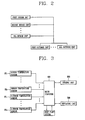
- FIG. 2 is a schematic diagram showing a state that plural outdoor units (first to M th outdoor unit) are connected to plural indoor units (first to N th indoor unit).
- the plural outdoor units are connected to the plural indoor units by a communication wire, and one of the plural outdoor units is operated by a central controller.
- the outdoor unit operated by the central controller controls other outdoor units and the plural indoor units (first to N th indoor unit) for a cooling operation or a heating operation.
- a user drives the indoor units by using a remote controller, the central controller, etc. of the multi-type air conditioner thusly to check whether a cooling operation of a heating operation of the air conditioner is well performed, thereby checking an abnormal state of the multi-type air conditioner.
- an installation inferiority such as an inferior pipe connection, a mis-connection of a communication wire, etc. or a mechanical damage may be generated.
- an abnormal state such as an inferior installation or a mechanical damage of the air conditioner is not precisely checked due to a complicated structure of the air conditioner, thereby degrading a function of the air conditioner or causing a mechanical damage of the air conditioner.
- an object of the present invention is to provide an abnormal state detecting apparatus of a multi-type air conditioner capable of detecting an abnormal state of the multi-type air conditioner by operating the air conditioner in different test operation modes according to indoor and outdoor temperatures and then by comparing characteristic data showing an operation state of the air conditioner being operated with a preset reference data at the time of a test operation, and a method thereof.
- an abnormal state detecting apparatus of a multi-type air conditioner comprising: a plurality of indoor temperature sensors RT1 ⁇ RTn for detecting indoor temperatures of indoor zones where a plurality of indoor units are positioned; a plurality of outdoor temperature sensors 0T1 ⁇ 0Tn for detecting outdoor temperatures of outdoor zones where a plurality of outdoor units are positioned; and a micro computer for judging an abnormal state of the multi-type air conditioner by selecting a corresponding test operation mode among a plurality of test operation modes preset according to an average indoor temperature of the detected plural indoor temperatures and an average outdoor temperature of the detected plural outdoor temperatures, by test-operating the multi-type air conditioner according to the selected test operation mode, then by collecting data showing an operation state of the test-operated air conditioner, and then by comparing the collected data with a preset reference data.
- a method for detecting an abnormal state of a multi-type air conditioner comprising: a user's selecting a test operation, and then detecting plural indoor temperatures of indoor zones where a plurality of indoor units are installed and plural outdoor temperatures of outdoor zones where a plurality of outdoor units are installed; selecting a corresponding test operation mode among a plurality of test operation modes preset according to an average indoor temperature of the detected plural indoor temperatures and an average outdoor temperature of the detected plural outdoor temperatures; test-operating the multi-type air conditioner according to the selected test operation mode, and collecting data showing an operation state of the test-operated air conditioner; and comparing the collected data with a preset reference data, and judging an abnormal state of the air conditioner based on the comparison result.
- an abnormal state detecting apparatus of a multi-type air conditioner capable of detecting an abnormal state of the multi-type air conditioner by operating the air conditioner in different test operation modes according to indoor and outdoor temperatures and then by comparing characteristic data showing an operation state of the air conditioner being operated with a preset reference data at the time of a test operation, and a method thereof.
- FIG. 3 is a block diagram showing a construction of an abnormal state detecting apparatus of a multi-type air conditioner according to the present invention.
- the abnormal state detecting apparatus of a multi-type air conditioner comprises: a plurality of indoor temperature sensors RT1 ⁇ RTn for detecting indoor temperatures of indoor zones where a plurality of indoor units are positioned; a plurality of outdoor temperature sensors 0T1 ⁇ 0Tn for detecting outdoor temperatures of outdoor zones where a plurality of outdoor units are positioned; and a micro computer 100 for judging an abnormal state of the multi-type air conditioner by selecting a corresponding test operation mode among a plurality of test operation modes preset according to an average indoor temperature of the detected plural indoor temperatures and an average outdoor temperature of the detected plural outdoor temperatures, by test-operating the multi-type air conditioner according to the selected test operation mode, then by collecting data showing an operation state of the test-operated air conditioner, and then by comparing the collected data with a preset reference data.
- the multi-type air conditioner according to the present invention further comprises a storing unit 200 for storing ideal data that indicates a normal operation state of the air conditioner as a reference data, and for storing information of first to sixth zones divided according to the average indoor temperature and the average outdoor temperature and having different test operation modes. Also, the multi-type air conditioner according to the present invention further comprises a displaying unit 300 for displaying an abnormal state of the air conditioner judged by the micro computer 100.
- the multi-type air conditioner can be realized as several systems.
- the multi-type air conditioner according to the present invention is realized as a heat pump system (HPS).
- HPS heat pump system
- the multi-type air conditioner realized as a heat pump system will be explained.
- data for showing an operation state of the air conditioner includes characteristic values of the heat pump system operated in a cooling mode or a heating mode, that is, a value of a high pressure (P H ), a value of a low pressure (P L ), a value of a compressor discharge temperature, a value of a liquid pipe temperature, a value of a degree of sub-cooling, a value of a degree of superheat, etc.
- P H a high pressure
- P L a low pressure
- a compressor discharge temperature a value of a liquid pipe temperature
- a value of a degree of sub-cooling a value of a degree of superheat
- the value of a low pressure (P L ) denotes a value of a pressure between the four-way valve 21 and the accumulator 27.
- the value of a compressor discharge temperature is a value of a temperature between the first and second compressors 13a and 13b and the oil separator 31.
- the value of a compressor discharge temperature is measured only for compressors being operated, and the value of a liquid pipe temperature denotes a value of a temperature between the service valve 43a and the outdoor heat exchanger 25.
- the value of a degree of sub-cooling denotes a difference between the liquid pipe temperature and a saturated temperature corresponding to the value of a high pressure P H on a pressure-enthalpy diagram.
- the value of degree of superheat denotes a difference between a saturated temperature corresponding to the value of a low pressure P L and a suction temperature of the compressor on a pressure-enthalpy diagram.
- the suction temperature of the compressor is measured at an inlet of the first compressor 13a, an inlet of the second compressor 13b, or an inlet of the accumulator 27.
- the micro computer 100 stops the multi-type air conditioner when it is judged that the air conditioner is in an abnormal state. On the contrary, when it is judged that the air conditioner is in a normal state, the micro computer 100 stops the test operation of the air conditioner after collecting oil inside the air conditioner.
- the test operation mode has 6 modes corresponding to first to sixth zones stored in the storing unit 200.
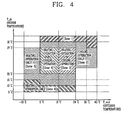
- FIG. 4 is a graph showing 6 zones divided according to indoor temperatures and outdoor temperatures in FIG. 3 .
- the first zone is composed of a zone that an average indoor temperature is 32° or more than and an average outdoor temperature is in a range of 0°C ⁇ 43°C, and a zone that the average indoor temperature is in a range of 27°C ⁇ 32°C and the average outdoor temperature is in a range of 35°C ⁇ 43°C.
- the second zone is composed of a zone that the average indoor temperature is in a range of 20°C ⁇ 27°C and the average outdoor temperature is in a range of 24°C ⁇ 43°C, and a zone that the average indoor temperature is in a range of 27°C ⁇ 32°C and the average outdoor temperature is in a range of 24°C ⁇ 35°C.
- the third zone is composed of a zone that the average indoor temperature is in a range of 20°C ⁇ 27°C and the average outdoor temperature is in a range of 12°C ⁇ 24°C.
- the fourth zone is composed of a zone that the average indoor temperature is in a range of 20°C ⁇ 27°C and the average outdoor temperature is in a range of 0°C ⁇ 12°C.
- the fifth zone is composed of a zone that the average indoor temperature is in a range of 15°C ⁇ 27°C and the average outdoor temperature is in a range of -10°C ⁇ 0°C, and a zone that the average indoor temperature is in a range of 10°C ⁇ 20°C and the average outdoor temperature is in a range of 0°C ⁇ 20°C.
- the sixth zone is composed of a zone that the average indoor temperature is in a range of 5°C ⁇ 15°C and the average outdoor temperature is in a range of -10°C ⁇ 0°C, and a zone that the average indoor temperature is in a range of 5°C ⁇ 10°C and the average outdoor temperature is in a range of 0°C ⁇ 24°C.
- the micro computer drives the multi-type air conditioner according to an average indoor temperature of indoor temperatures detected from the plural indoor temperature sensors and an average outdoor temperature of outdoor temperatures detected from the plural outdoor temperature sensors.
- the average indoor temperature is a weighted average indoor temperature
- the average outdoor temperature is an arithmetic average outdoor temperature.
- the multi-type air conditioner is operated in a cooling mode for a preset time thereby to lower the average indoor temperature as much as a certain temperature. Then, it is judged whether the average outdoor temperature and the lowered average indoor temperature correspond to the second zone. If the average outdoor temperature and the lowered average indoor temperature correspond to the second zone, the air conditioner is test-operated in a test operation mode corresponding to the second zone. However, if the average outdoor temperature and the lowered average indoor temperature do not correspond to the second zone, the test-operation of the air conditioner is stopped and the stopped state of the air conditioner is displayed.
- a test-operation mode of the multi-type air conditioner when the average indoor temperature and the average outdoor temperature correspond to the second zone, only half of the plural indoor units are operated in a cooling mode for a certain time and the rest half of the plural indoor units are not operated.
- the indoor units may be operated for a certain number of times with alternation.
- all the plural indoor units are operated in a cooling mode for a certain time. It is also possible to operate some indoor units (for example, 50%) for a certain time before operating all the plural indoor units.
- all the plural indoor units are operated in a heating mode for a certain time. It is also possible to operate some indoor units (for example, 50%) for a certain time before operating all the plural indoor units.
- a test-operation mode of the multi-type air conditioner when the average indoor temperature and the average outdoor temperature correspond to the fifth zone, only half of the plural indoor units are operated in a heating mode for a certain time and the rest of the plural indoor units are not operated.
- the indoor units may be operated for a certain number of times with alternation.
- the multi-type air conditioner is operated in a heating mode for a preset time thereby to increase the average indoor temperature as much as a certain temperature. Then, it is judged whether the average outdoor temperature and the increased average indoor temperature correspond to the fifth zone. If the average outdoor temperature and the increased average indoor temperature correspond to the fifth zone, the air conditioner is test-operated in a test operation mode corresponding to the fifth zone. However, if the average outdoor temperature and the increased average indoor temperature do not correspond to the fifth zone, the test-operation of the air conditioner is stopped and the stopped state of the air conditioner is displayed.
- the micro computer 100 compares data for indicating an operation state of the multi-type air conditioner test-operated in different test operation modes with a preset reference data, and judges whether the air conditioner is in an abnormal state on the basis of the comparison result.
- the micro computer judges as that the multi-type air conditioner is in an abnormal state.
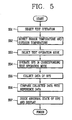
- FIG. 5 is a flowchart showing a method for detecting an abnormal state of the multi-type air conditioner according to the present invention.
- the method for detecting an abnormal state of a multi-type air conditioner comprises a user's selecting a test operation (S1) and then detecting plural indoor temperatures of indoor zones where a plurality of indoor units are installed and plural outdoor temperatures of outdoor zones where a plurality of outdoor units are installed (S2), selecting a corresponding test operation mode among a plurality of test operation modes preset according to an average indoor temperature of the detected plural indoor temperatures and an average outdoor temperature of the detected plural outdoor temperatures (S3), test-operating the multi-type air conditioner according to the selected test operation mode (S4) and collecting data showing an operation state of the test-operated air conditioner (S5), and comparing the collected data with a preset reference data (S6) and judging an abnormal state of the air conditioner based on the comparison result (S7).
- S1 select a test operation
- S2 selecting a corresponding test operation mode among a plurality of test operation modes preset according to an average indoor temperature of the detected plural indoor temperatures and an average outdoor temperature of the detected plural outdoor temperatures
- S4 test-opera
- the method for detecting an abnormal state of a multi-type air conditioner further comprises previously storing ideal data that indicates a normal operation state of the air conditioner as a reference data, and previously storing information of first to sixth zones divided according to the average indoor temperature and the average outdoor temperature and having different test operation modes. Also, the method for detecting an abnormal state of a multi-type air conditioner further comprises displaying an abnormal state of the air conditioner judged by the micro computer 100.
- the multi-type air conditioner can be realized as several systems.
- the multi-type air conditioner according to the present invention is realized as a heat pump system (HPS).
- HPS heat pump system
- the multi-type air conditioner realized as a heat pump system will be explained.
- data for showing an operation state of the air conditioner includes characteristic values of the heat pump system operated in a cooling mode or a heating mode, that is, a value of a high pressure (P H ), a value of a low pressure (P L ), a value of a compressor discharge temperature, a value of a liquid pipe temperature, a value of a degree of sub-cooling, a value of a degree of superheat, etc.
- P H a high pressure
- P L a low pressure
- a compressor discharge temperature a value of a liquid pipe temperature
- a value of a degree of sub-cooling a value of a degree of superheat
- the value of a low pressure (P L ) denotes a value of a pressure between the four-way valve 21 and the accumulator 27.
- the value of a compressor discharge temperature is a value of a temperature between the first and second compressors 13a and 13b and the oil separator 31.
- the value of a compressor discharge temperature is measured only for compressors being operated, and the value of a liquid pipe temperature denotes a value of a temperature between the service valve 43a and the outdoor heat exchanger 25.
- the value of a degree of sub-cooling denotes a difference between the liquid pipe temperature and a saturated temperature corresponding to the value of a high pressure P H on a pressure-enthalpy diagram.
- the value of degree of superheat denotes a difference between a saturated temperature corresponding to the value of a low pressure P L and a suction temperature of the compressor on a pressure-enthalpy diagram.
- the suction temperature of the compressor is measured at an inlet of the first compressor 13a, an inlet of the second compressor 13b, or an inlet of the accumulator 27.
- Ideal data at the time of operating the heat pump system is detected by an experiment or by a theory, and the detected ideal data is preset as a reference data.
- the plural indoor temperature sensors (RT1 ⁇ RTn) detect indoor temperatures of the indoor zones where the plural indoor units are installed and the plural outdoor temperature sensors (0T1 ⁇ 0Tn) detect outdoor temperatures of the outdoor zones where the plural outdoor units are installed (S2).
- the user's test operation selection is performed through a key inputting unit of a controller of the outdoor unit or through an external person computer (PC), or through a mobile communication terminal.
- the micro computer 100 calculates a weighted average indoor temperature of the detected indoor temperatures and an arithmetic average outdoor temperature of the detected outdoor temperatures, and selects a test operation mode of the multi-type air conditioner according to the calculated average indoor temperature and the average outdoor temperature with reference to FIG. 4 (S3).
- the test operation mode is divided into 6 modes according to that the average indoor temperature and the average outdoor temperature belong to which zone among the first to sixth zones of FIG. 4 .
- the micro computer 100 operates the multi-type air conditioner in the selected test operation mode (S4). That is, when the average indoor temperature and the average outdoor temperature correspond to the first zone, the multi-type air conditioner is operated in a cooling mode for a preset time thereby to lower the average indoor temperature as much as a certain temperature. Then, it is judged whether the average outdoor temperature and the lowered average indoor temperature correspond to the second zone. If the average outdoor temperature and the lowered average indoor temperature correspond to the second zone, the air conditioner is test-operated in a test operation mode corresponding to the second zone. However, if the average outdoor temperature and the lowered average indoor temperature do not correspond to the second zone, the test-operation of the air conditioner is stopped and the stopped state of the air conditioner is displayed.
- S4 selected test operation mode
- a test-operation mode of the multi-type air conditioner when the average indoor temperature and the average outdoor temperature correspond to the second zone, only half of the plural indoor units are operated in a cooling mode for a certain time and the rest half of the plural indoor units are not operated.
- a step for operating the indoor units for a certain number of times with alternation is further comprised.
- all the plural indoor units are operated in a cooling mode for a certain time. It is also possible to operate some indoor units (for example, 50%) for a certain time before operating all the plural indoor units.
- all the plural indoor units are operated in a heating mode for a certain time. It is also possible to operate some indoor units (for example, 50%) for a certain time before operating all the plural indoor units.
- a test-operation mode of the multi-type air conditioner when the average indoor temperature and the average outdoor temperature correspond to the fifth zone, only half of the plural indoor units are operated in a heating mode for a certain time and the rest of the plural indoor units are not operated.
- a step for operating the indoor units for a certain number of times with alternation is further comprised.
- the multi-type air conditioner is operated in a heating mode for a preset time thereby to increase the average indoor temperature as much as a certain temperature. Then, it is judged whether the average outdoor temperature and the increased average indoor temperature correspond to the fifth zone. If the average outdoor temperature and the increased average indoor temperature correspond to the fifth zone, the air conditioner is test-operated in a test operation mode corresponding to the fifth zone. However, if the average outdoor temperature and the increased average indoor temperature do not correspond to the fifth zone, the test-operation of the air conditioner is stopped and the stopped state of the air conditioner is displayed.
- the micro computer 100 collects data showing an operation state of the multi-type air conditioner operated in the selected test operation mode (S5), and compares the collected data with a preset reference data (S6), thereby judging an abnormal state of the air conditioner based on the comparison result. Then, the micro computer 100 displays the abnormal state of the multi-type air conditioner (S7).
- the micro computer 100 stops the multi-type air conditioner when it is judged that the air conditioner is in an abnormal state. On the contrary, when it is judged that the air conditioner is in a normal state, the micro computer 100 stops the test operation of the air conditioner after collecting oil inside the air conditioner.
- data for showing an operation state of the air conditioner includes characteristic values of the heat pump system operated in a cooling mode or a heating mode, that is, a value of a high pressure (P H ), a value of a low pressure (P L ), a value of a compressor discharge temperature, a value of a liquid pipe temperature, a value of a degree of sub-cooling, a value of a degree of superheat, etc.
- the micro computer 100 compares the data for showing an operation state of the multi-type air conditioner test-operated by the several test-operation modes with a preset reference data, and judges an abnormal state of the multi-type air conditioner on the basis of the comparison result.
- the micro computer judges as that the multi-type air conditioner is in an abnormal state.
- the multi-type air conditioner is operated in different test modes according to the indoor temperatures and the outdoor temperatures, and the data for showing an operation state of the multi-type air conditioner is compared with the preset reference data, thereby judging an abnormal state of the multi-type air conditioner.
Landscapes
- Engineering & Computer Science (AREA)
- General Engineering & Computer Science (AREA)
- Mechanical Engineering (AREA)
- Chemical & Material Sciences (AREA)
- Combustion & Propulsion (AREA)
- Physics & Mathematics (AREA)
- Human Computer Interaction (AREA)
- Thermal Sciences (AREA)
- Fuzzy Systems (AREA)
- Mathematical Physics (AREA)
- Signal Processing (AREA)
- General Physics & Mathematics (AREA)
- Automation & Control Theory (AREA)
- Air Conditioning Control Device (AREA)
Description
- The present invention relates to a multi-type air conditioner, and more particularly, to an abnormal state detecting apparatus of a multi-type air conditioner and a method thereof.
-
EP1209427 discloses an abnormal state detecting apparatus of an air conditioner comprising a plurality of sensors that monitor among others the ambient temperature and conditioned space temperature. A micro controller is provided with the sensed parameters and a diagnostic program can be performed. - Generally, an air conditioner is an apparatus for controlling the temperature, humidity, the air current, and a clean degree of indoor air for a comfortable indoor atmosphere. According to a construction of units, the air conditioner is largely divided into an integration type air conditioner that an indoor unit and an outdoor unit are mounted in a single case and a separation type air conditioner that a compressor and a condenser are constructed as an outdoor unit and an evaporator is constructed as an indoor unit.
- The separation type air conditioner comprises a cooling/heating air conditioner for selectively performing a cooling operation and a heating operation of the air conditioner by switching a flow path of a refrigerant by a flow path switching valve.
- Recently, a multi-type air conditioner having a plurality of indoor units for performing a cooling operation or a heating operation according to each space is being increasingly used. The multi-type air conditioner is provided with a plurality of outdoor units respectively having a plurality of compressors in parallel so as to correspond to a driving load of indoor units.
-
FIG. 1 is a view showing a construction of outdoor units of a multi-type air conditioner in accordance with the conventional art. - As shown, the conventional multi-type air conditioner is provided with a plurality of outdoor units (11a~11n), and a plurality of indoor units (not shown).
- The plural outdoor units respectively comprises a pair of first and
second compressors way valve 21 for switching a flow path of the refrigerant, anoutdoor heat exchanger 25 for exchanging heat of the refrigerant, and anaccumulator 27 for providing a refrigerant of a gaseous state to thefirst compressor 13a and thesecond compressor 13b. - The
first compressor 13a and thesecond compressor 13b are respectively provided with adischarge pipe 15 for discharging a refrigerant at an upper region thereof, and is provided with asuction pipe 17 of which one side is connected to anaccumulator 27 in order to suck a refrigerant at a lower region thereof. Anoil balancing pipe 19 for uniformly supplying oil to thefirst compressor 13a and thesecond compressor 13b is connected between thefirst compressor 13a and thesecond compressor 13b. - The
first compressor 13a and thesecond compressor 13b are provided with anoil separator 31 for separating oil from a refrigerant and acheck valve 33 at each discharge side thereof, respectively. Theoil separator 31 is provided with an oil recollectingpath 35 for recollecting separated oil to each suction side of thefirst compressor 13a and thesecond compressor 13b. - A four-
way valve 21 for switching a flow path of a refrigerant is provided at a lower side of thecheck valve 33. Theoutdoor heat exchanger 25 is connected to a first port of the four-way valve 21, and theaccumulator 27 is connected to a second port of the four-way valve 21. Also, one end of aconnection pipe 41 connected to the indoor unit is connected to a third port of the four-way valve 21. - A
receiver 37 is provided at one side of theoutdoor heat exchanger 25 along a flow direction of a refrigerant.Service valves receiver 37 and theconnection pipe 41. Each one side of theservice valves main refrigerant pipe 45 for connecting the outdoor units 11a~11n one another. - The conventional multi-type air conditioner is provided with a plurality of indoor units (first to Nth indoor unit) and a plurality of outdoor units (first to Mth outdoor unit) connected to one another.
-
FIG. 2 is a schematic diagram showing a state that plural outdoor units (first to Mth outdoor unit) are connected to plural indoor units (first to Nth indoor unit). - The plural outdoor units are connected to the plural indoor units by a communication wire, and one of the plural outdoor units is operated by a central controller. The outdoor unit operated by the central controller controls other outdoor units and the plural indoor units (first to Nth indoor unit) for a cooling operation or a heating operation.
- A user drives the indoor units by using a remote controller, the central controller, etc. of the multi-type air conditioner thusly to check whether a cooling operation of a heating operation of the air conditioner is well performed, thereby checking an abnormal state of the multi-type air conditioner.
- However, at the time of installing the plural indoor units and the plural outdoor units of the multi-type air conditioner, an installation inferiority such as an inferior pipe connection, a mis-connection of a communication wire, etc. or a mechanical damage may be generated.
- That is, in the conventional multi-type air conditioner, an abnormal state such as an inferior installation or a mechanical damage of the air conditioner is not precisely checked due to a complicated structure of the air conditioner, thereby degrading a function of the air conditioner or causing a mechanical damage of the air conditioner.
- Therefore, an object of the present invention is to provide an abnormal state detecting apparatus of a multi-type air conditioner capable of detecting an abnormal state of the multi-type air conditioner by operating the air conditioner in different test operation modes according to indoor and outdoor temperatures and then by comparing characteristic data showing an operation state of the air conditioner being operated with a preset reference data at the time of a test operation, and a method thereof.
- To achieve these and other advantages and in accordance with the purpose of the present invention, as embodied and broadly described herein, there is provided an abnormal state detecting apparatus of a multi-type air conditioner comprising: a plurality of indoor temperature sensors RT1~RTn for detecting indoor temperatures of indoor zones where a plurality of indoor units are positioned; a plurality of outdoor temperature sensors 0T1~0Tn for detecting outdoor temperatures of outdoor zones where a plurality of outdoor units are positioned; and a micro computer for judging an abnormal state of the multi-type air conditioner by selecting a corresponding test operation mode among a plurality of test operation modes preset according to an average indoor temperature of the detected plural indoor temperatures and an average outdoor temperature of the detected plural outdoor temperatures, by test-operating the multi-type air conditioner according to the selected test operation mode, then by collecting data showing an operation state of the test-operated air conditioner, and then by comparing the collected data with a preset reference data.
- To achieve these and other advantages and in accordance with the purpose of the present invention, as embodied and broadly described herein, there is also provided a method for detecting an abnormal state of a multi-type air conditioner comprising: a user's selecting a test operation, and then detecting plural indoor temperatures of indoor zones where a plurality of indoor units are installed and plural outdoor temperatures of outdoor zones where a plurality of outdoor units are installed; selecting a corresponding test operation mode among a plurality of test operation modes preset according to an average indoor temperature of the detected plural indoor temperatures and an average outdoor temperature of the detected plural outdoor temperatures; test-operating the multi-type air conditioner according to the selected test operation mode, and collecting data showing an operation state of the test-operated air conditioner; and comparing the collected data with a preset reference data, and judging an abnormal state of the air conditioner based on the comparison result.
- The foregoing and other objects, features, aspects and advantages of the present invention will become more apparent from the following detailed description of the present invention when taken in conjunction with the accompanying drawings.
- The accompanying drawings, which are included to provide a further understanding of the invention and are incorporated in and constitute a part of this specification, illustrate embodiments of the invention and together with the description serve to explain the principles of the invention.
- In the drawings:
-
FIG. 1 is a schematic diagram showing a construction of outdoor units of a multi-type air conditioner in accordance with the conventional art; -
FIG. 2 is a schematic diagram showing a state that the plural outdoor units ofFIG. 1 are connected to plural indoor units; -
FIG. 3 is a block diagram showing a construction of an abnormal state detecting apparatus of a multi-type air conditioner according to the present invention; -
FIG. 4 is a graph showing 6 zones divided according to indoor temperatures and outdoor temperatures by which a test operation mode of the multi-type air conditioner according to the present invention is determined; and -
FIG. 5 is a flowchart showing a method for detecting an abnormal state of the multi-type air conditioner according to the present invention. - Reference will now be made in detail to the preferred embodiments of the present invention, examples of which are illustrated in the accompanying drawings.
- Hereinafter, with reference to
FIGs. 3 to 5 , will be explained an abnormal state detecting apparatus of a multi-type air conditioner capable of detecting an abnormal state of the multi-type air conditioner by operating the air conditioner in different test operation modes according to indoor and outdoor temperatures and then by comparing characteristic data showing an operation state of the air conditioner being operated with a preset reference data at the time of a test operation, and a method thereof. -
FIG. 3 is a block diagram showing a construction of an abnormal state detecting apparatus of a multi-type air conditioner according to the present invention. - As shown, the abnormal state detecting apparatus of a multi-type air conditioner according to the present invention comprises: a plurality of indoor temperature sensors RT1~RTn for detecting indoor temperatures of indoor zones where a plurality of indoor units are positioned; a plurality of outdoor temperature sensors 0T1~0Tn for detecting outdoor temperatures of outdoor zones where a plurality of outdoor units are positioned; and a
micro computer 100 for judging an abnormal state of the multi-type air conditioner by selecting a corresponding test operation mode among a plurality of test operation modes preset according to an average indoor temperature of the detected plural indoor temperatures and an average outdoor temperature of the detected plural outdoor temperatures, by test-operating the multi-type air conditioner according to the selected test operation mode, then by collecting data showing an operation state of the test-operated air conditioner, and then by comparing the collected data with a preset reference data. - The multi-type air conditioner according to the present invention further comprises a storing
unit 200 for storing ideal data that indicates a normal operation state of the air conditioner as a reference data, and for storing information of first to sixth zones divided according to the average indoor temperature and the average outdoor temperature and having different test operation modes. Also, the multi-type air conditioner according to the present invention further comprises a displayingunit 300 for displaying an abnormal state of the air conditioner judged by themicro computer 100. - The multi-type air conditioner can be realized as several systems. However, the multi-type air conditioner according to the present invention is realized as a heat pump system (HPS). Hereinafter, the multi-type air conditioner realized as a heat pump system will be explained.
- Since the multi-type air conditioner according to the present invention is realized as a heat pump system, data for showing an operation state of the air conditioner includes characteristic values of the heat pump system operated in a cooling mode or a heating mode, that is, a value of a high pressure (PH), a value of a low pressure (PL), a value of a compressor discharge temperature, a value of a liquid pipe temperature, a value of a degree of sub-cooling, a value of a degree of superheat, etc. Referring to
FIG. 1 , the value of a high pressure (PH) denotes a value of a pressure between thecheck valve 33 and the four-way valve 21. The value of a low pressure (PL) denotes a value of a pressure between the four-way valve 21 and theaccumulator 27. Also, the value of a compressor discharge temperature is a value of a temperature between the first andsecond compressors oil separator 31. The value of a compressor discharge temperature is measured only for compressors being operated, and the value of a liquid pipe temperature denotes a value of a temperature between theservice valve 43a and theoutdoor heat exchanger 25. The value of a degree of sub-cooling denotes a difference between the liquid pipe temperature and a saturated temperature corresponding to the value of a high pressure PH on a pressure-enthalpy diagram. Also, the value of degree of superheat denotes a difference between a saturated temperature corresponding to the value of a low pressure PL and a suction temperature of the compressor on a pressure-enthalpy diagram. The suction temperature of the compressor is measured at an inlet of thefirst compressor 13a, an inlet of thesecond compressor 13b, or an inlet of theaccumulator 27. - The
micro computer 100 stops the multi-type air conditioner when it is judged that the air conditioner is in an abnormal state. On the contrary, when it is judged that the air conditioner is in a normal state, themicro computer 100 stops the test operation of the air conditioner after collecting oil inside the air conditioner. - The test operation mode has 6 modes corresponding to first to sixth zones stored in the
storing unit 200. -
FIG. 4 is a graph showing 6 zones divided according to indoor temperatures and outdoor temperatures inFIG. 3 . - As shown in
FIG. 4 , the first zone is composed of a zone that an average indoor temperature is 32° or more than and an average outdoor temperature is in a range of 0°C~43°C, and a zone that the average indoor temperature is in a range of 27°C~32°C and the average outdoor temperature is in a range of 35°C ~43°C. Also, the second zone is composed of a zone that the average indoor temperature is in a range of 20°C~27°C and the average outdoor temperature is in a range of 24°C~43°C, and a zone that the average indoor temperature is in a range of 27°C~32°C and the average outdoor temperature is in a range of 24°C ~35°C. The third zone is composed of a zone that the average indoor temperature is in a range of 20°C~27°C and the average outdoor temperature is in a range of 12°C~24°C. The fourth zone is composed of a zone that the average indoor temperature is in a range of 20°C~27°C and the average outdoor temperature is in a range of 0°C~12°C. The fifth zone is composed of a zone that the average indoor temperature is in a range of 15°C~27°C and the average outdoor temperature is in a range of -10°C~0°C, and a zone that the average indoor temperature is in a range of 10°C~20°C and the average outdoor temperature is in a range of 0°C~20°C. And, the sixth zone is composed of a zone that the average indoor temperature is in a range of 5°C~15°C and the average outdoor temperature is in a range of -10°C~0°C, and a zone that the average indoor temperature is in a range of 5°C~10°C and the average outdoor temperature is in a range of 0°C~24°C. - The micro computer drives the multi-type air conditioner according to an average indoor temperature of indoor temperatures detected from the plural indoor temperature sensors and an average outdoor temperature of outdoor temperatures detected from the plural outdoor temperature sensors. Preferably, the average indoor temperature is a weighted average indoor temperature, and the average outdoor temperature is an arithmetic average outdoor temperature.
- That is, when the average indoor temperature and the average outdoor temperature correspond to the first zone, the multi-type air conditioner is operated in a cooling mode for a preset time thereby to lower the average indoor temperature as much as a certain temperature. Then, it is judged whether the average outdoor temperature and the lowered average indoor temperature correspond to the second zone. If the average outdoor temperature and the lowered average indoor temperature correspond to the second zone, the air conditioner is test-operated in a test operation mode corresponding to the second zone. However, if the average outdoor temperature and the lowered average indoor temperature do not correspond to the second zone, the test-operation of the air conditioner is stopped and the stopped state of the air conditioner is displayed.
- In a test-operation mode of the multi-type air conditioner when the average indoor temperature and the average outdoor temperature correspond to the second zone, only half of the plural indoor units are operated in a cooling mode for a certain time and the rest half of the plural indoor units are not operated. The indoor units may be operated for a certain number of times with alternation.
- In a test-operation mode of the multi-type air conditioner when the average indoor temperature and the average outdoor temperature correspond to the third zone, all the plural indoor units are operated in a cooling mode for a certain time. It is also possible to operate some indoor units (for example, 50%) for a certain time before operating all the plural indoor units.
- In a test-operation mode of the multi-type air conditioner when the average indoor temperature and the average outdoor temperature correspond to the fourth zone, all the plural indoor units are operated in a heating mode for a certain time. It is also possible to operate some indoor units (for example, 50%) for a certain time before operating all the plural indoor units.
- In a test-operation mode of the multi-type air conditioner when the average indoor temperature and the average outdoor temperature correspond to the fifth zone, only half of the plural indoor units are operated in a heating mode for a certain time and the rest of the plural indoor units are not operated. The indoor units may be operated for a certain number of times with alternation.
- When the average indoor temperature and the average outdoor temperature correspond to the sixth zone, the multi-type air conditioner is operated in a heating mode for a preset time thereby to increase the average indoor temperature as much as a certain temperature. Then, it is judged whether the average outdoor temperature and the increased average indoor temperature correspond to the fifth zone. If the average outdoor temperature and the increased average indoor temperature correspond to the fifth zone, the air conditioner is test-operated in a test operation mode corresponding to the fifth zone. However, if the average outdoor temperature and the increased average indoor temperature do not correspond to the fifth zone, the test-operation of the air conditioner is stopped and the stopped state of the air conditioner is displayed.
- Then, the
micro computer 100 compares data for indicating an operation state of the multi-type air conditioner test-operated in different test operation modes with a preset reference data, and judges whether the air conditioner is in an abnormal state on the basis of the comparison result. - For example, when an error between the data for indicating an operation state of the air conditioner and the preset reference data is more than 30% as the result of the comparison, the micro computer judges as that the multi-type air conditioner is in an abnormal state.
- Hereinafter, an operation of the abnormal state detecting apparatus of a multi-type air conditioner will be explained with reference to
FIG. 5 . -
FIG. 5 is a flowchart showing a method for detecting an abnormal state of the multi-type air conditioner according to the present invention. - As shown, the method for detecting an abnormal state of a multi-type air conditioner comprises a user's selecting a test operation (S1) and then detecting plural indoor temperatures of indoor zones where a plurality of indoor units are installed and plural outdoor temperatures of outdoor zones where a plurality of outdoor units are installed (S2), selecting a corresponding test operation mode among a plurality of test operation modes preset according to an average indoor temperature of the detected plural indoor temperatures and an average outdoor temperature of the detected plural outdoor temperatures (S3), test-operating the multi-type air conditioner according to the selected test operation mode (S4) and collecting data showing an operation state of the test-operated air conditioner (S5), and comparing the collected data with a preset reference data (S6) and judging an abnormal state of the air conditioner based on the comparison result (S7).
- The method for detecting an abnormal state of a multi-type air conditioner further comprises previously storing ideal data that indicates a normal operation state of the air conditioner as a reference data, and previously storing information of first to sixth zones divided according to the average indoor temperature and the average outdoor temperature and having different test operation modes. Also, the method for detecting an abnormal state of a multi-type air conditioner further comprises displaying an abnormal state of the air conditioner judged by the
micro computer 100. - The multi-type air conditioner can be realized as several systems. However, the multi-type air conditioner according to the present invention is realized as a heat pump system (HPS). Hereinafter, the multi-type air conditioner realized as a heat pump system will be explained.
- Since the multi-type air conditioner according to the present invention is realized as a heat pump system, data for showing an operation state of the air conditioner includes characteristic values of the heat pump system operated in a cooling mode or a heating mode, that is, a value of a high pressure (PH), a value of a low pressure (PL), a value of a compressor discharge temperature, a value of a liquid pipe temperature, a value of a degree of sub-cooling, a value of a degree of superheat, etc. Referring to
FIG. 1 , the value of a high pressure (PH) denotes a value of a pressure between thecheck valve 33 and the four-way valve 21. The value of a low pressure (PL) denotes a value of a pressure between the four-way valve 21 and theaccumulator 27. Also, the value of a compressor discharge temperature is a value of a temperature between the first andsecond compressors oil separator 31. The value of a compressor discharge temperature is measured only for compressors being operated, and the value of a liquid pipe temperature denotes a value of a temperature between theservice valve 43a and theoutdoor heat exchanger 25. The value of a degree of sub-cooling denotes a difference between the liquid pipe temperature and a saturated temperature corresponding to the value of a high pressure PH on a pressure-enthalpy diagram. Also, the value of degree of superheat denotes a difference between a saturated temperature corresponding to the value of a low pressure PL and a suction temperature of the compressor on a pressure-enthalpy diagram. The suction temperature of the compressor is measured at an inlet of thefirst compressor 13a, an inlet of thesecond compressor 13b, or an inlet of theaccumulator 27. - The method for detecting an abnormal state of a multi-type air conditioner according to the present invention will be explained in more detail.
- Ideal data at the time of operating the heat pump system is detected by an experiment or by a theory, and the detected ideal data is preset as a reference data.
- Under the state, if a user selects a test-operation of the multi-type air conditioner (S1), the plural indoor temperature sensors (RT1~RTn) detect indoor temperatures of the indoor zones where the plural indoor units are installed and the plural outdoor temperature sensors (0T1~0Tn) detect outdoor temperatures of the outdoor zones where the plural outdoor units are installed (S2). The user's test operation selection is performed through a key inputting unit of a controller of the outdoor unit or through an external person computer (PC), or through a mobile communication terminal.
- Then, the
micro computer 100 calculates a weighted average indoor temperature of the detected indoor temperatures and an arithmetic average outdoor temperature of the detected outdoor temperatures, and selects a test operation mode of the multi-type air conditioner according to the calculated average indoor temperature and the average outdoor temperature with reference toFIG. 4 (S3). The test operation mode is divided into 6 modes according to that the average indoor temperature and the average outdoor temperature belong to which zone among the first to sixth zones ofFIG. 4 . - Then, the
micro computer 100 operates the multi-type air conditioner in the selected test operation mode (S4). That is, when the average indoor temperature and the average outdoor temperature correspond to the first zone, the multi-type air conditioner is operated in a cooling mode for a preset time thereby to lower the average indoor temperature as much as a certain temperature. Then, it is judged whether the average outdoor temperature and the lowered average indoor temperature correspond to the second zone. If the average outdoor temperature and the lowered average indoor temperature correspond to the second zone, the air conditioner is test-operated in a test operation mode corresponding to the second zone. However, if the average outdoor temperature and the lowered average indoor temperature do not correspond to the second zone, the test-operation of the air conditioner is stopped and the stopped state of the air conditioner is displayed. - In a test-operation mode of the multi-type air conditioner when the average indoor temperature and the average outdoor temperature correspond to the second zone, only half of the plural indoor units are operated in a cooling mode for a certain time and the rest half of the plural indoor units are not operated. A step for operating the indoor units for a certain number of times with alternation is further comprised.
- In a test-operation mode of the multi-type air conditioner when the average indoor temperature and the average outdoor temperature correspond to the third zone, all the plural indoor units are operated in a cooling mode for a certain time. It is also possible to operate some indoor units (for example, 50%) for a certain time before operating all the plural indoor units.
- In a test-operation mode of the multi-type air conditioner when the average indoor temperature and the average outdoor temperature correspond to the fourth zone, all the plural indoor units are operated in a heating mode for a certain time. It is also possible to operate some indoor units (for example, 50%) for a certain time before operating all the plural indoor units.
- In a test-operation mode of the multi-type air conditioner when the average indoor temperature and the average outdoor temperature correspond to the fifth zone, only half of the plural indoor units are operated in a heating mode for a certain time and the rest of the plural indoor units are not operated. A step for operating the indoor units for a certain number of times with alternation is further comprised.
- When the average indoor temperature and the average outdoor temperature correspond to the sixth zone, the multi-type air conditioner is operated in a heating mode for a preset time thereby to increase the average indoor temperature as much as a certain temperature. Then, it is judged whether the average outdoor temperature and the increased average indoor temperature correspond to the fifth zone. If the average outdoor temperature and the increased average indoor temperature correspond to the fifth zone, the air conditioner is test-operated in a test operation mode corresponding to the fifth zone. However, if the average outdoor temperature and the increased average indoor temperature do not correspond to the fifth zone, the test-operation of the air conditioner is stopped and the stopped state of the air conditioner is displayed.
- Then, the
micro computer 100 collects data showing an operation state of the multi-type air conditioner operated in the selected test operation mode (S5), and compares the collected data with a preset reference data (S6), thereby judging an abnormal state of the air conditioner based on the comparison result. Then, themicro computer 100 displays the abnormal state of the multi-type air conditioner (S7). Themicro computer 100 stops the multi-type air conditioner when it is judged that the air conditioner is in an abnormal state. On the contrary, when it is judged that the air conditioner is in a normal state, themicro computer 100 stops the test operation of the air conditioner after collecting oil inside the air conditioner. Since the multi-type air conditioner according to the present invention is realized as a heat pump system, data for showing an operation state of the air conditioner includes characteristic values of the heat pump system operated in a cooling mode or a heating mode, that is, a value of a high pressure (PH), a value of a low pressure (PL), a value of a compressor discharge temperature, a value of a liquid pipe temperature, a value of a degree of sub-cooling, a value of a degree of superheat, etc. - Then, the
micro computer 100 compares the data for showing an operation state of the multi-type air conditioner test-operated by the several test-operation modes with a preset reference data, and judges an abnormal state of the multi-type air conditioner on the basis of the comparison result. - For example, when an error between the data for indicating an operation state of the air conditioner and the preset reference data is more than 30% as the result of the comparison, the micro computer judges as that the multi-type air conditioner is in an abnormal state.
- As aforementioned, the multi-type air conditioner is operated in different test modes according to the indoor temperatures and the outdoor temperatures, and the data for showing an operation state of the multi-type air conditioner is compared with the preset reference data, thereby judging an abnormal state of the multi-type air conditioner.
Claims (27)
- An abnormal state detecting apparatus of a multi-type air conditioner comprising:a plurality of indoor temperature sensors for detecting indoor temperatures of indoor zones where a plurality of indoor units are positioned;a plurality of outdoor temperature sensors for detecting outdoor temperatures of outdoor zones where a plurality of outdoor units are positioned; anda micro computer for judging an abnormal state of the multi-type air conditioner by selecting a corresponding test operation mode among a plurality of test operation modes preset according to an average indoor temperature of the detected plural indoor temperatures and an average outdoor temperature of the detected plural outdoor temperatures, by test-operating the multi-type air conditioner according to the selected test operation mode, then by collecting data showing an operation state of the test-operated air conditioner, and then by comparing the collected data with a preset reference data.
- The apparatus of claim 1, wherein the average indoor temperature is a weighted average indoor temperature of the detected plural indoor temperatures, and the average outdoor temperature is an arithmetic average outdoor temperature of the detected plural outdoor temperatures.
- The apparatus of claim 1, wherein the data is characteristic values of the multi-type air conditioner operated in a cooling mode or a heating mode, that is, a value of a high pressure, a value of a low pressure, a value of a compressor discharge temperature, a value of a liquid pipe temperature, a value of a degree of sub-cooling, and a value of a degree of superheat.
- The apparatus of claim 1, wherein the micro computer stops the multi-type air conditioner when it is judged that the air conditioner is in an abnormal state, and when it is judged that the air conditioner is in a normal state, the micro computer stops the test operation of the air conditioner after collecting oil inside the air conditioner.
- The apparatus of claim 1, further comprising a displaying unit for displaying an abnormal state of the multi-type air conditioner.
- The apparatus of claim 1, further comprising a storing unit for previously storing ideal data that indicates a normal operation state of the air conditioner as a reference data, and for previously storing information of first to sixth zones divided according to the average indoor temperature and the average outdoor temperature and having different test operation modes.
- The apparatus of claim 6, wherein the first zone comprises a zone that an average indoor temperature is 32° or more than and an average outdoor temperature is in a range of 0°C∼43°C, and a zone that the average indoor temperature is in a range of 27°C∼32°C and the average outdoor temperature is in a range of 35°C ∼43°C,
the second zone comprises a zone that the average indoor temperature is in a range of 20°C∼27°C and the average outdoor temperature is in a range of 24°C∼43°C, and a zone that the average indoor temperature is in a range of 27°C∼32°C and the average outdoor temperature is in a range of 24°C ∼35°C,
the third zone comprises a zone that the average indoor temperature is in a range of 20°C∼27°C and the average outdoor temperature is in a range of 12°C∼24°C.
the fourth zone comprises a zone that the average indoor temperature is in a range of 20°C∼27°C and the average outdoor temperature is in a range of 0°C∼12°C,
the fifth zone comprises a zone that the average indoor temperature is in a range of 15°C∼27°C and the average outdoor temperature is in a range of - 10°C∼0°C, and a zone that the average indoor temperature is in a range of 10°C∼20°C and the average outdoor temperature is in a range of 0°C∼20°C, and
the sixth zone comprises a zone that the average indoor temperature is in a range of 5°C∼15°C and the average outdoor temperature is in a range of - 10°C∼0°C, and a zone that the average indoor temperature is in a range of 5°C∼10°C and the average outdoor temperature is in a range of 0°C∼24°C. - The apparatus of claim 6, wherein when the average indoor temperature and the average outdoor temperature correspond to the first zone, the micro computer operates the multi-type air conditioner in a cooling mode for a preset time thereby to lower the average indoor temperature as much as a certain temperature, then judges whether the average outdoor temperature and the lowered average indoor temperature correspond to the second zone, if the average outdoor temperature and the lowered average indoor temperature correspond to the second zone, test-operates the multi-type air conditioner in a test operation mode corresponding to the second zone, and if the average outdoor temperature and the lowered average indoor temperature do not correspond to the second zone, stops the test-operation of the air conditioner and displays the stopped state of the air conditioner;
when the average indoor temperature and the average outdoor temperature correspond to the second zone, the micro computer operates only half of the plural indoor units in a cooling mode for a certain time and does not operate the rest half of the plural indoor units;
when the average indoor temperature and the average outdoor temperature correspond to the third zone, the micro computer operates all the plural indoor units in a cooling mode for a certain time;
when the average indoor temperature and the average outdoor temperature correspond to the fourth zone, the micro computer operates all the plural indoor units in a heating mode for a certain time;
when the average indoor temperature and the average outdoor temperature correspond to the fifth zone, the micro computer operates only half of the plural indoor units in a heating mode for a certain time and does not operate the rest of the plural indoor units; and
when the average indoor temperature and the average outdoor temperature correspond to the sixth zone, the micro computer operates the multi-type air conditioner in a heating mode for a preset time thereby to increase the average indoor temperature as much as a certain temperature, then judges whether the average outdoor temperature and the increased average indoor temperature correspond to the fifth zone, if the average outdoor temperature and the increased average indoor temperature correspond to the fifth zone, test-operates the multi-type air conditioner in a test operation mode corresponding to the fifth zone, and if the average outdoor temperature and the increased average indoor temperature do not correspond to the fifth zone, stops the test-operation of the multi-type air conditioner and displays the stopped state of the air conditioner. - The apparatus of claim 8, wherein when the average indoor temperature and the average outdoor temperature correspond to the second zone or the fifth zone, the micro computer operates only half of the plural indoor units in a cooling mode or a heating mode for a certain time and does not operate the rest of the plural indoor units with alternation for a certain number of times.
- The apparatus of claim 8, further comprising when the average indoor temperature and the average outdoor temperature correspond to the third zone or the fourth zone, the micro computer operates some of the plural indoor units before operating all the plural indoor units in a cooling mode or in a heating mode for a certain time.
- A method for detecting an abnormal state of a multi-type air conditioner comprising:a user's selecting a test operation, and then detecting plural indoor temperatures of indoor zones where a plurality of indoor units are installed and plural outdoor temperatures of outdoor zones where a plurality of outdoor units are installed;selecting a corresponding test operation mode among a plurality of test operation modes preset according to an average indoor temperature of the detected plural indoor temperatures and an average outdoor temperature of the detected plural outdoor temperatures;test-operating the multi-type air conditioner according to the selected test operation mode, and collecting data showing an operation state of the test-operated air conditioner; andcomparing the collected data with a preset reference data and judging an abnormal state of the air conditioner based on the comparison result.
- The method of claim 11, wherein the average indoor temperature is a weighted average indoor temperature of the detected plural indoor temperatures, and the average outdoor temperature is an arithmetic average outdoor temperature of the detected plural outdoor temperatures.
- The method of claim 11, wherein the data is characteristic values of the multi-type air conditioner operated in a cooling mode or a heating mode, that is, a value of a high pressure, a value of a low pressure, a value of a compressor discharge temperature, a value of a liquid pipe temperature, a value of a degree of sub-cooling, and a value of a degree of superheat.
- The method of claim 11, wherein the test operation modes are determined according to that the average indoor temperature and the average outdoor temperature belong to which zone among the first to sixth zones.
- The method of claim 14, wherein the first zone comprises a zone that an average indoor temperature is 32° or more than and an average outdoor temperature is in a range of 0°C∼43°C, and a zone that the average indoor temperature is in a range of 27°C∼32°C and the average outdoor temperature is in a range of 35°C ∼43°C,
the second zone comprises a zone that the average indoor temperature is in a range of 20°C∼27°C and the average outdoor temperature is in a range of 24°C∼43°C, and a zone that the average indoor temperature is in a range of 27°C∼32°C and the average outdoor temperature is in a range of 24°C ∼35°C,
the third zone comprises a zone that the average indoor temperature is in a range of 20°C∼27°C and the average outdoor temperature is in a range of 12°C∼24°C,
the fourth zone comprises a zone that the average indoor temperature is in a range of 20°C∼27°C and the average outdoor temperature is in a range of 0°C∼12°C,
the fifth zone comprises a zone that the average indoor temperature is in a range of 15°C∼27°C and the average outdoor temperature is in a range of - 10°C∼0°C, and a zone that the average indoor temperature is in a range of 10°C∼20°C and the average outdoor temperature is in a range of 0°C∼20°C, and
the sixth zone comprises a zone that the average indoor temperature is in a range of 5°C∼15°C and the average outdoor temperature is in a range of - 10°C∼0°C, and a zone that the average indoor temperature is in a range of 5°C∼10°C and the average outdoor temperature is in a range of 0°C∼24°C. - The method of claim 14, wherein when the average indoor temperature and the average outdoor temperature correspond to the first zone, the multi-type air conditioner is operated in a cooling mode for a preset time thereby to lower the average indoor temperature as much as a certain temperature, then is judged whether the average outdoor temperature and the lowered average indoor temperature correspond to the second zone, if the average outdoor temperature and the lowered average indoor temperature correspond to the second zone, the multi-type air conditioner is test-operated in a test operation mode corresponding to the second zone, and if the average outdoor temperature and the lowered average indoor temperature do not correspond to the second zone, the test-operation of the air conditioner is stopped and the stopped state of the air conditioner is displayed.
- The method of claim 14, wherein when the average indoor temperature and the average outdoor temperature correspond to the second zone, only half of the plural indoor units are operated in a cooling mode for a certain time and the rest half of the plural indoor units are not operated for the certain time.
- The method of claim 17, further comprising alternately performing each operation for a certain number of times.
- The method of claim 14, wherein when the average indoor temperature and the average outdoor temperature correspond to the third zone, all the plural indoor units are operated in a cooling mode for a certain time;
- The method of claim 19, further comprising operating some of the plural indoor units before operating all the plural indoor units in a cooling mode for a certain time.
- The method of claim 14, wherein when the average indoor temperature and the average outdoor temperature correspond to the fourth zone, all the plural indoor units are operated in a heating mode for a certain time.
- The method of claim 21, further comprising operating some of the plural indoor units before operating all the plural indoor units in a heating mode for a certain time.
- The method of claim 14, wherein when the average indoor temperature and the average outdoor temperature correspond to the fifth zone, only half of the plural indoor units are operated in a heating mode for a certain time and the rest of the plural indoor units are not operated for the certain time.
- The method of claim 23, further comprising alternately performing each operation for a certain number of times.
- The method of claim 14, wherein when the average indoor temperature and the average outdoor temperature correspond to the sixth zone, the multi-type air conditioner is operated in a heating mode for a preset time thereby to increase the average indoor temperature as much as a certain temperature, then is judged whether the average outdoor temperature and the increased average indoor temperature correspond to the fifth zone, if the average outdoor temperature and the increased average indoor temperature correspond to the fifth zone, the multi-type air conditioner is test-operated in a test operation mode corresponding to the fifth zone, and if the average outdoor temperature and the increased average indoor temperature do not correspond to the fifth zone, the test-operation of the multi-type air conditioner is finished and the stopped state of the air conditioner is displayed.
- The method of claim 11, further comprising stopping the multi-type air conditioner when it is judged that the air conditioner is in an abnormal state, and stopping the test operation of the air conditioner after collecting oil inside the air conditioner when it is judged that the air conditioner is in a normal state.
- The method of claim 11, further comprising previously storing ideal data that indicates a normal operation state of the air conditioner as a reference data, and previously storing information of first to sixth zones divided according to the average indoor temperature and the average outdoor temperature and having different test operation modes.
Applications Claiming Priority (1)
| Application Number | Priority Date | Filing Date | Title |
|---|---|---|---|
| KR1020040085920A KR100664056B1 (en) | 2004-10-26 | 2004-10-26 | Apparatus and method for determining fault of multi-type air conditioner |
Publications (3)
| Publication Number | Publication Date |
|---|---|
| EP1657504A1 EP1657504A1 (en) | 2006-05-17 |
| EP1657504B1 true EP1657504B1 (en) | 2011-01-26 |
| EP1657504B8 EP1657504B8 (en) | 2011-05-25 |
Family
ID=35669854
Family Applications (1)
| Application Number | Title | Priority Date | Filing Date |
|---|---|---|---|
| EP05012267A Ceased EP1657504B8 (en) | 2004-10-26 | 2005-06-07 | Abnormal state detecting apparatus of multi-type air conditioner and method thereof |
Country Status (5)
| Country | Link |
|---|---|
| US (1) | US7621138B2 (en) |
| EP (1) | EP1657504B8 (en) |
| KR (1) | KR100664056B1 (en) |
| CN (1) | CN100575908C (en) |
| DE (1) | DE602005026089D1 (en) |
Cited By (1)
| Publication number | Priority date | Publication date | Assignee | Title |
|---|---|---|---|---|
| EP3598013B1 (en) * | 2017-09-18 | 2022-10-19 | GD Midea Heating & Ventilating Equipment Co., Ltd. | Method for controlling multi-split air conditioner, multi-split air conditioner system, and computer-readable storage medium |
Families Citing this family (45)
| Publication number | Priority date | Publication date | Assignee | Title |
|---|---|---|---|---|
| KR101054979B1 (en) * | 2004-10-30 | 2011-08-05 | 엘지전자 주식회사 | Control system and method of air conditioner using mobile communication terminal |
| KR100749175B1 (en) * | 2006-05-24 | 2007-08-14 | 한국에너지기술연구원 | Classification and Rule-Based Single Site Fault Detection and Diagnosis in Air Conditioning System and Its Apparatus |
| JP4567637B2 (en) * | 2006-07-10 | 2010-10-20 | ダイキン工業株式会社 | Air conditioning controller |
| KR20090000248A (en) * | 2007-02-07 | 2009-01-07 | 엘지전자 주식회사 | Integrated management display device and method of air conditioner |
| KR20080074378A (en) * | 2007-02-08 | 2008-08-13 | 엘지전자 주식회사 | How to limit temperature of multi air conditioner |
| US8209989B2 (en) * | 2007-03-30 | 2012-07-03 | Intel Corporation | Microarchitecture control for thermoelectric cooling |
| KR101270621B1 (en) * | 2007-12-21 | 2013-06-03 | 엘지전자 주식회사 | Air conditioning system |
| CN101788395B (en) * | 2010-01-22 | 2011-10-26 | 西南交通大学 | Overheat fault diagnostic detecting method and device for room with ground source heat pump central air-conditioning system |
| CN102692328B (en) * | 2011-03-24 | 2014-08-27 | 珠海格力电器股份有限公司 | Multi-split air conditioner detection system and method |
| KR101712213B1 (en) * | 2011-04-22 | 2017-03-03 | 엘지전자 주식회사 | Multi type air conditiner and method of controlling the same |
| US20120279241A1 (en) * | 2011-05-05 | 2012-11-08 | Ruiz Randy T | Heat pump control |
| KR101970522B1 (en) * | 2012-01-19 | 2019-04-19 | 삼성전자주식회사 | Air conditioner and starting control method of thereof |
| JP5858824B2 (en) * | 2012-03-01 | 2016-02-10 | 三菱電機株式会社 | Multi-type air conditioner |
| CN103292415B (en) * | 2012-03-01 | 2016-01-20 | 珠海格力电器股份有限公司 | Temperature detection method and device and control method and system of air conditioner |
| US10077928B2 (en) * | 2012-06-21 | 2018-09-18 | Mitsubishi Electric Corporation | Air-conditioning system and control method for air-conditioning system |
| US20140163744A1 (en) * | 2012-12-07 | 2014-06-12 | Liebert Corporation | Fault detection in a cooling system with a plurality of identical cooling circuits |
| CN104515691A (en) * | 2013-09-29 | 2015-04-15 | 天津台信检测技术有限公司 | Automobile air conditioner fault detecting device and automobile air conditioner fault detecting method |
| US9823003B2 (en) * | 2014-01-30 | 2017-11-21 | Mitsubishi Electric Corporation | Air-conditioning apparatus and air-conditioning system determining valve setting error |
| EP2933442B1 (en) * | 2014-04-16 | 2016-11-02 | Orcan Energy AG | Device and method for detecting leaks in closed cycle processes |
| US10047965B2 (en) | 2014-06-02 | 2018-08-14 | Lennox Industries Inc. | System for managing lubricant levels in tandem compressor assemblies of an HVAC system |
| CN104166066B (en) * | 2014-06-30 | 2017-09-22 | 珠海格力电器股份有限公司 | Air conditioner temperature sensing bulb misconnection detection method and device and air conditioner |
| JP2016084969A (en) * | 2014-10-24 | 2016-05-19 | 三菱重工業株式会社 | Control device of air conditioning system, air conditioning system, and abnormality determination method of air conditioning system |
| CN104535884B (en) * | 2014-12-29 | 2018-03-20 | 宁波奥克斯电气股份有限公司 | Judge domestic multi-connection machine indoor set data wire whether the method for wrong |
| CN104566823B (en) | 2014-12-29 | 2018-03-16 | 广东美的暖通设备有限公司 | The refrigerant control method of multi-connected machine in parallel |
| CN104930647B (en) * | 2015-05-29 | 2018-03-27 | 广东美的制冷设备有限公司 | control method, control system and air conditioner |
| CA2941479C (en) * | 2015-09-21 | 2019-01-29 | Lennox Industries Inc. | System for managing lubricant levels in tandem compressor assemblies of an hvac system |
| CN108700320B (en) * | 2016-03-01 | 2020-08-21 | 三菱电机株式会社 | Air conditioning system |
| CN106124232B (en) * | 2016-06-13 | 2018-11-06 | 合肥市再德高分子材料有限公司 | A kind of central air-conditioning intelligence detecting system |
| CN107192089B (en) * | 2017-05-08 | 2020-01-31 | 广东美的暖通设备有限公司 | Control method and control system of air conditioner, air conditioner and computer equipment |
| WO2018225129A1 (en) * | 2017-06-05 | 2018-12-13 | 三菱電機株式会社 | Air conditioning system |
| CN107560092B (en) * | 2017-09-25 | 2019-10-22 | 珠海格力电器股份有限公司 | Multi-split air conditioner running state control method and system and heat pump multi-split air conditioner |
| CN108626856B (en) * | 2018-05-02 | 2020-06-30 | 广东美的制冷设备有限公司 | Control method and control device for air conditioning equipment, storage medium and air conditioning equipment |
| WO2020040125A1 (en) * | 2018-08-24 | 2020-02-27 | シャープ株式会社 | Air conditioner system, air conditioner system control method, and air conditioner system control program |
| CN109341008B (en) * | 2018-09-10 | 2021-07-20 | 广东美的制冷设备有限公司 | Air conditioner control method, device and air conditioner |
| KR102661642B1 (en) * | 2019-08-14 | 2024-04-29 | 삼성전자주식회사 | Electronic apparatus and controlling method of the electronic apparatus |
| CN111006354B (en) * | 2019-11-25 | 2021-09-21 | 宁波奥克斯电气股份有限公司 | Air conditioner control method and device, air conditioner and storage medium |
| CN111006301B (en) * | 2019-11-28 | 2025-08-12 | 江苏苏净集团有限公司 | Carbon dioxide cascade heating system and control method thereof |
| CN112113310B (en) * | 2020-08-12 | 2021-10-22 | 珠海格力电器股份有限公司 | Method and device for confirming running state of air conditioner and storage medium |
| CN112082250B (en) * | 2020-08-12 | 2022-01-14 | 珠海格力电器股份有限公司 | Air conditioner installation state detection method and device, storage medium and air conditioner |
| CN112611957B (en) * | 2020-12-25 | 2022-09-02 | 广东Tcl智能暖通设备有限公司 | Load testing method, terminal, system and computer readable storage medium |
| CN115562093B (en) * | 2021-07-02 | 2026-02-24 | 云米互联科技(广东)有限公司 | Automatic control method and device for intelligent air conditioning equipment |
| EP4332450A4 (en) | 2021-10-21 | 2024-10-02 | Samsung Electronics Co., Ltd. | AIR CONDITIONING APPARATUS AND ASSOCIATED CONTROL METHOD |
| KR20230057138A (en) * | 2021-10-21 | 2023-04-28 | 삼성전자주식회사 | air conditioner and controlling method thereof |
| CN113983651B (en) * | 2021-11-23 | 2023-04-14 | 海信(广东)空调有限公司 | Air conditioner and its control method |
| CN115123327B (en) * | 2022-06-29 | 2024-05-03 | 新誉轨道交通科技有限公司 | Control method, device and medium for train air conditioner temperature |
Family Cites Families (11)
| Publication number | Priority date | Publication date | Assignee | Title |
|---|---|---|---|---|
| US4381549A (en) * | 1980-10-14 | 1983-04-26 | Trane Cac, Inc. | Automatic fault diagnostic apparatus for a heat pump air conditioning system |
| JPS57131953A (en) | 1981-02-05 | 1982-08-16 | Matsushita Electric Ind Co Ltd | Indicator of multi-room type air conditioner |
| JPS5875649A (en) | 1981-10-30 | 1983-05-07 | Toshiba Corp | Abnormality detecting device of air conditioner |
| GB2241091B (en) * | 1990-02-14 | 1994-01-19 | Toshiba Kk | Air conditioning apparatus connecting one outdoor unit with several indoor units through several refrigerant tubes and signal conductors |
| US5115967A (en) * | 1991-03-18 | 1992-05-26 | Wedekind Gilbert L | Method and apparatus for adaptively optimizing climate control energy consumption in a building |
| JPH055564A (en) | 1991-06-28 | 1993-01-14 | Toshiba Corp | Air conditioner |
| IL116764A (en) * | 1996-01-15 | 2001-01-11 | Acclim Line Ltd | Central air conditioning system |
| KR100238656B1 (en) * | 1997-11-29 | 2000-01-15 | 윤종용 | Multi inverter airconditioner and test method having set monitoring function |
| US6324854B1 (en) | 2000-11-22 | 2001-12-04 | Copeland Corporation | Air-conditioning servicing system and method |
| US6978627B2 (en) * | 2002-01-31 | 2005-12-27 | Mitsubishi Denki Kabushiki Kaisha | Air conditioner control system, central remote controller, and facility controller |
| KR100511953B1 (en) | 2002-11-22 | 2005-09-02 | 엘지전자 주식회사 | Compressor control device for air-conditioner using multi compressors and compressor control method for the same |
-
2004
- 2004-10-26 KR KR1020040085920A patent/KR100664056B1/en not_active Expired - Fee Related
-
2005
- 2005-05-13 US US11/128,336 patent/US7621138B2/en not_active Expired - Fee Related
- 2005-06-07 DE DE602005026089T patent/DE602005026089D1/en not_active Expired - Lifetime
- 2005-06-07 EP EP05012267A patent/EP1657504B8/en not_active Ceased
- 2005-06-09 CN CN200510077828A patent/CN100575908C/en not_active Expired - Fee Related
Cited By (1)
| Publication number | Priority date | Publication date | Assignee | Title |
|---|---|---|---|---|
| EP3598013B1 (en) * | 2017-09-18 | 2022-10-19 | GD Midea Heating & Ventilating Equipment Co., Ltd. | Method for controlling multi-split air conditioner, multi-split air conditioner system, and computer-readable storage medium |
Also Published As
| Publication number | Publication date |
|---|---|
| US20060086103A1 (en) | 2006-04-27 |
| CN100575908C (en) | 2009-12-30 |
| KR100664056B1 (en) | 2007-01-03 |
| DE602005026089D1 (en) | 2011-03-10 |
| KR20060036808A (en) | 2006-05-02 |
| CN1766538A (en) | 2006-05-03 |
| US7621138B2 (en) | 2009-11-24 |
| EP1657504B8 (en) | 2011-05-25 |
| EP1657504A1 (en) | 2006-05-17 |
Similar Documents
| Publication | Publication Date | Title |
|---|---|---|
| US7621138B2 (en) | Abnormal state detecting apparatus of multi-type air conditioner and method thereof | |
| EP1657505B1 (en) | System and method for detecting the clogged state of a pipe of a multi-unit air conditioner | |
| US5050397A (en) | Air conditioner apparatus with starting control for parallel operated compressors based on high pressure detection | |
| EP2204621B1 (en) | Air conditioner and method for detecting malfunction thereof | |
| US7765812B2 (en) | System for detecting mis-connected state between communication lines for multi-type air conditioner and method thereof | |
| JP2000304388A (en) | Air conditioner | |
| EP2889556A1 (en) | Air conditioner | |
| KR101229342B1 (en) | Apparatus for controlling compressor of multi system air conditioner and method thereof | |
| EP1528332B1 (en) | air conditioner having multiple outdoor units and control method thereof | |
| EP1371913B1 (en) | Method for controlling the operation of a multi-air conditioner | |
| US6755034B2 (en) | Apparatus for preventing overload of air conditioner and method thereof | |
| JP2002181370A (en) | Air conditioner | |
| KR20100069404A (en) | Air conditioner and control method thereof | |
| CN117073131A (en) | Air conditioning equipment | |
| KR100773803B1 (en) | Control method of air conditioner | |
| JPH01260249A (en) | Remote control device for air conditioner | |
| KR100575696B1 (en) | Multi air conditioner with emergency power supply | |
| JP3302138B2 (en) | Air conditioner | |
| KR100619748B1 (en) | Calculation method of oil recovery operation time of multi type air conditioner and multi type air conditioner with oil recovery operation time calculation function | |
| KR100548283B1 (en) | Refrigerant control method of air conditioner using non-operating outdoor unit | |
| KR100749058B1 (en) | Capacity variable air conditioner and its operation control method | |
| KR100656162B1 (en) | Troubleshooting method of multi air conditioner system | |
| JPH03199874A (en) | Forseeing of failure in refrigerating device | |
| EP3147590B1 (en) | System for managing lubricant levels in tandem compressor assemblies of an hvac system | |
| KR101000050B1 (en) | Control method for preventing insufficient amount of refrigerant in multi air conditioner |
Legal Events
| Date | Code | Title | Description |
|---|---|---|---|
| PUAI | Public reference made under article 153(3) epc to a published international application that has entered the european phase |
Free format text: ORIGINAL CODE: 0009012 |
|
| AK | Designated contracting states |
Kind code of ref document: A1 Designated state(s): AT BE BG CH CY CZ DE DK EE ES FI FR GB GR HU IE IS IT LI LT LU MC NL PL PT RO SE SI SK TR |
|
| AX | Request for extension of the european patent |
Extension state: AL BA HR LV MK YU |
|
| 17P | Request for examination filed |
Effective date: 20060914 |
|
| AKX | Designation fees paid |
Designated state(s): DE FR GB IT |
|
| GRAP | Despatch of communication of intention to grant a patent |
Free format text: ORIGINAL CODE: EPIDOSNIGR1 |
|
| GRAS | Grant fee paid |
Free format text: ORIGINAL CODE: EPIDOSNIGR3 |
|
| GRAA | (expected) grant |
Free format text: ORIGINAL CODE: 0009210 |
|
| AK | Designated contracting states |
Kind code of ref document: B1 Designated state(s): DE FR GB IT |
|
| REG | Reference to a national code |
Ref country code: GB Ref legal event code: FG4D |
|
| REF | Corresponds to: |
Ref document number: 602005026089 Country of ref document: DE Date of ref document: 20110310 Kind code of ref document: P |
|
| REG | Reference to a national code |
Ref country code: DE Ref legal event code: R096 Ref document number: 602005026089 Country of ref document: DE Effective date: 20110310 |
|
| RAP2 | Party data changed (patent owner data changed or rights of a patent transferred) |
Owner name: LG ELECTRONICS INC. |
|
| REG | Reference to a national code |
Ref country code: DE Ref legal event code: R082 Ref document number: 602005026089 Country of ref document: DE Representative=s name: TER MEER STEINMEISTER & PARTNER GBR PATENTANWA, DE |
|
| REG | Reference to a national code |
Ref country code: DE Ref legal event code: R081 Ref document number: 602005026089 Country of ref document: DE Owner name: LG ELECTRONICS INC., YONGDUNGPO-GU, KR Free format text: FORMER OWNER: LG ELECTRONICS INC., SEOUL, KR Effective date: 20110809 Ref country code: DE Ref legal event code: R082 Ref document number: 602005026089 Country of ref document: DE Representative=s name: TER MEER STEINMEISTER & PARTNER PATENTANWAELTE, DE Effective date: 20110809 |
|
| PLBE | No opposition filed within time limit |
Free format text: ORIGINAL CODE: 0009261 |
|
| STAA | Information on the status of an ep patent application or granted ep patent |
Free format text: STATUS: NO OPPOSITION FILED WITHIN TIME LIMIT |
|
| 26N | No opposition filed |
Effective date: 20111027 |
|
| REG | Reference to a national code |
Ref country code: DE Ref legal event code: R097 Ref document number: 602005026089 Country of ref document: DE Effective date: 20111027 |
|
| REG | Reference to a national code |
Ref country code: FR Ref legal event code: PLFP Year of fee payment: 12 |
|
| REG | Reference to a national code |
Ref country code: FR Ref legal event code: PLFP Year of fee payment: 13 |
|
| REG | Reference to a national code |
Ref country code: FR Ref legal event code: PLFP Year of fee payment: 14 |
|
| PGFP | Annual fee paid to national office [announced via postgrant information from national office to epo] |
Ref country code: DE Payment date: 20190503 Year of fee payment: 15 Ref country code: IT Payment date: 20190614 Year of fee payment: 15 |
|
| PGFP | Annual fee paid to national office [announced via postgrant information from national office to epo] |
Ref country code: FR Payment date: 20190508 Year of fee payment: 15 |
|
| PGFP | Annual fee paid to national office [announced via postgrant information from national office to epo] |
Ref country code: GB Payment date: 20190503 Year of fee payment: 15 |
|
| REG | Reference to a national code |
Ref country code: DE Ref legal event code: R119 Ref document number: 602005026089 Country of ref document: DE |
|
| GBPC | Gb: european patent ceased through non-payment of renewal fee |
Effective date: 20200607 |
|
| PG25 | Lapsed in a contracting state [announced via postgrant information from national office to epo] |
Ref country code: GB Free format text: LAPSE BECAUSE OF NON-PAYMENT OF DUE FEES Effective date: 20200607 Ref country code: FR Free format text: LAPSE BECAUSE OF NON-PAYMENT OF DUE FEES Effective date: 20200630 |
|
| PG25 | Lapsed in a contracting state [announced via postgrant information from national office to epo] |
Ref country code: DE Free format text: LAPSE BECAUSE OF NON-PAYMENT OF DUE FEES Effective date: 20210101 |
|
| PG25 | Lapsed in a contracting state [announced via postgrant information from national office to epo] |
Ref country code: IT Free format text: LAPSE BECAUSE OF NON-PAYMENT OF DUE FEES Effective date: 20200607 |