EP1631050B1 - Mobiles System, Verfahren und Computerprogramm zur Steuerung einer dialogfähigen Bedienschnittstelle in Abhängigkeit von erfassten Verhaltensmustern - Google Patents
Mobiles System, Verfahren und Computerprogramm zur Steuerung einer dialogfähigen Bedienschnittstelle in Abhängigkeit von erfassten Verhaltensmustern Download PDFInfo
- Publication number
- EP1631050B1 EP1631050B1 EP05255253A EP05255253A EP1631050B1 EP 1631050 B1 EP1631050 B1 EP 1631050B1 EP 05255253 A EP05255253 A EP 05255253A EP 05255253 A EP05255253 A EP 05255253A EP 1631050 B1 EP1631050 B1 EP 1631050B1
- Authority
- EP
- European Patent Office
- Prior art keywords
- pattern
- user
- dialogue
- mobile device
- mobile
- Prior art date
- Legal status (The legal status is an assumption and is not a legal conclusion. Google has not performed a legal analysis and makes no representation as to the accuracy of the status listed.)
- Expired - Lifetime
Links
Images


Classifications
-
- H—ELECTRICITY
- H04—ELECTRIC COMMUNICATION TECHNIQUE
- H04M—TELEPHONIC COMMUNICATION
- H04M1/00—Substation equipment, e.g. for use by subscribers
- H04M1/72—Mobile telephones; Cordless telephones, i.e. devices for establishing wireless links to base stations without route selection
- H04M1/724—User interfaces specially adapted for cordless or mobile telephones
- H04M1/72448—User interfaces specially adapted for cordless or mobile telephones with means for adapting the functionality of the device according to specific conditions
- H04M1/72451—User interfaces specially adapted for cordless or mobile telephones with means for adapting the functionality of the device according to specific conditions according to schedules, e.g. using calendar applications
-
- H—ELECTRICITY
- H04—ELECTRIC COMMUNICATION TECHNIQUE
- H04M—TELEPHONIC COMMUNICATION
- H04M1/00—Substation equipment, e.g. for use by subscribers
- H04M1/72—Mobile telephones; Cordless telephones, i.e. devices for establishing wireless links to base stations without route selection
- H04M1/724—User interfaces specially adapted for cordless or mobile telephones
- H04M1/72448—User interfaces specially adapted for cordless or mobile telephones with means for adapting the functionality of the device according to specific conditions
-
- H—ELECTRICITY
- H04—ELECTRIC COMMUNICATION TECHNIQUE
- H04M—TELEPHONIC COMMUNICATION
- H04M1/00—Substation equipment, e.g. for use by subscribers
- H04M1/72—Mobile telephones; Cordless telephones, i.e. devices for establishing wireless links to base stations without route selection
- H04M1/724—User interfaces specially adapted for cordless or mobile telephones
- H04M1/72448—User interfaces specially adapted for cordless or mobile telephones with means for adapting the functionality of the device according to specific conditions
- H04M1/72454—User interfaces specially adapted for cordless or mobile telephones with means for adapting the functionality of the device according to specific conditions according to context-related or environment-related conditions
-
- H—ELECTRICITY
- H04—ELECTRIC COMMUNICATION TECHNIQUE
- H04M—TELEPHONIC COMMUNICATION
- H04M2250/00—Details of telephonic subscriber devices
- H04M2250/12—Details of telephonic subscriber devices including a sensor for measuring a physical value, e.g. temperature or motion
Definitions
- Embodiments of the present invention are drawn to systems, methods, and media, recognizing patterns and providing appropriate responses, and more specifically, to systems, methods, and media harmonizing implicit usage pattern analysis for portable devices, potentially with explicit user input, in order to adaptively recognize and/or anticipate a user's desired action based on a detected pattern extracted from correlated data and the potential user input after deployment of the portable devices.
- portable devices were primarily for performing core operations, e.g., operating as a telephone in mobile phones, scheduling/addressing in personal data assistants (PDAs), or data processing in mobile computer, e.g., laptops.
- PDAs personal data assistants
- mobile computers have greater capabilities than mobile phones or PDAs, but recently all types of portable devices have been incorporating greater and greater numbers of none core capabilities.
- mobile phones have incorporated calendar functions, text messaging, email functionality, and multimedia interactivity.
- PDAs may be able to perform such operations, as well as some operations of the mobile phones, e.g., telephone operations.
- mobile computers are also now incorporating mobile telecommunication capabilities, such as wireless LAN and mobile internet communication.
- a proactive user interface which may be installed in a computational device is proposed in International Publication number WO 2005/025081 A1 .
- the proactive user interface makes suggestions to the user based on prior experience with particular user and/or pre-programmed patterns.
- Ki-Chang Hwang proposes a scheduling apparatus and method of an intelligent mobile communication terminal in United States Patent Application publication number US 2004/0259515 A1 .
- the communication terminal is capable of automatically performing functions of a mobile terminal frequency used by a user over time.
- a wireless terminal capable of automatically setting its functions is presented by Choi in United States Patent Application publication number US 2003/0093370 A1 .
- the wireless terminal can recognise a pattern for settable functions and automatically change the setting of functions without a user interface.
- International Publication number WO 03/043356 A1 presents a method for controlling operation of a mobile device by detecting usage situations. Usage of the device is monitored during a learning phase and, if a pattern of usage is detected, a rule for future situations is stored. These stored rules are applied to change and a user interface of the device when known future situations are encountered.
- An aspect of the present invention provides a mobile system, according to claim 1.
- aspects of the present invention solve for at least this deficiency for portable devices by implementing a pattern analysis of the portable device's operations and automating an initiation of operations based on the pattern analysis.
- the determining of whether to initiate the dialogue may further include basing the determination of whether to initiate the dialogue on a probability factor stored in the mobile system indicating a probability that the user would prefer the operation of the mobile device be automatically implemented without dialogue.
- the probability that the user would prefer the operation of the mobile device be automatically implemented without dialogue can be based on previous repetitive approvals by the user of previous dialogues regarding the pattern.
- the probability factor may further be arranged to identify a reluctance of the user to implement the operation of the mobile device and/or receive the dialogue.
- the probability factor may identify the reluctance of the user to implement the operation of the mobile device and/or receive the dialogue is based on previous repetitive disapprovals by the user of previous dialogues regarding the pattern.
- the rule may be a multi-element rule requiring at least two elements to be met for the pattern to match a previously known pattern of the mobile system.
- the mobile system may further include a device sensor system including at least one of a location information sensor module to determine a location of the mobile device, a time sensor module to determine a current time, an agenda sensor module to determine a current and upcoming agenda for the user from an agenda database stored in the mobile system, a contacts sensor module to extract a contacts' phone number and additional information from a contacts database stored in the mobile system, and/or a call log sensor module to extract time, duration and contact information from a call log stored in the mobile system.
- a device sensor system including at least one of a location information sensor module to determine a location of the mobile device, a time sensor module to determine a current time, an agenda sensor module to determine a current and upcoming agenda for the user from an agenda database stored in the mobile system, a contacts sensor module to extract a contacts' phone number and additional information from a contacts database stored in the mobile system, and/or a call log sensor module to extract time, duration and contact information from a call log stored in the mobile system.
- the pattern extractor module may compare operational data of at least one of at least one location data, at least one current time data, at least one agenda data, and/or at least one call log data and contacts data for the mobile device to extract the pattern.
- the pattern analyzer module may further compare the operational data with the rule to determine whether a current user behavior is contrary to the rule, indicating the pattern is the new pattern, whether the pattern is the new pattern based on repetitive user behaviors and also indicating a new rule, or whether the user's next action will be strongly predicted according to the pattern and based on the rule being met.
- the character agent module may modify an appearance and behavior of a character agent interacting with the user.
- the mobile device may also be a mobile communication system.
- the rule may correspond to anticipating a next cell station or next mobile device location based on the pattern, and the character agent module may initiate the dialogue with the user regarding the next cell station or next mobile device location.
- the rule may also corresponds to agenda information and time information to anticipate a change in a messaging alert operation of the mobile device and automating the change in the messaging alert operation.
- the automating of the change in the messaging alert operation may include initiating the dialogue with the user as to whether to change the messaging alert operation of the mobile device based on previous changing of the messaging alert operation upon similar agenda information and time information.
- the rule may corresponds to at least two of call log information, contact information, and time information to anticipate a user's next messaging operation based on previous messaging operations. Upon anticipating the user's next messaging operation, there may be an initiating of the dialogue with the user as to whether to initiate the next messaging operation.
- a user response to the dialogue initiation may include one of pressing an OK button, pressing a cancel button, ceasing operation of the mobile device, and manually inputting a response in a text box.
- the initiating of the dialogue by the character agent module may be delayed based upon an operational state of the mobile device.
- the operational state may include at least one of a current occurrence of a call operation, a data transmission operation, and whether the mobile device is in a stand-by mode.
- an urgency of the dialogue may determine whether the character agent module delays initiation of the dialogue, thereby overriding the delaying based upon the operational state of the mobile device.
- urgencies of potential dialogues may also be set by a user to override the delaying based upon the operational state of the mobile device.
- the character agent module overrides the delaying of the dialogue and initiates the dialogue
- the dialogue may also be initiated through a beeper of the mobile device.
- the character agent module overrides the delaying of the dialogue and initiates the dialogue
- the dialogue may be initiated through a vibrator of the mobile device.
- the method may further include determining a location of the mobile device, determining a current time, determining a current and upcoming agenda for the user, extracting a contacts' phone number and additional information from a contacts database, and/or extracting time, duration and contact information from a call log.
- a further aspect of the invention provides a computer program comprising computer program code means adopted to perform the method of the invention.
- Embodiments of the present invention set forth a mobile system and method adaptively recognizing and/or anticipating actions based on a detected pattern extracted from correlated data and the potential user input after deployment of a corresponding portable device
- Portable devices have recently been incorporating more and more different capabilities, without sufficient controlled interaction between the different capabilities.
- the following embodiments will primarily reference mobile phones as an example of a portable device, but embodiments of the present invention are not limited to the same. As many different portable devices suffer from the same conventional drawbacks, embodiments of the present invention can be equally applied as needed.
- Such capabilities include calendar functions, text messaging, email functionality, multimedia interactivity, and location determination, e.g., through GPS or cell station IDs.
- the individual operations of these different capabilities can be defined by user preference settings.
- some user preference settings have conventionally included power-on lock, key pad lock, time and date, language, greeting, back light, contrast, system select, private network, public network, phone silent, ring tone, ring volume, vibrate, ear volume, key sound, access tone, minute alert, tone send, message alert, profiles, activation, screen calls, and next call type.
- specified conditions could include: calendar items, such as working hours, non-working hours, traveling times, and dates, vacation dates, meeting hours, weekend and holiday dates, other calendared meetings or items; telephone battery conditions, e.g., battery high, battery low, etc.; differing network detections, from private internal wireless networks, public networks, or LANs; the detection between different cellular networks or cells; detecting whether/which callers are listed in an address book; and/or the detection of the mobile phone's location based on the above different network detections, cellular network or cells, or GPS, for example.
- Such specified conditions can include the detection of one of the conditions or a change from one condition to another, for example, noting that the above list is not exhaustive of all potential specified conditions. Further, the happening of a condition, or a change in conditions, can also be referred to as an event, though the referenced use of event or condition in the present application may be interchangeable.
- FIG. 1 illustrates a system including a pattern analyzer 10, a pattern extractor 20, a device sensor 30, and a dialogue manager 40, according to an embodiment of the present invention.
- the device sensor 30 can sense input to the system, and provide or make available the sensed result to the pattern extractor 20.
- the pattern extractor 20 can extract a pattern based upon the sensed result to the pattern analyzer 10, and the pattern analyzer 10 can then analyze the extracted pattern and provide the analyzed result to the dialogue manager 40.
- the dialogue manager 40 thereafter determines an appropriate dialogue, if necessary, to send to the user based upon the analyzed result.
- the pattern analyzer 10, the pattern extractor 20, the device sensor 30, and the dialogue manager 40 may be embodied in a single mobile device, e.g., a mobile phone.
- the device sensor 30 can be embodied in the mobile phone and the pattern analyzer 10, the pattern extractor 20, and the dialogue manager 40 may be embodied in a separate remote device(s). In this case, if the mobile phone does not have sufficient processing power, computations can be performed at the remote device and transmitted back to the mobile phone.
- Alternative arrangements are possible, based on differing available processing capabilities, device power constraints, or other reasons for selectively performing different operations locally or remotely for implementation on the mobile device.
- the device sensor 30 captures raw data events from inside and/or outside the device.
- the sensor 30 converts and transfers the event information to the pattern extractor 20.
- the captured events could include a time stamp representing the capture time information at which a condition (hereinafter referred to as an 'event') occurs.
- An event type can also be captured to categorize what has occurred at each time.
- Factors 1 and 2 can further be captured to capture factors relevant to the event type, e.g., from the event type 'Call', the corresponding time stamp is noted, along with the corresponding phone number, and length of the phone call.
- the event type 'Cell-Station-Changed' corresponds to a current cell station upon a cell station having changed, with the Factor 1 being the station ID of the current station captured. When a change in mode is made, the time can also be recorded. Further, while Table 1 shows only two factors, it is understood that additional factors can be used, or that only a single factor need be recorded for all or particular events, according to aspects of the invention. Moreover, additional event types can be used and embodiments of the present invention are not limited to the event types set forth in Table 1.
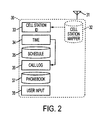
- a signal can be received and transmitted through an antenna 31, e.g., using a cell station manager 32.
- a controller (not shown) of the device sensor 30 can detect, from the cell station manager 32, the cell station ID and stores the cell station ID in memory 33.
- the device sensor 30 may also record information about a time of a call in time memory 34.
- a schedule may be stored in a schedule memory 35
- a log of calls made using the device sensor 30 may be stored in call log memory 36
- a phone book of stored numbers used by the device sensor 30 may be stored in memory 37
- specific input user data may be stored in user input data in memory 38.
- FIG. 2 Other aspects of the device sensor 30 needed to make phone calls, such as key pads and/or displays, are not shown in FIG. 2 for the purpose of clarity. It is also understood that any of the memories 33, 34, 35, 36, 37 and 38 need not be used in all aspects of the invention, or limited thereto, and/or can be supplemented through the use of external data input.
- the user schedule stored in schedule memory 35 and/or phonebook stored in phonebook memory 37 could be input or accessed through programs such as Microsoft Outlook, the Palm Desktop or other such electronic schedulers which offer a more convenient mechanism by which to input or record complex scheduling and phonebook data.
- any of the memories 33, 34, 35, 36, 37 and 38 may be remote from the mobile phone, or selectively included within the mobile phone or a remote site, and/or the memories 33, 34, 35, 36, 37 and 38 may access additional memories storing more complete stored data, e.g., a mobile phone may include a separate memory for schedule information and schedule memory 35 may access the same.
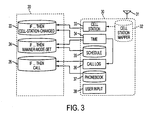
- Fig. 3 illustrates an interaction between the device sensor 30 and the pattern extractor 20, according to an embodiment of the present invention.
- the pattern extractor 20 may extract pattern data from repetitive user behaviors, which can be assumed with the time-series (dynamic) data from device sensor 30.
- the pattern extractor 20 can further extract useful information from non-time-series (static) data such as a schedule or a phonebook, noting that the same can also be implemented as non-time-series changes.
- the pattern extractor 20 may store rules 22, 24, 26, which could be rules extracted after analysis of raw data stored in memories 33 through 38.
- rules 22, 24, 26, which could be rules extracted after analysis of raw data stored in memories 33 through 38.
- Table 1 and FIG. 3 it can be determined from the time memory 34 and from the cell station ID memory 33 that a cell station has changed, with the factor number 1 ('12345'), identifying the new cell station.
- the rule extractor 20 is able to extract a rule 22 which links the time and cell station ID data stored in memories 33 and 34 in order to determine whether an event type such as a change of cell station has occurred.
- time information stored in time memory 34 and a call number information stored in call log memory 36 can be used to determine whether a call has been placed, and at what time the call was made.
- This data can be used by the pattern extractor 20 to extract the if/then rule 26, predicting when a phone call may be placed in the future, thereby extracting a pattern of when phone calls are made or when phone calls are made to particular individuals.
- the pattern extractor 20 may also extract rule 24, in regards to a current time stored in time data memory 34 as well as a schedule and schedule memory 35, in order to determine whether/when a manner mode should be set, for example, based upon whether a user in the past has set a manner mode for certain types of scheduled events (e.g. such as meetings). It is further understood that the pattern extractor 20 could extract additional or different rules based upon review of the raw data stored by the device sensor 30.
- an IF-THEN rule could be implemented using a sequential pattern mining algorithm.
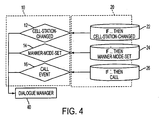
- FIG. 4 illustrates the pattern analyzer 10 and the pattern extractor 20, according to an embodiment of the present invention.
- the pattern analyzer 10 may include a cell station change event detector 12, a vibration pattern event detector 14, and a call pattern detector 16.
- the cell pattern event detector 12 detects results of the if/then rule change output from the rule 22 of the pattern extractor 20. If the cell station change event occurs, due to a change in the cell station ID detected by the rule 22, the cell pattern event detector 12 can output an indicator to a dialog manager 40 that the cell station has been changed.
- the vibration pattern event detector 14 can detect the result of the if/then vibration rule 24, identifying whether a manner mode is likely to be set.
- the vibration pattern event detector 14 outputs an indicator to the dialog manager that the manner mode may be set.
- the call pattern event detector 16 may determine from the if/then call rule 26 whether or not a call has been made to a particular person at a particular time, e.g., the call wasn't made by usually is. If this if/then rule is satisfied, the call pattern event detector 16 forwards an indicator to the dialog manager 40 that a similar particular call may be desired.
- FIG. 4 only illustrates 3 event detectors 12, 14, 16, it is understood that multiple and/or different event detectors can be implemented, e.g., based upon the number of rules existing and newly implemented in the pattern extractor 20.
- FIG. 5 A flowchart of a pattern analyzing method is shown in FIG. 5, according to an embodiment of the present invention.
- the pattern analyzer 10 can identify events when a user's present behavior deviates from an extracted pattern, such that a new pattern can be found by the user's new repetitive behaviors, and/or a user's intended action can be strongly predicted according to the extracted pattern not being deviated from.
- the pattern analyzer 10 is able to both detect new patterns based upon the rules extracted in the pattern extractor 20, and is also able to determine whether one of the already detected patterns is strongly indicative of future behavior or is indicative of whether future behavior is not likely to occur.
- the pattern extractor 10 starts the process at operation 100 by detecting patterns, e.g., from the rules stored in the pattern extractor 20 and/or a combination of raw data detected by pattern extractor 20.
- the pattern analyzer 10 recognizes whether a new pattern is detected, and then signals that a new pattern has been detected, in operation 140.
- the user can be given an option as to how the new pattern is be accounted for, through new dialogs or new actions.
- the pattern analyzer 10 determines whether the 'if' portion of the if/then rule has been satisfied, in operation 120. If the condition predicate (i.e. the 'if'portion of the clause) is not satisfied the pattern analyzer determines that no preexisting pattern has been detected, in operation 130.
- the pattern analyzer 10 determines in operation 150 whether or not the 'then' clause has been satisfied. Specifically, if the pattern analyzer 110 determines in operation 150 that both the 'if and the 'then' clauses of the rule detected from the pattern extractor 20 are satisfied, the pattern analyzer determines that the detected raw data is a strong predicator that an event is going to occur, in operation 160. However, if the 'then' clause is not satisfied, as determined in operation 150, then the pattern analyzer 110 determines that the raw data captured is not a strong indicator that a future event will occur, in operation 170.
- the pattern analyzer 10 is able to determine whether a user's present behavior deviates from an extracted pattern, is able to detect when a new pattern has been found based upon repetitive user behavior, and is also able to determine whether or not the user's likely next action, based upon a combination of events, is strongly predicted according to the extracted pattern boundary.
- the strength of the predictor can be recorded to strengthen or weaken the probability of the detected pattern reoccurring. Based on such a probability, particular actions can be automatically implemented if the probability is high, or dialogs can be instituted to confirm the particular action if the probability is not at least a predetermined level, for example. As the user acknowledges the implementation of the action, the probability of that action being implemented automatically increases, i.e., the probability may increase over the predetermined level. Similarly, if a user routinely changes/cancels an automated action during the existence of the pattern, i.e., the user is evidencing a lack of interest in the automated action, the probability may be decreased. When the probability decreases below the predetermined level dialogs requesting confirmation of the action may be reinstituted. Further, if the user routinely declines the implementation of the action the action and/or pattern may be removed or suspended.
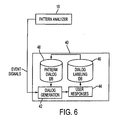
- FIG. 6 shows a dialogue manager (also referred to as a character agent module) 40, according to an embodiment of the present invention.
- the character agent module 40 initiates, when an event is triggered, an appropriate dialogue in order to guide the user's explicit input, according to a pre-defined dialogue database.
- the character agent module 40 includes a dialog generation unit 42, a user responses module 44, a dialog labeling database 46, and a pattern dialog matching database 48.
- the dialog generation unit 42 may receive the event signals from the pattern analyzer 10 indicating that a pattern has been detected and a strong indication that a future event will occur based on the user's behavior.
- the dialog generation unit 42 may then output, through a display of the device sensor 30, for example, a predetermined dialog based upon the event signal.
- the dialog manager 42 may output a dialog as follows: "meeting started. would you like to set a manner mode?" Based upon the output dialog from the dialog generation 42, the user provides some sort of response. In this example the response could be "yes, no, or ignore.” However, it is understood that other types of responses can occur, such as the turning off of the unit or other such indications. Based upon the user response, detected by the user response receiver 44, the dialog manager 40 produces a dialog label for a particular set of events.
- the dialog labeling database might include a label that is input by the user which labels a particular location based on the cell station ID or may input a name associated with a particular called, based upon the user response and after initiation by character agent module 40, detected by the user response receiver 44.
- the accuracy of the rule as well as the accompanying dialog can be stored as a pattern in dialog database 48, which is used by the dialog generation unit 42 to output the proper dialog associated with each particular event signal.
- the pattern dialog database 48 may include a dialog for when a user has ventured into a new area. For example, if the event that occurred is a change of cell station and the event signal is that the pattern does not match a known location, the dialog could be programmed to request that the user indicate the new location. While not required, a weighing factor P is further included in the database 48 such that if the user has typically responded to a particular dialog, the dialog is continued. However, when the user has not responded to the dialog, the P number can be reduced in order to prevent the system from outputting dialogs not desired by the user, similar to above.
- the pattern database 48 might determine from a cell station change that a new pattern has been detected and that a user has been to a particular location often.
- the dialog output through the dialog generation unit 42 indicates that the user has been in this particular location before and requests a label for this location for storage in the dialog labeling database 46.
- the dialog generation unit is able to detect from an event change (i.e. a cell station has been changed) that a particular location is known and labeled, then the dialog generation may output a dialog such as "welcome to the particular location.”
- an event change i.e. a cell station has been changed
- the dialog generation may output a dialog such as "welcome to the particular location.”
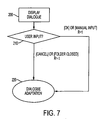
- the dialog manager 40 can improve the dialog output through the dialog generation unit 42 by rating the stored dialog to be used against past user behavior. Specifically, and as shown in Fig. 7, the dialog manager 40 may determine, after a dialog has been displayed in operation 200, whether there has been user input, in operation 210. If the user has input an indication such as 'ok' or 'yes,' an R value may be added to the P valued stored in the database 48. This R value indicates that the user desires this type of dialog in the future. If in operation 210 the user hits 'cancel' or indicates 'no,' a negative R value can be applied to the P stored in the database 48, thereby indicating that a particular dialog is no longer desired or is not highly accurate. The resulting R value from the user input operation 210 can be stored in a dialog adaptation routine 220, and the P value stored in the patterned dialog database 48 can be adjusted according to user preference.
- an event could trigger the following dialogue: "Meeting Started. Would you like to set to manner mode?"
- the pre-defined possible responses for this dialogue could be "Yes/No/lgnore.” Additional examples are shown above in Tables 2 and 3.
- Table 2 the examples pertain to a dialogue labeling database as shown in FIG. 6, and in Table 3, the examples also pertain to a pattern to dialog database as shown in FIG. 6.
- the 'THEN'-clause may indicate that a cell station change, e.g., using the following dialogue: "You seem to be around here quite often. Where am I?"
- the predefined response could be: "Type in/No/Ignore.”
- the dialogue can be "You call Jane quite often. What is she?"
- the predefined response could be: "Type in/No/Ignore.”
- the 'THEN'-clause could indicate a cell station change by comparing, by way of example, a subway station and a cell station ID map to enable the mobile phone to announce the next subway station, e.g., using the following dialogue: "Next station is City Hall. The exit is on your left.”
- the predefined response could be: "Thanks//No/Ignore.”
- the dialogue could be "Meeting started. would you like to set to manner mode?"
- the predefined responses could be "Yes/No/Ignore.”
- Such dialogues may be delayed until a user is not available, e.g., so not to interrupt the user or interrupt other operations of a portable device.
- the dialogue manager may sense whether, a folder/flip top of the portable device is open or closed, i.e., whether the portable device is in a stand-by mode. When the folder/flip top is open a predetermined length of time, e.g., a second, the dialogue manager may then display a dialogue. In such a case, the dialogue manager may also determine whether the display of the dialogue is relevant, e.g., if a long period of time has passed since the dialogue would have immediately been displayed, the dialogue may not be relevant at a later time.
- immediate display of dialogues may be delayed if the dialogue manager detects a call is in progress, and may subsequently display the dialogue immediately after the call is over, or after a predetermined length of time, e.g., a second has lapsed. Further, if the portable device is being used to transmit a message/file/multimedia, the display of the dialogue may also be temporarily delayed. Additional operations may be set to delay an immediate display of a dialogue, either by a manufacturer or manually by a user of the portable device, for example.
- a hierarchy for delays of dialogues i.e., some dialogues may have greater urgency over other dialogues. For example, if a user of a portable device always has a meeting, or phone call, or travel itinerary, a dialogue to the user of the upcoming occurrence of the meeting, call, or travel may override other delay settings and be provided to the user immediately. As another example, if a user's next action is strongly predicted, and the user diverts from this prediction, this diversion may be considered an urgent dialogue and immediately displayed.
- an urgent dialogue or alarm e.g., a vibrator (or a beeper) of the portable device, can be immediately instituted to inform the user of the current urgent situation.
- a vibrator or a beeper
- the hierarchy of delays, or the determination of what would be considered urgent can be set by a manufacture or user, for example.
- Embodiments of the present invention can perform adaptive learning, e.g., to reinforce the dialogues.
- Dialogues can be selected based on a probability distribution P (Dialogue).
- P Dialogue
- P (Dialogue) decreases.
- P (Dialogue) increases.
- the sufficient level can be determined through experimentation and may be different for different environments/conditions/events.
- Embodiments of the present invention include methods harmonizing explicit user input and implicit usage pattern analysis after deployment of the applied systems, especially for mobile devices, in order to adaptively recognize user's intention in most every possible context and proactively suggest useful services by automated initiating of dialogues.
- Embodiments of the present invention extract usage patterns by combining raw data, such as location data (e.g., GPS or nearby cellular station IDs), call data, schedules, phone book entries, time stamps, etc.
- location data can be combined with a time stamp to reveal traveling patterns of the user.
- a schedule can be combined with a time to determine if the schedule contains a 'meeting' such that a manner mode should be enabled.
- a phone number information of caller can be combined with a call log (including duration) to determine, based on whether the duration is frequent and long, that the caller is an important person to the user.
- a phone number of a caller can be combined with a time stamp to determine if a regular calling pattern can be found, and thereby suggest a user make a call at the appropriate time and potentially to a particular person.
- the device can suggest appropriate services which might correspond with the user's interests in a current context, as well as guide the user to explicitly input additional preference information.
- the mobile phone could suggest "Meeting started. Would you like to set manner mode during it?" and the user could answer "yes or no, or ignore the suggestion.”
- Embodiments of the present invention may be implemented through general-purpose computer, for example, by implementing computer readable code/instructions from a medium, e.g., a computer-readable medium
- the media may include, but is not limited to, a storage/transfer media such as magnetic storage media (ROMs, RAMs, floppy disks, magnetic tapes, etc.), optically readable media (CD-ROMs, DVDs, etc.), and carrier waves (e.g., transmission over the internet).
- Embodiments of the present invention may also be embodied as a medium having a computer-readable code embodied therein for causing a number of computer systems connected via a network to perform distributed processing. Functional programs, codes and code segments for embodying the present invention may be easily deduced by programmers in the art which the present invention belongs to.
Landscapes
- Engineering & Computer Science (AREA)
- Human Computer Interaction (AREA)
- Computer Networks & Wireless Communication (AREA)
- Signal Processing (AREA)
- Environmental & Geological Engineering (AREA)
- Telephone Function (AREA)
- User Interface Of Digital Computer (AREA)
Claims (49)
- Mobiles System umfassend:einen Musterextraktormodul (20) so ausgebildet, dass er ein Betriebsmuster eines Mobilgeräts basierend auf Betriebsdaten für das Mobilgerät erfasst;einen Musteranalysatormodul (10) so ausgebildet, dass er das Muster und die Betriebsdaten des Mobilgeräts vergleicht, um zu bestimmen, ob das Muster ein neues Muster ist, das zuvor für das mobile System nicht erannt wurde, und wenn bestimmt ist, dass das Muster nicht neu ist, zu bestimmen, ob basierend darauf, dass ein Element einer entsprechenden Regel für das Muster erfüllt ist, ein Dialog mit einem Benutzer bezüglich des Musters ausgelöst wird; undeinen Charakteragentmodul (40) so ausgebildet, dass er basierend auf dem Muster den Dialog mit dem Benutzer auslöst, wobei Anleitung zur Implementierung einer Funktion des Mobilgeräts angefordert wird,und dadurch gekennzeichnet, dass der Musteranalysatormodul so ausgebildet ist, dass er einen Dialog mit dem Benutzer auslöst, um Information für ein neues Muster aufzuzeichnen, wenn bestimmt ist, dass das Muster neu ist.
- Mobiles System nach Anspruch 1, wobei der Musteranalysatormodul (10) so ausgebildet ist, dass er die Bestimmung, ob der Dialog ausgelöst werden soll, auf einen Wahrscheinlichkeitsfaktor basiert, der im mobilen System gespeichert ist, und der eine Wahrscheinlichkeit angibt, dass der Benutzer eine automatische Implementierung der Funktion des Mobilgeräts ohne Dialog bevorzugt.
- Mobiles System nach Anspruch 2, wobei die Wahrscheinlichkeit, dass der Benutzer eine automatische Implementierung der Funktion des Mobilgeräts ohne Dialog bevorzugt, auf vorhergehenden wiederholten Zustimmungen des Benutzers bei vorhergehenden Dialogen bezüglich des Musters basiert.
- Mobiles System nach Anspruch 2, wobei der Wahrscheinlichkeitsfaktor ferner so ausgebildet ist, dass er eine Abneigung des Benutzers gegen ein Implementieren der Funktion des Mobilgeräts und/oder einen Empfang des Dialogs identifiziert.
- Mobiles System nach Anspruch 4, wobei der Wahrscheinlichkeitsfaktor ferner die Abneigung des Benutzers gegen ein Implementieren der Funktion des Mobilgeräts und/oder einen Empfang des Dialogs basierend auf vorhergehenden wiederholten Ablehnungen des Benutzers bei vorhergehenden Dialogen bezüglich des Musters identifiziert.
- Mobiles System nach einem der vorhergehenden Ansprüche, wobei die Regel eine mehrelementige Regel ist, die erfordert, dass mindestens zwei Elemente erfüllt sind, damit das Muster mit einem zuvor bekannten Muster des mobilen Systems übereinstimmt.
- Mobiles System nach einem der vorhergehenden Ansprüche, ferner umfassend ein Gerätesensorsystem (30) umfassend mindestens eines von:einem Lageinformationssensormodul (33) so ausgebildet, dass er eine Lage des Mobilgeräts bestimmt;einem Zeitsensormodul (34) so ausgebildet, dass er eine aktuelle Zeit bestimmt;einem Agendasensormodul (35) so ausgebildet, dass er eine aktuelle und kommende Agenda für den Benutzer aus einer im mobilen System gespeicherten Agendadatenbank bestimmt;einem Kontaktsensormodul (37) so ausgebildet, dass er eine Kontakttelefonnummer und zusätzliche Information aus einer im mobilen System gespeicherten Kontaktdatenbank extrahiert; und/odereinem Anrufprotokollsensormodul (36) so ausgebildet, dass er Zeit, Dauer und Kontaktinformation aus einem im mobilen System gespeicherten Anrufprotokoll extrahiert.
- Mobiles System nach einem der vorhergehenden Ansprüche, wobei der Musterextraktormodul (20) so ausgebildet ist, dass er Betriebsdaten aus mindestens einem Lagedatum, mindestens einem aktuellen Zeitdatum, mindestens einem Agendadatum und/oder mindestens einem Anrufprotokolldatum und Kontaktdaten für das Mobilgerät vergleicht, um das Muster zu extrahieren.
- Mobiles System nach Anspruch 8, wobei der Musteranalysatormodul (10) ferner dazu ausgebildet ist, die Betriebsdaten mit der Regel zu vergleichen, um zu bestimmen, ob ein aktuelles Benutzerverhalten der Regel widerspricht, basierend auf wiederholtem Benutzerverhalten anzugeben, dass das Muster das neue Muster ist, und eine neue Regel anzugeben oder anzugeben, ob die nächste Aktion des Benutzers gemäß dem Muster und basierend auf der Erfüllung der Regel stark vorhergesagt ist.
- Mobiles System nach einem der vorhergehenden Ansprüche, wobei der Charakteragentmodul (40) so ausgebildet ist, dass er ein Auftreten und Verhalten eines mit dem Benutzer interagierenden Charakteragenten modifiziert.
- Mobiles System nach einem der vorhergehenden Ansprüche, wobei das Mobilgerät ein mobiles Kommunikationssystem umfasst.
- Mobiles System nach Anspruch 11, wobei die Regel einer Erwartung einer nächsten Zellstation oder einer nächsten Mobilgerätelage basierend auf dem Muster entspricht, und der Charakteragentmodul (40) so ausgebildet ist, dass er den Dialog mit dem Benutzer bezüglich der nächsten Zellstation oder der nächsten Mobilgerätelage auslöst.
- Mobiles System nach Anspruch 11 oder 12, wobei die Regel, die Agendainformation und Zeitinformation entspricht, so ausgebildet ist, dass sie eine Veränderung in einer Erinnerungsmitteilungsfunktion des Mobilgeräts vorhersieht und das System so ausgebildet ist, dass es die Veränderung der Erinnerungsmitteilungsfunktion automatisiert.
- Mobiles System nach Anspruch 13, wobei die Automatisierung der Veränderung der Erinnerungsmitteilungsfunktion ein Auslösen des Dialogs mit dem Benutzer darüber umfasst, ob die Erinnerungsmitteilungsfunktion des Mobilgeräts verändert werden soll, basierend auf vorhergehender Veränderung der Erinnerungsmitteilungsfunktion bei ähnlicher Agendainformation und Zeitinformation.
- Mobiles System nach einem der Ansprüche 11 bis 14, wobei die Regel mindestens zweien von Anrufprotokollinformation, Kontaktinformation und Zeitinformation entspricht, um eine nächste Mitteilungsfunktion des Benutzers basierend auf vorhergehenden Mitteilungsfunktionen vorherzusehen.
- Mobiles System nach Anspruch 15, so ausgebildet, dass es den Dialog mit dem Benutzer darüber auslöst, ob die nächste Erinnerungsmitteilungsfunktion ausgelöst werden soll, wenn die nächste Mitteilungsfunktion des Benutzers vorhergesagt wird.
- Mobiles System nach einem der vorhergehenden Ansprüche, so ausgebildet, dass es als Benutzerantwort auf die Dialogauslösung ein Drücken einer OK-Taste, ein Drücken einer Löschtaste, ein Beenden der Funktion des Mobilgeräts und/oder eine Eingabe einer Antwort in eine Textbox von Hand akzeptiert.
- Mobiles System nach einem der vorhergehenden Ansprüche, so ausgebildet, dass es die Auslösung des Dialogs durch den Charakteragentmodul (40) basierend auf einem Betriebszustand des Mobilgeräts verzögert.
- Mobiles System nach Anspruch 18, wobei der Betriebszustand eine aktuell stattfindende Anruffunktion, eine Datenübertragungsfunktion und/oder einen Standbymodus des Mobilgeräts beinhaltet.
- Mobiles System nach Anspruch 18 oder 19, wobei eine Dringlichkeit des Dialogs so ausgebildet ist, dass bestimmt wird, ob der Charakteragentmodul (40) eine Auslösung des Dialogs verzögert, wodurch die Verzögerung basierend auf dem Betriebszustand des Mobilgeräts aufgehoben wird.
- Mobiles System nach Anspruch 20, so ausgebildet, dass ermöglicht ist, dass die Dringlichkeiten potentieller Dialoge von einem Benutzer eingestellt werden, so dass die Verzögerung basierend auf dem Betriebszustand des Mobilgeräts aufgehoben wird.
- Mobiles System nach Anspruch 20 oder 21, wobei, wenn der Charakteragentmodul (40) so ausgebildet ist, dass er die Verzögerung des Dialogs aufhebt und den Dialog auslöst, der Dialog so ausgebildet ist, dass er durch einen Piepser des Mobilgeräts ausgelöst wird.
- Mobiles System nach Anspruch 20, 21 oder 22, derart ausgebildet, dass, wenn der Charakteragentmodul (40) so ausgebildet ist, dass er die Verzögerung des Dialogs aufhebt und den Dialog auslöst, es geeignet ist, den Dialog durch einen Vibrator des Mobilgeräts auszulösen.
- Mobiles System nach einem der vorhergehenden Ansprüche, wobei das mobile Telefonsystem ein Mobiltelefon ist.
- Verfahren zum automatisierten Betrieb eines mobilen Systems umfassend die Schritte:Extrahieren eines Betriebsmusters eines Mobilgeräts basierend auf Betriebsdaten für das Mobilgerät;Vergleichen des Musters und der Betriebsdaten des Mobilgeräts, um zu bestimmen, ob das Muster ein neues Muster ist, das zuvor für das mobile System nicht erkannt wurde, und wenn bestimmt ist, dass das Muster nicht neu ist, Bestimmen, ob basierend darauf, dass ein Element einer entsprechenden Regel für das Muster erfüllt ist, ein Dialog mit einem Benutzer bezüglich des Musters ausgelöst wird; undDurchführen des Dialogs mit dem Benutzer, der basierend auf dem Muster, nach einer Auslösung eine Anleitung zur Implementierung einer Funktion des Mobilgeräts anfordert,und gekennzeichnet durch den Schritt, wenn bestimmt ist, dass das Muster neu ist, Auslösen eines Dialogs mit dem Benutzer, um Information für das neue Muster aufzuzeichnen.
- Verfahren nach Anspruch 25, wobei das Bestimmen, ob der Dialog ausgelöst werden soll, auf einem Wahrscheinlichkeitsfaktor basiert, der im mobilen System gespeichert ist, der eine Wahrscheinlichkeit angibt, dass der Benutzer eine automatische Implementierung der Funktion des Mobilgeräts ohne Dialog bevorzugt.
- Verfahren nach Anspruch 26, wobei die Wahrscheinlichkeit, dass der Benutzer eine automatische Implementierung der Funktion des Mobilgeräts ohne Dialog bevorzugt, auf vorhergehenden wiederholten Zustimmungen des Benutzers bei vorhergehenden Dialogen bezüglich des Musters basiert.
- Verfahren nach Anspruch 26 oder 27, wobei der Wahrscheinlichkeitsfaktor ferner eine Abneigung des Benutzers gegen ein Implementieren der Funktion des Mobilgeräts und/oder einen Empfang des Dialogs identifiziert.
- Verfahren nach Anspruch 28, wobei der Wahrscheinlichkeitsfaktor ferner die Abneigung des Benutzers gegen ein Implementieren der Funktion des Mobilgeräts und/oder einen Empfang des Dialogs basierend auf vorhergehenden wiederholten Ablehnungen des Benutzers bei vorhergehenden Dialogen bezüglich des Musters identifiziert.
- Verfahren nach einem der Ansprüche 25 bis 29, wobei die Regel eine mehrelementige Regel ist, die erfordert, dass mindestens zwei Elemente erfüllt sind, damit das Muster mit einem zuvor bekannten Muster übereinstimmt.
- Verfahren nach einem der Ansprüche 25 bis 30, ferner umfassend mindestens eines von:Bestimmen einer Lage des Mobilgeräts;Bestimmen einer aktuellen Zeit;Bestimmen einer aktuellen und kommenden Agenda für den Benutzer;Extrahieren einer Kontakttelefonnummer und zusätzlicher Information aus einer Kontaktdatenbank und/oderExtrahieren von Zeit, Dauer und Kontaktinformation aus einem Anrufprotokoll.
- Verfahren nach einem der Ansprüche 25 bis 31, wobei das Extrahieren des Musters ferner ein Vergleichen von Betriebsdaten aus mindestens einem Lagedatum, mindestens einem aktuellen Zeitdatum, mindestens einem Agendadatum und/oder mindestens einem Anrufprotokolldatum und Kontaktdaten für das Mobilgerät umfasst, um das Muster zu extrahieren.
- Verfahren nach Anspruch 32, wobei das Vergleichen des Musters und der Betriebsdaten des Mobilgeräts ferner ein Vergleichen der Betriebsdaten mit der Regel umfasst, um zu bestimmen, ob ein aktuelles Benutzerverhalten der Regel widerspricht, Angeben basierend auf wiederholtem Benutzerverhalten, dass das Muster das neue Muster ist, Angeben einer neuen Regel oder Angeben, ob die nächste Aktion des Benutzers gemäß dem Muster und basierend auf der Erfüllung der Regel stark vorhergesagt ist.
- Verfahren nach einem der Ansprüche 25 bis 33, wobei das Auslösen des Dialogs ferner ein Modifizieren von Auftreten und Verhalten eines mit dem Benutzer interagierenden Charakteragenten umfasst.
- Verfahren nach einem der Ansprüche 25 bis 34, wobei das Mobilgerät Mobilkommunikation durchführt.
- Verfahren nach Anspruch 35, wobei, wenn die Regel einer Erwartung einer nächsten Zellstation oder einer nächsten Mobilgerätelage basierend auf dem Muster entspricht, der Charakteragentmodul den Dialog mit dem Benutzer bezüglich der nächsten Zellstation oder der nächsten Mobilgerätelage auslöst.
- Verfahren nach Anspruch 35 oder 36, wobei die Regel Agendainformation und Zeitinformation entspricht, so dass sie eine Veränderung in einer Erinnerungsmitteilungsfunktion des Mobilgeräts vorhersieht und das System so ausgebildet ist, dass es die Veränderung der Erinnerungsmitteilungsfunktion automatisiert.
- Verfahren nach Anspruch 37, wobei die Automatisierung der Veränderung der Erinnerungsmitteilungsfunktion ein Auslösen des Dialogs mit dem Benutzer darüber umfasst, ob die Erinnerungsmitteilungsfunktion des Mobilgeräts basierend auf vorhergehender Veränderung der Erinnerungsmitteilungsfunktion bei ähnlicher Agendainformation und Zeitinformation verändert werden soll.
- Verfahren nach Anspruch 35, 36, 37 oder 38, wobei die Regel mindestens zweien von Anrufprotokollinformation, Kontaktinformation und Zeitinformation entspricht, um eine nächste Mitteilungsfunktion des Benutzers basierend auf vorhergehenden Mitteilungsfunktionen vorherzusehen.
- Verfahren nach Anspruch 39, ferner umfassend bei Vorhersehen der nächsten Mitteilungsfunktion des Benutzers, Auslösen des Dialogs mit dem Benutzer darüber, ob die nächste Mitteilungsfunktion ausgelöst werden soll.
- Verfahren nach einem der Ansprüche 25 bis 40, wobei eine Benutzerantwort auf die Dialogauslösung ein Drücken einer OK-Taste, ein Drücken einer Löschtaste, ein Beenden der Funktion des Mobilgeräts und/oder eine Eingabe einer Antwort in eine Textbox von Hand umfasst.
- Verfahren nach einem der Ansprüche 25 bis 41, wobei das Auslösen des Dialogs basierend auf einem Betriebszustand des Mobilgeräts verzögert wird.
- Verfahren nach Anspruch 42, wobei der Betriebszustand eine aktuell stattfindende Anruffunktion, eine Datenübertragungsfunktion und/oder einen Standbymodus des Mobilgeräts beinhaltet.
- Verfahren nach Anspruch 42 oder 43, wobei eine Dringlichkeit des Dialogs bestimmt, ob die Verzögerung des Dialogs ausgelöst wird, wobei die Verzögerung basierend auf dem Betriebszustand des Mobilgeräts aufgehoben wird.
- Verfahren nach Anspruch 44, wobei Dringlichkeiten potentieller Dialoge von einem Benutzer eingestellt werden können, so dass die Verzögerung basierend auf dem Betriebszustand des Mobilgeräts aufgehoben wird.
- Verfahren nach Anspruch 44 oder 45, wobei, wenn die Verzögerung des Dialogs aufgehoben wird, der Dialog durch ein Piepsen eines Piepsers des Mobilgeräts ausgelöst wird.
- Verfahren nach Anspruch 44, 45 oder 46, wobei, wenn die Verzögerung des Dialogs aufgehoben wird, der Dialog durch ein Vibrieren eines Vibrators des Mobilgeräts ausgelöst wird.
- Computerprogramm umfassend ein Computerprogrammcodemittel, das dazu ausgebildet ist, alle Schritte nach einem der Ansprüche 25 bis 47 auszuführen, wenn das Programm auf einem Computer läuft.
- Computerprogramm nach Anspruch 48, das auf einem computerlesbaren Medium verkörpert ist.
Applications Claiming Priority (2)
| Application Number | Priority Date | Filing Date | Title |
|---|---|---|---|
| KR1020040067430A KR100612859B1 (ko) | 2004-08-26 | 2004-08-26 | 사용패턴에 의한 대화형 사용자 인터페이스 운영 방법 및시스템 |
| US11/169,801 US8483675B2 (en) | 2004-08-26 | 2005-06-30 | System, method, and medium for managing conversational user interface according to usage pattern for portable operation |
Publications (2)
| Publication Number | Publication Date |
|---|---|
| EP1631050A1 EP1631050A1 (de) | 2006-03-01 |
| EP1631050B1 true EP1631050B1 (de) | 2007-06-13 |
Family
ID=36112247
Family Applications (1)
| Application Number | Title | Priority Date | Filing Date |
|---|---|---|---|
| EP05255253A Expired - Lifetime EP1631050B1 (de) | 2004-08-26 | 2005-08-25 | Mobiles System, Verfahren und Computerprogramm zur Steuerung einer dialogfähigen Bedienschnittstelle in Abhängigkeit von erfassten Verhaltensmustern |
Country Status (3)
| Country | Link |
|---|---|
| EP (1) | EP1631050B1 (de) |
| JP (1) | JP4512539B2 (de) |
| DE (1) | DE602005001373T2 (de) |
Cited By (2)
| Publication number | Priority date | Publication date | Assignee | Title |
|---|---|---|---|---|
| US8688083B2 (en) | 2008-11-26 | 2014-04-01 | Qualcomm Incorporated | System and method for providing advertisement data or other content |
| US9183571B2 (en) | 2007-09-14 | 2015-11-10 | Qualcomm Incorporated | System and method for providing advertisement data to a mobile computing device |
Families Citing this family (14)
| Publication number | Priority date | Publication date | Assignee | Title |
|---|---|---|---|---|
| US8504074B2 (en) | 2001-01-05 | 2013-08-06 | Palm, Inc. | System and method for providing advertisement data to a mobile computing device |
| US6795710B1 (en) | 2001-01-05 | 2004-09-21 | Palmone, Inc. | Identifying client patterns using online location-based derivative analysis |
| US7675414B2 (en) | 2006-08-10 | 2010-03-09 | Qualcomm Incorporated | Methods and apparatus for an environmental and behavioral adaptive wireless communication device |
| JP2009181477A (ja) * | 2008-01-31 | 2009-08-13 | Ntt Docomo Inc | シチュエーション推定装置、及び、シチュエーション推定プログラム |
| JP5065069B2 (ja) * | 2008-01-31 | 2012-10-31 | 株式会社エヌ・ティ・ティ・ドコモ | シチュエーション推定装置、及び、シチュエーション推定プログラム |
| JP4986874B2 (ja) * | 2008-01-31 | 2012-07-25 | 株式会社エヌ・ティ・ティ・ドコモ | シチュエーション推定装置、及び、シチュエーション推定プログラム |
| JP5522923B2 (ja) * | 2008-10-29 | 2014-06-18 | 株式会社Nttドコモ | 通信端末、及び、エリア定義プログラム |
| US20100161720A1 (en) | 2008-12-23 | 2010-06-24 | Palm, Inc. | System and method for providing content to a mobile device |
| KR101584058B1 (ko) * | 2009-08-07 | 2016-01-12 | 삼성전자주식회사 | 현재 상황에 적합한 사용 환경을 제공하는 휴대 단말기 및 이의 운용 방법 |
| KR101544371B1 (ko) | 2009-08-07 | 2015-08-17 | 삼성전자주식회사 | 사용자 상황을 반영하는 휴대 단말기 및 이의 운용 방법 |
| JP5523274B2 (ja) * | 2010-10-12 | 2014-06-18 | Kddi株式会社 | 携帯端末を所持したユーザの有意圏を推定する装置、プログラム及び方法 |
| GB2497935A (en) * | 2011-12-22 | 2013-07-03 | Ibm | Predicting actions input to a user interface |
| US20140058679A1 (en) * | 2012-08-23 | 2014-02-27 | Apple Inc. | Wake Status Detection for Suppression and Initiation of Notifications |
| JP6186211B2 (ja) * | 2013-06-19 | 2017-08-23 | 株式会社Nttドコモ | 無線通信システムおよび通信制御方法 |
Family Cites Families (12)
| Publication number | Priority date | Publication date | Assignee | Title |
|---|---|---|---|---|
| JPH07160462A (ja) * | 1993-12-06 | 1995-06-23 | Nissan Motor Co Ltd | 画面表示制御装置 |
| JP3127084B2 (ja) * | 1994-08-11 | 2001-01-22 | シャープ株式会社 | 電子秘書システム |
| US6016342A (en) * | 1997-06-18 | 2000-01-18 | At&T Corp. | Telecommunications apparatus for initiating calls based on past calling patterns |
| US6084954A (en) * | 1997-09-30 | 2000-07-04 | Lucent Technologies Inc. | System and method for correlating incoming and outgoing telephone calls using predictive logic |
| JP2001203811A (ja) * | 2000-01-19 | 2001-07-27 | Index:Kk | 移動体通信システム |
| US7366990B2 (en) * | 2001-01-19 | 2008-04-29 | C-Sam, Inc. | Method and system for managing user activities and information using a customized computer interface |
| JP2003111157A (ja) * | 2001-09-28 | 2003-04-11 | Toshiba Corp | 統合コントローラ、機器制御方法及び機器制御プログラム |
| US7062299B2 (en) * | 2001-11-06 | 2006-06-13 | Samsung Electronics Co., Ltd. | Wireless terminal capable of automatically setting its functions and method for the same |
| US6912386B1 (en) * | 2001-11-13 | 2005-06-28 | Nokia Corporation | Method for controlling operation of a mobile device by detecting usage situations |
| JP3720037B2 (ja) * | 2002-11-22 | 2005-11-24 | 松下電器産業株式会社 | 操作履歴利用システム及びその方法 |
| KR100556858B1 (ko) * | 2003-06-20 | 2006-03-10 | 엘지전자 주식회사 | 이동 통신 단말기의 자동 제어 방법 |
| US20050054381A1 (en) * | 2003-09-05 | 2005-03-10 | Samsung Electronics Co., Ltd. | Proactive user interface |
-
2005
- 2005-08-25 EP EP05255253A patent/EP1631050B1/de not_active Expired - Lifetime
- 2005-08-25 DE DE602005001373T patent/DE602005001373T2/de not_active Expired - Lifetime
- 2005-08-26 JP JP2005245461A patent/JP4512539B2/ja not_active Expired - Fee Related
Cited By (2)
| Publication number | Priority date | Publication date | Assignee | Title |
|---|---|---|---|---|
| US9183571B2 (en) | 2007-09-14 | 2015-11-10 | Qualcomm Incorporated | System and method for providing advertisement data to a mobile computing device |
| US8688083B2 (en) | 2008-11-26 | 2014-04-01 | Qualcomm Incorporated | System and method for providing advertisement data or other content |
Also Published As
| Publication number | Publication date |
|---|---|
| JP2006065870A (ja) | 2006-03-09 |
| DE602005001373T2 (de) | 2008-02-21 |
| DE602005001373D1 (de) | 2007-07-26 |
| EP1631050A1 (de) | 2006-03-01 |
| JP4512539B2 (ja) | 2010-07-28 |
Similar Documents
| Publication | Publication Date | Title |
|---|---|---|
| US8483675B2 (en) | System, method, and medium for managing conversational user interface according to usage pattern for portable operation | |
| EP1874013B1 (de) | Mobiles Endgerät und Verfahren zum Anzeigen des Standby-Bildes gemäß den Ergebnissen der Analyse des Benutzerverhaltens | |
| EP1631050A1 (de) | Mobiles System, Verfahren und Computerprogramm zur Steuerung einer dialogfähigen Bedienschnittstelle in Abhängigkeit von erfassten Verhaltensmustern | |
| KR101920019B1 (ko) | 휴대단말기의 통화 서비스 장치 및 방법 | |
| CN104978868B (zh) | 到站提醒方法及装置 | |
| EP2847978B1 (de) | Kalenderanpassung von ableiteten kontexten und etikettenübergabe | |
| AU2013205561B2 (en) | Generating context -based options for responding to a notification | |
| CN101888401A (zh) | 多个使用情境的虚拟机实现 | |
| US20140051399A1 (en) | Methods and devices for storing recognized phrases | |
| US8032468B2 (en) | Identifying and recommending potential uses of computing systems based on their patterns of use | |
| CN104123004B (zh) | 反映用户环境的便携式终端和用于操作该终端的方法 | |
| JP2008510406A (ja) | 通信装置において連絡先の選択を可能にするための装置および方法 | |
| JP2008522262A (ja) | モバイルデバイスにおける警報の提供方法およびそのモバイルデバイス | |
| EP2355020A1 (de) | Bereitstellung einer Aufforderung zur Eingabe von Daten zu einem späteren Zeitpunkt | |
| JP2008526101A (ja) | 移動端末へのユーザ入力を予測するシステム及び方法 | |
| EP2258141A2 (de) | Kontextbewusste datenverarbeitung bei einem mobilen datenverarbeitungsgerät | |
| CN108449491A (zh) | 信息处理方法、装置、移动终端及计算机可读存储介质 | |
| KR100617756B1 (ko) | 휴대단말기의 상태 정보 표시방법 | |
| US9338624B2 (en) | Cellular telephone and computer program comprising means for generating and sending an alarm message | |
| CN116029719A (zh) | 支付服务推荐的方法、电子设备及存储介质 | |
| CN105472097A (zh) | 基于移动式通讯装置的自动提醒方法及装置 | |
| CN109901810A (zh) | 一种用于智能终端设备的人机交互方法及装置 | |
| CN108417218B (zh) | 一种基于声纹的备忘提醒方法及终端 | |
| US20060143065A1 (en) | Apparatus and method for automatically managing and performing schedule | |
| JP2004206285A (ja) | 状況依存型リマインダー通知装置、方法、及びプログラム |
Legal Events
| Date | Code | Title | Description |
|---|---|---|---|
| PUAI | Public reference made under article 153(3) epc to a published international application that has entered the european phase |
Free format text: ORIGINAL CODE: 0009012 |
|
| AK | Designated contracting states |
Kind code of ref document: A1 Designated state(s): AT BE BG CH CY CZ DE DK EE ES FI FR GB GR HU IE IS IT LI LT LU LV MC NL PL PT RO SE SI SK TR |
|
| AX | Request for extension of the european patent |
Extension state: AL BA HR MK YU |
|
| 17P | Request for examination filed |
Effective date: 20060614 |
|
| 17Q | First examination report despatched |
Effective date: 20060713 |
|
| AKX | Designation fees paid |
Designated state(s): DE FR GB NL |
|
| GRAP | Despatch of communication of intention to grant a patent |
Free format text: ORIGINAL CODE: EPIDOSNIGR1 |
|
| GRAS | Grant fee paid |
Free format text: ORIGINAL CODE: EPIDOSNIGR3 |
|
| GRAA | (expected) grant |
Free format text: ORIGINAL CODE: 0009210 |
|
| AK | Designated contracting states |
Kind code of ref document: B1 Designated state(s): DE FR GB NL |
|
| REG | Reference to a national code |
Ref country code: GB Ref legal event code: FG4D |
|
| REF | Corresponds to: |
Ref document number: 602005001373 Country of ref document: DE Date of ref document: 20070726 Kind code of ref document: P |
|
| ET | Fr: translation filed | ||
| NLV1 | Nl: lapsed or annulled due to failure to fulfill the requirements of art. 29p and 29m of the patents act | ||
| PG25 | Lapsed in a contracting state [announced via postgrant information from national office to epo] |
Ref country code: NL Free format text: LAPSE BECAUSE OF FAILURE TO SUBMIT A TRANSLATION OF THE DESCRIPTION OR TO PAY THE FEE WITHIN THE PRESCRIBED TIME-LIMIT Effective date: 20070613 |
|
| PLBE | No opposition filed within time limit |
Free format text: ORIGINAL CODE: 0009261 |
|
| STAA | Information on the status of an ep patent application or granted ep patent |
Free format text: STATUS: NO OPPOSITION FILED WITHIN TIME LIMIT |
|
| 26N | No opposition filed |
Effective date: 20080314 |
|
| REG | Reference to a national code |
Ref country code: FR Ref legal event code: PLFP Year of fee payment: 12 |
|
| REG | Reference to a national code |
Ref country code: FR Ref legal event code: PLFP Year of fee payment: 13 |
|
| REG | Reference to a national code |
Ref country code: FR Ref legal event code: PLFP Year of fee payment: 14 |
|
| PGFP | Annual fee paid to national office [announced via postgrant information from national office to epo] |
Ref country code: DE Payment date: 20200721 Year of fee payment: 16 Ref country code: FR Payment date: 20200722 Year of fee payment: 16 Ref country code: GB Payment date: 20200722 Year of fee payment: 16 |
|
| REG | Reference to a national code |
Ref country code: DE Ref legal event code: R119 Ref document number: 602005001373 Country of ref document: DE |
|
| GBPC | Gb: european patent ceased through non-payment of renewal fee |
Effective date: 20210825 |
|
| PG25 | Lapsed in a contracting state [announced via postgrant information from national office to epo] |
Ref country code: GB Free format text: LAPSE BECAUSE OF NON-PAYMENT OF DUE FEES Effective date: 20210825 Ref country code: FR Free format text: LAPSE BECAUSE OF NON-PAYMENT OF DUE FEES Effective date: 20210831 Ref country code: DE Free format text: LAPSE BECAUSE OF NON-PAYMENT OF DUE FEES Effective date: 20220301 |