EP1600460B1 - Verwendung einer an CD28 bindenden Wirksubstanz zur Herstellung einer pharmazeutischen Zusammensetzung zur Behandlung von B-CLL - Google Patents
Verwendung einer an CD28 bindenden Wirksubstanz zur Herstellung einer pharmazeutischen Zusammensetzung zur Behandlung von B-CLL Download PDFInfo
- Publication number
- EP1600460B1 EP1600460B1 EP20040078136 EP04078136A EP1600460B1 EP 1600460 B1 EP1600460 B1 EP 1600460B1 EP 20040078136 EP20040078136 EP 20040078136 EP 04078136 A EP04078136 A EP 04078136A EP 1600460 B1 EP1600460 B1 EP 1600460B1
- Authority
- EP
- European Patent Office
- Prior art keywords
- cells
- cll
- mab
- specific
- activated
- Prior art date
- Legal status (The legal status is an assumption and is not a legal conclusion. Google has not performed a legal analysis and makes no representation as to the accuracy of the status listed.)
- Expired - Lifetime
Links
Images


Classifications
-
- C—CHEMISTRY; METALLURGY
- C07—ORGANIC CHEMISTRY
- C07K—PEPTIDES
- C07K16/00—Immunoglobulins [IG], e.g. monoclonal or polyclonal antibodies
- C07K16/18—Immunoglobulins [IG], e.g. monoclonal or polyclonal antibodies against material from animals or humans
- C07K16/28—Immunoglobulins [IG], e.g. monoclonal or polyclonal antibodies against material from animals or humans against receptors, cell surface antigens or cell surface determinants
- C07K16/2803—Immunoglobulins [IG], e.g. monoclonal or polyclonal antibodies against material from animals or humans against receptors, cell surface antigens or cell surface determinants against the immunoglobulin superfamily
- C07K16/2818—Immunoglobulins [IG], e.g. monoclonal or polyclonal antibodies against material from animals or humans against receptors, cell surface antigens or cell surface determinants against the immunoglobulin superfamily against CD28 or CD152
-
- A—HUMAN NECESSITIES
- A61—MEDICAL OR VETERINARY SCIENCE; HYGIENE
- A61K—PREPARATIONS FOR MEDICAL, DENTAL OR TOILETRY PURPOSES
- A61K39/00—Medicinal preparations containing antigens or antibodies
- A61K39/395—Antibodies; Immunoglobulins; Immune serum, e.g. antilymphocytic serum
- A61K39/39533—Antibodies; Immunoglobulins; Immune serum, e.g. antilymphocytic serum against materials from animals
- A61K39/39558—Antibodies; Immunoglobulins; Immune serum, e.g. antilymphocytic serum against materials from animals against tumor tissues, cells, antigens
-
- C—CHEMISTRY; METALLURGY
- C07—ORGANIC CHEMISTRY
- C07K—PEPTIDES
- C07K2317/00—Immunoglobulins specific features
- C07K2317/50—Immunoglobulins specific features characterized by immunoglobulin fragments
- C07K2317/51—Complete heavy chain or Fd fragment, i.e. VH + CH1
-
- C—CHEMISTRY; METALLURGY
- C07—ORGANIC CHEMISTRY
- C07K—PEPTIDES
- C07K2317/00—Immunoglobulins specific features
- C07K2317/50—Immunoglobulins specific features characterized by immunoglobulin fragments
- C07K2317/515—Complete light chain, i.e. VL + CL
-
- C—CHEMISTRY; METALLURGY
- C07—ORGANIC CHEMISTRY
- C07K—PEPTIDES
- C07K2317/00—Immunoglobulins specific features
- C07K2317/70—Immunoglobulins specific features characterized by effect upon binding to a cell or to an antigen
- C07K2317/73—Inducing cell death, e.g. apoptosis, necrosis or inhibition of cell proliferation
-
- C—CHEMISTRY; METALLURGY
- C07—ORGANIC CHEMISTRY
- C07K—PEPTIDES
- C07K2317/00—Immunoglobulins specific features
- C07K2317/70—Immunoglobulins specific features characterized by effect upon binding to a cell or to an antigen
- C07K2317/74—Inducing cell proliferation
-
- C—CHEMISTRY; METALLURGY
- C07—ORGANIC CHEMISTRY
- C07K—PEPTIDES
- C07K2317/00—Immunoglobulins specific features
- C07K2317/70—Immunoglobulins specific features characterized by effect upon binding to a cell or to an antigen
- C07K2317/75—Agonist effect on antigen
Definitions
- the invention relates to the use of an active substance for the preparation of a pharmaceutical composition for the treatment of chronic lymphocytic leukemia of the B-cell type (B-CLL).
- the activation of resting T cells for proliferation and functional differentiation requires first the occupation of two surface structures, so-called receptors: 1. the antigen receptor, which has a different specificity from cell to cell and is necessary for the recognition of antigens, eg viral cleavage products; and 2. the CD28 molecule equally expressed on all quiescent T cells except for a subset of human CD8 T cells, which naturally binds to ligands on the surface of other cells of the immune system.
- CD28-specific mAbs are known which can initiate T-cell proliferation without costimulation.
- a superagonistic, ie independent of the occupation of the antigen receptor activation of resting T lymphocytes by CD28-specific mAb is from the literature Tacke et al., Eur. J. Immunol., 1997, 27: 239-247 known.
- two types of CD28-specific monoclonal antibodies with different functional properties have been described: costimulatory mAbs that costimulate the activation of resting T cells only when the antigen receptor is occupied; and superagonistic mAbs that can activate T lymphocytes of all classes in vitro and in the experimental animal for proliferation without occupying the antigen receptor.
- CD28-specific mAbs are also known which efficiently activate T lymphocytes both in vitro and in vivo without TCR stimulation, ie they have a "superagonistic" effect. These mAbs, at least those directed against Human CD28, are also called SuperMAB.
- B-cell chronic lymphocytic leukemia (B-cell chronic lymphocytic leukemia, B-CLL) is the most common childhood leukemia with an incidence of 3 / 100,000 inhabitants (Landis et al., 1999).
- the disease is characterized by a progressive accumulation of malignant monoclonal B lymphocytes in the blood, lymph nodes, liver and bone marrow. As the disease progresses, there is an increase in the lymphocyte count in the blood, an enlargement of the lymph nodes, liver and spleen, as well as anemia and thrombocytopenia (Caligaris-Cappio, 2000, Rozman and Montserrat, 1995).
- a curative therapy of B-CLL is currently not possible.
- the main complications of the B-CLL include infections, for which i.a. the T-cell defects or low T-cell counts observed in many patients (Cantwell et al., 1997, Scrivener et al., 2003).
- B-CLL B cells A limited function can also be found in the tumor cells themselves.
- APC antigen-presenting cells
- CD80 B7.1
- CD86 B7.2
- the potentially tumor-specific T cells receive only a single signal on the interaction between the T cell receptor and MHC + tumor antigen and not the second costimulatory signal necessary for full activation of a T cell.
- One approach to a form of therapy aims to improve the APC function of B-CLL B cells, and thus the to enhance the patient's anti-tumor immune response.
- Various groups of researchers attempted to activate B-CLL B cells in a targeted manner and thereby induce the expression of costimulatory ligands. It was possible by gene transfer to express the B cell-stimulating CD40 ligand (CD40L) in the B-CLL B cells and thus the interaction between CD40L and that on all B cells (including the B-CLL B cells ) to enable existing protein CD40.
- CD40L B cell-stimulating CD40 ligand
- the in vivo gene transfer of CD4OL was also effective: it led to an increase in the number of T cells in the patient as well as to a reduction in leukemic cells (Wierda et al., 2000). However, this therapeutic approach does not affect the T-cell defects of B-CLL disease discussed above.
- the invention is based on the technical problem of specifying a pharmaceutical composition by means of which B-CLL can be treated, wherein at the same time the disease-induced weakened immune system, in particular the T-cell-mediated cellular immunity, is generally strengthened.
- the invention teaches the fairness of claim 1.
- the invention is based on the finding that with the use of the mAb according to the invention as it were a double stroke is performed.
- normal T-cells which are pushed back due to illness, are activated or expanded. This can sometimes prevent life-threatening infections or be mitigated in the course of the disease.
- it stimulates the body's own immune system to eliminate B-CLL B cells, which are normally absent or only weakly attacked by tumor-specific T cells, which allows the B-CLL B cells to display a costimulatory ligand not normally expressed by them can be activated, so that the need for such a signal endogenous tumor-specific T cells can attack the B-CLL B cells effectively now.
- a mAb according to the invention can be prepared, for example, by immunizing a non-human mammal with CD28 or a partial sequence thereof, for example the C'-D loop, cells are taken from the non-human mammal and hybridoma cells are produced from the cells, and the resulting hybridoma cells are selected with the proviso that in their culture supernatant mAb are included, which bind to CD28 superagonistically.
- a mAb according to the invention can be prepared, for example, by immunizing a non-human mammal with CD28 or a partial sequence thereof, for example the C'-D loop, cells are taken from the non-human mammal and hybridoma cells are produced from the cells, and the resulting hybridoma cells are selected with the proviso that in their culture supernatant mAb are included, which bind to CD28 superagonistically.
- Suitable mAb can also be prepared by selecting B lymphocytes which superagonistically bind to CD28 or its C'-D loop
- An inserted mAb according to the invention binds to CD28 or to a partial sequence thereof.
- the CD28 partial sequence may contain, for example, an amino acid sequence SEQ ID 1, or 2-7, or 17, which are at least partially in the region of the C'-D loop of CD28.
- SEQ ID 1, or 2-7 amino acid sequence SEQ ID 1, or 2-7, or 17, which are at least partially in the region of the C'-D loop of CD28.
- amino acids of the sequence 8 can be connected in the order defined there.
- the loop is in the range with the sequence GNYSQQLQVYSKTGF.
- the binding can also be made to other subsequences of the region of the C'-D loop, for which reference is additionally made to the definition of the region of the C'-D loop.
- the mAb is obtainable, for example, from hybridoma cells as deposited under the DSM numbers DSM ACC2531 (mAb: 9D7 or 9D7G3H11) or DSM ACC2530 (mAb: 5.11A or 5.11A1C2H3).
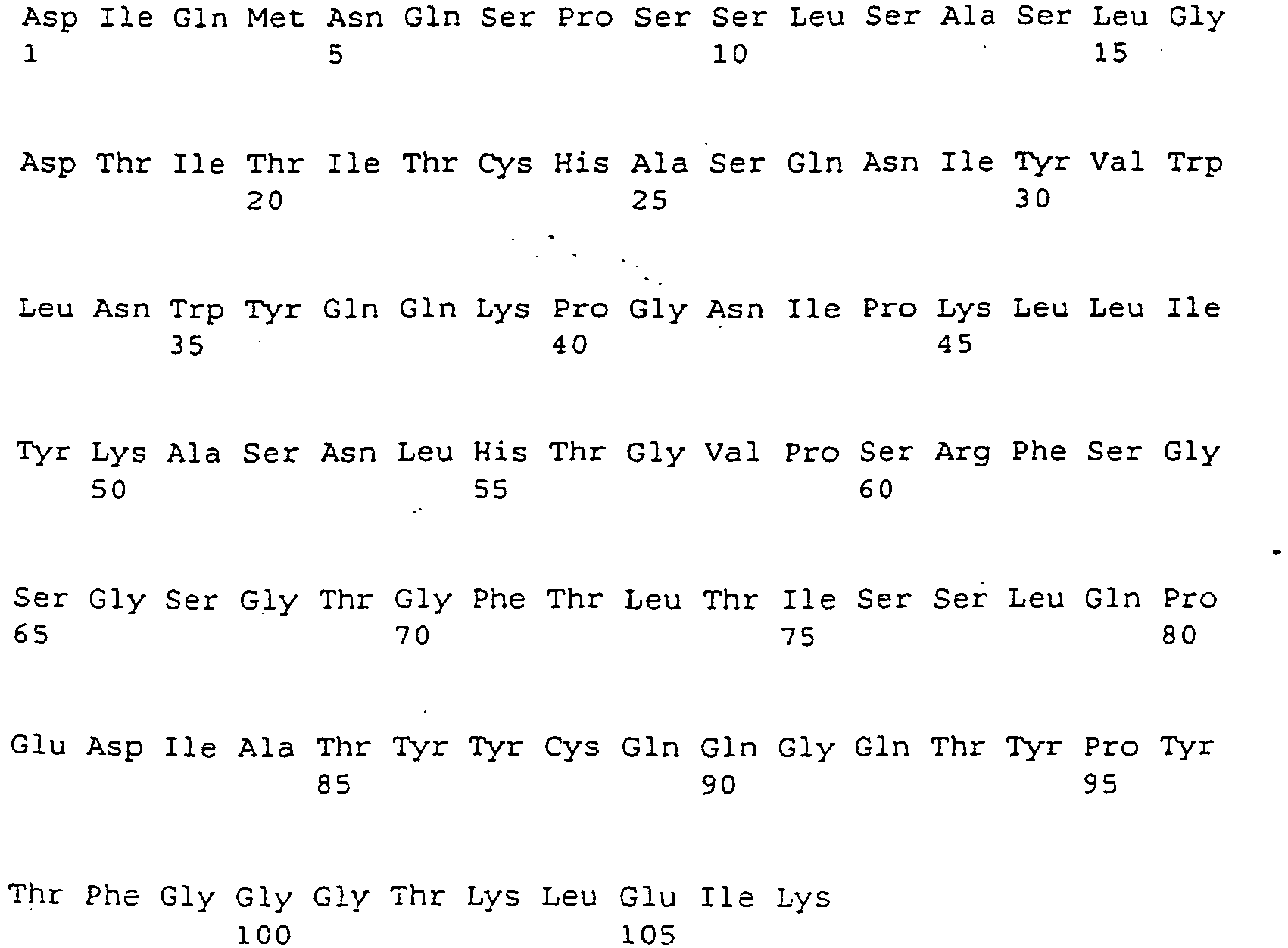
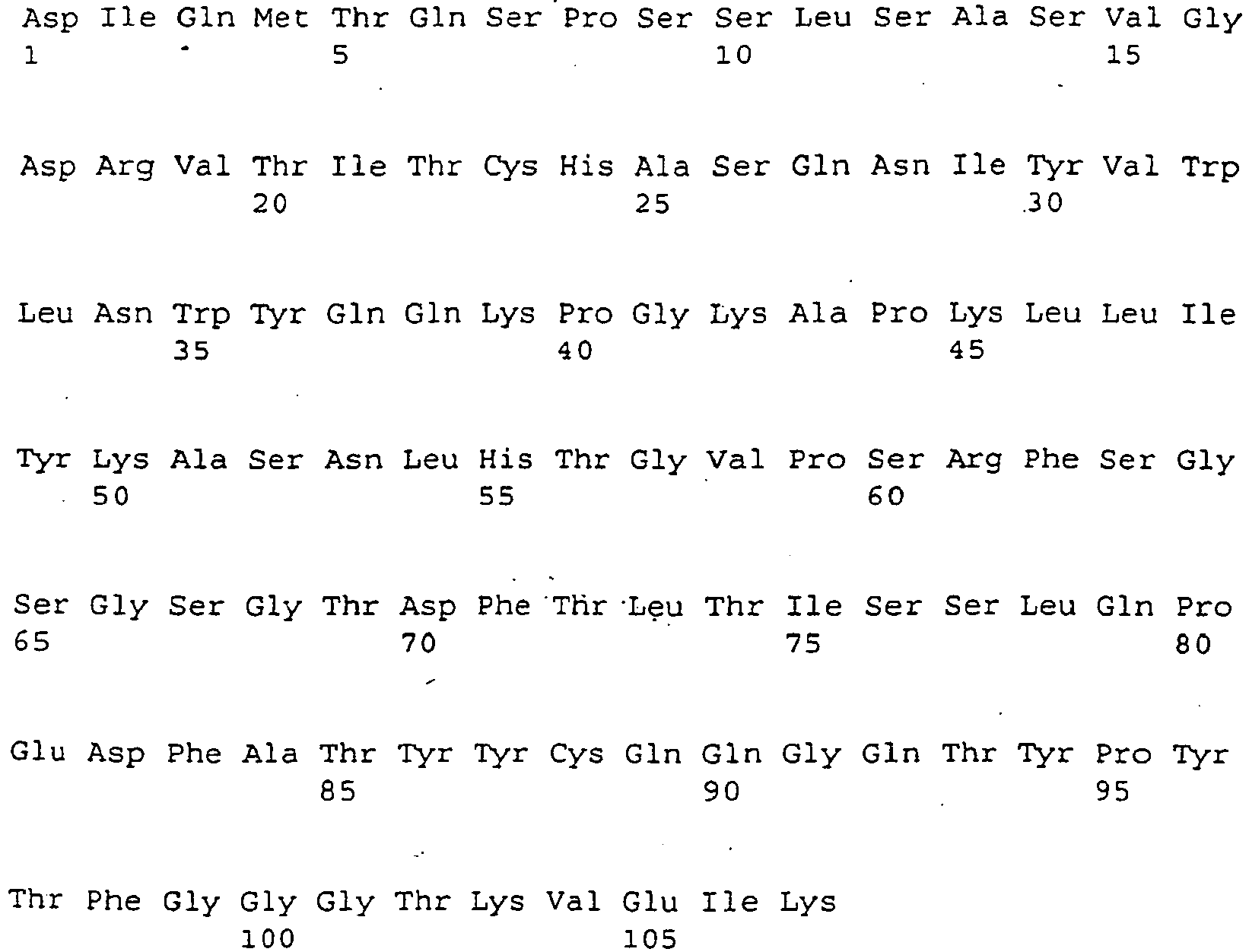
- the mAb preferably contains one or more of the sequences Seq. ID 9, 11, 13 and / or 15, or one or more sequences Seq. ID 10, 12, 14 and / or 16, or one or more sequences 18 and / or 19, or sequences homologous thereto.
- a further suitable mAb TGN1412 with improved properties contains as variable region of the heavy chain (VHC), the amino acid sequence of FIG. 9a and as the variable region of the heavy chain, the amino acid sequence of the FIG. 9b ,
- VHC variable region of the heavy chain
- FIGS. 9a and 9b indicated leader peptides are irrelevant to the function of the mAb and merely serve to facilitate the passage of the antibodies through the cell membrane.
- the variants of the C-terminus indicated in the figures do not lead to a change in the function of the antibodies.
- test kit for testing the therapeutic efficacy of a prospective treatment of B-CLL with a pharmaceutical composition according to the invention with the following components: i) agent for in-vitro PBMC cultivation, ii) a preparation containing mAb according to the invention in a physiologically effective dose , iii) means for determining T-cell numbers or activation and / or means for determining B-CLL B-cell numbers.
- the daily dose given for the indication B-CLL may be in the range of 0.1 to 50, preferably 1 to 10, mg / kg of body weight.
- the invention relates to a method according to claim 5.
- Monoclonal antibodies are antibodies which are produced by hybrid cell lines (so-called hybridomas), which are typically produced by fusion of an antibody-producing animal B cell or human origin with a suitable myeloma tumor cell.
- the amino acid sequence of human CD28 is available under accession no. NM_006139 known.
- the C'-D loop of CD28 comprises amino acids 43 to 70, in particular 52 to 66, of the above CD28 sequence (for numbering see also Ostrov, DA, et al .; Science (2000), 290: 816-819 ).
- the term C'-D loop is to be understood below also any subsequence thereof.
- the notion of the region of the C'-D loop includes, in addition to or instead of the C'-D loop, spatially adjacent regions of the CD28. These are according to the numbering mentioned above, in particular the amino acids 78 (Tyr) to 87 (Thr).
- a loop or a binding site arranged therein is freely accessible if, for a defined binding partner for the binding site in the loop, there is no steric hindrance due to sequences or molecules adjoining the loop.
- Activation and / or expansion of T cells refers to the increase in metabolic activity, increase in cell volume, synthesis of immunologically important molecules, such as CD40 ligand, and entry into cell division (proliferation) for an external stimulus. As a result, after activation or expansion, there are more T cells than before.
- Homology refers to at least 70%, preferably at least 80%, most preferably at least 90% sequence identity at the protein level, where a homologous protein or peptide binds a defined binding partner with at least the same affinity. Variations in the sequence may be deletions, substitutions, insertions and elongations.
- mAb includes not only structures of the usual Fab / Fc structure but also structures consisting exclusively of the Fab fragment. It is also possible to use only the variable region, where the heavy chain fragment is linked to the light chain fragment in a suitable manner, for example by means of synthetic bridging molecules.
- antibodies also includes (possibly complete) chimeric and genetically engineered human antibodies.
- Superagonistic stimulation of the proliferation of CD28-specific T cells means that no costimulation, i. no further binding event is required besides binding of a mAb or mimetic compound to CD28 to stimulate or inhibit proliferation.
- peripheral blood mononuclear cells PBMC
- 2x10 ⁇ 5 cells in 96 well microtiter plates at 37 ° C either in medium alone or in the presence of SuperMAB (0.5 ⁇ g / ml in solution).
- SuperMAB 0.5 ⁇ g / ml in solution
- FIG. 1 shows a so-called dot-blot analysis.
- Each dot represents an analyzed cell and is located according to the expression of CD19 (x-axis) and CD5 (y-axis).
- R1 marks the population of T cells (CD19-CD5 +)
- R2 the population of B-CLL B cells (CD19 + CD5 +).
- FIG. 1 shows that SuperMAB is able to induce massive expansion of B-CLL T cells. While in the approaches “ex vivo” and “medium” the T cells only represent 3% and 8% of the total population, this proportion increased in the SuperMAB treated cells to 47%. The analysis of the total cell numbers showed that this is not only a relative but also an absolute multiplication of T cells.
- Example 2 SuperMAB induces expression of the B cell stimulating CD40 ligand on the surface of B-CLL T cells
- FIG. 2 shows a so-called histogram in which the expression of CD40L on the T cells (x-axis: since PBMC is a mixed culture the T cells were previously bounded by a so-called "electronic gate”) is plotted against the cell number (y-axis).
- x-axis since PBMC is a mixed culture the T cells were previously bounded by a so-called "electronic gate”
- y-axis the cell number
- Example 3 SuperMAB induces expression of costimulatory ligand B7.2 on B-CLL B cells
- PBMC of a B-CLL patient were cultured as described above and stained after 4 days with fluorescence-labeled monoclonal antibodies with specificity for B7.1 and B7.2.
- the histograms in FIG. 3 show the expression of these two proteins on the B-CLL B cells: whereas SuperMAB B7.1 only moderately induced these cells (histogram a), it was able to drastically increase the expression of B7.2 (histogram b).
- a blocking antibody (10 ⁇ g / ml) specific for CD40L was added to the cultures, as shown in FIG.
- T cells of a person are called a stimulator Cells cultured together.
- MHC major histocompatibility complex
- T-cell proliferation is measured by incorporation of 3H-thymidine (see FIG. FIG. 6 ).
- PBMC peripheral blood mononuclear cells
- SuperMAB SuperMAB
- the B-CLL B cells were isolated from these cultures by magnetic separation, incubated with mitomycin C (60 ⁇ g / ml) for 1 h at 37 ° C, and then served as stimulator cells in the subsequent mixed lymphocyte culture:
- mitomycin C 60 ⁇ g / ml
- FIG. 6 shows that B-CLL B cells pretreated with SuperMAB (media / ex vivo approaches) can only cause a very weak proliferation of the indicator cells, which are significantly increased by the addition of SuperMAB (SuperMAB approach), ie by a factor of at least 2 could.
- SuperMAB monoclonal antibodies with specificity for B7.1 and B7.2 (5 ⁇ g / ml each, SuperMAB + anti CD80 / 86 approach)
- the proliferation could be almost pushed to the level of medium pretreated in medium.
- the aim of immunotherapy in B-CLL patients is to activate, via the enhancement of the antigen-presenting function of B-CLL B cells, autologous (ie endogenous) tumor-specific T cells, tumor cells (ie B-CLL B cells).
- B-CLL B cells autologous tumor-specific T cells
- tumor cells ie B-CLL B cells
- autologous mixed lymphocyte culture the question of whether SuperMAB possesses properties in this respect was investigated.
- PBMC of a B-CLL patient were isolated and cultured in medium or in the presence of SuperMAB.
- the FACS analysis also showed induction of B7.1 and especially of B7 in this experiment. 2 in the SuperMAB treated B-CLL B cells.
- Interferon-gamma is produced by so-called effector T-cells. Effector T cells also include the cytotoxic T lymphocytes, which are able to eliminate tumor cells. The concentration of interferon-gamma in the cell culture supernatant was determined by ELISA. Result: while almost no interferon-gamma was produced in the medium / ex vivo approaches, the responder T cells from the SuperMAB approach were evidently stimulated to synthesize this cytokine ( FIG. 5b ).
- SuperMAB makes it possible to activate tumor-specific autologous T cells and to induce efficient elimination of tumor cells. Presumably, this is due to induction of costimulatory proteins on the surface of the antigen-presenting B-CLL B cells.
- the possible mechanism is in the FIG. 8 shown schematically.
- FIGS. 9c and 9d DNA molecules were synthesized in the usual way.
- the resulting cDNAs encoding each of the monoclonal antibody heavy and light chains as indicated were inserted into plasmids pLNOH and pLNOK.
- the plasmids and the interfaces will be to the reference Norderhaug et al., Journal of Immunological Methods, 204: 77-87 (1997 ) refer.
- E. coli cells were transformed with the respective plasmids.
- the transformed E. coli cells were increased and the respective plasmids were obtained therefrom on a larger scale.
- COS7 cells were transiently and Cotransfected CHO and NSO cells stably. Cotransfection was carried out in the usual way with Lipofectamine (Invitrogen) or Effectene (QIAGEN) according to the respective manufacturer's instructions.
- the resulting transfected cells were cultured in standard culture medium in CO 2 incubators (5% CO 2 ) at 37 ° C in T-flasks and roller bottles.
- Stably transfected Cells expressing the intact antibody were selected by G418 and hygromycin B selection. Stable transformants were then subcloned and further cultured.
- Cell culture supernatants with secreted antibodies were analyzed by activity assays, binding assays (FACS analysis), SDS-PAGE and western blotting.
- cell culture supernatants were passed over a protein A or protein G column to specifically bind the desired antibodies.
- Bound antibodies were eluted with acidic buffer (0.1 M glycine, pH 3.0-3.4) and then neutralized with 1 M Tris (pH 8.0).
- the thus purified antibodies were dialyzed against PBS buffer and, if necessary, concentrated by means of membrane filtration.
- the resulting antibodies were then used for proliferation assays, activity assays, binding assays (FACS analysis for binding to CD28 positive cells), ELISA, SDS-PAGE and western blotting.
Landscapes
- Health & Medical Sciences (AREA)
- Chemical & Material Sciences (AREA)
- Immunology (AREA)
- Life Sciences & Earth Sciences (AREA)
- Medicinal Chemistry (AREA)
- Organic Chemistry (AREA)
- General Health & Medical Sciences (AREA)
- Engineering & Computer Science (AREA)
- Genetics & Genomics (AREA)
- Biophysics (AREA)
- Molecular Biology (AREA)
- Proteomics, Peptides & Aminoacids (AREA)
- Biochemistry (AREA)
- Oncology (AREA)
- Animal Behavior & Ethology (AREA)
- Bioinformatics & Cheminformatics (AREA)
- Microbiology (AREA)
- Mycology (AREA)
- Pharmacology & Pharmacy (AREA)
- Epidemiology (AREA)
- Biomedical Technology (AREA)
- Public Health (AREA)
- Veterinary Medicine (AREA)
- Micro-Organisms Or Cultivation Processes Thereof (AREA)
- Peptides Or Proteins (AREA)
- Preparation Of Compounds By Using Micro-Organisms (AREA)
- Medicines Containing Antibodies Or Antigens For Use As Internal Diagnostic Agents (AREA)
- Medicines Containing Material From Animals Or Micro-Organisms (AREA)
Description
- Die Erfindung betrifft die Verwendung einer Wirksubstanz zur Herstellung einer pharmazeutischen Zusammensetzung zur Behandlung der chronisch lymphozytären Leukämie des B-Zell-Typs (B-CLL).
- Zum Verständnis der Erfindung ist zunächst folgender technologischer Hintergrund wichtig. Die Aktivierung ruhender T-Zellen zur Proliferation und funktionellen Differenzierung erfordert zunächst die Besetzung zweier Oberflächenstrukturen, sogenannter Rezeptoren: 1. des Antigenrezeptors, der von Zelle zu Zelle eine unterschiedliche Spezifität besitzt und für die Erkennung von Antigenen, z.B viralen Spaltprodukten, notwendig ist; sowie 2. des auf allen ruhenden T-Zellen mit Ausnahme einer Untergruppe der CD8 T-Zellen des Menschen gleichermaßen exprimierten CD28 Moleküls, welches natürlicherweise an Liganden auf der Oberfläche anderer Zellen des Immunsystems bindet. Man spricht von der Costimulation der antigenspezifischen Immunreaktion durch CD28. In Zellkultur können diese Vorgänge nachgestellt werden durch Besetzung des Antigenrezeptors sowie des CD28-Moleküls mit geeigneten monoklonalen Antikörpern (mAb). Im klassischen System der Costimulation führt weder die Besetzung des Antigenrezeptors noch die des CD28-Moleküls allein zur T-Zellproliferation, die Besetzung beider Rezeptoren ist jedoch effektiv. Diese Beobachtung wurde an T-Zellen des Menschen, der Maus und der Ratte gemacht.
- Dagegen sind auch CD28-spezifische mAbs bekannt, die ohne Costimulation die T-Zellproliferation einleiten können. Eine solche superagonistische, d. h. von der Besetzung des Antigenrezeptors unabhängige Aktivierung ruhender T-Lymphozyten durch CD28-spezifische mAb ist aus der Literaturstelle Tacke et al., Eur. J. Immunol., 1997, 27:239-247 bekannt. Demnach wurden zwei Arten von CD28-spezifischen monoklonalen Antikörpern mit unterschiedlichen funktionellen Eigenschaften beschrieben: costimulatorische mAb, die die Aktivierung ruhender T-Zellen nur bei gleichzeitiger Besetzung des Antigenrezeptors costimulieren; und superagonistische mAb, die ohne Besetzung des Antigenrezeptors T-Lymphozyten aller Klassen in vitro und im Versuchstier zur Proliferation aktivieren können. Aus den Literaturstellen
DE 197 22 888 ,WO 03/048194 A PCT/DE03/00890 sind ebenfalls CD28 spezifische mAbs bekannt, die T-Lymphozyten sowohl in vitro als auch in vivo ohne TCR Stimulation effizient aktivieren, also "superagonistisch" wirken. Diese mAb, jedenfalls jene, die gegen Human CD28 gerichtet sind, werden auch SuperMAB genannt. - Die chronische lymphatische Leukämie der B-Zellreihe (chronisch lymphozytäre Leukämie des B-Zell-Typs, B-CLL) stellt mit einer Inzidenz von 3/100.000 Einwohner die häufigste Leukämie des Erwachsenenalters dar (Landis et al., 1999). Die Erkrankung ist charakterisiert durch eine progressive Akkumulation maligner monoklonaler B-Lymphozyten in Blut, Lymphknoten, Leber und Knochenmark. Mit Fortschreiten der Erkrankung kommt es zu einer Erhöhung der Lymphozytenzahl im Blut, zu einer Vergrösserung von Lymphknoten, Leber und Milz, sowie zu einer Anämie und Thrombozytopenie (Caligaris-Cappio, 2000; Rozman and Montserrat, 1995). Eine kurative Therapie der B-CLL ist zur Zeit nicht möglich.
- Zu den Hauptkomplikationen bei der B-CLL zählen Infektionen, wofür u.a. die bei vielen Patienten beobachteten T-Zelldefekte bzw. niedrige T-Zellzahlen verantwortlich gemacht werden (Cantwell et al., 1997; Scrivener et al., 2003).
- Eine eingeschränkte Funktion ist des weiteren auch bei den Tumorzellen selbst zu finden. So ist die Eigenschaft der B-CLL B-Zellen, als antigenpräsentierende Zellen (APZ) zu agieren und somit von tumorspezifischen T-Zellen erkannt und eliminiert zu werden, massiv eingeschränkt. Dies liegt u.a. daran, dass B-CLL B-Zellen nicht oder nur unzureichend die natürlichen CD28 Liganden CD80 (= B7.1) und CD86 (=B7.2) an ihrer Zelloberfläche exprimieren. Somit erhalten die potentiell tumorspezifischen T-Zellen nur ein einziges Signal über die Interaktion zwischen dem T-Zell-Rezeptor und MHC + Tumorantigen und nicht das für die volle Aktivierung einer T-Zelle nötige zweite kostimulatorische Signal. Zusammengefasst weist dies darauf hin, dass es dem Immunsystem von B-CLL-Patienten offensichtlich nicht gelingt, die Tumorzellen aus eigener Kraft zu eliminieren.
- Ein Ansatz für eine Therapieform zielt darauf ab, die APZ-Funktion der B-CLL B-Zellen zu verbessern und damit die anti-Tumor Immunantwort des Patienten zu verstärken. Verschiedene Arbeitsgruppen versuchten hierzu, B-CLL B-Zellen gezielt zu aktivieren und damit die Expression kostimulatorischer Liganden zu induzieren. Dabei gelang es, mittels Gentransfer den B-Zell-stimulierenden CD40-Liganden (CD40L) in den B-CLL B-Zellen zu exprimieren und damit die Interaktion zwischen CD40L und dem auf allen B-Zellen (inklusive der B-CLL B-Zellen) vorhandenen Protein CD40 zu ermöglichen. Das über CD40 in das Zellinnere weitergeleitete Signal führte zur gewünschten Expression der kostimulatorischen Liganden CD80 und CD86 (Kato et al., 1998; Wendtner et al., 2002). Die so modifizierten Leukämiezellen konnten nun tatsächlich effektiver als APZ fungieren und wurden nun auch - zunächst in vitro - von autologen T-Zellen eliminiert (Kato et al., 1998). Auch der in vivo Gentransfer von CD4OL war effektiv: Er führte in den Patienten sowohl zu einer Erhöhung der T-Zellzahl als auch zu einer Reduktion der leukämischen Zellen (Wierda et al., 2000). Dieser therapeutische Ansatz berührt jedoch nicht die vorstehend angesprochenen T-Zell Defekte der B-CLL Erkrankung.
- Folgend ist die Bibliographie der vorstehend angesprochenen wissenschaftlichen Literatur angegeben. Caligaris-Cappio, F., Rev Clin Exp Hematol 4, 5-21 (2000). Cantwell, M. et al., Nat Med 3, 984-989 (1997).
Kato, K. et al., J Clin Invest 101, 1133-1141 (1998). Landis, S. H. et al., CA Cancer J Clin 49, 8-31 (1999). Rozman, C. et al., N Engl J Med 333, 1052-1057 (1995). Scrivener, S. et al., Leuk Lymphoma 44, 383-389 (2003). Wendtner, C. M. et al., Blood 100, 1655-1661 (2002). Wierda, W. G. et al., Blood 96, 2917-2924 (2000). - Der Erfindung liegt das technische Problem zu Grunde, eine pharmazeutische Zusammensetzung anzugeben, mittels welcher B-CLL behandelbar ist, wobei zugleich das krankeitsbedingt geschwächte Immunsystem, insbesondere die T-Zell-vermittelte zelluläre Immunität, allgemein gestärkt wird.
- Zur Lösung dieses technischen Problems lehrt die Erfindung den fegenstand des Anspruchs 1.
- Die Erfindung beruht auf der Erkenntnis, dass mit dem Einsatz der erfindungsgemäßen mAb gleichsam ein Doppelschlag geführt wird. Zum einen werden normale T-Zellen, welche krankheitsbedingt zurückgedrängt sind, aktiviert bzw. expandiert. Dadurch können mitunter lebensgefährliche Infektionen verhindert oder im Krankheitsverlauf abgeschwächt werden. Gleichzeitig wird das körpereigene Immunsystem angeregt, die normalerweise nicht oder nur schwach von tumorspezifischen T-Zellen angegriffenen B-CLL B-Zellen zu eliminieren, was dadurch gelingt, dass die B-CLL B-Zellen zur Präsentation eines von ihnen normalerweise nicht exprimierten kostimulatorischen Liganden aktiviert werden, wodurch die auf ein solches Signal angewiesenen körpereigenen tumorspezifischen T-Zellen die B-CLL B-Zellen nunmehr effektiv angreifen können.
- Ein erfindungsgemäßer mAb ist beispielsweise herstellbar, indem ein nichtmenschliches Säugetier mit CD28 oder einer Teilsequenz hieraus, beispielsweise dem C'-D Loop, immunisiert wird, wobei aus dem nichtmenschlichen Säugetier Zellen entnommen und aus den Zellen Hybridomzellen hergestellt werden, und wobei die so erhaltenen Hybridomzellen mit der Maßgabe selektiert werden, daß in deren Kulturüberstand mAb enthalten sind, die an CD28 superagonistisch binden. Aber auch andere übliche Methoden des Erhaltes entsprechender mAb, wie beispielsweise Phage Display oder Human-Ig transgene Mäuse, sind einsetzbar. Geeignete mAb lassen sich auch dadurch herstellen, dass B-Lymphozyten selektiert werden, welche an CD28 bzw. dessen C'-D Loop superagonistisch binden, und deren exprimierte Immunglobulingene kloniert werden. Für ICOS, CTLA-4 UND PD1 gilt Entsprechendes.
- Eine erfindungsgemäße eingesertzer mAb bindet an CD28 oder an eine Teilsequenz hieraus. Die CD28 Teilsequenz kann beispielsweise eine Aminosäurensequenz Seq.-ID 1, oder 2 - 7, oder 17 enthalten, welche zumindest teilweise im Bereich des C'-D Loops von CD28 liegen. An eine der Sequenzen mit Val am 5'-Ende kann eine oder mehrere Aminosäuren der Sequenz 8 in der dort definierten Reihenfolge angeschlossen sein. Das Loop liegt im Bereich mit der Sequenz GNYSQQLQVYSKTGF. Die Bindung kann aber auch an andere Teilsequenzen der Region des C'-D Loops erfolgen, wozu ergänzend auf die Definition der Region des C'-D Loops verwiesen wird.
- Der mAb ist beispielsweise erhältlich aus Hybridomzellen, wie hinterlegt unter den DSM Nummern DSM ACC2531 (mAb: 9D7 bzw. 9D7G3H11) oder DSM ACC2530 (mAb: 5.11A bzw. 5.11A1C2H3). Der mAb enthält vorzugsweise eine oder mehrere der Sequenzen Seq.-ID 9, 11, 13 und/oder 15, oder eine oder mehrere Sequenzen Seq.-ID 10, 12, 14 und/oder 16, oder eine oder mehrere Sequenzen 18 und/oder 19, oder hierzu homologe Sequenzen.
- Ein weiterhin im Rahmen der Erfindung geeigneter mAb TGN1412 mit verbesserten Eigenschaften enthält als variable Region der schweren Kette (VHC) die Aminosäuresequenz der
Figur 9a und als variable Region der schweren Kette die Aminosäurensequenz derFigur 9b . Die in denFiguren 9a und9b angegebenen Leaderpeptide sind für die Funktion des mAb irrelevant und dienen lediglich der Erleichterung des Durchtritts der Antikörper durch die Zellmembran. Die in den Figuren angegebenen Varianten des C-Terminus führen zu keiner Veränderung der Funktion der Antikörper. - Die Erfindung ist geeignet für ein Verfahren zur Behandlung von insbesondere B-CLL, wobei entweder einem Patienten eine pharmazeutische Zusammensetzung enthaltend einen erfindungsgemäß eingesetzten superagonistischen monoklonalen Antikörper, galenisch hergerichtet für eine definierte und angewandte Darreichungsform, beispielsweise i.v. Injektion, verabreicht wird, oder einem Patienten eine Körperflüssigkeit (=Zellsuspension), insbesondere Blut, enthaltend T-Lymphozyten und/oder Vorläuferzellen hierzu entnommen wird, die Körperflüssigkeit, ggf. nach einer Aufbereitungsverfahrensstufe, mit einem erfindungsgemäß eingesetzten superagonistischen monoklonalen Antikörper oder einer Mimikriverbindung hierzu versetzt wird und die so behandelte Körperflüssigkeit dem Patienten wieder dargereicht, beispielsweise i.v. injiziert, wird.
- Es kann sich empfehlen, wenn vor der Durchführung der Behandlung einer an B-CLL erkrankten Person Blut entnommen wird, darin enthaltene PBMC in-vitro kultiviert werden, die Kultur mit erfindungsgemäß eingesetzten mAb inkubiert wird, und die Aktivierung von T-Zellen und/oder die Eliminierung bzw. Reduktion von B-CLL B-Zellen bestimmt wird. Bezüglich möglicher Bestimmungsmethode wird beispielhaft auf die Ausführungsbeispiele verwiesen, selbstverständlich sind auch andere fachüblich Bestimmungsmethoden und die dafür verwendeten Mittel brauchbar. Dies ist durch führbar mit einem Testkit zur Prüfung auf therapeutische Wirksamkeit einer prospektiven Behandlung von B-CLL mit einer erfindungsgemäßen pharmazeutischen Zusammensetzung mit den folgenden Komponenten: i) Mittel zur in-vitro PBMC Kultivierung, ii) eine Zubereitung enthaltend erfindungsgemäße mAb in physiologisch wirksamer Dosis, iii) Mittel zur Bestimmung der T-Zell Zahlen bzw. Aktivierung und/oder Mittel zur Bestimmung der B-CLL B-Zell Zahlen.
- Die dargereichte Tagesdosis für die Indikation B-CLL kann im Bereich von 0,1 bis 50, vorzugsweise 1 bis 10, mg/kg Körpergewicht liegen.
- Die Erfindung betrifft schließlich ein Verfahren gemäß Anspruch 5.
- Als monoklonale Antikörper (mAb) sind Antikörper bezeichnet, die von Hybrid-Zellinien (sog. Hybridomen) produziert werden, die typischerweise durch Fusion einer Antikörper produzierenden B-Zelle tierischer oder menschlicher Herkunft mit einer geeigneten Myelom Tumorzelle entstanden sind.
- Die Aminosäuresequenz von Human CD28 ist unter der Accession No. NM_006139 bekannt.
- Das C'-D Loop von CD28 umfaßt die Aminosäuren 43 bis 70, insbesondere 52 bis 66, der vorstehenden CD28 Sequenz (zur Numerierung siehe auch Ostrov, D.A., et al.; Science (2000), 290:816-819). Unter dem Begriff des C'-D Loops sollen im Folgenden auch beliebige Teilsequenzen hieraus verstanden sein. Der Begriff der Region des C'-D Loops umfasst zusätzlich oder anstelle des C'-D Loops räumlich benachbarte Bereiche des CD28. Dies sind gemäß der vorstehend genannten Numerierung insbesondere die Aminosäuren 78 (Tyr) bis 87 (Thr).
- Ein Loop bzw. eine darin angeordnete Bindungsstelle ist frei zugänglich, wenn für einen definierten Bindungspartner für die Bindungsstelle im Loop keine sterische Hinderung durch an das Loop anschließende Sequenzen oder Moleküle vorliegt.
- Mit Aktivierung und/oder Expansion von T-Zellen ist die Vermehrung der Stoffwechselaktivität, Vergrößerung des Zellvolumens, Synthese immunologisch wichtiger Moleküle, wie CD40 Ligand, und Eintritt in die Zellteilung (Proliferation) auf einen äußeren Reiz hin bezeichnet. Im Ergebnis liegen nach der Aktivierung bzw. Expansion mehr T-Zellen vor als vorher.
- Homologie bezeichnet eine zumindest 70%ige, vorzugsweise zumindest 80%ige, höchstvorzugsweise zumindest 90%ige Sequenzidentität auf Proteinebene, wobei ein homologes Protein oder Peptid einen definierten Bindungspartner mit zumindest gleicher Affinität bindet. Abweichungen in der Sequenz können Deletionen, Substitutionen, Insertionen und Elongationen sein.
- Der Begriff der mAb umfaßt neben Strukturen des üblichen Fab/Fc Aufbaus auch Strukturen, die ausschließlich aus dem Fab-Fragment bestehen. Es ist auch möglich, lediglich die variable Region zu nutzen, wobei das Fragment der schweren Ketten mit dem Fragment der leichten Kette auf geeignete Weise, beispielsweise auch mittels synthetischer Brückenmoleküle, verbunden ist. Der Begriff der Antikörper umfaßt auch (ggf. vollständige) chimäre sowie gentechnologisch humanisierte Antikörper.
- Superagonistische Stimulation der Proliferation von CD28 spezifischen T-Zellen meint, daß keine Costimulation, i.e. kein weiteres Bindungsereignis neben einer Bindung eines mAb oder einer Mimikriverbindung an CD28 zur Stimulation oder Inhibierung der Proliferation erforderlich ist.
- Im Folgenden wird die Erfindung anhand von lediglich Ausführungsformen darstellenden Beispielen näher erläutert.
- In einem ersten Experiment wurden periphere mononukleäre Zellen aus dem Blut (PBMC) eines B-CLL Patienten isoliert und jeweils 2x10^5 Zellen in 96 Napf Mikrotiterplatten bei 37°C entweder nur in Medium oder in Anwesenheit von SuperMAB (0,5 µg/ml in Lösung) kultiviert. Nach 4 Tagen wurde die Gesamtzellzahl in der Neubauer-Zählkammer bestimmt. Zudem wurden die Zellen mit fluoreszenzmarkierten monoklonalen Antikörpern mit Spezifität für CD19 (B-Zell-Marker) und CD5 (exprimiert auf B-CLL B-Zellen und T-Zellen) inkubiert und im FACS analysiert.
Figur 1 zeigt eine sogenannte Dot-Blot Analyse. Jeder Dot stellt eine analysierte Zelle dar und ist entsprechend der Expression von CD19 (x-Achse) und CD5 (y-Achse) lokalisiert. R1 markiert die Population der T-Zellen (CD19-CD5+), R2 die Population der B-CLL B-Zellen (CD19+CD5+).Figur 1 zeigt, dass SuperMAB in der Lage ist, eine massive Expansion der B-CLL T-Zellen zu induzieren. Während in den Ansätzen "ex vivo" und "Medium" die T-Zellen nur 3% bzw. 8% der Gesamtpopulation repräsentieren, stieg dieser Anteil in den SuperMAB behandelten Zellen auf 47% an. Die Analyse der Gesamtzellzahlen zeigte, dass es sich hierbei nicht nur um eine relative sondern auch um eine absolute Vermehrung von T-Zellen handelt. Ausgehend von 6 x 10^3 T-Zellen/Napf (ex vivo) bzw. 1,1 x 10^4 T-Zellen /Napf (Medium) führte die Zugabe von SuperMAB in die Kultur zu einem Anstieg auf 7,4 x 10^4 T-Zellen/Napf. In den SuperMAB-Kulturen konnten nicht nur eine Proliferation der Tumorzellen vermieden, sondern sogar eine Reduktion dieser Zellen um ca. 50% erreicht werden. - In weiteren Experimenten wurde nun untersucht, ob die durch SuperMAB induzierte Expansion der T-Zellen auch mit qualitativen Veränderungen einhergeht und letztendlich auch die Immunantwort in B-CLL Patienten verstärken kann.
- Es konnte bereits in früheren Experimenten gezeigt werden, dass SuperMAB in der Lage ist, die Expression des B-Zell-stimulierenden CD40 Liganden zu induzieren. Es interessierte nun, ob dies auch bei T-Zellen von B-CLL Patienten möglich ist und somit über eine CD40L-CD40 Interaktion B-CLL B-Zellen aktiviert werden können (siehe oben). Wie oben beschrieben wurden PBMC eines B-CLL Patienten in Anoder Abwesenheit von SuperMAB kultiviert und nach einem Tag mit einem fluoreszenzmarkierten Antikörper mit Spezifität für CD40L gefärbt.
Figur 2 zeigt ein sogenanntes Histogramm, in dem die Expression von CD40L auf den T-Zellen (x-Achse: da es sich bei PBMC um eine gemischte Kultur handelt, wurden die T-Zellen zuvor durch ein sogenanntes "elektronisches gate" eingegrenzt) gegen die Zellzahl (y-Achse) aufgetragen ist. Im Vergleich zu Zellen, die nur in Medium kultiviert wurden, zeigen die T-Zellen aus der SuperMAB-behandelten Kultur eine deutlich stärkere Expression von CD40L. Somit sind grundsätzlich die Voraussetzungen dafür geschaffen, dass die jetzt CD40L exprimierenden T-Zellen mit dem CD40 auf den B-CLL B-Zellen interagieren und damit die Expression kostimulierender Liganden auf diesen Zellen induzieren können. - PBMC eines B-CLL Patienten wurden wie oben beschrieben kultiviert und nach 4 Tagen mit fluoreszenzmarkierten monoklonalen Antikörpern mit Spezifität für B7.1 und B7.2 gefärbt. Die Histogramme in
Figur 3 zeigen die Expression dieser beiden Proteine auf den B-CLL B-Zellen: Während SuperMAB B7.1 auf diesen Zellen nur mässig induzierte (Histogram a), so konnte er die Expression von B7.2 drastisch steigern (Histogram b). Um beweisen zu können, dass die Induktion von B7.2 die Folge der inFigur 2 gezeigten Expression von CD40L auf SuperMAB behandelten T-Zellen ist, wurde in einem zusätzlichen Ansatz ein blockierender Antikörper (10 µg/ml) mit Spezifität für CD40L in die Kulturen gegeben. Als Folge seiner Fähigkeit, die Interaktion zwischen CD40L und CD40 zu blockieren, sollte somit auch die Induktion von B7.2 auf B-CLL B-Zellen verhindert werden. Die drastisch reduzierte Expression von B7.2 in den so behandelten Zellen (Histogram d) zeigt tatsächlich, dass die Induktion von B7.2 auf B-CLL B-Zellen durch die Blockade von CD4OL verhindert wird. Dieses Ergebnis liefert somit den indirekten Beweis, dass durch SuperMAB aktivierte, CD40L exprimierende T-Zellen mit CD40 auf der Oberfläche von B-CLL B-Zellen interagieren und damit die Expression kostimulierender Proteine induzieren können. - Die entscheidende Frage, ob die Expression kostimulatorischer Liganden auf den B-CLL BZellen auch mit einer verbesserten antigen-präsentierenden Funktion einhergeht, kann nur durch funktionelle Tests geklärt werden: Bei der gemischten Lymphozytenkultur werden T-Zellen einer Person (= Responderzellen) mit sogenannten Stimulator-Zellen zusammen kultiviert. Bei den Stimulator-Zellen handelt es sich um Mitomycin C-behandelte Zellen einer zweiten nicht verwandten Person (= allogener Spender), die im Expresionsmuster der Gene des Haupthistokompatibilitätskomplexes (MHC) von der ersten Person abweicht. Die T-Zellen erkennen die fremden MHC Proteine zusammen mit kostimulierenden Liganden auf der Oberfläche der Stimulatorzellen und werden zur Proliferation angeregt (aufgrund der Mitomycin C-Behandlung können die Stimulatorzellen sich nicht mehr teilen). Nach vier Tagen wird die T-Zell-Proliferation durch den Einbau 3H-Thymidin gemessen (s.
Figur 6 ). Zur Beantwortung der Fragestellung wurden PBMC von B-CLL Patienten isoliert und in Medium oder mit SuperMAB kultiviert (s.o.). Nach vier Tagen wurden die B-CLL B-Zellen aus diesein Kulturen mittels Magnetseparation isoliert, mit Mitomycin C (60 µg/ml) für 1 h bei 37°C inkubiert, und dienten dann als Stimulatorzellen in der sich anschliessenden gemischten Lymphozytenkultur: Hierzu wurden 1 x 10^4 Stimulatorzellen mit 4 x 10^4 T-Zellen eines allogenen Spenders (= Responderzellen) für fünf Tage kultiviert und die Proliferation der T-Zellen durch den Einbau von 3H-Thymidin während der letzten 16h gemessen (s.Figur 6 ).Figur 4 zeigt, dass nicht mit SuperMAB vorbehandelte B-CLL B-Zellen (Ansätze Medium/ex vivo) eine nur sehr schwache Proliferation der Indikatorzellen hervorrufen können, die durch Zugabe von SuperMAB (Ansatz SuperMAB) deutlich, d.h. mindestens um den Faktor 2, gesteigert werden konnte. Durch Zugabe blockierender monoklonaler Antikörper mit Spezifität für B7.1 und B7.2 (je 5 µg/ml; Ansatz SuperMAB + anti CD80/86) konnte die Proliferation nahezu auf das Niveau der in Medium vorbehandelten Zellen gedrückt werden. Zusammengefasst legen diese Ergebnisse den Schluss nahe, dass SuperMAB die antigen-präsentierende Funktion der B-CLL B-Zellen durch Induktion der kostimulatorischen Proteien B7.1 und B7.2 verbessert. - Das Ziel der Immuntherapie bei B-CLL Patienten ist, über die Verbesserung der antigenpräsentierenden Funktion der B-CLL B-Zellen autologe (d.h. körpereigene) tumorspezifische T-Zellen zu aktivieren und diese somit in die Lage zu versetzen, Tumorzellen (d.h. B-CLL B-Zellen) zu eliminieren. Mit Hilfe der sogenannten autologen gemischten Lymphozytenkultur wurde der Frage nachgegangen, ob SuperMAB diesbezügliche Eigenschaften besitzt. Zu diesem Zweck wurden wiederum PBMC eines B-CLL Patienten isoliert und in Medium bzw. in Anwesenheit von SuperMAB kultiviert. Die FACS-Analyse zeigte auch in diesem Experiment ein Induktion von B7.1 und vor allem von B7. 2 in den SuperMAB behandelten B-CLL B-Zellen. Nach drei Tagen wurden die B-CLL B-Zellen aus diesen Kulturen mittels Magnetseparation isoliert, mit Mitomycin C behandelt und sodann als antigenpräsentierende Stimulatorzellen in der sich anschliessenden autologen gemischten Lymphozytenkultur eingesetzt: 1 x 10^4 Stimulatorzellen wurden mit 1 x 10^5 autologen T-Zellen (= Responderzellen) in Anwesenheit des Zytokins Interleukin 2 kultiviert, um die folgende Fragen zu beantworten (s.
Figur 7 ). - Sind B-CLL B-Zellen aus dem SuperMAB-Ansatz in der Lage, autologe T-Zellen zu aktivieren und zur Proliferation anzutreiben? Als Testsystem diente hier der 3H-Thymidin-Einbau. Ergebnis: im Vergleich zu den Ansätzen Medium/ex vivo konnte durch die Vorbehandlung mit SuperMAB die Proliferation der autologen T-Zellen um den Faktor 4 gesteigert werden (
Figur 5a ). - Können die so aktivierten T-Zellen das Zytokin Interferon-gamma produzieren? Interferon-gamma wird u.a. von sogenannten Effektor T-Zellen produziert. Zu den Effektor T-Zellen gehören auch die zytotoxischen T-Lymphozyten, die in der Lage sind, Tumorzellen zu eliminieren. Die Konzentration von Interferon-gamma im Zellkulturüberstand wurde mittels ELISA bestimmt. Ergebnis: während in den Ansätzen Medium/ex vivo so gut wie kein Interferon-gamma produziert wurde, konnten die Responder T-Zellen aus dem SuperMAB-Ansatz offensichtlich zur Synthese dieses Zytokins angeregt werden (
Figur 5b ). - Sind die aktivierten T-Zellen in der Lage, autologe Tumorzellen zu eliminieren? Zur Klärung dieser Frage wurden am Tag 8 der gemischten Lymphozytenkultur 3 x 10^4 Responder T-Zellen (= fragliche Effektor T-Zellen) isoliert und für 3 Stunden mit 1,5 x 10^4 frisch isolierten B-CLL B-Zellen (= Target-Zellen) kultiviert. Danach erfolgte die Inkubation mit dem Protein Annexin V und einem monoklonalen Antikörper mit Spezifität für CD19. Durch Annexin V, an das ein Fluoreszenz-Farbstoff gekoppelt ist, können apoptotische Zellen (das sind Zellen, die aufgrund eines programmierten Zelltodes gestorben sind) durchflusszytometrisch analysiert werden. Eine durch die Behandlung mit SuperMAB erfolgte Induktion potenter tumorspezifischer Effektor T-Zellen und ein daraus resultierendes verstärktes Absterben von Tumorzellen sollte sich daher in einer Erhöhung des Prozentsatzes Annexin V positiver Zellen in der FACS-Analyse niederschlagen. Ergebnis: auch in diesem Test zeigte der SuperMAB-Ansatz das beste Resultat: In den Ansätzen Medium/ex vivo liessen sich ca. 12% der Target-Zellen (= CD19+ Tumorzellen) mit Annexin V anfärben, im SuperMAB-Ansatz dagegen mehr als 25% (
Figur 5c ). - Offensichtlich ist es durch den Einsatz von SuperMAB möglich, tumorspezifische autologe T-Zellen zu aktivieren und eine effiziente Eliminierung der Tumorzellen zu induzieren. Vermutlich ist dies auf eine Induktion kostimulatorischer Proteine auf der Oberfläche der antigenpräsentierenden B-CLL B-Zellen zurückzuführen sind. Der mögliche Mechanismus ist in der
Figur 8 schematisch dargestellt. - Folgend wird die Herstellung eines erfindungsgemäßen monoklonalen Antikörpers TGN1412 beschrieben, welcher aus den in den
Figuren 9a und9b angegebenen Aminosäurensequenzen der leichten und der schweren Kette besteht. - Die in der
Figuren 9c und9d angegebenen DNA Moleküle wurden in fachüblicher Weise synthetisiert. Die erhaltenen cDNAs, codierend jeweils für die schwere und die leichte Kette des monoklonalen Antikörpers wie angegeben, wurden in Plasmide pLNOH und pLNOK insertiert. Zur Verfahrensweise im Einzelnen, den Plasmiden und den Schnittstellen wird auf die Literaturstelle Norderhaug et al., Journal of Immunological Methods, 204:77-87 (1997) verweisen. - Mit den jeweiligen Plasmiden wurden E. coli Zellen transformiert. Die transformierten E. coli Zellen wurden vermehr und die jeweiligen Plasmide wurden in größeren Maßstab hieraus gewonnen.
- Mit den erhaltenen jeweiligen Plasmiden, enthaltend die DNA Information für die komplette schwere oder leichte Kette, wurden COS7-Zellen transient und CHO- sowie NSO-Zellen stabil cotransfiziert. Die Cotransfektion erfolgte in üblicher Weise mit Lipofectamine (Invitrogen) oder Effectene (QIAGEN) nach den jeweiligen Herstellervorschriften.
- Die erhaltenen transfizierten Zellen wurden in Standard-Kulturmedium in CO2-Inkubatoren (5% CO2) bei 37°C in T-flasks und Rollerflaschen kultiviert. Stabil transfizierte Zellen, welche den intakten Antikörper exprimieren, wurden mittels G418- und Hygromycin B-Selektion selektiert. Stabile Transformanten wurden dann subkloniert und weiter kultiviert.
- Zellkulturüberstände mit sekretierten Antikörpern wurden analysiert mittels Aktivitätsassays, Bindungsassays (FACS-Analyse), SDS-PAGE und western blotting.
- Zur Aufreinigung wurden Zellkulturüberstände über eine Protein A oder Protein G Säule geleitet, um die gewünschten Antikörper spezifisch zu binden. Gebundene Antikörper wurden mit acidischem Puffer (0,1 M Glycin, pH 3,0 - 3,4) eluiert und anschließend mit 1 M Tris (pH 8,0) neutralisiert. Die so gereinigten Antikörper wurden gegen PBS Puffer dialysiert und nach Erfordernissen ggf. mittels Membranfiltration aufkonzentriert. Die erhaltenen Antikörper wurden dann für Proliferationsassays, Aktivitätsassays, Bindungsassays (FACS Analyse auf Bindung an CD28 positive Zellen), ELISA, SDS-PAGE und western blotting verwendet.
-
- <110> TeGenero Ah
- <160> 19
- <170> Patent In version 3.1
- <210> 1
<211> 6
<212> PRT
<213> Artificial - <400> 1

- <210> 2
<211> 4
<212> PRT
<213> Artificial - <400> 2

- <210> 3
<211> 5
<212> PRT
<213> Artificial - <400> 3

- <210> 4
<211> 5
<212> PRT
<213> Artificial - <400> 4

- <210> 5
<211> 6
<212> PRT
<213> Artificial - <400> 5

- <210> 6
<211> 7
<212> PRT
<213> Artificial - <400> 6

- <210> 7
<211> 5
<212> PRT
<213> Artificial - <400> 7

- <210> 8
<211> 8
<212> PRT
<213> Artificial - <400> 8

- <210> 9
<211> 321
<212> DNA
<213> Artificial - <400> 9


- <210> 10
<211> 107
<212> PRT
<213> Artificial - <400> 10

- <210> 11
<211> 363
<212> DNA
<213> Artificial - <400> 11


- <210> 12
<211> 121
<212> PRT
<213> Artificial - <400> 12

- <210> 13
<211> 360
<212> DNA
<213> Artificial - <400> 13

- <210> 14
<211> 120
<212> PRT
<213> Artificial - <400> 14

- <210> 15
<211> 321
<212> DNA
<213> Artificial - <400> 15

- <210> 16
<211> 107
<212> PRT
<213> Artificial - <400> 16
- <210> 17
<211> 15
<212> PRT
<213> Artificial - <400> 17

- <210> 18
<211> 107
<212> PRT
<213> Artificial - <400> 18
- <210> 19
<211> 120
<212> PRT
<213> Artificial - <400> 19


Claims (5)
- Verwendung eines superagonistischen monoklonalen Antikörpers (mAb), welcher für auf T-Zellen exprimiertes CD28 spezifisch ist, zur Herstellung einer pharmazeutischen Zusammensetzung zur Behandlung von der chronisch lymphozytäre Leukämie des B-Zell-Typs (B-CLL).
- Verwendung nach Anspruch 1, wobei der mAb herstellbar ist, indem ein nichtmenschliches Säugetier mit CD28 oder einer Teilsequenz hieraus immunisiert wird, wobei aus dem nichtmenschlichen Säugetier Zellen entnommen und aus den Zellen Hybridomzellen hergestellt werden, und wobei die so erhaltenen Hybridomzellen mit der Maßgabe selektiert werden, dass in deren Kulturüberstand mAb enthalten sind, die an CD28 superagonistisch binden.
- Verwendung nach einem der Ansprüche 1 oder 2,
wobei der mAb erhältlich ist aus Hybridomzellen, wie hinterlegt unter den DSM Nummern DSM ACC2531 (mAb: 9D7 bzw. 9D7G3H11) oder DSM ACC2530 (mAb: 5.11A bzw. 5.11A1C2H3), oder
wobei der Antikörper in der schweren Kette eine Aminosäuresequenz für die variable Region gemäß Figur 9a (VHC) enthält und in der leichten Kette eine Aminosäuresequenz für die variable Region gemäß Fig. 9b (VLC) enthält, wobei schwere und leichte Kette optional zusätzlich die jeweilig in den Figuren 9a und 9b angegebenen Aminosäuresequenzen für die konstante Region der schweren Kette (CHC) und die konstante Region der leichten Kette (CLC) enthalten (in den dort angegebenen alternativen Varianten), wobei die schwere Kette und leichte Kette zusätzlich optional die jeweilig in den Figuren 9a und 9b angegebenen Aminosäuresequenzen für das Leaderpeptid enthalten, wobei die schwere Kette und die leichte Kette vorzugsweise jeweils aus den in den Figuren 9a und 9b dargestellten Volllängensequenzen bestehen (in den alternativen Varianten des C-Terminus, wie in den Figuren 9a und 9b angegeben). - Verwendung nach Anspruch 1, wobei die pharmazeutische Zusammensetzung galenisch zur i.v. Injektion, hergerichtet ist.
- Verfahren zur Reduktion von B-CLL B-Zellen und Expansion von T-Zellen in einer normale T-Zellen, B-Zellen sowie B-CLL B-Zellen enthaltenden Flüssigkeit, die sich außerhalb eines Körpers befindet,
wobei durch Wechselwirkung der in der Flüssigkeit vorliegenden normalen T-Zellen mit einem für einen natürlicherweise kostimulatorischen Rezeptor auf ruhenden T-Zellen, nämlich CD28, spezifischen superagonistischen mAb die normalen T-Zellen aktiviert bzw. expandiert werden,
wobei durch Wechselwirkung der in der Flüssigkeit vorliegenden B-CLL T-Zellen mit dem CD28-spezifischen superagonistischen mAb zur Expression eines CD40 Liganden aktiviert und ggf. expandiert werden,
wobei die aktivierten bzw. expandierten CD40 Liganden tragenden B-CLL T-Zellen in CD40 tragenden B-CLL B-Zellen die Expression von CD86 und/oder CD80 induzieren,
wobei autologe tumorspezifische T-Zellen durch die CD86 und/oder CD80 tragenden B-CLL B-Zellen costimulatorisch aktiviert bzw. expandiert werden, und
wobei die aktivierten tumorspezifischen T-Zellen die B-CLL B-Zellen eliminieren.
Applications Claiming Priority (2)
| Application Number | Priority Date | Filing Date | Title |
|---|---|---|---|
| DE2003152900 DE10352900A1 (de) | 2003-11-11 | 2003-11-11 | Verwendung einer an CD28 bindenden Wirksubstanz zur Herstellung einer pharmazeutischen Zusammensetzung zur Behandlung von B-CLL |
| DE10352900 | 2003-11-11 |
Publications (2)
| Publication Number | Publication Date |
|---|---|
| EP1600460A1 EP1600460A1 (de) | 2005-11-30 |
| EP1600460B1 true EP1600460B1 (de) | 2012-08-15 |
Family
ID=34585025
Family Applications (1)
| Application Number | Title | Priority Date | Filing Date |
|---|---|---|---|
| EP20040078136 Expired - Lifetime EP1600460B1 (de) | 2003-11-11 | 2004-11-11 | Verwendung einer an CD28 bindenden Wirksubstanz zur Herstellung einer pharmazeutischen Zusammensetzung zur Behandlung von B-CLL |
Country Status (6)
| Country | Link |
|---|---|
| US (4) | US20060008457A1 (de) |
| EP (1) | EP1600460B1 (de) |
| DE (1) | DE10352900A1 (de) |
| DK (1) | DK1600460T3 (de) |
| ES (1) | ES2391455T3 (de) |
| PT (1) | PT1600460E (de) |
Families Citing this family (25)
| Publication number | Priority date | Publication date | Assignee | Title |
|---|---|---|---|---|
| EP1460088A1 (de) | 2003-03-21 | 2004-09-22 | Biotest AG | Humanisierter Antikörper gegen CD4 mit immunsuppressiven Merkmalen |
| EP1600164A3 (de) * | 2003-09-22 | 2006-05-17 | TeGenero AG | Verwendung einer an CD28 bindenden Wirksubstanz zur Herstellung einer Pharmazeutischen Zusammensetzung mit dosisabhängiger Wirkung |
| DE10352900A1 (de) * | 2003-11-11 | 2005-06-16 | Tegenero Ag | Verwendung einer an CD28 bindenden Wirksubstanz zur Herstellung einer pharmazeutischen Zusammensetzung zur Behandlung von B-CLL |
| WO2006050949A2 (de) * | 2004-11-11 | 2006-05-18 | Tegenero Ag | Superagonistische anti-cd28 antikörper |
| US7585960B2 (en) | 2005-05-11 | 2009-09-08 | Theramab Gmbh | Nucleic acids encoding superagonistic anti-CD28 antibodies |
| EP2262838B1 (de) * | 2008-03-13 | 2016-04-13 | Biotest AG | Mittel zur behandlung einer erkrankung |
| MX2010010027A (es) * | 2008-03-13 | 2011-05-02 | Biotest Ag | Agente para tratar enfermedad. |
| RU2539110C2 (ru) * | 2008-03-13 | 2015-01-10 | Биотест Аг | Способ лечения аутоиммунного заболевания (варианты) |
| RU2531548C2 (ru) * | 2008-09-29 | 2014-10-20 | Биотест Аг | Композиция для лечения заболевания |
| GB0920944D0 (en) | 2009-11-30 | 2010-01-13 | Biotest Ag | Agents for treating disease |
| CA3045944A1 (en) | 2016-12-07 | 2018-06-14 | Progenity, Inc. | Gastrointestinal tract detection methods, devices and systems |
| CA3054632A1 (en) | 2017-03-30 | 2018-10-04 | Progenity, Inc. | Treatment of a disease of the gastrointestinal tract with an immune modulatory agent released using an ingestible device |
| WO2019241730A2 (en) | 2018-06-15 | 2019-12-19 | Flagship Pioneering Innovations V, Inc. | Increasing immune activity through modulation of postcellular signaling factors |
| US20230041197A1 (en) | 2018-06-20 | 2023-02-09 | Progenity, Inc. | Treatment of a disease of the gastrointestinal tract with an immunomodulator |
| US12227565B2 (en) | 2018-06-20 | 2025-02-18 | Biora Therapeutics, Inc. | Method of formulating a pharmaceutical composition comprising administering an immune modulator to the small intestine |
| CN113348011B (zh) | 2018-11-19 | 2023-04-18 | 比奥拉治疗股份有限公司 | 用生物治疗剂治疗疾病的方法和装置 |
| MA55805A (fr) | 2019-05-03 | 2022-03-09 | Flagship Pioneering Innovations V Inc | Métodes de modulation de l'activité immunitaire |
| CN121197633A (zh) | 2019-12-13 | 2025-12-26 | 比特比德科有限责任公司 | 用于将治疗剂递送至胃肠道的可摄取装置 |
| JP2023509359A (ja) | 2019-12-17 | 2023-03-08 | フラグシップ パイオニアリング イノベーションズ ブイ,インコーポレーテッド | 鉄依存性細胞分解の誘導物質との併用抗癌療法 |
| CN116096906A (zh) | 2020-06-29 | 2023-05-09 | 旗舰创业创新五公司 | 工程化以促进萨诺传递的病毒及其在治疗癌症中的用途 |
| EP4313109A1 (de) | 2021-03-31 | 2024-02-07 | Flagship Pioneering Innovations V, Inc. | Apotransmission-polypeptide und deren verwendung bei der behandlung von krebs |
| US20240316104A1 (en) | 2021-06-29 | 2024-09-26 | Flagship Pioneering Innovations V, Inc. | Immune cells engineered to promote thanotransmission and uses thereof |
| WO2024077191A1 (en) | 2022-10-05 | 2024-04-11 | Flagship Pioneering Innovations V, Inc. | Nucleic acid molecules encoding trif and additionalpolypeptides and their use in treating cancer |
| CN115814092B (zh) * | 2022-12-20 | 2024-07-09 | 中国医学科学院医学生物学研究所 | 与急性t淋巴细胞白血病治疗相关的靶点cd28及其应用 |
| WO2024151687A1 (en) | 2023-01-09 | 2024-07-18 | Flagship Pioneering Innovations V, Inc. | Genetic switches and their use in treating cancer |
Family Cites Families (4)
| Publication number | Priority date | Publication date | Assignee | Title |
|---|---|---|---|---|
| DE19722888A1 (de) * | 1997-05-28 | 1998-12-03 | Thomas Prof Dr Huenig | Human-CD28 spezifische monoklonale Antikörper zur antigenunspezifischen Aktivierung von T-Lymphozyten |
| ES2392287T3 (es) * | 2001-12-04 | 2012-12-07 | Theramab Llc | Péptido o proteína que contiene un bucle C'-D de la familia de receptores de la CD28 |
| DE10212108A1 (de) * | 2002-03-13 | 2003-10-02 | Tegenero Ag | Verwendung einer an CD28 bindenden Wirksubstanz zur Herstellung einer pharmazeutischen Zusammensetzung |
| DE10352900A1 (de) * | 2003-11-11 | 2005-06-16 | Tegenero Ag | Verwendung einer an CD28 bindenden Wirksubstanz zur Herstellung einer pharmazeutischen Zusammensetzung zur Behandlung von B-CLL |
-
2003
- 2003-11-11 DE DE2003152900 patent/DE10352900A1/de not_active Withdrawn
-
2004
- 2004-11-11 DK DK04078136T patent/DK1600460T3/da active
- 2004-11-11 PT PT04078136T patent/PT1600460E/pt unknown
- 2004-11-11 EP EP20040078136 patent/EP1600460B1/de not_active Expired - Lifetime
- 2004-11-11 ES ES04078136T patent/ES2391455T3/es not_active Expired - Lifetime
- 2004-11-12 US US10/988,207 patent/US20060008457A1/en not_active Abandoned
-
2006
- 2006-12-28 US US11/646,986 patent/US20070122410A1/en not_active Abandoned
-
2012
- 2012-09-24 US US13/625,521 patent/US9119840B2/en not_active Expired - Fee Related
-
2015
- 2015-07-30 US US14/813,881 patent/US20160017039A1/en not_active Abandoned
Also Published As
| Publication number | Publication date |
|---|---|
| US20160017039A1 (en) | 2016-01-21 |
| US9119840B2 (en) | 2015-09-01 |
| PT1600460E (pt) | 2012-10-09 |
| ES2391455T3 (es) | 2012-11-26 |
| DE10352900A1 (de) | 2005-06-16 |
| EP1600460A1 (de) | 2005-11-30 |
| US20070122410A1 (en) | 2007-05-31 |
| US20060008457A1 (en) | 2006-01-12 |
| DK1600460T3 (da) | 2012-11-19 |
| US20130078257A1 (en) | 2013-03-28 |
Similar Documents
| Publication | Publication Date | Title |
|---|---|---|
| EP1600460A1 (de) | Verwendung einer an CD28 bindenden Wirksubstanz zur Herstellung einer pharmazeutischen Zusammensetzung zur Behandlung von B-CLL | |
| EP1017723B1 (de) | Ko-stimulierendes polypeptid von t-zellen, monoklonale antikörper sowie die herstellung und deren verwendung | |
| DE19725586C2 (de) | Verfahren zur Herstellung von Zellpräparaten zur Immunisierung mittels heterologer intakter bispezifischer und/oder trispezifischer Antikörper | |
| DE69333591T2 (de) | CD40CR-Rezeptor und Liganden dafür | |
| EP1444268B1 (de) | Bispezifisches anti-cd28 antikörper-molekül | |
| DE69535375T2 (de) | Lösliche polypeptidfraktionen des lag-3-proteins; verfahren zur herstellung; therapeutische zusamensetzung; antiidiotypischer antikörper | |
| DE69221147T2 (de) | Nicht glycosylierter Anti-CD3-IgG-Antikörper | |
| DE69909459T2 (de) | Cd19xcd3 spezifische polypeptide und deren verwendung | |
| DE69518919T2 (de) | Autoantikörper enthaltende zusammensetzung für tumorbehandlung und -vorbeugung | |
| DE69031410T2 (de) | Monoklonale Antikörper gegen den humanen alpha/beta-T-Zellenrezeptor, ihre Herstellung und Verwendung | |
| DE69128253T2 (de) | Bispezifische antikörper, verfahren zu ihrer herstellung und deren verwendungen | |
| DE69624824T2 (de) | Verfahren zur erkennung, identifizierung, isolierung, selektiver markierung und zielgerichteter erkennung von th1 lymphozyten mit hilfe von lag-3 protein | |
| DE69132629T2 (de) | Oberflächenkomplexbildung von lymphotoxin | |
| DE69223638T2 (de) | Vorbeugungsmethode oder behandlung von, durch antigen-präsentierende zellen hervorgerufene, hautkrankheiten mittels inhibitoren der cd2/lfa-3 wechselwirkung | |
| DE19722888A1 (de) | Human-CD28 spezifische monoklonale Antikörper zur antigenunspezifischen Aktivierung von T-Lymphozyten | |
| DE19821060A1 (de) | Ko-stimulierendes Polypeptid von T-Zellen, monoklonale Antikörper sowie die Herstellung und deren Verwendung | |
| EP1483293A2 (de) | Verwendung einer an cd28 bindenden wirksubstanz zur herstellung einer pharmazeutischen zusammensetzung | |
| EP1331944B1 (de) | Verwendung cd28 spezifischer monoklonaler antikörper zur stimulation von blutzellen, welche kein cd28 tragen | |
| EP1315520A2 (de) | Verwendung von trifunktionellen bispezifischen und trispezifischen antikörpern zur behandlung von malignem aszites | |
| DE102004063494A1 (de) | Antikörper | |
| EP1451224B1 (de) | Peptid oder protein enthaltend ein c'-d loop der cd28 rezeptorfamilie | |
| EP1303540A2 (de) | Multispezifisches reagenz zur selektiven stimulierung von zelloberflächenrezeptoren | |
| WO2004056873A1 (de) | Steigerung der immunantwort durch substanzen, welche die funktion von natürlichen killerzellen beeinflussen | |
| EP1600164A2 (de) | Verwendung einer an CD28 bindenden Wirksubstanz zur Herstellung einer Pharmazeutischen Zusammensetzung mit dosisabhängiger Wirkung | |
| DE69535713T2 (de) | Verfahren zur modulierung von t-zellreaktionen durch manipulation einer gemeinsamen zytokinrezeptor-gammakette |
Legal Events
| Date | Code | Title | Description |
|---|---|---|---|
| PUAI | Public reference made under article 153(3) epc to a published international application that has entered the european phase |
Free format text: ORIGINAL CODE: 0009012 |
|
| AK | Designated contracting states |
Kind code of ref document: A1 Designated state(s): AT BE BG CH CY CZ DE DK EE ES FI FR GB GR HU IE IS IT LI LU MC NL PL PT RO SE SI SK TR |
|
| AX | Request for extension of the european patent |
Extension state: AL HR LT LV MK |
|
| 17P | Request for examination filed |
Effective date: 20060530 |
|
| AKX | Designation fees paid |
Designated state(s): AT BE BG CH CY CZ DE DK EE ES FI FR GB GR HU IE IS IT LI LU MC NL PL PT RO SE SI SK TR |
|
| 17Q | First examination report despatched |
Effective date: 20070123 |
|
| 18D | Application deemed to be withdrawn |
Effective date: 20070803 |
|
| 18RA | Request filed for re-establishment of rights before grant |
Effective date: 20080825 |
|
| 19U | Interruption of proceedings before grant |
Effective date: 20061001 |
|
| 19W | Proceedings resumed before grant after interruption of proceedings |
Effective date: 20090504 |
|
| D18D | Application deemed to be withdrawn (deleted) | ||
| R17C | First examination report despatched (corrected) |
Effective date: 20091021 |
|
| RAP1 | Party data changed (applicant data changed or rights of an application transferred) |
Owner name: ARCHEM SERVICE COMPANY LIMITED |
|
| RAP1 | Party data changed (applicant data changed or rights of an application transferred) |
Owner name: THERAMAB LLC |
|
| GRAP | Despatch of communication of intention to grant a patent |
Free format text: ORIGINAL CODE: EPIDOSNIGR1 |
|
| GRAS | Grant fee paid |
Free format text: ORIGINAL CODE: EPIDOSNIGR3 |
|
| GRAA | (expected) grant |
Free format text: ORIGINAL CODE: 0009210 |
|
| AK | Designated contracting states |
Kind code of ref document: B1 Designated state(s): AT BE BG CH CY CZ DE DK EE ES FI FR GB GR HU IE IS IT LI LU MC NL PL PT RO SE SI SK TR |
|
| REG | Reference to a national code |
Ref country code: AT Ref legal event code: REF Ref document number: 570794 Country of ref document: AT Kind code of ref document: T Effective date: 20120815 Ref country code: CH Ref legal event code: EP |
|
| REG | Reference to a national code |
Ref country code: IE Ref legal event code: FG4D Free format text: LANGUAGE OF EP DOCUMENT: GERMAN |
|
| REG | Reference to a national code |
Ref country code: CH Ref legal event code: NV Representative=s name: BOVARD AG |
|
| REG | Reference to a national code |
Ref country code: PT Ref legal event code: SC4A Free format text: AVAILABILITY OF NATIONAL TRANSLATION Effective date: 20121001 |
|
| REG | Reference to a national code |
Ref country code: DE Ref legal event code: R096 Ref document number: 502004013696 Country of ref document: DE Effective date: 20121018 |
|
| REG | Reference to a national code |
Ref country code: SE Ref legal event code: TRGR |
|
| REG | Reference to a national code |
Ref country code: DK Ref legal event code: T3 |
|
| REG | Reference to a national code |
Ref country code: ES Ref legal event code: FG2A Ref document number: 2391455 Country of ref document: ES Kind code of ref document: T3 Effective date: 20121126 |
|
| REG | Reference to a national code |
Ref country code: NL Ref legal event code: T3 |
|
| PG25 | Lapsed in a contracting state [announced via postgrant information from national office to epo] |
Ref country code: CY Free format text: LAPSE BECAUSE OF FAILURE TO SUBMIT A TRANSLATION OF THE DESCRIPTION OR TO PAY THE FEE WITHIN THE PRESCRIBED TIME-LIMIT Effective date: 20120815 Ref country code: IS Free format text: LAPSE BECAUSE OF FAILURE TO SUBMIT A TRANSLATION OF THE DESCRIPTION OR TO PAY THE FEE WITHIN THE PRESCRIBED TIME-LIMIT Effective date: 20121215 |
|
| PG25 | Lapsed in a contracting state [announced via postgrant information from national office to epo] |
Ref country code: SI Free format text: LAPSE BECAUSE OF FAILURE TO SUBMIT A TRANSLATION OF THE DESCRIPTION OR TO PAY THE FEE WITHIN THE PRESCRIBED TIME-LIMIT Effective date: 20120815 Ref country code: GR Free format text: LAPSE BECAUSE OF FAILURE TO SUBMIT A TRANSLATION OF THE DESCRIPTION OR TO PAY THE FEE WITHIN THE PRESCRIBED TIME-LIMIT Effective date: 20121116 Ref country code: PL Free format text: LAPSE BECAUSE OF FAILURE TO SUBMIT A TRANSLATION OF THE DESCRIPTION OR TO PAY THE FEE WITHIN THE PRESCRIBED TIME-LIMIT Effective date: 20120815 |
|
| PG25 | Lapsed in a contracting state [announced via postgrant information from national office to epo] |
Ref country code: CZ Free format text: LAPSE BECAUSE OF FAILURE TO SUBMIT A TRANSLATION OF THE DESCRIPTION OR TO PAY THE FEE WITHIN THE PRESCRIBED TIME-LIMIT Effective date: 20120815 Ref country code: EE Free format text: LAPSE BECAUSE OF FAILURE TO SUBMIT A TRANSLATION OF THE DESCRIPTION OR TO PAY THE FEE WITHIN THE PRESCRIBED TIME-LIMIT Effective date: 20120815 |
|
| PG25 | Lapsed in a contracting state [announced via postgrant information from national office to epo] |
Ref country code: SK Free format text: LAPSE BECAUSE OF FAILURE TO SUBMIT A TRANSLATION OF THE DESCRIPTION OR TO PAY THE FEE WITHIN THE PRESCRIBED TIME-LIMIT Effective date: 20120815 |
|
| PLBE | No opposition filed within time limit |
Free format text: ORIGINAL CODE: 0009261 |
|
| STAA | Information on the status of an ep patent application or granted ep patent |
Free format text: STATUS: NO OPPOSITION FILED WITHIN TIME LIMIT |
|
| 26N | No opposition filed |
Effective date: 20130516 |
|
| REG | Reference to a national code |
Ref country code: IE Ref legal event code: MM4A |
|
| REG | Reference to a national code |
Ref country code: DE Ref legal event code: R097 Ref document number: 502004013696 Country of ref document: DE Effective date: 20130516 |
|
| PG25 | Lapsed in a contracting state [announced via postgrant information from national office to epo] |
Ref country code: IE Free format text: LAPSE BECAUSE OF NON-PAYMENT OF DUE FEES Effective date: 20121111 |
|
| PG25 | Lapsed in a contracting state [announced via postgrant information from national office to epo] |
Ref country code: MC Free format text: LAPSE BECAUSE OF NON-PAYMENT OF DUE FEES Effective date: 20121130 Ref country code: TR Free format text: LAPSE BECAUSE OF FAILURE TO SUBMIT A TRANSLATION OF THE DESCRIPTION OR TO PAY THE FEE WITHIN THE PRESCRIBED TIME-LIMIT Effective date: 20120815 |
|
| PG25 | Lapsed in a contracting state [announced via postgrant information from national office to epo] |
Ref country code: LU Free format text: LAPSE BECAUSE OF NON-PAYMENT OF DUE FEES Effective date: 20121111 |
|
| PG25 | Lapsed in a contracting state [announced via postgrant information from national office to epo] |
Ref country code: RO Free format text: LAPSE BECAUSE OF FAILURE TO SUBMIT A TRANSLATION OF THE DESCRIPTION OR TO PAY THE FEE WITHIN THE PRESCRIBED TIME-LIMIT Effective date: 20120815 Ref country code: HU Free format text: LAPSE BECAUSE OF FAILURE TO SUBMIT A TRANSLATION OF THE DESCRIPTION OR TO PAY THE FEE WITHIN THE PRESCRIBED TIME-LIMIT Effective date: 20041111 |
|
| PG25 | Lapsed in a contracting state [announced via postgrant information from national office to epo] |
Ref country code: BG Free format text: LAPSE BECAUSE OF NON-PAYMENT OF DUE FEES Effective date: 20120815 |
|
| REG | Reference to a national code |
Ref country code: DE Ref legal event code: R082 Ref document number: 502004013696 Country of ref document: DE Representative=s name: VOSSIUS & PARTNER PATENTANWAELTE RECHTSANWAELT, DE |
|
| REG | Reference to a national code |
Ref country code: FR Ref legal event code: PLFP Year of fee payment: 12 |
|
| REG | Reference to a national code |
Ref country code: FR Ref legal event code: PLFP Year of fee payment: 13 |
|
| PGFP | Annual fee paid to national office [announced via postgrant information from national office to epo] |
Ref country code: DK Payment date: 20161116 Year of fee payment: 13 Ref country code: FI Payment date: 20161121 Year of fee payment: 13 Ref country code: NL Payment date: 20161122 Year of fee payment: 13 Ref country code: CH Payment date: 20161129 Year of fee payment: 13 |
|
| PGFP | Annual fee paid to national office [announced via postgrant information from national office to epo] |
Ref country code: AT Payment date: 20161121 Year of fee payment: 13 Ref country code: BE Payment date: 20161122 Year of fee payment: 13 Ref country code: PT Payment date: 20161018 Year of fee payment: 13 Ref country code: SE Payment date: 20161117 Year of fee payment: 13 |
|
| REG | Reference to a national code |
Ref country code: FR Ref legal event code: PLFP Year of fee payment: 14 |
|
| REG | Reference to a national code |
Ref country code: DK Ref legal event code: EBP Effective date: 20171130 |
|
| REG | Reference to a national code |
Ref country code: SE Ref legal event code: EUG |
|
| REG | Reference to a national code |
Ref country code: NL Ref legal event code: MM Effective date: 20171201 |
|
| REG | Reference to a national code |
Ref country code: AT Ref legal event code: MM01 Ref document number: 570794 Country of ref document: AT Kind code of ref document: T Effective date: 20171111 |
|
| PG25 | Lapsed in a contracting state [announced via postgrant information from national office to epo] |
Ref country code: CH Free format text: LAPSE BECAUSE OF NON-PAYMENT OF DUE FEES Effective date: 20171130 Ref country code: FI Free format text: LAPSE BECAUSE OF NON-PAYMENT OF DUE FEES Effective date: 20171111 Ref country code: PT Free format text: LAPSE BECAUSE OF NON-PAYMENT OF DUE FEES Effective date: 20180511 Ref country code: LI Free format text: LAPSE BECAUSE OF NON-PAYMENT OF DUE FEES Effective date: 20171130 |
|
| PG25 | Lapsed in a contracting state [announced via postgrant information from national office to epo] |
Ref country code: SE Free format text: LAPSE BECAUSE OF NON-PAYMENT OF DUE FEES Effective date: 20171112 Ref country code: AT Free format text: LAPSE BECAUSE OF NON-PAYMENT OF DUE FEES Effective date: 20171111 |
|
| REG | Reference to a national code |
Ref country code: BE Ref legal event code: MM Effective date: 20171130 |
|
| PG25 | Lapsed in a contracting state [announced via postgrant information from national office to epo] |
Ref country code: NL Free format text: LAPSE BECAUSE OF NON-PAYMENT OF DUE FEES Effective date: 20171201 |
|
| PG25 | Lapsed in a contracting state [announced via postgrant information from national office to epo] |
Ref country code: DK Free format text: LAPSE BECAUSE OF NON-PAYMENT OF DUE FEES Effective date: 20171130 Ref country code: BE Free format text: LAPSE BECAUSE OF NON-PAYMENT OF DUE FEES Effective date: 20171130 |
|
| PGFP | Annual fee paid to national office [announced via postgrant information from national office to epo] |
Ref country code: ES Payment date: 20201216 Year of fee payment: 17 Ref country code: FR Payment date: 20201117 Year of fee payment: 17 Ref country code: IT Payment date: 20201123 Year of fee payment: 17 Ref country code: GB Payment date: 20201130 Year of fee payment: 17 Ref country code: DE Payment date: 20201127 Year of fee payment: 17 |
|
| REG | Reference to a national code |
Ref country code: DE Ref legal event code: R119 Ref document number: 502004013696 Country of ref document: DE |
|
| GBPC | Gb: european patent ceased through non-payment of renewal fee |
Effective date: 20211111 |
|
| PG25 | Lapsed in a contracting state [announced via postgrant information from national office to epo] |
Ref country code: GB Free format text: LAPSE BECAUSE OF NON-PAYMENT OF DUE FEES Effective date: 20211111 Ref country code: DE Free format text: LAPSE BECAUSE OF NON-PAYMENT OF DUE FEES Effective date: 20220601 |
|
| PG25 | Lapsed in a contracting state [announced via postgrant information from national office to epo] |
Ref country code: FR Free format text: LAPSE BECAUSE OF NON-PAYMENT OF DUE FEES Effective date: 20211130 |
|
| PG25 | Lapsed in a contracting state [announced via postgrant information from national office to epo] |
Ref country code: IT Free format text: LAPSE BECAUSE OF NON-PAYMENT OF DUE FEES Effective date: 20211111 |
|
| REG | Reference to a national code |
Ref country code: ES Ref legal event code: FD2A Effective date: 20230210 |
|
| PG25 | Lapsed in a contracting state [announced via postgrant information from national office to epo] |
Ref country code: ES Free format text: LAPSE BECAUSE OF NON-PAYMENT OF DUE FEES Effective date: 20211112 |