EP1589113B1 - Verfahren für die Empfindlichkeitsprüfung bakterieller Infektionserreger und Impfstämme des Geflügels - Google Patents
Verfahren für die Empfindlichkeitsprüfung bakterieller Infektionserreger und Impfstämme des Geflügels Download PDFInfo
- Publication number
- EP1589113B1 EP1589113B1 EP05002870A EP05002870A EP1589113B1 EP 1589113 B1 EP1589113 B1 EP 1589113B1 EP 05002870 A EP05002870 A EP 05002870A EP 05002870 A EP05002870 A EP 05002870A EP 1589113 B1 EP1589113 B1 EP 1589113B1
- Authority
- EP
- European Patent Office
- Prior art keywords
- microtiter plate
- antibiotic
- poultry
- well
- coating
- Prior art date
- Legal status (The legal status is an assumption and is not a legal conclusion. Google has not performed a legal analysis and makes no representation as to the accuracy of the status listed.)
- Expired - Lifetime
Links
Images




Classifications
-
- C—CHEMISTRY; METALLURGY
- C12—BIOCHEMISTRY; BEER; SPIRITS; WINE; VINEGAR; MICROBIOLOGY; ENZYMOLOGY; MUTATION OR GENETIC ENGINEERING
- C12Q—MEASURING OR TESTING PROCESSES INVOLVING ENZYMES, NUCLEIC ACIDS OR MICROORGANISMS; COMPOSITIONS OR TEST PAPERS THEREFOR; PROCESSES OF PREPARING SUCH COMPOSITIONS; CONDITION-RESPONSIVE CONTROL IN MICROBIOLOGICAL OR ENZYMOLOGICAL PROCESSES
- C12Q1/00—Measuring or testing processes involving enzymes, nucleic acids or microorganisms; Compositions therefor; Processes of preparing such compositions
- C12Q1/02—Measuring or testing processes involving enzymes, nucleic acids or microorganisms; Compositions therefor; Processes of preparing such compositions involving viable microorganisms
- C12Q1/18—Testing for antimicrobial activity of a material
Definitions
- the invention relates to a method for the discrimination and detection of field strains and vaccine strains of bacterial infectious agents of the poultry, in particular chicken, turkey and duck.
- the microbiological examination laboratory has two methods available: the diffusion and the dilution method.
- the most commonly used diffusion method is the platelet agar diffusion test.
- the determination of resistance is carried out on solid medium and the Hemmhof diameter (HHD) for a platelet-absorbed constant drug concentration evaluated.
- the HHD limits can be assigned to the sensitive, intermediate, and resistant categories.
- the E-test combines the use of solid medium with a drug gradient on a paper strip.
- the formation of an ellipsoidal zone of inhibition allows the determination of the minimum inhibitory concentration (MIC).
- the serial dilution test In the dilution method, the growth of the test germs in liquid medium in the presence of different concentrations of the active ingredient is tested in the serial dilution test. The sensitivity of the pathogen to the different drug concentrations is assessed by determining the MIC (primary method).
- the serial dilution test is established as a standardized examination method for a high sample throughput. In veterinary veterinary medicine, this is preferred for the bac isolated from pork and beef terial infectious agents used to assess the current resistance situation of bacterial pathogens in livestock. In addition, the quantitative procedure supports the vet in the choice of the active ingredient and thus the therapeutic success.
- the method does not allow discrimination and detection of field strains and vaccine strains in poultry.
- the object of the invention is to provide a method for the determination and differentiation of field strains and vaccine strains of bacterial infectious agents of the poultry.
- the methods of the invention for distinguishing and detecting field strains and vaccine strains of bacterial infectious agents of the poultry using a multi-well microtiter plate device and at least one well containing a marker antibiotic, ie marker antibiotic, vaccine strain for vaccination of poultry Coating at least one bacterial culture isolated from the poultry in a nutrient solution is placed in a well with a coating comprising an antibiotic of a marker of a vaccine strain for vaccination of poultry, incubated, the growth of bacterial culture in the well checked and compared to the growth of Field strains determined the presence of field strains or vaccine strains in the bacterial culture.
- the coating present in at least one well of the microtiter plate makes it possible to distinguish between a disease-causing field strain of a bacterial infectious agent and the vaccine strain that can be distinguished from the field strain used for the vaccination.
- the distinction is based on the fact that the vaccine strain has a marker, which is associated with increased resistance or increased sensitivity of the vaccine strain to an antibiotic.
- the coating is in the solid state and is applied in a manner known to those skilled in the art. If, in a well containing antibiotic coating having deepening of the microtiter plate an isolated from poultry bacterial puree culture in suspension in a suitable nutrient solution, the antibiotics are rehydrated and regain their full effectiveness.
- the growth of the bacteria is measurable. Based on the growth of the bacteria can be determined whether this is an infectious agent or a vaccine strain.
- the growth of resistant vaccine strains is in fact not affected by the coating compared to field strains.
- the growth of susceptible seed strains is impaired by the coating compared to that of field strains. Growth of the bacteria manifests itself in increasing turbidity of the suspension. This can be measured visually or by means of a photometer objectively without interpretation by the user. This allows control of the intake of vaccines by the poultry and control of the field strains by a standardized test.
- the device can also be used for automatic processing.
- At least one depression has a coating comprising an antibiotic of a marker of a Salmonella vaccine strain.
- antibiotics which are markers of Salmonella metabolic drift mutants or vaccine strains.
- these are, for example, certain antibiotics which have an increased sensitivity to the Salmonella vaccine strain due to an envelope marker.
- Relevant Salmonella vaccine strains are in the European Patent EP 0 263 528 B1 (in particular in the claims and in the table in lines 26 to 49 of page 5) and in the European Patent EP 0 642 796 B1 (Specifically in the claims and the table on page 6, lines 30 to 46).
- the disclosure of the two European patents relating to Salmonella metabolic drift mutants and Salmonella envelope mutants is included in the present application.
- Appropriately labeled poultry live vaccines are marketed by the Applicant under the trademarks Salmonella VAC®T and Salmonella VAC®E.
- At least one well has a coating comprising an antibiotic selected from the antibiotics streptomycin (STRE), rifampicin (RAM), erythromycin (ERYD).
- STRE antibiotics streptomycin
- RAM rifampicin
- ERYD erythromycin
- Streptomycin and rifampicin are metabolic drift markers of vaccine strains found in the EP 0 263 528 B1 and EP 0 642 796 B1 are listed.
- the in the EP 0 642 796 B B1 vaccine strains have an envelope marker conferring increased sensitivity to erythromycin.
- Salmonella VAC®T and VAC®E have been developed on the basis of vaccine strains from the two patents.
- At least one well comprises a coating comprising a therapeutically relevant antibiotic for poultry.
- a coating comprising a therapeutically relevant antibiotic for poultry. This makes it possible to test the efficacy of a poultry therapeutically relevant antibiotic against a poultry-isolated bacterial culture. Also in this test, an isolated bacterial culture is placed in suspension in a suitable nutrient solution in the well and incubated. Finally, the growth of the bacterial culture is checked by the turbidity. This shows changes in sensitivity and resistance of bacterial isolates to antibiotics. This information can be used to determine the health status of poultry, for resistance monitoring and for veterinarian therapeutic treatment.
- the coating comprises as a therapeutically relevant antibiotic an antibiotic which is of particular importance or is frequently used for the treatment of infectious diseases of poultry.
- an antibiotic which is of particular importance or is frequently used for the treatment of infectious diseases of poultry.
- several wells with different coatings are provided with a variety of therapeutically relevant antibiotics.
- the therapeutic relevance of antibiotics may change over time. New therapeutically relevant antibiotics may be added.
- the invention includes all antibiotics that are currently and in the future of importance for the therapeutic treatment of poultry.
- One embodiment comprises at least one well having a coating comprising an antibiotic selected from the antibiotics ampicillin (AMP), ceftiofur (CET), colistin (CST), enrofloxacin (ENRO), erythromycin (ERY), gentamycin (GEN), lincomycin (LIN) , Neomycin (NEO), oxacillin (OXA), penicillin G (PEN), spectinomycin (SPEC), streptomycin (STRE), tetracyclines (TET), tiamulin (TIA), trimethoprim-sulfamethoxazole (T / S).
- antibiotics which, according to the notifying party, are currently of high therapeutic relevance for poultry.
- Ceftiofur is not approved for the treatment of poultry. However, the determination of the use of ceftiofur is of interest for the diagnosis.
- a multi-well plate with different antibiotics coatings allows the detection of an antibiogram for a poultry isolated bacterial culture.
- the antibiotic in the coating has a predetermined concentration, a quantitative statement about the effectiveness of the antibiotic against the infectious agent or the vaccine strain is possible.
- the performance of the test is preferably substantially in accordance with the documentation of the standard performance criteria issued by the National Commety for Clinical Laboratory Standards (NCCLS), Wayne, Pensilvania, USA. These can be found in: National Committee for Clinical Laboratory Standard (2002). Performance Standards for Antimicrobial Disk and Dilution Susceptibility Tests for Bacteria Isolated from Animals; Approved Standard - Second Edition. Document M31-A2, Vol. 22, no. 6, NCCLS, Wayne, PA, USA ,
- the coatings of different images contain the same antibiotics in different concentrations. This provides quantitative information related to the effectiveness of an antibiotic against a bacterial culture isolated from poultry. The effectiveness of the antibiotic in vitro against a particular infectious agent can be determined by MIC limits become. These are given as sensitive, intermediate and resistant according to the clinical categories.
- coatings of different receptacles contain the antibiotic in a concentration corresponding to the lower limit value and the upper limit value.
- the lower limit corresponds to an MIC value which completely prevents sufficient and visible bacterial growth, i. the bacterial isolate is sensitive to the antibiotic.
- the upper limit corresponds to an MIC value which only partially prevents sufficient and visible bacterial growth and indicates intermediate efficacy of the antibiotic. Therefore, measuring MIC values above the upper limit indicates the resistance of the bacterial isolate to a particular antibiotic.
- the lower limits and upper limits are taken from the current literature. For the embodiment of the invention, the sources are given in the part of the description devoted to the performance of the test.
- the wells are coated with the drug or antibiotic so that the desired drug concentrations are achieved when entering a defined amount of sample in the sample.
- a plurality of depressions have the same coating. This allows comparative measurements which increase the safety of the sensitivity test.
- An embodiment has at least one recess without a coating. This allows a comparison measurement of a bacterial culture whose growth is not impaired.
- One embodiment has a plurality of groups of depressions, wherein the depressions in the groups have different coatings and the depressions of different groups have the same coatings. This allows extended comparison measurements.
- the microtiter plate has 96 wells. This format particularly facilitates working with handheld pipettes.
- the invention involves microtiter plates with a different number of wells, e.g. 384 or 1536 wells that are particularly suitable for machine processing.
- the microtiter plate is packed in an airtight bag and this ensures the effectiveness of the coatings over a longer storage period at room temperature (15-25 ° C).
- the bag contains a desiccant.
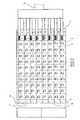
- a microtiter plate has 96 wells 2.
- the wells 2 contain coatings 3 which comprise antibiotics.
- the antibiotics are in the Fig. 1 to 3 denoted by abbreviations which are assigned to the antibiotics in Table 1.
- Fig. 1 to 3 and Table I also shows the concentrations of antibiotics in wells 2 in micrograms per milliliter.
- the concentrations are the masses of the respective antibiotics based on the volume of the sample to be pipetted into the wells 2 (eg 100 ⁇ l).
- Table 1 also shows the references for the selected concentrations.
- the microtiter plate 1 has two groups 4, 5 depressions 2 with identical coatings 3.
- the group 4 is shown in the drawings in the upper half of the microtiter plate 1 and the group 5 is shown in the lower half.
- bacterial suspensions 1 and 2 are pipetted from the two-channel reservoir 7, 8 into the different depressions 2.
- Fig. 1 to 3 different pipetting steps are shown.
- Sensitivity determination with the microtiter plate 1 is based on the rehydration of antibiotics by addition of a standardized bacterial suspension. The result is measured photometrically with the MICRONAUT Skan or another suitable photometer after 18 - 24 hours incubation at 35 - 37 ° C and evaluated or visually read and interpreted with the MICRONAUT software.
- Each individual microtiter plate 1 is packed in an aluminum bag together with a desiccant.
- the test plate contains antibiotics with different concentrations, which are preferably used in poultry (see Appendix: Table I and the AviPro® plate layout).
- the microtiter plate 1 allows two sensitivity tests per plate. Each test is performed in up to 48 wells 2 containing a range of 16 antibiotics and a growth control. The wells 2 of rows A to D are for test 1 and the wells of series E to H for test 2. There is also an adhesive sheet for sealing the plate.
- Bacterial growth is determined by photometric measurement at a wavelength of 620 nm or 690 nm, depending on the bouillon used.
- the result is evaluated, interpreted and checked for plausibility using the MICRONAUT software.
- the growth control must be overgrown (cloudy), otherwise the test must be repeated.
- the results should be logged on a disk mapping plan. The test result can be viewed on the screen or on the report printout.
- Breakpoint interpretation For the antibiotics tested in four or less consecutive concentrations or in non-sequential concentrations, interpretive categories, namely susceptible, intermediate and resistant, are determined based on low and high breakpoint MIC values (See Appendix: Tables IIA and IIB, Tables IIIA, IIIB, IIIC and IIID and Table IV).
- the low one Breakpoint (LB) or lower limit is represented at the MIC value which prevents sufficient and visible bacterial growth, ie the bacterial isolate is susceptible to the antibiotic.
- This upper breakpoint (UB) or upper limit is represented by the MIC value which partially prevents sufficient and visible bacterial growth and thus exhibits intermediate activity towards the antibiotic. Therefore, an MIC above the upper limit (UB) shows resistance of the bacterial colony to the antibiotic.
- MICRONAUT software MIC values can be automatically analyzed and interpreted for a given bacterial isolate and antibiotic. The measurement results and the corresponding clinical interpretation, including the MIC range, may be recommended to the veterinarian for therapy.
- DSMZ German Collection of Microorganisms and Cell Cultures GmbH
Landscapes
- Chemical & Material Sciences (AREA)
- Life Sciences & Earth Sciences (AREA)
- Health & Medical Sciences (AREA)
- Organic Chemistry (AREA)
- Engineering & Computer Science (AREA)
- Zoology (AREA)
- Wood Science & Technology (AREA)
- Proteomics, Peptides & Aminoacids (AREA)
- Analytical Chemistry (AREA)
- Toxicology (AREA)
- Immunology (AREA)
- Microbiology (AREA)
- Molecular Biology (AREA)
- Biophysics (AREA)
- Physics & Mathematics (AREA)
- Biotechnology (AREA)
- Biochemistry (AREA)
- Bioinformatics & Cheminformatics (AREA)
- General Engineering & Computer Science (AREA)
- General Health & Medical Sciences (AREA)
- Genetics & Genomics (AREA)
- Measuring Or Testing Involving Enzymes Or Micro-Organisms (AREA)
Description
- Die Erfindung bezieht sich auf ein Verfahren zur Unterscheidung und Feststellung von Feldstämmen und Impfstämmen bakterieller Infektionserreger des Geflügels, insbesondere Huhn, Pute und Ente.
- Für die in-vitro-Empfindlichkeitsprüfung bakterieller Infektionserreger stehen dem mikrobiologischen Untersuchungslabor zwei Methoden zur Verfügung: Das Diffusions- und das Dilutionsverfahren. Das am häufigsten angewendete Diffusionsverfahren ist der Plättchen-Agardiffusionstest. Die Resistenzbestimmung wird auf Festmedium durchgeführt und der Hemmhof-Durchmesser (HHD) für eine im Plättchen absorbierte konstante Wirkstoffkonzentration bewertet. Die HHD-Grenzwerte können den Kategorien "sensibel", "intermediär" und "resistent" zugeordnet werden.
- Ebenfalls auf dem Diffusionsverfahren basierend kombiniert der E-Test die Verwendung von Festmedium mit einem Wirkstoffgradienten auf einem Papierstreifen. Die Ausbildung einer ellipsoiden Hemmzone erlaubt die Bestimmung der minimalen Hemmkonzentration (MHK).
- Im Dilutionsverfahren wird im Reihenverdünnungstest das Wachstum der Testkeime in Flüssigmedium in Gegenwart unterschiedlicher Konzentrationen des Wirkstoffes getestet. Die Empfindlichkeit des Erregers gegenüber den verschiedenen Wirkstoffkonzentrationen wird durch die Bestimmung der MHK bewertet (primäres Verfahren). Für die humanmedizinische Diagnostik ist der Reihenverdünnungstest als standardisierte Untersuchungsmethode für einen hohen Probendurchsatz etabliert. In der diagnositischen Veterinärmedizin wird dieser bevorzugt für die aus Schwein und Rind isolierten bak teriellen Infektionserreger eingesetzt, um die aktuelle Resistenzsituation bakterieller Erreger im Tierbestand zu beurteilen. Zusätzlich unterstützt das quantitative Verfahren den Tierarzt in der Wahl des Wirkstoffes und somit den Therapieerfolg.
- Standardisierbare und automatisierbare Verfahren für die Empfindlichkeitsprüfung bakterieller Infektionserreger des Geflügels stehen zwar zur Verfügung. Entsprechende Verfahren gibt es jedoch nicht für die Unterscheidung und Feststellung von Feldstämmen und Impfstämmen bei Geflügel. Dies auch nicht in Kombination mit der Erstellung eines Antibiogramms.
- Phillips I. et al., J. Clin. Pathol., vo1.31, 1978, Seiten 531-535 offenbart ein Verfahren zum Bestimmen der minimalen Hemmkonzentration (MIC - minimum inhibitory concentration) mittels einer Mikrotiterplatte, die hierfür getrocknete Antibiotika in geeigneten Konzentrationen enthält, wobei Organismen in flüssigem Kulturmedium aufgegeben und über Nacht inkubiert werden. Das Verfahren ist für die Überprüfung von Organismen gedacht, die dem Blut des Patienten entnommen werden, d.h. für Humananwendungen bzw. klinischen Anwendungen (Seite 531, linke Spalte, Mitte und rechte Spalte, unten).
- Das Verfahren ermöglicht keine Unterscheidung und Feststellung von Feldstämmen und Impfstämmen bei Geflügel.
- Blackall et al., "Antimicrobial sensitivity testing of Australian isolates of Bordetella avium and the Bordetella avium-like organisms", Australian Veteninary Journal, Vol. 72, No. 3, March 1995, pages 97-100 offenbart ein Verfahren zur Empfindlichkeitsprüfung von Bordetella avium und verwandten Bakterien des Geflügels unter Verwendung einer Mikrotiterplatte mit Antibiotika, bei dem eine vom Geflügel isolierte Bakterienkultur in Suspension in einer Nährlösung mit verschiedenen Antibiotika inkubiert wird, und das Wachstum von Bakterien ermittelt wird.
- Davon ausgehend liegt der Erfindung die Aufgabe zugrunde, ein Verfahren zur Bestimmung und Unterscheidung von Feldstämmen und Impfstämmen bakterieller Infektionserreger des Geflügels zu liefern.
- Die Aufgabe wird durch ein Verfahren mit den Merkmalen des Anspruches 1 gelöst. Vorteilhafte Ausgestaltungen des Verfahrens sind in den Unteransprüchen angegeben.
- Die erfindungsgemäße Verfahren zur Unterscheidung und Feststellung von Feldstämmen und Impfstämmen bakterieller Infektionserreger des Geflügels unter Verwendung einer Vorrichtung mit einer eine Vielzahl Vertiefungen aufweisenden Mikrotiterplatte und mindestens einer Vertiefung mit einer ein Antibiotikum eines Markers, d.h. Marker-Antibiotikum, eines Impfstammes für die Impfung von Geflügel umfassenden Beschichtung wird mindestens eine vom Geflügel isolierte Bakterienkultur in einer Nährlösung in eine Vertiefung mit einer ein Antibiotikum eines Markers eines Impfstammes für die Impfung von Geflügel umfassenden Beschichtung gegeben, inkubiert, das Wachstum der Bakteriumkultur in der Vertiefung überprüft und anhand des Wachstums im Vergleich zum Wachstum von Feldstämmen das Vorhandensein von Feldstämmen oder Impfstämmen in der Bakterienkultur ermittelt.
- Die in mindestens einer Vertiefung der Mikrotiterplatte vorhandene Beschichtung ermöglicht eine Unterscheidung zwischen einem krankheitserregenden Feldstamm eines bakteriellen Infektionserregers und dem für die Impfung herangezogenen, gegenüber dem Feldstamm unterscheidbaren Impfstamm. Die Unterscheidung basiert darauf, daß der Impfstamm einen Marker aufweist, der mit einer erhöhten Resistenz oder einer erhöhten Empfindlichkeit des Impfstammes gegen ein Antibiotikum einhergeht. Die Beschichtung ist im festen Zustand und ist in einer dem Fachmann bekannten Weise aufgebracht. Wird nun in eine das Antibiotikum umfassende Beschichtung aufweisende Vertiefung der Mikrotiterplatte eine von Geflügel isolierte Bakterienreinkultur in Suspension in einer geeigneten Nährlösung aufgegeben, so werden die Antibiotika rehydriert und gewinnen ihre volle Wirksamkeit zurück. Nach einer Inkubation (z.B. bei 35 bis 37 °C über 18 bis 24 Stunden) ist das Wachstum der Bakterien meßbar. Anhand des Wachstums der Bakterien kann festgestellt werden, ob es sich hierbei um einen Infektionserreger oder um einen Impfstamm handelt. Das Wachstum resistenter Impfstämme wird nämlich im Vergleich zu Feldstämmen durch die Beschichtung nicht beeinträchtigt. Hingegen wird das Wachstum empfindlicher Impfstämme im Vergleich zu dem von Feldstämmen durch die Beschichtung beeinträchtigt. Ein Wachstum der Bakterien zeigt sich in einer zunehmenden Trübung der Suspension. Diese ist visuell oder mittels eines Fotometers objektiv meßbar ohne Interpretationsspielraum durch den Anwender. Dies ermöglicht die Kontrolle der Aufnahme von Impfstoffen durch das Geflügel und der Bekämpfung der Feldstämme durch einen standardisierten Test. Die Vorrichtung kann auch für automatische Bearbeitung verwendet werden.
- Gemäß einer Ausgestaltung weist mindestens eine Vertiefung eine ein Antibiotikum eines Markers eines Salmonella-Impfstammes umfassende Beschichtung auf. Hierbei handelt es sich z.B. um Antibiotika, die Marker von Salmonella-Stoffwechseldrift-Mutanten bzw. -Impfstämmen sind. Des weiteren handelt es sich hierbei z.B. um bestimmte Antibiotika, denen gegenüber der Salmonella-Impfstamm aufgrund eines Envelope-Markers eine erhöhte Sensibilität aufweist. Einschlägige Salmonella-Impfstämme sind in dem
europäischen Patent EP 0 263 528 B1 (insbesondere in den Ansprüchen und in der Tabelle in den Zeilen 26 bis 49 der Seite 5) und in demeuropäischen Patent EP 0 642 796 B1 (insbesondere in den Ansprüchen und der Tabelle auf Seite 6, Zeilen 30 bis 46) angegeben. Die Offenbarung der beiden europäischen Patente betreffend Salmonella-Stoffwechseldrift-Mutanten und Salmonella-Envelope-Mutanten wird in die vorliegende Anmeldung einbezogen. Entsprechend gemarkerte Geflügel-Lebendimpfstoffe werden von der Anmelderin unter den Markenbezeichnungen Salmonella VAC®T und Salmonella VAC®E vermarktet. - Gemäß einer Ausgestaltung der Erfindung weist mindestens eine Vertiefung eine Beschichtung umfassend ein Antibiotikum ausgewählt aus den Antibiotika Streptomycin (STRE), Rifampicin (RAM), Erythromycin (ERYD) auf. Streptomycin und Rifampicin sind Stoffwechseldrift-Marker von Impfstämmen, die in der
EP 0 263 528 B1 undEP 0 642 796 B1 angeführt sind. Die in derEP 0 642 796 B B1 angeführten Impfstämme weisen einen Envelope-Marker auf, der diesen eine erhöhte Sensibilität gegenüber Erythromycin verleiht. Salmonella VAC®T und VAC®E sind auf der Grundlage von Impfstämmen aus den beiden Patenten entwickelt worden. - Gemäß einer Ausgestaltung umfaßt mindestens eine Vertiefung eine ein therapeutisch relevantes Antibiotikum für Geflügel umfassende Beschichtung. Dies ermöglicht es, die Wirksamkeit eines für Geflügel therapeutisch relevanten Antibiotikums gegen eine von Geflügel isolierte Bakterienkultur zu überprüfen. Auch bei diesem Test wird eine isolierte Bakterienkultur in Suspension in einer geeigneten Nährlösung in die Vertiefung aufgegeben und inkubiert. Schließlich wird das Wachstum der Bakterienkultur anhand der Trübung überprüft. Hieraus sind Änderungen der Empfindlichkeit und des Widerstandes von Bakterienisolaten gegen Antibiotika ersichtlich. Diese Informationen können für die Feststellung des Gesundheitszustandes von Geflügel, für ein Resistenzmonitoring und für die therapeutische Behandlung durch den Veterinär genutzt werden.
- Die Beschichtung umfaßt als therapeutisch relevantes Antibiotikum ein Antibiotikum, das für die Behandlung von Infektionserkrankungen von Geflügel von besonderer Bedeutung ist bzw. häufig eingesetzt wird. Vorzugsweise sind mehrere Vertiefungen mit verschiedenen Beschichtungen mit einer Vielfalt therapeutisch relevanter Antibiotika versehen. Die therapeutische Relevanz von Antibiotika kann sich im Laufe der Zeit verändern. Neue therapeutisch relevante Antibiotika können hinzukommen. Die Erfindung bezieht sämtliche Antibiotika ein, die derzeit und in Zukunft für die therapeutische Behandlung von Geflügel von Bedeutung sind.
- Eine Ausgestaltung weist mindestens eine Vertiefung mit einer Beschichtung umfassend ein Antibiotikum ausgewählt aus den Antibiotika Ampicillin (AMP), Ceftiofur (CET), Colistin (CST), Enrofloxacin (ENRO), Erythromycin (ERY), Gentamycin (GEN), Lincomycin (LIN), Neomycin (NEO), Oxacillin (OXA), Penicillin G (PEN), Spectinomycin (SPEC), Streptomycin (STRE), Tetracycline (TET), Tiamulin (TIA), Trimethoprim-sulfamethoxazole (T/S) auf. Es handelt sich hierbei um Antibiotika, die nach Feststellungen der Anmelderin derzeit für Geflügel von hoher therapeutischer Relevanz sind. Ceftiofur ist zwar für die Behandlung von Geflügel nicht zugelassen. Die Feststellung des Einsatzes von Ceftiofur ist jedoch für die Diagnostik von Interesse. Eine Platte mit mehreren Vertiefungen mit unterschiedliche Antibiotika aufweisenden Beschichtungen ermöglicht die Feststellung eines Antibiogramms für eine von Geflügel isolierte Bakterienkultur.
- Hat das Antibiotikum in der Beschichtung eine vorgegebene Konzentration, ist eine quantitative Aussage über die Wirksamkeit des Antibiotikums gegen den Infektionserreger oder den Impfstamm möglich. Die Durchführung des Tests folgt vorzugsweise im wesentlichen der Dokumentation der Standarddurchführungskriterien, die vom National Commety for Clinical Laboratory Standards (NCCLS), Wayne, Pensilvania, USA, herausgegeben worden sind. Diese sind zu finden in: National Committee for Clinical Laboratory Standard (2002). Performance Standards for Antimicrobial Disk and Dilution Susceptibility Tests for Bacteria Isolated from Animals; Approved Standard - Second Edition. Document M31-A2, Vol. 22, No. 6, NCCLS, Wayne, PA, USA.
- Gemäß einer weiteren Ausgestaltung enthalten die Beschichtungen verschiedener Aufnahmen dieselben Antibiotika in verschiedener Konzentration. Dies ermöglicht auf die MHK bezogene quantitative Angaben zur Wirksamkeit eines Antibiotikums gegen eine von Geflügel isolierte Bakterienkultur. Die Wirksamkeit des Antibiotikums in-vitro gegen einen bestimmten Infektionserreger kann anhand von MHK-Grenzwerten ermittelt werden. Diese werden entsprechend den klinischen Kategorien als empfindlich, intermediär und resistent angegeben.
- Hierzu enthalten gemäß einer Ausgestaltung Beschichtungen verschiedener Aufnahmen das Antibiotikum in einer dem unteren Grenzwert und dem oberen Grenzwert entsprechenden Konzentration. Der untere Grenzwert entspricht einem MHK-Wert, welcher vollständig ein hinreichendes und sichtbares Bakterienwachstum verhindert, d.h. das Bakterienisolat ist empfindlich für das Antibiotikum. Der obere Grenzwert entspricht einem MHK-Wert, der nur teilweise ein hinreichendes und sichtbares Bakterienwachstum verhindert und eine intermediäre Wirksamkeit des Antibiotikums anzeigt. Deshalb zeigt die Messung von MHK-Werten oberhalb des oberen Grenzwertes die Resistenz des Bakterienisolats gegen ein bestimmtes Antibiotikum an. Die unteren Grenzwerte und oberen Grenzwerte werden jeweils der aktuellen Literatur entnommen. Für das Ausführungsbeispiel der Erfindung sind die Quellen in dem der Durchführung des Tests gewidmeten Teil der Beschreibung angegeben. Die Vertiefungen werden mit dem Wirkstoff bzw. Antibiotikum so beschichtet, daß die gewünschten Wirkstoffkonzentrationen bei Eingabe einer definierten Probenmenge in der Probe erreicht werden.
- Gemäß einer weiteren Ausgestaltung weisen mehrere Vertiefungen dieselbe Beschichtung auf. Dies ermöglicht Vergleichsmessungen, welche die Sicherheit der Empfindlichkeitsprüfung erhöhen.
- Eine Ausgestaltung weist mindestens eine Vertiefung ohne Beschichtung auf. Dies ermöglicht eine Vergleichsmessung an einer Bakterienkultur, deren Wachstum nicht beeinträchtigt ist.
- Eine Ausgestaltung weist mehrere Gruppen Vertiefungen auf, wobei die Vertiefungen in den Gruppen verschiedene Beschichtungen und die Vertiefungen verschiedener Gruppen dieselben Beschichtungen aufweisen. Hierdurch werden erweiterte Vergleichsmessungen ermöglicht.
- Gemäß einer weiteren Ausgestaltung hat die Mikrotiterplatte 96 Vertiefungen. Dieses Format erleichtert insbesondere das Arbeiten mit Handpipetten. Die Erfindung bezieht jedoch Mikrotiterplatten mit einer anderen Anzahl Vertiefungen ein, z.B. 384 oder 1536 Vertiefungen, die insbesondere für die Automatenbearbeitung geeignet sind.
- Gemäß einer Ausgestaltung ist die Mikrotiterplatte in einem luftdichten Beutel verpackt und hierdurch wird die Wirksamkeit der Beschichtungen über einen längeren Lagerzeitraum bei Raumtemperatur (15 - 25 °C) gewährleistet. Hierzu enthält gemäß einer weiteren Ausgestaltung der Beutel ein Trockenmittel.
- Nachfolgend wird die Erfindung anhand der anliegenden Zeichnungen eines Ausführungsbeispieles und einer zugeordneten Tabelle näher erläutert. In den Zeichnungen zeigen:
- Fig. 1 bis 3
- eine Mikrotiterplatte beim Pipettieren einer Bakteriensuspension in mehreren Schritten in einer grobschematischen Draufsicht.
- Gemäß
Fig. 1 bis 3 hat eine Mikrotiterplatte 1 96 Vertiefungen 2. Die Vertiefungen 2 enthalten Beschichtungen 3, welche Antibiotika umfassen. Die Antibiotika sind in denFig. 1 bis 3 mit Abkürzungen bezeichnet, die in der Tabelle 1 den Antibiotika zugeordnet sind. - In den
Fig. 1 bis 3 und in der Tabelle I sind auch die Konzentrationen der Antibiotika in den Vertiefungen 2 in Mikrogramm pro Milliliter angegeben. Bei den Konzentrationen handelt es sich um die Massen der jeweiligen Antibiotika bezogen auf das Volumen der in die Vertiefungen 2 einzupipettierenden Probe (z.B. 100 µl). In der Tabelle 1 sind ferner die Referenzen für die gewählten Konzentrationen angegeben. - Die Mikrotiterplatte 1 weist zwei Gruppen 4, 5 Vertiefungen 2 mit identischen Beschichtungen 3 auf. Die Gruppe 4 ist in den Zeichnungen in der oberen Hälfte der Mikrotiterplatte 1 und die Gruppe 5 ist in der unteren Hälfte gezeigt.
- Mit Hilfe einer Achtkanal-Pipette 6 werden aus einem Zweikanal-Reservoir 7, 8 Bakteriensuspensionen 1 und 2 in die verschiedenen Vertiefungen 2 pipettiert. In den
Fig. 1 bis 3 sind verschiedene Pipettierschritte dargestellt. - Einzelheiten der Durchführung des Tests sind in der nachfolgenden Beschreibung angegeben:
- Die Empfindlichkeitsbestimmung mit der Mikrotiterplatte 1 beruht auf der Rehydratisierung von Antibiotika durch Zugabe einer standardisierten Bakterien-Suspension. Das Ergebnis wird nach 18 - 24 Stunden Inkubation bei 35 - 37°C photometrisch mit dem MICRONAUT Skan oder einem anderen geeigneten Fotometer gemessen und mit der MICRONAUT Software ausgewertet oder visuell abgelesen und interpretiert.
- Jede einzelne Mikrotiterplatte 1 ist in einem Aluminiumbeutel eingepackt zusammen mit einem Trocknungsmittel. Die Testplatte umfaßt Antibiotika mit verschiedenen Konzentrationen, die bevorzugt bei Geflügel zum Einsatz kommen (siehe Anhang: Tabelle I und das AviPro® Plattenlayout). Die Mikrotiterplatte 1 ermöglicht zwei Empfindlichkeitstests pro Platte. Jeder Test erfolgt in bis zu 48 Vertiefungen 2, die eine Palette von 16 Antibiotika und eine Wachstumskontrolle umfassen. Die Vertiefungen 2 der Reihen A bis D sind für Test 1 bestimmt und die Vertiefungen der Reihe E bis H für Test 2. Ferner gibt es eine Klebefolie zum Abdichten der Platte.
-
- Mueller-Hinton Bouillon oder ISO-Sensitest Buillon modifiziert ohne Salz
- H-Bouillon
- NaCl 0,9 % pH 5,5 bis 6,5 bei 37 °C
- 1-Kanal-Reservoir
- 2-Kanal-Reservoir
- Mehrkanalpipette (8- oder 12-Kanal)
- Pipettenspitzen
- MICRONAUT Skan (# L5-120-001) oder anderes geeignetes Fotometer
- MICRONAUT Software (# U8-305-001)
- McFarland Standard 0,5
- Blutagarplatte
- Brutschrank 370C
- Impfösen
- Markierstift
-
Reagenz Bestandteile NaCl 0,9 % 11 Natriumchlorid Iso-Sensitest Buillon modifiziert (100 Röhrchen á 11 ml) Iso-Sensitest Buillon Di-Natriumphosphat H-Buillon (100 Röhrchen á 11 ml) Haematin, NaOH, Tween 80, Pyridoxal, β-Nicotinamid, Adenindinukleotid, Columbia Buillonbasis, Glukose, Hefeextrakt, Neopepton, Agarose Typ IIA Mueller-Hinton II Rinderextrakt, saure Kasein-Hydrolysat Bouillon Stärke -
- Grampositive Bakterien erscheinen blau, gramnegative Bakterien rot. Es wird empfohlen, die Gramfärbung nach entsprechendem Standardprotokoll oder den Empfehlungen auf den Herstellerkits zu ermitteln.
-
- Ein Röhrchen mit 5 ml NaCl 0,9 % pH 5,5 bis 6,5 bereitstellen.
- Mehrere einzeln liegende Kolonien einer 18 - 24 Stunden alten Reinkultur vom Blutagar (ohne Zusatz) abnehmen.
- Die Kolonien in 5 ml NaCl 0,9 % gut homogenisieren, bis die Trübung einem McFarland von 0,5 entspricht.
-
- 3.1 Mueller-Hinton II Bouillon oder modifizierte ISO-Sensitest-Bouillon
Für gramnegative Bakterien werden 50 µl der Bakteriensuspension in 11 ml Mueller-Hinton II Bouillon oder modifizierter ISO-Sensitest Bouillon pipettiert und gut homogenisiert.
Für grampositive Bakterien werden 100 µl der Bakteriensuspension in 11 ml Mueller-Hinton II Bouillon oder modifizierter ISO-Sensitest-Bouillon pipettiert und gut homogenisiert. - 3.2 H-Bouillon
Für schwierig zu kultivierende Bakterien werden 200 µl der Bakteriensuspension in 11 ml vorgewärmter H-Bouillon transferiert und homogenisiert. -
- Mikrotiterplatte max. 30 Minuten vor Beimpfung aus der Einzelverpackung entnehmen und das Trockenmittel verwerfen.
- Die Testplatte beschriften.
- Die vorbereitete Suspension gemäß der Plattenbelegung in ein 2-Kanal-Reservoir geben.
- Die Beimpfung der Mikrotiterplatte erfolgt manuell mit einer Mehrkanalpipette, 100 µl je Vertiefung.
-
- 5.1 Mueller-Hinton II Bouillon oder modifizierte ISO-Sensitest-Bouillon
- Nach dem Beimpfen die Testplatten mit einer unperforierten Abklebefolie verschließen oder mit einer unbenutzten Mikrotiterplatte abdecken (max. 5 Testplatten stapeln).
- Testplatte 18―24 Stunden bei 35 -37°C inkubieren.
- 5.2 H-Bouillon
- Nach dem Beimpfen der Testplatten mit einer unbenutzten Mikrotiterplatte abdecken oder mit einer perforierten Abdeckfolie verschließen.
- Testplatte 22 bis 24 Stunden bei 35 bis 37 °C im Inkubator mit CO2-Begasun bebrüten.
-
- Abklebefolie entfernen.
- Testplatte von unten abwischen.
- Ablesung der Testplatte mit dem Fotometer oder visuell.
- Das Bakterienwachstum wird anhand einer photometrischen Messung bei einer Wellenlänge von 620 nm oder 690 nm - je nach verwendeter Bouillon - bestimmt.
- Das Ergebnis wird mit Hilfe der MICRONAUT Software ausgewertet, interpretiert und auf seine Plausibilität überprüft. Die Wachstumskontrolle muss bewachsen (trüb) sein, anderenfalls muss der Test wiederholt werden. Bei der visuellen Ablesung sollten die Ergebnisse auf einem Plattenbelegungsplan protokolliert werden. Das Testergebnis kann am Bildschirm oder auf dem Befundausdruck angeschaut werden.
- Breakpoint Interpretation
Für die Antibiotika, die in vier oder weniger aufeinanderfolgenden Konzentrationen oder in nicht aufeinanderfolgenden Konzentrationen getestet werden, werden interpretierende Kategorien, nämlich empfänglich, intermediär und resistent bestimmt, auf der Basis von niedrigen und oberen Breakpoint MHK-Werten (Siehe im Anhang: Tabelle IIA und IIB, Tabellen IIIA, IIIB, IIIC und IIID und Tabelle IV). Der niedrige Breakpoint (LB) oder untere Grenzwert ist representiert bei dem MHK-Wert, welcher ein hinreichendes und sichtbares bakterielles Wachstum verhindert, d.h. das Bakterienisolat ist empfänglich für das Antibiotikum. Dieser obere Breakpoint (UB) oder obere Grenzwert ist representiert durch den MHK-Wert, welcher teilweise hinreichendes und sichtbares bakterielles Wachstum verhindert und damit eine intermediäre Aktivität gegenüber dem Antibiotikum aufzeigt. Deshalb zeigt ein MHK-Wert oberhalb des oberen Grenzwerts (UB) eine Resistenz der Bakterienkolonie gegenüber dem Antibiotikum. Mit Hilfe der MICRONAUT-Software können MHK-Werte automatisch analysiert und interpretiert werden für ein gegebenes Bakterienisolat und Antibiotikum. Die Meßergebnisse und die entsprechende klinische Interpretation einschließlich des MHK-Bereichs können dem Tierarzt für die Therapie empfohlen werden. - Breakpoint-Interpretation von Antibiotika:
Visuelle Ablesung Automatisierte Ablesung (OD) Klinische Interpretation LB UB LB UB Bakterienwachstum - - < 0,1 < 0,1 Sensibel (S) + - ≥0,1 < 0,1 Intermediär (I) + + ≥ 0,1 ≥0,1 Resistent (R) OD = optischer Dichtewert analysiert mit der MICRONAUT-Software;
LB = niedrige Breakpoint-Konzentration;
UB = obere Breakpoint-Konzentration;
+ Symbol = Vertiefung, die die Gegenwart von Bakterien anzeigt;
- Symbol = Vertiefung, die die Abwesenheit von Bakterien anzeigt.
1 Intermediäre Kategorie ist noch nicht für sämtliche Antibiotika bestimmt worden.
1 niedrige Breakpoint Konzentration
2 hohe Breakpoint Konzentration - Die bakteriologische Qualitätskontrolle kann mit folgenden Stämmen durchgeführt werden.
Stämme ATCC Nr. DSMZ Nr. Staphylococcus aureus subsp. aureus ATCC 29213 DSM 2569 Escherichia coli ATCC 25922 DSM 1103 Pseudomonas aeruginosa ATCC 27853 DSM 1117 Enterococcus faecalis ATCC 29212 DSM 2570
ATCC = American Type Culture Collection
DSMZ= Deutsche Sammlung von Mikroorganismen und Zellkulturen GmbH -
- BGVV Tabelle Stand XII/99. Bewertung der Hemmhofdurchmesser und Grenzwertkonzentrationen der in der Veterinärmedizin zugelassenen Antibiotika.
- BioSafety in Microbiological and Biomedical Laboratories, HHS Publication No. (CDC) 93-8395, 3rd Edition, May 1993.
- National Committee for Clinical Laboratory Standards (2002). Performance standards for antimicrobial disk and dilution susceptibility tests for bacteria isolated from animals; approved standard - second edition. Document M31-A2, Vol. 22, No. 6, NCCLS, Wayne, PA, USA.
- Verordnung (EWG) Nr. 2377/90 des Rates vom 26. Juni 1990 zur Schaffung eines Gemeinschaftsverfahrens für die Festsetzung von Höchstmengen für Tierarzneimittelrückstände in Nahrungsmitteln tierischen Ursprungs. Letzte Aktualisierung: Verordnung (EG) Nr. 544/2003 der Kommission vom 27. März 2003.
- Flußbild der Testprozedur
- Tabelle I Details zu den Antibiotika-Beschichtungen der Aufnahmen derselben Mikrotiterplatte.
- Layout der AviPro Mikrotiterplatte
- Tabelle II-A: MHK-Grenzwerte und Interpretationsstandards für Antibiotika;
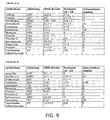
- Tabelle II-B: Antibiotika, die als Resistenzmarker verwendet werden, um Feldstämme von Salmonella Enteritidis (S.E.) und Salmonella Typhimurium (S.Tm.) von Stoffwechseldriftmutanten in Lebendimpfstoffen von Salmonella Vac E und Salmonella Vac T zu unterscheiden;
- Tabelle III-A: Bereich der MHK und Interpretationsergebnis von Antibiotika, die auf grampositive Referenzstämme Staphylococcus aureus ATCC 29213 getestet worden sind;
- Tabelle III-B: Bereich von MHK und Interpretationsergebnis für Antibiotika, die auf einen grampositiven Referenzstamm Enterococcus fecalis ATCC 29212 getestet worden sind.
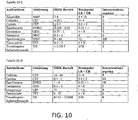
- Tabelle III-C: Bereich von MHK und Interpretationsergebnis für Antibiotika, die auf einem gramnegativen Referenzstamm Escherichia coli ATCC 25922 getestet worden sind;
- Tabelle III-D: Bereich von MHK und Interpretationsergebnis für Antibiotika, die auf einem gramnegativen Teststamm Pseudumonas aeruginosa ATCC 27853 getestet worden sind;
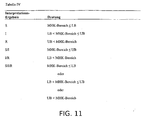
- Tabelle IV: Deutung von Interpretationsergebnissen, die in den Tabelle III-A, III-B, III-C und III-D angegeben worden sind.
Claims (15)
- Verfahren zur Unterscheidung und Feststellung von Feldstämmen und Impfstämmen bakterieller Infektionserreger des Geflügels unter Verwendung einer Vorrichtung mit einer eine Vielzahl Vertiefungen aufweisenden Mikrotiterplatte und mindestens einer Vertiefung mit einer ein Marker-Antibiotikum eines Impfstammes für die Impfung von Geflügel umfassenden Beschichtung, bei dem mindestens eine vom Geflügel isolierte Bakterienkultur in Suspension in einer Nährlösung in eine Vertiefung mit einer ein Marker-Antibiotikum eines Impfstammes für die Impfung von Geflügel umfassenden Beschichtung gegeben, inkubiert, das Wachstum der Bakterienkultur in der Vertiefung überprüft und anhand des Wachstums im Vergleich zum Wachstum von Feldstämmen das Vorhandensein von Feldstämmen oder Impfstämmen in der Bakterienkultur ermittelt wird.
- Verfahren nach Anspruch 1, bei dem die Mikrotiterplatte mindestens eine Vertiefung mit einer ein Marker-Antibiotikum eines Salmonella-Impfstammes umfassenden Beschichtung aufweist.
- Verfahren nach Anspruch 1 oder 2, bei dem die Mikrotiterplatte mindestens eine Vertiefung mit einer Beschichtung umfassend ein Antibiotikum ausgewählt aus den Antibiotika Streptomycin, Rifampicin und Erythromycin aufweist.
- Verfahren nach einem der Ansprüche 1 bis 3, bei dem die Mikrotiterplatte mindestens eine Vertiefung mit einer ein therapeutisch relevantes Antibiotikum für Geflügel umfassenden Beschichtung aufweist, mindestens eine vom Geflügel isolierte Bakterienkultur in Suspension in einer Nährlösung in eine Vertiefung mit einer ein therapeutisch relevantes Antibiotikum für Geflügel umfassenden Beschichtung gegeben, inkubiert, das Wachstum der Bakterienkultur in der Vertiefung überprüft und Änderungen der Empfindlichkeit oder Resistenz der Bakterien gegen das therapeutisch relevante Antibiotikum ermittelt werden.
- Verfahren nach Anspruch 4, bei dem die Mikrotiterplatte mindestens eine Vertiefung mit einer Beschichtung umfassend ein Antibiotikum ausgewählt aus den Antibiotika Ampicillin, Ceftiofur, Colistin, Enrofloxacin, Erythromycin, Gentamicin, Lincomycin, Neomycin, Oxacillin, Penicillin G, Spectinomycin, Streptomycin, Tetracycline, Tiamulin und Trimethoprim-sulfamethoxazole aufweist.
- Verfahren nach einem der Ansprüche 1 bis 5, bei dem die Beschichtungen verschiedener Vertiefungen der Mikrotiterplatte dieselben Antibiotika in verschiedener Konzentration enthalten.
- Verfahren nach Anspruch 6, bei dem die Beschichtungen verschiedener Aufnahmen der Mikrotiterplatte das Antibiotikum in einer dem unteren Grenzwert und dem oberen Grenzwert der minimalen Hemmkonzentration enthaltenden Konzentration enthalten.
- Verfahren nach einem der Ansprüche 1 bis 7, bei der Beschichtungen verschiedener Vertiefungen der Mikrotiterplatte verschiedene Antibiotika enthalten.
- Verfahren nach einem der Ansprüche 1 bis 8, bei der mehrere Vertiefungen der Mikrotiterplatte dieselbe Beschichtung aufweisen.
- Verfahren nach einem der Ansprüche 1 bis 9, bei dem die Mikrotiterplatte mindestens eine Vertiefung ohne Beschichtung aufweist.
- Verfahren nach einem der Ansprüche 1 bis 10, bei dem die Mikrotiterplatte mehrere Gruppen Vertiefungen aufweist, wobei die Vertiefungen in den Gruppen verschiedene Beschichtungen und die Vertiefungen verschiedener Gruppen dieselben Beschichtungen aufweisen.
- Verfahren nach einem der Ansprüche 1 bis 11, bei dem die Mikrotiterplatte 96 Vertiefungen aufweist.
- Verfahren nach einem der Ansprüche 1 bis 12, bei dem die Mikrotiterplatte in einem luftdichten Beutel verpackt ist.
- Verfahren nach Anspruch 13, bei dem der Beutel ein Trockenmittel enthält.
- Verfahren nach einem der Ansprüche 1 bis 14, bei dem das Wachstum der Bakterienkultur anhand der Trübung der Suspension ermittelt wird.
Applications Claiming Priority (2)
| Application Number | Priority Date | Filing Date | Title |
|---|---|---|---|
| DE202004006282U | 2004-04-19 | ||
| DE202004006282U DE202004006282U1 (de) | 2004-04-19 | 2004-04-19 | Vorrichtung für die Empfindlichkeitsprüfung bakterieller Infektionserreger und Impfstämme des Geflügels |
Publications (2)
| Publication Number | Publication Date |
|---|---|
| EP1589113A1 EP1589113A1 (de) | 2005-10-26 |
| EP1589113B1 true EP1589113B1 (de) | 2011-09-21 |
Family
ID=32668349
Family Applications (1)
| Application Number | Title | Priority Date | Filing Date |
|---|---|---|---|
| EP05002870A Expired - Lifetime EP1589113B1 (de) | 2004-04-19 | 2005-02-11 | Verfahren für die Empfindlichkeitsprüfung bakterieller Infektionserreger und Impfstämme des Geflügels |
Country Status (4)
| Country | Link |
|---|---|
| US (1) | US7642088B2 (de) |
| EP (1) | EP1589113B1 (de) |
| AT (1) | ATE525476T1 (de) |
| DE (1) | DE202004006282U1 (de) |
Families Citing this family (1)
| Publication number | Priority date | Publication date | Assignee | Title |
|---|---|---|---|---|
| CN110904185A (zh) * | 2019-12-25 | 2020-03-24 | 武汉市农业科学院 | 一种基于碘硝基氯化四氮唑显色的鸭致病菌药敏快速检测试剂盒 |
Family Cites Families (13)
| Publication number | Priority date | Publication date | Assignee | Title |
|---|---|---|---|---|
| US3928140A (en) * | 1974-05-10 | 1975-12-23 | Philip J Wyatt | Apparatus and process for testing microparticle response to its environment |
| US4448534A (en) * | 1978-03-30 | 1984-05-15 | American Hospital Corporation | Antibiotic susceptibility testing |
| SE456246B (sv) * | 1985-08-01 | 1988-09-19 | Biodisk Ab | Anordning for kenslighetsbestemning av mikroorganismer innefattande en icke-poros testremsa med tva olika testsubstanser |
| DE3751641D1 (de) | 1986-10-10 | 1996-02-01 | Tad Pharm Werk | Salmonella-Lebendimpfstoffe mit Wirtsspezies-angepassten Attenuierungshöhen und antiepidemischer Potenz |
| US5026638A (en) * | 1988-07-27 | 1991-06-25 | George Saperstein | Antibiotic sensitivity test for pathogenic organisms present in mastitic milk |
| IT1261158B (it) * | 1993-01-04 | 1996-05-09 | Antibiogramma e corredo diagnostico per la sua realizzazione. | |
| DK0642796T3 (da) | 1993-09-04 | 2002-01-21 | Lohmann Animal Health Gmbh | Levende Salmonella-vaccine |
| US6479056B1 (en) * | 1994-09-02 | 2002-11-12 | Lohman Animal Health Gmbh & Co. Kg | Live vaccine constituting minor risk for humans |
| US5756305A (en) * | 1996-05-06 | 1998-05-26 | Millennium Pharmaceuticals, Inc. | Identification of essential survival genes |
| EP0822261B1 (de) * | 1996-07-29 | 2002-07-03 | Academia Sinica | Verfahren zur schnellen antimikrobiellen Empfindlichkeitsnachweis |
| TR199700344A2 (xx) * | 1997-05-02 | 1999-10-21 | Tanil Kocag�Z Z�Ht� | Dio-sensitest h�zl� antibakteriyel duyarl�l�k testi. |
| US6083500A (en) * | 1997-10-06 | 2000-07-04 | University Of Georgia Research Foundation, Inc. | Biological control of food pathogens in livestock |
| US20030134779A1 (en) * | 1999-12-20 | 2003-07-17 | Diarra Moussa S. | Method and composition for treatment and/or prevention of antibiotic-resistant microorganism infections |
-
2004
- 2004-04-19 DE DE202004006282U patent/DE202004006282U1/de not_active Expired - Lifetime
-
2005
- 2005-02-11 EP EP05002870A patent/EP1589113B1/de not_active Expired - Lifetime
- 2005-02-11 AT AT05002870T patent/ATE525476T1/de active
- 2005-04-01 US US11/096,904 patent/US7642088B2/en not_active Expired - Fee Related
Non-Patent Citations (1)
| Title |
|---|
| BLACKALL ET AL.: "Antimicrobial sensitivity testing of Australian isolates of Bordetella avium and the Bordetella avium-like organisms", AUSTRALIAN VETENINARY JOURNAL, vol. 72, 3 March 1995 (1995-03-03), pages 97 - 100 * |
Also Published As
| Publication number | Publication date |
|---|---|
| US7642088B2 (en) | 2010-01-05 |
| EP1589113A1 (de) | 2005-10-26 |
| US20050282243A1 (en) | 2005-12-22 |
| DE202004006282U1 (de) | 2004-07-01 |
| ATE525476T1 (de) | 2011-10-15 |
Similar Documents
| Publication | Publication Date | Title |
|---|---|---|
| DE3687232T3 (de) | Nachweis von Mikroben in einer Probe. | |
| DE3852825T2 (de) | Schnellverfahren zum nachweis von coliformen mikroorganismen. | |
| DE69816663T2 (de) | Vorrichtung zur bestimmung von analyten in lösungen | |
| DE69736127T2 (de) | Nachweis von konditionen durch gas- oder dampfanalyse | |
| DE69325652T2 (de) | Nachweis von mikroorganismen und bestimmung von deren empfindlichkeit gegen antibiotika | |
| DE69206701T2 (de) | Vorrichtung und Verfahren zur Gewinnung von Mikroorganismen und zur Feststellung von des Mikrobenwachstums in Gegenwart von antimikrobiellen Substanzen | |
| Cady et al. | Impedimetric screening for bacteriuria | |
| DE69619395T2 (de) | Mehrzoniger sterilitätsindikator | |
| EP3548895B1 (de) | Aufbereitung lebendiger, mikrobieller proben und mikroorganismen für anschliessende massenspektrometrische messung und auswertung | |
| DE69028310T2 (de) | Verfahren und vorrichtung zur speziesfestsetzung und identifikation von mai (mycobacterium-avium-intracellulare) | |
| DE2460599C3 (de) | Anwendung von Radioisotopen zur raschen Bestimmung von Mikroorganismen | |
| DE2803044A1 (de) | Verfahren und vorrichtung zur identifizierung von mikroorganismen | |
| DE69026602T2 (de) | Vorrichtung und verfahren zum testen der antimikrobiellen empfindlichkeit von mikroorganismen | |
| DE2739421A1 (de) | Diagnostische einrichtung | |
| DE2657150A1 (de) | Verfahren und vorrichtung zum nachweis von mikroorganismen | |
| DE2715299A1 (de) | Sterilitaetsteststreifen | |
| DE69720248T2 (de) | Schneller mikrobieller test | |
| EP2410339B1 (de) | Verfahren zum Nachweis der Säureproduktion durch kariogene Bakterien | |
| DE102013022016A1 (de) | Mikroben-Identifizierung durch Massenspektrometrie und Infrarot-Spektrometrie | |
| DE69610537T2 (de) | Verfahren zum Nachweis von Mikroorganismen | |
| Harington | Studies on Rhodnius prolixus: growth and development of normal and sterile bugs, and the symbiotic relationship | |
| DE19814715A1 (de) | Gelatinemembranfilter, Verfahren zu ihrer Herstellung und ihre Verwendung | |
| CN117568441A (zh) | 一种检测耐药结核分枝杆菌耐药性的方法 | |
| DE2829316A1 (de) | Verfahren zum nachweis und zur untersuchung von zellulaerer aktivitaet und mittel zur durchfuehrung des verfahrens | |
| DE60028059T3 (de) | Verfahren zum nachweis antibiotische überreste |
Legal Events
| Date | Code | Title | Description |
|---|---|---|---|
| PUAI | Public reference made under article 153(3) epc to a published international application that has entered the european phase |
Free format text: ORIGINAL CODE: 0009012 |
|
| AK | Designated contracting states |
Kind code of ref document: A1 Designated state(s): AT BE BG CH CY CZ DE DK EE ES FI FR GB GR HU IE IS IT LI LT LU MC NL PL PT RO SE SI SK TR |
|
| AX | Request for extension of the european patent |
Extension state: AL BA HR LV MK YU |
|
| 17P | Request for examination filed |
Effective date: 20051230 |
|
| AKX | Designation fees paid |
Designated state(s): AT BE BG CH CY CZ DE DK EE ES FI FR GB GR HU IE IS IT LI LT LU MC NL PL PT RO SE SI SK TR |
|
| RIN1 | Information on inventor provided before grant (corrected) |
Inventor name: REBESKI, DIERK E., DR. DR. |
|
| RIN1 | Information on inventor provided before grant (corrected) |
Inventor name: SCHROEDER, ILKA, DR. Inventor name: REBESKI, DIERK E., DR. DR. Inventor name: IBURG, MICHAEL, DR. |
|
| RTI1 | Title (correction) |
Free format text: METHOD FOR DETERMINING THE SENSITIVITY OF BACTERIAL PATHOGENS AND VACCINE STRAINS OF POULTRY |
|
| 17Q | First examination report despatched |
Effective date: 20060126 |
|
| GRAP | Despatch of communication of intention to grant a patent |
Free format text: ORIGINAL CODE: EPIDOSNIGR1 |
|
| GRAS | Grant fee paid |
Free format text: ORIGINAL CODE: EPIDOSNIGR3 |
|
| GRAA | (expected) grant |
Free format text: ORIGINAL CODE: 0009210 |
|
| AK | Designated contracting states |
Kind code of ref document: B1 Designated state(s): AT BE BG CH CY CZ DE DK EE ES FI FR GB GR HU IE IS IT LI LT LU MC NL PL PT RO SE SI SK TR |
|
| REG | Reference to a national code |
Ref country code: GB Ref legal event code: FG4D Free format text: NOT ENGLISH |
|
| REG | Reference to a national code |
Ref country code: CH Ref legal event code: EP |
|
| REG | Reference to a national code |
Ref country code: IE Ref legal event code: FG4D Free format text: LANGUAGE OF EP DOCUMENT: GERMAN |
|
| REG | Reference to a national code |
Ref country code: DE Ref legal event code: R096 Ref document number: 502005011899 Country of ref document: DE Effective date: 20111117 |
|
| REG | Reference to a national code |
Ref country code: NL Ref legal event code: VDEP Effective date: 20110921 |
|
| PG25 | Lapsed in a contracting state [announced via postgrant information from national office to epo] |
Ref country code: LT Free format text: LAPSE BECAUSE OF FAILURE TO SUBMIT A TRANSLATION OF THE DESCRIPTION OR TO PAY THE FEE WITHIN THE PRESCRIBED TIME-LIMIT Effective date: 20110921 Ref country code: SE Free format text: LAPSE BECAUSE OF FAILURE TO SUBMIT A TRANSLATION OF THE DESCRIPTION OR TO PAY THE FEE WITHIN THE PRESCRIBED TIME-LIMIT Effective date: 20110921 Ref country code: FI Free format text: LAPSE BECAUSE OF FAILURE TO SUBMIT A TRANSLATION OF THE DESCRIPTION OR TO PAY THE FEE WITHIN THE PRESCRIBED TIME-LIMIT Effective date: 20110921 |
|
| LTIE | Lt: invalidation of european patent or patent extension |
Effective date: 20110921 |
|
| PG25 | Lapsed in a contracting state [announced via postgrant information from national office to epo] |
Ref country code: CY Free format text: LAPSE BECAUSE OF FAILURE TO SUBMIT A TRANSLATION OF THE DESCRIPTION OR TO PAY THE FEE WITHIN THE PRESCRIBED TIME-LIMIT Effective date: 20110921 Ref country code: GR Free format text: LAPSE BECAUSE OF FAILURE TO SUBMIT A TRANSLATION OF THE DESCRIPTION OR TO PAY THE FEE WITHIN THE PRESCRIBED TIME-LIMIT Effective date: 20111222 Ref country code: SI Free format text: LAPSE BECAUSE OF FAILURE TO SUBMIT A TRANSLATION OF THE DESCRIPTION OR TO PAY THE FEE WITHIN THE PRESCRIBED TIME-LIMIT Effective date: 20110921 |
|
| REG | Reference to a national code |
Ref country code: IE Ref legal event code: FD4D |
|
| PG25 | Lapsed in a contracting state [announced via postgrant information from national office to epo] |
Ref country code: CZ Free format text: LAPSE BECAUSE OF FAILURE TO SUBMIT A TRANSLATION OF THE DESCRIPTION OR TO PAY THE FEE WITHIN THE PRESCRIBED TIME-LIMIT Effective date: 20110921 Ref country code: IE Free format text: LAPSE BECAUSE OF FAILURE TO SUBMIT A TRANSLATION OF THE DESCRIPTION OR TO PAY THE FEE WITHIN THE PRESCRIBED TIME-LIMIT Effective date: 20110921 Ref country code: SK Free format text: LAPSE BECAUSE OF FAILURE TO SUBMIT A TRANSLATION OF THE DESCRIPTION OR TO PAY THE FEE WITHIN THE PRESCRIBED TIME-LIMIT Effective date: 20110921 Ref country code: IS Free format text: LAPSE BECAUSE OF FAILURE TO SUBMIT A TRANSLATION OF THE DESCRIPTION OR TO PAY THE FEE WITHIN THE PRESCRIBED TIME-LIMIT Effective date: 20120121 |
|
| PG25 | Lapsed in a contracting state [announced via postgrant information from national office to epo] |
Ref country code: PT Free format text: LAPSE BECAUSE OF FAILURE TO SUBMIT A TRANSLATION OF THE DESCRIPTION OR TO PAY THE FEE WITHIN THE PRESCRIBED TIME-LIMIT Effective date: 20120123 Ref country code: NL Free format text: LAPSE BECAUSE OF FAILURE TO SUBMIT A TRANSLATION OF THE DESCRIPTION OR TO PAY THE FEE WITHIN THE PRESCRIBED TIME-LIMIT Effective date: 20110921 Ref country code: EE Free format text: LAPSE BECAUSE OF FAILURE TO SUBMIT A TRANSLATION OF THE DESCRIPTION OR TO PAY THE FEE WITHIN THE PRESCRIBED TIME-LIMIT Effective date: 20110921 Ref country code: PL Free format text: LAPSE BECAUSE OF FAILURE TO SUBMIT A TRANSLATION OF THE DESCRIPTION OR TO PAY THE FEE WITHIN THE PRESCRIBED TIME-LIMIT Effective date: 20110921 Ref country code: RO Free format text: LAPSE BECAUSE OF FAILURE TO SUBMIT A TRANSLATION OF THE DESCRIPTION OR TO PAY THE FEE WITHIN THE PRESCRIBED TIME-LIMIT Effective date: 20110921 Ref country code: IT Free format text: LAPSE BECAUSE OF FAILURE TO SUBMIT A TRANSLATION OF THE DESCRIPTION OR TO PAY THE FEE WITHIN THE PRESCRIBED TIME-LIMIT Effective date: 20110921 |
|
| REG | Reference to a national code |
Ref country code: DE Ref legal event code: R082 Ref document number: 502005011899 Country of ref document: DE Representative=s name: VEREENIGDE OCTROOIBUREAUX N.V., DE Ref country code: DE Ref legal event code: R082 Ref document number: 502005011899 Country of ref document: DE Representative=s name: DR. SCHOEN, NEYMEYR & PARTNER MBB, DE Ref country code: DE Ref legal event code: R082 Ref document number: 502005011899 Country of ref document: DE Representative=s name: VEREENIGDE OCTROOIBUREAUX V.O., DE |
|
| PLBE | No opposition filed within time limit |
Free format text: ORIGINAL CODE: 0009261 |
|
| STAA | Information on the status of an ep patent application or granted ep patent |
Free format text: STATUS: NO OPPOSITION FILED WITHIN TIME LIMIT |
|
| PG25 | Lapsed in a contracting state [announced via postgrant information from national office to epo] |
Ref country code: DK Free format text: LAPSE BECAUSE OF FAILURE TO SUBMIT A TRANSLATION OF THE DESCRIPTION OR TO PAY THE FEE WITHIN THE PRESCRIBED TIME-LIMIT Effective date: 20110921 |
|
| 26N | No opposition filed |
Effective date: 20120622 |
|
| BERE | Be: lapsed |
Owner name: LOHMANN ANIMAL HEALTH G.M.B.H. & CO. KG Effective date: 20120228 |
|
| PG25 | Lapsed in a contracting state [announced via postgrant information from national office to epo] |
Ref country code: MC Free format text: LAPSE BECAUSE OF NON-PAYMENT OF DUE FEES Effective date: 20120229 |
|
| REG | Reference to a national code |
Ref country code: CH Ref legal event code: PL |
|
| REG | Reference to a national code |
Ref country code: DE Ref legal event code: R097 Ref document number: 502005011899 Country of ref document: DE Effective date: 20120622 |
|
| GBPC | Gb: european patent ceased through non-payment of renewal fee |
Effective date: 20120211 |
|
| PG25 | Lapsed in a contracting state [announced via postgrant information from national office to epo] |
Ref country code: LI Free format text: LAPSE BECAUSE OF NON-PAYMENT OF DUE FEES Effective date: 20120229 Ref country code: CH Free format text: LAPSE BECAUSE OF NON-PAYMENT OF DUE FEES Effective date: 20120229 |
|
| REG | Reference to a national code |
Ref country code: FR Ref legal event code: ST Effective date: 20121031 |
|
| PG25 | Lapsed in a contracting state [announced via postgrant information from national office to epo] |
Ref country code: BE Free format text: LAPSE BECAUSE OF NON-PAYMENT OF DUE FEES Effective date: 20120228 |
|
| PG25 | Lapsed in a contracting state [announced via postgrant information from national office to epo] |
Ref country code: GB Free format text: LAPSE BECAUSE OF NON-PAYMENT OF DUE FEES Effective date: 20120211 Ref country code: FR Free format text: LAPSE BECAUSE OF NON-PAYMENT OF DUE FEES Effective date: 20120229 |
|
| REG | Reference to a national code |
Ref country code: AT Ref legal event code: MM01 Ref document number: 525476 Country of ref document: AT Kind code of ref document: T Effective date: 20120211 |
|
| PG25 | Lapsed in a contracting state [announced via postgrant information from national office to epo] |
Ref country code: ES Free format text: LAPSE BECAUSE OF FAILURE TO SUBMIT A TRANSLATION OF THE DESCRIPTION OR TO PAY THE FEE WITHIN THE PRESCRIBED TIME-LIMIT Effective date: 20120101 |
|
| PG25 | Lapsed in a contracting state [announced via postgrant information from national office to epo] |
Ref country code: AT Free format text: LAPSE BECAUSE OF NON-PAYMENT OF DUE FEES Effective date: 20120211 Ref country code: BG Free format text: LAPSE BECAUSE OF FAILURE TO SUBMIT A TRANSLATION OF THE DESCRIPTION OR TO PAY THE FEE WITHIN THE PRESCRIBED TIME-LIMIT Effective date: 20111221 |
|
| PG25 | Lapsed in a contracting state [announced via postgrant information from national office to epo] |
Ref country code: TR Free format text: LAPSE BECAUSE OF FAILURE TO SUBMIT A TRANSLATION OF THE DESCRIPTION OR TO PAY THE FEE WITHIN THE PRESCRIBED TIME-LIMIT Effective date: 20110921 |
|
| PG25 | Lapsed in a contracting state [announced via postgrant information from national office to epo] |
Ref country code: LU Free format text: LAPSE BECAUSE OF NON-PAYMENT OF DUE FEES Effective date: 20120211 |
|
| PG25 | Lapsed in a contracting state [announced via postgrant information from national office to epo] |
Ref country code: HU Free format text: LAPSE BECAUSE OF FAILURE TO SUBMIT A TRANSLATION OF THE DESCRIPTION OR TO PAY THE FEE WITHIN THE PRESCRIBED TIME-LIMIT Effective date: 20050211 |
|
| REG | Reference to a national code |
Ref country code: DE Ref legal event code: R082 Ref document number: 502005011899 Country of ref document: DE Representative=s name: DR. SCHOEN, NEYMEYR & PARTNER MBB, DE |
|
| PGFP | Annual fee paid to national office [announced via postgrant information from national office to epo] |
Ref country code: DE Payment date: 20240109 Year of fee payment: 20 |
|
| REG | Reference to a national code |
Ref country code: DE Ref legal event code: R071 Ref document number: 502005011899 Country of ref document: DE |