EP1587331B1 - Central de télécommunication, combinaison de centraux de télécommunication, procédé de configuration et procédé d'exploitation d'une telle combinaison, ainsi que du logiciel d'identification d'un client et d'un central dans celle-ci - Google Patents
Central de télécommunication, combinaison de centraux de télécommunication, procédé de configuration et procédé d'exploitation d'une telle combinaison, ainsi que du logiciel d'identification d'un client et d'un central dans celle-ci Download PDFInfo
- Publication number
- EP1587331B1 EP1587331B1 EP05004407A EP05004407A EP1587331B1 EP 1587331 B1 EP1587331 B1 EP 1587331B1 EP 05004407 A EP05004407 A EP 05004407A EP 05004407 A EP05004407 A EP 05004407A EP 1587331 B1 EP1587331 B1 EP 1587331B1
- Authority
- EP
- European Patent Office
- Prior art keywords
- customer
- kid
- call
- telecommunications
- aid
- Prior art date
- Legal status (The legal status is an assumption and is not a legal conclusion. Google has not performed a legal analysis and makes no representation as to the accuracy of the status listed.)
- Expired - Lifetime
Links
- 238000000034 method Methods 0.000 title claims description 72
- 150000001875 compounds Chemical class 0.000 claims description 42
- 230000005540 biological transmission Effects 0.000 claims description 2
- 239000002131 composite material Substances 0.000 description 26
- 238000004891 communication Methods 0.000 description 20
- 230000008569 process Effects 0.000 description 13
- 238000004458 analytical method Methods 0.000 description 9
- 230000011664 signaling Effects 0.000 description 6
- 238000013459 approach Methods 0.000 description 4
- 230000015572 biosynthetic process Effects 0.000 description 4
- 238000012545 processing Methods 0.000 description 4
- 238000013500 data storage Methods 0.000 description 3
- 230000001419 dependent effect Effects 0.000 description 3
- 238000011156 evaluation Methods 0.000 description 3
- 238000009434 installation Methods 0.000 description 3
- 238000013523 data management Methods 0.000 description 2
- 238000010586 diagram Methods 0.000 description 2
- 230000006870 function Effects 0.000 description 2
- 230000010354 integration Effects 0.000 description 2
- 230000004048 modification Effects 0.000 description 2
- 238000012986 modification Methods 0.000 description 2
- 230000006855 networking Effects 0.000 description 2
- 238000000926 separation method Methods 0.000 description 2
- 230000007704 transition Effects 0.000 description 2
- 230000009471 action Effects 0.000 description 1
- 230000004913 activation Effects 0.000 description 1
- 230000000903 blocking effect Effects 0.000 description 1
- 230000008859 change Effects 0.000 description 1
- 238000006243 chemical reaction Methods 0.000 description 1
- 230000008878 coupling Effects 0.000 description 1
- 238000010168 coupling process Methods 0.000 description 1
- 238000005859 coupling reaction Methods 0.000 description 1
- 238000004132 cross linking Methods 0.000 description 1
- 238000005516 engineering process Methods 0.000 description 1
- 230000003993 interaction Effects 0.000 description 1
- 238000007726 management method Methods 0.000 description 1
- 239000011159 matrix material Substances 0.000 description 1
- 230000009467 reduction Effects 0.000 description 1
- 238000012546 transfer Methods 0.000 description 1
- 230000001960 triggered effect Effects 0.000 description 1
Images



Classifications
-
- H—ELECTRICITY
- H04—ELECTRIC COMMUNICATION TECHNIQUE
- H04Q—SELECTING
- H04Q3/00—Selecting arrangements
- H04Q3/0016—Arrangements providing connection between exchanges
- H04Q3/0062—Provisions for network management
-
- H—ELECTRICITY
- H04—ELECTRIC COMMUNICATION TECHNIQUE
- H04M—TELEPHONIC COMMUNICATION
- H04M7/00—Arrangements for interconnection between switching centres
- H04M7/009—Arrangements for interconnection between switching centres in systems involving PBX or KTS networks
-
- H—ELECTRICITY
- H04—ELECTRIC COMMUNICATION TECHNIQUE
- H04Q—SELECTING
- H04Q2213/00—Indexing scheme relating to selecting arrangements in general and for multiplex systems
- H04Q2213/13097—Numbering, addressing
-
- H—ELECTRICITY
- H04—ELECTRIC COMMUNICATION TECHNIQUE
- H04Q—SELECTING
- H04Q2213/00—Indexing scheme relating to selecting arrangements in general and for multiplex systems
- H04Q2213/13107—Control equipment for a part of the connection, distributed control, co-processing
-
- H—ELECTRICITY
- H04—ELECTRIC COMMUNICATION TECHNIQUE
- H04Q—SELECTING
- H04Q2213/00—Indexing scheme relating to selecting arrangements in general and for multiplex systems
- H04Q2213/13109—Initializing, personal profile
-
- H—ELECTRICITY
- H04—ELECTRIC COMMUNICATION TECHNIQUE
- H04Q—SELECTING
- H04Q2213/00—Indexing scheme relating to selecting arrangements in general and for multiplex systems
- H04Q2213/1322—PBX
-
- H—ELECTRICITY
- H04—ELECTRIC COMMUNICATION TECHNIQUE
- H04Q—SELECTING
- H04Q2213/00—Indexing scheme relating to selecting arrangements in general and for multiplex systems
- H04Q2213/13222—PBX circuits in public exchange, centrex
-
- H—ELECTRICITY
- H04—ELECTRIC COMMUNICATION TECHNIQUE
- H04Q—SELECTING
- H04Q2213/00—Indexing scheme relating to selecting arrangements in general and for multiplex systems
- H04Q2213/13288—Closed user groups, CUG
-
- H—ELECTRICITY
- H04—ELECTRIC COMMUNICATION TECHNIQUE
- H04Q—SELECTING
- H04Q2213/00—Indexing scheme relating to selecting arrangements in general and for multiplex systems
- H04Q2213/13349—Network management
-
- H—ELECTRICITY
- H04—ELECTRIC COMMUNICATION TECHNIQUE
- H04Q—SELECTING
- H04Q2213/00—Indexing scheme relating to selecting arrangements in general and for multiplex systems
- H04Q2213/13384—Inter-PBX traffic, PBX networks, e.g. corporate networks
Definitions
- the invention relates to a telecommunications system, a composite of telecommunications equipment, a method of configuration and a method for operating such a network and software for identifying a customer and a system therein, wherein multiple customers, each with a plurality of terminals can use the network independently ,
- Telephone systems provide the subscribers or terminals connected to them with features.
- Large private telecommunications systems today reach expansion levels of more than 10,000 subscribers. If these telecommunication systems are networked, eg via QSIG, then communication systems can arise whose controllable number of subscribers is limited only by the maximum permissible length of the signalable telephone numbers.
- Telecommunications systems of this size not only offer a wide range of call processing features, which far exceeds the capabilities of small telecommunications systems, they also provide access to server-based applications such as CTI (Computer Telephony Integration), CRM (Customer Relations Management) and Call Center.
- CTI Computer Telephony Integration
- CRM Customer Relations Management
- the Centrex service With the Centrex service, typical features of private telephone systems are provided centrally by the public network operator for many customers.
- the service uses properties of private telephone systems and public network features.
- the network intelligence, i. the control of the features is in the public network and the interface between the public network and the private network is in a virtual place with the function of a gateway within the public network.
- the coupling of public exchanges to a network, the public network, is standardized and known.
- the multi-company approach in the area of private networks is based on a telephone system in a single location.
- the communication system of the building or facility is operated by a network operator such as the assignee or Regus Corporation, UK.
- the network intelligence is in the private network on campus and the transition to the public network is also on campus.
- the private network may contain several private telephone systems.
- Several legally independent customers or clients can be set up on a telephone system.
- An administrator of the network operator of the facility who operates the telephone system implements features selected by the client and makes them available to the participants of the client.
- the private telephone systems of the prior art are not designed for such use, and therefore it is not possible to individually and simultaneously set up all possible combinations of features for each client.
- the operator of the campus network offers packages of features that can be set up and operated simultaneously.
- the number of establishable companies is limited to 64 and the telephone system does not know the term of the company or the client or customer.
- the switching-based delimitation of the customers takes place by adapting existing features, eg the formation of traffic groups.
- a private telecommunications network is understood to mean a single telecommunications system with its trunks and the terminals connected to the telecommunications system.
- the term "networking of telecommunications systems” is understood to mean the formation of a network of such individual telecommunications systems (telecommunications system network), this network being established by means of digital connection lines between the individual telecommunications systems.
- telecommunications system network As a mediating protocol, either the standardized QSIG protocol or a proprietary protocol (TNET, CORNET 7) is used on these lines.
- the Applicant has developed a private switching system in which several customers, each with a plurality of terminals, can use the switching system independently of one another, as if only a single customer had been set up on the private switching system.
- This private switching system provides virtual private telecommunications equipment, each with its own data storage and its own data access structure for each customer. Such a virtual asset can be assigned to each client or client, and thus its participants are independent and organizationally separate from the participants of other customers.
- Each customer has a customer-specific freely configurable by the customer set up customer number plan available.
- Such a communication system may provide on the basis of a private telecommunications system any number of customers, each with an arbitrary number of subscribers. Within a customer's virtual plant, features can be set up both for the customer and individually for their subscribers.
- each customer is assigned a customer identification number.
- the customer identification number enables the customization of virtual telephone systems.
- the present invention relates to the networking of private telecommunications equipment to form a composite.
- the invention is independent of the embodiment of the multi-tenant private telecommunications system described above.
- a telecommunications system according to the invention for forming a network according to the invention with at least one further telecommunication system has a memory for storing data on connected to the at least one other telecommunication system of the network participants of customers who share the network, namely evaluation relevant parts of phone numbers of each other attachment connected participants, a Anlägenident Ensnow AID the other system to which the respective participants are connected to the respective phone number, and a customer identification number KID, which identifies the customer of each participant.
- the evaluation-relevant part of the phone number within the telecommunications system according to the invention is unique. Namely, it makes it possible to determine uniquely by evaluating telephone numbers AID and KID.
- the evaluation-relevant part of a telephone number for forming the KID does not have to match the evaluation-relevant part of a telephone number to form the AID.
- Numbers are generally evaluated starting with the first digit from left to right to the last digit without gaps. Often are as evaluation relevant parts of phone numbers, the access number of a customer with respect to the public network sufficient, because just all the extension numbers to this access number also belong to this customer. Often, all extension numbers are connected to an access number of a customer on a single telecommunications system. In any case, a part of the E.164 telephone number is usually sufficient to be able to unambiguously assign AID and KID within a telecommunications system according to the invention. With a telecommunications system according to the invention also a single private customer assigned conventional private branch exchange can be integrated into the network. This is easy to a telecommunications system according to the invention connected, in the telecommunications system according to the invention, the conventional private branch exchange gets an AID and the customer a KID and their access phone number is stored together with AID and KID.
- This invention enables the formation of a network of multi-tenant telecommunications equipment. Furthermore, the inclusion of existing telecommunications equipment in such a network is now possible with little effort, and without having to change the signaling on the interconnections, in particular eliminates a transfer of the KID and the AID. Thus, low-cost telecommunications services can be provided to small businesses in distributed locations.
- the telecommunication system according to the invention can determine for each connection request whether an internal customer traffic is present.
- the telecommunication system according to the invention can further determine whether a connection to a public network is required in the case of a connection request.
- intra-network traffic means that only resources of the network are used for a connection.
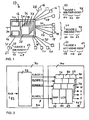
- FIG. 1 schematically shows a communication system 10 according to the invention with a central communication system 12, which is connected via a line 14 to a public network.
- the terminals 16, 18, 20, 21, represent, via lines 28, 29, 30, 31 connected.
- the terminals 16, 18, 20, 21 are any in a telecommunication network operable terminals such as analog telephone, ISDN telephone, system telephone, IP telephone, fax machine, answering machine.
- the communication system 12 has a device 32 for providing a customer-specific freely definable numbering plan. This device for providing the numbering plan 32 is based on a private telephone system and is set up for the separation of data areas allocated to different customers. Due to the separation of the various data areas, the means for providing the numbering plan 32 acts as one virtual private telephone system 34, 36, 38, 39 for each of the customers 22, 24, 26, 27.
- the terminal devices 16, 18, 20, 21 or subscribers of different customers 22, 24, 26, 27 each form a group of subscribers of the respective customer, the customers or their groups using the communication system 10 independently of one another with a customer-specific freely configurable by the customer settable customer numbering plan.
- the central communication system 12 furthermore has a device 40 for setting up a customer-specific access call number according to E.164 with respect to the public network, under which the customer can be dialed via the public network.
- the choice is the transmission of the unique E.164 telephone number.
- a globally unique telephone number 48, 50, 52, 53 consists of an access number of a customer with regard to the public network and optionally an internal subscriber number 60, 62, 64.
- the attribute "internal" means that this part of a E.164 phone number within a telecommunications system for switching control tasks is sufficient.
- the public network access access number consists of the customer's telephone number 42, 44, 46, 47 in the respective local area network and optionally additional telephone numbers 54, 56, 58, 59 for the local area network and, if applicable, the country of the customer, within the public network To achieve unambiguousness.
- the customer 4 has the peculiarity that this customer 4 operates only one terminal 21, and therefore the telephone number 53 of the customer 4 is identical to the access number with respect to the public network 59 + 47. In this case, no distinction is required from participants of the customer. For customers with multiple subscribers such as 22, 24, 26, the subscribers are identified by subscriber numbers 60, 62, 64.
- each terminal is managed under the call number assigned to it in the call number plan E.164.
- a hardware configuration means the hardware assignment of a subscriber or terminal to its access number.
- Each customer of a telecommunications system is assigned an integer value in the configuration of the telecommunications system, which is known as the customer identification number KID.
- the device 40 enables each customer 22, 24, 26, 27 to have their own telephone number 42, 44, 46, 47, which is completely independent of the other, with respect to the public Net has.
- This telephone number relative to the public network is independent of the number and type of lines 14 with which the communication system 10 is connected to the public network.
- the numbers within the customer's number plan are assigned individually, with identical or partially identical number blocks, possibly different length, ie number of digits, within the same physical communication system 12 are vergebbar.
- the customer 24 has a telephone number plan with 3-digit telephone numbers 62.
- the customers 22 and 26 have largely identical telephone number plans with 4-digit telephone numbers 60 and 64.
- a customer identification number KID On the basis of this customer identification number, the customers are distinguished, so that with the addition of the customer identification number as an identifier partially identical customer number plans again become clear.
- the communication system 12 also has a device 66 for analyzing and assigning telephone numbers.
- This device 66 serves to determine the customer identification number from a call number of an incoming call. This number is unique worldwide and is transmitted in an incoming call from the public network as the destination number.
- the device 66 furthermore acts as a device for determining a hardware address of the destination terminal from the globally unique telephone number by means of the customer identification number when calling from an external source. After the device 66 has analyzed the phone number and has determined the customer identification number, it can access via the means for providing the number plan 32 on the customer identification number belonging phone number plan and using the subscriber number 60, 62, 64 find out the hardware address of the desired subscriber line and Communication system 12 can convey the incoming call to the desired subscriber.
- the means for analysis and allocation 66 acts as a means for determining a customer identification number from the hardware address of the calling subscriber. If the customer identification number of the calling party, and thus the customer to which the subscriber belongs, is known, the dialed number can be analyzed according to the rules established by that customer and the call can be brokered internally or externally.
- FIG. 2 shows schematically the interaction of a switching software (Call Control) and the data management in a communication system according to the invention.
- the part of the switching software described here relates to the analysis and assignment of telephone numbers and the numbering plan and thus the devices 66 and 32 FIG. 1 ,
- a dispatcher software 72 accesses a database 74.
- the dispatcher software 72 serves for the assignment of telephone number or telephone number segments to AID and KID and vice versa.
- the database 74 the data associated with the customers are stored separately and identifiable by the customer identification number, respectively in areas 75, 76, 77, 78.
- Each of the customer areas 75, 76, 77, 78 contains the corresponding directory 79 with a reference to the hardware address (s) of the subscriber lines, a customer-specific Least Cost Routing (LCR) 80 and other customer-specific data 82.
- LCR Least Cost Routing
- the incoming destination telephone number 83 is analyzed by the dispatcher 72 and the customer identification number is determined. Based on this customer identification number 84, the database 74 is now accessed, and only on the corresponding one of the areas 75, 76, 77, 78. In this access is from the subscriber section of the incoming telephone number 83, in FIG. 1 designated 60, 62, 64, and the customer identification number 84 from the numbering plan 79 determines the corresponding subscriber and the associated address of the subscriber line determined and output as the hardware address 86. In the case of the customer 4 in FIG. 1 with only one terminal 21, the single subscriber is already clearly identified and it is only the associated address of the subscriber line determined in 80 and output as the hardware address 86. Thus, another part of the switching software 70 can connect the incoming call to the desired subscriber and this connection continues until one of the call participants terminates the call.
- the dispatcher 72 uses the database to determine the customer identification number and thus the customer from the line address of the calling subscriber and then analyzes the dialed telephone number and determines whether it is an internal or external call. From data management and switching technology all calls to other customers and to outside apply as external calls. Another part of the switching software 70 can now establish the connection with the analyzed telephone number data either externally or to another subscriber of the same customer.
- FIG. 1 and FIG. 2 has a database system and a dispatcher, by means of which a customer identification number can be determined from a telephone number or the hardware address of the connection line of a terminal.
- a customer identification number can be determined from a telephone number or the hardware address of the connection line of a terminal.
- protocols that are used in the formation of a telecommunications system network, are numbers for the routing (in QSIG and TNET: Called-Party-Number) and phone numbers for identification (in QSIG and TNET: Calling Party Number, Connected Number ) known.
- the database system and dispatcher for network tasks in such a way that customer and system identification numbers are determined from evaluation-relevant parts of an E.164 telephone number or the hardware address of the connection line of a terminal.
- call numbers of subscribers who are connected to other systems than the dispatcher's system are included.
- the telephone number information that is exchanged on the interconnected lines in a preferred embodiment, basically E.164 format.
- the dispatcher preferably uses identification phone numbers to determine the customer. If identification numbers are missing in the signaling, the dispatcher uses routing numbers to determine the customer.
- the dispatcher is realized by a dispatcher software for identifying a customer in a network of telecommunication systems on the basis of a customer identification number KID assigned to the customer, whereby the identification of the customer takes place with the aid of dispatcher numbers stored in a system.
- These dispatcher numbers contain those parts of E.164 numbers of subscribers connected to another system that are required to determine AID and KID. The determination of the AID and the KID takes place in each case on the basis of a telephone number transmitted with the call.
- the AID and the KID already result from the local area code and the access number of a customer to this local network at a specific location of this customer. For example, the AID is unique because all the subscribers of this customer are connected to a single system at the only location in this local area network. For example, then the KID is unique because other customers have different area network access numbers in this area network.
- an extension of the telecommunications systems of the network to a customer-to-customer routing table in a matrix structure is also proposed, which specifies whether connections between the terminals of two different customers are handled within the network or via the public network.
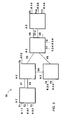
- the figure exemplifies several different configurations with their components.
- the telecommunications systems A2, A3 and A4 are each connected to each other with exactly one interconnector, namely with the interconnector V3 between A4 and A2; V4 between A2 and A3; V5 between A3 and A4.
- the telecommunications systems A1 and A2 and A4 and A5 are each connected to each other with several interconnections, namely with the interconnections V1, V2 between A1 and A2; and the interconnections V6, V7, V8 between A4 and A5).
- the telecommunications systems A2, A3, A4 form a composite as a ring structure.
- a customer namely K4, has the property that its terminals are connected only in a telecommunication system, namely A1, wherein in A1 terminals of other customers, namely K1, K5, whose terminals are distributed in the network are connected, in this example for K1 in A1, A2 and A5 or for K5 in A1 and A4.
- K1, K2, K3, K5 Some customers, namely K1, K2, K3, K5, have the property that their terminals are connected to several telecommunications systems of the network.
- V1, V2, V3, V4, V5, V6, V8, for sharing by multiple customers.
- V7-2 for exclusive use by a customer, namely K2.
- Transit nodes for connections of terminals K1-5 and K1-2 of the customers, in which no terminals of this customer K1 are connected.
- Transit node e.g. A4, for connections between K2-5 and K2-3, where A4 terminals are also connected to customer K2.
- trunks that can be connected to one or more systems of the network has been dispensed with.
- the multi-tenant telecommunications system 90 comprises a system of multi-tenant telecommunications equipment, interconnections between these telecommunications equipment, trunks on one or more of these telecommunications equipment, and terminals connected to the telecommunications equipment.
- the telecommunication systems A1, A2, A3, A4, A5 have dispatchers for determining the plant affiliation, namely the AID, of terminals in each telecommunication system capable of multi-tenant in the network.
- the telecommunication systems A1, A2, A3, A4, A5 furthermore each have a database system for filing data that is required for system determination.
- the database system provides the dispatcher with data for determining the AID characterizing the equipment in which called and calling terminals are connected, when switching a connection.
- the telecommunications systems A1, A2, A3, A4, A5 also each have a customer to customer routing table for controlling the cross-customer traffic on.
- System interconnections are commonly shared by customers, but may also be set up to be used exclusively by a customer, such as providing a specific capacity guarantee service to that customer.
- the customer-specific configuration is carried out with the customer identification number KID and with the filing of the data necessary for the dispatcher to determine the KID in each telecommunication system.
- the KID must be unique at least in the respective telecommunications system.
- network-wide uniqueness of the KID is not absolutely necessary, but is advantageous for administrative purposes.
- An extension of the signaling protocols by one KID is therefore not necessary since the KID can be determined from the E.164 telephone number.
- telecommunications systems that do not support the process can be integrated into the network without interference, the functionalities described here are provided only in the telecommunications equipment according to the invention.
- systems that do not support the process, and have only connected terminals of a single customer can be integrated into the network with full functionality of the network.
- FIG. 4 - 7 follows a description of the method steps according to the invention in the processing of connections in the multi-corporate network.
- FIG. 4 shows a flow diagram of a method for configuring a network of private branch exchanges, which are interconnected by connecting lines according to the invention, wherein a plurality of customers, each with a plurality of terminals used the network independently.
- a composite according to the invention at least one telephone system in which the method according to the invention can take place is present.
- the composite according to the invention has further systems in which the process according to the invention can likewise take place, but does not have to be able to proceed.
- a system identification number AID for identification in the network is assigned in process step 91 of each plant in the network.
- a customer identification number KID is assigned to each customer in method step 92.
- a customer-specific numbering plan is set up for each customer who has connected terminals in this telecommunication system.
- the evaluation-relevant parts of E.164 telephone numbers for forming AID and KID of subscribers connected to a further system are stored as dispatcher numbers. But there are also facilities possible, to which no terminals are connected, which only connect other systems together. A telephone system according to the invention can also be used only for connecting other systems, but this is an exceptional case.
- method step 94 an assignment of the system identification numbers AID of all telecommunications systems of the network and of the customer identification numbers KID of all customers of the network to the respective dispatcher numbers is made in the same system.
- the process steps 91 - 94 prepare the plant for the crosslinking in the composite.
- all connected terminals are detected.
- the term composite in the context of the invention includes all systems whose AID can be determined in the course of the method according to the invention in a particular system of the network. It is also possible for several systems to form a sub-network which is connected to the network via a connection system, wherein the connection system in the network represents the entire sub-network. This means that all devices of the sub-network are assigned to the connection system within the network. The entire communication between the network and the sub-network then runs via the connection system, which handles the network tasks for the sub-network.
- the AID and the KID can be assigned specifically in each interconnected system. However, it is advantageous for the federation administration to have a uniform assignment of both the AID and the KID throughout the entire association.
- a customer to customer routing table is created in step 95, which for each customer identification number KID has those customer identification numbers KID, in which an intra-network traffic is allowed. This is advantageously carried out in each system of the composite. Thus, every system can communicate customer-spanning traffic according to regulations.
- the customer identification number KID is uniform in the network.
- step 96 in each system of the network an assignment of those systems of the network on the system identification number AID to a connection line, which can be reached via this connection line.
- FIG. 5 - 7 the method steps in the telecommunication systems are shown separately for the telecommunication system with the origin of the connection and the telecommunication system with the destination of the connection.
- the origin and destination of a connection can be directly connected to the telecommunications systems of the network connected terminals or trunks.
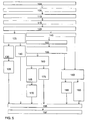
- FIG. 5 Fig. 3 shows a flowchart of a method for operating a private branch network in accordance with the invention when receiving a call from an internal source.
- step 100 a call is received from an internal source.
- step 105 the KID is determined from the configuration data of the terminal connection.
- the AID of the own system is the same for all connected devices and is stored once in the central data structures of the system. This is usually done via the hardware address of the terminal connection as the starting date.
- the KID can alternatively be determined via the dispatcher number of the terminal.
- step 110 the call is assigned to the KID determined in step 105.
- step 115 the analysis of the destination number with the dispatcher numbers. If the destination is within the group, ie part of the destination number matches a dispatcher number, the target's KID and AID can be determined from stored data because they are assigned to the dispatcher number.
- step 120 a query is made as to whether there is a customer-internal connection, that is, whether the caller's KID is identical to the target's KID. If so, then a branch is made to step 125, where it is checked whether the telecommunication system of the caller and the destination are identical, so whether calling and called terminal are connected to the same system. If so, then branching takes place in step 130 by loading the call number plan for this customer. From the numbering plan, the hardware address of the destination device is determined in step 135. The hardware address is established in step 195. The connection is terminated in step 197.
- step 125 the process branches from step 125 to step 140 where the interconnection to the first facility on the way to the destination is determined. Subsequently, the connection is made with this interconnection line in step 195 and in turn terminated in step 197.
- step 120 branches in step 145, in which it is checked whether the destination is with another customer of the group, that is, if the target's KID in the composite is known. If so, the process branches to step 150 and loads the customer to customer routing table.
- the customer-to-customer routing table is used in step 155 to check whether intra-corporate traffic is permitted between the terminals of these customers. If yes, the method branches in step 160, in which it is checked whether the terminal of the target customer is connected to this system. If this is the case, a branch is made in step 165 and the telephone number plan of the destination customer is loaded.
- step 170 the Hardware address of the destination terminal in step 170. Thereafter, the connection is made again in step 195 and terminated in step 197. If the terminal of the target customer is not connected to the same telecommunication system, the process branches from step 160 to step 175, in which the interconnection to the target installation is determined. Subsequently, the connection is again established and terminated in steps 195 and 197.
- step 155 branches in step 180, in which it is checked whether there is a trunk in the own telecommunications system. If so, the trunk is determined at step 185 and again the connection established and terminated at steps 195 and 197.
- step 180 If there is no outside line in the own telecommunications system, the process branches from step 180 to step 190, and the interconnection to the telecommunications system with trunks is determined. This then in turn establishes the connection and terminates in steps 195 and 197.
- step 145 the process branches directly from step 145 to step 180, in which, as described above, the procedure continues.
- FIG. 5 Thus shows the processes in the telecommunication system of the terminal, which initiates a connection setup, when calls between terminals of the same customers within the network and connections that leave the virtual telecommunications system of the customer, configuration dependent means of customer to customer routing table over the public network, method steps 145, 150 , 155, 180, or interconnected internally, process steps 145, 150, 155, 160, 165, 170, 175.
- process steps 180, 185 and 190 it is taken into account in process steps 180, 185 and 190 that not all telecommunications systems are equipped with office access points in the telecommunication system network according to the invention.
- under 190 occupied a composite line that leads directly or via other telecommunications equipment of the network to a telecommunications system with office access.
- process steps 140, 175, 190, interconnections are preferably allocated for exclusive use by that customer. If a compound line is not available for exclusive use, a shared line is searched for.
- FIG. 6 shows a flowchart of a method for operating a private branch exchange network according to the invention when receiving a call from an external source.
- step 200 a call is received from an external source.
- step 205 the analysis of the destination number.
- the stored dispatcher numbers can be used to determine the KID and AID of the destination. If a part of the destination number matches a dispatcher number, the target's KID and AID can be retrieved from stored data because they are associated with the dispatcher number.
- step 210 a query is made as to whether the KID and the AID are known to the called terminal in the network. If so, then a branch is made to step 212 where the call is assigned to the KID of the destination.
- step 215 it is checked in step 215 whether the terminal of the target customer is connected to this system. If this is the case, a branch is made in step 220 and the telephone number plan of the destination customer is loaded. Subsequently, the hardware address of the destination terminal is determined in step 225. Thereafter, in step 235, the connection is made and terminated in step 240. If the terminal of the target customer is not connected to the same telecommunication system, the process branches from step 215 to step 230, in which the interconnection to the target installation is determined. Subsequently, the connection is again established and terminated in steps 235 and 240.
- step 210 If in step 210 the KID and AID to the called terminal are not known in the network, a branch is made to step 240 where the call is terminated.
- FIG. 6 Thus shows the processes in the telecommunication system that trunk over which a connection with external source enters the network.
- it is taken into account in method steps 215 and 230 that not all telecommunications systems are equipped with office access points in the telecommunication system network according to the invention.
- a compound line occupied which leads directly or via other telecommunications equipment of the network to that telecommunications system with the destination terminal.
- interconnections are preferably allocated for exclusive use by the identified customer. If a compound line is not available for exclusive use, a shared line is searched for.
- FIG. 7 Fig. 3 shows a flow chart of a method for operating a private branch exchange in accordance with the invention upon receiving a call from an incoming busy line.
- step 300 a call is received on an incoming busy trunk.
- step 305 it is checked whether the call number of the connection origin in the signaling is included. If so, then in step 310, the call originating call number is analyzed and the call originator's KID is determined via the dispatcher numbers; if the connection origin is in the composite. Now, in step 315, the analysis of the destination number via the dispatcher numbers. If the destination is within the group, ie part of the destination number matches a dispatcher number, the target's KID and AID can be determined from stored data because they are assigned to the dispatcher number.
- step 305 If in step 305 the call originating call number is not included in the signaling, a branch is made directly in step 315 to analyze the destination call number.
- step 320 it is queried whether the origin of the connection is known to the plant network. If so, then a branch is made to step 325 in which the call is assigned to the KID of the connection origin. Then it continues in step 340.
- step 320 If in step 320 the origin of the connection is not known to the plant network, then a branch is made to step 330 in which it is now checked whether the destination of the connection is known to the plant network. If so, then a branch is made to step 335 where the call is assigned to the KID of the connection destination. Then it continues in step 340, in which it is queried whether a call to a terminal in the network is present, so KID of the destination and AID of the destination are known. If yes, the system branches in step 345, in which it is checked whether the terminal of the target customer is connected to this system. If this is the case, a branch is made in step 350 and the telephone number plan of the destination customer is loaded. Subsequently, the hardware address of the destination terminal is determined in step 355. Thereafter, the connection is made again in step 380 and terminated in step 385.
- step 345 the process branches from step 345 to step 360, in which the interconnection to the target installation is determined. Thereafter, the connection is again established and terminated in steps 380 and 385.
- step 340 branches in step 365, in which it is checked whether there is a trunk in the own telecommunications system. If so, then the trunk is determined at step 370 and again the connection established and terminated at steps 380 and 385.
- step 365 If there is no trunk in the own telecommunications system at step 365, branch from step 365 in step 375 and the trunk to Telecommunication system with trunks is determined. This then in turn establishes the connection and terminates in steps 380 and 385.
- step 330 If the destination is not known in the network, then from step 330, a direct branch is made to step 385 where the connection is terminated.
- a connection from the incoming busy line is preferably assigned the KID of the connection origin, steps 305, 310, 315, 320, 325, and the like. in terms of tariffing. If this is not possible, the connection is assigned to the KID of the connection destination, steps 320, 330, 335. Connections that can not be assigned to a KID are triggered, steps 330, 385.
- the method for operating a telecommunications system uses a dispatcher software.
- the dispatcher software according to the invention for a telecommunications system is used to identify a customer and a system in a network of telecommunications systems based on a dem_Kunden associated customer identification number KID and one of the system associated AID.
- the identification of customer and system by means of stored in a system dispatcher numbers, namely those parts of E.164 numbers from to subscribers connected to a further system, which are required for the determination of AID and KID, on the basis of telephone numbers transmitted with the call.
Landscapes
- Engineering & Computer Science (AREA)
- Signal Processing (AREA)
- Computer Networks & Wireless Communication (AREA)
- Telephonic Communication Services (AREA)
- Sub-Exchange Stations And Push- Button Telephones (AREA)
- Exchange Systems With Centralized Control (AREA)
Claims (19)
- Système de commutation de télécommunication privé (10, A1, A2, A3, A4, A5) dans un système composé avec au moins un système de commutation de télécommunication privé additionnel, caractérisé par une mémoire pour mémoriser des données d'abonnés connectés au, au moins un, système de commutation de télécommunication additionnel du système composé, de clients utilisant le système composé en commun et indépendamment l'un de l'autre, à savoir un numéro d'identification de système AID du système de commutation additionnel auquel l'abonné respectif avec le numéro d'appel respectif est connecté, et un numéro d'identification de client KID identifiant le client de l'abonné respectif, ainsi que les parties de numéros d'appel d'abonnés connectés à chaque système de commutation additionnel, qui sont nécessaires à déterminer l'AID et le KID, et un dispatcher pour déterminer un KID et/ou un AID à partir des parties de numéros d'appel.
- Système composé (90) se composant d'au moins deux systèmes de commutation de télécommunication privés (A1, A2, A3, A4, A5), comprenant au moins un système de commutation de télécommunication privé d'après la revendication 1 ou 2.
- Système composé se composant de systèmes de commutation de télécommunication privés d'après la revendication 2, dans lequel au moins un système de commutation de télécommunication privé du système composé comprend un tableau routing client-à-client montrant pour chaque numéro d'identification de client KID les numéros d'identification de client KID pour les abonnés des clients affectés desquels un trafic interne au système composé entre les abonnés des clients est permis.
- Procédé pour configurer un système composé (90) se composant de systèmes de commutation de télécommunication privés (A1, A2, A3, A4, A5), dans lequel plusieurs clients, chacun avec une pluralité de terminaux, utilisent le système composé indépendamment l'un de l'autre, avec les pas de procédé suivants dans au moins un système de commutation du système composé:- affectation (91) d'un numéro d'identification de système AID à chaque système de commutation dans le système composé;- affectation (92) d'un numéro d'identification de client KID à chaque client dans le système composé;- mémorisation (93) des parties des numéros d'appel E.164 d'abonnés connectés à leur propre système de commutation et à des systèmes de commutation additionnels, qui sont nécessaires à déterminer l'AID et le KID, comme des numéros de dispatcher;- affectation (93) de l'AID et du KID aux numéros de dispatcher.
- Procédé d'après la revendication 4, avec le pas de procédé additionnel:- création (95) d'un tableau routing client-à-client comprenant pour chaque numéro d'identification de client KID les numéros d'identification de client KID pour lesquels un trafic interne au système composé entre les abonnés des clients est permis.
- Procédé d'après l'une quelconque des revendications 4 et 5, avec le pas de procédé additionnel, dans chaque système de commutation du système composé:- affectation (96) des systèmes de commutation du système composé, au moyen du numéro d'identification de système AID, à une ligne de jonction, qui peuvent être atteints à l'aide de cette ligne de jonction.
- Procédé d'après l'une quelconque des revendications 4 à 6, dans lequel une capacité de transmission est réservée pour un client, au moyen du KID de celui-ci, sur une ligne de jonction à un autre système de commutation du système composé.
- Procédé d'après l'une quelconque des revendications 4 à 7, dans lequel le système composé est configuré de façon que dans le cas d'un trafic pluri-client non interne au système composé, tous les systèmes de commutation du système composé sont capable de déterminer et le KID et l'AID de l'appelant et de l'appelé.
- Procédé d'après l'une quelconque des revendications 4 à 7, dans lequel au moins un des systèmes de commutation additionnels est une installation téléphonique privée conventionnelle avec des abonnés d'un seul client.
- Procédé pour exploiter un système composé (90) se composant de systèmes de commutation de télécommunication privés (A1, A2, A3, A4, A5), connectés l'un avec l'autre par des lignes de jonction, dans lequel plusieurs clients avec des numéros d'identification de client KID affectés, chacun avec une pluralité de terminaux, utilisent le système composé indépendamment l'un de l'autre, avec les pas de procédés suivants:- réception (100, 200, 300) d'un appel;- détermination (105, 205, 310, 315) d'un numéro d'identification de client KID à partir d'un numéro d'appel transmis avec l'appel;- affectation (110, 212, 325, 335) de l'appel au numéro d'identification de client KID déterminé;- détermination (115, 205, 315) d'un numéro d'identification de système AID identifiant le système de commutation de télécommunication de l'abonné de destination dans le système composé, à partir du numéro d'appel de destination de l'appel.
- Procédé d'après la revendication 10, avec le pas de procédé additionnel:- détermination (120) si le terminal appelant et le terminal appelé appartiennent au même client.
- Procédé d'après la revendication 10 ou 11, avec le pas de procédé additionnel:- détermination (155) si une commutation entre le terminal appelant et le terminal appelé est permise internement au système composé.
- Procédé d'après l'une quelconque des revendications 10 à 12, avec le pas de procédé additionnel:- dérivation (105, 205, 310, 315) du KID de l'expéditeur à partir du numéro d'appel E.164 (ou à partir de parties de celui-ci relevantes pour l'évaluation) de l'expéditeur et à partir du KID de destination à partir du numéro d'appel E.164 (ou à partir de parties de celui-ci relevantes pour l'évaluation) du terminal de destination.
- Procédé d'après l'une quelconque des revendications 10 à 13, avec le pas de procédé additionnel:- détermination (115, 205, 315) d'un numéro d'identification de système AID identifiant le système de commutation de télécommunication de l'abonné de destination dans le système composé, à partir du numéro d'appel de destination de l'appel.
- Procédé d'après la revendication 14, avec le pas de procédé additionnel:- examen (125, 215, 345) si l'AID de l'abonné de destination est identique à l'AID du système de commutation de télécommunication examinant.
- Procédé d'après l'une quelconque des revendications 14 à 15, dans lequel le KID est déterminé à l'aide de numéros de dispatcher mémorisés dans un système de commutation de télécommunication, à savoir les parties de numéro d'appel E.164 d'abonnés connectés à des systèmes de commutation de télécommunication du système composé qui sont nécessaires à déterminer l'AID et le KID, au moyen de parties d'un numéro d'appel transmis avec l'appel.
- Procédé d'après l'une quelconque des revendications 14 à 16, dans lequel le trafic pluri-client interne au système composé est tarifé individuellement pour chaque client.
- Procédé d'après l'une quelconque des revendications 14 à 16, dans lequel le trafic internal au client et interne au système composé est tarifé individuellement pour chaque client.
- Logiciel qui, quand il tourne sur un ordinateur dans un système de commutation de télécommunication privé, identifie un client et un système de commutation de télécommunication dans un système composé de systèmes de commutation de télécommunication au moyen d'un numéro d'identification de client KID affecté au client et d'un numéro d'identification de système AID affecté au système de commutation de télécommunication, l'identification du client et du système de commutation de télécommunication étant effectuée à l'aide de numéros de dispatcher mémorisés dans un système de commutation de télécommunication, à savoir les parties de numéros d'appel E.164 d'abonnés connectés à un système de commutation de télécommunication du système composé, qui sont nécessaires à déterminer le numéro d'identification de système AID identifiant le système de commutation de télécommunication des numéros d'appel E.164 respectifs dans le système composé et à déterminer le KID dans le système composé, au moyen d'un numéro d'appel transmis avec l'appel.
Applications Claiming Priority (2)
| Application Number | Priority Date | Filing Date | Title |
|---|---|---|---|
| DE102004013330A DE102004013330A1 (de) | 2004-03-17 | 2004-03-17 | Telekommunikationsanlage, Verbund aus Telekommunikationsanlagen, Verfahren zur Konfiguration und zum Betrieb eines solchen Verbundes sowie Software zur Indentifizierung eines Kunden und einer Anlage darin |
| DE102004013330 | 2004-03-17 |
Publications (3)
| Publication Number | Publication Date |
|---|---|
| EP1587331A2 EP1587331A2 (fr) | 2005-10-19 |
| EP1587331A3 EP1587331A3 (fr) | 2008-12-03 |
| EP1587331B1 true EP1587331B1 (fr) | 2011-07-06 |
Family
ID=34933998
Family Applications (1)
| Application Number | Title | Priority Date | Filing Date |
|---|---|---|---|
| EP05004407A Expired - Lifetime EP1587331B1 (fr) | 2004-03-17 | 2005-03-01 | Central de télécommunication, combinaison de centraux de télécommunication, procédé de configuration et procédé d'exploitation d'une telle combinaison, ainsi que du logiciel d'identification d'un client et d'un central dans celle-ci |
Country Status (3)
| Country | Link |
|---|---|
| US (1) | US20050243992A1 (fr) |
| EP (1) | EP1587331B1 (fr) |
| DE (1) | DE102004013330A1 (fr) |
Families Citing this family (1)
| Publication number | Priority date | Publication date | Assignee | Title |
|---|---|---|---|---|
| JP4445559B2 (ja) * | 2008-05-30 | 2010-04-07 | 株式会社東芝 | プレゼンスサービス提供システムとそのサーバユニット |
Family Cites Families (23)
| Publication number | Priority date | Publication date | Assignee | Title |
|---|---|---|---|---|
| JPH03117060A (ja) * | 1989-09-28 | 1991-05-17 | Canon Inc | 電話交換装置 |
| JP2817105B2 (ja) * | 1990-11-15 | 1998-10-27 | キヤノン株式会社 | 構内交換機 |
| FI97191C (fi) * | 1994-10-05 | 1996-10-25 | Nokia Telecommunications Oy | Alueellinen Centrex |
| US5673310A (en) * | 1995-11-16 | 1997-09-30 | Lucent Technologies Inc. | Hierarchical switch support of services for subscribers of separate centrex exchanges |
| US5539817A (en) * | 1995-12-11 | 1996-07-23 | Stentor Resource Centre, Inc. | Wide area centrex toll service with novel translation |
| DE19621718A1 (de) * | 1996-05-30 | 1997-12-04 | Sel Alcatel Ag | Verfahren zum Aufbau einer Verbindung sowie Vermittlungsstelle, Dienstrechner und Kommunikationsnetz |
| US6628774B2 (en) * | 1998-11-20 | 2003-09-30 | Ameritech Corporation | Method of routing interlata network traffic |
| US5995613A (en) * | 1997-10-02 | 1999-11-30 | At&T Corp | Method for establishing virtual private line for long distance carrier |
| US6990185B1 (en) * | 1999-11-19 | 2006-01-24 | At&T Corp | Routing extensions for telecommunication network system and method |
| CA2328458C (fr) * | 1998-04-14 | 2006-06-13 | Enron Warpspeed Services, Inc. | Procede et appareil permettant d'assurer une qualite de service dans un reseau local ou elargi |
| US7006620B1 (en) * | 1998-06-12 | 2006-02-28 | Sbc Properties, L.P. | System and method for routing both toll-free and caller-paid telephone calls to call service centers |
| JP2000184410A (ja) * | 1998-12-16 | 2000-06-30 | Fujitsu Ltd | ネットワーク呼制御方式 |
| DE10025437A1 (de) * | 1999-11-19 | 2001-05-31 | Siemens Ag | Verfahren und Kommunikationsanordnung zur Realisierung von Funktionen und Leistungsmerkmalen eines Anrufverteilsystems |
| DE10025438A1 (de) * | 1999-11-19 | 2001-06-07 | Siemens Ag | Verfahren und Kommunikationsanordnung zur Realisierung von zusätzlichen Funktionen für jeweils konfigurierte Teilnehmerleistungsmerkmale aufweisende Teilnehmeranschlüsse |
| EP1128680A1 (fr) * | 2000-02-25 | 2001-08-29 | Telefonaktiebolaget L M Ericsson (Publ) | Procédé pour changer des services Centrex |
| DE10011163A1 (de) * | 2000-02-28 | 2001-09-13 | Ew Handels & Consulting Gmbh | Verfahren zur Diagnose und/oder Überwachung physiologischer oder pathologischer Veränderungen im menschlichen oder tierischen Körper und ESR-Spektrometer zur Durchführung des Verfahrens |
| US6778643B1 (en) * | 2000-03-21 | 2004-08-17 | Sbc Technology Resources, Inc. | Interface and method of designing an interface |
| US6778656B1 (en) * | 2000-09-01 | 2004-08-17 | Alcatel | Telecommunications system, service control point and method for establishing at least one new dialing plan utilizing the traditional international dialing plan |
| DE10058614B4 (de) * | 2000-11-25 | 2015-07-23 | Deutsche Telekom Ag | Kommunikarionssystem mit Centrex-Funktionalität |
| US6731739B2 (en) * | 2000-12-11 | 2004-05-04 | Telefonaktiebolaget Lm Ericsson (Publ) | Balancing loads on telecommunications links |
| DE10206401A1 (de) * | 2002-02-15 | 2003-08-28 | Siemens Ag | Verfahren zur Identifizierung zumindest eines einer Centrex-Gruppe zugeordneten Anschlusses in einem Telekommunikationssystem |
| EP1427141A1 (fr) * | 2002-12-04 | 2004-06-09 | Deutsche Thomson-Brandt Gmbh | Procédé pour créer un réseau peer-to-peer utilisant des étiquettes communes |
| US6882722B2 (en) * | 2003-03-10 | 2005-04-19 | Siemens Communications, Inc. | Virtual private communications network |
-
2004
- 2004-03-17 DE DE102004013330A patent/DE102004013330A1/de not_active Withdrawn
-
2005
- 2005-03-01 EP EP05004407A patent/EP1587331B1/fr not_active Expired - Lifetime
- 2005-03-17 US US11/084,850 patent/US20050243992A1/en not_active Abandoned
Also Published As
| Publication number | Publication date |
|---|---|
| EP1587331A2 (fr) | 2005-10-19 |
| US20050243992A1 (en) | 2005-11-03 |
| DE102004013330A1 (de) | 2005-10-27 |
| EP1587331A3 (fr) | 2008-12-03 |
Similar Documents
| Publication | Publication Date | Title |
|---|---|---|
| DE69530932T2 (de) | Regionaler centrex | |
| DE69612961T2 (de) | Telekommunikationssystem | |
| EP0720395B1 (fr) | Procédé pour réaliser des connexions téléphoniques | |
| EP0805606B1 (fr) | Procédé pour faire fonctionner un réseau de communication et dispositif d'adaptation de réseau | |
| EP0862341A2 (fr) | Système de télécommunications avec tables de commutation sans boucle | |
| EP0796021A2 (fr) | Procédé et dispositifs pour incorporer des systèmes de communication extérieurs dans un réseau privé | |
| DE69626358T2 (de) | Dienstunterstützung für Teilnehmer mittels hierarchischer Vermittlung basiert auf organisatorischer Mitgliedschaft | |
| EP1587331A2 (fr) | Central de télécommunication, combinaison de centraux de télécommunication, procédé de configuration et procédé d'exploitation d'une telle combinaison, ainsi que du logiciel d'identification d'un client et d'un central dans celle-ci | |
| EP1511283B1 (fr) | Système de communications partagé avec administration des plans de numérotages individuelle aux locataire | |
| DE19621717A1 (de) | Verbindungsaufbauverfahren sowie Vermittlungsstellen und Dienststeuereinheit | |
| EP1578096B1 (fr) | Procédé pour l'opération et la configuration d'un système de télécommunications avec logiciel de répartition pour l'identification de clients, et système de télécommunications | |
| EP1123614B1 (fr) | Architecture de reseau pour reseaux de communication ou de donnees | |
| EP0775429B1 (fr) | Procede et circuit permettant d'etablir des liaisons de telecommunication | |
| EP0967776A2 (fr) | Methode d'etablissement d'une connection, unite de commande de service et reseau de communication | |
| DE602004002153T2 (de) | Anordnung und zugehöriges Verfahren für Telephonischanrufverbindung mit einer virtuelleresidenten Fernsprechstation | |
| DE19854831A1 (de) | Verfahren zum Bereitstellen von Diensten, Infrastrukturverwalter und Dienststeuerplattform | |
| DE102004046694B4 (de) | Aufbau einer Kommunikationsverbindung zwischen mehreren Endgeräten in einem Nebenstellenanlagenverbund | |
| DE19949316A1 (de) | Verfahren zur Übermittlung von Dienst-Signalisierungsnachrichten, Vermittlungsstelle, Konvertierungsknoten und Dienststeuerungsknoten | |
| DE10010495C2 (de) | Verfahren zum Übermitteln von Informationen zwischen einer Vermittlungsstelle und zumindest einem daran angeschlossenen Kommunikationsendgerät, Verwendung des Verfahrens und Telekommunikationsnetz | |
| WO2013045389A2 (fr) | Procédé d'établissement d'une liaison de télécommunication (liaison tc) par l'intermédiaire d'un réseau de radiocommunication mobile ainsi que dispositif de télécommunication et système de gestion pour exécuter le procédé | |
| EP1091554A2 (fr) | Procédé pour supporter l'établissement d'appels téléphoniques utilisant voix-sur-IP | |
| EP0817510A1 (fr) | Procédé pour la construction d'une connexion et unité de communication, avec calculateur et réseau de communication | |
| EP1345457A1 (fr) | Mise en résau d'autocommutateur (PBX) | |
| WO2001003465A2 (fr) | Procede de transmission | |
| EP1033889A2 (fr) | Transmission du numéro d'appelant pour appels issus d'un réseau de télécommunication privé vers un réseau public |
Legal Events
| Date | Code | Title | Description |
|---|---|---|---|
| PUAI | Public reference made under article 153(3) epc to a published international application that has entered the european phase |
Free format text: ORIGINAL CODE: 0009012 |
|
| AK | Designated contracting states |
Kind code of ref document: A2 Designated state(s): AT BE BG CH CY CZ DE DK EE ES FI FR GB GR HU IE IS IT LI LT LU MC NL PL PT RO SE SI SK TR |
|
| AX | Request for extension of the european patent |
Extension state: AL BA HR LV MK YU |
|
| PUAL | Search report despatched |
Free format text: ORIGINAL CODE: 0009013 |
|
| AK | Designated contracting states |
Kind code of ref document: A3 Designated state(s): AT BE BG CH CY CZ DE DK EE ES FI FR GB GR HU IE IS IT LI LT LU MC NL PL PT RO SE SI SK TR |
|
| AX | Request for extension of the european patent |
Extension state: AL BA HR LV MK YU |
|
| 17P | Request for examination filed |
Effective date: 20090602 |
|
| AKX | Designation fees paid |
Designated state(s): DE GB |
|
| 17Q | First examination report despatched |
Effective date: 20090805 |
|
| GRAP | Despatch of communication of intention to grant a patent |
Free format text: ORIGINAL CODE: EPIDOSNIGR1 |
|
| GRAS | Grant fee paid |
Free format text: ORIGINAL CODE: EPIDOSNIGR3 |
|
| GRAA | (expected) grant |
Free format text: ORIGINAL CODE: 0009210 |
|
| AK | Designated contracting states |
Kind code of ref document: B1 Designated state(s): DE GB |
|
| REG | Reference to a national code |
Ref country code: GB Ref legal event code: FG4D Free format text: NOT ENGLISH |
|
| REG | Reference to a national code |
Ref country code: DE Ref legal event code: R096 Ref document number: 502005011570 Country of ref document: DE Effective date: 20110901 |
|
| PLBE | No opposition filed within time limit |
Free format text: ORIGINAL CODE: 0009261 |
|
| STAA | Information on the status of an ep patent application or granted ep patent |
Free format text: STATUS: NO OPPOSITION FILED WITHIN TIME LIMIT |
|
| 26N | No opposition filed |
Effective date: 20120411 |
|
| REG | Reference to a national code |
Ref country code: DE Ref legal event code: R097 Ref document number: 502005011570 Country of ref document: DE Effective date: 20120411 |
|
| PGFP | Annual fee paid to national office [announced via postgrant information from national office to epo] |
Ref country code: DE Payment date: 20130322 Year of fee payment: 9 Ref country code: GB Payment date: 20130318 Year of fee payment: 9 |
|
| REG | Reference to a national code |
Ref country code: DE Ref legal event code: R119 Ref document number: 502005011570 Country of ref document: DE |
|
| GBPC | Gb: european patent ceased through non-payment of renewal fee |
Effective date: 20140301 |
|
| REG | Reference to a national code |
Ref country code: DE Ref legal event code: R119 Ref document number: 502005011570 Country of ref document: DE Effective date: 20141001 |
|
| PG25 | Lapsed in a contracting state [announced via postgrant information from national office to epo] |
Ref country code: DE Free format text: LAPSE BECAUSE OF NON-PAYMENT OF DUE FEES Effective date: 20141001 Ref country code: GB Free format text: LAPSE BECAUSE OF NON-PAYMENT OF DUE FEES Effective date: 20140301 |