EP1579719B1 - Verfahren und vorrichtung zur funkressourcenzuweisung in drahtlosen multistandard-kommunikationsystemen - Google Patents
Verfahren und vorrichtung zur funkressourcenzuweisung in drahtlosen multistandard-kommunikationsystemen Download PDFInfo
- Publication number
- EP1579719B1 EP1579719B1 EP20030780458 EP03780458A EP1579719B1 EP 1579719 B1 EP1579719 B1 EP 1579719B1 EP 20030780458 EP20030780458 EP 20030780458 EP 03780458 A EP03780458 A EP 03780458A EP 1579719 B1 EP1579719 B1 EP 1579719B1
- Authority
- EP
- European Patent Office
- Prior art keywords
- requests
- wireless communication
- resources
- communication schemes
- different wireless
- Prior art date
- Legal status (The legal status is an assumption and is not a legal conclusion. Google has not performed a legal analysis and makes no representation as to the accuracy of the status listed.)
- Expired - Lifetime
Links
- 238000004891 communication Methods 0.000 title claims description 182
- 238000000034 method Methods 0.000 title claims description 54
- 238000013468 resource allocation Methods 0.000 title description 3
- 239000000969 carrier Substances 0.000 claims description 40
- 238000010295 mobile communication Methods 0.000 description 3
- 230000010267 cellular communication Effects 0.000 description 2
- 238000001228 spectrum Methods 0.000 description 2
- 230000009286 beneficial effect Effects 0.000 description 1
- 238000010586 diagram Methods 0.000 description 1
- 238000005516 engineering process Methods 0.000 description 1
- 230000007774 longterm Effects 0.000 description 1
- 230000001360 synchronised effect Effects 0.000 description 1
Images


Classifications
-
- H—ELECTRICITY
- H04—ELECTRIC COMMUNICATION TECHNIQUE
- H04W—WIRELESS COMMUNICATION NETWORKS
- H04W16/00—Network planning, e.g. coverage or traffic planning tools; Network deployment, e.g. resource partitioning or cells structures
- H04W16/14—Spectrum sharing arrangements between different networks
-
- H—ELECTRICITY
- H04—ELECTRIC COMMUNICATION TECHNIQUE
- H04W—WIRELESS COMMUNICATION NETWORKS
- H04W72/00—Local resource management
- H04W72/12—Wireless traffic scheduling
- H04W72/1215—Wireless traffic scheduling for collaboration of different radio technologies
-
- H—ELECTRICITY
- H04—ELECTRIC COMMUNICATION TECHNIQUE
- H04W—WIRELESS COMMUNICATION NETWORKS
- H04W24/00—Supervisory, monitoring or testing arrangements
-
- H—ELECTRICITY
- H04—ELECTRIC COMMUNICATION TECHNIQUE
- H04W—WIRELESS COMMUNICATION NETWORKS
- H04W88/00—Devices specially adapted for wireless communication networks, e.g. terminals, base stations or access point devices
- H04W88/08—Access point devices
- H04W88/10—Access point devices adapted for operation in multiple networks, e.g. multi-mode access points
Definitions
- the present invention relates to multi-standards wireless communication systems; and, more particularly, to method and apparatus for allocating RF resources in multi-standard communication systems.
- GSM Global System for Mobile communications
- CDMA Code Division Multiple Access
- GPRS global positioning reference
- TSM Time Division Multiple Access
- TD-SCDMA Time Division Multiple Access
- W-CDMA Wireless Fidelity
- cdma2000 Fifth Generation
- WLAN Wireless Local Area Network
- TSM communication scheme proposed by CWTS (China Wireless Communication Standard group) shares the same frequency band with TD-SCDMA communication scheme.
- TD-SCDMA is a TDD-mode communication scheme to transmit data with SCDMA (synchronous code division multiple access) technology
- TSM is designed as an evolving communication scheme from existing communication system with GSM communication scheme to the communication system with TD-SCDMA communication scheme.
- TSM communication scheme shares the same frequency band with TD-SCDMA communication scheme to transmit data.
- TSM subscribers and TD-SCDMA subscribers experience constant changes, i.e., in the prologue of the evolution, TSM subscribers account for the majority, with the evolution going along TSM subscribers decrease and TD-SCDMA subscribers increase gradually, and TSM subscribers only account for a minority while TD-SCDMA subscribers constitute the majority in the epilogue of the evolution. Distinct changes in the structure of TSM subscribers and TD-SCDMA subscribers require different frequency resources, therefore the limited frequency resources need to be allocated dynamically among co-existing wireless communication schemes, so as to achieve rational allocation and reuse of RFresources.
- Document US 5732076A discloses an integrated communication system supporting multiple TDMA or TDD communication protocols, whereby both protocols are supported within the same geographical region. A dynamic allocation of time slots to users using the multiple communication protocols is described.
- an object of the present invention to provide a method and an apparatus for allocating RF resources in multi-standard wireless communication systems, which capable of dynamically allocating limited RF resources to co-existing wireless communication schemes according to the requirements.
- Another object of the invention is to provide a method and an apparatus for allocating RF resources in multi-standard wireless communication systems, which capable of statistically configuring the RF resources shared by co-existing wireless communication schemes to improve the utilization of spectrum, in the long evolving process.
- Another object of the invention is to provide a method and an apparatus for allocating RF resources among multi-standard wireless communication systems, which capable of making expected configurations to the RF resources shared by co-existing wireless communication schemes to improve the utilization of spectrum, in the prologue and the epilogue of the evolution.
- This invention provides a method and an apparatus for dynamically allocating RF resources to co-existing wireless communication schemes in a base station, according to different requirements of the co-existing wireless communication schemes.
- the method and apparatus have different characteristics when applied in said co-existing wireless communication schemes during different evolving phases.
- A, B, C, D, E and Z represent 6 cells, which constitute a mobile communication system where cell Z is the center cell and cell A-E are adjacent cells of cell Z.
- every cell in Fig. 1 contains a base station 10 (namely Node B), and one or many mobile terminals 20.
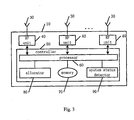
- Fig. 3 demonstrates the structure of the base station 10 of a cell in Fig.2 .
- the base station 10 includes N antennas 30 for receiving and transmitting RF signals, N RF units 40 and a controller 50, wherein:
- Every RF unit 40 is composed of a transceiver, a modulator and a demodulator.
- An input/output of the transceiver is coupled to the corresponding antenna 30 to receive RF signals from antenna 30 or transmit RF signals via antenna 30, an output of the transceiver is coupled to an input of said demodulator to demodulate the received RF signals, and an input of the transceiver is coupled to the output of said modulator to send the modulated signals to antenna 30 for transmitting.
- Every RF unit 40 has its own RF carriers to transmit data.
- Said controller 50 comprises a processor 60, an allocator 80, a memory 70 and a system status detector 90, wherein said processor 60 is coupled to another input/output of the transceiver in each said RF units 40, to receive signals from each RF units 40, at the same time said processor 60 communicates with allocator 80, memory 70 and system status detector 90, more particularly, status detector 90 detects the types of the wireless communication schemes which are requested to access, according to the signals from processor 60; when used to store information on RF resources allocation in multi-standard wireless communication systems, memory 70 is also used to record the number of the requests for accessing each of the wireless communication schemes detected by status detector 90 in a certain period, if the base station chooses the method of statistical configuration of RF resources; resource allocator 80 dynamically allocates RF resources shared by said TSM and TD-SCDMA wireless communication schemes, according to the number of the requests for accessing each of the different wireless communication schemes recorded by the memory in statistical configuration method, or according to the types of the wireless communication schemes detected by status
- Resource allocator 80 reallocates RF carriers in each cell according to the number of the requests for accessing each of TSM wireless communication scheme and the number for TD-SCDMA wireless communication scheme recorded by memory 70 within an interval, wherein the number recorded by memory 70 is the total traffic load number of each of the two wireless communication schemes within the whole interval. Before the next interval starts, memory 70 will be cleared to record the number of the requests for accessing each of TSM and TD-SCDMA wireless communication schemes detected by status detector 90 in the next interval.
- Allocator 80 allocates several sets of N1 and N2 (N1 and N2 should be kept no less than 1 so as to guarantee the two wireless communication schemes accessible), and acquires the value of N1/N2 of every set of N1 and N2, and then according to the calculated ratio R, allocator 80 picks the value of N1/N2 which is closest to R, and allocates the N RF carriers to the two TSM and TD-SCDMA wireless communication schemes.
- allocator 80 uses the number of the requests for accessing each of TSM and TD-SCDMA wireless communication schemes within the whole interval to calculate the traffic ratio R.
- the most important data is the data from rush hour of the interval which is most related to the block rate, so in embodiment 2 a slight revision can be taken to embodiment 1, i.e. instead of the number of the requests within the whole interval, only the number of the requests from rush hour of the interval is used to calculate the ratio R, and others are the same as embodiment 1.
- TD-SCDMA subscribers will be much fewer than TSM subscribers. In this case, it will be very inefficient if RF carriers for TD-SCDMA wireless communication scheme are still reserved in each cell.
- Embodiment 1 of the expected configuration method in this invention is introduced to solve this problem.
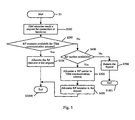
- all RF carriers in a cell will be allocated to TSM wireless communication scheme, a RF carrier will be allocated to TD-SCDMA wireless communication scheme only in the following cases:
- a TD-SCDMA subscriber in the cell when there is no connection from any TD-SCDMA subscriber, all RF carriers are allocated to TSM wireless communication scheme (S1).
- the base station in the cell will first judge whether there are RF resources available for TD-SCDMA wireless communication scheme (S20), the RF resources will be allocated to said request if there are RF resources available for TD-SCDMA wireless communication scheme (S30), if there are no RF resources available for TD-SCDMA wireless communication scheme, it will judge whether there are RF carriers available (S40), if there are RF carriers available , a RF carrier will be allocated to TD-SCDMA wireless communication scheme(S50) and then the RF resources corresponding to the RF carrier will be allocated to said request (S60), if there are no RF carriers available, the request will be rejected (S70) and the request will be terminated (
- Embodiment 2 of the expected configuration method of this invention is introduced to solve this problem.
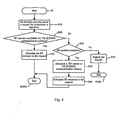
- all RF carriers in a cell will be allocated to TD-SCDMA wireless communication scheme except for the following cases where one RF carrier will be allocated to TSM wireless communication scheme:
- a TSM subscriber in the cell when there is no connection from TSM subscribers, all RF carriers are allocated to TD-SCDMA wireless communication scheme (S1).
- S200 When a TSM subscriber in the cell sends a request for connection or handover (S100), the base station in the cell will first judge whether there are RF resources available for TSM wireless communication scheme (S200), if there are RF resources available for TSM wireless communication scheme, the RF resources will be allocated to said request (S300), if there are no RF resources available for TSM wireless communication scheme, it will judge whether there are RF carriers available (S400), if there are RF carriers available, a RF carrier will be allocated to TSM wireless communication scheme(S500) and then the RF resources corresponding to the RF carrier will be allocated to said request (S600), if there are no RF carriers available, the request will be rejected (S700) and the request will be terminated (S1001).
- TSM wireless communication scheme Once all communications of TSM wireless communication scheme end (S1000), i.e. once there is no connection of TSM wireless communication scheme in the cell, the RF carriers occupied by TSM wireless communication scheme will be reallocated to TD-SCDMA wireless communication scheme.
- the method and apparatus can dynamically allocate limited RF resources to co-existing wireless communication schemes.
- the method and apparatus can employ statistical configuration method, expected configuration method, or their combination, according to different evolving phases of the communication system and different ratio of traffic requirements, accordingly, the method and apparatus can realize rational configuration of RF resources shared by co-existing wireless communication schemes, thus to increase the utilization of limited RF resources.
- the RF resource allocation method for multi-standard wireless communication systems may not be limited to the communication system with TSM or TD-SCDMA communication scheme, but also applicable to the communication systems with other wireless communication schemes.
Landscapes
- Engineering & Computer Science (AREA)
- Computer Networks & Wireless Communication (AREA)
- Signal Processing (AREA)
- Mobile Radio Communication Systems (AREA)
Claims (36)
- Verfahren zur Funkressourcenzuordnung in drahtlosen Multistandard-Kommunikationssystemen, wobei dieses Verfahren die nachfolgenden Verfahrensschritte umfasst:a) das Detektieren einer Anzahl empfangener Signale aus einer Aufwärtsstrecke, wobei die genannten Signale Information über die Typen der verschiedenen drahtlosen Kommunikationsschemen enthalten, auf die beantragt wird, zuzugreifen; undb) das Zuordnen der Funkressourcen, die von den verschiedenen Kommunikationsschemen entsprechend der genannten detektierten Information gemeinsam benutzt werden, wobei der Schritt b) weiterhin Folgendes umfasst:wobei die genannte Information über die Anträge zum Zugreifen auf jedes der genannten verschiedenen drahtlosen Kommunikationsschemen die Anzahl Anträge zum Zugreifen auf jedes der genannten verschiedenen drahtlosen Kommunikationsschemen zur Berechnung eines Verkehrsanteils umfasst.b1) das Durchführen einer Statistik der Information über die Anträge zum Zugreifen auf jedes der genannten verschiedenen drahtlosen Kommunikationsschemen in einem festgelegten Intervall; undb2) das Zuordnen der genannten Funkressourcen, die von den genannten verschiedenen drahtlosen Kommunikationsschemen entsprechend der genannten Statistik des festgelegten Intervalls gemeinsam benutzt werden, und
- Verfahren nach Anspruch 1, wobei in dem Verfahrensschritt b2) der Verkehrsanteil durch Berechnung des Anteils der Anzahl Anträge zum Zugreifen auf jedes der genannten verschiedenen drahtlosen Kommunikationsschemen verwirklicht wird.
- Verfahren nach Anspruch 1 oder 2, wobei in dem Schritt b1) die genannte Statistik durch Durchführung einer Statistik der genannten Information über die Anträge zum Zugreifen auf jedes der genannten verschiedenen drahtlosen Kommunikationsschemen innerhalb des festgelegten ganzen Intervalls erreicht wird.
- Verfahren nach Anspruch 1 oder 2, wobei in dem Verfahrensschritt b1) die genannte Statistik durch Durchführung einer Statistik der genannten Information über die Anträge zum Zugreifen auf jedes der genannten verschiedenen drahtlosen Kommunikationsschemen in Hauptverkehrszeiten des festgelegten Intervalls erreicht wird.
- Verfahren nach einem der Ansprüche 1-4, wobei der Verfahrensschritt b) weiterhin Folgendes umfasst:b2) das Beurteilen, ob für die Anträge zum Zugreifen auf die genannten verschiedenen drahtlosen Kommunikationsschemen Funkressourcen verfügbar sind; undb3) das Zuordnen der genannten verfügbaren Funkressourcen zu den genannten Anträgen, falls für die genannten Anträge Funkressourcen verfügbar sind.
- Verfahren nach einem der Ansprüche 1-4, wobei der Verfahrensschritt b) weiterhin Folgendes umfasst:b1) das Vorzuordnen der genannten Funkressourcen zu einem bestimmten Kommunikationsschema;b2) das Beurteilen, ob für die Anträge zum Zugreifen auf die genannten verschiedenen drahtlosen Kommunikationsschemen Funkressourcen verfügbar sind, falls die verschiedenen drahtlosen Kommunikationsschemen nicht das bestimmte Kommunikationsschema sind; undb3) das Zuordnen der genannten verfügbaren Funkressourcen zu den genannten Anträgen, falls für die genannten Anträge Funkressourcen verfügbar sind.
- Verfahren nach Anspruch 5 oder 6, wobei der Verfahrensschritt b2) und b3) unter den nachfolgenden Bedingungen durchgeführt werden:Abonnenten senden Verbindungsanträge zum Zugreifen auf die genannten verschiedenen drahtlosen Kommunikationsschemen.
- Verfahren nach Anspruch 5 oder 6, wobei der Verfahrensschritt b2) und b3) unter den nachfolgenden Bedingungen durchgeführt werden:Abonnenten, die Zellenübergabe durchführen, senden Übergabeanträge zum Zugreifen auf die genannten verschiedenen drahtlosen Kommunikationsschemen.
- Verfahren nach einem der Ansprüche 5-8, wobei der Verfahrensschritt b3) weiterhin Folgendes umfasst:i) das Beurteilen, ob für die genannten Anträge Funkträger verfügbar sind, wenn für die genannten Anträge zum Zugreifen auf die genannten drahtlosen Kommunikationsschemen keine Funkressourcen verfügbar sind; undii) das Zuordnen des genannten verfügbaren Funkträgers zu den genannten drahtlosen Kommunikationsschemen, wenn für die genannten Anträge Funkträger verfügbar sind, und das Zuordnen der entsprechenden Funkressourcen zu den genannten Anträgen.
- Verfahren nach Anspruch 9, wobei der Verfahrensschritt ii) weiterhin Folgendes umfasst:wenn die Kommunikation, welche die genannten drahtlosen Kommunikationsschemen benutzt endet, werden die genannten den genannten Anträgen zugeordneten Funkträger freigegeben.
- Verfahren nach Anspruch 9 oder 10, wobei der Verfahrensschritt ii) weiterhin Folgendes umfasst:falls für die genannten Anträge keine Funkträger verfügbar sind, werden die genannten Anträge zurückgewiesen.
- Verfahren nach einem der Ansprüche 1-11, wobei die genannten drahtlosen Kommunikationsschemen wenigstens zwei Stück der nachfolgenden Elemente enthalten: IS-95, CDMA, GSM, TSM, GPRS, TD-SCDMA, W-CDMA, cdma 2000 und WLAN.
- Anordnung zur Funkressourcenzuordnung in drahtlosen Multistandard-Kommunikationssystemen, wobei diese Anordnung Folgendes umfasst:einen Zustandsdetektor (90), vorgesehen zum Detektieren einer Anzahl empfangener Signale von einer Aufwärtsstrecke, wobei die genannten Signale Information über die Typen der verschiedenen drahtlosen Kommunikationsschemen enthalten, auf die beantragt wird, zuzugreifen; undeinen Ressourcenzuteiler (80), vorgesehen zum Zuordnen der Funkressourcen, die von den verschiedenen Kommunikationsschemen entsprechend der genannten detektierten Information gemeinsam benutzt werden, wobei der genannte Ressourcenzuteiler (80) dazu vorgesehen ist, die genannten Funkressourcen entsprechend einer Statistik der Information über die Anträge zum Zugreifen auf jedes der genannten verschiedenen drahtlosen Kommunikationsschemen in einem festgelegten Intervall zuzuordnen, undwobei die genannte Information über die Anträge zum Zugreifen auf jedes der genannten verschiedenen Kommunikationsschemen die Anzahl Anträge zum Zugreifen auf jedes der genannten verschiedenen Kommunikationsschemen zum Berechnen eines Verkehrsanteils umfasst.
- Anordnung nach Anspruch 13, wobei der genannte Ressourcenzuteiler (80) dazu vorgesehen ist, den Verkehrsanteil durch Berechnung des Anteils der Anzahl Anträge zum Zugreifen auf jedes der genannten verschiedenen drahtlosen Kommunikationsschemen zu verwirklichen.
- Anordnung nach Anspruch 13 oder 14, wobei die genannte Statistik durch Durchführung einer Statistik der genannten Information über die Anträge zum Zugreifen auf jedes der genannten verschiedenen drahtlosen Kommunikationsschemen innerhalb des festgelegten ganzen Intervalls erreicht wird.
- Anordnung nach Anspruch 13 oder 14, wobei die genannte Statistik durch Durchführung einer Statistik der genannten Information über Anträge zum Zugreifen auf jedes der genannten verschiedenen drahtlosen Kommunikationsschemen in Hauptverkehrszeiten des festgelegten Intervalls erreicht wird.
- Anordnung nach einem der Ansprüche 13-16, wobei die genannte durch den genannten Ressourcenzuteiler (80) durchgeführte Funkressourcenzuordnung Folgendes umfasst:b) das Beurteilen, ob für die Anträge zum Zugreifen auf die genannten verschiedenen drahtlosen Kommunikationsschemen Funkressourcen verfügbar sind; undc) das Zuordnen der genannten verfügbaren Funkressourcen zu den genannten Anträgen, falls für die genannten Anträge Funkressourcen verfügbar sind.
- Anordnung nach einem der Ansprüche 13-16, wobei die genannte durch den genannten Ressourcenzuteiler (80) durchgeführte Funkressourcenzuordnung Folgendes umfasst:a) Vorzuordnung der genannten Funkressourcen zu einem bestimmten Kommunikationsschema;b) Beurteilung, ob für die Anträge zum Zugreifen auf die verschiedenen drahtlosen Kommunikationsschemen Funkressourcen verfügbar sind, falls die verschiedenen drahtlosen Kommunikationsschemen nicht das bestimmte Kommunikationsschema sind; undc) Zuordnung der genannten verfügbaren Funkressourcen zu den genannten Anträgen, falls für die genannten Anträge Funkressourcen verfügbar sind.
- Anordnung nach Anspruch 17 oder 18, wobei der Verfahrensschritt b) und c) unter der nachfolgenden Bedingung durchgeführt werden:Abonnenten senden Verbindungsanträge zum Zugreifen auf die verschiedenen drahtlosen Kommunikationsschemen.
- Anordnung nach Anspruch 17 oder 18, wobei der Verfahrensschritt b) und c) unter der nachfolgenden Bedingung durchgeführt werden:Abonnenten, die Zellenübergabe durchführen, senden Übergabeanträge zum Zugreifen auf die genannten verschiedenen drahtlosen Kommunikationsschemen.
- Anordnung nach einem der Ansprüche 17-20, wobei die durch den genannten Ressourcenzuteiler (80) durchgeführte genannte Funkressourcenzuordnung Folgendes umfasst:Beurteilung, ob für die genannten Anträge zum Zugreifen auf die genannten verschiedenen drahtlosen Kommunikationsschemen Funkträger verfügbar sind; undZuordnung der genannten verfügbaren Funkressourcen zu den genannten Anträgen, falls für die genannten Anträge Funkträger verfügbar sind.
- Anordnung nach Anspruch 21, wobei die genannte durch den genannten Ressourcenzuteiler (80) durchgeführte Funkressourcenzuordnung Folgendes umfasst:wenn die Kommunikationen, welche die genannten verschiedenen drahtlosen Kommunikationsschemen benutzen, enden, werden die genannten den gennannten Anträgen zugeordneten Funkträger freigegeben.
- Anordnung nach Anspruch 21 oder 22, wobei die genannte durch den genannten Ressourcenzuteiler (80) durchgeführte Funkressourcenzuordnung Folgendes umfasst:falls für die genannten Anträge keine Funkträger verfügbar sind, werden die genannten Anträge zurückgewiesen.
- Anordnung nach einem der Ansprüche 13-23, wobei die genannten verschiedenen drahtlosen Kommunikationsschemen wenigstens zwei Stück der nachfolgenden Elemente enthalten: IS-95, CDMA, GSM, TSM, GPRS, TD-SCDMA, W-CDMA, cdma 2000 und WLAN.
- Drahtloses Kommunikationssystem, das Folgendes umfasst:eine Anzahl Transceiver (30), vorgesehen zum Empfangen und Übertragen von Funksignalen;eine Anzahl Funkverarbeitungseinheiten (40), vorgesehen zum Verarbeiten der genannten empfangenen Signale oder zum verarbeiten von den genannten Transceivem zu übertragenden Signale;einen Zustandsdetektor (90), vorgesehen zum Detektieren der Information in den empfangenen Signalen von einer Aufwärtsstrecke über die Typen der verschiedenen drahtlosen Kommunikationsschemen, worauf zuzugreifen beantragt wird, und einen Funkressourcenzuteiler (80), vorgesehen zum Zuordnen von Funkressourcen, die entsprechend der genannten detektierten Information gemeinsam benutzt werden, wobei der genannte Ressourcenzuteiler (80) dazu vorgesehen ist, die genannten Funkressourcen entsprechend einer Statistik der Information über die Anträge zum Zugreifen auf jedes der genannten verschiedenen drahtlosen Kommunikationsschemen in einem festgelegten Intervall zuzuordnen; und wobei die genannte Information über die Anträge zum Zugreifen auf jedes der genannten verschiedenen Kommunikationsschemen die Anzahl Anträge zum Zugreifen auf jedes der genannten verschiedenen Kommunikationsschemen zum Berechnen eines Verkehrsanteils umfasst.
- System nach Anspruch 25, wobei der genannte Funkressourcenzuteiler (80) dazu vorgesehen ist, den Verkehrsanteil durch Berechnung des Anteils der Anzahl Anträge zum Zugreifen auf jedes der genannten verschiedenen drahtlosen Kommunikationsschemen zu verwirklichen.
- System nach Anspruch 25 oder 26, wobei die genannte Statistik durch Durchführung einer Statistik der genannten Information über die Anträge zum Zugreifen auf jedes der genannten verschiedenen drahtlosen Kommunikationsschemen innerhalb des festgelegten ganzen Intervalls erreicht wird.
- System nach Anspruch 25 oder 26, wobei die genannte Statistik durch Durchführung einer Statistik der genannten Information über Anträge zum Zugreifen auf jedes der genannten verschiedenen drahtlosen Kommunikationsschemen in Hauptverkehrszeiten des festgelegten Intervalls erreicht wird.
- System nach einem der Ansprüche 25-28, wobei die genannte durch den genannten Funkressourcenzuteiler (80) durchgeführte Funkressourcenzuteilung Folgendes umfasst:b) Beurteilung, ob für die Anträge zum Zugreifen auf die genannten verschiedenen drahtlosen Kommunikationsschemen Funkressourcen verfügbar sind; undc) Zuordnung der genannten verfügbaren Funkressourcen zu den genannten Anträgen, falls für die genannten Anträge Funkressourcen verfügbar sind.
- System nach einem der Ansprüche 25-28, wobei die genannte durch den genannten Ressourcenzuteiler (80) durchgeführte Funkressourcenzuordnung Folgendes umfasst:a) Vorzuordnung der genannten Funkressourcen zu einem bestimmten Kommunikationsschema;b) Beurteilung, ob für die Anträge zum Zugreifen auf die verschiedenen drahtlosen Kommunikationsschemen Funkressourcen verfügbar sind, falls die verschiedenen drahtlosen Kommunikationsschemen nicht das bestimmte Kommunikationsschema sind; undc) Zuordnung der genannten verfügbaren Funkressourcen zu den genannten Anträgen, falls für die genannten Anträge Funkressourcen verfügbar sind.
- System nach Anspruch 29 oder 30, wobei der Verfahrensschritt b) und c) unter der nachfolgenden Bedingung durchgeführt werden:Abonnenten senden Verbindungsanträge zum Zugreifen auf die verschiedenen drahtlosen Kommunikationsschemen.
- System nach Anspruch 29 oder 30, wobei der Verfahrensschritt b) und c) unter der nachfolgenden Bedingung durchgeführt werden:Abonnenten, die Zellenübergabe durchführen, senden Übergabeanträge zum Zugreifen auf die genannten verschiedenen drahtlosen Kommunikationsschemen.
- System nach einem der Ansprüche 29-32, wobei die durch den genannten Ressourcenzuteiler (80) durchgeführte genannte Funkressourcenzuordnung Folgendes umfasst:Beurteilung, ob für die genannten Anträge zum Zugreifen auf die genannten verschiedenen drahtlosen Kommunikationsschemen Funkträger verfügbar sind, falls für die genannten Anträge keine Funkressourcen verfügbar sind; undZuordnung der genannten verfügbaren Funkträger zu den verschiedenen drahtlosen Kommunikationsschemen, falls für die genannten Anträge Funkträger verfügbar sind, und Zuordnung der entsprechenden Funkressourcen zu den genannten Anträgen.
- System nach Anspruch 33, wobei die genannte durch den genannten Funkressourcenzuteiler (80) durchgeführte Funkressourcenzuordnung Folgendes umfasst:wenn die Kommunikationen, welche die genannten verschiedenen drahtlosen Kommunikationsschemen benutzen, enden, werden die genannten den gennannten Anträgen zugeordneten Funkträger freigegeben.
- System nach Anspruch 33 oder 34, wobei die genannte durch den genannten Ressourcenzuteiler (80) durchgeführte Funkressourcenzuordnung Folgendes umfasst:falls für die genannten Anträge keine Funkträger verfügbar sind, werden die genannten Anträge zurückgewiesen.
- System nach einem der Ansprüche 25-35, wobei die genannten verschiedenen drahtlosen Kommunikationsschemen wenigstens zwei Stück der nachfolgenden Elemente enthalten: IS-95, CDMA, GSM, TSM, GPRS, TD-SCDMA, W-CDMA, cdma 2000 und WLAN.
Applications Claiming Priority (3)
| Application Number | Priority Date | Filing Date | Title |
|---|---|---|---|
| CN02160404 | 2002-12-27 | ||
| CN02160404A CN1512793B (zh) | 2002-12-27 | 2002-12-27 | 多标准无线通信系统中射频资源分配的方法和装置 |
| PCT/IB2003/006128 WO2004060002A1 (en) | 2002-12-27 | 2003-12-18 | Method and device for radio resource allocation in multi-standard wireless communication systems |
Publications (2)
| Publication Number | Publication Date |
|---|---|
| EP1579719A1 EP1579719A1 (de) | 2005-09-28 |
| EP1579719B1 true EP1579719B1 (de) | 2012-09-26 |
Family
ID=32661111
Family Applications (1)
| Application Number | Title | Priority Date | Filing Date |
|---|---|---|---|
| EP20030780458 Expired - Lifetime EP1579719B1 (de) | 2002-12-27 | 2003-12-18 | Verfahren und vorrichtung zur funkressourcenzuweisung in drahtlosen multistandard-kommunikationsystemen |
Country Status (7)
| Country | Link |
|---|---|
| US (1) | US20060229079A1 (de) |
| EP (1) | EP1579719B1 (de) |
| JP (1) | JP4485957B2 (de) |
| KR (1) | KR101101373B1 (de) |
| CN (1) | CN1512793B (de) |
| AU (1) | AU2003288616A1 (de) |
| WO (1) | WO2004060002A1 (de) |
Families Citing this family (25)
| Publication number | Priority date | Publication date | Assignee | Title |
|---|---|---|---|---|
| US7992208B2 (en) * | 2005-09-19 | 2011-08-02 | University Of Maryland | Detection of nonconforming network traffic flow aggregates for mitigating distributed denial of service attacks |
| FI119346B (fi) * | 2006-09-28 | 2008-10-15 | Teliasonera Ab | Resurssien allokointi langattomassa viestintäjärjestelmässä |
| CN101193351B (zh) * | 2006-11-20 | 2011-02-16 | 华为技术有限公司 | 多制式基站及其信息处理方法和无线通信系统 |
| CN101193402B (zh) | 2006-11-20 | 2010-04-14 | 华为技术有限公司 | 多制式基站的配置方法及其系统 |
| US20080146269A1 (en) * | 2006-12-14 | 2008-06-19 | Pirzada Fahd B | System and method for antenna resource management in non-harmonized RF spectrum |
| CN101202974B (zh) * | 2006-12-15 | 2011-09-28 | 华为技术有限公司 | 一种多制式基站互通的系统、基站及方法 |
| CN101212761A (zh) * | 2006-12-30 | 2008-07-02 | 华为技术有限公司 | 多制式通信网络中实现无线资源管理的系统、装置及方法 |
| US7773991B2 (en) * | 2007-04-02 | 2010-08-10 | Telefonaktiebolaget Lm Ericsson (Publ) | Reducing access latency while protecting against control signaling data processing overload |
| US8280433B2 (en) * | 2007-05-29 | 2012-10-02 | Dell Products L.P. | Database for antenna system matching for wireless communications in portable information handling systems |
| US7826815B2 (en) * | 2007-07-13 | 2010-11-02 | Fairchild Semiconductor Corporation | Dynamic selection of oscillation signal frequency for power converter |
| CN101217786B (zh) * | 2008-01-02 | 2012-04-25 | 华为技术有限公司 | 一种基带资源共享方法、通信系统及设备 |
| US7974257B2 (en) * | 2008-03-12 | 2011-07-05 | Harris Corporation | Communications system using frame structure for different wireless communications protocols and related methods |
| CN102037777B (zh) * | 2008-05-20 | 2013-08-07 | 艾利森电话股份有限公司 | 对电信系统中混合时隙的有效资源利用 |
| TWI364940B (en) * | 2008-10-31 | 2012-05-21 | Acer Inc | Wireless transmission system and a method thereof |
| CN101754386B (zh) * | 2010-01-20 | 2012-04-04 | 华为技术有限公司 | 多模基站系统的业务处理资源的调整方法及装置 |
| WO2012053952A1 (en) * | 2010-10-21 | 2012-04-26 | Telefonaktiebolaget Lm Eriksson (Publ) | Spectrum sharing in multi-rat radio base stations |
| CN102843697B (zh) * | 2011-06-22 | 2015-09-30 | 电信科学技术研究院 | 异系统间频谱共享情况下的干扰抑制方法和设备 |
| JP5702247B2 (ja) * | 2011-07-27 | 2015-04-15 | 京セラ株式会社 | 無線通信装置及び無線通信システム |
| CN103166659B (zh) * | 2011-12-13 | 2015-07-08 | 国民技术股份有限公司 | 一种射频移动通信卡及通信方法 |
| JP5995270B2 (ja) * | 2012-06-06 | 2016-09-21 | 日本電気通信システム株式会社 | 無線通信システム、無線通信方法、無線リソース制御装置、無線リソース制御方法、及び、無線リソース制御プログラム |
| CN104202749B (zh) * | 2014-01-23 | 2019-09-24 | 中兴通讯股份有限公司 | 无线资源确定、获取方法及装置 |
| US9832002B2 (en) * | 2014-07-17 | 2017-11-28 | Huawei Technologies Co., Ltd. | Phalanx radio system architecture for high capacity wireless communication |
| JP6491999B2 (ja) * | 2015-12-10 | 2019-03-27 | 日本電信電話株式会社 | デバイスデータ送受信システム、デバイスデータ送受信方法及びその駆動用プログラム |
| WO2018086080A1 (zh) | 2016-11-11 | 2018-05-17 | 华为技术有限公司 | 完全频谱共享的频谱资源分配方法及装置 |
| EP3864932A1 (de) * | 2018-10-08 | 2021-08-18 | British Telecommunications public limited company | Zellulares telekommunikationsnetzwerk |
Family Cites Families (12)
| Publication number | Priority date | Publication date | Assignee | Title |
|---|---|---|---|---|
| ZA95797B (en) * | 1994-02-14 | 1996-06-20 | Qualcomm Inc | Dynamic sectorization in a spread spectrum communication system |
| US5732076A (en) * | 1995-10-26 | 1998-03-24 | Omnipoint Corporation | Coexisting communication systems |
| CN1205816A (zh) * | 1995-10-26 | 1999-01-20 | 全点有限公司 | 共存式通信系统 |
| US5958014A (en) * | 1996-09-24 | 1999-09-28 | Intervoice Limited Partnership | System and method for establishing a real-time agent pool between computer systems |
| US6611506B1 (en) * | 1999-01-21 | 2003-08-26 | Lucent Technologies Inc. | Enhanced channel allocation among multiple carriers in a spread spectrum communications system |
| US6986156B1 (en) * | 1999-06-11 | 2006-01-10 | Scientific Atlanta, Inc | Systems and methods for adaptive scheduling and dynamic bandwidth resource allocation management in a digital broadband delivery system |
| EP1321007A1 (de) * | 2000-09-26 | 2003-06-25 | Siemens Aktiengesellschaft | Vorrichtung und verfahren zur realisierung einer ko-existenz von kommunikationssystemen |
| US20030050070A1 (en) * | 2001-03-14 | 2003-03-13 | Alex Mashinsky | Method and system for dynamic spectrum allocation and management |
| WO2002073366A2 (en) * | 2001-03-14 | 2002-09-19 | Mashinsky | A method and system for dynamic spectrum allocation and management |
| US7844697B1 (en) * | 2002-01-25 | 2010-11-30 | Juniper Networks, Inc. | Measuring network traffic based on predicted amount of padding |
| US20040204105A1 (en) * | 2002-05-24 | 2004-10-14 | Ying-Chang Liang | Method and apparatus for a base station with multiple distributed antennas to communicate with mobile stations |
| US7116243B2 (en) * | 2003-09-05 | 2006-10-03 | Itron, Inc. | System and method for automatic meter reading with mobile configuration |
-
2002
- 2002-12-27 CN CN02160404A patent/CN1512793B/zh not_active Expired - Fee Related
-
2003
- 2003-12-18 US US10/540,690 patent/US20060229079A1/en not_active Abandoned
- 2003-12-18 EP EP20030780458 patent/EP1579719B1/de not_active Expired - Lifetime
- 2003-12-18 WO PCT/IB2003/006128 patent/WO2004060002A1/en not_active Ceased
- 2003-12-18 KR KR20057011934A patent/KR101101373B1/ko not_active Expired - Fee Related
- 2003-12-18 JP JP2004563477A patent/JP4485957B2/ja not_active Expired - Fee Related
- 2003-12-18 AU AU2003288616A patent/AU2003288616A1/en not_active Abandoned
Also Published As
| Publication number | Publication date |
|---|---|
| JP4485957B2 (ja) | 2010-06-23 |
| KR20050091021A (ko) | 2005-09-14 |
| CN1512793A (zh) | 2004-07-14 |
| WO2004060002A1 (en) | 2004-07-15 |
| KR101101373B1 (ko) | 2012-01-02 |
| US20060229079A1 (en) | 2006-10-12 |
| EP1579719A1 (de) | 2005-09-28 |
| JP2006512824A (ja) | 2006-04-13 |
| CN1512793B (zh) | 2010-05-26 |
| AU2003288616A1 (en) | 2004-07-22 |
Similar Documents
| Publication | Publication Date | Title |
|---|---|---|
| EP1579719B1 (de) | Verfahren und vorrichtung zur funkressourcenzuweisung in drahtlosen multistandard-kommunikationsystemen | |
| EP1186192B1 (de) | Verfahren und gerät zur zuweisung von funkressourcen | |
| US6130886A (en) | Coexisting communication systems | |
| AU692036B2 (en) | Dynamic allocation of radio capacity in a TDMA system | |
| US5687171A (en) | Device and method for allocating radio channels in a CDMA system | |
| US6266330B1 (en) | Dynamic allocation of radio capacity in TDMA system | |
| EP0614598A1 (de) | Umordnung von kanälen | |
| WO2000007401A1 (en) | Communication system and method therefor | |
| EP1459461B8 (de) | Utra tdd zeitschlitzenzuordnung | |
| EP1513297B1 (de) | Verfahren zur dynamischen Zuordnung von CDMA-Codes zu einer Basisstation | |
| US6385188B1 (en) | Method for sharing channels between base station sectors and frequency assignments in code division multiple access system | |
| US20060077912A1 (en) | Telecommunication system with non-(re)allocatable and (re)allocatable timeslots | |
| EP1207634B1 (de) | Verfahren zur Zuweisung von Kanalkodes für die synchrone Aufwärtsverbindung eines mobilen Nachrichtenübertragungsnetzwerkes | |
| JP2003052069A (ja) | 通信システムにおける周波数資源割当方法 | |
| EP1018811B1 (de) | Übertragungssteuerung für unbegrenzte Benutzeranzahl | |
| JP2003289581A (ja) | 無線通信チャネル割当装置および無線通信チャネル割当方法 | |
| JP3045287B2 (ja) | 使用チャネル割当て方法 | |
| KR100483005B1 (ko) | 비동기 이동통신 시스템의 무선망 제어국에서 트래픽 처리엘리먼트의 자원 관리 방법 | |
| KR0176109B1 (ko) | 핸드오프채널 예약이 가능한 씨디엠에이 무선채널 할당방법 | |
| JP2850619B2 (ja) | 移動通信システムの送信電力制御方式 | |
| EP1326461B1 (de) | Zellulares CDMA System mit Zuweisung unterschiedlicher Kanäle | |
| TWI352548B (en) | Method and device for radio resource allocation in | |
| JP2000224653A (ja) | 無線チャネル割当方法 | |
| MXPA00004758A (en) | Multi-channel communication system for wireless local loop communication |
Legal Events
| Date | Code | Title | Description |
|---|---|---|---|
| PUAI | Public reference made under article 153(3) epc to a published international application that has entered the european phase |
Free format text: ORIGINAL CODE: 0009012 |
|
| 17P | Request for examination filed |
Effective date: 20050727 |
|
| AK | Designated contracting states |
Kind code of ref document: A1 Designated state(s): AT BE BG CH CY CZ DE DK EE ES FI FR GB GR HU IE IT LI LU MC NL PT RO SE SI SK TR |
|
| AX | Request for extension of the european patent |
Extension state: AL LT LV MK |
|
| DAX | Request for extension of the european patent (deleted) | ||
| 17Q | First examination report despatched |
Effective date: 20100201 |
|
| REG | Reference to a national code |
Ref country code: DE Ref legal event code: R079 Ref document number: 60342206 Country of ref document: DE Free format text: PREVIOUS MAIN CLASS: H04Q0007360000 Ipc: H04W0072040000 |
|
| RIC1 | Information provided on ipc code assigned before grant |
Ipc: H04W 72/04 20090101AFI20120217BHEP Ipc: H04W 16/14 20090101ALI20120217BHEP |
|
| GRAP | Despatch of communication of intention to grant a patent |
Free format text: ORIGINAL CODE: EPIDOSNIGR1 |
|
| GRAS | Grant fee paid |
Free format text: ORIGINAL CODE: EPIDOSNIGR3 |
|
| GRAA | (expected) grant |
Free format text: ORIGINAL CODE: 0009210 |
|
| AK | Designated contracting states |
Kind code of ref document: B1 Designated state(s): AT BE BG CH CY CZ DE DK EE ES FI FR GB GR HU IE IT LI LU MC NL PT RO SE SI SK TR |
|
| REG | Reference to a national code |
Ref country code: GB Ref legal event code: FG4D |
|
| REG | Reference to a national code |
Ref country code: CH Ref legal event code: EP |
|
| REG | Reference to a national code |
Ref country code: AT Ref legal event code: REF Ref document number: 577512 Country of ref document: AT Kind code of ref document: T Effective date: 20121015 |
|
| REG | Reference to a national code |
Ref country code: IE Ref legal event code: FG4D |
|
| REG | Reference to a national code |
Ref country code: DE Ref legal event code: R096 Ref document number: 60342206 Country of ref document: DE Effective date: 20121122 |
|
| PG25 | Lapsed in a contracting state [announced via postgrant information from national office to epo] |
Ref country code: FI Free format text: LAPSE BECAUSE OF FAILURE TO SUBMIT A TRANSLATION OF THE DESCRIPTION OR TO PAY THE FEE WITHIN THE PRESCRIBED TIME-LIMIT Effective date: 20120926 |
|
| REG | Reference to a national code |
Ref country code: AT Ref legal event code: MK05 Ref document number: 577512 Country of ref document: AT Kind code of ref document: T Effective date: 20120926 |
|
| REG | Reference to a national code |
Ref country code: NL Ref legal event code: VDEP Effective date: 20120926 |
|
| PG25 | Lapsed in a contracting state [announced via postgrant information from national office to epo] |
Ref country code: GR Free format text: LAPSE BECAUSE OF FAILURE TO SUBMIT A TRANSLATION OF THE DESCRIPTION OR TO PAY THE FEE WITHIN THE PRESCRIBED TIME-LIMIT Effective date: 20121227 Ref country code: SI Free format text: LAPSE BECAUSE OF FAILURE TO SUBMIT A TRANSLATION OF THE DESCRIPTION OR TO PAY THE FEE WITHIN THE PRESCRIBED TIME-LIMIT Effective date: 20120926 Ref country code: SE Free format text: LAPSE BECAUSE OF FAILURE TO SUBMIT A TRANSLATION OF THE DESCRIPTION OR TO PAY THE FEE WITHIN THE PRESCRIBED TIME-LIMIT Effective date: 20120926 |
|
| PG25 | Lapsed in a contracting state [announced via postgrant information from national office to epo] |
Ref country code: CZ Free format text: LAPSE BECAUSE OF FAILURE TO SUBMIT A TRANSLATION OF THE DESCRIPTION OR TO PAY THE FEE WITHIN THE PRESCRIBED TIME-LIMIT Effective date: 20120926 Ref country code: EE Free format text: LAPSE BECAUSE OF FAILURE TO SUBMIT A TRANSLATION OF THE DESCRIPTION OR TO PAY THE FEE WITHIN THE PRESCRIBED TIME-LIMIT Effective date: 20120926 Ref country code: ES Free format text: LAPSE BECAUSE OF FAILURE TO SUBMIT A TRANSLATION OF THE DESCRIPTION OR TO PAY THE FEE WITHIN THE PRESCRIBED TIME-LIMIT Effective date: 20130106 Ref country code: NL Free format text: LAPSE BECAUSE OF FAILURE TO SUBMIT A TRANSLATION OF THE DESCRIPTION OR TO PAY THE FEE WITHIN THE PRESCRIBED TIME-LIMIT Effective date: 20120926 Ref country code: RO Free format text: LAPSE BECAUSE OF FAILURE TO SUBMIT A TRANSLATION OF THE DESCRIPTION OR TO PAY THE FEE WITHIN THE PRESCRIBED TIME-LIMIT Effective date: 20120926 Ref country code: BE Free format text: LAPSE BECAUSE OF FAILURE TO SUBMIT A TRANSLATION OF THE DESCRIPTION OR TO PAY THE FEE WITHIN THE PRESCRIBED TIME-LIMIT Effective date: 20120926 |
|
| PGFP | Annual fee paid to national office [announced via postgrant information from national office to epo] |
Ref country code: FR Payment date: 20130121 Year of fee payment: 10 Ref country code: DE Payment date: 20130228 Year of fee payment: 10 Ref country code: GB Payment date: 20130102 Year of fee payment: 10 |
|
| PG25 | Lapsed in a contracting state [announced via postgrant information from national office to epo] |
Ref country code: CY Free format text: LAPSE BECAUSE OF FAILURE TO SUBMIT A TRANSLATION OF THE DESCRIPTION OR TO PAY THE FEE WITHIN THE PRESCRIBED TIME-LIMIT Effective date: 20120926 Ref country code: PT Free format text: LAPSE BECAUSE OF FAILURE TO SUBMIT A TRANSLATION OF THE DESCRIPTION OR TO PAY THE FEE WITHIN THE PRESCRIBED TIME-LIMIT Effective date: 20130128 Ref country code: SK Free format text: LAPSE BECAUSE OF FAILURE TO SUBMIT A TRANSLATION OF THE DESCRIPTION OR TO PAY THE FEE WITHIN THE PRESCRIBED TIME-LIMIT Effective date: 20120926 |
|
| PG25 | Lapsed in a contracting state [announced via postgrant information from national office to epo] |
Ref country code: AT Free format text: LAPSE BECAUSE OF FAILURE TO SUBMIT A TRANSLATION OF THE DESCRIPTION OR TO PAY THE FEE WITHIN THE PRESCRIBED TIME-LIMIT Effective date: 20120926 |
|
| PG25 | Lapsed in a contracting state [announced via postgrant information from national office to epo] |
Ref country code: DK Free format text: LAPSE BECAUSE OF FAILURE TO SUBMIT A TRANSLATION OF THE DESCRIPTION OR TO PAY THE FEE WITHIN THE PRESCRIBED TIME-LIMIT Effective date: 20120926 Ref country code: MC Free format text: LAPSE BECAUSE OF NON-PAYMENT OF DUE FEES Effective date: 20121231 Ref country code: BG Free format text: LAPSE BECAUSE OF FAILURE TO SUBMIT A TRANSLATION OF THE DESCRIPTION OR TO PAY THE FEE WITHIN THE PRESCRIBED TIME-LIMIT Effective date: 20121226 |
|
| REG | Reference to a national code |
Ref country code: CH Ref legal event code: PL |
|
| PLBE | No opposition filed within time limit |
Free format text: ORIGINAL CODE: 0009261 |
|
| STAA | Information on the status of an ep patent application or granted ep patent |
Free format text: STATUS: NO OPPOSITION FILED WITHIN TIME LIMIT |
|
| PG25 | Lapsed in a contracting state [announced via postgrant information from national office to epo] |
Ref country code: IT Free format text: LAPSE BECAUSE OF FAILURE TO SUBMIT A TRANSLATION OF THE DESCRIPTION OR TO PAY THE FEE WITHIN THE PRESCRIBED TIME-LIMIT Effective date: 20120926 |
|
| 26N | No opposition filed |
Effective date: 20130627 |
|
| REG | Reference to a national code |
Ref country code: IE Ref legal event code: MM4A |
|
| REG | Reference to a national code |
Ref country code: DE Ref legal event code: R097 Ref document number: 60342206 Country of ref document: DE Effective date: 20130627 |
|
| PG25 | Lapsed in a contracting state [announced via postgrant information from national office to epo] |
Ref country code: CH Free format text: LAPSE BECAUSE OF NON-PAYMENT OF DUE FEES Effective date: 20121231 Ref country code: IE Free format text: LAPSE BECAUSE OF NON-PAYMENT OF DUE FEES Effective date: 20121218 Ref country code: LI Free format text: LAPSE BECAUSE OF NON-PAYMENT OF DUE FEES Effective date: 20121231 |
|
| REG | Reference to a national code |
Ref country code: DE Ref legal event code: R082 Ref document number: 60342206 Country of ref document: DE Representative=s name: VOLMER, GEORG, DIPL.-ING., DE |
|
| REG | Reference to a national code |
Ref country code: DE Ref legal event code: R081 Ref document number: 60342206 Country of ref document: DE Owner name: KONINKLIJKE PHILIPS N.V., NL Free format text: FORMER OWNER: KONINKLIJKE PHILIPS ELECTRONICS N.V., EINDHOVEN, NL Effective date: 20120926 Ref country code: DE Ref legal event code: R081 Ref document number: 60342206 Country of ref document: DE Owner name: KONINKLIJKE PHILIPS N.V., NL Free format text: FORMER OWNER: KONINKLIJKE PHILIPS ELECTRONICS N.V., EINDHOVEN, NL Effective date: 20140402 Ref country code: DE Ref legal event code: R082 Ref document number: 60342206 Country of ref document: DE Representative=s name: VOLMER, GEORG, DIPL.-ING., DE Effective date: 20140402 |
|
| PG25 | Lapsed in a contracting state [announced via postgrant information from national office to epo] |
Ref country code: LU Free format text: LAPSE BECAUSE OF NON-PAYMENT OF DUE FEES Effective date: 20121218 |
|
| PGFP | Annual fee paid to national office [announced via postgrant information from national office to epo] |
Ref country code: TR Payment date: 20121218 Year of fee payment: 10 |
|
| REG | Reference to a national code |
Ref country code: DE Ref legal event code: R119 Ref document number: 60342206 Country of ref document: DE |
|
| PG25 | Lapsed in a contracting state [announced via postgrant information from national office to epo] |
Ref country code: HU Free format text: LAPSE BECAUSE OF FAILURE TO SUBMIT A TRANSLATION OF THE DESCRIPTION OR TO PAY THE FEE WITHIN THE PRESCRIBED TIME-LIMIT Effective date: 20031218 |
|
| GBPC | Gb: european patent ceased through non-payment of renewal fee |
Effective date: 20131218 |
|
| REG | Reference to a national code |
Ref country code: FR Ref legal event code: ST Effective date: 20140829 |
|
| REG | Reference to a national code |
Ref country code: DE Ref legal event code: R119 Ref document number: 60342206 Country of ref document: DE Effective date: 20140701 |
|
| PG25 | Lapsed in a contracting state [announced via postgrant information from national office to epo] |
Ref country code: DE Free format text: LAPSE BECAUSE OF NON-PAYMENT OF DUE FEES Effective date: 20140701 |
|
| PG25 | Lapsed in a contracting state [announced via postgrant information from national office to epo] |
Ref country code: GB Free format text: LAPSE BECAUSE OF NON-PAYMENT OF DUE FEES Effective date: 20131218 Ref country code: FR Free format text: LAPSE BECAUSE OF NON-PAYMENT OF DUE FEES Effective date: 20131231 |
|
| PG25 | Lapsed in a contracting state [announced via postgrant information from national office to epo] |
Ref country code: TR Free format text: LAPSE BECAUSE OF NON-PAYMENT OF DUE FEES Effective date: 20131218 |