EP1569691B1 - Delivery of pharmaceutical agents via the human insulin receptor - Google Patents
Delivery of pharmaceutical agents via the human insulin receptor Download PDFInfo
- Publication number
- EP1569691B1 EP1569691B1 EP03786812.2A EP03786812A EP1569691B1 EP 1569691 B1 EP1569691 B1 EP 1569691B1 EP 03786812 A EP03786812 A EP 03786812A EP 1569691 B1 EP1569691 B1 EP 1569691B1
- Authority
- EP
- European Patent Office
- Prior art keywords
- agent
- seq
- humanized antibody
- human
- humanized
- Prior art date
- Legal status (The legal status is an assumption and is not a legal conclusion. Google has not performed a legal analysis and makes no representation as to the accuracy of the status listed.)
- Expired - Lifetime
Links
Images


Classifications
-
- C—CHEMISTRY; METALLURGY
- C07—ORGANIC CHEMISTRY
- C07K—PEPTIDES
- C07K16/00—Immunoglobulins [IG], e.g. monoclonal or polyclonal antibodies
- C07K16/18—Immunoglobulins [IG], e.g. monoclonal or polyclonal antibodies against material from animals or humans
- C07K16/28—Immunoglobulins [IG], e.g. monoclonal or polyclonal antibodies against material from animals or humans against receptors, cell surface antigens or cell surface determinants
- C07K16/2869—Immunoglobulins [IG], e.g. monoclonal or polyclonal antibodies against material from animals or humans against receptors, cell surface antigens or cell surface determinants against hormone receptors
-
- A—HUMAN NECESSITIES
- A61—MEDICAL OR VETERINARY SCIENCE; HYGIENE
- A61K—PREPARATIONS FOR MEDICAL, DENTAL OR TOILETRY PURPOSES
- A61K47/00—Medicinal preparations characterised by the non-active ingredients used, e.g. carriers or inert additives; Targeting or modifying agents chemically bound to the active ingredient
- A61K47/50—Medicinal preparations characterised by the non-active ingredients used, e.g. carriers or inert additives; Targeting or modifying agents chemically bound to the active ingredient the non-active ingredient being chemically bound to the active ingredient, e.g. polymer-drug conjugates
- A61K47/51—Medicinal preparations characterised by the non-active ingredients used, e.g. carriers or inert additives; Targeting or modifying agents chemically bound to the active ingredient the non-active ingredient being chemically bound to the active ingredient, e.g. polymer-drug conjugates the non-active ingredient being a modifying agent
- A61K47/68—Medicinal preparations characterised by the non-active ingredients used, e.g. carriers or inert additives; Targeting or modifying agents chemically bound to the active ingredient the non-active ingredient being chemically bound to the active ingredient, e.g. polymer-drug conjugates the non-active ingredient being a modifying agent the modifying agent being an antibody, an immunoglobulin or a fragment thereof, e.g. an Fc-fragment
- A61K47/6835—Medicinal preparations characterised by the non-active ingredients used, e.g. carriers or inert additives; Targeting or modifying agents chemically bound to the active ingredient the non-active ingredient being chemically bound to the active ingredient, e.g. polymer-drug conjugates the non-active ingredient being a modifying agent the modifying agent being an antibody, an immunoglobulin or a fragment thereof, e.g. an Fc-fragment the modifying agent being an antibody or an immunoglobulin bearing at least one antigen-binding site
- A61K47/6849—Medicinal preparations characterised by the non-active ingredients used, e.g. carriers or inert additives; Targeting or modifying agents chemically bound to the active ingredient the non-active ingredient being chemically bound to the active ingredient, e.g. polymer-drug conjugates the non-active ingredient being a modifying agent the modifying agent being an antibody, an immunoglobulin or a fragment thereof, e.g. an Fc-fragment the modifying agent being an antibody or an immunoglobulin bearing at least one antigen-binding site the antibody targeting a receptor, a cell surface antigen or a cell surface determinant
-
- A—HUMAN NECESSITIES
- A61—MEDICAL OR VETERINARY SCIENCE; HYGIENE
- A61P—SPECIFIC THERAPEUTIC ACTIVITY OF CHEMICAL COMPOUNDS OR MEDICINAL PREPARATIONS
- A61P25/00—Drugs for disorders of the nervous system
-
- A—HUMAN NECESSITIES
- A61—MEDICAL OR VETERINARY SCIENCE; HYGIENE
- A61P—SPECIFIC THERAPEUTIC ACTIVITY OF CHEMICAL COMPOUNDS OR MEDICINAL PREPARATIONS
- A61P43/00—Drugs for specific purposes, not provided for in groups A61P1/00-A61P41/00
-
- A—HUMAN NECESSITIES
- A61—MEDICAL OR VETERINARY SCIENCE; HYGIENE
- A61K—PREPARATIONS FOR MEDICAL, DENTAL OR TOILETRY PURPOSES
- A61K39/00—Medicinal preparations containing antigens or antibodies
- A61K2039/505—Medicinal preparations containing antigens or antibodies comprising antibodies
-
- C—CHEMISTRY; METALLURGY
- C07—ORGANIC CHEMISTRY
- C07K—PEPTIDES
- C07K2317/00—Immunoglobulins specific features
- C07K2317/20—Immunoglobulins specific features characterized by taxonomic origin
- C07K2317/24—Immunoglobulins specific features characterized by taxonomic origin containing regions, domains or residues from different species, e.g. chimeric, humanized or veneered
Definitions
- the present invention relates generally to the delivery of pharmaceutical agents from the blood stream to the human brain and other organs or tissues that express the human insulin receptor. More particularly, the present invention involves the development of "humanized" monoclonal antibodies (MAb) that may be attached to pharmaceutical agents to form compounds that are able to readily bind to the human insulin receptor (HIR).
- the compounds are able to cross the human blood brain barrier (BBB) by way of insulin receptors located on the brain capillary endothelium. Once across the BBB, the humanized monoclonal antibody/pharmaceutical agent compounds are also capable of undergoing receptor mediated endocytosis into brain cells via insulin receptors located on the brain cells.
- the BBB is a system-wide membrane barrier that prevents the brain uptake of circulating drugs, protein therapeutics, antisense drugs, and gene medicines.
- Drugs or genes can be delivered to the human brain for the treatment of serious brain disease either (a) by injecting the drug or gene directly into the brain, thus bypassing the BBB, or (b) by injecting the drug or gene into the bloodstream so that the drug or gene enters the brain via the transvascular route across the BBB.
- intra-cerebral administration of the drug it is necessary to drill a hole in the head and perform a procedure called craniotomy.
- this craniotomy based drug delivery to the brain approach is ineffective, because the drug or gene is only delivered to a tiny volume of the brain at the tip of the injection needle.
- the only way the drug or gene can be distributed widely in the brain is the transvascular route following injection into the bloodstream.
- this latter approach requires the ability to undergo transport across the BBB.
- the BBB has proven to be a very difficult arid stubborn barrier to traverse safely.
- HIR MAb 83-14 is a murine MAb that binds to the human insulin receptor (HIR). This binding triggers transport across the BBB of MAb 83-14 (Pardridge et al, 1995), and any drug or gene payload attached to the MAb (Wu et al., 1997).
- molecular Trojan horses to ferry drugs or genes across the BBB is described in United States Patents Nos. 4,801,575 and 6,372,250 .
- the linking of drugs to MAb transport vectors is facilitated with use of avidin-biotin technology.
- the drug or protein therapeutic is monobiotinylated and bound to a conjugate of the antibody vector and avidin or streptavidin.
- avidin-biotin technology to facilitate linking of drugs to antibody-based transport vectors is described in United States Patent No. 6,287,792 . Fusion proteins have also been used where a drug is genetically fused to the MAb transport vector.
- HIRMAb 83-14 has been shown to rapidly undergo transport across the BBB of a living Rhesus monkey, and to bind avidly to isolated human brain capillaries, which are the anatomical substrate of the human BBB ( see Pardridge et al., 1995). In either case, the activity of the HIRMAb 83-14 with respect to binding and transport at the primate or human BBB is more than 10-fold greater than the binding or transport of other peptidomimetic MAb's that may target other BBB receptors such as the transferrin receptor (Pardridge, 1997). To date, HIRMAb 83-14 is the most active BBB transport vector known (Pardridge, 1997). On this basis, the HIRMAb 83-14 has proven to be a very useful agent for the delivery of drugs to the primate brain in vivo, and would also be highly active for brain drug or gene delivery to the brain in humans.
- HIRMAb 83-14 cannot be used in humans because this mouse protein will be immunogenic. Genetically engineered forms of HIRMAb 83-14 might be used in humans in either the form of a chimeric antibody or a genetically engineered "humanized" HIRMAb. However, in order to perform the genetic engineering and production of either a chimeric or a humanized antibody, it is necessary to first clone the variable region of the antibody heavy chain (VH) and the variable region of the antibody light chain (VL). Following cloning of the VH and VL genes, the genes must be sequenced and the amino acid sequence deduced from the nucleotide sequence.
- VH variable region of the antibody heavy chain
- VL variable region of the antibody light chain
- HIRMAb 83-14 may lose biological activity following the humanization (Pichla et al., 1997). Therefore, it is uncertain as to whether the murine HIRMAb can be humanized with retention of biological activity.
- a chimeric form of the HIRMAb 83-14 has been genetically engineered, and the chimeric antibody binds to the HIR and is transported into the primate brain (Coloma et al., 2000). However, a chimeric antibody retains the entire mouse FR for both the VH and the VL, and because of this, chimeric antibodies are still immunogenic in humans (Bruggemann et al., 1989). In contrast to the chimeric antibody, a humanized antibody would use the human FR amino acid sequences for both the VH and the VL and retain only the murine amino acids for the 3 complementarity determining regions (CDRs) of the VH and 3 CDRs of the VL.
- CDRs complementarity determining regions
- the murine HIRMAb 83-14 antibody can be humanized to provide a biologically active humanized insulin receptor (HIR) antibody that may be used in combination with drugs and diagnostic agents to treat human beings in vivo. Consequently, in a first aspect of the present invention, there is provided a humanised antibody that binds with a human insulin receptor, said antibody comprising:
- the humanized murine antibody of the present invention is capable of binding to the HIR and includes a heavy chain (HC) of amino acids and a light chain (LC) of amino acids which both include variable and constant regions.
- the variable regions of the HC and LC include complementarity determining regions (CDRs) that are interspersed between framework regions (FRs).
- the HC includes a first CDR located at the amino end of the variable region, a third CDR located at the carboxyl end of the HC variable region and a second CDR located between said first and third CDRs.
- the amino acid sequences for the first CDR, the second CDR, and the third CDR are SEQ. ID. NOS. 31 , 33 and 35, respectively.
- the HC framework regions include a first FR located adjacent to the amino end of the first CDR, a second FR located between said first and second CDRs, a third FR located between said second and third CDRs and a fourth FR located adjacent to the carboxyl end of said third CDR.
- the four FRs of the HC are humanized such that the overall antibody retains biological activity with respect to the HIR and is not immunogenic in humans.
- the LC also includes a first CDR located at the amino end of the variable region, a third CDR located at the carboxyl end of the variable region and a second CDR located between said first and third CDRs.
- the amino acid sequences for the first CDR, the second CDR, and the third CDR are SEQ. ID. NOS. 38, 40, and 42, respectively.
- the LC framework regions include a first FR located adjacent to the amino end of said first CDR, a second FR located between said first and second CDRs, a third FR located between said second and third CDRs and a fourth FR located adjacent to the carboxyl end of said third CDR.
- the four FRs of the LC are humanized such that the overall antibody retains biological activity with respect to the HIR and has minimal immunogenicity in humans.
- the constant regions of the murine antibody are also modified to minimize immunogenicity in humans.
- the murine HC constant region is replaced with the HC constant region from a human immunoglobulin such as IgGI.
- the murine LC constant region is replaced with a constant region from the LC of a human immunoglobulin such as a kappa (K) LC constant region. Replacement of the murine HC and LC constant regions with human constant regions was found to not adversely affect the biological activity of the humanized antibody with respect to HIR binding.
- the present invention not only covers the humanized murine antibodies themselves, but also covers compositions that are composed of the humanized antibody linked to a drug or diagnostic agent and pharmaceutical preparations that include such compositions. Consequently, in a second aspect of the present invention, there is provided a composition that is capable of binding to the human insulin receptor, said composition comprising: a pharmaceutical agent; and a human insulin receptor targeting agent comprising a humanized antibody according to the first aspect of the present invention wherein said human insulin receptor targeting agent is linked to said pharmaceutical agent. In yet a further aspect, there is provided a pharmaceutical preparation for intravenous administration to a human, said pharmaceutical preparation comprising a composition according to the second aspect of the present invention and an acceptable carrier.
- the humanized antibody is effective in delivering the drug or diagnostic agent to the HIR in vivo to provide transport across the BBB and/or endocytosis into cells via the HIR.
- the compositions are especially well suited for intra venous (iv) injection into humans for delivery of neuropharmaceutical agents to the brain.
- the humanized antibody according to the first aspect of the present invention in the manufacture of a medicament for the treatment of brain disease, wherein the medicament comprises the humanized antibody linked to a neuropharmaceutical agent thereby enabling the targeting of the neuropharmaceutical agent to the human insulin receptor.
- the present invention involves the humanization of the murine monoclonal antibody identified as MAb 83-14 so that it can be used in vivo in humans.
- MAb 83-14 has a high affinity for the human insulin receptor at the human or rhesus monkey blood-brain barrier (Pardridge, et al. 1995) and is a candidate for use as a Trojan horse to transport neuropharmaceutical agents across the BBB.
- the term "pharmaceutical agents” is intended to include any drug, gene or chemical that is used to treat or diagnose disease in humans.
- the term “neuropharmaceutical agent” covers pharmaceutical agents that are used to treat brain disease.
- the present humanized antibody Trojan horses are especially well suited for transporting neuropharmaceutical agents from the blood stream to the brain across the BBB.
- the complete amino acid sequence for the variable region of the HC and LC of murine Mab 83-14 was determined as described in Example 1.
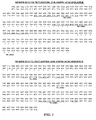
- the nucleotide sequence for the gene that expresses the murine VH (SEQ. ID. NO. 1) and the murine VL (SEQ. ID. NO. 2) is set forth in FIG. 1 .
- the amino acid sequence for the murine VH (SEQ. ID. NO. 3) and murine VL (SEQ. ID. NO. 4) is also set forth in FIG 1 .
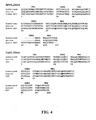
- the amino acid sequences for the variable regions of the murine MAb 83-14 VH and VL are also set forth in FIG. 4 (SEQ. ID. NOS. 3 AND 4, respectively).
- the humanized murine antibodies of the present invention are prepared by modifying the amino acid sequences of the variable regions of the murine antibody to more closely resemble human antibody without destroying the ability of the antibody to strongly bind to the HIR.
- the humanized antibody includes constant regions that also correspond to human antibody.
- the humanized murine antibodies include a heavy chain of amino acids (HC) that is composed of a constant region (CH) and a variable region (VH).
- the variable region of the HC has an amino end and a carboxyl end and includes three CDRs interspersed between four FRs.
- the first CDR (CDR1) is located towards the amino end of the VH with the third CDR (CDR3) being located towards the carboxyl end of the HC.
- the amino acid sequences for murine MAb 83-14 HC CDR1, CDR2, and CDR3 are set forth in SEQ. ID. NOS. 31, 33 and 35, respectively. Since the HC CDRs are essential for antibody binding to the HIR, the humanized antibodies have HC CDRs with amino acid sequences that are identical to SEQ. ID. NOS. 31, 33 and 35.
- VH CDR amino acid sequences may also be viewed as a combined group of amino acid sequences (VH CDR1, VH CDR2 and VH CDR3).
- the humanized murine antibodies also include a light chain (LC) of amino acids that is composed of a constant region (CL) and a variable region (VL).
- the variable region of the LC has an amino end and a carboxyl end and includes three CDRs interspersed between four FRs.
- the first CDR (CDR1) is located towards the amino end of the VL with the third CDR (CDR3) being located towards the carboxyl end of the VL.
- the amino acid sequences for murine MAb 83-14 LC CDR1, CDR2, and CDR3 are set forth in SEQ. ID. NOS. 38, 40 and 42, respectively. Since the VL CDRs are also important for antibody binding to the HIR, the humanized antibodies have LC CDRs with amino acid sequences that are identical to SEQ. ID. NOS. 38, 40 and 42.
- VL CDR amino acid sequences may also be viewed as a combined group of amino acid sequences (VL CDR1, VL CDR2 and VL CDR3).
- the first framework region (FRI) of the VH is located at the amino end of the humanized antibody.
- the fourth framework region (FR4) is located towards the carboxyl end of the humanized antibody.
- Amino acid sequences for the humanized VH FRI, FR2, FR3 and FR4 are set forth in SEQ. ID. NOS. 30, 32, 34 and 36, respectively, and these sequences correspond to version 5 humanized HIRMAb (Table 3).
- the amino acid sequence for FR2 (SEQ. ID. NO. 32) is identical to the amino acid sequence of murine MAb 83-14 VH FR2 or the human IgG, B43 (See FIG. 4 ).
- the amino acid sequences for VH FRI and FR4 correspond to the B43 human antibody framework
- the amino acid sequences for the VH FR3 (SEQ. ID. No. 34) of the version 5 humanized HIRMAb corresponds to the VH FR3 of the murine 83-14 antibody (Table 3).
- VH FRI amino acid sequences
- VH FR2 VH FR3 and VH FR4
- the first framework region (FRI) of the LC is located at the amino end of the VL of the humanized antibody.
- the fourth framework region (FR4) is located towards the carboxyl end of the VL of the humanized antibody.
- Amino acid sequences for the humanized VL FRI, FR2, FR3 and FR4 are set forth in SEQ. ID. NOS. 37, 39, 41 and 43, respectively.
- the amino acid sequences for VL FRI, FR2, FR3 and FR4 correspond to the REI human antibody framework regions that have amino acid sequences that differ from murine MAb 83-14 (See FIG. 4 ).
- VL FR amino acid sequences may also be viewed as a combined group of amino acid sequences (VL FRI, VL FR2, VL FR3 and VL FR4).
- Version 5 is a preferred humanized antibody in accordance with the present invention.
- the amino acid sequences for the VH and VL of Version 5 are set forth in SEQ. ID. NOS. 5 and 6, respectively.
- the preparation and identification of Version 5 is set forth in more detail in Example 2, Table 3 and FIG. 4 .
- the amino acid sequences for the VH FRs of Version 5 correspond to the VH FR sequences set forth above (SEQ. ID. NOS. 30, 32, 34 and 36).
- the amino acid sequences for the VL FRs of Version 5 correspond to VL FR sequences set forth above (SEQ. ID. NOS. 37, 39, 41, 43).
- the VH and VL FRs of Version 5 are VH and VL LC FRs that have been "humanized”.
- Humanized means that the four framework regions in either the HC or LC have been matched as closely as possible with the FRs from a human antibody (HAb) without destroying the ability of the resulting antibody to bind the HIR.
- the model human antibody used for the HC is the B43 antibody
- the model human antibody used for the LC is the REI antibody
- both the B43 and REI antibody sequences are well known and available in public databases.
- FRs that have been humanized are set forth in Example 2 and Table 3. Framework regions from human antibodies that correspond closely to the FRs of murine MAb 84-13 are chosen. The human FRs are then substituted into the MAb 84-13 in place of the murine FRs. The resulting antibody is then tested. The FRs, as a group, are only considered to be humanized if the modified antibody still binds strongly to the HIR receptor and has reduced immunogenicity in humans. If the first test is not successful, then the human FRs are modified slightly and the resulting antibody tested. Exemplary human antibodies that have HC FRs that may be used to humanize the HC FRs of MAb 84-13 include B43 human IgG (SEQ. ID. NO.
- human antibodies that have LC FRs that may be used to humanize the LC FRs of MAb 84-13 include human REI antibody (SEQ. ID. NO. 13), which is deposited in Genbank (accession number 1 WTLB), and other human IgG molecules with a VL homologous to the murine 83-14 VL may be found by searching public databases, such as the Kabat Database of immunoglobulin sequences.
- the HC and LC should each include a constant region. Any number of different human antibody constant regions may be incorporated into the humanized antibody provided that they do not destroy the ability of the antibody to bind the HIR.
- Suitable human antibody HC constant regions include human IgG1, IgG2, IgG3, or IgG4.
- the preferred HC constant region is human IgG1.
- Suitable human antibody LC constant regions include kappa ( ⁇ ) or lambda. Human ⁇ LC constant regions are preferred.
- the humanized antibody may be used in the same manner as any of the other antibody targeting agents (Trojan Horses) that have previously been used to deliver genes, drugs and diagnostic agents to cells by accessing the HIR.
- the humanized antibody is typically linked to a drug or diagnostic compound (pharmaceutical agent) and combined with a suitable pharmaceutical carrier and administered intravenously (iv).
- a suitable pharmaceutical carrier e.g., a suitable pharmaceutical carrier
- the drug/humanized antibody complex could also be administered subcutaneously, intra-muscularly, intra-nasally, intra-thecally, or orally.
- the humanized antibody may be linked to the pharmaceutical agent.
- the humanized antibody may be fused to either avidin or streptavidin and conjugated to a pharmaceutical agent that has been mono-biotinylated in accordance with known procedures that use the avidin-biotin linkage to conjugate antibody Trojan Horses and pharmaceutical agents together.
- the humanized antibody and pharmaceutical agent may be expressed as a single fusion protein using known genetic engineering procedures.
- Exemplary pharmaceutical agents to which the humanized antibody may be linked include small molecules, recombinant proteins, synthetic peptides, antisense agents or nanocontainers for gene delivery.
- Exemplary recombinant proteins include basic fibroblast growth factor (bFGF), human ⁇ -L-iduronidase (IDUA), or other neurotrophins, such as brain derived neurotrophic factor, or other lysosomal enzymes.
- bFGF basic fibroblast growth factor
- IDUA human ⁇ -L-iduronidase
- neurotrophins such as brain derived neurotrophic factor, or other lysosomal enzymes.
- Trojan Horses such as the present humanized antibody, for transporting bFGF across the BBB is described in a co-pending United States Patent Application (UC Case 2002-094-1, Attorney Docket 0180-0027) that is owned by the same assignee as the present application and which was filed on the same day as the present application)
- the humanized antibody is linked to a pharmaceutical agent, it is administered to the patient in the same manner as other known conjugates or fusion proteins.
- the particular dose or treatment regimen will vary widely depending upon the pharmaceutical agent being delivered and the condition being treated.
- the preferred route of administration is intravenous (iv).
- Suitable carriers include saline or water buffered with acetate, phosphate, TRIS or a variety of other buffers, with or without low concentrations of mild detergents, such as one from the Tween series of detergents.
- the humanized antibody/pharmaceutical agent Trojan horse compound is preferably used to deliver neuropharmaceutical agents across the BBB. However, the humanized Trojan horse may also be used to deliver pharmaceutical agents, in general, to any organ or tissue that carries the HIR.
- RNA was isolated from the 83-14 hybridoma cell line (Soos et al, 1986), and used to produce complementary DNA (cDNA) with reverse transcriptase.
- the cDNA was used with polymerase chain reaction (PCR) amplification of either the 83-14 VH or 83-14 VL gene using oligodeoxynucleotide (ODN) primers that specifically amplify the VH and VL of murine antibody genes, and similar methods are well known (Li et al., 1999).
- ODN oligodeoxynucleotide
- the PCR products were isolated from 1% agarose gels and the expected 0.4 Kb VH and VL gene products were isolated.
- the VH and VL gene fragments were sequentially subcloned into a bacterial expression plasmid so as to encode a single chain Fv (ScFv) antibody.
- the ScFv expression plasmid was then used to transform E. Coli. Individual colonies were identified on agar plates and liquid cultures were produced in LB medium. This medium was used in immunocytochemistry of Rhesus monkey brain to identify clones producing antibody that bound avidly to the Rhesus monkey brain microvasculature or BBB. This immunocytochemistry test identified those colonies secreting the functional 83-14 ScFv.
- the nucleotide sequence of the murine 83-14 VH (SEQ. ID. NO. 1) and the murine VL (SEQ. ID. NO. 2) gives the deduced amino acid sequence for the murine VH (SEQ. ID. NO. 3) and the murine VL (SEQ. ID. NO. 4).
- the amino acid sequence is given for all 3 CDRs and all 4 FRs of both the HC and the LC of the murine 83-14 HIRMAb.
- the variable region of the LC is designated VL
- the variable region of the HC is designated VH in FIG. 1 .
- Humanization of the 83-14 MAb was performed by CDR/FR grafting wherein the mouse FRs in the 83-14 MAb are replaced by suitable human FR regions in the variable regions of both the LC and HC.
- the Kabat database was screened using the Match program. Either the murine 83-14 VH or the VL amino acid sequence was compared with human IgG VH or human ⁇ light chain VL databases. Using the minimal mismatch possible, several human IgG molecules were identified that contained FR amino sequences highly homologous to the amino acid sequences of the murine 83-14 VH and VL.
- the framework regions of the B43 human IgG1 heavy chain and the REI human ⁇ light chain were finally selected for CDR/FR grafting of the murine 83-14 HIRMAb.
- ODN primers of 69-94 nucleotides in length, were designed to amplify the synthetic humanized 83-14 VL and VH genes (Tables 1 and 2).
- the ODN primers overlapped 24 nucleotides in both the 5'- and 3'- ends, and secondary structure was analyzed with standard software. Stable secondary structure producing T m of >46°C was corrected by replacement of first, second, or third letter codons to reduce the melting point of these structures to 32-46°C.
- primers corresponding to both 5' and 3' ends were also designed, and these allowed for PCR amplification of the artificial genes. These new sequences lack any consensus N-glycosylation sites at asparagine residues.
- the PCR was performed in a total volume of 100 ⁇ L containing 5 pmole each of 6 overlapping ODNs, nucleotides, and Taq and Taq extender DNA polymerases.
- the humanized VH and VL genes were individually ligated in a bacterial expression plasmid and E. coli was transformed.
- Several clones were isolated, individually sequenced, and clones containing no PCR-introduced sequence errors were subsequently produced.
- the humanized VH insert was released from the bacterial expression plasmid with restriction endonucleases and ligated into eukaryotic expression vectors described previously (Coloma et al, 1992; U.S. Patent No. 5,624,659 ). A similar procedure was performed for the humanized VL synthetic gene. Myeloma cells were transfected with the humanized light chain gene, and this cell line was subsequently transfected with version 1 of the humanized heavy chain gene (Table 3). The transfected myeloma cells were screened in a 96-well ELISA to identify clones secreting intact human IgG. After multiple attempts, no cell lines producing human IgG could be identified.
- HC artificial gene which contained HC FR amino acids derived from a different human IgG sequence, that of the B43 human IgG (Bejcek et al, 1995), and this yielded version 2 of the humanized HIRMAb (Table 3).
- the version 2 humanized HIRMAb was not secreted by the transfected myeloma cell. Both versions 1 and 2 contain the same HC signal peptide (Table 3), which is derived from Rechavi et al (1983).
- the signal peptide sequence was changed to that used for production of the chimeric HIRMAb (Coloma et al, 2000), and the sequence of this signal peptide is given in Table 3. Versions 2 and 3 of the humanized HIRMAb differed only with respect to the signal peptide (Table 3). However, version 3 was not secreted from the myeloma cell, indicating the signal peptide was not responsible for the lack of secretion of the humanized HIRMAb.
- Version 1 was designed using the FRs of the human 25ClCl IgG heavy chain (HC) variable region (VH). Version 1 did not produce secreted hIgG from the transfected myeloma cells despite high abundance of the HC mRNA determined by Northern blot analysis.
- HC human 25ClCl IgG heavy chain
- Version 2 was re-designed using the FRs of the human B43 IgG HC variable region.
- the peptide signal #1 (MDWTWRVLCLLAVAPGAHS) (SEQ. ID. NO. 49)in versions 1 and 2 was replaced by signal peptide #2 (MGWSWVMLFLLSVTAGKGL) (SEQ. ID. NO. 50) in version 3.
- the FRs and CDRs in version 2 and 3 are identical.
- the signal peptide #2 was used for versions 4a, 4b and 5.
- Verson 4a has human FRs 2, 3 and 4 and murine FR1.
- Version 4b has human FRs 1 and 2, and murine FRs 3 and 4
- Version 5 was produced using the human FRs 1, 2 and 4 and the murine FR3.
- Versions 4a, 4b and 5 produced secreted hIgG, whereas version 1, 2, and 3 did not secrete IgG.
- version 5 contains fewer murine framework amino acid substitutions and is preferred.
- the version 5 form of the protein was secreted intact from the transfected myeloma lines.
- the secreted version 5 humanized HIRMAb was purified by protein A affinity chromatography and the affinity of this antibody for the HIR was tested with an immunoradiometric assay (IRMA), which used [ 125 I]-labeled murine 83-14 MAb as the ligand as described previously (Coloma et al, 2000). These results showed that the affinity of the antibody for the HIR was retained.
- IRMA immunoradiometric assay
- the antigen was the extracellular domain of the HIR, which was produced from transfected CHO cells and purified by lectin affinity chromatography of CHO cell conditioned medium.
- the dissociation constant (K D ) of the murine and Version 5 humanized 83-14 HIRMAb was 2.7 ⁇ 0.4 nM and 3.7 ⁇ 0.4 nM, respectively.
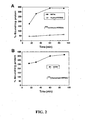
- the humanized Version 5 HIRMAb was radiolabelled with 125-Iodine and injected intravenously into the adult Rhesus monkey. The animal was sacrificed 2 hours later and the brain was removed and frozen. Cryostat sections (20 micron) were cut and applied to X-ray film. Scanning of the film yielded an image of the primate brain uptake of the humanized HIRMAb ( FIG. 3 ). The white matter and gray matter tracts of the primate brain are clearly delineated, with a greater uptake in the gray matter as compared with the white matter.
- the amino acid sequences of the VH of the HC and of the VL of the LC are given in FIG. 4 for the Version 5 humanized HIRMAb, the murine 83-14 HIRMAb, and either the B43 HC or the REI LC antibodies.
- those skilled in the art of antibody engineering may make certain amino acid substitutions in the 83-14 HC or LC CDR sequences in a process called "affinity maturation" or molecular evolution. This may be performed either randomly or guided by x-ray diffraction models of immunoglobulin structure, similar to single amino acid changes made in the FR regions of either the HC or the LC of an antibody ( U.S. Pat.
- IDUA ⁇ -L-iduronidase
- MPS mucopolysaccharidosis
- ERT enzyme replacement therapy
- the enzyme could be delivered across the human BBB following peripheral administration providing the enzyme is attached to a molecular Trojan horse such as the humanized HIRMAb.
- the IDUA may be attached to the humanized HIRMAB with avidin-biotin technology.
- the IDUA enzyme is mono-biotinylated in parallel with the production of a fusion protein of the humanized HIRMAb and avidin.
- the IDUA could be attached to the humanized HIRMAb not with avidin-biotin technology, but with genetic engineering that avoids the need for biotinylation or the use of foreign proteins such as avidin.
- the gene encoding for IDUA is fused to the region of the humanized HIRMAb heavy chain or light chain gene corresponding to the amino or carboxyl terminus of the HIRMAb heavy or light chain protein.
- the HIRMAb/IDUA fusion protein is mass produced for purification and manufacturing.
- the amino acid sequence and general structure of a typical MAb/IDUA fusion protein is shown in FIG. 5 (SEQ. ID. NO. 48).
- the enzyme is fused to the carboxy terminus of the heavy chain (HC) of the humanized HIRMAb.
- the amino acid sequence for the IDUA shown in FIG. 5 is that of the mature, processed enzyme.
- the enzyme could be fused to the amino terminus of the HIRMAb HC or the amino or carboxyl termini of the humanized HIRMAb light chain (LC).
- one or more amino acids within the IDUA sequence could be modified with retention of the biological activity of the enzyme.
- Fusion proteins of lysosomal enzymes and antibodies have been prepared and these fusion proteins retain biological activity (Haisma et al, 1998).
- the fusion gene encoding the fusion protein can be inserted in one of several commercially available permanent expression vectors, such as pCEP4, and cell lines can be permanently transfected and selected with hygromycin or other selection agents.
- the conditioned medium may be concentrated for purification of the recombinant humanized HIRMAb/IDUA fusion protein.
- Myeloma cells were transfected with a plasmid encoding the either the humanized HIRMAb light chain or "surrogate light chain", which was an anti-dansyl MAb light chain (Shin and Morrison, 1990).
- the anti-dansyl light chain is derived from the anti-dansyl IgG, where dansyl is a common hapten used in antibody generation.
- Both the myeloma line transfected with the humanized HIRMAb light chain, and the myleoma line transfected with the surrogate light chain were subsequently transfected with a plasmid encoding the heavy chain of the chimeric HIRMAb.
- Both cells lines secreted IgG processed with either the humanized HIRMAb light chain or the anti-dansyl light chain, as determined with a human IgG ELISA on the myeloma supernatants.
- chimeric HIRMAb heavy chain could be processed and secreted by myeloma cells producing a non-specific or surrogate light chain.
- the reactivity of these chimeric antibodies with the soluble extracellular domain (ECD) of the HIR was determined by ELISA.
- the HIR ECD was purified by lectin affinity chromatography of the conditioned medium of CHO cells transfected with the HIR ECD as described previously (Coloma et al, 2000).
- the murine 83-14 HIRMAb was used as a positive control and mouse IgG2a was used as a negative control.
- the negative control produced negligible ELISA signals; the standard curve with the murine 83-14 MAb gave a linear increase in absorbance that reached saturation at 1 ⁇ g/ml murine 83-14 MAb.
- the immune reaction in the ELISA was quantified with a spectrophotometer and maximum absorbance at 405 nm (A405) in this assay was 0.9. All isolated myeloma clones secreting the chimeric HIRMAb heavy chain/humanized HIRMAb light chain IgG were positive in the HIR ECD ELISA with immuno-reactive levels that maximized the standard curve.
- the myeloma clones secreting the chimeric HIRMAb HC/dansyl LC IgG also produced positive signals in the HIR ECD ELISA, and the A405 levels were approximately 50% of the A405 levels obtained with the chimeric HIRMAb heavy chain/humanized HIRMAb light chain IgG.
- LC's may be used to prepare humanized antibodies in accordance with the present invention provided that they are compatible with the HC.
- the LC is considered to be "compatible" with the HC if the LC can be combined with the HC and not destroy the ability of the resulting antibody to bind to the HIR.
- the LC In additition, the LC must be human or sufficiently humanized so that any immunogenic reaction in humans is minimized. Routine experimentation can be used to determine whether a selected human or humanized LC sequence is compatible with the HC.
Landscapes
- Health & Medical Sciences (AREA)
- Chemical & Material Sciences (AREA)
- Immunology (AREA)
- Life Sciences & Earth Sciences (AREA)
- Organic Chemistry (AREA)
- Medicinal Chemistry (AREA)
- Engineering & Computer Science (AREA)
- General Health & Medical Sciences (AREA)
- Bioinformatics & Cheminformatics (AREA)
- Pharmacology & Pharmacy (AREA)
- Animal Behavior & Ethology (AREA)
- Public Health (AREA)
- Veterinary Medicine (AREA)
- Neurology (AREA)
- Biomedical Technology (AREA)
- Endocrinology (AREA)
- Biochemistry (AREA)
- Proteomics, Peptides & Aminoacids (AREA)
- Molecular Biology (AREA)
- Genetics & Genomics (AREA)
- Biophysics (AREA)
- Nuclear Medicine, Radiotherapy & Molecular Imaging (AREA)
- Cell Biology (AREA)
- General Chemical & Material Sciences (AREA)
- Chemical Kinetics & Catalysis (AREA)
- Epidemiology (AREA)
- Neurosurgery (AREA)
- Peptides Or Proteins (AREA)
- Medicines Containing Antibodies Or Antigens For Use As Internal Diagnostic Agents (AREA)
- Enzymes And Modification Thereof (AREA)
- Medicines That Contain Protein Lipid Enzymes And Other Medicines (AREA)
- Medicinal Preparation (AREA)
- Preparation Of Compounds By Using Micro-Organisms (AREA)
Applications Claiming Priority (3)
| Application Number | Priority Date | Filing Date | Title |
|---|---|---|---|
| US307276 | 2002-11-27 | ||
| US10/307,276 US7388079B2 (en) | 2002-11-27 | 2002-11-27 | Delivery of pharmaceutical agents via the human insulin receptor |
| PCT/US2003/036870 WO2004050016A2 (en) | 2002-11-27 | 2003-11-18 | Delivery of pharmaceutical agents via the human insulin receptor |
Publications (3)
| Publication Number | Publication Date |
|---|---|
| EP1569691A2 EP1569691A2 (en) | 2005-09-07 |
| EP1569691A4 EP1569691A4 (en) | 2008-03-26 |
| EP1569691B1 true EP1569691B1 (en) | 2015-03-11 |
Family
ID=32325847
Family Applications (1)
| Application Number | Title | Priority Date | Filing Date |
|---|---|---|---|
| EP03786812.2A Expired - Lifetime EP1569691B1 (en) | 2002-11-27 | 2003-11-18 | Delivery of pharmaceutical agents via the human insulin receptor |
Country Status (5)
| Country | Link |
|---|---|
| US (3) | US7388079B2 (enExample) |
| EP (1) | EP1569691B1 (enExample) |
| JP (3) | JP4773097B2 (enExample) |
| AU (1) | AU2003295614A1 (enExample) |
| WO (1) | WO2004050016A2 (enExample) |
Families Citing this family (85)
| Publication number | Priority date | Publication date | Assignee | Title |
|---|---|---|---|---|
| US20040102369A1 (en) * | 2002-11-27 | 2004-05-27 | The Regents Of The University Of California | Transport of basic fibroblast growth factor across the blood brain barrier |
| US7388079B2 (en) * | 2002-11-27 | 2008-06-17 | The Regents Of The University Of California | Delivery of pharmaceutical agents via the human insulin receptor |
| ATE512674T1 (de) * | 2003-01-06 | 2011-07-15 | Angiochem Inc | Angiopep-1, verwandte verbindungen, und deren verwnedungen |
| PL1606409T3 (pl) | 2003-03-19 | 2011-02-28 | Biogen Ma Inc | Białko wiążące receptor Nogo |
| EP1460088A1 (en) | 2003-03-21 | 2004-09-22 | Biotest AG | Humanized anti-CD4 antibody with immunosuppressive properties |
| AU2003286870A1 (en) * | 2003-06-05 | 2005-01-04 | Salk Institute For Biological Studies | Targeting polypeptides to the central nervous system |
| PT1776136E (pt) | 2004-06-24 | 2012-12-05 | Biogen Idec Inc | Tratamento de estados que envolvem desmielinização |
| JP2008513495A (ja) * | 2004-09-17 | 2008-05-01 | コメンティス,インコーポレーテッド | ベータ−セクレターゼ活性を阻害する二環式化合物およびその使用方法 |
| US7659289B2 (en) * | 2004-09-17 | 2010-02-09 | Comentis, Inc. | Hydroxyethylene-based β-secretase inhibitors and use thereof |
| MX2007012341A (es) * | 2005-04-08 | 2008-02-12 | Comentis Inc | Compuestos que inhiben actividad beta-secretasa y metodos de uso de los mismos. |
| SI1904104T1 (sl) | 2005-07-08 | 2013-12-31 | Biogen Idec Ma Inc. | Protitelesa SP35 in njihova uporaba |
| PL2233156T3 (pl) | 2005-07-15 | 2013-09-30 | Angiochem Inc | Zastosowanie polipeptydów aprotyninowych jako nośników w koniugatach farmaceutycznych |
| US8053569B2 (en) * | 2005-10-07 | 2011-11-08 | Armagen Technologies, Inc. | Nucleic acids encoding and methods of producing fusion proteins |
| US8741260B2 (en) * | 2005-10-07 | 2014-06-03 | Armagen Technologies, Inc. | Fusion proteins for delivery of GDNF to the CNS |
| US8124095B2 (en) * | 2005-10-07 | 2012-02-28 | Armagen Technologies, Inc. | Fusion proteins for delivery of erythropoietin to the CNS |
| AR056806A1 (es) * | 2005-11-14 | 2007-10-24 | Amgen Inc | Moleculas quimericas de anticuerpo rankl- pth/ pthrp |
| CA2641070C (en) * | 2006-02-06 | 2017-01-03 | Ramot At Tel-Aviv University Ltd. | Enzyme replacement therapy for treating lysosomal storage diseases |
| AU2007285763B2 (en) | 2006-08-18 | 2011-12-15 | Armagen Technologies, Inc. | Agents for blood-brain barrier delivery |
| WO2008100560A2 (en) * | 2007-02-14 | 2008-08-21 | University Of Southern California | Estrogen receptor modulators, associated pharmaceutical compositions and methods of use |
| US20090011040A1 (en) * | 2007-05-02 | 2009-01-08 | Naash Muna I | Use of compacted nucleic acid nanoparticles in non-viral treatments of ocular diseases |
| US9365634B2 (en) * | 2007-05-29 | 2016-06-14 | Angiochem Inc. | Aprotinin-like polypeptides for delivering agents conjugated thereto to tissues |
| EP2178837A2 (en) * | 2007-07-26 | 2010-04-28 | Comentis, Inc. | Isophthalamide derivatives inhibiting beta-secretase activity |
| CA3184105A1 (en) * | 2007-07-27 | 2009-02-05 | Armagen Inc. | Methods and compositions for increasing alpha-l-iduronidase activity in the cns |
| CN101868457B (zh) * | 2007-09-24 | 2013-02-13 | 科门蒂斯公司 | 作为β-分泌酶抑制剂用于治疗的(3-羟基-4-氨基-丁-2-基)-3-(2-噻唑-2-基-吡咯烷-1-羰基)苯甲酰胺衍生物和相关化合物 |
| RU2539110C2 (ru) | 2008-03-13 | 2015-01-10 | Биотест Аг | Способ лечения аутоиммунного заболевания (варианты) |
| EP2262838B1 (en) | 2008-03-13 | 2016-04-13 | Biotest AG | Agent for treating disease |
| MX2010010027A (es) | 2008-03-13 | 2011-05-02 | Biotest Ag | Agente para tratar enfermedad. |
| CN102026667B (zh) | 2008-04-18 | 2014-06-25 | 安吉奥开米公司 | 紫杉醇、紫杉醇类似物或紫杉醇结合物的药物组合物及相关制备方法和用途 |
| ES2602200T3 (es) * | 2008-06-13 | 2017-02-20 | Rappaport Family Institute For Research In The Medical Sciences | Reactivos y métodos para detectar la proteína polimórfica haptoglobina |
| EP2315779A2 (en) | 2008-07-09 | 2011-05-04 | Biogen Idec MA Inc. | Compositions comprising antibodies to lingo or fragments thereof |
| US20100098693A1 (en) * | 2008-10-07 | 2010-04-22 | Pardridge William M | Compositions and methods for blood-brain barrier delivery of organophosphatases |
| WO2010043047A1 (en) | 2008-10-15 | 2010-04-22 | Angiochem Inc. | Conjugates of glp-1 agonists and uses thereof |
| US8828925B2 (en) | 2008-10-15 | 2014-09-09 | Angiochem Inc. | Etoposide and doxorubicin conjugates for drug delivery |
| WO2010063122A1 (en) | 2008-12-05 | 2010-06-10 | Angiochem Inc. | Conjugates of neurotensin or neurotensin analogs and uses thereof |
| EP2373789A4 (en) | 2008-12-17 | 2012-08-29 | Angiochem Inc | MEMBRANTYP-1 MATRIX METALLOPROTEINASE INHIBITORS AND THEIR USE |
| WO2010108048A2 (en) | 2009-03-18 | 2010-09-23 | Armagen Technologies, Inc. | Compositions and methods for blood-brain barrier delivery of igg-decoy receptor fusion proteins |
| RU2011146654A (ru) | 2009-04-20 | 2013-05-27 | Ангиокем Инк. | Способы лечения рака яичников с применением конъюгированного средства |
| WO2011000095A1 (en) | 2009-07-02 | 2011-01-06 | Angiochem Inc. | Multimeric peptide conjugates and uses thereof |
| CA2773133A1 (en) | 2009-08-28 | 2011-03-03 | Edward H. Schuchman | Dose escalation enzyme replacement therapy for treating acid sphingomyelinase deficiency |
| AU2010298036B2 (en) | 2009-09-25 | 2015-05-21 | Xoma Technology Ltd. | Screening methods |
| US8926976B2 (en) * | 2009-09-25 | 2015-01-06 | Xoma Technology Ltd. | Modulators |
| JP2013507131A (ja) * | 2009-10-09 | 2013-03-04 | アーメイゲン・テクノロジーズ・インコーポレイテッド | Cnsにおけるイズロン酸2−スルファターゼ活性を増加させるための方法および組成物 |
| AU2010306940A1 (en) | 2009-10-12 | 2012-06-07 | Smith, Larry | Methods and compositions for modulating gene expression using oligonucleotide based drugs administered in vivo or in vitro |
| GB0920944D0 (en) | 2009-11-30 | 2010-01-13 | Biotest Ag | Agents for treating disease |
| CA2800744C (en) | 2010-05-27 | 2018-09-04 | Centocor Ortho Biotech Inc. | Insulin-like growth factor 1 receptor binding peptides |
| US8486399B2 (en) | 2011-12-02 | 2013-07-16 | Armagen Technologies, Inc. | Methods and compositions for increasing arylsulfatase A activity in the CNS |
| CN115778934A (zh) | 2012-01-20 | 2023-03-14 | 德玛公司 | 经取代的己糖醇类用于治疗恶性肿瘤的用途 |
| US9796780B2 (en) | 2012-05-14 | 2017-10-24 | Biogen Ma Inc. | LINGO-2 antagonists for treatment of conditions involving motor neurons |
| US20150023956A1 (en) | 2013-07-22 | 2015-01-22 | Armagen Technologies, Inc. | Methods and compositions for increasing enzyme activity in the cns |
| CR20160270A (es) | 2013-12-20 | 2016-09-05 | Hoffmann La Roche | ANTICUERPOS ANTI-TAU (pS422) HUMANIZADOS Y MÉTODOS DE UTILIZACIÓN |
| JP6616189B2 (ja) | 2013-12-25 | 2019-12-04 | Jcrファーマ株式会社 | 血液脳関門を通過する新規抗トランスフェリン受容体抗体 |
| JP6541237B2 (ja) * | 2014-03-06 | 2019-07-10 | ナショナル リサーチ カウンシル オブ カナダ | インスリン様成長因子1受容体特異的抗体及びそれらの使用 |
| EP3114142B1 (en) * | 2014-03-06 | 2019-06-05 | National Research Council of Canada | Insulin-like growth factor 1 receptor -specific antibodies and uses thereof |
| EA035517B1 (ru) * | 2014-03-06 | 2020-06-29 | Нэшнл Рисеч Каунсил Оф Канада | Антитела, специфические к рецептору инсулиноподобного фактора роста 1, и их применения |
| TWI731535B (zh) | 2014-03-21 | 2021-06-21 | 美商艾伯維有限公司 | 抗-egfr抗體及抗體藥物結合物 |
| KR102359214B1 (ko) | 2014-04-04 | 2022-02-07 | 델 마 파마슈티컬스 | 폐의 비소세포 암종 및 난소암을 치료하기 위한 디안하이드로갈락티톨 및 이의 유사체 또는 유도체 |
| AR100978A1 (es) * | 2014-06-26 | 2016-11-16 | Hoffmann La Roche | LANZADERAS CEREBRALES DE ANTICUERPO HUMANIZADO ANTI-Tau(pS422) Y USOS DE LAS MISMAS |
| WO2016112270A1 (en) | 2015-01-08 | 2016-07-14 | Biogen Ma Inc. | Lingo-1 antagonists and uses for treatment of demyelinating disorders |
| US10538589B2 (en) | 2015-01-14 | 2020-01-21 | Armagen Inc. | Methods and compositions for increasing N-acetylglucosaminidase (NAGLU) activity in the CNS using a fusion antibody comprising an anti-human insulin receptor antibody and NAGLU |
| EP3307326B9 (en) | 2015-06-15 | 2021-02-24 | Angiochem Inc. | Methods for the treatment of leptomeningeal carcinomatosis |
| CA2990785C (en) | 2015-06-24 | 2024-11-12 | Jcr Pharmaceuticals Co., Ltd. | ANTI-HUMAN TRANSFERRIN RECEPTOR ANTIBODIES CROSSING THE BLOOD-BRAIN BARRIER |
| HK1247933A1 (en) | 2015-06-24 | 2018-10-05 | Jcr Pharmaceuticals Co., Ltd. | Fusion protein containing bdnf |
| ES2809728T3 (es) | 2015-06-24 | 2021-03-05 | Hoffmann La Roche | Anticuerpos anti-tau(pS422) humanizados y procedimientos de uso |
| US11207461B2 (en) | 2015-07-30 | 2021-12-28 | Anoop U. R | Drug delivery system and method for controlled and continuous delivery of drugs into the brain by bypassing the blood brain barrier |
| JP2018532693A (ja) | 2015-08-06 | 2018-11-08 | ゾーマ (ユーエス) リミテッド ライアビリティ カンパニー | インスリン受容体に対する抗体断片及び低血糖を治療するためのその使用 |
| CN107465528B (zh) * | 2016-06-03 | 2022-04-15 | 中兴通讯股份有限公司 | 光分配网络odn资源信息采集方法及装置 |
| CN109641962A (zh) | 2016-06-08 | 2019-04-16 | 艾伯维公司 | 抗b7-h3抗体和抗体药物偶联物 |
| RS61828B1 (sr) | 2016-06-08 | 2021-06-30 | Abbvie Inc | Anti-b7-h3 antitela i antitelske konjugacije lekova |
| WO2017214456A1 (en) | 2016-06-08 | 2017-12-14 | Abbvie Inc. | Anti-cd98 antibodies and antibody drug conjugates |
| JP2019526529A (ja) | 2016-06-08 | 2019-09-19 | アッヴィ・インコーポレイテッド | 抗b7−h3抗体及び抗体薬物コンジュゲート |
| US12145993B2 (en) * | 2016-06-08 | 2024-11-19 | Shanghai Jiao Tong University School Of Medicine | Sequence of antibody heavy chain constant region for enhancing agonistic antibody activity |
| EP3554544A4 (en) | 2016-12-16 | 2020-07-29 | Bluefin Biomedicine, Inc. | ANTI-PROTEIN 1 ANTIBODY CONTAINING AN ANTI-CUB DOMAIN (CDCP1), ANTIBODY-DRUG CONJUGATES AND THEIR METHODS OF USE |
| TWI833178B (zh) | 2016-12-26 | 2024-02-21 | 日商Jcr製藥股份有限公司 | 通過血腦障壁之新穎抗人類運鐵蛋白受體抗體 |
| TWI791006B (zh) | 2016-12-26 | 2023-02-01 | 日商Jcr製藥股份有限公司 | 包含bdnf之融合蛋白質 |
| WO2018195302A1 (en) | 2017-04-19 | 2018-10-25 | Bluefin Biomedicine, Inc. | Anti-vtcn1 antibodies and antibody drug conjugates |
| JOP20190248A1 (ar) | 2017-04-21 | 2019-10-20 | Amgen Inc | بروتينات ربط مولد ضد trem2 واستخداماته |
| WO2018231827A1 (en) | 2017-06-12 | 2018-12-20 | Bluefin Biomedicine, Inc. | Anti-il1rap antibodies and antibody drug conjugates |
| WO2019023056A1 (en) * | 2017-07-24 | 2019-01-31 | Janssen Biotech, Inc. | INSULIN RECEPTOR ANTIBODIES AND USES THEREOF |
| BR112020005271A2 (pt) | 2017-10-02 | 2020-09-15 | Denali Therapeutics Inc. | proteína, polipeptídeo, polinucleotídeo, vetor, célula hospedeira, método para produção de um polipeptídeo, métodos de tratamento de um distúrbio, de diminuição do acúmulo, de monitoramento, de transporte de um agente e de tratamento de um lsd e composição farmacêutica |
| JP7458404B2 (ja) | 2018-12-20 | 2024-03-29 | アーマジェン・インコーポレイテッド | イズロン酸-2-スルファターゼ免疫グロブリン融合タンパク質の精製 |
| AR124681A1 (es) | 2021-01-20 | 2023-04-26 | Abbvie Inc | Conjugados anticuerpo-fármaco anti-egfr |
| WO2023204202A1 (ja) | 2022-04-19 | 2023-10-26 | Jcrファーマ株式会社 | マンノース-6-リン酸の数を減少させた糖蛋白質 |
| WO2025027529A1 (en) | 2023-07-31 | 2025-02-06 | Advesya | Anti-il-1rap antibody drug conjugates and methods of use thereof |
| TW202530255A (zh) | 2023-12-15 | 2025-08-01 | 法商亞維西亞有限公司 | 抗il-1rap結合結構域及其抗體-藥物偶聯物 |
| WO2025171378A1 (en) | 2024-02-09 | 2025-08-14 | Rezolute, Inc. | Insulin receptor modulation for tumor associated hyperinsulinism |
Family Cites Families (58)
| Publication number | Priority date | Publication date | Assignee | Title |
|---|---|---|---|---|
| US5618920A (en) * | 1985-11-01 | 1997-04-08 | Xoma Corporation | Modular assembly of antibody genes, antibodies prepared thereby and use |
| US4801575A (en) * | 1986-07-30 | 1989-01-31 | The Regents Of The University Of California | Chimeric peptides for neuropeptide delivery through the blood-brain barrier |
| US4902505A (en) * | 1986-07-30 | 1990-02-20 | Alkermes | Chimeric peptides for neuropeptide delivery through the blood-brain barrier |
| US5530101A (en) * | 1988-12-28 | 1996-06-25 | Protein Design Labs, Inc. | Humanized immunoglobulins |
| US5180820A (en) * | 1989-08-30 | 1993-01-19 | Barde Yves Alain | Brain-derived neurotrophic factor |
| US5229500A (en) * | 1989-08-30 | 1993-07-20 | Regeneron Pharmaceuticals, Inc. | Brain derived neurotrophic factor |
| US5154924A (en) * | 1989-09-07 | 1992-10-13 | Alkermes, Inc. | Transferrin receptor specific antibody-neuropharmaceutical agent conjugates |
| US5672683A (en) * | 1989-09-07 | 1997-09-30 | Alkermes, Inc. | Transferrin neuropharmaceutical agent fusion protein |
| US6329508B1 (en) * | 1989-09-07 | 2001-12-11 | Alkermes, Inc. | Transferrin receptor reactive chimeric antibodies |
| US5977307A (en) * | 1989-09-07 | 1999-11-02 | Alkermes, Inc. | Transferrin receptor specific ligand-neuropharmaceutical agent fusion proteins |
| TW279133B (enExample) * | 1990-12-13 | 1996-06-21 | Elan Med Tech | |
| US5527288A (en) * | 1990-12-13 | 1996-06-18 | Elan Medical Technologies Limited | Intradermal drug delivery device and method for intradermal delivery of drugs |
| US6060069A (en) * | 1991-05-20 | 2000-05-09 | Dura Pharmaceuticals, Inc. | Pulmonary delivery of pharmaceuticals |
| US6287792B1 (en) * | 1991-06-17 | 2001-09-11 | The Regents Of The University Of California | Drug delivery of antisense oligonucleotides and peptides to tissues in vivo and to cells using avidin-biotin technology |
| WO1993006116A1 (en) * | 1991-09-20 | 1993-04-01 | Syntex-Synergen Neuroscience Joint Venture | Glial derived neurotrophic factor |
| AU677216B2 (en) * | 1992-07-27 | 1997-04-17 | Government Of The United States Of America, As Represented By The Secretary Of The Department Of Health And Human Services, The | Targeting of liposomes to the blood-brain barrier |
| US5527228A (en) * | 1993-05-24 | 1996-06-18 | Atomic Energy Corporation Of South Africa Limited | Transmission |
| US5997501A (en) * | 1993-11-18 | 1999-12-07 | Elan Corporation, Plc | Intradermal drug delivery device |
| PT706799E (pt) * | 1994-09-16 | 2002-05-31 | Merck Patent Gmbh | Imunoconjugados ii |
| US5656284A (en) * | 1995-04-24 | 1997-08-12 | Balkin; Michael S. | Oral transmucosal delivery tablet and method of making it |
| AU6163196A (en) * | 1995-06-07 | 1996-12-30 | Smithkline Beecham Corporation | Method for obtaining receptor agonist antibodies |
| EP0865499B1 (en) * | 1995-09-14 | 2009-03-18 | Virginia Tech Intellectual Properties, Inc. | Production of lysosomal enzymes in plant-based expression systems |
| CN1137680C (zh) * | 1995-09-19 | 2004-02-11 | 藤泽药品工业株式会社 | 气雾剂组合物 |
| US5837231A (en) * | 1996-06-27 | 1998-11-17 | Regents Of The University Of Minnesota | GM-CSF administration for the treatment and prevention of recurrence of brain tumors |
| AU731817C (en) * | 1996-11-27 | 2001-11-01 | Genentech Inc. | Humanized anti-CD11a antibodies |
| IL120485A0 (en) * | 1997-03-19 | 1997-07-13 | Yeda Res & Dev | Modulators of the function of receptors of the TNF/NGF receptor family and other proteins |
| WO1999000150A2 (en) | 1997-06-27 | 1999-01-07 | Regents Of The University Of California | Drug targeting of a peptide radiopharmaceutical through the primate blood-brain barrier in vivo with a monoclonal antibody to the human insulin receptor |
| US6482923B1 (en) | 1997-09-17 | 2002-11-19 | Human Genome Sciences, Inc. | Interleukin 17-like receptor protein |
| US6016800A (en) * | 1997-10-24 | 2000-01-25 | Century; Theodore J. | Intrapulmonary aerosolizer |
| US6165783A (en) * | 1997-10-24 | 2000-12-26 | Neuro Spheres Holdings Ltd. | Erythropoietin-mediated neurogenesis |
| US6905686B1 (en) * | 1997-12-02 | 2005-06-14 | Neuralab Limited | Active immunization for treatment of alzheimer's disease |
| DK1037687T3 (da) * | 1997-12-11 | 2009-01-26 | Alza Corp | Anordning til at forbedre et middels transdermale strömning |
| US6348210B1 (en) * | 1998-11-13 | 2002-02-19 | Alza Corporation | Methods for transdermal drug administration |
| US6375975B1 (en) * | 1998-12-21 | 2002-04-23 | Generex Pharmaceuticals Incorporated | Pharmaceutical compositions for buccal and pulmonary application |
| US6284262B1 (en) * | 1999-01-26 | 2001-09-04 | Virgil A. Place | Compact dosage unit for buccal administration of a pharmacologically active agent |
| US7309687B1 (en) * | 1999-04-13 | 2007-12-18 | The Kenneth S. Warren Institute, Inc. | Methods for treatment and prevention of neuromuscular and muscular conditions by peripherally administered erythropoietin |
| CZ299516B6 (cs) * | 1999-07-02 | 2008-08-20 | F. Hoffmann-La Roche Ag | Konjugát erythropoetinového glykoproteinu, zpusobjeho výroby a použití a farmaceutická kompozice sjeho obsahem |
| US6372250B1 (en) * | 2000-04-25 | 2002-04-16 | The Regents Of The University Of California | Non-invasive gene targeting to the brain |
| US6696274B2 (en) * | 2000-05-03 | 2004-02-24 | Supratek Pharma, Inc. | Ligand for enhancing oral and CNS delivery of biological agents |
| US7078376B1 (en) * | 2000-08-11 | 2006-07-18 | Baxter Healthcare S.A. | Therapeutic methods for treating subjects with a recombinant erythropoietin having high activity and reduced side effects |
| AU2002246580A1 (en) * | 2000-12-04 | 2002-07-24 | The Regents Of The University Of California | Antisense imaging of gene expression of the brain in vivo |
| JP2005501801A (ja) * | 2001-02-02 | 2005-01-20 | オーソ−マクニール・フアーマシユーチカル・インコーポレーテツド | フラクトピラノーススルファメートとエリスロポイエチンを含んで成る神経学的機能不全治療 |
| WO2002062832A2 (en) * | 2001-02-06 | 2002-08-15 | Merck Patent Gmbh | Modified human brain-derived neutrophic factor (bdnf) with reduced immunogenicity |
| AU2002368077B2 (en) * | 2001-07-12 | 2010-03-04 | Jefferson Foote | Super humanized antibodies |
| CA2450073C (en) * | 2001-07-25 | 2017-08-29 | Biomarin Pharmaceutical Inc. | Compositions and methods for modulating blood-brain barrier transport |
| US7053202B2 (en) * | 2001-10-19 | 2006-05-30 | Millennium Pharmaceuticals, Inc. | Immunoglobulin DNA cassette molecules, monobody constructs, methods of production, and methods of use therefor |
| MXPA04011624A (es) * | 2002-05-24 | 2005-03-07 | Schering Corp | Anticuerpo neutralizante humano anti-igfr. |
| US20040102369A1 (en) * | 2002-11-27 | 2004-05-27 | The Regents Of The University Of California | Transport of basic fibroblast growth factor across the blood brain barrier |
| US20050142141A1 (en) * | 2002-11-27 | 2005-06-30 | Pardridge William M. | Delivery of enzymes to the brain |
| US7388079B2 (en) * | 2002-11-27 | 2008-06-17 | The Regents Of The University Of California | Delivery of pharmaceutical agents via the human insulin receptor |
| US7294704B2 (en) * | 2003-08-15 | 2007-11-13 | Diadexus, Inc. | Pro108 antibody compositions and methods of use and use of Pro108 to assess cancer risk |
| EP1548031A1 (en) * | 2003-12-22 | 2005-06-29 | Dubai Genetics FZ-LLC | Nature-identical erythropoietin |
| US8053569B2 (en) * | 2005-10-07 | 2011-11-08 | Armagen Technologies, Inc. | Nucleic acids encoding and methods of producing fusion proteins |
| US8741260B2 (en) * | 2005-10-07 | 2014-06-03 | Armagen Technologies, Inc. | Fusion proteins for delivery of GDNF to the CNS |
| US8124095B2 (en) * | 2005-10-07 | 2012-02-28 | Armagen Technologies, Inc. | Fusion proteins for delivery of erythropoietin to the CNS |
| DE102006004008A1 (de) * | 2006-01-27 | 2007-08-02 | Hannelore Prof. Dr. Dr. Ehrenreich | Verfahren zur Behandlung und/oder Prophylaxe von Multipler Sklerose, sowie Verwendung von Erythropoietin zur Herstellung eines Arzneimittels zur intermittierenden Behandlung und/oder intermittierenden Prophylaxe von Multipler Sklerose |
| WO2008065372A2 (en) * | 2006-11-28 | 2008-06-05 | Nautilus Biotech, S.A. | Modified erythropoietin polypeptides and uses thereof for treatment |
| EP2167115A2 (en) * | 2007-06-15 | 2010-03-31 | University Of Zurich | Treatment for alzheimer's disease |
-
2002
- 2002-11-27 US US10/307,276 patent/US7388079B2/en not_active Expired - Lifetime
-
2003
- 2003-11-18 JP JP2004557217A patent/JP4773097B2/ja not_active Expired - Fee Related
- 2003-11-18 AU AU2003295614A patent/AU2003295614A1/en not_active Abandoned
- 2003-11-18 WO PCT/US2003/036870 patent/WO2004050016A2/en not_active Ceased
- 2003-11-18 EP EP03786812.2A patent/EP1569691B1/en not_active Expired - Lifetime
-
2007
- 2007-08-14 US US11/893,281 patent/US20080051564A1/en not_active Abandoned
-
2008
- 2008-05-01 US US12/150,983 patent/US8858950B2/en not_active Expired - Lifetime
-
2011
- 2011-02-07 JP JP2011023913A patent/JP5981688B2/ja not_active Expired - Fee Related
-
2016
- 2016-01-28 JP JP2016014310A patent/JP2016155803A/ja active Pending
Non-Patent Citations (5)
| Title |
|---|
| BRUMMELL D A ET AL: "Probing the combining site of an anti-carbohydrate antibody by saturation-mutagenesis: role of the heavy-chain CDR3 residues.", BIOCHEMISTRY 2 FEB 1993 LNKD- PUBMED:8424945, vol. 32, no. 4, 2 February 1993 (1993-02-02), pages 1180 - 1187, ISSN: 0006-2960 * |
| PADLAN E A ET AL: "Identification of specificity-determining residues in antibodies", FASEB JOURNAL, FED. OF AMERICAN SOC. FOR EXPERIMENTAL BIOLOGY, US, vol. 9, 1 January 1995 (1995-01-01), pages 133 - 139, XP003010923, ISSN: 0892-6638 * |
| PICHLA SUSAN L ET AL: "The crystal structure of a Fab fragment to the melanoma-associated GD2 ganglioside", JOURNAL OF STRUCTURAL BIOLOGY, vol. 119, no. 1, 1997, pages 6 - 16, ISSN: 1047-8477 * |
| RUDIKOFF S ET AL: "Single amino acid substitution altering antigen-binding specificity", PROCEEDINGS OF THE NATIONAL ACADEMY OF SCIENCES, NATIONAL ACADEMY OF SCIENCES, US, vol. 79, 1 March 1982 (1982-03-01), pages 1979 - 1983, XP007901436, ISSN: 0027-8424, DOI: 10.1073/PNAS.79.6.1979 * |
| VARGAS-MADRAZO ENRIQUE ET AL: "Evolution of the structural repertoire of the human VH and Vkappa germline genes", INTERNATIONAL IMMUNOLOGY, vol. 9, no. 12, December 1997 (1997-12-01), pages 1801 - 1815, ISSN: 0953-8178 * |
Also Published As
| Publication number | Publication date |
|---|---|
| JP2011144178A (ja) | 2011-07-28 |
| WO2004050016A2 (en) | 2004-06-17 |
| EP1569691A2 (en) | 2005-09-07 |
| JP5981688B2 (ja) | 2016-08-31 |
| US20040101904A1 (en) | 2004-05-27 |
| WO2004050016A3 (en) | 2005-02-10 |
| US8858950B2 (en) | 2014-10-14 |
| AU2003295614A1 (en) | 2004-06-23 |
| JP4773097B2 (ja) | 2011-09-14 |
| EP1569691A4 (en) | 2008-03-26 |
| US20080051564A1 (en) | 2008-02-28 |
| US20090068206A1 (en) | 2009-03-12 |
| JP2006511516A (ja) | 2006-04-06 |
| JP2016155803A (ja) | 2016-09-01 |
| US7388079B2 (en) | 2008-06-17 |
| AU2003295614A8 (en) | 2004-06-23 |
Similar Documents
| Publication | Publication Date | Title |
|---|---|---|
| US7388079B2 (en) | Delivery of pharmaceutical agents via the human insulin receptor | |
| EP0783313B1 (en) | Cdr-grafted type iii anti-cea humanized mouse monoclonal antibodies | |
| US8404817B2 (en) | Humanized anti-prostate stem cell antigen monoclonal antibody | |
| EP1532174B3 (en) | Anti-igf-i receptor antibody | |
| EP1572748B1 (en) | Humanized antibody (h14.18) of the mouse 14.18 antibody binding to gd2 and its fusion with il-2 | |
| DE69734109T2 (de) | Humanisierung von anti-carcinoembryonalen Antigen anti-idiotypischen Antikörper und dessen Verwendung als Tumorvakzin und zur Markierung | |
| ES2368387T5 (es) | Anticuerpos terapéuticos y que inducen tolerancia | |
| CA2082160C (en) | Humanised and chimeric monoclonal antibodies | |
| US20050142141A1 (en) | Delivery of enzymes to the brain | |
| EP3560958A1 (en) | Novel anti-human transferrin receptor antibody capable of penetrating blood-brain barrier | |
| IE83807B1 (en) | Humanized monoclonal antibodies | |
| WO1995026403A1 (en) | Antibodies against e-selectin | |
| JPH06505399A (ja) | 抗ヒト脂肪乳球人化抗体 | |
| US7638619B2 (en) | Variable region gene of heavy/light chain of anti-human hepatoma monoclonal antibody HAb 18 and use thereof | |
| JP2002530066A (ja) | Rhammアンタゴニスト抗体 | |
| EP1411962B1 (en) | Monoclonal antibody therapy for pancreas cancer | |
| CN113045659B (zh) | 抗cd73人源化抗体 | |
| TW202545990A (zh) | 貓抗體變異體 | |
| MXPA06005540A (es) | Anticuerpo del receptor anti-igf-i. | |
| CN119591708A (zh) | 抗Claudin18.2人源化单域抗体 | |
| HK40008821A (en) | Novel anti-human transferrin receptor antibody capable of penetrating blood-brain barrier |
Legal Events
| Date | Code | Title | Description |
|---|---|---|---|
| PUAI | Public reference made under article 153(3) epc to a published international application that has entered the european phase |
Free format text: ORIGINAL CODE: 0009012 |
|
| 17P | Request for examination filed |
Effective date: 20050611 |
|
| AK | Designated contracting states |
Kind code of ref document: A2 Designated state(s): AT BE BG CH CZ DE DK EE ES FI FR GB GR HU IE IT LI NL PT RO SE SI SK TR |
|
| AX | Request for extension of the european patent |
Extension state: AL LT LV MK |
|
| DAX | Request for extension of the european patent (deleted) | ||
| A4 | Supplementary search report drawn up and despatched |
Effective date: 20080221 |
|
| 17Q | First examination report despatched |
Effective date: 20080903 |
|
| GRAP | Despatch of communication of intention to grant a patent |
Free format text: ORIGINAL CODE: EPIDOSNIGR1 |
|
| INTG | Intention to grant announced |
Effective date: 20140925 |
|
| RAP1 | Party data changed (applicant data changed or rights of an application transferred) |
Owner name: THE REGENTS OF THE UNIVERSITY OF CALIFORNIA |
|
| GRAS | Grant fee paid |
Free format text: ORIGINAL CODE: EPIDOSNIGR3 |
|
| GRAA | (expected) grant |
Free format text: ORIGINAL CODE: 0009210 |
|
| AK | Designated contracting states |
Kind code of ref document: B1 Designated state(s): AT BE BG CH CZ DE DK EE ES FI FR GB GR HU IE IT LI NL PT RO SE SI SK TR |
|
| REG | Reference to a national code |
Ref country code: GB Ref legal event code: FG4D |
|
| REG | Reference to a national code |
Ref country code: CH Ref legal event code: EP |
|
| REG | Reference to a national code |
Ref country code: IE Ref legal event code: FG4D |
|
| REG | Reference to a national code |
Ref country code: AT Ref legal event code: REF Ref document number: 714947 Country of ref document: AT Kind code of ref document: T Effective date: 20150415 |
|
| REG | Reference to a national code |
Ref country code: DE Ref legal event code: R096 Ref document number: 60347399 Country of ref document: DE Effective date: 20150423 |
|
| REG | Reference to a national code |
Ref country code: CH Ref legal event code: NV Representative=s name: MURGITROYD AND COMPANY, CH |
|
| REG | Reference to a national code |
Ref country code: NL Ref legal event code: VDEP Effective date: 20150311 |
|
| REG | Reference to a national code |
Ref country code: NL Ref legal event code: VDEP Effective date: 20150311 |
|
| PG25 | Lapsed in a contracting state [announced via postgrant information from national office to epo] |
Ref country code: FI Free format text: LAPSE BECAUSE OF FAILURE TO SUBMIT A TRANSLATION OF THE DESCRIPTION OR TO PAY THE FEE WITHIN THE PRESCRIBED TIME-LIMIT Effective date: 20150311 Ref country code: ES Free format text: LAPSE BECAUSE OF FAILURE TO SUBMIT A TRANSLATION OF THE DESCRIPTION OR TO PAY THE FEE WITHIN THE PRESCRIBED TIME-LIMIT Effective date: 20150311 Ref country code: SE Free format text: LAPSE BECAUSE OF FAILURE TO SUBMIT A TRANSLATION OF THE DESCRIPTION OR TO PAY THE FEE WITHIN THE PRESCRIBED TIME-LIMIT Effective date: 20150311 |
|
| REG | Reference to a national code |
Ref country code: AT Ref legal event code: MK05 Ref document number: 714947 Country of ref document: AT Kind code of ref document: T Effective date: 20150311 |
|
| PG25 | Lapsed in a contracting state [announced via postgrant information from national office to epo] |
Ref country code: GR Free format text: LAPSE BECAUSE OF FAILURE TO SUBMIT A TRANSLATION OF THE DESCRIPTION OR TO PAY THE FEE WITHIN THE PRESCRIBED TIME-LIMIT Effective date: 20150612 |
|
| PG25 | Lapsed in a contracting state [announced via postgrant information from national office to epo] |
Ref country code: NL Free format text: LAPSE BECAUSE OF FAILURE TO SUBMIT A TRANSLATION OF THE DESCRIPTION OR TO PAY THE FEE WITHIN THE PRESCRIBED TIME-LIMIT Effective date: 20150311 |
|
| PG25 | Lapsed in a contracting state [announced via postgrant information from national office to epo] |
Ref country code: PT Free format text: LAPSE BECAUSE OF FAILURE TO SUBMIT A TRANSLATION OF THE DESCRIPTION OR TO PAY THE FEE WITHIN THE PRESCRIBED TIME-LIMIT Effective date: 20150713 Ref country code: SK Free format text: LAPSE BECAUSE OF FAILURE TO SUBMIT A TRANSLATION OF THE DESCRIPTION OR TO PAY THE FEE WITHIN THE PRESCRIBED TIME-LIMIT Effective date: 20150311 Ref country code: EE Free format text: LAPSE BECAUSE OF FAILURE TO SUBMIT A TRANSLATION OF THE DESCRIPTION OR TO PAY THE FEE WITHIN THE PRESCRIBED TIME-LIMIT Effective date: 20150311 Ref country code: RO Free format text: LAPSE BECAUSE OF FAILURE TO SUBMIT A TRANSLATION OF THE DESCRIPTION OR TO PAY THE FEE WITHIN THE PRESCRIBED TIME-LIMIT Effective date: 20150311 Ref country code: CZ Free format text: LAPSE BECAUSE OF FAILURE TO SUBMIT A TRANSLATION OF THE DESCRIPTION OR TO PAY THE FEE WITHIN THE PRESCRIBED TIME-LIMIT Effective date: 20150311 |
|
| REG | Reference to a national code |
Ref country code: FR Ref legal event code: PLFP Year of fee payment: 13 |
|
| PG25 | Lapsed in a contracting state [announced via postgrant information from national office to epo] |
Ref country code: AT Free format text: LAPSE BECAUSE OF FAILURE TO SUBMIT A TRANSLATION OF THE DESCRIPTION OR TO PAY THE FEE WITHIN THE PRESCRIBED TIME-LIMIT Effective date: 20150311 |
|
| REG | Reference to a national code |
Ref country code: DE Ref legal event code: R097 Ref document number: 60347399 Country of ref document: DE |
|
| PLBE | No opposition filed within time limit |
Free format text: ORIGINAL CODE: 0009261 |
|
| STAA | Information on the status of an ep patent application or granted ep patent |
Free format text: STATUS: NO OPPOSITION FILED WITHIN TIME LIMIT |
|
| PG25 | Lapsed in a contracting state [announced via postgrant information from national office to epo] |
Ref country code: DK Free format text: LAPSE BECAUSE OF FAILURE TO SUBMIT A TRANSLATION OF THE DESCRIPTION OR TO PAY THE FEE WITHIN THE PRESCRIBED TIME-LIMIT Effective date: 20150311 |
|
| 26N | No opposition filed |
Effective date: 20151214 |
|
| PG25 | Lapsed in a contracting state [announced via postgrant information from national office to epo] |
Ref country code: SI Free format text: LAPSE BECAUSE OF FAILURE TO SUBMIT A TRANSLATION OF THE DESCRIPTION OR TO PAY THE FEE WITHIN THE PRESCRIBED TIME-LIMIT Effective date: 20150311 |
|
| REG | Reference to a national code |
Ref country code: IE Ref legal event code: MM4A |
|
| PG25 | Lapsed in a contracting state [announced via postgrant information from national office to epo] |
Ref country code: BE Free format text: LAPSE BECAUSE OF FAILURE TO SUBMIT A TRANSLATION OF THE DESCRIPTION OR TO PAY THE FEE WITHIN THE PRESCRIBED TIME-LIMIT Effective date: 20150311 |
|
| PG25 | Lapsed in a contracting state [announced via postgrant information from national office to epo] |
Ref country code: IE Free format text: LAPSE BECAUSE OF NON-PAYMENT OF DUE FEES Effective date: 20151118 |
|
| REG | Reference to a national code |
Ref country code: FR Ref legal event code: PLFP Year of fee payment: 14 |
|
| PG25 | Lapsed in a contracting state [announced via postgrant information from national office to epo] |
Ref country code: BG Free format text: LAPSE BECAUSE OF FAILURE TO SUBMIT A TRANSLATION OF THE DESCRIPTION OR TO PAY THE FEE WITHIN THE PRESCRIBED TIME-LIMIT Effective date: 20150311 Ref country code: HU Free format text: LAPSE BECAUSE OF FAILURE TO SUBMIT A TRANSLATION OF THE DESCRIPTION OR TO PAY THE FEE WITHIN THE PRESCRIBED TIME-LIMIT; INVALID AB INITIO Effective date: 20031118 |
|
| PG25 | Lapsed in a contracting state [announced via postgrant information from national office to epo] |
Ref country code: TR Free format text: LAPSE BECAUSE OF FAILURE TO SUBMIT A TRANSLATION OF THE DESCRIPTION OR TO PAY THE FEE WITHIN THE PRESCRIBED TIME-LIMIT Effective date: 20150311 |
|
| REG | Reference to a national code |
Ref country code: FR Ref legal event code: PLFP Year of fee payment: 15 |
|
| PGFP | Annual fee paid to national office [announced via postgrant information from national office to epo] |
Ref country code: DE Payment date: 20211126 Year of fee payment: 19 Ref country code: FR Payment date: 20211124 Year of fee payment: 19 Ref country code: GB Payment date: 20211129 Year of fee payment: 19 |
|
| PGFP | Annual fee paid to national office [announced via postgrant information from national office to epo] |
Ref country code: IT Payment date: 20211122 Year of fee payment: 19 Ref country code: CH Payment date: 20211202 Year of fee payment: 19 |
|
| REG | Reference to a national code |
Ref country code: DE Ref legal event code: R119 Ref document number: 60347399 Country of ref document: DE |
|
| REG | Reference to a national code |
Ref country code: CH Ref legal event code: PL |
|
| GBPC | Gb: european patent ceased through non-payment of renewal fee |
Effective date: 20221118 |
|
| PG25 | Lapsed in a contracting state [announced via postgrant information from national office to epo] |
Ref country code: LI Free format text: LAPSE BECAUSE OF NON-PAYMENT OF DUE FEES Effective date: 20221130 Ref country code: CH Free format text: LAPSE BECAUSE OF NON-PAYMENT OF DUE FEES Effective date: 20221130 |
|
| PG25 | Lapsed in a contracting state [announced via postgrant information from national office to epo] |
Ref country code: IT Free format text: LAPSE BECAUSE OF NON-PAYMENT OF DUE FEES Effective date: 20221118 Ref country code: GB Free format text: LAPSE BECAUSE OF NON-PAYMENT OF DUE FEES Effective date: 20221118 Ref country code: DE Free format text: LAPSE BECAUSE OF NON-PAYMENT OF DUE FEES Effective date: 20230601 |
|
| PG25 | Lapsed in a contracting state [announced via postgrant information from national office to epo] |
Ref country code: FR Free format text: LAPSE BECAUSE OF NON-PAYMENT OF DUE FEES Effective date: 20221130 |