EP1548436A1 - Methode d'analyse in vivo d'un complexe oxyde a base de ldl-beta-glycoproteine - Google Patents
Methode d'analyse in vivo d'un complexe oxyde a base de ldl-beta-glycoproteine Download PDFInfo
- Publication number
- EP1548436A1 EP1548436A1 EP03794267A EP03794267A EP1548436A1 EP 1548436 A1 EP1548436 A1 EP 1548436A1 EP 03794267 A EP03794267 A EP 03794267A EP 03794267 A EP03794267 A EP 03794267A EP 1548436 A1 EP1548436 A1 EP 1548436A1
- Authority
- EP
- European Patent Office
- Prior art keywords
- gpi
- complex
- sample
- oxldl
- oxidized ldl
- Prior art date
- Legal status (The legal status is an assumption and is not a legal conclusion. Google has not performed a legal analysis and makes no representation as to the accuracy of the status listed.)
- Granted
Links
- 238000000034 method Methods 0.000 title claims description 81
- 238000001727 in vivo Methods 0.000 title description 8
- 238000001514 detection method Methods 0.000 claims abstract description 65
- 238000000691 measurement method Methods 0.000 claims abstract description 45
- 108010071584 oxidized low density lipoprotein Proteins 0.000 claims description 275
- 201000010099 disease Diseases 0.000 claims description 61
- 208000037265 diseases, disorders, signs and symptoms Diseases 0.000 claims description 61
- TWRXJAOTZQYOKJ-UHFFFAOYSA-L Magnesium chloride Chemical compound [Mg+2].[Cl-].[Cl-] TWRXJAOTZQYOKJ-UHFFFAOYSA-L 0.000 claims description 56
- 239000000126 substance Substances 0.000 claims description 56
- 239000004615 ingredient Substances 0.000 claims description 53
- 239000000427 antigen Substances 0.000 claims description 49
- 102000036639 antigens Human genes 0.000 claims description 49
- 108091007433 antigens Proteins 0.000 claims description 49
- 108010007622 LDL Lipoproteins Proteins 0.000 claims description 45
- 238000005259 measurement Methods 0.000 claims description 35
- 239000007790 solid phase Substances 0.000 claims description 29
- 229910001629 magnesium chloride Inorganic materials 0.000 claims description 28
- 206010003178 Arterial thrombosis Diseases 0.000 claims description 25
- HTTJABKRGRZYRN-UHFFFAOYSA-N Heparin Chemical compound OC1C(NC(=O)C)C(O)OC(COS(O)(=O)=O)C1OC1C(OS(O)(=O)=O)C(O)C(OC2C(C(OS(O)(=O)=O)C(OC3C(C(O)C(O)C(O3)C(O)=O)OS(O)(=O)=O)C(CO)O2)NS(O)(=O)=O)C(C(O)=O)O1 HTTJABKRGRZYRN-UHFFFAOYSA-N 0.000 claims description 23
- 229960002897 heparin Drugs 0.000 claims description 23
- 229920000669 heparin Polymers 0.000 claims description 23
- 239000000470 constituent Substances 0.000 claims description 22
- 206010047249 Venous thrombosis Diseases 0.000 claims description 18
- 230000035935 pregnancy Effects 0.000 claims description 15
- 208000007536 Thrombosis Diseases 0.000 claims description 14
- 210000004369 blood Anatomy 0.000 claims description 11
- 239000008280 blood Substances 0.000 claims description 11
- 208000017169 kidney disease Diseases 0.000 claims description 10
- 102000004169 proteins and genes Human genes 0.000 claims description 8
- 108090000623 proteins and genes Proteins 0.000 claims description 8
- 208000003343 Antiphospholipid Syndrome Diseases 0.000 claims description 3
- 150000001413 amino acids Chemical class 0.000 claims description 3
- 150000002337 glycosamines Chemical class 0.000 claims description 3
- 229920001184 polypeptide Polymers 0.000 claims description 3
- 108090000765 processed proteins & peptides Proteins 0.000 claims description 3
- 102000004196 processed proteins & peptides Human genes 0.000 claims description 3
- 208000011514 Familial renal glucosuria Diseases 0.000 claims 2
- 206010038372 Renal arteriosclerosis Diseases 0.000 claims 2
- 208000007278 renal glycosuria Diseases 0.000 claims 2
- 239000000523 sample Substances 0.000 description 108
- 229940027941 immunoglobulin g Drugs 0.000 description 63
- 102000007330 LDL Lipoproteins Human genes 0.000 description 44
- 208000031212 Autoimmune polyendocrinopathy Diseases 0.000 description 36
- 238000002965 ELISA Methods 0.000 description 35
- 210000002966 serum Anatomy 0.000 description 34
- YEWAZFNDLCTTDN-FJQOAEFNSA-N 9-[[(3S,8S,9S,10R,13R,14S,17R)-10,13-dimethyl-17-[(2R)-6-methylheptan-2-yl]-7-oxo-1,2,3,4,8,9,11,12,14,15,16,17-dodecahydrocyclopenta[a]phenanthren-3-yl]oxy]-9-oxononanoic acid Chemical compound C1C[C@H](OC(=O)CCCCCCCC(O)=O)CC2=CC(=O)[C@H]3[C@@H]4CC[C@H]([C@H](C)CCCC(C)C)[C@@]4(C)CC[C@@H]3[C@]21C YEWAZFNDLCTTDN-FJQOAEFNSA-N 0.000 description 30
- 238000002372 labelling Methods 0.000 description 22
- 239000003446 ligand Substances 0.000 description 19
- 238000011534 incubation Methods 0.000 description 18
- 230000015572 biosynthetic process Effects 0.000 description 16
- 238000007254 oxidation reaction Methods 0.000 description 15
- 239000000243 solution Substances 0.000 description 15
- 230000002596 correlated effect Effects 0.000 description 14
- 108010001336 Horseradish Peroxidase Proteins 0.000 description 11
- 150000002632 lipids Chemical class 0.000 description 11
- 230000003647 oxidation Effects 0.000 description 11
- 241001465754 Metazoa Species 0.000 description 10
- 230000008602 contraction Effects 0.000 description 10
- 230000003993 interaction Effects 0.000 description 10
- 101150102415 Apob gene Proteins 0.000 description 9
- 206010003210 Arteriosclerosis Diseases 0.000 description 9
- 108091003079 Bovine Serum Albumin Proteins 0.000 description 9
- MHAJPDPJQMAIIY-UHFFFAOYSA-N Hydrogen peroxide Chemical compound OO MHAJPDPJQMAIIY-UHFFFAOYSA-N 0.000 description 9
- 229940098773 bovine serum albumin Drugs 0.000 description 9
- HVYWMOMLDIMFJA-DPAQBDIFSA-N cholesterol Chemical group C1C=C2C[C@@H](O)CC[C@]2(C)[C@@H]2[C@@H]1[C@@H]1CC[C@H]([C@H](C)CCCC(C)C)[C@@]1(C)CC2 HVYWMOMLDIMFJA-DPAQBDIFSA-N 0.000 description 9
- YBJHBAHKTGYVGT-ZKWXMUAHSA-N (+)-Biotin Chemical compound N1C(=O)N[C@@H]2[C@H](CCCCC(=O)O)SC[C@@H]21 YBJHBAHKTGYVGT-ZKWXMUAHSA-N 0.000 description 8
- 101710145634 Antigen 1 Proteins 0.000 description 8
- 238000006243 chemical reaction Methods 0.000 description 8
- 230000002829 reductive effect Effects 0.000 description 8
- 239000002262 Schiff base Substances 0.000 description 7
- 150000004753 Schiff bases Chemical class 0.000 description 7
- 239000000524 Thiobarbituric Acid Reactive Substance Substances 0.000 description 7
- 208000011775 arteriosclerosis disease Diseases 0.000 description 7
- 230000000903 blocking effect Effects 0.000 description 7
- ARUVKPQLZAKDPS-UHFFFAOYSA-L copper(II) sulfate Chemical compound [Cu+2].[O-][S+2]([O-])([O-])[O-] ARUVKPQLZAKDPS-UHFFFAOYSA-L 0.000 description 7
- 229910000366 copper(II) sulfate Inorganic materials 0.000 description 7
- 238000000338 in vitro Methods 0.000 description 7
- 150000002576 ketones Chemical class 0.000 description 7
- 239000002953 phosphate buffered saline Substances 0.000 description 7
- 235000018102 proteins Nutrition 0.000 description 7
- 238000004809 thin layer chromatography Methods 0.000 description 7
- KCXVZYZYPLLWCC-UHFFFAOYSA-N EDTA Chemical compound OC(=O)CN(CC(O)=O)CCN(CC(O)=O)CC(O)=O KCXVZYZYPLLWCC-UHFFFAOYSA-N 0.000 description 6
- 239000004793 Polystyrene Substances 0.000 description 6
- 206010008118 cerebral infarction Diseases 0.000 description 6
- 208000026106 cerebrovascular disease Diseases 0.000 description 6
- 230000008859 change Effects 0.000 description 6
- 206010012601 diabetes mellitus Diseases 0.000 description 6
- 208000010125 myocardial infarction Diseases 0.000 description 6
- 229920002223 polystyrene Polymers 0.000 description 6
- 239000000047 product Substances 0.000 description 6
- -1 streptoavidin) etc. Chemical compound 0.000 description 6
- 206010043554 thrombocytopenia Diseases 0.000 description 6
- GEYOCULIXLDCMW-UHFFFAOYSA-N 1,2-phenylenediamine Chemical compound NC1=CC=CC=C1N GEYOCULIXLDCMW-UHFFFAOYSA-N 0.000 description 5
- JKMHFZQWWAIEOD-UHFFFAOYSA-N 2-[4-(2-hydroxyethyl)piperazin-1-yl]ethanesulfonic acid Chemical compound OCC[NH+]1CCN(CCS([O-])(=O)=O)CC1 JKMHFZQWWAIEOD-UHFFFAOYSA-N 0.000 description 5
- 229960002685 biotin Drugs 0.000 description 5
- 239000011616 biotin Substances 0.000 description 5
- 239000003153 chemical reaction reagent Substances 0.000 description 5
- 238000002474 experimental method Methods 0.000 description 5
- 239000007937 lozenge Substances 0.000 description 5
- 230000007935 neutral effect Effects 0.000 description 5
- 238000002360 preparation method Methods 0.000 description 5
- HEDRZPFGACZZDS-UHFFFAOYSA-N Chloroform Chemical compound ClC(Cl)Cl HEDRZPFGACZZDS-UHFFFAOYSA-N 0.000 description 4
- QAOWNCQODCNURD-UHFFFAOYSA-N Sulfuric acid Chemical compound OS(O)(=O)=O QAOWNCQODCNURD-UHFFFAOYSA-N 0.000 description 4
- 238000004458 analytical method Methods 0.000 description 4
- 235000020958 biotin Nutrition 0.000 description 4
- 235000012000 cholesterol Nutrition 0.000 description 4
- 238000010790 dilution Methods 0.000 description 4
- 239000012895 dilution Substances 0.000 description 4
- 238000010494 dissociation reaction Methods 0.000 description 4
- 230000005593 dissociations Effects 0.000 description 4
- 210000000497 foam cell Anatomy 0.000 description 4
- 230000003100 immobilizing effect Effects 0.000 description 4
- 230000003287 optical effect Effects 0.000 description 4
- 208000037260 Atherosclerotic Plaque Diseases 0.000 description 3
- 108090001008 Avidin Proteins 0.000 description 3
- UXVMQQNJUSDDNG-UHFFFAOYSA-L Calcium chloride Chemical compound [Cl-].[Cl-].[Ca+2] UXVMQQNJUSDDNG-UHFFFAOYSA-L 0.000 description 3
- XEKOWRVHYACXOJ-UHFFFAOYSA-N Ethyl acetate Chemical compound CCOC(C)=O XEKOWRVHYACXOJ-UHFFFAOYSA-N 0.000 description 3
- 108010010803 Gelatin Proteins 0.000 description 3
- VEXZGXHMUGYJMC-UHFFFAOYSA-N Hydrochloric acid Chemical compound Cl VEXZGXHMUGYJMC-UHFFFAOYSA-N 0.000 description 3
- 108060003951 Immunoglobulin Proteins 0.000 description 3
- OKKJLVBELUTLKV-UHFFFAOYSA-N Methanol Chemical compound OC OKKJLVBELUTLKV-UHFFFAOYSA-N 0.000 description 3
- 241000699666 Mus <mouse, genus> Species 0.000 description 3
- YXFVVABEGXRONW-UHFFFAOYSA-N Toluene Chemical compound CC1=CC=CC=C1 YXFVVABEGXRONW-UHFFFAOYSA-N 0.000 description 3
- 230000002378 acidificating effect Effects 0.000 description 3
- 230000003143 atherosclerotic effect Effects 0.000 description 3
- 230000004071 biological effect Effects 0.000 description 3
- 239000007853 buffer solution Substances 0.000 description 3
- 239000001110 calcium chloride Substances 0.000 description 3
- 229910001628 calcium chloride Inorganic materials 0.000 description 3
- 230000001419 dependent effect Effects 0.000 description 3
- 238000006911 enzymatic reaction Methods 0.000 description 3
- 150000002148 esters Chemical class 0.000 description 3
- MHMNJMPURVTYEJ-UHFFFAOYSA-N fluorescein-5-isothiocyanate Chemical compound O1C(=O)C2=CC(N=C=S)=CC=C2C21C1=CC=C(O)C=C1OC1=CC(O)=CC=C21 MHMNJMPURVTYEJ-UHFFFAOYSA-N 0.000 description 3
- 239000008273 gelatin Substances 0.000 description 3
- 229920000159 gelatin Polymers 0.000 description 3
- 235000019322 gelatine Nutrition 0.000 description 3
- 235000011852 gelatine desserts Nutrition 0.000 description 3
- 102000018358 immunoglobulin Human genes 0.000 description 3
- 210000002540 macrophage Anatomy 0.000 description 3
- 230000007246 mechanism Effects 0.000 description 3
- 230000008569 process Effects 0.000 description 3
- 235000020183 skimmed milk Nutrition 0.000 description 3
- 238000005406 washing Methods 0.000 description 3
- PORPENFLTBBHSG-MGBGTMOVSA-N 1,2-dihexadecanoyl-sn-glycerol-3-phosphate Chemical compound CCCCCCCCCCCCCCCC(=O)OC[C@H](COP(O)(O)=O)OC(=O)CCCCCCCCCCCCCCC PORPENFLTBBHSG-MGBGTMOVSA-N 0.000 description 2
- TZCPCKNHXULUIY-RGULYWFUSA-N 1,2-distearoyl-sn-glycero-3-phosphoserine Chemical compound CCCCCCCCCCCCCCCCCC(=O)OC[C@H](COP(O)(=O)OC[C@H](N)C(O)=O)OC(=O)CCCCCCCCCCCCCCCCC TZCPCKNHXULUIY-RGULYWFUSA-N 0.000 description 2
- 238000005160 1H NMR spectroscopy Methods 0.000 description 2
- XMTQQYYKAHVGBJ-UHFFFAOYSA-N 3-(3,4-DICHLOROPHENYL)-1,1-DIMETHYLUREA Chemical compound CN(C)C(=O)NC1=CC=C(Cl)C(Cl)=C1 XMTQQYYKAHVGBJ-UHFFFAOYSA-N 0.000 description 2
- CSCPPACGZOOCGX-UHFFFAOYSA-N Acetone Chemical compound CC(C)=O CSCPPACGZOOCGX-UHFFFAOYSA-N 0.000 description 2
- 201000001320 Atherosclerosis Diseases 0.000 description 2
- 102100030802 Beta-2-glycoprotein 1 Human genes 0.000 description 2
- 108010017384 Blood Proteins Proteins 0.000 description 2
- 102000004506 Blood Proteins Human genes 0.000 description 2
- 102000004190 Enzymes Human genes 0.000 description 2
- 108090000790 Enzymes Proteins 0.000 description 2
- LFQSCWFLJHTTHZ-UHFFFAOYSA-N Ethanol Chemical compound CCO LFQSCWFLJHTTHZ-UHFFFAOYSA-N 0.000 description 2
- 206010018367 Glomerulonephritis chronic Diseases 0.000 description 2
- ZWZWYGMENQVNFU-UHFFFAOYSA-N Glycerophosphorylserin Natural products OC(=O)C(N)COP(O)(=O)OCC(O)CO ZWZWYGMENQVNFU-UHFFFAOYSA-N 0.000 description 2
- 229930194542 Keto Natural products 0.000 description 2
- 241000699670 Mus sp. Species 0.000 description 2
- LRHPLDYGYMQRHN-UHFFFAOYSA-N N-Butanol Chemical compound CCCCO LRHPLDYGYMQRHN-UHFFFAOYSA-N 0.000 description 2
- 229920002684 Sepharose Polymers 0.000 description 2
- 108010071390 Serum Albumin Proteins 0.000 description 2
- 102000007562 Serum Albumin Human genes 0.000 description 2
- VYPSYNLAJGMNEJ-UHFFFAOYSA-N Silicium dioxide Chemical compound O=[Si]=O VYPSYNLAJGMNEJ-UHFFFAOYSA-N 0.000 description 2
- FAPWRFPIFSIZLT-UHFFFAOYSA-M Sodium chloride Chemical compound [Na+].[Cl-] FAPWRFPIFSIZLT-UHFFFAOYSA-M 0.000 description 2
- HEDRZPFGACZZDS-MICDWDOJSA-N Trichloro(2H)methane Chemical compound [2H]C(Cl)(Cl)Cl HEDRZPFGACZZDS-MICDWDOJSA-N 0.000 description 2
- 230000002411 adverse Effects 0.000 description 2
- 230000001363 autoimmune Effects 0.000 description 2
- 108010023562 beta 2-Glycoprotein I Proteins 0.000 description 2
- 238000011088 calibration curve Methods 0.000 description 2
- 239000005018 casein Substances 0.000 description 2
- BECPQYXYKAMYBN-UHFFFAOYSA-N casein, tech. Chemical compound NCCCCC(C(O)=O)N=C(O)C(CC(O)=O)N=C(O)C(CCC(O)=N)N=C(O)C(CC(C)C)N=C(O)C(CCC(O)=O)N=C(O)C(CC(O)=O)N=C(O)C(CCC(O)=O)N=C(O)C(C(C)O)N=C(O)C(CCC(O)=N)N=C(O)C(CCC(O)=N)N=C(O)C(CCC(O)=N)N=C(O)C(CCC(O)=O)N=C(O)C(CCC(O)=O)N=C(O)C(COP(O)(O)=O)N=C(O)C(CCC(O)=N)N=C(O)C(N)CC1=CC=CC=C1 BECPQYXYKAMYBN-UHFFFAOYSA-N 0.000 description 2
- 235000021240 caseins Nutrition 0.000 description 2
- 150000001875 compounds Chemical class 0.000 description 2
- 238000004132 cross linking Methods 0.000 description 2
- 238000011161 development Methods 0.000 description 2
- 239000003085 diluting agent Substances 0.000 description 2
- POULHZVOKOAJMA-UHFFFAOYSA-M dodecanoate Chemical compound CCCCCCCCCCCC([O-])=O POULHZVOKOAJMA-UHFFFAOYSA-M 0.000 description 2
- 238000005516 engineering process Methods 0.000 description 2
- 230000036541 health Effects 0.000 description 2
- 125000002887 hydroxy group Chemical group [H]O* 0.000 description 2
- 230000001939 inductive effect Effects 0.000 description 2
- 230000005764 inhibitory process Effects 0.000 description 2
- 125000003588 lysine group Chemical group [H]N([H])C([H])([H])C([H])([H])C([H])([H])C([H])([H])C([H])(N([H])[H])C(*)=O 0.000 description 2
- 239000000463 material Substances 0.000 description 2
- BDJRBEYXGGNYIS-UHFFFAOYSA-N nonanedioic acid Chemical compound OC(=O)CCCCCCCC(O)=O BDJRBEYXGGNYIS-UHFFFAOYSA-N 0.000 description 2
- 102000013415 peroxidase activity proteins Human genes 0.000 description 2
- 108040007629 peroxidase activity proteins Proteins 0.000 description 2
- 150000003904 phospholipids Chemical class 0.000 description 2
- 238000011533 pre-incubation Methods 0.000 description 2
- 102000014452 scavenger receptors Human genes 0.000 description 2
- 108010078070 scavenger receptors Proteins 0.000 description 2
- CXMXRPHRNRROMY-UHFFFAOYSA-N sebacic acid Chemical class OC(=O)CCCCCCCCC(O)=O CXMXRPHRNRROMY-UHFFFAOYSA-N 0.000 description 2
- 238000001179 sorption measurement Methods 0.000 description 2
- 238000007619 statistical method Methods 0.000 description 2
- 239000000758 substrate Substances 0.000 description 2
- LMDZBCPBFSXMTL-UHFFFAOYSA-N 1-Ethyl-3-(3-dimethylaminopropyl)carbodiimide Substances CCN=C=NCCCN(C)C LMDZBCPBFSXMTL-UHFFFAOYSA-N 0.000 description 1
- BFSVOASYOCHEOV-UHFFFAOYSA-N 2-diethylaminoethanol Chemical compound CCN(CC)CCO BFSVOASYOCHEOV-UHFFFAOYSA-N 0.000 description 1
- ZJIBAMHOAQWYSE-CNXJXGGASA-N 22-ketocholesterol Chemical compound C1C=C2C[C@@H](O)CC[C@]2(C)[C@@H]2[C@@H]1[C@@H]1CC[C@H]([C@H](C)C(=O)CCC(C)C)[C@@]1(C)CC2 ZJIBAMHOAQWYSE-CNXJXGGASA-N 0.000 description 1
- FPQQSJJWHUJYPU-UHFFFAOYSA-N 3-(dimethylamino)propyliminomethylidene-ethylazanium;chloride Chemical compound Cl.CCN=C=NCCCN(C)C FPQQSJJWHUJYPU-UHFFFAOYSA-N 0.000 description 1
- VHYFNPMBLIVWCW-UHFFFAOYSA-N 4-Dimethylaminopyridine Chemical compound CN(C)C1=CC=NC=C1 VHYFNPMBLIVWCW-UHFFFAOYSA-N 0.000 description 1
- BOTGCZBEERTTDQ-UHFFFAOYSA-N 4-Methoxy-1-naphthol Chemical compound C1=CC=C2C(OC)=CC=C(O)C2=C1 BOTGCZBEERTTDQ-UHFFFAOYSA-N 0.000 description 1
- YRNWIFYIFSBPAU-UHFFFAOYSA-N 4-[4-(dimethylamino)phenyl]-n,n-dimethylaniline Chemical compound C1=CC(N(C)C)=CC=C1C1=CC=C(N(C)C)C=C1 YRNWIFYIFSBPAU-UHFFFAOYSA-N 0.000 description 1
- KPRGOTLNGIBVFL-GINZOMEDSA-N 7-ketodehydroepiandrosterone Chemical group C1[C@@H](O)CC[C@]2(C)[C@H]3CC[C@](C)(C(CC4)=O)[C@@H]4[C@@H]3C(=O)C=C21 KPRGOTLNGIBVFL-GINZOMEDSA-N 0.000 description 1
- WLGDDELKYAWBBL-UHFFFAOYSA-N 9-oxononanoic acid Chemical compound OC(=O)CCCCCCCC=O WLGDDELKYAWBBL-UHFFFAOYSA-N 0.000 description 1
- 208000023275 Autoimmune disease Diseases 0.000 description 1
- 238000011725 BALB/c mouse Methods 0.000 description 1
- 229920001342 Bakelite® Polymers 0.000 description 1
- 241000283690 Bos taurus Species 0.000 description 1
- FKPDCZGGXQMDOJ-MPYFYZFXSA-N C1C[C@H](OC(=O)CCCCCCCCCCCC(O)=O)CC2=CC(=O)[C@H]3[C@@H]4CC[C@H]([C@H](C)CCCC(C)C)[C@@]4(C)CC[C@@H]3[C@]21C Chemical compound C1C[C@H](OC(=O)CCCCCCCCCCCC(O)=O)CC2=CC(=O)[C@H]3[C@@H]4CC[C@H]([C@H](C)CCCC(C)C)[C@@]4(C)CC[C@@H]3[C@]21C FKPDCZGGXQMDOJ-MPYFYZFXSA-N 0.000 description 1
- 210000004366 CD4-positive T-lymphocyte Anatomy 0.000 description 1
- 208000024172 Cardiovascular disease Diseases 0.000 description 1
- GUBGYTABKSRVRQ-WFVLMXAXSA-N DEAE-cellulose Chemical compound OC1C(O)C(O)C(CO)O[C@H]1O[C@@H]1C(CO)OC(O)C(O)C1O GUBGYTABKSRVRQ-WFVLMXAXSA-N 0.000 description 1
- 108090000371 Esterases Proteins 0.000 description 1
- SXRSQZLOMIGNAQ-UHFFFAOYSA-N Glutaraldehyde Chemical compound O=CCCCC=O SXRSQZLOMIGNAQ-UHFFFAOYSA-N 0.000 description 1
- 241000282412 Homo Species 0.000 description 1
- 102000000853 LDL receptors Human genes 0.000 description 1
- 108010001831 LDL receptors Proteins 0.000 description 1
- 102000004895 Lipoproteins Human genes 0.000 description 1
- 108090001030 Lipoproteins Proteins 0.000 description 1
- 108060001084 Luciferase Proteins 0.000 description 1
- 239000005089 Luciferase Substances 0.000 description 1
- 101710175243 Major antigen Proteins 0.000 description 1
- PEEHTFAAVSWFBL-UHFFFAOYSA-N Maleimide Chemical compound O=C1NC(=O)C=C1 PEEHTFAAVSWFBL-UHFFFAOYSA-N 0.000 description 1
- WSMYVTOQOOLQHP-UHFFFAOYSA-N Malondialdehyde Chemical compound O=CCC=O WSMYVTOQOOLQHP-UHFFFAOYSA-N 0.000 description 1
- 241000124008 Mammalia Species 0.000 description 1
- 238000006957 Michael reaction Methods 0.000 description 1
- 239000004677 Nylon Substances 0.000 description 1
- 206010057249 Phagocytosis Diseases 0.000 description 1
- 108700019535 Phosphoprotein Phosphatases Proteins 0.000 description 1
- 102000045595 Phosphoprotein Phosphatases Human genes 0.000 description 1
- 239000004743 Polypropylene Substances 0.000 description 1
- 229920001213 Polysorbate 20 Polymers 0.000 description 1
- 241000219061 Rheum Species 0.000 description 1
- ATBOMIWRCZXYSZ-XZBBILGWSA-N [1-[2,3-dihydroxypropoxy(hydroxy)phosphoryl]oxy-3-hexadecanoyloxypropan-2-yl] (9e,12e)-octadeca-9,12-dienoate Chemical compound CCCCCCCCCCCCCCCC(=O)OCC(COP(O)(=O)OCC(O)CO)OC(=O)CCCCCCC\C=C\C\C=C\CCCCC ATBOMIWRCZXYSZ-XZBBILGWSA-N 0.000 description 1
- MZVQCMJNVPIDEA-UHFFFAOYSA-N [CH2]CN(CC)CC Chemical group [CH2]CN(CC)CC MZVQCMJNVPIDEA-UHFFFAOYSA-N 0.000 description 1
- 230000005856 abnormality Effects 0.000 description 1
- 238000002835 absorbance Methods 0.000 description 1
- 238000009825 accumulation Methods 0.000 description 1
- OIPILFWXSMYKGL-UHFFFAOYSA-N acetylcholine Chemical compound CC(=O)OCC[N+](C)(C)C OIPILFWXSMYKGL-UHFFFAOYSA-N 0.000 description 1
- 229960004373 acetylcholine Drugs 0.000 description 1
- 239000003377 acid catalyst Substances 0.000 description 1
- 230000004520 agglutination Effects 0.000 description 1
- 150000001299 aldehydes Chemical class 0.000 description 1
- 239000003513 alkali Substances 0.000 description 1
- 150000001336 alkenes Chemical group 0.000 description 1
- AWUCVROLDVIAJX-UHFFFAOYSA-N alpha-glycerophosphate Natural products OCC(O)COP(O)(O)=O AWUCVROLDVIAJX-UHFFFAOYSA-N 0.000 description 1
- 125000000539 amino acid group Chemical group 0.000 description 1
- 239000003708 ampul Substances 0.000 description 1
- 230000003429 anti-cardiolipin effect Effects 0.000 description 1
- 239000003146 anticoagulant agent Substances 0.000 description 1
- 229940127219 anticoagulant drug Drugs 0.000 description 1
- 206010003246 arthritis Diseases 0.000 description 1
- 238000003556 assay Methods 0.000 description 1
- 230000007214 atherothrombosis Effects 0.000 description 1
- 239000011324 bead Substances 0.000 description 1
- 102000005936 beta-Galactosidase Human genes 0.000 description 1
- 108010005774 beta-Galactosidase Proteins 0.000 description 1
- 150000001615 biotins Chemical class 0.000 description 1
- 239000000872 buffer Substances 0.000 description 1
- 150000001718 carbodiimides Chemical class 0.000 description 1
- 239000002738 chelating agent Substances 0.000 description 1
- 239000003795 chemical substances by application Substances 0.000 description 1
- 238000004587 chromatography analysis Methods 0.000 description 1
- 230000002860 competitive effect Effects 0.000 description 1
- 230000009918 complex formation Effects 0.000 description 1
- 238000011109 contamination Methods 0.000 description 1
- 208000029078 coronary artery disease Diseases 0.000 description 1
- 230000008878 coupling Effects 0.000 description 1
- 238000010168 coupling process Methods 0.000 description 1
- 238000005859 coupling reaction Methods 0.000 description 1
- 230000003247 decreasing effect Effects 0.000 description 1
- 230000002950 deficient Effects 0.000 description 1
- 238000004925 denaturation Methods 0.000 description 1
- 230000036425 denaturation Effects 0.000 description 1
- 238000003745 diagnosis Methods 0.000 description 1
- LOKCTEFSRHRXRJ-UHFFFAOYSA-I dipotassium trisodium dihydrogen phosphate hydrogen phosphate dichloride Chemical compound P(=O)(O)(O)[O-].[K+].P(=O)(O)([O-])[O-].[Na+].[Na+].[Cl-].[K+].[Cl-].[Na+] LOKCTEFSRHRXRJ-UHFFFAOYSA-I 0.000 description 1
- ZGSPNIOCEDOHGS-UHFFFAOYSA-L disodium [3-[2,3-di(octadeca-9,12-dienoyloxy)propoxy-oxidophosphoryl]oxy-2-hydroxypropyl] 2,3-di(octadeca-9,12-dienoyloxy)propyl phosphate Chemical compound [Na+].[Na+].CCCCCC=CCC=CCCCCCCCC(=O)OCC(OC(=O)CCCCCCCC=CCC=CCCCCC)COP([O-])(=O)OCC(O)COP([O-])(=O)OCC(OC(=O)CCCCCCCC=CCC=CCCCCC)COC(=O)CCCCCCCC=CCC=CCCCCC ZGSPNIOCEDOHGS-UHFFFAOYSA-L 0.000 description 1
- BFMYDTVEBKDAKJ-UHFFFAOYSA-L disodium;(2',7'-dibromo-3',6'-dioxido-3-oxospiro[2-benzofuran-1,9'-xanthene]-4'-yl)mercury;hydrate Chemical compound O.[Na+].[Na+].O1C(=O)C2=CC=CC=C2C21C1=CC(Br)=C([O-])C([Hg])=C1OC1=C2C=C(Br)C([O-])=C1 BFMYDTVEBKDAKJ-UHFFFAOYSA-L 0.000 description 1
- 230000000694 effects Effects 0.000 description 1
- 230000009881 electrostatic interaction Effects 0.000 description 1
- 210000003038 endothelium Anatomy 0.000 description 1
- 238000001704 evaporation Methods 0.000 description 1
- 230000008020 evaporation Effects 0.000 description 1
- 201000005577 familial hyperlipidemia Diseases 0.000 description 1
- 239000000499 gel Substances 0.000 description 1
- 238000010353 genetic engineering Methods 0.000 description 1
- 229910052739 hydrogen Inorganic materials 0.000 description 1
- 230000002209 hydrophobic effect Effects 0.000 description 1
- 150000002466 imines Chemical class 0.000 description 1
- 230000001900 immune effect Effects 0.000 description 1
- 238000003119 immunoblot Methods 0.000 description 1
- 229940072221 immunoglobulins Drugs 0.000 description 1
- 239000013067 intermediate product Substances 0.000 description 1
- 238000002955 isolation Methods 0.000 description 1
- 238000011862 kidney biopsy Methods 0.000 description 1
- 230000037356 lipid metabolism Effects 0.000 description 1
- 230000008604 lipoprotein metabolism Effects 0.000 description 1
- HWYHZTIRURJOHG-UHFFFAOYSA-N luminol Chemical compound O=C1NNC(=O)C2=C1C(N)=CC=C2 HWYHZTIRURJOHG-UHFFFAOYSA-N 0.000 description 1
- 206010025135 lupus erythematosus Diseases 0.000 description 1
- 229910052943 magnesium sulfate Inorganic materials 0.000 description 1
- CSNNHWWHGAXBCP-UHFFFAOYSA-L magnesium sulphate Substances [Mg+2].[O-][S+2]([O-])([O-])[O-] CSNNHWWHGAXBCP-UHFFFAOYSA-L 0.000 description 1
- 235000019341 magnesium sulphate Nutrition 0.000 description 1
- 229940118019 malondialdehyde Drugs 0.000 description 1
- 239000003550 marker Substances 0.000 description 1
- 230000001404 mediated effect Effects 0.000 description 1
- 239000012528 membrane Substances 0.000 description 1
- 125000001570 methylene group Chemical group [H]C([H])([*:1])[*:2] 0.000 description 1
- 239000000203 mixture Substances 0.000 description 1
- 210000001616 monocyte Anatomy 0.000 description 1
- 230000002969 morbid Effects 0.000 description 1
- 239000013642 negative control Substances 0.000 description 1
- 229920001778 nylon Polymers 0.000 description 1
- 230000001590 oxidative effect Effects 0.000 description 1
- 230000001717 pathogenic effect Effects 0.000 description 1
- KHIWWQKSHDUIBK-UHFFFAOYSA-N periodic acid Chemical compound OI(=O)(=O)=O KHIWWQKSHDUIBK-UHFFFAOYSA-N 0.000 description 1
- 230000000737 periodic effect Effects 0.000 description 1
- 210000005105 peripheral blood lymphocyte Anatomy 0.000 description 1
- 238000001558 permutation test Methods 0.000 description 1
- 230000008782 phagocytosis Effects 0.000 description 1
- 239000000546 pharmaceutical excipient Substances 0.000 description 1
- 229920002401 polyacrylamide Polymers 0.000 description 1
- 239000000256 polyoxyethylene sorbitan monolaurate Substances 0.000 description 1
- 235000010486 polyoxyethylene sorbitan monolaurate Nutrition 0.000 description 1
- 229920001155 polypropylene Polymers 0.000 description 1
- 235000020777 polyunsaturated fatty acids Nutrition 0.000 description 1
- 239000003755 preservative agent Substances 0.000 description 1
- 230000002335 preservative effect Effects 0.000 description 1
- 208000012934 primary antiphospholipid syndrome Diseases 0.000 description 1
- 238000000425 proton nuclear magnetic resonance spectrum Methods 0.000 description 1
- 230000009257 reactivity Effects 0.000 description 1
- 230000009467 reduction Effects 0.000 description 1
- 230000001105 regulatory effect Effects 0.000 description 1
- 230000002441 reversible effect Effects 0.000 description 1
- 150000003839 salts Chemical class 0.000 description 1
- 239000000741 silica gel Substances 0.000 description 1
- 229910002027 silica gel Inorganic materials 0.000 description 1
- 239000011780 sodium chloride Substances 0.000 description 1
- 241000894007 species Species 0.000 description 1
- 238000001228 spectrum Methods 0.000 description 1
- 239000003381 stabilizer Substances 0.000 description 1
- 238000003786 synthesis reaction Methods 0.000 description 1
- 201000000596 systemic lupus erythematosus Diseases 0.000 description 1
- 238000012360 testing method Methods 0.000 description 1
- 230000036962 time dependent Effects 0.000 description 1
- XLYOFNOQVPJJNP-UHFFFAOYSA-N water Substances O XLYOFNOQVPJJNP-UHFFFAOYSA-N 0.000 description 1
Images





Classifications
-
- G—PHYSICS
- G01—MEASURING; TESTING
- G01N—INVESTIGATING OR ANALYSING MATERIALS BY DETERMINING THEIR CHEMICAL OR PHYSICAL PROPERTIES
- G01N33/00—Investigating or analysing materials by specific methods not covered by groups G01N1/00 - G01N31/00
- G01N33/48—Biological material, e.g. blood, urine; Haemocytometers
- G01N33/50—Chemical analysis of biological material, e.g. blood, urine; Testing involving biospecific ligand binding methods; Immunological testing
- G01N33/92—Chemical analysis of biological material, e.g. blood, urine; Testing involving biospecific ligand binding methods; Immunological testing involving lipids, e.g. cholesterol, lipoproteins, or their receptors
Definitions
- the present invention relates to a standard useful in measurement of "oxidized LDL (oxLDL) / ⁇ 2-glycoprotein I ( ⁇ 2-GPI) complex” ( ⁇ 2-GPI/oxLDL complex) occurring in the living body and to a method of measuring the ⁇ 2-GPI/oxLDL complex in vivo by using the standard.
- oxLDL oxidized LDL
- ⁇ 2-GPI ⁇ 2-glycoprotein I
- ⁇ 2-GPI is a major antigen which is recognized by "phospholipid antibody” occurring in patients with APS, and binds specifically to oxLDL but not to non-oxidized (native) LDL.
- WO 95/9363 discloses a method of measuring oxLDL by using such ability of ⁇ 2-GPI to bind specifically to oxLDL, its applied kit for diagnosis of arteriosclerotic diseases, etc.
- J. Lipid Res., 42, pp. 697-709 (2001) [reference 7] discloses that ⁇ 2-GPI recognizes the structural part of oxLig-1 in oxLDL and binds thereto.
- oxLDL forms a complex with ⁇ 2-GPI ( ⁇ 2-GPI/oxLDL complex) in the living body, and by measuring this complex occurring in the living body, various diseases can be detected.
- ⁇ 2-GPI ⁇ 2-GPI/oxLDL complex
- Cu 2+ -oxLDL and ⁇ 2-GPI which were contacted with each other without pre-incubation have been conventionally used.
- a standard for measuring the hardly dissociable ⁇ 2-GPI/oxLDL complex occurring in the living body is desirably the same as, or as similar as possible to, the standard for measuring the complex occurring in the living body.
- a mode of bonding between oxLDL and ⁇ 2-GPI, etc., in the ⁇ 2-GPI/oxLDL complex occurring in the living body and in the ⁇ 2-GPI/oxLDL complex used conventionally as the standard have not been known.
- the present invention relates to a standard useful for measurement of the ⁇ 2-GPI/oxLDL complex occurring in the living body, as well as a method of measuring the ⁇ 2-GPI/oxLDL complex in vivo by using the standard.
- the present inventors have studied a mode of bonding between oxLDL and ⁇ 2-GPI in the ⁇ 2-GPI/oxLDL complex occurring in the living body, and as a result, we have surprisingly found that a majority of the complexes form a covalent bonding or a stronger bonding than at least electrostatic bonding force.
- the present inventors have found that when the conventionally used standard (that is, oxLDL and ⁇ 2-GPI contacted with each other without pre-incubation) is subjected to measurement, the bonding between oxLDL and ⁇ 2-GPI in this complex is a mere electrostatic bonding.
- the conventional standard can be used in measurement of the ⁇ 2-GPI/oxLDL complex occurring in the living body.
- the standard is desirably as similar as possible to the complex occurring in the living body, as described above.
- the present inventors have successfully provided a novel standard for measuring ⁇ 2-GPI/oxLDL complex, a method of measuring ⁇ 2-GPI/oxLDL complex by using the standard, a method of detecting a disease by using the measurement method, and a kit for measuring ⁇ 2-GPI/oxLDL complex by using the standard, and the present invention has been thereby completed.
- an antigen used in measurement of "antibody recognizing ⁇ 2-GPI/oxLDL complex" (autoantibody) occurring in the living body is also desirably as similar as possible to the ⁇ 2-GPI/oxLDL complex occurring in the living body, and have successfullyprovideda novel antigen for measuring the "antibody recognizing ⁇ 2-GPI/oxLDL complex", a method of measuring the "antibody recognizing ⁇ 2-GPI/oxLDL complex” by using the antigen, a method of detecting a disease by using the measurement method, a solid phase having the antigen immobilized thereon, and a kit for measuring the "antibody recognizing ⁇ 2-GPI/oxLDL complex" by using the solid phase, and the present invention has been thereby completed.
- the present invention provides a standard for measuring a ⁇ 2-GPI/oxLDL complex in a sample, which comprises a complex having oxLDL bound covalently to ⁇ 2-GPI as an ingredient (this standard is referred to hereinafter as standard 1 of the present invention).
- the present invention also provides a standard for measuring a ⁇ 2-GPI/oxLDL complex in a sample, which comprises " ⁇ 2-GPI/oxLDL complex obtainable by incubating oxLDL and ⁇ 2-GPI under the conditions of 37°C and pH 7.4 for 16 hours" as an ingredient (this standard is referred to hereinafter as standard 2 of the present invention) .
- the " ⁇ 2-GPI /oxLDL complex obtainable by incubating oxLDL and ⁇ 2-GPI under the conditions of 37°C and pH 7.4 for 16 hours” in the standard 2 of the present invention preferably has the following properties (a) and (b):
- sample subjected to measurement using the standard of the present invention is preferably a sample derived from a living body.
- This "sample derived from a living body” is preferably blood.
- the present invention provides a method of measuring a ⁇ 2-GPI/oxLDL complex in a sample, which comprises using the standard of the present invention (this method is referred to hereinafter as measurement method 1 of the present invention).
- the measurement method 1 of the present invention preferably comprises at least a step of covalently binding "oxLDL” to " ⁇ 2-GPI” in a sample.
- the method also comprises at least a step of previously incubating "oxLDL” and " ⁇ 2-GPI” in a sample under the condition of pH 3 to 9.
- the method also comprises at least a step of dissociating "complex having 'oxLDL' bound electrostatically to 'a protein, a polypeptide, an amino acid, an aminosugar or an aminolipid"' in a sample.
- the present invention provides a method of detecting a disease, which comprises measuring a ⁇ 2-GPI/oxLDL complex in a sample by using the measurement method 1 of the present invention and correlating the measured "complex in the sample” with a disease (this method is referred to hereinafter as detection method 1 of the present invention).
- the disease detected by the detection method 1 of the present invention is preferably selected from the group consisting of APS, thrombosis, arterial thrombosis, venous thrombosis, pregnancy morbidity, renal disease, arteriosclerosis (cerebral infarction, myocardial infarction etc.) and diabetes.
- the present invention provides a kit formeasuring a ⁇ 2-GPI/oxLDL complex in a sample, which comprises the standard of the present invention as a constituent ingredient (this kit is referred to hereinafter as kit 1 of the present invention).
- kit 1 of the present invention further comprises "antibody recognizing the 'oxLDL/ ⁇ 2-GPI complex' " as a constituent ingredient.
- the kit 1 of the present invention is used in detection of a disease.
- the present invention provides an antigen for measuring "antibody recognizing the ⁇ 2-GPI/oxLDL complex" in a sample, which comprises the "complex having oxLDL bound covalently to ⁇ 2-GPI” as an ingredient (this antigen is referred to hereinafter as antigen 1 of the present invention).
- the present invention also provides an antigen for measuring "antibody recognizing the ⁇ 2-GPI/oxLDL complex" in a sample, which comprises the " ⁇ 2-GPI/oxLDL complex obtainable by incubating oxLDL and ⁇ 2-GPI under the conditions of 37°C and pH 7.4 for 16 hours" as an ingredient (this antigen is referred to hereinafter as antigen 2 of the present invention).
- antigen 2 of the present invention preferably has the following properties (a) and (b):
- antigens 1 and 2 of the present invention are collectively referred to simply as "antigen of the present invention”.
- the present invention provides a method of measuring "antibody recognizing the ⁇ 2-GPI/oxLDL complex" in a sample, which comprises using the antigen of the present invention (this method is referred to hereinafter as measurement method 2 of the present invention).
- the present invention provides a method of detecting a disease, which comprises measuring "antibody recognizing the ⁇ 2-GPI/oxLDL complex" in a sample by using the measurement method 2 of the present invention, and correlating the measured "antibody in the sample” with a disease (this method is referred to hereinafter as detection method 2 of the present invention).
- the disease detected by the detection method 2 of the present invention is preferably selected from the group consisting of APS, thrombosis, arterial thrombosis, venous thrombosis, pregnancy morbidity, renal disease, arteriosclerosis (cerebral infarction, myocardial infarction etc.) and diabetes.
- the present invention also provides a solid phase having the antigen of the present invention immobilized thereon (this solid phase is referred to hereinafter as solid phase of the present invention).
- the present invention provides a kit formeasuring "antibody recognizing the ⁇ 2-GPI/oxLDL complex" in a sample, which comprises the solid phase of the present invention as a constituent ingredient (this kit is referred to hereinafter as kit 2 of the present invention).
- kit 2 of the present invention further comprises a substance binding to "antibody recognizing the ⁇ 2-GPI/oxLDL complex" as a constituent ingredient.
- the kit 2 of the present invention is used in detection of a disease.
- the present invention also provides a method of measuring an immune complex in a sample, which comprises using "antibody recognizing ⁇ 2-GPI” and/or “antibody recognizing LDL” and an anti-IgG antibody (this method is referred to hereinafter as measurement method 3 of the present invention).
- Fig. 3 is a graph showing a change with time of formation of Cu 2+ -oxidized oxLDL/ ⁇ 2-GPI complex.
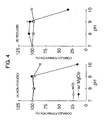
- Fig. 4 is a graph showing the stability of the oxLDL12h/ ⁇ 2-GPI16h complex and the complex reduced with NaCNBH 3 under varying pH conditions
- the oxLDL12h/ ⁇ 2-GPI16h complex (100 ⁇ g/ml in terms of apoB) was reduced by treatment with 200 mM NaCNBH 3 at pH 7.4 for 16 hours in PBS.
- the unreduced or reduced complex was incubated at 37°C for 16 hours in the presence or absence of 10 mM MgCl 2 under the pH condition shown in the graph.
- the ⁇ 2-GPI/oxLDL complex in this preparation containing 300 ng/ml LDL (in terms of apoB) was measured by ELISA. The data are shown by the mean ⁇ SD of 3 samples.
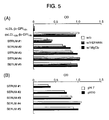
- Fig. 5 is a graph showing ⁇ 2-GPI/oxLDL complex present in serum from patients.
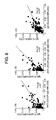
- Fig. 6 is a graph showing the serum level of ⁇ 2-GPI/oxLDL complex detected by ELISA.
- Serums collected from healthy persons and patients with primary APS (PAPS), APS accompanied by SLE (secondary APS), or SLE not accompanied by APS were diluted 100-fold to detect ⁇ 2-GPI/oxLDL complex.
- the cut-off value (1 U/ml) was regulated so as to be 3 times as high as the standard deviation of the mean of 50 healthy persons. Number in the graph shows the mean of each group.
- Fig. 7 is a graph showing the relationship among the antibody titers of ⁇ 2-GPI-related IgG antibodies detected in 3 different ELISA systems.
- Fig. 8 is a graph showing the relationship between IgG antibody titer and IgG immune complex level.
- Fig. 9 is a graph showing the detection result of "antibody recognizing ⁇ 2-GPI/oxLDL complex" by ELISA.
- A is a graph showing the serum level of the antibody recognizing ⁇ 2-GPI/oxLDL complex.
- B shows the relationship between the "antibody recognizing ⁇ 2-GPI/oxLDL complex" and the "anti- ⁇ 2-GPI IgG antibody”.
- the standard 1 of the present invention is a standard for measuring a ⁇ 2-GPI/oxLDL complex in a sample, which comprises complex having oxLDL bound covalently to ⁇ 2-GPI.
- the "oxLDL" constituting the standard 1 of the present invention can be prepared by oxidizing LDL.
- the method of oxidization is not particularly limited, a method that involves incubation with Cu 2+ can be mentioned as a preferable method.
- LDL can be oxidized by incubating LDL with about 5 ⁇ M CuSO 4 at a temperature of about 37°C.
- the oxidation reaction can be terminated by adding a chelating agent such as EDTA.
- a chelating agent such as EDTA
- the " ⁇ 2-GPI" constituting the standard 1 of the present invention can be obtained from serum etc. in mammals or can be produced by genetic engineering techniques.
- the origin of " ⁇ 2-GPI” is not particularly limited, but " ⁇ 2-GPI” is preferably derived from the same animal species as that of an animal from which the "sample” subjected to measurement was collected.
- sample subj ected to measurement is human serum
- human-derived ⁇ 2-GPI is preferably used.
- the standard 1 of the present invention comprises, as an ingredient, the complex having "oxLDL" bound covalently to the " ⁇ 2-GPI".
- the method of covalently binding the two is not particularly limited, and can be suitably selected from known techniques.
- measurement in this specification is a concept encompassing not only quantitative measurement of a certain substance but also qualitative detection (detection of the presence or absence of a certain substance).
- standard in this specification means "standard substance” used in measuring a certain substance. That is, when quantitative or qualitative measurement of a certain substance A is to be conducted, substance A (standard substance) serving as standard is necessary. For example, when substance A in a sample is quantitatively measured by using OD, substance A (standard substance) prepared at a predetermined concentration is measured for its OD, and the OD value of the sample is compared with the OD value of this standard substance, whereby the concentration of substance A in the sample can be determined.
- the presence or absence of substance A in a sample is judged (that is, when substance A is qualitatively measured)
- the presence or absence of substance A in the sample can be judged (substance A can be qualitatively measured) by using an indicator the presence or absence of a substance having the same physicochemical properties and biological properties (for example, antigenicity etc.) as those of substance A (standard substance) as standard.
- the "standard substance” used in such measurement is a typical example of the "standard” in this specification.
- the standard 1 of the present invention may further contain other ingredients insofar as the "complex having oxLDL bound covalently to ⁇ 2-GPI" is contained as an ingredient.
- the "other ingredients” used herein are not particularly limited insofar as they do not adversely affect the physicochemical properties and biological properties (for example antigenicity etc.) of the "complex having oxLDL bound covalently to ⁇ 2-GPI" itself, and do not inhibit the functions of the complex as standard.
- the "other ingredients” are exemplified by an excipient, a buffer agent, a stabilizer, a preservative etc. used in preparation of usual reagents.
- the form of the standard 1 of the present invention is not particularly limited insofar as the standard can be formed as desired for use, and for example the standard can be used in forms such as a dissolved form, a frozen form and a lyophilized form.
- This product can be charged into a suitable container such as an ampoule, vial, syringe or bottle and can be distributed as such or stored, and can be used as the standard for measurement.
- a suitable container such as an ampoule, vial, syringe or bottle and can be distributed as such or stored, and can be used as the standard for measurement.
- the standard 2 of the present invention is the standard for measuring ⁇ 2-GPI/oxLDL complex in a sample, which comprises " ⁇ 2-GPI/oxLDL complex obtainable by incubating oxLDL and ⁇ 2-GPI under the conditions of 37°C and pH 7.4 for 16 hours" as an ingredient.
- the standard 2 of the present invention comprises, as an ingredient, the ⁇ 2-GPI/oxLDL complex obtainable by incubating oxLDL and ⁇ 2-GPI under the conditions of 37°C and pH 7.4 for 16 hours.
- obtainable means that the ⁇ 2-GPI/oxLDL complex as the ingredient of the standard 2 of the present invention is not limited to the "complex actually obtained by incubating oxLDL and ⁇ 2-GPI under the conditions of 37°C and pH 7.4 for 16 hours" but may include the complex obtained by amethoddifferent therefrom.
- the ⁇ 2-GPI/oxLDL complex obtained by a different method when evaluated to be equal as substance to the " ⁇ 2-GPI/oxLDL complex actually obtained by incubating oxLDL and ⁇ 2-GPI under the conditions of 37°C and pH 7.4 for 16 hours", the ⁇ 2-GPI/oxLDL complex obtained by the different method can also be used as the ingredient of the standard 2 of the present invention.
- the ingredient of the standard 2 of the present invention preferably has the following properties (a) and (b):
- the ⁇ 2-GPI/oxLDL complex having the properties (a) and (b) can be obtained by incubating at least oxLDL and ⁇ 2-GPI under the conditions of 37°C and pH 7.4 for 16 hours.
- the ⁇ 2-GPI/oxLDL complex which can be used as the ingredient of the standard 2 of the present invention is not limited to the complex actually obtained by this method, but may be the complex obtained by a method different therefrom, as described above.
- the standard 2 of the present invention makes use of such ⁇ 2-GPI/oxLDL complex as a standard formeasuring the ⁇ 2-GPI/oxLDL complex in a sample.
- the standard 2 of the present invention may contain other ingredients insofar as such ⁇ 2-GPI/oxLDL complex is contained as an ingredient, and a description and examples of the "other ingredients” are the same as described above in the "standard 1 of the present invention".
- the sample subjected to measurement using the standard of the present invention is not particularly limited insofar as it requires measurement of ⁇ 2-GPI/oxLDL complex.
- the sample may not be purified for ⁇ 2-GPI/oxLDL complex.
- the sample is preferably a sample derived from a living body, and the sample derived from a living body is exemplified specifically by blood (which is used in this specification as a concept including serum and plasma).
- the blood may be used as it is, may be diluted, or may be processed to such an extent that the ⁇ 2-GPI/oxLDL complex in a sample is not adversely affected.
- the measurement method 1 of the present invention is a method of measuring ⁇ 2-GPI/oxLDL complex in a sample, which comprises using the standard of the present invention.
- standard of the present invention may be either standard 1 or 2 of the present invention. Its description is as described above.
- the measurement method 1 of the present invention is specifically carried out is not limited insofar as the standard of the present invention is used. Specific methods are exemplified by immunological measurement techniques using e.g. antibody (ELISA [sandwich method, competitive method, inhibition method etc.], immunoblotting, agglutination method etc.).
- antibody ELISA [sandwich method, competitive method, inhibition method etc.]
- immunoblotting agglutination method etc.
- the measurement method 1 of the present invention preferably comprises at least a step of covalently binding "oxLDL" to " ⁇ 2-GPI" in a sample.
- a description of the covalently binding is the same as described above in the "standard 1 of the present invention”.
- oxLDL and ⁇ 2-GPI are incubated under the condition of pH 3 to 9 (for example, pH 7.4), whereby a bond having the following properties (a) and (b) can be formed between oxLDL and ⁇ 2-GPI.
- the conversion of the bond in every " ⁇ 2-GPI/oxLDL complex formed by electrostatic bonding" present in a sample into the bond having the properties (a) and (b) is preferable in that every complex in the sample (that is, the complex having the bond with the properties (a) and (b) and the complex having an electrostatic bond) can be measured more accurately.
- the measurement method 1 of the present invention preferably comprises at least a step of previously incubating "oxLDL" and " ⁇ 2-GPI" in a sample under the condition of pH 3 to 9. Specifically, the pH value is about 7.4.
- the bond having the properties (a) and (b) is considered due to formation of Schiff base, and this reaction proceeds with an acid catalyst. Accordingly, the pH value during incubation is preferably neutral to acidic. However, strongly acidic conditions cause protein denaturation and are thus not preferable.
- the incubation temperature is not particularly limited insofar as it is to such an extent that the functions of oxLDL and ⁇ 2-GPI are not lost, the incubation temperature is for example 37°C or thereabout.
- the incubation time is not particularly limited either, and can be suitably established by those skilled in the art. Generally, the above bond can be formed more completely as the incubation time is increased.
- the measurement method 1 of the present invention preferably comprises at least a step of dissociating "a complex having 'oxLDL' bound electrostatically to 'a protein, a polypeptide, an amino acid, an aminosugar or an aminolipid' " in a sample.
- the electrostatically bound complex only is dissociated, while the complex having a covalent bond or the bond with the properties (a) and (b) is not dissociated; for example, there is a method that involves incubating the complex in the presence of heparin or a salt such as MgCl 2 , CaCl 2 or the like.
- concentration of these substances, the incubation temperature, the incubation time etc. can be suitably determined by those skilled in the art in such a range that while the electrostatically bound complex only is dissociated, the complex having a covalent bond or the bond with the properties (a) and (b) is not dissociated.
- the incubation temperature is for example 37°C or thereabout.
- the complex can be dissociated into its components more completely as the incubation time is increased.
- the detection method 1 of the present invention is a method of detecting a disease, which comprises measuring a ⁇ 2-GPI/oxLDL complex in a sample by using the measurement method 1 of the present invention and correlating the measured "complex in the sample" with a disease.
- the ⁇ 2-GPI/oxLDL complex in a sample is first measured by the measurement method 1 of the present invention.
- a description of the measurement method 1 of the present invention is as described above.
- the "sample” used herein is not particularly limited insofar as it is derived from the living body of an animal subjected to detection of a disease, and specifically blood etc. can be mentioned. Other description of the “sample” is the same as described above in the "standard of the present invention".
- the " ⁇ 2-GPI/oxLDL complex in the sample" measured by using the measurement method 1 of the present invention is then correlated with a disease to detect the disease.
- the term "measurement” in this specification is a concept encompassing not only quantitative measurement but also qualitative detection (detection of the presence or absence). Accordingly, the "measured ' ⁇ 2-GPI/oxLDL complex in the sample' " as used herein may be measured for its "amount” in the sample (quantitative measurement result) or its "presence or absence” in the sample (qualitative measurement result). The amount may be either an amount (observed value) determined from a calibration curve prepared using the present standards of known concentrations, a relationship etc. or a ratio (relative value) relative to a value of healthy animals (animals having no disease).
- the amount of the " ⁇ 2-GPI/oxLDL complex” is increased by a certain disease so that when the amount of the complex in a sample is higher than that of a healthy person, the sample can be correlated with "contraction of the disease” or "high possibility of contraction of the disease". When the amount of the complex in the sample is equal to that of a healthy person, the sample can be correlated with "absence of contraction of the disease” or "low possibility of contraction of the disease".
- the detection method 1 of the present invention can detect not only contraction of a disease but also the severity of the contracted disease. For example, when the amount of the complex in a sample from a certain person tends to be increased in periodic measurement, the sample can be correlated with "progress of the disease” or "high possibility of progress of the disease". On the other hand, when the amount of the complex measured tends to be decreased, the sample can be correlated with "tendency to ameliorate the disease” or "high possibility of tendency to ameliorate the disease”. When the amount of the complex measured tends to be constant, the sample can be correlated with "no change in the severity of the disease (or no change in health) " or "high possibility of no change in the severity of the disease (or high possibility of no change in health)".
- the "disease” detected by the detection method 1 of the present invention is preferably selected from the group consisting of APS, thrombosis, arterial thrombosis, venous thrombosis, pregnancy morbidity, renal disease, arteriosclerosis (cerebral infarction, myocardial infarction etc.) and diabetes.
- the kit 1 of the present invention is a kit for measurement of a ⁇ 2-GPI/oxLDL complex in a sample, which comprises the standard of the present invention as a constituent ingredient.
- the "standard of the present invention” used herein may be either standard 1 or 2 of the present invention. Its description is as described above.
- the kit 1 of the present invention may contain other constituent ingredients insofar as it contains the standard of the present invention as a constituent ingredient.
- the kit further contains "antibody recognizing ⁇ 2-GPI/oxLDL complex" as a constituent ingredient.
- the "antibody recognizing ⁇ 2-GPI/oxLDL complex” is not particularly limited either, and can be exemplified by, for example, an anti- ⁇ 2-GPI autoantibody WB-CAL-1 (IgG2a, ⁇ ) and a mouse monoclonal anti-human apoB100 antibody ID2 (IgG).
- the "antibody recognizing ⁇ 2-GPI/oxLDL complex” is preferably labeled with a labeling substance in order to facilitate detection.
- the labeling substance used in such labeling includes enzymes (peroxidase, alkali phosphatase, ⁇ -galactosidase, luciferase, acetylcholine esterase etc.), fluorochromes (fluorescein isothiocyanate (FITC) etc.), chemoluminescent substances (luminol etc.), biotin, avidin (including streptoavidin) etc., but is not particularly limited insofar as it can be used in usual labeling of protein.
- enzymes peroxidase, alkali phosphatase, ⁇ -galactosidase, luciferase, acetylcholine esterase etc.
- fluorochromes fluorescein isothiocyanate (FITC) etc.
- chemoluminescent substances luminol etc.
- biotin avidin (including streptoavidin) etc.
- the labeling method can be selected suitably from known methods suitable for the labeling substance, for example a glutaraldehyde method, periodate crosslinking method, maleimide crosslinking method, carbodiimide method and activated ester method [see “Tanpakushitsu No Kagaku” (Protein Chemistry), Third Volume, published in 1987 by TOKYO KAGAKU DOZIN CO., LTD.].
- a glutaraldehyde method periodate crosslinking method
- maleimide crosslinking method maleimide crosslinking method
- carbodiimide method and activated ester method see “Tanpakushitsu No Kagaku” (Protein Chemistry), Third Volume, published in 1987 by TOKYO KAGAKU DOZIN CO., LTD.].
- biotin a method of using a hydrazide derivative of biotin (see Avidin-Biotin Chemistry: A Handbook, pp.
- the detection method can be suitably selected by those skilled in the art, depending on the labeling substance used.
- the labeling substance can be detected by adding a substrate for the enzyme, for example a coloration substrate such as tetramethyl benzidine or o-phenylene diamine and aqueous hydrogen peroxide, and then measuring a change in optical density as the degree of coloration of a product by the enzyme reaction.
- a substrate for the enzyme for example a coloration substrate such as tetramethyl benzidine or o-phenylene diamine and aqueous hydrogen peroxide
- a fluorochrome or a chemoluminescent substance a method of measuring the fluorescence or emission of a solution after the reaction can be mentioned.
- kits 1 of the present invention can be exemplified by detection reagents for the labeling substance, a reagent labeling the "antibody recognizing ⁇ 2-GPI/oxLDL complex", etc.
- a blocking substance a washing solution, a sample diluent, an enzyme reaction termination solution etc. may be contained.
- Measurement of the ⁇ 2-GPI/oxLDL complex by using the kit 1 of the present invention can be carried out according to the measurement method 1 of the present invention.
- the kit 1 of the present invention is used preferably in detection of a disease.
- the "disease" detected by the kit 1 of the present invention is preferably selected from the group consisting of APS, thrombosis, arterial thrombosis, venous thrombosis, pregnancy morbidity, renal disease, arteriosclerosis (cerebral infarction, myocardial infarction etc.) and diabetes. Detection of the disease by using the kit 1 of the present invention can be carried out according to the detection method 1 of the present invention.
- sample used herein is not particularly limited insofar as it is derived from the living body of an animal subjected to detection of a disease, and specifically blood etc. can be mentioned. Other description of the “sample” is the same as described above in the "standard of the present invention.
- the antigen 1 of the present invention is an antigen for measuring "antibody recognizing ⁇ 2-GPI/oxLDL complex" in a sample, which comprises "complex having oxLDL bound covalently to ⁇ 2-GPI" as an ingredient.
- a description of the "complex having oxLDL bound covalently to ⁇ 2-GPI" as the ingredient in the antigen 1 of the present invention is the same as described above in the "standard 1 of the present invention".
- the antigen 1 of the present invention similar to the standard 1 of the present invention, may contain other ingredients insofar as such ⁇ 2-GPI/oxLDL complex is contained as an ingredient, and a description and examples of the "other ingredients” are the same as described above in the "standard 1 of the present invention”.
- the antigen 2 of the present invention is an antigen for measuring "antibody recognizing ⁇ 2-GPI/oxLDL complex" in a sample, which comprises " ⁇ 2-GPI/oxLDL complex obtainable by incubating oxLDL and ⁇ 2-GPI under the conditions of 37°C and pH 7.4 for 16 hours".
- the " ⁇ 2-GPI/oxLDL complex obtainable by incubating oxLDL and ⁇ 2-GPI under the conditions of 37°C and pH 7.4 for 16 hours" is the same as described in the "standard 2 of the present invention". Accordingly, the " ⁇ 2-GPI/oxLDL complex obtainable by incubating oxLDL and ⁇ 2-GPI under the conditions of 37°C and pH 7.4 for 16 hours" as the ingredient of the antigen 2 of the present invention preferably has the following properties (a) and (b):
- the antigen 2 of the present invention may contain other ingredients insofar as such ⁇ 2-GPI/oxLDL complex is contained as an ingredient, and a description and examples of the "other ingredients” are the same as described above in the "standard 1 of the present invention".
- the "antibody recognizing ⁇ 2-GPI/oxLDL complex" as the subject of measurement using the antigen of the present invention includes, but is not limited to, autoantibody, the antibody described in the kit 1 of the present invention, etc.
- Any antigen of the present invention binds to the "antibody recognizing ⁇ 2-GPI/oxLDL complex" and can, by virtue of this property, be used in measurement of the "antibody recognizing ⁇ 2-GPI/oxLDL complex".
- the measurement method 2 of the present invention is a method of measuring "antibody recognizing ⁇ 2-GPI/oxLDL complex" in a sample, which comprises using the antigen of the present invention.
- the "antigen of the present invention” used herein may be either antigen 1 or 2 of the present invention. Its description is as described above.
- the measurement method 2 of the present invention is specifically carried out is not limited insofar as the antigen of the present invention is used. Examples of the specific method are the same as in the "measurement method 1 of the present invention” described above. In the measurement method 2 of the present invention, however, the antigen of the present invention is used preferably in a form immobilized on a solid phase. That is, the measurement method 2 of the present invention is preferably a method using the "solid phase of the present invention” described later.
- sample is the same as described above in the “standard of the present invention”.
- antibody recognizing ⁇ 2-GPI/oxLDL complex is the same as described above in the "antigen of the present invention”.
- the detection method 2 of the present invention is a method of detecting a disease, which comprises measuring "antibody recognizing ⁇ 2-GPI/oxLDL complex" in a sample by using the measurement method 2 of the present invention and correlating the measured "antibody in the sample” with a disease.
- the "antibody recognizing ⁇ 2-GPI/oxLDL complex" in a sample is first measured by the measurement method 2 of the present invention.
- a description of the measurement method 2 of the present invention is as described above.
- the “sample” used herein is not particularly limited insofar as it is derived from the living body of an animal subjected to detection of a disease, and specifically blood etc. can be mentioned. Other description of the “sample” is the same as described above in the "standard of the present invention”.
- the "antibody recognizing ⁇ 2-GPI/oxLDL complex in a sample" measured by using the measurement method 2 of the present invention is then correlated with a disease to detect the disease.
- the "measured 'antibody recognizing ⁇ 2-GPI/oxLDL complex in a sample”' mentioned herein may be measured for its "amount” in the sample (quantitative measurement result) or its "presence or absence” in the sample (qualitative measurement result), similar to the above description of the "detection method 1 of the present invention.
- the “amount” may be an observed value or a relative value similar to the above description of the "detection method 1 of the present invention.
- the amount of the "antibody recognizing ⁇ 2-GPI/oxLDL complex” is increased by a certain disease so that when the amount of the antibody in a sample is higher than that of a healthy person, the sample can be correlated with "contraction of the disease” or "high possibility of contraction of the disease". When the amount of the antibody in a sample is equal to that of a healthy person, the sample can be correlated with "absence of contraction of the disease” or "low possibility of contraction of the disease”.
- the detection method 2 of the present invention can be used in detecting not only the contraction of a disease but also the severity of a disease, and the "disease" detected by the detection method 2 of the present invention, similar to the detection method 1 of the present invention, is preferably selected from the group consisting of APS, thrombosis, arterial thrombosis, venous thrombosis, pregnancy morbidity, renal disease, arteriosclerosis (cerebral infarction, myocardial infarction etc.) and diabetes.
- the solid phase of the present invention is a solid phase having the antigen of the present invention immobilized thereon.
- the "antigen of the present invention” may be either antigen 1 or 2 of the present invention. Its description is as described above.
- the solid phase used in immobilizing the antigen of the present invention is not particularly limited insofar as it is capable of immobilizing the antigen of the present invention, and is insoluble in water, a sample and a measurement reaction solution.
- the solid phase can be in the form of a plate (e.g. a microplate well etc.), a tube, beads, a membrane, gel etc.
- the material of the solid phase includes polystyrene, polypropylene, nylon, polyacrylamide etc.
- a plate made of polystyrene is preferable.
- the method of immobilizing the antigen of the present invention onto the solid phase it is possible to employ a physical adsorptionmethod, acovalentbondingmethod, andgeneralmethods of immobilizing protein or lipid.
- the physical adsorption method is preferable because this method is easy in procedure and used frequently.
- the physical adsorption method includes, for example, a method of adsorbing the antigen of the present invention onto a solid phase (for example a microplate) by dissolving the antigen of the present invention in a buffer solution or the like, and contacting the solution with the solid phase.
- a solid phase for example a microplate
- a blocking substance is added to the solid phase so that the region not having the antigen immobilized thereon is covered therewith.
- the blocking substance includes serum albumin, casein, skim milk and gelatin, and products commercially available as the blocking substance can also be used.
- the blocking method includes, for example, a method that involves adding e.g. a blocking substance (serum albumin, casein, skim milk, gelatin etc.) to the solid phase and storing it at about 37°C for 30 minutes to 2 hours or at ordinary temperatures (15 to 25°C) for 1 to 2 hours.
- a blocking substance serum albumin, casein, skim milk, gelatin etc.
- the kit 2 of the present invention is a kit for measurement of "antibody recognizing ⁇ 2-GPI/oxLDL complex" in a sample, which comprises the solid phase of the present invention as a constituent ingredient.
- the kit 2 of the present invention may contain other constituent ingredients insofar as it contains the solid phase of the present invention as a constituent ingredient. It is particularly preferable that the kit 2 further contains, as a constituent ingredient, a substance binding to the "antibody recognizing ' ⁇ 2-GPI/oxLDL complex'''.
- the "substance binding to the 'antibody recognizing ⁇ 2-GPI/oxLDL complex”' is not particularly limited insofar as it binds to the "antibody recognizing ⁇ 2-GPI/oxLDL complex”
- the “substance” is for example an antibody which depending on the animal, class etc. from which the "antibody recognizing ⁇ 2-GPI/oxLDL complex'" (immunoglobulin) was derived, binds specifically to the immunoglobulin.
- an anti-mouse IgG1 antibody can be used as the "substance binding to the 'antibody recognizing ⁇ 2-GPI/oxLDL complex'''.
- the "substance binding to 'antibody recognizing ⁇ 2-GPI/oxLDL complex'" is preferably labeled with a labeling substance to make detection easy.
- a substance binding to the "substance binding to 'antibody recognizing ⁇ 2-GPI/oxLDL complex"' may be labeled.
- kits 2 of the present invention can be exemplified by detection reagents for the labeling substance, a reagent labeling the "substance binding to 'antibody recognizing ⁇ 2-GPI/oxLDL complex''', etc.
- a blocking substance a washing solution, a sample diluent, an enzyme reaction termination solution etc. may be contained.
- Measurement of the "antibody recognizing ⁇ 2-GPI/oxLDL complex" by using the kit 2 of the present invention can be carried out according to the measurement method 2 of the present invention.
- the kit 2 of the present invention is used preferably in detection of a disease.
- the "disease” detected by the kit 2 of the present invention is preferably selected from the group consisting of APS, thrombosis, arterial thrombosis, venous thrombosis, pregnancy morbidity, renal disease, arteriosclerosis (cerebral infarction, myocardial infarction etc.) and diabetes.
- Detection of the disease by using the kit 2 of the present invention can be carried out according to the detection method 2 of the present invention.
- sample used herein is not particularly limited insofar as it is derived from the living body of an animal subjected to detection of a disease, and specifically blood etc. can be mentioned. Other description of the “sample” is the same as described above in the "standard of the present invention.
- the measurement method 3 of the present invention is a method of measuring an immune complex in a sample, which comprises using "antibody recognizing ⁇ 2-GPI” and/or “antibody recognizing LDL” and an anti-IgG antibody.
- an IgG immune complex formed with ⁇ 2-GPI or LDL can be detected.
- the "antibody recognizing ⁇ 2-GPI” is not particularly limited, but is preferably Cof-23.
- the "antibody recognizing LDL” is not particularly limited either, but is preferably anti-apoB100 antibody (1D2).
- the “anti-IgG antibody” is not particularly limited either, and can be exemplified by an antibody which depending on the animal, class etc. from which the IgG (immunoglobulin G) constituting the immune complex was derived, binds specifically to the IgG. For example, when the IgG constituting the immune complex is derived from humans, an anti-human IgG antibody can be used as the anti-IgG antibody.
- These antibodies are preferably those immobilized on a solid phase.
- the solid phase which can be used herein is the same as the “solid phase of the present invention” described above.
- the meaning of the "sample” is the same as described in the "standard of the present invention”.
- WB-CAL-1 (IgG2a, ⁇ ): Anti- ⁇ 2-GPI autoantibody which is an antibody derived from WB F1 mice [reference 8].
- EY2C9 Anti- ⁇ 2-GPI autoantibody which is an antibody established from peripheral-blood lymphocytes in patients with APS [reference 9].
- WB-CAL-1 and EY2C9 both bind to only " ⁇ 2-GPI having formed a complex with negatively charged PLs" or " ⁇ 2-GPI having formed a complex with oxLDL” and do not bind in solution to monomeric ⁇ 2-GPI.
- 1D2 Mouse monoclonal anti-human apoB100 antibody binding to both oxLDL and native LDL and obtained from YAMASA CORPORATION.
- ⁇ 2-GPI was purified from plasma in healthy persons.
- the pooled plasma from healthy persons was purified by a heparin-Sepharose column, a DEAE-cellulose column and an anti- ⁇ 2-GPI affinity column.
- fractions rich in ⁇ 2-GPI were further passed through a protein A-Sepharose column.
- the final ⁇ 2-GPI fraction was delipidated by sufficient washing with n-butanol.
- LDL 1. 019 to 1. 063 g/ml
- the isolated LDL was adjusted to 100 ⁇ g/ml and oxidized by incubation for varying times at 37°C together with 5 ⁇ M CuSO 4 (10 mM Hepes, 150 mM NaCl, pH 7.4 (Hepes buffer)).
- the oxidization was terminated by adding EDTA (final concentration 1 mM), and this LDL was dialyzed against Hepes buffer containing 1 mM EDTA.
- the degree of oxidation was evaluated by a thiobarbituric acid reactive substance (TBARS) value [reference 12].
- TBARS thiobarbituric acid reactive substance
- 7-Ketocholesteryl-9-carboxynonanoate (oxLig-1) was synthesized according to a method described in [reference 7]. 22-Ketocholesteryl-9-carboxynonanoate (9-COOH-22KC) was also synthesized in an analogous manner. That is, 19.2 mg (0.10 mmol) 1-ethyl-3-(3-dimethylaminopropyl)carbodiimide hydrochloride and 6.
- the lipid was spotted on a Polygram silica gel G plate (manufactured by Machery-Nagel) and developed with chloroform/methanol (8/1, v/v).
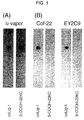
- the ligand blotting analysis was conducted according to a method described in [reference 7]. That is, the plate was dried and blocked with PBS containing 1% bovine serum albumin (BSA), and then the plate was incubated for 1 hour together with the ⁇ 2-GPI and anti- ⁇ 2-GPI antibodies (Cof-22 and EY2C9). Then, the plate was incubated for 1 hour with horseradish peroxidase (HRP)-labeled anti-mouse IgG antibody or anti-human IgM antibody. Between each step, the plate was washed sufficiently with PBS. Coloration was conducted using H 2 O 2 and 4-methoxy-1-naphthol. In a TLC plate of control, the separated ligand was stained with I 2 vapor.
- HRP horseradish peroxidase
- each well was incubated for 1 hour together with biotin-labeled anti-apoB100 antibody (1D2), and was incubated for 30 minutes with HRP-labeled avidin. Coloration was conducted using o-phenylene diamine and H 2 O 2 . The coloration reaction was terminated by adding 2 N sulfuric acid, and OD at 490 nm was measured. Among these steps, each well was washed sufficiently with Hepes buffer containing 0.05% Tween 20. The optical density (OD) of each sample in the assay was corrected by the average OD of the blank wells.
- 1.0 U/ml was adjusted to be 3 times as high as the standard deviation of the mean of serum samples from 50 healthy persons, and as a result, 1.0 U/ml oxLDL12h/ ⁇ 2-GPI16h complex corresponded to about 4.5 ⁇ g/ml in terms of apoB. Samples having reactivity higher than 1.0 U/ml were expressed as positive.
- CL derived from bovine heart, manufactured by Sigma
- oxLig-1 or 9-COOH-22KC 50 ⁇ g/ml ethanol, 50 ⁇ l/well
- a polystyrene plate Immulon 1B; Dynex Technologies Inc.
- this plate was blocked with 1% BSA.
- the purified monoclonal autoantibody or serum sample 100-fold dilution was incubated for 1 hour in the presence or absence of ⁇ 2-GPI (25 ⁇ g/ml), and then HRP-labeled anti-mouse IgG or anti-human IgG or IgM was added to each well.
- the subsequent step was carried out according to the method described in the "ELISA for detection of ⁇ 2-GPI/oxLDL complex".
- the optical density (OD) of each sample was corrected by the average OD of the blank wells, and its antibody titer was calculated by using the positive standard in the living body.
- the antibody titer in a sample was more than 3 times as high as the standard deviation of the mean of plasma samples from 50 healthy persons, the sample was expressed as positive.
- ELISA for detection of anti- ⁇ 2-GPI IgG antibody was carried out by a method described in [reference 1]. That is, ⁇ 2-GPI was put in a volume of 10 ⁇ g/ml (50 ⁇ l/well) to a polyoxidized polystyrene plate (carboxylated, Sumilon C, Sumitomo Bakelite Co., Ltd.) and adsorbed onto each well by overnight incubation at 4°C, and this plate was blocked with 3% gelatin. A serum sample was diluted 100-fold and incubated for 1 hour in each well. Then, HRP-labeled anti-human IgG was added to the plate. The subsequent step was carried out according to the method described in the "ELISA for detection of ⁇ 2-GPI/oxLDL complex".
- the anti- ⁇ 2-GPI antibody Cof-23 or anti-apoB100 antibody (1D2) was put in an amount of 5 ⁇ g/ml (50 ⁇ l/well) to a polystyrene plate (Immulon 1B) and adsorbed onto each well by overnight incubation at 4°C. Then, this plate was blocked with 1% BSA. A serum sample (100-fold dilution) was incubated for 1 hour in each well, and then HRP-labeled anti-human IgG was added thereto. The subsequent step was carried out according to the method described in the "ELISA for detection of ⁇ 2-GPI/oxLDL complex".
- the oxLDL12h/ ⁇ 2-GPI16h complex (10 ⁇ g/ml, 50 ⁇ g/well) was incubated at 4°C overnight in each well in a polystyrene plate (Immulon 1B) and blocked with PBS containing 1% BSA. Then, a serum sample diluted 100-fold with PBS containing 0.3% BSA was put to each well, reacted for 1 hour and then reacted for 1 hour with HRP-labeled anti-human IgG. The well was colored in a usual manner by adding o-phenylene diamine and H 2 O 2 , the reaction was terminated with sulfuric acid, and the absorbance at 490 nm was measured.
- oxLDL12h LDL (100 ⁇ g/ml) was oxidized by incubation with 5 ⁇ M CuSO 4 at 37°C for 12 hours (oxLDL thus obtained is referred to as "oxLDL12h") and the oxidation was terminated by adding EDTA.
- oxLDL12h oxLDL12h
- the OD was increased only when oxLDL12h was incubated with exogenous ⁇ 2-GPI in a well. Formation of the complex depended on the concentrations of both ⁇ 2-GPI and oxLDL (Fig. 2A, B). Significant formation of the complex occurred only when oxLDL12h was used, but did not occur when native LDL was used.
- FIG. 3A is a graph showing time-dependent formation of TBARS in LDL treated with CuSO 4 .
- LDL oxidation causing binding to ⁇ 2-GPI proceeded with a slight delay, and reached the maximum level after about 12 hours (Fig. 3B).
- This complex formation was inhibited almost completely by addition of heparin or MgCl 2 .
- Previously formed oxLDL12h was incubated with ⁇ 2-GPI for varying times under the condition of 4°C or 37°C (their final concentrations were 100 ⁇ g/ml and 100 ⁇ g/ml respectively) (Fig. 3C). Formation of the ⁇ 2-GPI/oxLDL complex depended on temperature and time. This complex was not dissociated even by incubation under the condition of pH 7.4 in the presence of heparin or MgCl 2 .
- Fig. 3D is a graph showing that during the process of oxidation with Cu 2+ , stable interaction between ⁇ 2-GPI and oxLDL is formed even in the presence of ⁇ 2-GPI.
- Serum samples from patients with APS and/or SLE were screened to examine whether or not the ⁇ 2-GPI/oxLDL complex occurred at high level.
- the ⁇ 2-GPI/oxLDL complex was identified in 20 serum samples. This group showed the serum complex at high concentrations of 2.1 to 13.7 U/ml (average concentration: 4.48 U/ml (cut-off value: 1.0 U/ml)).
- native LDL even upon incubation at 37°C for 16 hours together with ⁇ 2-GPI did not form the complex.
- the oxLDL12h/ ⁇ 2-GPI16h complex is stable under the condition of pH 7.4, even in the presence of heparin or MgCl 2 .
- the indissociable, covalent adduct is formed in vivo between ⁇ 2-GPI and oxLDL.
- the in vitro adduct observed in this experiment is considered as an intermediate product in formation of the indissociable complex.
- Anti- ⁇ 2-GPI/oxLig-1 IgG antibody was observed in 71.7% (33/46) of the patients with primary APS, 59.5% (22/37) of the patients with APS accompanied by SLE (secondary APS), and 11.4% (5/44) of the patients with SLE not accompanied by APS.
- the anti- ⁇ 2-GPI/oxLig-1 IgG antibody in these patients was observed to have significant relationship with history of thrombosis (arterial and/or venous thrombosis, arterial thrombosis and venous thrombosis) and pregnancy morbidity, but not with thrombocytopenia (Table3) .
- Theassaypvalue (expectation value), odds ratio, and 95% CI in arterial thrombosis were better than those in venous thrombosis, pregnancy morbidity and thrombocytopenia.
- the "antibody recognizing ⁇ 2-GPI/oxLDL complex" in serum was detected by ELISA. Further, the relationship between the "antibody recognizing ⁇ 2-GPI/oxLDL complex” and the "'anti- ⁇ 2-GPI IgG antibody” was examined. The results are shown in Fig. 9.
- the present inventors reported that a major lipid ligand involved in binding ⁇ 2-GPI to oxLDL formed by Cu 2+ is ⁇ -carboxylated 7-ketocholesterol ester such as 7-ketocholesteryl-9-carboxynonanoate (oxLig-1), and the ⁇ -carboxyl group is essential for recognition of ⁇ 2-GPI [reference 7].
- ⁇ 2-GPI and Cu 2+ -oxLDL in vitro is reversible in an initial stage by treatment with Mg 2+ , but is gradually developed into more stable interaction, requiring Mg 2+ and high pH for dissociation.
- LDL is a major lipid source accumulated in the foam cells.
- the binding of modified LDL to a scavenger receptor of macrophage leads to unregulated accumulation of cholesterol, thus leading to foam-cell formation accompanied by atherosclerotic damage.
- the activity of the bound ketone to form a Schiff base adduct is lower than that of ⁇ -aldehyde.
- the interaction between oxLDL and ⁇ 2-GPI is inhibited by any one of MgCl 2 , CaCl 2 and heparin, and it is thus considered that the ⁇ 2-GPI ligand is involved in non-covalent electrostatic interaction between oxLDL and ⁇ 2-GPI under neutral pH condition.
- Products oxidized via Cu 2+ in LDL include cholesterol and/or oxysterol esterified with 9- or 13-hydroperoxy (or hydroxy)-octadecadienoate, 9-oxononanoate or 9-carboxynonanoate, and some of these products are also present in arteriosclerotic plaques [references 14-16].
- ⁇ -carboxyl-oxysteryl esters such as oxLig-1 and oxLig-2 were detected as major ⁇ 2-GPI ligands in Cu 2+ -oxLDL. Characteristics of in vitro and in vivo adducts are not revealed.
- oxLDL is circulated as a stable and indissociable complex with ⁇ 2-GPI. It is reported that oxLDL is incorporated predominantly via a scavenger receptor into macrophages, and leads often to formation of foam cells and atherosclerotic damage. However, there is incomplete formation of oxLDL circulating in blood in patients with arteriosclerosis. In this experiment, free oxLDL in serum from the patient is not measured, but oxLDL formed in vivo is considered to form a complex with endogenous ⁇ 2-GPI (concentration of ⁇ 2-GPI in plasma is about 200 ⁇ g/ml). As shown in Fig.
- LDL having undergone oxidation in vitro forms a stable adduct in the presence of ⁇ 2-GPI under neutral pH condition as the incubation time is increased. Further, the stable interaction between ⁇ 2-GPI and oxLDL is observed under various in vitro conditions such as in a buffer solution only, a buffer solution containing 1% BSA, and 50% human serum (data are not shown) .
- the ⁇ 2-GPI ligand correlated with oxLig-1 and oxLig-2 causes specific interaction between ⁇ 2-GPI and oxLDL in the presence of an excess of various plasma/serum proteins, to form a stable complex.
- aCL was initially considered to bind to acidic PLs such as CL, but at present, it is widely admitted that ⁇ 2-GPI is a true antigen for aCL. It was shown in 1998 that anti- ⁇ 2-GPI IgG antibody can serve as a serum marker of arterial thrombosis for patients with SLE, and also that anti-MDA-LDL IgG antibody is not correlated with arterial thrombosis.
- the standard of the present invention When the standard of the present invention is used, the ⁇ 2-GPI/oxLDL complex occurring particularly in the living body can be measured more accurately and strictly, by which the measurement method 1 of the present invention, the detection method 1 of the present invention and the kit 1 of the present invention can be provided, and thus the standard of the present invention is extremely useful.
- antigen of the present invention When the antigen of the present invention is used, "antibody recognizing ⁇ 2-GPI/oxLDL complex" occurring particularly in the living body can be measured more accurately and strictly, by which the measurement method 2 of the present invention, the detection method 2 of the present invention, the solid phase of the present invention and the kit 2 of the present invention can be provided, and thus the antigen of the present invention is extremely useful.
- the measurement method 3 of the present invention can easily and rapidly detect an IgG immune complex formed with ⁇ 2-GPI or LDL and is thus extremely useful.
Landscapes
- Life Sciences & Earth Sciences (AREA)
- Health & Medical Sciences (AREA)
- Molecular Biology (AREA)
- Engineering & Computer Science (AREA)
- Urology & Nephrology (AREA)
- Hematology (AREA)
- Biomedical Technology (AREA)
- Chemical & Material Sciences (AREA)
- Immunology (AREA)
- Medicinal Chemistry (AREA)
- Biochemistry (AREA)
- Microbiology (AREA)
- Biophysics (AREA)
- Biotechnology (AREA)
- Food Science & Technology (AREA)
- Endocrinology (AREA)
- Physics & Mathematics (AREA)
- Analytical Chemistry (AREA)
- Cell Biology (AREA)
- General Health & Medical Sciences (AREA)
- General Physics & Mathematics (AREA)
- Pathology (AREA)
- Investigating Or Analysing Biological Materials (AREA)
- Peptides Or Proteins (AREA)
- Measuring Or Testing Involving Enzymes Or Micro-Organisms (AREA)
- Medicines Containing Antibodies Or Antigens For Use As Internal Diagnostic Agents (AREA)
Applications Claiming Priority (3)
| Application Number | Priority Date | Filing Date | Title |
|---|---|---|---|
| JP2002261366 | 2002-09-06 | ||
| JP2002261366 | 2002-09-06 | ||
| PCT/JP2003/011388 WO2004023141A1 (fr) | 2002-09-06 | 2003-09-05 | METHODE D'ANALYSE IN VIVO D'UN COMPLEXE OXYDE A BASE DE LDL-β2-GLYCOPROTEINE I |
Publications (3)
| Publication Number | Publication Date |
|---|---|
| EP1548436A1 true EP1548436A1 (fr) | 2005-06-29 |
| EP1548436A4 EP1548436A4 (fr) | 2006-09-20 |
| EP1548436B1 EP1548436B1 (fr) | 2008-11-19 |
Family
ID=31973126
Family Applications (1)
| Application Number | Title | Priority Date | Filing Date |
|---|---|---|---|
| EP03794267A Expired - Lifetime EP1548436B1 (fr) | 2002-09-06 | 2003-09-05 | Methode d'analyse in vivo d'un complexe oxyde a base de ldl-beta-glycoproteine |
Country Status (7)
| Country | Link |
|---|---|
| US (1) | US7455976B2 (fr) |
| EP (1) | EP1548436B1 (fr) |
| JP (1) | JP4280236B2 (fr) |
| AT (1) | ATE414904T1 (fr) |
| AU (1) | AU2003261976A1 (fr) |
| DE (1) | DE60324820D1 (fr) |
| WO (1) | WO2004023141A1 (fr) |
Cited By (1)
| Publication number | Priority date | Publication date | Assignee | Title |
|---|---|---|---|---|
| US8575314B2 (en) | 2008-06-20 | 2013-11-05 | National University Corporation Okayama University | Antibody against oxidized LDL/β2GPI complex and use of the same |
Families Citing this family (5)
| Publication number | Priority date | Publication date | Assignee | Title |
|---|---|---|---|---|
| US8871459B2 (en) * | 2009-08-07 | 2014-10-28 | Astute Medical, Inc. | Method for evaluating renal status by determining beta-2-glycoprotein 1 |
| JP6399987B2 (ja) * | 2015-09-11 | 2018-10-03 | ヤマサ醤油株式会社 | 抗β2−GPI抗体の測定法 |
| US10858422B2 (en) | 2016-05-31 | 2020-12-08 | Abcentra, Llc | Methods for treating systemic lupus erythematosus with an anti-apolipoprotein B antibody |
| WO2017210360A1 (fr) | 2016-05-31 | 2017-12-07 | Cardiovax, Llc | Procédés de diagnostic et de traitement du lupus érythémateux disséminé |
| JP6826740B1 (ja) * | 2020-02-06 | 2021-02-10 | 国立大学法人 岡山大学 | 酸化LDL/β2GPI複合体の検出方法、及び、検出キット |
Family Cites Families (2)
| Publication number | Priority date | Publication date | Assignee | Title |
|---|---|---|---|---|
| JPH07306202A (ja) | 1992-04-01 | 1995-11-21 | Maruzen Petrochem Co Ltd | 細胞核dnaの損傷検出方法 |
| WO1995009363A1 (fr) | 1993-09-29 | 1995-04-06 | Yamasa Corporation | Procede de titrage de lipoproteine oxydee et applications de ce procede |
-
2003
- 2003-09-05 US US10/526,494 patent/US7455976B2/en not_active Expired - Fee Related
- 2003-09-05 DE DE60324820T patent/DE60324820D1/de not_active Expired - Lifetime
- 2003-09-05 EP EP03794267A patent/EP1548436B1/fr not_active Expired - Lifetime
- 2003-09-05 AU AU2003261976A patent/AU2003261976A1/en not_active Abandoned
- 2003-09-05 AT AT03794267T patent/ATE414904T1/de not_active IP Right Cessation
- 2003-09-05 WO PCT/JP2003/011388 patent/WO2004023141A1/fr not_active Ceased
- 2003-09-05 JP JP2004534180A patent/JP4280236B2/ja not_active Expired - Fee Related
Cited By (1)
| Publication number | Priority date | Publication date | Assignee | Title |
|---|---|---|---|---|
| US8575314B2 (en) | 2008-06-20 | 2013-11-05 | National University Corporation Okayama University | Antibody against oxidized LDL/β2GPI complex and use of the same |
Also Published As
| Publication number | Publication date |
|---|---|
| EP1548436B1 (fr) | 2008-11-19 |
| WO2004023141A1 (fr) | 2004-03-18 |
| JPWO2004023141A1 (ja) | 2005-12-22 |
| ATE414904T1 (de) | 2008-12-15 |
| EP1548436A4 (fr) | 2006-09-20 |
| US7455976B2 (en) | 2008-11-25 |
| DE60324820D1 (de) | 2009-01-02 |
| JP4280236B2 (ja) | 2009-06-17 |
| US20060099644A1 (en) | 2006-05-11 |
| AU2003261976A1 (en) | 2004-03-29 |
Similar Documents
| Publication | Publication Date | Title |
|---|---|---|
| Kobayashi et al. | Circulating oxidized LDL forms complexes with β2-glycoprotein I: implication as an atherogenic autoantigen | |
| JP3370334B2 (ja) | 酸化リポタンパク質の測定法およびその用途 | |
| JP6333731B2 (ja) | 低伝導率条件下の高感度を有する自己抗体測定法 | |
| Dac et al. | A selective bi-site immunoenzymatic procedure for human Lp [a] lipoprotein quantification using monoclonal antibodies against apo [a] and apoB. | |
| KR20140015153A (ko) | 심근세포 손상의 진단을 위한 검사 | |
| JPH0823560B2 (ja) | 免疫的に結合可能の物質の測定法及び診断剤 | |
| JP2619549B2 (ja) | 抗原の定量法およびそれに用いる固相 | |
| JPWO1995009363A1 (ja) | 酸化リポタンパク質の測定法およびその用途 | |
| US6492185B1 (en) | Immunoassay for detection of very low density lipoprotein and antibodies useful therefor | |
| US7455976B2 (en) | Method of measuring oxidized LDL/β2-glycoprotein I complex occurring in the living body | |
| US20200018755A1 (en) | Method for measuring an ability of high-density lipoprotein to uptake cholesterol | |
| US20040248216A1 (en) | Method of examining cancer by assaying autoantibody against mdm2 and reagent therefor | |
| KR101667088B1 (ko) | Ku86 와 이의 자가항체와의 복합체의 면역 측정 방법, 여기에 사용되는 키트 및 이를 이용한 암판정 방법 | |
| US20140080158A1 (en) | Method for immunologically measuring soluble lr11 | |
| US5939535A (en) | Acetaldehyde and malondialdehyde protein adducts | |
| US7160733B2 (en) | Ligand specific to β2-glycoprotein I and use thereof | |
| AU628921B2 (en) | Immunoassay method, reagent and kit | |
| JP5110353B2 (ja) | 新規な酸化ldl複合体及びその検知方法 | |
| JP2005502029A (ja) | アポbおよび非アポb含有粒子中のアポciiiを測定する新規な方法 | |
| WO2004065961A1 (fr) | Procede de determination quantitative du degre d'oxydation | |
| US20100278836A1 (en) | Diagnostic and therapeutic methods and compositions for cardiovascular disease | |
| JP5257788B2 (ja) | クラスリン重鎖とその自己抗体との複合体の免疫測定方法、それに用いるキット及びそれを用いた癌判定方法 | |
| Kato et al. | Detection of a lipid-lysine adduct family with an amide bond as the linkage: Novel markers for lipid-derived protein modifications | |
| JP2001343389A (ja) | Mdm2に対する自己抗体の測定によるがんの検査方法およびその試薬 | |
| JP2000304747A (ja) | 動脈硬化症惹起性リポ蛋白の検出方法およびこれに用いる抗体 |
Legal Events
| Date | Code | Title | Description |
|---|---|---|---|
| PUAI | Public reference made under article 153(3) epc to a published international application that has entered the european phase |
Free format text: ORIGINAL CODE: 0009012 |
|
| 17P | Request for examination filed |
Effective date: 20050404 |
|
| AK | Designated contracting states |
Kind code of ref document: A1 Designated state(s): AT BE BG CH CY CZ DE DK EE ES FI FR GB GR HU IE IT LI LU MC NL PT RO SE SI SK TR |
|
| AX | Request for extension of the european patent |
Extension state: AL LT LV MK |
|
| DAX | Request for extension of the european patent (deleted) | ||
| A4 | Supplementary search report drawn up and despatched |
Effective date: 20060818 |
|
| 17Q | First examination report despatched |
Effective date: 20070209 |
|
| GRAP | Despatch of communication of intention to grant a patent |
Free format text: ORIGINAL CODE: EPIDOSNIGR1 |
|
| GRAS | Grant fee paid |
Free format text: ORIGINAL CODE: EPIDOSNIGR3 |
|
| GRAA | (expected) grant |
Free format text: ORIGINAL CODE: 0009210 |
|
| AK | Designated contracting states |
Kind code of ref document: B1 Designated state(s): AT BE BG CH CY CZ DE DK EE ES FI FR GB GR HU IE IT LI LU MC NL PT RO SE SI SK TR |
|
| REG | Reference to a national code |
Ref country code: GB Ref legal event code: FG4D |
|
| REG | Reference to a national code |
Ref country code: CH Ref legal event code: EP |
|
| REG | Reference to a national code |
Ref country code: IE Ref legal event code: FG4D |
|
| REF | Corresponds to: |
Ref document number: 60324820 Country of ref document: DE Date of ref document: 20090102 Kind code of ref document: P |
|
| PG25 | Lapsed in a contracting state [announced via postgrant information from national office to epo] |
Ref country code: ES Free format text: LAPSE BECAUSE OF FAILURE TO SUBMIT A TRANSLATION OF THE DESCRIPTION OR TO PAY THE FEE WITHIN THE PRESCRIBED TIME-LIMIT Effective date: 20090301 Ref country code: AT Free format text: LAPSE BECAUSE OF FAILURE TO SUBMIT A TRANSLATION OF THE DESCRIPTION OR TO PAY THE FEE WITHIN THE PRESCRIBED TIME-LIMIT Effective date: 20081119 |
|
| NLV1 | Nl: lapsed or annulled due to failure to fulfill the requirements of art. 29p and 29m of the patents act | ||
| PG25 | Lapsed in a contracting state [announced via postgrant information from national office to epo] |
Ref country code: NL Free format text: LAPSE BECAUSE OF FAILURE TO SUBMIT A TRANSLATION OF THE DESCRIPTION OR TO PAY THE FEE WITHIN THE PRESCRIBED TIME-LIMIT Effective date: 20081119 Ref country code: FI Free format text: LAPSE BECAUSE OF FAILURE TO SUBMIT A TRANSLATION OF THE DESCRIPTION OR TO PAY THE FEE WITHIN THE PRESCRIBED TIME-LIMIT Effective date: 20081119 Ref country code: SI Free format text: LAPSE BECAUSE OF FAILURE TO SUBMIT A TRANSLATION OF THE DESCRIPTION OR TO PAY THE FEE WITHIN THE PRESCRIBED TIME-LIMIT Effective date: 20081119 |
|
| PG25 | Lapsed in a contracting state [announced via postgrant information from national office to epo] |
Ref country code: RO Free format text: LAPSE BECAUSE OF FAILURE TO SUBMIT A TRANSLATION OF THE DESCRIPTION OR TO PAY THE FEE WITHIN THE PRESCRIBED TIME-LIMIT Effective date: 20081119 Ref country code: EE Free format text: LAPSE BECAUSE OF FAILURE TO SUBMIT A TRANSLATION OF THE DESCRIPTION OR TO PAY THE FEE WITHIN THE PRESCRIBED TIME-LIMIT Effective date: 20081119 Ref country code: DK Free format text: LAPSE BECAUSE OF FAILURE TO SUBMIT A TRANSLATION OF THE DESCRIPTION OR TO PAY THE FEE WITHIN THE PRESCRIBED TIME-LIMIT Effective date: 20081119 Ref country code: BE Free format text: LAPSE BECAUSE OF FAILURE TO SUBMIT A TRANSLATION OF THE DESCRIPTION OR TO PAY THE FEE WITHIN THE PRESCRIBED TIME-LIMIT Effective date: 20081119 Ref country code: BG Free format text: LAPSE BECAUSE OF FAILURE TO SUBMIT A TRANSLATION OF THE DESCRIPTION OR TO PAY THE FEE WITHIN THE PRESCRIBED TIME-LIMIT Effective date: 20090219 |
|
| PG25 | Lapsed in a contracting state [announced via postgrant information from national office to epo] |
Ref country code: PT Free format text: LAPSE BECAUSE OF FAILURE TO SUBMIT A TRANSLATION OF THE DESCRIPTION OR TO PAY THE FEE WITHIN THE PRESCRIBED TIME-LIMIT Effective date: 20090420 Ref country code: SE Free format text: LAPSE BECAUSE OF FAILURE TO SUBMIT A TRANSLATION OF THE DESCRIPTION OR TO PAY THE FEE WITHIN THE PRESCRIBED TIME-LIMIT Effective date: 20090219 Ref country code: CZ Free format text: LAPSE BECAUSE OF FAILURE TO SUBMIT A TRANSLATION OF THE DESCRIPTION OR TO PAY THE FEE WITHIN THE PRESCRIBED TIME-LIMIT Effective date: 20081119 |
|
| PLBE | No opposition filed within time limit |
Free format text: ORIGINAL CODE: 0009261 |
|
| STAA | Information on the status of an ep patent application or granted ep patent |
Free format text: STATUS: NO OPPOSITION FILED WITHIN TIME LIMIT |
|
| PG25 | Lapsed in a contracting state [announced via postgrant information from national office to epo] |
Ref country code: SK Free format text: LAPSE BECAUSE OF FAILURE TO SUBMIT A TRANSLATION OF THE DESCRIPTION OR TO PAY THE FEE WITHIN THE PRESCRIBED TIME-LIMIT Effective date: 20081119 |
|
| 26N | No opposition filed |
Effective date: 20090820 |
|
| PG25 | Lapsed in a contracting state [announced via postgrant information from national office to epo] |
Ref country code: MC Free format text: LAPSE BECAUSE OF NON-PAYMENT OF DUE FEES Effective date: 20090930 |
|
| REG | Reference to a national code |
Ref country code: CH Ref legal event code: PL |
|
| PG25 | Lapsed in a contracting state [announced via postgrant information from national office to epo] |
Ref country code: IE Free format text: LAPSE BECAUSE OF NON-PAYMENT OF DUE FEES Effective date: 20090905 |
|
| PG25 | Lapsed in a contracting state [announced via postgrant information from national office to epo] |
Ref country code: CH Free format text: LAPSE BECAUSE OF NON-PAYMENT OF DUE FEES Effective date: 20090930 Ref country code: GR Free format text: LAPSE BECAUSE OF FAILURE TO SUBMIT A TRANSLATION OF THE DESCRIPTION OR TO PAY THE FEE WITHIN THE PRESCRIBED TIME-LIMIT Effective date: 20090220 Ref country code: LI Free format text: LAPSE BECAUSE OF NON-PAYMENT OF DUE FEES Effective date: 20090930 |
|
| PG25 | Lapsed in a contracting state [announced via postgrant information from national office to epo] |
Ref country code: IT Free format text: LAPSE BECAUSE OF FAILURE TO SUBMIT A TRANSLATION OF THE DESCRIPTION OR TO PAY THE FEE WITHIN THE PRESCRIBED TIME-LIMIT Effective date: 20081119 |
|
| PG25 | Lapsed in a contracting state [announced via postgrant information from national office to epo] |
Ref country code: LU Free format text: LAPSE BECAUSE OF NON-PAYMENT OF DUE FEES Effective date: 20090905 |
|
| PG25 | Lapsed in a contracting state [announced via postgrant information from national office to epo] |
Ref country code: HU Free format text: LAPSE BECAUSE OF FAILURE TO SUBMIT A TRANSLATION OF THE DESCRIPTION OR TO PAY THE FEE WITHIN THE PRESCRIBED TIME-LIMIT Effective date: 20090520 |
|
| PG25 | Lapsed in a contracting state [announced via postgrant information from national office to epo] |
Ref country code: TR Free format text: LAPSE BECAUSE OF FAILURE TO SUBMIT A TRANSLATION OF THE DESCRIPTION OR TO PAY THE FEE WITHIN THE PRESCRIBED TIME-LIMIT Effective date: 20081119 |
|
| PG25 | Lapsed in a contracting state [announced via postgrant information from national office to epo] |
Ref country code: CY Free format text: LAPSE BECAUSE OF FAILURE TO SUBMIT A TRANSLATION OF THE DESCRIPTION OR TO PAY THE FEE WITHIN THE PRESCRIBED TIME-LIMIT Effective date: 20081119 |
|
| REG | Reference to a national code |
Ref country code: FR Ref legal event code: PLFP Year of fee payment: 14 |
|
| REG | Reference to a national code |
Ref country code: FR Ref legal event code: PLFP Year of fee payment: 15 |
|
| PGFP | Annual fee paid to national office [announced via postgrant information from national office to epo] |
Ref country code: FR Payment date: 20170918 Year of fee payment: 15 Ref country code: GB Payment date: 20170920 Year of fee payment: 15 |
|
| PGFP | Annual fee paid to national office [announced via postgrant information from national office to epo] |
Ref country code: DE Payment date: 20170929 Year of fee payment: 15 |
|
| REG | Reference to a national code |
Ref country code: DE Ref legal event code: R119 Ref document number: 60324820 Country of ref document: DE |
|
| GBPC | Gb: european patent ceased through non-payment of renewal fee |
Effective date: 20180905 |
|
| PG25 | Lapsed in a contracting state [announced via postgrant information from national office to epo] |
Ref country code: DE Free format text: LAPSE BECAUSE OF NON-PAYMENT OF DUE FEES Effective date: 20190402 |
|
| PG25 | Lapsed in a contracting state [announced via postgrant information from national office to epo] |
Ref country code: FR Free format text: LAPSE BECAUSE OF NON-PAYMENT OF DUE FEES Effective date: 20180930 |
|
| PG25 | Lapsed in a contracting state [announced via postgrant information from national office to epo] |
Ref country code: GB Free format text: LAPSE BECAUSE OF NON-PAYMENT OF DUE FEES Effective date: 20180905 |