EP1528772A1 - Mobiltelefonsystem zur verwendung eines lokales kommunikationsnetz - Google Patents
Mobiltelefonsystem zur verwendung eines lokales kommunikationsnetz Download PDFInfo
- Publication number
- EP1528772A1 EP1528772A1 EP03738672A EP03738672A EP1528772A1 EP 1528772 A1 EP1528772 A1 EP 1528772A1 EP 03738672 A EP03738672 A EP 03738672A EP 03738672 A EP03738672 A EP 03738672A EP 1528772 A1 EP1528772 A1 EP 1528772A1
- Authority
- EP
- European Patent Office
- Prior art keywords
- communication
- connection control
- internet
- section
- mobile
- Prior art date
- Legal status (The legal status is an assumption and is not a legal conclusion. Google has not performed a legal analysis and makes no representation as to the accuracy of the status listed.)
- Withdrawn
Links
Images



Classifications
-
- H—ELECTRICITY
- H04—ELECTRIC COMMUNICATION TECHNIQUE
- H04W—WIRELESS COMMUNICATION NETWORKS
- H04W84/00—Network topologies
- H04W84/02—Hierarchically pre-organised networks, e.g. paging networks, cellular networks, WLAN [Wireless Local Area Network] or WLL [Wireless Local Loop]
- H04W84/10—Small scale networks; Flat hierarchical networks
- H04W84/16—WPBX [Wireless Private Branch Exchange]
-
- H—ELECTRICITY
- H04—ELECTRIC COMMUNICATION TECHNIQUE
- H04L—TRANSMISSION OF DIGITAL INFORMATION, e.g. TELEGRAPHIC COMMUNICATION
- H04L12/00—Data switching networks
- H04L12/66—Arrangements for connecting between networks having differing types of switching systems, e.g. gateways
-
- H—ELECTRICITY
- H04—ELECTRIC COMMUNICATION TECHNIQUE
- H04L—TRANSMISSION OF DIGITAL INFORMATION, e.g. TELEGRAPHIC COMMUNICATION
- H04L12/00—Data switching networks
- H04L12/28—Data switching networks characterised by path configuration, e.g. LAN [Local Area Networks] or WAN [Wide Area Networks]
-
- H—ELECTRICITY
- H04—ELECTRIC COMMUNICATION TECHNIQUE
- H04M—TELEPHONIC COMMUNICATION
- H04M7/00—Arrangements for interconnection between switching centres
- H04M7/12—Arrangements for interconnection between switching centres for working between exchanges having different types of switching equipment, e.g. power-driven and step by step or decimal and non-decimal
- H04M7/1205—Arrangements for interconnection between switching centres for working between exchanges having different types of switching equipment, e.g. power-driven and step by step or decimal and non-decimal where the types of switching equipement comprises PSTN/ISDN equipment and switching equipment of networks other than PSTN/ISDN, e.g. Internet Protocol networks
-
- H—ELECTRICITY
- H04—ELECTRIC COMMUNICATION TECHNIQUE
- H04Q—SELECTING
- H04Q3/00—Selecting arrangements
- H04Q3/58—Arrangements providing connection between main exchange and sub-exchange or satellite
-
- H—ELECTRICITY
- H04—ELECTRIC COMMUNICATION TECHNIQUE
- H04W—WIRELESS COMMUNICATION NETWORKS
- H04W4/00—Services specially adapted for wireless communication networks; Facilities therefor
- H04W4/24—Accounting or billing
-
- H—ELECTRICITY
- H04—ELECTRIC COMMUNICATION TECHNIQUE
- H04M—TELEPHONIC COMMUNICATION
- H04M2207/00—Type of exchange or network, i.e. telephonic medium, in which the telephonic communication takes place
- H04M2207/18—Type of exchange or network, i.e. telephonic medium, in which the telephonic communication takes place wireless networks
-
- H—ELECTRICITY
- H04—ELECTRIC COMMUNICATION TECHNIQUE
- H04M—TELEPHONIC COMMUNICATION
- H04M2215/00—Metering arrangements; Time controlling arrangements; Time indicating arrangements
- H04M2215/20—Technology dependant metering
- H04M2215/2026—Wireless network, e.g. GSM, PCS, TACS
-
- H—ELECTRICITY
- H04—ELECTRIC COMMUNICATION TECHNIQUE
- H04M—TELEPHONIC COMMUNICATION
- H04M2215/00—Metering arrangements; Time controlling arrangements; Time indicating arrangements
- H04M2215/32—Involving wireless systems
-
- H—ELECTRICITY
- H04—ELECTRIC COMMUNICATION TECHNIQUE
- H04M—TELEPHONIC COMMUNICATION
- H04M7/00—Arrangements for interconnection between switching centres
- H04M7/009—Arrangements for interconnection between switching centres in systems involving PBX or KTS networks
Definitions
- the present invention relates to a mobile telephone system, and more particularly to a mobile telephone system using a plurality of local communication networks so that communication is carried out within the local communication network or between local communication networks via the Internet.
- CATV Global System for Mobile communications
- the CATV service provides the distribution of contents closely related to the area, and contents with large data quantity such as movies.
- the services provided (applications) by the local communication networks such as the CATV are rather limited, such that the number of subscribers remains stagnant, while managing conditions are not necessarily sound.
- the Internet telephone which happens to offer low call charges, is attracting a great deal of interest, and accordingly, various sorts of applications to the mobile telephone have been proposed.
- the third generation and fourth generation mobile telephone services have become practical, it is expected that the role played by the exchange connection system for mobile telephones using networks available on the Internet (the "Internet Network”) will increasingly become important.
- Patent Document 1 The exchange connection system for mobile telephones using the Internet network has been disclosed in Japanese Laid-Open Patent Publication No. 2000-308128) entitled “Internet Cordless Telephone System, Cordless Base and Cordless Handset for the System and Connection and Control Device” (hereinafter, “Patent Document 1").
- Patent Document 1 relates to a system including a plurality of cordless bases which carry out communication functions using the Internet protocol, and one or more cordless handsets which carry out radio communication with cordless bases.
- This system comprises a cordless handset equipped with an upper layer processing section compliant with Internet protocol, and a lower layer processing section compliant with a radio communication protocol, and a connection control device that stores the addresses of the cordless handset, and the addresses of the cordless bases which communicate with the cordless handset, and controls connection and disconnection to and from the cordless handset via the cordless bases in compliance with Internet protocol.
- the cordless handset then requests the connection control device for a location registration via the cordless base assigned to the area where the cordless handset is located, thereby setting the address of the handset in terms of Internet protocol to the connection control device, and intermittently waits for an incoming call to the handset from the cordless base by means of control employed by the lower layer processing section for such period until the incoming call reaches the handset from the cordless base after the address has been set.
- the system sets up a fixed Internet communication network within offices, buildings, head offices, and branches, and between entire overseas offices and local carriers, deploys a plurality of PHS CELL STATION (hereinafter, "PHS-CS"), PHS PERSONAL STATION (hereinafter, "PHS-PS”) and connection control devices, which include the upper layer compliant with Internet communication protocol and the lower layer compliant with radio communication protocol, and operates between the PHS-CS and PHS-PS in the private mode.
- PHS-CS PHS CELL STATION
- PHS-PS PHS PERSONAL STATION
- connection control devices which include the upper layer compliant with Internet communication protocol and the lower layer compliant with radio communication protocol, and operates between the PHS-CS and PHS-PS in the private mode.
- this system enables the PHS-PS to receive/transmit a call at low call charges from the area where the PHS-CS is installed, it is rather disadvantageous because the extent to which the system can be constructed is limited to the determined set of Internet communication networks and the areas where the PHS-CS are located.
- the respective PHS-PS must hold IP addresses, and be concurrently equipped with the upper layer processing section compliant with Internet protocol in addition to the lower layer processing section used for communicating with the PHS-CS in compliance with radio communication protocol, thereby increasing the production cost of PHS-PS.
- the present invention aims to solve the foregoing problems of the prior technology, by providing a mobile telephone system which uses existing local communication networks to communicate with any location in Japan and the world via Internet networks at low communication charges without the need for a vast capital outlay, and to provide a mobile telephone system which would minimize the number of functions to be added to PHS-PS and PHS-CS, and yet be suitably adapted to local communication networks provided by Internet providers and the like.
- a mobile telephone system (10) using local communication networks is constituted by connection control devices (22), (32) that are respectively installed on a plurality of local communication networks (20), (30), an integration exchange server (12) that is connected to the respective connection control devices (22), (32) via private Internet networks (14), (16), while a plurality of communication stations (24) to (28), (34) to (38) that are wire-connected to the respective connection control devices (22), (32) are installed along with subscriber terminals of the local communication networks (20), (30), and function as PHS-CS, and a plurality of mobile terminals (a) to (h) that serve as PHS-PS.
- the mobile terminals (a) to (h) include a radio section and a communication section both of which carry out communication at least with the communication stations (24) to (28), (34) to (38) in compliance with radio communication protocol.
- the respective communication stations (24) to (28), (34) to (38) include a location registration processing section that carries out location registration processing for mobile terminals located within the vicinity thereof, a radio communication protocol processing section that communicates with the mobile terminals in compliance with radio communication protocol, an Internet protocol processing section that communicates with the connection control device in compliance with Internet protocol.
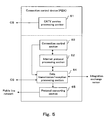
- connection control devices (22), (32) include an Internet protocol processing section which holds an IP address on the Internet, and communicates with the respective communication stations and the integration exchange server in compliance with Internet protocol, and a connection control section which carries out connection control based on communication data from the communication stations or the integration exchange server.
- the integration exchange server (12) includes a location information database which stores the IP addresses of the connection control devices, IP addresses of the respective communication stations, and location information on the respective mobile terminals, an Internet protocol processing section which communicates with the respective connection control devices in compliance with Internet protocol, and a connection control section that carries out connection control based on communication data emanating from the connection control devices, and carries out the function of connection control based on the location information on the mobile terminal obtained from the location information database in possession of the communication data.
- the call charge is free between the respective mobile terminals (a) to (h) and the respective communication stations (24) to (28) as in the ordinary PHS private mode, and is free or extremely low along the communication stations (24) to (28) ⁇ the connection control device (22) ⁇ the integration exchange server (12) ⁇ the connection control device (32) ⁇ the communication stations (34) to (38), since communication is carried out in compliance with Internet protocol using existing local communication networks.
- the mobile telephone system is characterized in that: the connection control devices (22), (32) further include a protocol converting section which converts the communication data from the communication stations (24) to (28), (34) to (38) or the integration exchange server (12) to data compliant with protocol on the PSTN, thereby causing the connection control section to connect with a call destination routing through a public line network, while the integration exchange server (12) is further configured so as to be connected to public Internet networks, and if the call destination is an Internet telephone, the connection control section can connect to the call destination routing through the public Internet networks, and the integration exchange server (12) is further configured so as to be connected to overseas exchanges installed by dedicated international line providers, such that if the call destination is a mobile telephone of a public line network subscriber, the connection control section can connect to the call destination routing through the public line network via the overseas exchanges.
- the connection control devices (22), (32) further include a protocol converting section which converts the communication data from the communication stations (24) to (28), (34) to (38) or the integration exchange server (12) to
- connection control can be carried out on a route with the lowest call charge depending on whether the telephone involved is the fixed telephone, the mobile telephone, or the Internet telephone of the subscriber of the public line network, respectively.
- the integration exchange server (12) is further connected to the integration exchange server (12) installed abroad via the private Internet networks. According to this configuration, it is possible to easily expand the area of service coverage, and to make international telephone calls as well as domestic telephone calls at extremely low charges. Moreover, according to the mobile telephone system of the present invention, by using the CATV communication network provided by a local communication network, mobile telephone service may be provided in addition to CATV service, as to attract more subscribers to the CATV service.
- the mobile telephone system using local communication networks is composed of connection control devices (80) which are installed on Internet networks serving as local communication networks (21), a plurality of communication stations (24) to (28) which are connected to the connection control devices (80) via the Internet networks, and function as PHS-CS, and a plurality of mobile terminals (a) to (d) which function as PHS-PS, and is characterized in that:
- the mobile telephone system is characterized in that: the respective communication stations (24) to (28), (34) to (38) further include an IP address managing section that manages a plurality of IP addresses which are assigned to the respective communication stations and are used for the mobile terminals (a) to (h) which are communicating via the corresponding communication stations, and the mobile terminals (a) to (h) further include a mode switching section, and if the mobile terminals should select the IP mode by means of the mode switching section, the mobile terminals will receive control channel information transmitted from the communication stations (24) to (28), (34) to (38) while such information is masked at predetermined bit positions.
- the PHS-PS equipped with the mobile terminals (a) to (h) do not require an upper layer compliant with Internet protocol, it is not necessary to register a large number of such PHS-PS to PHS-CS serving as the communication stations (24) to (28), (34) to (38), and at the same time, the number of the mobile terminals for IP addresses need not be limited, thereby providing a large number of mobile terminals with the service.
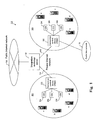
- Fig. 1 is a diagram showing the schematic configuration of a mobile telephone system according to the first embodiment of the present invention.
- Fig. 2 is a diagram showing the configuration of a mobile terminal of a subscriber in the mobile telephone system illustrated in Fig. 1
- Fig. 3 is a diagram showing the configuration of a communication station in the mobile telephone system illustrated in Fig. 1.
- Fig. 4 is a diagram showing the schematic configuration of a control channel frame in communication between the mobile terminals and the communication stations shown in Fig. 1.
- Fig. 5 is a diagram showing the configuration of a connection control device in the mobile telephone system illustrated in Fig. 1.
- Fig. 6 is a diagram showing the configuration of an integration exchange server in the mobile telephone system referred to in Fig. 1.
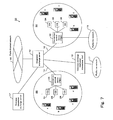
- Fig. 7 is a diagram showing the schematic configuration of an extended mobile telephone system according to the embodiment shown in Fig. 1.
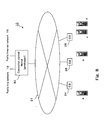
- Fig. 8 is a diagram showing the schematic configuration of a mobile telephone system according to the second embodiment of the present invention.
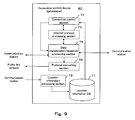
- Fig. 9 is a diagram showing the configuration of a gatekeeper in the mobile telephone system shown in Fig. 8.
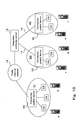
- Fig. 10 is a diagram showing the system configuration which carries out a call between the mobile telephone system according to the first embodiment and the mobile telephone system according to the second embodiment.
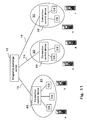
- Fig. 11 is a diagram showing the system configuration integrating the mobile telephone systems according to the first and second embodiments.
- Fig. 1 is a drawing showing the configuration of a mobile telephone system using a plurality of local communication networks according to the first embodiment of the present invention.
- the mobile telephone system 10 according to the present invention is constituted by connection control devices (PBX) 22, 32 respectively installed in a plurality of local communication networks 20, 30, an integration exchange server 12 connected to the respective connection control devices 22, 32 via private Internet networks 14, 16, a plurality of communication stations (CSs) 24 to 28, 34 to 38, which are wire-connected to the respective connection control devices 22, 32 on the respective local communication networks 20, 30, and function as PHS-CS, and mobile terminals a to h, which function as PHS-PS.
- PBX connection control devices
- CSs communication stations
- connection control devices 22, 32 installed on the respective local communication networks 20, 30 will connect the call to the destination mobile terminal via the connection control device of the communication station within the area where the call destination mobile terminal is located. If the call destination is a subscriber of a public line network, the connection control devices 22, 32 are configured to have functions such as address conversion for the call destination, and protocol conversion for communication data (described in detail below), and connection is made to the call destination via the public line network 19.
- the integration exchange server 12 is connected to a public Internet network 18, and if the destination of a call from the mobile terminals a to h is an Internet telephone, the integration exchange server 12 is configured to provide control to connect to a gateway of the carrier to which the subscriber of the call destination subscribes via the public Internet network 18.
- CATV communication networks Cable Television communication network
- broadband service networks DSL (Digital Subscriber Line)
- ADSL (Asymmetric Digital Subscriber Line) connection service networks provided by Internet providers can be utilized, and such other communication networks.
- the respective connection control devices 22, 32 may be simultaneously installed integrally with or independently of CATV servers, which transmit CATV data such as contents to be delivered to respective subscriber terminals (CATV adapters) of the local communication network, and in the same manner, the respective communication stations 24 to 28, 34 to 38 may be simultaneously installed integrally with or independently of the respective subscriber terminals.
- CATV servers which transmit CATV data such as contents to be delivered to respective subscriber terminals (CATV adapters) of the local communication network
- CATV adapters CATV adapters
- the integration exchange server 12 has an IP address on the Internet and an upper layer communication function compliant with Internet protocol, and stores the IP addresses on the Internet of the respective connection control devices 22, 32, and local addresses of the respective communication stations 24 to 28, 34 to 38 within the respective local communication networks. It is provided with a location information database, which stores results of location registration carried out by the respective mobile terminals a to h to the communication stations 24 to 28, 34 to 38.
- connection control devices 22, 32 respectively hold an IP address on the Internet and serve to incorporate the upper layer compliant with Internet protocol used for communicating with the integration exchange server 12 and the communication stations 24 to 28, 34 to 38, and, transmit (relay) the results of the location registration carried out between the communication stations 24 to 28, 34 to 38 and the respective mobile terminals a to h to the integration exchange server 12.
- Each of the communication stations 24 to 28, 34 to 38 holds several IP addresses, and is respectively provided with an upper layer compliant with Internet protocol used for communicating with the respective connection control devices 22, 32 and a lower layer compliant with radio communication protocol used for radio communication with the respective mobile terminals a to h. Moreover, each of the communication stations 24 to 28, 34 to 38 is provided with an IP address managing section which manages IP addresses used by the mobile terminals to which the connection is maintained, and simultaneously function as PHS-CS and as base stations which carry out the location registration for the respective mobile terminals a to h.
- the mobile terminals a to h do not hold an IP address on the Internet, and do not need to be provided with the upper layer compliant with Internet protocol, and are merely equipped with the facility of communicating with the communication stations (CSs) 24 to 28, 34 to 38 functioning as the PHS-CS, as well as the function of location registration accorded to ordinary PHS-PS.
- CSs communication stations
- connection control devices 22, 32 may function as servers which provide services for subscribers to the local communication networks, i.e., servers added to the CATV servers for the CATV networks, or may be configured as independent devices operating side by side with CATV servers.
- the respective communication stations (CSs) 24 to 28, 34 to 38 may serve as communication adaptors installed on the subscriber side on the local communication networks 20, 30 and configured in such manner as to be added to CATV adaptors for the CATV networks with an antenna for communicating and for location registration with the respective mobile terminals a to h, but do not necessarily have to be equipped with the calling function associated with PHS-CS.
- a business unit operating the integration exchange server 12 and the connection control devices 22, 32 on the local communication networks must register and obtain a special permit to operate as a communication carrier, and would have to obtain an allocation of telephone numbers assigned to the mobile terminals a to h owned by the subscribers subscribing to the mobile telephone service of the present invention, which may possibly be applicable to the IP telephone number presently being studied under the Japan Nationalwide Telephone Number Plan.
- the integration exchange server 12 is provided with an Internet protocol processing section 73, which communicates in compliance with Internet protocol with the respective connection control devices 22, 32, an integration exchange server 12' located abroad shown in Fig. 7 and described below, the public Internet network 18, the overseas exchange (dedicated international line exchange) 13, and the like, and holds an IP address on the Internet.
- an Internet protocol processing section 73 which communicates in compliance with Internet protocol with the respective connection control devices 22, 32, an integration exchange server 12' located abroad shown in Fig. 7 and described below, the public Internet network 18, the overseas exchange (dedicated international line exchange) 13, and the like, and holds an IP address on the Internet.
- the integration exchange server 12 includes a connection control section 74, which carries out connection control for outgoing calls originating from the mobile terminals and incoming calls bound for the mobile terminals based on the location information in the respective mobile terminals a to h stored in the location information DB 71, and a data transmission/reception processing section 75, which carries out transmission/reception processing for the communication data transmitted/received via the respective connection control devices 22, 32, the integration exchange server 12' located abroad, the public Internet network 18, and the overseas exchange (dedicated international line exchange) 13.
- a connection control section 74 which carries out connection control for outgoing calls originating from the mobile terminals and incoming calls bound for the mobile terminals based on the location information in the respective mobile terminals a to h stored in the location information DB 71
- a data transmission/reception processing section 75 which carries out transmission/reception processing for the communication data transmitted/received via the respective connection control devices 22, 32, the integration exchange server 12' located abroad, the public Internet network 18, and the overseas
- the integration exchange server 12 is provided with a protocol converting section 76, which converts the call data to the PSTN protocol in respect of connection for a subscriber to the public line network connection who is not a subscriber to the mobile telephone system, and if there is an incoming call destined for such subscriber, the connection control section 74 carries out the call destination address conversion processing to establish connection to the public line network, and the protocol converting section 76 applies protocol conversion to the communication data being routed through the data transmission/reception processing section 75 so as to obtain communication data compliant with protocol on the PSTN, and sends out the communication data to the call destination via the public line network.
- a protocol converting section 76 which converts the call data to the PSTN protocol in respect of connection for a subscriber to the public line network connection who is not a subscriber to the mobile telephone system, and if there is an incoming call destined for such subscriber, the connection control section 74 carries out the call destination address conversion processing to establish connection to the public line network, and the protocol converting section 76 applies
- the connection control section 74 retrieves the location information in the corresponding mobile terminals a to h from the location information database DB 71 based on the call destination address contained in the data received by the data transmission/reception processing section 75, identifies the connection control devices 22, 32 and the communication stations 24 to 28, 34 to 38 within the corresponding area in which the location is registered, carries out the routing, converts the call destination address, and transmits the data.
- connection control section 74 obtains the call destination address from data received by the data transmission/reception processing section 75, and carries out connection control corresponding to the call destination. If the call is destined for a subscriber to the mobile telephone system, the connection is similarly made to the connection control devices 24 to 28, 34 to 38 within the corresponding area based on the location information in the mobile terminal of the call destination in the afore described manner.
- the call destination is a telephone subscriber of the public line network connection
- conversion (routing) is made to the call destination address including the addresses of the devices through which the routings are made in order to connect to the public line network via the overseas exchange (dedicated international line exchange) 13 (refer to Fig. 7), or the connection control devices 24 to 28, 34 to 38 in the local communication network closest to the call destination.
- Fig. 7 shows a diagram of the extended configuration of the mobile telephone system illustrated in Fig. 1, and, accordingly, it is possible to build a similar mobile telephone system abroad, and to connect the integration exchange server (abroad) 12' thereof and the domestic integration exchange server 12 with each other via an Internet network, thereby easily extending the coverage of the connection service.
- a configuration may be provided for to establish connection to an overseas exchange installed by a dedicated international line provider abroad such as the dedicated international line exchange 13 in the United States via the Internet, as well as connection to the public line network 17 via the exchange 13 in the United States and to the destination subscriber.
- the call charge between the mobile terminal a and the communication station 24 is free, while the Internet telephone call charge will apply to the following route: the communication station 24 ⁇ the connection control device 22 ⁇ the integration exchange server 12 ⁇ the public Internet network 18 ⁇ the gateway of the provider to which the IP telephone terminal of the call destination subscribes ⁇ the IP telephone terminal of the call destination.
- Fig. 8 is a diagram of the configuration of the mobile telephone system 10 using a local communication network according to a second embodiment of the present invention, in which the communication stations (CSs) 24 to 28 and the mobile terminals a to d in the first embodiment are applied to a local communication network 21 provided by an Internet provider such as an ADSL connection service network in the present embodiment.
- CSs communication stations
- ADSL connection service network an Internet provider
- the configuration of the respective mobile terminals a to d as indicated in Fig. 8 is similar to that shown in Fig. 2, and thus a description of the functions and operations thereof has been omitted.
- the configuration of the communication stations (CSs) 24 to 28 is basically similar to the illustration made in Fig. 3, since the present embodiment does not require the presence of a local communication network such as a CATV communication network, the CATV reception adaptor 55 is not necessary and was therefore not drawn in Fig. 8. Otherwise, the configuration, functions, and operations of the communication stations (CSs) 24 to 28 resemble those of Fig. 3.
- CATV network may be simultaneously installed with a personal computer which transmits data communication via the Internet by means of the ADSL connection, and the CATV reception adaptor 55 may be replaced by an ADSL communication adaptor.
- a connection control device (gatekeeper) 80 is provided with the location information database (location information DB) 71, which stores the IP addresses of the communication stations 24 to 28 and the IP addresses of the communication stations 24 to 28, and simultaneously stores results of the location registration processing carried out between the respective communication stations 24 to 28 and the mobile terminals a to h.
- the location information on the respective mobile terminals a to h is collected from the respective communication stations 24 to 28, which have conveyed the location registrations to the connection control device (gatekeeper) 80, and is stored into the location information DB 71 through the location information processing section 72.
- connection control device (gatekeeper) 80 is provided with an Internet protocol processing section 73, which carries out the communication in compliance with Internet protocol with the respective communication stations 24 to 28 or the public Internet network 18, the public line network 19, and the like, and holds an IP address, which is an address on the Internet.
- connection control device (gatekeeper) 80 includes a connection control section 74, which carries out connection control for outgoing calls originating from the mobile terminals and incoming calls bound for the mobile terminals based on the location information in the respective mobile terminals a to h stored in the location information DB 71 and the data transmission/reception processing section 75, which carries out transmission/reception processing for communication data transmitted/received via the respective communication stations 24 to 28 or the public Internet network 18 and the public line network 19.
- connection control device (gatekeeper) 80 is provided with a protocol converting section 76, which converts the call data in compliance with PSTN protocol for connection to a subscriber to the public line network connection, who is not a subscriber to the mobile telephone system, and if there is an incoming call bound for the telephone of the subscriber, the connection control section 74 carries out the call destination address conversion processing, thereby establishing the connection to the public line network 18, and the protocol converting section 76 applies the protocol conversion to communication data being routed through the data transmission/reception processing section 75 so as to obtain communication data compliant with PSTN protocol, and sends out the communication data to the call destination via the public line network 18.
- the functions and operations of the connection control device (gatekeeper) 80 are basically the same as those of the integration exchange server 12 according to the embodiment shown in Fig. 1, and the description thereof has therefore been omitted.
- local communication network providers such as Internet providers can easily provide Internet telephone service at low call charges. If either the local communication network 20 or 30 in the system of Fig. 1 solely provides this mobile telephone service, the local communication network 20 or 30 would have a system configuration similar to that drawn in Fig. 8.
- connection control devices 80 of the respective communication networks can be built by substituting the functions of the connection control devices (gatekeepers) 80 of the respective communication networks with the connection control devices 22, 32 of Fig. 4, and installing the integration exchange server 12 of Fig. 6 for the purpose of integrating the respective local communication networks.
- Fig. 10 is a diagram of the system configuration which transmits a call between the mobile telephone system according to the first embodiment shown in Fig. 1, and the mobile telephone system according to the second embodiment shown in Fig. 8.
- the integration exchange server 12 and the connection control device (gatekeeper) 80 can mutually connect calls between the mobile terminals a to f via connection points on the public Internet network 19 in the mobile telephone system where the local communication networks 20 and 30 and the like are integrated by the integration exchange server 12 and the mobile telephone system where the ADSL connection service network 21 provided by the Internet provider is used as local communication network.
- different communication carriers operate their respective mobile telephone systems, and the mobile terminals which subscribe to one communication carrier cannot as yet connect to the communication stations CSs provided by another communication carrier.
- the mobile terminals a, b cannot connect to the communication stations CSs installed on the local communication networks 20, 30, and the mobile terminals c to f cannot connect to the communication stations CSs installed on the local communication network 21 of Fig. 10.
- the area coverage of the local communication networks of both systems overlap with each other and their communication stations CSs are installed close to each other, connections can be made to the respective communication stations CSs, and calls are not obstructed.
- Fig. 11 is a diagram of the configuration of a mobile telephone system which further integrates the mobile telephone system according to the first embodiment shown in Fig. 1, and the mobile telephone system according to the second embodiment shown in Fig. 8.
- the communication control device (gate keeper) 80 may be connected to the integration exchange server 12 via the private Internet network 15, and the location registration information in the respective mobile terminals a to h (mobile terminals subscribing to both mobile telephone systems) may be collated together in the integration exchange server 12.
- the integration exchange server 12 should preferably be installed and operated nationwide.
- the call charge is free between the respective mobile terminals and the respective communication stations as in the case of communication carried out in the ordinary PHS private mode, and the call charge is almost free or extremely low along the communication stations ⁇ the connection control device 22 ⁇ the integration exchange server 12 ⁇ the connection control device 32 ⁇ the communication stations, since communication is carried out in compliance with Internet protocol.
- the respective mobile terminals do not need to hold an IP address, do not need the upper layer processing section for making the communication with communication stations compliant with Internet protocol, and do not entail considerable expense. Furthermore, since the mobile terminals do not hold an IP address, and the management of the IP addresses is controlled upstream by the integration exchange server and connection control devices, the number of mobile terminals to which such services may be provided need not be restricted, and it is thus possible to increase the number of mobile terminals and communication stations that may be installed. Further, it is not necessary to carry out registration of child devices between the mobile terminals and the communication stations. Further still, it is possible to extend the paging area of the respective communication stations and to reduce the frequency by which the mobile terminals register the location thereof as well as the frequency with which the mobile terminals run out of battery.
Landscapes
- Engineering & Computer Science (AREA)
- Computer Networks & Wireless Communication (AREA)
- Signal Processing (AREA)
- Business, Economics & Management (AREA)
- Accounting & Taxation (AREA)
- Physics & Mathematics (AREA)
- Astronomy & Astrophysics (AREA)
- General Physics & Mathematics (AREA)
- Mobile Radio Communication Systems (AREA)
- Telephonic Communication Services (AREA)
- Data Exchanges In Wide-Area Networks (AREA)
- Sub-Exchange Stations And Push- Button Telephones (AREA)
Applications Claiming Priority (5)
| Application Number | Priority Date | Filing Date | Title |
|---|---|---|---|
| JP2002197774 | 2002-07-05 | ||
| JP2002197774 | 2002-07-05 | ||
| JP2002357306 | 2002-12-09 | ||
| JP2002357306A JP4113766B2 (ja) | 2002-07-05 | 2002-12-09 | 地域通信網を用いた携帯電話システム |
| PCT/JP2003/008501 WO2004006552A1 (ja) | 2002-07-05 | 2003-07-03 | 地域通信網を用いた携帯電話システム |
Publications (2)
| Publication Number | Publication Date |
|---|---|
| EP1528772A1 true EP1528772A1 (de) | 2005-05-04 |
| EP1528772A4 EP1528772A4 (de) | 2006-07-05 |
Family
ID=30117401
Family Applications (1)
| Application Number | Title | Priority Date | Filing Date |
|---|---|---|---|
| EP03738672A Withdrawn EP1528772A4 (de) | 2002-07-05 | 2003-07-03 | Mobiltelefonsystem zur verwendung eines lokales kommunikationsnetz |
Country Status (10)
| Country | Link |
|---|---|
| US (1) | US20050120071A1 (de) |
| EP (1) | EP1528772A4 (de) |
| JP (1) | JP4113766B2 (de) |
| KR (1) | KR100719192B1 (de) |
| CN (1) | CN1666493A (de) |
| AU (1) | AU2003246265A1 (de) |
| BR (1) | BR0312583A (de) |
| MX (1) | MXPA05000356A (de) |
| TW (1) | TWI251414B (de) |
| WO (1) | WO2004006552A1 (de) |
Cited By (2)
| Publication number | Priority date | Publication date | Assignee | Title |
|---|---|---|---|---|
| CN101098539B (zh) * | 2006-06-27 | 2010-10-13 | 英华达(南京)科技有限公司 | 通过phs手机主动回报连线状态的方法 |
| CN101083828B (zh) * | 2006-05-30 | 2011-03-30 | 英华达(南京)科技有限公司 | 透过家庭基站主动得知无线子机状态的方法 |
Families Citing this family (7)
| Publication number | Priority date | Publication date | Assignee | Title |
|---|---|---|---|---|
| TW200536362A (en) * | 2004-04-30 | 2005-11-01 | Chin-Lung Peng | Internet phone system and method for establishing peer to peer communication |
| JP4654006B2 (ja) | 2004-11-16 | 2011-03-16 | パナソニック株式会社 | サーバ装置、携帯端末、通信システム及びプログラム |
| GB2421876A (en) * | 2005-01-04 | 2006-07-05 | Volptech Ltd | Apparatus, system and method of voice over IP telephony |
| CN101064929B (zh) * | 2006-04-24 | 2011-09-21 | 中兴通讯股份有限公司 | 分布式无线集团电话系统和实现方法 |
| US8862697B2 (en) * | 2009-12-31 | 2014-10-14 | Aten International Co., Ltd. | Intelligent network management platform for IKVM servers |
| JP5756908B2 (ja) * | 2012-03-09 | 2015-07-29 | パナソニックIpマネジメント株式会社 | マルチホップ通信システム、子機 |
| CN105024887A (zh) * | 2014-04-16 | 2015-11-04 | 宇龙计算机通信科技(深圳)有限公司 | 一种终端组、终端及终端通信方法 |
Family Cites Families (11)
| Publication number | Priority date | Publication date | Assignee | Title |
|---|---|---|---|---|
| US5787360A (en) * | 1995-08-09 | 1998-07-28 | Hewlett-Packard Company | Telecommunications systems |
| JPH10257103A (ja) * | 1997-03-12 | 1998-09-25 | Matsushita Electric Ind Co Ltd | ネットワーク通信システム |
| JPH1127724A (ja) * | 1997-06-30 | 1999-01-29 | Matsushita Electric Ind Co Ltd | 無線基地局 |
| JP3228204B2 (ja) * | 1997-11-18 | 2001-11-12 | 日本電信電話株式会社 | 移動電話システム |
| JP2002502156A (ja) * | 1998-01-27 | 2002-01-22 | トムソン コンシユーマ エレクトロニクス インコーポレイテツド | Ip/インターネット電話方式を提供するシステムおよび方法 |
| JP3195769B2 (ja) * | 1998-02-26 | 2001-08-06 | 日本電信電話株式会社 | 国外との音声通信を考慮した音声通信ゲートウエイ選択方法、その装置、及びそのプログラムを記録した記録媒体 |
| JP2000308128A (ja) * | 1999-04-16 | 2000-11-02 | Uniden Corp | インターネットコードレス電話システム及びこのためのコードレス電話親機、コードレス電話子機並びに接続制御装置 |
| JP2001156940A (ja) * | 1999-11-22 | 2001-06-08 | Miyoshi Electronics Corp | Phs―ip装置 |
| US6671510B1 (en) * | 1999-12-27 | 2003-12-30 | Nortel Networks Limited | Wireless telephone system and operation method therefor |
| WO2001060085A2 (en) * | 2000-02-08 | 2001-08-16 | Opuswave Networks, Inc. | Method and system for providing user mobility between public and private wireless networks |
| KR100365796B1 (ko) * | 2000-08-17 | 2002-12-27 | 삼성전자 주식회사 | 웹서버를 이용한 간이 교환 시스템용 사용자 프로그래밍시스템 |
-
2002
- 2002-12-09 JP JP2002357306A patent/JP4113766B2/ja not_active Expired - Fee Related
-
2003
- 2003-07-03 MX MXPA05000356A patent/MXPA05000356A/es active IP Right Grant
- 2003-07-03 KR KR1020057000210A patent/KR100719192B1/ko not_active Expired - Fee Related
- 2003-07-03 WO PCT/JP2003/008501 patent/WO2004006552A1/ja not_active Ceased
- 2003-07-03 CN CN038158310A patent/CN1666493A/zh active Pending
- 2003-07-03 AU AU2003246265A patent/AU2003246265A1/en not_active Abandoned
- 2003-07-03 US US10/520,159 patent/US20050120071A1/en not_active Abandoned
- 2003-07-03 BR BR0312583-1A patent/BR0312583A/pt not_active IP Right Cessation
- 2003-07-03 EP EP03738672A patent/EP1528772A4/de not_active Withdrawn
- 2003-07-04 TW TW092118268A patent/TWI251414B/zh not_active IP Right Cessation
Cited By (2)
| Publication number | Priority date | Publication date | Assignee | Title |
|---|---|---|---|---|
| CN101083828B (zh) * | 2006-05-30 | 2011-03-30 | 英华达(南京)科技有限公司 | 透过家庭基站主动得知无线子机状态的方法 |
| CN101098539B (zh) * | 2006-06-27 | 2010-10-13 | 英华达(南京)科技有限公司 | 通过phs手机主动回报连线状态的方法 |
Also Published As
| Publication number | Publication date |
|---|---|
| AU2003246265A1 (en) | 2004-01-23 |
| BR0312583A (pt) | 2005-05-10 |
| JP4113766B2 (ja) | 2008-07-09 |
| KR100719192B1 (ko) | 2007-05-16 |
| US20050120071A1 (en) | 2005-06-02 |
| WO2004006552A1 (ja) | 2004-01-15 |
| MXPA05000356A (es) | 2005-08-19 |
| TWI251414B (en) | 2006-03-11 |
| EP1528772A4 (de) | 2006-07-05 |
| TW200402968A (en) | 2004-02-16 |
| KR20050021438A (ko) | 2005-03-07 |
| JP2004088716A (ja) | 2004-03-18 |
| CN1666493A (zh) | 2005-09-07 |
Similar Documents
| Publication | Publication Date | Title |
|---|---|---|
| US7319874B2 (en) | Dual mode terminal for accessing a cellular network directly or via a wireless intranet | |
| RU2160974C2 (ru) | Способ и устройство для обеспечения усовершенствованного интерфейса вызывающего абонента в стационарной сотовой системе связи | |
| CN103812767A (zh) | 控制无线通信的系统和方法 | |
| US6707888B1 (en) | Location evaluation for callers that place emergency telephone calls over packet networks | |
| US7865186B2 (en) | Method for operating wired and wireless phone services interconnectively | |
| US20040076144A1 (en) | Method for providing voice communication services and system for the same | |
| CN101257539B (zh) | 通信架构及其操控方法 | |
| MXPA05012671A (es) | Registro hibrido de llamadas. | |
| TW200306737A (en) | Data communication system combining pay telephone and wireless access technologies | |
| US7269164B2 (en) | Wireless adjunct to PBX system | |
| WO2002019750A1 (en) | A system and a method for providing telecommunication services over either a fixed network or a mobile network depending on the location of the mobile terminal | |
| US20050120071A1 (en) | Mobile telephone system using local communication network | |
| CN101147364A (zh) | 根据用户的通信配置对多媒体数据的优化通信路径进行路由的综合系统和方法 | |
| KR100344011B1 (ko) | 인터넷망을 이용한 휴대전화와 pc 사이의 통신 서비스제공 시스템 | |
| US6181936B1 (en) | System and method for accessing mobile networks | |
| EP1816842A1 (de) | Telefonanbieter eines digitalen Kabelnetzwerkes mit Unterstützung von lokalen drahtlosen Netzwerken | |
| KR100426218B1 (ko) | 블루투스를 기반으로 하는 무선 통신 방법 및 그 시스템 | |
| CN101227729A (zh) | 实现移动电话自动租用漫游地电话号码的方法 | |
| JP2003070035A (ja) | 広域ip−pbxサービス提供システム | |
| JP3047903B1 (ja) | ネットワ―ク | |
| JP3313302B2 (ja) | ネットワークサービス制御のアクセス方式及び方法 | |
| Bergren et al. | Wireless and wireline convergence | |
| KR200339091Y1 (ko) | 휴대폰 통신망을 이용한 인터넷 휴대폰 통신 시스템 | |
| JP2000101755A (ja) | 構内電話システム及び構内電話システムの発呼方法 | |
| JPH1023187A (ja) | 複数対地同時通信システム |
Legal Events
| Date | Code | Title | Description |
|---|---|---|---|
| PUAI | Public reference made under article 153(3) epc to a published international application that has entered the european phase |
Free format text: ORIGINAL CODE: 0009012 |
|
| 17P | Request for examination filed |
Effective date: 20050124 |
|
| AK | Designated contracting states |
Kind code of ref document: A1 Designated state(s): AT BE BG CH CY CZ DE DK EE ES FI FR GB GR HU IE IT LI LU MC NL PT RO SE SI SK TR |
|
| AX | Request for extension of the european patent |
Extension state: AL LT LV MK |
|
| DAX | Request for extension of the european patent (deleted) | ||
| A4 | Supplementary search report drawn up and despatched |
Effective date: 20060606 |
|
| 17Q | First examination report despatched |
Effective date: 20090520 |
|
| STAA | Information on the status of an ep patent application or granted ep patent |
Free format text: STATUS: THE APPLICATION IS DEEMED TO BE WITHDRAWN |
|
| 18D | Application deemed to be withdrawn |
Effective date: 20091001 |