EP1515976B1 - Dikupfer(i)oxalat-komplexe als precursor-substanzen zur metallischen kupferabscheidung - Google Patents
Dikupfer(i)oxalat-komplexe als precursor-substanzen zur metallischen kupferabscheidung Download PDFInfo
- Publication number
- EP1515976B1 EP1515976B1 EP03732539A EP03732539A EP1515976B1 EP 1515976 B1 EP1515976 B1 EP 1515976B1 EP 03732539 A EP03732539 A EP 03732539A EP 03732539 A EP03732539 A EP 03732539A EP 1515976 B1 EP1515976 B1 EP 1515976B1
- Authority
- EP
- European Patent Office
- Prior art keywords
- copper
- chain
- branched
- straight
- group
- Prior art date
- Legal status (The legal status is an assumption and is not a legal conclusion. Google has not performed a legal analysis and makes no representation as to the accuracy of the status listed.)
- Expired - Lifetime
Links
- 239000010949 copper Substances 0.000 title claims abstract description 72
- RYGMFSIKBFXOCR-UHFFFAOYSA-N Copper Chemical compound [Cu] RYGMFSIKBFXOCR-UHFFFAOYSA-N 0.000 title claims abstract description 48
- 229910052802 copper Inorganic materials 0.000 title claims abstract description 45
- 239000002243 precursor Substances 0.000 title abstract description 27
- 230000008021 deposition Effects 0.000 title abstract description 16
- 150000003891 oxalate salts Chemical class 0.000 title abstract description 3
- 239000000126 substance Substances 0.000 title description 9
- 239000002879 Lewis base Substances 0.000 claims abstract description 33
- 150000007527 lewis bases Chemical class 0.000 claims abstract description 33
- 150000001336 alkenes Chemical class 0.000 claims abstract description 12
- 150000001345 alkine derivatives Chemical class 0.000 claims abstract description 11
- 125000004185 ester group Chemical group 0.000 claims abstract description 11
- 125000001181 organosilyl group Chemical group [SiH3]* 0.000 claims abstract description 11
- 150000001875 compounds Chemical class 0.000 claims description 49
- MUBZPKHOEPUJKR-UHFFFAOYSA-N Oxalic acid Chemical compound OC(=O)C(O)=O MUBZPKHOEPUJKR-UHFFFAOYSA-N 0.000 claims description 48
- 229910010271 silicon carbide Inorganic materials 0.000 claims description 31
- YMWUJEATGCHHMB-UHFFFAOYSA-N Dichloromethane Chemical compound ClCCl YMWUJEATGCHHMB-UHFFFAOYSA-N 0.000 claims description 30
- VMQMZMRVKUZKQL-UHFFFAOYSA-N Cu+ Chemical compound [Cu+] VMQMZMRVKUZKQL-UHFFFAOYSA-N 0.000 claims description 29
- 238000000034 method Methods 0.000 claims description 27
- 229910018540 Si C Inorganic materials 0.000 claims description 18
- 125000002877 alkyl aryl group Chemical group 0.000 claims description 17
- QUPDWYMUPZLYJZ-UHFFFAOYSA-N ethyl Chemical compound C[CH2] QUPDWYMUPZLYJZ-UHFFFAOYSA-N 0.000 claims description 16
- 125000001997 phenyl group Chemical group [H]C1=C([H])C([H])=C(*)C([H])=C1[H] 0.000 claims description 16
- 125000002496 methyl group Chemical group [H]C([H])([H])* 0.000 claims description 15
- 125000000304 alkynyl group Chemical group 0.000 claims description 14
- 125000003118 aryl group Chemical group 0.000 claims description 14
- 235000006408 oxalic acid Nutrition 0.000 claims description 13
- 125000003754 ethoxycarbonyl group Chemical group C(=O)(OCC)* 0.000 claims description 11
- 125000001160 methoxycarbonyl group Chemical group [H]C([H])([H])OC(*)=O 0.000 claims description 11
- RTZKZFJDLAIYFH-UHFFFAOYSA-N Diethyl ether Chemical compound CCOCC RTZKZFJDLAIYFH-UHFFFAOYSA-N 0.000 claims description 10
- 125000001449 isopropyl group Chemical group [H]C([H])([H])C([H])(*)C([H])([H])[H] 0.000 claims description 10
- 125000000999 tert-butyl group Chemical group [H]C([H])([H])C(*)(C([H])([H])[H])C([H])([H])[H] 0.000 claims description 10
- 238000006243 chemical reaction Methods 0.000 claims description 9
- 230000003647 oxidation Effects 0.000 claims description 9
- 238000007254 oxidation reaction Methods 0.000 claims description 9
- 125000001495 ethyl group Chemical group [H]C([H])([H])C([H])([H])* 0.000 claims description 8
- 125000002534 ethynyl group Chemical group [H]C#C* 0.000 claims description 8
- UQRONKZLYKUEMO-UHFFFAOYSA-N 4-methyl-1-(2,4,6-trimethylphenyl)pent-4-en-2-one Chemical group CC(=C)CC(=O)Cc1c(C)cc(C)cc1C UQRONKZLYKUEMO-UHFFFAOYSA-N 0.000 claims description 7
- -1 P (OC6H11)3 Chemical compound 0.000 claims description 7
- HSFWRNGVRCDJHI-UHFFFAOYSA-N alpha-acetylene Natural products C#C HSFWRNGVRCDJHI-UHFFFAOYSA-N 0.000 claims description 7
- 125000004108 n-butyl group Chemical group [H]C([H])([H])C([H])([H])C([H])([H])C([H])([H])* 0.000 claims description 7
- 125000001624 naphthyl group Chemical group 0.000 claims description 7
- 239000002904 solvent Substances 0.000 claims description 7
- YXFVVABEGXRONW-UHFFFAOYSA-N Toluene Chemical compound CC1=CC=CC=C1 YXFVVABEGXRONW-UHFFFAOYSA-N 0.000 claims description 6
- 239000007789 gas Substances 0.000 claims description 6
- 238000004519 manufacturing process Methods 0.000 claims description 6
- VLKZOEOYAKHREP-UHFFFAOYSA-N n-Hexane Chemical compound CCCCCC VLKZOEOYAKHREP-UHFFFAOYSA-N 0.000 claims description 6
- 150000002825 nitriles Chemical class 0.000 claims description 6
- ROFVEXUMMXZLPA-UHFFFAOYSA-N Bipyridyl Chemical class N1=CC=CC=C1C1=CC=CC=N1 ROFVEXUMMXZLPA-UHFFFAOYSA-N 0.000 claims description 5
- DGEZNRSVGBDHLK-UHFFFAOYSA-N [1,10]phenanthroline Chemical compound C1=CN=C2C3=NC=CC=C3C=CC2=C1 DGEZNRSVGBDHLK-UHFFFAOYSA-N 0.000 claims description 5
- 125000000113 cyclohexyl group Chemical group [H]C1([H])C([H])([H])C([H])([H])C([H])(*)C([H])([H])C1([H])[H] 0.000 claims description 5
- 238000006114 decarboxylation reaction Methods 0.000 claims description 5
- 125000006763 (C3-C9) cycloalkyl group Chemical group 0.000 claims description 4
- XKRFYHLGVUSROY-UHFFFAOYSA-N Argon Chemical compound [Ar] XKRFYHLGVUSROY-UHFFFAOYSA-N 0.000 claims description 4
- IJGRMHOSHXDMSA-UHFFFAOYSA-N Atomic nitrogen Chemical compound N#N IJGRMHOSHXDMSA-UHFFFAOYSA-N 0.000 claims description 4
- 125000000739 C2-C30 alkenyl group Chemical group 0.000 claims description 4
- IMNFDUFMRHMDMM-UHFFFAOYSA-N N-Heptane Chemical compound CCCCCCC IMNFDUFMRHMDMM-UHFFFAOYSA-N 0.000 claims description 4
- OFBQJSOFQDEBGM-UHFFFAOYSA-N Pentane Chemical compound CCCCC OFBQJSOFQDEBGM-UHFFFAOYSA-N 0.000 claims description 4
- WYURNTSHIVDZCO-UHFFFAOYSA-N Tetrahydrofuran Chemical compound C1CCOC1 WYURNTSHIVDZCO-UHFFFAOYSA-N 0.000 claims description 4
- ZDWYFWIBTZJGOR-UHFFFAOYSA-N bis(trimethylsilyl)acetylene Chemical group C[Si](C)(C)C#C[Si](C)(C)C ZDWYFWIBTZJGOR-UHFFFAOYSA-N 0.000 claims description 4
- 125000004369 butenyl group Chemical group C(=CCC)* 0.000 claims description 4
- MVPPADPHJFYWMZ-UHFFFAOYSA-N chlorobenzene Chemical compound ClC1=CC=CC=C1 MVPPADPHJFYWMZ-UHFFFAOYSA-N 0.000 claims description 4
- 125000001047 cyclobutenyl group Chemical group C1(=CCC1)* 0.000 claims description 4
- 125000001995 cyclobutyl group Chemical group [H]C1([H])C([H])([H])C([H])(*)C1([H])[H] 0.000 claims description 4
- 125000000058 cyclopentadienyl group Chemical group C1(=CC=CC1)* 0.000 claims description 4
- 125000002433 cyclopentenyl group Chemical group C1(=CCCC1)* 0.000 claims description 4
- 125000001511 cyclopentyl group Chemical group [H]C1([H])C([H])([H])C([H])([H])C([H])(*)C1([H])[H] 0.000 claims description 4
- 125000000298 cyclopropenyl group Chemical group [H]C1=C([H])C1([H])* 0.000 claims description 4
- 125000001559 cyclopropyl group Chemical group [H]C1([H])C([H])([H])C1([H])* 0.000 claims description 4
- ZSWFCLXCOIISFI-UHFFFAOYSA-N endo-cyclopentadiene Natural products C1C=CC=C1 ZSWFCLXCOIISFI-UHFFFAOYSA-N 0.000 claims description 4
- BAVNDESSHRPRRF-UHFFFAOYSA-N ethenyl-diethyl-methylsilane Chemical compound CC[Si](C)(CC)C=C BAVNDESSHRPRRF-UHFFFAOYSA-N 0.000 claims description 4
- 125000006038 hexenyl group Chemical group 0.000 claims description 4
- 239000002184 metal Substances 0.000 claims description 4
- 229910052751 metal Inorganic materials 0.000 claims description 4
- 125000002816 methylsulfanyl group Chemical group [H]C([H])([H])S[*] 0.000 claims description 4
- VEAZEPMQWHPHAG-UHFFFAOYSA-N n,n,n',n'-tetramethylbutane-1,4-diamine Chemical compound CN(C)CCCCN(C)C VEAZEPMQWHPHAG-UHFFFAOYSA-N 0.000 claims description 4
- IYRGXJIJGHOCFS-UHFFFAOYSA-N neocuproine Chemical compound C1=C(C)N=C2C3=NC(C)=CC=C3C=CC2=C1 IYRGXJIJGHOCFS-UHFFFAOYSA-N 0.000 claims description 4
- 229910052757 nitrogen Inorganic materials 0.000 claims description 4
- 125000002255 pentenyl group Chemical group C(=CCCC)* 0.000 claims description 4
- 125000004368 propenyl group Chemical group C(=CC)* 0.000 claims description 4
- QIFZBTPXXULUNF-UHFFFAOYSA-N tert-butyl-ethenyl-dimethylsilane Chemical compound CC(C)(C)[Si](C)(C)C=C QIFZBTPXXULUNF-UHFFFAOYSA-N 0.000 claims description 4
- 125000000026 trimethylsilyl group Chemical group [H]C([H])([H])[Si]([*])(C([H])([H])[H])C([H])([H])[H] 0.000 claims description 4
- 125000000391 vinyl group Chemical group [H]C([*])=C([H])[H] 0.000 claims description 4
- 229920002554 vinyl polymer Polymers 0.000 claims description 4
- 125000005913 (C3-C6) cycloalkyl group Chemical group 0.000 claims description 3
- 125000000882 C2-C6 alkenyl group Chemical group 0.000 claims description 3
- 150000004945 aromatic hydrocarbons Chemical class 0.000 claims description 3
- 125000000480 butynyl group Chemical group [*]C#CC([H])([H])C([H])([H])[H] 0.000 claims description 3
- 239000007795 chemical reaction product Substances 0.000 claims description 3
- 238000001914 filtration Methods 0.000 claims description 3
- 125000005980 hexynyl group Chemical group 0.000 claims description 3
- 125000000959 isobutyl group Chemical group [H]C([H])([H])C([H])(C([H])([H])[H])C([H])([H])* 0.000 claims description 3
- 125000004123 n-propyl group Chemical group [H]C([H])([H])C([H])([H])C([H])([H])* 0.000 claims description 3
- 239000003960 organic solvent Substances 0.000 claims description 3
- 125000005981 pentynyl group Chemical group 0.000 claims description 3
- 239000000047 product Substances 0.000 claims description 3
- 125000002568 propynyl group Chemical group [*]C#CC([H])([H])[H] 0.000 claims description 3
- 230000001681 protective effect Effects 0.000 claims description 3
- 150000003254 radicals Chemical class 0.000 claims description 3
- 239000011541 reaction mixture Substances 0.000 claims description 3
- 239000007858 starting material Substances 0.000 claims description 3
- 125000000923 (C1-C30) alkyl group Chemical group 0.000 claims description 2
- 125000003601 C2-C6 alkynyl group Chemical group 0.000 claims description 2
- HEDRZPFGACZZDS-UHFFFAOYSA-N Chloroform Chemical compound ClC(Cl)Cl HEDRZPFGACZZDS-UHFFFAOYSA-N 0.000 claims description 2
- XDTMQSROBMDMFD-UHFFFAOYSA-N Cyclohexane Chemical compound C1CCCCC1 XDTMQSROBMDMFD-UHFFFAOYSA-N 0.000 claims description 2
- ZMANZCXQSJIPKH-UHFFFAOYSA-N Triethylamine Chemical compound CCN(CC)CC ZMANZCXQSJIPKH-UHFFFAOYSA-N 0.000 claims description 2
- 229910052786 argon Inorganic materials 0.000 claims description 2
- 125000000484 butyl group Chemical group [H]C([*])([H])C([H])([H])C([H])([H])C([H])([H])[H] 0.000 claims description 2
- 229960001701 chloroform Drugs 0.000 claims description 2
- 150000004292 cyclic ethers Chemical class 0.000 claims description 2
- 239000012442 inert solvent Substances 0.000 claims description 2
- 125000000956 methoxy group Chemical group [H]C([H])([H])O* 0.000 claims description 2
- 239000000203 mixture Substances 0.000 claims description 2
- 125000001436 propyl group Chemical group [H]C([*])([H])C([H])([H])C([H])([H])[H] 0.000 claims description 2
- 230000035484 reaction time Effects 0.000 claims description 2
- YLQBMQCUIZJEEH-UHFFFAOYSA-N tetrahydrofuran Natural products C=1C=COC=1 YLQBMQCUIZJEEH-UHFFFAOYSA-N 0.000 claims description 2
- BDZBKCUKTQZUTL-UHFFFAOYSA-N triethyl phosphite Chemical compound CCOP(OCC)OCC BDZBKCUKTQZUTL-UHFFFAOYSA-N 0.000 claims description 2
- CYTQBVOFDCPGCX-UHFFFAOYSA-N trimethyl phosphite Chemical compound COP(OC)OC CYTQBVOFDCPGCX-UHFFFAOYSA-N 0.000 claims description 2
- GETQZCLCWQTVFV-UHFFFAOYSA-N trimethylamine Chemical compound CN(C)C GETQZCLCWQTVFV-UHFFFAOYSA-N 0.000 claims description 2
- HVLLSGMXQDNUAL-UHFFFAOYSA-N triphenyl phosphite Chemical compound C=1C=CC=CC=1OP(OC=1C=CC=CC=1)OC1=CC=CC=C1 HVLLSGMXQDNUAL-UHFFFAOYSA-N 0.000 claims description 2
- BERDEBHAJNAUOM-UHFFFAOYSA-N copper(I) oxide Inorganic materials [Cu]O[Cu] BERDEBHAJNAUOM-UHFFFAOYSA-N 0.000 claims 3
- KRFJLUBVMFXRPN-UHFFFAOYSA-N cuprous oxide Chemical compound [O-2].[Cu+].[Cu+] KRFJLUBVMFXRPN-UHFFFAOYSA-N 0.000 claims 3
- 239000000470 constituent Substances 0.000 claims 2
- 125000003944 tolyl group Chemical group 0.000 claims 2
- 125000004178 (C1-C4) alkyl group Chemical group 0.000 claims 1
- 125000001931 aliphatic group Chemical group 0.000 claims 1
- 229930195733 hydrocarbon Natural products 0.000 claims 1
- 150000002430 hydrocarbons Chemical class 0.000 claims 1
- 239000003446 ligand Substances 0.000 abstract description 16
- 230000007935 neutral effect Effects 0.000 abstract description 10
- 150000002829 nitrogen Chemical group 0.000 abstract description 5
- 229920006395 saturated elastomer Chemical group 0.000 abstract description 5
- AQSJGOWTSHOLKH-UHFFFAOYSA-N phosphite(3-) Chemical class [O-]P([O-])[O-] AQSJGOWTSHOLKH-UHFFFAOYSA-N 0.000 abstract description 3
- NINIDFKCEFEMDL-UHFFFAOYSA-N Sulfur Chemical compound [S] NINIDFKCEFEMDL-UHFFFAOYSA-N 0.000 abstract 1
- 150000002826 nitrites Chemical group 0.000 abstract 1
- 229910052717 sulfur Inorganic materials 0.000 abstract 1
- 239000011593 sulfur Substances 0.000 abstract 1
- CURLTUGMZLYLDI-UHFFFAOYSA-N Carbon dioxide Chemical compound O=C=O CURLTUGMZLYLDI-UHFFFAOYSA-N 0.000 description 16
- 238000000151 deposition Methods 0.000 description 14
- HEDRZPFGACZZDS-MICDWDOJSA-N Trichloro(2H)methane Chemical compound [2H]C(Cl)(Cl)Cl HEDRZPFGACZZDS-MICDWDOJSA-N 0.000 description 10
- 238000000354 decomposition reaction Methods 0.000 description 9
- 125000000217 alkyl group Chemical group 0.000 description 8
- 239000006227 byproduct Substances 0.000 description 8
- 229910002092 carbon dioxide Inorganic materials 0.000 description 8
- 239000000758 substrate Substances 0.000 description 8
- 230000004580 weight loss Effects 0.000 description 7
- 239000000725 suspension Substances 0.000 description 6
- 125000003342 alkenyl group Chemical group 0.000 description 5
- 125000006193 alkinyl group Chemical group 0.000 description 5
- 125000000392 cycloalkenyl group Chemical group 0.000 description 5
- 125000000753 cycloalkyl group Chemical group 0.000 description 5
- 238000001644 13C nuclear magnetic resonance spectroscopy Methods 0.000 description 4
- 238000005160 1H NMR spectroscopy Methods 0.000 description 4
- YCKRFDGAMUMZLT-UHFFFAOYSA-N Fluorine atom Chemical compound [F] YCKRFDGAMUMZLT-UHFFFAOYSA-N 0.000 description 4
- VYPSYNLAJGMNEJ-UHFFFAOYSA-N Silicium dioxide Chemical compound O=[Si]=O VYPSYNLAJGMNEJ-UHFFFAOYSA-N 0.000 description 4
- 239000001569 carbon dioxide Substances 0.000 description 4
- 238000005229 chemical vapour deposition Methods 0.000 description 4
- 239000013078 crystal Substances 0.000 description 4
- 238000005137 deposition process Methods 0.000 description 4
- 229910052731 fluorine Inorganic materials 0.000 description 4
- 239000011737 fluorine Substances 0.000 description 4
- 239000011261 inert gas Substances 0.000 description 4
- 239000000741 silica gel Substances 0.000 description 4
- 229910002027 silica gel Inorganic materials 0.000 description 4
- 239000007787 solid Substances 0.000 description 4
- 230000015572 biosynthetic process Effects 0.000 description 3
- 238000003776 cleavage reaction Methods 0.000 description 3
- 231100000252 nontoxic Toxicity 0.000 description 3
- 230000003000 nontoxic effect Effects 0.000 description 3
- 238000002360 preparation method Methods 0.000 description 3
- 230000007017 scission Effects 0.000 description 3
- 238000003786 synthesis reaction Methods 0.000 description 3
- 238000002411 thermogravimetry Methods 0.000 description 3
- 150000003568 thioethers Chemical class 0.000 description 3
- 125000005425 toluyl group Chemical group 0.000 description 3
- 235000012431 wafers Nutrition 0.000 description 3
- 239000005751 Copper oxide Substances 0.000 description 2
- MUBZPKHOEPUJKR-UHFFFAOYSA-L Oxalate Chemical compound [O-]C(=O)C([O-])=O MUBZPKHOEPUJKR-UHFFFAOYSA-L 0.000 description 2
- QVGXLLKOCUKJST-UHFFFAOYSA-N atomic oxygen Chemical compound [O] QVGXLLKOCUKJST-UHFFFAOYSA-N 0.000 description 2
- 229910052799 carbon Inorganic materials 0.000 description 2
- 238000011109 contamination Methods 0.000 description 2
- 229910000431 copper oxide Inorganic materials 0.000 description 2
- 229960004643 cupric oxide Drugs 0.000 description 2
- 238000000113 differential scanning calorimetry Methods 0.000 description 2
- 230000007613 environmental effect Effects 0.000 description 2
- 150000002170 ethers Chemical class 0.000 description 2
- 125000001153 fluoro group Chemical group F* 0.000 description 2
- 229910052739 hydrogen Inorganic materials 0.000 description 2
- 229910052760 oxygen Inorganic materials 0.000 description 2
- 239000001301 oxygen Substances 0.000 description 2
- OJMIONKXNSYLSR-UHFFFAOYSA-N phosphorous acid Chemical compound OP(O)O OJMIONKXNSYLSR-UHFFFAOYSA-N 0.000 description 2
- 229910052710 silicon Inorganic materials 0.000 description 2
- 238000005979 thermal decomposition reaction Methods 0.000 description 2
- YWWDBCBWQNCYNR-UHFFFAOYSA-N trimethylphosphine Chemical compound CP(C)C YWWDBCBWQNCYNR-UHFFFAOYSA-N 0.000 description 2
- 125000000041 C6-C10 aryl group Chemical group 0.000 description 1
- OKTJSMMVPCPJKN-UHFFFAOYSA-N Carbon Chemical compound [C] OKTJSMMVPCPJKN-UHFFFAOYSA-N 0.000 description 1
- 239000005749 Copper compound Substances 0.000 description 1
- JPVYNHNXODAKFH-UHFFFAOYSA-N Cu2+ Chemical compound [Cu+2] JPVYNHNXODAKFH-UHFFFAOYSA-N 0.000 description 1
- 238000005411 Van der Waals force Methods 0.000 description 1
- SHEGNBCAYSUQEV-UHFFFAOYSA-N [Cu+].CC(C)=C(C)[SiH3] Chemical compound [Cu+].CC(C)=C(C)[SiH3] SHEGNBCAYSUQEV-UHFFFAOYSA-N 0.000 description 1
- XOCUXOWLYLLJLV-UHFFFAOYSA-N [O].[S] Chemical compound [O].[S] XOCUXOWLYLLJLV-UHFFFAOYSA-N 0.000 description 1
- 238000004458 analytical method Methods 0.000 description 1
- 239000000010 aprotic solvent Substances 0.000 description 1
- 238000005119 centrifugation Methods 0.000 description 1
- 238000000576 coating method Methods 0.000 description 1
- 150000001879 copper Chemical class 0.000 description 1
- 150000001880 copper compounds Chemical class 0.000 description 1
- HZXGNBMOOYOYIS-PAMPIZDHSA-L copper;(z)-1,1,1,5,5,5-hexafluoro-4-oxopent-2-en-2-olate Chemical compound [Cu+2].FC(F)(F)C(/[O-])=C/C(=O)C(F)(F)F.FC(F)(F)C(/[O-])=C/C(=O)C(F)(F)F HZXGNBMOOYOYIS-PAMPIZDHSA-L 0.000 description 1
- 238000007323 disproportionation reaction Methods 0.000 description 1
- GCSJLQSCSDMKTP-UHFFFAOYSA-N ethenyl(trimethyl)silane Chemical compound C[Si](C)(C)C=C GCSJLQSCSDMKTP-UHFFFAOYSA-N 0.000 description 1
- 238000000605 extraction Methods 0.000 description 1
- 239000012634 fragment Substances 0.000 description 1
- QAMFBRUWYYMMGJ-UHFFFAOYSA-N hexafluoroacetylacetone Chemical compound FC(F)(F)C(=O)CC(=O)C(F)(F)F QAMFBRUWYYMMGJ-UHFFFAOYSA-N 0.000 description 1
- 230000003993 interaction Effects 0.000 description 1
- 238000011835 investigation Methods 0.000 description 1
- 239000007788 liquid Substances 0.000 description 1
- 238000004377 microelectronic Methods 0.000 description 1
- 125000002524 organometallic group Chemical group 0.000 description 1
- 125000006194 pentinyl group Chemical group 0.000 description 1
- 230000000704 physical effect Effects 0.000 description 1
- 238000000746 purification Methods 0.000 description 1
- 238000006479 redox reaction Methods 0.000 description 1
- 238000000926 separation method Methods 0.000 description 1
- 239000010703 silicon Substances 0.000 description 1
- 230000007704 transition Effects 0.000 description 1
Images

Classifications
-
- C—CHEMISTRY; METALLURGY
- C07—ORGANIC CHEMISTRY
- C07F—ACYCLIC, CARBOCYCLIC OR HETEROCYCLIC COMPOUNDS CONTAINING ELEMENTS OTHER THAN CARBON, HYDROGEN, HALOGEN, OXYGEN, NITROGEN, SULFUR, SELENIUM OR TELLURIUM
- C07F1/00—Compounds containing elements of Groups 1 or 11 of the Periodic Table
- C07F1/08—Copper compounds
-
- C—CHEMISTRY; METALLURGY
- C07—ORGANIC CHEMISTRY
- C07F—ACYCLIC, CARBOCYCLIC OR HETEROCYCLIC COMPOUNDS CONTAINING ELEMENTS OTHER THAN CARBON, HYDROGEN, HALOGEN, OXYGEN, NITROGEN, SULFUR, SELENIUM OR TELLURIUM
- C07F7/00—Compounds containing elements of Groups 4 or 14 of the Periodic Table
- C07F7/02—Silicon compounds
- C07F7/08—Compounds having one or more C—Si linkages
- C07F7/0803—Compounds with Si-C or Si-Si linkages
-
- C—CHEMISTRY; METALLURGY
- C07—ORGANIC CHEMISTRY
- C07F—ACYCLIC, CARBOCYCLIC OR HETEROCYCLIC COMPOUNDS CONTAINING ELEMENTS OTHER THAN CARBON, HYDROGEN, HALOGEN, OXYGEN, NITROGEN, SULFUR, SELENIUM OR TELLURIUM
- C07F19/00—Metal compounds according to more than one of main groups C07F1/00 - C07F17/00
-
- H—ELECTRICITY
- H05—ELECTRIC TECHNIQUES NOT OTHERWISE PROVIDED FOR
- H05K—PRINTED CIRCUITS; CASINGS OR CONSTRUCTIONAL DETAILS OF ELECTRIC APPARATUS; MANUFACTURE OF ASSEMBLAGES OF ELECTRICAL COMPONENTS
- H05K3/00—Apparatus or processes for manufacturing printed circuits
- H05K3/10—Apparatus or processes for manufacturing printed circuits in which conductive material is applied to the insulating support in such a manner as to form the desired conductive pattern
- H05K3/105—Apparatus or processes for manufacturing printed circuits in which conductive material is applied to the insulating support in such a manner as to form the desired conductive pattern by conversion of non-conductive material on or in the support into conductive material, e.g. by using an energy beam
Definitions
- the invention relates to dicopper (I) oxalate complexes stabilized by neutral Lewis base building blocks and their use as precursors for the deposition of metallic copper.
- Neutral Lewis bases used are alkynes or alkenes containing at least one silyl or ester group, or nitriles, saturated and unsaturated nitrogen ligands, phosphites, trialkylphosphines, oxygen- and sulfur-containing ligands.
- the resulting Cu II ( ⁇ -diketonate) 2 and the Lewis base L are volatile under the conditions used in the CVD process and thus can be removed from the system. What remains is ideally a high-purity copper film. In this reaction, however, only 50% of the copper (I) precursor used can be converted into copper (0), with the remaining 50% ending in the corresponding Cu II ( ⁇ -diketonate) 2 .
- the same result is obtained using ⁇ -ketoesters in place of ⁇ -diketones, as described, for example, in WO 00/08225 or in US Pat. No. 5,441,766.
- a complete conversion of copper is with Lewis base-stabilized copper (I) alkoxides of the formula LCu I OR (EP 0468396) and with Lewis base-stabilized copper (I) cyclopentadienylen of the formula LCu I ( ⁇ 5 -C 5 R 5 ) described in EP 0297348 and DE 4124686.
- the examples in the cited patents are even fluorine-free and stable at 25 ° C.
- radical species are formed in the decomposition reactions, which unfortunately lead to contaminated copper films (oxygen about 5%, carbon about 1%) (MRS Bulletin / August 1994, 41; Chem. Mater., 1992 , 4 , 577).
- Other objects of the present invention are, in addition to a simple and inexpensive feasible method for producing the precursor substances according to the invention also a suitable method for producing thin high-purity copper films or layers using these precursors available and thus improved high-purity thin copper layers.
- the object of the present invention is achieved by the new compounds of general formula (I) Di ⁇ [bis (trimethylsilyl) acetylene] copper (I) ⁇ oxalate, Di ⁇ [(trimethylsilyl) (n-butyl) acetylene] copper (I) ⁇ oxalate, Di [(vinyl-t-butyldimethylsilane) copper (I)] oxalate and Di [(vinyldiethylmethylsilane) copper (I)] oxalate.
- the object of the present invention is also achieved by a process for preparing the compounds of general formula (I) as set forth by reacting Cu 2 O with oxalic acid and a Lewis base L in an inert solvent and isolating the product produced.
- a process for preparing the compounds of general formula (I) as set forth by reacting Cu 2 O with oxalic acid and a Lewis base L in an inert solvent and isolating the product produced is also achieved by a process for preparing the compounds of general formula (I) as set forth by reacting Cu 2 O with oxalic acid and a Lewis base L in an inert solvent and isolating the product produced.
- the compounds of the general formula (I) according to claims 1 to 9 are used for the production of high-purity copper metal thin layers.
- the cleavage of the Lewis base L is carried out in a temperature range of about 50 to about 200 ° C.
- the decarboxylation, which takes place as a second reaction to form metallic copper and carbon dioxide, is completed in a temperature range of about 150 to 350 ° C.
- the cleaved Lewis base L is recycled and reused in a process for the preparation of the compounds of general formula (I) and used for the production of high purity thin metallic copper layers.
- the object of the invention is thus achieved in particular by means of high-purity thin metallic copper layers having improved properties, prepared using a compound of the general formula (I) in the process according to the invention
- the present invention provides compounds of the general formula (I) provided, wherein each independently of the position in the complex and from each other
- L can further be a nitrile R'-C ⁇ N, a saturated or unsaturated nitrogen ligand, a phosphite P (OR ') 3 , a trialkylphosphine P (alkyl) 3 , an ether R'-O-R', a diether, a thioether R'-SR 'or a dithioether.
- the oxidation state of the copper is +1.
- R may be alkyl, cycloalkyl, alkenyl, cycloalkenyl, aryl, alkylaryl or alkynyl having at least one SiR ' 3 or COOR' group.
- R ' may independently of one another be R or H, alkyl, cycloalkyl, alkenyl, cycloalkenyl, aryl, alkylaryl or alkynyl.
- the preparation of the compound of the general formula (I) is carried out by reacting Cu 2 O, oxalic acid and the neutral ligand L or the two different neutral ligands in an inert aprotic organic solvent.
- the compounds of general formula (I) can be isolated as temperature-stable substances purely.
- the substances obtained are characterized by a surprising and unusually high oxidation resistance, they can be handled in the air without any problems, which enormously facilitates the subsequent use of the substances as precursors for the deposition of metallic copper.
- reaction products are carbon dioxide and the Lewis base L, which can be regenerated and reused.
- the compounds of general formula (I) can be used as precursors for the deposition of metallic copper.
- the deposition can be carried out from the gas phase or from a solution of precursor and a suitable solvent or from the solid state of the precursor by contact of the precursor with a heated substrate.
- An advantage over the prior art is that for the first time copper (I) precursors are available with which 100% metallic copper can be deposited in a defined radical-free decomposition reaction to form highly pure copper films.
- the yield of deposited metallic copper can be increased from 50 to 100% compared to the prior art.
- the high stability and insensitivity of the compounds, in particular the high oxidation stability simplifies the handling of the compounds in the process for the deposition of metallic copper enormously and thus has a cost effective on the deposition process.
- the advantages of the compounds of the general formula (I) in comparison with the substance used according to the prior art are thus: better physical properties such as higher thermal stability, better chemical properties such as higher oxidation stability, easier handling, more cost-effective synthesis due to the much less expensive educts oxalic acid compared to hexafluoroacetylacetone, twice as high yield of metallic copper in the deposition process, copper-free and non-toxic by-products, fewer by-products and thus a lower environmental impact.
- fluorine atoms are not included in the compounds, which can lead to fluorine contamination and thus to the unusability of wafers.
- the synthesis of the copper (I) precursor according to the invention is simpler and less expensive than that of the commercially available copper (I) precursor CupraSelect®, which is (trimethylvinylsilane) copper (I) hexafluoroacetylacetonate.
- CupraSelect® which is (trimethylvinylsilane) copper (I) hexafluoroacetylacetonate.
- both the quality of the copper coatings can be increased by the precursor according to the invention and the process can be made more environmentally friendly.
- Compounds of the general formula (I) according to the invention contain an oxalate dianion and two copper centers in the oxidation state +1, wherein the oxalate dianion is bonded as a bridge in a ⁇ -1,2,3,4-mode to the two copper (I) centers.
- the dicopper (I) oxalate building block CuO 2 C 2 O 2 Cu is stabilized by coordination of neutral ligands L to a respective copper (I) center, preferably two identical ligands L, so that both copper (I) centers have at least one pseudotrigonal planar, optionally also have a tetrahedral environment.
- the copper atoms contained in the complex can be bound to two different ligands L.
- the simplification is generally referred to as the ligand or the Lewis base L, although it can also be understood as meaning two different ligands or Lewis bases L.
- L can further be a nitrile R'-C ⁇ N, a saturated or unsaturated nitrogen ligand such as R ' 3 N, R' 2 N (CH 2 ) n NR ' 2 , substituted or unsubstituted 2,2'-bipyridine or 1,10-phenanthroline, a phosphite P (OR ') 3 , an alkylphosphine P (alkyl) 3 , an ether R'-O-R', a diether, a thioether R'-SR 'or a dithioether.
- R in turn may be alkyl, cycloalkyl, alkenyl, cycloalkenyl, aryl, alkylaryl or alkynyl having at least one SiR ' 3 or COOR' group.
- R ' may independently of one another be R or H, alkyl, cycloalkyl, alkenyl, cycloalkenyl, aryl, alkylaryl or alkynyl.
- Alkyl groups may be straight-chain or branched C 1 -C 30 -alkyls, preferably straight-chain or branched C 1 -C 9 -alkyls, particularly preferably straight-chain or branched C 1 -C 4 -alkyls from the group consisting of methyl, ethyl, n- and i-propyl or n- , i- and tert-butyl.
- Cycloalkyl groups may be straight-chain or branched C 3 -C 30 -cycloalkyls, preferably C 3 -C 9 -cycloalkyls, particularly preferably C 3 -C 6 -cycloalkyls from the group cyclopropyl, cyclobutyl, cyclopentyl and cyclohexyl.
- Alkenyl groups may be straight-chain or branched C 2 -C 30 -alkenyls, preferably straight-chain or branched C 2 -C 9 -alkenyls, particularly preferably straight-chain or branched C 2 -C 6 -alkenyls from the group consisting of vinyl, propenyl, butenyl, pentenyl or hexenyl.
- Cycloalkenyl groups may be straight-chain or branched C 3 -C 30 -cycloalkenyls, preferably C 3 -C 9 -cycloalkenyls, particularly preferably C 3 -C 6 -cycloalkenyls from the group consisting of cyclopropenyl, cyclobutenyl, cyclopentenyl, cyclopentadienyl and methylcyclopentadienyl.
- Aryl groups may be C6-C10 aryls, preferably phenyl or naphthyl.
- Alkylaryls can be C7-C18-alkylaryls, preferably toluyl or mesityl.
- Alkynyl groups may be straight-chain or branched C 2 -C 30 -alkynyls, preferably straight-chain or branched C 2 -C 9 -alkynyls, particularly preferably straight-chain or branched C 2 -C 6 -alkynyls from the group consisting of ethynyl, propynyl, butynyl, pentynyl or hexynyl.
- nitriles R'C ⁇ N for example CH 3 -C ⁇ N, t Bu C ⁇ N, C 4 H 9 C ⁇ N or Ph-C ⁇ N
- saturated or unsaturated nitrogen ligands R ' 3 N such as N (CH 3 ) 3 , N (C 2 H 5 ) 3 or R' 2 N (CH 2 ) n NR ' 2 such as H 2 N- (CH 2) 2 -NH 2, (CH 3) 2 N- (CH 2) 2- N (CH 3) 2, (C 2 H 5) 2 N- (CH 2) 2 -N (C 2 H 5) 2 , H 2 N- (CH 2) 4 -NH 2, (CH 3) 2 N- (CH 2) 4 N (CH 3) 2, (C 2 H 5) 2 N- (CH 2) 4 -N (C 2 H 5 ) 2 or substituted or unsubstituted 2,2'-bipyridine or 1,10-phenanthroline, 2,9-dimethyl-1,10-phenanthroline; Phos
- the compound of the general formula (I) is prepared by reacting Cu 2 O, oxalic acid and the Lewis base L under a protective gas atmosphere in an inert aprotic organic solvent.
- Lewis base L two different Lewis bases L in equimolar ratio can be used for this purpose.
- the order of addition of the components can be arbitrarily selected.
- both compounds are added simultaneously to the reaction mixture or before Addition are mixed together.
- the starting compounds can be pre-dissolved or suspended in a suitable solvent or added without solvent as a solid or liquid.
- inert aprotic solvents such as open-chain or cyclic aliphatic and aromatic hydrocarbons, which may be partially halogenated, or ethers and cyclic ethers may be used. Particularly preferred is the use of pentane, hexane, heptane, cyclohexane, toluene, methylene chloride, trichloromethane, chlorobenzene, diethyl ether or tetrahydrofuran.
- a protective gas atmosphere can serve nitrogen or argon.
- the stoichiometric ratio of the educts Cu 2 O, oxalic acid and the Lewis base L is between 1: 1: 2 and 1: 1: 4, preferably between 1: 1: 2 and 1: 1: 3 and particularly preferably 1: 1 : 2nd
- the Lewis base L should not be added in excess of oxalic acid and Cu 2 O.
- the reaction can be carried out in a temperature range from -30 to + 100 ° C, preferably from 0 to 50 ° C and most preferably between 20 and 40 ° C. The highest yields are obtained at room temperature.
- the reaction time is between 1 and 24 hours, preferably between 2 and 8 hours and more preferably between 3 and 6 hours.
- the reaction solution changes from a red suspension to a colorless or brownish solution or suspension, depending on the nature of the resulting complex.
- the insoluble components are separated. This can be done by filtration, centrifugation or other methods known in the art. A clear colorless, yellow or red solution is obtained, depending on the type of Lewis base used L.
- the compounds of general formula (I) are isolated. This can be done after removal of the solvent by methods known in the art. If appropriate, a further purification takes place. Instead of the mechanical separation of the solids from the reaction mixture by filtration or other methods may also be an extraction to separate the product formed.
- the compounds of the general formula (I) are, as already described above, surprisingly stable in temperature and can therefore be readily isolated as pure substances and subsequently characterized analytically and spectroscopically.
- the thermal behavior of the compounds can be investigated by TGA (thermogravimetric analysis) and DSC (differential scanning calorimetry). Investigations carried out showed that the decomposition of the compounds according to the invention takes place in 2 main stages:
- the Lewis base L separates from the copper (I) complex. Depending on the compound, this cleavage may also take place in stages and be detected by a TGA. In the second stage, an internal redox reaction of the remaining fragment CuO 2 C 2 O 2 Cu results in decarboxylation to form metallic copper and carbon dioxide.
- the first stage takes place depending on the precursor in a temperature range of about 50 to about 200 ° C, the second from about 150 and is completed at about 350 ° C.
- the cleavage of the Lewis bases and the Decarboxyl michsretress can proceed in parallel to the transition to higher temperatures.
- the residual content corresponds exactly to the copper content in the corresponding copper (I) precursor, so that the yield of metallic copper with the Compounds of the general formula (I) 100% and thus twice as high as those of the prior art.
- the compounds of the general formula (I) can be used as precursor for metallic copper deposition.
- the deposition of metallic copper films can be carried out from the gas phase or from a solution of precursor and a suitable solvent or from the solid state of the precursor by contact of the precursor with a heated substrate.
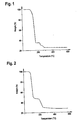
- FIG. 1 shows the decomposition of the produced di ⁇ [bis (trimethylsilyl) acetylene] copper (I) ⁇ oxalate as a function of the temperature with deposition of a thin copper layer on a substrate.
- FIG. 2 shows the decomposition of the produced di ⁇ [(trimethylsilyl) (n-butyl) acetylene] copper (I) ⁇ oxalate as a function of the temperature with deposition of a thin copper layer on a substrate.
- FIG. 3 shows the decomposition of the produced di [(vinyl-t-butyldimethylsilane) copper (I)] oxalate as a function of the temperature with deposition of a thin copper layer on a substrate.
- H 2 C CHSiEt 2 Me and 1.1 g of oxalic acid are added in an inert gas atmosphere to a suspension of 1.8 g of Cu 2 O in 400 ml of methylene chloride and stirred at room temperature for 5 hours.
- the solution is passed through a frit with silica gel and the residue washed twice on the frit with methylene chloride.
- FIG. 4 shows the decomposition of the produced di [(vinyldiethylmethylsilane) copper (I)] oxalate as a function of the temperature with deposition of a thin copper layer on a substrate.
Landscapes
- Chemical & Material Sciences (AREA)
- Organic Chemistry (AREA)
- Chemical Vapour Deposition (AREA)
- Chemically Coating (AREA)
- Organic Low-Molecular-Weight Compounds And Preparation Thereof (AREA)
Description
- Die Erfindung betrifft Dikupfer(I)oxalat-Komplexe stabilisiert durch neutrale Lewis-Basen-Bausteine und deren Verwendung als Precursor für die Abscheidung von metallischem Kupfer. Als neutrale Lewis-Basen werden Alkine oder Alkene, welche mindestens eine Silyl- oder Estergruppe enthalten, oder Nitrile, gesättigte und ungesättigte Stickstoff-Liganden, Phosphite, Trialkylphosphine, sauerstoff- und schwefelhaltige Liganden verwendet.
- Zur Abscheidung dünner Kupferfilme auf Substraten sind inzwischen viele Kupfer-organische Precursor bekannt. Dabei haben sich als vielversprechende Substanzen Kupfer-Verbindungen in der Oxidationsstufe +1 erwiesen, die einen β-Diketonat-Liganden und eine neutrale Lewis-Base L wie zum Beispiel ein Alken oder ein Alkin enthalten. Derartige Komplexe und deren Verwendung als Precursor im CVD-Prozeß (Chemical Vapor Deposition) sind zum Beispiel in US 5,220,044, WO 00/71550, WO 00/17278, US 6,130,345 oder in Chem. Mater. 2001, 13, 3993; Inorg. Chem. 2001, 40, 6167; Chem. Mater. 1992, 4, 365; Organometallics 2001, 20, 4001 beschrieben. Bevorzugt werden Fluorhaltige β-Diketonat-Liganden wie zum Beispiel Hexafluoroacetylacetonat eingesetzt, da die dazu korrespondierenden Kupfer(I)-Komplexe eine viel höhere thermische Stabilität und eine höhere Flüchtigkeit aufweisen als ihre Fluor-freien Analoga. Fluor-freie Kupfer(I)-β-diketonat-Komplexe wie zum Beispiel Alkin-stabilisierte Kupfer(I)acetylacetonate sind extrem Sauerstoff-empfindlich, zersetzen sich bereits bei 0°C (Chem. Ber. 1995, 128, 525) und sind damit nicht mehr als Precursor für den CVD-Prozeß geeignet. Die Abscheidung der Kupferschicht erfolgt in einer thermisch induzierten Disproportionierung gemäß der nachfolgenden Gleichung:
2 LCuI(β-diketonat) → Cu0 + CuII(β-diketonat)2 + 2 L
- Das entstehende CuII(β-diketonat)2 und die Lewis-Base L sind unter den im CVD-Prozeß verwendeten Bedingungen flüchtig und können somit aus dem System entfernt werden. Zurück bleibt idealerweise ein hochreiner Kupferfilm. In dieser Reaktion können jedoch nur 50 % des eingesetzten Kupfer(I)-Precursors in Kupfer(0) umgewandelt werden, die restlichen 50 % enden im entsprechenden CuII(β-diketonat)2. Das gleiche Ergebnis wird bei der Verwendung von β-Ketoestern anstelle von β-Diketonen erhalten, wie zum Beispiel in WO 00/08225 oder in US 5,441,766 beschrieben. Als nachteilig hat sich jedoch bei Verwendung von Fluor-haltigen Kupfer(I)-Precursor erwiesen, dass die Haftung der Kupferfilme auf verschiedenen Substratoberflächen nicht optimal ist, was wahrscheinlich auf die van der Waals Kräfte der Fluoratome im Precursor-Molekül und damit auf abstoßende Wechselwirkungen zurückgeführt werden kann. Zudem besteht in der Mikroelektronic die Gefahr der Kontamination des Wafers speziell des Siliciums mit Fluor, was zur Unbrauchbarkeit des Wafers führt.
- Einen vollständigen Umsatz an Kupfer wird mit Lewis-Basen-stabilisierten Kupfer(I)alkoxiden der Formel LCuIOR (EP 0468396) und mit Lewis-Basen-stabilisierten Kupfer(I)cyclopentadienylen der Formel LCuI(η5-C5R5), beschrieben in EP 0297348 und DE 4124686, erreicht. Zum Teil sind die Beispiele in den genannten Patenten sogar Fluor-frei und bei 25 °C stabil. Da jedoch die thermischen Zersetzungreaktionen in diesen Fällen nicht definiert verlaufen, werden in den Zersetzungsreaktionen radikalische Spezies gebildet, die leider zu verunreinigten Kupferfilmen (Sauerstoff ca. 5 %, Kohlenstoff ca. 1 %) führen (MRS Bulletin/August 1994, 41; Chem.Mater. 1992, 4, 577).
- Aufgabe der vorliegenden Erfindung war es daher, Fluor-freie, einfach und kostengünstig herstellbare Kupfer(I)-Precursor für die Abscheidung von metallischem Kupfer zur Verfügung zu stellen, die thermisch und möglichst gegenüber Luft stabil sind, sich thermisch in einer definierten Zersetzungsreaktion im Temperaturbereich von ca. 50 - 400 °C unter Bildung definierter molekularer, Kupfer-freier, ungiftiger und möglichst gasförmiger Nebenprodukte vollständig zu metallischen Kupferfilmen umsetzen lassen. Weitere Aufgaben der vorliegenden Erfindung bestehen darin, neben einem einfach und kostengünstig durchführbaren Verfahren zur Herstellung der erfindungsgemäßen Precursor-Substanzen auch ein geeignetes Verfahren zur Herstellung dünner hochreiner Kupferfilme oder -schichten mit Hilfe dieser Precursor zur Verfügung zu stellen und somit auch verbesserte hochreine dünne Kupferschichten.
- Die Lösung der Aufgabe erfolgt durch Verbindungen der allgemeinen Formel (I)

- L
- R-C≡C-R' mit mindestens einer Silyl- oder Estergruppe, R'HC=CHR mit mindestens einer Silyl- oder Estergruppe, R'3Si-C≡C-R', R'3N, R'2N(CH2)nNR'2, substituiertes oder unsubstituiertes 2,2'-Bipyridin, 1,10-Phenanthrolin, P(OR')3, P(Alkyl)3, R'-O-R', R'-O(CH2)nO-R', R'-S-R',R'-S(CH2)nS-R' oder ein Nitril aus der Gruppe CH3-C≡N, tBu-C≡N, C4H9C≡N, Ph-C≡N
- R
- A, Aryl, Alkylaryl oder Alkinyl mit mindestens einer SiR'3-oder COOR'-Gruppe und
- R'
- R, H, A, Aryl, Alkylaryl oder Alkinyl,
- A
- geradkettig oder verzweigtes C1-C30-Alkyl, C3-C30-Cycloalkyle, geradkettig oder verzweigtes C2-C30-Alkenyl, geradkettig oder verzweigtes C3-C30-Cycloalkenyl
- Aryl
- C6-C10-Aryle Alkylaryle
- Alkylaryl
- C7-C18-Alkylaryle
- Alkinyl
- geradkettig oder verzweigtes C2-C30-Alkinyl
- Erfindungsgemäße Verbindungen sind daher auch Verbindungen der allgemeinen Formel (I), worin
- A
- geradkettiges oder verzweigtes C1-C9-Alkyl, geradketti ges oder verzweigtes C3-C9-Cycloalkyl, geradkettiges oder verzweigtes C2-C9-Alkenyl, geradkettiges oder verzweigtes C3-C9-Cycloalkenyl
- Aryl
- Phenyl, Naphthyl,
- Alkylaryl
- Toluyl oder Mesityl,
- Alkinyl
- geradkettige oder verzweigte C2-C9-Alkinyle
- Untergruppen bilden Verbindungen der allgemeinen Formel (I), worin
- I.
- A
- geradkettige oder verzweigte C1-C4-Alkyle aus der Gruppe Methyl, Ethyl, n- und i-Propyl oder n-, i- und tert-Butyl, C3-C6-Cycloalkyle aus der Gruppe Cyclopropyl, Cyclobutyl, Cyclopentyl und Cyclohexyl, geradkettiges oder verzweigtes C2-C6-Alkenyle aus der Gruppe Vinyl, Propenyl, Butenyl, Pentenyl oder Hexenyl, C3-C6-Cycloalkenyle aus der Gruppe Cyclopropenyl, Cyclobutenyl, Cyclopentenyl, Cyclopentadienyl und Methylcyclopentadienyl
- Aryl
- Phenyl, Naphthyl,
- Alkylaryl
- Toluyl oder Mesityl,
- Alkinyl
- geradkettige oder verzweigte -C2-C6-Alkinyle aus der Gruppe Ethinyl, Propinyl, Butinyl, Pentinyl oder Hexinyl
und R und R' jeweils unabhängig voneinander in verschiedenen Positionen des Moleküls gleiche oder verschiedene Bedeutungen annehmen können,
oder - II.
worin L
R-C≡C-R' oder R'HC=CHR mit jeweils mindestens einer Silyl- oder Estergruppe bedeutet, und die Reste R und R' die in Anspruch 1 gegebenen Bedeutungen haben,
oder - III.
worin L R'3Si-C≡C-R' bedeutet
mit- R'
- SiMe3, CH3, C2H5, C3H7, C4H9, Phenyl, COOMe, COOEt,
- IV.
worin L ein Alkin ist, ausgewählt aus der Gruppe Me3Si-C≡C-SiMe3, Me3Si-C≡C-nBu, MeOOe-C≡C-COOMe, EtOOC-C≡C-COOEt und Me3Si-C≡C-R', worin R' CH3, C2H5, C3H7, Phenyl, COOMe oder COOEt bedeutet,
oder - V.
worin L ein Alken ist ausgewählt aus der Gruppe H2C=CHSiMe3, H2C=CHCOOCH3, H2C=CHCOOC2H5 und H2C=CHSiR'3, worin R' unabhängig voneinander CH3, C2H5, C3H7, C4H9, HC=CH2, Phenyl bedeutet,
oder - VI.
worin L eine Verbindung ist, ausgewählt aus der Gruppe CH3-C≡N, tBu C≡N, C4H9C≡N, Ph-C≡N; N(CH3)3, N(C2H5)3, H2N-(CH2)2-NH2, (CH3)2N-(CH2)2-N(CH3)2, (C2H5)2N-(CH2)2-N(C2H5)2, H2N-(CH2)4-NH2, (CH3)2N-(CH2)4-N(CH3)2, (C2H5)2N-(CH2)4-N(C2H5)2, 2,9-Dimethyl-1,10-Phenanthrolin; P(OCH3)3, P(OC2H5)3, P(OC6H11)3, P(OPh)3; P(CH3)3, P(C2H5)3, P(C3H7)3, P(C4H9)3, P(C6H11)3; C2H5-O-C2H5, CH3-O-C4H9, CH3O-(CH2)2-OCH3, C2H5O-(CH2)2-OC2H5, CH3-S-CH3, C2H5-S-C2H5, C3H7-S-C3H7, Ph-S-Ph, CH3S-(CH2)2-SCH3, CH3S-(CH2)3-SCH3, C2H5S-(CH2)2-SC2H5 und PhS-(CH2)2-SPh. - Insbesondere erfolgt die Lösung der Aufgabe der vorliegenden Erfindung durch die neuen Verbindungen der allgemeinen Formel(I)
Di{[Bis(trimethylsilyl)acetylen]kupfer(I)}oxalat,
Di{[(Trimethylsilyl)(n-butyl)acetylen]kupfer(I)}oxalat,
Di[(Vinyl-t-butyldimethylsilan)kupfer(I)]oxalat und
Di[(Vinyldiethylmethylsilan)kupfer(I)]oxalat. - Die Lösung der Aufgabe der vorliegenden Erfindung erfolgt auch durch ein Verfahren zur Herstellung der Verbindungen der allgemeinen Formel (I) wie aufgeführt, indem Cu2O mit Oxalsäure und einer Lewis-Base L in einem inerten Lösungsmittel umgesetzt wird und das hergestellte Produkt isoliert wird. Insbesondere erfolgt die Lösung der Aufgabe durch die besondere Ausgestaltung des Verfahrens, wie es durch die Ansprüche 11 bis 21 beansprucht wird.
- Erfindungsgemäß werden die Verbindungen der allgemeinen Formel (I) gemäß der Ansprüche 1 bis 9 zur Herstellung von hochreinen dünnen Kupfermetallschichten verwendet.
- Die Herstellung von hochreinen dünnen Kupfermetallschichten, erfolgt durch ein Verfahren, zu dessen Durchführung Verbindungen der allgemeinen Formel (I) erhitzt werden, wodurch die Lewis-Base L abgespalten und metallisches Kupfer durch Decarboxylierung abgeschieden wird.
- Die Abspaltung der Lewis-Base L erfolgt in einem Temperaturbereich von ca. 50 bis ca. 200 °C. Die als zweite Reaktion erfolgende Decarboxylierung unter Bildung von metallischem Kupfer und Kohlendioxid wird in einem Temperaturbereich von ca. 150 bis 350 °C abgeschlossen.
- Die abgespaltene Lewis-Base L wird recycelt und erneut in einem Verfahren zur Herstellung der Verbindungen der allgemeinen Formel (I) eingesetzt und zur Herstellung von hochreinen dünnen metallischen Kupferschichten verwendet.
- Die Lösung der erfindungsgemäßen Aufgabe erfolgt somit insbesondere durch hochreine dünne metallische Kupferschichten mit verbesserten Eigenschaften, hergestellt unter Verwendung einer Verbindung der allgemeinen Formel (I) in dem erfindungsgemäßen Verfahren
- Durch die vorliegende Erfindung werden Verbindungen der allgemeinen Formel (I)

- L für ein Alkin R-C≡C-R' oder Alken R'HC=CHR steht, welches mindestens eine Silyl- oder Estergruppe enthält. L kann weiter ein Nitril R'-C≡N, ein gesättigter oder ungesättigter Stickstoff-Ligand, ein Phosphit P(OR')3, ein Trialkylphosphin P(Alkyl)3, ein Ether R'-O-R', ein Diether, ein Thioether R'-S-R' oder ein Dithioether sein. Die Oxidationsstufe des Kupfers beträgt +1.
- R kann Alkyl, Cycloalkyl, Alkenyl, Cycloalkenyl, Aryl, Alkylaryl oder Alkinyl mit mindestens einer SiR'3 oder COOR' Gruppe sein.
- R' kann unabhängig voneinander R oder H, Alkyl, Cycloalkyl, Alkenyl, Cycloalkenyl, Aryl, Alkylaryl oder Alkinyl sein.
- Die Herstellung der Verbindung der allgemeinen Formel (I) erfolgt durch Umsetzung von Cu2O, Oxalsäure und dem neutralen Liganden L oder den zwei verschiedenen neutralen Liganden in einem inerten aprotischen organischen Lösungsmittel. Die Verbindungen der allgemeinen Formel (I) lassen sich als Temperatur-stabile Substanzen rein isolieren. Zudem zeichnen sich die erhaltenen Substanzen durch eine überraschend und ungewöhnlich hohe Oxidationsbeständigkeit aus, sie können ohne Probleme an der Luft gehandhabt werden, was die nachfolgende Verwendung der Substanzen als Precursor zur Abscheidung von metallischem Kupfer enorm erleichtert.
- Erhitzt man die Verbindungen der allgemeinen Formel (I), so bleibt ein hochreiner Kupferspiegel zurück; alle Nebenprodukte sind flüchtig und können somit sehr einfach vom Reaktionsort entfernt werden. Die thermische Zersetzung läuft nach der folgenden Gleichung ab:

- Als Reaktionsprodukte entstehen neben metallischem Kupfer nur Kohlendioxid und die Lewis-Base L, die regeneriert und wiederverwendet werden kann.
- Verwenden lassen sich die Verbindungen der allgemeinen Formel (I) als Precursor zur Abscheidung von metallischem Kupfer. Die Abscheidung kann aus der Gasphase oder aus einer Lösung aus Precursor und einem geeigneten Lösungsmittel oder aus dem festen Zustand des Precursor durch Kontakt des Precursors mit einem erhitzten Substrat erfolgen. Vorteilhaft im Vergleich zum Stand der Technik ist, dass erstmals Kupfer(I)-Precursor zugänglich sind, mit denen sich zu 100 % metallisches Kupfer in einer definierten Radikal-freien Zersetzungsreaktion unter Bildung hochreiner Kupferfilme abscheiden lassen. Damit läßt sich die Ausbeute an abgeschiedenem metallischen Kupfer von 50 auf 100 % im Vergleich zum Stand der Technik erhöhen. Die hohe Stabilität und Unempfindlichkeit der Verbindungen insbesondere die hohe Oxidationsstabilität vereinfacht das Handling der Verbindungen im Verfahren zur Abscheidung von metallischem Kupfer enorm und wirkt sich somit kostengünstig auf den Abscheideprozeß aus.
- Die Vorteile der Verbindungen der allgemeinen Formel (I) im Vergleich zu der nach dem Stand der Technik verwendeten Substanz (CupraSelect®) sind somit: bessere physikalische Eigenschaften wie höhere thermische Beständigkeit, bessere chemische Eigenschaften wie höhere Oxidationsstabilität, einfachere Handhabung, kostengünstigere Synthese aufgrund des viel kostengünstigeren Eduktes Oxalsäure im Vergleich zu Hexafluoroacetylaceton, doppelt so hohe Ausbeute an metallischem Kupfer im Abscheideprozeß, Kupfer-freie und ungiftige Nebenprodukte, weniger Nebenprodukte und damit eine geringere Umweltbelastung. Zudem sind keine Fluoratome in den Verbindungen enthalten, die zur Fluor-Kontamination und damit zur Unbrauchbarkeit von Wafern führen können.
- Insgesamt ist damit die Synthese der erfindungsgemäßen Kupfer(I)-Precursor einfacher und kostengünstiger als die des kommerziell erhältlichen Kupfer(I)-Precursors CupraSelect®, wobei es sich um (Trimethyl-vinylsilan)kupfer(I)hexafluoroacetylacetonat handelt. Gleichzeitig kann durch die erfindungsgemäßen Precursor sowohl die Qualität der Kupferbeschichtungen erhöht werden und das Verfahren umweltfreundlicher gestaltet werden.
- Erfindungsgemäße Verbindungen der allgemeinen Formel (I) enthalten ein Oxalat-Dianion und zwei Kupfer-Zentren in der Oxidationsstufe +1, wobei das Oxalat-Dianion als Brücke in einem µ-1,2,3,4-Modus an die beiden Kupfer(I)-Zentren gebunden ist. Stabilisiert wird der Dikupfer(I)oxalat-Baustein CuO2C2O2Cu durch Koordination von neutralen Liganden L an jeweils ein Kupfer(I)-Zentrum, vorzugsweise zwei gleichen Liganden L, so dass beide Kupfer(I)-Zentren mindestens eine pseudotrigonal-planare, gegebenenfalls auch eine tetraedrische Umgebung aufweisen. Die im Komplex enthaltenen Kupferatome können an zwei unterschiedliche Liganden L gebunden sein. Im folgenden wird zur Vereinfachung allgemein von dem Liganden oder der Lewis-Base L gesprochen, obwohl darunter auch zwei verschiedene Liganden oder Lewis-Basen L verstanden werden können.
- L steht für ein Alkin R-C≡C-R' oder Alken R'HC=CHR, welches mindestens eine Silyl- oder Estergruppe enthält. L kann weiter ein Nitril R'-C≡N, ein gesättigter oder ungesättigter Stickstoff-Ligand wie zum Beispiel R'3N, R'2N(CH2)nNR'2, substituiertes oder unsubstituiertes 2,2'-Bipyridin bzw. 1,10-Phenanthrolin, ein Phosphit P(OR')3, ein Alkylphosphin P(Alkyl)3, ein Ether R'-O-R', ein Diether, ein Thioether R'-S-R' oder ein Dithioether sein. R wiederum kann Alkyl, Cycloalkyl, Alkenyl, Cycloalkenyl, Aryl, Alkylaryle oder Alkinyl mit mindestens einer SiR'3 oder COOR' Gruppe sein. R' kann unabhängig voneinander R oder H, Alkyl, Cycloalkyl, Alkenyl, Cycloalkenyl, Aryl, Alkylaryl oder Alkinyl sein.
- Alkyl-Gruppen können geradkettig oder verzweigte C1-C30-Alkyle sein, vorzugsweise geradkettige oder verzweigte C1-C9-Alkyle, besonders bevorzugt geradkettige oder verzweigte C1-C4-Alkyle aus der Gruppe Methyl, Ethyl, n- und i-Propyl oder n-, i- und tert-Butyl. CycloalkylGruppen können geradkettig oder verzweigte C3-C30-Cycloalkyle sein, vorzugsweise C3-C9-Cycloalkyle, besonders bevorzugt C3-C6-Cycloalkyle aus der Gruppe Cyclopropyl, Cyclobutyl, Cyclopentyl und Cyclohexyl.
- Alkenyl-Gruppen können geradkettig oder verzweigte C2-C30-Alkenyle sein, vorzugsweise geradkettige oder verzweigte C2-C9-Alkenyle, besonders bevorzugt geradkettige oder verzweigte C2-C6-Alkenyle aus der Gruppe Vinyl, Propenyl, Butenyl, Pentenyl oder Hexenyl. Cycloalkenyl-Gruppen können geradkettig oder verzweigte C3-C30-Cycloalkenyle sein, vorzugsweise C3-C9-Cycloalkenyle, besonders bevorzugt C3-C6-Cycloalkenyle aus der Gruppe Cyclopropenyl, Cyclobutenyl, Cyclopentenyl, Cyclopentadienyl und Methylcyclopentadienyl.
- Arylgruppen können C6-C10-Aryle sein, vorzugsweise Phenyl oder Naphthyl. Alkylaryle können C7-C18-Alkylaryle sein, vorzugsweise Toluyl oder Mesityl.
- Alkinyl-Gruppen können geradkettig oder verzweigte C2-C30-Alkinyle sein, vorzugsweise geradkettige oder verzweigte C2-C9-Alkinyle, besonders bevorzugt geradkettige oder verzweigte C2-C6-Alkinyle aus der Gruppe Ethinyl, Propinyl, Butinyl, Pentinyl oder Hexinyl.
- Als neutrale Lewis-Basen eignen sich besonders gut Alkine der Formel R-C≡C-R' und Alkene der Formel R'HC=CHR, welche mindestens eine Silyl- oder Estergruppe enthalten. Vorzugsweise werden Alkine aus der Gruppe R'3Si-C≡C-R' eingesetzt und besonders gute Ergebnisse werden mit den Alkinen Me3Si-C≡C-R' (R' = SiMe3, CH3, C2H5, C3H7, C4H9, Phenyl, COOMe, COOEt) und mit den Alkinen MeOOC-C≡C-COOMe und EtOOC-C≡C-COOEt erhalten. Vorzugsweise werden Alkene aus der Gruppe R'HC=CHR eingesetzt und besonders gute Eigenschaften werden mit den Alkenen H2C=CHSiMe3, H2C=CHSiR'3, in denen R' unabhängig voneinander CH3, C2H5, C3H7, C4H9, HC=CH2, Phenyl sein kann, erhalten und mit den Alkenen H2C=CHCOOCH3 und H2C=CHCOOC2H5. Besonders gute Ergebnisse werden mit den Alkinen Me3Si-C≡C-SiMe3, Me3Si-C≡C-nBu und den Alkenen H2C=CHSiEt2Me, H2C=CHSiMe2 tBu erhalten.
- Weiter sind als neutrale Lewis-Basen geeignet: Nitrile R'C≡N zum Beispiel CH3-C≡N, tBu C≡N, C4H9C≡N oder Ph-C≡N; gesättigte oder ungesättigte Stickstoff-Liganden R'3N wie zum Beispiel N(CH3)3, N(C2H5)3 oder R'2N(CH2)nNR'2 wie zum Beispiel H2N-(CH2)2-NH2, (CH3)2N-(CH2)2-N(CH3)2, (C2H5)2N-(CH2)2-N(C2H5)2, H2N-(CH2)4-NH2, (CH3)2N-(CH2)4-N(CH3)2, (C2H5)2N-(CH2)4-N(C2H5)2 oder substituiertes oder unsubstituiertes 2,2'-Bipyridin bzw. 1,10-Phenanthrolin, 2,9-Dimethyl-1,10-Phenanthrolin; Phosphite der Formel P(OR')3 zum Beispiel P(OCH3)3, P(OC2H5)3, P(OC6H11)3, P(OPh)3; Trialkylphosphine der Formel PR'3 zum Beispiel P(CH3)3, P(C2H5)3, P(C3H7)3, P(C4H9)3, P(C6H11)3; Ether der Formel R'-O-R' und R'O-(CR'2)n-OR' zum Beispiel C2H5-O-C2H5, CH3-O-C4H9, CH3O-(CH2)2-OCH3, C2H5O-(CH2)2-OC2H5, Thioether der Formel R'-S-R' und R'S-(CR'2)n-SR' zum Beispiel CH3-S-CH3, C2H5-S-C2H5, C3H7-S-C3H7, Ph-S-Ph, CH3S-(CH2)2-SCH3, CH3S-(CH2)3-SCH3, C2H5S-(CH2)2-SC2H5, PhS-(CH2)2-SPh.
- Die Herstellung der Verbindung der allgemeinen Formel (I) erfolgt durch Umsetzung von Cu2O, Oxalsäure und der Lewis-Base L unter Schutzgasatmosphäre in einem inerten aprotischen organischen Lösungsmittel. Als Lewis-Base L können zu diesem Zweck zwei verschiedene Lewis-Basen L im äquimolaren Verhältnis eingesetzt werden. Die Reihenfolge der Zugabe der Komponenten kann beliebig gewählt werden. Vorzugsweise werden, wenn als Lewis-Base L ein Gemisch aus zwei entsprechenden Verbindungen eingesetzt werden soll, beide Verbindungen gleichzeitig zu der Reaktionsmischung hinzugefügt oder vor der Zugabe miteinander vermischt werden. Die Ausgangsverbindungen können in einem geeigneten Lösungsmittel vorgelöst bzw. suspendiert oder ohne Lösungsmittel als Feststoff bzw. Flüssigkeit zugegeben werden. Als geeignete Lösungsmittel zur Durchführung der Reaktion können inerte aprotische Lösungsmittel wie offenkettige oder zyklische aliphatische und aromatische Kohlenwasserstoffe, die teilweise halogeniert sein können, oder Ether und zyklische Ether verwendet werden. Besonders bevorzugt ist die Verwendung von Pentan, Hexan, Heptan, Cyclohexan, Toluol, Methylenchlorid, Trichlormethan, Chlorbenzol, Diethylether oder Tetrahydrofuran. Als Schutzgasatmosphäre können Stickstoff oder Argon dienen. Das stöchiometrische Verhältnis der Edukte Cu2O, Oxalsäure und der Lewis-Base L liegt zwischen 1:1:2 und 1:1:4, vorzugsweise zwischen 1:1:2 und 1:1:3 und besonders bevorzugt bei 1:1:2. Die Lewis-Base L sollte nicht im Unterschuß bezüglich Oxalsäure und Cu2O zugegeben werden. Die Reaktion kann in einem Temperaturbereich von -30 bis + 100 °C, vorzugsweise von 0 bis 50 °C und ganz bevorzugt zwischen 20 und 40 °C erfolgen. Die höchsten Ausbeuten werden bei Raumtemperatur erhalten. Die Reaktionszeit beträgt zwischen 1 und 24 Stunden, vorzugsweise zwischen 2 und 8 Stunden und ganz bevorzugt zwischen 3 und 6 Stunden. Die Reaktionslösung verändert sich beginnend von einer roten Suspension hin zu einer farblosen oder bräunlichen Lösung oder Suspension je nach Art des entstehenden Komplexes. Die unlöslichen Bestandteile werden abgetrennt. Dieses kann durch Filtration, Zentrifugieren oder andere dem Fachmann bekannte Methoden erfolgen. Man erhält eine klare farblose, gelbe oder rote Lösung je nach Art der eingesetzten Lewis-Base L. Anschließend werden die Verbindungen der allgemeinen Formel (I) isoliert. Dieses kann nach Entfernung des Lösungsmittels nach dem Fachmann bekannten Methoden erfolgen. Gegebenenfalls erfolgt eine weitere Aufreinigung. Anstelle der mechanischen Abtrennung der Feststoffe aus dem Reaktionsgemisch durch Filtration oder andere Methoden kann auch eine Extraktion zur Abtrennung des gebildeten Produktes erfolgen. Die Verbindungen der allgemeinen Formel (I) sind, wie oben bereits beschrieben, überraschend Temperatur-stabil und lassen sich daher gut als reine Substanzen isolieren und anschließend analytisch und spektroskopisch charakterisieren.
- Das thermische Verhalten der Verbindungen kann mittels TGA (thermogravimetrische Analyse) und DSC (Differential Scanning Calorimetry) untersucht untersucht werden. Durchgeführte Untersuchungen zeigten, dass die Zersetzung der erfindungsgemäßen Verbindungen in 2 Hauptstufen erfolgt:

- Zuerst spaltet sich die Lewis-Base L vom Kupfer(I)-Komplex ab. Diese Abspaltung kann je nach Verbindung auch stufenweise erfolgen und durch eine TGA nachgewiesen werden. In der zweiten Stufe erfolgt durch eine interne Redoxreaktion des verbliebenen Fragmentes CuO2C2O2Cu die Decarboxylierung unter Bildung von metallischem Kupfer und Kohlendioxid. Die erste Stufe erfolgt je nach Precursor in einem Temperaturbereich von ca. 50 bis ca. 200 °C, die zweite ab ca. 150 und ist bei ca. 350 °C abgeschlossen. Wobei jedoch die Abspaltung der Lewis-Basen und die Decarboxylierungsreaktion beim Übergang zu höheren Temperaturen durchaus parallel ablaufen können. Der Restgehalt entspricht exakt dem Kupfer-Anteil in dem entsprechenden Kupfer(I)-Precursor, so dass die Ausbeute an metallischem Kupfer mit den Verbindungen der allgemeinen Formel (I) 100 % und damit doppelt so hoch ist wie die des Stands der Technik.
- Durch diese effiziente Zersetzungsreaktion entstehen mit den Verbindungen der allgemeinen Formel (I) weniger Nebenprodukte im Vergleich zum Stand der Technik. Es bildet sich im Abscheideprozess die freie Lewis-Base L zurück, die durch entsprechende Vorrichtungen, wie Beispielsweise Kühlfallen in der Abluft, aufgefangen und wieder verwendet werden kann; als zweites Nebenprodukt entsteht Kohlendioxid. Die Nebenprodukte sind somit im Vergleich zum Stand der Technik, bei dem Kupfer(II)hexafluoroacetylacetonat und die Lewis-Base Trimethylvinylsilan als Nebenprodukte entstehen, Kupfer-frei, nicht toxisch und somit ungefährlicher. Damit ist die Umweltbelastung wesentlich geringer als die bei der Verwendung der Verbindungen des Stands der Technik.
- Als thermisch stabile und am wenigstens oxidationsempfindliche Verbindung hat sich (Me3Si-C≡C-SiMe3)2Cu2O4C2 erwiesen. Die Verbindung ist bis 100 °C stabil und kann über Wochen an der Luft gehandhabt werden. Dieses ist im Vergleich zum Stand der Technik ein enormer Fortschritt, da das CupraSelect® sich bereits ab ca. 50 °C langsam zersetzt und die Verbindung auch an Luft schnell zu Kupfer(II) oxidiert wird. Dies ermöglicht eine sehr viel einfachere Handhabung nicht nur bei der Synthese sondern auch im Abscheideprozeß.
- Die Verbindungen der allgemeinen Formel (I) lassen sich als Precursor zur metallischen Kupferabscheidung verwenden. Die Abscheidung metallischer Kupferfilme kann aus der Gasphase oderaus einer Lösung aus Precursor und einem geeigneten Lösungsmittel oder aus dem festen Zustand des Precursor durch Kontakt des Precursors mit einem erhitzten Substrat erfolgen.
- Zur Veranschaulichung und zum besseren Verständnis der vorliegenden Erfindung werden im folgenden Beispiele gegeben. Diese sind jedoch aufgrund der allgemeinen Gültigkeit des beschriebenen Erfindungsprinzips nicht geeignet, den Schutzbereich der vorliegenden Anmeldung nur auf diese Beispiele zu reduzieren. Weiterhin ist der Inhalt der zitierten Patentanmeldungen als Teil der Offenbarung der vorliegenden Erfindung, die der Beschreibung zugrunde liegt, anzusehen.
- Zu einer Suspension von 3.4 g Cu2O in 30 ml Methylenchlorid werden in einer Inertgasatmosphäre 8 g Me3SiC≡CSiMe3 und 2.14 g Oxalsäure gegeben und 4 Stunden bei Raumtemperatur gerührt. Zur Abtrennung unlöslicher Rückstände wird die Lösung über eine Fritte mit Kieselgel gegeben und der Rückstand auf der Fritte zweimal mit Methylenchlorid gewaschen. Die farblose Lösung wird eingeengt, und bei -30°C werden farblose Kristalle von (Me3SiC≡CSiMe3)2Cu2O4C2 erhalten.
- C18H36Cu2O4Si4 (555.92 g/mol). Analyse [%]: berechnet: C 38.9, H 6.5, gefunden: C 38.7, H 6.6. IR (KBr) [cm-1]: νC≡C 1935, νCO2 1642, 1354, 1309. 1H-NMR (CDCl3) [ppm]: 0.30 (s, 36 H, SiMe3). 13C-NMR (CDCl3) [ppm]: 0.0 (SiMe3), 114.2 (C≡C), 171.8 (CO2). MS (m/z (%)): 788 (25) [M + Cu(Me3SiC≡CSiMe3)]+, 618 (10) [M + Cu]+, 403 (68) [M - CuO4C2]+, 233 (100) [M - (Me3SiC≡CSiMe3)CuO4C2]+. TG (30-1000°C, 5°C/min) Zweistufenzerfall, 1. Stufe Temperaturbereich 100-170°C Gewichtsabnahme 65% (2 Me3SiC≡CSiMe3), 2. Stufe Temperaturbereich 230-290°C, Gewichtsabnahme 11 % (2 CO2), Restgehalt 24% (2 Cu).
- In Abb. 1 ist der Zerfall des hergestellten Di{[Bis(trimethylsilyl)acetylen]kupfer(I)}oxalats in Abhängigkeit von der Temperatur unter Abscheidung einer dünnen Kupferschicht auf einem Substrat dargestellt.

- Zu einer Suspension von 1.8 g Cu2O in 400 ml Methylenchlorid werden in einer Inertgasatmosphäre 5 ml Me3SiC≡CnBu und 1.13 g Oxalsäure gegeben und 5 Stunden bei Raumtemperatur gerührt. Zur Abtrennung unlöslicher Rückstände wird die Lösung über eine Fritte mit Kieselgel gegeben und der Rückstand auf der Fritte zweimal mit Methylenchlorid gewaschen. Die farblose Lösung wird eingeengt, und bei -30°C werden farblose Kristalle von (Me3SiC≡CnBu)2Cu2O4C2 erhalten.
- C20H36CU2O4Si2 (523.77 g/mol). IR (KBr) [cm-1]: νC≡C 1986, νCO2 1643, 1355, 1311. 1H-NMR (CDCl3) [ppm]: 0.29 (s, 18 H, SiMe3), 0.93 [t, 3JHH = 7.0 Hz, 6 H, (CH2)3 CH 3], 1.3-1.6 [m, 4 H, (CH2)2 CH 2CH3], 1.5-1.8 (m, 4 H, CH2 CH 2CH2CH3), 2.58 [t, 3JHH = 7.0 Hz, 4 H, CH 2 (CH2)2 CH 3 ]. 13C-NMR (CDCl3) [ppm]: 0.0 (SiMe3), 13.4 [(CH2)3CH3], 21.7 [(CH2)2CH2CH3], 22.5 (CH2CH2CH2CH3), 30.9 (≡CCH2), 85.4 (≡CCH2), 112.9 (SiC≡C), 171.4 (CO2). MS (m/z (%)): 741 (20) [M + Cu(Me3SiC≡CBu)]+, 587 (20) [M + Cu]+, 371 (93) [M - CuO4C2]+, 217 (100) [M - (Me3SiC≡CBu)CuO4C2]+. TG (30-1000°C, 5°C/min) Zweistufenzerfall, 1. Stufe Temperaturbereich 70-150°C Gewichtsabnahme 53% (2 Me3SiC≡CBu), 2. Stufe Temperaturbereich 170-300°C, Gewichtsabnahme 23% (2 CO2), Restgehalt 24% (2 Cu).
- In Abb. 2 ist der Zerfall des hergestellten Di{[(Trimethylsilyl)(n-butyl)acetylen]kupfer(I)}oxalats in Abhängigkeit von der Temperatur unter Abscheidung einer dünnen Kupferschicht auf einem Substrat dargestellt.

- Zu einer Suspension von 1.8 g Cu2O in 400 ml Methylenchlorid werden in einer Inertgasatmosphäre 4.8 ml H2C=CHSiMe2 tBu und 1.13 g Oxalsäure gegeben und 5 Stunden bei Raumtemperatur gerührt. Zur Abtrennung unlöslicher Rückstände wird die Lösung über eine Fritte mit Kieselgel gegeben und der Rückstand auf der Fritte zweimal mit Methylenchlorid gewaschen. Die farblose Lösung wird eingeengt, und bei - 30°C werden farblose Kristalle von (H2C=CHSiMe2 tBu)2Cu2O4C2 erhalten.
- C18H36Cu2O4Si2 (499.75 g/mol). IR (KBr) [cm-1]: νCO2 1647, 1344, 1312. 1H-NMR (CDCl3) [ppm]: 0.14 (s, 12 H, Si(CH3)2), 0.90 (s, 18 H, C(CH3)3), 4.50 (dd, Jtrans = 18.3 Hz, Jgem = 2.5 Hz, 2 H, SiCH=CH 2), 4.78 (dd, Jtrans = 18.3 Hz, Jcis = 13.3 Hz, 2 H, SiCH=CH2), 4.86 (dd, Jcis = 13.3 Hz, Jgem = 2.5 Hz, 2 H, SiCH=CH 2). 13C-NMR (CDCl3) [ppm]: -5.8 (SiMe2), 16.8 (CMe3), 26.2 (CMe 3), 91.0 (=CH2), 97.4 (=CHSi), 171.6 (CO2). MS (m/z (%)): 347 (62) [M - CuO4C2]+, 206 (80) [M-(H2C=CHSiMe2Bu)CuO4C2]+. TG (30-1000°C, 5°C/min) Dreistufenzerfall, 1. Stufe Temperaturbereich 70-130°C Gewichtsabnahme 39% (H2C=CHSiMe2 tBu, H2C=CMe2), 2. Stufe Temperaturbereich 130-170°C Gewichtsabnahme 15% ( H2C=CHSiMe2H), 3. Stufe Temperaturbereich 170-310°C, Gewichtsabnahme 19% (2 CO2), Restgehalt 27% (2 Cu).
- In Abb. 3 ist der Zerfall des hergestellten Di[(Vinyl-t-butyldimethylsilan)kupfer(I)]oxalats in Abhängigkeit von der Temperatur unter Abscheidung einer dünnen Kupferschicht auf einem Substrat dargestellt.

- Zu einer Suspension von 1.8 g Cu2O in 400 ml Methylenchlorid werden in einer Inertgasatmosphäre 4.4 ml H2C=CHSiEt2Me und 1.1 g Oxalsäure gegeben und 5 Stunden bei Raumtemperatur gerührt. Zur Abtrennung unlöslicher Rückstände wird die Lösung über eine Fritte mit Kieselgel gegeben und der Rückstand auf der Fritte zweimal mit Methylenchlorid gewaschen. Die farblose Lösung wird eingeengt, und bei -30°C werden farblose Kristalle von (H2C=CHSiEt2Me)2Cu2O4C2 erhalten.
- C16H32Cu2O4Si2 (471.70 g/mol). IR (KBr) [cm-1]: νC=C 1496; νCO2 1645, 1343, 1310. 1H-NMR (CDCl3) [ppm]: 0.12 (s, 6 H, SiMe), 0.65 (q, 8 H, 3J = 7.8 Hz, CH2), 0.98 (t, 12 H, 3J = 7.9 Hz, CH3), 4.48 (dd, Jtrans = 17.5 Hz, Jgem = 3.6 Hz, 2 H, SiCH=CHH), 4.75 (dd, Jtrans = 17.7 Hz, Jcis = 13.0 Hz, 2 H, SiCH=CH2), 4.81 (dd, Jcis = 13.0 Hz, Jgem = 3.5 Hz, 2 H, SiCH=CHH). 13C-NMR (CDCl3) [ppm]: -5.5 (SiCH3), 5.3 (SiCH2CH3), 7.3 (SiCH2CH3), 89.7 (H2C=CH), 96.6 (H2C=CH), 171.5 (COO). TG (30-1000°C, 5°C/min) Zweistufenzerfall, 1. Stufe Temperaturbereich 50-150°C Gewichtsabnahme 50% (2 H2C=CHSiEt2Me), 2. Stufe Temperaturbereich 150-320°C Gewichtsabnahme 23% (2 CO2), Restgehalt 27% (2 Cu).
- In Abb. 4 ist der Zerfall des hergestellten Di[(Vinyldiethylmethylsilan)kupfer(I)]oxalats in Abhängigkeit von der Temperatur unter Abscheidung einer dünnen Kupferschicht auf einem Substrat dargestellt.

mit
und
und L, R und R' jeweils unabhängig voneinander in verschiedenen Positionen des Moleküls gleiche oder verschiedene Bedeutungen annehmen können.
Claims (25)
- Verbindungen der allgemeinen Formel (I)
 L R-C≡C-R' mit mindestens einer Silyl- oder Estergruppe, R'HC=CHR mit mindestens einer Silyl- oder Estergruppe, R'3Si-C≡C-R', R'3N, R'2N(CH2)nNR'2, substituiertes oder unsubstituiertes 2,2'-Bipyridin, 1,10-Phenanthrolin, P(OR')3, P(Alkyl)3, R'-O-R', R'-O(CH2)nO-R', R'-S-R',R'- S(CH2)nS-R' oder ein Nitril aus der Gruppe CH3-C≡N, tBu-C≡N, C4H9C≡N und Ph-C≡Nbedeutet
mitR A, Aryl, Alkylaryl oder Alkinyl mit mindestens einer SiR'3-oder COOR'-Gruppe undR' R, H, A, Aryl, Alkylaryl oder Alkinyl,wobei L, R und R' jeweils unabhängig voneinander in verschiedenen Positionen des Moleküls gleiche oder verschiedene Bedeutungen annehmen können,
undA geradkettig oder verzweigtes C1-C30-Alkyl, C3-C30-Cycloalkyle, geradkettig oder verzweigtes C2-C30- Alkenyl, geradkettig oder verzweigtes C3-C30-CycloalkenylAryl C6-C10-Aryle AlkylaryleAlkylaryl C7-C18-AlkylaryleAlkinyl geradkettig oder verzweigtes C2-C30-Alkinylbedeuten. - Verbindungen gemäß Anspruch 1, worinA geradkettiges oder verzweigtes C1-C9-Alkyl, geradketti ges oder verzweigtes C3-C9-Cycloalkyl, geradkettiges oder verzweigtes C2-C9-Alkenyl, geradkettiges oder verzweigtes C3-C9-CycloalkenylAryl Phenyl, Naphthyl,Alkylaryl Toluyl oder Mesityl,Alkinyl geradkettige oder verzweigte C2-C9-Alkinylebedeuten
und R und R' jeweils unabhängig voneinander in verschiedenen Positionen des Moleküls gleiche oder verschiedene Bedeutungen annehmen können. - Verbindungen gemäß Anspruch 1, worinA geradkettige oder verzweigte C1-C4-Alkyle aus der Gruppe Methyl, Ethyl, n- und i-Propyl oder n-, i- und tert-Butyl, C3-C6-Cycloalkyle aus der Gruppe Cyclopropyl, Cyclobutyl, Cyclopentyl und Cyclohexyl, geradkettiges oder verzweigtes C2-C6-Alkenyle aus der Gruppe Vinyl, Propenyl, Butenyl, Pentenyl oder Hexenyl, C3-C6-Cycloalkenyle aus der Gruppe Cyclopropenyl, Cyclobu- tenyl, Cyclopentenyl, Cyclopentadienyl und MethylcyclopentadienylAryl Phenyl, Naphthyl,Alkylaryl Toluyl oder Mesityl,Alkinyl geradkettige oder verzweigte C2-C6-Alkinyle aus der Gruppe Ethinyl, Propinyl, Butinyl, Pentinyl oder Hexinylbedeuten
und R und R' jeweils unabhängig voneinander in verschiedenen Positionen des Moleküls gleiche oder verschiedene Bedeutungen annehmen können. - Verbindungen gemäß Anspruch 1,
worin L
R-C≡C-R' oder R'HC=CHR mit jeweils mindestens einer Silyl- oder Estergruppe bedeutet, und die Reste R und R' die in Anspruch 1 gegebenen Bedeutungen haben. - Verbindungen gemäß Anspruch 1,
worin L
R'3Si-C≡C-R' bedeutet
mit
R' SiMe3, CH3, C2H5, C3H7, C4H9, Phenyl, COOMe, COOEt. - Verbindungen gemäß Anspruch 1,
worin L ein Alkin ist, ausgewählt aus der Gruppe Me3Si-C≡C-SiMe3, Me3Si-C≡C-nBu, MeOOC-C≡C-COOMe, EtOOC-C≡C-COOEt und Me3Si-C≡C-R', worin R' CH3, C2H5, C3H7, Phenyl, COOMe oder COOEt bedeutet. - Verbindungen gemäß Anspruch 1,
worin L ein Alken ist ausgewählt aus der Gruppe H2C=CHSiMe3, H2C=CHCOOCH3, H2C=CHCOOC2H5 und H2C=CHSiR'3, worin R' unabhängig voneinander CH3, C2H5, C3H7, C4H9, HC=CH2, Phenyl bedeutet. - Verbindungen gemäß Anspruch 1,
worin L eine Verbindung ist, ausgewählt aus der Gruppe CH3-C≡N, tBu C≡N, C4H9C≡N, Ph-C≡N; N(CH3)3, N(C2H5)3, H2N-(CH2)2-NH2, (CH3)2N-(CH2)2-N(CH3)2, (C2H5)2N-(CH2)2-N(C2H5)2, H2N-(CH2)4-NH2, (CH3)2N-(CH2)4-N(CH3)2, (C2H5)2N-(CH2)4-N(C2H5)2, 2,9-Dimethyl-1,10-Phenanthrolin; P(OCH3)3, P(OC2H5)3, P(OC6H11)3, P(OPh)3; P(CH3)3, P(C2H5)3, P(C3H7)3, P(C4H9)3, P(C6H11)3; C2H5-O-C2H5, CH3-O-C4H9, CH3O-(CH2)2-OCH3, C2H5O-(CH2)2-OC2H5, CH3-S-CH3, C2H5-S-C2H5, C3H7-S-C3H7, Ph-S-Ph, CH3S-(CH2)2-SCH3, CH3S-(CH2)3-SCH3, C2H5S-(CH2)2-SC2H5 und PhS-(CH2)2-SPh. - Verbindungen der allgemeinen Formel(I)
Di{[Bis(trimethylsilyl)acetylen]kupfer(I)}oxalat,
Di{[(Trimethylsilyl)(n-butyl)acetylen]kupfer(I)}oxalat,
Di[(Vinyl-t-butyldimethylsilan)kupfer(I)]oxalat,
Di[(Vinyldiethylmethylsilan)kupfer(I)]oxalat. - Verfahren zur Herstellung der Verbindungen der allgemeinen Formel (I) gemäß der Ansprüche 1 - 9, dadurch gekennzeichnet, dass Cu2O mit Oxalsäure und einer Lewis-Base L in einem inerten Lösungsmittel umgesetzt wird und das hergestellte Produkt isoliert wird.
- Verfahren gemäß Anspruch 10, dadurch gekennzeichnet, dass ein inertes aprotisches organisches Lösungsmittel verwendet wird, bei dem es sich um offenkettige oder zyklische aliphatische oder aromatische Kohlenwasserstoffe, um halogenierte aliphatische oder halogenierte aromatische Kohlenwasserstoffe oder um lineare oder cyclische Ether oder um Gemische dieser Kohlenwasserstoffe handelt.
- Verfahren nach einem der Ansprüche 10 bis 11, dadurch gekennzeichnet, dass ein Lösungsmittel, ausgewählt aus der Gruppe Pentan, Hexan, Heptan, Cyclohexan, Toluol, Methylenchlorid, Trichlormethan, Chlorbenzol, Diethylether oder Tetrahydrofuran, verwendet wird.
- Verfahren gemäß Anspruch 10, dadurch gekennzeichnet, dass es unter Schutzgasatmosphäre durchgeführt wird.
- Verfahren gemäß Anspruch 13, dadurch gekennzeichnet, dass als Schutzgas Stickstoff oder Argon eingesetzt wird.
- Verfahren gemäß Anspruch 10, dadurch gekennzeichnet, dass die Lewis-Base L im Überschuss bezogen auf das stöchiometrische Verhältnis der Edukte Cu2O und Oxalsäure eingesetzt wird, mindestens aber im doppelten stöchiometrischen Verhältnis.
- Verfahren gemäß einem der Ansprüche 10 und 15, dadurch gekennzeichnet, dass die Edukte Cu2O, Oxalsäure und Lewis-Base L im stöchiometrischen Verhältnis 1 : 1 : 2 bis 1 : 1 : 4 eingesetzt werden.
- Verfahren gemäß einem oder mehreren der Ansprüche 10, 15 und 16, dadurch gekennzeichnet, dass zwei verschiedene Lewis-Basen L in gleichen molaren Mengen eingesetzt werden.
- Verfahren gemäß einem oder mehreren der Ansprüche 10 bis 17, dadurch gekennzeichnet, dass die Umsetzung innerhalb einer Reaktionszeit von 1 bis 24 Stunden in einem Temperaturbereich von - 30 bis +100 °C durchgeführt wird.
- Verfahren gemäß einem oder mehreren der Ansprüche 10 bis 18, dadurch gekennzeichnet, dass bei Raumtemperatur gearbeitet wird.
- Verfahren gemäß einem oder mehreren der Ansprüche 10 bis 19, dadurch gekennzeichnet, dass nach erfolgter Reaktion unlösliche Bestandteile abgetrennt werden und das Reaktionsprodukt aus der Lösung isoliert und gegebenenfalls gereinigt wird, oder dass das Reaktionsprodukt durch Extraktion vom Reaktionsgemisch abgetrennt, isoliert und gegebenenfalls gereinigt wird.
- Verfahren gemäß einem oder mehreren der Ansprüche 10 bis 19, dadurch gekennzeichnet, dass unlösliche Bestandteile durch Filtration abgetrennt werden.
- Verwendung der Verbindungen der allgemeinen Formel (I) gemäß der Ansprüche 1 bis 9 zur Herstellung von hochreinen dünnen Kupfermetallschichten.
- Verfahren zur Herstellung von hochreinen dünnen Kupfermetallschichten, dadurch gekennzeichnet, dass Verbindungen der allgemeinen Formel (I) gemäß der Ansprüche 1 bis 9 erhitzt werden, wodurch die Lewis-Base L abgespalten und metallisches Kupfer durch Decarboxylierung abgeschieden wird.
- Verfahren gemäß Anspruch 23, dadurch gekennzeichnet, dass die Abspaltung der Lewis-Base L in einem Temperaturbereich von 50 bis ca. 200 °C erfolgt und die Decarboxylierung unter Bildung von metallischem Kupfer in einem Temperaturbereich von 150 bis 350 °C abgeschlossen wird.
- Verfahren gemäß der Ansprüche 23 bis 24, dadurch gekennzeichnet, dass die abgespaltene Lewis-Base L recycelt wird, erneut in einem Verfahren gemäß der Ansprüche 10 bis 21 eingesetzt und zur Herstellung von hochreinen dünnen metallischen Kupferschichten verwendet wird.
Applications Claiming Priority (3)
| Application Number | Priority Date | Filing Date | Title |
|---|---|---|---|
| DE10228050A DE10228050A1 (de) | 2002-06-24 | 2002-06-24 | Dikupfer(I)oxolat-Komplexe als Precursor-Substanzen zur metallischen Kupferabscheidung |
| DE10228050 | 2002-06-24 | ||
| PCT/EP2003/005897 WO2004000850A1 (de) | 2002-06-24 | 2003-06-05 | Dikupfer(i)oxalat-komplexe als precursor-substanzen zur metallischen kupferabscheidung |
Publications (2)
| Publication Number | Publication Date |
|---|---|
| EP1515976A1 EP1515976A1 (de) | 2005-03-23 |
| EP1515976B1 true EP1515976B1 (de) | 2006-05-17 |
Family
ID=29723396
Family Applications (1)
| Application Number | Title | Priority Date | Filing Date |
|---|---|---|---|
| EP03732539A Expired - Lifetime EP1515976B1 (de) | 2002-06-24 | 2003-06-05 | Dikupfer(i)oxalat-komplexe als precursor-substanzen zur metallischen kupferabscheidung |
Country Status (14)
| Country | Link |
|---|---|
| US (1) | US7169947B2 (de) |
| EP (1) | EP1515976B1 (de) |
| JP (1) | JP4477490B2 (de) |
| KR (1) | KR100941529B1 (de) |
| CN (1) | CN1300149C (de) |
| AT (1) | ATE326472T1 (de) |
| BR (1) | BR0312047A (de) |
| CA (1) | CA2490773A1 (de) |
| DE (2) | DE10228050A1 (de) |
| IL (1) | IL165931A (de) |
| RU (1) | RU2322447C2 (de) |
| TW (1) | TWI316970B (de) |
| WO (1) | WO2004000850A1 (de) |
| ZA (1) | ZA200500581B (de) |
Families Citing this family (2)
| Publication number | Priority date | Publication date | Assignee | Title |
|---|---|---|---|---|
| DE10319454A1 (de) * | 2003-04-29 | 2004-11-18 | Merck Patent Gmbh | Dikupfer(I)oxalat-Komplexe als Precursor zur metallischen Kupferabscheidung |
| KR101791673B1 (ko) | 2015-02-17 | 2017-11-20 | 주식회사 엘지화학 | 금속 착화합물, 이를 포함하는 금속 나노 구조체 및 촉매 조성물 |
Family Cites Families (7)
| Publication number | Priority date | Publication date | Assignee | Title |
|---|---|---|---|---|
| US4387055A (en) * | 1981-07-13 | 1983-06-07 | Exxon Research And Engineering Co. | Copper oxalate complexes |
| US5441766A (en) * | 1994-08-25 | 1995-08-15 | Korea Institute Of Science And Technology | Method for the production of highly pure copper thin films by chemical vapor deposition |
| RU2149217C1 (ru) * | 1998-07-17 | 2000-05-20 | Фокина Елена Леонидовна | Способ нанесения металлического покрытия на поверхность порошков и подложек |
| KR100289946B1 (ko) * | 1998-09-21 | 2001-05-15 | 신현국 | 구리박막화학증착용전구체용액및그제조방법 |
| US5994571A (en) * | 1998-11-10 | 1999-11-30 | Sharp Laboratories Of America, Inc. | Substituted ethylene precursor and synthesis method |
| KR100298125B1 (ko) | 1999-04-15 | 2001-09-13 | 정명식 | 구리의 화학 증착에 유용한 유기 구리 전구체 |
| JP4102954B2 (ja) * | 1999-10-08 | 2008-06-18 | 三菱マテリアル株式会社 | 有機金属化学蒸着用有機銅化合物及びこれを含む銅薄膜形成用溶液原料並びにこれから作られた銅薄膜 |
-
2002
- 2002-06-24 DE DE10228050A patent/DE10228050A1/de not_active Withdrawn
-
2003
- 2003-06-05 BR BR0312047-3A patent/BR0312047A/pt not_active IP Right Cessation
- 2003-06-05 JP JP2004514666A patent/JP4477490B2/ja not_active Expired - Fee Related
- 2003-06-05 CA CA002490773A patent/CA2490773A1/en not_active Abandoned
- 2003-06-05 AT AT03732539T patent/ATE326472T1/de not_active IP Right Cessation
- 2003-06-05 EP EP03732539A patent/EP1515976B1/de not_active Expired - Lifetime
- 2003-06-05 KR KR1020047021208A patent/KR100941529B1/ko not_active Expired - Fee Related
- 2003-06-05 RU RU2005101745/04A patent/RU2322447C2/ru not_active IP Right Cessation
- 2003-06-05 DE DE50303377T patent/DE50303377D1/de not_active Expired - Lifetime
- 2003-06-05 CN CNB038146916A patent/CN1300149C/zh not_active Expired - Fee Related
- 2003-06-05 WO PCT/EP2003/005897 patent/WO2004000850A1/de not_active Ceased
- 2003-06-05 US US10/519,163 patent/US7169947B2/en not_active Expired - Lifetime
- 2003-06-18 TW TW092116561A patent/TWI316970B/zh not_active IP Right Cessation
-
2004
- 2004-12-22 IL IL165931A patent/IL165931A/en active IP Right Grant
-
2005
- 2005-01-20 ZA ZA200500581A patent/ZA200500581B/en unknown
Also Published As
| Publication number | Publication date |
|---|---|
| BR0312047A (pt) | 2005-03-29 |
| WO2004000850A1 (de) | 2003-12-31 |
| TW200403353A (en) | 2004-03-01 |
| IL165931A0 (en) | 2006-01-15 |
| EP1515976A1 (de) | 2005-03-23 |
| RU2322447C2 (ru) | 2008-04-20 |
| US7169947B2 (en) | 2007-01-30 |
| ZA200500581B (en) | 2005-07-20 |
| CN1662545A (zh) | 2005-08-31 |
| US20050226997A1 (en) | 2005-10-13 |
| CN1300149C (zh) | 2007-02-14 |
| KR100941529B1 (ko) | 2010-02-10 |
| IL165931A (en) | 2010-12-30 |
| DE10228050A1 (de) | 2004-01-15 |
| JP2005530827A (ja) | 2005-10-13 |
| AU2003238474A1 (en) | 2004-01-06 |
| TWI316970B (en) | 2009-11-11 |
| JP4477490B2 (ja) | 2010-06-09 |
| RU2005101745A (ru) | 2005-09-27 |
| KR20050014886A (ko) | 2005-02-07 |
| ATE326472T1 (de) | 2006-06-15 |
| DE50303377D1 (de) | 2006-06-22 |
| CA2490773A1 (en) | 2003-12-31 |
Similar Documents
| Publication | Publication Date | Title |
|---|---|---|
| EP2513120B1 (de) | Verfahren zur herstellung von indiumchlordialkoxiden | |
| WO2008138946A1 (de) | Bisamid-zinkbasen | |
| WO2012116695A1 (de) | Metallkomplexe des molybdäns und wolframs und ihre verwendung als präkatalysatoren für die olefinmetathese | |
| EP1515976A1 (de) | Dikupfer(i)oxalat-komplexe als precursor-substanzen zur metallischen kupferabscheidung | |
| EP3620432A1 (de) | Verfahren zur herstellung von dialkylamido-elementverbindungen | |
| EP1620442B1 (de) | Dikupfer(i)oxalat-komplexe als precursor zur metallischen kupferabscheidung | |
| DE2253594A1 (de) | Verfahren zur trennung von tertiaeren polyalkylenpolyaminen | |
| EP3630781B1 (de) | Herstellung von trialkylindiumverbindungen in gegenwart von carboxylaten | |
| WO1988005778A1 (fr) | Procede pour la fabrication d'oximosilanes | |
| EP1697296A2 (de) | Kupfer(i)formiatkomplexe | |
| EP2228366A1 (de) | Verfahren zur Herstellung von 2-Amino-4-(halogenalkyl)pyridin-Derivaten durch Cyclisierung geeigneter Nitril-Vorstufen mit Stickstoff-Verbindungen | |
| WO2020099242A1 (de) | Tetrakis(trichlorsilyl) german, verfahren zu dessen herstellung und dessen verwendung | |
| DE102007049015A1 (de) | Neue Tantal- und Niob-Verbindungen | |
| EP3688000A1 (de) | Kohlenwasserstoff-lösliche halogen- und thiolat-/magnesium-austauschreagenzien | |
| DE602004002117T2 (de) | Verfahren zur Herstellung eines Alkoxysilans | |
| DE102010028170B4 (de) | Verfahren zur Herstellung metallierter Hydridosilanverbindungen | |
| WO2020099233A1 (de) | Tris(trichlorsilyl)dichlorogallylgerman, verfahren zu dessen herstellung und dessen verwendung | |
| EP0122587B1 (de) | Verfahren zur Herstellung organischer Chlorphosphane | |
| DE102009001533A1 (de) | Verfahren zur Herstellung von Tri-n-alkylphosphanen | |
| DE60205302T2 (de) | Verfahren zur Herstellung von Metall-Komplexen, die Hydroxyalkoxycarbonylcyclopentadien-Liganden enthalten | |
| CH433292A (de) | Verfahren zur Herstellung von Aminophosphinen | |
| DE2815615A1 (de) | Verfahren zur trennung von organischen verbindungen durch clathration | |
| DE102009012471A1 (de) | Verfahren zur Herstellung von 2-Aminopyridin-4-(halogenalkyl)pyridin-Derivaten durch Cyclisierung geeigneter Nitril-Vorstufen mit Stickstoff-Verbindungen | |
| DE102009016374A1 (de) | Verfahren zur Herstellung von 2-Aminopyridin-4-(halogenalkyl)pyridin-Derivaten durch Cyclisierung geeigneter Nitril-Vorstufen mit Stickstoff-Verbindungen | |
| EP0468373A1 (de) | Verfahren zur Herstellung von Aryl-alkylmethylsilanen |
Legal Events
| Date | Code | Title | Description |
|---|---|---|---|
| PUAI | Public reference made under article 153(3) epc to a published international application that has entered the european phase |
Free format text: ORIGINAL CODE: 0009012 |
|
| 17P | Request for examination filed |
Effective date: 20041108 |
|
| AK | Designated contracting states |
Kind code of ref document: A1 Designated state(s): AT BE BG CH CY CZ DE DK EE ES FI FR GB GR HU IE IT LI LU MC NL PT RO SE SI SK TR |
|
| AX | Request for extension of the european patent |
Extension state: AL LT LV MK |
|
| 17Q | First examination report despatched |
Effective date: 20050322 |
|
| RAP1 | Party data changed (applicant data changed or rights of an application transferred) |
Owner name: BASF AKTIENGESELLSCHAFT |
|
| DAX | Request for extension of the european patent (deleted) | ||
| GRAP | Despatch of communication of intention to grant a patent |
Free format text: ORIGINAL CODE: EPIDOSNIGR1 |
|
| GRAS | Grant fee paid |
Free format text: ORIGINAL CODE: EPIDOSNIGR3 |
|
| GRAA | (expected) grant |
Free format text: ORIGINAL CODE: 0009210 |
|
| AK | Designated contracting states |
Kind code of ref document: B1 Designated state(s): AT BE BG CH CY CZ DE DK EE ES FI FR GB GR HU IE IT LI LU MC NL PT RO SE SI SK TR |
|
| PG25 | Lapsed in a contracting state [announced via postgrant information from national office to epo] |
Ref country code: CZ Free format text: LAPSE BECAUSE OF FAILURE TO SUBMIT A TRANSLATION OF THE DESCRIPTION OR TO PAY THE FEE WITHIN THE PRESCRIBED TIME-LIMIT Effective date: 20060517 Ref country code: SI Free format text: LAPSE BECAUSE OF FAILURE TO SUBMIT A TRANSLATION OF THE DESCRIPTION OR TO PAY THE FEE WITHIN THE PRESCRIBED TIME-LIMIT Effective date: 20060517 Ref country code: FI Free format text: LAPSE BECAUSE OF FAILURE TO SUBMIT A TRANSLATION OF THE DESCRIPTION OR TO PAY THE FEE WITHIN THE PRESCRIBED TIME-LIMIT Effective date: 20060517 Ref country code: RO Free format text: LAPSE BECAUSE OF FAILURE TO SUBMIT A TRANSLATION OF THE DESCRIPTION OR TO PAY THE FEE WITHIN THE PRESCRIBED TIME-LIMIT Effective date: 20060517 Ref country code: SK Free format text: LAPSE BECAUSE OF FAILURE TO SUBMIT A TRANSLATION OF THE DESCRIPTION OR TO PAY THE FEE WITHIN THE PRESCRIBED TIME-LIMIT Effective date: 20060517 |
|
| REG | Reference to a national code |
Ref country code: GB Ref legal event code: FG4D Free format text: NOT ENGLISH |
|
| REG | Reference to a national code |
Ref country code: CH Ref legal event code: NV Representative=s name: SCHMAUDER & PARTNER AG PATENTANWALTSBUERO Ref country code: CH Ref legal event code: EP |
|
| REG | Reference to a national code |
Ref country code: IE Ref legal event code: FG4D Free format text: LANGUAGE OF EP DOCUMENT: GERMAN |
|
| REF | Corresponds to: |
Ref document number: 50303377 Country of ref document: DE Date of ref document: 20060622 Kind code of ref document: P |
|
| PG25 | Lapsed in a contracting state [announced via postgrant information from national office to epo] |
Ref country code: MC Free format text: LAPSE BECAUSE OF NON-PAYMENT OF DUE FEES Effective date: 20060630 |
|
| PG25 | Lapsed in a contracting state [announced via postgrant information from national office to epo] |
Ref country code: DK Free format text: LAPSE BECAUSE OF FAILURE TO SUBMIT A TRANSLATION OF THE DESCRIPTION OR TO PAY THE FEE WITHIN THE PRESCRIBED TIME-LIMIT Effective date: 20060817 Ref country code: SE Free format text: LAPSE BECAUSE OF FAILURE TO SUBMIT A TRANSLATION OF THE DESCRIPTION OR TO PAY THE FEE WITHIN THE PRESCRIBED TIME-LIMIT Effective date: 20060817 |
|
| PG25 | Lapsed in a contracting state [announced via postgrant information from national office to epo] |
Ref country code: ES Free format text: LAPSE BECAUSE OF FAILURE TO SUBMIT A TRANSLATION OF THE DESCRIPTION OR TO PAY THE FEE WITHIN THE PRESCRIBED TIME-LIMIT Effective date: 20060828 |
|
| GBT | Gb: translation of ep patent filed (gb section 77(6)(a)/1977) |
Effective date: 20060808 |
|
| PG25 | Lapsed in a contracting state [announced via postgrant information from national office to epo] |
Ref country code: PT Free format text: LAPSE BECAUSE OF FAILURE TO SUBMIT A TRANSLATION OF THE DESCRIPTION OR TO PAY THE FEE WITHIN THE PRESCRIBED TIME-LIMIT Effective date: 20061017 |
|
| ET | Fr: translation filed | ||
| PLBE | No opposition filed within time limit |
Free format text: ORIGINAL CODE: 0009261 |
|
| STAA | Information on the status of an ep patent application or granted ep patent |
Free format text: STATUS: NO OPPOSITION FILED WITHIN TIME LIMIT |
|
| 26N | No opposition filed |
Effective date: 20070220 |
|
| PG25 | Lapsed in a contracting state [announced via postgrant information from national office to epo] |
Ref country code: GR Free format text: LAPSE BECAUSE OF FAILURE TO SUBMIT A TRANSLATION OF THE DESCRIPTION OR TO PAY THE FEE WITHIN THE PRESCRIBED TIME-LIMIT Effective date: 20060818 |
|
| PG25 | Lapsed in a contracting state [announced via postgrant information from national office to epo] |
Ref country code: BG Free format text: LAPSE BECAUSE OF FAILURE TO SUBMIT A TRANSLATION OF THE DESCRIPTION OR TO PAY THE FEE WITHIN THE PRESCRIBED TIME-LIMIT Effective date: 20060817 Ref country code: EE Free format text: LAPSE BECAUSE OF FAILURE TO SUBMIT A TRANSLATION OF THE DESCRIPTION OR TO PAY THE FEE WITHIN THE PRESCRIBED TIME-LIMIT Effective date: 20060517 |
|
| PG25 | Lapsed in a contracting state [announced via postgrant information from national office to epo] |
Ref country code: LU Free format text: LAPSE BECAUSE OF NON-PAYMENT OF DUE FEES Effective date: 20060605 Ref country code: TR Free format text: LAPSE BECAUSE OF FAILURE TO SUBMIT A TRANSLATION OF THE DESCRIPTION OR TO PAY THE FEE WITHIN THE PRESCRIBED TIME-LIMIT Effective date: 20060517 Ref country code: HU Free format text: LAPSE BECAUSE OF FAILURE TO SUBMIT A TRANSLATION OF THE DESCRIPTION OR TO PAY THE FEE WITHIN THE PRESCRIBED TIME-LIMIT Effective date: 20061118 |
|
| PG25 | Lapsed in a contracting state [announced via postgrant information from national office to epo] |
Ref country code: CY Free format text: LAPSE BECAUSE OF FAILURE TO SUBMIT A TRANSLATION OF THE DESCRIPTION OR TO PAY THE FEE WITHIN THE PRESCRIBED TIME-LIMIT Effective date: 20060517 |
|
| REG | Reference to a national code |
Ref country code: CH Ref legal event code: PCAR Free format text: SCHMAUDER & PARTNER AG PATENT- UND MARKENANWAELTE VSP;ZWAENGIWEG 7;8038 ZUERICH (CH) |
|
| PGFP | Annual fee paid to national office [announced via postgrant information from national office to epo] |
Ref country code: AT Payment date: 20090615 Year of fee payment: 7 |
|
| PGFP | Annual fee paid to national office [announced via postgrant information from national office to epo] |
Ref country code: BE Payment date: 20090619 Year of fee payment: 7 |
|
| PGFP | Annual fee paid to national office [announced via postgrant information from national office to epo] |
Ref country code: CH Payment date: 20090615 Year of fee payment: 7 |
|
| BERE | Be: lapsed |
Owner name: *BASF A.G. Effective date: 20100630 |
|
| REG | Reference to a national code |
Ref country code: CH Ref legal event code: PL |
|
| PG25 | Lapsed in a contracting state [announced via postgrant information from national office to epo] |
Ref country code: LI Free format text: LAPSE BECAUSE OF NON-PAYMENT OF DUE FEES Effective date: 20100630 Ref country code: CH Free format text: LAPSE BECAUSE OF NON-PAYMENT OF DUE FEES Effective date: 20100630 |
|
| PG25 | Lapsed in a contracting state [announced via postgrant information from national office to epo] |
Ref country code: AT Free format text: LAPSE BECAUSE OF NON-PAYMENT OF DUE FEES Effective date: 20100605 |
|
| PG25 | Lapsed in a contracting state [announced via postgrant information from national office to epo] |
Ref country code: BE Free format text: LAPSE BECAUSE OF NON-PAYMENT OF DUE FEES Effective date: 20100630 |
|
| REG | Reference to a national code |
Ref country code: FR Ref legal event code: PLFP Year of fee payment: 13 |
|
| REG | Reference to a national code |
Ref country code: FR Ref legal event code: PLFP Year of fee payment: 14 |
|
| REG | Reference to a national code |
Ref country code: FR Ref legal event code: PLFP Year of fee payment: 15 |
|
| REG | Reference to a national code |
Ref country code: FR Ref legal event code: PLFP Year of fee payment: 16 |
|
| PGFP | Annual fee paid to national office [announced via postgrant information from national office to epo] |
Ref country code: IE Payment date: 20180625 Year of fee payment: 16 Ref country code: NL Payment date: 20180625 Year of fee payment: 16 |
|
| PGFP | Annual fee paid to national office [announced via postgrant information from national office to epo] |
Ref country code: FR Payment date: 20180626 Year of fee payment: 16 |
|
| PGFP | Annual fee paid to national office [announced via postgrant information from national office to epo] |
Ref country code: IT Payment date: 20180622 Year of fee payment: 16 Ref country code: DE Payment date: 20180831 Year of fee payment: 16 Ref country code: GB Payment date: 20180629 Year of fee payment: 16 |
|
| REG | Reference to a national code |
Ref country code: DE Ref legal event code: R119 Ref document number: 50303377 Country of ref document: DE |
|
| REG | Reference to a national code |
Ref country code: NL Ref legal event code: MM Effective date: 20190701 |
|
| GBPC | Gb: european patent ceased through non-payment of renewal fee |
Effective date: 20190605 |
|
| PG25 | Lapsed in a contracting state [announced via postgrant information from national office to epo] |
Ref country code: DE Free format text: LAPSE BECAUSE OF NON-PAYMENT OF DUE FEES Effective date: 20200101 Ref country code: IE Free format text: LAPSE BECAUSE OF NON-PAYMENT OF DUE FEES Effective date: 20190605 Ref country code: IT Free format text: LAPSE BECAUSE OF NON-PAYMENT OF DUE FEES Effective date: 20190605 Ref country code: NL Free format text: LAPSE BECAUSE OF NON-PAYMENT OF DUE FEES Effective date: 20190701 Ref country code: GB Free format text: LAPSE BECAUSE OF NON-PAYMENT OF DUE FEES Effective date: 20190605 |
|
| PG25 | Lapsed in a contracting state [announced via postgrant information from national office to epo] |
Ref country code: FR Free format text: LAPSE BECAUSE OF NON-PAYMENT OF DUE FEES Effective date: 20190630 |