EP1512709A2 - Copolymere aus bioabbaubaren aliphatischen Polyestern - Google Patents
Copolymere aus bioabbaubaren aliphatischen Polyestern Download PDFInfo
- Publication number
- EP1512709A2 EP1512709A2 EP04077835A EP04077835A EP1512709A2 EP 1512709 A2 EP1512709 A2 EP 1512709A2 EP 04077835 A EP04077835 A EP 04077835A EP 04077835 A EP04077835 A EP 04077835A EP 1512709 A2 EP1512709 A2 EP 1512709A2
- Authority
- EP
- European Patent Office
- Prior art keywords
- acid
- copolymers according
- food
- films
- copolymers
- Prior art date
- Legal status (The legal status is an assumption and is not a legal conclusion. Google has not performed a legal analysis and makes no representation as to the accuracy of the status listed.)
- Granted
Links
Images
Classifications
-
- C—CHEMISTRY; METALLURGY
- C08—ORGANIC MACROMOLECULAR COMPOUNDS; THEIR PREPARATION OR CHEMICAL WORKING-UP; COMPOSITIONS BASED THEREON
- C08G—MACROMOLECULAR COMPOUNDS OBTAINED OTHERWISE THAN BY REACTIONS ONLY INVOLVING UNSATURATED CARBON-TO-CARBON BONDS
- C08G63/00—Macromolecular compounds obtained by reactions forming a carboxylic ester link in the main chain of the macromolecule
- C08G63/02—Polyesters derived from hydroxycarboxylic acids or from polycarboxylic acids and polyhydroxy compounds
- C08G63/12—Polyesters derived from hydroxycarboxylic acids or from polycarboxylic acids and polyhydroxy compounds derived from polycarboxylic acids and polyhydroxy compounds
- C08G63/16—Dicarboxylic acids and dihydroxy compounds
- C08G63/20—Polyesters having been prepared in the presence of compounds having one reactive group or more than two reactive groups
-
- C—CHEMISTRY; METALLURGY
- C08—ORGANIC MACROMOLECULAR COMPOUNDS; THEIR PREPARATION OR CHEMICAL WORKING-UP; COMPOSITIONS BASED THEREON
- C08G—MACROMOLECULAR COMPOUNDS OBTAINED OTHERWISE THAN BY REACTIONS ONLY INVOLVING UNSATURATED CARBON-TO-CARBON BONDS
- C08G63/00—Macromolecular compounds obtained by reactions forming a carboxylic ester link in the main chain of the macromolecule
- C08G63/78—Preparation processes
- C08G63/82—Preparation processes characterised by the catalyst used
- C08G63/85—Germanium, tin, lead, arsenic, antimony, bismuth, titanium, zirconium, hafnium, vanadium, niobium, tantalum, or compounds thereof
-
- C—CHEMISTRY; METALLURGY
- C08—ORGANIC MACROMOLECULAR COMPOUNDS; THEIR PREPARATION OR CHEMICAL WORKING-UP; COMPOSITIONS BASED THEREON
- C08G—MACROMOLECULAR COMPOUNDS OBTAINED OTHERWISE THAN BY REACTIONS ONLY INVOLVING UNSATURATED CARBON-TO-CARBON BONDS
- C08G63/00—Macromolecular compounds obtained by reactions forming a carboxylic ester link in the main chain of the macromolecule
- C08G63/02—Polyesters derived from hydroxycarboxylic acids or from polycarboxylic acids and polyhydroxy compounds
- C08G63/12—Polyesters derived from hydroxycarboxylic acids or from polycarboxylic acids and polyhydroxy compounds derived from polycarboxylic acids and polyhydroxy compounds
- C08G63/16—Dicarboxylic acids and dihydroxy compounds
-
- C—CHEMISTRY; METALLURGY
- C08—ORGANIC MACROMOLECULAR COMPOUNDS; THEIR PREPARATION OR CHEMICAL WORKING-UP; COMPOSITIONS BASED THEREON
- C08G—MACROMOLECULAR COMPOUNDS OBTAINED OTHERWISE THAN BY REACTIONS ONLY INVOLVING UNSATURATED CARBON-TO-CARBON BONDS
- C08G63/00—Macromolecular compounds obtained by reactions forming a carboxylic ester link in the main chain of the macromolecule
- C08G63/02—Polyesters derived from hydroxycarboxylic acids or from polycarboxylic acids and polyhydroxy compounds
- C08G63/60—Polyesters derived from hydroxycarboxylic acids or from polycarboxylic acids and polyhydroxy compounds derived from the reaction of a mixture of hydroxy carboxylic acids, polycarboxylic acids and polyhydroxy compounds
-
- C—CHEMISTRY; METALLURGY
- C08—ORGANIC MACROMOLECULAR COMPOUNDS; THEIR PREPARATION OR CHEMICAL WORKING-UP; COMPOSITIONS BASED THEREON
- C08G—MACROMOLECULAR COMPOUNDS OBTAINED OTHERWISE THAN BY REACTIONS ONLY INVOLVING UNSATURATED CARBON-TO-CARBON BONDS
- C08G63/00—Macromolecular compounds obtained by reactions forming a carboxylic ester link in the main chain of the macromolecule
- C08G63/78—Preparation processes
Definitions
- the present invention relates to novel copolymers of biodegradable aliphatic polyesters which can be produced by polycondensation between aliphatic diols and aliphatic diacids or esters thereof.
- aliphatic polyesters represent a class of biodegradable polymers.
- the feasibility of using them to produce products is linked to the achievement of high molecular weights which enable the products to have suitable qualities such as, for example, adequate mechanical strength, which render them fit for use.
- chain extenders makes the polymerization process more complex since it requires two distinct steps: the actual polymerization step, and the upgrading step to produce high molecular weights. In these cases, the polymerization process is also dangerous to health and capable of unfavourably modifying the biodegradability of the materials and giving rise to potentially toxic substances during the biodegradation processes.
- the method claimed suffers from some important limitations such as the need to start with esters of the saturated acids, and the fact that at least 30% of the esters are succinates and that at least 70% of the glycols comprise 1,4-butandiol.
- the dicarboxylic acid used is in fact succinic acid or a mixture thereof with another aliphatic diacid.
- the method also provides for a particularly complex catalytic system comprising a catalyst for the first stage of the polymerization and a catalyst for the second stage.
- a particularly complex catalytic system comprising a catalyst for the first stage of the polymerization and a catalyst for the second stage.
- the use of tetrabutyl titanate, alone or also mixed with calcium or zinc acetates, tetrapropyl titanate, or dibutyl tin oxide is provided for.
- dibutyl tin oxide is used, alone or mixed with butyl, iso -propyl, or n -propyl titanates or calcium acetate.
- butylstannoic acid is not described as having a greater activity for the production of biodegradable aliphatic polyesters than the other tin derivatives.
- the subject of the present invention is a method of synthesizing biodegradable aliphatic polyesters from one or more aliphatic dicarboxylic acids (or from diesters of the said aliphatic dicarboxylic acids) and one or more linear or branched aliphatic glycols, comprising an esterification or transesterification step and a deglycolation under vacuum step, characterized in that the catalyst is monobutylstannoic acid and that the catalyst is the sole catalyst both for the esterification or transesterification step, and for the deglycolation under vacuum step.
- biodegradable saturated polyesters suitably adjusting their molecular weights according to the practical applications concerned (films, injection-moulding products, extrusion coatings, fibres, etc.), by virtue of the use of a catalyst which is effective both in the esterification or transesterification step and in the deglycolation step.
- the method according to the invention thus provides for a suitable range of molecular weights and overcomes the disadvantages described in the prior art.
- Biodegradable polyesters made according to the method of the invention display a good thermal stability (which allows them a good processability) and a good biodegradability.
- dicarboxylic acids used in the method of producing saturated aliphatic polyesters according to the invention are oxalic, malonic, succinic, glutaric, adipic, pimelic, suberic, azelaic, sebacic, undecandioic, dodecandioic, brassilic acids and dimer acids.
- diols examples include 1,2-ethandiol, 1,4-butandiol, 1,6-hexandiol, 1,7-heptandiol, 1,8-octandiol, 1,9-nonandiol, 1,10-decandiol, 1,12-dodecandiol, 1,4-cyclohexandimethanol, 1,4-cyclohexandiol, neopentyl glycol, polyoxyalkylenes and anhydrous and di-anhydrous sorbitol.
- the diol is loaded into the reaction system, preferably in quantities of from 1 to 1.5 moles per mole of diacid or diester.
- the method according to the invention has been found particularly effective in the synthesis of poly(alkylene sebacates).
- the monobutylstannoic acid catalyst may be added at any moment during the process before the beginning of the deglycolation step and, preferably, at the beginning of the polymerization process.
- the catalyst is preferably added in quantities of between 0.5-10 -4 and 5-10 -3 moles of catalyst/mole of dicarboxylic acid.
- the method according to the invention can advantageously also be used for the synthesis of copolymers of the above-mentioned polyesters, in particular, containing up to 10% in moles of aliphatic hydroxy-acids.
- hydroxy-acids examples include glycolic, hydroxybutyric, hydroxycaproic, hydroxyvaleric, 7-hydroxyheptanoic, 8-hydroxyoctanoic, 9-hydroxynonanoic, lactic, ricinoleic, and 9,10-dihydroxystearic acids.
- the method according to the invention is also suitable for the synthesis of branched aliphatic polyesters which are produced by introducing trifunctional or polyfunctional comonomers into the reaction system in quantities of between 0.1 and 5% in moles, relative to the dicarboxylic acid.
- Examples of these comonomers are glycerol, pentaerithritol, trimethylolpropane and citric acid.
- the polyesters produced by the method according to the invention have intrinsic viscosities (measured with an Ubbelhode viscometer for solutions in CHCl 3 with a concentration of 0.2 g/dl at 25°C) of between 0.8 and 1.5 dl/g and preferably between 0.9 and 1.3 dl/g and MFRs, measured according to the ASTM D1238 (150°C/2.16 Kg) standard, of between 0.1 g/10 min and 70 g/10 min, and preferably between 2 g/10 min and 30 g/10 min. These values render the polyesters produced by the method according to the invention particularly suitable for many practical applications.
- a 25 l steel reactor with a mechanical stirrer, an inlet for the stream of nitrogen, a condenser, and a connection to a vacuum pump was loaded with 5050 g of sebacic acid, 2362.5 g of butandiol, and 4 g (1.9-10 -2 moles, corresponding to 7.6 x 10 -4 moles cat./moles sebacic acid) of monobutylstannoic acid catalyst.
- the temperature was gradually increased to 190°C with vigorous stirring and under a stream of nitrogen.
- the reaction was continued until distillation of the water had been completed (900 ml), over a period of 210 min.
- the vacuum system was then switched on, producing a vacuum of 0.5 torrs, and the temperature was brought to 230°C over a period of 30 min.
- the reaction was continued for 210 min at the temperature given above and at the pressure of 0.5 torrs.
- the resulting polyester has then been discharged from the reactor by means of a die forming strands which have been cooled in a water bath at 15°C for, at least, 5 seconds.
- the polyester has then been granulated and dried to a water content less than 0.2% by weight. With the process has been produced 6 kg of polybutylene sebacate with an inherent viscosity of 0.9 dl/g and a MFR of 40 g/10 min.
- Example 1 The method described in Example 1 was repeated to produce the polybutylene sebacate polyester in the same experimental conditions but with the use of dibutyl tin oxide in a quantity of 4.5 g (1.9-10 -2 mol) as the sole catalyst.
- the polymer produced had an inherent viscosity of 0.58 dl/g, that is, a much lower viscosity value which rendered it unsuitable for any significant practical application.
- the polymer produced had an inherent viscosity of 1.32 dl/g and a MFR of 4 g/10 min.
- the temperature was gradually increased to 205°C with vigorous stirring and under a stream of nitrogen.
- the reaction was continued until distillation of the water had been completed (900 ml), over a period of 180 min.
- the vacuum system was then switched on, producing a vacuum of 0.5 torrs, and the temperature was brought to 240°C over a period of 40 min.
- the reaction was continued for 300 min and the resulting polymer has been then subjected to the discharge, cooling and drying procedure described in Example 1.
- the polymer produced had an inherent viscosity of 1.3 dl/g and a MFR of 3 g/10 min.
- the temperature was gradually increased to 190°C with vigorous stirring and under a stream of nitrogen.
- the reaction was continued until distillation of the water had been completed (1150 ml), over a period of 300 min.
- the vacuum system was then switched on, producing a vacuum of 0.5 torrs, and the temperature was brought to 240°C over a period of 30 min.
- the reaction was continued for 420 min and the resulting polymer has been then subjected to the discharge, cooling and drying procedure described in Example 1.
- the polymer produced had an inherent viscosity of 1.24 dl/g and a MFR of 5 g/10 min.
- a 1.5 l, cylindrical, Pyrex glass reactor with a mechanical stirrer, an inlet for the stream of nitrogen, a condenser, and a connection to a vacuum pump was loaded with 118 g of succinic acid, 121 g of hexandiol and 0.26 g of monobutylstannoic acid catalyst.
- the temperature was gradually increased to 210°C with vigorous stirring and under a stream of nitrogen.
- the reaction was continued until distillation of the water had been completed (36 ml), over a period of 150 min.
- the vacuum system was then switched on, producing a vacuum of 0.5 torrs, and the temperature was brought to 230°C over a period of 30 min.
- the reaction was continued for 300 min at the temperature given above and at the pressure of 0.5 torrs, producing 200 g of polyhexamethylene succinate with an inherent viscosity of 0.8 dl/g and a MFR of 60 g/10 min.
- the temperature was gradually increased to 180°C with vigorous stirring and under a stream of nitrogen.
- the reaction was continued until distillation of the water had been completed (36 ml), over a period of 240 min.
- the vacuum system was then switched on, producing a vacuum of 0.5 torrs, and the temperature was brought to 240°C.
- the reaction was continued for 300 min at the temperature given above and at the pressure of 0.5 torrs.
- the polymer produced had an inherent viscosity of 1.06 dl/g and a MFR of 12 g/10 min.
- the temperature was gradually increased to 190°C with vigorous stirring and under a stream of nitrogen.
- the reaction was continued until distillation of the water had been completed (18 ml), over a period of 210 min.
- the vacuum system was then switched on, producing a vacuum of 0.5 torrs, and the temperature was brought to 240°C.
- the reaction was continued for 240 min at the temperature given above and at the pressure of 0.5 torrs.
- the polymer produced had an inherent viscosity of 1.2 dl/g and a MFR of 5 g/10 min.
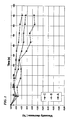
- the tests have been performed on a capillary rheometer GOTTFERT RHEO-TESTER 1000 which detect the viscosity of the melt.
- the temperature of the chamber was 160°C.
- the polymer has been fed to the barrel and preheated for a time of 650 s (pre heating time) and then has been pushed in the capillary so to have a shear rate of 100 s -1 .
- Viscosity values of the melt have been detected from the end of the preheating time over a period of 900 s (that is to say a time higher than the usual residence time of the polymer in a processing device).
- the polymers have shown a biodegradability higher than 60% in 180 days with the polybutylene sebacate showing a biodegradability higher than 90% in the same period of time.
- Polyesters produced according to the process of the invention are suitable for a lot of applications wherein a good processability and/or a good biodegradability of the polymer are requested such as :
Landscapes
- Chemical & Material Sciences (AREA)
- Chemical Kinetics & Catalysis (AREA)
- Medicinal Chemistry (AREA)
- Polymers & Plastics (AREA)
- Organic Chemistry (AREA)
- Health & Medical Sciences (AREA)
- Polyesters Or Polycarbonates (AREA)
- Biological Depolymerization Polymers (AREA)
- Manufacture Of Porous Articles, And Recovery And Treatment Of Waste Products (AREA)
- Compositions Of Macromolecular Compounds (AREA)
- Artificial Filaments (AREA)
- Wrappers (AREA)
- Manufacture Of Macromolecular Shaped Articles (AREA)
Applications Claiming Priority (3)
| Application Number | Priority Date | Filing Date | Title |
|---|---|---|---|
| ITTO990198 | 1999-03-15 | ||
| IT1999TO000198A IT1307022B1 (it) | 1999-03-15 | 1999-03-15 | Processo semplificato per l'ottenimento di poliesteri alifaticibiodegradabili. |
| EP00910841A EP1165650A1 (de) | 1999-03-15 | 2000-03-15 | Ein vereinfachtes verfahren zur darstellung biodegradierbarer aliphatischer polyester |
Related Parent Applications (1)
| Application Number | Title | Priority Date | Filing Date |
|---|---|---|---|
| EP00910841A Division EP1165650A1 (de) | 1999-03-15 | 2000-03-15 | Ein vereinfachtes verfahren zur darstellung biodegradierbarer aliphatischer polyester |
Publications (3)
| Publication Number | Publication Date |
|---|---|
| EP1512709A2 true EP1512709A2 (de) | 2005-03-09 |
| EP1512709A3 EP1512709A3 (de) | 2005-03-23 |
| EP1512709B1 EP1512709B1 (de) | 2007-10-10 |
Family
ID=11417618
Family Applications (2)
| Application Number | Title | Priority Date | Filing Date |
|---|---|---|---|
| EP04077835A Expired - Lifetime EP1512709B1 (de) | 1999-03-15 | 2000-03-15 | Copolymere aus bioabbaubaren aliphatischen Polyestern |
| EP00910841A Ceased EP1165650A1 (de) | 1999-03-15 | 2000-03-15 | Ein vereinfachtes verfahren zur darstellung biodegradierbarer aliphatischer polyester |
Family Applications After (1)
| Application Number | Title | Priority Date | Filing Date |
|---|---|---|---|
| EP00910841A Ceased EP1165650A1 (de) | 1999-03-15 | 2000-03-15 | Ein vereinfachtes verfahren zur darstellung biodegradierbarer aliphatischer polyester |
Country Status (11)
| Country | Link |
|---|---|
| US (1) | US6562939B1 (de) |
| EP (2) | EP1512709B1 (de) |
| JP (1) | JP2002539309A (de) |
| AT (1) | ATE375374T1 (de) |
| AU (1) | AU756070B2 (de) |
| CA (1) | CA2365485C (de) |
| DE (1) | DE60036737T2 (de) |
| ES (1) | ES2294428T3 (de) |
| IT (1) | IT1307022B1 (de) |
| NO (1) | NO329458B1 (de) |
| WO (1) | WO2000055236A1 (de) |
Cited By (1)
| Publication number | Priority date | Publication date | Assignee | Title |
|---|---|---|---|---|
| WO2008099398A2 (en) | 2007-02-14 | 2008-08-21 | Netafim Ltd. | Biodegradable irrigation pipe |
Families Citing this family (29)
| Publication number | Priority date | Publication date | Assignee | Title |
|---|---|---|---|---|
| ITTO20010058A1 (it) | 2001-01-25 | 2002-07-25 | Novamont Spa | Miscele ternarie di poliesteri biodegradabili e prodotti da queste ottenuti. |
| ITMI20020866A1 (it) * | 2002-04-22 | 2003-10-22 | Novamont Spa | Copoliesteri termoplastici saturi/insaturi biodegradabili |
| ITMI20020865A1 (it) * | 2002-04-22 | 2003-10-22 | Novamont Spa | Poliesteri biodegradabili ottenuti mediante estrusione reattiva |
| ITMI20020864A1 (it) | 2002-04-22 | 2003-10-22 | Novamont Spa | Copolimeri a blocchi amorfo-cristallini |
| ITMI20020867A1 (it) * | 2002-04-22 | 2003-10-22 | Novamont Spa | Copoliesteri termoplastici saturi/insaturi biodegradabili |
| US20060286138A1 (en) * | 2003-04-10 | 2006-12-21 | Malshe Vinod C | Novel biodegradable aliphatic polyesters and pharmaceutical compositions and applications thereof |
| JP4635475B2 (ja) * | 2003-05-21 | 2011-02-23 | 三菱化学株式会社 | 脂肪族ポリエステル及びその製造方法 |
| US20070082573A1 (en) * | 2005-10-11 | 2007-04-12 | The Procter & Gamble Company | Water stable fibers and articles comprising starch, and methods of making the same |
| WO2008008074A1 (en) * | 2006-07-14 | 2008-01-17 | Kimberly-Clark Worldwide, Inc. | Biodegradable polyactic acid for use in nonwoven webs |
| KR101297937B1 (ko) | 2006-07-14 | 2013-08-19 | 킴벌리-클라크 월드와이드, 인크. | 부직 웹에 사용하기 위한 생분해성 지방족 폴리에스테르 |
| US8710172B2 (en) * | 2006-07-14 | 2014-04-29 | Kimberly-Clark Worldwide, Inc. | Biodegradable aliphatic-aromatic copolyester for use in nonwoven webs |
| JP5373399B2 (ja) | 2006-09-06 | 2013-12-18 | 学校法人慶應義塾 | リシノール酸系ポリエステル組成物及びその製法 |
| BRPI0622175A2 (pt) * | 2006-12-15 | 2011-12-27 | Kimberly Clark Co | Ácidos polilÁticos biodegradÁveis para uso na formaÇço de fibras |
| WO2008073099A1 (en) * | 2006-12-15 | 2008-06-19 | Kimberly-Clark Worldwide, Inc. | Biodegradable polyesters for use in forming fibers |
| US8518311B2 (en) * | 2007-08-22 | 2013-08-27 | Kimberly-Clark Worldwide, Inc. | Multicomponent biodegradable filaments and nonwoven webs formed therefrom |
| AU2007362596B2 (en) * | 2007-12-13 | 2014-05-22 | Kimberly-Clark Worldwide, Inc. | Biodegradable fibers formed from a thermoplastic composition containing polylactic acid and a polyether copolymer |
| CN102046861B (zh) * | 2008-05-30 | 2012-12-12 | 金伯利-克拉克环球有限公司 | 聚乳酸纤维 |
| US8461262B2 (en) | 2010-12-07 | 2013-06-11 | Kimberly-Clark Worldwide, Inc. | Polylactic acid fibers |
| IT1403272B1 (it) * | 2010-12-20 | 2013-10-17 | Novamont Spa | Strutture oligomeriche complesse |
| ITMI20121067A1 (it) * | 2012-06-19 | 2013-12-20 | Novamont Spa | Derivati vegetali come oli estensori e biofiller in composizioni elastomeriche. |
| KR20140031011A (ko) * | 2012-09-04 | 2014-03-12 | 삼성정밀화학 주식회사 | 생분해성 지방족 폴리에스테르의 연속 제조방법 |
| KR101992391B1 (ko) * | 2012-09-04 | 2019-09-30 | (주)새한폴리머 | 생분해성 지방족/방향족 폴리에스테르 공중합체의 연속 제조방법 |
| CN103243413B (zh) * | 2013-04-24 | 2014-11-05 | 浙江理工大学 | 一种可完全生物降解脂肪族共聚酯短纤维的制备方法 |
| WO2015184313A1 (en) * | 2014-05-30 | 2015-12-03 | Secant Medical, Inc. | Water-mediated preparations of polymeric materials |
| EP3345952A4 (de) * | 2015-08-31 | 2019-01-09 | Mitsui Chemicals, Inc. | Copolymer und schmierölzusammensetzung |
| WO2018183856A1 (en) | 2017-03-31 | 2018-10-04 | The Secant Group, Llc | Cured biodegradable microparticles and scaffolds and methods of making and using the same |
| EP3652234B1 (de) | 2017-07-11 | 2021-04-14 | The Secant Group, LLC | Poly(glycerinsebacat)-interleukin-inhibitor-copolymere sowie verfahren zur herstellung |
| KR102621249B1 (ko) * | 2020-08-19 | 2024-01-08 | 효성티앤씨 주식회사 | 폴리에스터 원사 및 그의 제조방법 |
| CN118996663B (zh) * | 2024-09-26 | 2025-07-11 | 江苏轩达高分子材料有限公司 | 一种生物基聚酯记忆纤维及其制备方法 |
Family Cites Families (13)
| Publication number | Priority date | Publication date | Assignee | Title |
|---|---|---|---|---|
| JPS55142024A (en) * | 1979-04-23 | 1980-11-06 | Toray Ind Inc | Production of polyester |
| JPS6119628A (ja) * | 1984-07-05 | 1986-01-28 | Mitsubishi Kasei Vinyl Co | ポリエステルの製法 |
| US4554343A (en) | 1984-11-23 | 1985-11-19 | Eastman Kodak Company | Process for the production of high molecular weight polyester |
| US4970288A (en) | 1989-09-22 | 1990-11-13 | Atochem North America, Inc. | Non-toxic polyester compositions made with organotin esterification catalysts |
| EP0488617B1 (de) | 1990-11-26 | 1997-09-17 | Showa Highpolymer Co., Ltd. | Ein Verfahren zur Herstellung gesättigter Polyester |
| US5166310A (en) | 1991-08-27 | 1992-11-24 | The Dow Chemical Company | Preparation of polyesters with tin catalyst |
| JP3179177B2 (ja) | 1992-04-10 | 2001-06-25 | 昭和高分子株式会社 | ウレタン結合を含む脂肪族ポリエステル |
| KR0120326B1 (ko) | 1992-12-24 | 1997-10-22 | 김준웅 | 열가소성 생분해성 지방족 폴리에스테르 및 그 제조방법 |
| US5401796A (en) | 1993-04-02 | 1995-03-28 | Mitsui Toatsu Chemicals, Inc. | Aliphatic polyester and preparation process thereof |
| EP0703260A1 (de) | 1994-09-21 | 1996-03-27 | Tonen Corporation | Aliphatischer Polyester und Verfahren zu seiner Herstellung |
| DE69533745T2 (de) | 1994-12-21 | 2005-10-27 | Showa Denko K.K. | Aliphatisches polyesterharz und verfahren zu seiner herstellung |
| JPH0959359A (ja) * | 1995-06-13 | 1997-03-04 | Toray Ind Inc | ポリエステル重合体およびその製造方法 |
| EP0801172B1 (de) | 1995-10-13 | 2003-01-02 | Uni-Charm Corporation | Biologisch abbaubare und hydrolysierbare folie |
-
1999
- 1999-03-15 IT IT1999TO000198A patent/IT1307022B1/it active
-
2000
- 2000-03-15 DE DE60036737T patent/DE60036737T2/de not_active Expired - Lifetime
- 2000-03-15 AU AU32899/00A patent/AU756070B2/en not_active Ceased
- 2000-03-15 US US09/936,598 patent/US6562939B1/en not_active Expired - Fee Related
- 2000-03-15 EP EP04077835A patent/EP1512709B1/de not_active Expired - Lifetime
- 2000-03-15 EP EP00910841A patent/EP1165650A1/de not_active Ceased
- 2000-03-15 WO PCT/EP2000/002305 patent/WO2000055236A1/en not_active Ceased
- 2000-03-15 ES ES04077835T patent/ES2294428T3/es not_active Expired - Lifetime
- 2000-03-15 CA CA002365485A patent/CA2365485C/en not_active Expired - Fee Related
- 2000-03-15 JP JP2000605661A patent/JP2002539309A/ja active Pending
- 2000-03-15 AT AT04077835T patent/ATE375374T1/de not_active IP Right Cessation
-
2001
- 2001-09-14 NO NO20014456A patent/NO329458B1/no not_active IP Right Cessation
Non-Patent Citations (1)
| Title |
|---|
| DATABASE CAPLUS [Online] CHEMICAL ABSTRACTS SERVICE, COLUMBUS, OHIO, US; 5 February 1998 (1998-02-05), SHUAI, XINTAO: "Synthesis and characterization of degradable copolymers of fatty acids and ricinoleic acid" XP002313602 retrieved from STN Database accession no. 1998:67284 * |
Cited By (3)
| Publication number | Priority date | Publication date | Assignee | Title |
|---|---|---|---|---|
| WO2008099398A2 (en) | 2007-02-14 | 2008-08-21 | Netafim Ltd. | Biodegradable irrigation pipe |
| WO2008099398A3 (en) * | 2007-02-14 | 2009-01-08 | Netafim Ltd | Biodegradable irrigation pipe |
| US7862873B2 (en) | 2007-02-14 | 2011-01-04 | Netafim, Ltd. | Biodegradable irrigation pipe |
Also Published As
| Publication number | Publication date |
|---|---|
| NO329458B1 (no) | 2010-10-25 |
| NO20014456L (no) | 2001-09-14 |
| IT1307022B1 (it) | 2001-10-23 |
| AU756070B2 (en) | 2003-01-02 |
| AU3289900A (en) | 2000-10-04 |
| ITTO990198A1 (it) | 2000-09-15 |
| CA2365485A1 (en) | 2000-09-21 |
| CA2365485C (en) | 2010-02-02 |
| NO20014456D0 (no) | 2001-09-14 |
| EP1165650A1 (de) | 2002-01-02 |
| DE60036737D1 (de) | 2007-11-22 |
| JP2002539309A (ja) | 2002-11-19 |
| WO2000055236A1 (en) | 2000-09-21 |
| DE60036737T2 (de) | 2008-07-17 |
| ES2294428T3 (es) | 2008-04-01 |
| EP1512709B1 (de) | 2007-10-10 |
| US6562939B1 (en) | 2003-05-13 |
| ATE375374T1 (de) | 2007-10-15 |
| EP1512709A3 (de) | 2005-03-23 |
Similar Documents
| Publication | Publication Date | Title |
|---|---|---|
| US6562939B1 (en) | Simplified method of producing biodegradable aliphatic polyesters | |
| US7196157B2 (en) | Biodegradable saturated/unsaturated thermoplastic polyesters | |
| US7288618B2 (en) | Biodegradable thermoplastic polyesters | |
| US9012573B2 (en) | Biodegradable polyester and wrapping films for packaging produced therewith | |
| EP0832145B1 (de) | Bioabbaubare thermoplastische polyester, verfahren zu seiner herstellung und gegenstände daraus | |
| US7169860B2 (en) | Amorphous-crystalline block copolymers | |
| JP2001514279A (ja) | 生分解性ラクトン共重合体 | |
| US6214967B1 (en) | Process for the polymerization of lactide | |
| KR20130008592A (ko) | 필름 제조 방법 | |
| NO327722B1 (no) | Anvendelse av polyesterharpikser for fremstilling av gjenstander med god vanndampbarriere | |
| US7253250B2 (en) | Simplified method of producing biodegradable aliphatic polyesters | |
| CN118613527A (zh) | 具有受控含量的混合残留环状低聚物的脂族-芳族聚酯 | |
| EP2836535B1 (de) | Polyester mit 2-methylglutarinsäure, verfahren zur herstellung dieser polyester und in diesem verfahren hergestellte produkte | |
| JP3301505B2 (ja) | ポリ乳酸共重合体 | |
| JP3144416B2 (ja) | 脂肪族ポリエステルおよび/またはその共重合体 | |
| CN120418323A (zh) | 具有长链二羧酸的聚酯 |
Legal Events
| Date | Code | Title | Description |
|---|---|---|---|
| PUAI | Public reference made under article 153(3) epc to a published international application that has entered the european phase |
Free format text: ORIGINAL CODE: 0009012 |
|
| PUAL | Search report despatched |
Free format text: ORIGINAL CODE: 0009013 |
|
| AC | Divisional application: reference to earlier application |
Ref document number: 1165650 Country of ref document: EP Kind code of ref document: P |
|
| AK | Designated contracting states |
Kind code of ref document: A2 Designated state(s): AT BE CH CY DE DK ES FI FR GB GR IE IT LI LU MC NL PT SE |
|
| AK | Designated contracting states |
Kind code of ref document: A3 Designated state(s): AT BE CH CY DE DK ES FI FR GB GR IE IT LI LU MC NL PT SE |
|
| 17P | Request for examination filed |
Effective date: 20050427 |
|
| 17Q | First examination report despatched |
Effective date: 20050617 |
|
| RAP3 | Party data changed (applicant data changed or rights of an application transferred) |
Owner name: MINISTERO DELL' UNIVERSITA' E DELLA RICERCASCIENTI |
|
| AKX | Designation fees paid |
Designated state(s): AT BE CH CY DE DK ES FI FR GB GR IE IT LI LU MC NL PT SE |
|
| 17Q | First examination report despatched |
Effective date: 20050617 |
|
| GRAP | Despatch of communication of intention to grant a patent |
Free format text: ORIGINAL CODE: EPIDOSNIGR1 |
|
| GRAS | Grant fee paid |
Free format text: ORIGINAL CODE: EPIDOSNIGR3 |
|
| GRAA | (expected) grant |
Free format text: ORIGINAL CODE: 0009210 |
|
| AC | Divisional application: reference to earlier application |
Ref document number: 1165650 Country of ref document: EP Kind code of ref document: P |
|
| AK | Designated contracting states |
Kind code of ref document: B1 Designated state(s): AT BE CH CY DE DK ES FI FR GB GR IE IT LI LU MC NL PT SE |
|
| REG | Reference to a national code |
Ref country code: GB Ref legal event code: FG4D |
|
| REG | Reference to a national code |
Ref country code: CH Ref legal event code: EP |
|
| REG | Reference to a national code |
Ref country code: IE Ref legal event code: FG4D |
|
| REF | Corresponds to: |
Ref document number: 60036737 Country of ref document: DE Date of ref document: 20071122 Kind code of ref document: P |
|
| NLV1 | Nl: lapsed or annulled due to failure to fulfill the requirements of art. 29p and 29m of the patents act | ||
| REG | Reference to a national code |
Ref country code: ES Ref legal event code: FG2A Ref document number: 2294428 Country of ref document: ES Kind code of ref document: T3 |
|
| PG25 | Lapsed in a contracting state [announced via postgrant information from national office to epo] |
Ref country code: SE Free format text: LAPSE BECAUSE OF FAILURE TO SUBMIT A TRANSLATION OF THE DESCRIPTION OR TO PAY THE FEE WITHIN THE PRESCRIBED TIME-LIMIT Effective date: 20080110 Ref country code: NL Free format text: LAPSE BECAUSE OF FAILURE TO SUBMIT A TRANSLATION OF THE DESCRIPTION OR TO PAY THE FEE WITHIN THE PRESCRIBED TIME-LIMIT Effective date: 20071010 Ref country code: LI Free format text: LAPSE BECAUSE OF FAILURE TO SUBMIT A TRANSLATION OF THE DESCRIPTION OR TO PAY THE FEE WITHIN THE PRESCRIBED TIME-LIMIT Effective date: 20071010 Ref country code: CH Free format text: LAPSE BECAUSE OF FAILURE TO SUBMIT A TRANSLATION OF THE DESCRIPTION OR TO PAY THE FEE WITHIN THE PRESCRIBED TIME-LIMIT Effective date: 20071010 |
|
| REG | Reference to a national code |
Ref country code: CH Ref legal event code: PL |
|
| PG25 | Lapsed in a contracting state [announced via postgrant information from national office to epo] |
Ref country code: PT Free format text: LAPSE BECAUSE OF FAILURE TO SUBMIT A TRANSLATION OF THE DESCRIPTION OR TO PAY THE FEE WITHIN THE PRESCRIBED TIME-LIMIT Effective date: 20080310 |
|
| PG25 | Lapsed in a contracting state [announced via postgrant information from national office to epo] |
Ref country code: AT Free format text: LAPSE BECAUSE OF FAILURE TO SUBMIT A TRANSLATION OF THE DESCRIPTION OR TO PAY THE FEE WITHIN THE PRESCRIBED TIME-LIMIT Effective date: 20071010 |
|
| ET | Fr: translation filed | ||
| PG25 | Lapsed in a contracting state [announced via postgrant information from national office to epo] |
Ref country code: DK Free format text: LAPSE BECAUSE OF FAILURE TO SUBMIT A TRANSLATION OF THE DESCRIPTION OR TO PAY THE FEE WITHIN THE PRESCRIBED TIME-LIMIT Effective date: 20071010 |
|
| PLBE | No opposition filed within time limit |
Free format text: ORIGINAL CODE: 0009261 |
|
| STAA | Information on the status of an ep patent application or granted ep patent |
Free format text: STATUS: NO OPPOSITION FILED WITHIN TIME LIMIT |
|
| PG25 | Lapsed in a contracting state [announced via postgrant information from national office to epo] |
Ref country code: BE Free format text: LAPSE BECAUSE OF FAILURE TO SUBMIT A TRANSLATION OF THE DESCRIPTION OR TO PAY THE FEE WITHIN THE PRESCRIBED TIME-LIMIT Effective date: 20071010 |
|
| 26N | No opposition filed |
Effective date: 20080711 |
|
| PG25 | Lapsed in a contracting state [announced via postgrant information from national office to epo] |
Ref country code: MC Free format text: LAPSE BECAUSE OF NON-PAYMENT OF DUE FEES Effective date: 20080331 |
|
| PG25 | Lapsed in a contracting state [announced via postgrant information from national office to epo] |
Ref country code: IE Free format text: LAPSE BECAUSE OF NON-PAYMENT OF DUE FEES Effective date: 20080317 Ref country code: GR Free format text: LAPSE BECAUSE OF FAILURE TO SUBMIT A TRANSLATION OF THE DESCRIPTION OR TO PAY THE FEE WITHIN THE PRESCRIBED TIME-LIMIT Effective date: 20080111 |
|
| PG25 | Lapsed in a contracting state [announced via postgrant information from national office to epo] |
Ref country code: FI Free format text: LAPSE BECAUSE OF FAILURE TO SUBMIT A TRANSLATION OF THE DESCRIPTION OR TO PAY THE FEE WITHIN THE PRESCRIBED TIME-LIMIT Effective date: 20071010 |
|
| PG25 | Lapsed in a contracting state [announced via postgrant information from national office to epo] |
Ref country code: CY Free format text: LAPSE BECAUSE OF FAILURE TO SUBMIT A TRANSLATION OF THE DESCRIPTION OR TO PAY THE FEE WITHIN THE PRESCRIBED TIME-LIMIT Effective date: 20071010 |
|
| PG25 | Lapsed in a contracting state [announced via postgrant information from national office to epo] |
Ref country code: LU Free format text: LAPSE BECAUSE OF NON-PAYMENT OF DUE FEES Effective date: 20080315 |
|
| PGRI | Patent reinstated in contracting state [announced from national office to epo] |
Ref country code: IT Effective date: 20110501 |
|
| REG | Reference to a national code |
Ref country code: FR Ref legal event code: PLFP Year of fee payment: 17 |
|
| PGFP | Annual fee paid to national office [announced via postgrant information from national office to epo] |
Ref country code: ES Payment date: 20160328 Year of fee payment: 17 Ref country code: IT Payment date: 20160302 Year of fee payment: 17 |
|
| PGFP | Annual fee paid to national office [announced via postgrant information from national office to epo] |
Ref country code: FR Payment date: 20160328 Year of fee payment: 17 Ref country code: GB Payment date: 20160329 Year of fee payment: 17 |
|
| PGFP | Annual fee paid to national office [announced via postgrant information from national office to epo] |
Ref country code: DE Payment date: 20160331 Year of fee payment: 17 |
|
| REG | Reference to a national code |
Ref country code: DE Ref legal event code: R119 Ref document number: 60036737 Country of ref document: DE |
|
| GBPC | Gb: european patent ceased through non-payment of renewal fee |
Effective date: 20170315 |
|
| REG | Reference to a national code |
Ref country code: FR Ref legal event code: ST Effective date: 20171130 |
|
| PG25 | Lapsed in a contracting state [announced via postgrant information from national office to epo] |
Ref country code: DE Free format text: LAPSE BECAUSE OF NON-PAYMENT OF DUE FEES Effective date: 20171003 Ref country code: FR Free format text: LAPSE BECAUSE OF NON-PAYMENT OF DUE FEES Effective date: 20170331 |
|
| PG25 | Lapsed in a contracting state [announced via postgrant information from national office to epo] |
Ref country code: IT Free format text: LAPSE BECAUSE OF NON-PAYMENT OF DUE FEES Effective date: 20170315 Ref country code: GB Free format text: LAPSE BECAUSE OF NON-PAYMENT OF DUE FEES Effective date: 20170315 |
|
| REG | Reference to a national code |
Ref country code: ES Ref legal event code: FD2A Effective date: 20180629 |
|
| PG25 | Lapsed in a contracting state [announced via postgrant information from national office to epo] |
Ref country code: ES Free format text: LAPSE BECAUSE OF NON-PAYMENT OF DUE FEES Effective date: 20170316 |