EP1512683A1 - Neue Opiate, Herstellungsverfahren und Verwendungen - Google Patents
Neue Opiate, Herstellungsverfahren und Verwendungen Download PDFInfo
- Publication number
- EP1512683A1 EP1512683A1 EP04100891A EP04100891A EP1512683A1 EP 1512683 A1 EP1512683 A1 EP 1512683A1 EP 04100891 A EP04100891 A EP 04100891A EP 04100891 A EP04100891 A EP 04100891A EP 1512683 A1 EP1512683 A1 EP 1512683A1
- Authority
- EP
- European Patent Office
- Prior art keywords
- alkyl group
- hydroxyphenyl
- acid
- group
- compound
- Prior art date
- Legal status (The legal status is an assumption and is not a legal conclusion. Google has not performed a legal analysis and makes no representation as to the accuracy of the status listed.)
- Granted
Links
- 0 C[C@@](CCN(*)C1)(C1=C)c1cccc(I*)c1 Chemical compound C[C@@](CCN(*)C1)(C1=C)c1cccc(I*)c1 0.000 description 5
- FMHTZXCLFALLKX-UHFFFAOYSA-N CCCN(C)OC Chemical compound CCCN(C)OC FMHTZXCLFALLKX-UHFFFAOYSA-N 0.000 description 1
- HPQAZDGJFWXIDQ-UHFFFAOYSA-N ClCC1=C(CCl)C=CCC1 Chemical compound ClCC1=C(CCl)C=CCC1 HPQAZDGJFWXIDQ-UHFFFAOYSA-N 0.000 description 1
Images





Classifications
-
- C—CHEMISTRY; METALLURGY
- C07—ORGANIC CHEMISTRY
- C07D—HETEROCYCLIC COMPOUNDS
- C07D221/00—Heterocyclic compounds containing six-membered rings having one nitrogen atom as the only ring hetero atom, not provided for by groups C07D211/00 - C07D219/00
- C07D221/02—Heterocyclic compounds containing six-membered rings having one nitrogen atom as the only ring hetero atom, not provided for by groups C07D211/00 - C07D219/00 condensed with carbocyclic rings or ring systems
- C07D221/22—Bridged ring systems
-
- A—HUMAN NECESSITIES
- A61—MEDICAL OR VETERINARY SCIENCE; HYGIENE
- A61P—SPECIFIC THERAPEUTIC ACTIVITY OF CHEMICAL COMPOUNDS OR MEDICINAL PREPARATIONS
- A61P1/00—Drugs for disorders of the alimentary tract or the digestive system
- A61P1/12—Antidiarrhoeals
-
- A—HUMAN NECESSITIES
- A61—MEDICAL OR VETERINARY SCIENCE; HYGIENE
- A61P—SPECIFIC THERAPEUTIC ACTIVITY OF CHEMICAL COMPOUNDS OR MEDICINAL PREPARATIONS
- A61P11/00—Drugs for disorders of the respiratory system
-
- A—HUMAN NECESSITIES
- A61—MEDICAL OR VETERINARY SCIENCE; HYGIENE
- A61P—SPECIFIC THERAPEUTIC ACTIVITY OF CHEMICAL COMPOUNDS OR MEDICINAL PREPARATIONS
- A61P11/00—Drugs for disorders of the respiratory system
- A61P11/14—Antitussive agents
-
- A—HUMAN NECESSITIES
- A61—MEDICAL OR VETERINARY SCIENCE; HYGIENE
- A61P—SPECIFIC THERAPEUTIC ACTIVITY OF CHEMICAL COMPOUNDS OR MEDICINAL PREPARATIONS
- A61P13/00—Drugs for disorders of the urinary system
- A61P13/04—Drugs for disorders of the urinary system for urolithiasis
-
- A—HUMAN NECESSITIES
- A61—MEDICAL OR VETERINARY SCIENCE; HYGIENE
- A61P—SPECIFIC THERAPEUTIC ACTIVITY OF CHEMICAL COMPOUNDS OR MEDICINAL PREPARATIONS
- A61P19/00—Drugs for skeletal disorders
- A61P19/02—Drugs for skeletal disorders for joint disorders, e.g. arthritis, arthrosis
-
- A—HUMAN NECESSITIES
- A61—MEDICAL OR VETERINARY SCIENCE; HYGIENE
- A61P—SPECIFIC THERAPEUTIC ACTIVITY OF CHEMICAL COMPOUNDS OR MEDICINAL PREPARATIONS
- A61P25/00—Drugs for disorders of the nervous system
- A61P25/04—Centrally acting analgesics, e.g. opioids
-
- A—HUMAN NECESSITIES
- A61—MEDICAL OR VETERINARY SCIENCE; HYGIENE
- A61P—SPECIFIC THERAPEUTIC ACTIVITY OF CHEMICAL COMPOUNDS OR MEDICINAL PREPARATIONS
- A61P25/00—Drugs for disorders of the nervous system
- A61P25/06—Antimigraine agents
-
- A—HUMAN NECESSITIES
- A61—MEDICAL OR VETERINARY SCIENCE; HYGIENE
- A61P—SPECIFIC THERAPEUTIC ACTIVITY OF CHEMICAL COMPOUNDS OR MEDICINAL PREPARATIONS
- A61P25/00—Drugs for disorders of the nervous system
- A61P25/24—Antidepressants
-
- A—HUMAN NECESSITIES
- A61—MEDICAL OR VETERINARY SCIENCE; HYGIENE
- A61P—SPECIFIC THERAPEUTIC ACTIVITY OF CHEMICAL COMPOUNDS OR MEDICINAL PREPARATIONS
- A61P25/00—Drugs for disorders of the nervous system
- A61P25/30—Drugs for disorders of the nervous system for treating abuse or dependence
- A61P25/32—Alcohol-abuse
-
- A—HUMAN NECESSITIES
- A61—MEDICAL OR VETERINARY SCIENCE; HYGIENE
- A61P—SPECIFIC THERAPEUTIC ACTIVITY OF CHEMICAL COMPOUNDS OR MEDICINAL PREPARATIONS
- A61P25/00—Drugs for disorders of the nervous system
- A61P25/30—Drugs for disorders of the nervous system for treating abuse or dependence
- A61P25/34—Tobacco-abuse
-
- A—HUMAN NECESSITIES
- A61—MEDICAL OR VETERINARY SCIENCE; HYGIENE
- A61P—SPECIFIC THERAPEUTIC ACTIVITY OF CHEMICAL COMPOUNDS OR MEDICINAL PREPARATIONS
- A61P25/00—Drugs for disorders of the nervous system
- A61P25/30—Drugs for disorders of the nervous system for treating abuse or dependence
- A61P25/36—Opioid-abuse
-
- A—HUMAN NECESSITIES
- A61—MEDICAL OR VETERINARY SCIENCE; HYGIENE
- A61P—SPECIFIC THERAPEUTIC ACTIVITY OF CHEMICAL COMPOUNDS OR MEDICINAL PREPARATIONS
- A61P29/00—Non-central analgesic, antipyretic or antiinflammatory agents, e.g. antirheumatic agents; Non-steroidal antiinflammatory drugs [NSAID]
-
- A—HUMAN NECESSITIES
- A61—MEDICAL OR VETERINARY SCIENCE; HYGIENE
- A61P—SPECIFIC THERAPEUTIC ACTIVITY OF CHEMICAL COMPOUNDS OR MEDICINAL PREPARATIONS
- A61P3/00—Drugs for disorders of the metabolism
- A61P3/04—Anorexiants; Antiobesity agents
-
- A—HUMAN NECESSITIES
- A61—MEDICAL OR VETERINARY SCIENCE; HYGIENE
- A61P—SPECIFIC THERAPEUTIC ACTIVITY OF CHEMICAL COMPOUNDS OR MEDICINAL PREPARATIONS
- A61P31/00—Antiinfectives, i.e. antibiotics, antiseptics, chemotherapeutics
- A61P31/12—Antivirals
-
- A—HUMAN NECESSITIES
- A61—MEDICAL OR VETERINARY SCIENCE; HYGIENE
- A61P—SPECIFIC THERAPEUTIC ACTIVITY OF CHEMICAL COMPOUNDS OR MEDICINAL PREPARATIONS
- A61P35/00—Antineoplastic agents
-
- A—HUMAN NECESSITIES
- A61—MEDICAL OR VETERINARY SCIENCE; HYGIENE
- A61P—SPECIFIC THERAPEUTIC ACTIVITY OF CHEMICAL COMPOUNDS OR MEDICINAL PREPARATIONS
- A61P37/00—Drugs for immunological or allergic disorders
- A61P37/02—Immunomodulators
-
- A—HUMAN NECESSITIES
- A61—MEDICAL OR VETERINARY SCIENCE; HYGIENE
- A61P—SPECIFIC THERAPEUTIC ACTIVITY OF CHEMICAL COMPOUNDS OR MEDICINAL PREPARATIONS
- A61P37/00—Drugs for immunological or allergic disorders
- A61P37/02—Immunomodulators
- A61P37/06—Immunosuppressants, e.g. drugs for graft rejection
-
- A—HUMAN NECESSITIES
- A61—MEDICAL OR VETERINARY SCIENCE; HYGIENE
- A61P—SPECIFIC THERAPEUTIC ACTIVITY OF CHEMICAL COMPOUNDS OR MEDICINAL PREPARATIONS
- A61P37/00—Drugs for immunological or allergic disorders
- A61P37/08—Antiallergic agents
-
- A—HUMAN NECESSITIES
- A61—MEDICAL OR VETERINARY SCIENCE; HYGIENE
- A61P—SPECIFIC THERAPEUTIC ACTIVITY OF CHEMICAL COMPOUNDS OR MEDICINAL PREPARATIONS
- A61P39/00—General protective or antinoxious agents
-
- A—HUMAN NECESSITIES
- A61—MEDICAL OR VETERINARY SCIENCE; HYGIENE
- A61P—SPECIFIC THERAPEUTIC ACTIVITY OF CHEMICAL COMPOUNDS OR MEDICINAL PREPARATIONS
- A61P43/00—Drugs for specific purposes, not provided for in groups A61P1/00-A61P41/00
-
- A—HUMAN NECESSITIES
- A61—MEDICAL OR VETERINARY SCIENCE; HYGIENE
- A61P—SPECIFIC THERAPEUTIC ACTIVITY OF CHEMICAL COMPOUNDS OR MEDICINAL PREPARATIONS
- A61P9/00—Drugs for disorders of the cardiovascular system
- A61P9/02—Non-specific cardiovascular stimulants, e.g. drugs for syncope, antihypotensives
-
- C—CHEMISTRY; METALLURGY
- C07—ORGANIC CHEMISTRY
- C07D—HETEROCYCLIC COMPOUNDS
- C07D211/00—Heterocyclic compounds containing hydrogenated pyridine rings, not condensed with other rings
- C07D211/04—Heterocyclic compounds containing hydrogenated pyridine rings, not condensed with other rings with only hydrogen or carbon atoms directly attached to the ring nitrogen atom
- C07D211/06—Heterocyclic compounds containing hydrogenated pyridine rings, not condensed with other rings with only hydrogen or carbon atoms directly attached to the ring nitrogen atom having no double bonds between ring members or between ring members and non-ring members
- C07D211/08—Heterocyclic compounds containing hydrogenated pyridine rings, not condensed with other rings with only hydrogen or carbon atoms directly attached to the ring nitrogen atom having no double bonds between ring members or between ring members and non-ring members with hydrocarbon or substituted hydrocarbon radicals directly attached to ring carbon atoms
- C07D211/18—Heterocyclic compounds containing hydrogenated pyridine rings, not condensed with other rings with only hydrogen or carbon atoms directly attached to the ring nitrogen atom having no double bonds between ring members or between ring members and non-ring members with hydrocarbon or substituted hydrocarbon radicals directly attached to ring carbon atoms with substituted hydrocarbon radicals attached to ring carbon atoms
- C07D211/20—Heterocyclic compounds containing hydrogenated pyridine rings, not condensed with other rings with only hydrogen or carbon atoms directly attached to the ring nitrogen atom having no double bonds between ring members or between ring members and non-ring members with hydrocarbon or substituted hydrocarbon radicals directly attached to ring carbon atoms with substituted hydrocarbon radicals attached to ring carbon atoms with hydrocarbon radicals, substituted by singly bound oxygen or sulphur atoms
- C07D211/22—Heterocyclic compounds containing hydrogenated pyridine rings, not condensed with other rings with only hydrogen or carbon atoms directly attached to the ring nitrogen atom having no double bonds between ring members or between ring members and non-ring members with hydrocarbon or substituted hydrocarbon radicals directly attached to ring carbon atoms with substituted hydrocarbon radicals attached to ring carbon atoms with hydrocarbon radicals, substituted by singly bound oxygen or sulphur atoms by oxygen atoms
-
- C—CHEMISTRY; METALLURGY
- C07—ORGANIC CHEMISTRY
- C07D—HETEROCYCLIC COMPOUNDS
- C07D211/00—Heterocyclic compounds containing hydrogenated pyridine rings, not condensed with other rings
- C07D211/04—Heterocyclic compounds containing hydrogenated pyridine rings, not condensed with other rings with only hydrogen or carbon atoms directly attached to the ring nitrogen atom
- C07D211/06—Heterocyclic compounds containing hydrogenated pyridine rings, not condensed with other rings with only hydrogen or carbon atoms directly attached to the ring nitrogen atom having no double bonds between ring members or between ring members and non-ring members
- C07D211/36—Heterocyclic compounds containing hydrogenated pyridine rings, not condensed with other rings with only hydrogen or carbon atoms directly attached to the ring nitrogen atom having no double bonds between ring members or between ring members and non-ring members with hetero atoms or with carbon atoms having three bonds to hetero atoms with at the most one bond to halogen, e.g. ester or nitrile radicals, directly attached to ring carbon atoms
- C07D211/56—Nitrogen atoms
- C07D211/58—Nitrogen atoms attached in position 4
-
- C—CHEMISTRY; METALLURGY
- C07—ORGANIC CHEMISTRY
- C07D—HETEROCYCLIC COMPOUNDS
- C07D221/00—Heterocyclic compounds containing six-membered rings having one nitrogen atom as the only ring hetero atom, not provided for by groups C07D211/00 - C07D219/00
- C07D221/02—Heterocyclic compounds containing six-membered rings having one nitrogen atom as the only ring hetero atom, not provided for by groups C07D211/00 - C07D219/00 condensed with carbocyclic rings or ring systems
- C07D221/04—Ortho- or peri-condensed ring systems
- C07D221/06—Ring systems of three rings
- C07D221/08—Aza-anthracenes
Definitions
- the present invention relates to novel opioid receptor antagonists and agonists, methods of making these compounds, and methods of use.
- the opioid receptor system has been extensively studied over the past eight decades, driven primarily by a search for analgesics that do not possess the abuse potential associated with morphine. While these studies were unsuccessful, our understanding of the opioid system has increased tremendously. A significant breakthrough in our understanding of this system came about as a realization that the pharmacology of opioids is receptor based. From this vantage point, the focus of research turned to identifying receptor subtypes with the ultimate goal of assigning specific physiological function to individual receptors. Today, the receptor system is known to be composed of the three distinct subtypes OP 1 , OP 2 , and OP 3 (delta, kappa and mu), as each of these have been cloned and been shown to derive from three different chromosomes.
- the opioid receptor system has been extensively studied over the past eight decades driven primarily by a search for analgesics that do not possess the abuse potential associated with morphine. While this effort has been unsuccessful to date, recent studies have highlighted the delta opioid receptor-system as holding the greatest potential for success. Principally, agonists acting through the delta opioid receptor have been shown to modulate pain while minimizing many of the side-effects associated with morphine which acts primarily at the mu opioid receptor. These unwanted side-effects include physical dependence, respiratory depression, and gastrointestinal motility problems. These findings have led to a dramatic increase in the research efforts directed toward the production of potent, highly delta receptor selective agonists. The bulk of this effort has been in discovering small molecules as opposed to peptides due to their enhanced stability in vivo and their ability to penetrate the central nervous system.
- N-substituted ( ⁇ )-trans-3,4-dimethyl-4-(3-hydroxyphenyl)piperidine such as 6 and 7, are known to posses nonselective potent opioid pure antagonist activity.
- 12- 16 Early investigations of the phenylpiperidine class of opioid antagonists identified the 3-methyl substituent and its trans relative relationship to the 4-substituent as being both necessary and sufficient to impart antagonist activity to the agonist 4-(3-hydroxyphenyl)piperidine. 12 This feature distinguished the phenylpiperidines from the oxymorphones which rely on particular N-substituents (i.e. allyl, cyclopropylmethyl) for expression of opioid antagonist activity .
- opioid agonists Numerous structural types of opioid agonists have been discovered, and several such as methadone, meperidine, fentanyl, and pentazocine as well as others have become important drugs for the treatment of pain. 10 However, there are only a few structural types that show potent, opioid pure antagonist activity. 10,7 A resurgence in heroin use in recent years coupled with the demonstrated effectiveness of opioid antagonists for the treatment of other substances of abuse has spurred new interest in the development of novel antagonists for opioid receptors 16 .
- naloxone 8a
- naltrexone 8b
- the antagonist activity is dependent upon the N-substituent
- pioneering studies by Portoghese and coworkers lead to the development of the prototypical kappa and delta opioid receptor antagonists, norbinaltorphimine ( 1 , nor-BNI) and naltrindole ( 2 , NTI).
- norbinaltorphimine 1 , nor-BNI
- NTI naltrindole
- the N-substituted trans-3,4-dimethyl-(3-hydroxyphenyl)piperidine ( 9a-d ) class of pure antagonist has received relatively little attention.
- N-methyl analog 9a As well as many other N-substituted analogs such as 9b, 9c (LY255582), and 9d showed that the pure antagonist activity was dependent on the 3-methyl substituent and its trans relative relationship to the 4-methyl substituent on the piperidine ring and, unlike the oxymorphone class, was independent of the nature of the N-substituent. 7,16,17,6,13,14 Interestingly, the 3,4-dimethyl cis isomer 9e was found to be a mixed agonist-antagonist.
- piperidine ring compounds are found in many different classes of opioids. 27 If the internal nitrogen atom in compounds 11 or 12 is transposed with the benzylic carbon, piperidine ring analogs such as 13 would be obtained. Even though there are common structural elements between structures 11 or 12 and 13, the expected difference between in basicity between the piperidinyl amino group of 11 or 12 and the di-phenyl substituted amine of 13 is sufficient such that it cannot be predicted whether similarity to suggest that 13 would interact with opioid receptors similar to 11 or 12. It is also interesting to note that compound 13 has some structural elements in common with cis -3-methylfentanyl (14) , 21,22 a non-classical opioid ligand selective for the mu opioid receptor. Accordingly, the preparation of compound 13 and related structures remains an important goal.
- the present invention relates to a group of compounds that contain a piperidinyl, or a bridged piperidinyl group.
- the inventive compounds have been found to have a variety of different activities when bound to opioid receptors.
- R 1 is hydrogen, an alkyl group or an aralkyl group.
- alkyl group or “alkyl radical” encompass all structural isomers thereof, such as linear, branched and cyclic alkyl groups and moieties. Unless stated otherwise, all alkyl groups described herein may have 1 to 8 carbon atoms, inclusive of all specific values and subranges therebetween, such as 2, 3, 4, 5, 6, or 7 carbon atoms.
- aralkyl group refers to an aryl moiety bonded to an alkyl radical. The aryl moiety may have 6 to 20 carbon atoms. The aryl moiety may contain only carbon and hydrogen atoms.
- the aryl moiety may contain heteroatoms, for example 1,2, or 3 heteroatoms (e.g., oxygen, nitrogen, and sulfur).
- a particularly preferred aryl moiety is phenyl-.
- the alkyl radical of the aralkyl group may as described above when R 1 is an alkyl group.
- the alkyl group or moiety and/or the aryl moiety may be substituted. Suitable substituents include halogens (F, Cl, Br and I), alkyl groups (e.g., C 1 -C 8 ), alkoxy groups (e.g., C 1 -C 8 alkoxy groups), -CF 3 , -CN, -NH 2 , -NHR, or -N(R) 2 .
- the R groups are, independently, an alkyl group (such as described for R 1 in formula (I) above), an aryl group (such as phenyl) or an aralkyl group group (such as benzyl).
- an alkyl group such as described for R 1 in formula (I) above
- an aryl group such as phenyl
- an aralkyl group group such as benzyl
- the R groups may, together, form a cyclic alkyl group.
- Such a cyclic alkyl group may, preferably, contain 2 to 8 carbon atoms, with 4 or 5 carbon atoms particularly preferred.
- R 1 is unsubstituted.
- R 1 is a C 1 -C 8 alkyl group or a C 6 -C 10 aryl-C 1 -C 8 -alkyl group.
- R 1 is a C 1 -C 4 alkyl group or a phenyl-C 1 -C 4 -alkyl group.
- R 1 is a-C 1 -C 3 alkyl group or a phenyl-C 1 -C 3 -alkyl group.
- R 1 is a methyl group, an isopropyl group, or a phenethyl group.
- R 2 in formula (I) may be hydrogen, an alkyl group, an aryl group or an alkaryl group. Suitable alkyl and alkaryl groups are as described for R 1 above.
- the aryl group may be as described for the aryl moiety of R 1 above.
- R 2 is hydrogen.
- R 3 in formula (I) is one of the following groups:
- the phenyl ring may be unsubstituted (n is 0) or substituted with 1, 2, 3, 4, or 5 X groups.
- each X is, independently, halogen (e.g., chlorine or fluorine), -OH, -OR, an alkyl group (such as described for R, in formula (I) above), an aryl group (such as phenyl), -NH 2 , -NHR, -N(R) 2 , -CF 3 , -CN, -C(O)NH 2 , -C(O)NHR, or -C(O)N(R) 2 .
- the R groups are, independently, an alkyl group (such as described for R, in formula (I) above), an aryl group (such as phenyl) or an aralkyl group group (such as benzyl).
- Preferred X groups are chlorine, fluorine, -OH, -OCH 3 and -NH 2 .
- n is 1.
- the X group(s) may be located at the ortho, meta and para positions. The para position is preferred, especially when X is -OH.
- R a in the formulas above may be hydrogen or an alkyl group. Suitable alkyls are as described for R 1 in formula (I) above. Preferably, R a is hydrogen or methyl.
- the absolute configuration of the carbon atom to which R 1 is bonded may be (R) or (S).
- the (S) configuration is preferred.
- the compounds of formula (I) are preferably opiates with preferential affinity for the ⁇ / ⁇ opioid receptors and comparably less affinity for ⁇ receptors. In a preferred embodiment, these compounds are pure antagonists.
- the ratio of affinity for the ⁇ receptor to the ⁇ receptor ( ⁇ / ⁇ ) may be at least 1.5, preferably at least 2.0, more preferably at least 20, still more preferably at least 100, even still more preferably at least 750 and most preferably at least 800.
- the ⁇ / ⁇ ratio may be 0.002 to 500.
- the compounds of formula (I) may be prepared using well-known synthetic techniques by condensing an acid of the formula R 3 -CO 2 H with an amine represented by the formula:
- the acid is preferably converted into an activated ester in order to couple with the amine.
- a BOP ester is preferred.
- a variety of compounds within the scope of formula (I) may be simultaneously synthesized and evaluated using well-established combinatorial synthesis techniques, for example, as described in Example 1.
- R 1 is an alkyl group or an aralkyl group. These groups may be as defined for R 1 in formula (I).
- R 1 is a C 1 -C 8 alkyl group or a C 6 -C 10 aryl-C 1 -C 8 -alkyl group.
- R 1 is a C 1 -C 4 alkyl group or a phenyl-C 1 -C 4 alkyl group.
- R 1 is a C 1 -C 2 alkyl group or a phenyl-C 1 -C 3 -alkyl group.
- R 1 is a methyl group or a phenethyl group.
- R 7 is hydrogen or an alkyl group, preferably an alkyl group. Suitable alkyl groups are as described above for R 1 . Preferably, R 7 is methyl.
- the substituents R 3 , R 4 , R 5 and R 6 on the fused aromatic ring may be, independently, hydrogen, an alkyl group, -OH, -NH 2 , -NHR, -N(R) 2 , halogen (e.g., fluorine and chlorine), - OR, -CF 3 , -CN, -NO 2 , or -NHC(O)R.
- the R groups are, independently, an alkyl group (such as described for R 1 in formula (I) above), an aryl group (such as phenyl) or an aralkyl group group (such as benzyl). Methyl and ethyl are the more preferred alkyl groups, and methyl is most preferred.
- Methoxy is a preferred -OR group.
- R 3 , R 4 , R 5 and R 6 are each hydrogen. In another embodiment, at most three of R 3 , R 4 , R 5 and R 6 are other than hydrogen. In another embodiment, at most two of R 3 , R 4 , R 5 and R 6 are other than hydrogen. In yet another embodiment, only one of R 3 , R 4 , R 5 and R 6 is other than hydrogen. In an embodiment where the fused aromatic ring contains alkyl groups, one, two or three of R 3 , R 4 , R 5 and R 6 are alkyl groups.
- R 7 and the hydroxyphenyl group may be cis or trans.
- the cis stereochemistry is preferred. All optical isomers of these compounds are within the scope of the present invention.
- the compounds of formula (II) are opiates which are preferably pure opioid receptor antagonists.
- the opiates are selective for the mu and/or kappa receptor as compared to delta receptors.
- the ⁇ / ⁇ selectivity may be at least 2:1, but is preferably higher, such as at least 5:1, 10:1, 20:1, 25:1, 30:1, or 50:1.
- the ⁇ / ⁇ selectivity may be at least 2:1, but is preferably higher, such as at least 5:1,10:1,15:1,20:1, 25:1, 30:1, or 50:1
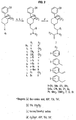
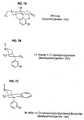
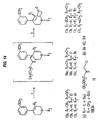
- the compounds of formula (II) may be prepared, for example, as shown Figure 1. These compounds may also be-prepared as described in Examples 2 and 3 with appropriate modification of the various R groups.
- R 1 may be an alkyl group or an aralkyl group. These groups may be as defined for R 1 in formula (I).
- R 1 is a C 1 -C 8 alkyl group or a C 6 -C 10 aryl-C 1 -C 8 -alkyl group.
- R 1 is a C 1 -C 4 alkyl group or a phenyl-C 1 -C 4 -alkyl group.
- R 1 is a C 1 -C 2 alkyl group or a phenyl-C 1 -C 3 -alkyl group.
- R 1 is larger than a methyl group, such as a phenethyl group.
- the alkyl or aralkyl group may be as described for R 1 in formula (I).
- the R groups are, independently, an alkyl group (such as described for R 1 in formula (I) above), an aryl group (such as phenyl) or an aralkyl group group (such as benzyl).
- the R 5 group of formula (III) has the same structure for R 3 in formula (I) discussed above.
- R 2 is hydrogen, an alkyl group, or an amido group, i.e., -NHC(O)R 5 ., or -NRC(O)R 5 . More preferably, R 2 is hydrogen or an amido group.
- R 3 and R 4 may be hydrogen or methyl. However, when R 3 is methyl then R 4 is hydrogen and when R 3 is hydrogen then R 4 is methyl.
- the compounds of formula (III) are preferably opiates which are opioid receptor pure antagonists.
- R 2 is hydrogen, these compounds have a preferential affinity for the ⁇ receptors, as compared to ⁇ or ⁇ receptors.
- the ⁇ / ⁇ selectivity may be at least 2:1, but is preferably higher, e.g., at least 5:1, 10:1, 25:1, 50:1, 100:, 150:1 or 200:1.
- the ⁇ / ⁇ selectivity may be at least 2:1, 5:1, 10:1 or 25:1.
- R2 is an amido group
- the ⁇ / ⁇ selectivity may be at least 2:1, but is preferably higher, e.g., at least 5:1, 10:1, 25:1 or 50:1.
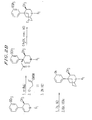
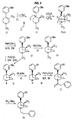
- the compounds of formula (III) may be synthesized, for example, as shown in Figure 2.
- the synthesis of compounds in which R 3 is methyl (9 ⁇ -compounds) is shown in Figure 2A.
- Compounds in which R 4 is methyl (4 ⁇ -compounds) may be synthesized as shown in Figure 2B.
- Compounds (I)-(III) may be in the form of a pharmaceutically acceptable salt via protonation of the amine with a suitable acid.
- the acid may be an inorganic acid or an organic acid.
- Suitable acids include, for example, hydrochloric, hydroiodic, hydrobromic, sulfuric, phosphoric, citric, acetic and formic acids.
- the receptor selectivities discussed above are determined based on the binding affinities at the receptors indicated.
- the compounds of the present invention may be used to bind opioid receptors. Such binding may be accomplished by contacting the receptor with an effective amount of the inventive compound. Of course, such contacting is preferably conducted in a aqueous medium, preferably at physiologically relevant ionic strength, pH, etc.
- the inventive compounds may also be used to treat patients having disease states which are ameliorated by binding opioid receptors.
- diseases states include heroin addiction, pain, i.e., the compounds are used as analgesics.
- the compounds of the inventive may also be used to reverse mu-induced respiratory depression, as cytostatica agents, as antimigraine agents,as immunomodulators, as immunosuppressives, as antiarthritic agents, as antiallergic agents, as virucides, to treat diarrhea, as antidepressants, as uropathic agents, as antitussives, as antiadditive agents, as anti-smoking agents, to treat alcoholism, as hypotensive agents, or to treat obesity.
- the compounds may be administered in an effective amount by any of the conventional techniques well-established in the medical field.
- the compounds may be administered orally, intraveneously, or intramuscularly.
- the inventive compounds may be combined with any of the well-known pharmaceutical carriers and additives that are customarily used in such pharmaceutical compositions.
- the patient is preferably a mammal, with human patients especially preferred.
- a three-component library of compounds was prepared in parallel using multiple simultaneous solution phase synthetic methodology.
- the compounds incorporated a (+)-(3R,4R)-dimethyl-4-(3-hydroxyphenyl)piperidine group as one of the monomers.
- the other two monomers which included N-substituted or unsubstituted Boc protected amino acids and a range of substituted aryl carboxylic acids, were selected to add chemical diversity.
- the final products (7) were prepared in scintillation vials via amide bond formation by coupling with a wide variety of commercially available carboxylic acids.
- a representative list of such carboxylic acids follows the Experimental section of this Example. Benzotriazol-1-yl-oxy-tris-(dimethylamino)phosphonium hexafluorophosphate (BOP reagent) in THF was employed as the coupling reagent which provided very clean products after aqueous work-up. These compounds were used directly in screening without additional purification. Pure compounds for further SAR analysis were obtained by purification of library samples or by single compound synthesis by conventional synthetic methodology and characterized by MS, 1 H NMR, and elemental analyses.
- a comparative analysis of the structures related to compounds 9-23 , which have less binding affinity relative to 8 readily illustrates the importance for kappa receptor binding of each structural subunit of group R 3 (Table 1).
- Compound 9 a diastereomer of 8 , where the carbon to which the R 1 isopropyl group is connected has the opposite stereochemistry, shows less binding affinity ( 11 %) for the opioid kappa receptor.
- the sensitivity to orientation (R or S) at this stereogenic center suggests that the isopropyl group may be working in tandem with another structural feature of the R 3 unit to both increase binding in 8 and decrease binding in 9 .
- the data suggests that the high binding affinity displayed by 8 results from a combination of several structural features present in its N-substituent. These include a 4-hydroxyl group in the pendant phenyl ring of group R 3 , the length and flexibility of the carbon chain connecting this ring to the amide carbonyl and the presence of a beta (position R 1 ) isopropyl group with an S configuration at the adjacent stereogenic center.
- the data analysis suggests that the principle stabilizing interactions could be related to binding of the hydroxyl and isopropyl substituents with the other atoms of the N-substituent substructure acting to hold these two binding elements in optimum overlapping positions within the receptor site.
- the isopropyl group could be acting to bias the conformation of molecule to provide the best alignment of the 4-hydroxyphenylpropionic acid side-chain with its binding site.
- Compound 8 thus displays a high degree of opioid kappa receptor subtype selectivity.
- 1,2 Nor-BNI ( 1 ) has a higher affinity for the kappa receptor than 8 and has a greater kappa selectivity relative to the mu receptor.
- 8 is more selective for the kappa receptor relative to the delta receptor. A part of these differences could be due to the use of different tissues and radioligands.
- the net effect is a loss of selectivity between the mu and kappa receptor subtypes.
- Compound 25 with an R 1 sec-butyl group shows a slight decrease in both kappa and mu potency but retains selectivity, though its magnitude is lower relative to 8 .
- the agonist/antagonist activity of compound 8 was measured by determining its ability to either stimulate or reverse opioid agonist stimulated binding of the nonhydrolyzable GTP analog, [ 35 S]GTP ⁇ S, in all three opioid receptor assays (Table 3).
- Table 3 includes data obtained for naltrexone, the standard nonselective opioid pure antagonist, nor-BNI, the prototypical kappa-selective antagonist, and the potent, mu-favoring opioid antagonist (5a).
- the kappa selectivity displayed by compound 8 in the inhibition of radioligand binding assay was not observed in the [ 35 S]GTP ⁇ S functional assay. This is not an atypical situation; radioligand binding results often differ substantially from those seen in functional assays but this typically involves agonists.
- naltrexone normally display K i (radioligand)/K i (GTP ⁇ S) binding ratios near unity whereas ratios greater than unity have been observed for antagonists of the N-substituted trans -3,4-dimethyl-4-(3-hydroxyphenyl)piperidine series. 1 This phenomenon is illustrated graphically in Figure 5.
- the trans -cinnamyl derivatives 5a-c and compound 5d display K i (radioligand)/K i (GTP ⁇ S) binding ratios greater than unity in the mu and kappa receptor assays which is distinctly different from the response demonstrated by naltrexone.
- compound 8 is found to behave like naltrexone in the kappa receptor assays with a ratio near unity which is far different from the behavior seen for 5a-c and 5d, which show ratios of 118, 228, 63, and 85, respectively.
- compound 8 with a ratio of 54 behaves like 5a-c and 5d which give ratios of 19, 66, 43, and 15.
- This differential response of 8 in the [ 35 S]GTP ⁇ S assay is sufficiently large so as to erode the kappa receptor selectivity observed for 8 in the radioligand binding assays.
- the K i (radioligand)/K i (GTP) binding ratios for nor-BNI at the mu and kappa receptor are 2.8 and 7.36, respectively.
- compound 8 which displays a highly selective kappa vs. mu receptor inhibition of radioligand binding profile and a potent mu/kappa opioid antagonist profile, demonstrates the effectiveness of the biased library approach to lead compound generation. Since both the mu and kappa receptors may be important in heroin abuse, compound 8 should be useful as a treatment medication for heroin abuse.
- any precipitated organic compounds were rinsed into the separatory funnel using a small amount of methanol.
- the beaker was then rinsed with a small amount of water which was added to the separatory funnel.
- the layers were agitated, separated, and the aqueous layer extracted five additional times using 3:1 methylene chloride:THF. It was observed that compounds with small groups R 1 required additional extractions and/or sodium chloride saturation of the aqueous layer.
- the combined organic layers were dried over sodium sulfate and the solvent removed at reduced pressure. The material was then placed on a high vacuum pump to yield a yellow foamy solid.
- Unpurified material from the deprotection step was dissolved in THF (150 mL) and cooled to -20 °C (methanol/ice). To this stirred mixture was added a solution of borane dimethylsulfide complex, 2M in THF (110 mmol) dropwise. The solution was then heated to reflux and held for 3 h after which time, the solution was cooled to -20 °C, and to this was carefully added methanol (72 mL) dropwise. This mixture was stirred for 1 h at room temperature, 16.4 mL of 1M HCl in ethyl ether was added, the solution was allowed to stir for 30 min, and the solvents removed on a rotary evaporator.
- THF 150 mL
- -20 °C methanol/ice
- the vial was then capped with a telfon-lined lid and stirred for 1 h at room temperature. After this time, 4 mL of ethyl ether and 2 mL of water were added to the vial. After shaking and allowing the layers to settle, the aqueous layer was withdrawn with a pipette. Next, 2 mL of saturated sodium bicarbonate solution was added and the procedure repeated. This was followed by a similar wash with saturated sodium chloride solution. Sodium sulfate was added to the vial, and after drying, the mixture was pipetted into a preweighed, prelabeled 20-mL scintillation vial via a 6-in Pasteur pipette containing a small cotton plug.
- DMSO dimethylsulfoxide
- [ 3 H]DAMGO binding proceeded as follows: 12 x 75 mm polystyrene test tubes were prefilled with 100 ⁇ L of the test drug which was diluted in binding buffer (BB: 10 mM Tris-HCl, pH 7.4, containing 1 mg/mL BSA), followed by 50 ⁇ L of BB, and 100 ⁇ L of [ 3 H]DAMGO in a protease inhibitor cocktail (10 mM Tris-HCl, pH 7.4, which contained bacitracin (1 mg/mL), bestatin (100 ⁇ g/mL), leupeptin (40 ⁇ g/mL), and chymostatin (20 ⁇ g/mL).
- Incubations were initiated by the addition of 750 ⁇ L of the prepared membrane preparation containing 0.2 mg/mL of protein and proceeded for 4 to 6 h at 25°C.
- the ligand was displaced by 10 concentrations of test drug, in triplicate, 2x.
- Nonspecific binding was determined using 20 ⁇ M levallorphan.
- the K d of [ 3 H]DAMGO binding was 4.35 nM. Brandel cell harvesters were used to filter the samples over Whatman GF/B filters, which were presoaked in wash-buffer (ice-cold 10 mM Tris-HCl, pH 7.4).
- [ 3 H][D-Ala 2 ,D-Leu 5 ]enkephalin binding proceeded as follows: 12 x 75 mm polystyrene test tubes were prefilled with 100 ⁇ L of the test drug which was diluted in BB, followed by 100 ⁇ L of a salt solution containing choline chloride (1 M, final concentration of 100 mM), MnC12 (30 mM, final concentration of 3.0 mM), and, to block mu sites, DAMGO (1000 nM, final concentration of 100 nM), followed by 50 ⁇ L of [ 3 H][D-Ala 2 ,D-Leu 5 ]enkephalin in the protease inhibitor cocktail.
- Incubations were initiated by the addition of 750 ⁇ L of the prepared membrane preparation containing 0.41 mg/mL of protein and proceeded for 4 to 6 h at 25 °C.
- the ligand was displaced by 10 concentrations of test drug, in triplicate, 2x.
- Nonspecific binding was determined using 20 ⁇ M levallorphan.
- the K d of [ 3 H][D-,Ala 2 ,D-Leu 5 ]enkephalin binding was 2.95 nM. Brandel cell harvesters were used to filter the samples over Whatman GF/B filters, which were presoaked in wash buffer (ice-cold 10 mM Tris-HCl, pH 7.4).
- [ 3 H]U69,593 binding proceeded as follows: 12 x 75 mm polystyrene test tubes were prefilled with 100 ⁇ L of the test drug which was diluted in BB, followed by 50 ⁇ L of BB, followed by 100 ⁇ L of [ 3 H]U69,593 in the standard protease inhibitor cocktail with the addition of captopril (1 mg/mL in 0. 1N acetic acid containing 10 mM 2-mercapto-ethanol to give a final concentration of 1 ⁇ g/mL). Incubations were initiated by the addition of 750 ⁇ L of the prepared membrane preparation containing 0.4 mg/mL of protein and proceeded for 4 to 6 h at 25 °C.
- the ligand was displaced by 10 concentrations of test drug, in triplicate, 2x. Nonspecific binding was determined using 1 ⁇ M U69,593. Under these conditions the K d of [ 3 H]U69,593 binding was 3.75 nM. Brandel cell harvesters were used to filter the samples over Whatman GF/B filters, which were presoaked in wash buffer (ice-cold 10 mM Tris-HCl, pH 7.4) containing 1% PEI.
- the filtration step proceeded as follows: 4 mL of the wash buffer was added to the tubes, rapidly filtered and was followed by two additional wash cycles. The tritium retained on the filters was counted, after an overnight extraction into ICN Cytoscint cocktail, in a Taurus beta counter at 44% efficiency.
- buffer A 10 mM Tris-HCl, pH 7.4 at 4 °C containing 4 ⁇ g/mL leupeptin, 2 ⁇ g/mL chymostatin, 10 ⁇ g/mL bestatin, and 100 ⁇ g/mL bacitracin
- the homogenate was centrifuged at 30,000 x g for 10 min at 4 °C and the supernatant discarded.
- the membrane pellets were washed by resuspension and centrifugation twice more with fresh buffer A, aliquotted into microfuge tubes, and centrifuged in a Tomy refrigerated microfuge (model MTX 150) at maximum speed for 10 min. The supernatants were discarded, and the pellets were stored at -80 °C until assayed.
- the final concentration of the reagents were 100 mM NaCl, 5 mM MgCl 2 , 1 mM EDTA, 1 mM dithiothreitol, 100 ⁇ M GDP, 0.1% BSA, 0.05-0.1 nM [ 35 S]GTP- ⁇ -S, 500 nM or 10 ⁇ M agonists, and varying concentrations (at least 10 different concentrations) of antagonists.
- the reaction was initiated by the addition of membranes and terminated after 4 h by addition of 3 mL ice-cold (4 °C) purified water (Milli-Q uv-Plus, Millipore) followed by rapid vacuum filtration through Whatman GF/B filters presoaked in purified water.
- the benzoisoquinoline system displays a stronger preference for the kappa versus the mu opioid receptor and a lower overall potency relative to typical trans-3,4-dimethyl-4-(3-hydroxyphenyl)piperidine antagonists. Together this data suggests a common site of action within the opioid receptors for compounds 7 and 8 and the trans-3,4-dimethyl-4-(3-hydroxyphenyl)piperidines.
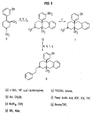
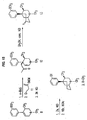
- N-methyl and N-phenethyl derivatives of ( ⁇ )-1,2,3,4,4a,5,10,10a-octahydro-4a-(3-hydroxyphenyl)-10a-methylbenzo[g]isoquinoline were prepared starting from tetrahydropyridine ( 9 ) according to the method illustrated in Figure 6. 1 Accordingly, 9 was deprotonated with sec-butyl lithium followed by alkylation with ⁇ , ⁇ -dichloroxylene. This material was not isolated but was immediately cyclized with NaI in refluxing acetonitrile and reduced with sodium borohydride to provide intermediate 10 in 23% yield.
- the N-methyl derivative ( 7 ) was then available via O-demethylation employing refluxing HBr in acetic acid.
- the N-phenylethyl derivative ( 8 ) was prepared from 10 by N-demethylation using phenylchloroformate in refluxing toluene followed by subjecting the crude carbamate to refluxing HBr in acetic acid to cleave the urethane and deprotect the phenol.
- radioligand binding data for the N-methyl and N-phenethyl derivatives of ( ⁇ )-1,2,3,4,4a,5,10,10a-octahydro-4a-(3-hydroxyphenyl)-10a-methylbenzo[g]isoquinolines are provided in Table 4.
- radioligand binding assay data for the parent ligands 5 and 6 are given in Table 5.
- the binding data obtained for naltrexone ( 3 ) is provided as a reference standard from both sets of assays.
- both 7 and 8 demonstrate a decreased affinity for all of the opioid receptors relative to some of the more potent phenylpiperidine antagonists.
- the source of this loss of activity cannot be immediately established since several explanations exist. It is possible that these compounds have greater preference for a phenyl axial/piperidine chair conformation relative to the phenylpiperidines, though it has been found that 8 exists in the phenylequatorial/piperidine chair conformation in the solid state ( Figure 8). More likely, the lower potency results from a lack of activity of one of the enantiomers of 6 . Hugh eudismic ratios are observed in most classes of opioid ligands.
- the benzoisoquinolines display a stronger preference for the kappa versus the mu receptor and a lower overall potency as, a racemic mixture, relative to typical trans-3,4-dimethyl-4-(3-hydroxyphenyl)piperidine antagonists. Together this data suggests both a common site of action within the opioid receptors for compounds 7 and 8 and the trans-3,4-dimethyl-4-(3-hydroxyphenyl)piperidines.
- Tetrahydrofuran and diethyl ether were dried over sodium benzophenone ketyl and distilled prior to use.
- ⁇ , ⁇ '-Dichloroxylene purchased from Aldrich Chemical Co., was recrystallized from hexane prior to use.
- the contents of the flask were then transferred to a separatory funnel with ice-cold ether and ice-cold 1N HCl.
- the aqueous layer was removed and stored in an ice bath while the organic layer was twice extracted with ice-cold 1N HCl.
- the combined aqueous layers were placed into a new separatory funnel and extracted twice with ice-cold ethyl ether to remove ⁇ , ⁇ '-diochioroxyiene.
- the aqueous layer was then made basic with 50% NaOH at first and finally saturated NaHCO 3 to pH 10.
- the aqueous layer was then extracted 3 times with ice-cold ethyl ether and then discarded.
- the ether extracts were dried over K 2 CO 3 and then filtered into a round-bottom flask and the solvent removed on the rotavap at 0 °C. After all of the solvent was removed, the residue was dissolved in 40 mL sieve dried CH 3 CN, and to this was added 870 mg NaI and 650 mg K 2 CO 3 . The flask was then attached to a reflux condenser and a heating mantle and the system heated under reflux for 3 h. After this time, the flask was cooled to room temperature and filtered. The solvent was then removed on a rotavap and the residue dissolved in 40 mL punctilious ethanol. To this mixture was added 750 mg NaBH 4 in one portion and the mixture allowed to stir overnight.
- this highly polar material was dissolved in 15 mL THF, and to this was added 442 mg (1 mmol) BOP reagent, 0.4 mL triethylamine (2.2 mmol), and 136 mg (1 mmol) phenyl acetic acid. This was stirred for 3 h and then diluted with ethyl ether, 40 mL, and washed sequentially with 15 mL water, 1N HCl, saturated sodium bicarbonate, and brine. The solution was dried over sodium sulfate and the solvent removed on a rotary evaporator. The material was then dissolved in chloroform and filtered through silica gel to remove highly colored polar impurities to give 142 mg relatively clean material.
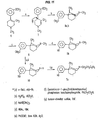
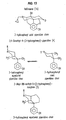
- the ⁇ -5-(3-hydroxyphenyl) morphans were prepared by the method shown in Figure 11. Deprotonation of the known compound 10 with sec-butyl lithium followed by alkylation with allyl bromide cleanly provided intermediate 11 in quantitative yield. This compound was then cyclized provide 12 in 90% yield as a 2.5:1 mixture of diastereomers. Further experimentation established conditions which changed the ratio of 12a:12b to 10:1. Compounds 13a,b were then readily available via enamine reduction followed by separation using radial chromatography. The major isomer 13 was then O-demethylated to give 14. Since elucidation of the stereochemistry was not straightforward using NMR techniques, crystals of the HCl salt of 14 are shown by X-ray analysis to possess the desired 9 ⁇ -methyl stereochemistry.
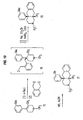
- the benzoisoquinoline compound ( 20 ) was also prepared starting from compound 10 according to the method illustrated in Figure 10. Accordingly, 10 was deprotonated with sec-butyl lithium followed by alkylation with ⁇ , ⁇ '-dichloro-xylene to give intermediate 19 which was not isolated but was immediately cyclized with NaI and reduced to provide compound 20 in 13% yield. O-Demethylation of 20 using hydrogen bromide in acetic acid yielded 21. The structure was established using a combination of NMR techniques.
- the radioligand binding data in Table 7 show that compounds 14, 18, and 21 have affinity for the opioid receptors. 18 is more potent than 14 .
- the data in Table 8 shows that all three compounds are pure antagonists.
- the product carbamate was then extracted with ether, and the ether layer was washed with 1N HCl and water. The organic phase was dried over Na 2 SO 4 and concentrated under reduced pressure. The residue was then treated with 5mL of ethanol and 1.5 mL of 50% aqueous KOH at reflux for 70 h. The mixture was cooled and concentrated under reduced pressure. The resulting concentrate was extracted with ether (2X), and the ether layers were concentrated in vaccuo. The resulting oil was dissolved into 10 mL of 1 N HCl and washed with ether. The aqueous layer was then made strongly basic (pH>12) with 50% NaOH with ice cooling.
- the desired amine 15 was extracted into ether (2X), and the ether extracts were washed, dried over Na 2 SO 4 , and concentrated under reduced pressure to give 207 mg (70%) of crude 11 as light yellow oil.
- the crude compound 15 was treated with 4 mL of glacial acetic acid and 4 mL of 48% aqueous hydrobromic acid at reflux temperature for 20 h.
- the reaction was cooled to room temperature and diluted with 10 mL of water.
- the pH was adjusted to 10 by using 50% NaOH with ice cooling.
- the product was extracted into a mixture of 3:1 1-butanol/toluene, dried over Na 2 SO 4 , and concentrated under reduced pressure to yield 100mg (51 %) of 16 as a semi solid.
- the flask was then cooled to -78 °C and cannulated into a mixture of 40 mL dry ethyl ether and 1.3 g (7.59 mmol) a, a'-dichloroxylene at -50 °C over 20 min. This was aged for 20 min. and then quench with ice-cold 1N HCl. The contents of the flask were then transfered to a separatory funnel with ice-cold ether and ice-cold 1N HCl. The aqueous layer was removed and stored in an ice bath while the organic layer was twice extracted with ice-cold 1N HCl.
- the combined aqueous layers were placed into a new separatory funnel and extracted twice with ice-cold ethyl ether.
- the aqueous layer was then made basic with 50% NaOH at first and finally sat'd NaHCO 3 to pH 10.
- the aqueous layer was then extracted 3 times with ice-cold ethyl ether and then discarded.
- the ether extracts were dried over K 2 CO 3 and then filtered into a round bottom flask and the solvent removed on the rotavap at 0 °C. After all of the solvent was removed, the residue was dissolved in 40 mL seive dried CH 3 CN and to this was added 870 mg NaI and 650 mg K 2 CO 3 .
- Radioligand Binding Results at all Three Opioid Receptors for New Antagonist Pharmacaphores IC 50 (nM ⁇ SD) Compound # RTI # [ 3 H] DAMGO [ 3 H] DADLE [ 3 H] U69,593 (14) 5989-30 243.7 ⁇ 21.9 >10,000 1470 ⁇ 28.4 (1.00 ⁇ 0.08) (0.89 ⁇ 0.06) (18) 5989-31 4.54 ⁇ 0.21 457.4 ⁇ 50.5 27.2 ⁇ 1.89 (1.08 ⁇ 0.05) (0.88 ⁇ 0.08) (1.25 ⁇ 0.11) (21) 5989-28 406 ⁇ 31.9 >10,000 306.4 ⁇ 28.4 (1.02 ⁇ 0.07) (0.81 ⁇ 0.06) IC 50 Data for New Antagonists Toward Reversal of Agonist Stimulated GTP Binding IC 50 (nM ⁇ SD) Compound # RTI # DAMGO SNC 80 U69, 593 (14) 5989-30 288 ⁇ 78 >1000 >1000 (18) 5989-31 5.96 ⁇ 0.72 >
- Compound 10 was converted to 5c by coupling with phenyl acetic acid in the presence of benzotriazol-1-yl-oxy-tris(dimethylamino)phosphonium hexafluorophosphate followed by borane reduction of the resulting amide intermediate.
- Table 9 lists the radioligand binding data for compounds 5b and 5c along with data for naltrexone. While the binding of 5b to all three opioid receptors was weak, it is particularly interesting to note that changing the N-substituent from methyl to phenethyl ( 5c ) provided a dramatic increase in binding affinity, a feature shared by the corresponding 4-(3-hydroxyphenyl)piperidine analogs ( 4a and 4b, Table 10). 2 Furthermore, the relative binding affinities displayed by 5b and 5c for mu and kappa opioid receptors are quite similar to that observed for 4a and 4b. These results show that the binding affinities of 5b and 5c are not adversely affected by the 1,5-carbon bridge present in these structures. In addition, it suggests a common binding mode for the two types of structures.
- the increase in binding of [ 35 S)GTP ⁇ S stimulated by opioid agonists is an assay able to distinguish compounds of differing efficacy and intrinsic activity.
- the antagonist properties of test compounds can be determined by measuring the inhibition of this stimulation. To assess their potency as antagonists and to verify that 5b and 5c retain pure antagonist activity, the compounds were analyzed for either stimulation or inhibition of agonist stimulated GTP binding in comparison with naltrexone (Table 11). In this functional assay, neither 5b nor 5c stimulated GTP binding as measured up to concentrations of 10 ⁇ M, showing that both compounds were devoid of agonist activity.
- N-methyl 9 ⁇ -methyl-5-(3-hydroxyphenyl)morphan ( 5b ) is an opioid receptor pure antagonist.
- replacing the N-methyl with an N-phenethyl group to give 5c resulted in a 63-, 60-, and 70-fold increase in antagonist potency at the mu, delta, and kappa opioid systems.
- These results are particularly important since changing an N-methyl to an N-phenethyl substituent in all opioid systems which have the 3-hydroxyphenyl group in an axial relationship relative to the piperidine ring results in increase in opiod agonist activity.
- 5b and 5c are acting as conformationally rigid analogs of the trans-3,4-dimethyl-4-(3-hydroxyphenyl)piperidine class of opioid antagonists where the 3-hydroxyphenyl group is in an equatorial position relative to the piperidine ring.
- the 3-hydroxyphenyl ring is fixed in an axial orientation relative to the piperidine ring by the rigid framework of the structure ( Figure 13).
- the 3-hydroxyphenyl ring in the 3,4-dimethyl-4-(3-hydroxyphenyl)piperidine analogs 4a can be either in axial or equatorial positions ( Figure 15).
- 1 H and 13 C NMR studies 6,7 as well as molecular modeling studies 2 suggest a preference for the 3-hydroxyphenyl equatorial conformation.
- 5-(3-Hydroxyphenyl)morphans like 5a-c are sterically constrained 4-(3-hydroxyphenyl)piperidines with the 3-hydroxyphenyl ring fixed in the equatorial position ( Figure 13).
- the pure antagonist activity of the morphans 5b and 5c strongly suggests that opioid ligands of the phenyl piperidine class express potent opioid antagonist activity with their 3-hydroxyphenyl group in an equatorial position.
- 9 ⁇ -methyl-5-(3-hydroxyphenyl)morphans are a new structural type of pure opioid antagonist.
- the data also strongly supports the proposed 4-(3-hydroxyphenyl) equatorial piperidine chair mode of interaction for the trans-3,4-dimethyl-(3-hydroxyphenyl)piperidine class of opioid antagonist.
- the [ 3 H]DAMGO, DAMGO, and [ 3 H][D-Ala 2 ,D-Leu 5 ]enkephalin were obtained via the Research Technology Branch, NIDA, and were prepared by Multiple Peptide Systems (San Diego, CA).
- U69,593 was obtained from Research Biochemicals International (Natick, MA).
- Levallorphan was a generous gift from Kenner Rice, Ph.D., NIDDK, NIH (Bethesda, MD).
- GTP ⁇ S and GDP were obtained from Sigma Chemical Company (St. Louis, MO). The sources of other reagents are published. 8
- 1,2,3,4-Tetrahydro-4-allyl-1,5-dimethyl4-(3-methoxyphenyl)pyridine (7) To a solution of 500 mg (2.3 mmol) of 1,2,6-trihydro-1,3-dimethyl-4-(3-methoxy)pyridine (6) in 15 mL of THF at -42 °C was added s-BuLi in cyclohexane (1.3M, 2.9 mmol). After 1 h, allyl bromide (2.3 mmol) was added, and the color of the solution changed from dark red to yellow.
- the product carbamate was then extracted with ether, and the ether layer was washed with 1N HCl and water. The organic phase was dried over Na 2 SO 4 and concentrated under reduced pressure. The residue was then treated with 5mL of ethanol and 1.5 mL of 50% aqueous KOH at reflux for 70 h. The mixture was cooled and concentrated under reduced pressure. The resulting concentrate was extracted with ether (2x), and the ether layers were concentrated in vacuo. The resulting oil was dissolved into 10 mL of 1 N HCl and washed with ether. The aqueous layer was then made strongly basic (pH >12) with 50% NaOH with ice cooling.
- the desired amine was extracted into ether (2x), and the ether extracts were washed, dried over Na 2 SO 4 , and concentrated under reduced pressure to give 207 mg (70%) of a light yellow oil.
- This was treated with 4 mL of glacial acetic acid and 4 mL of 48% aqueous hydrobromic acid at reflux temperature for 20 h.
- the reaction was cooled to room temperature and diluted with 10 mL of water.
- the pH was adjusted to 10 by using 50% NaOH with ice cooling.
- the product was extracted into a mixture of 3:1 1 -butanol/toluene, dried over Na 2 SO 4 , and concentrated under reduced pressure to yield 100 mg (51%) of 10 as a semisolid.
- the combined ether layers were washed with NaHCO 3 and brine, and dried over Na 2 SO 4 . Evaporation of solvent provided the crude product as a colorless oil.
- the crude amide was dissolved in THF (8 mL). The solution was cooled to 0 °C, and borane:methyl sulfide complex (0.4 mL, 0.8 mmol) was added dropwise. After vigorous reaction ceased, the resulting mixture was slowly heated to reflux and maintained at that temperature for 4 h. The reaction mixture was cooled to 0 °C, 6 mL of methanol was added, and the mixture was stirred for 1 h.
- [ 3 H]DAMGO binding proceeded as follows: 12 x 75 mm polystyrene test tubes were prefilled with 100 ⁇ L of the test drug which was diluted in binding buffer (BB: 10 mM Tris-HCl, pH 7.4, containing 1 mg/mL BSA), followed by 50 ⁇ L of BB, and 100 ⁇ L of [ 3 H]DAMGO in a protease inhibitor cocktail (10 mM Tris-HCl, pH 7.4, which contained bacitracin (1 mg/mL), bestatin (100 ⁇ g/mL), leupeptin (40 ⁇ g/mL), and chymostatin (20 ⁇ g/mL).
- Incubations were initiated by the addition of 750 ⁇ L of the prepared membrane preparation containing 0.2 mg/mL of protein and proceeded for 4 to 6 h at 25°C.
- the ligand was displaced by 10 concentrations of test drug, in triplicate, 2x.
- Nonspecific binding was determined using 20 ⁇ M levallorphan.
- the K d of [ 3 H]DAMGO binding was 4.35 nM. Brandel cell harvesters were used to filter the samples over Whatman GF/B filters, which were presoaked in wash-buffer (ice-cold 10 mM Tris-HCl, pH 7.4).
- [ 3 H][D-Ala 2 ,D-Leu 5 ]enkephalin binding proceeded as follows: 12 x 75 mm polystyrene test tubes were prefilled with 100 ⁇ L of the test drug which was diluted in BB, followed by 100 ⁇ L of a salt solution containing choline chloride (1 M, final concentration of 100 mM), MnC 12 (30 mM, final concentration of 3.0 mM), and, to block mu sites, DAMGO (1000 nM, final concentration of 100 nM), followed by 50 ⁇ L of [ 3 H][D-Ala 2 ,D-Leu 5 ]enkephalin in the protease inhibitor cocktail.
- Incubations were initiated by the addition of 750 ⁇ L of the prepared membrane preparation containing 0.41 mg/mL of protein and proceeded for 4 to 6 h at 25°C.
- the ligand was displaced by 10 concentrations of test drug, in triplicate, 2x.
- Nonspecific binding was determined using 20 ⁇ M levallorphan.
- the K d of [ 3 H][D-Ala 2 ,D-Leu 5 ]enkephalin binding was 2.95 nM. Brandel cell harvesters were used to filter the samples over Whatman GF/B filters, which were presoaked in wash buffer (ice-cold 10 mM Tris-HCl, pH 7.4).
- [ 3 H]U69,593 binding proceeded as follows: 12 x 75 mm polystyrene test tubes were prefilled with 100 ⁇ L of the test drug which was diluted in BB, followed by 50 ⁇ L of BB, followed by 100 ⁇ L of [ 3 H]U69,593 in the standard protease inhibitor cocktail with the addition of captopril (1 mg/mL in 0.1N acetic acid containing 10 mM 2-mercapto-ethanol to give a final concentration of 1 ⁇ g/mL). Incubations were initiated by the addition of 750 ⁇ L of the prepared membrane preparation containing 0.4 mg/mL of protein and proceeded for 4 to 6 h at 25°C.
- the ligand was displaced by 10 concentrations of test drug, in triplicate, 2x. Nonspecific binding was determined using 1 ⁇ M U69,593. Under these conditions the K d of [ 3 H]U69,593 binding was 3.75 nM. Brandel cell harvesters were used to filter the samples over Whatman GF/B filters, which were presoaked in wash buffer (ice-cold 10 mM Tris-HCl, pH 7.4) containing 1% PEI.
- the filtration step proceeded as follows: 4 mL of the wash buffer was added to the tubes, rapidly filtered and was followed by two additional wash cycles. The tritium retained on the filters was counted, after an overnight extraction into ICN Cytoscint cocktail, in a Taurus beta counter at 44% efficiency.
- buffer A 10 mM Tris-HCl, pH 7.4 at 4 °C containing 4 ⁇ g/mL leupeptin, 2 ⁇ g/mL chymostatin, 10 ⁇ g/mL bestatin, and 100 ⁇ g/mL bacitracin
- the homogenate was centrifuged at 30,000 x g for 10 min at 4 °C and the supernatant discarded.
- the membrane pellets were washed by resuspension and centrifugation twice more with fresh buffer A, aliquotted into microfuge tubes, and centrifuged in a Tomy refrigerated microfuge (model MTX 150) at maximum speed for 10 min. The supernatants were discarded, and the pellets were stored at -80 °C until assayed.
- the final concentration of the reagents were 100 mM NaCl, 5 mM MgCl 2 , 1 mM EDTA, 1 mM dithiothreitol, 100 ⁇ M GDP, 0.1% BSA, 0.05-0.1 nM [ 35 S]GTP ⁇ S, 500 nM or 10 ⁇ M agonists, and varying concentrations (at least 10 different concentrations) of antagonists.
- the reaction was initiated by the addition of membranes and terminated after 4 h by addition of 3 mL ice-cold (4 °C) purified water (Milli-Q uv-Plus, Millipore) followed by rapid vacuum filtration through Whatman GF/B filters presoaked in purified water.
- the anisotropic displacement factor exponent takes the form: -2 ⁇ 2 [ h 2 a* 2 U 11 + ... + 2 h k a* b* U 12 ] U 11 U 22 U 33 U 23 U 13 U 12 Cl(1) 62(1) 59(1) 48(1) 3(1) -5(1) 10(1) C(1) 47(2) 39(2) 45(2) 1(1) -1(1) -1(1) N(2) 58(2) 34(1) 43(1) 3(1) -7(1) -4(1) C(2) 88(2) 42(2) 62(2) 5(2) -8(2) -21(2) C(3) 67(2) 44(2) 52(2) -7(1) -4(1) 11(2) C(4) 52(2) 47(2) 50(2) -7(1) -1(1) 9(1) C(5) 41(1) 36(1) 42(1) -2(1) -2(1) 5(1) C(6) 50(2) 48(2) 45(2) -1(1) -9(1) 7(1) C(7) 80(2) 51(2) 43(2) 8(1) -8(2) -2(2) C(8) 70(2) 53(2) 45(2) 4(1) 4(1) -16(2) C(9) 39(1) 35(1) 42(1) 0(1) -1(1) -1(1) C(9A) 50(2) 40(2) 56(2) 6(1)
- the 9 ⁇ -methyl-7-oxo-5-arylmorphan 17a can be prepared in a convergent manner from tetrahydropyridine 15a by alkylation with 2-(chloromethyl)-3,5-dioxahex-1-ene 18 followed by cyclization under acidic conditions.
- This method provides the first reported access to the 9 ⁇ -methyl substituted system with good control of the stereochemistry.
- Application of the method to 15b and 15c provides a higher yielding route to the unsubstituted 7-oxo-phenylmorphan ring system and is amenable to large-scale synthesis.
- 1,2,3,6-Tetrahydro-4-(3-methoxyphenyl)-1-benzylpyridine 15c (5.0 g, 0.018 mol) was dissolved in 70 mL of THF and chilled to -78 °C in a dry ice-acetone bath.
- N-Butyllithium (1.6M, 12.0 mL, 0.0193.mol) was added to the reaction mixture at a rate that would maintain the temperature at -70 °C or below. After complete addition, the reaction was stirred for an additional 15 min, and the dry ice bath was replaced with a salt-ice bath.
- N-alkyl-4 ⁇ -methyl-5-phenylmorphans A convergent, highly stereoselective synthetic approach to N-alkyl-4 ⁇ -methyl-5-phenylmorphans has been developed utilizing alkylation of the metalloenamine of N-alkyl-1,2,3,6-tetrahydro-4-phenylpyridines with 2-(chloromethyl)-3,5-dioxahex-1-ene (Okahara's reagent) followed by Clemmensen reduction.
- this example provides a highly diastereoselective synthetic approach to the N-alkyl-4 ⁇ -methyl-5-(3-hydroxyphenyl)morphan system as well as providing a higher yielding route to the useful 7-oxo-5-(3-methoxyphenyl)morphan opioid intermediates.
Landscapes
- Health & Medical Sciences (AREA)
- Chemical & Material Sciences (AREA)
- Organic Chemistry (AREA)
- Life Sciences & Earth Sciences (AREA)
- Chemical Kinetics & Catalysis (AREA)
- Animal Behavior & Ethology (AREA)
- Veterinary Medicine (AREA)
- General Chemical & Material Sciences (AREA)
- Medicinal Chemistry (AREA)
- Nuclear Medicine, Radiotherapy & Molecular Imaging (AREA)
- Public Health (AREA)
- Pharmacology & Pharmacy (AREA)
- General Health & Medical Sciences (AREA)
- Bioinformatics & Cheminformatics (AREA)
- Engineering & Computer Science (AREA)
- Immunology (AREA)
- Neurosurgery (AREA)
- Neurology (AREA)
- Biomedical Technology (AREA)
- Addiction (AREA)
- Psychiatry (AREA)
- Pain & Pain Management (AREA)
- Pulmonology (AREA)
- Cardiology (AREA)
- Heart & Thoracic Surgery (AREA)
- Rheumatology (AREA)
- Transplantation (AREA)
- Obesity (AREA)
- Hematology (AREA)
- Diabetes (AREA)
- Virology (AREA)
- Communicable Diseases (AREA)
- Oncology (AREA)
- Child & Adolescent Psychology (AREA)
- Toxicology (AREA)
- Urology & Nephrology (AREA)
- Orthopedic Medicine & Surgery (AREA)
- Physical Education & Sports Medicine (AREA)
- Pharmaceuticals Containing Other Organic And Inorganic Compounds (AREA)
- Other In-Based Heterocyclic Compounds (AREA)
Applications Claiming Priority (5)
| Application Number | Priority Date | Filing Date | Title |
|---|---|---|---|
| US7740298P | 1998-03-10 | 1998-03-10 | |
| US77402P | 1998-03-10 | ||
| US10790298P | 1998-11-10 | 1998-11-10 | |
| US107902P | 1998-11-10 | ||
| EP99912345A EP1061919A4 (de) | 1998-03-10 | 1999-03-09 | Neue opiate, verfahren zur ihrer herstellung und verwendung davon |
Related Parent Applications (2)
| Application Number | Title | Priority Date | Filing Date |
|---|---|---|---|
| EP99912345.8 Division | 1999-03-09 | ||
| EP99912345A Division EP1061919A4 (de) | 1998-03-10 | 1999-03-09 | Neue opiate, verfahren zur ihrer herstellung und verwendung davon |
Publications (2)
| Publication Number | Publication Date |
|---|---|
| EP1512683A1 true EP1512683A1 (de) | 2005-03-09 |
| EP1512683B1 EP1512683B1 (de) | 2011-08-31 |
Family
ID=26759233
Family Applications (2)
| Application Number | Title | Priority Date | Filing Date |
|---|---|---|---|
| EP04100891A Expired - Lifetime EP1512683B1 (de) | 1998-03-10 | 1999-03-09 | Neue Opiate, Herstellungsverfahren und Verwendungen |
| EP99912345A Ceased EP1061919A4 (de) | 1998-03-10 | 1999-03-09 | Neue opiate, verfahren zur ihrer herstellung und verwendung davon |
Family Applications After (1)
| Application Number | Title | Priority Date | Filing Date |
|---|---|---|---|
| EP99912345A Ceased EP1061919A4 (de) | 1998-03-10 | 1999-03-09 | Neue opiate, verfahren zur ihrer herstellung und verwendung davon |
Country Status (6)
| Country | Link |
|---|---|
| EP (2) | EP1512683B1 (de) |
| JP (4) | JP4498602B2 (de) |
| AT (1) | ATE522503T1 (de) |
| AU (1) | AU756983B2 (de) |
| CA (2) | CA2683097A1 (de) |
| WO (1) | WO1999045925A1 (de) |
Families Citing this family (33)
| Publication number | Priority date | Publication date | Assignee | Title |
|---|---|---|---|---|
| US6974825B1 (en) | 1996-12-20 | 2005-12-13 | Astrazeneca Canada Inc. | Compounds with analgesic effect |
| SE9604786D0 (sv) | 1996-12-20 | 1996-12-20 | Astra Pharma Inc | New compounds |
| US6900228B1 (en) | 1998-03-10 | 2005-05-31 | Research Triangle Institute | Opiate compounds, methods of making and methods of use |
| US6110943A (en) * | 1999-04-06 | 2000-08-29 | American Home Products Corporation | N-substituted (thiophen-2-yl)-piperidines and tetrahydropyridines as serotonergic agents |
| SE9904675D0 (sv) * | 1999-12-20 | 1999-12-20 | Astra Pharma Inc | Novel compounds |
| US6974824B2 (en) * | 2001-01-08 | 2005-12-13 | Research Triangle Institute | Kappa opioid receptor ligands |
| US20040072865A1 (en) * | 2001-01-15 | 2004-04-15 | Bouillot Anne Marie Jeanne | Aryl piperidine derivatives as inducers of ldl-receptor expression |
| EP1351937A1 (de) * | 2001-01-15 | 2003-10-15 | Glaxo Group Limited | Arylpiperidin-derivate als induktoren der ldl-rezeptorexpression |
| SE0101773D0 (sv) | 2001-05-18 | 2001-05-18 | Astrazeneca Ab | Novel compounds |
| SE0101771D0 (sv) | 2001-05-18 | 2001-05-18 | Astrazeneca Ab | Novel compounds |
| SE0101770D0 (sv) | 2001-05-18 | 2001-05-18 | Astrazeneca Ab | Novel compounds |
| SE0101769D0 (sv) | 2001-05-18 | 2001-05-18 | Astrazeneca Ab | Novel compounds |
| US6992090B2 (en) | 2003-06-16 | 2006-01-31 | Adolor Corporation | Substituted piperidine compounds and methods of their use |
| PT1735308E (pt) * | 2004-03-09 | 2008-12-02 | Corcept Therapeutics Inc | Moduladores dos receptores de glucocorticóides de azadecalina de anel fundido |
| US7087749B2 (en) | 2004-03-11 | 2006-08-08 | Adolor Corporation | Substituted piperidine compounds and methods of their use |
| US7538110B2 (en) | 2005-10-27 | 2009-05-26 | Adolor Corporation | Opioid antagonists |
| AU2012204232A1 (en) | 2011-01-07 | 2013-06-27 | Corcept Therapeutics, Inc. | Combination steroid and glucocorticoid receptor antagonist therapy |
| CA2858752C (en) * | 2011-12-09 | 2019-12-31 | Research Triangle Institute | 1-substituted 4-arylpiperazines as kappa opioid receptor antagonists |
| US8859774B2 (en) | 2012-05-25 | 2014-10-14 | Corcept Therapeutics, Inc. | Heteroaryl-ketone fused azadecalin glucocorticoid receptor modulators |
| US12226412B2 (en) | 2012-05-25 | 2025-02-18 | Corcept Therapeutics, Inc. | Heteroaryl-ketone fused azadecalin glucocorticoid receptor modulators |
| ES2743620T3 (es) | 2013-11-25 | 2020-02-20 | Corcept Therapeutics Inc | Moduladores del receptor de glucocorticoides de azadecalina condensada con octahidro |
| EP3344248B1 (de) * | 2015-09-02 | 2022-03-23 | Trevena, Inc. | 6-gliedrige heterozyklen mit delta-opioidrezeptor-modulierenden verbindungen, verfahren zur herstellung und verwendung davon |
| SG11201908790PA (en) | 2017-03-31 | 2019-10-30 | Corcept Therapeutics Inc | Glucocorticoid receptor modulators to treat cervical cancer |
| CN117281790A (zh) | 2018-12-19 | 2023-12-26 | 科塞普特治疗公司 | 含有瑞拉可兰、杂芳基-酮稠合的氮杂十氢化萘化合物的药物制剂 |
| WO2020132046A1 (en) | 2018-12-19 | 2020-06-25 | Corcept Therapeutics Incorporated | Methods of treating cancer comprising administration of a glucocorticoid receptor modulator and a cancer chemotherapy agent |
| US11234971B2 (en) | 2018-12-19 | 2022-02-01 | Corcept Therapeutics Incorporated | Methods of treating cancer comprising administration of a glucocorticoid receptor modulator and a cancer chemotherapy agent |
| CN113490496A (zh) | 2019-02-22 | 2021-10-08 | 科赛普特治疗学股份有限公司 | 一种杂芳基-酮稠合氮杂萘烷糖皮质激素受体调节剂瑞拉可兰的治疗用途 |
| KR20220113767A (ko) | 2019-12-11 | 2022-08-16 | 코어셉트 쎄라퓨틱스 인코포레이티드 | 미리코릴란트로 항정신병약-유도 체중 증가를 치료하는 방법 |
| CN112028878A (zh) * | 2020-09-11 | 2020-12-04 | 江阴迈康升华医药科技有限公司 | 一种多氢异喹啉衍生物及其制备方法和医疗用途 |
| WO2022134033A1 (en) | 2020-12-25 | 2022-06-30 | Corcept Therapeutics Incorporated | Methods of preparing heteroaryl-ketone fused azadecalin glucocorticoid receptor modulators |
| EP4561699A1 (de) * | 2022-07-28 | 2025-06-04 | The United States of America, as represented by the Secretary, Department of Health and Human Services | Selektive opioidrezeptoragonisten und -antagonisten |
| KR20250073629A (ko) | 2022-10-06 | 2025-05-27 | 코어셉트 쎄라퓨틱스 인코포레이티드 | 글루코코르티코이드 수용체 조절제의 제형 |
| AU2023367284A1 (en) | 2022-10-28 | 2025-05-29 | Corcept Therapeutics Incorporated | Treatments for amyotrophic lateral sclerosis using dazucorilant |
Citations (3)
| Publication number | Priority date | Publication date | Assignee | Title |
|---|---|---|---|---|
| EP0018077A2 (de) * | 1979-03-12 | 1980-10-29 | Eli Lilly And Company | Phenylmorphane, Verfahren zu ihrer Herstellung und pharmazeutische Zusammensetzungen, die sie enthalten |
| US5270328A (en) * | 1991-03-29 | 1993-12-14 | Eli Lilly And Company | Peripherally selective piperidine opioid antagonists |
| US5319087A (en) * | 1987-04-16 | 1994-06-07 | Eli Lilly And Company | Piperidine opioid antagonists |
Family Cites Families (5)
| Publication number | Priority date | Publication date | Assignee | Title |
|---|---|---|---|---|
| US5214148A (en) * | 1990-12-18 | 1993-05-25 | Glaxo Inc. | Analgesic N-phenyl-N-(3-OR1 -3-ME-4-piperidinyl)amides |
| US5159081A (en) * | 1991-03-29 | 1992-10-27 | Eli Lilly And Company | Intermediates of peripherally selective n-carbonyl-3,4,4-trisubstituted piperidine opioid antagonists |
| IT1307327B1 (it) * | 1995-09-12 | 2001-10-30 | Smithkline Beecham Spa | Derivati idroisochinolinici sostituiti |
| SE9604786D0 (sv) * | 1996-12-20 | 1996-12-20 | Astra Pharma Inc | New compounds |
| AU2009799A (en) * | 1997-12-24 | 1999-07-19 | Ortho-Mcneil Pharmaceutical, Inc. | 4-(aryl(piperidin-4-yl)) aminobenzamides which bind to the delta-opioid receptor |
-
1999
- 1999-03-09 AU AU30738/99A patent/AU756983B2/en not_active Ceased
- 1999-03-09 AT AT04100891T patent/ATE522503T1/de not_active IP Right Cessation
- 1999-03-09 JP JP2000535340A patent/JP4498602B2/ja not_active Expired - Fee Related
- 1999-03-09 EP EP04100891A patent/EP1512683B1/de not_active Expired - Lifetime
- 1999-03-09 CA CA002683097A patent/CA2683097A1/en not_active Abandoned
- 1999-03-09 CA CA002324418A patent/CA2324418C/en not_active Expired - Fee Related
- 1999-03-09 WO PCT/US1999/005131 patent/WO1999045925A1/en not_active Ceased
- 1999-03-09 EP EP99912345A patent/EP1061919A4/de not_active Ceased
-
2010
- 2010-01-29 JP JP2010018781A patent/JP2010143940A/ja active Pending
- 2010-01-29 JP JP2010018782A patent/JP2010095543A/ja active Pending
- 2010-01-29 JP JP2010018780A patent/JP2010095542A/ja not_active Ceased
Patent Citations (3)
| Publication number | Priority date | Publication date | Assignee | Title |
|---|---|---|---|---|
| EP0018077A2 (de) * | 1979-03-12 | 1980-10-29 | Eli Lilly And Company | Phenylmorphane, Verfahren zu ihrer Herstellung und pharmazeutische Zusammensetzungen, die sie enthalten |
| US5319087A (en) * | 1987-04-16 | 1994-06-07 | Eli Lilly And Company | Piperidine opioid antagonists |
| US5270328A (en) * | 1991-03-29 | 1993-12-14 | Eli Lilly And Company | Peripherally selective piperidine opioid antagonists |
Non-Patent Citations (9)
| Title |
|---|
| AWAYA H ET AL: "RACEMIC AND OPTICALLY ACTIVE 2,9-DIMETHYL-5-(M-HYDROXYPHENYL) MORPHANS AND PHARMACOLOGICAL COMPARISON WITH THE 9-DEMETHYL HOMOLOGUES", JOURNAL OF MEDICINAL CHEMISTRY, AMERICAN CHEMICAL SOCIETY. WASHINGTON, US, vol. 27, no. 4, 1984, pages 536 - 539, XP002919015, ISSN: 0022-2623 * |
| BERTHA, C. M. ET AL.: "A Marked Change of Receptor Affinity of the 2-Methyl-5-(3-hydroxyphenyl)morphans upon Attachment of an (E)-8-Benzylidene Moiety: Synthesis and Evaluation of a New Class of .sigma. Receptor Ligands", JOURNAL OF MEDICINAL CHEMISTRY, vol. 37, no. 19, 1994, pages 3163 - 3170, XP002203669 * |
| BERTHA, C. M. ET AL.: "Probes for arcotic Receptor-Mediated Phenomena. 20. Alteration of Opioid Receptor Subtype Selectivity of the 5-(3-Hydroxyphenyl)morphans by Application of the Message-Address Concept: Preparation of .delta.-Opioid Receptor Ligands", JOURNAL OF MEDICINAL CHEMISTRY, vol. 38, no. 9, 1995, pages 1523 - 1537, XP002203668 * |
| FROIMOWITZ M. ET AL.: "Phenylmorphans and Analogues: Opioid Receptor Subtype Selectivity and Effect of Conformation on Activity", JOURNAL OF MEDICINAL CHEMISTRY, vol. 35, no. 9, 1992, pages 1521 - 1525, XP002203667 * |
| ONG, H. H. ET AL.: "Phenylmorphan Agonists-Antagonists", JOURNAL OF MEDICINAL CHEMISTRY, vol. 17, no. 1, 1974, pages 133 - 134, XP002203670 * |
| THOMAS J B ET AL: "A Stereoselective Synthetic Approach to N-Alkyl-4beta-methyl-5-phenyl morphans", TETRAHEDRON LETTERS, ELSEVIER SCIENCE PUBLISHERS, AMSTERDAM, NL, vol. 40, no. 3, 15 January 1999 (1999-01-15), pages 403 - 406, XP004151342, ISSN: 0040-4039 * |
| THOMAS J B ET AL: "IDENTIFICATION OF AN OPIOID KAPPA RECEPTOR SUBTYPE-SELECTIVE N-SUBSTITUENT FOR (+)-(3R,4R)-DIMETHYL-4-(3-HYDROXYPHENYL) PIPERIDINE", JOURNAL OF MEDICINAL CHEMISTRY, AMERICAN CHEMICAL SOCIETY. WASHINGTON, US, vol. 41, 1998, pages 5188 - 5197, XP002919013, ISSN: 0022-2623 * |
| THOMAS J B ET AL: "N-SUBSTITUTED OCTAHYDRO-4A-(3-HYDROXYPHENYL)-10A-METHYL-BENZOÄGÜISOQU INOLINES ARE OPIOID RECEPTOR PURE ANTAGONISTS", BIOORGANIC & MEDICINAL CHEMISTRY LETTERS, OXFORD, GB, vol. 8, 1998, pages 3149 - 3152, XP002919014, ISSN: 0960-894X * |
| THOMAS, J. B. ET AL.: "N-substituted 9.beta.-Methyl-5-(3-hydroxyphenyl)morphans Are Opioid Receptor Pure Antagonists", JOURNAL OF MEDICINAL CHEMISTRY, vol. 41, no. 21, 1998, pages 4143 - 4149, XP002203671 * |
Also Published As
| Publication number | Publication date |
|---|---|
| WO1999045925A1 (en) | 1999-09-16 |
| EP1061919A1 (de) | 2000-12-27 |
| JP2010143940A (ja) | 2010-07-01 |
| EP1512683B1 (de) | 2011-08-31 |
| JP2002506032A (ja) | 2002-02-26 |
| ATE522503T1 (de) | 2011-09-15 |
| EP1061919A4 (de) | 2002-09-04 |
| JP4498602B2 (ja) | 2010-07-07 |
| CA2324418C (en) | 2010-02-02 |
| JP2010095543A (ja) | 2010-04-30 |
| AU3073899A (en) | 1999-09-27 |
| CA2324418A1 (en) | 1999-09-16 |
| AU756983B2 (en) | 2003-01-30 |
| JP2010095542A (ja) | 2010-04-30 |
| CA2683097A1 (en) | 1999-09-16 |
Similar Documents
| Publication | Publication Date | Title |
|---|---|---|
| US6531481B2 (en) | Opiate compounds, methods of making and methods of use | |
| EP1512683A1 (de) | Neue Opiate, Herstellungsverfahren und Verwendungen | |
| Vardanyan et al. | Fentanyl-related compounds and derivatives: current status and future prospects for pharmaceutical applications | |
| ES2297205T3 (es) | Derivados de n-(fenil(piperidin-2-il)metil)benzamida, su preparacion y su aplicacion en terapeutica. | |
| EP1343760B1 (de) | Muscarin-antagonisten | |
| AU634992B2 (en) | N-substituted azaheterocyclic carboxylic acids | |
| EP0260041B1 (de) | 1-Acylsubstituierte Piperidinderivate | |
| CA2259655C (en) | 1,4-di-sustituted piperidines as muscarinic antagonists | |
| EP0232612B1 (de) | Azacyclische Verbindungen, Verfahren zur ihrer Herstellung und ihre Verwendung als Pharmazeutika | |
| US4806547A (en) | Isoquinoline derivatives, analgesic compounds thereof and method of treating pain | |
| US7476679B2 (en) | Octahydroisoquinoline compounds as opioid receptor modulators | |
| Hashimoto et al. | Probes for narcotic receptor mediated phenomena. Part 28: New opioid antagonists from enantiomeric analogues of 5-(3-hydroxyphenyl)-N-phenylethylmorphan | |
| EP1214299A1 (de) | Muscarin-antagonisten | |
| Kim et al. | A critical structural determinant of opioid receptor interaction with phenolic 5-phenylmorphans | |
| ES2370171T3 (es) | Nuevos compuestos opiáceos, procedimientos de preparación y procedimientos de uso. | |
| EP0097628A2 (de) | Piperidinderivate, Verfahren zu ihrer Herstellung und diese enthaltende pharmazeutische Präparate | |
| Von Ostwalden et al. | Studies on the Stereoselective Synthesis of cis-3-Methylfentanyl | |
| Casy et al. | Further Analgesics Based on Piperidine and Related Azacycloalkanes: Prodines, Promedols, Profadol, and Their Derivatives | |
| Sbacchi | Vittorio Vecchietiti,* Geoffrey I). Clarke, Robertcl Colle, Giuseppe Giardina, Giuseppe Petrone, and |
Legal Events
| Date | Code | Title | Description |
|---|---|---|---|
| PUAI | Public reference made under article 153(3) epc to a published international application that has entered the european phase |
Free format text: ORIGINAL CODE: 0009012 |
|
| AC | Divisional application: reference to earlier application |
Ref document number: 1061919 Country of ref document: EP Kind code of ref document: P |
|
| AK | Designated contracting states |
Kind code of ref document: A1 Designated state(s): AT BE CH CY DE DK ES FI FR GB GR IE IT LI LU MC NL PT SE |
|
| 17P | Request for examination filed |
Effective date: 20050420 |
|
| 17Q | First examination report despatched |
Effective date: 20050603 |
|
| AKX | Designation fees paid |
Designated state(s): AT BE CH CY DE DK ES FI FR GB GR IE IT LI LU MC NL PT SE |
|
| GRAP | Despatch of communication of intention to grant a patent |
Free format text: ORIGINAL CODE: EPIDOSNIGR1 |
|
| GRAS | Grant fee paid |
Free format text: ORIGINAL CODE: EPIDOSNIGR3 |
|
| GRAA | (expected) grant |
Free format text: ORIGINAL CODE: 0009210 |
|
| AC | Divisional application: reference to earlier application |
Ref document number: 1061919 Country of ref document: EP Kind code of ref document: P |
|
| AK | Designated contracting states |
Kind code of ref document: B1 Designated state(s): AT BE CH CY DE DK ES FI FR GB GR IE IT LI LU MC NL PT SE |
|
| REG | Reference to a national code |
Ref country code: CH Ref legal event code: EP Ref country code: GB Ref legal event code: FG4D |
|
| REG | Reference to a national code |
Ref country code: IE Ref legal event code: FG4D |
|
| REG | Reference to a national code |
Ref country code: DE Ref legal event code: R096 Ref document number: 69943699 Country of ref document: DE Effective date: 20111110 |
|
| REG | Reference to a national code |
Ref country code: ES Ref legal event code: FG2A Ref document number: 2370171 Country of ref document: ES Kind code of ref document: T3 Effective date: 20111213 |
|
| REG | Reference to a national code |
Ref country code: NL Ref legal event code: VDEP Effective date: 20110831 |
|
| PG25 | Lapsed in a contracting state [announced via postgrant information from national office to epo] |
Ref country code: SE Free format text: LAPSE BECAUSE OF FAILURE TO SUBMIT A TRANSLATION OF THE DESCRIPTION OR TO PAY THE FEE WITHIN THE PRESCRIBED TIME-LIMIT Effective date: 20110831 Ref country code: NL Free format text: LAPSE BECAUSE OF FAILURE TO SUBMIT A TRANSLATION OF THE DESCRIPTION OR TO PAY THE FEE WITHIN THE PRESCRIBED TIME-LIMIT Effective date: 20110831 Ref country code: FI Free format text: LAPSE BECAUSE OF FAILURE TO SUBMIT A TRANSLATION OF THE DESCRIPTION OR TO PAY THE FEE WITHIN THE PRESCRIBED TIME-LIMIT Effective date: 20110831 |
|
| REG | Reference to a national code |
Ref country code: AT Ref legal event code: MK05 Ref document number: 522503 Country of ref document: AT Kind code of ref document: T Effective date: 20110831 |
|
| PG25 | Lapsed in a contracting state [announced via postgrant information from national office to epo] |
Ref country code: AT Free format text: LAPSE BECAUSE OF FAILURE TO SUBMIT A TRANSLATION OF THE DESCRIPTION OR TO PAY THE FEE WITHIN THE PRESCRIBED TIME-LIMIT Effective date: 20110831 Ref country code: GR Free format text: LAPSE BECAUSE OF FAILURE TO SUBMIT A TRANSLATION OF THE DESCRIPTION OR TO PAY THE FEE WITHIN THE PRESCRIBED TIME-LIMIT Effective date: 20111201 Ref country code: CY Free format text: LAPSE BECAUSE OF FAILURE TO SUBMIT A TRANSLATION OF THE DESCRIPTION OR TO PAY THE FEE WITHIN THE PRESCRIBED TIME-LIMIT Effective date: 20110831 |
|
| PG25 | Lapsed in a contracting state [announced via postgrant information from national office to epo] |
Ref country code: BE Free format text: LAPSE BECAUSE OF FAILURE TO SUBMIT A TRANSLATION OF THE DESCRIPTION OR TO PAY THE FEE WITHIN THE PRESCRIBED TIME-LIMIT Effective date: 20110831 |
|
| PGFP | Annual fee paid to national office [announced via postgrant information from national office to epo] |
Ref country code: FR Payment date: 20120319 Year of fee payment: 14 |
|
| PG25 | Lapsed in a contracting state [announced via postgrant information from national office to epo] |
Ref country code: PT Free format text: LAPSE BECAUSE OF FAILURE TO SUBMIT A TRANSLATION OF THE DESCRIPTION OR TO PAY THE FEE WITHIN THE PRESCRIBED TIME-LIMIT Effective date: 20120102 |
|
| PG25 | Lapsed in a contracting state [announced via postgrant information from national office to epo] |
Ref country code: DK Free format text: LAPSE BECAUSE OF FAILURE TO SUBMIT A TRANSLATION OF THE DESCRIPTION OR TO PAY THE FEE WITHIN THE PRESCRIBED TIME-LIMIT Effective date: 20110831 |
|
| PGFP | Annual fee paid to national office [announced via postgrant information from national office to epo] |
Ref country code: GB Payment date: 20120307 Year of fee payment: 14 Ref country code: IT Payment date: 20120323 Year of fee payment: 14 |
|
| PLBE | No opposition filed within time limit |
Free format text: ORIGINAL CODE: 0009261 |
|
| STAA | Information on the status of an ep patent application or granted ep patent |
Free format text: STATUS: NO OPPOSITION FILED WITHIN TIME LIMIT |
|
| PGFP | Annual fee paid to national office [announced via postgrant information from national office to epo] |
Ref country code: DE Payment date: 20120411 Year of fee payment: 14 |
|
| 26N | No opposition filed |
Effective date: 20120601 |
|
| REG | Reference to a national code |
Ref country code: DE Ref legal event code: R097 Ref document number: 69943699 Country of ref document: DE Effective date: 20120601 |
|
| PG25 | Lapsed in a contracting state [announced via postgrant information from national office to epo] |
Ref country code: MC Free format text: LAPSE BECAUSE OF NON-PAYMENT OF DUE FEES Effective date: 20120331 |
|
| REG | Reference to a national code |
Ref country code: CH Ref legal event code: PL |
|
| PGFP | Annual fee paid to national office [announced via postgrant information from national office to epo] |
Ref country code: ES Payment date: 20120419 Year of fee payment: 14 |
|
| REG | Reference to a national code |
Ref country code: IE Ref legal event code: MM4A |
|
| PG25 | Lapsed in a contracting state [announced via postgrant information from national office to epo] |
Ref country code: LI Free format text: LAPSE BECAUSE OF NON-PAYMENT OF DUE FEES Effective date: 20120331 Ref country code: IE Free format text: LAPSE BECAUSE OF NON-PAYMENT OF DUE FEES Effective date: 20120309 Ref country code: CH Free format text: LAPSE BECAUSE OF NON-PAYMENT OF DUE FEES Effective date: 20120331 |
|
| GBPC | Gb: european patent ceased through non-payment of renewal fee |
Effective date: 20130309 |
|
| REG | Reference to a national code |
Ref country code: FR Ref legal event code: ST Effective date: 20131129 |
|
| REG | Reference to a national code |
Ref country code: DE Ref legal event code: R119 Ref document number: 69943699 Country of ref document: DE Effective date: 20131001 |
|
| PG25 | Lapsed in a contracting state [announced via postgrant information from national office to epo] |
Ref country code: DE Free format text: LAPSE BECAUSE OF NON-PAYMENT OF DUE FEES Effective date: 20131001 Ref country code: GB Free format text: LAPSE BECAUSE OF NON-PAYMENT OF DUE FEES Effective date: 20130309 Ref country code: FR Free format text: LAPSE BECAUSE OF NON-PAYMENT OF DUE FEES Effective date: 20130402 |
|
| PG25 | Lapsed in a contracting state [announced via postgrant information from national office to epo] |
Ref country code: IT Free format text: LAPSE BECAUSE OF NON-PAYMENT OF DUE FEES Effective date: 20130309 |
|
| PG25 | Lapsed in a contracting state [announced via postgrant information from national office to epo] |
Ref country code: LU Free format text: LAPSE BECAUSE OF NON-PAYMENT OF DUE FEES Effective date: 20120309 |
|
| REG | Reference to a national code |
Ref country code: ES Ref legal event code: FD2A Effective date: 20150710 |
|
| PG25 | Lapsed in a contracting state [announced via postgrant information from national office to epo] |
Ref country code: ES Free format text: LAPSE BECAUSE OF NON-PAYMENT OF DUE FEES Effective date: 20130310 |