EP1511815B1 - Modified pigments, process for preparing modified pigments and ink compositions containing them - Google Patents
Modified pigments, process for preparing modified pigments and ink compositions containing them Download PDFInfo
- Publication number
- EP1511815B1 EP1511815B1 EP03736574A EP03736574A EP1511815B1 EP 1511815 B1 EP1511815 B1 EP 1511815B1 EP 03736574 A EP03736574 A EP 03736574A EP 03736574 A EP03736574 A EP 03736574A EP 1511815 B1 EP1511815 B1 EP 1511815B1
- Authority
- EP
- European Patent Office
- Prior art keywords
- group
- pigment
- groups
- modified pigment
- polymer
- Prior art date
- Legal status (The legal status is an assumption and is not a legal conclusion. Google has not performed a legal analysis and makes no representation as to the accuracy of the status listed.)
- Expired - Lifetime
Links
- 239000000049 pigment Substances 0.000 title claims abstract description 138
- 239000000203 mixture Substances 0.000 title claims description 28
- 238000004519 manufacturing process Methods 0.000 title description 2
- 229920000642 polymer Polymers 0.000 claims description 66
- 150000008064 anhydrides Chemical class 0.000 claims description 20
- 150000003839 salts Chemical class 0.000 claims description 20
- 239000000047 product Substances 0.000 claims description 16
- 125000002843 carboxylic acid group Chemical group 0.000 claims description 9
- 239000007788 liquid Substances 0.000 claims description 9
- SMZOUWXMTYCWNB-UHFFFAOYSA-N 2-(2-methoxy-5-methylphenyl)ethanamine Chemical compound COC1=CC=C(C)C=C1CCN SMZOUWXMTYCWNB-UHFFFAOYSA-N 0.000 claims description 8
- 125000002947 alkylene group Chemical group 0.000 claims description 7
- NIXOWILDQLNWCW-UHFFFAOYSA-N 2-Propenoic acid Natural products OC(=O)C=C NIXOWILDQLNWCW-UHFFFAOYSA-N 0.000 claims description 6
- CERQOIWHTDAKMF-UHFFFAOYSA-N Methacrylic acid Chemical compound CC(=C)C(O)=O CERQOIWHTDAKMF-UHFFFAOYSA-N 0.000 claims description 6
- 125000000732 arylene group Chemical group 0.000 claims description 6
- 229920001577 copolymer Polymers 0.000 claims description 6
- 239000011976 maleic acid Substances 0.000 claims description 5
- 125000006850 spacer group Chemical group 0.000 claims description 5
- OFOBLEOULBTSOW-UHFFFAOYSA-N Propanedioic acid Natural products OC(=O)CC(O)=O OFOBLEOULBTSOW-UHFFFAOYSA-N 0.000 claims description 4
- 150000003973 alkyl amines Chemical class 0.000 claims description 4
- 239000007795 chemical reaction product Substances 0.000 claims description 4
- 229920001519 homopolymer Polymers 0.000 claims description 4
- VZCYOOQTPOCHFL-UPHRSURJSA-N maleic acid Chemical compound OC(=O)\C=C/C(O)=O VZCYOOQTPOCHFL-UPHRSURJSA-N 0.000 claims description 4
- VZCYOOQTPOCHFL-UHFFFAOYSA-N trans-butenedioic acid Natural products OC(=O)C=CC(O)=O VZCYOOQTPOCHFL-UHFFFAOYSA-N 0.000 claims description 4
- 150000004982 aromatic amines Chemical class 0.000 claims description 3
- 125000005549 heteroarylene group Chemical group 0.000 claims description 3
- 125000000542 sulfonic acid group Chemical group 0.000 claims description 3
- 150000001735 carboxylic acids Chemical class 0.000 claims 2
- LFQSCWFLJHTTHZ-UHFFFAOYSA-N Ethanol Chemical compound CCO LFQSCWFLJHTTHZ-UHFFFAOYSA-N 0.000 claims 1
- 238000000034 method Methods 0.000 abstract description 46
- 239000003774 sulfhydryl reagent Substances 0.000 abstract description 22
- 230000008569 process Effects 0.000 abstract description 14
- IJGRMHOSHXDMSA-UHFFFAOYSA-N Atomic nitrogen Chemical compound N#N IJGRMHOSHXDMSA-UHFFFAOYSA-N 0.000 description 42
- 229920000147 Styrene maleic anhydride Polymers 0.000 description 33
- 239000006185 dispersion Substances 0.000 description 31
- HEMHJVSKTPXQMS-UHFFFAOYSA-M Sodium hydroxide Chemical compound [OH-].[Na+] HEMHJVSKTPXQMS-UHFFFAOYSA-M 0.000 description 27
- OKTJSMMVPCPJKN-UHFFFAOYSA-N Carbon Chemical compound [C] OKTJSMMVPCPJKN-UHFFFAOYSA-N 0.000 description 25
- ZMXDDKWLCZADIW-UHFFFAOYSA-N N,N-Dimethylformamide Chemical compound CN(C)C=O ZMXDDKWLCZADIW-UHFFFAOYSA-N 0.000 description 24
- 229910052757 nitrogen Inorganic materials 0.000 description 23
- ZMANZCXQSJIPKH-UHFFFAOYSA-N Triethylamine Chemical compound CCN(CC)CC ZMANZCXQSJIPKH-UHFFFAOYSA-N 0.000 description 21
- 239000006229 carbon black Substances 0.000 description 17
- 235000019241 carbon black Nutrition 0.000 description 17
- 239000007787 solid Substances 0.000 description 15
- -1 acyl azide Chemical class 0.000 description 11
- 125000003118 aryl group Chemical group 0.000 description 11
- 150000001732 carboxylic acid derivatives Chemical class 0.000 description 11
- ZQXIMYREBUZLPM-UHFFFAOYSA-N 1-aminoethanethiol Chemical compound CC(N)S ZQXIMYREBUZLPM-UHFFFAOYSA-N 0.000 description 10
- 239000000976 ink Substances 0.000 description 10
- 229910052717 sulfur Inorganic materials 0.000 description 10
- 241000721047 Danaus plexippus Species 0.000 description 9
- 239000002253 acid Substances 0.000 description 9
- 125000000217 alkyl group Chemical group 0.000 description 9
- 238000004458 analytical method Methods 0.000 description 9
- 125000000962 organic group Chemical group 0.000 description 9
- 239000002245 particle Substances 0.000 description 8
- 125000000129 anionic group Chemical group 0.000 description 7
- 239000012466 permeate Substances 0.000 description 7
- 239000011369 resultant mixture Substances 0.000 description 7
- 239000011734 sodium Substances 0.000 description 7
- 229910052708 sodium Inorganic materials 0.000 description 7
- XLYOFNOQVPJJNP-UHFFFAOYSA-N water Chemical compound O XLYOFNOQVPJJNP-UHFFFAOYSA-N 0.000 description 7
- 238000006243 chemical reaction Methods 0.000 description 6
- 238000011026 diafiltration Methods 0.000 description 6
- 229910001873 dinitrogen Inorganic materials 0.000 description 6
- 125000001424 substituent group Chemical group 0.000 description 6
- 125000003396 thiol group Chemical group [H]S* 0.000 description 6
- DGAQECJNVWCQMB-PUAWFVPOSA-M Ilexoside XXIX Chemical compound C[C@@H]1CC[C@@]2(CC[C@@]3(C(=CC[C@H]4[C@]3(CC[C@@H]5[C@@]4(CC[C@@H](C5(C)C)OS(=O)(=O)[O-])C)C)[C@@H]2[C@]1(C)O)C)C(=O)O[C@H]6[C@@H]([C@H]([C@@H]([C@H](O6)CO)O)O)O.[Na+] DGAQECJNVWCQMB-PUAWFVPOSA-M 0.000 description 5
- 125000003636 chemical group Chemical group 0.000 description 5
- 239000008367 deionised water Substances 0.000 description 5
- 229910021641 deionized water Inorganic materials 0.000 description 5
- 125000000524 functional group Chemical group 0.000 description 5
- 229910052739 hydrogen Inorganic materials 0.000 description 5
- 125000003010 ionic group Chemical group 0.000 description 5
- 238000002360 preparation method Methods 0.000 description 5
- 238000003756 stirring Methods 0.000 description 5
- GNETVHIDZPYGGD-UHFFFAOYSA-N 1-aminoethanethiol;hydrochloride Chemical compound Cl.CC(N)S GNETVHIDZPYGGD-UHFFFAOYSA-N 0.000 description 4
- PYSRRFNXTXNWCD-UHFFFAOYSA-N 3-(2-phenylethenyl)furan-2,5-dione Chemical compound O=C1OC(=O)C(C=CC=2C=CC=CC=2)=C1 PYSRRFNXTXNWCD-UHFFFAOYSA-N 0.000 description 4
- PPBRXRYQALVLMV-UHFFFAOYSA-N Styrene Chemical compound C=CC1=CC=CC=C1 PPBRXRYQALVLMV-UHFFFAOYSA-N 0.000 description 4
- NINIDFKCEFEMDL-UHFFFAOYSA-N Sulfur Chemical compound [S] NINIDFKCEFEMDL-UHFFFAOYSA-N 0.000 description 4
- 150000001504 aryl thiols Chemical class 0.000 description 4
- 125000002091 cationic group Chemical group 0.000 description 4
- 239000003795 chemical substances by application Substances 0.000 description 4
- 239000001257 hydrogen Substances 0.000 description 4
- 239000011593 sulfur Substances 0.000 description 4
- 238000002411 thermogravimetry Methods 0.000 description 4
- NJRXVEJTAYWCQJ-UHFFFAOYSA-N thiomalic acid Chemical compound OC(=O)CC(S)C(O)=O NJRXVEJTAYWCQJ-UHFFFAOYSA-N 0.000 description 4
- PQUXFUBNSYCQAL-UHFFFAOYSA-N 1-(2,3-difluorophenyl)ethanone Chemical compound CC(=O)C1=CC=CC(F)=C1F PQUXFUBNSYCQAL-UHFFFAOYSA-N 0.000 description 3
- 238000002835 absorbance Methods 0.000 description 3
- 230000003213 activating effect Effects 0.000 description 3
- 150000001299 aldehydes Chemical class 0.000 description 3
- 239000002168 alkylating agent Substances 0.000 description 3
- 229940100198 alkylating agent Drugs 0.000 description 3
- 150000002148 esters Chemical class 0.000 description 3
- RIFGWPKJUGCATF-UHFFFAOYSA-N ethyl chloroformate Chemical compound CCOC(Cl)=O RIFGWPKJUGCATF-UHFFFAOYSA-N 0.000 description 3
- 238000010438 heat treatment Methods 0.000 description 3
- 150000002576 ketones Chemical class 0.000 description 3
- 239000000463 material Substances 0.000 description 3
- 229940047670 sodium acrylate Drugs 0.000 description 3
- 238000001179 sorption measurement Methods 0.000 description 3
- 239000000126 substance Substances 0.000 description 3
- 125000000547 substituted alkyl group Chemical group 0.000 description 3
- RSPCKAHMRANGJZ-UHFFFAOYSA-N thiohydroxylamine Chemical compound SN RSPCKAHMRANGJZ-UHFFFAOYSA-N 0.000 description 3
- 150000003573 thiols Chemical class 0.000 description 3
- KIUMMUBSPKGMOY-UHFFFAOYSA-N 3,3'-Dithiobis(6-nitrobenzoic acid) Chemical compound C1=C([N+]([O-])=O)C(C(=O)O)=CC(SSC=2C=C(C(=CC=2)[N+]([O-])=O)C(O)=O)=C1 KIUMMUBSPKGMOY-UHFFFAOYSA-N 0.000 description 2
- 238000004438 BET method Methods 0.000 description 2
- 0 C*C(C1NC1(C)CC(C)c1ccccc1)C(OCO)=O Chemical compound C*C(C1NC1(C)CC(C)c1ccccc1)C(OCO)=O 0.000 description 2
- 229920005692 JONCRYL® Polymers 0.000 description 2
- 229910018828 PO3H2 Inorganic materials 0.000 description 2
- 229910006069 SO3H Inorganic materials 0.000 description 2
- CDBYLPFSWZWCQE-UHFFFAOYSA-L Sodium Carbonate Chemical compound [Na+].[Na+].[O-]C([O-])=O CDBYLPFSWZWCQE-UHFFFAOYSA-L 0.000 description 2
- QAOWNCQODCNURD-UHFFFAOYSA-L Sulfate Chemical compound [O-]S([O-])(=O)=O QAOWNCQODCNURD-UHFFFAOYSA-L 0.000 description 2
- 230000002378 acidificating effect Effects 0.000 description 2
- 239000000654 additive Substances 0.000 description 2
- 150000001350 alkyl halides Chemical class 0.000 description 2
- 150000001356 alkyl thiols Chemical group 0.000 description 2
- 150000001450 anions Chemical class 0.000 description 2
- 125000003178 carboxy group Chemical group [H]OC(*)=O 0.000 description 2
- 239000003153 chemical reaction reagent Substances 0.000 description 2
- 238000000576 coating method Methods 0.000 description 2
- 238000009838 combustion analysis Methods 0.000 description 2
- 239000012954 diazonium Substances 0.000 description 2
- 238000001035 drying Methods 0.000 description 2
- 230000000694 effects Effects 0.000 description 2
- 238000000921 elemental analysis Methods 0.000 description 2
- 238000001914 filtration Methods 0.000 description 2
- WOLATMHLPFJRGC-UHFFFAOYSA-N furan-2,5-dione;styrene Chemical compound O=C1OC(=O)C=C1.C=CC1=CC=CC=C1 WOLATMHLPFJRGC-UHFFFAOYSA-N 0.000 description 2
- 125000004435 hydrogen atom Chemical group [H]* 0.000 description 2
- 239000012535 impurity Substances 0.000 description 2
- FPYJFEHAWHCUMM-UHFFFAOYSA-N maleic anhydride Chemical compound O=C1OC(=O)C=C1 FPYJFEHAWHCUMM-UHFFFAOYSA-N 0.000 description 2
- 150000002734 metacrylic acid derivatives Chemical class 0.000 description 2
- IEQIEDJGQAUEQZ-UHFFFAOYSA-N phthalocyanine Chemical compound N1C(N=C2C3=CC=CC=C3C(N=C3C4=CC=CC=C4C(=N4)N3)=N2)=C(C=CC=C2)C2=C1N=C1C2=CC=CC=C2C4=N1 IEQIEDJGQAUEQZ-UHFFFAOYSA-N 0.000 description 2
- 239000011541 reaction mixture Substances 0.000 description 2
- 241000894007 species Species 0.000 description 2
- 125000001174 sulfone group Chemical group 0.000 description 2
- 239000004094 surface-active agent Substances 0.000 description 2
- 239000000725 suspension Substances 0.000 description 2
- XOAAWQZATWQOTB-UHFFFAOYSA-N taurine Chemical group NCCS(O)(=O)=O XOAAWQZATWQOTB-UHFFFAOYSA-N 0.000 description 2
- 150000007944 thiolates Chemical class 0.000 description 2
- 239000003981 vehicle Substances 0.000 description 2
- NGNBDVOYPDDBFK-UHFFFAOYSA-N 2-[2,4-di(pentan-2-yl)phenoxy]acetyl chloride Chemical compound CCCC(C)C1=CC=C(OCC(Cl)=O)C(C(C)CCC)=C1 NGNBDVOYPDDBFK-UHFFFAOYSA-N 0.000 description 1
- OGMADIBCHLQMIP-UHFFFAOYSA-N 2-aminoethanethiol;hydron;chloride Chemical compound Cl.NCCS OGMADIBCHLQMIP-UHFFFAOYSA-N 0.000 description 1
- POAOYUHQDCAZBD-UHFFFAOYSA-N 2-butoxyethanol Chemical compound CCCCOCCO POAOYUHQDCAZBD-UHFFFAOYSA-N 0.000 description 1
- XQGDNRFLRLSUFQ-UHFFFAOYSA-N 2H-pyranthren-1-one Chemical class C1=C(C2=C3C4=C56)C=CC3=CC5=C3C=CC=CC3=CC6=CC=C4C=C2C2=C1C(=O)CC=C2 XQGDNRFLRLSUFQ-UHFFFAOYSA-N 0.000 description 1
- FEIQOMCWGDNMHM-UHFFFAOYSA-N 5-phenylpenta-2,4-dienoic acid Chemical compound OC(=O)C=CC=CC1=CC=CC=C1 FEIQOMCWGDNMHM-UHFFFAOYSA-N 0.000 description 1
- QTBSBXVTEAMEQO-UHFFFAOYSA-M Acetate Chemical compound CC([O-])=O QTBSBXVTEAMEQO-UHFFFAOYSA-M 0.000 description 1
- UFHFLCQGNIYNRP-UHFFFAOYSA-N Hydrogen Chemical compound [H][H] UFHFLCQGNIYNRP-UHFFFAOYSA-N 0.000 description 1
- PEEHTFAAVSWFBL-UHFFFAOYSA-N Maleimide Chemical compound O=C1NC(=O)C=C1 PEEHTFAAVSWFBL-UHFFFAOYSA-N 0.000 description 1
- 229910003844 NSO2 Inorganic materials 0.000 description 1
- 229910019142 PO4 Inorganic materials 0.000 description 1
- ABLZXFCXXLZCGV-UHFFFAOYSA-N Phosphorous acid Chemical class OP(O)=O ABLZXFCXXLZCGV-UHFFFAOYSA-N 0.000 description 1
- 229920002845 Poly(methacrylic acid) Polymers 0.000 description 1
- 239000004952 Polyamide Substances 0.000 description 1
- 229920002125 Sokalan® Polymers 0.000 description 1
- 150000007513 acids Chemical class 0.000 description 1
- 150000001252 acrylic acid derivatives Chemical class 0.000 description 1
- 150000001298 alcohols Chemical class 0.000 description 1
- 125000003342 alkenyl group Chemical group 0.000 description 1
- 125000005250 alkyl acrylate group Chemical group 0.000 description 1
- 125000002877 alkyl aryl group Chemical group 0.000 description 1
- 125000005526 alkyl sulfate group Chemical group 0.000 description 1
- 150000008052 alkyl sulfonates Chemical class 0.000 description 1
- 125000000304 alkynyl group Chemical group 0.000 description 1
- 150000001412 amines Chemical class 0.000 description 1
- 125000004103 aminoalkyl group Chemical group 0.000 description 1
- QGZKDVFQNNGYKY-UHFFFAOYSA-O ammonium group Chemical group [NH4+] QGZKDVFQNNGYKY-UHFFFAOYSA-O 0.000 description 1
- 150000004056 anthraquinones Chemical class 0.000 description 1
- 239000008135 aqueous vehicle Substances 0.000 description 1
- 125000003710 aryl alkyl group Chemical group 0.000 description 1
- 239000012298 atmosphere Substances 0.000 description 1
- 238000000498 ball milling Methods 0.000 description 1
- 239000011230 binding agent Substances 0.000 description 1
- 239000003139 biocide Substances 0.000 description 1
- 125000002529 biphenylenyl group Chemical group C1(=CC=CC=2C3=CC=CC=C3C12)* 0.000 description 1
- 239000000872 buffer Substances 0.000 description 1
- 239000006227 byproduct Substances 0.000 description 1
- 150000001721 carbon Chemical class 0.000 description 1
- 229910052799 carbon Inorganic materials 0.000 description 1
- 125000002915 carbonyl group Chemical group [*:2]C([*:1])=O 0.000 description 1
- 150000007942 carboxylates Chemical class 0.000 description 1
- 150000001768 cations Chemical class 0.000 description 1
- 238000005119 centrifugation Methods 0.000 description 1
- 239000011248 coating agent Substances 0.000 description 1
- 150000001875 compounds Chemical class 0.000 description 1
- 125000000664 diazo group Chemical group [N-]=[N+]=[*] 0.000 description 1
- 150000001989 diazonium salts Chemical class 0.000 description 1
- IJGRMHOSHXDMSA-UHFFFAOYSA-O diazynium Chemical compound [NH+]#N IJGRMHOSHXDMSA-UHFFFAOYSA-O 0.000 description 1
- 239000002270 dispersing agent Substances 0.000 description 1
- 239000000975 dye Substances 0.000 description 1
- 229920001971 elastomer Polymers 0.000 description 1
- 150000002118 epoxides Chemical class 0.000 description 1
- 229920006226 ethylene-acrylic acid Polymers 0.000 description 1
- 238000001704 evaporation Methods 0.000 description 1
- 230000008020 evaporation Effects 0.000 description 1
- 239000012467 final product Substances 0.000 description 1
- 239000007789 gas Substances 0.000 description 1
- 229920000578 graft copolymer Polymers 0.000 description 1
- 235000021384 green leafy vegetables Nutrition 0.000 description 1
- 229910052736 halogen Inorganic materials 0.000 description 1
- 150000002367 halogens Chemical class 0.000 description 1
- 125000001072 heteroaryl group Chemical group 0.000 description 1
- 125000000623 heterocyclic group Chemical group 0.000 description 1
- 239000012510 hollow fiber Substances 0.000 description 1
- 239000003906 humectant Substances 0.000 description 1
- 150000002431 hydrogen Chemical class 0.000 description 1
- 125000005462 imide group Chemical group 0.000 description 1
- 150000003949 imides Chemical class 0.000 description 1
- 238000005342 ion exchange Methods 0.000 description 1
- 239000012948 isocyanate Substances 0.000 description 1
- 150000002513 isocyanates Chemical class 0.000 description 1
- 238000010902 jet-milling Methods 0.000 description 1
- 150000002688 maleic acid derivatives Chemical class 0.000 description 1
- 125000005439 maleimidyl group Chemical group C1(C=CC(N1*)=O)=O 0.000 description 1
- 239000012528 membrane Substances 0.000 description 1
- 230000004048 modification Effects 0.000 description 1
- 238000012986 modification Methods 0.000 description 1
- 239000000178 monomer Substances 0.000 description 1
- 125000004957 naphthylene group Chemical group 0.000 description 1
- 239000002687 nonaqueous vehicle Substances 0.000 description 1
- 150000002979 perylenes Chemical class 0.000 description 1
- 150000002989 phenols Chemical group 0.000 description 1
- 125000000843 phenylene group Chemical group C1(=C(C=CC=C1)*)* 0.000 description 1
- 235000021317 phosphate Nutrition 0.000 description 1
- 150000003013 phosphoric acid derivatives Chemical class 0.000 description 1
- 230000000704 physical effect Effects 0.000 description 1
- 239000004033 plastic Substances 0.000 description 1
- 229920003023 plastic Polymers 0.000 description 1
- 229920002492 poly(sulfone) Polymers 0.000 description 1
- 239000004584 polyacrylic acid Substances 0.000 description 1
- 229920002647 polyamide Polymers 0.000 description 1
- 229920000768 polyamine Polymers 0.000 description 1
- 229920000728 polyester Polymers 0.000 description 1
- 229920002635 polyurethane Polymers 0.000 description 1
- 239000004814 polyurethane Substances 0.000 description 1
- 239000011148 porous material Substances 0.000 description 1
- 239000000843 powder Substances 0.000 description 1
- 239000002244 precipitate Substances 0.000 description 1
- 238000000746 purification Methods 0.000 description 1
- 239000002994 raw material Substances 0.000 description 1
- 230000009257 reactivity Effects 0.000 description 1
- 238000001223 reverse osmosis Methods 0.000 description 1
- 239000005060 rubber Substances 0.000 description 1
- 229920006395 saturated elastomer Polymers 0.000 description 1
- 229930195734 saturated hydrocarbon Natural products 0.000 description 1
- 238000005549 size reduction Methods 0.000 description 1
- 229910000029 sodium carbonate Inorganic materials 0.000 description 1
- 239000007858 starting material Substances 0.000 description 1
- 125000000446 sulfanediyl group Chemical group *S* 0.000 description 1
- 125000000020 sulfo group Chemical group O=S(=O)([*])O[H] 0.000 description 1
- 125000001273 sulfonato group Chemical class [O-]S(*)(=O)=O 0.000 description 1
- 150000003457 sulfones Chemical class 0.000 description 1
- 125000000472 sulfonyl group Chemical group *S(*)(=O)=O 0.000 description 1
- 125000004434 sulfur atom Chemical group 0.000 description 1
- 150000003467 sulfuric acid derivatives Chemical class 0.000 description 1
- YBBRCQOCSYXUOC-UHFFFAOYSA-N sulfuryl dichloride Chemical compound ClS(Cl)(=O)=O YBBRCQOCSYXUOC-UHFFFAOYSA-N 0.000 description 1
- 230000008685 targeting Effects 0.000 description 1
- 229920001897 terpolymer Polymers 0.000 description 1
- 125000000383 tetramethylene group Chemical group [H]C([H])([*:1])C([H])([H])C([H])([H])C([H])([H])[*:2] 0.000 description 1
- 238000004448 titration Methods 0.000 description 1
- AYNNSCRYTDRFCP-UHFFFAOYSA-N triazene Chemical compound NN=N AYNNSCRYTDRFCP-UHFFFAOYSA-N 0.000 description 1
- 238000000108 ultra-filtration Methods 0.000 description 1
- 229930195735 unsaturated hydrocarbon Natural products 0.000 description 1
- NLVXSWCKKBEXTG-UHFFFAOYSA-N vinylsulfonic acid Chemical compound OS(=O)(=O)C=C NLVXSWCKKBEXTG-UHFFFAOYSA-N 0.000 description 1
- 238000005406 washing Methods 0.000 description 1
- 230000004580 weight loss Effects 0.000 description 1
Images

Classifications
-
- C—CHEMISTRY; METALLURGY
- C09—DYES; PAINTS; POLISHES; NATURAL RESINS; ADHESIVES; COMPOSITIONS NOT OTHERWISE PROVIDED FOR; APPLICATIONS OF MATERIALS NOT OTHERWISE PROVIDED FOR
- C09C—TREATMENT OF INORGANIC MATERIALS, OTHER THAN FIBROUS FILLERS, TO ENHANCE THEIR PIGMENTING OR FILLING PROPERTIES ; PREPARATION OF CARBON BLACK ; PREPARATION OF INORGANIC MATERIALS WHICH ARE NO SINGLE CHEMICAL COMPOUNDS AND WHICH ARE MAINLY USED AS PIGMENTS OR FILLERS
- C09C1/00—Treatment of specific inorganic materials other than fibrous fillers; Preparation of carbon black
- C09C1/44—Carbon
- C09C1/48—Carbon black
-
- C—CHEMISTRY; METALLURGY
- C09—DYES; PAINTS; POLISHES; NATURAL RESINS; ADHESIVES; COMPOSITIONS NOT OTHERWISE PROVIDED FOR; APPLICATIONS OF MATERIALS NOT OTHERWISE PROVIDED FOR
- C09D—COATING COMPOSITIONS, e.g. PAINTS, VARNISHES OR LACQUERS; FILLING PASTES; CHEMICAL PAINT OR INK REMOVERS; INKS; CORRECTING FLUIDS; WOODSTAINS; PASTES OR SOLIDS FOR COLOURING OR PRINTING; USE OF MATERIALS THEREFOR
- C09D11/00—Inks
- C09D11/30—Inkjet printing inks
- C09D11/32—Inkjet printing inks characterised by colouring agents
- C09D11/324—Inkjet printing inks characterised by colouring agents containing carbon black
-
- C—CHEMISTRY; METALLURGY
- C09—DYES; PAINTS; POLISHES; NATURAL RESINS; ADHESIVES; COMPOSITIONS NOT OTHERWISE PROVIDED FOR; APPLICATIONS OF MATERIALS NOT OTHERWISE PROVIDED FOR
- C09C—TREATMENT OF INORGANIC MATERIALS, OTHER THAN FIBROUS FILLERS, TO ENHANCE THEIR PIGMENTING OR FILLING PROPERTIES ; PREPARATION OF CARBON BLACK ; PREPARATION OF INORGANIC MATERIALS WHICH ARE NO SINGLE CHEMICAL COMPOUNDS AND WHICH ARE MAINLY USED AS PIGMENTS OR FILLERS
- C09C1/00—Treatment of specific inorganic materials other than fibrous fillers; Preparation of carbon black
- C09C1/44—Carbon
- C09C1/48—Carbon black
- C09C1/56—Treatment of carbon black ; Purification
-
- C—CHEMISTRY; METALLURGY
- C09—DYES; PAINTS; POLISHES; NATURAL RESINS; ADHESIVES; COMPOSITIONS NOT OTHERWISE PROVIDED FOR; APPLICATIONS OF MATERIALS NOT OTHERWISE PROVIDED FOR
- C09C—TREATMENT OF INORGANIC MATERIALS, OTHER THAN FIBROUS FILLERS, TO ENHANCE THEIR PIGMENTING OR FILLING PROPERTIES ; PREPARATION OF CARBON BLACK ; PREPARATION OF INORGANIC MATERIALS WHICH ARE NO SINGLE CHEMICAL COMPOUNDS AND WHICH ARE MAINLY USED AS PIGMENTS OR FILLERS
- C09C1/00—Treatment of specific inorganic materials other than fibrous fillers; Preparation of carbon black
- C09C1/44—Carbon
- C09C1/48—Carbon black
- C09C1/56—Treatment of carbon black ; Purification
- C09C1/565—Treatment of carbon black ; Purification comprising an oxidative treatment with oxygen, ozone or oxygenated compounds, e.g. when such treatment occurs in a region of the furnace next to the carbon black generating reaction zone
-
- C—CHEMISTRY; METALLURGY
- C09—DYES; PAINTS; POLISHES; NATURAL RESINS; ADHESIVES; COMPOSITIONS NOT OTHERWISE PROVIDED FOR; APPLICATIONS OF MATERIALS NOT OTHERWISE PROVIDED FOR
- C09D—COATING COMPOSITIONS, e.g. PAINTS, VARNISHES OR LACQUERS; FILLING PASTES; CHEMICAL PAINT OR INK REMOVERS; INKS; CORRECTING FLUIDS; WOODSTAINS; PASTES OR SOLIDS FOR COLOURING OR PRINTING; USE OF MATERIALS THEREFOR
- C09D11/00—Inks
- C09D11/30—Inkjet printing inks
- C09D11/32—Inkjet printing inks characterised by colouring agents
- C09D11/322—Pigment inks
-
- C—CHEMISTRY; METALLURGY
- C01—INORGANIC CHEMISTRY
- C01P—INDEXING SCHEME RELATING TO STRUCTURAL AND PHYSICAL ASPECTS OF SOLID INORGANIC COMPOUNDS
- C01P2002/00—Crystal-structural characteristics
- C01P2002/80—Crystal-structural characteristics defined by measured data other than those specified in group C01P2002/70
- C01P2002/88—Crystal-structural characteristics defined by measured data other than those specified in group C01P2002/70 by thermal analysis data, e.g. TGA, DTA, DSC
Definitions
- the present invention relates to modified pigments and to processes for preparing modified pigments.
- the surface of pigments contain a variety of different functional groups, and the types of groups present depend on the specific class of pigment.
- Several methods have been developed for grafting materials and, in particular, polymers to the surface of these pigments. For example, it has been shown that polymers can be attached to carbon blacks containing surface groups such as phenols and carboxyl groups.
- methods which rely on the inherent functionality of a pigment's surface cannot be applied generally because not all pigments have the same specific functional groups.
- U.S. Patent No. 5,851,280 discloses methods for the attachment of organic groups, such as ionic or ionizable groups, onto pigments including, for example, attachment via a diazonium reaction wherein the organic group is part of the diazonium salt.
- organic groups such as ionic or ionizable groups
- the resulting surface-modified pigments can be used in a variety of applications, such as inks, inkjet inks, coatings, toners, plastics, rubbers, and the like.
- PCT Publication No. WO 01/51566 discloses methods of making a modified pigment by reacting a first chemical group and a second chemical group to form a pigment having attached a third chemical group. Ink compositions containing these pigments are also described.
- the present invention relates to processes for preparing modified pigments.
- the process comprises the step of combining, in any order, a pigment having attached an electrophilic group and a thiol reagent comprising at least one -SH group and at least two ionic or ionizable groups.
- the thiol reagent is an alkylthiol substituted with at least two carboxylic acid groups.
- the process comprises the step of: combining, in any order, a pigment having attached an electrophilic group and a thiopolymer comprising at least one -SH group and at least one ionic or ionizable group.
- the thiopolymer comprises the reaction product of a polymer having at least one anhydride, at least one activated carboxylic acid, or at least one carboxylic acid or salt thereof; an ammoalkane thiol or an aromatic amino thiol; and optionally an activating agent.
- the present invention further relates to modified pigments.
- the modifled pigment comprises a pigment having attached a group comprising the formula -S-[PI] according to claim 1.
- the modified pigment comprises a pigment having attached a group comprising the formula -X-Sp-S-[PI] according to claim 49.
- the present invention further relates to ink compositions, in particular inkjet ink compositions, comprising the modified pigments described herein.
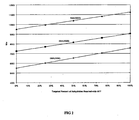
- FIG 1 is a graph showing the effect of the targeted percent of anhydrides reacted with aminoethane thiol (AET) on the expected acid number of the resulting product for several styrene-maleic anhydride polymers.
- AET aminoethane thiol
- FIG 2 is a graph showing the effect of the targeted percent of anhydrides reacted with aminoethane thiol (AET) on the expected molecular weight of the resulting product for several styrene-maleic anhydride polymers.
- AET aminoethane thiol
- the present invention relates to processes for preparing modified pigment products as well as to the modified pigment products themselves.
- a pigment having attached an electrophilic group is combined with an SH-containing compound.
- the pigment can be any type of pigment conventionally used by those skilled in the art, such as black pigments and other colored pigments.
- the pigment is carbon black.
- Mixtures of different pigments can also be used. These pigments can also be used in combination with a variety of different types of dispersants in order to form stable dispersions and inks.
- black pigments include various carbon blacks (Pigment Black 7) such as channel blacks, furnace blacks and lamp blacks, and include, for example, carbon blacks sold under the Regal®, Black Pearls®, Elftex®, Monarch®, Mogul®, and Vulcan® trademarks available from Cabot Corporation (such as Black Pearls® 2000, Black Pearls® 1400, Black Pearls® 1300, Black Pearls® 1100, Black Pearls® 1000, Black Pearls® 900, Black Pearls® 880, Black Pearls® 800, Black Pearls® 700, Black Pearls® L, Elftex® 8, Monarch® 1400, Monarch® 1300, Monarch® 1100, Monarch® 1000, Monarch® 900, Monarch® 880, Monarch® 800, Monarch® 700, Mogul® L, Regal® 330, Regal® 400, Vulcan® P).
- Pigment Black 7 carbon blacks sold under the Regal®, Black Pearls®, Elftex®, Monarch®, Mogul®, and Vulcan® trademarks available
- the pigment may also be chosen from a wide range of conventional colored pigments.
- the colored pigment can be blue, brown, cyan, green, white, violet, magenta, red, orange, yellow, as well as mixtures thereof.
- Suitable classes of colored pigments include, for example, anthraquinones, phthalocyanine blues, phthalocyanine greens, diazos, monoazos, pyranthrones, perylenes, heterocyclic yellows, quinacridones, and (thio)indigoids.
- Such pigments are commercially available in either powder or press cake form from a number of sources including, BASF Corporation, Engelhard Corporation and Sun Chemical Corporation. Examples of other suitable colored pigments are described in the Colour Index, 3rd edition (The Society of Dyers and Colourists, 1982 ).
- the pigment can have a wide range of BET surface areas, as measured by nitrogen adsorption. It is well recognized by those skilled in the art that the pigment may be subject to conventional size reduction or comminution techniques, such as ball or jet milling, to reduce the pigment to a smaller particle size, if desired.
- the electrophilic group of the pigment used in the process of the present invention comprises any group capable of reacting with a material having at least one thiol group.
- the electrophilic group may comprise a carboxylic acid or ester, an activated carboxylic acid, an acid chloride, a sulfonyl chloride, an acyl azide, an isocyanate, a ketone, an aldehyde, an anhydride, an ⁇ , ⁇ -unsaturated ketone, aldehyde, or sulfone, an alkyl halide, an epoxide, an alkyl sulfonate or sulfate, a triazene, or salts and derivatives thereof.
- the electrophilic group is an ⁇ , ⁇ -unsaturated ketone, aldehyde, or sulfone group or an alkylsulfate group or salt thereof.
- the electrophilic group may be a 2-(sulfatoethyl) sulfone group or a salt thereof.
- the pigment having attached an electrophilic group can be prepared using methods known to those skilled in the art. For example, these pigments can be prepared using the methods described in U.S. Patent Nos. 5,851,280 , 5,698,016 , 5,922,118 , and 5,837,045 , and PCT Publication Nos. WO 99/51690 and WO 00/22051 , the descriptions of which are fully incorporated herein by reference. These methods provide for a more stable attachment of the groups onto the pigment compared to traditional adsorbed groups, such as polymers, surfactants, and the like.
- the pigment having attached an electrophilic group may also be prepared using the method described in PCT Publication No. WO 01/51566 , which is incorporated in its entirety herein by reference.
- the amount of electrophilic groups can be varied.
- the total amount of electrophilic groups is from about 0.01 to about 10.0 micromoles of groups/m 2 surface area of pigment, as measured by nitrogen adsorption (BET method).
- the amount of electrophilic groups is from about 0.5 to about 4.0 micromoles/m 2 . Additional attached organic groups which are not reactive with the thiol reagent may also be used.
- the pigment having attached an electrophilic group may be purified by washing, such as by filtration, centrifugation, or a combination of the two methods, to remove unreacted raw materials, byproduct salts and other reaction impurities.
- the pigments may also be isolated, for example, by evaporation or it may be recovered by filtration and drying using known techniques to those skilled in the art.
- the pigment may also be dispersed into a liquid medium, and the resulting dispersions may be purified or classified to remove impurities and other undesirable free species which can co-exist in the dispersion as a result of the manufacturing process.
- the dispersion can be purified to remove any undesired free species, such as unreacted treating agent using known techniques such as ultrafiltration/diafiltration, reverse osmosis, or ion exchange.
- the process of the present invention comprises the step of combining a pigment having attached an electrophilic group and a thiol reagent.
- the thiol reagent comprises at least one -SH group and at least two ionic or ionizable groups.
- at least one and “at least two” refers to the stoichimetric amount of each group.
- the thiol reagent has two ionic or ionizable groups for each -SH group.
- the thiol reagent can be either an alkyl or aryl thiol that is substituted with at least two ionic or ionizable groups.
- the amount of thiol reagent can be any amount capable of reacting with the electrophilic groups on the pigment.
- the ratio of the weight of the thiol reagent to the weight of the pigment is from about 0.1/1 to about 10/1 and more preferably from about 0.2/1 to about 2/1.
- An ionic group is either anionic or cationic and is associated with a counterion of the opposite charge including inorganic or organic counterions such as Na + , K + , Li + , NH 4 + , NR' 4 + , acetate, NO 3 - , SO 4 -2 , R'SO 3 - , R'OSO 3 - , OH - , and Cl - , where R' represents hydrogen or an organic group such as a substituted or unsubstituted aryl and/or alkyl group.
- An ionizable group is one that is capable of forming an ionic group in the medium of use.
- Organic ionic groups include those described in U.S. Patent No. 5,698,016 , the description of which is fully incorporated herein by reference.
- the thiol reagent may comprise at least two anionic or anionizable groups.
- Anionic groups are negatively charged ionic groups that may be generated from groups having ionizable substituents that can form anions (anionizable groups), such as acidic substituents. They may also be the anion in the salts of ionizable substituents.
- anionic groups include -COO - , -SO 3 - , -OSO 3 - , -HPO 3 - , -OPO 3 -2 , and -PO 3 -2 .
- anionizable groups include -COOH, -SO 3 H, -PO 3 H 2 , -R'SH, -R'OH, and -SO 2 NHCOR', where R' represents hydrogen or an organic group such as a substituted or unsubstituted aryl and/or alkyl group.
- the anionic or anionizable group is a carboxylic acid group, a sulfonic acid group, or salts thereof.
- the thiol reagent can be an alkylthiol that is substituted with at least two carboxylic acid groups, such as, for example, mercaptosuccinic acid.
- the thiol reagent may comprise at least one cationic or cationizable group.
- Cationic groups are positively charged organic ionic groups that may be generated from ionizable substituents that can form cations (cationizable groups), such as protonated amines.
- alkyl or aryl amines may be protonated in acidic media to form ammonium groups -NR' 2 H + , where R' represent an organic group such as a substituted or unsubstituted aryl and/or alkyl group.
- the thiol reagent may also comprise both an anionic or anionizable group and a cationic or cationizable group.
- the pigment having attached an electrophilic group and the thiol reagent are combined under conditions which form the thiolate of the thiol reagent.
- the pigment and thiol reagent are combined under alkaline conditions, which form the thiolate and may assist in the reaction of the thiol reagent with the pigment.
- alkaline conditions may increase the solubility of the thiol reagent, particularly when the ionic or ionizable groups of the thiol reagent are anionic or anionizable groups.
- the pigment and thiol reagent are combined at a pH greater than or equal to 7, more preferably greater than or equal to 9, and most preferably greater than or equal to 11.
- the present invention comprises the step of combining, in any order, a pigment having attached an electrophilic group and a thiopolymer comprising at least one -SH group.
- the -SH group may be present along the backbone of the thiopolymer, such as, for example, as part of a pendant group, or as a terminating group on the end(s) of the polymer.
- the thiopolymer preferably further comprises at least one ionic or ionizable group.
- the ionic or ionizable groups may be any of those described above.
- the thiopolymer may be any polymer comprising at least one -SH group and at least one ionic or ionizable group.
- the amount of thiopolymer can be any amount capable of reacting with the electrophilic groups on the pigment.
- the ratio of the weight of thiopolymer to the weight of the pigment is from about 0.1/1 to about 10/1, and more preferably from about 0.2/1 to about 2/1.
- the thiopolymer comprises the reaction product of a polymer having at least one reactive group, such as an anhydride, an activated carboxylic acid, or a carboxylic acid group or salt thereof, and a substituted alkyl or aryl thiol, such as an amino alkane thiol or an aromatic amino thiol.
- a substituted alkyl or aryl thiol is aminoethane thiol.
- polymers having at least one reactive group include anhydride polymers, such as poly(styrene-maleic anhydride) and carboxylic acid polymers, such as polyacrylic acid, polymethacrylic acid, and copolymers of acrylic or methacrylic acid, including poly(styrene-acrylic acid), poly(styrene-methacrylic acid), poly(ethylene-acrylic acid), or copolymers of acrylic and methacrylic acid with alkyl acrylates or methacrylates.
- carboxylic acid polymers include polyesters, polyurethanes, and polyamides, which have carboxylic acid end groups.
- an activating agent may optionally be added, thus forming a polymer having at least one activated carboxylic acid.
- the activated carboxylic acid may be a mixed anhydride, such as that formed by the reaction of a carboxylic acid or salt with ethyl chloroformate.
- Other activated carboxylic acid groups and activating agents to prepare them will be known to one skilled in the art.
- the amount of each reagent need not be stoichiometric.
- the amount of aminoalkyl or aromatic amino thiol may be less than the amount of the reactive group in the polymer. Any remaining reactive groups may be further reacted.
- the resulting thiopolymer has remaining anhydride groups, these may be further reacted with base, to hydrolyze the remaining anhydrides and form carboxylic acid groups, or salts thereof.
- reagents such as alkyl or aryl amines and alcohols may be added to react with the remaining anhydride groups to form amic acids (or imides) and half acid esters, respectively.
- This resulting thiopolymer can then be used in the process of the present invention to be combined with a pigment having attached an electrophilic group.
- the process of the present invention may further comprise the step of adding an alkylating agent.
- the alkylating agent is used to "cap" any thiol groups which remain after the thiopolymer and pigment having attached an electrophilic group have been combined.
- Alkylating agents for thiol groups are known to one skilled in the art and include, for example, alkyl halides, haloacetates or salts thereof, or ⁇ , ⁇ -unsaturated carbonyl and sulfonyl compounds such as acrylates and methacrylates (including, for example, acrylic acid, methacrylic acid, or salts thereof), vinyl sulfonic acid or salts thereof, and maleates (including, for example, maleic acid or salts thereof, or maleimide).
- alkyl halides, haloacetates or salts thereof or ⁇ , ⁇ -unsaturated carbonyl and sulfonyl compounds
- acrylates and methacrylates including, for example, acrylic acid, methacrylic acid, or salts thereof
- vinyl sulfonic acid or salts thereof vinyl sulfonic acid or salts thereof
- maleates including, for example, maleic acid or salts thereof, or maleimide
- the present invention further relates to a modified pigment.
- the modified pigment comprises a pigment having attached a group comprising the formula -S-[PI].
- the group PI represents a polymeric group comprising at least one ionic or ionizable group.
- the ionic or ionizable groups may be any of those described above.
- the polymeric group can be a homopolymer, copolymer, terpolymer, and/or a polymer containing any number of different repeating units. Further, the polymeric group can be a random polymer, alternating polymer, graft polymer, block polymer, star-like polymer, and/or comb-like polymer.
- the polymeric group comprises a homopolymer or copolymer of acrylic acid, methacrylic acid, maleic acid, or salts thereof.
- the modified pigment of the present invention comprises a pigment having attached a group comprising the formula X-Sp-S-[PI].
- X which is directly attached to the pigment, represents an arylene or heteroarylene group or an alkylene group and is substituted with an Sp group.
- Sp represents a spacer group.
- the group PI is as described above represents a polymeric group comprising at least one ionic or ionizable group.
- the group Sp represents a spacer group which, as used herein, is a link between two groups.
- the group Sp can be a bond or a chemical group.
- chemical groups include, but are not limited to, -O 2 C-, -CO-, -COCH 2 -, -COC 2 H 4 -, -OCOCH 2 -, -OCOC 2 H 4 -, -NRCOCH 2 -, -NRCOC 2 H 4 -, -OSO 2 -, -SO 2 -, -SO 2 C 2 H 4 -, -SOC 2 H 4 -, NRSO 2 C 2 H 4 -, -S k -, NRCO-, NRCOCH(CH 2 CO 2 R)-, -NRCOCH 2 CH(CO 2 R)-, -N(COR)(CO)-, imide groups (including maleimide groups), arylene groups, linear or branched alkylene groups, and the like.
- R which can
- the group X represents an arylene or heteroarylene group or an alkylene group.
- X is directly attached to the pigment and is further substituted with an Sp group.
- the aromatic group can be further substituted with any group, such as one or more alkyl groups or aryl groups.
- the arylene group is phenylene, naphthylene, or biphenylene.
- X represents an alkylene group, examples include, but are not limited to, substituted or unsubstituted alkylene groups which may be branched or unbranched.
- the alkylene group can be substituted with one or more groups, such as aromatic groups. Examples include, but are not limited to, C 1 -C 12 groups like methylene, ethylene, propylene, or butylene, groups.
- X is an arylene group.
- the group X may be substituted with one or more functional groups.
- the group PI is attached to the pigment through the spacer group Sp and a sulfur atom.
- the group PI can also be attached to the pigment at multiple points along the polymer chain through proper choice of substituent groups on the repeating monomer units. These substituents may also comprise spacer groups or X-Sp- groups as described above. Thus, these groups can be attached to the pigment at either end or at points along the backbone.
- the amount of attached groups can be varied.
- the total amount of attached groups is from about 0.01 to about 10.0 micromoles of organic group/m 2 surface area of pigment, as measured by nitrogen adsorption (BET method).
- the amount of attached groups is between from about 0.5 to about 4.0 micromoles/m 2 . Additional attached groups, not having the formulas described above, may also be used.
- the modified pigments of the present invention may be purified using the techniques and methods described above.
- the modified pigments of the present invention can be used in a variety of applications.
- the modified pigments can be dispersed in a liquid vehicle and used in an ink or coating application.
- the vehicle can be either an aqueous or non-aqueous vehicle, depending on the nature of the attached organic group.
- the modified pigments can be used in an inkjet ink, such as an aqueous inkjet ink.
- Suitable additives may be incorporated into these inkjet ink compositions to impart a number of desired properties while maintaining the stability of the compositions.
- surfactants may be added to further enhance the colloidal stability of the composition.
- Other additives are well known in the art and include humectants, biocides, binders, drying accelerators, penetrants, dyes, buffers, and the like.
- the styrene-co-maleic acid polymers were obtained from the Sartomer Company and are shown in Table 1: Table 1 Polymer ID M w Styrene:Maleic Anhydride Ratio SMA(1000) 5,500 1:1 SMA(2000) 7,250 2:1 SMA(3000) 9,500 3:1 SMA(1440)* 7,500 1.5:1 * SMA(1440) polymer was prepared by reacting approximately 65% of the anhydrides of the SMA starting polymer with 2-butoxyethylalcohol to afford the corresponding half acid ester.
- DMF Dimethylformamide
- acrylic acid acrylic acid
- MEA mercaptosuccinic acid
- AET ⁇ HCl aminoethanethiol hydrochloride
- DTNB 5,5'-dithiobis(2-nitrobenzoioc acid)
- ethylchloroformate concentrated HCl
- triethylamine TEA
- Particle size was determined using a Microtrac® Particle Size Analyzer, and the values reported are the mean volume particle size (mV).
- Percent attached polymer was calculated from thermogravimentric analysis (TGA) using a TA Instruments TGA Model 2950. The samples were analyzed under nitrogen according to the following temperature profile: 10°C/min up to 110°C, hold at 110°C for 10 minutes, continue heating at 10°C/min up to 800°C, and hold at 800°C for 10 minutes. Percent attached material is determined from comparison of the weight lost between 110°C and 800°C of the final product compared to that of the starting materials.
- a 14.9% aqueous dispersion of Black Pearls® 880 carbon black (available from Cabot Corporation, Boston, MA) having attached a 2-(sulfatoethylsulfone) group was prepared according to the procedure described in PCT Publication No. WO 01/51566 to yield a pigment dispersion.
- the resulting pigment having attached an electrophilic group was analyzed for sodium content to determine that the amount of attached group was 0.3 mmol/g of dry carbon black.
- a solution of 0.5 g (3.33 mmol) mercaptosuccinic acid in 5 ml of deionized water was mixed with 20 g of the above pigment dispersion in a round bottom flask and the resultant mixture was stirred at room temperature, under an atmosphere of nitrogen. To this was added dropwise 15 ml of 1N NaOH to afford a pH of 12.8 and then the mixture was stirred overnight to give a dispersion of a modified pigment.
- the modified pigment dispersion was purified by diafiltration using a polysulfone hollow fiber membrane with a pore size of 0.05 microns. The solution was first concentrated to 35 ml and then diafiltered with 175 ml 0.1M NaOH followed by 245 ml of deionized water. The final pH of the permeate was between 6-7.
- the resulting purified modified pigment dispersion had a particle size of 112 nm and a pH of 11.0.
- the modified carbon black pigment was analyzed for sodium and compared to the starting pigment having attached an electrophilic group. Results are shown in Table 2 below.
- Example 2 the procedure described in Example 1 was followed, with the exception that the dispersion of Black Pearls® 880 carbon black having attached a 2-(sulfatoethylsulfone) group was replaced with a 5.7% solids dispersion of Pigment Yellow 74 (available from Sun Chemical) having the same attached electrophilic group, also prepared according to the procedure described in WO 01/51560 . Results from the Na+ analysis of this modified pigment are shown in Table 2 below.
- Example 1 the procedure described in Example 1 was followed, with the exception that the dispersion of Black Pearls@ 880 carbon black having attached a 2-(sulfatoethylsulfone) group was replaced with a 20.51% solids dispersion of Pigment Red 122 (available from Sun Chemical) having the same attached electrophilic group, also prepared according to the procedure described in WO 01/51560 . Results from the Na+ analysis of this modified pigment are shown in Table 2 below. Table 2 Example # Pigment % Na before % Na after 1 Black Pearls® 880 carbon black 0.69 1.1 2 Pigment Yellow 74 0.20 0.50 3 Pigment Red 122 0.50 0.77
- FIG. 1 and FIG. 2 show the expected dependence of molecular weight and acid number on the targeted percentage of anhydrides reacted with aminoethane thiol. These are determined from the theoretical ratio of styrene/maleic anhydride in the starting polymer. For example, SMA(3000) has a 3/1 ratio of styrene to maleic anhydride (from the manufacturer's product sheet).
- the expected acid number-for the resulting product would be approximately 190 and the expected MW would be approximately 10400.
- the properties of the polymer and the subsequent modified pigment may be controlled.
- a solution was prepared by dissolving 20 g (0.049 mol anhydride) of SMA(3000) in 100 ml of dry DMF. To this stirred solution, at room temperature, under a steady stream of nitrogen gas, was added 4.2 g (0.037 mol) of 2-aminoethanethiol hydrochloride as a solid in one portion and then 5.2 ml (0.074 mol) triethylamine, dropwise. The resultant mixture was heated at 45°C for 30 minutes and then at room temperature for 4.5 hours. The product was isolated by slowly dropping into vigorously stirred 1N HCl (600 ml).
- the aminoethanethiolated-SMA polymer was dried at 110°C. Results from elemental combustion analysis are shown in Table 3 below. Thiols were measured by titration with DTNB following a modification of Elhnan's procedure ( Ellman, G.L. (1958) Arch. Biochem. Biophs. 74, 443 ; Bioconjugate Techniques, Greg T. Hermanson, Academic Press, Inc., copyright 1996, p 88 ). The resulting polymer was found to have 1.4 mmol thiols/g dry polymer.
- Example 4 the procedure described for Example 4 was used, with the differences noted in Table 3. Results from the analysis of the resulting aminoethanethiolated-SMA are shown in Table 3 below.
- Example 4 the procedure described for Example 4 was used, with the differences noted in Table 3. Results from the analysis of the resulting aminoethanethiolated-SMA are shown in Table 3 below.
- Example 4 the procedure described for Example 4 was used, with the differences noted in Table 3. Results from the analysis of the resulting aminoethanethiolated-SMA are shown in Table 3 below.
- Example 4 the procedure described for Example 4 was used, with the differences noted in Table 3. Results from the analysis of the resulting aminoethanethiolated-SMA are shown in Table 3 below.
- Example 4 the procedure described for Example 4 was used, with the differences noted in Table 3. Results from the analysis of the resulting aminoethanethiolated-SMA are shown in Table 3 below.
- a sodium acrylate solution was prepared by dissolving 7.5 ml acrylic acid into deionized water containing 11.7 g of Na 2 CO 3 . This solution was added to the modified pigment dispersion to "cap” any unreacted thiol groups. Heating and stirring were continued for another 3 hours and the mixture was then allowed to cool slowly to room temperature. The dispersion of the resulting capped modified pigment was purified by diafiltration as described in Example 1 to reach a final permeate polymer concentration of ⁇ 50 ppm (monitored by measuring the absorbance of the permeate at 250 nm in a UV-VIS Spectrometer; the concentration of polymer is calculated from the known epsilon).
- Example 14 the alkylamine is aminoethane sulfonic acid and in Example 15 the alkylamine is a polyamine (Jeffamine® XTJ506).
- a 10% aqueous dispersion of Black Pearls@ 1100 carbon black having attached a 2-(sulfatoethylsulfone) group (400 g), prepared according to the procedure described in WO 01/51560 , was added dropwise to the yellow polymer solution over 10 minutes. An additional 25 mL of 1 M NaOH was added to raise the pH to 12-13. The reaction mixture was then stirred at room temperature overnight to give a dispersion of the modified pigment of the present invention.
- the capped modified pigment dispersion (9.5% solids, pH 9.72) was found to have a mean volume particle size of 108 nm and a sodium level of 2.5% (based on the dried carbon black solid). TGA analysis showed that the attached polymer accounted for 16% of the total solid weight.
- Example 16 The 10% aqueous dispersion of Black Pearls® 1100 carbon black having attached a 2-(sulfatoethylsulfone) group (1000 g) used in Example 16 was added dropwise to the yellow polymer solution over 10 minutes. An additional 60 mL of 1 M NaOH was added to raise the pH to 12-13. The reaction mixture was then stirred at room temperature overnight to give a dispersion of the modified pigment of the present invention.
Landscapes
- Chemical & Material Sciences (AREA)
- Organic Chemistry (AREA)
- Life Sciences & Earth Sciences (AREA)
- Engineering & Computer Science (AREA)
- Materials Engineering (AREA)
- Wood Science & Technology (AREA)
- Chemical Kinetics & Catalysis (AREA)
- Pigments, Carbon Blacks, Or Wood Stains (AREA)
- Inks, Pencil-Leads, Or Crayons (AREA)
- Ink Jet (AREA)
- Ink Jet Recording Methods And Recording Media Thereof (AREA)
Applications Claiming Priority (3)
| Application Number | Priority Date | Filing Date | Title |
|---|---|---|---|
| US142596 | 2002-05-10 | ||
| US10/142,596 US6833026B2 (en) | 2002-05-10 | 2002-05-10 | Modified pigments and process for preparing modified pigments |
| PCT/US2003/014647 WO2003095568A1 (en) | 2002-05-10 | 2003-05-09 | Modified pigments, process for preparing modified pigments and ink compositions containing them |
Publications (2)
| Publication Number | Publication Date |
|---|---|
| EP1511815A1 EP1511815A1 (en) | 2005-03-09 |
| EP1511815B1 true EP1511815B1 (en) | 2009-04-01 |
Family
ID=29418432
Family Applications (1)
| Application Number | Title | Priority Date | Filing Date |
|---|---|---|---|
| EP03736574A Expired - Lifetime EP1511815B1 (en) | 2002-05-10 | 2003-05-09 | Modified pigments, process for preparing modified pigments and ink compositions containing them |
Country Status (11)
| Country | Link |
|---|---|
| US (2) | US6833026B2 (enExample) |
| EP (1) | EP1511815B1 (enExample) |
| JP (1) | JP4620451B2 (enExample) |
| KR (1) | KR20040106522A (enExample) |
| CN (1) | CN1282720C (enExample) |
| AT (1) | ATE427342T1 (enExample) |
| AU (1) | AU2003237812A1 (enExample) |
| DE (1) | DE60326952D1 (enExample) |
| IL (1) | IL165089A0 (enExample) |
| TW (1) | TW200400233A (enExample) |
| WO (1) | WO2003095568A1 (enExample) |
Families Citing this family (42)
| Publication number | Priority date | Publication date | Assignee | Title |
|---|---|---|---|---|
| US6723783B2 (en) * | 2000-01-07 | 2004-04-20 | Cabot Corporation | Polymers and other groups attached to pigments and subsequent reactions |
| US7049039B2 (en) * | 2001-05-24 | 2006-05-23 | Canon Kabushiki Kaisha | Coloring agent for toner, and toner |
| JP2006503114A (ja) * | 2002-01-07 | 2006-01-26 | キャボット コーポレイション | 改質ピグメント生成物およびそれを含むブラックマトリクス |
| US7173078B2 (en) | 2002-04-12 | 2007-02-06 | Cabot Corporation | Process for preparing modified pigments |
| WO2004067643A1 (en) | 2003-01-17 | 2004-08-12 | Cabot Coproration | Methods for preparing aqueous colored pigment dispersions, and inkjet ink compositions |
| US6936097B2 (en) * | 2003-04-16 | 2005-08-30 | Cabot Corporation | Modified organic colorants and dispersions, and methods for their preparation |
| US6942724B2 (en) * | 2003-04-16 | 2005-09-13 | Cabot Corporation | Modified organic colorants and dispersions, and methods for their preparation |
| US7504446B2 (en) * | 2003-10-09 | 2009-03-17 | Xerox Corporation | Aqueous inks containing colored polymers |
| US8946320B2 (en) * | 2004-03-22 | 2015-02-03 | Hewlett-Packard Development Company, L.P. | Ink system containing polymer binders |
| US20050256225A1 (en) * | 2004-05-11 | 2005-11-17 | Viola Michael S | Aqueous inkjet ink compositions comprising comb-branched copolymers |
| EP2559738B1 (en) | 2004-10-12 | 2014-07-09 | Luminex Corporation | Methods for forming dyed microspheres and populations of dyed microspheres |
| US7563842B2 (en) * | 2004-10-22 | 2009-07-21 | Hewlett-Packard Development Company, L.P. | Ink formulations, modified pigment-based ink formulations and methods of making |
| US8153706B2 (en) * | 2004-10-25 | 2012-04-10 | Hewlett-Packard Development Company, L.P. | Polymeric colorants having pigment and dye components and corresponding ink compositions |
| US20060089421A1 (en) | 2004-10-25 | 2006-04-27 | Sundar Vasudevan | Polymeric colorants having pigment and dye components and corresponding ink compositions |
| US20060162612A1 (en) * | 2005-01-25 | 2006-07-27 | Kabalnov Alexey S | Pigments modified with surface counter-ions |
| WO2006082352A2 (en) * | 2005-02-03 | 2006-08-10 | Eastman Kodak Company | Modified pigments |
| WO2006086660A1 (en) * | 2005-02-11 | 2006-08-17 | Cabot Corporation | Inkjet inks comprising modified pigments having attached polymeric groups |
| US20070021530A1 (en) * | 2005-07-22 | 2007-01-25 | Palumbo Paul S | Method of preparing pigment compositions |
| US8858695B2 (en) * | 2005-10-31 | 2014-10-14 | Cabot Corporation | Modified colorants and inkjet ink compositions comprising modified colorants |
| US20070129463A1 (en) * | 2005-12-05 | 2007-06-07 | Zeying Ma | Pigment-based ink formulations including dispersants and binders and methods of making same |
| EP2059565B1 (en) * | 2006-08-28 | 2014-06-11 | Cabot Corporation | Modified colorants with aliphatic poly-acid groups |
| EP2099869B1 (en) | 2006-10-31 | 2013-05-01 | Sensient Colors Inc. | Modified pigments and methods for making and using the same |
| BRPI0807439A2 (pt) * | 2007-01-24 | 2014-07-01 | Cabot Corp | Processo de formar pigmentos modificados |
| CN101675130A (zh) * | 2007-02-27 | 2010-03-17 | 卡伯特公司 | 包含多种改性颜料的喷墨油墨组合物 |
| WO2008134190A2 (en) | 2007-04-24 | 2008-11-06 | Sun Chemical Corporation | Pigments for non-aqueous inks and coatings |
| US8133311B2 (en) * | 2007-04-30 | 2012-03-13 | Cabot Corporation | Pigment dipsersions comprising functionalized non-polymeric dispersants |
| US7868059B2 (en) * | 2007-07-27 | 2011-01-11 | Hewlett-Packard Development Company, L.P. | Polymerizable dye-monomer conjugates for encapsulating pigment particles |
| CA3017708C (en) | 2007-08-23 | 2021-09-21 | Vincent Shing | Self-dispersed pigments and methods for making and using the same |
| JP2011506635A (ja) * | 2007-12-07 | 2011-03-03 | キャボット コーポレイション | 顔料組成物の調製方法 |
| US7819962B2 (en) * | 2008-03-17 | 2010-10-26 | Cabot Corporation | Modified pigments having reduced phosphate release, and dispersions and inkjet ink compositions therefrom |
| US8129448B2 (en) * | 2008-12-18 | 2012-03-06 | Cabot Corporation | Method of preparing polymer modified pigments |
| US9221986B2 (en) | 2009-04-07 | 2015-12-29 | Sensient Colors Llc | Self-dispersing particles and methods for making and using the same |
| JP6053518B2 (ja) * | 2009-06-19 | 2016-12-27 | キャボット コーポレイションCabot Corporation | 改質顔料を含むケミカルトナー |
| CN102775657B (zh) * | 2011-05-13 | 2014-02-26 | 中国石油天然气股份有限公司 | 一种含炭黑的改性橡胶及其制备方法 |
| CN102558953A (zh) * | 2012-02-20 | 2012-07-11 | 北京联创佳艺影像新材料技术有限公司 | 一种提高喷墨打印机墨水储存稳定性的物质和方法 |
| FR2993261B1 (fr) | 2012-07-13 | 2019-06-21 | Cabot Corporation | Noir de carbone fortement structure |
| CN108431142A (zh) | 2015-11-18 | 2018-08-21 | 卡博特公司 | 喷墨油墨组合物 |
| EP3299424A1 (en) * | 2016-09-22 | 2018-03-28 | Cappelle Pigments nv | Method for manufacturing bismuth based pigment having an improved alkaline resistance by encapsulating said pigment with a chelating agent |
| WO2019051021A1 (en) | 2017-09-07 | 2019-03-14 | Cabot Corporation | INK COMPOSITIONS FOR INKJET PRINTING |
| US12286396B2 (en) | 2019-09-30 | 2025-04-29 | 3M Innovative Properties Company | Dicarboxylic acid compounds, inorganic particles treated with the dicarboxylic acid compounds, and compositions thereof |
| CN112456467B (zh) * | 2020-11-19 | 2022-05-31 | 沈阳化工研究院有限公司 | 一种应用于纺丝树脂着色的改性炭黑及其制备方法 |
| US12071553B2 (en) * | 2021-01-05 | 2024-08-27 | Inner Mongolia Xianhong Science Co., Ltd. | White inkjet ink composition having improved resin compatibility |
Family Cites Families (49)
| Publication number | Priority date | Publication date | Assignee | Title |
|---|---|---|---|---|
| US3479300A (en) | 1965-10-22 | 1969-11-18 | Cabot Corp | Carbonaceous products |
| US4014844A (en) | 1970-06-26 | 1977-03-29 | Agence Nationale De Valorisation De La Recherche (Anvar) | Process for grafting polymers on carbon black through free radical mechanism |
| JPS5721466A (en) | 1980-07-14 | 1982-02-04 | Canon Inc | Recording fluid |
| US4946509A (en) | 1989-05-23 | 1990-08-07 | Sun Chemical Corporation | Diarylide pigment compositions |
| US5281261A (en) | 1990-08-31 | 1994-01-25 | Xerox Corporation | Ink compositions containing modified pigment particles |
| JP3004062B2 (ja) | 1991-02-06 | 2000-01-31 | 株式会社日本触媒 | インキ及びインキ用着色剤 |
| EP0677556A3 (en) | 1994-04-15 | 1997-02-26 | Toyo Ink Mfg Co | Coated pigment and coloring composition. |
| US5418277A (en) | 1994-04-26 | 1995-05-23 | E. I. Du Pont De Nemours And Company | Aqueous ink jet inks containing fluorinated polymers |
| JP3405817B2 (ja) | 1994-06-20 | 2003-05-12 | オリヱント化学工業株式会社 | 水性顔料インキ及びその製造方法 |
| US5545504A (en) | 1994-10-03 | 1996-08-13 | Xerox Corporation | Ink jettable toner compositions and processes for making and using |
| US5571311A (en) | 1994-12-15 | 1996-11-05 | Cabot Corporation | Ink jet ink formulations containing carbon black products |
| IL116376A (en) | 1994-12-15 | 2001-03-19 | Cabot Corp | Aqueous ink jet ink compositions containing modified carbon products |
| IL116378A (en) | 1994-12-15 | 2003-05-29 | Cabot Corp | Non-aqueous coating or ink composition with improved optical properties containing modified carbon product and method of preparation of the composition |
| IL116377A (en) | 1994-12-15 | 2003-05-29 | Cabot Corp | Reaction of carbon black with diazonium salts, resultant carbon black products and their uses |
| US5554739A (en) | 1994-12-15 | 1996-09-10 | Cabot Corporation | Process for preparing carbon materials with diazonium salts and resultant carbon products |
| EP0787777A4 (en) | 1995-06-14 | 2001-10-04 | Nippon Catalytic Chem Ind | GASKET POLYMER CONTAINING SOOT |
| US6110994A (en) | 1996-06-14 | 2000-08-29 | Cabot Corporation | Polymeric products containing modified carbon products and methods of making and using the same |
| JP4697757B2 (ja) | 1996-06-14 | 2011-06-08 | キャボット コーポレイション | 変性された有色顔料類及びそれらを含むインキジェットインキ類 |
| US6069190A (en) | 1996-06-14 | 2000-05-30 | Cabot Corporation | Ink compositions having improved latency |
| US5707432A (en) | 1996-06-14 | 1998-01-13 | Cabot Corporation | Modified carbon products and inks and coatings containing modified carbon products |
| US5698016A (en) | 1996-06-14 | 1997-12-16 | Cabot Corporation | Compositions of modified carbon products and amphiphilic ions and methods of using the same |
| US5837045A (en) | 1996-06-17 | 1998-11-17 | Cabot Corporation | Colored pigment and aqueous compositions containing same |
| US5830265A (en) | 1996-10-31 | 1998-11-03 | Hewlett-Packard Company | Counterion substitution in macromolecular chromophore (MMC) for ink-jet printing including textile, large format and office format printers |
| US5976233A (en) | 1996-11-13 | 1999-11-02 | Canon Kabushiki Kaisha | Water-based pigment ink, and ink-jet recording method and instruments using the same |
| US5895522A (en) | 1997-08-12 | 1999-04-20 | Cabot Corporation | Modified carbon products with leaving groups and inks and coatings containing modified carbon products |
| US5964935A (en) | 1997-08-22 | 1999-10-12 | Copytele, Inc. | Initiator-treated pigment particles and method for preparing same |
| US5985016A (en) | 1997-10-30 | 1999-11-16 | Hewlett-Packard Company | Purification of macromolecular chromophores (MMCs) using membrane processes for ink-jet inks |
| WO1999023174A1 (en) | 1997-10-31 | 1999-05-14 | Cabot Corporation | Particles having an attached stable free radical, polymerized modified particles, and methods of making the same |
| US6068688A (en) | 1997-11-12 | 2000-05-30 | Cabot Corporation | Particle having an attached stable free radical and methods of making the same |
| EP1049746B1 (en) | 1998-01-29 | 2003-08-20 | Cabot Corporation | Processes of purifying a dispersion and making inkjet inks |
| US5914806A (en) | 1998-02-11 | 1999-06-22 | International Business Machines Corporation | Stable electrophoretic particles for displays |
| US6110931A (en) | 1998-04-02 | 2000-08-29 | Merck & Co., Inc. | Antagonists of gonadotropin releasing hormone |
| JP4870261B2 (ja) * | 1998-04-03 | 2012-02-08 | キャボット コーポレイション | 分散性を改良された改質顔料 |
| US6103380A (en) | 1998-06-03 | 2000-08-15 | Cabot Corporation | Particle having an attached halide group and methods of making the same |
| US6235829B1 (en) | 1998-07-24 | 2001-05-22 | Marconi Data Systems Inc. | Modification of chargeable pigment particles |
| US6150433A (en) | 1998-07-31 | 2000-11-21 | Hewlett-Packard Company | Ink-jet ink compositions containing modified macromolecular chromophores with covalently attached polymers |
| US6458458B1 (en) | 1998-10-13 | 2002-10-01 | Cabot Corporation | Polymer coated carbon products and other pigments and methods of making same by aqueous media polymerizations or solvent coating methods |
| JP2002535430A (ja) | 1999-01-20 | 2002-10-22 | キャボット コーポレイション | 付着ポリマー群およびポリマー泡を有する凝集体 |
| US6398858B1 (en) | 1999-03-05 | 2002-06-04 | Cabot Corporation | Process for preparing colored pigments |
| AU4170600A (en) | 1999-03-12 | 2000-09-28 | Cabot Corporation | Cationic pigments and aqueous compositions containing same |
| US6372820B1 (en) | 1999-05-06 | 2002-04-16 | Cabot Corporation | Polymerized modified particles and methods of making the same |
| JP4689913B2 (ja) | 1999-10-01 | 2011-06-01 | キャボット コーポレイション | 立体基および両親媒性基を有する修飾顔料 |
| US6723783B2 (en) * | 2000-01-07 | 2004-04-20 | Cabot Corporation | Polymers and other groups attached to pigments and subsequent reactions |
| ES2333100T3 (es) * | 2000-01-25 | 2010-02-17 | Cabot Corporation | Polimeros que contienen pigmentos modificados y metodos de preparacion de los mismos. |
| DE10012784A1 (de) | 2000-03-16 | 2001-09-27 | Degussa | Ruß |
| US6794428B2 (en) | 2000-03-23 | 2004-09-21 | The Lubrizol Corporation | Carbon black coupler |
| ATE495890T1 (de) | 2000-07-06 | 2011-02-15 | Cabot Corp | Druckplatten mit modifizierten pigmentprodukten |
| JP2002121412A (ja) | 2000-10-17 | 2002-04-23 | Nippon Shokubai Co Ltd | 銅フタロシアニン系改質顔料およびその製造方法 |
| US6641653B2 (en) | 2001-07-19 | 2003-11-04 | Cabot Corporation | Ink compositions comprising modified colored pigments and methods for preparing the same |
-
2002
- 2002-05-10 US US10/142,596 patent/US6833026B2/en not_active Expired - Lifetime
-
2003
- 2003-05-09 AU AU2003237812A patent/AU2003237812A1/en not_active Abandoned
- 2003-05-09 TW TW092112725A patent/TW200400233A/zh unknown
- 2003-05-09 CN CNB038161354A patent/CN1282720C/zh not_active Expired - Fee Related
- 2003-05-09 EP EP03736574A patent/EP1511815B1/en not_active Expired - Lifetime
- 2003-05-09 AT AT03736574T patent/ATE427342T1/de not_active IP Right Cessation
- 2003-05-09 JP JP2004503567A patent/JP4620451B2/ja not_active Expired - Fee Related
- 2003-05-09 US US10/434,972 patent/US6916367B2/en not_active Expired - Lifetime
- 2003-05-09 DE DE60326952T patent/DE60326952D1/de not_active Expired - Lifetime
- 2003-05-09 KR KR10-2004-7018135A patent/KR20040106522A/ko not_active Ceased
- 2003-05-09 WO PCT/US2003/014647 patent/WO2003095568A1/en not_active Ceased
-
2004
- 2004-11-08 IL IL16508904A patent/IL165089A0/xx unknown
Also Published As
| Publication number | Publication date |
|---|---|
| WO2003095568A1 (en) | 2003-11-20 |
| IL165089A0 (en) | 2005-12-18 |
| US20030217672A1 (en) | 2003-11-27 |
| HK1077598A1 (en) | 2006-02-17 |
| US6916367B2 (en) | 2005-07-12 |
| JP4620451B2 (ja) | 2011-01-26 |
| CN1665896A (zh) | 2005-09-07 |
| CN1282720C (zh) | 2006-11-01 |
| AU2003237812A1 (en) | 2003-11-11 |
| EP1511815A1 (en) | 2005-03-09 |
| US6833026B2 (en) | 2004-12-21 |
| KR20040106522A (ko) | 2004-12-17 |
| DE60326952D1 (de) | 2009-05-14 |
| ATE427342T1 (de) | 2009-04-15 |
| US20040007152A1 (en) | 2004-01-15 |
| TW200400233A (en) | 2004-01-01 |
| JP2005525450A (ja) | 2005-08-25 |
Similar Documents
| Publication | Publication Date | Title |
|---|---|---|
| EP1511815B1 (en) | Modified pigments, process for preparing modified pigments and ink compositions containing them | |
| KR100896568B1 (ko) | 개질 안료를 포함하는 분산액 | |
| US9732227B2 (en) | Modified colorants and inkjet ink compositions comprising modified colorants | |
| US6699319B2 (en) | Process for preparing modified pigments | |
| JP4267919B2 (ja) | 多価イオンを有する塩を含むインク用組成物 | |
| CN102482519A (zh) | 包含改性颜料的喷墨油墨组合物 | |
| CN101379143B (zh) | 改性着色剂和包含改性着色剂的喷墨油墨组合物 | |
| CN107849244B (zh) | 两性聚合物以及在喷墨油墨组合物中的用途 | |
| CN101675130A (zh) | 包含多种改性颜料的喷墨油墨组合物 | |
| HK1077598B (en) | Modified pigments, process for preparing modified pigments and ink compositions containing them | |
| HK1124356B (en) | Modified colorants and inkjet ink compositions comprising modified colorants | |
| HK1121850B (en) | Modified colorants and inkjet ink compositions comprising modified colorants |
Legal Events
| Date | Code | Title | Description |
|---|---|---|---|
| PUAI | Public reference made under article 153(3) epc to a published international application that has entered the european phase |
Free format text: ORIGINAL CODE: 0009012 |
|
| 17P | Request for examination filed |
Effective date: 20041209 |
|
| AK | Designated contracting states |
Kind code of ref document: A1 Designated state(s): AT BE BG CH CY CZ DE DK EE ES FI FR GB GR HU IE IT LI LU MC NL PT RO SE SI SK TR |
|
| AX | Request for extension of the european patent |
Extension state: AL LT LV MK |
|
| DAX | Request for extension of the european patent (deleted) | ||
| 17Q | First examination report despatched |
Effective date: 20061219 |
|
| GRAP | Despatch of communication of intention to grant a patent |
Free format text: ORIGINAL CODE: EPIDOSNIGR1 |
|
| GRAS | Grant fee paid |
Free format text: ORIGINAL CODE: EPIDOSNIGR3 |
|
| GRAA | (expected) grant |
Free format text: ORIGINAL CODE: 0009210 |
|
| AK | Designated contracting states |
Kind code of ref document: B1 Designated state(s): AT BE BG CH CY CZ DE DK EE ES FI FR GB GR HU IE IT LI LU MC NL PT RO SE SI SK TR |
|
| REG | Reference to a national code |
Ref country code: GB Ref legal event code: FG4D |
|
| REG | Reference to a national code |
Ref country code: CH Ref legal event code: EP |
|
| REG | Reference to a national code |
Ref country code: IE Ref legal event code: FG4D |
|
| REF | Corresponds to: |
Ref document number: 60326952 Country of ref document: DE Date of ref document: 20090514 Kind code of ref document: P |
|
| PG25 | Lapsed in a contracting state [announced via postgrant information from national office to epo] |
Ref country code: SI Free format text: LAPSE BECAUSE OF FAILURE TO SUBMIT A TRANSLATION OF THE DESCRIPTION OR TO PAY THE FEE WITHIN THE PRESCRIBED TIME-LIMIT Effective date: 20090401 |
|
| NLV1 | Nl: lapsed or annulled due to failure to fulfill the requirements of art. 29p and 29m of the patents act | ||
| PG25 | Lapsed in a contracting state [announced via postgrant information from national office to epo] |
Ref country code: PT Free format text: LAPSE BECAUSE OF FAILURE TO SUBMIT A TRANSLATION OF THE DESCRIPTION OR TO PAY THE FEE WITHIN THE PRESCRIBED TIME-LIMIT Effective date: 20090902 Ref country code: FI Free format text: LAPSE BECAUSE OF FAILURE TO SUBMIT A TRANSLATION OF THE DESCRIPTION OR TO PAY THE FEE WITHIN THE PRESCRIBED TIME-LIMIT Effective date: 20090401 Ref country code: EE Free format text: LAPSE BECAUSE OF FAILURE TO SUBMIT A TRANSLATION OF THE DESCRIPTION OR TO PAY THE FEE WITHIN THE PRESCRIBED TIME-LIMIT Effective date: 20090401 Ref country code: ES Free format text: LAPSE BECAUSE OF FAILURE TO SUBMIT A TRANSLATION OF THE DESCRIPTION OR TO PAY THE FEE WITHIN THE PRESCRIBED TIME-LIMIT Effective date: 20090712 Ref country code: AT Free format text: LAPSE BECAUSE OF FAILURE TO SUBMIT A TRANSLATION OF THE DESCRIPTION OR TO PAY THE FEE WITHIN THE PRESCRIBED TIME-LIMIT Effective date: 20090401 |
|
| PG25 | Lapsed in a contracting state [announced via postgrant information from national office to epo] |
Ref country code: SE Free format text: LAPSE BECAUSE OF FAILURE TO SUBMIT A TRANSLATION OF THE DESCRIPTION OR TO PAY THE FEE WITHIN THE PRESCRIBED TIME-LIMIT Effective date: 20090701 Ref country code: NL Free format text: LAPSE BECAUSE OF FAILURE TO SUBMIT A TRANSLATION OF THE DESCRIPTION OR TO PAY THE FEE WITHIN THE PRESCRIBED TIME-LIMIT Effective date: 20090401 |
|
| PG25 | Lapsed in a contracting state [announced via postgrant information from national office to epo] |
Ref country code: MC Free format text: LAPSE BECAUSE OF NON-PAYMENT OF DUE FEES Effective date: 20090531 |
|
| REG | Reference to a national code |
Ref country code: CH Ref legal event code: PL |
|
| PG25 | Lapsed in a contracting state [announced via postgrant information from national office to epo] |
Ref country code: RO Free format text: LAPSE BECAUSE OF FAILURE TO SUBMIT A TRANSLATION OF THE DESCRIPTION OR TO PAY THE FEE WITHIN THE PRESCRIBED TIME-LIMIT Effective date: 20090401 Ref country code: LI Free format text: LAPSE BECAUSE OF NON-PAYMENT OF DUE FEES Effective date: 20090531 Ref country code: CZ Free format text: LAPSE BECAUSE OF FAILURE TO SUBMIT A TRANSLATION OF THE DESCRIPTION OR TO PAY THE FEE WITHIN THE PRESCRIBED TIME-LIMIT Effective date: 20090401 Ref country code: DK Free format text: LAPSE BECAUSE OF FAILURE TO SUBMIT A TRANSLATION OF THE DESCRIPTION OR TO PAY THE FEE WITHIN THE PRESCRIBED TIME-LIMIT Effective date: 20090401 Ref country code: CH Free format text: LAPSE BECAUSE OF NON-PAYMENT OF DUE FEES Effective date: 20090531 |
|
| PLBE | No opposition filed within time limit |
Free format text: ORIGINAL CODE: 0009261 |
|
| STAA | Information on the status of an ep patent application or granted ep patent |
Free format text: STATUS: NO OPPOSITION FILED WITHIN TIME LIMIT |
|
| PG25 | Lapsed in a contracting state [announced via postgrant information from national office to epo] |
Ref country code: BE Free format text: LAPSE BECAUSE OF FAILURE TO SUBMIT A TRANSLATION OF THE DESCRIPTION OR TO PAY THE FEE WITHIN THE PRESCRIBED TIME-LIMIT Effective date: 20090401 Ref country code: SK Free format text: LAPSE BECAUSE OF FAILURE TO SUBMIT A TRANSLATION OF THE DESCRIPTION OR TO PAY THE FEE WITHIN THE PRESCRIBED TIME-LIMIT Effective date: 20090401 |
|
| 26N | No opposition filed |
Effective date: 20100105 |
|
| REG | Reference to a national code |
Ref country code: IE Ref legal event code: MM4A |
|
| PG25 | Lapsed in a contracting state [announced via postgrant information from national office to epo] |
Ref country code: BG Free format text: LAPSE BECAUSE OF FAILURE TO SUBMIT A TRANSLATION OF THE DESCRIPTION OR TO PAY THE FEE WITHIN THE PRESCRIBED TIME-LIMIT Effective date: 20090701 |
|
| PG25 | Lapsed in a contracting state [announced via postgrant information from national office to epo] |
Ref country code: IE Free format text: LAPSE BECAUSE OF NON-PAYMENT OF DUE FEES Effective date: 20090509 |
|
| PG25 | Lapsed in a contracting state [announced via postgrant information from national office to epo] |
Ref country code: GR Free format text: LAPSE BECAUSE OF FAILURE TO SUBMIT A TRANSLATION OF THE DESCRIPTION OR TO PAY THE FEE WITHIN THE PRESCRIBED TIME-LIMIT Effective date: 20090702 |
|
| PG25 | Lapsed in a contracting state [announced via postgrant information from national office to epo] |
Ref country code: IT Free format text: LAPSE BECAUSE OF FAILURE TO SUBMIT A TRANSLATION OF THE DESCRIPTION OR TO PAY THE FEE WITHIN THE PRESCRIBED TIME-LIMIT Effective date: 20090401 |
|
| PG25 | Lapsed in a contracting state [announced via postgrant information from national office to epo] |
Ref country code: LU Free format text: LAPSE BECAUSE OF NON-PAYMENT OF DUE FEES Effective date: 20090509 |
|
| PG25 | Lapsed in a contracting state [announced via postgrant information from national office to epo] |
Ref country code: HU Free format text: LAPSE BECAUSE OF FAILURE TO SUBMIT A TRANSLATION OF THE DESCRIPTION OR TO PAY THE FEE WITHIN THE PRESCRIBED TIME-LIMIT Effective date: 20091002 |
|
| PG25 | Lapsed in a contracting state [announced via postgrant information from national office to epo] |
Ref country code: TR Free format text: LAPSE BECAUSE OF FAILURE TO SUBMIT A TRANSLATION OF THE DESCRIPTION OR TO PAY THE FEE WITHIN THE PRESCRIBED TIME-LIMIT Effective date: 20090401 |
|
| PG25 | Lapsed in a contracting state [announced via postgrant information from national office to epo] |
Ref country code: CY Free format text: LAPSE BECAUSE OF FAILURE TO SUBMIT A TRANSLATION OF THE DESCRIPTION OR TO PAY THE FEE WITHIN THE PRESCRIBED TIME-LIMIT Effective date: 20090401 |
|
| REG | Reference to a national code |
Ref country code: DE Ref legal event code: R082 Ref document number: 60326952 Country of ref document: DE Representative=s name: MEHLER ACHLER PATENTANWAELTE, DE Ref country code: DE Ref legal event code: R082 Ref document number: 60326952 Country of ref document: DE Representative=s name: MEHLER ACHLER PATENTANWAELTE PARTNERSCHAFT MBB, DE |
|
| REG | Reference to a national code |
Ref country code: FR Ref legal event code: PLFP Year of fee payment: 14 |
|
| PGFP | Annual fee paid to national office [announced via postgrant information from national office to epo] |
Ref country code: DE Payment date: 20160524 Year of fee payment: 14 Ref country code: GB Payment date: 20160426 Year of fee payment: 14 |
|
| REG | Reference to a national code |
Ref country code: FR Ref legal event code: PLFP Year of fee payment: 15 |
|
| PGFP | Annual fee paid to national office [announced via postgrant information from national office to epo] |
Ref country code: FR Payment date: 20170418 Year of fee payment: 15 |
|
| REG | Reference to a national code |
Ref country code: DE Ref legal event code: R119 Ref document number: 60326952 Country of ref document: DE |
|
| GBPC | Gb: european patent ceased through non-payment of renewal fee |
Effective date: 20170509 |
|
| PG25 | Lapsed in a contracting state [announced via postgrant information from national office to epo] |
Ref country code: DE Free format text: LAPSE BECAUSE OF NON-PAYMENT OF DUE FEES Effective date: 20171201 Ref country code: GB Free format text: LAPSE BECAUSE OF NON-PAYMENT OF DUE FEES Effective date: 20170509 |
|
| PG25 | Lapsed in a contracting state [announced via postgrant information from national office to epo] |
Ref country code: FR Free format text: LAPSE BECAUSE OF NON-PAYMENT OF DUE FEES Effective date: 20180531 |