EP1501073A1 - Informationabspielgerät, Informationabspielverfahren, und computerlesbare Datenträger hierfür - Google Patents
Informationabspielgerät, Informationabspielverfahren, und computerlesbare Datenträger hierfür Download PDFInfo
- Publication number
- EP1501073A1 EP1501073A1 EP04016468A EP04016468A EP1501073A1 EP 1501073 A1 EP1501073 A1 EP 1501073A1 EP 04016468 A EP04016468 A EP 04016468A EP 04016468 A EP04016468 A EP 04016468A EP 1501073 A1 EP1501073 A1 EP 1501073A1
- Authority
- EP
- European Patent Office
- Prior art keywords
- information
- piece
- continuity
- musical
- pieces
- Prior art date
- Legal status (The legal status is an assumption and is not a legal conclusion. Google has not performed a legal analysis and makes no representation as to the accuracy of the status listed.)
- Withdrawn
Links
- 238000000034 method Methods 0.000 title claims description 12
- 238000000605 extraction Methods 0.000 claims description 17
- 230000004044 response Effects 0.000 claims description 6
- 238000001514 detection method Methods 0.000 claims description 5
- 238000007726 management method Methods 0.000 abstract description 23
- 238000013500 data storage Methods 0.000 abstract description 5
- 238000012545 processing Methods 0.000 description 27
- 238000012546 transfer Methods 0.000 description 14
- 230000006870 function Effects 0.000 description 12
- 230000005236 sound signal Effects 0.000 description 8
- 239000000284 extract Substances 0.000 description 4
- 238000004891 communication Methods 0.000 description 3
- 230000007704 transition Effects 0.000 description 3
- 101000969688 Homo sapiens Macrophage-expressed gene 1 protein Proteins 0.000 description 2
- 102100021285 Macrophage-expressed gene 1 protein Human genes 0.000 description 2
- 230000008901 benefit Effects 0.000 description 2
- 230000015572 biosynthetic process Effects 0.000 description 2
- 230000008859 change Effects 0.000 description 2
- 238000010586 diagram Methods 0.000 description 2
- 238000012986 modification Methods 0.000 description 2
- 230000004048 modification Effects 0.000 description 2
- 241000053227 Themus Species 0.000 description 1
- 230000008569 process Effects 0.000 description 1
- 230000002035 prolonged effect Effects 0.000 description 1
Images




Classifications
-
- G—PHYSICS
- G10—MUSICAL INSTRUMENTS; ACOUSTICS
- G10H—ELECTROPHONIC MUSICAL INSTRUMENTS; INSTRUMENTS IN WHICH THE TONES ARE GENERATED BY ELECTROMECHANICAL MEANS OR ELECTRONIC GENERATORS, OR IN WHICH THE TONES ARE SYNTHESISED FROM A DATA STORE
- G10H1/00—Details of electrophonic musical instruments
- G10H1/0033—Recording/reproducing or transmission of music for electrophonic musical instruments
- G10H1/0041—Recording/reproducing or transmission of music for electrophonic musical instruments in coded form
-
- G—PHYSICS
- G10—MUSICAL INSTRUMENTS; ACOUSTICS
- G10H—ELECTROPHONIC MUSICAL INSTRUMENTS; INSTRUMENTS IN WHICH THE TONES ARE GENERATED BY ELECTROMECHANICAL MEANS OR ELECTRONIC GENERATORS, OR IN WHICH THE TONES ARE SYNTHESISED FROM A DATA STORE
- G10H2210/00—Aspects or methods of musical processing having intrinsic musical character, i.e. involving musical theory or musical parameters or relying on musical knowledge, as applied in electrophonic musical tools or instruments
- G10H2210/031—Musical analysis, i.e. isolation, extraction or identification of musical elements or musical parameters from a raw acoustic signal or from an encoded audio signal
- G10H2210/036—Musical analysis, i.e. isolation, extraction or identification of musical elements or musical parameters from a raw acoustic signal or from an encoded audio signal of musical genre, i.e. analysing the style of musical pieces, usually for selection, filtering or classification
-
- G—PHYSICS
- G10—MUSICAL INSTRUMENTS; ACOUSTICS
- G10H—ELECTROPHONIC MUSICAL INSTRUMENTS; INSTRUMENTS IN WHICH THE TONES ARE GENERATED BY ELECTROMECHANICAL MEANS OR ELECTRONIC GENERATORS, OR IN WHICH THE TONES ARE SYNTHESISED FROM A DATA STORE
- G10H2240/00—Data organisation or data communication aspects, specifically adapted for electrophonic musical tools or instruments
- G10H2240/011—Files or data streams containing coded musical information, e.g. for transmission
- G10H2240/046—File format, i.e. specific or non-standard musical file format used in or adapted for electrophonic musical instruments, e.g. in wavetables
- G10H2240/061—MP3, i.e. MPEG-1 or MPEG-2 Audio Layer III, lossy audio compression
Definitions
- This invention relates to an information playback apparatus, an information playback method, and a computer readable medium for the information play back.
- use of the invention is not limited to the information playback apparatus, the information playback method, or the computer readable medium therefor.
- An information playback apparatus which adopts an art wherein to play back information compressed according to MP3 (MPEG1 Audio Layer 3) in sequence, the end portion of the current information played back is set based on the time or volume level and if the set condition is satisfied, information following the information being played back is started for eliminating the silent zone between the preceding information and the following information.
- MP3 MPEG1 Audio Layer 3
- the current information being played back and the following information to be played back have no relationship, the current information and the following information are played back continuously with the silent zone eliminated.
- the current information being played back is a graceful classic-tinged number and the following information to be played back is an extremely noisy rockstyle number, a problem of giving an unnatural auditory feeling to the listener occurs.
- a plurality of musical pieces need to be played back continuously like a medley or live performance or need not continuously be played back as they differ in tune and are separate like a classic-tinged number and a rockstyle number is determined and output of musical pieces is controlled so as not to give an unnatural auditory feeling to the listener.
- a plurality of musical pieces similar in tune are output continuously without forming a silent zone (time interval) between the musical pieces and a plurality of musical pieces not similar in tune are played back at a predetermined time interval (forming a silent zone) between the musical pieces.
- FIG. 1 is a block diagram to show the general configuration of an information playback apparatus 100 in one embodiment of the invention.
- the information playback apparatus 100 is made up of a music information management section 101 for managing various pieces of information concerning musical pieces and controlling playback of musical pieces, a musical piece data storage section 102 for storing, for example, MP3 data put into files each for one musical piece (MP3 data put into a file will be hereinafter referred to as MP3 file) and opening the MP3 file and reading the MP3 data at the playback time, a decode section 103 for converting the MP3 data read from the musical piece data storage section 102 into audio data and controlling the output timing of the provided audio data, a musical piece to musical piece control section 104 for determining the continuity between pieces of audio data provided by the decode section 103, an audio output section 105 for converting the audio data output in response to the determination of the mus ical piece to musical piece control section 104 into audio for output as audio, an operation section 106 for the user to operate the music information management section 101,
- the information playback apparatus 100 shown in FIG. 1 is implemented by executing hardware of a PC (personal computer) and software installed in the PC for playing back digital music. It is not limited to a PC and can also be implemented as one function provided in an acoustic apparatus, such as a DVD player or an HDD (hard disk drive) recorder, or a portable player capable of playing back MP3 data, for example.
- a PC personal computer
- an acoustic apparatus such as a DVD player or an HDD (hard disk drive) recorder, or a portable player capable of playing back MP3 data, for example.
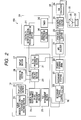
- FIG. 2 is ablockdiagramtoshowthedetailedconfiguration of the information playback apparatus 100. It shows the detailed configuration of the components shown in FIG. 1.
- the music information management section 101 includes a central control section 210, an ID tag processing section 211, an album information storage section 212, a play list storage section 213, a musical piece performance order management section 214, and a file management section 215.
- the central control section 210 has an MMI (man-machine interface) function and the operation section 106 and the display section 107 are connected to the central control section 210 for controlling the operation of the whole apparatus.
- the central control section 210 detects user's operation of the operation section 106 and manages performance start of a musical piece and various pieces of information concerning musical pieces.
- the ID tag processing section 211 extracts the content information and outputs the content information to the central control section 210.
- the ID tag stores the musical piece title, the album title, the artist name, etc., for example, and the central control section 210 outputs the musical piece title, the album title, the artist name, etc., to the display section 107.
- the album information storage section 212 stores album information made up of the album title, the artist name, the basic playback order of the musical pieces contained in the album, the track numbers and playback time of the musical pieces, and the like.
- the user can operate the operation section 106 to enter the album title and the artist name in the album information storage section 212 in association with each other for each musical piece.
- the user can also get the album information in batch through communication device of the Internet, etc., (not shown) for storage in the album information storage section 212.
- the ID tag processing section 211 and the album information storage section 212 function as content information storage device for storing the content information concerning the musical piece to be played back.
- the playback order of musical pieces arbitrarily set by the apparatus user operating the operation section 106, etc., is stored in the play list storage section 213 as a play list.
- the play list can be set in musical pieces units and the playback order of musical pieces selected out of different albums can be set as desired.
- the musical piece performance order management section 214 reads the play list stored in the play list storage section 213, manages the order of the musical pieces played back by the apparatus, and sends the order of the musical pieces to be played back to themusical piece data storage section 102.
- the file management section 215 controls retrieving the MP3 data corresponding to the musical pieces in the MP3 files accordingtotheorderspecifiedbythemusicalpieceperformance order management section 214 and reading the MP3 data stored in the MP3 files.
- the file management section 215 manages execution of a file system of a music playback computer readable medium in the PC.
- the musical piece data storage section 102 has a secondary storage control section 220, secondary storage 221, and primary storage 222.
- the secondary storage 221 is made up of a storage medium such as an HD (hard disk) and a drive such as an HDD for reading data stored on the storage medium, and MP3 data is stored on the storage medium in musical piece units as MP3 files. Since the MP3 data is data compressed to about one tenth as compare with uncompressed data, a larger number of musical pieces can be stored on the storage medium.
- the secondary storage control section 220 has a function of read device for controlling read of MP3 data from the secondary storage 221 based on a control command of the file management section 215. If the secondary storage 221 is connected by an ATA interface in the PC, the secondary storage control section 220 controls the ATA interface. When a new musical piece is acquired, the secondary storage control section 220 controls write of the MP3 data into the secondary storage 221 in file units although not shown.
- the primary storage 222 is implemented as memory such as RAM where data can be read and written at high speed as compared with the secondary storage 221, and temporarily stores the MP3 data read from the secondary storage 221.
- the decode section 103 is made up of an MP3 decoder 231 for decoding compressed MP3 data into PCM audio data, a PCM data temporary buffer 232 as a data buffer for sending a predetermined data amount of PCM audio data while temporarily storing the predetermined data amount of PCM audio data to prevent data clogging, etc., in sending the provided PCM audio data to a D/A converter 234 at the following stage, a PCM output control section 233 as output control device for sending the PCM audio data temporarily stored in the PCM data temporary buffer 232 based on the timer time described later, and the above-mentioned D/A converter 234 for converting the received digital PCM audio data into analog form and outputs an audio signal.
- the musical piece to musical piece control section 104 is made up of an envelop extraction section 240 as envelop extraction device, a continuity-between-musical-pieces determination section 241 as continuity determination device, and a timer 242.
- the envelope extraction section 240 extracts an audio waveform envelope from the PCM audio data stored in the PCM data temporary buffer 232.
- the envelope is extracted for the trailing portion of PCM audio data in the musical piece sent according to the musical piece performance order and the leading portion of PCM audio data in the next musical piece sent following that musical piece.
- the invention is not limited to it and the envelope can also be extracted for the whole PCM audio data of each musical piece.
- the continuity-between-musical-pieces determination section 241 determines continuity between the preceding and following musical pieces based on the similarity between the envelope of the PCM audio data of the musical piece and the envelope of the PCM audio data of the next musical piece extracted by the envelop extraction section 240.
- the continuity-between-musical-pieces determination section 241 determines whether or not there is continuity between themusical pieces as "continuity" or "no continuity,” and outputs the determination result to the timer 242 and the central control section 210 using identification information "0/1" of a flag, etc.
- the timer 242 sets the timer time so as to output the following musical piece after completion of output of the precedingmusical piecewithout providing a time interval (without forming a silent zone between the musical pieces). On the other hand, if the determination result of "no continuity" is input, the timer 242 sets the timer time so as to output the following musical piece providing a predetermined time interval (forming a silent zone for a predetermined time) after completion of output of the preceding musical piece.
- the timer 242 sets the value of the timer time to be output to the PCM output control section 233 to "0" and at this time, the PCM output control section 233 outputs the PCM audio data of the following musical piece to the D/A converter 234 continuously after completion of output of the PCM audio data of the preceding musical piece to the D/A converter 234.
- the timer 242 sets the timer time to be output to the PCM output control section 233 to a predetermined time, for example, "five seconds.”
- the PCM output control section 233 outputs the PCM audio data of the following musical piece to the D/A converter 234 in five seconds after completion of output of the PCM audio data of the preceding musical piece to the D/A converter 234.
- the timer time output by the timer 242 when "continuity" is input is a setup value proper to the apparatus or the user can set any desired value through the operation section 106.
- the audio output section 105 is made up of an amplifier 251 for amplifying the analog audio signal provided by the D/A converter 234 and an audio converter 252 such as a loudspeaker or a headphone for converting the amplified audio signal into audio.
- an audio converter 252 such as a loudspeaker or a headphone for converting the amplified audio signal into audio.
- FIG. 3 is ablockdiagramto showthehardwareconfiguration of the information playback apparatus 100.
- numeral 301 denotes a CPU for controlling the whole apparatus
- numeral 302 denotes ROM storing a basic processing program of the information playback apparatus 100
- numeral 303 denotes RAM used as a work area of the CPU 301.
- Numeral 304 denotes an HDD for reading and writing data from and onto an HD 305 under the control of the CPU 301
- numeral 305 denotes the HD for storing the data written by the HDD 304.
- Numeral 306 denotes a CD/DVD drive for reading and writing data from and onto a CD/DVD 307 under the control of the CPU 301 and numeral 307 denotes the CD/DVD storing the data read by the CD/DVD drive 306.
- a writable disk medium can also be used as the CD/DVD 307.
- Numeral 308 denotes a video-audio I/F (interface) through which a video display 309 and an audio output loudspeaker (or headphone) 310 are connected. A cursor, a menu, a window, or various pieces of data of text, images, etc., are displayed on the display 309, and audio is output from the loudspeaker 310.
- Numeral 311 denotes an input I/F through which a remote control 312 including a plurality of keys and a keyboard/mouse 313 for the user to enter characters, digits, commands, etc., are connected.
- an output I/F is provided as required and a scanner for optically reading characters and images and a printer for printing characters and images can be connected through the output I/F.
- Numeral 314 denotes a communication I/F connected to a network 315 by radio or through a communication cable for functioning as an interface between the network 315 and the CPU 301.
- Numeral 316 denotes a bus for connecting the components.
- the network 315 includes a LAN, a WAN, a public switched network, a mobile telephone network, etc.
- the function of the central control section 210 shown in FIG. 2 is provided as the CPU 301 executes programs recorded in the ROM 302, the RAM 303, the HD 305, the CD/DVD 307, and the like in FIG. 3.
- the functions of the ID tag processing section 211, the musical piece performance order management section 214, the file management section 215, the decode section 103, and the musical piece to musical piece control section 104 shown in FIG. 2 can also be provided as the CPU 301 executes decode program.
- the functions of the decode section 103 and the musical piece to musical piece control section 104 can also be provided using a decode dedicated circuit, such as a DSP.
- the secondary storage 221 and the primary storage 222 shown in FIG. 2 correspond to the HD 305 and the HDD 304 and the RAM 303 in FIG. 3.
- the album information storage section 212 and the play list storage section 213 shown in FIG. 2 are implemented using the storage area of the HD 305 shown in FIG. 3.
- the function of the operation section 106 shown in FIG. 2 is provided by the remote control 312 or the keyboard/mouse 313 shown in FIG. 3, and the function of the display section 107 shown in FIG. 2 is provided using the display 309 shown in FIG. 3.
- the function of the audio converter 252 shown in FIG. 2 is provided using the loudspeaker (headphone) 310 shown in FIG. 3.
- the MP3 data of a plurality of musical pieces is previously stored in the secondary storage 221 shown in FIG. 2.
- Album (musical piece order) information concerning the plurality of musical pieces is stored in the album information storage section 212, and the play list setting the order of the musical pieces to be played back is registered in the play list storage section 213.
- the operation section 106 is provided with various buttons. As the user operates the buttons, the apparatus main unit makes a state transition. Upon detection of operation of a PLAY button, the central control section 210 causes the apparatus main unit to make a transition to a PLAY state, and requests the musical piece performance order management section 214 to play back musical pieces.
- the musical piece performance order management section 214 references the play list storage section 213 and determines the playback order of the musical pieces in accordance with the musical piece order set in the play list.
- the playback order is not limited to that conforming to the play list; the musical pieces can be played back in album units stored in the album information storage section 212 and the user can also select any desired musical pieces to play back the musical pieces.
- the user can also specify directly the folder name storing the MP3 file or the MP3 file in the secondary storage 221 to play back the musical piece.
- the MP3 data of the musical pieces is read from the secondary storage 221 in accordance with the playback order ofthemusicalpiecesdeterminedbythemusicalpieceperformance order management section 214 as the specified MP3 files are opened by the secondary storage control section 220 under the control of the file management section 215, and the MP3 data is written into the primary storage (RAM) 222. Transfer of data from the secondary storage 221 to the primary storage 222 executed by the secondary storage control section 220 will be discussed. When the data written into the primary storage 222 reaches one amount, transfer of data to the primary storage 222 is temporarily stopped and when the data amount in the primary storage 222 is reduced to one amount, data transfer is again started. This sequence is repeated.
- the frame data forming the MP3 data stored in the primary storage 222 is output to the MP3 decoder 231, and the ID tag data is output to the ID tag process ing section 211.
- Information of the name of the music piece to be played back, the album name, the artist name, the playback order, etc., input to the ID tag processing section 211 is displayed on the display section 107 through the central control section 210.
- the MP3 decoder 231 decodes the MP3 data into PCM audio data for each frame, and transfers the PCM audio data to the PCM data temporary buffer 232.
- the PCM data temporary buffer 232 temporarily stores the PCM audio data of the data amount exceeding the time required for envelope extraction executed by the musical piece to musical piece control section 104 and determination processing of continuity between musical pieces executed by the continuity-between-musical-pieces determination section 241. Accordingly, the PCM audio data can be prevented from being output to the D/A converter 234 and from waiting for determination processing of continuity during the determination processing of continuity executed by the continuity-between-musical-pieces determination section 241.
- the PCM data temporary buffer 232 outputs the PCM audio data via the PCM output control section 233 to the D/A converter 234 and also outputs the PCM audio data to the envelop extraction section 240.
- the D/A converter 234 converts the PCM audio data into an analog audio signal and outputs the analog audio signal to the amplifier 251, which then amplifies the analog audio signal. Then, the amplified analog audio signal is converted into audio by the loudspeaker, etc., of the audio converter 252 to produce a sound wave, enabling the user to listen to the musical piece.
- the file management section 215 Upon completion of read of the MP3 data to the end of theMP3 file, the file management section 215 informs themusical piece performance order management section 214 that read of the MP3 data is complete. Accordingly, the musical piece performance order management section 214 closes the MP3 file storing the read MP3 data and then opens the MP3 file of the next musical piece to be subsequently read and reads the MP3 data; the musical piece performance order management section 214 repeats this sequence.
- the secondary storage control section 220 appropriately executes transfer control of MP3 data from the secondary storage 221 to the primary storage 222 so that output of PCM audio data of the preceding and following musical pieces is not interrupted in the PCM data temporary buffer 232.
- the envelope extraction section 240 extracts the envelope of the PCM audio data output from the PCM data temporary buffer 232 and sends the envelope to the continuity-between-musical-pieces determination section 241.
- the continuity-between-musical-pieces determination section 241 determines continuity between the preceding and following musical pieces based on the envelopes of the PCM audio data of the preceding and following musical pieces extracted by the envelope extraction section 240.
- the central control section 210 manages the switch timing of the information processed by the ID tag processing section 211 in synchronization with the switch timing of the preceding and following musical pieces detected by the continuity-between-musical-pieces determination section 241.
- the PCM output control section 233 transfers the PCM audio data of the following musical piece to the D/A converter 234 successively after completion of transfer of the PCM audio data of the preceding musical piece to the D/A converter 234.
- the PCM output control section 233 temporarily stops outputting the PCM audio data of the following musical piece to the D/A converter 234 for the time set in the timer 242 after completion of transfer of the PCM audio data of the preceding musical piece to the D/A converter 234. Accordingly, a silent zone for the predetermined time is formed between the preceding and following musical pieces.
- the PCM output control section 233 starts to output the PCM audio data of the following musical piece from the PCM data temporary buffer 232, and the PCM audio data is output from the audio output section 252 as audio.
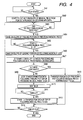
- FIG. 4 is a flowchart to show determination processing of continuity between musical pieces.
- the apparatus waits for the user to operate the PLAY button provided on the operation section 106 (loop of NO at step S401).
- the apparatus Upon detection of operation of the PLAY button (YES at step S401), the apparatus makes a transition to the play state.
- the MP3 data is read from the secondary storage 221, decode processing of the MP3 decoder 231 is performed, PCM audio data is converted into an analog audio signal by the D/A converter 234, and audio is output, as described above.
- the envelope extraction section 240 reads the PCM audio data provided by decoding the MP3 data and starts to extract the envelope of the musical piece (step S402).
- step S403 whether or not the MP3 data has been read to the end of the MP3 file of the preceding musical piece is determined. Specifically, while transfer of the MP3 data of the musical piece being played back (the preceding musical piece) from the primary storage 222 to the MP3 decoder 231 continues, the continuity-between-musical-pieces determination section 241 determines that the MP3 data has not yet been read to the end of the MP3 file of the musical piece being played back (NO at step S403); when transfer of the MP3 data is complete, the continuity-between-musical-pieces determination section 241 determines that the MP3 data has been read to the end of the MP3 file of the preceding musical piece (YES at step S403).
- the continuity-between-musical-pieces determination section 241 saves the information of the envelope component of the trailing portion of the MP3 data in the MP3 file of the preceding musical piece provided through the MP3 decoder 231, the PCM data temporary buffer 232, and the envelope extraction section 240, for example, the information of the envelope component of the data between the position preceding a predetermined time from the end position of the MP3 data and the end position (step S404).
- the apparatus waits for the MP3 file of the next musical piece output following the preceding musical piece to be opened and transfer of the MP3 data to be started (NO at step S405).
- the continuity-between-musical-pieces determination section 241 detects the following musical piece being started (YES at step S405).
- the continuity-between-musical-pieces determination section 241 saves the information of the envelope component of the leading portion of the MP3 data in the MP3 file of the following musical piece provided through the MP3 decoder 231, the PCM data temporary buffer 232, and the envelope extraction section 240, for example, the information of the envelope component of the data to the position advancing a predetermined time from the top position of the MP3 data (step S406).
- the continuity-between-musical-pieces determination section 241 determines continuity between the preceding and following musical pieces based on the envelope component of the trailing portion of the preceding musical piece saved at step S404 and the envelope component of the leading portion of the following musical piece saved at step S406 (step S407). The specific processing of the continuity determination will be discussed later.
- the PCM output control section 233 stops outputting (transferring) the PCM audio data of the following musical piece to the D/A converter 234 (step S409).
- the timer 242 functions and the timer time is set (step S410). Transferring the PCM audio data is temporarily stopped for the timer time applied when there is "no continuity" (for example, five seconds mentioned above). The time during which outputting the PCM audio data to the D/A converter 234 is stopped is continued until the timer 242 reaches the timer time (NO at step S411).
- the PCM output control section 233 starts to output the PCM audio data from the top of the following musical piece to the D/A converter 234 (step S412).
- step S408 determines whether there is "continuity" between the preceding and following musical pieces (YES at step S408). If it is determined at step S408 that there is "continuity" between the preceding and following musical pieces (YES at step S408), the PCM audio data of the top of the following musical piece is output (transferred) to the D/A converter 234 without providing a time interval continuously with the trailing portion of the PCM audio data of the preceding musical piece (step S413). At this time, the timer time of the timer 242 is set to 0 seconds so as not to place a space between the musical pieces in response to the determination of "continuity.”
- step S412 or S413 the continuity determination between the preceding and following musical pieces is complete. Then, the end of the musical piece PLAY state is detected. If playback terminates (YES at step S414), the processing is terminated. On the other hand, if playback does not terminate (NO at step S414), the process returns to step S403 and the sequence is repeated.
- the determination at step S414 corresponds to the determination at to whether or not the playing back the last musical piece set in the play list terminates.
- the continuity determination processing terminates just after playing back the last musical piece set in the play list is started because it is to determine the continuity between the last musical piece and the musical piece just preceding the last musical piece.
- FIG. 5 is a drawing to show sample waveforms applied when there is continuity between the preceding and following musical pieces.
- the vertical axis indicates the sound level and the horizontal axis indicates the time.
- the waveforms shown in the figure are envelope components of audio waveforms of PCM audio data.
- the left waveform in the figure is a waveform indicating the envelope component of the trailing portion of a preceding musical piece 501 and the right waveform in the figure is a waveform indicating the envelope component of the leading portion of a following musical piece 502.
- the envelope extraction section 240 includes the configuration of volume level detection device for detecting the volume level of a musical piece.
- the continuity-between-musical-pieces determination section 241 determines that the volume level of a trailing end 501a of the preceding musical piece 501 is close to the volume level of a leading end 502a of the following musical piece 502.
- the volume level of an envelope component 501b of the preceding musical piece 501 tends to lessen and likewise the volume level of an envelope component 502b of the following musical piece 502 tends to lessen.
- the continuity-between-musical-pieces determination section 241 determines that there is similarity between the envelopes and there is "continuity" between the preceding and following musical pieces. Based on this determination, the PCM output control section 233 concatenates the trailing end 501a of the preceding musical piece 501 (time t1) and the leading end 502a of the following musical piece 502 (time t2) and outputs sound without placing a space between the musical pieces.
- the continuity determination can also be made as follows: The progression of the envelope component 501b of the trailing portion of the preceding musical piece 501 is detected over a predetermined time period, the progression of the envelope component 502b of the leading portion of the following musical piece 502 is detected over a predetermined time period, the state of the leading end 502a of the following musical piece 502 that can be concatenated with the state of the trailing end 501a of the preceding musical piece 501 is estimated based on the progressions over the predetermined time period, and the following musical piece 502 matching or almost matching the estimation is determined to have "continuity.” Accordingly, the continuity determination precision can be enhanced.
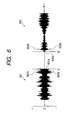
- FIG. 6 is a drawing to show sample waveforms applied when there is no continuity between the preceding and following musical pieces.
- the continuity-between-musical-pieces determination section 241 determines that a preceding musical piece 601 and a following musical piece 602 differ in volume level because the volume level of the following musical piece 602 is close to 0 although the preceding musical piece 601 has a predetermined volume level.
- the volume level of an envelope component 601b of the preceding musical piece 601 tends to lessen; while the volume level of an envelope component 602b of the following musical piece 602 tends to grow.
- the continuity-between-musical-pieces determination section 241 determines that there is no similarity between the envelopes and there is "no continuity" between the preceding and following musical pieces.
- the PCM output control section 233 does not concatenate the trailing end 601a of the preceding musical piece 601 (time t1) and the leading end 602a of the following musical piece 502 (time t2) and outputs sound placing a space of the timer time corresponding to "no continuity" set in the timer 242 (for example, five seconds) between the preceding musical piece 601 and the following musical piece 602.
- FIG. 7 is a drawing to show sample waveforms applied when the preceding and following musical pieces are each complete. It shows the waveforms of the envelope components of a preceding musical piece 701 and a following musical piece 702.
- the preceding musical piece 701 has the trailing part as the musical piece to time t1, but a trailing end 701a of audio of the actual musical piece ends at time t0 preceding the time t1. Silence exists between the times t0 and t1. Since the preceding musical piece 701 is a complete musical piece, the volume level gradually drops and finally reaches 0.
- the following musical piece 702 has the leading part as the musical piece at time t2, but a leading part 702a of the actual musical piece is time t3 and a silent zone of a short time (for example, about one second) often exists between the times t2 and t3.
- a silent zone is formed at the trailing part of the preceding musical piece 701 and a silent zone is formed at the leading part of the following musical piece 702
- the continuity-between-musical-pieces determination section 241 determines that there is "no continuity" between the preceding and following musical pieces.
- the continuity-between-musical-pieces determination section 241 can also determine that there is "no continuity" between the preceding and following musical pieces.
- the silent zone to be formed between musical pieces can also be determined considering the silent zone already formed between the preceding and following musical pieces.
- the silent zone is formed between the times t0 and t1 at the trailing part of the preceding musical piece 701 and the silent zone is formed between the times t2 and t3 at the leading part of the following musical piece 702.
- the silent zone between the preceding mus ical piece 701 and the following musical piece 702 is prolonged additionally as much as the timer time.
- the silent state may continue over a very long time in some cases, and it is considered that the user assumes by mistake that the end of the musical piece is reached and performs unnecessary operation such as stop operation or is given a feeling of being cumbersome.
- the continuity-between-musical-pieces determination section 241 may detect the silent zone between the preceding musical piece 701 and the following musical piece 702 (times t0 and t1, times t2 and t3) by a timer (not shown), etc., and may control so as not to form a silent zone based on the timer 242 when the silent zone between the times t0 and t3 exceeds the timer time corresponding to "no continuity" set in the timer 242 (for example, five seconds). In this case, the preceding musical piece 701 and the following musical piece 702 between which there is "no continuity" are played back through the already formed silent zone.
- the silent zone between the preceding musical piece 701 and the following musical piece 702 exceeds the silent zone corresponding to "no continuity" set in the timer 242, it is also possible that the space between the musical pieces is eliminated so as to match the silent zone corresponding to "no continuity" set in the timer 242.
- FIG. 8 is a drawing to show the volume levels of the preceding and following musical pieces.
- a preceding musical piece 801 and a following musical piece 802 are indicated each as the audio waveform level.
- a problem occurring when an attempt is made to determine whether or not there is continuity between the preceding and following musical pieces based simply on the volume level will be discussed. If an attempt is made to determine whether or not there is continuity between the preceding musical piece 801 and the following musical piece 802 based on the audio waveform level, whether or not the audio waveforms of the preceding musical piece 801 and the following musical piece 802 are concatenated with each other is simply determined.
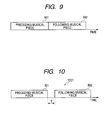
- FIG. 9 is a drawing to show a state in which the space between the preceding and followingmusical pieces is eliminated
- FIG. 10 is a drawing to show a state in which a silent zone is formed between the preceding and following musical pieces.
- a space (silent zone) 1001 corresponding to timer time T set in the timer 242 can be formed between the preceding musical piece 901 and the following musical piece 902 for playback, as shown in FIG. 10.
- the envelope components of the preceding and following musical pieces cannot smoothly be concatenated, so that it can be determined that there is "no continuity" and a silent zone of a predetermined time is formed between the preceding and following musical pieces, whereby the preceding and following musical pieces are not continuously played back and are played back with a space therebetween, so that it is made possible to play back the preceding and following musical pieces without giving an unnatural auditory feeling to the listener although the preceding and following musical pieces differ in genre or tune.
- the content information of the musical piece to be played back for example, the content information managed by the ID tag processing section 211 may be used in addition to the method of detecting and using the envelope components of the preceding and following musical pieces.
- the content information indicating the continuity between the preceding and following musical pieces such as consecutive track numbers, is used. Accordingly, if whether or not there is continuity between the actual musical pieces cannot be determined in determination as to whether or not there is continuity between the preceding and followingmusical pieces using the envelope components, it is made possible to determine whether or not there is continuity with accuracy.
- the content information can also be used to change the processing so as to concatenate the musical pieces (for example, change the determination as "continuity").
- the content information is used to determine whether or not there is continuity, whereby it is made possible to determine whether or not there is continuity between the preceding and following musical pieces with higher accuracy.
- the central control section 210 described above may be provided with a continuity learning function of learning information indicating the presence or absence of continuity input from the continuity-between-musical-pieces determination section 241. Whether or not there is continuity between the preceding and following musical pieces is determined for each musical piece when musical pieces are continuously played back according to the play list. At the termination of playing back the musical pieces set in the play list, the determination as to whether or not there is continuity between the preceding and following musical pieces is complete for all musical pieces.
- the information indicating the presence or absence of continuity can be output to the musical piece performance order management section 214 and can be stored in the play list storage section 213, etc.
- the central control section 210 can also read the information indicating the presence or absence of continuity already learned from the play list and output the information to the continuity-between-musical-pieces determination section 241. Accordingly, the continuity-between-musical-pieces determination section 241 can also skip the continuity determination processing described above during playback of the preceding and following musical pieces, whether or not there is continuity between which has already been determined, and output the continuity determination result directly to the timer 242 for controlling the space between the preceding and following musical pieces.
- the envelope extraction section 240 can also skip envelope extraction processing.
- whether or not there is continuity is determined in one learning, but the invention is not limited to it. Whether or not there is continuity can also be determined based on the results of more than one learning.
- the envelope extraction section 240 extracts the envelopes of the preceding and following musical pieces and the continuity-between-musical-pieces determination section 241 determines whether or not there is continuity between the preceding and following musical pieces and then the central control section 210 totally determines whether or not there is continuity between the preceding and following musical pieces based on the determination results as to whether or not there is continuity between the preceding and following musical pieces.
- the result is output as the total output.
- the result of the determination corresponding to the number of times it has been determined that there is “continuity” or the number of times it has been determined that there is “no continuity, " whichever is the greater, as the total result or it is possible to make total determination when the number of times it has been determined that there is “continuity” or the number of times it has been determined that there is “no continuity” exceeds a predetermined percentage of the total number of times it has been determined (threshold value).
- the numeric value indicating continuity between the extracted envelopes may be used together.
- the acquired MP3 data is put into files each for one musical piece.
- the invention is not limited to it.
- the invention can also be applied to the mode wherein one musical piece is divided into parts at an intermediate point and the divided MP3 data is implemented as one MP3 file.
- the musical piece dividing can also be applied to the mode wherein only the parts of any desired musical instrument are separated for practice. Although whether or not there is continuity between the preceding and following musical pieces is determined, the continuity determination can also be applied to voice memo, etc.
- the embodiment has been described using the MP3 data, but the invention is not limited to it and can also be applied to any other type of compressed audio data such as WMA. It can also be applied to uncompressed audio data.
- the MP3 files of the musical pieces to be played back are previously stored in the secondary storage 221 such as an HD of a storage medium.
- the invention is not limited to it and can also be applied to streaming playback of content of audio and an image with audio distributed through a network.
- the information playback apparatus has the advantage that it can provide an environment in which the musical pieces can be played back continuously without giving an unnatural auditory feeling to the listener regardless of whether or not there is continuity between the musical pieces.
Landscapes
- Physics & Mathematics (AREA)
- Engineering & Computer Science (AREA)
- Acoustics & Sound (AREA)
- Multimedia (AREA)
- Signal Processing For Digital Recording And Reproducing (AREA)
Applications Claiming Priority (2)
| Application Number | Priority Date | Filing Date | Title |
|---|---|---|---|
| JP2003200899 | 2003-07-24 | ||
| JP2003200899A JP2005044409A (ja) | 2003-07-24 | 2003-07-24 | 情報再生装置、情報再生方法および情報再生プログラム |
Publications (1)
| Publication Number | Publication Date |
|---|---|
| EP1501073A1 true EP1501073A1 (de) | 2005-01-26 |
Family
ID=33487646
Family Applications (1)
| Application Number | Title | Priority Date | Filing Date |
|---|---|---|---|
| EP04016468A Withdrawn EP1501073A1 (de) | 2003-07-24 | 2004-07-13 | Informationabspielgerät, Informationabspielverfahren, und computerlesbare Datenträger hierfür |
Country Status (3)
| Country | Link |
|---|---|
| US (1) | US20050016364A1 (de) |
| EP (1) | EP1501073A1 (de) |
| JP (1) | JP2005044409A (de) |
Families Citing this family (10)
| Publication number | Priority date | Publication date | Assignee | Title |
|---|---|---|---|---|
| JP4349111B2 (ja) * | 2003-12-09 | 2009-10-21 | ヤマハ株式会社 | Avシステム及びその携帯端末 |
| JP2005316593A (ja) * | 2004-04-27 | 2005-11-10 | Sony Corp | 電力制御装置及び電力制御方法 |
| JP4770348B2 (ja) * | 2005-09-13 | 2011-09-14 | ソニー株式会社 | データ処理装置、データ処理方法及びデータ処理制御プログラム |
| JP4588626B2 (ja) * | 2005-12-27 | 2010-12-01 | 株式会社ケンウッド | 楽曲再生装置、再生制御方法、および、プログラム |
| JP4382045B2 (ja) | 2006-01-24 | 2009-12-09 | シャープ株式会社 | データ出力装置、データ出力方法、データ出力プログラム、および記録媒体 |
| US7541534B2 (en) * | 2006-10-23 | 2009-06-02 | Adobe Systems Incorporated | Methods and apparatus for rendering audio data |
| JP5088616B2 (ja) * | 2007-11-28 | 2012-12-05 | ヤマハ株式会社 | 電子音楽システム及びプログラム |
| JP2009157272A (ja) * | 2007-12-27 | 2009-07-16 | Roland Corp | 音声再生装置 |
| JP5737357B2 (ja) * | 2013-10-18 | 2015-06-17 | オンキヨー株式会社 | 音楽再生装置及び音楽再生プログラム |
| JP7052339B2 (ja) * | 2017-12-25 | 2022-04-12 | カシオ計算機株式会社 | 鍵盤楽器、方法及びプログラム |
Citations (3)
| Publication number | Priority date | Publication date | Assignee | Title |
|---|---|---|---|---|
| EP0791914A1 (de) * | 1996-02-26 | 1997-08-27 | Yamaha Corporation | Karaokevorrichtung mit angepassten Potpourri erhalten durch das miteinander Verbinden von verschiedenen Musikstücken |
| EP1077549A2 (de) * | 1999-08-04 | 2001-02-21 | Pioneer Corporation | Verfahren und Vorrichtung zum Mischen und für die Wiedergabe von Toninformationen aus zwei Quellen, sowie Computerprogramm für die Durchführung des Verfahrens |
| JP2003058192A (ja) * | 2001-08-10 | 2003-02-28 | Fujitsu Ten Ltd | 音楽データ再生装置 |
Family Cites Families (4)
| Publication number | Priority date | Publication date | Assignee | Title |
|---|---|---|---|---|
| JP3503958B2 (ja) * | 1992-12-28 | 2004-03-08 | パイオニア株式会社 | オムニバスカラオケ演奏装置 |
| JP2927229B2 (ja) * | 1996-01-23 | 1999-07-28 | ヤマハ株式会社 | メドレー演奏装置 |
| JP3799761B2 (ja) * | 1997-08-11 | 2006-07-19 | ヤマハ株式会社 | 演奏装置、カラオケ装置および記録媒体 |
| JP2001094635A (ja) * | 1999-09-21 | 2001-04-06 | Matsushita Electric Ind Co Ltd | 電話端末装置 |
-
2003
- 2003-07-24 JP JP2003200899A patent/JP2005044409A/ja not_active Abandoned
-
2004
- 2004-07-13 EP EP04016468A patent/EP1501073A1/de not_active Withdrawn
- 2004-07-16 US US10/892,328 patent/US20050016364A1/en not_active Abandoned
Patent Citations (3)
| Publication number | Priority date | Publication date | Assignee | Title |
|---|---|---|---|---|
| EP0791914A1 (de) * | 1996-02-26 | 1997-08-27 | Yamaha Corporation | Karaokevorrichtung mit angepassten Potpourri erhalten durch das miteinander Verbinden von verschiedenen Musikstücken |
| EP1077549A2 (de) * | 1999-08-04 | 2001-02-21 | Pioneer Corporation | Verfahren und Vorrichtung zum Mischen und für die Wiedergabe von Toninformationen aus zwei Quellen, sowie Computerprogramm für die Durchführung des Verfahrens |
| JP2003058192A (ja) * | 2001-08-10 | 2003-02-28 | Fujitsu Ten Ltd | 音楽データ再生装置 |
Also Published As
| Publication number | Publication date |
|---|---|
| JP2005044409A (ja) | 2005-02-17 |
| US20050016364A1 (en) | 2005-01-27 |
Similar Documents
| Publication | Publication Date | Title |
|---|---|---|
| JP3163119B2 (ja) | 記録再生装置 | |
| EP2079234A2 (de) | Videosuchvorrichtung, Bearbeitungsvorrichtung, Videosuchverfahren und Programm | |
| EP1855289A1 (de) | Inhaltskennzeichnung und Wiedergabe | |
| CN1118101A (zh) | 便携式记录再现设备ic存储卡记录格式和记录再现方法 | |
| US20030072463A1 (en) | Sound-activated song selection broadcasting apparatus | |
| EP1501073A1 (de) | Informationabspielgerät, Informationabspielverfahren, und computerlesbare Datenträger hierfür | |
| US20060114763A1 (en) | Content recording apparatus | |
| KR101727587B1 (ko) | 디지털 녹취 파일 녹취록 생성 방법 | |
| KR20010069858A (ko) | 멀티미디어 파일 재생 시스템 및 방법 | |
| KR20020094951A (ko) | 오디오 데이터 관리장치와 관리방법 및 기록장치 | |
| JP4877811B2 (ja) | 特定区間抽出装置、音楽記録再生装置、音楽配信システム | |
| JP4990375B2 (ja) | 記録再生装置 | |
| CN1084916C (zh) | 半导体存储卡的数据记录设备和方法 | |
| KR100357241B1 (ko) | 디지털 오디오 플레이어에서의 반복재생구간 설정제어방법 및 이것을 이용한 파일재생장치 및 저장매체 | |
| JP2000089789A (ja) | 音声認識装置及び記録媒体 | |
| KR100383194B1 (ko) | 미디어 파일 재생 방법 | |
| JP4587014B2 (ja) | オーディオ再生システム | |
| JP2010008938A (ja) | ボイスレコーダー、及び音声録音方法 | |
| US20030236660A1 (en) | Data recording-reproduction device | |
| JP2004005832A (ja) | データ再生装置、そのシステム、その方法、そのプログラム、および、そのプログラムを記録した記録媒体 | |
| JP2005107617A (ja) | 音声データ検索装置。 | |
| JP4779954B2 (ja) | 音声データ処理装置、方法及びプログラム | |
| JP2006196048A (ja) | 車載楽曲再生装置 | |
| JP2005107617A5 (de) | ||
| KR20050106246A (ko) | 엠펙 플레이어에 있어서 데이터 검색 방법 |
Legal Events
| Date | Code | Title | Description |
|---|---|---|---|
| PUAI | Public reference made under article 153(3) epc to a published international application that has entered the european phase |
Free format text: ORIGINAL CODE: 0009012 |
|
| AK | Designated contracting states |
Kind code of ref document: A1 Designated state(s): AT BE BG CH CY CZ DE DK EE ES FI FR GB GR HU IE IT LI LU MC NL PL PT RO SE SI SK TR |
|
| AX | Request for extension of the european patent |
Extension state: AL HR LT LV MK |
|
| 17P | Request for examination filed |
Effective date: 20041222 |
|
| 17Q | First examination report despatched |
Effective date: 20050422 |
|
| AKX | Designation fees paid |
Designated state(s): DE FR GB |
|
| STAA | Information on the status of an ep patent application or granted ep patent |
Free format text: STATUS: THE APPLICATION IS DEEMED TO BE WITHDRAWN |
|
| 18D | Application deemed to be withdrawn |
Effective date: 20080306 |