EP1499459B1 - Beschallungsbehandlung von mit polychlorbiphenyl verunreinigten medien - Google Patents
Beschallungsbehandlung von mit polychlorbiphenyl verunreinigten medien Download PDFInfo
- Publication number
- EP1499459B1 EP1499459B1 EP03747071A EP03747071A EP1499459B1 EP 1499459 B1 EP1499459 B1 EP 1499459B1 EP 03747071 A EP03747071 A EP 03747071A EP 03747071 A EP03747071 A EP 03747071A EP 1499459 B1 EP1499459 B1 EP 1499459B1
- Authority
- EP
- European Patent Office
- Prior art keywords
- media
- sodium
- sonication
- pcb
- fluid
- Prior art date
- Legal status (The legal status is an assumption and is not a legal conclusion. Google has not performed a legal analysis and makes no representation as to the accuracy of the status listed.)
- Expired - Lifetime
Links
- 150000003071 polychlorinated biphenyls Chemical group 0.000 title claims abstract description 59
- 238000000527 sonication Methods 0.000 title claims abstract description 55
- 239000011734 sodium Substances 0.000 claims abstract description 106
- 229910052708 sodium Inorganic materials 0.000 claims abstract description 104
- DGAQECJNVWCQMB-PUAWFVPOSA-M Ilexoside XXIX Chemical compound C[C@@H]1CC[C@@]2(CC[C@@]3(C(=CC[C@H]4[C@]3(CC[C@@H]5[C@@]4(CC[C@@H](C5(C)C)OS(=O)(=O)[O-])C)C)[C@@H]2[C@]1(C)O)C)C(=O)O[C@H]6[C@@H]([C@H]([C@@H]([C@H](O6)CO)O)O)O.[Na+] DGAQECJNVWCQMB-PUAWFVPOSA-M 0.000 claims abstract description 103
- 229930195733 hydrocarbon Natural products 0.000 claims abstract description 92
- 150000002430 hydrocarbons Chemical class 0.000 claims abstract description 89
- 239000007788 liquid Substances 0.000 claims abstract description 70
- 238000000034 method Methods 0.000 claims abstract description 68
- 239000012530 fluid Substances 0.000 claims abstract description 56
- 239000000203 mixture Substances 0.000 claims abstract description 31
- 229910052783 alkali metal Inorganic materials 0.000 claims abstract description 20
- 150000001340 alkali metals Chemical class 0.000 claims abstract description 20
- 239000002689 soil Substances 0.000 claims description 103
- 239000004215 Carbon black (E152) Substances 0.000 claims description 92
- 239000000523 sample Substances 0.000 claims description 68
- 238000007792 addition Methods 0.000 claims description 38
- 239000002002 slurry Substances 0.000 claims description 33
- 238000006243 chemical reaction Methods 0.000 claims description 28
- XLYOFNOQVPJJNP-UHFFFAOYSA-N water Substances O XLYOFNOQVPJJNP-UHFFFAOYSA-N 0.000 claims description 27
- KEAYESYHFKHZAL-UHFFFAOYSA-N Sodium Chemical compound [Na] KEAYESYHFKHZAL-UHFFFAOYSA-N 0.000 claims description 16
- 239000007789 gas Substances 0.000 claims description 15
- 239000003350 kerosene Substances 0.000 claims description 15
- 238000005188 flotation Methods 0.000 claims description 14
- 235000008733 Citrus aurantifolia Nutrition 0.000 claims description 8
- 235000011941 Tilia x europaea Nutrition 0.000 claims description 8
- 238000010438 heat treatment Methods 0.000 claims description 8
- 239000004571 lime Substances 0.000 claims description 8
- 238000012546 transfer Methods 0.000 claims description 7
- 238000000227 grinding Methods 0.000 claims description 6
- CDBYLPFSWZWCQE-UHFFFAOYSA-L Sodium Carbonate Chemical compound [Na+].[Na+].[O-]C([O-])=O CDBYLPFSWZWCQE-UHFFFAOYSA-L 0.000 claims description 4
- 238000007605 air drying Methods 0.000 claims description 4
- 239000003795 chemical substances by application Substances 0.000 claims description 3
- 238000007873 sieving Methods 0.000 claims description 3
- 239000011261 inert gas Substances 0.000 claims description 2
- 239000002245 particle Substances 0.000 claims description 2
- 238000010298 pulverizing process Methods 0.000 claims description 2
- 238000010926 purge Methods 0.000 claims description 2
- 229910000029 sodium carbonate Inorganic materials 0.000 claims description 2
- 238000010979 pH adjustment Methods 0.000 claims 2
- 239000007787 solid Substances 0.000 description 47
- 238000000605 extraction Methods 0.000 description 41
- 238000012360 testing method Methods 0.000 description 38
- 230000006378 damage Effects 0.000 description 34
- 230000008569 process Effects 0.000 description 19
- 239000007791 liquid phase Substances 0.000 description 18
- 239000000463 material Substances 0.000 description 16
- 238000002156 mixing Methods 0.000 description 16
- 238000004458 analytical method Methods 0.000 description 15
- QGZKDVFQNNGYKY-UHFFFAOYSA-N Ammonia Chemical compound N QGZKDVFQNNGYKY-UHFFFAOYSA-N 0.000 description 14
- 239000012071 phase Substances 0.000 description 14
- 230000009467 reduction Effects 0.000 description 13
- 239000011269 tar Substances 0.000 description 13
- 239000003921 oil Substances 0.000 description 12
- 238000011084 recovery Methods 0.000 description 10
- 239000000126 substance Substances 0.000 description 10
- 238000010908 decantation Methods 0.000 description 9
- VLKZOEOYAKHREP-UHFFFAOYSA-N n-Hexane Chemical compound CCCCCC VLKZOEOYAKHREP-UHFFFAOYSA-N 0.000 description 9
- 238000012545 processing Methods 0.000 description 9
- 238000000926 separation method Methods 0.000 description 9
- 239000003513 alkali Substances 0.000 description 8
- 239000002910 solid waste Substances 0.000 description 8
- 238000005516 engineering process Methods 0.000 description 7
- 238000009291 froth flotation Methods 0.000 description 7
- 239000002699 waste material Substances 0.000 description 7
- LYCAIKOWRPUZTN-UHFFFAOYSA-N Ethylene glycol Chemical compound OCCO LYCAIKOWRPUZTN-UHFFFAOYSA-N 0.000 description 6
- OKKJLVBELUTLKV-UHFFFAOYSA-N Methanol Chemical compound OC OKKJLVBELUTLKV-UHFFFAOYSA-N 0.000 description 6
- ATUOYWHBWRKTHZ-UHFFFAOYSA-N Propane Chemical compound CCC ATUOYWHBWRKTHZ-UHFFFAOYSA-N 0.000 description 6
- FAPWRFPIFSIZLT-UHFFFAOYSA-M Sodium chloride Chemical compound [Na+].[Cl-] FAPWRFPIFSIZLT-UHFFFAOYSA-M 0.000 description 6
- 229910000831 Steel Inorganic materials 0.000 description 6
- 230000003071 parasitic effect Effects 0.000 description 6
- 239000010959 steel Substances 0.000 description 6
- ODINCKMPIJJUCX-UHFFFAOYSA-N Calcium oxide Chemical compound [Ca]=O ODINCKMPIJJUCX-UHFFFAOYSA-N 0.000 description 5
- 229910021529 ammonia Inorganic materials 0.000 description 5
- CSCPPACGZOOCGX-UHFFFAOYSA-N Acetone Chemical compound CC(C)=O CSCPPACGZOOCGX-UHFFFAOYSA-N 0.000 description 4
- KFZMGEQAYNKOFK-UHFFFAOYSA-N Isopropanol Chemical compound CC(C)O KFZMGEQAYNKOFK-UHFFFAOYSA-N 0.000 description 4
- 238000013019 agitation Methods 0.000 description 4
- 230000001186 cumulative effect Effects 0.000 description 4
- 230000007423 decrease Effects 0.000 description 4
- 239000001257 hydrogen Substances 0.000 description 4
- 229910052739 hydrogen Inorganic materials 0.000 description 4
- 238000004519 manufacturing process Methods 0.000 description 4
- 229910052751 metal Inorganic materials 0.000 description 4
- 239000002184 metal Substances 0.000 description 4
- 238000004064 recycling Methods 0.000 description 4
- AUGNBQPSMWGAJE-UHFFFAOYSA-N 1,2,3-trichloro-4-(2,3-dichlorophenyl)benzene Chemical compound ClC1=C(Cl)C(Cl)=CC=C1C1=CC=CC(Cl)=C1Cl AUGNBQPSMWGAJE-UHFFFAOYSA-N 0.000 description 3
- UFHFLCQGNIYNRP-UHFFFAOYSA-N Hydrogen Chemical compound [H][H] UFHFLCQGNIYNRP-UHFFFAOYSA-N 0.000 description 3
- 238000013459 approach Methods 0.000 description 3
- 239000008346 aqueous phase Substances 0.000 description 3
- 230000008901 benefit Effects 0.000 description 3
- 230000033228 biological regulation Effects 0.000 description 3
- 239000000292 calcium oxide Substances 0.000 description 3
- 235000012255 calcium oxide Nutrition 0.000 description 3
- 239000006185 dispersion Substances 0.000 description 3
- 230000000694 effects Effects 0.000 description 3
- 239000002360 explosive Substances 0.000 description 3
- 239000004519 grease Substances 0.000 description 3
- 231100001261 hazardous Toxicity 0.000 description 3
- 230000006872 improvement Effects 0.000 description 3
- 235000013824 polyphenols Nutrition 0.000 description 3
- 239000001294 propane Substances 0.000 description 3
- 230000002829 reductive effect Effects 0.000 description 3
- 239000011780 sodium chloride Substances 0.000 description 3
- 239000000243 solution Substances 0.000 description 3
- 231100000331 toxic Toxicity 0.000 description 3
- 230000002588 toxic effect Effects 0.000 description 3
- IJGRMHOSHXDMSA-UHFFFAOYSA-N Atomic nitrogen Chemical compound N#N IJGRMHOSHXDMSA-UHFFFAOYSA-N 0.000 description 2
- VEXZGXHMUGYJMC-UHFFFAOYSA-N Hydrochloric acid Chemical compound Cl VEXZGXHMUGYJMC-UHFFFAOYSA-N 0.000 description 2
- NHTMVDHEPJAVLT-UHFFFAOYSA-N Isooctane Chemical compound CC(C)CC(C)(C)C NHTMVDHEPJAVLT-UHFFFAOYSA-N 0.000 description 2
- 229920000459 Nitrile rubber Polymers 0.000 description 2
- -1 PCB hydrocarbon Chemical class 0.000 description 2
- 238000000944 Soxhlet extraction Methods 0.000 description 2
- 230000002378 acidificating effect Effects 0.000 description 2
- 230000002528 anti-freeze Effects 0.000 description 2
- 239000003990 capacitor Substances 0.000 description 2
- 239000003153 chemical reaction reagent Substances 0.000 description 2
- 238000011109 contamination Methods 0.000 description 2
- 238000001514 detection method Methods 0.000 description 2
- TXCDCPKCNAJMEE-UHFFFAOYSA-N dibenzofuran Chemical compound C1=CC=C2C3=CC=CC=C3OC2=C1 TXCDCPKCNAJMEE-UHFFFAOYSA-N 0.000 description 2
- JVSWJIKNEAIKJW-UHFFFAOYSA-N dimethyl-hexane Natural products CCCCCC(C)C JVSWJIKNEAIKJW-UHFFFAOYSA-N 0.000 description 2
- 238000001035 drying Methods 0.000 description 2
- 230000002349 favourable effect Effects 0.000 description 2
- 238000004817 gas chromatography Methods 0.000 description 2
- 150000002431 hydrogen Chemical class 0.000 description 2
- IXCSERBJSXMMFS-UHFFFAOYSA-N hydrogen chloride Substances Cl.Cl IXCSERBJSXMMFS-UHFFFAOYSA-N 0.000 description 2
- 229910000041 hydrogen chloride Inorganic materials 0.000 description 2
- 238000013101 initial test Methods 0.000 description 2
- 229910052500 inorganic mineral Inorganic materials 0.000 description 2
- 230000000670 limiting effect Effects 0.000 description 2
- 239000011707 mineral Substances 0.000 description 2
- 235000010755 mineral Nutrition 0.000 description 2
- 238000012986 modification Methods 0.000 description 2
- 230000004048 modification Effects 0.000 description 2
- 238000002360 preparation method Methods 0.000 description 2
- 230000008439 repair process Effects 0.000 description 2
- 230000000717 retained effect Effects 0.000 description 2
- 239000011435 rock Substances 0.000 description 2
- 229920006395 saturated elastomer Polymers 0.000 description 2
- 238000013341 scale-up Methods 0.000 description 2
- 238000005201 scrubbing Methods 0.000 description 2
- 238000003860 storage Methods 0.000 description 2
- 238000010977 unit operation Methods 0.000 description 2
- 238000009736 wetting Methods 0.000 description 2
- RYGMFSIKBFXOCR-UHFFFAOYSA-N Copper Chemical compound [Cu] RYGMFSIKBFXOCR-UHFFFAOYSA-N 0.000 description 1
- 239000004606 Fillers/Extenders Substances 0.000 description 1
- 102000003688 G-Protein-Coupled Receptors Human genes 0.000 description 1
- 108090000045 G-Protein-Coupled Receptors Proteins 0.000 description 1
- WHXSMMKQMYFTQS-UHFFFAOYSA-N Lithium Chemical compound [Li] WHXSMMKQMYFTQS-UHFFFAOYSA-N 0.000 description 1
- ZLMJMSJWJFRBEC-UHFFFAOYSA-N Potassium Chemical compound [K] ZLMJMSJWJFRBEC-UHFFFAOYSA-N 0.000 description 1
- 229910000746 Structural steel Inorganic materials 0.000 description 1
- 238000010521 absorption reaction Methods 0.000 description 1
- 239000000654 additive Substances 0.000 description 1
- 238000005273 aeration Methods 0.000 description 1
- 239000000538 analytical sample Substances 0.000 description 1
- 238000004873 anchoring Methods 0.000 description 1
- 125000003118 aryl group Chemical group 0.000 description 1
- 239000010426 asphalt Substances 0.000 description 1
- QVGXLLKOCUKJST-UHFFFAOYSA-N atomic oxygen Chemical compound [O] QVGXLLKOCUKJST-UHFFFAOYSA-N 0.000 description 1
- 239000002585 base Substances 0.000 description 1
- 230000005540 biological transmission Effects 0.000 description 1
- 238000009835 boiling Methods 0.000 description 1
- 150000007942 carboxylates Chemical class 0.000 description 1
- 150000001735 carboxylic acids Chemical class 0.000 description 1
- 230000008859 change Effects 0.000 description 1
- 238000001311 chemical methods and process Methods 0.000 description 1
- 239000004927 clay Substances 0.000 description 1
- 230000006835 compression Effects 0.000 description 1
- 238000007906 compression Methods 0.000 description 1
- 239000004567 concrete Substances 0.000 description 1
- 238000012790 confirmation Methods 0.000 description 1
- 239000000356 contaminant Substances 0.000 description 1
- 230000008094 contradictory effect Effects 0.000 description 1
- 229910052802 copper Inorganic materials 0.000 description 1
- 239000010949 copper Substances 0.000 description 1
- 239000006184 cosolvent Substances 0.000 description 1
- 230000001351 cycling effect Effects 0.000 description 1
- 238000005202 decontamination Methods 0.000 description 1
- 230000003247 decreasing effect Effects 0.000 description 1
- 238000013461 design Methods 0.000 description 1
- 238000003795 desorption Methods 0.000 description 1
- 238000010790 dilution Methods 0.000 description 1
- 239000012895 dilution Substances 0.000 description 1
- 150000002013 dioxins Chemical class 0.000 description 1
- 238000007599 discharging Methods 0.000 description 1
- 238000004090 dissolution Methods 0.000 description 1
- 230000005264 electron capture Effects 0.000 description 1
- 238000001704 evaporation Methods 0.000 description 1
- 230000008020 evaporation Effects 0.000 description 1
- 239000000706 filtrate Substances 0.000 description 1
- 238000001914 filtration Methods 0.000 description 1
- 239000003063 flame retardant Substances 0.000 description 1
- 238000007667 floating Methods 0.000 description 1
- 238000002290 gas chromatography-mass spectrometry Methods 0.000 description 1
- 239000011521 glass Substances 0.000 description 1
- 230000005484 gravity Effects 0.000 description 1
- 239000002920 hazardous waste Substances 0.000 description 1
- 230000020169 heat generation Effects 0.000 description 1
- 239000012770 industrial material Substances 0.000 description 1
- 239000004615 ingredient Substances 0.000 description 1
- 150000002500 ions Chemical class 0.000 description 1
- 229910052744 lithium Inorganic materials 0.000 description 1
- 238000012423 maintenance Methods 0.000 description 1
- 238000004949 mass spectrometry Methods 0.000 description 1
- 231100000647 material safety data sheet Toxicity 0.000 description 1
- 238000002844 melting Methods 0.000 description 1
- 230000008018 melting Effects 0.000 description 1
- 150000002825 nitriles Chemical class 0.000 description 1
- 229910052757 nitrogen Inorganic materials 0.000 description 1
- 239000005416 organic matter Substances 0.000 description 1
- 230000008520 organization Effects 0.000 description 1
- 239000001301 oxygen Substances 0.000 description 1
- 229910052760 oxygen Inorganic materials 0.000 description 1
- 239000002957 persistent organic pollutant Substances 0.000 description 1
- 239000000575 pesticide Substances 0.000 description 1
- ISWSIDIOOBJBQZ-UHFFFAOYSA-N phenol group Chemical group C1(=CC=CC=C1)O ISWSIDIOOBJBQZ-UHFFFAOYSA-N 0.000 description 1
- 238000011020 pilot scale process Methods 0.000 description 1
- 229920000151 polyglycol Polymers 0.000 description 1
- 239000010695 polyglycol Substances 0.000 description 1
- 229910052700 potassium Inorganic materials 0.000 description 1
- 239000011591 potassium Substances 0.000 description 1
- 238000011112 process operation Methods 0.000 description 1
- 239000000047 product Substances 0.000 description 1
- 230000001105 regulatory effect Effects 0.000 description 1
- 238000005067 remediation Methods 0.000 description 1
- 230000004044 response Effects 0.000 description 1
- 238000012552 review Methods 0.000 description 1
- 238000005070 sampling Methods 0.000 description 1
- 239000013049 sediment Substances 0.000 description 1
- 239000010802 sludge Substances 0.000 description 1
- 239000011343 solid material Substances 0.000 description 1
- 239000007790 solid phase Substances 0.000 description 1
- 239000002904 solvent Substances 0.000 description 1
- 238000010561 standard procedure Methods 0.000 description 1
- 238000003756 stirring Methods 0.000 description 1
- FKHIFSZMMVMEQY-UHFFFAOYSA-N talc Chemical compound [Mg+2].[O-][Si]([O-])=O FKHIFSZMMVMEQY-UHFFFAOYSA-N 0.000 description 1
- 239000011273 tar residue Substances 0.000 description 1
- 238000004448 titration Methods 0.000 description 1
- 238000002604 ultrasonography Methods 0.000 description 1
- 230000000007 visual effect Effects 0.000 description 1
Images

Classifications
-
- A—HUMAN NECESSITIES
- A62—LIFE-SAVING; FIRE-FIGHTING
- A62D—CHEMICAL MEANS FOR EXTINGUISHING FIRES OR FOR COMBATING OR PROTECTING AGAINST HARMFUL CHEMICAL AGENTS; CHEMICAL MATERIALS FOR USE IN BREATHING APPARATUS
- A62D3/00—Processes for making harmful chemical substances harmless or less harmful, by effecting a chemical change in the substances
- A62D3/10—Processes for making harmful chemical substances harmless or less harmful, by effecting a chemical change in the substances by subjecting to electric or wave energy or particle or ionizing radiation
- A62D3/13—Processes for making harmful chemical substances harmless or less harmful, by effecting a chemical change in the substances by subjecting to electric or wave energy or particle or ionizing radiation to sonic energy
-
- A—HUMAN NECESSITIES
- A62—LIFE-SAVING; FIRE-FIGHTING
- A62D—CHEMICAL MEANS FOR EXTINGUISHING FIRES OR FOR COMBATING OR PROTECTING AGAINST HARMFUL CHEMICAL AGENTS; CHEMICAL MATERIALS FOR USE IN BREATHING APPARATUS
- A62D3/00—Processes for making harmful chemical substances harmless or less harmful, by effecting a chemical change in the substances
- A62D3/30—Processes for making harmful chemical substances harmless or less harmful, by effecting a chemical change in the substances by reacting with chemical agents
- A62D3/32—Processes for making harmful chemical substances harmless or less harmful, by effecting a chemical change in the substances by reacting with chemical agents by treatment in molten chemical reagent, e.g. salts or metals
-
- B—PERFORMING OPERATIONS; TRANSPORTING
- B09—DISPOSAL OF SOLID WASTE; RECLAMATION OF CONTAMINATED SOIL
- B09C—RECLAMATION OF CONTAMINATED SOIL
- B09C1/00—Reclamation of contaminated soil
- B09C1/02—Extraction using liquids, e.g. washing, leaching, flotation
-
- C—CHEMISTRY; METALLURGY
- C10—PETROLEUM, GAS OR COKE INDUSTRIES; TECHNICAL GASES CONTAINING CARBON MONOXIDE; FUELS; LUBRICANTS; PEAT
- C10G—CRACKING HYDROCARBON OILS; PRODUCTION OF LIQUID HYDROCARBON MIXTURES, e.g. BY DESTRUCTIVE HYDROGENATION, OLIGOMERISATION, POLYMERISATION; RECOVERY OF HYDROCARBON OILS FROM OIL-SHALE, OIL-SAND, OR GASES; REFINING MIXTURES MAINLY CONSISTING OF HYDROCARBONS; REFORMING OF NAPHTHA; MINERAL WAXES
- C10G15/00—Cracking of hydrocarbon oils by electric means, electromagnetic or mechanical vibrations, by particle radiation or with gases superheated in electric arcs
- C10G15/08—Cracking of hydrocarbon oils by electric means, electromagnetic or mechanical vibrations, by particle radiation or with gases superheated in electric arcs by electric means or by electromagnetic or mechanical vibrations
-
- C—CHEMISTRY; METALLURGY
- C10—PETROLEUM, GAS OR COKE INDUSTRIES; TECHNICAL GASES CONTAINING CARBON MONOXIDE; FUELS; LUBRICANTS; PEAT
- C10G—CRACKING HYDROCARBON OILS; PRODUCTION OF LIQUID HYDROCARBON MIXTURES, e.g. BY DESTRUCTIVE HYDROGENATION, OLIGOMERISATION, POLYMERISATION; RECOVERY OF HYDROCARBON OILS FROM OIL-SHALE, OIL-SAND, OR GASES; REFINING MIXTURES MAINLY CONSISTING OF HYDROCARBONS; REFORMING OF NAPHTHA; MINERAL WAXES
- C10G19/00—Refining hydrocarbon oils in the absence of hydrogen, by alkaline treatment
- C10G19/067—Refining hydrocarbon oils in the absence of hydrogen, by alkaline treatment with molten alkaline material
-
- C—CHEMISTRY; METALLURGY
- C10—PETROLEUM, GAS OR COKE INDUSTRIES; TECHNICAL GASES CONTAINING CARBON MONOXIDE; FUELS; LUBRICANTS; PEAT
- C10G—CRACKING HYDROCARBON OILS; PRODUCTION OF LIQUID HYDROCARBON MIXTURES, e.g. BY DESTRUCTIVE HYDROGENATION, OLIGOMERISATION, POLYMERISATION; RECOVERY OF HYDROCARBON OILS FROM OIL-SHALE, OIL-SAND, OR GASES; REFINING MIXTURES MAINLY CONSISTING OF HYDROCARBONS; REFORMING OF NAPHTHA; MINERAL WAXES
- C10G21/00—Refining of hydrocarbon oils, in the absence of hydrogen, by extraction with selective solvents
-
- C—CHEMISTRY; METALLURGY
- C10—PETROLEUM, GAS OR COKE INDUSTRIES; TECHNICAL GASES CONTAINING CARBON MONOXIDE; FUELS; LUBRICANTS; PEAT
- C10G—CRACKING HYDROCARBON OILS; PRODUCTION OF LIQUID HYDROCARBON MIXTURES, e.g. BY DESTRUCTIVE HYDROGENATION, OLIGOMERISATION, POLYMERISATION; RECOVERY OF HYDROCARBON OILS FROM OIL-SHALE, OIL-SAND, OR GASES; REFINING MIXTURES MAINLY CONSISTING OF HYDROCARBONS; REFORMING OF NAPHTHA; MINERAL WAXES
- C10G31/00—Refining of hydrocarbon oils, in the absence of hydrogen, by methods not otherwise provided for
- C10G31/06—Refining of hydrocarbon oils, in the absence of hydrogen, by methods not otherwise provided for by heating, cooling, or pressure treatment
-
- C—CHEMISTRY; METALLURGY
- C10—PETROLEUM, GAS OR COKE INDUSTRIES; TECHNICAL GASES CONTAINING CARBON MONOXIDE; FUELS; LUBRICANTS; PEAT
- C10G—CRACKING HYDROCARBON OILS; PRODUCTION OF LIQUID HYDROCARBON MIXTURES, e.g. BY DESTRUCTIVE HYDROGENATION, OLIGOMERISATION, POLYMERISATION; RECOVERY OF HYDROCARBON OILS FROM OIL-SHALE, OIL-SAND, OR GASES; REFINING MIXTURES MAINLY CONSISTING OF HYDROCARBONS; REFORMING OF NAPHTHA; MINERAL WAXES
- C10G32/00—Refining of hydrocarbon oils by electric or magnetic means, by irradiation, or by using microorganisms
-
- A—HUMAN NECESSITIES
- A62—LIFE-SAVING; FIRE-FIGHTING
- A62D—CHEMICAL MEANS FOR EXTINGUISHING FIRES OR FOR COMBATING OR PROTECTING AGAINST HARMFUL CHEMICAL AGENTS; CHEMICAL MATERIALS FOR USE IN BREATHING APPARATUS
- A62D2101/00—Harmful chemical substances made harmless, or less harmful, by effecting chemical change
- A62D2101/20—Organic substances
- A62D2101/22—Organic substances containing halogen
-
- A—HUMAN NECESSITIES
- A62—LIFE-SAVING; FIRE-FIGHTING
- A62D—CHEMICAL MEANS FOR EXTINGUISHING FIRES OR FOR COMBATING OR PROTECTING AGAINST HARMFUL CHEMICAL AGENTS; CHEMICAL MATERIALS FOR USE IN BREATHING APPARATUS
- A62D2203/00—Aspects of processes for making harmful chemical substances harmless, or less harmful, by effecting chemical change in the substances
- A62D2203/02—Combined processes involving two or more distinct steps covered by groups A62D3/10 - A62D3/40
-
- C—CHEMISTRY; METALLURGY
- C10—PETROLEUM, GAS OR COKE INDUSTRIES; TECHNICAL GASES CONTAINING CARBON MONOXIDE; FUELS; LUBRICANTS; PEAT
- C10G—CRACKING HYDROCARBON OILS; PRODUCTION OF LIQUID HYDROCARBON MIXTURES, e.g. BY DESTRUCTIVE HYDROGENATION, OLIGOMERISATION, POLYMERISATION; RECOVERY OF HYDROCARBON OILS FROM OIL-SHALE, OIL-SAND, OR GASES; REFINING MIXTURES MAINLY CONSISTING OF HYDROCARBONS; REFORMING OF NAPHTHA; MINERAL WAXES
- C10G2300/00—Aspects relating to hydrocarbon processing covered by groups C10G1/00 - C10G99/00
- C10G2300/20—Characteristics of the feedstock or the products
- C10G2300/201—Impurities
-
- Y—GENERAL TAGGING OF NEW TECHNOLOGICAL DEVELOPMENTS; GENERAL TAGGING OF CROSS-SECTIONAL TECHNOLOGIES SPANNING OVER SEVERAL SECTIONS OF THE IPC; TECHNICAL SUBJECTS COVERED BY FORMER USPC CROSS-REFERENCE ART COLLECTIONS [XRACs] AND DIGESTS
- Y10—TECHNICAL SUBJECTS COVERED BY FORMER USPC
- Y10S—TECHNICAL SUBJECTS COVERED BY FORMER USPC CROSS-REFERENCE ART COLLECTIONS [XRACs] AND DIGESTS
- Y10S588/00—Hazardous or toxic waste destruction or containment
- Y10S588/90—Apparatus
Definitions
- This invention is related to treatment of polychlorinated biphenyl ("PCBs") contaminated media and in particular to extraction of PCBs from contaminated soil into a fluid via sonication.
- PCBs polychlorinated biphenyl
- PCBs polychlorinated biphenyls
- incineration has been shown capable of destroying PCBs
- this form of PCB treatment has been implicated in chlorinated dioxin and dibenzofuran emissions and has been banned for use in certain countries such as Australia and Japan
- cost effective PCB decontamination methods for a variety of media, including soil and ballast residue, which do not involve PCB incineration.
- PCBs (approximate formula C 12 H 5 Cl 5 ) were manufactured under various trade names (e.g. Arochlor 1254, CAS No. 11097-69-1) and extensively used in electrical equipment, particularly as a dielectric in transformers and capacitors. Prior to recognition of their environmentally hazardous nature, PCBs were also used in unconfined applications such as pesticide extenders and fire retardants (see MSDS for Arochlor 1254). In the course of industrial operations, spillage has resulted in significant contamination of soils adjacent to facilities involved in the manufacture and repair of electrical equipment as well as other operations using PCBs.
- Arochlor 1254 CAS No. 11097-69-1
- PCB ballasts Another significant source of PCB contaminated materials is fluorescent light ballasts manufactured before 1980. Ballasts are regulated in the US Code of Federal Regulations (CFR) Part 761. A summary is presented in a Minnesota Pollution Control Agency Publication (www.pca.state.mn.us/waste/pubs/4_48f.pdf). PCB ballasts can be processed for metal recovery leaving a concentrated PCB residue.
- CFR Federal Regulations
- U.S. Patent No. 5,228,921 issued to Peterson describes a method for extracting organohalogens from organohalogen contaminated solids such as PCBs from PCB contaminated soils.
- U.S. Patent No. 5,376,182 issued to Everett et al. describes PCB extraction from PCB contaminated soil with ultrasound at 10 to 60 kilohertz frequency. Although these extraction methods successfully remove PCBs from soil, they do not destroy the PCBs.
- PCT application WO 02/22252 of Collings describes ultrasonic destruction of PCBs in a one-step process.
- PCB destruction efficiency is low (e.g. 75% lines 20 to 25, page 10).
- U.S. Patent No. 4,941,134 issued to Nyberg et al. describes a sonic generator for the transmission of energy into fluid mediums using a "resonating bar” or probe (see Figure 6A).
- U.S. Patent No. 5,005,773 issued to Nyberg et al. describes a method for using this sonic generator in combination with grinding media to effect pulverization of solids contained in a grinding chamber mounted "axially" to the resonant member (see Figure 9a and lines 25 to 26 plus 33 to 34 on page 5).
- the present invention provides a method for extraction and low temperature chemical destruction of PCBs from media, including solid wastes, such as soils, ballasts, and scrap from dismantling of PCB contaminated electrical equipment.
- the treatment process for PCB contaminated solid wastes comprises the following key unit operations:
- a key feature is use of audio frequency sonicators (such as in U.S. Patents No. 4,941,134 and No. 5,005,773 ) to extract the PCB from the solid media into the extraction fluid.
- audio frequency sonicators such as in U.S. Patents No. 4,941,134 and No. 5,005,773
- These machines have demonstrated large-scale processing capabilities and have shown their potential in over a dozen commercial applications.
- the defining feature of the sonic generators is their ability to apply very intense audio frequency vibrational energy to chambers mounted on each end of the vibrating bar or to fluid materials in direct contact with the bar.
- the present invention provides a method for extraction and low temperature chemical destruction of PCBs from media, including solid wastes, such as soils, ballasts, and scrap from dismantling of PCB contaminated electrical equipment.
- the treatment process for PCB contaminated solid wastes comprises the following key unit operations:
- the core sonic generator technology involves the conversion of electric power, via sequentially activated magnets, to resonant vibrational energy in a steel bar. Vibrational energy from the bar is transmitted to the attached 'cells' through which fluid materials can be pumped and be subjected to very intense audio frequency agitation ("sonication"). The vigorous sonication is used in the current process to enhance PCB extraction and enhance the rates of chemical reaction of extracted PCBs with molten sodium containing alkali metal.
- the sonic generator machines are large (beyond bench and lab scale) low frequency sonic generators that have sufficient processing capacity for commercial applications. The sonic generators are readily transportable and require no anchoring once on site.
- Heat generation testwork indicates specific energy inputs for the 20 kW generator ranging upwards from 90 kW/m 3 of reactor volume (450 Horsepower/1,000 US gallons). This range of power input is at least an order of magnitude (10 times) greater than is achieved by energy intensive industrial mixing systems such as flotation cells. When the power input is as effective as in conventional mixing then the advantage of the generator is in proportion to the energy intensity. The high energy intensity is advantageous for chemical process operations where very intense mixing via sonication improves the selectivity or efficiency of the desired chemical reaction.
- the sonic generators have demonstrated the ability to sonicate fluids and/or liquid-solids mixtures (slurries) at commercially acceptable flow rates.
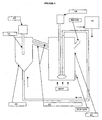
- the current prototype machines generate in the low frequency range from 100 to 500 Hz. at power ratings of 75 and 20 kW (horizontal type as illustrated in Figure 4) and 5 kW for a vertical probe generator with a single drive (illustrated in Figure 3).
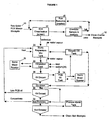
- the slurry is treated to separate the hydrocarbon containing fluid extractant from the cleaned soil. This is achieved by combination of decantation (28, 30) and froth flotation (32).
- Froth flotation is a widely practiced mineral processing technique (e.g. Taggart, Arthur F., "Handbook of Mineral Dressing", John Wiley and Sons Inc. (New York), 1945 or Gaudin, A.M., "Flotation", McGraw-Hill Book Co. Inc. (New York), 1957 ) in which oleophilic (oil or hydrocarbon wettable materials and oil or hydrocarbon containing fluid) materials are extracted by passage of air bubbles through a fluid mixture (slurry).
- the flotation process is typically optimized for a particular feed material by adjustment of solution conditions (pH, temperature) and addition of small quantities of chemicals such as frothers, which generate a stable froth layer for removal of oleophilic materials.
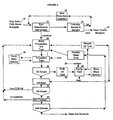
- a process option is to separate the operations of PCB extraction and destruction. Data presented in the examples indicates that this approach may be favoured when the PCB solids contain other materials which react with sodium (“parasitic sodium consumption") for example carboxylates or phenolics. To the extent that parasitic consumers are not soluble in the hydrocarbon containing liquid extractant, excess sodium containing alkali metal consumption may be reduced by separating (34) the extractant from the (extracted) solids prior to the sodium containing alkali metal treatment.
- a further option, not shown in Figure 1, is to omit the flotation stage.
- This option is not typically useful for soils unless a local market (e.g. asphaltic pavement) is available for the extractant oil wetted solids.
- wastes such as electrical ballasts and capacitors which have a high hydrocarbon (tar) content
- simple removal of process fluid by decantation and/or filtration can result in a conveniently and safely disposable solid.
- the fluid extractant is a mixture of water and a hydrocarbon containing liquid such as kerosene.
- the water content of the fluid should be sufficient to make a pumpable slurry when mixed with the solid for example 35-70% solids /30-65% water, with hydrocarbon containing liquid added in the range of 10-30wt% of the soil.
- the flotation stage (32) is required for recovery of hydrocarbon containing liquid from the extracted' solids.
- Use of water/hydrocarbon containing liquid extraction may be favoured when the contaminated solids include a significant proportion of fine grained materials such as silt or clay which may be difficult to separate from an oil phase once oil wetting occurs.
- Use of a water/hydrocarbon containing liquid mixture for PCB extraction largely avoids wetting of naturally hydrophilic solids by the hydrocarbon containing liquid portion of the fluid. This can be optimized by adjustment of the aqueous phase pH.
- PCB contaminated soil was obtained from a secure landfill at a Greater Vancouver, B.C., Canada location. This fill was constructed for the sole purpose of containing high level (>50 ppm) PCB contaminated soil and debris from demolition and cleanup of an electrical manufacturing plant site. Excavated material was sampled for analysis and all material containing >50 mg/Kg (ppm) of PCBs was placed in the double lined, covered fill. The sample of approximately 20 Kg was processed initially over a -6 mesh shaking screen to separate the sieved soil from coarse cobble rock, concrete, steel, and debris.
- the soil (-6 mesh) was air dried, and then split using a riffle splitter (a device for obtaining representative subsamples of solid materials, see Taggart) to provide representative samples for testwork and analysis.
- a riffle splitter a device for obtaining representative subsamples of solid materials, see Taggart
- a 2-kilogram sub-sample of the soil was then mixed with 0.8L of kerosene and placed in a cylindrical steel reaction chamber.
- Sodium metal in the form of a 10 g block was added to the chamber prior to closure and the chamber was then mounted on the 20 kW sonic generator.
- the chamber incorporated a heating jacket which was partially filled with ethylene glycol antifreeze to facilitate heat transfer.
- the mounted chamber was then heated with a propane torch until a charge temperature (thermocouple measured) reached 100°C.
- vent valve on the chamber was then closed and the generator was run at 60% power, 430 Hz resonant frequency for two five-minute periods. After each interval, the vent valve was opened to release accumulated pressure. Temperature was maintained at >102°C. After 10 minutes of sonic mixing the chamber was dismounted, opened and the contents tested for residual sodium. There was none found, so a further 10 g of sodium was added and the test sequence repeated. Product samples were then taken for analysis as follows:
- the treated soil contained 15.5% hydrocarbon containing liquid by weight.
- PCB-contaminated soil was air-dried and sieved to -6 mesh.
- Two kilograms of soil was combined with 0.6 litres kerosene and 45 grams of solid sodium metal in a 3.2 litre sonication vessel axially mounted to a 20 kilowatt (kW) sonic driver.
- the sealed sonication chamber was heated to 115°C using heat from a propane torch to melt the sodium metal.
- the sonic chamber heating jacket was filled half-way with ethylene glycol antifreeze to aid in heat transfer to the sonication chamber ingredients.
- the sonication chamber was opened to sample soil after interval sonic mixing times of 1, 2, and 5 minutes.
- test system was constructed as follows (shown in Figure 3):
- This system illustrated in Figure 3 permitted circulation of slurry 50 through the sonically agitated reaction tank 44 from a relatively large reservoir of process slurry 46.
- a new bulk sample from the fill described in Example 1 was obtained and processed in the same manner to prepare 33 Kg of soil for testing.
- the final soil PCB content ⁇ 2 ppm confirms the practicality of treatment at a larger scale.
- clean soil recovered by decantation of hydrocarbon containing liquid after extraction and PCB destruction contains 15-17 wt % of hydrocarbon containing liquid phase. Recovery of this hydrocarbon containing liquid is important in relation to both process economics (cost of hydrocarbon containing extractant) and final disposal of the clean soil.
- Soils contain varying quantities of organic matter and other materials which may compete with PCBs for reaction with sodium containing alkali. To investigate the effect of separating the PCB extraction and destruction operations, the following test sequence was conducted:
- the reacted slurry was drained from the circulation tank and primary hydrocarbon containing liquid-soil separation was performed by manual decantation. Recovered hydrocarbon containing liquid, 140 L, was returned to the circulation tank along with 60 L of used hydrocarbon containing liquid accumulated from other tests.
- the combined hydrocarbon containing liquid sample was then heated to 110°C under a nitrogen purge gas flow and pumped through the generator chamber (10-11 kW, 105 Hz) while adding increments of sodium metal.
- Test analytical results were as follows: Sample No. PCB Sodium addition (g) Notes (mg/L) interval cumulative 1 271 0 0 Blended hydrocarbon containing liquid 2 177 200 200 3 90 200 400 4 45 200 600
- hydrocarbon containing liquid - soil separation before sodium treatment may thus be a preferred option for process operation on soils with a high parasitic sodium consumption.
- a sample of concentrated ballast tar was obtained from Contech Ltd.Richmond, BC. Contech is a firm, which uses proprietary technology (low temperature attrition scrubbing) to recover metal components from scrap PCB ballasts.
- the metal fraction containing typically ⁇ 40 mg/Kg of PCBs is sold to a copper recycling operation.
- the separated tarry (high PCB) fraction, with residual metallics, paper, and debris, is shipped to licensed hazardous waste incinerator operators in Alberta for destruction.
- ballast tar sample provided (11.1 Kg, approx. 18 L volume, i.e. low bulk density) was processed initially in the pilot system as follows:
- test system was then re-started and 150 g each of coarse and fine quick lime (calcium oxide) was added to neutralize acidic (sodium consuming) components of the mixture.
- coarse and fine quick lime calcium oxide
- the sample was then treated for a further 2.70 minutes with sonication and incremental sodium addition.
- Test data are summarized as follows: PCB Sodium Addition Notes Sample No. solids (mg/Kg) Hydrocarbon containing liquid mg/L Interval cumulative Ballast Tar 1200 • • • ⁇ 20% due to heterogeneous sample #1 • 112 0 0 #2 • 112 125 125 #3 • 105 0 125 #4 60 97 150 275 #5 43 92 0 275 Shutdown after 270 minutes Restart with 30 Kg/ton lime addition 1A • 106 0 275 Note increased extraction in heat up 2A • 9 125 400 Apparent major improvement in sodium efficiency 3A • 6 125 525 4A • 8 0 525 5A 4 7 0 525
- the initial hydrocarbon extract PCB content in the test was higher than for Example 9 due to the higher ratio (29 Kg/100 L vs. 11.1 Kg in Example 9) and also to the higher PCB content (1760 mg/Kg) of the new sample.
- the effect of the lime addition on the initial sodium efficiency in this test is illustrated by comparing the change in hydrocarbon PCB content for Example 9 between Sample #1 and #5 (PCB reduced from 112 to 92 mg/L after addition of 275 g sodium/100 L of extract) with the 510 to 180 mg/L PCB reduction after addition of 100 g sodium/100 L in the current test with lime added before any sodium addition.
- the initial sodium efficiency in this test is approximately 60 times greater than in Example 9 (before lime addition).
- the sodium efficiency ratio between this example (samples 2 and 3) and Example 9 (samples 1A and 2A) is only 1.6. Considering the previously noted trend to lower sodium efficiency at lower PCB concentrations, these results are considered to be equivalent.
Landscapes
- Chemical & Material Sciences (AREA)
- Oil, Petroleum & Natural Gas (AREA)
- Engineering & Computer Science (AREA)
- Chemical Kinetics & Catalysis (AREA)
- General Chemical & Material Sciences (AREA)
- Organic Chemistry (AREA)
- Life Sciences & Earth Sciences (AREA)
- Health & Medical Sciences (AREA)
- Toxicology (AREA)
- Physics & Mathematics (AREA)
- Electromagnetism (AREA)
- Emergency Management (AREA)
- Business, Economics & Management (AREA)
- General Health & Medical Sciences (AREA)
- Soil Sciences (AREA)
- Environmental & Geological Engineering (AREA)
- Mechanical Engineering (AREA)
- Microbiology (AREA)
- Processing Of Solid Wastes (AREA)
- Fire-Extinguishing Compositions (AREA)
- Organic Low-Molecular-Weight Compounds And Preparation Thereof (AREA)
- Extraction Or Liquid Replacement (AREA)
- Physical Water Treatments (AREA)
- Addition Polymer Or Copolymer, Post-Treatments, Or Chemical Modifications (AREA)
- Water Treatment By Sorption (AREA)
Claims (35)
- Verfahren zur Behandlung von mit Polychlorbiphenyl (PCB) verunreinigten Medien, umfassend die Schritte:a) Verbinden der Medien mit einem ein oder mehr flüssige Kohlenwasserstoffe enthaltenden Fluid zur Bildung eines Medien/Fluid-Gemisches;b) Beschallen des Gemisches bei Niederfrequenz zum Extrahieren von PCB aus den Medien in das Fluid; undc) Behandeln des Fluids mit geschmolzenem natriumhaltigem Alkalimetall.
- Verfahren nach Anspruch 1, das die zusätzlichen Schritte Erwärmen des Breis vor und während des Beschallungsschritts einschließt.
- Verfahren nach Anspruch 1, worin das Medium Boden ist.
- Verfahren nach Anspruch 1, worin das Medium ein Zuschlagstoffrest wie Teer oder Pech ist.
- Verfahren nach Anspruch 1, worin das Fluid ein Gemisch aus Wasser und einem oder mehr flüssigen Kohlenwasserstoffen enthält.
- Verfahren nach Anspruch 1, worin die flüssigen Kohlenwasserstoffe Kerosin einschließen.
- Verfahren nach Anspruch 1, das vor dem Verbindungsschritt den zusätzlichen Schritt Verkleinern der Teilchengröße der Medien einschließt, wobei der Verkleinerungsschritt einer oder mehr von Sieben, Feinzerkleinern und Pulverisieren der Medien ist.
- Verfahren nach Anspruch 1, das vor dem Verbindungsschritt den zusätzlichen Schritt Lufttrocknen der Medien einschließt.
- Verfahren nach Anspruch 1, worin der Behandlungsschritt während des Beschallungsschritts stattfindet und der Beschallungsschritt bei einer Temperatur erfolgt, die ausreicht, um das natriumhaltige Alkalimetall zu schmelzen.
- Verfahren nach Anspruch 9, worin der Beschallungsschritt in einem versiegelten Behälter mit einer Entlüftungsöffnung erfolgt, um während der Beschallung Gas freizusetzen.
- Verfahren nach Anspruch 9, worin der Beschallungsschritt in einem Behälter mit einem oder mehr Einlässen und Auslässen erfolgt, die geeignet sind, das Medien/Fluid-Gemisch zwischen dem Behälter und einem mit einer Pumpe ausgestatteten Sammelbehälter weiterzuleiten.
- Verfahren nach Anspruch 11, worin der Beschallungsschritt ferner die Verwendung von Inertgas einschließt, um den Luftraum des Sammelbehälters und den Beschallungsbehälter zu reinigen.
- Verfahren nach Anspruch 11, das ferner den Schritt Weiterleiten des beschallten Medien/Fluid-Gemisches von einem des Beschallungsbehälters und des Sammelbehälters zu einem Absetzbehälter einschließt, um beschallte Flüssigkeit und beschallte Medien zu trennen.
- Verfahren nach Anspruch 13, das einen zusätzlichen Schritt des Beschallens des getrennten, beschallten Fluids in Anwesenheit von Natrium enthaltendem Alkalimetall und bei einer Temperatur einschließt, die ausreicht, um Natrium enthaltendes Alkalimetall zu schmelzen.
- Verfahren nach Anspruch 13, das den zusätzlichen Schritt Behandeln der getrennten, beschallten Medien mit Wasser in einer Flotationszelle einschließt, um Rest-PCBhaltige Kohlenwasserstoff-Flüssigkeit und Schaum aus den getrennten, beschallten Medien zu entfernen.
- Verfahren nach Anspruch 15, worin der flotationszellenbehandelte Boden in die Umgebung zurückgeführt wird.
- Verfahren nach Anspruch 15, worin das von Schaum, Medien und Kohlenwasserstoff enthaltender Flüssigkeit getrennte Flotationswasser nach pH-Einstellung in die Umgebung zurückgeführt wird.
- Verfahren nach Anspruch 15, worin der Schaum wiederverwertet und als Teil des Fluids in dem Verfahren verwendet wird.
- Verfahren nach Anspruch 15, worin die Flotationszelle einen Schaumbildner einschließt.
- Verfahren nach Anspruch 15, worin die Flotationszelle die pH-Einstellung mit Natriumcarbonat einschließt.
- Verfahren nach Anspruch 1, worin der Beschallungsschritt die Zugabe von Kalk zu dem Gemisch einschließt.
- Verfahren nach Anspruch 21, worin der Beschallungsschritt unter Verwendung der kalkbeschallten Medien und eines natriumhaltigen Alkalimetalls bei einer Temperatur wiederholt wird, die ausreicht, um Natrium zu schmelzen.
- Verfahren nach Anspruch 22, worin die Beschallungsschritte in einem versiegelten Behälter erfolgen, der zur Entlüftung geeignet ist, um während der Beschallung Gas freizusetzen.
- Verfahren nach Anspruch 14, worin das behandelte getrennte, beschallte Fluid zur Verwendung als das Fluid in dem Verfahren wiederverwertet wird.
- Verfahren nach Anspruch 1, worin der Beschallungsschritt eine Beschallungsausrüstung ohne Mahlmittel verwendet.
- Verfahren nach Anspruch 1, worin der Beschallungsschritt in einem Temperaturbereich von 100-120°C erfolgt.
- Verfahren nach Anspruch 5, worin der Beschallungsschritt in einem Temperaturbereich von 80-98°C erfolgt.
- Verfahren nach Anspruch 1, worin der Beschallungsschritt eine das Fluid kontaktierende Resonanzsonde verwendet.
- Verfahren nach Anspruch 1, worin der Beschallungsschritt in einer oder mehr axial an einem Resonanzelement befestigten Kammern stattfindet.
- Verfahren nach Anspruch 1, worin die flüssigen Kohlenwasserstoffe eine oder mehr Kohlenwasserstoff-Subkomponenten enthalten, die bei Beschallungstemperatur nicht Flüssigkeiten sind.
- Verfahren gemäß Anspruch 4, worin der Beschallungsschritt bei einer Mindesttemperatur von 100°C erfolgt.
- Verfahren gemäß Anspruch 1, worin das natriumhaltige Alkalimetall technisch reines Natriummetall ist.
- Vorrichtung zur Behandlung von mit Polychlorbiphenyl (PCB) verunreinigten Medien, umfassend:a) einen Reaktionsbehälter zum Bereithalten eines Gemisches aus den Medien, einem flüssigen Kohlenwasserstoff enthaltenden Fluid und einem geschmolzenen natriumhaltigen Alkalimetall, wobei der Reaktionsbehälter Entlüftungsöffnungen aufweist, um während der Beschallung Gas freizusetzen;b) eine Beschallungseinrichtung ohne Mahlmittel zum Beschallen des Gemisches bei einer Niederfrequenz; undc) eine Heizeinrichtung zum Steuern der Temperatur des Gemisches und Halten des geschmolzenen natriumhaltigen Alkalimetalls in einem geschmolzenen Zustand.
- Vorrichtung nach Anspruch 33, wobei die Beschallungseinrichtung eine das Gemisch kontaktierende Resonanzsonde verwendet.
- Vorrichtung nach Anspruch 33, wobei der Reaktionsbehälter aus einer oder mehr axial an einem Resonanzelement der Beschallungseinrichtung befestigten Kammern besteht.
Applications Claiming Priority (3)
| Application Number | Priority Date | Filing Date | Title |
|---|---|---|---|
| US37451202P | 2002-04-23 | 2002-04-23 | |
| US374512P | 2002-04-23 | ||
| PCT/CA2003/000593 WO2003090945A1 (en) | 2002-04-23 | 2003-04-23 | Sonication treatment of polychlorinated biphenyl contaminated media |
Publications (2)
| Publication Number | Publication Date |
|---|---|
| EP1499459A1 EP1499459A1 (de) | 2005-01-26 |
| EP1499459B1 true EP1499459B1 (de) | 2007-06-13 |
Family
ID=29270524
Family Applications (1)
| Application Number | Title | Priority Date | Filing Date |
|---|---|---|---|
| EP03747071A Expired - Lifetime EP1499459B1 (de) | 2002-04-23 | 2003-04-23 | Beschallungsbehandlung von mit polychlorbiphenyl verunreinigten medien |
Country Status (15)
| Country | Link |
|---|---|
| US (1) | US6984767B2 (de) |
| EP (1) | EP1499459B1 (de) |
| JP (1) | JP3708534B2 (de) |
| KR (1) | KR20040106386A (de) |
| CN (1) | CN100346889C (de) |
| AT (1) | ATE364456T1 (de) |
| AU (1) | AU2003226993B2 (de) |
| BR (1) | BR0309500A (de) |
| CA (1) | CA2482535C (de) |
| DE (1) | DE60314398T2 (de) |
| ES (1) | ES2287504T3 (de) |
| MX (1) | MXPA04010525A (de) |
| NO (1) | NO20045004L (de) |
| RU (1) | RU2305014C2 (de) |
| WO (1) | WO2003090945A1 (de) |
Families Citing this family (22)
| Publication number | Priority date | Publication date | Assignee | Title |
|---|---|---|---|---|
| US20070225543A1 (en) * | 2004-10-19 | 2007-09-27 | Sonic Environmental Solutions Inc. | Sonication treatment of media containing halogenated organic compounds |
| US7674994B1 (en) * | 2004-10-21 | 2010-03-09 | Valerio Thomas A | Method and apparatus for sorting metal |
| US7659486B2 (en) * | 2005-10-20 | 2010-02-09 | Valerio Thomas A | Method and apparatus for sorting contaminated glass |
| JP2009512552A (ja) * | 2005-10-24 | 2009-03-26 | エムティディ アメリカ リミテッド | 異種材料分類処理システム及び装置 |
| CN100398468C (zh) * | 2006-04-18 | 2008-07-02 | 浙江大学 | 一种超声辅助强化金属还原有机氯化物脱氯的方法 |
| US8177069B2 (en) * | 2007-01-05 | 2012-05-15 | Thomas A. Valerio | System and method for sorting dissimilar materials |
| AU2008241422B2 (en) * | 2007-04-18 | 2012-05-03 | Thomas A. Valerio | Method and system for sorting and processing recycled materials |
| JP2011525144A (ja) | 2008-06-11 | 2011-09-15 | トーマス エイ. バレリオ、 | 処理したリサイクル材料から金属を回収する方法およびシステム |
| MX2011000836A (es) * | 2008-07-21 | 2011-04-11 | Mtd America Ltd Llc | Metodo y sistema para remover bifenilos policlorados de plasticos. |
| WO2010127036A1 (en) * | 2009-04-28 | 2010-11-04 | Mtd America Ltd (Llc) | Apparatus and method for separating materials using air |
| AU2010276224A1 (en) * | 2009-07-21 | 2012-02-23 | Thomas A. Velerio | Method and system for separating and recovering like-type materials from an electronic waste system |
| US8348551B2 (en) * | 2009-07-29 | 2013-01-08 | Terratherm, Inc. | Method and system for treating contaminated materials |
| US8757523B2 (en) | 2009-07-31 | 2014-06-24 | Thomas Valerio | Method and system for separating and recovering wire and other metal from processed recycled materials |
| WO2011014862A1 (en) * | 2009-07-31 | 2011-02-03 | Valerio Thomas A | Method and system for separating and recovering wire and other metal from processed recycled materials |
| US20110127254A1 (en) * | 2009-11-30 | 2011-06-02 | Cypress Technology Llc | Electric Heating Systems and Associated Methods |
| CN102247979B (zh) * | 2011-04-20 | 2013-02-27 | 中国科学院生态环境研究中心 | 溶剂热法修复PCBs污染场地的工艺 |
| RU2511266C1 (ru) * | 2012-10-30 | 2014-04-10 | Федеральное государственное бюджетное образовательное учреждение высшего профессионального образования "Челябинская государственная агроинженерная академия" | Устройство для очистки сельскохозяйственных земель от пестицидов |
| CN103194307B (zh) * | 2013-03-14 | 2014-08-27 | 吉林省电力有限公司电力科学研究院 | 循环萃取法分离绝缘油中多氯联苯 |
| EA023365B1 (ru) * | 2013-11-27 | 2016-05-31 | Каграман Союн Оглы Гасанов | Способ обезвреживания токсичных почвогрунтов, загрязненных фенолом |
| WO2015149158A1 (en) * | 2014-04-02 | 2015-10-08 | Petrosonic Energy Inc. | Spherical reaction chamber for sonic reactors |
| CN107987098B (zh) * | 2017-11-30 | 2020-10-09 | 湖北省化学工业研究设计院 | 一种降低二苯基二甲氧基硅烷中多氯联苯含量的方法 |
| CN115212605B (zh) * | 2022-08-06 | 2024-11-22 | 内蒙古大北农农林科技有限公司 | 一种中药提取工艺与系统 |
Family Cites Families (13)
| Publication number | Priority date | Publication date | Assignee | Title |
|---|---|---|---|---|
| US4151067A (en) * | 1977-06-06 | 1979-04-24 | Craig H. Grow | Method and apparatus for acquisition of shale oil |
| US4941134A (en) | 1988-04-01 | 1990-07-10 | Arc Sonics Inc. | Sonic generator |
| US5228921A (en) * | 1991-11-25 | 1993-07-20 | Grc Environmental, Inc. | Methods for removing contaminants from contaminated solids (I) |
| US5318228A (en) * | 1992-12-15 | 1994-06-07 | Neos Technology Inc. | Sodium dispersion and organohalide reaction processes |
| US5376182A (en) | 1993-03-17 | 1994-12-27 | Remsol (U.S.A.) Corporation | Surfactant soil remediation |
| US5690811A (en) * | 1995-10-17 | 1997-11-25 | Mobil Oil Corporation | Method for extracting oil from oil-contaminated soil |
| RU2139143C1 (ru) * | 1998-03-13 | 1999-10-10 | Красноармейский Научно-Исследовательский Институт Механизации | Способ непрерывного разделения нефтесодержащего грунта |
| US6049021A (en) * | 1999-02-11 | 2000-04-11 | Commodore Applied Technologies, Inc. | Method for remediating sites contaminated with toxic waste |
| JP3370297B2 (ja) * | 1999-07-26 | 2003-01-27 | 安斎 節 | ポリ塩化ビフェニールの無害化装置 |
| JP2002066498A (ja) * | 2000-08-29 | 2002-03-05 | Ryohei Mihara | 有機塩素化合物pcb油入りの容器及び部材類の洗浄処理方法 |
| JP2004507360A (ja) | 2000-09-13 | 2004-03-11 | コモンウェルス サイエンティフィック アンド インダストリアル リサーチ オーガニゼイション | 固液混合物を処理するプロセス |
| CN1232626C (zh) * | 2001-07-25 | 2005-12-21 | 邓和升 | 清洗剂 |
| US6555728B2 (en) * | 2001-08-08 | 2003-04-29 | Kinectrics Inc. | Process for decontamination of ballast pitch material |
-
2003
- 2003-04-23 EP EP03747071A patent/EP1499459B1/de not_active Expired - Lifetime
- 2003-04-23 KR KR10-2004-7017123A patent/KR20040106386A/ko not_active Abandoned
- 2003-04-23 WO PCT/CA2003/000593 patent/WO2003090945A1/en not_active Ceased
- 2003-04-23 MX MXPA04010525A patent/MXPA04010525A/es active IP Right Grant
- 2003-04-23 US US10/511,878 patent/US6984767B2/en not_active Expired - Fee Related
- 2003-04-23 RU RU2004133966/15A patent/RU2305014C2/ru not_active IP Right Cessation
- 2003-04-23 CN CNB038092174A patent/CN100346889C/zh not_active Expired - Fee Related
- 2003-04-23 DE DE60314398T patent/DE60314398T2/de not_active Expired - Lifetime
- 2003-04-23 AU AU2003226993A patent/AU2003226993B2/en not_active Ceased
- 2003-04-23 JP JP2003587558A patent/JP3708534B2/ja not_active Expired - Fee Related
- 2003-04-23 CA CA002482535A patent/CA2482535C/en not_active Expired - Fee Related
- 2003-04-23 ES ES03747071T patent/ES2287504T3/es not_active Expired - Lifetime
- 2003-04-23 BR BR0309500-2A patent/BR0309500A/pt not_active Application Discontinuation
- 2003-04-23 AT AT03747071T patent/ATE364456T1/de not_active IP Right Cessation
-
2004
- 2004-11-17 NO NO20045004A patent/NO20045004L/no not_active Application Discontinuation
Also Published As
| Publication number | Publication date |
|---|---|
| CA2482535A1 (en) | 2003-11-06 |
| AU2003226993B2 (en) | 2009-01-15 |
| KR20040106386A (ko) | 2004-12-17 |
| DE60314398D1 (de) | 2007-07-26 |
| ES2287504T3 (es) | 2007-12-16 |
| US20050165268A1 (en) | 2005-07-28 |
| NO20045004L (no) | 2004-11-17 |
| BR0309500A (pt) | 2005-02-09 |
| WO2003090945A1 (en) | 2003-11-06 |
| CN100346889C (zh) | 2007-11-07 |
| CA2482535C (en) | 2007-02-06 |
| MXPA04010525A (es) | 2005-06-08 |
| JP3708534B2 (ja) | 2005-10-19 |
| RU2004133966A (ru) | 2005-05-27 |
| EP1499459A1 (de) | 2005-01-26 |
| AU2003226993A2 (en) | 2003-11-10 |
| RU2305014C2 (ru) | 2007-08-27 |
| ATE364456T1 (de) | 2007-07-15 |
| JP2005523156A (ja) | 2005-08-04 |
| CN1649680A (zh) | 2005-08-03 |
| US6984767B2 (en) | 2006-01-10 |
| AU2003226993A1 (en) | 2003-11-10 |
| DE60314398T2 (de) | 2007-10-31 |
Similar Documents
| Publication | Publication Date | Title |
|---|---|---|
| EP1499459B1 (de) | Beschallungsbehandlung von mit polychlorbiphenyl verunreinigten medien | |
| Checa-Fernandez et al. | Enhanced remediation of a real HCH-polluted soil by the synergetic alkaline and ultrasonic activation of persulfate | |
| EP1007480A1 (de) | Oxidation von aromatischen kohlenwasserstoffen | |
| US20020030022A1 (en) | Oxidation of aromatic hydrocarbons | |
| US6601787B1 (en) | Method and an apparatus for managing contaminated material | |
| Flores et al. | Soil remediation by an advanced oxidative method assisted with ultrasonic energy | |
| Amend et al. | Critical evaluation of PCB remediation technologies | |
| Fox | Physical/chemical treatment of organically contaminated soils and sediments | |
| Yan et al. | The methods for improving the biodegradability of oily sludge: a critical review | |
| US20060094922A1 (en) | Sonication treatment of media containing halogenated organic compounds | |
| US5391018A (en) | Process for washing contaminated soil | |
| US20140069875A1 (en) | Mobil Remediation Trailer | |
| US20070225543A1 (en) | Sonication treatment of media containing halogenated organic compounds | |
| KR101791447B1 (ko) | 계면활성화와 에어를 이용한 원유오염 토양 정화 시설 | |
| JP2006021187A (ja) | 排ガスの処理方法およびその設備 | |
| KR20230062550A (ko) | 역청-함유 도로 표면 물질의 제조 | |
| JP2002126712A (ja) | ダイオキシン類の処理方法および装置 | |
| US20140219724A1 (en) | Hydrocarbon removal process | |
| US20080058577A1 (en) | Process for destruction of halogenated organic compounds in solids | |
| JP2014108408A (ja) | Pcb汚染汚泥又は残渣類の脱水処理装置及びそれを用いたpcb処理システム | |
| Vaccari et al. | Reuse of hydrocarbon-contaminated sludge from soil washing process: issues and perspectives | |
| Sudell | Evaluation of the BEST™ solvent extraction sludge treatment technology twenty-tour hour test | |
| JP3910883B2 (ja) | 有機ハロゲン化合物の分解処理方法とその装置 | |
| Mason | Sonochemistry using audible sound frequencies: A route to large-scale processing | |
| James et al. | The Demonstration of Remedial Action Technologies for Contaminated Land and Ground water |
Legal Events
| Date | Code | Title | Description |
|---|---|---|---|
| PUAI | Public reference made under article 153(3) epc to a published international application that has entered the european phase |
Free format text: ORIGINAL CODE: 0009012 |
|
| 17P | Request for examination filed |
Effective date: 20041119 |
|
| AK | Designated contracting states |
Kind code of ref document: A1 Designated state(s): AT BE BG CH CY CZ DE DK EE ES FI FR GB GR HU IE IT LI LU MC NL PT RO SE SI SK TR |
|
| AX | Request for extension of the european patent |
Extension state: AL LT LV MK |
|
| GRAP | Despatch of communication of intention to grant a patent |
Free format text: ORIGINAL CODE: EPIDOSNIGR1 |
|
| GRAS | Grant fee paid |
Free format text: ORIGINAL CODE: EPIDOSNIGR3 |
|
| GRAA | (expected) grant |
Free format text: ORIGINAL CODE: 0009210 |
|
| AK | Designated contracting states |
Kind code of ref document: B1 Designated state(s): AT BE BG CH CY CZ DE DK EE ES FI FR GB GR HU IE IT LI LU MC NL PT RO SE SI SK TR |
|
| PG25 | Lapsed in a contracting state [announced via postgrant information from national office to epo] |
Ref country code: CH Free format text: LAPSE BECAUSE OF FAILURE TO SUBMIT A TRANSLATION OF THE DESCRIPTION OR TO PAY THE FEE WITHIN THE PRESCRIBED TIME-LIMIT Effective date: 20070613 Ref country code: LI Free format text: LAPSE BECAUSE OF FAILURE TO SUBMIT A TRANSLATION OF THE DESCRIPTION OR TO PAY THE FEE WITHIN THE PRESCRIBED TIME-LIMIT Effective date: 20070613 |
|
| REG | Reference to a national code |
Ref country code: GB Ref legal event code: FG4D |
|
| REG | Reference to a national code |
Ref country code: CH Ref legal event code: EP |
|
| REG | Reference to a national code |
Ref country code: IE Ref legal event code: FG4D |
|
| REF | Corresponds to: |
Ref document number: 60314398 Country of ref document: DE Date of ref document: 20070726 Kind code of ref document: P |
|
| PG25 | Lapsed in a contracting state [announced via postgrant information from national office to epo] |
Ref country code: SE Free format text: LAPSE BECAUSE OF FAILURE TO SUBMIT A TRANSLATION OF THE DESCRIPTION OR TO PAY THE FEE WITHIN THE PRESCRIBED TIME-LIMIT Effective date: 20070913 |
|
| ET | Fr: translation filed | ||
| PG25 | Lapsed in a contracting state [announced via postgrant information from national office to epo] |
Ref country code: AT Free format text: LAPSE BECAUSE OF FAILURE TO SUBMIT A TRANSLATION OF THE DESCRIPTION OR TO PAY THE FEE WITHIN THE PRESCRIBED TIME-LIMIT Effective date: 20070613 |
|
| NLV1 | Nl: lapsed or annulled due to failure to fulfill the requirements of art. 29p and 29m of the patents act | ||
| REG | Reference to a national code |
Ref country code: ES Ref legal event code: FG2A Ref document number: 2287504 Country of ref document: ES Kind code of ref document: T3 |
|
| REG | Reference to a national code |
Ref country code: CH Ref legal event code: PL |
|
| PG25 | Lapsed in a contracting state [announced via postgrant information from national office to epo] |
Ref country code: BE Free format text: LAPSE BECAUSE OF FAILURE TO SUBMIT A TRANSLATION OF THE DESCRIPTION OR TO PAY THE FEE WITHIN THE PRESCRIBED TIME-LIMIT Effective date: 20070613 |
|
| PG25 | Lapsed in a contracting state [announced via postgrant information from national office to epo] |
Ref country code: PT Free format text: LAPSE BECAUSE OF FAILURE TO SUBMIT A TRANSLATION OF THE DESCRIPTION OR TO PAY THE FEE WITHIN THE PRESCRIBED TIME-LIMIT Effective date: 20071113 Ref country code: NL Free format text: LAPSE BECAUSE OF FAILURE TO SUBMIT A TRANSLATION OF THE DESCRIPTION OR TO PAY THE FEE WITHIN THE PRESCRIBED TIME-LIMIT Effective date: 20070613 Ref country code: CZ Free format text: LAPSE BECAUSE OF FAILURE TO SUBMIT A TRANSLATION OF THE DESCRIPTION OR TO PAY THE FEE WITHIN THE PRESCRIBED TIME-LIMIT Effective date: 20070613 Ref country code: SI Free format text: LAPSE BECAUSE OF FAILURE TO SUBMIT A TRANSLATION OF THE DESCRIPTION OR TO PAY THE FEE WITHIN THE PRESCRIBED TIME-LIMIT Effective date: 20070613 Ref country code: BG Free format text: LAPSE BECAUSE OF FAILURE TO SUBMIT A TRANSLATION OF THE DESCRIPTION OR TO PAY THE FEE WITHIN THE PRESCRIBED TIME-LIMIT Effective date: 20070913 |
|
| PG25 | Lapsed in a contracting state [announced via postgrant information from national office to epo] |
Ref country code: SK Free format text: LAPSE BECAUSE OF FAILURE TO SUBMIT A TRANSLATION OF THE DESCRIPTION OR TO PAY THE FEE WITHIN THE PRESCRIBED TIME-LIMIT Effective date: 20070613 |
|
| PLBE | No opposition filed within time limit |
Free format text: ORIGINAL CODE: 0009261 |
|
| STAA | Information on the status of an ep patent application or granted ep patent |
Free format text: STATUS: NO OPPOSITION FILED WITHIN TIME LIMIT |
|
| PG25 | Lapsed in a contracting state [announced via postgrant information from national office to epo] |
Ref country code: GR Free format text: LAPSE BECAUSE OF FAILURE TO SUBMIT A TRANSLATION OF THE DESCRIPTION OR TO PAY THE FEE WITHIN THE PRESCRIBED TIME-LIMIT Effective date: 20070914 Ref country code: DK Free format text: LAPSE BECAUSE OF FAILURE TO SUBMIT A TRANSLATION OF THE DESCRIPTION OR TO PAY THE FEE WITHIN THE PRESCRIBED TIME-LIMIT Effective date: 20070613 |
|
| 26N | No opposition filed |
Effective date: 20080314 |
|
| PG25 | Lapsed in a contracting state [announced via postgrant information from national office to epo] |
Ref country code: RO Free format text: LAPSE BECAUSE OF FAILURE TO SUBMIT A TRANSLATION OF THE DESCRIPTION OR TO PAY THE FEE WITHIN THE PRESCRIBED TIME-LIMIT Effective date: 20070613 |
|
| PG25 | Lapsed in a contracting state [announced via postgrant information from national office to epo] |
Ref country code: MC Free format text: LAPSE BECAUSE OF NON-PAYMENT OF DUE FEES Effective date: 20080430 |
|
| PG25 | Lapsed in a contracting state [announced via postgrant information from national office to epo] |
Ref country code: EE Free format text: LAPSE BECAUSE OF FAILURE TO SUBMIT A TRANSLATION OF THE DESCRIPTION OR TO PAY THE FEE WITHIN THE PRESCRIBED TIME-LIMIT Effective date: 20070613 |
|
| PG25 | Lapsed in a contracting state [announced via postgrant information from national office to epo] |
Ref country code: FI Free format text: LAPSE BECAUSE OF FAILURE TO SUBMIT A TRANSLATION OF THE DESCRIPTION OR TO PAY THE FEE WITHIN THE PRESCRIBED TIME-LIMIT Effective date: 20070613 |
|
| PG25 | Lapsed in a contracting state [announced via postgrant information from national office to epo] |
Ref country code: IE Free format text: LAPSE BECAUSE OF NON-PAYMENT OF DUE FEES Effective date: 20080423 |
|
| PG25 | Lapsed in a contracting state [announced via postgrant information from national office to epo] |
Ref country code: CY Free format text: LAPSE BECAUSE OF FAILURE TO SUBMIT A TRANSLATION OF THE DESCRIPTION OR TO PAY THE FEE WITHIN THE PRESCRIBED TIME-LIMIT Effective date: 20070613 |
|
| PG25 | Lapsed in a contracting state [announced via postgrant information from national office to epo] |
Ref country code: HU Free format text: LAPSE BECAUSE OF FAILURE TO SUBMIT A TRANSLATION OF THE DESCRIPTION OR TO PAY THE FEE WITHIN THE PRESCRIBED TIME-LIMIT Effective date: 20071214 Ref country code: LU Free format text: LAPSE BECAUSE OF NON-PAYMENT OF DUE FEES Effective date: 20080423 |
|
| PG25 | Lapsed in a contracting state [announced via postgrant information from national office to epo] |
Ref country code: TR Free format text: LAPSE BECAUSE OF FAILURE TO SUBMIT A TRANSLATION OF THE DESCRIPTION OR TO PAY THE FEE WITHIN THE PRESCRIBED TIME-LIMIT Effective date: 20070613 |
|
| PG25 | Lapsed in a contracting state [announced via postgrant information from national office to epo] |
Ref country code: IT Free format text: LAPSE BECAUSE OF NON-PAYMENT OF DUE FEES Effective date: 20090423 |
|
| PGFP | Annual fee paid to national office [announced via postgrant information from national office to epo] |
Ref country code: DE Payment date: 20110429 Year of fee payment: 9 Ref country code: FR Payment date: 20110419 Year of fee payment: 9 Ref country code: ES Payment date: 20110415 Year of fee payment: 9 |
|
| PGRI | Patent reinstated in contracting state [announced from national office to epo] |
Ref country code: IT Effective date: 20110616 |
|
| PGFP | Annual fee paid to national office [announced via postgrant information from national office to epo] |
Ref country code: GB Payment date: 20110420 Year of fee payment: 9 |
|
| PGFP | Annual fee paid to national office [announced via postgrant information from national office to epo] |
Ref country code: IT Payment date: 20110414 Year of fee payment: 9 |
|
| REG | Reference to a national code |
Ref country code: DE Ref legal event code: R231 Ref document number: 60314398 Country of ref document: DE |
|
| PG25 | Lapsed in a contracting state [announced via postgrant information from national office to epo] |
Ref country code: DE Free format text: LAPSE BECAUSE OF THE APPLICANT RENOUNCES Effective date: 20120322 |
|
| GBPC | Gb: european patent ceased through non-payment of renewal fee |
Effective date: 20120423 |
|
| REG | Reference to a national code |
Ref country code: FR Ref legal event code: ST Effective date: 20121228 |
|
| PG25 | Lapsed in a contracting state [announced via postgrant information from national office to epo] |
Ref country code: GB Free format text: LAPSE BECAUSE OF NON-PAYMENT OF DUE FEES Effective date: 20120423 |
|
| PG25 | Lapsed in a contracting state [announced via postgrant information from national office to epo] |
Ref country code: IT Free format text: LAPSE BECAUSE OF NON-PAYMENT OF DUE FEES Effective date: 20120423 Ref country code: FR Free format text: LAPSE BECAUSE OF NON-PAYMENT OF DUE FEES Effective date: 20120430 |
|
| PG25 | Lapsed in a contracting state [announced via postgrant information from national office to epo] |
Ref country code: DE Free format text: LAPSE BECAUSE OF THE APPLICANT RENOUNCES Effective date: 20120331 |
|
| REG | Reference to a national code |
Ref country code: ES Ref legal event code: FD2A Effective date: 20131021 |
|
| PG25 | Lapsed in a contracting state [announced via postgrant information from national office to epo] |
Ref country code: ES Free format text: LAPSE BECAUSE OF NON-PAYMENT OF DUE FEES Effective date: 20120424 |