EP1486512A1 - Vefahren zur alkalischen Verseifung vernetzter Acrylnitrilperlpolymerisate - Google Patents
Vefahren zur alkalischen Verseifung vernetzter Acrylnitrilperlpolymerisate Download PDFInfo
- Publication number
- EP1486512A1 EP1486512A1 EP04010764A EP04010764A EP1486512A1 EP 1486512 A1 EP1486512 A1 EP 1486512A1 EP 04010764 A EP04010764 A EP 04010764A EP 04010764 A EP04010764 A EP 04010764A EP 1486512 A1 EP1486512 A1 EP 1486512A1
- Authority
- EP
- European Patent Office
- Prior art keywords
- saponification
- temperature
- acrylonitrile
- alkaline
- water
- Prior art date
- Legal status (The legal status is an assumption and is not a legal conclusion. Google has not performed a legal analysis and makes no representation as to the accuracy of the status listed.)
- Granted
Links
- 238000007127 saponification reaction Methods 0.000 title claims abstract description 48
- NLHHRLWOUZZQLW-UHFFFAOYSA-N Acrylonitrile Chemical compound C=CC#N NLHHRLWOUZZQLW-UHFFFAOYSA-N 0.000 title claims abstract description 24
- 238000000034 method Methods 0.000 title claims description 15
- 229920000642 polymer Polymers 0.000 claims abstract description 29
- 230000002378 acidificating effect Effects 0.000 claims abstract description 16
- 239000011324 bead Substances 0.000 claims description 30
- 150000001768 cations Chemical class 0.000 claims description 17
- 239000003795 chemical substances by application Substances 0.000 claims description 9
- 229920002239 polyacrylonitrile Polymers 0.000 claims description 9
- 239000002253 acid Substances 0.000 claims description 6
- QYKIQEUNHZKYBP-UHFFFAOYSA-N Vinyl ether Chemical compound C=COC=C QYKIQEUNHZKYBP-UHFFFAOYSA-N 0.000 claims description 5
- 150000001875 compounds Chemical class 0.000 claims description 5
- 239000003651 drinking water Substances 0.000 claims description 4
- 235000020188 drinking water Nutrition 0.000 claims description 4
- 235000013305 food Nutrition 0.000 claims description 4
- 229910001385 heavy metal Inorganic materials 0.000 claims description 4
- 229920001289 polyvinyl ether Polymers 0.000 claims description 4
- 238000002360 preparation method Methods 0.000 claims description 4
- BUGBHKTXTAQXES-UHFFFAOYSA-N Selenium Chemical compound [Se] BUGBHKTXTAQXES-UHFFFAOYSA-N 0.000 claims description 3
- RQNWIZPPADIBDY-UHFFFAOYSA-N arsenic atom Chemical compound [As] RQNWIZPPADIBDY-UHFFFAOYSA-N 0.000 claims description 3
- 239000000126 substance Substances 0.000 claims description 3
- 239000007900 aqueous suspension Substances 0.000 claims description 2
- 229910052785 arsenic Inorganic materials 0.000 claims description 2
- 229910000510 noble metal Inorganic materials 0.000 claims description 2
- 229910052711 selenium Inorganic materials 0.000 claims description 2
- 239000011669 selenium Substances 0.000 claims description 2
- 239000002699 waste material Substances 0.000 claims description 2
- 239000003673 groundwater Substances 0.000 claims 1
- 238000004064 recycling Methods 0.000 claims 1
- 229960000834 vinyl ether Drugs 0.000 claims 1
- HEMHJVSKTPXQMS-UHFFFAOYSA-M Sodium hydroxide Chemical compound [OH-].[Na+] HEMHJVSKTPXQMS-UHFFFAOYSA-M 0.000 description 36
- XLYOFNOQVPJJNP-UHFFFAOYSA-N water Substances O XLYOFNOQVPJJNP-UHFFFAOYSA-N 0.000 description 30
- 229920005989 resin Polymers 0.000 description 25
- 239000011347 resin Substances 0.000 description 25
- 238000006243 chemical reaction Methods 0.000 description 17
- IJGRMHOSHXDMSA-UHFFFAOYSA-N Atomic nitrogen Chemical compound N#N IJGRMHOSHXDMSA-UHFFFAOYSA-N 0.000 description 16
- 239000000243 solution Substances 0.000 description 14
- MTHSVFCYNBDYFN-UHFFFAOYSA-N diethylene glycol Chemical compound OCCOCCO MTHSVFCYNBDYFN-UHFFFAOYSA-N 0.000 description 9
- QGZKDVFQNNGYKY-UHFFFAOYSA-N Ammonia Chemical compound N QGZKDVFQNNGYKY-UHFFFAOYSA-N 0.000 description 8
- 239000003513 alkali Substances 0.000 description 8
- 229910052757 nitrogen Inorganic materials 0.000 description 8
- PEDCQBHIVMGVHV-UHFFFAOYSA-N Glycerine Chemical compound OCC(O)CO PEDCQBHIVMGVHV-UHFFFAOYSA-N 0.000 description 7
- WSFSSNUMVMOOMR-UHFFFAOYSA-N Formaldehyde Chemical compound O=C WSFSSNUMVMOOMR-UHFFFAOYSA-N 0.000 description 6
- FAPWRFPIFSIZLT-UHFFFAOYSA-M Sodium chloride Chemical compound [Na+].[Cl-] FAPWRFPIFSIZLT-UHFFFAOYSA-M 0.000 description 6
- QAOWNCQODCNURD-UHFFFAOYSA-N Sulfuric acid Chemical compound OS(O)(=O)=O QAOWNCQODCNURD-UHFFFAOYSA-N 0.000 description 6
- 150000002500 ions Chemical class 0.000 description 6
- 229920000663 Hydroxyethyl cellulose Polymers 0.000 description 5
- 239000004354 Hydroxyethyl cellulose Substances 0.000 description 5
- -1 ammonium ions Chemical class 0.000 description 5
- 239000008346 aqueous phase Substances 0.000 description 5
- 239000011521 glass Substances 0.000 description 5
- 235000019447 hydroxyethyl cellulose Nutrition 0.000 description 5
- 239000003999 initiator Substances 0.000 description 5
- 238000004519 manufacturing process Methods 0.000 description 5
- 239000000178 monomer Substances 0.000 description 5
- 238000003756 stirring Methods 0.000 description 5
- 238000002835 absorbance Methods 0.000 description 4
- 229910021529 ammonia Inorganic materials 0.000 description 4
- 238000010612 desalination reaction Methods 0.000 description 4
- 239000000203 mixture Substances 0.000 description 4
- 238000006116 polymerization reaction Methods 0.000 description 4
- ZWEHNKRNPOVVGH-UHFFFAOYSA-N 2-Butanone Chemical compound CCC(C)=O ZWEHNKRNPOVVGH-UHFFFAOYSA-N 0.000 description 3
- OMPJBNCRMGITSC-UHFFFAOYSA-N Benzoylperoxide Chemical compound C=1C=CC=CC=1C(=O)OOC(=O)C1=CC=CC=C1 OMPJBNCRMGITSC-UHFFFAOYSA-N 0.000 description 3
- 239000004971 Cross linker Substances 0.000 description 3
- 241000196324 Embryophyta Species 0.000 description 3
- LYCAIKOWRPUZTN-UHFFFAOYSA-N Ethylene glycol Chemical compound OCCO LYCAIKOWRPUZTN-UHFFFAOYSA-N 0.000 description 3
- 150000007513 acids Chemical class 0.000 description 3
- 235000019400 benzoyl peroxide Nutrition 0.000 description 3
- 238000004140 cleaning Methods 0.000 description 3
- 235000011187 glycerol Nutrition 0.000 description 3
- VLKZOEOYAKHREP-UHFFFAOYSA-N n-Hexane Chemical compound CCCCCC VLKZOEOYAKHREP-UHFFFAOYSA-N 0.000 description 3
- 230000007935 neutral effect Effects 0.000 description 3
- 125000002560 nitrile group Chemical group 0.000 description 3
- 150000003254 radicals Chemical class 0.000 description 3
- 239000011780 sodium chloride Substances 0.000 description 3
- 238000010557 suspension polymerization reaction Methods 0.000 description 3
- MYRTYDVEIRVNKP-UHFFFAOYSA-N 1,2-Divinylbenzene Chemical compound C=CC1=CC=CC=C1C=C MYRTYDVEIRVNKP-UHFFFAOYSA-N 0.000 description 2
- KBPLFHHGFOOTCA-UHFFFAOYSA-N 1-Octanol Chemical compound CCCCCCCCO KBPLFHHGFOOTCA-UHFFFAOYSA-N 0.000 description 2
- OZAIFHULBGXAKX-UHFFFAOYSA-N 2-(2-cyanopropan-2-yldiazenyl)-2-methylpropanenitrile Chemical compound N#CC(C)(C)N=NC(C)(C)C#N OZAIFHULBGXAKX-UHFFFAOYSA-N 0.000 description 2
- RTZKZFJDLAIYFH-UHFFFAOYSA-N Diethyl ether Chemical compound CCOCC RTZKZFJDLAIYFH-UHFFFAOYSA-N 0.000 description 2
- CERQOIWHTDAKMF-UHFFFAOYSA-N Methacrylic acid Chemical class CC(=C)C(O)=O CERQOIWHTDAKMF-UHFFFAOYSA-N 0.000 description 2
- AMQJEAYHLZJPGS-UHFFFAOYSA-N N-Pentanol Chemical compound CCCCCO AMQJEAYHLZJPGS-UHFFFAOYSA-N 0.000 description 2
- PXHVJJICTQNCMI-UHFFFAOYSA-N Nickel Chemical compound [Ni] PXHVJJICTQNCMI-UHFFFAOYSA-N 0.000 description 2
- PPBRXRYQALVLMV-UHFFFAOYSA-N Styrene Chemical compound C=CC1=CC=CC=C1 PPBRXRYQALVLMV-UHFFFAOYSA-N 0.000 description 2
- ZJCCRDAZUWHFQH-UHFFFAOYSA-N Trimethylolpropane Chemical compound CCC(CO)(CO)CO ZJCCRDAZUWHFQH-UHFFFAOYSA-N 0.000 description 2
- 125000003368 amide group Chemical group 0.000 description 2
- 230000015572 biosynthetic process Effects 0.000 description 2
- 239000000872 buffer Substances 0.000 description 2
- 239000007859 condensation product Substances 0.000 description 2
- 238000001816 cooling Methods 0.000 description 2
- 238000005262 decarbonization Methods 0.000 description 2
- 239000008367 deionised water Substances 0.000 description 2
- 229910021641 deionized water Inorganic materials 0.000 description 2
- 239000002270 dispersing agent Substances 0.000 description 2
- 230000002349 favourable effect Effects 0.000 description 2
- ZSIAUFGUXNUGDI-UHFFFAOYSA-N hexan-1-ol Chemical compound CCCCCCO ZSIAUFGUXNUGDI-UHFFFAOYSA-N 0.000 description 2
- 230000007062 hydrolysis Effects 0.000 description 2
- 238000006460 hydrolysis reaction Methods 0.000 description 2
- 238000005259 measurement Methods 0.000 description 2
- PSZYNBSKGUBXEH-UHFFFAOYSA-N naphthalene-1-sulfonic acid Chemical compound C1=CC=C2C(S(=O)(=O)O)=CC=CC2=C1 PSZYNBSKGUBXEH-UHFFFAOYSA-N 0.000 description 2
- 150000002825 nitriles Chemical class 0.000 description 2
- 239000012074 organic phase Substances 0.000 description 2
- WXZMFSXDPGVJKK-UHFFFAOYSA-N pentaerythritol Chemical compound OCC(CO)(CO)CO WXZMFSXDPGVJKK-UHFFFAOYSA-N 0.000 description 2
- 239000003361 porogen Substances 0.000 description 2
- 150000003839 salts Chemical class 0.000 description 2
- 235000000346 sugar Nutrition 0.000 description 2
- WYKYCHHWIJXDAO-UHFFFAOYSA-N tert-butyl 2-ethylhexaneperoxoate Chemical compound CCCCC(CC)C(=O)OOC(C)(C)C WYKYCHHWIJXDAO-UHFFFAOYSA-N 0.000 description 2
- 239000002351 wastewater Substances 0.000 description 2
- OXYKVVLTXXXVRT-UHFFFAOYSA-N (4-chlorobenzoyl) 4-chlorobenzenecarboperoxoate Chemical compound C1=CC(Cl)=CC=C1C(=O)OOC(=O)C1=CC=C(Cl)C=C1 OXYKVVLTXXXVRT-UHFFFAOYSA-N 0.000 description 1
- NWRZGFYWENINNX-UHFFFAOYSA-N 1,1,2-tris(ethenyl)cyclohexane Chemical compound C=CC1CCCCC1(C=C)C=C NWRZGFYWENINNX-UHFFFAOYSA-N 0.000 description 1
- MWZJGRDWJVHRDV-UHFFFAOYSA-N 1,4-bis(ethenoxy)butane Chemical compound C=COCCCCOC=C MWZJGRDWJVHRDV-UHFFFAOYSA-N 0.000 description 1
- LGJCFVYMIJLQJO-UHFFFAOYSA-N 1-dodecylperoxydodecane Chemical compound CCCCCCCCCCCCOOCCCCCCCCCCCC LGJCFVYMIJLQJO-UHFFFAOYSA-N 0.000 description 1
- SMZOUWXMTYCWNB-UHFFFAOYSA-N 2-(2-methoxy-5-methylphenyl)ethanamine Chemical compound COC1=CC=C(C)C=C1CCN SMZOUWXMTYCWNB-UHFFFAOYSA-N 0.000 description 1
- OEPOKWHJYJXUGD-UHFFFAOYSA-N 2-(3-phenylmethoxyphenyl)-1,3-thiazole-4-carbaldehyde Chemical compound O=CC1=CSC(C=2C=C(OCC=3C=CC=CC=3)C=CC=2)=N1 OEPOKWHJYJXUGD-UHFFFAOYSA-N 0.000 description 1
- GTJOHISYCKPIMT-UHFFFAOYSA-N 2-methylundecane Chemical compound CCCCCCCCCC(C)C GTJOHISYCKPIMT-UHFFFAOYSA-N 0.000 description 1
- NFEGKOIJMCGIKN-UHFFFAOYSA-N 3-(2-methylbutan-2-ylperoxymethyl)heptane Chemical compound CCCCC(CC)COOC(C)(C)CC NFEGKOIJMCGIKN-UHFFFAOYSA-N 0.000 description 1
- 235000016068 Berberis vulgaris Nutrition 0.000 description 1
- 241000335053 Beta vulgaris Species 0.000 description 1
- LSNNMFCWUKXFEE-UHFFFAOYSA-M Bisulfite Chemical compound OS([O-])=O LSNNMFCWUKXFEE-UHFFFAOYSA-M 0.000 description 1
- BTBUEUYNUDRHOZ-UHFFFAOYSA-N Borate Chemical compound [O-]B([O-])[O-] BTBUEUYNUDRHOZ-UHFFFAOYSA-N 0.000 description 1
- BHPQYMZQTOCNFJ-UHFFFAOYSA-N Calcium cation Chemical compound [Ca+2] BHPQYMZQTOCNFJ-UHFFFAOYSA-N 0.000 description 1
- RYGMFSIKBFXOCR-UHFFFAOYSA-N Copper Chemical compound [Cu] RYGMFSIKBFXOCR-UHFFFAOYSA-N 0.000 description 1
- 108010010803 Gelatin Proteins 0.000 description 1
- DGAQECJNVWCQMB-PUAWFVPOSA-M Ilexoside XXIX Chemical group C[C@@H]1CC[C@@]2(CC[C@@]3(C(=CC[C@H]4[C@]3(CC[C@@H]5[C@@]4(CC[C@@H](C5(C)C)OS(=O)(=O)[O-])C)C)[C@@H]2[C@]1(C)O)C)C(=O)O[C@H]6[C@@H]([C@H]([C@@H]([C@H](O6)CO)O)O)O.[Na+] DGAQECJNVWCQMB-PUAWFVPOSA-M 0.000 description 1
- SGVYKUFIHHTIFL-UHFFFAOYSA-N Isobutylhexyl Natural products CCCCCCCC(C)C SGVYKUFIHHTIFL-UHFFFAOYSA-N 0.000 description 1
- NHTMVDHEPJAVLT-UHFFFAOYSA-N Isooctane Chemical compound CC(C)CC(C)(C)C NHTMVDHEPJAVLT-UHFFFAOYSA-N 0.000 description 1
- NTIZESTWPVYFNL-UHFFFAOYSA-N Methyl isobutyl ketone Chemical compound CC(C)CC(C)=O NTIZESTWPVYFNL-UHFFFAOYSA-N 0.000 description 1
- UIHCLUNTQKBZGK-UHFFFAOYSA-N Methyl isobutyl ketone Natural products CCC(C)C(C)=O UIHCLUNTQKBZGK-UHFFFAOYSA-N 0.000 description 1
- LRHPLDYGYMQRHN-UHFFFAOYSA-N N-Butanol Chemical class CCCCO LRHPLDYGYMQRHN-UHFFFAOYSA-N 0.000 description 1
- WHNWPMSKXPGLAX-UHFFFAOYSA-N N-Vinyl-2-pyrrolidone Chemical compound C=CN1CCCC1=O WHNWPMSKXPGLAX-UHFFFAOYSA-N 0.000 description 1
- 229910019142 PO4 Inorganic materials 0.000 description 1
- 229920002845 Poly(methacrylic acid) Polymers 0.000 description 1
- KWYUFKZDYYNOTN-UHFFFAOYSA-M Potassium hydroxide Chemical compound [OH-].[K+] KWYUFKZDYYNOTN-UHFFFAOYSA-M 0.000 description 1
- 229920002472 Starch Polymers 0.000 description 1
- XTXRWKRVRITETP-UHFFFAOYSA-N Vinyl acetate Chemical compound CC(=O)OC=C XTXRWKRVRITETP-UHFFFAOYSA-N 0.000 description 1
- BZHJMEDXRYGGRV-UHFFFAOYSA-N Vinyl chloride Chemical compound ClC=C BZHJMEDXRYGGRV-UHFFFAOYSA-N 0.000 description 1
- HCHKCACWOHOZIP-UHFFFAOYSA-N Zinc Chemical compound [Zn] HCHKCACWOHOZIP-UHFFFAOYSA-N 0.000 description 1
- JUIBLDFFVYKUAC-UHFFFAOYSA-N [5-(2-ethylhexanoylperoxy)-2,5-dimethylhexan-2-yl] 2-ethylhexaneperoxoate Chemical compound CCCCC(CC)C(=O)OOC(C)(C)CCC(C)(C)OOC(=O)C(CC)CCCC JUIBLDFFVYKUAC-UHFFFAOYSA-N 0.000 description 1
- 238000005903 acid hydrolysis reaction Methods 0.000 description 1
- NIXOWILDQLNWCW-UHFFFAOYSA-N acrylic acid group Chemical group C(C=C)(=O)O NIXOWILDQLNWCW-UHFFFAOYSA-N 0.000 description 1
- 230000001476 alcoholic effect Effects 0.000 description 1
- 150000001298 alcohols Chemical class 0.000 description 1
- 229910052783 alkali metal Inorganic materials 0.000 description 1
- 150000001340 alkali metals Chemical class 0.000 description 1
- 229910052784 alkaline earth metal Inorganic materials 0.000 description 1
- 150000001408 amides Chemical class 0.000 description 1
- 150000003863 ammonium salts Chemical class 0.000 description 1
- 150000008064 anhydrides Chemical class 0.000 description 1
- 238000013459 approach Methods 0.000 description 1
- 239000007864 aqueous solution Substances 0.000 description 1
- CDQSJQSWAWPGKG-UHFFFAOYSA-N butane-1,1-diol Chemical compound CCCC(O)O CDQSJQSWAWPGKG-UHFFFAOYSA-N 0.000 description 1
- 229910001424 calcium ion Inorganic materials 0.000 description 1
- 125000002843 carboxylic acid group Chemical group 0.000 description 1
- 229920002678 cellulose Polymers 0.000 description 1
- 239000001913 cellulose Substances 0.000 description 1
- 239000003153 chemical reaction reagent Substances 0.000 description 1
- 230000000052 comparative effect Effects 0.000 description 1
- 229910052802 copper Inorganic materials 0.000 description 1
- 239000010949 copper Substances 0.000 description 1
- 238000004132 cross linking Methods 0.000 description 1
- 239000003431 cross linking reagent Substances 0.000 description 1
- BLCKNMAZFRMCJJ-UHFFFAOYSA-N cyclohexyl cyclohexyloxycarbonyloxy carbonate Chemical compound C1CCCCC1OC(=O)OOC(=O)OC1CCCCC1 BLCKNMAZFRMCJJ-UHFFFAOYSA-N 0.000 description 1
- 238000011161 development Methods 0.000 description 1
- 230000018109 developmental process Effects 0.000 description 1
- JVSWJIKNEAIKJW-UHFFFAOYSA-N dimethyl-hexane Natural products CCCCCC(C)C JVSWJIKNEAIKJW-UHFFFAOYSA-N 0.000 description 1
- 238000000921 elemental analysis Methods 0.000 description 1
- 150000002148 esters Chemical class 0.000 description 1
- 150000002170 ethers Chemical class 0.000 description 1
- 229940052303 ethers for general anesthesia Drugs 0.000 description 1
- 239000004744 fabric Substances 0.000 description 1
- 238000005562 fading Methods 0.000 description 1
- NVVZQXQBYZPMLJ-UHFFFAOYSA-N formaldehyde;naphthalene-1-sulfonic acid Chemical compound O=C.C1=CC=C2C(S(=O)(=O)O)=CC=CC2=C1 NVVZQXQBYZPMLJ-UHFFFAOYSA-N 0.000 description 1
- 238000007306 functionalization reaction Methods 0.000 description 1
- 229920000159 gelatin Polymers 0.000 description 1
- 239000008273 gelatin Substances 0.000 description 1
- 235000019322 gelatine Nutrition 0.000 description 1
- 235000011852 gelatine desserts Nutrition 0.000 description 1
- 150000002334 glycols Chemical class 0.000 description 1
- 229930195733 hydrocarbon Natural products 0.000 description 1
- 150000002430 hydrocarbons Chemical class 0.000 description 1
- 150000002432 hydroperoxides Chemical class 0.000 description 1
- 150000004679 hydroxides Chemical class 0.000 description 1
- 239000008235 industrial water Substances 0.000 description 1
- 238000005342 ion exchange Methods 0.000 description 1
- VKPSKYDESGTTFR-UHFFFAOYSA-N isododecane Natural products CC(C)(C)CC(C)CC(C)(C)C VKPSKYDESGTTFR-UHFFFAOYSA-N 0.000 description 1
- 150000002576 ketones Chemical class 0.000 description 1
- 239000007788 liquid Substances 0.000 description 1
- QYZFTMMPKCOTAN-UHFFFAOYSA-N n-[2-(2-hydroxyethylamino)ethyl]-2-[[1-[2-(2-hydroxyethylamino)ethylamino]-2-methyl-1-oxopropan-2-yl]diazenyl]-2-methylpropanamide Chemical compound OCCNCCNC(=O)C(C)(C)N=NC(C)(C)C(=O)NCCNCCO QYZFTMMPKCOTAN-UHFFFAOYSA-N 0.000 description 1
- 238000006386 neutralization reaction Methods 0.000 description 1
- 229910052759 nickel Inorganic materials 0.000 description 1
- TVMXDCGIABBOFY-UHFFFAOYSA-N octane Chemical compound CCCCCCCC TVMXDCGIABBOFY-UHFFFAOYSA-N 0.000 description 1
- 239000003960 organic solvent Substances 0.000 description 1
- 230000036542 oxidative stress Effects 0.000 description 1
- 239000011049 pearl Substances 0.000 description 1
- 230000000737 periodic effect Effects 0.000 description 1
- 150000002978 peroxides Chemical class 0.000 description 1
- 125000000864 peroxy group Chemical group O(O*)* 0.000 description 1
- 239000012071 phase Substances 0.000 description 1
- NBIIXXVUZAFLBC-UHFFFAOYSA-K phosphate Chemical compound [O-]P([O-])([O-])=O NBIIXXVUZAFLBC-UHFFFAOYSA-K 0.000 description 1
- 239000010452 phosphate Substances 0.000 description 1
- JAMNHZBIQDNHMM-UHFFFAOYSA-N pivalonitrile Chemical compound CC(C)(C)C#N JAMNHZBIQDNHMM-UHFFFAOYSA-N 0.000 description 1
- 229920001223 polyethylene glycol Polymers 0.000 description 1
- 239000010970 precious metal Substances 0.000 description 1
- 239000000047 product Substances 0.000 description 1
- 238000005086 pumping Methods 0.000 description 1
- 239000010453 quartz Substances 0.000 description 1
- 239000011541 reaction mixture Substances 0.000 description 1
- 230000035484 reaction time Effects 0.000 description 1
- 238000011084 recovery Methods 0.000 description 1
- 238000010992 reflux Methods 0.000 description 1
- 230000008929 regeneration Effects 0.000 description 1
- 238000011069 regeneration method Methods 0.000 description 1
- 238000007363 ring formation reaction Methods 0.000 description 1
- 238000007873 sieving Methods 0.000 description 1
- VYPSYNLAJGMNEJ-UHFFFAOYSA-N silicon dioxide Inorganic materials O=[Si]=O VYPSYNLAJGMNEJ-UHFFFAOYSA-N 0.000 description 1
- 239000011734 sodium Substances 0.000 description 1
- RPACBEVZENYWOL-XFULWGLBSA-M sodium;(2r)-2-[6-(4-chlorophenoxy)hexyl]oxirane-2-carboxylate Chemical compound [Na+].C=1C=C(Cl)C=CC=1OCCCCCC[C@]1(C(=O)[O-])CO1 RPACBEVZENYWOL-XFULWGLBSA-M 0.000 description 1
- 235000019698 starch Nutrition 0.000 description 1
- 239000008107 starch Substances 0.000 description 1
- 150000003440 styrenes Chemical class 0.000 description 1
- BWSZXUOMATYHHI-UHFFFAOYSA-N tert-butyl octaneperoxoate Chemical compound CCCCCCCC(=O)OOC(C)(C)C BWSZXUOMATYHHI-UHFFFAOYSA-N 0.000 description 1
- 238000010998 test method Methods 0.000 description 1
- UWHCKJMYHZGTIT-UHFFFAOYSA-N tetraethylene glycol Chemical compound OCCOCCOCCOCCO UWHCKJMYHZGTIT-UHFFFAOYSA-N 0.000 description 1
- 230000008646 thermal stress Effects 0.000 description 1
- ZIBGPFATKBEMQZ-UHFFFAOYSA-N triethylene glycol Chemical compound OCCOCCOCCO ZIBGPFATKBEMQZ-UHFFFAOYSA-N 0.000 description 1
- 229910021642 ultra pure water Inorganic materials 0.000 description 1
- 239000012498 ultrapure water Substances 0.000 description 1
- 229920002554 vinyl polymer Polymers 0.000 description 1
- 238000004056 waste incineration Methods 0.000 description 1
- 229910052725 zinc Inorganic materials 0.000 description 1
- 239000011701 zinc Substances 0.000 description 1
Classifications
-
- C—CHEMISTRY; METALLURGY
- C08—ORGANIC MACROMOLECULAR COMPOUNDS; THEIR PREPARATION OR CHEMICAL WORKING-UP; COMPOSITIONS BASED THEREON
- C08F—MACROMOLECULAR COMPOUNDS OBTAINED BY REACTIONS ONLY INVOLVING CARBON-TO-CARBON UNSATURATED BONDS
- C08F8/00—Chemical modification by after-treatment
- C08F8/12—Hydrolysis
-
- B—PERFORMING OPERATIONS; TRANSPORTING
- B01—PHYSICAL OR CHEMICAL PROCESSES OR APPARATUS IN GENERAL
- B01J—CHEMICAL OR PHYSICAL PROCESSES, e.g. CATALYSIS OR COLLOID CHEMISTRY; THEIR RELEVANT APPARATUS
- B01J39/00—Cation exchange; Use of material as cation exchangers; Treatment of material for improving the cation exchange properties
- B01J39/08—Use of material as cation exchangers; Treatment of material for improving the cation exchange properties
- B01J39/16—Organic material
- B01J39/18—Macromolecular compounds
- B01J39/20—Macromolecular compounds obtained by reactions only involving unsaturated carbon-to-carbon bonds
-
- C—CHEMISTRY; METALLURGY
- C08—ORGANIC MACROMOLECULAR COMPOUNDS; THEIR PREPARATION OR CHEMICAL WORKING-UP; COMPOSITIONS BASED THEREON
- C08F—MACROMOLECULAR COMPOUNDS OBTAINED BY REACTIONS ONLY INVOLVING CARBON-TO-CARBON UNSATURATED BONDS
- C08F8/00—Chemical modification by after-treatment
- C08F8/44—Preparation of metal salts or ammonium salts
-
- C—CHEMISTRY; METALLURGY
- C08—ORGANIC MACROMOLECULAR COMPOUNDS; THEIR PREPARATION OR CHEMICAL WORKING-UP; COMPOSITIONS BASED THEREON
- C08F—MACROMOLECULAR COMPOUNDS OBTAINED BY REACTIONS ONLY INVOLVING CARBON-TO-CARBON UNSATURATED BONDS
- C08F2810/00—Chemical modification of a polymer
- C08F2810/20—Chemical modification of a polymer leading to a crosslinking, either explicitly or inherently
Definitions
- the present invention relates to the alkaline saponification of crosslinked acrylonitrile bead polymers, that is, acrylonitrile-based bead polymers, and the use of such saponified acrylonitrile bead polymers as weakly acidic cation exchangers.
- the production of weakly acidic cation exchangers by hydrolysis of crosslinked acrylonitrile polymer beads is known.
- the nitrile groups of the polymer are in Converted carboxylic acid groups.
- the hydrolysis can be initiated with the help of acids or alkalis become.
- the acidic hydrolysis is reaction-technical because of the sudden strong exothermic reaction difficult to control and disadvantageous from an ecological point of view since large quantities waste acid containing ammonium salt must be processed or disposed of.
- the alkaline Saponification has the advantage that the reaction via the dosage of the alkali and / or the Polyacrylonitrile is easy to manage and the ammonia of another or another Recovery can be supplied.
- EP-A 0 406 648 describes the alkaline saponification of crosslinked acrylonitrile bead polymers described in detail. This process provides a well controlled reaction weakly acidic cation exchanger. However, the exchangers obtained have a brownish color to yellow color and contain a certain proportion of unhydrolyzed nitrile and Amide groups. In particular, it is contained in the non-hydrolyzed nitrile and amide groups Chemically bonded nitrogen is undesirable because it gives off when using the resin of ammonia and / or ammonium ions can lead to the water to be cleaned. Under certain application conditions, e.g. with a strong oxidative and / or thermal Stress, it can become a colored when using the resins according to EP-A 0 406 648 Expiration coming.
- EP-A 1 110 608 discloses a process for producing ion exchangers in which unsaturated, polymerized aliphatic nitriles with di- or polyvinyl ether as crosslinking agents and the obtained bead polymers to be functionalized to ion exchangers. In this case too alkaline saponification is the preferred functionalization method. It delivers an intense yellow colored ion exchange beads.
- the object of the present invention is to provide a method for alkaline Saponification of crosslinked acrylic bead polymers, so-called acrylonitrile bead polymers, and the use of such saponified acrylonitrile polymer beads as weakly acidic cation exchangers with reduced color and low residual nitrogen content.
- the present task is surprisingly achieved by special temperature control dissolved during alkaline saponification.
- the present invention relates to a process for the saponification of crosslinked acrylonitrile bead polymers with an alkaline saponification agent, characterized in that the Saponification started at a temperature T1 of 70 to 120 ° C and after reaching a degree of saponification of at least 65%, preferably at least 75%, at a temperature T2 of 120 up to 180 ° C, whereby T2 is at least 10 ° C higher than T1.
- the saponification at T1 can be checked optically because it changes color announces the solution from red to white or colorless. The color change and thus completion of the The first saponification at T1 then takes place at degrees of saponification of 65 to 90%, preferably at degrees of saponification from 75 to 80%.
- T2 is at least 10 ° C higher than T1, preferably 20 to 110 ° C higher than T1, particularly preferably 30 to 70 ° C higher than T1.
- the acrylonitrile bead polymer is cross-linked with di- or polyvinyl ether.
- the crosslinked acrylonitrile bead polymers intended for saponification are known from the prior art. They can be produced, for example, by suspension polymerization using dispersants and radical initiators. Water-soluble cellulose derivatives are suitable as dispersants. A combination of hydroxyethyl cellulose and condensation products of naphthalenesulfonic acid with formaldehyde has proven particularly successful: the reference quantity for% by weight or mol% is always the total amount of monomer below. There are 0.05 to 0.5 wt .-%, preferably 0.1 to 0.2 wt .-% hydroxyethyl cellulose and 0.02 to 0.5 wt .-%, preferably 0.03 to 0.1 wt.
- -% condensation product of naphthalenesulfonic acid and formaldehyde used In suspension polymerization, it is expedient to add 5 to 40% by weight, preferably 20 to 30% by weight, of the aqueous phase to alkali metal or alkaline earth metal salts of hydrohalic acids or sulfuric acid, in particular NaCl, Na 2 SO 4 or CaCl 2 . % add.
- the salts reduce the solubility of the monomers in the aqueous phase.
- PH buffers made from borate or phosphate can be added to reduce agglomerate formation.
- Examples include peroxy compounds such as dibenzoyl peroxide, dilauryl peroxide, bis (p-chlorobenzoyl) peroxide, dicyclohexyl peroxydicarbonate, tert-butyl peroctoate, tert-butyl peroxy-2-ethylhexanoate, 2,5-bis (2-ethylhexanoylperoxy) -2,5 -dimethylhexane or tert-amylperoxy-2-ethylhexane, as well as azo compounds such as 2,2'-azobis (isobutyronitrile) or 2,2'-azobis (2-methylisobutyronitrile).
- peroxy compounds such as dibenzoyl peroxide, dilauryl peroxide, bis (p-chlorobenzoyl) peroxide, dicyclohexyl peroxydicarbonate, tert-butyl peroctoate, tert-but
- Dibenzoyl peroxide, tert-butyl peroxy-2-ethylhexanoate and 2,2'-azobis (isobutyronitrile) are particularly preferred in amounts of 0.05 to 0.5% by weight, preferably 0.1 to 0.3% by weight. %.
- acrylonitrile bead polymers are suitable for crosslinking Crosslinked such as divinylbenzene, di- and poly (meth) acrylic acid esters of glycols, glycerin, trimethylolpropane or pentaerythritol and octadiene- (1,7) or trivinylcyclohexane in question.
- Naturally crosslinker mixtures can also be used.
- Preferred crosslinkers are di- and Polyvinyl.
- polyvinyl ethers are trivinyl ethers of glycerol or trimethylolpropane or the tetravinyl ether of pentaerythritol.
- Preferred divinyl ethers are the divinyl ethers of ethylene glycol, diethylene glycol, triethylene glycol, Tetraethylene glycol and butanediol. Butanediol divinyl ether and Diethyleneglycol.
- the crosslinkers are preferred in amounts of 0.2 to 10 mol% 0.5 to 5 mol%, particularly preferably 1 to 2 mol%, per total amount of monomer used.
- Suitable monomers in this context are styrene and styrene derivatives, acrylic and Methacrylic acid or its esters, amides or anhydrides, vinyl chloride, vinylidene chloride, vinyl acetate and vinyl pyrrolidone. You can in amounts of 0.5 to 20 mol%, preferably 1 to 5 mol% be used.
- Porogens can be used.
- Organic solvents are suitable as porogens, in to which the monomers are soluble, but which dissolve or swell the resulting polymer poorly.
- Examples include compounds of the ketone series, such as methyl isobutyl ketone, Methyl ethyl ketone or hydrocarbons such as hexane, octane, isooctane and isododecane or alcohols such as butanols, pentanol, hexanol and octanol.
- the suspension polymerization for the preparation of the acrylonitrile bead polymers to be saponified according to the invention is preferably carried out in 2 stages.
- the main reaction is at a temperature of 50 to 80 ° C and then completed at elevated temperature.
- Polymerization at 65 to 75 ° C. with subsequent increase is particularly preferred the temperature to 85 to 100 ° C.
- the acrylonitrile bead polymers to be saponified according to the invention can, before their reaction, i.e. before saponification to weakly acidic cation exchangers, for example by sieving be fractionated.
- Aqueous, alcoholic or aqueous-alcoholic solutions are used as alkaline saponification agents of alkali and alkaline earth hydroxides.
- Aqueous alkali solutions are preferred such as potassium hydroxide solution and especially sodium hydroxide solution.
- the concentration of those to be used Alkali solution is 10 to 60% by weight, preferably 35 to 55% by weight.
- the amount of alkali solution is chosen so that an alkali excess of 10 to 500 mol%, preferably 100 to 300 mol% based on the amount of the nitrile groups to be saponified becomes.
- the acrylonitrile bead polymer or the alkaline saponification agent at Dosing temperature T1 over a longer period of time.
- the dosing time can be 1 to 10 h, preferably 2 to 6 hours.
- the alkaline saponification agent in a pressure reactor at temperature T1 to a stirred aqueous suspension metered in of the acrylonitrile polymer.
- the dosage of the alkaline saponification agent can be with constant speed. However, the dosing speed has proven to be particularly favorable increase during the addition. In this way, a very uniform Achieve reaction and heat development with high productivity.
- the temperature T1 is 70 to 120 ° C, preferably 80 to 110 ° C, particularly preferably 90 to 105 ° C.
- T2 is 120 to 180 ° C, preferably 130 to 170 ° C, particularly preferred 140 to 160 ° C.
- the temperature increase from T1 to T2 takes place after fading at the earliest the red color, preferably at the end of the alkali metering.
- the degree of saponification is before the temperature increase is at least 65%, preferably> 75% (measured as residual nitrogen content of the polymer).
- T2 is at least 10 ° C, preferably 20 to 110 ° C, particularly preferably 30 to 70 ° C higher than T1.
- the acrylonitrile bead polymers lie as weakly acidic cation exchangers in the salt form and can be reloaded and cleaned if necessary.
- the transhipment i.e. the cation exchanger is converted into the acid form, for example at a temperature of 20 to 100 ° C with strong acids.
- Sulfuric acid is also suitable a concentration of 1 to 50% by weight, preferably 2 to 20% by weight.
- Can be used for cleaning the resin is treated with water or steam at an elevated temperature. Finely divided components can then be removed in a classification column.
- the acrylonitrile bead polymers crosslinked by the alkaline saponification process according to the invention weakly obtained cationic cation exchangers show a particular high capacity, a very low intrinsic color and a low content of residual nitrogen.
- the present invention therefore also relates to weakly acidic cation exchangers available by saponification of crosslinked acrylonitrile bead polymers with an alkaline saponification reagent, the saponification started at a temperature T1 of 70 to 120 ° C, and after Achieving a saponification level of at least 65% at a temperature T2 of 120 to 180 ° C is completed and T2 is at least 10 ° C higher than T1.
- the weakly acidic, macroporous cation exchanger can be used are among others in the food industry and for drinking water treatment. Particularly suitable are they for decationation / softening of drinking water, e.g. in household filters and for decarbonization of drinking water as well as liquids used as food or in manufacturing of food can be used. Decationation / softening are other important applications of sugar solutions and solutions of organic products, e.g.
- Heavy metals or noble metals in the sense of the present invention are the elements of the Periodic table with atomic numbers 22 to 30, 42 to 50 and 74 to 83.
- the ion exchangers and bead polymers according to the invention can be used for cleaning of wastewater streams in the chemical industry as well as waste incineration plants become.
- Another application of the ion exchanger according to the invention is cleaning of leachate from landfills.
- the polymerization was carried out in a 3 liter glass flat-bottomed vessel with a wide flat-bottomed vessel stirrer, Pt 100 temperature sensor, reflux condenser, 500 ml dropping funnel and thermostat with Control unit.
- the hydroxyethyl cellulose is sprinkled in demineralized water (deionized water) and at least Stirred for 8 h until the aqueous phase starts.
- the sodium chloride solution is in the polymerization vessel submitted.
- the hydroxyethyl cellulose solution is added.
- the sulfonic acid solution is stirred for 15 min and then added to the polymerization vessel. The complete watery. Phase stirred for a further 30 min.
- the organic phase is stirred for 15 min at room temperature and then with the stirrer stopped added to the aqueous phase.
- the batch is then 20 minutes without stirring. After that Stirred for 20 min at 170 rpm (revolutions per minute) at room temperature.
- the mixture is heated to 72 ° C. within 90 minutes with stirring.
- the reaction starts recognizable by a change in color (cloudy to milky white).
- the resulting heat of reaction is discharged through the outer jacket of the glass vessel, which is connected to the thermostat. Reaction peaks are caught by adding cold water in portions.
- the total reaction time at 72 ° C is 5 h.
- the mixture is then heated to 90 ° C. within 1 h and kept at this temperature for 5 hours.
- the batch is then cooled and transferred place it in a column and clean the resin with 1 bed volume of steam. After that, the resin is on washed out a 100 mesh sieve with demineralized water.
- 500 ml of the resin from Example 1.1 are saponified as described in the following in a 3 liter V4A autoclave with stirrer and temperature control.
- Resin and water are placed in the autoclave and heated to 100 ° C. Within 120 min the 1st part of the NaOH is pumped in. Then the second part of the NaOH is added in 100 min and then quickly 150 ml of water. Resin samples are taken during the NaOH addition, Acidified with 6% sulfuric acid, washed neutral, the color determined, dried and the nitrogen content is determined. Then heated to 150 ° C in 1 h and stirred for 2.5 h. While the sodium hydroxide solution is pumped in without pressure and then the pressure is increased to max. 4.5 kept in cash. The resulting ammonia is removed via a glass template in which there is water, relaxed. After stirring has ended, the batch is cooled to 100 ° C. and then in 40 min relaxed. With the valve open, 670 ml of water are pumped in. In the end the approach stirred for a further 1 h at 100 ° C with the valve open. After cooling to room temperature the resin is removed and washed out on the sieve.
- the resin is then poured into a column.
- the conversion into the H-form takes place with 6%.
- H 2 SO 4 to a clearly acidic discharge.
- the resin is then washed neutral with water.
- Volume H-shape 1090 ml.
- L * (white / black), b * (yellow / blue) and a * (red / green) set the coordinates in the CIE-LAB system
- L * and b * of the CIE-LAB system used.
- 100 means white and 0 means black.
- Positive b * values are yellow dyed fabrics.
- High L * values and low positive b * values are favorable.
- the measurement is carried out in a Micro Color II color measuring device from Dr. Long according to DIN 6174 (colorimetric determination of color distances according to the CIE-LAB system).
- the cuvette is filled with the resin and this is covered with water.
- the color measurement device is calibrated using a white standard.
- 310 nm absorbance of the eluate 50 ml of resin are mixed with 150 ml of deionized water and heated in a glass bottle for 16 h at 60 ° C.
- the absorbance of the eluate is measured at 310 nm in a 1 cm quartz cuvette using a UV-VIS Specord 200 spectrometer from Analytikjena AG.
- Example 1.1 was repeated.
- 500 ml of the resin from Example 1.1 are saponified as described in the following in a 3 liter V4A autoclave with stirrer and temperature control.
- Resin and water are placed in an autoclave and heated to 150 ° C. Within 120 min the 1st part of the NaOH is pumped in. Then the second part of the NaOH is added in 100 min and then quickly 150 ml of water. The mixture is stirred at 150 ° C for 3.5 h. While pumping and the subsequent stirring time the pressure is max. Kept 4.5 bar. Generating ammonia is relaxed over a glass template in which there is water. After stirring has ended the batch is cooled to 100 ° C. and then relaxed in 40 min. With the valve open 670 ml of water pumped in. Finally, the batch is left for 1 h at 100 ° C with the valve open stirred. After cooling to room temperature, the resin is removed and on the Washed out sieve.
- the resin is then transferred to a column.
- the conversion into the H form is carried out with 6% H 2 SO 4 until the acidic discharge.
- the resin is then washed neutral with water.
- Volume H-shape 1090 ml.
Landscapes
- Chemical & Material Sciences (AREA)
- Chemical Kinetics & Catalysis (AREA)
- Organic Chemistry (AREA)
- General Chemical & Material Sciences (AREA)
- Health & Medical Sciences (AREA)
- Medicinal Chemistry (AREA)
- Polymers & Plastics (AREA)
- Addition Polymer Or Copolymer, Post-Treatments, Or Chemical Modifications (AREA)
Abstract
Description

- R
- für einen Rest der Reihe CnH2n, (CmH2m-O)p-CmH2m oder CH2-C6H4-CH2 steht und n ≥ 2, m = 2 bis 8 und p ≥ 1 bedeuten.
- zur Entfernung von polaren Verbindungen aus wässrigen oder organischen Lösungen
- zur Entfernung von polaren Verbindungen aus Prozess-Strömen der chemischen Industrie
- zur Entfernung von Schwermetallen oder Edelmetallen oder Arsen oder Selen aus wässrigen Lösungen.
| 1,184 g | Hydroxyethylcellulose in |
| 126 ml | Vollentsalztes Wasser (VE-Wasser) |
| 196,8 g | Natriumchlorid (technisch) in |
| 592 ml | VE-Wasser |
| 0,414 g | Na-Salz von Naphthalinsulfonsäure-formaldehyd-Kondensat (95%ig) in |
| 77 ml | VE-Wasser |
| 760 g | Acrylnitril |
| 40 g | Diethylenglykoldivinylether |
| 2,13 g | Dibenzoylperoxid (75%ig) |
N-Gehalt des Polymeren: 25,0 %
| 500 ml | Harz (nutschfeucht) |
| 727 ml | VE-Wasser |
| 143 ml | NaOH 45%ig (1. Teil) |
| 655 ml | NaOH 45%ig (2. Teil) |
| 150 ml | VE-Wasser |
| 670 ml | VE-Wasser |
| Zeit (min) | NaOH (ml) | N-Gehalt (%) | Verseifungs- grad (%) | Aussehen der Perlen |
| 60 | 71 | 19,5 | 22 | dunkelrot |
| 120 | 143 | 12,8 | 49 | orangerot |
| 180 | 536 | 8,2 | 67 | hellgelb |
| 220 | 679 | 5,0 | 80 | weiß |
Volumen H-Form: 1090 ml.
Stickstoffgehalt: Elementaranalyse
310 nm Extinktion des Eluats:
50 ml Harz werden mit 150 ml VE-Wasser versetzt und in einer Glasflasche 16 h bei 60°C erwärmt. Die Extinktion des Eluats wird bei 310 nm in einer 1 cm-Quarzküvette mit einem Spektrometer UV-VIS Specord 200 der Firma Analytikjena AG gemessen.
| 500 ml | Harz (nutschfeucht) |
| 727 ml | VE-Wasser |
| 143 ml | NaOH 45%ig (1. Teil) |
| 655 ml | NaOH 45%ig (2. Teil) |
| 150 ml | VE-Wasser |
| 670 ml | VE-Wasser |
Volumen H-Form: 1090 ml.
Claims (7)
- Verfahren zur Verseifung von vernetzten Acrylnitrilperlpolymerisaten mit einem alkalischen Verseifungsagens, dadurch gekennzeichnet, dass die Verseifung bei einer Temperatur T1 von 70 bis 120°C begonnen und nach Erreichen eines Verseifungsgrades von mindestens 65 % bei einer Temperatur T2 von 120 bis 180°C vervollständigt wird, wobei T2 mindestens 10°C höher ist als T1.
- Verfahren gemäß Anspruch 1, dadurch gekennzeichnet, dass das alkalische Verseifungsagens bei der Temperatur T1 zu einer wässrigen Suspension des Acrylnitrilpolymerisates zudosiert wird.
- Verfahren gemäß der Ansprüche 1 und 2, dadurch gekennzeichnet, dass das Acrylnitrilperlpolymerisat mit Divinylether oder Polyvinylether vernetzt ist.
- Verfahren gemäß Anspruch 3, dadurch gekennzeichnet, dass als Divinylether Verbindungen der allgemeinen Formel (I)worin
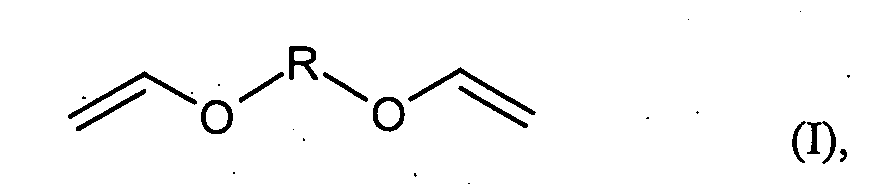
- R
- für einen Rest der Reihe CnH2n, (CmH2m-O)p-CmH2m oder CH2-C6H4-CH2 steht und n ≥ 2, m = 2 bis 8 und p ≥ 1 stehen
- Verwendung der alkalisch verseiften Acrylnitrilperlpolymerisate hergestellt nach den Ansprüchen 1 bis 4 als schwachsaure Kationenaustauscher.
- Schwachsaure Kationenaustauscher erhältlich durch Verseifung von vemetzten Acrylnitrilperlpolymerisaten mit einem alkalischen Verseifungsagens, wobei die Verseifung bei einer Temperatur T1 von 70 bis 120°C begonnen und nach Erreichen eines Verseifungsgrades von mindestens 65 % bei einer Temperatur T2 von 120 bis 180°C vervollständigt wird und T2 mindestens 10°C höher ist als T1.
- Verwendung der schwachsauren Kationenaustauscher gemäß Anspruch 7 zur Aufbereitung von Trinkwasser oder Grundwässem, sowie zur Entfernung von polaren oder unpolaren Verbindungen oder Schwer- oder Edelmetallen oder Arsen oder Selen aus wässrigen oder organischen Lösungen der chemischen Industrie, Elektroindustrie, Lebensmittelindustrie, Abfallentsorgungs- und Abfallverwertungsindustrie.
Applications Claiming Priority (2)
| Application Number | Priority Date | Filing Date | Title |
|---|---|---|---|
| DE10322441 | 2003-05-19 | ||
| DE2003122441 DE10322441A1 (de) | 2003-05-19 | 2003-05-19 | Verfahren zur alkalischen Verseifung vernetzter Acrylnitrilperlpolymerisate |
Publications (2)
| Publication Number | Publication Date |
|---|---|
| EP1486512A1 true EP1486512A1 (de) | 2004-12-15 |
| EP1486512B1 EP1486512B1 (de) | 2007-01-03 |
Family
ID=33185719
Family Applications (1)
| Application Number | Title | Priority Date | Filing Date |
|---|---|---|---|
| EP04010764A Expired - Lifetime EP1486512B1 (de) | 2003-05-19 | 2004-05-06 | Vefahren zur alkalischen Verseifung vernetzter Acrylnitrilperlpolymerisate |
Country Status (10)
| Country | Link |
|---|---|
| US (1) | US7166645B2 (de) |
| EP (1) | EP1486512B1 (de) |
| JP (1) | JP2004346319A (de) |
| KR (1) | KR20040100940A (de) |
| CN (1) | CN100341903C (de) |
| AT (1) | ATE350408T1 (de) |
| CA (1) | CA2467314A1 (de) |
| DE (2) | DE10322441A1 (de) |
| RU (1) | RU2004114920A (de) |
| TW (1) | TW200505575A (de) |
Cited By (2)
| Publication number | Priority date | Publication date | Assignee | Title |
|---|---|---|---|---|
| EP1757652A1 (de) * | 2005-08-27 | 2007-02-28 | Lanxess Deutschland GmbH | Schwachsaure Kationenaustauscher |
| EP1964608A1 (de) * | 2007-02-24 | 2008-09-03 | Lanxess Deutschland GmbH | Monodisperse schwachsaure Kationenaustauscher |
Families Citing this family (4)
| Publication number | Priority date | Publication date | Assignee | Title |
|---|---|---|---|---|
| DE102005035616A1 (de) * | 2005-07-29 | 2007-02-08 | Lanxess Deutschland Gmbh | Monodisperse Kationenaustauscher |
| DE102007009073A1 (de) | 2007-02-24 | 2008-08-28 | Lanxess Deutschland Gmbh | Schwachsaure Kationenaustauscher |
| CN102659968A (zh) * | 2012-05-17 | 2012-09-12 | 定南县松源化工有限责任公司 | 一种丙烯酸弱酸性阳离子交换树脂的水解工艺 |
| DE102014012470A1 (de) * | 2014-08-21 | 2016-02-25 | Daimler Ag | Verfahren zur Herstellung eines Separatormaterials und Separatormaterial |
Citations (3)
| Publication number | Priority date | Publication date | Assignee | Title |
|---|---|---|---|---|
| EP0406648A1 (de) * | 1989-07-06 | 1991-01-09 | Bayer Ag | Verfahren zur Herstellung von schwachsauren Kationenaustauschharzen |
| EP1110608A2 (de) * | 1999-12-24 | 2001-06-27 | Bayer Aktiengesellschaft | Verfahren zur Herstellung von vernetzten Ionenaustauschern auf Basis von ungesättigen, aliphatischen Nitrilen |
| DE10103028A1 (de) * | 2000-02-07 | 2001-08-23 | Bayer Ag | Wasserlösliche Polymerisate auf Basis von Acryl-bzw. Methacrylderivaten |
Family Cites Families (5)
| Publication number | Priority date | Publication date | Assignee | Title |
|---|---|---|---|---|
| US2812317A (en) * | 1953-08-19 | 1957-11-05 | Monsanto Chemicals | Hydrolyzed polyacrylonitrile polymers and process of preparing same |
| DE1207086B (de) * | 1961-09-06 | 1965-12-16 | Bayer Ag | Verfahren zur Herstellung von Abwandlungsprodukten des Polyacrylnitrils |
| US3544488A (en) * | 1966-09-22 | 1970-12-01 | Bayer Ag | Cross-linked acrylonitrile copolymers and ion exchangers made therefrom |
| DE3123290A1 (de) * | 1981-06-12 | 1982-12-30 | Cassella Ag, 6000 Frankfurt | Verbessertes verfahren zur alkalischen verseifung von pan |
| US4558100A (en) * | 1984-07-03 | 1985-12-10 | Grain Processing Corporation | Absorbent compositions |
-
2003
- 2003-05-19 DE DE2003122441 patent/DE10322441A1/de not_active Withdrawn
-
2004
- 2004-04-21 US US10/830,324 patent/US7166645B2/en not_active Expired - Lifetime
- 2004-05-06 AT AT04010764T patent/ATE350408T1/de not_active IP Right Cessation
- 2004-05-06 EP EP04010764A patent/EP1486512B1/de not_active Expired - Lifetime
- 2004-05-06 DE DE502004002499T patent/DE502004002499D1/de not_active Expired - Fee Related
- 2004-05-14 CA CA002467314A patent/CA2467314A1/en not_active Abandoned
- 2004-05-18 RU RU2004114920/04A patent/RU2004114920A/ru not_active Application Discontinuation
- 2004-05-18 TW TW093113885A patent/TW200505575A/zh unknown
- 2004-05-18 KR KR1020040035011A patent/KR20040100940A/ko not_active Withdrawn
- 2004-05-18 JP JP2004148229A patent/JP2004346319A/ja not_active Withdrawn
- 2004-05-19 CN CNB2004100456415A patent/CN100341903C/zh not_active Expired - Lifetime
Patent Citations (3)
| Publication number | Priority date | Publication date | Assignee | Title |
|---|---|---|---|---|
| EP0406648A1 (de) * | 1989-07-06 | 1991-01-09 | Bayer Ag | Verfahren zur Herstellung von schwachsauren Kationenaustauschharzen |
| EP1110608A2 (de) * | 1999-12-24 | 2001-06-27 | Bayer Aktiengesellschaft | Verfahren zur Herstellung von vernetzten Ionenaustauschern auf Basis von ungesättigen, aliphatischen Nitrilen |
| DE10103028A1 (de) * | 2000-02-07 | 2001-08-23 | Bayer Ag | Wasserlösliche Polymerisate auf Basis von Acryl-bzw. Methacrylderivaten |
Cited By (2)
| Publication number | Priority date | Publication date | Assignee | Title |
|---|---|---|---|---|
| EP1757652A1 (de) * | 2005-08-27 | 2007-02-28 | Lanxess Deutschland GmbH | Schwachsaure Kationenaustauscher |
| EP1964608A1 (de) * | 2007-02-24 | 2008-09-03 | Lanxess Deutschland GmbH | Monodisperse schwachsaure Kationenaustauscher |
Also Published As
| Publication number | Publication date |
|---|---|
| JP2004346319A (ja) | 2004-12-09 |
| KR20040100940A (ko) | 2004-12-02 |
| EP1486512B1 (de) | 2007-01-03 |
| DE10322441A1 (de) | 2004-12-09 |
| CN100341903C (zh) | 2007-10-10 |
| DE502004002499D1 (de) | 2007-02-15 |
| CN1550508A (zh) | 2004-12-01 |
| US7166645B2 (en) | 2007-01-23 |
| US20050090621A1 (en) | 2005-04-28 |
| ATE350408T1 (de) | 2007-01-15 |
| CA2467314A1 (en) | 2004-11-19 |
| TW200505575A (en) | 2005-02-16 |
| RU2004114920A (ru) | 2005-10-27 |
Similar Documents
| Publication | Publication Date | Title |
|---|---|---|
| DE68911729T2 (de) | Verfahren zur Herstellung eines Polymers von Maleinsäure und Wasserbehandlungsmittel und diese Polymere enthaltender Zusatz für Waschmittel. | |
| EP1110608A2 (de) | Verfahren zur Herstellung von vernetzten Ionenaustauschern auf Basis von ungesättigen, aliphatischen Nitrilen | |
| DE2327433A1 (de) | Ionenaustauscherharz und verfahren zu seiner herstellung | |
| EP1486512B1 (de) | Vefahren zur alkalischen Verseifung vernetzter Acrylnitrilperlpolymerisate | |
| DE10237601A1 (de) | Verfahren zur Herstellung von monodispersen gelförmigen Ionenaustauschern | |
| DE10327112A1 (de) | Verfahren zur Herstellung von Eisenoxid- und/oder Eisenoxihydroxyd-haltigen Ionenaustauschern | |
| DE3427441C2 (de) | ||
| DE102004006116A1 (de) | Verfahren zur Herstellung von monodispersen porenhaltigen Ionenaustauschern | |
| US5241045A (en) | Process for the precipitation of aqueous plastics dispersions containing polyvinyl alcohol | |
| EP2330137B1 (de) | Methylenaminoethylsulfonsäure-Chelatharze | |
| EP1497340A1 (de) | Verfahren zur entfernung von metallionen aus polymeren oder polymerlosungen | |
| DE69011860T2 (de) | Verfahren zur herstellung von polyvinylalkoholmischungen in wässeriger lösung und erhaltene produkte. | |
| DE19638594A1 (de) | Verfahren zur Reinigung von Abwässern und Kreislaufwässern bei der Papierherstellung, dem Deinking und der Zellstoffbleiche | |
| EP1713588A2 (de) | Verfahren zur herstellung von monodispersen acrylhaltigen perlpolymerisaten | |
| EP1757652B1 (de) | Schwachsaure Kationenaustauscher | |
| DE10257095A1 (de) | Unlösliche, hochvernetzte Styrol-4-sufonathaltige Popcorn-Polymerisate, Verfahren zu deren Herstellung und Verwendung | |
| DE2040618C2 (de) | Verfahren zur Herstellung eines schwach basischen Ionenaustauscherharzes mit tertiären Aminoxidgruppen | |
| DE2603764A1 (de) | Verfahren zur reinigung von abwasser, das bei der herstellung von styrol-perlpolymerisaten anfaellt | |
| DE1293748B (de) | Verfahren zur Reinigung von anorganischen Salzen von polymerisierbaren, aethylenischungesaettigten, Sulfonsaeuregruppen enthaltenden Monomeren | |
| EP2121775A1 (de) | Verfahren und polymer zur vermeidung von ba/sr-kesselstein mit nachweisbarer phosphorfunktionalität | |
| DE1568374A1 (de) | Verfahren zur Reinigung von aethylenisch ungesaettigten,sulfonierten Monomeren | |
| DE102007009073A1 (de) | Schwachsaure Kationenaustauscher | |
| DE2616587A1 (de) | Verfahren zur reinigung von abwasser, das bei der herstellung von styrol-perlpolymerisaten anfaellt | |
| DE2648082A1 (de) | Waschverfahren |
Legal Events
| Date | Code | Title | Description |
|---|---|---|---|
| PUAI | Public reference made under article 153(3) epc to a published international application that has entered the european phase |
Free format text: ORIGINAL CODE: 0009012 |
|
| AK | Designated contracting states |
Kind code of ref document: A1 Designated state(s): AT BE BG CH CY CZ DE DK EE ES FI FR GB GR HU IE IT LI LU MC NL PL PT RO SE SI SK TR |
|
| AX | Request for extension of the european patent |
Extension state: AL HR LT LV MK |
|
| RAP1 | Party data changed (applicant data changed or rights of an application transferred) |
Owner name: LANXESS DEUTSCHLAND GMBH |
|
| 17P | Request for examination filed |
Effective date: 20050615 |
|
| AKX | Designation fees paid |
Designated state(s): AT BE BG CH CY CZ DE DK EE ES FI FR GB GR HU IE IT LI LU MC NL PL PT RO SE SI SK TR |
|
| GRAP | Despatch of communication of intention to grant a patent |
Free format text: ORIGINAL CODE: EPIDOSNIGR1 |
|
| GRAS | Grant fee paid |
Free format text: ORIGINAL CODE: EPIDOSNIGR3 |
|
| GRAA | (expected) grant |
Free format text: ORIGINAL CODE: 0009210 |
|
| AK | Designated contracting states |
Kind code of ref document: B1 Designated state(s): AT BE BG CH CY CZ DE DK EE ES FI FR GB GR HU IE IT LI LU MC NL PL PT RO SE SI SK TR |
|
| PG25 | Lapsed in a contracting state [announced via postgrant information from national office to epo] |
Ref country code: IE Free format text: LAPSE BECAUSE OF FAILURE TO SUBMIT A TRANSLATION OF THE DESCRIPTION OR TO PAY THE FEE WITHIN THE PRESCRIBED TIME-LIMIT Effective date: 20070103 Ref country code: NL Free format text: LAPSE BECAUSE OF FAILURE TO SUBMIT A TRANSLATION OF THE DESCRIPTION OR TO PAY THE FEE WITHIN THE PRESCRIBED TIME-LIMIT Effective date: 20070103 Ref country code: PL Free format text: LAPSE BECAUSE OF FAILURE TO SUBMIT A TRANSLATION OF THE DESCRIPTION OR TO PAY THE FEE WITHIN THE PRESCRIBED TIME-LIMIT Effective date: 20070103 Ref country code: DK Free format text: LAPSE BECAUSE OF FAILURE TO SUBMIT A TRANSLATION OF THE DESCRIPTION OR TO PAY THE FEE WITHIN THE PRESCRIBED TIME-LIMIT Effective date: 20070103 Ref country code: SI Free format text: LAPSE BECAUSE OF FAILURE TO SUBMIT A TRANSLATION OF THE DESCRIPTION OR TO PAY THE FEE WITHIN THE PRESCRIBED TIME-LIMIT Effective date: 20070103 Ref country code: FI Free format text: LAPSE BECAUSE OF FAILURE TO SUBMIT A TRANSLATION OF THE DESCRIPTION OR TO PAY THE FEE WITHIN THE PRESCRIBED TIME-LIMIT Effective date: 20070103 |
|
| REG | Reference to a national code |
Ref country code: GB Ref legal event code: FG4D Free format text: NOT ENGLISH |
|
| REF | Corresponds to: |
Ref document number: 502004002499 Country of ref document: DE Date of ref document: 20070215 Kind code of ref document: P |
|
| REG | Reference to a national code |
Ref country code: RO Ref legal event code: EPE |
|
| REG | Reference to a national code |
Ref country code: IE Ref legal event code: FG4D Free format text: LANGUAGE OF EP DOCUMENT: GERMAN |
|
| PG25 | Lapsed in a contracting state [announced via postgrant information from national office to epo] |
Ref country code: SE Free format text: LAPSE BECAUSE OF FAILURE TO SUBMIT A TRANSLATION OF THE DESCRIPTION OR TO PAY THE FEE WITHIN THE PRESCRIBED TIME-LIMIT Effective date: 20070403 |
|
| PG25 | Lapsed in a contracting state [announced via postgrant information from national office to epo] |
Ref country code: BG Free format text: LAPSE BECAUSE OF FAILURE TO SUBMIT A TRANSLATION OF THE DESCRIPTION OR TO PAY THE FEE WITHIN THE PRESCRIBED TIME-LIMIT Effective date: 20070404 |
|
| PG25 | Lapsed in a contracting state [announced via postgrant information from national office to epo] |
Ref country code: ES Free format text: LAPSE BECAUSE OF FAILURE TO SUBMIT A TRANSLATION OF THE DESCRIPTION OR TO PAY THE FEE WITHIN THE PRESCRIBED TIME-LIMIT Effective date: 20070414 |
|
| PG25 | Lapsed in a contracting state [announced via postgrant information from national office to epo] |
Ref country code: PT Free format text: LAPSE BECAUSE OF FAILURE TO SUBMIT A TRANSLATION OF THE DESCRIPTION OR TO PAY THE FEE WITHIN THE PRESCRIBED TIME-LIMIT Effective date: 20070604 |
|
| NLV1 | Nl: lapsed or annulled due to failure to fulfill the requirements of art. 29p and 29m of the patents act | ||
| ET | Fr: translation filed | ||
| GBV | Gb: ep patent (uk) treated as always having been void in accordance with gb section 77(7)/1977 [no translation filed] |
Effective date: 20070103 |
|
| REG | Reference to a national code |
Ref country code: IE Ref legal event code: FD4D |
|
| PLBE | No opposition filed within time limit |
Free format text: ORIGINAL CODE: 0009261 |
|
| STAA | Information on the status of an ep patent application or granted ep patent |
Free format text: STATUS: NO OPPOSITION FILED WITHIN TIME LIMIT |
|
| PG25 | Lapsed in a contracting state [announced via postgrant information from national office to epo] |
Ref country code: SK Free format text: LAPSE BECAUSE OF FAILURE TO SUBMIT A TRANSLATION OF THE DESCRIPTION OR TO PAY THE FEE WITHIN THE PRESCRIBED TIME-LIMIT Effective date: 20070103 Ref country code: GB Free format text: LAPSE BECAUSE OF FAILURE TO SUBMIT A TRANSLATION OF THE DESCRIPTION OR TO PAY THE FEE WITHIN THE PRESCRIBED TIME-LIMIT Effective date: 20070103 |
|
| 26N | No opposition filed |
Effective date: 20071005 |
|
| BERE | Be: lapsed |
Owner name: LANXESS DEUTSCHLAND G.M.B.H. Effective date: 20070531 |
|
| PG25 | Lapsed in a contracting state [announced via postgrant information from national office to epo] |
Ref country code: CZ Free format text: LAPSE BECAUSE OF FAILURE TO SUBMIT A TRANSLATION OF THE DESCRIPTION OR TO PAY THE FEE WITHIN THE PRESCRIBED TIME-LIMIT Effective date: 20070103 |
|
| PG25 | Lapsed in a contracting state [announced via postgrant information from national office to epo] |
Ref country code: MC Free format text: LAPSE BECAUSE OF NON-PAYMENT OF DUE FEES Effective date: 20070531 |
|
| PG25 | Lapsed in a contracting state [announced via postgrant information from national office to epo] |
Ref country code: BE Free format text: LAPSE BECAUSE OF NON-PAYMENT OF DUE FEES Effective date: 20070531 |
|
| PG25 | Lapsed in a contracting state [announced via postgrant information from national office to epo] |
Ref country code: GR Free format text: LAPSE BECAUSE OF FAILURE TO SUBMIT A TRANSLATION OF THE DESCRIPTION OR TO PAY THE FEE WITHIN THE PRESCRIBED TIME-LIMIT Effective date: 20070404 |
|
| PG25 | Lapsed in a contracting state [announced via postgrant information from national office to epo] |
Ref country code: AT Free format text: LAPSE BECAUSE OF NON-PAYMENT OF DUE FEES Effective date: 20070506 |
|
| REG | Reference to a national code |
Ref country code: CH Ref legal event code: PL |
|
| PG25 | Lapsed in a contracting state [announced via postgrant information from national office to epo] |
Ref country code: EE Free format text: LAPSE BECAUSE OF FAILURE TO SUBMIT A TRANSLATION OF THE DESCRIPTION OR TO PAY THE FEE WITHIN THE PRESCRIBED TIME-LIMIT Effective date: 20070103 Ref country code: CH Free format text: LAPSE BECAUSE OF NON-PAYMENT OF DUE FEES Effective date: 20080531 Ref country code: LI Free format text: LAPSE BECAUSE OF NON-PAYMENT OF DUE FEES Effective date: 20080531 |
|
| PG25 | Lapsed in a contracting state [announced via postgrant information from national office to epo] |
Ref country code: CY Free format text: LAPSE BECAUSE OF FAILURE TO SUBMIT A TRANSLATION OF THE DESCRIPTION OR TO PAY THE FEE WITHIN THE PRESCRIBED TIME-LIMIT Effective date: 20070103 |
|
| PG25 | Lapsed in a contracting state [announced via postgrant information from national office to epo] |
Ref country code: LU Free format text: LAPSE BECAUSE OF NON-PAYMENT OF DUE FEES Effective date: 20070506 |
|
| PGFP | Annual fee paid to national office [announced via postgrant information from national office to epo] |
Ref country code: DE Payment date: 20090429 Year of fee payment: 6 Ref country code: FR Payment date: 20090515 Year of fee payment: 6 Ref country code: IT Payment date: 20090516 Year of fee payment: 6 |
|
| PG25 | Lapsed in a contracting state [announced via postgrant information from national office to epo] |
Ref country code: TR Free format text: LAPSE BECAUSE OF FAILURE TO SUBMIT A TRANSLATION OF THE DESCRIPTION OR TO PAY THE FEE WITHIN THE PRESCRIBED TIME-LIMIT Effective date: 20070103 Ref country code: HU Free format text: LAPSE BECAUSE OF FAILURE TO SUBMIT A TRANSLATION OF THE DESCRIPTION OR TO PAY THE FEE WITHIN THE PRESCRIBED TIME-LIMIT Effective date: 20070704 |
|
| REG | Reference to a national code |
Ref country code: FR Ref legal event code: ST Effective date: 20110131 |
|
| PG25 | Lapsed in a contracting state [announced via postgrant information from national office to epo] |
Ref country code: IT Free format text: LAPSE BECAUSE OF NON-PAYMENT OF DUE FEES Effective date: 20100506 |
|
| PG25 | Lapsed in a contracting state [announced via postgrant information from national office to epo] |
Ref country code: DE Free format text: LAPSE BECAUSE OF NON-PAYMENT OF DUE FEES Effective date: 20101201 |
|
| PG25 | Lapsed in a contracting state [announced via postgrant information from national office to epo] |
Ref country code: FR Free format text: LAPSE BECAUSE OF NON-PAYMENT OF DUE FEES Effective date: 20100531 |
|
| PGFP | Annual fee paid to national office [announced via postgrant information from national office to epo] |
Ref country code: RO Payment date: 20230329 Year of fee payment: 20 |
|
| P01 | Opt-out of the competence of the unified patent court (upc) registered |
Effective date: 20230714 |