EP1466749B1 - Tintenabsorbierendes Aufzeichnungsmedium und Verfahren zu dessen Herstellung - Google Patents
Tintenabsorbierendes Aufzeichnungsmedium und Verfahren zu dessen Herstellung Download PDFInfo
- Publication number
- EP1466749B1 EP1466749B1 EP04008502A EP04008502A EP1466749B1 EP 1466749 B1 EP1466749 B1 EP 1466749B1 EP 04008502 A EP04008502 A EP 04008502A EP 04008502 A EP04008502 A EP 04008502A EP 1466749 B1 EP1466749 B1 EP 1466749B1
- Authority
- EP
- European Patent Office
- Prior art keywords
- polyvinyl alcohol
- cationic
- ink
- recording medium
- membrane layer
- Prior art date
- Legal status (The legal status is an assumption and is not a legal conclusion. Google has not performed a legal analysis and makes no representation as to the accuracy of the status listed.)
- Expired - Lifetime
Links
Images
Classifications
-
- B—PERFORMING OPERATIONS; TRANSPORTING
- B41—PRINTING; LINING MACHINES; TYPEWRITERS; STAMPS
- B41M—PRINTING, DUPLICATING, MARKING, OR COPYING PROCESSES; COLOUR PRINTING
- B41M5/00—Duplicating or marking methods; Sheet materials for use therein
- B41M5/50—Recording sheets characterised by the coating used to improve ink, dye or pigment receptivity, e.g. for ink-jet or thermal dye transfer recording
- B41M5/52—Macromolecular coatings
-
- A—HUMAN NECESSITIES
- A61—MEDICAL OR VETERINARY SCIENCE; HYGIENE
- A61L—METHODS OR APPARATUS FOR STERILISING MATERIALS OR OBJECTS IN GENERAL; DISINFECTION, STERILISATION OR DEODORISATION OF AIR; CHEMICAL ASPECTS OF BANDAGES, DRESSINGS, ABSORBENT PADS OR SURGICAL ARTICLES; MATERIALS FOR BANDAGES, DRESSINGS, ABSORBENT PADS OR SURGICAL ARTICLES
- A61L2/00—Disinfection or sterilisation of materials or objects, in general; Accessories therefor
- A61L2/02—Disinfection or sterilisation of materials or objects, in general; Accessories therefor using physical processes
- A61L2/08—Radiation
- A61L2/10—Ultraviolet [UV] radiation
-
- A—HUMAN NECESSITIES
- A46—BRUSHWARE
- A46B—BRUSHES
- A46B17/00—Accessories for brushes
- A46B17/06—Devices for cleaning brushes after use
-
- A—HUMAN NECESSITIES
- A61—MEDICAL OR VETERINARY SCIENCE; HYGIENE
- A61L—METHODS OR APPARATUS FOR STERILISING MATERIALS OR OBJECTS IN GENERAL; DISINFECTION, STERILISATION OR DEODORISATION OF AIR; CHEMICAL ASPECTS OF BANDAGES, DRESSINGS, ABSORBENT PADS OR SURGICAL ARTICLES; MATERIALS FOR BANDAGES, DRESSINGS, ABSORBENT PADS OR SURGICAL ARTICLES
- A61L2/00—Disinfection or sterilisation of materials or objects, in general; Accessories therefor
- A61L2/26—Accessories
-
- A—HUMAN NECESSITIES
- A61—MEDICAL OR VETERINARY SCIENCE; HYGIENE
- A61L—METHODS OR APPARATUS FOR STERILISING MATERIALS OR OBJECTS IN GENERAL; DISINFECTION, STERILISATION OR DEODORISATION OF AIR; CHEMICAL ASPECTS OF BANDAGES, DRESSINGS, ABSORBENT PADS OR SURGICAL ARTICLES; MATERIALS FOR BANDAGES, DRESSINGS, ABSORBENT PADS OR SURGICAL ARTICLES
- A61L2202/00—Aspects relating to methods or apparatus for disinfecting or sterilising materials or objects
- A61L2202/10—Apparatus features
- A61L2202/11—Apparatus for generating biocidal substances, e.g. vaporisers, UV lamps
-
- A—HUMAN NECESSITIES
- A61—MEDICAL OR VETERINARY SCIENCE; HYGIENE
- A61L—METHODS OR APPARATUS FOR STERILISING MATERIALS OR OBJECTS IN GENERAL; DISINFECTION, STERILISATION OR DEODORISATION OF AIR; CHEMICAL ASPECTS OF BANDAGES, DRESSINGS, ABSORBENT PADS OR SURGICAL ARTICLES; MATERIALS FOR BANDAGES, DRESSINGS, ABSORBENT PADS OR SURGICAL ARTICLES
- A61L2202/00—Aspects relating to methods or apparatus for disinfecting or sterilising materials or objects
- A61L2202/10—Apparatus features
- A61L2202/12—Apparatus for isolating biocidal substances from the environment
- A61L2202/121—Sealings, e.g. doors, covers, valves, sluices
-
- A—HUMAN NECESSITIES
- A61—MEDICAL OR VETERINARY SCIENCE; HYGIENE
- A61L—METHODS OR APPARATUS FOR STERILISING MATERIALS OR OBJECTS IN GENERAL; DISINFECTION, STERILISATION OR DEODORISATION OF AIR; CHEMICAL ASPECTS OF BANDAGES, DRESSINGS, ABSORBENT PADS OR SURGICAL ARTICLES; MATERIALS FOR BANDAGES, DRESSINGS, ABSORBENT PADS OR SURGICAL ARTICLES
- A61L2202/00—Aspects relating to methods or apparatus for disinfecting or sterilising materials or objects
- A61L2202/10—Apparatus features
- A61L2202/16—Mobile applications, e.g. portable devices, trailers, devices mounted on vehicles
-
- B—PERFORMING OPERATIONS; TRANSPORTING
- B41—PRINTING; LINING MACHINES; TYPEWRITERS; STAMPS
- B41M—PRINTING, DUPLICATING, MARKING, OR COPYING PROCESSES; COLOUR PRINTING
- B41M5/00—Duplicating or marking methods; Sheet materials for use therein
- B41M5/50—Recording sheets characterised by the coating used to improve ink, dye or pigment receptivity, e.g. for ink-jet or thermal dye transfer recording
- B41M5/502—Recording sheets characterised by the coating used to improve ink, dye or pigment receptivity, e.g. for ink-jet or thermal dye transfer recording characterised by structural details, e.g. multilayer materials
- B41M5/508—Supports
-
- B—PERFORMING OPERATIONS; TRANSPORTING
- B41—PRINTING; LINING MACHINES; TYPEWRITERS; STAMPS
- B41M—PRINTING, DUPLICATING, MARKING, OR COPYING PROCESSES; COLOUR PRINTING
- B41M5/00—Duplicating or marking methods; Sheet materials for use therein
- B41M5/50—Recording sheets characterised by the coating used to improve ink, dye or pigment receptivity, e.g. for ink-jet or thermal dye transfer recording
- B41M5/52—Macromolecular coatings
- B41M5/5218—Macromolecular coatings characterised by inorganic additives, e.g. pigments, clays
-
- B—PERFORMING OPERATIONS; TRANSPORTING
- B41—PRINTING; LINING MACHINES; TYPEWRITERS; STAMPS
- B41M—PRINTING, DUPLICATING, MARKING, OR COPYING PROCESSES; COLOUR PRINTING
- B41M5/00—Duplicating or marking methods; Sheet materials for use therein
- B41M5/50—Recording sheets characterised by the coating used to improve ink, dye or pigment receptivity, e.g. for ink-jet or thermal dye transfer recording
- B41M5/52—Macromolecular coatings
- B41M5/5236—Macromolecular coatings characterised by the use of natural gums, of proteins, e.g. gelatins, or of macromolecular carbohydrates, e.g. cellulose
-
- B—PERFORMING OPERATIONS; TRANSPORTING
- B41—PRINTING; LINING MACHINES; TYPEWRITERS; STAMPS
- B41M—PRINTING, DUPLICATING, MARKING, OR COPYING PROCESSES; COLOUR PRINTING
- B41M5/00—Duplicating or marking methods; Sheet materials for use therein
- B41M5/50—Recording sheets characterised by the coating used to improve ink, dye or pigment receptivity, e.g. for ink-jet or thermal dye transfer recording
- B41M5/52—Macromolecular coatings
- B41M5/5245—Macromolecular coatings characterised by the use of polymers containing cationic or anionic groups, e.g. mordants
-
- B—PERFORMING OPERATIONS; TRANSPORTING
- B41—PRINTING; LINING MACHINES; TYPEWRITERS; STAMPS
- B41M—PRINTING, DUPLICATING, MARKING, OR COPYING PROCESSES; COLOUR PRINTING
- B41M5/00—Duplicating or marking methods; Sheet materials for use therein
- B41M5/50—Recording sheets characterised by the coating used to improve ink, dye or pigment receptivity, e.g. for ink-jet or thermal dye transfer recording
- B41M5/52—Macromolecular coatings
- B41M5/5254—Macromolecular coatings characterised by the use of polymers obtained by reactions only involving carbon-to-carbon unsaturated bonds, e.g. vinyl polymers
Definitions
- the present invention is related to an ink-absorbing recording medium and the manufacturing method thereof, and more particularly to a manufacturing method for a highly absorbing and unfading ink-absorbing recording medium.
- the method for making a glossy ink-absorbing recording medium includes the steps of smearing polyvinyl over the two surfaces (the outside surface and the inside surface) of the base material, pressing the base material, and then smearing aluminum oxide, inorganic substance and aqueous solution mastic containing polyvinyl alcohol over the outside surface of the base material.
- this method we name this method as method A.
- a good ink-absorbing recording medium can be manufactured by the method A.
- ink can only be absorbed by the aluminum oxide layer, there is a need to increase the thickness of the layer.
- the dyes could be spread easily and hence the anti-fading function has no effect because of the remained non-volatile solution.
- the method includes the steps of smearing aqueous solution having polyvinyl alcohol and borax to protect the surface of the paper base material from being wrinkled and split after dried, applying liquid containing aluminum oxide and polyvinyl alcohol to the base material to form a membrane layer, moistening the base material after it is dried, and casting the base material by pressing it on the surface of a heated and glossy metal.
- smearing aqueous solution having polyvinyl alcohol and borax to protect the surface of the paper base material from being wrinkled and split after dried
- applying liquid containing aluminum oxide and polyvinyl alcohol to the base material to form a membrane layer
- moistening the base material after it is dried and casting the base material by pressing it on the surface of a heated and glossy metal.
- an ink-absorbing recording medium with higher quality can be made through method B.
- the luster rate of the surface of the ink-absorbing recording medium at the angle of incidence of 20° is about 20%, while it is more than 30% through method B.
- the solution for the applying process in the past is an aqueous solution by dissolving non-ionic or anionic polyvinyl alcohol and aluminum oxide in water.
- the ink-absorbing recording medium is applied by using the above-mentioned liquids containing non-ionic or anionic polyvinyl alcohol to form a membrane layer.
- the membrane layer has bad ink-absorbing ability and is not endurable to weather, so it is necessary to enhance these properties. Besides, it is also necessary to continue enhancing the quality of the ink-absorbing recording medium.
- an ink jet-recording sheet for forming recorded images using liquid ink comprises (a) at least one member with a specific compound including a sulfur atom therein, and (b) at least one member selected from a group consisting of homopolymers of diallylamine compounds and copolymers with copolymerizable ethylenically unsaturated compounds.
- a recording material comprises 1) a sheet-like paper substrate, 2) at least one pigment layer coated thereon, and 3) at least one sealing layer coated thereon which comprises a particulate polymer dispersion characterized by a film forming temperature between 60°C and 140°C (up to: 160°C) and an average particle size between about 1 ⁇ m and about 50 ⁇ m together with at least one water-soluble polymer.
- an ink jet recording element for improving the occurrence of cracks in its ink-receiving layer.
- the recording medium provided therein comprises a layer with a high amount of pigment and a top layer containing a water soluble polymer.
- the European patent application publication EP 1 048 480 A2 discloses an ink-jet recording material having a support material and pigment layers provided thereon, wherein the pigment layers comprise at least a lower layer containing barium sulphate and an upper layer containing an aluminum oxide.
- the main purpose of the present invention is to provide a method for manufacturing ink-absorbing recording medium.
- the ink-absorbing recording medium made by this method has properties of good ink-absorbing and weather-enduring abilities.
- the printing paper made of the ink-absorbing recording medium is suitable for printers which utilize ink, carbon powder or dyes as the recording medium.
- the ink-absorbing recording medium is also suitable for photographic paper because it has a high adhesion rate for carbon powder.
- a method of manufacturing an ink-absorbing recording medium includes steps of providing a liquid, which is formed by one of a cationic aluminum oxide and a dispersing solution or a colloid solution which mainly includes a cationic aluminum oxide solution for being applied on a base material to form a membrane layer; drying the membrane layer; and applying a cationic polyvinyl alcohol solution to the membrane layer, wherein the cationic polyvinyl alcohol and cationic aluminium oxide repel to each other.
- the drying step is performed by one of a drying process and a semi-drying process.
- the base material is a paper material
- the cationic polyvinyl alcohol applied membrane layer is cast through a casting process so as to manufacture a glossy ink-absorbing recording medium.
- a method of manufacturing an ink-absorbing recording medium is characterized by applying a liquid, which is formed by one of a cationic aluminum oxide and a dispersing solution or a colloid solution which mainly includes a cationic aluminum oxide solution and then a cationic polyvinyl alcohol solution on a base material to form a membrane layer, wherein the cationic polyvinyl alcohol and cationic aluminium oxide repel to each other.
- the cationic aluminum oxide and the cationic aluminum oxide solution both have a concentration by weight of 70% ⁇ 95% and the corresponding cationic polyvinyl alcohol has a concentration by weight of 5% ⁇ 30%.
- the base material is a paper material
- the membrane layer is dried by a drying process
- the water-applied membrane layer is cast through a casting process for manufacturing a glossy ink-absorbing recording medium.
- the drying process is one of a drying process and a semi-drying process.
- an ink-absorbing recording medium has a membrane layer, wherein the membrane layer includes a cationic aluminum oxide and a cationic polyvinyl alcohol.
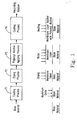
- Fig. 1 is a flow chart illustrating the method of manufacturing the ink-absorbing recording medium according to the first embodiment of the present invention
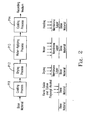
- Fig. 2 is a flow chart illustrating the method of manufacturing the ink-absorbing recording medium according to the second embodiment of the present invention.
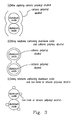
- Fig. 3 is a diagram showing the inferential states of aluminum oxide particles and polyvinyl alcohol of the ink-absorbing recording medium according to the present invention and the prior art.
- the membrane layer smearing process is proceeded by applying the dispersing solutions or the colloidal solutions, which mainly contain cationic aluminum oxide or cationic aluminum oxide solution, to the base material.
- the cationic polyvinyl alcohol solution is smeared over the dried or semi-dried membrane layer to produce the ink-absorbing recording medium. Therefore, according to the present invention, the method for manufacturing the ink-absorbing recording medium utilizes the membrane liquid which contains no polyvinyl alcohol to form the membrane layer instead of utilizing the former membrane liquid which contains non-ion or anionic polyvinyl alcohol.
- cationic polyvinyl alcohol is then applied to the membrane layer to enhance the ink-absorbing and weather-enduring abilities. More specifically, in comparison with the previous ink-absorbing recording medium, which uses non-ion or anionic polyvinyl alcohol, the present ink-absorbing recording medium, which uses cationic polyvinyl alcohol, has a better weather-enduring ability and the ink-absorbing ability is not worse. Hence, the pattern won't get worse, and the ability for showing color won't be decreased.
- the membrane layers are formed by using non-ion or anionic polyvinyl alcohol such as PVA117 (which is made by Kuraray) and aluminum oxide particles. Even if the aluminum oxide particles are combined with non-ion or anionic polyvinyl alcohol such as PVA117 (which is made by Kuraray) and boehmite such as DISPERAL HP 14 (which is made by Sasol), the weight percent of the added non-ion or anionic polyvinyl alcohol can only be about 10%.
- non-ion or anionic polyvinyl alcohol such as JM-26 (which is made by Japan Vam & Poval)
- cationic polyvinyl alcohol instead of cationic polyvinyl alcohol
- some problems still occur. Gelation phenomenon occurred between the cationic aluminum oxide and non-ion or anionic polyvinyl alcohol causes problem that the dispersing solution can not be spread smoothly over the membrane layer.
- non-ion or anionic polyvinyl alcohol cannot be added up to more than 10% of weight percent. Due to the small amount addition of the non-ion or anionic polyvinyl alcohol, the weather-enduring ability is not very good and the color changes or color fades would occur easily.
- the non-ion or anionic polyvinyl alcohol is used for the membrane layer of the previous ink-absorbing recording medium, materials with high molecular weight must be added to prevent chap due to waterlessness and low absorbing ability.
- the ink-absorbing recording medium which uses cationic polyvinyl alcohol its ink-absorbing ability decreases because of the high molecular weight.
- cationic polyvinyl alcohol such as K210 (which is made by Gohsenol) can be added to adjust the weight percent from 15% to about 30%.
- K210 which is made by Gohsenol
- the ink-absorbing ability and the definition will not degenerate and absorption due to the oxidized dye oxidized by oxidation gas will not happen.
- the active surface of the aluminum oxide can be reduced by adding a great deal of the cationic polyvinyl alcohol.
- the reason why the present invention is endurable to weather is because the aluminum oxide particles in the membrane layer are covered by the cationic polyvinyl alcohol and hence the activation of the aluminum oxide is reduced. Tiny spots for adhesion of dye and ozone are expected to be reduced.
- the polyvinyl alcohol is hard to be uniformly spread on the surface of the aluminum oxide when non-ion or anionic polyvinyl alcohol and cationic aluminum oxide are used.
- the dye is directly absorbed by the aluminum oxide, and hence the oxidation due to ozone occurs easily.
- Fig. 3(a) is a diagram showing the inferential status of aluminum oxide particles and cationic polyvinyl alcohol in the membrane layer of the ink-absorbing recording medium fabricated by the above-mentioned process.
- Fig. 3(c) is a diagram showing the inferential status of aluminum oxide particles and non-ionic or anionic polyvinyl alcohol in the membrane layer of the ink-absorbing recording medium fabricated by the conventional method.
- the active points can be covered by smearing cationic polyvinyl alcohol over the adjacent aluminum oxide particles.
- antioxidant is used in the past, and unfortunately the effects are stopped on antioxidant and oxidizing gas with the same valence.
- active points which are worsened in oxidization can be covered physically; this can prevent these active points from continuing worsened in oxidization.
- the base materials if there is no casting process, all kinds of materials can be used, for example, paper base materials, aluminum oxide base materials, and paper base materials processed with laminating process.
- materials for example, paper base materials, aluminum oxide base materials, and paper base materials processed with laminating process.
- ink-absorbing recording medium either aluminum oxide (Al 2 O 3 ) or aluminum oxide solutions (Al(OH) 3 ) can be used and all kinds of base materials are suitable.
- Al(OH) 3 aluminum oxide solutions
- poriferous base materials are preferable after applying the aluminum oxide and the drying processes.
- ⁇ -aluminum such as AKP15 (made by Sumitomo) is adapted to aluminum oxide (Al 2 O 3 ) used for ink-jet papers which use dye ink.
- Crystalline boehmite such as DISPERAL HP 14 (made by Sasol) can be used for aluminum oxide solutions.
- DISPERAL HP 14 the particle status that the surface area can be measured by BET adhesion method is preferably 150-170 m 2 /g, and the pore volume total is preferably 0.9 ⁇ 1.2 ml/g.
- membrane layers like aluminum oxide, aluminum oxide or solutions which contain water-dispersibility property and aqueous colloids.
- Acetic acid and nitric acid are used to adjust pH values to 4-5 due to their fine dispersing ability.
- non-ion or anionic polyvinyl alcohol is used as membrane layer liquid
- membrane layer liquid which does not contain polyvinyl alcohol is used to form the membrane layer.
- the cationic polyvinyl alcohol is added into the membrane layer by smearing cationic polyvinyl alcohol solutions thereon.
- the cationic polyvinyl alcohol can be smeared on the membrane layer either after or during the drying process.
- C506 made by Kuraray
- K210 made by Gohsenol
- High concentration polyvinyl alcohol can prevent the membrane layer from fading, and the viscosity of high concentration polyvinyl alcohol will be very low when it is dissolved in water.
- low molecular weight is preferred because the polyvinyl alcohol has to permeate deeply into the membrane layer.
- the molecular weight should be less than 2000g.
- the ink-absorbing recording medium of the present invention can be used in ink-jet printers and flexography printing.
- the fabricating process of the ink-absorbing recording medium described in the first embodiment uses paper as the base material and casts the membrane layer which is applied with cationic polyvinyl alcohol to make a glossy ink-absorbing recording medium.
- the casting process discussed here is to press the moistened membrane layer onto the heated metal surface to be dried. During the casting process, dried or semi-dried membrane layer which is made of aluminum oxide is applied with cationic polyvinyl alcohol and then cast when it is moistened.
- the present process can make the membrane layer dry more quickly, and easier to be detached from the metal surface.
- one of the purposes for casting is to make the ink-absorbing recording medium glossy.
- the following is the second embodiment for manufacturing the ink-absorbing recording medium according to the present invention.
- cationic aluminum oxide, cationic aluminum oxide solution, or cationic polyvinyl alcohol is applied to the base material to form the membrane layer. Therefore, in the second embodiment, cationic polyvinyl alcohol is used to form the membrane layer so as to fabricate the ink-absorbing recording medium with good ink-absorbing and weather-enduring abilities.
- Gelation phenomenon is easy to happen when the non-ion or anionic polyvinyl alcohol or the aluminum oxide is selected as the membrane liquid. However, in the present invention, gelation seldom happens because cationic polyvinyl alcohol and aluminum oxide repel to each other so that the solution is spread uniformly.
- the polyvinyl alcohol is mixed in the membrane liquid in advance, so that the membrane can be formed easier and is more uniform.
- Fig. 3(b) is a diagram showing the inferential status of aluminum oxide particles and cationic polyvinyl alcohol in the membrane layer of the ink-absorbing recording medium fabricated by the above-mentioned process of the second embodiment.
- Those aluminum oxide particles which are covered by the cationic polyvinyl alcohol adhere to each other after the aluminum oxide particles and the cationic polyvinyl alcohol are mixed.
- the spaces between the aluminum particles can absorb dye more easily and maybe get exposed in ozone.
- cationic polyvinyl alcohol is used so that active points can be covered and therefore, the ink-absorbing recording medium is endurable to weather.
- the steps of making an ink-absorbing recording medium are: forming a membrane layer on a paper base material; drying or semi-drying the membrane layer; applying water to the dried or semi-dried membrane layer; and then casting the water-applied membrane layer to make a glossy ink-absorbing recording medium.
- a membrane layer containing cationic aluminum oxide or cationic aluminum oxide solutions and cationic polyvinyl alcohol is formed on the base material of the ink-absorbing recording medium.
- either cationic aluminum oxide or cationic aluminum oxide solution can be chosen, and cationic polyvinyl alcohol with a lower molecular weight is preferred.
- a excellent ink-absorbing recording medium with good ink-absorbing and weather-enduring abilities is available because cationic polyvinyl alcohol is used as the adhesive of the membrane layer.
- the weight percent of the cationic aluminum oxide or the cationic aluminum oxide solution is 70% ⁇ 95% and that of the cationic polyvinyl alcohol is 30% ⁇ 5%.
- Fig. 1 shows the flow chart representing the first embodiment of the method of manufacturing the ink-absorbing recording medium.
- a coater is used to apply the membrane liquid to the surface of the paper base material and hence a membrane layer is formed thereon.
- a Comma Coater is used as the coater and the colloidal quasi-boehmite dispersed in the water is used as the membrane liquid in this embodiment.
- the weight percent of the membrane liquid is 23%.
- Acetic acid is added to keep the pH value of the membrane liquid at 4.0 so as to maintain dispersibility and colloidal status.
- the drying process P2 is to dry the membrane layer formed in the coating process P1.
- the cationic polyvinyl alcohol solution is applied to the surface of the membrane layer after it is dried in the drying process P2.
- the applied solution is permeated into the membrane layer so that the cationic polyvinyl alcohol solution permeates accordingly.
- a casting process is performed by a heated casting cylinder on the surface of the membrane layer applied by the cationic polyvinyl alcohol solution. Therefore, the membrane layer of the paper base material where the cationic polyvinyl alcohol solution permeates, i.e., the part which contains quasi-boehmite and cationic polyvinyl alcohol solution, is dried after this process.
- the cylinder is plated with chromium.
- the cylinder is heated by steam, and the membrane layer which is applied with cationic polyvinyl alcohol solution is dried after it is pressed by the cylinder.
- the final product made by the casting process P4 is the ink-absorbing recording medium.
- the surface density of the solid part of the product which is made of aluminum oxide solution and polyvinyl alcohol is 25 g/m 2 .
- the ink-absorbing recording medium achieved in this embodiment has the membrane layer on the paper base material wherein the membrane layer contains quasi-boehmite and cationic polyvinyl alcohol.
- the membrane liquid of the ink-absorbing recording medium used in the conventional method utilizes DISPERAL HP 14 of quasi-boehmite as aluminum oxide or the aluminum oxide solution, JM-26 as non-ion or anionic polyvinyl alcohol, and the rest of the liquid is water.
- DISPERAL HP 14 is made by Sosal and JM-26 is made by Japan Vam and Poval.
- the weight percent of DISPERAL HP 14 is 23% and the weight percent of JM-26 is 2.3%.
- the surface densities of dried DISPERAL HP 14 and JM-26 on the paper base material are 25 g/m 2 .
- the weight percent of aluminum oxide to the dried solid part of the polyvinyl alcohol is 10%, but that of the present invention is 20%.
- the following is an example to describe the ozone-enduring ability of the ink-absorbing recording medium.
- the conventional and present ink-absorbing recording mediums are put indoors with normal light in Tokyo. After one month, attenuation rates of the colors are recorded. The average of the attenuation rates of red, blue, green, and black is calculated and denoted by the symbol ⁇ E. It is found that ⁇ E of the conventional ink-absorbing recording medium is 31%, but that of the present one is only 12%. This means that the present ink-absorbing recording medium is more endurable to ozone-worsened weather. Further, there is little difference between the conventional and the present ink-absorbing recording mediums in the respect of the light-worsened weather-enduring ability.
- Gohsenol K210 made by Japan Chemical Company, Ltd
- C506 made by Kuraray
- the concentrations of red, blue, green and black colors are 2.2, 2.4, 2.2, and 2.3, respectively
- those for C506 are 1.9, 2.2, 2.1, and 2.1, respectively.
- the alkali of Gohsenol K210 is 85.5 ⁇ 88.0 (mol%), and that of C506 is 74.0 ⁇ 80.0 (mol %). Therefore, cationic high alkali is preferred because it is more easily dissolved in water.
- the alkali of cationic polyvinyl alcohol is more than 90 (mol %).
- low condensation is preferred in the cationic polyvinyl alcohol because it has good weather-enduring ability and high color concentration.
- an ink-absorbing recording medium with high quality can be made.
- the ink-absorbing recording medium of the present invention has good ink-absorbing ability. When ink is used for printing, it is endurable to ozone or NO x . When an anionic dye is used, the adhesion between the dye and the polyvinyl alcohol is very good because the membrane layer of the ink-absorbing recording medium in the present invention utilizes cationic polyvinyl alcohol.
- High quality printing papers are provided by using the method of manufacturing ink-absorbing recording medium presented in the present invention. The papers are suitable for various kinds of printers which use ink, carbon powder or dyes.
- the ink-absorbing recording medium presented in the present invention had good adhesion ability for carbon powder and is also suitable for photographic paper in digital photography fields. Moreover, the ink-absorbing recording medium is suitable for flexography printing as well because the ink on plastic plates dries very quickly.
- Fig. 2 illustrates the whole processes for manufacturing the ink-absorbing recording medium according to the second embodiment of the present invention.
- paper is used as the base material, and is treated under coating process P11, drying process P12, water applying process P13, and casting process P14. Then the product obtained from the above processes is ink-absorbing recording medium rolled on the cylinder.
- a coater is used to apply the membrane liquid to the surface of the paper base material and hence a membrane layer is formed thereon.
- a Comma Coater is used as the coater and quasi-boehmite and cationic polyvinyl alcohol solutions are used as the membrane liquid in this embodiment.
- Some acetic acid or nitric acid is added to maintain the PH value around 4 to 5.
- DISPERAL HP 14 of the quasi-boehmite is dissolved in the water, and the weight percent is 23%.
- GohsenolK210 of the polyvinyl alcohol made by the Nippon Synthetic Chemical Industry is dissolved in the water to make a solution of weight percent of 13%.
- the weight percent of aluminum oxide to the dried solid part of the polyvinyl alcohol is 15%.
- the drying process P12 is to dry the membrane layer formed in the coating process P11 from the surface.
- a semi-drying process can also be adapted in the drying process P12.
- the water applying process P13 is to apply water to the surface of the membrane layer dried in the drying process P12.
- a casting process is performed by a heated casting cylinder on the surface of the membrane layer which is applied by water.
- a glossy ink-absorbing recording medium is accomplished by the casting process P14.
- the product (paper base material with membrane layer) of casting process P14 is the ink-absorbing recording medium.
- the ink-absorbing recording medium achieved in this embodiment has the membrane layer on the paper base material wherein the membrane layer contains quasi-boehmite and cationic polyvinyl alcohol. In comparison with the conventional previous ink-absorbing recording medium, the ink-absorbing recording medium achieved in this embodiment has better ink-absorbing ability and is more endurable to weather.
- Fig. 3(a) is a diagram showing the inferential status of aluminum oxide particles and cationic polyvinyl alcohol in the membrane layer of the ink-absorbing recording medium fabricated by the above-mentioned process.
- Fig. 3(b) is a diagram showing the inferential status of aluminum oxide particles and cationic polyvinyl alcohol in the membrane layer of the ink-absorbing recording medium fabricated by the above-mentioned process of the second embodiment.
- Those aluminum oxide particles which are covered by the cationic polyvinyl alcohol adhere to each other after the aluminum oxide particles and the cationic polyvinyl alcohol are mixed.
- the spaces between the aluminum particles can absorb dye more easily and maybe get exposed in ozone.
- cationic polyvinyl alcohol is used so that active points can be covered and therefore, the ink-absorbing recording medium is endurable to weather.
Landscapes
- Health & Medical Sciences (AREA)
- Veterinary Medicine (AREA)
- Life Sciences & Earth Sciences (AREA)
- Animal Behavior & Ethology (AREA)
- General Health & Medical Sciences (AREA)
- Public Health (AREA)
- Epidemiology (AREA)
- Ink Jet Recording Methods And Recording Media Thereof (AREA)
- Application Of Or Painting With Fluid Materials (AREA)
- Paper (AREA)
- Duplication Or Marking (AREA)
- Inks, Pencil-Leads, Or Crayons (AREA)
- Manufacturing Optical Record Carriers (AREA)
Claims (17)
- Verfahren zur Herstellung eines tintenaufnehmenden Aufzeichnungsmediums, gekennzeichnet durch die folgenden Schritte:a) Bereitstellen einer Flüssigkeit, die durch ein kationisches Aluminiumoxid und eine Dispergierlösung oder eine Kolloidlösung, die hauptsächlich eine Lösung von kationischem Aluminiumoxid umfasst, gebildet wird, und Aufbringen der Flüssigkeit auf ein Basismaterial zur Bildung einer Membranschicht;b) Trocknen der Membranschicht undc) Aufbringen einer Lösung von kationischem Polyvinylalkohol auf die Membranschicht, wobei der kationische Polyvinylalkohol und das kationische Aluminiumoxid einander abstoßen.
- Verfahren nach Anspruch 1, dadurch gekennzeichnet, dass es sich bei der Lösung von kationischem Polyvinylalkohol um eine alkalireiche Lösung von kationischem Polyvinylalkohol handelt.
- Verfahren nach Anspruch 2, dadurch gekennzeichnet, dass die Lösung von kationischem Polyvinylalkohol einen Alkaligehalt von 85,5 bis 88,0 Mol-% aufweist.
- Verfahren nach Anspruch 2, dadurch gekennzeichnet, dass die Lösung von kationischem Polyvinylalkohol einen Alkaligehalt von 74,0 bis 80,0 Mol-% aufweist.
- Verfahren nach Anspruch 2, dadurch gekennzeichnet, dass die Lösung von kationischem Polyvinylalkohol einen Alkaligehalt von mehr als 90 Mol-% aufweist.
- Verfahren nach Anspruch 1, dadurch gekennzeichnet, dass der Trocknungsschritt durch einen Trocknungsprozess (P2) oder einen Teiltrocknungsprozess durchgeführt wird.
- Verfahren nach Anspruch 1, dadurch gekennzeichnet, dass es sich bei dem Basismaterial um ein Papiermaterial handelt und die aufgebrachte Membranschicht mit dem kationischen Polyvinylalkohol durch einen Gießprozess (P4) gegossen wird, um ein glänzendes tintenaufnehmendes Aufzeichnungsmedium herzustellen.
- Verfahren zur Herstellung eines tintenaufnehmenden Aufzeichnungsmediums, gekennzeichnet durch die folgenden Schritte:a) Aufbringen einer Flüssigkeit, die durch ein kationisches Aluminiumoxid und eine Dispergierlösung oder eine Kolloidlösung, die hauptsächlich eine Lösung von kationischem Aluminiumoxid umfasst, gebildet wird, und dann einer Lösung von kationischem Polyvinylalkohol auf ein Basismaterial zur Bildung einer Membranschicht, wobei der kationische Polyvinylalkohol und das kationische Aluminiumoxid einander abstoßen;b) Trocknen der Membranschicht.
- Verfahren nach Anspruch 8, dadurch gekennzeichnet, dass das kationische Aluminiumoxid und die Lösung von kationischem Aluminiumoxid beide eine Konzentration von 70-95 Gew.-% aufweisen und der entsprechende kationische Polyvinylalkohol eine Konzentration von 5-30 Gew.-% aufweist.
- Verfahren nach Anspruch 8, dadurch gekennzeichnet, dass es sich bei dem Basismaterial um ein Papiermaterial handelt, die Membranschicht durch einen Trocknungsprozess (P12) getrocknet wird und die wässrig aufgebrachte Membranschicht durch einen Gießprozess (P14) zur Herstellung eines glänzenden tintenaufnehmenden Aufzeichnungsmediums gegossen wird.
- Verfahren nach Anspruch 10, dadurch gekennzeichnet, dass es sich bei dem Trocknungsprozess (P12) um einen Trocknungsprozess (P12) oder einen Teiltrocknungsprozess handelt.
- Verfahren nach Anspruch 8, dadurch gekennzeichnet, dass es sich bei der Lösung von kationischem Polyvinylalkohol um eine alkalireiche Lösung von kationischem Polyvinylalkohol handelt.
- Verfahren nach Anspruch 8, dadurch gekennzeichnet, dass die Lösung von kationischem Polyvinylalkohol einen Alkaligehalt von 85,5 bis 88,0 Mol-% aufweist.
- Verfahren nach Anspruch 8, dadurch gekennzeichnet, dass die Lösung von kationischem Polyvinylalkohol einen Alkaligehalt von 74,0 bis 80,0 Mol-% aufweist.
- Verfahren nach Anspruch 8, dadurch gekennzeichnet, dass die Lösung von kationischem Polyvinylalkohol einen Alkaligehalt von mehr als 90 Mol-% aufweist.
- Tintenaufnehmendes Aufzeichnungsmedium mit einer Membranschicht, dadurch gekennzeichnet, dass die Membranschicht ein kationisches Aluminiumoxid und einen kationischen Polyvinylalkohol umfasst, wobei der kationische Polyvinylalkohol und das kationische Aluminiumoxid einander abstoßen, so dass das kationische Aluminiumoxid mit dem kationischen Polyvinylalkohol bedeckt ist.
- Tintenaufnehmendes Aufzeichnungsmedium nach Anspruch 16, dadurch gekennzeichnet, dass das kationische Aluminiumoxid vollständig mit dem kationischen Polyvinylalkohol bedeckt ist.
Applications Claiming Priority (2)
| Application Number | Priority Date | Filing Date | Title |
|---|---|---|---|
| JP2003102736 | 2003-04-07 | ||
| JP2003102736A JP4292019B2 (ja) | 2003-04-07 | 2003-04-07 | インク吸収型記録媒体製造方法及びインク吸収型記録媒体 |
Publications (3)
| Publication Number | Publication Date |
|---|---|
| EP1466749A2 EP1466749A2 (de) | 2004-10-13 |
| EP1466749A3 EP1466749A3 (de) | 2005-11-23 |
| EP1466749B1 true EP1466749B1 (de) | 2010-05-12 |
Family
ID=32866700
Family Applications (1)
| Application Number | Title | Priority Date | Filing Date |
|---|---|---|---|
| EP04008502A Expired - Lifetime EP1466749B1 (de) | 2003-04-07 | 2004-04-07 | Tintenabsorbierendes Aufzeichnungsmedium und Verfahren zu dessen Herstellung |
Country Status (8)
| Country | Link |
|---|---|
| US (1) | US20040197497A1 (de) |
| EP (1) | EP1466749B1 (de) |
| JP (1) | JP4292019B2 (de) |
| KR (1) | KR20040087863A (de) |
| CN (1) | CN1321827C (de) |
| AT (1) | ATE467515T1 (de) |
| DE (1) | DE602004027100D1 (de) |
| TW (1) | TW592995B (de) |
Families Citing this family (1)
| Publication number | Priority date | Publication date | Assignee | Title |
|---|---|---|---|---|
| DE102014118365A1 (de) * | 2014-12-10 | 2016-06-16 | Leonhard Kurz Stiftung & Co. Kg | Absorptionsmedium, Transferfolie, Sicherheitselement und Verfahren zum Individualisieren eines Sicherheitselements |
Family Cites Families (14)
| Publication number | Priority date | Publication date | Assignee | Title |
|---|---|---|---|---|
| US4636805A (en) * | 1984-03-23 | 1987-01-13 | Canon Kabushiki Kaisha | Record-bearing member and ink-jet recording method by use thereof |
| JPS62138280A (ja) * | 1985-12-11 | 1987-06-22 | Canon Inc | 被記録材 |
| JPH04320877A (ja) * | 1991-04-19 | 1992-11-11 | Asahi Glass Co Ltd | 記録用シート、記録物および塗工液 |
| JPH05124330A (ja) * | 1991-11-06 | 1993-05-21 | Canon Inc | 被記録材 |
| JP2883299B2 (ja) * | 1994-09-16 | 1999-04-19 | キヤノン株式会社 | 被記録媒体、その製造方法、被記録媒体を用いたインクジェット記録方法 |
| JP2921787B2 (ja) * | 1995-06-23 | 1999-07-19 | キヤノン株式会社 | 被記録媒体及びこれを用いた画像形成方法 |
| ES2236987T3 (es) * | 1999-04-30 | 2005-07-16 | FELIX SCHOELLER JR FOTO- UND SPEZIALPAPIERE GMBH & CO. KG | Papel de impresion de chorro de tinta con capas pigmentadas. |
| GB2366748A (en) * | 2000-09-15 | 2002-03-20 | Ilford Imaging Uk Ltd | Recording material and method |
| CN1169675C (zh) * | 2000-10-05 | 2004-10-06 | 王子制纸株式会社 | 喷墨记录纸 |
| EP1211086B1 (de) * | 2000-11-30 | 2003-09-03 | Agfa-Gevaert | Verbessertes Tintenstrahl-Aufzeichnungsmaterial |
| JP5159008B2 (ja) * | 2001-07-19 | 2013-03-06 | 日本合成化学工業株式会社 | 記録シート用樹脂組成物 |
| US20040005417A1 (en) * | 2002-06-27 | 2004-01-08 | Stefaan Lingier | Ink jet image improved for light-fastness |
| US7090902B2 (en) * | 2002-09-11 | 2006-08-15 | Agfa-Gevaert | Ink jet recording material |
| US20040142123A1 (en) * | 2003-01-10 | 2004-07-22 | Aert Huub Van | Ink-jet recording material |
-
2003
- 2003-04-07 JP JP2003102736A patent/JP4292019B2/ja not_active Expired - Fee Related
- 2003-07-02 TW TW092118136A patent/TW592995B/zh not_active IP Right Cessation
- 2003-07-28 CN CNB031522823A patent/CN1321827C/zh not_active Expired - Fee Related
-
2004
- 2004-02-25 KR KR1020040012783A patent/KR20040087863A/ko not_active Ceased
- 2004-04-07 US US10/819,452 patent/US20040197497A1/en not_active Abandoned
- 2004-04-07 DE DE602004027100T patent/DE602004027100D1/de not_active Expired - Lifetime
- 2004-04-07 EP EP04008502A patent/EP1466749B1/de not_active Expired - Lifetime
- 2004-04-07 AT AT04008502T patent/ATE467515T1/de not_active IP Right Cessation
Also Published As
| Publication number | Publication date |
|---|---|
| EP1466749A2 (de) | 2004-10-13 |
| ATE467515T1 (de) | 2010-05-15 |
| JP4292019B2 (ja) | 2009-07-08 |
| CN1321827C (zh) | 2007-06-20 |
| HK1070332A1 (en) | 2005-06-17 |
| TW200420441A (en) | 2004-10-16 |
| KR20040087863A (ko) | 2004-10-15 |
| US20040197497A1 (en) | 2004-10-07 |
| TW592995B (en) | 2004-06-21 |
| DE602004027100D1 (de) | 2010-06-24 |
| CN1535843A (zh) | 2004-10-13 |
| EP1466749A3 (de) | 2005-11-23 |
| JP2004305897A (ja) | 2004-11-04 |
Similar Documents
| Publication | Publication Date | Title |
|---|---|---|
| US4954395A (en) | Recording medium | |
| US6451379B1 (en) | Increasing dot size on porous media printed with pigmented inks | |
| EP1464511B1 (de) | Tintenstrahlaufzeichnungsblatt | |
| US5140339A (en) | Ink jet recording with equal amounts of mono- and mixed color droplets | |
| EP1112857B1 (de) | Aufzeichnungsmaterial, Herstellungsverfahren desgleichen und Bebilderungsverfahren | |
| EP1466749B1 (de) | Tintenabsorbierendes Aufzeichnungsmedium und Verfahren zu dessen Herstellung | |
| JP2001219644A (ja) | 記録媒体及びその製造方法並びにこれを用いた記録方法及び記録物 | |
| JPS6116884A (ja) | インクジエツト記録用紙 | |
| JPH01283182A (ja) | インクジェット記録方法 | |
| JP3784183B2 (ja) | インクジェット方式用インク受容層付記録シートおよびそのインク受容層形成用塗布液 | |
| JP2614264B2 (ja) | 被記録材及びそれを用いた記録方法 | |
| JP3542441B2 (ja) | 記録媒体、これを用いた記録方法及び印字物の製造方法 | |
| JP4331112B2 (ja) | インク受容層付記録用シートおよびインク受容層形成用塗布液 | |
| EP0284050B1 (de) | Tintenstrahlaufzeichnungsverfahren | |
| JPS60260377A (ja) | インクジエツト記録用紙 | |
| WO2007043713A1 (ja) | インクジェット用記録媒体 | |
| JP2686619B2 (ja) | 被記録材及びそれを用いた記録方法 | |
| JP3973841B2 (ja) | インク受け層を非多孔性サブストレートに設ける方法 | |
| JP3911841B2 (ja) | インクジェット記録用紙及びその製造方法 | |
| JPH01258980A (ja) | 被記録材及びそれを用いた記録方法 | |
| JP3965687B2 (ja) | 顔料インク用インクジェット記録媒体 | |
| JP4397506B2 (ja) | 光沢膜付記録用シート | |
| HK1070332B (en) | Ink absorptive recording medium manufacturing method and ink absorptive recording medium | |
| KR20040087726A (ko) | 잉크젯용 고광택 기록 매체 제조 | |
| JPS61179781A (ja) | インクジエツト記録方法 |
Legal Events
| Date | Code | Title | Description |
|---|---|---|---|
| PUAI | Public reference made under article 153(3) epc to a published international application that has entered the european phase |
Free format text: ORIGINAL CODE: 0009012 |
|
| 17P | Request for examination filed |
Effective date: 20040407 |
|
| AK | Designated contracting states |
Kind code of ref document: A2 Designated state(s): AT BE BG CH CY CZ DE DK EE ES FI FR GB GR HU IE IT LI LU MC NL PL PT RO SE SI SK TR |
|
| AX | Request for extension of the european patent |
Extension state: AL HR LT LV MK |
|
| PUAL | Search report despatched |
Free format text: ORIGINAL CODE: 0009013 |
|
| AK | Designated contracting states |
Kind code of ref document: A3 Designated state(s): AT BE BG CH CY CZ DE DK EE ES FI FR GB GR HU IE IT LI LU MC NL PL PT RO SE SI SK TR |
|
| AX | Request for extension of the european patent |
Extension state: AL HR LT LV MK |
|
| AKX | Designation fees paid |
Designated state(s): AT BE BG CH CY CZ DE DK EE ES FI FR GB GR HU IE IT LI LU MC NL PL PT RO SE SI SK TR |
|
| 17Q | First examination report despatched |
Effective date: 20070426 |
|
| GRAP | Despatch of communication of intention to grant a patent |
Free format text: ORIGINAL CODE: EPIDOSNIGR1 |
|
| GRAS | Grant fee paid |
Free format text: ORIGINAL CODE: EPIDOSNIGR3 |
|
| GRAA | (expected) grant |
Free format text: ORIGINAL CODE: 0009210 |
|
| AK | Designated contracting states |
Kind code of ref document: B1 Designated state(s): AT BE BG CH CY CZ DE DK EE ES FI FR GB GR HU IE IT LI LU MC NL PL PT RO SE SI SK TR |
|
| REG | Reference to a national code |
Ref country code: GB Ref legal event code: FG4D |
|
| REG | Reference to a national code |
Ref country code: CH Ref legal event code: EP |
|
| REG | Reference to a national code |
Ref country code: IE Ref legal event code: FG4D |
|
| REF | Corresponds to: |
Ref document number: 602004027100 Country of ref document: DE Date of ref document: 20100624 Kind code of ref document: P |
|
| REG | Reference to a national code |
Ref country code: NL Ref legal event code: VDEP Effective date: 20100512 |
|
| PG25 | Lapsed in a contracting state [announced via postgrant information from national office to epo] |
Ref country code: ES Free format text: LAPSE BECAUSE OF FAILURE TO SUBMIT A TRANSLATION OF THE DESCRIPTION OR TO PAY THE FEE WITHIN THE PRESCRIBED TIME-LIMIT Effective date: 20100823 Ref country code: SE Free format text: LAPSE BECAUSE OF FAILURE TO SUBMIT A TRANSLATION OF THE DESCRIPTION OR TO PAY THE FEE WITHIN THE PRESCRIBED TIME-LIMIT Effective date: 20100512 Ref country code: NL Free format text: LAPSE BECAUSE OF FAILURE TO SUBMIT A TRANSLATION OF THE DESCRIPTION OR TO PAY THE FEE WITHIN THE PRESCRIBED TIME-LIMIT Effective date: 20100512 |
|
| PG25 | Lapsed in a contracting state [announced via postgrant information from national office to epo] |
Ref country code: AT Free format text: LAPSE BECAUSE OF FAILURE TO SUBMIT A TRANSLATION OF THE DESCRIPTION OR TO PAY THE FEE WITHIN THE PRESCRIBED TIME-LIMIT Effective date: 20100512 Ref country code: FI Free format text: LAPSE BECAUSE OF FAILURE TO SUBMIT A TRANSLATION OF THE DESCRIPTION OR TO PAY THE FEE WITHIN THE PRESCRIBED TIME-LIMIT Effective date: 20100512 Ref country code: SI Free format text: LAPSE BECAUSE OF FAILURE TO SUBMIT A TRANSLATION OF THE DESCRIPTION OR TO PAY THE FEE WITHIN THE PRESCRIBED TIME-LIMIT Effective date: 20100512 |
|
| PG25 | Lapsed in a contracting state [announced via postgrant information from national office to epo] |
Ref country code: GR Free format text: LAPSE BECAUSE OF FAILURE TO SUBMIT A TRANSLATION OF THE DESCRIPTION OR TO PAY THE FEE WITHIN THE PRESCRIBED TIME-LIMIT Effective date: 20100813 Ref country code: PL Free format text: LAPSE BECAUSE OF FAILURE TO SUBMIT A TRANSLATION OF THE DESCRIPTION OR TO PAY THE FEE WITHIN THE PRESCRIBED TIME-LIMIT Effective date: 20100512 Ref country code: CY Free format text: LAPSE BECAUSE OF FAILURE TO SUBMIT A TRANSLATION OF THE DESCRIPTION OR TO PAY THE FEE WITHIN THE PRESCRIBED TIME-LIMIT Effective date: 20100512 |
|
| PG25 | Lapsed in a contracting state [announced via postgrant information from national office to epo] |
Ref country code: EE Free format text: LAPSE BECAUSE OF FAILURE TO SUBMIT A TRANSLATION OF THE DESCRIPTION OR TO PAY THE FEE WITHIN THE PRESCRIBED TIME-LIMIT Effective date: 20100512 Ref country code: DK Free format text: LAPSE BECAUSE OF FAILURE TO SUBMIT A TRANSLATION OF THE DESCRIPTION OR TO PAY THE FEE WITHIN THE PRESCRIBED TIME-LIMIT Effective date: 20100512 Ref country code: PT Free format text: LAPSE BECAUSE OF FAILURE TO SUBMIT A TRANSLATION OF THE DESCRIPTION OR TO PAY THE FEE WITHIN THE PRESCRIBED TIME-LIMIT Effective date: 20100913 |
|
| PG25 | Lapsed in a contracting state [announced via postgrant information from national office to epo] |
Ref country code: SK Free format text: LAPSE BECAUSE OF FAILURE TO SUBMIT A TRANSLATION OF THE DESCRIPTION OR TO PAY THE FEE WITHIN THE PRESCRIBED TIME-LIMIT Effective date: 20100512 Ref country code: CZ Free format text: LAPSE BECAUSE OF FAILURE TO SUBMIT A TRANSLATION OF THE DESCRIPTION OR TO PAY THE FEE WITHIN THE PRESCRIBED TIME-LIMIT Effective date: 20100512 Ref country code: BE Free format text: LAPSE BECAUSE OF FAILURE TO SUBMIT A TRANSLATION OF THE DESCRIPTION OR TO PAY THE FEE WITHIN THE PRESCRIBED TIME-LIMIT Effective date: 20100512 Ref country code: RO Free format text: LAPSE BECAUSE OF FAILURE TO SUBMIT A TRANSLATION OF THE DESCRIPTION OR TO PAY THE FEE WITHIN THE PRESCRIBED TIME-LIMIT Effective date: 20100512 |
|
| PLBE | No opposition filed within time limit |
Free format text: ORIGINAL CODE: 0009261 |
|
| STAA | Information on the status of an ep patent application or granted ep patent |
Free format text: STATUS: NO OPPOSITION FILED WITHIN TIME LIMIT |
|
| PG25 | Lapsed in a contracting state [announced via postgrant information from national office to epo] |
Ref country code: IT Free format text: LAPSE BECAUSE OF FAILURE TO SUBMIT A TRANSLATION OF THE DESCRIPTION OR TO PAY THE FEE WITHIN THE PRESCRIBED TIME-LIMIT Effective date: 20100512 |
|
| 26N | No opposition filed |
Effective date: 20110215 |
|
| REG | Reference to a national code |
Ref country code: DE Ref legal event code: R097 Ref document number: 602004027100 Country of ref document: DE Effective date: 20110214 |
|
| PG25 | Lapsed in a contracting state [announced via postgrant information from national office to epo] |
Ref country code: MC Free format text: LAPSE BECAUSE OF NON-PAYMENT OF DUE FEES Effective date: 20110430 |
|
| REG | Reference to a national code |
Ref country code: CH Ref legal event code: PL |
|
| PG25 | Lapsed in a contracting state [announced via postgrant information from national office to epo] |
Ref country code: CH Free format text: LAPSE BECAUSE OF NON-PAYMENT OF DUE FEES Effective date: 20110430 Ref country code: LI Free format text: LAPSE BECAUSE OF NON-PAYMENT OF DUE FEES Effective date: 20110430 |
|
| REG | Reference to a national code |
Ref country code: IE Ref legal event code: MM4A |
|
| PG25 | Lapsed in a contracting state [announced via postgrant information from national office to epo] |
Ref country code: IE Free format text: LAPSE BECAUSE OF NON-PAYMENT OF DUE FEES Effective date: 20110407 |
|
| PG25 | Lapsed in a contracting state [announced via postgrant information from national office to epo] |
Ref country code: LU Free format text: LAPSE BECAUSE OF NON-PAYMENT OF DUE FEES Effective date: 20110407 |
|
| PG25 | Lapsed in a contracting state [announced via postgrant information from national office to epo] |
Ref country code: BG Free format text: LAPSE BECAUSE OF FAILURE TO SUBMIT A TRANSLATION OF THE DESCRIPTION OR TO PAY THE FEE WITHIN THE PRESCRIBED TIME-LIMIT Effective date: 20100812 Ref country code: TR Free format text: LAPSE BECAUSE OF FAILURE TO SUBMIT A TRANSLATION OF THE DESCRIPTION OR TO PAY THE FEE WITHIN THE PRESCRIBED TIME-LIMIT Effective date: 20100512 |
|
| PG25 | Lapsed in a contracting state [announced via postgrant information from national office to epo] |
Ref country code: HU Free format text: LAPSE BECAUSE OF FAILURE TO SUBMIT A TRANSLATION OF THE DESCRIPTION OR TO PAY THE FEE WITHIN THE PRESCRIBED TIME-LIMIT Effective date: 20100512 |
|
| PGFP | Annual fee paid to national office [announced via postgrant information from national office to epo] |
Ref country code: GB Payment date: 20140414 Year of fee payment: 11 |
|
| PGFP | Annual fee paid to national office [announced via postgrant information from national office to epo] |
Ref country code: DE Payment date: 20140414 Year of fee payment: 11 |
|
| PGFP | Annual fee paid to national office [announced via postgrant information from national office to epo] |
Ref country code: FR Payment date: 20140414 Year of fee payment: 11 |
|
| REG | Reference to a national code |
Ref country code: DE Ref legal event code: R119 Ref document number: 602004027100 Country of ref document: DE |
|
| GBPC | Gb: european patent ceased through non-payment of renewal fee |
Effective date: 20150407 |
|
| PG25 | Lapsed in a contracting state [announced via postgrant information from national office to epo] |
Ref country code: DE Free format text: LAPSE BECAUSE OF NON-PAYMENT OF DUE FEES Effective date: 20151103 Ref country code: GB Free format text: LAPSE BECAUSE OF NON-PAYMENT OF DUE FEES Effective date: 20150407 |
|
| REG | Reference to a national code |
Ref country code: FR Ref legal event code: ST Effective date: 20151231 |
|
| PG25 | Lapsed in a contracting state [announced via postgrant information from national office to epo] |
Ref country code: FR Free format text: LAPSE BECAUSE OF NON-PAYMENT OF DUE FEES Effective date: 20150430 |