EP1449524A1 - Methods and devices for providing prolonged drug therapy - Google Patents
Methods and devices for providing prolonged drug therapy Download PDFInfo
- Publication number
- EP1449524A1 EP1449524A1 EP04075594A EP04075594A EP1449524A1 EP 1449524 A1 EP1449524 A1 EP 1449524A1 EP 04075594 A EP04075594 A EP 04075594A EP 04075594 A EP04075594 A EP 04075594A EP 1449524 A1 EP1449524 A1 EP 1449524A1
- Authority
- EP
- European Patent Office
- Prior art keywords
- drug
- dosage form
- layer
- release
- methylphenidate
- Prior art date
- Legal status (The legal status is an assumption and is not a legal conclusion. Google has not performed a legal analysis and makes no representation as to the accuracy of the status listed.)
- Withdrawn
Links
- 238000000034 method Methods 0.000 title claims abstract description 17
- 230000002035 prolonged effect Effects 0.000 title abstract description 20
- 238000002651 drug therapy Methods 0.000 title description 22
- 229940079593 drug Drugs 0.000 claims abstract description 268
- 239000003814 drug Substances 0.000 claims abstract description 268
- 239000002552 dosage form Substances 0.000 claims abstract description 173
- 230000001174 ascending effect Effects 0.000 claims abstract description 70
- 239000012729 immediate-release (IR) formulation Substances 0.000 claims abstract description 55
- 230000003204 osmotic effect Effects 0.000 claims description 72
- 229960001344 methylphenidate Drugs 0.000 claims description 50
- DUGOZIWVEXMGBE-UHFFFAOYSA-N Methylphenidate Chemical compound C=1C=CC=CC=1C(C(=O)OC)C1CCCCN1 DUGOZIWVEXMGBE-UHFFFAOYSA-N 0.000 claims description 49
- 239000012528 membrane Substances 0.000 claims description 41
- 239000012530 fluid Substances 0.000 claims description 16
- 239000011248 coating agent Substances 0.000 claims description 10
- 238000000576 coating method Methods 0.000 claims description 10
- 239000007891 compressed tablet Substances 0.000 claims description 10
- 229920002301 cellulose acetate Polymers 0.000 claims description 9
- NBIIXXVUZAFLBC-UHFFFAOYSA-N Phosphoric acid Chemical group OP(O)(O)=O NBIIXXVUZAFLBC-UHFFFAOYSA-N 0.000 claims description 8
- 239000003795 chemical substances by application Substances 0.000 claims description 8
- 229910000147 aluminium phosphate Inorganic materials 0.000 claims description 4
- KWTSXDURSIMDCE-QMMMGPOBSA-N (S)-amphetamine Chemical compound C[C@H](N)CC1=CC=CC=C1 KWTSXDURSIMDCE-QMMMGPOBSA-N 0.000 claims description 3
- 239000002269 analeptic agent Substances 0.000 claims description 3
- 239000003937 drug carrier Substances 0.000 claims description 3
- VGGSQFUCUMXWEO-UHFFFAOYSA-N Ethene Chemical compound C=C VGGSQFUCUMXWEO-UHFFFAOYSA-N 0.000 claims description 2
- 239000005977 Ethylene Substances 0.000 claims description 2
- GOOHAUXETOMSMM-UHFFFAOYSA-N Propylene oxide Chemical compound CC1CO1 GOOHAUXETOMSMM-UHFFFAOYSA-N 0.000 claims description 2
- 229940025084 amphetamine Drugs 0.000 claims description 2
- 229920001577 copolymer Polymers 0.000 claims description 2
- 229920000642 polymer Polymers 0.000 claims 2
- 229960000632 dexamfetamine Drugs 0.000 claims 1
- DUGOZIWVEXMGBE-CHWSQXEVSA-N dexmethylphenidate Chemical compound C([C@@H]1[C@H](C(=O)OC)C=2C=CC=CC=2)CCCN1 DUGOZIWVEXMGBE-CHWSQXEVSA-N 0.000 claims 1
- 229960001042 dexmethylphenidate Drugs 0.000 claims 1
- 229960001252 methamphetamine Drugs 0.000 claims 1
- MYWUZJCMWCOHBA-VIFPVBQESA-N methamphetamine Chemical compound CN[C@@H](C)CC1=CC=CC=C1 MYWUZJCMWCOHBA-VIFPVBQESA-N 0.000 claims 1
- FRCFWPVMFJMNDP-UHFFFAOYSA-N n-propan-2-ylaniline Chemical compound CC(C)NC1=CC=CC=C1 FRCFWPVMFJMNDP-UHFFFAOYSA-N 0.000 claims 1
- 229960000761 pemoline Drugs 0.000 claims 1
- NRNCYVBFPDDJNE-UHFFFAOYSA-N pemoline Chemical compound O1C(N)=NC(=O)C1C1=CC=CC=C1 NRNCYVBFPDDJNE-UHFFFAOYSA-N 0.000 claims 1
- 238000002560 therapeutic procedure Methods 0.000 abstract description 28
- 239000006186 oral dosage form Substances 0.000 abstract description 14
- 230000000857 drug effect Effects 0.000 abstract description 6
- 229940126585 therapeutic drug Drugs 0.000 abstract description 5
- 210000001035 gastrointestinal tract Anatomy 0.000 abstract description 3
- -1 antiarthritics Substances 0.000 description 48
- 239000000546 pharmaceutical excipient Substances 0.000 description 28
- 230000001225 therapeutic effect Effects 0.000 description 25
- HQKMJHAJHXVSDF-UHFFFAOYSA-L magnesium stearate Chemical compound [Mg+2].CCCCCCCCCCCCCCCCCC([O-])=O.CCCCCCCCCCCCCCCCCC([O-])=O HQKMJHAJHXVSDF-UHFFFAOYSA-L 0.000 description 20
- 230000000737 periodic effect Effects 0.000 description 20
- 238000013268 sustained release Methods 0.000 description 20
- 239000012730 sustained-release form Substances 0.000 description 20
- 239000003826 tablet Substances 0.000 description 19
- 239000000203 mixture Substances 0.000 description 18
- FAPWRFPIFSIZLT-UHFFFAOYSA-M Sodium chloride Chemical compound [Na+].[Cl-] FAPWRFPIFSIZLT-UHFFFAOYSA-M 0.000 description 16
- JUMYIBMBTDDLNG-OJERSXHUSA-N hydron;methyl (2r)-2-phenyl-2-[(2r)-piperidin-2-yl]acetate;chloride Chemical compound Cl.C([C@@H]1[C@H](C(=O)OC)C=2C=CC=CC=2)CCCN1 JUMYIBMBTDDLNG-OJERSXHUSA-N 0.000 description 15
- 239000013583 drug formulation Substances 0.000 description 13
- 238000004519 manufacturing process Methods 0.000 description 13
- 229960001033 methylphenidate hydrochloride Drugs 0.000 description 13
- 208000006096 Attention Deficit Disorder with Hyperactivity Diseases 0.000 description 12
- 230000000694 effects Effects 0.000 description 12
- 208000036864 Attention deficit/hyperactivity disease Diseases 0.000 description 11
- 239000004322 Butylated hydroxytoluene Substances 0.000 description 11
- NLZUEZXRPGMBCV-UHFFFAOYSA-N Butylhydroxytoluene Chemical compound CC1=CC(C(C)(C)C)=C(O)C(C(C)(C)C)=C1 NLZUEZXRPGMBCV-UHFFFAOYSA-N 0.000 description 11
- 208000015802 attention deficit-hyperactivity disease Diseases 0.000 description 11
- 235000010354 butylated hydroxytoluene Nutrition 0.000 description 11
- 229940095259 butylated hydroxytoluene Drugs 0.000 description 11
- 230000007423 decrease Effects 0.000 description 11
- 238000005469 granulation Methods 0.000 description 11
- 230000003179 granulation Effects 0.000 description 11
- FBPFZTCFMRRESA-FSIIMWSLSA-N D-Glucitol Natural products OC[C@H](O)[C@H](O)[C@@H](O)[C@H](O)CO FBPFZTCFMRRESA-FSIIMWSLSA-N 0.000 description 10
- 230000008901 benefit Effects 0.000 description 10
- 239000001866 hydroxypropyl methyl cellulose Substances 0.000 description 10
- 229920003088 hydroxypropyl methyl cellulose Polymers 0.000 description 10
- 235000010979 hydroxypropyl methyl cellulose Nutrition 0.000 description 10
- UFVKGYZPFZQRLF-UHFFFAOYSA-N hydroxypropyl methyl cellulose Chemical compound OC1C(O)C(OC)OC(CO)C1OC1C(O)C(O)C(OC2C(C(O)C(OC3C(C(O)C(O)C(CO)O3)O)C(CO)O2)O)C(CO)O1 UFVKGYZPFZQRLF-UHFFFAOYSA-N 0.000 description 10
- 235000019359 magnesium stearate Nutrition 0.000 description 10
- 239000000243 solution Substances 0.000 description 10
- 239000000600 sorbitol Substances 0.000 description 10
- KDYFGRWQOYBRFD-UHFFFAOYSA-N succinic acid Chemical compound OC(=O)CCC(O)=O KDYFGRWQOYBRFD-UHFFFAOYSA-N 0.000 description 10
- UQSXHKLRYXJYBZ-UHFFFAOYSA-N iron oxide Inorganic materials [Fe]=O UQSXHKLRYXJYBZ-UHFFFAOYSA-N 0.000 description 9
- NDLPOXTZKUMGOV-UHFFFAOYSA-N oxo(oxoferriooxy)iron hydrate Chemical compound O.O=[Fe]O[Fe]=O NDLPOXTZKUMGOV-UHFFFAOYSA-N 0.000 description 9
- 229920003171 Poly (ethylene oxide) Polymers 0.000 description 8
- 125000000218 acetic acid group Chemical group C(C)(=O)* 0.000 description 8
- QIQXTHQIDYTFRH-UHFFFAOYSA-N octadecanoic acid Chemical compound CCCCCCCCCCCCCCCCCC(O)=O QIQXTHQIDYTFRH-UHFFFAOYSA-N 0.000 description 8
- 239000011780 sodium chloride Substances 0.000 description 8
- 229920000036 polyvinylpyrrolidone Polymers 0.000 description 7
- 239000001267 polyvinylpyrrolidone Substances 0.000 description 7
- 235000013855 polyvinylpyrrolidone Nutrition 0.000 description 7
- 230000000144 pharmacologic effect Effects 0.000 description 6
- 150000003839 salts Chemical class 0.000 description 6
- XLYOFNOQVPJJNP-UHFFFAOYSA-N water Substances O XLYOFNOQVPJJNP-UHFFFAOYSA-N 0.000 description 6
- 235000021355 Stearic acid Nutrition 0.000 description 5
- 238000004090 dissolution Methods 0.000 description 5
- 238000000338 in vitro Methods 0.000 description 5
- OQCDKBAXFALNLD-UHFFFAOYSA-N octadecanoic acid Natural products CCCCCCCC(C)CCCCCCCCC(O)=O OQCDKBAXFALNLD-UHFFFAOYSA-N 0.000 description 5
- 229920001223 polyethylene glycol Polymers 0.000 description 5
- 239000008117 stearic acid Substances 0.000 description 5
- 239000001384 succinic acid Substances 0.000 description 5
- 230000002459 sustained effect Effects 0.000 description 5
- 238000010521 absorption reaction Methods 0.000 description 4
- 230000009471 action Effects 0.000 description 4
- 238000007792 addition Methods 0.000 description 4
- KWGRBVOPPLSCSI-UHFFFAOYSA-N d-ephedrine Natural products CNC(C)C(O)C1=CC=CC=C1 KWGRBVOPPLSCSI-UHFFFAOYSA-N 0.000 description 4
- 230000004907 flux Effects 0.000 description 4
- 239000004615 ingredient Substances 0.000 description 4
- 238000002360 preparation method Methods 0.000 description 4
- 229960003447 pseudoephedrine hydrochloride Drugs 0.000 description 4
- BALXUFOVQVENIU-KXNXZCPBSA-N pseudoephedrine hydrochloride Chemical compound [H+].[Cl-].CN[C@@H](C)[C@@H](O)C1=CC=CC=C1 BALXUFOVQVENIU-KXNXZCPBSA-N 0.000 description 4
- MUBZPKHOEPUJKR-UHFFFAOYSA-N Oxalic acid Chemical compound OC(=O)C(O)=O MUBZPKHOEPUJKR-UHFFFAOYSA-N 0.000 description 3
- 238000013459 approach Methods 0.000 description 3
- 230000015556 catabolic process Effects 0.000 description 3
- KRKNYBCHXYNGOX-UHFFFAOYSA-N citric acid Chemical compound OC(=O)CC(O)(C(O)=O)CC(O)=O KRKNYBCHXYNGOX-UHFFFAOYSA-N 0.000 description 3
- 239000003086 colorant Substances 0.000 description 3
- 230000003247 decreasing effect Effects 0.000 description 3
- 238000006731 degradation reaction Methods 0.000 description 3
- 238000009792 diffusion process Methods 0.000 description 3
- 208000037265 diseases, disorders, signs and symptoms Diseases 0.000 description 3
- 238000001647 drug administration Methods 0.000 description 3
- 230000001747 exhibiting effect Effects 0.000 description 3
- 230000036571 hydration Effects 0.000 description 3
- 238000006703 hydration reaction Methods 0.000 description 3
- 230000006872 improvement Effects 0.000 description 3
- 238000005259 measurement Methods 0.000 description 3
- 230000003287 optical effect Effects 0.000 description 3
- CSCPPACGZOOCGX-UHFFFAOYSA-N Acetone Chemical compound CC(C)=O CSCPPACGZOOCGX-UHFFFAOYSA-N 0.000 description 2
- CIWBSHSKHKDKBQ-JLAZNSOCSA-N Ascorbic acid Chemical compound OC[C@H](O)[C@H]1OC(=O)C(O)=C1O CIWBSHSKHKDKBQ-JLAZNSOCSA-N 0.000 description 2
- FBPFZTCFMRRESA-JGWLITMVSA-N D-glucitol Chemical compound OC[C@H](O)[C@@H](O)[C@H](O)[C@H](O)CO FBPFZTCFMRRESA-JGWLITMVSA-N 0.000 description 2
- VZCYOOQTPOCHFL-OWOJBTEDSA-N Fumaric acid Chemical compound OC(=O)\C=C\C(O)=O VZCYOOQTPOCHFL-OWOJBTEDSA-N 0.000 description 2
- VEXZGXHMUGYJMC-UHFFFAOYSA-N Hydrochloric acid Chemical compound Cl VEXZGXHMUGYJMC-UHFFFAOYSA-N 0.000 description 2
- OFOBLEOULBTSOW-UHFFFAOYSA-N Malonic acid Chemical compound OC(=O)CC(O)=O OFOBLEOULBTSOW-UHFFFAOYSA-N 0.000 description 2
- ZBBHBTPTTSWHBA-UHFFFAOYSA-N Nicardipine Chemical compound COC(=O)C1=C(C)NC(C)=C(C(=O)OCCN(C)CC=2C=CC=CC=2)C1C1=CC=CC([N+]([O-])=O)=C1 ZBBHBTPTTSWHBA-UHFFFAOYSA-N 0.000 description 2
- 239000002202 Polyethylene glycol Substances 0.000 description 2
- 229920002125 Sokalan® Polymers 0.000 description 2
- 239000007864 aqueous solution Substances 0.000 description 2
- 208000013404 behavioral symptom Diseases 0.000 description 2
- 230000003542 behavioural effect Effects 0.000 description 2
- 210000001124 body fluid Anatomy 0.000 description 2
- 239000010839 body fluid Substances 0.000 description 2
- 239000004203 carnauba wax Substances 0.000 description 2
- 235000013869 carnauba wax Nutrition 0.000 description 2
- 210000003169 central nervous system Anatomy 0.000 description 2
- 230000000052 comparative effect Effects 0.000 description 2
- 238000013270 controlled release Methods 0.000 description 2
- 239000010432 diamond Substances 0.000 description 2
- 238000007922 dissolution test Methods 0.000 description 2
- 238000009506 drug dissolution testing Methods 0.000 description 2
- 238000011156 evaluation Methods 0.000 description 2
- 208000035231 inattentive type attention deficit hyperactivity disease Diseases 0.000 description 2
- JVTAAEKCZFNVCJ-UHFFFAOYSA-N lactic acid Chemical compound CC(O)C(O)=O JVTAAEKCZFNVCJ-UHFFFAOYSA-N 0.000 description 2
- 238000011068 loading method Methods 0.000 description 2
- 238000012423 maintenance Methods 0.000 description 2
- 239000011159 matrix material Substances 0.000 description 2
- 229960001783 nicardipine Drugs 0.000 description 2
- 229940126701 oral medication Drugs 0.000 description 2
- 229940099204 ritalin Drugs 0.000 description 2
- 239000007787 solid Substances 0.000 description 2
- 238000003860 storage Methods 0.000 description 2
- 208000024891 symptom Diseases 0.000 description 2
- LWIHDJKSTIGBAC-UHFFFAOYSA-K tripotassium phosphate Chemical compound [K+].[K+].[K+].[O-]P([O-])([O-])=O LWIHDJKSTIGBAC-UHFFFAOYSA-K 0.000 description 2
- BJEPYKJPYRNKOW-REOHCLBHSA-N (S)-malic acid Chemical compound OC(=O)[C@@H](O)CC(O)=O BJEPYKJPYRNKOW-REOHCLBHSA-N 0.000 description 1
- RBNPOMFGQQGHHO-UHFFFAOYSA-N -2,3-Dihydroxypropanoic acid Natural products OCC(O)C(O)=O RBNPOMFGQQGHHO-UHFFFAOYSA-N 0.000 description 1
- NWUYHJFMYQTDRP-UHFFFAOYSA-N 1,2-bis(ethenyl)benzene;1-ethenyl-2-ethylbenzene;styrene Chemical compound C=CC1=CC=CC=C1.CCC1=CC=CC=C1C=C.C=CC1=CC=CC=C1C=C NWUYHJFMYQTDRP-UHFFFAOYSA-N 0.000 description 1
- QCQCHGYLTSGIGX-GHXANHINSA-N 4-[[(3ar,5ar,5br,7ar,9s,11ar,11br,13as)-5a,5b,8,8,11a-pentamethyl-3a-[(5-methylpyridine-3-carbonyl)amino]-2-oxo-1-propan-2-yl-4,5,6,7,7a,9,10,11,11b,12,13,13a-dodecahydro-3h-cyclopenta[a]chrysen-9-yl]oxy]-2,2-dimethyl-4-oxobutanoic acid Chemical compound N([C@@]12CC[C@@]3(C)[C@]4(C)CC[C@H]5C(C)(C)[C@@H](OC(=O)CC(C)(C)C(O)=O)CC[C@]5(C)[C@H]4CC[C@@H]3C1=C(C(C2)=O)C(C)C)C(=O)C1=CN=CC(C)=C1 QCQCHGYLTSGIGX-GHXANHINSA-N 0.000 description 1
- 239000005541 ACE inhibitor Substances 0.000 description 1
- 229940127291 Calcium channel antagonist Drugs 0.000 description 1
- RBNPOMFGQQGHHO-UWTATZPHSA-N D-glyceric acid Chemical compound OC[C@@H](O)C(O)=O RBNPOMFGQQGHHO-UWTATZPHSA-N 0.000 description 1
- FEWJPZIEWOKRBE-JCYAYHJZSA-N Dextrotartaric acid Chemical compound OC(=O)[C@H](O)[C@@H](O)C(O)=O FEWJPZIEWOKRBE-JCYAYHJZSA-N 0.000 description 1
- CTKXFMQHOOWWEB-UHFFFAOYSA-N Ethylene oxide/propylene oxide copolymer Chemical compound CCCOC(C)COCCO CTKXFMQHOOWWEB-UHFFFAOYSA-N 0.000 description 1
- WHUUTDBJXJRKMK-UHFFFAOYSA-N Glutamic acid Natural products OC(=O)C(N)CCC(O)=O WHUUTDBJXJRKMK-UHFFFAOYSA-N 0.000 description 1
- 239000004705 High-molecular-weight polyethylene Substances 0.000 description 1
- CKLJMWTZIZZHCS-REOHCLBHSA-N L-aspartic acid Chemical compound OC(=O)[C@@H](N)CC(O)=O CKLJMWTZIZZHCS-REOHCLBHSA-N 0.000 description 1
- WHUUTDBJXJRKMK-VKHMYHEASA-N L-glutamic acid Chemical compound OC(=O)[C@@H](N)CCC(O)=O WHUUTDBJXJRKMK-VKHMYHEASA-N 0.000 description 1
- 229920003091 Methocel™ Polymers 0.000 description 1
- 239000006057 Non-nutritive feed additive Substances 0.000 description 1
- 241000206607 Porphyra umbilicalis Species 0.000 description 1
- 239000000150 Sympathomimetic Substances 0.000 description 1
- FEWJPZIEWOKRBE-UHFFFAOYSA-N Tartaric acid Natural products [H+].[H+].[O-]C(=O)C(O)C(O)C([O-])=O FEWJPZIEWOKRBE-UHFFFAOYSA-N 0.000 description 1
- 239000013543 active substance Substances 0.000 description 1
- 230000001154 acute effect Effects 0.000 description 1
- BJEPYKJPYRNKOW-UHFFFAOYSA-N alpha-hydroxysuccinic acid Natural products OC(=O)C(O)CC(O)=O BJEPYKJPYRNKOW-UHFFFAOYSA-N 0.000 description 1
- 229940035676 analgesics Drugs 0.000 description 1
- 229940035674 anesthetics Drugs 0.000 description 1
- 229940044094 angiotensin-converting-enzyme inhibitor Drugs 0.000 description 1
- 239000000730 antalgic agent Substances 0.000 description 1
- 230000003288 anthiarrhythmic effect Effects 0.000 description 1
- 230000002456 anti-arthritic effect Effects 0.000 description 1
- 230000001088 anti-asthma Effects 0.000 description 1
- 230000003178 anti-diabetic effect Effects 0.000 description 1
- 230000001142 anti-diarrhea Effects 0.000 description 1
- 230000002924 anti-infective effect Effects 0.000 description 1
- 239000002260 anti-inflammatory agent Substances 0.000 description 1
- 229940121363 anti-inflammatory agent Drugs 0.000 description 1
- 230000003110 anti-inflammatory effect Effects 0.000 description 1
- 230000002460 anti-migrenic effect Effects 0.000 description 1
- 230000000118 anti-neoplastic effect Effects 0.000 description 1
- 230000001139 anti-pruritic effect Effects 0.000 description 1
- 230000001754 anti-pyretic effect Effects 0.000 description 1
- 230000002921 anti-spasmodic effect Effects 0.000 description 1
- 229940124346 antiarthritic agent Drugs 0.000 description 1
- 239000000924 antiasthmatic agent Substances 0.000 description 1
- 229940065524 anticholinergics inhalants for obstructive airway diseases Drugs 0.000 description 1
- 229940125681 anticonvulsant agent Drugs 0.000 description 1
- 239000001961 anticonvulsive agent Substances 0.000 description 1
- 239000000935 antidepressant agent Substances 0.000 description 1
- 229940005513 antidepressants Drugs 0.000 description 1
- 229940125714 antidiarrheal agent Drugs 0.000 description 1
- 239000003793 antidiarrheal agent Substances 0.000 description 1
- 229940125715 antihistaminic agent Drugs 0.000 description 1
- 239000000739 antihistaminic agent Substances 0.000 description 1
- 229940030600 antihypertensive agent Drugs 0.000 description 1
- 239000002220 antihypertensive agent Substances 0.000 description 1
- 229960005475 antiinfective agent Drugs 0.000 description 1
- 239000002246 antineoplastic agent Substances 0.000 description 1
- 229940034982 antineoplastic agent Drugs 0.000 description 1
- 239000003908 antipruritic agent Substances 0.000 description 1
- 239000000164 antipsychotic agent Substances 0.000 description 1
- 229940005529 antipsychotics Drugs 0.000 description 1
- 239000002221 antipyretic Substances 0.000 description 1
- 229940125716 antipyretic agent Drugs 0.000 description 1
- 229940124575 antispasmodic agent Drugs 0.000 description 1
- 239000012736 aqueous medium Substances 0.000 description 1
- 235000010323 ascorbic acid Nutrition 0.000 description 1
- 229960005070 ascorbic acid Drugs 0.000 description 1
- 239000011668 ascorbic acid Substances 0.000 description 1
- 235000003704 aspartic acid Nutrition 0.000 description 1
- 230000009286 beneficial effect Effects 0.000 description 1
- 239000002876 beta blocker Substances 0.000 description 1
- 229940097320 beta blocking agent Drugs 0.000 description 1
- OQFSQFPPLPISGP-UHFFFAOYSA-N beta-carboxyaspartic acid Natural products OC(=O)C(N)C(C(O)=O)C(O)=O OQFSQFPPLPISGP-UHFFFAOYSA-N 0.000 description 1
- 239000011230 binding agent Substances 0.000 description 1
- 230000036983 biotransformation Effects 0.000 description 1
- 239000008280 blood Substances 0.000 description 1
- 210000004369 blood Anatomy 0.000 description 1
- 230000017531 blood circulation Effects 0.000 description 1
- 239000000480 calcium channel blocker Substances 0.000 description 1
- 239000000969 carrier Substances 0.000 description 1
- 239000000812 cholinergic antagonist Substances 0.000 description 1
- 235000015165 citric acid Nutrition 0.000 description 1
- 230000001149 cognitive effect Effects 0.000 description 1
- 230000003920 cognitive function Effects 0.000 description 1
- 150000001875 compounds Chemical class 0.000 description 1
- 238000007906 compression Methods 0.000 description 1
- 230000006835 compression Effects 0.000 description 1
- 229940125368 controlled substance Drugs 0.000 description 1
- 239000000599 controlled substance Substances 0.000 description 1
- 230000002596 correlated effect Effects 0.000 description 1
- 239000000850 decongestant Substances 0.000 description 1
- 229940124581 decongestants Drugs 0.000 description 1
- 230000003111 delayed effect Effects 0.000 description 1
- 238000011161 development Methods 0.000 description 1
- 239000003085 diluting agent Substances 0.000 description 1
- 201000010099 disease Diseases 0.000 description 1
- 238000009826 distribution Methods 0.000 description 1
- 239000002934 diuretic Substances 0.000 description 1
- 229940030606 diuretics Drugs 0.000 description 1
- 239000003623 enhancer Substances 0.000 description 1
- 230000029142 excretion Effects 0.000 description 1
- 239000000945 filler Substances 0.000 description 1
- 239000001530 fumaric acid Substances 0.000 description 1
- 235000011087 fumaric acid Nutrition 0.000 description 1
- 230000002496 gastric effect Effects 0.000 description 1
- 239000003193 general anesthetic agent Substances 0.000 description 1
- 239000004220 glutamic acid Substances 0.000 description 1
- 235000013922 glutamic acid Nutrition 0.000 description 1
- 239000005556 hormone Substances 0.000 description 1
- 229940088597 hormone Drugs 0.000 description 1
- 235000011167 hydrochloric acid Nutrition 0.000 description 1
- 208000013403 hyperactivity Diseases 0.000 description 1
- 239000003326 hypnotic agent Substances 0.000 description 1
- 230000000147 hypnotic effect Effects 0.000 description 1
- 230000001506 immunosuppresive effect Effects 0.000 description 1
- 238000001727 in vivo Methods 0.000 description 1
- 239000003456 ion exchange resin Substances 0.000 description 1
- 229920003303 ion-exchange polymer Polymers 0.000 description 1
- 239000004310 lactic acid Substances 0.000 description 1
- 235000014655 lactic acid Nutrition 0.000 description 1
- 230000004807 localization Effects 0.000 description 1
- 239000001630 malic acid Substances 0.000 description 1
- 235000011090 malic acid Nutrition 0.000 description 1
- 230000007246 mechanism Effects 0.000 description 1
- 229910052751 metal Inorganic materials 0.000 description 1
- 239000002184 metal Substances 0.000 description 1
- 238000002156 mixing Methods 0.000 description 1
- 238000012986 modification Methods 0.000 description 1
- 230000004048 modification Effects 0.000 description 1
- 231100000252 nontoxic Toxicity 0.000 description 1
- 230000003000 nontoxic effect Effects 0.000 description 1
- 239000002357 osmotic agent Substances 0.000 description 1
- 235000006408 oxalic acid Nutrition 0.000 description 1
- 229940094443 oxytocics prostaglandins Drugs 0.000 description 1
- 239000003002 pH adjusting agent Substances 0.000 description 1
- 238000004806 packaging method and process Methods 0.000 description 1
- 239000000734 parasympathomimetic agent Substances 0.000 description 1
- 230000001499 parasympathomimetic effect Effects 0.000 description 1
- 229940005542 parasympathomimetics Drugs 0.000 description 1
- 239000006187 pill Substances 0.000 description 1
- 229940068196 placebo Drugs 0.000 description 1
- 239000000902 placebo Substances 0.000 description 1
- 229920001993 poloxamer 188 Polymers 0.000 description 1
- 229940044519 poloxamer 188 Drugs 0.000 description 1
- 229910000160 potassium phosphate Inorganic materials 0.000 description 1
- 235000011009 potassium phosphates Nutrition 0.000 description 1
- 102000004196 processed proteins & peptides Human genes 0.000 description 1
- 108090000765 processed proteins & peptides Proteins 0.000 description 1
- 238000012545 processing Methods 0.000 description 1
- 150000003180 prostaglandins Chemical class 0.000 description 1
- 235000018102 proteins Nutrition 0.000 description 1
- 108090000623 proteins and genes Proteins 0.000 description 1
- 102000004169 proteins and genes Human genes 0.000 description 1
- 238000012552 review Methods 0.000 description 1
- 229940125723 sedative agent Drugs 0.000 description 1
- 239000000932 sedative agent Substances 0.000 description 1
- 239000001488 sodium phosphate Substances 0.000 description 1
- 229910000162 sodium phosphate Inorganic materials 0.000 description 1
- 235000011008 sodium phosphates Nutrition 0.000 description 1
- 239000000126 substance Substances 0.000 description 1
- 230000009747 swallowing Effects 0.000 description 1
- 230000008961 swelling Effects 0.000 description 1
- 230000001975 sympathomimetic effect Effects 0.000 description 1
- 229940064707 sympathomimetics Drugs 0.000 description 1
- 239000011975 tartaric acid Substances 0.000 description 1
- 235000002906 tartaric acid Nutrition 0.000 description 1
- 238000012360 testing method Methods 0.000 description 1
- 239000003204 tranquilizing agent Substances 0.000 description 1
- 230000002936 tranquilizing effect Effects 0.000 description 1
- VZCYOOQTPOCHFL-UHFFFAOYSA-N trans-butenedioic acid Natural products OC(=O)C=CC(O)=O VZCYOOQTPOCHFL-UHFFFAOYSA-N 0.000 description 1
- 230000007723 transport mechanism Effects 0.000 description 1
- RYFMWSXOAZQYPI-UHFFFAOYSA-K trisodium phosphate Chemical compound [Na+].[Na+].[Na+].[O-]P([O-])([O-])=O RYFMWSXOAZQYPI-UHFFFAOYSA-K 0.000 description 1
- 229940124549 vasodilator Drugs 0.000 description 1
- 239000003071 vasodilator agent Substances 0.000 description 1
- 239000001993 wax Substances 0.000 description 1
Images
Classifications
-
- A—HUMAN NECESSITIES
- A61—MEDICAL OR VETERINARY SCIENCE; HYGIENE
- A61K—PREPARATIONS FOR MEDICAL, DENTAL OR TOILETRY PURPOSES
- A61K9/00—Medicinal preparations characterised by special physical form
- A61K9/20—Pills, tablets, discs, rods
-
- A—HUMAN NECESSITIES
- A61—MEDICAL OR VETERINARY SCIENCE; HYGIENE
- A61K—PREPARATIONS FOR MEDICAL, DENTAL OR TOILETRY PURPOSES
- A61K31/00—Medicinal preparations containing organic active ingredients
- A61K31/33—Heterocyclic compounds
- A61K31/395—Heterocyclic compounds having nitrogen as a ring hetero atom, e.g. guanethidine or rifamycins
- A61K31/435—Heterocyclic compounds having nitrogen as a ring hetero atom, e.g. guanethidine or rifamycins having six-membered rings with one nitrogen as the only ring hetero atom
- A61K31/44—Non condensed pyridines; Hydrogenated derivatives thereof
- A61K31/4402—Non condensed pyridines; Hydrogenated derivatives thereof only substituted in position 2, e.g. pheniramine, bisacodyl
-
- A—HUMAN NECESSITIES
- A61—MEDICAL OR VETERINARY SCIENCE; HYGIENE
- A61K—PREPARATIONS FOR MEDICAL, DENTAL OR TOILETRY PURPOSES
- A61K31/00—Medicinal preparations containing organic active ingredients
- A61K31/13—Amines
- A61K31/135—Amines having aromatic rings, e.g. ketamine, nortriptyline
- A61K31/137—Arylalkylamines, e.g. amphetamine, epinephrine, salbutamol, ephedrine or methadone
-
- A—HUMAN NECESSITIES
- A61—MEDICAL OR VETERINARY SCIENCE; HYGIENE
- A61K—PREPARATIONS FOR MEDICAL, DENTAL OR TOILETRY PURPOSES
- A61K31/00—Medicinal preparations containing organic active ingredients
- A61K31/21—Esters, e.g. nitroglycerine, selenocyanates
-
- A—HUMAN NECESSITIES
- A61—MEDICAL OR VETERINARY SCIENCE; HYGIENE
- A61K—PREPARATIONS FOR MEDICAL, DENTAL OR TOILETRY PURPOSES
- A61K31/00—Medicinal preparations containing organic active ingredients
- A61K31/33—Heterocyclic compounds
- A61K31/395—Heterocyclic compounds having nitrogen as a ring hetero atom, e.g. guanethidine or rifamycins
- A61K31/41—Heterocyclic compounds having nitrogen as a ring hetero atom, e.g. guanethidine or rifamycins having five-membered rings with two or more ring hetero atoms, at least one of which being nitrogen, e.g. tetrazole
- A61K31/42—Oxazoles
- A61K31/421—1,3-Oxazoles, e.g. pemoline, trimethadione
-
- A—HUMAN NECESSITIES
- A61—MEDICAL OR VETERINARY SCIENCE; HYGIENE
- A61K—PREPARATIONS FOR MEDICAL, DENTAL OR TOILETRY PURPOSES
- A61K31/00—Medicinal preparations containing organic active ingredients
- A61K31/33—Heterocyclic compounds
- A61K31/395—Heterocyclic compounds having nitrogen as a ring hetero atom, e.g. guanethidine or rifamycins
- A61K31/435—Heterocyclic compounds having nitrogen as a ring hetero atom, e.g. guanethidine or rifamycins having six-membered rings with one nitrogen as the only ring hetero atom
- A61K31/44—Non condensed pyridines; Hydrogenated derivatives thereof
- A61K31/4422—1,4-Dihydropyridines, e.g. nifedipine, nicardipine
-
- A—HUMAN NECESSITIES
- A61—MEDICAL OR VETERINARY SCIENCE; HYGIENE
- A61K—PREPARATIONS FOR MEDICAL, DENTAL OR TOILETRY PURPOSES
- A61K31/00—Medicinal preparations containing organic active ingredients
- A61K31/33—Heterocyclic compounds
- A61K31/395—Heterocyclic compounds having nitrogen as a ring hetero atom, e.g. guanethidine or rifamycins
- A61K31/435—Heterocyclic compounds having nitrogen as a ring hetero atom, e.g. guanethidine or rifamycins having six-membered rings with one nitrogen as the only ring hetero atom
- A61K31/44—Non condensed pyridines; Hydrogenated derivatives thereof
- A61K31/445—Non condensed piperidines, e.g. piperocaine
- A61K31/4458—Non condensed piperidines, e.g. piperocaine only substituted in position 2, e.g. methylphenidate
-
- A—HUMAN NECESSITIES
- A61—MEDICAL OR VETERINARY SCIENCE; HYGIENE
- A61K—PREPARATIONS FOR MEDICAL, DENTAL OR TOILETRY PURPOSES
- A61K9/00—Medicinal preparations characterised by special physical form
- A61K9/0002—Galenical forms characterised by the drug release technique; Application systems commanded by energy
- A61K9/0004—Osmotic delivery systems; Sustained release driven by osmosis, thermal energy or gas
-
- A—HUMAN NECESSITIES
- A61—MEDICAL OR VETERINARY SCIENCE; HYGIENE
- A61P—SPECIFIC THERAPEUTIC ACTIVITY OF CHEMICAL COMPOUNDS OR MEDICINAL PREPARATIONS
- A61P25/00—Drugs for disorders of the nervous system
-
- A—HUMAN NECESSITIES
- A61—MEDICAL OR VETERINARY SCIENCE; HYGIENE
- A61P—SPECIFIC THERAPEUTIC ACTIVITY OF CHEMICAL COMPOUNDS OR MEDICINAL PREPARATIONS
- A61P25/00—Drugs for disorders of the nervous system
- A61P25/14—Drugs for disorders of the nervous system for treating abnormal movements, e.g. chorea, dyskinesia
-
- G—PHYSICS
- G01—MEASURING; TESTING
- G01N—INVESTIGATING OR ANALYSING MATERIALS BY DETERMINING THEIR CHEMICAL OR PHYSICAL PROPERTIES
- G01N21/00—Investigating or analysing materials by the use of optical means, i.e. using sub-millimetre waves, infrared, visible or ultraviolet light
- G01N21/84—Systems specially adapted for particular applications
- G01N21/88—Investigating the presence of flaws or contamination
- G01N21/95—Investigating the presence of flaws or contamination characterised by the material or shape of the object to be examined
- G01N21/9508—Capsules; Tablets
Definitions
- This invention pertains to methods and devices for maintaining a desired therapeutic drug effect over a prolonged therapy period.
- the invention is directed to methods and devices that provide drug release within the gastrointestinal tract at an ascending release rate over an extended time period. In this manner, drug is released at an ascending rate during a portion of the drug administration period sufficient to maintain a desired therapeutic drug effect throughout a prolonged therapy period.
- a drug To produce its pharmacological effects, a drug must be made available in appropriate concentrations at its site of action within the body. This availability is affected by numerous factors including the quantity of the drug administered, the extent and rate of its absorption from its administration site, its distribution, binding or localization within tissues, its biotransformation and its excretion.
- One commonly-used indicator of drug availability is the concentration of drug that is obtained within the blood or plasma, or other appropriate body fluid or tissue, of a patient following administration of the drug. For convenience, this concentration may be referred to as "plasma drug concentration” hereinafter which is intended to be inclusive of drug concentration measured in any appropriate body fluid or tissue. Plasma drug concentration measurements provide very useful information including, for example, comparative information with regard to different drug dosage forms and/or different drug administration routes.
- absorption occurs within the gastrointestinal (“g.i.") tract and is affected by many factors including the physicochemical properties of the local microenvironment, such as surface area, blood flow and membrane characteristics (which vary significantly in the different portions of the g.i. tract), the physicochemical properties of the drug entity, drug concentration, the existence and activity of drug-specific transport mechanisms, etc.
- g.i. gastrointestinal
- One important factor in the rate of absorption of drug administered as an oral dosage form is the rate at which drug is released from the dosage form.
- Drug release rates for oral dosage forms are typically measured as an in vitro rate of dissolution, i.e., a quantity of drug released from the dosage form per unit time.
- Conventional oral dosage forms can be described as "immediate-release" because, generally, essentially the entire dose of drug is released from the dosage form within a very short period, i.e., minutes, following administration.
- the plasma drug concentration typically rapidly rises to a maximal or peak concentration and subsequently declines as the drug is distributed, bound or localized within tissues, biotransformed and/or excreted.
- the time period for this decline varies for different drugs and depends on many factors but this time period will be characteristic of a particular drug.
- the drug provides its therapeutic effects, i.e., the plasma drug concentration achieves or exceeds an effective concentration.
- the therapeutic effects disappear, i.e., when the plasma drug concentration declines to a level that is below an effective concentration.
- the peak concentration is attained, i.e., when the plasma drug concentration is in its highest range, undesired side effects may become apparent.
- Non-immediate-release oral drug dosage forms that affect absorption of the drug primarily by altering the release rate of the drug from the dosage form.
- non-immediate-release delivery systems include delayed-release and sustained-release systems.
- Sustained-release dosage forms generally release drug for an extended time period compared to an immediate-release dosage form.
- diffusion systems such as reservoir devices and matrix devices
- dissolution systems such as encapsulated dissolution systems (including, for example, "tiny time pills") and matrix dissolution systems
- combination diffusion/dissolution systems osmotic systems and ion-exchange resin systems as described in Remington's Pharmaceutical Sciences, 1990 ed., pp. 1682-1685.
- sustained-release oral dosage forms that provide drug release at a substantially constant release rate over an extended time period.
- the plasma drug concentration initially ascends for a short period of time as drug release begins and then remains substantially constant over an extended time period as drug release continues at a constant rate.
- this substantially constant plasma drug concentration correlates with substantially constant drug effectiveness over a prolonged therapy period.
- advantages of constant-release dosage forms include decreasing the number of doses of a drug that need to be administered over time and providing a better balance of desired and undesired pharmacological effects of the drug.
- Osmotic dosage forms in particular, have been notably successful at providing constant-release of drugs over extended time periods.
- Osmotic dosage forms in general, utilize osmotic pressure to generate a driving force for imbibing fluid into a compartment formed, at least in part, by a semipermeable wall that permits free diffusion of fluid but not drug or osmotic agent(s), if present.
- a substantially constant rate of drug release can be achieved by designing the system to provide a relatively constant osmotic pressure and having suitable exit means for the drug formulation to permit the drug formulation to be released at a rate that corresponds to the rate of fluid imbibed as a result of the relatively constant osmotic pressure.
- a significant advantage to osmotic systems is that operation is pH-independent and thus continues at the osmotically-determined rate throughout an extended time period even as the dosage form transits the gastrointestinal tract and encounters differing microenvironments having significantly different pH values.
- osmotic devices comprising drug in a mixture with excipients, optionally including osmotically active component(s), within the compartment are known in the art. Although effective for many drugs, the release rate in these devices often declines over time and complete delivery of the drug load may not occur.
- a more sophisticated type of osmotic device comprises two component layers within the compartment formed by the semipermeable wall. One component layer comprises drug in a mixture with excipients, optionally including osmotically active components), that will form a deliverable drug formulation within the compartment and the second component layer comprises osmotically active component(s) but does not contain drug.
- the osmotically active component(s) in the second component layer typically comprise osmopolymer(s) having relatively large molecular weights and which exhibit "swelling" as fluid is imbibed such that release of these components through the drug formulation exit means does not occur.
- the second component layer is referred to as a "push" layer since, as fluid is imbibed, the osmopolymer(s) swell and push against the deliverable drug formulation of the first component layer to thereby facilitate release of the drug formulation at a substantially constant rate.
- constant-release dosage forms have proven effective for many different drug therapies, there are clinical situations where these have not been entirely satisfactory. It has been observed that for some patients being treated with constant-release dosage forms for some conditions or diseases, the therapeutic effectiveness of the drug decreases at time periods before the end of the desired therapy period despite the maintenance of substantially constant drug release that would be expected to provide continued effectiveness. Accordingly, there remains a need to provide methods and devices for maintaining a desired therapeutic drug effect over a desired prolonged therapy period when sustained-release dosage forms that release drug at a substantially constant rate over an extended time period are not satisfactory.
- One aspect of the present invention pertains to providing improved drug therapy for those clinical situations where therapeutic effectiveness of an administered drug therapy unexpectedly decreases at time periods before the end of the intended therapy period. It has been surprisingly discovered that, in an exemplary clinical situation, administration of drug at a release rate that is ascending, rather than substantially constant, over an extended time period provided therapeutic efficacy that did not decrease before the end of the prolonged therapy period.
- aspects of the present invention include providing oral sustained-release dosage forms that provide an ascending drug release rate over an extended time period, methods of making such dosage forms and methods of using such dosage forms to maintain therapeutic effectiveness for a desired prolonged therapy period.
- the present invention is directed to osmotic dosage forms having bi-layer or tri-layer tablet cores that are adapted to provide ascending drug release rates over an extended period.
- the present invention is also related to dosage forms that additionally comprise a dose of drug for immediate release.
- the bi-layer oral osmotic dosage forms of the present invention include a first component layer, comprising a selected drug and excipients for forming a deliverable drug composition when hydrated, and a second push layer, comprising a fluid-expandable osmopolymer and excipients, contained within a compartment formed by a semipermeable membrane and having exit means for drug release from the compartment.
- the two layers are compressed into bi-layer tablet cores before the semipermeable membrane is applied and a suitable orifice for drug release therethrough is formed.
- the bi-layer tablet cores disclosed herein are formed when two component layers are compressed together to provide a longitudinally compressed tablet (“LCT”) core having a "capsule-shaped" configuration with a different layer at each narrow end.
- LCD longitudinally compressed tablet
- osmotic properties of the component layers ensures that drug is released at an ascending rate over an extended time period.
- sufficient activity in the push layer is achieved by use of a relatively large concentration (at least about 35%) of osmotically effective solute, or osmagent, such as sodium chloride.
- sorbitol is preferably included in the first component layer.
- the tri-layer oral osmotic dosage forms of the present invention include a novel tri-layer tablet core surrounded by a semipermeable membrane and having suitable exit means for releasing drug formulation through the semipermeable membrane.
- the novel tri-layer tablet core has a first drug-containing layer, a second drug-containing layer and a third push layer.
- drug is successively released from the first drug-containing layer and then from the second drug-containing layer.
- a drug concentration gradient facilitates the achievement of an ascending drug release rate for an extended time period. Consequently, the other excipients in the drug-containing layers may be more flexibly varied and adjusted for other purposes such as manufacturing convenience and pharmaceutical elegance. In this manner, dosage forms that exhibit reliable drug release having the desired sustained and ascending rate over an extended time period can be reliably and efficiently manufactured.
- the LCT core configuration it is preferred to use the LCT core configuration, as described above, to enhance hydration of the tri-layer core.
- a flux-enhancing agent is preferably included in the semipermeable wall composition.
- the combination of features including the LCT tri-layer core configuration, a suitable drug concentration gradient between the first and second component layers, the osmotic properties of the component layers and the fluid flux properties of the semipermeable membrane achieves the desired ascending rate of drug release over an extended time period.
- Exemplary dosage forms comprise CNS-acting drugs and cardiovascular-acting drugs. It will be appreciated by persons of skill in the art that the invention is applicable to many other types of drugs and drug therapies.
- suitable types of drugs include, but are not limited to, antiinfectives, analgesics, anesthetics, antiarthritics, antiasthmatics, anticonvulsants, antidepressants, antidiabetics, antidiarrheals, antihistamines, antiinflammatories, antimigraines, antineoplastics, antiparkinsonisms, antipruritics, antipsychotics, antipyretics, antispasmodics, anticholinergics, sympathomimetics, calcium channel blockers, beta blockers, antiarrythmics, antihypertensives, ACE inhibitors, diuretics, vasodilators, decongestants, hormones, hypnotics, immunosuppresives, parasympathomimetics, prostaglandins, proteins, peptides, sedatives and tranquilizers.
- the exemplary clinical situation described herein involves treatment of ADHD with methylphenidate therapy. Accordingly, the present invention also pertains to making oral methylphenidate sustained release dosage forms that provide a sustained and ascending release rate of a drug over an extended time period.
- oral methylphenidate sustained release dosage forms that provide an ascending release rate of a drug over an extended time period can be used to provide effective once-a-day therapy for ADHD.
- the present invention also pertains to improving drug therapy for ADHD by eliminating the need for multiple daily doses of methylphenidate yet providing therapeutic efficacy throughout the day that compares to the therapeutic efficacy provided by multiple doses of immediate release methylphenidate.
- the present invention is illustrated herein by exemplary dosage forms containing specific exemplary drugs, methods of making such dosage forms and methods of using methylphenidate-containing dosage forms to provide a desired therapeutic outcome, the invention is not limited by the exemplary embodiments.
- the invention broadly embraces oral sustained-release dosage forms that provide an ascending drug release rate over an extended time period, methods of making such dosage forms and methods of using such dosage forms to maintain therapeutic effectiveness for a desired prolonged therapy period with respect to any appropriate drugs and drug therapies as would be apparent to a person of skill in the art in view of the disclosure herein.
- CNS central nervous system
- ADD Attention Deficit Disorder
- ADHD Attention Deficit Hyperactivity Disorder
- Methylphenidate therapy in children with ADHD has been extensively studied and the efficacy and safety of this treatment is well-established.
- Methylphenidate therapy has been shown to be very effective in reducing symptoms of hyperactivity, inattention and impulsivity in children with ADHD.
- the goal of drug therapy is to control the behavioral symptoms during the daytime while the patient is in school or otherwise involved in activities where symptom control benefits the patient's ability to leam and/or otherwise beneficially participate in activities. Because of concerns related to side effects, however, drug therapy is typically discontinued during at least a portion of the evening and through the night in most patients. Depending on the patient's particular circumstances, drug therapy may or may not be discontinued over the weekends as well.
- Treatment commonly utilizes immediate-release methylphenidate administered two or three times during the day. For various reasons, patients often experience difficulty complying with this administration schedule. Because of abuse potential, methylphenidate is a controlled substance and thus drug access is a special concern. This dosage regimen generally requires that at least one dose is administered during the school day and, as a rule, children are not permitted to self-administer the drug at school. For this reason, authorized school personnel generally take on the responsibility for administering the drug to children during the school day, however, this approach raises issues of medical privacy and potential stigmatizing of the child by peers.
- sustained-release oral dosage form of methylphenidate that provided substantially constant drug release over an extended period to thereby eliminate the need for dose administration during the school day would be a welcome improvement.
- sustained-release dosage form of methylphenidate has been commercially available for several years.
- Clinical experience with this dosage form has been disappointing in that behavioral symptoms in patients taking the controlled-release dosage form is less well-controlled later in the day compared to those patients taking multiple doses of the immediate-release dosage form.
- the slower onset of action of the controlled-release dosage form compared to the immediate-release dosage form is unsatisfactory for many patients.
- the constant-release regimen was administered as an initial loading dose with the remaining total quantity administered in equal small doses at closely-spaced intervals extending past the time of administration of the second immediate-release dose.
- the ascending-release regimen was administered as an initial loading dose with the remaining total quantity administered in increasing small doses at closely-spaced intervals extending past the time of administration of the second immediate-release dose.
- the constant-release regimen was observed to have decreased clinical effectiveness compared to the immediate-release regimen at evaluation periods following administration of the second immediate-release dose.
- the ascending-release regimen demonstrated comparable clinical efficacy to the immediate-release regimen during these evaluation periods.
- the ascending-release regimen avoided the decrease in therapeutic efficacy seen with the constant-release regimen at later time periods during the prolonged therapy period.
- sustained-release oral dosage forms adapted to provide such a release rate.
- bi-layer oral osmotic dosage forms can be adapted to meet this need.
- sustained-release oral osmotic dosage forms having novel tri-layer cores can be produced that also achieve sustained release of drug formulations at an ascending rate for an extended time period.
- osmotic dosage forms comprising compressed tablet cores require a short time period following administration in which to become hydrated sufficiently to begin releasing drug.
- the slight delay in initial drug release is unsatisfactory.
- an immediate-release drug overcoat applied to the surface of the semipermeable membrane.
- such an immediate-release drug overcoat is applied onto the surface of the bi-layer or tri-layer osmotic dosage forms.
- drug generally refers to a pharmacologically active substance that, when delivered into a living organism, produces a desired, usually beneficial, effect.
- Drug compositions are generally utilized clinically in the form of a pharmaceutically acceptable salt thereof.
- some drug compositions exhibit chirality and, thus, have more than one optical isomer. Because the different optical isomers may exhibit different pharmacological effects, it may be advantageous to utilize a substantially pure form of one optical isomer of a drug, or a pharmaceutically acceptable salt thereof.
- drug refers to a clinically useful form of a drug composition including a pharmaceutically acceptable salt thereof and including a substantially pure isomer of the drug composition and a pharmaceutically acceptable salt thereof.
- the amount of drug incorporated in the dosage forms of the present invention varies depending on the particular drug, the therapeutic indication and the desired administration period, e.g., every 12 hours, every 24 hours, etc. Depending on the dose of drug desired to be administered, one or more of the dosage forms may be administered.
- a drug "release rate” refers to the quantity of drug released from a dosage form per unit time, e.g., milligrams of drug released per hour (mg/hr). Drug release rates are calculated under in vitro dosage form dissolution testing conditions known in the art. As used herein, a drug release rate obtained at a specified time “following administration” refers to the in vitro drug release rate obtained at the specified time following implementation of an appropriate dissolution test.
- a commonly-used reference measurement for evaluating drug release from oral dosage forms is the time at which 90% of drug within a dosage form has been released. This measurement is referred to as the "T 90 " for the dosage form.
- An "immediate-release" dose of a drug refers to a dose that is substantially completely released within a time period of about 1 hour or less and, preferably, about 30 minutes or less.
- An immediate-release dose of drug applied as a coating on the surface of a dosage form refers to a dose of a drug prepared in a suitable pharmaceutically acceptable carrier to form a coating solution that will dissolve rapidly upon administration to thereby provide an immediate-release dose of drug.
- immediate-release drug overcoats may contain the same or a different drug or drugs as is contained within the underlying dosage form.
- a “periodic release rate” refers to the quantity of drug released from a dosage form during a specified periodic interval as determined at the end of that specified periodic interval, i.e., at each periodic interval when a determination is made, the quantity of drug released represents the periodic release rate during that periodic interval.
- the first periodic release rate will always be greater than the release rate during the preceding period, e.g., the hour before the dosage form was administered, and, thus, the first periodic release rate always constitutes an occurrence of an ascending release rate.
- the ascending release rates described herein refer to the release rate from a dosage form adapted to provide sustained release of drug and do not include release of drug from any immediate-release drug coating that may be applied to the dosage form.
- dosage form embodiments additionally comprising an immediate-release dose of a drug applied as a coating onto the underlying dosage form
- an “ascending release rate over an extended time period” refers to ascending release rates of drug obtained from the time of administration of the dosage form through, and preferably beyond, the mid-point of the relevant T 90 for the dosage form.
- Bi-layer oral osmotic dosage forms and methods of making and using such dosage forms are known in the art, for example, as described and claimed in the following US Patents, owned by Alza Corporation: 4,327,725; 4,612,008; 4,783,337; and 5,082,668, each of which is incorporated in its entirety by reference herein.
- the prior art bi-layer osmotic dosage forms achieve sustained release of drug formulations wherein a relatively brief initial period of ascending release rates is followed by substantially constant release rates over a major portion of the T 90 period. The achievement of an ascending release rate for an extended time period of at least 50% of the T 90 period is not found within the prior art.
- the dosage forms of the present invention are useful for providing continuous effective drug therapy over a prolonged therapy period without exhibiting a decrease in effectiveness during the latter portion of the prolonged therapy period.
- the bi-layer oral osmotic dosage forms of the present invention include a first component layer, comprising a selected drug and excipients for forming a deliverable drug composition when hydrated, and a second push layer, comprising a fluid-expandable osmopolymer and excipients, wherein the two layers are compressed into bi-layer tablet cores before the semipermeable membrane is applied and a suitable orifice for drug release therethrough is formed.
- the combination of features including the osmotic properties of the component layers, the fluid flux properties of the semipermeable membrane and the configuration of the tablet core ensures that drug is released at an ascending rate over an extended time period.
- the bi-layer tablet cores of the present invention are configured such that each component layer is substantially round in cross-dimension with a circumferential width and a length between a top and a bottom end.
- the two layers are compressed together longitudinally such that the resulting bi-layer tablet core has the same circumferential width as the component layers and a length that combines the lengths of the component layers.
- the overall configuration can be described as "capsule-shaped" wherein the bi-layer tablet core has a circumferential width that is less than its length and has a rounded "narrow" top end and a rounded “narrow” bottom end and wherein each narrow end comprises a different component tablet layer.
- the above-described tablet cores are referred to as longitudinally compressed tablet (“LCT”) cores.
- LCT longitudinally compressed tablet
- sufficient activity in the push layer is achieved by use of a relatively large concentration (at least about 35%) of osmotically effective solute, or osmagent, such as sodium chloride. Consequently, the size of the push layer is relatively large and may be slightly larger than the first component layer containing the drug and excipients.
- sorbitol was found to be a useful excipient in the first component layer. It has been surprisingly discovered that the combination of features described above, including the LCT core configuration, the relatively high percent of osmagent and, in some exemplary embodiments, the use of sorbitol as an excipient provides the desired ascending release rate over an extended time period from bi-layer oral osmotic dosage forms. Exemplary embodiments of such bi-layer osmotic dosage forms are detailed below in Examples 1 - 3.
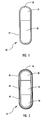
- bi-layer oral osmotic dosage form 15 is shown in cross-section in Figure 1.
- the components are not drawn to scale.
- the bi-layer LCT core comprises a first component layer 21, containing drug and selected excipients, and a second push layer 29, containing at least one fluid-expandable osmopolymer and optionally containing at least one osmagent along with selected excipients.
- Suitable excipients are known in the art and include diluents, carriers, binders, fillers and processing aids.
- a semipermeable membrane 57 surrounds the bi-layer tablet core to form a compartment and a suitably sized orifice 55 is formed through the semipermeable membrane and into the first component layer 21 to permit drug formulation to be released from within the compartment.
- the orifice 55 is preferably formed in the narrow end of the dosage form comprising the first component layer.
- drug is released from the first drug-containing layer at an ascending release rate for an extended time period.
- an immediate-release dose of a drug may be provided by applying a drug-containing overcoat to a bi-layer dosage form, if desired, as described elsewhere herein.
- oral osmotic dosage forms exhibiting an ascending drug release rate for an extended time period can also be achieved with a novel tri-layer tablet core surrounded by a semipermeable membrane and having suitable exit means for releasing drug formulation through the semipermeable membrane.
- the novel tri-layer tablet core has a first drug-containing layer, a second drug-containing layer and a third push layer.
- drug is successively released, in a sustained and controlled manner, from the first drug-containing layer and then from the second drug-containing layer such that an ascending release rate over an extended time period is achieved.
- the tri-layer osmotic dosage forms preferably avoid the use of sorbitol as an excipient. This provides manufacturing efficiency and product shelf-life advantages since sorbitol is very hygroscopic and attracts moisture during storage which can pose difficulties in handling and manufacturing as well as longer-term stability concerns.
- sufficient activity in the push layer may be achieved with the use of a relatively lower concentration (less than about 25%) of osmotically effective solute such that the size of the push layer can be smaller relative to the size of the two drug-containing layers.
- the push layer is smaller than the combined size of the first and second drug-containing layers.
- the hydration rate of the tri-layer osmotic dosage form is improved with the inclusion of a flux-enhancing agent in the semipermeable membrane.
- a flux-enhancing agent in the semipermeable membrane.
- the longitudinally compressed tablet (“LCT") core configuration as described above, for the tri-layer osmotic dosage forms to also enhance hydration.
- the combination of features including the LCT tri-layer core configuration, a suitable drug concentration gradient between the first and second component layers, the osmotic properties of the component layers and the fluid flux properties of the semipermeable membrane achieves the desired ascending rate of drug release over an extended time period.
- such preferred embodiments exhibit consistent and reliable operation and can be efficiently manufactured on a large-scale basis.
- a preferred embodiment of a tri-layer oral osmotic dosage form additionally comprising an immediate-release dose of drug applied as an overcoat and an aesthetic overcoat 14 is shown in cross-section in Figure 2.
- the tri-layer LCT core comprises a first component layer 20, containing a selected drug in a pharmaceutically acceptable form along with selected excipients; a second component layer 18, containing a higher concentration of drug along with selected excipients; and a third push layer 28, containing at least one osmopolymer and optionally containing at least one osmagent along with selected excipients.
- a semipermeable membrane 56 surrounds the tri-layer tablet core to form a compartment and a suitably sized orifice 54 is formed through the semipermeable membrane and into the first component layer to permit drug formulation to be released from within the compartment.
- the orifice 54 is preferably formed in the narrow end of the dosage form comprising the first component layer.
- the preferred embodiment further comprises an immediate-release dose of drug contained within an overcoat 60 applied onto the surface of the tri-layer osmotic dosage form.
- the drug is mixed with suitable excipients such as, for example, hydroxypropylmethylcellulose, to prepare a solution for coating onto the surface of the semipermeable membrane of the tri-layer osmotic dosage form that will rapidly dissolve and release drug following administration.
- an optional aesthetic overcoat 62 applied onto the surface of the drug-containing overcoat 60.
- aesthetic overcoats provide advantages including taste-masking, improved appearance and "glidability" for facilitating swallowing and further processing steps such as printing, packaging, etc.
- Exemplary embodiments of tri-layer osmotic dosage forms that exhibit a substantially ascending release rate over an extended time period are detailed below in Examples 4 - 6 and Examples 8 and 9.
- Bi-layer oral osmotic dosage forms were made in accord with conventional manufacturing processes known in the art and disclosed in detail in copending U.S. Application No. 967,606, filed November 10, 1997, of which the present application is a continuation-in-part application. Briefly, a first component layer, containing methylphenidate hydrochloride and selected excipients, and a second push layer, containing suitable osmopolymers, 40% by weight of an osmagent and selected excipients, were separately prepared by granulation methods. Next, the first component layer and the second push layer granulation preparations were longitudinally compressed together to form bi-layer LCT cores. A selected semipermeable membrane was then coated around the bi-layer LCT cores and a suitable 30 mil orifice for drug release was formed therethrough and into the first component layer.
- Each dosage form as prepared comprised:
- Bi-layer oral osmotic dosage forms were made in accord with conventional manufacturing processes known in the art and disclosed in detail in copending U.S. Application No. 967,606, filed November 10, 1997, of which the present application is a continuation-in-part application. Briefly, a first component layer, containing methylphenidate hydrochloride, sorbitol and selected excipients, and a second push layer, containing suitable osmopolymers, 40% by weight of an osmagent and selected excipients, were separately prepared by granulation methods. Next, the first component layer and the second push layer granulation preparations were longitudinally compressed together to form bi-layer LCT cores. A selected semipermeable membrane was then coated around the bi-layer LCT cores and a suitable 30 mil orifice for drug release was formed therethrough.
- Each dosage form as prepared comprised:
- Bi-layer oral osmotic dosage forms additionally comprising an immediate-release dose of drug applied as an overcoat onto the semipermeable membrane were made in accord with conventional manufacturing processes known in the art and disclosed in detail in copending U.S. Application No. 967,606, filed November 10, 1997, of which the present application is a continuation-in-part application. Briefly, a first component layer, containing methylphenidate hydrochloride, sorbitol and selected excipients, and a second push layer, containing suitable osmopolymers, 39.8% by weight of an osmagent and selected excipients, were separately prepared by granulation methods.
- first component layer and the second push layer granulation preparations were longitudinally compressed together to form bi-layer LCT cores.
- a selected semipermeable membrane was then coated around the bi-layer LCT cores and a suitable 30 mil orifice for drug release was formed therethrough.
- a drug-containing overcoat mixture was prepared and coated onto the semipermeable membrane of the osmotic dosage form.
- a taste-masking overcoat is also applied.
- Each osmotic bi-layer dosage form as prepared comprised:
- An immediate-release drug-containing overcoat comprising 60% hydroxypropylmethylcellulose and 40% methylphenidate hydrochloride is prepared and a final solution of 10 mg (i.e., containing 4 mg of methylphenidate salt) is coated onto the semipermeable membrane of the osmotic dosage form.
- the periodic release rates from the drug overcoat and the osmotic dosage form were determined at 30 minutes, 1 hour and then hourly for the next nine hours.
- the hourly results are shown in Table 3 along with an indication of the occurrences of an ascending release rate.
- Tri-layer oral osmotic dosage forms were made in accord with conventional manufacturing processes known in the art and disclosed in detail in copending U.S. Application No. 937,336, filed August 19, 1997, of which the present application is a continuation-in-part application. Briefly, a first component layer, containing pseudoephedrine hydrochloride and selected excipients, a second component layer, containing a higher concentration of pseudoephedrine hydrochloride and selected excipients, and a third push layer, containing suitable osmopolymers, an osmagent and selected excipients, were separately prepared by granulation methods.
- first component layer, second component layer and the third push layer granulation preparations were longitudinally compressed together to form tri-layer LCT cores.
- a selected semipermeable membrane was then coated around the tri-layer LCT cores and a suitable 30 mil orifice for drug release was formed therethrough.
- Each dosage form as prepared comprised:
- Tri-layer oral osmotic dosage forms having a drug concentration gradient wherein the drug concentration was greater in the second component layer than the first component layer and also having viscosity gradients wherein the viscosity of the first component layer was less than the viscosity of the second component layer and the viscosity of the second component layer was lower than the viscosity of the third push layer were made in accord with conventional manufacturing processes known in the art and disclosed in detail in copending U.S. Application No. 937,336, filed August 19, 1997, of which the present application is a continuation-in-part application.
- Each dosage form as prepared comprised:
- the dosage forms had 25 mil exit orifices formed through the semipermeable membrane to permit release of drug formulation from within the compartment.
- An ascending release rate for an extended time period of about 16 hours was achieved with the dosage forms of Example 5.
- Preferred embodiments of the tri-layer osmotic dosage forms of the present invention additionally comprising an immediate-release dose of drug applied as an overcoat, as shown in Figure 2, were prepared in accord with conventional osmotic tablet manufacturing processes.
- the first component layer contained the following (by weight percent): 9.40% methylphenidate hydrochloride, 83.71% polyethylene oxide (Polyox N-80 brand product of Union Carbide, Danbury, CT), 5% polyvinylpyrrolidone (Kolidon 29-32 product of BASF Corp., Mt. Olive, NJ); 1.34% succinic acid; 0.5% stearic acid; and 0.05% butylated hydroxy toluene.
- the second component layer contained the following (by weight percent): 13.65% methylphenidate hydrochloride, 78.80% polyethylene oxide (Polyox N-80 brand product of Union Carbide, Danbury, CT), 5% polyvinylpyrrolidone (Kolidon 29-32 product of BASF Corp., Mt. Olive, NJ); 1.95% succinic acid; 0.5% stearic acid; 0.05% butylated hydroxy toluene; and 0.05% yellow ferric oxide, as coloring agent.
- the third push layer contained the following (by weight percent): 73.7% high molecular weight polyethylene oxide (Polyox 303 brand product of Union Carbide, Danbury, CT), 20% sodium chloride; 5% polyvinylpyrrolidone (Kolidon 29-32 brand product of BASF Corp., Mt. Olive, NJ); 0.25% stearic acid; 0.05% butylated hydroxy toluene; and 1% green ferric oxide, as coloring agent.
- Polyox 303 brand product of Union Carbide, Danbury, CT 20% sodium chloride
- polyvinylpyrrolidone Kolidon 29-32 brand product of BASF Corp., Mt. Olive, NJ
- stearic acid 0.05% butylated hydroxy toluene
- green ferric oxide as coloring agent.
- Each of the first component layer, second component layer and third push layer were separately prepared into granulated compositions in a fluid bed granulator.
- the granulated compositions were then compressed sequentially and longitudinally on a rotary tablet press to produce the tri-layer LCT cores.
- 40 mg of the first component layer granulation and 75 mg of the second component layer granulation were first sequentially filled and tamped at 100 newtons into the die.
- 90 mg of the third push layer granulation to the die was added to the die and the final compression was performed at 1500 newtons.
- the composition of the semipermeable membrane was 83% by weight cellulose acetate (CA 398-10, having an acetyl content of 39.8%, product of Eastman Chemical, Kingsport, TN) and 17% by weight copolymer of ethylene and propylene oxide (Poloxamer 188 brand product of BASF Corp., Mt. Olive, NJ, added as a flux-enhancer.
- the two ingredients were dissolved in a blend of 99.5% acetone and 0.5% water to form a 5% solids solution. In a pan coater, the solution was then sprayed onto the tri-layer LCT cores to a weight of 25.7 mg and a thickness of 4-5 mil.
- a 0.76 mm (40 mil) orifice was drilled through the semipermeable membrane at the narrow end of the compartment proximate to the first component layer to thereby form the preferred tri-layer osmotic dosage forms, each containing 14 mg of methylphenidate.
- Each dosage form was approximately 12 mm long with an approximate diameter of 5.3 mm.
- the drug overcoat for providing an immediate-release initial dose of drug contains approximately 30% by weight methylphenidate hydrochloride, approximately 70% by weight hydroxypropylmethylcellulose (Methocel E3 brand name product of Dow Chemical Co., Midland, MI), and a trace amount of phosphoric acid (i.e., 20 ml of phosphoric acid added to 87 kg of drug in solution).
- An aqueous coating solution is prepared by dissolving and mixing the ingredients in water to form a solution with a 10% solids composition. In a pan coater, the solution was then sprayed onto the semipermeable membranes of the tri-layer osmotic dosage forms to a weight of about 14.0 mg comprising an immediate-release dose of methylphenidate of about 4mg.
- the final aesthetic overcoat composition weighed 16.9 mg and contained an underlayer of Opadry II, yellow (brand name product of Colorcon, West Point, PA and an overlayer of Opadry, clear, with a trace amount of carnauba wax, a glidant, prepared and applied as follows: first, Opadry II (10%) is suspended in water (90%) and sprayed onto the drug-overcoated dosage forms; next, clear Opadry (5%) is suspended in water (95%) and sprayed onto the drug- and Opadry II-overcoated dosage forms; finally, the dosage forms are tumbled in the coater with the carnauba wax for ten minutes to allow about 100 ppm of wax to be uniformly distributed onto the clear Opadry overcoat.
- Many pharmaceutical dosage forms utilize drug in salt form such as the hydrochloride salt of methylphenidate utilized herein.
- salt forms of drugs prepared in aqueous solution are prone to degradation and, thus, often have stability and shelf-life problems. It has been discovered that the addition of an appropriate pH-adjusting agent to the aqueous solution decreases undesired degradation and improves the stability of the product.
- tri-layer osmotic dosage forms comprising methylphenidate hydrochloride, it has been discovered that degradation of the drug ingredient can be minimized by the addition of suitable antidegradation agents, i.e., succinic acid in the first and second component layers and phosphoric acid in the drug overcoat.
- Suitable antidegradation agents include compounds that dissolve in an aqueous medium are pharmaceutically acceptable, i.e., nontoxic and suitable for oral administration to humans, and that exhibit sufficient pH-adjusting ability, i.e., have a pH no greater than 4 and preferably of 3 or below. Additional examples include potassium phosphate, sodium phosphate, fumaric acid, citric acid, tartaric acid, malic acid, hydrochloric acid, aspartic acid, glutamic acid, oxalic acid, lactic acid, malonic acid, glyceric acid and ascorbic acid.
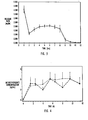
- Periodic release rates for twenty-four sample dosage forms prepared as described were determined hourly for 12 hours and are presented in grapn form in Figure 3.
- the doses of methylphenidate administered during each regimen varied somewhat to match as closely as possible the "usual dose" each subject was routinely administered.
- the actual doses were normalized to a single 18 mg dose of the tri-layer osmotic dosage and to 15 mg of Ritalin® administered as three 5 mg doses.
- the plasma drug concentration following each administration of an immediate-release dose rises relatively rapidly and then declines at a generally characteristic rate until the next dose is administered.
- the plasma drug concentration declines to a trough concentration and then rises again to a peak concentration.
- the plasma drug concentration is substantially smoothly ascending and exhibits no peaks and troughs.
- Tri-layer oral osmotic dosage forms were made in accord with the manufacturing processes of Example 6 but comprising twice as much methylphenidate, i.e., a total of 28 mg of methylphenidate contained within the first and second component layers and 8 mg of methylphenidate in the drug overcoat. All of the remaining ingredients are also doubled so that the weight percents are the same as in Example 6. The third push layer is also doubled.
- the semipermeable membrane had the same composition as in Example 6 but was applied to a weight of about 34 mg.
- These dosage forms exhibit release of 36 mg of methylphenidate with about 8 mg released immediately and the remaining 28 mg released at an ascending release rate over an extended time period.
- Tri-layer oral osmotic dosage forms were made in accord with the manufacturing processes of Example 6 but comprising a total of 42 mg of methylphenidate contained within the first and second component layers and 12 mg of methylphenidate in the drug overcoat.
- the first component layer contained the following (by weight percent): 11.5% methylphenidate hydrochloride, 81.6% polyethylene oxide (Polyox N-80 brand product of Union Carbide, Danbury, CT), 5% polyvinylpyrrolidone (Kolidon 29-32 product of BASF Corp., Mt. Olive, NJ); 1.3% succinic acid; 0.5% stearic acid; 0.05% butylated hydroxy toluene; and 0.05% yellow ferric oxide, as coloring agent.
- the second component layer contained the following (by weight percent): 19.8% methylphenidate hydrochloride, 72.7% polyethylene oxide (Polyox N-80 brand product of Union Carbide, Danbury, CT), 5% polyvinylpyrrolidone (Kolidon 29-32 product of BASF Corp., Mt. Olive, NJ); 1.95% succinic acid; 0.5% stearic acid; and 0.05% butylated hydroxy toluene.
- the third push layer is doubled from Example 6 and the semipermeable membrane had the same composition as in Example 6 but was applied to a weight of about 34 mg.
- These dosage forms exhibit release of 54 mg of methylphenidate with about 12 mg released immediately and the remaining 42 mg released at an ascending release rate over an extended time period.
Landscapes
- Health & Medical Sciences (AREA)
- Chemical & Material Sciences (AREA)
- General Health & Medical Sciences (AREA)
- Life Sciences & Earth Sciences (AREA)
- Pharmacology & Pharmacy (AREA)
- Veterinary Medicine (AREA)
- Public Health (AREA)
- Medicinal Chemistry (AREA)
- Animal Behavior & Ethology (AREA)
- Epidemiology (AREA)
- Engineering & Computer Science (AREA)
- Bioinformatics & Cheminformatics (AREA)
- Chemical Kinetics & Catalysis (AREA)
- Emergency Medicine (AREA)
- Nuclear Medicine, Radiotherapy & Molecular Imaging (AREA)
- General Chemical & Material Sciences (AREA)
- Neurosurgery (AREA)
- Neurology (AREA)
- Biomedical Technology (AREA)
- Organic Chemistry (AREA)
- Physics & Mathematics (AREA)
- Psychology (AREA)
- Analytical Chemistry (AREA)
- Biochemistry (AREA)
- General Physics & Mathematics (AREA)
- Immunology (AREA)
- Pathology (AREA)
- Medicinal Preparation (AREA)
- Pharmaceuticals Containing Other Organic And Inorganic Compounds (AREA)
- Acyclic And Carbocyclic Compounds In Medicinal Compositions (AREA)
- Medicines Containing Material From Animals Or Micro-Organisms (AREA)
Applications Claiming Priority (5)
| Application Number | Priority Date | Filing Date | Title |
|---|---|---|---|
| US8778798P | 1998-06-03 | 1998-06-03 | |
| US87787P | 1998-06-03 | ||
| US09/253,317 US6919373B1 (en) | 1996-11-12 | 1999-02-19 | Methods and devices for providing prolonged drug therapy |
| US253317 | 1999-02-19 | ||
| EP99955212A EP1083879B1 (en) | 1998-06-03 | 1999-05-27 | Devices for providing prolonged drug therapy |
Related Parent Applications (1)
| Application Number | Title | Priority Date | Filing Date |
|---|---|---|---|
| EP99955212A Division EP1083879B1 (en) | 1998-06-03 | 1999-05-27 | Devices for providing prolonged drug therapy |
Publications (1)
| Publication Number | Publication Date |
|---|---|
| EP1449524A1 true EP1449524A1 (en) | 2004-08-25 |
Family
ID=26777397
Family Applications (2)
| Application Number | Title | Priority Date | Filing Date |
|---|---|---|---|
| EP04075594A Withdrawn EP1449524A1 (en) | 1998-06-03 | 1999-05-27 | Methods and devices for providing prolonged drug therapy |
| EP99955212A Expired - Lifetime EP1083879B1 (en) | 1998-06-03 | 1999-05-27 | Devices for providing prolonged drug therapy |
Family Applications After (1)
| Application Number | Title | Priority Date | Filing Date |
|---|---|---|---|
| EP99955212A Expired - Lifetime EP1083879B1 (en) | 1998-06-03 | 1999-05-27 | Devices for providing prolonged drug therapy |
Country Status (16)
| Country | Link |
|---|---|
| EP (2) | EP1449524A1 (enExample) |
| JP (1) | JP2002516848A (enExample) |
| KR (1) | KR20080083074A (enExample) |
| CN (1) | CN1209098C (enExample) |
| AT (1) | ATE277594T1 (enExample) |
| AU (1) | AU4319799A (enExample) |
| CA (1) | CA2333688A1 (enExample) |
| DE (1) | DE69920689T2 (enExample) |
| DK (1) | DK1083879T3 (enExample) |
| ES (1) | ES2229783T3 (enExample) |
| HK (1) | HK1046638B (enExample) |
| IL (1) | IL140020A0 (enExample) |
| NO (1) | NO330235B1 (enExample) |
| NZ (1) | NZ508567A (enExample) |
| PT (1) | PT1083879E (enExample) |
| WO (1) | WO1999062496A1 (enExample) |
Families Citing this family (42)
| Publication number | Priority date | Publication date | Assignee | Title |
|---|---|---|---|---|
| US5837284A (en) | 1995-12-04 | 1998-11-17 | Mehta; Atul M. | Delivery of multiple doses of medications |
| US6919373B1 (en) | 1996-11-12 | 2005-07-19 | Alza Corporation | Methods and devices for providing prolonged drug therapy |
| US6962997B1 (en) | 1997-05-22 | 2005-11-08 | Celgene Corporation | Process and intermediates for resolving piperidyl acetamide steroisomers |
| IL142896A0 (en) | 1998-11-02 | 2002-04-21 | Elan Corp Plc | Multiparticulate modified release composition |
| US6673367B1 (en) | 1998-12-17 | 2004-01-06 | Euro-Celtique, S.A. | Controlled/modified release oral methylphenidate formulations |
| US7083808B2 (en) | 1998-12-17 | 2006-08-01 | Euro-Celtique S.A. | Controlled/modified release oral methylphenidate formulations |
| US6419960B1 (en) | 1998-12-17 | 2002-07-16 | Euro-Celtique S.A. | Controlled release formulations having rapid onset and rapid decline of effective plasma drug concentrations |
| KR20020072290A (ko) * | 2000-01-20 | 2002-09-14 | 델시스 파머수티컬 코포레이션 | 다단계 약물 투여 형태 |
| AR030557A1 (es) | 2000-04-14 | 2003-08-27 | Jagotec Ag | Una tableta en multicapa de liberacion controlada y metodo de tratamiento |
| US20020187192A1 (en) * | 2001-04-30 | 2002-12-12 | Yatindra Joshi | Pharmaceutical composition which reduces or eliminates drug abuse potential |
| US20030049272A1 (en) * | 2001-08-30 | 2003-03-13 | Yatindra Joshi | Pharmaceutical composition which produces irritation |
| US7838026B2 (en) | 2001-09-28 | 2010-11-23 | Mcneil-Ppc, Inc. | Burst-release polymer composition and dosage forms comprising the same |
| MXPA04002973A (es) | 2001-09-28 | 2005-06-20 | Johnson & Johnson | Formas de dosis de liberacion modificada. |
| US7122143B2 (en) | 2001-09-28 | 2006-10-17 | Mcneil-Ppc, Inc. | Methods for manufacturing dosage forms |
| JP4500679B2 (ja) * | 2002-07-29 | 2010-07-14 | アルザ・コーポレーシヨン | パリペリドンを制御送達する方法および投薬形態物 |
| US20050232995A1 (en) * | 2002-07-29 | 2005-10-20 | Yam Nyomi V | Methods and dosage forms for controlled delivery of paliperidone and risperidone |
| EP1542662A1 (en) * | 2002-09-28 | 2005-06-22 | McNEIL-PPC, INC. | Immediate release dosage form comprising shell having openings therein |
| GR1004330B (el) * | 2002-10-14 | 2003-09-05 | Lavipharm A.E. | Φαρμακοτεχνικη μορφη για τη χορηγηση οργανικων νιτρικων ενωσεων |
| US7988993B2 (en) | 2002-12-09 | 2011-08-02 | Andrx Pharmaceuticals, Inc. | Oral controlled release dosage form |
| KR20050123097A (ko) * | 2003-02-11 | 2005-12-29 | 알자 코포레이션 | 변형된 층 형상을 갖는 방법 및 제형 |
| KR20060092255A (ko) | 2003-09-26 | 2006-08-22 | 알자 코포레이션 | 고도의 약물적재를 제공하는 약물코팅제 및 그의 제조방법 |
| ATE526988T1 (de) * | 2003-10-08 | 2011-10-15 | Mallinckrodt Llc | Methylphenidat-lösung und relevante verabreichungs- und herstellungsverfahren |
| US7879354B2 (en) | 2004-01-13 | 2011-02-01 | Mcneil-Ppc, Inc. | Rapidly disintegrating gelatinous coated tablets |
| EP1755564B1 (en) * | 2004-05-21 | 2013-10-16 | Accu-Break Technologies, Inc. | Immediate release pharmaceutical tablets with height greater than width |
| ES2261006B1 (es) * | 2004-06-10 | 2007-11-01 | Laboratorios Rubio, S.A. | Pellet multicapa de liberacion controlada de metilfenidato. |
| US8541026B2 (en) | 2004-09-24 | 2013-09-24 | Abbvie Inc. | Sustained release formulations of opioid and nonopioid analgesics |
| WO2006046114A2 (en) * | 2004-10-25 | 2006-05-04 | Ranbaxy Laboratories Limited | Osmotic dosage forms providing ascending drug release, and processes for their preparation |
| WO2009023006A2 (en) * | 2006-05-08 | 2009-02-19 | Mcneil-Ppc, Inc. | Modified release dosage form |
| US8673352B2 (en) | 2005-04-15 | 2014-03-18 | Mcneil-Ppc, Inc. | Modified release dosage form |
| PL116330U1 (en) | 2005-10-31 | 2007-04-02 | Alza Corp | Method for the reduction of alcohol provoked rapid increase in the released dose of the orally administered opioide with prolonged liberation |
| FR2899476B1 (fr) * | 2006-04-11 | 2008-07-04 | Assist Publ Hopitaux De Paris | Association du mazindol dans le traitement du deficit de l'attention/hyperactivite |
| JP2011511782A (ja) | 2008-02-12 | 2011-04-14 | アボット・ラボラトリーズ | 長期放出性ヒドロコドンアセトアミノフェンならびにその関連方法および用途 |
| JP2012508228A (ja) * | 2008-11-07 | 2012-04-05 | サムヤン コーポレイション | メチルフェニデートの放出制御用薬剤学的組成物 |
| AU2010328353B2 (en) | 2009-12-07 | 2015-07-16 | Mcneil-Ppc, Inc. | Partial dip coating of dosage forms for modified release |
| UY34856A (es) * | 2012-07-03 | 2013-12-31 | Bayer Pharma AG | Formas de presentación farmacéuticas que contienen 5-cloro-n-({(5s)-2-oxo-3-[4-(3-oxo-4- morfolinil)-fenil]-1,3-oxazolidin-5-il}-metil)-2-tiofencarboxamida |
| WO2014174388A1 (en) * | 2013-03-29 | 2014-10-30 | Wockhardt Limited | Modified release pharmaceutical compositions of methylphenidate or salts thereof |
| CA3018328A1 (en) | 2014-10-31 | 2016-04-30 | Purdue Pharma | Methods and compositions particularly for treatment of attention deficit disorder |
| US9707217B1 (en) | 2017-02-03 | 2017-07-18 | Osmotica Kereskedelmi Es Szolgaltato Kft | Dose-dumping resistant controlled release dosage form |
| US10722473B2 (en) | 2018-11-19 | 2020-07-28 | Purdue Pharma L.P. | Methods and compositions particularly for treatment of attention deficit disorder |
| JP7542539B2 (ja) * | 2019-01-25 | 2024-08-30 | アイアンショア ファーマシューティカルズ アンド ディベロップメント, インコーポレイテッド | 注意欠陥多動性障害を処置するためのメチルフェニデート組成物 |
| WO2020181127A1 (en) * | 2019-03-05 | 2020-09-10 | Kashiv Biosciences, Llc | Delayed release methylphenidate compositions |
| CN114681422B (zh) * | 2020-12-30 | 2023-09-05 | 深圳翰宇药业股份有限公司 | 一种硝苯地平控释片及其制备方法 |
Citations (2)
| Publication number | Priority date | Publication date | Assignee | Title |
|---|---|---|---|---|
| WO1998006380A2 (en) * | 1996-08-16 | 1998-02-19 | Alza Corporation | Dosage form for providing ascending dose of drug |
| WO1998014168A2 (en) * | 1996-09-30 | 1998-04-09 | Alza Corporation | Dosage form providing a sustained and ascending drug release |
Family Cites Families (3)
| Publication number | Priority date | Publication date | Assignee | Title |
|---|---|---|---|---|
| US4824675A (en) * | 1987-07-13 | 1989-04-25 | Alza Corporation | Dispenser with movable matrix comprising a plurality of tiny pills |
| DE69524214T3 (de) * | 1994-05-06 | 2008-05-15 | Pfizer Inc. | Azithromycin enthaltende arzneiverabreichungsformen mit gesteuerter wirkstoffabgabe |
| US5837284A (en) * | 1995-12-04 | 1998-11-17 | Mehta; Atul M. | Delivery of multiple doses of medications |
-
1999
- 1999-05-27 CN CNB998069701A patent/CN1209098C/zh not_active Expired - Lifetime
- 1999-05-27 AU AU43197/99A patent/AU4319799A/en not_active Abandoned
- 1999-05-27 KR KR1020087021536A patent/KR20080083074A/ko not_active Ceased
- 1999-05-27 DK DK99955212T patent/DK1083879T3/da active
- 1999-05-27 IL IL14002099A patent/IL140020A0/xx unknown
- 1999-05-27 HK HK02108159.8A patent/HK1046638B/zh not_active IP Right Cessation
- 1999-05-27 JP JP2000551752A patent/JP2002516848A/ja not_active Withdrawn
- 1999-05-27 AT AT99955212T patent/ATE277594T1/de active
- 1999-05-27 WO PCT/US1999/011920 patent/WO1999062496A1/en not_active Ceased
- 1999-05-27 CA CA002333688A patent/CA2333688A1/en not_active Abandoned
- 1999-05-27 PT PT99955212T patent/PT1083879E/pt unknown
- 1999-05-27 EP EP04075594A patent/EP1449524A1/en not_active Withdrawn
- 1999-05-27 NZ NZ508567A patent/NZ508567A/xx not_active IP Right Cessation
- 1999-05-27 DE DE69920689T patent/DE69920689T2/de not_active Expired - Lifetime
- 1999-05-27 ES ES99955212T patent/ES2229783T3/es not_active Expired - Lifetime
- 1999-05-27 EP EP99955212A patent/EP1083879B1/en not_active Expired - Lifetime
-
2000
- 2000-11-28 NO NO20006007A patent/NO330235B1/no not_active IP Right Cessation
Patent Citations (2)
| Publication number | Priority date | Publication date | Assignee | Title |
|---|---|---|---|---|
| WO1998006380A2 (en) * | 1996-08-16 | 1998-02-19 | Alza Corporation | Dosage form for providing ascending dose of drug |
| WO1998014168A2 (en) * | 1996-09-30 | 1998-04-09 | Alza Corporation | Dosage form providing a sustained and ascending drug release |
Also Published As
| Publication number | Publication date |
|---|---|
| NO20006007L (no) | 2001-02-05 |
| DE69920689D1 (de) | 2004-11-04 |
| KR20080083074A (ko) | 2008-09-12 |
| NO330235B1 (no) | 2011-03-07 |
| DK1083879T3 (da) | 2005-01-31 |
| IL140020A0 (en) | 2002-02-10 |
| WO1999062496A1 (en) | 1999-12-09 |
| CN1352549A (zh) | 2002-06-05 |
| HK1035492A1 (en) | 2001-11-30 |
| PT1083879E (pt) | 2005-01-31 |
| CA2333688A1 (en) | 1999-12-09 |
| AU4319799A (en) | 1999-12-20 |
| NO20006007D0 (no) | 2000-11-28 |
| HK1046638A1 (en) | 2003-01-24 |
| ES2229783T3 (es) | 2005-04-16 |
| DE69920689T2 (de) | 2005-02-24 |
| ATE277594T1 (de) | 2004-10-15 |
| HK1046638B (zh) | 2006-02-24 |
| CN1209098C (zh) | 2005-07-06 |
| EP1083879B1 (en) | 2004-09-29 |
| JP2002516848A (ja) | 2002-06-11 |
| NZ508567A (en) | 2004-02-27 |
| EP1083879A1 (en) | 2001-03-21 |
Similar Documents
| Publication | Publication Date | Title |
|---|---|---|
| US9029416B2 (en) | Methods and devices for providing prolonged drug therapy | |
| EP1083879B1 (en) | Devices for providing prolonged drug therapy | |
| JP2002516848A5 (enExample) | ||
| JP2015028095A (ja) | 長時間の薬物療法を与える方法および装置 | |
| WO2001051040A1 (en) | Osmotic device containing alprazolam and an antipsychotic agent | |
| AU2004201230C1 (en) | Methods and devices for providing prolonged drug therapy | |
| AU2012232984B2 (en) | Methods and devices for providing prolonged drug therapy | |
| HK1068799A (en) | Methods and devices for providing prolonged drug therapy | |
| HK1035492B (en) | Devices for providing prolonged drug therapy | |
| KR100890537B1 (ko) | 연장된 약물 치료를 제공하기 위한 방법 및 장치 | |
| MXPA00011908A (en) | Methods and devices for providing prolonged drug therapy |
Legal Events
| Date | Code | Title | Description |
|---|---|---|---|
| PUAI | Public reference made under article 153(3) epc to a published international application that has entered the european phase |
Free format text: ORIGINAL CODE: 0009012 |
|
| 17P | Request for examination filed |
Effective date: 20040326 |
|
| AC | Divisional application: reference to earlier application |
Ref document number: 1083879 Country of ref document: EP Kind code of ref document: P |
|
| AK | Designated contracting states |
Kind code of ref document: A1 Designated state(s): AT BE CH CY DE DK ES FI FR GB GR IE IT LI LU NL PT SE |
|
| RIN1 | Information on inventor provided before grant (corrected) |
Inventor name: CHRISTOPHER, CAROL A. Inventor name: GUINTA, DIANE R. Inventor name: AYER, ATUL D. Inventor name: SAKS, SAMUEL R. Inventor name: HAMEL, LAWRENCE G. Inventor name: SHIVANAND, PADMAJA Inventor name: LAM, ANDREW C. Inventor name: GUPTA, SUNEEL K. Inventor name: HATAMKHANY, ZAHEDEH Inventor name: WRIGHT, JERI D. Inventor name: WEYERS, RICHARD G. |
|
| 17Q | First examination report despatched |
Effective date: 20050222 |
|
| REG | Reference to a national code |
Ref country code: HK Ref legal event code: DE Ref document number: 1068799 Country of ref document: HK |
|
| AKX | Designation fees paid |
Designated state(s): AT BE CH CY DE DK ES FI FR GB GR IE IT LI LU NL PT SE |
|
| STAA | Information on the status of an ep patent application or granted ep patent |
Free format text: STATUS: THE APPLICATION IS DEEMED TO BE WITHDRAWN |
|
| 18D | Application deemed to be withdrawn |
Effective date: 20050906 |
|
| REG | Reference to a national code |
Ref country code: HK Ref legal event code: WD Ref document number: 1068799 Country of ref document: HK |