EP1410023B1 - Methods using o6-alkylguanine-dna alkyltransferases - Google Patents
Methods using o6-alkylguanine-dna alkyltransferases Download PDFInfo
- Publication number
- EP1410023B1 EP1410023B1 EP02720187A EP02720187A EP1410023B1 EP 1410023 B1 EP1410023 B1 EP 1410023B1 EP 02720187 A EP02720187 A EP 02720187A EP 02720187 A EP02720187 A EP 02720187A EP 1410023 B1 EP1410023 B1 EP 1410023B1
- Authority
- EP
- European Patent Office
- Prior art keywords
- agt
- fusion protein
- protein
- label
- labelled
- Prior art date
- Legal status (The legal status is an assumption and is not a legal conclusion. Google has not performed a legal analysis and makes no representation as to the accuracy of the status listed.)
- Expired - Lifetime
Links
Images

Classifications
-
- G—PHYSICS
- G01—MEASURING; TESTING
- G01N—INVESTIGATING OR ANALYSING MATERIALS BY DETERMINING THEIR CHEMICAL OR PHYSICAL PROPERTIES
- G01N33/00—Investigating or analysing materials by specific methods not covered by groups G01N1/00 - G01N31/00
- G01N33/48—Biological material, e.g. blood, urine; Haemocytometers
- G01N33/50—Chemical analysis of biological material, e.g. blood, urine; Testing involving biospecific ligand binding methods; Immunological testing
- G01N33/68—Chemical analysis of biological material, e.g. blood, urine; Testing involving biospecific ligand binding methods; Immunological testing involving proteins, peptides or amino acids
-
- G—PHYSICS
- G01—MEASURING; TESTING
- G01N—INVESTIGATING OR ANALYSING MATERIALS BY DETERMINING THEIR CHEMICAL OR PHYSICAL PROPERTIES
- G01N33/00—Investigating or analysing materials by specific methods not covered by groups G01N1/00 - G01N31/00
- G01N33/48—Biological material, e.g. blood, urine; Haemocytometers
- G01N33/50—Chemical analysis of biological material, e.g. blood, urine; Testing involving biospecific ligand binding methods; Immunological testing
- G01N33/53—Immunoassay; Biospecific binding assay; Materials therefor
- G01N33/531—Production of immunochemical test materials
-
- C—CHEMISTRY; METALLURGY
- C07—ORGANIC CHEMISTRY
- C07K—PEPTIDES
- C07K2319/00—Fusion polypeptide
- C07K2319/20—Fusion polypeptide containing a tag with affinity for a non-protein ligand
-
- C—CHEMISTRY; METALLURGY
- C07—ORGANIC CHEMISTRY
- C07K—PEPTIDES
- C07K2319/00—Fusion polypeptide
- C07K2319/60—Fusion polypeptide containing spectroscopic/fluorescent detection, e.g. green fluorescent protein [GFP]
Definitions
- the present invention relates to methods of transferring a label from a substrate to a fusion protein comprising a protein of interest and an O 6 -alkylguanine-DNA alkyltransferase (AGT), and in particular to methods which further comprise detecting and/or manipulating the labelled fusion protein.
- AGT O 6 -alkylguanine-DNA alkyltransferase
- German Patent Application No: 199 03 895 A (Kai Johnsson) describes an ELISA assay for the detection of O 6- alkylguanine-DNA alkyltransferase (AGT).
- AGT O 6- alkylguanine-DNA alkyltransferase
- AGT transfers the alkyl group in a S N 2 reaction to one of its own cysteines, resulting in an irreversibly alkylated enzyme.
- overexpression of AGT in tumour cells enables them to acquire drug resistance, particularly to alkylating drugs such as procarbazine, dacarbazine, temozolomide and bis-2-chloroethyl-N-nitrosourea
- inhibitors of AGT have been proposed for use as sensitisers in chemotherapy [Pegg et al., 1995].
- DE 199 03 895 A discloses an assay for measuring levels of AGT which relies on the reaction between biotinylated O 6 -alkylguanine-derivatives and AGT which leads to biotinylation of the AGT.
- the assay is suggested for monitoring the level of AGT in tumour tissue, adjusting treatment using AGT inhibitors as sensitisers in chemotherapy and for use in screening for AGT inhibitors.
- the present invention provides a method of detecting a fusion protein comprising protein of interest and an O 6 -alkylguanine-DNA alkyltransferase (AGT), the method comprising contacting the fusion protein with a substrate having a spectroscopic probe as a label so that the AGT transfers the label so that it is covalently bonded to the fusion protein and detecting the protein construct using the label.
- AGT O 6 -alkylguanine-DNA alkyltransferase
- the present invention provides a method of manipulating a fusion protein comprising protein of interest and an O 6 -alkylguanine-DNA alkyltransferase (AGT), the method comprising contacting the fusion protein with a substrate having a spectroscopic probe as a label so that the AGT transfers the label so that it is covalently bonded to the fusion protein and manipulating the fusion protein using a physical and/or chemical property introduced by the label to the fusion protein.
- AGT O 6 -alkylguanine-DNA alkyltransferase
- the method may comprise detecting the protein construct using the label.
- a method of immobilising a fusion protein comprising protein of interest and an alkylguanine-DNA alkyltransferase (AGT) on a solid support comprising contacting the fusion protein with a substrate having a label which is attached or attachable to a solid support, wherein the AGT transfers the label so that it is covalently bonded to the fusion protein which thereby is attached or can be subsequently attached to the solid support.
- the method may involve the further step of contacting the labelled fusion protein with the solid support so that it becomes immobilised on the solid support.
- the label may be covalently attached to the solid support, either when the label is transferred or in a subsequent reaction, or may be one member of a specific binding pair, the other member of which is attached or attachable to the solid support, either covalently or by any other means (e.g. using the specific binding pair of biotin and avidin or streptavidin).
- the present invention provides a method to label AGT fusion proteins both in vivo as well as in vitro.
- the term in vivo labelling of a AGT fusion protein means labelling in all compartments of a cell as well as of AGT fusion proteins pointing to the extracellular space. If the labelling of the AGT fusion protein is done in vivo and the protein fused to the AGT is a plasma membrane protein, the AGT part of the fusion protein can be either attached to the cytoplasmic or the extracellular side of the plasma membrane. If the labelling is done in vitro, the labelling of the fusion protein can be either performed in cell extracts or with purified or enriched forms of the AGT fusion protein.
- the protein of interest fused to the AGT comprises a DNA binding domain of a transcription factor or an activation domain of a transcription factor, a target substance or library of target substances is linked to the other of the DNA binding domain or the activation domain of the transcription factor, and the label is a candidate compound or library of candidate compounds suspected of interacting with the target substance(s).
- the method may further comprise transferring the candidate compound or library of candidate compounds to the AGT protein fusion and contacting the AGT fusion protein(s) labelled with the candidate compounds and the target substance(s) so that the interaction of a candidate compound joined to the AGT fusion protein and a target substance activates the transcription factor.
- the activated transcription factor can then drive the expression of a reporter which, if the method is carried out in cells, can be detected if the expression of the reporter confers a selective advantage on the cells.
- the method may involve one or more further steps such as detecting, isolating, identifying or characterising the candidate compound(s) or target substance(s).
- the O 6 -alkylguanine-DNA alkyltransferase or 'AGT' has the property of transferring a label present on a substrate to one of the cysteine residues of the AGT forming part of a fusion protein.
- the AGT is an O 6- alkylguanine-DNA alkyltransferase, for example human O 6- alkylguanine-DNA alkyltransferase which is described in Pegg et al 1995 and references therein.
- other alkylguanine-DNA alkyltransferases are known, e.g.
- O 6 -alkylguanine-DNA alkyltransferase also includes variants of a wild-type AGT which may differ by virtue of one or more amino acid substitutions, deletions or additions, but which still retain the property of transferring a label present on a substrate to the AGT or the protein or peptide with which it forms a fusion.
- variants of AGTs may be chemically modified using techniques well known to those skilled in the art.
- AGT variants may be produced using protein engineering techniques known to the skilled person and/or using molecular evolution to generate and select new O 6- alkylguanine-DNA alkyltransferases.
- the reference to the protein part of the fusion protein with the AGT is intended to include proteins, polypeptides and peptides of any length and both with and without secondary, tertiary or quaternary structure. Examples of applications of the present invention are provided below.
- the labelled substrate is preferably a labelled benzylguanine substrate, and more preferably is an O 6 -benzylguanine derivative.
- An example of such a derivative is an O 6 -benzylguanine derivative that is derivatised at the 4-position of the benzyl ring with the following general formula: wherein:
- the label part of the substrate can be chosen by those skilled in the art dependent on the application for which the fusion protein is intended.
- labels included a spectroscopic probe such as a fluorophore, a chromophore, a magnetic probe or a contrast reagent.
- the following applications of the present invention are provided by way of examples and not limitation.
- the method disclosed herein is generally applicable to a range of applications and is capable of specifically and covalently labelling fusion proteins with (1) labels which are capable of sensing and inducing changes in the environment of the labelled fusion protein and/or (2) labels which aid in manipulating the fusion protein by the physical and/or chemical properties specifically introduced by the label to the fusion protein.
- the method disclosed herein can be used to label AGT fusion proteins both in vivo and in vitro.
- the present invention is based on the realisation that specific attachment of a label to a desired protein could be carried out by constructing a fusion protein between that protein of interest and taking advantage of the mechanism of an O 6 -alkylguanine-DNA alkyltransferase such as human DNA repair enzyme O 6 -alkylguanine-DNA alkyltransferase (hAGT).
- O 6 -alkylguanine-DNA alkyltransferase hAGT
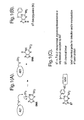
- This enzyme irreversibly transfers the alkyl group from its substrate, O 6- alkylguanine-DNA, to one of its cysteine residues ( Figure 1).
- a substrate analogue that rapidly reacts with hAGT is O 6 -benzylguanine, the second order rate constant being approximately 10 3 sec -1 M -1 ( Figure 1) .
- the labelling of the endogenous AGT of the host is advantageously taken into account. If the endogenous AGT of the host does not accept O 6 -benzylguanine derivatives or related compounds as a substrate, the labelling of the fusion protein is specific. In mammalian cells (human, murine, rat), labelling of endogenous AGT is possible. In those experiments where the simultaneous labelling of the endogenous AGT as well as of the AGT fusion problem poses a problem, previously described AGT-deficient cell lines can be used [Kaina et al. 1991].
- a labelled AGT substrates such as O 6- benzylguanine derivatives, where the substrate carries a detectable label which can be transferred to the AGT, such as a fluorophore, a chromophore, a magnetic probe, a radioactively labelled molecule or any other spectroscopic probe, allows the present invention to be used to specifically and covalently attach the detectable label to the AGT fusion protein, either in a cell, on the surface of a cell (in vivo) or in vitro. This allows the detection and characterization of the AGT fusion protein in vivo or in vitro.
- the term in vivo includes labelling in all compartments of a cell as well as of AGT fusion proteins pointing to the extracellular space.
- the method can be compared to the applications of the green fluorescent protein (GFP) which is also genetically fused to the protein of interest and allows its investigation in the living cell.
- GFP green fluorescent protein
- the disadvantage of GFP and its mutants is that it is principally limited to the use of the natural occurring fluorophore.
- the AGT fusion protein can be released from the affinity tag after its isolation.
- AGT substrates such as O 6 -benzylguanine derivatives
- AGT-protein fusions which are capable of generating reactive radicals, such as hydroxyl radicals, upon exposure to an external stimuli.
- the generated radicals can then inactivate the AGT fusion proteins as well as those proteins that are in close proximity of the AGT fusion protein, allowing the study the role of these proteins.
- labels are tethered metal-chelate complexes that produce hydroxyl radicals upon exposure to H 2 O 2 and ascorbate, and chromophores such as malachite green that produce hydroxyl radicals upon laser irradiation.
- CALI chromophore assisted laser induced inactivation
- the chromophore is brought in the spatial neighbourhood of the protein of interest by microinjecting chromophore-labelled antibodies specific to the protein of interest.
- labelling AGT fusion proteins with chromophores such as malachite green and subsequent laser irradiation would allow to inactivate the AGT fusion protein as well as those proteins that interact with the AGT fusion protein in a time-controlled and spatially-resolved manner.
- the method can be applied both in vivo or in vitro.
- AGT fusion proteins can be labelled with tethered metal-chelates and the AGT fusion protein and those proteins that interact with the AGT fusion protein can be inactivated in a specific manner upon exposure to H 2 O 2 and ascorbate.
- the method can not only be used to study the function of an AGT fusion protein or those that are in close proximity of the AGT fusion protein, but also to identify those proteins that are in close proximity of a AGT fusion protein.
- proteins which are in close proximity of the AGT fusion protein can be identified as such by either detecting fragments of that protein by a specific antibody, by the disappearance of those proteins on a high-resolution 2D-electrophoresis gels or by identification of the cleaved protein fragments via separation and sequencing techniques such as mass spectrometry or protein sequencing by N-terminal degradation.
- AGT substrates such as O 6- benzylguanine derivatives
- binding partners of the ligand such as proteins
- the label is a ligand which is capable of binding to a binding partner
- contacting such a substrate with a AGT fusion protein will lead to specific attachment of the ligand to the fusion protein.
- the ligand binds to another protein Y and the dimerization of the protein Y with the labelled AGT fusion protein leads to a biological function or a measurable signal, the biological function or the measured signal depends on the addition of the AGT substrate carrying the label.
- a specific example would be the use of AGT substrates and AGT fusion protein in the so-called three-hybrid system described by Ho et al., 1996, to regulate gene expression with small molecules.
- AGT is fused to the DNA-binding domain of a transcription factor.
- a protein Y such as FKBP that binds a ligand, such as FK506, is fused to the activation domain of a transcription factor. Supplying the cells with the AGT substrate that carries the ligand, in this example FK506, will lead to the formation of a functional transcription factor and gene expression.
- O 6 -benzylguanine derivatives or related AGT substrates that carry a label and where the label is a drug or a biological active small molecule that binds to an yet unidentified protein Y.
- the goal would be to identify the target protein Y of the biological active molecule.
- AGT is fused to the DNA-binding domain of a transcription factor.
- a cDNA library of the organism which expresses the unknown target protein Y is fused to the activation domain of a transcription factor.
- O 6 -benzylguanine derivatives or related AGT substrate that carry a label and where the label is the drug or the biological active small molecule will lead to the formation of a functional transcription factor and gene expression only in the case where this molecule binds to its target protein Y present in the cDNA library and fused to the activation domain. If gene expression is coupled to a selective advantage, the corresponding host carrying the plasmid with the target gene Y of the drug or bioactive molecule can be identified.
- An example for the latter approach is where the label is biotin and the molecule attached to the surface is streptavidin or avidin.
- Possible examples for a carrier would be either a glass side, a microtiter plate or any functionalized polymer.
- the immobilization of the AGT substrate via its label allows the subsequent immobilization of a AGT fusion protein on the carrier by the transfer of the label to the fusion protein.
- Spotting (different) AGT fusion proteins in a spatially resolved manner on the carrier allows the creation of protein arrays.
- O 6 -benzylguanine derivatives or related AGT substrates which carry a label and where the label is a molecule that can cross-link to other proteins.
- cross-linkers are molecules containing functional groups such as maleimides, active esters or azides and others known to those proficient in the art and described in Nadeau et al., 2002.
- AGT substrates with AGT fusion proteins that interact with other proteins (in vivo or in vitro) can lead to the covalent cross-linking of the AGT fusion protein with its interacting protein via the label. This allows the identification of the protein interacting with the AGT fusion protein.
- Pep-hAGT were grown to an optical density OD 600nm of 0.6. Expression of Pep-hAGT was induced by adding IPTG to a final concentration of 1 mM. At the same time BG-Bt was added to a final concentration of 10 ⁇ M and the bacteria were incubated for 2h at 37°C. Cells were harvested by centrifugation and the pellet washed twice to remove access BG-Bt . A re-suspended aliquot of cells was analysed by Western Blotting. Biotinylated proteins were detected using a streptavidin-peroxidase conjugate ( NEN ) and a chemiluminescent peroxidase substrate (Renaissance reagent plus, NEN) ( Figure 2).
- hAGT-DHFR-HA fusion protein is biotinylation in yeast using BG-Bt .
- the fusion protein is constructed on the DNA level using standard molecular biology procedures.
- the stop codon of hAGT is replaced by codons for the amino acids RSGI, which are then followed by the codon for the first amino acid of DHFR from mouse, a Met [Nunberg et al., 1980].
- the codons for the linker between hAGT and DHFR also encode for a Bgl II site, its DNA sequence being AGATCT.
- the pellet was washed twice to remove remaining BG-Bt .
- the cell extract was analysed for the presence of biotinylated hAGT-DHFR-HA fusion protein using an ELISA.
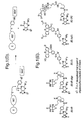
- the biotinylated hAGT-DHFR-HA was immobilized in streptavidin-coated microtiter wells and detected by using an antiHA-antibody (Babco) as a primary and an antimouse-HRP conjugate (Sigma) as a secondary antibody ( Figure 1) [Kolodziej, 1991].
- the ELISA was developed using the peroxidase substrate ABTS and the signal (absorbance) measured at OD 405nm .
- the signal for the in vivo biotinylated hAGT-DHFR-HA fusion protein was at least fivefold above background.
- the background signal was defined as the OD 405nm of cell lysates obtained from cells treated exactly as above but omitting the addition of BG-Bt.
- the following example demonstrates the feasibility of covalently labelling hAGT fusion proteins in yeast.
- the hAGT-DHFR-HA fusion protein is labelled with digoxigenin in yeast using BG-DIG.
- the construction of the hAGT-DHFR-HA fusion is described in example B.
- a culture of L40 yeast cells containing the expression vector p314AK1 in which the gene of a hAGT-DHFR fusion protein is under control of the p cupl promoter was grown to an OD 600nm of 1.2.
- Expression of the hAGT-DHFR fusion protein was induced by adding CuSO 4 to a concentration of 100 ⁇ M and BG-DIG was simultaneously added to a concentration of 20 ⁇ M.
- HEK 293 endogenous hAGT in human cells (HEK 293) is labelled with fluoresceine using BG-AcFc .
- HEK 293 cells were incubated with 5 ⁇ M BG-AcFc in PBS for 5min.
- the acetylated fluoresceine derivative BG-AcFc is cell-permeable and non-fluorescent but can be expected to be hydrolysed rapidly within the cell to yield the fluorescent BG-Fc.
- the cells were then washed by changing the PBS to remove any access substrate BG-AcFc and incubated in PBS for 20 min.
- recombinant Pep-hAGT (10 ⁇ M, as described in example A was incubated with 100 ⁇ M BG-Fc at 25°C in 50 mM Tris-Cl, 10 mM DTT, 1mM EDTA, 200 ⁇ g/ml BSA, 10% Glycerol, pH 7.4 for 10 minutes, followed by addition of 900 ⁇ l PBS (phosphate buffered saline: 137 mM NaCl, 2.7 mM KCl, 10 mM Na 2 HPO 4 , 1,8 mM KH 2 PO 4 , pH 7.4).
- PBS phosphate buffered saline: 137 mM NaCl, 2.7 mM KCl, 10 mM Na 2 HPO 4 , 1,8 mM KH 2 PO 4 , pH 7.4
- BG-Fc Separation of excess substrate BG-Fc was achieved by gel filtration on a NAPTM-10 Column (Pharmacia) according to the supplier's instruction.
- the Pep-hAGT was then characterized in a standard fluorescence spectrophotometer. The sample was excitated at 222, 238 and 490 nm, respectively and showed maximal emission at a wavelength of 523 nm, verifying that the protein was labelled with fluoresceine.
- a solution of 20 nM BG-Fc in PBS was measured as reference.
- the substrate's emission wavelength is 519 nm (excitation at 237, 323 and 490 nm respectively).
- fusion proteins with AGT can be directly labelled and manipulated (here immobilized) in cell extracts the following N- and C-terminal fusion proteins with hAGT proteins were constructed via standard molecular cloning procedures and cloned into a yeast expression vector:
- L40 yeast cells containing an expression vector encoding for one of the fusion protein were grown to an OD of 0.6 and expression of the fusion protein was induced by adding CuSO 4 to a concentration of 100 ⁇ M. Aliquots (2 ml) were taken after 5h and cells harvested by centrifugation. After lysis of the cells by freeze/thaw cycling the yeast extract was incubated with BG-Bt-oligo (10 pmol) for 20 min at room temperature, leading to biotinylation of the fusion protein. Subsequently, the suspension was transferred into a streptavidin-coated microtiter plates (Roche molecular biochemicals) and incubated for 1h.
- the immobilized fusion protein was detected using either an antiHA-antibody (Babco) or an antihAGT-antibody (in the case of the SSN6-hAGT fusion protein) as a primary and an antimouse-peroxidase conjugate (Sigma, #A4416 ) as a secondary antibody and subsequent incubation with the peroxidase substrate ABTS using standard biochemical procedures.
- an antiHA-antibody Bobco
- an antihAGT-antibody in the case of the SSN6-hAGT fusion protein
- an antimouse-peroxidase conjugate Sigma, #A4416
- the references are in alphabetic order.
Landscapes
- Health & Medical Sciences (AREA)
- Life Sciences & Earth Sciences (AREA)
- Immunology (AREA)
- Engineering & Computer Science (AREA)
- Molecular Biology (AREA)
- Biomedical Technology (AREA)
- Chemical & Material Sciences (AREA)
- Hematology (AREA)
- Urology & Nephrology (AREA)
- Food Science & Technology (AREA)
- General Physics & Mathematics (AREA)
- Cell Biology (AREA)
- Biotechnology (AREA)
- Medicinal Chemistry (AREA)
- Physics & Mathematics (AREA)
- Analytical Chemistry (AREA)
- Biochemistry (AREA)
- General Health & Medical Sciences (AREA)
- Microbiology (AREA)
- Pathology (AREA)
- Proteomics, Peptides & Aminoacids (AREA)
- Measuring Or Testing Involving Enzymes Or Micro-Organisms (AREA)
- Preparation Of Compounds By Using Micro-Organisms (AREA)
- Peptides Or Proteins (AREA)
- Enzymes And Modification Thereof (AREA)
- Investigating Or Analysing Biological Materials (AREA)
- Pharmaceuticals Containing Other Organic And Inorganic Compounds (AREA)
Priority Applications (3)
| Application Number | Priority Date | Filing Date | Title |
|---|---|---|---|
| EP10075132.0A EP2211177B1 (en) | 2001-04-10 | 2002-04-05 | Methods using O6-alkylguanine-DNA alkyltransferases |
| EP06111733A EP1696234B1 (en) | 2001-04-10 | 2002-04-05 | Methods using O6-alkylguanine-DNA alkyltransferases |
| EP08168182A EP2037271B1 (en) | 2001-04-10 | 2002-04-05 | Methods using O6-alkylguanine-DNA alkyltransferases |
Applications Claiming Priority (3)
| Application Number | Priority Date | Filing Date | Title |
|---|---|---|---|
| US28276601P | 2001-04-10 | 2001-04-10 | |
| PCT/GB2002/001636 WO2002083937A2 (en) | 2001-04-10 | 2002-04-05 | Methods using o6-alkylguanine-dna alkyltransferases |
| US282766P | 2010-03-29 |
Related Child Applications (2)
| Application Number | Title | Priority Date | Filing Date |
|---|---|---|---|
| EP10075132.0A Division EP2211177B1 (en) | 2001-04-10 | 2002-04-05 | Methods using O6-alkylguanine-DNA alkyltransferases |
| EP06111733A Division EP1696234B1 (en) | 2001-04-10 | 2002-04-05 | Methods using O6-alkylguanine-DNA alkyltransferases |
Publications (2)
| Publication Number | Publication Date |
|---|---|
| EP1410023A2 EP1410023A2 (en) | 2004-04-21 |
| EP1410023B1 true EP1410023B1 (en) | 2006-06-21 |
Family
ID=23083030
Family Applications (4)
| Application Number | Title | Priority Date | Filing Date |
|---|---|---|---|
| EP02720187A Expired - Lifetime EP1410023B1 (en) | 2001-04-10 | 2002-04-05 | Methods using o6-alkylguanine-dna alkyltransferases |
| EP08168182A Expired - Lifetime EP2037271B1 (en) | 2001-04-10 | 2002-04-05 | Methods using O6-alkylguanine-DNA alkyltransferases |
| EP10075132.0A Expired - Lifetime EP2211177B1 (en) | 2001-04-10 | 2002-04-05 | Methods using O6-alkylguanine-DNA alkyltransferases |
| EP06111733A Expired - Lifetime EP1696234B1 (en) | 2001-04-10 | 2002-04-05 | Methods using O6-alkylguanine-DNA alkyltransferases |
Family Applications After (3)
| Application Number | Title | Priority Date | Filing Date |
|---|---|---|---|
| EP08168182A Expired - Lifetime EP2037271B1 (en) | 2001-04-10 | 2002-04-05 | Methods using O6-alkylguanine-DNA alkyltransferases |
| EP10075132.0A Expired - Lifetime EP2211177B1 (en) | 2001-04-10 | 2002-04-05 | Methods using O6-alkylguanine-DNA alkyltransferases |
| EP06111733A Expired - Lifetime EP1696234B1 (en) | 2001-04-10 | 2002-04-05 | Methods using O6-alkylguanine-DNA alkyltransferases |
Country Status (14)
| Country | Link |
|---|---|
| US (2) | US7939284B2 (enExample) |
| EP (4) | EP1410023B1 (enExample) |
| JP (2) | JP4195815B2 (enExample) |
| KR (1) | KR20040039194A (enExample) |
| CN (2) | CN1295510C (enExample) |
| AT (3) | ATE331220T1 (enExample) |
| AU (1) | AU2002251257B2 (enExample) |
| CA (1) | CA2443570A1 (enExample) |
| DE (3) | DE60230689D1 (enExample) |
| DK (1) | DK1410023T3 (enExample) |
| IL (1) | IL157880A0 (enExample) |
| NZ (3) | NZ540410A (enExample) |
| WO (1) | WO2002083937A2 (enExample) |
| ZA (1) | ZA200307442B (enExample) |
Families Citing this family (55)
| Publication number | Priority date | Publication date | Assignee | Title |
|---|---|---|---|---|
| AU2003271669A1 (en) | 2002-10-03 | 2004-04-23 | Ecole Polytechnique Federale De Lausanne (Epfl) | Substrates for O6 -alkylguanine-DNA alkyltransferase |
| CN1717496A (zh) | 2002-10-03 | 2006-01-04 | 洛桑生态综合技术联合公司 | 用o6-烷基鸟嘌呤-dna烷基转移酶标记蛋白 |
| US7429472B2 (en) | 2003-01-31 | 2008-09-30 | Promega Corporation | Method of immobilizing a protein or molecule via a mutant dehalogenase that is bound to an immobilized dehalogenase substrate and linked directly or indirectly to the protein or molecule |
| KR20050109934A (ko) | 2003-01-31 | 2005-11-22 | 프로메가 코포레이션 | 관능기의 단백질로의 공유 테더링 |
| CA2526579A1 (en) * | 2003-05-23 | 2004-12-02 | Epfl-Ecole Polytechnique Federale De Lausanne | Methods for protein labeling based on acyl carrier protein |
| JP2007525988A (ja) * | 2004-03-02 | 2007-09-13 | ウペエフエル・エコル・ポリテクニック・フェデラル・ドゥ・ローザンヌ | O6−アルキルグアニン−dnaアルキルトランスフェラーゼの突然変異体 |
| JP2007526282A (ja) * | 2004-03-02 | 2007-09-13 | ウペエフエル・エコル・ポリテクニック・フェデラル・ドゥ・ローザンヌ | O6−アルキルグアニンdnaアルキルトランスフェラーゼ特異的基質 |
| US7425436B2 (en) | 2004-07-30 | 2008-09-16 | Promega Corporation | Covalent tethering of functional groups to proteins and substrates therefor |
| US7825096B2 (en) | 2004-09-08 | 2010-11-02 | The United States Of America As Represented By The Department Of Health And Human Services | O6-alkylguanine-DNA alkyltransferase inactivators and beta-glucuronidase cleavable prodrugs |
| US7273714B2 (en) * | 2005-03-11 | 2007-09-25 | Vion Pharmaceuticals, Inc. | Alkylguanyltransferase assays |
| JP2008539198A (ja) * | 2005-04-27 | 2008-11-13 | コヴァリス・バイオサイエンシス・アーゲー | O6−アルキルグアニン−dnaアルキルトランスフェラーゼと反応するピリミジン |
| FR2890174B1 (fr) | 2005-08-30 | 2009-04-24 | Cis Bio Internat Sa | Procede pour la mise en evidence d'un processus biologique par mesure d'un fret |
| FR2890446B1 (fr) | 2005-09-05 | 2008-04-18 | Cis Bio Internat Sa | Methode de detection d'interaction intracellulaire entre bio-molecules |
| JP5415264B2 (ja) | 2006-06-30 | 2014-02-12 | ドイスコベルク コーポレーション | 検出可能な核酸タグ |
| EP2374875B1 (en) | 2006-10-30 | 2015-09-02 | Promega Corporation | Mutant hydrolase proteins with enhanced kinetics and funcitional expression |
| MX2009005936A (es) * | 2006-12-05 | 2010-01-15 | Lasergen Inc | Nucleotidos y nucleosidos marcados de foto-escision y nucleotidos y nucleosidos marcados y metodos para su uso en secunciacion de adn. |
| US7897737B2 (en) | 2006-12-05 | 2011-03-01 | Lasergen, Inc. | 3′-OH unblocked, nucleotides and nucleosides, base modified with photocleavable, terminating groups and methods for their use in DNA sequencing |
| EP1978093A1 (en) * | 2007-04-04 | 2008-10-08 | Ecole Polytechnique Fédérale de Lausanne (EPFL) | Method of crosslinking two objects of interest |
| GB0711560D0 (en) * | 2007-06-14 | 2007-07-25 | Innova Biosciences Ltd | Improvements in or relating to production of conjugates |
| EP2210098B1 (en) | 2007-10-29 | 2011-08-31 | New England Biolabs, Inc. | Methods and compositions for detection and enrichment of target small rnas |
| EP2093564A1 (en) | 2008-02-25 | 2009-08-26 | Technische Universität Dresden Medizinische Fakultät Carl Gustav Carus | Method for distinguishing secretory granules of different ages |
| AU2009257369B2 (en) | 2008-06-11 | 2015-03-26 | Agilent Technologies, Inc. | Nucleotides and nucleosides and methods for their use in DNA sequencing |
| FR2936245B1 (fr) * | 2008-09-23 | 2012-07-06 | Cis Bio Int | Nouveaux substrats d'o6-alkylguanine-adn alkyltransferase et ses mutants. |
| WO2011091146A1 (en) | 2010-01-20 | 2011-07-28 | New England Biolabs, Inc. | Compositions, methods and related uses for cleaving modified dna |
| US20130183696A1 (en) | 2010-09-15 | 2013-07-18 | Constance Neely Wilson | Methods of use and kit for measurement of lipopolysaccharide with a time resolved fluorescence based assay |
| EP3670523B1 (en) | 2011-09-13 | 2021-08-11 | Agilent Technologies, Inc. | 3'-oh unblocked, fast photocleavable terminating nucleotides and their use in methods for nucleic acid sequencing |
| EP2788478B1 (en) | 2011-12-09 | 2017-08-23 | Institut Pasteur | Multiplex immuno screening assay |
| US9200260B2 (en) | 2012-03-15 | 2015-12-01 | New England Biolabs, Inc. | Compositions and methods for the transfer of a hexosamine to a modified nucleotide in a nucleic acid |
| US9567632B2 (en) | 2013-03-19 | 2017-02-14 | New England Biolabs, Inc. | Enrichment of target sequences |
| JP5781589B2 (ja) * | 2013-12-20 | 2015-09-24 | レーザーゲン インコーポレイテッド | 光開裂性標識ヌクレオチドとヌクレオシドおよび標識ヌクレオチドとヌクレオシドならびにdna配列決定におけるそれらの使用法 |
| WO2016003795A1 (en) | 2014-07-02 | 2016-01-07 | New England Biolabs, Inc. | Universal n-glycan binding reagent |
| JP2017537657A (ja) | 2014-12-11 | 2017-12-21 | ニユー・イングランド・バイオレイブス・インコーポレイテツド | 標的配列の濃縮 |
| CN104844710B (zh) * | 2015-04-13 | 2018-02-02 | 西北大学 | 定向固定化pega复合型树酯的制备方法及应用 |
| KR20230136699A (ko) | 2016-06-06 | 2023-09-26 | 노쓰웨스턴유니버시티 | 융합 단백질 작제물 |
| CN113444094B (zh) | 2016-07-20 | 2023-12-22 | 纳莹(上海)生物科技有限公司 | 一种荧光探针及其制备方法和用途 |
| US10934533B1 (en) | 2018-10-10 | 2021-03-02 | New England Biolabs, Inc. | Variant DNA polymerases having improved properties and method for improved isothermal amplification of a target DNA |
| CN111253417B (zh) * | 2019-09-04 | 2022-03-25 | 大连民族大学 | 一种嘌呤衍生物的合成及应用 |
| JP7727628B2 (ja) | 2019-12-03 | 2025-08-21 | アラマー バイオサイエンシーズ, インク. | 核酸結合免疫サンドイッチアッセイ(nulisa) |
| WO2021163559A1 (en) | 2020-02-13 | 2021-08-19 | New England Biolabs, Inc. | Variant family d dna polymerases |
| EP4103701A1 (en) | 2020-02-13 | 2022-12-21 | New England Biolabs, Inc. | Variant family d dna polymerases |
| EP4118233A1 (en) | 2020-03-12 | 2023-01-18 | New England Biolabs, Inc. | A rapid diagnostic test for lamp |
| CN112010983A (zh) * | 2020-08-11 | 2020-12-01 | 西北大学 | 止咳平喘中药活性成分靶向筛选方法及试剂盒 |
| WO2022040443A2 (en) | 2020-08-21 | 2022-02-24 | New England Biolabs, Inc. | A rapid diagnostic test for lamp |
| WO2022250676A1 (en) | 2021-05-27 | 2022-12-01 | New England Biolabs, Inc. | Dnase i variants, compositions, methods, and kits |
| US11993792B2 (en) | 2021-05-27 | 2024-05-28 | New England Biolabs, Inc. | DNase I variants, compositions, methods, and kits |
| US12704508B2 (en) | 2021-06-02 | 2026-08-11 | Alamar Biosciences, Inc. | Nucleic acid linked immune-sandwich assay (NULISA) |
| JP2024543137A (ja) | 2021-11-24 | 2024-11-19 | ニユー・イングランド・バイオレイブス・インコーポレイテツド | 二本鎖dnaデアミナーゼ |
| WO2023197015A1 (en) | 2022-04-08 | 2023-10-12 | New England Biolabs, Inc. | Compositions and analysis of dephosphorylated oligoribonucleotides |
| EP4658673A1 (en) | 2023-02-01 | 2025-12-10 | New England Biolabs, Inc. | Duplex-specific dnases |
| CN122319250A (zh) | 2023-10-05 | 2026-06-30 | 新英格兰生物实验室公司 | 甲基胞嘧啶选择性脱氨酶及其用途 |
| WO2025129193A1 (en) | 2023-12-15 | 2025-06-19 | New England Biolabs, Inc. | Glycosyltransferases and related methods |
| WO2025137453A1 (en) | 2023-12-20 | 2025-06-26 | New England Biolabs, Inc. | Compositions, methods, kits, and instruments for analyzing rna structure |
| GB202400129D0 (en) | 2024-01-04 | 2024-02-21 | Cambridge Entpr Ltd | Nucleic acid barcodes |
| WO2025224010A1 (en) | 2024-04-24 | 2025-10-30 | Max-Planck-Gesellschaft zur Förderung der Wissenschaften e. V. | Improved o6-alkylguanine-dna alkyltransferase substrates |
| WO2025227034A1 (en) | 2024-04-26 | 2025-10-30 | New England Biolabs, Inc. | Salt active nuclease compositions and methods |
Family Cites Families (3)
| Publication number | Priority date | Publication date | Assignee | Title |
|---|---|---|---|---|
| GB9224888D0 (en) * | 1992-11-27 | 1993-01-13 | Univ Singapore | Monoclonal antibody |
| NZ266527A (en) * | 1993-06-08 | 1999-10-28 | Cancer Res Campaign Tech | Alkylguanine derivatives and pharmaceutical compositions |
| DE19903895A1 (de) | 1999-02-01 | 2000-08-03 | Kai Johnsson | Selektive Immobilisierung und Nachweis der O·6·-Alkylguanin-DNA-Alkyltransferase in der aktiven Form |
-
2002
- 2002-04-05 NZ NZ540410A patent/NZ540410A/en unknown
- 2002-04-05 JP JP2002582274A patent/JP4195815B2/ja not_active Expired - Lifetime
- 2002-04-05 DE DE60230689T patent/DE60230689D1/de not_active Expired - Lifetime
- 2002-04-05 EP EP02720187A patent/EP1410023B1/en not_active Expired - Lifetime
- 2002-04-05 DK DK02720187T patent/DK1410023T3/da active
- 2002-04-05 CN CNB028081137A patent/CN1295510C/zh not_active Expired - Lifetime
- 2002-04-05 EP EP08168182A patent/EP2037271B1/en not_active Expired - Lifetime
- 2002-04-05 CN CN2006101603317A patent/CN1975422B/zh not_active Expired - Lifetime
- 2002-04-05 DE DE60212642T patent/DE60212642T2/de not_active Expired - Lifetime
- 2002-04-05 EP EP10075132.0A patent/EP2211177B1/en not_active Expired - Lifetime
- 2002-04-05 DE DE60237792T patent/DE60237792D1/de not_active Expired - Lifetime
- 2002-04-05 EP EP06111733A patent/EP1696234B1/en not_active Expired - Lifetime
- 2002-04-05 NZ NZ537939A patent/NZ537939A/en unknown
- 2002-04-05 AT AT02720187T patent/ATE331220T1/de not_active IP Right Cessation
- 2002-04-05 US US10/474,796 patent/US7939284B2/en not_active Expired - Lifetime
- 2002-04-05 NZ NZ528594A patent/NZ528594A/en unknown
- 2002-04-05 IL IL15788002A patent/IL157880A0/xx not_active IP Right Cessation
- 2002-04-05 KR KR10-2003-7012899A patent/KR20040039194A/ko not_active Abandoned
- 2002-04-05 AT AT08168182T patent/ATE482395T1/de not_active IP Right Cessation
- 2002-04-05 CA CA002443570A patent/CA2443570A1/en not_active Abandoned
- 2002-04-05 AU AU2002251257A patent/AU2002251257B2/en not_active Ceased
- 2002-04-05 WO PCT/GB2002/001636 patent/WO2002083937A2/en not_active Ceased
- 2002-04-05 AT AT06111733T patent/ATE419378T1/de not_active IP Right Cessation
-
2003
- 2003-09-25 ZA ZA200307442A patent/ZA200307442B/xx unknown
-
2007
- 2007-12-20 JP JP2007328757A patent/JP4226053B2/ja not_active Expired - Fee Related
-
2011
- 2011-01-24 US US13/012,234 patent/US8367361B2/en not_active Expired - Fee Related
Also Published As
Similar Documents
| Publication | Publication Date | Title |
|---|---|---|
| US7939284B2 (en) | Methods using O6-alkylguanine-DNA alkyltransferases | |
| AU2002251257A1 (en) | Methods of Using O6-alkylguanine-DNA Alkyltransferases | |
| JP2004532028A5 (enExample) | ||
| US7666612B2 (en) | Methods for protein labeling based on acyl carrier protein | |
| US20060292651A1 (en) | Protein labelling with oº-alkylguanine-dna alkyltrnsferase | |
| Lee et al. | Development of bimolecular fluorescence complementation using Dronpa for visualization of protein–protein interactions in cells | |
| CA3062431A1 (en) | Genetically encoded potassium ion indicators | |
| HK1068406B (en) | Methods using o6 - alkylguanine - dna alkyltransferases |
Legal Events
| Date | Code | Title | Description |
|---|---|---|---|
| PUAI | Public reference made under article 153(3) epc to a published international application that has entered the european phase |
Free format text: ORIGINAL CODE: 0009012 |
|
| 17P | Request for examination filed |
Effective date: 20031001 |
|
| AK | Designated contracting states |
Kind code of ref document: A2 Designated state(s): AT BE CH CY DE DK ES FI FR GB GR IE IT LI LU MC NL PT SE TR |
|
| AX | Request for extension of the european patent |
Extension state: AL LT LV MK RO SI |
|
| 17Q | First examination report despatched |
Effective date: 20040809 |
|
| GRAP | Despatch of communication of intention to grant a patent |
Free format text: ORIGINAL CODE: EPIDOSNIGR1 |
|
| RTI1 | Title (correction) |
Free format text: METHODS USING O6-ALKYLGUANINE-DNA ALKYLTRANSFERASES |
|
| GRAS | Grant fee paid |
Free format text: ORIGINAL CODE: EPIDOSNIGR3 |
|
| RIN1 | Information on inventor provided before grant (corrected) |
Inventor name: GENDREIZIG, SUSANNE Inventor name: KEPPLER, ANTJE Inventor name: JOHNSSON, KAI Inventor name: KIDDLE, SIMON, JOHN |
|
| RIN1 | Information on inventor provided before grant (corrected) |
Inventor name: GENDREIZIG, SUSANNE Inventor name: KEPPLER, ANTJE Inventor name: JOHNSSON, KAI |
|
| GRAA | (expected) grant |
Free format text: ORIGINAL CODE: 0009210 |
|
| AK | Designated contracting states |
Kind code of ref document: B1 Designated state(s): AT BE CH CY DE DK ES FI FR GB GR IE IT LI LU MC NL PT SE TR |
|
| AX | Request for extension of the european patent |
Extension state: LT LV RO SI |
|
| PG25 | Lapsed in a contracting state [announced via postgrant information from national office to epo] |
Ref country code: IT Free format text: LAPSE BECAUSE OF FAILURE TO SUBMIT A TRANSLATION OF THE DESCRIPTION OR TO PAY THE FEE WITHIN THE PRESCRIBED TIME-LIMIT;WARNING: LAPSES OF ITALIAN PATENTS WITH EFFECTIVE DATE BEFORE 2007 MAY HAVE OCCURRED AT ANY TIME BEFORE 2007. THE CORRECT EFFECTIVE DATE MAY BE DIFFERENT FROM THE ONE RECORDED. Effective date: 20060621 Ref country code: FI Free format text: LAPSE BECAUSE OF FAILURE TO SUBMIT A TRANSLATION OF THE DESCRIPTION OR TO PAY THE FEE WITHIN THE PRESCRIBED TIME-LIMIT Effective date: 20060621 Ref country code: NL Free format text: LAPSE BECAUSE OF FAILURE TO SUBMIT A TRANSLATION OF THE DESCRIPTION OR TO PAY THE FEE WITHIN THE PRESCRIBED TIME-LIMIT Effective date: 20060621 Ref country code: AT Free format text: LAPSE BECAUSE OF FAILURE TO SUBMIT A TRANSLATION OF THE DESCRIPTION OR TO PAY THE FEE WITHIN THE PRESCRIBED TIME-LIMIT Effective date: 20060621 |
|
| REG | Reference to a national code |
Ref country code: GB Ref legal event code: FG4D |
|
| REG | Reference to a national code |
Ref country code: CH Ref legal event code: EP |
|
| REG | Reference to a national code |
Ref country code: IE Ref legal event code: FG4D |
|
| REF | Corresponds to: |
Ref document number: 60212642 Country of ref document: DE Date of ref document: 20060803 Kind code of ref document: P |
|
| 111L | Licence recorded |
Free format text: 0101 CIS-BIO INTERNATIONAL Effective date: 20060612 Free format text: 0100 COVALYS BIOSCIENCES AG Effective date: 20060612 |
|
| REG | Reference to a national code |
Ref country code: CH Ref legal event code: NV Representative=s name: KONRAD BECKER |
|
| PG25 | Lapsed in a contracting state [announced via postgrant information from national office to epo] |
Ref country code: ES Free format text: LAPSE BECAUSE OF FAILURE TO SUBMIT A TRANSLATION OF THE DESCRIPTION OR TO PAY THE FEE WITHIN THE PRESCRIBED TIME-LIMIT Effective date: 20061002 |
|
| REG | Reference to a national code |
Ref country code: DK Ref legal event code: T3 |
|
| REG | Reference to a national code |
Ref country code: SE Ref legal event code: TRGR |
|
| PG25 | Lapsed in a contracting state [announced via postgrant information from national office to epo] |
Ref country code: PT Free format text: LAPSE BECAUSE OF FAILURE TO SUBMIT A TRANSLATION OF THE DESCRIPTION OR TO PAY THE FEE WITHIN THE PRESCRIBED TIME-LIMIT Effective date: 20061121 |
|
| LTIE | Lt: invalidation of european patent or patent extension |
Effective date: 20060621 |
|
| NLV1 | Nl: lapsed or annulled due to failure to fulfill the requirements of art. 29p and 29m of the patents act | ||
| ET | Fr: translation filed | ||
| PLBE | No opposition filed within time limit |
Free format text: ORIGINAL CODE: 0009261 |
|
| STAA | Information on the status of an ep patent application or granted ep patent |
Free format text: STATUS: NO OPPOSITION FILED WITHIN TIME LIMIT |
|
| 26N | No opposition filed |
Effective date: 20070322 |
|
| PG25 | Lapsed in a contracting state [announced via postgrant information from national office to epo] |
Ref country code: GR Free format text: LAPSE BECAUSE OF FAILURE TO SUBMIT A TRANSLATION OF THE DESCRIPTION OR TO PAY THE FEE WITHIN THE PRESCRIBED TIME-LIMIT Effective date: 20060922 |
|
| PG25 | Lapsed in a contracting state [announced via postgrant information from national office to epo] |
Ref country code: IE Free format text: LAPSE BECAUSE OF NON-PAYMENT OF DUE FEES Effective date: 20070405 |
|
| PG25 | Lapsed in a contracting state [announced via postgrant information from national office to epo] |
Ref country code: MC Free format text: LAPSE BECAUSE OF NON-PAYMENT OF DUE FEES Effective date: 20070430 |
|
| PG25 | Lapsed in a contracting state [announced via postgrant information from national office to epo] |
Ref country code: LU Free format text: LAPSE BECAUSE OF NON-PAYMENT OF DUE FEES Effective date: 20070405 Ref country code: CY Free format text: LAPSE BECAUSE OF FAILURE TO SUBMIT A TRANSLATION OF THE DESCRIPTION OR TO PAY THE FEE WITHIN THE PRESCRIBED TIME-LIMIT Effective date: 20060621 |
|
| PG25 | Lapsed in a contracting state [announced via postgrant information from national office to epo] |
Ref country code: TR Free format text: LAPSE BECAUSE OF FAILURE TO SUBMIT A TRANSLATION OF THE DESCRIPTION OR TO PAY THE FEE WITHIN THE PRESCRIBED TIME-LIMIT Effective date: 20060621 |
|
| PGFP | Annual fee paid to national office [announced via postgrant information from national office to epo] |
Ref country code: DK Payment date: 20120327 Year of fee payment: 11 |
|
| PGFP | Annual fee paid to national office [announced via postgrant information from national office to epo] |
Ref country code: BE Payment date: 20120516 Year of fee payment: 11 Ref country code: SE Payment date: 20120410 Year of fee payment: 11 |
|
| PGFP | Annual fee paid to national office [announced via postgrant information from national office to epo] |
Ref country code: IT Payment date: 20120419 Year of fee payment: 11 |
|
| REG | Reference to a national code |
Ref country code: CH Ref legal event code: PCAR Free format text: NEW ADDRESS: AESCHENVORSTADT 55, 4051 BASEL (CH) |
|
| BERE | Be: lapsed |
Owner name: *ECOLE POLYTECHNIQUE FEDERALE DE LAUSANNE Effective date: 20130430 |
|
| REG | Reference to a national code |
Ref country code: SE Ref legal event code: EUG |
|
| REG | Reference to a national code |
Ref country code: DK Ref legal event code: EBP Effective date: 20130430 |
|
| PG25 | Lapsed in a contracting state [announced via postgrant information from national office to epo] |
Ref country code: SE Free format text: LAPSE BECAUSE OF NON-PAYMENT OF DUE FEES Effective date: 20130406 Ref country code: BE Free format text: LAPSE BECAUSE OF NON-PAYMENT OF DUE FEES Effective date: 20130430 |
|
| PG25 | Lapsed in a contracting state [announced via postgrant information from national office to epo] |
Ref country code: IT Free format text: LAPSE BECAUSE OF NON-PAYMENT OF DUE FEES Effective date: 20130405 |
|
| PG25 | Lapsed in a contracting state [announced via postgrant information from national office to epo] |
Ref country code: DK Free format text: LAPSE BECAUSE OF NON-PAYMENT OF DUE FEES Effective date: 20130430 |
|
| REG | Reference to a national code |
Ref country code: CH Ref legal event code: PCAR Free format text: NEW ADDRESS: AUSTRASSE 24, 4051 BASEL (CH) |
|
| REG | Reference to a national code |
Ref country code: FR Ref legal event code: PLFP Year of fee payment: 15 |
|
| REG | Reference to a national code |
Ref country code: FR Ref legal event code: PLFP Year of fee payment: 16 |
|
| PGFP | Annual fee paid to national office [announced via postgrant information from national office to epo] |
Ref country code: IE Payment date: 20170418 Year of fee payment: 16 |
|
| REG | Reference to a national code |
Ref country code: FR Ref legal event code: PLFP Year of fee payment: 17 |
|
| REG | Reference to a national code |
Ref country code: CH Ref legal event code: PCAR Free format text: NEW ADDRESS: GRELLINGERSTRASSE 60, 4052 BASEL (CH) |
|
| REG | Reference to a national code |
Ref country code: CH Ref legal event code: PL |
|
| PG25 | Lapsed in a contracting state [announced via postgrant information from national office to epo] |
Ref country code: CH Free format text: LAPSE BECAUSE OF NON-PAYMENT OF DUE FEES Effective date: 20180430 Ref country code: LI Free format text: LAPSE BECAUSE OF NON-PAYMENT OF DUE FEES Effective date: 20180430 |
|
| PGFP | Annual fee paid to national office [announced via postgrant information from national office to epo] |
Ref country code: GB Payment date: 20210315 Year of fee payment: 20 |
|
| PGFP | Annual fee paid to national office [announced via postgrant information from national office to epo] |
Ref country code: DE Payment date: 20210428 Year of fee payment: 20 Ref country code: FR Payment date: 20210428 Year of fee payment: 20 |
|
| REG | Reference to a national code |
Ref country code: DE Ref legal event code: R071 Ref document number: 60212642 Country of ref document: DE |
|
| REG | Reference to a national code |
Ref country code: GB Ref legal event code: PE20 Expiry date: 20220404 |
|
| PG25 | Lapsed in a contracting state [announced via postgrant information from national office to epo] |
Ref country code: GB Free format text: LAPSE BECAUSE OF EXPIRATION OF PROTECTION Effective date: 20220404 |