EP1400589B1 - Verfahren zum Nachweis prokaryontischer DNA - Google Patents
Verfahren zum Nachweis prokaryontischer DNA Download PDFInfo
- Publication number
- EP1400589B1 EP1400589B1 EP02020904A EP02020904A EP1400589B1 EP 1400589 B1 EP1400589 B1 EP 1400589B1 EP 02020904 A EP02020904 A EP 02020904A EP 02020904 A EP02020904 A EP 02020904A EP 1400589 B1 EP1400589 B1 EP 1400589B1
- Authority
- EP
- European Patent Office
- Prior art keywords
- dna
- protein
- polypeptide
- prokaryotic dna
- prokaryotic
- Prior art date
- Legal status (The legal status is an assumption and is not a legal conclusion. Google has not performed a legal analysis and makes no representation as to the accuracy of the status listed.)
- Expired - Lifetime
Links
- 238000000034 method Methods 0.000 title claims abstract description 60
- 238000001514 detection method Methods 0.000 title abstract description 29
- 108090000623 proteins and genes Proteins 0.000 claims abstract description 56
- 102000004169 proteins and genes Human genes 0.000 claims abstract description 54
- 229920001184 polypeptide Polymers 0.000 claims abstract description 47
- 102000004196 processed proteins & peptides Human genes 0.000 claims abstract description 44
- 108090000765 processed proteins & peptides Proteins 0.000 claims abstract description 44
- 108020004414 DNA Proteins 0.000 claims description 133
- 210000001124 body fluid Anatomy 0.000 claims description 28
- 239000010839 body fluid Substances 0.000 claims description 27
- 230000027455 binding Effects 0.000 claims description 19
- 238000000926 separation method Methods 0.000 claims description 19
- 239000011859 microparticle Substances 0.000 claims description 9
- 239000011159 matrix material Substances 0.000 claims description 8
- 230000003321 amplification Effects 0.000 claims description 7
- 239000002299 complementary DNA Substances 0.000 claims description 7
- 239000012634 fragment Substances 0.000 claims description 7
- 238000003199 nucleic acid amplification method Methods 0.000 claims description 7
- 101150038509 TLR9 gene Proteins 0.000 claims description 6
- 238000000338 in vitro Methods 0.000 claims description 6
- 239000000523 sample Substances 0.000 claims description 5
- 238000012360 testing method Methods 0.000 claims description 4
- 101000947157 Homo sapiens CXXC-type zinc finger protein 1 Proteins 0.000 claims description 3
- 239000012528 membrane Substances 0.000 claims description 3
- 238000001962 electrophoresis Methods 0.000 claims description 2
- 238000003752 polymerase chain reaction Methods 0.000 description 24
- 244000052769 pathogen Species 0.000 description 22
- 230000001717 pathogenic effect Effects 0.000 description 17
- 210000004369 blood Anatomy 0.000 description 16
- 239000008280 blood Substances 0.000 description 16
- 241000282414 Homo sapiens Species 0.000 description 10
- 239000000243 solution Substances 0.000 description 10
- 239000000203 mixture Substances 0.000 description 9
- 241000894006 Bacteria Species 0.000 description 7
- 239000000463 material Substances 0.000 description 7
- 238000009825 accumulation Methods 0.000 description 6
- 244000052616 bacterial pathogen Species 0.000 description 6
- 238000007857 nested PCR Methods 0.000 description 6
- 101710103504 CXXC-type zinc finger protein 1 Proteins 0.000 description 5
- 102100036168 CXXC-type zinc finger protein 1 Human genes 0.000 description 5
- LFQSCWFLJHTTHZ-UHFFFAOYSA-N Ethanol Chemical compound CCO LFQSCWFLJHTTHZ-UHFFFAOYSA-N 0.000 description 5
- 238000013459 approach Methods 0.000 description 5
- 238000005119 centrifugation Methods 0.000 description 5
- 230000000813 microbial effect Effects 0.000 description 5
- 102000052510 DNA-Binding Proteins Human genes 0.000 description 4
- 101710096438 DNA-binding protein Proteins 0.000 description 4
- 102000023732 binding proteins Human genes 0.000 description 4
- 108091008324 binding proteins Proteins 0.000 description 4
- 230000003115 biocidal effect Effects 0.000 description 4
- 238000006243 chemical reaction Methods 0.000 description 4
- 238000002955 isolation Methods 0.000 description 4
- 108020004707 nucleic acids Proteins 0.000 description 4
- 102000039446 nucleic acids Human genes 0.000 description 4
- 150000007523 nucleic acids Chemical class 0.000 description 4
- 230000035945 sensitivity Effects 0.000 description 4
- 238000002560 therapeutic procedure Methods 0.000 description 4
- 108010067770 Endopeptidase K Proteins 0.000 description 3
- 108020005202 Viral DNA Proteins 0.000 description 3
- 238000010170 biological method Methods 0.000 description 3
- 239000003153 chemical reaction reagent Substances 0.000 description 3
- 201000010099 disease Diseases 0.000 description 3
- 208000037265 diseases, disorders, signs and symptoms Diseases 0.000 description 3
- 208000015181 infectious disease Diseases 0.000 description 3
- 238000007834 ligase chain reaction Methods 0.000 description 3
- 239000012139 lysis buffer Substances 0.000 description 3
- 239000000047 product Substances 0.000 description 3
- 230000009870 specific binding Effects 0.000 description 3
- 208000035143 Bacterial infection Diseases 0.000 description 2
- 238000007399 DNA isolation Methods 0.000 description 2
- 230000004568 DNA-binding Effects 0.000 description 2
- 206010040047 Sepsis Diseases 0.000 description 2
- FAPWRFPIFSIZLT-UHFFFAOYSA-M Sodium chloride Chemical compound [Na+].[Cl-] FAPWRFPIFSIZLT-UHFFFAOYSA-M 0.000 description 2
- 241000193996 Streptococcus pyogenes Species 0.000 description 2
- 102000008235 Toll-Like Receptor 9 Human genes 0.000 description 2
- 108010060818 Toll-Like Receptor 9 Proteins 0.000 description 2
- 239000007984 Tris EDTA buffer Substances 0.000 description 2
- -1 agaroses Chemical class 0.000 description 2
- 238000004458 analytical method Methods 0.000 description 2
- 208000022362 bacterial infectious disease Diseases 0.000 description 2
- 238000009640 blood culture Methods 0.000 description 2
- 210000001175 cerebrospinal fluid Anatomy 0.000 description 2
- 230000003196 chaotropic effect Effects 0.000 description 2
- 210000000349 chromosome Anatomy 0.000 description 2
- 230000001332 colony forming effect Effects 0.000 description 2
- 238000007796 conventional method Methods 0.000 description 2
- 238000001816 cooling Methods 0.000 description 2
- 230000008878 coupling Effects 0.000 description 2
- 238000010168 coupling process Methods 0.000 description 2
- 238000005859 coupling reaction Methods 0.000 description 2
- 238000003745 diagnosis Methods 0.000 description 2
- 239000012153 distilled water Substances 0.000 description 2
- 230000002401 inhibitory effect Effects 0.000 description 2
- 108020004999 messenger RNA Proteins 0.000 description 2
- 244000005700 microbiome Species 0.000 description 2
- 108010009719 mutanolysin Proteins 0.000 description 2
- 239000004033 plastic Substances 0.000 description 2
- 229920003023 plastic Polymers 0.000 description 2
- 238000000746 purification Methods 0.000 description 2
- 102000005962 receptors Human genes 0.000 description 2
- 108020003175 receptors Proteins 0.000 description 2
- 230000002441 reversible effect Effects 0.000 description 2
- 210000002966 serum Anatomy 0.000 description 2
- 239000007787 solid Substances 0.000 description 2
- 239000000126 substance Substances 0.000 description 2
- 239000000304 virulence factor Substances 0.000 description 2
- XLYOFNOQVPJJNP-UHFFFAOYSA-N water Chemical compound O XLYOFNOQVPJJNP-UHFFFAOYSA-N 0.000 description 2
- 108020004465 16S ribosomal RNA Proteins 0.000 description 1
- 229920000936 Agarose Polymers 0.000 description 1
- 108020000946 Bacterial DNA Proteins 0.000 description 1
- 108091026890 Coding region Proteins 0.000 description 1
- 108010058683 Immobilized Proteins Proteins 0.000 description 1
- 206010061218 Inflammation Diseases 0.000 description 1
- 241000124008 Mammalia Species 0.000 description 1
- BPQQTUXANYXVAA-UHFFFAOYSA-N Orthosilicate Chemical group [O-][Si]([O-])([O-])[O-] BPQQTUXANYXVAA-UHFFFAOYSA-N 0.000 description 1
- 101150102573 PCR1 gene Proteins 0.000 description 1
- 239000004793 Polystyrene Substances 0.000 description 1
- 229920002684 Sepharose Polymers 0.000 description 1
- 206010051379 Systemic Inflammatory Response Syndrome Diseases 0.000 description 1
- 239000007983 Tris buffer Substances 0.000 description 1
- 238000010521 absorption reaction Methods 0.000 description 1
- 210000003567 ascitic fluid Anatomy 0.000 description 1
- 230000001580 bacterial effect Effects 0.000 description 1
- 229920001222 biopolymer Polymers 0.000 description 1
- 239000000872 buffer Substances 0.000 description 1
- 239000000969 carrier Substances 0.000 description 1
- 239000012876 carrier material Substances 0.000 description 1
- 210000004027 cell Anatomy 0.000 description 1
- 239000013592 cell lysate Substances 0.000 description 1
- 230000001413 cellular effect Effects 0.000 description 1
- 239000003795 chemical substances by application Substances 0.000 description 1
- 230000002759 chromosomal effect Effects 0.000 description 1
- 230000002860 competitive effect Effects 0.000 description 1
- 239000000356 contaminant Substances 0.000 description 1
- 238000011109 contamination Methods 0.000 description 1
- 238000012258 culturing Methods 0.000 description 1
- 230000001419 dependent effect Effects 0.000 description 1
- 238000010790 dilution Methods 0.000 description 1
- 239000012895 dilution Substances 0.000 description 1
- 238000004090 dissolution Methods 0.000 description 1
- 238000013399 early diagnosis Methods 0.000 description 1
- 230000008030 elimination Effects 0.000 description 1
- 238000003379 elimination reaction Methods 0.000 description 1
- 238000010828 elution Methods 0.000 description 1
- 239000012149 elution buffer Substances 0.000 description 1
- 239000002158 endotoxin Substances 0.000 description 1
- 230000005294 ferromagnetic effect Effects 0.000 description 1
- 238000001914 filtration Methods 0.000 description 1
- 239000012530 fluid Substances 0.000 description 1
- 239000011521 glass Substances 0.000 description 1
- 150000004676 glycans Chemical class 0.000 description 1
- 229940029575 guanosine Drugs 0.000 description 1
- 230000001951 hemoperfusion Effects 0.000 description 1
- 210000000987 immune system Anatomy 0.000 description 1
- 230000003308 immunostimulating effect Effects 0.000 description 1
- 208000027866 inflammatory disease Diseases 0.000 description 1
- 230000004054 inflammatory process Effects 0.000 description 1
- 150000002500 ions Chemical class 0.000 description 1
- 239000004816 latex Substances 0.000 description 1
- 229920000126 latex Polymers 0.000 description 1
- 230000000670 limiting effect Effects 0.000 description 1
- 230000005291 magnetic effect Effects 0.000 description 1
- 238000005259 measurement Methods 0.000 description 1
- 230000002503 metabolic effect Effects 0.000 description 1
- 239000002184 metal Substances 0.000 description 1
- 239000008188 pellet Substances 0.000 description 1
- 210000004912 pericardial fluid Anatomy 0.000 description 1
- 210000004910 pleural fluid Anatomy 0.000 description 1
- 229920000642 polymer Polymers 0.000 description 1
- 229920001282 polysaccharide Polymers 0.000 description 1
- 239000005017 polysaccharide Substances 0.000 description 1
- 229920002223 polystyrene Polymers 0.000 description 1
- 239000005373 porous glass Substances 0.000 description 1
- 239000013641 positive control Substances 0.000 description 1
- ZNNZYHKDIALBAK-UHFFFAOYSA-M potassium thiocyanate Chemical compound [K+].[S-]C#N ZNNZYHKDIALBAK-UHFFFAOYSA-M 0.000 description 1
- 238000001556 precipitation Methods 0.000 description 1
- 238000002360 preparation method Methods 0.000 description 1
- 238000012545 processing Methods 0.000 description 1
- 238000004393 prognosis Methods 0.000 description 1
- 238000011084 recovery Methods 0.000 description 1
- 239000011347 resin Substances 0.000 description 1
- 229920005989 resin Polymers 0.000 description 1
- 150000003839 salts Chemical class 0.000 description 1
- 239000012488 sample solution Substances 0.000 description 1
- 239000010703 silicon Substances 0.000 description 1
- 229910052710 silicon Inorganic materials 0.000 description 1
- 239000011780 sodium chloride Substances 0.000 description 1
- 239000002904 solvent Substances 0.000 description 1
- 238000001179 sorption measurement Methods 0.000 description 1
- 241000894007 species Species 0.000 description 1
- 238000011895 specific detection Methods 0.000 description 1
- 108010075210 streptolysin O Proteins 0.000 description 1
- 239000000758 substrate Substances 0.000 description 1
- 239000006228 supernatant Substances 0.000 description 1
- 210000001179 synovial fluid Anatomy 0.000 description 1
- 229920001059 synthetic polymer Polymers 0.000 description 1
- 230000001225 therapeutic effect Effects 0.000 description 1
- LENZDBCJOHFCAS-UHFFFAOYSA-N tris Chemical compound OCC(N)(CO)CO LENZDBCJOHFCAS-UHFFFAOYSA-N 0.000 description 1
- 210000002700 urine Anatomy 0.000 description 1
- 230000003612 virological effect Effects 0.000 description 1
Images
Classifications
-
- C—CHEMISTRY; METALLURGY
- C12—BIOCHEMISTRY; BEER; SPIRITS; WINE; VINEGAR; MICROBIOLOGY; ENZYMOLOGY; MUTATION OR GENETIC ENGINEERING
- C12N—MICROORGANISMS OR ENZYMES; COMPOSITIONS THEREOF; PROPAGATING, PRESERVING, OR MAINTAINING MICROORGANISMS; MUTATION OR GENETIC ENGINEERING; CULTURE MEDIA
- C12N15/00—Mutation or genetic engineering; DNA or RNA concerning genetic engineering, vectors, e.g. plasmids, or their isolation, preparation or purification; Use of hosts therefor
- C12N15/09—Recombinant DNA-technology
- C12N15/10—Processes for the isolation, preparation or purification of DNA or RNA
- C12N15/1003—Extracting or separating nucleic acids from biological samples, e.g. pure separation or isolation methods; Conditions, buffers or apparatuses therefor
- C12N15/1006—Extracting or separating nucleic acids from biological samples, e.g. pure separation or isolation methods; Conditions, buffers or apparatuses therefor by means of a solid support carrier, e.g. particles, polymers
-
- C—CHEMISTRY; METALLURGY
- C12—BIOCHEMISTRY; BEER; SPIRITS; WINE; VINEGAR; MICROBIOLOGY; ENZYMOLOGY; MUTATION OR GENETIC ENGINEERING
- C12N—MICROORGANISMS OR ENZYMES; COMPOSITIONS THEREOF; PROPAGATING, PRESERVING, OR MAINTAINING MICROORGANISMS; MUTATION OR GENETIC ENGINEERING; CULTURE MEDIA
- C12N15/00—Mutation or genetic engineering; DNA or RNA concerning genetic engineering, vectors, e.g. plasmids, or their isolation, preparation or purification; Use of hosts therefor
- C12N15/09—Recombinant DNA-technology
- C12N15/10—Processes for the isolation, preparation or purification of DNA or RNA
Definitions
- the invention relates to an in vitro method for detecting prokaryotic DNA from body fluids, a method for the purification of body fluids from prokaryotic DNA in vitro and a kit for carrying out the method.
- Bacterial infections are one of the most common causes of inflammatory diseases. For the prognosis of the course of the disease and in particular for the timely selection of suitable therapeutic measures, the early detection of the bacterial pathogens is of crucial importance.
- the pathogen-specific detection of nucleic acids is most frequently carried out by amplification of the prokaryotic DNA by means of the polymerase chain reaction (PCR) or the ligase chain reaction (LCR).
- PCR polymerase chain reaction
- LCR ligase chain reaction
- the total DNA from at least 1 to 5 ml of blood is to be isolated.
- the total DNA concentration is then too large to be used directly in a PCR reaction.
- the situation is different with the blood culture for the detection of sepsis pathogens.
- the lower detection limit is less than 10 bacteria per ml.
- This detection limit is currently only achieved with PCR protocols that have their target sequence in the region of 16S RNA and are thus dependent on the expression of this target sequence. Greater diagnostic certainty can be expected from PCR protocols that have their target sequences in the microorganism chromosome.
- the expression behavior of various genes can be significantly altered or limited, even if the antibiotic used is ultimately not effective. This situation is particularly prevalent in intensive care units, where most patients are on antibiotic therapy and, for this reason, no relevant bacteria can be cultured from blood cultures or other samples.
- prokaryotic DNA for the identification of bacterial pathogens in body fluids, in addition to PCR-inhibiting components in the test material mainly in the excess of eukaryotic versus prokaryotic DNA.
- competitive processes in the DNA analysis and the small amount of prokaryotic DNA are to be regarded as a hindrance for a qualitative and quantitative pathogen detection.
- the usual methods for DNA isolation accumulate the total DNA of a body fluid so that the ratio of host DNA to microbial DNA can be between 1:10 -6 and 1:10 -8 . From this difference, the difficulty of detecting microbial DNA in body fluids is easy to understand.
- the object of the present invention is thus to provide a method for detecting and / or enriching microbial DNA in test samples with a high proportion of eukaryotic DNA from patients with infections for a quick and simple pathogen detection, the early diagnosis of bacterial infections Causing pathogens.
- prokaryotic DNA refers to both viral and bacterial DNA. This may be purified and redissolved or directly in source (eg, body fluid such as blood, serum, etc.).
- Separation may be accomplished by various methods for isolating or enriching DNA-protein complexes or DNA-polypeptide complexes well known to those skilled in the art.
- preferred methods are used in which the DNA-binding protein is immobilized on a carrier matrix to enrich the DNA from the sample solution.
- the separation is followed by a step of separating DNA and protein / polypeptide.
- This can be done, for example, by conventional methods for DNA purification, which are known in the art.
- the separation is based on the change of the pH or the salt concentration (eg to 1 M NaCl) of the medium / buffer or the addition of chaotropic reagents, etc .; that is, suitable parameters that lead to the dissolution of the protein-DNA complex.
- the separation is based on the change of the pH or the salt concentration (eg to 1 M NaCl) of the medium / buffer or the addition of chaotropic reagents, etc .; that is, suitable parameters that lead to the dissolution of the protein-DNA complex.
- pH or the salt concentration eg to 1 M NaCl
- the protein or polypeptide is coupled to a carrier.
- This embodiment provides a particularly simple way of enriching prokaryotic DNA since the separation from the solution is particularly easy, for example physical removal (e.g., centrifugation) of the loaded carrier (s) from the solution.
- the prokaryotic DNA is basically any suitable solvent in question.
- the method is particularly useful for the enrichment of prokaryotic DNA from solutions containing various biomolecular species, in particular different types of DNA.
- the invention preferably relates to a method for the detection and accumulation of prokaryotic or viral DNA and eukaryotic DNA from a mixture of prokaryotic or viral DNA.
- the prokaryotic DNA contained in body fluids is separated and enriched by specific binding to the protein or the polypeptide of the eukaryotic DNA.
- the thus enriched prokaryotic DNA facilitates the detection of prokaryotic pathogens by molecular biological methods and can contribute to the diagnosis of diseases caused by pathogenic agents.
- the embodiment in which the DNA-binding protein or polypeptide is immobilized on the surface of a carrier is suitable for adsorption of prokaryotic DNA from body fluids, preferably from the blood.
- body fluids preferably from the blood.
- This approach also provides the ability to remove microbial DNA present in the blood or other body fluids.
- the so-called microbial DNA which alone is able to trigger severe inflammatory reactions in patients, purified body fluid (eg, whole blood, serum or cerebrospinal fluid) can then be returned to the body.
- bodily fluids are understood as meaning all fluids originating from the body of a mammal, including man, in which pathogens can occur, such as, for example, As blood, urine, cerebrospinal fluid, pleural, pericardial, peritoneal and synovial fluid.
- pathogens such as, for example, As blood, urine, cerebrospinal fluid, pleural, pericardial, peritoneal and synovial fluid.
- pathogens such as, for example, As blood, urine, cerebrospinal fluid, pleural, pericardial, peritoneal and synovial fluid.
- the human blood related description of the invention is not a limitation but only an exemplary application.
- proteins or polypeptides are understood as meaning all eukaryotic and prokaryotic proteins which are capable of specifically binding prokaryotic DNA. Particularly suitable for this purpose are proteins or polypeptides which are capable of specifically binding non-methylated CpG motifs.
- Bacterial pathogens are preferably pathogens of sepsis, but also all other bacterial pathogens of infections. They may differ from commensal pathogens, which are occasionally found in specimens from patients, but have no pathogenic significance.
- the ratio of host DNA to pathogen DNA can often be 1:10 -6 to 1:10 -8 and less.
- the method according to the invention makes possible enrichment by 3 potency units and more by the specific binding of prokaryotic DNA to the protein or polypeptide having such selective properties.
- the protein or the polypeptide can be coupled directly or indirectly to the carrier.
- the type of coupling depends on the carrier and the carrier material. Suitable carriers are, in particular, membranes, microparticles and resins or similar materials for affinity matrices. Suitable materials for attachment of the protein or polypeptide, and - depending on the nature of the material - the implementation of the connection are well known to those skilled in the art.
- Suitable materials for attachment of the protein or polypeptide, and - depending on the nature of the material - the implementation of the connection are well known to those skilled in the art.
- specific antibodies against the protein or the polypeptide are suitable, which in turn are bound to the carrier by known methods.
- An application of the method according to the invention consists in the detection of prokaryotic DNA.
- Another application is the separation of prokaryotic DNA from a mixture of eukaryotic and prokaryotic DNA by the binding of the prokaryotic DNA to a specific protein or polypeptide which has been immobilized to a matrix.
- the mixture of endogenous and prokaryotic DNA is linked to the affinity matrix by appropriate methods, thereby binding the prokaryotic DNA to the immobilized protein; the eukaryotic DNA, for example, passes through a separation column and can be collected separately.
- Affinity matrices may be, for example, polymeric polysaccharides such as agaroses, other biopolymers, synthetic polymers, or silicate backbone supports such as porous glasses or other solid or flexible supports to which the DNA-binding protein or polypeptide is immobilized.
- the affinity matrix is rinsed with a suitable reagent so that either the binding protein with the coupled prokaryotic DNA is separated from the matrix and / or the prokaryotic DNA is separated from the binding protein and available for further operations in sufficient quantity ,
- microparticles Another application of the method of the invention is the separation and accumulation of prokaryotic DNA from eukaryotic DNA by binding the prokaryotic DNA to a specific protein which has been immobilized on microparticles.
- microparticles may consist of latex, plastic (eg polystyrene, polymer), metal or ferromagnetic substances.
- fluorescent microparticles such as those offered by Luminex, can also be used.
- the microparticles are separated from the mixture by suitable methods such as filtration, centrifugation, precipitation, fluorescence intensity measurement or magnetic methods.
- suitable methods such as filtration, centrifugation, precipitation, fluorescence intensity measurement or magnetic methods.
- the prokaryotic DNA is available for further processing after separation from the microparticles.
- Another application of the method of the invention is the separation and accumulation of prokaryotic DNA from eukaryotic DNA by binding the prokaryotic DNA to a specific protein or polypeptide, which is subsequently separated by electrophoresis from other components of the mixture.
- Another application of the method of the invention is the separation and accumulation of prokaryotic DNA from eukaryotic DNA by binding the prokaryotic DNA to the protein or polypeptide.
- This protein is then bound to corresponding antibodies.
- the antibodies may be attached to solid or flexible substrates, e.g. As glass, plastics, silicon, microparticles, membranes, or are in solution. After binding of the prokaryotic DNA to the protein or the polypeptide and its binding to the specific antibody, the separation from the mixture takes place with methods familiar to the person skilled in the art.
- any protein or polypeptide which binds prokaryotic DNA with non-methylated CpG motifs is suitable as protein or polypeptide.
- specific antibodies or antisera against prokaryotic DNA are suitable. Their preparation and recovery are known to the skilled person.
- Prokaryotic DNA differs from eukaryotic, for example, by the presence of unmethylated CpG motifs.
- the protein / polypeptide is thus a specific non-methylated CpG motif recognizing and binding protein. This is expediently also a specific antibody or a corresponding antiserum.
- the protein or polypeptide is a protein or polypeptide encoded by the TLR9 gene or by the CGBP gene.
- This embodiment of the invention is based on the finding that eukaryotic DNA and prokaryotic DNA differ by their proportion of CpG motifs.
- CpG motifs cytosine-guanosine dinucleotides
- these motifs are unmethylated, whereas in eukaryotic DNA they are mostly methylated, again increasing the diversity.
- Non-methylated CpG motifs are unmethylated deoxycytidylate deoxyguanylate dinucleotides within the prokaryotic genome or within fragments thereof.
- this preferred embodiment of the invention is based on the discovery that there are proteins or polypeptides that specifically bind to non-methylated CpG motifs of the DNA.
- the binding property of these proteins / polypeptides is used according to the invention in order to bind prokaryotic DNA on the one hand and thus enrich it on the other hand from a sample with a predominant fraction of eukaryotic DNA.
- hCGBP human CpG binding protein
- a protein or polypeptide which is characterized by a cDNA of a sequence having at least 80%, preferably at least 90% and particularly preferably at least 95%, homology to the sequence according to GenBank Accession No .: NM-014593 (version NM-014593 1 GI: 7656974; NCBI database). These are proteins or polypeptides that correspond to or are derived from the CGBP and specifically recognize and bind CpG motifs.
- the protein or polypeptide is replaced by a cDNA of a sequence having at least 80%, preferably at least 90%, homology to the sequence according to GenBank accession no. AB045180 (coding sequence of the TLR9 gene, NCBI database, version AB045180.1, GI: 11761320) or a fragment thereof, preferably cDNA with at least 80%, particularly preferably 90%, homology to transcript variant A (GenBank accession no -017442, version NM-017442.2, GI: 20302169, NCBI database) or transcript variant B (GenBank Accession No. NM-138688; version NM-138688.1; GI: 20302170; NCBI database).
- the invention further relates to a method for purifying body fluids of prokaryotic DNA in vitro.
- the separation extracorporeal takes place under sterile conditions, so that the body fluids can be returned to the body, so that the body's immune system is assisted in the elimination of infections by the located in the body fluids prokaryotic DNA is removed.
- the invention relates to a method for the detection of prokaryotic DNA. Following the accumulation of the prokaryotic DNA, this is followed by a step for the amplification of the prokaryotic DNA, for which all common amplification methods are suitable (PCR, LCR, LM-PCR, etc.).
- the invention further relates to the use of a kit for accumulating prokaryotic DNA by means of one of the methods described above, in which at least the protein / polypeptide, preferably further suitable reagents for carrying out the method, are contained.
- the kit contains, in addition to the protein / polypeptide, at least one set of primers which are suitable for amplifying genomic DNA of certain prokaryotes under standard conditions.
- the invention has the advantage that by specifically binding non-methylated CpGmotivreicher prokaryotic DNA to proteins with specific affinity for such structures, a concentration of prokaryotic DNA from the total DNA of an infected host succeeds and thus the detection sensitivity of pathogen DNA in body fluids is greatly increased ,
- Fresh, heparinized human blood containing Streptococcus pyogenes with 103 / ml colony forming units as pathogen is used for pathogen detection.
- the DNA is prepared by absorption to DNA binding matrix with commercial kits for the isolation of total DNA from body fluids according to the modified rule of Manufacturer isolated. For this purpose, 100 ⁇ l of infected blood in Eppendorf Tubes are mixed with 200 ⁇ l of the total lysis buffer containing proteinase K and SDS. The mixture is incubated at 37 ° C for 30 minutes and then heated to 95 ° C for 20 minutes. After cooling, 20 .mu.g of mutanolysin are added and incubated at 37.degree. C. for a further 60 min.
- the supernatant is applied to the DNA-binding matrix centrifuge columns and the DNA purified according to the manufacturer's instructions.
- the purified DNA is taken up in a final volume of 100 ⁇ l 0.01 molar Tris buffer, pH 7.5 or in the same amount of elution buffer from the manufacturer.
- primers for the identification of the streptolysin O gene are selected.
- Forward primer 1 5'-AGCATACAAGCAAATTTTTACACCG
- Reverse primer 2 5'-GTTCTGTTATTGACACCCGCAATT
- Primer concentration 1 mg / ml
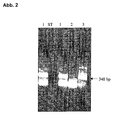
- PCR (nested): Amplification of a 348 bp fragment within the above slo fragment
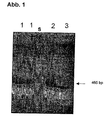
- Fig. 2 shows the nested PCR with the PCR products from the 1st PCR approach according to Fig. 1 as a template. The samples correspond to those from Fig. 1.
- the desired slo-DNA fragment is amplified with a pathogen count of 100 streptococci per 100 ⁇ l of blood (sample 1). This corresponds to 5 ⁇ l of template DNA in the 1st PCR (Fig. 1) for approx. 5 to 10 template molecules. At a 1:10 dilution (sample 2) the sensitivity is exhausted (0.5 to 1 template molecules).
- the DNA is solubilized from a cell lysate as described above for the previous PCR methods. The difference is that between 1 ml and 5 ml of test material are used.
- the mixture with ethanol at a Final concentration of 70% precipitated is washed with 2 ml of 70% ethanol.
- the ethanol residue is removed in a vacuum centrifuge and the precipitated DNA is taken up in 500 ⁇ l of TE buffer.
- the DNA is then applied to a column containing 0.5 ml Sepharose and immobilized with 1 mg TLR9.
- the column is washed with 5 volumes of TE buffer.
- the elution is carried out with chaotropic ions in high concentration, z. B. with 0.7 ml of 6 molar NaJ or KSCN solution.
- This eluate can then be applied directly to a commercial DNA isolation centrifuge column and the CpG-enriched DNA isolated as directed, as in the input example, to a small volume between 20 ul and 100 ul and used for further analysis, such as pathogen PCR.
Landscapes
- Health & Medical Sciences (AREA)
- Chemical & Material Sciences (AREA)
- Engineering & Computer Science (AREA)
- Genetics & Genomics (AREA)
- Life Sciences & Earth Sciences (AREA)
- Biomedical Technology (AREA)
- Zoology (AREA)
- Bioinformatics & Cheminformatics (AREA)
- Biotechnology (AREA)
- General Engineering & Computer Science (AREA)
- Organic Chemistry (AREA)
- Wood Science & Technology (AREA)
- Crystallography & Structural Chemistry (AREA)
- Plant Pathology (AREA)
- Microbiology (AREA)
- Molecular Biology (AREA)
- Physics & Mathematics (AREA)
- Biochemistry (AREA)
- General Health & Medical Sciences (AREA)
- Biophysics (AREA)
- Analytical Chemistry (AREA)
- Measuring Or Testing Involving Enzymes Or Micro-Organisms (AREA)
Priority Applications (13)
| Application Number | Priority Date | Filing Date | Title |
|---|---|---|---|
| EP02020904A EP1400589B1 (de) | 2002-09-18 | 2002-09-18 | Verfahren zum Nachweis prokaryontischer DNA |
| DE50207801T DE50207801D1 (de) | 2002-09-18 | 2002-09-18 | Verfahren zum Nachweis prokaryontischer DNA |
| AT02020904T ATE335816T1 (de) | 2002-09-18 | 2002-09-18 | Verfahren zum nachweis prokaryontischer dna |
| ES02020904T ES2266374T3 (es) | 2002-09-18 | 2002-09-18 | Procedimiento para la deteccion de adn procariotico. |
| DK02020904T DK1400589T3 (da) | 2002-09-18 | 2002-09-18 | Fremgangsmåde til påvisning af prokaryotisk DNA |
| CA2498951A CA2498951C (en) | 2002-09-18 | 2003-08-08 | Method for enriching procaryotic dna |
| KR1020057003719A KR20050057152A (ko) | 2002-09-18 | 2003-08-08 | 원핵 dna의 농축 방법 |
| CNA038222337A CN1681925A (zh) | 2002-09-18 | 2003-08-08 | 原核dna的富集方法 |
| JP2004542300A JP4447459B2 (ja) | 2002-09-18 | 2003-08-08 | 原核生物dnaを分離する方法、体液を精製する方法および原核生物dnaを検出する方法、ならびに原核生物dnaを検出するための試験キット |
| US10/528,235 US8062854B2 (en) | 2002-09-18 | 2003-08-08 | Method for enriching a prokaryotic DNA |
| AU2003260392A AU2003260392A1 (en) | 2002-09-18 | 2003-08-08 | Method for enriching a prokaryotic dna |
| PCT/EP2003/008825 WO2004033683A1 (de) | 2002-09-18 | 2003-08-08 | Verfahren zur anreicherung prokaryontischer dna |
| US13/253,661 US8288115B2 (en) | 2002-09-18 | 2011-10-05 | Method for enriching a prokaryotic DNA |
Applications Claiming Priority (1)
| Application Number | Priority Date | Filing Date | Title |
|---|---|---|---|
| EP02020904A EP1400589B1 (de) | 2002-09-18 | 2002-09-18 | Verfahren zum Nachweis prokaryontischer DNA |
Publications (2)
| Publication Number | Publication Date |
|---|---|
| EP1400589A1 EP1400589A1 (de) | 2004-03-24 |
| EP1400589B1 true EP1400589B1 (de) | 2006-08-09 |
Family
ID=31896878
Family Applications (1)
| Application Number | Title | Priority Date | Filing Date |
|---|---|---|---|
| EP02020904A Expired - Lifetime EP1400589B1 (de) | 2002-09-18 | 2002-09-18 | Verfahren zum Nachweis prokaryontischer DNA |
Country Status (12)
| Country | Link |
|---|---|
| US (2) | US8062854B2 (enExample) |
| EP (1) | EP1400589B1 (enExample) |
| JP (1) | JP4447459B2 (enExample) |
| KR (1) | KR20050057152A (enExample) |
| CN (1) | CN1681925A (enExample) |
| AT (1) | ATE335816T1 (enExample) |
| AU (1) | AU2003260392A1 (enExample) |
| CA (1) | CA2498951C (enExample) |
| DE (1) | DE50207801D1 (enExample) |
| DK (1) | DK1400589T3 (enExample) |
| ES (1) | ES2266374T3 (enExample) |
| WO (1) | WO2004033683A1 (enExample) |
Cited By (1)
| Publication number | Priority date | Publication date | Assignee | Title |
|---|---|---|---|---|
| EP2722402A1 (de) | 2012-10-19 | 2014-04-23 | Analytik Jena AG | Verfahren zum Trennen, Erfassen oder Anreichern unterschiedlicher DNA-Spezies |
Families Citing this family (11)
| Publication number | Priority date | Publication date | Assignee | Title |
|---|---|---|---|---|
| ATE335816T1 (de) | 2002-09-18 | 2006-09-15 | Sirs Lab Gmbh | Verfahren zum nachweis prokaryontischer dna |
| ES2384571T3 (es) * | 2004-03-05 | 2012-07-09 | Sirs-Lab Gmbh | Procedimiento para el enriquecimiento y/o la separación de ADN procariota mediante una proteína que se une específicamente a ADN que contiene motivos CpG no metilados |
| DE102005001889B4 (de) * | 2005-01-14 | 2012-03-29 | Sirs-Lab Gmbh | Verfahren zur Steigerung der Bindungskapazität und -effizienz eines Proteins, das nicht methylierte CPG-Motive enthaltende DNA spezifisch bindet |
| GB0413688D0 (en) * | 2004-06-18 | 2004-07-21 | Novartis Forschungsstiftung | Analysis of methylated nucleic acid |
| DE202005009490U1 (de) * | 2005-06-16 | 2006-10-19 | Sirs-Lab Gmbh | Vorrichtung zur Anreicherung/Abtrennung von nicht-methylierte CpG-Motive enthaltender DNA |
| DE102005034628B4 (de) * | 2005-07-19 | 2007-08-23 | Epigenomics Ag | Verfahren zur Untersuchung von Cytosin-Methylierungen in DNA |
| DE102007041864B4 (de) | 2007-09-04 | 2012-05-03 | Sirs-Lab Gmbh | Verfahren zum Nachweis von Bakterien und Pilzen |
| LT3067431T (lt) | 2010-09-15 | 2019-11-11 | Debiopharm Int Sa | Įrenginys, turintis kraujo komponentus, skirtas atskirti tikslines molekules ar daleles iš mėginių |
| US9145580B2 (en) * | 2011-04-02 | 2015-09-29 | New England Biolabs, Inc. | Methods and compositions for enriching either target polynucleotides or non-target polynucleotides from a mixture of target and non-target polynucleotides |
| US8980553B2 (en) * | 2011-04-02 | 2015-03-17 | New England Biolabs, Inc. | Methods and compositions for enriching either target polynucleotides or non-target polynucleotides from a mixture of target and non-target polynucleotides |
| WO2020216966A1 (en) * | 2019-04-26 | 2020-10-29 | Thermo Fisher Scientific Baltics Uab | Isolated nucleic acid binding domains |
Family Cites Families (7)
| Publication number | Priority date | Publication date | Assignee | Title |
|---|---|---|---|---|
| US6239116B1 (en) | 1994-07-15 | 2001-05-29 | University Of Iowa Research Foundation | Immunostimulatory nucleic acid molecules |
| JPH11510692A (ja) * | 1995-07-28 | 1999-09-21 | ベス イスラエル ディーコネス メディカル センター,インク. | 突然変異誘発を検査するための方法及び検査器具 |
| WO2001012659A2 (en) | 1999-08-18 | 2001-02-22 | Fraunhofer-Gesellschaft Zur Foerderung Der Angewandten Forschung E.V. | Human dna sequences |
| JP2002034565A (ja) | 2000-07-19 | 2002-02-05 | Japan Science & Technology Corp | 細菌dnaを特異的に認識する受容体タンパク質 |
| ATE335816T1 (de) | 2002-09-18 | 2006-09-15 | Sirs Lab Gmbh | Verfahren zum nachweis prokaryontischer dna |
| ES2384571T3 (es) * | 2004-03-05 | 2012-07-09 | Sirs-Lab Gmbh | Procedimiento para el enriquecimiento y/o la separación de ADN procariota mediante una proteína que se une específicamente a ADN que contiene motivos CpG no metilados |
| GB0423991D0 (en) * | 2004-10-29 | 2004-12-01 | Univ Edinburgh | Applications of nucleic acid fragments |
-
2002
- 2002-09-18 AT AT02020904T patent/ATE335816T1/de active
- 2002-09-18 DK DK02020904T patent/DK1400589T3/da active
- 2002-09-18 EP EP02020904A patent/EP1400589B1/de not_active Expired - Lifetime
- 2002-09-18 ES ES02020904T patent/ES2266374T3/es not_active Expired - Lifetime
- 2002-09-18 DE DE50207801T patent/DE50207801D1/de not_active Expired - Lifetime
-
2003
- 2003-08-08 WO PCT/EP2003/008825 patent/WO2004033683A1/de not_active Ceased
- 2003-08-08 AU AU2003260392A patent/AU2003260392A1/en not_active Abandoned
- 2003-08-08 JP JP2004542300A patent/JP4447459B2/ja not_active Expired - Fee Related
- 2003-08-08 US US10/528,235 patent/US8062854B2/en not_active Expired - Fee Related
- 2003-08-08 CA CA2498951A patent/CA2498951C/en not_active Expired - Fee Related
- 2003-08-08 KR KR1020057003719A patent/KR20050057152A/ko not_active Ceased
- 2003-08-08 CN CNA038222337A patent/CN1681925A/zh active Pending
-
2011
- 2011-10-05 US US13/253,661 patent/US8288115B2/en not_active Expired - Fee Related
Cited By (2)
| Publication number | Priority date | Publication date | Assignee | Title |
|---|---|---|---|---|
| EP2722402A1 (de) | 2012-10-19 | 2014-04-23 | Analytik Jena AG | Verfahren zum Trennen, Erfassen oder Anreichern unterschiedlicher DNA-Spezies |
| DE102012219142A1 (de) | 2012-10-19 | 2014-06-12 | Analytik Jena Ag | Verfahren zum Trennen, Erfassen oder Anreichern von unterschiedlichen DNA-Spezies |
Also Published As
| Publication number | Publication date |
|---|---|
| AU2003260392A1 (en) | 2004-05-04 |
| US20100316993A1 (en) | 2010-12-16 |
| KR20050057152A (ko) | 2005-06-16 |
| EP1400589A1 (de) | 2004-03-24 |
| CA2498951C (en) | 2013-04-23 |
| JP2005538737A (ja) | 2005-12-22 |
| JP4447459B2 (ja) | 2010-04-07 |
| ES2266374T3 (es) | 2007-03-01 |
| CN1681925A (zh) | 2005-10-12 |
| DK1400589T3 (da) | 2006-11-27 |
| DE50207801D1 (de) | 2006-09-21 |
| US8062854B2 (en) | 2011-11-22 |
| US20120040363A1 (en) | 2012-02-16 |
| CA2498951A1 (en) | 2004-04-22 |
| WO2004033683A1 (de) | 2004-04-22 |
| ATE335816T1 (de) | 2006-09-15 |
| US8288115B2 (en) | 2012-10-16 |
Similar Documents
| Publication | Publication Date | Title |
|---|---|---|
| DE69802191T2 (de) | Festphase nukleinsäure-isolierung | |
| US8288115B2 (en) | Method for enriching a prokaryotic DNA | |
| DE3486467T2 (de) | Verfahren zum Nachweis, Identifizieren und Quantifizieren von Organismen und Viren | |
| DE69031237T3 (de) | Verfahren zur Reinigung von Nukleinsäuren | |
| DE69619845T2 (de) | Verbesserter auf is6110 basierender molekularer nachweis von mycobacterium tuberculosis | |
| DE102007041864B4 (de) | Verfahren zum Nachweis von Bakterien und Pilzen | |
| DE3586660T2 (de) | Hybridisierungstest fuer nukleinsaeure. | |
| EP2501811A1 (de) | Verfahren zur selektiven anreicherung und isolierung mikrobieller und optional zusätzlich viraler nukleinsäuren | |
| EP2245157A1 (en) | Method for the extraction and purification of nucleic acids on a membrane | |
| DE102008055120A1 (de) | Präparation und Amplifikation von Nukleinsäuren mittels magnetischer Partikel | |
| EP3198011B1 (de) | Verfahren zum nachweis von nukleinsäuren in proben mit biologischem material | |
| EP1723233B1 (de) | Verfahren zur anreicherung und/oder abtrennung von prokaryotischer dna mittels eines proteins, das nicht-methylierte cpg-motive enthaltende dna spezifisch bindet | |
| JP3194943B2 (ja) | クリプトコックス・ネオホルマンスの検出に用いる核酸プローブおよび方法 | |
| EP1232286B1 (de) | Test auf mikroorganismen zur diagnose von sepsis | |
| EP2373813B1 (de) | Verfahren zum nachweis methicillin-resistenter staphylococcus aureus (mrsa)-stämme | |
| DE102010043015B4 (de) | Verfahren zur Konzentration von Probenbestandteilen und Amplifikation von Nukleinsäuren | |
| DE60133708T2 (de) | Verfahren zur Analyse von Nicht-Protein Komponenten mittels Verwendung einer Protease aus einem Bacillus-Stamm | |
| DE10033991A1 (de) | Verfahren zur Isolierung von Nukleinsäuren | |
| WO1999005159A2 (de) | Staphylococcus-spezifisches nucleinsäuremolekül, kit und verwendung nucleinsäuremolekül, nucleinsauremolekul, kit und verwendung | |
| DE102004010928B4 (de) | Protein zur Bindung prokaryonter DNA sowie Verfahren zur Trennung und Anreicherung prokaryonter DNA | |
| Kapustin et al. | High-throughput method of one-step DNA isolation for PCR diagnostics of Mycobacterium tuberculosis | |
| DE102005001889B4 (de) | Verfahren zur Steigerung der Bindungskapazität und -effizienz eines Proteins, das nicht methylierte CPG-Motive enthaltende DNA spezifisch bindet | |
| WO2006133758A2 (de) | Vorrichtung zur anreicherung/abtrennung von nicht-methylierte cpg-motive enthaltender dna |
Legal Events
| Date | Code | Title | Description |
|---|---|---|---|
| PUAI | Public reference made under article 153(3) epc to a published international application that has entered the european phase |
Free format text: ORIGINAL CODE: 0009012 |
|
| 17P | Request for examination filed |
Effective date: 20030902 |
|
| AK | Designated contracting states |
Kind code of ref document: A1 Designated state(s): AT BE BG CH CY CZ DE DK EE ES FI FR GB GR IE IT LI LU MC NL PT SE SK TR |
|
| AX | Request for extension of the european patent |
Extension state: AL LT LV MK RO SI |
|
| AKX | Designation fees paid |
Designated state(s): AT BE BG CH CY CZ DE DK EE ES FI FR GB GR IE IT LI LU MC NL PT SE SK TR |
|
| GRAP | Despatch of communication of intention to grant a patent |
Free format text: ORIGINAL CODE: EPIDOSNIGR1 |
|
| RTI1 | Title (correction) |
Free format text: METHOD FOR THE DETECTION OF PROKARYOTIC DNA |
|
| GRAS | Grant fee paid |
Free format text: ORIGINAL CODE: EPIDOSNIGR3 |
|
| GRAA | (expected) grant |
Free format text: ORIGINAL CODE: 0009210 |
|
| AK | Designated contracting states |
Kind code of ref document: B1 Designated state(s): AT BE BG CH CY CZ DE DK EE ES FI FR GB GR IE IT LI LU MC NL PT SE SK TR |
|
| PG25 | Lapsed in a contracting state [announced via postgrant information from national office to epo] |
Ref country code: SK Free format text: LAPSE BECAUSE OF FAILURE TO SUBMIT A TRANSLATION OF THE DESCRIPTION OR TO PAY THE FEE WITHIN THE PRESCRIBED TIME-LIMIT Effective date: 20060809 Ref country code: CZ Free format text: LAPSE BECAUSE OF FAILURE TO SUBMIT A TRANSLATION OF THE DESCRIPTION OR TO PAY THE FEE WITHIN THE PRESCRIBED TIME-LIMIT Effective date: 20060809 Ref country code: FI Free format text: LAPSE BECAUSE OF FAILURE TO SUBMIT A TRANSLATION OF THE DESCRIPTION OR TO PAY THE FEE WITHIN THE PRESCRIBED TIME-LIMIT Effective date: 20060809 |
|
| REG | Reference to a national code |
Ref country code: GB Ref legal event code: FG4D Free format text: NOT ENGLISH |
|
| REG | Reference to a national code |
Ref country code: CH Ref legal event code: NV Representative=s name: KELLER & PARTNER PATENTANWAELTE AG Ref country code: CH Ref legal event code: EP |
|
| REG | Reference to a national code |
Ref country code: IE Ref legal event code: FG4D Free format text: LANGUAGE OF EP DOCUMENT: GERMAN |
|
| GBT | Gb: translation of ep patent filed (gb section 77(6)(a)/1977) |
Effective date: 20060817 |
|
| REF | Corresponds to: |
Ref document number: 50207801 Country of ref document: DE Date of ref document: 20060921 Kind code of ref document: P |
|
| PG25 | Lapsed in a contracting state [announced via postgrant information from national office to epo] |
Ref country code: MC Free format text: LAPSE BECAUSE OF NON-PAYMENT OF DUE FEES Effective date: 20060930 |
|
| PG25 | Lapsed in a contracting state [announced via postgrant information from national office to epo] |
Ref country code: BG Free format text: LAPSE BECAUSE OF FAILURE TO SUBMIT A TRANSLATION OF THE DESCRIPTION OR TO PAY THE FEE WITHIN THE PRESCRIBED TIME-LIMIT Effective date: 20061109 |
|
| REG | Reference to a national code |
Ref country code: SE Ref legal event code: TRGR |
|
| REG | Reference to a national code |
Ref country code: DK Ref legal event code: T3 |
|
| PG25 | Lapsed in a contracting state [announced via postgrant information from national office to epo] |
Ref country code: PT Free format text: LAPSE BECAUSE OF FAILURE TO SUBMIT A TRANSLATION OF THE DESCRIPTION OR TO PAY THE FEE WITHIN THE PRESCRIBED TIME-LIMIT Effective date: 20070109 |
|
| ET | Fr: translation filed | ||
| REG | Reference to a national code |
Ref country code: ES Ref legal event code: FG2A Ref document number: 2266374 Country of ref document: ES Kind code of ref document: T3 |
|
| PLBE | No opposition filed within time limit |
Free format text: ORIGINAL CODE: 0009261 |
|
| STAA | Information on the status of an ep patent application or granted ep patent |
Free format text: STATUS: NO OPPOSITION FILED WITHIN TIME LIMIT |
|
| 26N | No opposition filed |
Effective date: 20070510 |
|
| PG25 | Lapsed in a contracting state [announced via postgrant information from national office to epo] |
Ref country code: GR Free format text: LAPSE BECAUSE OF FAILURE TO SUBMIT A TRANSLATION OF THE DESCRIPTION OR TO PAY THE FEE WITHIN THE PRESCRIBED TIME-LIMIT Effective date: 20061110 |
|
| PG25 | Lapsed in a contracting state [announced via postgrant information from national office to epo] |
Ref country code: EE Free format text: LAPSE BECAUSE OF FAILURE TO SUBMIT A TRANSLATION OF THE DESCRIPTION OR TO PAY THE FEE WITHIN THE PRESCRIBED TIME-LIMIT Effective date: 20060809 |
|
| PG25 | Lapsed in a contracting state [announced via postgrant information from national office to epo] |
Ref country code: TR Free format text: LAPSE BECAUSE OF FAILURE TO SUBMIT A TRANSLATION OF THE DESCRIPTION OR TO PAY THE FEE WITHIN THE PRESCRIBED TIME-LIMIT Effective date: 20060809 Ref country code: LU Free format text: LAPSE BECAUSE OF NON-PAYMENT OF DUE FEES Effective date: 20060918 |
|
| PG25 | Lapsed in a contracting state [announced via postgrant information from national office to epo] |
Ref country code: CY Free format text: LAPSE BECAUSE OF FAILURE TO SUBMIT A TRANSLATION OF THE DESCRIPTION OR TO PAY THE FEE WITHIN THE PRESCRIBED TIME-LIMIT Effective date: 20060809 |
|
| PGFP | Annual fee paid to national office [announced via postgrant information from national office to epo] |
Ref country code: DK Payment date: 20141027 Year of fee payment: 13 |
|
| PGFP | Annual fee paid to national office [announced via postgrant information from national office to epo] |
Ref country code: IE Payment date: 20141021 Year of fee payment: 13 Ref country code: ES Payment date: 20141024 Year of fee payment: 13 |
|
| REG | Reference to a national code |
Ref country code: CH Ref legal event code: PCAR Free format text: NEW ADDRESS: EIGERSTRASSE 2 POSTFACH, 3000 BERN 14 (CH) |
|
| PGFP | Annual fee paid to national office [announced via postgrant information from national office to epo] |
Ref country code: BE Payment date: 20141030 Year of fee payment: 13 |
|
| REG | Reference to a national code |
Ref country code: FR Ref legal event code: PLFP Year of fee payment: 14 |
|
| PGFP | Annual fee paid to national office [announced via postgrant information from national office to epo] |
Ref country code: CH Payment date: 20150922 Year of fee payment: 14 Ref country code: GB Payment date: 20150922 Year of fee payment: 14 |
|
| PGFP | Annual fee paid to national office [announced via postgrant information from national office to epo] |
Ref country code: AT Payment date: 20150921 Year of fee payment: 14 Ref country code: FR Payment date: 20150923 Year of fee payment: 14 Ref country code: SE Payment date: 20150922 Year of fee payment: 14 |
|
| PGFP | Annual fee paid to national office [announced via postgrant information from national office to epo] |
Ref country code: IT Payment date: 20150925 Year of fee payment: 14 |
|
| PGFP | Annual fee paid to national office [announced via postgrant information from national office to epo] |
Ref country code: NL Payment date: 20150923 Year of fee payment: 14 |
|
| REG | Reference to a national code |
Ref country code: DK Ref legal event code: EBP Effective date: 20150930 |
|
| REG | Reference to a national code |
Ref country code: IE Ref legal event code: MM4A |
|
| PG25 | Lapsed in a contracting state [announced via postgrant information from national office to epo] |
Ref country code: IE Free format text: LAPSE BECAUSE OF NON-PAYMENT OF DUE FEES Effective date: 20150918 |
|
| REG | Reference to a national code |
Ref country code: ES Ref legal event code: FD2A Effective date: 20161026 |
|
| PG25 | Lapsed in a contracting state [announced via postgrant information from national office to epo] |
Ref country code: DK Free format text: LAPSE BECAUSE OF NON-PAYMENT OF DUE FEES Effective date: 20150930 |
|
| PGFP | Annual fee paid to national office [announced via postgrant information from national office to epo] |
Ref country code: DE Payment date: 20160824 Year of fee payment: 15 |
|
| PG25 | Lapsed in a contracting state [announced via postgrant information from national office to epo] |
Ref country code: ES Free format text: LAPSE BECAUSE OF NON-PAYMENT OF DUE FEES Effective date: 20150919 |
|
| PG25 | Lapsed in a contracting state [announced via postgrant information from national office to epo] |
Ref country code: SE Free format text: LAPSE BECAUSE OF NON-PAYMENT OF DUE FEES Effective date: 20160919 |
|
| REG | Reference to a national code |
Ref country code: CH Ref legal event code: PL |
|
| REG | Reference to a national code |
Ref country code: SE Ref legal event code: EUG |
|
| REG | Reference to a national code |
Ref country code: NL Ref legal event code: MM Effective date: 20161001 |
|
| REG | Reference to a national code |
Ref country code: AT Ref legal event code: MM01 Ref document number: 335816 Country of ref document: AT Kind code of ref document: T Effective date: 20160918 |
|
| GBPC | Gb: european patent ceased through non-payment of renewal fee |
Effective date: 20160918 |
|
| PG25 | Lapsed in a contracting state [announced via postgrant information from national office to epo] |
Ref country code: NL Free format text: LAPSE BECAUSE OF NON-PAYMENT OF DUE FEES Effective date: 20161001 |
|
| REG | Reference to a national code |
Ref country code: FR Ref legal event code: ST Effective date: 20170531 |
|
| PG25 | Lapsed in a contracting state [announced via postgrant information from national office to epo] |
Ref country code: GB Free format text: LAPSE BECAUSE OF NON-PAYMENT OF DUE FEES Effective date: 20160918 Ref country code: BE Free format text: LAPSE BECAUSE OF NON-PAYMENT OF DUE FEES Effective date: 20150930 Ref country code: FR Free format text: LAPSE BECAUSE OF NON-PAYMENT OF DUE FEES Effective date: 20160930 Ref country code: CH Free format text: LAPSE BECAUSE OF NON-PAYMENT OF DUE FEES Effective date: 20160930 Ref country code: LI Free format text: LAPSE BECAUSE OF NON-PAYMENT OF DUE FEES Effective date: 20160930 |
|
| PG25 | Lapsed in a contracting state [announced via postgrant information from national office to epo] |
Ref country code: IT Free format text: LAPSE BECAUSE OF NON-PAYMENT OF DUE FEES Effective date: 20160918 Ref country code: AT Free format text: LAPSE BECAUSE OF NON-PAYMENT OF DUE FEES Effective date: 20160918 |
|
| REG | Reference to a national code |
Ref country code: DE Ref legal event code: R119 Ref document number: 50207801 Country of ref document: DE |
|
| PG25 | Lapsed in a contracting state [announced via postgrant information from national office to epo] |
Ref country code: DE Free format text: LAPSE BECAUSE OF NON-PAYMENT OF DUE FEES Effective date: 20180404 |