EP1373472B1 - Methods and gel compositions for encapsulating living cells and organic molecules - Google Patents
Methods and gel compositions for encapsulating living cells and organic molecules Download PDFInfo
- Publication number
- EP1373472B1 EP1373472B1 EP02763911A EP02763911A EP1373472B1 EP 1373472 B1 EP1373472 B1 EP 1373472B1 EP 02763911 A EP02763911 A EP 02763911A EP 02763911 A EP02763911 A EP 02763911A EP 1373472 B1 EP1373472 B1 EP 1373472B1
- Authority
- EP
- European Patent Office
- Prior art keywords
- hydrogel
- biologic
- isocyanate
- thiol
- crosslinker
- Prior art date
- Legal status (The legal status is an assumption and is not a legal conclusion. Google has not performed a legal analysis and makes no representation as to the accuracy of the status listed.)
- Expired - Lifetime
Links
- 238000000034 method Methods 0.000 title claims abstract description 44
- 239000000203 mixture Substances 0.000 title claims description 36
- 239000000017 hydrogel Substances 0.000 claims abstract description 72
- 229960000074 biopharmaceutical Drugs 0.000 claims abstract description 17
- 150000004662 dithiols Chemical class 0.000 claims abstract description 17
- 239000003431 cross linking reagent Substances 0.000 claims abstract description 10
- 239000000758 substrate Substances 0.000 claims abstract description 7
- 239000007864 aqueous solution Substances 0.000 claims abstract 5
- 210000004027 cell Anatomy 0.000 claims description 58
- 239000000243 solution Substances 0.000 claims description 42
- 235000018102 proteins Nutrition 0.000 claims description 36
- 102000004169 proteins and genes Human genes 0.000 claims description 36
- 108090000623 proteins and genes Proteins 0.000 claims description 36
- 239000004971 Cross linker Substances 0.000 claims description 32
- 125000003396 thiol group Chemical group [H]S* 0.000 claims description 14
- 238000004132 cross linking Methods 0.000 claims description 13
- 238000002156 mixing Methods 0.000 claims description 13
- 229920001223 polyethylene glycol Polymers 0.000 claims description 13
- 239000002202 Polyethylene glycol Substances 0.000 claims description 12
- 238000006243 chemical reaction Methods 0.000 claims description 12
- 150000003573 thiols Chemical class 0.000 claims description 12
- 238000002493 microarray Methods 0.000 claims description 10
- 230000007935 neutral effect Effects 0.000 claims description 10
- 230000000975 bioactive effect Effects 0.000 claims description 9
- IQPQWNKOIGAROB-UHFFFAOYSA-N isocyanate group Chemical group [N-]=C=O IQPQWNKOIGAROB-UHFFFAOYSA-N 0.000 claims description 9
- 229920001451 polypropylene glycol Polymers 0.000 claims description 8
- 235000018417 cysteine Nutrition 0.000 claims description 7
- 230000000269 nucleophilic effect Effects 0.000 claims description 6
- XUJNEKJLAYXESH-REOHCLBHSA-N L-Cysteine Chemical compound SC[C@H](N)C(O)=O XUJNEKJLAYXESH-REOHCLBHSA-N 0.000 claims description 5
- 229920001577 copolymer Polymers 0.000 claims description 5
- XUJNEKJLAYXESH-UHFFFAOYSA-N cysteine Natural products SCC(N)C(O)=O XUJNEKJLAYXESH-UHFFFAOYSA-N 0.000 claims description 5
- 238000004166 bioassay Methods 0.000 claims description 4
- 210000003527 eukaryotic cell Anatomy 0.000 claims description 3
- FFFHZYDWPBMWHY-VKHMYHEASA-N L-homocysteine Chemical compound OC(=O)[C@@H](N)CCS FFFHZYDWPBMWHY-VKHMYHEASA-N 0.000 claims description 2
- 108020004707 nucleic acids Proteins 0.000 claims description 2
- 102000039446 nucleic acids Human genes 0.000 claims description 2
- 150000007523 nucleic acids Chemical class 0.000 claims description 2
- 239000012491 analyte Substances 0.000 claims 2
- 239000007795 chemical reaction product Substances 0.000 claims 2
- 230000003993 interaction Effects 0.000 claims 1
- 230000004962 physiological condition Effects 0.000 claims 1
- 238000003556 assay Methods 0.000 abstract description 4
- 238000006116 polymerization reaction Methods 0.000 description 47
- 229920000642 polymer Polymers 0.000 description 26
- 238000005538 encapsulation Methods 0.000 description 21
- FAPWRFPIFSIZLT-UHFFFAOYSA-M Sodium chloride Chemical compound [Na+].[Cl-] FAPWRFPIFSIZLT-UHFFFAOYSA-M 0.000 description 18
- 239000012948 isocyanate Substances 0.000 description 17
- 239000000499 gel Substances 0.000 description 16
- 150000001412 amines Chemical class 0.000 description 14
- 238000009472 formulation Methods 0.000 description 14
- 150000002513 isocyanates Chemical class 0.000 description 14
- 230000008569 process Effects 0.000 description 13
- 239000008363 phosphate buffer Substances 0.000 description 11
- 239000011159 matrix material Substances 0.000 description 10
- 238000003491 array Methods 0.000 description 9
- 239000011521 glass Substances 0.000 description 9
- 239000000463 material Substances 0.000 description 9
- 239000011780 sodium chloride Substances 0.000 description 9
- 239000000126 substance Substances 0.000 description 9
- 239000012581 transferrin Substances 0.000 description 9
- 229920000615 alginic acid Polymers 0.000 description 8
- 235000010443 alginic acid Nutrition 0.000 description 8
- 150000003141 primary amines Chemical class 0.000 description 7
- 150000003254 radicals Chemical class 0.000 description 7
- XLYOFNOQVPJJNP-UHFFFAOYSA-N water Substances O XLYOFNOQVPJJNP-UHFFFAOYSA-N 0.000 description 7
- -1 antibodies Proteins 0.000 description 6
- 239000012620 biological material Substances 0.000 description 6
- 239000000975 dye Substances 0.000 description 6
- 210000004698 lymphocyte Anatomy 0.000 description 6
- 239000004814 polyurethane Substances 0.000 description 6
- 229920002635 polyurethane Polymers 0.000 description 6
- 230000035899 viability Effects 0.000 description 6
- 239000003795 chemical substances by application Substances 0.000 description 5
- LOKCTEFSRHRXRJ-UHFFFAOYSA-I dipotassium trisodium dihydrogen phosphate hydrogen phosphate dichloride Chemical class P(=O)(O)(O)[O-].[K+].P(=O)(O)([O-])[O-].[Na+].[Na+].[Cl-].[K+].[Cl-].[Na+] LOKCTEFSRHRXRJ-UHFFFAOYSA-I 0.000 description 5
- 150000003384 small molecules Chemical class 0.000 description 5
- FHVDTGUDJYJELY-UHFFFAOYSA-N 6-{[2-carboxy-4,5-dihydroxy-6-(phosphanyloxy)oxan-3-yl]oxy}-4,5-dihydroxy-3-phosphanyloxane-2-carboxylic acid Chemical compound O1C(C(O)=O)C(P)C(O)C(O)C1OC1C(C(O)=O)OC(OP)C(O)C1O FHVDTGUDJYJELY-UHFFFAOYSA-N 0.000 description 4
- HRPVXLWXLXDGHG-UHFFFAOYSA-N Acrylamide Chemical compound NC(=O)C=C HRPVXLWXLXDGHG-UHFFFAOYSA-N 0.000 description 4
- 241000283707 Capra Species 0.000 description 4
- 108090000790 Enzymes Proteins 0.000 description 4
- 102000004190 Enzymes Human genes 0.000 description 4
- 229920003171 Poly (ethylene oxide) Polymers 0.000 description 4
- 229940072056 alginate Drugs 0.000 description 4
- 230000003833 cell viability Effects 0.000 description 4
- 150000002009 diols Chemical class 0.000 description 4
- 230000002255 enzymatic effect Effects 0.000 description 4
- 229920005862 polyol Polymers 0.000 description 4
- 150000003077 polyols Chemical class 0.000 description 4
- 238000012216 screening Methods 0.000 description 4
- IAYPIBMASNFSPL-UHFFFAOYSA-N Ethylene oxide Chemical group C1CO1 IAYPIBMASNFSPL-UHFFFAOYSA-N 0.000 description 3
- PLXBWHJQWKZRKG-UHFFFAOYSA-N Resazurin Chemical compound C1=CC(=O)C=C2OC3=CC(O)=CC=C3[N+]([O-])=C21 PLXBWHJQWKZRKG-UHFFFAOYSA-N 0.000 description 3
- 102000004338 Transferrin Human genes 0.000 description 3
- 108090000901 Transferrin Proteins 0.000 description 3
- GLNADSQYFUSGOU-GPTZEZBUSA-J Trypan blue Chemical compound [Na+].[Na+].[Na+].[Na+].C1=C(S([O-])(=O)=O)C=C2C=C(S([O-])(=O)=O)C(/N=N/C3=CC=C(C=C3C)C=3C=C(C(=CC=3)\N=N\C=3C(=CC4=CC(=CC(N)=C4C=3O)S([O-])(=O)=O)S([O-])(=O)=O)C)=C(O)C2=C1N GLNADSQYFUSGOU-GPTZEZBUSA-J 0.000 description 3
- 238000013459 approach Methods 0.000 description 3
- 230000008901 benefit Effects 0.000 description 3
- 230000027455 binding Effects 0.000 description 3
- 230000015572 biosynthetic process Effects 0.000 description 3
- 230000021615 conjugation Effects 0.000 description 3
- 238000011161 development Methods 0.000 description 3
- 239000007850 fluorescent dye Substances 0.000 description 3
- 230000003287 optical effect Effects 0.000 description 3
- 210000000056 organ Anatomy 0.000 description 3
- 239000003960 organic solvent Substances 0.000 description 3
- 239000002953 phosphate buffered saline Substances 0.000 description 3
- 229920002401 polyacrylamide Polymers 0.000 description 3
- 108090000765 processed proteins & peptides Proteins 0.000 description 3
- 230000009257 reactivity Effects 0.000 description 3
- 230000004044 response Effects 0.000 description 3
- 239000007787 solid Substances 0.000 description 3
- 241000894007 species Species 0.000 description 3
- 238000012360 testing method Methods 0.000 description 3
- 231100000331 toxic Toxicity 0.000 description 3
- 230000002588 toxic effect Effects 0.000 description 3
- 229940100578 Acetylcholinesterase inhibitor Drugs 0.000 description 2
- 108091003079 Bovine Serum Albumin Proteins 0.000 description 2
- 238000000018 DNA microarray Methods 0.000 description 2
- 239000012591 Dulbecco’s Phosphate Buffered Saline Substances 0.000 description 2
- 241000588724 Escherichia coli Species 0.000 description 2
- 239000004472 Lysine Substances 0.000 description 2
- KDXKERNSBIXSRK-UHFFFAOYSA-N Lysine Natural products NCCCCC(N)C(O)=O KDXKERNSBIXSRK-UHFFFAOYSA-N 0.000 description 2
- 108091034117 Oligonucleotide Proteins 0.000 description 2
- 229920004890 Triton X-100 Polymers 0.000 description 2
- 239000013504 Triton X-100 Substances 0.000 description 2
- XSQUKJJJFZCRTK-UHFFFAOYSA-N Urea Chemical compound NC(N)=O XSQUKJJJFZCRTK-UHFFFAOYSA-N 0.000 description 2
- JLCPHMBAVCMARE-UHFFFAOYSA-N [3-[[3-[[3-[[3-[[3-[[3-[[3-[[3-[[3-[[3-[[3-[[5-(2-amino-6-oxo-1H-purin-9-yl)-3-[[3-[[3-[[3-[[3-[[3-[[5-(2-amino-6-oxo-1H-purin-9-yl)-3-[[5-(2-amino-6-oxo-1H-purin-9-yl)-3-hydroxyoxolan-2-yl]methoxy-hydroxyphosphoryl]oxyoxolan-2-yl]methoxy-hydroxyphosphoryl]oxy-5-(5-methyl-2,4-dioxopyrimidin-1-yl)oxolan-2-yl]methoxy-hydroxyphosphoryl]oxy-5-(6-aminopurin-9-yl)oxolan-2-yl]methoxy-hydroxyphosphoryl]oxy-5-(6-aminopurin-9-yl)oxolan-2-yl]methoxy-hydroxyphosphoryl]oxy-5-(6-aminopurin-9-yl)oxolan-2-yl]methoxy-hydroxyphosphoryl]oxy-5-(6-aminopurin-9-yl)oxolan-2-yl]methoxy-hydroxyphosphoryl]oxyoxolan-2-yl]methoxy-hydroxyphosphoryl]oxy-5-(5-methyl-2,4-dioxopyrimidin-1-yl)oxolan-2-yl]methoxy-hydroxyphosphoryl]oxy-5-(4-amino-2-oxopyrimidin-1-yl)oxolan-2-yl]methoxy-hydroxyphosphoryl]oxy-5-(5-methyl-2,4-dioxopyrimidin-1-yl)oxolan-2-yl]methoxy-hydroxyphosphoryl]oxy-5-(5-methyl-2,4-dioxopyrimidin-1-yl)oxolan-2-yl]methoxy-hydroxyphosphoryl]oxy-5-(6-aminopurin-9-yl)oxolan-2-yl]methoxy-hydroxyphosphoryl]oxy-5-(6-aminopurin-9-yl)oxolan-2-yl]methoxy-hydroxyphosphoryl]oxy-5-(4-amino-2-oxopyrimidin-1-yl)oxolan-2-yl]methoxy-hydroxyphosphoryl]oxy-5-(4-amino-2-oxopyrimidin-1-yl)oxolan-2-yl]methoxy-hydroxyphosphoryl]oxy-5-(4-amino-2-oxopyrimidin-1-yl)oxolan-2-yl]methoxy-hydroxyphosphoryl]oxy-5-(6-aminopurin-9-yl)oxolan-2-yl]methoxy-hydroxyphosphoryl]oxy-5-(4-amino-2-oxopyrimidin-1-yl)oxolan-2-yl]methyl [5-(6-aminopurin-9-yl)-2-(hydroxymethyl)oxolan-3-yl] hydrogen phosphate Polymers Cc1cn(C2CC(OP(O)(=O)OCC3OC(CC3OP(O)(=O)OCC3OC(CC3O)n3cnc4c3nc(N)[nH]c4=O)n3cnc4c3nc(N)[nH]c4=O)C(COP(O)(=O)OC3CC(OC3COP(O)(=O)OC3CC(OC3COP(O)(=O)OC3CC(OC3COP(O)(=O)OC3CC(OC3COP(O)(=O)OC3CC(OC3COP(O)(=O)OC3CC(OC3COP(O)(=O)OC3CC(OC3COP(O)(=O)OC3CC(OC3COP(O)(=O)OC3CC(OC3COP(O)(=O)OC3CC(OC3COP(O)(=O)OC3CC(OC3COP(O)(=O)OC3CC(OC3COP(O)(=O)OC3CC(OC3COP(O)(=O)OC3CC(OC3COP(O)(=O)OC3CC(OC3COP(O)(=O)OC3CC(OC3COP(O)(=O)OC3CC(OC3CO)n3cnc4c(N)ncnc34)n3ccc(N)nc3=O)n3cnc4c(N)ncnc34)n3ccc(N)nc3=O)n3ccc(N)nc3=O)n3ccc(N)nc3=O)n3cnc4c(N)ncnc34)n3cnc4c(N)ncnc34)n3cc(C)c(=O)[nH]c3=O)n3cc(C)c(=O)[nH]c3=O)n3ccc(N)nc3=O)n3cc(C)c(=O)[nH]c3=O)n3cnc4c3nc(N)[nH]c4=O)n3cnc4c(N)ncnc34)n3cnc4c(N)ncnc34)n3cnc4c(N)ncnc34)n3cnc4c(N)ncnc34)O2)c(=O)[nH]c1=O JLCPHMBAVCMARE-UHFFFAOYSA-N 0.000 description 2
- 235000001014 amino acid Nutrition 0.000 description 2
- 150000001413 amino acids Chemical class 0.000 description 2
- 238000004873 anchoring Methods 0.000 description 2
- 229920001400 block copolymer Polymers 0.000 description 2
- 229940098773 bovine serum albumin Drugs 0.000 description 2
- 239000000872 buffer Substances 0.000 description 2
- 239000004202 carbamide Substances 0.000 description 2
- 150000001768 cations Chemical class 0.000 description 2
- 230000010261 cell growth Effects 0.000 description 2
- 239000006285 cell suspension Substances 0.000 description 2
- 230000001413 cellular effect Effects 0.000 description 2
- 150000001875 compounds Chemical class 0.000 description 2
- 150000001945 cysteines Chemical class 0.000 description 2
- 238000000151 deposition Methods 0.000 description 2
- 238000001514 detection method Methods 0.000 description 2
- 239000003814 drug Substances 0.000 description 2
- 230000000694 effects Effects 0.000 description 2
- 230000007717 exclusion Effects 0.000 description 2
- 239000012458 free base Substances 0.000 description 2
- 230000006870 function Effects 0.000 description 2
- 238000011534 incubation Methods 0.000 description 2
- 239000003999 initiator Substances 0.000 description 2
- 239000003446 ligand Substances 0.000 description 2
- 239000007788 liquid Substances 0.000 description 2
- 238000012423 maintenance Methods 0.000 description 2
- 238000004519 manufacturing process Methods 0.000 description 2
- 230000007246 mechanism Effects 0.000 description 2
- 239000011325 microbead Substances 0.000 description 2
- 230000000813 microbial effect Effects 0.000 description 2
- 230000004048 modification Effects 0.000 description 2
- 238000012986 modification Methods 0.000 description 2
- 231100000252 nontoxic Toxicity 0.000 description 2
- 230000003000 nontoxic effect Effects 0.000 description 2
- 239000005056 polyisocyanate Substances 0.000 description 2
- 229920001228 polyisocyanate Polymers 0.000 description 2
- 238000001556 precipitation Methods 0.000 description 2
- 229920005604 random copolymer Polymers 0.000 description 2
- 230000009467 reduction Effects 0.000 description 2
- 230000009870 specific binding Effects 0.000 description 2
- DGVVWUTYPXICAM-UHFFFAOYSA-N β‐Mercaptoethanol Chemical compound OCCS DGVVWUTYPXICAM-UHFFFAOYSA-N 0.000 description 2
- HDTRYLNUVZCQOY-UHFFFAOYSA-N α-D-glucopyranosyl-α-D-glucopyranoside Natural products OC1C(O)C(O)C(CO)OC1OC1C(O)C(O)C(O)C(CO)O1 HDTRYLNUVZCQOY-UHFFFAOYSA-N 0.000 description 1
- QNNVICQPXUUBSN-UHFFFAOYSA-N 2-sulfanylpropan-1-ol Chemical compound CC(S)CO QNNVICQPXUUBSN-UHFFFAOYSA-N 0.000 description 1
- 125000004042 4-aminobutyl group Chemical group [H]C([*])([H])C([H])([H])C([H])([H])C([H])([H])N([H])[H] 0.000 description 1
- 108010088751 Albumins Proteins 0.000 description 1
- 102000009027 Albumins Human genes 0.000 description 1
- 108091023037 Aptamer Proteins 0.000 description 1
- 239000004475 Arginine Substances 0.000 description 1
- 229920002134 Carboxymethyl cellulose Polymers 0.000 description 1
- 108091006146 Channels Proteins 0.000 description 1
- 102000008186 Collagen Human genes 0.000 description 1
- 108010035532 Collagen Proteins 0.000 description 1
- 108090000371 Esterases Proteins 0.000 description 1
- 108010037362 Extracellular Matrix Proteins Proteins 0.000 description 1
- 102000010834 Extracellular Matrix Proteins Human genes 0.000 description 1
- SXRSQZLOMIGNAQ-UHFFFAOYSA-N Glutaraldehyde Chemical compound O=CCCCC=O SXRSQZLOMIGNAQ-UHFFFAOYSA-N 0.000 description 1
- 108010043121 Green Fluorescent Proteins Proteins 0.000 description 1
- 102000004144 Green Fluorescent Proteins Human genes 0.000 description 1
- 108090000862 Ion Channels Proteins 0.000 description 1
- 102000004310 Ion Channels Human genes 0.000 description 1
- LEVWYRKDKASIDU-IMJSIDKUSA-N L-cystine Chemical compound [O-]C(=O)[C@@H]([NH3+])CSSC[C@H]([NH3+])C([O-])=O LEVWYRKDKASIDU-IMJSIDKUSA-N 0.000 description 1
- 108010052285 Membrane Proteins Proteins 0.000 description 1
- 108020004711 Nucleic Acid Probes Proteins 0.000 description 1
- 108091005804 Peptidases Proteins 0.000 description 1
- 102000035195 Peptidases Human genes 0.000 description 1
- 241001415846 Procellariidae Species 0.000 description 1
- GOOHAUXETOMSMM-UHFFFAOYSA-N Propylene oxide Chemical compound CC1CO1 GOOHAUXETOMSMM-UHFFFAOYSA-N 0.000 description 1
- 239000004365 Protease Substances 0.000 description 1
- 108010071390 Serum Albumin Proteins 0.000 description 1
- 102000007562 Serum Albumin Human genes 0.000 description 1
- WYURNTSHIVDZCO-UHFFFAOYSA-N Tetrahydrofuran Chemical group C1CCOC1 WYURNTSHIVDZCO-UHFFFAOYSA-N 0.000 description 1
- 101710120037 Toxin CcdB Proteins 0.000 description 1
- HDTRYLNUVZCQOY-WSWWMNSNSA-N Trehalose Natural products O[C@@H]1[C@@H](O)[C@@H](O)[C@@H](CO)O[C@@H]1O[C@@H]1[C@H](O)[C@@H](O)[C@@H](O)[C@@H](CO)O1 HDTRYLNUVZCQOY-WSWWMNSNSA-N 0.000 description 1
- 206010052428 Wound Diseases 0.000 description 1
- 208000027418 Wounds and injury Diseases 0.000 description 1
- OIPILFWXSMYKGL-UHFFFAOYSA-N acetylcholine Chemical compound CC(=O)OCC[N+](C)(C)C OIPILFWXSMYKGL-UHFFFAOYSA-N 0.000 description 1
- 229960004373 acetylcholine Drugs 0.000 description 1
- 230000004913 activation Effects 0.000 description 1
- 125000001931 aliphatic group Chemical group 0.000 description 1
- HDTRYLNUVZCQOY-LIZSDCNHSA-N alpha,alpha-trehalose Chemical compound O[C@@H]1[C@@H](O)[C@H](O)[C@@H](CO)O[C@@H]1O[C@@H]1[C@H](O)[C@@H](O)[C@H](O)[C@@H](CO)O1 HDTRYLNUVZCQOY-LIZSDCNHSA-N 0.000 description 1
- 125000003277 amino group Chemical group 0.000 description 1
- 210000004102 animal cell Anatomy 0.000 description 1
- 239000000427 antigen Substances 0.000 description 1
- 108091007433 antigens Proteins 0.000 description 1
- 102000036639 antigens Human genes 0.000 description 1
- 239000012062 aqueous buffer Substances 0.000 description 1
- ODKSFYDXXFIFQN-UHFFFAOYSA-N arginine Natural products OC(=O)C(N)CCCNC(N)=N ODKSFYDXXFIFQN-UHFFFAOYSA-N 0.000 description 1
- 239000011324 bead Substances 0.000 description 1
- 239000011230 binding agent Substances 0.000 description 1
- 229920000249 biocompatible polymer Polymers 0.000 description 1
- 239000001045 blue dye Substances 0.000 description 1
- 125000000837 carbohydrate group Chemical group 0.000 description 1
- 235000010948 carboxy methyl cellulose Nutrition 0.000 description 1
- 239000001768 carboxy methyl cellulose Substances 0.000 description 1
- 239000008112 carboxymethyl-cellulose Substances 0.000 description 1
- 239000003054 catalyst Substances 0.000 description 1
- 210000000170 cell membrane Anatomy 0.000 description 1
- 230000004663 cell proliferation Effects 0.000 description 1
- 230000005754 cellular signaling Effects 0.000 description 1
- 230000008859 change Effects 0.000 description 1
- 238000007385 chemical modification Methods 0.000 description 1
- 230000001684 chronic effect Effects 0.000 description 1
- 238000000576 coating method Methods 0.000 description 1
- 229920001436 collagen Polymers 0.000 description 1
- 239000011365 complex material Substances 0.000 description 1
- 229920001940 conductive polymer Polymers 0.000 description 1
- 229920006037 cross link polymer Polymers 0.000 description 1
- UFULAYFCSOUIOV-UHFFFAOYSA-N cysteamine Chemical compound NCCS UFULAYFCSOUIOV-UHFFFAOYSA-N 0.000 description 1
- 125000000151 cysteine group Chemical group N[C@@H](CS)C(=O)* 0.000 description 1
- 229960003067 cystine Drugs 0.000 description 1
- 230000018044 dehydration Effects 0.000 description 1
- 238000006297 dehydration reaction Methods 0.000 description 1
- 238000004925 denaturation Methods 0.000 description 1
- 230000036425 denaturation Effects 0.000 description 1
- 230000001419 dependent effect Effects 0.000 description 1
- 230000008021 deposition Effects 0.000 description 1
- 238000001212 derivatisation Methods 0.000 description 1
- 238000009792 diffusion process Methods 0.000 description 1
- VHJLVAABSRFDPM-QWWZWVQMSA-N dithiothreitol Chemical compound SC[C@@H](O)[C@H](O)CS VHJLVAABSRFDPM-QWWZWVQMSA-N 0.000 description 1
- 229940079593 drug Drugs 0.000 description 1
- 238000007877 drug screening Methods 0.000 description 1
- 210000002744 extracellular matrix Anatomy 0.000 description 1
- 108091006047 fluorescent proteins Proteins 0.000 description 1
- 102000034287 fluorescent proteins Human genes 0.000 description 1
- 125000000524 functional group Chemical group 0.000 description 1
- 239000005090 green fluorescent protein Substances 0.000 description 1
- 230000012010 growth Effects 0.000 description 1
- 239000008241 heterogeneous mixture Substances 0.000 description 1
- 229920001519 homopolymer Polymers 0.000 description 1
- 230000007062 hydrolysis Effects 0.000 description 1
- 238000006460 hydrolysis reaction Methods 0.000 description 1
- 125000002887 hydroxy group Chemical group [H]O* 0.000 description 1
- 210000001822 immobilized cell Anatomy 0.000 description 1
- 230000002779 inactivation Effects 0.000 description 1
- 230000000977 initiatory effect Effects 0.000 description 1
- 230000003834 intracellular effect Effects 0.000 description 1
- 150000002500 ions Chemical class 0.000 description 1
- 238000002032 lab-on-a-chip Methods 0.000 description 1
- 238000004811 liquid chromatography Methods 0.000 description 1
- 210000004962 mammalian cell Anatomy 0.000 description 1
- 230000001404 mediated effect Effects 0.000 description 1
- 230000004060 metabolic process Effects 0.000 description 1
- 229910052751 metal Inorganic materials 0.000 description 1
- 239000002184 metal Substances 0.000 description 1
- CXKWCBBOMKCUKX-UHFFFAOYSA-M methylene blue Chemical compound [Cl-].C1=CC(N(C)C)=CC2=[S+]C3=CC(N(C)C)=CC=C3N=C21 CXKWCBBOMKCUKX-UHFFFAOYSA-M 0.000 description 1
- 229960000907 methylthioninium chloride Drugs 0.000 description 1
- 239000003607 modifier Substances 0.000 description 1
- ZIUHHBKFKCYYJD-UHFFFAOYSA-N n,n'-methylenebisacrylamide Chemical compound C=CC(=O)NCNC(=O)C=C ZIUHHBKFKCYYJD-UHFFFAOYSA-N 0.000 description 1
- 230000009871 nonspecific binding Effects 0.000 description 1
- 239000002853 nucleic acid probe Substances 0.000 description 1
- 239000012038 nucleophile Substances 0.000 description 1
- 238000005935 nucleophilic addition reaction Methods 0.000 description 1
- 238000002966 oligonucleotide array Methods 0.000 description 1
- 150000002894 organic compounds Chemical class 0.000 description 1
- 230000003204 osmotic effect Effects 0.000 description 1
- 239000006174 pH buffer Substances 0.000 description 1
- 230000037361 pathway Effects 0.000 description 1
- 239000011941 photocatalyst Substances 0.000 description 1
- 108091033319 polynucleotide Proteins 0.000 description 1
- 102000040430 polynucleotide Human genes 0.000 description 1
- 239000002157 polynucleotide Substances 0.000 description 1
- 238000004321 preservation Methods 0.000 description 1
- 238000011165 process development Methods 0.000 description 1
- 102000004196 processed proteins & peptides Human genes 0.000 description 1
- 238000007348 radical reaction Methods 0.000 description 1
- 108020003175 receptors Proteins 0.000 description 1
- 102000005962 receptors Human genes 0.000 description 1
- 239000002265 redox agent Substances 0.000 description 1
- 238000009877 rendering Methods 0.000 description 1
- 230000004043 responsiveness Effects 0.000 description 1
- 230000000717 retained effect Effects 0.000 description 1
- 150000003839 salts Chemical class 0.000 description 1
- 238000000926 separation method Methods 0.000 description 1
- 230000009919 sequestration Effects 0.000 description 1
- 239000002002 slurry Substances 0.000 description 1
- 238000005063 solubilization Methods 0.000 description 1
- 230000007928 solubilization Effects 0.000 description 1
- 238000007447 staining method Methods 0.000 description 1
- 239000007858 starting material Substances 0.000 description 1
- 239000012085 test solution Substances 0.000 description 1
- 229940124597 therapeutic agent Drugs 0.000 description 1
- 230000001225 therapeutic effect Effects 0.000 description 1
- 238000012795 verification Methods 0.000 description 1
- 238000012800 visualization Methods 0.000 description 1
Images

Classifications
-
- G—PHYSICS
- G01—MEASURING; TESTING
- G01N—INVESTIGATING OR ANALYSING MATERIALS BY DETERMINING THEIR CHEMICAL OR PHYSICAL PROPERTIES
- G01N33/00—Investigating or analysing materials by specific methods not covered by groups G01N1/00 - G01N31/00
- G01N33/48—Biological material, e.g. blood, urine; Haemocytometers
- G01N33/50—Chemical analysis of biological material, e.g. blood, urine; Testing involving biospecific ligand binding methods; Immunological testing
- G01N33/53—Immunoassay; Biospecific binding assay; Materials therefor
- G01N33/543—Immunoassay; Biospecific binding assay; Materials therefor with an insoluble carrier for immobilising immunochemicals
- G01N33/5436—Immunoassay; Biospecific binding assay; Materials therefor with an insoluble carrier for immobilising immunochemicals with ligand physically entrapped within the solid phase
-
- A—HUMAN NECESSITIES
- A61—MEDICAL OR VETERINARY SCIENCE; HYGIENE
- A61K—PREPARATIONS FOR MEDICAL, DENTAL OR TOILETRY PURPOSES
- A61K9/00—Medicinal preparations characterised by special physical form
- A61K9/14—Particulate form, e.g. powders, Processes for size reducing of pure drugs or the resulting products, Pure drug nanoparticles
- A61K9/16—Agglomerates; Granulates; Microbeadlets ; Microspheres; Pellets; Solid products obtained by spray drying, spray freeze drying, spray congealing,(multiple) emulsion solvent evaporation or extraction
- A61K9/1605—Excipients; Inactive ingredients
- A61K9/1629—Organic macromolecular compounds
- A61K9/1641—Organic macromolecular compounds obtained otherwise than by reactions only involving carbon-to-carbon unsaturated bonds, e.g. polyethylene glycol, poloxamers
-
- B—PERFORMING OPERATIONS; TRANSPORTING
- B01—PHYSICAL OR CHEMICAL PROCESSES OR APPARATUS IN GENERAL
- B01J—CHEMICAL OR PHYSICAL PROCESSES, e.g. CATALYSIS OR COLLOID CHEMISTRY; THEIR RELEVANT APPARATUS
- B01J19/00—Chemical, physical or physico-chemical processes in general; Their relevant apparatus
- B01J19/0046—Sequential or parallel reactions, e.g. for the synthesis of polypeptides or polynucleotides; Apparatus and devices for combinatorial chemistry or for making molecular arrays
-
- B—PERFORMING OPERATIONS; TRANSPORTING
- B82—NANOTECHNOLOGY
- B82Y—SPECIFIC USES OR APPLICATIONS OF NANOSTRUCTURES; MEASUREMENT OR ANALYSIS OF NANOSTRUCTURES; MANUFACTURE OR TREATMENT OF NANOSTRUCTURES
- B82Y30/00—Nanotechnology for materials or surface science, e.g. nanocomposites
-
- C—CHEMISTRY; METALLURGY
- C08—ORGANIC MACROMOLECULAR COMPOUNDS; THEIR PREPARATION OR CHEMICAL WORKING-UP; COMPOSITIONS BASED THEREON
- C08G—MACROMOLECULAR COMPOUNDS OBTAINED OTHERWISE THAN BY REACTIONS ONLY INVOLVING UNSATURATED CARBON-TO-CARBON BONDS
- C08G18/00—Polymeric products of isocyanates or isothiocyanates
- C08G18/06—Polymeric products of isocyanates or isothiocyanates with compounds having active hydrogen
- C08G18/08—Processes
- C08G18/10—Prepolymer processes involving reaction of isocyanates or isothiocyanates with compounds having active hydrogen in a first reaction step
-
- C—CHEMISTRY; METALLURGY
- C08—ORGANIC MACROMOLECULAR COMPOUNDS; THEIR PREPARATION OR CHEMICAL WORKING-UP; COMPOSITIONS BASED THEREON
- C08G—MACROMOLECULAR COMPOUNDS OBTAINED OTHERWISE THAN BY REACTIONS ONLY INVOLVING UNSATURATED CARBON-TO-CARBON BONDS
- C08G65/00—Macromolecular compounds obtained by reactions forming an ether link in the main chain of the macromolecule
- C08G65/02—Macromolecular compounds obtained by reactions forming an ether link in the main chain of the macromolecule from cyclic ethers by opening of the heterocyclic ring
- C08G65/32—Polymers modified by chemical after-treatment
- C08G65/329—Polymers modified by chemical after-treatment with organic compounds
- C08G65/333—Polymers modified by chemical after-treatment with organic compounds containing nitrogen
- C08G65/33348—Polymers modified by chemical after-treatment with organic compounds containing nitrogen containing isocyanate group
-
- C—CHEMISTRY; METALLURGY
- C08—ORGANIC MACROMOLECULAR COMPOUNDS; THEIR PREPARATION OR CHEMICAL WORKING-UP; COMPOSITIONS BASED THEREON
- C08G—MACROMOLECULAR COMPOUNDS OBTAINED OTHERWISE THAN BY REACTIONS ONLY INVOLVING UNSATURATED CARBON-TO-CARBON BONDS
- C08G65/00—Macromolecular compounds obtained by reactions forming an ether link in the main chain of the macromolecule
- C08G65/02—Macromolecular compounds obtained by reactions forming an ether link in the main chain of the macromolecule from cyclic ethers by opening of the heterocyclic ring
- C08G65/32—Polymers modified by chemical after-treatment
- C08G65/329—Polymers modified by chemical after-treatment with organic compounds
- C08G65/334—Polymers modified by chemical after-treatment with organic compounds containing sulfur
- C08G65/3342—Polymers modified by chemical after-treatment with organic compounds containing sulfur having sulfur bound to carbon and hydrogen
-
- C—CHEMISTRY; METALLURGY
- C12—BIOCHEMISTRY; BEER; SPIRITS; WINE; VINEGAR; MICROBIOLOGY; ENZYMOLOGY; MUTATION OR GENETIC ENGINEERING
- C12N—MICROORGANISMS OR ENZYMES; COMPOSITIONS THEREOF; PROPAGATING, PRESERVING, OR MAINTAINING MICROORGANISMS; MUTATION OR GENETIC ENGINEERING; CULTURE MEDIA
- C12N11/00—Carrier-bound or immobilised enzymes; Carrier-bound or immobilised microbial cells; Preparation thereof
- C12N11/02—Enzymes or microbial cells immobilised on or in an organic carrier
- C12N11/04—Enzymes or microbial cells immobilised on or in an organic carrier entrapped within the carrier, e.g. gel or hollow fibres
-
- B—PERFORMING OPERATIONS; TRANSPORTING
- B01—PHYSICAL OR CHEMICAL PROCESSES OR APPARATUS IN GENERAL
- B01J—CHEMICAL OR PHYSICAL PROCESSES, e.g. CATALYSIS OR COLLOID CHEMISTRY; THEIR RELEVANT APPARATUS
- B01J2219/00—Chemical, physical or physico-chemical processes in general; Their relevant apparatus
- B01J2219/00274—Sequential or parallel reactions; Apparatus and devices for combinatorial chemistry or for making arrays; Chemical library technology
- B01J2219/00277—Apparatus
- B01J2219/00351—Means for dispensing and evacuation of reagents
- B01J2219/00364—Pipettes
- B01J2219/00367—Pipettes capillary
-
- B—PERFORMING OPERATIONS; TRANSPORTING
- B01—PHYSICAL OR CHEMICAL PROCESSES OR APPARATUS IN GENERAL
- B01J—CHEMICAL OR PHYSICAL PROCESSES, e.g. CATALYSIS OR COLLOID CHEMISTRY; THEIR RELEVANT APPARATUS
- B01J2219/00—Chemical, physical or physico-chemical processes in general; Their relevant apparatus
- B01J2219/00274—Sequential or parallel reactions; Apparatus and devices for combinatorial chemistry or for making arrays; Chemical library technology
- B01J2219/00277—Apparatus
- B01J2219/00497—Features relating to the solid phase supports
- B01J2219/00527—Sheets
-
- B—PERFORMING OPERATIONS; TRANSPORTING
- B01—PHYSICAL OR CHEMICAL PROCESSES OR APPARATUS IN GENERAL
- B01J—CHEMICAL OR PHYSICAL PROCESSES, e.g. CATALYSIS OR COLLOID CHEMISTRY; THEIR RELEVANT APPARATUS
- B01J2219/00—Chemical, physical or physico-chemical processes in general; Their relevant apparatus
- B01J2219/00274—Sequential or parallel reactions; Apparatus and devices for combinatorial chemistry or for making arrays; Chemical library technology
- B01J2219/00583—Features relative to the processes being carried out
- B01J2219/00585—Parallel processes
-
- B—PERFORMING OPERATIONS; TRANSPORTING
- B01—PHYSICAL OR CHEMICAL PROCESSES OR APPARATUS IN GENERAL
- B01J—CHEMICAL OR PHYSICAL PROCESSES, e.g. CATALYSIS OR COLLOID CHEMISTRY; THEIR RELEVANT APPARATUS
- B01J2219/00—Chemical, physical or physico-chemical processes in general; Their relevant apparatus
- B01J2219/00274—Sequential or parallel reactions; Apparatus and devices for combinatorial chemistry or for making arrays; Chemical library technology
- B01J2219/00583—Features relative to the processes being carried out
- B01J2219/00596—Solid-phase processes
-
- B—PERFORMING OPERATIONS; TRANSPORTING
- B01—PHYSICAL OR CHEMICAL PROCESSES OR APPARATUS IN GENERAL
- B01J—CHEMICAL OR PHYSICAL PROCESSES, e.g. CATALYSIS OR COLLOID CHEMISTRY; THEIR RELEVANT APPARATUS
- B01J2219/00—Chemical, physical or physico-chemical processes in general; Their relevant apparatus
- B01J2219/00274—Sequential or parallel reactions; Apparatus and devices for combinatorial chemistry or for making arrays; Chemical library technology
- B01J2219/00583—Features relative to the processes being carried out
- B01J2219/00603—Making arrays on substantially continuous surfaces
- B01J2219/00639—Making arrays on substantially continuous surfaces the compounds being trapped in or bound to a porous medium
- B01J2219/00644—Making arrays on substantially continuous surfaces the compounds being trapped in or bound to a porous medium the porous medium being present in discrete locations, e.g. gel pads
-
- B—PERFORMING OPERATIONS; TRANSPORTING
- B01—PHYSICAL OR CHEMICAL PROCESSES OR APPARATUS IN GENERAL
- B01J—CHEMICAL OR PHYSICAL PROCESSES, e.g. CATALYSIS OR COLLOID CHEMISTRY; THEIR RELEVANT APPARATUS
- B01J2219/00—Chemical, physical or physico-chemical processes in general; Their relevant apparatus
- B01J2219/00274—Sequential or parallel reactions; Apparatus and devices for combinatorial chemistry or for making arrays; Chemical library technology
- B01J2219/00583—Features relative to the processes being carried out
- B01J2219/00603—Making arrays on substantially continuous surfaces
- B01J2219/00659—Two-dimensional arrays
-
- B—PERFORMING OPERATIONS; TRANSPORTING
- B01—PHYSICAL OR CHEMICAL PROCESSES OR APPARATUS IN GENERAL
- B01J—CHEMICAL OR PHYSICAL PROCESSES, e.g. CATALYSIS OR COLLOID CHEMISTRY; THEIR RELEVANT APPARATUS
- B01J2219/00—Chemical, physical or physico-chemical processes in general; Their relevant apparatus
- B01J2219/00274—Sequential or parallel reactions; Apparatus and devices for combinatorial chemistry or for making arrays; Chemical library technology
- B01J2219/00583—Features relative to the processes being carried out
- B01J2219/00603—Making arrays on substantially continuous surfaces
- B01J2219/00677—Ex-situ synthesis followed by deposition on the substrate
-
- B—PERFORMING OPERATIONS; TRANSPORTING
- B01—PHYSICAL OR CHEMICAL PROCESSES OR APPARATUS IN GENERAL
- B01J—CHEMICAL OR PHYSICAL PROCESSES, e.g. CATALYSIS OR COLLOID CHEMISTRY; THEIR RELEVANT APPARATUS
- B01J2219/00—Chemical, physical or physico-chemical processes in general; Their relevant apparatus
- B01J2219/00274—Sequential or parallel reactions; Apparatus and devices for combinatorial chemistry or for making arrays; Chemical library technology
- B01J2219/00718—Type of compounds synthesised
- B01J2219/0072—Organic compounds
- B01J2219/00722—Nucleotides
-
- B—PERFORMING OPERATIONS; TRANSPORTING
- B01—PHYSICAL OR CHEMICAL PROCESSES OR APPARATUS IN GENERAL
- B01J—CHEMICAL OR PHYSICAL PROCESSES, e.g. CATALYSIS OR COLLOID CHEMISTRY; THEIR RELEVANT APPARATUS
- B01J2219/00—Chemical, physical or physico-chemical processes in general; Their relevant apparatus
- B01J2219/00274—Sequential or parallel reactions; Apparatus and devices for combinatorial chemistry or for making arrays; Chemical library technology
- B01J2219/00718—Type of compounds synthesised
- B01J2219/0072—Organic compounds
- B01J2219/00725—Peptides
-
- B—PERFORMING OPERATIONS; TRANSPORTING
- B01—PHYSICAL OR CHEMICAL PROCESSES OR APPARATUS IN GENERAL
- B01J—CHEMICAL OR PHYSICAL PROCESSES, e.g. CATALYSIS OR COLLOID CHEMISTRY; THEIR RELEVANT APPARATUS
- B01J2219/00—Chemical, physical or physico-chemical processes in general; Their relevant apparatus
- B01J2219/00274—Sequential or parallel reactions; Apparatus and devices for combinatorial chemistry or for making arrays; Chemical library technology
- B01J2219/00718—Type of compounds synthesised
- B01J2219/0072—Organic compounds
- B01J2219/0074—Biological products
-
- B—PERFORMING OPERATIONS; TRANSPORTING
- B01—PHYSICAL OR CHEMICAL PROCESSES OR APPARATUS IN GENERAL
- B01J—CHEMICAL OR PHYSICAL PROCESSES, e.g. CATALYSIS OR COLLOID CHEMISTRY; THEIR RELEVANT APPARATUS
- B01J2219/00—Chemical, physical or physico-chemical processes in general; Their relevant apparatus
- B01J2219/00274—Sequential or parallel reactions; Apparatus and devices for combinatorial chemistry or for making arrays; Chemical library technology
- B01J2219/00718—Type of compounds synthesised
- B01J2219/0072—Organic compounds
- B01J2219/0074—Biological products
- B01J2219/00743—Cells
-
- C—CHEMISTRY; METALLURGY
- C08—ORGANIC MACROMOLECULAR COMPOUNDS; THEIR PREPARATION OR CHEMICAL WORKING-UP; COMPOSITIONS BASED THEREON
- C08G—MACROMOLECULAR COMPOUNDS OBTAINED OTHERWISE THAN BY REACTIONS ONLY INVOLVING UNSATURATED CARBON-TO-CARBON BONDS
- C08G2210/00—Compositions for preparing hydrogels
-
- C—CHEMISTRY; METALLURGY
- C08—ORGANIC MACROMOLECULAR COMPOUNDS; THEIR PREPARATION OR CHEMICAL WORKING-UP; COMPOSITIONS BASED THEREON
- C08L—COMPOSITIONS OF MACROMOLECULAR COMPOUNDS
- C08L2203/00—Applications
- C08L2203/02—Applications for biomedical use
-
- C—CHEMISTRY; METALLURGY
- C40—COMBINATORIAL TECHNOLOGY
- C40B—COMBINATORIAL CHEMISTRY; LIBRARIES, e.g. CHEMICAL LIBRARIES
- C40B40/00—Libraries per se, e.g. arrays, mixtures
- C40B40/04—Libraries containing only organic compounds
- C40B40/06—Libraries containing nucleotides or polynucleotides, or derivatives thereof
-
- C—CHEMISTRY; METALLURGY
- C40—COMBINATORIAL TECHNOLOGY
- C40B—COMBINATORIAL CHEMISTRY; LIBRARIES, e.g. CHEMICAL LIBRARIES
- C40B40/00—Libraries per se, e.g. arrays, mixtures
- C40B40/04—Libraries containing only organic compounds
- C40B40/10—Libraries containing peptides or polypeptides, or derivatives thereof
-
- C—CHEMISTRY; METALLURGY
- C40—COMBINATORIAL TECHNOLOGY
- C40B—COMBINATORIAL CHEMISTRY; LIBRARIES, e.g. CHEMICAL LIBRARIES
- C40B60/00—Apparatus specially adapted for use in combinatorial chemistry or with libraries
- C40B60/14—Apparatus specially adapted for use in combinatorial chemistry or with libraries for creating libraries
Definitions
- the present invention relates to systems and methods for forming polyurethane hydrogels useful for encapsulating biologics, such as living cells, proteins, enzymes, antibodies and small organic molecules, and to the compositions which result therefrom. More specifically, the present invention relates to the formulation and use of a polymerization process employing biocompatible polymers and biocompatible polymerization conditions, such as neutral pH, where there is maintenance of an aqueous environment and preservation of physiologically relevant osmolarity throughout the polymerization process, as well as to bioassays utilizing such improved resultant products.
- This invention represents a significant development in the art of encapsulation of certain materials and a significant advancement, from certain standpoints, of the process described in U.S. Patent No. 6,174,683 , which is assigned to the assignee of this application.
- hydrogels are defined as water-containing polymeric matrices.
- hydrogels provide a support for biomaterials that more closely resembles the native, aqueous, cellular environment, as opposed to a more denaturing environment that results when proteins or other materials are directly attached to a solid support surface using other molecular scale linkages, such as coatings.
- hydrogels have previously been described as matrix supports for biomolecules and/or living cells, and these include alginates, alginates modified to permit cross-linking, acrylamide-based hydrogels, and polyethylene oxide-based hydrogels.
- alginates alginates modified to permit cross-linking
- acrylamide-based hydrogels alginates modified to permit cross-linking
- polyethylene oxide-based hydrogels polyethylene oxide-based hydrogels.
- many of the materials suitable for these gentle conditions e.g. alginate-based polymers, lack the structural requirements and/or biostability necessary for broad applications.
- Alginate gels have been widely utilized for immobilization of eukaryotic cells and proteins. This form of hydrogel is generally benign and biocompatible during the encapsulation process; however, it can suffer from a lack of structural stability. Alginates are thus sometimes combined with multivalent cations to form more stable, ionically cross-linked gels. However, upon exposure to physiologically relevant buffers and environments, divalent cations tend to exchange with monovalent species, and the polymer often loses structural integrity. As a result, alginates are somewhat undesirable hydrogels for encapsulating biomolecules and living cells. Moreover, the overall manufacturability of alginate gels is difficult, further lessening the desirability and applicability of such a gel system.
- Polyacrylamide hydrogel systems have also received considerable attention as matrices for attaching biomolecules and encapsulation vehicles.
- Arenkov, et al. (Anal. Biochem. 278, 123-131 (2000 )), describe gel pad arrays formed by photoinitiated polymerization of acrylamide/bisacrylamide mixtures using methylene blue as the photocatalyst. Proteins are then covalently linked to each gel pad following application to the micromatrix either by crosslinking with glutaraldehyde or by chemical modification of carbohydrate moieties present on select proteins to allow subsequent chemical linkage to the gel support.
- such a method of linkage can be potentially very damaging to the integrity and/or activity of the protein, and it may also require the presence of sugar residues not ubiquitously found on all proteins.
- polyacrylamide-based hydrogels are the use of those composed primarily of polyethylene oxide (PEO) polymerization units.
- PEO polyethylene oxide
- These polymers can offer a number of distinct advantages in the areas of biocompatibility, diffusion of small molecules and manufacturing process control.
- the grafting of PEO onto serum albumin significantly reduces immunogencity of the native albumin (Abuchowski, et al. 1977).
- Hubbell, et al. U.S. Patent No. 5,573,934 and related patents teach the use of polyethylene glycol polymers for encapsulating cells using a dye-based photoinitiated free radical-based polymerization process.
- initiation of polymerization requires the addition of a separate, photoactivatable catalyst and/or the addition of free radical-generating polymerization accelerators, separate and distinct from the polymer components or subunits.
- Chudzik and Anderson teach the use of polymer initiator groups which are pendant from the polymerizable groups and thus avoid the separate addition of initiator components.
- Wood, et al. teach the use of various cross-linking polymer systems, including a polyurethane-based hydrogel formed from isocyanate-functional prepolymers, to form a cross-linked polymer to encapsulate microbial cells ( U.S. Patent Nos. 4,436,813 and 4,732,851 ). Also described are methods using polyazetidine prepolymers and carboxymethylcellulose which can be crosslinked with polyvalent ions. Direct contact of isocyanates with the microbial cells which occurs in the encapsulation within such a polyurethane-based hydrogel and exposure to other potentially toxic conditions may not be suitable for the encapsulation of certain sensitive biological materials.
- a polyurethane-based hydrogel prepolymer is used to simultaneously derivatize biomolecules, such as nucleic acid probes, within its structure during polymerization.
- biomolecules such as nucleic acid probes
- Such a polymerization process can use PEG-based prepolymers and is advantageous from its avoidance of free radicals or other agents as a result of its employ of water to initiate polymerization.
- organic solvents are often employed in the prepolymer formation, derivitization and/or solubilization, the process may still be toxic to certain sensitive biological materials, such as living mammalian cells.
- EP-A-1 025 860 describes a dehydrated hydrogel useful as a dressing for chronic wounds or bums which employs PEG isocyanates bound by urea linkages to proteins, enzymes or the like.
- WO 02/059372 shows biochips formed with optically clear polyurethane hydrogel cells which include proteins or other biomolecules connected to isocyanate groups on the polymer by direct linkages or through metal chelates or the like.
- the polymerization process is truly biocompatible as it employs no organic solvents.
- This novel process utilizes thiol-based crosslinkers which reduces the crosslinking of biomaterials within the hydrogel, thereby rendering the process capable of encapsulating and attaching such biological material in forms particularly suitable for diagnostic and therapeutic use, for example, microarrays of proteins or cells or other organic compounds for high-throughput testing.
- the method of polymerization employs thiol-containing crosslinkers and selective reaction conditions, specifically neutral pH and aqueous buffers, to preferentially favor the reaction of sulfhydryl groups, as opposed to amines, as the preferred conjugation nucleophile where water is present during polymerization; this provides mild, non-radical reaction conditions that allow gentle encapsulation which is of particular importance to biomolecules and living cells.
- the porosity of the encapsulating polymer can be advantageously varied, and the encapsulation process permits deposition, onto glass slides or other surfaces, of discrete hydrogel droplets in spots or layers that encapsulate cells, proteins or other organic molecules, either directly or indirectly through binding agents, or alternatively by forming droplets or spheres that separately encapsulate such biologics.
- the overall encapsulation/ polymerization process comprises fewer steps than comparable methodologies, thereby simplifying and easing process development. Because the resultant polymers can provide antibody or enzymatic arrays and viable cell encapsulation, the potential employment of such materials in bioreactors, biosensors, biochips and artificial organs is facilitated.
- Such encapsulated cells are expected to serve as a logical extension of bioassay development for complex biopathway screening, and encapsulated cells will be useful tools in bioreactors for economically generating complex therapeutic agents and materials.
- encapsulated living cells may potentially serve as artificial organs or biosensors, responding as needed to altered or toxic environments.
- Microarrays of encapsulated cells or other such biologics are also expected to be useful in high throughput biological testing.
- Water is often added to cure or initiate the crosslinking of isocyanate-functional prepolymers. This is in contrast to processes employing free radical-based methodology, e.g. UV-induced photopolymerization, that is used to generate reactive species suitable for forming covalent linkages between prepolymer units.
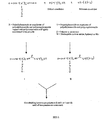
- Isocyanate-functional groups are covalently linked to a prepolymer of choice, and such addition of water produces an active primary amine at a certain frequency by conversion of some isocyanate moieties, based upon temperature and pH.
- Such primary amines subsequently react with other isocyanates attached to other prepolymer units, thereby covalently linking the prepolymer units together, as illustrated in FIG. 1; this is generally representative of certain reactions utilized in the '683 patent.
- biologics for purposes of this patent application, should be understood to include living cells, proteins, such as antibodies, other bioactive materials, both natural or synthetic, and small organic molecules which function bioactively. It can thus be seen that the size of a biologic may vary substantially and, as explained hereinafter, molecules of small size may desirably be provided with anchoring moieties.
- the '683 patent describes the addition of primary amine-derivatized oligonucleotides to isocyanate-functional prepolymers in order to produce oligonucleotide arrays that are attached to a solid support surface.
- An advantageous feature of such a process is that, during the completion of the polymerization reaction between isocyanate prepolymer units, the oligonucleotides will become covalently linked to the polymer matrix.
- such a method based upon amine conjugation, may not be suitable for certain sensitive biologics, e.g. certain proteins and living cells. Because primary amines are components of all proteins including those present on the surface of living cells, e.g.
- Thiol-based crosslinking agents serve as mediators of the cross-linking reaction between isocyanate groups on different prepolymers, as opposed to employing amine functionalities.
- a certain percentage of the isocyanate groups will undergo hydrolysis; however, the primary amines formed as a result will have pKa values in the range of 9 to 10.
- the vast majority of these amines will be protonated and therefore will not participate in the polymerization process.
- 6.5 to 7.5 is preferred, 6.6 to 7.1 is more preferred and approximately pH 7.0 is most preferred.
- the presence of such thiol-containing species will cross-link unreacted isocyanate groups so as to effectively carry out the polymerization process.
- thiol crosslinkers are of course composed of a variety of amino acids, some of which contain side chain primary amines that are potentially reactive during the overall polymerization process.
- linking to such amine functionalities may well hinder the natural movement and conformation of the proteins, and in the case of living cells, it will likely alter the pattern and responsiveness of extracellular and plasma membrane proteins.
- the present method avoids or substantially limits occurrence of such links and the negative aspects thereof.
- the pKa value for the side chain primary amine of the amino acid lysine is quite basic, approximately 10.5, and that for arginine is even more basic, i.e. over 12. If the pH of the polymerization mixture is maintained approximately neutral, then the proportion of free amine suitable for participating in a nucleophilic addition, such as that shown in FIG. 1, is less than 1/1000 th of the total primary amine population represented by lysine side chains. In contrast, thiol groups remain nucleophilic and very reactive at neutral pH values.
- cysteine residues in proteins contain a thiol side chain
- the frequency of cysteines within proteins is generally more than 3-fold lower than that of lysine, and when present, cysteines are frequently oxidized so as to form intramolecular cystine linkages in native proteins, thereby further lowering the number of available sulfhydryl groups.
- the overall result is a very substantial reduction in the number of multiple, potentially denaturing links between embedded proteins or cells and the polymer matrix; thus, such thiol-mediated crosslinking of hydrogel prepolymers provides improved formulations for encapsulating sensitive biological molecules and living cells.
- this encapsulation method which depends upon thiol reactions, also provides a very effective way of anchoring small organic molecules, for example organic molecules having a molecular weight between 100 and 2000 and particularly those having a molecular weight not greater than about 500, in a manner so that they fully retain their effectiveness in the hydrogel.
- small molecules are derivatized to place a thiol group at a location in the molecule where it will not interfere with the secondary or tertiary configuration of the small molecule, for example, at one end of a generally linear molecule.
- the small molecule might be of such a size that it would not necessarily be retained in an encapsulating matrix of this type, the presence of the thiol group will result in a linking to an isocyanate group on the polymer and thus anchor the small organic molecule within or upon the gel in a manner such that it can assume its normal active configuration.
- the encapsulation method can be used to create what might be termed chemical chips, as well as protein chips, cellular chips and the like.
- Isocyanate-functional prepolymers are often prepared from relatively high molecular weight polyoxyalkylene diols or polyols that are reacted with difunctional or polyfunctional isocyanate compounds.
- Preferred prepolymers are ones made from polyoxyalkylene diols or polyols that comprise homopolymers of ethylene oxide units or block or random copolymers containing mixtures of ethylene oxide units and propylene oxide or butylene oxide units. In the case of such block or random copolymers, at least 75% of the units are preferably ethylene oxide units.
- Such polyoxyalkylene diol or polyol molecular weight is preferably from 2,000 to 30,000 and more preferably from 5,000 to 30,000.
- Suitable prepolymers may be prepared by reacting selected polyoxyalkylene diols or polyols with polyisocyanate, at an isocyanate-to-hydroxyl ratio of about 1.2 to about 2.2, so that essentially all of the hydroxyl groups are capped with polyisocyanate.
- Aliphatic, rather than aromatic isocyanates, are preferred as they provide more easily controlled polymerization.
- polyethylene glycol (PEG), polypropylene glycol (PPG) or copolymers thereof are preferred.
- the isocyanate-functional prepolymers being used preferably contain active isocyanates in an amount of about 0.1 meq/g to about 1 meq/g, and more preferably about 0.2 meq/g to about 0.8 meq/g.
- relatively low molecular weight prepolymers e.g. less than 2,000
- they preferably contain a relatively high isocyanate content (about 1 meq/g or even higher).
- the polymerization rate of such smaller prepolymers may require more precise control to avoid too rapid polymerization, and thus would be less preferred for fabricating microarrays and the like.
- prepolymers with a fairly high isocyanate content may have a relatively high content of free amines after polymerization, and the positive charges on such amine functionalities, at neutral pH, may increase non-specific binding of negatively charged biomolecules with the potential of resulting in higher levels of undesirable background signals.
- higher molecular weight prepolymers which contain a relatively low isocyanate content are preferred.
- Longer dithiol crosslinkers provide formulations for hydrogel polymerization that are more easily controlled.
- Crosslinkers having a backbone of PEG and/or PPG units are one class of dithiols that provide biocompatibility and structural advantages, and such crosslinkers of molecular weight between about 500 and 10,000 are preferred, with those between about 2,000 and 6,000 being more preferred and those between about 3,000 and 4,000 being most preferred.
- the molar ratio of dithiol crosslinker to isocyanate (from the prepolymer) is preferably not higher than about 0.3 dithiol per isocyanate, and more preferably not higher than about 0.2 dithiol per isocyanate.
- Formulations having a ratio significantly lower than 0.1 dithiol per isocyanate might not polymerize promptly and/or completely at pH 7.0 without the inclusion of an auxiliary crosslinker.
- formulations having a ratio slightly less than about 0.1 dithiol per isocyanate are preferably supplied with an auxiliary bidentate crosslinker having two different isocyanate-reactive functional groups, one of which is preferably thiol, e.g. cysteine which has a side chain thiol group and a less reactive primary ⁇ -amine group which is of course more nucleophilic than the ⁇ -carboxyl under these conditions.
- bidentate crosslinkers that might be used include 2-mercaptoethanol, 2-aminoethanethiol, homocysteine, 2-mercaptopropanol and other short chain compounds having a thiol group and another nucleophilic group. Morever, even when an adequate amount of the dithiol crosslinker is provided, it has been found that the provision of an auxiliary bidentate crosslinker can be advantageous in controlling the polymerization reaction in obtaining completion within desirable time limits and in obtaining hydrogel compositions that are stable, have a high water content and excellent structural strength. Accordingly, the employment of the combination of a dithiol crosslinker of relatively high molecular weight, e.g.
- auxiliary crosslinker When such an auxiliary crosslinker is used, it is generally used in a molar amount from about 1 to 3 times the molar amount of the dithiol, and preferably from about 1.5 to about 2.5 times the moles of the dithiol crosslinker, in which amount it has been found to moderate the polymerization reaction and result in satisfactory curing.
- prepolymers of this general type allows the use of chemically functional surfaces to also achieve covalent attachment of the polymer to a substrate during polymerization.
- Such surfaces may be provided upon substrates which will facilitate the handling and instrumented examination of the polymerized hydrogel and encapsulated biological matter; for example, fabrication of a microarray containing different bioactive material encapsulated into individual spots or regions of polymerized hydrogel placed in a known pattern on such a substrate.
- Neutral pH is preferably maintained throughout the polymerization process by the use of 50 mM phosphate buffer supplemented with NaCl, typically 10 mM to 80 mM; osmotic pressure is preferably maintained at physiological levels, approximately 300 milliosmoles. It is found that such formulations can be made without using organic solvents by mixing isocyanate-derivatized prepolymers rapidly in phosphate buffer/NaCl and then rapidly adding a premixed solution of cells or proteins and dithiol crosslinker in phosphate buffer/NaCl. The polymerization process will then generally occur within 20 to 60 minutes, typically less than 30 minutes, during which time the cells or proteins remain in a hydrated and an osmotically balanced state at physiological pH. Preferably, pH and osmolality are maintained between 6.9 to 7.6 and between 250 to 400 mOsm/kg, respectively. Once cured, polymer sites containing the encapsulated biologics are easily washed, and manipulated.
- Goat lymphocytes having been determined by trypan blue exclusion to have both viable and dead cells present within the cell mixture, were chosen, and the prepolymer and cell suspension/dithiol crosslinker/bidentate crosslinker were mixed.
- the lymphocytes became encapsulated within the thiol-crosslinked hydrogel when droplets of the mixture were deposited as spots (approximately 300 -1,000 microns in diameter, with a height equal to or greater than 20 microns) upon glass slides and then cured in a high humidity chamber at room temperature; mixing and curing took just less than 20 minutes.
- the relative humidity (RH) is at least about 90% and more preferably is about 95% or higher.
- Protein encapsulation was also examined, formulating the gel essentially as just described. Protein encapsulation was demonstrated by the sequestration/encapsulation of anti-transferrin antibody within the gel matrix during polymerization. Verification of the antibody's functionality was demonstrated by the specific binding of fluorescent dye-labeled transferrin to those sites containing the anti-transferrin antibody and not at other sites containing different antibodies or no antibodies.
- encapsulated living cells and/or proteins within such a thiol-crosslinked hydrogel might be deposited as spots or regions upon support surfaces, such as glass slides, or within microwells or microchambers, such as would be present in standard 96 well, 384 well or 1536 well microtiter plates. Distinct advantages are present with both approaches. In depositing a number of discrete spots upon a single surface, each spot might contain a different entity, allowing a single incubation followed by the supply of wash solutions to contact all spots simultaneously. The use of individual microchambers would allow robotic handling of the plates and permit the use of low volumes of individual test solutions at each well. Combinations of these two approaches may also be used whereby individual chambers, arranged in a standard 96 well array or similar format, are each supplied with one or more hydrogel spots containing different entities.
- Devices employing such arrays might be employed as combinatorial chemical or drug screening devices, antibody arrays, peptide arrays, cell arrays, enzymatic activity arrays, or DNA or other polynucleotide arrays that will be selective for binding to related proteins or other biomolecules.
- encapsulated cells or biomolecules coated onto the walls of microcapillary tubes will function as flow-through devices having single or multiple channels, which might be employed as screening devices or as biosensors on systems, such as in liquid chromatography or in "lab-on-a-chip” devices.
- Signal readout from such devices might be via binding of fluorescent proteins or of antigens, to be measured by subsequent antibody-based detection methods (possibly employing additional arrays), or via reaction with endogenous biopathways which will result in the formation of a detectable species, e.g. enzymatic conversion of a substrate to a fluorescent dye molecule, or change in the electrical properties, e.g. conductivity, of the cell and/or surrounding matrix resulting from exposure to the specific agent.
- a detectable species e.g. enzymatic conversion of a substrate to a fluorescent dye molecule
- change in the electrical properties, e.g. conductivity, of the cell and/or surrounding matrix resulting from exposure to the specific agent e.g. enzymatic conversion of a substrate to a fluorescent dye molecule
- the addition of either a redox agent to the gel or the addition of an electrically conductive polymer may enable signal detection by electrical, non-photonic, means.
- Solution A was prepared by mixing 0.075 g of Hypol PreMa G-50 (Hampshire Chemical Corp.) and 1.5 mL of 50 mM aqueous phosphate buffer, at pH 7.0 with 80 mM sodium chloride.
- Solution C was prepared by mixing 100 ⁇ L of Solution B with 10 ⁇ L of goat lymphocytes in Dulbecco's phosphate-buffered saline.
- Solution A was prepared by mixing 0.1 g of Hypol PreMa G-50 (Hampshire Chemical Corp.) and 1 mL of 50 mM phosphate buffer, at pH 7.0 with 80 mM sodium chloride.
- Solution B was prepared by the same procedure as in Example 1.
- Solution C was prepared by mixing 40 ⁇ L of Solution B with 70 ⁇ L of goat lymphocytes in Dulbecco's phosphate-buffered saline. Finally, 100 ⁇ L of Solution A was mixed with 100 ⁇ L of Solution C, and the resulting solution was microspotted using the same procedure as in Example 1.
- Solution A was prepared by mixing 0.1 g of Hypol PreMa G-50 (Hampshire Chemical Corp.) and 1 mL of 50 mM phosphate buffer, at pH 7.0 with 80 mM sodium chloride.
- Solution B was prepared by the same procedure as in Example 1.
- Solution C was prepared by mixing 40 ⁇ L of Solution B with 70 ⁇ L of E . coli in Dulbeeco's phosphate-buffered saline. Finally, 100 ⁇ L of Solution A was mixed with 100 ⁇ L of Solution C, and the resulting solution was placed into a disposable culture tube.
- Solution A was prepared by mixing 0.1 g of Hypol PreMa G-50 (Hampshire Chemical Corp.) and 1 mL of 50 mM phosphate buffer, at pH 7.0 with 80 mM sodium chloride.
- the slide was treated with a PBS buffer containing 1 % Bovine Serum Albumin (Sigma Chemical Co.) and 0.1 % Triton X-100 (Boehringer Mannheim) for 1 hour at room temperature.
- Anti-transferrin in the hydrogel was interacted with Cy3-labeled transferrin (1 ⁇ g/ml in 1% bovine serum albumin, 0.1% triton X-100 in phosphate buffered saline) for 1 hour and then visualized; it demonstrated that there was specific binding of fluorescent dye-labeled transferrin at sites containing the anti-transferrin antibody and not at other sites containing different antibodies or no antibodies.
- Solution A was prepared by mixing 0.1 g of Hypol PreMa G-50 (Hampshire Chemical Corp.) and 1 mL of 50 mM phosphate buffer at pH 7.0.
- Solution B without salts was prepared by the same procedure as in Example 1.
- hydrogel microbeads may be formed which encapsulate biologics.
- the polymer/cell (or protein) mix is added to a non-miscible liquid, such as an oil, while curing is occurring to cause microbeads of various dimensions to be formed.
- Separation from the oil or other suspending liquid yields a slurry of beads suitable for use in bioreactors, assay devices, artificial organs, biosensors or the like.
- multiple layers of encapsulated cells, proteins or other bioactive molecules might be used to construct complex materials having unique overall properties.
- dyes or other agents might be added to the encapsulating polymer to facilitate subsequent identification of the encapsulated cell type if heterogeneous mixtures of cells are to be employed.
- Such a cell identification mechanism combined with a chromaphore-based or fluorescent-based response from specific cells in response to added agents, e.g. expression of green fluorescent protein in response to specific cell signaling pathway activation by a ligand or drug, permits the screening of large populations of heterogeneous cells in a rapid and facile fashion.
Landscapes
- Chemical & Material Sciences (AREA)
- Health & Medical Sciences (AREA)
- Engineering & Computer Science (AREA)
- Organic Chemistry (AREA)
- Life Sciences & Earth Sciences (AREA)
- Medicinal Chemistry (AREA)
- Immunology (AREA)
- Chemical Kinetics & Catalysis (AREA)
- Bioinformatics & Cheminformatics (AREA)
- Polymers & Plastics (AREA)
- General Health & Medical Sciences (AREA)
- Biomedical Technology (AREA)
- Physics & Mathematics (AREA)
- Nanotechnology (AREA)
- Hematology (AREA)
- General Physics & Mathematics (AREA)
- Molecular Biology (AREA)
- Urology & Nephrology (AREA)
- Biotechnology (AREA)
- Genetics & Genomics (AREA)
- Microbiology (AREA)
- Wood Science & Technology (AREA)
- Zoology (AREA)
- Biochemistry (AREA)
- General Chemical & Material Sciences (AREA)
- Crystallography & Structural Chemistry (AREA)
- Composite Materials (AREA)
- Pharmacology & Pharmacy (AREA)
- Epidemiology (AREA)
- Animal Behavior & Ethology (AREA)
- Public Health (AREA)
- Veterinary Medicine (AREA)
- Dispersion Chemistry (AREA)
- Cell Biology (AREA)
- Materials Engineering (AREA)
- Condensed Matter Physics & Semiconductors (AREA)
- General Engineering & Computer Science (AREA)
- Food Science & Technology (AREA)
- Analytical Chemistry (AREA)
- Pathology (AREA)
Applications Claiming Priority (3)
| Application Number | Priority Date | Filing Date | Title |
|---|---|---|---|
| US28126801P | 2001-04-03 | 2001-04-03 | |
| US281268P | 2001-04-03 | ||
| PCT/US2002/010411 WO2002081662A1 (en) | 2001-04-03 | 2002-04-02 | Methods and gel compositions for encapsulating living cells and organic molecules |
Publications (3)
| Publication Number | Publication Date |
|---|---|
| EP1373472A1 EP1373472A1 (en) | 2004-01-02 |
| EP1373472A4 EP1373472A4 (en) | 2005-11-09 |
| EP1373472B1 true EP1373472B1 (en) | 2007-06-27 |
Family
ID=23076600
Family Applications (1)
| Application Number | Title | Priority Date | Filing Date |
|---|---|---|---|
| EP02763911A Expired - Lifetime EP1373472B1 (en) | 2001-04-03 | 2002-04-02 | Methods and gel compositions for encapsulating living cells and organic molecules |
Country Status (8)
| Country | Link |
|---|---|
| US (2) | US7172866B2 (enExample) |
| EP (1) | EP1373472B1 (enExample) |
| JP (1) | JP4198468B2 (enExample) |
| AT (1) | ATE365792T1 (enExample) |
| CA (1) | CA2443060A1 (enExample) |
| DE (1) | DE60220893T2 (enExample) |
| IL (2) | IL158128A0 (enExample) |
| WO (1) | WO2002081662A1 (enExample) |
Families Citing this family (60)
| Publication number | Priority date | Publication date | Assignee | Title |
|---|---|---|---|---|
| WO2002094900A1 (en) * | 2001-05-21 | 2002-11-28 | Dow Global Technologies Inc. | Transparent polyurethane-hydrogel composition, method of making transparent polyurethane-hydrogel composition, and air-freshener application |
| AU2002314790A1 (en) * | 2001-12-05 | 2003-06-23 | Dow Global Technologies Inc. | Method for immobilizing a biologic in a polyurethane-hydrogel composition, a composition prepared from the method, and biomedical applications |
| EP1511839A4 (en) | 2002-06-05 | 2005-11-16 | Es Cell Int Pte Ltd | GENERATION OF NEURAL STEM CELLS FROM UNDIFFERENCED HUMAN EMBRYONAL STEM CELLS |
| CA2521862C (en) | 2003-04-10 | 2012-10-16 | President And Fellows Of Harvard College | Formation and control of fluidic species |
| US9200245B2 (en) | 2003-06-26 | 2015-12-01 | Seng Enterprises Ltd. | Multiwell plate |
| US20060240548A1 (en) * | 2003-06-26 | 2006-10-26 | Mordechai Deutsch | Materials for constructing cell-chips, cell-chip covers, cell-chips coats, processed cell-chips and uses thereof |
| CN1842368B (zh) | 2003-08-27 | 2014-05-28 | 哈佛大学 | 流体物种的电子控制 |
| US20050112650A1 (en) * | 2003-10-20 | 2005-05-26 | Ciphergen Biosystems, Inc. | Reactive polyurethane-based polymers |
| US20060040377A1 (en) * | 2004-08-17 | 2006-02-23 | Biocept, Inc. | Protein microarrays |
| CA3066594A1 (en) * | 2004-10-08 | 2006-04-20 | Georgia Tech Research Corporation | Microencapsulation of cells in hydrogels using electrostatic potentials |
| US7439062B2 (en) | 2004-12-23 | 2008-10-21 | Biocept, Inc. | Beads for capturing target cells from bodily fluid |
| US8158410B2 (en) | 2005-01-18 | 2012-04-17 | Biocept, Inc. | Recovery of rare cells using a microchannel apparatus with patterned posts |
| CN103382434B (zh) | 2005-01-18 | 2016-05-25 | 生物概念股份有限公司 | 利用含排列成图案的立柱的微通道分离细胞 |
| US20090136982A1 (en) | 2005-01-18 | 2009-05-28 | Biocept, Inc. | Cell separation using microchannel having patterned posts |
| US20080287604A1 (en) * | 2005-09-09 | 2008-11-20 | Avery Dennison Corporation | Hydrogel Including Modified Cyclodextrin Crosslinked With Polyurethane Prepolymer |
| EP1928918B1 (en) * | 2005-09-27 | 2011-11-16 | UNIVERSITE JOSEPH FOURIER - Grenoble 1 | Hydrogel functionalized with a polymerizable moiety and their uses as biosensors or bioreactors |
| EP1970400B1 (en) * | 2005-11-24 | 2014-03-12 | Mitsuru Akashi | Stimuli-responsive degradable gel |
| US7695956B2 (en) | 2006-01-12 | 2010-04-13 | Biocept, Inc. | Device for cell separation and analysis and method of using |
| KR100849185B1 (ko) * | 2006-01-19 | 2008-07-30 | 서울산업대학교 산학협력단 | 키토산 또는 히알루론산-폴리에틸렌옥사이드 및키토산-히알루론산-폴리에틸렌옥사이드를 기저로 하는하이드로젤과 이의 제조방법 |
| WO2007121276A2 (en) * | 2006-04-12 | 2007-10-25 | Biocept, Inc. | Enrichment of circulating fetal dna |
| KR100721431B1 (ko) | 2006-04-19 | 2007-05-25 | 학교법인 포항공과대학교 | 고분자 캡슐 및 그 제조방법 |
| CA2704768A1 (en) * | 2006-11-03 | 2008-10-23 | Trustees Of Tufts College | Biopolymer sensor and method of manufacturing the same |
| US20100096763A1 (en) * | 2006-11-03 | 2010-04-22 | Trustees Of Tufts College | Biopolymer optofluidic device and method of manufacturing the same |
| EP2650112B1 (en) | 2006-11-03 | 2016-08-24 | Trustees Of Tufts College | Nanopatterned biopolymer optical device and method of manufacturing the same |
| US20100046902A1 (en) | 2006-11-03 | 2010-02-25 | Trustees Of Tufts College | Biopolymer photonic crystals and method of manufacturing the same |
| US20080176768A1 (en) * | 2007-01-23 | 2008-07-24 | Honeywell Honeywell International | Hydrogel microarray with embedded metal nanoparticles |
| EP2206017B1 (en) | 2007-11-05 | 2019-02-20 | Trustees Of Tufts College | Fabrication of silk fibroin photonic structures by nanocontact imprinting |
| US9145540B1 (en) | 2007-11-15 | 2015-09-29 | Seng Enterprises Ltd. | Device for the study of living cells |
| WO2009081409A2 (en) | 2007-12-26 | 2009-07-02 | Seng Enterprises Ltd. | Device for the study of living cells |
| EP3354740A1 (en) * | 2007-12-13 | 2018-08-01 | Danisco US Inc. | Compositions and methods for producing isoprene |
| EP2307054A4 (en) * | 2008-06-18 | 2013-02-06 | Tufts College | EDIBLE HOLOGRAPHIC SILK PRODUCTS |
| JP5188314B2 (ja) * | 2008-08-04 | 2013-04-24 | キヤノン株式会社 | 生体高分子検査装置及びその方法 |
| US20100240054A1 (en) * | 2008-09-22 | 2010-09-23 | Biocept, Inc. | Identification and isolation of fetal cells and nucleic acid |
| EP2396276B1 (en) | 2009-02-12 | 2016-08-31 | Trustees Of Tufts College | Nanoimprinting of silk fibroin structures for biomedical and biophotonic applications |
| US9016875B2 (en) | 2009-07-20 | 2015-04-28 | Tufts University/Trustees Of Tufts College | All-protein implantable, resorbable reflectors |
| WO2011026101A2 (en) | 2009-08-31 | 2011-03-03 | Trustees Of Tufts College | Silk transistor devices |
| AU2010314994B2 (en) | 2009-11-09 | 2016-10-06 | Spotlight Technology Partners Llc | Fragmented hydrogels |
| JP5864429B2 (ja) | 2009-11-09 | 2016-02-17 | スポットライト テクノロジー パートナーズ エルエルシーSpotlight Technology Partners Llc | 架橋ヒドロゲル組成物、ヒドロゲル組成物の形成方法、及びキット |
| US9404864B2 (en) | 2013-03-13 | 2016-08-02 | Denovo Sciences, Inc. | System for imaging captured cells |
| CA2842359A1 (en) | 2011-08-01 | 2013-02-07 | Denovo Sciences | Cell capture system and method of use |
| US9174216B2 (en) | 2013-03-13 | 2015-11-03 | DeNovo Science, Inc. | System for capturing and analyzing cells |
| US10466160B2 (en) | 2011-08-01 | 2019-11-05 | Celsee Diagnostics, Inc. | System and method for retrieving and analyzing particles |
| US9606102B2 (en) | 2013-01-26 | 2017-03-28 | Denovo Sciences, Inc. | System and method for capturing and analyzing cells |
| US9707562B2 (en) | 2013-03-13 | 2017-07-18 | Denovo Sciences, Inc. | System for capturing and analyzing cells |
| EP2796873A1 (en) * | 2013-04-25 | 2014-10-29 | QGel SA | Method for a cell-based drug screening assay and the use thereof |
| US9856535B2 (en) | 2013-05-31 | 2018-01-02 | Denovo Sciences, Inc. | System for isolating cells |
| US10391490B2 (en) | 2013-05-31 | 2019-08-27 | Celsee Diagnostics, Inc. | System and method for isolating and analyzing cells |
| WO2015147147A1 (ja) * | 2014-03-26 | 2015-10-01 | 国立大学法人北海道大学 | 生物学的試料をハイドロゲルで高速固定する方法及びそのための装置 |
| US9694338B2 (en) * | 2014-12-18 | 2017-07-04 | Wisconsin Alumni Research Foundation | Covalently-immobilized hydrogel arrays in multi-well plates |
| CN108780094B (zh) | 2016-01-12 | 2022-09-13 | 生物蛋白有限公司 | 使用条件活性抗体的诊断方法 |
| CN111295245B (zh) | 2017-08-29 | 2021-03-16 | 伯乐实验室有限公司 | 用于分离和分析细胞的系统和方法 |
| US10633693B1 (en) | 2019-04-16 | 2020-04-28 | Celsee Diagnostics, Inc. | System and method for leakage control in a particle capture system |
| US11273439B2 (en) | 2019-05-07 | 2022-03-15 | Bio-Rad Laboratories, Inc. | System and method for target material retrieval from microwells |
| JP7413408B2 (ja) | 2019-05-07 | 2024-01-15 | バイオ-ラッド ラボラトリーズ インコーポレイテッド | 自動化された単一細胞処理のためのシステムおよび方法 |
| CN118291246A (zh) | 2019-06-14 | 2024-07-05 | 伯乐实验室有限公司 | 用于自动化单细胞处理和分析的系统和方法 |
| US11504719B2 (en) | 2020-03-12 | 2022-11-22 | Bio-Rad Laboratories, Inc. | System and method for receiving and delivering a fluid for sample processing |
| CA3215316A1 (en) | 2021-04-16 | 2022-10-20 | Andrew P. MAGYAR | Methods of isoprenoid synthesis using a genetically engineered hydrocarbonoclastic organism in a biofilm bioreactor |
| KR20240116466A (ko) * | 2021-10-29 | 2024-07-29 | 시질론 테라퓨틱스, 인크. | 세포 기반 치료 및 관련 방법을 위한 조성물 |
| WO2023107539A1 (en) | 2021-12-10 | 2023-06-15 | Bio-Rad Laboratories, Inc. | Compositions, methods, and systems for sample processing with morphology-adjustable functionalized particles |
| WO2024036256A1 (en) | 2022-08-10 | 2024-02-15 | Capra Biosciences, Inc. | Circulating biofilm bioreactor |
Family Cites Families (15)
| Publication number | Priority date | Publication date | Assignee | Title |
|---|---|---|---|---|
| US4098645A (en) * | 1976-02-24 | 1978-07-04 | W. R. Grace & Co. | Immobilization of proteins with polyurethane polymers |
| US4436813A (en) * | 1982-03-16 | 1984-03-13 | Purification Engineering, Inc. | Immobilized microbial cell composition for making L-aspartic acid |
| US4794090A (en) | 1986-09-26 | 1988-12-27 | W. R. Grace & Co.-Conn. | Immobilization support for biologicals |
| US5175229A (en) | 1986-11-18 | 1992-12-29 | W. R. Grace & Co.-Conn. | Biocompatible polyurea-urethane hydrated polymers |
| US5403750A (en) | 1991-03-06 | 1995-04-04 | W. R. Grace & Co.-Conn. | Biocompatible, low protein adsorption affinity matrix |
| US5573934A (en) | 1992-04-20 | 1996-11-12 | Board Of Regents, The University Of Texas System | Gels for encapsulation of biological materials |
| CA2211160C (en) * | 1995-02-01 | 2002-10-01 | Schneider (Usa) Inc. | Process for hydrophilicization of hydrophobic polymers |
| DE69803129T2 (de) | 1997-02-14 | 2002-08-29 | Nippon Shokubai Co. Ltd., Osaka | Immobilisierter Biokatalysator |
| KR100694914B1 (ko) | 1998-07-09 | 2007-03-14 | 바이오셉트 인코포레이티드 | 디엔에이 서열 하이브리드화를 최적화하기 위한 개선된펩티드 핵산 유니버셜 라이브러리의 사용방법 |
| US6818018B1 (en) * | 1998-08-14 | 2004-11-16 | Incept Llc | In situ polymerizable hydrogels |
| ATE286746T1 (de) | 1999-01-29 | 2005-01-15 | Beiersdorf Ag | Proteinhaltige hydrogele |
| US6174683B1 (en) * | 1999-04-26 | 2001-01-16 | Biocept, Inc. | Method of making biochips and the biochips resulting therefrom |
| US6642046B1 (en) * | 1999-12-09 | 2003-11-04 | Motorola, Inc. | Method and apparatus for performing biological reactions on a substrate surface |
| ATE421694T1 (de) * | 2000-10-26 | 2009-02-15 | Biocept Inc | Dreidimensionales format aufweisender biochip |
| AU2002314790A1 (en) * | 2001-12-05 | 2003-06-23 | Dow Global Technologies Inc. | Method for immobilizing a biologic in a polyurethane-hydrogel composition, a composition prepared from the method, and biomedical applications |
-
2002
- 2002-04-02 AT AT02763911T patent/ATE365792T1/de not_active IP Right Cessation
- 2002-04-02 JP JP2002580026A patent/JP4198468B2/ja not_active Expired - Fee Related
- 2002-04-02 EP EP02763911A patent/EP1373472B1/en not_active Expired - Lifetime
- 2002-04-02 CA CA002443060A patent/CA2443060A1/en not_active Abandoned
- 2002-04-02 DE DE60220893T patent/DE60220893T2/de not_active Expired - Fee Related
- 2002-04-02 US US10/398,725 patent/US7172866B2/en not_active Expired - Lifetime
- 2002-04-02 IL IL15812802A patent/IL158128A0/xx active IP Right Grant
- 2002-04-02 WO PCT/US2002/010411 patent/WO2002081662A1/en not_active Ceased
-
2003
- 2003-09-25 IL IL158128A patent/IL158128A/en not_active IP Right Cessation
-
2007
- 2007-02-01 US US11/670,061 patent/US20070141164A1/en not_active Abandoned
Non-Patent Citations (1)
| Title |
|---|
| None * |
Also Published As
| Publication number | Publication date |
|---|---|
| US20070141164A1 (en) | 2007-06-21 |
| EP1373472A1 (en) | 2004-01-02 |
| EP1373472A4 (en) | 2005-11-09 |
| JP4198468B2 (ja) | 2008-12-17 |
| DE60220893T2 (de) | 2008-03-06 |
| US20040029241A1 (en) | 2004-02-12 |
| IL158128A0 (en) | 2004-03-28 |
| ATE365792T1 (de) | 2007-07-15 |
| JP2004533500A (ja) | 2004-11-04 |
| CA2443060A1 (en) | 2002-10-17 |
| DE60220893D1 (de) | 2007-08-09 |
| WO2002081662A1 (en) | 2002-10-17 |
| US7172866B2 (en) | 2007-02-06 |
| IL158128A (en) | 2009-02-11 |
Similar Documents
| Publication | Publication Date | Title |
|---|---|---|
| US7172866B2 (en) | Methods and gel compositions for encapsulating living cells and organic molecules | |
| JP2004533500A5 (enExample) | ||
| US10266652B2 (en) | Cross-linked poly-E-lysine non-particulate support | |
| US7625951B2 (en) | Stimuli-responsive hydrogel microdomes integrated with genetically engineered proteins for high-throughput screening of pharmaceuticals | |
| KR20020026275A (ko) | 바이오칩 및 이의 제조방법 | |
| US7595157B2 (en) | Microarrays utilizing hydrogels | |
| US20170232143A1 (en) | Covalently cross linked hydrogels and methods of making and using same | |
| US20050147994A1 (en) | Method for immobilizing a biologic in a polyurethane-hydrogel composition, a composition prepared from the method, and biomedical applicaions | |
| EP1328810B1 (en) | Three dimensional format biochip | |
| Lu et al. | Cell encapsulation with alginate and α‐phenoxycinnamylidene‐acetylated poly (allylamine) | |
| CA2435894C (en) | End group activated polymers with oligonucleotide ligands | |
| US20060084159A1 (en) | Method for manufacturing of three dimensional composite surfaces for microarrays | |
| AU2002246918B9 (en) | Three dimensional biochip | |
| AU2002246918B8 (en) | Three dimensional biochip | |
| AU2002246918A1 (en) | Three dimensional biochip |
Legal Events
| Date | Code | Title | Description |
|---|---|---|---|
| PUAI | Public reference made under article 153(3) epc to a published international application that has entered the european phase |
Free format text: ORIGINAL CODE: 0009012 |
|
| 17P | Request for examination filed |
Effective date: 20031009 |
|
| AK | Designated contracting states |
Kind code of ref document: A1 Designated state(s): AT BE CH CY DE DK ES FI FR GB GR IE IT LI LU MC NL PT SE TR |
|
| AX | Request for extension of the european patent |
Extension state: AL LT LV MK RO SI |
|
| A4 | Supplementary search report drawn up and despatched |
Effective date: 20050922 |
|
| RIC1 | Information provided on ipc code assigned before grant |
Ipc: 7C 12N 5/00 A Ipc: 7A 61K 9/16 B |
|
| RAP1 | Party data changed (applicant data changed or rights of an application transferred) |
Owner name: BIOCEPT, INC. |
|
| GRAP | Despatch of communication of intention to grant a patent |
Free format text: ORIGINAL CODE: EPIDOSNIGR1 |
|
| GRAS | Grant fee paid |
Free format text: ORIGINAL CODE: EPIDOSNIGR3 |
|
| GRAA | (expected) grant |
Free format text: ORIGINAL CODE: 0009210 |
|
| AK | Designated contracting states |
Kind code of ref document: B1 Designated state(s): AT BE CH CY DE DK ES FI FR GB GR IE IT LI LU MC NL PT SE TR |
|
| REG | Reference to a national code |
Ref country code: GB Ref legal event code: FG4D |
|
| REG | Reference to a national code |
Ref country code: CH Ref legal event code: EP |
|
| REG | Reference to a national code |
Ref country code: IE Ref legal event code: FG4D |
|
| REF | Corresponds to: |
Ref document number: 60220893 Country of ref document: DE Date of ref document: 20070809 Kind code of ref document: P |
|
| PG25 | Lapsed in a contracting state [announced via postgrant information from national office to epo] |
Ref country code: SE Free format text: LAPSE BECAUSE OF FAILURE TO SUBMIT A TRANSLATION OF THE DESCRIPTION OR TO PAY THE FEE WITHIN THE PRESCRIBED TIME-LIMIT Effective date: 20070927 |
|
| PG25 | Lapsed in a contracting state [announced via postgrant information from national office to epo] |
Ref country code: AT Free format text: LAPSE BECAUSE OF FAILURE TO SUBMIT A TRANSLATION OF THE DESCRIPTION OR TO PAY THE FEE WITHIN THE PRESCRIBED TIME-LIMIT Effective date: 20070627 |
|
| NLV1 | Nl: lapsed or annulled due to failure to fulfill the requirements of art. 29p and 29m of the patents act | ||
| ET | Fr: translation filed | ||
| REG | Reference to a national code |
Ref country code: CH Ref legal event code: PL |
|
| PG25 | Lapsed in a contracting state [announced via postgrant information from national office to epo] |
Ref country code: BE Free format text: LAPSE BECAUSE OF FAILURE TO SUBMIT A TRANSLATION OF THE DESCRIPTION OR TO PAY THE FEE WITHIN THE PRESCRIBED TIME-LIMIT Effective date: 20070627 |
|
| PG25 | Lapsed in a contracting state [announced via postgrant information from national office to epo] |
Ref country code: PT Free format text: LAPSE BECAUSE OF FAILURE TO SUBMIT A TRANSLATION OF THE DESCRIPTION OR TO PAY THE FEE WITHIN THE PRESCRIBED TIME-LIMIT Effective date: 20071127 Ref country code: ES Free format text: LAPSE BECAUSE OF FAILURE TO SUBMIT A TRANSLATION OF THE DESCRIPTION OR TO PAY THE FEE WITHIN THE PRESCRIBED TIME-LIMIT Effective date: 20071008 Ref country code: NL Free format text: LAPSE BECAUSE OF FAILURE TO SUBMIT A TRANSLATION OF THE DESCRIPTION OR TO PAY THE FEE WITHIN THE PRESCRIBED TIME-LIMIT Effective date: 20070627 |
|
| PG25 | Lapsed in a contracting state [announced via postgrant information from national office to epo] |
Ref country code: CH Free format text: LAPSE BECAUSE OF FAILURE TO SUBMIT A TRANSLATION OF THE DESCRIPTION OR TO PAY THE FEE WITHIN THE PRESCRIBED TIME-LIMIT Effective date: 20070627 Ref country code: LI Free format text: LAPSE BECAUSE OF FAILURE TO SUBMIT A TRANSLATION OF THE DESCRIPTION OR TO PAY THE FEE WITHIN THE PRESCRIBED TIME-LIMIT Effective date: 20070627 |
|
| PG25 | Lapsed in a contracting state [announced via postgrant information from national office to epo] |
Ref country code: IT Free format text: LAPSE BECAUSE OF FAILURE TO SUBMIT A TRANSLATION OF THE DESCRIPTION OR TO PAY THE FEE WITHIN THE PRESCRIBED TIME-LIMIT Effective date: 20070627 Ref country code: GR Free format text: LAPSE BECAUSE OF FAILURE TO SUBMIT A TRANSLATION OF THE DESCRIPTION OR TO PAY THE FEE WITHIN THE PRESCRIBED TIME-LIMIT Effective date: 20070928 Ref country code: DK Free format text: LAPSE BECAUSE OF FAILURE TO SUBMIT A TRANSLATION OF THE DESCRIPTION OR TO PAY THE FEE WITHIN THE PRESCRIBED TIME-LIMIT Effective date: 20070627 |
|
| PLBE | No opposition filed within time limit |
Free format text: ORIGINAL CODE: 0009261 |
|
| STAA | Information on the status of an ep patent application or granted ep patent |
Free format text: STATUS: NO OPPOSITION FILED WITHIN TIME LIMIT |
|
| 26N | No opposition filed |
Effective date: 20080328 |
|
| PGFP | Annual fee paid to national office [announced via postgrant information from national office to epo] |
Ref country code: DE Payment date: 20080602 Year of fee payment: 7 |
|
| PG25 | Lapsed in a contracting state [announced via postgrant information from national office to epo] |
Ref country code: MC Free format text: LAPSE BECAUSE OF NON-PAYMENT OF DUE FEES Effective date: 20080430 |
|
| PGFP | Annual fee paid to national office [announced via postgrant information from national office to epo] |
Ref country code: FR Payment date: 20080417 Year of fee payment: 7 |
|
| PGFP | Annual fee paid to national office [announced via postgrant information from national office to epo] |
Ref country code: GB Payment date: 20080429 Year of fee payment: 7 |
|
| PG25 | Lapsed in a contracting state [announced via postgrant information from national office to epo] |
Ref country code: FI Free format text: LAPSE BECAUSE OF FAILURE TO SUBMIT A TRANSLATION OF THE DESCRIPTION OR TO PAY THE FEE WITHIN THE PRESCRIBED TIME-LIMIT Effective date: 20070627 |
|
| PG25 | Lapsed in a contracting state [announced via postgrant information from national office to epo] |
Ref country code: IE Free format text: LAPSE BECAUSE OF NON-PAYMENT OF DUE FEES Effective date: 20080402 |
|
| PG25 | Lapsed in a contracting state [announced via postgrant information from national office to epo] |
Ref country code: CY Free format text: LAPSE BECAUSE OF FAILURE TO SUBMIT A TRANSLATION OF THE DESCRIPTION OR TO PAY THE FEE WITHIN THE PRESCRIBED TIME-LIMIT Effective date: 20070627 |
|
| GBPC | Gb: european patent ceased through non-payment of renewal fee |
Effective date: 20090402 |
|
| REG | Reference to a national code |
Ref country code: FR Ref legal event code: ST Effective date: 20091231 |
|
| PG25 | Lapsed in a contracting state [announced via postgrant information from national office to epo] |
Ref country code: DE Free format text: LAPSE BECAUSE OF NON-PAYMENT OF DUE FEES Effective date: 20091103 |
|
| PG25 | Lapsed in a contracting state [announced via postgrant information from national office to epo] |
Ref country code: FR Free format text: LAPSE BECAUSE OF NON-PAYMENT OF DUE FEES Effective date: 20091222 Ref country code: GB Free format text: LAPSE BECAUSE OF NON-PAYMENT OF DUE FEES Effective date: 20090402 |
|
| PG25 | Lapsed in a contracting state [announced via postgrant information from national office to epo] |
Ref country code: LU Free format text: LAPSE BECAUSE OF NON-PAYMENT OF DUE FEES Effective date: 20080402 |
|
| PG25 | Lapsed in a contracting state [announced via postgrant information from national office to epo] |
Ref country code: TR Free format text: LAPSE BECAUSE OF FAILURE TO SUBMIT A TRANSLATION OF THE DESCRIPTION OR TO PAY THE FEE WITHIN THE PRESCRIBED TIME-LIMIT Effective date: 20070627 |