EP1332364B1 - In vivo detection of biomolecule concentrations using fluorescent tags - Google Patents
In vivo detection of biomolecule concentrations using fluorescent tags Download PDFInfo
- Publication number
- EP1332364B1 EP1332364B1 EP01986125A EP01986125A EP1332364B1 EP 1332364 B1 EP1332364 B1 EP 1332364B1 EP 01986125 A EP01986125 A EP 01986125A EP 01986125 A EP01986125 A EP 01986125A EP 1332364 B1 EP1332364 B1 EP 1332364B1
- Authority
- EP
- European Patent Office
- Prior art keywords
- optical radiation
- fluorescently labelled
- vivo
- tissue
- antibodies
- Prior art date
- Legal status (The legal status is an assumption and is not a legal conclusion. Google has not performed a legal analysis and makes no representation as to the accuracy of the status listed.)
- Expired - Lifetime
Links
- 238000001727 in vivo Methods 0.000 title claims abstract description 41
- 238000001514 detection method Methods 0.000 title claims description 10
- 230000003287 optical effect Effects 0.000 claims abstract description 90
- 230000005855 radiation Effects 0.000 claims abstract description 86
- 230000027455 binding Effects 0.000 claims abstract description 18
- 230000004044 response Effects 0.000 claims abstract description 9
- 239000000427 antigen Substances 0.000 claims description 36
- 108091007433 antigens Proteins 0.000 claims description 36
- 102000036639 antigens Human genes 0.000 claims description 36
- 206010028980 Neoplasm Diseases 0.000 claims description 32
- 239000000203 mixture Substances 0.000 claims description 13
- 239000000463 material Substances 0.000 claims description 9
- 238000010521 absorption reaction Methods 0.000 claims description 6
- 102100028662 Sigma intracellular receptor 2 Human genes 0.000 claims description 5
- 101710109012 Sigma intracellular receptor 2 Proteins 0.000 claims 1
- 230000005284 excitation Effects 0.000 abstract description 8
- 239000011159 matrix material Substances 0.000 description 48
- 210000001519 tissue Anatomy 0.000 description 39
- 238000000034 method Methods 0.000 description 23
- 210000004027 cell Anatomy 0.000 description 20
- 229920000642 polymer Polymers 0.000 description 14
- 238000011282 treatment Methods 0.000 description 13
- 210000004881 tumor cell Anatomy 0.000 description 13
- 230000003211 malignant effect Effects 0.000 description 12
- 230000003463 hyperproliferative effect Effects 0.000 description 5
- -1 regions Substances 0.000 description 5
- 201000011510 cancer Diseases 0.000 description 4
- 230000000694 effects Effects 0.000 description 4
- 239000012634 fragment Substances 0.000 description 4
- 230000001613 neoplastic effect Effects 0.000 description 4
- 108090000623 proteins and genes Proteins 0.000 description 4
- 108010040167 sigma-2 receptor Proteins 0.000 description 4
- 206010006187 Breast cancer Diseases 0.000 description 3
- 208000026310 Breast neoplasm Diseases 0.000 description 3
- 102000001706 Immunoglobulin Fab Fragments Human genes 0.000 description 3
- 108010054477 Immunoglobulin Fab Fragments Proteins 0.000 description 3
- 229920000954 Polyglycolide Polymers 0.000 description 3
- 238000013459 approach Methods 0.000 description 3
- 208000037265 diseases, disorders, signs and symptoms Diseases 0.000 description 3
- 238000003780 insertion Methods 0.000 description 3
- 230000037431 insertion Effects 0.000 description 3
- 238000004519 manufacturing process Methods 0.000 description 3
- 238000005259 measurement Methods 0.000 description 3
- 229920000747 poly(lactic acid) Polymers 0.000 description 3
- 229920000128 polypyrrole Polymers 0.000 description 3
- 230000002062 proliferating effect Effects 0.000 description 3
- 230000035755 proliferation Effects 0.000 description 3
- 102000004169 proteins and genes Human genes 0.000 description 3
- 239000000523 sample Substances 0.000 description 3
- 239000000126 substance Substances 0.000 description 3
- 238000002965 ELISA Methods 0.000 description 2
- 102000004190 Enzymes Human genes 0.000 description 2
- 108090000790 Enzymes Proteins 0.000 description 2
- 108010043121 Green Fluorescent Proteins Proteins 0.000 description 2
- 102000004144 Green Fluorescent Proteins Human genes 0.000 description 2
- 108060003951 Immunoglobulin Proteins 0.000 description 2
- 241000700159 Rattus Species 0.000 description 2
- NKANXQFJJICGDU-QPLCGJKRSA-N Tamoxifen Chemical compound C=1C=CC=CC=1C(/CC)=C(C=1C=CC(OCCN(C)C)=CC=1)/C1=CC=CC=C1 NKANXQFJJICGDU-QPLCGJKRSA-N 0.000 description 2
- 230000004888 barrier function Effects 0.000 description 2
- 229920002988 biodegradable polymer Polymers 0.000 description 2
- 239000004621 biodegradable polymer Substances 0.000 description 2
- 230000015556 catabolic process Effects 0.000 description 2
- 230000004663 cell proliferation Effects 0.000 description 2
- 238000006243 chemical reaction Methods 0.000 description 2
- 238000000576 coating method Methods 0.000 description 2
- 229920001940 conductive polymer Polymers 0.000 description 2
- 230000001276 controlling effect Effects 0.000 description 2
- 238000007796 conventional method Methods 0.000 description 2
- 230000002596 correlated effect Effects 0.000 description 2
- 230000006378 damage Effects 0.000 description 2
- 238000006731 degradation reaction Methods 0.000 description 2
- 238000010586 diagram Methods 0.000 description 2
- 201000010099 disease Diseases 0.000 description 2
- 229940079593 drug Drugs 0.000 description 2
- 239000003814 drug Substances 0.000 description 2
- 238000005516 engineering process Methods 0.000 description 2
- 230000007613 environmental effect Effects 0.000 description 2
- 229940088598 enzyme Drugs 0.000 description 2
- 239000005090 green fluorescent protein Substances 0.000 description 2
- 238000009396 hybridization Methods 0.000 description 2
- 210000004408 hybridoma Anatomy 0.000 description 2
- 238000003384 imaging method Methods 0.000 description 2
- 102000018358 immunoglobulin Human genes 0.000 description 2
- 239000007943 implant Substances 0.000 description 2
- 238000002513 implantation Methods 0.000 description 2
- 230000001965 increasing effect Effects 0.000 description 2
- 230000003993 interaction Effects 0.000 description 2
- 239000003446 ligand Substances 0.000 description 2
- 239000012528 membrane Substances 0.000 description 2
- 238000012544 monitoring process Methods 0.000 description 2
- 210000000056 organ Anatomy 0.000 description 2
- 239000004633 polyglycolic acid Substances 0.000 description 2
- 239000004626 polylactic acid Substances 0.000 description 2
- 238000001959 radiotherapy Methods 0.000 description 2
- 230000009870 specific binding Effects 0.000 description 2
- 230000001988 toxicity Effects 0.000 description 2
- 231100000419 toxicity Toxicity 0.000 description 2
- 101710164309 56 kDa type-specific antigen Proteins 0.000 description 1
- 102000002260 Alkaline Phosphatase Human genes 0.000 description 1
- 108020004774 Alkaline Phosphatase Proteins 0.000 description 1
- 208000003174 Brain Neoplasms Diseases 0.000 description 1
- 241000282472 Canis lupus familiaris Species 0.000 description 1
- OKTJSMMVPCPJKN-UHFFFAOYSA-N Carbon Chemical compound [C] OKTJSMMVPCPJKN-UHFFFAOYSA-N 0.000 description 1
- 206010061809 Cervix carcinoma stage 0 Diseases 0.000 description 1
- 229920000858 Cyclodextrin Polymers 0.000 description 1
- 208000001976 Endocrine Gland Neoplasms Diseases 0.000 description 1
- 241000283086 Equidae Species 0.000 description 1
- 208000000461 Esophageal Neoplasms Diseases 0.000 description 1
- 241000282326 Felis catus Species 0.000 description 1
- 201000008808 Fibrosarcoma Diseases 0.000 description 1
- 208000000321 Gardner Syndrome Diseases 0.000 description 1
- 206010017993 Gastrointestinal neoplasms Diseases 0.000 description 1
- 206010018338 Glioma Diseases 0.000 description 1
- WQZGKKKJIJFFOK-GASJEMHNSA-N Glucose Natural products OC[C@H]1OC(O)[C@H](O)[C@@H](O)[C@@H]1O WQZGKKKJIJFFOK-GASJEMHNSA-N 0.000 description 1
- 208000001258 Hemangiosarcoma Diseases 0.000 description 1
- 206010020118 Histiocytoses Diseases 0.000 description 1
- 108010001336 Horseradish Peroxidase Proteins 0.000 description 1
- 102000008394 Immunoglobulin Fragments Human genes 0.000 description 1
- 108010021625 Immunoglobulin Fragments Proteins 0.000 description 1
- 208000002260 Keloid Diseases 0.000 description 1
- 208000008839 Kidney Neoplasms Diseases 0.000 description 1
- 241001465754 Metazoa Species 0.000 description 1
- 241000699666 Mus <mouse, genus> Species 0.000 description 1
- 241000699670 Mus sp. Species 0.000 description 1
- 206010029260 Neuroblastoma Diseases 0.000 description 1
- 208000004179 Oral Leukoplakia Diseases 0.000 description 1
- 206010061902 Pancreatic neoplasm Diseases 0.000 description 1
- 102000057297 Pepsin A Human genes 0.000 description 1
- 108090000284 Pepsin A Proteins 0.000 description 1
- 102100034763 Peroxiredoxin-2 Human genes 0.000 description 1
- 206010035226 Plasma cell myeloma Diseases 0.000 description 1
- 241000288906 Primates Species 0.000 description 1
- 201000004681 Psoriasis Diseases 0.000 description 1
- 206010039491 Sarcoma Diseases 0.000 description 1
- 208000000453 Skin Neoplasms Diseases 0.000 description 1
- 208000005718 Stomach Neoplasms Diseases 0.000 description 1
- 208000008385 Urogenital Neoplasms Diseases 0.000 description 1
- 208000036142 Viral infection Diseases 0.000 description 1
- 230000002159 abnormal effect Effects 0.000 description 1
- 230000003322 aneuploid effect Effects 0.000 description 1
- 208000036878 aneuploidy Diseases 0.000 description 1
- 238000003556 assay Methods 0.000 description 1
- QVGXLLKOCUKJST-UHFFFAOYSA-N atomic oxygen Chemical compound [O] QVGXLLKOCUKJST-UHFFFAOYSA-N 0.000 description 1
- 210000003719 b-lymphocyte Anatomy 0.000 description 1
- 239000011324 bead Substances 0.000 description 1
- 230000008901 benefit Effects 0.000 description 1
- 230000002715 bioenergetic effect Effects 0.000 description 1
- 239000012472 biological sample Substances 0.000 description 1
- 230000005540 biological transmission Effects 0.000 description 1
- 239000000090 biomarker Substances 0.000 description 1
- 238000001574 biopsy Methods 0.000 description 1
- 229920001400 block copolymer Polymers 0.000 description 1
- 210000001124 body fluid Anatomy 0.000 description 1
- 210000004556 brain Anatomy 0.000 description 1
- 201000008274 breast adenocarcinoma Diseases 0.000 description 1
- 239000006227 byproduct Substances 0.000 description 1
- 229910052799 carbon Inorganic materials 0.000 description 1
- 230000005754 cellular signaling Effects 0.000 description 1
- 230000008859 change Effects 0.000 description 1
- 239000003153 chemical reaction reagent Substances 0.000 description 1
- 238000002512 chemotherapy Methods 0.000 description 1
- ZPEIMTDSQAKGNT-UHFFFAOYSA-N chlorpromazine Chemical compound C1=C(Cl)C=C2N(CCCN(C)C)C3=CC=CC=C3SC2=C1 ZPEIMTDSQAKGNT-UHFFFAOYSA-N 0.000 description 1
- 229960001076 chlorpromazine Drugs 0.000 description 1
- 210000001072 colon Anatomy 0.000 description 1
- 239000002131 composite material Substances 0.000 description 1
- 239000002322 conducting polymer Substances 0.000 description 1
- 238000010276 construction Methods 0.000 description 1
- 238000013270 controlled release Methods 0.000 description 1
- 238000012937 correction Methods 0.000 description 1
- 230000000875 corresponding effect Effects 0.000 description 1
- 229940097362 cyclodextrins Drugs 0.000 description 1
- 229940127089 cytotoxic agent Drugs 0.000 description 1
- 239000002254 cytotoxic agent Substances 0.000 description 1
- 231100000599 cytotoxic agent Toxicity 0.000 description 1
- 230000001419 dependent effect Effects 0.000 description 1
- 239000010432 diamond Substances 0.000 description 1
- 229910003460 diamond Inorganic materials 0.000 description 1
- 230000029087 digestion Effects 0.000 description 1
- 208000035475 disorder Diseases 0.000 description 1
- 238000012377 drug delivery Methods 0.000 description 1
- 238000009509 drug development Methods 0.000 description 1
- 238000007877 drug screening Methods 0.000 description 1
- 238000002651 drug therapy Methods 0.000 description 1
- 230000005670 electromagnetic radiation Effects 0.000 description 1
- 238000005538 encapsulation Methods 0.000 description 1
- 150000002148 esters Chemical class 0.000 description 1
- 239000000835 fiber Substances 0.000 description 1
- GNBHRKFJIUUOQI-UHFFFAOYSA-N fluorescein Chemical compound O1C(=O)C2=CC=CC=C2C21C1=CC=C(O)C=C1OC1=CC(O)=CC=C21 GNBHRKFJIUUOQI-UHFFFAOYSA-N 0.000 description 1
- 239000007850 fluorescent dye Substances 0.000 description 1
- 239000011521 glass Substances 0.000 description 1
- 239000008103 glucose Substances 0.000 description 1
- 150000004676 glycans Chemical class 0.000 description 1
- 201000011066 hemangioma Diseases 0.000 description 1
- 201000008298 histiocytosis Diseases 0.000 description 1
- 230000007062 hydrolysis Effects 0.000 description 1
- 238000006460 hydrolysis reaction Methods 0.000 description 1
- 230000002209 hydrophobic effect Effects 0.000 description 1
- 238000010166 immunofluorescence Methods 0.000 description 1
- 238000011065 in-situ storage Methods 0.000 description 1
- 238000010348 incorporation Methods 0.000 description 1
- 230000001939 inductive effect Effects 0.000 description 1
- 230000000968 intestinal effect Effects 0.000 description 1
- 210000001117 keloid Anatomy 0.000 description 1
- 208000014018 liver neoplasm Diseases 0.000 description 1
- 244000144972 livestock Species 0.000 description 1
- 208000020816 lung neoplasm Diseases 0.000 description 1
- 210000004698 lymphocyte Anatomy 0.000 description 1
- 239000003068 molecular probe Substances 0.000 description 1
- 201000000050 myeloid neoplasm Diseases 0.000 description 1
- 230000017074 necrotic cell death Effects 0.000 description 1
- 230000009871 nonspecific binding Effects 0.000 description 1
- 231100000252 nontoxic Toxicity 0.000 description 1
- 230000003000 nontoxic effect Effects 0.000 description 1
- 102000039446 nucleic acids Human genes 0.000 description 1
- 108020004707 nucleic acids Proteins 0.000 description 1
- 150000007523 nucleic acids Chemical class 0.000 description 1
- 230000003204 osmotic effect Effects 0.000 description 1
- 201000008968 osteosarcoma Diseases 0.000 description 1
- 230000002611 ovarian Effects 0.000 description 1
- 230000001590 oxidative effect Effects 0.000 description 1
- 229910052760 oxygen Inorganic materials 0.000 description 1
- 239000001301 oxygen Substances 0.000 description 1
- 230000035515 penetration Effects 0.000 description 1
- 229940111202 pepsin Drugs 0.000 description 1
- 230000002093 peripheral effect Effects 0.000 description 1
- 239000007793 ph indicator Substances 0.000 description 1
- 230000000704 physical effect Effects 0.000 description 1
- 239000004033 plastic Substances 0.000 description 1
- 229920003023 plastic Polymers 0.000 description 1
- 229920006254 polymer film Polymers 0.000 description 1
- 229920001184 polypeptide Polymers 0.000 description 1
- 229920001282 polysaccharide Polymers 0.000 description 1
- 239000005017 polysaccharide Substances 0.000 description 1
- 102000004196 processed proteins & peptides Human genes 0.000 description 1
- 108090000765 processed proteins & peptides Proteins 0.000 description 1
- 239000000047 product Substances 0.000 description 1
- 210000002307 prostate Anatomy 0.000 description 1
- 238000003380 quartz crystal microbalance Methods 0.000 description 1
- 230000002285 radioactive effect Effects 0.000 description 1
- 230000007115 recruitment Effects 0.000 description 1
- 238000011160 research Methods 0.000 description 1
- PYWVYCXTNDRMGF-UHFFFAOYSA-N rhodamine B Chemical compound [Cl-].C=12C=CC(=[N+](CC)CC)C=C2OC2=CC(N(CC)CC)=CC=C2C=1C1=CC=CC=C1C(O)=O PYWVYCXTNDRMGF-UHFFFAOYSA-N 0.000 description 1
- 238000012216 screening Methods 0.000 description 1
- 238000000926 separation method Methods 0.000 description 1
- 230000035939 shock Effects 0.000 description 1
- 108091006024 signal transducing proteins Proteins 0.000 description 1
- 102000034285 signal transducing proteins Human genes 0.000 description 1
- 238000001228 spectrum Methods 0.000 description 1
- 229960001603 tamoxifen Drugs 0.000 description 1
- 238000001709 templated self-assembly Methods 0.000 description 1
- 231100001274 therapeutic index Toxicity 0.000 description 1
- 238000000427 thin-film deposition Methods 0.000 description 1
- 238000011269 treatment regimen Methods 0.000 description 1
- 230000009385 viral infection Effects 0.000 description 1
Images


Classifications
-
- A—HUMAN NECESSITIES
- A61—MEDICAL OR VETERINARY SCIENCE; HYGIENE
- A61B—DIAGNOSIS; SURGERY; IDENTIFICATION
- A61B5/00—Measuring for diagnostic purposes; Identification of persons
- A61B5/0059—Measuring for diagnostic purposes; Identification of persons using light, e.g. diagnosis by transillumination, diascopy, fluorescence
- A61B5/0071—Measuring for diagnostic purposes; Identification of persons using light, e.g. diagnosis by transillumination, diascopy, fluorescence by measuring fluorescence emission
-
- A—HUMAN NECESSITIES
- A61—MEDICAL OR VETERINARY SCIENCE; HYGIENE
- A61B—DIAGNOSIS; SURGERY; IDENTIFICATION
- A61B5/00—Measuring for diagnostic purposes; Identification of persons
- A61B5/0059—Measuring for diagnostic purposes; Identification of persons using light, e.g. diagnosis by transillumination, diascopy, fluorescence
- A61B5/0082—Measuring for diagnostic purposes; Identification of persons using light, e.g. diagnosis by transillumination, diascopy, fluorescence adapted for particular medical purposes
- A61B5/0084—Measuring for diagnostic purposes; Identification of persons using light, e.g. diagnosis by transillumination, diascopy, fluorescence adapted for particular medical purposes for introduction into the body, e.g. by catheters
-
- A—HUMAN NECESSITIES
- A61—MEDICAL OR VETERINARY SCIENCE; HYGIENE
- A61K—PREPARATIONS FOR MEDICAL, DENTAL OR TOILETRY PURPOSES
- A61K49/00—Preparations for testing in vivo
- A61K49/001—Preparation for luminescence or biological staining
- A61K49/0013—Luminescence
- A61K49/0017—Fluorescence in vivo
- A61K49/005—Fluorescence in vivo characterised by the carrier molecule carrying the fluorescent agent
- A61K49/0058—Antibodies
Definitions
- the present invention relates to the field of sensors, and more particularly, to biomolecular sensors.
- tumors may have periods in which they are more susceptible to treatment by radiation or drug therapy.
- Providing a monitoring system which can continuously or semi-continuously monitor and potentially identify such a susceptible condition could provide increases in tumor destruction rates.
- TSA tumor specific antigens
- sigma-2 receptors found on the surface of cells of the 9L rat brain tumor cell line, the mouse mammary adenocarcinoma lines 66 (diploid) and 67 (aneuploid), and the MCF-7 human breast tumor cell line may be markers of tumor cell proliferation. See Mach RH et al., Sigma 2 receptors as potential biomarkers of proliferation in breast cancer.
- the ex vivo detection of biomolecules can be useful in predicting the timing for advantageous treatment of tumors.
- Many of these techniques use a "hybridization event" to alter the physical or chemical properties associated with the biomolecules.
- the biomolecules having the altered property can be detected, for example, by optical or chemical means.
- Enzyme-Linked Immunosorbent Assay involves the detection of binding between a biomolecule and an enzyme-labeled antibody specific for the biomolecule.
- Other methods of detecting biomolecules utilize immunofluorescence, involving the use of a fluorescently labeled antibody to indicate the presence of the biomolecule.
- the in vivo use of these techniques may involve an invasive introduction of a sensor into the in vivo site to be analyzed. Moreover, these techniques may not be reliable if the surface where the sensor and the tissue interact is not clean. In particular, in vivo use can cause a sensor to become "bio-fouled” over time such that the operational properties of the sensor may change.
- proteins may begin to develop on the sensor within minutes of insertion of the sensor into the tissue, which may cause the sensor to operate improperly.
- circuits, compositions of matter, and methods which can be used to, inter alia, detect biomolecular concentrations in vivo.
- U.S. Patent No. 5,833,603 to Kovacs et al. relates to a biosensing transponder for implantation in an organism including a human which includes a biosensor for sensing one or more physical properties related to the organism after the device has been implanted.
- U.S. Patent No. 5,939,4532 to Heller et al. relates to PEG-POE, PEG-POE-PEG, and POE-PEG-POE block copolymers having both hydrophilic and hydrophobic blocks.
- Methods may include providing labeled antibodies in vivo to tissue having antigens that specifically bind the labeled antibody.
- a first optical radiation is emitted into the tissue in vivo to provide excite the labeled antibody bound to the antigen in vivo.
- a second optical radiation that is emitted by the excited labeled antibody in response to the excitation thereof can be detected in vivo .
- the labeled antibodies may be fluorescently labeled antibodies.
- the step of providing may include releasing the labeled antibodies in vivo from a matrix material over time.
- the step of providing may include releasing the labeled antibodies in vivo from a matrix material responsive to a control circuit located in vivo .
- the step of exciting may include emitting the first optical radiation through a bio-fouling tissue.
- the step of detecting can include detecting the second optical radiation through a bio-fouling tissue.
- labeled antibodies can bind antigens associated with tumor cells.
- a radiation source can be used to excite the labeled antibodies bound to the antigens.
- the labeled antibodies emit a second optical radiation in response to the excitation.
- a sensor can be used to detect a level of the optical radiation emitted by the labeled antibodies, The level of the second optical radiation can be used to determine the concentration of antigens present. The growth or proliferation of the tumor cells may be approximated from the concentration of antigen.
- the invention advantageously integrates the ability to probe fluorescently tagged entities with an implantable sensor platform, thus allowing accurate, real time deteriminations of antigen concentration in vivo.
- tissue can include cells, organs, bodily fluids, and other biological matter in a biological sample or the body of a subject.
- tissue can be used to describe cells, organs and/or other biological matter in a human body.
- biomolecule can include tumor specific antigens (TSA), such as proteins associated with particular types of tumor cells.
- TSA tumor specific antigens
- biomolecules e.g., antigens
- hyperproliferative cells including tumors, cancers, and neoplastic tissue, along with pre-malignant and non-neoplastic or non-malignant hyperproliferative cells
- tumors are generally understood in the art to mean an abnormal mass of undifferentiated cells within a multicellular organism. Tumors can be malignant or benign.
- embodiments of the inventions disclosed herein are used to detect biomolecules associated with malignant tumors.
- tumors, cancers, and neoplastic tissue associated with the biomolecules that can be detected by embodiments of the present invention include but are not limited to malignant tumors such as breast cancers; osteosarcomas; angiosarcomas; fibrosarcomas and other sarcomas; sinus tumors; ovarian, uretal, bladder, prostate and other genitourinary cancers; colon esophageal and stomach cancers and other gastrointestinal cancers; lung cancers; myelomas; pancreatic cancers; liver cancers; kidney cancers; endocrine cancers; skin cancers; and brain or central and peripheral nervous (CNS) system tumors, malignant or benign, including gliomas and neuroblastomas.
- malignant tumors such as breast cancers; osteosarcomas; angiosarcomas; fibrosarcomas and other sarcomas; sinus tumors; ovarian, uretal, bladder, prostate and other genitourinary cancer
- Biomolecules associated with premalignant and non-neoplastic or non-malignant hyperproliferative tissue include but are not limited to biomolecules associated with myelodysplastic disorders; cervical carcinoma-in-situ; familial intestinal polyposes such as Gardner syndrome; oral leukoplakias; histiocytoses; keloids; hemangiomas; psoriasis; and cells made hyperproliferative by viral infections (e.g., warts).
- the present invention is described herein with reference to the detection of antigens associated with tumor and other hyperproliferative cells, the present invention may also be utilized for the measurement of glucose, cell necrosis byproducts, cell signaling proteins, and the like.
- the embodiments of the present invention are primarily concerned with use in human subjects, but the embodiments of the invention may also be used with animal subjects, particularly mammalian subjects such as primates, mice, rats, dogs, cats, livestock and horses for veterinary purposes, and for drug screening and drug development purposes.
- optical radiation can include radiation that can be used to transmit signals in tissue, such as radiation in the visible, ultraviolet, infrared and/or other portions of the electromagnetic radiation spectrum.
- fluorescent labels e.g ., fluorescein, rhodamine
- radioactive labels e.g ., 35 S, 125 I, 131 I
- bioluminescent labels e.g ., biotin-streptavidin, green fluorescent protein (GFP)
- enzyme labels e.g ., horseradish peroxidase, alkaline phosphatase.
- the present invention may also be used with other molecules that bind the biomolecules to be detected.
- the present invention is described with reference to detecting concentrations of antigens, the present invention may also be used to detect the concentration of any biomolecules whose detention is desired, including but not limited to proteins, polypeptides, nucleic acids, polysaccharides, and the like.
- antibody is understood to encompass all antibodies as that term is understood in the art, including but not limited to polyclonal, monoclonal, chimeric, and single chain antibodies, Fab fragments, and fragments produced by a Fab expression library.
- Monoclonal antibodies may be prepared using any technique which provides for the production of antibody molecules by continuous cell lines in culture. These include, but are not limited to, the hybridoma technique, the human B-cell hybridoma technique, and the EBV-hybridoma technique. See, e.g., G. Kohler et.al. (1975) Nature 256, 495-497 ; D. Kozbor et al. (1985) J. Immunol.
- Chimeric antibodies may be produced according to methods set forth in, for example, S. L. Morrison et al. (1984) Proc. Natl. Acad. Sci. 81, 6851-6855 ; M. S. Neuberger et al. (1984) Nature 312, 604-608 ; and S. Takeda et al. (1985) Nature 314, 452-454 ).
- techniques described for the production of single chain antibodies may be adapted, using methods known in the art, to produce antigen-specific single chain antibodies.
- Antibodies may also be produced by inducing in vivo production in the lymphocyte population or by screening immunoglobulin libraries or panels of highly specific binding reagents as disclosed in the literature. See, e.g., R.
- Antibodies with related specificity, but of distinct idiotypic composition may be generated by chain shuffling from random combinatorial immunoglobulin libraries. See e.g., D. R. Burton (1991) Proc. Natl. Acad. Sci. 88,11120-11123 ).
- Antibody fragments which contain specific binding sites for antigens can also be used.
- such fragment include, but are not limited to, the F(ab')2 fragments which can be produced by pepsin digestion of the antibody molecule and the Fab fragments which can be generated by reducing the disulfide bridges of the F(ab')2 fragments.
- Fab expression libraries may be constructed to allow rapid and easy identification of monoclonal Fab fragments with the desired specificity. See W. D. Huse et al. (1989) Science 254,1275-1281 .
- Fluorescence-based assays are well established for ex vivo studies and a number of fluorophores and tagged antibody systems are commercially available.
- An extensive list of commercially available pH-dependent fluorophores useful in the practice of the present invention can be found in R. P. Haugland, Chapter 23 ("pH Indicators") of Handbook of Fluorescent Probes and Research Chemicals, Sixth Edition (Molecular Probes, Inc. Eugene, Oregon, (1996 ), and HTML version located at www.probes.com).
- fluorescently labeled binding molecules such as antibodies
- An optical radiation source can be used to excite the fluorescently labeled antibodies bound to the antigens.
- the fluorescently labeled antibodies emit a second optical radiation in response to the excitation.
- a sensor can be used to detect a level of the optical radiation emitted by the fluorescently labeled antibodies.
- the level of emitted optical radiation can be used to determine the concentration of antigens present. The concentration of antigen may then be correlated to the amount, or the presence, or the growth or proliferation behavior of the tumor cells based on known relationships between concentration of tumor specific antigen and these parameters, or according to relationships that may be determined by the skilled artisan.
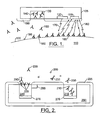
- FIG.1 is a schematic illustration of embodiments according to the present invention that can be used to determine antigen levels of in vivo tumor tissue 110.
- the tumor tissue 110 may be characterized by a type of tumor specific antigen (TSA) 195 located at the surface 100 of the tumor tissue 110.
- TSA tumor specific antigen
- a TSA 195 may be found on the surface of cell tissue 110.
- suitable biomolecules i.e. , TSAs
- suitable biomolecules indicative of tumor cell proliferation are essentially independent of many of the biological, physiological, and/or environmental properties that are found in solid tumors.
- TSAs tumor specific antigen
- the phase of the tumor tissue 110 may be detected based on a concentration level of the TSA 195 at the surface 100.
- a "growth" phase of the tumor may be characterized by relatively high concentrations of the TSA 195 and a "remission” phase may be characterized by relatively low concentrations of TSA 195.
- a platform 105 is located in vivo proximate to the tumor tissue 110 and may or may not become bio-fouled with a bio-fouling tissue 190 over time.
- the platform 105 carries a matrix material 140 that can include fluorescently labeled antibodies 130 that are suspended in the matrix material 140.
- the matrix material 140 can be soluble so that the fluorescently labeled antibodies 130 can be released from the matrix material 140 over time.
- the matrix material 140 can be in the shape of a cylinder as shown, for example, in FIGS. 3 and 4 . Other shapes may be used.
- the platform 105 can also include a telemetry system that transmits and receive signals to and from systems which are ex vivo.
- the fluorescently labeled antibodies 130 are selected to specifically interact or bind with the TSA 195 that characterizes the tumor tissue 110, but is not associated with normal tissue. More than one TSA 195 may characterize a the tumor tissue 110.
- the fluorescently labeled antibodies 130 are released from the matrix material 140, some of the fluorescently labeled antibodies 130 bind with the TSA 195 on the surface 100 proximate to the platform 105 to form a binding complex 160.
- the unbound fluorescently labeled antibodies 150 may dissipate over time to become remote from the platform 105.
- An optical radiation source 120 emits a first optical radiation 170 that excites the fluorescent labels of the binding complexes 160 to a higher energy state.
- the first optical radiation is emitted through a biofouling tissue 190.
- the fluorescent labels of the bound complexes emit a second optical radiation 180.
- the respective wavelengths of the first optical radiation 170 and the second optical 180 may be selected to promote penetration of the bio-fouling tissue 190.
- the optical radiation source can be, for example, a laser diode, a high power Light Emitting Diode (LED), or the like, as described further herein.
- An optical radiation detector 115 can detect the second optical radiation 180 through bio-fouling tissue 190 thereby avoiding some of the drawbacks associated with conventional techniques.
- a time interval between the emission of the first optical radiation 170 and detection of the second optical radiation 180 can be selected to allow the fluorescently labeled antibodies 130 to bind with the TSA 195 on the surface 100.
- the optical radiation detector 115 can be a photodiode or a phototransistor. Other devices as described further herein and/or known to those skilled in the art and may be also be used.
- the optical radiation detector 115 can include an optical absorption filter to reduce the effects of background noise.
- the optical radiation source 120 and the optical radiation detector 115 can be separated by a shield that reduces the amount of the first optical radiation 170 that reaches the optical radiation detector 115.
- the optical radiation detector 115 is located about 500 micrometers from the bound complexes 160.
- the optical radiation detector 115 includes a lens that collects and focuses the second optical radiation 180 so that the separation between the optical radiation detector 115 and the bound complexes 160 may be increased.
- the intensity of the second optical radiation 180 can be used to determine the concentration of the TSA 195.
- the TSA 195 that is proximate to the platform 105 may have fluorescently labeled antibodies 130 bound thereto. Accordingly, the fluorescent labels may emit the second optical radiation 180 after the excitation of the first optical radiation 170.
- FIG. 2 is a schematic illustration of embodiments according to the present invention.
- a platform 200 can be located in vivo proximate to tissue 290 that includes antigens 205.
- a bio-fouling tissue 225 may develop on portions of the platform 200 over time.
- the platform 200 can include first and second matrix materials 240 and 215, respectively.
- the first matrix material 240 can include unlabeled antibodies 220.
- the second matrix material 215 can include fluorescently labeled antibodies 210.
- additional matrix materials can be used.
- the matrix materials may include different concentrations of antibodies and/or mixtures of antibodies wherein some antibodies may be labeled and others may not be labeled.
- the unlabeled and fluorescently labeled antibodies 220, 210 can be released continuously over time or in phases as described herein.
- the release of the respective antibodies may be out of phase with respect to each other.
- unlabeled antibodies 220 may be released during a first time interval and the fluorescently labeled antibodies 210 may be released during a second time interval
- the antibodies may also be released using an apparatus 270 coupled to the respective matrix material, as described further herein.
- the apparatus 270 coupled to each matrix material may be different.
- the apparatus 270 may be used to control the rate of release of the unlabeled and/or labeled antibodies.
- the use of a controlled release strategy can be employed to provide a continuous source of fluorescently-labeled antibody 230, which can be advantageous in the dynamic biological environment in which the platform 200 must function.
- the unlabeled antibodies 220 are released into the tissue 290 to provide free unlabeled antibodies 235
- the fluorescently labeled antibodies 210 are released to provide free fluorescently labeled antibodies 230.
- Some of the free fluorescently labeled antibodies 230 bind to the antigens 205 to provide bound antigens 231.
- Some of the bound antigens 231 become bound to the unlabeled antibodies 220 at the surface of the first matrix material 240 to provide bound structures 290 at the surface of the first matrix material 240.
- An optical radiation emitter/detector 285 is adjacent to the first matrix material 240 and can be used to excite the bound structures 290 and detect a signal as discussed above.
- FIG. 3 is a schematic illustration of compositions of matter according to the present invention.
- fluorescently labeled antibodies 330 are released from a matrix material 335 over time.
- the matrix material can be selected based on factors such as biocompatibility, time release characteristics, degradation, interaction with the fluorescently labeled antibodies 330 suspended therein, lack of autofluorescence, etc.
- fluorescently labeled antibodies may be included in the matrix material 335 to provide a mixture of different types of antibodies.
- the term "different types of antibodies” will be understood to meant that one type of antibody may have more than kind of label, i.e. , label A and label B. Alternatively, more than one type of antibody (i.e. , antibody A and antibody B) may have the same label.
- the matrix material 335 can include type A and type B fluorescently labeled antibodies 330.
- the A and B type fluorescently labeled antibodies 330 may have different concentrations.
- the A type fluorescently labeled antibodies 330 can comprise 20% of the fluorescently labeled antibodies 330 and the type B fluorescently labeled antibodies 330 can comprise 80% of the fluorescently labeled antibodies 330. Additional types of fluorescently labeled antibodies 330 may also be included in varying concentrations.
- the matrix material 335 may comprise one or more of several polymers.
- the choice of polymer can be determined empirically as encapsulation, degradation and release characteristics of polymers in tissue may vary from subject to subject, or from cell type to cell type, or from sample to sample, and the like. Suitable biodegradable polymers can be based on hydrolysis of ester linkages in the polymer, and a variety of polymers of this type are commercially available and well characterized.
- the matrix material 335 is a mixture of different materials such as a combination of polylactic acid and polyglycolic acid.
- the different materials can occur in a range of concentrations.
- the matrix material 335 can comprise between about 0 and about 50% polylactic acid and/or between about 10 and about 50% polyglycolic acid.
- time release of the fluorescently labeled antibodies 330 may be controlled by selecting the matrix material 335 based on the biocompatibility of the material 335 with the antibody or biomolecule to be detected, polymer type, polymer structure ( e.g. , the physical size and porosity of the polymer release bead), the molecular weight of the matrix material 335, the porosity of the matrix material 335, and/or other material parameters.
- the matrix material 335 may be coupled to an apparatus 350 that can affect the rate at which the matrix material 335 releases the fluorescently labeled antibodies 330.
- the apparatus 350 can be a piezoelectric circuit that vibrates the matrix material 335, thereby causing the fluorescently labeled antibodies 330 to be released at varying rates.
- several parameters e.g ., polymer structure, molecular weight, porosity, etc.
- the polymer may be mounted on top of a piezoelectric element, whereby the actuation of the element (e.g.
- Another option for modulating release rate is to blend the matrix material 335 with an electrically conducting polymer (e.g ., polypyrrole) and, by oxidizing and reducing the polymer electrochemically, modulate the porosity of the blend ( Kontturi et al., "Polypyrrole as a model membrane for drug delivery", Journal of Electroanalytical Chemistry, 1998, 453(1-2), 231-238 , Hepel, M.
- an electrically conducting polymer e.g ., polypyrrole
- FIG. 4 is a schematic illustration of compositions of matter according to the present invention.
- fluorescently labeled antibodies 430 are released within the first, second, and third matrix material sections 435,440,445.
- the first and second matrix material sections 435,440 are separated by a first separator material 450 that can be devoid of the fluorescently labeled antibodies 430.
- the second and third matrix material sections 440,445 are separated by a second separator material 455 that can be devoid of the fluorescently labeled antibodies 430.
- the different matrix material sections can provide for "pulses" of labeled material to be released at different times. In particular, after a barrier dissolves, the underlying matrix section can provide for a pulsed release of the labeled antibody.
- first, second, and third matrix materials sections 435,440,445 can each have different compositions of fluorescently labeled antibodies 430 to provide different rates of release over time.
- FIG. 5 is a diagram that illustrates embodiments of in vivo circuits and systems according to the present invention.
- a matrix material 530 includes the fluorescently labeled antibodies that are released in a tissue 500 as described, for example, in reference to FIGs. 3 and 4 .
- the matrix material 530 can be coupled to an apparatus 580 that can vary the rate of release of the fluorescently labeled antibodies as described, for example, in reference to FIGs. 3 and 4 .
- An optical radiation source 505 can include an amplifier that responds to a control input A to provide an output current that passes through a high power light emitting diode that emits optical radiation 515.
- the optical radiation 515 can pass through a bio-fouling tissue 570 and excite the fluorescent labels on the fluorescently labeled antibodies.
- the excited fluorescent labels can emit an optical radiation 520 that can pass through the bio-fouling tissue 570 to reach an optical radiation detector 510.
- the optical radiation 520 impinges a photodetector.
- the photodetector can generate a current that can be converted to a voltage level that represents the level of the optical radiation 520.
- the photodetector is a photomultiplier.
- the optical radiation detector 510 can include an absorption filter to reduce background noise.
- the optical radiation source 505, the optical radiation detector 510, and the matrix material 530 can operate in conjunction with a processor circuit 525.
- the processor circuit 525 can control the release of the fluorescently labeled antibodies from the matrix material 530 by controlling the apparatus 580 that, for example, vibrates the matrix material 530 to vary the rate of release of the fluorescently labeled antibodies.
- the processor circuit 525 can provide an input to the optical radiation source 505.
- the processor circuit 525 can monitor an output signal C from the optical radiation source 505 to determine, for example, the power output thereof. Other functions may be monitored and/or controlled.
- the processor circuit 525 can receive a voltage level B from the optical radiation detector 510 to determine, for example, the intensity of the optical radiation 520.
- the processor can provide an output E to a telemetry system (526).
- the telemetry system 526 can transmit/receive data to/from an ex vivo system (not shown).
- the ex vivo system can control the release of the fluorescently labeled antibodies by transmitting a signal into the body for reception by the in vivo system.
- the in vivo system can release fluorescently labeled antibodies in response to the signal from the ex vivo system.
- Other signals can be transmitted from the ex vivo system.
- the transmitted/received data is digitally encoded. Other types of data transmission may be used.
- the in vivo system can transmit data to the ex vivo system.
- the in vivo system can transmit data associated with the intensity of the optical radiation 520.
- the in vivo system can transmit other data to the ex vivo system.
- the in vivo system can be implanted for in vivo use whereby the ex vivo system can control operations of the in vivo system including receiving data from the in vivo system without an associated invasive procedure.
- the in vivo system is powered remotely through the tissue in which it is implanted.
- the in vivo system can include an inductor that provides power to the in vivo system via an inductively coupled power signal from the ex vivo system.
- the in vivo system has a diameter of approximately 2 mm.
- a light emitting diode (LED) or laser diode (for greater excitation intensity) can be used as the excitation source and a photodiode can be used to detect the corresponding emission signal.
- Integral emission and absorption filters can be introduced as needed in the form of dielectric coatings on the diode elements.
- Light emitting diodes, and photodetectors are now commonly available. These devices can be extremely compact, with a laser diode being typically less than 100 pm. Thin film deposition and fiber optic technologies known to the skilled artisan permit the construction of extremely sharp optical filters.
- An external sensor package for the optical implant apparatus described above may be about 2 mm x 10 mm in the form of a rounded cylinder. This configuration may ease insertion into a subject when used in conjunction with a device similar to a biopsy needle.
- the standardization of package size and geometry may enable a diverse range of coatings such as diamond like carbon (DLC) or glasses of various compositions and plastics.
- the inner portion of the package can be used to provide a hermetic seal isolating the device from the effects of moisture and attack by the body.
- laser diodes are mounted on a heat sink and emit light from front and rear facets perpendicular to the circuit board.
- the optical power from the rear facet can be measured by a photodetector mounted on the opposite side of the circuit board. This permits feed back control of the optical power.
- a signal photodiode receives the return fluorescence or the absorption signal to be ratioed, as in the case of oxygen measurements.
- An optical rejection filter can be deposited on the photodetector to reduce background noise.
- the telemetry coil, drivers and other electronics can be distributed on either side of the circuit board.
- the embodiments of the invention described herein may afford effective baseline correction, a potentially important consideration in the practice of the present invention.
- Changes in diode laser output as a function of time can be accommodated through the use of standard photodiode feedback techniques. Measurements before and after insertion can be used to provide an initial baseline. This may be helpful in assessing background fluorescence and the degree of non-specific binding. The influence of external lighting as a parameter may also be assessed.
- the lifetime of the implant may be as long as six months or even more in some cases.
- One advantage of this detection scheme is that it may be relatively resistant to the accretion of material on the outer surface of the sensor ("biofouling").
- One aspect of the invention provides for emission and absorption wavelengths through whatever over layer covers the sensor surface. Although close proximity of the target fluorophore to the sensor is desirable, significant leeway is obtained for detection of signals away from the site of sensor implantation.
- one embodiment includes a time-released, tagged antibody or event-activated hybridization reaction. Continuous monitoring of the implanted sensor is possible so that kinetics of the reaction can also be assessed.
- a lens system may or may not be present, but the detector is preferably placed in close proximity (e.g., about 500 micrometers) to the source of fluorescence. In this way, the detector may become the image plane.
- the sensor may alternatively be non-imaging and accordingly may be used as a binary-state detector for the presence or absence of fluorescent signal.
- fluorescently labeled antibodies can be coupled to antigens associated with tumor cells.
- An optical radiation source can be used to excite the fluorescently labeled antibodies coupled to the antigens.
- the fluorescently labeled antibodies emit optical radiation in response to the excitation.
- a sensor can be used to detect a level of the optical radiation emitted by the fluorescently labeled antibodies.
- the level of optical radiation can be used to determine the concentration of antigens present on the surface of the tissue. The concentration of antigens may then be correlated to the proliferative state or growth behavior of the tissue.
Landscapes
- Health & Medical Sciences (AREA)
- Life Sciences & Earth Sciences (AREA)
- Animal Behavior & Ethology (AREA)
- Veterinary Medicine (AREA)
- Public Health (AREA)
- Engineering & Computer Science (AREA)
- Biomedical Technology (AREA)
- General Health & Medical Sciences (AREA)
- Surgery (AREA)
- Molecular Biology (AREA)
- Physics & Mathematics (AREA)
- Medical Informatics (AREA)
- Heart & Thoracic Surgery (AREA)
- Pathology (AREA)
- Biophysics (AREA)
- Immunology (AREA)
- Epidemiology (AREA)
- Investigating, Analyzing Materials By Fluorescence Or Luminescence (AREA)
- Investigating Or Analysing Materials By The Use Of Chemical Reactions (AREA)
- Medicines Containing Antibodies Or Antigens For Use As Internal Diagnostic Agents (AREA)
- Investigating Or Analyzing Non-Biological Materials By The Use Of Chemical Means (AREA)
Applications Claiming Priority (3)
| Application Number | Priority Date | Filing Date | Title |
|---|---|---|---|
| US24757400P | 2000-11-09 | 2000-11-09 | |
| US247574P | 2000-11-09 | ||
| PCT/US2001/047373 WO2002039112A2 (en) | 2000-11-09 | 2001-11-07 | In vivo detection of biomolecule concentrations using fluorescent tags |
Publications (2)
| Publication Number | Publication Date |
|---|---|
| EP1332364A2 EP1332364A2 (en) | 2003-08-06 |
| EP1332364B1 true EP1332364B1 (en) | 2009-08-26 |
Family
ID=22935419
Family Applications (1)
| Application Number | Title | Priority Date | Filing Date |
|---|---|---|---|
| EP01986125A Expired - Lifetime EP1332364B1 (en) | 2000-11-09 | 2001-11-07 | In vivo detection of biomolecule concentrations using fluorescent tags |
Country Status (8)
| Country | Link |
|---|---|
| US (3) | US7378056B2 (https=) |
| EP (1) | EP1332364B1 (https=) |
| JP (1) | JP3981328B2 (https=) |
| AT (1) | ATE441110T1 (https=) |
| AU (2) | AU2002236590B2 (https=) |
| CA (1) | CA2429127A1 (https=) |
| DE (1) | DE60139705D1 (https=) |
| WO (1) | WO2002039112A2 (https=) |
Families Citing this family (20)
| Publication number | Priority date | Publication date | Assignee | Title |
|---|---|---|---|---|
| WO2004075032A2 (en) * | 2003-02-19 | 2004-09-02 | Sicel Technologies Inc. | In vivo fluorescence sensors, systems, and related methods operating in conjunction with fluorescent analytes |
| JP4733918B2 (ja) * | 2003-10-01 | 2011-07-27 | オリンパス株式会社 | カプセル投薬システム |
| US8195276B2 (en) * | 2004-03-25 | 2012-06-05 | Olympus Corporation | In-vivo information acquisition apparatus and in-vivo information acquisition apparatus system |
| US20060027756A1 (en) * | 2004-08-09 | 2006-02-09 | Ian Thomson | Dosimeter having an array of sensors for measuring ionizing radiation, and dosimetry system and method using such a dosimeter |
| US7415482B2 (en) * | 2005-02-11 | 2008-08-19 | Rivet Software, Inc. | XBRL enabler for business documents |
| US20060270919A1 (en) * | 2005-05-11 | 2006-11-30 | Mytek, Llc | Biomarkers sensing |
| GB0712109D0 (en) * | 2007-06-22 | 2007-08-01 | Edinburgh Instr | Fluorescence lifetime and fluorescence assays |
| ATE508679T1 (de) * | 2008-02-26 | 2011-05-15 | Biostems Ltd | Vorrichtung zur mikroinvasiven in-vivo- untersuchung, die einen metallischen leiter umfasst |
| DK2291640T3 (en) | 2008-05-20 | 2019-03-11 | Univ Health Network | Device and method for fluorescence-based imaging and monitoring |
| US20100249550A1 (en) * | 2009-03-25 | 2010-09-30 | Neilcor Puritan Bennett LLC | Method And Apparatus For Optical Filtering Of A Broadband Emitter In A Medical Sensor |
| US11861696B1 (en) | 2013-02-14 | 2024-01-02 | Capital Confirmation, Inc. | Systems and methods for obtaining accountant prepared financial statement confirmation |
| EP3957232B1 (en) | 2014-07-24 | 2025-12-31 | University Health Network | DATA COLLECTION AND ANALYSIS FOR DIAGNOSTIC PURPOSES |
| US11013436B2 (en) | 2017-09-06 | 2021-05-25 | Medtronic, Inc. | Marker monitoring via a medical device |
| EP3684463B1 (en) | 2017-09-19 | 2025-05-14 | Neuroenhancement Lab, LLC | Method and apparatus for neuroenhancement |
| US11717686B2 (en) | 2017-12-04 | 2023-08-08 | Neuroenhancement Lab, LLC | Method and apparatus for neuroenhancement to facilitate learning and performance |
| US11478603B2 (en) | 2017-12-31 | 2022-10-25 | Neuroenhancement Lab, LLC | Method and apparatus for neuroenhancement to enhance emotional response |
| US12280219B2 (en) | 2017-12-31 | 2025-04-22 | NeuroLight, Inc. | Method and apparatus for neuroenhancement to enhance emotional response |
| US11364361B2 (en) | 2018-04-20 | 2022-06-21 | Neuroenhancement Lab, LLC | System and method for inducing sleep by transplanting mental states |
| CN113382683A (zh) | 2018-09-14 | 2021-09-10 | 纽罗因恒思蒙特实验有限责任公司 | 改善睡眠的系统和方法 |
| US11786694B2 (en) | 2019-05-24 | 2023-10-17 | NeuroLight, Inc. | Device, method, and app for facilitating sleep |
Family Cites Families (188)
| Publication number | Priority date | Publication date | Assignee | Title |
|---|---|---|---|---|
| JPS36022343B1 (https=) | 1959-12-24 | 1961-11-18 | Univ Tokyo | |
| US3638640A (en) | 1967-11-01 | 1972-02-01 | Robert F Shaw | Oximeter and method for in vivo determination of oxygen saturation in blood using three or more different wavelengths |
| US3972320A (en) | 1974-08-12 | 1976-08-03 | Gabor Ujhelyi Kalman | Patient monitoring system |
| US4163380A (en) | 1977-10-11 | 1979-08-07 | Lockheed Corporation | Forming of preconsolidated metal matrix composites |
| USRE32361E (en) | 1979-05-14 | 1987-02-24 | Medtronic, Inc. | Implantable telemetry transmission system for analog and digital data |
| US4326535A (en) | 1980-05-13 | 1982-04-27 | Akron City Hospital | Circuit and method for the radiotelemetry of esophageal pH in an ECG radiotelemetry system |
| US4494545A (en) | 1980-05-27 | 1985-01-22 | Cordis Corporation | Implant telemetry system |
| US4361153A (en) | 1980-05-27 | 1982-11-30 | Cordis Corporation | Implant telemetry system |
| US4556063A (en) | 1980-10-07 | 1985-12-03 | Medtronic, Inc. | Telemetry system for a medical device |
| US4523279A (en) | 1980-11-24 | 1985-06-11 | Oximetrix, Inc. | Apparatus for determining oxygen saturation levels in blood |
| US4397313A (en) | 1981-08-03 | 1983-08-09 | Clini-Therm Corporation | Multiple microwave applicator system and method for microwave hyperthermia treatment |
| US4397314A (en) | 1981-08-03 | 1983-08-09 | Clini-Therm Corporation | Method and apparatus for controlling and optimizing the heating pattern for a hyperthermia system |
| US4416283A (en) | 1981-08-31 | 1983-11-22 | Cordis Corporation | Programming and telemetry system for biomedical implantable device |
| CA1188431A (en) | 1981-10-02 | 1985-06-04 | Canadian Astronautics Limited | Direct reading dosimeter |
| US4431004A (en) | 1981-10-27 | 1984-02-14 | Bessman Samuel P | Implantable glucose sensor |
| US5186172A (en) | 1982-03-22 | 1993-02-16 | Mountpelier Investments, S.A. | Remote sensing tonometric catheter apparatus |
| DE3219558C2 (de) | 1982-05-25 | 1986-10-23 | Norbert H.L. Dr.-Ing. 5173 Aldenhoven Koster | Vorrichtung zur Bestimmung der lokalen Temperatur in lebendem Gewebe |
| US4571292A (en) | 1982-08-12 | 1986-02-18 | Case Western Reserve University | Apparatus for electrochemical measurements |
| CH658729A5 (de) | 1982-09-17 | 1986-11-28 | Lehner Max & Co Ag | Vorrichtung zur registrierung der strahlenbelastung von mit strahlung umgehenden personen. |
| US4571589A (en) | 1982-11-22 | 1986-02-18 | Cordis Corporation | Biomedical implant with high speed, low power two-way telemetry |
| AU577519B2 (en) | 1983-01-21 | 1988-09-29 | Jose A. Marchosky | Implantable hyperthermia device and system |
| US4961422A (en) | 1983-01-21 | 1990-10-09 | Marchosky J Alexander | Method and apparatus for volumetric interstitial conductive hyperthermia |
| US4575676A (en) | 1983-04-04 | 1986-03-11 | Advanced Research And Applications Corporation | Method and apparatus for radiation testing of electron devices |
| GB2140563B (en) | 1983-04-27 | 1987-03-04 | Critikon Inc | Method and apparatus for zero calibration of oxygen-sensing polarographic devices |
| US4543953A (en) | 1983-07-18 | 1985-10-01 | Cordis Corporation | Analog telemetry system for biomedical implant |
| US4655880A (en) | 1983-08-01 | 1987-04-07 | Case Western Reserve University | Apparatus and method for sensing species, substances and substrates using oxidase |
| US4519401A (en) | 1983-09-20 | 1985-05-28 | Case Western Reserve University | Pressure telemetry implant |
| FI68734C (fi) | 1983-11-11 | 1985-10-10 | Seppo Saeynaejaekangas | Foerfarande och anordning foer telemetrisk maetning av hjaertslag och ekg-signal med anvaendande av ett magnetiskt naerfaelt |
| GB8422876D0 (en) | 1984-09-11 | 1984-10-17 | Secr Defence | Silicon implant devices |
| US4638436A (en) | 1984-09-24 | 1987-01-20 | Labthermics Technologies, Inc. | Temperature control and analysis system for hyperthermia treatment |
| US4681111A (en) | 1985-04-05 | 1987-07-21 | Siemens-Pacesetter, Inc. | Analog and digital telemetry system for an implantable device |
| US4651741A (en) | 1985-05-30 | 1987-03-24 | Baxter Travenol Laboratories, Inc. | Method and apparatus for determining oxygen saturation in vivo |
| US5012411A (en) | 1985-07-23 | 1991-04-30 | Charles J. Policastro | Apparatus for monitoring, storing and transmitting detected physiological information |
| CA1204885A (en) | 1985-09-18 | 1986-05-20 | Thomson & Nielson Electronics Ltd. | Dosimeter |
| US4703756A (en) | 1986-05-06 | 1987-11-03 | The Regents Of The University Of California | Complete glucose monitoring system with an implantable, telemetered sensor module |
| NO872732L (no) | 1986-07-01 | 1988-01-04 | Terumo Corp | Mleinstrument for biologiske parametre. |
| US4976266A (en) | 1986-08-29 | 1990-12-11 | United States Department Of Energy | Methods of in vivo radiation measurement |
| DE3700119A1 (de) | 1987-01-03 | 1988-07-14 | Inst Diabetestechnologie Gemei | Implantierbarer elektrochemischer sensor |
| GB8701432D0 (en) * | 1987-01-22 | 1987-02-25 | Unilever Plc | Assays |
| US4804847A (en) | 1987-01-27 | 1989-02-14 | Medrad, Inc. | Radiation detector with an ionizable gas atop an integrated circuit |
| US4970391A (en) | 1987-01-27 | 1990-11-13 | Medrad, Inc. | Radiation detector with an ionizable gas atop an integrated circuit |
| US4769547A (en) | 1987-01-27 | 1988-09-06 | Medrad, Inc. | Personal dosimeter having a volume of gas atop an integrated circuit |
| US4935345A (en) | 1987-04-07 | 1990-06-19 | Arizona Board Of Regents | Implantable microelectronic biochemical sensor incorporating thin film thermopile |
| US4750495A (en) | 1987-06-05 | 1988-06-14 | Medtronic, Inc. | Oxygen sensing pacemaker |
| US4796641A (en) | 1987-07-06 | 1989-01-10 | Data Sciences, Inc. | Device and method for chronic in-vivo measurement of internal body pressure |
| US4847617A (en) | 1987-08-14 | 1989-07-11 | Siemens-Pacesetter, Inc. | High speed digital telemetry system for implantable devices |
| GB8726933D0 (en) | 1987-11-18 | 1987-12-23 | Cadell T E | Telemetry system |
| US4989601A (en) | 1988-05-02 | 1991-02-05 | Medical Engineering & Development Institute, Inc. | Method, apparatus, and substance for treating tissue having neoplastic cells |
| US4846191A (en) | 1988-05-27 | 1989-07-11 | Data Sciences, Inc. | Device for chronic measurement of internal body pressure |
| US4900422A (en) | 1988-07-05 | 1990-02-13 | Bryan Avron I | System for monitoring and reporting the operability and calibration status of a dissolved oxygen sensor |
| EP0386218B1 (en) | 1988-08-26 | 1996-01-10 | Mountpelier Investments, S.A. | Remote sensing tonometric catheter apparatus and method |
| US5098547A (en) | 1988-10-11 | 1992-03-24 | Bryan Avron I | Dissolved oxygen sensor calibration, monitoring and reporting system |
| EP0372122A1 (en) * | 1988-12-08 | 1990-06-13 | Koninklijke Philips Electronics N.V. | Dental X-ray image detection system |
| US5354314A (en) | 1988-12-23 | 1994-10-11 | Medical Instrumentation And Diagnostics Corporation | Three-dimensional beam localization apparatus and microscope for stereotactic diagnoses or surgery mounted on robotic type arm |
| EP0458850B1 (en) | 1989-02-14 | 1994-04-27 | Pacesetter AB | In a living body implantable electromedical device |
| US5264843A (en) | 1989-04-05 | 1993-11-23 | Siemens Pacesetter, Inc. | High speed reflected impedance telemetry system for implantable medical device |
| US5166073A (en) | 1989-05-05 | 1992-11-24 | The Dow Chemical Company | Miniaturized sensor for ionizing radiation |
| US4944299A (en) | 1989-08-08 | 1990-07-31 | Siemens-Pacesetter, Inc. | High speed digital telemetry system for implantable device |
| DE3932428A1 (de) | 1989-09-28 | 1991-04-11 | Argumens Gmbh | Vorrichtung zur drahtlosen messung einer lokalen physikalischen groesse |
| US5127404A (en) | 1990-01-22 | 1992-07-07 | Medtronic, Inc. | Telemetry format for implanted medical device |
| US5354319A (en) | 1990-01-22 | 1994-10-11 | Medtronic, Inc. | Telemetry system for an implantable medical device |
| US5109850A (en) | 1990-02-09 | 1992-05-05 | Massachusetts Institute Of Technology | Automatic blood monitoring for medication delivery method and apparatus |
| US5008546A (en) | 1990-06-18 | 1991-04-16 | The Regents Of The University Of California | Intraoperative beta probe and method of using the same |
| US5117113A (en) | 1990-07-06 | 1992-05-26 | Thompson And Nielson Electronics Ltd. | Direct reading dosimeter |
| US5137022A (en) | 1990-07-13 | 1992-08-11 | Cook Pacemaker Corporation | Synchronous telemetry system and method for an implantable medical device |
| US5252962A (en) | 1990-08-03 | 1993-10-12 | Bio Medic Data Systems | System monitoring programmable implantable transponder |
| US5163380A (en) | 1990-08-09 | 1992-11-17 | United States Of America | Method and apparatus for assessing metabolic behavioral and physiological status of animals |
| US5438989A (en) * | 1990-08-10 | 1995-08-08 | Hochman; Darryl | Solid tumor, cortical function, and nerve tissue imaging methods and device |
| KR930002824B1 (ko) | 1990-08-21 | 1993-04-10 | 손병기 | 감이온 전계효과 트랜지스터를 이용한 바이오 센서용 측정회로 |
| US5117824A (en) | 1990-11-14 | 1992-06-02 | Medtronic, Inc. | Apparatus for monitoring electrical physiologic signals |
| JP2646848B2 (ja) | 1990-11-30 | 1997-08-27 | 日本電気株式会社 | グルコースセンサの測定方法 |
| FR2671405B1 (fr) * | 1991-01-04 | 1994-07-08 | Inst Nat Sante Rech Med | Dispositif de mesure du ph d'une cible, procede d'utilisation dudit dispositif et ses applications. |
| US5205294A (en) | 1991-02-19 | 1993-04-27 | Pacific Communications, Inc. | Apparatus and methodology for digital telemetry of biomedical signals |
| US5377676A (en) | 1991-04-03 | 1995-01-03 | Cedars-Sinai Medical Center | Method for determining the biodistribution of substances using fluorescence spectroscopy |
| US5318023A (en) | 1991-04-03 | 1994-06-07 | Cedars-Sinai Medical Center | Apparatus and method of use for a photosensitizer enhanced fluorescence based biopsy needle |
| US5159262A (en) | 1991-07-09 | 1992-10-27 | Cascade Microtech, Inc. | Method for measuring the electrical and optical performance of on-wafer microwave devices |
| US5264103A (en) | 1991-10-18 | 1993-11-23 | Matsushita Electric Industrial Co., Ltd. | Biosensor and a method for measuring a concentration of a substrate in a sample |
| DE4139122C1 (https=) | 1991-11-28 | 1993-04-08 | Fenzlein, Paul-Gerhard, 8500 Nuernberg, De | |
| GB9200569D0 (en) | 1992-01-11 | 1992-03-11 | Atomic Energy Authority Uk | Semiconductor dosimeter |
| NL9200207A (nl) | 1992-02-05 | 1993-09-01 | Nedap Nv | Implanteerbare biomedische sensorinrichting, in het bijzonder voor meting van de glucoseconcentratie. |
| US6217869B1 (en) * | 1992-06-09 | 2001-04-17 | Neorx Corporation | Pretargeting methods and compounds |
| US5444254A (en) | 1992-06-12 | 1995-08-22 | Thomson And Nielsen Electronics Ltd. | Flexible radiation probe |
| US5355880A (en) | 1992-07-06 | 1994-10-18 | Sandia Corporation | Reliable noninvasive measurement of blood gases |
| US5676651A (en) | 1992-08-06 | 1997-10-14 | Electric Boat Corporation | Surgically implantable pump arrangement and method for pumping body fluids |
| US5330634A (en) | 1992-08-28 | 1994-07-19 | Via Medical Corporation | Calibration solutions useful for analyses of biological fluids and methods employing same |
| ATE213924T1 (de) | 1992-11-09 | 2002-03-15 | Ilife Systems Inc | Vorrichtung und verfahren zur fernmessung von physiologischen grössen |
| US5620479A (en) | 1992-11-13 | 1997-04-15 | The Regents Of The University Of California | Method and apparatus for thermal therapy of tumors |
| US5383909A (en) | 1993-01-29 | 1995-01-24 | Medtronic, Inc. | Diagnostic telemetry system for an apparatus for detection and treatment of tachycardia and fibrillation |
| US5383912A (en) | 1993-05-05 | 1995-01-24 | Intermedics, Inc. | Apparatus for high speed data communication between an external medical device and an implantable medical device |
| US5431171A (en) | 1993-06-25 | 1995-07-11 | The Regents Of The University Of California | Monitoring fetal characteristics by radiotelemetric transmission |
| US5324315A (en) | 1993-08-12 | 1994-06-28 | Medtronic, Inc. | Closed-loop downlink telemetry and method for implantable medical device |
| US5791344A (en) | 1993-11-19 | 1998-08-11 | Alfred E. Mann Foundation For Scientific Research | Patient monitoring system |
| US5497772A (en) | 1993-11-19 | 1996-03-12 | Alfred E. Mann Foundation For Scientific Research | Glucose monitoring system |
| DE4341903A1 (de) | 1993-12-09 | 1995-06-14 | Josef Prof Dr Rer Nat Binder | Implantierbares telemetrisches Endosystem |
| US5476488A (en) | 1993-12-15 | 1995-12-19 | Pacesetter, Inc. | Telemetry system power control for implantable medical devices |
| DE4444577B4 (de) | 1993-12-15 | 2005-02-10 | Bridgestone Corp. | Verfahren zur Herstellung eines Lichtwellenleiters |
| IES66403B2 (en) | 1993-12-31 | 1995-12-27 | Rodney Arthur Stafford | Electronic animal identification device |
| SE9400622D0 (sv) | 1994-02-23 | 1994-02-23 | Siemens Elema Ab | Medicinskt implantat |
| NL9400534A (nl) | 1994-04-05 | 1995-11-01 | Rijksuniversiteit | Systeem voor het bepalen van een samenstelling van radionucliden. |
| US5507786A (en) | 1994-04-14 | 1996-04-16 | Pacesetter, Inc. | System and method for measuring and storing parametric data pertaining to operating characteristics of an implantable medical device |
| US5549654A (en) | 1994-04-15 | 1996-08-27 | Medtronic, Inc. | Interactive interpretation of event markers in body-implantable medical device |
| SE9401402D0 (sv) | 1994-04-25 | 1994-04-25 | Siemens Elema Ab | Medicinskt implantat |
| US5470345A (en) | 1994-06-16 | 1995-11-28 | Medtronic, Inc. | Implantable medical device with multi-layered ceramic enclosure |
| US6093381A (en) | 1994-07-13 | 2000-07-25 | Neoprobe Corporation | Modulation of the sensitivity of tumor cells to chemotherapeutics |
| US5466246A (en) | 1994-07-29 | 1995-11-14 | Pacesetter, Inc. | Telemetry receiver for implantable device, incorporating digital signal processing |
| US5626862A (en) | 1994-08-02 | 1997-05-06 | Massachusetts Institute Of Technology | Controlled local delivery of chemotherapeutic agents for treating solid tumors |
| US5571148A (en) | 1994-08-10 | 1996-11-05 | Loeb; Gerald E. | Implantable multichannel stimulator |
| US5572996A (en) | 1994-09-19 | 1996-11-12 | Pdt Systems, Inc. | In vivo pharmacokinetics of photosensitive drugs and method |
| US5626630A (en) | 1994-10-13 | 1997-05-06 | Ael Industries, Inc. | Medical telemetry system using an implanted passive transponder |
| US5591217A (en) | 1995-01-04 | 1997-01-07 | Plexus, Inc. | Implantable stimulator with replenishable, high value capacitive power source and method therefor |
| US5606163A (en) | 1995-01-11 | 1997-02-25 | The United States Of America As Represented By The Secretary Of The Navy | All-optical, rapid readout, fiber-coupled thermoluminescent dosimeter system |
| US5620472A (en) | 1995-01-12 | 1997-04-15 | Pacesetter, Inc. | Apparatus and method for dynamically interpreting and displaying a real-time telemetry link |
| US5562713A (en) | 1995-01-18 | 1996-10-08 | Pacesetter, Inc. | Bidirectional telemetry apparatus and method for implantable device |
| US5593430A (en) | 1995-01-27 | 1997-01-14 | Pacesetter, Inc. | Bus system for interconnecting an implantable medical device with a plurality of sensors |
| ATE160079T1 (de) | 1995-02-04 | 1997-11-15 | Baumann & Haldi Sa | Einzelne anordnung zur messung, verarbeitung und übertragung von im wesentlichen physiologischen parametern |
| US5596199A (en) | 1995-02-06 | 1997-01-21 | Clemson University | Passive solid state microdosimeter with electronic readout |
| US5517313A (en) | 1995-02-21 | 1996-05-14 | Colvin, Jr.; Arthur E. | Fluorescent optical sensor |
| US5556421A (en) | 1995-02-22 | 1996-09-17 | Intermedics, Inc. | Implantable medical device with enclosed physiological parameter sensors or telemetry link |
| US5564434A (en) | 1995-02-27 | 1996-10-15 | Medtronic, Inc. | Implantable capacitive absolute pressure and temperature sensor |
| US5535752A (en) | 1995-02-27 | 1996-07-16 | Medtronic, Inc. | Implantable capacitive absolute pressure and temperature monitor system |
| US5633161A (en) | 1995-03-29 | 1997-05-27 | Millennium Pharmaceuticals, Inc. | Murine gene fomy030 coding for tumor progression inhibitor |
| US5856174A (en) * | 1995-06-29 | 1999-01-05 | Affymetrix, Inc. | Integrated nucleic acid diagnostic device |
| US5840148A (en) | 1995-06-30 | 1998-11-24 | Bio Medic Data Systems, Inc. | Method of assembly of implantable transponder |
| US5720771A (en) | 1995-08-02 | 1998-02-24 | Pacesetter, Inc. | Method and apparatus for monitoring physiological data from an implantable medical device |
| US5759199A (en) | 1995-08-02 | 1998-06-02 | Pacesetter, Inc. | System and method for ambulatory monitoring and programming of an implantable medical device |
| US5732704A (en) | 1995-10-13 | 1998-03-31 | Neoprobe Corporation | Radiation based method locating and differentiating sentinel nodes |
| US5857463A (en) | 1995-10-13 | 1999-01-12 | Neoprobe Corporation | Remotely controlled apparatus and system for tracking and locating a source of photoemissions |
| US5656815A (en) | 1996-02-08 | 1997-08-12 | The United States Of America As Represented By The Secretary Of The Navy | Thermoluminescence radiation dosimetry using transparent glass containing nanocrystalline phosphor |
| US5811814A (en) | 1996-02-12 | 1998-09-22 | Cordis Corporation | Radiation measuring catheter apparatus and method |
| JP3796635B2 (ja) | 1996-03-06 | 2006-07-12 | 富士写真フイルム株式会社 | 蛍光検出装置 |
| US5833603A (en) * | 1996-03-13 | 1998-11-10 | Lipomatrix, Inc. | Implantable biosensing transponder |
| US5932879A (en) | 1996-05-07 | 1999-08-03 | Regents Of The University Of Michigan | Solid state beta-sensitive surgical probe |
| US5744805A (en) | 1996-05-07 | 1998-04-28 | University Of Michigan | Solid state beta-sensitive surgical probe |
| US6076009A (en) | 1997-05-05 | 2000-06-13 | The University Of Michigan | Solid state beta-sensitive surgical probe |
| JP3896176B2 (ja) * | 1996-05-21 | 2007-03-22 | 浜松ホトニクス株式会社 | 近赤外線蛍光トレーサーおよび蛍光イメージング方法 |
| DE19621996C2 (de) | 1996-05-31 | 1998-04-09 | Siemens Ag | Verfahren zur Herstellung einer Kombination eines Drucksensors und eines elektrochemischen Sensors |
| US5682888A (en) | 1996-06-13 | 1997-11-04 | Neoprobe Corporation | Apparatus and system for detecting and locating photon emissions with remote switch control |
| DE69734599T2 (de) | 1996-07-11 | 2007-02-08 | Medtronic, Inc., Minneapolis | Minimalinvasive implantierbare vorrichtung zur überwachung physiologischer vorgänge |
| WO1998022820A1 (en) * | 1996-11-21 | 1998-05-28 | Lawrence Livermore National Laboratory | Detection of biological molecules using boronate-based chemical amplification and optical sensors |
| US6119031A (en) * | 1996-11-21 | 2000-09-12 | Boston Scientific Corporation | Miniature spectrometer |
| US5814089A (en) | 1996-12-18 | 1998-09-29 | Medtronic, Inc. | Leadless multisite implantable stimulus and diagnostic system |
| USD424453S (en) | 1997-03-18 | 2000-05-09 | Neoprobe Corporation | Detector unit for radiation detecting probe |
| USD423377S (en) | 1997-03-18 | 2000-04-25 | Neoprobe Corporation | Radiation detecting probe |
| DE69841076D1 (de) | 1997-03-27 | 2009-10-01 | Advanced Bionics Corp | System implantierbarer geräte zur beobachtung und beeinflussung von körperparametern |
| CA2294610A1 (en) | 1997-06-16 | 1998-12-23 | George Moshe Katz | Methods of calibrating and testing a sensor for in vivo measurement of an analyte and devices for use in such methods |
| CA2215369C (en) | 1997-09-12 | 2008-11-18 | Nicholas Garry Tarr | Method of monitoring radiation using a floating gate field effect transistor dosimeter, and dosimeter for use therein |
| US5928150A (en) | 1997-10-04 | 1999-07-27 | Neoprobe Corporation | System for locating and detecting a source of photon emissions |
| US5987350A (en) | 1997-10-10 | 1999-11-16 | Neoprobe Corporation | Surgical probe apparatus and system |
| US5916167A (en) | 1997-10-10 | 1999-06-29 | Neoprobe Corporation | Surgical probe apparatus and system |
| US6240312B1 (en) | 1997-10-23 | 2001-05-29 | Robert R. Alfano | Remote-controllable, micro-scale device for use in in vivo medical diagnosis and/or treatment |
| US5891179A (en) | 1997-11-20 | 1999-04-06 | Paceseter, Inc. | Method and apparatus for monitoring and displaying lead impedance in real-time for an implantable medical device |
| US6239724B1 (en) | 1997-12-30 | 2001-05-29 | Remon Medical Technologies, Ltd. | System and method for telemetrically providing intrabody spatial position |
| US6099821A (en) | 1998-01-06 | 2000-08-08 | University Of Virginia | Nuclear scintigraphic assessment of mucosal function |
| US6289229B1 (en) * | 1998-01-20 | 2001-09-11 | Scimed Life Systems, Inc. | Readable probe array for in vivo use |
| US6087666A (en) | 1998-02-18 | 2000-07-11 | The United States Of America As Represented By The Secretary Of The Navy | Optically stimulated luminescent fiber optic radiation dosimeter |
| GB9805896D0 (en) | 1998-03-20 | 1998-05-13 | Eglise David | Remote analysis system |
| EP2289423A1 (en) | 1998-05-14 | 2011-03-02 | David N. Krag | System for bracketing tissue |
| AU2001217746A1 (en) | 1998-05-14 | 2002-05-27 | Calypso Medical, Inc. | Systems and methods for locating and defining a target location within a human body |
| US6363940B1 (en) | 1998-05-14 | 2002-04-02 | Calypso Medical Technologies, Inc. | System and method for bracketing and removing tissue |
| US5939453A (en) | 1998-06-04 | 1999-08-17 | Advanced Polymer Systems, Inc. | PEG-POE, PEG-POE-PEG, and POE-PEG-POE block copolymers |
| US6047214A (en) | 1998-06-09 | 2000-04-04 | North Carolina State University | System and method for powering, controlling, and communicating with multiple inductively-powered devices |
| US6015390A (en) | 1998-06-12 | 2000-01-18 | D. Krag Llc | System and method for stabilizing and removing tissue |
| DE19828840C1 (de) * | 1998-06-27 | 1999-10-28 | Sartorius Gmbh | Mehrfachfiltergehäuse mit Verriegelungseinrichtung für Filterelemente |
| US6295680B1 (en) | 1998-07-05 | 2001-10-02 | The Regents Of The University Of Michigan | Method for detecting early atherosclerosis and vascular damage using radioactive tracers and intravascular radiation detection devices |
| JP4689825B2 (ja) * | 1998-08-26 | 2011-05-25 | センサーズ・フォー・メデセン・アンド・サイエンス・インコーポレーテッド | 光学式検知装置 |
| US6304766B1 (en) | 1998-08-26 | 2001-10-16 | Sensors For Medicine And Science | Optical-based sensing devices, especially for in-situ sensing in humans |
| EP1117328B1 (en) | 1998-09-30 | 2008-09-17 | Sicel Technologies, Inc. | Methods, systems, and associated implantable devices for dynamic monitoring of tumors |
| US6076666A (en) * | 1998-10-08 | 2000-06-20 | Santa-Maria; Toni M. | Garment bag |
| US6272373B1 (en) | 1998-10-23 | 2001-08-07 | Neoprobe Corporation | Scanning system and method for locating sources of radiation emission |
| US6259095B1 (en) | 1998-10-23 | 2001-07-10 | Neoprobe Corporation | System and apparatus for detecting and locating sources of radiation |
| US6242741B1 (en) | 1998-10-23 | 2001-06-05 | United States Surgical Corporation | Radiation detection apparatus |
| US6274159B1 (en) | 1998-10-28 | 2001-08-14 | University Of Florida | Surface modified silicone drug depot |
| US6113795A (en) | 1998-11-17 | 2000-09-05 | The University Of Kansas | Process and apparatus for size selective separation of micro- and nano-particles |
| EP1135677A1 (en) * | 1998-12-02 | 2001-09-26 | UT-Battelle, LLC | In vivo biosensor apparatus and method of use |
| WO2000040299A1 (en) | 1999-01-06 | 2000-07-13 | Ball Semiconductor, Inc. | Radiation dosimetry system |
| US8636648B2 (en) * | 1999-03-01 | 2014-01-28 | West View Research, Llc | Endoscopic smart probe |
| US6444475B1 (en) | 1999-08-02 | 2002-09-03 | Alltech Associates, Inc. | Ion chromatography apparatus and method for removing gas prior to sample detection |
| AU770395B2 (en) * | 1999-11-17 | 2004-02-19 | Boston Scientific Limited | Microfabricated devices for the delivery of molecules into a carrier fluid |
| US6551838B2 (en) * | 2000-03-02 | 2003-04-22 | Microchips, Inc. | Microfabricated devices for the storage and selective exposure of chemicals and devices |
| US6614025B2 (en) | 2000-03-28 | 2003-09-02 | Thomson & Nielsen Electronics Ltd. | Radiation sensor and dosimeter incorporating same |
| US6717154B2 (en) | 2000-08-02 | 2004-04-06 | Sicel Technologies, Inc. | Evaluation of irradiated foods and other items with telemetric dosimeters and associated methods |
| US7226442B2 (en) * | 2000-10-10 | 2007-06-05 | Microchips, Inc. | Microchip reservoir devices using wireless transmission of power and data |
| CA2324048A1 (en) | 2000-10-20 | 2002-04-20 | Wei Ding | Computer assisted radiotherapy dosimeter system and software therefor |
| US20020193685A1 (en) | 2001-06-08 | 2002-12-19 | Calypso Medical, Inc. | Guided Radiation Therapy System |
| JP2006512109A (ja) * | 2002-08-01 | 2006-04-13 | ザ ジョンズ ホプキンズ ユニバーシティ | 蛍光発光を用いた、分子構造の特定技術、および身体内腔の内側に並ぶ細胞種の治療技術 |
| ATE505224T1 (de) * | 2002-08-16 | 2011-04-15 | Microchips Inc | Vorrichtung mit kontrollierter abgabe und verfahren |
| US8738106B2 (en) * | 2005-01-31 | 2014-05-27 | Given Imaging, Ltd | Device, system and method for in vivo analysis |
| US7616111B2 (en) * | 2005-06-20 | 2009-11-10 | Carestream Health, Inc. | System to monitor the ingestion of medicines |
-
2001
- 2001-11-07 JP JP2002541386A patent/JP3981328B2/ja not_active Expired - Fee Related
- 2001-11-07 US US10/005,889 patent/US7378056B2/en not_active Expired - Lifetime
- 2001-11-07 AU AU2002236590A patent/AU2002236590B2/en not_active Ceased
- 2001-11-07 AT AT01986125T patent/ATE441110T1/de not_active IP Right Cessation
- 2001-11-07 EP EP01986125A patent/EP1332364B1/en not_active Expired - Lifetime
- 2001-11-07 DE DE60139705T patent/DE60139705D1/de not_active Expired - Lifetime
- 2001-11-07 CA CA002429127A patent/CA2429127A1/en not_active Abandoned
- 2001-11-07 WO PCT/US2001/047373 patent/WO2002039112A2/en not_active Ceased
- 2001-11-07 AU AU3659002A patent/AU3659002A/xx active Pending
-
2008
- 2008-05-23 US US12/126,500 patent/US20080228049A1/en not_active Abandoned
-
2011
- 2011-06-09 US US13/157,032 patent/US20110237909A1/en not_active Abandoned
Also Published As
| Publication number | Publication date |
|---|---|
| AU3659002A (en) | 2002-05-21 |
| AU2002236590B2 (en) | 2006-05-25 |
| US20110237909A1 (en) | 2011-09-29 |
| WO2002039112A2 (en) | 2002-05-16 |
| JP2004523257A (ja) | 2004-08-05 |
| WO2002039112A3 (en) | 2003-02-06 |
| JP3981328B2 (ja) | 2007-09-26 |
| US20020102212A1 (en) | 2002-08-01 |
| US7378056B2 (en) | 2008-05-27 |
| ATE441110T1 (de) | 2009-09-15 |
| US20080228049A1 (en) | 2008-09-18 |
| EP1332364A2 (en) | 2003-08-06 |
| DE60139705D1 (de) | 2009-10-08 |
| CA2429127A1 (en) | 2002-05-16 |
Similar Documents
| Publication | Publication Date | Title |
|---|---|---|
| US20080228049A1 (en) | Systems, Circuits and Apparatus For In Vivo Detection of Biomolecule Concentrations Using Fluorescent Tags | |
| AU2002236590A1 (en) | In vivo detection of biomolecule concentrations using fluorescent tags | |
| US7244232B2 (en) | Process for identifying cancerous and/or metastatic cells of a living organism | |
| JP2007521072A (ja) | センサを動作させ、検体を検出するためのシステム、デバイス及び方法 | |
| JP4607859B2 (ja) | 蛍光分析物と連動して作動するインビボ蛍光センサ、システム及び関連方法 | |
| JP4331404B2 (ja) | 分析物のインシツ測定用光学的センサー | |
| Nazempour et al. | Emerging applications of optical fiber-based devices for brain research | |
| US10524660B2 (en) | Remotely powered sensor with antenna location independent of sensing site | |
| JP2012516186A (ja) | 出血検出のためのデバイス、システムおよび方法 | |
| WO2000002048A1 (en) | Optical sensor for in situ measurement of analytes | |
| NZ530928A (en) | Optical sensor containing particles for in situ measurement of analytes | |
| WO2005043157A2 (en) | Optical detector of organic analyte | |
| WO2005094285A2 (en) | Percutaneous chemical sensor based on fluorescence resonant energy transfer (fret) | |
| US20110184279A1 (en) | Self-contained detection capsule for insertion in a human or animal body | |
| US20030060695A1 (en) | Implantable artificial organ devices | |
| US20070010726A1 (en) | Internal biochemical sensing device | |
| Baeten et al. | In vivo investigation of breast cancer progression by use of an internal control | |
| WO2009008932A2 (en) | Implantable wireless cmos biosensor | |
| KR101320097B1 (ko) | 고유 형광 공명 에너지 전이용 탐침을 이용한 단백질 검출 또는 이미지화 현미경 장치 및 이를 이용한 단백질 검출 또는 이미징방법 | |
| US9788776B1 (en) | Protein M-based in vivo diagnostic system and detection method |
Legal Events
| Date | Code | Title | Description |
|---|---|---|---|
| PUAI | Public reference made under article 153(3) epc to a published international application that has entered the european phase |
Free format text: ORIGINAL CODE: 0009012 |
|
| 17P | Request for examination filed |
Effective date: 20030529 |
|
| AK | Designated contracting states |
Designated state(s): AT BE CH CY DE DK ES FI FR GB GR IE IT LI LU MC NL PT SE TR |
|
| AX | Request for extension of the european patent |
Extension state: AL LT LV MK RO SI |
|
| 17Q | First examination report despatched |
Effective date: 20080808 |
|
| GRAP | Despatch of communication of intention to grant a patent |
Free format text: ORIGINAL CODE: EPIDOSNIGR1 |
|
| GRAS | Grant fee paid |
Free format text: ORIGINAL CODE: EPIDOSNIGR3 |
|
| GRAA | (expected) grant |
Free format text: ORIGINAL CODE: 0009210 |
|
| AK | Designated contracting states |
Kind code of ref document: B1 Designated state(s): AT BE CH CY DE DK ES FI FR GB GR IE IT LI LU MC NL PT SE TR |
|
| REG | Reference to a national code |
Ref country code: GB Ref legal event code: FG4D |
|
| REG | Reference to a national code |
Ref country code: CH Ref legal event code: EP |
|
| REG | Reference to a national code |
Ref country code: IE Ref legal event code: FG4D |
|
| REF | Corresponds to: |
Ref document number: 60139705 Country of ref document: DE Date of ref document: 20091008 Kind code of ref document: P |
|
| PG25 | Lapsed in a contracting state [announced via postgrant information from national office to epo] |
Ref country code: AT Free format text: LAPSE BECAUSE OF FAILURE TO SUBMIT A TRANSLATION OF THE DESCRIPTION OR TO PAY THE FEE WITHIN THE PRESCRIBED TIME-LIMIT Effective date: 20090826 Ref country code: FI Free format text: LAPSE BECAUSE OF FAILURE TO SUBMIT A TRANSLATION OF THE DESCRIPTION OR TO PAY THE FEE WITHIN THE PRESCRIBED TIME-LIMIT Effective date: 20090826 Ref country code: SE Free format text: LAPSE BECAUSE OF FAILURE TO SUBMIT A TRANSLATION OF THE DESCRIPTION OR TO PAY THE FEE WITHIN THE PRESCRIBED TIME-LIMIT Effective date: 20090826 |
|
| PGFP | Annual fee paid to national office [announced via postgrant information from national office to epo] |
Ref country code: DE Payment date: 20091127 Year of fee payment: 9 |
|
| NLV1 | Nl: lapsed or annulled due to failure to fulfill the requirements of art. 29p and 29m of the patents act | ||
| PG25 | Lapsed in a contracting state [announced via postgrant information from national office to epo] |
Ref country code: NL Free format text: LAPSE BECAUSE OF FAILURE TO SUBMIT A TRANSLATION OF THE DESCRIPTION OR TO PAY THE FEE WITHIN THE PRESCRIBED TIME-LIMIT Effective date: 20090826 |
|
| PG25 | Lapsed in a contracting state [announced via postgrant information from national office to epo] |
Ref country code: CY Free format text: LAPSE BECAUSE OF FAILURE TO SUBMIT A TRANSLATION OF THE DESCRIPTION OR TO PAY THE FEE WITHIN THE PRESCRIBED TIME-LIMIT Effective date: 20090826 Ref country code: PT Free format text: LAPSE BECAUSE OF FAILURE TO SUBMIT A TRANSLATION OF THE DESCRIPTION OR TO PAY THE FEE WITHIN THE PRESCRIBED TIME-LIMIT Effective date: 20091228 |
|
| PG25 | Lapsed in a contracting state [announced via postgrant information from national office to epo] |
Ref country code: ES Free format text: LAPSE BECAUSE OF FAILURE TO SUBMIT A TRANSLATION OF THE DESCRIPTION OR TO PAY THE FEE WITHIN THE PRESCRIBED TIME-LIMIT Effective date: 20091207 Ref country code: DK Free format text: LAPSE BECAUSE OF FAILURE TO SUBMIT A TRANSLATION OF THE DESCRIPTION OR TO PAY THE FEE WITHIN THE PRESCRIBED TIME-LIMIT Effective date: 20090826 |
|
| PGFP | Annual fee paid to national office [announced via postgrant information from national office to epo] |
Ref country code: FR Payment date: 20091201 Year of fee payment: 9 Ref country code: GB Payment date: 20091125 Year of fee payment: 9 |
|
| PG25 | Lapsed in a contracting state [announced via postgrant information from national office to epo] |
Ref country code: BE Free format text: LAPSE BECAUSE OF FAILURE TO SUBMIT A TRANSLATION OF THE DESCRIPTION OR TO PAY THE FEE WITHIN THE PRESCRIBED TIME-LIMIT Effective date: 20090826 Ref country code: MC Free format text: LAPSE BECAUSE OF NON-PAYMENT OF DUE FEES Effective date: 20091130 |
|
| REG | Reference to a national code |
Ref country code: CH Ref legal event code: PL |
|
| PLBE | No opposition filed within time limit |
Free format text: ORIGINAL CODE: 0009261 |
|
| STAA | Information on the status of an ep patent application or granted ep patent |
Free format text: STATUS: NO OPPOSITION FILED WITHIN TIME LIMIT |
|
| 26N | No opposition filed |
Effective date: 20100527 |
|
| PG25 | Lapsed in a contracting state [announced via postgrant information from national office to epo] |
Ref country code: CH Free format text: LAPSE BECAUSE OF NON-PAYMENT OF DUE FEES Effective date: 20091130 Ref country code: LI Free format text: LAPSE BECAUSE OF NON-PAYMENT OF DUE FEES Effective date: 20091130 Ref country code: IE Free format text: LAPSE BECAUSE OF NON-PAYMENT OF DUE FEES Effective date: 20091107 Ref country code: GR Free format text: LAPSE BECAUSE OF FAILURE TO SUBMIT A TRANSLATION OF THE DESCRIPTION OR TO PAY THE FEE WITHIN THE PRESCRIBED TIME-LIMIT Effective date: 20091127 |
|
| PG25 | Lapsed in a contracting state [announced via postgrant information from national office to epo] |
Ref country code: IT Free format text: LAPSE BECAUSE OF FAILURE TO SUBMIT A TRANSLATION OF THE DESCRIPTION OR TO PAY THE FEE WITHIN THE PRESCRIBED TIME-LIMIT Effective date: 20090826 |
|
| PG25 | Lapsed in a contracting state [announced via postgrant information from national office to epo] |
Ref country code: LU Free format text: LAPSE BECAUSE OF NON-PAYMENT OF DUE FEES Effective date: 20091107 |
|
| GBPC | Gb: european patent ceased through non-payment of renewal fee |
Effective date: 20101107 |
|
| REG | Reference to a national code |
Ref country code: FR Ref legal event code: ST Effective date: 20110801 |
|
| PG25 | Lapsed in a contracting state [announced via postgrant information from national office to epo] |
Ref country code: TR Free format text: LAPSE BECAUSE OF FAILURE TO SUBMIT A TRANSLATION OF THE DESCRIPTION OR TO PAY THE FEE WITHIN THE PRESCRIBED TIME-LIMIT Effective date: 20090826 |
|
| REG | Reference to a national code |
Ref country code: DE Ref legal event code: R119 Ref document number: 60139705 Country of ref document: DE Effective date: 20110601 Ref country code: DE Ref legal event code: R119 Ref document number: 60139705 Country of ref document: DE Effective date: 20110531 |
|
| PG25 | Lapsed in a contracting state [announced via postgrant information from national office to epo] |
Ref country code: FR Free format text: LAPSE BECAUSE OF NON-PAYMENT OF DUE FEES Effective date: 20101130 |
|
| PG25 | Lapsed in a contracting state [announced via postgrant information from national office to epo] |
Ref country code: GB Free format text: LAPSE BECAUSE OF NON-PAYMENT OF DUE FEES Effective date: 20101107 |
|
| PG25 | Lapsed in a contracting state [announced via postgrant information from national office to epo] |
Ref country code: DE Free format text: LAPSE BECAUSE OF NON-PAYMENT OF DUE FEES Effective date: 20110531 |