EP1316585A1 - Thermostabiler, antimonfreier Polyester, Verfahren zu seiner Herstellung und seine Verwendung - Google Patents
Thermostabiler, antimonfreier Polyester, Verfahren zu seiner Herstellung und seine Verwendung Download PDFInfo
- Publication number
- EP1316585A1 EP1316585A1 EP20020026359 EP02026359A EP1316585A1 EP 1316585 A1 EP1316585 A1 EP 1316585A1 EP 20020026359 EP20020026359 EP 20020026359 EP 02026359 A EP02026359 A EP 02026359A EP 1316585 A1 EP1316585 A1 EP 1316585A1
- Authority
- EP
- European Patent Office
- Prior art keywords
- polyester
- carbon black
- polyester according
- ppm
- weight
- Prior art date
- Legal status (The legal status is an assumption and is not a legal conclusion. Google has not performed a legal analysis and makes no representation as to the accuracy of the status listed.)
- Granted
Links
- 229920000728 polyester Polymers 0.000 title claims abstract description 103
- 238000002360 preparation method Methods 0.000 title claims abstract 3
- 238000000034 method Methods 0.000 title claims description 11
- LYCAIKOWRPUZTN-UHFFFAOYSA-N Ethylene glycol Chemical compound OCCO LYCAIKOWRPUZTN-UHFFFAOYSA-N 0.000 claims abstract description 131
- 239000006229 carbon black Substances 0.000 claims abstract description 93
- WOZVHXUHUFLZGK-UHFFFAOYSA-N dimethyl terephthalate Chemical compound COC(=O)C1=CC=C(C(=O)OC)C=C1 WOZVHXUHUFLZGK-UHFFFAOYSA-N 0.000 claims abstract description 65
- 238000006068 polycondensation reaction Methods 0.000 claims abstract description 59
- 239000006185 dispersion Substances 0.000 claims abstract description 55
- 239000003054 catalyst Substances 0.000 claims abstract description 53
- -1 aliphatic dicarboxylic acids Chemical class 0.000 claims abstract description 42
- 239000010936 titanium Substances 0.000 claims abstract description 37
- 229910052719 titanium Inorganic materials 0.000 claims abstract description 17
- WGCNASOHLSPBMP-UHFFFAOYSA-N hydroxyacetaldehyde Natural products OCC=O WGCNASOHLSPBMP-UHFFFAOYSA-N 0.000 claims abstract description 16
- RTAQQCXQSZGOHL-UHFFFAOYSA-N Titanium Chemical compound [Ti] RTAQQCXQSZGOHL-UHFFFAOYSA-N 0.000 claims abstract description 15
- 238000006243 chemical reaction Methods 0.000 claims abstract description 14
- 150000001875 compounds Chemical class 0.000 claims abstract description 13
- KKEYFWRCBNTPAC-UHFFFAOYSA-N Terephthalic acid Chemical compound OC(=O)C1=CC=C(C(O)=O)C=C1 KKEYFWRCBNTPAC-UHFFFAOYSA-N 0.000 claims abstract description 12
- 239000002270 dispersing agent Substances 0.000 claims abstract description 12
- 230000032050 esterification Effects 0.000 claims abstract description 11
- 238000005886 esterification reaction Methods 0.000 claims abstract description 11
- 229910052698 phosphorus Inorganic materials 0.000 claims abstract description 11
- 239000011574 phosphorus Substances 0.000 claims abstract description 11
- PUPZLCDOIYMWBV-UHFFFAOYSA-N (+/-)-1,3-Butanediol Chemical compound CC(O)CCO PUPZLCDOIYMWBV-UHFFFAOYSA-N 0.000 claims abstract description 10
- OAICVXFJPJFONN-UHFFFAOYSA-N Phosphorus Chemical compound [P] OAICVXFJPJFONN-UHFFFAOYSA-N 0.000 claims abstract description 8
- 239000000654 additive Substances 0.000 claims abstract description 8
- 125000001931 aliphatic group Chemical group 0.000 claims abstract description 5
- BTVWZWFKMIUSGS-UHFFFAOYSA-N dimethylethyleneglycol Natural products CC(C)(O)CO BTVWZWFKMIUSGS-UHFFFAOYSA-N 0.000 claims abstract description 3
- 230000000996 additive effect Effects 0.000 claims abstract 2
- 239000004071 soot Substances 0.000 claims description 41
- 238000005809 transesterification reaction Methods 0.000 claims description 40
- 239000002245 particle Substances 0.000 claims description 36
- OGIDPMRJRNCKJF-UHFFFAOYSA-N titanium oxide Inorganic materials [Ti]=O OGIDPMRJRNCKJF-UHFFFAOYSA-N 0.000 claims description 26
- DOIRQSBPFJWKBE-UHFFFAOYSA-N dibutyl phthalate Chemical compound CCCCOC(=O)C1=CC=CC=C1C(=O)OCCCC DOIRQSBPFJWKBE-UHFFFAOYSA-N 0.000 claims description 16
- 238000004519 manufacturing process Methods 0.000 claims description 15
- 229920000036 polyvinylpyrrolidone Polymers 0.000 claims description 14
- 235000013855 polyvinylpyrrolidone Nutrition 0.000 claims description 14
- OKTJSMMVPCPJKN-UHFFFAOYSA-N Carbon Chemical compound [C] OKTJSMMVPCPJKN-UHFFFAOYSA-N 0.000 claims description 13
- 150000003609 titanium compounds Chemical class 0.000 claims description 13
- NVVZQXQBYZPMLJ-UHFFFAOYSA-N formaldehyde;naphthalene-1-sulfonic acid Chemical compound O=C.C1=CC=C2C(S(=O)(=O)O)=CC=CC2=C1 NVVZQXQBYZPMLJ-UHFFFAOYSA-N 0.000 claims description 11
- 239000000835 fiber Substances 0.000 claims description 10
- 239000011888 foil Substances 0.000 claims description 9
- 229920003986 novolac Polymers 0.000 claims description 7
- GWEVSGVZZGPLCZ-UHFFFAOYSA-N Titan oxide Chemical compound O=[Ti]=O GWEVSGVZZGPLCZ-UHFFFAOYSA-N 0.000 claims description 6
- 239000006232 furnace black Substances 0.000 claims description 6
- 229920000058 polyacrylate Polymers 0.000 claims description 6
- 229910004298 SiO 2 Inorganic materials 0.000 claims description 5
- 229910010413 TiO 2 Inorganic materials 0.000 claims description 5
- 238000010521 absorption reaction Methods 0.000 claims description 5
- 229910052751 metal Inorganic materials 0.000 claims description 5
- 239000002184 metal Substances 0.000 claims description 5
- 229920000642 polymer Polymers 0.000 claims description 5
- 241000872198 Serjania polyphylla Species 0.000 claims description 4
- VYPSYNLAJGMNEJ-UHFFFAOYSA-N Silicium dioxide Chemical compound O=[Si]=O VYPSYNLAJGMNEJ-UHFFFAOYSA-N 0.000 claims description 4
- JXTHNDFMNIQAHM-UHFFFAOYSA-N dichloroacetic acid Chemical compound OC(=O)C(Cl)Cl JXTHNDFMNIQAHM-UHFFFAOYSA-N 0.000 claims description 4
- 239000000843 powder Substances 0.000 claims description 4
- 239000011164 primary particle Substances 0.000 claims description 4
- 239000004753 textile Substances 0.000 claims description 4
- 239000004408 titanium dioxide Substances 0.000 claims description 4
- TVFWYUWNQVRQRG-UHFFFAOYSA-N 2,3,4-tris(2-phenylethenyl)phenol Chemical compound C=1C=CC=CC=1C=CC1=C(C=CC=2C=CC=CC=2)C(O)=CC=C1C=CC1=CC=CC=C1 TVFWYUWNQVRQRG-UHFFFAOYSA-N 0.000 claims description 3
- 230000006750 UV protection Effects 0.000 claims description 3
- 238000004040 coloring Methods 0.000 claims description 3
- 238000002347 injection Methods 0.000 claims description 3
- 239000007924 injection Substances 0.000 claims description 3
- 239000000203 mixture Substances 0.000 claims description 3
- 239000001267 polyvinylpyrrolidone Substances 0.000 claims description 3
- HHDOORYZQSEMGM-UHFFFAOYSA-L potassium;oxalate;titanium(4+) Chemical compound [K+].[Ti+4].[O-]C(=O)C([O-])=O HHDOORYZQSEMGM-UHFFFAOYSA-L 0.000 claims description 3
- 229920005989 resin Polymers 0.000 claims description 3
- 239000011347 resin Substances 0.000 claims description 3
- XUIMIQQOPSSXEZ-UHFFFAOYSA-N Silicon Chemical compound [Si] XUIMIQQOPSSXEZ-UHFFFAOYSA-N 0.000 claims description 2
- 229960005215 dichloroacetic acid Drugs 0.000 claims description 2
- 150000003018 phosphorus compounds Chemical class 0.000 claims description 2
- 239000000377 silicon dioxide Substances 0.000 claims description 2
- 235000012239 silicon dioxide Nutrition 0.000 claims description 2
- 125000003118 aryl group Chemical group 0.000 abstract description 3
- 150000002148 esters Chemical class 0.000 abstract description 2
- OFOBLEOULBTSOW-UHFFFAOYSA-N Malonic acid Chemical compound OC(=O)CC(O)=O OFOBLEOULBTSOW-UHFFFAOYSA-N 0.000 abstract 2
- OKKJLVBELUTLKV-UHFFFAOYSA-N Methanol Chemical compound OC OKKJLVBELUTLKV-UHFFFAOYSA-N 0.000 description 60
- 239000011572 manganese Substances 0.000 description 21
- ADCOVFLJGNWWNZ-UHFFFAOYSA-N antimony trioxide Chemical compound O=[Sb]O[Sb]=O ADCOVFLJGNWWNZ-UHFFFAOYSA-N 0.000 description 13
- WHNWPMSKXPGLAX-UHFFFAOYSA-N N-Vinyl-2-pyrrolidone Chemical compound C=CN1CCCC1=O WHNWPMSKXPGLAX-UHFFFAOYSA-N 0.000 description 12
- 150000003839 salts Chemical class 0.000 description 12
- 238000009826 distribution Methods 0.000 description 9
- 229920000139 polyethylene terephthalate Polymers 0.000 description 7
- 239000005020 polyethylene terephthalate Substances 0.000 description 7
- 150000001463 antimony compounds Chemical class 0.000 description 6
- 230000000052 comparative effect Effects 0.000 description 5
- IJGRMHOSHXDMSA-UHFFFAOYSA-N Atomic nitrogen Chemical compound N#N IJGRMHOSHXDMSA-UHFFFAOYSA-N 0.000 description 4
- NBIIXXVUZAFLBC-UHFFFAOYSA-N Phosphoric acid Chemical compound OP(O)(O)=O NBIIXXVUZAFLBC-UHFFFAOYSA-N 0.000 description 4
- 229910052787 antimony Inorganic materials 0.000 description 4
- WATWJIUSRGPENY-UHFFFAOYSA-N antimony atom Chemical compound [Sb] WATWJIUSRGPENY-UHFFFAOYSA-N 0.000 description 4
- 239000011575 calcium Substances 0.000 description 4
- 159000000000 sodium salts Chemical class 0.000 description 4
- XLYOFNOQVPJJNP-UHFFFAOYSA-N water Substances O XLYOFNOQVPJJNP-UHFFFAOYSA-N 0.000 description 4
- QTBSBXVTEAMEQO-UHFFFAOYSA-N Acetic acid Chemical compound CC(O)=O QTBSBXVTEAMEQO-UHFFFAOYSA-N 0.000 description 3
- LFQSCWFLJHTTHZ-UHFFFAOYSA-N Ethanol Chemical compound CCO LFQSCWFLJHTTHZ-UHFFFAOYSA-N 0.000 description 3
- 229910052791 calcium Inorganic materials 0.000 description 3
- 238000009833 condensation Methods 0.000 description 3
- 230000005494 condensation Effects 0.000 description 3
- 229910052749 magnesium Inorganic materials 0.000 description 3
- 239000011777 magnesium Substances 0.000 description 3
- 239000000155 melt Substances 0.000 description 3
- 210000003632 microfilament Anatomy 0.000 description 3
- 239000003381 stabilizer Substances 0.000 description 3
- PIHPRZNPMVNXGQ-UHFFFAOYSA-N 2,3,4-tri(butan-2-yl)phenol Chemical compound CCC(C)C1=CC=C(O)C(C(C)CC)=C1C(C)CC PIHPRZNPMVNXGQ-UHFFFAOYSA-N 0.000 description 2
- 229910052784 alkaline earth metal Inorganic materials 0.000 description 2
- 229910000147 aluminium phosphate Inorganic materials 0.000 description 2
- 229940058905 antimony compound for treatment of leishmaniasis and trypanosomiasis Drugs 0.000 description 2
- 235000013361 beverage Nutrition 0.000 description 2
- 239000008139 complexing agent Substances 0.000 description 2
- 238000011217 control strategy Methods 0.000 description 2
- 239000013530 defoamer Substances 0.000 description 2
- MTHSVFCYNBDYFN-UHFFFAOYSA-N diethylene glycol Chemical compound OCCOCCO MTHSVFCYNBDYFN-UHFFFAOYSA-N 0.000 description 2
- 239000007788 liquid Substances 0.000 description 2
- UOGMEBQRZBEZQT-UHFFFAOYSA-L manganese(2+);diacetate Chemical compound [Mn+2].CC([O-])=O.CC([O-])=O UOGMEBQRZBEZQT-UHFFFAOYSA-L 0.000 description 2
- 229910052757 nitrogen Inorganic materials 0.000 description 2
- 150000003014 phosphoric acid esters Chemical class 0.000 description 2
- 229910052700 potassium Inorganic materials 0.000 description 2
- 230000001105 regulatory effect Effects 0.000 description 2
- 238000009987 spinning Methods 0.000 description 2
- KKEYFWRCBNTPAC-UHFFFAOYSA-L terephthalate(2-) Chemical compound [O-]C(=O)C1=CC=C(C([O-])=O)C=C1 KKEYFWRCBNTPAC-UHFFFAOYSA-L 0.000 description 2
- 229920000742 Cotton Polymers 0.000 description 1
- ZLMJMSJWJFRBEC-UHFFFAOYSA-N Potassium Chemical compound [K] ZLMJMSJWJFRBEC-UHFFFAOYSA-N 0.000 description 1
- 239000011358 absorbing material Substances 0.000 description 1
- 239000002253 acid Substances 0.000 description 1
- 238000005054 agglomeration Methods 0.000 description 1
- 230000002776 aggregation Effects 0.000 description 1
- 150000007933 aliphatic carboxylic acids Chemical class 0.000 description 1
- 239000003513 alkali Substances 0.000 description 1
- 150000001342 alkaline earth metals Chemical class 0.000 description 1
- 125000000217 alkyl group Chemical group 0.000 description 1
- 238000004380 ashing Methods 0.000 description 1
- 229910052788 barium Inorganic materials 0.000 description 1
- 239000011230 binding agent Substances 0.000 description 1
- 230000015572 biosynthetic process Effects 0.000 description 1
- 239000004305 biphenyl Substances 0.000 description 1
- 235000010290 biphenyl Nutrition 0.000 description 1
- 125000006267 biphenyl group Chemical group 0.000 description 1
- HLKZFSVWBQSKKH-UHFFFAOYSA-N but-3-enoic acid;1-ethenylpyrrolidin-2-one Chemical compound OC(=O)CC=C.C=CN1CCCC1=O HLKZFSVWBQSKKH-UHFFFAOYSA-N 0.000 description 1
- XQKKWWCELHKGKB-UHFFFAOYSA-L calcium acetate monohydrate Chemical compound O.[Ca+2].CC([O-])=O.CC([O-])=O XQKKWWCELHKGKB-UHFFFAOYSA-L 0.000 description 1
- 229940067460 calcium acetate monohydrate Drugs 0.000 description 1
- 229910017052 cobalt Inorganic materials 0.000 description 1
- 239000010941 cobalt Substances 0.000 description 1
- GUTLYIVDDKVIGB-UHFFFAOYSA-N cobalt atom Chemical compound [Co] GUTLYIVDDKVIGB-UHFFFAOYSA-N 0.000 description 1
- 238000001816 cooling Methods 0.000 description 1
- 230000002596 correlated effect Effects 0.000 description 1
- 150000001991 dicarboxylic acids Chemical class 0.000 description 1
- 235000014113 dietary fatty acids Nutrition 0.000 description 1
- 238000004043 dyeing Methods 0.000 description 1
- 230000008030 elimination Effects 0.000 description 1
- 238000003379 elimination reaction Methods 0.000 description 1
- 238000005516 engineering process Methods 0.000 description 1
- 238000001125 extrusion Methods 0.000 description 1
- 239000000194 fatty acid Substances 0.000 description 1
- 229930195729 fatty acid Natural products 0.000 description 1
- 150000004665 fatty acids Chemical class 0.000 description 1
- 239000002657 fibrous material Substances 0.000 description 1
- 238000009472 formulation Methods 0.000 description 1
- 239000007789 gas Substances 0.000 description 1
- 239000011521 glass Substances 0.000 description 1
- 238000010438 heat treatment Methods 0.000 description 1
- RBTKNAXYKSUFRK-UHFFFAOYSA-N heliogen blue Chemical compound [Cu].[N-]1C2=C(C=CC=C3)C3=C1N=C([N-]1)C3=CC=CC=C3C1=NC([N-]1)=C(C=CC=C3)C3=C1N=C([N-]1)C3=CC=CC=C3C1=N2 RBTKNAXYKSUFRK-UHFFFAOYSA-N 0.000 description 1
- 229910052744 lithium Inorganic materials 0.000 description 1
- 229910052748 manganese Inorganic materials 0.000 description 1
- WPBNNNQJVZRUHP-UHFFFAOYSA-L manganese(2+);methyl n-[[2-(methoxycarbonylcarbamothioylamino)phenyl]carbamothioyl]carbamate;n-[2-(sulfidocarbothioylamino)ethyl]carbamodithioate Chemical compound [Mn+2].[S-]C(=S)NCCNC([S-])=S.COC(=O)NC(=S)NC1=CC=CC=C1NC(=S)NC(=O)OC WPBNNNQJVZRUHP-UHFFFAOYSA-L 0.000 description 1
- 239000000463 material Substances 0.000 description 1
- 238000002844 melting Methods 0.000 description 1
- 230000008018 melting Effects 0.000 description 1
- 150000002739 metals Chemical class 0.000 description 1
- 238000000465 moulding Methods 0.000 description 1
- 230000003287 optical effect Effects 0.000 description 1
- 150000007524 organic acids Chemical class 0.000 description 1
- 235000005985 organic acids Nutrition 0.000 description 1
- 230000000737 periodic effect Effects 0.000 description 1
- ZUOUZKKEUPVFJK-UHFFFAOYSA-N phenylbenzene Natural products C1=CC=CC=C1C1=CC=CC=C1 ZUOUZKKEUPVFJK-UHFFFAOYSA-N 0.000 description 1
- 150000003009 phosphonic acids Chemical class 0.000 description 1
- 229940074982 poly(vinylpyrrolidone-co-vinyl-acetate) Drugs 0.000 description 1
- 239000011591 potassium Substances 0.000 description 1
- 229920006395 saturated elastomer Polymers 0.000 description 1
- 238000004513 sizing Methods 0.000 description 1
- 229910052708 sodium Inorganic materials 0.000 description 1
- 239000011734 sodium Substances 0.000 description 1
- 229920005552 sodium lignosulfonate Polymers 0.000 description 1
- 239000007787 solid Substances 0.000 description 1
- 239000002904 solvent Substances 0.000 description 1
- 229910001220 stainless steel Inorganic materials 0.000 description 1
- 239000010935 stainless steel Substances 0.000 description 1
- 238000003756 stirring Methods 0.000 description 1
- 229910052712 strontium Inorganic materials 0.000 description 1
- 239000000126 substance Substances 0.000 description 1
- ISIJQEHRDSCQIU-UHFFFAOYSA-N tert-butyl 2,7-diazaspiro[4.5]decane-7-carboxylate Chemical compound C1N(C(=O)OC(C)(C)C)CCCC11CNCC1 ISIJQEHRDSCQIU-UHFFFAOYSA-N 0.000 description 1
- YEAUATLBSVJFOY-UHFFFAOYSA-N tetraantimony hexaoxide Chemical compound O1[Sb](O2)O[Sb]3O[Sb]1O[Sb]2O3 YEAUATLBSVJFOY-UHFFFAOYSA-N 0.000 description 1
- 125000000391 vinyl group Chemical group [H]C([*])=C([H])[H] 0.000 description 1
- 229920002554 vinyl polymer Polymers 0.000 description 1
- 239000002699 waste material Substances 0.000 description 1
- 210000002268 wool Anatomy 0.000 description 1
- 229910052725 zinc Inorganic materials 0.000 description 1
- 239000011701 zinc Substances 0.000 description 1
Images

Classifications
-
- C—CHEMISTRY; METALLURGY
- C08—ORGANIC MACROMOLECULAR COMPOUNDS; THEIR PREPARATION OR CHEMICAL WORKING-UP; COMPOSITIONS BASED THEREON
- C08K—Use of inorganic or non-macromolecular organic substances as compounding ingredients
- C08K3/00—Use of inorganic substances as compounding ingredients
- C08K3/02—Elements
- C08K3/04—Carbon
-
- C—CHEMISTRY; METALLURGY
- C08—ORGANIC MACROMOLECULAR COMPOUNDS; THEIR PREPARATION OR CHEMICAL WORKING-UP; COMPOSITIONS BASED THEREON
- C08G—MACROMOLECULAR COMPOUNDS OBTAINED OTHERWISE THAN BY REACTIONS ONLY INVOLVING UNSATURATED CARBON-TO-CARBON BONDS
- C08G63/00—Macromolecular compounds obtained by reactions forming a carboxylic ester link in the main chain of the macromolecule
- C08G63/78—Preparation processes
- C08G63/82—Preparation processes characterised by the catalyst used
- C08G63/85—Germanium, tin, lead, arsenic, antimony, bismuth, titanium, zirconium, hafnium, vanadium, niobium, tantalum, or compounds thereof
-
- C—CHEMISTRY; METALLURGY
- C08—ORGANIC MACROMOLECULAR COMPOUNDS; THEIR PREPARATION OR CHEMICAL WORKING-UP; COMPOSITIONS BASED THEREON
- C08K—Use of inorganic or non-macromolecular organic substances as compounding ingredients
- C08K3/00—Use of inorganic substances as compounding ingredients
- C08K3/02—Elements
- C08K3/08—Metals
-
- C—CHEMISTRY; METALLURGY
- C08—ORGANIC MACROMOLECULAR COMPOUNDS; THEIR PREPARATION OR CHEMICAL WORKING-UP; COMPOSITIONS BASED THEREON
- C08K—Use of inorganic or non-macromolecular organic substances as compounding ingredients
- C08K3/00—Use of inorganic substances as compounding ingredients
- C08K3/02—Elements
- C08K3/08—Metals
- C08K2003/0881—Titanium
-
- Y—GENERAL TAGGING OF NEW TECHNOLOGICAL DEVELOPMENTS; GENERAL TAGGING OF CROSS-SECTIONAL TECHNOLOGIES SPANNING OVER SEVERAL SECTIONS OF THE IPC; TECHNICAL SUBJECTS COVERED BY FORMER USPC CROSS-REFERENCE ART COLLECTIONS [XRACs] AND DIGESTS
- Y10—TECHNICAL SUBJECTS COVERED BY FORMER USPC
- Y10T—TECHNICAL SUBJECTS COVERED BY FORMER US CLASSIFICATION
- Y10T428/00—Stock material or miscellaneous articles
- Y10T428/29—Coated or structually defined flake, particle, cell, strand, strand portion, rod, filament, macroscopic fiber or mass thereof
- Y10T428/2913—Rod, strand, filament or fiber
-
- Y—GENERAL TAGGING OF NEW TECHNOLOGICAL DEVELOPMENTS; GENERAL TAGGING OF CROSS-SECTIONAL TECHNOLOGIES SPANNING OVER SEVERAL SECTIONS OF THE IPC; TECHNICAL SUBJECTS COVERED BY FORMER USPC CROSS-REFERENCE ART COLLECTIONS [XRACs] AND DIGESTS
- Y10—TECHNICAL SUBJECTS COVERED BY FORMER USPC
- Y10T—TECHNICAL SUBJECTS COVERED BY FORMER US CLASSIFICATION
- Y10T442/00—Fabric [woven, knitted, or nonwoven textile or cloth, etc.]
- Y10T442/30—Woven fabric [i.e., woven strand or strip material]
-
- Y—GENERAL TAGGING OF NEW TECHNOLOGICAL DEVELOPMENTS; GENERAL TAGGING OF CROSS-SECTIONAL TECHNOLOGIES SPANNING OVER SEVERAL SECTIONS OF THE IPC; TECHNICAL SUBJECTS COVERED BY FORMER USPC CROSS-REFERENCE ART COLLECTIONS [XRACs] AND DIGESTS
- Y10—TECHNICAL SUBJECTS COVERED BY FORMER USPC
- Y10T—TECHNICAL SUBJECTS COVERED BY FORMER US CLASSIFICATION
- Y10T442/00—Fabric [woven, knitted, or nonwoven textile or cloth, etc.]
- Y10T442/60—Nonwoven fabric [i.e., nonwoven strand or fiber material]
Definitions
- the invention relates to a thermally stable, antimony-free polyester based on aromatic Dicarboxylic acids and aliphatic diols, with some of the aromatic dicarboxylic acids by Aliphatic dicarboxylic acids can be replaced and the polyester contains titanium, a process too its manufacture and its use
- Polyesters have gained great importance in many areas of application.
- saturated polyesters are used for the production of fiber materials, as well of moldings, such as. B. of beverage bottles, used on a large scale.
- Application of the extrudates e.g. B. in the textile industry or the beverage industry become very high demands are placed on the quality of the polyester.
- the polyester For the production For microfilaments with a titer of less than 1 dtex, the polyester must not contain any large additives included, as these additives cause filament breaks during spinning.
- Polyesters are usually produced by aromatic esterification Dicarboxylic acids or transesterification of lower aliphatic esters of aromatic dicarboxylic acids with aliphatic diols and subsequent polycondensation until that for the intended use required molecular weight is reached.
- a transesterification takes place in the presence of transesterification catalysts, which after the completion of the Transesterification must be deactivated by adding complexing agents.
- Complexing agents are phosphorus-containing compounds such as phosphoric acid and phosphorous acid and / or phosphonic acids or derivatives thereof are used.
- the polycondensation takes place in the presence of a polycondensation catalyst, where antimony compounds, namely antimony trioxide, are established in large-scale technology to have. It is known to use titanium compounds instead of antimony compounds as polycondensation catalysts used for PET production.
- a thermally stable, color-neutral, antimony-free polyester is known from EP-A 0 699 700, which is a titanium compound as a polycondensation catalyst, a transesterification catalyst metal in the form of catalytically ineffective complexes with a phosphorus-containing compound or Derivative of the same, furthermore cobalt, which is partly in the form of a catalytically ineffective There are complexes with the phosphorus-containing compound and optionally an optical one Contains brighteners.
- microfilaments with a titer of less than 1dtex are spun from a polyester, then the polyester only contain very small soot particles so that it does not get too spun Filament breaks coming.
- JP-A 72-26106 It is known from JP-A 72-26106 to improve the distributions of carbon black in a polyester containing antimony by adding Ca, Mg, Sr or Ba salt (s) of the fatty acid.
- the polyester contains Sb 2 O 3 , calcium acetate monohydrate Ca (oAc) 2 ⁇ H 2 O, carbon black and sodium lignosulfonate as a dispersing aid.
- JP-A 87-144831 describes an antimony-containing polyester, one in ethylene glycol contains dispersed carbon black with an average particle size of 0.01 to 1.0 microns, where as Dispersing aid vinylpyrrolidone-vinyl acetate is added.
- the polyester extruded as a film has a smoother surface compared to a polyester without dispersing agents.
- JP-A 70-120212 are known, which are made of carbon black and poly (vinylpyrrolidone) as dispersing agents, each dispersed in ethylene glycol, consist.
- JP-A 73-65445 describes a dispersion of carbon black and copper phthalocyanine in Ethylene glycol, which is added to a polyester containing antimony.
- an antimony compound such as Sb 2 O 3 is preferably used together with a carbon black dispersion as the polycondensation catalyst.
- a common means of keeping the soot particle agglomeration small or, if possible, preventing it, is to use dispersing aids.
- the object of the present invention is therefore a polyester with a high carbon black content to provide that contains significantly smaller agglomerated soot particles than in the prior art.
- polyester according to the invention in such a way that it is 1 to 100 ppm titanium, based on the amount of polyester, 0.01 to 20 wt .-% carbon black, based on the Weight of the polyester and 0 to 200 ppm of a phosphorous compound, based on the Amount of polyester.
- the polyester contains 0.01 to 5% by weight of carbon black, preferably 0.1 to 2% by weight of carbon black and in particular 0.4 to 1.6% by weight of carbon black, in each case based on the weight of the Polyester.
- the polycondensation catalyst can preferably be selected from the group of soluble or dispersible titanium compounds.
- the polycondensation catalyst consists of a titanium compound that is soluble in ethylene glycol.
- a titanium compound is expediently titanium alkoxide Ti (OR) 4 or titanium potassium oxalate K 2 TiO (ox) 2 .
- the polycondensation catalyst consists of a mixture of titanium dioxide and silicon dioxide or metal oxide-titanium dioxide hydrate which is dispersible in ethylene glycol.
- the metal is, for example, an alkali or alkaline earth metal.
- the first polycondensation catalyst is a coprecipitate of TiO 2 : SiO 2 , with a titanium content of> 1% by weight of titanium, based on the weight of the polycondensation catalyst.
- the proportion of metallic titanium in the polymer is 5 to 50 ppm, based on the amount of the polyester.
- the carbon black is in the form of a carbon black dispersion after the transesterification or added after the esterification and the carbon black dispersion takes place in a lower aliphatic diol with the addition of a dispersing aid.
- a dispersing aid there is the soot dispersion from a primary soot particle with an average primary particle size of less than 100 nm, in particular from 13 to 50 nm, a dispersing aid and ethylene glycol.
- the dispersing agent is advantageously ionic and is from the group of polyacrylate, modified polyacrylate, naphthalenesulfonic acid-formaldehyde resin, poly (vinylpyrrolidone-co-3-methyl-1-vinylimidazolium-methylsulfate) selected.
- the dispersing aid is not ionic and is off from the group polyvinylpyrrolidone, poly (vinylpyrrolidone-co-vinyl acetate), polyvinylcaprolactam, Poly (vinyl pyrrolidone-co-vinyl caprolactam), ethoxylated novolak, tristyrylphenol ethoxylate, Tri-sec-butylphenol ethoxylate selected.
- the process for producing a polyester based on aromatic dicarboxylic acids and aliphatic diols, some of the aromatic dicarboxylic acids by aliphatic Dicarboxylic acids can be replaced, is characterized by the fact that after Transesterification reaction of dimethyl terephthalate and ethylene glycol or esterification of purified Terephthalic acid dispersed in a lower aliphatic glycol and polycondensation these components using a titanium compound as a polycondensation catalyst, a Soot dispersion is mixed in a lower aliphatic diol together with a Dispersing aid is dispersed and that phosphorus-containing compounds as additives with the remaining components of the reaction are mixed.
- the polyester according to the invention is used for textile filaments, technical filaments, for seat belts, nets, staple fibers, BCF fibers, monofilaments, fiber fleece structures, for color-intensive coloring of foils, tinting of foils, for foils with UV protection as well for the production of masterbatches and for injection molded objects.
- Polycondensation catalyst system has an influence on the formation of soot agglomerates.
- the use of titanium as a polycondensation catalyst makes it much smaller Soot particles formed than when using antimony as a polycondensation catalyst.
- the advantage of the invention is that on the one hand the soot content in the polyester is high, which means, for example, a deep black colored filament yarn or black colored film can be produced and on the other hand because of the smaller particle diameter Soot agglomerates increase the risk of filament breaks when spinning the polyester Threads is greatly reduced.
- the polyester with up to 20% by weight carbon black can either be obtained from DMT (dimethyltherephthalic acid) Control strategy based on or based on the terephthalic acid control strategy become.
- DMT dimethyltherephthalic acid
- the production is known to the person skilled in the art, it is used with the usual ones Transesterification catalysts, and with the polycondensation catalysts based on titanium known process conditions according to the invention described here.
- the polyester described here can be obtained by the known melt condensation, Solid condensation or similar processes.
- the polyester of the invention can, for example, in a closed inert Reaction vessel are made.
- the components are used for the transesterification reaction Dimethyl terephthalate (DMT) and ethylene glycol individually transferred to the reaction vessel and mixed with stirring.
- DMT Dimethyl terephthalate
- ethylene glycol individually transferred to the reaction vessel and mixed with stirring.
- the ratio of DMT to ethylene glycol is from 1: 1.5 to 1: 3.5 preferably 1: 2 to 1: 3.
- Suitable catalysts for the transesterification are compounds of groups Ia (e.g. Li, Na, K), IIa (e.g. Mg, Ca), IIb (e.g. Zn) IVb (e.g. Ge) and VIIa (e.g. Mn) of the periodic table, especially those that have a certain solubility in the transesterification batch, such as their salts of organic acids.
- Ia e.g. Li, Na, K
- IIa e.g. Mg, Ca
- IIb e.g. Zn
- IVb e.g. Ge
- VIIa e.g. Mn
- the transesterification reaction takes place, for example, at normal pressure in a temperature range from about 100 ° C to 200 ° C.
- the transesterification product is then treated with a carbon black dispersion mixed in a lower aliphatic diol.
- the soot concentration of the soot dispersion is between 0.1 to 20% by weight, preferably between 5 and 15%.
- P-compounds phosphorus-containing Compounds
- the individual P compound is used, for example, in an amount of 20 to 200 ppm, preferably 20 to 50 ppm, based on the amount of DMT added and with the other components of the Reaction mixed.
- a Ti compound is added as a polycondensation catalyst.
- the Polycondensation catalysts are used, for example, in an amount of 1 to 100 ppm, preferably 5 to 50 ppm added.
- the amounts of the catalysts each relate to the amount of DMT.
- the polycondensation was carried out under reduced pressure. After reaching The resulting viscosity becomes the desired viscosity at temperatures of 270 ° C to 300 ° C extruded and granulated. The resulting polyester is then dried and can then be processed further.
- a transesterification in a glass apparatus and a polycondensation in the Autoclaves run at about the same time.
- the autoclave is Monoethylene glycol cleaned.
- the transesterification product is polycondensed in an autoclave.
- the quantities, driving style and other conditions are described below.
- the Vacuum generation in the autoclave takes place via a rotary vane vacuum pump. Doing so the vacuum is regulated by hand at certain time intervals.
- the transesterification consists in the reaction of dimethyl terephthalate (DMT) Monoethylene glycol (MEG) in the melt using a transesterification catalyst. there there is a conversion to diglycol terephthalate (DGT) with elimination of methanol.
- DMT dimethyl terephthalate
- DTT diglycol terephthalate
- the Transesterification reaction is started at a temperature of 150 ° C and is at 220 ° C completed, the specified temperatures refer to the interior temperature and not refer to the heating of the equipment.
- the DMT is delivered in a scaled form, technically weighed in and via one Powder funnel filled into the transesterification apparatus by hand. Then be Monoethylene glycol and manganese (II) acetate 4-hydrate added as a transesterification catalyst. to Inertization, the transesterification products are blanketed with nitrogen. After this Melting of the DMT and the onset of reaction is the methanol or water formed collected in a vessel via a column and a cooler. The methanol or Water and excess MEG are used as solvent waste in an incinerator fed.
- II Monoethylene glycol and manganese
- a stabilizer here: mixed ester of phosphoric acid with methanol, ethanol and monoethylene glycol, PHM ester
- a polycondensation catalyst and a carbon black dispersion in glycol was added.
- the transesterification or esterification product is melted and via a heated product line from the transesterification apparatus Fed to autoclaves.
- Suitable titanium compounds which are used as polycondensation catalysts are titanium potassium oxalate (potassium oxodioxalate-o-titanate) according to the chemical formula K 2 TiO (ox) 2 x 2 H 2 O and a coprecipitate which is composed of TiO 2 : SiO 2 .
- This coprecipitate is an oxide network in the form of a sparingly soluble white powder with a particle size of less than 10 ⁇ m, which is sparingly soluble in glycol but is easily dispersible.
- the titanium content is more than 1% by weight of titanium, based on the weight of the coprecipitate.
- the stabilizer used is a phosphoric acid ester with short-chain alkyl and oligoglycol groups (PHM esters).
- the transesterification or esterification product is after the addition of the polycondensation catalyst polycondensed in the autoclave.
- the pressure is reduced to 0.2 reduced to 0.5 mbar, in particular 0.3 mbar, and the interior temperature by means of a Temperature program increased from 180 to 280 ° C.
- the reaction is split off from MEG continued until the desired melt viscosity is reached. This melt viscosity is correlated via the torque of the stirrer in the autoclave.
- the condensation takes place in a stainless steel kettle which is heated with diphenyl.
- the Polymer melt is covered with nitrogen after the reaction has ended drained a floor outlet and after cooling in a water bath a granulator as a strand fed.
- reaction glycol is collected in a cooled container and then disposed of.
- the vacuum in the autoclave is generated using a rotary vane vacuum pump. there the vacuum is regulated by hand at specific time intervals.
- the polyester of the invention can, for example, in a closed inert Reaction vessel are made.
- the purified terephthalic acid (PTA) in the dispersed lower aliphatic glycol and mixed with the polycondensation catalyst are made.
- the polycondensation catalysts are, for example, in an amount of 1 to 100 ppm, preferably 5 to 50 ppm added.
- the amounts of the catalysts each relate to the amount of PET.
- the esterification under pressure in a temperature range from 200 ° C. to 290 ° C. is preferred from about 220 ° C to 290 ° C.
- the ratio of PTA to ethylene glycol is from 1: 1.0 to 1: 2.0, preferably 1: 1.05 to 1: 1.8.
- the carbon black dispersion is then added.
- the soot dispersion takes place in a lower aliphatic diol, the soot concentration is between 0.1 to 50% by weight, preferably between 5 and 15% by weight.
- P-compounds phosphorus-containing Compounds
- the single P-compound is, for example, in an amount of 0 to 100 ppm, preferably from 2 to 20 ppm, based on the amount of PET added and with the other components of the Reaction mixed.
- the polycondensation was carried out under reduced pressure. After reaching The resulting viscosity is the desired viscosity at temperatures of 270 ° C to 300 ° C extruded and granulated. Then the resulting polyester is dried and can then be processed further.
- gas black with a pH of less than 7 or furnace black is used (Soot) with a pH greater than 7 is used.
- Soot gas black with a pH of less than 7 or furnace black
- the soot is dispersed in one lower aliphatic diol with the addition of a dispersing agent.
- the one for the Soot dispersion used has a primary soot grain with a medium primary particle size less than 100 nm, in particular from 13 to 50 nm.
- the lower aliphatic diol is concerned expediently ethylene glycol.
- the carbon black content of the dispersion is 0.1 to 50 % By weight, based on the weight of the dispersion.
- the soot content is Dispersion 5 to 15 wt .-%, based on the weight of the dispersion.
- Around 95% of the Agglomerated soot particles in the polyester have a diameter of greater than 2 ⁇ m to less than 10 ⁇ m.
- the polyester contains 0.01 to 20% by weight of carbon black, based on the weight of the polyester, in particular, it contains 0.1 to 2% by weight of carbon black.
- the polyester preferably contains 0.4 to 1.6% by weight of carbon black, based on the weight of the polyester.
- the dispersing agent from the group polyacrylate, modified polyacrylate, Naphthalenesulfonic acid formaldehyde resin, poly (vinylpyrrolidone-co-3-methyl-1-vinylimidazolium-methylsulfate) is ionic.
- Nonionic dispersing agents can also be used which, for example, from the group polyvinylpyrrolidone, poly (vinylpyrrolidone-covinylacetate), Polyvinylcaprolactam, poly (vinylpyrrolidone-co-vinylcaprolactam), ethoxylated Novolak, tristyrylphenol ethoxylate, tri-sec-butylphenol ethoxylate can be selected.
- DBP absorption according to ASTMD 2414 and DIN 53 601 is used for non-polar fuma blacks (assuming comparable specific surfaces) as a measure of their structure. It delivers at the same time another measure of the binder requirement: the "network point" of the soot.
- DBP dibutyl phthalate
- the DBP absorption ratio is that used Soot type more than 50 and the upper limit is less than 150. DBP absorption is preferred in the range from greater than 90 to less than 130.
- the carbon black dispersion consists of 8 to 12% by weight of gas black with a average primary particle size of 25 nm, 1 to 2% by weight of dispersant and 86 to 91% by weight Monoethylene glycol, the weight percentages based on the total weight of the Soot dispersion are related.
- the gas black is in powder form and has a pH of 4.5.
- the sieve residue is less than 300 ppm and the ashing residue is 0.02% by weight.
- a sodium salt of naphthalenesulfonic acid-formaldehyde polycondensate can be used as a dispersing aid.
- a carbon black dispersion of 300 g is produced from 30 g of fuma carbon black, 3 g of ethoxylated novolak, 3 ppm of defoamer and 267 g of MEG, the components being stirred and dispersed with gas black in the same manner as in the example described above.
- the polyester from 2000 g DMT, 1200 ml MEG, 326 ppm Mn (ac) 2 x 4 H 2 O, 27 ppm P as PHM ester and 15 ppm Ti (from 111 ppm K 2 TiO (ox) 2 ) then contains this carbon black dispersion 1.5% by weight of carbon black, based on the polyester.
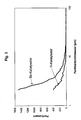
- Table 1 shows the carbon black particle sizes of a comparative example 1 and the Examples 2 to 5 according to the invention are listed. From Table 1 it can be seen that the number the soot particles with a diameter larger than 10 ⁇ m when using an antimony trioxide catalyst in standard PET about twice as large as when using a titanium catalyst for is the polycondensation. The proportion of titanium in the polyester is given in ppm.
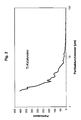
- the distribution of the soot particles was measured with an AccuSIZER model 770 from Particle Sizing Systems Inc., California, USA) in a liquid sample of 20 ml in 128 channels with a threshold value of 2.03 ⁇ m.
- Table 1 shows the relative particle size distribution for the percentages 5%, 90% and 95% of the total number of soot particles, the particle diameter and the number of particles with a diameter greater than 10 ⁇ m for the examples given.
- Comparative example 1 represents a standard polyester with 1.5% carbon black and with antimony trioxide Sb 2 O 3 as a polycondensation catalyst.
- the carbon black content for Examples Nos. 1 to 6 and 9 was 1.5% by weight in the polyester.
- Examples Nos. 7 and 8 were carried out using antimony trioxide and K 2 TiO (ox) 2 ⁇ 2 H 2 O as the polycondensation catalyst, with a carbon black content of 0.45% by weight in the polyester.
- Table 2 shows the polycondensation (PK) catalysts, the PK and transesterification (UE) times, the intrinsic viscosity (IV) and the color numbers L * and b *.
- the IV is measured in dichloroacetic acid at 25 ° C.
- polyester with 1.5% by weight of naphthalenesulfonic acid-formaldehyde polycondensate as a dispersion aid, antimony trioxide as a polycondensation catalyst, a Mn catalyst as a transesterification catalyst and a PHM ester as Phosphorus compound.
- Example 3 LA227 K 2 TiO (ox) 2 x 2 H 2 O / PVP
- Example 4 LA242 K 2 TiO (ox) 2 x 2 H 2 O / PVP
- Example 5 LA243 K 2 TiO (ox) 2 x 2 H 2 O / PVP
- the carbon black of Comparative Example 1 and Examples 2 to 8 is gas black, however, furnace black, as in Example 9, can also be used. Then only that Suitable dispersing agents for furnace black are used.
- Figure 1 shows the distribution according to Comparative Example 1
- Figure 2 according to the invention Example 3 and FIG. 3 the comparison of the two distributions from FIGS. 1 and 2.
- the polyester according to the invention is used in the production of fibers, nonwoven materials and films, as is specified in more detail below.
- Textile filaments eg: super micro filaments ( ⁇ 0.5 dtex), micro F. (0.5 - 1.0 dtex), fine F. (1.0 - 2.5 dtex), medium F. (2.5 - 7.0 dtex), coarse F. (> 7 dtex)
- Technical filaments eg for seat belts, nets, Staple fibers: e.g.
Landscapes
- Chemical & Material Sciences (AREA)
- Health & Medical Sciences (AREA)
- Chemical Kinetics & Catalysis (AREA)
- Medicinal Chemistry (AREA)
- Polymers & Plastics (AREA)
- Organic Chemistry (AREA)
- Polyesters Or Polycarbonates (AREA)
- Compositions Of Macromolecular Compounds (AREA)
Abstract
Description


| Nr. | Rußmenge (Gew.-%) | Mn (ppm) | P(ppm) | Sb (ppm) | IV (dl/g) | L* | b* |
| 1 Standard-PET | 1,5 | 73 | 26 | 408 | 0,623 | 23,3 | -0,4 |
| Nr. | Rußmenge (Gew.-%) | PK-Katalysator | UE-Zeit (min) | PK-Zeit (min) | IV (dl/g) | L* | b* |
| 2 | 1,5 | K2TiO(ox)2 | 225 | 106 | 0,644 | 23,6 | -0,3 |
| 3 | 1,5 | K2TiO(ox)2 | 210 | 152 | 0,655 | 23 | -0,4 |
| 4 | 1,5 | K2TiO(ox)2 | 190 | 102 | 0,646 | 23,9 | -0,4 |
| 5 | 1,5 | K2TiO(ox)2 | 180 | 92 | 0,631 | 24,1 | -0,6 |
| 6 | 1,5 | TiO2/SiO2 | 205 | 105 | 0,637 | 23,6 | -0,5 |
| 7 | 0,45 | Sb2O3 | 203 | 126 | 0,592 | 22,2 | 4 |
| 8 | 0,45 | K2TiO(ox)2 | 190 | 82 | 0,607 | 22,9 | 4 |
| 9 | 1,5 | K2TiO(ox)2 | 196 | 109 | 0,661 | 24,4 | -0,4 |
- 27 ppm P als PHM-Ester
- 10 ppm Ti
- 1.5 % Rußdispersion
- 300 g Rußdispersion bestehend aus:
- 30 g Ruß und 3 g Naphthalinsulfonsäure-Formaldehyd-Polykondensat und 267 g MEG
- 2.2 Fahrdaten:
- Umesterungszeit: 225 min; Methanol / Glykol Menge: 890 ml
- Polykondensationszeit: 106 min; Drehmomentzunahme 11.0 Nm;
- Chip-Ausbeute: 1588 g
- 27 ppm P als PHM-Ester
- 10 ppm Ti = 74 ppm K2TiO(ox)2 x 2 H2O
- 1.5 % Rußdispersion
- 300 g Rußdispersion bestehend aus:
- 30 g Ruß und 3 g PVP und 267 g MEG
- 3.2 Fahrdaten:
- Umesterungszeit: 210 min; Methanol / Glykol Menge: 875 ml
- Polykondensationszeit: 152 min; Drehmomentzunahme 11.0 Nm;
- Chip-Ausbeute: 1537 g
- 27 ppm P als PHM-Ester
- 15 ppm Ti = 111 ppm K2TiO(ox)2 x 2 H2O
- 1.5 % Rußdispersion
- 300 g Rußdispersion bestehend aus:
- 30 g Ruß und 3 g PVP und 267 g MEG
- 4.2 Fahrdaten:
- Umesterungszeit: 190 min; Methanol / Glykol Menge: 870 ml
- Polykondensationszeit: 102 min; Drehmomentzunahme 11.0 Nm;
- Chip-Ausbeute: 1572 g
- 27 ppm P als PHM-Ester
- 20 ppm Ti = 148 ppm K2TiO(ox)2 x 2 H2O
- 1.5 % Rußdispersion
- 300 g Rußdispersion bestehend aus:
- 30 g Ruß und 3 g PVP und 267 g MEG
- 5.2 Fahrdaten:
- Umesterungszeit: 180 min; Methanol / Glykol Menge: 890 ml
- Polykondensationszeit: 92 min; Drehmomentzunahme 11.0 Nm;
- Chip-Ausbeute: 1501 g
- 27 ppm P als PHM-Ester
- 10 ppm Ti = 18.5 ppm C94
- 1.5 % Rußdispersion
- 300 g Rußdispersion bestehend aus:
- 30 g Ruß und 3 g Naphthalinsulfonsäure-Formaldehyd-Polykondensat und 267 g MEG
- 6.2 Fahrdaten:
- Umesterungszeit: 205 min; Methanol / Glykol Menge: 865 ml
- Polykondensationszeit: 105 min; Drehmomentzunahme 11.0 Nm;
- Chip-Ausbeute: 1665 g
- 27 ppm P als PHM-Ester
- 601 ppm Sb2O3
- 0.45 % Rußdispersion
- 90 g Rußdispersion bestehend aus:
- 9 g Ruß und 0.9 g PVP und 80.1 g MEG
- 7.2 Fahrdaten:
- Umesterungszeit: 203 min; Methanol / Glykol Menge: 870 ml
- Polykondensationszeit: 126 min; Drehmomentzunahme 7.0 Nm;
- Chip-Ausbeute: 1656 g
- 27 ppm P als PHM-Ester
- 15 ppm Ti = 148 ppm K2TiO(ox)2 x 2 H2O
- 0.45 % Rußdispersion
- 90 g Rußdispersion bestehend aus:
- 9 g Ruß und 0.9 g Naphthalinsulfonsäure-Formaldehyd-Polykondensat und 80.1 g MEG
- 8.2 Fahrdaten:
- Umesterungszeit: 190 min; Methanol / Glykol Menge: 880 ml
- Polykondensationszeit: 82 min; Drehmomentzunahme 7.0 Nm;
- Chip-Ausbeute: 1662 g
- 27 ppm P als PHM-Ester
- 15 ppm Ti = 111 ppm K2TiO(ox)2
- 1.5 % Rußdispersion
- 300 g Rußdispersion bestehend aus
- 30 g Furnaceruß und 3 g ethoxylierter Novolak, 3 ppm Entschäumer und 267 g MEG
- 9.2 Fahrdaten:
- Umesterungszeit: 196 min; Methanol / Glykol Menge: 860 ml
- Polykondensationszeit: 109 min; Drehmomentzunahme 11.0 Nm;
- Chip-Ausbeute: 1271 g
| Faser-Anwendungen: | |
| Textile Filamente | z.B.: Supermikro Filamente (< 0.5 dtex), Mikro F. (0.5 - 1.0 dtex), Fein-F. (1.0 - 2.5 dtex), mittlere F. (2.5 - 7.0 dtex), grobe F. (> 7 dtex) |
| Technische Filamente: | z.B. für Sicherheitsgurte, Netze, |
| Stapelfasern: | z.B. Baumwolltyp (1.3 - 2.8 dtex), Wolltyp (3.3 - 10 dtex), für Gardinen (10 - 300 dtex) |
| BCF Fasern (bulk continuous filament fibers) | |
| Monofilamente | |
| Nonwoven: | Verwendung zur Herstellung von Faser-Vlies Strukturen |
| Folien-Anwendungen: | Farbtiefe Einfärbung von Folien Folien mit UV-Schutz Abtönung in Folien |
Claims (30)
- Thermostabiler, antimonfreier Polyester auf Basis aromatischer Dicarbonsäuren und aliphatischer Diole, wobei ein Teil der aromatischen Dicarbonsäuren durch aliphatische Dicarbonsäuren ersetzt sein kann und der Polyester Titan enthält, dadurch gekennzeichnet, dass er 1 bis 100 ppm Titan, bezogen auf die Menge an Polyester, 0,01 bis 20 Gew.-% Ruß, bezogen auf das Gewicht des Polyesters und 0 bis 200 ppm einer phosphorigen Verbindung, bezogen auf die Menge an Polyester, enthält.
- Polyester nach Anspruch 1, dadurch gekennzeichnet, dass er 0,01 bis 5 Gew.-% Ruß, bezogen auf das Gewicht des Polyesters, enthält.
- Polyester nach Anspruch 1, dadurch gekennzeichnet, dass er 0,1 bis 2 Gew.-% Ruß, bezogen auf das Gewicht des Polyesters, enthält.
- Polyester nach Anspruch 3, dadurch gekennzeichnet, dass er 0,4 bis 1,6 Gew.-% Ruß, bezogen auf das Gewicht des Polyesters, enthält.
- Polyester nach Anspruch 1, dadurch gekennzeichnet, dass der Polykondensationskatalysator aus der Gruppe löslicher oder dispergierbarer Titanverbindungen auswählbar ist.
- Polyester nach Anspruch 5, dadurch gekennzeichnet, dass der Polykondensationskatalysator aus einer in Ethylenglykol löslichen Titanverbindung besteht.
- Polyester nach Anspruch 6, dadurch gekennzeichnet, dass die Titanverbindung ein Titanalkoxid Ti(OR)4 oder Titankaliumoxalat K2TiO(ox)2 ist.
- Polyester nach Anspruch 5, dadurch gekennzeichnet, dass der Polykondensationskatalysator aus einem in Ethylenglykol dispergierbarem Gemisch aus Titandioxid und Siliziumdioxid oder Metalloxid-Titandioxid-Hydrat besteht.
- Polyester nach Anspruch 8, dadurch gekennzeichnet, dass der Polykondensationskatalysator ein Copräzipität aus TiO2 : SiO2 ist.
- Polyester nach Anspruch 1, dadurch gekennzeichnet, dass der Anteil an metallischem Titan 5 bis 50 ppm, bezogen auf die Menge des Polyesters, beträgt.
- Polyester nach Anspruch 1, dadurch gekennzeichnet, dass der Ruß in Form einer Rußdispersion nach der Veresterung zugegeben ist und dass die Ruß-Dispergierung in einem niederen aliphatischen Diol erfolgt, unter Zumischung eines Dispergierhilfsmittels.
- Polyester nach Anspruch 11, dadurch gekennzeichnet, dass die Rußdispersion aus einem primären Rußkorn mit einer mittleren Primärpartikelgröße von kleiner 100 nm, insbesondere von 13 bis 50 nm, einem Dispergierhilfsmittel und Ethylenglykol besteht.
- Polyester nach Anspruch 11, dadurch gekennzeichnet, dass das Dispergierhilfsmittel ionisch ist und aus der Gruppe Polyacrylat, modifiziertes Polyacrylat, Naphthalinsulfonsäure-Formaldehyd-Harz, Poly(vinylpyrrolidon-co-3-Methyl-1-vinylimidazolium-methylsulfat) ausgewählt ist.
- Polyester nach Anspruch 11, dadurch gekennzeichnet, dass das Dispergierhilfsmittel nichtionisch ist und aus der Gruppe Polyvinylpyrrolidon, Poly(vinylpyrrolidon-covinylacetat), Polyvinylcaprolactam, Poly(vinylpyrrolidon-co-vinylcaprolactam), ethoxylierter Novolak, Tristyrylphenol-Ethoxylat, Tri-sec-butylphenol-Ethoxylat ausgewählt ist.
- Polyester nach Anspruch 11, dadurch gekennzeichnet, dass der Ruß ein Gasruß mit einem pH-Wert kleiner 7 ist.
- Polyester nach Anspruch 11, dadurch gekennzeichnet, dass der Ruß ein Fumaceruß (Flammruß) mit einem pH-Wert größer 7 ist.
- Polyester nach Anspruch 15 oder 16, dadurch gekennzeichnet, dass die DBP-Absorption, gegeben durch das Verhältnis des Dibutylphthalat in ml zu 100 g Rußpulver, im Bereich von größer 50 bis kleiner 150 liegt.
- Polyester nach Anspruch 17, dadurch gekennzeichnet, dass die DBP-Absorption im Bereich von größer 90 bis kleiner 130 liegt.
- Polyester nach Anspruch 11, dadurch gekennzeichnet, dass derAnteil des Dispergierhilfsmittels 1 bis 60 Gew.-%, bezogen auf den dispergierten Ruß, beträgt.
- Polyester nach Anspruch 11, dadurch gekennzeichnet, dass der Rußgehalt der Dispersion 0,1 bis 50 Gew.-%, bezogen auf die Dispersion, beträgt.
- Polyester nach Anspruch 20, dadurch gekennzeichnet, dass Rußgehalt der Dispersion 5 bis 15 Gew.-%, bezogen auf die Dispersion, beträgt.
- Polyester nach Anspruch 1, dadurch gekennzeichnet, dass 95 % der Gesamtzahl der agglomerierten Rußpartikel im Polyester eine Durchmessergröße kleiner 10 µm aufweisen.
- Verfahren zur Herstellung eines Polyesters auf der Basis aromatischer Dicarbonsäuren und aliphatischer Diole, wobei ein Teil der aromatischen Dicarbonsäuren durch aliphatische Dicarbonsäuren ersetzt sein kann, dadurch gekennzeichnet, dass nach erfolgter Umesterungreaktion von Dimethylterephthalat und Ethylenglykol bzw. Veresterung gereinigter Terephthalsäure, die in einem niederen aliphatischen Glykol dispergiert ist und Polykondensation dieser Komponenten mit Hilfe einer Ti-Verbindung als Polykondensationskatalysator, eine Rußdispersion zugemischt wird, die in einem niederen aliphatischen Diol zusammen mit einem Dispergierhilfsmittel dispergiert ist, und dass phosphorhaltige Verbindungen als Additive mit den übrigen Komponenten der Reaktion vermischt werden.
- Verfahren nach Anspruch 23, dadurch gekennzeichnet, dass die Polykondensation bei einer Temperatur von 200 bis 300 °C und einem Unterdruck von 0,2 bis 0,5 mbar bis zum Erreichen einer gewünschten IV von 0,4 bis 0,9 dl/g, gemessen in Dichloressigsäure bei 25 °C, durchgeführt wird.
- Verfahren nach Anspruch 23, dadurch gekennzeichnet, dass für die Rußdispersion 0,1 bis 50 Gew.-% Gas- oder Furnaceruß, bezogen auf das Gesamtgewicht der Rußdispesion als Primärkorn mit einer mittleren Partikelgröße von 13 bis 50 nm und 1 bis 60 Gew.-% Dispergiermittel, bezogen auf den Ruß in Ethylenglykol, dispergiert werden.
- Verwendung des Polyesters nach den Ansprüchen 1 bis 22 für textile Filamente, technische Filamente für Sicherheitsgurte, Netze, Stapelfasern, BCF-Fasern, Monofilamente.
- Verwendung des Polyesters nach den Ansprüchen 1 bis 22 für Faser-Vlies-Strukturen.
- Verwendung des Polyesters nach den Ansprüchen 1 bis 22 zur farbintensiven Einfärbung von Folien, Abtönen von Folien, für Folien mit UV-Schutz.
- Verwendung des Polyesters nach den Ansprüchen 1 bis 22 zur Herstellung von Masterbatches als Zusatz zu Polymerkomponenten.
- Verwendung des Polyesters nach den Ansprüchen 1 bis 22 für spritzgegossene geformte Gegenstände.
Applications Claiming Priority (2)
| Application Number | Priority Date | Filing Date | Title |
|---|---|---|---|
| DE10159049 | 2001-11-30 | ||
| DE2001159049 DE10159049A1 (de) | 2001-11-30 | 2001-11-30 | Thermostabiler, antimonfreier Polyester, Verfahren zu seiner Herstellung und seine Verwendung |
Publications (2)
| Publication Number | Publication Date |
|---|---|
| EP1316585A1 true EP1316585A1 (de) | 2003-06-04 |
| EP1316585B1 EP1316585B1 (de) | 2007-05-02 |
Family
ID=7707697
Family Applications (1)
| Application Number | Title | Priority Date | Filing Date |
|---|---|---|---|
| EP20020026359 Revoked EP1316585B1 (de) | 2001-11-30 | 2002-11-25 | Thermostabiler, antimonfreier Polyester, Verfahren zu seiner Herstellung und seine Verwendung |
Country Status (4)
| Country | Link |
|---|---|
| US (1) | US6841604B2 (de) |
| EP (1) | EP1316585B1 (de) |
| AT (1) | ATE361341T1 (de) |
| DE (2) | DE10159049A1 (de) |
Families Citing this family (27)
| Publication number | Priority date | Publication date | Assignee | Title |
|---|---|---|---|---|
| US20050010017A1 (en) * | 2003-07-11 | 2005-01-13 | Blakely Dale Milton | Addition of UV inhibitors to pet process for maximum yield |
| WO2005068530A1 (en) * | 2004-01-09 | 2005-07-28 | E.I. Dupont De Nemours And Company | Polyester composition comprising carbon black |
| US20050170177A1 (en) * | 2004-01-29 | 2005-08-04 | Crawford Julian S. | Conductive filament |
| US20050267283A1 (en) * | 2004-05-27 | 2005-12-01 | Weaver Max A | Process for adding nitrogen containing methine light absorbers to poly(ethylene terephthalate) |
| US20050277759A1 (en) * | 2004-05-27 | 2005-12-15 | Pearson Jason C | Process for adding furyl-2-methylidene UV light absorbers to poly(ethylene terephthalate) |
| US7541407B2 (en) | 2004-05-27 | 2009-06-02 | Eastman Chemical Company | Process for adding methine UV light absorbers to PET prepared by direct esterification |
| US7282555B2 (en) | 2004-05-27 | 2007-10-16 | Eastman Chemical Company | Method for incorporating nitrogen containing methine light absorbers in pet and compositions thereof |
| US20050277716A1 (en) * | 2004-05-27 | 2005-12-15 | Pearson Jason C | Furyl-2-methylidene UV absorbers and compositions incorporating the UV absorbers |
| WO2006025344A1 (ja) * | 2004-08-30 | 2006-03-09 | Mitsubishi Polyester Film Corporation | 離型用ポリエステルフィルム |
| CN102816312B (zh) * | 2011-06-10 | 2014-08-06 | 中国石油天然气股份有限公司 | 一种抗静电聚对苯二甲酸乙二醇酯的制备方法 |
| CN102816310B (zh) * | 2011-06-10 | 2014-08-06 | 中国石油天然气股份有限公司 | 一种抗静电聚对苯二甲酸1,3-丙二醇酯复合材料 |
| CN102816309B (zh) * | 2011-06-10 | 2014-08-06 | 中国石油天然气股份有限公司 | 一种抗静电聚对苯二甲酸1,3-丙二醇酯的制备方法 |
| CN102816311B (zh) * | 2011-06-10 | 2014-08-06 | 中国石油天然气股份有限公司 | 一种抗静电聚对苯二甲酸乙二醇酯复合材料 |
| US10240021B2 (en) * | 2012-01-12 | 2019-03-26 | Dak Americas Llc | Polyester resins with particular carbon black as a reheat additive in the production of stretch blow molded bottles and containers |
| US20160340471A1 (en) | 2015-05-19 | 2016-11-24 | Eastman Chemical Company | Aliphatic polyester coating compositions containing tetramethyl cyclobutanediol |
| DE202015005969U1 (de) | 2015-08-27 | 2015-09-28 | Carl Freudenberg Kg | Vliesstoff umfassend antimonfreien Polyester |
| US20170088665A1 (en) | 2015-09-25 | 2017-03-30 | Eastman Chemical Company | POLYMERS CONTAINING CYCLOBUTANEDIOL AND 2,2 BIS(HYDROXYMETHYL) AlKYLCARBOXYLIC ACID |
| US9988553B2 (en) * | 2016-02-22 | 2018-06-05 | Eastman Chemical Company | Thermosetting coating compositions |
| US10011737B2 (en) | 2016-03-23 | 2018-07-03 | Eastman Chemical Company | Curable polyester polyols and their use in thermosetting soft feel coating formulations |
| KR102041597B1 (ko) * | 2016-12-29 | 2019-11-06 | 롯데첨단소재(주) | 수지 조성물 및 이로부터 제조된 성형품 |
| FR3066398B1 (fr) * | 2017-05-18 | 2019-07-05 | X'sin | Prise d'escalade a detection capacitive, procede de realisation et mur associes |
| EP3466385B1 (de) | 2017-10-06 | 2020-05-27 | The Procter & Gamble Company | Absorbierender artikel oder wischtuch mit einem vliesmaterial mit zweikomponentenfasern mit antimonfreiem polyethylenterephthalat |
| EP3466388B1 (de) | 2017-10-06 | 2020-05-20 | The Procter & Gamble Company | Saugfähiger artikel mit einem vliesmaterial mit antimonfreiem polyethylenterephthalat |
| EP3466389B1 (de) | 2017-10-06 | 2020-05-20 | The Procter & Gamble Company | Absorbierender artikel mit einer kardierten harzverklebten vliesbahn mit fasern mit antimonfreiem polyethylenterephthalat |
| CN110951063B (zh) * | 2019-12-12 | 2021-10-22 | 万华化学集团股份有限公司 | 一种用于制备聚酯的催化剂组合物以及聚酯的制备方法 |
| WO2022132470A1 (en) | 2020-12-18 | 2022-06-23 | Lubrizol Advanced Materials, Inc. | Method of producing a polymer using a pigment dispersion |
| CN116745386A (zh) | 2020-12-18 | 2023-09-12 | 路博润先进材料公司 | 稳定的颜料分散体组合物 |
Citations (3)
| Publication number | Priority date | Publication date | Assignee | Title |
|---|---|---|---|---|
| GB1027266A (en) * | 1964-03-03 | 1966-04-27 | Toyo Rayon Co Ltd | Production of linear polyesters of high molecular weight |
| US3905938A (en) * | 1971-12-29 | 1975-09-16 | Eastman Kodak Co | Polyester film base having uniform high optical density |
| WO1999010573A1 (en) * | 1997-08-28 | 1999-03-04 | Eastman Chemical Company | Improved copolymer binder fibers |
Family Cites Families (1)
| Publication number | Priority date | Publication date | Assignee | Title |
|---|---|---|---|---|
| US4476272A (en) * | 1982-02-24 | 1984-10-09 | The Goodyear Tire & Rubber Company | High clarity, low haze polyesters having reduced infrared heat-up times |
-
2001
- 2001-11-30 DE DE2001159049 patent/DE10159049A1/de not_active Withdrawn
-
2002
- 2002-11-15 US US10/295,933 patent/US6841604B2/en not_active Expired - Fee Related
- 2002-11-25 EP EP20020026359 patent/EP1316585B1/de not_active Revoked
- 2002-11-25 AT AT02026359T patent/ATE361341T1/de not_active IP Right Cessation
- 2002-11-25 DE DE50210066T patent/DE50210066D1/de not_active Expired - Fee Related
Patent Citations (3)
| Publication number | Priority date | Publication date | Assignee | Title |
|---|---|---|---|---|
| GB1027266A (en) * | 1964-03-03 | 1966-04-27 | Toyo Rayon Co Ltd | Production of linear polyesters of high molecular weight |
| US3905938A (en) * | 1971-12-29 | 1975-09-16 | Eastman Kodak Co | Polyester film base having uniform high optical density |
| WO1999010573A1 (en) * | 1997-08-28 | 1999-03-04 | Eastman Chemical Company | Improved copolymer binder fibers |
Also Published As
| Publication number | Publication date |
|---|---|
| ATE361341T1 (de) | 2007-05-15 |
| DE10159049A1 (de) | 2003-06-12 |
| EP1316585B1 (de) | 2007-05-02 |
| US20030105214A1 (en) | 2003-06-05 |
| US6841604B2 (en) | 2005-01-11 |
| DE50210066D1 (de) | 2007-06-14 |
Similar Documents
| Publication | Publication Date | Title |
|---|---|---|
| EP1316585B1 (de) | Thermostabiler, antimonfreier Polyester, Verfahren zu seiner Herstellung und seine Verwendung | |
| DE602004002833T2 (de) | Verfahren zur Herstellung von einem für Flaschen geeigneten Polyethylenterephthalatharz mit schnellen Aufheizeigenschaften | |
| EP0417717B1 (de) | Mit Carbodiimiden modifizierte Polyesterfasern und Verfahren zu ihrer Herstellung | |
| EP0503421B1 (de) | Mit Carbodiimiden modifizierte Polyesterfasern und Verfahren zu ihrer Herstellung | |
| DE69106724T2 (de) | Pulverförmige farbpräparate sowie verfahren für deren herstellung. | |
| DE19908628A1 (de) | Katalysator, Verfahren zu dessen Herstellung und Verwendung des Katalysators | |
| DE2020330A1 (de) | Verfahren zur Verbesserung der Stabilitaet von Polyestern | |
| DE68920708T2 (de) | Hoch dispergierbares Magnesiumoxid und Verfahren zur Herstellung davon. | |
| DE2710379A1 (de) | Verfahren zum gleichmaessigen einmischen von zusaetzen in thermoplastische kunststoffe | |
| DE602004010887T2 (de) | Verfahren zur Herstellung von Copolyestern aus Polyethylenterephthalat | |
| DE60124599T2 (de) | Polyester-Polykondensation mit Titanyloxalat-Katalysator und einer den katalytischen Effekt verstärkenden Verbindung | |
| DE1301551C2 (de) | Verfahren zur herstellung von hochmolekularen polyestern | |
| EP0215364B1 (de) | Verfahren zur Herstellung schnellkristallisierender Polyestermassen | |
| EP1769117B1 (de) | Polymere werkstoffe, die anorganische feststoffe enthalten und verfahren zu deren herstellung | |
| DE10138568A1 (de) | Verfahren zur Herstellung eines antimikrobiellen Polyester, antimikrobieller Polyester und seine Verwendung | |
| DE1905188C3 (de) | Verfahren zur Herstellung von PoIyalkylenterephthalaten und modifizierten Polyestern | |
| EP0694633A1 (de) | Fasern, Filme oder Hohlkörper aus Zusammensetzungen enthaltend Polyester und Fullerene, Verfahren zur Herstellung der Zusammensetzungen, sowie deren Verwendung | |
| WO1994001484A1 (de) | Verfahren zur reduktion des gelbwertes von nachkondensiertem polyestergranulat | |
| EP1244829B1 (de) | Verfahren zur herstellung von hydrolysestabilisierten monofilamenten aus polyester und deren verwendung | |
| EP2203526B1 (de) | Additiv für polymere und verfahren zu dessen herstellung | |
| DE10339742B4 (de) | Partikuläres titanhaltiges Katalysatorsystem zur Herstellung hochmolekularer Polyester | |
| DE2552511C3 (de) | Flammwidrige und selbstverlöschende Polyestermassen | |
| EP2012922B1 (de) | Katalysator zur polyesterherstellung, verwendung des katalysatoren zur herstellung von polyester sowie polyester, erhalten unter einsatz des katalysatoren | |
| DE102006043888A1 (de) | Masterbatch und Verfahren zur Herstellung von kationisch anfärbbaren Polyester/Copolyester-Filamenten oder -fasern sowie Verwendung des Verfahrens | |
| DE1953706A1 (de) | Verfahren zur Herstellung von Polyestern |
Legal Events
| Date | Code | Title | Description |
|---|---|---|---|
| PUAI | Public reference made under article 153(3) epc to a published international application that has entered the european phase |
Free format text: ORIGINAL CODE: 0009012 |
|
| AK | Designated contracting states |
Designated state(s): AT BE BG CH CY CZ DE DK EE ES FI FR GB GR IE IT LI LU MC NL PT SE SK TR |
|
| AX | Request for extension of the european patent |
Extension state: AL LT LV MK RO SI |
|
| 17P | Request for examination filed |
Effective date: 20031204 |
|
| AKX | Designation fees paid |
Designated state(s): AT BE BG CH CY CZ DE DK EE ES FI FR GB GR IE IT LI LU MC NL PT SE SK TR |
|
| RAP1 | Party data changed (applicant data changed or rights of an application transferred) |
Owner name: INVISTA TECHNOLOGIES S.AE.R.L. |
|
| RAP1 | Party data changed (applicant data changed or rights of an application transferred) |
Owner name: INVISTA TECHNOLOGIES S.AE.R.L. |
|
| GRAP | Despatch of communication of intention to grant a patent |
Free format text: ORIGINAL CODE: EPIDOSNIGR1 |
|
| GRAS | Grant fee paid |
Free format text: ORIGINAL CODE: EPIDOSNIGR3 |
|
| GRAA | (expected) grant |
Free format text: ORIGINAL CODE: 0009210 |
|
| AK | Designated contracting states |
Kind code of ref document: B1 Designated state(s): AT BE BG CH CY CZ DE DK EE ES FI FR GB GR IE IT LI LU MC NL PT SE SK TR |
|
| PG25 | Lapsed in a contracting state [announced via postgrant information from national office to epo] |
Ref country code: FI Free format text: LAPSE BECAUSE OF FAILURE TO SUBMIT A TRANSLATION OF THE DESCRIPTION OR TO PAY THE FEE WITHIN THE PRESCRIBED TIME-LIMIT Effective date: 20070502 |
|
| REG | Reference to a national code |
Ref country code: GB Ref legal event code: FG4D Free format text: NOT ENGLISH |
|
| REG | Reference to a national code |
Ref country code: CH Ref legal event code: EP |
|
| REG | Reference to a national code |
Ref country code: IE Ref legal event code: FG4D Free format text: LANGUAGE OF EP DOCUMENT: GERMAN |
|
| REF | Corresponds to: |
Ref document number: 50210066 Country of ref document: DE Date of ref document: 20070614 Kind code of ref document: P |
|
| GBT | Gb: translation of ep patent filed (gb section 77(6)(a)/1977) |
Effective date: 20070711 |
|
| PG25 | Lapsed in a contracting state [announced via postgrant information from national office to epo] |
Ref country code: SE Free format text: LAPSE BECAUSE OF FAILURE TO SUBMIT A TRANSLATION OF THE DESCRIPTION OR TO PAY THE FEE WITHIN THE PRESCRIBED TIME-LIMIT Effective date: 20070802 |
|
| PG25 | Lapsed in a contracting state [announced via postgrant information from national office to epo] |
Ref country code: ES Free format text: LAPSE BECAUSE OF FAILURE TO SUBMIT A TRANSLATION OF THE DESCRIPTION OR TO PAY THE FEE WITHIN THE PRESCRIBED TIME-LIMIT Effective date: 20070813 |
|
| REG | Reference to a national code |
Ref country code: IE Ref legal event code: FD4D |
|
| EN | Fr: translation not filed | ||
| PG25 | Lapsed in a contracting state [announced via postgrant information from national office to epo] |
Ref country code: PT Free format text: LAPSE BECAUSE OF FAILURE TO SUBMIT A TRANSLATION OF THE DESCRIPTION OR TO PAY THE FEE WITHIN THE PRESCRIBED TIME-LIMIT Effective date: 20071002 Ref country code: CZ Free format text: LAPSE BECAUSE OF FAILURE TO SUBMIT A TRANSLATION OF THE DESCRIPTION OR TO PAY THE FEE WITHIN THE PRESCRIBED TIME-LIMIT Effective date: 20070502 Ref country code: BG Free format text: LAPSE BECAUSE OF FAILURE TO SUBMIT A TRANSLATION OF THE DESCRIPTION OR TO PAY THE FEE WITHIN THE PRESCRIBED TIME-LIMIT Effective date: 20070802 Ref country code: DK Free format text: LAPSE BECAUSE OF FAILURE TO SUBMIT A TRANSLATION OF THE DESCRIPTION OR TO PAY THE FEE WITHIN THE PRESCRIBED TIME-LIMIT Effective date: 20070502 Ref country code: IE Free format text: LAPSE BECAUSE OF FAILURE TO SUBMIT A TRANSLATION OF THE DESCRIPTION OR TO PAY THE FEE WITHIN THE PRESCRIBED TIME-LIMIT Effective date: 20070502 |
|
| PGFP | Annual fee paid to national office [announced via postgrant information from national office to epo] |
Ref country code: DE Payment date: 20071122 Year of fee payment: 6 |
|
| PLBI | Opposition filed |
Free format text: ORIGINAL CODE: 0009260 |
|
| PG25 | Lapsed in a contracting state [announced via postgrant information from national office to epo] |
Ref country code: SK Free format text: LAPSE BECAUSE OF FAILURE TO SUBMIT A TRANSLATION OF THE DESCRIPTION OR TO PAY THE FEE WITHIN THE PRESCRIBED TIME-LIMIT Effective date: 20070502 |
|
| PLAX | Notice of opposition and request to file observation + time limit sent |
Free format text: ORIGINAL CODE: EPIDOSNOBS2 |
|
| 26 | Opposition filed |
Opponent name: BASF SE Effective date: 20080201 |
|
| PG25 | Lapsed in a contracting state [announced via postgrant information from national office to epo] |
Ref country code: GR Free format text: LAPSE BECAUSE OF FAILURE TO SUBMIT A TRANSLATION OF THE DESCRIPTION OR TO PAY THE FEE WITHIN THE PRESCRIBED TIME-LIMIT Effective date: 20070803 Ref country code: FR Free format text: LAPSE BECAUSE OF FAILURE TO SUBMIT A TRANSLATION OF THE DESCRIPTION OR TO PAY THE FEE WITHIN THE PRESCRIBED TIME-LIMIT Effective date: 20071228 |
|
| PGFP | Annual fee paid to national office [announced via postgrant information from national office to epo] |
Ref country code: GB Payment date: 20071121 Year of fee payment: 6 |
|
| NLR1 | Nl: opposition has been filed with the epo |
Opponent name: BASF SE |
|
| BERE | Be: lapsed |
Owner name: INVISTA TECHNOLOGIES S.A.R.L. Effective date: 20071130 |
|
| PG25 | Lapsed in a contracting state [announced via postgrant information from national office to epo] |
Ref country code: MC Free format text: LAPSE BECAUSE OF NON-PAYMENT OF DUE FEES Effective date: 20071130 |
|
| PLAF | Information modified related to communication of a notice of opposition and request to file observations + time limit |
Free format text: ORIGINAL CODE: EPIDOSCOBS2 |
|
| PG25 | Lapsed in a contracting state [announced via postgrant information from national office to epo] |
Ref country code: CH Free format text: LAPSE BECAUSE OF NON-PAYMENT OF DUE FEES Effective date: 20071130 Ref country code: LI Free format text: LAPSE BECAUSE OF NON-PAYMENT OF DUE FEES Effective date: 20071130 |
|
| REG | Reference to a national code |
Ref country code: CH Ref legal event code: PL |
|
| PLBB | Reply of patent proprietor to notice(s) of opposition received |
Free format text: ORIGINAL CODE: EPIDOSNOBS3 |
|
| PG25 | Lapsed in a contracting state [announced via postgrant information from national office to epo] |
Ref country code: BE Free format text: LAPSE BECAUSE OF NON-PAYMENT OF DUE FEES Effective date: 20071130 |
|
| PG25 | Lapsed in a contracting state [announced via postgrant information from national office to epo] |
Ref country code: FR Free format text: LAPSE BECAUSE OF FAILURE TO SUBMIT A TRANSLATION OF THE DESCRIPTION OR TO PAY THE FEE WITHIN THE PRESCRIBED TIME-LIMIT Effective date: 20070502 |
|
| PG25 | Lapsed in a contracting state [announced via postgrant information from national office to epo] |
Ref country code: EE Free format text: LAPSE BECAUSE OF FAILURE TO SUBMIT A TRANSLATION OF THE DESCRIPTION OR TO PAY THE FEE WITHIN THE PRESCRIBED TIME-LIMIT Effective date: 20070502 |
|
| PG25 | Lapsed in a contracting state [announced via postgrant information from national office to epo] |
Ref country code: AT Free format text: LAPSE BECAUSE OF NON-PAYMENT OF DUE FEES Effective date: 20071125 |
|
| GBPC | Gb: european patent ceased through non-payment of renewal fee |
Effective date: 20081125 |
|
| PG25 | Lapsed in a contracting state [announced via postgrant information from national office to epo] |
Ref country code: CY Free format text: LAPSE BECAUSE OF FAILURE TO SUBMIT A TRANSLATION OF THE DESCRIPTION OR TO PAY THE FEE WITHIN THE PRESCRIBED TIME-LIMIT Effective date: 20070502 |
|
| PG25 | Lapsed in a contracting state [announced via postgrant information from national office to epo] |
Ref country code: LU Free format text: LAPSE BECAUSE OF NON-PAYMENT OF DUE FEES Effective date: 20071125 |
|
| PG25 | Lapsed in a contracting state [announced via postgrant information from national office to epo] |
Ref country code: TR Free format text: LAPSE BECAUSE OF FAILURE TO SUBMIT A TRANSLATION OF THE DESCRIPTION OR TO PAY THE FEE WITHIN THE PRESCRIBED TIME-LIMIT Effective date: 20070502 |
|
| PG25 | Lapsed in a contracting state [announced via postgrant information from national office to epo] |
Ref country code: DE Free format text: LAPSE BECAUSE OF NON-PAYMENT OF DUE FEES Effective date: 20090603 |
|
| PG25 | Lapsed in a contracting state [announced via postgrant information from national office to epo] |
Ref country code: GB Free format text: LAPSE BECAUSE OF NON-PAYMENT OF DUE FEES Effective date: 20081125 |
|
| PGFP | Annual fee paid to national office [announced via postgrant information from national office to epo] |
Ref country code: NL Payment date: 20091104 Year of fee payment: 8 |
|
| RDAF | Communication despatched that patent is revoked |
Free format text: ORIGINAL CODE: EPIDOSNREV1 |
|
| PGFP | Annual fee paid to national office [announced via postgrant information from national office to epo] |
Ref country code: IT Payment date: 20091117 Year of fee payment: 8 |
|
| RDAG | Patent revoked |
Free format text: ORIGINAL CODE: 0009271 |
|
| STAA | Information on the status of an ep patent application or granted ep patent |
Free format text: STATUS: PATENT REVOKED |
|
| 27W | Patent revoked |
Effective date: 20100315 |