EP1306330A2 - Verfahren und Vorrichtung zur Bogenzufügung für ein Dokumentenproduktionssystem - Google Patents
Verfahren und Vorrichtung zur Bogenzufügung für ein Dokumentenproduktionssystem Download PDFInfo
- Publication number
- EP1306330A2 EP1306330A2 EP20020023656 EP02023656A EP1306330A2 EP 1306330 A2 EP1306330 A2 EP 1306330A2 EP 20020023656 EP20020023656 EP 20020023656 EP 02023656 A EP02023656 A EP 02023656A EP 1306330 A2 EP1306330 A2 EP 1306330A2
- Authority
- EP
- European Patent Office
- Prior art keywords
- media
- sheet
- insert
- marking device
- production system
- Prior art date
- Legal status (The legal status is an assumption and is not a legal conclusion. Google has not performed a legal analysis and makes no representation as to the accuracy of the status listed.)
- Granted
Links
Images


Classifications
-
- G—PHYSICS
- G03—PHOTOGRAPHY; CINEMATOGRAPHY; ANALOGOUS TECHNIQUES USING WAVES OTHER THAN OPTICAL WAVES; ELECTROGRAPHY; HOLOGRAPHY
- G03G—ELECTROGRAPHY; ELECTROPHOTOGRAPHY; MAGNETOGRAPHY
- G03G15/00—Apparatus for electrographic processes using a charge pattern
- G03G15/65—Apparatus which relate to the handling of copy material
-
- B—PERFORMING OPERATIONS; TRANSPORTING
- B65—CONVEYING; PACKING; STORING; HANDLING THIN OR FILAMENTARY MATERIAL
- B65H—HANDLING THIN OR FILAMENTARY MATERIAL, e.g. SHEETS, WEBS, CABLES
- B65H7/00—Controlling article feeding, separating, pile-advancing, or associated apparatus, to take account of incorrect feeding, absence of articles, or presence of faulty articles
- B65H7/18—Modifying or stopping actuation of separators
-
- B—PERFORMING OPERATIONS; TRANSPORTING
- B65—CONVEYING; PACKING; STORING; HANDLING THIN OR FILAMENTARY MATERIAL
- B65H—HANDLING THIN OR FILAMENTARY MATERIAL, e.g. SHEETS, WEBS, CABLES
- B65H2511/00—Dimensions; Position; Numbers; Identification; Occurrences
- B65H2511/50—Occurence
- B65H2511/51—Presence
-
- B—PERFORMING OPERATIONS; TRANSPORTING
- B65—CONVEYING; PACKING; STORING; HANDLING THIN OR FILAMENTARY MATERIAL
- B65H—HANDLING THIN OR FILAMENTARY MATERIAL, e.g. SHEETS, WEBS, CABLES
- B65H2513/00—Dynamic entities; Timing aspects
- B65H2513/50—Timing
-
- B—PERFORMING OPERATIONS; TRANSPORTING
- B65—CONVEYING; PACKING; STORING; HANDLING THIN OR FILAMENTARY MATERIAL
- B65H—HANDLING THIN OR FILAMENTARY MATERIAL, e.g. SHEETS, WEBS, CABLES
- B65H2513/00—Dynamic entities; Timing aspects
- B65H2513/50—Timing
- B65H2513/51—Sequence of process
-
- B—PERFORMING OPERATIONS; TRANSPORTING
- B65—CONVEYING; PACKING; STORING; HANDLING THIN OR FILAMENTARY MATERIAL
- B65H—HANDLING THIN OR FILAMENTARY MATERIAL, e.g. SHEETS, WEBS, CABLES
- B65H2513/00—Dynamic entities; Timing aspects
- B65H2513/50—Timing
- B65H2513/512—Starting; Stopping
-
- G—PHYSICS
- G03—PHOTOGRAPHY; CINEMATOGRAPHY; ANALOGOUS TECHNIQUES USING WAVES OTHER THAN OPTICAL WAVES; ELECTROGRAPHY; HOLOGRAPHY
- G03G—ELECTROGRAPHY; ELECTROPHOTOGRAPHY; MAGNETOGRAPHY
- G03G2215/00—Apparatus for electrophotographic processes
- G03G2215/00362—Apparatus for electrophotographic processes relating to the copy medium handling
- G03G2215/00443—Copy medium
- G03G2215/00523—Other special types, e.g. tabbed
-
- G—PHYSICS
- G03—PHOTOGRAPHY; CINEMATOGRAPHY; ANALOGOUS TECHNIQUES USING WAVES OTHER THAN OPTICAL WAVES; ELECTROGRAPHY; HOLOGRAPHY
- G03G—ELECTROGRAPHY; ELECTROPHOTOGRAPHY; MAGNETOGRAPHY
- G03G2215/00—Apparatus for electrophotographic processes
- G03G2215/00362—Apparatus for electrophotographic processes relating to the copy medium handling
- G03G2215/00443—Copy medium
- G03G2215/00531—Copy medium transported through the apparatus for non-imaging purposes, e.g. cleaning
-
- G—PHYSICS
- G03—PHOTOGRAPHY; CINEMATOGRAPHY; ANALOGOUS TECHNIQUES USING WAVES OTHER THAN OPTICAL WAVES; ELECTROGRAPHY; HOLOGRAPHY
- G03G—ELECTROGRAPHY; ELECTROPHOTOGRAPHY; MAGNETOGRAPHY
- G03G2215/00—Apparatus for electrophotographic processes
- G03G2215/00362—Apparatus for electrophotographic processes relating to the copy medium handling
- G03G2215/00535—Stable handling of copy medium
- G03G2215/00556—Control of copy medium feeding
- G03G2215/00586—Control of copy medium feeding duplex mode
-
- G—PHYSICS
- G03—PHOTOGRAPHY; CINEMATOGRAPHY; ANALOGOUS TECHNIQUES USING WAVES OTHER THAN OPTICAL WAVES; ELECTROGRAPHY; HOLOGRAPHY
- G03G—ELECTROGRAPHY; ELECTROPHOTOGRAPHY; MAGNETOGRAPHY
- G03G2215/00—Apparatus for electrophotographic processes
- G03G2215/00362—Apparatus for electrophotographic processes relating to the copy medium handling
- G03G2215/00535—Stable handling of copy medium
- G03G2215/00556—Control of copy medium feeding
- G03G2215/00599—Timing, synchronisation
-
- G—PHYSICS
- G03—PHOTOGRAPHY; CINEMATOGRAPHY; ANALOGOUS TECHNIQUES USING WAVES OTHER THAN OPTICAL WAVES; ELECTROGRAPHY; HOLOGRAPHY
- G03G—ELECTROGRAPHY; ELECTROPHOTOGRAPHY; MAGNETOGRAPHY
- G03G2215/00—Apparatus for electrophotographic processes
- G03G2215/00362—Apparatus for electrophotographic processes relating to the copy medium handling
- G03G2215/00535—Stable handling of copy medium
- G03G2215/00603—Control of other part of the apparatus according to the state of copy medium feeding
Definitions
- the present invention relates to an improved sheet feeder for a Document production system.
- a document production system can be an electrophotographic printer or copier to create printed documents.
- Document production system can include an inline document production system that is a Inline finishing system for processing a document after printing or Copy has.
- Unprinted media are passed through the printer or copier without configuration to print the unprinted media in order to create a desired composition to create printed and unprinted media.
- the passage of unprinted media through the printer of the document production system can, however, be charged the printer's available working hours, otherwise the printer will print the pages one or more documents could be used. There is therefore a need for Improve the efficiency of a document production system that compiles supplies printed and unprinted media.
- the present invention is based on the object Document production system with improved efficiency in terms of To create a compilation of printed and unprinted media. This task will solved with a method according to claim 1 and a device according to claim 8. Further features emerge from the subclaims.
- a method and system for managing a document production system includes capturing a first period of time that is at least one of a Marking device originating arc required to have a fixed reference point to achieve a first media path of the document production system.
- a second Time period is recorded, the at least one sheet originating from an insert needed to set a fixed reference point via a second media path of the To achieve the document production system.
- a feed timing command of one The depositor is adjusted so that the first time period and the second time period on the coordinated introduction of at least one sheet from the insert into a set of sheets originating from the marking device on one Combination point are synchronized.
- Document production system 10 of FIG. 1 includes a marking device 12 that is coupled to an insert 14.
- the insert 14 is in turn with a Finishing device 16 coupled.
- the finishing device 16 may be one Output to an output bin 18.
- a control unit 20 is used for control the marking device 12, the insert 14 and the finishing device 16.
- a user interface 30 can be coupled to the control unit 20 in order to User input and output related to the document production system 10 support.
- control unit 20 comprises an input manager 22, a time setting analyzer 24, a data processor 26 and a time setter 28.
- the timing analyzer 24 communicates with a data processor 26.
- the Data processor 26 in turn communicates with a time adjuster 28.
- the user interface 30 and the input manager 22 support the designation or Description of media associated with the appropriate media input sources.
- the media input sources can be attachments, paper trays, or other input sources comprise the associated with the marking device 12, the insert 14 or both are.
- the input manager 22 is able to match a particular medium Media input source based on the input via the user interface 30 Allocate user input.
- the input manager 22 can also use the Stock or the remaining supply of media for one or more corresponding Track media input sources.
- the input manager 22 can use the supply one or more media input sources to determine if a desired media is available.
- the input manager 22 can also be a specific medium Assign a print job, or pause or cancel a print job if on Medium is no longer available and then prompts the user to use media to be added (e.g. paper).
- the timing analyzer 24 establishes temporal relationships between one Time reference signal (e.g. a machine time setting bus) Document production system 10 and the time period or speed of one fed sheet from which a certain media web (e.g. a paper web) of a Document production system 10 passes.
- the timing analyzer 24 is shown in FIG Able to measure the time periods or speeds involved in forwarding the Media over certain media paths of the insert 14 and the marking device 12 are assigned.
- the data processor 26 determines whether the time periods or speeds that the Forwarding of the media in the marking device 12 and the insert 14 are assigned, coordinated or synchronized to the at the right time Merging the media (e.g. different media) into one print job enable.
- the time setter 28 generates a time setting command for the insert 14 so that the Insert 14 the time period or feed time for media coming from the insert originate in such a way that fluctuations in the period of the Marking device 12 or other discrepancies or deviations from the Marking device 12 that can cause the marking device 12 and the insert 14 is not fully coordinated to execute a print job, be compensated.
- the insert 14 is in a media web (e.g. a paper web) between the Marking device 12 and the finishing device 16 arranged.
- the Finisher 16 may be a stapler, stacker, sorter, or other Apparatus for performing other operations involving the printing operation are subordinate.
- the additional output device 18 serves to insert the document or the print job to present in a certain way.
- One or more optional Output attachments 18 may be after the finishing device 16 be arranged.
- the output attachment 18 is shown in dashed lines to indicate thereon to point out that the additional output device 18 is optional.
- the insert 14 is integrated in the document production system 10 in order to Document production system 10 higher reliability, flexibility and / or To give productivity.
- the insert 14 supports, for example User interface 30; the control unit 20 coordinates the time setting and control the insert 14 in relation to the marking device 12; the media web takes over coordinated transfer of supplied media from the marking device 12 to the Insert 14 and the coordinated transfer of media supplied from insert 14 to Finishing device 16.
- the insert 14 has a transport mechanism that has a first one Media lane 202 includes (e.g., a generally horizontal bypass lane) and one second media web 204 (e.g., a generally vertical media web).
- the first media web 202 comprises a generally horizontal one Bypass, which extends from the entrance 207 to the exit 208 of the insert 14 extends.
- the first media web 202 feeds sheets of paper from left to right, as in FIG Fig. 2 shown.
- the paper is fed from input 207 to output 208.
- the Entrance 207 accepts media output from the marking device 12 while output 208 is the media to a finishing device 16 forwards.
- the second media path 204 includes a generally vertical media path that is different from a media input source to a combination point for merging with the extends first media web 202.
- the second media web 204 carries sheets of paper from at least one media input source (210, 212 or 214) in a generally upward direction facing direction as shown in FIG. 2. Any media input source (210, 212 or 214) may comprise a suction feed device fed from above.
- the second media path 204 runs at a combination point 206 near the exit 208 together with the first media web 202.
- the insert 14 adds to selected ones Times one or more media from a media input source (210, 212, or 214) on Combination point 206 from the second media web 204 into the first media web 202 in synchronous, time-coordinated way to compile or To enable collation of a print job.
- the print job may include primary media from the marking device 12 are marked, as well as secondary media from the insert 14, which in at least either the first media source 210, the second media source 212, or the third Media source 214 are stored.
- the second media can be unprinted, for example Include media, unmarked media, or preprinted media.
- the first media source 210, the second media source 212, and the third media source 214 include mounts that are available in various commercially available media formats Amount can accommodate.
- the first media source 210 may be a tray contain up to 1,000 sheets of media or paper in 9x14 inch format (22.86x35.56 cm)
- the second media source 212 may include a compartment that can hold up to 1,000 media or paper sheets in the format 14x17 inches (35.56x43.18 cm)
- the third media source 214 may include a tray that can hold up to 2,000 sheets of paper 14x17 inches (35.56x43.18 cm).
- a drive motor 216 or drive system transmit motion to rollers or other elements related to the transport system for the first media web 202 and for the second media web 204 are assigned.
- 2 are three Media input sources shown that the second media web 204 or a variant thereof dine, but insert 14 can use any number of media input sources be equipped.
- the first media web 202 and the second media web 204 guide sheets from one Media input source (210, 212 or 214) that come from compartments of insert 14 with Sheets that originate from the marking device 12.
- the amount of Input 207 of the first media path 202 of the insert 14 is essentially the same as or otherwise aligned with the output of the marking device 12 to the Transfer of at least one sheet between the marking device 12 and the Allow insert 14.
- the height of the exit 208 of the first media web 202 of the Insert 14 is also equal to the height of the entrance to the finishing device 16 (e.g. a stapler).
- the insert 14 supports the precise control of the time setting for the integration of the insert 14 into the document production system 10.
- the depositor 14 has access to a machine time setting bus (MTB), which the Communication of timing information between the marking device 12 and the insert 14 enables.
- MTB machine time setting bus
- the signal from the machine timing bus (MTB) from the marking device 12 to the insert 14 become.
- the MTB signal is a serial signal that critical timing parameters of the marker 12 includes how the start of an image field and image encoder pulses. This MTB signal enables accurate Synchronization of insert 14 and marking device 12.
- the MTB signal supports the uninterrupted supply of at least one from the Insert sheet originating between those from the marking device 12 originating bow. Once there is between sheet that the marking device 12th leave, comes to an omission, one or more sheets from the depositor to fill the gap (i.e. the missing sheet) and the previous one Sheet output rate of the marking device 12 upright without loss of productivity receive.
- Omission here denotes an arc that consists of one of the Marking device associated or other source not for marking or Printing is fed to the marking device 12. So it is possible that no Sheet between other sheets originating from the marking device in the Marking device 12 or in the first media web 202 is present.
- Omissions can have various causes, such as, but not in conclusion, the processing of complex images, the adjustment of the process control and especially performing duplex imaging. An omission can do this serve to realign a sheet for later marking or printing.
- the effective productivity of the document production system 10 increases with that Cooperation of the depositor 14 because the document production system 10 is a document can even compile while one or more omissions occur.
- the Insert 14 can insert secondary media into first media web 202, for example, if omissions occur and if secondary media is desired for a print job are.
- a Marking device 12 with one-sided Imaging can duplex printed sheets in create one of two alternative operating modes, namely in single-shot mode or in Batch mode. There is an omission between each duplex sheet in the shooting mode, because a duplex sheet (which is printed on one side with a first picture) to the Duplex lane is then routed to the opposite side with a second Image to be illustrated.
- a stack of sheets is first placed on one Imaged side and then fed again to the duplex to the opposite lying side of the arch to be illustrated with the second image.
- batch mode the omissions occur immediately one after the other between the individual stacks or Groups of duplex sheets on.
- the exact time setting of the media feed in connection with that shown in Fig. 2 Configuring the media path enables a potential improvement in productivity. Because the media webs in the insert 14 converge seamlessly, one or several sheets inserted (from the second media web 204) directly next to those from the Stack or place the sheet originating from the marking device. Alternatively one or more sheets originating from the insert can also be removed from the Marking device shed originating sheets instead of directly one above the other to stack.
- the insert 14 can stack or scale the sheets as this Compatibility with a downstream device is required, such as one Finishing device 16 or an output device 18. In one The user has the possibility of carrying out data on an exemplary embodiment User interface 30 to the subordinate devices regarding their Enter compatibility with stacks or scales of sheets.
- FIG. 3 is a flow chart of a method for the invention Document production.
- the input manager 22 and the control unit 20 are able to to support the method shown in FIG. 3.
- the process shown in Fig. 3 begins with step S10.
- the user interface 30 or the document production system determines 10 the assignment of media to corresponding media input sources (e.g. Paper input trays).
- the media can be paper, cardboard, plastic films, polymer films, Film, printable media or other media used in document production include.
- the assignment of media to corresponding media input sources can Media input sources of the insert 14 and the marking device 12 include.
- a user assigns a particular medium to one appropriate media input source. The user can use the media identifier enter or create different media, the corresponding identifiers for the Media input sources are assigned.
- step S12 the input manager 22 or the control unit 20 determines whether that desired medium from at least one media input source of an insert 14 is available.
- the media input sources include Insert 14 the first media source 210, the second media source 212 and the third Media source 214. If the desired media from the media input source of a If insert 14 is available, the method continues with step S14. If the one you want Medium from the media input source of an insert 14 is not available, that drives Proceed to step S16.
- step S14 the control unit 20 sends a command to the depositor 14 to do so Allow the desired media to be inserted into the printed media by one Marking device 12 are output.
- the insert 14 sets the desired Add media to the printed media as required after the print job.
- insert 14 may have the desired medium (e.g., one from the insert originating sheet) from a media input source according to a specific one, from the Insert the marking device originating in front of a certain one from the Marking device originating sheet or between two from the Marking device originating sheet.
- the parameters of the print job and the The print job can be defined by user input or selection via the Determine user interface 30.
- step S16 the input manager 22 of the control unit 20 determines whether the desired one Medium from a media input source (not shown) of the marking device 12 is available.
- a marking device 12 can, for example, one or more Include media input sources (e.g. paper trays). If the desired medium is off the media input source of the marker 12 is available, the method continues proceed to step S18. If the desired media from the media input source of the Marking device 12 is not available, the method proceeds to step S20.
- the desired medium is used on the marking device 12 Processing by the marking device 12 as required by the print job inserted.
- the desired medium can include a primary medium to be printed or a secondary medium that is forwarded without being printed.
- a secondary medium that is forwarded without being printed.
- one Example will be one or more sheets of the desired medium from the Marking device 12 in the printed medium on the marking device 12 inserted. The requirements of the print job are met by a user through the User interface 30 or otherwise transmitted.
- step S20 the input manager 22 causes a pause or interruption of one Print job so that a user can use a media input source with a medium or can fill with multiple media or change media. For example, on a message appears on the user interface 30 (e.g. "paper tray 1 empty.") and the Users view one or more media they want in one or more Media input sources (e.g. 210, 212, or 214) need to be refilled.
- a message appears on the user interface 30 (e.g. "paper tray 1 empty.") and the Users view one or more media they want in one or more Media input sources (e.g. 210, 212, or 214) need to be refilled.
- the user interface 30 enables relationships to be established between Input media and media identifiers (e.g. recipient identifiers or Paper registers). If the operator input media into an appropriate Media input source (e.g. a paper input tray), the user designates the Identifier of the input medium that corresponds to the corresponding identifier of the Media input source is assigned. The input manager 22 uses these assignments, to route input media through the document production system 10. The Document production system 10 or input manager 22 then automatically selects one or multiple media input sources as soon as these input media without images be desired from the marking device 12. If a certain, desired Media type (e.g.
- the Input manager 22 selects the available source of the desired medium (e.g. secondary Media).
- the desired media are then marked by the marking device 12 processed without illustration of the desired media (e.g. marking or printing).
- the choice of available media from alternative media input sources increases the Flexibility of the document production system 10 with respect to the variety of Media types that are available for processing and the available ones Capacities of the media types.
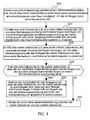
- FIG. 4 shows a flowchart of a method for managing a Document production system 10.
- the method of FIG. 4 relates in particular to Management of timing settings of a marker 12 with respect to FIG an insert 14 such that the compilation and creation of a print job in is carried out in a coordinated manner.
- the method from FIG. 4 can be called up using several different techniques.
- the method from FIG. 4 can be automatically activated by Document production system (e.g. the document production system 10) in regular Call up time intervals or periodically.
- a controller e.g. a control unit 20
- the method from FIG. 4 can be followed Call up reproduction of a certain number of sheets.
- a user creates a temporal relationship between one Time setting reference signal (e.g. a machine time setting bus) one Document production system 10 and a time period or speed at which a Arch through a media web (e.g. the first media web 202 or the second Media web 204) of the document production system 10 occurs.
- one Time setting reference signal e.g. a machine time setting bus
- a media web e.g. the first media web 202 or the second Media web 204
- a time setting analyzer 24 or the control unit 20 determines one first time period (e.g. a first mean time period) that one or more of one Marking device originating sheets need to be from an input source Marking device 12 the fixed reference point or an initial reference point can be reached via the first media path 202 of the document production system 10.
- the first media path 202 may include the horizontal bypass path of insert 14.
- a time setting analyzer 24 or the control unit 20 determines one second time period (e.g. a second mean time period) that is at least one out of one Inserts originating sheets needed to be fed from a media input source (e.g. 210, 212 or 214) of the insert 14 the fixed reference point via a second media path 204 of the To achieve document production system 10.
- the second media web 204 can open refer to a generally vertical media path of the insert 14.
- the fixed reference point may include output 208 or an output switch associated with output 208 assigned.
- the first media web 202 and the second media web 204 can be on a combination point 206 converge.
- Step S26 follows in FIG. 4 Step S24, but steps S24 and S26 can also be in a different order or Execute simultaneously without thereby departing from the scope of the invention.
- step S28 the data processor 26 or the control unit 20 determines whether the first Time period (e.g. the first mean time period) to the second time period (e.g. the second mean time period), so that those originating from the marking device Sheets and the sheets originating from the insert at a combination point 206 are synchronized.
- the sheets coming from the marking device and those from the sheets originating from the depositor are then at a combination point 206 synchronized when the insert 14 is able to deliver the desired media sheets (e.g. secondary media) into the first media web 202 from the second media web 204 during the uninterrupted or continuous operation of the insert 14 and thus to create a desired output of a document production system 10.
- the desired output of the document production system 10 can be done with a Print job request that a user matches, for example, through the User interface 30 has entered.
- the first time period relates (e.g., the first middle one Time period perfectly on the second time period (e.g. the second middle time period), so that the marking device 12 is synchronized with the insert 14 when Media sheets (e.g. secondary media) from the insert 14 according to a specification that with the inputs or selection on the user interface 30 in which Media sheets (e.g. primary media) shot in from the marking device 12 become.
- the first period relates to the second period such that the Marking device 12 is synchronized with the insert 14
- the method follows Step S32 continues.
- the first time period is the second time period like this relates that the marking device 12 with the insert 14 is not on one Combination point 206 is synchronized, the method continues with step S30
- step S30 the time setter 28 generates a set signal to indicate the feed command for the Insert 14 so that the first time period and the second time period so are synchronized that one or more sheets originating from the insert into one Set of sheets coming from the marking device at the combination point 206 can be introduced.
- Step S30 can be carried out according to various techniques.
- primary sheets are made from the first media web 202 with secondary sheets of the second media web 204 to obtain a delivery of shingled sheets.
- primary sheets are formed from the first media web 202 secondary sheets from the second media web 204 mixed to output to get stacked sheets.
- the second technique is an alternative to the first technique.
- secondary sheets are formed from the second media web 204 in the first media web 202 inserted if the at least one sheet of the primary media omission occurs.
- the Control unit a feed command for the insert 14 in such a time that a Change in voltage level of an energy input source for the Document production system can be compensated.
- the feed command becomes such in time set that a coordinated feeding of sheets between the Marking device 12 and the insert 14 is maintained.
- step S32 the time adjuster 28 or the control unit 20 maintains the existing one Time setting relationship between the first time period and the second time period.
- the control unit 20 first determines a first time setting for sheets from the Marking device 12 as they arrive at exit 208 (e.g. Output switch of the insert) in relation to the signals on the machine time setting bus (MTB). As soon as the first time setting has been parameterized, a second time setting for the inserts from at least one media input source determined (e.g. first media source 210). The first time setting is made with the second Time setting compared. The second time setting for the feed command for the The insert sheet is then changed accordingly to discrepancies between the first and to compensate for the second time setting. The previous analysis and the Reconciliation of the time setting for the remaining media input sources (e.g. 210, 212 or 214) repeated.
- MTB machine time setting bus
- control unit 20 updates the time Adjustment of the feed for the insert 14 by adjusting the relative timing of the Sheet monitored and the feed time for subsequent sheets accordingly is compared.
- the control unit 20 takes one compensation according to the invention.
- the Marking device 12 driven by an asynchronous induction motor and the Insert 14 from a synchronous motor 216. With decreasing input voltage to Marking device 12 and the insert 14, the speed of the falls Marking device if necessary, while the speed of the insert without Compensation by the control unit 20 remains constant.
- the control unit 20 generates one Compensation in the relative time setting between the insert 14 and the Marking device 12 to ensure that the media sheet coordinates fed and the print job is completed.
- the speed of the marking device instead of the input voltage of the Document production system 10 or the marking device 12 is monitored, can the document production system 10 fluctuations in the input voltage and Torque deviations in the transport mechanisms of the insert 14 and the Monitor the marking device 12 simultaneously.
- the machine time setting bus which includes frame start and frame encoder signals, the speed is the Marking device 12 is known.
- control unit changes the arc time setting or Speed of insert 14 in relation to sheet timing or Marking device speed 12.
- control unit 20 is able to control the feed rate independently set, which is assigned to each media input source of the insert 14.
- the feed timing or speed of each media input source or the associated transport mechanism is adjustable to adjust the arc time setting To compensate for the marking device.
- the setting of each media input source can be different for each media input source (e.g. 210, 212 or 214).
- the Control unit 20 can determine the desired compensation or approximately determine by making a linear relationship between the speed of the Marker and feed timing for each media input source (e.g. 210, 212 or 214) of the insert 14 evaluates.
- the machine speed leaves be calculated from the MTB signal at the start of each run.
- arc time setting is more accurate and less accurate Deviation between the individual sheets should be achieved.
- the fine adjustments individual arc time settings can be changed by changing the speed of a or more sets of rollers based on the arrival time of one certain bow.
- the last pair of rollers 209 could be in the insert 14 have an independent variable speed drive, the Speed for a certain period of time based on the arrival time of the sheet on Output 208 or can be set using an output switch that corresponds to output 208 assigned.
- the speed of the downstream roller pairs is either adjusted accordingly or taken out of engagement so that the pair of rollers 209 the Bow controls.
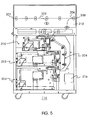
- FIG. 5 shows an alternative exemplary embodiment of an insert 114.
- the insert 114 from FIG. 5 differs from the insert 14 from FIG. 2 in that it also has a Sheet turner 218 includes the sheets coming from the marking device 12 before being transported to the finishing device (e.g. a stapler) or to one another marking device applies.
- a separator works with the sheet turner 218 together in such a way that there is a choice of turning the entered sheet or the Maintain entry orientation of the arch.
- the entry orientation of the arch relates the orientation of the sheets at the entrance 207 of the sheet turner 218.
- the bow turner 218 can be used to turn a sheet or medium out of the the marking device 12 originates.
- the configuration of the Document production system can therefore correspond to that of FIG Processing options of the sheet turner 218 to use.
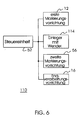
- a document production system 110 includes a first marking device 12, which is coupled to an insert 114 with turner.
- the insert 114 is in turn coupled to a second marking device 56.
- the second Marking device 56 may be associated with the finishing device 16.
- the Control unit 52 is assigned to a first marking device 12, insert 14, the second marking device 56 and the finishing device 16.
- the first Marking device 12 is usable to one side of a medium or more To print media while the second marking device 56 is usable to to print an opposite side of the medium or media.
- the depositor 114 with turner can be used to remove the sheet or medium from the first marking device 12 emerges before marking or printing by the second marking device 56 to turn. From the second marking device 56, the printed or unprinted medium can be used for further processing Finishing device 16 are supplied.
- the insert 114 of FIG. 6 may include a second output that is on a level other than the exit 208 of the first media web 202.
- the second output may be substantially lower than the first output 208
- Media web 202 may be arranged to have a media outlet of a second Marking device 56 to be compatible with an output of the insert 114 is coupled as shown in FIG. 6.
- the named orientation of insert input 207, Media path and exit would allow to turn into a second Marking device 56 to steer.
- the sheets from the sheet turner 218 the sheets can be turned on both sides at one speed images that correspond to twice the first marking device 12 without the speed of feeding, imaging, collation or Combining the sheets or finishing would have to be increased.
Landscapes
- Physics & Mathematics (AREA)
- General Physics & Mathematics (AREA)
- Forming Counted Batches (AREA)
- Collation Of Sheets And Webs (AREA)
- Accessory Devices And Overall Control Thereof (AREA)
Abstract
Description
- Fig. 1
- ein Blockdiagramm eines erfindungsgemäßen Dokumentproduktionssystems.
- Fig. 2
- eine Seitenansicht eines erfindungsgemäßen Einlegers.
- Fig. 3
- ein Ablaufdiagramm eines Verfahrens zur erfindungsgemäßen Dokumentproduktion.
- Fig. 4
- ein Ablaufdiagramm eines Verfahrens zur erfindungsgemäßen Dokumentproduktion.
- Fig. 5
- eine Seitenansicht eines Einlegers mit einem erfindungsgemäßen Wender.
- Fig. 6
- ein alternatives Ausführungsbeispiel eines System zur Dokumentproduktion mit einem Einleger, der mit einem erfindungsgemäßen Wender bestückt ist.
- MTB
- Maschinen-Zeiteinstellbus
- 10
- Dokumentproduktionssystem
- 12
- erste Markierungsvorrichtung
- 14
- Einleger
- 16
- Endverarbeitungsvorrichtung
- 18
- Ausgabezusatzeinrichtung
- 20
- Steuereinheit
- 22
- Eingabemanager
- 24
- Zeiteinstellungsanalysator
- 26
- Datenprozessor
- 28
- Zeiteinsteller
- 30
- Benutzeroberfläche
- 52
- Steuereinheit
- 56
- zweite Markierungsvorrichtung
- 110
- Dokumentproduktionssystem
- 114
- Einleger
- 202
- erste Medienbahn
- 204
- zweite Medienbahn
- 206
- Kombinationspunkt
- 207
- Eingang
- 208
- Ausgang
- 209
- Walzenpaar
- 210
- erste Medienquelle
- 212
- zweite Medienquelle
- 214
- dritte Medienquelle
- 216
- Antriebsmotor
- 218
- Bogenwender
Claims (17)
- Verfahren zur Verwaltung eines Dokumentproduktionssystems (10, 110), das folgendes umfasst:Erfassen einer ersten Zeitperiode, die mindestens ein aus einer Markierungsvorrichtung (12) stammender Bogen benötigt, um einen festen Referenzpunkt über eine erste Medienbahn (202) des Dokumentproduktionssystems zu erreichen;Erfassen einer zweiten Zeitperiode, die mindestens ein aus einem Einleger (14) stammender Bogen benötigt, um einen festen Referenzpunkt über eine zweite Medienbahn (204) des Dokumentproduktionssystems zu erreichen; undAbgleichen eines Zuführungs-Zeiteinstellungsbefehls eines Einleger derart, dass die erste Zeitperiode und die zweite Zeitperiode auf die koordinierte Einführung mindestens eines aus dem Einleger stammenden Bogens in einen Satz aus der Markierungsvorrichtung stammender Bogen an einem Kombinationspunkt (206) synchronisiert sind.
- Verfahren nach Anspruch 1, das zudem folgendes umfasst:Aufstellen einer zeitlichen Beziehung zwischen einem Zeiteinstellungs-Referenzsignal des Dokumentproduktionssystems und einer Messung der Zeit, während der ein zugeführter Bogen durch die erste Medienbahn (202) des Dokumentproduktionssystems tritt, um das Erfassen der ersten und / oder zweiten Zeitperiode zu ermöglichen.
- Verfahren nach einem der Ansprüche 1 bis 2,
dadurch gekennzeichnet, dass das Erfassen der zweiten Zeitperiode auf dem Erfassen eines Zeitintervalls basiert, das mindestens ein aus dem Einleger (14) stammender Bogen benötigt, um den festen Referenzpunkt von einer Medieneingabequelle (210, 212, 214) des Einlegers (14) über die erste Medienbahn (202) zu erreichen. - Verfahren nach einem der Ansprüche 1 bis 3,
dadurch gekennzeichnet, dass das Erfassen der ersten Zeitperiode auf dem Erfassen eines Zeitintervalls basiert, das mindestens ein aus der Markierungsvorrichtung (12) stammender Bogen benötigt, um den festen Referenzpunkt von einer Medieneingabequelle (210, 212, 214) des Einlegers (14) über die zweite Medienbahn (204) zu erreichen. - Verfahren nach einem der Ansprüche 1 bis 4,
das zudem folgendes umfasst:Zusammenführen von Bogen aus der ersten Medienbahn und der zweiten Medienbahn zur Erzeugung einer Ausgabe geschindelter oder gestapelter Bogen. - Verfahren nach einem der Ansprüche 1 bis 5,
das zudem folgendes umfasst:Einschießen von Bogen aus der zweiten Medienbahn in die erste Medienbahn, wenn das Bedrucken mindestens eines Bogens ausgelassen wird. - Verfahren nach einem der Ansprüche 1 bis 6,
dadurch gekennzeichnet, dass das Abgleichen das Abgleichen des Zuführungs-Zeiteinstellungsbefehls des Einlegers umfasst, um eine Änderung in einem Spannungspegel einer Eingabeenergiequelle zum Dokumentproduktionssystem zu kompensieren. - Dokumentproduktionsvorrichtung (10) mit:einem Zeiteinstellungsanalysator (24) zum Messen einer ersten Zeitperiode, die mindestens ein aus einer Markierungsvorrichtung stammender Bogen benötigt, um einen festen Referenzpunkt über eine erste Medienbahn des Dokumentproduktionssystems zu erreichen, wobei der Zeiteinstellungsanalysator derart angeordnet ist, dass er eine zweite Zeitperiode misst, die mindestens ein aus einem Einleger stammender Bogen benötigt, um einen festen Referenzpunkt über eine zweite Medienbahn des Dokumentproduktionssystems zu erreichen;einem Datenprozessor (26) zum Ermitteln, ob die erste Zeitperiode in einer Beziehung zur zweiten Periode derart steht, dass der mindestens eine aus der Markierungsvorrichtung stammende Bogen und der mindestens eine aus dem Einleger stammende Bogen synchronisiert sind, um an einem Kombinationspunkt (206) in einen Ausgabesatz eingeschossen zu werden;einem Einleger, um mindestens einen aus dem Einleger stammenden Bogen in einen Satz von Bogen einzuführen, die aus der Markierungsvorrichtung stammen; undeinem Zeiteinsteller (28) zum Einstellen eines Zuführungs-Zeiteinstellungsbefehls eines Einleger derart, dass die erste Zeitperiode und die zweite Zeitperiode auf die koordinierte Einführung aus dem Einleger stammender Bogen in einen Satz aus der Markierungsvorrichtung stammender Bogen synchronisiert sind.
- Vorrichtung nach Anspruch 8,
dadurch gekennzeichnet, dass der Zeiteinstellungsanalysator einer zeitliche Beziehung zwischen einem Zeiteinstellungs-Referenzsignal des Dokumentproduktionssystems und einer Messung der Zeit aufstellt, während der ein zugeführter Bogen durch eine erste Medienbahn des Dokumentproduktionssystems tritt, um das Erfassen der ersten Zeitperiode zu ermöglichen. - Vorrichtung nach einem der Ansprüche 8 bis 9,
dadurch gekennzeichnet, dass der Zeiteinstellungsanalysator eine zeitlichen Beziehung zwischen einem Zeiteinstellungs-Referenzsignal des Dokumentproduktionssystems und einer Messung der Zeit aufstellt, während der ein zugeführter Bogen durch eine zweite Medienbahn des Dokumentproduktionssystems tritt, um das Erfassen der zweiten Zeitperiode zu ermöglichen. - Vorrichtung nach einem der Ansprüche 8 bis 10,
dadurch gekennzeichnet, dass das Zeiteinstellungs-Referenzsignal einen Maschinen-Zeiteinstellbus (MTB) umfasst. - Vorrichtung nach einem der Ansprüche 8 bis 11,
dadurch gekennzeichnet, dass der Zeiteinstellungsanalysator die erste Zeitperiode basierend auf dem Erfassen eines Zeitintervalls misst, das mindestens ein aus der Markierungsvorrichtung stammender Bogen benötigt, um den festen Referenzpunkt von einer Medieneingabequelle des Einlegers über die erste Medienbahn zu erreichen. - Vorrichtung nach einem der Ansprüche 8 bis 12,
dadurch gekennzeichnet, dass der Zeiteinstellungsanalysator die zweite Zeitperiode basierend auf dem Erfassen eines Zeitintervalls misst, das mindestens ein aus dem Einleger stammender Bogen benötigt, um den festen Referenzpunkt von einer Medieneingabequelle über die zweite Medienbahn zu erreichen. - Vorrichtung nach einem der Ansprüche 8 bis 13,
dadurch gekennzeichnet, dass der feste Referenzpunkt einen Einlegerausgang 208 umfasst. - Vorrichtung nach einem der Ansprüche 8 bis 14,
dadurch gekennzeichnet, dass die Vorrichtung einen Eingabemanager (22) umfasst, zur Zuweisung mindestens eines Bogens eines gewünschten Mediums aus einer entsprechenden Medieneingabequelle. - Vorrichtung nach einem der Ansprüche 8 bis 15,
dadurch gekennzeichnet, dass die Vorrichtung zudem folgendes umfasst:einem Bogenwender (218), um mindestens einen Bogen zu wenden, der die erste Medienbahn durchläuft. - Vorrichtung nach einem der Ansprüche 8 bis 16,
dadurch gekennzeichnet, dass die Vorrichtung zudem folgendes umfasst:eine erste Markierungsvorrichtung (12), um eine Seite mindestens eines Bogens in der ersten Medienbahn (202) zu markieren;einen Bogenwender (218), um mindestens einen Bogen in der ersten Medienbahn (202) von der ersten Markierungsvorrichtung (12) zu wenden; undeine zweite Markierungsvorrichtung (56), um eine gegenüber liegende Seite des gewendeten Bogens zu markieren, die vorher von der ersten Markierungsvorrichtung (12) markiert worden ist.
Applications Claiming Priority (2)
| Application Number | Priority Date | Filing Date | Title |
|---|---|---|---|
| US34594301P | 2001-10-26 | 2001-10-26 | |
| US345943P | 2001-10-26 |
Publications (3)
| Publication Number | Publication Date |
|---|---|
| EP1306330A2 true EP1306330A2 (de) | 2003-05-02 |
| EP1306330A3 EP1306330A3 (de) | 2004-05-12 |
| EP1306330B1 EP1306330B1 (de) | 2006-06-07 |
Family
ID=23357208
Family Applications (1)
| Application Number | Title | Priority Date | Filing Date |
|---|---|---|---|
| EP02023656A Expired - Lifetime EP1306330B1 (de) | 2001-10-26 | 2002-10-22 | Verfahren und Vorrichtung zur Bogenzufügung für ein Dokumentenproduktionssystem |
Country Status (3)
| Country | Link |
|---|---|
| US (1) | US20030103248A1 (de) |
| EP (1) | EP1306330B1 (de) |
| DE (2) | DE10249127A1 (de) |
Families Citing this family (1)
| Publication number | Priority date | Publication date | Assignee | Title |
|---|---|---|---|---|
| JP2006218850A (ja) * | 2005-01-17 | 2006-08-24 | Ricoh Co Ltd | 記録装置 |
Family Cites Families (12)
| Publication number | Priority date | Publication date | Assignee | Title |
|---|---|---|---|---|
| JP3049342B2 (ja) * | 1991-09-26 | 2000-06-05 | 富士ゼロックス株式会社 | 給紙装置 |
| JP3119766B2 (ja) * | 1993-05-20 | 2000-12-25 | 富士通株式会社 | 画像形成装置 |
| US5489969A (en) * | 1995-03-27 | 1996-02-06 | Xerox Corporation | Apparatus and method of controlling interposition of sheet in a stream of imaged substrates |
| US5568246A (en) * | 1995-09-29 | 1996-10-22 | Xerox Corporation | High productivity dual engine simplex and duplex printing system using a reversible duplex path |
| US5954330A (en) * | 1996-12-02 | 1999-09-21 | Bell & Howell Postal Systems Inc. | Method and apparatus for synchronizing a document feeder with a mail sorting conveyor |
| US5839045A (en) * | 1997-07-31 | 1998-11-17 | Xerox Corporation | Method and apparatus for inserting sheets into a stream of sheets in a spaced apart relationship |
| US5826157A (en) * | 1997-07-31 | 1998-10-20 | Xerox Corporation | Sychronized paper feeding across module boundaries with timed clock ticks |
| US6279636B1 (en) * | 1999-03-26 | 2001-08-28 | Daniel E. Miller | Method and apparatus for merging and attaching documents to envelopes |
| US6161828A (en) * | 1999-05-12 | 2000-12-19 | Pitney Bowes Inc. | Sheet collation device and method |
| US6762856B2 (en) * | 2001-10-04 | 2004-07-13 | Xerox Corporation | Method for accelerating paper tray programming |
| EP1403201B1 (de) * | 2002-09-27 | 2007-01-24 | Eastman Kodak Company | Vorregister-Geschwindigkeits- und Takteinstellungssystem |
| US7088947B1 (en) * | 2002-09-30 | 2006-08-08 | Eastman Kodak Company | Post processor inserter speed and timing adjust unit |
-
2002
- 2002-10-22 EP EP02023656A patent/EP1306330B1/de not_active Expired - Lifetime
- 2002-10-22 DE DE10249127A patent/DE10249127A1/de not_active Ceased
- 2002-10-22 DE DE50207087T patent/DE50207087D1/de not_active Expired - Lifetime
- 2002-10-23 US US10/278,435 patent/US20030103248A1/en not_active Abandoned
Also Published As
| Publication number | Publication date |
|---|---|
| DE50207087D1 (de) | 2006-07-20 |
| DE10249127A1 (de) | 2003-05-08 |
| US20030103248A1 (en) | 2003-06-05 |
| EP1306330A3 (de) | 2004-05-12 |
| EP1306330B1 (de) | 2006-06-07 |
Similar Documents
| Publication | Publication Date | Title |
|---|---|---|
| DE10111216B4 (de) | Drucksystem und Druckverfahren | |
| DE69616707T2 (de) | Verfahren und Vorrichtung zum Ausrichten von Bildern auf der Vorder- und Rückseite eines Papierblattes | |
| EP0452704B1 (de) | Druckmaschinenanlage | |
| EP0422412B1 (de) | Vorrichtung und Verfahren zur Registerverstellung an einer Druckmaschine mit mehreren Druckwerken | |
| DE60110274T2 (de) | Verfahren und Printer mit Herstellung von Testmustern bei langen Druckaufträgen | |
| DE4023513C2 (de) | Kopiergerät mit Duplex-Kopierbetriebsart | |
| EP1105836B1 (de) | Drucksystem zum bedrucken eines aufzeichnungsträgers mit zwei druckern sowie verfahren zum betrieb eines derartigen drucksystems | |
| DE60311376T2 (de) | System zum Einstellen der Ausricht- und Taktgeschwindigkeit | |
| DE60036901T2 (de) | Bilderzeugungsgerät das sich für eine Blattverarbeitung vorfertig macht | |
| DE2559140A1 (de) | Vorrichtung zum vervielfaeltigen von vorlagen | |
| EP1004058B1 (de) | Drucksystem und druckverfahren zum erzeugen einer farblich gemischten blattfolge | |
| EP1156384B1 (de) | Verfahren und Vorrichtung zur Registereinstellung an einer Mehrfarbendruckmaschine sowie Mehrfarbendruckmaschine | |
| DE4024464C2 (de) | Einrichtung zum Steuern einer Blattpositionierung | |
| DE10250194A1 (de) | Verfahren und Vorrichtung zum Steuern eines elektrografischen Druckers oder Kopierers | |
| DE60303543T2 (de) | Blattverteiler, Bildaufnahmegerät und Blattverteilverfahren | |
| EP1386865B1 (de) | Verfahren zur Bereitstellung von Bögen in einer Druckmaschine | |
| EP1306330B1 (de) | Verfahren und Vorrichtung zur Bogenzufügung für ein Dokumentenproduktionssystem | |
| DE3015103A1 (de) | Rotationsdruckmaschine mit mindestens zwei in bogelaufrichtung angeordneten bogenstapeln | |
| DE4002785A1 (de) | Verfahren zum erzeugen beidseitiger kopien in einer bilderzeugungseinrichtung | |
| DE69431466T2 (de) | Mechanismus für beidseitiges Drucken und Verfahren dafür | |
| EP1047559B1 (de) | Verfahren und steuerung zum transport eines bandförmigen aufzeichnungsträgers mit randlochung in einem drucker | |
| DE3528186C2 (de) | ||
| DE10154499A1 (de) | Verfahren und System zum Ausgleichen von Abnutzung bei einer Blatthandhabungsvorrichtung | |
| DE10315256B4 (de) | Verfahren zum Steuern eines Druckvorganges in einer Druckvorrichtung sowie Drucksystem zum Ausführen des Verfahrens | |
| DE3935231C2 (de) | Elektrophotographisches Bilderzeugungsgerät |
Legal Events
| Date | Code | Title | Description |
|---|---|---|---|
| PUAI | Public reference made under article 153(3) epc to a published international application that has entered the european phase |
Free format text: ORIGINAL CODE: 0009012 |
|
| AK | Designated contracting states |
Designated state(s): AT BE BG CH CY CZ DE DK EE ES FI FR GB GR IE IT LI LU MC NL PT SE SK TR |
|
| AX | Request for extension of the european patent |
Extension state: AL LT LV MK RO SI |
|
| PUAL | Search report despatched |
Free format text: ORIGINAL CODE: 0009013 |
|
| AK | Designated contracting states |
Kind code of ref document: A3 Designated state(s): AT BE BG CH CY CZ DE DK EE ES FI FR GB GR IE IT LI LU MC NL PT SE SK TR |
|
| AX | Request for extension of the european patent |
Extension state: AL LT LV MK RO SI |
|
| RIC1 | Information provided on ipc code assigned before grant |
Ipc: 7B 65H 39/02 B Ipc: 7B 65H 7/18 A |
|
| RAP1 | Party data changed (applicant data changed or rights of an application transferred) |
Owner name: EASTMAN KODAK COMPANY |
|
| 17P | Request for examination filed |
Effective date: 20041028 |
|
| AKX | Designation fees paid |
Designated state(s): BE DE GB NL |
|
| GRAP | Despatch of communication of intention to grant a patent |
Free format text: ORIGINAL CODE: EPIDOSNIGR1 |
|
| GRAS | Grant fee paid |
Free format text: ORIGINAL CODE: EPIDOSNIGR3 |
|
| GRAA | (expected) grant |
Free format text: ORIGINAL CODE: 0009210 |
|
| AK | Designated contracting states |
Kind code of ref document: B1 Designated state(s): BE DE GB NL |
|
| REG | Reference to a national code |
Ref country code: GB Ref legal event code: FG4D Free format text: NOT ENGLISH |
|
| GBT | Gb: translation of ep patent filed (gb section 77(6)(a)/1977) |
Effective date: 20060619 |
|
| REF | Corresponds to: |
Ref document number: 50207087 Country of ref document: DE Date of ref document: 20060720 Kind code of ref document: P |
|
| PLBE | No opposition filed within time limit |
Free format text: ORIGINAL CODE: 0009261 |
|
| STAA | Information on the status of an ep patent application or granted ep patent |
Free format text: STATUS: NO OPPOSITION FILED WITHIN TIME LIMIT |
|
| 26N | No opposition filed |
Effective date: 20070308 |
|
| PGFP | Annual fee paid to national office [announced via postgrant information from national office to epo] |
Ref country code: BE Payment date: 20111108 Year of fee payment: 10 |
|
| PGFP | Annual fee paid to national office [announced via postgrant information from national office to epo] |
Ref country code: GB Payment date: 20120925 Year of fee payment: 11 |
|
| PGFP | Annual fee paid to national office [announced via postgrant information from national office to epo] |
Ref country code: DE Payment date: 20121031 Year of fee payment: 11 |
|
| PGFP | Annual fee paid to national office [announced via postgrant information from national office to epo] |
Ref country code: NL Payment date: 20121008 Year of fee payment: 11 |
|
| BERE | Be: lapsed |
Owner name: *EASTMAN KODAK CY Effective date: 20121031 |
|
| PG25 | Lapsed in a contracting state [announced via postgrant information from national office to epo] |
Ref country code: BE Free format text: LAPSE BECAUSE OF NON-PAYMENT OF DUE FEES Effective date: 20121031 |
|
| REG | Reference to a national code |
Ref country code: NL Ref legal event code: V1 Effective date: 20140501 |
|
| GBPC | Gb: european patent ceased through non-payment of renewal fee |
Effective date: 20131022 |
|
| PG25 | Lapsed in a contracting state [announced via postgrant information from national office to epo] |
Ref country code: GB Free format text: LAPSE BECAUSE OF NON-PAYMENT OF DUE FEES Effective date: 20131022 |
|
| REG | Reference to a national code |
Ref country code: DE Ref legal event code: R119 Ref document number: 50207087 Country of ref document: DE Effective date: 20140501 |
|
| PG25 | Lapsed in a contracting state [announced via postgrant information from national office to epo] |
Ref country code: NL Free format text: LAPSE BECAUSE OF NON-PAYMENT OF DUE FEES Effective date: 20140501 Ref country code: DE Free format text: LAPSE BECAUSE OF NON-PAYMENT OF DUE FEES Effective date: 20140501 |