EP1305411B1 - Method of producing functional protein domains - Google Patents
Method of producing functional protein domains Download PDFInfo
- Publication number
- EP1305411B1 EP1305411B1 EP01953251A EP01953251A EP1305411B1 EP 1305411 B1 EP1305411 B1 EP 1305411B1 EP 01953251 A EP01953251 A EP 01953251A EP 01953251 A EP01953251 A EP 01953251A EP 1305411 B1 EP1305411 B1 EP 1305411B1
- Authority
- EP
- European Patent Office
- Prior art keywords
- exon
- fragment
- dna
- sequence
- functional protein
- Prior art date
- Legal status (The legal status is an assumption and is not a legal conclusion. Google has not performed a legal analysis and makes no representation as to the accuracy of the status listed.)
- Expired - Lifetime
Links
Images





Classifications
-
- C—CHEMISTRY; METALLURGY
- C12—BIOCHEMISTRY; BEER; SPIRITS; WINE; VINEGAR; MICROBIOLOGY; ENZYMOLOGY; MUTATION OR GENETIC ENGINEERING
- C12N—MICROORGANISMS OR ENZYMES; COMPOSITIONS THEREOF; PROPAGATING, PRESERVING, OR MAINTAINING MICROORGANISMS; MUTATION OR GENETIC ENGINEERING; CULTURE MEDIA
- C12N15/00—Mutation or genetic engineering; DNA or RNA concerning genetic engineering, vectors, e.g. plasmids, or their isolation, preparation or purification; Use of hosts therefor
- C12N15/09—Recombinant DNA-technology
- C12N15/10—Processes for the isolation, preparation or purification of DNA or RNA
-
- C—CHEMISTRY; METALLURGY
- C12—BIOCHEMISTRY; BEER; SPIRITS; WINE; VINEGAR; MICROBIOLOGY; ENZYMOLOGY; MUTATION OR GENETIC ENGINEERING
- C12N—MICROORGANISMS OR ENZYMES; COMPOSITIONS THEREOF; PROPAGATING, PRESERVING, OR MAINTAINING MICROORGANISMS; MUTATION OR GENETIC ENGINEERING; CULTURE MEDIA
- C12N15/00—Mutation or genetic engineering; DNA or RNA concerning genetic engineering, vectors, e.g. plasmids, or their isolation, preparation or purification; Use of hosts therefor
- C12N15/09—Recombinant DNA-technology
- C12N15/63—Introduction of foreign genetic material using vectors; Vectors; Use of hosts therefor; Regulation of expression
- C12N15/67—General methods for enhancing the expression
-
- C—CHEMISTRY; METALLURGY
- C12—BIOCHEMISTRY; BEER; SPIRITS; WINE; VINEGAR; MICROBIOLOGY; ENZYMOLOGY; MUTATION OR GENETIC ENGINEERING
- C12N—MICROORGANISMS OR ENZYMES; COMPOSITIONS THEREOF; PROPAGATING, PRESERVING, OR MAINTAINING MICROORGANISMS; MUTATION OR GENETIC ENGINEERING; CULTURE MEDIA
- C12N15/00—Mutation or genetic engineering; DNA or RNA concerning genetic engineering, vectors, e.g. plasmids, or their isolation, preparation or purification; Use of hosts therefor
- C12N15/09—Recombinant DNA-technology
- C12N15/87—Introduction of foreign genetic material using processes not otherwise provided for, e.g. co-transformation
- C12N15/90—Stable introduction of foreign DNA into chromosome
- C12N15/902—Stable introduction of foreign DNA into chromosome using homologous recombination
- C12N15/907—Stable introduction of foreign DNA into chromosome using homologous recombination in mammalian cells
-
- C—CHEMISTRY; METALLURGY
- C12—BIOCHEMISTRY; BEER; SPIRITS; WINE; VINEGAR; MICROBIOLOGY; ENZYMOLOGY; MUTATION OR GENETIC ENGINEERING
- C12P—FERMENTATION OR ENZYME-USING PROCESSES TO SYNTHESISE A DESIRED CHEMICAL COMPOUND OR COMPOSITION OR TO SEPARATE OPTICAL ISOMERS FROM A RACEMIC MIXTURE
- C12P21/00—Preparation of peptides or proteins
- C12P21/02—Preparation of peptides or proteins having a known sequence of two or more amino acids, e.g. glutathione
-
- C—CHEMISTRY; METALLURGY
- C12—BIOCHEMISTRY; BEER; SPIRITS; WINE; VINEGAR; MICROBIOLOGY; ENZYMOLOGY; MUTATION OR GENETIC ENGINEERING
- C12N—MICROORGANISMS OR ENZYMES; COMPOSITIONS THEREOF; PROPAGATING, PRESERVING, OR MAINTAINING MICROORGANISMS; MUTATION OR GENETIC ENGINEERING; CULTURE MEDIA
- C12N2830/00—Vector systems having a special element relevant for transcription
- C12N2830/42—Vector systems having a special element relevant for transcription being an intron or intervening sequence for splicing and/or stability of RNA
-
- C—CHEMISTRY; METALLURGY
- C12—BIOCHEMISTRY; BEER; SPIRITS; WINE; VINEGAR; MICROBIOLOGY; ENZYMOLOGY; MUTATION OR GENETIC ENGINEERING
- C12N—MICROORGANISMS OR ENZYMES; COMPOSITIONS THEREOF; PROPAGATING, PRESERVING, OR MAINTAINING MICROORGANISMS; MUTATION OR GENETIC ENGINEERING; CULTURE MEDIA
- C12N2840/00—Vectors comprising a special translation-regulating system
- C12N2840/20—Vectors comprising a special translation-regulating system translation of more than one cistron
-
- C—CHEMISTRY; METALLURGY
- C12—BIOCHEMISTRY; BEER; SPIRITS; WINE; VINEGAR; MICROBIOLOGY; ENZYMOLOGY; MUTATION OR GENETIC ENGINEERING
- C12N—MICROORGANISMS OR ENZYMES; COMPOSITIONS THEREOF; PROPAGATING, PRESERVING, OR MAINTAINING MICROORGANISMS; MUTATION OR GENETIC ENGINEERING; CULTURE MEDIA
- C12N2840/00—Vectors comprising a special translation-regulating system
- C12N2840/44—Vectors comprising a special translation-regulating system being a specific part of the splice mechanism, e.g. donor, acceptor
Definitions
- THIS INVENTION relates to a method for the production of proteins, in particular of functional protein domains.
- the functionality of a protein is tightly connected with its structural properties, which are organized into different levels: the primary structure (corresponding to the amino acid sequence encoded by the gene), the secondary structure (preferred relative backbone locations of sequentially consecutive residues), tertiary structure (the relative position of all atoms of a polypeptide chain), and quaternary structure (the arrangement of different protein subunits, each corresponding to a distinct polypeptide chain, into a complex).
- a polypeptide of interest may correspond to a protein domain, which can be defined in two ways. From a structural perspective, a domain is a region of compactly folded polypeptide comprising one or more secondary and/or tertiary structures. Small proteins ( ⁇ 100 amino acids) are often composed of a single structural protein domain, while larger proteins usually consist of multiple structural protein domains. In the three-dimensional structure of a protein, a structural protein domain is seen as a unit of independently folded polypeptide that is well distinct from other parts of the protein.
- a second view of a protein domain is that it is the smallest piece of a protein that retains a function, resulting from its interaction with one or more proteins, nucleic acids, sugars, lipids, or any other organic or inorganic compound.
- a functional domain is generally composed of 50-350 amino acids and therefore may consist of one or more structural domains.
- proteins can contain one or more functional protein domains, sequentially linked to each other and arranged tridimensionally. While the assignment of a particular amino acid sequence to a class of structural domains is possible by NMR or X-ray cristallography, the demonstration that a protein sequence is associated to a function is mostly obtained by identifying sequence homologies to known functional protein domains and/or by generating altered forms of the original protein to be tested in a relevant biochemical or biological assay in the so-called structure-activity or structure- function studies.
- a functional protein domain can exert biological activities clearly distinct from the one exerted in the context of the complete protein when it is physically separated from the rest of the primary translational product, that is, the protein obtained by directly translating the mRNA transcribed from a gene.
- Such functional protein domains are obtained in vivo following a proteolytic cleavage, which can be executed by an endepeptidase produced either by the cell encoding the primary translational product itself or by other cells, for example, when the primary translational product is secreted or exposed onto the cellular membrane.
- Such events are becoming more and more frequently characterized and it is evident that the functional protein domains so produced may have important physiological activities ( Kiessling LL and Gordon EJ, Chem. Biol. (1998), 5(3): R49-R62 ; Halim NS, The Scientist (2000), 1 (16): 20 ; Blobel CP, Curr. Opin. Cell Biol. (2000), 12(5): 606-612 ).
- Eukaryotic proteins correspond to these functional protein domains which, in a certain number of cases, are encoded by a subset of the coding exons making up the full gene.
- endostatin an endogenous inhibitor of angiogenesis and tumor growth, which corresponds to the C-terminal proteolytic fragment of Collagen XVIII 1 alpha, a collagenous protein of the extracellular matrix .
- Endostatin is encoded essentially by the 3 exons at the 3' end of the Collagen XVIII 1alpha (COL18AI) gene but it is fully functional only after being released by proteolysis from Collagen XVIH.alpha-1, the primary translational product ( O'Reilly MS et al., Cell (1997), 88(2): 277-285 ).
- TNF Tumor Necrosis Factor
- TRANCE Tumor Necrosis Factor
- RANKL RANKL
- OPGL OPGL
- ODF Tumor Necrosis Factor
- TRANCE is made as a membrane-anchored primary translational product, which is cleaved by the metalloprotease-disintegrin TNF-alpha convertase (TACE), generating a soluble TRANCE, a fully functional protein having potent dendritic cell survival and osteoclastogenic activity.
- TACE metalloprotease-disintegrin TNF-alpha convertase
- the sequence of this soluble protein corresponds to the one encoded by the last 3 exons of the TRANCE gene ( Lum L et al., J. Biol. Chem. (1999), 274(19): 13613-8 ).
- an expression construct containing only the DNA coding sequence for the functional protein domain isolated from the original mRNA or gene, can be prepared. Even this commonly used technology requires a series of operations which may sensibly delay the development of a recombinant product ( Makrides SC, Protein Expr. Purif. (1999), 17(2): 183-202 ; Kaufman RJ, Mol. Biotechnol. (2001), 16(2): 151-60 ). It is necessary to isolate the coding sequence of interest from the full cDNA sequence, which has to be modified so that it can be further subcloned into an expression vector containing all the transcription and translation control elements necessary for the correct expression in the host cell. The construct is then used to transform the host cell and, finally, a screening procedure is applied to the transformants to isolate clones expressing the exogenous protein, correctly and at high level.
- a recombination event involving coding and non-coding exogenous DNA and host cell genomic DNA is necessary to transmit the expression construct to all cells generated by the subsequent cycles of DNA replication and mitotic division of the originally transformed cell.
- This process is also completely random and error-prone, since no specific features of the expression vector can drive the complete incorporation of the exogenous sequence into the host cell genome.
- any part of it having even a very low homology with any endogenous sequence, can be used by the cell for non-homologous recombination events, which are known to be orders of magnitude more frequent than homologous recombination, often resulting in the incomplete integration of the necessary exogenous sequences.
- ES mouse Embryonic Stem
- truncated proteins may be obtained by antisense oligonucleotides that, once transfected into a cell, can pair to the endogenous mRNA blocking the ribosome to go through the entire coding sequence ( WO 97/23244 ).
- the functional protein domain corresponds to the N- or C-terminus of a primary translational product, for example encoded by at least the 5'- or 3'-, respectively, most exon(s) of an intron-containing gene, there is a further method by which the functional protein domain may be produced.
- the invention provides a method of producing a protein, characterized in that said protein is a fragment of a protein being a primary translational product of a target gene that is either the C- or N-terminus of said primary translational product of a target gene, and wherein the protein has a biological activity, the method comprising:
- the invention is useful for producing proteins, which form functional protein domains in cells wherein the one or more coding exons lack, at one end, the regulatory DNA sequence necessary for their expression and direct translation as distinct molecular entities, and not as segments of primary translational products. Included within the term proteins are included short peptides and oligopeptides (containing for example up to thirty amino acid residues) as well as longer polypeptides (containing over thirty amino acid residues). Peptides and polypeptides producible by means of the invention include those which are produced by proteolytic maturation of a primary translational product
- exon(s) code for said fragment corresponding to a functional protein domain whose sequence corresponds to either the C- or N-terminal sequence of a primary translational product of a gene, and said fragment encoded by said exon(s) has a biological activity.
- the method comprising growing a host cell transfected with a DNA construct comprising:
- the host cell modified with the method of the invention selectively expresses the exonic sequences present in the genome coding for a functional protein domain as a novel mRNA molecule which is directly translated into the functional protein domain, without any specific cell- or tissue-type proteolytic modification.
- the peptide or polypeptide forming the functional protein domain is coded by at least the 5'- or 3'- most exon of an intron-containing gene.
- a method of producing a protein which is a functional protein domain that corrresponds to the C-terminus of a primary translational product of a target gene and is coded by at least the 3'-most exon of an intron-containing target gene comprising:
- the construct should provide exogenous sequences forming a regulatory unit which allows the correct transcription and translation initiation for the exon(s) encoding the functional protein domain.
- the DNA targeting region will be formed by sequences belonging to the genomic region 5' to the sequence coding for the functional protein domain protein (such as the adjacent intron of the target gene at its 5' end), with or without sequences belonging to the exon(s) encoding the functional protein domain. If it is necessary to increase the length of the homology region, DNA sequences belonging to contiguous coding and/or non-coding sequences of the target gene (or eventually of contiguous genes) may also be included.
- the Methionine (ATG) codon necessary to start the translation has to be in good Kozak sequence context, and it can be provided by the intron 5' to the exon(s) coding for the functional protein domain, by the exon containing the N-terminus of the functional protein domain, or operatively linked to endogenous coding sequences by the addition of one or more natural or synthetic exons, inserted between the exon(s) encoding for the functional protein domain, and the exogenous sequences comprised in the regulatory unit in order to initiate transcription. If the translation initiation codon is endogenous, the transcriptional module will comprise an appropriate 5' untranslated region.
- the splicing module containing an unpaired splicing donor site, is associated to the natural or synthetic exon adjacent to the exon coding for the N-terminus of the functional protein domain.
- the splicing module should allow the Methionine codon, once that it is put in the same frame of the functional protein domain following the splicing process, to become the N-terminal residue of the functional protein domain.
- the target gene encoding for the primary translational product may or may not be already expressed at significant levels, but the exogenous regulatory sequence should allow to have a new transcriptional and the translational initiation site in 5' to the exon(s) coding for the functional protein domain.
- the construct should provide exogenous sequences allowing the correct transcription and translation termination for the exon(s) encoding the protein forming the functional protein domain.
- the DNA targeting region will be formed by sequences belonging to the genomic region 3' to the sequence coding for the functional protein domain protein (such as the adjacent intron of the target gene at its 3' end), with or without sequences belonging to either the exon encoding the C-terminus of the protein or the intron at its 3' end, or both. If it is necessary to increase the length of the homology region, DNA sequences belonging to contiguous coding and/or non-coding sequences of the target gene (or eventually of contiguous genes) may be included.
- the codon necessary for terminating translation could be either provided by the intron 3' to the exon(s) coding for the functional protein domain or operatively linked to endogenous coding sequences by the addition of natural or synthetic exon(s), inserted between the exon(s) encoding for the functional protein domain, and the exogenous sequences introduced by homologous recombination in order to terminate transcription. If the translation stop codon is endogenous, the transcriptional module will comprise an appropriate 3' untranslated region.
- the splicing module containing an unpaired splicing acceptor site, is associated to the natural or synthetic exon proximal to the exon coding for the C-terminus of the functional protein domain.
- the splicing module should allow the stop codon, once that it is put in same frame of the functional protein domain following the splicing process, to become the terminating codon of the functional protein domain.
- the target gene encoding for the primary translational product has to be already expressed at significant levels and the exogenous sequence are necessary only to stop the transcription and the translation at a different position.
- the invention provides constructs which allow the host cell, once correctly integrated in the genome by homologous recombination, to express a novel mRNA including, amongst all the exons contained in the target gene encoding the primary translational product, only the one(s) encoding a functional protein domain.
- the choice of the strategy for the homologous recombination affects the final structure of the target gene, since the regulatory unit can either become inserted in the adjacent intron, or replace part of this intron and the entirety or part of the genomic region belonging to the same gene but not coding for the functional protein domain.
- the regulatory unit integrated by homolologous recombination in the gene comprising the exon(s) coding for a functional protein domain, contains exogenous sequences including a transcription module, a translation module, and, optionally, a splicing module.
- exogenous sequences are intended to provide the necessary sequences to be combined with the endogenous sequences encompassing the functional protein domain.
- a new recombinant gene should be present in the genome of the host cell, containing endogenous transcriptional and translational control elements at one end, endogenous exon(s) and intron(s) associated to the functional protein domain in the middle, and exogenous transcriptional and translational control elements at the other end.
- the method of the invention are based on the integration, by a single homologous recombination event, of a regulatory unit into the eukaryotic gene coding for the primary translational product at the level of the intronic genomic region immediately adjacent to the exonic sequences which code for the functional protein domain.
- a regulatory unit into the eukaryotic gene coding for the primary translational product at the level of the intronic genomic region immediately adjacent to the exonic sequences which code for the functional protein domain.
- such intron is the one immediately in 5' or 3' to the exonic sequences when the functional protein domain is, respectively, at the C- or N-terminus of the primary translational product.
- the present invention provides some important advantages over the state of the art.
- the production of functional protein domain is achieved by the methods known in the art by isolating the coding sequence either of the functional protein domain, and expressing it under the control of regulatory sequence positioned at its extremities, or of the primary translational product and of the specific protease generating the functional protein domain, and expressing both.
- the invention provides a method to produce functional protein domains whenever they are either C- or N-terminal fragments of a primary translational product and the exon / intron structure of the corresponding genomic DNA is known.
- This method involves the integration of exogenous regulatory sequences in 5' (if the functional protein domain corresponds to a C-terminal fragment) or 3' (if the functional protein domain corresponds to a N-terminal fragment) to the exon(s) encoding these protein domains in the genomic DNA.
- the methods of the invention allow to generate a recombinant gene which can be directly transcribed and translated by the cell into a functional protein domain, in contrast with the gene encoding the primary translational product.
- the methods of the invention based on the properties of homologous recombination allow a controlled and precise modification of the host cell genome in order to produce a functional protein domain.
- the amount of exogenous sequence to be integrated in the host cell genome is very limited since, as coding sequence, the original coding sequence present in the host cell genome itself is used. Moreover, only those additional elements, such as transcription and/or translation control elements, as are necessary are actuary integrated.
- the use of the host cell sequence encoding the functional protein domain also provides the advantages of both eliminating any recombination-derived alteration of such coding sequence, and also making use of the same post-transcriptional (e.g. splicing) and/or post-translational (e.g. glycosylation, phosphorylation) processes that are actually applied in vivo for the maturation of the functional protein domain.
- the use of a single regulatory unit eliminates the necessity of manipulating the complementary DNA coding for the primary translational product to isolate the segment coding for the functional protein domain, and adapt it to the expression vector.
- genomic expression constructs i.e. containing one or more synthetic and/or natural introns
- introns i.e the ones generally obtained using techniques disclosed in the literature
- the expression "functional protein domain” means a fragment of a protein being the primary translation product of a gene, which exerts a biological function.
- the functional protein domain which can be composed of one or more structural protein domains (identical or different to each other), should contain all the biophysical features necessary to fold properly as an independent folded unit and exert the expected biological activity.
- a functional protein domain is encoded by a portion of the entire coding region of a gene, meanwhile the primary translational product is encoded by the entirety of the coding sequence of a gene.
- the genomic sequence encoding a functional protein domain lacks, at either one or both extremities, appropriately positioned regulatory sequences, which are recognized by the expression machinery of the cell to generate a primary transcriptional and translational primary product. Consequently, a functional protein domain corresponds to a portion of the translated region comprised in the mRNA transcribed by a cell, and cannot result from an alternative splicing event, which would need active regulatory sequence at both ends.
- a gene having a complete and functional reading frame limited by transcription and translation regultory sequences at the extremities, or a mRNA coding for a functional protein domain does not exist, since there is not a genomic DNA which can be directly transcribed and translated into a protein corresponding to a functional protein domain.
- a cell can produce a functional protein domain, starting from a gene comprised in its own genome and in which the coding sequence for such a protein is embedded, only after the transcription and the translation of the gene into a primary translation product, which is later modified by a specific proteolytic event.
- the proteolytic events originating a functional protein domain are not the ones simply determining the localization of a protein, like when the signal peptide is recognized and eliminated in extracellular or transmembrane proteins.
- Proteolytic events originating a functional protein domain have rather to be intended as the ones that allow a functional protein domain, by separating it from the primary translational product, to perform one or more biological activities providing physiological effects distinct from the ones provided by the primary translational product.
- Similar proteolytic activities are not expressed constitutively by any cell, like in the case of the enzyme eliminating the signal peptide, but are specifically expressed only by certain cell types or only in certain metabolic conditions.
- a functional protein domain in sense of the present invention, is defined by relating distinctive properties with the interaction properties, identifying three basic groups.
- a first group of functional protein domains is the one in which the distinctive effects are due to fact that the functional protein domain, isolated or in the context of the primary translational product, maintains the same interaction properties, in terms of ligand specificity and affinity, but, when separated from the rest of the primary translational product, it does not allow the cell or the organism to identify the presence of such ligand.
- Examples are provided by the extracellular binding domains of membrane receptors that, when separated proteolytically from the transmembrane and intracellular portions of the receptor by extracellular proteases, subtract the ligand to the membrane receptors and block the consequent activation of the intracellular signaling pathway.
- Shed extracellular domains are functional protein domains in the sense of the present invention, since they have the effect of trapping the ligand and silencing the signaling pathway, preventing the specific cellular response, instead of signaling to the cell the presence of the ligand, as when they are linked to the rest of the primary translational product.
- Such functional protein domains often named as decoy receptors, play an important physiological role, since give the possibility to the organism of finely regulating, for example, the effects of circulating chemokines and cytokines ( Mantovani A et al,. Trends Immunol. (2001), 22(6): 328-36 ).
- a second group of functional protein domains is the one in which the distinctive effects are due to fact that the functional protein domain, when isolated from the context of the primary translational product, recognizes with high affinity a ligand not or poorly bound by the primary translational product, determining an unexpected physiological effect.
- functional protein domains having important physiological effects such as the proteolytic fragments of structural extracellular matrix proteins having strong antiangiogenic properties ( Cao Y, Int. J. Biochem. Cell. Biol. (2001), 33(4): 357-69 ), are more and more frequently described in literature, showing that proteins may also function as reservoirs of functional protein domains which are cryptic into the primary translational product until a proteolytic event, in the frame of a specific physiological mechanism, allows them to be an isolated and functional form.
- a third group of functional protein domains is represented by proteins released proteolytically from an inactive precursor protein. Many signaling and secreted proteins exert their physiological function only after being separated from the primary translational product, like proinflammatory cytokines ( Dinarello CA, Chest (2000), 118 (2): 503-508 ).
- Functional protein domains can be identified using different procedures. Traditionally functional protein domains are identified by exposing a protein to a series of proteases having different specificity and testing the activity of the resulting fragments ( Carrey E., in “Protein Structure: a practical approach”, ed. Creighton T., Oxford Univ. Press (1989), 117-144 ). This procedure offers the advantages of quickness, simplicity, and sensitivity but it is limited by the amount of complete native protein to digest, by the specificity of the proteases, and by sensitivity of the assay used to validate the proteolytic fragment as a functional protein domain.
- proteases such as matrix metalloproteinases ( Raza SL and Cornelius LA, J. Investig. Dermatol. Symp. Proc. (2000), 5(1):.47-54 ) and caspases ( Los M et al., Trends Immunol. (2001), 22(1): 31-4 ), going far beyond the simple degradation of proteins.
- proteases should account for 1.5-2% of total gene content in humans ( Southan C, J Pept Sci. (2000), 6(9): 453-8 ) and that protease cleavage site motifs associated to specific proteins can be more and more easily identified ( Turk BE et al., Nat. Biotech. (2001), 19(7): 661-7 )
- the variety of proteases and of proteins that can be tested will increase, and consequently the possibility to identify functional protein domains of therapeutical and commercial interest.
- constructs containing the regulatory unit and the appropriate targeting regions can be used for generating cells expressing such protein species according to the methods of the invention.
- exon(s) to be expressed as a functional protein domain can be affected not only by the evidences provided by analyzing samples of fragmented or unfragmented proteins but also by the results obtained by combining the information on the calculated protein tridimensional structure, the homology with other known functional protein domains, mutagenesis and structure-function studies, or other modeling and computer simulation.
- the structure and/or the homologies of the protein sequence may be as such that the essential elements of the functional protein domain can be identified as being encoded by specific N- or C-terminal exon(s). It is not necessary for the functional protein domain produced by the methods of the invention to have Nor C- terminal residues identical to the ones initially identified in vivo or in vitro, but to exert a comparable activity.
- proteolytic fragment being a functional protein domain can be obtained by other method of functional screening involving molecular biology techniques like random PCR / deletion mutagenesis, mapping of the proteolytic cleavage sites, phage-display, two-hybrid system ( WO 96/31625 ; WO 90/04788 ; Parry S et al., Biochem Biophys Res Commun. (2001), 283(3): 715-20 ; Kawasaki M, and Inagaki F; Biochem Biophys Res Commun. (2001), 280(3):842-4 .), or involving non-homology based methods ( Marcotte EM, Curr Opin Struct Biol.
- fragments of different lengths belonging to a primary transcriptional product can be produced on a small scale by common expression technologies and tested in an assay to circumscribe the minimal or sufficient protein sequence corresponding to a functional protein domain.
- the ones having therapeutic interest represent a preferred group.
- Most of the therapeutically useful proteins may be grouped into 3 classes: regulatory factors (including hormones, cytokines, lymphokines, chemokines, receptors, and other regulatory factors of cellular growth and metabolism), blood products (including serum-derived blood factors and enzymatic fibrinogen activators) and monoclonal antibodies.
- regulatory factors including hormones, cytokines, lymphokines, chemokines, receptors, and other regulatory factors of cellular growth and metabolism
- blood products including serum-derived blood factors and enzymatic fibrinogen activators
- monoclonal antibodies Monoclonal antibodies.
- Primary translational products containing functional protein domains may be encoded by genes belonging to these 3 classes, which can be used as target genes by the methods of the invention to produce functional protein domains using endogenous exons.
- the host cell The host cell
- the invention is generally applicable to protein sequences of eukaryotic origin, since the presence of introns is essentially limited to eukaryotic genes.
- the host cell will typically be a eukaryotic cell, such as a mammalian cell, although other eukaryotic cells derived from plants, insects, yeast and fungi may be used.
- a eukaryotic cell such as a mammalian cell, although other eukaryotic cells derived from plants, insects, yeast and fungi may be used.
- human host cells are preferred.
- any eukaryotic cell containing at least a copy of the intron-containing gene coding for the primary translational product containing the functional protein domain of interest can be used, but preferred eukaryotic cells are differentiated and/or immortalized mammalian cells, in particular of human, simian, and rodent origin, like SV40 -transformed African green monkey kidney CV1 cells (better known as COS cells), Chinese Hamster Ovary cells (CHO), Human Embyronic Kidney (HEK)-293, Baby Hamster Kidney cells (BHK), Madin-Darby Canine Kidney cells (MDCK) and any other stem, differentiated or indifferentiated eukaryotic cell line where the exon(s) coding for the functional protein of interest are present.
- SV40 -transformed African green monkey kidney CV1 cells better known as COS cells
- CHO Chinese Hamster Ovary cells
- HEK Human Embyronic Kidney
- BHK Baby Hamster Kidney cells
- MDCK Madin-Darby Can
- such cells may already be modified at the genomic level with other viral or non-viral constructs, integrated by homologous or non-homologous recombination, which may alter the expression and/or structure of the target gene, or of other genes.
- the regulatory unit can be inserted at one or more of the possible locations by successive rounds of homologous recombination.
- the host cell has to be chosen also by taking into account the exogenous regulatory unit integrated at the 5' or 3'end of the relevant exon(s), so that such sequences can fully exert their activity in a constitutive or inducible manner.
- the methods of the invention may be applied to somatic cell hybrids of immortalized cells, which can be extremely useful for the expression of specific functional protein domains, in particular for immunoglobulin-derived functional peptides or polypeptides, or for any other functional protein domain whose transcription has been put, using the method of the invention, under the control of immunoglobulin-specific promoter and/or enhancer elements.
- the method of the invention is applicable also to primary cells, whenever the production of the functional protein domain has to be accomplished in a similar cellular environment, for example for gene therapy purposes. Obviously, for the production of a functional protein domain of human origin the host cells will be human cells.
- Additional criteria that can be applied for selecting the host cell type for use in the method of the invention are both the inherent capability of the host cell type to allow homologous recombination and the actual transcriptional status of the target gene. A preliminary evaluation of these features amongst the candidate cell types can help choosing the cell type wherein the method can allow a faster and more straightforward isolation of a clones producing the desired functional protein domain.
- Homologous recombination frequency has been measured and compared in primate and murine fibroblast cell lines, showing important differences ( Taghian DG and Nickoloff JA, Mol. Cell. Biol. (1997), 17(11): 6386-93 ). Similar assays, based on nuclear extracts and/or transformation with a standard homologous recombination vector, can help to quantify the recombination activity of a specific cell type.
- the host cell should express the enzymes that modify post-translationally the functional protein domain other then the one necessary to generate it from the primary translational of the target gene.
- the host cell should allow the processing of the signal peptide. In other specific situations, the host cell should allow the correct glycosilation or phosphorylation of the functional protein domain. If a cell type expresses the target gene in cell culture conditions but it does not express the proteolytic activity necessary to generate the functional protein domain, and/or does not express this genes at a level sufficient for commercial exploitation, the methods of the invention permit one to generate clones producing the functional protein domain more efficiently.
- the transcription module includes
- the transcription module a first DNA sequence comprised in the exogenous regulatory unit, provides the transcription control elements missing at one end of the targeted exon(s) to obtain a primary transcript comprising, amongst the totality of the exons belonging to the target gene, only the one(s) encoding for the functional protein domain.
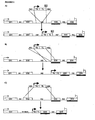
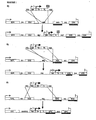
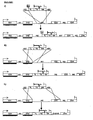
- the transcription module should be integrated in 5' to the more 5' exon, (in the case of a functional protein domain corresponding to the C-terminus of the primary translational product; Figure 1 A-F ), or in 3' to the more 3' exon (in the case of a functional protein domain corresponding to the N-terminus of the primary translational product; Figure 1 G-L ) coding for the functional protein domain.
- DNA sequences can be included in the transcription module to be integrated in the target gene, oriented in the same direction: promoters, enhancers, recognition sites for transcription factors, polyadenylation sites, and any other kind of DNA sequence able to regulate the transcription of a DNA into an mRNA molecule, including sequences comprised in intron eventually added in the construct.
- Promoters are functionally defined as sites where RNA Polymerase II protein complex starts transcription of a gene. Enhancers and other recognition sites for transcription factors can potentiate promoter activity by interacting with accessory proteins and facilitating the aggregation of an active transcription complex.
- a promoter, with or without enhancers, is a necessary element of the inserted DNA construct when the functional protein domain is located at the C-terminus of the primary translational product.
- promoter and enhancers preferably used is the one known to promote, constitutively or after induction, the expression of a gene in the host cell line where homologous recombination is performed.
- the host cell line consists of pituitary cells which naturally express proteins such as growth hormone and prolactin
- the promoter for either of these genes could be used.
- promiscuous or constitutive DNA regulatory segments that function in most cell types, such as the regulatory elements identified in Rous Sarcoma Virus (RSV), Simian Virus 40 (SV40), Mouse Mammary Tumor Virus (MMTV), Moloney Murine Leukaemia Virus (MoMLV), Cytomegalovirus (CMV), Sindbis (SG).
- promoters are the ones regulating the transcription of human genes like Interferon alpha (IFN-.alpha), Heat Shock proteins (HSP), Elongation factor 1.alpha (EF-1.alpha), Metallothionein-I/-II (MT-I/-II), Ubiquitin C (UbC), Leukosialin (LS). These latter promoters are useful especially when the host cells are highly differentiated, like T-cells (where LS promoter is active).
- IFN-.alpha Interferon alpha
- HSP Heat Shock proteins
- EF-1.alpha Elongation factor 1.alpha
- MT-I/-II Metallothionein-I/-II
- Ubiquitin C Ubiquitin C
- LS Leukosialin
- Inducible promoters are desirable for the production of functional protein domains that, for any reason, may be toxic and/or growth-inhibiting to the host cell.
- inducible promoters are MT-I/-II (containing multiple metal response elements active in presence of heavy metals) and Lac (a bacterial operator-repressor system, induced by IPTG, which has been adapted to mammalian cells).
- the transcription module When the functional protein domain is located at the N-terminus of the primary translational product, the transcription module should contain sequences that allow the correct termination and modification of the mRNA at its 3' end, a complex process involving cleavage of the primary transcript and a coupled polyadenylation reaction.
- the poly(A) tract is present in most mammalian mRNAs, and it is essential for mRNA stability and translation efficiency.
- the signals for polyadenylation are composed of an AATAAA sequence, located 20 -30 nucleotides upstream of the polyadenylation site, and a GT-rich segment, immediately downstream of the polyadenylation site.
- poly(A) signals that have been already used in expression vectors and that can be used in the regulatory unit, isolated either in eukaryotic (bovine growth hormone, mouse beta-globin) or viral genes (SV40 early transcription unit, Herpes simplex virus thymidine kinase).
- the target gene modified with a construct containing transcriptional and translational termination sites has to be already expressed by the host cell at a level considered as sufficient. In these situations, the choice of the host cell has to be directed to cells already strongly expressing the gene coding for the primary translational product.
- an additional sequence called the transcription terminator may be present in the transcription module to make sure that transcription does not continue into the 3' adjacent genomic sequence unrelated to the functional protein domain. This event could lead to two possible outcomes: introduction of unnecessary sequence in the primary transcript, which could reduce or alter the translation of the desired functional protein domain, and inhibiting the activity of a downstream promoter, which may control a gene important for replication or the metabolism of the host cell. Even if a clear consensus has not been defined by the analysis of several mRNAs, some of these sequences have been well characterized in the literature ( Petitclerc D et al., J. Biotechnol.(1995), 40(3): 169-78 ).
- the DNA construct may additionally comprise other DNA sequences that affect transcription.
- DNA sequence called chromatin opening domains (UCOE), if inserted in proximity a gene, may allow better expression of a poorly expressed or silent gene by shielding it from putative negative regulatory sequences close to the target gene or by forcing nearby chromatin domains to open.
- UCOE chromatin opening domains
- the translation module includes
- the translation module a second DNA sequence comprised in the exogenous regulatory unit, provides the translation control elements missing at one end of the targeted exon(s) in the correct frame to obtain the correct and efficient translation of the primary transcript into the functional protein domain.
- the translation module should be integrated between the transcription module and more 5' exon (in the case of a functional protein domain corresponding to the C-terminus of the primary translational product) or the more 3' exon (in the case of a functional protein domain corresponding to the N-terminus of the primary translational product) coding for the functional protein domain, and oriented in the same direction.
- a translation initiation codon (which, together with the surrounding nucleotide context, forms the Kozak sequence), a translation stop codon, a 5'-/3'-untranslated region, and any other kind of DNA sequence able to regulate the translation of an mRNA into a protein.
- a translation initiation codon which is usually ATG (coding for Methionine)
- ATG coding for Methionine
- the translation module should contain an exogenous ATG codon embedded into a sequence that is comprised in the group of consensus sequences defined by Kozak to have an optimal translation initiation efficiency.
- the 5' untranslated region is related to the translation initiation codon since it is the sequence belonging to the primary transcript 5' to the translation initiation codon. Physically, it is the sequence between the transcription initiation site (usually 20-30 nucleotides downstream from the promoter and constituted by a G nucleotide which is to modified by the "capping" enzymes) and the translation initiation codon. Depending on the sequence of the intron targeted by homologous recombination and of the adjacent exon coding for the functional protein domain, this sequence can be constituted entirely (if the ATG is also introduced by homologous recombination) or only partially by exogenous sequences.
- an internal ribosomal entry site IVS
- a translation enhancer element may be incorporated in the 5'UTR to facilitate the interaction of the primary transcript with the ribosomal proteins and increase the translation effciency, as it has been shown for different mRNAs in several mammalian cell types ( Liu X et al., Anal Biochem. (2000), 280(1):20-8 ).
- the translation module should contain sequences that allow the correct termination of translation such as a termination codon and a 3' untranslated region (3'UTR).
- a termination codon As mentioned above, depending on the sequence of the intron targeted by homologous recombination and of the adjacent exon coding for the functional protein domain, these sequences can be constituted entirely or partially by exogenous sequence but, in most cases, the translation module will provide both elements.
- the sequence surrounding this triplet may have some effects on the efficiency of the termination of translation. If, for example, the nucleotide immediately following the stop codon is an A or G, the termination is more efficient.
- the 5' untranslated region also for the 3' untranslated region, which consists of the primary transcript segment between the translation stop codon and the polyadenylation site, there is no specific length or consensus sequence described in literature. However, for maximal transcriptional efficiency, it should contain destabilizing regions, like AT-rich sequences.
- the translational initiation or termination codon has to be in same reading frame of the functional protein domain encoding sequence. If the intron proximal to the exon(s) encoding the functional protein domain contains a trinucleotide corresponding a stop or to a start codon in the correct frame and at a distance involving the addition of a number of amino acids compatible with the activity of the functional protein domain, the integration of an appropriate transcription module, with a translation module simply containing a convenient untranslated region, can directly allow the correct expression of the functional protein domain. In this way, these trinucleotides and the intronic sequence comprised between them and the more proximal end of the adjacent exon can be fully functional since they become part of this exon.
- the peptide sequence that would result fused at the N- or C- terminus of the functional protein should not interfere with the functionality of these protein sequence or, if it is, should be easily removed or inactivated during the purification process.
- a functional protein domain corresponding to the C-terminus of the primary translational product the same approach can be also used if the more 5' exon contains an ATG, normally coding for an internal Methionine, in frame with the functional protein domain, limiting its N-terminus.
- the integration of a transcription module activating transcription in 5' to such an ATG should allow the correct transcription and translation of the functional protein domain.
- translational start or stop codon should be comprised into an exon, either synthetic or natural, which becomes part of the translation module.
- This module may comprise one or more exogenous exons (separated by natural or synthetic intronic sequences) which may additionally encode for a protein sequence either homologous or heterologous to protein sequences comprised in the primary translational product encoded by the target gene.
- this protein sequence fused to the functional protein should not interfere with the activity of the functional protein domain or, if they are, should be easily removed or inactivated, eventually by enzymatic activities produced by the host cell itself.
- the functional protein domain is a C-terminal fragment of a primary translational product
- the exon(s) may encode a signal peptide (or the N-terminus of a signal peptide) which, once put in the correct frame between the translational start site and the endogenous exonic sequence, allows the secretion of the functional protein domain in the culture media.
- this additional protein sequence may simply a spacer or linker peptide, which eventually help the purification and/or collection the functional protein domain.
- the additional protein sequence may encode also for the recognition site for a proteolytic enzyme so that, if the functional protein domain can be purified exploiting the affinity of the additional sequence for a substrate immobilized on a support, it can be later eliminated using commercially available proteases.
- the splicing module The splicing module.
- the construct for homologous recombination will contain one of them into an exogenous exon, either natural or synthetic.
- the exogenous exon(s) belonging to the translation module has to positioned in-frame with the endogenous exon(s).
- This arrangement can be accomplished either by using a splicing site complementing the splicing site of the more proximal exon ( Figure A, D, G, J) or by choosing the targeting sequence in way that the exon is precisely fused to the more proximal exon ( Figure B, E, H, K).
- the splicing module when the exogenous exon contains a translation start codon, the splicing module will be a 5' donor splice site located at the 3' end of the translation module ( Figure 1 A , D ), complementing the 3' splice acceptor site associated to the proximal endogenous exon coding for the functional protein domain.
- the splicing module when the synthetic exon contains a translation stop codon, the splicing module will be a 3' acceptor splice site located at the 5' end of the translation module ( Figure 1 G , J ), complementing the 5' splice donor site associated to the proximal endogenous exon coding for the functional protein domain.
- the regulatory unit may therefore comprise a splicing module allowing the generation of a transcript coding for a functional protein domain whenever, following the integration of the regulatory unit, residual intronic sequences separate the translation module from the exon(s) coding for the functional protein domain.
- the endogenous splicing sequences that usually drives the fusion of the exon(s) other than the ones coding for the functional protein domain to the one(s) put under the control of the exogenous regulatory unit, should be unable to reconstitute the splicing events of the target gene in the host cell. This is due to the fact that the regulatory unit replaces them and/or is positioned in a way that they are too far and cannot exert their activity efficiently, remaining unpaired.
- the 5'/3' splice sites are fundamental elements for the expression of a gene, since they enable the proper splicing of the primary transcripts generated from intron-interrupted gene. These sequences are well conserved in many vertebrate genes, especially at the 5' and 3' end of introns. Most of the 5' splice donor sites in higher Eukaryotes conforms to the consensus sequence AG][GTRAGT, where AG is the conserved dinucleotide motif at 3'end of the exon, ][ denotes the splice site, GT is the highly conserved dinucleotide motif at 5'end of the intron and R is a purine.
- a 3' splice acceptor site is constituted essentially by the consensus sequence YAG][G, where AG is the highly conserved dinucleotide motif at 3'end of the intron (typically preceded by a stretch of pyrimidine (Y)), ][ denotes the splice site, and G is a conserved nucleotide at the 5' end of the exon.
- the splicing module is followed by intronic sequences which come from the adjacent targeting region, by natural or synthetic intronic sequences added in the construct between the splicing site and the targeting region.
- intronic sequences may contain, for example, another sequence element known as the branch site, which is usually located at a distance of 18-40 nucleotides upstream of the 3' splice site.
- This site displays the sequence CTR A CT, where N is any nucleotide and A is the nucleotide that has a -OH group capable of interacting with phosphate group of the G nucleotide at the 5' end of the intron during the catalytic steps of mRNA splicing.
- the splicing module is separated from the endogenous splicing control element, present at the proximal end of the adjacent exon coding for the functional protein domain in the target gene, by an intron containing sequences which can be entirely endogenous, entirely exogenous or a hybrid of endogenous and exogenous sequences. Since this sequence will ultimately be spliced out, the precise sequence may not matter, as long as it does not adversely interfere with the proper expression of the desired functional protein domain.
- the DNA targeting sequence is the DNA targeting sequence
- the DNA targeting sequence is an essential element of the construct since it is responsible of the correct integration and positioning of the exogenous sequences (regulatory unit, positive marker gene) in the genome of the cell.
- exogenous sequences regulatory unit, positive marker gene
- Such sequences usually cloned or PCR-amplified from genomic DNA, are defined functionally as having a level of homology with endogenous DNA sufficient for driving the molecular processes causing homologous recombination (strand pairing and displacement) in a specific genomic region.
- the DNA targeting sequence may be constituted by a single DNA segment or divided in two DNA segments, separated in the construct by the exogenous sequences corresponding to the regulatory unit and, eventually, by the positive marker gene. While two targeting segments are preferred in order to increase the efficiency and the precision of the integration, the present invention also comprehends the use of a single targeting segment. In its simplest form, a circular piece of DNA is employed which contains the regulatory unit along with the targeting segment. In this way, the homologous targeting segment hybridizes with its genomic counterpart and the regulatory unit is inserted within the target gene following the crossover event.
- each of the targeting segments i.e. the regions of homology
- the size of each of the targeting segments is not critical, although the shorter the regions are, the less likely that they will find the appropriate regions of homology and recombine at the desired spot.
- the shorter the regions of homology the less efficient is the homologous recombination, i.e., the smaller the percentage of successfully recombined clones.
- sequence homology is 25 base pairs ( Ayares D et al., Proc Natl Acad Sci U S A. (1986), 83 (14): 5199-203 ).
- Optimum results are achieved when the total region of homology, including both targeting regions, is large, for example one to five kilobases or more. As long as the regulatory unit can be introduced at the appropriate point in the genome, there is no limit to the size of the targeting segments, if it does not affect vector stability.
- the DNA targeting sequences will contain, in many situations, the complete, or a segment, of the intron 5' (if the functional protein domain is at the C-terminus of the primary translational product) or 3'(if the functional protein domain is at the N-terminus of the primary translational product) of the exon(s) coding for the functional protein domain ( Figure 1 A , D , G , J ).
- the targeting region may include other parts of the target gene, including the exon(s) encoding the functional protein domain, in addition to this specific intron ( Figure 1 B , E , H , K ).
- the intron(s) and the exon(s) proximal to the exon(s) coding for the functional protein domain can be more or less completely removed and substituted by the exogenous regulatory unit ( Figure 1 C , F , I , L ), eventually by making use of sequence located in a contiguous gene.
- the DNA targeting sequence is constituted by a single DNA segment, it should be homologous to a segment of the target gene comprised only in the portion of the target gene including the exon(s) coding for the functional protein domain, to a segment of the target gene comprised only in the portion of the target gene including the intron proximal to the exon(s) coding for the functional protein domain, or to a segment of the target gene including sequences belonging to both these regions.
- the integration of the construct within the host cell genomic DNA byy homologous recombination at a position determined by ythe DNA targeting segment(s) should allow expression of the functional protein domain under the control of the regulatory unit.
- Such targeting strategies are feasible, as long as the integration of the construct will not lead to any modification of the order and /or sequence of genomic elements coding for the functional protein domain or of other genomic sequences that are necessary for cell viability or metabolism. If the primary translational product of the target gene itself is essential for cell viability or metabolism, the copy of such gene not modified by homologous recombination should usually have an expression level sufficient for keeping the cell metabolically active.
- the relevant exon/intron junctions can be defined on the genomic clone. Therefore, fragments of the genomic clone can be selected since they have a length sufficient for generating the targeting sequences necessary for guiding the regulatory unit in the correct genomic location.
- the DNA targeting sequence may contain sequences homologous to the target gene which are either contiguous or non-contiguous in the targeted genome.
- the portion of the target gene separating the non-contiguous sequences proximal to the exon(s) coding for the functional protein domain will be deleted and replaced by the exogenous sequences as a consequence of the homologous recombination ( Figure 1 C , F , I , L ).
- homologous recombination is driven by DNA sequences of the incoming, exogenous DNA which can be aligned directly with homologous sequences in the target gene coding the functional protein domain.
- the particular linear arrangement of the homologous sequences in the exogenous DNA will determine the position and the orientation of the regulatory unit at the level of the intronic region proximal to the exon(s) coding for the functional protein domain.
- the targeting segments are obtained by PCR and/or derive from a cell non isogenic with the host cell, they should be sequenced when preparing the construct to identify any sequence difference (due to the origin of the targeting region) which may significatively alter the expected sequence and expression of the functional protein domain.
- targeting construct While the type of targeting construct chosen will determine the nature of the genomic modification of the target gene resulting in a recombinant gene encoding a functional protein domain, the actual efficiency with which a given construct can be used to obtain targeted cell lines depends primarily on the targeting construct.
- the absolute targeting frequency that can be achieved with the construct has been shown to depend on a number of factors, including the length of the homologous sequences in the targeting construct, the degree of homology between the sequences in the targeting construct and the target gene, and the particular genomic region being targeted.
- Targeting frequency has been shown to increase as the length of sequence homology between the targeting vector and the locus increases, until a plateau in targeting frequency is reached between 10-14 kb, with no consistent difference in frequency between the insertional and replacement vectors ( Deng C and Capecchi MR, Mol Cell Biol. (1992), 12(8): 3365-71 .). This plateau may reflect a limit on the size of intact DNA fragments that can be introduced into the cells, rather than a limit in the effect of length of homology on targeting frequency.
- the DNA targeting sequence must hybridise with endogenous sequences at the stringent hybridization conditions described in the literature ( Sambrook et al., "Molecular Cloning: A Laboratory Manual", Cold Spring Harbor Press, 1989 ), for example using the following wash conditions: 2 x SCC, 0.1 % SDS, room temperature twice, 30 minutes each; then 2 x SCC, 0.1% SDS, 50 C once for 30 minutes; then 2 x SCC, room temperature twice, 10 minutes each.
- homologous sequences can be identified that contain at most about 25-30% base pair mismatches. More preferably, homologous nucleic acid strands contain 15-25% base pair mismatches, even more preferably 5-15% base pair mismatches. These degrees of homology can be selected by using more stringent wash conditions for identification of clones from gene libraries (or other sources of genetic material), as is well known in the art.
- the construct may also comprise one or more of: a positive selection gene, an amplifiable gene and a negative selection gene.
- the construct used for the homologous recombination may contain exogenous sequences other than the ones constituting the regulatory unit.
- one or more of a positive selection gene, an amplifiable gene or a negative selection gene may be added to the construct to facilitate the identification of the transformed clones having the regulatory unit integrated correctly in the genome.
- the amplifiable and/or marker gene(s) are positioned in the construct between the targeting regions, usually between the transcription module and one of the targeting regions ( Figure 1 D-F , J-L ).
- selectable marker gene it should constitute a transcriptional and translational unit distinct from the one of the functional protein domain and, to avoid any interference with the latter one, it can be separated from the regulatory unit by sequences that avoid any "read-through” event, such as the transcription terminators described previously.
- the positive marker gene can lack transcription and/or translation signal sequence at one end, and that will be provided by the target gene only when properly integrated, generating a fusion gene.
- a positive selectable marker gene is capable of rendering the transfected host cell resistant to a normally toxic environment.
- genes are adenosine deaminase (ADA), aminoglycoside phosphotransferase (neo), dihydrofolate reductase (DHFR), hygromycin-B-phosphotransferase (HPH), thymidine kinase (tk), xanthine- guanine phosphoribosyltransferase (gpt), multiple drug resistance gene (MDR), ornithine decarboxylase (ODC) and N-(phosphonacetyl)-L-aspartate resistance (CAD).
- ADA adenosine deaminase
- neo aminoglycoside phosphotransferase
- DHFR dihydrofolate reductase
- HPH hygromycin-B-phosphotransferase
- tk thymidine
- an amplifiable gene can also be optionally included in the construct.
- Amplifiable genes are genes that lead to an increase in copy number when under selective pressure The copy number of a gene positioned adjacent to the amplifiable gene, including the novel gene encoding the functional protein domain, will also increase. Amplifiable genes that can be used include DHFR, MDR, ODC, ADA and CAD. The members of the positively selectable marker gene group and those of the amplifiable gene group overlap so that, in theory, instead of using two genes, one for positive selection and one for amplification, one gene could be used for both purposes.
- Amplification may not be necessary, for example, when the regulatory unit drives the transcription and the translation of the functional protein domain very efficiently. It is also possible to eliminate the positive selection gene and select cells solely by screening for the production of the desired protein or mRNA. However, it is preferred in most cases to include at least the positive selection gene.
- a negative selectable marker gene may also be present in the construct, externally to the targeting sequences. Such a gene is not expressed in cells in which the DNA construct is properly inserted by homologous recombination since it is eliminated, but is expressed in cells in which the DNA construct is inserted improperly, such as by random integration. If the vector inserts correctly by homologous recombination, it will recombine in the regions of homology, causing the loss of sequences outside of those regions.
- HSVtk Herpes Simplex Virus thymidine kinase gene
- the HSVtk has a lower stringency for nucleotides and is able to phosphorylate nucleotide analogues that normal mammalian cells are unable to phosphorylate. If the HSVtk is present in the cells, nucleotide analogs such as acyclovir and gancyclovir are phosphorylated and incorporated into the DNA of the host cell thus killing the cell.
- marker gene it is well recognized in the literature that such gene can be removed subsequently by using a site-specific recombinase (like Flp or Cre), already present in the cell genome, co-transfected with construct for the homologous recombination, or introduced afterwords by transformation or any recombinant technology.
- site-specific recombinase like Flp or Cre
- Such procedures which may be necessary if the marker gene affects the transcription of the nearby genes, have been described, and it can be eventually used for activating or inactivating elements of the regulatory unit ( Gorman C and Bullock C, Curr Opin Biotechnol. (2000), 11(5):455-60 ; Kuhn R and Schwenk F, Curr. Opin. Immunol. (1997), 9(2): 183-8 ).
- the construct, or targeting vector, comprising the DNA sequences, as previously described, is introduced, in a linearized or circular form, into a host cell, so that the DNA targeting region can hybridize with the homologous genomic sequence and allow the homologous recombination between endogenous and exogenous sequences, which are stably integrated in the genome of the host cell.
- the assembly of the construct should take into consideration the orientation of the exon(s) coding for the functional protein domain.
- the targeting sequence should be cloned in the construct to allow the elements comprised in the regulatory unit to be integrated by homologous recombination in the same orientation, determining the operative link between the exogenous regulatory unit and the endogenous genomic region comprising the exon(s) coding the functional protein domain.
- selectable marker gene(s) may have any orientation but, as said before, they should not interfere with the activity of the exogenous regulatory unit, and therefore are usually positioned the transcription module and the more proximal targeting sequence ( Figure 1 D-F , J-L ).
- DNA sequences belonging to the construct other than the regulatory unit and the selectable marker gene(s), which may be eventually integrated by homologous recombination (related to the replication or selection in bacterial cells, for example), should also not affect the transcription or translation of the functional protein domain.
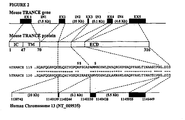
- the mouse TRANCE gene contains 5 exons, the first one coding essentially for the intracellular and transmembrane domain of the protein, while most of the extracellular domain is coded by the remaining 4 exons.
- the segment specifically coding for the in vivo functional protein domain (soluble TRANCE or sTRANCE) is coded entirely by the 3 rd , 4 th , and 5 th exon ( Lum L. et al., J Biol Chem. (1999), 274(19):13613-8 ; Kodaira K. et al., Gene (1999), 230(1), 121-127 ).
- a mouse or human host cell can be modified, for example, by using two contiguous or non-contiguous segments of intron 2 (20 Kb long) as targeting sequences for the homologous recombination, expressing exons 3-5.
- the regulatory unit will contain a transcription module, containing promoter and enhancer sequences active in human cells, and a translation module which contain a synthetic exon, with convenient 5'UTR, a Met codon and 5' splicing donor site.
- the sequence corresponding to intron 3 can be also targeted in mouse or human cells, expressing only exons 4 and 5.
- the construct can have a regulatory unit similar to the one used for expressing exons 3-5, but a simplified construct, including only an appropriate transcription module and a 5' untranslated region as transcription module, without a splicing module, can be also used since there is a conserved Methionine right at the beginning of exon 4 in both human and mouse TRANCE genomic sequence.
- the method of the invention is useful to produce the extracellular domain of other proteins belonging to the TNF family like CD40L, CD70, FasL, which have similar gene structure ( Kodaira K. et al., Gene (1999), 230(1), 121-127 ; Locksley RM et al., Cell. (2001),104(4):487-501 ).
- Endostatin belongs to a growing number of angiogenesis-related functional protein domains that are generated in vivo as proteolytic fragments of a secreted primary translational product not having any angiogenesis-related activity.
- angiogenesis inhibitors like PEX, endostatin, or restin are the C-terminal fragments of, respectively, MMP-2, collagen XVIII 1alpha, and collagen XV, while Fn-f and vasostatin are the N-terminal fragments of, respectively, fibronectin and calreticulin.
- endostatin proteins belonging to the collagen protein family and acting as structural element of the extracellular matrix are proteolytically modified to obtain angiostatic factors, the most studied of them is known as endostatin.
- This functional protein domain is encoded by the collagen XVHI 1alpha (COL18A1) gene and, as an highly similar fragment called restin encoded by the collagen XV (COL15) gene, represent the C- terminal end of the non-collageneous domain (NC1) of the primary translational product ( John H et al., Biochemistry. (1999), 38(32): 10217-24 ; Sasaki T et al., J Mol Biol. (2000), 301(5): 1179-90 ).
- human COL18A1 gene contains 41 exons, while mouse COL18A1 gene contains 43 exons, but the NC1 domain is encoded by the last six exons in both organisms.
- a further distinction can be made amongst the exons of human COL18A1 gene encoding the NC1 domain amongst the ones associated to the multimerization domain (exons 36-37), a hinge region (exon 38), and an endostatin core domain (exons 39-41).
- Endostatin was initially characterized in mouse as a fragment containing 183 amino acids corresponding to the last 9 amino acids encoded by exon 40 plus the amino acids encoded by exon 41-43 ( O'Reilly MS et al., Cell (1997) 88(2): 277-285 ). However, a corresponding fragment containing the last 9 amino acids encoded by exon 38 plus the amino acids encoded by exons 39-41 has not been found in human samples.
- Several studies have shown that the hinge region is particular sensitive to various proteases ( Felbor U et al., EMBO J.
- the human COL18AI exons 39-41 encode for an autonomous folding unit of human collagen XVIII 1alpha protein corresponding to the bona fide core functional protein domain providing the angiostatic properties of natural endostatin.
- literature shows also that sequences belonging to exons 36-38 or even heterologous sequences eventually added at the N-terminus of such functional protein domain, if having a limited length ( Yamaguchi N et al., EMBO J. (1999), 18 (16): 4414-4423 ; Blezinger P et al., Nat. Biotechnol. (1999), 17 (4): 343-348 ), are expected not to interfere with the angiostatic properties associated to such endostatin-like functional protein domains.
- genomic DNA sequence of human COL18A1 gene which is localized on chromosome 21 ( Hattori M et al., Nature (2000), 405(6784): 311-9 ), is included in a 340 Kilobases genomic clone accessible through Genbank (accession number AL163302), and primers allowing the specific amplification of segments included in this clone can be easily designed. Therefore, functional protein domains having the angiostatic properties of human endostatin can be produced by modifying human cells, accordingly to the invention, using a vector containing a regulatory unit and targeting sequences which allow the integration of the regulatory unit at the level of either intron 37 or intron 38 of the human COL18A1 gene by homologous recombination.
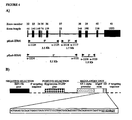
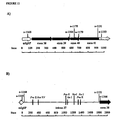
- pEnd-HR#1 and pEnd-HR#2 Two different constructs (pEnd-HR#1 and pEnd-HR#2) were assembled using the same regulatory unit and different targeting sequence belonging to the human COL18AI gene ( Figure 4A ).
- the construct pEnd-HR#1 allows the replacement, by homologous recombination, of 3' end of intron 36, complete exon 37, and 5' end of intron 37 with a regulatory unit promoting the expression of the exons 38-41.
- the construct pEnd-HR#2 allows the replacement, by homologous recombination, of 3' end of intron 37 and full exon 38 with a regulatory unit promoting the expression of the exons 39-41.
- the cloning of COL18A1 genomic fragments necessary for generating the targeting vector was performed by amplifying, using PCR, the appropriate homology regions from the GenBank clone AL163302, in particular inside the 9.7 Kilobases segment comprised between exon 32 and 3' untranslated region of exon 41 ( Figure 4A ).
- the 37 base long primer o-1124 (SEQ ID NO: 5) contains, at the 5' end, a 10 base long sequence including a Sal I restriction site, while the 27 bases at the 3' end correspond to the nucleotides 202790-202816 of clone AL163302. This latter sequence allows the hybridization of o-1124 within exon 32 of human COL18A1 gene, and it was used as forward primer for amplifying the 5' targeting region of both constructs.
- the 36 base long primer o-1125 (SEQ ID NO: 6) contains, at the 5' end, a 9 base long sequence including a Bam HI restriction site, while the 27 bases at the 3' end are complementary to the nucleotides 206301-206327 of clone AL163302. This latter sequence allows the hybridization of o-1125 within intron 36 of human COLI8A1 gene, and it was used as reverse primer for amplifying the 5' targeting region of construct pEnd-HR#1.
- the 35 base long primer o-1121 (SEQ ID NO: 7) contains, at the 5' end, a 9 base long sequence including a Bam HI restriction site, while the 26 bases at the 3' end are complementary to the nucleotides 208099-208125 of clone AL163302. This latter sequence allows the hybridization of o-1121 within intron 37 of human COL18A1 gene, and it was used as reverse primer for amplifying the 5' targeting region of construct pEnd-HR#2.
- the 35 base long primer o-1116 (SEQ ID NO: 8) contains, at the 5' end, a 10 base long sequence including a Xba I restriction site, while the 25 bases at the 3' end correspond to the nucleotides 206382-206406 of clone AL163302. This latter sequence allows the hybridization of o-1116 within intron 37 of human COL18A1 gene, and it was used as forward primer for amplifying the 3' targeting region of constructs pEnd-HR#1.
- the 40 base long primer o-1117 contains, at the 5' end, a 16 base long sequence including a Not I restriction site, while the 24 bases at the 3' end are complementary to the nucleotides 208098-208121 of clone AL163302. This latter sequence allows the hybridization of o-1117 within intron 37 of human COL18A1 gene, and it was used as reverse primer for amplifying the 3' targeting region of construct pEnd-HR#1.
- the 34 base long primer o-1126 (SEQ ID NO: 10) contains, at the 5' end, a 9 base long sequence including a Xba I restriction site, while the 25 bases at the 3' end correspond to the nucleotides 208381-208405 of clone AL163302. This latter sequence allows the hybridization of o-1126 within intron 38 of human COL18A1 gene, and it was used as forward primer for amplifying the 3' targeting region of construct pEnd-HR#2.
- the 43 base long primer o-1123 (SEQ ID NO: 11) contains, at the 5' end, a 17 base long sequence including a Not I restriction site, while the 26 bases at the 3' end are complementary to the nucleotides 209828-209853 of clone AL163302. This latter sequence allows the hybridization of o-1123 within intron 39 of human COL18A1 gene, and it was used as reverse primer for amplifying the 3' targeting region of construct pEnd-HR#2.
- PCR leads to the generation of the 5' targeting DNA fragment of construct pEnd-HR#1.
- This 3.5 Kb fragment includes the 3' end of exon 32, the complete introns 32-35 and exons 33-36, the 5' end of intron 36, and the unique Sal I and Bam HI restriction sites, respectively, at the 5' and 3' ends.
- PCR leads to the generation of the 5' targeting fragment of construct pEnd-HR#2.
- This fragment of 5354 base pairs includes the 3' end of exon 32, the complete introns 32-36 and exons 33-37, the 5' end of intron 37, with the unique Sal I and Bam HI restriction sites, respectively, at the 5' and 3' ends.
- PCR leads to the generation of the 3' targeting DNA fragment of construct pEnd-HR#1.
- This 1.7Kb fragments includes a central region of intron 37, and the unique Xba I and Not I restriction sites, respectively at the 5' and 3' ends.
- PCR leads to the generation of the 3' targeting fragment of construct pEnd-HR#2.
- This 1.5 Kb fragment includes complete intron 38 and exon 39, and the 5' end of intron 39, with the Xba I and Not I unique restriction sites, respectively at the 5' and 3' ends.
- kits for high fidelity, long range PCR are commercially available, like the Herculase PCR kit (Stratagene).
- Each amplified 5' and 3' homology region was cloned, respectively, between the Bam HI and Sal I sites, and XbaI and NotI sites of a plasmid pBluescript-KSII (pBS-KSII; Stratagene).
- the amplified and cloned genomic fragments were then analyzed by restriction mapping and partial DNA sequencing to confirm their identity.
- the construction of the regulatory unit was performed by assembling DNA sequences known in the literature ( Figure 4B ).
- the transcription module was chosen amongst the human or non-human promoters constitutively active in human cultured cells at high levels.
- An example is the promoter of the human elongation factor-1 (EF-1) alpha gene which has been cloned ( Uetsuki T, et al., J Biol Chem. (1989), 264(10):5791-8 ) demonstrated to be very effective in a wide host cell range ( Mizushima S and Nagata S, Nucleic Acids Res. (1990), 18(17):5322 ).
- This 1.2 Kb long promoter present in several commercially available plasmids (InVitrogen), contains a TATA box followed by a transcription start site, which starts the transciption of a 22 base long, non translated exon and of a 0.9 Kb intron having an enhancing effect of the transcription since it contains several Sp1 and Ap1 sequences.
- the translation module containing a translational initiation site was combined with a splicing module with a consensus sequence for a splice donor site. Additionally, in order to facilitate the isolation of the functional protein domain located at the 3' end of a gene, a sequence encoding for a signal peptide in-frame with the exons coding for the functional protein domain was included between the translational initiation site and the splicing consensus sequence.
- mouse Ig Signal Peptide (mIgSP) sequence (GenBank accession number M13329), while the splicing appropriate consensus was chosen amongst the ones recently shown as functional in human cells ( Long M et al., Proc Natl Acad Sci U S A (1998), 95 (1): 219-223 ; Blencowe BJ, Trends Biochem. Sci. (2000), 25(3): 106-110 ).
- a fragment of human EF-1 alpha promoter (corresponding to nucleotides 373 - 1561 in the GenBank record J04617) was cloned between the Cla I and Nhe I of pBS-KSII generating the vector pBS-EF1 alpha.
- the exon coding for mIgSP and the splice domor site were combined in a synthetic 0.2 Kb DNA segment which contains, at the 5' end, a Xba I restriction site and, at the 3' end, Nhe I and Not I restriction sites.
- This fragment was cloned into pBS-EF1alpha between XbaI and NotI sites, such as it is located in 3' to the human EF1alpha promoter, generating the plasmid pBS-EF1alpha-mIgSP-SD ( Figure 5 ).
- the homologous recombination vector backbone was constructed starting from the plasmid pGEM-3Z (Promega), to which the positive and negative selection markers, the targeting regions, and the transcriptional, translational, and splicing modules were added as follows.
- HSV-1 Tymidine Kinase HSV-1 Tymidine Kinase
- mPGK ubiquitously active mouse phosphoglycerate kinase
- the multiple cloning site in 3' to HSV-TK was modified to allow the cloning of all the other elements.
- Two new unique restriction sites Not I and Cla I were introduced by cloning two annealed oligonucleotides, while two Xba I sites nearby the mPGK promoter and polyadenylation site were eliminated by sequential digestion and religation, generating the plasmid pGEM-3Z-mPGK-TK-HR ( Figure 6 ).
- This latter plasmid was used to clone, for each construct, first the 5' targeting region, then the positive selection marker, and finally the 3' targeting region together with the transcription/translation module.
- the 5' targeting region of each construct was cut from the pBS-KSII vector using the Bam HI and Sal I restriction sites, and then subcloned into pGEM-3Z-PGK-TK-HR between the Bam HI and Xho I sites, resulting into plasmids pGEM-3Z-PGK-TK-5'HR#1 and pGEM-3Z-mPGK-TK-5'HR#2.
- the hygromycin resistance gene was chosen as the positive selection gene and was obtained from the plasmid pHygEGFP (Clontech), in which the resistance gene is expressed under the control of a viral promoter (CMV) as a fusion protein with the Green Fluorescent Protein (GFP).
- CMV viral promoter
- the commercial plasmid was modified to remove the two adjacent NotI sites by cutting with NotI and filling in with Klenow enzyme (Life Technologies).
- the CMV-HygEGFP-polyA cassette was then cloned as a Cla I- Bgl II fragment into plasmids pGEM-3Z-PGK-TK-5'HR#1 and pGEM-3Z-mPGK-TK-5'HR#2 using the ClaI and Bam HI restriction sites, generating the plasmids pGEM-3Z-PGK-TK-HYG-5'HR#1 and pGEM-3Z-mPGK-TK-HYG-5'HR#2.
- each construct was cut from the pBS-KSII vector as a Xba I- Not I fragment and cloned into plasmid pBS-EF 1alpha-mIgSP-SD, using the Nhe I and Not I sites downstream to the exon coding for the mIgSP signal peptide followed by the consensus splice donor site.
- the resulting plasmids pBS-EF1alpha-mIgSP-SD-3'HR#1 and pBS-EF 1alpha-mIgSP-SD-3'HR#2 contain the EF1-mIgSP segment fused to the 3' targeting region between the Cla I and Not I sites.
- Such Cla I - Not I fragment was finally introduced between the Cla I and Not I sites of pGEM-3Z-PGK-TK-HYG-5'BR#1 and pGEM-3Z-PGK-TK-HYG-5'HR#2, downstream to the positive selection cassette, obtaining the final pEnd-HR#1 ( Figure 7 ) and pEnd-HR#2 vector.
- These plasmids can be linearized at the unique NotI site located at the 3' end of the 3' targeting region before being transfected into cells for targeting the exogeneous sequences into the specific locations into human COL18A1 gene.
- the regulatory unit is expected to drive the transcription of an mRNA coding for mIgSP fused in-frame either to COL18A1 exons 38-41 for pEnd-HR#1 (SEQ ID NO: 12; SEQ ID NO: 13; Figure 8 ) or COL18A1 exons 39-41 for pEnd-HR#2 (SEQ ID NO: 14; SEQ ID NO: 15; Figure 9 ).
- the activity of the exogeneous regulatory unit included in pEnd-HR#1 and pEnd-HR#2 were preliminary tested by transiently transfecting pEAK plasmids containing endostatin coding sequence (Edge BioSystems).
- the regulatory regions were cloned in 5' to a DNA fragment containing the intronic sequence which would be transcribed and spliced following homologous recombination in human COL18A1 gene, the coding sequences in the downstream exons of human COL18A1 gene fused in-frame with an heterologous epitope helping the identification of the protein even in small quantities, a stop codon, and a polyadenylation site present in the vector ( Figure 10A ).
- the two constructs (pEAK-pEnd-HR#1 and pEAK-pEnd-HR#2) were transfected in human 293-EBNA cells (later used for homologous recombination), which do not express COL18A1 gene ( Yamaguchi N et al., EMBO J. (1999), 18 (16): 4414-4423 ).
- the mRNA, as well as the secreted and intracellular proteins, of the transfected cells was tested to verify the correct transcription, splicing, and translation of the construct.
- the analysis was first performed by RT-PCR, amplifying the cDNA obtained from the transfected cells, and then by Western blot, using antibodies commercially available for endostatin (Chemicon Inc.) and for the FLAG epitope (Amersham-Pharmacia).
- the protein analysis shows that the EF-1 alpha promoter is active into 293-EBNA and, following transcription and splicing, the final mRNA is translated into a functional protein domain of the expected size ( Figure 10B ).
- This protein is then secreted in the culture medium by virtue of the exogenous signal peptide ( Figure 10C ), as shown in literature with a construct containing only COL18A1 exonic sequences ( Blezinger P et al., Nat. Biotechnol. (1999), 17 (4): 343-348 ).
- the pEnd-HR#1 and pEnd-HR#2 vectors can be used to transfect human cell types in which the exogenous regulatory sequences are active, or inducible, independent of whether the endogenous COL18A1 gene is already expressed. This gene is highly expressed in the liver, heart and kidney vascular tissues), as well as hepatocytes ( Saarela J et al., Am. J. Pathol. (1998), 153 (2):611-626 ).
- cell lines derived from these cell types can be used for applying the methods of the invention, but other cell types not expressing COL18A1 also can be used since, even if the chromatin structure at this locus may eventually repress transcription, sufficiently strong and ubiquitary active or inducible regulatory sequences can overcome such limitations. Consequently, the choice of the cell type can be expanded to immortalized human cell lines which can be easily transfected and expanded, like HT1080, WI38, HepG2, or 293 cells.
- human embryonic kidney derived cells 293-EBNA are taken as an example of a human immortalized cell line which can be effectively modified with the method of the invention to obtain the selective expression of the exons in human COL18A1 gene coding for an antiangiogenic functional protein domain.
- These cells which are commercially available (In Vitrogen), express Epstein-Barr virus nuclear antigen 1 (EBNA-1), can be efficiently transfected using electroporation and grow in standard Dulbecco's Modified Eagle's Medium (DMEM) containing 10% Fetal Calf Serum, 4,5 grams/liter of glucose, and antibiotics (100 micrograms/milliliter of penicillin and streptomycin; Gibco-BRL).
- DMEM Dulbecco's Modified Eagle's Medium
- Transfection by electroporation was carried out using a Multiporator apparatus (Eppendorf), equipped with 4 millimeter gap electrodes, at the recommended conditions (60 microSiemens and 500 Volts) and using the hypo-osmolar buffer optimized for mammalian cells provided by the manufacturer.
- Eight aliquots of log phase growing 293-EBNA cells were electroporated with 12 micrograms of Not I linearized plasmid, either pEnd-HR#1 or pEnd-HR#2, in 800 microliters of buffer.
- a total of 2x10 7 cells transfected with the same linearized vector were plated into four tissue culture plates having a diameter of 150 millimeters (NUNC) previously coated with D-polylysine (SIGMA).
- NUNC tissue culture plates having a diameter of 150 millimeters
- SIGMA D-polylysine
- the selection was initiated using 250 micrograms/milliliter of hygromycin (Life Technology), with medium change every two days.
- the negative selection for homologous recombination was applied by incubating the cells with a tissue culture medium containing 10 micromolar Gancyclovir (Cymevene; Roche) in addition to hygromycin.
- the selected cells were isolated using pipette tips under microscope as single clones.
- a pool of clones was generated for each plate (approximately 300 clones/pool) and the four pools were kept under positive selection up to 4-5 weeks to be expanded and obtain sufficient material for further analysis before proceeding to select smaller pools of clones.
- the analysis of the human COL18A1 gene and transcripts structure in the selected clones was performed on the genomic DNA and the mRNA extracted from positive pools of cells using technologies described in the literature known to the skilled in the art.
- the selective amplification of DNA segments using DNA primers (PCR) was preferred as a first approach since it is faster and requires less biological material, in order to identify sequences which would be comprised in the genomic DNA and in the mRNA after correct targeting and splicing ( Figure 11A-B ).
- Some of the amplified segment were also cloned and submitted to DNA sequencing for a further confirmation of sequence identity.
- PCR was performed on an Applied Biosystem 9700 thermocycler using either the HotStarTAQ PCR (when the initial material is genomic DNA or cDNA) or OneStep HotStar RT-PCR (when the initial material is total RNA) commercial kits (Qiagen), essentially as described by the manufacturer.
- the final volume of the reactions was either 25 or 50 microliters.
- 10 or 20 microliters of the reaction mix were then run on agarose gels and screened for the presence of the expected PCR fragments which would indicate either the proper integration of the exogenous sequence in the targeted position of COL18A1 gene, or the presence of the expected spliced mRNA coding for the antiangiogenic functional protein domain.
- RNA was reverse-transcribed with oligo-dT 18 primers using the Superscript-II cDNA kit (Life-technologies), as described by the manufacturer, and 5 units of MMLV Reverse Transcriptase (Promega Biotech). After an incubation for 45 minutes at 37°C, RNase H was added (1 unit) to eliminate the RNA paired to DNA extended from the oligonucleotides, and the incubation at 37°C was prolonged for 15 minutes more. The resulting complementary DNA (cDNA) was finally diluted to a 10 nanograms/microliter concentration using RNase-free water. The PCR was then performed using 20 nanograms of oligo-dT primed cDNA and 0.5 microMolar of each primer, and applying the following program:
- the OneStep HotStar RT-PCR was performed by using 500 nanograms of total RNA and 0.5 microMolar of each primer.
- the reverse transcription reaction was performed at 50°C for 30 minutes according to the conditions given by the manifacturer, and then the following program was applied:
- oligonucleotide hybridizing within the coding region in the exogenous mIgSP exon (o-1165; SEQ ID NO: 16) was used together with a primer hybridizing in the endogenous COL18A1 exon 40 (o-1175; SEQ ID NO: 17), which should be expressed following the integration of any of the two constructs in human COL18A1 gene.
- Such fragments were isolated from gel, cloned, and used separately as template with o-1165 as forward primer and other oligonucleotides as reverse nested primers: o-1164 (SEQ ID NO: 19), o-1175 (SEQ ID NO: 17), o-1179 (SEQ ID NO: 20).
- the amplified fragments obtained using FragA and FragB as template should differ by a segment corresponding to the length of the lacking exon. Since all the couples of primers amplify fragments which differ by approximately 250 base pairs between FragA and FragB, it can be concluded that the minor band originally identified in pool 4 corresponded actually to a transcript in which exon 38 (246 bases), comprised in all the fragments, was spliced out due to an alternative splicing event ( Figure 13 ). This irregular splicing, which was later confirmed by sequencing the cloned fragments, leads however to a transcript identical to the one obtained transfecting the cells with pEnd-HR#2, since exon 38 and 39 have the same frame ( Figure 8 ).
- a 0.9 Kb fragment was obtained by RT-PCR on mRNA from pool 4 of pEnd-HR#1 transfected cells using the mIgSP specific primer o-1165 and the primer o-1193 (SEQ ID NO: 21) which is specific for the 5' untranslated region of exon 4'1.
- This fragment was cloned and sequenced. The sequence corresponded to the expected one ( Figure 8 ), further confirming that the DNA construct was integrated correctly for driving the transcription of the targeted COL18A1 exons specific for endostatin.
- PCR was performed using 200 nanograms of genomic DNA (isolated from pEnd-HR#1 positive pools of clones identified by RT-PCR, or from 293-EBNA untransformed cells) and 0.5 micromolar of each primer, applying the following program:
- the primers hybridizing in the exonic regions were able to amplify a fragment of expected length (1820 bases) in all the pools of clones generated from the original positive pool but not in untransfected cells ( Figure 14A ), confirming the integration of the mIgSP exon.
- the primers hybridizing in the intronic regions were able to amplify a fragments of expected length (1784 bases) in both transfected and untransfected clones, confirming the integrity of the gene structure ( Figure 14B ).
- the PCR analysis performed on the mRNA and genomic DNA extracted from cells modified by the methods of the invention, allowed the identification of clones wherein the integration of a regulatory unit in human COL18A1 gene, causes the specific expression of the exons coding for the functional protein domain determining the angiostatic properties of endostatin. Therefore, the analysis can go further in isolating and characterizing the clone best expressing the desired functional protein domain.
- This additional analysis can be performed at the level of by hybridizing endostatin specific probes with total RNA (Northern blot) or genomic DNA (Southern blot) obtained from these clones after being sufficiently expanded.
- the Southern blot should allow the identification of a 2.2 Kb or 1.9 Kb band in the RNA isolated from clones transfected with, respectively, pEnd-HR#1 or pEnd-HR#2. If the genomic DNA of positive cells and untransfected cells is digested with Nhe I and Spe I is separated on a agarose gel, transferred on a filter and probed with a radioactive fragment corresponding to the human COL18A1 genomic region including exon 32-36 and intron 32-36, the hybridization pattern would differ since the 12.4 Kb fragment, including human COL18A1 from intron 31 to the end, visible in the untransfected cells would be replaced by a shorter fragment in positive cells (4.4 Kb in pEnd-HR#1 transfected cells) due to the additional Nhe I and Spe I sites in the gene for the positive selection.
- the screening can proceed using antibody-based technologies (ELISA, Western Blot, immunoprecipitation), in order to identify the clones having the higher production levels.
- ELISA antibody-based technologies
- the antiangiogenic activity of the functional protein domains further purified can be determined by one of the several methods described in the literature based on endothelial cells. Protein extracts, purified preparations or culture media obtained from the positive clones can be tested in an endothelial cell migration assay, using recombinant or purified human endostatin as a standard.
- One of the more common assays employs human umbilical vein endothelial cells (HUVECs), which are commercially available (Clonetics) and can be cultured to build a reliable migration test ( Yamaguchi N et al., EMBO J.(1999), 18 (16):4414-4423 ).
- Trx Human thioredoxin
- Trx80 truncated form of thioredoxin
- Trx80 containing the 80-84 N-terminal residues and lacking any enzymatic activity, is cleaved and secreted by monocytic cell lines and, by itself, it is a potent mitogenic cytokine stimulating growth of resting human peripheral blood mononuclear cells ( Pekkari K et al., J Biol. Chem. (2000), 275(48):37474-80 ).
- Trx80 induces also the secretion of IL-12 from CD40(+) monocytes in human peripheral blood mononuclear cells cultures, an effect enhanced by IL-2 which induces secretion of interferon-gamma in PBMC cultures ( Pekkari K et al., Blood. 2001 May 15;97(10):3184-90 ).
- Trx may have some co-cytokine activity with interleukins after leaderless secretion ( Bertini R et al., J Exp Med.(1999), 189(11):1783-9 ), the effects obtained with Trx80 are not reproducible using the complete protein.
- Human Trx gene (GenBank records X54539 and X54540) contains five exons coding for a protein containing 105 residues, ( Kaghad M et al., Gene (1994), 140 (2), 273-8 ). The first 4 exons, all having frame zero, encodes for a total of 85 residues and correspond essentially to Trx80.
- the 1.3 Kb sequence containing intron 4, exons 4-5 and part of intron 3 (GenBank record X70288) can be used for constructing a targeting vector allowing the integration of a regulatory unit for terminating transcription and translation, together with a splicing acceptor site, at the level of intron 4.
- Aminoacyl-tRNA synthetases catalyze aminoacylation of transfer RNAs (tRNAs). While native human tyrusyl-tRNA synthetase is inactive as a cell-signaling molecule, it can be secreted and split into two distinct cytokines under apoptotic conditions, probably by the leukocyte elastase, an extracellular protease ( Wakasugi K and Schimmel P, Science (1999), 284(5411): 147-51 ). The N-terminal fragment that harbors the catalytic site acts as an interleukin 8-like cytokine.
- the C-terminal domain is an endothelial-monocyte-activating polypeptide II (EMAP II)-like cytokine, having a potent leukocyte and monocyte chemotaxis activity and stimulating production of myeloperoxidase and tumor necrosis factor-alpha.
- EAP II endothelial-monocyte-activating polypeptide II
- the putative cleavage site of the protein which contains 528 residues, is located at residue 360 but fragments obtained by cleaving at residue 344 are active as well.
- a genomic clone containing interrupted sequences corresponding to human tyrosyl-tRNA synthetase coding sequence can be found (GenBank record AL356780).
- sequence coding for amino acids 303 -348 and 349-380 corresponds, respectively, to the sequences 98110-97970 and 96712-9661 of the human clone, which has an opposite numbering orientation.
- the segment of the clone comprised between 98110 and 96615, as well other surrounding sequences available in the clone, can be used for targeting a regulatory unit either initiating or terminating transcription and translation between 97970 and 96712, depending if the expression of the N-terminal (amino acids 1-348) or C-terminal (amino acids 349-528) cytokine is desired.
- the regulatory unit may contain a sequence capable of terminating the transcription and translation in a position corresponding to the 5' end of the functional protein domain.
- An example is represented by the binding sites of antibodies, which are located at the N-terminus of an immunoglobulin molecule.
- the antigen binding sites of conventional antibodies are formed primarily by the hypervariable loops from both the heavy and the light chain variable domains.
- Functional antigen binding sites can however also be formed by heavy chain variable domains (VH) alone, as in camels and camelids, where antibodies contain only two heavy chains variable domains and lack light chains.
- VH heavy chain variable domains
- This camelised VH proved, like the camel VH, to be a small, robust and efficient recognition unit formed by a single immunoglobulin (Ig) domain ( Riechmann L. et al., J Immunol Methods. 1999 Dec 10;231(1-2):25-38 ; Davies J. et al., Biotechnology (N Y). 1995 May;13(5):475-9 ).
- the exon coding the VH domain of an IgG results from the rearrangement and mutation occurring during B cell development. Once that a myeloma cell is fused to a B cell coding for an antibody having high affinity for an antigen, the resulting hybridoma cells transcribe and translate actively the complete IgG gene, but these cells may also integrate exogenous sequences by homologous recombination at high efficiency ( Shulman MJ et al., Mol Cell Biol. (1990) 10(9): 4466-4472 ).
- the IgG gene can be modified using the method of the invention integrating, by homologous recombination, a regulatory unit containing transcription and translation termination modules in the intron following the relevant exon.
Landscapes
- Life Sciences & Earth Sciences (AREA)
- Health & Medical Sciences (AREA)
- Genetics & Genomics (AREA)
- Engineering & Computer Science (AREA)
- Chemical & Material Sciences (AREA)
- Organic Chemistry (AREA)
- Zoology (AREA)
- Wood Science & Technology (AREA)
- Biotechnology (AREA)
- General Engineering & Computer Science (AREA)
- Bioinformatics & Cheminformatics (AREA)
- Biomedical Technology (AREA)
- Molecular Biology (AREA)
- Biochemistry (AREA)
- Microbiology (AREA)
- General Health & Medical Sciences (AREA)
- Biophysics (AREA)
- Plant Pathology (AREA)
- Physics & Mathematics (AREA)
- Crystallography & Structural Chemistry (AREA)
- Cell Biology (AREA)
- Mycology (AREA)
- Proteomics, Peptides & Aminoacids (AREA)
- Chemical Kinetics & Catalysis (AREA)
- General Chemical & Material Sciences (AREA)
- Preparation Of Compounds By Using Micro-Organisms (AREA)
- Micro-Organisms Or Cultivation Processes Thereof (AREA)
- Peptides Or Proteins (AREA)
Priority Applications (2)
| Application Number | Priority Date | Filing Date | Title |
|---|---|---|---|
| SI200130842T SI1305411T1 (sl) | 2000-08-01 | 2001-08-01 | Postopek produkcije funkcionalnih proteinskih domen |
| CY20081100728T CY1110431T1 (el) | 2000-08-01 | 2008-07-11 | Μεθοδος παραγωγης περιοχων λειτουργικων πρωτεϊνων |
Applications Claiming Priority (3)
| Application Number | Priority Date | Filing Date | Title |
|---|---|---|---|
| GB0018876 | 2000-08-01 | ||
| GBGB0018876.3A GB0018876D0 (en) | 2000-08-01 | 2000-08-01 | Method of producing polypeptides |
| PCT/GB2001/003455 WO2002010372A1 (en) | 2000-08-01 | 2001-08-01 | Method of producing functional protein domains |
Publications (2)
| Publication Number | Publication Date |
|---|---|
| EP1305411A1 EP1305411A1 (en) | 2003-05-02 |
| EP1305411B1 true EP1305411B1 (en) | 2008-06-11 |
Family
ID=9896767
Family Applications (1)
| Application Number | Title | Priority Date | Filing Date |
|---|---|---|---|
| EP01953251A Expired - Lifetime EP1305411B1 (en) | 2000-08-01 | 2001-08-01 | Method of producing functional protein domains |
Country Status (20)
| Country | Link |
|---|---|
| US (1) | US8048645B2 (enExample) |
| EP (1) | EP1305411B1 (enExample) |
| JP (1) | JP5068916B2 (enExample) |
| CN (1) | CN1468304B (enExample) |
| AR (1) | AR031717A1 (enExample) |
| AT (1) | ATE398174T1 (enExample) |
| AU (1) | AU7573901A (enExample) |
| BR (1) | BR0112979A (enExample) |
| CA (1) | CA2415768C (enExample) |
| CY (1) | CY1110431T1 (enExample) |
| DE (1) | DE60134410D1 (enExample) |
| DK (1) | DK1305411T3 (enExample) |
| ES (1) | ES2305091T3 (enExample) |
| GB (1) | GB0018876D0 (enExample) |
| IL (1) | IL154212A0 (enExample) |
| NO (1) | NO330897B1 (enExample) |
| PT (1) | PT1305411E (enExample) |
| SI (1) | SI1305411T1 (enExample) |
| WO (1) | WO2002010372A1 (enExample) |
| ZA (1) | ZA200300827B (enExample) |
Families Citing this family (39)
| Publication number | Priority date | Publication date | Assignee | Title |
|---|---|---|---|---|
| DK1572994T3 (da) * | 2002-12-20 | 2007-05-29 | Chromagenics Bv | Midler og fremgangsmåder til fremstilling af en protein gennem chromatinåbnere, som kan göre chromatin mere tilgængeligt for transkriptionsfaktorer |
| AU2004245175C1 (en) * | 2003-06-10 | 2010-03-18 | Biogen Ma Inc. | Improved secretion of neublastin |
| US8053191B2 (en) | 2006-08-31 | 2011-11-08 | Westend Asset Clearinghouse Company, Llc | Iterative nucleic acid assembly using activation of vector-encoded traits |
| WO2011053957A2 (en) * | 2009-11-02 | 2011-05-05 | Gen9, Inc. | Compositions and methods for the regulation of multiple genes of interest in a cell |
| CA2817697C (en) | 2010-11-12 | 2021-11-16 | Gen9, Inc. | Methods and devices for nucleic acids synthesis |
| WO2012064975A1 (en) | 2010-11-12 | 2012-05-18 | Gen9, Inc. | Protein arrays and methods of using and making the same |
| JP2014526899A (ja) | 2011-08-26 | 2014-10-09 | ジェン9・インコーポレイテッド | 核酸の高忠実度アセンブリのための組成物および方法 |
| US9150853B2 (en) | 2012-03-21 | 2015-10-06 | Gen9, Inc. | Methods for screening proteins using DNA encoded chemical libraries as templates for enzyme catalysis |
| CA2871505C (en) | 2012-04-24 | 2021-10-12 | Gen9, Inc. | Methods for sorting nucleic acids and multiplexed preparative in vitro cloning |
| WO2014004393A1 (en) | 2012-06-25 | 2014-01-03 | Gen9, Inc. | Methods for nucleic acid assembly and high throughput sequencing |
| KR102160389B1 (ko) | 2013-08-05 | 2020-09-28 | 트위스트 바이오사이언스 코포레이션 | 드 노보 합성된 유전자 라이브러리 |
| CA2975852A1 (en) | 2015-02-04 | 2016-08-11 | Twist Bioscience Corporation | Methods and devices for de novo oligonucleic acid assembly |
| CA2975855C (en) | 2015-02-04 | 2025-09-23 | Twist Bioscience Corporation | SYNTHETIC GENE COMPOSITIONS AND ASSEMBLY METHODS |
| WO2016172377A1 (en) | 2015-04-21 | 2016-10-27 | Twist Bioscience Corporation | Devices and methods for oligonucleic acid library synthesis |
| KR20180050411A (ko) | 2015-09-18 | 2018-05-14 | 트위스트 바이오사이언스 코포레이션 | 올리고핵산 변이체 라이브러리 및 그의 합성 |
| WO2017053450A1 (en) | 2015-09-22 | 2017-03-30 | Twist Bioscience Corporation | Flexible substrates for nucleic acid synthesis |
| EP3384077A4 (en) | 2015-12-01 | 2019-05-08 | Twist Bioscience Corporation | FUNCTIONALIZED SURFACES AND MANUFACTURE THEREOF |
| WO2018038772A1 (en) | 2016-08-22 | 2018-03-01 | Twist Bioscience Corporation | De novo synthesized nucleic acid libraries |
| EP4664304A3 (en) | 2016-09-21 | 2026-01-21 | Atlas Data Storage, Inc. | Nucleic acid based data storage |
| GB2573069A (en) | 2016-12-16 | 2019-10-23 | Twist Bioscience Corp | Variant libraries of the immunological synapse and synthesis thereof |
| WO2018156792A1 (en) | 2017-02-22 | 2018-08-30 | Twist Bioscience Corporation | Nucleic acid based data storage |
| CA3056388A1 (en) | 2017-03-15 | 2018-09-20 | Twist Bioscience Corporation | Variant libraries of the immunological synapse and synthesis thereof |
| IL271205B2 (en) | 2017-06-12 | 2025-02-01 | Twist Bioscience Corp | Methods for assembling continuous nucleic acids |
| WO2018231864A1 (en) | 2017-06-12 | 2018-12-20 | Twist Bioscience Corporation | Methods for seamless nucleic acid assembly |
| CN111566125A (zh) | 2017-09-11 | 2020-08-21 | 特韦斯特生物科学公司 | Gpcr结合蛋白及其合成 |
| CN111565834B (zh) | 2017-10-20 | 2022-08-26 | 特韦斯特生物科学公司 | 用于多核苷酸合成的加热的纳米孔 |
| IL312616B2 (en) | 2018-01-04 | 2025-08-01 | Twist Bioscience Corp | Dna-based digital information storage |
| EP3814497A4 (en) | 2018-05-18 | 2022-03-02 | Twist Bioscience Corporation | POLYNUCLEOTIDES, REAGENTS AND METHODS FOR NUCLEIC ACID HYBRIDIZATION |
| EP3902816A4 (en) | 2018-12-26 | 2022-09-14 | Twist Bioscience Corporation | HIGH-PRECISION DE NOVO POLYNUCLEOTIDE SYNTHESIS |
| KR20210144698A (ko) | 2019-02-26 | 2021-11-30 | 트위스트 바이오사이언스 코포레이션 | 항체 최적화를 위한 변이 핵산 라이브러리 |
| CA3131689A1 (en) | 2019-02-26 | 2020-09-03 | Twist Bioscience Corporation | Variant nucleic acid libraries for glp1 receptor |
| EP3987019A4 (en) | 2019-06-21 | 2023-04-19 | Twist Bioscience Corporation | Barcode-based nucleic acid sequence assembly |
| US12091777B2 (en) | 2019-09-23 | 2024-09-17 | Twist Bioscience Corporation | Variant nucleic acid libraries for CRTH2 |
| CN115023440B (zh) | 2019-09-23 | 2025-09-12 | 特韦斯特生物科学公司 | 结合CD3ε的抗体 |
| AU2020400030B2 (en) | 2019-12-09 | 2026-05-21 | Twist Bioscience Corporation | Variant nucleic acid libraries for adenosine receptors |
| KR20230078719A (ko) | 2020-09-28 | 2023-06-02 | 베스타론 코포레이션 | 해충 방제용 뮤-디구에톡신-Dc1a 변이형 폴리펩타이드 |
| US20240374761A1 (en) | 2021-05-05 | 2024-11-14 | Radius Pharmaceuticals, Inc. | Animal model having homologous recombination of mouse pth1 receptor |
| WO2023122805A1 (en) | 2021-12-20 | 2023-06-29 | Vestaron Corporation | Sorbitol driven selection pressure method |
| WO2024026406A2 (en) | 2022-07-29 | 2024-02-01 | Vestaron Corporation | Next Generation ACTX Peptides |
Family Cites Families (18)
| Publication number | Priority date | Publication date | Assignee | Title |
|---|---|---|---|---|
| FR2646438B1 (fr) * | 1989-03-20 | 2007-11-02 | Pasteur Institut | Procede de remplacement specifique d'une copie d'un gene present dans le genome receveur par l'integration d'un gene different de celui ou se fait l'integration |
| SG88714A1 (en) | 1989-11-06 | 2002-05-21 | Cell Genesys Inc | Production of proteins using homologous recombination |
| US5272071A (en) | 1989-12-22 | 1993-12-21 | Applied Research Systems Ars Holding N.V. | Method for the modification of the expression characteristics of an endogenous gene of a given cell line |
| DE779362T1 (de) * | 1989-12-22 | 2001-04-05 | Applied Research Systems Ars Holding N.V., Curacao | DNS-Konstrukten zur Aktivierung und Veränderung der Expression von endogenen Genen |
| WO1993004169A1 (en) * | 1991-08-20 | 1993-03-04 | Genpharm International, Inc. | Gene targeting in animal cells using isogenic dna constructs |
| US6063630A (en) * | 1991-11-05 | 2000-05-16 | Transkaryotic Therapies, Inc. | Targeted introduction of DNA into primary or secondary cells and their use for gene therapy |
| US5968502A (en) | 1991-11-05 | 1999-10-19 | Transkaryotic Therapies, Inc. | Protein production and protein delivery |
| US5641670A (en) | 1991-11-05 | 1997-06-24 | Transkaryotic Therapies, Inc. | Protein production and protein delivery |
| US6270989B1 (en) * | 1991-11-05 | 2001-08-07 | Transkaryotic Therapies, Inc. | Protein production and delivery |
| TW402639B (en) * | 1992-12-03 | 2000-08-21 | Transkaryotic Therapies Inc | Protein production and protein delivery |
| CN1256986C (zh) * | 1993-12-02 | 2006-05-24 | 转移染色体治疗公司 | 蛋白质的生产和蛋白质的输送 |
| US5545817A (en) * | 1994-03-11 | 1996-08-13 | Calgene, Inc. | Enhanced expression in a plant plastid |
| WO1997023244A1 (en) | 1995-12-22 | 1997-07-03 | Smithkline Beecham Corporation | Use of antisene oligodeoxynucleotides to produce truncated proteins |
| DE69841723D1 (de) * | 1997-09-26 | 2010-07-29 | Abt Holding Co | Expression von endogenen genen durch homologe rekombination eines vektorkonstruktes mit zellulärer dna |
| US7063960B2 (en) * | 1997-12-12 | 2006-06-20 | The Rockefeller University | Protein belonging to the TNF superfamily involved in signal transduction, nucleic acids encoding same, and methods of use thereof |
| CA2323834C (en) | 1998-03-27 | 2009-01-27 | Lexicon Genetics Incorporated | Vectors for gene mutagenesis and gene discovery |
| US6436707B1 (en) * | 1998-03-27 | 2002-08-20 | Lexicon Genetics Incorporated | Vectors for gene mutagenesis and gene discovery |
| JP3688118B2 (ja) * | 1998-05-22 | 2005-08-24 | 独立行政法人科学技術振興機構 | 遺伝子トラップ用ベクターと、このベクターを用いた遺伝子トラップ方法 |
-
2000
- 2000-08-01 GB GBGB0018876.3A patent/GB0018876D0/en not_active Ceased
-
2001
- 2001-07-31 AR ARP010103647A patent/AR031717A1/es active IP Right Grant
- 2001-08-01 BR BR0112979-1A patent/BR0112979A/pt not_active Application Discontinuation
- 2001-08-01 PT PT01953251T patent/PT1305411E/pt unknown
- 2001-08-01 DE DE60134410T patent/DE60134410D1/de not_active Expired - Lifetime
- 2001-08-01 US US10/343,684 patent/US8048645B2/en not_active Expired - Fee Related
- 2001-08-01 WO PCT/GB2001/003455 patent/WO2002010372A1/en not_active Ceased
- 2001-08-01 CN CN01816657.1A patent/CN1468304B/zh not_active Expired - Fee Related
- 2001-08-01 IL IL15421201A patent/IL154212A0/xx unknown
- 2001-08-01 JP JP2002516291A patent/JP5068916B2/ja not_active Expired - Fee Related
- 2001-08-01 ES ES01953251T patent/ES2305091T3/es not_active Expired - Lifetime
- 2001-08-01 SI SI200130842T patent/SI1305411T1/sl unknown
- 2001-08-01 DK DK01953251T patent/DK1305411T3/da active
- 2001-08-01 AT AT01953251T patent/ATE398174T1/de active
- 2001-08-01 AU AU7573901A patent/AU7573901A/xx not_active Withdrawn
- 2001-08-01 EP EP01953251A patent/EP1305411B1/en not_active Expired - Lifetime
- 2001-08-01 CA CA2415768A patent/CA2415768C/en not_active Expired - Fee Related
-
2003
- 2003-01-28 NO NO20030443A patent/NO330897B1/no not_active IP Right Cessation
- 2003-01-30 ZA ZA200300827A patent/ZA200300827B/xx unknown
-
2008
- 2008-07-11 CY CY20081100728T patent/CY1110431T1/el unknown
Also Published As
| Publication number | Publication date |
|---|---|
| HK1059281A1 (en) | 2004-06-25 |
| JP2004504840A (ja) | 2004-02-19 |
| AR031717A1 (es) | 2003-10-01 |
| ZA200300827B (en) | 2004-02-25 |
| CN1468304B (zh) | 2011-01-19 |
| NO330897B1 (no) | 2011-08-08 |
| EP1305411A1 (en) | 2003-05-02 |
| JP5068916B2 (ja) | 2012-11-07 |
| CN1468304A (zh) | 2004-01-14 |
| US20040053362A1 (en) | 2004-03-18 |
| NO20030443L (no) | 2003-03-25 |
| GB0018876D0 (en) | 2000-09-20 |
| CA2415768C (en) | 2011-05-17 |
| DK1305411T3 (da) | 2008-09-01 |
| SI1305411T1 (sl) | 2008-10-31 |
| CA2415768A1 (en) | 2002-02-07 |
| NO20030443D0 (no) | 2003-01-28 |
| CY1110431T1 (el) | 2015-04-29 |
| US8048645B2 (en) | 2011-11-01 |
| DE60134410D1 (de) | 2008-07-24 |
| ES2305091T3 (es) | 2008-11-01 |
| WO2002010372A1 (en) | 2002-02-07 |
| ATE398174T1 (de) | 2008-07-15 |
| AU7573901A (en) | 2002-02-13 |
| BR0112979A (pt) | 2003-07-08 |
| IL154212A0 (en) | 2003-07-31 |
| PT1305411E (pt) | 2008-07-03 |
| WO2002010372A8 (en) | 2002-02-28 |
Similar Documents
| Publication | Publication Date | Title |
|---|---|---|
| US8048645B2 (en) | Method of producing functional protein domains | |
| RU2233334C2 (ru) | Способ встраивания нужной днк в геном клетки млекопитающего и векторная система для его осуществления | |
| US10767193B2 (en) | Engineered CAS9 systems for eukaryotic genome modification | |
| EP1375666A2 (en) | Eukaryotic host cell line in which an endogenous gene has been activated, and uses thereof | |
| EA010863B1 (ru) | Отбор клеток-хозяев, экспрессирующих белок на высоких уровнях | |
| US20220049275A1 (en) | Ssi cells with predictable and stable transgene expression and methods of formation | |
| EP3402884A1 (en) | Gene modification assays | |
| AU2001275739B2 (en) | Method of producing functional protein domains | |
| KR20100097123A (ko) | 신규한 재조합 서열 | |
| WO2009130598A1 (en) | Genetically modified eukaryotic cells | |
| AU2001275739A1 (en) | Method of producing functional protein domains | |
| AU2007202310A1 (en) | Method of producing functional protein domains | |
| KR101099380B1 (ko) | 진핵 세포에서의 서열 특이적 dna 재조합 | |
| HK1059281B (en) | Method of producing functional protein domains | |
| US20060258007A1 (en) | Regulated vectors for selection of cells exhibiting desired phenotypes | |
| Brown et al. | Expression Systems for Recombinant Biopharmaceutical Production by Mammalian Cells in Culture | |
| WO2026086779A1 (en) | Compositions and Methods for Inactivating Glutamine Synthetase Gene Expression | |
| Kerry | Use of CHO cell synthetic promoters to control transcription of mAb expression vector genes and screening of ER genes for their effect on mAb production | |
| WO2026017676A1 (en) | A novel genomic safe harbor site in the actb locus | |
| Balasubramanian | Study of transposon-mediated cell pool and cell line generation in CHO cells | |
| RU2671477C2 (ru) | РЕКОМБИНАНТНАЯ ПЛАЗМИДНАЯ ДНК pBiPr-ABIgA2m1F16-ht ДЛЯ ПОЛУЧЕНИЯ РЕКОМБИНАНТНОГО ИММУНОГЛОБУЛИНА А ИЗОТИПА IGA2m1 | |
| KR20030062118A (ko) | 유전자 발현 동물세포 제조용 바이시스트로닉 벡터 및이를 포함하는 세포주 그리고 이를 이용한 항체단백질의생산방법 | |
| Gadgil et al. | Cell Line Development for Biomanufacturing Processes | |
| JPWO2000077231A1 (ja) | 動物細胞用制御配列ならびに組換え発現ベクター | |
| HK1059279A (en) | Eukaryotic host cell line in which an endogenous gene has been activated, and uses thereof |
Legal Events
| Date | Code | Title | Description |
|---|---|---|---|
| PUAI | Public reference made under article 153(3) epc to a published international application that has entered the european phase |
Free format text: ORIGINAL CODE: 0009012 |
|
| 17P | Request for examination filed |
Effective date: 20030207 |
|
| AK | Designated contracting states |
Designated state(s): AT BE CH CY DE DK ES FI FR GB GR IE IT LI LU MC NL PT SE TR |
|
| AX | Request for extension of the european patent |
Extension state: AL LT LV MK RO SI |
|
| 17Q | First examination report despatched |
Effective date: 20050316 |
|
| 17Q | First examination report despatched |
Effective date: 20050316 |
|
| RAP1 | Party data changed (applicant data changed or rights of an application transferred) |
Owner name: LABORATOIRES SERONO SA |
|
| GRAP | Despatch of communication of intention to grant a patent |
Free format text: ORIGINAL CODE: EPIDOSNIGR1 |
|
| RIN1 | Information on inventor provided before grant (corrected) |
Inventor name: FALCIOLA, LUCA Inventor name: DE LUCA, GIAMPIERO |
|
| GRAS | Grant fee paid |
Free format text: ORIGINAL CODE: EPIDOSNIGR3 |
|
| GRAA | (expected) grant |
Free format text: ORIGINAL CODE: 0009210 |
|
| AK | Designated contracting states |
Kind code of ref document: B1 Designated state(s): AT BE CH CY DE DK ES FI FR GB GR IE IT LI LU MC NL PT SE TR |
|
| AX | Request for extension of the european patent |
Extension state: AL LT LV MK RO SI |
|
| REG | Reference to a national code |
Ref country code: GB Ref legal event code: FG4D |
|
| REG | Reference to a national code |
Ref country code: CH Ref legal event code: EP |
|
| REG | Reference to a national code |
Ref country code: PT Ref legal event code: SC4A Free format text: AVAILABILITY OF NATIONAL TRANSLATION Effective date: 20080623 |
|
| REF | Corresponds to: |
Ref document number: 60134410 Country of ref document: DE Date of ref document: 20080724 Kind code of ref document: P |
|
| REG | Reference to a national code |
Ref country code: CH Ref legal event code: NV Representative=s name: MERCK SERONO INTERNATIONAL S.A. CORPORATE IP DEPAR |
|
| REG | Reference to a national code |
Ref country code: SE Ref legal event code: TRGR |
|
| REG | Reference to a national code |
Ref country code: IE Ref legal event code: FG4D |
|
| REG | Reference to a national code |
Ref country code: DK Ref legal event code: T3 |
|
| REG | Reference to a national code |
Ref country code: GR Ref legal event code: EP Ref document number: 20080402045 Country of ref document: GR |
|
| REG | Reference to a national code |
Ref country code: ES Ref legal event code: FG2A Ref document number: 2305091 Country of ref document: ES Kind code of ref document: T3 |
|
| PLBE | No opposition filed within time limit |
Free format text: ORIGINAL CODE: 0009261 |
|
| STAA | Information on the status of an ep patent application or granted ep patent |
Free format text: STATUS: NO OPPOSITION FILED WITHIN TIME LIMIT |
|
| 26N | No opposition filed |
Effective date: 20090312 |
|
| REG | Reference to a national code |
Ref country code: CH Ref legal event code: PFA Owner name: MERCK SERONO SA Free format text: LABORATOIRES SERONO SA#CENTRE INDUSTRIEL#1267 COINSINS, VAUD (CH) -TRANSFER TO- MERCK SERONO SA#CENTRE INDUSTRIEL#1267 COINSINS, VAUD (CH) Ref country code: CH Ref legal event code: NV Representative=s name: MERCK SERONO S.A. - GENEVA Ref country code: CH Ref legal event code: PFA Owner name: MERCK SERONO SA Free format text: MERCK SERONO SA#CENTRE INDUSTRIEL#1267 COINSINS, VAUD (CH) -TRANSFER TO- MERCK SERONO SA#CENTRE INDUSTRIEL#1267 COINSINS, VAUD (CH) |
|
| REG | Reference to a national code |
Ref country code: FR Ref legal event code: CD |
|
| REG | Reference to a national code |
Ref country code: DE Ref legal event code: R081 Ref document number: 60134410 Country of ref document: DE Owner name: MERCK SERONO SA, CH Free format text: FORMER OWNER: LABORATOIRES SERONO S.A., COINSINS, CH Effective date: 20110427 Ref country code: DE Ref legal event code: R081 Ref document number: 60134410 Country of ref document: DE Owner name: MERCK SERONO SA, COINSINS, CH Free format text: FORMER OWNER: LABORATOIRES SERONO S.A., COINSINS, VAUD, CH Effective date: 20110427 |
|
| REG | Reference to a national code |
Ref country code: ES Ref legal event code: PC2A Owner name: MERCK SERONO SA Effective date: 20110901 |
|
| PGFP | Annual fee paid to national office [announced via postgrant information from national office to epo] |
Ref country code: CH Payment date: 20110812 Year of fee payment: 11 Ref country code: DK Payment date: 20110810 Year of fee payment: 11 |
|
| REG | Reference to a national code |
Ref country code: NL Ref legal event code: TD Effective date: 20111212 |
|
| REG | Reference to a national code |
Ref country code: SI Ref legal event code: SP73 Owner name: MERCK SERONO SA; CH Effective date: 20111122 |
|
| PGFP | Annual fee paid to national office [announced via postgrant information from national office to epo] |
Ref country code: LU Payment date: 20120814 Year of fee payment: 12 |
|
| PGFP | Annual fee paid to national office [announced via postgrant information from national office to epo] |
Ref country code: IE Payment date: 20120810 Year of fee payment: 12 Ref country code: FI Payment date: 20120810 Year of fee payment: 12 Ref country code: MC Payment date: 20120726 Year of fee payment: 12 Ref country code: GB Payment date: 20120801 Year of fee payment: 12 Ref country code: SE Payment date: 20120813 Year of fee payment: 12 |
|
| PGFP | Annual fee paid to national office [announced via postgrant information from national office to epo] |
Ref country code: GR Payment date: 20120726 Year of fee payment: 12 Ref country code: TR Payment date: 20120718 Year of fee payment: 12 |
|
| PGFP | Annual fee paid to national office [announced via postgrant information from national office to epo] |
Ref country code: BE Payment date: 20120820 Year of fee payment: 12 Ref country code: DE Payment date: 20120725 Year of fee payment: 12 Ref country code: ES Payment date: 20120907 Year of fee payment: 12 Ref country code: IT Payment date: 20120814 Year of fee payment: 12 Ref country code: FR Payment date: 20120823 Year of fee payment: 12 |
|
| PGFP | Annual fee paid to national office [announced via postgrant information from national office to epo] |
Ref country code: CY Payment date: 20120731 Year of fee payment: 12 Ref country code: PT Payment date: 20120201 Year of fee payment: 12 Ref country code: NL Payment date: 20120809 Year of fee payment: 12 |
|
| PGFP | Annual fee paid to national office [announced via postgrant information from national office to epo] |
Ref country code: AT Payment date: 20120726 Year of fee payment: 12 |
|
| REG | Reference to a national code |
Ref country code: PT Ref legal event code: MM4A Free format text: LAPSE DUE TO NON-PAYMENT OF FEES Effective date: 20140203 |
|
| BERE | Be: lapsed |
Owner name: S.A.*MERCK SERONO Effective date: 20130831 |
|
| REG | Reference to a national code |
Ref country code: NL Ref legal event code: V1 Effective date: 20140301 |
|
| REG | Reference to a national code |
Ref country code: LT Ref legal event code: MM9D Effective date: 20130801 |
|
| REG | Reference to a national code |
Ref country code: DK Ref legal event code: EBP Effective date: 20130831 Ref country code: CH Ref legal event code: PL |
|
| REG | Reference to a national code |
Ref country code: SE Ref legal event code: EUG |
|
| REG | Reference to a national code |
Ref country code: AT Ref legal event code: MM01 Ref document number: 398174 Country of ref document: AT Kind code of ref document: T Effective date: 20130801 |
|
| GBPC | Gb: european patent ceased through non-payment of renewal fee |
Effective date: 20130801 |
|
| REG | Reference to a national code |
Ref country code: GR Ref legal event code: ML Ref document number: 20080402045 Country of ref document: GR Effective date: 20140305 |
|
| PG25 | Lapsed in a contracting state [announced via postgrant information from national office to epo] |
Ref country code: DE Free format text: LAPSE BECAUSE OF NON-PAYMENT OF DUE FEES Effective date: 20140301 Ref country code: LI Free format text: LAPSE BECAUSE OF NON-PAYMENT OF DUE FEES Effective date: 20130831 Ref country code: CH Free format text: LAPSE BECAUSE OF NON-PAYMENT OF DUE FEES Effective date: 20130831 Ref country code: SE Free format text: LAPSE BECAUSE OF NON-PAYMENT OF DUE FEES Effective date: 20130802 Ref country code: FI Free format text: LAPSE BECAUSE OF NON-PAYMENT OF DUE FEES Effective date: 20130801 Ref country code: MC Free format text: LAPSE BECAUSE OF NON-PAYMENT OF DUE FEES Effective date: 20130902 Ref country code: NL Free format text: LAPSE BECAUSE OF NON-PAYMENT OF DUE FEES Effective date: 20140301 |
|
| REG | Reference to a national code |
Ref country code: SI Ref legal event code: KO00 Effective date: 20140401 |
|
| REG | Reference to a national code |
Ref country code: IE Ref legal event code: MM4A |
|
| REG | Reference to a national code |
Ref country code: DE Ref legal event code: R119 Ref document number: 60134410 Country of ref document: DE Effective date: 20140301 |
|
| REG | Reference to a national code |
Ref country code: FR Ref legal event code: ST Effective date: 20140430 |
|
| PG25 | Lapsed in a contracting state [announced via postgrant information from national office to epo] |
Ref country code: IT Free format text: LAPSE BECAUSE OF NON-PAYMENT OF DUE FEES Effective date: 20130801 Ref country code: BE Free format text: LAPSE BECAUSE OF NON-PAYMENT OF DUE FEES Effective date: 20130831 Ref country code: AT Free format text: LAPSE BECAUSE OF NON-PAYMENT OF DUE FEES Effective date: 20130801 Ref country code: GR Free format text: LAPSE BECAUSE OF NON-PAYMENT OF DUE FEES Effective date: 20140305 |
|
| PG25 | Lapsed in a contracting state [announced via postgrant information from national office to epo] |
Ref country code: PT Free format text: LAPSE BECAUSE OF NON-PAYMENT OF DUE FEES Effective date: 20140203 |
|
| PG25 | Lapsed in a contracting state [announced via postgrant information from national office to epo] |
Ref country code: IE Free format text: LAPSE BECAUSE OF NON-PAYMENT OF DUE FEES Effective date: 20130801 Ref country code: GB Free format text: LAPSE BECAUSE OF NON-PAYMENT OF DUE FEES Effective date: 20130801 |
|
| PG25 | Lapsed in a contracting state [announced via postgrant information from national office to epo] |
Ref country code: FR Free format text: LAPSE BECAUSE OF NON-PAYMENT OF DUE FEES Effective date: 20130902 |
|
| REG | Reference to a national code |
Ref country code: ES Ref legal event code: FD2A Effective date: 20140909 |
|
| PG25 | Lapsed in a contracting state [announced via postgrant information from national office to epo] |
Ref country code: DK Free format text: LAPSE BECAUSE OF NON-PAYMENT OF DUE FEES Effective date: 20130831 |
|
| PG25 | Lapsed in a contracting state [announced via postgrant information from national office to epo] |
Ref country code: CY Free format text: LAPSE BECAUSE OF NON-PAYMENT OF DUE FEES Effective date: 20130801 |
|
| PG25 | Lapsed in a contracting state [announced via postgrant information from national office to epo] |
Ref country code: ES Free format text: LAPSE BECAUSE OF NON-PAYMENT OF DUE FEES Effective date: 20130802 |
|
| PG25 | Lapsed in a contracting state [announced via postgrant information from national office to epo] |
Ref country code: LU Free format text: LAPSE BECAUSE OF NON-PAYMENT OF DUE FEES Effective date: 20130801 |
|
| PG25 | Lapsed in a contracting state [announced via postgrant information from national office to epo] |
Ref country code: TR Free format text: LAPSE BECAUSE OF NON-PAYMENT OF DUE FEES Effective date: 20130801 |