EP1302226A2 - Charakterausbreitungsverfahren, Datenverwaltungsverfahren und Modelerzeugungsverfahren - Google Patents
Charakterausbreitungsverfahren, Datenverwaltungsverfahren und Modelerzeugungsverfahren Download PDFInfo
- Publication number
- EP1302226A2 EP1302226A2 EP02257023A EP02257023A EP1302226A2 EP 1302226 A2 EP1302226 A2 EP 1302226A2 EP 02257023 A EP02257023 A EP 02257023A EP 02257023 A EP02257023 A EP 02257023A EP 1302226 A2 EP1302226 A2 EP 1302226A2
- Authority
- EP
- European Patent Office
- Prior art keywords
- characters
- polygons
- game
- positioning
- determining
- Prior art date
- Legal status (The legal status is an assumption and is not a legal conclusion. Google has not performed a legal analysis and makes no representation as to the accuracy of the status listed.)
- Ceased
Links
Images


Classifications
-
- A63F13/10—
-
- G—PHYSICS
- G06—COMPUTING OR CALCULATING; COUNTING
- G06Q—INFORMATION AND COMMUNICATION TECHNOLOGY [ICT] SPECIALLY ADAPTED FOR ADMINISTRATIVE, COMMERCIAL, FINANCIAL, MANAGERIAL OR SUPERVISORY PURPOSES; SYSTEMS OR METHODS SPECIALLY ADAPTED FOR ADMINISTRATIVE, COMMERCIAL, FINANCIAL, MANAGERIAL OR SUPERVISORY PURPOSES, NOT OTHERWISE PROVIDED FOR
- G06Q50/00—Information and communication technology [ICT] specially adapted for implementation of business processes of specific business sectors, e.g. utilities or tourism
- G06Q50/10—Services
-
- A—HUMAN NECESSITIES
- A63—SPORTS; GAMES; AMUSEMENTS
- A63F—CARD, BOARD, OR ROULETTE GAMES; INDOOR GAMES USING SMALL MOVING PLAYING BODIES; VIDEO GAMES; GAMES NOT OTHERWISE PROVIDED FOR
- A63F13/00—Video games, i.e. games using an electronically generated display having two or more dimensions
- A63F13/80—Special adaptations for executing a specific game genre or game mode
- A63F13/828—Managing virtual sport teams
-
- A—HUMAN NECESSITIES
- A63—SPORTS; GAMES; AMUSEMENTS
- A63F—CARD, BOARD, OR ROULETTE GAMES; INDOOR GAMES USING SMALL MOVING PLAYING BODIES; VIDEO GAMES; GAMES NOT OTHERWISE PROVIDED FOR
- A63F13/00—Video games, i.e. games using an electronically generated display having two or more dimensions
- A63F13/45—Controlling the progress of the video game
-
- A—HUMAN NECESSITIES
- A63—SPORTS; GAMES; AMUSEMENTS
- A63F—CARD, BOARD, OR ROULETTE GAMES; INDOOR GAMES USING SMALL MOVING PLAYING BODIES; VIDEO GAMES; GAMES NOT OTHERWISE PROVIDED FOR
- A63F13/00—Video games, i.e. games using an electronically generated display having two or more dimensions
- A63F13/60—Generating or modifying game content before or while executing the game program, e.g. authoring tools specially adapted for game development or game-integrated level editor
- A63F13/63—Generating or modifying game content before or while executing the game program, e.g. authoring tools specially adapted for game development or game-integrated level editor by the player, e.g. authoring using a level editor
-
- G—PHYSICS
- G06—COMPUTING OR CALCULATING; COUNTING
- G06T—IMAGE DATA PROCESSING OR GENERATION, IN GENERAL
- G06T17/00—Three-dimensional [3D] modelling for computer graphics
-
- A—HUMAN NECESSITIES
- A63—SPORTS; GAMES; AMUSEMENTS
- A63F—CARD, BOARD, OR ROULETTE GAMES; INDOOR GAMES USING SMALL MOVING PLAYING BODIES; VIDEO GAMES; GAMES NOT OTHERWISE PROVIDED FOR
- A63F13/00—Video games, i.e. games using an electronically generated display having two or more dimensions
- A63F13/55—Controlling game characters or game objects based on the game progress
- A63F13/58—Controlling game characters or game objects based on the game progress by computing conditions of game characters, e.g. stamina, strength, motivation or energy level
Definitions
- the present invention relates to technology for the optimum deployment of characters on a field which is formed in a video game space, data management technology for team data, and technology for forming a model using a montage.
- each player is provided with a role (position), and by modifying these positions into arrays (formations) laid out in predetermined configurations, the positions are made to correspond to the conditions of a match.
- positions there are formations such as a 4-4-2 formation, which lays emphasis upon defense by deploying 4 defenders (DF) at the rear, 4 midfielders (MF) in midfield, and two forwards (FW) up-front, or a 3-4-3 formation which lays emphasis upon attack by deploying 3 DFs at the rear, 4 MFs in midfield, and 3 FWs up-front.
- formations are selected according to the opponent, the aptitude of the players on the team, the match plan and so on.
- a so-called automatic deployment system is known, this system being constituted such that the positions in each formation and each individual player character are allotted corresponding internal reference numbers such that when a player character and a formation are selected, the reference numbers of the selected player characters and the reference numbers of the positions in each formation are referenced in order to deploy each player character in positions on the field corresponding to the respective positions in the selected formation.
- the base position of each player character is noted, and player numbers are allocated to player characters for each of the respective positions.
- player numbers FW1 to FWn are allocated to n number of FW player characters
- player numbers MF1 to MFm are allotted to m number of MF player characters
- player numbers DF1 to DFk are allocated to k number of DF player characters .
- Reference numbers are also allocated to each position in each of the formations.
- the position numbers F1 to Fp are allocated to the FW positions
- Ml to Mq are allocated to the MF positions
- Dl to Dr are allocated to the DF positions.
- p + q + r 10.
- the game player selects the player characters who are to take part in the match and the formation, the player numbers and position numbers are referenced, whereby the player characters are automatically deployed in the desired positions.
- a game player selects FW1 and FW3, MF1, MF2, MF4 and MF6, DF1, DF2, DF3 and DF5 as player characters and selects a 4-4-2 formation as the match array, the player characters are deployed in order of player number in the position with the smallest number onward, such that player character FW1 is deployed in position F1, player character FW3 is deployed in position F2, player character MF1 is deployed in position M1, and so on.
- the deployment of the player characters in each position consists of nothing more than simply deploying the player characters in order of player number in the position with the smallest number onward.
- player deployment is performed in a manner inconceivable in real soccer, without consideration of the abilities and aptitude of the individual player characters. This may cause the game player to lose interest.
- MF6 is right-footed, then the right foot ought to be used to hit a back pass accurately toward the center of the field, and therefore a position on the right side of the field, in other words M1 or M2, is desirable.
- MF1, MF2 and MF4 are deployed in positions M1 through M3, and therefore MF6 is deployed in position M4 on the left side of the field and is unable to exploit his abilities.
- a conventional soccer game has also been disclosed in which the team formation, starting members, the personal appearance, names, base positions, ability values and so on of the player characters can be created using an editing mode .
- the edited data are set so as to be overwritten in succession onto the same file, editing cannot be performed easily. Further, saving a plurality of edited data created by the game player so as to be usable has not been considered.
- a conventional soccer game has also been disclosed in which polygons (parts) constituting a part of the faces of the player characters, such as the eyes, nose, and mouth, are assembled so as to create a favored face by means of a montage system, whereupon these faces are morphed to create various facial expressions.
- a conventional montage the magnitudes, shapes and so on of the polygons are preset, and therefore couplings among polygons are limited, making it difficult to create an individual face with a small amount of data.
- the degree of freedom is small, and it is therefore difficult to render richly expressive faces.
- a character deployment method of the present invention is a method of determining the positioning of each of a plurality of characters who take part in a game in which these characters assume a role corresponding to a position on a field, wherein the positions of the characters are determined on the basis of the base position of the characters on the field and ability parameters which evaluate the abilities of the characters. In this manner, positioning based on the abilities of the characters becomes possible.
- a data management method of the present invention is a method of managing edit data for a team constituted by a plurality of characters, wherein each set of edit data created by a game player is saved on a separate file for each team.
- edit data are not overwritten onto the same file, as in the related art, and therefore edit operations can be performed with ease.
- a model formation method of the present invention is a method of forming a desired model by assembling a plurality of polygons, wherein the model is formed by assembling the polygons on the basis of vertex connection information for mutually adjacent polygons. According to this technique, even when the magnitudes and shapes of the polygons do not conform with each other, the vertex connection information for the polygons can be used to enlarge/reduce the polygons, whereby the magnitudes and shapes of the polygons can be aligned.
- Transportable recording media and the like such as memory cartridges comprising, for example, optical recording media (recording media which are capable of reading data optically such as CD-RAM, CD-ROM, DVD-RAM, DVD-ROM, DVD-R, PD disk, MD disk, or MO disk), magnetic recording media (recording media which are capable of reading data magnetically such as a flexible disk, magnetic card, or magnetic tape), or memory devices (semiconductor memory devices such as DRAM or ferroelectric memory devices such as FRAM), may be used as such recording media.
- optical recording media recording media which are capable of reading data optically such as CD-RAM, CD-ROM, DVD-RAM, DVD-ROM, DVD-R, PD disk, MD disk, or MO disk
- magnetic recording media recording media which are capable of reading data magnetically such as a flexible disk, magnetic card, or magnetic tape
- memory devices semiconductor memory devices such as DRAM or ferroelectric memory devices such as FRAM
- this program may be distributed on demand from a network server such as a Web server in response to a request from a client device (a personal computer, game device, or alternatively a portable information terminal or the like such as a portable telephone installed with a Web browser, PDA, or a palm-held PC) which is connected to an open network such as the Internet or a packet telecommunication net.
- a network server such as a Web server
- client device a personal computer, game device, or alternatively a portable information terminal or the like
- PDA personal computer, game device, or alternatively a portable information terminal or the like
- an open network such as the Internet or a packet telecommunication net.
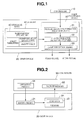
- Fig. 1 is a block diagram of a game device of this embodiment.
- the symbol 30 indicates game processing means which are activated by the cooperation between software and hardware resources resulting from the execution of a game program on an operating system, and which include player character/formation selection means 31, player character deployment means 32 and game execution means 33.
- the game processing means 30 incorporate operating information inputted by a game player through a controller 10, perform various types of processing required in the game, and create video signals for generating a game screen and audio signals for outputting sound effects and BGM.
- Attribute data 42 for the player characters are stored in memory 41.
- the base position (divided into FW, MF, DF) and ability parameters of the player characters are included in attribute data 42.
- the ability parameters are parameters for defining the abilities of the player characters, including whether a player character is left-footed or right-footed, and also include an ability value for the corresponding position.
- the ability value is a value in which, if a player character is an FW for example, the aptitude of the player character as an FW is quantified as a numerical value, and in this case would indicate an evaluation of general athletic ability with a predominant emphasis upon attacking skills such as scoring success rate, leg speed, dribbling skill, and judgment ability when near the goal.
- the ability value is a value indicating an evaluation of general athletic ability with an emphasis placed on defending skills.
- the game player selects the player characters who are to take part in the match and the team formation while referring to a guidance screen which is displayed on a video monitor. All of the player characters who are capable of participating in a match and all of the possible formations (4-3-3, 2-4-4, 3-4-3 etc.) are displayed on the video monitor.
- the player character/formation selection means 31 obtain the operating information from the game player and output the information about the player characters and formation selected by the game player to the player character deployment means 32.
- the player character deployment means 32 read the attribute data from the memory 41 and perform positioning of the player characters in consideration of the base positions, dominant feet and ability values of the player characters. Once the positioning is determined, the game execution means 33 execute the soccer game on the basis of the determined positioning information.
- Fig. 4 is an exemplification of the position numbers (F1 through F3, M1 through M4, and D1 through D3) allocated to each position in a 3-4-3 formation. As is illustrated in the figure, the numbers are allocated sequentially so as to grow larger from the right side to the left side of the field. As is illustrated in Fig. 5, the game player selects FW1 and FW2 as FWs, MF1, MF2, MF3, and MF4 as MFs, and DF1, DF2, DF3, and DF4 as DFs in the aforementioned formation.
- the "right” of FW1 indicates that this player character is right-footed, and "60” indicates that the ability value of FW1 as a forward is 60.
- the "left” of MF4 indicates that MF4 is left-footed, and the “65” indicates that MF4 has an ability value as an MF of 65. The same applies for the other player characters.
- the player characters selected by the game player in this manner include 2 FWs, 4 MFs, and 4 DFs, and therefore a 3-4-3 formation cannot be constructed.
- the player character deployment means 32 elect the player characters with the lowest ability values in each of the positions as candidates.
- MF1 has an ability value of "45”, which is the lowest in MF, and therefore, as is shown in Fig. 6, MF1 is moved to FW.
- DF4 has an ability value of "65”, which is the lowest ability value in DF, and hence DF4 is moved to MF.
- the player characters are deployed in each of the positions as is shown in Fig. 6 such that a formation of 3 FWs, 4 MFs and 3 DFs can be constructed.
- player character deployment switching is conducted for each of the positions based on the dominant foot information in order to deploy the right-footed player characters on the right side of the field and left-footed player characters on the left side of the field.
- FW2 is left-footed and therefore FW2 is deployed on the left wing (F3 in Fig. 4), whereby FW1 and MF1 are subsequently deployed in the center (F2 in Fig. 4) and on the right wing (F1 in Fig. 4) respectively.
- Player character deployment switching is conducted in a similar manner for each position in MF and DF, based on the dominant foot information. As a result, the final positioning of the player characters is set to that shown in Fig. 7.
- Fig. 3 describes in detail the procedure for the positioning of the player characters.
- the player character deployment means 32 obtain the player character information and formation information from the player character/formation selection means 31 (S1, S2), a judgment is made as to whether or not the number of characters selected for each position by the game player matches the number of players in each position in the formation (S3).
- S3 the numbers of characters for each position do not match
- S4 the ability values of the player characters
- S5 deployment switching of the player characters is conducted on the basis of the dominant foot information (S5).
- positioning is performed with reference to the ability parameters of the player characters, and therefore inappropriate positioning such as that in the related art is not conducted, but rather positioning based on a proper evaluation of the abilities of the individual player characters can be performed. Furthermore, there is no need for ideal positioning to be preset for all of the formations in respect of all of the player characters on all of the teams, and as a result inadvertent increases in the amount of data do not occur.
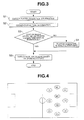
- Fig. 2 is a block diagram of the functions of a game device.
- the game player operates an operating portion 51 provided on a controller 50 to edit the team formation, starting members, and the personal appearances, names, base positions, ability values and so on of the player characters in editing mode, whereby editing means 21 obtain an operating signal outputted from the operating portion 51 to create edit data 23.
- These edit data 23 are not overwritten onto the same file but rather stored in memory 22.
- the edit data 23 can be transferred to back-up memory 52 inside the controller 50 according to necessity.
- Fig. 8 illustrates the structure of a directory for the edit data 23.
- Sub-directories of an Australian team, a Bulgarian team, a French team, an Italian team, ..., and a Spanish team are positioned under the root directory. These sub-directories are for storing the data edited by the game player for each team, and a default value, edit data 1, edit data 2 and so on are stored according to the editing history of the game player.
- the default value indicates default-set team data
- edit data n indicates the nth set of edit data.
- Fig. 9 shows one example of a team data editing screen.
- "registered countries” indicates the default-set team data
- created edit data signifies edit data.
- "Hungary 1" is the first set of edit data for the Hungarian team
- "Hungary 2" is the second set of edit data for the Hungarian team.
- the starting members for "Hungary 2" are displayed.
- deletion, modification and copying of edit data can be performed on one editing screen, and inspection and the like of each set of edit data is also easy. Match records and so on of the teams can also be displayed on the same screen.
- edit data for team data is not stored by overwriting, as in the related art, but rather is saved on separate files .
- edit data can be created with ease and editing operations of edit data such as deletion, modification, and copying can be centralized.
- the symbol 61 indicates a heptagonal polygon constituting the parts of the eyes and the sections on the periphery thereof
- the symbol 62 indicates a hexagonal polygon constituting the parts of the nose and the peripheral sections thereof
- the symbol 63 indicates a heptagonal polygon constituting the parts of the mouth and the peripheral sections thereof.
- the magnitudes of each of these parts do not conform with each other, and therefore would have been difficult to assemble conventionally.
- information for connecting the vertices of each of the polygons is prepared in advance.
- the vertex connection information is as follows.
- (P, Q) means that vertex P and vertex Q are to be connected.
- the movement vectors for each of the points (internal points) in the interior of the polygon 62 can be determined from the distance ratio between these internal points and the first to fourth internally dividing points, and from the relationships between the movement vectors of each of the vertices N1 through N6.
- the texture which is fixed onto the surface thereof is linearly interpolated in order to fill the gaps between the internal points.
- Enlargement/reduction conversion processing is performed in a similar manner for polygon 63 by determining the movement vectors of the internal points from the movement vectors of each of the vertices M1 through M7 on the basis of the magnitude, shape and relative location of polygon 62. In so doing, the magnitudes of each of the polygons are corrected and the polygons are assembled, whereby a face montage such as that shown in Fig. 11 is obtained.
- a model expressing the personal appearance of aplayer character is completed.
- vertex connection information is prepared in advance for the polygons which constitute one part of the model, and as a result, even if the magnitudes and shapes of the polygons do not conform with each other, linear conversion processing of the polygons is performed on the basis of the vertex connection information such that the disconformities among the magnitudes and shapes of the polygons can be eliminated and a richly expressive model can be created using a small amount of data.
- the present invention is not limited to a soccer game and is applicable to any games in which a game player advances the game by constructing formations using a plurality of characters.
- Such games include various types of competitive team sports such as baseball, tennis, softball, soft tennis, rugby, American football, badminton, volleyball, basketball, hockey, handball, beach volleyball, sepak takraw, Indiaca, unihockey, and lacrosse, and military simulation games in which automatic deployment of weaponry, units of soldiers and the like occurs.
- optimum positioning is determined on the basis of character ability parameters, and therefore optimum positioning which is based on the base position and the abilities of a character becomes possible.
- edit data can be saved on separate files, which is convenient as regards editing operations.
- vertex connection information concerning the polygons can be used to enlarge/reduce the polygons, whereby the magnitudes and shapes of the polygons can be aligned, as a result of which the amount of polygon data can be reduced.
Landscapes
- Engineering & Computer Science (AREA)
- Multimedia (AREA)
- Business, Economics & Management (AREA)
- Physics & Mathematics (AREA)
- Tourism & Hospitality (AREA)
- Theoretical Computer Science (AREA)
- General Physics & Mathematics (AREA)
- Strategic Management (AREA)
- Health & Medical Sciences (AREA)
- Primary Health Care (AREA)
- Human Resources & Organizations (AREA)
- General Health & Medical Sciences (AREA)
- General Business, Economics & Management (AREA)
- Economics (AREA)
- Marketing (AREA)
- Computer Graphics (AREA)
- Geometry (AREA)
- Software Systems (AREA)
- Processing Or Creating Images (AREA)
- Management, Administration, Business Operations System, And Electronic Commerce (AREA)
- Image Processing (AREA)
- Image Analysis (AREA)
Applications Claiming Priority (2)
| Application Number | Priority Date | Filing Date | Title |
|---|---|---|---|
| JP2001314599 | 2001-10-11 | ||
| JP2001314599A JP2003117241A (ja) | 2001-10-11 | 2001-10-11 | キャラクタ配置方法、データ管理方法及びモデル形成方法 |
Publications (2)
| Publication Number | Publication Date |
|---|---|
| EP1302226A2 true EP1302226A2 (de) | 2003-04-16 |
| EP1302226A3 EP1302226A3 (de) | 2005-03-16 |
Family
ID=19132884
Family Applications (1)
| Application Number | Title | Priority Date | Filing Date |
|---|---|---|---|
| EP02257023A Ceased EP1302226A3 (de) | 2001-10-11 | 2002-10-10 | Charakterausbreitungsverfahren, Datenverwaltungsverfahren und Modelerzeugungsverfahren |
Country Status (5)
| Country | Link |
|---|---|
| US (1) | US7300345B2 (de) |
| EP (1) | EP1302226A3 (de) |
| JP (1) | JP2003117241A (de) |
| KR (1) | KR20030030902A (de) |
| CN (1) | CN100435129C (de) |
Cited By (2)
| Publication number | Priority date | Publication date | Assignee | Title |
|---|---|---|---|---|
| EP1864698A4 (de) * | 2005-03-30 | 2008-07-02 | Konami Digital Entertainment | Zeichensteuervorrichtung, zeichensteuerverfahren, aufzeichnungsmedium und programm |
| CN102254335A (zh) * | 2011-07-01 | 2011-11-23 | 厦门吉比特网络技术股份有限公司 | 游戏人物编辑系统和方法 |
Families Citing this family (28)
| Publication number | Priority date | Publication date | Assignee | Title |
|---|---|---|---|---|
| US7436983B2 (en) * | 2002-07-31 | 2008-10-14 | National Institute Of Information And Communications Technology Incorporated Administrative Agency | Image recognition apparatus and image recognition program |
| KR100482183B1 (ko) * | 2004-06-28 | 2005-04-14 | 엔에이치엔(주) | 파일럿 및 상기 파일럿과 연관된 유닛 정보가 연동되어변경되는 온라인 게임 제공 방법 및 그 시스템 |
| US8187094B2 (en) * | 2004-09-22 | 2012-05-29 | Sega Corporation | Game program |
| KR100705532B1 (ko) * | 2004-12-09 | 2007-04-10 | 주식회사 엘피에이 | 최대 흐름 정합을 기반으로 하는 게임 시스템 및 그것의캐릭터 특성 분석 방법 |
| US8484564B1 (en) * | 2006-03-07 | 2013-07-09 | Google Inc. | Method, system, and graphical user interface for personalized online sports team charts |
| JP5382981B2 (ja) * | 2006-05-31 | 2014-01-08 | ヤフー株式会社 | コンテンツ提供システム、コンテンツ提供方法、およびコンテンツ提供プログラム |
| JP4319233B2 (ja) * | 2007-12-11 | 2009-08-26 | 株式会社コナミデジタルエンタテインメント | 端末装置、ゲーム制御方法、ならびに、プログラム |
| JP4922259B2 (ja) | 2008-07-16 | 2012-04-25 | 株式会社コナミデジタルエンタテインメント | ゲーム装置、ゲーム装置の制御方法及びプログラム |
| CN101350107B (zh) * | 2008-07-21 | 2013-02-27 | 腾讯科技(深圳)有限公司 | 一种角色绘制的方法及装置 |
| KR101320090B1 (ko) * | 2011-12-09 | 2013-10-18 | (주)네오위즈게임즈 | 스쿼드를 추천할 수 있는 온라인 스포츠 게임 제공 방법 및 그 시스템 |
| KR101190434B1 (ko) * | 2011-12-29 | 2012-10-17 | (주)네오위즈게임즈 | 온라인 게임의 팀 운용 방법 및 장치 |
| KR101297741B1 (ko) | 2011-12-29 | 2013-08-20 | (주)네오위즈게임즈 | 온라인 게임의 팀 기록 제공 방법 및 장치 |
| KR101190306B1 (ko) * | 2011-12-30 | 2012-12-24 | (주)네오위즈게임즈 | 축구게임에서 포메이션 저장 서비스를 제공하는 방법, 단말기, 서버 및 기록매체 |
| KR101366570B1 (ko) * | 2012-02-14 | 2014-02-26 | (주)네오위즈게임즈 | 온라인 스포츠 게임의 스쿼드 및 경매 제공 방법 및 장치 |
| JP5501400B2 (ja) * | 2012-04-19 | 2014-05-21 | 株式会社コナミデジタルエンタテインメント | ゲーム装置、ゲームシステム、ゲーム装置の制御方法、ゲームシステムの制御方法、及びプログラム |
| JP5270022B1 (ja) * | 2012-08-29 | 2013-08-21 | 株式会社 ディー・エヌ・エー | サーバー装置、及び、ゲームプログラム |
| US9656167B2 (en) * | 2013-03-15 | 2017-05-23 | Activision Publishing, Inc. | Pre-play and post-play video game character presentation and equipping |
| JP2014204941A (ja) * | 2013-04-15 | 2014-10-30 | 森 健司 | Nine |
| JP5832488B2 (ja) * | 2013-08-12 | 2015-12-16 | 株式会社コナミデジタルエンタテインメント | ゲームシステム、ゲーム装置、及びプログラム |
| GB2593560A (en) | 2013-09-27 | 2021-09-29 | Gree Inc | Method for controlling computer, control program and computer |
| JP2014133157A (ja) * | 2014-03-11 | 2014-07-24 | Konami Digital Entertainment Co Ltd | ゲーム装置、ゲームシステム、ゲーム装置の制御方法、ゲームシステムの制御方法、及びプログラム |
| JP6007208B2 (ja) * | 2014-05-15 | 2016-10-12 | 株式会社コナミデジタルエンタテインメント | ゲーム制御装置、プログラム、ゲームシステム |
| JP6327998B2 (ja) * | 2014-07-31 | 2018-05-23 | 株式会社バンダイナムコエンターテインメント | プログラム及びゲームシステム |
| JP6240977B2 (ja) * | 2016-09-12 | 2017-12-06 | 株式会社コナミデジタルエンタテインメント | ゲーム制御装置、プログラム、ゲームシステム |
| CN107229671A (zh) * | 2017-04-12 | 2017-10-03 | 国网山东省电力公司 | 一种基于大数据的运动机能分析中平衡指标展示模型及其应用 |
| CN108172096A (zh) * | 2018-02-06 | 2018-06-15 | 广州铁谋信息咨询有限公司 | 一种教育沙盘模拟教学示范课程系统及其教学示范方法 |
| JP7252747B2 (ja) * | 2018-11-30 | 2023-04-05 | 株式会社コーエーテクモゲームス | ゲームプログラム、記録媒体、ゲーム処理方法、情報処理装置 |
| CA3074299A1 (en) * | 2020-02-28 | 2021-08-28 | Square Enix Limited | Method and apparatus for dynamic management of formations in a video game |
Family Cites Families (16)
| Publication number | Priority date | Publication date | Assignee | Title |
|---|---|---|---|---|
| JP3647487B2 (ja) | 1994-12-02 | 2005-05-11 | 株式会社ソニー・コンピュータエンタテインメント | テクスチャマッピング装置 |
| BR9603888A (pt) * | 1995-01-19 | 1997-10-07 | Sega Enterprises Kk | Método de processamento de imagem e dispositivo de processamento de imagem |
| JP3902266B2 (ja) * | 1996-05-27 | 2007-04-04 | データスタジアム株式会社 | 団体球技における攻撃、守備体勢を確認し矯正するための 方法と装置 |
| KR100229538B1 (ko) | 1996-12-27 | 1999-11-15 | 전주범 | 얼글 움직임을 인코딩하기 위한 방법 및 장치한 방법 및 장치 |
| CN1188948A (zh) * | 1996-12-27 | 1998-07-29 | 大宇电子株式会社 | 用于对脸部运动编码的方法和装置 |
| JP3736589B2 (ja) | 1997-01-30 | 2006-01-18 | 株式会社セガ | 対戦ゲーム機における行動決定装置、行動決定方法及び対戦ゲーム機並びに媒体 |
| US6657627B1 (en) * | 1997-02-18 | 2003-12-02 | Konami Co., Ltd. | Video simulation system for calculating distance between characters and applying polygon to polygon plane |
| JP3126944B2 (ja) * | 1997-10-24 | 2001-01-22 | コナミ株式会社 | ビデオゲームシステムおよびそのゲームを実行するためのプログラムが記録されたコンピュータ読み取り可能な記録媒体 |
| US6270433B1 (en) * | 1997-12-15 | 2001-08-07 | Toy Builders | Player position detection system |
| JP2897984B1 (ja) * | 1998-06-03 | 1999-05-31 | コナミ株式会社 | ビデオゲーム装置、キャラクタポジションの指定をガイドする方法及びキャラクタポジションの指定をガイドするゲームプログラムを記録した可読記録媒体 |
| JP2904775B1 (ja) * | 1998-06-03 | 1999-06-14 | コナミ株式会社 | 画像表示ゲーム装置、ゲーム装置の画像表示方法、ゲーム装置の画像表示プログラムを記録した媒体 |
| JP3041286B1 (ja) * | 1998-12-28 | 2000-05-15 | 株式会社コナミコンピュータエンタテインメント大阪 | ビデオゲーム装置、ビデオゲームのプレイ制御方法及びその方法が記録された可読記録媒体 |
| JP4332927B2 (ja) | 1999-03-23 | 2009-09-16 | ソニー株式会社 | 編集装置 |
| CN1108363C (zh) * | 1999-03-30 | 2003-05-14 | 恒运集团石油股份有限公司 | 一种润滑油极压抗磨组合物及其在内燃机润滑油中的应用 |
| JP3417883B2 (ja) * | 1999-07-26 | 2003-06-16 | コナミ株式会社 | 画像作成装置、画像作成方法、画像作成プログラムが記録されたコンピュータ読み取り可能な記録媒体およびビデオゲーム装置 |
| GB2379571A (en) * | 2001-09-11 | 2003-03-12 | Eitan Feldbau | Determining the Position of Players on a Sports Field |
-
2001
- 2001-10-11 JP JP2001314599A patent/JP2003117241A/ja active Pending
-
2002
- 2002-09-29 CN CNB021440409A patent/CN100435129C/zh not_active Expired - Fee Related
- 2002-10-03 US US10/262,948 patent/US7300345B2/en not_active Expired - Fee Related
- 2002-10-08 KR KR1020020061207A patent/KR20030030902A/ko not_active Ceased
- 2002-10-10 EP EP02257023A patent/EP1302226A3/de not_active Ceased
Cited By (4)
| Publication number | Priority date | Publication date | Assignee | Title |
|---|---|---|---|---|
| EP1864698A4 (de) * | 2005-03-30 | 2008-07-02 | Konami Digital Entertainment | Zeichensteuervorrichtung, zeichensteuerverfahren, aufzeichnungsmedium und programm |
| US8182341B2 (en) | 2005-03-30 | 2012-05-22 | Konami Digital Entertainment Co., Ltd. | Character control device, character control method, recording medium, and program |
| CN102254335A (zh) * | 2011-07-01 | 2011-11-23 | 厦门吉比特网络技术股份有限公司 | 游戏人物编辑系统和方法 |
| CN102254335B (zh) * | 2011-07-01 | 2013-01-02 | 厦门吉比特网络技术股份有限公司 | 游戏人物编辑系统和方法 |
Also Published As
| Publication number | Publication date |
|---|---|
| KR20030030902A (ko) | 2003-04-18 |
| CN100435129C (zh) | 2008-11-19 |
| US7300345B2 (en) | 2007-11-27 |
| CN1412689A (zh) | 2003-04-23 |
| US20030083128A1 (en) | 2003-05-01 |
| EP1302226A3 (de) | 2005-03-16 |
| JP2003117241A (ja) | 2003-04-22 |
Similar Documents
| Publication | Publication Date | Title |
|---|---|---|
| US7300345B2 (en) | Method and computer-readable medium for deploying characters in a game | |
| JP6953439B2 (ja) | プレーヤーマッチング装置及びプレーヤーマッチング方法 | |
| TWI410265B (zh) | Multimedia game automatic recording and configuration of the image method | |
| JP5250830B2 (ja) | ネットワークゲームシステム | |
| US7950991B2 (en) | Game performing method, storage medium, game apparatus, data signal and program | |
| US20100156906A1 (en) | Shot generation from previsualization of a physical environment | |
| US8547396B2 (en) | Systems and methods for generating personalized computer animation using game play data | |
| JP2001321565A (ja) | 育成ゲーム装置およびその制御方法、ならびに、育成ゲームプログラムを記録した可読記録媒体 | |
| WO2017130525A1 (ja) | 情報処理システム、情報処理方法、及びプログラム、サーバ、並びに情報処理端末 | |
| JPH09313660A (ja) | 団体球技における攻撃、守備体勢を確認し矯正するための 方法と装置 | |
| US11617962B2 (en) | System for creating play-recording video | |
| WO2004001536A2 (en) | An athletic game learning tool, capture system, and simulator | |
| KR20010051332A (ko) | 네트워크 게임 시스템 | |
| JP2006280730A (ja) | ゲームプログラム、ゲーム装置及び記録媒体 | |
| JP2019217215A (ja) | ゲームプログラム、方法、および情報処理装置 | |
| JP2005071385A (ja) | モデル形成方法 | |
| US20240087072A1 (en) | Live event information display method, system, and apparatus | |
| Muniowski | Sport and video games | |
| JP5220349B2 (ja) | プログラム、情報記憶媒体及び画像生成システム | |
| US20120178510A1 (en) | Simulated/video fantasy sports league | |
| JP2003126549A (ja) | ゴルフコース簡易シミュレーションシステム | |
| KR102109141B1 (ko) | 골프 게임 타수별 점수 규칙 설정 방법 | |
| JP2006280734A (ja) | ゲームプログラム、ゲーム装置及び記録媒体 | |
| JP2006280729A (ja) | ゲームプログラム、ゲーム装置及び記録媒体 | |
| KR101439738B1 (ko) | 복수 사용자에 대한 네거티브 보상 방식의 온라인 골프 게임 운용 방법 및 장치 |
Legal Events
| Date | Code | Title | Description |
|---|---|---|---|
| PUAI | Public reference made under article 153(3) epc to a published international application that has entered the european phase |
Free format text: ORIGINAL CODE: 0009012 |
|
| AK | Designated contracting states |
Designated state(s): AT BE BG CH CY CZ DE DK EE ES FI FR GB GR IE IT LI LU MC NL PT SE SK TR |
|
| AX | Request for extension of the european patent |
Extension state: AL LT LV MK RO SI |
|
| PUAL | Search report despatched |
Free format text: ORIGINAL CODE: 0009013 |
|
| AK | Designated contracting states |
Kind code of ref document: A3 Designated state(s): AT BE BG CH CY CZ DE DK EE ES FI FR GB GR IE IT LI LU MC NL PT SE SK TR |
|
| AX | Request for extension of the european patent |
Extension state: AL LT LV MK RO SI |
|
| 17P | Request for examination filed |
Effective date: 20050615 |
|
| AKX | Designation fees paid |
Designated state(s): DE ES FR GB IT |
|
| STAA | Information on the status of an ep patent application or granted ep patent |
Free format text: STATUS: THE APPLICATION HAS BEEN REFUSED |
|
| 18R | Application refused |
Effective date: 20100904 |