EP1294908B1 - Verfahren zur verbesserung der transfektionseffizienz - Google Patents
Verfahren zur verbesserung der transfektionseffizienz Download PDFInfo
- Publication number
- EP1294908B1 EP1294908B1 EP01955217A EP01955217A EP1294908B1 EP 1294908 B1 EP1294908 B1 EP 1294908B1 EP 01955217 A EP01955217 A EP 01955217A EP 01955217 A EP01955217 A EP 01955217A EP 1294908 B1 EP1294908 B1 EP 1294908B1
- Authority
- EP
- European Patent Office
- Prior art keywords
- peptide
- dna
- sequence
- transfection
- nls
- Prior art date
- Legal status (The legal status is an assumption and is not a legal conclusion. Google has not performed a legal analysis and makes no representation as to the accuracy of the status listed.)
- Expired - Lifetime
Links
Images




Classifications
-
- C—CHEMISTRY; METALLURGY
- C12—BIOCHEMISTRY; BEER; SPIRITS; WINE; VINEGAR; MICROBIOLOGY; ENZYMOLOGY; MUTATION OR GENETIC ENGINEERING
- C12N—MICROORGANISMS OR ENZYMES; COMPOSITIONS THEREOF; PROPAGATING, PRESERVING, OR MAINTAINING MICROORGANISMS; MUTATION OR GENETIC ENGINEERING; CULTURE MEDIA
- C12N15/00—Mutation or genetic engineering; DNA or RNA concerning genetic engineering, vectors, e.g. plasmids, or their isolation, preparation or purification; Use of hosts therefor
- C12N15/09—Recombinant DNA-technology
- C12N15/87—Introduction of foreign genetic material using processes not otherwise provided for, e.g. co-transformation
- C12N15/88—Introduction of foreign genetic material using processes not otherwise provided for, e.g. co-transformation using microencapsulation, e.g. using amphiphile liposome vesicle
-
- C—CHEMISTRY; METALLURGY
- C07—ORGANIC CHEMISTRY
- C07K—PEPTIDES
- C07K14/00—Peptides having more than 20 amino acids; Gastrins; Somatostatins; Melanotropins; Derivatives thereof
- C07K14/001—Peptides having more than 20 amino acids; Gastrins; Somatostatins; Melanotropins; Derivatives thereof by chemical synthesis
-
- C—CHEMISTRY; METALLURGY
- C07—ORGANIC CHEMISTRY
- C07K—PEPTIDES
- C07K19/00—Hybrid peptides, i.e. peptides covalently bound to nucleic acids, or non-covalently bound protein-protein complexes
-
- C—CHEMISTRY; METALLURGY
- C07—ORGANIC CHEMISTRY
- C07K—PEPTIDES
- C07K2319/00—Fusion polypeptide
Definitions
- the invention relates to a method for improving transfection efficiency using K16 peptides. Furthermore, the invention relates to novel K16 peptides. Areas of application are molecular biology and medicine.
- the transfection mechanism of non-viral gene transfer systems is a complex process that is inhibited by a variety of biological barriers.
- An essential limiting step is the overcoming of the cell nucleus membrane by the vector.
- the transgenic DNA enters the cell nucleus, which makes efficient expression of the transgene possible.
- attempts are being made to exploit cell nuclear transport mechanisms.
- One strategy is to noncovalently couple peptidic NLS sequences to the DNA via an additionally attached cationic DNA binding sequence The aim is that the cell's nuclear transport machinery recognize these DNA-linked NLS sequences and transport them into the nucleus together with the DNA.
- NLS sequence most commonly used in non-viral gene delivery systems is amino acid section 126 to 132 of Simian Virus 40 (SV 40) large T antigen (SV40 NLS). Sequence-specific enhancement of transfection efficiency by this NLS sequence has not been demonstrated in the above strategy.
- SV 40 Simian Virus 40
- SV40 NLS large T antigen
- WO 99/53961, WO 98/35984, WO 94/23751 describe the transfection by means of polycationic peptides.
- US 6,022,735 also discloses polylysine-containing compositions as transfection agents.
- a synthetic peptide consisting of an oligo-lysine DNA binding sequence and an SV40 NLS is constructed.
- Femer is concerned with the construction and optimization of a complex consisting of plasmid Realized DNA, synthetic peptide and lipid.
- synthetic peptides the following peptides were selected:
- All of these peptides carry 16 lysine residues for binding the peptides to the plasmid DNA.
- the K16 NLS peptide also carries the SV40 NLS sequence (PKKKRKV).
- the KI6 SLN peptide is a control peptide with the same DNA binding sequence and amino acid composition carrying an inverted SV40 NLS sequence.
- the K16 Vpr peptide carries, in addition to the oligo-lysine DNA binding sequence, an NLS sequence derived from the C-terminal region of the HIV Vpr protein.
- the K16 VprN peptide analogously carries a sequence derived from the N-terminal region.
- the K16-mVprN peptide is a control peptide with the same DNA-binding sequence and a VprN control sequence constructed by a three-amino acid substitution and thus described as being deficient for facilitated nuclear import.
- the lipid composition Lipofectin was preferably used.
- the inventive feat is the construction of the DNA-peptide-lipid complex.
- composition of the complexes by the choice of certain charge ratios between peptide and DNA and the amount of lipid are crucial.
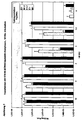
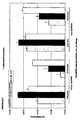
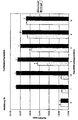
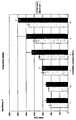
- the method of construction is also a decisive factor (concentrations, volumes, buffer system, incubation times and order of construction, see Figures 1-3 and 4-6).
- concentration, volumes, buffer system, incubation times and order of construction see Figures 1-3 and 4-6.
- the inventive feat is to choose the peptide-DNA ratio by first preparing an unstable peptide-DNA complex which is then added with a relatively small amount of lipid.
- the generated sequence-specific increase in gene expression correlates with increased nuclear transport of the DNA.
- a cyclic peptide for stabilizing the NLS sequence and its use for optimizing a non-viral gene transfer system has been constructed.
- the SV40 NLS sequence is highly positively charged by a high level of basic residues. As demonstrated in transfection experiments and by biochemical analysis, the SV40 NLS most likely interacts with the plasmid DNA. The binding of the SV40 NLS sequence to the DNA can potentially result in the peptide being masked on the one hand for interaction with the cell's nuclear transport machinery and on the other hand altering its secondary structure so that it is no longer recognized as a nuclear import substrate could.
- the inventive idea is to stabilize the secondary structure of the SV40 NLS sequence by cyclization of the peptide.
- the interaction of the SV40-NLS sequence with its receptor Importin a in a leaflet-structure conformation was exploited.
- the basis of the cyclization was therefore a cyclic peptide, which consists of two antiparallel leaflet sequences
- the invention is to reconstruct the SV40 NLS sequence in this cyclic peptide.
- the result is a cyclic peptide consisting of two antiparallel sheet structures, one side containing the SV40 NLS sequence.
- 16 lysine residues were covalently attached to the opposite side of the SV40 NLS sequence.
- the resulting construct is a synthetic peptide having a cyclized NLS sequence and an oligo-lysine DNA binding site.
- the invention further relates to two new K16 peptides, the total of 39 amino acid-containing peptide having the sequence: and the total of 38 amino acids having the sequence:
- peptides are suitable for transfection both in combination with plasmid DNA and in combination with plasmid DNA and lipid
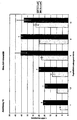
- the K16 VprN peptide achieved a 10-fold increase in maximal gene expression compared to the K16 mVprN peptide. In addition, a 12-fold lower amount of peptide was required for the K16 VprN peptide for maximal gene expression compared to the K16 mVprN peptide.
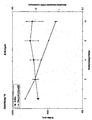
- the apparent size (see Figure 11) and the relative number of particles (see Figure 12) were examined by means of photon correlation spectroscopy (PCS). As can be seen in Figure 11, the sizes of the DNA complexes with the K16 VprN peptide differ only slightly compared to the K16 mVprN peptide.
- Figure 12 shows that with increasing DNA / peptide charge ratio the scattered light intensity increases.
- the K16 VprN peptide at a DNA / peptide charge ratio of 3, causes a 2-fold increase in scattered light intensity and at least a 100-fold increase in gene expression.
- the scattered light intensity doubles in comparison to a charge ratio of 3.
- Figures 13 and 14 are intended to demonstrate that the measured scattered light intensity correlates with the amount of DNA complexes used.
- DNA complexes consisting of plasmid DNA and the peptides K16-VprN and K16-mVprN were prepared and subsequently diluted to 16-fold as shown.
- the result shows that the scattered light intensity decreases to the extent of the dilution factor, while the size of the particles remains approximately the same.
- the scattered light intensity is thus a measure of the relative amount of DNA complexes used.
Landscapes
- Chemical & Material Sciences (AREA)
- Health & Medical Sciences (AREA)
- Genetics & Genomics (AREA)
- Life Sciences & Earth Sciences (AREA)
- Organic Chemistry (AREA)
- Biochemistry (AREA)
- Molecular Biology (AREA)
- General Health & Medical Sciences (AREA)
- Biophysics (AREA)
- Engineering & Computer Science (AREA)
- Medicinal Chemistry (AREA)
- General Engineering & Computer Science (AREA)
- Proteomics, Peptides & Aminoacids (AREA)
- Zoology (AREA)
- Wood Science & Technology (AREA)
- Bioinformatics & Cheminformatics (AREA)
- Biomedical Technology (AREA)
- Biotechnology (AREA)
- Physics & Mathematics (AREA)
- Plant Pathology (AREA)
- Gastroenterology & Hepatology (AREA)
- Microbiology (AREA)
- General Chemical & Material Sciences (AREA)
- Chemical Kinetics & Catalysis (AREA)
- Peptides Or Proteins (AREA)
- Preparation Of Compounds By Using Micro-Organisms (AREA)
- Micro-Organisms Or Cultivation Processes Thereof (AREA)
- Liquid Crystal Substances (AREA)
- Steroid Compounds (AREA)
Description
- Die Erfindung betrifft ein Verfahren zur Verbesserung der Transfektionseffizienz unter Verwendung von K16-Peptiden. Desweiteren betrifft die Erfindung neue K16-Peptide. Anwendungsgebiete sind die Molekularbiologie und die Medizin.
- Der Transfektionsmechanismus nicht-viraler Gentransfer-Systeme ist ein komplexer Prozess, der durch eine Vielzahl biologischer Barrieren gehemmt wird. Ein wesentlicher limitierender Schritt ist die Überwindung der Zellkernmembran durch den Vektor. Durch diesen Schritt gelangt die transgene DNA in den Zellkern, wodurch erst eine effiziente Expression des Transgens möglich wird.
Um den Transfer von Plasmid-DNA in den Zellkern zu verbessern, wird u. a. versucht, Kerntransportmechanismen der Zelle zu nutzen Eine Strategie besteht darin, peptidische NLS-Sequenzen nicht-kovaIent an die DNA über eine zusätzlich angefügte kationische DNA-Bindungssequenz zu koppeln, mit dem Ziel, daß die Kerntransport-Maschinerie der Zelle diese an DNA gebundene NLS-Sequenzen erkennt und zusammen mit der DNA in den Zellkern transportiert.
Die in nicht-viralen Gentransfersystemen meist verwendete NLS-Sequenz ist der Aminosäurenabschnitt 126 bis 132 des Simian Virus 40 (SV 40) large T-Antigens (SV40-NLS). Eine Sequenz-spezifische Erhöhung der Transfektionseffizienz durch diese NLS-Sequenz konnte bisher in der oben erwähnten Strategie nicht nachgewiesen werden. - WO 99/53961, WO 98/35984, WO 94/23751 beschreiben die Transfektion mittels polykationischer Peptide. US 6,022,735 offenbart ebenfalls Polylysinhaltige Zusammensetzungen als Transfektions agentien.
- Der Erfindung liegt die Aufgabe zugrunde, den Kemtransport von Plasmid-DNA zu verbessem.Gemäß der Erfindung wird ein synthetisches Peptid bestehend aus einer oligo-Lysin-DNA-Bindungssequenz und einer SV40-NLS konstruiert Femer wird die Konstruktion und Optimierung eines Komplexes bestehend aus Plasmid-DNA, synthetischem Peptid und Lipid realisiert.
Als synthetische Peptide wurden die folgenden Peptide ausgewählt:
- Alle diese Peptide tragen 16 Lysin-Reste zur Bindung der Peptide an die Plasmid-DNA.
- Das K16-NLS Peptid trägt außerdem die SV40-NLS-Sequenz (PKKKRKV). Das KI6-SLN-Peptid ist ein Kontrollpeptid mit gleicher DNA-Bindungssequenz und identischer Aminosäuren-Zusammensetzung , das eine umgedrehte SV40-NLS-Sequenz trägt. Das K16-Vpr-Peptid trägt zusätzlich zur Oligo-Lysin-DNA-Bindungssequenz eine NLS-Sequenz, die aus der C-tenninalen Region des HIV-Vpr-Protein abgeleitet wurde. Das K16-VprN-Peptid trägt analog eine Sequenz, die aus der N-tenninalen Region abgeleitet wurde. Das K16-mVprN-Peptid ist ein Kontrollpeptid mit gleicher DNA-Bindungssequenz und einer VprN-Kontrollsequenz, die durch einen Austausch von drei Aminosäuren konstruiert wurde und dadurch als defizient für den erleichterten Kernimport beschrieben wurde.
- Außerdem wurde ein synthetisches Peptid bestehend ausschliesslich aus 16 Lysinresten (K16) als zusätzliches Kontrollpeptid verwendet.
- Als Lipid wurde bevorzugt die Lipid-Zusammensetzung Lipofektin verwendet.
- Es wurden Komplexe aus Plasmid-DNA, Peptid und Lipid hergestellt und zur Transfektion von humanen Kolon-Karzinoma-Zellen (HCT 116) getestet. Zur Messung der Transfektionseffizienz wurde das Luziferase-Reportergen eingesetzt.
- Außer der Konstruktion der K16-NLS-Peptide besteht die erfinderische Leistung in der Konstruktion des DNA-Peptid-Lipid-Komplexes. Dabei sind Zusammensetzung der Komplexe durch die Auswahl bestimmter Ladungsverhaltnisse zwischen Peptid und DNA sowie die Menge an Lipid entscheidend. Das Verfahren der Konstruktion ist ebenfalls ein entscheidender Faktor (Konzentrationen, Volumina, Puffersystem, Inkubationszeiten und Reihenfolge der Konstruktion, vgL die Abbildungen 1-3 und 4-6).
Nach Optimierung wurde eine Zusammensetzung und eine Verfahrensweise entwickelt, die als Ergebnis eine Sequenz-spezifische Erhöhung der Genexpression des Reportergens nach Transfektion von HCT 116-Zellen hatte.
Die erfinderische Leistung besteht darin, das Peptid-DNA-Verhältnis so zu wählen, das zunächst ein unstabiler Peptid-DNA-Komplex hergestellt wird, dem danach eine relativ kleine Menge an Lipid beigefügt wird. - Die generierte Sequenz-spezifische Erhöhung der Genexpression korreliert mit einem erhöhten Kemtransport der DNA.
- Ferner wurde erfindungsgemäß ein zyklisches Peptid zur Stabilisierung der NLS-Sequenz und seine Verwendung zur Optimierung eines nicht-viralen Gentransfersystems konstruiert.
- Die SV40-NLS-Sequenz ist durch einen hohen Anteil an basischen Resten stark positiv geladen. Wie in Transfektionsexperimenten und durch biochemische Analyse nachgewiesen wurde, interagiert sehr wahrscheinlich die SV40-NLS mit der Plasmid-DNA. Die Bindung der SV40-NLS-Sequenz an die DNA kann potentiel dazu führen, daß das Peptid einerseits für eine Interaktion mit der Nukleartransport-Machinerie der Zelle maskiert ist und andererseits seine Sekundärstruktur verändert wird, so daß es als Kernimport-Substrat nicht mehr erkannt werden könnte.
- Die erfinderische Idee besteht darin, die Sekundärstruktur der SV40-NLS-Sequenz durch Zyklisierung des Peptids zu stabilisieren. Dabei wurde die Interaktion der SV40-NLS-Sequenz mit seinem Rezeptor Importin a in einer Faltblattstruktur-Konformation ausgenutzt. Als Basis der Zyklisierung diente daher ein zyklisches Peptid, welches aus zwei antiparallel liegenden Faltblattsequenzen besteht
- Die Erfindung besteht darin, in diesem zyklischen Peptid die SV40-NLS-Sequenz zu rekonstruieren. Das Ergebnis ist ein zyklisches Peptid bestehend aus zwei antiparallelen Faltblatt-Strukturen, wobei die eine Seite die SV40-NLS-Sequenz enthält. Zur Bindung an die DNA wurden an der gegenüberliegenden Seite der SV40-NLS-Sequenz kovalent 16 Lysin-Reste gebunden. Das resultierende Konstrukt ist also ein synthetisches Peptid mit einer zyklisierten NLS-Sequenz und einer oligo-Lysin-DNA-Bindungsstelle.
- Es hat die folgende

- Gegenstand der Erfindung sind desweiteren zwei neue K16-Peptide, das insgesamt 39 Aminosäuren aufweisende Peptid mit der Sequenz:und das insgesamt 38 Aminosäuren aufweisende Peptid mit der Sequenz:


- Diese Peptide sind sowohl in Kombination mit Plasmid-DNA als auch in Kombination mit Plasmid-DNA und Lipid zur Transfektion geeignet
- Die Erfindung soll nachfolgend durch Ausfühmngsbeispiele näher erläutert werden.
- Auf der Grundlage der oben beschriebenen Optimierung eines DNA-Peptid-Lipid Komplexes wurden Komplexe bestehend aus Plasmid-DNA, dem K16-CYC-Peptid und Lipofektin hergestellt und zur Transfektion von HCT116-Zellen getestet.
Das Ergebnis zeigt eine drastische Erhöhung der Genexpression nach Transfektion mit dem Kl 6-CYC-Peptid im Vergleich zum K16-NLS-Peptid, das eine lineare Form der SV40-Sequenz trägt(vgl. Abbildungen 7 und 8). - Es wurden Komplexe bestehend aus Plasmid-DNA, dem K16-VprN-Peptid und Lipofektin hergestellt und zur Transfektion von HCT116-Zellen getestet.
In einer weiteren Anwendung wurden Komplexe bestehend aus Plasmid-DNA und dem K16-VprN-Peptid hergestellt und ebenso zur Transfektion von HCT116-Zellen getestet.
In beiden Anwendungen wurde als Vergleich zum Kl6-VprN-Peptid das K16-mVprN-Peptid verwendet Das Ergebnis zeigt eine deutliche Erhöhung der Genexpression in beiden Anwendungn (vgL Abbildungen 9 und 10).
Diese Sequenz-spezifische Verbesserung der Transfektionseffizienz wurde in besonderem Maße in der Anwendung des Peptides ohne zusätzliche Verwendung des Lipids erzielt (vgl. Abbildung 10). Das K16-VprN-Peptid bewickte eine 10-fache Erhöhung der maximalen Genexpression im Vergleich zum K16-mVprN-Peptid. Ausserdem wurd für das K16-VprN-Peptid für eine maximale Genexpression gleichzeitig eine 12-fach geringere Menge an Peptid benötigt im Vergleich zum K16-mVprN-Peptid.
Um auszuschließen, daß die erzielte Verbessenmg der Transfektionseffizienz auf eine verbesserte Bildung von DNA-Komplexen beruht, wurden die scheinbare Größe (vgl. Abbildung 11) und die relative Partikel-Anzahl (vgl. Abbildung 12) mittels Photonenkorrelationsspektroskopie (PCS) untersucht. Wie in Abbildung 11 zu sehen ist, unterscheiden sich die Größen der DNA-Komplexe mit dem K16-VprN-Peptid nur geringfügig im Vergleich zum K16-mVprN-Peptid. Abbildung 12 zeigt, daß mit zunehmendem DNA/Peptid-Ladungsverhältnis die Streulicht-Intensität ansteigt. Der Vergleich der Abbildungen 10 und 12 zeigt jedoch, daß die gemessenen Streulicht-Intensitäten mit der Genexpression nicht korreliert Insbesondere bewirkt das K16-VprN-Peptid bei einem DNA/Peptid-Ladungsverhältnis von 3 eine 2-fache Erhöhung der Streulicht-Intensität und eine mindestens 100-fache Erhöhung der Genexpression. Bei einem Ladungsverhältnis von 9 verdopplet sich die Streulicht-Intensität im Vergleich zu einem Ladungsverhältis von 3. Die Genexpression erhöht sich jedoch dabei um etwa 10-fach.
Die Abbildungen 13 und 14 sollen belegen, daß die gemessene Streulicht-Intensität mit der eingesetzten Menge an DNA-Komplexen korreliert. Dazu wurden DNA-Komplexe bestehend aus Plasmid-DNA und den Peptiden K16-VprN und K16-mVprN hergestellt und anschliessend wie abgebildet bis 16-fach verdünnt. Das Ergebnis zeigt, daß die Streulicht-Intensität in dem Maße des Verdünnungsfaktors abnimmt, während die Größe der Partikel etwa gleich bleibt Die Streulicht-Intensität ist also ein Maß für die relative Menge an eingesetzten DNA-Komplexen. - Diese Ergebnisse weisen darauf hin, daß die Sequenz-spezifische Erhöhung der Genexpression durch das K16-VprN Peptid nicht auf eine Erhöhung der Partikelgröße oder der Partikelmenge zurückzuführen ist Folglich ist zu erwarten, daß vielmehr ein zellulärer Mechanismus, beruhend auf die Erkennung der VprN-Sequenz durch spezifische Faktoren während des Transfektionsvorgangs eintritt. Es ist also anzunehmen, daß die K16-VprN/Plasmid DNA-Komplexe von der Kernimport-Maschinerie der Zelle als Importsubstrat erkannt werden, verstärkt in den Kern transportiert werden und dadurch eine Erhöhung der Transfektionseffizienz bewirken.
- Zusammengefasst bedeuten diese Resultate in Bezug auf Neuheit, daß:
- 1. ein DNA-Peptid-Lipid-Komplex konstruiert wurde, dessen Zusammensetzung zu einer Sequenz-spezifischen Erhöhung der Transfektionseffizienz durch eine NLS-Sequenz fuhrt
- 2. die Zyklisierung einer NLS-Sequenz die Transfektionseffizienz in dem genannten Komplex noch weiterhin erhöht
- 3. die Verwendung der VprN-Sequenz eine drastische Verbesserung des Transfektionssystems bewirkt.
Claims (8)
- Transfektionsverfahren, dadurch gekennzeichnet, daß ein Komplex, bestehend aus- Plasmid-DNA- einem synthetischen Peptid und- einem Lipid
zur Transfektion eingesetzt wird,
wobei
als synthetisches Peptid ein Peptid aus der Gruppe:
ausgewählt wird oder
als synthetisches Peptid ein zyklisches K16-Peptid, vorzugsweise das K16-CYC, der Peptid-Sequenz:
verwendet wird. - Transfektionsverfahren nach Anspruch 1, dadurch gekennzeichnet, daß als Lipid Lipofektin verwendet wird.
- Transfektionsverfahren nach Anspruch 1 und 2, dadurch gekennzeichnet, daß das Ladungsverhältnis Peptid : Plasmid-DNA 0,7 bis 1,0 beträgt.
- Transfektionsverfahren nach Anspruch 1-3, dadurch gekennzeichnet, daß das Mengenverhältnis Plasmid-DNA : Lipid 2 : 1 bis 1 : 1 beträgt.
- Zyklisches Peptid K16-CYC.
-

-

- Verwendung von Peptiden gemäß Anspruch 5 bis 7 in Kombination mit Plasmid-DNA zur Transfektion.
Applications Claiming Priority (5)
| Application Number | Priority Date | Filing Date | Title |
|---|---|---|---|
| DE10031900 | 2000-06-28 | ||
| DE10031900 | 2000-06-28 | ||
| DE10040895 | 2000-08-18 | ||
| DE10040895 | 2000-08-18 | ||
| PCT/DE2001/002336 WO2002000991A1 (de) | 2000-06-28 | 2001-06-28 | Verfahren zur verbesserung der transfektionseffizienz |
Publications (2)
| Publication Number | Publication Date |
|---|---|
| EP1294908A1 EP1294908A1 (de) | 2003-03-26 |
| EP1294908B1 true EP1294908B1 (de) | 2006-03-08 |
Family
ID=26006242
Family Applications (1)
| Application Number | Title | Priority Date | Filing Date |
|---|---|---|---|
| EP01955217A Expired - Lifetime EP1294908B1 (de) | 2000-06-28 | 2001-06-28 | Verfahren zur verbesserung der transfektionseffizienz |
Country Status (6)
| Country | Link |
|---|---|
| US (1) | US6881577B2 (de) |
| EP (1) | EP1294908B1 (de) |
| JP (1) | JP2004501657A (de) |
| AT (1) | ATE319839T1 (de) |
| DE (2) | DE50109166D1 (de) |
| WO (1) | WO2002000991A1 (de) |
Cited By (1)
| Publication number | Priority date | Publication date | Assignee | Title |
|---|---|---|---|---|
| EP3225246A1 (de) | 2016-03-31 | 2017-10-04 | Klinikum der Universität München | Synthetische verbindung zur verbesserung der effizienz der transfektion |
Families Citing this family (3)
| Publication number | Priority date | Publication date | Assignee | Title |
|---|---|---|---|---|
| EP1354958A1 (de) * | 2002-04-18 | 2003-10-22 | Max-Delbrück-Centrum Für Molekulare Medizin | Herstellung und Anwendung von DNA-Polyelektrolyt-Nanopartikeln für den Gentransfer |
| CA2619355A1 (en) * | 2005-08-15 | 2007-02-22 | John Roujinsky | Method and system for obtaining feedback from at least one recipient via a telecommunication network |
| DK2200638T3 (en) * | 2007-10-09 | 2016-06-06 | Univ Melbourne | Compositions for the transfection of cells |
Family Cites Families (9)
| Publication number | Priority date | Publication date | Assignee | Title |
|---|---|---|---|---|
| IT1155193B (it) | 1982-05-10 | 1987-01-21 | Indesit | Apparecchio essicatore particolarmente armadio asciugabiancheria |
| DE3632820A1 (de) | 1986-09-26 | 1988-04-07 | Hans Baltes | Verfahren zum trocknen und sterilisieren von gut im geschlossenen kreislaufsystem |
| US5228211A (en) * | 1987-11-12 | 1993-07-20 | Stubbing Thomas J | Method and apparatus for energy efficient drying |
| NZ244306A (en) | 1991-09-30 | 1995-07-26 | Boehringer Ingelheim Int | Composition for introducing nucleic acid complexes into eucaryotic cells, complex containing nucleic acid and endosomolytic agent, peptide with endosomolytic domain and nucleic acid binding domain and preparation |
| DE4235560C2 (de) | 1992-10-22 | 1995-08-10 | Patent Und Innovationsagentur | Verfahren zum Entgiften, Lüften, Trocknen und Sterilisieren von Geweben und dergleichen sowie Gerät zur Durchführung des Verfahrens |
| WO1994023751A1 (de) | 1993-04-14 | 1994-10-27 | Boehringer Mannheim Gmbh | Nukleinsäure-transferpeptide und deren verwendung zur einschleusung von nukleinsäuren in eukaryontische zellen |
| EP0874910A4 (de) * | 1995-06-07 | 1999-04-21 | Life Technologies Inc | Durch peptide erhöhte kationische lipid transfektionen |
| ATE349465T1 (de) | 1997-02-12 | 2007-01-15 | Innovata Plc | Zusammensetzungen sowie verfahren zur hocheffizienten transfektion |
| EP1071472A4 (de) | 1998-04-23 | 2002-04-17 | Univ Michigan Technology Man W | Peptide für einen effizienten gentransfer |
-
2001
- 2001-06-28 JP JP2002506296A patent/JP2004501657A/ja not_active Withdrawn
- 2001-06-28 DE DE50109166T patent/DE50109166D1/de not_active Expired - Fee Related
- 2001-06-28 DE DE10130849A patent/DE10130849A1/de not_active Withdrawn
- 2001-06-28 AT AT01955217T patent/ATE319839T1/de not_active IP Right Cessation
- 2001-06-28 EP EP01955217A patent/EP1294908B1/de not_active Expired - Lifetime
- 2001-06-28 US US10/312,691 patent/US6881577B2/en not_active Expired - Fee Related
- 2001-06-28 WO PCT/DE2001/002336 patent/WO2002000991A1/de not_active Ceased
Cited By (4)
| Publication number | Priority date | Publication date | Assignee | Title |
|---|---|---|---|---|
| EP3225246A1 (de) | 2016-03-31 | 2017-10-04 | Klinikum der Universität München | Synthetische verbindung zur verbesserung der effizienz der transfektion |
| WO2017167870A1 (en) | 2016-03-31 | 2017-10-05 | Klinikum Der Universität München | Synthetic compound for improving efficiency of transfection |
| US11077205B2 (en) | 2016-03-31 | 2021-08-03 | Klinikum Der Universität München | Synthetic compound for improving efficiency of transfection |
| AU2017242657B2 (en) * | 2016-03-31 | 2022-07-21 | Klinikum Der Universität München | Synthetic compound for improving efficiency of transfection |
Also Published As
| Publication number | Publication date |
|---|---|
| DE10130849A1 (de) | 2002-06-06 |
| EP1294908A1 (de) | 2003-03-26 |
| WO2002000991A9 (de) | 2002-05-23 |
| WO2002000991A1 (de) | 2002-01-03 |
| DE50109166D1 (de) | 2006-05-04 |
| US6881577B2 (en) | 2005-04-19 |
| JP2004501657A (ja) | 2004-01-22 |
| US20030175975A1 (en) | 2003-09-18 |
| ATE319839T1 (de) | 2006-03-15 |
Similar Documents
| Publication | Publication Date | Title |
|---|---|---|
| DE69635653T2 (de) | Peptide als vektoren zur intrazellulären adressierung von aktiven molekülen | |
| EP0532525B1 (de) | Neue protein-polykation-konjugate | |
| EP0571414B1 (de) | Neue, über endozytose in höhere eukaryotische zellen aufnehmbare, nukleinsäure enthaltende komplexe | |
| DE69534669T2 (de) | Nukleinsaeure enthaltende zusammensetzungen, herstellung und verwendung | |
| DE68926301T2 (de) | Zellmembran-mischungsmittel enthaltende molekularkonjugate | |
| DE60037450T2 (de) | Fünf-helix protein | |
| EP0388758A1 (de) | Neue Protein-Polykation-Konjugate | |
| DE10355559A1 (de) | Transskin | |
| DE3934366A1 (de) | Vakzine zum schutz vor hiv-virusinfektionen, verfahren zu ihrer herstellung und ihre verwendung als diagnostikum und immuntherapeutikum | |
| DE2705514C3 (de) | Nonapeptide und diese enthaltende Arzneimittel | |
| DE69434961T2 (de) | Funktion und aktivität des viralen proteins r (vpr) | |
| WO1995033061A1 (de) | Verfahren zum einbringen von nukleinsäure in höhere eukaryotische zellen | |
| DE4110409A1 (de) | Neue protein-polykation-konjugate | |
| WO2001005432A2 (de) | Konjugat zur vermittlung eines zell-, kompartiment- oder membranspezifischen transports von wirksubstanzen | |
| EP1294908A1 (de) | Verfahren zur verbesserung der transfektionseffizienz | |
| EP0584118B1 (de) | Neue konjugate, bestehend aus einem glykoprotein und einer nukleinsäure-bindenden substanz | |
| DE60217958T2 (de) | Pseudotypierung von hiv vektoren mit mokola virenhüllen | |
| EP1466614A1 (de) | Polypeptid, dessen konjugat doxorubicin enthält, und auf diesem basierende pharmazeutische zusammensetzung | |
| DE69804674T2 (de) | Liposomen mit mehrfach verzweigten peptidkonstruktionen zur verwendung gegen hiv | |
| DE19752990A1 (de) | Konjugat zum gerichteten Gentransfer | |
| DE4110410C2 (de) | Neue Protein-Polykation-Konjugate | |
| Aoki | Eine weitere agglutinatorische Untersuchung von Paradysenteriebazillen | |
| DE69815828T2 (de) | Verwendung von mikropartikeln, auf denen ein protein und ein antikörper adsorbiert sind, zur herstellung eines arzneimittels zur intranasalen verabreichung | |
| EP1404373A2 (de) | Pna-konjugat zur therapie von mit hiv in zusammenhang stehenden erkrankungen | |
| DE19715149A1 (de) | Krebstherapeutikum und Diagnose zur Charakterisierung von Krebszellen mit individueller Eigenschaft |
Legal Events
| Date | Code | Title | Description |
|---|---|---|---|
| PUAI | Public reference made under article 153(3) epc to a published international application that has entered the european phase |
Free format text: ORIGINAL CODE: 0009012 |
|
| 17P | Request for examination filed |
Effective date: 20021217 |
|
| AK | Designated contracting states |
Kind code of ref document: A1 Designated state(s): AT BE CH CY DE DK ES FI FR GB GR IE IT LI LU MC NL PT SE TR Designated state(s): AT BE CH CY DE DK ES FI FR GB GR IE IT LI LU MC NL PT SE TR |
|
| GRAP | Despatch of communication of intention to grant a patent |
Free format text: ORIGINAL CODE: EPIDOSNIGR1 |
|
| GRAS | Grant fee paid |
Free format text: ORIGINAL CODE: EPIDOSNIGR3 |
|
| GRAL | Information related to payment of fee for publishing/printing deleted |
Free format text: ORIGINAL CODE: EPIDOSDIGR3 |
|
| GRAS | Grant fee paid |
Free format text: ORIGINAL CODE: EPIDOSNIGR3 |
|
| GRAA | (expected) grant |
Free format text: ORIGINAL CODE: 0009210 |
|
| AK | Designated contracting states |
Kind code of ref document: B1 Designated state(s): AT BE CH CY DE DK ES FI FR GB GR IE IT LI LU MC NL PT SE TR |
|
| PG25 | Lapsed in a contracting state [announced via postgrant information from national office to epo] |
Ref country code: NL Free format text: LAPSE BECAUSE OF FAILURE TO SUBMIT A TRANSLATION OF THE DESCRIPTION OR TO PAY THE FEE WITHIN THE PRESCRIBED TIME-LIMIT Effective date: 20060308 Ref country code: IT Free format text: LAPSE BECAUSE OF FAILURE TO SUBMIT A TRANSLATION OF THE DESCRIPTION OR TO PAY THE FEE WITHIN THE PRESCRIBED TIME-LIMIT;WARNING: LAPSES OF ITALIAN PATENTS WITH EFFECTIVE DATE BEFORE 2007 MAY HAVE OCCURRED AT ANY TIME BEFORE 2007. THE CORRECT EFFECTIVE DATE MAY BE DIFFERENT FROM THE ONE RECORDED. Effective date: 20060308 Ref country code: IE Free format text: LAPSE BECAUSE OF FAILURE TO SUBMIT A TRANSLATION OF THE DESCRIPTION OR TO PAY THE FEE WITHIN THE PRESCRIBED TIME-LIMIT Effective date: 20060308 Ref country code: FI Free format text: LAPSE BECAUSE OF FAILURE TO SUBMIT A TRANSLATION OF THE DESCRIPTION OR TO PAY THE FEE WITHIN THE PRESCRIBED TIME-LIMIT Effective date: 20060308 |
|
| REG | Reference to a national code |
Ref country code: GB Ref legal event code: FG4D Free format text: NOT ENGLISH |
|
| REG | Reference to a national code |
Ref country code: CH Ref legal event code: EP |
|
| REG | Reference to a national code |
Ref country code: IE Ref legal event code: FG4D Free format text: LANGUAGE OF EP DOCUMENT: GERMAN |
|
| REF | Corresponds to: |
Ref document number: 50109166 Country of ref document: DE Date of ref document: 20060504 Kind code of ref document: P |
|
| PG25 | Lapsed in a contracting state [announced via postgrant information from national office to epo] |
Ref country code: SE Free format text: LAPSE BECAUSE OF FAILURE TO SUBMIT A TRANSLATION OF THE DESCRIPTION OR TO PAY THE FEE WITHIN THE PRESCRIBED TIME-LIMIT Effective date: 20060608 Ref country code: DK Free format text: LAPSE BECAUSE OF FAILURE TO SUBMIT A TRANSLATION OF THE DESCRIPTION OR TO PAY THE FEE WITHIN THE PRESCRIBED TIME-LIMIT Effective date: 20060608 |
|
| PG25 | Lapsed in a contracting state [announced via postgrant information from national office to epo] |
Ref country code: ES Free format text: LAPSE BECAUSE OF FAILURE TO SUBMIT A TRANSLATION OF THE DESCRIPTION OR TO PAY THE FEE WITHIN THE PRESCRIBED TIME-LIMIT Effective date: 20060619 |
|
| PG25 | Lapsed in a contracting state [announced via postgrant information from national office to epo] |
Ref country code: MC Free format text: LAPSE BECAUSE OF NON-PAYMENT OF DUE FEES Effective date: 20060630 Ref country code: BE Free format text: LAPSE BECAUSE OF NON-PAYMENT OF DUE FEES Effective date: 20060630 |
|
| GBT | Gb: translation of ep patent filed (gb section 77(6)(a)/1977) |
Effective date: 20060612 |
|
| REG | Reference to a national code |
Ref country code: CH Ref legal event code: NV Representative=s name: KELLER & PARTNER PATENTANWAELTE AG |
|
| PG25 | Lapsed in a contracting state [announced via postgrant information from national office to epo] |
Ref country code: PT Free format text: LAPSE BECAUSE OF FAILURE TO SUBMIT A TRANSLATION OF THE DESCRIPTION OR TO PAY THE FEE WITHIN THE PRESCRIBED TIME-LIMIT Effective date: 20060808 |
|
| NLV1 | Nl: lapsed or annulled due to failure to fulfill the requirements of art. 29p and 29m of the patents act | ||
| REG | Reference to a national code |
Ref country code: IE Ref legal event code: FD4D |
|
| ET | Fr: translation filed | ||
| PLBE | No opposition filed within time limit |
Free format text: ORIGINAL CODE: 0009261 |
|
| STAA | Information on the status of an ep patent application or granted ep patent |
Free format text: STATUS: NO OPPOSITION FILED WITHIN TIME LIMIT |
|
| 26N | No opposition filed |
Effective date: 20061211 |
|
| PGFP | Annual fee paid to national office [announced via postgrant information from national office to epo] |
Ref country code: DE Payment date: 20070423 Year of fee payment: 7 |
|
| PGFP | Annual fee paid to national office [announced via postgrant information from national office to epo] |
Ref country code: CH Payment date: 20070514 Year of fee payment: 7 |
|
| PG25 | Lapsed in a contracting state [announced via postgrant information from national office to epo] |
Ref country code: AT Free format text: LAPSE BECAUSE OF NON-PAYMENT OF DUE FEES Effective date: 20060628 |
|
| PGFP | Annual fee paid to national office [announced via postgrant information from national office to epo] |
Ref country code: GB Payment date: 20070425 Year of fee payment: 7 |
|
| BERE | Be: lapsed |
Owner name: MAX-DELBRUCK-CENTRUM FUR MOLEKULARE MEDIZIN Effective date: 20060630 |
|
| PG25 | Lapsed in a contracting state [announced via postgrant information from national office to epo] |
Ref country code: GR Free format text: LAPSE BECAUSE OF FAILURE TO SUBMIT A TRANSLATION OF THE DESCRIPTION OR TO PAY THE FEE WITHIN THE PRESCRIBED TIME-LIMIT Effective date: 20060609 |
|
| PGFP | Annual fee paid to national office [announced via postgrant information from national office to epo] |
Ref country code: FR Payment date: 20070510 Year of fee payment: 7 |
|
| PG25 | Lapsed in a contracting state [announced via postgrant information from national office to epo] |
Ref country code: TR Free format text: LAPSE BECAUSE OF FAILURE TO SUBMIT A TRANSLATION OF THE DESCRIPTION OR TO PAY THE FEE WITHIN THE PRESCRIBED TIME-LIMIT Effective date: 20060308 Ref country code: LU Free format text: LAPSE BECAUSE OF NON-PAYMENT OF DUE FEES Effective date: 20060628 |
|
| PG25 | Lapsed in a contracting state [announced via postgrant information from national office to epo] |
Ref country code: CY Free format text: LAPSE BECAUSE OF FAILURE TO SUBMIT A TRANSLATION OF THE DESCRIPTION OR TO PAY THE FEE WITHIN THE PRESCRIBED TIME-LIMIT Effective date: 20060308 |
|
| REG | Reference to a national code |
Ref country code: CH Ref legal event code: PL |
|
| GBPC | Gb: european patent ceased through non-payment of renewal fee |
Effective date: 20080628 |
|
| REG | Reference to a national code |
Ref country code: FR Ref legal event code: ST Effective date: 20090228 |
|
| PG25 | Lapsed in a contracting state [announced via postgrant information from national office to epo] |
Ref country code: DE Free format text: LAPSE BECAUSE OF NON-PAYMENT OF DUE FEES Effective date: 20090101 |
|
| PG25 | Lapsed in a contracting state [announced via postgrant information from national office to epo] |
Ref country code: LI Free format text: LAPSE BECAUSE OF NON-PAYMENT OF DUE FEES Effective date: 20080630 Ref country code: GB Free format text: LAPSE BECAUSE OF NON-PAYMENT OF DUE FEES Effective date: 20080628 Ref country code: CH Free format text: LAPSE BECAUSE OF NON-PAYMENT OF DUE FEES Effective date: 20080630 |
|
| PG25 | Lapsed in a contracting state [announced via postgrant information from national office to epo] |
Ref country code: FR Free format text: LAPSE BECAUSE OF NON-PAYMENT OF DUE FEES Effective date: 20080630 |