EP1294748B1 - Single chain class i major histo-compatibility complexes, constructs encoding same and methods of generating same - Google Patents
Single chain class i major histo-compatibility complexes, constructs encoding same and methods of generating same Download PDFInfo
- Publication number
- EP1294748B1 EP1294748B1 EP01914159A EP01914159A EP1294748B1 EP 1294748 B1 EP1294748 B1 EP 1294748B1 EP 01914159 A EP01914159 A EP 01914159A EP 01914159 A EP01914159 A EP 01914159A EP 1294748 B1 EP1294748 B1 EP 1294748B1
- Authority
- EP
- European Patent Office
- Prior art keywords
- mhc class
- peptide
- polypeptide
- complexes
- scmhc
- Prior art date
- Legal status (The legal status is an assumption and is not a legal conclusion. Google has not performed a legal analysis and makes no representation as to the accuracy of the status listed.)
- Expired - Lifetime
Links
- 238000000034 method Methods 0.000 title claims description 49
- 230000020382 suppression by virus of host antigen processing and presentation of peptide antigen via MHC class I Effects 0.000 title description 49
- 108090000765 processed proteins & peptides Proteins 0.000 claims abstract description 231
- 102000004196 processed proteins & peptides Human genes 0.000 claims abstract description 123
- 108091054437 MHC class I family Proteins 0.000 claims abstract description 83
- 102000043129 MHC class I family Human genes 0.000 claims abstract description 82
- 229920001184 polypeptide Polymers 0.000 claims abstract description 80
- 241000894006 Bacteria Species 0.000 claims abstract description 13
- 238000011144 upstream manufacturing Methods 0.000 claims abstract description 8
- 241000282414 Homo sapiens Species 0.000 claims description 40
- 230000000890 antigenic effect Effects 0.000 claims description 37
- 210000003000 inclusion body Anatomy 0.000 claims description 31
- 230000027455 binding Effects 0.000 claims description 29
- 108090000623 proteins and genes Proteins 0.000 claims description 29
- 230000001580 bacterial effect Effects 0.000 claims description 25
- 102000004169 proteins and genes Human genes 0.000 claims description 23
- 101000937544 Homo sapiens Beta-2-microglobulin Proteins 0.000 claims description 16
- 102000047279 human B2M Human genes 0.000 claims description 16
- 125000003275 alpha amino acid group Chemical group 0.000 claims description 15
- 238000007413 biotinylation Methods 0.000 claims description 12
- 230000006287 biotinylation Effects 0.000 claims description 12
- 238000001542 size-exclusion chromatography Methods 0.000 claims description 10
- 238000002360 preparation method Methods 0.000 claims description 8
- 239000000178 monomer Substances 0.000 claims description 7
- 230000009467 reduction Effects 0.000 claims description 2
- 238000004153 renaturation Methods 0.000 claims description 2
- 239000000758 substrate Substances 0.000 claims description 2
- 150000007523 nucleic acids Chemical class 0.000 abstract description 73
- 230000014509 gene expression Effects 0.000 abstract description 64
- 102000039446 nucleic acids Human genes 0.000 abstract description 33
- 108020004707 nucleic acids Proteins 0.000 abstract description 33
- 108091033319 polynucleotide Proteins 0.000 abstract description 29
- 102000040430 polynucleotide Human genes 0.000 abstract description 29
- 239000002157 polynucleotide Substances 0.000 abstract description 29
- 108091028043 Nucleic acid sequence Proteins 0.000 abstract description 27
- 230000001105 regulatory effect Effects 0.000 abstract description 15
- 210000004027 cell Anatomy 0.000 description 86
- 108700018351 Major Histocompatibility Complex Proteins 0.000 description 48
- 241000196324 Embryophyta Species 0.000 description 45
- 210000001151 cytotoxic T lymphocyte Anatomy 0.000 description 28
- 108020004414 DNA Proteins 0.000 description 26
- 102000015736 beta 2-Microglobulin Human genes 0.000 description 24
- 108010081355 beta 2-Microglobulin Proteins 0.000 description 24
- 239000000427 antigen Substances 0.000 description 15
- 108091007433 antigens Proteins 0.000 description 15
- 102000036639 antigens Human genes 0.000 description 15
- 241000700605 Viruses Species 0.000 description 14
- 210000001744 T-lymphocyte Anatomy 0.000 description 13
- 238000004458 analytical method Methods 0.000 description 13
- WEVYAHXRMPXWCK-UHFFFAOYSA-N Acetonitrile Chemical compound CC#N WEVYAHXRMPXWCK-UHFFFAOYSA-N 0.000 description 12
- 238000000338 in vitro Methods 0.000 description 12
- 206010028980 Neoplasm Diseases 0.000 description 11
- 108010090804 Streptavidin Proteins 0.000 description 11
- 238000000746 purification Methods 0.000 description 10
- 108091034117 Oligonucleotide Proteins 0.000 description 9
- 230000004913 activation Effects 0.000 description 9
- 201000001441 melanoma Diseases 0.000 description 9
- 230000003612 virological effect Effects 0.000 description 9
- YBJHBAHKTGYVGT-ZKWXMUAHSA-N (+)-Biotin Chemical compound N1C(=O)N[C@@H]2[C@H](CCCCC(=O)O)SC[C@@H]21 YBJHBAHKTGYVGT-ZKWXMUAHSA-N 0.000 description 8
- 241000588724 Escherichia coli Species 0.000 description 8
- 102000008949 Histocompatibility Antigens Class I Human genes 0.000 description 8
- 238000004113 cell culture Methods 0.000 description 8
- 239000013612 plasmid Substances 0.000 description 8
- 238000002415 sodium dodecyl sulfate polyacrylamide gel electrophoresis Methods 0.000 description 8
- 108010088652 Histocompatibility Antigens Class I Proteins 0.000 description 7
- 230000015572 biosynthetic process Effects 0.000 description 7
- 230000009465 prokaryotic expression Effects 0.000 description 7
- 238000001228 spectrum Methods 0.000 description 7
- 210000001519 tissue Anatomy 0.000 description 7
- 210000001266 CD8-positive T-lymphocyte Anatomy 0.000 description 6
- 108090000790 Enzymes Proteins 0.000 description 6
- 102000004190 Enzymes Human genes 0.000 description 6
- 241000238631 Hexapoda Species 0.000 description 6
- 230000004520 agglutination Effects 0.000 description 6
- 239000011324 bead Substances 0.000 description 6
- 238000006243 chemical reaction Methods 0.000 description 6
- 238000004128 high performance liquid chromatography Methods 0.000 description 6
- 230000028993 immune response Effects 0.000 description 6
- 238000009169 immunotherapy Methods 0.000 description 6
- 238000004519 manufacturing process Methods 0.000 description 6
- 238000004949 mass spectrometry Methods 0.000 description 6
- 241000589158 Agrobacterium Species 0.000 description 5
- 238000013459 approach Methods 0.000 description 5
- 230000004071 biological effect Effects 0.000 description 5
- 238000002983 circular dichroism Methods 0.000 description 5
- 238000010367 cloning Methods 0.000 description 5
- 238000010276 construction Methods 0.000 description 5
- 201000010099 disease Diseases 0.000 description 5
- 208000037265 diseases, disorders, signs and symptoms Diseases 0.000 description 5
- 238000005516 engineering process Methods 0.000 description 5
- 239000013604 expression vector Substances 0.000 description 5
- 238000011534 incubation Methods 0.000 description 5
- 230000006698 induction Effects 0.000 description 5
- 230000003993 interaction Effects 0.000 description 5
- 150000002500 ions Chemical class 0.000 description 5
- 238000002955 isolation Methods 0.000 description 5
- 230000009258 tissue cross reactivity Effects 0.000 description 5
- 238000012800 visualization Methods 0.000 description 5
- 101000578784 Homo sapiens Melanoma antigen recognized by T-cells 1 Proteins 0.000 description 4
- 102100028389 Melanoma antigen recognized by T-cells 1 Human genes 0.000 description 4
- 240000004808 Saccharomyces cerevisiae Species 0.000 description 4
- 230000006044 T cell activation Effects 0.000 description 4
- 108091008874 T cell receptors Proteins 0.000 description 4
- 229960002685 biotin Drugs 0.000 description 4
- 235000020958 biotin Nutrition 0.000 description 4
- 239000011616 biotin Substances 0.000 description 4
- 230000001419 dependent effect Effects 0.000 description 4
- 241001493065 dsRNA viruses Species 0.000 description 4
- 239000000499 gel Substances 0.000 description 4
- 108010003486 leucyl-leucyl-phenylalanyl-glycyl-tyrosyl-prolyl-valyl-tyrosyl-valine Proteins 0.000 description 4
- 210000004962 mammalian cell Anatomy 0.000 description 4
- 239000002245 particle Substances 0.000 description 4
- 239000000047 product Substances 0.000 description 4
- 210000001938 protoplast Anatomy 0.000 description 4
- 238000012546 transfer Methods 0.000 description 4
- 238000013519 translation Methods 0.000 description 4
- 210000005253 yeast cell Anatomy 0.000 description 4
- 108091026890 Coding region Proteins 0.000 description 3
- 241000714260 Human T-lymphotropic virus 1 Species 0.000 description 3
- 101150106931 IFNG gene Proteins 0.000 description 3
- 108010002350 Interleukin-2 Proteins 0.000 description 3
- 108020004684 Internal Ribosome Entry Sites Proteins 0.000 description 3
- 241000699670 Mus sp. Species 0.000 description 3
- 108010076504 Protein Sorting Signals Proteins 0.000 description 3
- 238000003556 assay Methods 0.000 description 3
- 230000008901 benefit Effects 0.000 description 3
- 201000011510 cancer Diseases 0.000 description 3
- 238000012512 characterization method Methods 0.000 description 3
- 238000001142 circular dichroism spectrum Methods 0.000 description 3
- 230000004186 co-expression Effects 0.000 description 3
- 239000012228 culture supernatant Substances 0.000 description 3
- 238000004520 electroporation Methods 0.000 description 3
- 210000003527 eukaryotic cell Anatomy 0.000 description 3
- 238000005040 ion trap Methods 0.000 description 3
- 239000003446 ligand Substances 0.000 description 3
- 238000010369 molecular cloning Methods 0.000 description 3
- 230000000877 morphologic effect Effects 0.000 description 3
- 239000000243 solution Substances 0.000 description 3
- 230000002269 spontaneous effect Effects 0.000 description 3
- 238000013518 transcription Methods 0.000 description 3
- 230000035897 transcription Effects 0.000 description 3
- 230000009466 transformation Effects 0.000 description 3
- 101710132601 Capsid protein Proteins 0.000 description 2
- 101710094648 Coat protein Proteins 0.000 description 2
- 108020004635 Complementary DNA Proteins 0.000 description 2
- 241000672609 Escherichia coli BL21 Species 0.000 description 2
- 238000012413 Fluorescence activated cell sorting analysis Methods 0.000 description 2
- 102000003886 Glycoproteins Human genes 0.000 description 2
- 108090000288 Glycoproteins Proteins 0.000 description 2
- 102100021181 Golgi phosphoprotein 3 Human genes 0.000 description 2
- 208000031886 HIV Infections Diseases 0.000 description 2
- 206010061598 Immunodeficiency Diseases 0.000 description 2
- 208000029462 Immunodeficiency disease Diseases 0.000 description 2
- 241000282560 Macaca mulatta Species 0.000 description 2
- CSNNHWWHGAXBCP-UHFFFAOYSA-L Magnesium sulfate Chemical compound [Mg+2].[O-][S+2]([O-])([O-])[O-] CSNNHWWHGAXBCP-UHFFFAOYSA-L 0.000 description 2
- 101710125418 Major capsid protein Proteins 0.000 description 2
- 241000699666 Mus <mouse, genus> Species 0.000 description 2
- 241000699660 Mus musculus Species 0.000 description 2
- 101710141454 Nucleoprotein Proteins 0.000 description 2
- 108020005089 Plant RNA Proteins 0.000 description 2
- 101710083689 Probable capsid protein Proteins 0.000 description 2
- 108020004511 Recombinant DNA Proteins 0.000 description 2
- 230000005867 T cell response Effects 0.000 description 2
- 108020005202 Viral DNA Proteins 0.000 description 2
- 208000036142 Viral infection Diseases 0.000 description 2
- 210000000612 antigen-presenting cell Anatomy 0.000 description 2
- 239000000872 buffer Substances 0.000 description 2
- 239000007853 buffer solution Substances 0.000 description 2
- 238000004422 calculation algorithm Methods 0.000 description 2
- 238000004364 calculation method Methods 0.000 description 2
- 239000002299 complementary DNA Substances 0.000 description 2
- 238000004925 denaturation Methods 0.000 description 2
- 230000036425 denaturation Effects 0.000 description 2
- 238000001514 detection method Methods 0.000 description 2
- 239000012149 elution buffer Substances 0.000 description 2
- 238000001943 fluorescence-activated cell sorting Methods 0.000 description 2
- 239000012634 fragment Substances 0.000 description 2
- 239000001963 growth medium Substances 0.000 description 2
- 229960004198 guanidine Drugs 0.000 description 2
- PJJJBBJSCAKJQF-UHFFFAOYSA-N guanidinium chloride Chemical compound [Cl-].NC(N)=[NH2+] PJJJBBJSCAKJQF-UHFFFAOYSA-N 0.000 description 2
- 239000000833 heterodimer Substances 0.000 description 2
- 238000003018 immunoassay Methods 0.000 description 2
- 230000007813 immunodeficiency Effects 0.000 description 2
- 230000002163 immunogen Effects 0.000 description 2
- 230000010354 integration Effects 0.000 description 2
- 230000003834 intracellular effect Effects 0.000 description 2
- 239000003550 marker Substances 0.000 description 2
- 238000001819 mass spectrum Methods 0.000 description 2
- 239000000463 material Substances 0.000 description 2
- 230000001404 mediated effect Effects 0.000 description 2
- 238000002844 melting Methods 0.000 description 2
- 230000008018 melting Effects 0.000 description 2
- 230000004048 modification Effects 0.000 description 2
- 238000012986 modification Methods 0.000 description 2
- 210000003819 peripheral blood mononuclear cell Anatomy 0.000 description 2
- 230000010076 replication Effects 0.000 description 2
- 230000004044 response Effects 0.000 description 2
- 210000001082 somatic cell Anatomy 0.000 description 2
- 230000003595 spectral effect Effects 0.000 description 2
- 238000010186 staining Methods 0.000 description 2
- 230000000638 stimulation Effects 0.000 description 2
- 239000006228 supernatant Substances 0.000 description 2
- 239000003104 tissue culture media Substances 0.000 description 2
- 238000011426 transformation method Methods 0.000 description 2
- 230000001131 transforming effect Effects 0.000 description 2
- 238000011830 transgenic mouse model Methods 0.000 description 2
- 210000004881 tumor cell Anatomy 0.000 description 2
- 238000000108 ultra-filtration Methods 0.000 description 2
- 239000013598 vector Substances 0.000 description 2
- 230000009385 viral infection Effects 0.000 description 2
- 239000013603 viral vector Substances 0.000 description 2
- 125000003088 (fluoren-9-ylmethoxy)carbonyl group Chemical group 0.000 description 1
- QKNYBSVHEMOAJP-UHFFFAOYSA-N 2-amino-2-(hydroxymethyl)propane-1,3-diol;hydron;chloride Chemical compound Cl.OCC(N)(CO)CO QKNYBSVHEMOAJP-UHFFFAOYSA-N 0.000 description 1
- 208000030507 AIDS Diseases 0.000 description 1
- 239000004475 Arginine Substances 0.000 description 1
- 108090001008 Avidin Proteins 0.000 description 1
- UXVMQQNJUSDDNG-UHFFFAOYSA-L Calcium chloride Chemical compound [Cl-].[Cl-].[Ca+2] UXVMQQNJUSDDNG-UHFFFAOYSA-L 0.000 description 1
- 241000255601 Drosophila melanogaster Species 0.000 description 1
- 238000002965 ELISA Methods 0.000 description 1
- 238000012286 ELISA Assay Methods 0.000 description 1
- 241000701867 Enterobacteria phage T7 Species 0.000 description 1
- 206010015108 Epstein-Barr virus infection Diseases 0.000 description 1
- 108700028146 Genetic Enhancer Elements Proteins 0.000 description 1
- 108010053070 Glutathione Disulfide Proteins 0.000 description 1
- 208000037357 HIV infectious disease Diseases 0.000 description 1
- 108010088729 HLA-A*02:01 antigen Proteins 0.000 description 1
- 108010093013 HLA-DR1 Antigen Proteins 0.000 description 1
- 108010027412 Histocompatibility Antigens Class II Proteins 0.000 description 1
- 102000018713 Histocompatibility Antigens Class II Human genes 0.000 description 1
- 241000282412 Homo Species 0.000 description 1
- 101001002657 Homo sapiens Interleukin-2 Proteins 0.000 description 1
- 241000598436 Human T-cell lymphotropic virus Species 0.000 description 1
- 241000701044 Human gammaherpesvirus 4 Species 0.000 description 1
- 241000725303 Human immunodeficiency virus Species 0.000 description 1
- OUYCCCASQSFEME-QMMMGPOBSA-N L-tyrosine Chemical compound OC(=O)[C@@H](N)CC1=CC=C(O)C=C1 OUYCCCASQSFEME-QMMMGPOBSA-N 0.000 description 1
- 241000712899 Lymphocytic choriomeningitis mammarenavirus Species 0.000 description 1
- 241000124008 Mammalia Species 0.000 description 1
- 102000012750 Membrane Glycoproteins Human genes 0.000 description 1
- 108010090054 Membrane Glycoproteins Proteins 0.000 description 1
- 206010028570 Myelopathy Diseases 0.000 description 1
- 108700026244 Open Reading Frames Proteins 0.000 description 1
- 241000283973 Oryctolagus cuniculus Species 0.000 description 1
- 241001112090 Pseudovirus Species 0.000 description 1
- 101100163901 Rattus norvegicus Asic2 gene Proteins 0.000 description 1
- 102000007056 Recombinant Fusion Proteins Human genes 0.000 description 1
- 108010008281 Recombinant Fusion Proteins Proteins 0.000 description 1
- FKNQFGJONOIPTF-UHFFFAOYSA-N Sodium cation Chemical compound [Na+] FKNQFGJONOIPTF-UHFFFAOYSA-N 0.000 description 1
- 102000016266 T-Cell Antigen Receptors Human genes 0.000 description 1
- 101000980463 Treponema pallidum (strain Nichols) Chaperonin GroEL Proteins 0.000 description 1
- 239000007983 Tris buffer Substances 0.000 description 1
- 108090000848 Ubiquitin Proteins 0.000 description 1
- 102000044159 Ubiquitin Human genes 0.000 description 1
- 241000700618 Vaccinia virus Species 0.000 description 1
- 108700005077 Viral Genes Proteins 0.000 description 1
- 108020000999 Viral RNA Proteins 0.000 description 1
- 206010047642 Vitiligo Diseases 0.000 description 1
- 230000003213 activating effect Effects 0.000 description 1
- 230000002776 aggregation Effects 0.000 description 1
- 238000004220 aggregation Methods 0.000 description 1
- 150000001413 amino acids Chemical class 0.000 description 1
- 230000003321 amplification Effects 0.000 description 1
- 210000004102 animal cell Anatomy 0.000 description 1
- 238000010171 animal model Methods 0.000 description 1
- 230000000259 anti-tumor effect Effects 0.000 description 1
- 230000005904 anticancer immunity Effects 0.000 description 1
- 230000030741 antigen processing and presentation Effects 0.000 description 1
- ODKSFYDXXFIFQN-UHFFFAOYSA-N arginine Natural products OC(=O)C(N)CCCNC(N)=N ODKSFYDXXFIFQN-UHFFFAOYSA-N 0.000 description 1
- 238000003491 array Methods 0.000 description 1
- 210000004507 artificial chromosome Anatomy 0.000 description 1
- 125000003118 aryl group Chemical group 0.000 description 1
- 230000001363 autoimmune Effects 0.000 description 1
- 239000011230 binding agent Substances 0.000 description 1
- 238000013378 biophysical characterization Methods 0.000 description 1
- 230000001851 biosynthetic effect Effects 0.000 description 1
- 239000001110 calcium chloride Substances 0.000 description 1
- 229910001628 calcium chloride Inorganic materials 0.000 description 1
- 238000011088 calibration curve Methods 0.000 description 1
- 230000015556 catabolic process Effects 0.000 description 1
- 239000006143 cell culture medium Substances 0.000 description 1
- 230000005859 cell recognition Effects 0.000 description 1
- 230000001413 cellular effect Effects 0.000 description 1
- 238000005119 centrifugation Methods 0.000 description 1
- 230000008859 change Effects 0.000 description 1
- 239000003153 chemical reaction reagent Substances 0.000 description 1
- 239000003795 chemical substances by application Substances 0.000 description 1
- 230000001684 chronic effect Effects 0.000 description 1
- 239000011248 coating agent Substances 0.000 description 1
- 238000000576 coating method Methods 0.000 description 1
- 238000004891 communication Methods 0.000 description 1
- 230000009918 complex formation Effects 0.000 description 1
- 238000004132 cross linking Methods 0.000 description 1
- 239000013078 crystal Substances 0.000 description 1
- 238000005520 cutting process Methods 0.000 description 1
- 230000009089 cytolysis Effects 0.000 description 1
- 238000006731 degradation reaction Methods 0.000 description 1
- 238000006471 dimerization reaction Methods 0.000 description 1
- 229940079593 drug Drugs 0.000 description 1
- 239000003814 drug Substances 0.000 description 1
- 230000005684 electric field Effects 0.000 description 1
- 238000001962 electrophoresis Methods 0.000 description 1
- 238000010828 elution Methods 0.000 description 1
- 230000002255 enzymatic effect Effects 0.000 description 1
- MHMNJMPURVTYEJ-UHFFFAOYSA-N fluorescein-5-isothiocyanate Chemical compound O1C(=O)C2=CC(N=C=S)=CC=C2C21C1=CC=C(O)C=C1OC1=CC(O)=CC=C21 MHMNJMPURVTYEJ-UHFFFAOYSA-N 0.000 description 1
- 238000005194 fractionation Methods 0.000 description 1
- 230000006870 function Effects 0.000 description 1
- 108020001507 fusion proteins Proteins 0.000 description 1
- 102000037865 fusion proteins Human genes 0.000 description 1
- 108010027225 gag-pol Fusion Proteins Proteins 0.000 description 1
- YPZRWBKMTBYPTK-BJDJZHNGSA-N glutathione disulfide Chemical compound OC(=O)[C@@H](N)CCC(=O)N[C@H](C(=O)NCC(O)=O)CSSC[C@@H](C(=O)NCC(O)=O)NC(=O)CC[C@H](N)C(O)=O YPZRWBKMTBYPTK-BJDJZHNGSA-N 0.000 description 1
- PCHJSUWPFVWCPO-UHFFFAOYSA-N gold Chemical compound [Au] PCHJSUWPFVWCPO-UHFFFAOYSA-N 0.000 description 1
- 239000010931 gold Substances 0.000 description 1
- 229910052737 gold Inorganic materials 0.000 description 1
- 210000002443 helper t lymphocyte Anatomy 0.000 description 1
- 208000033519 human immunodeficiency virus infectious disease Diseases 0.000 description 1
- 230000002209 hydrophobic effect Effects 0.000 description 1
- 210000001822 immobilized cell Anatomy 0.000 description 1
- 230000014726 immortalization of host cell Effects 0.000 description 1
- 230000007124 immune defense Effects 0.000 description 1
- 230000003053 immunization Effects 0.000 description 1
- 238000002649 immunization Methods 0.000 description 1
- 238000001727 in vivo Methods 0.000 description 1
- 230000008595 infiltration Effects 0.000 description 1
- 238000001764 infiltration Methods 0.000 description 1
- 238000002347 injection Methods 0.000 description 1
- 239000007924 injection Substances 0.000 description 1
- 238000011081 inoculation Methods 0.000 description 1
- 230000010189 intracellular transport Effects 0.000 description 1
- BPHPUYQFMNQIOC-NXRLNHOXSA-N isopropyl beta-D-thiogalactopyranoside Chemical compound CC(C)S[C@@H]1O[C@H](CO)[C@H](O)[C@H](O)[C@H]1O BPHPUYQFMNQIOC-NXRLNHOXSA-N 0.000 description 1
- 210000004698 lymphocyte Anatomy 0.000 description 1
- 125000003588 lysine group Chemical group [H]N([H])C([H])([H])C([H])([H])C([H])([H])C([H])([H])C([H])(N([H])[H])C(*)=O 0.000 description 1
- 229910052943 magnesium sulfate Inorganic materials 0.000 description 1
- 235000019341 magnesium sulphate Nutrition 0.000 description 1
- 230000035800 maturation Effects 0.000 description 1
- 230000007246 mechanism Effects 0.000 description 1
- 210000002752 melanocyte Anatomy 0.000 description 1
- 230000002906 microbiologic effect Effects 0.000 description 1
- 238000000520 microinjection Methods 0.000 description 1
- 239000011859 microparticle Substances 0.000 description 1
- 230000005012 migration Effects 0.000 description 1
- 238000013508 migration Methods 0.000 description 1
- 238000003199 nucleic acid amplification method Methods 0.000 description 1
- 238000007899 nucleic acid hybridization Methods 0.000 description 1
- 238000002515 oligonucleotide synthesis Methods 0.000 description 1
- 210000003463 organelle Anatomy 0.000 description 1
- YPZRWBKMTBYPTK-UHFFFAOYSA-N oxidized gamma-L-glutamyl-L-cysteinylglycine Natural products OC(=O)C(N)CCC(=O)NC(C(=O)NCC(O)=O)CSSCC(C(=O)NCC(O)=O)NC(=O)CCC(N)C(O)=O YPZRWBKMTBYPTK-UHFFFAOYSA-N 0.000 description 1
- 230000001575 pathological effect Effects 0.000 description 1
- 210000005259 peripheral blood Anatomy 0.000 description 1
- 239000011886 peripheral blood Substances 0.000 description 1
- 238000002823 phage display Methods 0.000 description 1
- 230000006461 physiological response Effects 0.000 description 1
- 238000004161 plant tissue culture Methods 0.000 description 1
- 239000013600 plasmid vector Substances 0.000 description 1
- 239000000843 powder Substances 0.000 description 1
- 230000008569 process Effects 0.000 description 1
- 238000000159 protein binding assay Methods 0.000 description 1
- 238000012514 protein characterization Methods 0.000 description 1
- 238000001742 protein purification Methods 0.000 description 1
- 108020003175 receptors Proteins 0.000 description 1
- 102000005962 receptors Human genes 0.000 description 1
- 238000010188 recombinant method Methods 0.000 description 1
- 238000011084 recovery Methods 0.000 description 1
- 238000011160 research Methods 0.000 description 1
- 238000004007 reversed phase HPLC Methods 0.000 description 1
- 238000003118 sandwich ELISA Methods 0.000 description 1
- 230000009962 secretion pathway Effects 0.000 description 1
- 235000020161 semi-skimmed milk Nutrition 0.000 description 1
- 230000035945 sensitivity Effects 0.000 description 1
- 239000013605 shuttle vector Substances 0.000 description 1
- 229910001415 sodium ion Inorganic materials 0.000 description 1
- 230000003381 solubilizing effect Effects 0.000 description 1
- 125000006850 spacer group Chemical group 0.000 description 1
- 238000004611 spectroscopical analysis Methods 0.000 description 1
- 210000000952 spleen Anatomy 0.000 description 1
- 239000007921 spray Substances 0.000 description 1
- 239000000126 substance Substances 0.000 description 1
- 238000001356 surgical procedure Methods 0.000 description 1
- 230000008685 targeting Effects 0.000 description 1
- 238000012360 testing method Methods 0.000 description 1
- 238000010257 thawing Methods 0.000 description 1
- 239000003053 toxin Substances 0.000 description 1
- 230000002103 transcriptional effect Effects 0.000 description 1
- 238000001890 transfection Methods 0.000 description 1
- 230000010474 transient expression Effects 0.000 description 1
- 238000002054 transplantation Methods 0.000 description 1
- LENZDBCJOHFCAS-UHFFFAOYSA-N tris Chemical compound OCC(N)(CO)CO LENZDBCJOHFCAS-UHFFFAOYSA-N 0.000 description 1
- WFKWXMTUELFFGS-UHFFFAOYSA-N tungsten Chemical compound [W] WFKWXMTUELFFGS-UHFFFAOYSA-N 0.000 description 1
- 229910052721 tungsten Inorganic materials 0.000 description 1
- 239000010937 tungsten Substances 0.000 description 1
- 230000007306 turnover Effects 0.000 description 1
- OUYCCCASQSFEME-UHFFFAOYSA-N tyrosine Natural products OC(=O)C(N)CC1=CC=C(O)C=C1 OUYCCCASQSFEME-UHFFFAOYSA-N 0.000 description 1
- 241000701447 unidentified baculovirus Species 0.000 description 1
- 241000712461 unidentified influenza virus Species 0.000 description 1
Images






Classifications
-
- C—CHEMISTRY; METALLURGY
- C07—ORGANIC CHEMISTRY
- C07K—PEPTIDES
- C07K14/00—Peptides having more than 20 amino acids; Gastrins; Somatostatins; Melanotropins; Derivatives thereof
- C07K14/435—Peptides having more than 20 amino acids; Gastrins; Somatostatins; Melanotropins; Derivatives thereof from animals; from humans
- C07K14/705—Receptors; Cell surface antigens; Cell surface determinants
- C07K14/70503—Immunoglobulin superfamily
- C07K14/70539—MHC-molecules, e.g. HLA-molecules
Definitions
- the present invention relates to methods of generating a functional mammalian single chain MHC class I complex in prokaryotic expression systems and a functional human single chain MHC class I complex in eukaryotic or prokaryotic expression systems, which complexes are capable of presenting specific antigenic peptides restricted to class I MHC and recognizable by specific CTL clones or CD+8 T-cells.
- the present invention further relates to a method of generating a functional mammalian single chain MHC class I-peptide complex in eukaryotic, or preferably prokaryotic expression systems, to nucleic acid constructs encoding said single chain MHC class I complexes and to a novel human single chain MHC class I polypeptide.
- MHC The major histocompatibility complex
- H-2 The major histocompatibility complex
- class I and class II each comprise a set of cell surface glycoproteins which play a role in determining tissue type and transplant compatibility.
- CTLs cytotoxic T-cells
- helper T-cells respond mainly against foreign class II glycoproteins.
- MHC Major histocompatibility complex
- class I MHC molecule is a heterodimer composed of a 46-kDa heavy chain which is non-covalently associated with the 12-kDa light chain ⁇ -2 microglobulin.
- Class I MHC-restricted peptides which are typically 8-10-amino acid-long, bind to the heavy chain ⁇ 1- ⁇ 2 groove via two or three anchor residues that interact with corresponding binding pockets in the MHC molecule.
- the ⁇ -2 microglobulin chain plays an important role in MHC class I intracellular transport, peptide binding, and conformational stability [5].
- MHC class I heavy chain peptide (self or antigenic)
- ⁇ -2 microglobulin is required for biosynthetic maturation and cell-surface expression [5].
- CTLs have an important role in the control of many diseases, including chronic viral diseases, such as AIDS, and cancer have lead to an increased need to produce sufficient amounts of stable class I MHC complexes for functional and structural studies.
- Soluble MHC molecules bound to various peptides are a valuable tool for the study of disease-related immune responses, for characterizing MHC-T-cell receptor (TCR) interactions [6], for structural studies [4], and more recently for direct visualization of antigen-specific T cells [8]. These molecules can be also used to activate specific CTLs in vitro as well as to study their phenotypic characteristics.
- Soluble MHC multimers posses a higher avidity for T-cells since they provide multi-point binding of TCRs with their MHC-peptide ligands.
- multimeric forms (tetramers) of MHC-peptide complexes have been the center of much interest recently, because they can be used for direct phenotypic characterization of T cell responses in normal as well as pathological conditions, thus, providing insight into the pathopysiology and mechanisms of various diseases.
- MHC complexes were expressed in eukaryotic expression systems and secreted therefrom in the form of a single polypeptide which included the heavy chain covalently linked to the ⁇ -2 microglobulin chain thus forming a stable and functional MHC complex which can be subsequently bound to a peptide of interest [12-15,19,21-23].
- the expression of functional MHC complexes in eukaryotic cells suffers from several inherent limitations. Since the expressed polypeptides form a functional MHC complex they bind peptides endogenously derived from the cells utilized for expression and as such the purified MHC complex must be subjected to a peptide exchange step following purification [13]. In addition, the production yields of these single-chain MHC-peptide complexes was limited, typically reaching levels of several hundred micrograms per liter of culture supernatant.
- the present invention provides a novel approach for the production of unprecedented large amounts of soluble, stable and functional MHC-peptide complex by utilizing high level bacterial expression of a single-chain MHC class I polypeptide or co-expression of the single chain MHC class I polypeptide and an MHC class I restricted antigenic peptide followed by in-vitro reconstitution of the scMHC class I-peptide complex via redox-shuffling and refolding in the presence of the antigenic peptide.
- the present invention further provides a novel human single chain MHC class I polypeptide which is functional and which can therefore be utilized in either the monomeric or preferably the multimeric form to present MHC class I restricted antigenic peptides to CTL clones or to CD8+ T-cells from various sources.
- nucleic acid construct comprising a first nucleic acid sequence including a first polynucleotide encoding a functional human ⁇ -microglobulin, being translationally fused upstream of a second polynucleotide encoding a functional human MHC class I heavy chain.
- the nucleic acid construct further comprising a second nucleic acid sequence encoding an antigenic peptide, the antigenic peptide being capable of binding a human MHC class I complex.
- the second polynucleotide encodes ⁇ 1-3 domains of the human MHC class I heavy chain.
- a nucleic acid construct comprising (a) a first nucleic acid sequence including (i) a first polynucleotide encoding a functional mammalian ⁇ -2 microglobulin; and (ii) a second polynucleotide encoding a functional mammalian MHC class I heavy chain, the second polynucleotide being translationally fused downstream of the first polynucleotide; and (b) a cis acting regulatory sequence being selected capable for directing expression of the first nucleic acid sequence in bacteria.
- the cis acting regulatory sequence is selected from the group consisting of a bacterial derived cis acting regulatory sequence and a phage derived cis acting regulatory sequence.
- a transformed cell comprising any of the nucleic acid constructs described herein.
- the cell can be a eukaryotic cell, such as, for example, a mammalian cell, an insect cell, a plant cell, a yeast cell and a protozoa cell, or alternatively, the cell can be a bacterial cell.
- a host cell being co-transformed with (a) a first expression construct including a first polynucleotide encoding a functional mammalian ⁇ -2 microglobulin, being translationally fused upstream of a second polynucleotide encoding a functional MHC class I heavy chain; and (b) a second expression construct including a third polynucleotide encoding an antigenic peptide, wherein when the first, second and third polynucleotides are co-expressed in the host cell, an MHC class I-antigenic peptide complex is formed.
- the first nucleic acid sequence further includes an in-frame linker polynucleotide encoding a linker peptide interposed between the first and the second polynucleotides.
- the first nucleic acid sequence further includes an in-frame tag sequence encoding a peptide capable of being enzymatically modified to include a binding entity.
- linker peptide is as set forth in SEQ ID NO:10.
- nucleic acid construct further comprising a first cis acting regulatory sequence for regulating expression of the first nucleic acid sequence.
- nucleic acid construct further comprising a second cis acting regulatory sequence for regulating expression of the second nucleic acid sequence.
- the cis acting regulatory sequence is functional in a bacterial host.
- a recombinant polypeptide comprising an amino acid sequence including a functional human ⁇ -2 microglobulin directly or indirectly covalently linked to a functional human MHC class I heavy chain.
- the recombinant polypeptide further comprising a linker peptide being interposed between the functional human ⁇ -2 microglobulin and the functional human MHC class I heavy chain.
- the recombinant polypeptide comprising an amino acid sequence as set forth in SEQ ID NO:5
- a preparation of bacterial derived inclusion bodies comprising over 30 percent by weight of a recombinant polypeptide including an amino acid sequence including a functional mammalian ⁇ -2 microglobulin directly or indirectly covalently linked to a functional mammalian MHC class I heavy chain.
- a method of producing a functional MHC class I molecule comprising the steps of (a) expressing, in bacteria, a single chain MHC class I polypeptide including a functional mammalian ⁇ -2 microglobulin amino acid sequence directly or indirectly covalently linked to a functional mammalian MHC class I heavy chain amino acid sequence; and (b) isolating the single chain MHC class I polypeptide.
- the method further comprising the step of (c) refolding the single chain MHC class I polypeptide in presence of an antigenic peptide capable of binding the single chain MHC class I polypeptide, to thereby generate an MHC class I-antigenic peptide complex.
- the method further comprising the step of (d) isolating the MHC class I-antigenic peptide complex via size exclusion chromatography.
- the antigenic peptide is co-expressed along with the single chain MHC class I polypeptide in the bacteria.
- step (a) is effected such that the single chain MHC class I polypeptide forms inclusion bodies in the bacteria.
- the antigenic peptide and the single chain MHC class I polypeptide form inclusion bodies in the bacteria.
- the step of isolating the polypeptide further includes the steps of (i) denaturing the inclusion bodies so as to release protein molecules therefrom; and (ii) renaturing the protein molecules.
- the step of renaturing the protein molecules is effected in the presence of an antigenic peptide capable of binding the single chain MHC class I polypeptide.
- the antigenic peptide is co-expressed along with the single chain MHC class I polypeptide in the bacteria.
- the mammalian ⁇ -2 microglobulin amino acid sequence is a human ⁇ -2 microglobulin amino acid sequence and further wherein the mammalian MHC class I heavy chain amino acid sequence is a human MHC class I heavy chain amino acid sequence.
- a multimeric MHC class I complex comprising a plurality of recombinant polypeptide monomers each including a functional human ⁇ -2 microglobulin directly or indirectly covalently linked to a functional human MHC class I heavy chain.
- the plurality of recombinant polypeptide monomers are linked to a common substrate.
- the present invention successfully addresses the shortcomings of the presently known configurations by providing a method of generating large quantities of pure single chain MHC class I polypeptides which can be utilized in monomeric or multimeric form to present antigenic peptides to CTL clones.
- the present invention further addresses the shortcomings of the presently known configurations by providing, for the first time, a human single chain MHC class I polypeptide functional in both monomeric and multimeric form in presenting antigenic peptides to CTL clones.
- the present invention is of methods of generating a functional mammalian single chain MHC class I complex in prokaryotic expression systems and a functional human single chain MHC class I complex in eukaryotic or prokaryotic expression systems, which complexes are capable of presenting specific antigenic peptides restricted to specific CTL clones.
- the present invention is further of a method of generating a functional mammalian single chain MHC class I-peptide complex in eukaryotic, or preferably prokaryotic expression systems.
- the present invention is also of nucleic acid constructs encoding said single chain MHC class I complexes and of a novel human single chain MHC class I polypeptide.
- Soluble class I MHC-peptide complexes are invaluable reagents for characterizing immune responses involving CTLs, for measuring the affinity of MHC-TCR interactions, and for visualization of antigen-specific T cells.
- MHC-peptide complexes One of the limitations in generating and using recombinant MHC-peptide complexes is a relatively low production efficiency. Most of the present studies utilize production methods that are based on transfection of cells with MHC constructs which express and secrete either scMHC or complexed MHC to the cell culture medium [12-23]. These complexes contain peptides from endogenously-expressed proteins which have to be subsequently exchanged with the desired peptide to be displayed in the complex [13].
- nucleic acid construct which includes a first nucleic acid sequence including a first polynucleotide encoding a functional human ⁇ -2 microglobulin translationally fused upstream of a second polynucleotide encoding a functional human MHC class I heavy chain.
- the term "functional" when used in reference to the ⁇ -2 microglobulin and heavy chain polypeptides regions of a single chain MHC class I complex refers to any portion of each which is capable of contributing to the assembly of a functional single chain MHC class I complex (i.e., capable of binding and presenting to CTLs specific antigenic peptides when complexed).
- the first polynucleotide encodes the entire ⁇ -2 microglobulin polypeptide while the second polynucleotide encodes the ⁇ 1-3 domains of the heavy chain.
- translationally fused and "in frame” are interchangeably used herein to refer to polynucleotides which are covalently linked to form a single continuous open reading frame spanning the length of the coding sequences of the linked polynucleotides.
- Such polynucleotides can be covalently linked directly or preferably indirectly through a spacer or linker region.
- the nucleic acid sequence further includes an in-frame linker polynucleotide.
- This linker polynucleotide encodes a linker peptide and is interposed between the first and said second polynucleotides.
- the linker peptide is selected of an amino acid sequence which is inherently flexible, such that the polypeptides encoded by the first and said second polynucleotides independently and natively fold following expression thereof, thus facilitating the formation of a functional single chain (sc) human MHC class I complex.
- the linker peptide is as set forth in SEQ ID NO:10.
- the first nucleic acid sequence of this aspect of the present invention encodes a functional human single chain MHC class I polypeptide.
- the first nucleic acid sequence is as set forth in SEQ ID NO: 4.
- the first nucleic acid sequence further includes an in-frame tag sequence (such as that set forth in SEQ ID NO:20) which encodes a peptide capable of being enzymatically modified to include a binding entity.
- the binding entity which can be, for example, biotin
- the present invention can be utilized by the present invention to assemble a plurality of scMHC class I polypeptides into multimers, by providing a ligand, such as avidin or streptavidin which serves as a common attachment entity for the scMHC class I polypeptides.
- MAC class I multimers are particularly advantageous for peptide mediated CTL activation as is further described in the Examples section which follows.
- the nucleic acid construct further includes a first cis acting regulatory sequence.
- the cis acting regulatory sequence can include a promoter sequence and additional transcriptional or a translational enhancer sequences all of which serve for facilitating the expression of the nucleic acid sequence when introduced into a host cell. Specific examples of promoters are described hereinbelow in context of various eukaryotic and prokaryotic expression systems and in the Examples section which follows.
- the nucleic acid construct of this aspect of the present invention is capable of expressing in a host cell, a recombinant human single chain MHC class I polypeptide which includes the functional human ⁇ -2 microglobulin and the functional human MHC class I heavy chain and a linker peptide interposed therebetween.
- a recombinant human single chain MHC class I polypeptide which includes the functional human ⁇ -2 microglobulin and the functional human MHC class I heavy chain and a linker peptide interposed therebetween.
- the expressible recombinant polypeptide is as set forth in SEQ ID NO:5
- the nucleic acid construct also includes a second nucleic acid sequence encoding an antigenic peptide.
- the antigenic peptide is selected such that it is capable of binding a human MHC class I complex.
- various CTL specific antigenic peptides can be encoded by the second nucleic acid sequence, including but not limited to cancer cell derived antigenic peptides, virally derived antigenic peptides and the like.
- the nucleic acid construct includes a second cis acting regulatory sequence which serves for expressing the second nucleic acid sequence when introduced into a host cell.
- a single cis acting regulatory sequence can be utilized by the nucleic acid construct to direct transcription of a single transcript which includes the first and second nucleic acid sequence.
- an internal ribosome entry site IVS
- IVS internal ribosome entry site
- the two nucleic acid sequences can alternatively be included in two separate nucleic acid construct which can be utilized to co-transform a single cell.
- nucleic acid construct or constructs must be configured such that the levels of expression of both the scMHC class I polypeptide and the binding peptide thereof are stoichiometrically correct (a 1:1 peptide to scMHC class I polypeptide ratio is preferred) so as to allow efficient assembly of the scMHC class I-peptide complex.
- the promoter utilized by the nucleic acid construct(s) of the present invention is a strong constitutive promoter such that high levels of expression are attained for the first and second nucleic acid sequences following host cell transformation.
- high levels of expression can also be effected by transforming the host cell with a high copy number of the nucleic acid construct, or by utilizing cis acting sequences which stabilize the resultant transcript and as such decrease the degradation or "turn-over" of such a transcript.
- a transformed host cell including the nucleic acid construct or constructs described above.
- transformed cell describes a cell into which an exogenous nucleic acid sequence is introduced to thereby stabily or transiently genetically alter the host cell. It may occur under natural or artificial conditions using various methods well known in the art some of which are described in detail hereinbelow in context with specific examples of host cells.
- the transformed host cell can be a eukaryotic cell, such as, for example, a mammalian cell, an insect cell, a plant cell, a yeast cell and a protozoa cell, or alternatively, the cell can be a bacterial cell.
- a eukaryotic cell such as, for example, a mammalian cell, an insect cell, a plant cell, a yeast cell and a protozoa cell, or alternatively, the cell can be a bacterial cell.
- the nucleic acid construct(s) according to the present invention can be a shuttle vector, which can propagate both in E. coli (wherein the construct comprises an appropriate selectable marker and origin of replication) and be compatible for expression in eukaryotic host cells.
- the nucleic acid construct(s) according to the present invention can be, for example, a plasmid, a bacmid, a phagemid, a cosmid, a phage, a virus or an artificial chromosome.
- the host cell is a mammalian cell of, for example, a mammalian cell culture.
- suitable mammalian expression systems include, but are not limited to, pcDNA3, pcDNA3.1(+/-), pZeoSV2(+/-), pSecTag2, pDisplay, pEF/myc/cyto, pCMV/myc/cyto, pCR3.1, which are available from Invitrogen, pCI which is available from Promega, pBK-RSV and pBK-CMV which are available from Stratagene, pTRES which is available from Clontech, and their derivatives.
- Insect cell cultures can also be utilized to express the nucleic acid sequences of the present invention.
- suitable insect expression systems include, but are not limited to the baculovirus expression system and its derivatives which are commercially available from numerous suppliers such as Invitrogen (maxBacTM), Clontech (BacPakTM), or Gibco (Bac-to-BacTM).
- plant cell can refer to plant protoplasts, cells of a plant tissue culture, cells of plant derived tissues or cells of whole plants.
- nucleic acid constructs into plant cells. Such methods rely on either stable integration of the nucleic acid construct or a portion thereof into the genome of the plant cell, or on transient expression of the nucleic acid construct in which case these sequences are not stabily integrated into the genome of the plant cell.
- the Agrobacterium system includes the use of plasmid vectors that contain defined DNA segments that integrate into the plant genomic DNA. Methods of inoculation of the plant tissue very depending upon the plant species and the Agrobacterium delivery system. A widely used approach is the leaf disc procedure, see for example, Horsch et al. in Plant Molecular Biology Manual A5, Kluwer Academic Publishers, Dordrecht (1988) p. 1-9 . A supplementary approach employs the Agrobacterium delivery system in combination with vacuum infiltration. The Agrobacterium system is especially viable in the creation of stabily transformed dicotyledenous plants.
- suitable plant promoters which can be utilized for plant cell expression of the first and second nucleic acid sequences, include, but are not limited to CaMV 35S promoter, ubiquitin promoter, and other strong promoters which can express the nucleic acid sequences in a constitutive or tissue specific manner.
- Plant viruses can also be used as transformation vectors. Viruses that have been shown to be useful for the transformation of plant cell hosts include CaV, TMV and BV. Transformation of plants using plant viruses is described in U.S. Pat. No. 4,855,237 (BGV), EP-A 67,553 (TMV), Japanese Published Application No. 63-14693 (TMV), EPA 194,809 (BV), EPA 278,667 (BV); and Gluzman, Y. et al., Communications in Molecular Biology: Viral Vectors, Cold Spring Harbor Laboratory, New York, pp. 172-189 (1988 ). Pseudovirus particles for use in expressing foreign DNA in many hosts, including plants, is described in WO 87/06261 .
- the constructions can be made to the virus itself.
- the virus can first be cloned into a bacterial plasmid for ease of constructing the desired viral vector with the nucleic acid sequences described above. The virus can then be excised from the plasmid. If the virus is a DNA virus, a bacterial origin of replication can be attached to the viral DNA, which is then replicated by the bacteria. Transcription and translation of this DNA will produce the coat protein which will encapsidate the viral DNA.
- the virus is an RNA virus, the virus is generally cloned as a cDNA and inserted into a plasmid. The plasmid is then used to make all of the constructions. The RNA virus is then produced by transcribing the viral sequence of the plasmid and translation of the viral genes to produce the coat protein(s) which encapsidate the viral RNA.
- Yeast cells can also be utilized as host cells by the present invention.
- Numerous examples of yeast expression vectors suitable for expression of the nucleic acid sequences of the present invention in yeast are known in the art. Such vectors are usually introduced in a yeast host cell via chemical or electroporation transformation methods well known in the art.
- Commercially available systems include, for example, the pYESTM (Invitrogen) or the YEXTM (Clontech) expression systems.
- the nucleic acid construct when expressed in eukaryotic expression systems such as those described above, preferably includes a signal peptide encoding sequence such that the polypeptides produced from the first and second nucleic acid sequences are directed via the attached signal peptide into secretion pathways.
- the expressed polypeptides in mammalian, insect and yeast host cells, can be secreted to the growth medium, while in plant expression systems the polypeptides can be secreted into the apoplast, or directed into a subcellular organelle.
- the host cell is a bacterial cell, such as for example, E. coli.
- a bacterial host can be transformed with the nucleic acid sequence via transformation methods well known in the art, including for example, chemical transformation (e.g., CaCl 2 ) or electroporation.
- bacterial expression systems which can be utilized to express the nucleic acid sequences of the present invention are known in the art.
- Commercially available bacterial expression systems include, but are not limited to, the pETTM expression system (Novagen), pSETM expression system (Invitrogen) or the pGEXTM expression system (Amersham).
- bacterial expression is particularly advantageous since the expressed polypeptides form substantially pure inclusion bodies readily amenable to recovery and purification of the expressed polypeptide.
- a preparation of bacterial derived inclusion bodies which are composed of over 30 percent, preferably over 50 %, more preferably over 75 %, most preferably over 90 % by weight of the recombinant human scMHC class I polypeptide of the present invention.
- the isolation of such inclusion bodies and the purification of the scMHC class I polypeptide therefrom are described in detail in the Examples section which follows.
- bacterial expression of an scMHC class I polypeptide can provide high quantities of pure and functional scMHC class I polypeptides.
- the method of the present invention can also be applied to bacterially express mammalian scMHC class I polypeptides which to date have been expressed, with limited success, only in eukaryotic expression system.
- nucleic acid construct which includes a nucleic acid sequence including a first polynucleotide encoding a functional mammalian ⁇ -2 microglobulin.
- the nucleic acid construct further includes a second polynucleotide encoding a functional mammalian MHC class I heavy chain which is translationally fused downstream of the first polynucleotide.
- the nucleic acid construct according to this aspect of the present invention further includes a cis acting regulatory sequence which is capable of directing expression of the nucleic acid sequence in bacteria. Suitable promoters and bacterial expression systems which can be utilized to express the nucleic acid sequence of this aspect of the present invention are described hereinabove.
- the nucleic acid sequence according to this aspect of the present invention can be derived from, or synthesized according to, the MHC class I encoding sequences of a mammal such as, but not limited to, a mouse, a rat, a pig, and a rabbit.
- the present invention provides various expression constructs which can be utilized to express scMHC class I polypeptides preferably along with binding peptides thereof in eukaryotic or preferably bacterial expression systems.
- a method of producing a functional MHC class I molecule utilizes any of the nucleic acid constructs described for expressing, in bacteria, a single chain MHC class I polypeptide including a functional mammalian ⁇ -2 microglobulin amino acid sequence directly or indirectly covalently linked to a functional mammalian MHC class I heavy chain amino acid sequence.
- the single chain MHC class I polypeptide is isolated and purified as described below.
- the expressed polypeptide forms substantially pure inclusion bodies which are readily isolated via fractionation techniques well known in the art and purified via for example denaturing-renaturing steps.
- the single chain MHC class I polypeptide is renatured and refolded in the presence of an antigenic peptide capable of binding the single chain MHC class I polypeptide.
- an antigenic peptide capable of binding the single chain MHC class I polypeptide.
- this enables to generate a substantially pure MHC class I-antigenic peptide complex which can further be purified via size exclusion chromatography.
- antigenic peptide used for refolding can be co-expressed along with the single chain MHC class I polypeptide in the bacteria.
- expressed polypeptide and peptide co-form inclusion bodies which can be isolated and utilized for MHC class I-antigenic peptide complex formation.
- Cancer cell associated peptides G9-209-2M (IMDQVPFSV SEQ ID NO:1) and G9-280-9V (YLEPGPVTV SEQ ID NO:2), both derived from the melanoma antigen gp100 [24-26] were used for MHC binding. These peptides are modified at the MHC anchor positions 2 (in G9-209-2M) and 9 (in G9-280-9V) to improve the binding affinity to HLA-A2 [26].
- the TAX 11-19 HTLV-1 peptide (LLFGYPVYV, SEQ ID NO:3) was used as a control [53].
- Peptides were synthesized by standard fluorenylmethoxycarbonyl chemistry and purified to >95% by reverse phase HPLC. Following purification these peptides were used in the refolding of the single-chain MHC (scMHC)-peptide complexes and formation of scMHC-peptide tetramers further described hereinunder.
- scMHC single-chain MHC
- a cDNA construct (SEQ ID NO:4) encoding a single-chain (sc) MHC polypeptide (SEQ ID NO:5) which includes the first three extracellular domains of HLA-A2 (HLA-A*0201, amino acids 1-275 SEQ ID NO:6) and the human ⁇ 2-microglobulin polypeptide (SEQ ID NO:7) was assembled from ⁇ 1-3 and ⁇ -2 microglobulin cDNAs derived from the human T-B cell hybrid T2 cell line [27].
- the human ⁇ -2 microglobulin was PCR amplified using b2M-5, 5'-AGGAGATATA CATATG ATCCAGCGTACTCCAAAGAT-3' (SEQ ID NO:8) and b2M-3, 5'-CGGGCTTTGTTAGCAGCC GAATTC ATTACA TGTCTCGATCCCACTTAAC-3' (SEQ ID NO:9) and linked via a 15 residue flexible linker (Gly-Ser4) 3 (SEQ ID NO:10) to the N-terminus of the HLA-A2 heavy chain which was PCR amplified using A2-5, 5'-GGAGATATA CATATG GGCTCTCACTC CATGAGGTA-3' (SEQ ID NO:11) and A2-3, 5'-CGGGCTTTGTTAGCAGCC GAATTC ATTAGGT GAGGGGCTTG GGCAA-3' (SEQ ID NO:12) primers.
- the cDNAs of both chains were used in a two-step PCR overlap extension reaction in which the 3 ⁇ -end of
- PCR primers b2M-L5, 5'-GGAAGGCG TTGGCG CATATG ATCCAGCGTACTCCAAAGATT-3' SEQ ID NO:13
- b2M-L3, 5'-GGAAGCGGCGGTGGAGGCT CTGGTGGAGGTGGCAGCGGCTCTCACTCCATGA-3' SEQ ID NO:14
- PCR primers A2-L5, 5'-GGAAGCGGCGGTGGAGG CTCTGGTGGAGGTGGCAGCGGCTCTCACTCCATGA-3' SEQ ID NO:15
- A2-L3, 5'- GGGAGAATTC TTACTCCCATCTCA GGGTGAGGGGCTTGGGCAA-3' SEQ ID NO:16
- the ⁇ -2 microglobulin and HLA-A2 PCR products were combined in a 1:1 ratio and the reaction was PCR amplified using the b2M-L5 and A2-L3 primers, the PCR product was purified and subcloned into the pET-based expression vector.
- HLA-A2 and ⁇ -2 microglobulin coding sequences described above were also separately cloned in pET21 for independent expression.
- the scMHC-BirA coding sequence included a peptide sequence for site specific biotinylation (LGGIFEAMKMELRD, SEQ ID NO:17), the lysine residue biotinylated underlined) linked to HLA-A2 N-terminus via a short linker (QSTRGGASGGG, SEQ ID NO:18).
- the scMHC-BirA coding sequence was PCR amplified using B2M-BirA-3, 5'- CAGTAA AAGCTT TTTATCAGCCTCCGAACTGTG GATGCCTCCACGCCGAACCTCCACCAGAACCACCTCCGGACCC GCCACCTCCCTCCCATCTCAGGGT -3' (SEQ ID NO:19) and the b2M-L5 primer described above.
- the resultant PCR product which included the BirA recognition sequence (SEQ ID NO:20) was purified digested and subcloned into a bacterial expression vector as shown in Figure 1 .
- HLA-A2, ⁇ -2 microglobulin, and the scMHC constructs subcloned into pET21 were expressed under IPTG induction, forming intracellular inclusion bodies in BL-21 DE3 cells. Inclusion bodies were isolated and purified from the induced BL21 cells and solubilized in 6M Guanidine HCl pH 7.4.
- inclusion bodies were refolded in a redox-shuffling buffer system (0.1M Tris, 0.5M Arginine, 0.09 mM oxidized glutathione, pH 8.0) in the presence of a 5 to 10 molar excess of the antigenic peptides derived from gp100 or the HTLV-1 viral peptide described above [26,52].
- a redox-shuffling buffer system 0.1M Tris, 0.5M Arginine, 0.09 mM oxidized glutathione, pH 8.0
- the protein was dialyzed and concentrated by a Minisette system (Filtron, Northborough, MA) using a 10K cutoff cassette. Soluble scMHC-peptide complexes were purified by size-exclusion chromatography on TSK3000 column (TOSOHAAS, Montgomeryville, PA) using PBS as an elution buffer.
- the s.c-b2-A2-BirA (scMHC-BirA) construct also expressed as described above was refolded in the presence of peptides 209 or 280 and purified by size exclusion chromatography on TSK3000 column (elution buffer 10mM Tris-HCl pH 8).
- the scMHC-peptide-BirA complexes were concentrated to 20-30 mM (1-1.5 mg/ml) by Centricon 30 (Amicon) and were then subjected to enzymatic biotinylation for 16 hr at 25°C using a biotin protein ligase- Bir A enzyme (AVIDITY).
- Tetrameric arrays of biotinylated scMHC-peptide complexes were formed by the addition of streptavidin (Sigma, St. Louis, MO) at a molar ration of 4:1 scMHC-peptide complex:streptavidin, respectively.
- biotinylated or unbiotinylated scMHC-BirA-peptide complexes were incubated for 30 minutes at room temperature with washed MagnaBind TM streptavidin beads (PIERCE). An external magnetic field was used to separate biotinylated complexes bound to the beads from unbound material. The supernatant was pooled away from bound sample and the beads were blocked with 2% MPBS (PBS + 2% semi-skimmed milk powder) for 30 minutes at room temperature. The biotinylated complexes were subsequently assayed with the conformational dependent antibody W6/32 and detected using antimouse IgG-peroxidase.
- the circular dichroism spectra of the scMHC-peptide complexes was measured at room temperature via a spectropolarimeter (JASCO 500) adjusted to a sensitivity of 0.5 mdeg/cm and a scan speed of 10 nm/minute. Scans were performed between 195 and 275 nm at a protein concentration of 0.27 mg/ml. Secondary structure calculations were measured using published programs [29].
- the scMHC-peptide complex was resolved by HPLC on a 2.1x30 mm C-8 column (AQUAPORE RP-300, Applied Biosystems), and eluted with a linear gradient of 15-65% Acetonitrile (ACN) in 0.05 TFA, at 1.25 %/min and a flow rate of 150 ml/min.
- the sample was microsprayed directly from the HPLC column into an electrospray (ESI) ion trap mass spectrometer (LCQ, Finnigan) and analyzed in the positive ion mode.
- ESI electrospray
- LCQ electrospray ion trap mass spectrometer
- the mass estimation of the proteins was done using the deconvolution algorithm, which transforms an ESI mass spectral plot of relative abundance versus mass-to-charge ratios into a plot of relative abundance versus mass.
- Each sequence of multiply charged ion peaks in the acquired mass spectrum corresponding to one sample component is converted into a single peak positioned
- CTL clones specific for melanoma peptides were provided by Drs. Steven Rosenberg and Mark Dudley (Surgery Branch, National Cancer Institute, NIH). These CTL clones were generated by cloning from bulk cultures of PBMCs acquired from patients receiving peptide immunizations [24]. The CTLs were subsequently expanded using irradiated PBMCs and the OKT3 antibody (30 ng/ml) in the presence of 50 CU/ml IL-2.
- the CTL clones (1x10 5 /well) were washed in tissue culture medium and incubated in duplicates or triplicates with various concentrations of scMHC-peptide tetramers in tissue culture medium for 24 hrs at 37 °C.
- scMHC-peptide complexes were immobilized onto Maxisorb immunoplates over night at 4 °C and CTL clones in culture medium were subsequently added to the wells and incubated for 24 hrs at 37 °C.
- supernatants were collected via centrifugation and IL-2 and IFNg present in the culture supernatants were assayed using a double sandwich antibody-capture enzyme immunoassay (Flexia, BIOSOURCE, Camarillo. CA). Concentrations of IL-2 and INF ⁇ in the culture supernatants was determined against a calibration curve of recombinant human IL-2 and INF ⁇ .
- Purified inclusion bodies contained 80-90% recombinant scMHC. Inclusion bodies were purified, solubilized in 6M guanidine HCl, and refolded by in vitro redox-shuffling buffer system in the presence of the antigenic peptide. Three different peptides were used for the refolding of the scMHC molecules. Two peptides (G9-209-2M and G9-280-2V) are tumor associated antigens derived from the melanoma common antigen gp100 [26] and one is a viral peptide derived from HTLV-1 (TAX) [53]. These peptides were previously shown to be HLA-A2 restricted [26, 53].
- Refolded complexes were dialyzed and concentrated following by purification using size-exclusion chromatography on TSK3000 column.
- SDS-PAGE analysis, under non-reducing conditions, of refolded purified scMHC-peptide complexes revealed a homogenous monomeric population of molecules that migrated as a uniform single band corresponding to the scMHC molecule with an apparent molecular weight of 45 kDa as calculated according to the relative migration against a set of molecular weight markers ( Figures 3a-b ).
- Figures 3a-b purified homogenous scMHC-peptide complexes were obtained with all three peptides tested.
- the scMHC peptide complexes were pure and homogenous as judged by SDS-PAGE. Size exclusion chromatography on TSK3000 column revealed that the purified scMHC-peptide complexes were eluted as monomers with a molecular mass of 45 kDa (not shown). When purified complex was concentrated by ultrafiltration to 0.15 mM ( ⁇ 6 mg/ml) and analyzed for its molecular form on a size-exclusion TSK3000 column in PBS, no indication of dimerization or aggregation, was observed.
- the refolded scMHC-peptide complexes were also assayed using conformation-specific antibodies, which recognize MHC-peptide complexes only when correctly folded.
- the anti-HLA-A2 specific mAb fragment BB7.2 and the mAb fragment W6/32 specific for a fully assembled, peptide-containing HLA-A2 detected soluble scMHC-peptide complex.
- the W6/32 antibody specifically recognized, in a concentration dependent manner, the refolded and purified scMHC complexes containing any of the two gp100-derived peptides indicating that the complexes are correctly folded, include the peptide, and are structurally functional.
- Mass spectrometry analysis was performed in order to clearly demonstrate that the scMHC complex is folded correctly and includes the peptide.
- the refolded and purified complex was concentrated to 6 mg/ml and a sample was subjected to analysis by electron spray mass spectrometry.
- the complex sample was first resolved by HPLC on a C-8 column and was subsequently eluted with a linear gradient of Acetonitrile in TFA, leading to separate sequential elution of the peptide and the scMHC protein from the column.
- the eluted samples were microsprayed directly from the HPLC column into an electrospray ion trap (ESI) mass spectrometer and analyzed in the positive ion mode.
- ESI electrospray ion trap
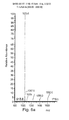
- the eluted peptide has an expected mass of 1035 dalton which corresponds to the mass of the G9-209-2M peptide used for refolding the scMHC-peptide complex. This was the only peptide detected indicating that the refolded complex is a homogenous population of molecules containing a single specific peptide. A minor peak with a mass of 1057 daltons was also observed, which peak corresponds to the G9-209-2M peptide including a sodium ion which probably originated from the PBS buffer in which the complex was purified and concentrated prior to analysis.
- the mass estimation of the scMHC complex was done using a deconvolution algorithm, which transforms an ESI mass spectral plot of relative abundance versus mass-to-charge ratios into a plot of relative abundance versus mass ( Figures 6b-c ).
- Each sequence of multiply charged ion peaks in the acquired mass spectrum ( Figure 6b ) which corresponds to one sample component, is converted into a single peak positioned at the molecular mass (M) in the deconvoluted spectrum ( Figure 6c ).
- M molecular mass
- Figure 6c the deconvoluted spectrum revealed a single peak with a mass of 44.6 kDa corresponding to the expected molecular weight of the scMHC protein.
- a CTL stimulation assay using cloned CTLs specific for the G9-209-2M peptide was utilized to test the biological activity of the scMHC-peptide complex.
- the recombinant purified scMHC complexes that were produced with the 3 different peptides (G9-209-2M, G9-280-9V, and TAX) were immobilized on a microtiter plate and tested for the ability to induce CTL activation.
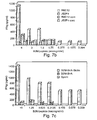
- the single-chain MHC molecule bound to the g9-209-2M peptide induced specific activation of the g209-specific CTL clone R6C12 as determined by interferon-g levels.
- the complexes bound to the g280 and TAX peptides did not induce specific activation.
- scMHC-peptide complexes The ability of soluble scMHC-peptide complexes to induce T cell activation in solution was also tested by generating scMHC-peptide tetramers composed of the scMHC-peptide molecule containing the sequence tag for site-specific biotinylation. Refolded and purified peptide containing scMHC-BirA complexes were biotinylated using the BirA enzyme. Following purification of the scMHC-BirA complexes tetramers were formed by incubation with streptavidin. The biological activity of the scMHC-BirA-peptide tetramers was tested by their ability to activate the corresponding CTL clone.
- the scMHC tetramers also specifically stained CTL clones which recognize the MART-1 specific peptide 27-35. As shown in Figure 9a , the scMHC/Mart tetramers specifically recognized a specific CTL clone which was not recognized by the scMHC/TAX tetramers ( Figure 9b ).
- ScMHC tetramers were also used to stain a heterogeneous population of T cells from the spleen of transgenic mice (expressing HLA-A2) which were immunized with the TAX peptide. As shown in Figures 10a-b the number of specific high avidity CD8+ T cells increased by 2-fold when non-immunized and immunized mice were compared.
- the scMHC tetramers generated according to the teachings of the present invention can be utilized to detect and isolate antigen-specific subpopulations of T cells.
- Recombinant MHC-peptide tetramers are a very important tool for the molecular characterization of immune responses.
- Fluorogenic tetramers have been widely used for the characterization of CTL responses and have afforded many advantages over previous techniques, particularly the ability to directly quantify and phenotype Ag-specific CTLs ex-vivo [32-35,38-53].
- MHC-peptide tetramers can be utilized in the field of viral infections for direct visualization of antigen-specific CD8+ cells in HIV and EBV infection [33,40,41,45,52], animal models of viral infection [41-43] and direct analysis of viral-specific CD8+ cells in patients with human T cell lymphotropic virus-associated myelopathy [53].
- MHC-peptide tetramers might also revolutionize the field of anti cancer immunity and immunotherapy since they can be used to identify low frequency anti-tumor CD8+ immune responses. This has already been demonstrated for melanoma where there is now considerable evidence that human tumors often express antigens that make them susceptible to lysis by CTLs [32,36,37,48,50]. Recently the use of tetrameric soluble class I MHC-peptide complexes for characterizing melanoma-specific CTL ex vivo has been reported [36]. An important advance in the field of immunotherapy will be the ability to use this technology for adoptive immunotherapy.
- MHC-peptide tetramers will allow the isolation of CTLs specific for one melanoma epitope from a mixed CTL population using tetramer-driven cell sorting [36].
- Polyclonal CTL lines can be utilized to efficiently lyse autologous tumor cells by generating monoclonal CTL lines against different melanoma epitopes using direct tetramer-driven CTL cloning [24,36].
- the ability to efficiently generate recombinant MHC-peptide complexes, with a large variety of antigenic peptides, all related to one disease (for example, melanoma) may lead to improved modes of immunotherapy.
- it will enable the simultaneous isolation and cloning of tumor-specific CTL clones specific for the various peptides ex-vivo, accompanied with specific PCR typing of tumor associated peptides expressed by individual patients.
- the specific clones an then be expanded for adoptive transfer according to the tumor associated antigen (peptide) expression profile of the patient.
- MHC-peptide complexes The availability of recombinant MHC-peptide complexes is of interest not only for the generation of MHC tetramers but also for rapid, sensitive, and reliable MHC-peptide binding assay to identify high affinity MHC binding T cell epitopes. These complexes can be used also in in-vitro primary CTL induction studies to define, among the various MHC binders, those peptides that are immunogenic.
- CTL in vitro induction may be used for CTL in vitro induction as well as for the generation of MHC-peptide tetramers and analysis of specific immune responses or direct selection of CTLs from heterogeneous lymphocyte populations by tetramer-driven cell sorting and analysis.
- Recombinant scMHC-peptide complexes can also be used to generate specific antibodies by phage display technology [54].
- Such antibodies with TCR-like specificity can be a valuable tool for studying antigen presentation by tumor cells as well as to develop novel targeting agents for immunotherapy.
- the expression method of the present invention provides an invaluable tool for advancing studies with MHC complexes by providing an easy and rapid method for producing large amounts of highly pure and functional monomeric or multimeric scMHC-peptide complexes without the need for arduous and time consuming purification steps such as peptide exchange employed by prior art methods.
- the present invention provides a novel human single chain MHC class I polypeptide which is functional in activating CTL clones when utilized as either a monomer or a multimer.
- scMHC constructs described above and any mammalian scMHC class polypeptides can also be co-expressed in E. coli or any other prokaryotic or eukaryotic expression systems along with the respective binding peptides thereof, thus negating the need for separately providing the binding peptide.
- a single construct can be configured so as to express both the scMHC class I polypeptide and respective binding peptide coding sequences in the same cell by utilizing for example two separate promoters or an internal ribosome entry site.
- the cells of the prokaryotic or eukaryotic expression system be co-transformed with two expression constructs each expressing a single coding sequence and each having a specific selection marker.
- Suitable eukaryotic expression systems include, but are not limited to mammalian or insect cell cultures, plant protoplasts, plant cell cultures, whole plants, yeast cells or protozoan cells. It will be appreciated that when expressed in eukaryotic expression systems the produced scMHC class I polypeptide preferably includes a transit peptide (signal sequence) such that the expressed polypeptide is secreted outside the cell (into the apoplast in plant cell cultures or whole plants) so as to avoid interaction with endogenous peptides.
- a transit peptide signal sequence
- construct or constructs must be configured such that the levels of expression of both the scMHC class I polypeptide and the binding peptide thereof are stoichiometrically correct.
- a cell which expresses both coding sequences can produce a fully functional scMHC-peptide complex which can be purified via suitable isolation protocols well known in the art.
- a bacterial expression system is especially advantageous in this case since the scMHC-peptide complex expressed thereby can form substantially pure inclusion bodies when suitable expression conditions are employed.
- suitable renaturation conditions can be used so as to reform a functional scMHC-peptide complex.
Landscapes
- Health & Medical Sciences (AREA)
- Chemical & Material Sciences (AREA)
- Life Sciences & Earth Sciences (AREA)
- Immunology (AREA)
- Organic Chemistry (AREA)
- Medicinal Chemistry (AREA)
- Proteomics, Peptides & Aminoacids (AREA)
- Zoology (AREA)
- Biochemistry (AREA)
- Biophysics (AREA)
- General Health & Medical Sciences (AREA)
- Genetics & Genomics (AREA)
- Toxicology (AREA)
- Molecular Biology (AREA)
- Gastroenterology & Hepatology (AREA)
- Cell Biology (AREA)
- Micro-Organisms Or Cultivation Processes Thereof (AREA)
- Peptides Or Proteins (AREA)
- Preparation Of Compounds By Using Micro-Organisms (AREA)
- Medicines Containing Antibodies Or Antigens For Use As Internal Diagnostic Agents (AREA)
- Compression, Expansion, Code Conversion, And Decoders (AREA)
- Steroid Compounds (AREA)
- Compression Of Band Width Or Redundancy In Fax (AREA)
- Processing Of Solid Wastes (AREA)
Priority Applications (1)
| Application Number | Priority Date | Filing Date | Title |
|---|---|---|---|
| EP10166544A EP2316950A1 (en) | 2000-03-27 | 2001-03-19 | Single chain class I major histo-compatibility complexes, constructs encoding same and methods of generating same |
Applications Claiming Priority (3)
| Application Number | Priority Date | Filing Date | Title |
|---|---|---|---|
| US534966 | 1990-06-08 | ||
| US53496600A | 2000-03-27 | 2000-03-27 | |
| PCT/IL2001/000260 WO2001072768A2 (en) | 2000-03-27 | 2001-03-19 | Single chain class i major histo-compatibility complexes, constructs encoding same and methods of generating same |
Publications (3)
| Publication Number | Publication Date |
|---|---|
| EP1294748A2 EP1294748A2 (en) | 2003-03-26 |
| EP1294748A4 EP1294748A4 (en) | 2004-10-06 |
| EP1294748B1 true EP1294748B1 (en) | 2010-06-30 |
Family
ID=24132253
Family Applications (2)
| Application Number | Title | Priority Date | Filing Date |
|---|---|---|---|
| EP01914159A Expired - Lifetime EP1294748B1 (en) | 2000-03-27 | 2001-03-19 | Single chain class i major histo-compatibility complexes, constructs encoding same and methods of generating same |
| EP10166544A Withdrawn EP2316950A1 (en) | 2000-03-27 | 2001-03-19 | Single chain class I major histo-compatibility complexes, constructs encoding same and methods of generating same |
Family Applications After (1)
| Application Number | Title | Priority Date | Filing Date |
|---|---|---|---|
| EP10166544A Withdrawn EP2316950A1 (en) | 2000-03-27 | 2001-03-19 | Single chain class I major histo-compatibility complexes, constructs encoding same and methods of generating same |
Country Status (10)
| Country | Link |
|---|---|
| US (4) | US7399838B2 (enExample) |
| EP (2) | EP1294748B1 (enExample) |
| JP (1) | JP2004503213A (enExample) |
| AT (1) | ATE472601T1 (enExample) |
| AU (1) | AU785493B2 (enExample) |
| CA (1) | CA2404489A1 (enExample) |
| DE (1) | DE60142475D1 (enExample) |
| IL (1) | IL151860A0 (enExample) |
| WO (1) | WO2001072768A2 (enExample) |
| ZA (1) | ZA200207515B (enExample) |
Families Citing this family (75)
| Publication number | Priority date | Publication date | Assignee | Title |
|---|---|---|---|---|
| US20040191260A1 (en) | 2003-03-26 | 2004-09-30 | Technion Research & Development Foundation Ltd. | Compositions capable of specifically binding particular human antigen presenting molecule/pathogen-derived antigen complexes and uses thereof |
| EP1294748B1 (en) * | 2000-03-27 | 2010-06-30 | Technion Research and Development of Foundation, Ltd. | Single chain class i major histo-compatibility complexes, constructs encoding same and methods of generating same |
| US8022190B2 (en) | 2001-06-19 | 2011-09-20 | Technion Research & Development Foundation Ltd. | Immuno-molecules containing viral proteins, compositions thereof and methods of using |
| US20030017134A1 (en) * | 2001-06-19 | 2003-01-23 | Technion Research And Development Foundation Ltd. | Methods and pharmaceutical compositions for immune deception, particularly useful in the treatment of cancer |
| GB0115071D0 (en) * | 2001-06-20 | 2001-08-15 | Avidex Ltd | Substances |
| US6992176B2 (en) * | 2002-02-13 | 2006-01-31 | Technion Research & Development Foundation Ltd. | Antibody having a T-cell receptor-like specificity, yet higher affinity, and the use of same in the detection and treatment of cancer, viral infection and autoimmune disease |
| AU2003216341A1 (en) | 2002-02-20 | 2003-09-09 | Dyax Corporation | Mhc-peptide complex binding ligands |
| US20030199024A1 (en) * | 2002-04-19 | 2003-10-23 | Hansen Ted H. | Single chain trimers of class I MHC molecules |
| US8895020B2 (en) * | 2002-04-19 | 2014-11-25 | Washington University | Single chain trimers and uses therefor |
| WO2003106616A2 (en) * | 2002-06-12 | 2003-12-24 | Gavish-Galilee Bio Applications Ltd | MEMBRANE-ANCHORED β2 MICROGLOBULIN COVALENTLY LINKED TO MHC CLASS I PEPTIDE EPITOPES |
| US20090075304A1 (en) * | 2004-05-27 | 2009-03-19 | Weidanz Jon A | Methods of assaying vaccine potency |
| US20090233318A1 (en) * | 2004-12-28 | 2009-09-17 | Weidanz Jon A | Methods of assaying vaccine potency |
| US20090264319A1 (en) * | 2004-06-03 | 2009-10-22 | Masumi Abe | Method for the analysis of exclusive gene expression profile using a trace amount of sample |
| US20100062001A1 (en) * | 2004-06-09 | 2010-03-11 | Technion Research & Development | Antibodies for selective apoptosis of cells |
| US8518697B2 (en) | 2006-04-04 | 2013-08-27 | Washington University | Single chain trimers and uses therefor |
| WO2007136778A2 (en) * | 2006-05-19 | 2007-11-29 | Teva Pharmaceutical Industries, Ltd. | Fusion proteins, uses thereof and processes for producing same |
| US8394590B2 (en) * | 2006-08-02 | 2013-03-12 | California Institute Of Technology | Capture agents and related methods and systems for detecting and/or sorting targets |
| CA2682093A1 (en) | 2007-03-29 | 2008-10-09 | Technion Research & Development Foundation Ltd. | Antibodies, methods and kits for diagnosing and treating melanoma |
| WO2009125394A1 (en) | 2008-04-09 | 2009-10-15 | Technion Research & Development Foundation Ltd. | Anti human immunodeficiency antibodies and uses thereof |
| PT2119726E (pt) | 2008-05-14 | 2015-03-30 | Immatics Biotechnologies Gmbh | Novos e poderosos peptídeos para mhc classe ii derivados de survinina e neurocano |
| ES2536465T3 (es) | 2008-10-01 | 2015-05-25 | Immatics Biotechnologies Gmbh | Composición de péptidos tumor-asociados y relacionados con la vacuna contra el cáncer para el tratamiento de glioblastoma (GBM) y otros cánceres |
| EP2184297A1 (en) * | 2008-11-07 | 2010-05-12 | Hla-G Technologies | HLA-G polypeptides and pharmaceutical uses thereof |
| DK2699593T4 (da) * | 2011-04-20 | 2021-02-08 | Univ Washington Through Its Center For Commercialization | Beta-2 mikroglobulin-deficiente celler |
| PL2723773T3 (pl) * | 2011-06-22 | 2018-07-31 | F.Hoffmann-La Roche Ag | Eliminacja komórek docelowych przez obecne w krążeniu, swoiste dla wirusa, cytotoksyczne limfocyty T z wykorzystaniem kompleksów zawierających MHC klasy I |
| EP4253409A3 (en) | 2012-04-17 | 2023-12-06 | University of Washington through its Center for Commercialization | Hla class ii deficient cells, hla class i deficient cells capable of expressing hla class ii proteins, and uses thereof |
| TWI714869B (zh) | 2013-08-05 | 2021-01-01 | 德商伊瑪提克斯生物科技有限公司 | 新穎肽類,細胞及其用於治療多種腫瘤的用途,其製造方法及包含其等之醫藥組成物 |
| GB201319446D0 (en) | 2013-11-04 | 2013-12-18 | Immatics Biotechnologies Gmbh | Personalized immunotherapy against several neuronal and brain tumors |
| GB201408255D0 (en) | 2014-05-09 | 2014-06-25 | Immatics Biotechnologies Gmbh | Novel immunotherapy against several tumours of the blood, such as acute myeloid leukemia (AML) |
| GB201411037D0 (en) | 2014-06-20 | 2014-08-06 | Immatics Biotechnologies Gmbh | Novel immunotherapy against several tumors of the blood, in particular chronic lymphoid leukemai (CLL) |
| MA50819A (fr) | 2014-12-23 | 2021-04-07 | Immatics Biotechnologies Gmbh | Nouveaux peptides et combinaison de peptides à utiliser dans l'immunothérapie contre le carcinome hépatocellulaire (hcc) et d'autres cancers |
| GB201501017D0 (en) | 2014-12-23 | 2015-03-04 | Immatics Biotechnologies Gmbh | Novel peptides and combination of peptides for use in immunotherapy against hepatocellular carcinoma (HCC) and other cancers |
| IL301919A (en) | 2015-03-27 | 2023-06-01 | Immatics Biotechnologies Gmbh | Innovative peptides and a combination of peptides for use in immunotherapy against various tumors |
| GB201505585D0 (en) | 2015-03-31 | 2015-05-13 | Immatics Biotechnologies Gmbh | Novel peptides and combination of peptides and scaffolds for use in immunotherapy against renal cell carinoma (RCC) and other cancers |
| CN114456272A (zh) | 2015-04-03 | 2022-05-10 | 优瑞科生物技术公司 | 靶向afp肽/mhc复合体的构建体及其用途 |
| GB201507030D0 (en) | 2015-04-24 | 2015-06-10 | Immatics Biotechnologies Gmbh | Immunotherapy against lung cancers, in particular NSCLC |
| GB201507719D0 (en) | 2015-05-06 | 2015-06-17 | Immatics Biotechnologies Gmbh | Novel peptides and combination of peptides and scaffolds thereof for use in immunotherapy against colorectal carcinoma (CRC) and other cancers |
| IL281396B (en) | 2015-06-09 | 2022-07-01 | Memorial Sloan Kettering Cancer Center | T cell receptor-like antibody agents specific for ebv latent membrane protein 2a peptide presented by human hla |
| GB201511546D0 (en) | 2015-07-01 | 2015-08-12 | Immatics Biotechnologies Gmbh | Novel peptides and combination of peptides for use in immunotherapy against ovarian cancer and other cancers |
| IL308735A (en) | 2015-07-01 | 2024-01-01 | Immatics Biotechnologies Gmbh | Novel peptides and combination of peptides for use in immunotherapy against ovarian cancer and other cancers |
| PT3319985T (pt) | 2015-07-06 | 2021-01-06 | Immatics Biotechnologies Gmbh | Novos péptidos e combinação de péptidos para uso em imunoterapia do cancro do esófago e outros cancros |
| GB201513921D0 (en) | 2015-08-05 | 2015-09-23 | Immatics Biotechnologies Gmbh | Novel peptides and combination of peptides for use in immunotherapy against prostate cancer and other cancers |
| GB201522667D0 (en) | 2015-12-22 | 2016-02-03 | Immatics Biotechnologies Gmbh | Novel peptides and combination of peptides for use in immunotherapy against breast cancer and other cancers |
| GB201602918D0 (en) | 2016-02-19 | 2016-04-06 | Immatics Biotechnologies Gmbh | Novel peptides and combination of peptides for use in immunotherapy against NHL and other cancers |
| PE20181583A1 (es) | 2016-03-01 | 2018-10-04 | Immatics Biotechnologies Gmbh | Peptido recombinante derivado de la proteina duoxa2 |
| GB201603987D0 (en) | 2016-03-08 | 2016-04-20 | Immatics Biotechnologies Gmbh | Uterine cancer treatments |
| SG10202110335PA (en) | 2016-04-06 | 2021-10-28 | Immatics Biotechnologies Gmbh | Novel peptides and combination of peptides for use in immunotherapy against aml and other cancers |
| TW202304970A (zh) | 2016-08-26 | 2023-02-01 | 德商英麥提克生物技術股份有限公司 | 用於頭頸鱗狀細胞癌和其他癌症免疫治療的新型肽和支架 |
| TW201831517A (zh) | 2017-01-12 | 2018-09-01 | 美商優瑞科生物技術公司 | 靶向組織蛋白h3肽/mhc複合體之構築體及其用途 |
| WO2018138257A1 (en) | 2017-01-27 | 2018-08-02 | Immatics Biotechnologies Gmbh | Novel peptides and combination of peptides for use in immunotherapy against ovarian cancer and other cancers |
| CN110809716B (zh) | 2017-02-12 | 2023-07-07 | 百欧恩泰美国公司 | 基于hla的方法和组合物及其用途 |
| TW201841937A (zh) | 2017-04-10 | 2018-12-01 | 德商英麥提克生物技術股份有限公司 | 用於白血病和其他癌症免疫治療的新穎肽和肽組合物 |
| CR20210160A (es) | 2017-04-10 | 2021-04-26 | Immatics Biotechnologies Gmbh | Péptidos y combinaciones de los mismos para el uso en la inmunoterapia contra diversos tipos de cáncer (divisional de solicitud 2019-0508) |
| TW201841934A (zh) | 2017-04-10 | 2018-12-01 | 德商英麥提克生物技術股份有限公司 | 用於治療癌症免疫治療的新穎肽及其肽組合物 |
| KR20200026898A (ko) | 2017-07-07 | 2020-03-11 | 이매틱스 바이오테크놀로지스 게엠베하 | Nsclc, sclc 등 폐암 및 기타 암에 대한 면역요법에서의 사용을 위한 신규 펩티드 및 펩티드의 조합 |
| WO2019007974A1 (en) | 2017-07-07 | 2019-01-10 | Immatics Biotechnologies Gmbh | NOVEL PEPTIDES AND COMBINATION OF PEPTIDES FOR USE IN IMMUNOTHERAPY OF LUNG CANCER, INCLUDING NSCLC, CPPC AND OTHER CANCERS |
| CN111727262A (zh) | 2017-07-25 | 2020-09-29 | 加州理工学院 | 胞啃介导的表位发现 |
| US11535651B2 (en) | 2017-08-02 | 2022-12-27 | The United States Of America, As Represented By The Secretary, Department Of Health And Human Services | Hepatitis B nanoparticle-based vaccine for influenza virus |
| KR102802061B1 (ko) * | 2017-11-10 | 2025-05-02 | 주라 바이오, 인크. | 주 조직적합성 복합체-기반 키메라 수용체 및 자가면역 질병을 치료하기 위한 이의 용도 |
| GB201802338D0 (en) | 2018-02-13 | 2018-03-28 | Univ Oslo | Antigen binding proteins |
| DE102018107224A1 (de) | 2018-02-21 | 2019-08-22 | Immatics Biotechnologies Gmbh | Peptide und Kombinationen von Peptiden nicht-kanonischen Ursprungs zur Verwendung in der Immuntherapie gegen verschiedene Krebsarten |
| KR20200137548A (ko) | 2019-05-30 | 2020-12-09 | 에스케이하이닉스 주식회사 | 메모리 장치 및 이의 테스트 동작 방법 |
| TW202016131A (zh) | 2018-05-16 | 2020-05-01 | 德商英麥提克生物技術股份有限公司 | 用於抗癌免疫治療的肽 |
| US10925947B2 (en) | 2018-06-29 | 2021-02-23 | Immatics Biotechnologies Gmbh | A*03 restricted peptides for use in immunotherapy against cancers and related methods |
| TW202019955A (zh) | 2018-07-31 | 2020-06-01 | 德商英麥提克生物技術股份有限公司 | B*07 限制肽和肽組合的抗癌免疫治療和相關方法 |
| US11945850B2 (en) | 2018-09-17 | 2024-04-02 | Immatics Biotechnologies Gmbh | B*44 restricted peptides for use in immunotherapy against cancers and related methods |
| TW202024121A (zh) | 2018-09-18 | 2020-07-01 | 德商英麥提克生物技術股份有限公司 | A*01 限制肽和肽組合物在抗癌免疫治療中的用途和相關方法 |
| TW202039535A (zh) | 2018-12-18 | 2020-11-01 | 德商英麥提克生物技術股份有限公司 | B*08限制肽和肽組合物抗癌免疫治療和相關方法 |
| CA3124457A1 (en) | 2018-12-21 | 2020-06-25 | Biontech Us Inc. | Method and systems for prediction of hla class ii-specific epitopes and characterization of cd4+ t cells |
| EP4021493A1 (en) | 2019-08-29 | 2022-07-06 | Eberhard Karls Universität Tübingen, Medizinische Fakultät | T cell epitopes of hcmv and uses of thereof |
| DE102020125465A1 (de) | 2020-09-29 | 2022-03-31 | Immatics Biotechnologies Gmbh | Amidierte Peptide und ihre deamidierten Gegenstücke, die durch nicht-HLA-A*02-Moleküle präsentiert werden, zur Verwendung in der Immuntherapie gegen verschiedene Krebsarten |
| DE102020125457A1 (de) | 2020-09-29 | 2022-03-31 | Immatics Biotechnologies Gmbh | Amidierte Peptide und ihre deamidierten Gegenstücke, die durch HLA-A*02-Moleküle präsentiert werden, zur Verwendung in der Immuntherapie gegen verschiedene Krebsarten |
| TW202229312A (zh) | 2020-09-29 | 2022-08-01 | 德商英麥提克生物技術股份有限公司 | 由非hla-a*02顯露以用於不同類型癌症之免疫治療的醯胺化肽及其脫醯胺化對應物 |
| TW202241925A (zh) | 2021-01-15 | 2022-11-01 | 德商英麥提克生物技術股份有限公司 | 用於不同類型癌症免疫治療的hla展示肽 |
| WO2024124232A1 (en) * | 2022-12-09 | 2024-06-13 | Advanced Rna Vaccine (Arv) Technologies, Inc. | Nucleic acid based cancer vaccine and methods thereof |
| EP4761754A2 (en) | 2023-08-18 | 2026-06-24 | Immatics Biotechnologies GmbH | Peptides displayed by mhc for use in immunotherapy against different types of cancer |
Family Cites Families (50)
| Publication number | Priority date | Publication date | Assignee | Title |
|---|---|---|---|---|
| NL154600B (nl) | 1971-02-10 | 1977-09-15 | Organon Nv | Werkwijze voor het aantonen en bepalen van specifiek bindende eiwitten en hun corresponderende bindbare stoffen. |
| NL154598B (nl) | 1970-11-10 | 1977-09-15 | Organon Nv | Werkwijze voor het aantonen en bepalen van laagmoleculire verbindingen en van eiwitten die deze verbindingen specifiek kunnen binden, alsmede testverpakking. |
| NL154599B (nl) | 1970-12-28 | 1977-09-15 | Organon Nv | Werkwijze voor het aantonen en bepalen van specifiek bindende eiwitten en hun corresponderende bindbare stoffen, alsmede testverpakking. |
| US3901654A (en) | 1971-06-21 | 1975-08-26 | Biological Developments | Receptor assays of biologically active compounds employing biologically specific receptors |
| US3853987A (en) | 1971-09-01 | 1974-12-10 | W Dreyer | Immunological reagent and radioimmuno assay |
| US3867517A (en) | 1971-12-21 | 1975-02-18 | Abbott Lab | Direct radioimmunoassay for antigens and their antibodies |
| NL171930C (nl) | 1972-05-11 | 1983-06-01 | Akzo Nv | Werkwijze voor het aantonen en bepalen van haptenen, alsmede testverpakkingen. |
| US3850578A (en) | 1973-03-12 | 1974-11-26 | H Mcconnell | Process for assaying for biologically active molecules |
| US3935074A (en) | 1973-12-17 | 1976-01-27 | Syva Company | Antibody steric hindrance immunoassay with two antibodies |
| US3996345A (en) | 1974-08-12 | 1976-12-07 | Syva Company | Fluorescence quenching with immunological pairs in immunoassays |
| US4034074A (en) | 1974-09-19 | 1977-07-05 | The Board Of Trustees Of Leland Stanford Junior University | Universal reagent 2-site immunoradiometric assay using labelled anti (IgG) |
| US3984533A (en) | 1975-11-13 | 1976-10-05 | General Electric Company | Electrophoretic method of detecting antigen-antibody reaction |
| US4098876A (en) | 1976-10-26 | 1978-07-04 | Corning Glass Works | Reverse sandwich immunoassay |
| US4879219A (en) | 1980-09-19 | 1989-11-07 | General Hospital Corporation | Immunoassay utilizing monoclonal high affinity IgM antibodies |
| CA1192510A (en) | 1981-05-27 | 1985-08-27 | Lawrence E. Pelcher | Rna plant virus vector or portion thereof, a method of construction thereof, and a method of producing a gene derived product therefrom |
| JPS6054684A (ja) | 1983-09-05 | 1985-03-29 | Teijin Ltd | 新規dνa及びハイブリツドdνa |
| US5011771A (en) | 1984-04-12 | 1991-04-30 | The General Hospital Corporation | Multiepitopic immunometric assay |
| US4666828A (en) | 1984-08-15 | 1987-05-19 | The General Hospital Corporation | Test for Huntington's disease |
| CA1288073C (en) | 1985-03-07 | 1991-08-27 | Paul G. Ahlquist | Rna transformation vector |
| US4683202A (en) | 1985-03-28 | 1987-07-28 | Cetus Corporation | Process for amplifying nucleic acid sequences |
| US4801531A (en) | 1985-04-17 | 1989-01-31 | Biotechnology Research Partners, Ltd. | Apo AI/CIII genomic polymorphisms predictive of atherosclerosis |
| GB8608850D0 (en) | 1986-04-11 | 1986-05-14 | Diatech Ltd | Packaging system |
| JPS6314693A (ja) | 1986-07-04 | 1988-01-21 | Sumitomo Chem Co Ltd | 植物ウイルスrnaベクタ− |
| ES2060646T3 (es) | 1987-02-09 | 1994-12-01 | Lubrizol Genetics Inc | Virus rna hibrido. |
| US5316931A (en) | 1988-02-26 | 1994-05-31 | Biosource Genetics Corp. | Plant viral vectors having heterologous subgenomic promoters for systemic expression of foreign genes |
| US5260422A (en) * | 1988-06-23 | 1993-11-09 | Anergen, Inc. | MHC conjugates useful in ameliorating autoimmunity |
| US5194425A (en) * | 1988-06-23 | 1993-03-16 | Anergen, Inc. | Mhc-mediated toxic conjugates useful in ameliorating autoimmunity |
| US5468481A (en) * | 1988-06-23 | 1995-11-21 | Amergen, Inc. | MHC class II-peptide conjugates useful in ameliorating autoimmunity |
| DE3825615A1 (de) * | 1988-07-28 | 1990-02-01 | Behringwerke Ag | Antigenkonstrukte von "major histocompatibility complex" klasse i antigenen mit spezifischen traegermolekuelen, ihre herstellung und verwendung |
| US5272057A (en) | 1988-10-14 | 1993-12-21 | Georgetown University | Method of detecting a predisposition to cancer by the use of restriction fragment length polymorphism of the gene for human poly (ADP-ribose) polymerase |
| US5192659A (en) | 1989-08-25 | 1993-03-09 | Genetype Ag | Intron sequence analysis method for detection of adjacent and remote locus alleles as haplotypes |
| US6153408A (en) * | 1991-11-15 | 2000-11-28 | Institut Pasteur And Institut National De La Sante Et De La Recherche Medicale | Altered major histocompatibility complex (MHC) determinant and methods of using the determinant |
| US6011146A (en) * | 1991-11-15 | 2000-01-04 | Institut Pasteur | Altered major histocompatibility complex (MHC) determinant and methods of using the determinant |
| US5281521A (en) | 1992-07-20 | 1994-01-25 | The Trustees Of The University Of Pennsylvania | Modified avidin-biotin technique |
| US5837477A (en) * | 1993-01-15 | 1998-11-17 | The United States Of America As Represented By The Department Of Health And Human Services | T cell receptor ligands and methods of using same |
| US5874239A (en) * | 1993-07-30 | 1999-02-23 | Affymax Technologies N.V. | Biotinylation of proteins |
| US5820866A (en) * | 1994-03-04 | 1998-10-13 | National Jewish Center For Immunology And Respiratory Medicine | Product and process for T cell regulation |
| US5635363A (en) * | 1995-02-28 | 1997-06-03 | The Board Of Trustees Of The Leland Stanford Junior University | Compositions and methods for the detection, quantitation and purification of antigen-specific T cells |
| US5869270A (en) * | 1996-01-31 | 1999-02-09 | Sunol Molecular Corporation | Single chain MHC complexes and uses thereof |
| JPH11507843A (ja) * | 1996-03-28 | 1999-07-13 | ザ・ジョンズ・ホプキンス・ユニバーシティー | タンパク質の可溶性二価および多価ヘテロ二量体類縁体 |
| US6140113A (en) * | 1996-03-28 | 2000-10-31 | The Johns Hopkins University | Polynucleotides encoding molecular complexes which modify immune responses |
| US6211342B1 (en) * | 1996-07-18 | 2001-04-03 | Children's Hospital Medical Center | Multivalent MHC complex peptide fusion protein complex for stimulating specific T cell function |
| US6248564B1 (en) * | 1997-08-29 | 2001-06-19 | Harvard University | Mutant MHC class I molecules |
| US6232445B1 (en) * | 1997-10-29 | 2001-05-15 | Sunol Molecular Corporation | Soluble MHC complexes and methods of use thereof |
| EP1294748B1 (en) * | 2000-03-27 | 2010-06-30 | Technion Research and Development of Foundation, Ltd. | Single chain class i major histo-compatibility complexes, constructs encoding same and methods of generating same |
| US20030017134A1 (en) * | 2001-06-19 | 2003-01-23 | Technion Research And Development Foundation Ltd. | Methods and pharmaceutical compositions for immune deception, particularly useful in the treatment of cancer |
| US8022190B2 (en) * | 2001-06-19 | 2011-09-20 | Technion Research & Development Foundation Ltd. | Immuno-molecules containing viral proteins, compositions thereof and methods of using |
| US7362707B2 (en) * | 2001-07-23 | 2008-04-22 | Acme Packet, Inc. | System and method for determining flow quality statistics for real-time transport protocol data flows |
| US6843882B2 (en) * | 2002-07-15 | 2005-01-18 | Applied Materials, Inc. | Gas flow control in a wafer processing system having multiple chambers for performing same process |
| WO2007136778A2 (en) * | 2006-05-19 | 2007-11-29 | Teva Pharmaceutical Industries, Ltd. | Fusion proteins, uses thereof and processes for producing same |
-
2001
- 2001-03-19 EP EP01914159A patent/EP1294748B1/en not_active Expired - Lifetime
- 2001-03-19 JP JP2001571699A patent/JP2004503213A/ja active Pending
- 2001-03-19 AT AT01914159T patent/ATE472601T1/de not_active IP Right Cessation
- 2001-03-19 CA CA002404489A patent/CA2404489A1/en active Pending
- 2001-03-19 AU AU39534/01A patent/AU785493B2/en not_active Ceased
- 2001-03-19 DE DE60142475T patent/DE60142475D1/de not_active Expired - Lifetime
- 2001-03-19 IL IL15186001A patent/IL151860A0/xx unknown
- 2001-03-19 EP EP10166544A patent/EP2316950A1/en not_active Withdrawn
- 2001-03-19 WO PCT/IL2001/000260 patent/WO2001072768A2/en not_active Ceased
-
2002
- 2002-02-13 US US10/073,300 patent/US7399838B2/en not_active Expired - Fee Related
- 2002-02-15 US US10/075,257 patent/US20040086960A1/en not_active Abandoned
- 2002-09-19 ZA ZA200207515A patent/ZA200207515B/en unknown
-
2008
- 2008-06-18 US US12/213,368 patent/US20090148925A1/en not_active Abandoned
-
2009
- 2009-06-18 US US12/486,794 patent/US20090258393A1/en not_active Abandoned
Also Published As
| Publication number | Publication date |
|---|---|
| AU3953401A (en) | 2001-10-08 |
| US20090258393A1 (en) | 2009-10-15 |
| JP2004503213A (ja) | 2004-02-05 |
| EP1294748A2 (en) | 2003-03-26 |
| WO2001072768A8 (en) | 2005-11-17 |
| WO2001072768A3 (en) | 2003-01-23 |
| AU785493B2 (en) | 2008-01-03 |
| IL151860A0 (en) | 2003-04-10 |
| ZA200207515B (en) | 2004-07-21 |
| US20090148925A1 (en) | 2009-06-11 |
| WO2001072768A2 (en) | 2001-10-04 |
| US20040086960A1 (en) | 2004-05-06 |
| CA2404489A1 (en) | 2001-10-04 |
| US20030003535A1 (en) | 2003-01-02 |
| US7399838B2 (en) | 2008-07-15 |
| EP2316950A1 (en) | 2011-05-04 |
| EP1294748A4 (en) | 2004-10-06 |
| DE60142475D1 (de) | 2010-08-12 |
| ATE472601T1 (de) | 2010-07-15 |
Similar Documents
| Publication | Publication Date | Title |
|---|---|---|
| US7399838B2 (en) | Single chain class I major histo-compatibility complexes | |
| AU2018200222B2 (en) | Engineering T-cell receptors | |
| KR102777396B1 (ko) | Tcr 및 펩티드 | |
| Holler et al. | TCRs with high affinity for foreign pMHC show self-reactivity | |
| KR101442209B1 (ko) | 융합 단백질, 이의 용도 및 이의 제조방법 | |
| US20140349855A1 (en) | T cell receptor display | |
| Malarkannan et al. | A rare cryptic translation product is presented by Kb major histocompatibility complex class I molecule to alloreactive T cells. | |
| Denkberg et al. | Recombinant human single‐chain MHC‐peptide complexes made from E. coli by in vitro refolding: functional single‐chain MHC‐peptide complexes and tetramers with tumor associated antigens | |
| JP2004525354A (ja) | 抗原特異的t−細胞の機能的精製のための可逆的mhc多量体染色法 | |
| US20030166057A1 (en) | Method and apparatus for the production of soluble MHC antigens and uses thereof | |
| HUP0400231A2 (hu) | Rákos megbetegedések kezelésében különösen hasznos, immundecepcióra szolgáló eljárások és gyógyszerkészítmények | |
| CN110776562A (zh) | 一种识别afp抗原的t细胞受体 | |
| AU2007203607A1 (en) | Single Chain Class I Major Histo-Compatibility Complexes, Constructs Encoding Same and Methods of Generating Same | |
| AU6286599A (en) | Isolated peptides which bind to hla-b35 molecules | |
| EP4737476A1 (en) | T-cell receptor variant against mkras 7-16 g12d | |
| CA2880098C (en) | Engineering t-cell receptors | |
| Lee et al. | A recombinant single-chain HLA-A2. 1 molecule, with a cis active β-2-microglobulin domain, is biologically active in peptide binding and antigen presentation | |
| Bowerman | The use of high-affinity T cell receptors to study specificity in the 2C T cell system | |
| CA2438376A1 (en) | Method and apparatus for the production of antigens and uses thereof |
Legal Events
| Date | Code | Title | Description |
|---|---|---|---|
| PUAI | Public reference made under article 153(3) epc to a published international application that has entered the european phase |
Free format text: ORIGINAL CODE: 0009012 |
|
| 17P | Request for examination filed |
Effective date: 20021002 |
|
| AK | Designated contracting states |
Kind code of ref document: A2 Designated state(s): AT BE CH CY DE DK ES FI FR GB GR IE IT LI LU MC NL PT SE TR |
|
| AX | Request for extension of the european patent |
Extension state: AL LT LV MK RO SI |
|
| RIC1 | Information provided on ipc code assigned before grant |
Ipc: 7C 12N 15/62 A |
|
| A4 | Supplementary search report drawn up and despatched |
Effective date: 20040824 |
|
| GRAP | Despatch of communication of intention to grant a patent |
Free format text: ORIGINAL CODE: EPIDOSNIGR1 |
|
| GRAS | Grant fee paid |
Free format text: ORIGINAL CODE: EPIDOSNIGR3 |
|
| GRAA | (expected) grant |
Free format text: ORIGINAL CODE: 0009210 |
|
| AK | Designated contracting states |
Kind code of ref document: B1 Designated state(s): AT BE CH CY DE DK ES FI FR GB GR IE IT LI LU MC NL PT SE TR |
|
| AX | Request for extension of the european patent |
Extension state: AL LT LV MK RO SI |
|
| REG | Reference to a national code |
Ref country code: CH Ref legal event code: EP Ref country code: GB Ref legal event code: FG4D |
|
| REG | Reference to a national code |
Ref country code: IE Ref legal event code: FG4D |
|
| REF | Corresponds to: |
Ref document number: 60142475 Country of ref document: DE Date of ref document: 20100812 Kind code of ref document: P |
|
| REG | Reference to a national code |
Ref country code: CH Ref legal event code: NV Representative=s name: VALIPAT / PATENTS.EU S.A. C/O GUINNARD SA |
|
| REG | Reference to a national code |
Ref country code: NL Ref legal event code: VDEP Effective date: 20100630 |
|
| PG25 | Lapsed in a contracting state [announced via postgrant information from national office to epo] |
Ref country code: SE Free format text: LAPSE BECAUSE OF FAILURE TO SUBMIT A TRANSLATION OF THE DESCRIPTION OR TO PAY THE FEE WITHIN THE PRESCRIBED TIME-LIMIT Effective date: 20100630 |
|
| LTIE | Lt: invalidation of european patent or patent extension |
Effective date: 20100630 |
|
| PG25 | Lapsed in a contracting state [announced via postgrant information from national office to epo] |
Ref country code: AT Free format text: LAPSE BECAUSE OF FAILURE TO SUBMIT A TRANSLATION OF THE DESCRIPTION OR TO PAY THE FEE WITHIN THE PRESCRIBED TIME-LIMIT Effective date: 20100630 Ref country code: FI Free format text: LAPSE BECAUSE OF FAILURE TO SUBMIT A TRANSLATION OF THE DESCRIPTION OR TO PAY THE FEE WITHIN THE PRESCRIBED TIME-LIMIT Effective date: 20100630 |
|
| PG25 | Lapsed in a contracting state [announced via postgrant information from national office to epo] |
Ref country code: GR Free format text: LAPSE BECAUSE OF FAILURE TO SUBMIT A TRANSLATION OF THE DESCRIPTION OR TO PAY THE FEE WITHIN THE PRESCRIBED TIME-LIMIT Effective date: 20101001 |
|
| PG25 | Lapsed in a contracting state [announced via postgrant information from national office to epo] |
Ref country code: NL Free format text: LAPSE BECAUSE OF FAILURE TO SUBMIT A TRANSLATION OF THE DESCRIPTION OR TO PAY THE FEE WITHIN THE PRESCRIBED TIME-LIMIT Effective date: 20100630 |
|
| PG25 | Lapsed in a contracting state [announced via postgrant information from national office to epo] |
Ref country code: BE Free format text: LAPSE BECAUSE OF FAILURE TO SUBMIT A TRANSLATION OF THE DESCRIPTION OR TO PAY THE FEE WITHIN THE PRESCRIBED TIME-LIMIT Effective date: 20100630 Ref country code: CY Free format text: LAPSE BECAUSE OF FAILURE TO SUBMIT A TRANSLATION OF THE DESCRIPTION OR TO PAY THE FEE WITHIN THE PRESCRIBED TIME-LIMIT Effective date: 20100630 Ref country code: PT Free format text: LAPSE BECAUSE OF FAILURE TO SUBMIT A TRANSLATION OF THE DESCRIPTION OR TO PAY THE FEE WITHIN THE PRESCRIBED TIME-LIMIT Effective date: 20101102 |
|
| PG25 | Lapsed in a contracting state [announced via postgrant information from national office to epo] |
Ref country code: IT Free format text: LAPSE BECAUSE OF FAILURE TO SUBMIT A TRANSLATION OF THE DESCRIPTION OR TO PAY THE FEE WITHIN THE PRESCRIBED TIME-LIMIT Effective date: 20100630 |
|
| PG25 | Lapsed in a contracting state [announced via postgrant information from national office to epo] |
Ref country code: DK Free format text: LAPSE BECAUSE OF FAILURE TO SUBMIT A TRANSLATION OF THE DESCRIPTION OR TO PAY THE FEE WITHIN THE PRESCRIBED TIME-LIMIT Effective date: 20100630 |
|
| PLBE | No opposition filed within time limit |
Free format text: ORIGINAL CODE: 0009261 |
|
| STAA | Information on the status of an ep patent application or granted ep patent |
Free format text: STATUS: NO OPPOSITION FILED WITHIN TIME LIMIT |
|
| 26N | No opposition filed |
Effective date: 20110331 |
|
| PG25 | Lapsed in a contracting state [announced via postgrant information from national office to epo] |
Ref country code: ES Free format text: LAPSE BECAUSE OF FAILURE TO SUBMIT A TRANSLATION OF THE DESCRIPTION OR TO PAY THE FEE WITHIN THE PRESCRIBED TIME-LIMIT Effective date: 20101011 |
|
| REG | Reference to a national code |
Ref country code: DE Ref legal event code: R097 Ref document number: 60142475 Country of ref document: DE Effective date: 20110330 |
|
| PG25 | Lapsed in a contracting state [announced via postgrant information from national office to epo] |
Ref country code: MC Free format text: LAPSE BECAUSE OF NON-PAYMENT OF DUE FEES Effective date: 20110331 |
|
| PG25 | Lapsed in a contracting state [announced via postgrant information from national office to epo] |
Ref country code: LU Free format text: LAPSE BECAUSE OF NON-PAYMENT OF DUE FEES Effective date: 20110319 |
|
| PG25 | Lapsed in a contracting state [announced via postgrant information from national office to epo] |
Ref country code: TR Free format text: LAPSE BECAUSE OF FAILURE TO SUBMIT A TRANSLATION OF THE DESCRIPTION OR TO PAY THE FEE WITHIN THE PRESCRIBED TIME-LIMIT Effective date: 20100630 |
|
| REG | Reference to a national code |
Ref country code: FR Ref legal event code: PLFP Year of fee payment: 16 |
|
| PGFP | Annual fee paid to national office [announced via postgrant information from national office to epo] |
Ref country code: CH Payment date: 20160323 Year of fee payment: 16 Ref country code: IE Payment date: 20160323 Year of fee payment: 16 |
|
| REG | Reference to a national code |
Ref country code: FR Ref legal event code: PLFP Year of fee payment: 17 |
|
| REG | Reference to a national code |
Ref country code: CH Ref legal event code: PL |
|
| REG | Reference to a national code |
Ref country code: IE Ref legal event code: MM4A |
|
| PG25 | Lapsed in a contracting state [announced via postgrant information from national office to epo] |
Ref country code: IE Free format text: LAPSE BECAUSE OF NON-PAYMENT OF DUE FEES Effective date: 20170319 Ref country code: LI Free format text: LAPSE BECAUSE OF NON-PAYMENT OF DUE FEES Effective date: 20170331 Ref country code: CH Free format text: LAPSE BECAUSE OF NON-PAYMENT OF DUE FEES Effective date: 20170331 |
|
| REG | Reference to a national code |
Ref country code: FR Ref legal event code: PLFP Year of fee payment: 18 |
|
| PGFP | Annual fee paid to national office [announced via postgrant information from national office to epo] |
Ref country code: DE Payment date: 20190822 Year of fee payment: 19 Ref country code: FR Payment date: 20190822 Year of fee payment: 19 |
|
| PGFP | Annual fee paid to national office [announced via postgrant information from national office to epo] |
Ref country code: GB Payment date: 20190730 Year of fee payment: 19 |
|
| REG | Reference to a national code |
Ref country code: DE Ref legal event code: R119 Ref document number: 60142475 Country of ref document: DE |
|
| PG25 | Lapsed in a contracting state [announced via postgrant information from national office to epo] |
Ref country code: FR Free format text: LAPSE BECAUSE OF NON-PAYMENT OF DUE FEES Effective date: 20200331 Ref country code: DE Free format text: LAPSE BECAUSE OF NON-PAYMENT OF DUE FEES Effective date: 20201001 |
|
| GBPC | Gb: european patent ceased through non-payment of renewal fee |
Effective date: 20200319 |
|
| PG25 | Lapsed in a contracting state [announced via postgrant information from national office to epo] |
Ref country code: GB Free format text: LAPSE BECAUSE OF NON-PAYMENT OF DUE FEES Effective date: 20200319 |