EP1291386B1 - Harzzusammensetzung - Google Patents
Harzzusammensetzung Download PDFInfo
- Publication number
- EP1291386B1 EP1291386B1 EP01934463A EP01934463A EP1291386B1 EP 1291386 B1 EP1291386 B1 EP 1291386B1 EP 01934463 A EP01934463 A EP 01934463A EP 01934463 A EP01934463 A EP 01934463A EP 1291386 B1 EP1291386 B1 EP 1291386B1
- Authority
- EP
- European Patent Office
- Prior art keywords
- polymer
- resin composition
- alicyclic hydrocarbon
- vinyl
- block
- Prior art date
- Legal status (The legal status is an assumption and is not a legal conclusion. Google has not performed a legal analysis and makes no representation as to the accuracy of the status listed.)
- Expired - Lifetime
Links
- 239000011342 resin composition Substances 0.000 title claims description 82
- 229920000642 polymer Polymers 0.000 claims description 195
- -1 vinyl alicyclic hydrocarbon Chemical class 0.000 claims description 124
- 229920002554 vinyl polymer Polymers 0.000 claims description 101
- 229920001400 block copolymer Polymers 0.000 claims description 79
- 229930195733 hydrocarbon Natural products 0.000 claims description 49
- 239000004215 Carbon black (E152) Substances 0.000 claims description 48
- 239000000178 monomer Substances 0.000 claims description 47
- 238000000034 method Methods 0.000 claims description 37
- 125000004432 carbon atom Chemical group C* 0.000 claims description 34
- 125000004435 hydrogen atom Chemical group [H]* 0.000 claims description 32
- 238000002360 preparation method Methods 0.000 claims description 31
- 125000000217 alkyl group Chemical group 0.000 claims description 24
- 230000008569 process Effects 0.000 claims description 22
- 150000001875 compounds Chemical class 0.000 claims description 20
- 239000002250 absorbent Substances 0.000 claims description 19
- 230000002745 absorbent Effects 0.000 claims description 19
- 150000001412 amines Chemical class 0.000 claims description 19
- 238000000465 moulding Methods 0.000 claims description 19
- 239000003381 stabilizer Substances 0.000 claims description 16
- 238000005227 gel permeation chromatography Methods 0.000 claims description 14
- 150000001993 dienes Chemical class 0.000 claims description 13
- 125000002887 hydroxy group Chemical group [H]O* 0.000 claims description 13
- 229920001577 copolymer Polymers 0.000 claims description 11
- 125000005843 halogen group Chemical group 0.000 claims description 11
- 125000003545 alkoxy group Chemical group 0.000 claims description 10
- 239000011203 carbon fibre reinforced carbon Substances 0.000 claims description 9
- 230000009477 glass transition Effects 0.000 claims description 9
- 229920002725 thermoplastic elastomer Polymers 0.000 claims description 9
- CREMABGTGYGIQB-UHFFFAOYSA-N carbon carbon Chemical compound C.C CREMABGTGYGIQB-UHFFFAOYSA-N 0.000 claims description 8
- 125000003386 piperidinyl group Chemical group 0.000 claims description 7
- OLFNXLXEGXRUOI-UHFFFAOYSA-N 2-(benzotriazol-2-yl)-4,6-bis(2-phenylpropan-2-yl)phenol Chemical compound C=1C(N2N=C3C=CC=CC3=N2)=C(O)C(C(C)(C)C=2C=CC=CC=2)=CC=1C(C)(C)C1=CC=CC=C1 OLFNXLXEGXRUOI-UHFFFAOYSA-N 0.000 claims description 5
- UZOYICMDDCNJJG-UHFFFAOYSA-N 2-[[3-(benzotriazol-2-yl)-2-hydroxy-5-methylphenyl]methyl]-4,5,6,7-tetrahydroisoindole-1,3-dione Chemical compound N1=C2C=CC=CC2=NN1C1=CC(C)=CC(CN2C(C3=C(CCCC3)C2=O)=O)=C1O UZOYICMDDCNJJG-UHFFFAOYSA-N 0.000 claims description 5
- VQTUBCCKSQIDNK-UHFFFAOYSA-N Isobutene Chemical group CC(C)=C VQTUBCCKSQIDNK-UHFFFAOYSA-N 0.000 claims description 5
- MCPKSFINULVDNX-UHFFFAOYSA-N drometrizole Chemical compound CC1=CC=C(O)C(N2N=C3C=CC=CC3=N2)=C1 MCPKSFINULVDNX-UHFFFAOYSA-N 0.000 claims description 5
- 238000002844 melting Methods 0.000 claims description 5
- 230000008018 melting Effects 0.000 claims description 5
- JRZJOMJEPLMPRA-UHFFFAOYSA-N olefin Natural products CCCCCCCC=C JRZJOMJEPLMPRA-UHFFFAOYSA-N 0.000 claims description 5
- 150000002148 esters Chemical class 0.000 claims description 4
- 229920001296 polysiloxane Polymers 0.000 claims description 4
- JYEUMXHLPRZUAT-UHFFFAOYSA-N 1,2,3-triazine Chemical group C1=CN=NN=C1 JYEUMXHLPRZUAT-UHFFFAOYSA-N 0.000 claims description 3
- 239000004593 Epoxy Substances 0.000 claims description 3
- YCKRFDGAMUMZLT-UHFFFAOYSA-N Fluorine atom Chemical compound [F] YCKRFDGAMUMZLT-UHFFFAOYSA-N 0.000 claims description 3
- 244000043261 Hevea brasiliensis Species 0.000 claims description 3
- ACIAHEMYLLBZOI-ZZXKWVIFSA-N Unsaturated alcohol Chemical compound CC\C(CO)=C/C ACIAHEMYLLBZOI-ZZXKWVIFSA-N 0.000 claims description 3
- BZHJMEDXRYGGRV-UHFFFAOYSA-N Vinyl chloride Chemical compound ClC=C BZHJMEDXRYGGRV-UHFFFAOYSA-N 0.000 claims description 3
- DHKHKXVYLBGOIT-UHFFFAOYSA-N acetaldehyde Diethyl Acetal Natural products CCOC(C)OCC DHKHKXVYLBGOIT-UHFFFAOYSA-N 0.000 claims description 3
- 239000002253 acid Substances 0.000 claims description 3
- 125000002252 acyl group Chemical group 0.000 claims description 3
- 150000001336 alkenes Chemical class 0.000 claims description 3
- 229910052731 fluorine Inorganic materials 0.000 claims description 3
- 239000011737 fluorine Substances 0.000 claims description 3
- 210000003918 fraction a Anatomy 0.000 claims description 3
- 229920003052 natural elastomer Polymers 0.000 claims description 3
- 229920001194 natural rubber Polymers 0.000 claims description 3
- 229920000728 polyester Polymers 0.000 claims description 3
- 229920001184 polypeptide Polymers 0.000 claims description 3
- 102000004196 processed proteins & peptides Human genes 0.000 claims description 3
- 108090000765 processed proteins & peptides Proteins 0.000 claims description 3
- 102000004169 proteins and genes Human genes 0.000 claims description 3
- 108090000623 proteins and genes Proteins 0.000 claims description 3
- 239000004952 Polyamide Substances 0.000 claims description 2
- 229920006345 thermoplastic polyamide Polymers 0.000 claims description 2
- 125000002777 acetyl group Chemical class [H]C([H])([H])C(*)=O 0.000 claims 1
- 238000005984 hydrogenation reaction Methods 0.000 description 49
- PPBRXRYQALVLMV-UHFFFAOYSA-N Styrene Chemical compound C=CC1=CC=CC=C1 PPBRXRYQALVLMV-UHFFFAOYSA-N 0.000 description 35
- 238000006243 chemical reaction Methods 0.000 description 30
- 238000006116 polymerization reaction Methods 0.000 description 25
- 239000000243 solution Substances 0.000 description 24
- 239000000203 mixture Substances 0.000 description 23
- RRHGJUQNOFWUDK-UHFFFAOYSA-N Isoprene Chemical compound CC(=C)C=C RRHGJUQNOFWUDK-UHFFFAOYSA-N 0.000 description 20
- KAKZBPTYRLMSJV-UHFFFAOYSA-N Butadiene Chemical compound C=CC=C KAKZBPTYRLMSJV-UHFFFAOYSA-N 0.000 description 17
- 239000002904 solvent Substances 0.000 description 17
- KFZMGEQAYNKOFK-UHFFFAOYSA-N Isopropanol Chemical compound CC(C)O KFZMGEQAYNKOFK-UHFFFAOYSA-N 0.000 description 16
- WYURNTSHIVDZCO-UHFFFAOYSA-N Tetrahydrofuran Chemical compound C1CCOC1 WYURNTSHIVDZCO-UHFFFAOYSA-N 0.000 description 16
- 238000009826 distribution Methods 0.000 description 16
- 230000001476 alcoholic effect Effects 0.000 description 15
- 239000003054 catalyst Substances 0.000 description 15
- PXHVJJICTQNCMI-UHFFFAOYSA-N Nickel Chemical compound [Ni] PXHVJJICTQNCMI-UHFFFAOYSA-N 0.000 description 14
- 125000002723 alicyclic group Chemical group 0.000 description 14
- 239000007789 gas Substances 0.000 description 14
- VLKZOEOYAKHREP-UHFFFAOYSA-N n-Hexane Chemical compound CCCCCC VLKZOEOYAKHREP-UHFFFAOYSA-N 0.000 description 14
- 238000012545 processing Methods 0.000 description 14
- 239000004793 Polystyrene Substances 0.000 description 11
- 239000003963 antioxidant agent Substances 0.000 description 11
- 235000006708 antioxidants Nutrition 0.000 description 11
- 229920002223 polystyrene Polymers 0.000 description 11
- YLQBMQCUIZJEEH-UHFFFAOYSA-N Furan Chemical compound C=1C=COC=1 YLQBMQCUIZJEEH-UHFFFAOYSA-N 0.000 description 10
- MZRVEZGGRBJDDB-UHFFFAOYSA-N N-Butyllithium Chemical compound [Li]CCCC MZRVEZGGRBJDDB-UHFFFAOYSA-N 0.000 description 10
- 150000002430 hydrocarbons Chemical class 0.000 description 10
- 239000004973 liquid crystal related substance Substances 0.000 description 10
- 239000000047 product Substances 0.000 description 10
- 125000000391 vinyl group Chemical group [H]C([*])=C([H])[H] 0.000 description 10
- YXFVVABEGXRONW-UHFFFAOYSA-N Toluene Chemical compound CC1=CC=CC=C1 YXFVVABEGXRONW-UHFFFAOYSA-N 0.000 description 9
- 238000001746 injection moulding Methods 0.000 description 9
- RTZKZFJDLAIYFH-UHFFFAOYSA-N Diethyl ether Chemical compound CCOCC RTZKZFJDLAIYFH-UHFFFAOYSA-N 0.000 description 8
- 238000013329 compounding Methods 0.000 description 8
- 125000002496 methyl group Chemical group [H]C([H])([H])* 0.000 description 8
- 229910052757 nitrogen Inorganic materials 0.000 description 8
- 239000011347 resin Substances 0.000 description 8
- 229920005989 resin Polymers 0.000 description 8
- 239000000654 additive Substances 0.000 description 7
- 125000003118 aryl group Chemical group 0.000 description 7
- 239000012778 molding material Substances 0.000 description 7
- 230000003287 optical effect Effects 0.000 description 7
- 238000002834 transmittance Methods 0.000 description 7
- XLYOFNOQVPJJNP-UHFFFAOYSA-N water Substances O XLYOFNOQVPJJNP-UHFFFAOYSA-N 0.000 description 7
- WSFSSNUMVMOOMR-UHFFFAOYSA-N Formaldehyde Chemical compound O=C WSFSSNUMVMOOMR-UHFFFAOYSA-N 0.000 description 6
- 238000012644 addition polymerization Methods 0.000 description 6
- 238000010539 anionic addition polymerization reaction Methods 0.000 description 6
- 230000003078 antioxidant effect Effects 0.000 description 6
- JQVDAXLFBXTEQA-UHFFFAOYSA-N dibutylamine Chemical compound CCCCNCCCC JQVDAXLFBXTEQA-UHFFFAOYSA-N 0.000 description 6
- 239000010410 layer Substances 0.000 description 6
- 230000014759 maintenance of location Effects 0.000 description 6
- 229910052751 metal Inorganic materials 0.000 description 6
- 239000002184 metal Substances 0.000 description 6
- 229910052759 nickel Inorganic materials 0.000 description 6
- 230000000704 physical effect Effects 0.000 description 6
- BASFCYQUMIYNBI-UHFFFAOYSA-N platinum Chemical compound [Pt] BASFCYQUMIYNBI-UHFFFAOYSA-N 0.000 description 6
- 238000003756 stirring Methods 0.000 description 6
- DURPTKYDGMDSBL-UHFFFAOYSA-N 1-butoxybutane Chemical compound CCCCOCCCC DURPTKYDGMDSBL-UHFFFAOYSA-N 0.000 description 5
- UFHFLCQGNIYNRP-UHFFFAOYSA-N Hydrogen Chemical compound [H][H] UFHFLCQGNIYNRP-UHFFFAOYSA-N 0.000 description 5
- 238000010521 absorption reaction Methods 0.000 description 5
- 125000003368 amide group Chemical group 0.000 description 5
- 230000000052 comparative effect Effects 0.000 description 5
- ZSWFCLXCOIISFI-UHFFFAOYSA-N cyclopentadiene Chemical compound C1C=CC=C1 ZSWFCLXCOIISFI-UHFFFAOYSA-N 0.000 description 5
- 239000004711 α-olefin Substances 0.000 description 5
- BBDKZWKEPDTENS-UHFFFAOYSA-N 4-Vinylcyclohexene Chemical compound C=CC1CCC=CC1 BBDKZWKEPDTENS-UHFFFAOYSA-N 0.000 description 4
- WSSSPWUEQFSQQG-UHFFFAOYSA-N 4-methyl-1-pentene Chemical compound CC(C)CC=C WSSSPWUEQFSQQG-UHFFFAOYSA-N 0.000 description 4
- IJGRMHOSHXDMSA-UHFFFAOYSA-N Atomic nitrogen Chemical compound N#N IJGRMHOSHXDMSA-UHFFFAOYSA-N 0.000 description 4
- XEEYBQQBJWHFJM-UHFFFAOYSA-N Iron Chemical compound [Fe] XEEYBQQBJWHFJM-UHFFFAOYSA-N 0.000 description 4
- RTAQQCXQSZGOHL-UHFFFAOYSA-N Titanium Chemical compound [Ti] RTAQQCXQSZGOHL-UHFFFAOYSA-N 0.000 description 4
- 230000005540 biological transmission Effects 0.000 description 4
- HQABUPZFAYXKJW-UHFFFAOYSA-N butan-1-amine Chemical compound CCCCN HQABUPZFAYXKJW-UHFFFAOYSA-N 0.000 description 4
- 238000010538 cationic polymerization reaction Methods 0.000 description 4
- 229910017052 cobalt Inorganic materials 0.000 description 4
- 239000010941 cobalt Substances 0.000 description 4
- GUTLYIVDDKVIGB-UHFFFAOYSA-N cobalt atom Chemical compound [Co] GUTLYIVDDKVIGB-UHFFFAOYSA-N 0.000 description 4
- 238000004040 coloring Methods 0.000 description 4
- 150000001934 cyclohexanes Chemical class 0.000 description 4
- 150000002170 ethers Chemical class 0.000 description 4
- 238000004898 kneading Methods 0.000 description 4
- 238000010550 living polymerization reaction Methods 0.000 description 4
- 239000008188 pellet Substances 0.000 description 4
- 230000000379 polymerizing effect Effects 0.000 description 4
- 229920005604 random copolymer Polymers 0.000 description 4
- 229920006132 styrene block copolymer Polymers 0.000 description 4
- 229910052719 titanium Inorganic materials 0.000 description 4
- 239000010936 titanium Substances 0.000 description 4
- JIHQDMXYYFUGFV-UHFFFAOYSA-N 1,3,5-triazine Chemical compound C1=NC=NC=N1 JIHQDMXYYFUGFV-UHFFFAOYSA-N 0.000 description 3
- NVZWEEGUWXZOKI-UHFFFAOYSA-N 1-ethenyl-2-methylbenzene Chemical compound CC1=CC=CC=C1C=C NVZWEEGUWXZOKI-UHFFFAOYSA-N 0.000 description 3
- JZHGRUMIRATHIU-UHFFFAOYSA-N 1-ethenyl-3-methylbenzene Chemical compound CC1=CC=CC(C=C)=C1 JZHGRUMIRATHIU-UHFFFAOYSA-N 0.000 description 3
- 238000005160 1H NMR spectroscopy Methods 0.000 description 3
- STEYNUVPFMIUOY-UHFFFAOYSA-N 4-Hydroxy-1-(2-hydroxyethyl)-2,2,6,6-tetramethylpiperidine Chemical compound CC1(C)CC(O)CC(C)(C)N1CCO STEYNUVPFMIUOY-UHFFFAOYSA-N 0.000 description 3
- JLBJTVDPSNHSKJ-UHFFFAOYSA-N 4-Methylstyrene Chemical compound CC1=CC=C(C=C)C=C1 JLBJTVDPSNHSKJ-UHFFFAOYSA-N 0.000 description 3
- NLHHRLWOUZZQLW-UHFFFAOYSA-N Acrylonitrile Chemical compound C=CC#N NLHHRLWOUZZQLW-UHFFFAOYSA-N 0.000 description 3
- UHOVQNZJYSORNB-UHFFFAOYSA-N Benzene Chemical compound C1=CC=CC=C1 UHOVQNZJYSORNB-UHFFFAOYSA-N 0.000 description 3
- XDTMQSROBMDMFD-UHFFFAOYSA-N Cyclohexane Chemical compound C1CCCCC1 XDTMQSROBMDMFD-UHFFFAOYSA-N 0.000 description 3
- MUXOBHXGJLMRAB-UHFFFAOYSA-N Dimethyl succinate Chemical compound COC(=O)CCC(=O)OC MUXOBHXGJLMRAB-UHFFFAOYSA-N 0.000 description 3
- CTKINSOISVBQLD-UHFFFAOYSA-N Glycidol Chemical compound OCC1CO1 CTKINSOISVBQLD-UHFFFAOYSA-N 0.000 description 3
- 239000002879 Lewis base Substances 0.000 description 3
- IMNFDUFMRHMDMM-UHFFFAOYSA-N N-Heptane Chemical compound CCCCCCC IMNFDUFMRHMDMM-UHFFFAOYSA-N 0.000 description 3
- KJTLSVCANCCWHF-UHFFFAOYSA-N Ruthenium Chemical compound [Ru] KJTLSVCANCCWHF-UHFFFAOYSA-N 0.000 description 3
- VYPSYNLAJGMNEJ-UHFFFAOYSA-N Silicium dioxide Chemical compound O=[Si]=O VYPSYNLAJGMNEJ-UHFFFAOYSA-N 0.000 description 3
- ZMANZCXQSJIPKH-UHFFFAOYSA-N Triethylamine Chemical compound CCN(CC)CC ZMANZCXQSJIPKH-UHFFFAOYSA-N 0.000 description 3
- XYLMUPLGERFSHI-UHFFFAOYSA-N alpha-Methylstyrene Chemical compound CC(=C)C1=CC=CC=C1 XYLMUPLGERFSHI-UHFFFAOYSA-N 0.000 description 3
- 125000000129 anionic group Chemical group 0.000 description 3
- 230000003749 cleanliness Effects 0.000 description 3
- 125000004093 cyano group Chemical group *C#N 0.000 description 3
- HGCIXCUEYOPUTN-UHFFFAOYSA-N cyclohexene Chemical compound C1CCC=CC1 HGCIXCUEYOPUTN-UHFFFAOYSA-N 0.000 description 3
- 230000000694 effects Effects 0.000 description 3
- 229920001971 elastomer Polymers 0.000 description 3
- 125000004185 ester group Chemical group 0.000 description 3
- 238000001125 extrusion Methods 0.000 description 3
- 238000001914 filtration Methods 0.000 description 3
- 239000002638 heterogeneous catalyst Substances 0.000 description 3
- 239000002815 homogeneous catalyst Substances 0.000 description 3
- 229910052739 hydrogen Inorganic materials 0.000 description 3
- 239000001257 hydrogen Substances 0.000 description 3
- 125000005462 imide group Chemical group 0.000 description 3
- 239000012442 inert solvent Substances 0.000 description 3
- 238000010551 living anionic polymerization reaction Methods 0.000 description 3
- 238000005259 measurement Methods 0.000 description 3
- RGSFGYAAUTVSQA-UHFFFAOYSA-N pentamethylene Natural products C1CCCC1 RGSFGYAAUTVSQA-UHFFFAOYSA-N 0.000 description 3
- 239000002530 phenolic antioxidant Substances 0.000 description 3
- 229910052697 platinum Inorganic materials 0.000 description 3
- 239000011148 porous material Substances 0.000 description 3
- 238000010526 radical polymerization reaction Methods 0.000 description 3
- 229910052702 rhenium Inorganic materials 0.000 description 3
- WUAPFZMCVAUBPE-UHFFFAOYSA-N rhenium atom Chemical compound [Re] WUAPFZMCVAUBPE-UHFFFAOYSA-N 0.000 description 3
- 229910052703 rhodium Inorganic materials 0.000 description 3
- 239000010948 rhodium Substances 0.000 description 3
- MHOVAHRLVXNVSD-UHFFFAOYSA-N rhodium atom Chemical compound [Rh] MHOVAHRLVXNVSD-UHFFFAOYSA-N 0.000 description 3
- 239000005060 rubber Substances 0.000 description 3
- 229910052707 ruthenium Inorganic materials 0.000 description 3
- 125000003808 silyl group Chemical group [H][Si]([H])([H])[*] 0.000 description 3
- 239000000758 substrate Substances 0.000 description 3
- 229920003002 synthetic resin Polymers 0.000 description 3
- RIOQSEWOXXDEQQ-UHFFFAOYSA-N triphenylphosphine Chemical compound C1=CC=CC=C1P(C=1C=CC=CC=1)C1=CC=CC=C1 RIOQSEWOXXDEQQ-UHFFFAOYSA-N 0.000 description 3
- RBIIKVXVYVANCQ-CUWPLCDZSA-N (2s,4s,5s)-5-amino-n-(3-amino-2,2-dimethyl-3-oxopropyl)-6-[4-(2-chlorophenyl)-2,2-dimethyl-5-oxopiperazin-1-yl]-4-hydroxy-2-propan-2-ylhexanamide Chemical compound C1C(C)(C)N(C[C@H](N)[C@@H](O)C[C@@H](C(C)C)C(=O)NCC(C)(C)C(N)=O)CC(=O)N1C1=CC=CC=C1Cl RBIIKVXVYVANCQ-CUWPLCDZSA-N 0.000 description 2
- PMJHHCWVYXUKFD-SNAWJCMRSA-N (E)-1,3-pentadiene Chemical compound C\C=C\C=C PMJHHCWVYXUKFD-SNAWJCMRSA-N 0.000 description 2
- VXNZUUAINFGPBY-UHFFFAOYSA-N 1-Butene Chemical compound CCC=C VXNZUUAINFGPBY-UHFFFAOYSA-N 0.000 description 2
- OUSXYCTXXLYBGJ-UHFFFAOYSA-N 1-ethenyl-2,4-di(propan-2-yl)benzene Chemical compound CC(C)C1=CC=C(C=C)C(C(C)C)=C1 OUSXYCTXXLYBGJ-UHFFFAOYSA-N 0.000 description 2
- OEVVKKAVYQFQNV-UHFFFAOYSA-N 1-ethenyl-2,4-dimethylbenzene Chemical compound CC1=CC=C(C=C)C(C)=C1 OEVVKKAVYQFQNV-UHFFFAOYSA-N 0.000 description 2
- SDRZFSPCVYEJTP-UHFFFAOYSA-N 1-ethenylcyclohexene Chemical compound C=CC1=CCCCC1 SDRZFSPCVYEJTP-UHFFFAOYSA-N 0.000 description 2
- VBICKXHEKHSIBG-UHFFFAOYSA-N 1-monostearoylglycerol Chemical compound CCCCCCCCCCCCCCCCCC(=O)OCC(O)CO VBICKXHEKHSIBG-UHFFFAOYSA-N 0.000 description 2
- QEDJMOONZLUIMC-UHFFFAOYSA-N 1-tert-butyl-4-ethenylbenzene Chemical compound CC(C)(C)C1=CC=C(C=C)C=C1 QEDJMOONZLUIMC-UHFFFAOYSA-N 0.000 description 2
- HECLRDQVFMWTQS-RGOKHQFPSA-N 1755-01-7 Chemical compound C1[C@H]2[C@@H]3CC=C[C@@H]3[C@@H]1C=C2 HECLRDQVFMWTQS-RGOKHQFPSA-N 0.000 description 2
- CISIJYCKDJSTMX-UHFFFAOYSA-N 2,2-dichloroethenylbenzene Chemical compound ClC(Cl)=CC1=CC=CC=C1 CISIJYCKDJSTMX-UHFFFAOYSA-N 0.000 description 2
- SDJHPPZKZZWAKF-UHFFFAOYSA-N 2,3-dimethylbuta-1,3-diene Chemical compound CC(=C)C(C)=C SDJHPPZKZZWAKF-UHFFFAOYSA-N 0.000 description 2
- SBYMUDUGTIKLCR-UHFFFAOYSA-N 2-chloroethenylbenzene Chemical compound ClC=CC1=CC=CC=C1 SBYMUDUGTIKLCR-UHFFFAOYSA-N 0.000 description 2
- KBKNKFIRGXQLDB-UHFFFAOYSA-N 2-fluoroethenylbenzene Chemical compound FC=CC1=CC=CC=C1 KBKNKFIRGXQLDB-UHFFFAOYSA-N 0.000 description 2
- WWUVJRULCWHUSA-UHFFFAOYSA-N 2-methyl-1-pentene Chemical compound CCCC(C)=C WWUVJRULCWHUSA-UHFFFAOYSA-N 0.000 description 2
- OJHQXSRIBZMCSR-UHFFFAOYSA-N 3,3-dimethylbut-1-en-2-ylbenzene Chemical compound CC(C)(C)C(=C)C1=CC=CC=C1 OJHQXSRIBZMCSR-UHFFFAOYSA-N 0.000 description 2
- POZGETMIPGBFGQ-UHFFFAOYSA-N 3-methylbut-1-en-2-ylbenzene Chemical compound CC(C)C(=C)C1=CC=CC=C1 POZGETMIPGBFGQ-UHFFFAOYSA-N 0.000 description 2
- UTKZHEXXFWCYCH-UHFFFAOYSA-N 4-tert-butyl-2-ethenyl-1-methylbenzene Chemical compound CC1=CC=C(C(C)(C)C)C=C1C=C UTKZHEXXFWCYCH-UHFFFAOYSA-N 0.000 description 2
- SOGAXMICEFXMKE-UHFFFAOYSA-N Butylmethacrylate Chemical compound CCCCOC(=O)C(C)=C SOGAXMICEFXMKE-UHFFFAOYSA-N 0.000 description 2
- VTYYLEPIZMXCLO-UHFFFAOYSA-L Calcium carbonate Chemical compound [Ca+2].[O-]C([O-])=O VTYYLEPIZMXCLO-UHFFFAOYSA-L 0.000 description 2
- OKTJSMMVPCPJKN-UHFFFAOYSA-N Carbon Chemical compound [C] OKTJSMMVPCPJKN-UHFFFAOYSA-N 0.000 description 2
- 229920000089 Cyclic olefin copolymer Polymers 0.000 description 2
- LCGLNKUTAGEVQW-UHFFFAOYSA-N Dimethyl ether Chemical compound COC LCGLNKUTAGEVQW-UHFFFAOYSA-N 0.000 description 2
- VGGSQFUCUMXWEO-UHFFFAOYSA-N Ethene Chemical compound C=C VGGSQFUCUMXWEO-UHFFFAOYSA-N 0.000 description 2
- 239000005977 Ethylene Substances 0.000 description 2
- 239000005909 Kieselgur Substances 0.000 description 2
- CPLXHLVBOLITMK-UHFFFAOYSA-N Magnesium oxide Chemical compound [Mg]=O CPLXHLVBOLITMK-UHFFFAOYSA-N 0.000 description 2
- BAPJBEWLBFYGME-UHFFFAOYSA-N Methyl acrylate Chemical compound COC(=O)C=C BAPJBEWLBFYGME-UHFFFAOYSA-N 0.000 description 2
- KDLHZDBZIXYQEI-UHFFFAOYSA-N Palladium Chemical compound [Pd] KDLHZDBZIXYQEI-UHFFFAOYSA-N 0.000 description 2
- OFBQJSOFQDEBGM-UHFFFAOYSA-N Pentane Chemical compound CCCCC OFBQJSOFQDEBGM-UHFFFAOYSA-N 0.000 description 2
- JUJWROOIHBZHMG-UHFFFAOYSA-N Pyridine Chemical compound C1=CC=NC=C1 JUJWROOIHBZHMG-UHFFFAOYSA-N 0.000 description 2
- BQCADISMDOOEFD-UHFFFAOYSA-N Silver Chemical compound [Ag] BQCADISMDOOEFD-UHFFFAOYSA-N 0.000 description 2
- JWQKMEKSFPNAIB-UHFFFAOYSA-N Silvestrene Natural products CC(=C)C1CCC=C(C)C1 JWQKMEKSFPNAIB-UHFFFAOYSA-N 0.000 description 2
- YTPLMLYBLZKORZ-UHFFFAOYSA-N Thiophene Chemical compound C=1C=CSC=1 YTPLMLYBLZKORZ-UHFFFAOYSA-N 0.000 description 2
- GWEVSGVZZGPLCZ-UHFFFAOYSA-N Titan oxide Chemical compound O=[Ti]=O GWEVSGVZZGPLCZ-UHFFFAOYSA-N 0.000 description 2
- MCMNRKCIXSYSNV-UHFFFAOYSA-N Zirconium dioxide Chemical compound O=[Zr]=O MCMNRKCIXSYSNV-UHFFFAOYSA-N 0.000 description 2
- 150000001241 acetals Chemical class 0.000 description 2
- 125000004018 acid anhydride group Chemical group 0.000 description 2
- 150000001338 aliphatic hydrocarbons Chemical class 0.000 description 2
- 229910052783 alkali metal Inorganic materials 0.000 description 2
- 125000003342 alkenyl group Chemical group 0.000 description 2
- 125000004453 alkoxycarbonyl group Chemical group 0.000 description 2
- 125000005234 alkyl aluminium group Chemical group 0.000 description 2
- KCNKJCHARANTIP-SNAWJCMRSA-N allyl-{4-[3-(4-bromo-phenyl)-benzofuran-6-yloxy]-but-2-enyl}-methyl-amine Chemical compound C=1OC2=CC(OC/C=C/CN(CC=C)C)=CC=C2C=1C1=CC=C(Br)C=C1 KCNKJCHARANTIP-SNAWJCMRSA-N 0.000 description 2
- 229910052782 aluminium Inorganic materials 0.000 description 2
- PNEYBMLMFCGWSK-UHFFFAOYSA-N aluminium oxide Inorganic materials [O-2].[O-2].[O-2].[Al+3].[Al+3] PNEYBMLMFCGWSK-UHFFFAOYSA-N 0.000 description 2
- 150000004945 aromatic hydrocarbons Chemical class 0.000 description 2
- QRUDEWIWKLJBPS-UHFFFAOYSA-N benzotriazole Chemical compound C1=CC=C2N[N][N]C2=C1 QRUDEWIWKLJBPS-UHFFFAOYSA-N 0.000 description 2
- 239000012964 benzotriazole Substances 0.000 description 2
- 238000000071 blow moulding Methods 0.000 description 2
- SQHOHKQMTHROSF-UHFFFAOYSA-N but-1-en-2-ylbenzene Chemical compound CCC(=C)C1=CC=CC=C1 SQHOHKQMTHROSF-UHFFFAOYSA-N 0.000 description 2
- CQEYYJKEWSMYFG-UHFFFAOYSA-N butyl acrylate Chemical compound CCCCOC(=O)C=C CQEYYJKEWSMYFG-UHFFFAOYSA-N 0.000 description 2
- 238000005266 casting Methods 0.000 description 2
- 239000003795 chemical substances by application Substances 0.000 description 2
- 150000001925 cycloalkenes Chemical group 0.000 description 2
- MGNZXYYWBUKAII-UHFFFAOYSA-N cyclohexa-1,3-diene Chemical compound C1CC=CC=C1 MGNZXYYWBUKAII-UHFFFAOYSA-N 0.000 description 2
- LPIQUOYDBNQMRZ-UHFFFAOYSA-N cyclopentene Chemical compound C1CC=CC1 LPIQUOYDBNQMRZ-UHFFFAOYSA-N 0.000 description 2
- NNBZCPXTIHJBJL-UHFFFAOYSA-N decalin Chemical compound C1CCCC2CCCCC21 NNBZCPXTIHJBJL-UHFFFAOYSA-N 0.000 description 2
- USIUVYZYUHIAEV-UHFFFAOYSA-N diphenyl ether Chemical compound C=1C=CC=CC=1OC1=CC=CC=C1 USIUVYZYUHIAEV-UHFFFAOYSA-N 0.000 description 2
- LDLDYFCCDKENPD-UHFFFAOYSA-N ethenylcyclohexane Chemical compound C=CC1CCCCC1 LDLDYFCCDKENPD-UHFFFAOYSA-N 0.000 description 2
- 125000001495 ethyl group Chemical group [H]C([H])([H])C([H])([H])* 0.000 description 2
- 238000011156 evaluation Methods 0.000 description 2
- 238000010528 free radical solution polymerization reaction Methods 0.000 description 2
- 238000010438 heat treatment Methods 0.000 description 2
- 229920001519 homopolymer Polymers 0.000 description 2
- 238000005286 illumination Methods 0.000 description 2
- 239000003999 initiator Substances 0.000 description 2
- 239000011256 inorganic filler Substances 0.000 description 2
- 229910003475 inorganic filler Inorganic materials 0.000 description 2
- 229910052742 iron Inorganic materials 0.000 description 2
- 150000002506 iron compounds Chemical class 0.000 description 2
- QWTDNUCVQCZILF-UHFFFAOYSA-N isopentane Chemical compound CCC(C)C QWTDNUCVQCZILF-UHFFFAOYSA-N 0.000 description 2
- 239000004611 light stabiliser Substances 0.000 description 2
- 239000000463 material Substances 0.000 description 2
- 239000000155 melt Substances 0.000 description 2
- 150000002739 metals Chemical class 0.000 description 2
- UAEPNZWRGJTJPN-UHFFFAOYSA-N methylcyclohexane Chemical compound CC1CCCCC1 UAEPNZWRGJTJPN-UHFFFAOYSA-N 0.000 description 2
- GDOPTJXRTPNYNR-UHFFFAOYSA-N methylcyclopentane Chemical compound CC1CCCC1 GDOPTJXRTPNYNR-UHFFFAOYSA-N 0.000 description 2
- 238000002156 mixing Methods 0.000 description 2
- 125000002560 nitrile group Chemical group 0.000 description 2
- 125000004433 nitrogen atom Chemical group N* 0.000 description 2
- QUAMTGJKVDWJEQ-UHFFFAOYSA-N octabenzone Chemical compound OC1=CC(OCCCCCCCC)=CC=C1C(=O)C1=CC=CC=C1 QUAMTGJKVDWJEQ-UHFFFAOYSA-N 0.000 description 2
- 239000012766 organic filler Substances 0.000 description 2
- 239000003960 organic solvent Substances 0.000 description 2
- 150000002900 organolithium compounds Chemical class 0.000 description 2
- 125000002524 organometallic group Chemical group 0.000 description 2
- DXGLGDHPHMLXJC-UHFFFAOYSA-N oxybenzone Chemical compound OC1=CC(OC)=CC=C1C(=O)C1=CC=CC=C1 DXGLGDHPHMLXJC-UHFFFAOYSA-N 0.000 description 2
- HDBWAWNLGGMZRQ-UHFFFAOYSA-N p-Vinylbiphenyl Chemical compound C1=CC(C=C)=CC=C1C1=CC=CC=C1 HDBWAWNLGGMZRQ-UHFFFAOYSA-N 0.000 description 2
- ANGVCCXFJKHNDS-UHFFFAOYSA-N pent-1-en-2-ylbenzene Chemical compound CCCC(=C)C1=CC=CC=C1 ANGVCCXFJKHNDS-UHFFFAOYSA-N 0.000 description 2
- YWAKXRMUMFPDSH-UHFFFAOYSA-N pentene Chemical compound CCCC=C YWAKXRMUMFPDSH-UHFFFAOYSA-N 0.000 description 2
- PMJHHCWVYXUKFD-UHFFFAOYSA-N piperylene Natural products CC=CC=C PMJHHCWVYXUKFD-UHFFFAOYSA-N 0.000 description 2
- 229920001195 polyisoprene Polymers 0.000 description 2
- 239000002952 polymeric resin Substances 0.000 description 2
- QQONPFPTGQHPMA-UHFFFAOYSA-N propylene Natural products CC=C QQONPFPTGQHPMA-UHFFFAOYSA-N 0.000 description 2
- KIDHWZJUCRJVML-UHFFFAOYSA-N putrescine Chemical compound NCCCCN KIDHWZJUCRJVML-UHFFFAOYSA-N 0.000 description 2
- 239000011541 reaction mixture Substances 0.000 description 2
- 229910052709 silver Inorganic materials 0.000 description 2
- 239000004332 silver Substances 0.000 description 2
- 238000007711 solidification Methods 0.000 description 2
- 230000008023 solidification Effects 0.000 description 2
- 239000000126 substance Substances 0.000 description 2
- 229920001897 terpolymer Polymers 0.000 description 2
- GETQZCLCWQTVFV-UHFFFAOYSA-N trimethylamine Chemical compound CN(C)C GETQZCLCWQTVFV-UHFFFAOYSA-N 0.000 description 2
- JLQFVGYYVXALAG-CFEVTAHFSA-N yasmin 28 Chemical compound OC1=CC=C2[C@H]3CC[C@](C)([C@](CC4)(O)C#C)[C@@H]4[C@@H]3CCC2=C1.C([C@]12[C@H]3C[C@H]3[C@H]3[C@H]4[C@@H]([C@]5(CCC(=O)C=C5[C@@H]5C[C@@H]54)C)CC[C@@]31C)CC(=O)O2 JLQFVGYYVXALAG-CFEVTAHFSA-N 0.000 description 2
- OQQOAWVKVDAJOI-UHFFFAOYSA-N (2-dodecanoyloxy-3-hydroxypropyl) dodecanoate Chemical compound CCCCCCCCCCCC(=O)OCC(CO)OC(=O)CCCCCCCCCCC OQQOAWVKVDAJOI-UHFFFAOYSA-N 0.000 description 1
- NAWXUBYGYWOOIX-SFHVURJKSA-N (2s)-2-[[4-[2-(2,4-diaminoquinazolin-6-yl)ethyl]benzoyl]amino]-4-methylidenepentanedioic acid Chemical compound C1=CC2=NC(N)=NC(N)=C2C=C1CCC1=CC=C(C(=O)N[C@@H](CC(=C)C(O)=O)C(O)=O)C=C1 NAWXUBYGYWOOIX-SFHVURJKSA-N 0.000 description 1
- AHAREKHAZNPPMI-AATRIKPKSA-N (3e)-hexa-1,3-diene Chemical compound CC\C=C\C=C AHAREKHAZNPPMI-AATRIKPKSA-N 0.000 description 1
- ARVUDIQYNJVQIW-UHFFFAOYSA-N (4-dodecoxy-2-hydroxyphenyl)-phenylmethanone Chemical compound OC1=CC(OCCCCCCCCCCCC)=CC=C1C(=O)C1=CC=CC=C1 ARVUDIQYNJVQIW-UHFFFAOYSA-N 0.000 description 1
- BQCIDUSAKPWEOX-UHFFFAOYSA-N 1,1-Difluoroethene Chemical compound FC(F)=C BQCIDUSAKPWEOX-UHFFFAOYSA-N 0.000 description 1
- NWHNXXMYEICZAT-UHFFFAOYSA-N 1,2,2,6,6-pentamethylpiperidin-4-ol Chemical compound CN1C(C)(C)CC(O)CC1(C)C NWHNXXMYEICZAT-UHFFFAOYSA-N 0.000 description 1
- LZDKZFUFMNSQCJ-UHFFFAOYSA-N 1,2-diethoxyethane Chemical compound CCOCCOCC LZDKZFUFMNSQCJ-UHFFFAOYSA-N 0.000 description 1
- GBXRUYNQDDTQQS-UHFFFAOYSA-N 1-O-dodecylglycerol Chemical compound CCCCCCCCCCCCOCC(O)CO GBXRUYNQDDTQQS-UHFFFAOYSA-N 0.000 description 1
- OKMWKBLSFKFYGZ-UHFFFAOYSA-N 1-behenoylglycerol Chemical compound CCCCCCCCCCCCCCCCCCCCCC(=O)OCC(O)CO OKMWKBLSFKFYGZ-UHFFFAOYSA-N 0.000 description 1
- ARIWANIATODDMH-AWEZNQCLSA-N 1-lauroyl-sn-glycerol Chemical compound CCCCCCCCCCCC(=O)OC[C@@H](O)CO ARIWANIATODDMH-AWEZNQCLSA-N 0.000 description 1
- WOUXRHNTGOLKPF-UHFFFAOYSA-N 1-methyl-3-prop-1-en-2-ylcyclohexane Chemical compound CC1CCCC(C(C)=C)C1 WOUXRHNTGOLKPF-UHFFFAOYSA-N 0.000 description 1
- FHGKPMRCPRNGDY-UHFFFAOYSA-N 10-(1,2,2,3,6,6-hexamethylpiperidin-3-yl)oxy-10-oxodecanoic acid Chemical compound CN1C(C)(C)CCC(C)(OC(=O)CCCCCCCCC(O)=O)C1(C)C FHGKPMRCPRNGDY-UHFFFAOYSA-N 0.000 description 1
- MEZZCSHVIGVWFI-UHFFFAOYSA-N 2,2'-Dihydroxy-4-methoxybenzophenone Chemical compound OC1=CC(OC)=CC=C1C(=O)C1=CC=CC=C1O MEZZCSHVIGVWFI-UHFFFAOYSA-N 0.000 description 1
- WZUNUACWCJJERC-UHFFFAOYSA-N 2,2-bis(hydroxymethyl)butyl octadecanoate Chemical compound CCCCCCCCCCCCCCCCCC(=O)OCC(CC)(CO)CO WZUNUACWCJJERC-UHFFFAOYSA-N 0.000 description 1
- ZXDDPOHVAMWLBH-UHFFFAOYSA-N 2,4-Dihydroxybenzophenone Chemical compound OC1=CC(O)=CC=C1C(=O)C1=CC=CC=C1 ZXDDPOHVAMWLBH-UHFFFAOYSA-N 0.000 description 1
- SMZOUWXMTYCWNB-UHFFFAOYSA-N 2-(2-methoxy-5-methylphenyl)ethanamine Chemical compound COC1=CC=C(C)C=C1CCN SMZOUWXMTYCWNB-UHFFFAOYSA-N 0.000 description 1
- ZMWRRFHBXARRRT-UHFFFAOYSA-N 2-(benzotriazol-2-yl)-4,6-bis(2-methylbutan-2-yl)phenol Chemical compound CCC(C)(C)C1=CC(C(C)(C)CC)=CC(N2N=C3C=CC=CC3=N2)=C1O ZMWRRFHBXARRRT-UHFFFAOYSA-N 0.000 description 1
- LHPPDQUVECZQSW-UHFFFAOYSA-N 2-(benzotriazol-2-yl)-4,6-ditert-butylphenol Chemical compound CC(C)(C)C1=CC(C(C)(C)C)=CC(N2N=C3C=CC=CC3=N2)=C1O LHPPDQUVECZQSW-UHFFFAOYSA-N 0.000 description 1
- IYAZLDLPUNDVAG-UHFFFAOYSA-N 2-(benzotriazol-2-yl)-4-(2,4,4-trimethylpentan-2-yl)phenol Chemical compound CC(C)(C)CC(C)(C)C1=CC=C(O)C(N2N=C3C=CC=CC3=N2)=C1 IYAZLDLPUNDVAG-UHFFFAOYSA-N 0.000 description 1
- NIXOWILDQLNWCW-UHFFFAOYSA-N 2-Propenoic acid Natural products OC(=O)C=C NIXOWILDQLNWCW-UHFFFAOYSA-N 0.000 description 1
- BPZIYBJCZRUDEG-UHFFFAOYSA-N 2-[3-(1-hydroxy-2-methylpropan-2-yl)-2,4,8,10-tetraoxaspiro[5.5]undecan-9-yl]-2-methylpropan-1-ol Chemical compound C1OC(C(C)(CO)C)OCC21COC(C(C)(C)CO)OC2 BPZIYBJCZRUDEG-UHFFFAOYSA-N 0.000 description 1
- OYUNTGBISCIYPW-UHFFFAOYSA-N 2-chloroprop-2-enenitrile Chemical compound ClC(=C)C#N OYUNTGBISCIYPW-UHFFFAOYSA-N 0.000 description 1
- CBQAACXHLISDSO-UHFFFAOYSA-N 2-ethylcyclopenta-1,3-diene Chemical compound CCC1=CCC=C1 CBQAACXHLISDSO-UHFFFAOYSA-N 0.000 description 1
- RLHGFJMGWQXPBW-UHFFFAOYSA-N 2-hydroxy-3-(1h-imidazol-5-ylmethyl)benzamide Chemical compound NC(=O)C1=CC=CC(CC=2NC=NC=2)=C1O RLHGFJMGWQXPBW-UHFFFAOYSA-N 0.000 description 1
- IFQVEYUAIINTRX-UHFFFAOYSA-N 2-methoxyethoxybenzene Chemical compound COCCOC1=CC=CC=C1 IFQVEYUAIINTRX-UHFFFAOYSA-N 0.000 description 1
- MYHNUQVKTSTVDI-UHFFFAOYSA-N 2-methyl-2-[(2-methylpropan-2-yl)oxy]propane;potassium Chemical compound [K].CC(C)(C)OC(C)(C)C MYHNUQVKTSTVDI-UHFFFAOYSA-N 0.000 description 1
- MHNNAWXXUZQSNM-UHFFFAOYSA-N 2-methylbut-1-ene Chemical compound CCC(C)=C MHNNAWXXUZQSNM-UHFFFAOYSA-N 0.000 description 1
- AHQZRFBZJSCKAV-UHFFFAOYSA-N 2-methylcyclopenta-1,3-diene Chemical compound CC1=CCC=C1 AHQZRFBZJSCKAV-UHFFFAOYSA-N 0.000 description 1
- LYZDJOPABFEZFL-UHFFFAOYSA-N 2-n-[3-[[4,6-bis[butyl-(1,2,2,6,6-pentamethyl-3h-pyridin-4-yl)amino]-1h-triazin-2-yl]-[2-[[4,6-bis[butyl-(1,2,2,6,6-pentamethyl-3h-pyridin-4-yl)amino]-1h-triazin-2-yl]-[3-[[4,6-bis[butyl-(1,2,2,6,6-pentamethyl-3h-pyridin-4-yl)amino]-1h-triazin-2-yl]amino] Chemical compound C=1C(N(CCCC)C=2CC(C)(C)N(C)C(C)(C)C=2)=NN(NCCCN(CCN(CCCNN2N=C(C=C(N2)N(CCCC)C=2CC(C)(C)N(C)C(C)(C)C=2)N(CCCC)C=2CC(C)(C)N(C)C(C)(C)C=2)N2N=C(C=C(N2)N(CCCC)C=2CC(C)(C)N(C)C(C)(C)C=2)N(CCCC)C=2CC(C)(C)N(C)C(C)(C)C=2)N2N=C(C=C(N2)N(CCCC)C=2CC(C)(C)N(C)C(C)(C)C=2)N(CCCC)C=2CC(C)(C)N(C)C(C)(C)C=2)NC=1N(CCCC)C1=CC(C)(C)N(C)C(C)(C)C1 LYZDJOPABFEZFL-UHFFFAOYSA-N 0.000 description 1
- HNNQYHFROJDYHQ-UHFFFAOYSA-N 3-(4-ethylcyclohexyl)propanoic acid 3-(3-ethylcyclopentyl)propanoic acid Chemical class CCC1CCC(CCC(O)=O)C1.CCC1CCC(CCC(O)=O)CC1 HNNQYHFROJDYHQ-UHFFFAOYSA-N 0.000 description 1
- SHQRLYGZJPBYGJ-UHFFFAOYSA-N 3-decoxypropane-1,2-diol Chemical compound CCCCCCCCCCOCC(O)CO SHQRLYGZJPBYGJ-UHFFFAOYSA-N 0.000 description 1
- GUPXYSSGJWIURR-UHFFFAOYSA-N 3-octoxypropane-1,2-diol Chemical compound CCCCCCCCOCC(O)CO GUPXYSSGJWIURR-UHFFFAOYSA-N 0.000 description 1
- IYMZEPRSPLASMS-UHFFFAOYSA-N 3-phenylpyrrole-2,5-dione Chemical compound O=C1NC(=O)C(C=2C=CC=CC=2)=C1 IYMZEPRSPLASMS-UHFFFAOYSA-N 0.000 description 1
- YZKNZGTVWINJLH-UHFFFAOYSA-N 4-(2,2,6,6-tetramethylpiperidin-4-yl)butan-1-amine Chemical compound CC1(C)CC(CCCCN)CC(C)(C)N1 YZKNZGTVWINJLH-UHFFFAOYSA-N 0.000 description 1
- WBRWISGILFCCJB-UHFFFAOYSA-N 4-ethenyl-1-methylcyclohexene Chemical compound CC1=CCC(C=C)CC1 WBRWISGILFCCJB-UHFFFAOYSA-N 0.000 description 1
- CQDXMEWDEWRRIS-UHFFFAOYSA-N 4-prop-1-en-2-ylcyclohexene Chemical compound CC(=C)C1CCC=CC1 CQDXMEWDEWRRIS-UHFFFAOYSA-N 0.000 description 1
- QWJWPDHACGGABF-UHFFFAOYSA-N 5,5-dimethylcyclopenta-1,3-diene Chemical compound CC1(C)C=CC=C1 QWJWPDHACGGABF-UHFFFAOYSA-N 0.000 description 1
- JIXWCMGGZUZYET-UHFFFAOYSA-N 5-benzoyl-4-hydroxy-2-methoxybenzenesulfonic acid;trihydrate Chemical compound O.O.O.C1=C(S(O)(=O)=O)C(OC)=CC(O)=C1C(=O)C1=CC=CC=C1 JIXWCMGGZUZYET-UHFFFAOYSA-N 0.000 description 1
- YGWIYTIYPSOJSP-UHFFFAOYSA-N 5-ethenyl-1-methylcyclohexene Chemical compound CC1=CCCC(C=C)C1 YGWIYTIYPSOJSP-UHFFFAOYSA-N 0.000 description 1
- QVRBGKYLLCLCHL-UHFFFAOYSA-N 5-methylcyclopenta-1,3-diene Chemical compound CC1C=CC=C1 QVRBGKYLLCLCHL-UHFFFAOYSA-N 0.000 description 1
- 229920000178 Acrylic resin Polymers 0.000 description 1
- 239000004925 Acrylic resin Substances 0.000 description 1
- AUPYOEILHQZNDV-UHFFFAOYSA-N CC=C.C=C.F.F.F.F Chemical group CC=C.C=C.F.F.F.F AUPYOEILHQZNDV-UHFFFAOYSA-N 0.000 description 1
- VOPWNXZWBYDODV-UHFFFAOYSA-N Chlorodifluoromethane Chemical compound FC(F)Cl VOPWNXZWBYDODV-UHFFFAOYSA-N 0.000 description 1
- ZAFNJMIOTHYJRJ-UHFFFAOYSA-N Diisopropyl ether Chemical compound CC(C)OC(C)C ZAFNJMIOTHYJRJ-UHFFFAOYSA-N 0.000 description 1
- JIGUQPWFLRLWPJ-UHFFFAOYSA-N Ethyl acrylate Chemical compound CCOC(=O)C=C JIGUQPWFLRLWPJ-UHFFFAOYSA-N 0.000 description 1
- NHTMVDHEPJAVLT-UHFFFAOYSA-N Isooctane Chemical compound CC(C)CC(C)(C)C NHTMVDHEPJAVLT-UHFFFAOYSA-N 0.000 description 1
- ARIWANIATODDMH-UHFFFAOYSA-N Lauric acid monoglyceride Natural products CCCCCCCCCCCC(=O)OCC(O)CO ARIWANIATODDMH-UHFFFAOYSA-N 0.000 description 1
- CERQOIWHTDAKMF-UHFFFAOYSA-N Methacrylic acid Chemical compound CC(=C)C(O)=O CERQOIWHTDAKMF-UHFFFAOYSA-N 0.000 description 1
- VVQNEPGJFQJSBK-UHFFFAOYSA-N Methyl methacrylate Chemical compound COC(=O)C(C)=C VVQNEPGJFQJSBK-UHFFFAOYSA-N 0.000 description 1
- GYCMBHHDWRMZGG-UHFFFAOYSA-N Methylacrylonitrile Chemical compound CC(=C)C#N GYCMBHHDWRMZGG-UHFFFAOYSA-N 0.000 description 1
- WHNWPMSKXPGLAX-UHFFFAOYSA-N N-Vinyl-2-pyrrolidone Chemical compound C=CN1CCCC1=O WHNWPMSKXPGLAX-UHFFFAOYSA-N 0.000 description 1
- OAICVXFJPJFONN-UHFFFAOYSA-N Phosphorus Chemical compound [P] OAICVXFJPJFONN-UHFFFAOYSA-N 0.000 description 1
- 229920003171 Poly (ethylene oxide) Polymers 0.000 description 1
- 239000005062 Polybutadiene Substances 0.000 description 1
- 239000004698 Polyethylene Substances 0.000 description 1
- 229920002367 Polyisobutene Polymers 0.000 description 1
- 239000004743 Polypropylene Substances 0.000 description 1
- XUIMIQQOPSSXEZ-UHFFFAOYSA-N Silicon Chemical compound [Si] XUIMIQQOPSSXEZ-UHFFFAOYSA-N 0.000 description 1
- NINIDFKCEFEMDL-UHFFFAOYSA-N Sulfur Chemical compound [S] NINIDFKCEFEMDL-UHFFFAOYSA-N 0.000 description 1
- 239000007983 Tris buffer Substances 0.000 description 1
- BGYHLZZASRKEJE-UHFFFAOYSA-N [3-[3-(3,5-ditert-butyl-4-hydroxyphenyl)propanoyloxy]-2,2-bis[3-(3,5-ditert-butyl-4-hydroxyphenyl)propanoyloxymethyl]propyl] 3-(3,5-ditert-butyl-4-hydroxyphenyl)propanoate Chemical compound CC(C)(C)C1=C(O)C(C(C)(C)C)=CC(CCC(=O)OCC(COC(=O)CCC=2C=C(C(O)=C(C=2)C(C)(C)C)C(C)(C)C)(COC(=O)CCC=2C=C(C(O)=C(C=2)C(C)(C)C)C(C)(C)C)COC(=O)CCC=2C=C(C(O)=C(C=2)C(C)(C)C)C(C)(C)C)=C1 BGYHLZZASRKEJE-UHFFFAOYSA-N 0.000 description 1
- DCBNMBIOGUANTC-UHFFFAOYSA-N [5-[(5-benzoyl-4-hydroxy-2-methoxyphenyl)methyl]-2-hydroxy-4-methoxyphenyl]-phenylmethanone Chemical compound COC1=CC(O)=C(C(=O)C=2C=CC=CC=2)C=C1CC(C(=CC=1O)OC)=CC=1C(=O)C1=CC=CC=C1 DCBNMBIOGUANTC-UHFFFAOYSA-N 0.000 description 1
- LXXUYORAHKLDLS-UHFFFAOYSA-N [Li]C1CCC([Li])C(CC)C1 Chemical compound [Li]C1CCC([Li])C(CC)C1 LXXUYORAHKLDLS-UHFFFAOYSA-N 0.000 description 1
- 239000006096 absorbing agent Substances 0.000 description 1
- YRKCREAYFQTBPV-UHFFFAOYSA-N acetylacetone Chemical class CC(=O)CC(C)=O YRKCREAYFQTBPV-UHFFFAOYSA-N 0.000 description 1
- 230000000996 additive effect Effects 0.000 description 1
- 150000001340 alkali metals Chemical class 0.000 description 1
- XAGFODPZIPBFFR-UHFFFAOYSA-N aluminium Chemical compound [Al] XAGFODPZIPBFFR-UHFFFAOYSA-N 0.000 description 1
- RWCCWEUUXYIKHB-UHFFFAOYSA-N benzophenone Chemical compound C=1C=CC=CC=1C(=O)C1=CC=CC=C1 RWCCWEUUXYIKHB-UHFFFAOYSA-N 0.000 description 1
- 239000012965 benzophenone Substances 0.000 description 1
- 239000004305 biphenyl Substances 0.000 description 1
- 235000010290 biphenyl Nutrition 0.000 description 1
- RSOILICUEWXSLA-UHFFFAOYSA-N bis(1,2,2,6,6-pentamethylpiperidin-4-yl) decanedioate Chemical compound C1C(C)(C)N(C)C(C)(C)CC1OC(=O)CCCCCCCCC(=O)OC1CC(C)(C)N(C)C(C)(C)C1 RSOILICUEWXSLA-UHFFFAOYSA-N 0.000 description 1
- XITRBUPOXXBIJN-UHFFFAOYSA-N bis(2,2,6,6-tetramethylpiperidin-4-yl) decanedioate Chemical compound C1C(C)(C)NC(C)(C)CC1OC(=O)CCCCCCCCC(=O)OC1CC(C)(C)NC(C)(C)C1 XITRBUPOXXBIJN-UHFFFAOYSA-N 0.000 description 1
- WXNRYSGJLQFHBR-UHFFFAOYSA-N bis(2,4-dihydroxyphenyl)methanone Chemical compound OC1=CC(O)=CC=C1C(=O)C1=CC=C(O)C=C1O WXNRYSGJLQFHBR-UHFFFAOYSA-N 0.000 description 1
- SODJJEXAWOSSON-UHFFFAOYSA-N bis(2-hydroxy-4-methoxyphenyl)methanone Chemical compound OC1=CC(OC)=CC=C1C(=O)C1=CC=C(OC)C=C1O SODJJEXAWOSSON-UHFFFAOYSA-N 0.000 description 1
- SIPUZPBQZHNSDW-UHFFFAOYSA-N bis(2-methylpropyl)aluminum Chemical compound CC(C)C[Al]CC(C)C SIPUZPBQZHNSDW-UHFFFAOYSA-N 0.000 description 1
- FQUNFJULCYSSOP-UHFFFAOYSA-N bisoctrizole Chemical compound N1=C2C=CC=CC2=NN1C1=CC(C(C)(C)CC(C)(C)C)=CC(CC=2C(=C(C=C(C=2)C(C)(C)CC(C)(C)C)N2N=C3C=CC=CC3=N2)O)=C1O FQUNFJULCYSSOP-UHFFFAOYSA-N 0.000 description 1
- 238000012662 bulk polymerization Methods 0.000 description 1
- OCWYEMOEOGEQAN-UHFFFAOYSA-N bumetrizole Chemical compound CC(C)(C)C1=CC(C)=CC(N2N=C3C=C(Cl)C=CC3=N2)=C1O OCWYEMOEOGEQAN-UHFFFAOYSA-N 0.000 description 1
- QNRMTGGDHLBXQZ-UHFFFAOYSA-N buta-1,2-diene Chemical compound CC=C=C QNRMTGGDHLBXQZ-UHFFFAOYSA-N 0.000 description 1
- 229910000019 calcium carbonate Inorganic materials 0.000 description 1
- 125000002091 cationic group Chemical group 0.000 description 1
- 238000005119 centrifugation Methods 0.000 description 1
- 239000011247 coating layer Substances 0.000 description 1
- 238000010168 coupling process Methods 0.000 description 1
- 125000004122 cyclic group Chemical group 0.000 description 1
- CFBGXYDUODCMNS-UHFFFAOYSA-N cyclobutene Chemical compound C1CC=C1 CFBGXYDUODCMNS-UHFFFAOYSA-N 0.000 description 1
- 238000000151 deposition Methods 0.000 description 1
- 230000006866 deterioration Effects 0.000 description 1
- 230000002542 deteriorative effect Effects 0.000 description 1
- YNLAOSYQHBDIKW-UHFFFAOYSA-M diethylaluminium chloride Chemical compound CC[Al](Cl)CC YNLAOSYQHBDIKW-UHFFFAOYSA-M 0.000 description 1
- 238000009792 diffusion process Methods 0.000 description 1
- GPLRAVKSCUXZTP-UHFFFAOYSA-N diglycerol Chemical compound OCC(O)COCC(O)CO GPLRAVKSCUXZTP-UHFFFAOYSA-N 0.000 description 1
- AFABGHUZZDYHJO-UHFFFAOYSA-N dimethyl butane Natural products CCCC(C)C AFABGHUZZDYHJO-UHFFFAOYSA-N 0.000 description 1
- 239000004205 dimethyl polysiloxane Substances 0.000 description 1
- 235000013870 dimethyl polysiloxane Nutrition 0.000 description 1
- JVSWJIKNEAIKJW-UHFFFAOYSA-N dimethyl-hexane Natural products CCCCCC(C)C JVSWJIKNEAIKJW-UHFFFAOYSA-N 0.000 description 1
- 238000001599 direct drying Methods 0.000 description 1
- 238000006073 displacement reaction Methods 0.000 description 1
- 238000004090 dissolution Methods 0.000 description 1
- 238000007720 emulsion polymerization reaction Methods 0.000 description 1
- 229920005558 epichlorohydrin rubber Polymers 0.000 description 1
- HQQADJVZYDDRJT-UHFFFAOYSA-N ethene;prop-1-ene Chemical group C=C.CC=C HQQADJVZYDDRJT-UHFFFAOYSA-N 0.000 description 1
- SUPCQIBBMFXVTL-UHFFFAOYSA-N ethyl 2-methylprop-2-enoate Chemical compound CCOC(=O)C(C)=C SUPCQIBBMFXVTL-UHFFFAOYSA-N 0.000 description 1
- UAIZDWNSWGTKFZ-UHFFFAOYSA-L ethylaluminum(2+);dichloride Chemical compound CC[Al](Cl)Cl UAIZDWNSWGTKFZ-UHFFFAOYSA-L 0.000 description 1
- 239000000835 fiber Substances 0.000 description 1
- 239000000706 filtrate Substances 0.000 description 1
- 238000005187 foaming Methods 0.000 description 1
- 125000000524 functional group Chemical group 0.000 description 1
- 238000004817 gas chromatography Methods 0.000 description 1
- YQEMORVAKMFKLG-UHFFFAOYSA-N glycerine monostearate Natural products CCCCCCCCCCCCCCCCCC(=O)OC(CO)CO YQEMORVAKMFKLG-UHFFFAOYSA-N 0.000 description 1
- UHUSDOQQWJGJQS-UHFFFAOYSA-N glycerol 1,2-dioctadecanoate Chemical compound CCCCCCCCCCCCCCCCCC(=O)OCC(CO)OC(=O)CCCCCCCCCCCCCCCCC UHUSDOQQWJGJQS-UHFFFAOYSA-N 0.000 description 1
- SVUQHVRAGMNPLW-UHFFFAOYSA-N glycerol monostearate Natural products CCCCCCCCCCCCCCCCC(=O)OCC(O)CO SVUQHVRAGMNPLW-UHFFFAOYSA-N 0.000 description 1
- 229920000578 graft copolymer Polymers 0.000 description 1
- DMEGYFMYUHOHGS-UHFFFAOYSA-N heptamethylene Natural products C1CCCCCC1 DMEGYFMYUHOHGS-UHFFFAOYSA-N 0.000 description 1
- 125000000623 heterocyclic group Chemical group 0.000 description 1
- 230000001771 impaired effect Effects 0.000 description 1
- 230000006872 improvement Effects 0.000 description 1
- 238000011835 investigation Methods 0.000 description 1
- 229920003049 isoprene rubber Polymers 0.000 description 1
- 150000007527 lewis bases Chemical class 0.000 description 1
- XMGQYMWWDOXHJM-UHFFFAOYSA-N limonene Chemical compound CC(=C)C1CCC(C)=CC1 XMGQYMWWDOXHJM-UHFFFAOYSA-N 0.000 description 1
- UBJFKNSINUCEAL-UHFFFAOYSA-N lithium;2-methylpropane Chemical compound [Li+].C[C-](C)C UBJFKNSINUCEAL-UHFFFAOYSA-N 0.000 description 1
- WGOPGODQLGJZGL-UHFFFAOYSA-N lithium;butane Chemical compound [Li+].CC[CH-]C WGOPGODQLGJZGL-UHFFFAOYSA-N 0.000 description 1
- CETVQRFGPOGIQJ-UHFFFAOYSA-N lithium;hexane Chemical compound [Li+].CCCCC[CH2-] CETVQRFGPOGIQJ-UHFFFAOYSA-N 0.000 description 1
- 230000007774 longterm Effects 0.000 description 1
- 239000000395 magnesium oxide Substances 0.000 description 1
- FPYJFEHAWHCUMM-UHFFFAOYSA-N maleic anhydride Chemical compound O=C1OC(=O)C=C1 FPYJFEHAWHCUMM-UHFFFAOYSA-N 0.000 description 1
- 150000002736 metal compounds Chemical class 0.000 description 1
- XJRBAMWJDBPFIM-UHFFFAOYSA-N methyl vinyl ether Chemical compound COC=C XJRBAMWJDBPFIM-UHFFFAOYSA-N 0.000 description 1
- GYNNXHKOJHMOHS-UHFFFAOYSA-N methyl-cycloheptane Natural products CC1CCCCCC1 GYNNXHKOJHMOHS-UHFFFAOYSA-N 0.000 description 1
- NFWSQSCIDYBUOU-UHFFFAOYSA-N methylcyclopentadiene Chemical compound CC1=CC=CC1 NFWSQSCIDYBUOU-UHFFFAOYSA-N 0.000 description 1
- FRVPQJVZFCJNCO-UHFFFAOYSA-N morpholine;2,4,6-trichloro-1,3,5-triazine Chemical compound C1COCCN1.ClC1=NC(Cl)=NC(Cl)=N1 FRVPQJVZFCJNCO-UHFFFAOYSA-N 0.000 description 1
- IJDNQMDRQITEOD-UHFFFAOYSA-N n-butane Chemical compound CCCC IJDNQMDRQITEOD-UHFFFAOYSA-N 0.000 description 1
- KKFHAJHLJHVUDM-UHFFFAOYSA-N n-vinylcarbazole Chemical compound C1=CC=C2N(C=C)C3=CC=CC=C3C2=C1 KKFHAJHLJHVUDM-UHFFFAOYSA-N 0.000 description 1
- 150000002825 nitriles Chemical class 0.000 description 1
- JFNLZVQOOSMTJK-KNVOCYPGSA-N norbornene Chemical compound C1[C@@H]2CC[C@H]1C=C2 JFNLZVQOOSMTJK-KNVOCYPGSA-N 0.000 description 1
- QIQXTHQIDYTFRH-UHFFFAOYSA-N octadecanoic acid Chemical compound CCCCCCCCCCCCCCCCCC(O)=O QIQXTHQIDYTFRH-UHFFFAOYSA-N 0.000 description 1
- 150000002902 organometallic compounds Chemical class 0.000 description 1
- 230000003647 oxidation Effects 0.000 description 1
- 238000007254 oxidation reaction Methods 0.000 description 1
- 229910052763 palladium Inorganic materials 0.000 description 1
- PNJWIWWMYCMZRO-UHFFFAOYSA-N pent‐4‐en‐2‐one Natural products CC(=O)CC=C PNJWIWWMYCMZRO-UHFFFAOYSA-N 0.000 description 1
- ZUOUZKKEUPVFJK-UHFFFAOYSA-N phenylbenzene Natural products C1=CC=CC=C1C1=CC=CC=C1 ZUOUZKKEUPVFJK-UHFFFAOYSA-N 0.000 description 1
- NHKJPPKXDNZFBJ-UHFFFAOYSA-N phenyllithium Chemical compound [Li]C1=CC=CC=C1 NHKJPPKXDNZFBJ-UHFFFAOYSA-N 0.000 description 1
- 150000003003 phosphines Chemical class 0.000 description 1
- 229910052698 phosphorus Inorganic materials 0.000 description 1
- 239000011574 phosphorus Substances 0.000 description 1
- 230000010287 polarization Effects 0.000 description 1
- 229920001485 poly(butyl acrylate) polymer Polymers 0.000 description 1
- 229920001490 poly(butyl methacrylate) polymer Polymers 0.000 description 1
- 229920000435 poly(dimethylsiloxane) Polymers 0.000 description 1
- 229920002647 polyamide Polymers 0.000 description 1
- 229920002857 polybutadiene Polymers 0.000 description 1
- 229920001748 polybutylene Polymers 0.000 description 1
- 229920000573 polyethylene Polymers 0.000 description 1
- 229920002338 polyhydroxyethylmethacrylate Polymers 0.000 description 1
- 239000002685 polymerization catalyst Substances 0.000 description 1
- 239000003505 polymerization initiator Substances 0.000 description 1
- 229920001155 polypropylene Polymers 0.000 description 1
- 229920001451 polypropylene glycol Polymers 0.000 description 1
- ZRLVQFQTCMUIRM-UHFFFAOYSA-N potassium;2-methylbutan-2-olate Chemical compound [K+].CCC(C)(C)[O-] ZRLVQFQTCMUIRM-UHFFFAOYSA-N 0.000 description 1
- NHARPDSAXCBDDR-UHFFFAOYSA-N propyl 2-methylprop-2-enoate Chemical compound CCCOC(=O)C(C)=C NHARPDSAXCBDDR-UHFFFAOYSA-N 0.000 description 1
- PNXMTCDJUBJHQJ-UHFFFAOYSA-N propyl prop-2-enoate Chemical compound CCCOC(=O)C=C PNXMTCDJUBJHQJ-UHFFFAOYSA-N 0.000 description 1
- 125000004805 propylene group Chemical group [H]C([H])([H])C([H])([*:1])C([H])([H])[*:2] 0.000 description 1
- UMJSCPRVCHMLSP-UHFFFAOYSA-N pyridine Natural products COC1=CC=CN=C1 UMJSCPRVCHMLSP-UHFFFAOYSA-N 0.000 description 1
- 230000009467 reduction Effects 0.000 description 1
- 229910052710 silicon Inorganic materials 0.000 description 1
- 239000010703 silicon Substances 0.000 description 1
- HBMJWWWQQXIZIP-UHFFFAOYSA-N silicon carbide Chemical compound [Si+]#[C-] HBMJWWWQQXIZIP-UHFFFAOYSA-N 0.000 description 1
- 229910010271 silicon carbide Inorganic materials 0.000 description 1
- 239000000377 silicon dioxide Substances 0.000 description 1
- 150000003440 styrenes Chemical class 0.000 description 1
- 150000005846 sugar alcohols Polymers 0.000 description 1
- 239000011593 sulfur Substances 0.000 description 1
- 229910052717 sulfur Inorganic materials 0.000 description 1
- 238000010557 suspension polymerization reaction Methods 0.000 description 1
- 230000002194 synthesizing effect Effects 0.000 description 1
- 239000000057 synthetic resin Substances 0.000 description 1
- 238000005979 thermal decomposition reaction Methods 0.000 description 1
- 229930192474 thiophene Natural products 0.000 description 1
- VOITXYVAKOUIBA-UHFFFAOYSA-N triethylaluminium Chemical compound CC[Al](CC)CC VOITXYVAKOUIBA-UHFFFAOYSA-N 0.000 description 1
- MCULRUJILOGHCJ-UHFFFAOYSA-N triisobutylaluminium Chemical compound CC(C)C[Al](CC(C)C)CC(C)C MCULRUJILOGHCJ-UHFFFAOYSA-N 0.000 description 1
- 235000021122 unsaturated fatty acids Nutrition 0.000 description 1
- 150000004670 unsaturated fatty acids Chemical class 0.000 description 1
- PXXNTAGJWPJAGM-UHFFFAOYSA-N vertaline Natural products C1C2C=3C=C(OC)C(OC)=CC=3OC(C=C3)=CC=C3CCC(=O)OC1CC1N2CCCC1 PXXNTAGJWPJAGM-UHFFFAOYSA-N 0.000 description 1
Images

Classifications
-
- G—PHYSICS
- G02—OPTICS
- G02B—OPTICAL ELEMENTS, SYSTEMS OR APPARATUS
- G02B6/00—Light guides; Structural details of arrangements comprising light guides and other optical elements, e.g. couplings
- G02B6/0001—Light guides; Structural details of arrangements comprising light guides and other optical elements, e.g. couplings specially adapted for lighting devices or systems
- G02B6/0011—Light guides; Structural details of arrangements comprising light guides and other optical elements, e.g. couplings specially adapted for lighting devices or systems the light guides being planar or of plate-like form
- G02B6/0065—Manufacturing aspects; Material aspects
-
- C—CHEMISTRY; METALLURGY
- C08—ORGANIC MACROMOLECULAR COMPOUNDS; THEIR PREPARATION OR CHEMICAL WORKING-UP; COMPOSITIONS BASED THEREON
- C08K—Use of inorganic or non-macromolecular organic substances as compounding ingredients
- C08K5/00—Use of organic ingredients
- C08K5/16—Nitrogen-containing compounds
- C08K5/34—Heterocyclic compounds having nitrogen in the ring
-
- C—CHEMISTRY; METALLURGY
- C08—ORGANIC MACROMOLECULAR COMPOUNDS; THEIR PREPARATION OR CHEMICAL WORKING-UP; COMPOSITIONS BASED THEREON
- C08K—Use of inorganic or non-macromolecular organic substances as compounding ingredients
- C08K5/00—Use of organic ingredients
- C08K5/16—Nitrogen-containing compounds
- C08K5/34—Heterocyclic compounds having nitrogen in the ring
- C08K5/3412—Heterocyclic compounds having nitrogen in the ring having one nitrogen atom in the ring
- C08K5/3432—Six-membered rings
- C08K5/3435—Piperidines
-
- G—PHYSICS
- G02—OPTICS
- G02B—OPTICAL ELEMENTS, SYSTEMS OR APPARATUS
- G02B6/00—Light guides; Structural details of arrangements comprising light guides and other optical elements, e.g. couplings
- G02B6/0001—Light guides; Structural details of arrangements comprising light guides and other optical elements, e.g. couplings specially adapted for lighting devices or systems
- G02B6/0011—Light guides; Structural details of arrangements comprising light guides and other optical elements, e.g. couplings specially adapted for lighting devices or systems the light guides being planar or of plate-like form
- G02B6/0033—Means for improving the coupling-out of light from the light guide
- G02B6/005—Means for improving the coupling-out of light from the light guide provided by one optical element, or plurality thereof, placed on the light output side of the light guide
- G02B6/0055—Reflecting element, sheet or layer
Definitions
- the present invention relates to a resin composition as defined in claim 1 containing a vinyl alicyclic hydrocarbon polymer, and more particularly to a resin composition excellent in processing stability, light-resistance stability, heat resistance, transparency, etc. and suitable for use in a forming or molding material for light guide plates for back light in liquid crystal display devices.
- the present invention also relates to light guide plates for plane emission illuminator, obtained by forming or molding said resin composition and used in back lights or front lights in liquid crystal display devices.
- a vinyl alicyclic hydrocarbon polymer is prepared by hydrogenating an aromatic ring of a vinyl aromatic polymer, for example, polystyrene.
- the vinyl alicyclic hydrocarbon polymer is excellent in heat resistance, transparency, low water absorption property, etc. and is hence proposed to be used as a forming or molding material for optical disk substrates.
- the vinyl alicyclic hydrocarbon polymer is also excellent in chemical resistance, low dissolution property, etc. and is hence proposed to be used as a forming or molding material for medical containers (Japanese Patent Application Laid-Open No. 6-199950 ).
- US 6,633,722 B1 discloses a light guide plate made of a polymeric resin having an alicyclic structure which is selected from the group consisting of a norbornene-based polymer, a monocyclic olefin-based polymer, a cyclic conjugated diene-based polymer, a vinyl alicyclic hydrocarbon polymer and the hydrogenates of the same.
- low molecular weight hindered amine type light-resistance stabilizers may be used as light stabilizers for the polymeric resin.
- the uses of the vinyl alicyclic hydrocarbon polymer are about to be spread. In order to more develop the uses thereof, however, it is necessary to improve it in such a manner that various high properties required of each use can be exhibited while retaining its characteristic excellent properties such as high heat resistance and transparency, and low water absorption property.
- Examples of new uses of the vinyl alicyclic hydrocarbon polymer include a light guide plate for a plane emission illuminator used in a back light or front light in a liquid crystal display device (LCD).
- LCDs have been spread as display devices in computers or car navigation systems. The display by LCD is inconvenience in use at a dark place because the LCD itself is non-luminous.
- a plane emission illuminator uniformly illuminating a display part of the LCD has been developed for the purpose of permitting improvement in ease of seeing and use at the dark place.
- a light transmission type LCD a back light type that illumination is performed from a back side of a display surface is used, while a front light type that illumination is performed from a front side of a display surface is used in a light reflection type LCD.
- Plane emission illuminators are roughly divided into an edge system and a vertical system according to the arrangement of a light source to the display surface.
- the edge system or the vertical system is selected as necessary for the end application intended.
- the edge system is used.
- Fig. 1 illustrates a cross-sectional view of an exemplary back light of the edge system.
- a reflection layer 2 for diffusely reflecting light is provided on a back surface of a transparent light guide plate 1.
- the light from a light source 4 for example, cold cathode-ray tube
- a diffusion plate 3 is arranged on the surface of the light guide plate 1 on the side of the liquid crystal display panel as needed.
- a condenser plate (not illustrated) may be arranged thereon.
- a reflection plate may be arranged under the reflection layer 2 as needed.
- the light guide plate is formed from a transparent synthetic resin such as an acrylic resin for weight saving.
- an ink pattern may be formed on the reflection surface of the light guide plate by printing.
- reflection layers of various types, such as those obtained by matting the reflection surface of the light guide plate, converting it into a Fresnel mirror or vapor-depositing aluminum thereon.
- the plane emission illuminator of the edge system may be made thin in thickness or large in size.
- the light guide plate for the plane emission illuminator is required to have a high available efficiency of light from a light source (lamp), thereby permitting high luminance, deteriorate physical properties thereof by heat generated from the lamp and have excellent light-resistance stability.
- the vinyl alicyclic hydrocarbon polymer is excellent in heat resistance, transparency, low water absorption property, etc. and hence attracts attention as a forming or molding material for light guide plates for the plane emission illuminators.
- a light guide plate formed with the vinyl alicyclic hydrocarbon polymer involves problems that it is colored by long-term use, and gases of a volatile component or the like are generated to cloud a cold cathode-ray tube (lamp) or a lamp reflector covering the cold cathode-ray tube. Therefore, the vinyl alicyclic hydrocarbon polymer does not fully satisfy high properties required of the use as the forming or molding material for the light guide plates for the plane emission illuminators.
- Another object of the present invention is to provide a light guide plate for a plane emission illuminator in a liquid crystal display device, obtained by forming or molding the resin composition having excellent various properties as described above.
- the present inventors have carried out an extensive investigation with a view toward achieving the above objects.
- the above objects can be achieved by a resin composition obtained by incorporating a hindered amine type light-resistance stabilizer having a molecular weight within a specified range in a specified amount into a vinyl alicyclic hydrocarbon polymer.
- the resin composition according to the present invention is excellent in heat resistance, transparency, light-resistance stability, processing stability, etc. Therefore, a light guide plate for a plane emission illuminator formed with the resin composition according to the present invention not only has high initial luminance, but also is not colored even when it is used for a long period of time under lighting of a lamp and causes neither the lamp nor a lamp reflector to be clouded by generation of gases.
- the present invention has been led to completion on the basis of these findings.
- a resin composition comprising a vinyl alicyclic hydrocarbon polymer, 0.05 to 10 parts by weight, per 100 parts by weight of the vinyl alicyclic hydrocarbon polymer, of a hindered amine type light-resistance stabilizer having a number average molecular weight (Mn) of 2,000 to 5,000 as determined by gel permeation chromatography, and 0.02 to 2 parts by weight, per 100 parts by weight of the vinyl alicyclic hydrocarbon polymer, of a polymer having a glass transition temperature of at most 30°C and selected from the group consisting of olefin-based polymers, isobutylene-based polymers, diene-based polymers, silicone-containing polymers, polymers composed of an ⁇ , ⁇ -unsaturated acid, polymers composed of an unsaturated alcohol and an amine or an acyl derivatives thereof, or acetal, epoxy compound based polymers, fluorine-containing polymers, natural rubber, polypeptide, proteins, polyester-based
- a process for the preparation of a light guide plate which comprises forming or molding said resin composition.
- Fig. 1 is a cross-sectional view of an exemplary back light of an edge system in a liquid crystal display device.
- the vinyl alicyclic hydrocarbon polymer used in the present invention is a polymer having repeating units of a structure that an alicyclic hydrocarbon compound (hereinafter abbreviated as "vinyl alicyclic hydrocarbon compound”) having a vinyl group has been subjected to vinyl-addition polymerization.
- vinyl alicyclic hydrocarbon compound an alicyclic hydrocarbon compound having a vinyl group has been subjected to vinyl-addition polymerization.
- the vinyl alicyclic hydrocarbon polymer can be prepared by subjecting, for example, a vinyl alicyclic hydrocarbon compound such as a vinylcycloalkene or vinylcycloalkane, or a monomer mixture containing a vinyl alicyclic hydrocarbon compound and a monomer copolymerizable with the vinyl alicyclic hydrocarbon compound to vinyl-addition polymerization and then hydrogenating unsaturated bonds within alicyclic rings in the resulting polymer as needed.
- a vinyl alicyclic hydrocarbon compound such as a vinylcycloalkene or vinylcycloalkane
- a monomer mixture containing a vinyl alicyclic hydrocarbon compound and a monomer copolymerizable with the vinyl alicyclic hydrocarbon compound to vinyl-addition polymerization and then hydrogenating unsaturated bonds within alicyclic rings in the resulting polymer as needed.
- the vinyl alicyclic hydrocarbon polymer can also be prepared by subjecting an aromatic hydrocarbon compound (hereinafter abbreviated as "vinyl aromatic compound”) having a vinyl group, or a monomer mixture containing a vinyl aromatic compound and a monomer copolymerizable with the vinyl aromatic compound to vinyl-addition polymerization and then hydrogenating unsaturated bonds within aromatic rings in the resulting polymer as needed.
- an aromatic hydrocarbon compound hereinafter abbreviated as "vinyl aromatic compound” having a vinyl group
- a monomer mixture containing a vinyl aromatic compound and a monomer copolymerizable with the vinyl aromatic compound to vinyl-addition polymerization and then hydrogenating unsaturated bonds within aromatic rings in the resulting polymer as needed.
- the vinyl alicyclic hydrocarbon polymer is a homopolymer or copolymer containing, in its main chain, repeating units [1] of a structure represented by the following formula (1): wherein X is an alicyclic hydrocarbon group, and R 1 to R 3 are, independently of one another, a hydrogen atom, linear hydrocarbon group, halogen atom, alkoxy group, hydroxyl group, ester group, cyano group, amide group, imide group, silyl group, or linear hydrocarbon group substituted by a polar group.
- the copolymer it may be any of a random copolymer, pseudo-random copolymer, graft copolymer and block copolymer.
- the stereoregularity of the chains of the repeating units [1] may be any of isotactic, syndiotactic and atactic.
- X represents an alicyclic hydrocarbon group.
- the number of carbon atoms forming the ring of this alicyclic hydrocarbon group is generally 4 to 20, preferably 5 to 7, more preferably 6 from the viewpoint of low birefringence, mechanical strength, etc.
- the alicyclic hydrocarbon group is generally a saturated alicyclic hydrocarbon group.
- carbon-carbon unsaturated bonds may be contained in a low proportion.
- the content of the carbon-carbon unsaturated bonds is at most 20%, preferably at most 10%, more preferably at most 5% based on the whole carbon-carbon bond from the viewpoints of low birefringence, heat resistance, transparency, etc.
- the content of the carbon-carbon unsaturated bonds can be determined by 1 H-NMR measurement.
- alicyclic hydrocarbon group a part of hydrogen atoms bonded to carbon atoms forming the ring may be substituted by any of hydrocarbon groups, polar groups and linear hydrocarbon groups substituted by a polar group.
- the polar groups include halogen atoms, alkoxy groups, a hydroxyl group, ester group, a cyano group, an amide group, an imide group and a silyl group.
- An alicyclic hydrocarbon group substituted by a linear hydrocarbon group having 1 to 6 carbon atoms is preferred from the viewpoint of heat resistance, etc.
- R 1 to R 3 are preferably all hydrogen atoms or linear hydrocarbon groups having 1 to 20 carbon atoms (preferably 1 to 6 carbon atoms) from the viewpoint of heat resistance, low birefringence, mechanical strength, etc.
- the linear hydrocarbon groups may be substituted by a polar group.
- the polar group include halogen atoms, alkoxy groups, a hydroxyl group, ester group, a cyano group, an amide group, an imide group and a silyl group.
- the linear hydrocarbon groups include alkyl groups and alkenyl groups. Among these, the alkyl groups are preferred.
- the alkyl groups are preferably alkyl groups having 1 to 20 carbon atoms (preferably 1 to 6 carbon atoms).
- the content of the repeating units [1] in the vinyl alicyclic hydrocarbon polymer is generally at least 50% by weight, preferably at least 70% by weight, more preferably at least 80% by weight, most preferably at least 90% by weight from the viewpoints of heat resistance, low birefringence and mechanical strength.
- the repeating unit [1] is preferably a repeating unit [2] represented by the following formula (2): wherein R 1 to R 3 are, independently of one another, a hydrogen atom or an alkyl group having 1 to 20 carbon atoms, and R 4 to R 14 are, independently of one another, a hydrogen atom, an alkyl group having 1 to 20 carbon atoms, a hydroxyl group, an alkoxy group having 1 to 20 carbon atoms or a halogen atom.
- the repeating unit [2] is more preferably a repeating unit [3] represented by the following formula (3): wherein R 3 is a hydrogen atom or an alkyl group having 1 to 20 carbon atoms, and R 4 to R 14 are, independently of one another, a hydrogen atom, an alkyl group having 1 to 20 carbon atoms, a hydroxyl group, an alkoxy group having 1 to 20 carbon atoms or a halogen atom.
- repeating unit [3] is a repeating unit [4] represented by the following formula (4):
- the weight average molecular weight (Mw) of the vinyl alicyclic hydrocarbon polymer is within a range of generally 10,000 to 1,000,000, preferably 50,000 to 500,000, more preferably 100,000 to 300,000 in terms of polystyrene as determined by gel permeation chromatography (GPC).
- the molecular weight distribution expressed by a ratio (Mw/Mn) of the weight average molecular weight (Mw) to the number average molecular weight (Mn) is generally 5 or lower, preferably 3 or lower, more preferably 2.5 or lower, most preferably 2 or lower.
- the vinyl alicyclic hydrocarbon polymer becomes excellent in mechanical strength and heat resistance when the molecular weight distribution (Mw/Mn) thereof falls within the above range, and excellent in the balance among strength properties, forming or molding ability and low birefringence when the weight average molecular weight (Mw) falls within the above range.
- the glass transition temperature (Tg) of the vinyl alicyclic hydrocarbon polymer is within a range of generally 50 to 250°C, preferably 70 to 200°C, more preferably 90 to 180°C.
- vinyl aromatic compound usable as a monomer examples include styrene and derivatives thereof such as ⁇ -methylstyrene, ⁇ -ethylstyrene, ⁇ -propylstyrene, ⁇ -isopropylstyrene, ⁇ -t-butylstyrene, 2-methylstyrene, 3-methylstyrene, 4-methylstyrene, 2,4-diisopropylstyrene, 2,4-dimethylstyrene, 4-t-butylstyrene, 5-t-butyl-2-methylstyrene, monochlorostyrene, dichlorostyrene, monofluorostyrene and 4-phenylstyrene.
- styrene and derivatives thereof such as ⁇ -methylstyrene, ⁇ -ethylstyrene, ⁇ -propylstyrene, ⁇ -isoprop
- vinyl alicyclic hydrocarbon compound usable as a monomer examples include vinylcyclohexane and derivatives thereof such as vinylcyclohexane and 3-methylisopropenylcyclohexane; and vinylcyclohexene and derivatives thereof such as 4-vinylcyclohexene, 4-isopropenylcyclohexene, 1-methyl-4-vinylcyclohexene, 1-methyl-4-isopropenylcyclohexene, 2-methyl-4-vinylcyclohexene and 2-methyl-4-isopropenylcyclohexene.
- any other monomer copolymerizable with the above-mentioned monomers may be copolymerized.
- the copolymerizable monomer include ⁇ -olefin monomers such as ethylene, propylene, isobutene, 2-metyl-1-buten.
- cyclopentadiene monomers such as cyclopentadiene, 1-methyl-cyclopentadiene, 2-methylcyclopentadiene, 2-ethyl-cyclopentadiene, 5-methylcyclopentadiene, 5,5-dimethyl-cyclopentadiene and dicyclopentadiene; monocyclic olefin monomers such as cyclobutene, cyclopentene and cyclohexene; conjugated diene monomers such as butadiene, isoprene, 1,3-pentadiene, furan, thiophene and 1,3-cyclohexadiene; nitrile monomers such as acrylonitrile, methacrylonitrile and ⁇ -chloroacrylonitrile; (meth)acrylic ester monomers such as methyl methacrylate, ethyl methacrylate, propyl methacrylate, butyl methacrylate
- the mixture of the above-described monomers used in the polymerization preferably contains a vinyl aromatic compound and/or a vinyl alicyclic hydrocarbon compound in a proportion of generally at least 50%, preferably at least 70%, more preferably at least 80% from the viewpoints of heat resistance, low birefringence and mechanical strength.
- the monomer mixture may contain both vinyl aromatic compound and vinyl alicyclic hydrocarbon compound.
- the polymer used in the present invention is obtained by any publicly known process such as radical polymerization, anionic polymerization or cationic polymerization.
- anionic polymerization or cationic polymerization anionic living polymerization or cationic living polymerization may also be adopted.
- any polymerization method such as bulk polymerization, emulsion polymerization, suspension polymerization or solution polymerization may be used.
- the solution polymerization is preferred because the hydrogenation reaction can be continuously conducted.
- the radical polymerization may be conducted in accordance with any publicly known process.
- the cationic polymerization may be conducted in the publicly known process making use of BF 3 or PF 6 .
- the anionic living polymerization is preferably adopted. More specifically, the polymerization is conducted by using an organic alkali metal as an initiator in a hydrocarbon solvent.
- the polymer obtained by the anionic living polymerization has a high molecular weight and a narrow molecular weight distribution and is excellent in mechanical strength.
- the polymer After the polymerization reaction, the polymer can be collected by any publicly known method such as a steam stripping method, direct desolvent method or alcoholic solidification method.
- a solvent inert to the hydrogenation reaction is used in the polymerization, the resulting polymer can be used in the next hydrogenation reaction step as it is without collecting it from a polymer solution.
- a hydrogenation process can be conducted in accordance with a process known per se in the art. More specifically, when the hydrogenation reaction is conducted by, for example, using a hydrogenation catalyst containing at least one metal selected from the group consisting of nickel, cobalt, iron, titanium, rhodium, platinum, ruthenium and rhenium in an organic solvent, the rate of hydrogenation can be raised, and breaking of a polymer chain attendant on the hydrogenation reaction can be prevented.
- the use of a nickel catalyst among these hydrogenation catalysts is preferred because the molecular weight distribution (Mw/Mn) of the resulting hydrogenated polymer can be narrowed.
- the hydrogenation catalyst may be either a heterogeneous catalyst or a homogeneous catalyst.
- the hydrogenation reaction is performed by controlling a reaction temperature within a range of generally 10 to 250°C, preferably 50 to 200°C, more preferably 80 to 180°C under a hydrogen pressure ranging generally from 1 to 300 kg/cm 2 , preferably from 5 to 250 kg/cm 2 , more preferably from 10 to 200 kg/cm 2 .
- the rate of hydrogenation of the hydrogenated polymer obtained by the above-described process is generally at least 80%, preferably at least 90%, more preferably at least 95%.
- a block copolymer can be used as the vinyl alicyclic hydrocarbon polymer.
- the block copolymer used in the present invention has the following polymer block [A] and polymer block [B].
- the polymer block [A] is a polymer block containing repeating units [3] represented by the following formula (3): wherein R 3 is a hydrogen atom or an alkyl group having 1 to 20 carbon atoms, and R 4 to R 14 are, independently of one another, a hydrogen atom, an alkyl group having 1 to 20 carbon atoms, a hydroxyl group, an alkoxy group having 1 to 20 carbon atoms or a halogen atom.
- the content of the repeating units [3] in the polymer block [A] is generally at least 50 mol%, preferably at least 70 mol%, more preferably at least 90 mol%.
- R 3 be a hydrogen atom or methyl group
- R 4 to R 14 be hydrogen atoms
- R 3 and R 4 to R 14 be hydrogen atoms
- repeating unit [3] is more preferably a repeating unit [4] represented by the following formula (4):
- the content of the repeating units [3] in the polymer block [A] is too low, the mechanical strength of such a block copolymer is deteriorated.
- the content of the repeating units [3] within the above range is preferred because the block copolymer becomes excellent in low birefringence, light transmission property and mechanical strength.
- the remaining portions other than the repeating units [3] in the polymer block [A] are repeating units derived from a linear conjugated diene and/or a linear vinyl compound (for example, ⁇ -olefin monomer).
- the polymer block [B] is a polymer block containing repeating units [5] represented by the following formula (5): wherein R 15 is a hydrogen atom or an alkyl group having 1 to 20 carbon atoms, and/or repeating units [6] represented by the following formula (6): wherein R 16 to R 17 are, independently of each other, a hydrogen atom or an alkyl group having 1 to 20 carbon atoms.
- the polymer block [B] may contain the repeating units [3].
- the content of the repeating units [3] in the polymer block [B] is within a range of from at most the content of the repeating units [3] in the polymer block [A] back to at least 0 mol%.
- the content of the repeating units [3] in the polymer block [B] is high, the transparency and heat resistance of the block copolymer are improved.
- the content is low, the impact resistance and break strength properties are improved.
- the content of the repeating units [3] in the polymer block [B] is selected in such a manner that the block copolymer has suitable properties according to the end application thereof.
- 2 x m 2 + m 3 amounts to generally at least 2 mol%, preferably 5 to 100 mol%, more preferably 30 to 100 mol%.
- R 15 be a hydrogen atom or methyl group.
- R 16 be a hydrogen atom or methyl group, and R 17 be a methyl group or ethyl group.
- the content of the repeating units [5] and/or the repeating units [6] in the polymer block [B] is too low, the mechanical strength of the block copolymer is deteriorated.
- the content of the repeating units [5] and/or the repeating units [6] within the above range in the polymer block [B] is preferred because the block copolymer becomes excellent in low birefringence, light transmission property and mechanical strength.
- the polymer block [B] may further contain repeating units [7] represented by the following formula (7): wherein R 18 is a hydrogen atom or an alkyl group having 1 to 20 carbon atoms, R 19 is a nitrile group, alkoxycarbonyl group, hydrocarbonyl group, hydroxycarbonyl group or halogen atom, and R 20 is a hydrogen atom, with the proviso that R 19 and R 20 may be boned to each other to form an acid anhydride group or amide group.
- the content of the repeating units [7] is an amount in such a range that the properties of the block copolymer used in the present invention is not impaired, and is generally at most 30 mol%, preferably at most 20 mol%.
- the block copolymer used in the present invention further contains the repeating units [3] in the polymer block [B]
- a mole fraction a (mol%) of the repeating units [3] in the polymer block [A] and a mole fraction b (mol%) of the repeating units [3] in the polymer block [B] satisfy the relationship of a > b. It is preferred that a > b be satisfied, since the resulting block copolymer become excellent in low birefringence, light transmission property and mechanical strength.
- a ratio (m a :m b ) thereof be generally 4:96 to 96:4, preferably 30:70 to 95:5, more preferably 40:60 to 90:10. It is preferred that the ratio (m a :m b ) falls within the above range, since the block copolymer becomes excellent in mechanical strength and heat resistance.
- the total content of the repeating units [3] in the block copolymer is generally at least 50% by weight, preferably at least 70% by weight.
- the block copolymer used in the present invention may be any of diblock, triblock and multi-block copolymers composed of the polymer blocks [A] and [B].
- the chain of each block may be not only linear, but also have a branched structure such as a star form. Further, when the polymer blocks [A] and [B] forming the block copolymer are respectively present more than one, they may be the same or different from each other so far as the above-described conditions are satisfied.
- the molecular weight of the block copolymer is within a range of generally 10,000 to 1,000,000, preferably 10,000 to 300,000, more preferably 15,000 to 250,000, particularly preferably 20,000 to 200,000 when expressed by a weight average molecular weight (Mw) in terms of polystyrene as determined by GPC. It is preferred that the weight average molecular weight (Mw) of the block polymer falls within the above range, since the block copolymer becomes excellent in the balance among mechanical strength, heat resistance and forming or molding ability.
- the molecular weight distribution of the block copolymer may be suitably selected as necessary for the end application intended.
- the molecular weight distribution (Mw/Mn) expressed by a ratio of the weight average molecular weight (Mw) to the number average molecular weight (Mn) in terms of polystyrene as measured by GPC is generally 5 or lower, preferably 4 or lower, more preferably 3 or lower. It is preferred that the molecular weight distribution (Mw/Mn) falls within the above range, since the block copolymer becomes excellent in mechanical strength and heat resistance.
- the glass transition temperature (Tg) of the block copolymer may be suitably selected as necessary for the end application intended. However, it is generally 70 to 150°C, preferably 80 to 140°C, more preferably 90 to 130°C in terms of a measured value on a high-temperature side by a differential scanning calorimeter (DSC).
- DSC differential scanning calorimeter
- the block copolymer used in the present invention can be obtained in accordance with, for example, the following preparation process (I) or (II).
- a preparation process comprising synthesizing a block copolymer having a polymer block [A'] and a polymer block [B'] through at least two steps of:
- a preparation process comprising preparing a block copolymer having a polymer block [A] and a polymer block [B] through at least two steps of:
- the preparation process (I) is preferred from the viewpoints of availability of the monomers, polymerization yield, easy introduction of the repeating units [3] into the polymer block [B'], etc.
- vinyl aromatic compound used in the preparation process (I) of the block copolymer include styrene and derivatives thereof such as ⁇ -methylstyrene, ⁇ -ethylstyrene, ⁇ -propylstyrene, ⁇ -isopropylstyrene, ⁇ -t-butylstyrene, 2-methylstyrene, 3-methylstyrene, 4-methylstyrene, 2,4-diisopropylstyrene, 2,4-dimethylstyrene, 4-t-butylstyrene, 5-t-butyl-2-methylstyrene, monochlorostyrene, dichlorostyrene, monofluorostyrene and 4-phenylstyrene.
- styrene and derivatives thereof such as ⁇ -methylstyrene, ⁇ -ethylstyrene, ⁇ -propylstyrene
- Styrene derivatives having a subsistent group such as a hydroxyl group or alkoxyl group may also be used.
- styrene, 2-methylstyrene, 3-methylstyrene and 4-methylstyrene are preferred.
- vinyl alicyclic hydrocarbon compound having an unsaturated alicyclic ring used in the preparation process (I) of the block copolymer include cyclohexenylethylene (i.e., vinylcyclohexene) and derivatives thereof such as cyclohexenylethylene, ⁇ -methylcyclohexenylethylene and ⁇ -t-butylcyclohexenylethylene; and cyclohexenylethylene derivatives having a subsistent group such as a halogen group, alkoxy group or hydroxyl group.
- cyclohexenylethylene i.e., vinylcyclohexene
- derivatives thereof such as cyclohexenylethylene, ⁇ -methylcyclohexenylethylene and ⁇ -t-butylcyclohexenylethylene
- cyclohexenylethylene derivatives having a subsistent group such as a halogen group, alkoxy group or hydroxyl group.
- vinyl aromatic compounds and vinyl alicyclic hydrocarbon compounds having an unsaturated alicyclic ring may be used either singly or in any combination thereof.
- the vinyl aromatic compound is preferably caused to be contained in both monomer mixtures [a'] and [b'].
- styrene or ⁇ -methylstyrene is more preferably used.
- the vinyl monomer used in the preparation processes is a linear vinyl compound or linear conjugated diene compound.
- linear vinyl compound examples include ⁇ -olefin monomers such as ethylene, propylene, 1-butene, 1-pentene and 4-methyl-1-pentene.
- ethylene, propylene and 1-butene are preferred.
- linear conjugated diene compound examples include conjugated diene monomers such as butadiene (for example, 1,3-butadiene and 1,2-butadiene), isoprene, 2,3-dimethyl-1,3-butadiene, 1,3-pentadiene and 1,3-hexadiene.
- conjugated diene monomers such as butadiene (for example, 1,3-butadiene and 1,2-butadiene), isoprene, 2,3-dimethyl-1,3-butadiene, 1,3-pentadiene and 1,3-hexadiene.
- linear conjugated diene compounds are preferred, with butadiene and isoprene being particularly preferred. These linear vinyl compounds and linear conjugated diene compounds may be used either singly or in any combination thereof.
- a polymerization reaction may be conducted by any process of radical polymerization, anionic polymerization, cationic polymerization, etc.
- anionic polymerization is preferred, with living anionic polymerization in the presence of an inert solvent being more preferred.
- the anionic polymerization is performed in a temperature range of generally 0 to 200°C, preferably 20 to 100°C, particularly preferably 20 to 80°C in the presence of a polymerization initiator.
- a polymerization initiator may be used, for example, a mono-organolithium such as n-butyllithium, sec-butyllithium, t-butyllithium, hexyllithium or phenyllithium; or a polyfunctional organolithium compound such as dilithiomethane, 1,4-dilithobutane or 1,4-dilithio-2-ethylcyclohexane.
- the inert solvent used examples include aliphatic hydrocarbons such as n-butane, n-pentane, isopentane, n-hexane, n-heptane and isooctane; alicyclic hydrocarbons such as cyclopentane, cyclohexane, methylcyclopentane, methylcyclohexane and decalin; and aromatic hydrocarbons such as benzene and toluene.
- an aliphatic hydrocarbon or alicyclic hydrocarbon among these is used as the solvent, the resulting reaction mixture may be used in the next hydrogenation reaction as it is because the solvent is a solvent inert to the hydrogenation reaction as well.
- solvents may be used either singly or in any combination thereof.
- the solvent is generally used in a proportion of 200 to 10,000 parts by weight per 100 parts by weight of the whole monomer.
- a polymerization promoter, randomizer or the like may be used.
- a Lewis base compound or the like may be used as the randomizer.
- the Lewis base compound examples include ether compounds such as dimethyl ether, diethyl ether, diisopropyl ether, dibutyl ether, tetrahydrofuran, diphenyl ether, ethylene glycol diethyl ether and ethylene glycol methyl phenyl ether; tertiary amine compounds such as tetramethylenediamine, trimethylamine, triethylamine and pyridine; alkali metal alkoxide compounds such as potassium-t-amyl oxide and potassium-t-butyl oxide; and phosphine compounds such as triphenylphosphine.
- ether compounds such as dimethyl ether, diethyl ether, diisopropyl ether, dibutyl ether, tetrahydrofuran, diphenyl ether, ethylene glycol diethyl ether and ethylene glycol methyl phenyl ether
- tertiary amine compounds such as tetramethylenediamine
- Examples of a process for obtaining the block copolymer by living anionic polymerization include the conventionally known stepwise addition polymerization reaction process and coupling process.
- the stepwise addition polymerization reaction process is preferred.
- the step of obtaining the polymer block [A'] and the step of obtaining the polymer block [B'] are successively continuously performed.
- the monomer mixture [a'] is polymerized in the presence of a living anionic polymerization catalyst in an inert solvent to synthesize the polymer block [A']
- the monomer mixture [b'] is successively added to the reaction system thereof to continue the polymerization to obtain the polymer block [B'] bonded to the polymer block [A'].
- a block copolymer having a structure of Polymer Block [A']-Polymer Block [B']-Polymer Block [A'] can by synthesized.
- the resultant block copolymer is collected by a publicly known method, for example, a steam stripping method, direct desolvent method or alcoholic solidification method.
- a solvent inert to a hydrogenation reaction is used in the polymerization reaction, the reaction mixture can be used in the next hydrogenation reaction step as it is. Therefore, the block copolymer may not be collected at this step.
- prehydrogenation block copolymers having the polymer block [A'] and the polymer block [B']
- those having respective repeating units of the following structures are preferred.
- the polymer block [A'] forming the prehydrogenation block copolymers is preferably a polymer block containing at least 50 mol% of repeating units [8] represented by the following formula (8): wherein R 21 is a hydrogen atom or an alkyl group having 1 to 20 carbon atoms, and R 22 to R 26 are, independently of one another, a hydrogen atom, an alkyl group having 1 to 20 carbon atoms, a hydroxyl group, an alkoxy group having 1 to 20 carbon atoms or a halogen atom.
- R 21 be a hydrogen atom or methyl group
- R 22 to R 26 be hydrogen atoms
- R 21 and R 22 to R 26 be hydrogen atoms
- repeating unit [8] is more preferably a repeating unit [9] represented by the following formula (9):
- the polymer block [B'] is preferably a polymer block optionally containing the repeating units [8] and containing repeating units [10] represented by the following formula (10): wherein R 27 is a hydrogen atom or an alkyl group having 1 to 20 carbon atoms, and/or a polymer block containing repeating units [11] represented by the following formula (11): wherein R 28 is a hydrogen atom or an alkyl group having 1 to 20 carbon atoms, and R 29 is a hydrogen atom or an alkyl or alkenyl group having 1 to 20 carbon atoms.
- a mole fraction a' (mol%) of the repeating units [8] in the polymer block [A'] and a mole fraction b' (mol%) of the repeating units [8] in the polymer block [B'] satisfy the relationship of a' > b'.
- the polymer block [B'] may further contain repeating units [12] represented by the following formula (12): wherein R 30 is a hydrogen atom or an alkyl group having 1 to 20 carbon atoms, R 31 is a nitrile group, alkoxycarbonyl group, hydrocarbonyl group, hydroxycarbonyl group or halogen atom, and R 32 is a hydrogen atom, with the proviso that R 31 and R 32 may be boned to each other to form an acid anhydride group or amide group.
- R 30 is a hydrogen atom or an alkyl group having 1 to 20 carbon atoms
- R 31 is a nitrile group, alkoxycarbonyl group, hydrocarbonyl group, hydroxycarbonyl group or halogen atom
- R 32 is a hydrogen atom, with the proviso that R 31 and R 32 may be boned to each other to form an acid anhydride group or amide group.
- a ratio (m a ':m b ') thereof be generally 4:96 to 96:4, preferably 30:70 to 95:5, more preferably 40:60 to 90:10. It is preferred that the ratio (m a ':m b ') falls within the above range, since the finally obtained block copolymer becomes excellent in mechanical strength and heat resistance.
- the molecular weight of the prehydrogenation block copolymer is generally at least 12,000, preferably within a range of 12,000 to 400,000, more preferably 19,000 to 350,000, particularly preferably 25,000 to 300,000 when expressed by a weight average molecular weight (Mw) in terms of polystyrene as determined by GPC.
- Mw weight average molecular weight
- the molecular weight distribution of the prehydrogenation block copolymer may be suitably selected as necessary for the end application intended.
- the molecular weight distribution (Mw/Mn) expressed by a ratio of the weight average molecular weight (Mw) to the number average molecular weight (Mn) in terms of polystyrene (or polyisoprene) as measured by GPC is preferably 5 or lower, more preferably 4 or lower, particularly preferably 3 or lower.
- the glass transition temperature (Tg) of the prehydrogenation block copolymer may be suitably selected as necessary for the end application intended. However, it is preferably 70 to 150°C, more preferably 80 to 140°C, particularly preferably 90 to 130°C in terms of a measured value on a high-temperature side by a differential scanning calorimeter (DSC).
- DSC differential scanning calorimeter
- the hydrogenation process is preferred a process by which the rate of hydrogenation can be raised, and a breaking reaction of a polymer chain is little.
- a process making use of a hydrogenation catalyst containing at least one metal selected from the group consisting of nickel, cobalt, iron, titanium, rhodium, platinum, ruthenium and rhenium in an organic solvent As the hydrogenation catalyst, may be used either a heterogeneous catalyst or a homogeneous catalyst.
- the heterogeneous catalyst may be used in the form of a metal or a metal compound or in a form carried on a proper support.
- the support include activated carbon, silica, alumina, calcium carbonate, titania, magnesia, zirconia, diatomaceous earth and silicon carbide.
- the amount of the catalyst carried is within a range of generally 0.01 to 80% by weight, preferably 0.05 to 60% by weight.
- the homogeneous catalyst may be used a catalyst with a nickel, cobalt, titanium or iron compound combined with an organometallic compound (for example, organoaluminum compound or organolithium compound); or an organometallic complex of rhodium, palladium, platinum, ruthenium, rhenium or the like.
- an organometallic compound for example, organoaluminum compound or organolithium compound
- an organometallic complex of rhodium, palladium, platinum, ruthenium, rhenium or the like for example, an acetylacetone salt, naphthenic acid salt or cyclopentadienyl compound of each of such metals.
- an alkylaluminum such as triethylaluminum or triisobutylaluminum
- an aluminum halide such as diethylaluminum chloride or ethylaluminum dichloride
- a hydrogenated alkylaluminum such as diisobutylaluminum hydride.
- organometallic complex catalyst may be used metal complexes such as ⁇ -dichloro- ⁇ -benzene complexes, dichloro-tris(triphenylphosphine) complexes and hydride-chloro-(triphenylphosphine) complexes of the above respective metals.
- the amount of the hydrogenation catalyst used is generally 0.01 to 100 parts by weight, preferably 0.05 to 50 parts by weight, more preferably 0.1 to 30 parts by weight per 100 parts by weight of the polymer.
- the reaction temperature in the hydrogenation is generally 10 to 250°C. However, it is preferably 50 to 200°C, more preferably 80 to 180°C in that the rate of hydrogenation can be raised, and a breaking reaction of a polymer chain can be lessened.
- the pressure in the hydrogenation is generally 0.1 to 30 Mpa. However, it is selected from a range of preferably 1 to 20 Mpa, more preferably 2 to 10 Mpa from the viewpoint of operating ability in addition to the reasons described above.
- the rate of hydrogenation of the block copolymer obtained by the hydrogenation reaction is generally at least 90%, preferably at least 95%, more preferably at least 97% for both carbon-carbon unsaturated bonds in the main and side chains and carbon-carbon unsaturated bonds in the aromatic and cycloalkene rings as determined by 1 H-NMR.
- rate of hydrogenation is low, the resulting block copolymer tends to deteriorate the low birefringence, heat stability, etc.
- the block copolymer is collected in accordance with, for example, a method in which the solvent is removed by direct drying, or a method in which the reaction solution is poured into a poor solvent to the block copolymer to solidify the block copolymer after the hydrogenation catalyst is removed from the reaction solution by a method of filtration, centrifugation or the like.
- Hindered amine type light-resistance stabilizer
- HALS hindered amine type light-resistance stabilizer
- Mn number average molecular weight of 2,000 to 5,000, more preferably 2,800 to 3,800 as determined by GPC using tetrahydrofuran (THF) as a solvent.
- the subsistent groups bonded to the carbon atoms adjacent to the nitrogen atom are preferably alkyl groups such as methyl and ethyl groups.
- the stabilizer is more preferably such that 2 methyl groups are bonded to each of the carbon atoms.
- HALS is vaporized upon mixing it into the vinyl alicyclic hydrocarbon polymer by melting and kneading under heat to fail to mix it in a prescribed amount, or a cause that foaming or silver streak occurs upon heating and melt molding by injection molding is formed to deteriorate the processing stability of the resulting resin composition.
- Mn number average molecular weight
- the number average molecular weight (Mn) of HALS is too high, its dispersibility in the vinyl alicyclic hydrocarbon polymer is deteriorated to lower the transparency of the resulting resin composition and reduce the improving effect on light resistance.
- the number average molecular weight (Mn) of HALS is controlled within the above range, thereby obtaining a resin composition excellent in processing stability, low gas generating tendency and transparency.
- HALS preferably used in the present invention include high molecular weight HALSs with a plurality of piperidine rings bonded through a triazine skeleton, such as N,N',N",N'''-tetrakis-[4,6-bis-[butyl-(N-methyl-2,2,6,6-tetramethylpyridin-4-yl)amino]-triazin-2-yl]-4,7-diazadecane-1,10-diamine, polycondensates of dibutylamine, 1,3,5-triazine and N,N'-bis(2,2,6,6-tetramethyl-4-piperidyl)butylamine, poly[ ⁇ (1,1,3,3-tetramethylbutyl)amino-1,3,5-triazin-2,4-diyl ⁇ (2,2,6,6-tetramethyl-4-piperidyl)imino ⁇ -hexamethylene ⁇ (2,2,6,6-tetramethyl-4-piperidy
- Mn number average molecular weight
- HALS is incorporated within a range of 0.05 to 10 parts by weight per 100 parts by weight of the vinyl alicyclic hydrocarbon polymer. If the amount of HALS incorporated is too small, the improving effect on light-resistance stability is not sufficiently achieved, and so coloring occurs when a light guide plate formed with a resin composition incorporating such HALS is used in a long period of time in a state that a lamp has been lighted. If the amount of HALS incorporated is too great, a part thereof is vaporized as a gas, and its dispersibility in the vinyl alicyclic hydrocarbon polymer is deteriorated to lower the transparency of the resulting resin composition.
- HALS preferably has a melting point of at least 20°C, more preferably at least 40°C. If the melting point of HALS is too low, the viscosity of a molten resin is lowered to an excessive extent when it is heated and melt kneaded into the vinyl alicyclic hydrocarbon polymer by means of a twin-screw kneader or the like, and so such problems that HALS is not evenly dispersed in the molten resin arise.
- the resin composition according to the present invention can be further improved in light-resistance stability by using HALS and an ultraviolet absorbent in combination.
- ultraviolet absorbent examples include benzophenone type ultraviolet absorbents such as 2,4-dihydroxybenzophenone, 2-hydroxy-4-methoxybenzophenone, 2,2'-dihydroxy-4-methoxybenzophenone, 2,2'-dihydroxy-4,4'-dimethoxybenzophenone, 2-hydroxy-4-methoxy-2'-benzophenone, 2-hydroxy-4-methoxy-5-sulfobenzophenone trihydrate, 2-hydroxy-4-n-octoxybenzophenone, 2,2',4,4'-tetrahydroxybenzophenone, 4-dodecyloxy-2-hydroxybenzophenone and bis(5-benzoyl-4-hydroxy-2-methoxyphenyl)methane; and benzotriazole type ultraviolet absorbents such as 2-(2'-hydroxy-5'-methylphenyl)benzotriazole, 2-(2H-benzotriazol-2-yl)-4-methyl-6-(3,4,5,6-tetrahydrophthalimidyl
- 2-(2'-hydroxy-5'-methylphenyl)-benzotriazole 2-(2H-benzotriazol-2-yl)-4-methyl-6-(3,4,5,6-tetrahydrophthalimidylmethyl)phenol and 2-(2H-benzotriazol-2-yl)-4,6-bis(1-methyl-1-phenylethyl)phenol are preferred from the viewpoints of heat resistance, low volatility, etc.
- the ultraviolet absorbent is incorporated within a range of generally 0.01 to 10 parts by weight, preferably 0.02 to 5 parts by weight, more preferably 0.05 to 2 parts by weight per 100 parts by weight of the vinyl alicyclic hydrocarbon polymer. If the amount of the ultraviolet absorbent incorporated is too small, the further improving effect on light-resistance stability is not sufficiently achieved. If the amount of the ultraviolet absorbent incorporated is too great, the processing stability of the resulting resin composition is deteriorated, and the resin composition is liable to generate gases.
- antioxidants examples include phenolic antioxidants, phosphorus antioxidants and sulfur antioxidants.
- the phenolic antioxidants particularly, alkyl-substituted phenolic antioxidants are preferred. These antioxidants are incorporated, whereby coloring and reduction of strength of the resulting light guide plate due to deterioration by oxidation upon molding or forming can be prevented without impairing the transparency and low water absorption property thereof.
- the amount of the antioxidant incorporated is suitably selected within limits not impeding the objects of the present invention. However, it is generally 0.001 to 5 parts by weight, preferably 0.01 to 1 part by weight per 100 parts by weight of the vinyl alicyclic hydrocarbon polymer.
- a soft polymer is used as a compounding additive.
- an alcoholic compound and (iii) an organic or inorganic filler may be incorporated into the vinyl alicyclic hydrocarbon polymer as further compounding additives.
- the soft polymer used in the present invention is a polymer having a glass transition temperature (Tg) of generally at most 30°C.
- Tg glass transition temperature
- a polymer may also be included in the soft polymer so far as its lowest Tg is at most 30°C.
- olefin-based soft polymers such as polyethylene, polypropylene, poly(1-butene), ethylene ⁇ -olefin copolymers, propylene ⁇ -olefin copolymers, ethylene propylene ⁇ diene terpolymers (EPDMs) and ethylene ⁇ propylene styrene copolymers; isobutylene-based soft polymers such as polyisobutylene, isobutylene ⁇ isoprene rubber and isobutylene ⁇ styrene copolymers; diene-based soft polymers such as polybutadiene, polyisoprene, butadiene ⁇ styrene random copolymers, isoprene ⁇ styrene random copolymers, acrylonitrile ⁇ butadiene copolymers, acrylonitrile ⁇ butadiene ⁇ styrene terpolymers, butadiene ⁇ styrene block
- the diene-based soft polymers are preferred, with hydrogenated products obtained by hydrogenating carbon-carbon unsaturated bonds in the diene-based soft polymers being particularly excellent in rubber elasticity, mechanical strength, flexibility and dispersibility.
- the alcoholic compound suitably used in the present invention is preferably a compound having at least one alcoholic hydroxyl group and at least one ether linkage or ester linkage in its molecule, with a compound having at least two alcoholic hydroxyl groups being more preferred.
- Examples of such a compound include partially etherified compounds and partially esterified compounds obtained by etherifying or esterifying at least one hydroxyl group of a dihydric or still higher polyhydric alcohol.
- alcoholic esterified compounds such as glycerol monostearate, glycerol monolaurate, glycerol monobehenate, diglycerol monostearate, glycerol distearate, glycerol dilaurate, pentaerythritol monostearate, pentaerythoritol monolaurate, pentaerythoritol monobehenate, pentaerythoritol distearate, pentaerythoritol dilaurate, pentaerythoritol tristearate and dipentaerythoritol distearate; 3-(octyloxy)-1,2-propanediol, 3-(decyloxy)-1,2-propanediol, 3-(lauryloxy)-1,2-propanediol, 3-(4-nonylphenyhloxy)-1,2-propanediol, 1,6-di
- alcoholic compounds may be used either singly or in any combination thereof.
- No particular limitation is imposed on the molecular weight of the alcoholic compound. However, it is desirable that the molecular weight be preferably 500 to 2000, more preferably 800 to 1,500 in that the transparency of the resulting resin composition is scarcely lowered.
- a soft polymer and optionally (ii) an alcoholic compound and (iii) an organic or inorganic filler used as compounding agents are incorporated in a range of 0.02 to 5 parts by weight, more preferably 0.05 to 2 parts by weight per 100 parts by weight of the vinyl alicyclic hydrocarbon polymer.
- These compounding additives are used in a proper amount, whereby clouding of a formed or molded article formed from the resulting resin composition can be prevented without lowering the properties inherent in the vinyl alicyclic hydrocarbon polymer. If the amount of these compounding additives incorporated is too great, the glass transition temperature and transparency of the resin composition are lowered.
- the resin composition according to the present invention can be prepared by, for example, melting and kneading the vinyl alicyclic hydrocarbon polymer and various kinds of the components by means of a mixer, twin-screw kneader, roll, brabender or extruder, or dissolving or dispersing them in a proper solvent to solidify them.
- a mixer twin-screw kneader
- the resulting resin composition be melt-extruded in the form of a strand after the kneading, and the strand be cut by a pelletizer to provide pellets.
- the resin composition according to the present invention can be formed or molded into various kinds of formed or molded articles by a melt molding or forming process such as injection molding, extrusion, press molding or blow molding. A solution casting process can also be adopted. In order to obtain a molded article excellent in transparency, low birefringence, dimensional stability, etc., the injection molding is preferred.
- the injection molding is performed under conditions of a resin temperature within a range of generally 150 to 400°C, preferably 200 to 350°C, more preferably 230 to 330°C. If the resin temperature is too low, the melt flowability of the resin composition is deteriorated, and the resulting molded article tends to cause sink mark and distortion. If the resin temperature is too high, silver streak is easy to occur due to thermal decomposition of the resin, or the resulting molded article is liable to be yellowed.
- the formed or molded article No particular limitation is imposed on the form of the formed or molded article. As examples thereof, may be mentioned a rod, plate, sphere, column, cylinder, fiber, film and sheet. It is also permissible that the resin composition is coextruded with other resins, a formed or molded article composed of he resin composition is laminated on another material, and a coating layer or deposit layer of another material is formed on a formed or molded article composed of he resin composition.
- the resin composition according to the present invention is suitable for use as a forming or molding material for light guide plates for plane emission illuminators in liquid crystal display devices. More specifically, the light guide plate according to the present invention can be obtained by forming or molding a resin composition as defined in claim 1 obtained by mixing the vinyl alicyclic hydrocarbon polymer, HALS and optionally various kinds of the compounding additives.
- a forming or molding process may be adopted a heating and melt forming or molding process such as an injection molding process, extrusion process, press molding process or blow molding process, or a solution casting process.
- the injection molding process, extrusion process and press molding process are preferably used for the purpose of obtaining a light guide plate excellent in transparency, and the injection molding process is more preferred.
- the form and size of the light guide plate may be suitably determined as needed.
- a commonly used light guide plate has a thickness of generally 0.05 to 6 mm, preferably 0.1 to 4 mm, a width of generally 50 to 400 mm, preferably 100 to 350 mm and a length of generally 50 to 350 mm, preferably 70 to 300 mm.
- the light guide plate may be in a tapered (wedge) form that the thickness is successively changed in the longitudinal direction thereof.
- This diluted solution was further filtered through a filter having a pore size of 1 ⁇ m under environment of a cleanliness class of 1000 to remove foreign matter.
- the resultant filtrate was poured into 9,000 parts of isopropanol filtered through a filter having an average pore size of 1 ⁇ m under environment of a cleanliness class of 1000 to deposit a hydrogenated product of the vinyl aromatic polymer.
- the hydrogenated product was separated by filtration, it was dried at 100°C for 48 hours by a vacuum dryer to collect the hydrogenated product of the vinyl aromatic polymer.
- a stainless steel-made reactor fully dried, purged with nitrogen and equipped with a stirrer was charged with 320 parts of dehydrated cyclohexane, 28 parts of a styrene monomer and 0.40 parts of dibutyl ether. While stirring the contents of the reactor at 60°C, 0.30 parts of an n-butyllithium solution (15% hexane solution) were added thereto to initiate polymerization. After conducting the polymerization reaction for 1 hour, 24 parts of a monomer mixture composed of 16 parts of a styrene monomer and 8 parts of an isoprene monomer were added to conduct the polymerization reaction for additional 1 hour. Thereafter, 28 parts of a styrene monomer were further added to continue the polymerization reaction for 1 hour. To the reaction solution, were then added 0.2 parts of isopropyl alcohol to stop the reaction.
- reaction solution was filtered to remove the hydrogenation catalyst. After removing the catalyst, 800 parts of cyclohexane were added to dilute the solution. This diluted solution was poured into 3,500 parts of isopropanol (filtered through a filter having an average pore size of 1 ⁇ m under environment of a cleanliness class of 1000) to deposit a block copolymer. The copolymer was separated and collected by filtration and dried at 80°C for 48 hours under reduced pressure.
- the thus-obtained block copolymer (BL 1 ) was a ternary block copolymer composed of a block (hereinafter abbreviated as "St") containing repeating units derived from styrene, a block (hereinafter abbreviated as "St/Ip") containing repeating units derived from styrene and isoprene and a block (St) containing repeating units derived from styrene.
- the physical properties of the block copolymer were as follows:
- the thus-obtained block copolymer (BL 3 ) was a binary block copolymer composed of St and St/Ip.
- the physical properties of the block copolymer were as follows:
- HALS H 1
- HALS (H 1 ) in the pellets was measured by gas chromatography and was found to be 0.2% based on the whole weight of the resin composition, and so a ratio (retention rate) of an actual content of HALS to an amount of HALS added was substantially 100%.
- a light guide plate 10.4 inches in size was molded by injection molding using an injection molding machine (Lot No. IS450, manufactured by Toshiba Machine Co., Ltd.) of a side gate mold system having a hot runner. The molding was conducted under conditions of a mold temperature of 80°C and a cylinder temperature of 280°C.
- the thus-obtained light guide plate was such a wedge form that a thickness of a thick wall portion on the side of a plane of incidence is 2.5 mm, a thickness of a thin wall portion on the opposite side is 1.5 mm, a length from the thick wall portion to the thin wall portion is 190 mm, a length along an axial direction of a linear light source is 250 mm, and the thickness becomes gradually thin as it leaves from the thick wall portion to the thin wall portion (in a direction substantially perpendicular to the axis of the linear light source).
- the light transmittance of the light guide plate was measured at the portion 250 mm in length along the axial direction and found to be 85%.
- a white ink pattern for light reflection was formed on one side of the widest surface of the light guide plate.
- the end surface of the portion 2.5 mm in thickness of the light guide plate was used as a plane of incidence, a cold cathode-ray tube and a lamp reflector were provided on said end surface side, and a light reflection sheet was provided on the end surface to fabricate a back light unit.
- a resin composition was prepared in the same manner as in Example 1 except that the amount of HALS (H 1 ) added was changed from 0.2 parts by weight to 25 parts by weight, and the resin composition was used to fabricate a light guide plate and evaluate it. The results are shown in Table 1.
- Table 1 Resin composition (parts) Processing ability Light transmittance Light resistance Generation of gas Hydrogenated polystyrene Soft polymer Anti-oxidant HALS Retention rate of HALS ⁇ YI after continuous lighting Clouding of reflector Kind Molecular weight Amount added Ex. 1 100 0.1 0.1 H 1 3000 0.2 100 85 15.8 ⁇ Ex. 2 100 0.1 0.1 H 2 3550 0.2 100 82 16.4 ⁇ Ex. 3 100 0.1 0.1 H 3 2550 0.2 95 87 16.1 ⁇ Comp.
- a resin composition was prepared in the same manner as in Example 1 except that 0.1 parts of 2-(2'-hydroxy-5'-methylphenyl)benzotriazole [ultraviolet absorbent (U 1 )] was further added, and the resin composition was used to fabricate a light guide plate and evaluate it. The results are shown in Table 2.
- a resin composition was prepared in the same manner as in Example 1 except that 0.1 parts of 2-(2H-benzotriazol-2-yl)-4-methyl-6-(3,4,5,6-tetrahydrophthalimidylmethyl)-phenol [ultraviolet absorbent (U 2 )] was further added, and the resin composition was used to fabricate a light guide plate and evaluate it. The results are shown in Table 2.
- a resin composition was prepared in the same manner as in Example 1 except that 0.1 parts of 2-(2H-benzotriazol-2-yl)-4,6-bis(1-methyl-1-phenylethyl)phenol [ultraviolet absorbent (U 3 )] was further added, and the resin composition was used to fabricate a light guide plate and evaluate it. The results are shown in Table 2.
- Table 2 Resin composition (parts) Processing ability Light transmittance Light resistance Generation of gas Hydrogenated polystyrene Soft polymer Anti-oxidant HALS UV absorbent Retention rate of HALS ⁇ YI after continuous lighting Clouding of reflector Kind Molecular weight Amount added Kind Amount added
- Ex. 4 100 0.1 0.1 H 1 3000 0.2 U 1 0.1 100 85 15.2 ⁇
- Ex. 5 100 0.1 0.1 H 1 3000 0.2 U 2 0.1 100 85 15.4 ⁇
- Ex. 6 100 0.1 0.1 H 1 3000 0.2 U 3 0.1 100 84 15.5 ⁇
- a resin composition was prepared in the same manner as in Example 1 except that the block copolymer (BL 1 ) prepared in Preparation Example 2 was used in place of the vinyl aromatic polymer prepared in Preparation Example 1, and the resin composition was used to fabricate a light guide plate and evaluate it. The results are shown in Table 3.
- a resin composition was prepared in the same manner as in Example 1 except that the block copolymer (BL 2 ) prepared in Preparation Example 3 was used in place of the vinyl aromatic polymer prepared in Preparation Example 1, and the resin composition was used to fabricate a light guide plate and evaluate it. The results are shown in Table 3.
- a resin composition was prepared in the same manner as in Example 1 except that the block copolymer (BL 3 ) prepared in Preparation Example 4 was used in place of the vinyl aromatic polymer prepared in Preparation Example 1, and the resin composition was used to fabricate a light guide plate and evaluate it.
- the results are shown in Table 3.
- Table 3 Resin composition (parts) Processing ability Light transmittance Light resistance Generation of gas Block copolymer Soft polymer Anti-oxidant HALS Retention rate of HALS ⁇ YI after continuous lighting Clouding of reflector Kind Amount added kind Molecular weight Amount added Ex. 7 BL 1 100 0.1 0.1 H 1 3000 0.2 100 85 15.6 ⁇ Ex. 8 BL 2 100 0.1 0.1 H 1 3000 0.2 100 85 15.5 ⁇ Ex. 9 BL 3 100 0.1 0.1 H 1 3000 0.2 100 82 15.5 ⁇
- a resin composition was prepared in the same manner as in Example 7 except that 0.1 parts of 2-(2'-hydroxy-5'-methylphenyl)benzotriazole [ultraviolet absorbent (U 1 )] was further added, and the resin composition was used to fabricate a light guide plate and evaluate it. The results are shown in Table 4.
- a resin composition was prepared in the same manner as in Example 7 except that 0.1 parts of 2-(2H-benzotriazol-2-yl)-4-methyl-6-(3,4,5,6-tetrahydrophthalimidylmethyl)-phenol [ultraviolet absorbent (U 2 )] was further added, and the resin composition was used to fabricate a light guide plate and evaluate it. The results are shown in Table 4.
- a resin composition was prepared in the same manner as in Example 7 except that 0.1 parts of 2-(2H-benzotriazol-2-yl)-4,6-bis(1-methyl-1-phenylethyl)phenol [ultraviolet absorbent (U 3 )] was further added, and the resin composition was used to fabricate a light guide plate and evaluate it. The results are shown in Table 4.
- Table 4 Resin composition (parts) Processing ability Light transmittance Light resistance Generation of gas Block copolymer Soft polymer Anti-oxidant HALS UV absorbent Retention rate of HALS ⁇ YI after continuous lighting Clouding of reflector Kind Amount added kind Molecular weight Amount added Kind Amount added Ex.
- resin compositions which are excellent in transparency, heat resistance and processing stability, are not colored even when they are used for a long period of time under lighting and do not generate gases.
- light guide plates obtained by forming or molding such a resin composition, having excellent transparency, heat resistance and light resistance and undergoing no generation of gases.
- the light guide plates according to the present invention are useful in the technical field of liquid crystal display devices as light guide plates for plane emission illuminators.
Landscapes
- Chemical & Material Sciences (AREA)
- Physics & Mathematics (AREA)
- Chemical Kinetics & Catalysis (AREA)
- Medicinal Chemistry (AREA)
- Polymers & Plastics (AREA)
- Organic Chemistry (AREA)
- Health & Medical Sciences (AREA)
- Engineering & Computer Science (AREA)
- Manufacturing & Machinery (AREA)
- General Physics & Mathematics (AREA)
- Optics & Photonics (AREA)
- Graft Or Block Polymers (AREA)
- Addition Polymer Or Copolymer, Post-Treatments, Or Chemical Modifications (AREA)
- Compositions Of Macromolecular Compounds (AREA)
- Manufacture Of Macromolecular Shaped Articles (AREA)
Claims (11)
- Harzzusammensetzung, umfassend ein alicyclisches Vinylkohlenwasserstoffpolymer,
pro 100 Gewichtsteile des alicyclischen Vinylkohlenwasserstoffpolymers 0,05 bis 10 Gewichtsteile eines Lichtbeständigkeitsstabilisators vom gehinderten Amintyp mit einem zahlenmittleren Molekulargewicht (Mn) von 2.000 bis 5.000, bestimmt durch Gelpermeationschromatographie, und
pro 100 Gewichtsteile des alicyclischen Vinylkohlenwasserstoffpolymers 0,02 bis 2 Gewichtsteile eines Polymers, das eine Glasübergangstemperatur von höchstens 30°C besitzt und ausgewählt ist aus der Gruppe, bestehend aus Polymeren auf Olefinbasis, Polymeren auf Isobutylenbasis, Polymeren auf Dienbasis, Silikon-enthaltenden Polymeren, aus einer α,β-ungesättigten Säure gebildeten Polymeren, aus einem ungesättigten Alkohol und einem Amin oder Acylderivaten davon oder einem Acetal gebildeten Polymeren, Polymeren auf Basis von Epoxyverbindungen, Fluor-enthaltenden Polymeren, Naturkautschuk, einem Polypeptid, Proteinen, thermoplastischen Elastomeren auf Polyesterbasis, thermoplastischen Elastomeren auf Vinylchloridbasis und thermoplastischen Elastomeren auf Vinylchloridbasis und thermoplastischen Elastomeren auf Polyamidbasis,
wobei der Lichtbeständigkeitsstabilisator vom gehinderten Amintyp ein Lichtbeständigkeitsstabilisator vom gehinderten Amintyp mit einer Vielzahl von Piperidinringen, die durch ein Triazingerüst gebunden sind, oder ein Lichtbeständigkeitsstabilisator vom gehinderten Amintyp mit einer Vielzahl von Piperidinringen, die durch eine Esterbindung gebunden sind, ist. - Harzzusammensetzung gemäß Anspruch 1, wobei der Lichtbeständigkeitsstabilisator vom gehinderten Amintyp einen Schmelzpunkt von mindestens 20°C besitzt.
- Harzzusammensetzung gemäß Anspruch 1, die des Weiteren ein UV-Absorptionsmittel umfasst.
- Harzzusammensetzung gemäß Anspruch 3, wobei das UV-Absorptionsmittel mindestens eine Verbindung ist, die ausgewählt ist aus der Gruppe, bestehend aus 2-(2'-Hydroxy-5'-methylphenyl)benzotriazol, 2-(2H-Benzotriazol-2-yl)-4-methyl-6-(3,9,5,6-tetrahydrophthalimidylmethyl)phenol und 2-(2H-Benzotriazol-2-yl)-4,6-bis(1-methyl-1-phenylethyl)phenol.
- Harzzusammensetzung gemäß Anspruch 1, wobei das alicyclische Vinylkohlenwasserstoffpolymer ein hydriertes Produkt eines Polymers einer aromatischen Vinylverbindung ist.
- Harzzusammensetzung gemäß Anspruch 1, wobei das alicyclische Vinylkohlenwasserstoffpolymer ein hydriertes Produkt eines Copolymers einer aromatischen Vinylverbindung und eines mit der aromatischen Vinylverbindung copolymerisierbaren Monomers ist.
- Harzzusammensetzung gemäß Anspruch 1, wobei das Polymer, das eine Glasübergangstemperatur von höchstens 30°C besitzt, ein Polymer auf Dienbasis ist, das ein hydriertes Produkt ist, das durch Hydrieren von ungesättigten Kohlenstoff-Kohlenstoff-Bindungen in einem Polymer auf Dienbasis erhalten worden ist.
- Harzzusammensetzung gemäß Anspruch 1, wobei das alicyclische Vinylkohlenwasserstoffpolymer ein Blockcopolymer ist, das einen Polymerblock [A], der durch die folgende Formel (3) dargestellte repetitive Einheiten [3] enthält:

und einen Polymerblock [B], der durch die folgende Formel (5) dargestellte repetitive Einheiten [5]: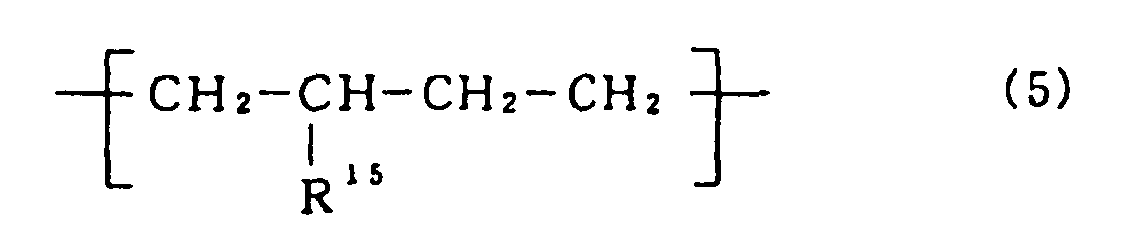
und/oder durch die folgende Formel (6) dargestellte repetitive Einheiten [6] enthält:
- Harzzusammensetzung gemäß Anspruch 8, wobei das Blockcopolymer des Weiteren die repetitiven Einheiten [3] in dem Polymerblock [B] enthält und ein Stoffmengenanteil a (mol%) der repetitiven Einheiten [3] in dem Polymerblock [A] und ein Stoffmengenanteil b (mol%) der repetitiven Einheiten [3] in dem Polymerblock [B] der Beziehung a > b genügt.
- Harzzusammensetzung gemäß Anspruch 8, worin unter der Annahme, dass die Molzahl der gesamten repetitiven Einheiten, die den Block [A] bilden, ma ist und die Molzahl der gesamten repetitiven Einheiten, die den Block [B] bilden, mb ist, ein Verhältnis (ma:mb) daraus 4:96 bis 96:4 beträgt.
- Verfahren zur Herstellung einer Lichtleiterplatte, das das Formen oder Formpressen der Harzzusammensetzung gemäß einem der Ansprüche 1 bis 10 umfasst.
Applications Claiming Priority (3)
| Application Number | Priority Date | Filing Date | Title |
|---|---|---|---|
| JP2000162794 | 2000-05-31 | ||
| JP2000162794 | 2000-05-31 | ||
| PCT/JP2001/004610 WO2001092412A1 (en) | 2000-05-31 | 2001-05-31 | Resin composition |
Publications (3)
| Publication Number | Publication Date |
|---|---|
| EP1291386A1 EP1291386A1 (de) | 2003-03-12 |
| EP1291386A4 EP1291386A4 (de) | 2004-04-07 |
| EP1291386B1 true EP1291386B1 (de) | 2008-06-25 |
Family
ID=18666650
Family Applications (1)
| Application Number | Title | Priority Date | Filing Date |
|---|---|---|---|
| EP01934463A Expired - Lifetime EP1291386B1 (de) | 2000-05-31 | 2001-05-31 | Harzzusammensetzung |
Country Status (5)
| Country | Link |
|---|---|
| US (1) | US6953819B2 (de) |
| EP (1) | EP1291386B1 (de) |
| JP (1) | JP4277525B2 (de) |
| DE (1) | DE60134551D1 (de) |
| WO (1) | WO2001092412A1 (de) |
Families Citing this family (19)
| Publication number | Priority date | Publication date | Assignee | Title |
|---|---|---|---|---|
| JPWO2004085538A1 (ja) * | 2003-03-26 | 2006-06-29 | 日本ゼオン株式会社 | 樹脂組成物及び透明成形体 |
| EP1712594B1 (de) * | 2004-01-30 | 2012-08-01 | Zeon Corporation | Harzzusammensetzung |
| JPWO2005096083A1 (ja) * | 2004-03-31 | 2008-02-21 | 大見 忠弘 | 液晶表示用導光板およびその製造方法 |
| JP4710248B2 (ja) * | 2004-05-25 | 2011-06-29 | コニカミノルタオプト株式会社 | 樹脂材料及びプラスチック製光学素子 |
| JP2006124580A (ja) * | 2004-10-29 | 2006-05-18 | Nippon Zeon Co Ltd | ビニル脂環式炭化水素重合体組成物及び成形体 |
| WO2006112434A1 (ja) * | 2005-04-18 | 2006-10-26 | Mitsui Chemicals, Inc. | 樹脂組成物および光学部品 |
| US8658718B2 (en) | 2005-05-19 | 2014-02-25 | Mitsui Chemicals, Inc. | Molding material, use thereof, and process for producing molding material |
| TWI388600B (zh) | 2005-07-01 | 2013-03-11 | Zeon Corp | 樹脂組合物 |
| TWI434073B (zh) * | 2006-01-06 | 2014-04-11 | Sumitomo Chemical Co | 多層光擴散板 |
| EP1988124A4 (de) | 2006-02-03 | 2010-11-03 | Zeon Corp | Polymerzusammensetzung |
| US20100074083A1 (en) | 2006-10-17 | 2010-03-25 | Mitsui Chemicals, Inc. | Resin composition and molded product obtained by molding the resin composition |
| JPWO2012133749A1 (ja) * | 2011-03-30 | 2014-07-28 | Hoya株式会社 | フォトクロミックレンズ |
| JP5888161B2 (ja) * | 2012-07-18 | 2016-03-16 | 三菱化学株式会社 | 樹脂組成物、並びにこの樹脂組成物からなるフィルム及び容器 |
| JP2013082912A (ja) * | 2011-09-29 | 2013-05-09 | Mitsubishi Chemicals Corp | 水素化ブロック共重合体及びその樹脂組成物、並びに該樹脂組成物を含むフィルム及び容器 |
| CN106608955A (zh) * | 2011-09-29 | 2017-05-03 | 三菱化学株式会社 | 氢化嵌段共聚物、树脂组合物、膜及容器 |
| JP6070452B2 (ja) * | 2012-07-18 | 2017-02-01 | 三菱化学株式会社 | 樹脂組成物、並びにこの樹脂組成物からなるフィルム及び容器 |
| CN104718230A (zh) * | 2012-10-19 | 2015-06-17 | 三菱丽阳株式会社 | 光固化性树脂组合物、积层片、积层成形品以及积层成形品的制造方法 |
| CN108884284A (zh) * | 2016-04-11 | 2018-11-23 | 金达胶片美国有限责任公司 | 用于压敏标记应用的白色保形膜 |
| WO2021166780A1 (ja) * | 2020-02-21 | 2021-08-26 | Eizo株式会社 | 表示画面からの出射光の検知方法、および表示装置 |
Citations (1)
| Publication number | Priority date | Publication date | Assignee | Title |
|---|---|---|---|---|
| WO1999057602A1 (en) * | 1998-04-30 | 1999-11-11 | Nippon Zeon Co., Ltd. | Light guide plate |
Family Cites Families (15)
| Publication number | Priority date | Publication date | Assignee | Title |
|---|---|---|---|---|
| US3993855A (en) * | 1975-08-29 | 1976-11-23 | The Firestone Tire & Rubber Company | Selective hydrogenation of unsaturated hydrocarbon polymers |
| US4487870A (en) * | 1982-12-27 | 1984-12-11 | Exxon Research & Engineering Co. | UV Stabilizer system and UV stabilized polyolefins |
| US4501857A (en) * | 1983-01-20 | 1985-02-26 | Asahi Kasei Kogyo Kabushiki Kaisha | Method for hydrogenation of polymer |
| JPS60124642A (ja) * | 1983-12-10 | 1985-07-03 | Chisso Corp | 安定化されたポリオレフィン組成物 |
| JPS60130635A (ja) * | 1983-12-17 | 1985-07-12 | Chisso Corp | 安定化されたポリオレフイン組成物 |
| US5241067A (en) * | 1987-06-12 | 1993-08-31 | Elf Atochem North America, Inc. | Piperidinyl phthalimide hindered amine light stabilizers |
| ES2059446T3 (es) * | 1987-07-16 | 1994-11-16 | Asahi Chemical Ind | Composicion de copolimero bloque hidrogenado especifico y procedimiento para su fabricacion. |
| US5066696A (en) * | 1990-02-12 | 1991-11-19 | Rohm And Haas Company | Polymers stabilized against light and heat degradation |
| JP2841650B2 (ja) * | 1990-03-07 | 1998-12-24 | 住友化学工業株式会社 | 樹脂用酸化防止剤 |
| JP3360335B2 (ja) | 1992-12-28 | 2002-12-24 | 日本ゼオン株式会社 | ビニル化環状炭化水素系重合体から成る成形材料 |
| EP0873991A1 (de) * | 1997-04-23 | 1998-10-28 | Ciba SC Holding AG | Polyalkylenglykolgruppen enthaltende gehinderte Amine als Stabilisatoren |
| US6365660B1 (en) * | 1997-07-28 | 2002-04-02 | Nippon Zeon Co., Ltd. | Resin composition and molded or formed product comprising vinyl cyclic hydrocarbon polymer |
| JPH11316377A (ja) * | 1998-04-30 | 1999-11-16 | Nippon Zeon Co Ltd | 導光板 |
| JP2003517502A (ja) * | 1999-05-19 | 2003-05-27 | ザ ダウ ケミカル カンパニー | 安定剤を含有する水素化ビニル芳香族ポリマー組成物 |
| JP4470277B2 (ja) * | 1999-06-30 | 2010-06-02 | Jsr株式会社 | 耐候性樹脂組成物 |
-
2001
- 2001-05-31 EP EP01934463A patent/EP1291386B1/de not_active Expired - Lifetime
- 2001-05-31 US US10/296,809 patent/US6953819B2/en not_active Expired - Lifetime
- 2001-05-31 WO PCT/JP2001/004610 patent/WO2001092412A1/ja not_active Ceased
- 2001-05-31 JP JP2002500612A patent/JP4277525B2/ja not_active Expired - Fee Related
- 2001-05-31 DE DE60134551T patent/DE60134551D1/de not_active Expired - Lifetime
Patent Citations (2)
| Publication number | Priority date | Publication date | Assignee | Title |
|---|---|---|---|---|
| WO1999057602A1 (en) * | 1998-04-30 | 1999-11-11 | Nippon Zeon Co., Ltd. | Light guide plate |
| US6633722B1 (en) * | 1998-04-30 | 2003-10-14 | Nippon Zeon Co., Ltd. | Light guide plate with alicyclic resin |
Non-Patent Citations (1)
| Title |
|---|
| "Technical Data Sheet Chimassorb 944", CIBA SPECIALTY CHEMICALS INC. * |
Also Published As
| Publication number | Publication date |
|---|---|
| EP1291386A1 (de) | 2003-03-12 |
| US6953819B2 (en) | 2005-10-11 |
| WO2001092412A1 (en) | 2001-12-06 |
| JP4277525B2 (ja) | 2009-06-10 |
| DE60134551D1 (de) | 2008-08-07 |
| EP1291386A4 (de) | 2004-04-07 |
| US20030158307A1 (en) | 2003-08-21 |
Similar Documents
| Publication | Publication Date | Title |
|---|---|---|
| EP1291386B1 (de) | Harzzusammensetzung | |
| JPWO2001092412A1 (ja) | 樹脂組成物 | |
| US6965003B2 (en) | Block copolymer, process for producing the same, and molded object | |
| JP4224655B2 (ja) | 脂環式炭化水素系共重合体 | |
| CN101730721A (zh) | 体光漫射体组合物 | |
| EP1245637B1 (de) | Lichtstreuende harzzusammensetzung | |
| JP2002105151A (ja) | フィルム及びシート | |
| CN101625424A (zh) | 光学元件及其制造方法 | |
| JP3781110B2 (ja) | ビニル脂環式炭化水素重合体組成物の成形方法及び成形体 | |
| CN101910213B (zh) | 脂环烃无规共聚物、其生产方法、树脂组合物以及成形体 | |
| JPH09263627A (ja) | ノルボルネン系開環重合体水素添加物からなる光学材料および光学部材 | |
| JP2003221486A (ja) | 光拡散性樹脂組成物 | |
| JP2006189523A (ja) | 導光板 | |
| JPWO2007119512A1 (ja) | 光学素子及び光学用樹脂レンズ | |
| WO2007088941A1 (ja) | 重合体組成物 | |
| JP5149030B2 (ja) | 車両灯具用透明材及びそれを用いた車両灯具 | |
| JP2002071964A (ja) | 導光板 | |
| JP5430858B2 (ja) | 重合体組成物及びそれを用いて得られる成形体 | |
| JP2010083979A (ja) | 重合体環化物およびその水素添加物 | |
| JP5238277B2 (ja) | 光拡散性成形体及び画像表示装置 | |
| JP2008304691A (ja) | レンズシートおよびそれを含む画像表示装置 | |
| JP4860643B2 (ja) | レンズシート及びそれを含む画像表示装置 | |
| JP2002053631A (ja) | 新規なブロック共重合体及び光学式情報記録媒体 | |
| JP5257046B2 (ja) | 脂環式炭化水素ランダム共重合体、その製造方法、樹脂組成物、及び成形物 | |
| JP5351459B2 (ja) | 重合体組成物及びそれを用いて得られる成形体 |
Legal Events
| Date | Code | Title | Description |
|---|---|---|---|
| PUAI | Public reference made under article 153(3) epc to a published international application that has entered the european phase |
Free format text: ORIGINAL CODE: 0009012 |
|
| 17P | Request for examination filed |
Effective date: 20021130 |
|
| AK | Designated contracting states |
Kind code of ref document: A1 Designated state(s): AT BE CH CY DE DK ES FI FR GB GR IE IT LI LU MC NL PT SE TR |
|
| A4 | Supplementary search report drawn up and despatched |
Effective date: 20040219 |
|
| RIC1 | Information provided on ipc code assigned before grant |
Ipc: 7C 08K 5/3435 B Ipc: 7C 08L 25/00 A Ipc: 7C 08L 23/02 B |
|
| RBV | Designated contracting states (corrected) |
Designated state(s): AT BE CH DE FR GB LI |
|
| 17Q | First examination report despatched |
Effective date: 20041122 |
|
| 17Q | First examination report despatched |
Effective date: 20041122 |
|
| GRAP | Despatch of communication of intention to grant a patent |
Free format text: ORIGINAL CODE: EPIDOSNIGR1 |
|
| GRAS | Grant fee paid |
Free format text: ORIGINAL CODE: EPIDOSNIGR3 |
|
| GRAA | (expected) grant |
Free format text: ORIGINAL CODE: 0009210 |
|
| AK | Designated contracting states |
Kind code of ref document: B1 Designated state(s): DE FR GB |
|
| RBV | Designated contracting states (corrected) |
Designated state(s): DE FR GB |
|
| REG | Reference to a national code |
Ref country code: GB Ref legal event code: FG4D |
|
| REF | Corresponds to: |
Ref document number: 60134551 Country of ref document: DE Date of ref document: 20080807 Kind code of ref document: P |
|
| PLBE | No opposition filed within time limit |
Free format text: ORIGINAL CODE: 0009261 |
|
| STAA | Information on the status of an ep patent application or granted ep patent |
Free format text: STATUS: NO OPPOSITION FILED WITHIN TIME LIMIT |
|
| 26N | No opposition filed |
Effective date: 20090326 |
|
| GBPC | Gb: european patent ceased through non-payment of renewal fee |
Effective date: 20090531 |
|
| REG | Reference to a national code |
Ref country code: FR Ref legal event code: ST Effective date: 20100129 |
|
| PG25 | Lapsed in a contracting state [announced via postgrant information from national office to epo] |
Ref country code: FR Free format text: LAPSE BECAUSE OF NON-PAYMENT OF DUE FEES Effective date: 20090602 |
|
| PG25 | Lapsed in a contracting state [announced via postgrant information from national office to epo] |
Ref country code: GB Free format text: LAPSE BECAUSE OF NON-PAYMENT OF DUE FEES Effective date: 20090531 |
|
| PGFP | Annual fee paid to national office [announced via postgrant information from national office to epo] |
Ref country code: DE Payment date: 20110525 Year of fee payment: 11 |
|
| REG | Reference to a national code |
Ref country code: DE Ref legal event code: R119 Ref document number: 60134551 Country of ref document: DE Effective date: 20121201 |
|
| PG25 | Lapsed in a contracting state [announced via postgrant information from national office to epo] |
Ref country code: DE Free format text: LAPSE BECAUSE OF NON-PAYMENT OF DUE FEES Effective date: 20121201 |