EP1290224B1 - Diagnostisches kit zur identifikation und feststellung von wirkstoffresistenz bei mykobakterium sowie herstellungsmethoden davon - Google Patents
Diagnostisches kit zur identifikation und feststellung von wirkstoffresistenz bei mykobakterium sowie herstellungsmethoden davon Download PDFInfo
- Publication number
- EP1290224B1 EP1290224B1 EP01936994A EP01936994A EP1290224B1 EP 1290224 B1 EP1290224 B1 EP 1290224B1 EP 01936994 A EP01936994 A EP 01936994A EP 01936994 A EP01936994 A EP 01936994A EP 1290224 B1 EP1290224 B1 EP 1290224B1
- Authority
- EP
- European Patent Office
- Prior art keywords
- drug
- mycobacterium
- species identification
- resistance detection
- dna
- Prior art date
- Legal status (The legal status is an assumption and is not a legal conclusion. Google has not performed a legal analysis and makes no representation as to the accuracy of the status listed.)
- Expired - Lifetime
Links
Images



Classifications
-
- C—CHEMISTRY; METALLURGY
- C12—BIOCHEMISTRY; BEER; SPIRITS; WINE; VINEGAR; MICROBIOLOGY; ENZYMOLOGY; MUTATION OR GENETIC ENGINEERING
- C12Q—MEASURING OR TESTING PROCESSES INVOLVING ENZYMES, NUCLEIC ACIDS OR MICROORGANISMS; COMPOSITIONS OR TEST PAPERS THEREFOR; PROCESSES OF PREPARING SUCH COMPOSITIONS; CONDITION-RESPONSIVE CONTROL IN MICROBIOLOGICAL OR ENZYMOLOGICAL PROCESSES
- C12Q1/00—Measuring or testing processes involving enzymes, nucleic acids or microorganisms; Compositions therefor; Processes of preparing such compositions
- C12Q1/68—Measuring or testing processes involving enzymes, nucleic acids or microorganisms; Compositions therefor; Processes of preparing such compositions involving nucleic acids
-
- C—CHEMISTRY; METALLURGY
- C12—BIOCHEMISTRY; BEER; SPIRITS; WINE; VINEGAR; MICROBIOLOGY; ENZYMOLOGY; MUTATION OR GENETIC ENGINEERING
- C12Q—MEASURING OR TESTING PROCESSES INVOLVING ENZYMES, NUCLEIC ACIDS OR MICROORGANISMS; COMPOSITIONS OR TEST PAPERS THEREFOR; PROCESSES OF PREPARING SUCH COMPOSITIONS; CONDITION-RESPONSIVE CONTROL IN MICROBIOLOGICAL OR ENZYMOLOGICAL PROCESSES
- C12Q1/00—Measuring or testing processes involving enzymes, nucleic acids or microorganisms; Compositions therefor; Processes of preparing such compositions
- C12Q1/68—Measuring or testing processes involving enzymes, nucleic acids or microorganisms; Compositions therefor; Processes of preparing such compositions involving nucleic acids
- C12Q1/6876—Nucleic acid products used in the analysis of nucleic acids, e.g. primers or probes
- C12Q1/6888—Nucleic acid products used in the analysis of nucleic acids, e.g. primers or probes for detection or identification of organisms
- C12Q1/689—Nucleic acid products used in the analysis of nucleic acids, e.g. primers or probes for detection or identification of organisms for bacteria
-
- C—CHEMISTRY; METALLURGY
- C12—BIOCHEMISTRY; BEER; SPIRITS; WINE; VINEGAR; MICROBIOLOGY; ENZYMOLOGY; MUTATION OR GENETIC ENGINEERING
- C12Q—MEASURING OR TESTING PROCESSES INVOLVING ENZYMES, NUCLEIC ACIDS OR MICROORGANISMS; COMPOSITIONS OR TEST PAPERS THEREFOR; PROCESSES OF PREPARING SUCH COMPOSITIONS; CONDITION-RESPONSIVE CONTROL IN MICROBIOLOGICAL OR ENZYMOLOGICAL PROCESSES
- C12Q2600/00—Oligonucleotides characterized by their use
- C12Q2600/156—Polymorphic or mutational markers
Definitions
- the present disclosure relates to a diagnosis kit for Mycobacterium species identification and drug-resistance detection and a manufacturing method thereof, and more specifically, to a diagnosis kit for Mycobacterium species identification and drug-resistance detection in which point mutations of Mycobacterial rpoB gene related to the drug-resistance can be discriminated speedily and accurately in large quantity by using an oligonucleotide chip, and a manufacturing method thereof.
- tuberculosis About two million people die from tuberculosis worldwide each year. The increase in immigration, the spread of HIV/AIDS, and the emergence of drug-resistance strains are enhancing the mortality of tuberculosis. AIDS patients and newborns with weak immune system can develop tuberculosis from not only Mycobacterium tuberculosis infection but also MOTT (Mycobacterium other than tuberculosis) infection, particularly, Mycobacterium avium-intracellulare (MAI), Mycobacterium chelonae, Mycobacterium fortuitum, Mycobacterium kansasaii, Mycobacterium xenopi, Mycobacterium marinum, Mycobacterium scrofulaceum, and Mycobacterium szulgai.
- MOTT Mycobacterium other than tuberculosis
- MAI Mycobacterium avium-intracellulare
- Mycobacterium chelonae Mycobacterium fortuit
- Tuberculosis is normally treated by chemotherapy with various anti-tuberculosis drugs. Since there are numerous different strains of Mycobacteria with diverse drug-susceptibility, detection and identification of the causative bacterium is important for the effective treatment.
- Sputum test can be typically preformed by the following two methods: sputum smear microscopy in which sputum of a patient is thinly spread on a slide, and then the bacteria are selectively stained for microscopic observation, and culture method in which the bacteria are cultured under physiological conditions for visual observation. Sputum smear microscopy is relatively simple and rapid, but cannot easily discriminate Mycobacterium tuberculosis from MOTT.
- Detection and identification of the mycobacterium strains have been done by the culture method, but it takes at least 6-8 weeks due to the slow growth rate of the bacteria. During this period, a combination of primary anti-tuberculosis drugs is used, which may result in therapeutic failure and drug-resistance. In fact, increasing numbers of strains have been determined to be resistant to primary anti-tuberculosis drugs such as isoniazid (INH), rifampin (RIF), streptomycin (STR), ethambutol (EMB), pyrasinamide (PZA).
- IH isoniazid
- RAF rifampin
- STR streptomycin
- EMB ethambutol
- PZA pyrasinamide
- the highly polymorphic region of 16S rRNA DNA has also been used for species identification since it shows species-specific polymorphism.
- Several commercial products have been developed based on this method: Accuprobe (Gen-probe, San Diego, CA, U.S.A.) which can be applied directly to a specimen, and AMTD (Gen-probe, San Diego, CA, U.S.A.) and Amplicor MTB (Roche Diagnostics Systems, Somerville, NJ, U.S.A.) in which target DNA are PCR (polymerase chain reaction) amplified prior to analysis to enhance sensitivity.
- target DNA are PCR (polymerase chain reaction) amplified prior to analysis to enhance sensitivity.
- the 16S rRNA gene occasionally has different copies in a single strain, and this could complicate accurate species determination.
- an additional molecular biological analysis on the rpoB gene has been necessary.
- Resistance against RIF a primary anti-tuberculosis drug
- Resistance against RIF is known to be related to the mutations of rpoB gene encoding RNA polymerase ⁇ -subunit. More than 30 different mutations identified so far have shown to be concentrated in the 81 bp core region of the 3,534bp rpoB gene ( Amalio Telenti, Paul Imboden, Francine Marchesi, Douglas Lowrie, Sterwart Cole, M.
- Table 1 illustrates point mutations occurring in codons 507 through 533 of the M. tuberculosis rpoB gene. As illustrated in Table 1, point mutations occur more frequently in codons 513, 516, 526, and 531, which are also observed more prevalently than the others.
- Rifabutin (abbreviated as RIB), a spiro-piperidyl derivative of rifamycin S, is used to prevent MAC infection in AIDS patients ( James M. Musser, "Antimicrobial Agent Resistance in Mycobactera: Molecular Genetic Insights", Clinical Microbiology Review, Vol. 8, No. 4, pp. 496-514, 1995 ). Resistance against RIB is also related to the point mutations of the rpoB gene. However, the drug-susceptibility of a mutation displays difference between RIF and RIB: Several mutations showing resistance to RIF have determined to be susceptible to RIB. Mutation showing resistance to both RIF and RIB were also reported ( Della Bruna C., G.
- Korean Patent Registration No. 234975 discloses a method for the detection and identification of mycobacterial strains by PCR-RFLP (restriction fragment length polymorphism after polymerase chain reaction) assay using a set of novel PCR primers that specifically amplifies the rpoB gene of mycobacterial species.
- Korean Patent Registration No. 285254 discloses a method of detecting and distinguishing Mycobacterium tuberculosis complex and MOTT by using primers that can amplify rpoB gene fragments of Mycobacterium tuberculosis complex and MOTT in a respectively different size.
- the above-described methods require bacterial culture step prior to PCR amplification, limit the kind of species or the number of samples that can be analyzed, and are laborious having a PCR step followed by a restriction enzyme treatment step and/or an electrophoresis step.
- a method of detecting rifampin-resistance in Mycobacterium tuberculosis with a nested PCR-SSCP (polymerase chain reaction-single strand conformational polymorphism) and a single-step nested PCR-SSCP This method include two PCR and polymorphism assay steps and therefore it takes about four days to determine rifampin-resistance.
- PCT International Publication No. WO97/29212 by Affymetrix discloses a technology of a sequencing DNA chip of rpoB gene. With this method, the entire base sequences of 700bp in the rpoB gene should be analyzes to obtain clinically important information such as species identity and drug-resistance.
- rpoB DNA sequences of 342bp were amplified from 44 reference strains of Mycobacteria and clinical isolates (107 strains) by PCR ( Kim B.-J. et al., "Identification of Mycobacterial Species by Comparative Sequence Analysis of the RNA Polymerase Gene (rpoB)" Journal of Clinical Microbiology, vol. 37, No. 6, June 1999, pages 1714-1720 ).
- WO 95/33051 a method for the detection of the antibiotic resistance spectrum of Mycobacterium species is disclosed.
- the document discloses various probes for detecting resistance-conferring rpoB genes.
- probes having increased efficiency of detection and reducing the amount of time required for PCR.
- T. R. Gingeras et al. investigated an array designed to determine the specific nucleotide sequence of the rpoB gene of Mycobacterium tuberculosis with base sequences of 705bp accurately detected rifampin-resistance associated with mutations of 44 clinical isolates of M. tuberculosis ( Thomas R. Gingeras et al., "Simultaneous Genotyping and Species Identification Using Hybridization Pattern Recognition Analysis of Generic Mycobacterium DNA Arrays", Genome Research 1998, vol. 8, No. 5, pages 435-448 ).
- A. Troesch et al. describe the use of a DNA probe array based on two sequence databases: One for the species identification of Mycobacteria and the other for detecting Mycobacterium tuberculosis rifampin-resistance ( A. Troesch et al., "Mycobacterium Species Identification and Rifampin-resistance Testing With High-density DNA Probe Array", Journal of Clinical Microbiology 1999, vol. 37, No. 1, pages 49-55 ).
- D. L. Williams et al. investigated the contribution of rpoB mutations to development of rifamycin cross-resistance in Mycobacterium tuberculosis ( D. L. Williams et al., Antimicrobial Agents and Chemotherapy, July 1998, vol. 42, No. 7, pages 1853-1857 ).
- a diagnosis kit for Mycobacterium species identification and drug-resistance detection in which features relating to both the Mycobacterium species identification and the drug-resistance detection can be discriminated speedily and accurately in large quantity.
- PCR polymerase chain reaction
- PCR polymerase chain reaction
- a diagnosis kit for Mycobacterium species identification and drug- resistance detection comprising: an oligonucleotide chip including species identification probes comprised of species-specific DNA sequences of Mycobacterial rpoB gene, Mycobacterial drug-resistance detection probes comprised of one or more modified codons of Mycobacterial rpoB gene, and control group probes comprised of wild-type sequences corresponding to each drug-resistance detection probe; and a method for detecting the hybridization of the oligonucleotide chip and the specimen DNA.
- drug-resistance detection as well as Mycobacterium species identification can be simultaneously performed.
- Mycobacterial rpoB gene point mutations related to drug-resistance can be discriminated by comparing the intensity of hybridization signal of the drug-resistance detection probe with that of the control group probe, and species identification can be made by comparing the hybridization intensities of the species-specific probes, the Mycobacterial species identification and the drug-resistance detection can be performed speedily and accurately in large quantity.
- the drug-resistance detection probe may comprise one or more modified codons discovered in 507-533 codons ofrpoB gene.
- the drug-resistance detection probes can be rifampin-resistance probes and/or rifabutin-sensitive probes.
- a method of manufacturing a diagnosis kit for Mycobacterium species identification and drug-resistance detection comprising the steps of: (a) modifying species identification probes comprised of species-specific DNA sequences of Mycobacterial rpoB gene, Mycobacterial drug-resistance detection probes comprised of one or more modified codons of Mycobacterial rpoB gene, and contrast group probes comprised of wild-type sequences corresponding to each drug-resistance detection probe to contain an amine group on the 5' terminal; (b) inducing an aldehyde group on glass; and (c) fabricating an oligonucleotide chip by immobilizing the modified probes on the glass by Schiff base reaction.
- the diagnosis kit having the advantage of simultaneously discriminating Mycobacterium species identity and drug-resistance speedily and accurately in large quantity, can be easily fabricated.
- PCR primers for Mycobacterium species identification comprises DGR8 and DGR9 having base sequences by which Mycobacterial rpoB gene fragments (157bp) are specifically amplified.
- the primer set In the case that the primer set is used, DNA isolated from uncultured clinical specimens can be used as a template of a polymerase chain reaction, and the rpoB gene fragment (157bp) of 44 species belonging to Mycobacterium genus can be efficiently amplified. Accordingly, the Mycobacterium species identification and the drug-resistance detection can be performed within a short time, for example, approximately in six hours.
- the PCR products obtained by using the primer set are DNA of 157bp size that can be used as a target DNA of oligonucleotide chip analysis.
- a fragment of rpoB gene in a specimen is PCR amplified under the reaction conditions such as an annealing temperature of 64°C, a reaction cycle of 40, and a primer concentration of 100pmol with primers DGR8 and DGR9, and then the amplified product is used for Mycobacterial species identification and drug-resistance detection by using said diagnosis kit according to the present invention.
- DNA chip technology developed in early 1980s presents a method of providing a large amount of genetic information at a time. This method has been used to investigate gene expression, mutation and polymorphism of human or bacterium genome.
- the present disclosure utilizes the DNA chip technology that enables rapid genetic analysis, and provides a diagnosis kit for Mycobacterium species identification and drug-resistance detection and a manufacturing method thereof, in which the Mycobacterium species identification and the point mutations of Mycobacterium tuberculosis related to drug-resistance can be discriminated.
- rpoB gene fragment (157bp) including the 81bp core region where Mycobacterial point mutations occur most frequently is PCR amplified using a particular primer set, and then the amplified DNA is hybridized with an oligonucleotide chip, to thereby detect point mutations for drug-resistance determination.
- the method using said oligonucleotide chip includes a step of amplifying target DNA from clinical specimens by PCR.
- PCR should be performed with highly efficient primers.
- biotin-TR8 and TR9 that have been devised by using only the rpoB gene base sequence of Mycobacterium tuberculosis are used as primers.
- the DNA amplified by using the primers is 157bp fragment containing the 81bop core region where point mutations related to rifampin-resistance occur most frequently.
- the amplification efficiency of biotin-TR8/ TR9 primers is not sufficient for uncultured specimens such as sputum and therefore the analysis time with these primers exceeds 6-8 weeks due to bacterial culture step.
- MOTT may not be amplified even from cultured samples due to the low efficiency of these primers. In other words, a rapid analysis on the species identity and drug-resistance cannot be accomplished without DNA amplification directly from sputum samples.
- the inventors combine base sequences of the rpoB gene of forty-three different species of Mycobacteria as well as Mycobacterium tuberculosis, to thereby devise a new primer set.
- this primer set is used, isolated DNA from uncultured specimens can be used as a template for PCR, and a specific rpoB gene sequence of forty-three bacterial species as well as Mycobacterium tuberculosis can be amplified by a single PCR step.
- the amplified product is applied to a DNA chip, the Mycobacterium species identification and rpoB mutation detection can be simultaneously performed within a short period of time.
- Mycobacterial genomic DNA extracted from ten clinical isolate cultures were provided after sequencing from the Department of Respiratory Diseases, Asan Medical Center (Seoul, Korea), and additional Mycobacterial genomic DNA were obtained from ATCC (Manassas, VA USA).
- Table 2 illustrates sequences of oligonucleotide probes and primers.
- biotin-TR8 and TR9 and probes used were custom-synthesized from Bionics (Seoul, Korea). All other reagents were first-grade.
- Tuberculosis bacteria group probes Mc1 5'Amine-T10-tcttcggcaccagccag 3' Mc2 5'Amine-T10-tcttcggaaccagccag 3' Mc5 5'Amine-T10-tcttcggaacgtcgcag 3' Mex 5'Amine-Tl0-tcttcggaacctcgcag 3' Mycobacterium species identification probes Ms1 5'Amine-T10-ggtctgtcacgtgagcgtg 3' Ms2 5'Amine-T10-ggtctgtccccgtgagcgtg 3' Ms3 5'Amine-T10-ggtctgtcgcgtgagcgtg 3' Ms4 5'Amine-T10-ggtctgtcgcgtgagcgtg 3' Ms4 5'Amine-T10-ggt
- an oligonucleotide chip for investigating point mutation of rpoB gene is devised including seven wild-type probes, seventeen RIF-resistance probes, and eight RIB-sensitive probes.
- seventeen RIF-resistance probes of SEQ ID NOs 20-36 can discriminate the mutations of codon 511 (Leu >Pro), codon 513 (Gln >Pro), codon 516 (a: Asp >Val, b: Asp >Tyr, c: Asp >Glu), codon 518 (Asn >His), codon 521 (Leu >Met), codon 522 (Ser >Leu), codon 526 (a: His )Tyr, b: His )Asp, c: His )Arg, d: His )Asn, e: His )Ala, f: His >Cys, g: His )Gln, h: His >Gly), and codon 531 (Ser >Leu).
- RIB-sensitive probes of SEQ ID NOs 22, 23 and 31-36 among seventeen RIF-resistance probes can discriminate the mutations of codon 516 (a: Asp >Val, b: Asp >Tyr, c: Asp >Glu), and codon 526 (d: His >Asn, e: His >Ala, f: His >Cys, g: His >Gln, h: His >Gly).
- oligonucleotide chip includes 516a and 516b probes in RIB-sensitive probes.
- Mc1 can detect M. tuberculosis, M. africanum, M. asiaticum, M. bovis (2), M. gastri, M. avium (2), M. celatium (2), M. genavense, M. gordonae, M. haemophilum, M. interjectum, M. intermedium, M. intracellulare, M. kansasii, M. leprae, M. malmoense, M. scrofulaceum, M.
- Mc2 can detect pathogenic or non-pathogenic but clinically important M. marium, M. shimoidei, M. ulcerans, M. abscessus, and M. chelonae, and Mc5 can detect M. fortuitum.
- probe Mex of SEQ ID NO 4 detecting Corynebacterium diphtheriae which is not mycobactria but belongs to similar but different genus as a contrast group is added in order to compare hybridization signals with each other, to thereby enable a more accurate determination on whether or not the strain under examination belongs to Mycobacteria.
- Mycobacterial species identification probes of SEQ ID NO 5 through 12 including partial sequences of Mycobacterial species-specific rpoB gene have been added in order to perform Mycobacterial species identification in more detail, in addition to probes which can discriminate Mycobacteria from other similar bacteria.
- the Ms1 probe can detect M. tuberculosis, M. africanum, M. bovis, and M. gastri.
- the other probes have been devised to detect M. asiaticum (Ms2), M. simiae (Ms2), M. aurum (Ms2), M. senegalence (Ms2), M. shimoidei (Ms2), M.
- Ms2 neoaurum
- Ms2 M. terrae
- Ms2 M. gordonae
- Ms2 M. haemophilum
- Mszulgai Ms2
- M. intracellulare Ms2
- M. kansasii Ms2
- M. scrofulaceum Ms2
- M. fortuitum Ms2
- M. fallax Ms2
- M. flavescens Ms2
- M. peregrinum Ms2
- M. phlei M. vaccae
- Ms2 M. marinumv
- Ms2 M. ulcerans
- Ms2 chitae
- Ms2 M. genevense
- Ms2 M. smegmatis
- Ms3 M. intermedium
- Ms3 M. malmonense
- Ms3 M. nonchromogenicum
- Ms3 M. leprae
- Ms3 M. avium
- Ms4 M. triviale
- Ms4 M. celatium
- Ms5 M. interjectum
- Ms6 M. xenopi
- Ms7 M. chelonae
- Ms7 M. abscessus
- Ms8 M. thermoresistibile
- MTAB and MF Additional species identification probes, MTAB and MF, have been devised to specifically detect M. tuberculosis (MTAB), M. africanum (MTAB), M. bovis (MTAB), M. bovis BCG (MTAB), M. intracelluare (MTAB), and M. kansasii (MTAB), M. fortuitum (MF), and M. flavescens (MF).
- MTAB M. tuberculosis
- MTAB M. africanum
- MTAB M. bovis
- MTAB M. bovis BCG
- MTAB M. intracelluare
- MTAB M. kansasii
- MF M. fortuitum
- MF M. flavescens
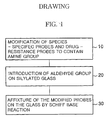
- FIG. 1 is a flowchart view illustrating a process of fabricating an oligonucleotide chip for Mycobacterium DNA identification according to the present invention.
- the oligonucleotide chip fabrication process includes: the first step (10) of modifying each of the Mycobacterium complex probes, Mycobacterium species identification probes having Mycobacterial species-specific DNA sequences of Mycobacterium rpoB gene, Mycobacterium drug-resistance detection probes including one or more modified codons of the Mycobacterium rpoB gene, and contrast group probes including wild-type sequences corresponding to each drug-resistance detection probes, to contain an amine group at the 5' terminal; the second step (20) of introducing an aldehyde group on silylated slide glass; and the third step (30) of affixing the modified probe on the slide glass by Schiff base reaction, to thereby fabricate an oligonucleotide chip.
- a particular DNA probe (see Table 2) was dissolved in 3 ⁇ SSC to a concentration of 200pmol/ ⁇ l.
- the DNA probe solution of 0.1-0.2 ⁇ l was spotted on an aldehyde-derivatized slide glass (CEL Associates, Inc., MA, U.S.A), and reacted in a humidified incubator for 4 hours at 37°C.
- the slide glass was treated with 0.2% sodium dodecyl sulfate (SDS) solution for one minute, distilled water for one minute, and then with NaBH 4 solution (O.lg NaBH 4 , 30ml PBS, and 10ml EtOH) for five minutes.
- SDS sodium dodecyl sulfate
- NaBH 4 solution O.lg NaBH 4 , 30ml PBS, and 10ml EtOH
- PCR has been performed in a total volume of 50 ⁇ l with 10mM Tris-HCl (pH 8.3), 50mM KCl, 1.5mM MgCl 2 , 1U Taq polymerase, 50pmol biotin-TR8 and TR9 primers (see Table 2). Further, 1mM dATP, dGTP, and dCTP of 2 ⁇ l each, dTTP of 1.5 ⁇ l, and 1mM biotin-dUTP of 0.5 ⁇ l were added to randomly incorporate fluorescence labeling in the resulting target DNA. Table 3 illustrates the composition of PCR mixture.
- the PCR was performed for 35 cycles under the following conditions.
- the PCR products produced through the above process are 157bp including 81bop core region, and has been identified by electrophoresis on a 2% agarose gel.
- a target DNA (157bp) of 20 ⁇ l amplified by PCR was mixed with DNase buffer of 20 ⁇ l and DNase I (0.1U/ ⁇ l) of 1 ⁇ l, and treated at 0°C for 5 minutes.
- the resulting target DNA was thermally treated at 99°C for 10 minutes to inactivate the DNase I.
- the mixture was then treated with 3N NaOH of 4 ⁇ l at 25 °C for 5 minutes, and then treated at 0°C for 5 minutes with Tris-HCl (pH 7.2) of 2 ⁇ l and 3N HCl of 4 ⁇ l.
- the oligonucleotide chip was washed with 2 x SSPE and 0.03% SDS at 25°C for 3 minutes, with 1 x SSPE at 25 °C for 5 minutes, and then with 0.2 x SSPE at 25 °C for 5 minutes to remove unreacted DNA.
- the oligonucleotide chip was dried at 25 °C, and a mixture of 3 x SSPE of 49 ⁇ l and streptavidin-R-phycoerythrin of 1 ⁇ l was added, then treated at 25°C for 10 minutes.
- the stained oligonucleotide chip was washed twice with 1 x SSPE for 1 minute, air-dried, and scanned with a laser fluorescence scanner (GMS 418 array scanner, TaKaRa, Japan).
- the wild-type (wt) probes consist of seven 17mer probes devised from rpoB gene sequence corresponding to codons 507-533, including the mutation site in middle (positions 8-12) and have maximum sequence overlaps between the wild-type probes.
- the present invention has been devised to accurately detect frequent point mutations by comparing the signal intensities of the rifampin-resistance probes with those of the corresponding wild-type probes, and simultaneously predict all point mutations found at 507-533 codons.
- Each mutant probe is designed to have the most frequent mutation site located in the middle position (8-12 positions) of the probe as in the wild-type probes, to thereby enhance detection sensitivitiy and enable more accurate detection by comparing the signal intensities with wild-type probes.
- the hybridization efficiency was increased by attaching a T 10 spacer on each probe, which is confirmed experimentally. It is considered that the T 10 spacer reduces steric hindrance and hence increases the hybridization efficiency of the target DNA and the probes.
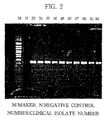
- FIG. 2 is a pictorial view showing the result in which rpoB gene fragments (157bp) of ten clinical isolates are amplified using biotin-TR8 and TR9 primers and then undergone an electrophoresis in 2% agarose gel, according to the present invention.
- the ten amplified rpoB gene fragments (157bp) were digested with DNase I, and then hybridized with the oligonucleotide chip. After hybridization under the optimal conditions, that is, at 40°C for 3 hours, the oligonucleotide chip was stained with streptavidin-R-phycoerythrin for subsequent fluorescence scanning at 578nm.
- the resulting image can be analyzed for drug-resistance by comparing the fluorescent intensities of the wild-type (wt) probes with those of the mutation (mt) probes relatively.
- Mutant probes and wild-type probes have identical sequence except for a few base difference in the middle of the sequence.
- the target DNA of a mutant will show stronger signal on the corresponding mutant probe than its wild-type probe.
- the difference in hybridization intensity is visually recognized for determination.
- the signal intensity can also be arithmetically valued for more accurate comparison by using an appropriate software.
- FIGs. 3A through 3J are pictorial views showing fluorescent images obtained by amplified clinical samples containing biotin-dUTP using an oligonucleotide chip, according to the present invention.
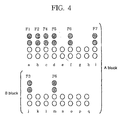
- FIG. 4 is a view showing the positions of the probes in the FIGs. 3A through 3J views, in which each probe is established into separate blocks to facilitate signal comparison and double spots are placed for each probe to increase analysis fidelity.
- the signals of the F1, F2, F4, F5, F6 and F7 which are the wild-type probes are stronger than those of the mutant probes, but the signal of the 516c mutant probe is stronger than those of the corresponding wild-type probe F3 and the mutant probes 516a and 516b. Therefore, the specimen was determined as a 516c mutant.
- FIGs. 3B through 3J the specimens were identified in the same manner as that of FIG. 3A .
- each clinical isolate was identified to contain the following RIF-resistance mutation(s): #22 (mt516c), #24 (mt516b/526e), #30 (mt531), #36 (mt516b), #48 (mt526f), #82 (mt531/516c), #87 (mt531/516c), #90 (mt516c/526d), #91 (mt531), and #94 (mt511/531).
- the oligonucleotide chip result showed signals on both RIB-resistant mt 526b and RIB-sensitive mt 526e. Based on these results, the sample is considered to contain two types of mutations or two different strains producing mixed results.
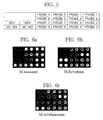
- FIG. 5 is a diagram showing an array format of the oligonucleotide chip using probes Ms1-Ms8 designed for species identification.
- FIGs. 6A through 6C are pictorial views showing the experimental results of Mycobacterium species identification using the oligonucleotide chip of FIG. 5 .
- the signal of MCmix probe indicating mycobacteria appears more strongly than that of the control Mex probe, and the signal of number 2 probe is stronger than those of numbers 1, and 3-8 probes, among the species identification probes.
- clinically significant 33 kinds of Mycobacteria can be identified.
- the signals of the Mcmix probe and number 1 probe turn on, MOTT except for Mycobacterium gastri can be confirmed by signals on the Mcmix probe and the number 2 through number 8 probes.
- the materials used were: sixteen different species of Mycobacterial genomic DNA have been provided from the Jeju University (Jeju, Korea). DNA probes and primers were custom-synthesized from Bionics (Seoul, Korea). All other reagents were first-grade.
- Additional probes detecting mutations of the rpoB gene of rifampin-resistance Mycobacterium tuberculosis can be used with above-mentioned drug-resistance probes.
- Base sequences of three additional probes and their corresponding wild-type probes are shown in Table 4.
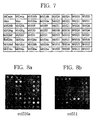
- FIG. 7 is a diagram showing the array format of an oligonucleotide chip containing additional RIF-resistant probes.
- FIGs. 8A through 8D are pictorial views showing the diagnostic result regarding rifampin-resistance and rifabutin-sensitivity of clinical isolates using the oligonucleotide chip of FIG. 7 .
- the clinical isolates used in the experiment were supplied from the Asan Medical Center (Seoul, Korea). Mutations in the samples were identified in the same manner as that of the embodiment 1 as #1 (516a mutant), #2 (511 mutant), #3 (516b mutant), and #4 (531 mutant), as shown in FIGs. 8A-8D . All the samples were Mycobacteria strains as judged by comparing Mcmix probe with Mex probe. The result of DNA sequencing agreed with the oligonucleotide chip results in all cases.
- biotin-TR8 and TR9 primer set in the prior application, but has devised a new primer set, biotin-DGR8, DGR9, that can amplify Mycobacterium tuberculosis and MOTT from uncultured specimens such as sputum, with an increased efficiency compared to biotin-TR8/TR9.
- the new primer set, biotin-DGR8, DGR9 has been devised by mixing partial base sequences of rpoB genes of forty-three kinds, that is, M. africanum, M. asiaticum, M. avium, M. bovis, M. bovis BCG strain French 1173P2, M. celatum strain ATCC51131, M. celatum strain ATCC51130, M. gastri, M. genavense, M. gordonae, M haemophilum, M. interjectum, M. intermedium, M. intracellulare, M. kansasii, M. leprae, M. malmoense, M. marinum, M. avium subsp. Paratuberculosis, M.
- M. shimoidei M. simiae
- M. szulgai M. ulcerans
- M. xenopi M. terrae
- M. triviale M. nonchromogenicum, M. abscessus, M. aurum, M. chelonae, M. chitae, M. fallax, M. flavescens, M. fortuitum strain ATCC6841, M. fortuitum strain ATCC49403, M. neoaurum, M. peregrinum, M. phlei, M. senegalense, M. smegmatis, M. thermoresistibile, and M. vaccae, in addition to the Mycobacterium tuberculosis.
- reaction conditions were varied as follows:
- the yield of PCR product using the biotin-DGR8 and biotin-DGR9 primers changed depending on the annealing temperature, as dertermined by a 2% agarose gel electrophoresis. At the annealing temperature of 64 or 65°C, maximum yield was obtained with less amount of side products of different size that appeared at 47 or 63°C.
- the amplified products of the polymerase chain reaction performed at 64°C annealing temperature showed a single band with 35 cycles or 40 cycles as identified by a 2% agarose gel.
- the quantity of the amplified products was observed to be dependent on the reaction cycle, producing higher yield at 40 cycles.
- the most optimal PCR conditions were 64°C and 40 cycles.
- biotin-DGR8 and DGR9 primers 50pmol, 100pmol, 500pmol, and 1000pmol
- the polymerase chain reaction was performed at an annealing temperature of 64°C for 40 cycles. It was observed that the yield increased within 50 ⁇ 100pmol concentration range but decreased with over 100 pmol. Therefore, biotin-DGR8 and DGR9 primer concentrations of 50-100pmol are considered appropriate.
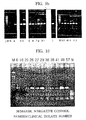
- FIG. 9A is a pictorial view showing a 2% agarose gel image of PCR amplified products under the reaction conditions disclosed in the prior application of the inventors, that is, at 63°C and 35 cycles with biotin-TR8 and TR9 primers of 50pmol
- FIG. 9B is a pictorial view showing a 2% agarose gel image of PCR amplified products under the reaction conditions according to the present invention that is, at 64°C and 40 cycles with biotin-DGR8 and biotin-DGR9 primers of 100pmol.
- the primer set of the present invention showed more efficient amplification of the rpoB 157bp region in all sixteen Mycobacterial species compared to biotin-TR8 and TR9 primers.
- the 157bp amplified products can be used as the target DNA for oligonucleotide chip analysis.
- FIG. 10 is a pictorial view showing a 2% agarose gel image of PCR amplified products of sputum specimens under conditions as optimized in the embodiment 2-3 according to the present invention, i.e. 64°C and 40 cycles with biotin-DGR8 and DGR9 primers of 100pmol.
- Mycobacterium tuberculosis was not detected from #16 and #36 specimens.
- Nine specimens except for the above #16 and #36 specimens were determined as Mycobacterium tuberculosis positive.
- diagnosis by oligonucleotide chip to detect drug-resistance was performed using the oligonucleotide chip of FIG 7 .
- FIGs. 11A through 11B show the images obtained from oligonucleotide chip experiments: #27 (wild-type) #57 (509, 513 mutant), respectively.
- DNA sequencing result of the eight wild-type strains agreed with the oligonucleotide chip result and #57 was determined to be a rifampin-resistance strain by drug-susceptibility test.
- a new detection method has been devised to reduce assay time compared to the prior application method that uses streptavidin-R-phycoerythrin staining after PCR incorporating random biotin labeling. More specifically, PCR was performed with Cyanine 5-dUTP (NEN, U.S.A) instead of biotin-dUTP to incorporate Cyanine randomly to the amplified products, which does not require a separate staining procedure prior to scanning. Accordingly, an obvious visual result can be obtained speedily and simply.
- a concentration of Cyanine 5-dUTP used equals to that of biotin-dUTP of the existing method, and it is preferable that DGR8 without biotin modification is used as a primer.
- the experimental conditions are the same as the existing method except that the staining process is omitted and that 633nm is used in fluorescence scanning
- the present invention can perform Mycobacterial species identification and drug-resistance detection with only a portion of Mycobacterial rpoB gene (157bp), simultaneously, speedily and accurately in large quantity, which can provide useful information in tuberculosis treatment so that an appropriate drug remedy can be given to the patients.
- Mycobacterial rpoB gene 157bp
Landscapes
- Chemical & Material Sciences (AREA)
- Life Sciences & Earth Sciences (AREA)
- Organic Chemistry (AREA)
- Proteomics, Peptides & Aminoacids (AREA)
- Analytical Chemistry (AREA)
- Health & Medical Sciences (AREA)
- Wood Science & Technology (AREA)
- Engineering & Computer Science (AREA)
- Zoology (AREA)
- Microbiology (AREA)
- Bioinformatics & Cheminformatics (AREA)
- Molecular Biology (AREA)
- Physics & Mathematics (AREA)
- Immunology (AREA)
- Biotechnology (AREA)
- Biochemistry (AREA)
- Biophysics (AREA)
- General Engineering & Computer Science (AREA)
- General Health & Medical Sciences (AREA)
- Genetics & Genomics (AREA)
- Measuring Or Testing Involving Enzymes Or Micro-Organisms (AREA)
- Apparatus Associated With Microorganisms And Enzymes (AREA)
- Micro-Organisms Or Cultivation Processes Thereof (AREA)
- Investigating Or Analyzing Materials By The Use Of Electric Means (AREA)
Claims (14)
- Diagnosekit zur Identifikation und Detektion der Wirkstoffresistenz einer mykobakteriellen Spezies, umfassend:einen Oligonucleotidchip, der Speziesidentifikationssonden, umfassend SEQ ID NR. 5 bis 12, eine Sonde zur Detektion von Mykobakterien-Rifampicinresistenz, ausgewählt aus SEQ ID NR. 20 bis 36 und 41 bis 46, und eine Kontrollgruppensonde, bestehend aus Wildtypsequenzen, ausgewählt aus SEQ ID NR. 13 bis 19, umfasst; undeinen Marker zur Detektion einer Hybridisierung des Oligonucleotidchips und einer Probe.
- Diagnosekit zur Identifikation und Detektion der Wirkstoffresistenz einer mykobakteriellen Spezies nach Anspruch 1, wobei die Sonde zur Detektion der Wirkstoffresistenz ferner eine Sonde zur Detektion der Rifabutinempfindlichkeit umfasst.
- Diagnosekit zur Identifikation und Detektion der Wirkstoffresistenz einer mykobakteriellen Spezies nach Anspruch 2, wobei die Sonde zur Detektion der Rifabutinempfindlichkeit modifizierte Codone 516 und 526 des rpoB-Gens umfasst.
- Diagnosekit zur Identifikation und Detektion der Wirkstoffresistenz einer mykobakteriellen Spezies nach Anspruch 3, wobei die Sonde zur Detektion der Rifabutinempfindlichkeit Sonden der SEQ ID NR. 22, 23 und 31 bis 36 umfasst.
- Diagnosekit zur Identifikation und Detektion der Wirkstoffresistenz einer mykobakteriellen Spezies nach Anspruch 1, wobei der Oligonucleotidchip durch eine Schiff'sche Base-Reaktion jeder Sonde, die aus einem Teil von rpoB-Genen besteht, die so modifiziert sind, dass sie eine Amingruppe und eine Aldehydgruppe enthalten, die auf Glas induziert wird, gebildet wird.
- Diagnosekit zur Identifikation und Detektion der Wirkstoffresistenz einer mykobakteriellen Spezies nach Anspruch 1, ferner umfassend ein Mittel für die Amplifikation der DNAs der Probe.
- Diagnosekit zur Identifikation und Detektion der Wirkstoffresistenz einer mykobakteriellen Spezies nach Anspruch 6, wobei das Mittel Biotin-TR8- und -TR9-Primer der SEQ ID NR. 37 und 38 umfasst, die rpoB-Genfragmente mit 157bp spezifisch amplifizieren.
- Diagnosekit zur Identifikation und Detektion der Wirkstoffresistenz einer mykobakteriellen Spezies nach Anspruch 6, wobei das Mittel Biotin-DGR8- und -DGR9-Primer der SEQ ID Nr. 47 und 48 umfasst, die rpoB-Genfragmente mit 157bp spezifisch amplifizieren.
- Diagnosekit zur Identifikation und Detektion der Wirkstoffresistenz einer mykobakteriellen Spezies nach Anspruch 1, wobei der Marker ein fluoreszierender Stoff ist, der das Biotin-Bindeprotein einschließt.
- Diagnosekit zur Identifikation und Detektion der Wirkstoffresistenz einer mykobakteriellen Spezies nach Anspruch 9, wobei der fluoreszierende Stoff Streptavidin-R-phycoerythrin ist.
- Diagnosekit zur Identifikation und Detektion der Wirkstoffresistenz einer mykobakteriellen Spezies nach Anspruch 6, wobei der Marker Cynine-5-Dutp ist, der bei der Polymerase-Kettenreaktion zugegeben wird.
- Diagnosekit zur Identifikation und Detektion der Wirkstoffresistenz einer mykobakteriellen Spezies nach Anspruch 1, wobei jede Sonde T10, enthalten an 5' als ein Spacer, umfasst.
- Diagnosekit zur Identifikation und Detektion der Wirkstoffresistenz einer mykobakteriellen Spezies nach Anspruch 1, wobei der Oligonucleotidchip ferner eine Mykobakteriumkomplexsonde umfasst, die detektieren kann, ob eine Probe ein Mykobakterium ist.
- Diagnosekit zur Identifikation und Detektion der Wirkstoffresistenz einer mykobakteriellen Spezies nach Anspruch 13, wobei die Sonde der Tuberkulosebakteriengruppe Sonden der SEQ ID NR. 1 bis 4 umfasst.
Applications Claiming Priority (3)
| Application Number | Priority Date | Filing Date | Title |
|---|---|---|---|
| KR10-2000-0029369A KR100451108B1 (ko) | 2000-05-30 | 2000-05-30 | 마이코박테리아 균동정 및 약제내성 탐지를 위한 유전자진단키트 및 그 키트의 제조방법 |
| KR2000029369 | 2000-05-30 | ||
| PCT/KR2001/000904 WO2001092573A1 (en) | 2000-05-30 | 2001-05-30 | Diagnosis kit for mycobacterium species identification and drug-resistance detection and manufacturing method thereof |
Publications (3)
| Publication Number | Publication Date |
|---|---|
| EP1290224A1 EP1290224A1 (de) | 2003-03-12 |
| EP1290224A4 EP1290224A4 (de) | 2006-05-31 |
| EP1290224B1 true EP1290224B1 (de) | 2010-08-25 |
Family
ID=19670828
Family Applications (1)
| Application Number | Title | Priority Date | Filing Date |
|---|---|---|---|
| EP01936994A Expired - Lifetime EP1290224B1 (de) | 2000-05-30 | 2001-05-30 | Diagnostisches kit zur identifikation und feststellung von wirkstoffresistenz bei mykobakterium sowie herstellungsmethoden davon |
Country Status (9)
| Country | Link |
|---|---|
| US (1) | US20040038233A1 (de) |
| EP (1) | EP1290224B1 (de) |
| JP (1) | JP2003534810A (de) |
| KR (1) | KR100451108B1 (de) |
| CN (1) | CN1193103C (de) |
| AT (1) | ATE478962T1 (de) |
| AU (1) | AU2001262767A1 (de) |
| DE (1) | DE60142898D1 (de) |
| WO (1) | WO2001092573A1 (de) |
Cited By (1)
| Publication number | Priority date | Publication date | Assignee | Title |
|---|---|---|---|---|
| CN102628085A (zh) * | 2012-04-24 | 2012-08-08 | 武汉大学 | 结核分枝杆菌利福平耐药突变可视化检测探针及其应用 |
Families Citing this family (22)
| Publication number | Priority date | Publication date | Assignee | Title |
|---|---|---|---|---|
| AU2001241934A1 (en) | 2000-03-03 | 2001-09-17 | Beckman Coulter Inc. | Multiplex hybridization system for identification of pathogenic mycobacterium and method of use |
| KR100446850B1 (ko) * | 2001-07-19 | 2004-09-04 | 이혜영 | 마이코박테리아의 동정 및 rpoB 유전자의 돌연변이에의해 얻어지는 항 결핵제 내성의 동시 검출방법 |
| EP1480155A3 (de) | 2003-05-19 | 2008-12-03 | Canon Kabushiki Kaisha | Informationsverarbeitungsanlage, Informationsverarbeitungsverfahren, Speichermedium und Programm |
| US20050069901A1 (en) * | 2003-09-29 | 2005-03-31 | Eppendorf Ag | Method for detecting microbial antibiotic resistance |
| FI115637B (fi) * | 2003-12-19 | 2005-06-15 | Mobidiag Oy | Diagnostinen menetelmä hengitystieinfektioita aiheuttavien bakteerien osoittamiseksi ja tunnistamiseksi ja menetelmässä käyttökelpoinen alukeseos |
| GB0403039D0 (en) * | 2004-02-11 | 2004-03-17 | Health Prot Agency | TB resistance assay |
| WO2005085478A2 (en) * | 2004-02-27 | 2005-09-15 | The Government Of The United States Of America As Represented By The Secretary, Department Of Health And Human Services | Detection and identification of mycobacterium and nocardia using primers and probes directed to the seca1 gene |
| CN1300338C (zh) * | 2004-07-09 | 2007-02-14 | 中国科学院上海微系统与信息技术研究所 | 曲霉菌基因检测芯片及其制作方法和使用方法 |
| CN1995380B (zh) * | 2006-01-05 | 2010-05-12 | 中国人民解放军总医院第二附属医院 | 一种检测和鉴定分枝杆菌菌种的方法及其专用试剂盒 |
| CN100465289C (zh) * | 2006-01-18 | 2009-03-04 | 博奥生物有限公司 | 革兰氏阴性细菌耐药基因检测方法及其专用芯片与试剂盒 |
| JP2009189283A (ja) * | 2008-02-13 | 2009-08-27 | Nipro Corp | 結核菌および非結核性抗酸菌検出試薬 |
| EP2516675A1 (de) * | 2009-12-21 | 2012-10-31 | Becton, Dickinson and Company | Verfahren zur identifizierung von wirkstoffresistenten mykobakterien |
| CN102424859B (zh) * | 2011-12-31 | 2013-05-01 | 广东凯普生物科技股份有限公司 | 结核分枝杆菌耐药突变基因检测试剂盒 |
| TWI614345B (zh) * | 2012-06-22 | 2018-02-11 | Taichung Veterans General Hospital | 檢測數種非結核分枝桿菌、結核分枝桿菌及其抗藥性之探針、晶片、套組與方法 |
| CN105219843A (zh) * | 2014-06-30 | 2016-01-06 | 中国科学院上海巴斯德研究所 | 一种结核分枝杆菌利福平耐药突变的检测方法及试剂盒和应用 |
| CA3005430A1 (en) * | 2015-11-16 | 2017-05-26 | Revere Biosensors, Llc | Systems and methods for identifying and distinguishing genetic samples |
| CN111763751A (zh) * | 2019-12-19 | 2020-10-13 | 上海力拜生物科技有限公司 | 结核病唾液检测生物标志物及其应用 |
| CN113249502A (zh) * | 2021-05-08 | 2021-08-13 | 上海康黎诊断技术有限公司 | 一种结核分枝杆菌复合菌群鉴定及耐药性检测的相关基因、方法、引物组以及试剂盒 |
| CN115341038A (zh) * | 2021-05-13 | 2022-11-15 | 山东第一医科大学附属皮肤病医院(山东省皮肤病性病防治研究所、山东省皮肤病医院) | 一种基于实时荧光定量pcr技术检测嗜血分枝杆菌的方法及其应用 |
| CN115678896A (zh) * | 2021-07-21 | 2023-02-03 | 武汉臻熙医学检验实验室有限公司 | 分离的核酸及其用途、引物组、试剂、试剂盒和检测方法 |
| CN114308162B (zh) * | 2021-12-31 | 2023-05-05 | 北京百奥纳芯生物科技有限公司 | 辅助基因芯片探针与基片结合固定的装置 |
| CN117737272B (zh) * | 2023-12-29 | 2026-01-27 | 深圳吉因加生物科技有限公司 | 一种用于目标微生物标记物的筛选方法及其应用 |
Family Cites Families (4)
| Publication number | Priority date | Publication date | Assignee | Title |
|---|---|---|---|---|
| US5741667A (en) | 1994-05-27 | 1998-04-21 | Genentech, Inc. | Tumor necrosis factor receptor-associated factors |
| CA2192364C (en) * | 1994-06-09 | 2009-01-20 | Hans De Beenhouwer | Method for the detection of the antibiotic resistance spectrum of mycobacterium species |
| WO1997029212A1 (en) | 1996-02-08 | 1997-08-14 | Affymetrix, Inc. | Chip-based speciation and phenotypic characterization of microorganisms |
| EP1076099A3 (de) | 1999-08-03 | 2003-03-05 | Nisshinbo Industries, Inc. | Kit zur Diagnose des Tuberkelbacillus |
-
2000
- 2000-05-30 KR KR10-2000-0029369A patent/KR100451108B1/ko not_active Expired - Fee Related
-
2001
- 2001-05-30 AU AU2001262767A patent/AU2001262767A1/en not_active Abandoned
- 2001-05-30 CN CNB01810598XA patent/CN1193103C/zh not_active Expired - Fee Related
- 2001-05-30 WO PCT/KR2001/000904 patent/WO2001092573A1/en not_active Ceased
- 2001-05-30 AT AT01936994T patent/ATE478962T1/de not_active IP Right Cessation
- 2001-05-30 EP EP01936994A patent/EP1290224B1/de not_active Expired - Lifetime
- 2001-05-30 US US10/297,134 patent/US20040038233A1/en not_active Abandoned
- 2001-05-30 JP JP2002500764A patent/JP2003534810A/ja active Pending
- 2001-05-30 DE DE60142898T patent/DE60142898D1/de not_active Expired - Lifetime
Cited By (1)
| Publication number | Priority date | Publication date | Assignee | Title |
|---|---|---|---|---|
| CN102628085A (zh) * | 2012-04-24 | 2012-08-08 | 武汉大学 | 结核分枝杆菌利福平耐药突变可视化检测探针及其应用 |
Also Published As
| Publication number | Publication date |
|---|---|
| DE60142898D1 (de) | 2010-10-07 |
| KR20010109375A (ko) | 2001-12-10 |
| EP1290224A4 (de) | 2006-05-31 |
| ATE478962T1 (de) | 2010-09-15 |
| CN1193103C (zh) | 2005-03-16 |
| AU2001262767A1 (en) | 2001-12-11 |
| KR100451108B1 (ko) | 2004-10-06 |
| US20040038233A1 (en) | 2004-02-26 |
| JP2003534810A (ja) | 2003-11-25 |
| EP1290224A1 (de) | 2003-03-12 |
| WO2001092573A1 (en) | 2001-12-06 |
| CN1444662A (zh) | 2003-09-24 |
Similar Documents
| Publication | Publication Date | Title |
|---|---|---|
| US20040038233A1 (en) | Diagnosis kit for mycobacterium species indentification and drug-resistance detection and manufacturing method thereof | |
| Taylor et al. | Genotypic analysis of Mycobacterium tuberculosis from medieval human remains | |
| US8628926B2 (en) | Probe and primer for tubercle bacillus detection, and method of detecting human tubercle bacillus therewith | |
| CN102634575A (zh) | 一种新的分枝杆菌菌种快速鉴定方法及试剂盒 | |
| WO2000073436A1 (en) | Oligonucleotide for detection and identification of mycobacteria | |
| WO2003031654A1 (en) | Microarray comprising probes for mycobacteria species genotyping, m. tuberculosis strain differenciation, and antibiotic-resistant strain detection | |
| EP1713934B1 (de) | Tb-resistenz-test | |
| US7271781B2 (en) | Multiplex hybridization system for identification of pathogenic mycobacterium and method of use | |
| KR102184637B1 (ko) | 퀀타매트릭스 어세이 플랫폼 기반 결핵 및 비결핵 항산균의 검출 및 동정과 결핵균의 리팜핀 내성여부를 동시 확인할 수 있는 진단법 및 그 키트 | |
| US20030108881A1 (en) | Method for identifying mycobacterium tuberculosis and mycobacteria other than tuberculosis, together with detecting resistance to an antituberculosis drug of mycobateria obtained by mutation of rpoB gene | |
| AU710996B2 (en) | Compositions and methods for the detection of mycobacterium kansasii | |
| JP3631252B2 (ja) | 直列変異反復配列オリゴタイピングによる結核菌群細菌の検出および鑑別 | |
| EP1098003A2 (de) | Verfahren zur Identifizierung und spezifischen Detektion langsam wachsender Mycobakterien unter Verwendung des Gens für DNA Gyrase | |
| KR20030041415A (ko) | 마이코박테리움 종 구별 및 약제내성 탐지를 위한진단키트 및 그 키트의 제조방법 | |
| JP3360736B2 (ja) | ミコバクテリア属微生物を特異的に認識するプローブ及びミコバクテリア属微生物の検出方法 | |
| JP4769041B2 (ja) | 抗酸菌属細菌同定キット | |
| KR100435587B1 (ko) | 미코박테리움속 균종의 hsp65 유전자 증폭용 프라이머및 이를 이용한 미코박테리움속 균종의 동정방법 | |
| KR100486820B1 (ko) | 미코박테리움속 균주의 hsp 65 유전자 분절 및 이를 이용한 미코박테리움속 균주의 동정방법 | |
| Forbes et al. | Molecular diagnosis of mycobacterial infections | |
| KR100985196B1 (ko) | 비결핵항산성균의 감별 방법 및 이를 위한 키트 | |
| KR20090114273A (ko) | 나병 진단용 키트 및 그 진단 방법 | |
| Martín et al. | New methods for diagnosis and epidemiological studies of tuberculosis based on PCR and RFLP | |
| KR20000075178A (ko) | 마이코박테리움 포튜이튬의 내부전사지역의 염기서열 | |
| HK1150864A (en) | Probe and primer for tubercle bacillus detection, and method of detecting human tubercle bacillus therewith | |
| KR20000075179A (ko) | 마이코박테리움 첼로네의 내부전사지역의 염기서열 |
Legal Events
| Date | Code | Title | Description |
|---|---|---|---|
| PUAI | Public reference made under article 153(3) epc to a published international application that has entered the european phase |
Free format text: ORIGINAL CODE: 0009012 |
|
| 17P | Request for examination filed |
Effective date: 20021223 |
|
| AK | Designated contracting states |
Kind code of ref document: A1 Designated state(s): AT BE CH CY DE DK ES FI FR GB GR IE IT LI LU MC NL PT SE TR |
|
| AX | Request for extension of the european patent |
Extension state: AL LT LV MK RO SI |
|
| A4 | Supplementary search report drawn up and despatched |
Effective date: 20060418 |
|
| 17Q | First examination report despatched |
Effective date: 20060823 |
|
| GRAP | Despatch of communication of intention to grant a patent |
Free format text: ORIGINAL CODE: EPIDOSNIGR1 |
|
| GRAS | Grant fee paid |
Free format text: ORIGINAL CODE: EPIDOSNIGR3 |
|
| GRAA | (expected) grant |
Free format text: ORIGINAL CODE: 0009210 |
|
| AK | Designated contracting states |
Kind code of ref document: B1 Designated state(s): AT BE CH CY DE DK ES FI FR GB GR IE IT LI LU MC NL PT SE TR |
|
| REG | Reference to a national code |
Ref country code: GB Ref legal event code: FG4D |
|
| REG | Reference to a national code |
Ref country code: CH Ref legal event code: EP |
|
| REG | Reference to a national code |
Ref country code: IE Ref legal event code: FG4D |
|
| REF | Corresponds to: |
Ref document number: 60142898 Country of ref document: DE Date of ref document: 20101007 Kind code of ref document: P |
|
| REG | Reference to a national code |
Ref country code: NL Ref legal event code: VDEP Effective date: 20100825 |
|
| REG | Reference to a national code |
Ref country code: CH Ref legal event code: NV Representative=s name: HEPP WENGER RYFFEL AG |
|
| PG25 | Lapsed in a contracting state [announced via postgrant information from national office to epo] |
Ref country code: AT Free format text: LAPSE BECAUSE OF FAILURE TO SUBMIT A TRANSLATION OF THE DESCRIPTION OR TO PAY THE FEE WITHIN THE PRESCRIBED TIME-LIMIT Effective date: 20100825 Ref country code: FI Free format text: LAPSE BECAUSE OF FAILURE TO SUBMIT A TRANSLATION OF THE DESCRIPTION OR TO PAY THE FEE WITHIN THE PRESCRIBED TIME-LIMIT Effective date: 20100825 |
|
| PG25 | Lapsed in a contracting state [announced via postgrant information from national office to epo] |
Ref country code: PT Free format text: LAPSE BECAUSE OF FAILURE TO SUBMIT A TRANSLATION OF THE DESCRIPTION OR TO PAY THE FEE WITHIN THE PRESCRIBED TIME-LIMIT Effective date: 20101227 Ref country code: CY Free format text: LAPSE BECAUSE OF FAILURE TO SUBMIT A TRANSLATION OF THE DESCRIPTION OR TO PAY THE FEE WITHIN THE PRESCRIBED TIME-LIMIT Effective date: 20100825 |
|
| PG25 | Lapsed in a contracting state [announced via postgrant information from national office to epo] |
Ref country code: BE Free format text: LAPSE BECAUSE OF FAILURE TO SUBMIT A TRANSLATION OF THE DESCRIPTION OR TO PAY THE FEE WITHIN THE PRESCRIBED TIME-LIMIT Effective date: 20100825 Ref country code: GR Free format text: LAPSE BECAUSE OF FAILURE TO SUBMIT A TRANSLATION OF THE DESCRIPTION OR TO PAY THE FEE WITHIN THE PRESCRIBED TIME-LIMIT Effective date: 20101126 Ref country code: SE Free format text: LAPSE BECAUSE OF FAILURE TO SUBMIT A TRANSLATION OF THE DESCRIPTION OR TO PAY THE FEE WITHIN THE PRESCRIBED TIME-LIMIT Effective date: 20100825 Ref country code: NL Free format text: LAPSE BECAUSE OF FAILURE TO SUBMIT A TRANSLATION OF THE DESCRIPTION OR TO PAY THE FEE WITHIN THE PRESCRIBED TIME-LIMIT Effective date: 20100825 |
|
| PG25 | Lapsed in a contracting state [announced via postgrant information from national office to epo] |
Ref country code: DK Free format text: LAPSE BECAUSE OF FAILURE TO SUBMIT A TRANSLATION OF THE DESCRIPTION OR TO PAY THE FEE WITHIN THE PRESCRIBED TIME-LIMIT Effective date: 20100825 |
|
| PG25 | Lapsed in a contracting state [announced via postgrant information from national office to epo] |
Ref country code: IT Free format text: LAPSE BECAUSE OF FAILURE TO SUBMIT A TRANSLATION OF THE DESCRIPTION OR TO PAY THE FEE WITHIN THE PRESCRIBED TIME-LIMIT Effective date: 20100825 |
|
| PG25 | Lapsed in a contracting state [announced via postgrant information from national office to epo] |
Ref country code: ES Free format text: LAPSE BECAUSE OF FAILURE TO SUBMIT A TRANSLATION OF THE DESCRIPTION OR TO PAY THE FEE WITHIN THE PRESCRIBED TIME-LIMIT Effective date: 20101206 |
|
| PLBE | No opposition filed within time limit |
Free format text: ORIGINAL CODE: 0009261 |
|
| STAA | Information on the status of an ep patent application or granted ep patent |
Free format text: STATUS: NO OPPOSITION FILED WITHIN TIME LIMIT |
|
| 26N | No opposition filed |
Effective date: 20110526 |
|
| REG | Reference to a national code |
Ref country code: DE Ref legal event code: R097 Ref document number: 60142898 Country of ref document: DE Effective date: 20110526 |
|
| PG25 | Lapsed in a contracting state [announced via postgrant information from national office to epo] |
Ref country code: MC Free format text: LAPSE BECAUSE OF NON-PAYMENT OF DUE FEES Effective date: 20110531 |
|
| REG | Reference to a national code |
Ref country code: IE Ref legal event code: MM4A |
|
| PG25 | Lapsed in a contracting state [announced via postgrant information from national office to epo] |
Ref country code: IE Free format text: LAPSE BECAUSE OF NON-PAYMENT OF DUE FEES Effective date: 20110530 |
|
| PG25 | Lapsed in a contracting state [announced via postgrant information from national office to epo] |
Ref country code: LU Free format text: LAPSE BECAUSE OF NON-PAYMENT OF DUE FEES Effective date: 20110530 |
|
| PGFP | Annual fee paid to national office [announced via postgrant information from national office to epo] |
Ref country code: DE Payment date: 20130528 Year of fee payment: 13 Ref country code: GB Payment date: 20130528 Year of fee payment: 13 |
|
| PG25 | Lapsed in a contracting state [announced via postgrant information from national office to epo] |
Ref country code: TR Free format text: LAPSE BECAUSE OF FAILURE TO SUBMIT A TRANSLATION OF THE DESCRIPTION OR TO PAY THE FEE WITHIN THE PRESCRIBED TIME-LIMIT Effective date: 20100825 |
|
| PGFP | Annual fee paid to national office [announced via postgrant information from national office to epo] |
Ref country code: CH Payment date: 20130719 Year of fee payment: 13 |
|
| PGFP | Annual fee paid to national office [announced via postgrant information from national office to epo] |
Ref country code: FR Payment date: 20140527 Year of fee payment: 14 |
|
| REG | Reference to a national code |
Ref country code: DE Ref legal event code: R119 Ref document number: 60142898 Country of ref document: DE |
|
| REG | Reference to a national code |
Ref country code: CH Ref legal event code: PL |
|
| GBPC | Gb: european patent ceased through non-payment of renewal fee |
Effective date: 20140530 |
|
| PG25 | Lapsed in a contracting state [announced via postgrant information from national office to epo] |
Ref country code: CH Free format text: LAPSE BECAUSE OF NON-PAYMENT OF DUE FEES Effective date: 20140531 Ref country code: LI Free format text: LAPSE BECAUSE OF NON-PAYMENT OF DUE FEES Effective date: 20140531 |
|
| REG | Reference to a national code |
Ref country code: DE Ref legal event code: R119 Ref document number: 60142898 Country of ref document: DE Effective date: 20141202 |
|
| PG25 | Lapsed in a contracting state [announced via postgrant information from national office to epo] |
Ref country code: DE Free format text: LAPSE BECAUSE OF NON-PAYMENT OF DUE FEES Effective date: 20141202 |
|
| PG25 | Lapsed in a contracting state [announced via postgrant information from national office to epo] |
Ref country code: GB Free format text: LAPSE BECAUSE OF NON-PAYMENT OF DUE FEES Effective date: 20140530 |
|
| REG | Reference to a national code |
Ref country code: FR Ref legal event code: ST Effective date: 20160129 |
|
| PG25 | Lapsed in a contracting state [announced via postgrant information from national office to epo] |
Ref country code: FR Free format text: LAPSE BECAUSE OF NON-PAYMENT OF DUE FEES Effective date: 20150601 |