EP1289291A2 - Bildaufnahme- und -wiedergabegerät, Verfahren, Programm, und rechnerlesbares Aufnahmemedium zur Programmaufnahme - Google Patents
Bildaufnahme- und -wiedergabegerät, Verfahren, Programm, und rechnerlesbares Aufnahmemedium zur Programmaufnahme Download PDFInfo
- Publication number
- EP1289291A2 EP1289291A2 EP02255807A EP02255807A EP1289291A2 EP 1289291 A2 EP1289291 A2 EP 1289291A2 EP 02255807 A EP02255807 A EP 02255807A EP 02255807 A EP02255807 A EP 02255807A EP 1289291 A2 EP1289291 A2 EP 1289291A2
- Authority
- EP
- European Patent Office
- Prior art keywords
- replay
- recording
- image data
- mode
- unit
- Prior art date
- Legal status (The legal status is an assumption and is not a legal conclusion. Google has not performed a legal analysis and makes no representation as to the accuracy of the status listed.)
- Granted
Links
Images




Classifications
-
- H—ELECTRICITY
- H04—ELECTRIC COMMUNICATION TECHNIQUE
- H04N—PICTORIAL COMMUNICATION, e.g. TELEVISION
- H04N5/00—Details of television systems
- H04N5/76—Television signal recording
-
- H—ELECTRICITY
- H04—ELECTRIC COMMUNICATION TECHNIQUE
- H04N—PICTORIAL COMMUNICATION, e.g. TELEVISION
- H04N5/00—Details of television systems
- H04N5/76—Television signal recording
- H04N5/78—Television signal recording using magnetic recording
- H04N5/782—Television signal recording using magnetic recording on tape
- H04N5/783—Adaptations for reproducing at a rate different from the recording rate
Definitions
- the present invention relates to an image recording and replaying apparatus and method, and specifically to an image recording and replaying apparatus and method that allow image data recorded by a repeat recording to be replayed during the repeat recording, where the "repeat recording” refers to the recording of recently received image data so that the recorded image data does not exceed a predetermined amount that ensures a predetermined time period of replay, by continuously deleting earlier-recorded data.
- the TV receiver provides a repeat recording feature in which the TV receiver continues to record broadcast image data so that the recorded image data does not exceed a predetermined amount that ensures a predetermined time period of replay while the viewer watches the broadcast program, and on request allows the viewer to watch a scene he/she missed by replaying the scene which has been recorded in the repeat recording (hereinafter, such a replay is referred to as "delay replay").
- delay replay such a replay is referred to as "delay replay”
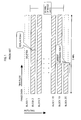
- Fig. 1 shows a conventional repeat recording performed by a conventional image recording and replaying apparatus.
- the image data is recorded and deleted onto/from a recording medium in units of files (blocks) each of which has a capacity equivalent to a replay time period of, for example, 5 minutes.
- the files having recorded image data earlier are deleted in sequence after 90 minutes elapse since the image data has been recorded into the files.
- a current recording point is in the file "block 20", and the file "block 1" recording older data has been deleted.
- the delay replay is performed appropriately since the replay point moves as the recording point moves (that is to say, when the replay point moves to the file "block 3", the recording point moves to the file "block 21" which is not illustrated, and then the file "block 2" is deleted).
- image data is recorded and deleted in units of files (blocks), but instead of this, image data may be recorded in one file and older portion of the recorded image data may be overwritten with recently received image data, with this procedure being repeated as necessary.
- the conventional technique does not support the delay replay by a special replay such as "rewind”, "pause”, or “slow replay”.
- a special replay such as "rewind”, "pause”, or “slow replay”.
- image data would be recorded in the recording medium without limitation, well extending the predetermined amount corresponding to the specified time period for the repeat recording.
- the replay point may reach the recording point.
- the recording of image data onto the recording medium is intermingled with the reading of image data from the recording medium.
- the main object of the present invention is therefore to provide an image recording and replaying apparatus and method that ensure the delay replay including special replays such as pause during the repeat recording, prevent limitless recording of image data in the repeat recording, and prevent the recording point from reaching the replay point in the delay replay.
- the sub object of the present invention is to provide an image recording and replaying apparatus and method that prevent the replay point from reaching the recording point in the delay replay by fast forward.
- an image recording and replaying apparatus that records image data onto a recording medium allowing a user to replay the recorded image data while continuing the recording
- the image recording and replaying apparatus comprising: an image recording means for recording image data onto the recording medium; a replay means for replaying recorded image data in a replay mode selected from a plurality of replay modes; a judging means for judging, based on a relationship between a current recording point and a current replay point, whether the plurality of replay modes from which one is selected for the replay by the replay means should be limited to one or more replay modes; and a replay control means for, if the judging means judges that the plurality of replay modes should be limited to the one or more replay modes, instructing the replay means to replay the image data in one of the one or more replay modes.
- the judging means may include: a data-recorded-area dividing unit for dividing a data-recorded-area in the recording medium into two or more sections according to a recording time difference between each section and the current recording point, each section corresponding to a different combination of replay modes; and a judging unit for detecting a section containing the current replay point, and judging, based on the detected section, whether the plurality of replay modes from which one is selected should be limited to the one or more replay modes.
- the image recording means may include a first image recording unit for recording image data into files each of which has a capacity that corresponds to a predetermined replay time period
- the data-recorded-area dividing unit includes a file classifying unit for classifying the files into which the image data has been recorded by the first image recording unit, into (a) a first group corresponding to a specified recording time period having a length up to the current recording point, (b) a second group corresponding to a predetermined time period immediately before the specified recording time period, and (c) a third group corresponding to a time period immediately before the predetermined time period
- the judging unit includes a file judging unit for judging whether the current replay point exists in a file belonging to the second group, wherein when the file judging unit judges that the current replay point exists in a file belonging to the second group, the replay control means instructs the replay means to replay the image data in either fast forward or a standard replay.
- the image recording means may include a second image recording unit for recording image data into a file which has a capacity that corresponds to a length in time composed of a specified recording time period and double a predetermined time period
- the data-recorded-area dividing unit includes an area classifying unit for classifying a recording area in the file into which the image data has been recorded by the second image recording unit, into (a) a first area section corresponding to the specified recording time period having a length up to the current recording point, (b) a second area section corresponding to the predetermined time period immediately before the specified recording time period, and (c) a third area section corresponding to the predetermined time period immediately before the second area section
- the judging unit includes an area section judging unit for judging whether the current replay point exists in the second area section, wherein when the file judging unit judges that the current replay point exists in the second area section, the replay control means instructs the replay means to replay the image data in either fast forward or a standard replay.
- the above image recording and replaying apparatus may further comprise a deleting means for deleting files classified as belonging to the third group by the file classifying unit. Also, in the above image recording and replaying apparatus, after the second image recording unit has recorded image data into an entire area of the file, the second image recording unit may then record image data into the file by overwriting earliest recorded image data in the third area section with most recent image data.
- the above image recording and replaying apparatus may further comprise an instruction receiving means for receiving an instruction to replay files belonging to the first group, wherein when the instruction receiving means receives an instruction to replay files belonging to the first group, the replay means reads image data from the files belonging to the first group and replays the read image data in either the standard replay or a special replay, and the image recording and replaying apparatus further comprising a warning means for, when the replay means is to read image data from a file belonging to the second group, outputting a warning that special replays other than fast forward are not available.
- the above image recording and replaying apparatus may further comprise: an instruction receiving means for receiving an instruction to replay image data recorded in the first area section, wherein when the instruction receiving means receives an instruction to replay image data recorded in the first area section, the replay means reads image data from the first area section and replays the read image data in either the standard replay or a special replay, and the image recording and replaying apparatus further comprising a warning means for, when the replay means is to read image data recorded in the second area section, outputting a warning that special replays other than fast forward are not available.
- the warning means may include a mode receiving unit for displaying a plurality of available replay modes on an external monitor and waiting for notification by a user of one selected from the displayed replay modes, wherein the replay means reads image data from the files belonging to the second group and replays the read image data in the user-selected replay mode received by the mode receiving unit.
- the warning means may include a mode receiving unit for displaying a plurality of available replay modes on an external monitor and waiting for notification by a user of one selected from the displayed replay modes, wherein the replay means reads image data from the second area section and replays the read image data in the user-selected replay mode received by the mode receiving unit.
- the replay means may read image data from the file belonging to the second group and replay the read image data in a default replay mode.
- the replay means may read image data from the second area section and replay the read image data in a default replay mode.
- the default replay mode may be the standard replay.
- the default replay mode may be the fast forward performed at such a speed as image data is read from the file belonging to the second group and replayed before the file belonging to the second group is classified as the third group and then deleted.
- the default replay mode may be the fast forward performed at such a speed as image data is read from the second area section and replayed before the image data in the second area section is overwritten with most recent image data.
- the warning means may output to an external speaker a warning voice that special replays other than the fast forward are not available.
- the image recording means includes: a receiving unit for receiving image data; and a third image recording unit for recording the received image data onto the recording medium in units of clusters each of which has a predetermined size
- the data-recorded-area dividing unit includes a first classifying unit for classifying a recording area in the recording medium into which the image data has been recorded by the third image recording unit, into (a) a specific-replay-mode-prohibited section in which most recently received image data making up a portion of a first cluster is recorded and the image data recorded in the specific-replay-mode-prohibited section is prohibited from being replayed in a specific replay mode, and (b) an all-replays-available section in which the remaining image data of the first cluster and the other recorded clusters is recorded and the image data recorded in the all-replays-available section can be replayed in any replay mode
- the judging unit includes a first judging unit for judging whether the current
- the data-recorded-area dividing unit may further include a second classifying unit for classifying the recording area further into a specific-replay-mode-warning section to which a certain number of cluster immediately before the specific-replay-mode-prohibited section belong, the judging unit includes a second judging unit for judging whether the current replay point exists in the specific-replay-mode-warning section, and the image recording and replaying apparatus further comprises a warning means for, when the second judging unit judges that the current replay point exists in the specific-replay-mode-warning section, outputting a warning that fast forward is not available.
- the main object of the present invention is also fulfilled by an image recording and replaying method that records image data onto a recording medium allowing a user to replay the recorded image data while continuing the recording, the image recording and replaying method comprising: an image recording step for recording image data onto the recording medium; a replay step for replaying recorded image data in a replay mode selected from a plurality of replay modes; a judging step for judging, based on a relationship between a current recording point and a current replay point, whether the plurality of replay modes from which one is selected for the replay in the replay step should be limited to one or more replay modes; and a replay control step for, if the judging step judges that the plurality of replay modes should be limited to the one or more replay modes, instructing the replay step to replay the image data in one of the one or more replay modes.
- the main object of the present invention is also fulfilled by a program that causes a computer to execute an image recording and replaying method that records image data onto a recording medium allowing a user to replay the recorded image data while continuing the recording, the program comprising: an image recording step for recording image data onto the recording medium; a replay step for replaying recorded image data in a replay mode selected from a plurality of replay modes; a judging step for judging, based on a relationship between a current recording point and a current replay point, whether the plurality of replay modes from which one is selected for the replay in the replay step should be limited to one or more replay modes; and a replay control step for, if the judging step judges that the plurality of replay modes should be limited to the one or more replay modes, instructing the replay step to replay the image data in one of the one or more replay modes.
- the main object of the present invention is also fulfilled by a computer-readable recording medium recording a program that causes a computer to execute an image recording and replaying method that records image data onto a first recording medium allowing a user to replay the recorded image data while continuing the recording, the program comprising: an image recording step for recording image data onto the first recording medium; a replay step for replaying recorded image data in a replay mode selected from a plurality of replay modes; a judging step for judging, based on a relationship between a current recording point and a current replay point, whether the plurality of replay modes from which one is selected for the replay in the replay step should be limited to one or more replay modes; and a replay control step for, if the judging step judges that the plurality of replay modes should be limited to the one or more replay modes, instructing the replay step to replay the image data in one of the one or more replay modes.
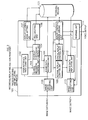
- Fig. 2 shows the construction of the image recording and replaying apparatus in Embodiment 1 of the present invention.
- the image recording and replaying apparatus 101 is connected to an external recording medium 121 which is achieved by a hard disk or the like, and includes, as shown in Fig. 2, a user interface processing unit 102, a normal recording control unit 103, a repeat recording control unit 104, an image data receiving unit 105, an image data recording unit 106, a replay control mode setting unit 107, a file deleting unit 108, a normal replay control unit 109, a special replay control unit 110, a replay control mode judging unit 111, an image data replaying unit 112, an image outputting unit 113, and a warning unit 114.
- a user interface processing unit 102 includes, as shown in Fig. 2, a user interface processing unit 102, a normal recording control unit 103, a repeat recording control unit 104, an image data receiving unit 105, an image data recording unit 106, a replay control mode setting unit 107, a file deleting unit 108, a normal replay control unit 109, a special replay control unit 110, a replay
- the user interface processing unit 102 receives a user instruction. If the user interface processing unit 102 receives a normal recording instruction, it notifies the normal recording control unit 103 of the normal recording instruction; and if receiving a repeat recording instruction, the user interface processing unit 102 notifies the repeat recording control unit 104 of the repeat recording instruction.
- the "repeat recording” refers to such a recording as image data is continuously recorded onto a recording medium by adjusting the amount of the recorded image data so as not to exceed a predetermined amount that corresponds to a scheduled time period, by continuously deleting earlier-recorded image data.
- the user can specify a desired repeat recording time period, which is converted to a corresponding amount of recorded image data by the image recording and replaying apparatus 101.
- the user can replay image data with the delay replay function in so far as the desired image data has been recorded by the repeat recording during the specified repeat recording time period measured at the point in time when the user requests the replay, where the image data can be replayed in a special replay such as fast forward, rewind, pause, or slow replay, as well as in the standard replay.
- a special replay such as fast forward, rewind, pause, or slow replay, as well as in the standard replay.
- the user interface processing unit 102 receives, from the user, specification of the repeat recording time period together with the repeat recording instruction.
- delay replay refers to replay of image data recorded in the repeat recording.
- a normal (standard) replay and a plurality of special replays are available for the delay replay.
- the special replay includes "fast forward”, “rewind”, “pause”, and "slow replay”.
- the user interface processing unit 102 also notifies the repeat recording control unit 104 of (a) the repeat recording time period specified by the user and (b) a repeat recording stop instruction input from the user.
- a normal replay (standard replay) or a special replay can be specified with the replay instruction, and both types of replays may be requested as delay replays.
- the user interface processing unit 102 receives from the user a normal replay (standard replay) instruction, it sends the received normal replay instruction and replay point to the normal replay control unit 109, and when receiving a special replay instruction, it sends the received special replay instruction and replay point to the special replay control unit 110.
- receiving a delay replay instruction it further sends the received delay replay instruction and replay point to the replay control mode judging unit 111. It should be noted here that since the present invention is directed to a delay replay, it is supposed in the following description that the replay instructions the user interface processing unit 102 receives from the user are all delay replay instructions.
- the replay point is specified by a time period before which from the current time the user considers the desired image was broadcast and recorded.
- the normal recording control unit 103 when notified of a normal recording instruction from the user interface processing unit 102, controls the image data recording unit 106 to record onto the recording medium 121 the image data received by the image data receiving unit 105.
- the repeat recording control unit 104 when receiving from the user interface processing unit 102 a repeat recording instruction and the repeat recording time period, instructs the image data recording unit 106 to create in the recording medium 121 a file that can record a predetermined amount of image data equivalent to a replay time period of, for example, 5 minutes, and to record into the file the image data received by the image data receiving unit 105. Also, when receiving from the user interface processing unit 102 a repeat recording stop instruction, the repeat recording control unit 104 instructs the image data recording unit 106 to stop recording the image data into the recording medium 121.
- the repeat recording control unit 104 Each time the repeat recording control unit 104 instructs the image data recording unit 106 to record image data, the repeat recording control unit 104 also instructs the replay control mode setting unit 107 to set a replay control mode for a file in which the image data is recorded. After the image data recording unit 106 starts recording image data into a file, the repeat recording control unit 104 instructs the replay control mode setting unit 107 to set an all-replays-available mode for the file.
- the repeat recording control unit 104 has a clock, and when a specified time elapses after the completion of the image data recording, the repeat recording control unit 104 instructs the replay control mode setting unit 107 to change the setting of the file from the all-replays-available mode to a replay restriction mode. When this is performed, if any replay control mode has been set for the file, the repeat recording control unit 104 instructs canceling of the replay control mode set for the file since the file is to be deleted, as will be described in detail later.
- the repeat recording control unit 104 instructs the replay control mode setting unit 107 to change the setting for the file from the all-replays-available mode to a replay restriction mode
- the repeat recording control unit 104 instructs the file deleting unit 108 to delete a file in which the replay restriction mode has been set. That is to say, the repeat recording control unit 104 instructs the file deleting unit 108 to delete a file after the repeat recording time period plus a predetermined time period have elapsed since the completion of the image data recording.
- the image data receiving unit 105 receives image data, which, for example, transmitted from a broadcast station as a broadcast program, and notifies the image data recording unit 106 of the receipt.
- the image data recording unit 106 when receiving an instruction from the normal recording control unit 103 to record image data, records image data received from the image data receiving unit 105 onto the recording medium 121.
- the image data recording unit 106 when receiving an instruction from the repeat recording control unit 104 to create a file and record image data, creates in a recording area in the recording medium 121 a file with a certain capacity, assigns an identifier to the file, and records image data received from the image data receiving unit 105 into the file.
- the image data recording unit 106 continues this procedure until it receives from the repeat recording control unit 104 an instruction to stop the recording.
- the replay control mode setting unit 107 when receiving an instruction from the repeat recording control unit 104 to set replay control modes, records a replay mode table into the recording medium 121.
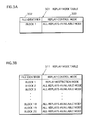
- Fig. 3A shows an example of the contents of the replay mode table immediately after a repeat recording has started.
- the replay mode table 301 has a file identifier column 302 for showing the identifier of each file and a replay control mode column 303 for showing the replay control mode set for each file.
- the example shown in Fig. 3A shows the state immediately after the start of recording image data into a file with an identifier "block I". Under the control of the repeat recording control unit 104, the file "block 1" is set to the all-replays-available mode.
- Fig. 3B shows an example of the contents of the replay mode table immediately after the specified repeat recording time period has passed since recording of image data into the file "block 1" completed.
- the replay control mode setting unit 107 As instructed by the repeat recording control unit 104, has changed the replay control mode of the file "block 1" to the replay restriction mode.
- the other files "block 2" to “block 20" are all set to the all-replays-available mode.
- the image data recording unit 106 has created a file "block 20" in the recording medium 121, and recorded image data in this file.
- the contents of the replay mode table changes to be as shown in Fig. 4 as replay mode table 401.
- the image data recording unit 106 has created a file "block 21" in the recording medium 121, and has recorded image data into this file.
- the file deleting unit 108 deletes a file from the recording medium 121 when it receives an instruction to delete the file from the repeat recording control unit 104 after the repeat recording time period plus a predetermined time period have passed since the completion of recording image data into the file.
- the normal replay control unit 109 when receiving the normal replay instruction and a replay point from the user interface processing unit 102, sends the replay point to the image data replaying unit 112.
- the normal replay control unit 109 When receiving the normal replay (standard replay) instruction from the replay control mode judging unit 111, the normal replay control unit 109 notifies the image data replaying unit 112 of the normal replay instruction.
- the special replay control unit 110 when receiving an instruction to perform a special replay such as fast forward, rewind, pause, slow replay (forward), slow replay (backward), from the user interface processing unit 102, notifies the image data replaying unit 112 of this instruction. In this case, if it receives specification for the fast forward replay speed from the replay control mode judging unit 111, the special replay control unit 110 notifies the image data replaying unit 112 of the specified speed.
- a special replay such as fast forward, rewind, pause, slow replay (forward), slow replay (backward)
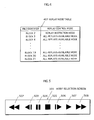
- the replay control mode judging unit 111 when receiving the replay point from the user interface processing unit 102, judges whether the file to which the received replay point belongs (that is to say, a currently replayed file) is set to the all-replays-available mode by referring to the replay mode table recorded in the recording medium 121. When it judges positively on the above judgment, the replay control mode judging unit 111 instructs the image outputting unit 113 to display a mode selection screen shown in Fig. 5 by superimposing the mode selection screen on the currently displayed image so that the user can select a replay mode.
- the mode selection screen 501 contains several signs respectively corresponding to different replay modes from which the user can select one.
- the sign 502 represents rewind, 503 slow replay (backward), 504 pause, 505 stop, 506 slow replay (forward), 507 standard replay, and 508 fast forward.
- the user can select one of the displayed signs to determine the replay mode. Note that if the sign 504 representing replay stop is selected, the replay stops.
- the replay control mode judging unit 111 when receiving the replay point of the currently replayed image data from the image data replaying unit 112, refers to the replay mode table (examples are shown in Fig. 4 and other drawings) recorded in the recording medium 121 and judges whether the replay control mode of the file to which the replay point belongs is the replay restriction mode or the all-replays-available mode.
- the replay control mode judging unit 111 does not perform a specific process, but when judging that the mode is the replay restriction mode, the replay control mode judging unit 111 notifies the warning unit 114 of the judgment, and also instructs the image outputting unit 113 to output a mode selection screen 701 shown in Fig. 7 to an external monitor.
- the mode selection screen 701 contains only two signs 702 and 703 representing the normal replay (standard replay) and fast forward, respectively.
- the replay control mode judging unit 111 instructs the normal replay control unit 109 to replay the image data in the standard replay mode as a default. In doing this, when it is judged that the file cannot be read and replayed completely with the standard replay mode, the replay control mode judging unit 111 instructs the special replay control unit 110 to perform fast forward as a default, calculates the speed of the fast forward using (a) the time period required for deleting the file and (b) the amount of image data to be replayed, and notifies the special replay control unit 110 of the calculated fast forward speed.
- the image data replaying unit 112 when receiving the normal replay instruction and replay point from the normal replay control unit 109, reads, at a standard replay speed, the image data from the file containing the replay point in the recording medium, and sends the read image data to the image outputting unit 113.
- the image data replaying unit 112 when receiving the special replay instruction, for example, an instruction to fast forward, from the special replay control unit 110, reads, at a fast forward speed, the image data starting from the replay point, and sends the read image data to the image outputting unit 113. When the replay speed has been notified, the image data replaying unit 112 reads and replays the image data at the notified replay speed.
- the special replay instruction for example, an instruction to fast forward
- the image data replaying unit 112 further sends the replay point in the file, from which it is reading image data currently, to the replay control mode judging unit 111.
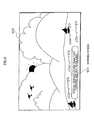
- the image outputting unit 113 outputs the image data received from the image data replaying unit 112 to the external monitor. If the mode selection screen 501 or 701 is sent from the replay control mode judging unit 111, the image outputting unit 113 also outputs the mode selection screen so as to be superimposed on the image. Similarly, if a warning screen 601 is sent from the warning unit 114, the image outputting unit 113 also outputs the warning screen 601 so as to be superimposed on an image screen 602, as shown in Fig. 6.
- the warning unit 114 when notified from the replay control mode judging unit 111 of the replay restriction mode set to the file containing the currently replayed image data, instructs the image outputting unit 113 to output the warning screen 601 as shown in Fig. 6.
- mode selection screen 701 is displayed after the waning screen 601 is displayed.
- the warning unit 114 also outputs a voice, while the warning screen 601 is displayed, to an external speaker to convey that special replays other than the fast forward are not available.
- the external recording medium 121 is achieved by a rewritable, large-capacity recording medium such as a hard disk or a DVD-RAM.
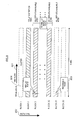
- Fig. 8 shows image data recorded onto the external recording medium 121 by the image data recording unit 106.
- the specified repeat recording time period is 90 minutes, and image data to be replayed for 5 minutes is recorded in each file in the direction of the "time flow" indicated by the arrow 801.
- Each file is assigned with an identifier such as "block 1" or "block 22" shown in this drawing.
- the example shown in Fig. 8 indicates that the file "block 1" has been deleted, and that the file "block 22" has not been created.
- the replay control modes set to the files, appearing on the right-hand side of Fig. 8, correspond to the replay control modes shown in the replay mode table shown in Fig. 4.
- Fig. 8 indicates that the image data is recorded into each file in the direction of time indicated by the arrow 801, and that the image data is recorded in units of files in the direction of time indicated by the arrow 802.
- a replay point 804 is currently in the file "block 3" that is set to the all-replays-available mode. Accordingly, any special replay (for example, rewind) is available.
- the replay point 804 would move from the file “block 3" to the file “block 2" over time.
- the recording point 803 would move from the file “block 21" to the file “block 22"
- the file "block 2" would be deleted, and then the file "block 3" containing the image data currently indicated by the replay point 804 would be deleted.
- the warning screen generated by the warning unit 114 is superimposed on the image screen 602 on the external monitor to warn the user to select fast forward or standard replay.
- the replay point 804 when the replay point 804 is in the file "block 2", the replay point would move to the file "block 3", so that the replay of image data would continue without interruption.
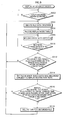
- Fig. 9 is a flowchart showing the procedures of the repeat recording.
- the repeat recording control unit 104 waits for a repeat recording time period specified by the user to be received from the user interface unit 102 (S902). After receiving the repeat recording time period, the repeat recording control unit 104 instructs the image data recording unit 106 to record image data, and instructs the replay control mode setting unit 107 to record the replay mode table.
- the image data recording unit 106 creates a file in the external recording medium 121, with an identifier assigned thereto (S904).
- the replay control mode setting unit 107 records the replay mode table (S906).
- the image data recording unit 106 records image data received by the image data receiving unit 105 into a file that can record a predetermined amount of image data equivalent to a predetermined replay time period (S908).
- the image data recording unit 106 continues to record image data into the file until the file has recorded the predetermined amount of image data (S910).
- the repeat recording control unit 104 judges whether the repeat recording time period plus the predetermined time period have passed after the completion of the image data recording (S912). If the judgment result is negative, the control returns to S904, and if the judgment result is positive, the control moves to S914 in which according to an instruction received from the replay control mode setting unit 107, the repeat recording control unit 104 sets a file in which the image data was recorded the earliest to the replay restriction mode (S914).
- the repeat recording control unit 107 judges whether the repeat recording time period plus double of the predetermined time period have passed after the completion of the image data recording into the earliest recorded file (S916). If the judgment result is negative, the control returns to S904, and if the judgment result is positive, the control moves to S918 in which the file deleting unit 108 is instructed to delete the earliest recorded file, and deletes the file (S918), then the control returns to S904.
- the above-described procedure is continued until the repeat recording control unit 104 receives from the user interface processing unit 102 a user instruction to stop the repeat recording.
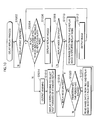
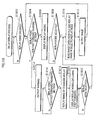
- Fig. 10 is a flowchart showing the procedures of the delay replay.
- the user interface processing unit 102 waits for a replay point to be specified by the user (S1002). If it is specified, the control moves to S1004 in which the replay point is sent to the replay control mode judging unit 111, and the replay control mode judging unit 111 judges whether the replay control mode of the file to which the replay point belongs is the all-replays-available mode or the replay restriction mode by referring to the replay mode table (S1004). If it is the all-replays-available mode, the control moves to S1006 in which the image outputting unit 113 is instructed to output a mode selection screen to the monitor so that the user can select a replay mode from options that include special replays (S1006).
- the user interface processing unit 102 waits for a replay mode to be specified by the user (S1008). If a replay mode is selected, the control moves to S1010 in which the normal replay control unit 109 is notified of a standard replay mode, and the special replay control unit 110 is notified of a special replay mode, and the image data replaying unit 112 reads image data from a file in the external recording medium 121 starting from the replay point, and replays the image in the specified replay mode (S1010), and notifies the image outputting unit 113 of it.
- the image outputting unit 113 outputs the image to the external monitor (S1012), and returns to S1004.
- the control goes to S1014 in which the warning unit 114 outputs a warning voice and a warning screen to be displayed on the external monitor (S1014).
- the replay control mode judging unit 111 allows, via the image outputting unit 113, the external monitor to display a mode selection screen, replacing the warning screen, offering to select fast forward or the standard replay (S1016), and waits for a replay mode to be specified by the user (S1018). If the user specifies a replay mode, the control moves to S1010.
- the replay control mode judging unit 114 determines either the standard replay mode or the fast forward as a default, and the image data replaying unit 112 reads image data from the file and replays the image in the determined replay mode (S1022), and the control goes to S1012.
- Embodiment 2 The construction of the image recording and replaying apparatus in Embodiment 2 is the same as that in Embodiment 1 except that it does not contain the file deleting unit 108. The following describes only the differences from Embodiment 1.
- the repeat recording control unit 104 when receiving a repeat recording time period specified by the user from the user interface processing unit 102, instructs the image data recording unit 106 to create a file in the recording medium 121 and record image data into the file.
- the repeat recording control unit 104 having a clock, starts measuring the time as the image data recording unit 106 starts recording image data, and instructs the replay control mode setting unit 107 to set the all-replays-available mode to an area section in which image data was recorded for the specified repeat recording time period (for example, 90 minutes) plus a predetermined time period (for example, 5 minutes) after the image data recording unit 106 starts recording the image data.
- the repeat recording control unit 104 instructs the replay control mode setting unit 107 to set the replay restriction mode to an area section in which image data was recorded for the next predetermined time period (from 95 minutes after to 100 minutes after the recording start. In this way, the repeat recording control unit 104 sends such an instruction every predetermined time period.
- the repeat recording control unit 104 also instructs the image data recording unit 106 to record image data into an area section that has stored image data for more than the repeat recording time period plus double the predetermined time period. That is to say, in this example, the repeat recording control unit 104 instructs the image data recording unit 106 to overwrite the oldest piece of image data having been stored in an area section for more than 100 minutes with a new piece of image data.
- the image data recording unit 106 When receiving the repeat recording instruction from the repeat recording control unit 104, the image data recording unit 106 creates a file in the recording medium 121, and records image data received by the image data receiving unit 105 into the file. Also, when receiving an instruction to overwrite image data from the repeat recording control unit 104, the image data recording unit 106 overwrites the oldest piece of image data among the currently recorded image data with a new piece of image data received by the image data receiving unit 105.
- the replay control mode setting unit 107 updates the settings of the replay control mode (the all-replays-available mode and the replay restriction mode) for each area section in the recording medium 121 in which image data is recorded, based on the replay control mode notified from the repeat recording control unit 104. This updating is performed every predetermined time period after the specified repeat recording time period passes.
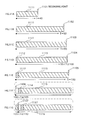
- Figs. 11A to 11G show changes in the image data recorded in the recording medium 121 over time.
- areas with a dense hatch pattern indicate that the replay restriction mode is set to the areas; and areas with a light hatch pattern indicate that the all-replays-available mode is set to the areas.
- the all-replays-available mode is set to the entire area 1111 until the repeat recording time period (90 minutes) plus a predetermined time period (5 minutes) elapse, where the recording points 1101, 1102, and 1103 indicate that 40, 90, and 95 minutes have elapsed since the recording start, respectively.
- the replay restriction mode is set to the area section 1112 in which image data was recorded for the first 5 minutes, and the all-replays-available mode is set to the remaining area 1113 up to the recording point 1104 or 1105.
- the recording point (1106 in Fig. 11F) moves to an area section in which the image data was recorded for the first 5 minutes and the most recently received image data is recorded therein, overwriting the earlier recorded image data.
- the replay restriction mode is set to the area section 1114 in which the image data was recorded for 5 minutes during a time period from 5 minutes after the recording start to 10 minutes after the recording start; and the all-replays-available mode is set to the remaining area 1115 in which the image data has been recorded from 10 minutes after the recording start to the recording point 1106.
- the all-replays-available mode is set to the area section 1116 in which the image data has been recorded from 15 minutes after the recording start to the recording point 1107; and the replay restriction mode is set to the area section 1117 in which the image data was recorded for 5 minutes during a time period from 10 minutes after the recording start to 15 minutes after the recording start
- the above-described pattern is repeated every predetermined time period, the area section to which the replay restriction mode is set moving one after another.
- the replay control mode setting unit 107 records a replay mode table in the recording medium 121, where the replay mode table shows the replay control modes set to the above-described areas in the recording medium 121.
- Fig. 12 shows an example of the replay mode table.
- the replay mode table 1201 has an address column 1202 for showing the address of each area section and a replay control mode column 1203 for showing the replay control mode of each area section.
- the replay mode table 1201 corresponds to the image data recording state shown in Fig. 11G.
- the all-replays-available mode is set to the area sections with the addresses "0000-1a00” and “3c01-d4f0", and the replay restriction mode to the area section with the address "2e09-3c00".
- These replay control modes are updated by the replay control mode setting unit 107 every predetermined time period, as described earlier.
- the replay control mode judging unit 111 judges whether the file in which a received replay point exists is the all-replays-available mode or the replay restriction mode, while in Embodiment 2, it judges whether the area section with an address in which a received replay point exists is the all-replays-available mode or the replay restriction mode.
- a file is created and image data is recorded in the created file every predetermined time period, and the replay control mode is set in units of files, while in Embodiment 2, the area for one file is divided into a plurality of area sections which are identified by the addresses, the replay control mode is set in units of area sections, and earlier recorded image data is overwritten with newly recorded image data without deleting files.
- the replay control mode is determined in terms of the file in which the replay point exists, while in Embodiment 2, it is determined in terms of the area section in which the replay point exists.
- Embodiment 2 The operation in Embodiment 2 is the same as that in Embodiment 1 except for the operation relating to the above-described differences, and therefore is omitted here.
- Embodiments 1 and 2 the user can select any replay mode including special replays such as pause and slow replays during the specified repeat recording time period.
- the most recently recorded image data is prohibited from being fast-forwarded.
- the construction of Embodiment 3 is similar to that of Embodiment 1. As a result, the differences in the construction of Embodiment 3 from Embodiment 1 will be described with reference to Fig. 2 showing the construction of Embodiment 1.
- the repeat recording control unit 104 when receiving from the user interface processing unit 102 a repeat recording instruction, instructs the replay control mode setting unit 107 to set a time period of 1 second after the start of the image data recording in the standard replay time to "fast forward prohibited section", set a time period of 4 seconds after the replay-prohibited section to "fast forward warning section”, and set the succeeding time period to the all-replays-available mode.
- the image data recording unit 106 records the image data received by the image data receiving unit 105 onto the recording medium 121 in units of clusters, each of which is approximately 1MB in size.
- the image data to be replayed for 1 second in the standard replay time corresponds to the image data of 1 cluster.
- the replay control mode setting unit 107 when receiving from the repeat recording control unit 104 an instruction to set the replay control mode, records a replay mode table onto the recording medium 121.
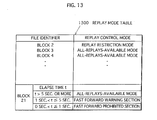
- Fig. 13 shows the replay mode table 1300 when a small amount of time have lapsed after the repeat recording time period plus a predetermined time period lapsed.
- the replay mode table 1300 is similar to the replay mode table 401 shown in Fig. 4 except that the file "block 21" into which image data is currently recorded by the image data recording unit 106 is divided into 3 sections according to the elapse-time.
- a section between the elapse times of no less than 0 second and 1 or less seconds is defined as the fast forwardprohibited section
- a section between the elapse times of no less than 1 second and 5 or less seconds is defined as the fast forward warning section
- a section having the elapse time of no less than 5 seconds is defined as the all-replays-available mode section.
- the replay control mode setting unit 107 converts from the cluster units to the standard replay time, and judges whether 1 second has passed, and depending on the results of the judgment, sets or updates the three types of sections. Note that although in the replay mode table 1300 shown in Fig. 13, the sections are defined by the elapse times, but in reality, the sections are defined by the addresses in the recording medium 121.
- the normal replay control unit 109 instructs the image data replaying unit 112 to read image data from the recording medium 121 at the standard replay speed starting with the replay point of the currently replayed image data.
- the special replay control unit 110 When receiving from the replay control mode judging unit 111 an instruction to stop fast forward, the special replay control unit 110 instructs the image data replaying unit 112 to stop reading image data from the recording medium 121 at the speed of fast forward.
- the replay control mode judging unit 111 judges whether the file to which the received replay point belongs is the all-replays-available mode or the replay restriction mode, and also judges whether the replay point belongs to the fast forward warning prohibited section or the fast forward warning section.
- the replay control mode judging unit 111 judges that the replay point belongs to the fast forward warning section by referring to the address of the replay point and the addresses shown in the replay mode table, the replay control mode judging unit 111 notifies the warning unit 114 of it; and when it judges that the replay point belongs to the fast forward prohibited section, the replay control mode judging unit 111 instructs the special replay control unit 110 to stop fast forward, instructs the normal replay control unit 109 to perform a normal replay, and sends to the image outputting unit 113 a mode selection screen containing replay modes for selection by the user to be displayed on the external monitor.
- the mode selection screen displayed here is the same as that shown in Fig. 5 except that it does not include the sign 508 representing fast forward.
- the image data replaying unit 112 When receiving from the special replay control unit 110 an instruction to stop reading image data at a fast forward speed, and from the normal replay control unit 109 an instruction to read image data at the standard replay speed, the image data replaying unit 112 reads image data at the standard replay speed starting with the replay point of the currently replayed image data, and sends the read image data to the image outputting unit 113.
- the image outputting unit 113 When the image outputting unit 113 receives a warning screen from the warning unit 114, it outputs the warning screen to the external monitor so as to be displayed on it; and when it receives a mode selection screen, it also outputs the mode selection screen to the external monitor so as to be displayed on it.
- the warning unit 114 when notified from the replay control mode judging unit 111 that area section containing the currently replayed image data is the fast forward warning section, sends to the image outputting unit 113 a warning screen including a message "fast forward is not available".
- the warning unit 114 also outputs a warning voice.
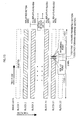
- Fig. 14 shows the state in which the file "block 21" has a recording point 1401, a section corresponding to a time period of approximately 1 second before the recording point 1401 is the fast forward prohibited section 1402, and a section corresponding to a time period of approximately 4 seconds before the section 1402 is the fast forward warning section 1403.
- the drawing indicates that when the file "block 3" has the replay point 1404, the user requests to replay image data of 90 minutes before. All types of replay modes are available at the replay point 1404. Suppose that after this, the user changes the replay point 1404 by, for example, specifying image data of 10 minutes before the current recording point, selects fast forward. Then, as time goes by, both the recording point and the replay point move forwards until they reach the positions respectively indicated as 1501 and 1502 in Fig. 15.
- the replay control mode judging unit 111 judges that the replay point 1502 belongs to the fast forward warning section 1503, and notifies the warning unit 114 of it.
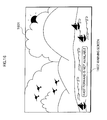
- the warning screen 1602 including a message "fast forward is not available" is displayed as a part of the image screen 1601 on the external monitor, as shown in Fig. 16.
- the user continues the fast forward until the replay point 1502 reaches the fast forward prohibited section 1504.
- the replay control mode judging unit 111 judges that the replay point 1502 belongs to the fast forward prohibited section 1504.
- the image data replaying unit 112 reads image data from the recording medium 121 at the standard replay speed, and sends the read image data to the image outputting unit 113.
- the image outputting unit 113 outputs a mode selection screen to the external monitor so that the mode selection screen is displayed instead of the warning screen 1602, as a part of the image screen.
- the mode selection screen displayed in this example prohibits fast forward, as described earlier, and therefore is the same as the mode selection screen 501 shown in Fig. 5 except that it does not include the sign 508 representing fast forward. On the displayed mode selection screen, the user can select any replay mode other than fast forward.
- Fig. 17 is a flowchart showing the procedure of setting the fast forward prohibited section and the fast forward warning section. Note that the steps before S1702 and after S1718 are the same as the steps S901 to S906 and the steps S912 to S918 shown in Fig. 9, and the overlapping steps are not described here.
- the image data recording unit 106 records the image data received by the image data receiving unit 105 into a file in units of clusters (S1702).
- the replay control mode setting unit 107 waits for 1 second to elapse since the start of the image data recording (S1704), then sets the fast forward prohibited section with the addresses in the replay mode table 1300 (S1706).
- the image data recording unit 106 records the image data received by the image data receiving unit 105 into a file in units of clusters (S1708).
- the replay control mode setting unit 107 waits for 1 second to elapse since the start of the setting or updating of the fast forward prohibited section (S1710), then judges whether 5 seconds have elapsed since the first setting of the fast forward prohibited section (S1712).
- the replay control mode setting unit 107 judges that 5 seconds have not elapsed yet, the replay control mode setting unit 107 sets or updates the fast forward prohibited section and the fast forward warning section with the addresses in the replay mode table 1300 (S1714), and returns to S1708.
- the replay control mode setting unit 107 judges that 5 seconds have elapsed, the replay control mode setting unit 107 sets or updates the fast forward prohibited section, the fast forward warning section, and the all-replays-available mode section with the addresses in the replay mode table 1300 (S1716).
- the image data recording unit 106 judges whether the recording of image data into the file has completed (S1718). If it has completed, the control returns to S912; and if it has not completed, the control returns to S1708.
- the user interface processing unit 102 waits for a replay point to be specified by the user (S1802). If it is specified, the control moves to S1804 in which the replay point is sent to the replay control mode judging unit 111, and the replay control mode judging unit 111 judges whether the replay point belongs to the fast forward warning section (S1804). If it is judged negatively, the control moves to S1806 in which a mode selection screen is displayed (S1806), then selection of a replay mode by the user is waited (S1808).
- control moves to S1810 in which the image data replaying unit 112 reads image data from a file in the external recording medium 121 starting from the replay point, and replays the image in the selected replay mode (S1810).
- the image outputting unit 113 outputs the image to the external monitor (S1812), and returns to S1804.
- the warning unit 114 If it is judged in S1804 that the replay point belongs to the fast forward warning section, the warning unit 114 outputs a warning voice and a warning screen including a message that fast forward is not available, as a part of the image screen (S1814).
- the replay control mode judging unit 111 waits for the replay point enters the fast forward prohibited section (S1816).
- the image data replay unit 112 reads image data from the file in the recording medium 121 at the standard replay speed, starting with the replay point of the currently replayed image data (S1818).
- the replay control mode judging unit 111 instructs the image outputting unit to display the replay modes excluding fast forward (S1820), waits for a selection of a replay mode by the user (S1822), and if a replay mode is selected, returns to S1810.
- a section corresponding to a time period of approximately 1 second before a recording point is regarded as the fast forward prohibited section
- the time period is not limited to 1 second, but may be 1 minute, for example.
- a section corresponding to a time period of approximately 4 seconds before the fast forward prohibited section is regarded as the fast forward warning section
- the time period is not limited to 4 seconds, but may be 4 minutes, for example.
- the present embodiment is described using a case where image data is recorded in the files each of which corresponds to a predetermined time period in size. However, off course, the present embodiment can be applied to a case of Embodiment 2 where image data is sequentially recorded in one file.
- the user specifies a repeat recording time period.
- a broadcast program may be programmed beforehand to, if the user specifies the broadcast program for the repeat recording, specify a repeat recording time period that is shorter than the total length of the broadcast program. This arrangement achieves both (a) the protection of the contents of the broadcast program by prohibiting the whole program from being recorded, and (b) the delay replay in which the user can watch a scene he/she missed.
- the above embodiments have the construction shown in Fig. 2.
- the functions of each component may be achievedby a computer program that causes a computer to perform the functions.
- the computer program may be recorded in a computer-readable recording medium, and the computer-readable recording medium may be used in a conventional image recording and replaying apparatus so as to achieve the delay replay provided by the present invention.
Landscapes
- Engineering & Computer Science (AREA)
- Multimedia (AREA)
- Signal Processing (AREA)
- Signal Processing For Digital Recording And Reproducing (AREA)
- Television Signal Processing For Recording (AREA)
- Management Or Editing Of Information On Record Carriers (AREA)
Applications Claiming Priority (4)
| Application Number | Priority Date | Filing Date | Title |
|---|---|---|---|
| JP2001255101 | 2001-08-24 | ||
| JP2001255101 | 2001-08-24 | ||
| JP2002174925 | 2002-06-14 | ||
| JP2002174925 | 2002-06-14 |
Publications (3)
| Publication Number | Publication Date |
|---|---|
| EP1289291A2 true EP1289291A2 (de) | 2003-03-05 |
| EP1289291A3 EP1289291A3 (de) | 2004-04-14 |
| EP1289291B1 EP1289291B1 (de) | 2005-10-12 |
Family
ID=26620970
Family Applications (1)
| Application Number | Title | Priority Date | Filing Date |
|---|---|---|---|
| EP02255807A Expired - Lifetime EP1289291B1 (de) | 2001-08-24 | 2002-08-20 | Bildaufnahme- und -wiedergabegerät, Verfahren, Programm, und rechnerlesbares Aufnahmemedium zur Programmaufnahme |
Country Status (4)
| Country | Link |
|---|---|
| US (1) | US7215873B2 (de) |
| EP (1) | EP1289291B1 (de) |
| CN (1) | CN1316822C (de) |
| DE (1) | DE60206577T2 (de) |
Families Citing this family (7)
| Publication number | Priority date | Publication date | Assignee | Title |
|---|---|---|---|---|
| US20070124148A1 (en) * | 2005-11-28 | 2007-05-31 | Canon Kabushiki Kaisha | Speech processing apparatus and speech processing method |
| KR101396364B1 (ko) * | 2007-01-24 | 2014-05-19 | 삼성전자주식회사 | 컨텐츠를 저장한 정보저장매체, 재생 방법 및 장치 |
| CN101546583B (zh) * | 2008-03-28 | 2010-12-08 | 鸿富锦精密工业(深圳)有限公司 | 续录系统及方法 |
| WO2009154267A1 (ja) * | 2008-06-20 | 2009-12-23 | シャープ株式会社 | データ出力装置、データ提供装置、データ出力システム、データ出力装置の制御方法、及びデータ提供装置の制御方法 |
| JP5203912B2 (ja) | 2008-12-12 | 2013-06-05 | キヤノン株式会社 | 撮像装置及びその制御方法 |
| JP6033541B2 (ja) * | 2011-11-24 | 2016-11-30 | シャープ株式会社 | 再生装置、再生方法、制御プログラム、および記録媒体 |
| CN106303666A (zh) * | 2015-06-24 | 2017-01-04 | 中兴通讯股份有限公司 | 一种iptv节目的处理方法及装置、iptv系统 |
Family Cites Families (13)
| Publication number | Priority date | Publication date | Assignee | Title |
|---|---|---|---|---|
| US4195317A (en) * | 1977-10-14 | 1980-03-25 | Arvin Industries, Inc. | Video recording and playback editing system with displayed cue signals |
| GB2201314B (en) | 1987-02-18 | 1991-02-27 | Sony Corp | Digital video signal processing methods and apparatus |
| JP2949747B2 (ja) * | 1990-01-21 | 1999-09-20 | ソニー株式会社 | 情報入力装置 |
| FR2700908B1 (fr) | 1993-01-26 | 1995-02-24 | Thomson Consumer Electronics | Récepteur de télévision à mémoire tampon. |
| JPH07212713A (ja) | 1994-01-19 | 1995-08-11 | Hitachi Ltd | 音声映像記録再生装置 |
| JP3500728B2 (ja) | 1994-10-03 | 2004-02-23 | ソニー株式会社 | 映像記録再生装置 |
| DE69515337T2 (de) | 1994-12-23 | 2000-08-24 | Imedia Corp., San Francisco | Bereitstellung von Videorekorder-Trickfunktionen in einem Videoverteilsystem |
| WO1999056280A1 (en) * | 1998-04-27 | 1999-11-04 | Hitachi, Ltd. | Recorder/reproducer |
| US6408128B1 (en) * | 1998-11-12 | 2002-06-18 | Max Abecassis | Replaying with supplementary information a segment of a video |
| US6748481B1 (en) | 1999-04-06 | 2004-06-08 | Microsoft Corporation | Streaming information appliance with circular buffer for receiving and selectively reading blocks of streaming information |
| JP2001157172A (ja) * | 1999-11-30 | 2001-06-08 | Hitachi Ltd | ディジタル信号記録装置および記録媒体 |
| JP4019604B2 (ja) | 2000-05-09 | 2007-12-12 | 日本電気株式会社 | ディジタル放送の録画再生方法及び装置 |
| JP2002170324A (ja) | 2000-11-30 | 2002-06-14 | Toshiba Corp | 内蔵記憶媒体付録再装置 |
-
2002
- 2002-08-15 US US10/219,234 patent/US7215873B2/en not_active Expired - Fee Related
- 2002-08-20 EP EP02255807A patent/EP1289291B1/de not_active Expired - Lifetime
- 2002-08-20 DE DE60206577T patent/DE60206577T2/de not_active Expired - Lifetime
- 2002-08-23 CN CNB021470332A patent/CN1316822C/zh not_active Expired - Fee Related
Also Published As
| Publication number | Publication date |
|---|---|
| US20030039466A1 (en) | 2003-02-27 |
| US7215873B2 (en) | 2007-05-08 |
| EP1289291B1 (de) | 2005-10-12 |
| DE60206577T2 (de) | 2006-05-04 |
| DE60206577D1 (de) | 2006-02-23 |
| EP1289291A3 (de) | 2004-04-14 |
| CN1316822C (zh) | 2007-05-16 |
| CN1407553A (zh) | 2003-04-02 |
Similar Documents
| Publication | Publication Date | Title |
|---|---|---|
| US8648933B2 (en) | Image sensing apparatus and method for controlling the same | |
| JP4676043B2 (ja) | 録画予約管理装置 | |
| US20070201823A1 (en) | Broadcast program recorder, method of displaying status thereof, and method of managing the broadcast program recorder | |
| JP2007209020A (ja) | アベイラビリティ最適化方法 | |
| US20080159709A1 (en) | Recording apparatus, recording/reproducing system, recording method | |
| EP1195768A2 (de) | Informationsaufzeichnungs- und Wiedergabegerät | |
| JP4891847B2 (ja) | 記録装置、記録再生システム、記録方法 | |
| EP1289291B1 (de) | Bildaufnahme- und -wiedergabegerät, Verfahren, Programm, und rechnerlesbares Aufnahmemedium zur Programmaufnahme | |
| JP4828547B2 (ja) | コンテンツデータ出力装置、それを備えたテレビ、およびコンテンツデータ出力プログラム | |
| US20030009579A1 (en) | Contents data transmission system | |
| US20050160462A1 (en) | Signal generating method, program, and storing apparatus for automatically storing broadcast programs | |
| JP2005167297A (ja) | ダビング予約方法及びダビング予約装置 | |
| JP2009278283A (ja) | コンテンツ再生装置、コンテンツ再生方法、コンテンツ再生プログラム、およびそのプログラムを記録した記録媒体 | |
| JP2007158442A (ja) | 放送記録装置及び放送記録方法 | |
| JP2005045412A (ja) | データ記録再生装置 | |
| JP4245645B1 (ja) | 記憶装置及び記憶方法 | |
| EP2228986B1 (de) | Rundfunkaufzeichnungsvorrichtung | |
| JP2010010964A (ja) | 電子機器 | |
| JP2001024989A (ja) | 放送装置、受信装置、放送システム、空きチャンネル管理装置及びコンピュータ読み取り可能な記憶媒体 | |
| JP5888157B2 (ja) | レコーダシステム、及びレコーダ装置 | |
| JP4259892B2 (ja) | コンテンツ記録装置 | |
| JP4719302B2 (ja) | 制御装置、表示装置、電子機器、テレビジョン放送受信装置 | |
| JP2004072431A (ja) | 映像記録再生装置及び映像記録再生方法並びにプログラム、プログラムを記録したコンピュータ読み取り可能な記録媒体 | |
| JP2007306521A (ja) | 映像記録装置 | |
| JP4324922B2 (ja) | 番組録画装置 |
Legal Events
| Date | Code | Title | Description |
|---|---|---|---|
| PUAI | Public reference made under article 153(3) epc to a published international application that has entered the european phase |
Free format text: ORIGINAL CODE: 0009012 |
|
| AK | Designated contracting states |
Kind code of ref document: A2 Designated state(s): AT BE BG CH CY CZ DE DK EE ES FI FR GB GR IE IT LI LU MC NL PT SE SK TR |
|
| AX | Request for extension of the european patent |
Extension state: AL LT LV MK RO SI |
|
| PUAL | Search report despatched |
Free format text: ORIGINAL CODE: 0009013 |
|
| AK | Designated contracting states |
Kind code of ref document: A3 Designated state(s): AT BE BG CH CY CZ DE DK EE ES FI FR GB GR IE IT LI LU MC NL PT SE SK TR |
|
| AX | Request for extension of the european patent |
Extension state: AL LT LV MK RO SI |
|
| RIC1 | Information provided on ipc code assigned before grant |
Ipc: 7H 04N 5/76 B Ipc: 7G 11B 20/10 B Ipc: 7H 04N 5/783 A |
|
| 17P | Request for examination filed |
Effective date: 20040714 |
|
| 17Q | First examination report despatched |
Effective date: 20040809 |
|
| AKX | Designation fees paid |
Designated state(s): DE FR GB |
|
| GRAP | Despatch of communication of intention to grant a patent |
Free format text: ORIGINAL CODE: EPIDOSNIGR1 |
|
| RAP1 | Party data changed (applicant data changed or rights of an application transferred) |
Owner name: MATSUSHITA ELECTRIC INDUSTRIAL CO LTD |
|
| GRAS | Grant fee paid |
Free format text: ORIGINAL CODE: EPIDOSNIGR3 |
|
| GRAA | (expected) grant |
Free format text: ORIGINAL CODE: 0009210 |
|
| AK | Designated contracting states |
Kind code of ref document: B1 Designated state(s): DE FR GB |
|
| REG | Reference to a national code |
Ref country code: GB Ref legal event code: FG4D |
|
| REF | Corresponds to: |
Ref document number: 60206577 Country of ref document: DE Date of ref document: 20060223 Kind code of ref document: P |
|
| ET | Fr: translation filed | ||
| PLBE | No opposition filed within time limit |
Free format text: ORIGINAL CODE: 0009261 |
|
| STAA | Information on the status of an ep patent application or granted ep patent |
Free format text: STATUS: NO OPPOSITION FILED WITHIN TIME LIMIT |
|
| 26N | No opposition filed |
Effective date: 20060713 |
|
| PGFP | Annual fee paid to national office [announced via postgrant information from national office to epo] |
Ref country code: FR Payment date: 20090814 Year of fee payment: 8 |
|
| PGFP | Annual fee paid to national office [announced via postgrant information from national office to epo] |
Ref country code: DE Payment date: 20090814 Year of fee payment: 8 Ref country code: GB Payment date: 20090818 Year of fee payment: 8 |
|
| GBPC | Gb: european patent ceased through non-payment of renewal fee |
Effective date: 20100820 |
|
| REG | Reference to a national code |
Ref country code: FR Ref legal event code: ST Effective date: 20110502 |
|
| REG | Reference to a national code |
Ref country code: DE Ref legal event code: R119 Ref document number: 60206577 Country of ref document: DE Effective date: 20110301 |
|
| PG25 | Lapsed in a contracting state [announced via postgrant information from national office to epo] |
Ref country code: FR Free format text: LAPSE BECAUSE OF NON-PAYMENT OF DUE FEES Effective date: 20100831 Ref country code: DE Free format text: LAPSE BECAUSE OF NON-PAYMENT OF DUE FEES Effective date: 20110301 |
|
| PG25 | Lapsed in a contracting state [announced via postgrant information from national office to epo] |
Ref country code: GB Free format text: LAPSE BECAUSE OF NON-PAYMENT OF DUE FEES Effective date: 20100820 |