EP1288193B1 - Ammoximation von Ketonen und Aufarbeitung durch Pervaporation/Dampfpermeation - Google Patents
Ammoximation von Ketonen und Aufarbeitung durch Pervaporation/Dampfpermeation Download PDFInfo
- Publication number
- EP1288193B1 EP1288193B1 EP02015476A EP02015476A EP1288193B1 EP 1288193 B1 EP1288193 B1 EP 1288193B1 EP 02015476 A EP02015476 A EP 02015476A EP 02015476 A EP02015476 A EP 02015476A EP 1288193 B1 EP1288193 B1 EP 1288193B1
- Authority
- EP
- European Patent Office
- Prior art keywords
- water
- ammoximation
- membrane
- reaction
- mother liquor
- Prior art date
- Legal status (The legal status is an assumption and is not a legal conclusion. Google has not performed a legal analysis and makes no representation as to the accuracy of the status listed.)
- Expired - Lifetime
Links
- 238000000034 method Methods 0.000 title claims abstract description 43
- 150000002576 ketones Chemical class 0.000 title claims abstract description 30
- 238000005373 pervaporation Methods 0.000 title claims description 13
- XLYOFNOQVPJJNP-UHFFFAOYSA-N water Substances O XLYOFNOQVPJJNP-UHFFFAOYSA-N 0.000 claims abstract description 53
- 230000008569 process Effects 0.000 claims abstract description 38
- 238000006243 chemical reaction Methods 0.000 claims abstract description 32
- 239000012528 membrane Substances 0.000 claims abstract description 28
- 150000002923 oximes Chemical class 0.000 claims abstract description 28
- QGZKDVFQNNGYKY-UHFFFAOYSA-N Ammonia Chemical compound N QGZKDVFQNNGYKY-UHFFFAOYSA-N 0.000 claims abstract description 27
- 239000002904 solvent Substances 0.000 claims abstract description 26
- 239000011541 reaction mixture Substances 0.000 claims abstract description 24
- MHAJPDPJQMAIIY-UHFFFAOYSA-N Hydrogen peroxide Chemical compound OO MHAJPDPJQMAIIY-UHFFFAOYSA-N 0.000 claims abstract description 21
- 239000003054 catalyst Substances 0.000 claims abstract description 15
- 238000000926 separation method Methods 0.000 claims abstract description 13
- 229910021529 ammonia Inorganic materials 0.000 claims abstract description 12
- RTAQQCXQSZGOHL-UHFFFAOYSA-N Titanium Chemical compound [Ti] RTAQQCXQSZGOHL-UHFFFAOYSA-N 0.000 claims abstract description 9
- 229910052719 titanium Inorganic materials 0.000 claims abstract description 9
- 239000010936 titanium Substances 0.000 claims abstract description 9
- 239000012456 homogeneous solution Substances 0.000 claims abstract description 3
- SXVPOSFURRDKBO-UHFFFAOYSA-N Cyclododecanone Chemical compound O=C1CCCCCCCCCCC1 SXVPOSFURRDKBO-UHFFFAOYSA-N 0.000 claims description 37
- LFQSCWFLJHTTHZ-UHFFFAOYSA-N Ethanol Chemical compound CCO LFQSCWFLJHTTHZ-UHFFFAOYSA-N 0.000 claims description 25
- 238000010626 work up procedure Methods 0.000 claims description 18
- 239000012452 mother liquor Substances 0.000 claims description 14
- -1 polysiloxanes Polymers 0.000 claims description 10
- 238000002425 crystallisation Methods 0.000 claims description 8
- 230000008025 crystallization Effects 0.000 claims description 8
- KFZMGEQAYNKOFK-UHFFFAOYSA-N Isopropanol Chemical compound CC(C)O KFZMGEQAYNKOFK-UHFFFAOYSA-N 0.000 claims description 6
- OKKJLVBELUTLKV-UHFFFAOYSA-N Methanol Chemical compound OC OKKJLVBELUTLKV-UHFFFAOYSA-N 0.000 claims description 6
- VYPSYNLAJGMNEJ-UHFFFAOYSA-N Silicium dioxide Chemical group O=[Si]=O VYPSYNLAJGMNEJ-UHFFFAOYSA-N 0.000 claims description 6
- DKGAVHZHDRPRBM-UHFFFAOYSA-N Tert-Butanol Chemical compound CC(C)(C)O DKGAVHZHDRPRBM-UHFFFAOYSA-N 0.000 claims description 6
- KWOLFJPFCHCOCG-UHFFFAOYSA-N Acetophenone Chemical compound CC(=O)C1=CC=CC=C1 KWOLFJPFCHCOCG-UHFFFAOYSA-N 0.000 claims description 4
- 229910021536 Zeolite Inorganic materials 0.000 claims description 4
- OSOIQJGOYGSIMF-UHFFFAOYSA-N cyclopentadecanone Chemical compound O=C1CCCCCCCCCCCCCC1 OSOIQJGOYGSIMF-UHFFFAOYSA-N 0.000 claims description 4
- HNPSIPDUKPIQMN-UHFFFAOYSA-N dioxosilane;oxo(oxoalumanyloxy)alumane Chemical compound O=[Si]=O.O=[Al]O[Al]=O HNPSIPDUKPIQMN-UHFFFAOYSA-N 0.000 claims description 4
- 229920005597 polymer membrane Polymers 0.000 claims description 4
- BDERNNFJNOPAEC-UHFFFAOYSA-N propan-1-ol Chemical compound CCCO BDERNNFJNOPAEC-UHFFFAOYSA-N 0.000 claims description 4
- 239000010457 zeolite Substances 0.000 claims description 4
- MSXVEPNJUHWQHW-UHFFFAOYSA-N 2-methyl-2-butanol Substances CCC(C)(C)O MSXVEPNJUHWQHW-UHFFFAOYSA-N 0.000 claims description 2
- AMQJEAYHLZJPGS-UHFFFAOYSA-N N-Pentanol Chemical compound CCCCCO AMQJEAYHLZJPGS-UHFFFAOYSA-N 0.000 claims description 2
- 239000004793 Polystyrene Substances 0.000 claims description 2
- SXOZDDAFVJANJP-UHFFFAOYSA-N cyclodecanone Chemical compound O=C1CCCCCCCCC1 SXOZDDAFVJANJP-UHFFFAOYSA-N 0.000 claims description 2
- IIRFCWANHMSDCG-UHFFFAOYSA-N cyclooctanone Chemical compound O=C1CCCCCCC1 IIRFCWANHMSDCG-UHFFFAOYSA-N 0.000 claims description 2
- 229920000058 polyacrylate Polymers 0.000 claims description 2
- 229920001296 polysiloxane Polymers 0.000 claims description 2
- 229920002223 polystyrene Polymers 0.000 claims description 2
- 229910010272 inorganic material Inorganic materials 0.000 claims 1
- 239000011147 inorganic material Substances 0.000 claims 1
- 239000007788 liquid Substances 0.000 claims 1
- 239000003495 polar organic solvent Substances 0.000 claims 1
- 238000004064 recycling Methods 0.000 abstract description 2
- 238000004821 distillation Methods 0.000 description 13
- 239000000243 solution Substances 0.000 description 13
- JHIVVAPYMSGYDF-UHFFFAOYSA-N cyclohexanone Chemical compound O=C1CCCCC1 JHIVVAPYMSGYDF-UHFFFAOYSA-N 0.000 description 11
- YXFVVABEGXRONW-UHFFFAOYSA-N Toluene Chemical compound CC1=CC=CC=C1 YXFVVABEGXRONW-UHFFFAOYSA-N 0.000 description 9
- 238000002474 experimental method Methods 0.000 description 9
- 125000004432 carbon atom Chemical group C* 0.000 description 6
- 150000001298 alcohols Chemical class 0.000 description 5
- SCRFXJBEIINMIC-UHFFFAOYSA-N n-cyclododecylidenehydroxylamine Chemical compound ON=C1CCCCCCCCCCC1 SCRFXJBEIINMIC-UHFFFAOYSA-N 0.000 description 5
- 239000012466 permeate Substances 0.000 description 5
- USFZMSVCRYTOJT-UHFFFAOYSA-N Ammonium acetate Chemical compound N.CC(O)=O USFZMSVCRYTOJT-UHFFFAOYSA-N 0.000 description 4
- 239000005695 Ammonium acetate Substances 0.000 description 4
- 229940043376 ammonium acetate Drugs 0.000 description 4
- 235000019257 ammonium acetate Nutrition 0.000 description 4
- VEZUQRBDRNJBJY-UHFFFAOYSA-N cyclohexanone oxime Chemical compound ON=C1CCCCC1 VEZUQRBDRNJBJY-UHFFFAOYSA-N 0.000 description 4
- 230000003247 decreasing effect Effects 0.000 description 4
- 238000000605 extraction Methods 0.000 description 4
- 239000007787 solid Substances 0.000 description 4
- 230000015572 biosynthetic process Effects 0.000 description 3
- 239000006227 byproduct Substances 0.000 description 3
- 239000003795 chemical substances by application Substances 0.000 description 3
- 239000013078 crystal Substances 0.000 description 3
- 238000000354 decomposition reaction Methods 0.000 description 3
- 238000004817 gas chromatography Methods 0.000 description 3
- 239000003960 organic solvent Substances 0.000 description 3
- 150000002978 peroxides Chemical class 0.000 description 3
- 239000012071 phase Substances 0.000 description 3
- 239000007858 starting material Substances 0.000 description 3
- 238000006237 Beckmann rearrangement reaction Methods 0.000 description 2
- RTZKZFJDLAIYFH-UHFFFAOYSA-N Diethyl ether Chemical compound CCOCC RTZKZFJDLAIYFH-UHFFFAOYSA-N 0.000 description 2
- AVXURJPOCDRRFD-UHFFFAOYSA-N Hydroxylamine Chemical compound ON AVXURJPOCDRRFD-UHFFFAOYSA-N 0.000 description 2
- 230000002378 acidificating effect Effects 0.000 description 2
- 239000008346 aqueous phase Substances 0.000 description 2
- QVGXLLKOCUKJST-UHFFFAOYSA-N atomic oxygen Chemical compound [O] QVGXLLKOCUKJST-UHFFFAOYSA-N 0.000 description 2
- 230000008901 benefit Effects 0.000 description 2
- 239000002826 coolant Substances 0.000 description 2
- 238000007700 distillative separation Methods 0.000 description 2
- JBKVHLHDHHXQEQ-UHFFFAOYSA-N epsilon-caprolactam Chemical compound O=C1CCCCCN1 JBKVHLHDHHXQEQ-UHFFFAOYSA-N 0.000 description 2
- 239000007789 gas Substances 0.000 description 2
- 239000000203 mixture Substances 0.000 description 2
- 239000012074 organic phase Substances 0.000 description 2
- 239000001301 oxygen Substances 0.000 description 2
- 229910052760 oxygen Inorganic materials 0.000 description 2
- 239000000047 product Substances 0.000 description 2
- 230000035484 reaction time Effects 0.000 description 2
- 150000003839 salts Chemical class 0.000 description 2
- 239000000377 silicon dioxide Substances 0.000 description 2
- 239000011877 solvent mixture Substances 0.000 description 2
- 238000003786 synthesis reaction Methods 0.000 description 2
- 238000009834 vaporization Methods 0.000 description 2
- 230000008016 vaporization Effects 0.000 description 2
- QGZKDVFQNNGYKY-UHFFFAOYSA-O Ammonium Chemical compound [NH4+] QGZKDVFQNNGYKY-UHFFFAOYSA-O 0.000 description 1
- VHUUQVKOLVNVRT-UHFFFAOYSA-N Ammonium hydroxide Chemical compound [NH4+].[OH-] VHUUQVKOLVNVRT-UHFFFAOYSA-N 0.000 description 1
- OKTJSMMVPCPJKN-UHFFFAOYSA-N Carbon Chemical compound [C] OKTJSMMVPCPJKN-UHFFFAOYSA-N 0.000 description 1
- JHWNWJKBPDFINM-UHFFFAOYSA-N Laurolactam Chemical compound O=C1CCCCCCCCCCCN1 JHWNWJKBPDFINM-UHFFFAOYSA-N 0.000 description 1
- XUIMIQQOPSSXEZ-UHFFFAOYSA-N Silicon Chemical compound [Si] XUIMIQQOPSSXEZ-UHFFFAOYSA-N 0.000 description 1
- 238000005299 abrasion Methods 0.000 description 1
- 230000004913 activation Effects 0.000 description 1
- 230000001476 alcoholic effect Effects 0.000 description 1
- 150000003863 ammonium salts Chemical class 0.000 description 1
- 239000007864 aqueous solution Substances 0.000 description 1
- 238000009835 boiling Methods 0.000 description 1
- 239000012267 brine Substances 0.000 description 1
- 150000001735 carboxylic acids Chemical class 0.000 description 1
- 239000007795 chemical reaction product Substances 0.000 description 1
- 238000004140 cleaning Methods 0.000 description 1
- 239000003426 co-catalyst Substances 0.000 description 1
- 150000001875 compounds Chemical class 0.000 description 1
- 238000009833 condensation Methods 0.000 description 1
- 230000005494 condensation Effects 0.000 description 1
- 238000010924 continuous production Methods 0.000 description 1
- 238000001816 cooling Methods 0.000 description 1
- 239000000498 cooling water Substances 0.000 description 1
- DDTBPAQBQHZRDW-UHFFFAOYSA-N cyclododecane Chemical compound C1CCCCCCCCCCC1 DDTBPAQBQHZRDW-UHFFFAOYSA-N 0.000 description 1
- SFVWPXMPRCIVOK-UHFFFAOYSA-N cyclododecanol Chemical compound OC1CCCCCCCCCCC1 SFVWPXMPRCIVOK-UHFFFAOYSA-N 0.000 description 1
- BQCXRUZEFAZKMU-UHFFFAOYSA-N cyclohexanone;hydrogen peroxide Chemical compound OO.O=C1CCCCC1 BQCXRUZEFAZKMU-UHFFFAOYSA-N 0.000 description 1
- 125000002243 cyclohexanonyl group Chemical group *C1(*)C(=O)C(*)(*)C(*)(*)C(*)(*)C1(*)* 0.000 description 1
- 230000007423 decrease Effects 0.000 description 1
- 230000001419 dependent effect Effects 0.000 description 1
- 230000008021 deposition Effects 0.000 description 1
- 238000001035 drying Methods 0.000 description 1
- 238000005516 engineering process Methods 0.000 description 1
- 238000001704 evaporation Methods 0.000 description 1
- 230000008020 evaporation Effects 0.000 description 1
- 238000001914 filtration Methods 0.000 description 1
- 239000002638 heterogeneous catalyst Substances 0.000 description 1
- 230000001771 impaired effect Effects 0.000 description 1
- 239000012535 impurity Substances 0.000 description 1
- 238000011835 investigation Methods 0.000 description 1
- 230000004048 modification Effects 0.000 description 1
- 238000012986 modification Methods 0.000 description 1
- 238000000465 moulding Methods 0.000 description 1
- 238000006146 oximation reaction Methods 0.000 description 1
- TWNQGVIAIRXVLR-UHFFFAOYSA-N oxo(oxoalumanyloxy)alumane Chemical compound O=[Al]O[Al]=O TWNQGVIAIRXVLR-UHFFFAOYSA-N 0.000 description 1
- 239000002245 particle Substances 0.000 description 1
- 239000011148 porous material Substances 0.000 description 1
- 239000002244 precipitate Substances 0.000 description 1
- 238000000746 purification Methods 0.000 description 1
- 230000009257 reactivity Effects 0.000 description 1
- 238000001953 recrystallisation Methods 0.000 description 1
- 230000002040 relaxant effect Effects 0.000 description 1
- 238000010517 secondary reaction Methods 0.000 description 1
- 150000004760 silicates Chemical class 0.000 description 1
- 229910052710 silicon Inorganic materials 0.000 description 1
- 239000010703 silicon Substances 0.000 description 1
- HPALAKNZSZLMCH-UHFFFAOYSA-M sodium;chloride;hydrate Chemical compound O.[Na+].[Cl-] HPALAKNZSZLMCH-UHFFFAOYSA-M 0.000 description 1
- 239000011949 solid catalyst Substances 0.000 description 1
- 239000000126 substance Substances 0.000 description 1
- QAOWNCQODCNURD-UHFFFAOYSA-N sulfuric acid Substances OS(O)(=O)=O QAOWNCQODCNURD-UHFFFAOYSA-N 0.000 description 1
- 239000013589 supplement Substances 0.000 description 1
- 238000004448 titration Methods 0.000 description 1
- 230000007306 turnover Effects 0.000 description 1
- 238000005406 washing Methods 0.000 description 1
Images
Classifications
-
- B—PERFORMING OPERATIONS; TRANSPORTING
- B01—PHYSICAL OR CHEMICAL PROCESSES OR APPARATUS IN GENERAL
- B01D—SEPARATION
- B01D61/00—Processes of separation using semi-permeable membranes, e.g. dialysis, osmosis or ultrafiltration; Apparatus, accessories or auxiliary operations specially adapted therefor
- B01D61/36—Pervaporation; Membrane distillation; Liquid permeation
- B01D61/362—Pervaporation
-
- C—CHEMISTRY; METALLURGY
- C07—ORGANIC CHEMISTRY
- C07C—ACYCLIC OR CARBOCYCLIC COMPOUNDS
- C07C249/00—Preparation of compounds containing nitrogen atoms doubly-bound to a carbon skeleton
- C07C249/04—Preparation of compounds containing nitrogen atoms doubly-bound to a carbon skeleton of oximes
- C07C249/08—Preparation of compounds containing nitrogen atoms doubly-bound to a carbon skeleton of oximes by reaction of hydroxylamines with carbonyl compounds
-
- C—CHEMISTRY; METALLURGY
- C07—ORGANIC CHEMISTRY
- C07C—ACYCLIC OR CARBOCYCLIC COMPOUNDS
- C07C249/00—Preparation of compounds containing nitrogen atoms doubly-bound to a carbon skeleton
- C07C249/04—Preparation of compounds containing nitrogen atoms doubly-bound to a carbon skeleton of oximes
- C07C249/14—Separation; Purification; Stabilisation; Use of additives
-
- C—CHEMISTRY; METALLURGY
- C07—ORGANIC CHEMISTRY
- C07C—ACYCLIC OR CARBOCYCLIC COMPOUNDS
- C07C2601/00—Systems containing only non-condensed rings
- C07C2601/18—Systems containing only non-condensed rings with a ring being at least seven-membered
-
- C—CHEMISTRY; METALLURGY
- C07—ORGANIC CHEMISTRY
- C07C—ACYCLIC OR CARBOCYCLIC COMPOUNDS
- C07C2601/00—Systems containing only non-condensed rings
- C07C2601/18—Systems containing only non-condensed rings with a ring being at least seven-membered
- C07C2601/20—Systems containing only non-condensed rings with a ring being at least seven-membered the ring being twelve-membered
Definitions
- the invention relates to the workup of a reaction mixture which by Ammoximation of a ketone is formed with hydrogen peroxide and ammonia, wherein the Work-up process contains at least one membrane separation stage.
- a microporous or mesoporous titanium zeolite is used as the catalyst, wherein The titanium silicalite TS1 is especially suitable for ammoximation.
- sterically demanding ketones such as alkanones or cycloalkanones are advantageous to supplement the catalyst system with other components. So in DE 195 21 011 amorphous silicates, in DE 100 47 435 acidic solids and in DE 101 03 581 Ammonium ions described as cocatalyst and claimed.
- the reaction proceeds at large and sterically demanding (cycle) alkanones such as cyclododecanone particularly fast and selectively in polar, completely or partially water-miscible organic solvents, especially in short-chain alcohols having 1 to 6 carbon atoms.
- cycle alkanones such as cyclododecanone particularly fast and selectively in polar, completely or partially water-miscible organic solvents, especially in short-chain alcohols having 1 to 6 carbon atoms.
- the ammoximation takes place in two steps comprising the hydroxylamine formation (1) and the oximation (2).
- Water is entered on the one hand by an aqueous hydrogen peroxide solution, on the other hand, water is formed in stoichiometric amounts in the two partial steps as a reaction product.
- the aim of the reaction is therefore, the amount of Limit water during the reaction as much as possible.
- This is possible according to DE 100 47 435 and DE 101 03 581, for example, characterized in that advantageously ammonia as a dry gas and Hydrogen peroxide as concentrated solution as possible (usually> 30% by weight) be used. It is also advantageous if the alcohol used as solvent to Beginning of the reaction does not contain more water than after a distillation in the azeotrope is included.
- EP-A-0 690 045 and EP-A-0 735 017 a multi-step process for the synthesis of caprolactam, wherein for the stage of ammoximation of cyclohexanone hydrogen peroxide from the reaction of Isopropanol and oxygen is used.
- the process step of ammoximation of Cyclohexanone is generally claimed for any suitable work-up procedure.
- Possibilities are called in EP-A-0 735 017 the distillation and the extraction, without to substantiate these two methods with experimental data or examples.
- a complete distillative separation of solvent, educt and product after the stage of Ammoximation, as contemplated in US 5,451,701 and EP-A-0 690 045, may be useful with cyclohexanone oxime to be possible.
- After distillation of the solvent and water can be cyclohexanone (Bp 155 ° C / 1013 mbar) and cyclohexanone oxime (bp 206-210 ° C / 1013 mbar) by distillation separate each other.
- this distillation is carried out in vacuo.
- short-chain alcohols having preferably 1 to 6 carbon atoms used be in the separation of the reaction water by rectification or distillation the total amount of alcoholic solvent overhead one or more columns guided. This implies that for the total amount of solvent the respective Evaporation enthalpy must be applied. During the subsequent condensation of the Solvent, this energy must be delivered to a coolant. Despite the use of Heat exchangers require these processes a significant energy demand, which the Economic efficiency of these processes severely impaired.
- the solvent distillation described above is incomplete ketone conversions and / or incomplete separation of the oxime from the reaction mixture, because these compounds accumulate in the stripping section or bottom of the column and there can crystallize out.
- ketone oximes in particular many alkanone oximes and Cycloalkanone oxime, a strong temperature-dependent solubility in short-chain Have alcohols.
- the oximes can also at incomplete ketone conversion very selectively separate from the reaction mixture.
- the reactor effluent 1 consists of a solution of a ketone oxime in a polar, partially or fully water-miscible organic solvent.
- solvents preference is given to using short-chain alcohols which are completely or partially miscible with water and have 1-6 carbon atoms, for example methanol, ethanol, n-propanol, isopropanol, tert-butanol and amyl alcohol.
- a pulverulent catalyst is used for ammoximation, it can be separated off via a filter B.
- a filter all known types of filters such as a pressure filter or a filter centrifuge can be used.
- the ammoximation of the ketone in the reactor A can take place both completely and only partially, wherein the reactor A in the drawing is intended to describe both a single-stage reactor and a process with a plurality of reactors connected in series or in parallel.
- ammoximation ketone conversions are between 30% and 100%, preferably achieved over 50%, so that in the reactor discharge in addition to the respective oxime also Shares unreacted educt may be present.
- the reaction conditions are chosen so that in the reactor effluent (stream 1) at the selected conditions (temperature, amount of solvent and water content) are completely dissolved starting material and product.
- Typical conditions for the reactor discharge at, for example, cyclododecanone oxime are temperatures of 60 ° C-90 ° C and oxime concentrations between 5 wt .-% and 25 wt.%,
- the reaction is advantageously driven close to below the solubility limit of the oxime to the Limit the amount of solvent.
- the proportion of water in the reactor discharge is typically 5 wt .-% - 15 wt .-%, but may also be higher.
- a further advantage of the workup process according to the invention is that optionally according to DE 101 03 581 in the reaction mixture 1 and ammonium ions as a co-catalyst homogeneous can be solved.
- Their concentration depends on the solubility of the respective salts in the Solvent off.
- the ammonium ion concentration is typically 0.01 mol / L - 0.5 mol / L, wherein as ammonium salts, in particular those of organic carboxylic acids are suitable such as ammonium acetate.
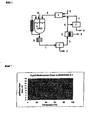
- the core of the work-up concept according to the invention is the crystallizer (Crystallizing container) C in combination with the pervaporation stage / vapor permeation stage D.
- the crystallization of the oxime in the process according to the invention is carried out by Cooling of the reactor discharge.
- crystallization can also be achieved by adding To complete further water, it should be noted that this further Work-up step D must be removed again.
- the crystallizer is usually at temperatures between -20 ° C and +40 ° C, advantageous operated between -10 ° C and +25 ° C.
- Suitable coolants are cooling water or cold brine Good.
- the lower limit of the temperature window results from the fact that no water in Crystaller freezes and that at incomplete conversion, the solubility to the starting material not fallen below.
- Figure 2 exemplifies the solubility of cyclododecanone oxime as a function of the temperature in a mixture of ethanol and water in proportion 9: 1 indicated.
- the crystallized oxime (stream 2) is separated as a solid.
- the with mother liquor wetted crystals can be washed with a little alcohol / water and dried. Recrystallization is possible in principle, but usually not required.
- cyclododecanone oxime was found to have a purity of> 99.9% by weight in the experiments. achieved.
- the proportion of unreacted cyclododecanone in the crystals is in total Usually ⁇ 0.01% by weight. This also applies to incomplete sales at the Ammoximation.
- the crystals (2) can, dissolved in suitable solvents, directly to Follow-up actions are used.
- a typical follow-up reaction is the Beckmann rearrangement from cyclododecanone oxime to laurolactam in concentrated sulfuric acid.
- the alcoholic-aqueous mother liquor (3) still contains in the process according to the invention between 0.01% by weight and 5% by weight of oxime, preferably 0.1% by weight to 2% by weight of oxime, and, depending on the turnover of the Ammoximation corresponding proportions of ketone. It also contains Remains of ammonia and hydrogen peroxide. Furthermore, according to DE 101 03 581 it can be optional also contain homogeneously dissolved ammonium ions. It is via a heat exchanger (not drawn) fed directly to a pervaporation or vapor permeation. This is done typically between 50 ° C and 180 ° C, advantageously between 80 ° C and 140 ° C below the respective vapor pressure of the solvent or a slight overpressure.
- solution 3 In pervaporation, solution 3 is passed directly past the membrane, using water diffused through the membrane. Are incomplete sales of high ketone content in Solution 3 drove, the flow through the membrane over time by deposition of the Ketone can be reduced to the membrane. The same phenomenon also occurs when solution Contains 3 ammonium ions. Surprisingly, this was an effective remedy by a slight Modification in the form of vapor permeation.
- Membranes are suitable both polymer membranes, for example based on polystyrene, Polyacrylate and polysiloxanes, as well as inorganic membranes, for example with zeolite or silica structures.
- the discharged partial stream (4) contains that amount of water that flows through the inlet (10) at aqueous hydrogen peroxide solution and ammonia, and the formed Reaction water in Ammoximationsreaktor A has arisen. Was in the crystallizer C water added, this must also be withdrawn.
- the percentage of alcohol, ammonia or other solvent components released by the Membrane diffuse (stream 4) is usually low. Oxime and ketone do not get or only in traces through the membrane. A distillative or other aftertreatment of this phase is usually not required.
- reaction water phase 5 The largely freed from the reaction water phase 5 can be in a mixer F with new Added ketone (8) and fed back into the reactor.
- the secondary components are discharged from the process in partial stream 6.
- the method is particularly suitable for the ammoximation of large and steric demanding alkanones and cycloalkanones having in particular 8 to 20 carbon atoms such as cyclooctanone, cyclodecanone, cyclododecanone, cyclopentadecanone and Acetophenone.
- a 1.6 L autoclave 73 g (400 mmol) of cyclododecanone (CDON) are dissolved in 535 g of about 96% ethanol.
- dry ammonia gas is passed into the reactor and a pressure of 1.6 bar set (about 14 g of ammonia).
- the reaction mixture is passed through a fixed bed with 200 g of shaped catalyst body (titanium silicalite TS-1 with 20% by weight of acidic aluminum oxide according to EP 100 47 435, Degussa AG) using a circulating pump at 600 ml / min.
- Example 1 The batch of Example 1 is repeated, it additionally 5.8 g (0.1 mol / L) of ammonium acetate according to EP 101 03 581 are dissolved homogeneously in the reaction mixture. There are 523 mmol of H 2 O 2 added within 180 minutes, the reaction mixture then stirred for 60 minutes. The CDON conversion is> 99.9% (GC analysis).
- the reaction mixture from Example 1 is discharged from the autoclave, unreacted Ammonia gas escapes when relaxing and can be condensed via a cold trap and into the process be traced back.
- the reaction mixture is cooled to 4 ° C and the Precipitated precipitate separated after 2 hours on a suction filter.
- the rainfall is washed with a little cold ethanol / water 9: 1. After drying at 60 ° C / 200 mbar 72.6 g of CDON oxime are obtained in a purity> 99.8%.
- the mother liquor (about 590 g) consists of aqueous ethanol in which about 3.4 g of CDON and About 2.6 g of oxime dissolved present. Registered and free during ammoximation become water, as well as the washing solution after the crystallization increases the water content in the ethanolic solution of about 4 wt .-% to about 11 wt .-% (about 62 g) of.
- Example 3 Analogously to Example 3, the reaction mixture from Example 2 is worked up. There are 76.4 g CDON oxime recovered with a purity> 99.8%.
- the mother liquor (about 580 g) consists of aqueous ethanol in which about 2.5 g of oxime and ⁇ 0.1 g of CDON are dissolved. Of the Water content is about 10 wt .-%. (about 58 g). In the mother liquor are 5.8 g Ammonium acetate dissolved.
- a sample of the mother liquor from Example 3 is conducted past a polymer membrane, type Sulzer Chemtech 2201, at 90 ° C. until the water content in the solution has dropped to approximately 4%.
- the water content in the permeate is more than 98%, the flow drops during the experiment with decreasing water content in the educt feed stream (feed) from 0.5 kg / m 2 * h to 0.2 kg / m 2 * h.
- Example 3 A sample of the mother liquor from Example 3 is passed in analogy to Example 5 at 120 ° C on a NaA zeolite membrane (Mitsui). The water content in the permeate is 96% and drops to 94% at the end of the experiment. During the experiment, the flow drops from 3.5 kg / m 2 * h to 2.6 kg / m 2 * h with decreasing water content in the educt feed stream (feed).
- Example 6 The experiment of Example 6 is repeated with a NaY membrane (Mitsui) at 80 ° C. The water content in the permeate is 78% and drops to 68% at the end of the experiment. During the experiment, the flow drops from 2.8 kg / m 2 * h to 1.7 kg / m 2 * h with decreasing water content in the educt feed stream (feed).
- Example 6 The experiment of Example 6 is repeated with an inorganic silica membrane (Sulzer Chemtech SMS) at 140 ° C.
- the water content in the permeate is 88% and drops to 70% at the end of the experiment.
- the flow drops from 10.1 kg / (m 2 * h) to 5.0 kg / (m 2 * h) with decreasing water content in the educt feed stream (feed).
- Example 4 An ammonium acetate-containing sample from Example 4 is partially evaporated, the vapor is passed over a droplet catcher, compressed and passed past an inorganic silica membrane (Sulzer Chemtech SMS). The water content in the permeate is 90% - 92%, the flow is 0.8 kg / m 2 * h.
Landscapes
- Chemical & Material Sciences (AREA)
- Organic Chemistry (AREA)
- Engineering & Computer Science (AREA)
- Water Supply & Treatment (AREA)
- Chemical Kinetics & Catalysis (AREA)
- Organic Low-Molecular-Weight Compounds And Preparation Thereof (AREA)
- Separation Using Semi-Permeable Membranes (AREA)
- Catalysts (AREA)
Description
Zusätzlich entsteht Wasser auch bei der unproduktiven Zersetzung von Wasserstoffperoxid und Hydroxylamin, formal dargestellt in den Nebenreaktionen (3) und (4) des folgenden am Beispiel des Cyclododecanons (CDON) formulierten Reaktionsschemas:
Enichem destilliert laut EP-A-0 496 385 zunächst ein ammoniakhaltiges Azeotrop der Lösemittel, tert.-Butanol und Wasser ab. Das Oxim und Alkanon werden anschließend in einem Extraktor mit Toluol aus dem Destillationssumpf heraus gewaschen.
Das jeweils eingesetzte Keton und sein korrespondierendes Oxim werden erstens mit zunehmender Molekülgröße bezüglich ihres Extraktionsverhaltens immer ähnlicher und lassen sich mit den verwendeten Extraktionsmitteln zwar gemeinsam aus der Reaktionsmischung entfernen, aber nicht oder nur noch unvollständig voneinander trennen. Ein ketonfreies Oxim lässt sich auf diesem Wege nur bei vollständigem Keton-Umsatz erzielen.
- der Katalysator nach der Reaktion abgetrennt,
- das Oxim selektiv aus der Reaktionsmischung isoliert,
- das Reaktionswasser vom Lösemittel energiesparend abgetrennt und
- das verbleibende Lösemittel in den Prozess zurückgeführt wird
Es kann sowohl kontinuierlich als auch diskontinuierlich gefahren werden.
Der Reaktoraustrag 1 besteht aus einer Lösung eines Keton-Oxims in einem polaren, mit Wasser teilweise oder vollständig mischbaren organischen Lösemittel. Bevorzugt werden als Lösemittel kurzkettige, mit Wasser ganz oder teilweise mischbare Alkohole mit 1 - 6 Kohlenstoffatomen wie zum Beispiel Methanol, Ethanol, n-Propanol, Isopropanol, tert.-Butanol und Amylalkohol verwendet. Wird ein pulverförmiger Katalysator zur Ammoximation verwendet, so kann dieser über ein Filter B abgetrennt werden. Als Filter können alle bekannten Filtertypen wie beispielsweise eine Drucknutsche oder eine Filterzentrifuge verwendet werden.
Die Ammoximation des Ketons im Reaktor A kann sowohl vollständig als auch nur teilweise erfolgen, wobei der Reaktor A in der Zeichnung sowohl einen einstufigen Reaktor als auch ein Verfahren mit mehreren Reaktoren, die in Reihe oder parallel miteinander verschaltet sind, beschreiben soll.
Typische Bedingungen für den Reaktoraustrag bei zum Beispiel Cyclododecanon-Oxim sind Temperaturen von 60 °C- 90 °C und Oximkonzentrationen zwischen 5 Gew.-% und 25 Gew.%, wobei die Reaktion vorteilhaft nahe unterhalb der Löslichkeitsgrenze des Oxims gefahren wird, um die Lösemittelmenge zu begrenzen. Der Wasseranteil im Reaktoraustrag beträgt typischerweise 5 Gew.-% - 15 Gew.-%, kann aber auch höher liegen.
Claims (16)
- Verfahren zur Aufarbeitung eines Reaktionsgemisches, welches durch Ammoximation eines Ketons mit Wasserstoffperoxid und Ammoniak an einem titanhaltigen Katalysator in homogener Lösung gebildet wird, mit den Teilschritten
Abtrennung des Katalysators,
selektive Abtrennung des bei der Ammoximation gebildeten Oxims,
Ausschleusung von Reaktionswasser und
Rückführung des Lösemittels,
dadurch gekennzeichnet, dass zumindest ein Teil des in der Mutterlauge enthaltenen Wassers in einer Membrantrennstufe abgetrennt und aus dem Reaktionskreislauf ausgeschleust wird. - Verfahren nach Anspruch 1,
dadurch gekennzeichnet, dass als Lösemittel der Ammoximation eine mit Wasser gut oder vollständig mischbare polare, organische Flüssigkeit verwendet wird. - Verfahren nach einem der vorhergehenden Ansprüche,
dadurch gekennzeichnet, dass als Lösemittel der Ammoximation ein kurzkettiger Alkohol aus der Gruppe, die durch Methanol, Ethanol, n-Propanol, Isopropanol, tert.-Butanol und Amylalkohol gebildet wird, ausgewählt wird. - Verfahren nach einem der vorhergehenden Ansprüche,
dadurch gekennzeichnet, dass das Produkt durch eine Kristallisation selektiv aus dem Prozess abgetrennt wird und das Wasser aus der Mutterlauge durch Pervaporation abgetrennt wird. - Verfahren nach einem der Ansprüche 1 bis 3,
dadurch gekennzeichnet, dass das Produkt zunächst durch eine Kristallisation aus dem Prozess abgetrennt wird und das Wasser aus der Mutterlauge durch Dampfpermeation abgetrennt wird. - Verfahren nach einem der vorgehenden Ansprüche,
dadurch gekennzeichnet, dass der Anteil an Wasser in der Mutterlauge mittles einer Membrantrennstufe auf etwa 5 Gew. % reduziert wird. - Verfahren nach einem der Ansprüche 1 bis 5,
dadurch gekennzeichnet, dass der Anteil an Wasser in der Mutterlauge mittles einer Membrantrennstufe auf unter 5 Gew. %, insbesondere unter 1 Gew. % reduziert wird. - Verfahren nach einem der vorgehenden Ansprüche,
dadurch gekennzeichnet, dass das polare organische Lösemittel aus der Mutterlauge in den Ammoximationsreaktor zurückgefahren wird. - Verfahren nach einem der vorhergehenden Ansprüche,
dadurch gekennzeichnet, dass als Membran eine Polymermembran verwendet wird. - Verfahren nach Anspruch 9,
dadurch gekennzeichnet, dass die Polymermembran aus der Gruppe, die durch Polystyrol, Polyacrylate und Polysiloxane gebildet wird, ausgewählt wird. - Verfahren nach einem der Ansprüche 1 bis 8,
dadurch gekennzeichnet, dass die Membran aus anorganischem Material besteht. - Verfahren nach Anspruch 11,
dadurch gekennzeichnet, dass die Membran eine Zeolith- oder Silica-Struktur aufweist. - Verfahren nach einem der vorgehenden Ansprüchen,
dadurch gekennzeichnet, dass der Kristaller bei Temperaturen zwischen -20 °C und +40 °C betrieben wird. - Verfahren nach einem der vorgehenden Ansprüche,
dadurch gekennzeichnet, dass die Pervaporation oder Dampfpermeation bei 50 °C bis 180°C erfolgt. - Verfahren nach einem der vorgehenden Ansprüche,
dadurch gekennzeichnet, dass die Pervaporation oder Dampfpermeation bei 80 °C bis 140 °C erfolgt - Verfahren nach einem der vorhergehenden Ansprüche,
dadurch gekennzeichnet, dass das Keton aus der Gruppe, die durch Cyclooctanon, Cyclodecanon, Cyclododecanon, Cyclopentadecanon und Acetophenon gebildet wird, ausgewählt wird.
Applications Claiming Priority (2)
| Application Number | Priority Date | Filing Date | Title |
|---|---|---|---|
| DE10142620 | 2001-08-31 | ||
| DE10142620A DE10142620A1 (de) | 2001-08-31 | 2001-08-31 | Ammoximation von Ketonen und Aufarbeitung durch Pervaporation/Dampfpermeation |
Publications (3)
| Publication Number | Publication Date |
|---|---|
| EP1288193A2 EP1288193A2 (de) | 2003-03-05 |
| EP1288193A3 EP1288193A3 (de) | 2003-05-21 |
| EP1288193B1 true EP1288193B1 (de) | 2005-09-14 |
Family
ID=7697200
Family Applications (1)
| Application Number | Title | Priority Date | Filing Date |
|---|---|---|---|
| EP02015476A Expired - Lifetime EP1288193B1 (de) | 2001-08-31 | 2002-07-12 | Ammoximation von Ketonen und Aufarbeitung durch Pervaporation/Dampfpermeation |
Country Status (6)
| Country | Link |
|---|---|
| US (1) | US6639108B2 (de) |
| EP (1) | EP1288193B1 (de) |
| JP (1) | JP4270823B2 (de) |
| CN (1) | CN1406929A (de) |
| AT (1) | ATE304524T1 (de) |
| DE (2) | DE10142620A1 (de) |
Families Citing this family (35)
| Publication number | Priority date | Publication date | Assignee | Title |
|---|---|---|---|---|
| DE10161038A1 (de) * | 2001-12-12 | 2003-06-26 | Degussa | pH-Wert geregeltes Polyamidpulver für Kosmetikanwendungen |
| US7022844B2 (en) | 2002-09-21 | 2006-04-04 | Honeywell International Inc. | Amide-based compounds, production, recovery, purification and uses thereof |
| DE10248406A1 (de) * | 2002-10-17 | 2004-04-29 | Degussa Ag | Laser-Sinter-Pulver mit Titandioxidpartikeln, Verfahren zu dessen Herstellung und Formkörper, hergestellt aus diesem Laser-Sinterpulver |
| DE10251790A1 (de) | 2002-11-07 | 2004-05-19 | Degussa Ag | Polyamidpulver mit dauerhafter, gleichbleibend guter Rieselfähigkeit |
| DE10260717A1 (de) * | 2002-12-23 | 2004-07-01 | Degussa Ag | Verfahren zur Herstellung von Oximen |
| DE10344469A1 (de) * | 2003-09-25 | 2005-04-14 | Degussa Ag | Coammoximierung von Ketonen |
| JP4552435B2 (ja) * | 2003-12-22 | 2010-09-29 | 住友化学株式会社 | オキシムの製造方法 |
| DE102004054477A1 (de) | 2004-11-11 | 2006-05-24 | Degussa Ag | Verfahren zur Herstellung von Trimethylcyclododecatrien |
| DE202004018390U1 (de) * | 2004-11-27 | 2005-02-17 | Degussa Ag | Thermoplastische Kunststoffpulverformulierung für Beschichtungen mit einem metallischen, insbesondere edelstahlähnlichen Farbeindruck |
| DE102004062761A1 (de) * | 2004-12-21 | 2006-06-22 | Degussa Ag | Verwendung von Polyarylenetherketonpulver in einem dreidimensionalen pulverbasierenden werkzeuglosen Herstellverfahren, sowie daraus hergestellte Formteile |
| JP4577025B2 (ja) * | 2005-01-27 | 2010-11-10 | 住友化学株式会社 | シクロアルカノンオキシムの製造方法 |
| DE102005033379A1 (de) | 2005-07-16 | 2007-01-18 | Degussa Ag | Verwendung von cyclischen Oligomeren in einem formgebenden Verfahren und Formkörper, hergestellt nach diesem Verfahren |
| DE102006058190A1 (de) * | 2006-04-28 | 2007-10-31 | Degussa Gmbh | Verfahren zur Herstellung von Amiden aus Ketoximen |
| DE102006022014A1 (de) | 2006-05-10 | 2007-11-15 | Degussa Gmbh | Verfahren zur Herstellung von Cyclododecatrien |
| DE102006025821A1 (de) | 2006-06-02 | 2007-12-06 | Degussa Gmbh | Ein Enzym zur Herstellung von Mehylmalonatsemialdehyd oder Malonatsemialdehyd |
| CN101100293B (zh) * | 2007-06-08 | 2010-05-26 | 北京化工大学 | 肟水解反应与渗透汽化膜分离耦合技术一步法制备羟胺盐 |
| DE102008044946B4 (de) * | 2008-08-29 | 2022-06-15 | Evonik Superabsorber Gmbh | Einsatz von Schaumkörpern in Oxidations-Reaktoren zur Herstellung ungesättigter Carbonsäuren |
| DE102008041870A1 (de) * | 2008-09-08 | 2010-03-11 | Evonik Degussa Gmbh | Reaktor mit Titansilikat-Rezyklierung |
| DE102008060888A1 (de) | 2008-12-09 | 2010-06-10 | Evonik Stockhausen Gmbh | Verfahren zur Herstellung von Acrolein umfassend die Aufarbeitung einer Rohglycerin-Phase |
| DE102010015807A1 (de) | 2010-04-20 | 2011-10-20 | Evonik Degussa Gmbh | Biokatalytisches Oxidationsverfahren mit alkL-Genprodukt |
| CN101955286A (zh) * | 2010-09-16 | 2011-01-26 | 谷水(北京)环境工程技术有限公司 | 一种浓盐水的脱盐处理工艺 |
| UA112980C2 (uk) | 2011-02-16 | 2016-11-25 | Евонік Дегусса Гмбх | Рідкі катіоніти |
| BR112014000947A2 (pt) | 2011-07-20 | 2017-06-13 | Evonik Degussa Gmbh | oxidação e aminação de álcoois primários |
| EP2602328A1 (de) | 2011-12-05 | 2013-06-12 | Evonik Industries AG | Verfahren zur Oxidation von Alkanen unter Verwendung einer AlkB Alkan 1-Monooxygenase |
| EP2607479A1 (de) | 2011-12-22 | 2013-06-26 | Evonik Industries AG | Biotechnologische Herstellung von Alkoholen und Derivaten davon |
| EP2607490A1 (de) | 2011-12-22 | 2013-06-26 | Evonik Industries AG | Verfahren zur verbesserten Abtrennung einer hydrophoben organischen Lösung von einem wässrigen Kulturmedium |
| EP2631298A1 (de) | 2012-02-22 | 2013-08-28 | Evonik Industries AG | Biotechnologisches Verfahren zur Herstellung von Butanol und Buttersäure |
| EP2639308A1 (de) | 2012-03-12 | 2013-09-18 | Evonik Industries AG | Enzymatische omega-Oxidation und -Aminierung von Fettsäuren |
| KR102027475B1 (ko) * | 2012-03-28 | 2019-10-01 | 라시크 아이엔씨. | 다성분 용액으로부터의 공정 가스의 전달 방법 |
| EP2700448A1 (de) | 2012-08-21 | 2014-02-26 | Evonik Industries AG | Verzweigte Fettsäuren als flüssige Kationenaustauscher |
| EP2730655A1 (de) | 2012-11-12 | 2014-05-14 | Evonik Industries AG | Verfahren zur Umsetzung eines Carbonsäureesters unter Verwendung BioH-defizienter Zellen |
| EP2746400A1 (de) | 2012-12-21 | 2014-06-25 | Evonik Industries AG | Herstellung von Aminen und Diaminen aus einer Carbonsäure oder Dicarbonsäure oder eines Monoesters davon |
| EP2746397A1 (de) | 2012-12-21 | 2014-06-25 | Evonik Industries AG | Herstellung von Omega-Aminofettsäuren |
| SG11201609469XA (en) | 2014-05-13 | 2016-12-29 | Rasirc Inc | Methods and systems for delivering process gases to critical process applications |
| US10150048B2 (en) | 2014-10-23 | 2018-12-11 | Rasirc, Inc. | Method, system, and device for delivery of process gas |
Family Cites Families (11)
| Publication number | Priority date | Publication date | Assignee | Title |
|---|---|---|---|---|
| IT1214622B (it) | 1985-07-10 | 1990-01-18 | Montedipe Spa | Processo catalitico per laproduzione di cicloesanonossima. |
| JPH0610181B2 (ja) | 1986-11-14 | 1994-02-09 | モンテデイペ・ソチエタ・ペル・アツイオニ | オキシム製造のための接触方法 |
| IT1222022B (it) | 1987-07-14 | 1990-08-31 | Montedipe Spa | Metodo per la preparazione di un catalizzatore per l' ammossimazione di composti carbonilici |
| IT1244680B (it) | 1991-01-23 | 1994-08-08 | Montedipe Srl | Processo a piu' stadi per l'ammossimazione in fase liquida dei composti carbonilici |
| IT1255745B (it) | 1992-04-01 | 1995-11-15 | Enichem Anic Srl | Processo in due stadi per la produzione in fase liquida di ossime |
| DE4419195A1 (de) | 1993-07-12 | 1995-01-19 | Degussa | Strukturierter Katalysator, bestehend aus mikroporösen Oxiden von Silicium, Aluminium und Titan |
| US5451701A (en) * | 1994-03-11 | 1995-09-19 | Arco Chemical Technology, L.P. | Integrated process for cyclohexanone oxime production |
| IT1270196B (it) | 1994-06-09 | 1997-04-29 | Enichem Spa | Procedimento catalitico per la produzione di ossime |
| US5599987A (en) | 1995-03-31 | 1997-02-04 | Arco Chemical Technology, L.P. | Integrated process for cyclohexanone oxime production |
| DE10047435A1 (de) | 2000-09-26 | 2002-04-11 | Degussa | Verfahren zur Herstellung von Oximen |
| DE10103581A1 (de) | 2001-01-26 | 2002-08-01 | Degussa | Durch Ammoniumsalze oder substituierte Ammoniumsalze cokatalysiertes Verfahren zur Herstellung von Oximen |
-
2001
- 2001-08-31 DE DE10142620A patent/DE10142620A1/de not_active Withdrawn
-
2002
- 2002-07-12 EP EP02015476A patent/EP1288193B1/de not_active Expired - Lifetime
- 2002-07-12 DE DE50204237T patent/DE50204237D1/de not_active Expired - Lifetime
- 2002-07-12 AT AT02015476T patent/ATE304524T1/de not_active IP Right Cessation
- 2002-08-28 JP JP2002249051A patent/JP4270823B2/ja not_active Expired - Fee Related
- 2002-08-30 CN CN02132117A patent/CN1406929A/zh active Pending
- 2002-09-03 US US10/232,371 patent/US6639108B2/en not_active Expired - Fee Related
Also Published As
| Publication number | Publication date |
|---|---|
| US20030105356A1 (en) | 2003-06-05 |
| DE10142620A1 (de) | 2003-03-20 |
| US6639108B2 (en) | 2003-10-28 |
| CN1406929A (zh) | 2003-04-02 |
| EP1288193A3 (de) | 2003-05-21 |
| DE50204237D1 (de) | 2005-10-20 |
| ATE304524T1 (de) | 2005-09-15 |
| JP4270823B2 (ja) | 2009-06-03 |
| EP1288193A2 (de) | 2003-03-05 |
| JP2003176259A (ja) | 2003-06-24 |
Similar Documents
| Publication | Publication Date | Title |
|---|---|---|
| EP1288193A2 (de) | Ammoximation von Ketonen und Aufarbeitung durch Pervaporation/Dampfpermeation | |
| EP1288194B1 (de) | Aufarbeitung der Ammoximationsprodukte von Ketonen durch Flüssig-Flüssig-Extraktion in einem ternären Lösemittelsystem | |
| EP1663955B1 (de) | Coammoximierung von ketonen | |
| DE102017000989A1 (de) | Verfahren zur Herstellung von Cyclododecanon | |
| EP1433777B1 (de) | Verfahren zur Herstellung von Oximen | |
| EP1357102A1 (de) | Verfahren zur Herstellung von Acetalen und Ketalen mit Hilfe mehrstufiger Pervaporation oder Dampfpermeation | |
| DE69801154T2 (de) | Verfahren zur herstellung von caprolactam in abwesenheit von katalysatoren durch kontakt von 6-aminocapronsäurederivaten mit überhitztem dampf | |
| EP3374353B1 (de) | Verfahren zur reaktivierung eines homogenen oxidationskatalysators | |
| EP2980069A1 (de) | Verfahren zur Herstellung von Cyclododecanon | |
| EP0636620B1 (de) | Verfahren zur Gewinnung von gereinigtem Ethylenglykolcarbonat (EGC) | |
| DE69717976T2 (de) | Gewinnung von epsilon-caprolactam aus wässrigen gemischen | |
| DE1238000B (de) | Verfahren zur kontinuierlichen Herstellung von gesättigten aliphatischen Dicarbonsäuren | |
| CN104262223A (zh) | 用于制备己内酰胺的连续方法 | |
| EP1280767A1 (de) | Verfahren zur herstellung von caprolactam aus 6-aminocapronitril und nachträgliche reinigung durch kristallisation | |
| CN100369895C (zh) | ε-己内酰胺的制造方法 | |
| RU2661867C2 (ru) | Непрерывный способ получения очищенного циклогексанона | |
| US3197505A (en) | Process for the preparation of cyclohexanoneoxime from the oxidation products of cyclohexane | |
| EP0064180B1 (de) | Verfahren zur Herstellung von 2,3-Dimethylbutan-2,3-diol | |
| DE10002469A1 (de) | Verfahren zur Herstellung von tertiären Alkyl-alkenyl-ethern | |
| CN103910617B (zh) | 利用温和的水性传热介质作为冷冻剂提纯环己酮的连续方法 | |
| DE1298977B (de) | Verfahren zur Gewinnung von Adipinsaeure | |
| DE1620484B2 (de) | Verfahren zur herstellung von omega-laurinolactam | |
| DE2260114B2 (de) | Verfahren zur oxidation von kohlenwasserstoffen zu alkoholen und ketonen |
Legal Events
| Date | Code | Title | Description |
|---|---|---|---|
| PUAI | Public reference made under article 153(3) epc to a published international application that has entered the european phase |
Free format text: ORIGINAL CODE: 0009012 |
|
| 17P | Request for examination filed |
Effective date: 20020803 |
|
| AK | Designated contracting states |
Kind code of ref document: A2 Designated state(s): AT BE BG CH CY CZ DE DK EE ES FI FR GB GR IE IT LI LU MC NL PT SE SK TR |
|
| AX | Request for extension of the european patent |
Extension state: AL LT LV MK RO SI |
|
| PUAL | Search report despatched |
Free format text: ORIGINAL CODE: 0009013 |
|
| RIC1 | Information provided on ipc code assigned before grant |
Ipc: 7B 01D 61/36 B Ipc: 7C 07C 249/14 B Ipc: 7C 07C 251/44 B Ipc: 7C 07C 249/08 A Ipc: 7C 07C 251/40 B Ipc: 7C 07C 251/32 B |
|
| AK | Designated contracting states |
Designated state(s): AT BE BG CH CY CZ DE DK EE ES FI FR GB GR IE IT LI LU MC NL PT SE SK TR |
|
| AX | Request for extension of the european patent |
Extension state: AL LT LV MK RO SI |
|
| AKX | Designation fees paid |
Designated state(s): AT BE BG CH CY CZ DE DK EE ES FI FR GB GR IE IT LI LU MC NL PT SE SK TR |
|
| 17Q | First examination report despatched |
Effective date: 20040114 |
|
| GRAJ | Information related to disapproval of communication of intention to grant by the applicant or resumption of examination proceedings by the epo deleted |
Free format text: ORIGINAL CODE: EPIDOSDIGR1 |
|
| GRAP | Despatch of communication of intention to grant a patent |
Free format text: ORIGINAL CODE: EPIDOSNIGR1 |
|
| GRAP | Despatch of communication of intention to grant a patent |
Free format text: ORIGINAL CODE: EPIDOSNIGR1 |
|
| GRAS | Grant fee paid |
Free format text: ORIGINAL CODE: EPIDOSNIGR3 |
|
| GRAA | (expected) grant |
Free format text: ORIGINAL CODE: 0009210 |
|
| AK | Designated contracting states |
Kind code of ref document: B1 Designated state(s): AT BE BG CH CY CZ DE DK EE ES FI FR GB GR IE IT LI LU MC NL PT SE SK TR |
|
| PG25 | Lapsed in a contracting state [announced via postgrant information from national office to epo] |
Ref country code: IT Free format text: LAPSE BECAUSE OF FAILURE TO SUBMIT A TRANSLATION OF THE DESCRIPTION OR TO PAY THE FEE WITHIN THE PRESCRIBED TIME-LIMIT;WARNING: LAPSES OF ITALIAN PATENTS WITH EFFECTIVE DATE BEFORE 2007 MAY HAVE OCCURRED AT ANY TIME BEFORE 2007. THE CORRECT EFFECTIVE DATE MAY BE DIFFERENT FROM THE ONE RECORDED. Effective date: 20050914 Ref country code: CZ Free format text: LAPSE BECAUSE OF FAILURE TO SUBMIT A TRANSLATION OF THE DESCRIPTION OR TO PAY THE FEE WITHIN THE PRESCRIBED TIME-LIMIT Effective date: 20050914 Ref country code: GB Free format text: LAPSE BECAUSE OF FAILURE TO SUBMIT A TRANSLATION OF THE DESCRIPTION OR TO PAY THE FEE WITHIN THE PRESCRIBED TIME-LIMIT Effective date: 20050914 Ref country code: IE Free format text: LAPSE BECAUSE OF FAILURE TO SUBMIT A TRANSLATION OF THE DESCRIPTION OR TO PAY THE FEE WITHIN THE PRESCRIBED TIME-LIMIT Effective date: 20050914 Ref country code: FI Free format text: LAPSE BECAUSE OF FAILURE TO SUBMIT A TRANSLATION OF THE DESCRIPTION OR TO PAY THE FEE WITHIN THE PRESCRIBED TIME-LIMIT Effective date: 20050914 Ref country code: SK Free format text: LAPSE BECAUSE OF FAILURE TO SUBMIT A TRANSLATION OF THE DESCRIPTION OR TO PAY THE FEE WITHIN THE PRESCRIBED TIME-LIMIT Effective date: 20050914 Ref country code: NL Free format text: LAPSE BECAUSE OF FAILURE TO SUBMIT A TRANSLATION OF THE DESCRIPTION OR TO PAY THE FEE WITHIN THE PRESCRIBED TIME-LIMIT Effective date: 20050914 |
|
| REG | Reference to a national code |
Ref country code: GB Ref legal event code: FG4D Free format text: NOT ENGLISH |
|
| REG | Reference to a national code |
Ref country code: CH Ref legal event code: NV Representative=s name: SCHMAUDER & PARTNER AG PATENTANWALTSBUERO Ref country code: CH Ref legal event code: EP |
|
| REG | Reference to a national code |
Ref country code: IE Ref legal event code: FG4D Free format text: LANGUAGE OF EP DOCUMENT: GERMAN |
|
| REF | Corresponds to: |
Ref document number: 50204237 Country of ref document: DE Date of ref document: 20051020 Kind code of ref document: P |
|
| PG25 | Lapsed in a contracting state [announced via postgrant information from national office to epo] |
Ref country code: GR Free format text: LAPSE BECAUSE OF FAILURE TO SUBMIT A TRANSLATION OF THE DESCRIPTION OR TO PAY THE FEE WITHIN THE PRESCRIBED TIME-LIMIT Effective date: 20051214 Ref country code: DK Free format text: LAPSE BECAUSE OF FAILURE TO SUBMIT A TRANSLATION OF THE DESCRIPTION OR TO PAY THE FEE WITHIN THE PRESCRIBED TIME-LIMIT Effective date: 20051214 Ref country code: BG Free format text: LAPSE BECAUSE OF FAILURE TO SUBMIT A TRANSLATION OF THE DESCRIPTION OR TO PAY THE FEE WITHIN THE PRESCRIBED TIME-LIMIT Effective date: 20051214 Ref country code: SE Free format text: LAPSE BECAUSE OF FAILURE TO SUBMIT A TRANSLATION OF THE DESCRIPTION OR TO PAY THE FEE WITHIN THE PRESCRIBED TIME-LIMIT Effective date: 20051214 |
|
| PG25 | Lapsed in a contracting state [announced via postgrant information from national office to epo] |
Ref country code: ES Free format text: LAPSE BECAUSE OF FAILURE TO SUBMIT A TRANSLATION OF THE DESCRIPTION OR TO PAY THE FEE WITHIN THE PRESCRIBED TIME-LIMIT Effective date: 20051225 |
|
| PG25 | Lapsed in a contracting state [announced via postgrant information from national office to epo] |
Ref country code: PT Free format text: LAPSE BECAUSE OF FAILURE TO SUBMIT A TRANSLATION OF THE DESCRIPTION OR TO PAY THE FEE WITHIN THE PRESCRIBED TIME-LIMIT Effective date: 20060214 |
|
| NLV1 | Nl: lapsed or annulled due to failure to fulfill the requirements of art. 29p and 29m of the patents act | ||
| GBV | Gb: ep patent (uk) treated as always having been void in accordance with gb section 77(7)/1977 [no translation filed] |
Effective date: 20050914 |
|
| ET | Fr: translation filed | ||
| REG | Reference to a national code |
Ref country code: IE Ref legal event code: FD4D |
|
| PLBE | No opposition filed within time limit |
Free format text: ORIGINAL CODE: 0009261 |
|
| STAA | Information on the status of an ep patent application or granted ep patent |
Free format text: STATUS: NO OPPOSITION FILED WITHIN TIME LIMIT |
|
| PG25 | Lapsed in a contracting state [announced via postgrant information from national office to epo] |
Ref country code: MC Free format text: LAPSE BECAUSE OF NON-PAYMENT OF DUE FEES Effective date: 20060731 Ref country code: BE Free format text: LAPSE BECAUSE OF NON-PAYMENT OF DUE FEES Effective date: 20060731 |
|
| 26N | No opposition filed |
Effective date: 20060615 |
|
| PG25 | Lapsed in a contracting state [announced via postgrant information from national office to epo] |
Ref country code: AT Free format text: LAPSE BECAUSE OF NON-PAYMENT OF DUE FEES Effective date: 20060712 |
|
| BERE | Be: lapsed |
Owner name: DEGUSSA A.G. Effective date: 20060731 |
|
| PG25 | Lapsed in a contracting state [announced via postgrant information from national office to epo] |
Ref country code: EE Free format text: LAPSE BECAUSE OF FAILURE TO SUBMIT A TRANSLATION OF THE DESCRIPTION OR TO PAY THE FEE WITHIN THE PRESCRIBED TIME-LIMIT Effective date: 20050914 |
|
| PG25 | Lapsed in a contracting state [announced via postgrant information from national office to epo] |
Ref country code: TR Free format text: LAPSE BECAUSE OF FAILURE TO SUBMIT A TRANSLATION OF THE DESCRIPTION OR TO PAY THE FEE WITHIN THE PRESCRIBED TIME-LIMIT Effective date: 20050914 Ref country code: LU Free format text: LAPSE BECAUSE OF NON-PAYMENT OF DUE FEES Effective date: 20060712 |
|
| PG25 | Lapsed in a contracting state [announced via postgrant information from national office to epo] |
Ref country code: CY Free format text: LAPSE BECAUSE OF FAILURE TO SUBMIT A TRANSLATION OF THE DESCRIPTION OR TO PAY THE FEE WITHIN THE PRESCRIBED TIME-LIMIT Effective date: 20050914 |
|
| REG | Reference to a national code |
Ref country code: CH Ref legal event code: PCAR Free format text: SCHMAUDER & PARTNER AG PATENT- UND MARKENANWAELTE VSP;ZWAENGIWEG 7;8038 ZUERICH (CH) |
|
| REG | Reference to a national code |
Ref country code: CH Ref legal event code: PFA Owner name: EVONIK DEGUSSA GMBH Free format text: DEGUSSA AG#BENNIGSENPLATZ 1#40474 DUESSELDORF (DE) -TRANSFER TO- EVONIK DEGUSSA GMBH#RELLINGHAUSER STRASSE 1-11#45128 ESSEN (DE) |
|
| REG | Reference to a national code |
Ref country code: FR Ref legal event code: CJ Ref country code: FR Ref legal event code: CD Ref country code: FR Ref legal event code: CA |
|
| PGFP | Annual fee paid to national office [announced via postgrant information from national office to epo] |
Ref country code: CH Payment date: 20140721 Year of fee payment: 13 Ref country code: DE Payment date: 20140721 Year of fee payment: 13 |
|
| PGFP | Annual fee paid to national office [announced via postgrant information from national office to epo] |
Ref country code: FR Payment date: 20140721 Year of fee payment: 13 |
|
| REG | Reference to a national code |
Ref country code: DE Ref legal event code: R119 Ref document number: 50204237 Country of ref document: DE |
|
| REG | Reference to a national code |
Ref country code: CH Ref legal event code: PL |
|
| PG25 | Lapsed in a contracting state [announced via postgrant information from national office to epo] |
Ref country code: DE Free format text: LAPSE BECAUSE OF NON-PAYMENT OF DUE FEES Effective date: 20160202 Ref country code: LI Free format text: LAPSE BECAUSE OF NON-PAYMENT OF DUE FEES Effective date: 20150731 Ref country code: CH Free format text: LAPSE BECAUSE OF NON-PAYMENT OF DUE FEES Effective date: 20150731 |
|
| REG | Reference to a national code |
Ref country code: FR Ref legal event code: ST Effective date: 20160331 |
|
| PG25 | Lapsed in a contracting state [announced via postgrant information from national office to epo] |
Ref country code: FR Free format text: LAPSE BECAUSE OF NON-PAYMENT OF DUE FEES Effective date: 20150731 |