EP1276770B1 - Proteine mit hoher immunreaktivität sowie ein verfahren zu ihrer herstellung - Google Patents
Proteine mit hoher immunreaktivität sowie ein verfahren zu ihrer herstellung Download PDFInfo
- Publication number
- EP1276770B1 EP1276770B1 EP01931566A EP01931566A EP1276770B1 EP 1276770 B1 EP1276770 B1 EP 1276770B1 EP 01931566 A EP01931566 A EP 01931566A EP 01931566 A EP01931566 A EP 01931566A EP 1276770 B1 EP1276770 B1 EP 1276770B1
- Authority
- EP
- European Patent Office
- Prior art keywords
- immunoreactive
- protein
- mab
- immunoreactivity
- molecules
- Prior art date
- Legal status (The legal status is an assumption and is not a legal conclusion. Google has not performed a legal analysis and makes no representation as to the accuracy of the status listed.)
- Expired - Lifetime
Links
Images



Classifications
-
- A—HUMAN NECESSITIES
- A61—MEDICAL OR VETERINARY SCIENCE; HYGIENE
- A61K—PREPARATIONS FOR MEDICAL, DENTAL OR TOILETRY PURPOSES
- A61K51/00—Preparations containing radioactive substances for use in therapy or testing in vivo
- A61K51/02—Preparations containing radioactive substances for use in therapy or testing in vivo characterised by the carrier, i.e. characterised by the agent or material covalently linked or complexing the radioactive nucleus
- A61K51/04—Organic compounds
- A61K51/08—Peptides, e.g. proteins, carriers being peptides, polyamino acids, proteins
- A61K51/10—Antibodies or immunoglobulins; Fragments thereof, the carrier being an antibody, an immunoglobulin or a fragment thereof, e.g. a camelised human single domain antibody or the Fc fragment of an antibody
-
- A—HUMAN NECESSITIES
- A61—MEDICAL OR VETERINARY SCIENCE; HYGIENE
- A61P—SPECIFIC THERAPEUTIC ACTIVITY OF CHEMICAL COMPOUNDS OR MEDICINAL PREPARATIONS
- A61P35/00—Antineoplastic agents
- A61P35/02—Antineoplastic agents specific for leukemia
-
- A—HUMAN NECESSITIES
- A61—MEDICAL OR VETERINARY SCIENCE; HYGIENE
- A61P—SPECIFIC THERAPEUTIC ACTIVITY OF CHEMICAL COMPOUNDS OR MEDICINAL PREPARATIONS
- A61P35/00—Antineoplastic agents
- A61P35/04—Antineoplastic agents specific for metastasis
-
- A—HUMAN NECESSITIES
- A61—MEDICAL OR VETERINARY SCIENCE; HYGIENE
- A61P—SPECIFIC THERAPEUTIC ACTIVITY OF CHEMICAL COMPOUNDS OR MEDICINAL PREPARATIONS
- A61P43/00—Drugs for specific purposes, not provided for in groups A61P1/00-A61P41/00
-
- A—HUMAN NECESSITIES
- A61—MEDICAL OR VETERINARY SCIENCE; HYGIENE
- A61P—SPECIFIC THERAPEUTIC ACTIVITY OF CHEMICAL COMPOUNDS OR MEDICINAL PREPARATIONS
- A61P7/00—Drugs for disorders of the blood or the extracellular fluid
-
- C—CHEMISTRY; METALLURGY
- C07—ORGANIC CHEMISTRY
- C07K—PEPTIDES
- C07K16/00—Immunoglobulins [IGs], e.g. monoclonal or polyclonal antibodies
-
- A—HUMAN NECESSITIES
- A61—MEDICAL OR VETERINARY SCIENCE; HYGIENE
- A61K—PREPARATIONS FOR MEDICAL, DENTAL OR TOILETRY PURPOSES
- A61K39/00—Medicinal preparations containing antigens or antibodies
- A61K2039/505—Medicinal preparations containing antigens or antibodies comprising antibodies
-
- C—CHEMISTRY; METALLURGY
- C07—ORGANIC CHEMISTRY
- C07K—PEPTIDES
- C07K2319/00—Fusion polypeptide
Definitions
- the invention relates to preparations of immunoreactive proteins, preferably in purified form, which have a high proportion of immunoreactive molecules with respect to the total number of molecules. These proteins are obtainable by fermentation of a host cell expressing the immunoreactive protein in a fluidized bed reactor and recovering the protein from the host cell or the medium used for culturing.
- the protein preparations according to the invention are outstandingly suitable for the production of diagnostic and therapeutic compositions.
- Diagnostic and therapeutic proteins can be found in both prokaryotic (eg E. coli Houston et al., U.S. Patent 5,132,405 )) as well as in eukaryotic cell systems (eg Pichia pastoris, baby hamster kidney (BHK) cells, Chinese hamster ovary (CHO) cells, hybridomas, transgenic animals and plants ( Meade et al., U.S. Patent 4,873,316 )) and purified by means of protein-chemical methods.
- prokaryotic eg E. coli Houston et al., U.S. Patent 5,132,405
- eukaryotic cell systems eg Pichia pastoris, baby hamster kidney (BHK) cells, Chinese hamster ovary (CHO) cells, hybridomas, transgenic animals and plants ( Meade et al., U.S. Patent 4,873,316 )
- eukaryotic cell systems eg Pichia pastoris, baby hamster kidney (BHK) cells
- Prokaryotic cell systems allow low-cost production of smaller, carbohydrate-free proteins due to the undemanding nutrient media and the rapid growth of microorganisms in less demanding fermentation systems.
- the percentage of functionally active (glyco) proteins in the purified preparation is a significant factor determining the quality of the product, which can also be influenced by cell culture medium, fermentation conditions and purification processes.
- radiolabeled molecules eg MAb with physiologically intact V region
- Lindmo et al. immunological Methods 72 (1984), 77
- This method makes it possible to quantitatively determine the proportion of immunoreactive and binding radiolabeled MAbs after protein-chemical purification.
- Other binding assays such as those of Seitz et al. (European Journal of Nuclear Medicine 26 (1999), 1265 ) described in the immunoreactivities of up to 100%, allow only a relative determination of the immunoreactive portion of radiolabelled MAb compared to the unlabeled standard and are therefore not suitable for the determination of the absolute immunoreactive fraction.
- the percentage of functionally active MAb molecules in conventional fermentation processes such as stirred fermenters and hollow fiber modules, and produced by classical protein chemical methods, in addition to protein A columns also ion exchange columns and in many cases also gel chromatographic columns containing purified preparations in the range of 40 to 80% when the Lindmo test is used ( Mattes, MJ, Int. J. Cancer: 61 (1995), 286-288 ; Jagoda et al., Journal of Immunological Methods 173 (1994), 191-201 ; Morales- Morales et al., Nuclear Medicine & Biology, Vol. 26 (1999), 275-279 ; Boven et al., Blood, 67, no. 2 (1986), 429-435 ).
- the used radiolabelling method and the radioisotope used also plays an important role.
- Bruynck et al. (Br. J. Cancer 67 (1993), 436-440 ) Describe the characterization of a humanized bispecific monoclonal antibody for tumor therapy with a (for carcinoembryonic antigen CEA) specific to one arm and directed against the radiolabeled chelate DTPA-90 Y arm.
- the antibodies were purified by a double immunoaffinity chromatography procedure. An immunoreactivity of 95% for the non-radioactively labeled bispecific MAb is described.
- WO86 / 05202 describes a fluidized bed bioreactor and its use for culturing cells, including hybridoma cells, to obtain monoclonal antibodies. There is no suggestion that antibodies with high immunoreactivity can be obtained by the method.
- EP-A-0 727 480 describes a method for the determination of pharmacokinetics or toxicokinetics of test substances with the aid of in vitro cell culture systems and as suitable device a fluidized bed bioreactor. There is no indication of the use of this fluidized bed reactor for the recovery of monoclonal antibodies.
- WO 96/22310 describes the labeling of an antibody with a radionuclide ( 125 I).
- the fraction of immunoreactive labeled antibodies is determined by standard Lindmotest and is reported as 99%.
- Waibel et al. (Nature Biotechnology 17 (1999), 897-901 describe preparations of recombinant single-chain antibodies whose proportion of immunoreactive molecules is determined by standard Lindmotest and given as 57-97%.
- radiolabeled diagnostic monoclonal antibodies reduced immunoreactivity of the MAb is of particular disadvantage since radiolabelled molecules that do not bind to the specific target structure circulate in the blood, contribute to the nonspecific background, are partially ingested into the liver, and complicate the interpretation of nuclear medical findings , In the case of radiolabelled therapeutic antibodies, the proportion does not contribute to the target tissue bound MAb molecules for nonspecific and unwanted irradiation of non-target tissues.
- MAb preparations can be made (also GMP-compliant) having immunoreactivity between 80 and 90%.
- the observed loss of immunoreactivity of about 10% in the course of the purification is due to the large number of column chromatographic steps.
- the invention thus relates to a preparation of immunoreactive proteins, wherein the percentage of immunoreactive molecules determined in a modified Lindmo test according to Example 3 is> 90% and preferably> 95% with respect to the total number of molecules, wherein the immunoreactive protein is a monoclonal, chimerized or humanized antibody that binds to an epitope on CD66.
- the immunoreactive proteins are obtainable by preparation in cell culture, especially in eukaryotic host cells.
- the immunoreactive proteins can be coupled without loss of activity with a label, in particular with a radioactive label.
- Immunoreactive proteins within the meaning of the present invention are monoclonal antibodies, chimerized antibodies, humanized antibodies.
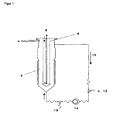
- the protein preparations according to the invention are obtainable by fermentation in a fluidized bed reactor.
- the cultured host cells e.g. As hybridoma cells or other eukaryotic cells, in very high density on glass beads and can be optimally supplied with oxygen and nutrients.
- Dying cells separate from the glass beads and are continuously removed from the fermentation system with the harvested medium.
- the amounts of proteases and Zelldebris can be kept low in the fermentation system and ensure the integrity of the protein produced.
- An example of a suitable fluidized bed fermentation reactor is the bioreactor Pilot B 500 (Papaspyrou Biotechnologie GmbH).
- the measurement of the immunoreactivity of the protein preparations according to the invention is carried out by the modified Lindmo test described in Example 3.
- the antigen-containing material be used in excess to quantitatively bind the immunoreactive protein, eg, the MAb.
- the antigen-containing material contains a sufficient amount of epitopes so that nonspecific, large-surface-area adsorption effects can be neglected.
- epitope densities of> 10 4 per fixed cell are preferred.
- the reading point for the immunoreactivity is the point at which a control MAb (same isotype as the test MAb, but irrelevant binding region) shows no significant non-specific adsorption.
- Production process I Production process II (generally) (generally) - Cultivation of eukaryotic cells and their fermentation in a fluidized bed reactor - Cultivation of eukaryotic cells and their fermentation in a fluidized bed reactor - Protein chemical purification with a conventional purification process - Proteinchemical purification with a "low-column" purification process
- New to production process I is the fermentation in a fluidized bed reactor in combination with a conventional purification process.
- New to manufacturing process II is fluidized bed fermentation in combination with the "low column” purification process using only column chromatography (affinity chromatography on protein A). All other steps represent gentle filtration steps through membranes or simple dilution steps. Nevertheless, the method meets the requirements set by the regulatory authorities regarding protein chemical purity and virus depletion / inactivation.
- the immunoreactivity of the (glyco) protein to be produced e.g. a MAb
- all tested levels T-bottles, Wirbe lambdas, purified protein
- Comparably high immunoreactivity values have, to our knowledge, not been achieved with any in vitro production method described in the prior art.
- MAb BW 431/26 selective for CD66e
- MAb BW 278/105 selective for a subpopulation of FVIII RAG
- MAb BW 575/931 selective for N-CAM
- MAk YTH 24.5 selective for CD45
- the MAb-containing samples of the cell culture supernatants or of the purified MAb end products were treated as described exactly in Example 3 and the modified Lindmo test was carried out as instructed.
- the negative control used was a MAb of the same isotype (IgG 1 ), the same light chain ( k ), a comparable isoelectric point and irrelevant specificity.
- the positive control is an analytical scale purified lot of MAb BW 250/183 with an immunoreactivity of 91 to 94%.
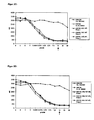
- Table 1 proven mass in ng Starting mass in ng immunoreactivity negative control - 50.0 - positive control 3.2 48.0 93.3% 250/183, ZKÜ, KF, sample 1 7.5 40.7 81.6% 250/183, ZKÜ, KF, sample 2 8.2 38.6 78.8% 250/183, ZKÜ, KF, sample 3 8.5 40.2 78.9% IR mean of the 3 samples: 79.7 %
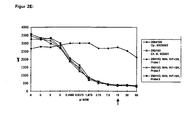
- the result curve is shown in FIG. 2A.
- MAb Purified MAK End Product
- KF Conventional Fermentation
- KR Conventional Purification
- Table 2 proven mass in ng Starting mass in ng immunoreactivity negative control - 50.0 - positive control 3.2 48.0 93.3% 250/183, MAK, KF + KR, sample 1 7.3 24.8 70.6% 250/183, MAK, KF + KR, sample 2 8.1 28.8 71.9% 250/183, MAK, KF + KR, sample 3 8.4 32.4 74.1% IR mean of the 3 samples: 72.2 %
- Table 3 proven mass in ng Starting mass in ng immunoreactivity negative control - 50.0 - positive control 3.5 45.2 92.4% 250/183, ZKÜ, WF, sample 1 3.7 183.5 98.0% 250/183, ZKÜ, WF, sample 2 4.0 137.8 97.1% 250/183, ZKÜ, WF, sample 3 3.9 123.0 96.8% IR mean of the 3 samples: 97.3%
- MAb Purified MAK End Product
- WF Fluidized Bed Fermentation
- KR Conventional Purification
- Table 4 proven mass in ng Starting mass in ng immunoreactivity negative control - 50.0 - positive control 3.5 45.2 92.4% 250/183, MAb, WF + KR, sample 1 3.6 39.5 90.9% 250/183, MAk, WF + KR, sample 2 4.1 35.6 88.5% 250/183, MAk, W + KR, sample 3 3.9 34.6 88.7% IR mean of the 3 samples: 89.3%
- MAb Purified MAK end product after fluidized bed fermentation (WF) and "low-column” purification (SR)
- Table 5 proven mass in ng Starting mass in ng immunoreactivity negative control - 50.0 - positive control 3.5 45.2 92.4% 250/183, MAb, WF + SR, sample 1 3.5 81.4 95.7% 250/183, MAb, WF + SR, sample 2 3.9 99.5 96.1% 250/183, MAb, W + SR, sample 3 4.0 100.5 96.0% IR mean of the 3 samples: 95.9%
- Example 1 The final results of Example 1 are summarized in Table 6 below : ⁇ b> Immunoreactivity of MAb BW 250/183 ⁇ / b> Production process 1 Production process 2 conventional fermentation and conventional purification process Fluidized bed reactor fermentation and conventional purification process Fluidized Bed Reactor Fermentation and "Low Column” Purification Process Cell culture supernatant 80% 97% 97% Purified MAK end product 72% 89% 96%
- the immunoreactivity of the MAb BW 250/183 is clearly dependent on the fermentation and purification conditions. In conventional fermentation, however, typically up to 80% immunoreactivity is achieved in the cell supernatant - in the new fermentation process by fluidized bed reactor, however, the immunoreactivity is significantly higher at 97%.
- the purification process also influences the immunoreactivity of MAb.
- the new "low-column” cleaning process is significantly gentler than the conventional cleaning method (8% drop in the immunoreactivity in the conventional method compared to only 1% waste in the new "low-column” cleaning method).
- the patient population consisted of persons with a risk of recurrence of 40-50% within 2 years. Surprisingly, radioimmunotherapy did not induce any significant side effects. This was followed by a standard therapy consisting of 12 Gray whole body irradiation and cyclophosphamide administration. All 19 patients could be brought into complete remission, which gives indications for a future role of radioimmunotherapy with MAb BW 250/183 in the treatment of leukemia in combination with standard therapies. It seems conceivable that the radioimmunotherapy will replace the side effect full body irradiation.
- Another advantage of using the MAb BW 250/183 with an immunoreactivity> 90% is that the administered MAk amount of 1 mg per application could be reduced to 0.5 mg per application. This reduction resulted in a HAMA (human-anti-mouse-antibody) rate below 2%, which was not significantly different from the background HAMA values of normal subjects.
- HAMA human-anti-mouse-antibody
- An ampoule from the working cell bank stored in liquid nitrogen is thawed and the cells therein are cultured under standard cell culture conditions (synthetic protein-free cell culture medium) in T-flasks. After a total cell count of 6-10 x 10 7 cells is achieved, the contents of 4 to 6 T-flasks are further cultured in a 500 ml spinner flask under standard cell culture conditions. After a cell count of 1.5-2 x 10 8 cells is reached, the cells are transferred to 2 Spinnergefäße with 1000 ml volume and cultivated further.
- standard cell culture conditions synthetic protein-free cell culture medium
- the cells After reaching a cell count of 1.2-1.5 x 10 9 cells, the cells in a 900 ml cell culture medium and 200 ml Siran R -Carrier-containing fluidized bed reactor (Bioreactor Pilot B 500, Papaspyrou Biotechnologie GmbH, Technology Center Jülich, D-52428 Garlich ) and cultured according to the handling instructions of Papaspyrou Biotechnologie for 60 days at 36.5 ° C. Oxygen content, pH, glucose concentration and MAk content are checked at 1-4 day intervals. During fermentation, the cell culture supernatant is harvested continuously and stored at 4 ° C.
- the volume of the cultural ultra concentrate to be worked up is determined and slowly added with stirring, the 1.5 times the amount of saturated ammonium sulfate solution.
- the suspension will remain at 4 ° C for up to three days until a clear supernatant is obtained. This is decanted off, the precipitate is suspended in the remaining amount of the supernatant and centrifuged off at> 5000 g for 30 minutes at room temperature. Sediments are combined in a centrifuge beaker ( ⁇ MAK ammonium sulfate paste) and then dissolved with starting buffer (1 to 4 parts buffer to 1 part sediment).
- the amount of dissolved sediment calculated for a protein A run is mixed, while stirring, with an aqueous solution of Triton X-100, 100 g / l, so that the final concentration of Triton X-100 is 0.5% (50 ml Triton X-100 solution to 1000 ml dissolved sediment).
- the mixture is sterile filtered through a syringe filter, 0.2 microns. The mixture is allowed to stand for 2 to 18 hours at 4 ° C ( ⁇ virus-inactive MAb solution).
- the protein-A fractionation is carried out immediately.
- the application of the sample is carried out under aseptic as possible conditions and by means of a pump, the flow rate can correspond to one to two column volumes per hour, so that a contact between MAb and protein A of at least 30 minutes is guaranteed.
- non-protein A binding proteins and Triton are washed from the column with startup buffer and purged until the absorbance / transmission of the effluent returns to baseline buffer (duration: 0.5 to 3 hours ).
- the elution of MAb is carried out with elution buffer, pH 3.0.
- the eluate is collected in a flake-ice-cooled vessel (weighed glass bottle) containing approximately 1/10 of the column volume of 2M Tris / HCl, pH 8.0 was submitted. The elution takes place until the output value of the recorder is almost reached again ( ⁇ purified MAC solution).
- the clarified protein solution is immediately applied to a regenerated column of Sephadex G-25 equilibrated with Tris / HCl-NaCl buffer, pH 7.5.
- the volume of the protein solution to be reshaped should not exceed 15% of the column volume.
- the solution coming from the column is passed through a flow-through photometer and then via a pH / ion monitor.
- the column is rinsed with Tris / HCl-NaCl buffer, pH 7.5, at a flow rate in the column of about 20 ml per cm 2 and per hour.
- the MAb running in the exclusion volume of the column is collected in a sterile template according to the UV line recorder profile until the output of the extinction / transmission (approximately 95%) is approximately registered again on the line recorder.
- the pH / ion monitor must not show any change in conductivity ( ⁇ rebuffered MAb solution).
- the conductivity of the solution is controlled and optionally adjusted to the conductivity of the buffer by addition of sodium chloride solution, 10 g / l or water for injection.
- the product is applied to a prepared Q-Sepharose column under as aseptic conditions as possible at a rate of 150 ml per hour (per ml Q-Sepharose 2 to 5 mg protein).
- the elution is carried out with Tris / HCl-NaCl buffer, pH 7.5 at a flow rate of about 25 ml per cm 2 and per hour.
- the solution coming from the column is passed through a flow-through photometer and then via a pH / ion monitor.
- the MAb running in the flow through the column is collected in a sterile template according to the UV line recorder profile until the output of the extinction / transmission (approximately 95%) is again recorded on the line recorder ( ⁇ depyrogenated MAb solution ).
- the pH of the MAb-containing eluate after anion exchange chromatography is adjusted to pH 6.9 with 1N HCl or 1N sodium hydroxide solution.
- the 1.5-fold amount of saturated ammonium sulfate solution is slowly added again with stirring and stirred for 60 minutes. Then the suspension remains at 4 ° C overnight until a clear supernatant is formed. The batch is shaken and centrifuged off at 8525 g for 60 minutes at room temperature. The supernatant is decanted off, the sediments are combined in a centrifuge beaker ( ⁇ MAK ammonium sulfate paste) and dissolved as concentrated as possible with sodium phosphate-NaCl sorbitol buffer, pH 7.2 (1 to 3 parts buffer to 1 part sediment).
- the clarified protein solution is immediately applied to a regenerated column of Sephadex G-25 equilibrated with sodium phosphate-NaCl sorbitol buffer, pH 7.2, under as aseptic conditions as possible (maximum 15% of the column volume).
- the solution coming from the column is passed through a flow-through photometer and then via a pH / ion monitor.
- the column is washed with sodium phosphate-NaCl sorbitol buffer, pH 7.2 (flow rate about 20 ml per cm 2 and per hour) rinsed.
- the MAk in the reject volume of the column is collected in a sterile template according to the UV line recorder profile until the output of the extinction / transmission (approximately 95%) is regained on the line recorder.
- the pH / ion monitor must not show any change in conductivity ( ⁇ MAk bulk solution, concentrated).
- the pH of the solution is controlled and adjusted to pH 7.2 with 1N HCl or 1N sodium hydroxide solution.
- the final bulk with sodium phosphate-NaCl sorbitol buffer, pH 7.2 is diluted to the desired final concentration.
- the product is sterile filtered through a 0.2 ⁇ m disposable filter, aliquoted and the "final bulk" stored at -20 ° C.
- An ampoule from the working cell bank stored in liquid nitrogen is thawed and the cells therein are cultured under standard cell culture conditions (synthetic protein-free cell culture medium) in T-flasks. After a total cell count of 6-10 x 10 7 cells is achieved, the contents of 4 to 6 T-flasks are further cultured in a 500 ml spinner flask under standard cell culture conditions. After a cell count of 1.5-2 x 10 8 cells is reached, the cells are transferred to 2 Spinnergefäße with 1000 ml volume and cultivated further.
- standard cell culture conditions synthetic protein-free cell culture medium
- the cells After reaching a cell count of 1.2-1.5 x 10 9 cells the cells are inoculated into a 900 ml cell culture medium and 250 ml Siran R -Carrier containing fluidized bed reactor (Bioreactor Pilot B 500, Papaspyrou Biotechnologie GmbH, Technology Center Jülich, D-52428 Garlich) and according to the handling instructions of Papaspyrou biotechnology for 60 days at 36 , 5 ° C cultivated. Oxygen content, pH, glucose concentration and MAk content are checked at 1-4 day intervals. During fermentation, the cell culture supernatant is harvested continuously and stored at 4 ° C.
- cell separation is performed by tangential flow microfiltration followed by sterile filtration through a 0.2 ⁇ m filter.
- the cell-free and sterile cell culture harvest is stored at -20 ° C until sufficient cell culture harvest for further purification is present (cell culture harvest of about 250 I cell culture medium).
- the sterile cell culture harvest is thawed, clarified by microfiltration and concentrated by ultrafiltration 100 to 150 times. Thereafter, the ultrapure concentrate is treated with an equal volume of 2 times concentrated starting buffer (pH 8.6) and sterile filtered.
- a sterile Triton X-100 solution (100 g Triton / L) ad 0.5% Triton final concentration is added with stirring.
- the solution is allowed to stand for 4 to 18 hours at 4 ° C.
- the Triton-treated ultra concentrate is pumped onto a Protein A Sepharose 4 Fast Flow column previously equilibrated with 5 column volumes of starting buffer.
- Non-binding proteins and Triton X-100 are washed from the column with 5 column volumes of starting buffer.
- the MAb bound to protein A is washed off the column with the elution buffer (pH 3.0) and collected in 130 ml neutralization buffer (pH 8). Thereafter, the pH of the neutralization buffer If necessary, the collected MAb with NaOH adjusted to pH 7-7.5, diluted with an equal volume of 2 ⁇ membrane adsorber buffer (pH 7; 5) and sterile filtered.
- the MAb solution is pumped under sterile conditions through a membrane adsorber which has previously been equilibrated with WFI and the adsorbent buffer (pH 7.5).
- the MAk containing flow which is now freed of any contaminating pyrogens and DNA, is collected in a sterile container and adjusted with a buffer (pH 7.5) to 500 ug MAk / ml.
- the dilute MAb solution is freed of potentially contaminating viruses by ultrafiltration with a Viragard hollow fiber module.
- the permeate containing the virus-free MAb is concentrated by ultrafiltration to a concentration of 4-5 mg MAb / ml and diafiltered against final buffer (pH 7.2). After sterile filtration, dilution in the final buffer and renewed sterile filtration, the MAb is filled in bulk.
- Block solution 1% casein in PBS, pH 7.2
- Substrate buffer 0.5 M Tris, 0.01% MgCl, pH 9.6
- the sensitivity of this test is in the range of 1 to 2 ng mouse IgG / ml.
- IR % 100 % - 100 % ⁇ MAb - Konz , in the supernatant / MAb - Strukturkonz ,
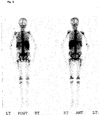
- the MAb lots used for labeling with Tc-99m differ in their immunoreactivity due to the method of preparation.
- the data are summarized in Table 10 below: MAb-Charge production method immunoreactivity Szintigramm MAb conventional fermentation and conventional purification process 70 - 80% Figure GRAN 11 BW 250/183 ( Figure 3) Figure GRAN 21 ( Figure 4) MAb Fluidized Bed Reactor Fermentation and "Low Column” Purification Process > 90% Figure GRAN 91 BW 250/183 ( Figure 5) Figure GRAN 81 ( Figure 6) Figure GRAN 71 ( Figure 7)
Landscapes
- Health & Medical Sciences (AREA)
- Life Sciences & Earth Sciences (AREA)
- Chemical & Material Sciences (AREA)
- General Health & Medical Sciences (AREA)
- Organic Chemistry (AREA)
- Medicinal Chemistry (AREA)
- Proteomics, Peptides & Aminoacids (AREA)
- Animal Behavior & Ethology (AREA)
- Pharmacology & Pharmacy (AREA)
- Public Health (AREA)
- Veterinary Medicine (AREA)
- Immunology (AREA)
- Chemical Kinetics & Catalysis (AREA)
- Nuclear Medicine, Radiotherapy & Molecular Imaging (AREA)
- General Chemical & Material Sciences (AREA)
- Optics & Photonics (AREA)
- Physics & Mathematics (AREA)
- Biochemistry (AREA)
- Epidemiology (AREA)
- Molecular Biology (AREA)
- Genetics & Genomics (AREA)
- Biophysics (AREA)
- Oncology (AREA)
- Hematology (AREA)
- Bioinformatics & Cheminformatics (AREA)
- Engineering & Computer Science (AREA)
- Diabetes (AREA)
- Preparation Of Compounds By Using Micro-Organisms (AREA)
- Peptides Or Proteins (AREA)
- Medicines Containing Antibodies Or Antigens For Use As Internal Diagnostic Agents (AREA)
- Medicines That Contain Protein Lipid Enzymes And Other Medicines (AREA)
Priority Applications (1)
| Application Number | Priority Date | Filing Date | Title |
|---|---|---|---|
| CY20081100043T CY1107136T1 (el) | 2000-04-05 | 2008-01-11 | Πρωτεϊνες: με υψηλη ανοσοαντιδραστικοτητα καθως και μια μεθοδος για την παρασκευη τους |
Applications Claiming Priority (3)
| Application Number | Priority Date | Filing Date | Title |
|---|---|---|---|
| DE10016877 | 2000-04-05 | ||
| DE10016877A DE10016877A1 (de) | 2000-04-05 | 2000-04-05 | (Glyko-)Proteine mit hoher Immunreaktivität sowie ein Verfahren zu ihrer Herstellung |
| PCT/EP2001/003867 WO2001077179A1 (de) | 2000-04-05 | 2001-04-04 | Proteine mit hoher immunreaktivität sowie ein verfahren zu ihrer herstellung |
Publications (2)
| Publication Number | Publication Date |
|---|---|
| EP1276770A1 EP1276770A1 (de) | 2003-01-22 |
| EP1276770B1 true EP1276770B1 (de) | 2007-10-17 |
Family
ID=7637638
Family Applications (1)
| Application Number | Title | Priority Date | Filing Date |
|---|---|---|---|
| EP01931566A Expired - Lifetime EP1276770B1 (de) | 2000-04-05 | 2001-04-04 | Proteine mit hoher immunreaktivität sowie ein verfahren zu ihrer herstellung |
Country Status (10)
| Country | Link |
|---|---|
| US (3) | US7264805B2 (enExample) |
| EP (1) | EP1276770B1 (enExample) |
| JP (1) | JP4880854B2 (enExample) |
| AT (1) | ATE376000T1 (enExample) |
| CY (1) | CY1107136T1 (enExample) |
| DE (2) | DE10016877A1 (enExample) |
| DK (1) | DK1276770T3 (enExample) |
| ES (1) | ES2295160T3 (enExample) |
| PT (1) | PT1276770E (enExample) |
| WO (1) | WO2001077179A1 (enExample) |
Cited By (3)
| Publication number | Priority date | Publication date | Assignee | Title |
|---|---|---|---|---|
| US9771431B2 (en) | 2011-10-11 | 2017-09-26 | Ccam Biotherapeutics Ltd. | Antibodies to carcinoembryonic antigen-related cell adhesion molecule (CEACAM) |
| US11427647B2 (en) | 2014-04-27 | 2022-08-30 | Famewave Ltd. | Polynucleotides encoding humanized antibodies against CEACAM1 |
| US11866509B2 (en) | 2014-04-27 | 2024-01-09 | Famewave Ltd. | Humanized antibodies against CEACAM1 |
Families Citing this family (2)
| Publication number | Priority date | Publication date | Assignee | Title |
|---|---|---|---|---|
| DE10016877A1 (de) * | 2000-04-05 | 2001-10-18 | Scintec Diagnostics Gmbh Zug | (Glyko-)Proteine mit hoher Immunreaktivität sowie ein Verfahren zu ihrer Herstellung |
| LT2990421T (lt) | 2009-04-30 | 2018-04-25 | Tel Hashomer Medical Research Infrastructure And Services Ltd. | Anti-ceacam1 antikūnai ir jų panaudojimo būdai |
Citations (1)
| Publication number | Priority date | Publication date | Assignee | Title |
|---|---|---|---|---|
| EP0585570B1 (de) * | 1992-08-05 | 1998-11-18 | Hoechst Aktiengesellschaft | Granulozytenbindende Antikörperkonstrukte, ihre Herstellung und Verwendung |
Family Cites Families (15)
| Publication number | Priority date | Publication date | Assignee | Title |
|---|---|---|---|---|
| WO1986005202A1 (en) * | 1985-02-28 | 1986-09-12 | Verax Corporation | Fluidized bioreactor and cell cultivation process |
| US5164175A (en) * | 1986-12-10 | 1992-11-17 | Hoechst Aktiengesellschaft | Diagnostic aid containing an organ-specific substance labeled with technetium-99m |
| US4939087A (en) * | 1987-05-12 | 1990-07-03 | Washington State University Research Foundation, Inc. | Method for continuous centrifugal bioprocessing |
| US5132405A (en) | 1987-05-21 | 1992-07-21 | Creative Biomolecules, Inc. | Biosynthetic antibody binding sites |
| US4873316A (en) | 1987-06-23 | 1989-10-10 | Biogen, Inc. | Isolation of exogenous recombinant proteins from the milk of transgenic mammals |
| IL83878A (en) | 1987-09-13 | 1995-07-31 | Yeda Res & Dev | Soluble protein corresponding to tnf inhibitory protein its preparation and pharmaceutical compositions containing it |
| DE4125625C2 (de) * | 1991-08-02 | 1999-12-02 | Octapharma Ag Glarus | Verfahren zur Herstellung von virusinaktivierten Immunglobulinlösungen |
| AU667530B2 (en) * | 1992-05-28 | 1996-03-28 | New York Blood Center, Inc., The | Removal of antibodies from blood-derived compositions while retaining coagulation factors |
| SE9500148D0 (sv) | 1995-01-18 | 1995-01-18 | Bioinvent Internatioal Ab | Antibodies for use in cancer therapy and diagnosis |
| EP0727480A3 (de) | 1995-02-16 | 2000-04-12 | Forschungszentrum Jülich Gmbh | Verfahren zur Bestimmung von Pharmakokinetik bzw. Toxikokinetik von Testsubstanzen mit Hilfe von in-vitro-Zellkultursystemen und dafür geeignete Vorrichtungen |
| DE19521388C2 (de) | 1995-06-13 | 1997-05-22 | Immuno Gmbh | Technik zur Bestimmung einer spezifisch-bindefähigen Substanz |
| DE19621388A1 (de) | 1996-05-28 | 1997-12-11 | Torsten Urban | Das Tapeten- bzw. Rauhfaserset |
| DE19744531A1 (de) | 1997-10-09 | 1999-05-27 | Klaus Dr Rer Nat Bosslet | Bindemoleküle gegen Rezeptor-Ligand-Komplexe |
| DE19911329A1 (de) * | 1998-03-27 | 2000-09-21 | Benes Ivan Friedrich | Humantherapeutisch anwendbares Radioimmunkonjugat und Verfahren zu seiner Herstellung |
| DE10016877A1 (de) * | 2000-04-05 | 2001-10-18 | Scintec Diagnostics Gmbh Zug | (Glyko-)Proteine mit hoher Immunreaktivität sowie ein Verfahren zu ihrer Herstellung |
-
2000
- 2000-04-05 DE DE10016877A patent/DE10016877A1/de not_active Ceased
-
2001
- 2001-04-04 ES ES01931566T patent/ES2295160T3/es not_active Expired - Lifetime
- 2001-04-04 PT PT01931566T patent/PT1276770E/pt unknown
- 2001-04-04 AT AT01931566T patent/ATE376000T1/de active
- 2001-04-04 DE DE50113151T patent/DE50113151D1/de not_active Expired - Lifetime
- 2001-04-04 JP JP2001575649A patent/JP4880854B2/ja not_active Expired - Fee Related
- 2001-04-04 WO PCT/EP2001/003867 patent/WO2001077179A1/de not_active Ceased
- 2001-04-04 US US10/240,912 patent/US7264805B2/en not_active Expired - Lifetime
- 2001-04-04 DK DK01931566T patent/DK1276770T3/da active
- 2001-04-04 EP EP01931566A patent/EP1276770B1/de not_active Expired - Lifetime
-
2007
- 2007-08-01 US US11/888,483 patent/US7820410B2/en not_active Expired - Fee Related
-
2008
- 2008-01-11 CY CY20081100043T patent/CY1107136T1/el unknown
-
2010
- 2010-09-16 US US12/883,620 patent/US9005574B2/en not_active Expired - Fee Related
Patent Citations (1)
| Publication number | Priority date | Publication date | Assignee | Title |
|---|---|---|---|---|
| EP0585570B1 (de) * | 1992-08-05 | 1998-11-18 | Hoechst Aktiengesellschaft | Granulozytenbindende Antikörperkonstrukte, ihre Herstellung und Verwendung |
Cited By (4)
| Publication number | Priority date | Publication date | Assignee | Title |
|---|---|---|---|---|
| US9771431B2 (en) | 2011-10-11 | 2017-09-26 | Ccam Biotherapeutics Ltd. | Antibodies to carcinoembryonic antigen-related cell adhesion molecule (CEACAM) |
| US11891453B2 (en) | 2011-10-11 | 2024-02-06 | Famewave Ltd. | Antibodies to carcinoembryonic antigen-related cell adhesion molecule (CEACAM) |
| US11427647B2 (en) | 2014-04-27 | 2022-08-30 | Famewave Ltd. | Polynucleotides encoding humanized antibodies against CEACAM1 |
| US11866509B2 (en) | 2014-04-27 | 2024-01-09 | Famewave Ltd. | Humanized antibodies against CEACAM1 |
Also Published As
| Publication number | Publication date |
|---|---|
| JP4880854B2 (ja) | 2012-02-22 |
| JP2003530126A (ja) | 2003-10-14 |
| US20110008249A1 (en) | 2011-01-13 |
| CY1107136T1 (el) | 2012-10-24 |
| DE10016877A1 (de) | 2001-10-18 |
| EP1276770A1 (de) | 2003-01-22 |
| DK1276770T3 (da) | 2008-02-18 |
| US7264805B2 (en) | 2007-09-04 |
| US7820410B2 (en) | 2010-10-26 |
| PT1276770E (pt) | 2008-01-24 |
| ATE376000T1 (de) | 2007-11-15 |
| US20030171548A1 (en) | 2003-09-11 |
| ES2295160T3 (es) | 2008-04-16 |
| DE50113151D1 (de) | 2007-11-29 |
| US9005574B2 (en) | 2015-04-14 |
| WO2001077179A1 (de) | 2001-10-18 |
| US20080075659A1 (en) | 2008-03-27 |
Similar Documents
| Publication | Publication Date | Title |
|---|---|---|
| DE69028684T2 (de) | Gegen die beta-kette des leukozyten-adhäsions-rezeptors gerichtete monoklonale antikörper, verfahren zu ihrer herstellung und ihre verwendung | |
| DE69228802T2 (de) | System zur verbesserten in-vivo aussonderung diagnostischer und/oder therapeutischer wirkstoffe durch extrakorporales entfernen der wirkstoffe | |
| DE69006337T2 (de) | Chimärer Antikörper zur Erkennung und Therapie von infektiösen und entzündlichen Läsionen. | |
| DE3883803T2 (de) | Monoklonale Antikörper gegen melanoma-assoziierte Antigene, Hybridzellinien, die diese Antikörper produzieren, und ihre Verwendung. | |
| DE69735295T2 (de) | Verfahren zur Aufkonzentrierung von Antikörperlösungen | |
| DE69838953T2 (de) | Methoden zur herstellung von glykosylierten antikörpern und antikörperfragmenten mit reaktiven ketongruppen | |
| DE69033631T2 (de) | Therapeutische verwendungen der hypervariablen region des monoklonalen antikörpers m195 und konstrukte davon | |
| DE1927209A1 (de) | Acyl-substituierte Insuline und Verfahren zu ihrer Herstellung | |
| DE4228389A1 (de) | Gewinnung und Kultivierung transformierter Zellen und Herstellung gegen sie gerichteter Antikörper | |
| CH649924A5 (de) | Reduktionsmaterial zur reduktion von technetium unter bildung eines technetiummarkierten liganden. | |
| DE3939706C1 (enExample) | ||
| EP1387701B1 (de) | Immunkonjugate aus eidotter-antikörpern (igy), deren konfektionierung und anwendung in diagnostik und therapie | |
| US9005574B2 (en) | Proteins with high immunoreactivity and method for their production | |
| DE3623846A1 (de) | Zusammensetzung zur selektiven bestimmung einer biologisch aktiven substanz | |
| Logan et al. | Comparative pharmacokinetics of 67Ga and 59Fe in humans | |
| DE60034330T2 (de) | Monoklonaler antikörper gegen menschliche nierenkarzinomzellen | |
| DE3413339A1 (de) | Gegen pilze der gattung candida gerichtete antikoerper | |
| AT395017B (de) | Verfahren zur herstellung eines neuen lymphokins (lk 2) sowie verwendung von lk 2 zur herstellung eines pharmazeutischen praeparates | |
| DE102021109246B3 (de) | Radiopharmaka zu unterschiedlichen ARTs | |
| EP0199085B1 (de) | Jomol, seine Derivate, Verfahren zur Herstellung dieser Verbindungen, ihre Verwendung und Erzeugnis | |
| Mego et al. | The uptake of As74-labeled arsonoazoproteins in tissues of tumor-bearing mice | |
| EP1454137B1 (de) | Verwendung eines markierten liganden mit spezifität für das humane cd4-molekül | |
| DE69031225T2 (de) | Monoklonaler antikörper zur differenzierung von "squamous cell carcinoma"-antigenen und verfahren zu dessen verwendung | |
| NISHIOKA et al. | Treatment of mucopolysaccharidosis: clinical and biochemical aspects of leucocyte transfusion as compared with plasma infusion in patients with Hurler's and Scheie's syndromes | |
| DE3850325T2 (de) | Monoklonalantikörper MZ gegen Ganglioside GD, MZ produzierende Zellen und MZ enthaltendes Agens. |
Legal Events
| Date | Code | Title | Description |
|---|---|---|---|
| PUAI | Public reference made under article 153(3) epc to a published international application that has entered the european phase |
Free format text: ORIGINAL CODE: 0009012 |
|
| 17P | Request for examination filed |
Effective date: 20020905 |
|
| AK | Designated contracting states |
Kind code of ref document: A1 Designated state(s): AT BE CH CY DE DK ES FI FR GB GR IE IT LI LU MC NL PT SE TR |
|
| 17Q | First examination report despatched |
Effective date: 20040712 |
|
| GRAC | Information related to communication of intention to grant a patent modified |
Free format text: ORIGINAL CODE: EPIDOSCIGR1 |
|
| GRAP | Despatch of communication of intention to grant a patent |
Free format text: ORIGINAL CODE: EPIDOSNIGR1 |
|
| RIC1 | Information provided on ipc code assigned before grant |
Ipc: C12P 21/08 20060101ALI20070413BHEP Ipc: A61K 49/00 20060101ALI20070413BHEP Ipc: A61K 39/395 20060101ALI20070413BHEP Ipc: C07K 16/00 20060101AFI20070413BHEP |
|
| GRAS | Grant fee paid |
Free format text: ORIGINAL CODE: EPIDOSNIGR3 |
|
| GRAA | (expected) grant |
Free format text: ORIGINAL CODE: 0009210 |
|
| AK | Designated contracting states |
Kind code of ref document: B1 Designated state(s): AT BE CH CY DE DK ES FI FR GB GR IE IT LI LU MC NL PT SE TR |
|
| REG | Reference to a national code |
Ref country code: GB Ref legal event code: FG4D Free format text: NOT ENGLISH |
|
| REG | Reference to a national code |
Ref country code: CH Ref legal event code: NV Representative=s name: A. BRAUN, BRAUN, HERITIER, ESCHMANN AG PATENTANWAE Ref country code: CH Ref legal event code: EP |
|
| GBT | Gb: translation of ep patent filed (gb section 77(6)(a)/1977) |
Effective date: 20071025 |
|
| REG | Reference to a national code |
Ref country code: IE Ref legal event code: FG4D Free format text: LANGUAGE OF EP DOCUMENT: GERMAN |
|
| REF | Corresponds to: |
Ref document number: 50113151 Country of ref document: DE Date of ref document: 20071129 Kind code of ref document: P |
|
| REG | Reference to a national code |
Ref country code: SE Ref legal event code: TRGR |
|
| REG | Reference to a national code |
Ref country code: PT Ref legal event code: SC4A Free format text: AVAILABILITY OF NATIONAL TRANSLATION Effective date: 20080111 |
|
| REG | Reference to a national code |
Ref country code: GR Ref legal event code: EP Ref document number: 20070403739 Country of ref document: GR |
|
| REG | Reference to a national code |
Ref country code: DK Ref legal event code: T3 |
|
| REG | Reference to a national code |
Ref country code: ES Ref legal event code: FG2A Ref document number: 2295160 Country of ref document: ES Kind code of ref document: T3 |
|
| REG | Reference to a national code |
Ref country code: CH Ref legal event code: PFA Owner name: SCINTEC DIAGNOSTICS GMBH Free format text: SCINTEC DIAGNOSTICS GMBH#BAARER STRASSE 8#6301 ZUG (CH) -TRANSFER TO- SCINTEC DIAGNOSTICS GMBH#BAARER STRASSE 8#6301 ZUG (CH) |
|
| ET | Fr: translation filed | ||
| PLBE | No opposition filed within time limit |
Free format text: ORIGINAL CODE: 0009261 |
|
| STAA | Information on the status of an ep patent application or granted ep patent |
Free format text: STATUS: NO OPPOSITION FILED WITHIN TIME LIMIT |
|
| 26N | No opposition filed |
Effective date: 20080718 |
|
| REG | Reference to a national code |
Ref country code: CH Ref legal event code: PCAR Free format text: NEW ADDRESS: HOLBEINSTRASSE 36-38, 4051 BASEL (CH) |
|
| REG | Reference to a national code |
Ref country code: FR Ref legal event code: PLFP Year of fee payment: 15 |
|
| REG | Reference to a national code |
Ref country code: FR Ref legal event code: PLFP Year of fee payment: 16 |
|
| REG | Reference to a national code |
Ref country code: FR Ref legal event code: PLFP Year of fee payment: 17 |
|
| REG | Reference to a national code |
Ref country code: FR Ref legal event code: PLFP Year of fee payment: 18 |
|
| PGFP | Annual fee paid to national office [announced via postgrant information from national office to epo] |
Ref country code: GR Payment date: 20200414 Year of fee payment: 20 Ref country code: CH Payment date: 20200420 Year of fee payment: 20 Ref country code: FR Payment date: 20200420 Year of fee payment: 20 Ref country code: IE Payment date: 20200420 Year of fee payment: 20 Ref country code: DK Payment date: 20200422 Year of fee payment: 20 Ref country code: ES Payment date: 20200629 Year of fee payment: 20 Ref country code: PT Payment date: 20200401 Year of fee payment: 20 Ref country code: CY Payment date: 20200324 Year of fee payment: 20 Ref country code: LU Payment date: 20200420 Year of fee payment: 20 Ref country code: NL Payment date: 20200427 Year of fee payment: 20 Ref country code: TR Payment date: 20200402 Year of fee payment: 20 Ref country code: MC Payment date: 20200423 Year of fee payment: 20 Ref country code: FI Payment date: 20200421 Year of fee payment: 20 Ref country code: DE Payment date: 20200131 Year of fee payment: 20 |
|
| PGFP | Annual fee paid to national office [announced via postgrant information from national office to epo] |
Ref country code: IT Payment date: 20200428 Year of fee payment: 20 Ref country code: BE Payment date: 20200427 Year of fee payment: 20 Ref country code: SE Payment date: 20200427 Year of fee payment: 20 Ref country code: GB Payment date: 20200427 Year of fee payment: 20 |
|
| PGFP | Annual fee paid to national office [announced via postgrant information from national office to epo] |
Ref country code: AT Payment date: 20200421 Year of fee payment: 20 |
|
| REG | Reference to a national code |
Ref country code: DE Ref legal event code: R071 Ref document number: 50113151 Country of ref document: DE |
|
| REG | Reference to a national code |
Ref country code: DK Ref legal event code: EUP Expiry date: 20210404 |
|
| REG | Reference to a national code |
Ref country code: NL Ref legal event code: MK Effective date: 20210403 |
|
| REG | Reference to a national code |
Ref country code: CH Ref legal event code: PL |
|
| REG | Reference to a national code |
Ref country code: GB Ref legal event code: PE20 Expiry date: 20210403 |
|
| REG | Reference to a national code |
Ref country code: AT Ref legal event code: MK07 Ref document number: 376000 Country of ref document: AT Kind code of ref document: T Effective date: 20210404 |
|
| REG | Reference to a national code |
Ref country code: BE Ref legal event code: MK Effective date: 20210404 Ref country code: IE Ref legal event code: MK9A |
|
| REG | Reference to a national code |
Ref country code: FI Ref legal event code: MAE |
|
| REG | Reference to a national code |
Ref country code: SE Ref legal event code: EUG |
|
| PG25 | Lapsed in a contracting state [announced via postgrant information from national office to epo] |
Ref country code: PT Free format text: LAPSE BECAUSE OF EXPIRATION OF PROTECTION Effective date: 20210414 |
|
| PG25 | Lapsed in a contracting state [announced via postgrant information from national office to epo] |
Ref country code: GB Free format text: LAPSE BECAUSE OF EXPIRATION OF PROTECTION Effective date: 20210403 Ref country code: IE Free format text: LAPSE BECAUSE OF EXPIRATION OF PROTECTION Effective date: 20210404 |
|
| REG | Reference to a national code |
Ref country code: ES Ref legal event code: FD2A Effective date: 20211207 |
|
| PG25 | Lapsed in a contracting state [announced via postgrant information from national office to epo] |
Ref country code: ES Free format text: LAPSE BECAUSE OF EXPIRATION OF PROTECTION Effective date: 20210405 |