EP1263978B1 - Promoteurs hybrides inductibles par l'inflammation, vecteurs les contenant et utilisations - Google Patents
Promoteurs hybrides inductibles par l'inflammation, vecteurs les contenant et utilisations Download PDFInfo
- Publication number
- EP1263978B1 EP1263978B1 EP01914000A EP01914000A EP1263978B1 EP 1263978 B1 EP1263978 B1 EP 1263978B1 EP 01914000 A EP01914000 A EP 01914000A EP 01914000 A EP01914000 A EP 01914000A EP 1263978 B1 EP1263978 B1 EP 1263978B1
- Authority
- EP
- European Patent Office
- Prior art keywords
- promoter
- gene
- ppar
- expression
- seq
- Prior art date
- Legal status (The legal status is an assumption and is not a legal conclusion. Google has not performed a legal analysis and makes no representation as to the accuracy of the status listed.)
- Expired - Lifetime
Links
- 239000013598 vector Substances 0.000 title claims abstract description 32
- 206010061218 Inflammation Diseases 0.000 title claims description 30
- 102000003728 Peroxisome Proliferator-Activated Receptors Human genes 0.000 claims abstract description 71
- 108090000029 Peroxisome Proliferator-Activated Receptors Proteins 0.000 claims abstract description 71
- 108090000623 proteins and genes Proteins 0.000 claims abstract description 66
- 239000000203 mixture Substances 0.000 claims abstract description 33
- 210000004027 cell Anatomy 0.000 claims description 43
- 230000004054 inflammatory process Effects 0.000 claims description 29
- 102000039446 nucleic acids Human genes 0.000 claims description 26
- 108020004707 nucleic acids Proteins 0.000 claims description 26
- 150000007523 nucleic acids Chemical class 0.000 claims description 26
- 241000282414 Homo sapiens Species 0.000 claims description 23
- 210000001519 tissue Anatomy 0.000 claims description 23
- 108091027981 Response element Proteins 0.000 claims description 20
- 230000002103 transcriptional effect Effects 0.000 claims description 17
- 239000013612 plasmid Substances 0.000 claims description 16
- 230000006698 induction Effects 0.000 claims description 12
- 238000011144 upstream manufacturing Methods 0.000 claims description 12
- 201000008482 osteoarthritis Diseases 0.000 claims description 9
- 230000033228 biological regulation Effects 0.000 claims description 8
- 230000003110 anti-inflammatory effect Effects 0.000 claims description 6
- ZIIUUSVHCHPIQD-UHFFFAOYSA-N 2,4,6-trimethyl-N-[3-(trifluoromethyl)phenyl]benzenesulfonamide Chemical compound CC1=CC(C)=CC(C)=C1S(=O)(=O)NC1=CC=CC(C(F)(F)F)=C1 ZIIUUSVHCHPIQD-UHFFFAOYSA-N 0.000 claims description 5
- 102000015439 Phospholipases Human genes 0.000 claims description 5
- 108010064785 Phospholipases Proteins 0.000 claims description 5
- LOGFVTREOLYCPF-KXNHARMFSA-N (2s,3r)-2-[[(2r)-1-[(2s)-2,6-diaminohexanoyl]pyrrolidine-2-carbonyl]amino]-3-hydroxybutanoic acid Chemical compound C[C@@H](O)[C@@H](C(O)=O)NC(=O)[C@H]1CCCN1C(=O)[C@@H](N)CCCCN LOGFVTREOLYCPF-KXNHARMFSA-N 0.000 claims description 4
- 102000003777 Interleukin-1 beta Human genes 0.000 claims description 4
- 108090000193 Interleukin-1 beta Proteins 0.000 claims description 4
- 238000002360 preparation method Methods 0.000 claims description 4
- 230000014509 gene expression Effects 0.000 abstract description 52
- 230000001105 regulatory effect Effects 0.000 abstract description 12
- 230000004044 response Effects 0.000 abstract description 11
- 238000013518 transcription Methods 0.000 abstract description 11
- 230000035897 transcription Effects 0.000 abstract description 11
- 108700019146 Transgenes Proteins 0.000 abstract description 10
- 238000000338 in vitro Methods 0.000 abstract description 9
- 238000001727 in vivo Methods 0.000 abstract description 8
- 210000000056 organ Anatomy 0.000 abstract description 7
- 230000004968 inflammatory condition Effects 0.000 abstract 1
- 210000001612 chondrocyte Anatomy 0.000 description 40
- 230000000694 effects Effects 0.000 description 30
- 230000027455 binding Effects 0.000 description 29
- 108010058864 Phospholipases A2 Proteins 0.000 description 27
- 238000010276 construction Methods 0.000 description 27
- 102000023984 PPAR alpha Human genes 0.000 description 26
- 102000006447 Phospholipases A2 Human genes 0.000 description 26
- 108091008725 peroxisome proliferator-activated receptors alpha Proteins 0.000 description 24
- 108010016731 PPAR gamma Proteins 0.000 description 19
- 239000003446 ligand Substances 0.000 description 19
- 102100038825 Peroxisome proliferator-activated receptor gamma Human genes 0.000 description 18
- 239000012190 activator Substances 0.000 description 16
- 108020004414 DNA Proteins 0.000 description 15
- 238000000034 method Methods 0.000 description 15
- 102000034527 Retinoid X Receptors Human genes 0.000 description 14
- 108010038912 Retinoid X Receptors Proteins 0.000 description 14
- 102000004169 proteins and genes Human genes 0.000 description 14
- 238000002474 experimental method Methods 0.000 description 13
- 239000000499 gel Substances 0.000 description 12
- 230000015572 biosynthetic process Effects 0.000 description 11
- 239000000047 product Substances 0.000 description 11
- UQOQENZZLBSFKO-POPPZSFYSA-N prostaglandin J2 Chemical compound CCCCC[C@H](O)\C=C\[C@@H]1[C@@H](C\C=C/CCCC(O)=O)C=CC1=O UQOQENZZLBSFKO-POPPZSFYSA-N 0.000 description 11
- 102000000589 Interleukin-1 Human genes 0.000 description 10
- 108010002352 Interleukin-1 Proteins 0.000 description 10
- 239000012634 fragment Substances 0.000 description 10
- 239000000284 extract Substances 0.000 description 9
- 229940021182 non-steroidal anti-inflammatory drug Drugs 0.000 description 9
- SZRPDCCEHVWOJX-UHFFFAOYSA-N pirinixic acid Chemical compound CC1=CC=CC(NC=2N=C(SCC(O)=O)N=C(Cl)C=2)=C1C SZRPDCCEHVWOJX-UHFFFAOYSA-N 0.000 description 9
- 238000003786 synthesis reaction Methods 0.000 description 9
- 238000001890 transfection Methods 0.000 description 9
- YZXBAPSDXZZRGB-DOFZRALJSA-N arachidonic acid Chemical compound CCCCC\C=C/C\C=C/C\C=C/C\C=C/CCCC(O)=O YZXBAPSDXZZRGB-DOFZRALJSA-N 0.000 description 8
- CGIGDMFJXJATDK-UHFFFAOYSA-N indomethacin Chemical compound CC1=C(CC(O)=O)C2=CC(OC)=CC=C2N1C(=O)C1=CC=C(Cl)C=C1 CGIGDMFJXJATDK-UHFFFAOYSA-N 0.000 description 8
- 230000001939 inductive effect Effects 0.000 description 8
- 239000002773 nucleotide Substances 0.000 description 8
- 125000003729 nucleotide group Chemical group 0.000 description 8
- 230000001225 therapeutic effect Effects 0.000 description 8
- 102100026189 Beta-galactosidase Human genes 0.000 description 7
- 102000000503 Collagen Type II Human genes 0.000 description 7
- 108010041390 Collagen Type II Proteins 0.000 description 7
- XEYBRNLFEZDVAW-ARSRFYASSA-N dinoprostone Chemical compound CCCCC[C@H](O)\C=C\[C@H]1[C@H](O)CC(=O)[C@@H]1C\C=C/CCCC(O)=O XEYBRNLFEZDVAW-ARSRFYASSA-N 0.000 description 7
- 229960002986 dinoprostone Drugs 0.000 description 7
- 229940125753 fibrate Drugs 0.000 description 7
- 230000001965 increasing effect Effects 0.000 description 7
- 150000002632 lipids Chemical class 0.000 description 7
- XEYBRNLFEZDVAW-UHFFFAOYSA-N prostaglandin E2 Natural products CCCCCC(O)C=CC1C(O)CC(=O)C1CC=CCCCC(O)=O XEYBRNLFEZDVAW-UHFFFAOYSA-N 0.000 description 7
- 230000003612 virological effect Effects 0.000 description 7
- 241000283973 Oryctolagus cuniculus Species 0.000 description 6
- 102000005473 Secretory Phospholipases A2 Human genes 0.000 description 6
- 108010031873 Secretory Phospholipases A2 Proteins 0.000 description 6
- 150000001875 compounds Chemical class 0.000 description 6
- 230000000875 corresponding effect Effects 0.000 description 6
- 239000011159 matrix material Substances 0.000 description 6
- 150000003180 prostaglandins Chemical class 0.000 description 6
- 230000008685 targeting Effects 0.000 description 6
- 102000004127 Cytokines Human genes 0.000 description 5
- 108090000695 Cytokines Proteins 0.000 description 5
- 108090000459 Prostaglandin-endoperoxide synthases Proteins 0.000 description 5
- 241000700584 Simplexvirus Species 0.000 description 5
- 235000014113 dietary fatty acids Nutrition 0.000 description 5
- 229930195729 fatty acid Natural products 0.000 description 5
- 239000000194 fatty acid Substances 0.000 description 5
- 150000004665 fatty acids Chemical class 0.000 description 5
- 230000004927 fusion Effects 0.000 description 5
- 238000001415 gene therapy Methods 0.000 description 5
- 239000000411 inducer Substances 0.000 description 5
- 230000002757 inflammatory effect Effects 0.000 description 5
- 238000004519 manufacturing process Methods 0.000 description 5
- 238000012360 testing method Methods 0.000 description 5
- 108010035532 Collagen Proteins 0.000 description 4
- 241000588724 Escherichia coli Species 0.000 description 4
- 108010068250 Herpes Simplex Virus Protein Vmw65 Proteins 0.000 description 4
- HEFNNWSXXWATRW-UHFFFAOYSA-N Ibuprofen Chemical compound CC(C)CC1=CC=C(C(C)C(O)=O)C=C1 HEFNNWSXXWATRW-UHFFFAOYSA-N 0.000 description 4
- 102000004005 Prostaglandin-endoperoxide synthases Human genes 0.000 description 4
- 102000040945 Transcription factor Human genes 0.000 description 4
- 108091023040 Transcription factor Proteins 0.000 description 4
- 230000003213 activating effect Effects 0.000 description 4
- 238000007792 addition Methods 0.000 description 4
- 229940114079 arachidonic acid Drugs 0.000 description 4
- 235000021342 arachidonic acid Nutrition 0.000 description 4
- 210000000845 cartilage Anatomy 0.000 description 4
- 239000003795 chemical substances by application Substances 0.000 description 4
- -1 dexamethasone) Chemical class 0.000 description 4
- 229940079593 drug Drugs 0.000 description 4
- 239000003814 drug Substances 0.000 description 4
- 239000003862 glucocorticoid Substances 0.000 description 4
- 229960001680 ibuprofen Drugs 0.000 description 4
- 229960000905 indomethacin Drugs 0.000 description 4
- 238000003780 insertion Methods 0.000 description 4
- 230000037431 insertion Effects 0.000 description 4
- 239000002609 medium Substances 0.000 description 4
- 230000004048 modification Effects 0.000 description 4
- 238000012986 modification Methods 0.000 description 4
- 108090000765 processed proteins & peptides Proteins 0.000 description 4
- 230000000770 proinflammatory effect Effects 0.000 description 4
- 239000000523 sample Substances 0.000 description 4
- 230000000638 stimulation Effects 0.000 description 4
- 230000002195 synergetic effect Effects 0.000 description 4
- 229940037128 systemic glucocorticoids Drugs 0.000 description 4
- 102000008186 Collagen Human genes 0.000 description 3
- PEDCQBHIVMGVHV-UHFFFAOYSA-N Glycerine Chemical compound OCC(O)CO PEDCQBHIVMGVHV-UHFFFAOYSA-N 0.000 description 3
- 101000669513 Homo sapiens Metalloproteinase inhibitor 1 Proteins 0.000 description 3
- 101000711846 Homo sapiens Transcription factor SOX-9 Proteins 0.000 description 3
- 102100039364 Metalloproteinase inhibitor 1 Human genes 0.000 description 3
- 108010044210 PPAR-beta Proteins 0.000 description 3
- 102000035195 Peptidases Human genes 0.000 description 3
- 108091005804 Peptidases Proteins 0.000 description 3
- 229920002873 Polyethylenimine Polymers 0.000 description 3
- 108010029485 Protein Isoforms Proteins 0.000 description 3
- 102000001708 Protein Isoforms Human genes 0.000 description 3
- 108700008625 Reporter Genes Proteins 0.000 description 3
- YASAKCUCGLMORW-UHFFFAOYSA-N Rosiglitazone Chemical compound C=1C=CC=NC=1N(C)CCOC(C=C1)=CC=C1CC1SC(=O)NC1=O YASAKCUCGLMORW-UHFFFAOYSA-N 0.000 description 3
- 102100034204 Transcription factor SOX-9 Human genes 0.000 description 3
- 241000700605 Viruses Species 0.000 description 3
- 230000004913 activation Effects 0.000 description 3
- 230000003321 amplification Effects 0.000 description 3
- 238000010367 cloning Methods 0.000 description 3
- 229920001436 collagen Polymers 0.000 description 3
- 229960003957 dexamethasone Drugs 0.000 description 3
- UREBDLICKHMUKA-CXSFZGCWSA-N dexamethasone Chemical compound C1CC2=CC(=O)C=C[C@]2(C)[C@]2(F)[C@@H]1[C@@H]1C[C@@H](C)[C@@](C(=O)CO)(O)[C@@]1(C)C[C@@H]2O UREBDLICKHMUKA-CXSFZGCWSA-N 0.000 description 3
- 239000003102 growth factor Substances 0.000 description 3
- VNYSSYRCGWBHLG-AMOLWHMGSA-N leukotriene B4 Chemical compound CCCCC\C=C/C[C@@H](O)\C=C\C=C\C=C/[C@@H](O)CCCC(O)=O VNYSSYRCGWBHLG-AMOLWHMGSA-N 0.000 description 3
- 150000002617 leukotrienes Chemical class 0.000 description 3
- 239000012528 membrane Substances 0.000 description 3
- 102000027507 nuclear receptors type II Human genes 0.000 description 3
- 108091008686 nuclear receptors type II Proteins 0.000 description 3
- 238000003199 nucleic acid amplification method Methods 0.000 description 3
- 229940094443 oxytocics prostaglandins Drugs 0.000 description 3
- 229920000642 polymer Polymers 0.000 description 3
- 230000008569 process Effects 0.000 description 3
- 238000011002 quantification Methods 0.000 description 3
- ZAHRKKWIAAJSAO-UHFFFAOYSA-N rapamycin Natural products COCC(O)C(=C/C(C)C(=O)CC(OC(=O)C1CCCCN1C(=O)C(=O)C2(O)OC(CC(OC)C(=CC=CC=CC(C)CC(C)C(=O)C)C)CCC2C)C(C)CC3CCC(O)C(C3)OC)C ZAHRKKWIAAJSAO-UHFFFAOYSA-N 0.000 description 3
- 229960002930 sirolimus Drugs 0.000 description 3
- QFJCIRLUMZQUOT-HPLJOQBZSA-N sirolimus Chemical compound C1C[C@@H](O)[C@H](OC)C[C@@H]1C[C@@H](C)[C@H]1OC(=O)[C@@H]2CCCCN2C(=O)C(=O)[C@](O)(O2)[C@H](C)CC[C@H]2C[C@H](OC)/C(C)=C/C=C/C=C/[C@@H](C)C[C@@H](C)C(=O)[C@H](OC)[C@H](O)/C(C)=C/[C@@H](C)C(=O)C1 QFJCIRLUMZQUOT-HPLJOQBZSA-N 0.000 description 3
- 239000003981 vehicle Substances 0.000 description 3
- 239000013603 viral vector Substances 0.000 description 3
- 108091032973 (ribonucleotides)n+m Proteins 0.000 description 2
- ILPUOPPYSQEBNJ-UHFFFAOYSA-N 2-methyl-2-phenoxypropanoic acid Chemical compound OC(=O)C(C)(C)OC1=CC=CC=C1 ILPUOPPYSQEBNJ-UHFFFAOYSA-N 0.000 description 2
- ZKRFOXLVOKTUTA-KQYNXXCUSA-N 9-(5-phosphoribofuranosyl)-6-mercaptopurine Chemical compound O[C@@H]1[C@H](O)[C@@H](COP(O)(O)=O)O[C@H]1N1C(NC=NC2=S)=C2N=C1 ZKRFOXLVOKTUTA-KQYNXXCUSA-N 0.000 description 2
- 108010067219 Aggrecans Proteins 0.000 description 2
- 230000004568 DNA-binding Effects 0.000 description 2
- 102000004190 Enzymes Human genes 0.000 description 2
- 108090000790 Enzymes Proteins 0.000 description 2
- LFQSCWFLJHTTHZ-UHFFFAOYSA-N Ethanol Chemical compound CCO LFQSCWFLJHTTHZ-UHFFFAOYSA-N 0.000 description 2
- 102000008394 Immunoglobulin Fragments Human genes 0.000 description 2
- 108010021625 Immunoglobulin Fragments Proteins 0.000 description 2
- KFZMGEQAYNKOFK-UHFFFAOYSA-N Isopropanol Chemical compound CC(C)O KFZMGEQAYNKOFK-UHFFFAOYSA-N 0.000 description 2
- 206010023203 Joint destruction Diseases 0.000 description 2
- 108010072582 Matrilin Proteins Proteins 0.000 description 2
- 102000055008 Matrilin Proteins Human genes 0.000 description 2
- 102000005741 Metalloproteases Human genes 0.000 description 2
- 108010006035 Metalloproteases Proteins 0.000 description 2
- 241001465754 Metazoa Species 0.000 description 2
- 206010028980 Neoplasm Diseases 0.000 description 2
- 108010028924 PPAR alpha Proteins 0.000 description 2
- 239000004365 Protease Substances 0.000 description 2
- 102000016611 Proteoglycans Human genes 0.000 description 2
- 108010067787 Proteoglycans Proteins 0.000 description 2
- FAPWRFPIFSIZLT-UHFFFAOYSA-M Sodium chloride Chemical compound [Na+].[Cl-] FAPWRFPIFSIZLT-UHFFFAOYSA-M 0.000 description 2
- 108700026226 TATA Box Proteins 0.000 description 2
- 229940123464 Thiazolidinedione Drugs 0.000 description 2
- 108700009124 Transcription Initiation Site Proteins 0.000 description 2
- 239000002253 acid Substances 0.000 description 2
- 150000001412 amines Chemical class 0.000 description 2
- 230000001195 anabolic effect Effects 0.000 description 2
- 229940124599 anti-inflammatory drug Drugs 0.000 description 2
- 238000013459 approach Methods 0.000 description 2
- 230000008901 benefit Effects 0.000 description 2
- 108010005774 beta-Galactosidase Proteins 0.000 description 2
- 230000001413 cellular effect Effects 0.000 description 2
- 230000001086 cytosolic effect Effects 0.000 description 2
- 230000037430 deletion Effects 0.000 description 2
- 238000012217 deletion Methods 0.000 description 2
- 238000011161 development Methods 0.000 description 2
- 230000018109 developmental process Effects 0.000 description 2
- 230000004069 differentiation Effects 0.000 description 2
- 239000000539 dimer Substances 0.000 description 2
- 238000010494 dissociation reaction Methods 0.000 description 2
- 230000005593 dissociations Effects 0.000 description 2
- 238000001962 electrophoresis Methods 0.000 description 2
- 229940088598 enzyme Drugs 0.000 description 2
- 229960002297 fenofibrate Drugs 0.000 description 2
- YMTINGFKWWXKFG-UHFFFAOYSA-N fenofibrate Chemical compound C1=CC(OC(C)(C)C(=O)OC(C)C)=CC=C1C(=O)C1=CC=C(Cl)C=C1 YMTINGFKWWXKFG-UHFFFAOYSA-N 0.000 description 2
- 238000010230 functional analysis Methods 0.000 description 2
- 239000001963 growth medium Substances 0.000 description 2
- 229940088597 hormone Drugs 0.000 description 2
- 239000005556 hormone Substances 0.000 description 2
- 210000005260 human cell Anatomy 0.000 description 2
- JYGXADMDTFJGBT-VWUMJDOOSA-N hydrocortisone Chemical compound O=C1CC[C@]2(C)[C@H]3[C@@H](O)C[C@](C)([C@@](CC4)(O)C(=O)CO)[C@@H]4[C@@H]3CCC2=C1 JYGXADMDTFJGBT-VWUMJDOOSA-N 0.000 description 2
- 230000008105 immune reaction Effects 0.000 description 2
- 230000001976 improved effect Effects 0.000 description 2
- 230000003993 interaction Effects 0.000 description 2
- 238000007918 intramuscular administration Methods 0.000 description 2
- 238000001990 intravenous administration Methods 0.000 description 2
- 210000003734 kidney Anatomy 0.000 description 2
- 210000004185 liver Anatomy 0.000 description 2
- 210000004962 mammalian cell Anatomy 0.000 description 2
- 239000000463 material Substances 0.000 description 2
- 238000013508 migration Methods 0.000 description 2
- 230000005012 migration Effects 0.000 description 2
- 210000003205 muscle Anatomy 0.000 description 2
- 230000035772 mutation Effects 0.000 description 2
- 230000007935 neutral effect Effects 0.000 description 2
- 239000000041 non-steroidal anti-inflammatory agent Substances 0.000 description 2
- 230000007170 pathology Effects 0.000 description 2
- 230000000144 pharmacologic effect Effects 0.000 description 2
- HYAFETHFCAUJAY-UHFFFAOYSA-N pioglitazone Chemical compound N1=CC(CC)=CC=C1CCOC(C=C1)=CC=C1CC1C(=O)NC(=O)S1 HYAFETHFCAUJAY-UHFFFAOYSA-N 0.000 description 2
- 102000004196 processed proteins & peptides Human genes 0.000 description 2
- YIBNHAJFJUQSRA-YNNPMVKQSA-N prostaglandin H2 Chemical compound C1[C@@H]2OO[C@H]1[C@H](/C=C/[C@@H](O)CCCCC)[C@H]2C\C=C/CCCC(O)=O YIBNHAJFJUQSRA-YNNPMVKQSA-N 0.000 description 2
- 108020001580 protein domains Proteins 0.000 description 2
- 239000011780 sodium chloride Substances 0.000 description 2
- 238000006467 substitution reaction Methods 0.000 description 2
- 210000001179 synovial fluid Anatomy 0.000 description 2
- 150000001467 thiazolidinediones Chemical class 0.000 description 2
- 238000012546 transfer Methods 0.000 description 2
- 229960005486 vaccine Drugs 0.000 description 2
- XLYOFNOQVPJJNP-UHFFFAOYSA-N water Substances O XLYOFNOQVPJJNP-UHFFFAOYSA-N 0.000 description 2
- OYHQOLUKZRVURQ-NTGFUMLPSA-N (9Z,12Z)-9,10,12,13-tetratritiooctadeca-9,12-dienoic acid Chemical compound C(CCCCCCC\C(=C(/C\C(=C(/CCCCC)\[3H])\[3H])\[3H])\[3H])(=O)O OYHQOLUKZRVURQ-NTGFUMLPSA-N 0.000 description 1
- JKMHFZQWWAIEOD-UHFFFAOYSA-N 2-[4-(2-hydroxyethyl)piperazin-1-yl]ethanesulfonic acid Chemical compound OCC[NH+]1CCN(CCS([O-])(=O)=O)CC1 JKMHFZQWWAIEOD-UHFFFAOYSA-N 0.000 description 1
- QKNYBSVHEMOAJP-UHFFFAOYSA-N 2-amino-2-(hydroxymethyl)propane-1,3-diol;hydron;chloride Chemical compound Cl.OCC(N)(CO)CO QKNYBSVHEMOAJP-UHFFFAOYSA-N 0.000 description 1
- FWMNVWWHGCHHJJ-SKKKGAJSSA-N 4-amino-1-[(2r)-6-amino-2-[[(2r)-2-[[(2r)-2-[[(2r)-2-amino-3-phenylpropanoyl]amino]-3-phenylpropanoyl]amino]-4-methylpentanoyl]amino]hexanoyl]piperidine-4-carboxylic acid Chemical compound C([C@H](C(=O)N[C@H](CC(C)C)C(=O)N[C@H](CCCCN)C(=O)N1CCC(N)(CC1)C(O)=O)NC(=O)[C@H](N)CC=1C=CC=CC=1)C1=CC=CC=C1 FWMNVWWHGCHHJJ-SKKKGAJSSA-N 0.000 description 1
- HRPVXLWXLXDGHG-UHFFFAOYSA-N Acrylamide Chemical compound NC(=O)C=C HRPVXLWXLXDGHG-UHFFFAOYSA-N 0.000 description 1
- 102100036601 Aggrecan core protein Human genes 0.000 description 1
- 108010087614 Apolipoprotein A-II Proteins 0.000 description 1
- 102000007592 Apolipoproteins Human genes 0.000 description 1
- 108010071619 Apolipoproteins Proteins 0.000 description 1
- 101001050984 Apple stem grooving virus (strain Korea) Putative movement protein Proteins 0.000 description 1
- 101001050983 Apple stem grooving virus (strain P-209) Probable movement protein Proteins 0.000 description 1
- 201000001320 Atherosclerosis Diseases 0.000 description 1
- 241000894006 Bacteria Species 0.000 description 1
- 108091003079 Bovine Serum Albumin Proteins 0.000 description 1
- 101150071146 COX2 gene Proteins 0.000 description 1
- OYPRJOBELJOOCE-UHFFFAOYSA-N Calcium Chemical compound [Ca] OYPRJOBELJOOCE-UHFFFAOYSA-N 0.000 description 1
- 241000282693 Cercopithecidae Species 0.000 description 1
- 102100032925 Chondroadherin Human genes 0.000 description 1
- KPSRODZRAIWAKH-JTQLQIEISA-N Ciprofibrate Natural products C1=CC(OC(C)(C)C(O)=O)=CC=C1[C@H]1C(Cl)(Cl)C1 KPSRODZRAIWAKH-JTQLQIEISA-N 0.000 description 1
- BMOVQUBVGICXQN-UHFFFAOYSA-N Clinofibrate Chemical compound C1=CC(OC(C)(CC)C(O)=O)=CC=C1C1(C=2C=CC(OC(C)(CC)C(O)=O)=CC=2)CCCCC1 BMOVQUBVGICXQN-UHFFFAOYSA-N 0.000 description 1
- 102000029816 Collagenase Human genes 0.000 description 1
- 108060005980 Collagenase Proteins 0.000 description 1
- 229930105110 Cyclosporin A Natural products 0.000 description 1
- PMATZTZNYRCHOR-CGLBZJNRSA-N Cyclosporin A Chemical compound CC[C@@H]1NC(=O)[C@H]([C@H](O)[C@H](C)C\C=C\C)N(C)C(=O)[C@H](C(C)C)N(C)C(=O)[C@H](CC(C)C)N(C)C(=O)[C@H](CC(C)C)N(C)C(=O)[C@@H](C)NC(=O)[C@H](C)NC(=O)[C@H](CC(C)C)N(C)C(=O)[C@H](C(C)C)NC(=O)[C@H](CC(C)C)N(C)C(=O)CN(C)C1=O PMATZTZNYRCHOR-CGLBZJNRSA-N 0.000 description 1
- 108010036949 Cyclosporine Proteins 0.000 description 1
- 102000004594 DNA Polymerase I Human genes 0.000 description 1
- 108010017826 DNA Polymerase I Proteins 0.000 description 1
- 102000016928 DNA-directed DNA polymerase Human genes 0.000 description 1
- 108010014303 DNA-directed DNA polymerase Proteins 0.000 description 1
- 102000004163 DNA-directed RNA polymerases Human genes 0.000 description 1
- 108090000626 DNA-directed RNA polymerases Proteins 0.000 description 1
- 241000790917 Dioxys <bee> Species 0.000 description 1
- 241000255581 Drosophila <fruit fly, genus> Species 0.000 description 1
- 108091065819 EBP family Proteins 0.000 description 1
- 102000039106 EBP family Human genes 0.000 description 1
- UPEZCKBFRMILAV-JNEQICEOSA-N Ecdysone Natural products O=C1[C@H]2[C@@](C)([C@@H]3C([C@@]4(O)[C@@](C)([C@H]([C@H]([C@@H](O)CCC(O)(C)C)C)CC4)CC3)=C1)C[C@H](O)[C@H](O)C2 UPEZCKBFRMILAV-JNEQICEOSA-N 0.000 description 1
- 241000196324 Embryophyta Species 0.000 description 1
- 102000010834 Extracellular Matrix Proteins Human genes 0.000 description 1
- 108010037362 Extracellular Matrix Proteins Proteins 0.000 description 1
- 108091092584 GDNA Proteins 0.000 description 1
- 102100039556 Galectin-4 Human genes 0.000 description 1
- 108090000079 Glucocorticoid Receptors Proteins 0.000 description 1
- 102100033417 Glucocorticoid receptor Human genes 0.000 description 1
- 241000238631 Hexapoda Species 0.000 description 1
- 241000282412 Homo Species 0.000 description 1
- 101000608765 Homo sapiens Galectin-4 Proteins 0.000 description 1
- 101000574060 Homo sapiens Progesterone receptor Proteins 0.000 description 1
- 101000642512 Homo sapiens Transcription factor SOX-5 Proteins 0.000 description 1
- 101000642517 Homo sapiens Transcription factor SOX-6 Proteins 0.000 description 1
- 108010003272 Hyaluronate lyase Proteins 0.000 description 1
- 102000001974 Hyaluronidases Human genes 0.000 description 1
- 108010017642 Integrin alpha2beta1 Proteins 0.000 description 1
- ROHFNLRQFUQHCH-YFKPBYRVSA-N L-leucine Chemical compound CC(C)C[C@H](N)C(O)=O ROHFNLRQFUQHCH-YFKPBYRVSA-N 0.000 description 1
- 108010054278 Lac Repressors Proteins 0.000 description 1
- ROHFNLRQFUQHCH-UHFFFAOYSA-N Leucine Natural products CC(C)CC(N)C(O)=O ROHFNLRQFUQHCH-UHFFFAOYSA-N 0.000 description 1
- 108090001030 Lipoproteins Proteins 0.000 description 1
- 102000004895 Lipoproteins Human genes 0.000 description 1
- 102000043136 MAP kinase family Human genes 0.000 description 1
- 108091054455 MAP kinase family Proteins 0.000 description 1
- 241000124008 Mammalia Species 0.000 description 1
- 101710164418 Movement protein TGB2 Proteins 0.000 description 1
- 102000007999 Nuclear Proteins Human genes 0.000 description 1
- 108010089610 Nuclear Proteins Proteins 0.000 description 1
- 108020005497 Nuclear hormone receptor Proteins 0.000 description 1
- 108091028043 Nucleic acid sequence Proteins 0.000 description 1
- 229910019142 PO4 Inorganic materials 0.000 description 1
- 102000000536 PPAR gamma Human genes 0.000 description 1
- 101150023417 PPARG gene Proteins 0.000 description 1
- 102100026918 Phospholipase A2 Human genes 0.000 description 1
- 101710096328 Phospholipase A2 Proteins 0.000 description 1
- 102000000571 Phospholipases A Human genes 0.000 description 1
- 108010002176 Phospholipases A Proteins 0.000 description 1
- 102100038277 Prostaglandin G/H synthase 1 Human genes 0.000 description 1
- 108050003243 Prostaglandin G/H synthase 1 Proteins 0.000 description 1
- 108010001267 Protein Subunits Proteins 0.000 description 1
- 102000002067 Protein Subunits Human genes 0.000 description 1
- 230000006819 RNA synthesis Effects 0.000 description 1
- 102000007056 Recombinant Fusion Proteins Human genes 0.000 description 1
- 108010008281 Recombinant Fusion Proteins Proteins 0.000 description 1
- 241000714474 Rous sarcoma virus Species 0.000 description 1
- 240000004808 Saccharomyces cerevisiae Species 0.000 description 1
- 102100021225 Serine hydroxymethyltransferase, cytosolic Human genes 0.000 description 1
- 102100023085 Serine/threonine-protein kinase mTOR Human genes 0.000 description 1
- 102000018679 Tacrolimus Binding Proteins Human genes 0.000 description 1
- 108010027179 Tacrolimus Binding Proteins Proteins 0.000 description 1
- 239000004098 Tetracycline Substances 0.000 description 1
- 102100036692 Transcription factor SOX-5 Human genes 0.000 description 1
- 102100036694 Transcription factor SOX-6 Human genes 0.000 description 1
- 102000004142 Trypsin Human genes 0.000 description 1
- 108090000631 Trypsin Proteins 0.000 description 1
- 229930003316 Vitamin D Natural products 0.000 description 1
- QYSXJUFSXHHAJI-XFEUOLMDSA-N Vitamin D3 Natural products C1(/[C@@H]2CC[C@@H]([C@]2(CCC1)C)[C@H](C)CCCC(C)C)=C/C=C1\C[C@@H](O)CCC1=C QYSXJUFSXHHAJI-XFEUOLMDSA-N 0.000 description 1
- 150000007513 acids Chemical class 0.000 description 1
- 239000000654 additive Substances 0.000 description 1
- 239000011543 agarose gel Substances 0.000 description 1
- 230000032683 aging Effects 0.000 description 1
- SHGAZHPCJJPHSC-YCNIQYBTSA-N all-trans-retinoic acid Chemical compound OC(=O)\C=C(/C)\C=C\C=C(/C)\C=C\C1=C(C)CCCC1(C)C SHGAZHPCJJPHSC-YCNIQYBTSA-N 0.000 description 1
- UPEZCKBFRMILAV-UHFFFAOYSA-N alpha-Ecdysone Natural products C1C(O)C(O)CC2(C)C(CCC3(C(C(C(O)CCC(C)(C)O)C)CCC33O)C)C3=CC(=O)C21 UPEZCKBFRMILAV-UHFFFAOYSA-N 0.000 description 1
- NPDSHTNEKLQQIJ-ZJHFMPGASA-N alpha-dimorphecolic acid Chemical compound CCCCC\C=C/C=C/C(O)CCCCCCCC(O)=O NPDSHTNEKLQQIJ-ZJHFMPGASA-N 0.000 description 1
- DTOSIQBPPRVQHS-PDBXOOCHSA-N alpha-linolenic acid Chemical compound CC\C=C/C\C=C/C\C=C/CCCCCCCC(O)=O DTOSIQBPPRVQHS-PDBXOOCHSA-N 0.000 description 1
- 235000020661 alpha-linolenic acid Nutrition 0.000 description 1
- 239000003708 ampul Substances 0.000 description 1
- 238000004458 analytical method Methods 0.000 description 1
- 238000004873 anchoring Methods 0.000 description 1
- 230000000692 anti-sense effect Effects 0.000 description 1
- 230000001174 ascending effect Effects 0.000 description 1
- 238000003556 assay Methods 0.000 description 1
- 230000001580 bacterial effect Effects 0.000 description 1
- 229960000516 bezafibrate Drugs 0.000 description 1
- IIBYAHWJQTYFKB-UHFFFAOYSA-N bezafibrate Chemical compound C1=CC(OC(C)(C)C(O)=O)=CC=C1CCNC(=O)C1=CC=C(Cl)C=C1 IIBYAHWJQTYFKB-UHFFFAOYSA-N 0.000 description 1
- 239000012148 binding buffer Substances 0.000 description 1
- 230000004071 biological effect Effects 0.000 description 1
- 210000002805 bone matrix Anatomy 0.000 description 1
- 210000004556 brain Anatomy 0.000 description 1
- 239000000872 buffer Substances 0.000 description 1
- 210000004899 c-terminal region Anatomy 0.000 description 1
- AIYUHDOJVYHVIT-UHFFFAOYSA-M caesium chloride Chemical compound [Cl-].[Cs+] AIYUHDOJVYHVIT-UHFFFAOYSA-M 0.000 description 1
- 239000011575 calcium Substances 0.000 description 1
- 229910052791 calcium Inorganic materials 0.000 description 1
- 239000001506 calcium phosphate Substances 0.000 description 1
- 229910000389 calcium phosphate Inorganic materials 0.000 description 1
- 235000011010 calcium phosphates Nutrition 0.000 description 1
- 230000001925 catabolic effect Effects 0.000 description 1
- 125000002091 cationic group Chemical group 0.000 description 1
- 229920006317 cationic polymer Polymers 0.000 description 1
- 238000004113 cell culture Methods 0.000 description 1
- 238000005119 centrifugation Methods 0.000 description 1
- 108010059427 chondroadherin Proteins 0.000 description 1
- 230000002759 chromosomal effect Effects 0.000 description 1
- 229960001265 ciclosporin Drugs 0.000 description 1
- 229960002174 ciprofibrate Drugs 0.000 description 1
- KPSRODZRAIWAKH-UHFFFAOYSA-N ciprofibrate Chemical compound C1=CC(OC(C)(C)C(O)=O)=CC=C1C1C(Cl)(Cl)C1 KPSRODZRAIWAKH-UHFFFAOYSA-N 0.000 description 1
- 229950003072 clinofibrate Drugs 0.000 description 1
- 229960001214 clofibrate Drugs 0.000 description 1
- KNHUKKLJHYUCFP-UHFFFAOYSA-N clofibrate Chemical compound CCOC(=O)C(C)(C)OC1=CC=C(Cl)C=C1 KNHUKKLJHYUCFP-UHFFFAOYSA-N 0.000 description 1
- 230000037319 collagen production Effects 0.000 description 1
- 229960002424 collagenase Drugs 0.000 description 1
- 230000002301 combined effect Effects 0.000 description 1
- 238000004891 communication Methods 0.000 description 1
- 239000002299 complementary DNA Substances 0.000 description 1
- 230000009918 complex formation Effects 0.000 description 1
- 230000001143 conditioned effect Effects 0.000 description 1
- 230000001276 controlling effect Effects 0.000 description 1
- 238000007796 conventional method Methods 0.000 description 1
- 238000001816 cooling Methods 0.000 description 1
- 230000002079 cooperative effect Effects 0.000 description 1
- 230000002596 correlated effect Effects 0.000 description 1
- 231100000433 cytotoxic Toxicity 0.000 description 1
- 230000001472 cytotoxic effect Effects 0.000 description 1
- RGWHQCVHVJXOKC-SHYZEUOFSA-J dCTP(4-) Chemical compound O=C1N=C(N)C=CN1[C@@H]1O[C@H](COP([O-])(=O)OP([O-])(=O)OP([O-])([O-])=O)[C@@H](O)C1 RGWHQCVHVJXOKC-SHYZEUOFSA-J 0.000 description 1
- 230000006378 damage Effects 0.000 description 1
- 230000032459 dedifferentiation Effects 0.000 description 1
- 230000002950 deficient Effects 0.000 description 1
- 230000003111 delayed effect Effects 0.000 description 1
- 206010012601 diabetes mellitus Diseases 0.000 description 1
- 238000006471 dimerization reaction Methods 0.000 description 1
- NPDSHTNEKLQQIJ-UHFFFAOYSA-N dimorphecolic acid Natural products CCCCCC=CC=CC(O)CCCCCCCC(O)=O NPDSHTNEKLQQIJ-UHFFFAOYSA-N 0.000 description 1
- 229940042399 direct acting antivirals protease inhibitors Drugs 0.000 description 1
- 201000010099 disease Diseases 0.000 description 1
- 208000037265 diseases, disorders, signs and symptoms Diseases 0.000 description 1
- UPEZCKBFRMILAV-JMZLNJERSA-N ecdysone Chemical compound C1[C@@H](O)[C@@H](O)C[C@]2(C)[C@@H](CC[C@@]3([C@@H]([C@@H]([C@H](O)CCC(C)(C)O)C)CC[C@]33O)C)C3=CC(=O)[C@@H]21 UPEZCKBFRMILAV-JMZLNJERSA-N 0.000 description 1
- 108010057988 ecdysone receptor Proteins 0.000 description 1
- 239000012636 effector Substances 0.000 description 1
- MGLDCXPLYOWQRP-UHFFFAOYSA-N eicosa-5,8,11,14-tetraynoic acid Chemical compound CCCCCC#CCC#CCC#CCC#CCCCC(O)=O MGLDCXPLYOWQRP-UHFFFAOYSA-N 0.000 description 1
- 150000002066 eicosanoids Chemical class 0.000 description 1
- 238000004520 electroporation Methods 0.000 description 1
- 229940082150 encore Drugs 0.000 description 1
- 230000000021 endosomolytic effect Effects 0.000 description 1
- 230000002255 enzymatic effect Effects 0.000 description 1
- 239000013604 expression vector Substances 0.000 description 1
- 210000002744 extracellular matrix Anatomy 0.000 description 1
- 238000000605 extraction Methods 0.000 description 1
- 230000006126 farnesylation Effects 0.000 description 1
- 239000012894 fetal calf serum Substances 0.000 description 1
- 210000002950 fibroblast Anatomy 0.000 description 1
- 238000009472 formulation Methods 0.000 description 1
- 238000002825 functional assay Methods 0.000 description 1
- 230000002068 genetic effect Effects 0.000 description 1
- 239000000833 heterodimer Substances 0.000 description 1
- 230000013632 homeostatic process Effects 0.000 description 1
- 229960002773 hyaluronidase Drugs 0.000 description 1
- 229960000890 hydrocortisone Drugs 0.000 description 1
- 230000002163 immunogen Effects 0.000 description 1
- 230000001506 immunosuppresive effect Effects 0.000 description 1
- 230000006872 improvement Effects 0.000 description 1
- 239000003112 inhibitor Substances 0.000 description 1
- 230000005764 inhibitory process Effects 0.000 description 1
- 230000000977 initiatory effect Effects 0.000 description 1
- 238000002347 injection Methods 0.000 description 1
- 239000007924 injection Substances 0.000 description 1
- 108010044426 integrins Proteins 0.000 description 1
- 102000006495 integrins Human genes 0.000 description 1
- 238000007912 intraperitoneal administration Methods 0.000 description 1
- 230000002601 intratumoral effect Effects 0.000 description 1
- 125000001449 isopropyl group Chemical group [H]C([H])([H])C([H])(*)C([H])([H])[H] 0.000 description 1
- 239000000644 isotonic solution Substances 0.000 description 1
- 210000001503 joint Anatomy 0.000 description 1
- 108020001756 ligand binding domains Proteins 0.000 description 1
- 229960004488 linolenic acid Drugs 0.000 description 1
- KQQKGWQCNNTQJW-UHFFFAOYSA-N linolenic acid Natural products CC=CCCC=CCC=CCCCCCCCC(O)=O KQQKGWQCNNTQJW-UHFFFAOYSA-N 0.000 description 1
- 239000002502 liposome Substances 0.000 description 1
- 239000007791 liquid phase Substances 0.000 description 1
- 150000004668 long chain fatty acids Chemical class 0.000 description 1
- 238000005259 measurement Methods 0.000 description 1
- 230000007246 mechanism Effects 0.000 description 1
- 108020004999 messenger RNA Proteins 0.000 description 1
- 239000003475 metalloproteinase inhibitor Substances 0.000 description 1
- 238000010369 molecular cloning Methods 0.000 description 1
- 238000002703 mutagenesis Methods 0.000 description 1
- 231100000350 mutagenesis Toxicity 0.000 description 1
- ZIUHHBKFKCYYJD-UHFFFAOYSA-N n,n'-methylenebisacrylamide Chemical compound C=CC(=O)NCNC(=O)C=C ZIUHHBKFKCYYJD-UHFFFAOYSA-N 0.000 description 1
- 210000005036 nerve Anatomy 0.000 description 1
- 102000006255 nuclear receptors Human genes 0.000 description 1
- 108020004017 nuclear receptors Proteins 0.000 description 1
- 230000001575 pathological effect Effects 0.000 description 1
- 230000037361 pathway Effects 0.000 description 1
- 230000035515 penetration Effects 0.000 description 1
- 239000000137 peptide hydrolase inhibitor Substances 0.000 description 1
- 229940021222 peritoneal dialysis isotonic solution Drugs 0.000 description 1
- NBIIXXVUZAFLBC-UHFFFAOYSA-K phosphate Chemical compound [O-]P([O-])([O-])=O NBIIXXVUZAFLBC-UHFFFAOYSA-K 0.000 description 1
- 239000010452 phosphate Substances 0.000 description 1
- 150000003904 phospholipids Chemical class 0.000 description 1
- 230000026731 phosphorylation Effects 0.000 description 1
- 238000006366 phosphorylation reaction Methods 0.000 description 1
- 229960005095 pioglitazone Drugs 0.000 description 1
- 229950007015 pirinixic acid Drugs 0.000 description 1
- 230000036470 plasma concentration Effects 0.000 description 1
- 229920002851 polycationic polymer Polymers 0.000 description 1
- 229920001184 polypeptide Polymers 0.000 description 1
- 230000001124 posttranscriptional effect Effects 0.000 description 1
- 230000003389 potentiating effect Effects 0.000 description 1
- 238000001556 precipitation Methods 0.000 description 1
- 150000003146 progesterones Chemical class 0.000 description 1
- 230000002035 prolonged effect Effects 0.000 description 1
- 230000001737 promoting effect Effects 0.000 description 1
- BHMBVRSPMRCCGG-OUTUXVNYSA-N prostaglandin D2 Chemical compound CCCCC[C@H](O)\C=C\[C@@H]1[C@@H](C\C=C/CCCC(O)=O)[C@@H](O)CC1=O BHMBVRSPMRCCGG-OUTUXVNYSA-N 0.000 description 1
- 108010043671 prostatic acid phosphatase Proteins 0.000 description 1
- 238000001243 protein synthesis Methods 0.000 description 1
- 229940024999 proteolytic enzymes for treatment of wounds and ulcers Drugs 0.000 description 1
- 230000005180 public health Effects 0.000 description 1
- 238000000746 purification Methods 0.000 description 1
- 102000005962 receptors Human genes 0.000 description 1
- 108020003175 receptors Proteins 0.000 description 1
- 230000014493 regulation of gene expression Effects 0.000 description 1
- 230000022532 regulation of transcription, DNA-dependent Effects 0.000 description 1
- 230000003362 replicative effect Effects 0.000 description 1
- 229930002330 retinoic acid Natural products 0.000 description 1
- 150000004492 retinoid derivatives Chemical class 0.000 description 1
- 206010039073 rheumatoid arthritis Diseases 0.000 description 1
- 229960004586 rosiglitazone Drugs 0.000 description 1
- 238000006748 scratching Methods 0.000 description 1
- 230000002393 scratching effect Effects 0.000 description 1
- 210000002966 serum Anatomy 0.000 description 1
- 230000003584 silencer Effects 0.000 description 1
- 230000009870 specific binding Effects 0.000 description 1
- 239000003270 steroid hormone Substances 0.000 description 1
- 102000005969 steroid hormone receptors Human genes 0.000 description 1
- 108020003113 steroid hormone receptors Proteins 0.000 description 1
- 150000003431 steroids Chemical class 0.000 description 1
- 238000007920 subcutaneous administration Methods 0.000 description 1
- 239000006228 supernatant Substances 0.000 description 1
- 238000001356 surgical procedure Methods 0.000 description 1
- 239000000725 suspension Substances 0.000 description 1
- 229930101283 tetracycline Natural products 0.000 description 1
- 229960002180 tetracycline Drugs 0.000 description 1
- 235000019364 tetracycline Nutrition 0.000 description 1
- 108700020534 tetracycline resistance-encoding transposon repressor Proteins 0.000 description 1
- 150000003522 tetracyclines Chemical class 0.000 description 1
- 238000010257 thawing Methods 0.000 description 1
- 102000004217 thyroid hormone receptors Human genes 0.000 description 1
- 108090000721 thyroid hormone receptors Proteins 0.000 description 1
- 239000003053 toxin Substances 0.000 description 1
- 231100000765 toxin Toxicity 0.000 description 1
- 108700012359 toxins Proteins 0.000 description 1
- VZCYOOQTPOCHFL-UHFFFAOYSA-N trans-butenedioic acid Natural products OC(=O)C=CC(O)=O VZCYOOQTPOCHFL-UHFFFAOYSA-N 0.000 description 1
- 108091008023 transcriptional regulators Proteins 0.000 description 1
- 230000009466 transformation Effects 0.000 description 1
- 230000009261 transgenic effect Effects 0.000 description 1
- 238000003146 transient transfection Methods 0.000 description 1
- 230000014616 translation Effects 0.000 description 1
- 230000005945 translocation Effects 0.000 description 1
- 230000000472 traumatic effect Effects 0.000 description 1
- 229960001727 tretinoin Drugs 0.000 description 1
- QORWJWZARLRLPR-UHFFFAOYSA-H tricalcium bis(phosphate) Chemical compound [Ca+2].[Ca+2].[Ca+2].[O-]P([O-])([O-])=O.[O-]P([O-])([O-])=O QORWJWZARLRLPR-UHFFFAOYSA-H 0.000 description 1
- 229960001641 troglitazone Drugs 0.000 description 1
- GXPHKUHSUJUWKP-UHFFFAOYSA-N troglitazone Chemical compound C1CC=2C(C)=C(O)C(C)=C(C)C=2OC1(C)COC(C=C1)=CC=C1CC1SC(=O)NC1=O GXPHKUHSUJUWKP-UHFFFAOYSA-N 0.000 description 1
- GXPHKUHSUJUWKP-NTKDMRAZSA-N troglitazone Natural products C([C@@]1(OC=2C(C)=C(C(=C(C)C=2CC1)O)C)C)OC(C=C1)=CC=C1C[C@H]1SC(=O)NC1=O GXPHKUHSUJUWKP-NTKDMRAZSA-N 0.000 description 1
- 239000012588 trypsin Substances 0.000 description 1
- 241000701161 unidentified adenovirus Species 0.000 description 1
- 241000701447 unidentified baculovirus Species 0.000 description 1
- 241001529453 unidentified herpesvirus Species 0.000 description 1
- 241001430294 unidentified retrovirus Species 0.000 description 1
- 230000002792 vascular Effects 0.000 description 1
- 238000012795 verification Methods 0.000 description 1
- 235000019166 vitamin D Nutrition 0.000 description 1
- 239000011710 vitamin D Substances 0.000 description 1
- 150000003710 vitamin D derivatives Chemical class 0.000 description 1
- 229940046008 vitamin d Drugs 0.000 description 1
- 239000002676 xenobiotic agent Substances 0.000 description 1
- 230000002034 xenobiotic effect Effects 0.000 description 1
Images



Classifications
-
- C—CHEMISTRY; METALLURGY
- C07—ORGANIC CHEMISTRY
- C07K—PEPTIDES
- C07K14/00—Peptides having more than 20 amino acids; Gastrins; Somatostatins; Melanotropins; Derivatives thereof
- C07K14/435—Peptides having more than 20 amino acids; Gastrins; Somatostatins; Melanotropins; Derivatives thereof from animals; from humans
- C07K14/78—Connective tissue peptides, e.g. collagen, elastin, laminin, fibronectin, vitronectin or cold insoluble globulin [CIG]
-
- A—HUMAN NECESSITIES
- A61—MEDICAL OR VETERINARY SCIENCE; HYGIENE
- A61P—SPECIFIC THERAPEUTIC ACTIVITY OF CHEMICAL COMPOUNDS OR MEDICINAL PREPARATIONS
- A61P19/00—Drugs for skeletal disorders
- A61P19/02—Drugs for skeletal disorders for joint disorders, e.g. arthritis, arthrosis
-
- A—HUMAN NECESSITIES
- A61—MEDICAL OR VETERINARY SCIENCE; HYGIENE
- A61P—SPECIFIC THERAPEUTIC ACTIVITY OF CHEMICAL COMPOUNDS OR MEDICINAL PREPARATIONS
- A61P29/00—Non-central analgesic, antipyretic or antiinflammatory agents, e.g. antirheumatic agents; Non-steroidal antiinflammatory drugs [NSAID]
-
- C—CHEMISTRY; METALLURGY
- C07—ORGANIC CHEMISTRY
- C07K—PEPTIDES
- C07K14/00—Peptides having more than 20 amino acids; Gastrins; Somatostatins; Melanotropins; Derivatives thereof
- C07K14/435—Peptides having more than 20 amino acids; Gastrins; Somatostatins; Melanotropins; Derivatives thereof from animals; from humans
- C07K14/705—Receptors; Cell surface antigens; Cell surface determinants
-
- C—CHEMISTRY; METALLURGY
- C12—BIOCHEMISTRY; BEER; SPIRITS; WINE; VINEGAR; MICROBIOLOGY; ENZYMOLOGY; MUTATION OR GENETIC ENGINEERING
- C12N—MICROORGANISMS OR ENZYMES; COMPOSITIONS THEREOF; PROPAGATING, PRESERVING, OR MAINTAINING MICROORGANISMS; MUTATION OR GENETIC ENGINEERING; CULTURE MEDIA
- C12N15/00—Mutation or genetic engineering; DNA or RNA concerning genetic engineering, vectors, e.g. plasmids, or their isolation, preparation or purification; Use of hosts therefor
- C12N15/09—Recombinant DNA-technology
- C12N15/63—Introduction of foreign genetic material using vectors; Vectors; Use of hosts therefor; Regulation of expression
-
- C—CHEMISTRY; METALLURGY
- C12—BIOCHEMISTRY; BEER; SPIRITS; WINE; VINEGAR; MICROBIOLOGY; ENZYMOLOGY; MUTATION OR GENETIC ENGINEERING
- C12N—MICROORGANISMS OR ENZYMES; COMPOSITIONS THEREOF; PROPAGATING, PRESERVING, OR MAINTAINING MICROORGANISMS; MUTATION OR GENETIC ENGINEERING; CULTURE MEDIA
- C12N15/00—Mutation or genetic engineering; DNA or RNA concerning genetic engineering, vectors, e.g. plasmids, or their isolation, preparation or purification; Use of hosts therefor
- C12N15/09—Recombinant DNA-technology
- C12N15/63—Introduction of foreign genetic material using vectors; Vectors; Use of hosts therefor; Regulation of expression
- C12N15/79—Vectors or expression systems specially adapted for eukaryotic hosts
- C12N15/85—Vectors or expression systems specially adapted for eukaryotic hosts for animal cells
-
- C—CHEMISTRY; METALLURGY
- C12—BIOCHEMISTRY; BEER; SPIRITS; WINE; VINEGAR; MICROBIOLOGY; ENZYMOLOGY; MUTATION OR GENETIC ENGINEERING
- C12N—MICROORGANISMS OR ENZYMES; COMPOSITIONS THEREOF; PROPAGATING, PRESERVING, OR MAINTAINING MICROORGANISMS; MUTATION OR GENETIC ENGINEERING; CULTURE MEDIA
- C12N9/00—Enzymes; Proenzymes; Compositions thereof; Processes for preparing, activating, inhibiting, separating or purifying enzymes
- C12N9/14—Hydrolases (3)
- C12N9/16—Hydrolases (3) acting on ester bonds (3.1)
- C12N9/18—Carboxylic ester hydrolases (3.1.1)
- C12N9/20—Triglyceride splitting, e.g. by means of lipase
-
- C—CHEMISTRY; METALLURGY
- C12—BIOCHEMISTRY; BEER; SPIRITS; WINE; VINEGAR; MICROBIOLOGY; ENZYMOLOGY; MUTATION OR GENETIC ENGINEERING
- C12N—MICROORGANISMS OR ENZYMES; COMPOSITIONS THEREOF; PROPAGATING, PRESERVING, OR MAINTAINING MICROORGANISMS; MUTATION OR GENETIC ENGINEERING; CULTURE MEDIA
- C12N2840/00—Vectors comprising a special translation-regulating system
- C12N2840/44—Vectors comprising a special translation-regulating system being a specific part of the splice mechanism, e.g. donor, acceptor
Definitions
- the present invention relates to the field of biology. It relates to particularly the field of regulation of gene expression and more In particular, it describes the development and development of a new pharmacological regulation system of transgene expression.
- the invention is based in particular on the use of constructions to activate the transcription of the transgene into cells, tissues or organs in condition inflammation.
- the invention thus describes new compositions, constructions for the efficient regulation of the expression of a nucleic acid in in vitro, ex vivo or in vivo, for example in chondrocyte cells.
- the applications that flow from the present invention are numerous, in the experimental, clinical, therapeutic or diagnostic domains, for example.
- Gene therapy is aimed more particularly at expressing genes (or nucleic acids) that are either defective in a given individual or of therapeutic interest in the context of a specific pathology.
- the expression of these genes requires, besides the vectorization procedure, an induction by a promoter which fixes the RNA polymerase and the transcription factors required to obtain the messenger RNA synthesis and therefore the protein synthesis.
- Non-inducible viral or eukaryotic promoters are frequently used in gene therapy to express a gene in a tissue. Although easy to perform, this approach does not allow the regulation of transgene expression depending on the environment and external stimuli.
- the gene directed by a viral promoter will be expressed indifferently in all the cells in which the vector will have penetrated, without any targeting. Finally, the experimenters sometimes encountered weak expression of the viral promoter in vivo compared with that found in vitro.
- Another system was constructed by fusion of the S. cerevisiae GAL4 protein DNA binding domain with the human progesterone receptor ligand binding domain and HSV VP16 transactivator domain, this version is activated. by a progesterone analog such as RU486 (Wang Y. et al., Proc Natl Acad Sci USA, 91 (1994) 8180-8184).
- RU486 Wang Y. et al., Proc Natl Acad Sci USA, 91 (1994) 8180-8184.
- a fusion of the Drosophila ecdysone receptor with the HSV VP16 transactivator domain has also been described, activated by ecdysone and analogs of this steroid hormone (No. D. et al., Proc Natl Acad Sci USA , 93). (1996) 3346-3351).
- a transcriptional regulator is then composed of two protein subunits, the first of which can be formed by the fusion of a chimeric DNA binding domain and three copies of the human FKBP protein and the second by the fusion of the rapamycin binding of the human FRAP protein and the transactivator domain of the human NFkB p65 subunit.
- This transcriptional regulator is activated by rapamycin which allows the dimerization of the two subunits (Rivera V. et al., Nat. Med., 2 (1996) 1028-1032).
- WO 9821349 discloses an expression cassette containing a PPAR response element and the human apolipoprotein AII gene promoter. However these references do not teach obtaining a human PLA 2 promoter from a construction of PPAR upstream of it.
- these transcriptional regulators are xenogeneic proteins in humans. They are made up of protein fragments from bacteria, viruses, yeast or insects or, when the protein domains are of human origin, their junction creates sequences foreign to the man. These protein domains can therefore induce a cytotoxic immune reaction, resulting in the destruction of cells that express the gene of interest under the control of the transcriptional regulator xenogeneic, and so stopping the expression of the transgene.
- the present invention now describes a new improved system for the controlled expression of nucleic acids in cells.
- This invention proposes a hybrid promoter inducible by the main mediators of inflammation and by exogenous compounds.
- This promoter leads preferentially the expression of a gene at the level of the tissue inflammation, in response to mediators synthesized during the process inflammatory.
- the main interest of this promoter lies in the possibility of expression of the modulable gene-drug according to the intensity of inflammation.
- the expression of the gene can be increased when taking NSAIDs. It is therefore an approach that can be applied to many situations inflammatory agents for which gene therapy is envisaged.
- the present invention resides more particularly in the construction of a hybrid promoter comprising a PPAR response module and a module of response to cytokines produced during inflammation.
- This second module more particularly includes sequences derived from the promoter of the gene of the Non-pancreatic phospholipase A2 (PLA2s) type IIA-1, which is expressed in certain human cells, especially chondrocytes, under conditions inflammation.
- PHA2s Non-pancreatic phospholipase A2
- the combination of these two modules makes it possible to generate a promoter assuring specific expression of genes in an inflammation condition, expression that can be increased by mediators or anti-inflammatory drugs Exogenous.
- this promoter hybrid has preferentially a low basal activity, but an activity in very high induction condition.
- promoter is therefore particularly suitable for the expression of products having anti-inflammatory activity, as it will be explained in detail later in the text.
- the promoters of the invention are particularly advantageous for the expression of genes in tissues joints, especially chondrocytes, in different pathological situations in which an inflammatory component is present, and in particular osteoarthritis.
- Osteoarthritis is a disease of aging that is accompanied by joint destruction resulting in a variable degree of disability (Chevalier X, 1998). Treatment of this condition is currently considered a priority in term of public health because of its frequency and the handicap it provokes.
- the target tissue responsible for joint destruction is cartilage, tissue composed of an extracellular matrix rich in collagen type II and in proteoglycans and articular chondrocytes, the only cell type of cartilage, which are responsible for the matrix synthesis. Chondrocytes also secrete growth factors and natural protease inhibitors (activity anabolic) as well as proteases (catabolic activity).
- the present invention now provides transcriptional promoters hybrids that are particularly suited to the expression of therapeutic genes in joint pathologies such as osteoarthritis.
- the invention also constructions ensuring a targeting of the transfer and / or the expression of a gene of interest in chondrocytes, further improving the properties advantageous constructions for this type of applications.
- the present invention lies in particular in the demonstration that this type of construction produces a synergistic effect on expression activity, without alter the regulated and specific (or preferential) nature of the situations inflammation.
- the invention also discloses vectors, plasmids and compositions comprising these promoters, for gene expression in vitro, ex vivo or in vivo.
- the first element of the hybrid promoters of the invention therefore comprises a response element to a PPAR.
- PPARs Peroxisome Proliferator-Activated Receptors
- PPARs belong to the superfamily of nuclear receptors comprising steroid hormone receptors, thyroid hormone receptors retinoic acid and vitamin D (Schoonjans K et al, 1996).
- PPARs exist in three isoforms: PPAR ⁇ , PPAR ⁇ and PPAR ⁇ .
- PPARs bind to specific sequences at the level of the promoters of target genes (sequences PPRE), and induce the expression of these genes.
- PPAR response element (PPRE, "Peroxysome Proliferator Response Element ”) is therefore a nucleic acid region capable of binding a PPAR, the PPAR link can then mediate a signal to regions neighboring nuclei, in particular the regions derived from PLA2s according to the invention.
- a response element to a PPAR according to the invention is more particularly a nucleic acid region capable of binding a PPAR, whether PPAR ⁇ , ⁇ or ⁇ . It is even more preferentially a nucleic acid capable of binding a PPAR ⁇ or a PPAR ⁇ .
- the response element to a PPAR more particularly comprises one or more PPAR binding sites. Such binding sites have been described in the prior art, for example in different human promoters (consensus site DR1, gene de apolipoprotein All, for example). Such sites can also be built artificially, and tested for their PPRE properties, as described below.
- the response element to a PPAR includes one or more sequence sites CAAAACTAGGTCAAAGGTCA (SEO ID NO: 1) or Functional Variants of this sequence.
- the sequence SEQ ID NO: 1 corresponds to the consensus region DR1.
- a variant is considered functional within the meaning of the present invention when the activity measured, for example in (ii) above, is preferentially less than 50% of that measured with a site of sequence SEQ ID NO: 1, plus preferably at least 75%.
- Functional variants of sites of PPAR binding within the meaning of the invention are described for example in Juge-Aubry et al. (J. Biol Chem 272 (1997) 25252) and in Nakshatri et al. (NAR 26 (1998) 2491).
- PPAR response elements are represented by the elements (DR1) 2 17 (SEQ ID NO: 2), (DR1) 2 21 (SEQ ID NO: 3) and (DR1) 2 31 (SEQ ID NO: 4) as described in the examples, or functional variants thereof.
- Another variant is a fragment of the sequence SEQ ID NO: 1, comprising residues 8-20 of it.
- sequences SEQ ID NO: 1-4 represent PPREs essentially responding to PPAR ⁇ and ⁇ . As illustrated in the examples, these sequences have a strong inducibility by the PPAR, linked particularly to the particular arrangement of the binding sites.
- an object of the invention also resides in a nucleic acid comprising a sequence selected from SEQ ID NOS: 2-4.
- the response element to a PPAR comprises one or more J sites of the human apoAll promoter (nucleotides -734 to -716) or functional variants of this sequence, which responds to activation by PPAR ⁇ .
- the element of PPAR response may include multiple PPAR binding sites. he can repetition of the same site, or combinations of different sites, the repetition of identical sites being preferred.
- the element of response comprises up to 30 binding sites, preferably from 3 to 20, plus preferably from 1 to 5.
- a preferred embodiment of the invention is a construction comprising two DR1 link sites, the results presented in the examples showing the advantageous properties of such constructions in terms induction and expression levels, especially in chondrocyte cells (SEQ ID NO: 2-4).
- the element (a) of response to a PPAR is associated with all or part of the PLA2s IIA-1 promoter (item (b)).
- Non-pancreatic secreted phospholipase A2 is a protein activated by interleukin 1 beta, and leads to the production of mediators of inflammation, including lipid mediators (prostaglandin E2).
- the prostaglandin PGE2 is derived from the activation by interleukin-1 (IL-1) of non-pancreatic secreted phospholipase A 2 (PLA 2 s) (Nevalainen TJ et al, 1993, Hulkower KJ, 1997).
- PGE2 PGE2
- PKA 2 s Non-pancreatic secreted phospholipase A 2 (PLA 2 s) is a 14 kDa protein abundantly synthesized and secreted into inflammatory synovial fluids (Seilhamer JJ et al, 1989).
- Cytosolic phospholipase A 2 (PLA 2 c) is a cytosolic protein of 85 kDa whose activation requires its phosphorylation by MAP kinase and its translocation to the membrane (Clark JD et al, 1991).
- IL-1 induces the expression of COX-2 genes and PLA 2 s without affecting that of the PLA 2 gene c in chondrocytes (Berenbaum F et al, 1994; Jacques C. et al, 1997).
- the levels of PLA 2 secreted in the joint and in the serum are correlated with the degree of inflammation, including the degree of osteoarthritis in the case of chondrocytes (Pruzanski W et al, 1994, Lin M et al, 1996). ).
- the cooperation between PLA2s and COX-2 results in prolonged production (> 48 hours) of prostaglandin PGE2 under stimulation of IL-1 ⁇ (Bingham CO et al 1996, Kuwata H et al, 1998) while PLA2c and constitutive cyclooxygenase COX-1 would be responsible for an early response.
- a correlation between the synthesis of PGE2 and the level of PLA 2 s activity related to chondrocyte membranes was shown (Jacques C et al 1997).
- the present invention now provides compositions comprising all or part of the promoter of the PLA2s gene for regulating the expression of nucleic acids of interest, in therapeutic compositions in particular.
- the invention notably provides compositions comprising all or functional parts of the PLA2s IIA promoter, for the construction of a regulated active hybrid promoter in cells presenting an inflammation situation.
- a fragment of 247 base pairs upstream of the first exon of the human PLA2s IIA gene (SEQ ID NO: 5) was responsible for 6 to 8-fold stimulation of the activity of the CAT reporter gene by IL1 ⁇ in rabbit chondrocytes in primary culture.
- the proximal region (-85 / -114) provides a basal transcriptional activity and binds the Sp1 factor;
- the distal region (-247 / -210) binds members of the NF1 family and the glucocorticoid receptor, which stabilize the binding of C / EBP factors between the positions - 198 / -190 relative to the transcription initiation site.
- the C / EBP family has three main activator members C / EBP ⁇ , C / EBP ⁇ and C / EBP ⁇ .
- the factors C / EBP ⁇ and C / EBP ⁇ are activated at the transcriptional and post-transcriptional level by pro-inflammatory cytokines.
- C / EBP ⁇ and C / EBP ⁇ are responsible for activating the transcription of the sPLA2-IIA gene by IL1 ⁇ .
- Applicants have now shown that they also play a critical role in inducing transcription of the COX-2 gene by IL-1 ⁇ in human and rabbit chondrocytes.
- the element b) hybrid promoters of the invention comprises all or part of the sequence SEQ ID N: 5 or a derivative functional of it.
- the sequence SEQ ID NO: 5 corresponds to the nucleotides -247 to +20 of the human PLA2s IIA gene (residues 5-271).
- part refers more particularly to any fragment of the sequence considered retaining a biological functionality. It's more particularly of a part ensuring a basal transcriptional activity at hybrid promoter (TATA box, for example) and a character that can be regulated by mediators of inflammation, especially by interleukin-1 ⁇ .
- TATA box hybrid promoter
- a preferred variant of the invention relates to a promoter hybrid comprising at least a part of the PLA2s IIA promoter conferring induction by interleukin-1 ⁇ .
- a specific example of a hybrid promoter includes an element of PPAR response (DR1) 2 linked to the -247 / + 20 fragment of the PLA2s IIA gene.
- Such promoter comprises the sequence SEQ ID NO: 6, which is also an object particular of the present invention.
- the element PPRE essentially corresponds to residues 13-53 and PLA2s to residues 62-332.
- the residues 1-12 and 54-61 correspond to neutral regions on the plane resulting from cloning steps and allowing the modification of the structure of the promoter (cloning sites).
- sequence variations can occur in regions considered, without substantially affecting the transcriptional activity of the hybrid promoter of the invention (mutations, deletions, substitutions, insertions, etc.), especially on one to five bases. It is understood that such variants represent specific embodiments of the present invention.
- PPAR Response Element PPRE
- Region Derived from PLA2s IIA are functionally arranged in the hybrid promoter of the invention, i.e., so that the hybrid promoter exerts a transcriptional activity in the presence of mediators of inflammation, preferably regulated by the element PCERA.
- the element a) is positioned upstream (in 5 ') of the element (b) in the hybrid promoter (cf. FIG. 1).
- This configuration makes it possible to ensure a high and regulated level of expression in the cells, in the presence of mediators of inflammation (LTB4) and / or PPAR activators.
- the different functional areas above can be linked directly to each other, or separated by or associated with nucleotides not affecting significantly the regulated nature of the promoter.
- nucleotides can be functionally neutral residues, resulting for example from cloning (PCR ends, restriction sites, etc.).
- These nucleotides can also possessing biological properties, allowing the conferring of characteristics or improved performance of the system of the invention (gene amplifier of household, specific tissue amplifier, silencer, intron, splice site, etc.).
- the promoter hybrid further comprises an element c) conferring tissue specificity. This element c) can be located between elements a) and b), or downstream (3 ') of the element b).
- tissue specificity refers to a preferred or majority in a given type of cell, but does not exclude totally residual or less important expression in other cells.
- element c) confers a specificity expression for chondrocyte cells, and in particular it includes all or part of the sequence SEQ ID NO: 7 or a variant thereof.
- This kind of promoter is particularly suitable for the regulated and selective expression of acids nuclei in chondrocytes, especially in inflammation (osteoarthritis).
- the cartilaginous matrix consists of a large number of proteins collagenic and non-collagenous. Some genes coding for this matrix are expressed specifically by the chondrocyte as the genes of the type II collagen, aggrecan, matrilin-1 (or cartilage matrix protein) and chondroadherine. These last two proteins interact specifically with integrins synthesized by chondrocytes and are responsible for anchoring from the cell to the other components of the matrix (Makihira S et al, 1999; et al 1997). The expression of the type II collagen and aggrecan genes was abundantly cited in the literature as positive markers of the chondrocyte differentiation whereas collagen synthesis type I signs a phenomenon of dedifferentiation (Benya P et al, 1986).
- Pr. Crombrugghe identified a sequence of 18 base pairs needed and sufficient to direct the expression of type II collagen in chondrocytes. This sequence fixes a nuclear factor (SOX9) that would otherwise be involved in chondrocyte differentiation (Mukhopadhyay K et al, 1995, Zhou G et al, 1995). This factor is colocalized with the expression of Collagen type II in primary chondrocytes. It binds to the CATTCAT sequence at the promoter level. collagen gene type II and activates its transcription.
- SOX9 nuclear factor 9
- DR1 2 21 -Promotor of sPLA2 IIA including donor splice sites (SD) and acceptor (SA) on both sides, this in order to constitute a first synthetic intron following the first 20 unpaired base pair exon of the sPLA2-IIA gene as shown schematically in Figure 7A.
- the insertion of a first intron generally facilitates the expression of the downstream. This insertion would allow on the one hand to restrict and on the other hand, to amplify transgene expression in chondrocytes thanks to the presence of the site for the SOX9 factor.
- the sequence containing the sites of SOX factor binding as a promoter can be inserted before the sites of binding of the PPARs as shown schematically in Figure 7B.
- the gene of interest can be any nucleic acid (cDNA, gDNA, synthetic or semi-synthetic DNA, RNA, etc.), of various origin (animal, human, plant, bacterial, viral, artificial, etc.), encoding a product of interest (RNA, polypeptide or peptide).
- a nucleic acid encoding an anti-inflammatory product that is to say a product capable of restoring or reducing the phenomena of inflammation in a cell, tissue or organ.
- the anti-inflammatory products one can include TIMP or other cytokines or enzymes capable of reducing inflammation phenomenon.
- the product of interest may be, more generally, any enzyme, hormone, growth factor, antibody, immunogenic peptide, lipoprotein, toxin, antibody or antibody fragment, antisense, transcription, etc., of therapeutic or vaccinal interest.
- Another subject of the invention is a vector comprising a promoter hybrid or a nucleic acid as defined above.
- the vector can be nature and / or of varied origin, in particular plasmidic, episomal, chromosomal, viral, phage, etc.
- the vector is a plasmid or a recombinant virus, more preferably a plasmid.
- a viral vector As an example of a viral vector, mention may in particular be made of an adenovirus a recombinant retrovirus, an AAV, a herpes virus, a vaccine, etc., the preparation of which can be carried out according to the known methods of the skilled person.
- plasmids With regard to the plasmids, mention may be made of any replicative plasmid or integrative, compatible with use in mammalian cells, especially human.
- compositions comprising a nucleic acid or a vector as defined above.
- the composition may contain any vehicle acceptable for in vivo or ex vivo administration of these constructions (in particular any pharmaceutically acceptable vehicle), and / or for a stable conservation of these.
- vehicle we can mention in particular saline, buffered, isotonic solutions, possibly including additives such as polymers or proteins of high molecular weight.
- the compositions of the invention may comprise agents facilitating the penetration of the genetic constructs of the invention into cells.
- lipids, polymers, peptides, etc. which make it possible to improve cellular transfection.
- a particular composition according to the invention comprises one or several polycationic lipids, possibly coupled with polymers polycationic.
- This type of formulation is particularly suitable for the transfer of genes in the chondrocytes, which are surrounded by a matrix rich in negatively charged proteoglycans. Polycationic lipids can therefore integrate easily into this matrix.
- the addition of polycationic polymers as the PEI (polyethyleneimine) comprising amines incompletely protonable at physiological pH can increase the efficiency of transfection chondrocytes. These amines work like a proton sponge at endosomolytic properties.
- the set consisting of cationic lipids, PEI and the transgene-bearing plasmid is a particular preferred composition in the context of the present invention.
- compositions of the invention may also comprise one or several targeting elements to ensure preferential transfection to desired cell types.
- the targeting elements may consist of specific receptor ligands, ligands, antibodies or antibody fragments, etc.
- a preferred composition within the meaning of the invention further comprises one or more molecules having a affinity for the chondrocyte membrane.
- these proteins mention may be made of especially the Chondroadherin protein, which interacts with a good affinity with the alpha2 beta1 integrin of chondrocytes (Camper L et al, 1997).
- This is a small 36 kDa protein rich in leucine.
- This protein can be produced (for example in a recombinant baculovirus), purified, and incorporated into a composition (especially a liposome) of the invention.
- the hydrophobicity of the protein can Moreover, it can be increased by the addition of a C-terminal farnesylation sequence. as the Q-Ras4B end (Leevers SJ et al., 1994; Stokoe D et al., 1994; Zlatkin et al., 1997).
- composition comprising (i) a nucleic acid or a vector as defined above and (ii) a activator of PPAR, for simultaneous, separate or spaced use in the time.
- hybrid promoters have an element of response to a PPAR.
- This PPAR can be released (or induced) into the cells by example in situation of inflammation, or also in the presence of activators exogenous (ie, added or administered).
- the expression “in view simultaneous, separate or time-spaced use "indicates that the vector and activator can be prepared separately, packaged separately, and used sequentially, to allow the control of the expression of the acid nucleic of interest.
- the vector and the activator are conditioned separately and used in a time-spaced manner, the combination of these different elements in a cell, a tissue, an organ, etc. leading to the effect of regulation or expression amplification sought.
- ligands can be used, natural or synthetic. So, it can be preferentially a PPAR ⁇ activator and / or a PPAR ⁇ activator and / or of a PPAR ⁇ activator.
- the activating ligands of PPAR ⁇ may be chosen from natural and synthetic ligands.
- natural ligands mention may be made of fatty acids and eicosanoids (for example linoleic acid, linolenic acid, 9-HODE, 5-HODE) and as synthetic ligands thiazolidinediones may be mentioned, such as in particular the rosiglitazone (BRL49653), pioglitazone or troglitazone (see, for example, Krey G. et al., Mol., Endocrinol ., 11 (1997) 779-791 or Kliewer S. and Willson T., Curr Opin in Gen. Dev 8 (1998) 576-581), the compound RG12525 or dioxy- ⁇ 12-14 PGJ2.
- the activating ligands of PPAR ⁇ are, for example, fibrates such as fibric acid and its analogues.
- fibrates such as fibric acid and its analogues.
- fibric acid one can mention in particular gemfibrozyl (Atherosclerosis 114 (1) (1995) 61), the bezafibrate (Hepatology 21 (1995) 1025), ciprofibrate (BCE & M 9 (4) (1995) 825), clofibrate (Drug Safety 11 (1994) 301), fenofibrate (Fenofibrate Monograph, Oxford Clinical Communications, 1995), clinofibrate (Kidney International 44 (6) (1993) 1352), pirinixic acid (Wy-14,643), 5,8,11,14-eicosatetranoic acid (ETYA), or non-steroidal anti-inflammatory agents (NSAIDs) such as ibuprofen and indomethacin.
- NSAIDs non-steroidal anti-inflammatory agents
- compositions according to the invention may comprise several PPAR activators in combination, and in particular a fibrate or an analogue of fibrate associated with a retinoid.
- compositions according to the invention can be formulated in any type of suitable equipment, such as tube, ampoule, pouch, vial, syringe, etc., and stored at cold (or frozen) or freeze-dried form.
- the invention can be used to express a gene in different types of cells, tissues or organs, in vitro, ex vivo.
- he can be a mammalian cell, tissue or organ, preferably human, especially in a state of inflammation.
- the constructions, compositions and process of the invention are used for the regulated expression of a nucleic acid in a cell chondrocyte in vitro, ex vivo
- results presented in the examples more particularly illustrate the advantages of the invention in vivo or in in this type of cells.
- the invention also relates to the use of a vector as defined above for the preparation of a composition for inducing the expression of a gene in a tissue in a state of inflammation. It also relates to a composition for the expression of a gene in a tissue in an inflammation situation, comprising a vector or composition above.
- composition for the expression of a gene in a chondrocyte is a composition for the expression of a gene in a chondrocyte.
- the invention also relates to nucleic acids, vectors or compositions above for the treatment of osteoarthritis.
- the cells can be contacted with the compositions or vectors of the invention according to different protocols. So, cells in culture can be incubated directly with the vectors or compositions of the invention, for example with a vector comprising the promoter hybrid and a gene of interest, where appropriate in the presence of the activator. Of Alternatively, the cells can be incubated first with the vector or nucleic acid then, in a second step (after culture and optionally selection of the modified cells), the activator can be added. These experiments may be carried out in any appropriate device and medium, from preferably in plate, box, flask, in sterile condition. The quantities of cells, vector and ligand can be easily adapted by those skilled in the art, on the the information provided in the examples and his knowledge General.
- the cells are put into contact by administration of nucleic acids, vectors or compositions simultaneously, separated or spaced in time.
- vectors, compositions or nucleic acids are generally in form administrable by parenteral route, in particular intramuscular, intravenous, subcutaneous, intradermal, intratumoral, intraosseous, intraarticular or stereotaxic.
- parenteral route in particular intramuscular, intravenous, subcutaneous, intradermal, intratumoral, intraosseous, intraarticular or stereotaxic.
- the choice can be guided by the intended application, the tissue targeted and / or the type of product of interest encoded by the transgene.
- compositions of the invention may comprise any agent promoting cell transfection (cationic polymer, lipid, etc.).
- the activator is administrable before, simultaneously, or after the vectors or nucleic acids.
- the ligand is administrable by oral, anal, intravenous, intraperitoneal, intraocular or intramuscular, for example.
- doses used can be adapted by those skilled in the art, on the basis of in vivo data published in the literature.
- typical doses of ligand such as BRL 49653 are between 5 and 50 mg / kg, for example 30 mg / kg, making it possible to obtain a plasma concentration close to at least 15 ⁇ g / ml, at least.
- typical doses are lower, usually less than 5 mg / kg, for example 0.01 to 1 mg / kg.
- the vector doses used can vary between 0.01 and 1000 ⁇ g or more, depending on the desired applications.
- a vector according to the invention is administrable by local pathway (directly into the affected tissue, for example the site of inflammation, especially intra-articularly) in the presence of a transfection agent.
- a transfection agent for example the site of inflammation, especially intra-articularly
- an expression of the gene of interest is observed which can be stimulated or amplified by one or more ligands of the PPARs, as defined above, or in the presence of Endogenous PPARs.
- PPARs Peroxisome Proliferator-Activated Receptors
- NSAIDs nonsteroidal anti-inflammatory drugs
- Chondrocytes express the PPAR ⁇ and PPAR ⁇ factors (Bordji et al., J. Biol Chem., In press).
- Icosanoids arachidonic acid derivatives
- PGE2, PGJ2 prostaglandins
- PPAR ⁇ ⁇ 12-14 PGJ2 dioxin prostaglandin
- Leukotriene LTB4 and fibrates activate PPAR ⁇ (Devchand RP et al, 1996) and long-chain fatty acids activate both PPAR ⁇ and ⁇ isoforms.
- the invention also relates to any cell modified by placing in contact with a composition or a vector as defined above, in particular any cell mammal, in particular human, more specifically chondrocytes.
- the invention also relates to different fragments of the PLA2s promoter such as described above, which can be used for example to confer a character regulatable to promoters.
- Figure 1 Schematic representation of a hybrid promoter of the invention controlling the expression of TIMP1.
- Figure 2 Gel binding analysis.
- the sequences DR1, (DR1) 2 17, (DR1) 2 21, (DR1) 2 31 radiolabeled are incubated with 5 or 10 ⁇ l of extracts Cos-1 enriched with PPAR ⁇ and RXR.
- Tracks 1, 4, 7, 10 correspond to 5 ⁇ l and the lanes 2, 5, 8, 11 to 10 ⁇ l of extracts.
- Tracks 3, 6, 9 and 12 correspond to 10 ⁇ l of untransfected Cos-1 extracts.
- Figure 5 Effect of PGJ2 (PPAR ⁇ inducer) and Wy-14643 (inducer of PPAR ⁇ ) on synthetic promoters.
- FIG. 6 Rabbit chondrocytes were transfected with the plasmid containing the element (DR1) 2 21- (-247 / + 20) sPLA2-CAT. The various inductors mentioned above are added to the growing medium.
- Figures 7A and 7B Schematic representation of constructions in which collagen type II promoter elements capable of binding SOX factors were integrated respectively downstream and upstream of the hybrid construction (DR1) 2 21 -promotor of sPLA2 IIA.
- the anterior and posterior legs of prepubescent rabbits (Fauve de Burgundy) of 3 weeks are dissected. and cut in conditions sterile.
- the cartilage is removed with a scalpel and then the chondrocytes are dissociated thanks proteolytic enzymes: hyaluronidase 0.05% for 15 minutes, Trypsin 0.25% for 30 minutes and 0.2% collagenase for 90 minutes.
- the middle HAM's F12 is added for 60 minutes.
- the suspension of chondrocytes is put in culture in boxes of 6 cm in diameter (150 000 cells per box) in presence of HAM's F12 medium containing 10% fetal calf serum. In these conditions, chondrocytes have a differentiated phenotype as demonstrated by Collagen production type II.
- CAT activity is measured according to the double liquid phase technique according to Desbois et al (1992).
- the ⁇ -galactosidase activity is measured for the purpose of normalize variations in transfection efficiency.
- Cos-1 cells (transformed monkey kidney fibroblasts) are transfected according to the above-mentioned calcium phosphate technique using 20 ⁇ g expression vectors of PPAR ⁇ , PPAR ⁇ or RXR.
- the DR1, (DR1) 2 17, (DR1) 2 21, and (DR1) 2 31 sequences are radiolabeled by means of the Klenow fragment of the DNA polymerase using ⁇ 32 P dCTP.
- One hundred thousand cpm (0.4 ng) of the probes radiolabeled are incubated, for 30 minutes and at 4 ° C, with increasing amounts of PPAR or RXR enriched Cos-1 extracts (as indicated in the legends of the figures) and with a specific binding buffer (100 mM KCl, Hepes 40 mM, pH 7.5, 0.1% NP40, 0.5 mM ZnCl 2 , 8% PEG).
- the mixture is then deposited on an acrylamide / bisacrylamide gel (5%, TBE 0.25 X) and migrated for 2 hours at 200 volts.
- the gel is then dried and autoradiographed.
- Plasmids are of commercial origin
- Enzymatic amplification of DNA fragments by the PCR technique can be performed using a DNA thermal cycler TM (Perkin Elmer Cetus) according to the manufacturer's recommendations.
- Electroporation of plasmid DNA in Escherichia coli cells can be performed using an electroporator (Bio-Rad) according to the manufacturer's recommendations.
- the verification of the nucleotide sequences can be carried out by the method developed by Sanger et al. ( Proc Natl Acad Sci USA, 74 (1977) 5463-5467) using the kit distributed by Applied Biosystems according to the manufacturer's recommendations.
- hybrid promoters of the invention comprising an element inducible, in particular by IL1 ⁇ and an inducible element by icosanoids, fatty acids and non-steroidal anti-inflammatory drugs (NSAIDs).
- IL1 ⁇ an element inducible, in particular by IL1 ⁇
- NSAIDs non-steroidal anti-inflammatory drugs
- the first module comprises in particular the region [-247; +20] (compared to transcription initiation site of sPLA2).
- This region contains the TATA box and the proximal element (-114 / -85) which is essential for transcriptional activity and which binds the ubiquitous factor Sp1. It also contains the site C / EBP (-198 / -190) essential for stimulation by IL-1 ⁇ and the element [-247 / -210] which amplifies activity of C / EBP factors.
- this module contains a response element glucocorticoids capable of relaying an induction by these hormones.
- the addition of the second module aims to amplify induction during the process inflammatory mediators derived from fatty acids produced by inflammation (prostaglandins, leukotrienes) or by exogenous compounds (fibrate, nonsteroidal anti-inflammatory drugs-NSAIDs).
- This module has a PPAR response element (PPRE) located upstream of the first module.
- PPRE PPAR response element
- This example describes the construction and functional analysis of several PPAR response elements, usable in hybrid promoters of the invention.
- the DR1 element is the binding consensus site of the PPAR / RXR heterodimer.
- the elements (DR1) 2 17, (DR1) 2 21 and (DR1) 2 31 are formed of two centrally separated DR1s of 17, 21 and 31 base pairs respectively.
- the DR1 sequence binds a dimeric complex while the sequences (DR1) 2 17, (DR1) 2 21 and (DR1) 2 31 bind the dimeric complex but also a complex, delayed, high molecular weight, which would correspond to a double PPAR / RXR heterodimer.
- the quantities of dimeric complexes and high molecular weight are variable from one sequence to another. This suggests that these three sequences link with a different cooperative the complex RXR / PPARgamma.
- the three synthesized sequences cooperatively bind the PPAR ⁇ , the sequences (DR) 2 21 and (DR 1) 2 31 having the best binding cooperativity.
- EXAMPLE 2 Construction and Functional Analysis of a Vector comprising a hybrid promoter.
- This example describes the construction of plasmids comprising a promoter hybrid of the invention, and demonstrates its induction properties by different mediators of inflammation.
- the fragment -247 / + 20 of the promoter of sPLA2 IIA was subcloned upstream of the CAT reporter vector of plasmid PUC-SH-CAT. In upstream of this promoter the different PPRE sequences mentioned above (SEQ ID NO: 1-4) were inserted.
- the rabbit chondrocytes were then transfected with the CAT constructs containing the different arrangements of PPRE (DR1) placed upstream of the minimal promoter of sPLA2-IIA.
- PPRE PPRE
- Deoxy ⁇ 12-14 PGJ2 (10 ⁇ M) (activator of PPAR ⁇ ) or Wy-14643 (200 ⁇ M) (activator of PPAR ⁇ ) were then added to the culture medium for 24 hours. The results obtained are shown in Figure 5.
- Rabbit chondrocytes were then transfected either with the minimal promoter of sPLA2-IIA or with the sequence (DR1) 2 21 placed upstream of the latter (hybrid promoter).
- PGJ2 (10 ⁇ M) and / or IL-1 (10 ng / ml) are added to the culture medium.
- dexamethasone activates transcription of this promoter about 6-fold. These results show that circulating glucocorticoids such as cortisol, or administered during a treatment can activate this hybrid promoter.
- the levels of transcriptional activities achieved by a viral promoter as the RSV promoter (Rous Sarcoma Virus), and that of the synthetic promoter have been compared.
- the basal transcriptional activity of the synthetic promoter is low, it is less than 5% of the activity of the RSV viral promoter.
- the synthetic promoter presents a level of activity 40% of that of RSV (results not shown).
- the promoter constructed according to the present invention is therefore characterized by an activity Strong induced transcriptional comparable to currently used viral vectors in gene therapy, and low basal activity.
- Hybrid synthetic promoters inducible by the inflammation ie pro-inflammatory cytokines such as IL-1 ⁇ , as well as only by pro-inflammatory fatty acids, such as prostaglandins or leukotrienes have been developed.
- pro-inflammatory cytokines such as IL-1 ⁇
- pro-inflammatory fatty acids such as prostaglandins or leukotrienes
- glucocorticoids circulating or administered locally, as well as anti-inflammatory drugs not steroids, such as ibuprofen or indomethacin, are able to activate the transcription of these promoters.
- These promoters therefore constitute a means effective in modulating gene activity according to whether or not treatment is taken anti-inflammatory. These characteristics make it possible to envisage a controllable effect (on / off) on the synthesis of the gene-drug. It is important to note, that this synthetic promoter has a very low basal activity, whereas it has a transcriptional activity induced by endogenous or exogenous stimuli of a comparable
- Integrin alpha2betal is a receptor for the cartilage matrix protein chondroadherin. J Cell Biol; 138 (5): 1159-6
- a novel arachidonic acid-selective cytosolic PLA 2 contains a Ca 2+ dependent translocation domain with homology to PKC and GAP. Cell 65: 1043-1051.
- Prostaglandin E2 stimulates incorporation of proline into collagenase digestible proteins in human articular chondrocytes: identification of an effector autocrine loop involving insulin-like growth factor I. Mol Cell Endocrinol 123: 27-35.
- N- and C-terminal plasma membrane anchoring modulate different agonist-induced activation of cytosolic phospholipase A2 (publication in progress).
- Cytosolic Phospholipase A 2 is required for cytokine-induced expression of type IIA secretory phospholipase A 2 that mediates optimal cyclooxygenase-2-dependent delayed prostaglandin E2 generation in rat 3Y1 fibroblasts. J. Biol. Chem. 273: 1733-40.
- peroxisome Proliferator-activated receptor is indomethacin and other non-steroidal anti-inflammatory drugs. J. Biol. Chem. 272: 3406-3410.
- Pruzanski W. Albin-Cook K., Laxer R.M., MacMillan J., Stefanski E., Vadas P., and Silverman E. D. (1994) Phospholipase A 2 in juvenile rheumatoid arthritis: Correlation to disease type and activity. J. Rheumatol. 21: 1951-1954.
- a 182 bp fragment of the alpha 1 (II) mouse collagen gene is sufficient to direct chondrocyte expression in transgenic mice (1995) J. Cell. Sci. 108, 3677-84.
Landscapes
- Health & Medical Sciences (AREA)
- Life Sciences & Earth Sciences (AREA)
- Chemical & Material Sciences (AREA)
- Genetics & Genomics (AREA)
- Organic Chemistry (AREA)
- Engineering & Computer Science (AREA)
- Zoology (AREA)
- Bioinformatics & Cheminformatics (AREA)
- General Health & Medical Sciences (AREA)
- Wood Science & Technology (AREA)
- Biotechnology (AREA)
- Medicinal Chemistry (AREA)
- Biochemistry (AREA)
- Molecular Biology (AREA)
- General Engineering & Computer Science (AREA)
- Biomedical Technology (AREA)
- Biophysics (AREA)
- Microbiology (AREA)
- Chemical Kinetics & Catalysis (AREA)
- Physics & Mathematics (AREA)
- General Chemical & Material Sciences (AREA)
- Veterinary Medicine (AREA)
- Public Health (AREA)
- Plant Pathology (AREA)
- Rheumatology (AREA)
- Toxicology (AREA)
- Nuclear Medicine, Radiotherapy & Molecular Imaging (AREA)
- Proteomics, Peptides & Aminoacids (AREA)
- Pharmacology & Pharmacy (AREA)
- Immunology (AREA)
- Animal Behavior & Ethology (AREA)
- Gastroenterology & Hepatology (AREA)
- Orthopedic Medicine & Surgery (AREA)
- Cell Biology (AREA)
- Physical Education & Sports Medicine (AREA)
- Pain & Pain Management (AREA)
- Medicines That Contain Protein Lipid Enzymes And Other Medicines (AREA)
- Pharmaceuticals Containing Other Organic And Inorganic Compounds (AREA)
- Medicines Containing Material From Animals Or Micro-Organisms (AREA)
- Soil Working Implements (AREA)
Description
- au moins les résidus 51 à 61 de SEQ ID NO :5 (correspondant environ aux résidus -200/-191 du gène PLA2s IIA humain), impliqués dans la régulation par l'IL1, et/ou,
- au moins les résidus 23 à 32 de SEQ ID NO :5 (correspondant environ aux résidus -229/-220 du gène PLA2s IIA humain), représentant un demi site NF1 et un demi site GRE (ces séquences sont impliquées dans la régulation par certains composés comme la déxamethasone), et/ou
- au moins les résidus 148 à 155 de SEQ ID NO :5 (correspondant environ aux résidus -104/-97 du gène PLA2s IIA humain), impliqués dans la liaison de Sp1, et/ou
- au moins les résidus 5 à 170 de SEQ ID NO :5 (correspondant environ aux résidus -247/-85 du gène PLA2s IIA humain), ou encore
- au moins les résidus 51 à 170 de SEQ ID NO :5 (correspondant environ aux résidus -200/-85 du gène PLA2s IIA humain).



<141>
<211> 20
<212> ADN
<213> Séquence artificielle
<223> Description de la séquence artificielle:élément PPRE

<211> 38
<212> ADN
<213> Séquence artificielle
<223> Description de la séquence artificielle:élément PPRE

<211> 41
<212> ADN
<213> Séquence artificielle
<223> Description de la séquence artificielle:élément

<211> 52
<212> ADN
<213> Séquence artificielle
<223> Description de la séquence artificielle:élément PPRE

<211> 271
<212> ADN
<213> Séquence artificielle
<223> Description de la séquence artificielle:fragment du promoteur PLA2s

<211> 332
<212> ADN
<213> Séquence artificielle
<223> Description de la séquence artificielle/ promoteur hybride PPRE/PLA2s


<211> 944
<212> ADN
<213> Séquence artificielle
<223> Description de la séquence artificielle:séquence conférant la spécificité d'expression
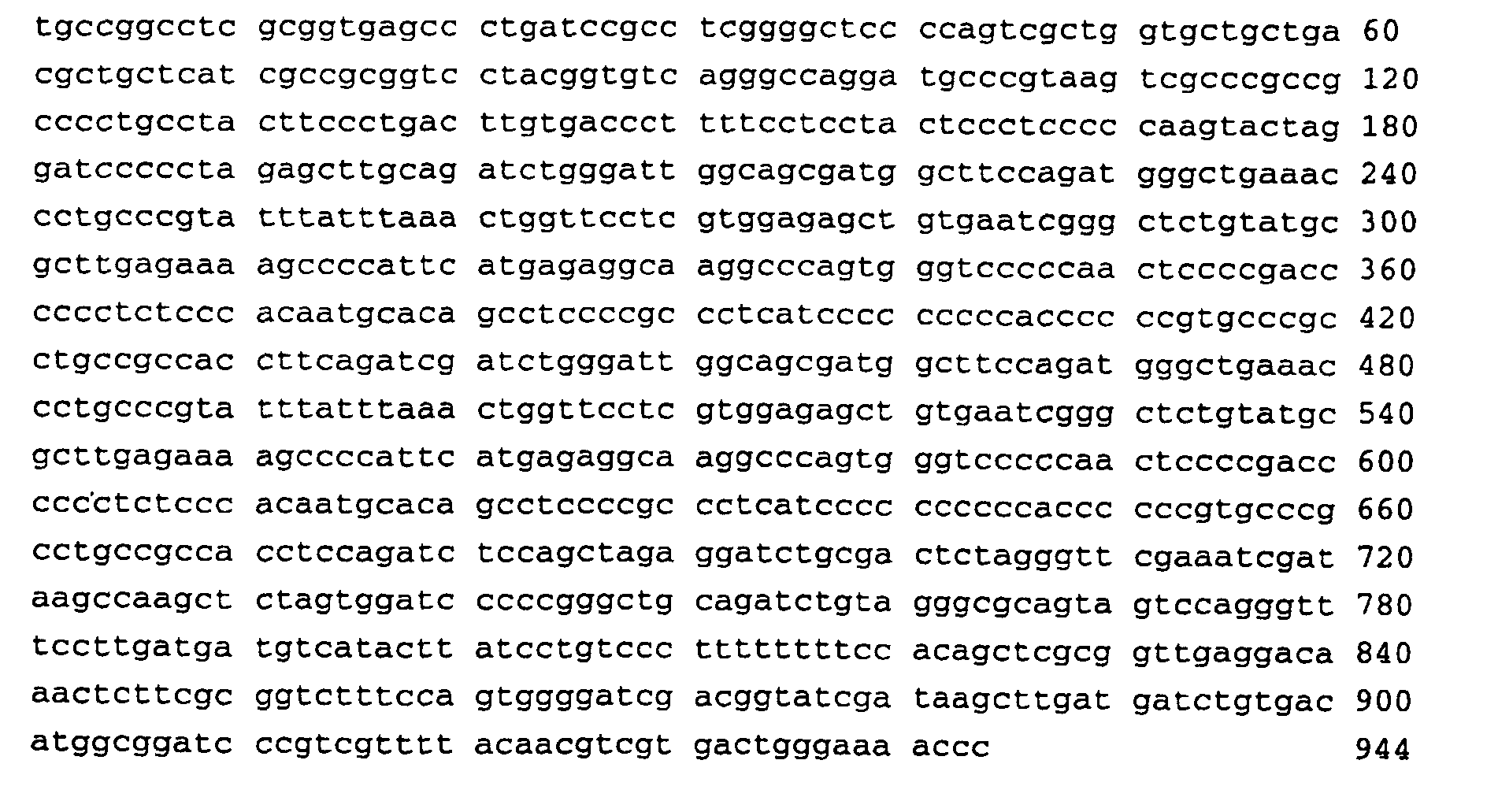
Claims (16)
- Promoteur hybride comprenant:a) un élément de réponse à un peroxisome proliferator activated receptor PPAR comprenant un ou plusieurs sites de liaison du PPAR etb) tout du promoteur du gène humain de la Phospholipase A2 sécrétée non-pancréatique PLA2s ou partie de celui-ci assurant une activité transcriptionnelle basale au promoteur hybride et un caractère régulable par les médiateurs de l'inflammation dans lequel l'élément (a) est positionné en amont de l'élément (b).
- Promoteur selon la revendication 1, caractérisé en ce que l'élément (a) de réponse à un PPAR comprend un ou ptusieurs sites de séquence SEQ ID NO : 1 ou de variants fonctionnels de cette séquence.
- Promoteur selon la revendication 2, caractérisé en ce que l'élément (a) de réponse à un PPAR comprend la séquence SEQ ID NO : 1, 2, 3 ou 4 ou un variant fonctionnel de celles-ci.
- Promoteur selon l'une quelconque des revendications précédentes, caractérisé en ce que l'élément b) comprend tout ou partie de la séquence SEQ ID NO : 5.
- Promoteur selon l'une quelconque des revendications précédentes, caractérisé en ce que l'élément b) comprend au moins une partie du promoteur PLA2S conférant l'induction par l'interleukine-1β.
- Promoteur selon la revendication 4 ou 5, caractérisé en ce que l'élément (b) comprend au moins les résidus 51 à 61 de SEQ ID NO:5.
- Promoteur selon la revendication 4 ou 5, caractérisé en ce que l'élément (b) comprend au moins les résidus 5 à 170 de SEQ ID NO : 5.
- Promoteur selon la revendication 4 ou 5, caractérisé en ce que l'élément (b) comprend au moins les résidus 51 à 170 de SEQ ID No : 5.
- Promoteur selon l'une quelconque des revendications précédentes, caractérisé en ce que l'élément a) est positionné en amont de l'élément (b).
- Promoteur selon l'une quelconque des revendications précédentes, caractérisé en ce qu'il comporte en outre un élément c) conférant une spécificité tissulaire.
- Promoteur selon la revendication 10, caractérisé en ce que l'élément c) confère une spécificité pour les cellules chondrocytaires, et notamment en ce qu'il comprend tout ou partie de la séquence SEQ ID NO : 7 ou d'un variant de celle-ci.
- Acide nucléique comprenant un promoteur hybride selon l'une des revendications 1 à 11 et un gène d'intérêt.
- Acide nucléique selon la revendication 12, caractérisé en ce que le gène d'intérêt est un gène codant pour un produit anti-inflammatoire.
- Vecteur comprenant un promoteur hybride selon l'une des revendications 1 à 11 ou un acide nucléique selon l'une des revendications 12 ou 13.
- Vecteur selon la revendication 14, caractérisé en ce qu'il s'agit d'un plasmide.
- Utilisation de l'acide nucléique selon la revendication 12 ou 13 ou du vecteur selon la revendication 14 ou 15 pour la préparation d'une composition utile pour le traitement de l'arthrose.
Applications Claiming Priority (5)
| Application Number | Priority Date | Filing Date | Title |
|---|---|---|---|
| FR0003262A FR2806418B1 (fr) | 2000-03-14 | 2000-03-14 | Promoteurs hybrides inductibles par l'inflammation, vecteurs les contenant et utilisations |
| FR0003262 | 2000-03-14 | ||
| US19695900P | 2000-04-13 | 2000-04-13 | |
| US196959P | 2000-04-13 | ||
| PCT/FR2001/000759 WO2001068845A2 (fr) | 2000-03-14 | 2001-03-14 | Promoteurs hybrides inductibles par l'inflammation, vecteurs les contenant et utilisations |
Publications (2)
| Publication Number | Publication Date |
|---|---|
| EP1263978A2 EP1263978A2 (fr) | 2002-12-11 |
| EP1263978B1 true EP1263978B1 (fr) | 2005-12-07 |
Family
ID=26212255
Family Applications (1)
| Application Number | Title | Priority Date | Filing Date |
|---|---|---|---|
| EP01914000A Expired - Lifetime EP1263978B1 (fr) | 2000-03-14 | 2001-03-14 | Promoteurs hybrides inductibles par l'inflammation, vecteurs les contenant et utilisations |
Country Status (9)
| Country | Link |
|---|---|
| EP (1) | EP1263978B1 (fr) |
| JP (1) | JP2003526368A (fr) |
| AT (1) | ATE312187T1 (fr) |
| AU (1) | AU2001239392A1 (fr) |
| CA (1) | CA2403189A1 (fr) |
| DE (1) | DE60115610T2 (fr) |
| DK (1) | DK1263978T3 (fr) |
| ES (1) | ES2254378T3 (fr) |
| WO (1) | WO2001068845A2 (fr) |
Family Cites Families (4)
| Publication number | Priority date | Publication date | Assignee | Title |
|---|---|---|---|---|
| GB2269897A (en) * | 1992-08-13 | 1994-02-23 | Merck Frosst Canada Inc | Assay to detect peroxisome proliferator activity |
| FR2755699B1 (fr) * | 1996-11-08 | 1998-12-18 | Rhone Poulenc Rorer Sa | Nouvelles constructions et vecteurs pour l'expression ciblee et inductible des genes |
| US5925657A (en) * | 1997-06-18 | 1999-07-20 | The General Hospital Corporation | Use of PPARγ agonists for inhibition of inflammatory cytokine production |
| MXPA01013227A (es) * | 1999-06-22 | 2002-06-04 | Aventis Pharma Sa | Sistema de regulacion farmacologica de la expresion que utiliza los receptores nucleares ppar y sus legandos. |
-
2001
- 2001-03-14 WO PCT/FR2001/000759 patent/WO2001068845A2/fr not_active Ceased
- 2001-03-14 AU AU2001239392A patent/AU2001239392A1/en not_active Abandoned
- 2001-03-14 CA CA002403189A patent/CA2403189A1/fr not_active Abandoned
- 2001-03-14 DK DK01914000T patent/DK1263978T3/da active
- 2001-03-14 AT AT01914000T patent/ATE312187T1/de not_active IP Right Cessation
- 2001-03-14 ES ES01914000T patent/ES2254378T3/es not_active Expired - Lifetime
- 2001-03-14 DE DE60115610T patent/DE60115610T2/de not_active Expired - Lifetime
- 2001-03-14 EP EP01914000A patent/EP1263978B1/fr not_active Expired - Lifetime
- 2001-03-14 JP JP2001567329A patent/JP2003526368A/ja active Pending
Also Published As
| Publication number | Publication date |
|---|---|
| JP2003526368A (ja) | 2003-09-09 |
| ATE312187T1 (de) | 2005-12-15 |
| AU2001239392A1 (en) | 2001-09-24 |
| DK1263978T3 (da) | 2006-04-18 |
| WO2001068845A3 (fr) | 2002-02-28 |
| WO2001068845A2 (fr) | 2001-09-20 |
| DE60115610T2 (de) | 2006-10-19 |
| DE60115610D1 (de) | 2006-01-12 |
| ES2254378T3 (es) | 2006-06-16 |
| EP1263978A2 (fr) | 2002-12-11 |
| CA2403189A1 (fr) | 2001-09-20 |
Similar Documents
| Publication | Publication Date | Title |
|---|---|---|
| FR2732357A1 (fr) | Vecteurs viraux et utilisation pour le traitement des desordres hyperproliferatifs, notamment de la restenose | |
| EP2173765A2 (fr) | Vecteurs viraux adéno-associés pour l'expression de la dysferline | |
| WO2002013758A2 (fr) | Systeme de regulation in vivo de l'expression d'un transgene par inhibition conditionnelle | |
| FR2806418A1 (fr) | Promoteurs hybrides inductibles par l'inflammation, vecteurs les contenant et utilisations | |
| EP0815239A1 (fr) | Virus recombinants exprimant la lecithine cholesterol acyltransferase et utilisation en therapie genique | |
| CA2341775A1 (fr) | Systeme d'expression inductible | |
| WO1996032489A1 (fr) | Vecteur viral recombinant inductible par le glucose | |
| EP1358354B1 (fr) | Procedes d'identification de composes modulant le transport inverse du cholesterol | |
| FR2755975A1 (fr) | Virus recombinants bicistroniques utiles pour le traitement de pathologies liees aux dyslipoproteinemies | |
| WO2001068845A2 (fr) | Promoteurs hybrides inductibles par l'inflammation, vecteurs les contenant et utilisations | |
| EP1190084A1 (fr) | Systeme de regulation de l'expression utilisant les recepteurs nucleaires ppar | |
| CA2190394C (fr) | Virus recombinants, preparation et utilisation en therapie genique | |
| CA2472016A1 (fr) | Methode d'identification de substances capables de moduler la differenciation adipocytaire | |
| Stauffer | Novel Roles for Activating Transcription Factor 6 α in the Activation and Differentiation of Cardiac Non-Myocytes | |
| CA2343922A1 (fr) | Utilisation de promoteurs specifiques hybrides pour controler l'expression tissulaire | |
| EP1697547A1 (fr) | Procede pour identifier des composes modulant le transport inverse du cholesterol | |
| FR2792336A1 (fr) | Cassette de regulation de l'expression d'un acide nucleique heterologue dans une cellule eucaryote, en particulier musculaire | |
| FR2795425A1 (fr) | Systeme de regulation pharmacologique de l'expression utilisant les recepteurs nucleaires par et leurs ligands | |
| FR2737221A1 (fr) | Nouveaux vecteurs viraux pour la therapie genique | |
| FR2783839A1 (fr) | Utilisation de promoteurs specifiques hybrides pour controler l'expression tissulaire | |
| FR2786198A1 (fr) | Nouveau systeme de regulation de l'expression d'un transgene |
Legal Events
| Date | Code | Title | Description |
|---|---|---|---|
| PUAI | Public reference made under article 153(3) epc to a published international application that has entered the european phase |
Free format text: ORIGINAL CODE: 0009012 |
|
| 17P | Request for examination filed |
Effective date: 20020914 |
|
| AK | Designated contracting states |
Kind code of ref document: A2 Designated state(s): AT BE CH CY DE DK ES FI FR GB GR IE IT LI LU MC NL PT SE TR |
|
| AX | Request for extension of the european patent |
Free format text: AL;LT;LV;MK;RO;SI |
|
| RIN1 | Information on inventor provided before grant (corrected) |
Inventor name: MASSAAD, CHARBEL Inventor name: SALVAT, COLETTE Inventor name: BEREZIAT, GILBERT Inventor name: BERENBAUM, FRANEIS Inventor name: OLIVIER, JEAN-LUC |
|
| 17Q | First examination report despatched |
Effective date: 20040121 |
|
| GRAP | Despatch of communication of intention to grant a patent |
Free format text: ORIGINAL CODE: EPIDOSNIGR1 |
|
| GRAS | Grant fee paid |
Free format text: ORIGINAL CODE: EPIDOSNIGR3 |
|
| GRAA | (expected) grant |
Free format text: ORIGINAL CODE: 0009210 |
|
| AK | Designated contracting states |
Kind code of ref document: B1 Designated state(s): AT BE CH CY DE DK ES FI FR GB GR IE IT LI LU MC NL PT SE TR |
|
| REG | Reference to a national code |
Ref country code: GB Ref legal event code: FG4D Free format text: NOT ENGLISH |
|
| REG | Reference to a national code |
Ref country code: CH Ref legal event code: EP |
|
| REG | Reference to a national code |
Ref country code: IE Ref legal event code: FG4D Free format text: LANGUAGE OF EP DOCUMENT: FRENCH |
|
| REF | Corresponds to: |
Ref document number: 60115610 Country of ref document: DE Date of ref document: 20060112 Kind code of ref document: P |
|
| PGFP | Annual fee paid to national office [announced via postgrant information from national office to epo] |
Ref country code: AT Payment date: 20060216 Year of fee payment: 6 Ref country code: LU Payment date: 20060216 Year of fee payment: 6 Ref country code: MC Payment date: 20060216 Year of fee payment: 6 |
|
| PGFP | Annual fee paid to national office [announced via postgrant information from national office to epo] |
Ref country code: NL Payment date: 20060217 Year of fee payment: 6 Ref country code: SE Payment date: 20060217 Year of fee payment: 6 |
|
| PGFP | Annual fee paid to national office [announced via postgrant information from national office to epo] |
Ref country code: GR Payment date: 20060221 Year of fee payment: 6 |
|
| PGFP | Annual fee paid to national office [announced via postgrant information from national office to epo] |
Ref country code: FI Payment date: 20060222 Year of fee payment: 6 |
|
| PGFP | Annual fee paid to national office [announced via postgrant information from national office to epo] |
Ref country code: CH Payment date: 20060309 Year of fee payment: 6 |
|
| PGFP | Annual fee paid to national office [announced via postgrant information from national office to epo] |
Ref country code: PT Payment date: 20060314 Year of fee payment: 6 |
|
| REG | Reference to a national code |
Ref country code: SE Ref legal event code: TRGR |
|
| GBT | Gb: translation of ep patent filed (gb section 77(6)(a)/1977) |
Effective date: 20060223 |
|
| REG | Reference to a national code |
Ref country code: CH Ref legal event code: NV Representative=s name: PATENTANWAELTE SCHAAD, BALASS, MENZL & PARTNER AG |
|
| PGFP | Annual fee paid to national office [announced via postgrant information from national office to epo] |
Ref country code: BE Payment date: 20060403 Year of fee payment: 6 |
|
| REG | Reference to a national code |
Ref country code: DK Ref legal event code: T3 |
|
| REG | Reference to a national code |
Ref country code: GR Ref legal event code: EP Ref document number: 20060400763 Country of ref document: GR |
|
| REG | Reference to a national code |
Ref country code: ES Ref legal event code: FG2A Ref document number: 2254378 Country of ref document: ES Kind code of ref document: T3 |
|
| PLBE | No opposition filed within time limit |
Free format text: ORIGINAL CODE: 0009261 |
|
| STAA | Information on the status of an ep patent application or granted ep patent |
Free format text: STATUS: NO OPPOSITION FILED WITHIN TIME LIMIT |
|
| 26N | No opposition filed |
Effective date: 20060908 |
|
| PG25 | Lapsed in a contracting state [announced via postgrant information from national office to epo] |
Ref country code: FI Free format text: LAPSE BECAUSE OF NON-PAYMENT OF DUE FEES Effective date: 20070314 |
|
| PG25 | Lapsed in a contracting state [announced via postgrant information from national office to epo] |
Ref country code: SE Free format text: LAPSE BECAUSE OF NON-PAYMENT OF DUE FEES Effective date: 20070315 |
|
| PG25 | Lapsed in a contracting state [announced via postgrant information from national office to epo] |
Ref country code: PT Free format text: LAPSE BECAUSE OF NON-PAYMENT OF DUE FEES Effective date: 20070914 |
|
| REG | Reference to a national code |
Ref country code: PT Ref legal event code: MM4A Free format text: LAPSE DUE TO NON-PAYMENT OF FEES Effective date: 20070914 |
|
| REG | Reference to a national code |
Ref country code: DK Ref legal event code: EBP |
|
| REG | Reference to a national code |
Ref country code: CH Ref legal event code: PL |
|
| EUG | Se: european patent has lapsed | ||
| PG25 | Lapsed in a contracting state [announced via postgrant information from national office to epo] |
Ref country code: AT Free format text: LAPSE BECAUSE OF NON-PAYMENT OF DUE FEES Effective date: 20070314 |
|
| NLV4 | Nl: lapsed or anulled due to non-payment of the annual fee |
Effective date: 20071001 |
|
| BERE | Be: lapsed |
Owner name: UNIVERSITE PIERRE ET MARIE *CURIE Effective date: 20070331 |
|
| PG25 | Lapsed in a contracting state [announced via postgrant information from national office to epo] |
Ref country code: BE Free format text: LAPSE BECAUSE OF NON-PAYMENT OF DUE FEES Effective date: 20070331 |
|
| PG25 | Lapsed in a contracting state [announced via postgrant information from national office to epo] |
Ref country code: NL Free format text: LAPSE BECAUSE OF NON-PAYMENT OF DUE FEES Effective date: 20071001 Ref country code: MC Free format text: LAPSE BECAUSE OF NON-PAYMENT OF DUE FEES Effective date: 20070331 |
|
| PG25 | Lapsed in a contracting state [announced via postgrant information from national office to epo] |
Ref country code: LI Free format text: LAPSE BECAUSE OF NON-PAYMENT OF DUE FEES Effective date: 20070331 Ref country code: CH Free format text: LAPSE BECAUSE OF NON-PAYMENT OF DUE FEES Effective date: 20070331 |
|
| PG25 | Lapsed in a contracting state [announced via postgrant information from national office to epo] |
Ref country code: DK Free format text: LAPSE BECAUSE OF NON-PAYMENT OF DUE FEES Effective date: 20070402 Ref country code: GR Free format text: LAPSE BECAUSE OF NON-PAYMENT OF DUE FEES Effective date: 20060308 |
|
| PG25 | Lapsed in a contracting state [announced via postgrant information from national office to epo] |
Ref country code: CY Free format text: LAPSE BECAUSE OF FAILURE TO SUBMIT A TRANSLATION OF THE DESCRIPTION OR TO PAY THE FEE WITHIN THE PRESCRIBED TIME-LIMIT Effective date: 20051207 |
|
| PG25 | Lapsed in a contracting state [announced via postgrant information from national office to epo] |
Ref country code: LU Free format text: LAPSE BECAUSE OF NON-PAYMENT OF DUE FEES Effective date: 20070314 |
|
| PG25 | Lapsed in a contracting state [announced via postgrant information from national office to epo] |
Ref country code: TR Free format text: LAPSE BECAUSE OF FAILURE TO SUBMIT A TRANSLATION OF THE DESCRIPTION OR TO PAY THE FEE WITHIN THE PRESCRIBED TIME-LIMIT Effective date: 20051207 |
|
| PGFP | Annual fee paid to national office [announced via postgrant information from national office to epo] |
Ref country code: IE Payment date: 20100301 Year of fee payment: 10 Ref country code: ES Payment date: 20100323 Year of fee payment: 10 |
|
| PGFP | Annual fee paid to national office [announced via postgrant information from national office to epo] |
Ref country code: IT Payment date: 20100325 Year of fee payment: 10 |
|
| PGFP | Annual fee paid to national office [announced via postgrant information from national office to epo] |
Ref country code: GB Payment date: 20100225 Year of fee payment: 10 |
|
| PGFP | Annual fee paid to national office [announced via postgrant information from national office to epo] |
Ref country code: FR Payment date: 20100416 Year of fee payment: 10 |
|
| PGFP | Annual fee paid to national office [announced via postgrant information from national office to epo] |
Ref country code: DE Payment date: 20100315 Year of fee payment: 10 |
|
| GBPC | Gb: european patent ceased through non-payment of renewal fee |
Effective date: 20110314 |
|
| REG | Reference to a national code |
Ref country code: FR Ref legal event code: ST Effective date: 20111130 |
|
| REG | Reference to a national code |
Ref country code: IE Ref legal event code: MM4A |
|
| PG25 | Lapsed in a contracting state [announced via postgrant information from national office to epo] |
Ref country code: DE Free format text: LAPSE BECAUSE OF NON-PAYMENT OF DUE FEES Effective date: 20111001 Ref country code: IE Free format text: LAPSE BECAUSE OF NON-PAYMENT OF DUE FEES Effective date: 20110314 Ref country code: FR Free format text: LAPSE BECAUSE OF NON-PAYMENT OF DUE FEES Effective date: 20110331 |
|
| REG | Reference to a national code |
Ref country code: DE Ref legal event code: R119 Ref document number: 60115610 Country of ref document: DE Effective date: 20111001 |
|
| PG25 | Lapsed in a contracting state [announced via postgrant information from national office to epo] |
Ref country code: IT Free format text: LAPSE BECAUSE OF NON-PAYMENT OF DUE FEES Effective date: 20110314 Ref country code: GB Free format text: LAPSE BECAUSE OF NON-PAYMENT OF DUE FEES Effective date: 20110314 |
|
| REG | Reference to a national code |
Ref country code: ES Ref legal event code: FD2A Effective date: 20120423 |
|
| PG25 | Lapsed in a contracting state [announced via postgrant information from national office to epo] |
Ref country code: ES Free format text: LAPSE BECAUSE OF NON-PAYMENT OF DUE FEES Effective date: 20110315 |