EP1211388A2 - Regelverfahren für den Stellantrieb eines variablen Ventiltriebes - Google Patents
Regelverfahren für den Stellantrieb eines variablen Ventiltriebes Download PDFInfo
- Publication number
- EP1211388A2 EP1211388A2 EP01122911A EP01122911A EP1211388A2 EP 1211388 A2 EP1211388 A2 EP 1211388A2 EP 01122911 A EP01122911 A EP 01122911A EP 01122911 A EP01122911 A EP 01122911A EP 1211388 A2 EP1211388 A2 EP 1211388A2
- Authority
- EP
- European Patent Office
- Prior art keywords
- value
- control method
- observer
- position measurement
- control
- Prior art date
- Legal status (The legal status is an assumption and is not a legal conclusion. Google has not performed a legal analysis and makes no representation as to the accuracy of the status listed.)
- Granted
Links
Images

Classifications
-
- F—MECHANICAL ENGINEERING; LIGHTING; HEATING; WEAPONS; BLASTING
- F02—COMBUSTION ENGINES; HOT-GAS OR COMBUSTION-PRODUCT ENGINE PLANTS
- F02D—CONTROLLING COMBUSTION ENGINES
- F02D41/00—Electrical control of supply of combustible mixture or its constituents
- F02D41/22—Safety or indicating devices for abnormal conditions
- F02D41/222—Safety or indicating devices for abnormal conditions relating to the failure of sensors or parameter detection devices
-
- F—MECHANICAL ENGINEERING; LIGHTING; HEATING; WEAPONS; BLASTING
- F01—MACHINES OR ENGINES IN GENERAL; ENGINE PLANTS IN GENERAL; STEAM ENGINES
- F01L—CYCLICALLY OPERATING VALVES FOR MACHINES OR ENGINES
- F01L1/00—Valve-gear or valve arrangements, e.g. lift-valve gear
- F01L1/34—Valve-gear or valve arrangements, e.g. lift-valve gear characterised by the provision of means for changing the timing of the valves without changing the duration of opening and without affecting the magnitude of the valve lift
-
- F—MECHANICAL ENGINEERING; LIGHTING; HEATING; WEAPONS; BLASTING
- F01—MACHINES OR ENGINES IN GENERAL; ENGINE PLANTS IN GENERAL; STEAM ENGINES
- F01L—CYCLICALLY OPERATING VALVES FOR MACHINES OR ENGINES
- F01L1/00—Valve-gear or valve arrangements, e.g. lift-valve gear
- F01L1/46—Component parts, details, or accessories, not provided for in preceding subgroups
-
- F—MECHANICAL ENGINEERING; LIGHTING; HEATING; WEAPONS; BLASTING
- F01—MACHINES OR ENGINES IN GENERAL; ENGINE PLANTS IN GENERAL; STEAM ENGINES
- F01L—CYCLICALLY OPERATING VALVES FOR MACHINES OR ENGINES
- F01L13/00—Modifications of valve-gear to facilitate reversing, braking, starting, changing compression ratio, or other specific operations
- F01L13/0015—Modifications of valve-gear to facilitate reversing, braking, starting, changing compression ratio, or other specific operations for optimising engine performances by modifying valve lift according to various working parameters, e.g. rotational speed, load, torque
- F01L13/0021—Modifications of valve-gear to facilitate reversing, braking, starting, changing compression ratio, or other specific operations for optimising engine performances by modifying valve lift according to various working parameters, e.g. rotational speed, load, torque by modification of rocker arm ratio
-
- F—MECHANICAL ENGINEERING; LIGHTING; HEATING; WEAPONS; BLASTING
- F01—MACHINES OR ENGINES IN GENERAL; ENGINE PLANTS IN GENERAL; STEAM ENGINES
- F01L—CYCLICALLY OPERATING VALVES FOR MACHINES OR ENGINES
- F01L13/00—Modifications of valve-gear to facilitate reversing, braking, starting, changing compression ratio, or other specific operations
- F01L13/0015—Modifications of valve-gear to facilitate reversing, braking, starting, changing compression ratio, or other specific operations for optimising engine performances by modifying valve lift according to various working parameters, e.g. rotational speed, load, torque
- F01L13/0021—Modifications of valve-gear to facilitate reversing, braking, starting, changing compression ratio, or other specific operations for optimising engine performances by modifying valve lift according to various working parameters, e.g. rotational speed, load, torque by modification of rocker arm ratio
- F01L13/0026—Modifications of valve-gear to facilitate reversing, braking, starting, changing compression ratio, or other specific operations for optimising engine performances by modifying valve lift according to various working parameters, e.g. rotational speed, load, torque by modification of rocker arm ratio by means of an eccentric
-
- F—MECHANICAL ENGINEERING; LIGHTING; HEATING; WEAPONS; BLASTING
- F01—MACHINES OR ENGINES IN GENERAL; ENGINE PLANTS IN GENERAL; STEAM ENGINES
- F01L—CYCLICALLY OPERATING VALVES FOR MACHINES OR ENGINES
- F01L2201/00—Electronic control systems; Apparatus or methods therefor
-
- F—MECHANICAL ENGINEERING; LIGHTING; HEATING; WEAPONS; BLASTING
- F01—MACHINES OR ENGINES IN GENERAL; ENGINE PLANTS IN GENERAL; STEAM ENGINES
- F01L—CYCLICALLY OPERATING VALVES FOR MACHINES OR ENGINES
- F01L2800/00—Methods of operation using a variable valve timing mechanism
-
- F—MECHANICAL ENGINEERING; LIGHTING; HEATING; WEAPONS; BLASTING
- F02—COMBUSTION ENGINES; HOT-GAS OR COMBUSTION-PRODUCT ENGINE PLANTS
- F02D—CONTROLLING COMBUSTION ENGINES
- F02D41/00—Electrical control of supply of combustible mixture or its constituents
- F02D41/02—Circuit arrangements for generating control signals
- F02D41/14—Introducing closed-loop corrections
- F02D41/1401—Introducing closed-loop corrections characterised by the control or regulation method
- F02D2041/1413—Controller structures or design
- F02D2041/1415—Controller structures or design using a state feedback or a state space representation
- F02D2041/1416—Observer
-
- Y—GENERAL TAGGING OF NEW TECHNOLOGICAL DEVELOPMENTS; GENERAL TAGGING OF CROSS-SECTIONAL TECHNOLOGIES SPANNING OVER SEVERAL SECTIONS OF THE IPC; TECHNICAL SUBJECTS COVERED BY FORMER USPC CROSS-REFERENCE ART COLLECTIONS [XRACs] AND DIGESTS
- Y02—TECHNOLOGIES OR APPLICATIONS FOR MITIGATION OR ADAPTATION AGAINST CLIMATE CHANGE
- Y02T—CLIMATE CHANGE MITIGATION TECHNOLOGIES RELATED TO TRANSPORTATION
- Y02T10/00—Road transport of goods or passengers
- Y02T10/10—Internal combustion engine [ICE] based vehicles
- Y02T10/40—Engine management systems
Definitions
- the invention relates to a control method for in the form of a worm gear trained, electric actuator of a variable valve train according to Preamble of claim 1.
- the aim is to increase the valve lift, especially the gas inlet valves, for the gas exchange, depending on the operating point change. If this succeeds, it is largely possible to use a throttle valve to be dispensed with, which would lead to a reduction in consumption, since then the disadvantageous and consumption-increasing throttle valve effects can be eliminated can are.
- a known embodiment of a so-called fully variable valve train sees an eccentric shaft for valve lift height adjustment by a brush motor with the interposition of a worm gear.
- the Due to its construction, worm gear has a so-called loose inside the eccentric shaft slightly without actuating the actuator can twist.
- external mechanical interference for example induced by the camshaft influence, it is possible that the lots of the Drive is driven through.
- This leads to one in the output area of the worm gear arranged position sensor even without loading the actuator reports a change in position.
- the fast leads Change of the position signal by changing the flanks in the gearbox to stimulate the control loop and, consequently, to apply it of the actuator. This results in an increased current consumption in particular of the system.
- the object of the present invention is to eliminate disturbances in the control loop caused by the Passing through the gearless arise, suppress without the Restrict control dynamics or control accuracy significantly.
- the electric actuator is dependent on one with a position measurement determined control difference preferably controlled pulse width modulated.
- a control difference in rated a lead filter.
- the controller itself is preferably included trained in digital working methods.
- the control difference consists of, for example a setpoint specification of the motor control and a reported position value the eccentric shaft. Since the position value (position measurement value) can be subject to disturbance variables Plausibility check necessary.
- the duty cycle of Pulse width modulation related to the position value Observer value formed. This observer value is compared with one of the compared to the actual position measurement value obtained. Exceeds the difference between the observer value and the Comparative value a defined limit or size, so the position measurement itself not accepted.
- the measured position value is therefore based on available status information checked for plausibility.
- the pulse duty factor is approximately proportional to the current through the electric actuator when it is at a standstill and thus proportional to the maximum torque that can be output by the actuator
- the values associated with the second derivative of the position value are preferably compared.
- the torque generated by the actuator causes acceleration of the system.
- a theoretical acceleration determined as an observer value from the duty cycle is preferably with an actually determined acceleration of the position measurement value compared.
- the position measurement values can then be evaluated and filtered in such a way that all sensed sensor values that correspond to an angular acceleration lying outside the predetermined limits are rejected as implausible.
- the sampling time of the controller T A is longer than that of the position sensor, then it also seems advisable to insert an actual value filter, which filters out the position measurement values that do not appear plausible, before averaging, in particular for noise suppression of the signal.
- the actual value filter should be arranged in front of this transmission element.
- other transmission elements for example proportional elements, can also be arranged in series or in parallel in the feedback branch.
- filtering can be limited to the feedback branch with the differentiating transmission element, since it is precisely in this element that the particularly rapid and short-term fluctuations when driving through the worm gearless have a disadvantageous effect.
- the differentiating element is arranged in the feedback branch precisely for the sake of the dynamics of the control method, since a high dynamic range can thus be achieved.
- the setpoint specification for forming the control difference and controlling the Guide filter preferably comes from digital engine electronics, which the valve lift height by adjusting the eccentric shaft at the operating point requests.
- the actual position value is recorded in particular by means of a rotation sensor which is activated the eccentric shaft is arranged. All information can be discrete-time, in digital Form recorded and passed on.
- A can preferably be used to compare the observer and comparison values non-linear actual value filter can be used.
- non-linear actual value filter can set maximum and minimum values for the deviation from observers - and comparison value can be defined.
- a position measurement is then accepted if the above deviation is in the range between the maximum and the minimum value.
- the maximum value can be used as an observer value described above - be determined from the duty cycle.
- As the minimum value for example, selected a braking acceleration that occurs when the servomotor leaks when de-energized.
- a so-called D 2 link is preferably used. This enables differentiated values to be differentiated by forming finite differences. Acceleration is also possible via approximation using a cubic function (spline) over the last three valid points.
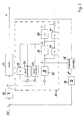
- digital engine electronics supply a setpoint specification SW that together with information to be explained later, a control difference results, which serves as the input signal of a guide filter R (reference numeral 10).
- the guide filter 10 evaluates the control difference and generates one pulse width modulated control with a duty cycle TV.
- This signal will to the electric actuator (not shown) in the controlled system 12 passed.
- the electric actuator adjusts the via a worm gear Eccentric shaft, not shown.
- a sensor is arranged that generates a measurement signal and outputs a corresponding position measurement ⁇ .
- This measured value ⁇ is in a feedback branch via a differentiating element 18 to form the Control difference.
- the differentiating element 18 generates from the Position measurement a step response, the characteristics of which in the desired manner can be set.
- the only known state variable in the present case namely the pulse duty factor TV, which is proportional to the control current of the electric actuator and thus to the torque generated by it when the servomotor is at a standstill, becomes an observer variable via an observer model 14 generated, which is related to the second derivative of the position value.
- the observer size is then compared in a nonlinear actual value filter 16, which will be discussed in more detail later, with a comparison value determined from the position measurement value ⁇ , and a plausibility check is carried out on the deviation of the two values from one another, as will be explained below.
- the basis for this is the fact that the observer size determined using a model essentially corresponds to the comparison value obtained from a position measurement value which is not subject to interference.
- the duty cycle TV is fed to a proportional element 20, which derives the observer value from the proportional ratio of the duty cycle TV to current and motor torque, which is known per se generated.
- the observer value is converted via an integrator 28 one size generated that corresponds to a change in the position value. With this size is a position value via three additional models, namely the influence of spring force 22, the influence of a friction force 24, and armature reaction A R 26 and via another integrator 30 estimated. With the difference between the actual measured position value ⁇ and the estimated position value is then a correction for again via correction parameters K 1 and K 2 (reference numerals 32 and 34) and brought about in order to suppress a permanent deviation of the observer from the real angle.
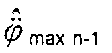
- the observer size is then in the nonlinear actual value filter 16 with the second derivative of the position measurement value ⁇ , that is compared. From the discrepancy between the two variables, a decision is then made as to whether the position measurement value is accepted or rejected.
- An example of such an actual value filter is given in FIG. 3. Before going into this in more detail, however, a simplified version of an observer model should first be given.
- the value obtained from the duty cycle which essentially corresponds to the second derivative of the position value, now represents the maximum value for an acceptable acceleration, since neither the armature reaction due to the angular speed of the servomotor, nor the friction and spring forces are taken into account.
- the controller structure from FIG. 2 shows a simplified filter concept that essentially dispenses with the complex observer structure.
- the nonlinear actual value filter 16 in FIG. 3 operates with a lower limit and the upper limit for acceleration. Furthermore, a D 2 element 40 is provided for a two-fold differentiation of the position measurement signal ⁇ . The last two valid and the current value of the position measurement Mess are required. Differentiation can take place through the formation of finite differences. The actual time interval between the used values of ⁇ n must be used for the difference formation. The distance between the center points between the valid sampling times then applies to the second difference. Thus, the second derivative of the position measurement value is obtained at the output of the D 2 element 40. This information is fed into the non-linear element 42. A mapping function is defined in the nonlinear term, according to which between the two boundaries and the mapping value is 1. Outside of these limits, the mapping value is zero.
- the braking acceleration is selected that occurs when the servomotor runs in one direction when de-energized.
- the braking acceleration can depend on the position and the direction of rotation. If the duty cycle TV is zero, the limits are set by +/-
- the measured position value ⁇ is accepted. This is passed on to the D 2 element 40 and to a switch 44. In the D 2 member, an accepted position value is used for the next differentiation step. On the other hand, an unaccepted position value is not used for a next differentiation step.
- a position measurement value is switched through when it is accepted. If it is not accepted, no value will be given to the following ones Limbs passed on. A downstream link becomes the previous value output. This corresponds to the insertion of a holding element before the sum point to form the control difference. Are so-called D-elements (differentiators) inserted, you can see the time difference between successive position values consider. This gives the set ⁇ * of the accepted position measurements.
- the present invention can be due to the nature of the Use disturbances in the variable valve train system in a special way.
- This Peculiarity is determined by the engagement of the camshaft and by the Reaction caused by the gearless movement of the worm drive.
- the amplitude of the disturbance is limited.
- the size of the disturbance is smaller or equal to the required control quality, i.e. it is not necessary to have such a disturbance hereregeln.
- the speed at which the signal is changed is essential larger than it corresponds to the current system status.
- the original Flank system is usually again after cam intervention accepted.
- the present method allows the interference in the Control circuit of a variable valve train with worm gear without the Restrict control dynamics or control accuracy significantly.
Landscapes
- Engineering & Computer Science (AREA)
- Mechanical Engineering (AREA)
- General Engineering & Computer Science (AREA)
- Chemical & Material Sciences (AREA)
- Combustion & Propulsion (AREA)
- Valve Device For Special Equipments (AREA)
- Feedback Control In General (AREA)
- Control Of Position Or Direction (AREA)
- Output Control And Ontrol Of Special Type Engine (AREA)
Abstract
Description


- Figur 1
- ein Regeldiagramm einer Ausführungsform der vorliegenden Erfindung,
- Figur 2
- ein vereinfachtes Regeldiagramm einer weiteren Ausführungsform der vorliegenden Erfindung und
- Figur 3
- ein Blockschaltbild eines nichtlinearen Istwert-Filters zur Verwendung in den in Fig. 1 und 2 genannten Regelungen.




Claims (17)
- Regelverfahren für den in Form eines Schneckengetriebes ausgebildeten elektrischen Stellantrieb eines variablen Ventiltriebes, bei dem ein Positions-Wert einer Exzenterwelle mit einem Sensor erfasst wird (Positions-Messwert), eine Regeldifferenz unter Verwendung des Positions-Messwertes in einem Rückführungszweig erzeugt wird und der elektrische Stellantrieb in Abhängigkeit von der Regeldifferenz angesteuert wird,
dadurch gekennzeichnet, dass aus einem Tastverhältnis einer Pulsweitenmodulation ein mit dem Positions-Wert zusammenhängender Beobachterwert gebildet wird, dass der Beobachterwert mit einem aus dem Positions-Messwert gebildeten Vergleichswert verglichen wird und dass der erfasste Positions-Messwert dann nicht akzeptiert wird, wenn die Abweichung des Beobachterwertes von dem Vergleichswert eine definierte Grenze überschreitet. - Regelverfahren nach Anspruch 1,
dadurch gekennzeichnet, dass der Beobachterwert der Beschleunigung des Positions-Wertes entspricht, welcher aus einem Beobachtermodell gewonnen wird, und dass der Vergleichswert der zweiten Ableitung des Positions-Messwertes entspricht. - Regelverfahren nach Anspruch 1 oder 2,
dadurch gekennzeichnet, dass zur Bildung der Regeldifferenz eine Sollwertvorgabe verwendet wird, die von einer digitalen Motorelektronik stammt. - Regelverfahren nach einem der Ansprüche 1 bis 3,
dadurch gekennzeichnet, dass der Positions-Messwert mittels eines Drehwinkelsensors an der Exzenterwelle erfaßt wird. - Regelverfahren nach einem der vorhergehenden Ansprüche,
dadurch gekennzeichnet, dass alle Informationen zeitdiskret, in digitaler Form erfasst und weitergegeben werden. - Regelverfahren nach einem der vorhergehenden Ansprüche,
dadurch gekennzeichnet, dass sich in dem Rückführungszweig ein differenzierendes Glied befindet. - Regelverfahren nach einem der vorhergehenden Ansprüche,
dadurch gekennzeichnet, dass die Regelglieder digital aufgebaut sind. - Regelverfahren nach einem der vorhergehenden Ansprüche,
dadurch gekennzeichnet, dass die Abtastung des Positionssensors mit einer höheren Rate als die Aktualisierung der übrigen Reglergrößen durchgeführt wird. - Regelverfahren nach einem der vorhergehenden Ansprüche,
dadurch gekennzeichnet, dass beim Vergleich von Beobachterwert und Vergleichswert ein nichtlinearer Istwertfilter verwendet wird. - Regelverfahren nach Anspruch 9,
dadurch gekennzeichnet, dass im nichtlinearen Ist-Wertfilter ein Maximalwert und ein Minimalwert definiert sind und der Positions-Messwert dann akzeptiert wird, wenn sich der Vergleichswert innerhalb obiger Werte befindet. - Regelverfahren nach einem der Ansprüche 9 oder 10,
dadurch gekennzeichnet, dass der Maximalwert in Form des Beobachterwertes aus dem Tastverhältnis bestimmt wird. - Regelverfahren nach einem der Ansprüche 9 bis 11,
dadurch gekennzeichnet, dass zumindest bei definierten Verfahrensituationen als Minimalwert die Bremsbeschleunigung gewählt wird, die auftritt, wenn der Stellmotor unbestromt ausläuft. - Regelverfahren nach einem der Ansprüche 9 bis 12,
dadurch gekennzeichnet, dass bei einem Taktverhältnis von Null die Grenzen durch den positiven und negativen Absolutwert des Minimalwertes bestimmt werden. - Regelverfahren nach einem der vorhergehenden Ansprüche,
dadurch gekennzeichnet, dass in nachgeschalteten Regelgliedern nicht akzeptierte Positions-Messwerte bei der Bildung der Regeldifferenz durch den letzten gültigen Positions-Wert ersetzt werden. - Regelverfahren nach einem der vorhergehenden Ansprüche,
dadurch gekennzeichnet, dass ein D2-Glied für eine zweifache Differentiation von gültigen Positions-Messsignals verwendet ist. - Regelverfahren nach Anspruch 15,
dadurch gekennzeichnet, dass die Differentiation über die Bildung finiter Differenzen stattfindet. - Regelverfahren nach einem der vorhergehenden Ansprüche 2 bis 14,
dadurch gekennzeichnet, dass die zweiten Ableitungen durch Approximation einer kubischen Funktion über die letzten drei gültigen Punkte bestimmt wird.
Applications Claiming Priority (2)
| Application Number | Priority Date | Filing Date | Title |
|---|---|---|---|
| DE10059285 | 2000-11-29 | ||
| DE10059285A DE10059285A1 (de) | 2000-11-29 | 2000-11-29 | Regelverfahren für den Stellantrieb eines variablen Ventiltriebes |
Publications (3)
| Publication Number | Publication Date |
|---|---|
| EP1211388A2 true EP1211388A2 (de) | 2002-06-05 |
| EP1211388A3 EP1211388A3 (de) | 2003-03-12 |
| EP1211388B1 EP1211388B1 (de) | 2003-12-10 |
Family
ID=7665120
Family Applications (1)
| Application Number | Title | Priority Date | Filing Date |
|---|---|---|---|
| EP20010122911 Expired - Lifetime EP1211388B1 (de) | 2000-11-29 | 2001-09-25 | Regelverfahren für den Stellantrieb eines variablen Ventiltriebes |
Country Status (3)
| Country | Link |
|---|---|
| US (1) | US6665165B2 (de) |
| EP (1) | EP1211388B1 (de) |
| DE (2) | DE10059285A1 (de) |
Families Citing this family (3)
| Publication number | Priority date | Publication date | Assignee | Title |
|---|---|---|---|---|
| JP2003027973A (ja) * | 2001-07-12 | 2003-01-29 | Hitachi Unisia Automotive Ltd | 可変動弁機構の制御装置 |
| JP4678350B2 (ja) * | 2006-08-31 | 2011-04-27 | トヨタ自動車株式会社 | 可変バルブタイミング装置 |
| DE102007051216A1 (de) * | 2007-10-26 | 2009-04-30 | Volkswagen Ag | Einrichtung, Verfahren und Regelungssystemkomponente zur Ermittlung der Geschwindigkeit aus einer Beschleunigung |
Family Cites Families (12)
| Publication number | Priority date | Publication date | Assignee | Title |
|---|---|---|---|---|
| DE3707770A1 (de) * | 1987-03-11 | 1988-09-22 | Bosch Gmbh Robert | Lageregelung zur reaktionsschnellen positionierung mit einem gleichstromservomotor |
| DE4016816C2 (de) | 1990-05-25 | 1999-10-07 | Bosch Gmbh Robert | Elektromagnetisches Wegeventil mit einer Stelleinrichtung |
| DE4016815A1 (de) * | 1990-05-25 | 1991-11-28 | Bosch Gmbh Robert | Verfahren und vorrichtung zur einstellung eines stellglieds eines kraftfahrzeugs |
| GB9320204D0 (en) * | 1993-09-30 | 1993-11-17 | Lotus Car | Valve operating mechanism for internal combustion engines |
| DE4413443C2 (de) * | 1994-04-18 | 1998-10-01 | Korostenski Erwin | Brennkraftmaschine |
| WO1996037689A1 (fr) * | 1995-05-25 | 1996-11-28 | Mitsubishi Jidosha Kogyo Kabushiki Kaisha | Train ajustable d'engrenages de commande de soupapes |
| DE19629881A1 (de) * | 1996-07-24 | 1998-01-29 | Bayerische Motoren Werke Ag | Ventiltrieb einer Brennkraftmaschine mit sich an einer Exzenterwelle abstützenden Schwinghebeln |
| DE69801775T2 (de) * | 1997-01-07 | 2002-02-21 | Unisia Jecs Corp., Atsugi | Vorrichtung und Verfahren zur Ventilsteuerung in einer Brennkraftmaschine |
| DE19705766C1 (de) * | 1997-02-14 | 1998-08-13 | Siemens Ag | Verfahren und Einrichtung zum Überwachen eines Sensors, der einer Brennkraftmaschine zugeordnet ist |
| US5986871A (en) * | 1997-11-04 | 1999-11-16 | Caterpillar Inc. | Method of operating a fuel injector |
| JP3500969B2 (ja) * | 1998-07-03 | 2004-02-23 | 株式会社日立製作所 | 電子スロットル制御装置 |
| US6113014A (en) * | 1998-07-13 | 2000-09-05 | Caterpillar Inc. | Dual solenoids on a single circuit and fuel injector using same |
-
2000
- 2000-11-29 DE DE10059285A patent/DE10059285A1/de not_active Withdrawn
-
2001
- 2001-09-25 DE DE50101131T patent/DE50101131D1/de not_active Expired - Lifetime
- 2001-09-25 EP EP20010122911 patent/EP1211388B1/de not_active Expired - Lifetime
- 2001-11-29 US US09/995,604 patent/US6665165B2/en not_active Expired - Lifetime
Also Published As
| Publication number | Publication date |
|---|---|
| US6665165B2 (en) | 2003-12-16 |
| US20020066425A1 (en) | 2002-06-06 |
| DE10059285A1 (de) | 2002-06-06 |
| DE50101131D1 (de) | 2004-01-22 |
| EP1211388A3 (de) | 2003-03-12 |
| EP1211388B1 (de) | 2003-12-10 |
Similar Documents
| Publication | Publication Date | Title |
|---|---|---|
| DE102009008944A1 (de) | Bremssystem mit simultanem bzw. teilsimultanem Druckauf- und Druckabbau in den Radbremsen aus unterschiedlichen Radzylinderdruckniveaus | |
| EP3642856A1 (de) | Verfahren und vorrichtung zum ansteuern eines mittels einer spule bewegbaren teils und magnetventil | |
| DE4028548C2 (de) | Vorrichtung zur Steuerung der Überbrückungskupplung eines Drehmomentwandlers in einem automatischen Kraftfahrzeuggetriebe | |
| DE4408105A1 (de) | Positionsregler und zugehöriges Verfahren zur Positionsregelung | |
| EP0190268B1 (de) | Verfahren und einrichtung zur regelung der leerlaufdrehzahl einer brennkraftmaschine | |
| DE19848960B4 (de) | Verfahren und Vorrichtung zur Steuerung eines Drucksteuerventils, insbesondere einer Bremsanlage | |
| DE19849666A1 (de) | Verfahren und Vorrichtung zur Steuerung des Schleppmoments einer Brennkraftmaschine | |
| DE3932763C1 (de) | ||
| DE102019118904A1 (de) | Dämpfungsvorrichtung eines Fahrzeugs und zugeordnetes Verfahren | |
| EP1211388B1 (de) | Regelverfahren für den Stellantrieb eines variablen Ventiltriebes | |
| DE4335239C1 (de) | Verfahren zum Positionieren eines Stellglieds | |
| DE10105207A1 (de) | Verfahren und Vorrichtung zur Drehzahlregelung eines Gleichstrommotors für Modellfahrzeuge | |
| DE3906495C2 (de) | ||
| DE2125093A1 (de) | ||
| EP1178202B1 (de) | Verfahren und Vorrichtung zur Regelung einer Brennkraftmaschine | |
| DE4303243C2 (de) | Verfahren zum Abgleich der Kennlinien von stufenlos verstellbaren Getrieben eines Fahrzeugs mit beidseitigem Fahrantrieb | |
| EP1614921A1 (de) | Verfahren zum Einstellen eines Kupplungsmoments | |
| DE4310859A1 (de) | Verfahren und Vorrichtung zur Positionierung einer Verstelleinrichtung | |
| DE3311351A1 (de) | Regeleinrichtung fuer die kraftstoffzumessung bei einer dieselbrennkraftmaschine | |
| DE10062107C1 (de) | Aktorregelung | |
| DE4335726A1 (de) | Verfahren und Vorrichtung zur Steuerung der Antriebsleistung eines Fahrzeugs | |
| DE102007062173A1 (de) | Verfahren zum Betreiben einer Brennkraftmaschine und Steuer- oder Regelrichtung für eine Brennkraftmaschine | |
| DE4030881A1 (de) | Antriebsschlupfregelsystem | |
| DE102021206421A1 (de) | Regeleinrichtung zur Regelung einer eine Brennkraftmaschine und einen mit der Brennkraftmaschine antriebswirkverbundenen Generator umfassenden Leistungsanordnung, Regelanordnung mit einer solchen Regeleinrichtung, Leistungsanordnung und Verfahren zur Regelung einer Leistungsanordnung | |
| WO2002061517A1 (de) | Regelungseinrichtung und verfahren zum regeln des dynamischen verhaltens eines rades |
Legal Events
| Date | Code | Title | Description |
|---|---|---|---|
| PUAI | Public reference made under article 153(3) epc to a published international application that has entered the european phase |
Free format text: ORIGINAL CODE: 0009012 |
|
| AK | Designated contracting states |
Kind code of ref document: A2 Designated state(s): AT BE CH CY DE DK ES FI FR GB GR IE IT LI LU MC NL PT SE TR |
|
| AX | Request for extension of the european patent |
Free format text: AL;LT;LV;MK;RO;SI |
|
| PUAL | Search report despatched |
Free format text: ORIGINAL CODE: 0009013 |
|
| AK | Designated contracting states |
Kind code of ref document: A3 Designated state(s): AT BE CH CY DE DK ES FI FR GB GR IE IT LI LU MC NL PT SE TR |
|
| AX | Request for extension of the european patent |
Extension state: AL LT LV MK RO SI |
|
| RIC1 | Information provided on ipc code assigned before grant |
Ipc: 7F 01L 1/356 B Ipc: 7F 01L 13/00 B Ipc: 7F 02D 41/22 B Ipc: 7F 01L 1/34 A |
|
| 17P | Request for examination filed |
Effective date: 20030408 |
|
| GRAH | Despatch of communication of intention to grant a patent |
Free format text: ORIGINAL CODE: EPIDOS IGRA |
|
| GRAS | Grant fee paid |
Free format text: ORIGINAL CODE: EPIDOSNIGR3 |
|
| GRAA | (expected) grant |
Free format text: ORIGINAL CODE: 0009210 |
|
| AKX | Designation fees paid |
Designated state(s): DE FR GB |
|
| AK | Designated contracting states |
Kind code of ref document: B1 Designated state(s): DE FR GB |
|
| REG | Reference to a national code |
Ref country code: GB Ref legal event code: FG4D Free format text: NOT ENGLISH |
|
| GBT | Gb: translation of ep patent filed (gb section 77(6)(a)/1977) |
Effective date: 20031210 |
|
| REG | Reference to a national code |
Ref country code: IE Ref legal event code: FG4D Free format text: GERMAN |
|
| REF | Corresponds to: |
Ref document number: 50101131 Country of ref document: DE Date of ref document: 20040122 Kind code of ref document: P |
|
| REG | Reference to a national code |
Ref country code: IE Ref legal event code: FD4D |
|
| ET | Fr: translation filed | ||
| PLBE | No opposition filed within time limit |
Free format text: ORIGINAL CODE: 0009261 |
|
| STAA | Information on the status of an ep patent application or granted ep patent |
Free format text: STATUS: NO OPPOSITION FILED WITHIN TIME LIMIT |
|
| 26N | No opposition filed |
Effective date: 20040913 |
|
| REG | Reference to a national code |
Ref country code: FR Ref legal event code: PLFP Year of fee payment: 15 |
|
| PGFP | Annual fee paid to national office [announced via postgrant information from national office to epo] |
Ref country code: GB Payment date: 20150924 Year of fee payment: 15 |
|
| PGFP | Annual fee paid to national office [announced via postgrant information from national office to epo] |
Ref country code: FR Payment date: 20150928 Year of fee payment: 15 |
|
| GBPC | Gb: european patent ceased through non-payment of renewal fee |
Effective date: 20160925 |
|
| REG | Reference to a national code |
Ref country code: FR Ref legal event code: ST Effective date: 20170531 |
|
| PG25 | Lapsed in a contracting state [announced via postgrant information from national office to epo] |
Ref country code: GB Free format text: LAPSE BECAUSE OF NON-PAYMENT OF DUE FEES Effective date: 20160925 Ref country code: FR Free format text: LAPSE BECAUSE OF NON-PAYMENT OF DUE FEES Effective date: 20160930 |
|
| PGFP | Annual fee paid to national office [announced via postgrant information from national office to epo] |
Ref country code: DE Payment date: 20170915 Year of fee payment: 17 |
|
| REG | Reference to a national code |
Ref country code: DE Ref legal event code: R119 Ref document number: 50101131 Country of ref document: DE |
|
| PG25 | Lapsed in a contracting state [announced via postgrant information from national office to epo] |
Ref country code: DE Free format text: LAPSE BECAUSE OF NON-PAYMENT OF DUE FEES Effective date: 20190402 |