EP1208216B1 - Fettsäure-desaturase-gen aus pflanzen - Google Patents
Fettsäure-desaturase-gen aus pflanzen Download PDFInfo
- Publication number
- EP1208216B1 EP1208216B1 EP00956479A EP00956479A EP1208216B1 EP 1208216 B1 EP1208216 B1 EP 1208216B1 EP 00956479 A EP00956479 A EP 00956479A EP 00956479 A EP00956479 A EP 00956479A EP 1208216 B1 EP1208216 B1 EP 1208216B1
- Authority
- EP
- European Patent Office
- Prior art keywords
- nucleic acid
- fatty acids
- seq
- gene
- acid
- Prior art date
- Legal status (The legal status is an assumption and is not a legal conclusion. Google has not performed a legal analysis and makes no representation as to the accuracy of the status listed.)
- Expired - Lifetime
Links
- 108010087894 Fatty acid desaturases Proteins 0.000 title description 4
- 150000007523 nucleic acids Chemical group 0.000 claims abstract description 76
- 108020004707 nucleic acids Proteins 0.000 claims abstract description 48
- 102000039446 nucleic acids Human genes 0.000 claims abstract description 48
- 239000013598 vector Substances 0.000 claims abstract description 27
- 150000004670 unsaturated fatty acids Chemical class 0.000 claims abstract description 26
- 235000021122 unsaturated fatty acids Nutrition 0.000 claims abstract description 24
- 150000004671 saturated fatty acids Chemical class 0.000 claims abstract description 16
- 235000003441 saturated fatty acids Nutrition 0.000 claims abstract description 14
- DQGMPXYVZZCNDQ-KBPWROHVSA-N (8E,10E,12Z)-octadecatrienoic acid Chemical compound CCCCC\C=C/C=C/C=C/CCCCCCC(O)=O DQGMPXYVZZCNDQ-KBPWROHVSA-N 0.000 claims description 38
- 238000000034 method Methods 0.000 claims description 31
- 235000014113 dietary fatty acids Nutrition 0.000 claims description 25
- 229930195729 fatty acid Natural products 0.000 claims description 25
- 239000000194 fatty acid Substances 0.000 claims description 25
- 150000004665 fatty acids Chemical class 0.000 claims description 23
- 230000001105 regulatory effect Effects 0.000 claims description 17
- 230000009261 transgenic effect Effects 0.000 claims description 15
- OYHQOLUKZRVURQ-IXWMQOLASA-N linoleic acid Natural products CCCCC\C=C/C\C=C\CCCCCCCC(O)=O OYHQOLUKZRVURQ-IXWMQOLASA-N 0.000 claims description 13
- 238000009396 hybridization Methods 0.000 claims description 12
- ZHNUHDYFZUAESO-UHFFFAOYSA-N Formamide Chemical compound NC=O ZHNUHDYFZUAESO-UHFFFAOYSA-N 0.000 claims description 10
- 230000008569 process Effects 0.000 claims description 10
- 244000005700 microbiome Species 0.000 claims description 9
- OYHQOLUKZRVURQ-HZJYTTRNSA-N Linoleic acid Chemical compound CCCCC\C=C/C\C=C/CCCCCCCC(O)=O OYHQOLUKZRVURQ-HZJYTTRNSA-N 0.000 claims description 8
- 241001465754 Metazoa Species 0.000 claims description 8
- 235000020778 linoleic acid Nutrition 0.000 claims description 8
- 230000000694 effects Effects 0.000 claims description 6
- 229920001184 polypeptide Polymers 0.000 claims description 6
- 102000004196 processed proteins & peptides Human genes 0.000 claims description 6
- 108090000765 processed proteins & peptides Proteins 0.000 claims description 6
- 238000002360 preparation method Methods 0.000 claims description 5
- 239000002537 cosmetic Substances 0.000 claims description 4
- 239000003814 drug Substances 0.000 claims description 4
- 230000002068 genetic effect Effects 0.000 claims description 3
- 125000003275 alpha amino acid group Chemical group 0.000 claims 2
- 108091028043 Nucleic acid sequence Proteins 0.000 abstract description 25
- 229920006395 saturated elastomer Polymers 0.000 abstract description 13
- 150000003626 triacylglycerols Chemical class 0.000 abstract description 13
- 238000004519 manufacturing process Methods 0.000 abstract description 6
- 108090000623 proteins and genes Proteins 0.000 description 63
- 241000196324 Embryophyta Species 0.000 description 52
- -1 42 ° C in 5 x SSC Chemical compound 0.000 description 51
- 239000013615 primer Substances 0.000 description 39
- 230000014509 gene expression Effects 0.000 description 31
- 240000004808 Saccharomyces cerevisiae Species 0.000 description 27
- 235000014680 Saccharomyces cerevisiae Nutrition 0.000 description 27
- 240000001432 Calendula officinalis Species 0.000 description 23
- 108020004414 DNA Proteins 0.000 description 23
- 239000002299 complementary DNA Substances 0.000 description 19
- 150000001413 amino acids Chemical group 0.000 description 16
- 150000002632 lipids Chemical class 0.000 description 15
- 230000015572 biosynthetic process Effects 0.000 description 14
- 238000003752 polymerase chain reaction Methods 0.000 description 14
- 102000004190 Enzymes Human genes 0.000 description 13
- 108090000790 Enzymes Proteins 0.000 description 13
- 235000005881 Calendula officinalis Nutrition 0.000 description 12
- HEDRZPFGACZZDS-UHFFFAOYSA-N Chloroform Chemical compound ClC(Cl)Cl HEDRZPFGACZZDS-UHFFFAOYSA-N 0.000 description 12
- LFQSCWFLJHTTHZ-UHFFFAOYSA-N Ethanol Chemical compound CCO LFQSCWFLJHTTHZ-UHFFFAOYSA-N 0.000 description 12
- VLKZOEOYAKHREP-UHFFFAOYSA-N n-Hexane Chemical compound CCCCCC VLKZOEOYAKHREP-UHFFFAOYSA-N 0.000 description 12
- AJBZENLMTKDAEK-UHFFFAOYSA-N 3a,5a,5b,8,8,11a-hexamethyl-1-prop-1-en-2-yl-1,2,3,4,5,6,7,7a,9,10,11,11b,12,13,13a,13b-hexadecahydrocyclopenta[a]chrysene-4,9-diol Chemical compound CC12CCC(O)C(C)(C)C1CCC(C1(C)CC3O)(C)C2CCC1C1C3(C)CCC1C(=C)C AJBZENLMTKDAEK-UHFFFAOYSA-N 0.000 description 11
- 235000003880 Calendula Nutrition 0.000 description 11
- 240000006240 Linum usitatissimum Species 0.000 description 10
- 239000003921 oil Substances 0.000 description 10
- 235000019198 oils Nutrition 0.000 description 10
- 239000013612 plasmid Substances 0.000 description 10
- 235000010469 Glycine max Nutrition 0.000 description 9
- 239000012634 fragment Substances 0.000 description 9
- 108091032973 (ribonucleotides)n+m Proteins 0.000 description 8
- 244000020518 Carthamus tinctorius Species 0.000 description 8
- 235000003222 Helianthus annuus Nutrition 0.000 description 8
- 244000020551 Helianthus annuus Species 0.000 description 8
- 235000004431 Linum usitatissimum Nutrition 0.000 description 8
- 210000004027 cell Anatomy 0.000 description 8
- 210000005253 yeast cell Anatomy 0.000 description 8
- 235000003255 Carthamus tinctorius Nutrition 0.000 description 7
- 230000002255 enzymatic effect Effects 0.000 description 7
- 102000004169 proteins and genes Human genes 0.000 description 7
- 230000009466 transformation Effects 0.000 description 7
- 241000233866 Fungi Species 0.000 description 6
- KFZMGEQAYNKOFK-UHFFFAOYSA-N Isopropanol Chemical compound CC(C)O KFZMGEQAYNKOFK-UHFFFAOYSA-N 0.000 description 6
- OKKJLVBELUTLKV-UHFFFAOYSA-N Methanol Chemical compound OC OKKJLVBELUTLKV-UHFFFAOYSA-N 0.000 description 6
- 239000002253 acid Substances 0.000 description 6
- 235000001014 amino acid Nutrition 0.000 description 6
- 229940024606 amino acid Drugs 0.000 description 6
- 238000006243 chemical reaction Methods 0.000 description 6
- 239000000284 extract Substances 0.000 description 6
- 238000000605 extraction Methods 0.000 description 6
- 239000000047 product Substances 0.000 description 6
- 235000018102 proteins Nutrition 0.000 description 6
- 239000000243 solution Substances 0.000 description 6
- 238000003786 synthesis reaction Methods 0.000 description 6
- FWMNVWWHGCHHJJ-SKKKGAJSSA-N 4-amino-1-[(2r)-6-amino-2-[[(2r)-2-[[(2r)-2-[[(2r)-2-amino-3-phenylpropanoyl]amino]-3-phenylpropanoyl]amino]-4-methylpentanoyl]amino]hexanoyl]piperidine-4-carboxylic acid Chemical compound C([C@H](C(=O)N[C@H](CC(C)C)C(=O)N[C@H](CCCCN)C(=O)N1CCC(N)(CC1)C(O)=O)NC(=O)[C@H](N)CC=1C=CC=CC=1)C1=CC=CC=C1 FWMNVWWHGCHHJJ-SKKKGAJSSA-N 0.000 description 5
- JBYXPOFIGCOSSB-GOJKSUSPSA-N 9-cis,11-trans-octadecadienoic acid Chemical compound CCCCCC\C=C\C=C/CCCCCCCC(O)=O JBYXPOFIGCOSSB-GOJKSUSPSA-N 0.000 description 5
- 235000017060 Arachis glabrata Nutrition 0.000 description 5
- 244000105624 Arachis hypogaea Species 0.000 description 5
- 235000010777 Arachis hypogaea Nutrition 0.000 description 5
- 235000018262 Arachis monticola Nutrition 0.000 description 5
- DQGMPXYVZZCNDQ-UVZPLDOLSA-N Calendinsaeure Natural products CCCCCC=C/C=C/C=C/CCCCCCC(=O)O DQGMPXYVZZCNDQ-UVZPLDOLSA-N 0.000 description 5
- 244000060011 Cocos nucifera Species 0.000 description 5
- 235000013162 Cocos nucifera Nutrition 0.000 description 5
- 108091026890 Coding region Proteins 0.000 description 5
- 235000001950 Elaeis guineensis Nutrition 0.000 description 5
- 244000127993 Elaeis melanococca Species 0.000 description 5
- 244000046052 Phaseolus vulgaris Species 0.000 description 5
- 235000010627 Phaseolus vulgaris Nutrition 0.000 description 5
- 108700008625 Reporter Genes Proteins 0.000 description 5
- 235000004443 Ricinus communis Nutrition 0.000 description 5
- 101000877236 Siganus canaliculatus Acyl-CoA Delta-4 desaturase Proteins 0.000 description 5
- 235000009470 Theobroma cacao Nutrition 0.000 description 5
- 244000299461 Theobroma cacao Species 0.000 description 5
- 238000013459 approach Methods 0.000 description 5
- 230000033228 biological regulation Effects 0.000 description 5
- 238000010367 cloning Methods 0.000 description 5
- 229940108924 conjugated linoleic acid Drugs 0.000 description 5
- 238000010828 elution Methods 0.000 description 5
- 235000013305 food Nutrition 0.000 description 5
- 238000004128 high performance liquid chromatography Methods 0.000 description 5
- 239000001257 hydrogen Substances 0.000 description 5
- 229910052739 hydrogen Inorganic materials 0.000 description 5
- 108020004999 messenger RNA Proteins 0.000 description 5
- 239000002773 nucleotide Substances 0.000 description 5
- 125000003729 nucleotide group Chemical class 0.000 description 5
- 235000020232 peanut Nutrition 0.000 description 5
- 241000589155 Agrobacterium tumefaciens Species 0.000 description 4
- 241000219194 Arabidopsis Species 0.000 description 4
- IJGRMHOSHXDMSA-UHFFFAOYSA-N Atomic nitrogen Chemical compound N#N IJGRMHOSHXDMSA-UHFFFAOYSA-N 0.000 description 4
- 240000002791 Brassica napus Species 0.000 description 4
- 244000068988 Glycine max Species 0.000 description 4
- ISWSIDIOOBJBQZ-UHFFFAOYSA-N Phenol Chemical compound OC1=CC=CC=C1 ISWSIDIOOBJBQZ-UHFFFAOYSA-N 0.000 description 4
- FAPWRFPIFSIZLT-UHFFFAOYSA-M Sodium chloride Chemical compound [Na+].[Cl-] FAPWRFPIFSIZLT-UHFFFAOYSA-M 0.000 description 4
- AIYUHDOJVYHVIT-UHFFFAOYSA-M caesium chloride Chemical compound [Cl-].[Cs+] AIYUHDOJVYHVIT-UHFFFAOYSA-M 0.000 description 4
- 239000013604 expression vector Substances 0.000 description 4
- 235000021588 free fatty acids Nutrition 0.000 description 4
- 150000002431 hydrogen Chemical class 0.000 description 4
- PHTQWCKDNZKARW-UHFFFAOYSA-N isoamylol Chemical compound CC(C)CCO PHTQWCKDNZKARW-UHFFFAOYSA-N 0.000 description 4
- 239000002904 solvent Substances 0.000 description 4
- 235000000346 sugar Nutrition 0.000 description 4
- 239000006228 supernatant Substances 0.000 description 4
- 238000012546 transfer Methods 0.000 description 4
- CSCPPACGZOOCGX-UHFFFAOYSA-N Acetone Chemical compound CC(C)=O CSCPPACGZOOCGX-UHFFFAOYSA-N 0.000 description 3
- 241000894006 Bacteria Species 0.000 description 3
- 239000002028 Biomass Substances 0.000 description 3
- 235000004977 Brassica sinapistrum Nutrition 0.000 description 3
- 229920000742 Cotton Polymers 0.000 description 3
- 241000195493 Cryptophyta Species 0.000 description 3
- 241000199914 Dinophyceae Species 0.000 description 3
- 244000299507 Gossypium hirsutum Species 0.000 description 3
- UFHFLCQGNIYNRP-UHFFFAOYSA-N Hydrogen Chemical compound [H][H] UFHFLCQGNIYNRP-UHFFFAOYSA-N 0.000 description 3
- 241000235575 Mortierella Species 0.000 description 3
- HEMHJVSKTPXQMS-UHFFFAOYSA-M Sodium hydroxide Chemical compound [OH-].[Na+] HEMHJVSKTPXQMS-UHFFFAOYSA-M 0.000 description 3
- 240000008042 Zea mays Species 0.000 description 3
- 235000002017 Zea mays subsp mays Nutrition 0.000 description 3
- 125000000217 alkyl group Chemical group 0.000 description 3
- 150000001875 compounds Chemical class 0.000 description 3
- 235000019197 fats Nutrition 0.000 description 3
- 230000001939 inductive effect Effects 0.000 description 3
- 239000007788 liquid Substances 0.000 description 3
- 230000014759 maintenance of location Effects 0.000 description 3
- 230000007246 mechanism Effects 0.000 description 3
- 239000000203 mixture Substances 0.000 description 3
- 235000020777 polyunsaturated fatty acids Nutrition 0.000 description 3
- 125000001424 substituent group Chemical group 0.000 description 3
- JLIDBLDQVAYHNE-YKALOCIXSA-N (+)-Abscisic acid Chemical compound OC(=O)/C=C(/C)\C=C\[C@@]1(O)C(C)=CC(=O)CC1(C)C JLIDBLDQVAYHNE-YKALOCIXSA-N 0.000 description 2
- LWTDZKXXJRRKDG-KXBFYZLASA-N (-)-phaseollin Chemical compound C1OC2=CC(O)=CC=C2[C@H]2[C@@H]1C1=CC=C3OC(C)(C)C=CC3=C1O2 LWTDZKXXJRRKDG-KXBFYZLASA-N 0.000 description 2
- OYHQOLUKZRVURQ-NTGFUMLPSA-N (9Z,12Z)-9,10,12,13-tetratritiooctadeca-9,12-dienoic acid Chemical compound C(CCCCCCC\C(=C(/C\C(=C(/CCCCC)\[3H])\[3H])\[3H])\[3H])(=O)O OYHQOLUKZRVURQ-NTGFUMLPSA-N 0.000 description 2
- 125000005919 1,2,2-trimethylpropyl group Chemical group 0.000 description 2
- 125000005918 1,2-dimethylbutyl group Chemical group 0.000 description 2
- 125000006218 1-ethylbutyl group Chemical group [H]C([H])([H])C([H])([H])C([H])([H])C([H])(*)C([H])([H])C([H])([H])[H] 0.000 description 2
- 125000004493 2-methylbut-1-yl group Chemical group CC(C*)CC 0.000 description 2
- 125000005916 2-methylpentyl group Chemical group 0.000 description 2
- 125000003542 3-methylbutan-2-yl group Chemical group [H]C([H])([H])C([H])(*)C([H])(C([H])([H])[H])C([H])([H])[H] 0.000 description 2
- 125000005917 3-methylpentyl group Chemical group 0.000 description 2
- QTBSBXVTEAMEQO-UHFFFAOYSA-N Acetic acid Chemical compound CC(O)=O QTBSBXVTEAMEQO-UHFFFAOYSA-N 0.000 description 2
- 108700016155 Acyl transferases Proteins 0.000 description 2
- 102000057234 Acyl transferases Human genes 0.000 description 2
- 241000589158 Agrobacterium Species 0.000 description 2
- 108020004491 Antisense DNA Proteins 0.000 description 2
- XKRFYHLGVUSROY-UHFFFAOYSA-N Argon Chemical compound [Ar] XKRFYHLGVUSROY-UHFFFAOYSA-N 0.000 description 2
- 240000004355 Borago officinalis Species 0.000 description 2
- 235000007689 Borago officinalis Nutrition 0.000 description 2
- 108020004705 Codon Proteins 0.000 description 2
- 108700010070 Codon Usage Proteins 0.000 description 2
- 241000723221 Crepis Species 0.000 description 2
- 241001250698 Crepis alpina Species 0.000 description 2
- 241000199913 Crypthecodinium Species 0.000 description 2
- KCXVZYZYPLLWCC-UHFFFAOYSA-N EDTA Chemical compound OC(=O)CN(CC(O)=O)CCN(CC(O)=O)CC(O)=O KCXVZYZYPLLWCC-UHFFFAOYSA-N 0.000 description 2
- 241000588722 Escherichia Species 0.000 description 2
- 241000588724 Escherichia coli Species 0.000 description 2
- 101150058769 FAD2 gene Proteins 0.000 description 2
- 102100034543 Fatty acid desaturase 3 Human genes 0.000 description 2
- 101150094690 GAL1 gene Proteins 0.000 description 2
- 102100028501 Galanin peptides Human genes 0.000 description 2
- SQUHHTBVTRBESD-UHFFFAOYSA-N Hexa-Ac-myo-Inositol Natural products CC(=O)OC1C(OC(C)=O)C(OC(C)=O)C(OC(C)=O)C(OC(C)=O)C1OC(C)=O SQUHHTBVTRBESD-UHFFFAOYSA-N 0.000 description 2
- 101100121078 Homo sapiens GAL gene Proteins 0.000 description 2
- XEEYBQQBJWHFJM-UHFFFAOYSA-N Iron Chemical compound [Fe] XEEYBQQBJWHFJM-UHFFFAOYSA-N 0.000 description 2
- 108091026898 Leader sequence (mRNA) Proteins 0.000 description 2
- 241000907999 Mortierella alpina Species 0.000 description 2
- 101710202365 Napin Proteins 0.000 description 2
- 206010028980 Neoplasm Diseases 0.000 description 2
- 108091034117 Oligonucleotide Proteins 0.000 description 2
- 241000133276 Osteospermum Species 0.000 description 2
- 229910019142 PO4 Inorganic materials 0.000 description 2
- 239000002202 Polyethylene glycol Substances 0.000 description 2
- 241000233639 Pythium Species 0.000 description 2
- 241000197220 Pythium insidiosum Species 0.000 description 2
- 241000235070 Saccharomyces Species 0.000 description 2
- 241000233667 Saprolegnia Species 0.000 description 2
- 244000061456 Solanum tuberosum Species 0.000 description 2
- 235000002595 Solanum tuberosum Nutrition 0.000 description 2
- 108091081024 Start codon Proteins 0.000 description 2
- 108091036066 Three prime untranslated region Proteins 0.000 description 2
- 239000007983 Tris buffer Substances 0.000 description 2
- 235000005824 Zea mays ssp. parviglumis Nutrition 0.000 description 2
- 150000007513 acids Chemical class 0.000 description 2
- 238000005904 alkaline hydrolysis reaction Methods 0.000 description 2
- 230000003321 amplification Effects 0.000 description 2
- 238000004458 analytical method Methods 0.000 description 2
- 239000003816 antisense DNA Substances 0.000 description 2
- 239000008346 aqueous phase Substances 0.000 description 2
- 230000029918 bioluminescence Effects 0.000 description 2
- 238000005415 bioluminescence Methods 0.000 description 2
- 108010064866 biozym Proteins 0.000 description 2
- 201000011510 cancer Diseases 0.000 description 2
- 238000005119 centrifugation Methods 0.000 description 2
- HVYWMOMLDIMFJA-DPAQBDIFSA-N cholesterol Chemical compound C1C=C2C[C@@H](O)CC[C@]2(C)[C@@H]2[C@@H]1[C@@H]1CC[C@H]([C@H](C)CCCC(C)C)[C@@]1(C)CC2 HVYWMOMLDIMFJA-DPAQBDIFSA-N 0.000 description 2
- 230000021615 conjugation Effects 0.000 description 2
- 235000005822 corn Nutrition 0.000 description 2
- 238000012217 deletion Methods 0.000 description 2
- 230000037430 deletion Effects 0.000 description 2
- 230000005595 deprotonation Effects 0.000 description 2
- 238000010537 deprotonation reaction Methods 0.000 description 2
- 238000001514 detection method Methods 0.000 description 2
- 125000001495 ethyl group Chemical group [H]C([H])([H])C([H])([H])* 0.000 description 2
- 239000011536 extraction buffer Substances 0.000 description 2
- 238000001914 filtration Methods 0.000 description 2
- 229960000367 inositol Drugs 0.000 description 2
- CDAISMWEOUEBRE-GPIVLXJGSA-N inositol Chemical compound O[C@H]1[C@H](O)[C@@H](O)[C@H](O)[C@H](O)[C@@H]1O CDAISMWEOUEBRE-GPIVLXJGSA-N 0.000 description 2
- 238000003780 insertion Methods 0.000 description 2
- 230000037431 insertion Effects 0.000 description 2
- 125000000959 isobutyl group Chemical group [H]C([H])([H])C([H])(C([H])([H])[H])C([H])([H])* 0.000 description 2
- 125000004491 isohexyl group Chemical group C(CCC(C)C)* 0.000 description 2
- 238000002955 isolation Methods 0.000 description 2
- 125000001972 isopentyl group Chemical group [H]C([H])([H])C([H])(C([H])([H])[H])C([H])([H])C([H])([H])* 0.000 description 2
- 125000001449 isopropyl group Chemical group [H]C([H])([H])C([H])(*)C([H])([H])[H] 0.000 description 2
- KWGKDLIKAYFUFQ-UHFFFAOYSA-M lithium chloride Chemical compound [Li+].[Cl-] KWGKDLIKAYFUFQ-UHFFFAOYSA-M 0.000 description 2
- 230000001404 mediated effect Effects 0.000 description 2
- 238000002844 melting Methods 0.000 description 2
- 230000008018 melting Effects 0.000 description 2
- 125000002496 methyl group Chemical group [H]C([H])([H])* 0.000 description 2
- 238000010369 molecular cloning Methods 0.000 description 2
- 125000004108 n-butyl group Chemical group [H]C([H])([H])C([H])([H])C([H])([H])C([H])([H])* 0.000 description 2
- 125000003136 n-heptyl group Chemical group [H]C([H])([H])C([H])([H])C([H])([H])C([H])([H])C([H])([H])C([H])([H])C([H])([H])* 0.000 description 2
- 125000001280 n-hexyl group Chemical group C(CCCCC)* 0.000 description 2
- 125000004123 n-propyl group Chemical group [H]C([H])([H])C([H])([H])C([H])([H])* 0.000 description 2
- 125000001971 neopentyl group Chemical group [H]C([*])([H])C(C([H])([H])[H])(C([H])([H])[H])C([H])([H])[H] 0.000 description 2
- 229910052757 nitrogen Inorganic materials 0.000 description 2
- 239000012454 non-polar solvent Substances 0.000 description 2
- 238000003199 nucleic acid amplification method Methods 0.000 description 2
- 235000015097 nutrients Nutrition 0.000 description 2
- 125000003538 pentan-3-yl group Chemical group [H]C([H])([H])C([H])([H])C([H])(*)C([H])([H])C([H])([H])[H] 0.000 description 2
- 239000010452 phosphate Substances 0.000 description 2
- 229920001223 polyethylene glycol Polymers 0.000 description 2
- 229920000036 polyvinylpyrrolidone Polymers 0.000 description 2
- 235000013855 polyvinylpyrrolidone Nutrition 0.000 description 2
- 230000008092 positive effect Effects 0.000 description 2
- 239000000843 powder Substances 0.000 description 2
- 239000002244 precipitate Substances 0.000 description 2
- 230000000717 retained effect Effects 0.000 description 2
- CDAISMWEOUEBRE-UHFFFAOYSA-N scyllo-inosotol Natural products OC1C(O)C(O)C(O)C(O)C1O CDAISMWEOUEBRE-UHFFFAOYSA-N 0.000 description 2
- 125000002914 sec-butyl group Chemical group [H]C([H])([H])C([H])([H])C([H])(*)C([H])([H])[H] 0.000 description 2
- 125000003548 sec-pentyl group Chemical group [H]C([H])([H])C([H])([H])C([H])([H])C([H])(*)C([H])([H])[H] 0.000 description 2
- 238000000926 separation method Methods 0.000 description 2
- 238000012163 sequencing technique Methods 0.000 description 2
- 239000011780 sodium chloride Substances 0.000 description 2
- 239000007787 solid Substances 0.000 description 2
- 238000001228 spectrum Methods 0.000 description 2
- 238000006467 substitution reaction Methods 0.000 description 2
- 239000013589 supplement Substances 0.000 description 2
- 230000002194 synthesizing effect Effects 0.000 description 2
- 125000000999 tert-butyl group Chemical group [H]C([H])([H])C(*)(C([H])([H])[H])C([H])([H])[H] 0.000 description 2
- 125000001973 tert-pentyl group Chemical group [H]C([H])([H])C([H])([H])C(*)(C([H])([H])[H])C([H])([H])[H] 0.000 description 2
- 210000001519 tissue Anatomy 0.000 description 2
- 230000002103 transcriptional effect Effects 0.000 description 2
- LENZDBCJOHFCAS-UHFFFAOYSA-N tris Chemical compound OCC(N)(CO)CO LENZDBCJOHFCAS-UHFFFAOYSA-N 0.000 description 2
- WHUHTCSYMDOIGU-FNORWQNLSA-N (3e)-octadeca-1,3-diene Chemical compound CCCCCCCCCCCCCC\C=C\C=C WHUHTCSYMDOIGU-FNORWQNLSA-N 0.000 description 1
- VRYALKFFQXWPIH-PBXRRBTRSA-N (3r,4s,5r)-3,4,5,6-tetrahydroxyhexanal Chemical compound OC[C@@H](O)[C@@H](O)[C@H](O)CC=O VRYALKFFQXWPIH-PBXRRBTRSA-N 0.000 description 1
- 125000000008 (C1-C10) alkyl group Chemical group 0.000 description 1
- 125000004884 1,1,2-trimethylpropylcarbonyl group Chemical group CC(C(C)C)(C(=O)*)C 0.000 description 1
- 125000004876 1,1-dimethylbutylcarbonyl group Chemical group CC(CCC)(C(=O)*)C 0.000 description 1
- 125000004866 1,1-dimethylethylcarbonyl group Chemical group CC(C)(C(=O)*)C 0.000 description 1
- 125000004867 1,1-dimethylpropylcarbonyl group Chemical group CC(CC)(C(=O)*)C 0.000 description 1
- 125000004885 1,2,2-trimethylpropylcarbonyl group Chemical group CC(C(C)(C)C)C(=O)* 0.000 description 1
- 125000004877 1,2-dimethylbutylcarbonyl group Chemical group CC(C(CC)C)C(=O)* 0.000 description 1
- 125000004868 1,2-dimethylpropylcarbonyl group Chemical group CC(C(C)C)C(=O)* 0.000 description 1
- 125000004878 1,3-dimethylbutylcarbonyl group Chemical group CC(CC(C)C)C(=O)* 0.000 description 1
- 125000004886 1-ethyl-1-methylpropylcarbonyl group Chemical group C(C)C(CC)(C(=O)*)C 0.000 description 1
- 125000004887 1-ethyl-2-methylpropylcarbonyl group Chemical group C(C)C(C(C)C)C(=O)* 0.000 description 1
- 125000004882 1-ethylbutylcarbonyl group Chemical group C(C)C(CCC)C(=O)* 0.000 description 1
- 125000004870 1-ethylpropylcarbonyl group Chemical group C(C)C(CC)C(=O)* 0.000 description 1
- 125000004679 1-methylbutylcarbonyl group Chemical group CC(CCC)C(=O)* 0.000 description 1
- 125000004677 1-methylethylcarbonyl group Chemical group CC(C)C(=O)* 0.000 description 1
- 125000004872 1-methylpentylcarbonyl group Chemical group CC(CCCC)C(=O)* 0.000 description 1
- 125000004678 1-methylpropylcarbonyl group Chemical group CC(CC)C(=O)* 0.000 description 1
- 125000004879 2,2-dimethylbutylcarbonyl group Chemical group CC(CC(=O)*)(CC)C 0.000 description 1
- 125000004869 2,2-dimethylpropylcarbonyl group Chemical group CC(CC(=O)*)(C)C 0.000 description 1
- 125000004880 2,3-dimethylbutylcarbonyl group Chemical group CC(CC(=O)*)C(C)C 0.000 description 1
- ZBMRKNMTMPPMMK-UHFFFAOYSA-N 2-amino-4-[hydroxy(methyl)phosphoryl]butanoic acid;azane Chemical compound [NH4+].CP(O)(=O)CCC(N)C([O-])=O ZBMRKNMTMPPMMK-UHFFFAOYSA-N 0.000 description 1
- 125000004883 2-ethylbutylcarbonyl group Chemical group C(C)C(CC(=O)*)CC 0.000 description 1
- 125000004680 2-methylbutylcarbonyl group Chemical group CC(CC(=O)*)CC 0.000 description 1
- 125000004873 2-methylpentylcarbonyl group Chemical group CC(CC(=O)*)CCC 0.000 description 1
- 108020005345 3' Untranslated Regions Proteins 0.000 description 1
- 101710099475 3'-phosphoadenosine 5'-phosphate phosphatase Proteins 0.000 description 1
- 125000004881 3,3-dimethylbutylcarbonyl group Chemical group CC(CCC(=O)*)(C)C 0.000 description 1
- 108010019608 3-Oxoacyl-(Acyl-Carrier-Protein) Synthase Proteins 0.000 description 1
- 125000004681 3-methylbutylcarbonyl group Chemical group CC(CCC(=O)*)C 0.000 description 1
- 125000004874 3-methylpentylcarbonyl group Chemical group CC(CCC(=O)*)CC 0.000 description 1
- 102000000157 3-oxoacyl-(acyl-carrier-protein) reductase Human genes 0.000 description 1
- 108010055468 3-oxoacyl-(acyl-carrier-protein) reductase Proteins 0.000 description 1
- 102100037149 3-oxoacyl-[acyl-carrier-protein] synthase, mitochondrial Human genes 0.000 description 1
- 125000004875 4-methylpentylcarbonyl group Chemical group CC(CCCC(=O)*)C 0.000 description 1
- 108020003589 5' Untranslated Regions Proteins 0.000 description 1
- 241000251468 Actinopterygii Species 0.000 description 1
- 102100034542 Acyl-CoA (8-3)-desaturase Human genes 0.000 description 1
- 102100034544 Acyl-CoA 6-desaturase Human genes 0.000 description 1
- 102100039239 Amidophosphoribosyltransferase Human genes 0.000 description 1
- 108010039224 Amidophosphoribosyltransferase Proteins 0.000 description 1
- 244000105975 Antidesma platyphyllum Species 0.000 description 1
- 241000219195 Arabidopsis thaliana Species 0.000 description 1
- 241000208838 Asteraceae Species 0.000 description 1
- 241000726103 Atta Species 0.000 description 1
- 241000193830 Bacillus <bacterium> Species 0.000 description 1
- KHBQMWCZKVMBLN-UHFFFAOYSA-N Benzenesulfonamide Chemical compound NS(=O)(=O)C1=CC=CC=C1 KHBQMWCZKVMBLN-UHFFFAOYSA-N 0.000 description 1
- 235000006008 Brassica napus var napus Nutrition 0.000 description 1
- NLZUEZXRPGMBCV-UHFFFAOYSA-N Butylhydroxytoluene Chemical compound CC1=CC(C(C)(C)C)=C(O)C(C(C)(C)C)=C1 NLZUEZXRPGMBCV-UHFFFAOYSA-N 0.000 description 1
- WSNMPAVSZJSIMT-UHFFFAOYSA-N COc1c(C)c2COC(=O)c2c(O)c1CC(O)C1(C)CCC(=O)O1 Chemical compound COc1c(C)c2COC(=O)c2c(O)c1CC(O)C1(C)CCC(=O)O1 WSNMPAVSZJSIMT-UHFFFAOYSA-N 0.000 description 1
- 241000244203 Caenorhabditis elegans Species 0.000 description 1
- 235000015445 Calendula stellata Nutrition 0.000 description 1
- 240000005508 Calendula stellata Species 0.000 description 1
- OKTJSMMVPCPJKN-UHFFFAOYSA-N Carbon Chemical compound [C] OKTJSMMVPCPJKN-UHFFFAOYSA-N 0.000 description 1
- 208000005623 Carcinogenesis Diseases 0.000 description 1
- ZAMOUSCENKQFHK-UHFFFAOYSA-N Chlorine atom Chemical compound [Cl] ZAMOUSCENKQFHK-UHFFFAOYSA-N 0.000 description 1
- 108020004638 Circular DNA Proteins 0.000 description 1
- 241000186216 Corynebacterium Species 0.000 description 1
- 108050006400 Cyclin Proteins 0.000 description 1
- 102000016736 Cyclin Human genes 0.000 description 1
- 239000003155 DNA primer Substances 0.000 description 1
- 108010014303 DNA-directed DNA polymerase Proteins 0.000 description 1
- 102000016928 DNA-directed DNA polymerase Human genes 0.000 description 1
- 108010073542 Delta-5 Fatty Acid Desaturase Proteins 0.000 description 1
- 102000002148 Diacylglycerol O-acyltransferase Human genes 0.000 description 1
- 108010001348 Diacylglycerol O-acyltransferase Proteins 0.000 description 1
- 108090000204 Dipeptidase 1 Proteins 0.000 description 1
- 239000004593 Epoxy Substances 0.000 description 1
- 241001302160 Escherichia coli str. K-12 substr. DH10B Species 0.000 description 1
- 241000206602 Eukaryota Species 0.000 description 1
- PXGOKWXKJXAPGV-UHFFFAOYSA-N Fluorine Chemical compound FF PXGOKWXKJXAPGV-UHFFFAOYSA-N 0.000 description 1
- 101710196411 Fructose-1,6-bisphosphatase Proteins 0.000 description 1
- 101710186733 Fructose-1,6-bisphosphatase, chloroplastic Proteins 0.000 description 1
- 101710109119 Fructose-1,6-bisphosphatase, cytosolic Proteins 0.000 description 1
- 101710198902 Fructose-1,6-bisphosphate aldolase/phosphatase Proteins 0.000 description 1
- 230000005526 G1 to G0 transition Effects 0.000 description 1
- 101150082479 GAL gene Proteins 0.000 description 1
- 108700028146 Genetic Enhancer Elements Proteins 0.000 description 1
- 108010060309 Glucuronidase Proteins 0.000 description 1
- 102100031181 Glyceraldehyde-3-phosphate dehydrogenase Human genes 0.000 description 1
- 101710091951 Glycerol-3-phosphate acyltransferase Proteins 0.000 description 1
- 241000238631 Hexapoda Species 0.000 description 1
- 241000282412 Homo Species 0.000 description 1
- 108090000604 Hydrolases Proteins 0.000 description 1
- 206010020751 Hypersensitivity Diseases 0.000 description 1
- 102100034343 Integrase Human genes 0.000 description 1
- 108010025815 Kanamycin Kinase Proteins 0.000 description 1
- 101150000102 LEB4 gene Proteins 0.000 description 1
- 108010037138 Linoleoyl-CoA Desaturase Proteins 0.000 description 1
- 241000208204 Linum Species 0.000 description 1
- 108060001084 Luciferase Proteins 0.000 description 1
- 108010074633 Mixed Function Oxygenases Proteins 0.000 description 1
- 102000008109 Mixed Function Oxygenases Human genes 0.000 description 1
- 101100396751 Neurospora crassa (strain ATCC 24698 / 74-OR23-1A / CBS 708.71 / DSM 1257 / FGSC 987) ilv-2 gene Proteins 0.000 description 1
- 238000000636 Northern blotting Methods 0.000 description 1
- 101150101414 PRP1 gene Proteins 0.000 description 1
- 101710163504 Phaseolin Proteins 0.000 description 1
- 108090000608 Phosphoric Monoester Hydrolases Proteins 0.000 description 1
- 238000002123 RNA extraction Methods 0.000 description 1
- 108010092799 RNA-directed DNA polymerase Proteins 0.000 description 1
- MUPFEKGTMRGPLJ-RMMQSMQOSA-N Raffinose Natural products O(C[C@H]1[C@@H](O)[C@H](O)[C@@H](O)[C@@H](O[C@@]2(CO)[C@H](O)[C@@H](O)[C@@H](CO)O2)O1)[C@@H]1[C@H](O)[C@@H](O)[C@@H](O)[C@@H](CO)O1 MUPFEKGTMRGPLJ-RMMQSMQOSA-N 0.000 description 1
- 101100368710 Rattus norvegicus Tacstd2 gene Proteins 0.000 description 1
- 108700005075 Regulator Genes Proteins 0.000 description 1
- 235000003846 Ricinus Nutrition 0.000 description 1
- 241000322381 Ricinus <louse> Species 0.000 description 1
- 229910003798 SPO2 Inorganic materials 0.000 description 1
- 101100434411 Saccharomyces cerevisiae (strain ATCC 204508 / S288c) ADH1 gene Proteins 0.000 description 1
- 101100342406 Saccharomyces cerevisiae (strain ATCC 204508 / S288c) PRS1 gene Proteins 0.000 description 1
- 101100478210 Schizosaccharomyces pombe (strain 972 / ATCC 24843) spo2 gene Proteins 0.000 description 1
- 241000187747 Streptomyces Species 0.000 description 1
- 239000004098 Tetracycline Substances 0.000 description 1
- MUPFEKGTMRGPLJ-UHFFFAOYSA-N UNPD196149 Natural products OC1C(O)C(CO)OC1(CO)OC1C(O)C(O)C(O)C(COC2C(C(O)C(O)C(CO)O2)O)O1 MUPFEKGTMRGPLJ-UHFFFAOYSA-N 0.000 description 1
- 108090000848 Ubiquitin Proteins 0.000 description 1
- 102000044159 Ubiquitin Human genes 0.000 description 1
- 240000006677 Vicia faba Species 0.000 description 1
- 241000700605 Viruses Species 0.000 description 1
- 235000016383 Zea mays subsp huehuetenangensis Nutrition 0.000 description 1
- JLCPHMBAVCMARE-UHFFFAOYSA-N [3-[[3-[[3-[[3-[[3-[[3-[[3-[[3-[[3-[[3-[[3-[[5-(2-amino-6-oxo-1H-purin-9-yl)-3-[[3-[[3-[[3-[[3-[[3-[[5-(2-amino-6-oxo-1H-purin-9-yl)-3-[[5-(2-amino-6-oxo-1H-purin-9-yl)-3-hydroxyoxolan-2-yl]methoxy-hydroxyphosphoryl]oxyoxolan-2-yl]methoxy-hydroxyphosphoryl]oxy-5-(5-methyl-2,4-dioxopyrimidin-1-yl)oxolan-2-yl]methoxy-hydroxyphosphoryl]oxy-5-(6-aminopurin-9-yl)oxolan-2-yl]methoxy-hydroxyphosphoryl]oxy-5-(6-aminopurin-9-yl)oxolan-2-yl]methoxy-hydroxyphosphoryl]oxy-5-(6-aminopurin-9-yl)oxolan-2-yl]methoxy-hydroxyphosphoryl]oxy-5-(6-aminopurin-9-yl)oxolan-2-yl]methoxy-hydroxyphosphoryl]oxyoxolan-2-yl]methoxy-hydroxyphosphoryl]oxy-5-(5-methyl-2,4-dioxopyrimidin-1-yl)oxolan-2-yl]methoxy-hydroxyphosphoryl]oxy-5-(4-amino-2-oxopyrimidin-1-yl)oxolan-2-yl]methoxy-hydroxyphosphoryl]oxy-5-(5-methyl-2,4-dioxopyrimidin-1-yl)oxolan-2-yl]methoxy-hydroxyphosphoryl]oxy-5-(5-methyl-2,4-dioxopyrimidin-1-yl)oxolan-2-yl]methoxy-hydroxyphosphoryl]oxy-5-(6-aminopurin-9-yl)oxolan-2-yl]methoxy-hydroxyphosphoryl]oxy-5-(6-aminopurin-9-yl)oxolan-2-yl]methoxy-hydroxyphosphoryl]oxy-5-(4-amino-2-oxopyrimidin-1-yl)oxolan-2-yl]methoxy-hydroxyphosphoryl]oxy-5-(4-amino-2-oxopyrimidin-1-yl)oxolan-2-yl]methoxy-hydroxyphosphoryl]oxy-5-(4-amino-2-oxopyrimidin-1-yl)oxolan-2-yl]methoxy-hydroxyphosphoryl]oxy-5-(6-aminopurin-9-yl)oxolan-2-yl]methoxy-hydroxyphosphoryl]oxy-5-(4-amino-2-oxopyrimidin-1-yl)oxolan-2-yl]methyl [5-(6-aminopurin-9-yl)-2-(hydroxymethyl)oxolan-3-yl] hydrogen phosphate Polymers Cc1cn(C2CC(OP(O)(=O)OCC3OC(CC3OP(O)(=O)OCC3OC(CC3O)n3cnc4c3nc(N)[nH]c4=O)n3cnc4c3nc(N)[nH]c4=O)C(COP(O)(=O)OC3CC(OC3COP(O)(=O)OC3CC(OC3COP(O)(=O)OC3CC(OC3COP(O)(=O)OC3CC(OC3COP(O)(=O)OC3CC(OC3COP(O)(=O)OC3CC(OC3COP(O)(=O)OC3CC(OC3COP(O)(=O)OC3CC(OC3COP(O)(=O)OC3CC(OC3COP(O)(=O)OC3CC(OC3COP(O)(=O)OC3CC(OC3COP(O)(=O)OC3CC(OC3COP(O)(=O)OC3CC(OC3COP(O)(=O)OC3CC(OC3COP(O)(=O)OC3CC(OC3COP(O)(=O)OC3CC(OC3COP(O)(=O)OC3CC(OC3CO)n3cnc4c(N)ncnc34)n3ccc(N)nc3=O)n3cnc4c(N)ncnc34)n3ccc(N)nc3=O)n3ccc(N)nc3=O)n3ccc(N)nc3=O)n3cnc4c(N)ncnc34)n3cnc4c(N)ncnc34)n3cc(C)c(=O)[nH]c3=O)n3cc(C)c(=O)[nH]c3=O)n3ccc(N)nc3=O)n3cc(C)c(=O)[nH]c3=O)n3cnc4c3nc(N)[nH]c4=O)n3cnc4c(N)ncnc34)n3cnc4c(N)ncnc34)n3cnc4c(N)ncnc34)n3cnc4c(N)ncnc34)O2)c(=O)[nH]c1=O JLCPHMBAVCMARE-UHFFFAOYSA-N 0.000 description 1
- 238000010521 absorption reaction Methods 0.000 description 1
- 238000000862 absorption spectrum Methods 0.000 description 1
- 229960000583 acetic acid Drugs 0.000 description 1
- 108010056748 acetylenase Proteins 0.000 description 1
- 108700021044 acyl-ACP thioesterase Proteins 0.000 description 1
- 108700014220 acyltransferase activity proteins Proteins 0.000 description 1
- 101150102866 adc1 gene Proteins 0.000 description 1
- 210000000577 adipose tissue Anatomy 0.000 description 1
- 125000004448 alkyl carbonyl group Chemical group 0.000 description 1
- 230000007815 allergy Effects 0.000 description 1
- PMMURAAUARKVCB-UHFFFAOYSA-N alpha-D-ara-dHexp Natural products OCC1OC(O)CC(O)C1O PMMURAAUARKVCB-UHFFFAOYSA-N 0.000 description 1
- 125000000539 amino acid group Chemical group 0.000 description 1
- BFNBIHQBYMNNAN-UHFFFAOYSA-N ammonium sulfate Chemical compound N.N.OS(O)(=O)=O BFNBIHQBYMNNAN-UHFFFAOYSA-N 0.000 description 1
- 229910052921 ammonium sulfate Inorganic materials 0.000 description 1
- 235000011130 ammonium sulphate Nutrition 0.000 description 1
- 238000012197 amplification kit Methods 0.000 description 1
- 235000019728 animal nutrition Nutrition 0.000 description 1
- 239000003242 anti bacterial agent Substances 0.000 description 1
- 230000000692 anti-sense effect Effects 0.000 description 1
- 229940088710 antibiotic agent Drugs 0.000 description 1
- 239000012062 aqueous buffer Substances 0.000 description 1
- 125000000637 arginyl group Chemical group N[C@@H](CCCNC(N)=N)C(=O)* 0.000 description 1
- 229910052786 argon Inorganic materials 0.000 description 1
- CKLJMWTZIZZHCS-REOHCLBHSA-N aspartic acid group Chemical group N[C@@H](CC(=O)O)C(=O)O CKLJMWTZIZZHCS-REOHCLBHSA-N 0.000 description 1
- 238000003556 assay Methods 0.000 description 1
- 235000008452 baby food Nutrition 0.000 description 1
- 238000003287 bathing Methods 0.000 description 1
- 235000015278 beef Nutrition 0.000 description 1
- 230000008901 benefit Effects 0.000 description 1
- 108010005774 beta-Galactosidase Proteins 0.000 description 1
- 239000008280 blood Substances 0.000 description 1
- 210000004369 blood Anatomy 0.000 description 1
- 230000037396 body weight Effects 0.000 description 1
- 235000010354 butylated hydroxytoluene Nutrition 0.000 description 1
- 230000036952 cancer formation Effects 0.000 description 1
- 229940041514 candida albicans extract Drugs 0.000 description 1
- 229910052799 carbon Inorganic materials 0.000 description 1
- 231100000504 carcinogenesis Toxicity 0.000 description 1
- 238000004113 cell culture Methods 0.000 description 1
- 239000006285 cell suspension Substances 0.000 description 1
- 238000012512 characterization method Methods 0.000 description 1
- 238000002512 chemotherapy Methods 0.000 description 1
- 239000000460 chlorine Substances 0.000 description 1
- 229910052801 chlorine Inorganic materials 0.000 description 1
- 230000002759 chromosomal effect Effects 0.000 description 1
- 239000002131 composite material Substances 0.000 description 1
- 244000038559 crop plants Species 0.000 description 1
- 239000010779 crude oil Substances 0.000 description 1
- 230000001086 cytosolic effect Effects 0.000 description 1
- 230000018044 dehydration Effects 0.000 description 1
- 238000006297 dehydration reaction Methods 0.000 description 1
- 108010011713 delta-15 desaturase Proteins 0.000 description 1
- FCRACOPGPMPSHN-UHFFFAOYSA-N desoxyabscisic acid Natural products OC(=O)C=C(C)C=CC1C(C)=CC(=O)CC1(C)C FCRACOPGPMPSHN-UHFFFAOYSA-N 0.000 description 1
- 235000005911 diet Nutrition 0.000 description 1
- 230000000378 dietary effect Effects 0.000 description 1
- 230000029087 digestion Effects 0.000 description 1
- 238000010790 dilution Methods 0.000 description 1
- 239000012895 dilution Substances 0.000 description 1
- ZPWVASYFFYYZEW-UHFFFAOYSA-L dipotassium hydrogen phosphate Chemical compound [K+].[K+].OP([O-])([O-])=O ZPWVASYFFYYZEW-UHFFFAOYSA-L 0.000 description 1
- 229910000396 dipotassium phosphate Inorganic materials 0.000 description 1
- 235000019797 dipotassium phosphate Nutrition 0.000 description 1
- 238000006073 displacement reaction Methods 0.000 description 1
- 238000004821 distillation Methods 0.000 description 1
- 229940079593 drug Drugs 0.000 description 1
- 238000004520 electroporation Methods 0.000 description 1
- 239000003480 eluent Substances 0.000 description 1
- 210000002257 embryonic structure Anatomy 0.000 description 1
- 239000003623 enhancer Substances 0.000 description 1
- 238000006911 enzymatic reaction Methods 0.000 description 1
- 125000004672 ethylcarbonyl group Chemical group [H]C([H])([H])C([H])([H])C(*)=O 0.000 description 1
- 238000011156 evaluation Methods 0.000 description 1
- 230000004136 fatty acid synthesis Effects 0.000 description 1
- 238000000855 fermentation Methods 0.000 description 1
- 230000004151 fermentation Effects 0.000 description 1
- 238000011049 filling Methods 0.000 description 1
- 235000004426 flaxseed Nutrition 0.000 description 1
- 239000012530 fluid Substances 0.000 description 1
- 229910052731 fluorine Inorganic materials 0.000 description 1
- 239000011737 fluorine Substances 0.000 description 1
- 230000002538 fungal effect Effects 0.000 description 1
- 229930182830 galactose Natural products 0.000 description 1
- 239000012362 glacial acetic acid Substances 0.000 description 1
- 125000000291 glutamic acid group Chemical group N[C@@H](CCC(O)=O)C(=O)* 0.000 description 1
- 108020004445 glyceraldehyde-3-phosphate dehydrogenase Proteins 0.000 description 1
- 230000012010 growth Effects 0.000 description 1
- ZJYYHGLJYGJLLN-UHFFFAOYSA-N guanidinium thiocyanate Chemical compound SC#N.NC(N)=N ZJYYHGLJYGJLLN-UHFFFAOYSA-N 0.000 description 1
- 235000009424 haa Nutrition 0.000 description 1
- 229910052736 halogen Inorganic materials 0.000 description 1
- 150000002367 halogens Chemical class 0.000 description 1
- 238000003306 harvesting Methods 0.000 description 1
- 208000019622 heart disease Diseases 0.000 description 1
- 230000002363 herbicidal effect Effects 0.000 description 1
- 239000004009 herbicide Substances 0.000 description 1
- 125000004871 hexylcarbonyl group Chemical group C(CCCCC)C(=O)* 0.000 description 1
- HNDVDQJCIGZPNO-UHFFFAOYSA-N histidine Natural products OC(=O)C(N)CC1=CN=CN1 HNDVDQJCIGZPNO-UHFFFAOYSA-N 0.000 description 1
- 230000006801 homologous recombination Effects 0.000 description 1
- 238000002744 homologous recombination Methods 0.000 description 1
- 235000006486 human diet Nutrition 0.000 description 1
- 230000007062 hydrolysis Effects 0.000 description 1
- 238000006460 hydrolysis reaction Methods 0.000 description 1
- 125000002887 hydroxy group Chemical group [H]O* 0.000 description 1
- 108010002685 hygromycin-B kinase Proteins 0.000 description 1
- 101150045896 ilv-2 gene Proteins 0.000 description 1
- 238000011534 incubation Methods 0.000 description 1
- 239000000411 inducer Substances 0.000 description 1
- 230000006698 induction Effects 0.000 description 1
- 229910052742 iron Inorganic materials 0.000 description 1
- 125000000741 isoleucyl group Chemical group [H]N([H])C(C(C([H])([H])[H])C([H])([H])C([H])([H])[H])C(=O)O* 0.000 description 1
- 238000006317 isomerization reaction Methods 0.000 description 1
- 101150109249 lacI gene Proteins 0.000 description 1
- 238000009630 liquid culture Methods 0.000 description 1
- 125000003588 lysine group Chemical group [H]N([H])C([H])([H])C([H])([H])C([H])([H])C([H])([H])C([H])(N([H])[H])C(*)=O 0.000 description 1
- 235000009973 maize Nutrition 0.000 description 1
- 239000000463 material Substances 0.000 description 1
- 238000005259 measurement Methods 0.000 description 1
- 239000012528 membrane Substances 0.000 description 1
- 125000004674 methylcarbonyl group Chemical group CC(=O)* 0.000 description 1
- 125000001570 methylene group Chemical group [H]C([H])([*:1])[*:2] 0.000 description 1
- 238000000520 microinjection Methods 0.000 description 1
- 235000021281 monounsaturated fatty acids Nutrition 0.000 description 1
- 125000006252 n-propylcarbonyl group Chemical group [H]C([H])([H])C([H])([H])C([H])([H])C(*)=O 0.000 description 1
- 229930014626 natural product Natural products 0.000 description 1
- 230000037360 nucleotide metabolism Effects 0.000 description 1
- 235000016709 nutrition Nutrition 0.000 description 1
- 125000001477 organic nitrogen group Chemical group 0.000 description 1
- 238000006213 oxygenation reaction Methods 0.000 description 1
- 239000012071 phase Substances 0.000 description 1
- LWTDZKXXJRRKDG-UHFFFAOYSA-N phaseollin Natural products C1OC2=CC(O)=CC=C2C2C1C1=CC=C3OC(C)(C)C=CC3=C1O2 LWTDZKXXJRRKDG-UHFFFAOYSA-N 0.000 description 1
- NBIIXXVUZAFLBC-UHFFFAOYSA-K phosphate Chemical compound [O-]P([O-])([O-])=O NBIIXXVUZAFLBC-UHFFFAOYSA-K 0.000 description 1
- 150000003904 phospholipids Chemical class 0.000 description 1
- 238000005375 photometry Methods 0.000 description 1
- 238000013492 plasmid preparation Methods 0.000 description 1
- 239000002798 polar solvent Substances 0.000 description 1
- 239000001267 polyvinylpyrrolidone Substances 0.000 description 1
- 238000001556 precipitation Methods 0.000 description 1
- 239000002243 precursor Substances 0.000 description 1
- 239000002987 primer (paints) Substances 0.000 description 1
- 201000005484 prostate carcinoma in situ Diseases 0.000 description 1
- 210000001938 protoplast Anatomy 0.000 description 1
- 238000000746 purification Methods 0.000 description 1
- 238000011002 quantification Methods 0.000 description 1
- MUPFEKGTMRGPLJ-ZQSKZDJDSA-N raffinose Chemical compound O[C@H]1[C@H](O)[C@@H](CO)O[C@@]1(CO)O[C@@H]1[C@H](O)[C@@H](O)[C@H](O)[C@@H](CO[C@@H]2[C@@H]([C@@H](O)[C@@H](O)[C@@H](CO)O2)O)O1 MUPFEKGTMRGPLJ-ZQSKZDJDSA-N 0.000 description 1
- 230000008707 rearrangement Effects 0.000 description 1
- 238000011084 recovery Methods 0.000 description 1
- 230000009467 reduction Effects 0.000 description 1
- 230000008929 regeneration Effects 0.000 description 1
- 238000011069 regeneration method Methods 0.000 description 1
- 230000029219 regulation of pH Effects 0.000 description 1
- 230000010076 replication Effects 0.000 description 1
- 238000003757 reverse transcription PCR Methods 0.000 description 1
- 150000003839 salts Chemical class 0.000 description 1
- 238000007127 saponification reaction Methods 0.000 description 1
- 238000012216 screening Methods 0.000 description 1
- 239000013605 shuttle vector Substances 0.000 description 1
- 239000001509 sodium citrate Substances 0.000 description 1
- NLJMYIDDQXHKNR-UHFFFAOYSA-K sodium citrate Chemical compound O.O.[Na+].[Na+].[Na+].[O-]C(=O)CC(O)(CC([O-])=O)C([O-])=O NLJMYIDDQXHKNR-UHFFFAOYSA-K 0.000 description 1
- 238000010561 standard procedure Methods 0.000 description 1
- 239000007858 starting material Substances 0.000 description 1
- 239000000126 substance Substances 0.000 description 1
- 239000000758 substrate Substances 0.000 description 1
- 150000008163 sugars Chemical class 0.000 description 1
- 238000012360 testing method Methods 0.000 description 1
- 229960002180 tetracycline Drugs 0.000 description 1
- 229930101283 tetracycline Natural products 0.000 description 1
- 235000019364 tetracycline Nutrition 0.000 description 1
- 150000003522 tetracyclines Chemical class 0.000 description 1
- 239000011573 trace mineral Substances 0.000 description 1
- 235000013619 trace mineral Nutrition 0.000 description 1
- 238000013518 transcription Methods 0.000 description 1
- 230000035897 transcription Effects 0.000 description 1
- 230000001131 transforming effect Effects 0.000 description 1
- 230000001052 transient effect Effects 0.000 description 1
- 238000013519 translation Methods 0.000 description 1
- 241000701161 unidentified adenovirus Species 0.000 description 1
- 241000701447 unidentified baculovirus Species 0.000 description 1
- 125000002987 valine group Chemical group [H]N([H])C([H])(C(*)=O)C([H])(C([H])([H])[H])C([H])([H])[H] 0.000 description 1
- 235000015112 vegetable and seed oil Nutrition 0.000 description 1
- 229940088594 vitamin Drugs 0.000 description 1
- 235000013343 vitamin Nutrition 0.000 description 1
- 239000011782 vitamin Substances 0.000 description 1
- 229930003231 vitamin Natural products 0.000 description 1
- 238000005406 washing Methods 0.000 description 1
- 239000012138 yeast extract Substances 0.000 description 1
- DGVVWUTYPXICAM-UHFFFAOYSA-N β‐Mercaptoethanol Chemical compound OCCS DGVVWUTYPXICAM-UHFFFAOYSA-N 0.000 description 1
Images


Classifications
-
- C—CHEMISTRY; METALLURGY
- C12—BIOCHEMISTRY; BEER; SPIRITS; WINE; VINEGAR; MICROBIOLOGY; ENZYMOLOGY; MUTATION OR GENETIC ENGINEERING
- C12P—FERMENTATION OR ENZYME-USING PROCESSES TO SYNTHESISE A DESIRED CHEMICAL COMPOUND OR COMPOSITION OR TO SEPARATE OPTICAL ISOMERS FROM A RACEMIC MIXTURE
- C12P7/00—Preparation of oxygen-containing organic compounds
- C12P7/64—Fats; Fatty oils; Ester-type waxes; Higher fatty acids, i.e. having at least seven carbon atoms in an unbroken chain bound to a carboxyl group; Oxidised oils or fats
- C12P7/6436—Fatty acid esters
- C12P7/6445—Glycerides
- C12P7/6472—Glycerides containing polyunsaturated fatty acid [PUFA] residues, i.e. having two or more double bonds in their backbone
-
- C—CHEMISTRY; METALLURGY
- C12—BIOCHEMISTRY; BEER; SPIRITS; WINE; VINEGAR; MICROBIOLOGY; ENZYMOLOGY; MUTATION OR GENETIC ENGINEERING
- C12N—MICROORGANISMS OR ENZYMES; COMPOSITIONS THEREOF; PROPAGATING, PRESERVING, OR MAINTAINING MICROORGANISMS; MUTATION OR GENETIC ENGINEERING; CULTURE MEDIA
- C12N9/00—Enzymes; Proenzymes; Compositions thereof; Processes for preparing, activating, inhibiting, separating or purifying enzymes
- C12N9/0004—Oxidoreductases (1.)
- C12N9/0071—Oxidoreductases (1.) acting on paired donors with incorporation of molecular oxygen (1.14)
- C12N9/0083—Miscellaneous (1.14.99)
-
- C—CHEMISTRY; METALLURGY
- C12—BIOCHEMISTRY; BEER; SPIRITS; WINE; VINEGAR; MICROBIOLOGY; ENZYMOLOGY; MUTATION OR GENETIC ENGINEERING
- C12N—MICROORGANISMS OR ENZYMES; COMPOSITIONS THEREOF; PROPAGATING, PRESERVING, OR MAINTAINING MICROORGANISMS; MUTATION OR GENETIC ENGINEERING; CULTURE MEDIA
- C12N15/00—Mutation or genetic engineering; DNA or RNA concerning genetic engineering, vectors, e.g. plasmids, or their isolation, preparation or purification; Use of hosts therefor
- C12N15/09—Recombinant DNA-technology
- C12N15/63—Introduction of foreign genetic material using vectors; Vectors; Use of hosts therefor; Regulation of expression
- C12N15/79—Vectors or expression systems specially adapted for eukaryotic hosts
- C12N15/82—Vectors or expression systems specially adapted for eukaryotic hosts for plant cells, e.g. plant artificial chromosomes (PACs)
- C12N15/8241—Phenotypically and genetically modified plants via recombinant DNA technology
- C12N15/8242—Phenotypically and genetically modified plants via recombinant DNA technology with non-agronomic quality (output) traits, e.g. for industrial processing; Value added, non-agronomic traits
- C12N15/8243—Phenotypically and genetically modified plants via recombinant DNA technology with non-agronomic quality (output) traits, e.g. for industrial processing; Value added, non-agronomic traits involving biosynthetic or metabolic pathways, i.e. metabolic engineering, e.g. nicotine, caffeine
- C12N15/8247—Phenotypically and genetically modified plants via recombinant DNA technology with non-agronomic quality (output) traits, e.g. for industrial processing; Value added, non-agronomic traits involving biosynthetic or metabolic pathways, i.e. metabolic engineering, e.g. nicotine, caffeine involving modified lipid metabolism, e.g. seed oil composition
-
- C—CHEMISTRY; METALLURGY
- C12—BIOCHEMISTRY; BEER; SPIRITS; WINE; VINEGAR; MICROBIOLOGY; ENZYMOLOGY; MUTATION OR GENETIC ENGINEERING
- C12P—FERMENTATION OR ENZYME-USING PROCESSES TO SYNTHESISE A DESIRED CHEMICAL COMPOUND OR COMPOSITION OR TO SEPARATE OPTICAL ISOMERS FROM A RACEMIC MIXTURE
- C12P7/00—Preparation of oxygen-containing organic compounds
- C12P7/64—Fats; Fatty oils; Ester-type waxes; Higher fatty acids, i.e. having at least seven carbon atoms in an unbroken chain bound to a carboxyl group; Oxidised oils or fats
- C12P7/6409—Fatty acids
-
- C—CHEMISTRY; METALLURGY
- C12—BIOCHEMISTRY; BEER; SPIRITS; WINE; VINEGAR; MICROBIOLOGY; ENZYMOLOGY; MUTATION OR GENETIC ENGINEERING
- C12P—FERMENTATION OR ENZYME-USING PROCESSES TO SYNTHESISE A DESIRED CHEMICAL COMPOUND OR COMPOSITION OR TO SEPARATE OPTICAL ISOMERS FROM A RACEMIC MIXTURE
- C12P7/00—Preparation of oxygen-containing organic compounds
- C12P7/64—Fats; Fatty oils; Ester-type waxes; Higher fatty acids, i.e. having at least seven carbon atoms in an unbroken chain bound to a carboxyl group; Oxidised oils or fats
- C12P7/6409—Fatty acids
- C12P7/6427—Polyunsaturated fatty acids [PUFA], i.e. having two or more double bonds in their backbone
-
- C—CHEMISTRY; METALLURGY
- C12—BIOCHEMISTRY; BEER; SPIRITS; WINE; VINEGAR; MICROBIOLOGY; ENZYMOLOGY; MUTATION OR GENETIC ENGINEERING
- C12P—FERMENTATION OR ENZYME-USING PROCESSES TO SYNTHESISE A DESIRED CHEMICAL COMPOUND OR COMPOSITION OR TO SEPARATE OPTICAL ISOMERS FROM A RACEMIC MIXTURE
- C12P7/00—Preparation of oxygen-containing organic compounds
- C12P7/64—Fats; Fatty oils; Ester-type waxes; Higher fatty acids, i.e. having at least seven carbon atoms in an unbroken chain bound to a carboxyl group; Oxidised oils or fats
- C12P7/6436—Fatty acid esters
- C12P7/6445—Glycerides
- C12P7/6463—Glycerides obtained from glyceride producing microorganisms, e.g. single cell oil
Definitions
- the present invention relates to a process for the preparation of unsaturated or saturated fatty acids and to a process for the preparation of triglycerides having an increased content of unsaturated or saturated fatty acids.
- the invention further relates to a nucleic acid sequence; a nucleic acid construct, a vector and organisms containing at least one nucleic acid sequence or a nucleic acid construct.
- the invention relates to saturated or unsaturated fatty acids and triglycerides having an increased content of unsaturated or saturated fatty acids and their use.
- Fatty acids and triglycerides have a variety of uses in the food, animal nutrition, cosmetics and pharmaceutical industries. Depending on whether they are free saturated or unsaturated fatty acids or triglycerides with an increased content of saturated or unsaturated fatty acids, they are suitable for a wide variety of applications. For example, polyunsaturated fatty acids are added to baby foods to increase nutritional value. Mainly, the various fatty acids and triglycerides are derived from microorganisms such as Mortierella or from oil-producing plants such as soy, rape, sunflower and others, usually in the form of their triacylglycerides. But they are also advantageously derived from animals such as fish. The free fatty acids are advantageously prepared by saponification.
- oils with saturated or unsaturated fatty acids are preferred, e.g. in the human diet, lipids with unsaturated fatty acids especially polyunsaturated fatty acids are preferred because they have a positive influence on the blood cholesterol level and thus on the possibility of heart disease. They are used in various dietetic foods or medicines.
- conjugated unsaturated fatty acids such as conjugated linoleic acid.
- conjugated fatty acids a number of positive effects have been demonstrated, the administration of conjugated linoleic acid reduces the body fat in humans and animals or increases the feed conversion in body weight in animals (WO 94/16690, WO 96/06605, WO 97/46230, WO 97/46118).
- conjugated linoleic acid for example, allergies (WO 97/32008) or cancer can also be positive (Banni et al., Carcinogenesis, Vol. 20, 1999: 1019-1024, Thompson et al., Cancer, Res., Vol. 57 , 1997: 5067-5072).
- conjugated fatty acids for example calendulic acid or conjugated linoleic acid
- Calendulic acid naturally occurs in Calendula officinalis (U1'chenko et al., Chemistry of Natural Compounds, 34, 1998: 272-274).
- Conjugated linoleic acid is found, for example, in beef (Chin et al., Journal of Food Composition and Analysis, 5, 1992: 185-197).
- Biochemical studies on the synthesis of calendulic acid are described in Crombie et al., J. Chem. Soc. Chem. Commun., 15, 1984: 953-955 and J. Chem. Soc. Perkin Trans., 1, 1985: 2425-2434.
- Examples of derivatives (n) are functional homologs of the enzyme encoded by SEQ ID NO: 1 or its enzymatic activity, ie enzymes which catalyze the same enzymatic reactions as the enzyme encoded by SEQ ID NO: 1. These genes also allow for an advantageous production of unsaturated conjugated fatty acids.
- unsaturated fatty acids are understood to mean monounsaturated and polyunsaturated fatty acids whose double bonds may be conjugated or non-conjugated.
- the sequence mentioned in SEQ ID NO: 1 encodes a new unknown desaturase involved in the synthesis of calendula acid in Calendula officinalis.
- the enzyme converts (9Z, 12Z) octadecadiene / linoleic acid (8E, 10E, 12Z) octadecaconutrients / calendulic acid. In the following, it is called calendulic acid desaturase.
- nucleic acid sequence according to the invention or fragments thereof can advantageously be used for the isolation of further genomic sequences via homology screening.
- the derivatives mentioned can be isolated for example from other eukaryotic organisms such as plants such as Calendula stellata, Osteospermum spinescens or Osteospermum hyoseroides, algae, protozoa such as dinoflagellates or fungi.
- plants such as Calendula stellata, Osteospermum spinescens or Osteospermum hyoseroides, algae, protozoa such as dinoflagellates or fungi.
- derivatives or functional derivatives of the sequence mentioned in SEQ ID No. 1 are, for example, nucleic acids which can be isolated by hybridization at 42 ° C. in 5 ⁇ SSC and 50% formamide.
- amino acid sequence derived from said nucleic acid is shown in sequence SEQ ID No.2.
- Allelic variants in particular include functional variants which are obtainable by deletion, insertion or substitution of nucleotides from the sequence shown in SEQ ID No.1, whereby the enzymatic activity of the derived synthesized proteins is retained.
- DNA sequences can be isolated starting from the DNA sequence described in SEQ ID NO: 1 or parts of these sequences, for example by conventional hybridization methods or the PCR technique from other eukaryotes as mentioned above. These DNA sequences hybridize under standard conditions with said sequences. For hybridization, it is advantageous to use short oligonucleotides, for example the conserved regions, which can be determined by comparison with other desaturase genes in a manner known to the person skilled in the art. However, it is also possible to use longer fragments of the nucleic acids according to the invention or the complete sequences for the hybridization.
- oligonucleotide longer fragment or complete sequence or depending on which nucleic acid type DNA or RNA are used for the hybridization, these standard conditions vary.
- melting temperatures for DNA: DNA hybrids are about 10 ° C lower than those of DNA: RNA hybrids of the same length.
- DNA hybrids are 0.1X SSC and temperatures between about 20 ° C to 45 ° C, preferably between about 30 ° C to 45 ° C.
- RNA hybrids are the hybridization conditions advantageous at 0.1 x SSC and temperatures between about 30 ° C to 55 ° C, preferably between about 45 ° C to 55 ° C.
- temperatures for the hybridization are exemplary calculated melting temperature values for a nucleic acid with a length of about 100 nucleotides and a G + C content of 50% in the absence of formamide.
- the experimental conditions for DNA hybridization are described in relevant textbooks of genetics such as Sambrook et al., Molecular Cloning, Cold Spring Harbor Laboratory, 1989, and can be determined by formulas known to those skilled in the art, for example, depending on the length of the nucleic acids. calculate the type of hybrid or G + C content. Further information on hybridization can be found in the following textbooks by the person skilled in the art: Ausubel et al.
- nucleic acid sequences For optimal expression of heterologous genes in organisms, it is advantageous to modify the nucleic acid sequences according to the specific "codon usage" used in the organism.
- the "codon usage” can be determined by computer evaluations easily identify other known genes of the organism in question.
- calendulic acid desaturase gene can be combined in the process according to the invention with other genes of fatty acid biosynthesis.
- amino acid sequences according to the invention are understood as meaning proteins which contain an amino acid sequence shown in SEQ ID NO: 2 or a sequence obtainable therefrom by substitution, inversion, insertion or deletion of one or more amino acid residues, the enzymatic activity of the amino acid sequence shown in SEQ ID NO: 2 represented protein is retained or not significantly reduced.
- all enzymes are to be understood which still have at least 10%, preferably 20%, particularly preferably 30%, of the enzymatic activity of the starting enzyme.
- certain amino acids can be replaced by those with similar physicochemical properties (space filling, basicity, hydrophobicity, etc.).
- arginine residues are exchanged for lysine residues, valine residues for isoleucine residues or aspartic acid residues for glutamic acid residues.
- one or more amino acids may also be interchanged, added or removed in their order, or several of these measures may be combined.
- sequence mentioned in SEQ ID NO: 1 is to be understood as sequences which, as a result of the degenerate genetic code, are derived from the nucleic acid sequence shown in SEQ ID No: 1, which advantageously comprises one or more regulatory signals were functionally linked to increase gene expression.
- these regulatory sequences are sequences that bind to the inducers or repressors and thus regulate the expression of the nucleic acid.
- the natural regulation of these sequences may still be present before the actual structural genes and may have been genetically altered so that natural regulation is eliminated and expression of genes increased.
- the gene construct can also be constructed more simply, that is, no additional regulatory signals were inserted before the sequence or its derivatives, and the natural promoter with its regulation was not removed. Instead, the natural regulatory sequence has been mutated so that regulation no longer occurs and gene expression is increased. These altered promoters can also be brought before the natural gene alone to increase the activity.
- the gene construct can also advantageously also contain one or more so-called “enhancer sequences" functionally linked to the promoter, which allow an increased expression of the nucleic acid sequence. Additional advantageous sequences can also be inserted at the 3 'end of the DNA sequences, such as further regulatory elements or terminators.
- the calendic acid desaturase gene may be contained in one or more copies in the gene construct.
- Advantageous regulatory sequences for the method according to the invention are, for example, in promoters such as cos, tac, trp, tet, trp tet, lpp, lac, lpp-lac, lacI q , T7, T5, T3 -, gal, trc, ara, SP6, ⁇ -P R - or contained in the ⁇ -P L promoter, which are advantageously used in Gram-negative bacteria application.
- promoters such as cos, tac, trp, tet, trp tet, lpp, lac, lpp-lac, lacI q , T7, T5, T3 -, gal, trc, ara, SP6, ⁇ -P R - or contained in the ⁇ -P L promoter, which are advantageously used in Gram-negative bacteria application.
- Further advantageous regulatory sequences are, for example, in the gram-positive promoters amy and SPO2, in the yeast or fungal promoters ADC1, MF ⁇ , AC, P-60, CYC1, GAPDH, TEF, rp28, ADH or in the plant promoters such as CaMV / 35S [Franck et al., Cell 21 (1980) 285-294], PRP1 [Ward et al., Plant. Mol. Biol.22 (1993)], SSU, OCS, lib4, STLS1, B33, nos or in the ubiquitin promoter.
- plant promoters are, for example, a benzenesulfonamide inducible (EP 388186), a tetracycline inducible (Gatz et al., (1992) Plant J. 2,397-404), abscisic acid inducible (EP335528) and ethanol or cyclohexanone-inducible (WO9321334) promoter.
- plant promoters are, for example, the potato cytosolic FBPase promoter, potato ST-LSI promoter (Stockhaus et al., EMBO J.
- the promoter of glycine max phosphoribosyl pyrophosphate amidotransferase see also Genbank Accession Number U87999
- a node-specific promoter as described in EP 249676.
- plant promoters which ensure expression in tissues or plant parts in which the fat biosynthesis or its precursors takes place Particular mention should be made of promoters which ensure seed-specific expression, for example the usp promoter, the LEB4 promoter, the phaseolin promoter or the napin promoter.
- nucleic acid fragment gene construct, nucleic acid construct
- genes which are to be introduced into the organisms may be present. These genes may be under separate regulation or under the same regulatory region as the desaturase gene of the invention. These genes are, for example, other biosynthesis genes advantageous fatty acid and lipid biosynthesis, which allow for increased synthesis.
- the desaturase genes used in the nucleic acid construct are preferably the ⁇ 12-desaturase gene.
- the nucleic acid fragment is advantageously inserted into a host, such as a microorganism, such as a fungus or plant, for expression in a vector, such as a plasmid, phage, or other DNA, which allows for optimal expression of the genes in the host.
- a host such as a microorganism, such as a fungus or plant
- a vector such as a plasmid, phage, or other DNA, which allows for optimal expression of the genes in the host.
- Suitable plasmids are, for example, in E.
- plasmids mentioned represent a small selection of the possible plasmids. Further plasmids are well known to the person skilled in the art and can be found, for example, in the book Cloning Vectors (Eds. Pouwels PH et al., Elsevier, Amsterdam-New York-Oxford, 1985, ISBN 0 444 904018 ). Suitable plant vectors are described, inter alia, in Methods in Plant Molecular Biology and Biotechnology (CRC Press), Chap. 6/7, pp. 71-119.
- Vectors are plasmids in addition to all other vectors known in the art such as phages, viruses such as SV40, CMV, baculovirus, adenovirus, transposons, IS elements, phasmids, phagemids, cosmids, linear or circular DNA to understand. These vectors can be autonomously replicated in the host organism or replicated chromosomally. Preference is given to chromosomal replication.
- the vector advantageously contains at least one copy of the nucleic acid sequence according to the invention and / or of the nucleic acid fragment according to the invention.
- nucleic acid sequences or homologous genes can be incorporated, for example, into a nucleic acid fragment or into a vector which preferably contains the regulatory gene sequences assigned to the respective genes contains analogous acting promoter activity.
- those regulatory sequences are used which enhance gene expression.
- the nucleic acid fragment for expression of the other genes contained additionally 3 'and / or 5' terminal regulatory sequences to increase the expression, which are selected depending on the selected host organism and gene or genes for optimal expression.
- genes and protein expression are intended to allow the targeted expression of genes and protein expression. Depending on the host organism, this may mean, for example, that the gene is expressed and / or overexpressed only after induction, or that it is immediately expressed and / or overexpressed.
- the regulatory sequences or factors can thereby preferably influence the gene expression of the introduced genes positively and thereby increase.
- enhancement of the regulatory elements can advantageously be done at the transcriptional level by using strong transcription signals such as promoters and / or enhancers.
- an enhancement of the translation is possible by, for example, the stability of the mRNA is improved.
- the gene construct according to the invention can also advantageously be introduced in the form of a linear DNA into the non-human organisms and integrated into the genome of the host organism via heterologous or homologous recombination.
- This linear DNA may consist of a linearized plasmid or only of the nucleic acid fragment as a vector or of the nucleic acid sequence according to the invention.
- the nucleic acid sequence according to the invention is cloned together with at least one reporter gene into a nucleic acid construct which is introduced into the genome.
- This reporter gene should allow easy detectability via a growth, fluorescence, chemo, bioluminescence or resistance assay or via a photometric measurement.
- reporter genes are antibiotics or herbicide resistance genes, hydrolase genes, fluorescence protein genes, bioluminescence genes, sugar or nucleotide metabolism genes or biosynthesis genes such as the Ura3 gene, the Ilv2 gene, the luciferase gene, the ⁇ -galactosidase gene, the gfp gene, the 2-deoxyglucose gene.
- These genes allow easy measurement and quantification of the transcriptional activity and thus the expression of the genes. This can identify genome sites that show a different productivity.
- nucleic acid sequence according to the invention can also be introduced alone into a non-human organism.
- nucleic acid sequence according to the invention If, in addition to the nucleic acid sequence according to the invention, further genes are to be introduced into the organism, all together with a reporter gene in a single vector or each individual gene with a reporter gene can be introduced into the non-human organism, wherein the different vectors simultaneously or can be introduced gradually.
- the host organism advantageously contains at least one copy of the nucleic acid according to the invention and / or of the nucleic acid construct according to the invention.
- nucleic acid according to the invention the nucleic acid construct or the vector into non-human organisms, for example plants, can in principle be carried out by all methods known to the person skilled in the art.
- transformation The transfer of foreign genes into the genome of a plant is called transformation.
- the described methods for transformation and regeneration of plants from plant tissues or plant cells are used for transient or stable transformation. Suitable methods are protoplast transformation by polyethylene glycol-induced DNA uptake, the use of a gene gun, electroporation, incubation of dry embryos in DNA-containing solution, microinjection and Agrobacterium-mediated gene transfer.
- the methods mentioned are described, for example, in B. Jenes et al., Techniques for Gene Transfer, in: Transgenic Plants, Vol. 1, Engineering and Utilization, edited by SD Kung and R. Wu, Academic Press (1993) 128-143 and in Potrykus Annu. Rev. Plant Physiol.Plant Molec.Biol. 42 (1991) 205-225).
- the construct to be expressed is cloned into a vector suitable for transforming Agrobacterium tumefaciens, for example pBin19 (Bevan et al., Nucl. Acids Res. 12 (1984) 8711).
- a vector suitable for transforming Agrobacterium tumefaciens for example pBin19 (Bevan et al., Nucl. Acids Res. 12 (1984) 8711).
- the transformation of plants with Agrobacterium tumefaciens is described, for example, by Höfgen and Willmitzer in Nucl. Acid Res. (1988) 16, 9877.
- Agrobacteria transformed with an expression vector according to the invention can likewise be used in a known manner to transform plants such as test plants such as Arabidopsis or crop plants, especially oil-containing crops such as soy, peanut, castor, sunflower, corn, cotton, flax, rapeseed, coconut, oil palm, Klarbersaflor (Carthamus tinctorius) or cocoa bean can be used, eg by bathing wounded leaves or pieces of leaf in an agrobacteria solution and then cultivating in suitable media.
- test plants such as Arabidopsis or crop plants
- oil-containing crops such as soy, peanut, castor, sunflower, corn, cotton, flax, rapeseed, coconut, oil palm,
- Desirbersaflor Carthamus tinctorius
- cocoa bean eg by bathing wounded leaves or pieces of leaf in an agrobacteria solution and then cultivating in suitable media.
- the genetically modified plant cells can be regenerated by all methods known to those skilled in the art. Corresponding methods can be found in the abovementioned publications by S.D. Kung and R. Wu, Potrykus or Höfgen and Willmitzer are taken.
- Suitable organisms or host organisms for the nucleic acid according to the invention, the nucleic acid construct or the vector are in principle all non-human organisms which are able to synthesize fatty acids, especially unsaturated fatty acids or are suitable for the expression of recombinant genes.
- Examples include plants such as Arabidopsis, Asteraceae such as calendula or crops such as soybean, peanut, castor, sunflower, corn, cotton, flax, rapeseed, coconut, oil palm, safflower (Carthamus tinctorius) or cocoa bean, microorganisms such as fungi, for example, the genus Mortierella, Saprolegnia or Pythium, bacteria such as the genus Escherichia, yeasts such as the genus Saccharomyces, algae or protozoans such as dinoflagellates such as Crypthecodinium called.
- plants such as Arabidopsis, Asteraceae such as calendula or crops such as soybean, peanut, castor, sunflower, corn, cotton, flax, rapeseed, coconut, oil palm, safflower (Carthamus tinctorius) or cocoa bean
- microorganisms such as fungi, for example, the genus Mortierella, Sa
- Preferred organisms are those which are naturally capable of synthesizing oils in large quantities, such as fungi such as Mortierella alpina, Pythium insidiosum or plants such as soy, rapeseed, flax, coconut, oil palm, safflower, castor, calendula, peanut, cocoa bean or sunflower or yeasts such as Saccharomyces cerevisiae. Soy, rape, flax, sunflower, calendula or Saccharomyces cerevisiae are particularly preferred.
- non-human transgenic animals are, for example, Caenorhabditis elegans as host organisms.
- a further embodiment according to the invention are transgenic plants as described above which contain a functional or non-functional nucleic acid or a functional or non-functional nucleic acid construct.
- non-functional is meant that no enzymatically active protein is synthesized anymore because the natural gene has been inactivated.
- non-functional nucleic acids or nucleic acid constructs are also understood as meaning a so-called antisense DNA which leads to transgenic plants which have a reduction of the enzymatic activity or no enzymatic activity.
- Transgenic plants are to be understood as meaning individual plant cells and their cultures on solid media or in liquid culture, plant parts and whole plants.
- nucleic acid sequence according to the invention or of the nucleic acid construct according to the invention for the production of transgenic plants therefore also belongs to the subjects of the invention.
- R 1 denotes in the compounds of the formulas I and II hydrogen, substituted or unsubstituted, unsaturated or saturated, branched or unbranched C 1 -C 10 alkyl, or
- Suitable alkyl radicals are substituted or unsubstituted branched or unbranched C 1 -C 10 -alkyl chains such as, for example, methyl, ethyl, n-propyl, 1-methylethyl, n-butyl, 1-methylpropyl, 2-methylpropyl, 1,1-dimethylethyl, n -Pentyl, 1-methylbutyl, 2-methylbutyl, 3-methylbutyl, 2,2-dimethylpropyl, 1-ethylpropyl, n-hexyl, 1,1-dimethylpropyl, 1,2-dimethylpropyl, 1-methylpentyl, 2-methylpentyl, 3 Methylpentyl, 4-methylpentyl, 1,1-dimethylbutyl, 1,2-dimethylbutyl, 1,3-dimethylbutyl, 2,2-dimethylbutyl, 2,3-dimethylbutyl, 3,3-dimethylbuty
- Preferred radicals for R 1 are hydrogen and
- R 2 denotes in the compounds of formulas I and II substituted or unsubstituted, unsaturated or saturated C 1 -C 9 alkyl.
- Suitable alkyl radicals are substituted or unsubstituted branched or unbranched C 1 -C 9 -alkyl chains such as, for example, methyl, ethyl, n-propyl, 1-methylethyl, n-butyl, 1-methylpropyl, 2-methylpropyl, 1,1-dimethylethyl, n -Pentyl, 1-methylbutyl, 2-methylbutyl, 3-methylbutyl, 2,2-dimethylpropyl, 1-ethylpropyl, n-hexyl, 1,1-dimethylpropyl, 1,2-dimethylpropyl, 1-methylpentyl, 2-methylpentyl, 3 Methylpentyl, 4-methylpentyl, 1,1-dimethylbutyl, 1,2-dimethylbutyl, 1,3-dimethylbutyl, 2,2-dimethylbutyl, 2,3-dimethylbutyl, 3,3-dimethylbuty
- R 3 and R 4 independently denote hydrogen, substituted or unsubstituted, saturated or unsaturated, branched or unbranched C 1 -C 22 alkylcarbonyl or phospho.
- C 1 -C 22 -alkylcarbonyl such as methylcarbonyl, ethylcarbonyl, n-propylcarbonyl, 1-methylethylcarbonyl, n-butylcarbonyl, 1-methylpropylcarbonyl, 2-methylpropylcarbonyl, 1,1-dimethylethylcarbonyl, n-pentylcarbonyl, 1-methylbutylcarbonyl, 2-methylbutylcarbonyl, 3-methylbutylcarbonyl, 1,1-dimethylpropylcarbonyl, 1,2 dimethylpropylcarbonyl, 2,2 dimethylpropylcarbonyl, 1 ethylpropylcarbonyl, n hexylcarbonyl, 1 methylpentylcarbonyl, 2 methylpentylcarbonyl, 3 methylpentylcarbonyl, 4 methylpentylcarbonyl, 1,1-dimethylbutylcarbonyl, 1,2-dimethylbuty
- R 3 and R 4 are saturated or unsaturated C 16 -C 22 -alkylcarbonyl.
- halogen such as fluorine or chlorine, alkyl or hydroxyl.
- a double bond is introduced into the fatty acid and a double bond shifted, so that the three double bonds involved in the reaction are in conjugation. Furthermore, a double bond is isomerized (from cis to trans).
- the enzyme introduces a trans double bond at position C8 and causes the specific displacement of a cis double bond in position C9 to a trans double bond in position C10, whereby the isomerization is regiospecific.
- a possible hypothetical reaction mechanism is shown in FIG. After deprotonation at C8 of linoleic acid and rearrangement of the radical to C10, deprotonation of C11 occurs in the course of dehydration, which leads to the formation of calendulic acid. At the same time, bound Fe IV is reduced to Fe III.
- Figure 1 gives the hypothetical mechanism for (8,11) -lolinoleoyl desaturase (calendic acid desaturase) modified according to Svatos, A et al. (Insect Biochemistry and Molecular Biology 29, 1999: 225-232) based on the proposed cyclin mechanism for ⁇ 9 desaturase from Ricinus (Lindqvist, Y et al., EMBO Journal 15, 1996: 4081-4092).
- Other suitable substrates are the 6Z, 9Z, 12Z, 18: 3 fatty acids and the 9Z, 12Z, 15Z, 18: 3 fatty acids, which are then added to 6Z, 8E, 10E, 12Z or. 8E, 10E, 12Z, 15Z fatty acids are reacted.
- Another object of the invention is a process for the preparation of unsaturated fatty acids, characterized in that one brings at least one nucleic acid sequence of the invention described above or at least one nucleic acid construct of the invention in a preferably oil-producing non-human organism, attracts this organism and isolated in the organism contained oil and releases the fatty acids contained in the oil.
- organisms for the said processes are exemplified plants such as Arabidopsis, soybean, peanut, castor, sunflower, maize, cotton, flax, rape, coconut, oil palm, dye safflower (Carthamus tinctorius) or cocoa bean, microorganisms such as fungi Mortierella, Saprolegnia or Pythium, bacteria such as the genus Escherichia, yeasts such as the genus Saccharomyces, algae or protozoans such as dinoflagellates such as Crypthecodinium called.
- plants such as Arabidopsis, soybean, peanut, castor, sunflower, maize, cotton, flax, rape, coconut, oil palm, dye safflower (Carthamus tinctorius) or cocoa bean
- microorganisms such as fungi Mortierella, Saprolegnia or Pythium
- bacteria such as the genus Escherichia
- yeasts such as the genus Saccharo
- Preferred organisms are those which are naturally capable of synthesizing oils in large quantities, such as fungi such as Mortierella alpina, Pythium insidiosum or plants such as soybean, oilseed rape, flax, coconut, oil palm, safflower, castor, calendula, peanut, cocoa bean or sunflower or yeasts such as Saccharomyces cerevisiae. Soy, rape, flax, sunflower, calendula or Saccharomyces cerevisiae are particularly preferred.
- fungi such as Mortierella alpina, Pythium insidiosum or plants such as soybean, oilseed rape, flax, coconut, oil palm, safflower, castor, calendula, peanut, cocoa bean or sunflower or yeasts
- Soy, rape, flax, sunflower, calendula or Saccharomyces cerevisiae are particularly preferred.
- Microorganisms are usually in a liquid medium containing a carbon source usually in the form of sugars, a nitrogen source usually in the form of organic nitrogen sources such as yeast extract or salts such as ammonium sulfate, a phosphate source such as potassium hydrogen phosphate, trace elements such as iron, manganese, magnesium salts and optionally Vitamins, at temperatures between 0 ° C and 100 ° C, preferably between 10 ° C to 60 ° C attracted under oxygenation.
- a pH of the nutrient fluid can be kept at a fixed value, that is to say the pH is regulated during cultivation. It is also possible to grow without pH regulation.
- the cultivation can be done in batch, semi-batch or continuous. Nutrients can be presented at the beginning of the fermentation or fed semi-continuously or continuously.
- plants are first regenerated as described above and subsequently cultivated or cultivated as usual.
- the lipids are usually obtained after cultivation.
- the non-human organisms can be first digested after harvest or used directly.
- the lipids are advantageously with suitable solvents such as non-polar solvents such as hexane or polar such as ethanol, isopropanol or mixtures such as hexane / isopropanol, phenol / chloroform / isoamyl alcohol at temperatures between 0 ° C to 80 ° C, preferably between 20 ° C to 50 ° C. extracted.
- the biomass is usually extracted with an excess of solvent, for example, an excess of solvent to biomass of 1: 4.
- the solvent is then removed, for example via distillation.
- the extraction can also be done with supercritical CO 2 .
- the remaining biomass can be removed, for example, by filtration.
- Standard methods for extracting fatty acids from plants and microorganisms are described in Bligh et al. (Can J. Biochem Physiol 37, 1959: 911-917) or Vick et al. (Plant Physiol. 69, 1982: 1103-1108).
- the crude oil thus obtained can then be further purified, for example in which turbidity is removed by addition of polar solvents such as acetone or apolar solvents such as chloroform and subsequent filtration or centrifugation. Further purification via columns or other techniques is possible.
- polar solvents such as acetone or apolar solvents such as chloroform
- Another object of the invention are unsaturated or saturated fatty acids and triglycerides with an increased content of saturated or unsaturated fatty acids, which were prepared by the above-mentioned methods and their use for the production of food, animal feed, cosmetics or pharmaceuticals. For this, these are the foods, animal feed, cosmetics or pharmaceuticals in conventional amounts.
- a cDNA was cloned from mRNA of Calendula officinalis.
- linoleic acid is converted to the octadecaconutrients calendulic acid (8E, 10E, 12Z).
- calendulic acid 8E, 10E, 12Z.
- the enzyme effects a regiospecific shift of a cis double bond in position C9 to a trans double bond in position C10 and introduces a new trans double bond at position C8.
- Example 1 RNA isolation from seeds of Calendula officinalis
- RNA was dissolved in a mixture of 7.5 ml extraction buffer II (100 ml Tris / HCl, pH 8.8, 100 mM NaCl, 5 mM EDTA, 2% SDS) and 10 ml of PCI, shaken for 15 minutes and centrifuged. The upper, aqueous phase was added after a chloroform extraction with the same volume of 5 M LiCl. The RNA precipitation took place overnight at 4 ° C. It was then centrifuged for 60 minutes at 12000 g and 4 ° C. The precipitate was washed twice with 70% ethanol and dried and finally taken up in 500 ⁇ l H 2 O.
- extraction buffer II 100 ml Tris / HCl, pH 8.8, 100 mM NaCl, 5 mM EDTA, 2% SDS
- PCI 10 ml of PCI
- RNA was isolated with the Poly Attract kit (Promega, Mannheim) according to the manufacturer's instructions. 1 ⁇ g of this mRNA were translated into cDNA with the Superscript II reverse transcriptase from Gibco BRL (Eggenstein) with 200 pmol oligo dT primer according to the manufacturer's instructions and used as template in a polymerase chain reaction (PCR).
- PCR polymerase chain reaction
- oligonucleotide primers were derived from amino acid sequences of the conserved histidine boxes of various ⁇ 12 desaturases.
- Primer A 5 '- CCD TAY TTC TCI TGG AAR WWH AGY CAY CG - 3' Forward primer derived from the amino acid sequence PYFSWKY / ISHR
- Primer B 5 '- CCA RTY CCA YTC IGW BGA RTC RTA RTG - 3' Reverse primer derived from the amino acid sequence HYDSS / TEWD / NW
- a DNA fragment with a length of 470 bp was amplified with the primers A and B.
- the following PCR program was used: 1. 2 min 94 ° C Second 30 sec 94 ° C Third 45 sec 50 ° C (bonding temperature) 4th 1 min 72 ° C 10 x 2nd to 4th 5th 0 sec 94 ° C 6th 45 sec 50 ° C 7th 1 min 72 ° C, time increment 5 sec per cycle 20x5. Until 7th 8th. 2 min 72 ° C
- the 470 bp DNA fragment was cloned using the TOPO TA cloning kit (Invitrogen, Carlsbad, USA) into the vector pCR 2.1-TOPO and sequenced.
- the sequence of the 470 bp fragment corresponded to the sequence from nucleotides 466 to 893 of SEQ ID NO: 1.
- the fragment was extended by 5 'and 3' RACE (rapid amplification of cDNA ends).
- double-stranded cDNA was produced using the "Marathon cDNA Amplification Kit” from CLONTECH (Heidelberg). After adaption ligation, 5'- and 3'-RACE were carried out with the following primers:
- PCR was performed with the adapter-ligated double-stranded cDNA and primers C and E, respectively, followed by a second PCR with primers D and F and a 1:50 dilution of the PCR product from the reaction with primers C and E, respectively template.
- the RACE-PCR was carried out according to the following program: 1. 1 min 94 ° C Second 30 sec 94 ° C Third 3 min 68 ° C 10 x 2. - 3. 4th 30 sec 94 ° C 5th 30 sec 65 ° C 6th 3 min 68 ° C 25 x 4. - 6. 7th 5 min 68 ° C
- the resulting DNA fragments were cloned into pCR 2.1-TOPO using the TOPO TA cloning kit (Invitrogen, Carlsbad, USA) and sequenced.
- the 5 'RACE product passed through the start codon into the 5' untranslated region (5 'UTR), the 3' RACE into the 3 'UTR via the stop codon.
- the composite sequence consisting of the first PCR product and the RACE products is shown in SEQ ID NO: 1.
- the coding region extends from nucleotide 42 (start codon) to 1175 (stop codon).
- the 5'- and 3'-UTRs were sequenced only single-stranded, so that here single sequencing errors are possible.
- a PCR was performed using the Expand High Fidelity System (Boehringer, Mannheim) and primers G and H and Calendula cDNA (see Example 1).
- Primer H 5 '- ATTACT CGAGTG ACATACACCTTTTTGATTACATCTTG - 3' Reverse primer (with XhoI interface)
- the PCR was carried out according to the following program: 1. 2 min 94 ° C Second 30 sec 94 ° C Third 35 sec 63 ° C 4th 2 min 72 ° C 10x2.-fourth 5th 30 sec 94 ° C 6th 35 sec 63 ° C 7th 2 min 72 ° C, time increment 5 sec per cycle 15 x 5 - 7 8th. 2 min 72 ° C.
- the complete DNA sequence of calendic acid desaturase (CalDes) is identical to the section from nucleotides 42 to 1193 of SEQ ID NO: 1.
- the sequence comprises the coding region and a short section of the 3 'UTR.
- the coding region of the cDNA was cloned in a yeast expression vector and expressed in S. cerevisiae.
- the calendic acid desaturase produced in the yeast should convert added linoleic acid into calendic acid. This in turn should be detected in hydrolyzed lipid extracts by HPLC.
- the CalDes cDNA was excised by restriction digest with SacI / XhoI from the vector pGEM-T, cloned into the SacI / XhoI cut shuttle vector pYES2 (Invitrogen, Carlsbad, USA) and the resulting vector pYES2-CalDes in E. coli XL1 blue tears. After renewed plasmid preparation using the Plasmid Maxi Kit (QIAGEN), pYES2-CalDes was purified using the polyethylene glycol method (Von Pein M., Dissertation, Heinrich Heine University Düsseldorf, 1992) in S. cerevisiae INCSv1 (Invitrogen, Carlsbad, USA). where the expression of the CalDes cDNA was under the control of the GAL1 promoter.
- the resulting PCR product was cloned after restriction digestion with XhoI / HindIII into the XhoI / HindIII cut yeast expression vector pESC-Leu (Stratagene), where the FAD2 DNA was under control of the GAL1 promoter.
- CalDes in S. cerevisiae INCSv1 was modified according to Avery et al. (Appl. Environ.Microbiol., 62, 1996: 3960-3966) and Girke et al. (The Plant Journal, 5, 1998: 39-48).
- YPAD medium 10 ml of YPAD medium were inoculated with a single colony and incubated for 48 hours at 30 ° C at 200 rpm.
- the cell culture was then washed in 1X YPA medium without sugar and spun down.
- the pelleted cells were resuspended in 2 ml of minimal medium without supplements and without sugar.
- the yeast cells were suspended in 30 ml of HIP solution (0.1 mM 2,6-di-tert-butyl-4-methyl-phenol in hexane: isopropanol (3: 2 v / v)) with 150 ⁇ l of concentrated HCl acidified and homogenized with Ultra-Turrax (1 min, 24000 rpm). Subsequently, the samples were shaken for 10 min at 4 ° C and centrifuged at 5000 g and 4 ° C for 10 min. The supernatant was transferred to a new vessel and made up to 47.5 ml with 0.38 MK 2 SO 4 . The samples were again shaken for 10 min at 4 ° C and centrifuged (see above).
- HIP solution 0.1 mM 2,6-di-tert-butyl-4-methyl-phenol in hexane: isopropanol (3: 2 v / v)
- the separation of the free fatty acids was carried out with an ET 250/4 Nucleosil 120-5 C18 column (Macherey & Nagel).
- the eluent was methanol: H 2 O: glacial acetic acid (85: 15: 0.1 v / v / v).
- the separation was carried out at a flow rate of 1 ml / min and 25 ° C, for the detection of Konjutriene the absorption was measured at 268 nm.
- Fig. 3 shows the elution profiles of the lipid extracts after alkaline hydrolysis from transformed yeast cells (Fig. 3B, elution profile of S. cerevisiae INCSv1 transformed with FAD2 DNA from A. thaliana and C, elution profile of S. cerevisiae INCSv1 transformed with pYES2 CalDes from calendula officinalis) or the elution profile of a calendulic acid standard (FIG. 3A).
- Calendulic acid has a retention time of 12 minutes with a strong characteristic of conjunctival at 268 nm.
- hydrolyzed lipid extracts of yeast cells transformed with the empty vector pYES2 and grown with 0.003% linoleic acid have no fatty acids with a retention time of calendulic acid ( Not shown).
- the hydrolyzed lipid extracts of yeast cells expressing the FAD2 gene do not contain calendulic acid (Figure 3B).
- lipid extracts of transgenic yeast cells that simultaneously express FAD2 and CalDes also contain calendulic acid (not shown).
- Calendula acid desaturase from Calendula officinalis in transgenic plants is advantageous in order to increase the calendulic acid content in these plants.
- the CalDes cDNA was cloned into binary vectors and transferred to A. thaliana and L. usitatissimum via Agrobacterium-mediated DNA transfer.
- the expression of the CalDes cDNA was under the control of the constitutive CaMV 35 S promoter or the seed-specific USP promoter.
- Expression vectors used were the vector pBinAR (Höfgen and Willmitzer, Plant Science, 66, 1990: 221-230) and the pBinAR derivative pBinAR-USP, in which the CaMV 35 S promoter was exchanged for the V. faba USP promoter , used.
- the CalDes cDNA had to be excised from the vector pGEM-T. This was first cut with NcoI and filled in with Klenow to blunt ends, then the insert was cut out with SalI and cloned into the SmaI / SalI cut vectors pBinAR and pBinAR-USP.
- pBinAR-CalDes or pBinAR-USP-CalDes were transformed into Agrobacterium tumefaciens (Hofgen and Willmitzer, Nucl. Acids Res., 16, 1988: 9877).
- the transformation of A. thaliana was carried out by means of "floral dip" (Clough and Bent, Plant Journal, 16, 1998: 735-743), that of L. usitatissimum by cocultivation of linen hypocotyl pieces with transformed A. tumefaciens cells.
- CalDes gene expressed in transgenic Arabidopsis and Linum plants was examined by Northern blot analysis. Selected plants were examined for their content of calendulic acid in seed oil.
- the napin promoter can also be used to achieve seed-specific expression of CalDes.
Landscapes
- Chemical & Material Sciences (AREA)
- Life Sciences & Earth Sciences (AREA)
- Organic Chemistry (AREA)
- Engineering & Computer Science (AREA)
- Zoology (AREA)
- Health & Medical Sciences (AREA)
- Wood Science & Technology (AREA)
- Genetics & Genomics (AREA)
- Biotechnology (AREA)
- Bioinformatics & Cheminformatics (AREA)
- General Engineering & Computer Science (AREA)
- General Health & Medical Sciences (AREA)
- Biochemistry (AREA)
- Microbiology (AREA)
- Oil, Petroleum & Natural Gas (AREA)
- General Chemical & Material Sciences (AREA)
- Chemical Kinetics & Catalysis (AREA)
- Biomedical Technology (AREA)
- Molecular Biology (AREA)
- Cell Biology (AREA)
- Biophysics (AREA)
- Physics & Mathematics (AREA)
- Nutrition Science (AREA)
- Plant Pathology (AREA)
- Medicinal Chemistry (AREA)
- Breeding Of Plants And Reproduction By Means Of Culturing (AREA)
- Micro-Organisms Or Cultivation Processes Thereof (AREA)
- Preparation Of Compounds By Using Micro-Organisms (AREA)
- Fats And Perfumes (AREA)
- Enzymes And Modification Thereof (AREA)
- Coloring Foods And Improving Nutritive Qualities (AREA)
- Cosmetics (AREA)
Description
- Die vorliegende Erfindung betrifft ein Verfahren zur Herstellung von ungesättigten oder gesättigten Fettsäuren sowie ein Verfahren zur Herstellung von Triglyceriden mit einem erhöhten Gehalt an ungesättigten oder gesättigten Fettsäuren.
- Die Erfindung betrifft weiterhin eine Nukleinsäuresequenz; ein Nukleinesäurekonstrukt, einen Vektor und Organismen enthaltend mindestens eine Nukleinsäuresequenz bzw. ein Nukleinsäurekonstrukt. Außerdem betrifft die Erfindung gesättigte oder ungesättigte Fettsäuren sowie Triglyceride mit einem erhöhten Gehalt an ungesättigten oder gesättigten Fettsäuren und deren Verwendung.
- Fettsäuren und Triglyceride haben eine Vielzahl von Anwendungen in der Lebensmittelindustrie, der Tierernährung, der Kosmetik und im Pharmabereich. Je nachdem ob es sich um freie gesättigte oder ungesättigte Fettsäuren oder um Triglyceride mit einem erhöhten Gehalt an gesättigten oder ungesättigten Fettsäuren handelt, sind sie für die unterschiedlichsten Anwendungen geeignet, so werden beispielsweise mehrfach ungesättigte Fettsäuren Babynahrung zur Erhöhung des Nährwertes zugesetzt. Hauptsächlich werden die verschiedenen Fettsäuren und Triglyceride aus Mikroorganismen wie Mortierella oder aus Öl-produzierenden Pflanzen wie Soja, Raps, Sonnenblume und weiteren gewonnen, wobei sie in der Regel in Form ihrer Triacylglyceride anfallen. Sie werden aber auch vorteilhaft aus Tieren wie Fischen gewonnen. Die freien Fettsäuren werden vorteilhaft durch Verseifung hergestellt.
- Je nach Anwendungszweck sind Öle mit gesättigten oder ungesättigten Fettsäuren bevorzugt, so sind z.B. in der humanen Ernährung Lipide mit ungesättigten Fettsäuren speziell mehrfach ungesättigten Fettsäuren bevorzugt, da sie einen positiven Einfluß auf den Cholesterinspiegel im Blut und damit auf die Möglichkeit einer Herzerkrankung haben. Sie finden in verschiedenen diätischen Lebensmitteln oder Medikamenten Anwendung.
- Besonders wertvolle und gesuchte ungesättigte Fettsäuren sind die sogenannten konjugierten ungesättigten Fettsäuren wie die konjugierte Linolsäure. Für konjugierte Fettsäuren sind eine Reihe positiver Effekte nachgewiesen worden, so reduziert die Verabreichung von konjugierter Linolsäure das Körperfett in Mensch und Tier bzw. erhöht den Futterumsatz in Körpergewicht bei Tieren (WO 94/16690, WO 96/06605, WO 97/46230, WO 97/46118). Durch Gabe von konjugierter Linolsäure lassen sich auch beispielsweise Allergien (WO 97/32008) oder Krebs positiv (Banni et al., Carcinogenesis, Vol. 20, 1999: 1019 - 1024, Thompson et al., Cancer, Res., Vol. 57, 1997: 5067 - 5072) beeinflussen.
- Die chemische Herstellung konjugierter Fettsäuren beispielsweise Calendulasäure oder konjugierter Linolsäure wird in US 3,356,699 und US 4,164,505 beschrieben. Calendulasäure kommt natürlich in Calendula officinalis vor (U1'chenko et al., Chemistry of Natural Compounds, 34, 1998: 272 - 274). Konjugierte Linolsäure findet sich beispielsweise in Rindfleisch (Chin et al., Journal of Food Composition and Analysis, 5, 1992: 185 - 197). Biochemische Untersuchungen zur Synthese von Calendulasäure sind in Crombie et al., J. Chem. Soc. Chem. Commun., 15, 1984: 953 - 955 und J. Chem. Soc. Perkin Trans., 1, 1985: 2425 - 2434 zu finden.
- Aufgrund ihrer positiven Eigenschaften hat es in der Vergangenheit nicht an Ansätzen gefehlt Gene, die an der Synthese von Fettsäuren bzw. Triglyceriden beteiligt sind, für die Herstellung von Ölen in verschiedenen Organismen mit geändertem Gehalt an ungesättigten Fettsäuren verfügbar zu machen. So wird in WO 91/13972 und seinem US-Äquivalent eine Δ-9-Desaturase beschrieben. In WO 93/11245 wird eine Δ-15-Desaturase; in WO 94/11516 wird eine Δ-12-Desaturase beansprucht. Δ-6-Desaturasen werden in WO 93/06712 und WO 96/21022 beschrieben. Weitere Desaturasen werden beispielsweise in EP-A-0 550 162, WO 94/18337, WO 97/30582, WO 97/21340, WO 95/18222, EP-A-0 794 250, Stukey et al., J. Biol. Chem., 265, 1990: 20144 - 20149, Wada et al., Nature 347, 1990: 200-203 oder Huang et al., Lipids 34, 1999: 649 - 659 beschrieben. Die biochemische Charakterisierung der verschiedenen Desaturasen ist jedoch bisher nur unzureichend erfolgt, da die Enzyme als membrangebundene Proteine nur sehr schwer zu isolieren und charakterisieren sind (McKeon et al., Methods in Enzymol. 71, 1981: 12141 - 12147, Wang et al., Plant Physiol. Biochem., 26, 1988: 777 - 792).
- In Hefen konnte sowohl eine Verschiebung des Fettsäurespektrums zu ungesättigten Fettsäuren hin als auch eine Steigerung der Produktivität nachgewiesen werden (siehe Huang et al., Lipids 34, 1999: 649 - 659, Napier et al., Biochem. J., Vol. 330, 1998: 611 - 614). Die Expression der verschiedenen Desaturasen in transgenen Pflanzen zeigte allerdings nicht den gewünschten Erfolg. Eine Verschiebung des Fettsäurespektrum zu ungesättigten Fettsäuren hin konnte gezeigt werden, gleichzeitig zeigte sich aber, daß die Syntheseleistung der transgenen Pflanzen stark nachließ, das heißt gegenüber den Ausgangspflanzen konnten nur geringere Mengen an Ölen isoliert werden.
- Nach wie vor besteht daher ein großer Bedarf an neuen Genen, die für Enzyme kodieren, die an der Biosynthese ungesättigter Fettsäuren beteiligt sind und es ermöglichen diese und speziell konjugierte ungesättigte Fettsäuren zu synthetisieren und in einem technischen Maßstab herzustellen.
- Es bestand daher die Aufgabe weitere Desaturasen für die Synthese ungesättigter konjugierter Fettsäuren zur Verfügung zu stellen. Diese Aufgabe wurde durch eine isolierte Nukleinsäuresequenz gelöst, die für ein Polypeptid mit Desaturaseaktivität codiert, ausgewählt aus der Gruppe:
- a) einer Nukleinsäuresequenz mit der in SEQ ID NO: 1 dargestellten Sequenz,
- b). Nukleinsäuresequenzen, die sich als Ergebnis des degenerierten genetischen Codes von der in SEQ ID NO: 1 dargestellten Nukleinsäuresequenz ableiten,
- c) Derivate der in SEQ ID NO: 1 dargestellten Nukleinsäuresequenz, die für Polypeptide mit der in SEQ ID NO: 2 dargestellten Aminosäuresequenzen codieren und mindestens 75 % Homologie auf Aminosäureebene aufweisen, ohne daß die enzymatische Wirkung der Polypeptide wesentlich reduziert ist.
- Unter Derivate(n) sind beispielsweise funktionelle Homologe des von SEQ ID NO: 1 kodierten Enzyms oder dessen enzymatischer Aktivität, das heißt Enzyme, die dieselben enzymatischen Reaktionen wie das von SEQ ID NO:1 kodierte Enzym katalysieren, zu verstehen. Diese Gene ermöglichen ebenfalls eine vorteilhafte Herstellung ungesättigter konjugierte Fettsäuren. Unter ungesättigten Fettsäuren sind im folgenden einfach und mehrfach ungesättigte Fettsäuren zu verstehen, deren Doppelbindungen konjugiert oder nicht konjugiert sein können. Die in SEQ ID NO:1 genannte Sequenz kodiert für eine neue unbekannte Desaturase, die an der Synthese von Calendulasäure in Calendula officinalis beteiligt ist. Das Enzym setzt (9Z,12Z)Octadecadien/Linolsäure zu (8E,10E,12Z) Octadecakonjutrien/Calendulasäure um. Im folgenden wird sie als Calendulasäure-Desaturase bezeichnet.
- Die erfindungsgemäße Nukleinsäuresequenz oder Fragmente davon können vorteilhaft zur Isolierung weiterer genomischer Sequenzen über Homologiescreening verwendet werden.
- Die genannten Derivate lassen sich beispielsweise aus anderen eukaryontischen Organismen wie Pflanzen wie Calendula stellata, Osteospermum spinescens oder Osteospermum hyoseroides, Algen, Protozoen wie Dinoflagellaten oder Pilze isolieren.
- Weiterhin sind unter Derivaten bzw. funktionellen Derivaten der in SEQ ID No.1 genannten Sequenz beispielsweise Nukleinsäuren zu verstehen, die sich über Hybridisierung bei 42°C in 5 × SSC und 50% Formamid isolieren lassen.
- Die von der genannten Nukleinsäure abgeleitete Aminosäuresequenz ist Sequenz SEQ ID No.2 zu entnehmen. Allelvarianten umfassen insbesondere funktionelle Varianten, die durch Deletion, Insertion oder Substitution von Nukleotiden aus der in SEQ ID No.1 dargestellten Sequenz erhältlich sind, wobei die enzymatische Aktivität der abgeleiteten synthetisierten Proteine erhalten bleibt.
- Solche DNA-Sequenzen lassen sich ausgehend von der in SEQ ID NO:1 beschriebenen DNA-Sequenz oder Teilen dieser Sequenzen, beispielsweise mit üblichen Hybridisierungsverfahren oder der PCR-Technik aus anderen Eukaryonten wie oben genannt isolieren. Diese DNA-Sequenzen hybridisieren unter Standardbedingungen mit den genannten Sequenzen. Zur Hybrisierung werden vorteilhaft kurze Oligonukleotide beispielsweise der konservierten Bereiche, die über Vergleiche mit anderen Desaturasegenen in dem Fachmann bekannterweise ermittelt werden können, verwendet. Es können aber auch längere Fragmente der erfindungsgemäßen Nukleinsäuren oder die vollständigen Sequenzen für die Hybridisierung verwendet werden. Je nach der verwendeten Nukleinsäure: Oligonukleotid, längeres Fragment oder vollständige Sequenz oder je nachdem welche Nukleinsäureart DNA oder RNA für die Hybridisierung verwendet werden, variieren diese Standardbedingungen. So liegen beispielsweise die Schmelztemperaturen für DNA:DNA-Hybride ca 10 °C niedriger als die von DNA:RNA-Hybriden gleicher Länge.
- Unter Standardbedingungen sind beispielsweise je nach Nukleinsäure Temperaturen zwischen 42 und 58 °C in einer wäßrigen Pufferlösung mit einer Konzentration zwischen 0,1 bis 5 x SSC (1 X SSC = 0,15 M NaCl, 15 mM Natriumcitrat, pH 7,2) oder zusätzlich in Gegenwart von 50% Formamid wie beispielsweise 42 °C in 5 x SSC, 50% Formamid zu verstehen. Vorteilhafterweise liegen die Hybridisierungsbedingungen für DNA:DNA-Hybride bei 0,1 x SSC und Temperaturen zwischen etwa 20 °C bis 45 °C, bevorzugt zwischen etwa 30 °C bis 45 °C. Für DNA:RNA-Hybride liegen die Hybridisierungsbedingungen vorteilhaft bei 0,1 x SSC und Temperaturen zwischen etwa 30 °C bis 55 °C, bevorzugt zwischen etwa 45 °C bis 55 °C. Diese angegebenen Temperaturen für die Hybridisierung sind beispielhaft kalkulierte Schmelztemperaturwerte für eine Nukleinsäure mit einer Länge von ca. 100 Nukleotiden und einem G + C-Gehalt von 50 % in Abwesenheit von Formamid. Die experimentellen Bedingungen für die DNA-Hybridisierung sind in einschlägigen Lehrbüchern der Genetik wie beispielsweise Sambrook et al., "Molecular Cloning", Cold Spring Harbor Laboratory, 1989, beschrieben und lassen sich nach dem Fachmann bekannten Formeln beispielsweise abhängig von der Länge der Nukleinsäuren, der Art der Hybride oder dem G + C-Gehalt berechnen. Weitere Informationen zur Hybridisierung kann der Fachmann folgenden Lehrbüchern entnehmen: Ausubel et al. (eds), 1985, Current Protocols in Molecular Biology, John Wiley & Sons, New York; Hames and Higgins (eds), 1985, Nucleic Acids Hybridization: A Practical Approach, IRL Press at Oxford University Press, Oxford; Brown (ed), 1991, Essential Molecular Biology: A Practical Approach, IRL Press at Oxford University Press, Oxford.
- Für eine optimale Expression heterologer Gene in Organismen ist es vorteilhaft die Nukleinsäuresequenzen entsprechend des im Organismus verwendeten spezifischen "codon usage" zu verändern. Der "codon usage" läßt sich anhand von Computerauswertungen anderer, bekannter Gene des betreffenden Organismus leicht ermitteln.
- Vorteilhaft kann das Calendulasäure-Desaturase-Gen im erfindungsgemäßen Verfahren mit weiteren Genen der Fettsäurebiosynthese kombiniert werden.
- Unter den erfindungsgemäßen Aminosäuresequenzen sind Proteine zu verstehen, die eine in SEQ ID NO: 2 dargestellte Aminosäuresequenz oder eine daraus durch Substitution, Inversion, Insertion oder Deletion von einem oder mehreren Aminosäureresten erhältliche Sequenz enthalten, wobei die enzymatische Aktivität des in SEQ ID NO: 2 dargestellten Proteins erhalten bleibt bzw. nicht wesentlich reduziert wird. Unter nicht wesentlich reduziert sind alle Enzyme zu verstehen, die noch mindestens 10 %, bevorzugt 20 %, besonders bevorzugt 30 % der enzymatischen Aktivität des Ausgangsenzyms aufweisen. Dabei können beispielsweise bestimmte Aminosäuren durch solche mit ähnlichen physikochemischen Eigenschaften (Raumerfüllung, Basizität, Hydrophobizität etc.) ersetzt werden. Beispielsweise werden Argininreste gegen Lysinreste, Valinreste gegen Isoleucinreste oder Asparaginsäurereste gegen Glutaminsäurereste ausgetauscht. Es können aber auch ein oder mehrere Aminosäuren in ihrer Reihenfolge vertauscht, hinzugefügt oder entfernt werden, oder es können mehrere dieser Maßnahmen miteinander kombiniert werden.
- Unter dem erfindungsgemäßen Nukleinsäurekonstrukt oder -fragment ist die in SEQ ID NO: 1 genannte Sequenz, Sequenzen, die sich als Ergebnis des degenerierten genetischen Codes von der in Seq ID No:1 dargestellten Nukleinsäuresequenz ableiten, zu verstehen, die mit einem oder mehreren Regulationssignalen vorteilhafterweise zur Erhöhung der Genexpression funktionell verknüpft wurden. Beispielsweise handelt es sich bei diesen regulatorischen Sequenzen um Sequenzen an die Induktoren oder Repressoren binden und so die Expression der Nukleinsäure regulieren. Zusätzlich zu diesen neuen Regulationssequenzen oder anstelle dieser Sequenzen kann die natürliche Regulation dieser Sequenzen vor den eigentlichen Strukturgenen noch vorhanden sein und gegebenenfalls genetisch verändert worden sein, so daß die natürliche Regulation ausgeschaltet und die Expression der Gene erhöht wurde. Das Genkonstrukt kann aber auch einfacher aufgebaut sein, das heißt es wurden keine zusätzlichen Regulationssignale vor die Sequenz oder deren Derivate inseriert und der natürliche Promotor mit seiner Regulation wurde nicht entfernt. Stattdessen wurde die natürliche Regulationssequenz so mutiert, daß keine Regulation mehr erfolgt und die Genexpression gesteigert wird. Diese veränderten Promotoren können auch allein vor das natürliche Gen zur Steigerung der Aktivität gebracht werden. Das Genkonstrukt kann außerdem vorteilhafterweise auch eine oder mehrere sogenannte "enhancer Sequenzen" funktionell verknüpft mit dem Promotor enthalten, die eine erhöhte Expression der Nukleinsäuresequenz ermöglichen. Auch am 3'-Ende der DNA-Sequenzen können zusätzliche vorteilhafte Sequenzen inseriert werden wie weitere regulatorische Elemente oder Terminatoren. Das Calendulasäure-Desaturase-Gen kann in einer oder mehreren Kopien im Genkonstrukt enthalten sein.
- Vorteilhafte Regulationssequenzen für das erfindungsgemäße Verfahren sind beispielsweise in Promotoren wie cos-, tac-, trp-, tet-, trp-tet-, lpp-, lac-, lpp-lac-, lacIq-, T7-, T5-, T3-, gal-, trc-, ara-, SP6-, λ-PR- oder im λ-PL-Promotor enthalten, die vorteilhafterweise in gram-negativen Bakterien Anwendung finden. Weitere vorteilhafte Regulationssequenzen sind beispielsweise in den gram-positiven Promotoren amy und SPO2, in den Hefe- oder Pilzpromotoren ADC1, MFα, AC, P-60, CYC1, GAPDH, TEF, rp28, ADH oder in den Pflanzenpromotoren wie CaMV/35S [Franck et al., Cell 21(1980) 285-294], PRP1 [Ward et al., Plant.Mol. Biol.22(1993)], SSU, OCS, lib4, STLS1, B33, nos oder im Ubiquitin-Promotor enthalten. Weitere vorteilhafte Pflanzenpromotoren sind beispielsweise ein durch Benzensulfonamid-induzierbarer (EP 388186), ein durch Tetrazyklin-induzierbarer (Gatz et al., (1992) Plant J. 2,397-404), ein durch Abscisinsäure-induzierbarer (EP335528) bzw. ein durch Ethanol- oder Cyclohexanon-induzierbarer (WO9321334) Promotor. Weitere Pflanzenpromotoren sind beispielsweise der Promotor der cytosolischen FBPase aus Kartoffel, der ST-LSI Promotor aus Kartoffel (Stockhaus et al., EMBO J. 8 (1989) 2445-245), der Promotor der Phosphoribosylpyrophosphat Amidotransferase aus Glycine max (siehe auch Genbank Accession Nummer U87999) oder ein Nodien-spezifischen Promotor wie in EP 249676 beschrieben. Vorteilhaft sind insbesondere solche pflanzliche Promotoren, die die Expression in Geweben oder Pflanzenteilen sicherstellen, in denen die Fettbiosynthese bzw. dessen Vorstufen stattfindet. Insbesondere zu nennen sind Promotoren, die eine samenspezifische Expression gewährleisten wie beispielsweise der usp-Promotor, der LEB4-Promotor, der Phaseolin-Promotor oder der Napin-Promotor.
- Prinzipiell können alle natürlichen Promotoren mit ihren Regulationssequenzen wie die oben genannten für das erfindungsgemäße Verfahren verwendet werden. Darüberhinaus können auch synthetische Promotoren vorteilhaft verwendet werden.
- Im Nukleinsäurefragment (= Genkonstrukt, Nukleinsäurekonstrukt) können wie oben beschrieben noch weitere Gene, die in die Organismen eingebracht werden sollen, enthalten sein. Diese Gene können unter getrennter Regulation oder unter der gleichen Regulationsregion wie das erfindungsgemäße Desaturase-Gen liegen. Bei diesen Genen handelt es sich beispielsweise um weitere Biosynthesegene vorteilhaft der Fettsäure- und Lipidbiosynthese, die eine gesteigerte Synthese ermöglichen. Beispielsweise seien die Gene für die Δ15-, Δ12-, Δ9-, Δ6-, Δ5-Desaturase, die verschiedenen Hydroxylasen, die Acetylenase, die Acyl-ACP-Thioesterasen, die β-Ketoacyl-ACP-Synthasen, die Acyltransferasen wie die Diacylglycerolacyltransferase, die Glycerol-3-phosphatacyltransferase oder die Lysophosphatidsäureacyltransferase oder die β-Ketoacyl-ACP-Reductasen genannt. Vorteilhaft werden die Desaturasegene im Nukleinsäurekonstrukt verwendet bevorzugt das Δ12-Desaturasegen.
- Das Nukleinsäurefragment wird zur Expression in einem Wirtsorganismus beispielsweise einem Mikroorganismus wie einem Pilz oder einer Pflanze vorteilhafterweise in einen Vektor wie beispielsweise einem Plasmid, einem Phagen oder sonstiger DNA inseriert, das eine optimale Expression der Gene im Wirt ermöglicht. Geeignete Plasmide sind beispielsweise in E. coli pLG338, pACYC184, pBR322, pUC18, pUC19, pKC30, pRep4, pHS1, pHS2, pPLc236, pMBL24, pLG200, pUR290, pIN-III113-B1, λgt11 oder pBdCI, in Streptomyces pIJ101, pIJ364, pIJ702 oder pIJ361, in Bacillus pUB110, pC194 oder pBD214, in Corynebacterium pSA77 oder pAJ667, in Pilzen pALS1, pIL2 oder pBB116, in Hefen 2µM, pAG-1, YEp6, YEp13 oder pEMBLYe23 oder in Pflanzen pLGV23, pGHlac+, pBIN19, pAK2004, pVKH oder pDH51 oder Derivate der vorstehend genannten Plasmide. Die genannten Plasmide stellen eine kleine Auswahl der möglichen Plasmide dar. Weitere Plasmide sind dem Fachmann wohl bekannt und können beispielsweise aus dem Buch Cloning Vectors (Eds. Pouwels P. H. et al. Elsevier, Amsterdam-New York-Oxford, 1985 , ISBN 0 444 904018) entnommen werden. Geeignete pflanzliche Vektoren werden unter anderem in "Methods in Plant Molecular Biology and Biotechnology" (CRC Press), Kap. 6/7, S.71-119 beschrieben.
- Unter Vektoren sind außer Plasmiden auch alle anderen dem Fachmann bekannten Vektoren wie beispielsweise Phagen, Viren wie SV40, CMV, Baculovirus, Adenovirus, Transposons, IS-Elemente, Phasmide, Phagemide, Cosmide, lineare oder zirkuläre DNA zu verstehen. Diese Vektoren können autonom im Wirtsorganismus repliziert oder chromosomal repliziert werden. Bevorzugt ist eine chromosomale Replikation.
- Der Vektor enthält vorteilhaft mindestens eine Kopie der erfindungsgemäßen Nukleinsäuresequenz und/oder des erfindungsgemäßen Nukleinsäurefragments.
- Zur Erhöhung der Genkopienzahl können die Nukleinsäuresequenzen oder homologe Gene, beispielsweise in ein Nukleinsäurefragment bzw. in einen Vektor eingebaut werden, der vorzugsweise die den jeweiligen Genen zugeordnete, regulatorische Gensequenzen oder analog wirkende Promotoraktivität enthält. Insbesondere werden solche regulatorische Sequenzen verwendet, die die Genexpression verstärken.
- Vorteilhafterweise enthält das Nukleinsäurefragment zur Expression der weiteren enthaltenen Gene zusätzlich noch 3' und/oder 5' Terminale regulatorische Sequenzen zur Steigerung der Expression, die je nach ausgewähltem Wirtsorganismus und Gen oder Gene für eine optimale Expression ausgewählt werden.
- Diese regulatorischen Sequenzen sollen die gezielte Expression der Gene und der Proteinexpression ermöglichen. Dies kann beispielsweise je nach Wirtsorganismus bedeuten, daß das Gen erst nach Induktion exprimiert und/oder überexprimiert wird, oder daß es sofort exprimiert und/oder überexprimiert wird.
- Die regulatorischen Sequenzen bzw. Faktoren können dabei vorzugsweise die Genexpression der eingeführten Gene positiv beeinflussen und dadurch erhöhen. So kann eine Verstärkung der regulatorischen Elemente vorteilhafterweise auf der Transkriptionsebene erfolgen, indem starke Transkriptionssignale wie Promotoren und/oder "Enhancer" verwendet werden. Daneben ist aber auch eine Verstärkung der Translation möglich, indem beispielsweise die Stabilität der mRNA verbessert wird.
- In einer weiteren Ausgestaltungsform des Vektors kann das erfindungsgemäße Genkonstrukt auch vorteilhafterweise in Form einer linearen DNA in die nicht-humanen Organismen eingeführt werden und über heterologe oder homologe Rekombination in das Genom des Wirtsorganismus integriert werden. Diese lineare DNA kann aus einem linearisierten Plasmid oder nur aus dem Nukleinsäurefragment als Vektor oder der erfindungsgemäßen Nukleinsäuresequenz bestehen.
- Vorteilhafterweise wird die erfindungsgemäße Nukleinsäuresequenz zusammen mit mindestens einem Reportergen in ein Nukleinsäurekonstrukt kloniert, das in das Genom eingebracht wird. Dieses Reportergen sollte eine leichte Detektierbarkeit über einen Wachstums-, Fluoreszenz-, Chemo-, Biolumineszenz- oder Resistenzassay oder über eine photometrische Messung ermöglichen. Beispielhaft seien als Reportergene Antibiotika-oder Herbizidresistenzgene, Hydrolasegene, Fluoreszenzproteingene, Biolumineszenzgene, Zucker- oder Nukleotidstoffwechselgene oder Biosynthesegene wie das Ura3-Gen, das Ilv2-Gen, das Luciferasegen, das β-Galactosidasegen, das gfp-Gen, das 2-Desoxyglucose-6-phosphat-Phosphatasegen, das β-Glucuronidase-Gen, β-Lactamasegen, das Neomycinphosphotransferasegen, das Hygromycinphosphotransferasegen oder das BASTA (= Gluphosinat) Resistenz-Gen genannt. Diese Gene ermöglichen eine leichte Messbarkeit und Quantifizierbarkeit der Transkriptionsaktivität und damit der Expression der Gene. Damit lassen sich Genomstellen identifizieren, die eine unterschiedliche Produktivität zeigen.
- In einer weiteren vorteilhaften Ausführungsform kann die erfindungsgemäße Nukleinsäuresequenz auch alleine in einen nicht-humanen Organismus eingebracht werden.
- Sollen neben der erfindungsgemäßen Nukleinsäuresequenz weitere Gene in den Organismus eingeführt werden, so können alle zusammen mit einem Reportergen in einem einzigen Vektor oder jedes einzelne Gen mit einem Reportergen in je einem Vektor in den nicht-humanen Organismus eingebracht werden, wobei die verschiedenen Vektoren gleichzeitig oder sukzessive eingebracht werden können.
- Der Wirtsorganismus enthält vorteilhaft mindestens eine Kopie der erfindungsgemäßen Nukleinsäure und/oder des erfindungsgemäßen Nukleinsäurekonstrukts.
- Das Einbringen der erfindungsgemäßen Nukleinsäure, des Nukleinsäurekonstrukts oder des Vektors in nicht-humane Organismen beispielsweise Pflanzen kann prinzipiell nach allen dem Fachmann bekannten Methoden erfolgen.
- Für Mikroorganismen kann der Fachmann entsprechende Methoden den Lehrbüchern von Sambrook, J. et al. (1989) Molecular cloning: A laboratory manual, Cold Spring Harbor Laboratory Press, von F.M. Ausubel et al. (1994) Current protocols in molecular biology, John Wiley and Sons, von D.M. Glover et al., DNA Cloning Vol.1, (1995), IRL Press (ISBN 019-963476-9), von Kaiser et al. (1994) Methods in Yeast Genetics, Cold Spring Habor Laboratory Press oder Guthrie et al. Guide to Yeast Genetics and Molecular Biology, Methods in Enzymology, 1994, Academic Press entnehmen.
- Die Übertragung von Fremdgenen in das Genom einer Pflanze wird als Transformation bezeichnet. Es werden dabei die beschriebenen Methoden zur Transformation und Regeneration von Pflanzen aus Pflanzengeweben oder Pflanzenzellen zur transienten oder stabilen Transformation genutzt. Geeignete Methoden sind die Protoplastentransformation durch Polyethylenglykol-induzierte DNA-Aufnahme, die Verwendung einer Genkanone, die Elektroporation, die Inkubation trockener Embryonen in DNA-haltiger Lösung, die Mikroinjektion und der durch Agrobacterium vermittelte Gentransfer. Die genannten Verfahren sind beispielsweise in B. Jenes et al., Techniques for Gene Transfer, in: Transgenic Plants, Vol. 1, Engineering and Utilization, herausgegeben von S.D. Kung und R. Wu, Academic Press (1993) 128-143 sowie in Potrykus Annu. Rev. Plant Physiol.Plant Molec.Biol. 42 (1991) 205-225) beschrieben. Vorzugsweise wird das zu exprimierende Konstrukt in einen Vektor kloniert, der geeignet ist, Agrobacterium tumefaciens zu transformieren, beispielsweise pBin19 (Bevan et al., Nucl. Acids Res. 12 (1984) 8711). Die Transformation von Pflanzen mit Agrobacterium tumefaciens wird beispielsweise von Höfgen und Willmitzer in Nucl. Acid Res. (1988) 16, 9877 beschrieben.
- Mit einem erfindungsgemäßen Expressionsvektor transformierte Agrobakterien können ebenfalls in bekannter Weise zur Transformation von Pflanzen wie Testpflanzen wie Arabidopsis oder Kulturpflanzen, insbesondere von Öl-haltigen Kulturpflanzen, wie Soja, Erdnuß, Rizinus, Sonnenblume, Mais, Baumwolle, Flachs, Raps, Kokosnuß, Ölpalme, Färbersaflor (Carthamus tinctorius) oder Kakaobohne verwendet werden, z.B. indem verwundete Blätter oder Blattstücke in einer Agrobakterienlösung gebadet und anschließend in geeigneten Medien kultiviert werden.
- Die genetisch veränderten Pflanzenzellen können über alle dem Fachmann bekannten Methoden regeneriert werden. Entsprechende Methoden können den oben genannten Schriften von S.D. Kung und R. Wu, Potrykus oder Höfgen und Willmitzer entnommen werden.
- Als Organismen bzw. Wirtsorganismen für die erfindungsgemäße Nukleinsäure, das Nukleinsäurekonstrukt oder den Vektor eignen sich prinzipiel alle nicht-humanen Organismen, die in der Lage sind Fettsäuren speziell ungesättigte Fettsäuren zu synthetisieren bzw. für die Expression rekombinanter Gene geeignet sind. Beispielhaft seien Pflanzen wie Arabidopsis, Asteraceae wie Calendula oder Kulturpflanzen wie Soja, Erdnuß, Rizinus, Sonnenblume, Mais, Baumwolle, Flachs, Raps, Kokosnuß, Ölpalme, Färbersaflor (Carthamus tinctorius) oder Kakaobohne, Mikroorganismen wie Pilze beispielsweise die Gattung Mortierella, Saprolegnia oder Pythium, Bakterien wie die Gattung Escherichia, Hefen wie die Gattung Saccharomyces, Algen oder Protozoen wie Dinoflagellaten wie Crypthecodinium genannt. Bevorzugt werden Organismen, die natürlicherweise Öle in größeren Mengen synthetisieren können wie Pilze wie Mortierella alpina, Pythium insidiosum oder Pflanzen wie Soja, Raps, Flachs, Kokosnuß, Ölpalme, Färbersaflor, Rizinus, Calendula, Erdnuß, Kakaobohne oder Sonnenblume oder Hefen wie Saccharomyces cerevisiae, besonders bevorzugt werden Soja, Raps, Flachs, Sonnenblume, Calendula oder Saccharomyces cerevisiae. Prinzipiell sind als Wirtsorganismen auch nicht-humane transgene Tiere beispielsweise Caenorhabditis elegans.
- Eine weitere erfindungsgemäße Ausgestaltung sind wie oben beschrieben transgene Pflanzen, die eine funktionelle oder nicht funktionelle Nukleinsäure oder ein funktionelles oder nicht funktionelles Nukleinsäurekonstrukt enthalten. Unter nicht funktionell ist zu verstehen, daß kein enzymatisch aktives Protein mehr synthetisiert wird, da das natürliche Gen inaktiviert wurde. Außerdem ist unter nicht funktionellen Nukleinsäuren oder Nukleinsäurekonstrukten auch eine sogenannte Antisense-DNA zu verstehen, die zu transgenen Pflanzen führt, die eine Reduktion der enzymatischen Aktivität oder keine enzymatischen Aktivität aufweisen. Mit Hilfe der Antisense-Technik, speziell wenn die erfindunsgemäße Nukleinsäuresequenz mit anderen Fettsäuresynthesegene in der Antisense-DNA kombiniert wird, ist es möglich Triglyceride mit einem erhöhten Gehalt an gesättigten Fettsäuren bzw. gesättigte Fettsäuren zu synthetisieren. Unter transgenen Pflanzen sind einzelne Pflanzenzellen und deren Kulturen auf Festmedien oder in Flüssigkultur, Pflanzenteile und ganze Pflanzen zu verstehen.
- Die Verwendung der erfindungsgemäßen Nukleinsäuresequenz oder des erfindungsgemäßen Nukleinsäurekonstruktes zur Herstellung von transgenen Pflanzen gehört deshalb auch zu den Erfindungsgegenständen.
- Ein weiterer Gegenstand der Erfindung ist ein Enzym, das eine Fettsäure der allgemeinen Struktur I,


- R1
- = Wasserstoff, substituiertes oder unsubstituiertes, ungesättigte oder gesättigtes, verzweigtes oder unverzweigtes C1-C10-Alkyl-,

- R2
- = substituiertes oder unsubstituiertes, ungesättigtes oder gesättigtes C1-C9-Alkyl-
- R3
- und R4 unabhängig voneinander Wasserstoff, substituiertes oder unsubstituiertes, gesättigtes oder ungesättigtes, verzweigtes oder unverzweigtes C1-C22-Alkylcarbonyl- oder Phospho-,
- n
- = 1 bis 14, bevorzugt 1 bis 8, besonders bevorzug 4 bis 6, ganz besonders bevorzugt 6.
- R1 bezeichnet in den Verbindungen der Formeln I und II Wasserstoff, substituiertes oder unsubstituiertes, ungesättigte oder gesättigtes, verzweigtes oder unverzweigtes C1-C10-Alkyl-, oder

- Als Alkylreste seien substituierte oder unsubstituierte verzweigte oder unverzweigte C1-C10-Alkylketten wie beispielsweise Methyl, Ethyl, n-Propyl, 1-Methylethyl, n-Butyl, 1-Methylpropyl-, 2-Methylpropyl, 1,1-Dimethylethyl, n-Pentyl, 1-Methylbutyl, 2-Methylbutyl, 3-Methylbutyl, 2,2-Dimethylpropyl, 1-Ethylpropyl, n-Hexyl, 1,1-Dimethylpropyl, 1,2-Dimethylpropyl, 1-Methylpentyl, 2-Methylpentyl, 3-Methylpentyl, 4-Methylpentyl, 1,1-Dimethylbutyl, 1,2-Dimethylbutyl, 1,3-Dimethylbutyl, 2,2-Dimethylbutyl, 2,3-Dimethylbutyl, 3,3-Dimethylbutyl, 1-Ethylbutyl, 2-Ethylbutyl, 1,1,2-Trimethylpropyl, 1,2,2-Trimethylpropyl, 1-Ethyl-1-methylpropyl, 1-Ethyl-2-methylpropyl, n-Heptyl, n-Octyl, n-Nonyl oder n-Decyl genannt.
- Bevorzugte Reste für R1 sind Wasserstoff und
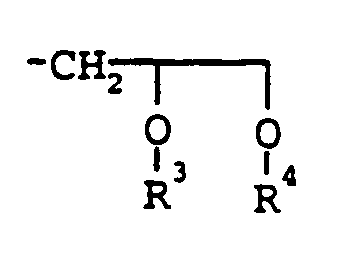
- R2 bezeichnet in den Verbindungen der Formeln I und II substituiertes oder unsubstituiertes, ungesättigtes oder gesättigtes C1-C9-Alkyl-.
- Als Alkylreste seien substituierte oder unsubstituierte verzweigte oder unverzweigte C1-C9-Alkylketten wie beispielsweise Methyl, Ethyl, n-Propyl, 1-Methylethyl, n-Butyl, 1-Methylpropyl-, 2-Methylpropyl, 1,1-Dimethylethyl, n-Pentyl, 1-Methylbutyl, 2-Methylbutyl, 3-Methylbutyl, 2,2-Dimethylpropyl, 1-Ethylpropyl, n-Hexyl, 1,1-Dimethylpropyl, 1,2-Dimethylpropyl, 1-Methylpentyl, 2-Methylpentyl, 3-Methylpentyl, 4-Methylpentyl, 1,1-Dimethylbutyl, 1,2-Dimethylbutyl, 1,3-Dimethylbutyl, 2,2-Dimethylbutyl, 2,3-Dimethylbutyl, 3,3-Dimethylbutyl, 1-Ethylbutyl, 2-Ethylbutyl, 1,1,2-Trimethylpropyl, 1,2,2-Trimethylpropyl, 1-Ethyl-1-methylpropyl, 1-Ethyl-2-methylpropyl, n-Heptyl, n-Octyl oder n-Nonyl genannt. Bevorzugt ist C1-C5-Alkyl, besonders bevorzugt ist C5-Alkyl.
- R3 und R4 bezeichnen unabhängig voneinander Wasserstoff, substituiertes oder unsubstituiertes, gesättigtes oder ungesättigtes, verzweigtes oder unverzweigtes C1-C22-Alkylcarbonyl- oder Phospho-.
- C1-C22-Alkylcarbonyl wie Methylcarbonyl, Ethylcarbonyl, n Propylcarbonyl, 1 Methylethyl carbonyl, n Butylcarbonyl, 1 Methylpropylcarbonyl, 2 Methylpropylcarbonyl, 1,1 Dimethylethylcarbonyl, n Pentylcarbonyl, 1 Methylbutylcarbonyl, 2 Methylbutylcarbonyl, 3 Methylbutylcarbonyl, 1,1 Dimethylpropylcarbonyl, 1,2 Dimethylpropylcarbonyl, 2,2 Dimethylpropylcarbonyl, 1 Ethylpropylcarbonyl, n Hexylcarbonyl, 1 Methylpentylcarbonyl, 2 Methylpentylcarbonyl, 3 Methylpentylcarbonyl, 4 Methylpentylcarbonyl, 1,1 Dimethylbutylcarbonyl, 1,2 Dimethylbutylcarbonyl, 1,3 Dimethylbutylcarbonyl, 2,2 Dimethylbutylcarbonyl, 2,3 Dimethylbutylcarbonyl, 3,3 Dimethylbutylcarbonyl, 1 Ethylbutylcarbonyl, 2 Ethylbutylcarbonyl, 1,1,2 Trimethylpropylcarbonyl, 1,2,2 Trimethylpropylcarbonyl, 1 Ethyl 1 methylpropylcarbonyl und 1 Ethyl 2 methylpropylcarbonyl, Heptylcarbonyl, Nonylcarbonyl, Decylcarbonyl, Undecylcarbonyl, n-Dodecylcarbonyl, n-Tridecylcarbonyl, n-Tetradecylcarbonyl, n-Pentadecylcarbonyl, n-Hexadecylcarbonyl, n-Heptadecylcarbonyl, n-Octadecylcarbonyl, n-Nonadecylcarbonyl oder n-Eicosylcarbonyl.
- Bevorzugte Substituenten für R3 und R4 sind gesättigtes oder ungesättigtes C16-C22-Alkylcarbonyl.
- Als Substituenten der genannten Reste seien beispielsweise Halogen wie Fluor oder Chlor, Alkyl oder Hydroxyl genannt.
- Bei der Umsetzung mit dem erfindungsgemäßen Enzym wird eine Doppelbindung in die Fettsäure eingeführt und eine Doppelbindung verschoben, so daß die an der Reaktion beteiligten drei Doppelbindungen in Konjugation liegen. Weiterhin wird eine Doppelbindung isomerisiert (von cis zu trans).
- Das Enzym (= Calendulasäure-Desaturase) katalysiert vorteilhaft die Umsetzung von Linolsäure (18:2, 9Z,12Z) zu Calendulasäure (18:3, 8E,10E,12Z). Das Enzym führt eine trans-Doppelbindung an Position C8 ein und bewirkt die spezifische Verschiebung einer cis-Doppelbindung in Position C9 zu einer trans-Doppelbindung in Position C10, wobei die Isomerisierung regiospezifisch erfolgt. Ein möglicher hypothetischer Reaktionsmechanismus ist in Fig. 1 dargestellt. Nach einer Deprotonierung an C8 der Linolsäure und einer Umlagerung des Radikals nach C10 kommt es im Zuge einer Wasserabspaltung zur Deprotonierung an C11 und damit zur Bildung von Calendulasäure. Gleichzeitig wird gebundenes Fe IV zu Fe III reduziert. Fig. 1 gibt den hypothetischen Mechanismus für (8,11)-Linoleoyl Desaturase (Calendulasäure-Desaturase) modifiziert nach Svatos, A et al. (Insect Biochemistry and Molecular Biology 29,1999:225-232) basierend auf dem vorgeschlagenen Katalysemechanismus für Δ9 Desaturase aus Ricinus (Lindqvist, Y et al., EMBO Journal 15, 1996:4081-4092) wieder. Als Substrate kommen weiterhin auch die 6Z,9Z,12Z, 18:3-Fettsäure und die 9Z,12Z,15Z, 18:3-Fettsäure in Frage, die dann zu 6Z,8E,10E,12Z-bzw. 8E,10E,12Z,15Z-Fettsäuren umgesetzt werden.
- Ein weiterer erfindungsgemäßer Gegenstand ist ein Verfahren zur Herstellung von ungesättigten Fettsäuren dadurch gekennzeichnet, daß man mindestens eine oben beschriebene erfindungsgemäße Nukleinsäuresequenz oder mindestens ein erfindungsgemäßes Nukleinsäurekonstrukt in einen bevorzugt Öl produzierenden nicht-humanen Organismus bringt, diesen Organismus anzieht und daß in dem Organismus enthaltene Öl isoliert und die im Öl enthaltenden Fettsäuren freisetzt.
- Als Organismen für die genannten Verfahren seien beispielhaft Pflanzen wie Arabidopsis, Soja, Erdnuß, Rizinus, Sonnenblume, Mais, Baumwolle, Flachs, Raps, Kokosnuß, Ölpalme, Färbersaflor (Carthamus tinctorius) oder Kakaobohne, Mikroorganismen wie Pilze Mortierella, Saprolegnia oder Pythium, Bakterien wie die Gattung Escherichia, Hefen wie die Gattung Saccharomyces, Algen oder Protozoen wie Dinoflagellaten wie Crypthecodinium genannt. Bevorzugt werden Organismen, die natürlicherweise Öle in größeren Mengen synthetisieren können wie Pilze wie Mortierella alpina, Pythium insidiosum oder Pflanzen wie Soja, Raps, Flachs, Kokosnuß, Ölpalme, Färbersaflor, Rizinus, Calendula, Erdnuß, Kakaobohne oder Sonnenblume oder Hefen wie Saccharomyces cerevisiae, besonders bevorzugt werden Soja, Raps, Flachs, Sonnenblume, Calendula oder Saccharomyces cerevisiae.
- Die in den Verfahren verwendeten Organismen werden je nach Wirtsorganismus in dem Fachmann bekannter Weise angezogen bzw. gezüchtet. Mikroorganismen werden in der Regel in einem flüssigen Medium, das eine Kohlenstoffquelle meist in Form von Zuckern, eine Stickstoffquelle meist in Form von organischen Stickstoffquellen wie Hefeextrakt oder Salzen wie Ammoniumsulfat, eine Phosphatquelle wie Kaliumhydrogenphosphat, Spurenelemente wie Eisen-, Mangan-, Magnesiumsalze und gegebenenfalls Vitamine enthält, bei Temperaturen zwischen 0 °C und 100 °C, bevorzugt zwischen 10 °C bis 60 °C unter Sauerstoffbegasung angezogen. Dabei kann der pH der Nährflüssigkeit auf einen festen Wert gehalten werden, das heißt während der Anzucht wird der pH reguliert. Es ist auch eine Anzucht ohne pH-Regulation möglich. Die Anzucht kann im batch, semi batch oder kontinuierlich erfolgen. Nährstoffe können zu Beginn der Fermentation vorgelegt oder semikontinuierlich oder kontinuierlich nach gefüttert werden.
- Pflanzen werden nach Transformation zunächst wie oben beschrieben regeneriert und anschließend wie üblich angezüchtet bzw. angebaut.
- Aus den nicht-humanen Organismen werden nach Anzucht die Lipide in üblicherweise gewonnen. Hierzu können die nicht-humanen Organismen nach Ernte zunächst aufgeschlossen werden oder direkt verwendet werden. Die Lipide werden vorteilhaft mit geeigneten Lösungsmitteln wie apolare Lösungsmittel wie Hexan oder polaren wie Ethanol, Isopropanol oder Gemischen wie Hexan/Isopropanol, Phenol/Chloroform/Isoamylalkohol bei Temperaturen zwischen 0 °C bis 80 °C, bevorzugt zwischen 20 °C bis 50 °C extrahiert. Die Biomasse wird in der Regel mit einem Überschuß an Lösungsmittel extrahiert beispielsweise einem Überschuß von Lösungmittel zu Biomasse von 1:4. Das Lösungmittel wird anschließend beispielsweise über eine Destillation entfernt. Die Extraktion kann auch mit superkritischem CO2 erfolgen. Nach Extraktion kann die restliche Biomasse beispielsweise über Filtration entfernt werden. Standardmethoden zur Extraktion von Fettsäuren aus Pflanzen und Mikroorganismen werden in Bligh et al. (Can. J. Biochem. Physiol. 37, 1959: 911-917) oder Vick et al. (Plant Physiol. 69, 1982: 1103-1108) beschrieben.
- Das so gewonnene Rohöl kann anschließend weiter aufgereinigt werden, beispielsweise in dem Trübungen über das Versetzen mit polaren Lösungsmitteln wie Aceton oder apolaren Lösungsmitteln wie Chloroform und anschließender Filtration oder Zentrifugation entfernt werden. Auch eine weitere Reinigung über Säulen oder anderen Techniken ist möglich.
- Zur Gewinnung der freien Fettsäuren aus den Triglyceriden werden diese in üblicherweise verseift beispielsweise mit NaOH oder KOH.
- Ein weiterer Gegenstand der Erfindung sind ungesättigte oder gesättigte Fettsäuren sowie Trigylceride mit einem erhöhten Gehalt and gesättigten oder ungesättigten Fettsäuren, die nach den oben genannten Verfahren hergestellt wurden sowie deren Verwendung zur Herstellung von Nahrungsmitteln, Tierfutter, Kosmetika oder Pharmazeutika. Hierzu werden diese den Nahrungsmitteln, dem Tierfutter, den Kosmetika oder Pharmazeutika in üblichen Mengen zugesetzt.
- Die Erfindung wird in den folgenden Beispielen näher erläutert:
- Über RT-PCR und RACE-Techniken wurde aus mRNA von Calendula officinalis eine cDNA kloniert. Bei Expression dieser cDNA in Hefe wird Linolsäure in das Octadecakonjutrien Calendulasäure (8E, 10E, 12Z) umgesetzt. Es handelt sich hierbei unseres Wissens nach um die erstmalige Beschreibung einer Calendulasäure-Desaturase. Das Enzym bewirkt eine regiospezifische Verschiebung einer cis-Doppelbindung in Position C9 zu einer trans-Doppelbindung in Position C10 und führt eine neue trans-Doppelbindung an Position C8 ein.
- Transgene Hefen und Pflanzen mit erhöhter Expression der Calendulasäure-Desaturase-cDNA weisen Calendulasäure in ihren Lipiden auf.
- Um cDNA-Klone für Calendulasäure-Desaturase per PCR isolieren zu können, wurde RNA aus Samen von Calendula officinalis präpariert. Aufgrund des hohen Fettgehalts der Samen konnten hierzu keine Standardprotokolle verwendet werden, sondern es wurde die folgende Methode angewandt:
- 20 g Pflanzenmaterial wurden in flüssigem Stickstoff zu einem Pulver zermörsert. 100 ml Extraktionspuffer 1 [100 mM Tris/HCl, pH 7,5, 25 mM EDTA, 2 % (w/v) Laurylsarkosyl, 4 M Guanidiniumthiocyanat, 5 % (w/v) PVP (= Polyvinylpyrrolidon), 1% (v/v) β-Mercaptoethanol] wurden zugegeben, sofort durchmischt und homogenisiert. Die Lösung wurde in 50 ml-Gefäße überführt und für ca. 15 min geschüttelt. Nach einer Zentrifugation bei 4000 g für 10-15 min wurde die oben schwimmende Fettschicht bzw. Fettropfen abgenommen und der Überstand in frische Gefäße überführt. Es folgte eine Extraktion mit 1 Volumen Phenol/Chloroform/Isoamylalkohol (= PCI, 25:24:1) und eine Extraktion mit Chloroform, wobei jeweils 15 Minuten lang geschüttelt und dann abzentrifugiert wurde. Die obere, wässrige Phase wurde abgenommen, auf ein 8 ml CsCl-Kissen (5 M CsCl) geschichtet und 18 Stunden lang bei 18 °C und 100 000 g zentrifugiert. Der Überstand wurde dekantiert und das RNA-Präzipitat kurz getrocknet. Nach einem Waschschritt mit 70 % Ethanol wurde die RNA in einer Mischung aus 7,5 ml Extraktionspuffer II (100 ml Tris/HCl, pH 8,8, 100 mM NaCl, 5 mM EDTA, 2 % SDS) und 10 ml PCI gelöst, 15 Minuten lang geschüttelt und abzentrifugiert. Die obere, wässrige Phase wurde nach einer Chloroform-Extraktion mit dem gleichen Volumen 5 M LiCl versetzt. Die RNA-Fällung erfolgte über Nacht bei 4 °C. Anschließend wurde 60 Minuten lang bei 12000 g und 4 °C abzentrifugiert. Das Präzipitat wurde zwei mal mit 70 % Ethanol gewaschen und getrocknet und schießlich in 500 µl H2O aufgenommen.
- Aus der so gewonnen Calendula-Gesamt-RNA wurde mit dem Poly-Attract-Kit (Promega, Mannheim) nach Angaben des Herstellers mRNA isoliert. 1 µg dieser mRNA wurden mit der SuperscriptII reversen Transkriptase von Gibco BRL (Eggenstein) mit 200 pmol oligo-dT-Primer nach Herstellervorschrift in cDNA übersetzt und als Template in einer Polymerasekettenreaktion (PCR) eingesetzt.
- Um DNA-Sequenzen aus Calendula officinalis zu isolieren, die für eine Calendulasäure-Desaturase kodieren, wurden verschiedene degenerierte Oligonukleotidprimer von Aminosäure-Sequenzen der konservierten Histidin-Boxen verschiedener Δ12-Desaturasen abgeleitet.
Primer A: 5' - CCD TAY TTC TCI TGG AAR WWH AGY CAY CG - 3'
Forward primer, abgeleitet von der Aminosäuresequenz P Y F S W K Y/I S H R
Primer B: 5' - CCA RTY CCA YTC IGW BGA RTC RTA RTG - 3'
Reverse primer, abgeleitet von der Aminosäuresequenz H Y D S S/T E W D/N W - Die Buchstaben in Primer A und B haben folgende Bedeutung:
- R = A/G
- Y = C/T
- W = A/T
- H = A/C/T
- B = C/G/T
- D = A/G/T
- I = Inositol
- In einer PCR mit Calendula-Einzelstrang-cDNA (hergestellt nach Beispiel 1) als Template wurde mit den Primern A und B ein DNA-Fragment mit einer Länge von 470 bp amplifiziert. Es wurde folgendes PCR-Programm verwendet:
1. 2 min 94 °C 2. 30 sec 94 °C 3. 45 sec 50 °C (Bindungstemperatur) 4. 1 min 72 °C 10 x 2. bis 4. 5. 0 sec 94 °C 6. 45 sec 50 °C 7. 1 min 72 °C, Zeitincrement 5 sec pro Zyklus 20 x 5. Bis 7. 8. 2 min 72 °C - Für die Amplifikation wurde die TfI-DNA-Polymerase von Biozym (Hess. Oldendorf) verwendet. Das 470 bp lange DNA-Fragment wurde mit Hilfe des TOPO TA Cloning Kits (Invitrogen, Carlsbad, USA) in den Vektor pCR 2.1-TOPO kloniert und sequenziert. Die Sequenz des 470 bp-Fragments entsprach der Sequenz von Nukleotid 466 bis 893 von SEQ ID NO:1.
- Um einen Vollängen-Klon zu erhalten, wurde das Fragment mittels 5'- und 3'- RACE (rapid amplification of cDNA ends) verlängert. Ausgehend von 1 µg mRNA (isoliert nach Beispiel 1) wurde mit dem "Marathon cDNA Amplification Kit" von CLONTECH (Heidelberg) doppelsträngige cDNA hergestellt. Nach erfolgter Adaptorligation wurde mit folgenden Primern 5'- bzw. 3'-RACE durchgeführt:
-
- Primer C 5' - GTG AGG GAG TGA GAG ATG GGT GTG GTG C - 3'
- Primer D 5' - AAC ACA CTT ACA CCT AGT ACT GGA ATT G - 3'
-
- Primer E 5' - TAT TCC AAA CTT CTT AAC AAT CCA CCC G - 3'
- Primer F 5'- CAA TTC CAG TAC TAG GTG TAA GTG TGT T - 3'
- Zunächst wurde eine PCR mit der adaptorligierten doppelsträngigen -cDNA und Primer C bzw. E durchgeführt, danach erfolgte eine zweite PCR mit Primer D bzw. F und einer 1:50-Verdünnung des PCR-Produkts aus der Reaktion mit Primer C bzw. E als Template.
- Die RACE-PCR erfolgte nach folgendem Programm:
1. 1 min 94 °C 2. 30 sec 94 °C 3. 3 min 68 °C 10 x 2. - 3. 4. 30 sec 94 °C 5. 30 sec 65 °C 6. 3 min 68 °C 25 x 4. - 6. 7. 5 min 68 °C - Die erhaltenen DNA-Fragmente wurden mit Hilfe des TOPO TA Cloning-Kits (Invitrogen, Carlsbad, USA) in pCR 2.1-TOPO kloniert und sequenziert. Das 5'-RACE-Produkt reichte über das Startkodon in den 5'-nicht-translatierten-Bereich (5'-UTR), das 3'-RACE über das Stopkodon in den 3'- UTR hinein.
- Die zusammengesetzte Sequenz bestehend aus dem ersten PCR-Produkt und den RACE-Produkten ist in SEQ ID NO: 1 dargestellt. Der kodierende Bereich erstreckt sich von Nukleotid 42 (Startkodon) bis 1175 (Stopkodon). Die 5'- und 3'-UTRs wurden nur einzelsträngig sequenziert, so daß hier einzelne Sequenzierfehler möglich sind.
- Um einen durchgängigen Vollängen-Klon zu erhalten, wurde mit dem Expand High Fidelity-System (Boehringer, Mannheim) und den Primern G und H sowie mit Calendula-cDNA (siehe Beispiel 1) als Template eine PCR durchgeführt.
Primer G 5' - ATTA GAGCTC ATGGGTGCTGGTGGTCGGATGTCG - 3' Forward Primer (mit SacI -Schnittstelle)
Primer H 5' - ATTACT CGAGTG ACATACACCTTTTTGATTACATCTTG - 3' Reverse Primer (mit XhoI -Schnittstelle) - Die PCR erfolgte nach folgendem Programm:
1. 2 min 94 °C 2. 30 sec 94 °C 3. 35 sec 63 °C 4. 2 min 72 °C 10x2.-4. 5. 30 sec 94 °C 6. 35 sec 63 °C 7. 2 min 72 °C, Zeitincrement 5 sec pro Zyklus 15 x 5. - 7 8. 2 min 72 °C. - Das PCR-Produkt mit einer Länge von 1,2 kb wurde in den Vektor pGEM-T (Promega, Mannheim) kloniert und in E. coli DH10B transformiert. Die Insert-DNA wurde mit einem 373 DNA-Sequencer (Applied Biosystems) doppelsträngig sequenziert. Dazu wurden neben Reverse Primer und -21 Primer folgende sequenzspezifische Primer benutzt:
- Primer I: 5' - CGG TCT TCT CGC TGT ATT - 3'
- Primer J: 5' - ATT ACC CAA GCT GCC C - 3'
- Die vollständige DNA-Sequenz der Calendulasäure-Desaturase (CalDes) ist identisch mit dem Abschnitt von Nukleotid 42 bis 1193 von SEQ ID NO:1. Die Sequenz umfaßt den kodierenden Bereich und einen kurzen Abschnitt des 3'-UTR.
- Ein Vergleich der abgeleiteten Aminosäuresequenz von Co-CalDes (SEQ ID NO:2) mit annotierten Proteinsequenzen der SWISS-PROT und SP-TREMBL-Datenbanken ergab die höchste Homologie zu einer Δ12-Acetylenase aus Crepis alpina (SP_PL: 081931, 74 % identische Aminosäuren), einer Δ12-Epoxygenase aus Crepis palaestina (SP_PL: 065771, 73 % identische Aminosäuren) und einer Δ12-Desaturase aus Borago officinalis (SP_PL: 082729, 62 % identische Aminosäuren) über den gesamten kodierenden Bereich. Die Sequenzvergleiche sind in Fig.2 dargestellt. Fig. 2 zeigt einen Vergleich der Aminosäure-Sequenzen von Co-CalDes mit Δ12-Acetylenase aus Crepis alpina (Ca-Acetyl), Δ12-Epoxygenase aus Crepis palaestina (Cp-Epoxy) und Δ12-Desaturase aus Borago officinalis (Bo-Des).
- Um die Funktionalität von CalDes nachzuweisen, wurde in einem ersten Ansatz der kodierende Bereich der cDNA in einem Hefe-Expressionsvektor kloniert und in S. cerevisiae exprimiert. Die in der Hefe produzierte Calendulasäure-Desaturase sollte zugesetzte Linolsäure in Calendulasäure umsetzen. Diese wiederum sollte in hydrolisierten Lipidextrakten über HPLC nachgewiesen werden.
- In einem zweiten Ansatz wurde zusätzlich zu CalDes die Δ12-Desaturase FAD2 aus A. thaliana (Kajiwara et al., Appl. Environ. Microbiol., 62, 1996: 4309 - 4313) in Hefe exprimiert, so daß die Hefezellen endogen Linolsäure produzieren, die dann wiederum durch die Aktivitität von CalDes in Calendulasäure umgesetzt werden kann. Letztere sollte wiederum über HPLC nachgewiesen werden.
- Sämtliche Fest- und Flüssigmedien für Hefe wurden nach Protokollen von Ausubel et al. (Current Protocols in Molecular Biology, John Wiley & Sons, New York, 1995) hergestellt.
- Die CalDes-cDNA wurde über Restriktionsverdau mit SacI/XhoI aus dem Vektor pGEM-T ausgeschnitten, in den SacI/XhoI geschnittenen shuttle-Vektor pYES2 (Invitrogen, Carlsbad, USA) kloniert und der so entstandene Vektor pYES2-CalDes in E. coli XL1 blue tränsformiert. Nach erneuter Plasmidpräparation mit Hilfe des Plasmid Maxi Kits (QIAGEN) wurde pYES2-CalDes mit Hilfe der Polyethylenglycol-Methode (Von Pein M., Dissertation, Heinrich Heine-Universität Düsseldorf, 1992) in S. cerevisiae INCSv1 (Invitrogen, Carlsbad, USA) transformiert, wo die Expression der CalDes-cDNA unter der Kontrolle des GAL1-Promotors stand.
- Um im zweiten Ansatz zusätzlich zu CalDes auch FAD2 in Hefe exprimieren zu können, wurde zunächst der kodierende Bereich des FAD2-Gens über PCR (Protokoll siehe Primer G und H) aus A. thaliana-cDNA mit Hilfe der Tfl-Polymerase (Biozym) amplifiziert. Folgende Primer wurden hierfür verwendet:
- Primer K: 5' - AAA CTCGAG ATGGGTGCAGGTGGAAGAATGCCGG - 3' Forward Primer ( XhoI -Schnittstelle)
- Primer L: 5' - AAA AAGCTT TCATAACTTATTGTTGTACCAGTACACACC - 3' Reverse Primer ( HindIII -Schnittstelle)
- Das entstandene PCR-Produkt wurde nach Restriktionsverdau mit XhoI/HindIII in den XhoI/HindIII geschnittenen Hefe-Expressionsvektor pESC-Leu (Stratagene) kloniert, wo die FAD2-DNA unter Kontrolle des GAL1-Promotors stand.
- Die Expression von CalDes in S. cerevisiae INCSv1 erfolgte modifiziert nach Avery et al. (Appl. Environ. Microbiol., 62, 1996: 3960 - 3966) und Girke et al. (The Plant Journal, 5, 1998: 39 - 48). Um eine Starterkultur herzustellen, wurden 10 ml YPAD-Medium mit einer Einzelkolonie angeimpft und 48 Stunden lang bei 30 °C bei 200 rpm inkubiert. Die Zellkultur wurde dann in 1 x YPA-Medium ohne Zucker gewaschen und abzentrifugiert. Die pelletierten Zellen wurden in 2 ml Minimalmedium ohne Supplemente und ohne Zucker resuspendiert. Mit 1 ml dieser Zellsuspension wurden 100 ml Minimalmedium (dropout powder, 2 % Raffinose, 1 % Tergitol NP40) in 500 ml Erlenmeyekolben angeimpft und die Kultur bei 30 °C und 200 rpm kultiviert. Bei einer OD600 von 0,5 wurden 2 % (w/v) Galaktose zugegeben und (für den ersten Ansatz) 0,003 % Linolsäure (3%ige Stammlösung in 5 % Tergitol NP40). Die Zellen wurden weiter kultiviert bis zum Erreichen der stationären Phase. Dann wurden sie in Minimalmedium ohne Supplemente gewaschen und bei -20 °C aufbewahrt.
- Die Hefezellen wurden in 30 ml HIP-Lösung (0,1 mM 2,6-Di-tert.-butyl-4-methyl-phenol in Hexan : Isopropanol (3:2 v/v)) suspendiert, mit 150 µl konzentrierter HCl angesäuert und mit Ultra-Turrax homogenisiert (1 min, 24000 rpm). Anschließend wurden die Proben 10 min lang bei 4 °C geschüttelt und bei 5000 g und 4 °C 10 min lang abzentrifugiert. Der Überstand wurde in ein neues Gefäß überführt und mit 0,38 M K2SO4 auf 47,5 ml aufgefüllt. Die Proben wurden wiederum 10 min lang bei 4 °C geschüttelt und abzentrifugiert (s.o.). Die Hexanphase wurde abgenommen und unter N2-Strom eingedampft. Der Rückstand wurde in 20 µl Chloroform gelöst. Zur alkalischen Hydrolyse von Fettsäure-Estern wurden 400 µl Methanol sowie 80 µl 40 %ige (w/v) KOH-Lösung zugegeben und die Probe 20 min lang bei 60 °C unter Argon inkubiert. Anschließend wurde die Probe auf Raumtemperatur abgekühlt, mit 35 µl konzentrierter HCl auf pH 3,0 angesäuert und per HPLC aufgetrennt.
- Die Trennung der freien Fettsäuren erfolgte mit einer ET 250/4 Nucleosil 120-5 C18-Säule (Macherey & Nagel). Als Laufmittel diente Methanol: H2O: Eisessig (85:15:0,1 v/v/v). Die Trennung erfolgte bei einer Flußrate von 1 ml/min und 25 °C, zur Detektion der Konjutriene wurde die Absorption bei 268 nm gemessen.
- Fig. 3 zeigt die Elutionsprofile der Lipidextrakte nach alkalischer Hydrolyse aus transformierten Hefezellen (Fig. 3B, Elutionsprofil von S. cerevisiae INCSv1 transformiert mit FAD2-DNA aus A. thaliana und C, Elutionsprofil von S. cerevisiae INCSv1 transformiert mit pYES2-CalDes aus Calendula officinalis) bzw. das Elutionsprofil eines Calendulasäure-Standards (Fig. 3A). Calendulasäure hat eine Retensionszeit von 12 min mit einer für Konjutriene typischen, starken Absorption bei 268 nm. Die hydrolisierten Lipidextrakte von Hefezellen, die mit dem leeren Vektor pYES2 transformiert und mit 0,003 % Linolsäure angezogen wurden, weisen keine Fettsäuren mit einer Retensionszeit von Calendulasäure auf (nicht gezeigt). Ebenso enthalten die hydrolisierten Lipidextrakte von Hefezellen, die das FAD2-Gen exprimieren keine Calendulasäure (Fig. 3B).
- Die HPLC-Analyse der Extrakte von mit pYES2-CalDes transformierten Hefezellen, die mit 0,003 % Linolsäure angezogen wurden, hingegen zeigten ein Signal mit der Retensionszeit von Calendulasäure (Fig. 3C), das auch das gleiche Absorptionsspektrum mit einem Maximum bei 268 nm und Nebenmaxima bei 258 und 282 nm aufwies wie der Standard (Fig. 4A, Standard und C, Elutionsprofil von S. cerevisiae INCSv1 transformiert mit pYES2-CalDes aus Calendula officinalis). Damit war gezeigt, daß die Expression von Calendulasäure-Desaturase in Hefe zur Biosynthese von Calendulasäure führt. Der Nachweis von Calendulasäure aus transformierten Hefezellen gelang nur nach Hydrolyse der Lipide. In den freien Fettsäuren dieser Zellen konnte keine Calendulasäure nachgewiesen werden, das heißt Calendulasäure wird in Hefe in Lipide eingebaut. Da Hefe keine Triacylglyceride enthält, muß man davon ausgehen, daß die nachgewiesene Calendulasäure in den Phospholipiden der Hefe gebunden war.
- Darüberhinaus enthalten die Lipidextrakte von transgenen Hefezellen, die gleichzeitig FAD2 und CalDes exprimieren ebenfalls Calendulasäure (nicht gezeigt).
- Die Expression der Calendulasäure-Desaturase aus Calendula officinalis in transgenen Pflanzen ist vorteilhaft, um den Calendulasäure-Gehalt in diesen Pflanzen zu erhöhen. Dazu wurde die CalDes cDNA in binäre Vektoren kloniert und über Agrobacterium-vermittelten DNA-Transfer in A. thaliana und L. usitatissimum übertragen. Die Expression der CalDes cDNA stand dabei unter der Kontrolle des konstitutiven CaMV 35 S-Promotors bzw, des samenspezifischen USP-Promotors.
- Als Expressionsvektoren wurden der Vektor pBinAR (Höfgen und Willmitzer, Plant Science, 66, 1990: 221 - 230) bzw. das pBinAR Derivat pBinAR-USP, bei dem der CaMV 35 S-Promotor gegen den USP-Promotor aus V. faba ausgetauscht war, verwendet. Zur Umklonierung mußte die CalDes-cDNA aus dem Vektor pGEM-T ausgeschnitten werden. Dazu wurde zunächst mit NcoI geschnitten und mit Klenow zu glatten Enden aufgefüllt, anschließend wurde das Insert mit SalI herausgeschnitten und in die SmaI/SalI geschnittenen Vektoren pBinAR bzw. pBinAR-USP kloniert.
- Die entstandenen Plasmide pBinAR-CalDes bzw. pBinAR-USP-CalDes wurden in Agrobacterium tumefaciens transformiert (Höfgen und Willmitzer, Nucl. Acids Res., 16, 1988: 9877). Die Transformation von A. thaliana erfolgte mittels "floral dip" (Clough und Bent, Plant Journal, 16, 1998: 735 - 743), die von L. usitatissimum durch Cokultivierung von Leinen-Hypokotylstücken mit transformierten A. tumefaciens Zellen.
- Die Expression des CalDes-Gens in transgenen Arabidopsis und Linum Pflanzen wurde über Northern-Blot Analyse untersucht. Ausgewählte Pflanzen wurden auf ihren Gehalt an Calendulasäure im Samenöl untersucht.
- Analog zum USP-Promotor kann auch der Napin-Promotor verwendet werden, um eine samenspezifische Expression von CalDes zu erreichen.
-
- <110> Institut für Pflanzenbiochemie
- <120> Fettsäure-Desaturase-Gen aus Pflanzen
- <130> Sequenz_Desaturase
- <140> 50669
<141> 1999-08-31 - <160> 2
- <170> PatentIn Vers. 2.0
- <210> 1
<211> 1285
<212> DNA
<213> Calendula officinalis - <220>
<221> CDS
<222> (42)..(1175) - <400> 1


- <210> 2
<211> 377
<212> PRT
<213> Calendula officinalis - <400> 2



Claims (12)
- Isolierte Nukteinsäure die für ein Polypeptid mit Desaturaseaktivität codiert, das Linolsäure zu Calendulasäure umsetzt, ausgewählt aus der Gruppe:a) einer Nukleinsäure mit der in SEQ ID NO: 1 dargestellten Sequenz,b) Nukleinsäure, die sich als Ergebnis des degenerierten genetischen Codes von der in SEQ ID NO: 1 dargestellten Nukleinsäure ableiten,c) Derivate der in SEQ ID NO: 1 dargestellten Nukleinsäure die sich über Hybridisierung bei 42°C in 5 x SSC und 50 % Formamid isolieren lassen.
- Aminosäuresequenz codiert durch eine Nukleinsäure gemäß Anspruch 1.
- Aminosäuresequenz nach Anspruch 2, codiert durch die in SEQ ID NO: 1 dargestellte Nukleinsäure.
- Nukleinsäurekonstrukt enthaltend eine Nukleinsäure gemäß Anspruch 1, wobei die Nukleinsäure mit einem oder mehreren Regulationssignalen verknüpft ist.
- Vektor enthaltend eine Nukleinsäure gemäß Anspruch 1 oder ein Nukleinsäurekonstrukt gemäß Anspruch 4.
- Nicht-humaner Organismus enthaltend mindestens ein Nukleinsäurekonstrukt gemäß Anspruch 4.
- Nicht-humaner Organismus nach Anspruch 6, wobei es sich bei dem Organismus um eine Pflanze, einen Mikroorganismus oder ein Tier handelt.
- Transgene Pflanze enthaltend ein funktionelles oder nicht funktionelles Nukleinsäurekonstrukt gemäß Anspruch 4.
- Verfahren zur Herstellung von ungesättigten Fettsäuren dadurch gekennzeichnet, daß man mindestens eine Nukleinsäure gemäß Anspruch 1 oder mindestens ein Nukleinsäurekonstrukt gemäß Anspruch 4 in einen ÖI produzierenden nicht-humanen Organismus bringt, diesen Organismus anzieht und daß in dem Organismus enthaltene Öl isoliert und die im Öl enthaltenden Fettsäuren freisetzt.
- Verfahren nach Anspruch 9, dadurch gekennzeichnet, daß es sich bei dem Organismus um eine Pflanze oder einen Mikroorganismus handelt.
- Verwendung einer Nukleinsäure gemäß Anspruch 1 oder eines Nukleinsäurekonstrukt gemäß Anspruch 4 zur Herstellung von transgenen Pflanzen.
- Verfahren nach Anspruch 9, dadurch gekennzeichnet, dass die im Verfahren hergestellten ungesättigten oder gesättigten Fettsäuren Nahrungsmitteln, Tierfutter, Kosmetika oder Pharmazeutika zugesetzt werden.
Applications Claiming Priority (3)
| Application Number | Priority Date | Filing Date | Title |
|---|---|---|---|
| DE19941609A DE19941609A1 (de) | 1999-09-01 | 1999-09-01 | Fettsäure-Desaturase-Gen aus Pflanzen |
| DE19941609 | 1999-09-01 | ||
| PCT/EP2000/008222 WO2001016362A2 (de) | 1999-09-01 | 2000-08-23 | Fettsäure-desaturase-gen aus pflanzen |
Publications (2)
| Publication Number | Publication Date |
|---|---|
| EP1208216A2 EP1208216A2 (de) | 2002-05-29 |
| EP1208216B1 true EP1208216B1 (de) | 2006-07-26 |
Family
ID=7920399
Family Applications (1)
| Application Number | Title | Priority Date | Filing Date |
|---|---|---|---|
| EP00956479A Expired - Lifetime EP1208216B1 (de) | 1999-09-01 | 2000-08-23 | Fettsäure-desaturase-gen aus pflanzen |
Country Status (19)
| Country | Link |
|---|---|
| EP (1) | EP1208216B1 (de) |
| JP (1) | JP2003508061A (de) |
| CN (1) | CN1384882A (de) |
| AT (1) | ATE334214T1 (de) |
| AU (1) | AU778297B2 (de) |
| BR (1) | BR0013687A (de) |
| CA (1) | CA2382845A1 (de) |
| CZ (1) | CZ2002758A3 (de) |
| DE (2) | DE19941609A1 (de) |
| DK (1) | DK1208216T3 (de) |
| EE (1) | EE200200115A (de) |
| ES (1) | ES2269172T3 (de) |
| HU (1) | HUP0202526A3 (de) |
| IL (1) | IL148011A0 (de) |
| NO (1) | NO20020949D0 (de) |
| NZ (1) | NZ517190A (de) |
| PL (1) | PL354408A1 (de) |
| RU (1) | RU2274657C2 (de) |
| WO (1) | WO2001016362A2 (de) |
Families Citing this family (14)
| Publication number | Priority date | Publication date | Assignee | Title |
|---|---|---|---|---|
| US7067722B2 (en) * | 1999-08-26 | 2006-06-27 | Monsanto Technology Llc | Nucleic acid sequences and methods of use for the production of plants with modified polyunsaturated fatty acids |
| DE10134660A1 (de) * | 2001-07-20 | 2003-02-06 | Basf Plant Science Gmbh | Fettsäure-Desaturase-Gene aus Granatapfel und Verfahren zur Herstellung von ungesättigten Fettsäuren |
| WO2003027296A1 (en) * | 2001-09-20 | 2003-04-03 | Plantech Research Institute | GENES PARTICIPATING IN THE SYNTHESIS OF FATTY ACID HAVING trans-11-, cis-13- CONDJUGATED DOUBLE BOND AND UTILIZATION THEREOF |
| US6870077B2 (en) | 2002-01-30 | 2005-03-22 | Edward O. Kenaschuk | High linolenic acid flax |
| US7211656B2 (en) * | 2002-01-30 | 2007-05-01 | Abbott Laboratories | Desaturase genes, enzymes encoded thereby, and uses thereof |
| RU2447147C2 (ru) * | 2003-08-01 | 2012-04-10 | Басф Плант Сайенс Гмбх | Способ получения полиненасыщенных кислот жирного ряда в трансгенных организмах |
| US9458436B2 (en) * | 2004-02-27 | 2016-10-04 | Basf Plant Science Gmbh | Method for producing polyunsaturated fatty acids in transgenic plants |
| CN100510083C (zh) * | 2004-06-29 | 2009-07-08 | 山东师范大学 | 一种盐生植物的ω3脂肪酸去饱和酶基因及其表达载体和用该基因转化的植物细胞及植株 |
| JP4587451B2 (ja) * | 2004-08-20 | 2010-11-24 | サントリーホールディングス株式会社 | ω3脂肪酸不飽和化活性を有するポリペプチドおよびそのポリペプチドをコードするポリヌクレオチドならびにそれらの利用 |
| EP2358869B1 (de) * | 2008-10-06 | 2014-03-26 | Abbott Laboratories | Delta-8-desaturasegene, von diesen kodierte enzyme und ihre verwendung |
| CA3203397A1 (en) | 2011-12-27 | 2013-07-04 | Nuseed Global Innovation Ltd | Processes for producing lipids |
| US11639507B2 (en) | 2011-12-27 | 2023-05-02 | Commonwealth Scientific And Industrial Research Organisation | Processes for producing lipids |
| US8809026B2 (en) | 2011-12-27 | 2014-08-19 | Commonwealth Scientific And Industrial Research Organisation | Processes for producing lipids |
| US11859193B2 (en) | 2016-09-02 | 2024-01-02 | Nuseed Global Innovation Ltd. | Plants with modified traits |
Family Cites Families (11)
| Publication number | Priority date | Publication date | Assignee | Title |
|---|---|---|---|---|
| DE69333025T2 (de) * | 1992-11-17 | 2004-04-29 | E.I. Du Pont De Nemours And Co., Wilmington | Für mikrosom delta 12 fettsäuredesaturase kodierende gene und verwandte enzyme von pflanzen |
| FR2712302B1 (fr) * | 1993-11-10 | 1996-01-05 | Rhone Poulenc Agrochimie | Eléments promoteurs de gènes chimères de tubuline alpha. |
| US6084164A (en) * | 1996-03-25 | 2000-07-04 | Pioneer Hi-Bred International, Inc. | Sunflower seeds with enhanced saturated fatty acid contents |
| SE9601236D0 (sv) * | 1996-03-29 | 1996-03-29 | Sten Stymne | Novel plant enzyme and use thereof |
| US5850026A (en) * | 1996-07-03 | 1998-12-15 | Cargill, Incorporated | Canola oil having increased oleic acid and decreased linolenic acid content |
| GB9705102D0 (en) * | 1997-03-12 | 1997-04-30 | Scotia Holdings Inc | Presentation of fatty acids |
| PL194095B1 (pl) * | 1997-04-15 | 2007-04-30 | Commw Scient Ind Res Org | Wyizolowana cząsteczka kwasu nukleinowego, konstrukt genetyczny, sposób dokonywania zmian poziomu epoksykwasów tłuszczowych, sposób wytwarzania rekombinantowego polipeptydu monooksygenazy w komórce, sposób wytwarzania rekombinantowego polipeptydu monooksygenazy w roślinie transgenicznej, polipeptydrekombinantowy, sposób wytwarzania epoksydowanegokwasu tłuszczowego, roślina transformowana i roślina lub pochodząca z niej komórka |
| US5846784A (en) * | 1997-06-11 | 1998-12-08 | E. I. Du Pont De Nemours And Company | Fatty acid modifying enzymes from developing seeds of Vernonia galamenensis |
| AU761152B2 (en) * | 1998-03-17 | 2003-05-29 | Cargill Incorporated | Genes for mutant microsomal delta-12 fatty acid desaturases and related enzymes from plants |
| EP1105486B1 (de) * | 1998-08-20 | 2011-04-27 | E.I. Du Pont De Nemours And Company | Gene für fettsäuremodfizierende enzyme von planzen und damit verbundene bildung von konjugierten doppelbindungen |
| BRPI0017553B1 (pt) * | 1999-08-16 | 2017-03-28 | Du Pont | fragmentos de ácido nucleico, gene quimérico, microorganismo hospedeiro transformado, método de alteração do nível de ácidos graxos, método de produção de óleo de sementes contendo ácidos graxos, métodos para a produção de enzimas modificadoras de ácidos graxos e método para isolar fragmentos de ácidos nucleicos |
-
1999
- 1999-09-01 DE DE19941609A patent/DE19941609A1/de not_active Withdrawn
-
2000
- 2000-08-23 DK DK00956479T patent/DK1208216T3/da active
- 2000-08-23 ES ES00956479T patent/ES2269172T3/es not_active Expired - Lifetime
- 2000-08-23 AT AT00956479T patent/ATE334214T1/de not_active IP Right Cessation
- 2000-08-23 CA CA002382845A patent/CA2382845A1/en not_active Abandoned
- 2000-08-23 DE DE50013239T patent/DE50013239D1/de not_active Expired - Fee Related
- 2000-08-23 IL IL14801100A patent/IL148011A0/xx unknown
- 2000-08-23 NZ NZ517190A patent/NZ517190A/en unknown
- 2000-08-23 HU HU0202526A patent/HUP0202526A3/hu unknown
- 2000-08-23 WO PCT/EP2000/008222 patent/WO2001016362A2/de not_active Ceased
- 2000-08-23 EP EP00956479A patent/EP1208216B1/de not_active Expired - Lifetime
- 2000-08-23 AU AU68405/00A patent/AU778297B2/en not_active Ceased
- 2000-08-23 EE EEP200200115A patent/EE200200115A/xx unknown
- 2000-08-23 CN CN00812280A patent/CN1384882A/zh active Pending
- 2000-08-23 RU RU2002108174/13A patent/RU2274657C2/ru not_active IP Right Cessation
- 2000-08-23 BR BR0013687-5A patent/BR0013687A/pt not_active Application Discontinuation
- 2000-08-23 JP JP2001520907A patent/JP2003508061A/ja not_active Withdrawn
- 2000-08-23 CZ CZ2002758A patent/CZ2002758A3/cs unknown
- 2000-08-23 PL PL00354408A patent/PL354408A1/xx not_active Application Discontinuation
-
2002
- 2002-02-27 NO NO20020949A patent/NO20020949D0/no not_active Application Discontinuation
Also Published As
| Publication number | Publication date |
|---|---|
| WO2001016362A3 (de) | 2001-09-07 |
| BR0013687A (pt) | 2002-05-07 |
| JP2003508061A (ja) | 2003-03-04 |
| NO20020949L (no) | 2002-02-27 |
| DK1208216T3 (da) | 2006-11-27 |
| WO2001016362A2 (de) | 2001-03-08 |
| ATE334214T1 (de) | 2006-08-15 |
| EP1208216A2 (de) | 2002-05-29 |
| CN1384882A (zh) | 2002-12-11 |
| IL148011A0 (en) | 2002-09-12 |
| HUP0202526A3 (en) | 2004-10-28 |
| ES2269172T3 (es) | 2007-04-01 |
| RU2002108174A (ru) | 2004-03-10 |
| DE50013239D1 (de) | 2006-09-07 |
| CA2382845A1 (en) | 2001-03-08 |
| EE200200115A (et) | 2003-04-15 |
| HUP0202526A2 (hu) | 2002-12-28 |
| DE19941609A1 (de) | 2001-03-08 |
| PL354408A1 (en) | 2004-01-12 |
| AU778297B2 (en) | 2004-11-25 |
| AU6840500A (en) | 2001-03-26 |
| NO20020949D0 (no) | 2002-02-27 |
| RU2274657C2 (ru) | 2006-04-20 |
| NZ517190A (en) | 2003-11-28 |
| CZ2002758A3 (cs) | 2002-06-12 |
Similar Documents
| Publication | Publication Date | Title |
|---|---|---|
| DE60309136T2 (de) | Delta 6-desaturase aus primulacaea, pflanzen, exprimierende pflanzen, und öle, welche mehrfach ungesättigte fettsäuren enthalten | |
| EP1613744B1 (de) | Delta-4-desaturasen aus euglena gracilis, exprimierende pflanzen und pufa enthaltende öle | |
| EP2365063B1 (de) | Neue pflanzliche Acyltransferase spezifisch für langkettige mehrfach ungesättigte Fettsäuren | |
| EP1599582B1 (de) | Verfahren zur herstellung mehrfach ungesättigter fettsäuren | |
| EP1181373B1 (de) | Delta6-acetylenase und delta6-desaturase aus ceratodon purpureus | |
| EP2180046B1 (de) | Verfahren zur Herstellung von mehrfach ungesättigten langkettigen Fettsäuren in transgenen Organismen | |
| DE10219203A1 (de) | Verfahren zur Herstellung mehrfach ungesättigter Fettsäuren in Pflanzen | |
| EP1190080A1 (de) | $g(D)6-DESATURASEGENE EXPRIMIERENDE PFLANZEN UND PUFAS ENTHALTENDE ÖLE AUS DIESEN PFLANZEN UND EIN VERFAHREN ZUR HERSTELLUNG UNGESÄTTIGTER FETTSÄUREN | |
| WO2008009600A1 (de) | Verfahren zur herstellung von arachidonsäure und/oder eicosapentaensäure in pflanzen | |
| EP1208216A2 (de) | Fettsäure-desaturase-gen aus pflanzen | |
| DE19823834A1 (de) | Genetisches Verfahren zur Herstellung von Riboflavin | |
| DE10134660A1 (de) | Fettsäure-Desaturase-Gene aus Granatapfel und Verfahren zur Herstellung von ungesättigten Fettsäuren | |
| WO2004005442A1 (de) | Verfahren zur herstellung von konjugierten mehrfach ungesättigten fettsäuren mit mindestens zwei doppelbindungen in pflanzen | |
| EP1945775B1 (de) | Verfahren zur herstellung von gamma-linolensäure und/oder stearidonsäure in transgenen brassicaceae und linaceae | |
| DE10030976A1 (de) | DELTA6-Desaturasegene exprimierende Pflanzen und PUFAS enthaltende Öle aus diesen Pflanzen und ein Verfahren zur Herstellung ungesättigter Fettsäuren | |
| DE19962409A1 (de) | DELTA6-Acetylenase und DELTA6-Desaturase aus Ceratodon purpureus | |
| DE10308850A1 (de) | Verfahren zur Herstellung von konjugierten mehrfach ungesättigten Fettsäuren mit mindestens drei Doppelbindungen in Pflanzen | |
| WO2004007732A1 (de) | Klonierung und charakterisierung einer lipoxygenase aus phaeodactylum tricornutum | |
| DE10229978A1 (de) | Verfahren zur Herstellung von konjugierter Linolsäure in Pflanzen |
Legal Events
| Date | Code | Title | Description |
|---|---|---|---|
| PUAI | Public reference made under article 153(3) epc to a published international application that has entered the european phase |
Free format text: ORIGINAL CODE: 0009012 |
|
| 17P | Request for examination filed |
Effective date: 20020131 |
|
| AK | Designated contracting states |
Kind code of ref document: A2 Designated state(s): AT BE CH CY DE DK ES FI FR GB GR IE IT LI LU MC NL PT SE |
|
| AX | Request for extension of the european patent |
Free format text: AL;LT PAYMENT 20020131;LV PAYMENT 20020131;MK;RO;SI PAYMENT 20020131 |
|
| 17Q | First examination report despatched |
Effective date: 20041122 |
|
| GRAP | Despatch of communication of intention to grant a patent |
Free format text: ORIGINAL CODE: EPIDOSNIGR1 |
|
| GRAS | Grant fee paid |
Free format text: ORIGINAL CODE: EPIDOSNIGR3 |
|
| GRAA | (expected) grant |
Free format text: ORIGINAL CODE: 0009210 |
|
| AK | Designated contracting states |
Kind code of ref document: B1 Designated state(s): AT BE CH CY DE DK ES FI FR GB GR IE IT LI LU MC NL PT SE |
|
| AX | Request for extension of the european patent |
Extension state: LT LV SI |
|
| PG25 | Lapsed in a contracting state [announced via postgrant information from national office to epo] |
Ref country code: IE Free format text: LAPSE BECAUSE OF FAILURE TO SUBMIT A TRANSLATION OF THE DESCRIPTION OR TO PAY THE FEE WITHIN THE PRESCRIBED TIME-LIMIT Effective date: 20060726 |
|
| REG | Reference to a national code |
Ref country code: GB Ref legal event code: FG4D Free format text: NOT ENGLISH |
|
| REG | Reference to a national code |
Ref country code: CH Ref legal event code: NV Representative=s name: SCHMAUDER & PARTNER AG PATENTANWALTSBUERO Ref country code: CH Ref legal event code: EP |
|
| REG | Reference to a national code |
Ref country code: IE Ref legal event code: FG4D Free format text: LANGUAGE OF EP DOCUMENT: GERMAN |
|
| PG25 | Lapsed in a contracting state [announced via postgrant information from national office to epo] |
Ref country code: BE Free format text: LAPSE BECAUSE OF NON-PAYMENT OF DUE FEES Effective date: 20060831 Ref country code: MC Free format text: LAPSE BECAUSE OF NON-PAYMENT OF DUE FEES Effective date: 20060831 |
|
| REF | Corresponds to: |
Ref document number: 50013239 Country of ref document: DE Date of ref document: 20060907 Kind code of ref document: P |
|
| REG | Reference to a national code |
Ref country code: SE Ref legal event code: TRGR |
|
| GBT | Gb: translation of ep patent filed (gb section 77(6)(a)/1977) |
Effective date: 20061025 |
|
| REG | Reference to a national code |
Ref country code: DK Ref legal event code: T3 |
|
| PG25 | Lapsed in a contracting state [announced via postgrant information from national office to epo] |
Ref country code: PT Free format text: LAPSE BECAUSE OF FAILURE TO SUBMIT A TRANSLATION OF THE DESCRIPTION OR TO PAY THE FEE WITHIN THE PRESCRIBED TIME-LIMIT Effective date: 20061226 |
|
| REG | Reference to a national code |
Ref country code: IE Ref legal event code: FD4D |
|
| ET | Fr: translation filed | ||
| REG | Reference to a national code |
Ref country code: ES Ref legal event code: FG2A Ref document number: 2269172 Country of ref document: ES Kind code of ref document: T3 |
|
| PLBE | No opposition filed within time limit |
Free format text: ORIGINAL CODE: 0009261 |
|
| STAA | Information on the status of an ep patent application or granted ep patent |
Free format text: STATUS: NO OPPOSITION FILED WITHIN TIME LIMIT |
|
| 26N | No opposition filed |
Effective date: 20070427 |
|
| PGFP | Annual fee paid to national office [announced via postgrant information from national office to epo] |
Ref country code: DK Payment date: 20070815 Year of fee payment: 8 |
|
| PGFP | Annual fee paid to national office [announced via postgrant information from national office to epo] |
Ref country code: DE Payment date: 20070816 Year of fee payment: 8 |
|
| PGFP | Annual fee paid to national office [announced via postgrant information from national office to epo] |
Ref country code: ES Payment date: 20070926 Year of fee payment: 8 |
|
| PG25 | Lapsed in a contracting state [announced via postgrant information from national office to epo] |
Ref country code: AT Free format text: LAPSE BECAUSE OF NON-PAYMENT OF DUE FEES Effective date: 20060823 |
|
| PGFP | Annual fee paid to national office [announced via postgrant information from national office to epo] |
Ref country code: CH Payment date: 20070815 Year of fee payment: 8 Ref country code: FI Payment date: 20070814 Year of fee payment: 8 |
|
| BERE | Be: lapsed |
Owner name: BASF A.G. Effective date: 20060831 |
|
| PGFP | Annual fee paid to national office [announced via postgrant information from national office to epo] |
Ref country code: GB Payment date: 20070822 Year of fee payment: 8 |
|
| PGFP | Annual fee paid to national office [announced via postgrant information from national office to epo] |
Ref country code: IT Payment date: 20070830 Year of fee payment: 8 Ref country code: NL Payment date: 20070805 Year of fee payment: 8 Ref country code: SE Payment date: 20070807 Year of fee payment: 8 |
|
| PG25 | Lapsed in a contracting state [announced via postgrant information from national office to epo] |
Ref country code: GR Free format text: LAPSE BECAUSE OF FAILURE TO SUBMIT A TRANSLATION OF THE DESCRIPTION OR TO PAY THE FEE WITHIN THE PRESCRIBED TIME-LIMIT Effective date: 20061027 |
|
| PGFP | Annual fee paid to national office [announced via postgrant information from national office to epo] |
Ref country code: FR Payment date: 20070808 Year of fee payment: 8 |
|
| PG25 | Lapsed in a contracting state [announced via postgrant information from national office to epo] |
Ref country code: LU Free format text: LAPSE BECAUSE OF NON-PAYMENT OF DUE FEES Effective date: 20060823 |
|
| PG25 | Lapsed in a contracting state [announced via postgrant information from national office to epo] |
Ref country code: CY Free format text: LAPSE BECAUSE OF FAILURE TO SUBMIT A TRANSLATION OF THE DESCRIPTION OR TO PAY THE FEE WITHIN THE PRESCRIBED TIME-LIMIT Effective date: 20060726 |
|
| REG | Reference to a national code |
Ref country code: DK Ref legal event code: EBP |
|
| REG | Reference to a national code |
Ref country code: CH Ref legal event code: PL |
|
| EUG | Se: european patent has lapsed | ||
| LTLA | Lt: lapse of european patent or patent extension |
Effective date: 20080823 |
|
| GBPC | Gb: european patent ceased through non-payment of renewal fee |
Effective date: 20080823 |
|
| NLV4 | Nl: lapsed or anulled due to non-payment of the annual fee |
Effective date: 20090301 |
|
| PG25 | Lapsed in a contracting state [announced via postgrant information from national office to epo] |
Ref country code: NL Free format text: LAPSE BECAUSE OF NON-PAYMENT OF DUE FEES Effective date: 20090301 Ref country code: FI Free format text: LAPSE BECAUSE OF NON-PAYMENT OF DUE FEES Effective date: 20080823 |
|
| REG | Reference to a national code |
Ref country code: FR Ref legal event code: ST Effective date: 20090430 |
|
| PG25 | Lapsed in a contracting state [announced via postgrant information from national office to epo] |
Ref country code: LI Free format text: LAPSE BECAUSE OF NON-PAYMENT OF DUE FEES Effective date: 20080831 Ref country code: CH Free format text: LAPSE BECAUSE OF NON-PAYMENT OF DUE FEES Effective date: 20080831 |
|
| PG25 | Lapsed in a contracting state [announced via postgrant information from national office to epo] |
Ref country code: DK Free format text: LAPSE BECAUSE OF NON-PAYMENT OF DUE FEES Effective date: 20080831 |
|
| PG25 | Lapsed in a contracting state [announced via postgrant information from national office to epo] |
Ref country code: FR Free format text: LAPSE BECAUSE OF NON-PAYMENT OF DUE FEES Effective date: 20080901 Ref country code: IT Free format text: LAPSE BECAUSE OF NON-PAYMENT OF DUE FEES Effective date: 20080823 Ref country code: DE Free format text: LAPSE BECAUSE OF NON-PAYMENT OF DUE FEES Effective date: 20090303 |
|
| REG | Reference to a national code |
Ref country code: ES Ref legal event code: FD2A Effective date: 20080825 |
|
| PG25 | Lapsed in a contracting state [announced via postgrant information from national office to epo] |
Ref country code: GB Free format text: LAPSE BECAUSE OF NON-PAYMENT OF DUE FEES Effective date: 20080823 |
|
| PG25 | Lapsed in a contracting state [announced via postgrant information from national office to epo] |
Ref country code: ES Free format text: LAPSE BECAUSE OF NON-PAYMENT OF DUE FEES Effective date: 20080825 |
|
| PG25 | Lapsed in a contracting state [announced via postgrant information from national office to epo] |
Ref country code: SE Free format text: LAPSE BECAUSE OF NON-PAYMENT OF DUE FEES Effective date: 20080824 |