EP1174153B1 - Gas emulsions stabilized with fluorinated ethers having low ostwald coefficients - Google Patents
Gas emulsions stabilized with fluorinated ethers having low ostwald coefficients Download PDFInfo
- Publication number
- EP1174153B1 EP1174153B1 EP01119824A EP01119824A EP1174153B1 EP 1174153 B1 EP1174153 B1 EP 1174153B1 EP 01119824 A EP01119824 A EP 01119824A EP 01119824 A EP01119824 A EP 01119824A EP 1174153 B1 EP1174153 B1 EP 1174153B1
- Authority
- EP
- European Patent Office
- Prior art keywords
- ocf
- gas
- chf
- precursor composition
- microbubble
- Prior art date
- Legal status (The legal status is an assumption and is not a legal conclusion. Google has not performed a legal analysis and makes no representation as to the accuracy of the status listed.)
- Expired - Lifetime
Links
Images



Classifications
-
- A—HUMAN NECESSITIES
- A61—MEDICAL OR VETERINARY SCIENCE; HYGIENE
- A61K—PREPARATIONS FOR MEDICAL, DENTAL OR TOILETRY PURPOSES
- A61K49/00—Preparations for testing in vivo
-
- A—HUMAN NECESSITIES
- A61—MEDICAL OR VETERINARY SCIENCE; HYGIENE
- A61K—PREPARATIONS FOR MEDICAL, DENTAL OR TOILETRY PURPOSES
- A61K49/00—Preparations for testing in vivo
- A61K49/22—Echographic preparations; Ultrasonic imaging preparations
- A61K49/222—Echographic preparations; Ultrasonic imaging preparations characterised by a special physical form, e.g. emulsions, liposomes
- A61K49/223—Microbubbles, hollow microspheres, free gas bubbles, gas microspheres
-
- A—HUMAN NECESSITIES
- A61—MEDICAL OR VETERINARY SCIENCE; HYGIENE
- A61K—PREPARATIONS FOR MEDICAL, DENTAL OR TOILETRY PURPOSES
- A61K49/00—Preparations for testing in vivo
- A61K49/06—Nuclear magnetic resonance [NMR] contrast preparations; Magnetic resonance imaging [MRI] contrast preparations
- A61K49/18—Nuclear magnetic resonance [NMR] contrast preparations; Magnetic resonance imaging [MRI] contrast preparations characterised by a special physical form, e.g. emulsions, microcapsules, liposomes
- A61K49/1806—Suspensions, emulsions, colloids, dispersions
-
- A—HUMAN NECESSITIES
- A61—MEDICAL OR VETERINARY SCIENCE; HYGIENE
- A61K—PREPARATIONS FOR MEDICAL, DENTAL OR TOILETRY PURPOSES
- A61K49/00—Preparations for testing in vivo
- A61K49/22—Echographic preparations; Ultrasonic imaging preparations
- A61K49/222—Echographic preparations; Ultrasonic imaging preparations characterised by a special physical form, e.g. emulsions, liposomes
- A61K49/226—Solutes, emulsions, suspensions, dispersions, semi-solid forms, e.g. hydrogels
Definitions
- the present invention includes precursors for preparing such emulsions.
- Ultrasound technology provides an important and more economical alternative to imaging techniques which use ionizing radiation. While numerous conventional imaging technologies are available, e.g., magnetic resonance imaging (MRI), computerized tomography (CT), and positron emission tomography (PET), each of these techniques use extremely expensive equipment. Moreover, CT and PET utilize ionizing radiation. Unlike these techniques, ultrasound imaging equipment is relatively inexpensive. Moreover, ultrasound imaging does not use ionizing radiation.
- MRI magnetic resonance imaging
- CT computerized tomography
- PET positron emission tomography
- Ultrasound imaging makes use of differences in tissue density and composition that affect the reflection of sound waves by those tissues. Images are especially sharp where there are distinct variations in tissue density or compressibility, such as at tissue interfaces. Interfaces between solid tissues, the skeletal system, and various organs and/or tumors are readily imaged with ultrasound.
- ultrasound performs suitably without use of contrast enhancement agents; however, for other applications, such as visualization of flowing blood, there have been ongoing efforts to develop such agents to provide contrast enhancement.
- contrast enhancement agents One particularly significant application for such contrast agents is in the area of perfusion imaging.
- Such ultrasound contrast agents could improve imaging of flowing blood in the heart muscle, kidneys, liver, and other tissues. This, in turn, would facilitate research, diagnosis, surgery, and therapy related to the imaged tissues.
- a blood pool contrast agent would also allow imaging on the basis of blood content (e.g., tumors and inflamed tissues) and would aid in the visualization of the placenta and fetus by enhancing only the maternal circulation.
- ultrasound contrast enhancement agents A variety of ultrasound contrast enhancement agents have been proposed. The most successful have generally consisted of dispersions of small bubbles of gas that can be injected intravenously. The bubbles are injected into the bloodstream of a living body to be imaged thereby providing an emulsion in the flowing blood that is of a different density and a much higher compressibility than the surrounding fluid tissue and blood. As a result, these bubbles can easily be imaged with ultrasound.
- bubbles that are effective ultrasound scatterers in vivo have been difficult. Several explanations are apparent. First, such bubbles tend to shrink rapidly due to the diffusion of the trapped gas into the surrounding liquid. This is especially true of bubbles containing air or its component gases (such as nitrogen) which are highly soluble in water. It might be expected that bubble lifetime could be improved by simply increasing the size of the bubbles so more gas needs to escape before the bubbles disappear. This approach has proven unsatisfactory, however, because bubbles larger than about 10 ⁇ m in diameter are cleared from the bloodstream by the lungs, preventing their further circulation. Additionally, larger bubbles are not capable of circulating through smaller blood vessels and capillaries.
- Microbubbles with satisfactory in vivo performance should also posses advantageous biological characteristics.
- the compounds making up the gas inside the microbubbles should be biocompatible.
- the microbubbles containing the gas phase will decay and the gas phase will be released into the blood either as a dissolved gas or as submicron droplets of the condensed liquid. Therefore, the gases will primarily be removed from the body through lung respiration or through a combination of respiration and other metabolic pathways in the reticuloendothelial system. Even when bubble persistence is sufficient to allow for several passes through the circulatory system of an animal or human, microbubble uptake by the reticuloendothelial phagocytic cells of the liver can limit the effectiveness of the contrast agent.
- Adverse immune system reactions can also reduce the in vivo lifetimes of the bubble, and should be avoided.
- "naked" microbubbles have been shown to produce adverse responses such as the activation of complement (See, for example, K.A. Shastri et al. (1991) Undersea Biomed. Res ., 18, 157).
- these undesired responses may be reduced through the use of appropriate encapsulating agents.
- the Epstein and Plesset formula leads to the formula for bubble lifetime ( ⁇ ) given by Quay in U.S. Patent 5,393,524: ⁇ ⁇ ⁇ / D C where ⁇ is the density of the entrapped gas, D is the diffusivity of the gas in the surrounding medium, and C is the solubility of the gas in the surrounding medium.
- Quay forms bubbles using gases selected on the basis of being a gas at atmospheric pressure and body temperature (37°C) and having reduced water solubility, higher density, and reduced gas diffusivity in solution in comparison to air.
- gases selected on the basis of being a gas at atmospheric pressure and body temperature (37°C) and having reduced water solubility, higher density, and reduced gas diffusivity in solution in comparison to air.
- gases selected on the basis of being a gas at atmospheric pressure and body temperature (37°C) and having reduced water solubility, higher density, and reduced gas diffusivity in solution in comparison to air.
- gases chosen on the basis of low water solubility and high molecular
- the Q value should be at least 30 to be a useful gas for ultrasound contrast enhancement.
- a simple estimate using literature water solubility data (E. Wilhelm, R Battino, and R.J. Wilcock, Chemical Reviews, 1977, v. 77, p. 219) shows that the Q values of virtually all known gases (with the exception of hydrogen and helium) approach or exceed this value.
- oxygen for example, has a Q of 20, and nitrogen has a Q of 35.
- the Quay disclosure therefore, provides little guidance for the selection of effective microbubble gases.
- the Quay Q coefficient criterion as well as Schneider's disclosure in EP0554213A1 fail to consider certain major causes of bubble shrinkage, namely, the effects of bubble surface tension, surfactants and gas osmotic effects, and the potential for filling gas condensation into a liquid. Namely, the partial pressure of the filling gas must be high enough to oppose the excess Laplace overpressure inside the bubbles. If the saturated vapor pressure is low the filling gas may condense into liquid and contrast ability will be lost. Accordingly, a need exists in the art for stabilized contrast enhancement agents that are biocompatible, easily prepared, and provide superior in vivo contrast enhancement in ultrasound imaging. A need also exists for microbubble precursors and methods to prepare and use such contrast enhancement agents.
- the present invention utilizes low Ostwald coefficient fluoroether compounds to provide long lasting gas emulsions comprising microbubble preparations for ultrasound and magnetic resonance imaging contrast enhancement.
- microbubble preparations are prepared using the compounds of the present invention, longer lasting images of the heart and other internal organs may be obtained than has been before possible.
- gas emulsions comprising a previously unconsidered class of compounds which combine a reduced water solubility without a significantly reduced saturated vapor pressure (and thus surprisingly low Ostwald coefficients) are disclosed.
- the high vapor pressure additionally helps to reduce the loss of contrast due to the filling gas condensation into liquid.
- These compounds are the fluorinated mono- and polyethers.
- a gas emulsion for ultrasound contrast enhancement comprising a plurality of gas bubbles in a liquid medium, with the gas comprising a fluoromono- or fluoropolyether, or a mixture thereof is disclosed.
- the gas comprises a compound having an Ostwald coefficient of less than about 100 x 10 -6 at 37 degrees C, leading to especially long in vivo contrast enhancement. Vapor of perfluorodiethylether, perfluorodimethylether, perfluoromethylethylether,perfluoromonoglyme, perfluorodiglyme, C 4 F 10 O 3 , C 5 F 12 O 4 , C 6 F 14 O 5 have been found to be especially advantageous.
- the gas bubbles of the present invention may be surrounded by a surfactant layer which preferably comprises a first and a second surfactant, the first surfactant consisting essentially of a phospholipid or mixture of phospholipids having at least one acyl chain which comprises at least 10 carbon atoms, and comprising at least about 5% w/w of total surfactant, with the second surfactant being more water soluble than the first surfactant.
- a surfactant layer which preferably comprises a first and a second surfactant, the first surfactant consisting essentially of a phospholipid or mixture of phospholipids having at least one acyl chain which comprises at least 10 carbon atoms, and comprising at least about 5% w/w of total surfactant, with the second surfactant being more water soluble than the first surfactant.
- the first surfactant comprises a phosphatidylcholine with one or more acyl chains, at least one chain comprising 12 to 18 carbon atoms
- said second surfactant comprises a phosphatidylcholine with one or more acyl chains, at least one chain comprising 6 to 12 carbon atoms.
- microbubble precursor compositions may be prepared using a number of different techniques.
- microbubbles may be formed using the disclosed fluoroether compounds in conjunction with powders, protein microspheres, spray dried microspheres, void containing particles, particulates, liposomes, saturated sugar solutions, etc.
- Each of these structural materials may further be used to provide dried microbubble precursors when a fluoroether is dispersed therein.
- a liquid medium preferably water
- gas emulsions may be formed.
- the microbubbles may be produced by spray drying a liquid formulation containing a biocompatible membrane-forming material to form a microsphere powder therefrom, combining the microspheres with the low Ostwald coefficient fluoroether compounds as disclosed herein, and mixing an aqueous phase with the powder.
- the microsphere powder substantially dissolves in the aqueous phase to form microbubbles.
- the microbubbles are coated with a monolayer of surfactant.
- microbubbles are considered to be bubbles of gas in an aqueous medium having a diameter between about 0.5 and 300 ⁇ m, preferably having a diameter no more than about 200, 100, or 50 ⁇ m.
- Microbubbles may or may not have a layer or coating at the gas/liquid interface. If present, the coating may be one or more molecules thick. Additionally, microbubbles may be trapped by a bimolecular layer (as in the case of unilamellar liposomes), or may be trapped by several layers of bilayers (multilamellar vesicles).
- the microbubbles of the present invention may also be surrounded by more permanent shell-like structures such as denatured proteins.
- the surfactant containing embodiments of the present invention are in essence gas emulsions, with the discontinuous phase of the emulsion being a gas, rather than a liquid. Consequently, the term "gas emulsion", as used herein, comprises a dispersion of a plurality of microbubbles of gas in an aqueous medium with or without a surfactant interface. That is, the gas emulsions of the present invention are simply microbubble preparations comprising a fluoroether.
- Suitable microbubbles for vascular ultrasound contrast enhancement are therefore preferably about 1 - 10 ⁇ m in diameter, with 3-5 ⁇ m especially preferred.
- the short lifetime of most microbubble preparations is caused in part by the increased gas pressure inside the bubble, which results from the surface tension forces acting on the bubble.
- This elevated internal pressure increases as the diameter of the bubble is reduced.
- the increased internal gas pressure forces the gas inside the bubble to dissolve, resulting in bubble collapse as the gas is forced into solution.
- the Laplace pressure is inversely proportional to the bubble radius; thus, as the bubble shrinks, the Laplace pressure increases, increasing the rate of diffusion of gas out of the bubble and the rate of bubble shrinkage.
- the stabilizing influence of proper gas combinations can be understood more readily through a discussion of certain hypothetical bubbles in aqueous solution.
- the bubbles discussed may all be considered to be surrounded by a layer of surface tension reducing surfactant.
- the effects of gas or gas combinations with differing solubilities, surfactant membrane layer permeabilities, and external concentrations will be considered.
- the physical interactions of the primary modifier gas, secondary osmotic agent, and medium can be incorporated into a general theory of bubble behavior.
- bubble lives can be determined theoretically as a function of certain physical characteristics of the secondary gas osmotic agent.
- microbubble of radius r , containing two ideal gases: air (nitrogen) ( n a moles) and osmotic agent ( n F moles).
- air nitrogen
- n a moles osmotic agent
- n F moles osmotic agent
- the microbubble is in an infinite water medium, which contains no osmotic agent and is saturated with an infinite supply of air. Air is much more soluble in water and diffuses quickly out of the microbubble.
- Treating the microbubble in a manner analogous to a semipermeable membrane we may consider that the chemical potential of air in the microbubble is the same as in the infinity, whereas the chemical potential of the fluorocarbon in the microbubble is higher than that in the infinity. Mechanical equilibration to the pressure gradient across the interface is assumed to be fast.
- D is the osmotic agent-in-water diffusion coefficient
- c F,subsurf is the equilibrium subsurface osmotic agent-in-water concentration.
- the combination R T c F , sat p F , sat is dimensionless and has within it the ratio of the saturated osmotic agent vapor pressure to the corresponding equilibrium osmotic agent water solubility. This ratio is known as the Ostwald coefficient (often denoted "L").
- the square of the microbubble radius decreases with time at a rate proportional to the Ostwald coefficient of the gas osmotic agent. Accordingly, gas osmotic agents with low Ostwald coefficients provide superior bubble longevity.
- the Ostwald coefficient of the gas osmotic agent is preferably less than about 500 x 10 -6 , 100 x 10 -6 , or 50 x 10 -6 , most preferably less than about 40 x 10 -6 , 30 x 10 -6 , 20 x 10 -6 , 10 x 10 -6 , 5 x 10 -6 , or 1 x 10 -6 .
- Table 1 The Ostwald coefficient of the gas osmotic agent is preferably less than about 500 x 10 -6 , 100 x 10 -6 , or 50 x 10 -6 , most preferably less than about 40 x 10 -6 , 30 x 10 -6 , 20 x 10 -6 , 10 x 10 -6 , 5 x 10 -6 , or 1 x 10 -6 . Table 1.
- Table 1 shows the solubilities, vapor pressures, and Ostwald coefficients of several compounds, including certain biocompatible fluorocarbons.
- Table 1 illustrates that perfluorobutane and perfluoropentane, which are gases at body temperature and atmospheric pressure, and which are contemplated as bubble gases by Quay and Schneider, have low Ostwald coefficients, and therefore also perform suitably as gas osmotic agents in conjunction with a primary modifier gas.
- the ability to consider candidate compounds which are liquids at body temperature and atmospheric pressure allows the selection of certain optimal low Ostwald coefficient compounds that have not previously been considered in any way suitable for microbubble preparations.
- Equation 7 is valid for bubbles containing gas combinations, where one of the gases is already present in the bloodstream, and where that gas (the “primary modifier gas”) can diffuse across the gas/liquid interface much faster than the other gas (the "gas osmotic agent”) in the combination. Only then is the partial pressure of the gas osmotic agent in the bubble equal to only the Laplace pressure rather than the total pressure inside the bubble. Because the Laplace pressure may be less than 1 atmosphere (at least for a large percentage of a bubble's lifetime) it is possible to use gas osmotic agents that are liquids at body temperature and atmospheric pressure. Such compounds would not form bubbles at all without the additional presence of the primary modifier gas.
- the gas osmotic agent can be a liquid at body temperature, its saturated vapor pressure must be large enough so that the Laplace pressure does not immediately force the gas osmotic agent in the bubble to condense into a liquid.
- the saturated vapor pressure of the gas osmotic agent is preferably larger than approximately 100 torr.
- Perfluorinated hydrocarbons previously contemplated as microbubble filling gases have generally correlated water solubilities and saturated vapor pressures. That is, choosing a fluorocarbon with reduced water solubility also meant choosing a fluorocarbon with reduced saturated vapor pressure.
- perfluorodiglyme CF 3 (OCF 2 CF 2 ) 2 OCF 3 , perfluoromonoglyme, CF 3 OCF 2 CF 2 CF 3 , pertluorodiethylether, C 2 F 5 OC 2 F 5 , perfluoroethylmethylether, CF 3 OC 2 F 5 , perfluorodimethylether, CF 3 OCF 3 , and perfluoropolyethers such as CF 3 OCF 2 OCF 3 , CF 3 (OCF 2 ) 2 OCF 3 , CF 3 (OCF 2 ) 3 OCF 3 , and CF 3 (OCF 2 ) 4 OCF 3 have been found to be especially suitable gas osmotic agents.
- fluorinated ethers have the above described properties which make them especially suitable as gas osmotic agents for stabilizing gas emulsions.
- the fluorinated ethers may be either gases or liquids at body temperature and atmospheric pressure.
- Those fluorinated ethers which are gases at body temperature and atmospheric pressure are also useful as the sole gaseous component of a gas emulsion preparation.
- a primary modifier gas though improving the efficacy of gas emulsions made with all gas osmotic agents, is not required if the fluorinated ether used is a gas at body temperature and atmospheric pressure.
- useful fluorinated ether osmotic agents may be either completely or only partially fluorinated.
- Some of the partially hydrogenated fluorinated ethers which are useful as gas osmotic agents according to the present invention are: CH 3 CH 2 OCF 2 CHF 2 , CH 3 CH 2 OCF 2 CF 3 , CHF 2 CH 2 OCF 2 CHF 2 , CF 3 CH 2 OCF 2 CH 2 F, CF 3 CH 2 OCH 2 CF 3 , CF 3 CH 2 OCF 2 CHF 2 , CHF 2 CH 2 OCF 2 CF 3 , CF 3 CH 2 OCF 2 CF 3 , CH 3 OCH 2 CF 2 CHF 2 , CH 3 OCH 2 CF 2 CF 3 , CH 3 OCF 2 CF 2 CHF 2 , CH 3 OCF 2 CHFCF 3 , CH 3 OCF 2 CF 2 CF 3 , CHF 2 OCH 2 CF 2 CHF 2 , CHF 2 OCH 2 CF 2 CF 3 , CF 3 OCH 2 CF 2 CHF 2 , CF 3 OCH 2 CF 2 CHF 2 , CH 3 O
- microbubbles incorporating the gas may be formed in a variety of ways, both with and without a shell or surfactant interfacial layer, as is described in detail below.
- Microbubble preparation methods include the formation of particulate microspheres through the ultrasonication of albumin or other protein as described in European Patent Applications 0,359,246 and 0,633,030 by Molecular Biosystems, Inc.; the use of tensides and viscosity increasing agents as described in U.S. Patent No. 4,446,442; lipid coated, non-liposomal, microbubbles as is described in U.S. Patent No. 4,684,479; liposomes having entrapped gases as is described in U.S. Patent Nos. 5,088,499 and 5,123,414; the use of amphipathic compounds as is described in U.S. Patent No.
- the gas emulsions of the present invention include preparations of free gas microbubbles comprising fluoroethers. That is, in selected embodiments the gas emulsions of the present invention may be formed without the use of a surfactant as described in U.S. Patent Nos. 5,393,524 and 5,049,688 which are incorporated herein by reference.
- the microbubble preparations may be prepared using sonication. Sonication can be accomplished in a number of ways.
- a vial containing a surfactant solution and gas in the headspace of the vial can be sonicated through a thin membrane.
- the membrane is less than about 0.5 or 0.4 mm thick, and more preferably less than about 0.3 or even 0.2 mm thick, i.e., thinner than the wavelength of ultrasound in the material, in order to provide acceptable transmission and minimize membrane heating.
- the membrane can be made of materials such as rubber, Teflon, mylar, urethane, aluminized film, or any other sonically transparent synthetic or natural polymer film or film forming material.
- the sonication can be done by contacting or even depressing the membrane with an ultrasonic probe or with a focused ultrasound "beam.”
- the ultrasonic probe can be disposable. In either event, the probe can be placed against or inserted through the membrane and into the liquid. Once the sonication is accomplished, the microbubble solution can be withdrawn from and vial and delivered to the patient.
- Sonication can also be done within a syringe with a low power ultrasonically vibrated aspirating assembly on the syringe, similar to an inkjet printer. Also, a syringe or vial may be placed in and sonicated within a low power ultrasonic bath that focuses its energy at a point within the container.
- bubbles can be formed with a mechanical high shear valve (or double syringe needle) and two syringes, or an aspirator assembly on a syringe. Even simple shaking may be used.
- the shrinking bubble techniques described below are particularly suitable for mechanically formed bubbles, having lower energy input than sonicated bubbles. Such bubbles will typically have a diameter much larger than the ultimately desired biocompatible imaging agent, but can be made to shrink to an appropriate size in accordance with the present invention.
- Microbubbles can also be formed through the use of a liquid osmotic agent emulsion supersaturated with a modifier gas at elevated pressure introduced into in a surfactant solution. This production method works similarly to the opening of soda pop, where the gas foams upon release of pressure forming the bubbles.
- Bubbles can also be formed similar to the foaming of shaving cream, with perfluorobutane, freon, or another like material that boils when pressure is released.
- the emulsified liquid boils sufficiently low or that it contain numerous bubble nucleation sites so as to prevent superheating and supersaturation of the aqueous phase. This supersaturation will lead to the generation of a small number of large bubbles on a limited number of nucleation sites rather than the desired large number of small bubbles (one for each droplet).
- a lyophilized cake of surfactant and bulking reagents produced with a fine pore or void-containing structure can be placed in a vial with a sterile solution and a head spaced with an osmotic gas mixture.
- the solution can be frozen rapidly to produce a fine ice crystal structure and, therefore, upon lyophilization produces fine pores (voids where the ice crystals were removed).
- any dissolvable or soluble void-forming structures or materials such as powdered and granulated sugars, may be used. It is not necessary that such structural materials define a plurality of voids prior to the addition of a liquid medium. Further, while it is preferable that the void-forming structures comprise a surfactant, this is not required for practicing the present invention. In this embodiment, where the void-forming material is not made from or does not contain surfactant, both surfactant and liquid are supplied into the container with the structures and the desired gas or gases. Upon reconstitution these voids trap the osmotic gas and, with the dissolution of the solid cake or powder, form microbubbles with the gas or gases in them.
- dry void-containing particles or other structures that rapidly dissolve or hydrate, preferably in an aqueous solution, e.g., albumin, microfine sugar crystals, hollow spray dried sugar, salts, hollow surfactant spheres, dried porous polymer spheres, dried porous hyaluronic acid, or substituted hyaluronic acid spheres, or even commercially available dried lactose microspheres can be stabilized with a gas osmotic agent.
- denatured protein microspheres are not particularly soluble, they are compatible with the present invention an may be used as void-containing structures in accordance with the teachings herein.
- microbubble precursor compositions comprising:
- structural material shall be held to mean any material defining a plurality of voids that promotes the formation of bubbles upon combination with a liquid medium.
- Such structural materials which include both void-containing and void forming structures may be soluble or insoluble in an aqueous environment.
- Exemplary structural materials that are compatible with the present invention include, but are not limited to, spray dried powders, powdered or granulated sugars, protein microspheres including denatured proteins microspheres, lyophilized cakes, lyophylized powders, salts, hollow surfactant spheres, dried porous polymer spheres and dried porous hyaluronic acid.
- the structural material comprises a surfactant.
- gas emulsion compositions incorporating low Ostwald coefficient gases are prepared by spray drying an aqueous dispersion which contains a hydrophilic monomer or polymer or combination thereof.
- a bubble forming composition is formed by spray drying an aqueous dispersion of a hydrophilic moiety such as starch, preferably also including a surfactant, to form a structual material. More particlularly, form a powder of dry, hollow, approximately microspherical porous shells of approximately 1 to 10 ⁇ m in diameter, with shell thicknesses of approximately 0.2 ⁇ m.
- the desired gas is made to permeate the structural material or dry microspheres by placing the microspheres into a vial, evacuating the air, and replacing it with the desired gas or gas mixture.
- the hydrophilic moiety in the solution to be spray dried can, for example, be a carbohydrate, such as glucose, lactose, or starch.
- Polymers such as PVA or PVP are also contemplated.
- Various starches and derivatized starches have been found to be especially suitable.
- Particularly preferred starches for use in formation of microbubbles include those with a molecular weight of greater than about 500,000 daltons or a dextrose equivalency (DE) value of less than about 12.
- DE value is a quantitative measurement of the degree of starch polymer hydrolysis. It is a measure of reducing power compared to a dextrose standard of 100. The higher the DE value, the greater the extent of starch hydrolysis.
- Such preferred starches include food grade vegetable starches of the type commercially available in the food industry, including those sold under the trademarks N-LOK and CAPSULE by National Starch and Chemical Co., (Bridgewater, NJ); derivatized starches, such as hydroxyethyl starch (available under the trademarks HETASTARCH and HESPAN from du Pont Pharmaceuticals, M-Hydroxyethylstarch from Ajinimoto, Tokyo, Japan).
- starches with a molecular weight of 500,000 or above are preferred (Note that short chain starches spray dry well and may be used to produce microbubbles in accordance with the present invention.)
- the hydrophilic monomer or polymer is present in this embodiment of the precursor solution at a range of about 0.1% to 10% w/v of solution, with about 1% to 5% w/v having been found to be especially suitable.
- the aqueous dispersion also includes an optional surfactant or mixture of surfactants, provided at about 0.01% to 20% w/v of solution.
- Surfactants may be selected from the group consisting of phospholipids, phosphocholines, lysophospholipids, nonionic surfactants, neutral or anionic surfactants, fluorinated surfactants, which can be neutral or anionic, and combinations of such emulsifying or foaming agents.
- surfactants include block copolymers of polyoxypropylene and polyoxyethylene (an example of such class of compounds is Pluronic, such as Pluronic F-68), sugar esters, fatty alcohols, aliphatic amine oxides, hyaluronic acid aliphatic esters, hyaluronic acid aliphatic ester salts, dodecyl poly(ethyleneoxy)ethanol, nonylphenoxy poly(ethyleneoxy)ethanol, derivatized starches, hydroxy ethyl starch fatty acid esters, salts of fatty acids, commercial food vegetable starches, dextran fatty acid esters, sorbitol fatty acid esters, gelatin, serum albumins, and combinations thereof.
- Pluronic such as Pluronic F-68
- sugar esters include fatty alcohols, aliphatic amine oxides, hyaluronic acid aliphatic esters, hyaluronic acid aliphatic ester salts, dodecyl poly(ethyleneoxy)ethanol
- polyoxyethylene fatty acids esters such as polyoxyethylene stearates, polyoxyethylene fatty alcohol ethers, polyoxyethylated sorbitan fatty acid esters, glycerol polyethylene glycol oxystearate, glycerol polyethylene glycol ricinoleate, ethoxylated soybean sterols, ethoxylated castor oils, and the hydrogenated derivatives thereof.
- nonionic alkylglucosides such as Tweens® , Spans® and Brijs® are also within the scope of the present invention.
- the Spans include sorbitan tetraoleate, sorbitan tetrastearate, sorbitan tristearate, sorbitan tripalmitate, sorbitan trioleate, and sorbitan distearate.
- Tweens include polyoxyethylene sorbitan tristearate, polyoxyethylene sorbitan tripalmitate, polyoxyethylene sorbitan trioleate.
- the Brij family is another useful category of materials, which includes polyoxyethylene 10 stearyl ether.
- Anionic surfactants particularly fatty acids (or their salts) having 6 to 24 carbon atoms, may also be used.
- a suitable anionic surfactant is oleic acid, or its salt, sodium oleate.
- cationic surfactants and their salts such as dodecyltrimethylammonium chloride.
- the solution contains a mixture of surfactants including a hydrophobic phospholipid as a first surfactant and at least one additional more hydrophilic second surfactant.
- the hydrophobic phospholipid has at least one acyl chain with a total of at least about 10 carbon atoms (e.g. a didecanoyl phospholipid).
- the phospholipid first surfactant will have acyl chains from about 10 or 14 to about 20 or 24 carbon atoms.
- dipalmitoylphosphatidylcholine comprising two acyl chains, each comprising 16 carbon atoms
- the acyl chain may be hydrogenated or fluorinated.
- phospholipid head groups are also contemplated.
- the phosphatidylserines, phosphatidylglycerols, or phosphatidylethanolamines will have properties suited to the present invention.
- Combinations of such phospholipids can also comprise the "first surfactant," as can naturally derived phospholipid products such as egg or soy lecithin, or lung surfactants.
- the phospholipid first surfactant may be supplemented with other highly water insoluble surfactants such as sucrose di-, tri-, and tetra-esters.
- Cholesterol may also supplement the first surfactant, and has been found useful in promoting stability when provided in a range from about 0.01 to 0.5 w/w cholesterol to phospholipid.
- the acyl chains of the phospholipid are saturated, although unsaturated acyl groups are also within the scope of the present invention.
- the first surfactant is preferably provided in a range from about 0.005% to 20% w/v of the solution, most preferably in the range of 0.02% to 10% w/v.
- a phospholipid mixture comprising a relatively hydrophobic long acyl chain phospholipid in combination with a shorter chain phospholipid which is more hydrophilic than the first phospholipid.
- a first phospholipid having acyl chains with 12 or 14 carbon atoms may be provided with a second phospholipid as a co-surfactant having acyl chains with eight or ten carbon atoms.
- phospholipid comprising 12 carbon atom acyl chains as either the first or second surfactants.
- a phospholipid with 12 carbon atom acyl chains may comprise the first surfactant, and a sugar ester or Pluronic compound can comprise the second surfactant.
- a phospholipid with 16 carbon atom acyl chains may comprise the first surfactant, and a phospholipid with 12 carbon atom acyl chains may comprise the second surfactant.
- the spray dried product ultimately produced is a more effective bubble producer if an inflating agent, preferably a fluorocarbon such as Freon 113, is dispersed in the starch/surfactant solution described above.
- the inflating agent can be any material that will turn to a gas during the spray drying process.
- the inflating agent is dispersed throughout the surfactant solution, using, for instance, a commercially available microfluidizer at a pressure of about 5000 to 15,000 psi.
- This process forms a conventional emulsion comprised of submicron droplets of water immiscible Freon (or other inflating agent) coated with a monomolecular layer of surfactant. Dispersion with this and other techniques are common and well known to those in the art.
- an inflating agent in the solution to be spray-dried results in a greater ultrasound signal per gram of spray-dried powder by forming a greater number of hollow microspheres.
- the inflating agent nucleates steam bubble formulation within the atomized droplets of the solution entering the spray dryer as these droplets mix with the hot air stream within the dryer.
- Suitable inflating agents are those that supersaturate the solution within the atomized droplets with gas or vapor, at the elevated temperature of the drying droplets (approximately 100°C). Suitable agents include:
- Inflating agents are added to the starch/surfactant solution in quantities of about 0.5% to 10% v/v of the surfactant solution. Approximately 3% v/v inflating agent has been found to produce a spray dried powder which forms suitable microbubbles. The inflating agent is substantially evaporated during the spray drying process and thus is not present in the final spray-dried powder in more than trace quantities.
- compositions within the aqueous phase.
- agents may advantageously include conventional viscosity modifiers, buffers such as phosphate buffers or other conventional biocompatible buffers or pH adjusting agents such as acids or bases, osmotic agents (to provide isotonicity, hyperosmolarity, or hyposmolarity).
- buffers such as phosphate buffers or other conventional biocompatible buffers or pH adjusting agents such as acids or bases, osmotic agents (to provide isotonicity, hyperosmolarity, or hyposmolarity).
- Preferred solutions have a pH of about 7 and are isotonic.
- These additional ingredients each typically comprise less than 5% w/v of solution.
- suitable salts include sodium phosphate (both monobasic and dibasic), sodium chloride, calcium phosphate, and other physiologically-acceptable salts.
- the various individual components of the microspheres preferably comprise the following proportions of the final spray dried product in % by weight: Hydrophilic structural material 1% to 100% Surfactant 0% to 90% Salts, buffer, etc. 0% to 90%
- the composition has the following proportions in % by weight: Hydrophilic structural material 10% to 60% Surfactant 0.1% to 10% Salts, buffer, etc. 10% to 60%
- the desired gas is made to permeate the dry microspheres by placing the microspheres into a vial, which is placed in a vacuum chamber to evacuate the air. The air is then replaced with the desired gas or gas mixture. The gas will then diffuse into the voids of the spheres. Diffusion can be aided by pressure or vacuum cycling.
- the vial is then crimp sealed and preferably sterilized with gamma radiation or heat.
- the first primary modifier gas (which may be air or any of its component gases such as nitrogen) and the second osmotic stabilizer gas (preferably having low Ostwald coefficient) are respectively present in a molar ratio of about 1:100, 1:75, 1:50, 1:30, 1:20, or 1:10 to about 1000:1, 500:1, 250:1, 100:1, 75:1 or 50:1.
- the gas is nitrogen that has been saturated with perfluorodiglyme at 20 degrees C.
- kits can be prepared for use in making the microbubble preparations of the present invention.
- kits can include a container enclosing the gas or gases described above for forming the microbubbles, the liquid, and the surfactant.
- the container can contain all of the sterile dry components, and the gas, in one chamber, with the sterile aqueous liquid in a second chamber of the same container.
- the surfactant may be solubilized in the liquid prior to adding.
- Suitable two-chamber vial containers are available, for example, under the trademarks WHEATON RS177FLW or S-1702FL from Wheaton Glass Co., (Millville, NJ).
- Another example is provided by the B-D HYPAK Liquid/Dry 5+5 ml Dual Chamber prefilled syringe system (Becton Dickinson, Franklin Lakes, NJ; described in U. S. Patent 4,613,326).
- the advantages of this system include:
- Example VIII The use of the two chamber syringe to form microbubbles is described in Example VIII.
- aqueous phase can be interposed between the water-insoluble osmotic gas and the environment, to increase shelf life of the product.
- a material necessary for forming the microbubbles is not already present in the container, it can be packaged with the other components of the kit, preferably in a form or container adapted to facilitate ready combination with the other components of the kit.
- microbubbles examples include perfusion imaging of the heart, the myocardial tissue, and determination of perfusion characteristics of the heart and its tissues during stress or exercise tests, or perfusion defects or changes due to myocardial infarction.
- myocardial tissue can be viewed after oral or venous administration of drugs designed to increase the blood flow to a tissue.
- visualization of changes in myocardial tissue due to or during various interventions such as coronary tissue vein grafting, coronary angioplasty, or use of thrombolytic agents (TPA or streptokinase) can also be enhanced.
- TPA or streptokinase thrombolytic agents
- these contrast agents can be administered conveniently via a peripheral vein to enhance the visualization of the entire circulatory system, they will also aid in the diagnosis of general vascular pathologies and in the ability to monitor the viability of placental tissue ultrasonically.
- the present invention discloses a method for harmonic ultrasound imaging using the disclosed gas emulsions as contrast agents.
- the bubbles of the present invention are especially useful in harmonic imaging methods such as those described in co-pending United States patent application 08/314,074.
- harmonic imaging methods such as those described in co-pending United States patent application 08/314,074.
- the present invention discloses the use of microbubbles capable of generating harmonics at medically useful ultrasound exciting amplitudes.
- the present invention have applications beyond ultrasound imaging. Indeed, the invention is sufficiently broad to encompass the use of phospholipid-containing gas emulsions in any system, including nonbiological applications.
- microbubble formulations of the present invention can be included in the microbubble formulations of the present invention.
- osmotic agents stabilizers, chelators, buffers, viscosity modulators, air solubility modifiers, salts, and sugars can be added to modify the microbubble suspensions for maximum life and contrast enhancement effectiveness.
- sterility, isotonicity, and biocompatibility may govern the use of such conventional additives to injectable compositions.
- the use of such agents will be understood to those of ordinary skill in the art and the specific quantities, ratios, and types of agents can be determined empirically without undue experimentation.
- any of the microbubble preparations of the present invention may be administered to a vertebrate, such as a bird or a mammal, as a contrast agent for ultrasonically imaging portions of the vertebrate.
- the vertebrate is a human, and the portion that is imaged is the vasculature of the vertebrate.
- a small quantity of microbubbles e.g., 0.1 ml/Kg [2 mg/Kg spray-dried powder] based on the body weight of the vertebrate
- Other quantities of microbubbles such as from about 0.005 ml/Kg to about 1.0 ml/Kg, can also be used. Imaging of the heart, arteries, veins, and organs rich in blood, such as liver and kidneys can be ultrasonically imaged with this technique.
- Microbubbles with an average number weighted size of 5 microns were prepared by sonication of an isotonic aqueous phase containing 2% Pluronic F-68 and 1% sucrose stearate as surfactants, air as a modifier gas and perfluorohexane as the gas osmotic agent.
- the vial was turned horizontally, and a 1/8" (3 mm) sonication probe attached to a 50 watt sonicator model VC50, available from Sonics & Materials was pressed gently against the septum. In this position, the septum separates the probe from the solution. Power was then applied to the probe and the solution was sonicated for 15 seconds, forming a white solution of finely divided microbubbles, having an average number weighted size of 5 microns as measured by Horiba LA-700 laser light scattering particle analyzer.
- the dry, hollow spherical product had a diameter between about 1 ⁇ M and about 15 M and was collected at the cyclone separator as is standard for this dryer.
- Aliquots of powder 250 mg were weighed into 10 ml tubing vials, evacuated and sparged with perfluorohexane-saturated nitrogen at 13°C and sealed. The nitrogen was saturated with perfluorohexane by passing it through three perfluorohexane filled gas washing bottles immersed in a 13°C water bath.
- Solution 2 was added to high shear mixer and cooled in an ice bath.
- This suspension was emulsified using a Microfluidizer (Microfluidics Corporation, Newton, MA; model M-110F) at 10,000 psi, 5°C for 5 passes.
- the resulting emulsion was added to solution 1.
- This mixture was then spray dried in a Niro Atomizer Portable Spray Dryer equipped with a two fluid atomizer (Niro Atomizer, Copenhagen, Denmark) employing the following settings: hot air flow rate 31 CFM inlet air temp. 370 °C outlet air temp. 120 °C atomizer air flow 290 liters/min emulsion feed rate 1.5 liter/hr
- the dry, hollow spherical product had a diameter between about 1 ⁇ M and about 15 ⁇ M and was collected at the cyclone separator as is standard for this dryer.
- Aliquots of powder 200 mg were weighed into 10 ml tubing vials, sparged with perfluorodiglyme-saturated nitrogen at 20°C and sealed. The nitrogen was saturated with perfluorodiglyme by passing it through three perfluorodiglyme filled gas washing bottles immersed in a 20°C water bath. The amount of perfluorodiglyme vapor per vial was 12-14 mg.
- the vials were reconstituted with 5 ml water for injection after inserting an 18-gauge needle as a vent to relieve pressure as the water was injected, forming approximately 6 x 10 8 bubbles per ml which were stable in vitro for several days.
- One ml of the resulting microbubble suspension was injected intravenously into an approximately 3 kg rabbit instrumented to monitor the Doppler ultrasound signal of its carotid artery.
- a 10 MHz flow cuff (Triton Technology Inc., San Diego, CA; model ES-10-20) connected to a System 6 Doppler flow module (Triton Technology Inc.) fed the RF Doppler signal to a LeCroy 9410 oscilloscope (LeCroy, Chestnut Ridge, NY).
- the root mean square (RMS) voltage of the signal computed by the oscilloscope was transferred to a computer and the resultant curve fitted to obtain peak echogenic signal intensity and half-life of the microbubbles in blood. Signals before contrast were less than 0.1 volts RMS.
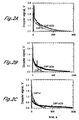
- signal intensity was 1.1 V rms, with a decay constant of approximately .00859 s -1
- Solution 2 was added to high shear mixer and cooled in an ice bath.
- This suspension was emulsified using a Microfluidizer (Microfluidics Corporation, Newton, MA; model M-110F) at 10,000 psi, 5°C for 5 passes.
- the resulting emulsion was added to solution 1.
- This mixture was then spray dried in a Niro Atomizer Portable Spray Dryer equipped with a two fluid atomizer (Niro Atomizer, Copenhagen, Denmark) employing the following settings: hot air flow rate 31 CFM inlet air temp. 325 °C outlet air temp. 120 °C atomizer air flow 290 liters/min emulsion feed rate 1.5 liter/hr
- the dry, hollow spherical product had a diameter between about 1 ⁇ M and about 15 ⁇ M and was collected at the cyclone separator as is standard for this dryer.
- Aliquots of powder 200 mg were weighed into 10 ml tubing vials, sparged with perfluorodiglyme-saturated nitrogen at 20°C and sealed. The nitrogen was saturated with perfluorodiglyme by passing it through three perfluorodiglyme filled gas washing bottles immersed in a 20°C water bath. The amount of perfluorodiglyme vapor per vial was 12-14 mg.
- the vials were reconstituted with 5 ml water for injection after inserting an 18-gauge needle as a vent to relieve pressure as the water was injected, forming approximately 3 x 10 8 bubbles per ml which were stable in vitro for several days.
- One ml of the resulting microbubble suspension was injected intravenously into an approximately 3 kg rabbit instrumented to monitor the Doppler ultrasound signal of its carotid artery.
- a 10 MHz flow cuff (Triton Technology Inc., San Diego, CA; model ES-10-20) connected to a System 6 Doppler flow module (Triton Technology Inc.) fed the RF Doppler signal to a LeCroy 9410 oscilloscope (LeCroy, Chestnut Ridge, NY).
- the root mean square (RMS) voltage of the signal computed by the oscilloscope was transferred to a computer and the resultant curve fitted to obtain peak echogenic signal intensity and half-life of the microbubbles in blood. Signals before contrast were less than 0.1 volts RMS.
- signal intensity was 0.4 V rms, with a decay constant of approximately .01835 s -1
- Solution 2 was added to high shear mixer and cooled in an ice bath.
- This suspension was emulsified using a Microfluidizer (Microfluidics Corporation, Newton, MA; model M-110F) at 10,000 psi, 5°C for 5 passes.
- the resulting emulsion was added to solution 1.
- This mixture was then spray dried in a Niro Atomizer Portable Spray Dryer equipped with a two fluid atomizer (Niro Atomizer, Copenhagen, Denmark) employing the following settings: hot air flow rate 31 CFM inlet air temp. 325 °C outlet air temp. 120 °C atomizer air flow 290 liters/min emulsion feed rate 1.5 liter/hr
- the dry, hollow spherical product had a diameter between about 1 ⁇ M and about 15 ⁇ M and was collected at the cyclone separator as is standard for this dryer.
- Aliquots of powder 200 mg were weighed into 10 ml tubing vials, sparged with perfluorodiglyme-saturated nitrogen at 13°C and sealed. The nitrogen was saturated with perfluorodiglyme by passing it through three perfluorodiglyme filled gas washing bottles immersed in a 13°C water bath. The amount of perfluorodiglyme vapor per vial was 12-14 mg.
- the vials were reconstituted with 5 ml water for injection after inserting an 18-gauge needle as a vent to relieve pressure as the water was injected, forming approximately 2 x 10 8 bubbles per ml which were stable in vitro for several days.
- One ml of the resulting microbubble suspension was injected intravenously into an approximately 3 kg rabbit instrumented to monitor the Doppler ultrasound signal of its carotid artery.
- a 10 MHz flow cuff (Triton Technology Inc., San Diego, CA; model ES-10-20) connected to a System 6 Doppler flow module (Triton Technology Inc.) fed the RF doppler signal to a LeCroy 9410 oscilloscope (LeCroy, Chestnut Ridge, NY).
- the root mean square (RMS) voltage of the signal computed by the oscilloscope was transferred to a computer and the resultant curve fitted to obtain peak echogenic signal intensity and half-life of the microbubbles in blood. Signals before contrast were less than 0.1 volts RMS.
- signal intensity was 0.2 V rms, with a decay constant of approximately .00387 s -1 .
- the surfactants form mixed micelles only.
- 5 ml water approximately 51 million gas emulsion droplets per ml were observed, ranging in size from 1 to 20 microns.
- the gas emulsion was assayed for complement activation using an in-vitro C3a diagnostic kit supplied by Quidel Corp. (San Diego, CA). No difference between the gas emulsion and the negative control (saline) were observed, indicating that the gas emulsion does not activate complement. It is well known that naked microbubbles activate complement.
- the gas emulsion was also assayed for changes in hemodynamics in anesthetized dogs at a dose of 20 mg/kg. No changes in mean arterial pressure or pulmonary artery pressure were observed. These results indicate that no hemodynamic effects are observed with the gas emulsion at 10-100 times the clinically relevant dose.
- the needle sealing cover was removed to eliminate pressure buildup in the powder chamber.
- the plunger was then depressed, forcing the interchamber seal to the bypass position which allowed the water to flow around the interchamber seal into the powder-containing chamber.
- the plunger motion was stopped when all the water was in the powder chamber.
- the syringe was agitated to dissolve the powder. Excess gas and any large bubbles were expelled by holding the syringe, needle end up, and further depressing the plunger.
- the solution containing numerous stabilized microbubbles was then expelled from the syringe by depressing the plunger to its limit.
- Example III One liter of the dispersion A was prepared and spray dried as described in Example III, and one liter of dispersions B and C were prepared and spray dried as described in Example V.
- Powder Filling gas Amount of osmotic filling gas per vial, mg/atm Doppler signal, V, 100 s after injection Doppler signal, 300 s after injection 1 24f CF 3 OCF 3 16.5mg/0.26 atm 0.3 0.1 2 24f CF 3 OC 2 F 5 38 mg/ 0.46 atm 0.8 0.2 3 24f n-C 3 F 8 49.7mg/0.65 atm 0.6 0 4 24f air - 0 0 5 24b C 2 F 5 OC 2 F 5 48.2mg/0.46 atm 1.25 0.6 6 24b n-C 4 F 10 50 mg/0.51 atm 1.0 0.5 7 AF0145 CF 3 OC 2 F 5 41.7 mg/0.50 atm 0.75 0.1 8 AF0145 air - 0 0 0
- the present invention provides a stable gas dispersion or emulsion that is suitable for use as ultrasound and magnetic resonance imaging (MRI) contrast enhancement agents wherein the bubbles have a prolonged longevity in vivo.
- Typical ultrasound contrast enhancement agents only exhibit contrast enhancement potential for approximately one pass through the arterial system, or a few seconds to about a minute. Accordingly, such agents are not generally circulated past the aorta in a patient following intravenous injection.
- stable contrast agents prepared in accordance with the present invention continue to demonstrate contrast enhancement duration sufficient for multiple passes through the entire circulatory system of a patient following intravenous injection. In vivo bubble lives of several minutes are easily demonstrated. Such lengthening of contrast enhancement potential during ultrasound is highly advantageous.
- the contrast enhancement agents of the invention provide superior imaging. For example, clear, vivid, and distinct images of blood flowing through the heart, liver, and kidneys are achieved. Thus small, nontoxic doses of the compositions of the present invention can be administered in a peripheral vein and used to enhance images of the entire body.
- Powder D was prepared as described in Example XI and filled with perfluorohexane-N 2 mixture (28mg of osmotic agent per vial, partial pressure 0.16 atm) and C 5 F 12 O 4 -N 2 mixture (22 mg of osmotic agent per vial, partial pressure 0.12 atm). After reconstituting the powder with 10 ml of water, the bubbles were formed.
- Anesthetized pigs (14-16 kg) were fitted with indwelling catheters in the femoral artery and femoral and jugular veins for hemodynamic monitoring and contrast agent administration.
- Parastemal short-axis cardiac images at the level of the papillary muscles were obtained using an HP Sonos 2500 Ultrasound machine. Images were acquired in the Second Harmonic mode with a wide bandwidth linear phased array probe emitting at 2 MHz and receiving at 4 MHz. Imaging was intermittent (gated), triggered at end-diastole of every cardiac cycle.
- 0.5 mL of reconstituted contrast agent was diluted with 0.5mL sterile saline and infused over 1 min via the jugular vein.
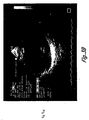
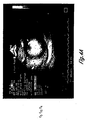
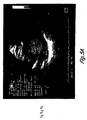
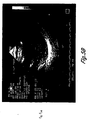
- Figures 3a, 3b and 3c represent an image of the heart before infusing the contrast agent (3a), one minute (3b) and six minutes (3c) after injection.
Landscapes
- Health & Medical Sciences (AREA)
- Veterinary Medicine (AREA)
- Public Health (AREA)
- Epidemiology (AREA)
- Life Sciences & Earth Sciences (AREA)
- Animal Behavior & Ethology (AREA)
- General Health & Medical Sciences (AREA)
- Nuclear Medicine, Radiotherapy & Molecular Imaging (AREA)
- Radiology & Medical Imaging (AREA)
- Chemical & Material Sciences (AREA)
- Acoustics & Sound (AREA)
- Physics & Mathematics (AREA)
- Dispersion Chemistry (AREA)
- Medicines Containing Antibodies Or Antigens For Use As Internal Diagnostic Agents (AREA)
- Medicinal Preparation (AREA)
- Organic Low-Molecular-Weight Compounds And Preparation Thereof (AREA)
- Emulsifying, Dispersing, Foam-Producing Or Wetting Agents (AREA)
- Acyclic And Carbocyclic Compounds In Medicinal Compositions (AREA)
- Colloid Chemistry (AREA)
- Cosmetics (AREA)
Applications Claiming Priority (3)
| Application Number | Priority Date | Filing Date | Title |
|---|---|---|---|
| US08/479,621 US5804162A (en) | 1995-06-07 | 1995-06-07 | Gas emulsions stabilized with fluorinated ethers having low Ostwald coefficients |
| US479621 | 1995-06-07 | ||
| EP96918164A EP0833669B1 (en) | 1995-06-07 | 1996-06-05 | Gas emulsions stabilized with fluorinated ethers having low ostwald coefficients |
Related Parent Applications (1)
| Application Number | Title | Priority Date | Filing Date |
|---|---|---|---|
| EP96918164A Division EP0833669B1 (en) | 1995-06-07 | 1996-06-05 | Gas emulsions stabilized with fluorinated ethers having low ostwald coefficients |
Publications (3)
| Publication Number | Publication Date |
|---|---|
| EP1174153A2 EP1174153A2 (en) | 2002-01-23 |
| EP1174153A3 EP1174153A3 (en) | 2002-07-31 |
| EP1174153B1 true EP1174153B1 (en) | 2006-08-23 |
Family
ID=23904745
Family Applications (2)
| Application Number | Title | Priority Date | Filing Date |
|---|---|---|---|
| EP01119824A Expired - Lifetime EP1174153B1 (en) | 1995-06-07 | 1996-06-05 | Gas emulsions stabilized with fluorinated ethers having low ostwald coefficients |
| EP96918164A Expired - Lifetime EP0833669B1 (en) | 1995-06-07 | 1996-06-05 | Gas emulsions stabilized with fluorinated ethers having low ostwald coefficients |
Family Applications After (1)
| Application Number | Title | Priority Date | Filing Date |
|---|---|---|---|
| EP96918164A Expired - Lifetime EP0833669B1 (en) | 1995-06-07 | 1996-06-05 | Gas emulsions stabilized with fluorinated ethers having low ostwald coefficients |
Country Status (18)
| Country | Link |
|---|---|
| US (2) | US5804162A (pl) |
| EP (2) | EP1174153B1 (pl) |
| JP (1) | JP4067116B2 (pl) |
| KR (1) | KR100401429B1 (pl) |
| CN (1) | CN1087954C (pl) |
| AT (2) | ATE337018T1 (pl) |
| AU (1) | AU712946B2 (pl) |
| CA (1) | CA2222186A1 (pl) |
| CZ (1) | CZ391397A3 (pl) |
| DE (2) | DE69621015T2 (pl) |
| DK (1) | DK0833669T3 (pl) |
| ES (2) | ES2269262T3 (pl) |
| HU (1) | HUP9900848A3 (pl) |
| IL (1) | IL122217A (pl) |
| NO (1) | NO975317L (pl) |
| PL (1) | PL185883B1 (pl) |
| PT (1) | PT833669E (pl) |
| WO (1) | WO1996040281A2 (pl) |
Families Citing this family (139)
| Publication number | Priority date | Publication date | Assignee | Title |
|---|---|---|---|---|
| US6551576B1 (en) | 1989-12-22 | 2003-04-22 | Bristol-Myers Squibb Medical Imaging, Inc. | Container with multi-phase composition for use in diagnostic and therapeutic applications |
| US5922304A (en) | 1989-12-22 | 1999-07-13 | Imarx Pharmaceutical Corp. | Gaseous precursor filled microspheres as magnetic resonance imaging contrast agents |
| US5469854A (en) | 1989-12-22 | 1995-11-28 | Imarx Pharmaceutical Corp. | Methods of preparing gas-filled liposomes |
| US5542935A (en) | 1989-12-22 | 1996-08-06 | Imarx Pharmaceutical Corp. | Therapeutic delivery systems related applications |
| US5585112A (en) | 1989-12-22 | 1996-12-17 | Imarx Pharmaceutical Corp. | Method of preparing gas and gaseous precursor-filled microspheres |
| US5776429A (en) | 1989-12-22 | 1998-07-07 | Imarx Pharmaceutical Corp. | Method of preparing gas-filled microspheres using a lyophilized lipids |
| US6001335A (en) | 1989-12-22 | 1999-12-14 | Imarx Pharmaceutical Corp. | Contrasting agents for ultrasonic imaging and methods for preparing the same |
| US6088613A (en) | 1989-12-22 | 2000-07-11 | Imarx Pharmaceutical Corp. | Method of magnetic resonance focused surgical and therapeutic ultrasound |
| US6146657A (en) | 1989-12-22 | 2000-11-14 | Imarx Pharmaceutical Corp. | Gas-filled lipid spheres for use in diagnostic and therapeutic applications |
| US20020150539A1 (en) | 1989-12-22 | 2002-10-17 | Unger Evan C. | Ultrasound imaging and treatment |
| US5874062A (en) | 1991-04-05 | 1999-02-23 | Imarx Pharmaceutical Corp. | Methods of computed tomography using perfluorocarbon gaseous filled microspheres as contrast agents |
| US5205290A (en) | 1991-04-05 | 1993-04-27 | Unger Evan C | Low density microspheres and their use as contrast agents for computed tomography |
| EP1550464A1 (en) * | 1993-07-30 | 2005-07-06 | IMCOR Pharmaceutical Co. | Stabilized microbubble composition for ultrasound |
| US7083572B2 (en) | 1993-11-30 | 2006-08-01 | Bristol-Myers Squibb Medical Imaging, Inc. | Therapeutic delivery systems |
| US6743779B1 (en) | 1994-11-29 | 2004-06-01 | Imarx Pharmaceutical Corp. | Methods for delivering compounds into a cell |
| US7429646B1 (en) | 1995-06-05 | 2008-09-30 | Human Genome Sciences, Inc. | Antibodies to human tumor necrosis factor receptor-like 2 |
| US5997898A (en) | 1995-06-06 | 1999-12-07 | Imarx Pharmaceutical Corp. | Stabilized compositions of fluorinated amphiphiles for methods of therapeutic delivery |
| US6521211B1 (en) | 1995-06-07 | 2003-02-18 | Bristol-Myers Squibb Medical Imaging, Inc. | Methods of imaging and treatment with targeted compositions |
| US5804162A (en) * | 1995-06-07 | 1998-09-08 | Alliance Pharmaceutical Corp. | Gas emulsions stabilized with fluorinated ethers having low Ostwald coefficients |
| US6139819A (en) | 1995-06-07 | 2000-10-31 | Imarx Pharmaceutical Corp. | Targeted contrast agents for diagnostic and therapeutic use |
| US6231834B1 (en) | 1995-06-07 | 2001-05-15 | Imarx Pharmaceutical Corp. | Methods for ultrasound imaging involving the use of a contrast agent and multiple images and processing of same |
| US6033645A (en) | 1996-06-19 | 2000-03-07 | Unger; Evan C. | Methods for diagnostic imaging by regulating the administration rate of a contrast agent |
| US7888466B2 (en) | 1996-01-11 | 2011-02-15 | Human Genome Sciences, Inc. | Human G-protein chemokine receptor HSATU68 |
| WO1997040679A1 (en) | 1996-05-01 | 1997-11-06 | Imarx Pharmaceutical Corp. | Methods for delivering compounds into a cell |
| DE59706019D1 (de) * | 1996-08-05 | 2002-02-21 | Schering Ag | Vorrichtung und verfahren zur abtrennung magnetischer materialien aus pharmazeutischen zubereitungen, deren ausgangs- oder zwischenprodukten sowie mit hilfe dieser vorrichtung hergestellte mittel |
| US6414139B1 (en) | 1996-09-03 | 2002-07-02 | Imarx Therapeutics, Inc. | Silicon amphiphilic compounds and the use thereof |
| US5846517A (en) | 1996-09-11 | 1998-12-08 | Imarx Pharmaceutical Corp. | Methods for diagnostic imaging using a renal contrast agent and a vasodilator |
| WO1998010798A1 (en) | 1996-09-11 | 1998-03-19 | Imarx Pharmaceutical Corp. | Improved methods for diagnostic imaging using a contrast agent and a vasodilator |
| TR199901544T2 (xx) | 1996-10-21 | 1999-09-21 | Nycomed Imaging As | Kontrast ajanlar�ndaki veya kontrast ajanlar�yla ilgili geli�meler. |
| EP1001816A4 (en) * | 1996-11-25 | 2002-07-17 | Imarx Pharmaceutical Corp | PERFLUORINATED ETHER COMPOSITIONS FOR USE AS DIAGNOSTIC CONTRAST AGENTS |
| US6537246B1 (en) | 1997-06-18 | 2003-03-25 | Imarx Therapeutics, Inc. | Oxygen delivery agents and uses for the same |
| US6143276A (en) | 1997-03-21 | 2000-11-07 | Imarx Pharmaceutical Corp. | Methods for delivering bioactive agents to regions of elevated temperatures |
| US6090800A (en) | 1997-05-06 | 2000-07-18 | Imarx Pharmaceutical Corp. | Lipid soluble steroid prodrugs |
| US7452551B1 (en) | 2000-10-30 | 2008-11-18 | Imarx Therapeutics, Inc. | Targeted compositions for diagnostic and therapeutic use |
| US20020039594A1 (en) * | 1997-05-13 | 2002-04-04 | Evan C. Unger | Solid porous matrices and methods of making and using the same |
| US6416740B1 (en) | 1997-05-13 | 2002-07-09 | Bristol-Myers Squibb Medical Imaging, Inc. | Acoustically active drug delivery systems |
| US6548047B1 (en) | 1997-09-15 | 2003-04-15 | Bristol-Myers Squibb Medical Imaging, Inc. | Thermal preactivation of gaseous precursor filled compositions |
| US6123923A (en) | 1997-12-18 | 2000-09-26 | Imarx Pharmaceutical Corp. | Optoacoustic contrast agents and methods for their use |
| US20010003580A1 (en) | 1998-01-14 | 2001-06-14 | Poh K. Hui | Preparation of a lipid blend and a phospholipid suspension containing the lipid blend |
| AU3072799A (en) | 1998-03-19 | 1999-10-11 | Human Genome Sciences, Inc. | Cytokine receptor common gamma chain like |
| EP2357192A1 (en) | 1999-02-26 | 2011-08-17 | Human Genome Sciences, Inc. | Human endokine alpha and methods of use |
| US6270460B1 (en) * | 1999-06-24 | 2001-08-07 | Acuson Corporation | Apparatus and method to limit the life span of a diagnostic medical ultrasound probe |
| EP2206720A1 (en) | 2000-04-12 | 2010-07-14 | Human Genome Sciences, Inc. | Albumin fusion proteins |
| US20060141455A1 (en) | 2002-01-08 | 2006-06-29 | Rhonda Hansen | Gene products differentially expressed in cancerous breast cells and their methods of use |
| US7700359B2 (en) | 2000-06-02 | 2010-04-20 | Novartis Vaccines And Diagnostics, Inc. | Gene products differentially expressed in cancerous cells |
| CA2413160A1 (en) | 2000-06-15 | 2001-12-20 | Human Genome Sciences, Inc. | Human tumor necrosis factor delta and epsilon |
| US6849194B2 (en) | 2000-11-17 | 2005-02-01 | Pcbu Services, Inc. | Methods for preparing ethers, ether compositions, fluoroether fire extinguishing systems, mixtures and methods |
| EP1683865A3 (en) | 2001-02-02 | 2006-10-25 | Eli Lilly & Company | Mammalian proteins and in particular CD200 |
| JP2005503116A (ja) | 2001-02-09 | 2005-02-03 | ヒューマン ジノーム サイエンシーズ, インコーポレイテッド | ヒトgタンパク質ケモカインレセプター(ccr5)hdgnr10 |
| CA2444632A1 (en) | 2001-04-13 | 2002-10-24 | Human Genome Sciences, Inc. | Vascular endothelial growth factor 2 |
| DE10119522A1 (de) * | 2001-04-20 | 2002-12-05 | Innovacell Biotechnologie Gmbh | Herstellung und Anwendung einer Suspensionszusammensetzung mit einem Ultraschall-Kontrastmittel |
| US6867189B2 (en) | 2001-07-26 | 2005-03-15 | Genset S.A. | Use of adipsin/complement factor D in the treatment of metabolic related disorders |
| EP2261250B1 (en) | 2001-12-21 | 2015-07-01 | Human Genome Sciences, Inc. | GCSF-Albumin fusion proteins |
| EP1585815A4 (en) | 2003-01-21 | 2006-02-22 | Bristol Myers Squibb Co | A NEW ACYL-COENZYME A, MONOCLYLGLYCERIN ACYLTRANSFERASE-3 (MGAT3), CODING POLYNUCLEOTIDE, AND USES THEREOF |
| US7300743B2 (en) * | 2003-03-06 | 2007-11-27 | E. I. Du Pont De Nemours And Company | Radiation durable organic compounds with high transparency in the vacuum ultraviolet, and method for preparing |
| WO2004101764A2 (en) | 2003-05-13 | 2004-11-25 | Chiron Corporation | Methods of modulating metastasis and skeletal related events resulting from metastases |
| US20050074406A1 (en) * | 2003-10-03 | 2005-04-07 | Scimed Life Systems, Inc. | Ultrasound coating for enhancing visualization of medical device in ultrasound images |
| ES2567634T3 (es) | 2004-02-09 | 2016-04-25 | Human Genome Sciences, Inc. | Proteínas de fusión de albúmina |
| US8012457B2 (en) | 2004-06-04 | 2011-09-06 | Acusphere, Inc. | Ultrasound contrast agent dosage formulation |
| PL1904093T3 (pl) | 2005-07-19 | 2018-12-31 | Stemgen S.P.A. | Hamowanie przez bmp-4 zdolności do tworzenia guzów przez komórki macierzyste guza |
| US7943134B2 (en) | 2005-08-31 | 2011-05-17 | Academia Sinica | Compositions and methods for identifying response targets and treating flavivirus infection responses |
| EA015860B1 (ru) | 2005-10-13 | 2011-12-30 | Хьюман Дженом Сайенсиз, Инк. | Способы лечения аутоиммунных заболеваний при использовании антагониста нейтрокина-альфа |
| BRPI0618338A2 (pt) | 2005-11-07 | 2011-08-23 | Scripps Resarch Inst | uso de inibidor de sinalização de fator tecidual, método para identificar um agente que inibe a sinalização de tf/viia, composições farmacêuticas e kit |
| US7572618B2 (en) | 2006-06-30 | 2009-08-11 | Bristol-Myers Squibb Company | Polynucleotides encoding novel PCSK9 variants |
| EP2260102A1 (en) | 2008-03-25 | 2010-12-15 | Novartis Forschungsstiftung, Zweigniederlassung Friedrich Miescher Institute For Biomedical Research | Treating cancer by down-regulating frizzled-4 and/or frizzled-1 |
| AU2009241762B2 (en) * | 2008-05-02 | 2015-07-16 | Celsense Inc. | Compositions and methods for producing emulsions for nuclear magnetic resonance techniques and other applications |
| GB0811856D0 (en) | 2008-06-27 | 2008-07-30 | Ucl Business Plc | Magnetic microbubbles, methods of preparing them and their uses |
| WO2010060048A2 (en) * | 2008-11-21 | 2010-05-27 | University Of Tennessee Research Foundation | Perflourinated poly(oxymethylene) compounds |
| EP2241323A1 (en) | 2009-04-14 | 2010-10-20 | Novartis Forschungsstiftung, Zweigniederlassung Friedrich Miescher Institute For Biomedical Research | Tenascin-W and brain cancers |
| EP2292266A1 (en) | 2009-08-27 | 2011-03-09 | Novartis Forschungsstiftung, Zweigniederlassung | Treating cancer by modulating copine III |
| WO2011036118A1 (en) | 2009-09-22 | 2011-03-31 | Novartis Forschungsstiftung, Zweigniederlassung Friedrich Miescher Institute For Biomedical Research | Treating cancer by modulating mex-3 |
| WO2011045352A2 (en) | 2009-10-15 | 2011-04-21 | Novartis Forschungsstiftung | Spleen tyrosine kinase and brain cancers |
| US20120213801A1 (en) | 2009-10-30 | 2012-08-23 | Ekaterina Gresko | Phosphorylated Twist1 and cancer |
| WO2011107586A1 (en) | 2010-03-05 | 2011-09-09 | Novartis Forschungsstiftung, Zweigniederlassung, Friedrich Miescher Institute For Biomedical Research, | Smoc1, tenascin-c and brain cancers |
| WO2011131611A1 (en) | 2010-04-19 | 2011-10-27 | Novartis Forschungsstiftung, Zweigniederlassung Friedrich Miescher Institute For Biomedical Research | Modulating xrn1 |
| WO2011154485A1 (en) | 2010-06-10 | 2011-12-15 | Novartis Forschungsstiftung, Zweigniederlassung Friedrich Miescher Institute For Biomedical Research | Treating cancer by modulating mammalian sterile 20-like kinase 3 |
| US20130171159A1 (en) | 2010-09-10 | 2013-07-04 | Brian Arthur Hemmings | Phosphorylated twist1 and metastasis |
| WO2012168259A1 (en) | 2011-06-06 | 2012-12-13 | Novartis Forschungsstiftung, Zweigniederlassung | Protein tyrosine phosphatase, non-receptor type 11 (ptpn11) and triple-negative breast cancer |
| EP2776838A1 (en) | 2011-11-08 | 2014-09-17 | Novartis Forschungsstiftung, Zweigniederlassung Friedrich Miescher Institute For Biomedical Research | Early diagnostic of neurodegenerative diseases |
| US20140314787A1 (en) | 2011-11-08 | 2014-10-23 | Novartis Forschungsstiftung, Zweigniederlassung, Friedrich Miescher Institute | Treatment for neurodegenerative diseases |
| WO2013102825A1 (en) | 2012-01-02 | 2013-07-11 | Novartis Ag | Cdcp1 and breast cancer |
| JP2013180956A (ja) * | 2012-02-29 | 2013-09-12 | Sunstar Engineering Inc | 殺菌剤組成物 |
| WO2013144240A1 (en) | 2012-03-29 | 2013-10-03 | Friedrich Miescher Institute For Biomedical Research | Inhibition of interleukin- 8 and/or its receptor cxcrl in the treatment her2/her3 -overexpressing breast cancer |
| WO2014001482A1 (en) | 2012-06-29 | 2014-01-03 | Novartis Forschungsstiftung, Zweigniererlassung, Friedrich Miescher Institute For Biomedical Research | Treating diseases by modulating a specific isoform of mkl1 |
| WO2014006114A1 (en) | 2012-07-05 | 2014-01-09 | Novartis Forschungsstiftung, Zweigniederlassung Friedrich Miescher Institute For Biomedical Research | New treatment for neurodegenerative diseases |
| EP2869818A1 (en) | 2012-07-06 | 2015-05-13 | Novartis AG | Combination of a phosphoinositide 3-kinase inhibitor and an inhibitor of the il-8/cxcr interaction |
| EP3030902B1 (en) | 2013-08-07 | 2019-09-25 | Friedrich Miescher Institute for Biomedical Research | New screening method for the treatment friedreich's ataxia |
| WO2015189816A1 (en) | 2014-06-13 | 2015-12-17 | Friedrich Miescher Institute For Biomedical Research | New treatment against influenza virus |
| WO2015198202A1 (en) | 2014-06-23 | 2015-12-30 | Friedrich Miescher Institute For Biomedical Research | Methods for triggering de novo formation of heterochromatin and or epigenetic silencing with small rnas |
| WO2016001830A1 (en) | 2014-07-01 | 2016-01-07 | Friedrich Miescher Institute For Biomedical Research | Combination of a brafv600e inhibitor and mertk inhibitor to treat melanoma |
| US20170298360A1 (en) | 2014-09-24 | 2017-10-19 | Friedrich Miescher Institute For Biomedical Research | Lats and breast cancer |
| CN104353088A (zh) * | 2014-09-30 | 2015-02-18 | 东南大学 | 一种脂质气泡的制备方法 |
| US10052394B2 (en) | 2014-11-21 | 2018-08-21 | General Electric Company | Microbubble tether for diagnostic and therapeutic applications |
| EP3240579B1 (en) | 2014-12-31 | 2022-07-27 | Lantheus Medical Imaging, Inc. | Lipid-encapsulated gas microsphere compositions and related methods |
| WO2017072669A1 (en) | 2015-10-28 | 2017-05-04 | Friedrich Miescher Institute For Biomedical Research | Tenascin-w and biliary tract cancers |
| EP3176206A1 (de) * | 2015-12-01 | 2017-06-07 | Evonik Degussa GmbH | Verfahren zur herstellung feinzelliger schaumstoffe unter verwendung eines zellalterungshemmers |
| MX2018013409A (es) | 2016-05-04 | 2019-07-08 | Lantheus Medical Imaging Inc | Métodos y dispositivos para la preparación de agentes de contraste de ultrasonido. |
| US9789210B1 (en) | 2016-07-06 | 2017-10-17 | Lantheus Medical Imaging, Inc. | Methods for making ultrasound contrast agents |
| US11225689B2 (en) | 2016-08-17 | 2022-01-18 | The Broad Institute, Inc. | Method for determination and identification of cell signatures and cell markers |
| US12447213B2 (en) | 2016-10-07 | 2025-10-21 | The Broad Institute, Inc. | Modulation of novel immune checkpoint targets |
| US12161694B2 (en) | 2017-03-24 | 2024-12-10 | The Broad Institute, Inc. | Methods and compositions for regulating innate lymphoid cell inflammatory responses |
| EP3606518A4 (en) | 2017-04-01 | 2021-04-07 | The Broad Institute, Inc. | METHODS AND COMPOSITIONS FOR DETECTION AND MODULATION OF IMMUNOTHERAPY RESISTANCE GENE SIGNATURE IN CANCER |
| WO2018191558A1 (en) | 2017-04-12 | 2018-10-18 | The Broad Institute, Inc. | Modulation of epithelial cell differentiation, maintenance and/or function through t cell action, and markers and methods of use thereof |
| EP3622092A4 (en) | 2017-05-11 | 2021-06-23 | The Broad Institute, Inc. | METHODS AND COMPOSITIONS OF USE OF CD8 + TUMOR-INFILTRATING LYMPHOCYTE SUBTYPES AND GENE SIGNATURES THEREOF |
| US12049643B2 (en) | 2017-07-14 | 2024-07-30 | The Broad Institute, Inc. | Methods and compositions for modulating cytotoxic lymphocyte activity |
| EP3654993A4 (en) | 2017-07-17 | 2021-08-25 | The Broad Institute, Inc. | CELL ATLAS OF HEALTHY HUMAN COLUMN AND HUMAN COLUMN WITH COLITIS ULCEROSA |
| EP3695408B1 (en) | 2017-10-02 | 2026-01-21 | The Broad Institute, Inc. | Medical use of cdk4/6- and checkpoint-inhibitors in phased combination, in treatment of cancer |
| WO2019079362A1 (en) | 2017-10-16 | 2019-04-25 | Massachusetts Institute Of Technology | HOST-PATHOGENIC INTERACTION OF MYCOBACTERIUM TUBERCULOSIS |
| WO2019094955A1 (en) | 2017-11-13 | 2019-05-16 | The Broad Institute, Inc. | Methods and compositions for targeting developmental and oncogenic programs in h3k27m gliomas |
| EP3710039A4 (en) | 2017-11-13 | 2021-08-04 | The Broad Institute, Inc. | METHODS AND COMPOSITIONS FOR TREATMENT OF CANCER BY TARGETING THE CLEC2D-KLRB1 PATH |
| US11957695B2 (en) | 2018-04-26 | 2024-04-16 | The Broad Institute, Inc. | Methods and compositions targeting glucocorticoid signaling for modulating immune responses |
| US20210386829A1 (en) | 2018-05-04 | 2021-12-16 | The Broad Institute, Inc. | Compositions and methods for modulating cgrp signaling to regulate innate lymphoid cell inflammatory responses |
| US20210371932A1 (en) | 2018-06-01 | 2021-12-02 | Massachusetts Institute Of Technology | Methods and compositions for detecting and modulating microenvironment gene signatures from the csf of metastasis patients |
| US20220411783A1 (en) | 2018-10-12 | 2022-12-29 | The Broad Institute, Inc. | Method for extracting nuclei or whole cells from formalin-fixed paraffin-embedded tissues |
| US20210379057A1 (en) | 2018-10-16 | 2021-12-09 | Massachusetts Institute Of Technology | Nutlin-3a for use in treating a mycobacterium tuberculosis infection |
| US12402610B2 (en) | 2018-11-09 | 2025-09-02 | The Broad Institute, Inc. | Methods and compositions for modulating innate lymphoid cell pathogenic effectors |
| US12165743B2 (en) | 2018-11-09 | 2024-12-10 | The Broad Institute, Inc. | Compressed sensing for screening and tissue imaging |
| US11739156B2 (en) | 2019-01-06 | 2023-08-29 | The Broad Institute, Inc. Massachusetts Institute of Technology | Methods and compositions for overcoming immunosuppression |
| US20230053540A1 (en) | 2019-02-19 | 2023-02-23 | Massachusetts Institute Of Technology | Treatment of liver injury |
| WO2020186101A1 (en) | 2019-03-12 | 2020-09-17 | The Broad Institute, Inc. | Detection means, compositions and methods for modulating synovial sarcoma cells |
| WO2020186235A1 (en) | 2019-03-14 | 2020-09-17 | The Broad Institute, Inc. | Compositions and methods for modulating cgrp signaling to regulate intestinal innate lymphoid cells |
| US20220142948A1 (en) | 2019-03-18 | 2022-05-12 | The Broad Institute, Inc. | Compositions and methods for modulating metabolic regulators of t cell pathogenicity |
| US20220152148A1 (en) | 2019-03-18 | 2022-05-19 | The Broad Institute, Inc. | Modulation of type 2 immunity by targeting clec-2 signaling |
| US20220226464A1 (en) | 2019-05-28 | 2022-07-21 | Massachusetts Institute Of Technology | Methods and compositions for modulating immune responses |
| US20220243178A1 (en) | 2019-05-31 | 2022-08-04 | The Broad Institute, Inc. | Methods for treating metabolic disorders by targeting adcy5 |
| WO2021030627A1 (en) | 2019-08-13 | 2021-02-18 | The General Hospital Corporation | Methods for predicting outcomes of checkpoint inhibition and treatment thereof |
| US12421557B2 (en) | 2019-08-16 | 2025-09-23 | The Broad Institute, Inc. | Methods for predicting outcomes and treating colorectal cancer using a cell atlas |
| US11981922B2 (en) | 2019-10-03 | 2024-05-14 | Dana-Farber Cancer Institute, Inc. | Methods and compositions for the modulation of cell interactions and signaling in the tumor microenvironment |
| US12195725B2 (en) | 2019-10-03 | 2025-01-14 | Dana-Farber Cancer Institute, Inc. | Compositions and methods for modulating and detecting tissue specific TH17 cell pathogenicity |
| US11793787B2 (en) | 2019-10-07 | 2023-10-24 | The Broad Institute, Inc. | Methods and compositions for enhancing anti-tumor immunity by targeting steroidogenesis |
| US11865168B2 (en) | 2019-12-30 | 2024-01-09 | Massachusetts Institute Of Technology | Compositions and methods for treating bacterial infections |
| US12165747B2 (en) | 2020-01-23 | 2024-12-10 | The Broad Institute, Inc. | Molecular spatial mapping of metastatic tumor microenvironment |
| WO2022032228A1 (en) | 2020-08-07 | 2022-02-10 | The Broad Institute, Inc. | Therapeutic targeting of phosphate dysregulation in cancer via the xpr1:kidins220 protein complex |
| JP2025524656A (ja) | 2022-07-14 | 2025-07-30 | ザ・ブロード・インスティテュート・インコーポレイテッド | トランスフェリン受容体との相互作用を通じてcns全体への遺伝子送達を可能にするaavキャプシド |
| WO2024192141A1 (en) | 2023-03-13 | 2024-09-19 | Dana-Farber Cancer Institute, Inc. | Treatment of cancers having a drug-resistant mesenchymal cell state |
| WO2025155923A1 (en) | 2024-01-17 | 2025-07-24 | The Broad Institute, Inc. | Aav capsid modifications that enable improved cns-wide gene delivery through interactions with the transferrin receptor |
| USD1102044S1 (en) * | 2024-03-11 | 2025-11-11 | Tractor Supply Co. Of Texas, Lp | Portable chicken coop |
| WO2025217174A1 (en) | 2024-04-08 | 2025-10-16 | The Broad Institute, Inc. | Aav capsid modifications that enable improved cns-wide gene delivery through interactions with carbonic anhydrase iv |
| WO2025217163A2 (en) | 2024-04-08 | 2025-10-16 | The Broad Institute, Inc. | Novel aav capsids binding to human cd59 |
Family Cites Families (88)
| Publication number | Priority date | Publication date | Assignee | Title |
|---|---|---|---|---|
| US4276885A (en) * | 1979-05-04 | 1981-07-07 | Rasor Associates, Inc | Ultrasonic image enhancement |
| WO1982001642A1 (en) * | 1980-11-17 | 1982-05-27 | Med Inc Ultra | Microbubble precursors and methods for their production and use |
| US4657756A (en) * | 1980-11-17 | 1987-04-14 | Schering Aktiengesellschaft | Microbubble precursors and apparatus for their production and use |
| DE3141641A1 (de) * | 1981-10-16 | 1983-04-28 | Schering Ag, 1000 Berlin Und 4619 Bergkamen | Ultraschall-kontrastmittel und dessen herstellung |
| US4718433A (en) * | 1983-01-27 | 1988-01-12 | Feinstein Steven B | Contrast agents for ultrasonic imaging |
| US4586511A (en) * | 1983-03-04 | 1986-05-06 | Children's Hospital Medical Center | Methods and compositions for detecting and imaging a gas in an animal by nuclear magnetic resonance |
| US5141738A (en) * | 1983-04-15 | 1992-08-25 | Schering Aktiengesellschaft | Ultrasonic contrast medium comprising gas bubbles and solid lipophilic surfactant-containing microparticles and use thereof |
| DE3313947A1 (de) * | 1983-04-15 | 1984-10-18 | Schering AG, 1000 Berlin und 4709 Bergkamen | Mikropartikel und gasblaeschen enthaltende ultraschall-kontrastmittel |
| DE3324754A1 (de) * | 1983-07-06 | 1985-01-17 | Schering AG, 1000 Berlin und 4709 Bergkamen | Ultraschallkontrastmittel sowie dessen herstellung |
| GB8504916D0 (en) * | 1985-02-26 | 1985-03-27 | Isc Chemicals Ltd | Emulsions of perfluorocarbons in aqueous media |
| US5186922A (en) * | 1985-03-15 | 1993-02-16 | See/Shell Biotechnology, Inc. | Use of biodegradable microspheres labeled with imaging energy constrast materials |
| US4613326A (en) * | 1985-07-12 | 1986-09-23 | Becton, Dickinson And Company | Two-component medication syringe assembly |
| US4684479A (en) * | 1985-08-14 | 1987-08-04 | Arrigo Joseph S D | Surfactant mixtures, stable gas-in-liquid emulsions, and methods for the production of such emulsions from said mixtures |
| DE3529195A1 (de) * | 1985-08-14 | 1987-02-26 | Max Planck Gesellschaft | Kontrastmittel fuer ultraschalluntersuchungen und verfahren zu seiner herstellung |
| EP0247156B1 (en) * | 1985-11-18 | 1993-06-23 | Access Pharmaceuticals Inc. | Polychelating agents for image and spectral enhancement (and spectral shift) |
| US4927623A (en) * | 1986-01-14 | 1990-05-22 | Alliance Pharmaceutical Corp. | Dissolution of gas in a fluorocarbon liquid |
| GB8601100D0 (en) * | 1986-01-17 | 1986-02-19 | Cosmas Damian Ltd | Drug delivery system |
| EP0231091B1 (en) * | 1986-01-24 | 1993-03-31 | Children's Hospital Medical Center | Stable emulsions of highly fluorinated organic compound |
| US4925678A (en) * | 1987-04-01 | 1990-05-15 | Ranney David F | Endothelial envelopment drug carriers |
| US4781676A (en) * | 1987-02-20 | 1988-11-01 | Air Products And Chemicals, Inc. | Interstitial administration of perfluorochemical emulsions for reoxygenation of hypoxic tumor cells |
| US5108759A (en) * | 1987-04-01 | 1992-04-28 | Ranney David F | Endothelial envelopment drug carriers |
| DE3741201A1 (de) * | 1987-12-02 | 1989-06-15 | Schering Ag | Ultraschallarbeitsverfahren und mittel zu dessen durchfuehrung |
| DE3741199A1 (de) * | 1987-12-02 | 1989-08-17 | Schering Ag | Verwendung von ultraschallkontrastmitteln fuer die ultraschall-lithotripsie |
| US4844882A (en) * | 1987-12-29 | 1989-07-04 | Molecular Biosystems, Inc. | Concentrated stabilized microbubble-type ultrasonic imaging agent |
| DE58908194D1 (de) * | 1988-02-05 | 1994-09-22 | Schering Ag | Ultraschallkontrastmittel, verfahren zu deren herstellung und deren verwendung als diagnostika und therapeutika. |
| US4898734A (en) * | 1988-02-29 | 1990-02-06 | Massachusetts Institute Of Technology | Polymer composite for controlled release or membrane formation |
| US5171755A (en) * | 1988-04-29 | 1992-12-15 | Hemagen/Pfc | Emulsions of highly fluorinated organic compounds |
| US4957656A (en) * | 1988-09-14 | 1990-09-18 | Molecular Biosystems, Inc. | Continuous sonication method for preparing protein encapsulated microbubbles |
| US5228446A (en) * | 1989-12-22 | 1993-07-20 | Unger Evan C | Gas filled liposomes and their use as ultrasonic contrast agents |
| US6088613A (en) * | 1989-12-22 | 2000-07-11 | Imarx Pharmaceutical Corp. | Method of magnetic resonance focused surgical and therapeutic ultrasound |
| US5305757A (en) * | 1989-12-22 | 1994-04-26 | Unger Evan C | Gas filled liposomes and their use as ultrasonic contrast agents |
| US5542935A (en) * | 1989-12-22 | 1996-08-06 | Imarx Pharmaceutical Corp. | Therapeutic delivery systems related applications |
| US5123414A (en) * | 1989-12-22 | 1992-06-23 | Unger Evan C | Liposomes as contrast agents for ultrasonic imaging and methods for preparing the same |
| US5334381A (en) * | 1989-12-22 | 1994-08-02 | Unger Evan C | Liposomes as contrast agents for ultrasonic imaging and methods for preparing the same |
| US5149319A (en) * | 1990-09-11 | 1992-09-22 | Unger Evan C | Methods for providing localized therapeutic heat to biological tissues and fluids |
| US5469854A (en) * | 1989-12-22 | 1995-11-28 | Imarx Pharmaceutical Corp. | Methods of preparing gas-filled liposomes |
| US5088499A (en) * | 1989-12-22 | 1992-02-18 | Unger Evan C | Liposomes as contrast agents for ultrasonic imaging and methods for preparing the same |
| US5585112A (en) * | 1989-12-22 | 1996-12-17 | Imarx Pharmaceutical Corp. | Method of preparing gas and gaseous precursor-filled microspheres |
| US5352435A (en) * | 1989-12-22 | 1994-10-04 | Unger Evan C | Ionophore containing liposomes for ultrasound imaging |
| US5209720A (en) * | 1989-12-22 | 1993-05-11 | Unger Evan C | Methods for providing localized therapeutic heat to biological tissues and fluids using gas filled liposomes |
| DE4004430A1 (de) * | 1990-02-09 | 1991-08-14 | Schering Ag | Aus polyaldehyden aufgebaute kontrastmittel |
| GB9003821D0 (en) * | 1990-02-20 | 1990-04-18 | Danbiosyst Uk | Diagnostic aid |
| US5445813A (en) * | 1992-11-02 | 1995-08-29 | Bracco International B.V. | Stable microbubble suspensions as enhancement agents for ultrasound echography |
| IN172208B (pl) * | 1990-04-02 | 1993-05-01 | Sint Sa | |
| US5556610A (en) * | 1992-01-24 | 1996-09-17 | Bracco Research S.A. | Gas mixtures useful as ultrasound contrast media, contrast agents containing the media and method |
| GB9009423D0 (en) * | 1990-04-26 | 1990-06-20 | Williams Alun R | Assessment of vascular perfusion by the display of harmonic echoes from ultrasonically excited gas bubbles |
| US5205287A (en) * | 1990-04-26 | 1993-04-27 | Hoechst Aktiengesellschaft | Ultrasonic contrast agents, processes for their preparation and the use thereof as diagnostic and therapeutic agents |
| AU636481B2 (en) * | 1990-05-18 | 1993-04-29 | Bracco International B.V. | Polymeric gas or air filled microballoons usable as suspensions in liquid carriers for ultrasonic echography |
| US5315997A (en) * | 1990-06-19 | 1994-05-31 | Molecular Biosystems, Inc. | Method of magnetic resonance imaging using diamagnetic contrast |
| JP2599492B2 (ja) * | 1990-08-21 | 1997-04-09 | 第一製薬株式会社 | リポソーム製剤の製造法 |
| EP0504340B1 (en) * | 1990-10-05 | 1995-06-21 | BRACCO International B.V. | Method for the preparation of stable suspensions of hollow gas-filled microspheres suitable for ultrasonic echography |
| DE4100470A1 (de) * | 1991-01-09 | 1992-07-16 | Byk Gulden Lomberg Chem Fab | Echokontrastmittel |
| US5370901A (en) * | 1991-02-15 | 1994-12-06 | Bracco International B.V. | Compositions for increasing the image contrast in diagnostic investigations of the digestive tract of patients |
| ATE146073T1 (de) * | 1991-03-22 | 1996-12-15 | Katsuro Tachibana | Verstärker zur ultraschalltherapie von erkrankungen sowie diesen enthaltende flüssige arzneimittelzusammensetzungen |
| US5205290A (en) * | 1991-04-05 | 1993-04-27 | Unger Evan C | Low density microspheres and their use as contrast agents for computed tomography |
| DK0586524T3 (pl) * | 1991-06-03 | 1997-05-20 | Nycomed Imaging As | |
| EP0593624B1 (en) * | 1991-07-05 | 1997-04-23 | Nycomed Imaging As | Improvements in or relating to contrast agents |
| GB9116610D0 (en) * | 1991-08-01 | 1991-09-18 | Danbiosyst Uk | Preparation of microparticles |
| WO1993003671A1 (en) * | 1991-08-13 | 1993-03-04 | Molecular Biosystem, Inc. | Method of mri imaging using diamagnetic contrast agents |
| MX9205298A (es) * | 1991-09-17 | 1993-05-01 | Steven Carl Quay | Medios gaseosos de contraste de ultrasonido y metodo para seleccionar gases para usarse como medios de contraste de ultrasonido |
| HU218018B (hu) * | 1991-09-17 | 2000-05-28 | Sonus Pharmaceuticals Inc. | Gázos ultrahang-kontrasztanyag és eljárás ultrahang kontrasztanyaghoz megfelelő gázok kiválasztására |
| US5409688A (en) * | 1991-09-17 | 1995-04-25 | Sonus Pharmaceuticals, Inc. | Gaseous ultrasound contrast media |
| AU2789192A (en) * | 1991-10-04 | 1993-05-03 | Mallinckrodt Medical, Inc. | Gaseous ultrasound contrast agents |
| US5304325A (en) * | 1991-11-13 | 1994-04-19 | Hemagen/Pfc | Emulsions containing alkyl- or alkylglycerophosphoryl choline surfactants and methods of use |
| US5196183A (en) * | 1991-12-04 | 1993-03-23 | Sterling Winthrop Inc. | Contrast agents for ultrasound imaging |
| GB9200388D0 (en) * | 1992-01-09 | 1992-02-26 | Nycomed As | Improvements in or relating to contrast agents |
| IL104084A (en) * | 1992-01-24 | 1996-09-12 | Bracco Int Bv | Long-lasting aqueous suspensions of pressure-resistant gas-filled microvesicles their preparation and contrast agents consisting of them |
| DE4219723A1 (de) * | 1992-06-13 | 1993-12-16 | Schering Ag | Mikropartikel, Verfahren zu deren Herstellung, sowie die Verwendung dieser in der Diagnostik |
| AU4563093A (en) * | 1992-07-03 | 1994-01-31 | Byk Gulden Lomberg Chemische Fabrik Gmbh | Echographic contrast agent composition |
| WO1994006477A1 (en) * | 1992-09-16 | 1994-03-31 | Holmes, Michael, John | Improvements in or relating to contrast agents |
| US5314644A (en) * | 1992-10-19 | 1994-05-24 | Virginia Polytechnic Institute And State University | Microbubble generator |
| WO1994009703A1 (en) * | 1992-11-02 | 1994-05-11 | Drexel University | Surfactant-stabilized microbubble mixtures, process for preparing and methods of using the same |
| US5393527A (en) * | 1993-01-04 | 1995-02-28 | Becton, Dickinson And Company | Stabilized microspheres and methods of preparation |
| US5558855A (en) * | 1993-01-25 | 1996-09-24 | Sonus Pharmaceuticals | Phase shift colloids as ultrasound contrast agents |
| EP0680341B1 (en) * | 1993-01-25 | 2001-05-09 | Sonus Pharmaceuticals, Inc. | Phase shift colloids as ultrasound contrast agents |
| BR9405798A (pt) * | 1993-02-22 | 1995-12-12 | Vivorx Pharmaceuticals Inc | Métodos para liberação in vivo de material biológico e composições úteis dos mesmos |
| GB9305349D0 (en) * | 1993-03-16 | 1993-05-05 | Nycomed Imaging As | Improvements in or relating to contrast agents |
| US5333613A (en) * | 1993-03-23 | 1994-08-02 | Delineate | Microparticles as ultrasonic contrast media |
| US5716597A (en) * | 1993-06-04 | 1998-02-10 | Molecular Biosystems, Inc. | Emulsions as contrast agents and method of use |
| US5798091A (en) * | 1993-07-30 | 1998-08-25 | Alliance Pharmaceutical Corp. | Stabilized gas emulsion containing phospholipid for ultrasound contrast enhancement |
| CN1068229C (zh) * | 1993-12-15 | 2001-07-11 | 勃勒柯研究有限公司 | 超声对比介质、含该介质的对比剂及方法 |
| DE4406474A1 (de) * | 1994-02-23 | 1995-08-24 | Schering Ag | Gas enthaltende Mikropartikel, diese enthaltende Mittel, deren Verwendung in der Ultraschalldiagnostik, sowie Verfahren zur Herstellung der Partikel und Mittel |
| US5502094A (en) * | 1994-05-20 | 1996-03-26 | Minnesota Mining And Manufacturing Company | Physiologically acceptable emulsions containing perfluorocarbon ether hydrides and methods for use |
| US5562893A (en) * | 1994-08-02 | 1996-10-08 | Molecular Biosystems, Inc. | Gas-filled microspheres with fluorine-containing shells |
| US5540909A (en) * | 1994-09-28 | 1996-07-30 | Alliance Pharmaceutical Corp. | Harmonic ultrasound imaging with microbubbles |
| US5804162A (en) * | 1995-06-07 | 1998-09-08 | Alliance Pharmaceutical Corp. | Gas emulsions stabilized with fluorinated ethers having low Ostwald coefficients |
| GB9808599D0 (en) * | 1998-04-22 | 1998-06-24 | Nycomed Imaging As | Improvements in or realting to contrast agents |
| GB9808582D0 (en) * | 1998-04-22 | 1998-06-24 | Nycomed Imaging As | Improvements in or relating to contrast agents |
-
1995
- 1995-06-07 US US08/479,621 patent/US5804162A/en not_active Expired - Fee Related
-
1996
- 1996-06-05 JP JP50147797A patent/JP4067116B2/ja not_active Expired - Fee Related
- 1996-06-05 ES ES01119824T patent/ES2269262T3/es not_active Expired - Lifetime
- 1996-06-05 AT AT01119824T patent/ATE337018T1/de not_active IP Right Cessation
- 1996-06-05 AT AT96918164T patent/ATE216894T1/de not_active IP Right Cessation
- 1996-06-05 DE DE69621015T patent/DE69621015T2/de not_active Expired - Fee Related
- 1996-06-05 CZ CZ973913A patent/CZ391397A3/cs unknown
- 1996-06-05 WO PCT/US1996/009068 patent/WO1996040281A2/en not_active Ceased
- 1996-06-05 EP EP01119824A patent/EP1174153B1/en not_active Expired - Lifetime
- 1996-06-05 ES ES96918164T patent/ES2176462T3/es not_active Expired - Lifetime
- 1996-06-05 EP EP96918164A patent/EP0833669B1/en not_active Expired - Lifetime
- 1996-06-05 PL PL96323868A patent/PL185883B1/pl unknown
- 1996-06-05 CA CA002222186A patent/CA2222186A1/en not_active Abandoned
- 1996-06-05 IL IL12221796A patent/IL122217A/en not_active IP Right Cessation
- 1996-06-05 US US08/973,281 patent/US6193952B1/en not_active Expired - Fee Related
- 1996-06-05 PT PT96918164T patent/PT833669E/pt unknown
- 1996-06-05 HU HU9900848A patent/HUP9900848A3/hu unknown
- 1996-06-05 KR KR1019970709075A patent/KR100401429B1/ko not_active Expired - Fee Related
- 1996-06-05 DE DE69636486T patent/DE69636486T2/de not_active Expired - Fee Related
- 1996-06-05 DK DK96918164T patent/DK0833669T3/da active
- 1996-06-05 AU AU60487/96A patent/AU712946B2/en not_active Ceased
- 1996-06-05 CN CN96195879A patent/CN1087954C/zh not_active Expired - Fee Related
-
1997
- 1997-11-19 NO NO975317A patent/NO975317L/no not_active Application Discontinuation
Also Published As
Similar Documents
| Publication | Publication Date | Title |
|---|---|---|
| EP1174153B1 (en) | Gas emulsions stabilized with fluorinated ethers having low ostwald coefficients | |
| WO1996040281A9 (en) | Gas emulsions stabilized with fluorinated ethers having low ostwald coefficients | |
| JP3559849B2 (ja) | 超音波技術のための安定化された微小気泡組成物 | |
| CN1182373B (zh) | 用于超声对比增强的含磷脂的稳定气乳剂 | |
| US20020119102A1 (en) | Gas emulsions stabilized with fluorinated ethers having low ostwald coefficients | |
| AU731099B2 (en) | Stablized microbubble compositions for ultrasound | |
| AU1759000A (en) | Gas emulsions stabilized with flourinated ethers having low Ostwald coefficients | |
| MXPA97009564A (es) | Emulsiones de gas estabilizadas con eteres fluorados que tienen coeficientes bajos de ostwald | |
| HK1077018A (en) | Stabilized microbubble composition for ultrasound | |
| HK1013403B (en) | Stabilized microbubble compositions for ultrasound | |
| AU5775101A (en) | Stabilized microbubble compositions for ultrasound |
Legal Events
| Date | Code | Title | Description |
|---|---|---|---|
| PUAI | Public reference made under article 153(3) epc to a published international application that has entered the european phase |
Free format text: ORIGINAL CODE: 0009012 |
|
| AC | Divisional application: reference to earlier application |
Ref document number: 833669 Country of ref document: EP |
|
| AK | Designated contracting states |
Kind code of ref document: A2 Designated state(s): AT BE CH DE DK ES FI FR GB GR IE IT LI LU MC NL PT SE |
|
| RIN1 | Information on inventor provided before grant (corrected) |
Inventor name: WEERS, JEFFREY GREG Inventor name: SCHUTT, ERNEST GEORGE Inventor name: KABALNOV, ALEXEY |
|
| PUAL | Search report despatched |
Free format text: ORIGINAL CODE: 0009013 |
|
| AK | Designated contracting states |
Kind code of ref document: A3 Designated state(s): AT BE CH DE DK ES FI FR GB GR IE IT LI LU MC NL PT SE |
|
| RIC1 | Information provided on ipc code assigned before grant |
Free format text: 7A 61K 49/00 A, 7A 61K 49/22 B, 7A 61K 49/18 B |
|
| 17P | Request for examination filed |
Effective date: 20030128 |
|
| 17Q | First examination report despatched |
Effective date: 20030304 |
|
| AKX | Designation fees paid |
Designated state(s): AT BE CH DE DK ES FI FR GB GR IE IT LI LU MC NL PT SE |
|
| RAP1 | Party data changed (applicant data changed or rights of an application transferred) |
Owner name: IMCOR PHARMACEUTICAL CO. |
|
| GRAP | Despatch of communication of intention to grant a patent |
Free format text: ORIGINAL CODE: EPIDOSNIGR1 |
|
| GRAS | Grant fee paid |
Free format text: ORIGINAL CODE: EPIDOSNIGR3 |
|
| GRAA | (expected) grant |
Free format text: ORIGINAL CODE: 0009210 |
|
| AC | Divisional application: reference to earlier application |
Ref document number: 0833669 Country of ref document: EP Kind code of ref document: P |
|
| AK | Designated contracting states |
Kind code of ref document: B1 Designated state(s): AT BE CH DE DK ES FI FR GB GR IE IT LI LU MC NL PT SE |
|
| PG25 | Lapsed in a contracting state [announced via postgrant information from national office to epo] |
Ref country code: IT Free format text: LAPSE BECAUSE OF FAILURE TO SUBMIT A TRANSLATION OF THE DESCRIPTION OR TO PAY THE FEE WITHIN THE PRESCRIBED TIME-LIMIT;WARNING: LAPSES OF ITALIAN PATENTS WITH EFFECTIVE DATE BEFORE 2007 MAY HAVE OCCURRED AT ANY TIME BEFORE 2007. THE CORRECT EFFECTIVE DATE MAY BE DIFFERENT FROM THE ONE RECORDED. Effective date: 20060823 Ref country code: FI Free format text: LAPSE BECAUSE OF FAILURE TO SUBMIT A TRANSLATION OF THE DESCRIPTION OR TO PAY THE FEE WITHIN THE PRESCRIBED TIME-LIMIT Effective date: 20060823 Ref country code: BE Free format text: LAPSE BECAUSE OF FAILURE TO SUBMIT A TRANSLATION OF THE DESCRIPTION OR TO PAY THE FEE WITHIN THE PRESCRIBED TIME-LIMIT Effective date: 20060823 Ref country code: CH Free format text: LAPSE BECAUSE OF FAILURE TO SUBMIT A TRANSLATION OF THE DESCRIPTION OR TO PAY THE FEE WITHIN THE PRESCRIBED TIME-LIMIT Effective date: 20060823 Ref country code: LI Free format text: LAPSE BECAUSE OF FAILURE TO SUBMIT A TRANSLATION OF THE DESCRIPTION OR TO PAY THE FEE WITHIN THE PRESCRIBED TIME-LIMIT Effective date: 20060823 Ref country code: NL Free format text: LAPSE BECAUSE OF FAILURE TO SUBMIT A TRANSLATION OF THE DESCRIPTION OR TO PAY THE FEE WITHIN THE PRESCRIBED TIME-LIMIT Effective date: 20060823 Ref country code: AT Free format text: LAPSE BECAUSE OF FAILURE TO SUBMIT A TRANSLATION OF THE DESCRIPTION OR TO PAY THE FEE WITHIN THE PRESCRIBED TIME-LIMIT Effective date: 20060823 |
|
| REG | Reference to a national code |
Ref country code: GB Ref legal event code: FG4D |
|
| REG | Reference to a national code |
Ref country code: CH Ref legal event code: EP |
|
| REG | Reference to a national code |
Ref country code: IE Ref legal event code: FG4D |
|
| REF | Corresponds to: |
Ref document number: 69636486 Country of ref document: DE Date of ref document: 20061005 Kind code of ref document: P |
|
| PG25 | Lapsed in a contracting state [announced via postgrant information from national office to epo] |
Ref country code: DK Free format text: LAPSE BECAUSE OF FAILURE TO SUBMIT A TRANSLATION OF THE DESCRIPTION OR TO PAY THE FEE WITHIN THE PRESCRIBED TIME-LIMIT Effective date: 20061123 Ref country code: SE Free format text: LAPSE BECAUSE OF FAILURE TO SUBMIT A TRANSLATION OF THE DESCRIPTION OR TO PAY THE FEE WITHIN THE PRESCRIBED TIME-LIMIT Effective date: 20061123 |
|
| PG25 | Lapsed in a contracting state [announced via postgrant information from national office to epo] |
Ref country code: PT Free format text: LAPSE BECAUSE OF FAILURE TO SUBMIT A TRANSLATION OF THE DESCRIPTION OR TO PAY THE FEE WITHIN THE PRESCRIBED TIME-LIMIT Effective date: 20070124 |
|
| NLV1 | Nl: lapsed or annulled due to failure to fulfill the requirements of art. 29p and 29m of the patents act | ||
| ET | Fr: translation filed | ||
| REG | Reference to a national code |
Ref country code: CH Ref legal event code: PL |
|
| REG | Reference to a national code |
Ref country code: ES Ref legal event code: FG2A Ref document number: 2269262 Country of ref document: ES Kind code of ref document: T3 |
|
| PGFP | Annual fee paid to national office [announced via postgrant information from national office to epo] |
Ref country code: ES Payment date: 20070626 Year of fee payment: 12 |
|
| PLBE | No opposition filed within time limit |
Free format text: ORIGINAL CODE: 0009261 |
|
| STAA | Information on the status of an ep patent application or granted ep patent |
Free format text: STATUS: NO OPPOSITION FILED WITHIN TIME LIMIT |
|
| PGFP | Annual fee paid to national office [announced via postgrant information from national office to epo] |
Ref country code: DE Payment date: 20070731 Year of fee payment: 12 |
|
| 26N | No opposition filed |
Effective date: 20070524 |
|
| PGFP | Annual fee paid to national office [announced via postgrant information from national office to epo] |
Ref country code: GB Payment date: 20070628 Year of fee payment: 12 |
|
| PGFP | Annual fee paid to national office [announced via postgrant information from national office to epo] |
Ref country code: IT Payment date: 20070626 Year of fee payment: 12 |
|
| PG25 | Lapsed in a contracting state [announced via postgrant information from national office to epo] |
Ref country code: MC Free format text: LAPSE BECAUSE OF NON-PAYMENT OF DUE FEES Effective date: 20070630 |
|
| PG25 | Lapsed in a contracting state [announced via postgrant information from national office to epo] |
Ref country code: GR Free format text: LAPSE BECAUSE OF FAILURE TO SUBMIT A TRANSLATION OF THE DESCRIPTION OR TO PAY THE FEE WITHIN THE PRESCRIBED TIME-LIMIT Effective date: 20061124 |
|
| PGFP | Annual fee paid to national office [announced via postgrant information from national office to epo] |
Ref country code: FR Payment date: 20070618 Year of fee payment: 12 |
|
| PG25 | Lapsed in a contracting state [announced via postgrant information from national office to epo] |
Ref country code: IE Free format text: LAPSE BECAUSE OF NON-PAYMENT OF DUE FEES Effective date: 20070605 |
|
| GBPC | Gb: european patent ceased through non-payment of renewal fee |
Effective date: 20080605 |
|
| REG | Reference to a national code |
Ref country code: FR Ref legal event code: ST Effective date: 20090228 |
|
| PG25 | Lapsed in a contracting state [announced via postgrant information from national office to epo] |
Ref country code: DE Free format text: LAPSE BECAUSE OF NON-PAYMENT OF DUE FEES Effective date: 20090101 |
|
| PG25 | Lapsed in a contracting state [announced via postgrant information from national office to epo] |
Ref country code: GB Free format text: LAPSE BECAUSE OF NON-PAYMENT OF DUE FEES Effective date: 20080605 |
|
| REG | Reference to a national code |
Ref country code: ES Ref legal event code: FD2A Effective date: 20080606 |
|
| PG25 | Lapsed in a contracting state [announced via postgrant information from national office to epo] |
Ref country code: LU Free format text: LAPSE BECAUSE OF NON-PAYMENT OF DUE FEES Effective date: 20070605 Ref country code: IT Free format text: LAPSE BECAUSE OF NON-PAYMENT OF DUE FEES Effective date: 20080605 Ref country code: FR Free format text: LAPSE BECAUSE OF NON-PAYMENT OF DUE FEES Effective date: 20080630 |
|
| PG25 | Lapsed in a contracting state [announced via postgrant information from national office to epo] |
Ref country code: ES Free format text: LAPSE BECAUSE OF NON-PAYMENT OF DUE FEES Effective date: 20080606 |