EP1140953B1 - Verfahren zur reinigung von thiaminphosphaten - Google Patents
Verfahren zur reinigung von thiaminphosphaten Download PDFInfo
- Publication number
- EP1140953B1 EP1140953B1 EP99957313A EP99957313A EP1140953B1 EP 1140953 B1 EP1140953 B1 EP 1140953B1 EP 99957313 A EP99957313 A EP 99957313A EP 99957313 A EP99957313 A EP 99957313A EP 1140953 B1 EP1140953 B1 EP 1140953B1
- Authority
- EP
- European Patent Office
- Prior art keywords
- thiamine
- diphosphate
- phosphates
- phosphoric acid
- monophosphate
- Prior art date
- Legal status (The legal status is an assumption and is not a legal conclusion. Google has not performed a legal analysis and makes no representation as to the accuracy of the status listed.)
- Expired - Lifetime
Links
Classifications
-
- C—CHEMISTRY; METALLURGY
- C07—ORGANIC CHEMISTRY
- C07F—ACYCLIC, CARBOCYCLIC OR HETEROCYCLIC COMPOUNDS CONTAINING ELEMENTS OTHER THAN CARBON, HYDROGEN, HALOGEN, OXYGEN, NITROGEN, SULFUR, SELENIUM OR TELLURIUM
- C07F9/00—Compounds containing elements of Groups 5 or 15 of the Periodic Table
- C07F9/02—Phosphorus compounds
- C07F9/547—Heterocyclic compounds, e.g. containing phosphorus as a ring hetero atom
- C07F9/6536—Heterocyclic compounds, e.g. containing phosphorus as a ring hetero atom having nitrogen and sulfur atoms with or without oxygen atoms, as the only ring hetero atoms
- C07F9/6539—Five-membered rings
-
- C—CHEMISTRY; METALLURGY
- C07—ORGANIC CHEMISTRY
- C07F—ACYCLIC, CARBOCYCLIC OR HETEROCYCLIC COMPOUNDS CONTAINING ELEMENTS OTHER THAN CARBON, HYDROGEN, HALOGEN, OXYGEN, NITROGEN, SULFUR, SELENIUM OR TELLURIUM
- C07F9/00—Compounds containing elements of Groups 5 or 15 of the Periodic Table
- C07F9/02—Phosphorus compounds
- C07F9/025—Purification; Separation; Stabilisation; Desodorisation of organo-phosphorus compounds
-
- C—CHEMISTRY; METALLURGY
- C07—ORGANIC CHEMISTRY
- C07F—ACYCLIC, CARBOCYCLIC OR HETEROCYCLIC COMPOUNDS CONTAINING ELEMENTS OTHER THAN CARBON, HYDROGEN, HALOGEN, OXYGEN, NITROGEN, SULFUR, SELENIUM OR TELLURIUM
- C07F9/00—Compounds containing elements of Groups 5 or 15 of the Periodic Table
- C07F9/02—Phosphorus compounds
- C07F9/547—Heterocyclic compounds, e.g. containing phosphorus as a ring hetero atom
- C07F9/6558—Heterocyclic compounds, e.g. containing phosphorus as a ring hetero atom containing at least two different or differently substituted hetero rings neither condensed among themselves nor condensed with a common carbocyclic ring or ring system
- C07F9/65583—Heterocyclic compounds, e.g. containing phosphorus as a ring hetero atom containing at least two different or differently substituted hetero rings neither condensed among themselves nor condensed with a common carbocyclic ring or ring system each of the hetero rings containing nitrogen as ring hetero atom
Definitions
- the invention relates to a process for the separation of phosphoric acid, Thiamine triphosphate and higher thiamine phosphates from solutions containing Phosphoric acid, thiamine monophosphate, diphosphate, triphosphate and contain higher phosphates, characterized in that the Phosphoric acid solution of thiamine phosphates via a non-ionogenic Adsorbent resin having unsaturated cyclic nitrogen bases, and thiamine monophosphate and diphosphate with a suitable Solvent eluted.
- Thiamine diphosphate (co-carboxylase) is coenzyme in a series of reactions in which carbon-carbon bonds are cleaved, e.g. In the oxidative decarboxylation of pyruvate to acetyl-CoA, from 2-oxoglutarate to succinyl-CoA, in carbohydrate metabolism and in fermentation processes.
- Thiamine diphosphate is used to treat diabetes, liver disease, heart failure, seizures, multiple sclerosis, acidosis, etc.
- thiamine diphosphate is obtained by phosphorylation of thiamine.
- a product mixture is obtained which, depending on the reaction conditions, is composed of different proportions of thiamine monophosphate, diphosphate, triphosphate, higher thiamine phosphates and phosphoric acid.
- the product mixture is separated by the use of ion exchangers which have a different affinity for the individual components of the mixture.
- DE-A-1 085 527 discloses that mixtures containing thiamine monophosphate, diphosphate, triphosphate, higher thiamine phosphates and phosphoric acid can be separated by first passing the mixture through a weakly basic ion exchanger to produce phosphoric acid Will get removed. Subsequently, the mixture is passed through a cation exchanger after an unspecified hydrolysis of the thiamine triphosphate contained in the mixture, with thiamine monophosphate adhering while thiamine diphosphate is being eluted.
- the disadvantage of this process is that the thiamine triphosphate and generally also the higher thiamine phosphates usually have to be removed by hydrolysis or similar measures from the mixture to be separated before the thiamine monophosphate can be separated from the thiamine diphosphate on the cation exchanger. This means a further process step and is uneconomical for an industrial process.
- the mixtures of thiamine diphosphate and thiamine monophosphate obtained in this way can be prepared by known methods, e.g. In DE-A-1 085 527, GB 793 753 or EP 0 385 379 B1.
- the mixtures of thiamine diphosphate and thiamine monophosphate are separated by having their solutions via cation exchangers such as Amberlite TM IRC 50, IR 100, IR 105 or IR 120 or via cation exchangers having aminomethylene and / or iminodimethylene phosphonic acid residues such as Lewatit OC 1060 Bayer, since such ion exchangers retain thiamine monophosphate and allow the thiamine diphosphate to pass through, so that substantially thiamine monophosphate-free solutions of thiamine diphosphate are obtained.
- cation exchangers such as Amberlite TM IRC 50, IR 100, IR 105 or IR 120 or via cation exchangers having aminomethylene and / or iminodimethylene phosphonic acid residues such as Lewatit OC 1060 Bayer, since such ion exchangers retain thiamine monophosphate and allow the thiamine diphosphate to pass through, so that substantially thiamine monophosphate-free solutions
- the non-ionic adsorbent resins are synthetic in water and organic solvents insoluble porous bead polymers, wherein the functional groups depending on the type and structure of the polymer more or less polar in nature. These resins are in capable of both anions, cations and uncharged compounds to adsorb.
- adsorber resins which are in polymer-bound form the skeletons of the following heterocyclic bases as functional Have groups: pyrrole, indole, pyridine, quinoline, isoquinoline, acridine, Pyridazine, pyrimidine, pyrazine, quinoxaline, pteridine, purine, pyrazole, imidazole, Thiazole or oxazole.
- such adsorber resins for the inventive method used consisting essentially of z.
- the invention thus provides a process for the separation of Phosphoric acid, thiamine triphosphate and higher thiamine from Solutions containing phosphoric acid, thiamine monophosphate, diphosphate, trisphosphate and higher phosphates, characterized in that that the phosphoric acid solution of thiamine over a nonionic adsorber resin, the unsaturated cyclic Having nitrogen bases, and thiamine monophosphate and diphosphate with eluted a suitable solvent.
- the preferred subject matter of the invention is a process for the separation of phosphoric acid, thiaminetriphosphate and higher thiamine phosphates from solutions containing phosphoric acid, thiamine monophosphate, diphosphate, triphosphate and higher phosphates, characterized in that the solution of thiamine phosphates is passed over a nonionic adsorber resin whose polymeric skeleton is made up of basic building blocks which have at least one of the groups of the formula I or II: wherein one or two of the groups A, B, X, Y and / or Z have the meaning N, while the remaining groups are CR and R is independently H, halogen, alkyl or alkoxy having 1 to 7 carbon atoms and thiamine monophosphate and diphosphate eluted with a suitable solvent.
- R is H or an alkyl group having 1 to 3 carbon atoms. More preferably, R has the meaning H.
- Particularly preferred alkyl groups are n-hexyl, n-pentyl, n-butyl, i-butyl, n-propyl, i-propyl, methyl and ethyl, in particular methyl and ethyl.
- alkoxy groups are n-hexyloxy, n-pentyloxy, n Butoxy, i-butyloxy, propyloxy, i-propyloxy, methoxy and ethoxy, especially methoxy and ethoxy.
- branched Wing groups R may be important. Branched groups of these Species usually contain no more than two chain branches. R is preferably a straight-chain group or a branched group with not more than one chain branch.
- Halogen is F, Cl, Br or I, in particular F or Cl.
- the preferred adsorbent resins used for the process according to the invention Use find have groups of the formula I or II, in which the Groups A, B, X, Y and / or Z at least one of the preferred Have meanings.
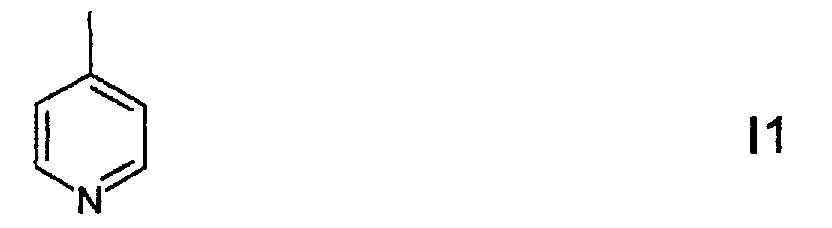
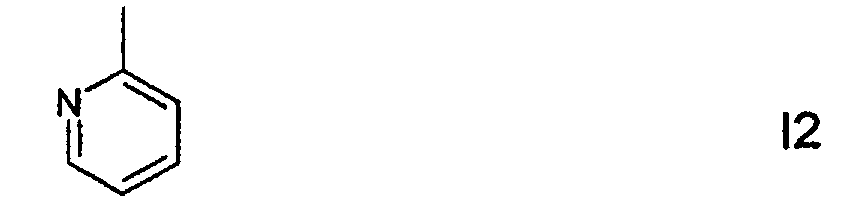
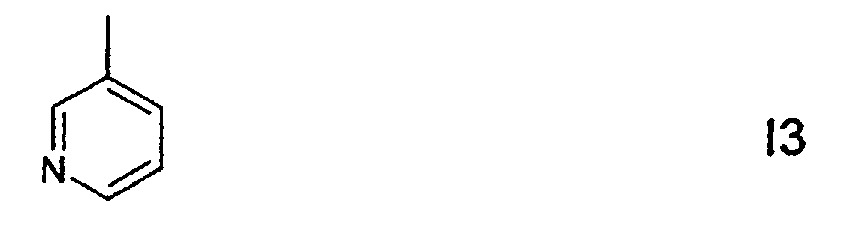
- nonionic adsorber resins for the process according to the invention whose polymeric skeleton is made up of basic building blocks which have at least one of the groups of the formula I1, I2, I3, I4, II1 or II2:
- adsorber resins for the inventive method used, the polymeric framework of Basic building blocks is constructed, the at least one of the groups of Have formula I1 or II1.
- the unsaturated cyclic nitrogen bases as functional groups are known and commercially available (e.g., Riedel-de-Haen, Seelze, Germany or Reilly Industries Inc.). Indianapolis) or can be prepared analogously to known methods (e.g., Pure Appl. Chem., 1967, 15 (3-4), 453-464, J. Polym. Sci., Polym. Lett. Ed. 1966, 4 (11), 797-801 or DE 20 56 076).
- adsorber resins consist essentially of cross-linked poly (4-vinylpyridine) or poly (n-vinylimidazole), which was polymerized depending on the degree of crosslinking with different proportions of methylenebisacrylamide or divinylbenzene.
- Adsorber resins consisting essentially of crosslinked poly (4-vinylpyridine) are preferably used for the process according to the invention.
- the adsorber resins mentioned are characterized by a particularly high Selectivity and surprisingly high capacity for bonding Phosphoric acid out.
- the phosphoric acid esters of thiamine are z. To DE 663 588, DE 704 172, DE 706 835, DE 708 514, DE 729 905, US 2 188 323 or US Pat US 2,435,750. Generally speaking, you can also do it yourself known variants, not mentioned here, make use of to produce the thiamine phosphates.
- the implementation of the method according to the invention is simple, wherein the solution of thiamine phosphates, preferably a solution of Thiamine phosphates, as z.
- the solution of thiamine phosphates preferably a solution of Thiamine phosphates, as z.
- the phosphorylation of thiamine is formed with concentrated phosphoric acid, optionally as in DE 1085 527 described freed from an excess of phosphoric acid and this solution preferably between 5 ° C and 50 ° C, in particular preferably at room temperature passes over an adsorber resin, the unsaturated cyclic nitrogen bases and in a conventional Chromatography column is located.
- the column volume corresponds to usually about that of the resin volume.
- thiamine monophosphate and Thiamine diphosphate eluted together and a separation of these Thiaminphosphate brought about by the known methods.
- the elution is preferably followed by pH control of the eluate.
- the elution of the thiamine monophosphate and thiamine diphosphate is generally carried out at pH values of the eluate between pH 10 and pH 2, preferably between pH 9 and pH 3.
- the mixtures of thiamine monophosphate and thiamine diphosphate can be obtained as a solid.
- water is preferably used. It is but equally possible, water-miscible organic solvents use. These are, for example, alcohols such as e.g. methanol, Ethanol, iso-propanol, ketones such as acetone or methyl ethyl ketone, Carboxylic acids such as e.g. Formic acid or acetic acid, organic nitriles such as. Acetonitrile, ethers, e.g. Tetrahydrofuran or dioxane, sulphoxides such as. Dimethylsulfoxide or amides, e.g. N-methylpyrrolidone or N, N-dimethylformamide. Mixtures of the solvents mentioned can also be used, in particular aqueous solutions of said organic solvent.
- the eluent inorganic Acids such as hydrochloric acid or sulfuric acid are added.
- the resin For regeneration of the adsorber resin after the elution of Thiamine monophosphate and diphosphate is preferably the resin with a base rinsed to the resin bound in the phosphoric acid and the To wash out thiamine monophosphate.
- bases find preferably Solutions of alkali hydroxides and carbonates or nitrogen bases Use.
- aqueous solutions of potassium or Sodium hydroxide or carbonate or aqueous ammonia solution used.
- Very particular preference is given to aqueous ammonia solution as a base for the regeneration of the adsorber resin.
- the ammonia solution is preferably 0.5 to 20% pure, in particular 1 to 10% pure.
- the resin before and after the treatment of the adsorber resin with a suitable base, rinse the resin with water. In this way becomes part of the adhesive on the resin before using the base Phosphoric acid removed. By rinsing after application of the base any excess of the base is removed.
- aqueous ammonia solution is used as the base, it has proved to be useful in the regeneration of the adsorber resin resulting ammonium phosphate after removal of the solvent to win as a by-product.
- the resin For regeneration of the adsorber resin, the resin is first with Water and then rinsed with aqueous ammonia solution until the effluent solution has reached a pH of about 12. As soon as after rinsing again with water, the effluent solution has a pH from 9 to 7, the resin is ready for use again.
Landscapes
- Chemical & Material Sciences (AREA)
- Organic Chemistry (AREA)
- Biochemistry (AREA)
- Health & Medical Sciences (AREA)
- General Health & Medical Sciences (AREA)
- Molecular Biology (AREA)
- Life Sciences & Earth Sciences (AREA)
- Solid-Sorbent Or Filter-Aiding Compositions (AREA)
- Treatment Of Liquids With Adsorbents In General (AREA)
- Saccharide Compounds (AREA)
- Plural Heterocyclic Compounds (AREA)
- Compounds Of Unknown Constitution (AREA)
- Addition Polymer Or Copolymer, Post-Treatments, Or Chemical Modifications (AREA)
Description
Thiamindiphosphat wird zur Behandlung der Zuckerkrankheit, bei Leberkrankheiten, Herzinsuffizienz, Krampfanfällen, multipler Sklerose, Azidosen usw. eingesetzt.
Üblicherweise wird Thiamindiphosphat durch Phosphorylierung von Thiamin gewonnen. Hierbei wird in der Regel ein Produktgemisch erhalten, daß sich je nach den Reaktionsbedingungen aus unterschiedlichen Anteilen von Thiaminmonophosphat, -diphosphat, -triphosphat, höheren Thiaminphosphaten und Phosphorsäure zusammensetzt.
Die Auftrennung des Produktgemisches erfolgt in vielen Fällen durch Anwendung von lonentauschern, die zu den Einzelkomponenten der Mischung eine unterschiedlich hohe Affinität aufweisen.
Anschließend wird das Gemisch nach einer nicht näher beschriebenen Hydrolyse des im Gemisch enthaltenen Thiamintriphosphates über einen Kationenaustauscher geführt, wobei Thiaminmonophosphat haften bleibt, während Thiamindiphosphat eluiert wird.
Nachteilig wirkt sich bei diesem Verfahren aus, daß das Thiamintriphosphat und im allgemeinen auch die höheren Thiaminphosphate in der Regel durch Hydrolyse oder ähnliche Maßnahmen aus der aufzutrennenden Mischung entfernt werden müssen, bevor auf dem Kationenaustauscher die Abtrennung des Thiaminmonophosphates vom Thiamindiphosphat erfolgen kann. Dies bedeutet einen weiteren Verfahrensschritt und ist für ein industrielles Verfahren unwirtschaftlich.
Vorzugsweise werden die Mischungen von Thiamindiphosphat und Thiaminmonophosphat dadurch getrennt, daß man ihre Lösungen über Kationenaustauscher wie z.B. Amberlite™ IRC 50, IR 100, IR 105 oder IR 120 oder über Kationentauscher, die Aminomethylen- und/oder Iminodimethylenphosphonsäurereste aufweisen, wie z.B. Lewatit OC 1060 der Firma Bayer, laufen läßt, da solche lonenaustauscher Thiaminmonophosphat festhalten und das Thiamindiphosphat durchlaufen lassen, so daß im wesentlichen Thiaminmonophosphat-freie Lösungen von Thiamindiphosphat erhalten werden.


und Thiaminmonophosphat und -diphosphat mit einem geeigneten Lösungsmittel eluiert.
In den bevorzugten Verbindungen der vor- und nachstehenden Gruppen der Formeln I oder II ist R H oder eine Alkylgruppe mit 1 bis 3 C-Atomen.
Besonders bevorzugt weist R die Bedeutung H auf.
Besonders bevorzugte Alkylgruppen sind n-Hexyl, n-Pentyl, n-Butyl, i-Butyl, n-Propyl, i-Propyl, Methyl und Ethyl, insbesondere Methyl und Ethyl.Besonders bevorzugte Alkoxygruppen sind n-Hexyloxy, n-Pentyloxy, n-Butyloxy, i-Butyloxy, Propyloxy, i-Propyloxy, Methoxy und Ethoxy, insbesondere Methoxy und Ethoxy.


Adsorber-Harze, die im wesentlichen aus quervernetztem Poly(4-vinylpyridin) bestehen, werden für das erfindungsgemäße Verfahren bevorzugt eingesetzt.
Durch Auffangen des Eluats, das einen pH-Wert zwischen den genannten Werten aufweist und Entfernung des Lösungsmittels können die Mischungen des Thiaminmonophosphats und Thiamindiphosphats als Feststoff erhalten werden.
Das folgende Beispiel soll die Erfindung erläutern, ohne sie zu begrenzen. Vor- und nachstehend bedeuten Prozentangaben Gewichtsprozent. Alle Temperaturen sind in Grad Celsius angegeben.
Claims (5)
- Verfahren zur Abtrennung von Phosphorsäure, Thiamintriphosphat und höheren Thiaminphosphaten aus Lösungen, die Phosphorsäure, Thiaminmonophosphat, -diphosphat, -triphosphat und höhere Phosphate enthalten, dadurch gekennzeichnet, daß man die phosphorsaure Lösung von Thiaminphosphaten über ein nicht-ionogenes Adsorberharz leitet, das ungesättigte cyclische Stickstoffbasen aufweist, und Thiaminmonophosphat und -diphosphat mit einem geeigneten Lösungsmittel eluiert.
- Verfahren nach Anspruch 1, dadurch gekennzeichnet, daß man die Lösung von Thiaminphosphaten über ein nicht-ionogenes Adsorberharz leitet, dessen polymeres Gerüst aus Grundbausteinen aufgebaut ist, die mindestens eine der Gruppen der Formel I oder II aufweisen:
 worin einer oder zwei der Gruppen A, B, X, Y und/oder Z die Bedeutung N aufweisen, während die restlichen Gruppen CR bedeuten und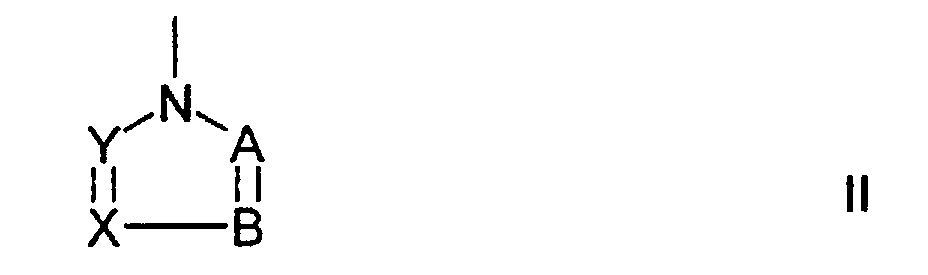
- R
- unabhängig voneinander H, Halogen, Alkyl oder Alkoxy mit 1 bis 7 C-Atomen bedeutet.
- Verfahren nach Anspruch 1 oder 2, dadurch gekennzeichnet, daß man die Lösung von Thiaminphosphaten über ein nicht-ionogenes Adsorberharz leitet, dessen polymeres Gerüst aus Grundbausteinen aufgebaut ist, die mindestens eine der Gruppen der Formel I1, I2, I3, I4, II1 oder II2 aufweisen:


- Verfahren nach einem der Ansprüche 1, 2 oder 3, dadurch gekennzeichnet, daß man die Lösung von Thiaminphosphaten bei Temperaturen zwischen 5°C und 50°C über ein Adsorber-Harz leitet und mit Wasser eluiert.
- Verwendung der durch das Verfahren nach einem der vorhergehenden Ansprüche erhaltenen Mischungen von Thiaminmonophosphat und Thiamindiphosphat zur Herstellung von im wesentlichen Thiaminmonophosphat-freien Lösungen von Thiamindiphosphat.
Applications Claiming Priority (3)
| Application Number | Priority Date | Filing Date | Title |
|---|---|---|---|
| DE19858269 | 1998-12-17 | ||
| DE19858269A DE19858269C2 (de) | 1998-12-17 | 1998-12-17 | Verfahren zur Abtrennung von Phosphorsäure, Thiamintri- und polyphosphaten aus phosphorsauren Lösungen von Thiaminphosphaten |
| PCT/EP1999/008822 WO2000035927A1 (de) | 1998-12-17 | 1999-11-17 | Verfahren zur reinigung von thiaminphosphaten |
Publications (2)
| Publication Number | Publication Date |
|---|---|
| EP1140953A1 EP1140953A1 (de) | 2001-10-10 |
| EP1140953B1 true EP1140953B1 (de) | 2003-01-22 |
Family
ID=7891431
Family Applications (1)
| Application Number | Title | Priority Date | Filing Date |
|---|---|---|---|
| EP99957313A Expired - Lifetime EP1140953B1 (de) | 1998-12-17 | 1999-11-17 | Verfahren zur reinigung von thiaminphosphaten |
Country Status (9)
| Country | Link |
|---|---|
| US (1) | US6596865B1 (de) |
| EP (1) | EP1140953B1 (de) |
| JP (1) | JP2002532507A (de) |
| KR (1) | KR20010082354A (de) |
| CN (1) | CN1173984C (de) |
| AT (1) | ATE231513T1 (de) |
| AU (1) | AU1506300A (de) |
| DE (2) | DE19858269C2 (de) |
| WO (1) | WO2000035927A1 (de) |
Families Citing this family (1)
| Publication number | Priority date | Publication date | Assignee | Title |
|---|---|---|---|---|
| WO2021257878A1 (en) | 2020-06-17 | 2021-12-23 | Entegris, Inc. | Ion-exchange membranes, filters, and methods |
Family Cites Families (7)
| Publication number | Priority date | Publication date | Assignee | Title |
|---|---|---|---|---|
| GB793753A (en) * | 1956-06-07 | 1958-04-23 | Istituto Sieroterapico Italian | A process for preparing thiamin phosphoric esters |
| DE1085527B (de) * | 1957-09-28 | 1960-07-21 | Merck Ag E | Verfahren zur Herstellung des Tetrahydrats und von Salzen der Cocarboxylase |
| FR2067764A5 (de) * | 1969-11-15 | 1971-08-20 | Raffinage Cie Francaise | |
| JPS5064485A (de) * | 1973-10-15 | 1975-05-31 | ||
| JPH01174386A (ja) * | 1987-12-28 | 1989-07-10 | Kanegafuchi Chem Ind Co Ltd | S−アデノシル−l−メチオニンの蓄積を高める遺伝子およびその用途 |
| DE3906632A1 (de) * | 1989-03-02 | 1990-09-06 | Basf Ag | Verfahren zur abtrennung von thiaminmonophosphat aus einer loesung von thiaminphosphaten |
| DE3906633A1 (de) * | 1989-03-02 | 1990-09-06 | Basf Ag | Verfahren zur abtrennung von phosphorsaeure aus waessrigen loesungen von thiaminphosphaten |
-
1998
- 1998-12-17 DE DE19858269A patent/DE19858269C2/de not_active Expired - Fee Related
-
1999
- 1999-11-17 CN CNB998145769A patent/CN1173984C/zh not_active Expired - Lifetime
- 1999-11-17 JP JP2000588185A patent/JP2002532507A/ja active Pending
- 1999-11-17 EP EP99957313A patent/EP1140953B1/de not_active Expired - Lifetime
- 1999-11-17 US US09/857,792 patent/US6596865B1/en not_active Expired - Lifetime
- 1999-11-17 AT AT99957313T patent/ATE231513T1/de active
- 1999-11-17 AU AU15063/00A patent/AU1506300A/en not_active Abandoned
- 1999-11-17 DE DE59904123T patent/DE59904123D1/de not_active Expired - Lifetime
- 1999-11-17 KR KR1020017007536A patent/KR20010082354A/ko not_active Abandoned
- 1999-11-17 WO PCT/EP1999/008822 patent/WO2000035927A1/de not_active Ceased
Also Published As
| Publication number | Publication date |
|---|---|
| US6596865B1 (en) | 2003-07-22 |
| JP2002532507A (ja) | 2002-10-02 |
| DE19858269A1 (de) | 2000-06-21 |
| EP1140953A1 (de) | 2001-10-10 |
| WO2000035927A1 (de) | 2000-06-22 |
| KR20010082354A (ko) | 2001-08-29 |
| ATE231513T1 (de) | 2003-02-15 |
| CN1330657A (zh) | 2002-01-09 |
| AU1506300A (en) | 2000-07-03 |
| DE59904123D1 (de) | 2003-02-27 |
| DE19858269C2 (de) | 2000-09-28 |
| CN1173984C (zh) | 2004-11-03 |
Similar Documents
| Publication | Publication Date | Title |
|---|---|---|
| EP1174431B1 (de) | 2-Phenyl-substituierte Imidazotriazinone als Phoshodiesterase Inhibitoren | |
| DE69115108T2 (de) | Antiretrovirale Basen. | |
| EP3105239B1 (de) | Verfahren zur reduzierung des chlorgehalts von organobisphosphiten | |
| EP3183257B1 (de) | Di- und triphosphat-propharmaka | |
| DE69414382T2 (de) | Verfahren zur herstellung von makrocyclischen azaaminophosphonatesterderivaten | |
| DD141836A5 (de) | Verfahren zur herstellung von polynucleotiden mit bestimmter sequenz | |
| DE1918282A1 (de) | Verfahren zur Herstellung von Diestern kondensierter Phosphorsaeure | |
| DE19858269C2 (de) | Verfahren zur Abtrennung von Phosphorsäure, Thiamintri- und polyphosphaten aus phosphorsauren Lösungen von Thiaminphosphaten | |
| DE2059429A1 (de) | Verfahren zur Herstellung von Nucleosiddiphosphatestern | |
| DE68918664T2 (de) | Reinigung von Phosphor-Verbindungen. | |
| DE102008020633A1 (de) | Nukleosiddi- und Nukleosidtriphosphat-Prodrugs | |
| DE60000844T2 (de) | Verfahren zur Reinigung L-Ascorbyl 2-monophosphat | |
| EP0523582B1 (de) | Verbessertes Verfahren zur Herstellung des Mononatriumsalzes von Riboflavin 5'-phosphat | |
| DE1620258C3 (de) | Verfahren zur Herstellung von Thiaminderivaten | |
| EP4433419A1 (de) | Ligandenunterstützte desoxygenierung von phosphaten zu stickstoffhaltigen phosphor(v)-präkursoren und deren weitere umsetzung zu verschiedenen oxyphosphorverbindungen | |
| DE2645777C2 (de) | ||
| DE69129399T2 (de) | Phosphorylierungsmittel und Verfahren zur Bildung einer asymmetrischen Phosphodiesterbindung unter Verwendung desselben Mittels | |
| DE2458257C2 (de) | 1'-Desmethyl-1'-(β-hydroxyäthyl)-clindamycin-2-phosphat, Verfahren zu dessen Herstellung und diese Verbindung enthaltende Arzneimittel | |
| EP1885732B1 (de) | CHIRALE DIPHOSPHONITE ALS LIGANDEN IN DER RUTHENIUM-KATALYSIERTEN ENANTIOSELEKTIVEN REDUKTION VON KETONEN, ß-KETOESTERN UND KETIMINEN | |
| DE2006484C3 (de) | Verfahren zur Herstellung von Creatinol-O-dihydrogenphosphat | |
| DE2165101A1 (de) | Verfahren zum Herstellen von Phosphorsäureestern von Fettsäuremono- oder diglyceriden | |
| DE1670884A1 (de) | Verfahren zur Herstellung von Nucleosiden | |
| DE3906357A1 (de) | Neue acyclische nucleosid-analoga, verfahren zu ihrer herstellung und verwendung dieser verbindungen als antivirale arzneimittel | |
| DE1200819B (de) | Verfahren zur Herstellung von Estern der Pyrophosphorsaeure | |
| DE2345762C3 (de) | 2-(DiaIkoxythiophosphoryloxy)-pyrido [1,2-a] pyrimidin-4-one, Verfahren zu ihrer Herstellung und diese enthaltende Mittel |
Legal Events
| Date | Code | Title | Description |
|---|---|---|---|
| PUAI | Public reference made under article 153(3) epc to a published international application that has entered the european phase |
Free format text: ORIGINAL CODE: 0009012 |
|
| 17P | Request for examination filed |
Effective date: 20010412 |
|
| AK | Designated contracting states |
Kind code of ref document: A1 Designated state(s): AT BE CH CY DE DK ES FI FR GB GR IE IT LI LU MC NL PT SE |
|
| AX | Request for extension of the european patent |
Free format text: AL;LT;LV;MK;RO;SI |
|
| GRAG | Despatch of communication of intention to grant |
Free format text: ORIGINAL CODE: EPIDOS AGRA |
|
| 17Q | First examination report despatched |
Effective date: 20020115 |
|
| GRAG | Despatch of communication of intention to grant |
Free format text: ORIGINAL CODE: EPIDOS AGRA |
|
| GRAH | Despatch of communication of intention to grant a patent |
Free format text: ORIGINAL CODE: EPIDOS IGRA |
|
| GRAH | Despatch of communication of intention to grant a patent |
Free format text: ORIGINAL CODE: EPIDOS IGRA |
|
| GRAA | (expected) grant |
Free format text: ORIGINAL CODE: 0009210 |
|
| AK | Designated contracting states |
Kind code of ref document: B1 Designated state(s): AT BE CH CY DE DK ES FI FR GB GR IE IT LI LU MC NL PT SE |
|
| PG25 | Lapsed in a contracting state [announced via postgrant information from national office to epo] |
Ref country code: IE Free format text: LAPSE BECAUSE OF FAILURE TO SUBMIT A TRANSLATION OF THE DESCRIPTION OR TO PAY THE FEE WITHIN THE PRESCRIBED TIME-LIMIT Effective date: 20030122 Ref country code: GR Free format text: LAPSE BECAUSE OF FAILURE TO SUBMIT A TRANSLATION OF THE DESCRIPTION OR TO PAY THE FEE WITHIN THE PRESCRIBED TIME-LIMIT Effective date: 20030122 Ref country code: FI Free format text: LAPSE BECAUSE OF FAILURE TO SUBMIT A TRANSLATION OF THE DESCRIPTION OR TO PAY THE FEE WITHIN THE PRESCRIBED TIME-LIMIT Effective date: 20030122 |
|
| REG | Reference to a national code |
Ref country code: GB Ref legal event code: FG4D Free format text: NOT ENGLISH |
|
| REG | Reference to a national code |
Ref country code: CH Ref legal event code: EP |
|
| REG | Reference to a national code |
Ref country code: IE Ref legal event code: FG4D Free format text: GERMAN |
|
| REF | Corresponds to: |
Ref document number: 59904123 Country of ref document: DE Date of ref document: 20030227 Kind code of ref document: P |
|
| PG25 | Lapsed in a contracting state [announced via postgrant information from national office to epo] |
Ref country code: SE Free format text: LAPSE BECAUSE OF FAILURE TO SUBMIT A TRANSLATION OF THE DESCRIPTION OR TO PAY THE FEE WITHIN THE PRESCRIBED TIME-LIMIT Effective date: 20030422 Ref country code: PT Free format text: LAPSE BECAUSE OF FAILURE TO SUBMIT A TRANSLATION OF THE DESCRIPTION OR TO PAY THE FEE WITHIN THE PRESCRIBED TIME-LIMIT Effective date: 20030422 Ref country code: DK Free format text: LAPSE BECAUSE OF FAILURE TO SUBMIT A TRANSLATION OF THE DESCRIPTION OR TO PAY THE FEE WITHIN THE PRESCRIBED TIME-LIMIT Effective date: 20030422 |
|
| GBT | Gb: translation of ep patent filed (gb section 77(6)(a)/1977) |
Effective date: 20030331 |
|
| LTIE | Lt: invalidation of european patent or patent extension |
Effective date: 20030122 |
|
| PG25 | Lapsed in a contracting state [announced via postgrant information from national office to epo] |
Ref country code: ES Free format text: LAPSE BECAUSE OF FAILURE TO SUBMIT A TRANSLATION OF THE DESCRIPTION OR TO PAY THE FEE WITHIN THE PRESCRIBED TIME-LIMIT Effective date: 20030730 |
|
| REG | Reference to a national code |
Ref country code: IE Ref legal event code: FD4D Ref document number: 1140953E Country of ref document: IE |
|
| ET | Fr: translation filed | ||
| PG25 | Lapsed in a contracting state [announced via postgrant information from national office to epo] |
Ref country code: LU Free format text: LAPSE BECAUSE OF NON-PAYMENT OF DUE FEES Effective date: 20031117 Ref country code: CY Free format text: LAPSE BECAUSE OF FAILURE TO SUBMIT A TRANSLATION OF THE DESCRIPTION OR TO PAY THE FEE WITHIN THE PRESCRIBED TIME-LIMIT Effective date: 20031117 |
|
| PLBE | No opposition filed within time limit |
Free format text: ORIGINAL CODE: 0009261 |
|
| STAA | Information on the status of an ep patent application or granted ep patent |
Free format text: STATUS: NO OPPOSITION FILED WITHIN TIME LIMIT |
|
| PG25 | Lapsed in a contracting state [announced via postgrant information from national office to epo] |
Ref country code: MC Free format text: LAPSE BECAUSE OF NON-PAYMENT OF DUE FEES Effective date: 20031130 |
|
| 26N | No opposition filed |
Effective date: 20031023 |
|
| REG | Reference to a national code |
Ref country code: FR Ref legal event code: PLFP Year of fee payment: 17 |
|
| REG | Reference to a national code |
Ref country code: FR Ref legal event code: PLFP Year of fee payment: 18 |
|
| REG | Reference to a national code |
Ref country code: FR Ref legal event code: PLFP Year of fee payment: 19 |
|
| REG | Reference to a national code |
Ref country code: FR Ref legal event code: PLFP Year of fee payment: 20 |
|
| PGFP | Annual fee paid to national office [announced via postgrant information from national office to epo] |
Ref country code: BE Payment date: 20180914 Year of fee payment: 20 |
|
| PGFP | Annual fee paid to national office [announced via postgrant information from national office to epo] |
Ref country code: NL Payment date: 20181017 Year of fee payment: 20 |
|
| PGFP | Annual fee paid to national office [announced via postgrant information from national office to epo] |
Ref country code: AT Payment date: 20181025 Year of fee payment: 20 Ref country code: DE Payment date: 20181106 Year of fee payment: 20 |
|
| PGFP | Annual fee paid to national office [announced via postgrant information from national office to epo] |
Ref country code: IT Payment date: 20181122 Year of fee payment: 20 Ref country code: GB Payment date: 20181114 Year of fee payment: 20 Ref country code: FR Payment date: 20181011 Year of fee payment: 20 Ref country code: CH Payment date: 20181115 Year of fee payment: 20 |
|
| REG | Reference to a national code |
Ref country code: DE Ref legal event code: R071 Ref document number: 59904123 Country of ref document: DE |
|
| REG | Reference to a national code |
Ref country code: NL Ref legal event code: MK Effective date: 20191116 |
|
| REG | Reference to a national code |
Ref country code: CH Ref legal event code: PL |
|
| REG | Reference to a national code |
Ref country code: GB Ref legal event code: PE20 Expiry date: 20191116 |
|
| REG | Reference to a national code |
Ref country code: BE Ref legal event code: MK Effective date: 20191117 |
|
| REG | Reference to a national code |
Ref country code: AT Ref legal event code: MK07 Ref document number: 231513 Country of ref document: AT Kind code of ref document: T Effective date: 20191117 |
|
| PG25 | Lapsed in a contracting state [announced via postgrant information from national office to epo] |
Ref country code: GB Free format text: LAPSE BECAUSE OF EXPIRATION OF PROTECTION Effective date: 20191116 |