EP1140345B1 - Polyelectrolyte dispersants for hydrophobic particles in water-based systems - Google Patents
Polyelectrolyte dispersants for hydrophobic particles in water-based systems Download PDFInfo
- Publication number
- EP1140345B1 EP1140345B1 EP99921492A EP99921492A EP1140345B1 EP 1140345 B1 EP1140345 B1 EP 1140345B1 EP 99921492 A EP99921492 A EP 99921492A EP 99921492 A EP99921492 A EP 99921492A EP 1140345 B1 EP1140345 B1 EP 1140345B1
- Authority
- EP
- European Patent Office
- Prior art keywords
- dispersant
- water
- hydrophobic
- pigment
- chain transfer
- Prior art date
- Legal status (The legal status is an assumption and is not a legal conclusion. Google has not performed a legal analysis and makes no representation as to the accuracy of the status listed.)
- Expired - Lifetime
Links
- 239000002270 dispersing agent Substances 0.000 title claims abstract description 151
- 230000002209 hydrophobic effect Effects 0.000 title claims abstract description 74
- 239000002245 particle Substances 0.000 title claims abstract description 65
- 229920000867 polyelectrolyte Polymers 0.000 title claims abstract description 22
- XLYOFNOQVPJJNP-UHFFFAOYSA-N water Substances O XLYOFNOQVPJJNP-UHFFFAOYSA-N 0.000 title claims description 55
- 125000001183 hydrocarbyl group Chemical group 0.000 claims abstract description 17
- 239000000725 suspension Substances 0.000 claims abstract description 4
- 239000000049 pigment Substances 0.000 claims description 72
- 239000000203 mixture Substances 0.000 claims description 54
- 229920000642 polymer Polymers 0.000 claims description 23
- XHZPRMZZQOIPDS-UHFFFAOYSA-N 2-Methyl-2-[(1-oxo-2-propenyl)amino]-1-propanesulfonic acid Chemical compound OS(=O)(=O)CC(C)(C)NC(=O)C=C XHZPRMZZQOIPDS-UHFFFAOYSA-N 0.000 claims description 19
- 239000012986 chain transfer agent Substances 0.000 claims description 18
- KZCOBXFFBQJQHH-UHFFFAOYSA-N octane-1-thiol Chemical compound CCCCCCCCS KZCOBXFFBQJQHH-UHFFFAOYSA-N 0.000 claims description 16
- 229920001577 copolymer Polymers 0.000 claims description 15
- 239000003795 chemical substances by application Substances 0.000 claims description 13
- 238000012546 transfer Methods 0.000 claims description 13
- 125000001931 aliphatic group Chemical group 0.000 claims description 12
- 239000000178 monomer Substances 0.000 claims description 12
- 229920005862 polyol Polymers 0.000 claims description 12
- 150000003077 polyols Chemical class 0.000 claims description 12
- 125000003118 aryl group Chemical group 0.000 claims description 9
- 239000002131 composite material Substances 0.000 claims description 8
- WXZMFSXDPGVJKK-UHFFFAOYSA-N pentaerythritol Chemical compound OCC(CO)(CO)CO WXZMFSXDPGVJKK-UHFFFAOYSA-N 0.000 claims description 8
- 239000000412 dendrimer Substances 0.000 claims description 7
- 229920000736 dendritic polymer Polymers 0.000 claims description 7
- 229940088644 n,n-dimethylacrylamide Drugs 0.000 claims description 7
- NRCMAYZCPIVABH-UHFFFAOYSA-N Quinacridone Chemical compound N1C2=CC=CC=C2C(=O)C2=C1C=C1C(=O)C3=CC=CC=C3NC1=C2 NRCMAYZCPIVABH-UHFFFAOYSA-N 0.000 claims description 6
- 125000004432 carbon atom Chemical group C* 0.000 claims description 6
- 229920001480 hydrophilic copolymer Polymers 0.000 claims description 5
- VSFOXJWBPGONDR-UHFFFAOYSA-M potassium;3-prop-2-enoyloxypropane-1-sulfonate Chemical compound [K+].[O-]S(=O)(=O)CCCOC(=O)C=C VSFOXJWBPGONDR-UHFFFAOYSA-M 0.000 claims description 4
- 239000002243 precursor Substances 0.000 claims description 4
- DKIDEFUBRARXTE-UHFFFAOYSA-M 3-mercaptopropionate Chemical compound [O-]C(=O)CCS DKIDEFUBRARXTE-UHFFFAOYSA-M 0.000 claims description 3
- ORDRGXFSRBRQQG-UHFFFAOYSA-N 6-methylheptyl 2-sulfanylpropanoate Chemical compound CC(C)CCCCCOC(=O)C(C)S ORDRGXFSRBRQQG-UHFFFAOYSA-N 0.000 claims description 3
- 239000006229 carbon black Substances 0.000 claims description 3
- 229920001519 homopolymer Polymers 0.000 claims description 3
- 230000005661 hydrophobic surface Effects 0.000 claims description 3
- 230000002093 peripheral effect Effects 0.000 claims description 3
- 229920005604 random copolymer Polymers 0.000 claims description 3
- GEKDEMKPCKTKEC-UHFFFAOYSA-N tetradecane-1-thiol Chemical compound CCCCCCCCCCCCCCS GEKDEMKPCKTKEC-UHFFFAOYSA-N 0.000 claims description 3
- 239000007900 aqueous suspension Substances 0.000 claims description 2
- 229910052759 nickel Inorganic materials 0.000 claims description 2
- PXHVJJICTQNCMI-UHFFFAOYSA-N nickel Substances [Ni] PXHVJJICTQNCMI-UHFFFAOYSA-N 0.000 claims description 2
- 239000001052 yellow pigment Substances 0.000 claims description 2
- RYGMFSIKBFXOCR-UHFFFAOYSA-N Copper Chemical compound [Cu] RYGMFSIKBFXOCR-UHFFFAOYSA-N 0.000 claims 1
- 229910052802 copper Inorganic materials 0.000 claims 1
- 239000010949 copper Substances 0.000 claims 1
- YLGYACDQVQQZSW-UHFFFAOYSA-N n,n-dimethylprop-2-enamide Chemical compound CN(C)C(=O)C=C YLGYACDQVQQZSW-UHFFFAOYSA-N 0.000 claims 1
- 239000000976 ink Substances 0.000 abstract description 94
- 239000012736 aqueous medium Substances 0.000 abstract description 2
- MTHSVFCYNBDYFN-UHFFFAOYSA-N diethylene glycol Chemical compound OCCOCCO MTHSVFCYNBDYFN-UHFFFAOYSA-N 0.000 description 48
- 239000007787 solid Substances 0.000 description 42
- 239000000243 solution Substances 0.000 description 28
- ZMXDDKWLCZADIW-UHFFFAOYSA-N N,N-Dimethylformamide Chemical compound CN(C)C=O ZMXDDKWLCZADIW-UHFFFAOYSA-N 0.000 description 21
- 239000006185 dispersion Substances 0.000 description 20
- 238000000227 grinding Methods 0.000 description 19
- -1 e.g. Substances 0.000 description 15
- CSCPPACGZOOCGX-UHFFFAOYSA-N Acetone Chemical compound CC(C)=O CSCPPACGZOOCGX-UHFFFAOYSA-N 0.000 description 14
- IJGRMHOSHXDMSA-UHFFFAOYSA-N Atomic nitrogen Chemical compound N#N IJGRMHOSHXDMSA-UHFFFAOYSA-N 0.000 description 14
- 239000012141 concentrate Substances 0.000 description 13
- WEVYAHXRMPXWCK-UHFFFAOYSA-N Acetonitrile Chemical compound CC#N WEVYAHXRMPXWCK-UHFFFAOYSA-N 0.000 description 12
- 239000000463 material Substances 0.000 description 11
- 239000007864 aqueous solution Substances 0.000 description 10
- 238000000034 method Methods 0.000 description 10
- 239000000126 substance Substances 0.000 description 10
- 239000004094 surface-active agent Substances 0.000 description 10
- 230000015572 biosynthetic process Effects 0.000 description 8
- 239000003999 initiator Substances 0.000 description 8
- 230000008569 process Effects 0.000 description 8
- OZAIFHULBGXAKX-UHFFFAOYSA-N 2-(2-cyanopropan-2-yldiazenyl)-2-methylpropanenitrile Chemical compound N#CC(C)(C)N=NC(C)(C)C#N OZAIFHULBGXAKX-UHFFFAOYSA-N 0.000 description 7
- 238000005516 engineering process Methods 0.000 description 7
- 125000000524 functional group Chemical group 0.000 description 7
- 238000007639 printing Methods 0.000 description 7
- 238000012545 processing Methods 0.000 description 7
- 238000005054 agglomeration Methods 0.000 description 6
- 230000002776 aggregation Effects 0.000 description 6
- 230000001965 increasing effect Effects 0.000 description 6
- 239000007788 liquid Substances 0.000 description 6
- 229910052757 nitrogen Inorganic materials 0.000 description 6
- 238000001179 sorption measurement Methods 0.000 description 6
- 239000004215 Carbon black (E152) Substances 0.000 description 5
- JOBBTVPTPXRUBP-UHFFFAOYSA-N [3-(3-sulfanylpropanoyloxy)-2,2-bis(3-sulfanylpropanoyloxymethyl)propyl] 3-sulfanylpropanoate Chemical compound SCCC(=O)OCC(COC(=O)CCS)(COC(=O)CCS)COC(=O)CCS JOBBTVPTPXRUBP-UHFFFAOYSA-N 0.000 description 5
- 239000000654 additive Substances 0.000 description 5
- 238000007334 copolymerization reaction Methods 0.000 description 5
- 238000005189 flocculation Methods 0.000 description 5
- 230000016615 flocculation Effects 0.000 description 5
- 229930195733 hydrocarbon Natural products 0.000 description 5
- 150000002430 hydrocarbons Chemical class 0.000 description 5
- 230000003993 interaction Effects 0.000 description 5
- 239000002904 solvent Substances 0.000 description 5
- 239000000758 substrate Substances 0.000 description 5
- TXWSZJSDZKWQAU-UHFFFAOYSA-N 2,9-dimethyl-5,12-dihydroquinolino[2,3-b]acridine-7,14-dione Chemical compound N1C2=CC=C(C)C=C2C(=O)C2=C1C=C(C(=O)C=1C(=CC=C(C=1)C)N1)C1=C2 TXWSZJSDZKWQAU-UHFFFAOYSA-N 0.000 description 4
- NYUTUWAFOUJLKI-UHFFFAOYSA-N 3-prop-2-enoyloxypropane-1-sulfonic acid Chemical class OS(=O)(=O)CCCOC(=O)C=C NYUTUWAFOUJLKI-UHFFFAOYSA-N 0.000 description 4
- RTZKZFJDLAIYFH-UHFFFAOYSA-N Diethyl ether Chemical compound CCOCC RTZKZFJDLAIYFH-UHFFFAOYSA-N 0.000 description 4
- ZJCCRDAZUWHFQH-UHFFFAOYSA-N Trimethylolpropane Chemical compound CCC(CO)(CO)CO ZJCCRDAZUWHFQH-UHFFFAOYSA-N 0.000 description 4
- 238000013459 approach Methods 0.000 description 4
- 238000006243 chemical reaction Methods 0.000 description 4
- 238000010968 computed tomography angiography Methods 0.000 description 4
- 238000004132 cross linking Methods 0.000 description 4
- 230000003247 decreasing effect Effects 0.000 description 4
- 229920000587 hyperbranched polymer Polymers 0.000 description 4
- VLKZOEOYAKHREP-UHFFFAOYSA-N n-Hexane Chemical class CCCCCC VLKZOEOYAKHREP-UHFFFAOYSA-N 0.000 description 4
- GBZVJCKJWKZSBW-UHFFFAOYSA-N potassium;3-prop-2-enoyloxypropane-1-sulfonic acid Chemical compound [K].OS(=O)(=O)CCCOC(=O)C=C GBZVJCKJWKZSBW-UHFFFAOYSA-N 0.000 description 4
- 238000002360 preparation method Methods 0.000 description 4
- GPRLSGONYQIRFK-MNYXATJNSA-N triton Chemical compound [3H+] GPRLSGONYQIRFK-MNYXATJNSA-N 0.000 description 4
- JJSYPAGPNHFLML-UHFFFAOYSA-N 2-ethyl-2-(hydroxymethyl)propane-1,3-diol;3-sulfanylpropanoic acid Chemical compound OC(=O)CCS.OC(=O)CCS.OC(=O)CCS.CCC(CO)(CO)CO JJSYPAGPNHFLML-UHFFFAOYSA-N 0.000 description 3
- LYCAIKOWRPUZTN-UHFFFAOYSA-N Ethylene glycol Chemical compound OCCO LYCAIKOWRPUZTN-UHFFFAOYSA-N 0.000 description 3
- PEDCQBHIVMGVHV-UHFFFAOYSA-N Glycerine Chemical compound OCC(O)CO PEDCQBHIVMGVHV-UHFFFAOYSA-N 0.000 description 3
- 239000002202 Polyethylene glycol Substances 0.000 description 3
- DNIAPMSPPWPWGF-UHFFFAOYSA-N Propylene glycol Chemical compound CC(O)CO DNIAPMSPPWPWGF-UHFFFAOYSA-N 0.000 description 3
- 235000021355 Stearic acid Nutrition 0.000 description 3
- 150000001335 aliphatic alkanes Chemical class 0.000 description 3
- 238000010908 decantation Methods 0.000 description 3
- 239000010419 fine particle Substances 0.000 description 3
- 238000009472 formulation Methods 0.000 description 3
- 238000010438 heat treatment Methods 0.000 description 3
- 238000002156 mixing Methods 0.000 description 3
- DIOQZVSQGTUSAI-UHFFFAOYSA-N n-butylhexane Natural products CCCCCCCCCC DIOQZVSQGTUSAI-UHFFFAOYSA-N 0.000 description 3
- QIQXTHQIDYTFRH-UHFFFAOYSA-N octadecanoic acid Chemical compound CCCCCCCCCCCCCCCCCC(O)=O QIQXTHQIDYTFRH-UHFFFAOYSA-N 0.000 description 3
- OQCDKBAXFALNLD-UHFFFAOYSA-N octadecanoic acid Natural products CCCCCCCC(C)CCCCCCCCC(O)=O OQCDKBAXFALNLD-UHFFFAOYSA-N 0.000 description 3
- 229920001223 polyethylene glycol Polymers 0.000 description 3
- 229910052700 potassium Inorganic materials 0.000 description 3
- 239000011591 potassium Substances 0.000 description 3
- 238000000926 separation method Methods 0.000 description 3
- 230000006641 stabilisation Effects 0.000 description 3
- 238000011105 stabilization Methods 0.000 description 3
- 239000008117 stearic acid Substances 0.000 description 3
- 238000003786 synthesis reaction Methods 0.000 description 3
- VMKOFRJSULQZRM-UHFFFAOYSA-N 1-bromooctane Chemical compound CCCCCCCCBr VMKOFRJSULQZRM-UHFFFAOYSA-N 0.000 description 2
- GQHTUMJGOHRCHB-UHFFFAOYSA-N 2,3,4,6,7,8,9,10-octahydropyrimido[1,2-a]azepine Chemical compound C1CCCCN2CCCN=C21 GQHTUMJGOHRCHB-UHFFFAOYSA-N 0.000 description 2
- SVTBMSDMJJWYQN-UHFFFAOYSA-N 2-methylpentane-2,4-diol Chemical compound CC(O)CC(C)(C)O SVTBMSDMJJWYQN-UHFFFAOYSA-N 0.000 description 2
- VHUUQVKOLVNVRT-UHFFFAOYSA-N Ammonium hydroxide Chemical compound [NH4+].[OH-] VHUUQVKOLVNVRT-UHFFFAOYSA-N 0.000 description 2
- 240000000560 Citrus x paradisi Species 0.000 description 2
- LSDPWZHWYPCBBB-UHFFFAOYSA-N Methanethiol Chemical compound SC LSDPWZHWYPCBBB-UHFFFAOYSA-N 0.000 description 2
- CTQNGGLPUBDAKN-UHFFFAOYSA-N O-Xylene Chemical compound CC1=CC=CC=C1C CTQNGGLPUBDAKN-UHFFFAOYSA-N 0.000 description 2
- 229920003171 Poly (ethylene oxide) Polymers 0.000 description 2
- GWEVSGVZZGPLCZ-UHFFFAOYSA-N Titan oxide Chemical compound O=[Ti]=O GWEVSGVZZGPLCZ-UHFFFAOYSA-N 0.000 description 2
- QGZKDVFQNNGYKY-UHFFFAOYSA-N ammonia Natural products N QGZKDVFQNNGYKY-UHFFFAOYSA-N 0.000 description 2
- 125000004429 atom Chemical group 0.000 description 2
- 235000019241 carbon black Nutrition 0.000 description 2
- 238000005345 coagulation Methods 0.000 description 2
- 230000015271 coagulation Effects 0.000 description 2
- 239000003086 colorant Substances 0.000 description 2
- 239000000470 constituent Substances 0.000 description 2
- 125000004122 cyclic group Chemical group 0.000 description 2
- 229910001873 dinitrogen Inorganic materials 0.000 description 2
- 230000000694 effects Effects 0.000 description 2
- 238000010828 elution Methods 0.000 description 2
- 230000001747 exhibiting effect Effects 0.000 description 2
- 238000011010 flushing procedure Methods 0.000 description 2
- RBTKNAXYKSUFRK-UHFFFAOYSA-N heliogen blue Chemical compound [Cu].[N-]1C2=C(C=CC=C3)C3=C1N=C([N-]1)C3=CC=CC=C3C1=NC([N-]1)=C(C=CC=C3)C3=C1N=C([N-]1)C3=CC=CC=C3C1=N2 RBTKNAXYKSUFRK-UHFFFAOYSA-N 0.000 description 2
- 239000012456 homogeneous solution Substances 0.000 description 2
- 239000003906 humectant Substances 0.000 description 2
- 125000002887 hydroxy group Chemical group [H]O* 0.000 description 2
- 238000007641 inkjet printing Methods 0.000 description 2
- 150000002500 ions Chemical class 0.000 description 2
- 239000002609 medium Substances 0.000 description 2
- 229920002959 polymer blend Polymers 0.000 description 2
- 238000006116 polymerization reaction Methods 0.000 description 2
- 239000011877 solvent mixture Substances 0.000 description 2
- 239000007858 starting material Substances 0.000 description 2
- JOXIMZWYDAKGHI-UHFFFAOYSA-N toluene-4-sulfonic acid Chemical compound CC1=CC=C(S(O)(=O)=O)C=C1 JOXIMZWYDAKGHI-UHFFFAOYSA-N 0.000 description 2
- LENZDBCJOHFCAS-UHFFFAOYSA-N tris Chemical compound OCC(N)(CO)CO LENZDBCJOHFCAS-UHFFFAOYSA-N 0.000 description 2
- 238000011179 visual inspection Methods 0.000 description 2
- 239000008096 xylene Substances 0.000 description 2
- PUPZLCDOIYMWBV-UHFFFAOYSA-N (+/-)-1,3-Butanediol Chemical compound CC(O)CCO PUPZLCDOIYMWBV-UHFFFAOYSA-N 0.000 description 1
- XSSCQHJYDQMJRR-UHFFFAOYSA-N 1,1,1-tribromooctadecane Chemical compound CCCCCCCCCCCCCCCCCC(Br)(Br)Br XSSCQHJYDQMJRR-UHFFFAOYSA-N 0.000 description 1
- STBMZSJLFYGOJU-UHFFFAOYSA-N 1,1-dibromooctane Chemical compound CCCCCCCC(Br)Br STBMZSJLFYGOJU-UHFFFAOYSA-N 0.000 description 1
- SCZNXLWKYFICFV-UHFFFAOYSA-N 1,2,3,4,5,7,8,9-octahydropyrido[1,2-b]diazepine Chemical compound C1CCCNN2CCCC=C21 SCZNXLWKYFICFV-UHFFFAOYSA-N 0.000 description 1
- ZWVMLYRJXORSEP-UHFFFAOYSA-N 1,2,6-Hexanetriol Chemical compound OCCCCC(O)CO ZWVMLYRJXORSEP-UHFFFAOYSA-N 0.000 description 1
- KOFZTCSTGIWCQG-UHFFFAOYSA-N 1-bromotetradecane Chemical compound CCCCCCCCCCCCCCBr KOFZTCSTGIWCQG-UHFFFAOYSA-N 0.000 description 1
- QWDQYHPOSSHSAW-UHFFFAOYSA-N 1-isocyanatooctadecane Chemical compound CCCCCCCCCCCCCCCCCCN=C=O QWDQYHPOSSHSAW-UHFFFAOYSA-N 0.000 description 1
- SMZOUWXMTYCWNB-UHFFFAOYSA-N 2-(2-methoxy-5-methylphenyl)ethanamine Chemical compound COC1=CC=C(C)C=C1CCN SMZOUWXMTYCWNB-UHFFFAOYSA-N 0.000 description 1
- SBASXUCJHJRPEV-UHFFFAOYSA-N 2-(2-methoxyethoxy)ethanol Chemical group COCCOCCO SBASXUCJHJRPEV-UHFFFAOYSA-N 0.000 description 1
- FALRKNHUBBKYCC-UHFFFAOYSA-N 2-(chloromethyl)pyridine-3-carbonitrile Chemical compound ClCC1=NC=CC=C1C#N FALRKNHUBBKYCC-UHFFFAOYSA-N 0.000 description 1
- XNWFRZJHXBZDAG-UHFFFAOYSA-N 2-METHOXYETHANOL Chemical group COCCO XNWFRZJHXBZDAG-UHFFFAOYSA-N 0.000 description 1
- NIXOWILDQLNWCW-UHFFFAOYSA-N 2-Propenoic acid Natural products OC(=O)C=C NIXOWILDQLNWCW-UHFFFAOYSA-N 0.000 description 1
- NECRQCBKTGZNMH-UHFFFAOYSA-N 3,5-dimethylhex-1-yn-3-ol Chemical compound CC(C)CC(C)(O)C#C NECRQCBKTGZNMH-UHFFFAOYSA-N 0.000 description 1
- OFNISBHGPNMTMS-UHFFFAOYSA-N 3-methylideneoxolane-2,5-dione Chemical class C=C1CC(=O)OC1=O OFNISBHGPNMTMS-UHFFFAOYSA-N 0.000 description 1
- CYUZOYPRAQASLN-UHFFFAOYSA-N 3-prop-2-enoyloxypropanoic acid Chemical class OC(=O)CCOC(=O)C=C CYUZOYPRAQASLN-UHFFFAOYSA-N 0.000 description 1
- RWSOTUBLDIXVET-UHFFFAOYSA-N Dihydrogen sulfide Chemical class S RWSOTUBLDIXVET-UHFFFAOYSA-N 0.000 description 1
- SNRUBQQJIBEYMU-UHFFFAOYSA-N Dodecane Natural products CCCCCCCCCCCC SNRUBQQJIBEYMU-UHFFFAOYSA-N 0.000 description 1
- LFQSCWFLJHTTHZ-UHFFFAOYSA-N Ethanol Chemical compound CCO LFQSCWFLJHTTHZ-UHFFFAOYSA-N 0.000 description 1
- VEQPNABPJHWNSG-UHFFFAOYSA-N Nickel(2+) Chemical compound [Ni+2] VEQPNABPJHWNSG-UHFFFAOYSA-N 0.000 description 1
- 239000004721 Polyphenylene oxide Substances 0.000 description 1
- 208000034809 Product contamination Diseases 0.000 description 1
- 239000002253 acid Substances 0.000 description 1
- 230000002378 acidificating effect Effects 0.000 description 1
- 230000001476 alcoholic effect Effects 0.000 description 1
- 125000002877 alkyl aryl group Chemical group 0.000 description 1
- 150000005215 alkyl ethers Chemical class 0.000 description 1
- 150000001350 alkyl halides Chemical class 0.000 description 1
- 125000002947 alkylene group Chemical group 0.000 description 1
- 238000004873 anchoring Methods 0.000 description 1
- 150000008064 anhydrides Chemical class 0.000 description 1
- 125000000129 anionic group Chemical group 0.000 description 1
- 239000003945 anionic surfactant Substances 0.000 description 1
- 239000003139 biocide Substances 0.000 description 1
- 239000000872 buffer Substances 0.000 description 1
- 125000002091 cationic group Chemical group 0.000 description 1
- 238000001246 colloidal dispersion Methods 0.000 description 1
- 238000013329 compounding Methods 0.000 description 1
- 150000001875 compounds Chemical class 0.000 description 1
- 238000005260 corrosion Methods 0.000 description 1
- 230000007797 corrosion Effects 0.000 description 1
- 239000006184 cosolvent Substances 0.000 description 1
- UOQACRNTVQWTFF-UHFFFAOYSA-N decane-1,10-dithiol Chemical compound SCCCCCCCCCCS UOQACRNTVQWTFF-UHFFFAOYSA-N 0.000 description 1
- 230000008021 deposition Effects 0.000 description 1
- 238000013461 design Methods 0.000 description 1
- SBZXBUIDTXKZTM-UHFFFAOYSA-N diglyme Chemical compound COCCOCCOC SBZXBUIDTXKZTM-UHFFFAOYSA-N 0.000 description 1
- 238000010790 dilution Methods 0.000 description 1
- 239000012895 dilution Substances 0.000 description 1
- 150000002009 diols Chemical class 0.000 description 1
- 238000009826 distribution Methods 0.000 description 1
- 238000001035 drying Methods 0.000 description 1
- 239000000975 dye Substances 0.000 description 1
- 230000002708 enhancing effect Effects 0.000 description 1
- 230000007613 environmental effect Effects 0.000 description 1
- 238000001914 filtration Methods 0.000 description 1
- 238000007667 floating Methods 0.000 description 1
- 239000012530 fluid Substances 0.000 description 1
- 239000000417 fungicide Substances 0.000 description 1
- 239000011521 glass Substances 0.000 description 1
- 229910052736 halogen Inorganic materials 0.000 description 1
- 229940051250 hexylene glycol Drugs 0.000 description 1
- 229920006150 hyperbranched polyester Polymers 0.000 description 1
- 239000004615 ingredient Substances 0.000 description 1
- 239000003112 inhibitor Substances 0.000 description 1
- 230000002401 inhibitory effect Effects 0.000 description 1
- 125000003010 ionic group Chemical group 0.000 description 1
- 229920005684 linear copolymer Polymers 0.000 description 1
- FPYJFEHAWHCUMM-UHFFFAOYSA-N maleic anhydride Chemical class O=C1OC(=O)C=C1 FPYJFEHAWHCUMM-UHFFFAOYSA-N 0.000 description 1
- 229910052751 metal Inorganic materials 0.000 description 1
- 239000002184 metal Substances 0.000 description 1
- 125000000325 methylidene group Chemical group [H]C([H])=* 0.000 description 1
- 238000012544 monitoring process Methods 0.000 description 1
- SYSQUGFVNFXIIT-UHFFFAOYSA-N n-[4-(1,3-benzoxazol-2-yl)phenyl]-4-nitrobenzenesulfonamide Chemical class C1=CC([N+](=O)[O-])=CC=C1S(=O)(=O)NC1=CC=C(C=2OC3=CC=CC=C3N=2)C=C1 SYSQUGFVNFXIIT-UHFFFAOYSA-N 0.000 description 1
- 230000007935 neutral effect Effects 0.000 description 1
- 229910001453 nickel ion Inorganic materials 0.000 description 1
- QJAOYSPHSNGHNC-UHFFFAOYSA-N octadecane-1-thiol Chemical compound CCCCCCCCCCCCCCCCCCS QJAOYSPHSNGHNC-UHFFFAOYSA-N 0.000 description 1
- 230000003287 optical effect Effects 0.000 description 1
- 239000003960 organic solvent Substances 0.000 description 1
- 239000006174 pH buffer Substances 0.000 description 1
- 238000001935 peptisation Methods 0.000 description 1
- 229920003023 plastic Polymers 0.000 description 1
- 229920001515 polyalkylene glycol Polymers 0.000 description 1
- 229920005906 polyester polyol Polymers 0.000 description 1
- 229920000570 polyether Polymers 0.000 description 1
- 229920001451 polypropylene glycol Polymers 0.000 description 1
- 239000002244 precipitate Substances 0.000 description 1
- 238000001556 precipitation Methods 0.000 description 1
- 238000003672 processing method Methods 0.000 description 1
- 239000000047 product Substances 0.000 description 1
- 150000003254 radicals Chemical class 0.000 description 1
- 239000000376 reactant Substances 0.000 description 1
- 230000035484 reaction time Effects 0.000 description 1
- 230000009467 reduction Effects 0.000 description 1
- 150000003839 salts Chemical class 0.000 description 1
- 239000004576 sand Substances 0.000 description 1
- 239000003352 sequestering agent Substances 0.000 description 1
- 238000004904 shortening Methods 0.000 description 1
- 150000003384 small molecules Chemical class 0.000 description 1
- MNCGMVDMOKPCSQ-UHFFFAOYSA-M sodium;2-phenylethenesulfonate Chemical compound [Na+].[O-]S(=O)(=O)C=CC1=CC=CC=C1 MNCGMVDMOKPCSQ-UHFFFAOYSA-M 0.000 description 1
- 239000012453 solvate Substances 0.000 description 1
- 230000000087 stabilizing effect Effects 0.000 description 1
- 125000004079 stearyl group Chemical group [H]C([*])([H])C([H])([H])C([H])([H])C([H])([H])C([H])([H])C([H])([H])C([H])([H])C([H])([H])C([H])([H])C([H])([H])C([H])([H])C([H])([H])C([H])([H])C([H])([H])C([H])([H])C([H])([H])C([H])([H])C([H])([H])[H] 0.000 description 1
- 238000003756 stirring Methods 0.000 description 1
- 125000001424 substituent group Chemical group 0.000 description 1
- 229940014800 succinic anhydride Drugs 0.000 description 1
- 238000010301 surface-oxidation reaction Methods 0.000 description 1
- 238000010998 test method Methods 0.000 description 1
- VRMLAAZCMTWSHJ-UHFFFAOYSA-N tetradecane-1,14-dithiol Chemical compound SCCCCCCCCCCCCCCS VRMLAAZCMTWSHJ-UHFFFAOYSA-N 0.000 description 1
- 125000003396 thiol group Chemical group [H]S* 0.000 description 1
- RMVRSNDYEFQCLF-UHFFFAOYSA-N thiophenol Chemical class SC1=CC=CC=C1 RMVRSNDYEFQCLF-UHFFFAOYSA-N 0.000 description 1
- ZIBGPFATKBEMQZ-UHFFFAOYSA-N triethylene glycol Chemical compound OCCOCCOCCO ZIBGPFATKBEMQZ-UHFFFAOYSA-N 0.000 description 1
- JLGLQAWTXXGVEM-UHFFFAOYSA-N triethylene glycol monomethyl ether Chemical group COCCOCCOCCO JLGLQAWTXXGVEM-UHFFFAOYSA-N 0.000 description 1
- 229960000281 trometamol Drugs 0.000 description 1
- 125000000391 vinyl group Chemical group [H]C([*])=C([H])[H] 0.000 description 1
- 229920002554 vinyl polymer Polymers 0.000 description 1
- 239000004034 viscosity adjusting agent Substances 0.000 description 1
- 239000003039 volatile agent Substances 0.000 description 1
- 239000003643 water by type Substances 0.000 description 1
- 238000009736 wetting Methods 0.000 description 1
Images
Classifications
-
- C—CHEMISTRY; METALLURGY
- C09—DYES; PAINTS; POLISHES; NATURAL RESINS; ADHESIVES; COMPOSITIONS NOT OTHERWISE PROVIDED FOR; APPLICATIONS OF MATERIALS NOT OTHERWISE PROVIDED FOR
- C09D—COATING COMPOSITIONS, e.g. PAINTS, VARNISHES OR LACQUERS; FILLING PASTES; CHEMICAL PAINT OR INK REMOVERS; INKS; CORRECTING FLUIDS; WOODSTAINS; PASTES OR SOLIDS FOR COLOURING OR PRINTING; USE OF MATERIALS THEREFOR
- C09D11/00—Inks
- C09D11/02—Printing inks
- C09D11/03—Printing inks characterised by features other than the chemical nature of the binder
- C09D11/033—Printing inks characterised by features other than the chemical nature of the binder characterised by the solvent
-
- C—CHEMISTRY; METALLURGY
- C09—DYES; PAINTS; POLISHES; NATURAL RESINS; ADHESIVES; COMPOSITIONS NOT OTHERWISE PROVIDED FOR; APPLICATIONS OF MATERIALS NOT OTHERWISE PROVIDED FOR
- C09D—COATING COMPOSITIONS, e.g. PAINTS, VARNISHES OR LACQUERS; FILLING PASTES; CHEMICAL PAINT OR INK REMOVERS; INKS; CORRECTING FLUIDS; WOODSTAINS; PASTES OR SOLIDS FOR COLOURING OR PRINTING; USE OF MATERIALS THEREFOR
- C09D11/00—Inks
- C09D11/30—Inkjet printing inks
- C09D11/32—Inkjet printing inks characterised by colouring agents
- C09D11/324—Inkjet printing inks characterised by colouring agents containing carbon black
- C09D11/326—Inkjet printing inks characterised by colouring agents containing carbon black characterised by the pigment dispersant
-
- C—CHEMISTRY; METALLURGY
- C09—DYES; PAINTS; POLISHES; NATURAL RESINS; ADHESIVES; COMPOSITIONS NOT OTHERWISE PROVIDED FOR; APPLICATIONS OF MATERIALS NOT OTHERWISE PROVIDED FOR
- C09D—COATING COMPOSITIONS, e.g. PAINTS, VARNISHES OR LACQUERS; FILLING PASTES; CHEMICAL PAINT OR INK REMOVERS; INKS; CORRECTING FLUIDS; WOODSTAINS; PASTES OR SOLIDS FOR COLOURING OR PRINTING; USE OF MATERIALS THEREFOR
- C09D11/00—Inks
- C09D11/02—Printing inks
- C09D11/03—Printing inks characterised by features other than the chemical nature of the binder
- C09D11/037—Printing inks characterised by features other than the chemical nature of the binder characterised by the pigment
-
- C—CHEMISTRY; METALLURGY
- C09—DYES; PAINTS; POLISHES; NATURAL RESINS; ADHESIVES; COMPOSITIONS NOT OTHERWISE PROVIDED FOR; APPLICATIONS OF MATERIALS NOT OTHERWISE PROVIDED FOR
- C09D—COATING COMPOSITIONS, e.g. PAINTS, VARNISHES OR LACQUERS; FILLING PASTES; CHEMICAL PAINT OR INK REMOVERS; INKS; CORRECTING FLUIDS; WOODSTAINS; PASTES OR SOLIDS FOR COLOURING OR PRINTING; USE OF MATERIALS THEREFOR
- C09D11/00—Inks
- C09D11/02—Printing inks
- C09D11/10—Printing inks based on artificial resins
-
- C—CHEMISTRY; METALLURGY
- C09—DYES; PAINTS; POLISHES; NATURAL RESINS; ADHESIVES; COMPOSITIONS NOT OTHERWISE PROVIDED FOR; APPLICATIONS OF MATERIALS NOT OTHERWISE PROVIDED FOR
- C09K—MATERIALS FOR MISCELLANEOUS APPLICATIONS, NOT PROVIDED FOR ELSEWHERE
- C09K23/00—Use of substances as emulsifying, wetting, dispersing, or foam-producing agents
- C09K23/017—Mixtures of compounds
-
- C—CHEMISTRY; METALLURGY
- C09—DYES; PAINTS; POLISHES; NATURAL RESINS; ADHESIVES; COMPOSITIONS NOT OTHERWISE PROVIDED FOR; APPLICATIONS OF MATERIALS NOT OTHERWISE PROVIDED FOR
- C09K—MATERIALS FOR MISCELLANEOUS APPLICATIONS, NOT PROVIDED FOR ELSEWHERE
- C09K23/00—Use of substances as emulsifying, wetting, dispersing, or foam-producing agents
- C09K23/22—Amides or hydrazides
- C09K23/24—Amides of higher fatty acids with aminoalkylated sulfonic acids
-
- C—CHEMISTRY; METALLURGY
- C09—DYES; PAINTS; POLISHES; NATURAL RESINS; ADHESIVES; COMPOSITIONS NOT OTHERWISE PROVIDED FOR; APPLICATIONS OF MATERIALS NOT OTHERWISE PROVIDED FOR
- C09K—MATERIALS FOR MISCELLANEOUS APPLICATIONS, NOT PROVIDED FOR ELSEWHERE
- C09K23/00—Use of substances as emulsifying, wetting, dispersing, or foam-producing agents
- C09K23/42—Ethers, e.g. polyglycol ethers of alcohols or phenols
Definitions
- the present invention relates to dispersants for hydrophobic particles and particulate including pigments in water-based systems.
- inventive dispersant can be used for pigments such as those useful as inks adapted for ink jet printing applications.
- hydrophobic particles When hydrophobic particles are placed in water they tend to agglomerate. This tendency makes it difficult to obtain a dispersion of hydrophobic particles in a water-based system. To lessen this agglomeration tendency, a dispersant may be added to the mixture. If the dispersant has both hydrophobic and hydrophilic parts, the hydrophobic part will be attracted to the hydrophobic particle surface and the hydrophilic part will be solvated by the water.
- thermal ink jet printers make use of liquid-based inks which are sprayed onto a receptor, typically a sheet of paper or film, to produce an image.
- a receptor typically a sheet of paper or film
- ink jet technology is well-suited for high resolution graphic images, particularly those produced using electronic printing systems. Such systems typically employ computer technology to create, modify, and store images, text, graphics and the like.
- inks that have been used in the past with ink jet and other printers are primarily comprised of dyes contained within organic-based carrier liquids. Although such inks may offer satisfactory performance in certain applications, the present trend is away from such systems, because such systems may tend to produce images that lack the light stability and durability required for outdoor and similarly demanding applications. Additionally, the use of organic-based carrier liquids may involve environmental and material-handling restrictions. The printing industry has sought inks that are primarily water-based to thereby reduce or eliminate restrictions associated with organic solvent-based systems.
- Inks may comprise a suspension of pigment particles in a water-based carrier.
- the suspended pigments may tend to agglomerate.
- ink jet printers use very small jet nozzles (on the order of less than about 40 micrometers with droplet volumes on the order of picoliters) to provide high resolution images, pigment agglomerations may restrict or clog the printer heads. This effect is referred to herein as "plugging.”
- the ink is subjected to high temperatures (approximately 350°C), as a result of the heating element in the nozzle.
- inks tend to agglomerate faster at higher temperatures, and may also settle onto, and coat, the heating elements of the printer heads. This causes a decreased thermal efficiency of the print head, which results in the formation of smaller ink droplets and lower image quality. This effect is commonly referred to as "kogation.”
- pigment particles in some water-based ink jet inks have been stabilized from agglomeration with dispersants.
- the dispersants were formed from surfactants having a hydrophilic portion as well as a hydrophobic portion, which hydrophobic portion adsorbs to pigment surfaces of varying hydrophobicity.
- copolymers having hydrophilic segments and hydrophobic segments were used. Examples of these approaches are described in U.S. Pat. No. 4,597,794 and U.S. Pat. No. 5,085,698.
- the hydrophobic segments of the surfactant or polymer can adsorb onto pigments by hydrophobic interaction between the dispersant molecule and the organic-based pigments whose surfaces tend to be hydrophobic.
- This hydrophobic interaction is usually not very strong. Because of this weak attraction, in thermal ink jet systems it is possible that the dispersant molecules can desorb from pigment surfaces, thereby allowing the pigment particles to agglomerate. During printing, this can result in plugging of the printer head jet nozzles.
- heat produced in a thermal inkjet system may strengthen the adsorption of the dispersant on the hydrophobic pigment surface, thus enhancing the stability of the ink, plugging and kogation remain a problem.
- One aspect of the invention provides a dispersant for dispersing hydrophobic particles in an aqueous system comprising a polymerized polyelectrolyte hydrophilic segment terminated by a chain transfer agent comprising a nonpolymerized hydrophobic segment comprising a hydrocarbon moiety.
- Another embodiment of the invention relates to stable water-based systems in which an inventive dispersant is incorporated into a water-based dispersion of particles, the particles having hydrophobic surfaces.
- Such systems comprise, generally, an aqueous suspension of a) hydrophobic particles, and b) a dispersant comprising a hydrophobic segment comprised of a nonpolymerized hydrocarbon moiety, which can adsorb to hydrophobic particle surfaces, joined to at least one terminal polymeric hydrophilic segment comprised of a polyelectrolyte.
- An alternate embodiment of the invention provides a dispersant wherein the hydrocarbon moiety has two opposite ends and wherein a polyelectrolyte is attached to each end of the hydrocarbon moiety.
- Another embodiment of the invention provides a mixture of linear hydrophobe-terminated hydrophilic copolymers and multibranched hydrophilic copolymers.
- a particular application of the present invention relates to stable water-based pigmented inks that meet the stringent requirements of ink jet and other printing applications.
- an inventive dispersant is incorporated into a water-based pigment dispersion to inhibit agglomeration of the hydrophobic pigment particles.
- the water-soluble dispersants of the present invention comprise one or more water-soluble polyelectrolyte(s).
- the polyelectrolyte may comprise a hydrophilic homopolymer or a hydrophilic random copolymer wherein the monomer comprising the homopolymer, and at least one monomer comprising the copolymer, is ionizable.
- the dispersants further comprise a nonpolar nonpolymerized hydrophobic hydrocarbon segment, which hydrophobic segment can adsorb to a particle having a hydrophobic surface.
- the dispersants contain water-insoluble segments, the dispersants are water-soluble, i.e., they will form aqueous dispersions.
- the hydrophilic segment(s) of the dispersant When added to a dispersion system, the hydrophilic segment(s) of the dispersant, which segment(s) can be of variable length, provide(s) steric and electrostatic stabilization to the dispersion, while the hydrophobic segment provides adsorption (anchoring) of the dispersant to a hydrophobic particle surface.
- the steric and electrostatic stabilization provided by the hydrophilic segment(s) results from a strong mutual repulsion between individual dispersant/particle composites. These repulsive forces are due to the hydrophilic segment containing ionic functional groups, which cause each dispersant/particle composite to become effectively highly charged.
- the ionic groups can be cationic or anionic, but typically should all have the same type of charge. The like charges cause the composites to repel each other, thereby inhibiting particle flocculation.
- resistance to particle flocculation is desired to counteract the high thermal energy generated during ink jetting, which energy can cause frequent and energetic particle interactions, leading to flocculation. Reduction of particle flocculation is further desired because flocculation can decrease ink dispersion stability and shelf-life.
- the repulsive forces can help provide dispersion stability for an extended period of time, e . g ., at least one year.
- the hydrophilic polyelectrolyte segment(s) of the dispersant may be linear or branched.
- the polyelectrolyte(s) comprise at least one ionizable monomeric component, such as an acid group, and are electrolytic in an aqueous medium.
- Suitable monomeric materials that can provide electrolytic and ionizable moieties include, but are not limited to, for example, acrylic acid, 2-acrylamido-2-methyl-1-propanesulfonic acid (AMPS), salts of sulfopropyl acrylate, maleic anhydride, itaconic anhydride, ⁇ -carboxy ethylacrylate, vinylazlactone-glycolic acid adduct, sodium styrene sulfonate, or combinations of these materials.
- AMPS 2-acrylamido-2-methyl-1-propanesulfonic acid
- a chain transfer agent (CTA) having two or more functional groups can be used to join the hydrophilic and hydrophobic segments of the dispersant molecule.
- the CTA controls the length of the polymeric hydrophilic polyelectrolyte segment.
- the amount of CTA reacted with the precursor materials that will form the hydrophilic segment(s) may be varied to alter the length of the polymeric hydrophilic segment. Increasing the concentration of CTA will cause a shorter chain length.
- the chain transfer agent itself is a hydrophobic segment precursor comprising an aliphatic or aromatic moiety.
- the dispersants of the invention are prepared by chain terminating a hydrophilic polyelectrolyte with such hydrophobic chain transfer agents. This method allows the synthesis of dispersants containing multiple branches having terminal polyelectrolytes by using multifunctional chain transfer agents.
- Suitable mono-functional chain transfer agents comprising aliphatic or aromatic chains include alkyl-substituted phenyl mercaptans, allyl-terminated alkanes, alkyl mercaptonaphthalenes, alkyl mercaptothiophenes, or combinations of these materials.
- Other monofunctional CTAs include, for example, terminal bromo- substituted alkanes such as octylbromide, 1,1-dibromo octane, and 1,1,1-tribromo octadecane.
- multi-functional chain transfer agents examples include trimethylolpropane tri(3-mercaptoproprionate), pentaerythritol tetra(3-mercaptoproprionate) or combinations of these materials.
- the multi-functional CTAs can also be derived from ⁇ , w-mercaptoalkanes or ⁇ , allyl alkanes. The examples include, but are not limited to, 1,10-dimercaptodecane, 1,14-dimercapto tetradecane, 1,10-diallyl decane.
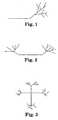
- Other CTAs comprise ⁇ , ⁇ -halogen substituted alkanes. For example, ( ⁇ , ⁇ , ⁇ , ⁇ , ⁇ -hexabromo)decane. These provide the types of dispersants shown in Figures 2 and 3.
- the hydrophobic reactants i.e. the chain transfer agents carrying hydrophobic hydrocarbon chains, preferably provide approximately 6 to 100, preferably 8 to 20, total carbon atoms per group; and are preferably aliphatic.
- the hydrocarbon groups may be linear or branched, unsubstituted or substituted, as long as the substituent is nonpolar.
- the hydrophobic segment provides strong hydrophobic adsorption of the dispersant to hydrophobic particle surfaces.
- the degree of hydrophobic interaction achievable by the dispersant with hydrophobic particles depends on the number of hydrophobic functional groups, such as methylene or aromatic groups, available on the hydrophobic segment of the dispersant that can spread on the surface of each hydrophobic particle.
- the hydrophobic segments and their functional group(s) may be selected to tailor the physico-chemical properties of the resulting dispersant to the needs of the particular dispersion that is to be stabilized.
- the number of carbon atoms in the hydrophobic segment may be controlled and may be chosen to maximize particle adsorption without compromising overall water solubility of the dispersant. For example, greater solubility for the dispersant may be achieved by shortening the length of the hydrocarbon group.
- the relative amount of hydrophilicity and hydrophobicity in the dispersant may also be controlled by varying the number of hydrophilic polyelectrolytes attached to the hydrophobic segment.
- the number and location of polyelectrolytes on the dispersant is determined by, e.g., the number, location, and type of reactive chain terminating functional group(s) on the hydrophobic hydrocarbon moieties.
- any structure could work so long as the placement of the hydrophilic segments does not interfere with the concentration or degree of hydrophobicity necessary to interact with the hydrophobic particle and so long as the hydrophilic segment(s) is sufficiently ionic and solvated to keep the dispersant/particle composite dispersed in an aqueous system.
- the molecular weight of the dispersant molecule may be up to 100,000, preferably 50,000, more preferably below 25,000 and most preferably in the range of 15,000 to 35,000.
- the design and synthesis of the dispersant will preferably ultimately result in a stable colloidal dispersion of particle/dispersant composites having diameters of less than 250 nanometers (nm), preferably less than 200 nm and most preferably 100 to 150 nm.
- thermally-activated free radical initiators include azo initiators such as those available under the trade name VAZO 52 from DuPont Chemical Co., Wilmington, DE and azo initiators available under the WAKO trade name from Wako Chemicals USA, Richmond, VA.
- Dispersants of this invention prepared by using monofunctional mercaptans as the hydrophobic chain transfer agent preferably include:
- Dispersants of the present invention may also comprise compositions comprising mixtures of the linear hydrophobe-terminated hydrophilic copolymers noted as (a) through (I) above with multi-branched hydrophilic (co)polymers obtained by chain termination using multifunctional chain transfer agents described above.
- Dispersant mixtures useful in the invention can be prepared, for example, by the copolymerization of AMPS and NNDMA in the presence of both a branched chain transfer agent (e.g., pentaerythritol tetra(3-mercaptoproprionate) and a linear chain transfer agent (e.g., n-octylmercaptan).
- a branched chain transfer agent e.g., pentaerythritol tetra(3-mercaptoproprionate
- a linear chain transfer agent e.g., n-octylmercaptan
- the resulting mixture would contain polymer chains terminated by n-octylthiol groups mixed with a mixture of pentaerythritol tetra(3-mercaptoproprionate) core molecules bearing a statistical distribution of 1, 2, 3, and 4 polymer chains that have been terminated by reaction with 1, 2, 3 or 4 terminal thiol groups of the pentaerythritol tetra(3-mercaptoproprioriate) molecule.
- Useful properties of dispersant mixtures of this type can be controlled according to the amount of each chain transfer agent present.
- the linear copolymer (the n-octylmercaptyl-terminated copolymer) comprises the only copolymer having a hydrophobic portion, a higher proportion of this constituent can result in an increased number of molecules bound to hydrophobic particles that are to be dispersed.
- Dispersant mixtures were prepared as follows:
- the dispersants of the present invention have applicability as pigment dispersants in ink jet, and other printing, inks.
- the inks of the present invention may be formed with a variety of pigments.
- the inventive inks may be provided with black, cyan, yellow, magenta, red, blue, green, and white pigments.
- black, cyan, yellow, magenta, red, blue, green, and white pigments By varying the individual color densities and overlying monochrome images, it is possible to provide virtually any color on an appropriate substrate.
- electronic graphic image systems virtually any image that can be created or stored electronically can be reproduced using an ink jet printer.
- the present invention is not intended to be limited to inks of the colors discussed above. Rather, inks employing any pigment or combination of pigments compatible with electronic graphic image systems may be used.
- carbon black may be used as the black pigment.
- the selection of carbon blacks suitable for use with the present invention is based primarily upon considerations of surface oxidation, and the degree of blackness (also called jetness) of the pigment. Pigments that are acidic or surface-treated provide suitable interaction sites for strong dispersant adsorption. Pigments with a high degree of blackness or jetness provide a high quality printed image.
- nickel azo yellow pigment offers several advantages.
- First, such pigments provide inks that are highly durable in outdoor environments.
- Second, such pigments contain nickel ions, which may be able to form complex bonds with the novel dispersants.
- Lastly, such pigments are believed to offer a high degree of thermal conductivity. As a result, if particle deposition onto a heater element does occur during the jetting process, the deposited film will not significantly reduce the heating efficiency of the ink, thereby allowing proper bubble formation.
- magenta inks For magenta inks, a primary consideration is lightfastness, since it is very desirable to produce graphic images that are adapted to outdoor applications. Quinacridone magenta pigment is known to have excellent lightfastness, and therefore, is one preferred magenta pigment.
- cyan inks For cyan inks, the considerations above, (i.e., lightfastness, durability, etc.), apply as well. As a variety of satisfactory properties may be found using copper phthalocyanine as a cyan pigment, inks comprising such pigments are one preferred embodiment.
- a dispersant preferably comprises a hydrophobic portion to interact with the hydrophobic solid pigment surface in an aqueous environment.
- the dispersants of this invention provide hydrophobic moieties to interact with pigment particles.
- the one or multiple hydrophilic segment(s) can provide effective electrostatic and steric stabilization to the colloidal pigment dispersion. Stability of the dispersion is also enhanced if the dispersant-particle attraction is stronger than the particle-particle attraction, especially at high temperatures.
- a pigment particle does not carry a single dispersant molecule, but rather multiple layers of dispersant molecules. This occurs because when a dispersant's hydrocarbon moiety adsorbs to the particle it facilitate the adsorption of a second dispersant molecule and this will continue until an equilibrium thickness of the adsorbed dispersant layer is reached.
- the dispersants used for different colored pigments that will be applied to the same receptor surface should preferably be thermodynamically miscible and should possess the same kind of ionic charge to prevent coagulation of the inks when deposited on the receptor surface.
- Secondary dispersant(s) may also be used to enhance the stabilizing effect of the dispersants of this invention, when they are used as primary dispersants.
- inks preferably comprise water as a medium in which pigments can be dispersed.
- Such inks will typically also include further additives to provide various properties.
- a polyol may be employed to control the drying rate of the ink.
- Suitable polyols include, for example, polyalkylene glycols such as polyethylene glycol and polypropylene glycol; alkylene glycols whose alkylene group has 2-6 carbon atoms, such as ethylene glycol, propylene glycol, butylene glycol, triethylene glycol, 1,2,6-hexanetriol, hexylene glycol, and diethylene glycol; glycerol; and lower alkyl ethers of alcoholic polyols such as ethylene glycol monomethyl or monoethyl ether, diethylene glycol methyl or ethyl ether, and triethylene glycol monomethyl or monoethyl ether.
- Diethylene glycol is the most preferred polyol.
- a surfactant useful for wetting the pigment and reducing the surface tension of the ink system, can be provided as well.
- other ink additives commonly known in the art may also be used. These include, water-soluble organic cosolvents, humectants (in addition to the above-named polyols), biocides, fungicides, defoamers, corrosion inhibitors, viscosity modifiers, pH buffers, penetrants, sequestering agents, and the like.
- Ink Processing Current compounding technology for the processing of pigment dispersions employs numerous processing technologies.
- One such technology makes use of ultrasonic energy to achieve mixing and particle deflocculation.
- Another technology makes use of media mills, such as ball mills, sand mills or attritors.
- Media mills achieve acceptable pigment dispersions by subjecting the pigment mixture to high intensity microshearing and cascading which breaks down agglomerations of the pigment particles.
- media mill processing systems often suffer from disadvantages including media wear product contamination. Additionally, if the flow rate in a media mill is raised beyond a certain level, the resulting grinding and dispersion becomes uneven, and much of the material leaves the system without being sufficiently processed.
- the pigment dispersion can be forced through a series of small nozzles having diameters on the order of about 150 micrometers to about 1000 micrometers.
- Such systems must be able to withstand very high pressures at high fluid velocities.
- Three different configurations for such systems may be used: a) a "wedge” configuration with orifices of decreasing diameter, b) a "wedge” configuration within which the orifices have cavitation enhancement devices, and c) an "impinging jet” configuration in which the dispersion stream is split into at least two elements, each stream is passed through an orifice to create a jet, and the jet streams are recombined by impinging them against each other.
- a "wedge” configuration with orifices of decreasing diameter b) a "wedge” configuration within which the orifices have cavitation enhancement devices
- an "impinging jet” configuration in which the dispersion stream is split into at least two elements, each stream is passed through an orifice to create a
- the pigmented ink formulation comprising the pigment, the dispersant, auxiliary surfactant, water, DEG, and other additives is first subjected to mixing under high shear conditions in a Hill mixer (Model # 4000 Plus, AC drive), available from Hill Mixer, Inc., Paterson, NJ, which is a high speed impingement homogenizer comprising a spiral propeller with a "grapefruit style" head for greater suction through the head from the propeller.
- the shear mixing was done at moderate speeds of approximately 2000 rpm.
- the ink was subjected to fine particle grinding by an "impinging jet” process generally as described in PCT Publication WO 96/14925.
- the processed concentration was typically diluted to 4% solids with DEG/water mixtures having DEG:water weight ratios of 20:80 to 12.5:87.5, preferably 12.5:87.5.
- the molecular weights of dispersants were determined by elution using a gel permeation chromatograph available under the trade name ULTRAHYDROGEL from Waters Corp., Milford, MA. Linear 1000, 500 and 250 columns were used with an elution solution comprising a 0.1M Tris amine buffer (Tris hydroxymethylamino methane) plus 0.2M Li NO 3 and monitoring by a refractive index detector available under the trade name HP 1037A from Hewlett Packard Instruments, Palo Alto, CA. Molecular weight calculations were based on a calibration made using polyethylene glycol (PEG) and polyethylene oxide (PEO) standards of molecular weight ranges from 2.8 x 10 5 to 200.
- PEG polyethylene glycol
- PEO polyethylene oxide
- the processed inks were brought to a strength of 4 weight % solids unless noted otherwise.
- the solids include the pigment, surfactant, and any other nonvolatile additives such as an auxiliary dispersant.
- the ink obtained after processing and filtration was poured into a glass vial (8.9 cm long x 2.54 cm diameter), which was covered with a loosely fitting metal cap to help retain most of the liquid (typically 12.5 weight% diethylene glycol (DEG) in water) in the ink. The was left undisturbed in an oven at 60°C to 65°C for 1 week (unless otherwise noted). If no solids separation occurred at 60°C the ink was considered to be thermally stable.
- DEG diethylene glycol
- the vial was transferred to a 120°C oven and inspected after at least two days to see if any solids separation occurred. If the ink showed no solids separation after 2 or more days at 120°C, it was considered to be highly stable.
- the inks were printed onto a vinyl receptor sheet available under the trade name SCOTCH-CAL from 3M Co., St. Paul, MN, using a thermal inkjet printer available under the trade name NOVAJET III from Encad, Inc, San Diego, CA.
- the printheads were cleaned, the printer was checked for leaks, and the cartridges were filled with the ink to be tested.
- the quality of prints were judged visually, upon repeated trials, for uniformity of color over large format blocks (30cm x 90cm), absence of banding, and adhesion to the substrate.
- the resulting polymer solution was added to 2 liters of acetone to precipitate the polymer.
- the polymer was then washed with two increments of approximately 300 milliliter of acetone. After the solvent was removed by decantation, the remaining solids were dried and dissolved in water to obtain a 30 to 35 weight % solution.
- Dispersant B was made in the same manner as Dispersant A except that 1.5 g of isooctyl mercaptopropionate was used in place of n-octanethiol.
- NBDMA n-Tetradecyl-3-mercaptyl isooctylpropionate-terminated Poly(2-acrylamido-2- methyl-1-propanesulfonic acid-co-N,N- dimethylacrylamide (NNDMA))
- AMPS and 30 g of NNDMA were dissolved in a mixture of 150 g of DMF and 150 g of acetonitrile. After flushing the solution with nitrogen for 20 minutes at a rate of 50 bubbles/min, 1.37 g of n-tetradecyl mercaptan, followed by 3.75 g of VAZO 52 initiator, were dissolved in the solution. The container holding the monomer solution was mechanically shaken for 36 hours at 55°C. The resulting polymer solution was added to 1.5 L of acetone to precipitate the polymer. The polymer was then washed with two increments of approximately 300 mL of acetone. The solvents were removed by decantation. The resulting polymer was dried and dissolved in water to obtain a 30 to 35 weight % solution.
- the mixed polymer solution was added to 500 mL of acetone to precipitate the polymer.
- the precipitate was then washed with two increments of approximately 100 milliliters of acetone.
- the solvents were removed by decantation and the polymer mixture was dried and dissolved in water to obtain an approximately 30 weight % solution.
- the dispersant comprised a mixture of at least two structures: (1) trimethylolpropane tri-(3-mercaptopropionate)-terminated (poly(AMPS-co-NNDMA)) and (2) n-octyl-terminated(poly(AMPS-co-NNDMA)).
- the monofunctional n-octyl mercaptan-terminated chain is believed to provide the hydrophobic segment with which a hydrophobic particle can interact.
- the hydrophilic multifunctional copolymers are believed to provide added electrostatic and steric stability to a dispersion.
- the monofunctional chain is also believed to dilute the concentration of multifunctional copolymers thereby decreasing molecular entanglement or crosslinking of the multifunctional copolymer, which entanglement or crosslinking can cause insoluble network (gel) formation.
- Dispersant E was made in the same manner as Dispersant D except the monomer compositions were changed to: 12.5 g of AMPS (instead of 20 g); 12.5 g of potassium sulfopropyl acrylate (instead of 10 g of NNDMA); 0.23 g of trifunctional mercaptan (instead of 0.28 g); and 0.024 g of monofunctional mercaptan (instead of 0.04 g) (providing a 2.5 to 1 weight ratio of multi- to mono- functional chain transfer agents).
- Dispersant D The same general postulate for Dispersant D also applies for Dispersant E.
- the dispersant comprised a mixture of at least two structures: (1) pentaerythritol tetra (3-mercaptopropionate) -terminated poly(AMPS-co- potassium sulfopropyl acrylate) and (2) n-octyl mercaptan-terminated poly(AMPS-co- potassium sulfopropyl acrylate).
- the monofunctional n-octyl mercaptan-terminated chain is believed to provide the hydrophobic segment with which a hydrophobic particle can interact.
- the hydrophilic multifunctional copolymers are believed to provide added electrostatic and steric stability to a dispersion.
- the monofunctional chain is also believed to dilute the concentration of multifunctional copolymers thereby decreasing molecular entanglement or crosslinking of the multifunctional copolymer, which entanglement or crosslinking can cause insoluble network (gel) formation.
- Dispersant G was made in the same manner as Dispersant F except (1) the monomer compositions were: 20 g of AMPS; 10 g of NNDMA; 0.322 g of pentaerythritol tetra (3-mercaptopropionate), and 0.0483 g of n-octylmercaptan (providing a 2 to 1 weight ratio of multi- to mono- functional chain transfer agents); (2) the solvent mixture was a 100 g solvent mixture of 1:1 DMF/acetonitrile and (3) polymerization conditions for the homogeneous solution were 36 hours at 55°C using 1.2 g of VAZO 52 initiator.
- the monomer compositions were: 20 g of AMPS; 10 g of NNDMA; 0.322 g of pentaerythritol tetra (3-mercaptopropionate), and 0.0483 g of n-octylmercaptan (providing a 2 to 1 weight ratio of multi- to mono- functional
- Dispersant F The same general postulate for Dispersant F also applies for Dispersant G.
- Dispersant H was made in the same manner as Dispersant A except: 20 g of AMPS were used (instead of 75 g), 10 g of NNDMA were used (instead of 75 g of potassium sulfopropyl acrylate), 50 g of dimethyl formamide were used (instead of 400 g), 50 g of acetonitrile were used (instead of 100 g of water), 0.69 g of n-octadecylmercaptan was used (instead of 1 g of n-octanethiol), and 1.24 g of VAZO 52 were used (instead of 7 g).
- a pigment was typically dispersed in an aqueous solution of diethylene glycol (DEG) in the presence of an auxiliary surfactant and the dispersant.
- DEG diethylene glycol
- the pigment to dispersant weight ratio was from 3:2 to 3:1.
- An auxiliary surfactant was added to adjust the surface tension of the ink, assist in its jettability through the printer nozzle, and wet the receptor surface.
- the surfactant may also provide added stability to the dispersion system.
- Hyperdispersants designed to wet the pigment surface were optionally included.
- Diethylene glycol served as a humectant.
- the resulting concentrate was preferably 15 to 20 weight % solids to avoid forming high viscosity pastes, which are difficult to grind.
- the inks of EXAMPLES 3-6 were prepared by the above-mentioned Hill mixer grinding process only and were not filtered.
- the inks of EXAMPLES 1 and 2 were obtained by processing the inks in two steps: first by the Hill mixer grinding and then subjecting the concentrates to a jet impingement process wherein the ink is jetted at high speeds through nozzles of a few microns in diameter. This jet impingement process shears pigment agglomerates to smaller aggregates, which take up additional quantities of the dispersant as a result of increased surface area produced by deagglomeration.
- the mixture was subjected to high speed grinding in a Hill mixer available from Hill Mixer, Inc., Paterson, NJ, for 2 hours at approximately 2000 rpm. Then 65 g of a 33.1 weight % solution of Dispersant A (22.1 g solids) were added to the pigment suspension and high speed grinding was continued for another hour. An additional 100 g of water was added during grinding to obtain an approximately 15 weight % solids concentrate. The ink concentrate was then subjected to fine-particle grinding in an impinging jet process generally as described in the PCT Publication WO 96/14925 for 60 to 90 minutes.
- the resulting concentrate was filtered through a 0.5 to 1.0 ⁇ m filter, such as a Whatman Polycap 36 HD cartridge type filter, available from Arbor Technology, Ann Arbor, MI and further diluted with a 12.5:87.5 DEG: water mixture to an approximately 4 weight % solids ink.
- a 0.5 to 1.0 ⁇ m filter such as a Whatman Polycap 36 HD cartridge type filter, available from Arbor Technology, Ann Arbor, MI and further diluted with a 12.5:87.5 DEG: water mixture to an approximately 4 weight % solids ink.
- the ink was thermally stable at 60°C and 120°C.
- the particle size of the pigment particles in the ink as measured by a submicron particle analyzer, available under the trade name Coulter N+ from Coulter Corp., Hialeah, FL, ranged between 100 and 150 nanometers.
- the ink was jetted through the printheads of an Encad NOVAJET III wide format printer onto a SCOTCHCAL receptor sheet to yield 30 cm x 90 cm magenta prints exhibiting uniform color, no banding, and adhesion to the substrate.
- the printing was conducted intermittently over a two day period.
- This example incorporates a secondary codispersant comprising dendritic polymer having at least one peripheral ionizable moiety and at least one peripheral hydrocarbon moiety, as disclosed in copending application USSN 09/216,165 (Attorney Docket No. 54279USA1A), which is incorporated by reference.
- a 3-generation functionalized hyperbranched polymer secondary dispersant was used.
- the clear liquid was coagulated in excess of hexanes at ambient temperature (25°C).
- the resulting yellow paste was washed several times with warm hexanes (45 to 50°C) to ensure the removal of any unreacted anhydride.
- the resulting residue was air dried for 48 hours then further dried at 60°C under vacuum for 24 hours.
- the resulting solids (the functionalized hyperbranched polymer preparation) was dissolved in water and neutralized by the addition of a sufficient amount of aqueous ammonia to react with any unreacted hydroxyl groups. A 30-40 weight % solution of the solids was thus prepared. Sufficient aqueous ammonia was added to the solution to bring the pH to 9-10.
- the resulting ink concentrate was subjected to fine particle grinding in an impinging jet process, filtered and further diluted to an approximately 4 weight % solids ink, as described in Example 1.
- the ink was thermally stable at 60°C and 120°C.
- the particle size as measured by a Coulter N+ submicron particle analyzer ranged between 100 and 150 nm.
- the ink was jetted through the printheads of an Encad NOVAJET III wide format printer onto a SCOTCHCAL receptor sheet to yield 30 cm x 90 cm magenta prints exhibiting uniform color, no banding, and adhesion to the substrate.
- the ink had increased stability and provided better quality printed images, as determined by visual inspection, than the ink of Example 1.
- the ink was thermally stable at 60°C.
- a 4 weight % solids ink concentrate in a 12.5% DEG aqueous solution was prepared in the same manner as Example 3, except the ink concentrate was made with: 20 g of the magenta pigment; approximately 200 g of a 12.5 weight % aqueous solution of DEG; approximately 30 g of a 25% solution of Dispersant F (7.5 g of solids); 2 g of TRITON X-100; 6.6 g of the 38% solution of 3-Generation dendritic polymer (2.5 g of solids).
- the ink was thermally stable at 60°C.
- the ink concentrate was thermally stable at 60°C.
- Example 6 was prepared in the same manner as Example 5 except Dispersant G was used instead of Dispersant H.
- the ink concentrate was thermally stable at 60°C.
- the ink was thermally stable at 60°C and 120°C.
- the particle size as measured by a Coulter N+ submicron particle analyzer was approximately 70 nm.
Landscapes
- Chemical & Material Sciences (AREA)
- Engineering & Computer Science (AREA)
- Materials Engineering (AREA)
- Organic Chemistry (AREA)
- Life Sciences & Earth Sciences (AREA)
- Wood Science & Technology (AREA)
- Chemical Kinetics & Catalysis (AREA)
- General Chemical & Material Sciences (AREA)
- Inks, Pencil-Leads, Or Crayons (AREA)
- Emulsifying, Dispersing, Foam-Producing Or Wetting Agents (AREA)
- Compositions Of Macromolecular Compounds (AREA)
- Polymerisation Methods In General (AREA)
- Addition Polymer Or Copolymer, Post-Treatments, Or Chemical Modifications (AREA)
Applications Claiming Priority (3)
| Application Number | Priority Date | Filing Date | Title |
|---|---|---|---|
| US216657 | 1998-12-18 | ||
| US09/216,657 US6395804B1 (en) | 1998-12-18 | 1998-12-18 | Polyelectrolyte dispersants for hydrophobic particles in water-based systems |
| PCT/US1999/009145 WO2000037168A1 (en) | 1998-12-18 | 1999-04-27 | Polyelectrolyte dispersants for hydrophobic particles in water-based systems |
Publications (2)
| Publication Number | Publication Date |
|---|---|
| EP1140345A1 EP1140345A1 (en) | 2001-10-10 |
| EP1140345B1 true EP1140345B1 (en) | 2004-09-08 |
Family
ID=22807967
Family Applications (1)
| Application Number | Title | Priority Date | Filing Date |
|---|---|---|---|
| EP99921492A Expired - Lifetime EP1140345B1 (en) | 1998-12-18 | 1999-04-27 | Polyelectrolyte dispersants for hydrophobic particles in water-based systems |
Country Status (7)
| Country | Link |
|---|---|
| US (1) | US6395804B1 (enExample) |
| EP (1) | EP1140345B1 (enExample) |
| JP (1) | JP2002532243A (enExample) |
| KR (1) | KR100546967B1 (enExample) |
| AU (1) | AU3869299A (enExample) |
| DE (1) | DE69920041T2 (enExample) |
| WO (1) | WO2000037168A1 (enExample) |
Cited By (1)
| Publication number | Priority date | Publication date | Assignee | Title |
|---|---|---|---|---|
| CN104357827A (zh) * | 2014-11-03 | 2015-02-18 | 中国石油大学(华东) | 一种超疏水耐腐蚀铜基表面的制备方法 |
Families Citing this family (33)
| Publication number | Priority date | Publication date | Assignee | Title |
|---|---|---|---|---|
| US6440207B1 (en) * | 2000-03-03 | 2002-08-27 | Bayer Corporation | Method for preparing organic pigments |
| US7001934B2 (en) * | 2002-01-24 | 2006-02-21 | Cabot Coroporation | Inkjet ink systems comprising a gelling agent |
| US20040226620A1 (en) * | 2002-09-26 | 2004-11-18 | Daniel Therriault | Microcapillary networks |
| US6750261B1 (en) | 2003-04-08 | 2004-06-15 | 3M Innovative Properties Company | High internal phase emulsion foams containing polyelectrolytes |
| US7141617B2 (en) * | 2003-06-17 | 2006-11-28 | The Board Of Trustees Of The University Of Illinois | Directed assembly of three-dimensional structures with micron-scale features |
| CN1274754C (zh) * | 2003-09-09 | 2006-09-13 | 青岛科技大学高分子科学与工程学院 | 遇水崩解型环境友好高分子共混材料及其制取方法 |
| US7165839B2 (en) * | 2003-12-19 | 2007-01-23 | Novartis Ag | Method for producing tinted contact lenses |
| KR100561409B1 (ko) * | 2003-12-23 | 2006-03-16 | 삼성전자주식회사 | 수계 시스템내 안료 입자를 위한 블록 공중합체 분산제,이를 포함한 잉크 조성물 |
| AU2005277542B2 (en) * | 2004-08-19 | 2011-11-17 | Covidien Lp | Water-swellable copolymers and articles and coating made therefrom |
| JP4824971B2 (ja) * | 2004-09-09 | 2011-11-30 | 三菱レイヨン株式会社 | ナノ物質含有組成物、その製造方法及びそれを用いた複合体 |
| KR100657305B1 (ko) * | 2005-01-07 | 2006-12-14 | 삼성전자주식회사 | 금속 화합물로 말단 캡핑된 중합체 분산제 및 이를 포함한잉크 조성물 |
| US7758954B2 (en) * | 2005-08-18 | 2010-07-20 | James Hardie Technology Limited | Coated substrate having one or more cross-linked interfacial zones |
| JP2007238862A (ja) * | 2006-03-10 | 2007-09-20 | Denso Corp | 熱輸送媒体 |
| JP2008050416A (ja) * | 2006-08-22 | 2008-03-06 | Denso Corp | 熱輸送媒体 |
| JP2008063411A (ja) * | 2006-09-06 | 2008-03-21 | Denso Corp | 熱輸送流体、熱輸送構造、及び熱輸送方法 |
| EP2066434B1 (en) * | 2006-09-27 | 2014-11-12 | Basf Se | Polyethylene imine based dendritic dispersant |
| JP2008088240A (ja) * | 2006-09-29 | 2008-04-17 | Denso Corp | 熱輸送媒体 |
| JP5036269B2 (ja) * | 2006-10-11 | 2012-09-26 | 富士フイルム株式会社 | 着色パターン形成用組成物、着色パターン形成方法、カラーフィルタの製造方法、カラーフィルタ、及び液晶表示素子 |
| US7956102B2 (en) | 2007-04-09 | 2011-06-07 | The Board Of Trustees Of The University Of Illinois | Sol-gel inks |
| US20090004468A1 (en) * | 2007-06-28 | 2009-01-01 | Yongjun Chen | Primer for composite building materials |
| CA2696569C (en) * | 2007-06-28 | 2016-05-31 | James Hardie Technology Limited | Paint formulation for building material |
| US9051488B2 (en) * | 2007-06-29 | 2015-06-09 | James Hardie Technology Limited | Multifunctional primers |
| WO2009051200A1 (ja) * | 2007-10-19 | 2009-04-23 | Jsr Corporation | インクジェット印刷用インクおよび電極の製造方法 |
| JP2009227825A (ja) * | 2008-03-24 | 2009-10-08 | Jsr Corp | インクジェット印刷用インク、およびこれを用いたフラットパネルディスプレイ用電極の製造方法 |
| JP5125464B2 (ja) * | 2007-12-10 | 2013-01-23 | セイコーエプソン株式会社 | 導体パターン形成用インク、導体パターンおよび配線基板 |
| US7922939B2 (en) * | 2008-10-03 | 2011-04-12 | The Board Of Trustees Of The University Of Illinois | Metal nanoparticle inks |
| US8187500B2 (en) * | 2008-10-17 | 2012-05-29 | The Board Of Trustees Of The University Of Illinois | Biphasic inks |
| JP5523724B2 (ja) * | 2009-03-19 | 2014-06-18 | 富士フイルム株式会社 | 顔料分散体の製造方法およびインクジェット記録用水性インク |
| US8822564B2 (en) * | 2011-05-27 | 2014-09-02 | Kerr Corporation | Dental restorative material |
| EP2760947B1 (en) * | 2011-09-29 | 2015-11-04 | FUJIFILM Corporation | Inkjet ink composition and inkjet recording method |
| CN106543321B (zh) * | 2015-09-21 | 2018-11-09 | 上海东升新材料有限公司 | 一种四臂星形结构高效重钙研磨分散剂的制备方法及其产物和应用 |
| WO2017087170A1 (en) | 2015-11-18 | 2017-05-26 | 3M Innovative Properties Company | Copolymeric stabilizing carrier fluid for nanoparticles |
| US10899961B2 (en) | 2016-02-17 | 2021-01-26 | 3M Innovative Properties Company | Quantum dots with stabilizing fluorochemical copolymers |
Family Cites Families (52)
| Publication number | Priority date | Publication date | Assignee | Title |
|---|---|---|---|---|
| US3960824A (en) * | 1971-07-09 | 1976-06-01 | Celanese Coatings & Specialties Company | Mercaptan initiated polymerization process carried out in the presence of oxygen |
| US3898037A (en) * | 1972-06-01 | 1975-08-05 | Betz Laboratories | Acrylamido-sulfonic acid polymers and their use |
| DE3115532A1 (de) | 1980-04-17 | 1982-01-28 | Canon K.K., Tokyo | Tintenstrahl-aufzeichnungsverfahren und aufzeichnungstinte fuer die aufzeichnung auf einem bildempfangsmaterial |
| US4337185A (en) * | 1980-06-23 | 1982-06-29 | The Dow Chemical Company | Process for making cationic structured particle latexes using reactive polymeric surfactants |
| US4507466A (en) | 1983-01-07 | 1985-03-26 | The Dow Chemical Corporation | Dense star polymers having core, core branches, terminal groups |
| US4558120A (en) | 1983-01-07 | 1985-12-10 | The Dow Chemical Company | Dense star polymer |
| US4568737A (en) | 1983-01-07 | 1986-02-04 | The Dow Chemical Company | Dense star polymers and dendrimers |
| US4631337A (en) | 1983-01-07 | 1986-12-23 | The Dow Chemical Company | Hydrolytically-stable dense star polyamine |
| US4737550A (en) | 1983-01-07 | 1988-04-12 | The Dow Chemical Company | Bridged dense star polymers |
| US4587329A (en) | 1984-08-17 | 1986-05-06 | The Dow Chemical Company | Dense star polymers having two dimensional molecular diameter |
| US4871779A (en) | 1985-12-23 | 1989-10-03 | The Dow Chemical Company | Ion exchange/chelation resins containing dense star polymers having ion exchange or chelate capabilities |
| US4694064A (en) | 1986-02-28 | 1987-09-15 | The Dow Chemical Company | Rod-shaped dendrimer |
| US4713975A (en) | 1986-05-30 | 1987-12-22 | The Dow Chemical Company | Dense star polymers for calibrating/characterizing sub-micron apertures |
| US4857599A (en) | 1988-02-08 | 1989-08-15 | The Dow Chemical Company | Modified dense star polymers |
| EP0429828B1 (en) | 1989-10-19 | 1994-03-16 | Canon Kabushiki Kaisha | Ink and ink jet recording method, ink cartridge, ink jet device and ink jet recording apparatus using the same |
| US5284894A (en) * | 1990-02-22 | 1994-02-08 | Basf Corporation | Low-foaming latexes for use in printing ink formulations |
| DE69115960T2 (de) | 1990-03-20 | 1996-09-12 | Mitsubishi Chem Corp | Aufzeichnungsflüssigkeit für das Tintenstrahl-Aufzeichnen |
| US5085698A (en) | 1990-04-11 | 1992-02-04 | E. I. Du Pont De Nemours And Company | Aqueous pigmented inks for ink jet printers |
| US5098475A (en) | 1991-01-28 | 1992-03-24 | Xerox Corporation | Inks with dendrimer colorants |
| US5120361A (en) | 1991-06-27 | 1992-06-09 | Xerox Corporation | Ink compositions |
| US5294728A (en) * | 1991-11-04 | 1994-03-15 | Rohm And Haas Company | Latent thiol mercaptan chain transfer agents and their use in the synthesis of polymers |
| SE468771B (sv) | 1992-02-26 | 1993-03-15 | Perstorp Ab | Dendritisk makromolekyl av polyestertyp, foerfarande foer framstaellning daerav samt anvaendning daerav |
| US5169436A (en) | 1992-05-13 | 1992-12-08 | E. I. Du Pont De Nemours And Company | Sulfur-containing penetrants for ink jet inks |
| US5256193A (en) | 1992-06-25 | 1993-10-26 | Xerox Corporation | Porphyrin chromophore and dendrimer ink composition |
| US5310778A (en) * | 1992-08-25 | 1994-05-10 | E. I. Du Pont De Nemours And Company | Process for preparing ink jet inks having improved properties |
| US5266106A (en) | 1992-10-22 | 1993-11-30 | Xerox Corporation | Ink compositions with dendrimer grafts |
| US5254159A (en) | 1992-12-17 | 1993-10-19 | Xerox Corporation | Ink compositions |
| US5554213A (en) | 1992-12-17 | 1996-09-10 | Xerox Corporation | Ink compositions for ink jet printing |
| US5679762A (en) * | 1993-12-24 | 1997-10-21 | Nippon Shokubai Co., Ltd. | Block polymer, thermoplastic addition polymer, and their production process and use |
| US5545504A (en) | 1994-10-03 | 1996-08-13 | Xerox Corporation | Ink jettable toner compositions and processes for making and using |
| DE69522232T2 (de) | 1994-11-14 | 2002-06-13 | Minnesota Mining And Mfg. Co., Saint Paul | Verfahren und vorrichtung zur herstellung einer dispersion von hartstoffteilchen in einem lösungsmittel |
| US5723427A (en) * | 1994-12-05 | 1998-03-03 | Colgate-Palmolive Company | Granular detergent compositions containing deflocculating polymers and processes for their preparation |
| US5589522A (en) | 1994-12-21 | 1996-12-31 | Lexmark International, Inc. | Ink composition |
| US5635571A (en) | 1995-06-30 | 1997-06-03 | Cornell Research Foundation, Inc. | Polymerizable macromonomers and polymers prepared therefrom |
| US5596027A (en) | 1995-07-13 | 1997-01-21 | Videojet Systems International, Inc. | Condensation and water resistant jet ink |
| US5777129A (en) | 1995-08-18 | 1998-07-07 | Hoechst Celanese Corp. | Hyperbranched polymers |
| IT1277596B1 (it) | 1995-09-15 | 1997-11-11 | Bracco Spa | Composti macromolecolari di tipo dendrimerico |
| US5821283A (en) * | 1995-10-06 | 1998-10-13 | Rohm And Haas Company | Ink composition and method for preparing |
| US5780551A (en) | 1995-11-02 | 1998-07-14 | Fmc Corporation | Telechelic polymers from mixed initiator |
| US5840106A (en) | 1995-11-13 | 1998-11-24 | Minnesota Mining And Manufacturing Company | Water-based pigmented inks |
| US5714632A (en) | 1995-11-13 | 1998-02-03 | Minnesota Mining And Manufacturing Company | Azlactone-based surfactants |
| US5985990A (en) * | 1995-12-29 | 1999-11-16 | 3M Innovative Properties Company | Use of pendant free-radically polymerizable moieties with polar polymers to prepare hydrophilic pressure sensitive adhesive compositions |
| DE19608911A1 (de) * | 1996-03-07 | 1997-09-11 | Wacker Chemie Gmbh | Vernetzbare Schutzkolloide |
| WO1997043351A1 (en) | 1996-05-16 | 1997-11-20 | Minnesota Mining And Manufacturing Company | Water-based pigmented inks |
| JP3484878B2 (ja) * | 1996-05-27 | 2004-01-06 | 富士ゼロックス株式会社 | インクジェット記録用インクユニット及びインクジェット記録方法 |
| US5837045A (en) | 1996-06-17 | 1998-11-17 | Cabot Corporation | Colored pigment and aqueous compositions containing same |
| AU3880197A (en) | 1996-06-27 | 1998-01-14 | American Ink Jet Corporation | Waterfast pigmented ink jet inks |
| US5713993A (en) * | 1996-08-30 | 1998-02-03 | E.I. Du Pont De Nemours And Company | Pigmented ink set and process for alleviating bleed in printed elements using carboxylic acid additives |
| US5731095A (en) | 1996-10-23 | 1998-03-24 | Oxazogen, Inc. | Dendritic polymer coatings |
| US5851274A (en) | 1997-01-13 | 1998-12-22 | Xerox Corporation | Ink jet ink compositions and processes for high resolution and high speed printing |
| US5788749A (en) | 1997-02-14 | 1998-08-04 | Xerox Corporation | Pigmented ink compositions containing liposomes |
| GB9711625D0 (en) * | 1997-06-06 | 1997-07-30 | Ciba Geigy Ag | Pigment compositions |
-
1998
- 1998-12-18 US US09/216,657 patent/US6395804B1/en not_active Expired - Fee Related
-
1999
- 1999-04-27 KR KR1020017007589A patent/KR100546967B1/ko not_active Expired - Fee Related
- 1999-04-27 WO PCT/US1999/009145 patent/WO2000037168A1/en not_active Ceased
- 1999-04-27 AU AU38692/99A patent/AU3869299A/en not_active Abandoned
- 1999-04-27 EP EP99921492A patent/EP1140345B1/en not_active Expired - Lifetime
- 1999-04-27 JP JP2000589273A patent/JP2002532243A/ja not_active Withdrawn
- 1999-04-27 DE DE69920041T patent/DE69920041T2/de not_active Expired - Fee Related
Cited By (1)
| Publication number | Priority date | Publication date | Assignee | Title |
|---|---|---|---|---|
| CN104357827A (zh) * | 2014-11-03 | 2015-02-18 | 中国石油大学(华东) | 一种超疏水耐腐蚀铜基表面的制备方法 |
Also Published As
| Publication number | Publication date |
|---|---|
| KR100546967B1 (ko) | 2006-02-01 |
| AU3869299A (en) | 2000-07-12 |
| JP2002532243A (ja) | 2002-10-02 |
| WO2000037168A1 (en) | 2000-06-29 |
| KR20010093844A (ko) | 2001-10-29 |
| US6395804B1 (en) | 2002-05-28 |
| DE69920041D1 (de) | 2004-10-14 |
| DE69920041T2 (de) | 2005-09-29 |
| EP1140345A1 (en) | 2001-10-10 |
Similar Documents
| Publication | Publication Date | Title |
|---|---|---|
| US6395804B1 (en) | Polyelectrolyte dispersants for hydrophobic particles in water-based systems | |
| EP1157060B1 (en) | Dendritic polymer dispersants for hydrophobic particles in water-based systems | |
| EP1140344B1 (en) | A(b)n dispersants for hydrophobic particles in water-based systems | |
| EP0882771B1 (en) | Aqueous ink compositions | |
| EP0509109B1 (en) | Aqueous pigmented inks for ink jet printers | |
| EP0851012B1 (en) | Ink jet inks containing linear polymer additives | |
| JP3188219B2 (ja) | 湿式ミリング法のための二成分分散剤 | |
| US20040157956A1 (en) | Latex-encapsulated particulates for ink-jet applications | |
| EP1608517B1 (en) | Latex-based overcoat for ink-jet printing applications | |
| EP0518225A1 (en) | Aqueous pigmented inks for ink jet printers | |
| EP0882770A1 (en) | Surfactant system for ink jet inks for printing on hydrophobic surfaces | |
| EP0941292A1 (en) | Pigmented inks and humectants used therewith | |
| EP1697030B1 (en) | Process for encapsulating solid particulates | |
| US7446135B2 (en) | Block copolymeric dispersant for pigment particle in aqueous system, and ink composition comprising the same | |
| WO2006019661A1 (en) | Pigment dispersion with polymeric dispersant | |
| EP0856564B1 (en) | Ink jet inks containing long chain alcohols | |
| EP1008634B1 (en) | Ink jet inks containing star polymer additives |
Legal Events
| Date | Code | Title | Description |
|---|---|---|---|
| PUAI | Public reference made under article 153(3) epc to a published international application that has entered the european phase |
Free format text: ORIGINAL CODE: 0009012 |
|
| 17P | Request for examination filed |
Effective date: 20010628 |
|
| AK | Designated contracting states |
Kind code of ref document: A1 Designated state(s): DE FR GB IT |
|
| DAX | Request for extension of the european patent (deleted) | ||
| 17Q | First examination report despatched |
Effective date: 20030806 |
|
| GRAP | Despatch of communication of intention to grant a patent |
Free format text: ORIGINAL CODE: EPIDOSNIGR1 |
|
| GRAS | Grant fee paid |
Free format text: ORIGINAL CODE: EPIDOSNIGR3 |
|
| GRAA | (expected) grant |
Free format text: ORIGINAL CODE: 0009210 |
|
| AK | Designated contracting states |
Kind code of ref document: B1 Designated state(s): DE FR GB IT |
|
| PG25 | Lapsed in a contracting state [announced via postgrant information from national office to epo] |
Ref country code: IT Free format text: LAPSE BECAUSE OF FAILURE TO SUBMIT A TRANSLATION OF THE DESCRIPTION OR TO PAY THE FEE WITHIN THE PRESCRIBED TIME-LIMIT;WARNING: LAPSES OF ITALIAN PATENTS WITH EFFECTIVE DATE BEFORE 2007 MAY HAVE OCCURRED AT ANY TIME BEFORE 2007. THE CORRECT EFFECTIVE DATE MAY BE DIFFERENT FROM THE ONE RECORDED. Effective date: 20040908 |
|
| REG | Reference to a national code |
Ref country code: GB Ref legal event code: FG4D |
|
| REF | Corresponds to: |
Ref document number: 69920041 Country of ref document: DE Date of ref document: 20041014 Kind code of ref document: P |
|
| PLBE | No opposition filed within time limit |
Free format text: ORIGINAL CODE: 0009261 |
|
| STAA | Information on the status of an ep patent application or granted ep patent |
Free format text: STATUS: NO OPPOSITION FILED WITHIN TIME LIMIT |
|
| ET | Fr: translation filed | ||
| 26N | No opposition filed |
Effective date: 20050609 |
|
| PGFP | Annual fee paid to national office [announced via postgrant information from national office to epo] |
Ref country code: FR Payment date: 20060417 Year of fee payment: 8 |
|
| PGFP | Annual fee paid to national office [announced via postgrant information from national office to epo] |
Ref country code: DE Payment date: 20070531 Year of fee payment: 9 |
|
| PGFP | Annual fee paid to national office [announced via postgrant information from national office to epo] |
Ref country code: GB Payment date: 20070425 Year of fee payment: 9 |
|
| PG25 | Lapsed in a contracting state [announced via postgrant information from national office to epo] |
Ref country code: FR Free format text: LAPSE BECAUSE OF NON-PAYMENT OF DUE FEES Effective date: 20070430 |
|
| GBPC | Gb: european patent ceased through non-payment of renewal fee |
Effective date: 20080427 |
|
| PG25 | Lapsed in a contracting state [announced via postgrant information from national office to epo] |
Ref country code: DE Free format text: LAPSE BECAUSE OF NON-PAYMENT OF DUE FEES Effective date: 20081101 |
|
| PG25 | Lapsed in a contracting state [announced via postgrant information from national office to epo] |
Ref country code: GB Free format text: LAPSE BECAUSE OF NON-PAYMENT OF DUE FEES Effective date: 20080427 |